KR20250017536A - Rechargeable lithium battery including the same - Google Patents
Rechargeable lithium battery including the same Download PDFInfo
- Publication number
- KR20250017536A KR20250017536A KR1020230098399A KR20230098399A KR20250017536A KR 20250017536 A KR20250017536 A KR 20250017536A KR 1020230098399 A KR1020230098399 A KR 1020230098399A KR 20230098399 A KR20230098399 A KR 20230098399A KR 20250017536 A KR20250017536 A KR 20250017536A
- Authority
- KR
- South Korea
- Prior art keywords
- chemical formula
- additive
- secondary battery
- lithium secondary
- paragraph
- Prior art date
- Legal status (The legal status is an assumption and is not a legal conclusion. Google has not performed a legal analysis and makes no representation as to the accuracy of the status listed.)
- Pending
Links
Classifications
-
- H—ELECTRICITY
- H01—ELECTRIC ELEMENTS
- H01M—PROCESSES OR MEANS, e.g. BATTERIES, FOR THE DIRECT CONVERSION OF CHEMICAL ENERGY INTO ELECTRICAL ENERGY
- H01M10/00—Secondary cells; Manufacture thereof
- H01M10/05—Accumulators with non-aqueous electrolyte
- H01M10/052—Li-accumulators
- H01M10/0525—Rocking-chair batteries, i.e. batteries with lithium insertion or intercalation in both electrodes; Lithium-ion batteries
-
- H—ELECTRICITY
- H01—ELECTRIC ELEMENTS
- H01M—PROCESSES OR MEANS, e.g. BATTERIES, FOR THE DIRECT CONVERSION OF CHEMICAL ENERGY INTO ELECTRICAL ENERGY
- H01M10/00—Secondary cells; Manufacture thereof
- H01M10/05—Accumulators with non-aqueous electrolyte
- H01M10/056—Accumulators with non-aqueous electrolyte characterised by the materials used as electrolytes, e.g. mixed inorganic/organic electrolytes
- H01M10/0564—Accumulators with non-aqueous electrolyte characterised by the materials used as electrolytes, e.g. mixed inorganic/organic electrolytes the electrolyte being constituted of organic materials only
- H01M10/0566—Liquid materials
- H01M10/0567—Liquid materials characterised by the additives
-
- H—ELECTRICITY
- H01—ELECTRIC ELEMENTS
- H01M—PROCESSES OR MEANS, e.g. BATTERIES, FOR THE DIRECT CONVERSION OF CHEMICAL ENERGY INTO ELECTRICAL ENERGY
- H01M10/00—Secondary cells; Manufacture thereof
- H01M10/05—Accumulators with non-aqueous electrolyte
- H01M10/052—Li-accumulators
-
- H—ELECTRICITY
- H01—ELECTRIC ELEMENTS
- H01M—PROCESSES OR MEANS, e.g. BATTERIES, FOR THE DIRECT CONVERSION OF CHEMICAL ENERGY INTO ELECTRICAL ENERGY
- H01M10/00—Secondary cells; Manufacture thereof
- H01M10/05—Accumulators with non-aqueous electrolyte
- H01M10/056—Accumulators with non-aqueous electrolyte characterised by the materials used as electrolytes, e.g. mixed inorganic/organic electrolytes
- H01M10/0564—Accumulators with non-aqueous electrolyte characterised by the materials used as electrolytes, e.g. mixed inorganic/organic electrolytes the electrolyte being constituted of organic materials only
- H01M10/0566—Liquid materials
- H01M10/0569—Liquid materials characterised by the solvents
-
- H—ELECTRICITY
- H01—ELECTRIC ELEMENTS
- H01M—PROCESSES OR MEANS, e.g. BATTERIES, FOR THE DIRECT CONVERSION OF CHEMICAL ENERGY INTO ELECTRICAL ENERGY
- H01M4/00—Electrodes
- H01M4/02—Electrodes composed of, or comprising, active material
- H01M4/13—Electrodes for accumulators with non-aqueous electrolyte, e.g. for lithium-accumulators; Processes of manufacture thereof
- H01M4/133—Electrodes based on carbonaceous material, e.g. graphite-intercalation compounds or CFx
-
- H—ELECTRICITY
- H01—ELECTRIC ELEMENTS
- H01M—PROCESSES OR MEANS, e.g. BATTERIES, FOR THE DIRECT CONVERSION OF CHEMICAL ENERGY INTO ELECTRICAL ENERGY
- H01M4/00—Electrodes
- H01M4/02—Electrodes composed of, or comprising, active material
- H01M4/36—Selection of substances as active materials, active masses, active liquids
- H01M4/362—Composites
- H01M4/364—Composites as mixtures
-
- H—ELECTRICITY
- H01—ELECTRIC ELEMENTS
- H01M—PROCESSES OR MEANS, e.g. BATTERIES, FOR THE DIRECT CONVERSION OF CHEMICAL ENERGY INTO ELECTRICAL ENERGY
- H01M4/00—Electrodes
- H01M4/02—Electrodes composed of, or comprising, active material
- H01M4/36—Selection of substances as active materials, active masses, active liquids
- H01M4/38—Selection of substances as active materials, active masses, active liquids of elements or alloys
- H01M4/386—Silicon or alloys based on silicon
-
- H—ELECTRICITY
- H01—ELECTRIC ELEMENTS
- H01M—PROCESSES OR MEANS, e.g. BATTERIES, FOR THE DIRECT CONVERSION OF CHEMICAL ENERGY INTO ELECTRICAL ENERGY
- H01M4/00—Electrodes
- H01M4/02—Electrodes composed of, or comprising, active material
- H01M4/36—Selection of substances as active materials, active masses, active liquids
- H01M4/48—Selection of substances as active materials, active masses, active liquids of inorganic oxides or hydroxides
- H01M4/50—Selection of substances as active materials, active masses, active liquids of inorganic oxides or hydroxides of manganese
- H01M4/505—Selection of substances as active materials, active masses, active liquids of inorganic oxides or hydroxides of manganese of mixed oxides or hydroxides containing manganese for inserting or intercalating light metals, e.g. LiMn2O4 or LiMn2OxFy
-
- H—ELECTRICITY
- H01—ELECTRIC ELEMENTS
- H01M—PROCESSES OR MEANS, e.g. BATTERIES, FOR THE DIRECT CONVERSION OF CHEMICAL ENERGY INTO ELECTRICAL ENERGY
- H01M4/00—Electrodes
- H01M4/02—Electrodes composed of, or comprising, active material
- H01M4/36—Selection of substances as active materials, active masses, active liquids
- H01M4/48—Selection of substances as active materials, active masses, active liquids of inorganic oxides or hydroxides
- H01M4/52—Selection of substances as active materials, active masses, active liquids of inorganic oxides or hydroxides of nickel, cobalt or iron
- H01M4/525—Selection of substances as active materials, active masses, active liquids of inorganic oxides or hydroxides of nickel, cobalt or iron of mixed oxides or hydroxides containing iron, cobalt or nickel for inserting or intercalating light metals, e.g. LiNiO2, LiCoO2 or LiCoOxFy
-
- H—ELECTRICITY
- H01—ELECTRIC ELEMENTS
- H01M—PROCESSES OR MEANS, e.g. BATTERIES, FOR THE DIRECT CONVERSION OF CHEMICAL ENERGY INTO ELECTRICAL ENERGY
- H01M4/00—Electrodes
- H01M4/02—Electrodes composed of, or comprising, active material
- H01M4/36—Selection of substances as active materials, active masses, active liquids
- H01M4/58—Selection of substances as active materials, active masses, active liquids of inorganic compounds other than oxides or hydroxides, e.g. sulfides, selenides, tellurides, halogenides or LiCoFy; of polyanionic structures, e.g. phosphates, silicates or borates
- H01M4/5825—Oxygenated metallic salts or polyanionic structures, e.g. borates, phosphates, silicates, olivines
-
- H—ELECTRICITY
- H01—ELECTRIC ELEMENTS
- H01M—PROCESSES OR MEANS, e.g. BATTERIES, FOR THE DIRECT CONVERSION OF CHEMICAL ENERGY INTO ELECTRICAL ENERGY
- H01M4/00—Electrodes
- H01M4/02—Electrodes composed of, or comprising, active material
- H01M4/36—Selection of substances as active materials, active masses, active liquids
- H01M4/58—Selection of substances as active materials, active masses, active liquids of inorganic compounds other than oxides or hydroxides, e.g. sulfides, selenides, tellurides, halogenides or LiCoFy; of polyanionic structures, e.g. phosphates, silicates or borates
- H01M4/583—Carbonaceous material, e.g. graphite-intercalation compounds or CFx
-
- H—ELECTRICITY
- H01—ELECTRIC ELEMENTS
- H01M—PROCESSES OR MEANS, e.g. BATTERIES, FOR THE DIRECT CONVERSION OF CHEMICAL ENERGY INTO ELECTRICAL ENERGY
- H01M4/00—Electrodes
- H01M4/02—Electrodes composed of, or comprising, active material
- H01M4/36—Selection of substances as active materials, active masses, active liquids
- H01M4/58—Selection of substances as active materials, active masses, active liquids of inorganic compounds other than oxides or hydroxides, e.g. sulfides, selenides, tellurides, halogenides or LiCoFy; of polyanionic structures, e.g. phosphates, silicates or borates
- H01M4/583—Carbonaceous material, e.g. graphite-intercalation compounds or CFx
- H01M4/587—Carbonaceous material, e.g. graphite-intercalation compounds or CFx for inserting or intercalating light metals
-
- H—ELECTRICITY
- H01—ELECTRIC ELEMENTS
- H01M—PROCESSES OR MEANS, e.g. BATTERIES, FOR THE DIRECT CONVERSION OF CHEMICAL ENERGY INTO ELECTRICAL ENERGY
- H01M4/00—Electrodes
- H01M4/02—Electrodes composed of, or comprising, active material
- H01M2004/026—Electrodes composed of, or comprising, active material characterised by the polarity
- H01M2004/027—Negative electrodes
-
- H—ELECTRICITY
- H01—ELECTRIC ELEMENTS
- H01M—PROCESSES OR MEANS, e.g. BATTERIES, FOR THE DIRECT CONVERSION OF CHEMICAL ENERGY INTO ELECTRICAL ENERGY
- H01M4/00—Electrodes
- H01M4/02—Electrodes composed of, or comprising, active material
- H01M2004/026—Electrodes composed of, or comprising, active material characterised by the polarity
- H01M2004/028—Positive electrodes
-
- H—ELECTRICITY
- H01—ELECTRIC ELEMENTS
- H01M—PROCESSES OR MEANS, e.g. BATTERIES, FOR THE DIRECT CONVERSION OF CHEMICAL ENERGY INTO ELECTRICAL ENERGY
- H01M2300/00—Electrolytes
- H01M2300/0017—Non-aqueous electrolytes
- H01M2300/0025—Organic electrolyte
- H01M2300/0028—Organic electrolyte characterised by the solvent
- H01M2300/0037—Mixture of solvents
-
- Y—GENERAL TAGGING OF NEW TECHNOLOGICAL DEVELOPMENTS; GENERAL TAGGING OF CROSS-SECTIONAL TECHNOLOGIES SPANNING OVER SEVERAL SECTIONS OF THE IPC; TECHNICAL SUBJECTS COVERED BY FORMER USPC CROSS-REFERENCE ART COLLECTIONS [XRACs] AND DIGESTS
- Y02—TECHNOLOGIES OR APPLICATIONS FOR MITIGATION OR ADAPTATION AGAINST CLIMATE CHANGE
- Y02E—REDUCTION OF GREENHOUSE GAS [GHG] EMISSIONS, RELATED TO ENERGY GENERATION, TRANSMISSION OR DISTRIBUTION
- Y02E60/00—Enabling technologies; Technologies with a potential or indirect contribution to GHG emissions mitigation
- Y02E60/10—Energy storage using batteries
Landscapes
- Chemical & Material Sciences (AREA)
- Chemical Kinetics & Catalysis (AREA)
- Electrochemistry (AREA)
- General Chemical & Material Sciences (AREA)
- Engineering & Computer Science (AREA)
- Inorganic Chemistry (AREA)
- Manufacturing & Machinery (AREA)
- Physics & Mathematics (AREA)
- Condensed Matter Physics & Semiconductors (AREA)
- General Physics & Mathematics (AREA)
- Materials Engineering (AREA)
- Composite Materials (AREA)
- Secondary Cells (AREA)
- Crystallography & Structural Chemistry (AREA)
- Battery Electrode And Active Subsutance (AREA)
Abstract
Description
리튬 이차 전지에 관한 것이다.It's about lithium secondary batteries.
최근 휴대전화, 노트북 컴퓨터, 전기 자동차 등 전지를 사용하는 전자기구의 급속한 보급에 수반하여 에너지 밀도가 높고 고용량인 이차 전지의 수요가 급속히 증대되고 있다. 이에 따라, 리튬 이차 전지의 성능 향상을 위한 연구개발이 활발하게 진행되고 있다. Recently, with the rapid spread of electronic devices that use batteries, such as mobile phones, laptop computers, and electric vehicles, the demand for high energy density and high capacity secondary batteries is rapidly increasing. Accordingly, research and development to improve the performance of lithium secondary batteries is actively being conducted.
리튬 이차 전지는 리튬 이온의 삽입(intercalation) 및 탈리(deintercalation)가 가능한 활물질을 포함하는 양극 및 음극과, 전해액을 포함하는 전지로서, 리튬 이온이 양극 및 음극에서 삽입/탈리될 때의 산화 및 환원 반응에 의해 전기 에너지를 생산한다. A lithium secondary battery is a battery that includes a cathode and an anode that contain active materials capable of intercalating and deintercalating lithium ions, and an electrolyte, and produces electrical energy through oxidation and reduction reactions when lithium ions are intercalated/deintercalated from the cathode and anode.
최근 리튬 이차 전지의 개발 방향 중 하나는 음극을 고밀도화하는 것이다. 그런데, 음극을 고밀도화하면 허공 용적(void volume)이 감소하여, 음극에 함침되는 전해액의 양이 증가되고, 전지의 두께 증가 및 수명 감소를 야기한다.One of the recent development directions for lithium secondary batteries is to increase the density of the negative electrode. However, increasing the density of the negative electrode reduces the void volume, which increases the amount of electrolyte impregnated in the negative electrode, and causes an increase in the thickness of the battery and a decrease in its lifespan.
일 구현예는 음극을 고밀도화하면서도, 전지의 두께 증가 및 수명 감소를 억제하는 리튬 이차 전지를 제공하는 것이다.One embodiment provides a lithium secondary battery that suppresses an increase in battery thickness and a decrease in lifespan while increasing the density of the negative electrode.
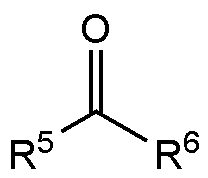
일 구현예는 양극 활물질을 포함하는 양극; 음극 활물질을 포함하는 음극; 및 전해액을 포함하되, 상기 음극의 합제 밀도는 1.7 g/cc 이상이고, 상기 전해액은 리튬염; 비수성 유기 용매; 하기 화학식 1로 표시되는 제1 첨가제; 하기 화학식 2로 표시되는 제2 첨가제; 및 하기 화학식 3으로 표시되는 제3 첨가제를 포함하는, 리튬 이차 전지를 제공한다:One embodiment provides a lithium secondary battery, comprising: a positive electrode including a positive electrode active material; a negative electrode including a negative electrode active material; and an electrolyte, wherein the composite density of the negative electrode is 1.7 g/cc or more, and the electrolyte comprises: a lithium salt; a non-aqueous organic solvent; a first additive represented by the following chemical formula 1; a second additive represented by the following chemical formula 2; and a third additive represented by the following chemical formula 3:
[화학식 1][Chemical Formula 1]

[화학식 2][Chemical formula 2]

[화학식 3][Chemical Formula 3]
일 구현예에 따른 리튬 이차 전지는, 음극을 고밀도화하면서도, 전지의 두께 증가 및 수명 감소를 억제할 수 있다.A lithium secondary battery according to one embodiment can suppress an increase in battery thickness and a decrease in lifespan while increasing the density of the negative electrode.
도 1 내지 도 4는 일 구현예에 따른 리튬 이차 전지를 도시한 개략도이다. Figures 1 to 4 are schematic diagrams illustrating a lithium secondary battery according to one embodiment.
이하, 본 발명의 구현예를 상세하게 설명하기로 한다. 다만, 이는 예시로서 제시되는 것으로서, 이에 의해 본 발명이 제한되지 않으며, 본 발명은 후술한 청구항의 범주에 의해 정의될 뿐이다. Hereinafter, embodiments of the present invention will be described in detail. However, these are presented as examples, and the present invention is not limited thereby, and the present invention is defined only by the scope of the claims described below.
본 명세서에서 특별한 언급이 없는 한, 층, 막, 영역, 판 등의 부분이 다른 부분 "위에" 있다고 할 때, 이는 다른 부분 "바로 위에" 있는 경우 뿐만 아니라 그 중간에 또 다른 부분이 있는 경우도 포함한다.Unless otherwise specified herein, when a part such as a layer, film, region, or plate is said to be “over” another part, this includes not only cases where it is “directly over” the other part, but also cases where there are other parts in between.
본 명세서에서 특별한 언급이 없는 한, 단수로 표시한 것은 복수 또한 포함할 수 있다. 아울러, 특별한 언급이 없는 한, "A 또는 B"는 "A를 포함하거나, B를 포함하거나, A 및 B를 포함하는"을 의미할 수 있다.Unless otherwise specified herein, the singular may also include the plural. In addition, unless otherwise specified, "A or B" may mean "including A, including B, or including A and B."
본 명세서에서 "이들의 조합"이란, 구성물의 혼합물, 적층물, 복합체, 공중합체, 합금, 블렌드, 및 반응 생성물 등을 의미할 수 있다.As used herein, the term "combination thereof" may mean mixtures, laminates, composites, copolymers, alloys, blends, reaction products, and the like of the components.
본 명세서에서 "음극의 합제 밀도"란, 음극에서 집전체를 제외한 성분(활물질, 도전재, 결합제 등)의 중량을 부피로 나누어서 계산된 값이다. In this specification, the “composite density of the negative electrode” is a value calculated by dividing the weight of the components (active material, conductive material, binder, etc.) excluding the current collector in the negative electrode by the volume.
본 명세서 내 화학식에서 별도의 정의가 없는 한, 화학 결합이 그려져야 하는 위치에 화학결합이 그려져 있지 않은 경우는 상기 위치에 수소 원자가 결합되어 있음을 의미한다.Unless otherwise defined in the chemical formulas herein, if a chemical bond is not drawn at a position where a chemical bond should be drawn, it means that a hydrogen atom is bonded at that position.
본 명세서에서 "플루오로알킬기"란 수소 원자의 일부 또는 전부가 불소 원자로 치환된 알킬기를 의미한다.As used herein, “fluoroalkyl group” means an alkyl group in which some or all of the hydrogen atoms are replaced with fluorine atoms.
본 명세서에서 "퍼플루오로알킬기"란 수소 원자의 전부가 불소 원자로 치환된 알킬기를 의미한다.As used herein, “perfluoroalkyl group” means an alkyl group in which all of the hydrogen atoms are replaced with fluorine atoms.
(리튬 이차 전지)(lithium secondary battery)
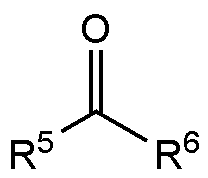
일 구현예는 양극 활물질을 포함하는 양극; 음극 활물질을 포함하는 음극; 및 전해액을 포함하되, 상기 음극의 합제 밀도는 1.7 g/cc 이상이고, 상기 전해액은 리튬염; 비수성 유기 용매; 하기 화학식 1로 표시되는 제1 첨가제; 하기 화학식 2로 표시되는 제2 첨가제; 및 하기 화학식 3으로 표시되는 제3 첨가제를 포함하는, 리튬 이차 전지를 제공한다:One embodiment provides a lithium secondary battery, comprising: a positive electrode including a positive electrode active material; a negative electrode including a negative electrode active material; and an electrolyte, wherein the composite density of the negative electrode is 1.7 g/cc or more, and the electrolyte comprises: a lithium salt; a non-aqueous organic solvent; a first additive represented by the following chemical formula 1; a second additive represented by the following chemical formula 2; and a third additive represented by the following chemical formula 3:
[화학식 1][Chemical Formula 1]

[화학식 2][Chemical formula 2]

[화학식 3][Chemical Formula 3]
상기 제1 첨가제 및 제3 첨가제는 하나의 분자 내에 친수성기와 소수성기를 함께 갖는 계면활성제로서 기능한다.The above first and third additives function as surfactants having both a hydrophilic group and a hydrophobic group within one molecule.
구체적으로, 상기 제1 첨가제는 중심에 에터기를 포함하고, 그 양측에 불소 원자 또는 탄소수 1 내지 10의 플루오로알킬기를 포함한다. 여기서, 에터기는 친수성기이고, 불소 원자 또는 탄소수 1 내지 10의 플루오로알킬기는 소수성기이다. Specifically, the first additive comprises an ether group at the center and a fluorine atom or a fluoroalkyl group having 1 to 10 carbon atoms on both sides thereof. Here, the ether group is a hydrophilic group, and the fluorine atom or the fluoroalkyl group having 1 to 10 carbon atoms is a hydrophobic group.
또한, 상기 제3 첨가제는 중심에 케톤기를 포함하고, 그 양측에 불소 원자 또는 탄소수 1 내지 10의 플루오로알킬기를 포함한다. 여기서, 케톤기는 친수성기이고, 불소 원자 또는 탄소수 1 내지 10의 플루오로알킬기는 소수성기이다. In addition, the third additive comprises a ketone group at the center and a fluorine atom or a fluoroalkyl group having 1 to 10 carbon atoms on both sides thereof. Here, the ketone group is a hydrophilic group, and the fluorine atom or the fluoroalkyl group having 1 to 10 carbon atoms is a hydrophobic group.
이에, 상기 제1 첨가제 및 상기 제3 첨가제를 동시에 포함하는 전해액을 사용하면, 양극 및 음극에 대한 젖음성이 개선되어, 양극과 전해액의 계면에서는 리튬 양이온(Li+)이 균일하게 형성되며, 음극과 전해액의 계면에서는 안정한 SEI 피막이 형성되면서 리튬 덴드라이트의 석출이 억제된다.Accordingly, when an electrolyte solution containing the first additive and the third additive is used at the same time, wettability for the positive and negative electrodes is improved, so that lithium cations (Li + ) are uniformly formed at the interface between the positive electrode and the electrolyte, and a stable SEI film is formed at the interface between the negative electrode and the electrolyte, thereby suppressing precipitation of lithium dendrites.
한편, 상기 제2 첨가제는 플루오로기가 치환된 옥살레이토보레이트 화합물로서, 여기서 플루오로기가 리튬염(예를 들어, LiPF6)을 안정화한다.Meanwhile, the second additive is a fluoro-substituted oxalate borate compound, wherein the fluoro group stabilizes a lithium salt (e.g., LiPF 6 ).
이에, 상기 제2 첨가제를 포함하는 전해액을 사용하면, HF의 생성이 억제되어, 양극 활물질로부터의 전이금속 용출, 음극과 전해액 계면의 SEI 피막 손상 등이 방지된다.Accordingly, when an electrolyte solution containing the second additive is used, the generation of HF is suppressed, thereby preventing the elution of transition metals from the positive electrode active material and damage to the SEI film at the interface between the negative electrode and the electrolyte.
따라서, 상기 제1 첨가제 내지 상기 제3 첨가제를 동시에 포함하는 전해액을 사용하면, 음극의 합제 밀도를 1.7 g/cc 이상으로 고밀도화하면서도, 전지의 두께 증가 및 수명 감소를 억제할 수 있다.Therefore, by using an electrolyte containing the first to third additives simultaneously, the composite density of the negative electrode can be increased to 1.7 g/cc or more, while suppressing an increase in the thickness of the battery and a decrease in the lifespan.
이하, 일 구현예에 따른 리튬 이차 전지를 더 상세히 설명한다.Hereinafter, a lithium secondary battery according to an embodiment is described in more detail.
음극의 합제 밀도Negative composite density
일반적으로 알려진 리튬 이차 전지는 합제 밀도가 1.7 g/cc 미만인 음극을 사용하나, 일 구현예에 따른 리튬 이차 전지는 합제 밀도가 1.7 g/cc 이상인 음극을 사용한다.Generally known lithium secondary batteries use a negative electrode having a composite density of less than 1.7 g/cc, but a lithium secondary battery according to one embodiment uses a negative electrode having a composite density of 1.7 g/cc or more.
상기 음극의 합제 밀도에 대한 상한은 특별히 한정하지 않으나, 2.0 g/cc 이하, 1.9 g/cc 이하, 1.8 g/cc 이하일 수 있다.The upper limit for the composite density of the above negative electrode is not particularly limited, but may be 2.0 g/cc or less, 1.9 g/cc or less, or 1.8 g/cc or less.
제1 첨가제Additive 1
상기 화학식 1에서, R1 및 R2는 각각 독립적으로, 불소 원자, 또는 탄소수 1 내지 10의 플루오로알킬기이다.In the above chemical formula 1, R 1 and R 2 are each independently a fluorine atom or a fluoroalkyl group having 1 to 10 carbon atoms.
예컨대, R1은 탄소수 2의 플루오로알킬기일 수 있다.For example, R 1 can be a fluoroalkyl group having 2 carbon atoms.
또한, R2는 탄소수 3의 플루오로알킬기일 수 있다.Additionally, R 2 can be a fluoroalkyl group having 3 carbon atoms.
상기 제1 첨가제는 하기 화학식 1-1로 표시될 수 있다:The above first additive can be represented by the following chemical formula 1-1:
[화학식 1-1][Chemical Formula 1-1]
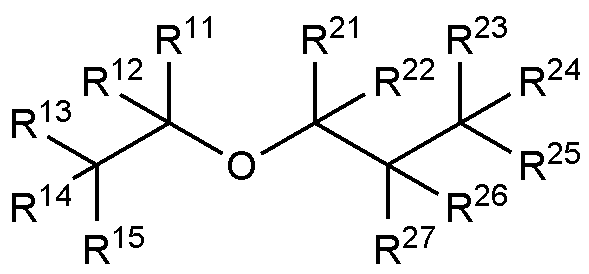
상기 화학식 1-1에서, R11 내지 R15는 각각 수소 원자 또는 불소 원자이되, 상기 R11 내지 R15 중 적어도 하나는 불소 원자이고; R21 내지 R27은 각각 수소 원자 또는 불소 원자이되, 상기 R21 내지 R27 중 적어도 하나는 불소 원자이다.In the chemical formula 1-1, R 11 to R 15 are each a hydrogen atom or a fluorine atom, and at least one of R 11 to R 15 is a fluorine atom; R 21 to R 27 are each a hydrogen atom or a fluorine atom, and at least one of R 21 to R 27 is a fluorine atom.
상기 제1 첨가제의 대표적인 예는 하기와 같다:Representative examples of the first additive are as follows:
[화학식 1-1-1][Chemical Formula 1-1-1]

제2 첨가제Second additive
상기 화학식 2에서, R3 및 R4은 각각 독립적으로, 할로겐 원자, 또는 탄소수 1 내지 10의 플루오로알킬기이다.In the above chemical formula 2, R 3 and R 4 are each independently a halogen atom or a fluoroalkyl group having 1 to 10 carbon atoms.
예컨대, R3 및 R4은 모두 불소 원자일 수 있다.For example, both R 3 and R 4 can be fluorine atoms.
상기 제2 첨가제의 대표적인 예는 하기와 같다:Representative examples of the second additive are as follows:
[화학식 2-1][Chemical Formula 2-1]
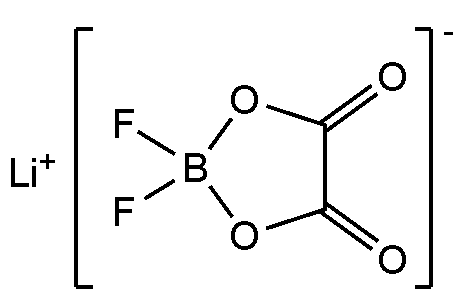
상기 화학식 2-1로 표시되는 제2 첨가제는 리튬디플루오로(옥살레이토)보레이트(Lithium difluoro(oxalato)borate, LiDFOB)이다.The second additive represented by the chemical formula 2-1 above is lithium difluoro(oxalato)borate (LiDFOB).
제3 첨가제Third additive
상기 화학식 3에서, R5 및 R6은 각각 독립적으로, 불소 원자, 또는 탄소수 1 내지 10의 플루오로알킬기이다.In the above chemical formula 3, R 5 and R 6 are each independently a fluorine atom or a fluoroalkyl group having 1 to 10 carbon atoms.
예컨대, R5는 탄소수 2의 플루오로알킬기 또는 퍼플루오로알킬기일 수 있다.For example, R 5 can be a fluoroalkyl group or a perfluoroalkyl group having 2 carbon atoms.
또한, R6은 탄소수 3의 플루오로알킬기 또는 퍼플루오로알킬기일 수 있다.Additionally, R 6 can be a fluoroalkyl group or a perfluoroalkyl group having 3 carbon atoms.
상기 제3 첨가제는 하기 화학식 3-1로 표시될 수 있다:The above third additive can be represented by the following chemical formula 3-1:
[화학식 3-1] [Chemical Formula 3-1]
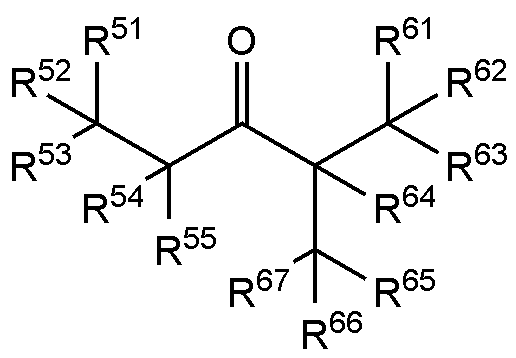
상기 화학식 3-1에서, R51 내지 R55는 각각 수소 원자 또는 불소 원자이되, 상기 R31 내지 R35 중 적어도 하나는 불소 원자이고; R61 내지 R67은 각각 수소 원자 또는 불소 원자이되, 상기 R41 내지 R47 중 적어도 하나는 불소 원자이다.In the chemical formula 3-1, R 51 to R 55 are each a hydrogen atom or a fluorine atom, and at least one of R 31 to R 35 is a fluorine atom; R 61 to R 67 are each a hydrogen atom or a fluorine atom, and at least one of R 41 to R 47 is a fluorine atom.
상기 제3 첨가제의 대표적인 예는 하기와 같다:Representative examples of the third additive are as follows:
[화학식 3-1-1][Chemical Formula 3-1-1]

제1 첨가제 내지 제3 첨가제의 함량Contents of the first to third additives
상기 제1 첨가제는, 상기 전해액의 총량에 대해, 1 내지 20 중량%, 1 내지 15 중량%, 또는 1 내지 10 중량% 포함될 수 있다.The first additive may be included in an amount of 1 to 20 wt%, 1 to 15 wt%, or 1 to 10 wt% based on the total amount of the electrolyte.
상기 제1 첨가제가 상기 범위를 초과하여 과량 포함되는 경우, 상기 제1 첨가제를 포함하는 전해액의 점도가 지나치게 증가하여, 양극 및 음극에 대한 젖음성이 오히려 감소할 수 있다. 한편, 상기 제1 첨가제의 함량이 상기 범위 미만으로 소량 포함되는 경우, 계면활성제로서의 효과가 미미할 수 있다.If the first additive is included in an excessive amount exceeding the above range, the viscosity of the electrolyte containing the first additive may excessively increase, so that the wettability for the positive and negative electrodes may actually decrease. On the other hand, if the content of the first additive is included in a small amount below the above range, the effect as a surfactant may be minimal.
상기 제2 첨가제는, 상기 전해액의 총량에 대해, 0.1 내지 10 중량%, 0.5 내지 5 중량%, 또는 1 내지 2 중량% 포함될 수 있다.The second additive may be included in an amount of 0.1 to 10 wt%, 0.5 to 5 wt%, or 1 to 2 wt% based on the total amount of the electrolyte.
상기 제2 첨가제가 상기 범위를 초과하여 과량 포함되는 경우, 오히려 부반응이 일어날 수 있다. 한편, 상기 제2 첨가제의 함량이 상기 범위 미만으로 소량 포함되는 경우, 그 효과가 미미할 수 있다.If the second additive is included in an excessive amount exceeding the above range, a side reaction may occur. On the other hand, if the content of the second additive is included in a small amount below the above range, the effect may be minimal.
상기 제3 첨가제는, 상기 전해액의 총량에 대해, 1 내지 10 중량%, 1 내지 7 중량%, 또는 1 내지 5 중량% 포함될 수 있다.The third additive may be included in an amount of 1 to 10 wt%, 1 to 7 wt%, or 1 to 5 wt% based on the total amount of the electrolyte.
상기 제3 첨가제가 상기 범위를 초과하여 과량 포함되는 경우, 상기 제3 첨가제를 포함하는 전해액의 점도가 지나치게 증가하여, 양극 및 음극에 대한 젖음성이 오히려 감소할 수 있다. 한편, 상기 제3 첨가제의 함량이 상기 범위 미만으로 소량 포함되는 경우, 계면활성제로서의 효과가 미미할 수 있다.If the third additive is included in an excessive amount exceeding the above range, the viscosity of the electrolyte containing the third additive may increase excessively, and the wettability for the positive and negative electrodes may rather decrease. On the other hand, if the content of the third additive is included in a small amount below the above range, the effect as a surfactant may be minimal.
상기 제1 첨가제 10 중량부에 대하여, 상기 제2 첨가제는 1 내지 100 중량부 포함되고, 상기 제3 첨가제는 1 내지 100 중량부 포함될 수 있다.With respect to 10 parts by weight of the first additive, the second additive may be included in an amount of 1 to 100 parts by weight, and the third additive may be included in an amount of 1 to 100 parts by weight.
일 예로, 상기 제1 첨가제 10 중량부에 대하여, 상기 제2 첨가제는 2 내지 50 중량부 포함되고, 상기 제3 첨가제는 2 내지 50 중량부 포함될 수 있다.For example, with respect to 10 parts by weight of the first additive, the second additive may be included in an amount of 2 to 50 parts by weight, and the third additive may be included in an amount of 2 to 50 parts by weight.
일 예로, 상기 제1 첨가제 10 중량부에 대하여, 상기 제2 첨가제는 5 내지 20 중량부 포함되고, 상기 제3 첨가제는 5 내지 20 중량부 포함될 수 있다.For example, with respect to 10 parts by weight of the first additive, the second additive may be included in an amount of 5 to 20 parts by weight, and the third additive may be included in an amount of 5 to 20 parts by weight.
이 범위에서, 상기 제1 첨가제 내지 상기 제3 첨가제의 효과가 조화를 이룰 수 있다.In this range, the effects of the first additive to the third additive can be harmonized.
비수성 유기 용매Non-aqueous organic solvent
상기 비수성 유기 용매는 전지의 전기화학적 반응에 관여하는 이온들이 이동할 수 있는 매질 역할을 한다. The above non-aqueous organic solvent acts as a medium through which ions involved in the electrochemical reaction of the battery can move.
상기 비수성 유기 용매는 카보네이트계, 에스터계, 에터계, 케톤계, 또는 알코올계 용매, 비양자성 용매 또는 이들의 조합일 수 있다. The above non-aqueous organic solvent may be a carbonate-based, ester-based, ether-based, ketone-based, or alcohol-based solvent, an aprotic solvent, or a combination thereof.
상기 카보네이트계 용매로는 다이메틸 카보네이트(DMC), 다이에틸 카보네이트(DEC), 다이프로필 카보네이트(DPC), 메틸프로필 카보네이트(MPC), 에틸프로필 카보네이트(EPC), 메틸에틸 카보네이트(MEC), 에틸렌 카보네이트(EC), 프로필렌 카보네이트(PC), 부틸렌 카보네이트(BC) 등이 사용될 수 있다. 에스터계 용매로는 메틸 아세테이트, 에틸 아세테이트, n-프로필 아세테이트, 다이메틸아세테이트, 메틸 프로피오네이트, 에틸 프로피오네이트, 프로필 프로피오네이트, 데카놀라이드(decanolide), 메발로노락톤(mevalonolactone), 발레로락톤(valerolactone). 카프로락톤(caprolactone) 등이 사용될 수 있다. 에터계 용매로는 다이부틸 에테르, 테트라글라임, 다이글라임, 다이메톡시에탄, 2-메틸테트라하이드로퓨란, 2,5-다이메틸테트라하이드로퓨란, 테트라하이드로퓨란 등이 사용될 수 있다. 또한, 케톤계 용매로는 사이클로헥사논 등이 사용될 수 있다. 알코올계 용매로는 에틸알코올, 아이소프로필 알코올 등이 사용될 수 있으며, 비양자성 용매로는 R-CN(R은 탄소수 2 내지 20의 직쇄상, 분지상, 또는 환 구조의 탄화수소기이며, 이중결합, 방향 환, 또는 에터기를 포함할 수 있다) 등의 나이트릴류; 다이메틸폼아마이드 등의 아마이드류; 1,3-다이옥솔란, 1,4-다이옥솔란 등의 다이옥솔란류; 설포란(sulfolane)류 등이 사용될 수 있다. Examples of the carbonate solvent that can be used include dimethyl carbonate (DMC), diethyl carbonate (DEC), dipropyl carbonate (DPC), methylpropyl carbonate (MPC), ethylpropyl carbonate (EPC), methylethyl carbonate (MEC), ethylene carbonate (EC), propylene carbonate (PC), butylene carbonate (BC), etc. Examples of the ester solvent that can be used include methyl acetate, ethyl acetate, n-propyl acetate, dimethyl acetate, methyl propionate, ethyl propionate, propyl propionate, decanolide, mevalonolactone, valerolactone, caprolactone, etc. Examples of ether solvents that can be used include dibutyl ether, tetraglyme, diglyme, dimethoxyethane, 2-methyltetrahydrofuran, 2,5-dimethyltetrahydrofuran, tetrahydrofuran, etc. In addition, cyclohexanone can be used as a ketone solvent. Examples of alcohol solvents that can be used include ethyl alcohol, isopropyl alcohol, etc., and examples of aprotic solvents that can be used include nitriles such as R-CN (where R is a linear, branched, or cyclic hydrocarbon group having 2 to 20 carbon atoms and may include a double bond, an aromatic ring, or an ether group); amides such as dimethylformamide; dioxolanes such as 1,3-dioxolane and 1,4-dioxolane; and sulfolanes.
상기 비수성 유기 용매는 단독으로 또는 2종 이상 혼합하여 사용할 수 있다.The above non-aqueous organic solvents can be used alone or in combination of two or more.
후자의 경우, 상기 비수성 유기 용매는 카보네이트계 용매 및 프로피오네이트계 용매를 포함할 수 있다.In the latter case, the non-aqueous organic solvent may include a carbonate-based solvent and a propionate-based solvent.
상기 프로피오네이트계 용매 전체는, 상기 비수성 유기 용매의 총량에 대해, 70 부피% 이상 포함될 수 있다. 이 경우, 리튬 이차 전지의 고전압 및/또는 고온 특성을 개선할 수 있다.The entire propionate solvent may be included in an amount of 70% by volume or more based on the total amount of the non-aqueous organic solvent. In this case, the high voltage and/or high temperature characteristics of the lithium secondary battery may be improved.
예컨대, 상기 비수성 유기 용매는 에틸렌 카보네이트(EC), 프로필렌 카보네이트(PC), 에틸 프로피오네이트(EP) 및 프로필 프로피오네이트(PP)의 혼합 용매일 수 있다. For example, the non-aqueous organic solvent may be a mixed solvent of ethylene carbonate (EC), propylene carbonate (PC), ethyl propionate (EP), and propyl propionate (PP).
리튬염Lithium salt
상기 리튬염은 유기용매에 용해되어, 전지 내에서 리튬 이온의 공급원으로 작용하여 기본적인 리튬 이차 전지의 작동을 가능하게 하고, 양극과 음극 사이의 리튬 이온의 이동을 촉진하는 역할을 하는 물질이다. The above lithium salt is a substance that is dissolved in an organic solvent and acts as a source of lithium ions within the battery, enabling the basic operation of a lithium secondary battery and promoting the movement of lithium ions between the positive and negative electrodes.
상기 리튬염으로는 LiPF6를 사용할 수 있다. LiPF 6 can be used as the above lithium salt.
상기 리튬염의 농도는 0.1M 내지 2.0M일 수 있다.The concentration of the above lithium salt can be 0.1 M to 2.0 M.
양극 활물질Bipolar active material
양극 활물질로는 리튬의 가역적인 인터칼레이션 및 디인터칼레이션이 가능한 화합물(리티에이티드 인터칼레이션 화합물)을 사용할 수 있다. 구체적으로는 코발트, 망간, 니켈, 및 이들의 조합에서 선택되는 금속과 리튬과의 복합 산화물 중 1종 이상의 것을 사용할 수 있다. As a cathode active material, a compound capable of reversible intercalation and deintercalation of lithium (lithiated intercalation compound) can be used. Specifically, at least one of a composite oxide of lithium and a metal selected from cobalt, manganese, nickel, and combinations thereof can be used.
상기 복합 산화물은 리튬 전이금속 복합 산화물일 수 있으며, 구체적인 예로는 리튬 니켈계 산화물, 리튬 코발트계 산화물, 리튬 망간계 산화물, 리튬인산철계 화합물, 코발트-프리 니켈-망간계 산화물, 또는 이들의 조합을 들 수 있다. The above composite oxide may be a lithium transition metal composite oxide, and specific examples thereof include lithium nickel-based oxide, lithium cobalt-based oxide, lithium manganese-based oxide, lithium iron phosphate-based compound, cobalt-free nickel-manganese-based oxide, or a combination thereof.
일 예로는 하기 화학식 중 어느 하나로 표현되는 화합물을 사용할 수 있다. LiaA1-bXbO2-cDc(0.90≤a≤1.8, 0≤b≤0.5, 0≤c≤0.05); LiaMn2-bXbO4-cDc(0.90≤a≤1.8, 0≤b≤0.5, 0≤c≤0.05); LiaNi1-b-cCobXcO2-αDα(0.90≤a≤1.8, 0≤b≤0.5, 0≤c≤0.5, 0<α<2); LiaNi1-b-cMnbXcO2-αDα(0.90≤a≤1.8, 0≤b≤0.5, 0≤c≤0.5, 0<α<2); LiaNibCocL1 dGeO2(0.90≤a≤1.8, 0≤b≤0.9, 0≤c≤0.5, 0≤d≤0.5, 0≤e≤0.1); LiaNiGbO2(0.90≤a≤1.8, 0.001≤b≤0.1); LiaCoGbO2(0.90≤a≤1.8, 0.001≤b≤0.1); LiaMn1-bGbO2(0.90≤a≤1.8, 0.001≤b≤0.1); LiaMn2GbO4(0.90≤a≤1.8, 0.001≤b≤0.1); LiaMn1-gGgPO4(0.90≤a≤1.8, 0≤g≤0.5); Li(3-f)Fe2(PO4)3(0≤f≤2); LiaFePO4(0.90≤a≤1.8).As an example, a compound represented by any one of the following chemical formulas can be used. Li a A 1-b X b O 2-c D c (0.90≤a≤1.8, 0≤b≤0.5, 0≤c≤0.05); Li a Mn 2-b X b O 4 -c D c (0.90≤a≤1.8, 0≤b≤0.5, 0≤c≤0.05); Li a Ni 1-bc Co b X c O 2-α D α (0.90≤a≤1.8, 0≤b≤0.5, 0≤c≤0.5, 0<α<2); Li a Ni 1-bc Mn b X c O 2-α D α (0.90≤a≤1.8, 0≤b≤0.5, 0≤c≤0.5, 0<α<2); Li a Ni b Co c L 1 d G e O 2 (0.90≤a≤1.8, 0≤b≤0.9, 0≤c≤0.5, 0≤d≤0.5, 0≤e≤0.1); Li a NiG b O 2 (0.90≤a≤1.8, 0.001≤b≤0.1); Li a CoG b O 2 (0.90≤a≤1.8, 0.001≤b≤0.1); Li a Mn 1-b G b O 2 (0.90≤a≤1.8, 0.001≤b≤0.1); Li a Mn 2 G b O 4 (0.90≤a≤1.8, 0.001≤b≤0.1); Li a Mn 1-g G g PO 4 (0.90≤a≤1.8, 0≤g≤0.5); Li (3-f) Fe 2 (PO 4 ) 3 (0≤f≤2); Li a FePO 4 (0.90≤a≤1.8).
상기 화학식에 있어서, A는 Ni, Co, Mn, 또는 이들의 조합이고; X는 Al, Ni, Co, Mn, Cr, Fe, Mg, Sr, V, 희토류 원소 또는 이들의 조합이고; D는 O, F, S, P, 또는 이들의 조합이고; G는 Al, Cr, Mn, Fe, Mg, La, Ce, Sr, V, 또는 이들의 조합이고; L1은 Mn, Al 또는 이들의 조합이다.In the chemical formula above, A is Ni, Co, Mn, or a combination thereof; X is Al, Ni, Co, Mn, Cr, Fe, Mg, Sr, V, a rare earth element, or a combination thereof; D is O, F, S, P, or a combination thereof; G is Al, Cr, Mn, Fe, Mg, La, Ce, Sr, V, or a combination thereof; and L 1 is Mn, Al, or a combination thereof.
일 예로 상기 양극 활물질은 리튬 전이금속 복합 산화물에서 리튬을 제외한 금속 100 몰%에 대한 니켈의 함량이 80 몰% 이상, 85 몰% 이상, 90 몰% 이상, 91 몰% 이상, 또는 94 몰% 이상이고 99 몰% 이하인 고니켈계 양극 활물질일 수 있다. 고니켈계 양극 활물질은 높은 용량을 구현할 수 있어 고용량, 고밀도 리튬 이차 전지에 적용될 수 있다.For example, the cathode active material may be a high-nickel cathode active material in which the nickel content is 80 mol% or more, 85 mol% or more, 90 mol% or more, 91 mol% or more, or 94 mol% or more and 99 mol% or less, based on 100 mol% of metal excluding lithium in the lithium transition metal composite oxide. The high-nickel cathode active material can implement high capacity and thus can be applied to high-capacity, high-density lithium secondary batteries.
양극 활물질은 예를 들어, 하기 화학식 11로 표시되는 리튬 니켈계 산화물, 하기 화학식 12로 표시되는 리튬 코발트계 산화물, 하기 화학식 13으로 표시되는 리튬인산철계 화합물, 화학식 14로 표시되는 코발트-프리 리튬 니켈-망간계 산화물, 또는 이들의 조합을 포함할 수 있다. The cathode active material may include, for example, a lithium nickel-based oxide represented by the following chemical formula 11, a lithium cobalt-based oxide represented by the following chemical formula 12, a lithium iron phosphate-based compound represented by the following chemical formula 13, a cobalt-free lithium nickel-manganese-based oxide represented by the following chemical formula 14, or a combination thereof.
[화학식 11][Chemical Formula 11]
Lia1Nix1M1 y1M2 z1O2-b1Xb1 Li a1 Ni x1 M 1 y1 M 2 z1 O 2- b1
상기 화학식 11에서, 0.9≤a1≤1.8, 0.3≤x1≤1, 0≤y1≤0.7, 0≤z1≤0.7, 0.9≤x1+y1+z1≤1.1, 및 0≤b1≤0.1이고, M1 및 M2는 각각 독립적으로 Al, B, Ba, Ca, Ce, Co, Cr, Cu, Fe, Mg, Mn, Mo, Nb, Si, Sn, Sr, Ti, V, W, 및 Zr로 이루어지는 그룹에서 선택되는 하나 이상의 원소이고, X는 F, P 및 S로 이루어지는 그룹에서 선택되는 하나 이상의 원소이다.In the chemical formula 11, 0.9≤a1≤1.8, 0.3≤x1≤1, 0≤y1≤0.7, 0≤z1≤0.7, 0.9≤x1+y1+z1≤1.1, and 0≤b1≤0.1, and M 1 and M 2 are each independently one or more elements selected from the group consisting of Al, B, Ba, Ca, Ce, Co, Cr, Cu, Fe, Mg, Mn, Mo, Nb, Si, Sn, Sr, Ti, V, W, and Zr, and X is one or more elements selected from the group consisting of F, P, and S.
상기 화학식 1에서, 0.6≤x1≤1, 0≤y1≤0.4, 및 0≤z1≤0.4이거나, 또는 0.8≤x1≤1, 0≤y1≤0.2, 및 0≤z1≤0.2일 수 있다. In the above chemical formula 1, 0.6≤x1≤1, 0≤y1≤0.4, and 0≤z1≤0.4, or 0.8≤x1≤1, 0≤y1≤0.2, and 0≤z1≤0.2.
[화학식 12][Chemical Formula 12]
Lia2Cox2M3 y2O2-b2Xb2 Li a2 Co x2 M 3 y2 O 2- b2
상기 화학식 12에서, 0.9≤a2≤1.8, 0.7≤x2≤1, 0≤y2≤0.3, 0.9≤x2+y2≤1.1, 및 0≤b2≤0.1이고, M3은 Al, B, Ba, Ca, Ce, Cr, Cu, Fe, Mg, Mn, Mo, Ni, Se, Si, Sn, Sr, Ti, V, W, Y, Zn 및 Zr로 이루어지는 그룹에서 선택되는 하나 이상의 원소이고, X는 F, P, 및 S로 이루어지는 그룹에서 선택되는 하나 이상의 원소이다. In the chemical formula 12, 0.9≤a2≤1.8, 0.7≤x2≤1, 0≤y2≤0.3, 0.9≤x2+y2≤1.1, and 0≤b2≤0.1, M 3 is at least one element selected from the group consisting of Al, B, Ba, Ca, Ce, Cr, Cu, Fe, Mg, Mn, Mo, Ni, Se, Si, Sn, Sr, Ti, V, W, Y, Zn, and Zr, and X is at least one element selected from the group consisting of F, P, and S.
[화학식 13][Chemical Formula 13]
Lia3Fex3M4 y3PO4-b3Xb3 Li a3 Fe x3 M 4 y3 PO 4- b3
상기 화학식 13에서, 0.9≤a3≤1.8, 0.6≤x3≤1, 0≤y3≤0.4, 및 0≤b3≤0.1이고, M4는 Al, B, Ba, Ca, Ce, Co, Cr, Cu, Mg, Mn, Mo, Ni, Se, Si, Sn, Sr, Ti, V, W, Y, Zn 및 Zr로 이루어지는 그룹에서 선택되는 하나 이상의 원소이고, X는 F, P, 및 S로 이루어지는 그룹에서 선택되는 하나 이상의 원소이다. In the chemical formula 13, 0.9≤a3≤1.8, 0.6≤x3≤1, 0≤y3≤0.4, and 0≤b3≤0.1, M 4 is at least one element selected from the group consisting of Al, B, Ba, Ca, Ce, Co, Cr, Cu, Mg, Mn, Mo, Ni, Se, Si, Sn, Sr, Ti, V, W, Y, Zn, and Zr, and X is at least one element selected from the group consisting of F, P, and S.
[화학식 14][Chemical Formula 14]
Lia4Nix4Mny4M5 z4O2-b4Xb4 Li a4 Ni x4 Mn y4 M 5 z4 O 2- b4
상기 화학식 14에서, 0.9≤a2≤1.8, 0.8≤x4<1, 0<y4≤0.2, 0≤z4≤0.2, 0.9≤x4+y4+z4≤1.1, 및 0≤b4≤0.1이고 M5은 Al, B, Ba, Ca, Ce, Cr, Fe, Mg, Mo, Nb, Si, Sn, Sr, Ti, V, W, 및 Zr로 이루어지는 그룹에서 선택되는 하나 이상의 원소이고, X는 F, P 및 S로 이루어지는 그룹에서 선택되는 하나 이상의 원소이다.In the chemical formula 14, 0.9≤a2≤1.8, 0.8≤x4<1, 0<y4≤0.2, 0≤z4≤0.2, 0.9≤x4+y4+z4≤1.1, and 0≤b4≤0.1, and M 5 is at least one element selected from the group consisting of Al, B, Ba, Ca, Ce, Cr, Fe, Mg, Mo, Nb, Si, Sn, Sr, Ti, V, W, and Zr, and X is at least one element selected from the group consisting of F, P, and S.
특히, 전술한 일 구현예의 전해액은, 상기 화학식 12로 표시되는 리튬 코발트계 산화물을 적용한 전지의 고전압 및/또는 고온 특성을 탁월하게 개선할 수 있다.In particular, the electrolyte of the above-described embodiment can excellently improve the high-voltage and/or high-temperature characteristics of a battery using a lithium cobalt-based oxide represented by the chemical formula 12.
양극anode
리튬 이차 전지용 양극은 전류 집전체 및 이 전류 집전체 상에 형성되는 양극 활물질층을 포함할 수 있다. 상기 양극 활물질 층은 양극 활물질을 포함하고, 바인더 및/또는 도전재를 더 포함할 수 있다.A cathode for a lithium secondary battery may include a current collector and a cathode active material layer formed on the current collector. The cathode active material layer includes a cathode active material and may further include a binder and/or a conductive material.
일 예로 상기 양극은 희생양극으로서의 역할을 할 수 있는 첨가제를 더 포함할 수 있다.For example, the above anode may further include an additive that can act as a sacrificial anode.
상기 양극 활물질의 함량은 양극 활물질층 100 중량%에 대하여 90 중량% 내지 99.5 중량%이고, 상기 바인더 및 도전재의 함량은 양극 활물질층 100 중량%에 대하여 각각 0.5 중량% 내지 5 중량%일 수 있다.The content of the positive electrode active material may be 90 wt% to 99.5 wt% with respect to 100 wt% of the positive electrode active material layer, and the contents of the binder and conductive material may be 0.5 wt% to 5 wt%, respectively, with respect to 100 wt% of the positive electrode active material layer.
상기 바인더는 양극 활물질 입자들을 서로 잘 부착시키고, 또한 양극 활물질을 전류 집전체에 잘 부착시키는 역할을 한다. 바인더의 대표적인 예로는 폴리바이닐알콜, 카복시메틸셀룰로즈, 하이드록시프로필셀룰로즈, 다이아세틸셀룰로즈, 폴리바이닐클로라이드, 카복실화 폴리바이닐클로라이드, 폴리바이닐플루오라이드, 에틸렌 옥사이드를 포함하는 폴리머, 폴리바이닐피롤리돈, 폴리우레탄, 폴리테트라플루오로에틸렌, 폴리비닐리덴 플루오라이드, 폴리에틸렌, 폴리프로필렌, 스티렌-부타다이엔 러버, (메타)아크릴레이티드 스티렌-부타다이엔 러버, 에폭시 수지, (메타)아크릴 수지, 폴리에스터 수지, 나일론 등을 들 수 있으나, 이에 한정되는 것은 아니다.The above binder serves to adhere the positive electrode active material particles well to each other and also to adhere the positive electrode active material well to the current collector. Representative examples of the binder include, but are not limited to, polyvinyl alcohol, carboxymethyl cellulose, hydroxypropyl cellulose, diacetyl cellulose, polyvinyl chloride, carboxylated polyvinyl chloride, polyvinyl fluoride, polymers containing ethylene oxide, polyvinyl pyrrolidone, polyurethane, polytetrafluoroethylene, polyvinylidene fluoride, polyethylene, polypropylene, styrene-butadiene rubber, (meth)acrylated styrene-butadiene rubber, epoxy resin, (meth)acrylic resin, polyester resin, nylon, etc.
상기 도전재는 전극에 도전성을 부여하기 위해 사용되는 것으로서, 구성되는 전지에 있어서, 화학변화를 야기하지 않고 전자 전도성 재료이면 어떠한 것도 사용 가능하다. 도전재의 예로 천연 흑연, 인조 흑연, 카본 블랙, 아세틸렌 블랙, 케첸블랙, 탄소섬유, 탄소나노섬유, 탄소나노튜브 등의 탄소계 물질; 구리, 니켈, 알루미늄, 은 등을 함유하고 금속 분말 또는 금속 섬유 형태의 금속계 물질; 폴리페닐렌 유도체 등의 도전성 폴리머; 또는 이들의 혼합물을 들 수 있다.The conductive material is used to provide conductivity to the electrode, and any material that does not cause a chemical change and is electronically conductive in the battery may be used. Examples of the conductive material include carbon-based materials such as natural graphite, artificial graphite, carbon black, acetylene black, Ketjen black, carbon fibers, carbon nanofibers, and carbon nanotubes; metal-based materials containing copper, nickel, aluminum, and silver in the form of metal powder or metal fibers; conductive polymers such as polyphenylene derivatives; or mixtures thereof.
상기 전류 집전체로는 Al을 사용할 수 있으나 이에 한정되는 것은 아니다.Al may be used as the above current collector, but is not limited thereto.
음극 활물질Negative active material
음극 활물질은 리튬 이온을 가역적으로 인터칼레이션/디인터칼레이션할 수 있는 물질, 리튬 금속, 리튬 금속의 합금, 리튬에 도프 및 탈도프 가능한 물질 또는 전이 금속 산화물을 포함한다.The negative active material includes a material capable of reversibly intercalating/deintercalating lithium ions, lithium metal, an alloy of lithium metal, a material capable of doping and dedoping lithium, or a transition metal oxide.
상기 리튬 이온을 가역적으로 인터칼레이션/디인터칼레이션할 수 있는 물질로는 탄소계 음극 활물질로, 예를 들어 결정질 탄소, 비정질 탄소 또는 이들의 조합을 포함할 수 있다. 상기 결정질 탄소의 예로는 무정형, 판상형, 인편상(flake), 구형 또는 섬유형의 천연 흑연 또는 인조 흑연과 같은 흑연을 들 수 있고, 상기 비정질 탄소의 예로는 소프트 카본 또는 하드 카본, 메조페이스 피치 탄화물, 소성된 코크스 등을 들 수 있다.The material capable of reversibly intercalating/deintercalating the lithium ions may include a carbon-based negative electrode active material, for example, crystalline carbon, amorphous carbon, or a combination thereof. Examples of the crystalline carbon include graphite such as natural graphite or artificial graphite in an amorphous, plate-like, flake-like, spherical, or fibrous form, and examples of the amorphous carbon include soft carbon or hard carbon, mesophase pitch carbide, calcined coke, and the like.
상기 리튬 금속의 합금으로는 리튬과 Na, K, Rb, Cs, Fr, Be, Mg, Ca, Sr, Si, Sb, Pb, In, Zn, Ba, Ra, Ge, Al 및 Sn에서 선택되는 금속의 합금이 사용될 수 있다.As the above lithium metal alloy, an alloy of lithium and a metal selected from Na, K, Rb, Cs, Fr, Be, Mg, Ca, Sr, Si, Sb, Pb, In, Zn, Ba, Ra, Ge, Al and Sn can be used.
상기 리튬에 도프 및 탈도프 가능한 물질로는 Si계 음극 활물질 또는 Sn계 음극 활물질을 사용할 수 있다. 상기 Si계 음극 활물질은 실리콘, 실리콘-탄소 복합체, SiOx(0 < x < 2), Si-Q 합금(상기 Q는 알칼리 금속, 알칼리 토금속, 13족 원소, 14족 원소(Si를 제외함), 15족 원소, 16족 원소, 전이금속, 희토류 원소 및 이들의 조합에서 선택됨), 또는 이들의 조합일 수 있다. 상기 Sn계 음극 활물질로는 Sn, SnO2, Sn계 합금 또는 이들의 조합일 수 있다.As the material capable of doping and dedoping the lithium, a Si-based negative electrode active material or a Sn-based negative electrode active material can be used. The Si-based negative electrode active material can be silicon, a silicon-carbon composite, SiOx (0 < x < 2), a Si-Q alloy (wherein Q is selected from an alkali metal, an alkaline earth metal, a Group 13 element, a Group 14 element (excluding Si), a Group 15 element, a Group 16 element, a transition metal, a rare earth element, and combinations thereof), or a combination thereof. The Sn-based negative electrode active material can be Sn, SnO 2 , a Sn-based alloy, or a combination thereof.
상기 실리콘-탄소 복합체는 실리콘과 비정질 탄소의 복합체일 수 있다. 일 구현예에 따르면, 상기 실리콘-탄소 복합체는 실리콘 입자 및 상기 실리콘 입자의 표면에 비정질 탄소가 코팅된 형태일 수 있다. 예를 들어, 실리콘 1차 입자들이 조립된 2차 입자(코어) 및 이 2차 입자 표면에 위치하는 비정질 탄소 코팅층(쉘)을 포함할 수 있다. 상기 비정질 탄소는 상기 실리콘 1차 입자들 사이에도 위치하여, 예를 들어, 실리콘 1차 입자들이 비정질 탄소로 코팅될 수 있다. 상기 2차 입자는 비정질 탄소 매트릭스에 분산되어 존재할 수 있다.The silicon-carbon composite may be a composite of silicon and amorphous carbon. According to one embodiment, the silicon-carbon composite may be in the form of silicon particles and amorphous carbon coated on the surface of the silicon particles. For example, it may include secondary particles (cores) in which silicon primary particles are assembled, and an amorphous carbon coating layer (shell) positioned on the surface of the secondary particles. The amorphous carbon may also be positioned between the silicon primary particles, so that, for example, the silicon primary particles may be coated with amorphous carbon. The secondary particles may be dispersed and present in an amorphous carbon matrix.
상기 실리콘-탄소 복합체는 결정질 탄소를 더욱 포함할 수도 있다. 예를 들어, 상기 실리콘-탄소 복합체는 결정질 탄소 및 실리콘 입자를 포함하는 코어 및 이 코어 표면에 위치하는 비정질 탄소 코팅층을 포함할 수 있다.The silicon-carbon composite may further include crystalline carbon. For example, the silicon-carbon composite may include a core including crystalline carbon and silicon particles and an amorphous carbon coating layer positioned on the surface of the core.
상기 Si계 음극 활물질 또는 Sn계 음극 활물질은 탄소계 음극 활물질과 혼합하여 사용될 수 있다.The above Si-based negative electrode active material or Sn-based negative electrode active material can be used in a mixture with a carbon-based negative electrode active material.
음극cathode
리튬 이차 전지용 음극은 집전체, 및 이 집전체 상에 위치하는 음극 활물질층을 포함한다. 상기 음극 활물질층은 음극 활물질을 포함하고, 바인더 및/또는 도전재를 더 포함할 수 있다.A negative electrode for a lithium secondary battery includes a current collector and a negative electrode active material layer positioned on the current collector. The negative electrode active material layer includes a negative electrode active material and may further include a binder and/or a conductive material.
예를 들어 음극 활물질층은 음극 활물질을 90 중량% 내지 99 중량%, 바인더를 0.5 중량% 내지 5 중량%, 도전재를 0 중량% 내지 5 중량%로 포함할 수 있다.For example, the negative active material layer may include 90 to 99 wt% of the negative active material, 0.5 to 5 wt% of the binder, and 0 to 5 wt% of the conductive material.
상기 바인더는 음극 활물질 입자들을 서로 잘 부착시키고, 또한 음극 활물질을 전류 집전체에 잘 부착시키는 역할을 한다. 상기 바인더로는 비수계 바인더, 수계 바인더, 건식 바인더 또는 이들의 조합을 사용할 수 있다.The above binder serves to adhere the negative active material particles well to each other and also to adhere the negative active material well to the current collector. The binder may be a non-aqueous binder, an aqueous binder, a dry binder, or a combination thereof.
상기 비수계 바인더로는 폴리비닐클로라이드, 카복실화된 폴리비닐클로라이드, 폴리비닐플루오라이드, 에틸렌 프로필렌 공중합체, 폴리스티렌, 폴리우레탄, 폴리테트라플루오로에틸렌, 폴리비닐리덴 플루오라이드, 폴리에틸렌, 폴리프로필렌, 폴리아마이드이미드, 폴리이미드 또는 이들의 조합을 들 수 있다. The above non-aqueous binder may include polyvinyl chloride, carboxylated polyvinyl chloride, polyvinyl fluoride, ethylene propylene copolymer, polystyrene, polyurethane, polytetrafluoroethylene, polyvinylidene fluoride, polyethylene, polypropylene, polyamideimide, polyimide or combinations thereof.
상기 수계 바인더는 스티렌-부타디엔 러버, (메타)아크릴레이티드 스티렌-부타디엔 러버, (메타)아크릴로나이트릴-부타디엔 러버, (메타)아크릴 고무, 부틸고무, 불소고무, 폴리에틸렌옥사이드, 폴리바이닐피롤리돈, 폴리에피클로로하이드린, 폴리포스파젠, 폴리(메타)아크릴로나이트릴, 에틸렌프로필렌다이엔공중합체, 폴리바이닐피리딘, 클로로설폰화폴리에틸렌, 라텍스, 폴리에스터수지, (메타)아크릴 수지, 페놀 수지, 에폭시 수지, 폴리비닐알콜 및 이들의 조합에서 선택되는 것일 수 있다. The above-mentioned aqueous binder may be selected from styrene-butadiene rubber, (meth)acrylated styrene-butadiene rubber, (meth)acrylonitrile-butadiene rubber, (meth)acrylic rubber, butyl rubber, fluoroelastomer, polyethylene oxide, polyvinylpyrrolidone, polyepichlorohydrin, polyphosphazene, poly(meth)acrylonitrile, ethylene propylene diene copolymer, polyvinyl pyridine, chlorosulfonated polyethylene, latex, polyester resin, (meth)acrylic resin, phenol resin, epoxy resin, polyvinyl alcohol, and combinations thereof.
상기 음극 바인더로 수계 바인더를 사용하는 경우, 점성을 부여할 수 있는 셀룰로즈 계열 화합물을 더욱 포함할 수 있다. 이 셀룰로즈 계열 화합물로는 카복시메틸 셀룰로즈, 하이드록시프로필메틸 셀룰로즈, 메틸 셀룰로즈, 또는 이들의 알칼리 금속염 등을 1종 이상 혼합하여 사용할 수 있다. 상기 알칼리 금속으로는 Na, K 또는 Li를 사용할 수 있다.When using an aqueous binder as the above-mentioned negative binder, a cellulose-based compound capable of imparting viscosity may be further included. As the cellulose-based compound, one or more types of carboxymethyl cellulose, hydroxypropylmethyl cellulose, methyl cellulose, or an alkali metal salt thereof may be mixed and used. As the above-mentioned alkali metal, Na, K or Li may be used.
상기 건식 바인더는 섬유화가 가능한 고분자 물질로서, 예를 들면, 폴리테트라플루오로에틸렌, 폴리비닐리덴 플루오라이드, 폴리비닐리덴 플루오라이드-헥사플루오로프로필렌 공중합체, 폴리에틸렌옥사이드 또는 이들의 조합일 수 있다. The above dry binder is a polymeric material capable of being fiberized, and may be, for example, polytetrafluoroethylene, polyvinylidene fluoride, polyvinylidene fluoride-hexafluoropropylene copolymer, polyethylene oxide, or a combination thereof.
상기 도전재는 전극에 도전성을 부여하기 위해 사용되는 것으로서, 구성되는 전지에 있어서, 화학변화를 야기하지 않고 전자 전도성 재료이면 어떠한 것도 사용 가능하다. 구체적인 예로는 천연 흑연, 인조 흑연, 카본 블랙, 아세틸렌 블랙, 케첸블랙, 탄소섬유, 탄소나노섬유, 탄소나노튜브 등의 탄소계 물질; 구리, 니켈, 알루미늄, 은 등을 포함하고 금속 분말 또는 금속 섬유 형태의 금속계 물질; 폴리페닐렌 유도체 등의 도전성 폴리머; 또는 이들의 혼합물을 들 수 있다.The above conductive material is used to provide conductivity to the electrode, and any material that does not cause a chemical change and is electronically conductive in the battery to be formed can be used. Specific examples include carbon-based materials such as natural graphite, artificial graphite, carbon black, acetylene black, Ketjen black, carbon fibers, carbon nanofibers, and carbon nanotubes; metal-based materials including copper, nickel, aluminum, and silver in the form of metal powder or metal fibers; conductive polymers such as polyphenylene derivatives; or mixtures thereof.
상기 음극 집전체로는 구리 박, 니켈 박, 스테인레스강 박, 티타늄 박, 니켈 발포체(foam), 구리 발포체, 전도성 금속이 코팅된 폴리머 기재, 및 이들의 조합에서 선택되는 것을 사용할 수 있다.The negative electrode current collector may be selected from copper foil, nickel foil, stainless steel foil, titanium foil, nickel foam, copper foam, a polymer substrate coated with a conductive metal, and combinations thereof.
세퍼레이터Separator
리튬 이차 전지의 종류에 따라 양극과 음극 사이에 세퍼레이터가 존재할 수도 있다. 이러한 세퍼레이터로는 폴리에틸렌, 폴리프로필렌, 폴리비닐리덴 플루오라이드 또는 이들의 2층 이상의 다층막이 사용될 수 있으며, 폴리에틸렌/폴리프로필렌 2층 세퍼레이터, 폴리에틸렌/폴리프로필렌/폴리에틸렌 3층 세퍼레이터, 폴리프로필렌/폴리에틸렌/폴리프로필렌 3층 세퍼레이터 등과 같은 혼합 다층막이 사용될 수 있음은 물론이다.Depending on the type of lithium secondary battery, a separator may exist between the positive and negative electrodes. Such separators may include polyethylene, polypropylene, polyvinylidene fluoride, or multilayer films of two or more layers thereof, and of course, mixed multilayer films such as a polyethylene/polypropylene two-layer separator, a polyethylene/polypropylene/polyethylene three-layer separator, or a polypropylene/polyethylene/polypropylene three-layer separator may be used.
상기 세퍼레이터는 다공성 기재, 그리고 다공성 기재의 일면 또는 양면에 위치하는 유기물, 무기물 또는 이들의 조합을 포함하는 코팅층을 포함할 수 있다. The above separator may include a porous substrate and a coating layer including an organic material, an inorganic material, or a combination thereof positioned on one or both sides of the porous substrate.
상기 다공성 기재는 폴리에틸렌, 폴리프로필렌 등의 폴리올레핀, 폴리에틸렌테레프탈레이트, 폴리부틸렌테레프탈레이트 등의 폴리에스터, 폴리아세탈, 폴리아마이드, 폴리이미드, 폴리카보네이트, 폴리에터케톤, 폴리아릴에터케톤, 폴리에터이미드, 폴리아마이드이미드, 폴리벤즈이미다졸, 폴리에터설폰, 폴리페닐렌옥사이드, 사이클릭 올레핀 코폴리머, 폴리페닐렌설파이드, 폴리에틸렌나프탈레이트, 유리 섬유, 테프론, 및 폴리테트라플루오로에틸렌에서 선택된 어느 하나의 고분자, 또는 이들 중 2종 이상의 공중합체 또는 혼합물로 형성된 고분자막일 수 있다.The above porous substrate may be a polymer film formed of any one polymer selected from polyolefins such as polyethylene and polypropylene, polyesters such as polyethylene terephthalate and polybutylene terephthalate, polyacetal, polyamide, polyimide, polycarbonate, polyether ketone, polyarylether ketone, polyetherimide, polyamideimide, polybenzimidazole, polyether sulfone, polyphenylene oxide, cyclic olefin copolymer, polyphenylene sulfide, polyethylene naphthalate, glass fiber, Teflon, and polytetrafluoroethylene, or a copolymer or mixture of two or more thereof.
상기 유기물은 폴리비닐리덴플루오라이드계 중항체 또는 (메타)아크릴계 중합체를 포함할 수 있다.The above organic material may include a polyvinylidene fluoride-based antibody or a (meth)acrylic polymer.
상기 무기물은 Al2O3, SiO2, TiO2, SnO2, CeO2, MgO, NiO, CaO, GaO, ZnO, ZrO2, Y2O3, SrTiO3, BaTiO3, Mg(OH)2, 보헤마이트(boehmite) 및 이들의 조합에서 선택되는 무기 입자를 포함할 수 있으나, 이에 한정되는 것은 아니다.The above inorganic substances are Al 2 O 3 , SiO 2 , TiO 2 , SnO 2 , CeO 2 , MgO, NiO, CaO, GaO, ZnO, ZrO 2 , Y 2 O 3 , It may include inorganic particles selected from, but not limited to, SrTiO 3 , BaTiO 3 , Mg(OH) 2 , boehmite, and combinations thereof.
상기 유기물과 무기물은 하나의 코팅층에 혼합되어 존재하거나 유기물을 포함하는 코팅층과 무기물을 포함하는 코팅층이 적층된 형태로 존재할 수 있다.The above organic and inorganic substances may be mixed and present in one coating layer, or may be present in a laminated form with a coating layer containing an organic substance and a coating layer containing an inorganic substance.
리튬 이차 전지Lithium secondary battery
리튬 이차 전지는 형태에 따라 원통형, 각형, 파우치형, 코인형 등으로 분류될 수 있다. 도 1 내지 도 4는 일 구현예에 따른 리튬 이차 전지를 도시한 개략도로, 도 1은 원형, 도 2는 각형, 도 3과 도 4는 파우치형의 전지 형태라고 할 수 있다. 도 1 내지 4를 참조하면, 리튬 이차 전지(100)는 양극(10)과 음극(20) 사이에 세퍼레이터(30)을 개재한 전극 조립체(40), 그리고 전극 조립체(40)가 내장되는 케이스(50)을 포함할 수 있다. 양극(10), 음극(20) 및 세퍼레이터(30)는 전해액(미도시)으로 함침되어 있을 수 있다. 리튬 이차 전지(100)는 도 1과 같이 케이스(50)를 밀봉하는 밀봉 부재(60)을 포함할 수 있다. 또한 도 2에서 리튬 이차 전지(100)는 양극 리드탭(11)과 양극 단자(12), 음극 리드탭(21) 및 음극 단자(22)를 포함할 수 있다. 도 3 및 도 4와 같이 리튬 이차 전지(100)는 전극 조립체(40)에서 형성된 전류를 외부로 유도하기 위한 전기적 통로 역할을 하는 전극탭(70), 즉 양극탭(71) 및 음극탭(72)를 포함할 수 있다. Lithium secondary batteries can be classified into cylindrical, square, pouch, coin, etc. shapes depending on their form. FIGS. 1 to 4 are schematic diagrams illustrating lithium secondary batteries according to one embodiment, wherein FIG. 1 can be said to be a cylindrical battery, FIG. 2 a square battery, and FIGS. 3 and 4 a pouch battery. Referring to FIGS. 1 to 4, a lithium secondary battery (100) may include an electrode assembly (40) having a separator (30) interposed between a positive electrode (10) and an negative electrode (20), and a case (50) in which the electrode assembly (40) is built. The positive electrode (10), the negative electrode (20), and the separator (30) may be impregnated with an electrolyte (not shown). The lithium secondary battery (100) may include a sealing member (60) that seals the case (50) as shown in FIG. 1. In addition, in FIG. 2, the lithium secondary battery (100) may include a positive lead tab (11), a positive terminal (12), a negative lead tab (21), and a negative terminal (22). As in FIGS. 3 and 4, the lithium secondary battery (100) may include electrode tabs (70), i.e., a positive tab (71) and a negative tab (72), which serve as electrical paths for inducing current formed in the electrode assembly (40) to the outside.
본 발명의 일 구현예에 따른 리튬 이차 전지는 자동차, 휴대폰, 및/또는 다양한 형태의 전기 장치 등에 적용될 수 있으며, 본 발명이 이에 제한되는 것은 아니다.A lithium secondary battery according to one embodiment of the present invention may be applied to automobiles, mobile phones, and/or various types of electrical devices, but the present invention is not limited thereto.
이하 본 발명의 실시예 및 비교예를 기재한다. 그러나 하기한 실시예는 본 발명의 일 실시예일뿐 본 발명이 하기한 실시예에 한정되는 것은 아니다.Hereinafter, examples and comparative examples of the present invention will be described. However, the following examples are only examples of the present invention, and the present invention is not limited to the following examples.
실시예 및 비교예Examples and Comparative Examples
하기와 같은 방법으로 전해액 및 리튬 이차 전지를 제조하였다.An electrolyte and a lithium secondary battery were manufactured using the following method.
실시예 1Example 1
(1) 전해액의 제조(1) Preparation of electrolyte
에틸렌 카보네이트(EC), 프로필렌 카보네이트(PC), 에틸 프로피오네이트(EP), 및 프로필 프로피오네이트(PP)가 10:15:30:45의 부피비로 혼합된 비수성 유기 용매에 1.3M의 LiPF6를 용해시키고, 5 중량%의 제1 첨가제, 1 중량%의 제2 첨가제, 및 1 중량%의 제3 첨가제를 첨가하여, 전해액을 제조하였다.An electrolyte was prepared by dissolving 1.3 M LiPF 6 in a non-aqueous organic solvent containing ethylene carbonate (EC), propylene carbonate (PC), ethyl propionate (EP), and propyl propionate (PP) in a volume ratio of 10:15:30:45, and adding 5 wt% of a first additive, 1 wt% of a second additive, and 1 wt% of a third additive.
상기 제1 첨가제로는 하기 화학식 1-1-1로 표시되는 것을 사용하고, 상기 제2 첨가제로는 하기 화학식 2-1로 표시되는 것을 사용하고, 상기 제3 첨가제로는 하기 화학식 3-1-1로 표시되는 것을 사용하였다:As the first additive, a compound represented by the following chemical formula 1-1-1 was used, as the second additive, a compound represented by the following chemical formula 2-1 was used, and as the third additive, a compound represented by the following chemical formula 3-1-1 was used:
[화학식 1-1-1][Chemical Formula 1-1-1]

1,1,2,2-Tetrafluoroethyl2,2,3,3-tetrafluoropropylether (CAS No.: 16627-68-2)1,1,2,2-Tetrafluoroethyl2,2,3,3-tetrafluoropropylether (CAS No.: 16627-68-2)
[화학식 2-1][Chemical Formula 2-1]

Lithium difluoro(oxalato)borate(LiDFOB, CAS No.: 409071-16-5)Lithium difluoro(oxalato)borate(LiDFOB, CAS No.: 409071-16-5)
[화학식 3-1-1][Chemical Formula 3-1-1]
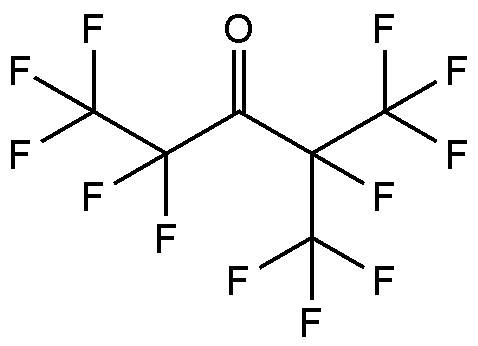
Perfluoro(2-methyl-3-pentanone) (CAS No.: 756-13-8)Perfluoro(2-methyl-3-pentanone) (CAS No.: 756-13-8)
(2) 리튬 이차 전지의 제조(2) Manufacturing of lithium secondary batteries
양극 활물질로서 LiCoO2, 바인더로서 폴리비닐리덴 플루오라이드 및 도전재로서 아세틸렌 블랙을 각각 96:3:1의 중량비로 혼합하여, N-메틸 피롤리돈에 분산시켜 양극 활물질 슬러리를 제조하였다.LiCoO 2 as a cathode active material, polyvinylidene fluoride as a binder, and acetylene black as a conductive material were mixed in a weight ratio of 96:3:1, respectively, and dispersed in N -methyl pyrrolidone to prepare a cathode active material slurry.
상기 양극 활물질 슬러리를 15 ㎛ 두께의 Al 포일 위에 코팅하고, 100℃에서 건조한 후, 압연(press)하여 양극을 제조하였다.The above positive electrode active material slurry was coated on a 15 ㎛ thick Al foil, dried at 100°C, and then pressed to manufacture a positive electrode.
음극 활물질로서 인조 흑연을 사용하였으며, 음극 활물질과 스티렌-부타디엔 고무 바인더 및 카르복시메틸셀룰로오스를 각각 98:1:1의 중량비로 혼합하여, 증류수에 분산시켜 음극 활물질 슬러리를 제조하였다.Artificial graphite was used as a negative active material, and the negative active material, styrene-butadiene rubber binder, and carboxymethyl cellulose were mixed in a weight ratio of 98:1:1, respectively, and dispersed in distilled water to prepare a negative active material slurry.
상기 음극 활물질 슬러리를 10㎛ 두께의 Cu 포일 위에 코팅하고, 100℃에서 건조한 후, 압연(press)하여 음극을 제조하였다. 이때, 음극의 합제 밀도는 1.7 g/cc가 되도록 하였다.The above negative active material slurry was coated on a 10 μm thick Cu foil, dried at 100°C, and pressed to manufacture a negative electrode. At this time, the composite density of the negative electrode was set to 1.7 g/cc.
상기 양극 및 상기 음극과 두께 10㎛의 폴리에틸렌 재질의 세퍼레이터를 조립하여 전극 조립체를 제조하고 상기 전해액을 주입하여 리튬 이차 전지를 제조하였다.An electrode assembly was manufactured by assembling the positive electrode and the negative electrode and a separator made of polyethylene material having a thickness of 10 μm, and the electrolyte was injected to manufacture a lithium secondary battery.
실시예 2Example 2
전해액 제조 시 10 중량%의 제1 첨가제, 1 중량%의 제2 첨가제, 및 1 중량%의 제3 첨가제를 첨가한 점을 제외하고는, 실시예 1과 동일한 방법으로 전해액 및 리튬 이차 전지를 제조하였다.An electrolyte and a lithium secondary battery were manufactured in the same manner as in Example 1, except that 10 wt% of the first additive, 1 wt% of the second additive, and 1 wt% of the third additive were added during the manufacture of the electrolyte.
실시예 3Example 3
전해액 제조 시 10 중량%의 제1 첨가제, 1 중량%의 제2 첨가제, 및 2 중량%의 제3 첨가제를 첨가한 점을 제외하고는, 실시예 1과 동일한 방법으로 전해액 및 리튬 이차 전지를 제조하였다.An electrolyte and a lithium secondary battery were manufactured in the same manner as in Example 1, except that 10 wt% of the first additive, 1 wt% of the second additive, and 2 wt% of the third additive were added during the manufacture of the electrolyte.
실시예 4Example 4
전해액 제조 시 10 중량%의 제1 첨가제, 1 중량%의 제2 첨가제, 및 2 중량%의 제3 첨가제를 첨가하고, 음극 제조 시 합제 밀도는 1.75 g/cc가 되도록 한 점을 제외하고는, 실시예 1과 동일한 방법으로 전해액 및 리튬 이차 전지를 제조하였다.An electrolyte and a lithium secondary battery were manufactured in the same manner as in Example 1, except that 10 wt% of the first additive, 1 wt% of the second additive, and 2 wt% of the third additive were added when manufacturing the electrolyte, and that the density of the composite was set to 1.75 g/cc when manufacturing the negative electrode.
실시예 5Example 5
전해액 제조 시 10 중량%의 제1 첨가제, 1 중량%의 제2 첨가제, 및 2 중량%의 제3 첨가제를 첨가하고, 음극 제조 시 합제 밀도는 1.8 g/cc가 되도록 한 점을 제외하고는, 실시예 1과 동일한 방법으로 전해액 및 리튬 이차 전지를 제조하였다.An electrolyte and a lithium secondary battery were manufactured in the same manner as in Example 1, except that 10 wt% of the first additive, 1 wt% of the second additive, and 2 wt% of the third additive were added when manufacturing the electrolyte, and that the density of the composite was set to 1.8 g/cc when manufacturing the negative electrode.
비교예 1 Comparative Example 1
전해액 제조 시 첨가제를 전혀 첨가하지 않고, 음극 제조 시 합제 밀도는 1.65 g/cc가 되도록 한 점을 제외하고는, 실시예 1과 동일한 방법으로 전해액 및 리튬 이차 전지를 제조하였다.An electrolyte and a lithium secondary battery were manufactured in the same manner as in Example 1, except that no additives were added during the manufacture of the electrolyte and the composite density was set to 1.65 g/cc during the manufacture of the negative electrode.
비교예 2Comparative Example 2
전해액 제조 시 첨가제를 전혀 첨가하지 않고, 음극 제조 시 합제 밀도는 1.67 g/cc가 되도록 한 점을 제외하고는, 실시예 1과 동일한 방법으로 전해액 및 리튬 이차 전지를 제조하였다.An electrolyte and a lithium secondary battery were manufactured in the same manner as in Example 1, except that no additives were added during the manufacture of the electrolyte and the composite density was set to 1.67 g/cc during the manufacture of the negative electrode.
비교예 3Comparative Example 3
전해액 제조 시 첨가제를 전혀 첨가하지 않고, 음극 제조 시 합제 밀도는 1.7 g/cc가 되도록 한 점을 제외하고는, 실시예 1과 동일한 방법으로 전해액 및 리튬 이차 전지를 제조하였다.An electrolyte and a lithium secondary battery were manufactured in the same manner as in Example 1, except that no additives were added during the manufacture of the electrolyte and the composite density was set to 1.7 g/cc during the manufacture of the negative electrode.
비교예 4Comparative Example 4
전해액 제조 시 제2 첨가제 및 제3 첨가제는 첨가하지 않고, 10 중량%의 제1 첨가제를 첨가하고, 음극 제조 시 합제 밀도는 1.7 g/cc가 되도록 한 점을 제외하고는, 실시예 1과 동일한 방법으로 전해액 및 리튬 이차 전지를 제조하였다.An electrolyte and a lithium secondary battery were manufactured in the same manner as in Example 1, except that the second and third additives were not added when manufacturing the electrolyte, 10 wt% of the first additive was added, and the density of the composite was set to 1.7 g/cc when manufacturing the negative electrode.
비교예 5Comparative Example 5
전해액 제조 시 제1 첨가제 및 제3 첨가제는 첨가하지 않고, 1 중량%의 제2 첨가제를 첨가하고, 음극 제조 시 합제 밀도는 1.7 g/cc가 되도록 한 점을 제외하고는, 실시예 1과 동일한 방법으로 전해액 및 리튬 이차 전지를 제조하였다.An electrolyte and a lithium secondary battery were manufactured in the same manner as in Example 1, except that the first and third additives were not added when manufacturing the electrolyte, 1 wt% of the second additive was added, and the density of the composite was set to 1.7 g/cc when manufacturing the negative electrode.
비교예 6Comparative Example 6
전해액 제조 시 제1 첨가제 및 제2 첨가제는 첨가하지 않고, 1 중량%의 제3 첨가제를 첨가하고, 음극 제조 시 합제 밀도는 1.7 g/cc가 되도록 한 점을 제외하고는, 실시예 1과 동일한 방법으로 전해액 및 리튬 이차 전지를 제조하였다.An electrolyte and a lithium secondary battery were manufactured in the same manner as in Example 1, except that the first and second additives were not added when manufacturing the electrolyte, 1 wt% of the third additive was added, and the density of the composite was set to 1.7 g/cc when manufacturing the negative electrode.
평가예Evaluation example
하기와 같은 방법으로 음극 및 리튬 이차 전지를 평가하였다.The cathode and lithium secondary battery were evaluated in the following manner.
평가 1: 음극에 대한 전해액의 함침성Evaluation 1: Impregnation of electrolyte into the cathode
실시예 1에 따른 음극을 가로*세로=3 cm*5 cm의 시편으로 제조하였다. 상기 시편 상에 실시예 1에 따른 전해액을 0.02 g 떨어뜨리고, 1 분 동안 방치하였다. 이후, 상기 시편 상에 떨어뜨린 전해액 100 중량% 중에 상기 시편에 침지된 전해액의 양을 하기 기준에 따라 0 내지 5의 수치로 평가하고, 그 평가 결과를 하기 표 1에 기재하였다.A negative electrode according to Example 1 was manufactured into a specimen measuring 3 cm x 5 cm in length x width. 0.02 g of the electrolyte according to Example 1 was dropped onto the specimen and left for 1 minute. Thereafter, the amount of the electrolyte immersed in the specimen among 100 wt% of the electrolyte dropped onto the specimen was evaluated as a numerical value from 0 to 5 according to the following criteria, and the evaluation results are recorded in Table 1 below.
0: 시편에 침지된 전해액의 양이 0 중량% 이상 10 중량% 미만인 경우0: When the amount of electrolyte immersed in the specimen is 0 wt% or more and less than 10 wt%
1: 시편에 침지된 전해액의 양이 10 중량% 이상 20 중량% 미만인 경우1: When the amount of electrolyte immersed in the specimen is 10 wt% or more and less than 20 wt%
2: 시편에 침지된 전해액의 양이 20 중량% 이상 40 중량% 미만인 경우2: When the amount of electrolyte immersed in the specimen is 20 wt% or more and less than 40 wt%
3: 시편에 침지된 전해액의 양이 40 중량% 이상 60 중량% 미만인 경우3: When the amount of electrolyte immersed in the specimen is 40 wt% or more and less than 60 wt%
4: 시편에 침지된 전해액의 양이 60 중량% 이상 80 중량% 미만인 경우4: When the amount of electrolyte immersed in the specimen is 60 wt% or more and less than 80 wt%
5: 시편에 침지된 전해액의 양이 80 중량% 이상 100 중량% 미만인 경우5: When the amount of electrolyte immersed in the specimen is 80 wt% or more and less than 100 wt%
실시예 2 내지 5 및 비교예 1 내지 6에 대해서도 동일한 방법으로 평가하고, 그 평가 결과를 하기 표 1에 기재하였다.Examples 2 to 5 and Comparative Examples 1 to 6 were evaluated using the same method, and the evaluation results are shown in Table 1 below.
전해액의 함침성For the cathode
Impregnation of electrolyte
평가 2: 고온 및 고전압 충방전 사이클 특성 평가Evaluation 2: Evaluation of high temperature and high voltage charge/discharge cycle characteristics
45℃, 2.0C 충전 (CC/CV, 4.53V, 0.025C Cut-off) /1.0C 방전 (CC, 3V Cut-off) 조건에서 리튬 이차 전지의 충방전 사이클을 200회 진행하였다.The lithium secondary battery was subjected to 200 charge/discharge cycles under the conditions of 45℃, 2.0C charge (CC/CV, 4.53 V, 0.025 C Cut-off) / 1.0C discharge (CC, 3 V Cut-off).
두께 증가율은 하기 식 1에 따라 계산하고, 용량 유지율은 하기 식 2에 따라 계산하여, 그 결과를 하기 표 2에 기재하였다.The thickness increase rate is calculated according to Equation 1 below, and the capacity retention rate is calculated according to Equation 2 below, and the results are shown in Table 2 below.
[식 1][Formula 1]
두께 증가율 = {(200 cycle 후 만충 두께) - (1 cycle 후 만충 두께)}/(1 cycle 후 만충 두께) * 100Thickness increase rate = {(Full thickness after 200 cycles) - (Full thickness after 1 cycle)}/(Full thickness after 1 cycle) * 100
상기 식 1에서 "만충 두께"란 각 사이클 후 SOC 100%(전지 전체 충전 용량을 100%로 하였을 때, 100% 충전 용량이 되도록 충전한 상태)로 충전을 실시한 후 측정한 리튬 이차 전지의 두께를 의미한다.In the above equation 1, the “full charge thickness” refers to the thickness of the lithium secondary battery measured after charging to 100% SOC (a state in which the battery is charged to 100% charge capacity when the total charge capacity of the battery is 100%) after each cycle.
[식 2][Formula 2]
용량 유지율 = (200 cycle 후 방전 용량 / 1 cycle 후 방전 용량) * 100Capacity retention rate = (discharge capacity after 200 cycles / discharge capacity after 1 cycle) * 100
고온 및 고전압 충방전 특성Lithium secondary battery
High temperature and high voltage charge/discharge characteristics
종합synthesis
상기 표 1 및 2를 참고하면, 첨가제를 전혀 첨가하지 않은 전해액을 사용하는 경우(비교예 1 내지 3), 음극의 합제 밀도를 1.65 g/cc에서 1.7 g/cc로 증가시킬수록, 음극에 대한 전해액의 함침성이 낮아지고, 고온 및 고전압 충방전 시 전지의 두께는 증가하며 고온 저장 시의 용량 유지율은 감소한다.Referring to Tables 1 and 2 above, when using an electrolyte without any additives (Comparative Examples 1 to 3), as the density of the negative electrode mixture increases from 1.65 g/cc to 1.7 g/cc, the impregnation property of the electrolyte into the negative electrode decreases, the thickness of the battery increases during high-temperature and high-voltage charge/discharge, and the capacity retention rate during high-temperature storage decreases.
그러나, 음극의 합제 밀도가 1.7 g/cc로 동일할 때, 첨가제를 전혀 첨가하지 않은 전해액을 사용하는 경우(비교예 3)에 대비하여, 상기 제1 첨가제 내지 상기 제3 첨가제를 동시에 포함하는 전해액을 사용하는 경우(실시예 1 내지 3), 음극에 대한 전해액의 함침성이 높아지고, 고온 및 고전압 충방전 시 전지의 두께는 감소하며 수명은 감소한다.However, when the composite density of the negative electrode is the same as 1.7 g/cc, and when an electrolyte containing the first to third additives is used simultaneously (Examples 1 to 3) compared to when an electrolyte without any additives is used (Comparative Example 3), the impregnation property of the electrolyte into the negative electrode increases, and the thickness of the battery decreases and the lifespan decreases during high-temperature and high-voltage charge/discharge.
한편, 상기 제1 첨가제 내지 상기 제3 첨가제 중 어느 하나만 포함하는 전해액을 사용하는 경우(비교예 4 내지 6), 음극 표면에서 SEI 피막이 불안정하게 형성되어 리튬 덴드라이트가 성장하고, 이에 따라 고온 및 고전압 충방전 시의 용량 유지율이 급락하게 된다. 이에, 상기 제1 첨가제 내지 상기 제3 첨가제를 동시에 포함하는 전해액을 사용할 필요가 있다.Meanwhile, when using an electrolyte containing only one of the first to third additives (Comparative Examples 4 to 6), an SEI film is formed unstably on the surface of the negative electrode, causing lithium dendrites to grow, and thus the capacity retention rate during high-temperature and high-voltage charge/discharge is rapidly reduced. Therefore, it is necessary to use an electrolyte containing the first to third additives simultaneously.
나아가, 상기 제1 첨가제 내지 상기 제3 첨가제를 동시에 포함하는 전해액을 사용하는 경우, 음극의 합제 밀도를 1.7 g/cc에서 1.8 g/cc로 증가시키더라도(실시예 4 및 5), 고온 및 고전압 충방전 시 전지의 두께 증가 및 수명 감소가 억제된다.Furthermore, when using an electrolyte containing the first to third additives simultaneously, even if the composite density of the negative electrode is increased from 1.7 g/cc to 1.8 g/cc (Examples 4 and 5), the increase in the thickness of the battery and the decrease in the lifespan are suppressed during high-temperature and high-voltage charge and discharge.
이상을 통해 본 발명의 바람직한 실시예에 대하여 설명하였지만, 본 발명은 이에 한정되는 것이 아니고 특허청구범위와 발명의 상세한 설명 및 첨부한 도면의 범위 안에서 여러 가지로 변형하여 실시하는 것이 가능하고 이 또한 본 발명의 범위에 속하는 것은 당연하다.Although the preferred embodiments of the present invention have been described above, the present invention is not limited thereto, and various modifications may be made within the scope of the claims, the detailed description of the invention, and the attached drawings, which also fall within the scope of the present invention.
100: 리튬 이차 전지
10: 양극
11: 양극 리드탭
12: 양극 단자
20: 음극
21: 음극 리드탭
22: 음극 단자
30: 세퍼레이터
40: 전극 조립체
50: 케이스
60: 밀봉 부재
70: 전극탭
71: 양극탭
72: 음극탭100: Lithium secondary battery 10: Cathode
11: Positive lead tab 12: Positive terminal
20: Negative 21: Negative lead tab
22: Negative terminal 30: Separator
40: Electrode assembly 50: Case
60: Sealing member 70: Electrode tab
71: Positive tab 72: Negative tab
Claims (17)
음극 활물질을 포함하는 음극; 및
전해액을 포함하되,
상기 음극의 합제 밀도는 1.7 g/cc 이상이고,
상기 전해액은
리튬염;
비수성 유기 용매;
하기 화학식 1로 표시되는 제1 첨가제;
하기 화학식 2로 표시되는 제2 첨가제; 및
하기 화학식 3으로 표시되는 제3 첨가제를 포함하는,
리튬 이차 전지:
[화학식 1]

상기 화학식 1에서,
R1 및 R2는 각각 독립적으로, 불소 원자, 또는 탄소수 1 내지 10의 플루오로알킬기이고;
[화학식 2]

상기 화학식 2에서,
R3 및 R4는 각각 독립적으로, 할로겐 원자, 또는 탄소수 1 내지 10의 플루오로알킬기이고;
[화학식 3]

상기 화학식 3에서,
R5 및 R6은 각각 독립적으로, 불소 원자, 또는 탄소수 1 내지 10의 플루오로알킬기이다.
A cathode comprising a cathode active material;
A negative electrode comprising a negative active material; and
Including electrolyte,
The composite density of the above negative electrode is 1.7 g/cc or more,
The above electrolyte is
lithium salt;
non-aqueous organic solvent;
A first additive represented by the following chemical formula 1;
A second additive represented by the following chemical formula 2; and
Containing a third additive represented by the following chemical formula 3,
Lithium secondary battery:
[Chemical Formula 1]
In the above chemical formula 1,
R 1 and R 2 are each independently a fluorine atom or a fluoroalkyl group having 1 to 10 carbon atoms;
[Chemical formula 2]
In the above chemical formula 2,
R 3 and R 4 are each independently a halogen atom or a fluoroalkyl group having 1 to 10 carbon atoms;
[Chemical Formula 3]
In the above chemical formula 3,
R 5 and R 6 are each independently a fluorine atom or a fluoroalkyl group having 1 to 10 carbon atoms.
상기 제1 첨가제는 하기 화학식 1-1로 표시되는 리튬 이차 전지:
[화학식 1-1]
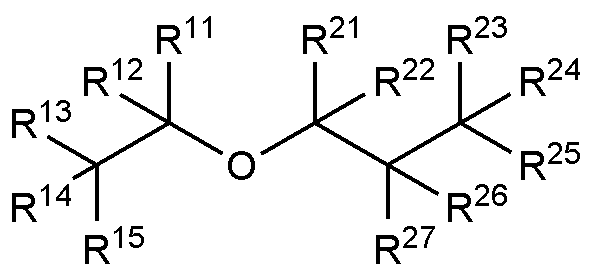
상기 화학식 1-1에서,
R11 내지 R15는 각각 수소 원자 또는 불소 원자이되, 상기 R11 내지 R15 중 적어도 하나는 불소 원자이고;
R21 내지 R27은 각각 수소 원자 또는 불소 원자이되, 상기 R21 내지 R27 중 적어도 하나는 불소 원자이다.
In paragraph 1,
The above first additive is a lithium secondary battery represented by the following chemical formula 1-1:
[Chemical Formula 1-1]
In the above chemical formula 1-1,
R 11 to R 15 are each a hydrogen atom or a fluorine atom, wherein at least one of R 11 to R 15 is a fluorine atom;
R 21 to R 27 are each a hydrogen atom or a fluorine atom, and at least one of R 21 to R 27 is a fluorine atom.
상기 제1 첨가제는 하기 화학식 1-1-1로 표시되는 리튬 이차 전지:
[화학식 1-1-1]

In paragraph 1,
The above first additive is a lithium secondary battery represented by the following chemical formula 1-1-1:
[Chemical Formula 1-1-1]
R3 및 R4는 모두 불소 원자인 리튬 이차 전지.
In paragraph 1,
Lithium secondary battery where R 3 and R 4 are both fluorine atoms.
상기 제3 첨가제는 하기 화학식 3-1로 표시되는 리튬 이차 전지:
[화학식 3-1]
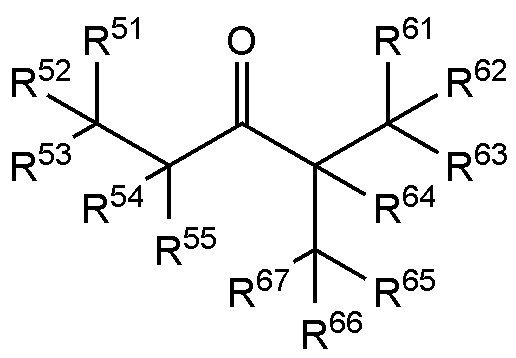
상기 화학식 3-1에서,
R51 내지 R55는 각각 수소 원자 또는 불소 원자이되, 상기 R31 내지 R35 중 적어도 하나는 불소 원자이고;
R61 내지 R67은 각각 수소 원자 또는 불소 원자이되, 상기 R41 내지 R47 중 적어도 하나는 불소 원자이다.
In paragraph 1,
The third additive is a lithium secondary battery represented by the following chemical formula 3-1:
[Chemical Formula 3-1]
In the above chemical formula 3-1,
R 51 to R 55 are each a hydrogen atom or a fluorine atom, and at least one of R 31 to R 35 is a fluorine atom;
R 61 to R 67 are each a hydrogen atom or a fluorine atom, and at least one of R 41 to R 47 is a fluorine atom.
상기 제3 첨가제는 하기 화학식 3-1-1로 표시되는 리튬 이차 전지:
[화학식 3-1-1]
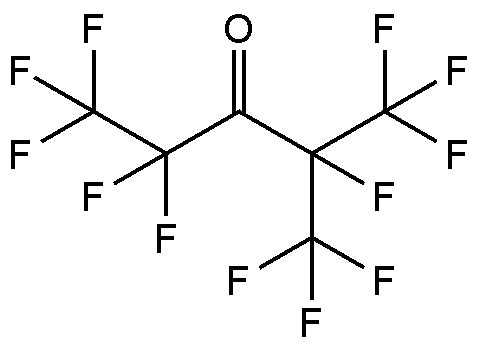
In paragraph 1,
The third additive is a lithium secondary battery represented by the following chemical formula 3-1-1:
[Chemical Formula 3-1-1]
상기 제1 첨가제는, 상기 전해액의 총량에 대해, 1 내지 20 중량%로 포함되는 리튬 이차 전지.
In paragraph 1,
A lithium secondary battery, wherein the first additive is included in an amount of 1 to 20 wt% based on the total amount of the electrolyte.
상기 제2 첨가제는, 상기 전해액의 총량에 대해, 1 내지 10 중량%로 포함되는 리튬 이차 전지.
In paragraph 1,
A lithium secondary battery, wherein the second additive is included in an amount of 1 to 10 wt% based on the total amount of the electrolyte.
상기 제3 첨가제는, 상기 전해액의 총량에 대해, 1 내지 10 중량%로 포함되는 리튬 이차 전지.
In paragraph 1,
A lithium secondary battery, wherein the third additive is included in an amount of 1 to 10 wt% based on the total amount of the electrolyte.
상기 제1 첨가제 10 중량부에 대하여, 상기 제2 첨가제는 1 내지 100 중량부 포함되고, 상기 제3 첨가제는 1 내지 100 중량부 포함되는 리튬 이차 전지.
In paragraph 1,
A lithium secondary battery, wherein the second additive is contained in an amount of 1 to 100 parts by weight, and the third additive is contained in an amount of 1 to 100 parts by weight, relative to 10 parts by weight of the first additive.
상기 비수성 유기 용매는 카보네이트계 용매 및 프로피오네이트계 용매를 포함하는 리튬 이차 전지.
In paragraph 1,
A lithium secondary battery wherein the non-aqueous organic solvent includes a carbonate solvent and a propionate solvent.
상기 프로피오네이트계 용매는, 상기 비수성 유기 용매의 총량에 대해, 70 부피% 이상 포함되는 리튬 이차 전지.
In Article 11,
A lithium secondary battery, wherein the propionate solvent is contained in an amount of 70% by volume or more based on the total amount of the non-aqueous organic solvent.
상기 리튬염은 LiPF6인 리튬 이차 전지.
In paragraph 1,
The above lithium salt is LiPF 6 , a lithium secondary battery.
상기 리튬염의 농도는 0.1M 내지 2.0M인 리튬 이차 전지.
In paragraph 1,
A lithium secondary battery wherein the concentration of the lithium salt is 0.1 M to 2.0 M.
상기 양극 활물질은 리튬 니켈계 산화물, 리튬 코발트계 산화물, 리튬 망간계 산화물, 리튬인산철계 화합물, 코발트-프리 니켈-망간계 산화물, 또는 이들의 조합을 포함하는 리튬 이차 전지.
In paragraph 1,
A lithium secondary battery wherein the positive electrode active material comprises lithium nickel-based oxide, lithium cobalt-based oxide, lithium manganese-based oxide, lithium iron phosphate-based compound, cobalt-free nickel-manganese oxide, or a combination thereof.
상기 음극 활물질은 탄소계 음극 활물질, Si계 음극 활물질, 또는 이들의 조합을 포함하는 리튬 이차 전지.
In paragraph 1,
A lithium secondary battery wherein the negative electrode active material includes a carbon-based negative electrode active material, a Si-based negative electrode active material, or a combination thereof.
상기 리튬 이차 전지의 충전 상한 전압은 4.5 V 이상인 리튬 이차 전지.In paragraph 1,
A lithium secondary battery having an upper limit charge voltage of 4.5 V or higher.
Priority Applications (5)
| Application Number | Priority Date | Filing Date | Title |
|---|---|---|---|
| KR1020230098399A KR20250017536A (en) | 2023-07-27 | 2023-07-27 | Rechargeable lithium battery including the same |
| US18/666,680 US20250046868A1 (en) | 2023-07-27 | 2024-05-16 | Rechargeable lithium battery |
| JP2024084780A JP7834132B2 (en) | 2023-07-27 | 2024-05-24 | Lithium-ion battery |
| EP24190182.6A EP4507051A3 (en) | 2023-07-27 | 2024-07-23 | Rechargeable lithium battery |
| CN202410989964.7A CN119381559A (en) | 2023-07-27 | 2024-07-23 | Rechargeable lithium battery |
Applications Claiming Priority (1)
| Application Number | Priority Date | Filing Date | Title |
|---|---|---|---|
| KR1020230098399A KR20250017536A (en) | 2023-07-27 | 2023-07-27 | Rechargeable lithium battery including the same |
Publications (1)
| Publication Number | Publication Date |
|---|---|
| KR20250017536A true KR20250017536A (en) | 2025-02-04 |
Family
ID=91966179
Family Applications (1)
| Application Number | Title | Priority Date | Filing Date |
|---|---|---|---|
| KR1020230098399A Pending KR20250017536A (en) | 2023-07-27 | 2023-07-27 | Rechargeable lithium battery including the same |
Country Status (5)
| Country | Link |
|---|---|
| US (1) | US20250046868A1 (en) |
| EP (1) | EP4507051A3 (en) |
| JP (1) | JP7834132B2 (en) |
| KR (1) | KR20250017536A (en) |
| CN (1) | CN119381559A (en) |
Family Cites Families (14)
| Publication number | Priority date | Publication date | Assignee | Title |
|---|---|---|---|---|
| JP4042416B2 (en) | 2001-03-21 | 2008-02-06 | 宇部興産株式会社 | Nonaqueous electrolyte and lithium secondary battery using the same |
| JP2013219186A (en) | 2012-04-09 | 2013-10-24 | Taiyo Yuden Co Ltd | Electrochemical device |
| KR20140022350A (en) * | 2012-08-14 | 2014-02-24 | 솔브레인 주식회사 | Electrolyte and lithium secondary battery comprising the same |
| WO2015087580A1 (en) | 2013-12-11 | 2015-06-18 | 日本電気株式会社 | Production method for secondary battery |
| US10541444B2 (en) * | 2014-12-26 | 2020-01-21 | Samsung Sdi Co., Ltd. | Rechargeable lithium battery |
| WO2019171796A1 (en) | 2018-03-07 | 2019-09-12 | Jfeケミカル株式会社 | Method for manufacturing negative electrode material for lithium ion secondary battery |
| US11949097B2 (en) | 2018-08-29 | 2024-04-02 | Panasonic Intellectual Property Management Co., Ltd. | Nonaqueous electrolyte secondary battery |
| JP2020113386A (en) | 2019-01-09 | 2020-07-27 | 日立化成株式会社 | Electrolyte, electrolytic slurry composition and secondary battery |
| CN113950765A (en) | 2019-06-05 | 2022-01-18 | 大金工业株式会社 | Electrolyte for alkali metal ion secondary battery, and module |
| KR102537228B1 (en) * | 2019-07-31 | 2023-05-26 | 삼성에스디아이 주식회사 | Electrolyte additive for lithium secondary battery, electrolyte for lithium secondary battery including the electrolyte additive, and lithium secondary battery including the electrolyte |
| CN112820941B (en) | 2019-11-15 | 2022-10-28 | 浙江中蓝新能源材料有限公司 | Composition for electrolyte |
| JP7268796B2 (en) | 2020-02-20 | 2023-05-08 | 株式会社豊田自動織機 | lithium ion secondary battery |
| US20230037790A1 (en) | 2021-07-06 | 2023-02-09 | Uchicago Argonne, Llc | Green electrolytes for electrochemical energy storage |
| CN116315077B (en) * | 2022-11-30 | 2024-06-04 | 九江天赐高新材料有限公司 | Electrolyte combination, secondary injection method and lithium secondary battery |
-
2023
- 2023-07-27 KR KR1020230098399A patent/KR20250017536A/en active Pending
-
2024
- 2024-05-16 US US18/666,680 patent/US20250046868A1/en active Pending
- 2024-05-24 JP JP2024084780A patent/JP7834132B2/en active Active
- 2024-07-23 EP EP24190182.6A patent/EP4507051A3/en active Pending
- 2024-07-23 CN CN202410989964.7A patent/CN119381559A/en active Pending
Also Published As
| Publication number | Publication date |
|---|---|
| CN119381559A (en) | 2025-01-28 |
| EP4507051A3 (en) | 2025-03-05 |
| EP4507051A2 (en) | 2025-02-12 |
| JP2025018928A (en) | 2025-02-06 |
| JP7834132B2 (en) | 2026-03-23 |
| US20250046868A1 (en) | 2025-02-06 |
Similar Documents
| Publication | Publication Date | Title |
|---|---|---|
| KR20250017533A (en) | Rechargeable lithium battery including the same | |
| KR20250017538A (en) | Electrolyte for rechargeable lithium battery and rechargeable lithium battery including the same | |
| KR20250032539A (en) | Electrolyte for rechargeable lithium battery and rechargeable lithium battery including same | |
| KR20250136595A (en) | Electrolyte for rechargeable lithium battery and rechargeable lithium battery including the same | |
| KR20250096468A (en) | Electrolyte for rechargeable lithium battery and rechargeable lithium battery including the same | |
| KR20250010386A (en) | Electrolyte and rechargeable lithium battery including the same | |
| KR20250010385A (en) | Rechargeable lithium battery | |
| EP4507051A2 (en) | Rechargeable lithium battery | |
| KR20250017535A (en) | Rechargeable lithium battery including the same | |
| KR20250017531A (en) | Rechargeable lithium battery including the same | |
| KR20250017534A (en) | Rechargeable lithium battery including the same | |
| KR20250017532A (en) | Electrolyte for rechargeable lithium battery and rechargeable lithium battery including the same | |
| KR20250017537A (en) | Electrolyte for rechargeable lithium battery and rechargeable lithium battery including the same | |
| KR102908010B1 (en) | Electrolyte additives for rechargeable lithium battery, electrolyte including the same, and rechargeable lithium battery including the same | |
| KR20250017627A (en) | Rechargeable lithium battery including the same | |
| US20250038258A1 (en) | Electrolyte for rechargeable lithium battery and rechargeable lithium battery including the same | |
| KR20250017529A (en) | Rechargeable lithium battery including the same | |
| KR20250094335A (en) | Electrolyte for rechargeable lithium battery and rechargeable lithium battery including the same | |
| KR20250065085A (en) | Electrolyte for rechargeable lithium battery and rechargeable lithium battery including the same | |
| KR20250049833A (en) | Electrolyte for rechargeable lithium battery and rechargeable lithium battery including the same | |
| KR20250074157A (en) | Electrolyte for rechargeable lithium battery and rechargeable lithium battery including the same | |
| KR20250043142A (en) | Electrolyte for rechargeable lithium battery and rechargeable lithium battery including the same | |
| KR20260034815A (en) | Electrolyte for rechargeable lithium battery and rechargeable lithium battery including the same | |
| KR20250172982A (en) | The electrolyte for rechargeable lithium battery and rechargeable lithium battery including the same | |
| KR20250136607A (en) | Electrolyte for rechargeable lithium battery and rechargeable lithium battery including the same |
Legal Events
| Date | Code | Title | Description |
|---|---|---|---|
| PA0109 | Patent application |
St.27 status event code: A-0-1-A10-A12-nap-PA0109 |
|
| PA0201 | Request for examination |
St.27 status event code: A-1-2-D10-D11-exm-PA0201 |
|
| PG1501 | Laying open of application |
St.27 status event code: A-1-1-Q10-Q12-nap-PG1501 |
|
| D13 | Search requested |
Free format text: ST27 STATUS EVENT CODE: A-1-2-D10-D13-SRH-X000 (AS PROVIDED BY THE NATIONAL OFFICE) |
|
| D13-X000 | Search requested |
St.27 status event code: A-1-2-D10-D13-srh-X000 |
|
| D14 | Search report completed |
Free format text: ST27 STATUS EVENT CODE: A-1-2-D10-D14-SRH-X000 (AS PROVIDED BY THE NATIONAL OFFICE) |
|
| D14-X000 | Search report completed |
St.27 status event code: A-1-2-D10-D14-srh-X000 |
|
| D21 | Rejection of application intended |
Free format text: ST27 STATUS EVENT CODE: A-1-2-D10-D21-EXM-PE0902 (AS PROVIDED BY THE NATIONAL OFFICE) |
|
| PE0902 | Notice of grounds for rejection |
St.27 status event code: A-1-2-D10-D21-exm-PE0902 |
|
| T11 | Administrative time limit extension requested |
Free format text: ST27 STATUS EVENT CODE: U-3-3-T10-T11-OTH-X000 (AS PROVIDED BY THE NATIONAL OFFICE) |
|
| T11-X000 | Administrative time limit extension requested |
St.27 status event code: U-3-3-T10-T11-oth-X000 |
|
| E13 | Pre-grant limitation requested |
Free format text: ST27 STATUS EVENT CODE: A-2-3-E10-E13-LIM-X000 (AS PROVIDED BY THE NATIONAL OFFICE) |
|
| E13-X000 | Pre-grant limitation requested |
St.27 status event code: A-2-3-E10-E13-lim-X000 |
|
| P11 | Amendment of application requested |
Free format text: ST27 STATUS EVENT CODE: A-2-2-P10-P11-NAP-X000 (AS PROVIDED BY THE NATIONAL OFFICE) |
|
| P11-X000 | Amendment of application requested |
St.27 status event code: A-2-2-P10-P11-nap-X000 |