RU2034110C1 - Method for determination of amount of nonfrozen water in frozen grounds - Google Patents
Method for determination of amount of nonfrozen water in frozen grounds Download PDFInfo
- Publication number
- RU2034110C1 RU2034110C1 SU5039251A RU2034110C1 RU 2034110 C1 RU2034110 C1 RU 2034110C1 SU 5039251 A SU5039251 A SU 5039251A RU 2034110 C1 RU2034110 C1 RU 2034110C1
- Authority
- RU
- Russia
- Prior art keywords
- temperature
- sample
- thawing
- time
- amount
- Prior art date
Links
Images
Landscapes
- Investigating Or Analyzing Materials Using Thermal Means (AREA)
- Sampling And Sample Adjustment (AREA)
Abstract
Description
Изобретение относится к строительству на мерзлых грунтах, а именно к определению несущей способности оснований. The invention relates to the construction on frozen soils, and in particular to the determination of the bearing capacity of the bases.
Известен способ определения количества незамерзшей воды в мерзлых грунтах, основанный на измерении теплового эффекта при оттаивании образцов мерзлого грунта в калорифере [1] Способ реализуют следующим образом. Приготовленный образец замораживают в холодильной камере и переносят в калорифер. После чего производят отсчет температуры через равные промежутки времени до полного оттаивания образца. Затем производят обработку данных измерения и вычисляют количество незамерзшей воды. Выполнение способа требует знания множества промежуточных параметров, значительной трудоемкости при измерении и обработке результатов. There is a method of determining the amount of unfrozen water in frozen soils, based on measuring the thermal effect when thawing samples of frozen soil in a heater [1] The method is implemented as follows. The prepared sample is frozen in a refrigerator and transferred to a heater. After that, the temperature is taken at regular intervals until the sample is completely thawed. Then the measurement data are processed and the amount of unfrozen water is calculated. The implementation of the method requires knowledge of many intermediate parameters, considerable laboriousness in measuring and processing the results.
Известен также способ определения количества незамерзшей воды в мерзлых грунтах [2] который позволяет определить количество незамерзшей воды по температурам оттаивания предварительно замороженных образцов одного и того же грунта с различной исходной влажностью. Для определения количества незамерзшей воды приготавливают несколько образцов исходного грунта с различной влажностью, замораживают их, предварительно поместив в центр образца датчик температуры. После замораживания образец грунта с датчиком температуры помещают в среду с постоянной положительной температурой и производят оттаивание образца, регистрируя его температуру через равные промежутки времени. После завершения оттаивания строят график изменения температуры образца во времени и определяют точку перегиба графика, свидетельствующую об окончании процесса оттаивания порового льда в образце грунта. Количество незамерзшей воды в этот момент будет равно влажности образца, а температура, соответствующая этой точке, будет температурой оттаивания образца. Произведя оттаивание всех замороженных образцов, построив графики изменения температуры и определив температуры оттаивания всех образцов, строят графическую зависимость температур оттаивания образцов данного грунта от их влажности. Данная зависимость представляет искомую зависимость количества незамерзшей воды от температуры. There is also a method for determining the amount of unfrozen water in frozen soils [2] which allows you to determine the amount of unfrozen water by the thawing temperature of pre-frozen samples of the same soil with different initial humidity. To determine the amount of unfrozen water, several samples of the initial soil with different humidity are prepared, they are frozen, having previously placed a temperature sensor in the center of the sample. After freezing, a soil sample with a temperature sensor is placed in a medium with a constant positive temperature and the sample is thawed, recording its temperature at regular intervals. After completion of thawing, a graph of the temperature change of the sample over time is built and the inflection point of the graph is determined, indicating the end of the process of thawing of pore ice in the soil sample. The amount of unfrozen water at this moment will be equal to the humidity of the sample, and the temperature corresponding to this point will be the defrosting temperature of the sample. Having thawed all frozen samples, built graphs of temperature changes and determined the thawing temperatures of all samples, build a graphical dependence of the thawing temperatures of samples of this soil on their moisture. This dependence represents the desired temperature dependence of the amount of unfrozen water.
Недостатком способа является низкая производительность. Для определения температурной зависимости содержания незамерзшей воды только одной разновидности грунта необходимо приготовить несколько образцов с различной влажностью, заморозить их и произвести последующее оттаивание каждого образца для определения температуры оттаивания. Количество определений должно быть не менее пяти. Кроме того слабая интенсивность фазовых переходов при низкой температуре влияет на точность определения температуры оттаивания образцов с незначительной влажностью и, соответственно, на точность определения количества незамерзшей воды. The disadvantage of this method is the low productivity. To determine the temperature dependence of the content of unfrozen water of only one type of soil, it is necessary to prepare several samples with different humidity, freeze them and then thaw each sample to determine the defrosting temperature. The number of definitions must be at least five. In addition, the low intensity of phase transitions at low temperatures affects the accuracy of determining the thawing temperature of samples with low humidity and, accordingly, the accuracy of determining the amount of unfrozen water.
Наиболее близким к предлагаемому является способ определения количества незамерзшей воды в мерзлых грунтах в течение одного эксперимента, основанный на измерении количества тепла, идущего на нагрев оттаивающего образца и плавление льда [3] Для осуществления способа образец грунта замораживают, выдерживают при отрицательной температуре, а затем производят оттаивание, непрерывно регистрируя температуру образца и количество тепла, затраченного на его нагрев и плавление льда. На основе полученных данных определяют графическую зависимость количества тепла от температуры, а количество незамерзшей воды определяют по формуле
Wн(t) e


b 
d 
Т температура, оС;
Wo суммарная влажность образца, доли ед.Closest to the proposed is a method for determining the amount of unfrozen water in frozen soils during one experiment, based on measuring the amount of heat used to heat the thawing sample and melting ice [3] To implement the method, the soil sample is frozen, kept at a negative temperature, and then produced thawing, continuously recording the temperature of the sample and the amount of heat expended in heating and melting the ice. Based on the data obtained, a graphical dependence of the amount of heat on temperature is determined, and the amount of unfrozen water is determined by the formula
W n (t) e
b
d
T temperature, o C;
W o the total humidity of the sample, fractions of units.
Q количество тепла, затраченного на нагревание системы грунт-вода-лед и фазовый переход влаги, Дж;
Св удельная теплоемкость воды, Дж/кг ˙ град;
Сгр удельная теплоемкость сухого грунта, Дж/кг ˙ град;
Сл удельная теплоемкость льда, Дж/кг ˙ град;
х скрытая теплота плавления льда, Дж/кг;
V объем образца, м3;
ρ объемная масса скелета грунта, кг/м3.Q is the amount of heat spent on heating the soil-water-ice system and the phase transition of moisture, J;
C in the specific heat of water, J / kg ˙ deg;
C gr specific heat of dry soil, J / kg ˙ hail;
C l specific heat of ice, J / kg ˙ deg;
x latent heat of melting ice, J / kg;
V sample volume, m 3 ;
ρ bulk density of the skeleton of the soil, kg / m 3 .
Осуществление этого способа требует знания большого числа исходных параметров грунта (объем образца, влажность, теплофизические свойства), которые необходимо определить до начала эксперимента. Большое число параметров грунта и членов расчетной формулы снижают точность определения количества незамерзшей воды. Недостатком способа также являются значительные затраты времени на вычислительные операции ввиду сложности расчетной формулы. Для измерения количества тепла, идущего на нагрев образца, необходимо, чтобы это тепло проходило только через датчики теплового потока, что требует изготовления специальной измерительной ячейки, наличия двух довольно дорогостоящих и редких датчиков теплового потока и измерительного прибора. The implementation of this method requires the knowledge of a large number of initial soil parameters (sample volume, humidity, thermal properties), which must be determined before the experiment. A large number of soil parameters and members of the calculation formula reduce the accuracy of determining the amount of unfrozen water. The disadvantage of this method is the significant time spent on computational operations due to the complexity of the calculation formula. To measure the amount of heat used to heat the sample, it is necessary that this heat pass only through the heat flux sensors, which requires the manufacture of a special measuring cell, the presence of two rather expensive and rare heat flux sensors and a measuring device.
Предлагаемый способ позволит снизить трудоемкость его осуществления при одновременном повышении точности определения количества незамерзшей воды в мерзлых грунтах. The proposed method will reduce the complexity of its implementation while improving the accuracy of determining the amount of unfrozen water in frozen soils.
Данный результат достигается тем, что в способе определения количества незамерзшей воды в мерзлых грунтах, включающем оттаивание предварительно замороженного образца, непрерывное измерение температуры образца при оттаивании с последующим определением количества незамерзшей воды по результатам измерений одного эксперимента, образец охлаждают до температуры ниже установленной температуры начала оттаивания для данного типа грунта. При последующем оттаивании при постоянной температуре среды производят одновременную регистрацию температуры образца и времени, после чего строят график изменения во времени логарифма избыточной температуры, определяемой как разность между температурой образца и температурой среды. По построенному графику определяют температуру и время начала оттаивания. Затем строят график изменения температуры образца во времени, по которому определяют температуру и время окончания оттаивания. Искомое количество незамерзшей воды устанавливают из соотношения
Wн(t) 
τн момент времени начала фазовых переходов в образце мерзлого грунта;
τот момент времени полного оттаивания образца мерзлого грунта;
We естественная влажность образца мерзлого грунта;
Wмг максимальная гигроскопическая влажность образца мерзлого грунта.This result is achieved by the fact that in the method for determining the amount of unfrozen water in frozen soils, including thawing a pre-frozen sample, continuously measuring the temperature of the sample during thawing and then determining the amount of unfrozen water according to the results of measurements of one experiment, the sample is cooled to a temperature below the set thawing temperature for this type of soil. During subsequent thawing at a constant temperature of the medium, the temperature of the sample and time are simultaneously recorded, after which a time graph is plotted of the logarithm of the excess temperature, defined as the difference between the temperature of the sample and the temperature of the medium. According to the constructed schedule, the temperature and time of the beginning of thawing are determined. Then build a graph of the temperature change of the sample in time, which determine the temperature and the end time of thawing. The desired amount of unfrozen water is determined from the ratio
W n (t)
τ n is the time instant of the beginning of phase transitions in a frozen soil sample;
τ from the instant of complete thawing of the frozen soil sample;
W e is the natural moisture content of the frozen soil sample;
W mg maximum hygroscopic humidity of the frozen soil sample.
Определение количества незамерзшей воды производится в диапазоне от температуры начала фазовых переходов (начала оттаивания) до температуры окончания фазовых потоков (окончания оттаивания). По результатам одного эксперимента получают любое количество определений содержания незамерзшей воды в образце мерзлого грунта при конкретных значениях температуры в этом температурном диапазоне. The amount of unfrozen water is determined in the range from the temperature of the beginning of phase transitions (the beginning of thawing) to the temperature of the end of phase flows (the end of thawing). According to the results of one experiment, any number of determinations of the content of unfrozen water in a sample of frozen soil is obtained at specific temperatures in this temperature range.
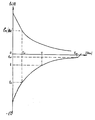
На чертеже показан график, изменения во времени логарифма избыточной температуры образца θ (θ t tср, где tср постоянная температуры среды) и изменения во времени температуры образца t.The drawing shows a graph, changes in time of the logarithm of the excess temperature of the sample θ (θ tt cf , where t cf is the constant temperature of the medium) and changes in time of the temperature of the sample t.
Поскольку образец грунта охлажден ниже температуры начала фазовых переходов (tн), оттаивание образца начинается в момент времени τн, когда температура образца в процессе теплообмена с окружающей средой достигнет значения tн. Определить момент времени τн и температуру tн начала фазовых переходов можно с помощью графика lnθ| f(τ). В начальный этап изменения температуры образца, когда отсутствуют фазовые переходы, вся грунтовая влага находится в твердом состоянии за исключением наиболее прочносвязанной электростатическими силами поверхности грунтовых частиц гигроскопической (адсорбированной) категории грунтовой влаги (1-3% от общего количества влаги в грунте), которая замерзает при очень низких температурах до минус 80-100оС. В реальных условиях эта категория грунтовой влаги в фазовых переходах не участвует. При отсутствии внутреннего источника тепла (фазовых переходов) график изменения логарифма избыточной температуры образца (lnθ|) во времени имеет прямолинейную зависимость. Начало таяния грунтового льда, протекающее с поглощением тепла, вносит искажение в график зависимости lnθ| f(τ), что отмечается отклонением линии графика от прямолинейной зависимости. Начало отклонения линии графика от прямолинейного направления соответствует моменту времени τн началу фазовых переходов в образце грунта. Количество незамерзшей воды при температуре tн в момент времени τн соответствует величине максимальной гигроскопической влажности. При постепенном повышении температуры образца выше tн в процессе теплообмена образца с окружающей средой грунтовый лед, содержащийся в образце грунта, постепенно переходит в жидкое состояние, увеличивая содержание незамерзшей воды, вплоть до температуры tот в момент времени τот, когда весь лед в образце растает, а содержание незамерзшей воды будет равно естественной влажности грунта. Окончание оттаивания отмечается резким перегибом графика изменения температуры во времени. В интервале температур от tн до tот каждому значению температуры образца t (и, следовательно, каждому моменту времени τ) будет соответствовать определенное количество незамерзшей воды в образце грунта. При любой заданной температуре t в интервале фазовых переходов грунтовой влаги от tн до tот количество незамерзшей воды находят по формуле
Wн(t) 
τн момент времени начала фазовых переходов в образце мерзлого грунта;
τот момент времени полного оттаивания образца мерзлого грунта;
Wе естественная влажность образца мерзлого грунта;
Wмг максимальная гигроскопическая влажность образца мерзлого грунта.Since the soil sample is cooled below the temperature of the onset of phase transitions (t n ), thawing of the sample begins at time τ n , when the temperature of the sample in the process of heat exchange with the environment reaches t n . The time instant τ n and the temperature t n of the onset of phase transitions can be determined using the graph lnθ | f (τ). At the initial stage of sample temperature change, when there are no phase transitions, all ground moisture is in a solid state, with the exception of the most strongly bonded electrostatic forces surface of the ground particles of the hygroscopic (adsorbed) category of ground moisture (1-3% of the total amount of moisture in the soil), which freezes at very low temperatures up to minus 80-100 о С. In real conditions this category of ground moisture does not participate in phase transitions. In the absence of an internal heat source (phase transitions), the graph of the change in the logarithm of the excess temperature of the sample (lnθ |) with time has a straightforward relationship. The beginning of ground ice melting, which proceeds with the absorption of heat, introduces a distortion in the graph of the dependence lnθ | f (τ), which is noted by the deviation of the graph line from the straightforward relationship. The beginning of the deviation of the graph line from the rectilinear direction corresponds to the time instant τ n the beginning of phase transitions in the soil sample. The amount of unfrozen water at a temperature t n at a time instant τ n corresponds to the maximum hygroscopic humidity. With a gradual increase in the temperature of the sample above t n in the process of heat exchange between the sample and the environment, the ground ice contained in the soil sample gradually turns into a liquid state, increasing the content of unfrozen water, up to the temperature t from at time τ from , when all the ice in the sample will melt, and the content of unfrozen water will be equal to the natural moisture of the soil. The end of thawing is marked by a sharp bend in the graph of the temperature change over time. In the temperature range from t n to t from each value of the temperature of the sample t (and, therefore, to each moment of time τ) there will correspond a certain amount of unfrozen water in the soil sample. At any given temperature t in the interval of phase transitions of ground moisture from t n to t from the amount of unfrozen water is found by the formula
W n (t)
τ n is the time instant of the beginning of phase transitions in a frozen soil sample;
τ from the instant of complete thawing of the frozen soil sample;
W e is the natural moisture content of the frozen soil sample;
W mg maximum hygroscopic humidity of the frozen soil sample.
П р и м е р. Из монолита грунта с ненарушенной структурой и естественной влажностью вырезают образец грунта весом 15-30 г по форме и размерам, соответствующий металлической тонкостенной бюксе. Одновременно из монолита отбирают пробы грунта весом 30-40 г для определения по стандартным методикам естественной влажности и максимальной гигроскопической влажности. Образец грунта помещают в бюкс, закрывают крышкой и герметизируют. Через отверстие в крышке в образец вводят датчик температуры (термопару) и бюкс с грунтом помещают в холодильную камеру с температурой на 5-10оС ниже tн. Величина tн имеет значения порядка минус 1 минус 5оС для песков, минус 10 минус 15оС для суглинков, минус 20 25оС для глин. Образец выдерживают в холодильной камере после замерзания не менее 3 ч. Затем бюкс с грунтом помещают в среду с положительной температурой порядка 2-3оС. Подключив к датчику температуры измерительный прибор (милливольтметр), производят измерение температуры через равные промежутки времени (1-2 мин). После полного оттаивания образца грунта строят графики изменения во времени логарифма избыточной температуры образца и изменения во времени температуры образца. Из окончания прямолинейного участка графика изменения избыточной температуры опускают перпендикуляр до пересечения с осью времени, определив момент времени начала фазовых переходов (τн). Опустив перпендикуляр из этой точки графика на ось lnθ| определяют значение натурального логарифма избыточной температуры, соответствующее моменту начала оттаивания (lnθн|). По значению логарифма избыточной температуры (lnθн|) вычисляют значение температуры начала оттаивания образца tн. Определить величину tн можно, продолжив перпендикуляр, приведенной к оси τ до пересечения с линией графика t f(τ), а из точки пересечения опустив перпендикуляр на ось t. Количество незамерзшей воды при температуре tн в момент времени τн будет соответствовать максимальной гигроскопической влажности образца грунта. Из точки графика t f(τ), характеризующей окончание оттаивания, опускают перпендикуляры на оси температуры и времени, определив температуру tот и время окончания оттаивания образца τот. Количество незамерзшей воды при температуре tот в момент времени τот максимально и соответствует естественной влажности грунта. Промежуточные значения количества незамерзшей воды в диапазоне от Wмг до We определяют по формуле, подставив в нее определенные предварительно по стандартным методикам величины максимальной гигроскопической и естественной влажности, а также значения τот, τн и текущей координаты времени τ, соответствующей температуре t, для которой необходимо выполнить определение количества незамерзшей воды. Для построения графика зависимости Wн f(t) необходимо произвести не менее пяти определений Wн. Произведя необходимое число определений количества незамерзшей воды, строят графическую зависимость количества незамерзшей воды от температуры для данного типа грунта.PRI me R. A soil sample weighing 15-30 g in shape and size corresponding to a metal thin-walled box is cut from a monolith of soil with an undisturbed structure and natural humidity. At the same time, soil samples weighing 30-40 g are taken from the monolith to be determined by standard methods of natural humidity and maximum hygroscopic humidity. A soil sample is placed in a bottle, closed with a lid and sealed. Through the hole in the cap is introduced into a sample temperature sensor (thermocouple) and the weighing bottle with the ground is placed in a refrigerating chamber having a temperature 5-10 ° C lower than t n. The value of t n has values of the order of minus 1 minus 5 ° C for sand, minus 10 minus 15 ° C for loam, minus 20 25 ° C for clay. The sample was kept in the cooling chamber after freezing for at least 3 hours. Then the weighing bottle was placed in a soil medium with a positive temperature about 2-3 ° C. By connecting the sensor temperature measuring device (millivoltmeter) produce temperature measurement at regular intervals (1-2 min). After complete thawing of the soil sample, graphs of the time variation of the logarithm of the excess temperature of the sample and the time variation of the temperature of the sample are constructed. From the end of the rectilinear section of the graph, the changes in the excess temperature drop the perpendicular to the intersection with the time axis, determining the time moment of the beginning of phase transitions (τ n ). Having lowered the perpendicular from this point of the graph to the axis lnθ | determine the value of the natural logarithm of the excess temperature corresponding to the time of the beginning of thawing (lnθ n |). The value of the logarithm of the excess temperature (lnθ n |) calculates the value of the temperature of the beginning of thawing of the sample t n . The value of t n can be determined by continuing the perpendicular reduced to the axis τ to the intersection with the graph line tf (τ), and from the point of intersection lowering the perpendicular to the t axis. The amount of unfrozen water at a temperature t n at a time instant τ n will correspond to the maximum hygroscopic humidity of the soil sample. From the graph point tf (τ) characterizing the end of thawing, the perpendiculars are omitted on the axis of temperature and time, determining the temperature t from and the end time of the defrosting of the sample τ from . The amount of unfrozen water at a temperature of t from at a time instant τ of maximum corresponds to the natural moisture of the soil. The intermediate values of the amount of unfrozen water in the range from W mg to W e are determined by the formula, substituting in it the values of maximum hygroscopic and natural humidity determined previously by standard methods, as well as the values of τ from , τ n and the current time coordinate τ corresponding to temperature t, for which it is necessary to determine the amount of unfrozen water. To plot the dependence of W n f (t), at least five definitions of W n must be made. After making the necessary number of determinations of the amount of unfrozen water, build a graphical dependence of the amount of unfrozen water on temperature for this type of soil.
Использование предлагаемого способа определения количества незамерзшей воды в мерзлых грунтах снижает трудоемкость определения за счет снижения затрат времени на вычислительные операции ввиду упрощения расчетной формулы и определения меньшего числа исходных параметров грунта, входящих в расчетную формулу; повышает точность определения за счет уменьшения количества определяемых параметров грунта и уменьшения числа членов расчетной формулы; обеспечивает возможность определения количества незамерзшей воды во всем интервале температур фазовых переходов от начала оттаивания до окончания оттаивания образца грунта; упрощается процесс измерения, так как в ходе эксперимента регистрируется изменение только одного параметра грунта температуры. Измерение температуры образца проще, дешевле и точнее, чем измерение количества тепла. Using the proposed method for determining the amount of unfrozen water in frozen soils reduces the complexity of the determination by reducing the time spent on computational operations due to the simplification of the calculation formula and the determination of a smaller number of initial soil parameters included in the calculation formula; increases the accuracy of determination by reducing the number of determined soil parameters and reducing the number of members of the calculation formula; provides the ability to determine the amount of unfrozen water in the entire temperature range of phase transitions from the beginning of thawing to the end of thawing of a soil sample; the measurement process is simplified, since during the experiment, a change is recorded in only one soil temperature parameter. Measuring the temperature of a sample is simpler, cheaper, and more accurate than measuring the amount of heat.
Claims (1)
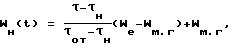
где τ текущая координата времени, соответствующая температуре образца;
tн момент времени начала фазовых переходов в образце мерзлого грунта;
τот момент времени полного оттаивания образца мерзлого грунта;
Wе естественная влажность образца мерзлого грунта;
Wм . г максимальная гигроскопическая влажность образца мерзлого грунта.METHOD FOR DETERMINING THE NUMBER OF NON-FROZEN WATER IN FROZEN SOILS, including thawing a pre-frozen soil sample, continuously measuring the temperature of the sample during thawing and then determining the amount of unfrozen water according to the measurement results, characterized in that the soil sample is cooled to a temperature below the set temperature for the beginning of thawing, sample temperature and time, build a graph of changes over time, the logarithm of excess temperature, defined as different nce between sample temperature and the temperature of the medium, on a graph fixed time and temperature start defrosting plotted changes in time of the sample temperature, which is determined by time and temperature closure thawing, and the desired amount of unfrozen water W n sets of relations
where τ is the current time coordinate corresponding to the temperature of the sample;
t n is the time instant of the beginning of phase transitions in the frozen soil sample;
τ from the instant of complete thawing of the frozen soil sample;
W e is the natural moisture content of the frozen soil sample;
W m. g maximum hygroscopic humidity of the frozen soil sample.
Priority Applications (1)
| Application Number | Priority Date | Filing Date | Title |
|---|---|---|---|
| SU5039251 RU2034110C1 (en) | 1992-04-22 | 1992-04-22 | Method for determination of amount of nonfrozen water in frozen grounds |
Applications Claiming Priority (1)
| Application Number | Priority Date | Filing Date | Title |
|---|---|---|---|
| SU5039251 RU2034110C1 (en) | 1992-04-22 | 1992-04-22 | Method for determination of amount of nonfrozen water in frozen grounds |
Publications (1)
| Publication Number | Publication Date |
|---|---|
| RU2034110C1 true RU2034110C1 (en) | 1995-04-30 |
Family
ID=21602756
Family Applications (1)
| Application Number | Title | Priority Date | Filing Date |
|---|---|---|---|
| SU5039251 RU2034110C1 (en) | 1992-04-22 | 1992-04-22 | Method for determination of amount of nonfrozen water in frozen grounds |
Country Status (1)
| Country | Link |
|---|---|
| RU (1) | RU2034110C1 (en) |
Cited By (5)
| Publication number | Priority date | Publication date | Assignee | Title |
|---|---|---|---|---|
| RU2391650C1 (en) * | 2008-12-05 | 2010-06-10 | Шлюмберже Текнолоджи Б.В. | Method of determining content of pore water in equilibrium with gas hydrate in dispersion media (versions) |
| RU2580316C1 (en) * | 2015-04-17 | 2016-04-10 | Федеральное государственное автономное образовательное учреждение высшего образования "Национальный исследовательский технологический университет "МИСиС" | Method for determining the number of unfrozen water content in frozen soil |
| RU2592915C1 (en) * | 2015-06-20 | 2016-07-27 | Федеральное государственное бюджетное Учреждение науки - Институт мерзлотоведения им.П.И.Мельникова Сибирского отделения Российской академии наук | Method for determining the amount of unfrozen water in frozen soils |
| RU2654832C1 (en) * | 2017-06-21 | 2018-05-22 | Автономная некоммерческая образовательная организация высшего образования "Сколковский институт науки и технологий" | Method for determining the content of unfrozen water in frozen soils |
| CN117288555A (en) * | 2014-05-16 | 2023-12-26 | 比奥利弗解决方案公司 | Systems, devices and methods for automated sample thawing |
-
1992
- 1992-04-22 RU SU5039251 patent/RU2034110C1/en active
Non-Patent Citations (3)
| Title |
|---|
| 1. Руководство по определению физических, теплофизических и механических характеристик мерзлых грунтов. М.: Стройиздат, 1973, с.20. * |
| 2. Новые методы исследования состава, строения и свойств мерзлых грунтов./ Под ред. С.Е.Гречищева, М.: Недра, 1983, с.18. * |
| 3. Авторское свидетельство СССР N 968163, кл. E 02D 1/00, 1982. * |
Cited By (5)
| Publication number | Priority date | Publication date | Assignee | Title |
|---|---|---|---|---|
| RU2391650C1 (en) * | 2008-12-05 | 2010-06-10 | Шлюмберже Текнолоджи Б.В. | Method of determining content of pore water in equilibrium with gas hydrate in dispersion media (versions) |
| CN117288555A (en) * | 2014-05-16 | 2023-12-26 | 比奥利弗解决方案公司 | Systems, devices and methods for automated sample thawing |
| RU2580316C1 (en) * | 2015-04-17 | 2016-04-10 | Федеральное государственное автономное образовательное учреждение высшего образования "Национальный исследовательский технологический университет "МИСиС" | Method for determining the number of unfrozen water content in frozen soil |
| RU2592915C1 (en) * | 2015-06-20 | 2016-07-27 | Федеральное государственное бюджетное Учреждение науки - Институт мерзлотоведения им.П.И.Мельникова Сибирского отделения Российской академии наук | Method for determining the amount of unfrozen water in frozen soils |
| RU2654832C1 (en) * | 2017-06-21 | 2018-05-22 | Автономная некоммерческая образовательная организация высшего образования "Сколковский институт науки и технологий" | Method for determining the content of unfrozen water in frozen soils |
Similar Documents
| Publication | Publication Date | Title |
|---|---|---|
| Marbouty | An experimental study of temperature-gradient metamorphism | |
| Wang et al. | Effect of freeze-thaw on freezing point of a saline loess | |
| Chevalier et al. | Freezing and ice crystals formed in a cylindrical food model: part I. Freezing at atmospheric pressure | |
| RU2592915C1 (en) | Method for determining the amount of unfrozen water in frozen soils | |
| JP2016523353A (en) | Using surface heat flux measurements to monitor and control freeze-drying processes | |
| Power et al. | Snow crystal forms and riming effects as related to snowfall density and general storm conditions | |
| Reber et al. | Microwave signatures of snow crusts modelling and measurements | |
| WANG et al. | Thermal conductivity of surimi–Measurement and modeling | |
| Kroes et al. | Properties of TGS aqueous solution for crystal growth | |
| CN115876634A (en) | Rock freezing-thawing cycle degradation overall process multi-channel test equipment and test method | |
| CN119001064B (en) | Prediction method for salt content of soil in freeze thawing process | |
| CN114910507B (en) | Soil body frost heaving sensitivity test method and related equipment | |
| JP3012830B2 (en) | Prediction method for freeze turbidity of fermented liquor | |
| SU855462A1 (en) | Method of determination of non-frozen water in salted frozen soils | |
| SU968163A1 (en) | Method of determining the amount of unfrozen water in permafrost soil | |
| CN109506794B (en) | Measuring device for initial freezing temperature of frozen soil | |
| CN115856012A (en) | Phase Transition and Energy Exchange Determination Method for Temperature-induced Quasi-Solid State and Polarized Super-Solid State in Water | |
| SU1127945A1 (en) | Method for determining quantity of non-frozen water in frozen soils | |
| CN121656325B (en) | A method for measuring thermophysical parameters in the construction of a multi-state model for the thawing of frozen coal in trains. | |
| SU1262003A1 (en) | Method of determining the quantity of unfrozen water in salinated frozen soil | |
| JP2003287577A (en) | Road surface freeze determination method | |
| SU1542518A1 (en) | Method of determining date of removing eggs from storage | |
| RU1837215C (en) | Method of determining phase transition heat of bound water in frozen soils | |
| CN121540936B (en) | A non-destructive method for determining the dielectric constant of undisturbed permafrost | |
| SU857779A1 (en) | Method of manufacturing and conditioning of frozen liquid dielectric specimens |