RU2129373C1 - Nematode-control method - Google Patents
Nematode-control method Download PDFInfo
- Publication number
- RU2129373C1 RU2129373C1 RU93005092A RU93005092A RU2129373C1 RU 2129373 C1 RU2129373 C1 RU 2129373C1 RU 93005092 A RU93005092 A RU 93005092A RU 93005092 A RU93005092 A RU 93005092A RU 2129373 C1 RU2129373 C1 RU 2129373C1
- Authority
- RU
- Russia
- Prior art keywords
- nematode
- plant
- nematodes
- gene
- product
- Prior art date
Links
Images

Classifications
-
- C—CHEMISTRY; METALLURGY
- C12—BIOCHEMISTRY; BEER; SPIRITS; WINE; VINEGAR; MICROBIOLOGY; ENZYMOLOGY; MUTATION OR GENETIC ENGINEERING
- C12N—MICROORGANISMS OR ENZYMES; COMPOSITIONS THEREOF; PROPAGATING, PRESERVING, OR MAINTAINING MICROORGANISMS; MUTATION OR GENETIC ENGINEERING; CULTURE MEDIA
- C12N15/00—Mutation or genetic engineering; DNA or RNA concerning genetic engineering, vectors, e.g. plasmids, or their isolation, preparation or purification; Use of hosts therefor
- C12N15/09—Recombinant DNA-technology
- C12N15/63—Introduction of foreign genetic material using vectors; Vectors; Use of hosts therefor; Regulation of expression
- C12N15/79—Vectors or expression systems specially adapted for eukaryotic hosts
- C12N15/82—Vectors or expression systems specially adapted for eukaryotic hosts for plant cells, e.g. plant artificial chromosomes (PACs)
- C12N15/8241—Phenotypically and genetically modified plants via recombinant DNA technology
- C12N15/8261—Phenotypically and genetically modified plants via recombinant DNA technology with agronomic (input) traits, e.g. crop yield
- C12N15/8271—Phenotypically and genetically modified plants via recombinant DNA technology with agronomic (input) traits, e.g. crop yield for stress resistance, e.g. heavy metal resistance
- C12N15/8279—Phenotypically and genetically modified plants via recombinant DNA technology with agronomic (input) traits, e.g. crop yield for stress resistance, e.g. heavy metal resistance for biotic stress resistance, pathogen resistance, disease resistance
- C12N15/8285—Phenotypically and genetically modified plants via recombinant DNA technology with agronomic (input) traits, e.g. crop yield for stress resistance, e.g. heavy metal resistance for biotic stress resistance, pathogen resistance, disease resistance for nematode resistance
-
- C—CHEMISTRY; METALLURGY
- C07—ORGANIC CHEMISTRY
- C07K—PEPTIDES
- C07K14/00—Peptides having more than 20 amino acids; Gastrins; Somatostatins; Melanotropins; Derivatives thereof
- C07K14/415—Peptides having more than 20 amino acids; Gastrins; Somatostatins; Melanotropins; Derivatives thereof from plants
-
- Y—GENERAL TAGGING OF NEW TECHNOLOGICAL DEVELOPMENTS; GENERAL TAGGING OF CROSS-SECTIONAL TECHNOLOGIES SPANNING OVER SEVERAL SECTIONS OF THE IPC; TECHNICAL SUBJECTS COVERED BY FORMER USPC CROSS-REFERENCE ART COLLECTIONS [XRACs] AND DIGESTS
- Y02—TECHNOLOGIES OR APPLICATIONS FOR MITIGATION OR ADAPTATION AGAINST CLIMATE CHANGE
- Y02A—TECHNOLOGIES FOR ADAPTATION TO CLIMATE CHANGE
- Y02A40/00—Adaptation technologies in agriculture, forestry, livestock or agroalimentary production
- Y02A40/10—Adaptation technologies in agriculture, forestry, livestock or agroalimentary production in agriculture
- Y02A40/146—Genetically Modified [GMO] plants, e.g. transgenic plants
Landscapes
- Health & Medical Sciences (AREA)
- Genetics & Genomics (AREA)
- Life Sciences & Earth Sciences (AREA)
- Chemical & Material Sciences (AREA)
- Organic Chemistry (AREA)
- Engineering & Computer Science (AREA)
- Molecular Biology (AREA)
- Biomedical Technology (AREA)
- Biotechnology (AREA)
- Zoology (AREA)
- Biophysics (AREA)
- Wood Science & Technology (AREA)
- Biochemistry (AREA)
- Bioinformatics & Cheminformatics (AREA)
- General Health & Medical Sciences (AREA)
- General Engineering & Computer Science (AREA)
- Physics & Mathematics (AREA)
- Medicinal Chemistry (AREA)
- Gastroenterology & Hepatology (AREA)
- Plant Pathology (AREA)
- Cell Biology (AREA)
- Microbiology (AREA)
- Proteomics, Peptides & Aminoacids (AREA)
- Botany (AREA)
- Breeding Of Plants And Reproduction By Means Of Culturing (AREA)
- Agricultural Chemicals And Associated Chemicals (AREA)
- Measuring Or Testing Involving Enzymes Or Micro-Organisms (AREA)
- Catching Or Destruction (AREA)
- Micro-Organisms Or Cultivation Processes Thereof (AREA)
- Cultivation Of Plants (AREA)
- Pharmaceuticals Containing Other Organic And Inorganic Compounds (AREA)
- Medicines Containing Plant Substances (AREA)
Abstract
Description
Изобретение относится к борьбе с нематодами, паразитирующими на растениях, главным образом к способу борьбы с корневыми цистообразующими нематодами. Изобретение также касается придания устойчивости к нематодам растениям большого числа видов, чувствительным к корневым цистообразующим нематодам, например растениям картофеля (Solanum tuberosum). The invention relates to the control of nematodes parasitizing on plants, mainly to a method of controlling root cyst-forming nematodes. The invention also relates to nematode resistance in plants of a large number of species sensitive to root cyst-forming nematodes, for example, potato plants (Solanum tuberosum).
Цистообразующие нематоды (особенно Heterodera и Globodera spp) являются основными вредителями большинства сельскохозяйственных культур. Они вызывают прямые потери урожая, а также косвенные потери, например из-за затрат на пестициды и неоптимального использования севооборота. Картофельные цистообразующие нематоды (Globodera rostochiensis и Globodera pallida) являются основными вредителями картофеля в Соединенном Королевстве, многих других районах Европы и в других основных областях возделывания картофеля. Heterodera glycines (цистообразующая нематода оси) при возделывании сои наносит экономический ущерб, который может превышать 500 миллионов долларов в год только в США. Heterodera schachtii (цистообразующая нематода свеклы) является главной проблемой для возделывающих сахарную свеклу в Европе и США. Heterodera avenae (цистообразующая нематода хлебных злаков) представляет собой всемирную экономическую проблему. Cyst nematodes (especially Heterodera and Globodera spp) are the main pests of most crops. They cause direct crop losses, as well as indirect losses, for example, due to pesticide costs and poor use of crop rotation. Potato cyst-forming nematodes (Globodera rostochiensis and Globodera pallida) are the main pests of potatoes in the United Kingdom, many other parts of Europe and other major areas of potato cultivation. Heterodera glycines (cyst-forming axis nematode) in the cultivation of soybeans causes economic damage that can exceed $ 500 million per year in the United States alone. Heterodera schachtii (beet cyst nematode) is a major problem for sugar beet farmers in Europe and the USA. Heterodera avenae (cereal cyst nematode) is a worldwide economic problem.
Экономически значимые плотности цистообразующих нематод обычно вызывают задержки в росте сельскохозяйственных растений. Их корневая система меньше, чем у незараженных растений, что приводит к появлению на листьях симптомов минеральной недостаточности и увеличивает опасность увядания в засушливых почвенных условиях. Потери урожая зависит от плотности цистообразующих нематод в посадках и в некоторых случаях могут достигать существенно более 50% для таких культур, как картофель и соя. Economically significant densities of cyst-forming nematodes usually cause growth delays in agricultural plants. Their root system is smaller than that of uninfected plants, which leads to the appearance of mineral deficiency symptoms on the leaves and increases the risk of wilting in arid soil conditions. Loss of yield depends on the density of cyst-forming nematodes in plantings and in some cases can reach significantly more than 50% for crops such as potatoes and soybeans.
До недавнего времени борьба с нематодами растений проводилась путем использования химических препаратов с нематоцидной активностью, а также с использованием соответствующих агротехнических приемов и путем возделывания устойчивых сортов. Все это может быть применено в интегрированной форме. Нематоциды принадлежат к наиболее неприемлемым химическим веществам, широко применяемым для защиты сельскохозяйственных растений. Например, Алдикарб (Aldicarb) и продукты его распада высокотоксичны для млекопитающих и загрязняют почвенные воды. В итоге правительства некоторых штатов США ввели ограничения на использование этого нематоцида. В Нидерландах проводится политика сокращения применения нематоцидов со сроком использования более 5 лет. Сельскохозяйственные меры борьбы с нематодами не являются идеальным решением, т.к. такие меры, как смена культур, обуславливают скрытые потери, которые неприемлемы для тех, кто выращивает специализированные монокультуры или лишь несколько экономических альтернативных культур. Until recently, the fight against plant nematodes was carried out by using chemicals with nematicidal activity, as well as using appropriate agricultural techniques and by cultivating resistant varieties. All this can be applied in an integrated form. Nematicides are among the most unacceptable chemicals widely used to protect agricultural plants. For example, Aldicarb and its decomposition products are highly toxic to mammals and pollute soil water. As a result, some U.S. governments have imposed restrictions on the use of this nematicide. The Netherlands has a policy to reduce the use of nematicides with a shelf life of more than 5 years. Agricultural nematode control measures are not an ideal solution, as measures such as crop changes cause hidden losses that are unacceptable for those who grow specialized monocultures or just a few economic alternative crops.
Устойчивость растения к нематодам может быть вызвана неспособностью последних размножаться на генотипе видов растений-хозяев, и может иметь место доминантный, полудоминантный или рецессивный тип наследования, основанный на одном или нескольких генах растения. Однако их коммерческая ценность для селекционера растений и фермера ограничена. Например, у картофеля могут быть различные источники устойчивости, обуславливающие разделение популяций в Европе, как в случае с одиночным доминантным геном H1, обуславливающим устойчивость к G. rostochiensis (Ro1 и Ro4), но не к другим формам этого вида (Ro2, Ro3 и Ro5). Plant resistance to nematodes can be caused by the inability of the plant to reproduce on the genotype of host plant species, and a dominant, semi-dominant, or recessive inheritance based on one or more plant genes can occur. However, their commercial value to the plant breeder and farmer is limited. For example, potatoes can have various sources of resistance, which determine the division of populations in Europe, as in the case of a single dominant gene H1, which determines resistance to G. rostochiensis (Ro1 and Ro4), but not to other forms of this species (Ro2, Ro3 and Ro5 )
Сорт Maris Piper экспрессирует H1 и широко используется в Соединенном Королевстве против G.rostochiensis, но его использование совпало с повышенным преобладанием G. pallida, способной размножаться при наличии H1. Проблема, обуславливаемая патотипами, преодолевающими устойчивость, существует и в случае других цистообразующих нематод, источники устойчивости к которым известны. В некоторых случаях источники устойчивости являются полигенными, что создает дополнительные трудности для селекционера растений. Кроме того, устойчивость у некоторых сортов является по своей природе скорее количественной, нежели качественной, и поэтому в ответ на частое использование таких культур со временем может произойти усиленное размножение. The Maris Piper variety expresses H1 and is widely used in the United Kingdom against G.rostochiensis, but its use has coincided with the increased prevalence of G. pallida, which can reproduce in the presence of H1. A problem caused by pathotypes that overcome resistance also exists in the case of other cyst-forming nematodes, the sources of resistance to which are known. In some cases, the sources of resistance are polygenic, which creates additional difficulties for the plant breeder. In addition, resistance in some varieties is inherently more quantitative than qualitative, and therefore, increased reproduction may occur over time in response to the frequent use of such crops.
В последнее время все большее распространение получают генно-инженерные подходы к защите растений от болезней и вредителей, в том числе и от нематод. Так, известен (EP 0352052 A3 (A 01 N 63/02)) способ борьбы с нематодами, включающий в себя встраивание в геном растений гена Bacillus thuringiensis, кодирующего токсин, который обладает нематоцидной активностью. При этом указанный ген экспрессируется в растении конститутивно, в результате чего в указанном растении создается и поддерживается определенный уровень чужеродного для него продукта (токсина), что может оказывать определенное отрицательное действие как на само растение, так и на его потребителей. Recently, genetic engineering approaches to protecting plants from diseases and pests, including nematodes, are becoming more widespread. Thus, there is a known (EP 0352052 A3 (A 01 N 63/02)) method for controlling nematodes, which involves inserting a Bacillus thuringiensis gene encoding a toxin that has nematicidal activity into the plant genome. Moreover, the specified gene is expressed constitutively in the plant, as a result of which a certain level of a product alien to it (toxin) is created and maintained in the specified plant, which may have a certain negative effect both on the plant itself and on its consumers.
Предлагаемым изобретением решается задача создания способа борьбы с нематодами, при котором продукт, обеспечивающий устойчивость растения к нематодам, начинает продуцироваться именно при заражении паразитом и продуцируется специфично в кормовой зоне наметод. The present invention solves the problem of creating a method for combating nematodes, in which a product that provides plant resistance to nematodes begins to be produced precisely when infected with a parasite and is produced specifically in the feed zone of the method.
Эта задача решается тем, что предложен способ борьбы с нематодами, отличающийся тем, что осуществляют следующие стадии:
(а) идентифицирует ген, который индуцируется в успешно зараженном нематодой растении;
(б) получают конструкцию, объединяя промоторный участок данного гена с другой областью, кодирующей продукт, нарушающий жизнедеятельность нематод или предотвращающий инфицирование растения нематодами;
(в) трансформируют растение указанной конструкцией с получением растения, устойчивого к нематодам.This problem is solved in that a method for controlling nematodes is proposed, characterized in that the following stages are carried out:
(a) identifies a gene that is induced in a successfully infected nematode plant;
(b) obtain a construct by combining the promoter region of a given gene with another region encoding a product that interferes with the vital activity of nematodes or prevents infection of the plant with nematodes;
(c) transforming the plant with the indicated construct to obtain a plant resistant to nematodes.
Целесообразно на стадии (а) идентифицировать ген, который индуцируется в растении в зоне кормления нематод. It is advisable at stage (a) to identify the gene that is induced in the plant in the feeding zone of nematodes.
Поверхность раздела между растением и патогеном является ключевым местом в определении чувствительности или устойчивости к инвазии. В ходе ранних детерминирующих стадий инвазионного процесса поверхность раздела ограничивается очень малым количеством растительных клеток в месте инфекции. Позднейшая редифференцировка существующих растительных клеток формирует синцитий, которым питается животное. Синцитий индуцируется личинками второй стадии после их перемещения в корни хозяина, возможно, в ответ на выделения животного в первичные кормовые клетки. Если растение чувствительно, то синцитий увеличивается в объеме и поддерживается в течение всего периода питания нематоды. В случае с самками этот период может длиться несколько недель. Клеточная биология синцития подробно описана. The interface between the plant and the pathogen is a key place in determining sensitivity or resistance to invasion. During the early determining stages of the invasive process, the interface is limited to a very small number of plant cells at the site of infection. The later differentiation of existing plant cells forms the syncytium that the animal eats. Syncytium is induced by second-stage larvae after they are transferred to the roots of the host, possibly in response to the isolation of the animal in primary food cells. If the plant is sensitive, then syncytium increases in volume and is maintained throughout the entire nematode feeding period. In the case of females, this period can last several weeks. Cell biology of syncytia is described in detail.
В кормовой зоне цистообразующей нематоды экспрессируются гены, являющиеся специфичной частью чувствительности к нападению нематод. Идентификация этих генов может быть проведена с помощью полимеразной цепной реакции (ПЦР). In the food zone of the cyst-forming nematode, genes are expressed that are a specific part of the sensitivity to attack of nematodes. Identification of these genes can be carried out using polymerase chain reaction (PCR).
Целесообразно ген, индуцируемый в зоне кормления нематод, идентифицировать следующим образом:
(а) получают библиотеки кДНК зараженных и незараженных растений;
(б) сравнивают полученные библиотеки кДНК зараженных и незараженных растений;
(в) выявляют клон кДНК, содержащий ген, индуцируемый в зоне кормления нематод,
(г) используют данный клон кДНК для идентификации соответствующего гена в растении.It is advisable to identify the gene induced in the feeding zone of nematodes as follows:
(a) receive cDNA libraries of infected and uninfected plants;
(b) comparing the resulting cDNA libraries of infected and non-infected plants;
(c) detecting a cDNA clone containing a gene induced in the feeding zone of nematodes,
(g) use this clone of cDNA to identify the corresponding gene in the plant.
Идентифицированные таким образом гены могут быть использованы для прямого выделения в ходе нападения нематоды веществ, токсичных либо для растительной клетки, либо для нематод, специфично в кормовой зоне. Специфичное выделение таких веществ дает возможность использовать соединения, которые в случае их конструктивной экспрессии в растении могли бы ослабить рост растения или привести к неприемлемому токсикологическому вреду. Диапазон таких соединений известен и для их применения согласно изобретению пригодны стандартные биотехнологические методики. The genes identified in this way can be used to directly isolate during the nematode attack substances that are toxic to either the plant cell or nematodes, specifically in the food zone. The specific isolation of such substances makes it possible to use compounds which, if constructively expressed in a plant, could weaken the plant's growth or lead to unacceptable toxicological harm. The range of such compounds is known and standard biotechnological procedures are suitable for their use according to the invention.
Соответствующие нематодспецифичные гены могут быть найдены у широкого ряда растений, что позволяет защитить любую культуру, с которой возможны генетические манипуляции для экспрессии промоторов генов, характерных для кормовой зоны и соединенных с последовательностями, способными нарушать размножение нематод. В качестве примеров можно привести картофель, томаты, сахарную свеклу и табак. Corresponding nematode-specific genes can be found in a wide range of plants, which makes it possible to protect any culture with which genetic manipulations are possible for the expression of promoters of the genes characteristic of the food zone and connected to sequences that can disrupt the propagation of nematodes. Examples include potatoes, tomatoes, sugar beets, and tobacco.
Известно также, что развитие синцития сходно для множества цистообразующих нематод. Поэтому использование специфично включающегося гена универсально для всех цистообразующих нематод. К ним относятся, например, Globodera pallida и Globodera rostochiensis (картофельные цистообразующие нематоды), Heterodera glycines (цистообразующие нематоды сои), Heterodera shachtii (цистообразующая нематода свеклы), Heterodera avenae (цистообразующая нематода хлебных злаков), Heterodera oryzae (рисовая цистообразующая нематода) и Giobodera tabacom (табачная цистообразующая нематода). It is also known that the development of syncytium is similar for many cyst-forming nematodes. Therefore, the use of a specific inclusion gene is universal for all cyst-forming nematodes. These include, for example, Globodera pallida and Globodera rostochiensis (potato cyst-forming nematodes), Heterodera glycines (cyst-forming nematodes of soybeans), Heterodera shachtii (cyst-forming nematode of beets), Heterodera avenae (cyst-forming nematodes of cereals) Giobodera tabacom (tobacco cyst-forming nematode).
В настоящем описании термин "ген" относится к последовательности ДНК, которая включает в себя: (1) верхние (5') регуляторные сигналы, включая промотор, (2) кодирующую область, определяющую продукт, белок или РНК гена, и (3) нижние (3') области, включая сигналы терминации транскрипции и полиаденилирования, (4) ассоциированные с ними последовательности, необходимые для эффективной и специфичной экспрессии. As used herein, the term “gene” refers to a DNA sequence that includes: (1) upstream (5 ') regulatory signals, including a promoter, (2) a coding region defining a product, protein or RNA of a gene, and (3) downstream (3 ') regions, including transcription termination and polyadenylation signals, (4) associated sequences necessary for efficient and specific expression.
Термин "промотор" относится к области последовательности ДНК, включающей необходимые сигналы для эффективной экспрессии кодирующей последовательности. Это могут быть, например, последовательности, с которыми связывается РНК-полимераза, и области, с которыми связываются другие регуляторные белки, а также области, участвующие в контроле трансляции белка, и кодирующая последовательность. The term "promoter" refers to a region of a DNA sequence that includes the necessary signals for efficient expression of the coding sequence. These may be, for example, the sequences to which RNA polymerase binds, and the regions to which other regulatory proteins bind, as well as the regions involved in the control of protein translation, and the coding sequence.
Целесообразно на стадии (б) промоторный участок объединять с областью, кодирующей продукт, вызывающий гибель клетки, способной редифференцироваться для образования кормовой зоны. In stage (b), it is advisable to combine the promoter region with the region encoding the product that causes the death of the cell, which can be differentiated to form a food zone.
Предпочтительно указанный продукт представляет собой ДНКазу, РНКазу, протеиназу, токсичный белок, токсичный пептид, продукт, обуславливающий мультигенный токсический синдром, или антисмысловую РНК редифференцирующихся клеток. Preferably, said product is a DNase, an RNase, a proteinase, a toxic protein, a toxic peptide, a product causing the multigenic toxic syndrome, or antisense RNA of differentiating cells.
Под мультигенным токсическим синдромом понимают ситуацию, при которой промотор может экспрессировать белок или пептид, остающийся в неактивной форме до активизации белком, который продуцируется геном, соединенным с другой промоторной последовательностью, специфичной для кормовой зоны. Продукт первого гена A может быть неактивным до тех пор, пока не образует под действием продукта второго гена в новый продукт A', который является активным токсином или протеазой. В другом случае, A может быть неактивным без B, так что только молекулы A-B активны. By multigenic toxic syndrome is understood a situation in which a promoter can express a protein or peptide that remains in an inactive form until activated by a protein that is produced by a gene connected to another promoter sequence specific to the feed zone. The product of the first gene A can be inactive until it forms, under the action of the product of the second gene, a new product A ', which is an active toxin or protease. Alternatively, A may be inactive without B, so that only A-B molecules are active.
Антисмысловая РНК включает в себя один или несколько генов антисмысловой РНК, аналогичных генам, специфичным для кормовой зоны. Другими словами, промотор может быть использован для регуляции образования своей собственной антисмысловой РНК. Это сильно снижает уровень нормального продукта. И наоборот, промотор может быть использован для управления экспрессией антисмысловой РНК для общих клеток генов, таких как АТФ-синтетаза, необходимых для жизнеспособности клетки. Antisense RNA includes one or more genes of antisense RNA, similar to genes specific to the feed zone. In other words, the promoter can be used to regulate the formation of its own antisense RNA. This greatly reduces the level of a normal product. Conversely, the promoter can be used to control the expression of antisense RNA for common cell genes, such as ATP synthetase, necessary for cell viability.
Целесообразно на стадии (б) промоторный участок объединять с областью, кодирующей продукт, оказывающий летальное или сублетальное действие на нематод. In stage (b), it is advisable to combine the promoter region with the region encoding the product, which has a lethal or sublethal effect on the nematodes.
Предпочтительно указанный продукт представляет собой токсичный для нематоды белок, антитело, нарушающее процесс питания нематод, или токсичный для нематод полипептид. Preferably, said product is a nematode-toxic protein, an antibody that interferes with the nematode nutrition process, or a nematode-toxic polypeptide.
Примерами потенциально пригодных генов, которые могут быть использованы при реализации настоящего изобретения, являются:
(а) белковый токсин Bacillus thuringiensis (или сходного с ним организма), обладающий антинематодной активностью;
(б) ген токсичного для метода белка (заявка на патент Великобритании 9104617.7);
(в) антитело, нарушающее питание путем воздействия на глотание или переваривание пищи подобно одному из антител, описанных для соевой цистообразующей нематоды, включая действующие против спинной глоточной железы (Atkinson et al. , 1988 Annals of Applied Biology 112, 459-469), используя известные (Hiatt, A. , Cafferkey, R.C. & Bowdish, K. 1989 Production of Antibodies in Transgenic Plants Nature, 342, 76-78) процедуры для трансгенной экспрессии антител в растениях;
(г) белок или пептид типа нейропептида, оказывающий токсичное действие на питающихся цистообразующих нематод после заглатывания ими пищи.Examples of potentially suitable genes that can be used in the implementation of the present invention are:
(a) a protein toxin of Bacillus thuringiensis (or a similar organism) having antinematode activity;
(b) a gene that is toxic to the method of protein (patent application UK 9104617.7);
(c) an antibody that disrupts nutrition by affecting swallowing or digesting food similar to one of the antibodies described for a soybean cyst nematode, including those acting against the spinal pharyngeal gland (Atkinson et al., 1988 Annals of Applied Biology 112, 459-469) using known (Hiatt, A., Cafferkey, RC & Bowdish, K. 1989 Production of Antibodies in Transgenic Plants Nature, 342, 76-78) procedures for transgenic expression of antibodies in plants;
(d) a protein or peptide of the type of neuropeptide that has a toxic effect on eating cyst-forming nematodes after ingestion of food.
Следует принять во внимание, что уровень устойчивости к нематоде не должен быть абсолютным, но должен в общем обеспечивать уровень, хозяйственно или экономически значительный для данного растения. It should be borne in mind that the level of resistance to the nematode should not be absolute, but should generally provide a level that is economically or economically significant for a given plant.
Изобретение предусматривает также создание средств, обеспечивающих устойчивость к нематоде, локализованную в зоне ее питания или рядом с ней. Этим устраняется необходимость для растения продуцировать антинематодные продукты конститутивно. Этим ограничивается любое вредное для растения действие, которое может возникнуть при конститутивной экспрессии. Многие культуры могут быть защищены от цистообразующих нематод с помощью данного изобретения, и, таким образом, являются возможными объектами генетического манипулирования с целью экспрессии промоторов генов, специфичных для синцития, соединенных с последовательностями, которые нарушают редифференцировку растительных клеток в синцитий или экспрессируют в синцитии продукты антинематодных генов. Это касается культур, поражающихся такими цистообразующими нематодами, как Globodera pallida и Globodera rostochiensis (картофельные цистообразующие нематоды), Heterodera giycines (цистообразующая нематода сои), Heterodera shachtii (cвекловичная цистообразующая нематода), Heterodera avenae (цистообразующая нематода хлебных злаков), Heterodera carotae (цистообразующая нематода моркови), Heterodera oryzae (цистообразующая нематода риса) и Globodera tabacum (табачная цистообразующая нематода). В качестве примеров культур, которые могут быть защищены от цистообразующих нематод благодаря данному изобретению, можно привести картофель, томаты, сою, сахарную свеклу, рапс, пшеницу, рожь, ячмень, овес, рис, морковь, капусту и табак. The invention also provides for the creation of tools that provide resistance to the nematode, localized in the area of its power or near it. This eliminates the need for plants to produce antinematode products constitutively. This limits any harmful effect on the plant that may occur during constitutive expression. Many cultures can be protected from cyst-forming nematodes using the present invention, and thus are possible objects of genetic manipulation for the expression of promoters of genes specific for syncytium, connected to sequences that disrupt the differentiation of plant cells into syncytium or express antinematode products in syncytia genes. This applies to crops affected by cyst nematodes such as Globodera pallida and Globodera rostochiensis (potato cyst nematodes), Heterodera giycines (soy cyst nematode), Heterodera shachtii (beet cyst nematodes), Heterodera cerea nematodes, carrot nematode), Heterodera oryzae (rice cyst nematode) and Globodera tabacum (tobacco cyst nematode). Examples of crops that can be protected from cyst-forming nematodes through this invention include potatoes, tomatoes, soybeans, sugar beets, canola, wheat, rye, barley, oats, rice, carrots, cabbage and tobacco.
На фиг. 1 показана зона кормления нематод, индуцированная корневой узловой нематодой в трансформированном растении табака. In FIG. Figure 1 shows the nematode feeding zone induced by the root nodal nematode in a transformed tobacco plant.
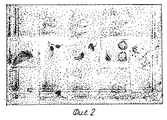
На фиг. 2 показаны образцы ткани, взятые из различных частей целого трансформированного растения табака. In FIG. 2 shows tissue samples taken from various parts of a whole transformed tobacco plant.
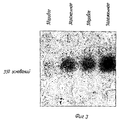
На фиг. 3 представлены результаты нозерн-блоттинга проб, полученных из здоровых и пораженных нематодами растений томатов и сахарной свеклы. In FIG. Figure 3 presents the results of Northern blotting of samples obtained from healthy and nematode-affected tomato and sugar beet plants.
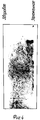
На фиг. 4 представлены результаты нозерн-блоттинга проб, полученных из здоровых и пораженных наматодой растений картофеля. In FIG. Figure 4 shows the results of Northern blotting of samples obtained from healthy and namatode-affected potato plants.
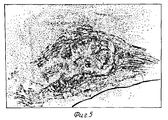
На фиг. 5 показан криосрез трансгенного корня A.thaliana. In FIG. 5 shows a cryosection of the transgenic root of A.thaliana.
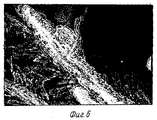
На фиг. 6 показана зона кормления, индуцированная цистообразующей нематодой в трансформированном растении A.thaliana. In FIG. Figure 6 shows the feeding zone induced by a cyst-forming nematode in a transformed A.thaliana plant.
Фиг. 7 представляет собой гистограмму, демонстрирующую общее число мест внедрения нематоды для растений табака, трансформированных смысловой и антисмысловой последовательностью GUS. FIG. 7 is a histogram showing the total number of nematode insertion sites for tobacco plants transformed with the GUS sense and antisense sequence.
Ниже изобретение поясняется примерами, которые, однако, не ограничивают его объема. Below the invention is illustrated by examples, which, however, do not limit its scope.
Первый пример касается способов, использованных для идентификации, характеристики и манипулирования генами картофеля с целью создания устойчивого трансгенного растения картофеля. A first example relates to methods used to identify, characterize and manipulate potato genes to create a sustainable transgenic potato plant.
Пример 1
Этот пример описывает использование сорта картофеля, чувствительного к Globodera rostochiensis, патотип Ro2, для определения генов, экспрессирующихся в зоне питания нематоды. В разделах 1 - 5 предлагаются методики получения зараженной корневой ткани. Небольшие количества локально зараженных тканей дали количества РНК (раздел 6), наиболее удобные для конструирования библиотеки кДНК с помощью ПЦР-амплификации (разделы 7.1 - 7.4). Выделение клонов кДНК, специфичных для питающих клеток, проводилось с помощью дифференциальной гибридизации с пробами кДНК из зараженных и незараженных тканей (раздел 7.5). ДНК положительных клонов кДНК была секвенирована (раздел 10), и вставки использовались как пробы на следующих этапах. Проверка временной и пространственной экспрессии генов была проведена с помощью нозерн-анализа (раздел 8) с использованием разных тканей растения и разного времени заражения. Дальнейшая локализация экспрессии гена проводилась гибридизацией in situ (раздел 12). Геномные клоны, соответствующие кДНК клонам, специфичным для питающих клеток, выделялись из библиотеки геномной ДНК (раздел 11). Промоторы идентифицировались секвенированием ДНК (раздел 11) для создания конструкций, пригодных для создания трансгенных растений картофеля, обладающих устойчивостью к нематоде (раздел 13) локально в кормовой зоне.Example 1
This example describes the use of a potato variety that is sensitive to Globodera rostochiensis, the Ro2 type, to identify genes expressed in the nematode feeding area. Sections 1 to 5 provide methods for obtaining infected root tissue. Small amounts of locally infected tissues gave the amounts of RNA (section 6), most convenient for constructing a cDNA library using PCR amplification (sections 7.1 - 7.4). Isolation of cDNA clones specific for nourishing cells was performed using differential hybridization with cDNA samples from infected and non-infected tissues (Section 7.5). The DNA of the positive cDNA clones was sequenced (section 10), and the inserts were used as samples in the next steps. Checking the temporal and spatial expression of the genes was carried out using Northern analysis (section 8) using different plant tissues and different infection times. Further localization of gene expression was carried out by in situ hybridization (section 12). Genomic clones corresponding to cDNA clones specific for feeding cells were isolated from the genomic DNA library (section 11). The promoters were identified by DNA sequencing (section 11) to create constructs suitable for creating transgenic potato plants with nematode resistance (section 13) locally in the feed zone.
1. Растительный материал
Solanum tuberosum, сорт Maris Piper (шотландский семенной картофель, класс A) проращивался 24 дня (Kosack K.E., Atkinson H.J., Bowles D.J. 1990. Changes in abundance of translatable mRNA species in potato roots and leaves following root invasion by cyst-nematode G. rostochiensis pathotypes. Physiol. Mol. Plant Pathol.). Индивидуальные побеги отрезались после выращивания в мешках, либо для выращивания в горшках использовались целые клубни.1. Plant material
Solanum tuberosum, Maris Piper (Scottish seed potato, class A) sprouted for 24 days (Kosack KE, Atkinson HJ, Bowles DJ 1990. Changes in abundance of translatable mRNA species in potato roots and leaves following root invasion by cyst-nematode G. rostochiensis pathotypes. Physiol. Mol. Plant Pathol.). Individual shoots were cut off after growing in bags, or whole tubers were used for growing in pots.
2. Нематоды
Популяция цист Globodera rostochiensis, патотипы Ro1 и Ro2, содержались в сухих условиях при 4oC. Цисты замачивались в водопроводной воде на 7 дней при 4oC. Добавлялся диффузат из корней картофеля Shepherd A.M., 1986. In: Southey J.F. (ed) Laboratory methods for work with plant and soil nematodes: MAFF reference book 402, 6th edn.), и личинки выводились через 4 - 7 дней при комнатной температуре.2. Nematodes
A population of Globodera rostochiensis cysts, types Ro1 and Ro2, were kept under dry conditions at 4 ° C. The cysts were soaked in tap water for 7 days at 4 ° C. Diffuse from potato roots was added Shepherd AM, 1986. In: Southey JF (ed) Laboratory methods for work with plant and soil nematodes: MAFF reference book 402, 6th edn.), and the larvae were hatched after 4 to 7 days at room temperature.
3. Заражение
Материал в мешках. Индивидуальные побеги помещались в готовые мешки (Northup-King, Миннесота). Полоски бумаги Whatman GFA размером 1 х 0,5 см помещались под кончики индивидуальных корней. 50 червей в 10 мл корневого диффузата наносились на каждый кончик корня, который затем покрывался второй полоской GFA. Фильтровальная бумага GFA удалялась через 24 ч после инокуляции для синхронизации заражения. Основание отрезалось, и мешки промывались водопроводной водой.3. Infection
Material in bags. Individual shoots were placed in finished bags (Northup-King, Minnesota). 1 x 0.5 cm Whatman GFA paper strips were placed under the tips of the individual roots. 50 worms in 10 ml of root diffusate were applied to each root tip, which was then covered with a second strip of GFA. GFA filter paper was removed 24 hours after inoculation to synchronize infection. The base was cut off and the bags were washed with tap water.
Материал в горшках. Проросшие клубни выращивались в горшках (25 см) в почве с невылупившимися цистами в количестве, достаточном для получения популяции в 50 яиц на грамм почвы. Material in pots. Sprouted tubers were grown in pots (25 cm) in soil with unhacked cysts in an amount sufficient to obtain a population of 50 eggs per gram of soil.
Контрольные (неинокулированные) мешки и горшки содержались в тех же условиях, но без цист. Control (uninoculated) bags and pots were kept under the same conditions, but without cysts.
4. Условия выращивания
Зараженные растения картофеля выращивались в режиме 16 часов освещения при 22oC и 6 часов темноты при 18oC.4. Growing conditions
Infected potato plants were grown under 16 hours of illumination at 22 o C and 6 hours of darkness at 18 o C.
5. Сбор материала и анализ
Выращенные в мешках ткани собирали на 4-й, 7-й, 15-й и 24-й дни после инвазии. Обесцвеченные локально зараженные корни вырезались прямо в конверты из фольги в жидком азоте. Ткани корня, соседние с зоной заражения, также вырезались и замораживались отдельно.5. Material collection and analysis
Tissue grown in bags was harvested on the 4th, 7th, 15th and 24th days after invasion. Discolored locally infected roots were cut directly into foil envelopes in liquid nitrogen. Root tissues adjacent to the infection zone were also cut and frozen separately.
Ткани, выращенные в горшках, собирались через 26 дней после заражения патотипом Ro2. Вылупившиеся самки и цисты удалялись тонкой кистью и локально зараженные ткани вырезались в жидком азоте в индивидуальные пакеты из фольги. Potted tissue was collected 26 days after infection with Ro2. Hatching females and cysts were removed with a thin brush and locally infected tissues were excised in liquid nitrogen into individual foil bags.
6. Выделение тотальной РНК
Ткани в пакетах из фольги дробили пестиком в порошок и хранили при -70oC. Размолотые ткани (12 мг) переносили в предварительно охлажденные в жидком азоте одноразовые пластиковые пробирки Sarstedt (на 20 мл), затем добавляли 0,5 мл смеси фенол/CH3Cl/изоамиловый спирт (25:24:1) и 0,5 мл буфера GuHCl (8M гуанидин-HCl), 20 мM МЭС (4-морфолино-этанол-сульфоновая кислота), 20 мМ Na2ЭДТА, доведенного до pH=7 с использованием NaOH, и 2-меркаптоэтанол, добавленный в количестве, достаточном для получения концентрации 50 нМ, непосредственно перед применением). Пока пробирки оттаивали во льду, ткани гомогенизировались 15 ударами смесителя Polytron (Kinematica, Швейцария). Водную фазу реэкстрагировали фенолом более трех раз перед осаждением в течение ночи при -20oC после добавления 0,2 объема 1M уксусной кислоты и 0,7 объема холодного 96%-ного этанола. РНК, собранная центрифугированием примерно при 13000 g в течение 15 мин в микроцентрифуге, промывалась в 400 мкл 3М раствора ацетата натрия (pH=5,5) при 4oC, затем в 70%-ном холодном этаноле перед окончательным растворением в 30 - 50 мкл воды, обработанной DEPC, и хранилась при -70oC.6. Isolation of total RNA
Tissues in foil bags were crushed with pestle powder and stored at -70 ° C. Milled tissue (12 mg) was transferred to Sarstedt disposable plastic tubes (20 ml) pre-chilled in liquid nitrogen, then 0.5 ml of phenol / CH mixture was added. 3 Cl / isoamyl alcohol (25: 24: 1) and 0.5 ml GuHCl buffer (8M guanidine-HCl), 20 mM MES (4-morpholino-ethanol-sulfonic acid), 20 mM Na 2 EDTA, adjusted to pH = 7 using NaOH, and 2-mercaptoethanol added in an amount sufficient to obtain a concentration of 50 nM, immediately before use). While the tubes were thawed in ice, the tissues were homogenized by 15 strokes of a Polytron mixer (Kinematica, Switzerland). The aqueous phase was back-extracted with phenol more than three times before precipitating overnight at -20 ° C after adding 0.2 volumes of 1M acetic acid and 0.7 volumes of cold 96% ethanol. RNA collected by centrifugation at approximately 13000 g for 15 min in a microcentrifuge was washed in 400 μl of a 3M sodium acetate solution (pH = 5.5) at 4 ° C, then in 70% cold ethanol before final dissolution in 30-50 μl of water treated with DEPC, and stored at -70 o C.
7. Конструирование библиотеки кДНК с помощью ПЦР
7.1 Синтез кДНК
1 мкг тотальной РНК из корней картофеля, собранных через 26 дней после заражения G. rostochiensis, патотип Ro2, денатурировался в течение 5 мин в водяной бане при 70oC и затем быстро охлаждался во льду. Проба этой РНК добавлялась в реакционную смесь, состоящую из 4 мкл 5 х AMVRT буфера (250 мМ Трис-HCl (pH= 8,3), 250 мМ KCl, 50 мМ MgCl2, 5 мМ DDT, 5 мМ ЭДТА, 50 мг/мл бычьего сывороточного альбумина), 2 uл олигонуклеотида (дТ17, 100 мкг/мл), 2 мкл смеси дНТФ (по 10 мМ АТФ, дЦТФ, дГТФ, дТТФ), 1 мкл 10 мМ раствора спермидин-HCl, 1 мкл 80 мМ раствора пирофосфата натрия и 125 единиц плацентарного ингибитора рибонуклеазы человека (HPRNI). 10 единиц обратной транскриптазы вируса птичьей миелобластомы (AMV) добавлялись для доведения конечного реакционного объема до 20 мкл перед инкубацией его при 42oC в течение 1 ч. Реакция прерывалась добавлением 20 мкл 0,1 М раствора NaCl, 40 мМ ЭДТА. Размер и количество продуктов определяли проведением параллельной реакции, содержащей 50 мкКи дЦТФ, меченный 32P (3000 Ки/ммоль). Меченые продукты реакции фракционировались в щелочном геле, с которого затем делали авторадиографические снимки. Вся масса меченых продуктов была в пределах от 200 до 2000 т. п.о., с четко различимыми крупными продуктами.7. Construction of a cDNA library using PCR
7.1 Synthesis of cDNA
1 μg of total RNA from potato roots collected 26 days after infection with G. rostochiensis, type Ro2, was denatured for 5 min in a water bath at 70 ° C and then quickly cooled in ice. A sample of this RNA was added to the reaction mixture consisting of 4 μl of 5 x AMVRT buffer (250 mM Tris-HCl (pH = 8.3), 250 mM KCl, 50 mM MgCl 2 , 5 mM DDT, 5 mM EDTA, 50 mg / ml of bovine serum albumin), 2 ul of oligonucleotide (dT 17 , 100 μg / ml), 2 μl of a mixture of dNTP (10 mM ATP, dCTP, dGTP, dTTP), 1 μl of a 10 mM spermidine-HCl solution, 1 μl of an 80 mM solution sodium pyrophosphate and 125 units of placental human ribonuclease inhibitor (HPRNI). 10 units of avian myeloblastoma virus (AMV) reverse transcriptase were added to bring the final reaction volume to 20 μl before incubating it at 42 ° C for 1 h. The reaction was interrupted by adding 20 μl of a 0.1 M NaCl solution, 40 mM EDTA. The size and quantity of the products was determined by conducting a parallel reaction containing 50 μCi of dCTP labeled with 32 P (3000 Ci / mmol). Labeled reaction products were fractionated in an alkaline gel, from which autoradiographic images were then taken. The entire mass of labeled products ranged from 200 to 2000 kb, with clearly distinguishable large products.
Олиго-дТ-праймер удалялся избирательной преципитацией. 0,5 мкг поли I поли C (Pharmacia) и 3 мкг 10%-ного (масс./об.) раствора СТАВ добавлялись в реакционную смесь перед центрифугированием в микроцентрифуге при комнатной температуре в течение 20 мин. Супернатант осторожно удалялся, и осадок ресуспендировался в 14 мкл 1М раствора NaCl, к которому добавили 25 мкл H2O и 1 мкл 10%-ного раствора СТАВ, и проба снова осаждалась микроцентрифугированием. Осадок окончательно ресуспендировался в 10 мкл 1М раствора NaCl и осаждался в 2,7 объеме этанола в течение ночи при -20oC. Осадок промывался в 70%-ном этаноле и растворялся в 7 мкл H2O. Реакцию дГ-наращивания проводили, добавив в пробу: 4 мкл 5 х буфера для наращивания (1М какодилата калия, 125 мМ Трис-HCl, pH 7,2), 1 мкл 2 мМ раствора ДТТ, 2 мкл 5 мМ раствора хлорида кобальта, 5 мкл 20 М раствора дГТФ и 25 единиц терминальной трансферазы (Boehringer) - и инкубируя смесь при 37oC 20 мин; для прекращения реакции добавляли 4 мкл 100 мМ раствора ЭТДА и 2 мкл 12 М раствора NaCl. Избыточные нуклеотиды удалялись добавлением 1 мкл 10%-ного (масса/объем) раствора СТАВ и микроцентрифугированием при 4oC в течение 20 мин. Осадок растворялся в 10 мкл 1 М раствора NaCl перед добавлением 0,25 мкг гликогена и 30 мкл холодного этанола и переосаждался в течение ночи при -20oC. После промывки в 70%-ном этаноле осадок растворялся в 20 мкл 50 мМ раствора NaOH, 2 мМ раствора ЭДТА и инкубировался 60 мин при 65oC для гидролиза РНК. кДНК снова осаждалась этанолом, промывалась, и осадок растворялся в 20 мкл H2O.Oligo-dT primer was removed by selective precipitation. 0.5 μg of poly I poly C (Pharmacia) and 3 μg of a 10% (w / v) CTAB solution were added to the reaction mixture before centrifugation in a microcentrifuge at room temperature for 20 minutes. The supernatant was carefully removed and the pellet resuspended in 14 μl of a 1M NaCl solution, to which 25 μl of H 2 O and 1 μl of a 10% CTAB solution were added, and the sample was again precipitated by microcentrifugation. The precipitate was finally resuspended in 10 μl of a 1M NaCl solution and precipitated in a 2.7 volume of ethanol overnight at -20 ° C. The precipitate was washed in 70% ethanol and dissolved in 7 μl of H 2 O. The dG-building reaction was carried out by adding per sample: 4 μl of 5 x growth buffer (1 M potassium cacodylate, 125 mm Tris-HCl, pH 7.2), 1 μl of 2 mm DTT solution, 2 μl of 5 mm cobalt chloride solution, 5 μl of 20 M dGTP and 25 units of terminal transferase (Boehringer) - and incubating the mixture at 37 o C for 20 minutes; to terminate the reaction, 4 μl of a 100 mM ETDA solution and 2 μl of a 12 M NaCl solution were added. Excess nucleotides were removed by adding 1 μl of a 10% (w / v) CTAB solution and microcentrifuging at 4 ° C for 20 minutes. The precipitate was dissolved in 10 μl of a 1 M NaCl solution before adding 0.25 μg of glycogen and 30 μl of cold ethanol and reprecipitated overnight at -20 o C. After washing in 70% ethanol, the precipitate was dissolved in 20 μl of a 50 mM NaOH solution 2 mm EDTA solution and incubated for 60 min at 65 o C for RNA hydrolysis. The cDNA was again precipitated with ethanol, washed, and the precipitate was dissolved in 20 μl of H 2 O.
7.2. ПЦР амплификация
ПЦР амплификация первой цепи кДНК с гомополимерным хвостом проводилась с использованием затравок:
A (олиго-дТ17-Not I); ГЦГГЦЦГЦТТТТТТТТТТТТТТТТ, B (олиго-дЦ14-EcoRI); ААГГААТТЦЦЦЦЦЦЦЦЦЦЦЦЦЦ.7.2. PCR amplification
PCR amplification of the first cDNA chain with a homopolymer tail was carried out using seeds:
A (oligo-dT 17 -Not I); GTsGHTsTsTTTTTTTTTTTTTTTTTT, B (oligo-DC 14- EcoRI); AAGGAATTTSTSTSTSTSTSTSTSTSTSTSTSTSTSTSTSTSTST.
Реакционные смеси для ПЦР содержали 10 мкл 10 х ПЦР буфера (100 мМ Трис-HCl, pH = 8,3 500 мМ KCl, 40 мМ MgCl2, 0,1% желатина), 10 мкл 10 х смеси дНТФ (по 5 мМ дАТФ, дЦТФ, дГТФ, дТТФ), 100 пикомолей затравки B, 2 единицы Taq-полимеразы и 1-10 нг кДНК с олиго-(дГ) хвостом в общем реакционном объеме 20 мкл, сверху покрытом 20 мкл минерального масла. Режим термических циклов был следующим: 1 цикл 96oC, 2 мин, для денатурации продуктов; 96oC, 2 мин, 58oC, 2 мин, 72oC, 3 мин для синтеза второй цепи; 1 цикл (96oC, 2 мин, 40oC, 2 мин, 72oC, 2 мин) для получения хорошей затравки с олиго-(дТ) конца; 15 циклов (96oC, 2 мин, 58oC, 2 мин, 72oC, 3 мин) для амплификации продуктов. Реакционная смесь разделялась электрофоретически в NuSieve GTG LMP (FMC Bioproducts) геле с использованием лидерной ДНК в 123 т.п. о. как маркера для определения размеров, участки геля, соответствующие классам размерами меньше 500, от 500 до 1500, от 1500 до 2000 и более 2000 п.о. были вырезаны, и ДНК была выделена из геля путем замораживания при -20oC и последующего центрифугирования в микроцентрифуге в течение 10 мин в фильтры Spin-X (Costar). ПЦР-продукты были блот-гибридизированы по Саузерну с 3 клонами, которые, как было известно, конститутивно экспрессировались в корнях картофеля. Пробы кДНК длинных и коротких, а также имеющих высокое или малое относительное содержание транскриптов гибридизовались с продуктами ПЦР, демонстрируя четкое наличие различных с библиотекой транскриптов.PCR reaction mixtures contained 10 μl of 10 x PCR buffer (100 mM Tris-HCl, pH = 8.3 500 mM KCl, 40 mM MgCl 2 , 0.1% gelatin), 10 μl of 10 x dNTP mixture (5 mM dATP each) , dTTP, dGTF, dTTF), 100 picomoles of seed B, 2 units of T aq- polymerase and 1-10 ng of cDNA with oligo- (dG) tail in the total reaction volume of 20 μl, coated with 20 μl of mineral oil. The thermal cycle mode was as follows: 1 cycle 96 o C, 2 min, to denature the products; 96 o C, 2 min, 58 o C, 2 min, 72 o C, 3 min for the synthesis of the second chain; 1 cycle (96 o C, 2 min, 40 o C, 2 min, 72 o C, 2 min) to obtain a good seed from the oligo- (dT) end; 15 cycles (96 o C, 2 min, 58 o C, 2 min, 72 o C, 3 min) to amplify the products. The reaction mixture was electrophoretically separated in a NuSieve GTG LMP (FMC Bioproducts) gel using 123 leader DNA. about. as markers for determining sizes, gel patches corresponding to classes with sizes less than 500, from 500 to 1500, from 1500 to 2000 and more than 2000 bp were cut out and DNA was isolated from the gel by freezing at -20 ° C and subsequent centrifugation in a microcentrifuge for 10 min in Spin-X filters (Costar). PCR products were blot hybridized by Southern with 3 clones, which were known to be constitutively expressed in potato roots. Samples of long and short cDNAs, as well as those with a high or low relative content of transcripts, hybridized with PCR products, demonstrating the clear presence of different transcripts from the library.
7.3. Создание библиотеки
Выделенная ДНК (более 200 п.о.) разрезалась с помощью EcoRI и NotI и лигировалась с ДНК лямбда-ZAP, а затем упаковывалась in vitro с помощью смеси Stratagene Giga Plus для упаковки согласно прилагаемой инструкции. Библиотека встраивалась в E.coli, штамм XL1-Blue, с использованием чашек LB с 1%-ным верхним агаром, содержащем 12,5 мМ IPTG и 6,25 мг/мл X-гала (X-gal).7.3. Library creation
Isolated DNA (more than 200 bp) was cut with EcoRI and NotI and ligated with lambda-ZAP DNA, and then packaged in vitro using a Stratagene Giga Plus packaging mixture according to the attached instructions. The library was embedded in E. coli strain XL1-Blue using LB plates with 1% top agar containing 12.5 mM IPTG and 6.25 mg / ml X-gal (X-gal).
7.4. Анализ библиотеки
Качество библиотеки кДНК, сделанной с помощью ПЦР, анализировалось двумя способами. (1) Примерно 96% бляшек оказалось рекомбинантными, что было показано с помощью инсерционной инактивации альфа-комплементации бета-галактозидазы. (2) Бляшки, отобранные случайным образом в ПЦР буфер и амплифицированные с использованием затравок, комплементарных М13, имели, как было показано, одиночные инсерции от 230 до 1000 п.о. со средним размером инсерции 470 п.о.7.4. Library analysis
The quality of the cDNA library made by PCR was analyzed in two ways. (1) About 96% of the plaques turned out to be recombinant, as shown by insertion inactivation of alpha complementation of beta-galactosidase. (2) Plaques randomly selected in a PCR buffer and amplified using primers complementary to M13 had, as shown, single insertions from 230 to 1000 bp with an average insertion size of 470 bp
7.5. Дифференциальный скрининг
Библиотека дала 3,5 • 105 рекомбинантных фагов, 6 • 104 из которых были подвергнуты скринингу с использованием проб, меченных 32P-дЦТФ и синтезированных как первая цепь кДНК для 10 мкл тотальной РНК, выделенной из зараженных корневых тканей, собранных через 26 дней после инвазии Ro2, или из здоровых корней того же возраста (Gurr S.J., McPherson M.J. 1991. PCR-based cDNA library construction. In: McPherson V.J., Quirke P., Taylor G.R. (eds) Polymerase chain reaction: A practical approach. IRL Press at Oxford University Press, Oxford). Невключившийся изотоп удалялся осаждением с помощью ацетата аммония, и пробы доводились до получения гибридизационной жидкости, эквивалентной по числу отсчетов на микрограмм кДНК на миллилитр, после подсчета жидкостной сцинтилляции. Осуществлялся сбор бляшек в двух вариантах, и ДНК бляшек денатурировалась в растворе NaOH (0,5М) и NaCl (1,5М), нейтрализовалась в 1,5, 0,5 М Трис-HCl (pH = 7,2) и 1 мМ ЭДТА и высушивалась (80oC, 2 ч). Фильтры прегибридизовались отдельно в "здоровых" и "зараженных" прегибридизационных жидкостях, содержащих 5х SSPE, 6% ПЭГ 6000, 0,5% Marvel (сухое снятое молоко), 1% SDS, 0,1% пирофосфата натрия и 250 мкг/мл обработанной ультразвуком и денатурированной ДНК спермы сельди, при 65oC в течение 6 ч. Гибридизация проводилась при 65oC в течение 24 ч после добавления соответствующей пробы первой цепи, меченной радиоактивным изотопом. После гибридизации фильтры отмывались последовательно в растворе 5х SSC, 0,1% SDS, затем в растворе 1х SSC, 0,1% SDS при 65oC, дважды по 20 мин в каждом растворе. Блоты экспонировались на рентгеновскую пленку с использованием усиливающих экранов при -70oC. Бляшки, которые гибридизовались с 26-дневной пробой Ro2, но не со здоровой 26-дневной пробой, очищались до однородности двумя дополнительными циклами скрининга.7.5. Differential screening
The library gave 3.5 • 10 5 recombinant phages, 6 • 10 4 of which were screened using samples labeled with 32 P-dTCP and synthesized as the first cDNA strand for 10 μl of total RNA isolated from infected root tissues collected through 26 days after Ro2 invasion, or from healthy roots of the same age (Gurr SJ, McPherson MJ 1991. PCR-based cDNA library construction. In: McPherson VJ, Quirke P., Taylor GR (eds) Polymerase chain reaction: A practical approach. IRL Press at Oxford University Press, Oxford). The unincorporated isotope was removed by precipitation with ammonium acetate, and the samples were adjusted to a hybridization liquid equivalent in number of counts per microgram of cDNA per milliliter after counting liquid scintillation. Two types of plaques were collected, and the plaque DNA was denatured in a solution of NaOH (0.5 M) and NaCl (1.5 M), neutralized in 1.5, 0.5 M Tris-HCl (pH = 7.2) and 1 mM EDTA and dried (80 o C, 2 h). The filters were hybridized separately in “healthy” and “infected” hybridization liquids containing 5x SSPE, 6% PEG 6000, 0.5% Marvel (skim milk powder), 1% SDS, 0.1% sodium pyrophosphate and 250 μg / ml treated by ultrasound and denatured herring sperm DNA at 65 ° C for 6 hours. Hybridization was carried out at 65 ° C for 24 hours after the addition of the corresponding first-chain sample labeled with a radioactive isotope. After hybridization, the filters were washed sequentially in a solution of 5x SSC, 0.1% SDS, then in a solution of 1x SSC, 0.1% SDS at 65 ° C, twice for 20 min in each solution. Blots were exposed to X-ray film using reinforcing screens at -70 ° C. Plaques that hybridized with a 26-day Ro2 sample, but not with a healthy 26-day sample, were cleaned to uniformity with two additional screening cycles.
8. Нозерн- и Саузерн-гибридизация и приготовление проб
РНК массой по 10 мкг на дорожку разделялась в 0,6 М формальдегидагарозном геле при напряжении 7,5 Всм-1. Гель фотографировался и промывался дважды по 20 мин в растворе 10х SSC и переносился на мембрану Hybond-N (Amerisham) раствором 10х SSC. Фильтры высушивались (80oC, 2 ч) и прегибридизовались в течение 12 ч при 42oC в смеси, содержащей 50% формамида, 5x SSC, 1x раствор Денхардта, 100 мкг/мл ДНК спермы сельди и 250 мМ фосфатного буфера (pH = 6,5). Гибридизация проводилась в свежем прегибридизационном буфере, включающем 2-4 пробы pPSR (25 нг), меченые 32P-гексапраймером (Feinberg A.P. & Vogelstein B. 1983. Nucleic Acids Research, 14, 2229) при 42oC в течение 24 ч. Фильтры промывались последовательно в растворе 5x SSC, 0,1% SDC при 42oC, затем в растворе 2x SSC, 0,1% SDS при 42oC и окончательно в растворе 2x SSC 0,1% SDS при 65oC. Блоты экспонировались на рентгеновскую пленку с усиливающими экранами при -70oC. Инсерция PMR1 готовилась путем отбора одиночной очищенной бляшки в ПЦР буфере и амплифицировалась с использованием комплементарных затравок M13 согласно (Gussow D. & Clackson T. 1989. Nucleic Acids Research 17, 4000).8. Northern and Southern hybridization and sample preparation
RNA weighing 10 μg per lane was separated in 0.6 M formaldehyde-agarose gel at a voltage of 7.5 Vsm -1 . The gel was photographed and washed twice for 20 min in a 10x SSC solution and transferred onto a Hybond-N membrane (Amerisham) with a 10x SSC solution. The filters were dried (80 ° C, 2 hours) and hybridized for 12 hours at 42 ° C in a mixture containing 50% formamide, 5x SSC, 1x Denhardt's solution, 100 μg / ml herring sperm DNA and 250 mM phosphate buffer (pH = 6.5). Hybridization was carried out in fresh prehybridization buffer containing 2-4 pPSR samples (25 ng) labeled with 32 P-hexaprimer (Feinberg AP & Vogelstein B. 1983. Nucleic Acids Research, 14, 2229) at 42 ° C. for 24 hours. Filters washed sequentially in a solution of 5x SSC, 0.1% SDC at 42 o C, then in a solution of 2x SSC, 0.1% SDS at 42 o C and finally in a solution of 2x SSC 0.1% SDS at 65 o C. Blots were exposed to X-ray film with intensifying screens at -70 o C. The insertion PMR1 prepared by selecting a single purified plaque into PCR buffer and amplified using complementary M13 primers ccording (Gussow D. & Clackson T. 1989. Nucleic Acids Research 17, 4000).
Геномная ДНК готовилась из ядер, выделенных из молодых листьев картофеля (сорт Maris Piper) согласно (Jofuku K.D. & Goldberg R.B. 1989. In Plant Molecular Biology: A practical Approach (ed C.S. Shaw)pp 37-66). Высокомолекулярная ДНК фракционировалась по размеру в 0,6%-ном агарозном геле после обработки ее рестрикционными ферментами. Для анализа экспрессии генов в растении РНК выделялась из стеблей, черешков, листьев, цветков и корней как зараженных, так и незараженных растений. Для анализа раневого ответа растительные корни или листья давили и выделяли РНК из обработанных тканей через определенный промежуток времени (3, 6, 9 и 12 ч после обработки). Пробы сравнивались с помощью нозерн-гибридизации с РНК, выделенной из зараженных нематодой корней. Гели отмывали, денатурировали и переносили на мембрану Hybond-N (Sambrook J., Fritsch E.F. & Maniatis T. 1989. Molecular Cloning: A laboratory manual, 2nd edn., Cold Spring Harbour Press). Фильтр высушивался (80oC, 2 ч) и прегибридизовался в течение 6 ч при 65oC в прегибридизационной жидкости, как описано для дифференциального скрининга бляшек. Гомологичная гибридизация и условия отмывки были теми же, что и в случае фильтров для нозерн-гибридизации. Гетерологичная гибридизация проводилась при 56oC, фильтры отмывались в растворе 5x SSC при 65oC.Genomic DNA was prepared from nuclei isolated from young potato leaves (Maris Piper cultivar) according to (Jofuku KD & Goldberg RB 1989. In Plant Molecular Biology: A practical Approach (ed CS Shaw) pp 37-66). High molecular weight DNA was fractionated in size on a 0.6% agarose gel after treatment with restriction enzymes. To analyze gene expression in a plant, RNA was isolated from stems, petioles, leaves, flowers, and roots of both infected and uninfected plants. To analyze the wound response, plant roots or leaves were crushed and RNA was isolated from the treated tissues after a certain period of time (3, 6, 9, and 12 hours after treatment). Samples were compared using Northern hybridization with RNA isolated from nematode-infected roots. The gels were washed, denatured and transferred onto a Hybond-N membrane (Sambrook J., Fritsch EF & Maniatis T. 1989. Molecular Cloning: A laboratory manual, 2nd edn., Cold Spring Harbor Press). The filter was dried (80 ° C., 2 hours) and hybridized for 6 hours at 65 ° C. in a hybridization liquid, as described for differential plaque screening. Homologous hybridization and washing conditions were the same as in the case of filters for Northern hybridization. Heterologous hybridization was carried out at 56 o C, the filters were washed in a solution of 5x SSC at 65 o C.
9. Вырезание последовательности из лямбда-ZAP и очистка плазмиды
Плазмида pBlue из клона PMR1, содержащего вставку, последовательность которой соответствует одной из формул 1-8, вырезалась из положительно гибридизующегося клона лямбда-ZAP и освобождалась согласно (Stratagene manual). Плазмидная ДНК очищалась центрифугированием в градиенте плотности хлоридав цезия (Davis L.G., Dibner M.D., Batey J.F. 1986. Basic methods in molecular biology. Elsevier Science Publishers, New York).9. Cutting the sequence from lambda-ZAP and purification of the plasmid
Plasmid pBlue from clone PMR1 containing the insert, the sequence of which corresponds to one of formulas 1-8, was cut from a positively hybridizing lambda-ZAP clone and released according to (Stratagene manual). Plasmid DNA was purified by centrifugation in a density gradient of cesium chloride (Davis LG, Dibner MD, Batey JF 1986. Basic methods in molecular biology. Elsevier Science Publishers, New York).
Последовательности формул 1-8
ГЦЦЦАААЦТТТЦЦГГТГТАЦТЦЦТТГТЦЦТТГТТТТТТГТАГТЦТТТТАЦЦТАТЦЦААЦАААААТ ТТЦТЦГЦЦААААААГГГТТАТААЦАЦЦГЦГАТАААГЦТЦТТАААТААТГ
(формула 1)
ААЦАТЦГГГТЦЦААГАГАГГААААГГЦАЦГААГААТГГАЦААТТТТАЦЦААААГЦАТТТЦЦТТАГ ГЦТЦАТАААГЦАТТТТАААЦЦЦЦГАТГЦТГТТГТТГТТТТГААГГ
(формула 2)
ГТАТЦЦАЦГЦЦТЦТГААТАГЦАЦАГАААЦАГАГТЦТАЦААГААААГЦАЦАЦАТАТТТТТГЦАГТТ ГГАГАААТААЦГАГЦЦАТТГТААТТГНЦГГТТЦТААГННТЦГААГЦГАТЦААААТТАААТТАААГТТАГЦААЦГГ
(формула 3)
ЦАТГАЦГАТГГАЦААААТЦАТТГАГГААЦТГГАТААЦАЦЦГННЦГГЦТГЦЦГГГГЦТГГЦГААТЦ ТГТГГГТНЦЦГЦЦААТТЦГТААЦЦГТАТЦГАТАТГЦТЦТЦААЦЦГГЦАТТАААА
(формула 4)
ЦАГЦАТТАЦАЦТГГЦЦЦАГГТГЦАГТАЦАГЦАТГТГГГТГАЦГНГГАААНАНННЦЦТГГТАЦТТТ ТЦГГААЦТАТГЦАЦАЦЦГГЦТГЦТАТЦАААГЦЦТГААГГЦЦТГЦАТА
(формула 5)
ГТЦГЦТАЦЦТТТЦГГГАЦГЦААТАЦЦГТАТТГЦТГЦГЦТТЦЦАГАГАГТЦАЦЦТАЦЦГЦТТТГААТГАЦ
(формула 6)
ГЦГЦЦГЦГГЦАЦАТЦГГГГГЦТЦГГНГГЦТАЦГГЦТАЦГГАГГТТГЦАЦААЦТТГЦГГАЦГЦАААТАААЦГЦГЦААЦААТЦГГ
(формула 7)
ЦГТГАГТЦАГТНАГТЦГТАТТАЦААТТЦАЦТГГЦЦГТЦГТТТТАЦААЦГТЦГТЦГТГАЦТГГГАА АЦЦЦ
(формула 8)
где А - аденин,
Ц - цитозин,
Т - тимин,
Г - гуанин,
Н - любой нуклеотид.Sequences of Formulas 1-8
GCCAAAATSTTTTSTSGGTGTATSTSTTSTTTGTTSTTTTTTTTTTGTAGTTTTTTTSTSTSTTSTAACAAAAAT TTTSTTSTSTSTAAAAAAGGTTATAAATststststTstGAT
(Formula 1)
AACATTSGGGTTSTSAAGAGAGGAAAAGGTSATSAAGATGGCAAATTTTATSTSAAAAGCATTTTSTSTTAG GTTSTAAAHATSATTTTAAATSTSTSTSTSTSTTSTTTTTTTTTTTTAGAAGG
(formula 2)
GTATTSTSTSAGTSTSTAGATAGTSATSAGAAACAGAGTTSTATAGAAAAAGTSATSATATTTTTGTSAGTT GGAAATAATSTSAGTSTSAGTAGTAATTGNTSGTTSTAAGNNTTsAGAAGTSGATTSAAATTAAGTAGATAG
(formula 3)
TSATGATSGATGGATSAAATATSATTGAGGAATSTGGATAAATSATSTSGNNTSGGTSTSTSTSYYYYTSTTSTSGTSATATTSTSTSTAATSTSATHTSTAA
(formula 4)
TSAGTSATTATSATTSTHGTSTSAGGTGTSAGTATSAGTSATTGTGGTTGATSGNGGAAAANNNTSTSTTGGTATSTTTTTSTHAAATTSTATSTSATSATSTSGGTSTSTTTSAAAGTSTSTAGAAGTSTSTATS
(formula 5)
GTTsGTSTSTSTSTTTTSTSGGATSGTSAATATSSTSGTATTTSTSTTSTTSTSTSTSTSTSTTSTSTSTSTST
(formula 6)
GTZTSTSGTSTHTSTSYYYYYYYYYYYYYYYYYYYYYYYYYYYYYYYYYYYYYYYYT
(formula 7)
TSGTGAAGTTSAGTNAAGTTSGTATTACAATTSTATSATSTGGTSTSGTTsGTTTTACAATSGTTSGTTsGTGATSTGGGAA ATSTSTS
(formula 8)
where A is adenine,
C - cytosine,
T - thymine,
G is guanine,
H is any nucleotide.
10. Анализ последовательности
Секвенирование плазмидной ДНК, денатурированной щелочью, проводилось согласно (Manufacturers protocols for Sequenase (Version 2.0) reactions (United States Biochemical Corp.)). Данные по секвенированию сравнивались с базами данных EMBL и GenBank (выпуск 23) с использованием программы QUICKN, использующей алгоритм Липмана и Пирсона (Lipman D.J.K., Pearson W.R. 1985. Rapid and sensitive protein similarity searches. Science, 227: 1435-1441) и введенной в операционную систему VMS компьютера VAX 11/750.10. Sequence analysis
Alkaline denatured plasmid DNA was sequenced according to (Manufacturers protocols for Sequenase (Version 2.0) reactions (United States Biochemical Corp.)). Sequencing data was compared with the EMBL and GenBank databases (issue 23) using the QUICKN program using the Lipman and Pearson algorithm (Lipman DJK, Pearson WR 1985. Rapid and sensitive protein similarity searches. Science, 227: 1435-1441) and introduced in VAX 11/750 VMS operating system.
11. Выделение геномного клона
Библиотека геномной ДНК на основе лямбда EMBL3 была сконструирована путем частичной рестрикции геномной ДНК сорта Maris Piper рестриктазой EcoI согласно (Sambrook J., Fritsch E.F & Maniatis T. 1989. Molecular Cloning: A laboratory manual, 2nd edn., Cold Spring Harbour Press). Библиотека анализировалась путем перепечатки примерно 1,8 • 105 клонов, приготовления перенесенных на фильтры дуплицированных бляшек, прегибридизации, а затем гибридизации и отмывки, как описано выше в разделе 7.5, за исключением того, что проба была приготовлена путем мечения гексапраймером инсерционной ДНК и ее ПЦР амплификации (Gussow D., Clackson T. 1989. Direct clone characterization from plaques and colonies by the polymerase chain reaction. Nucleic Acids Res. 17:10) из кДНК клонов, pPMR1, pRMR2 или pPMR3.11. Isolation of the genomic clone
The EMBL3 lambda-based genomic DNA library was constructed by partial restriction of the genomic DNA of the Maris Piper variety by restriction enzyme EcoI according to (Sambrook J., Fritsch EF & Maniatis T. 1989. Molecular Cloning: A laboratory manual, 2nd edn., Cold Spring Harbor Press). The library was analyzed by reprinting approximately 1.8 x 10 5 clones, preparing duplicated plaque filters, hybridization, and then hybridization and washing, as described in section 7.5 above, except that the sample was prepared by labeling the insertion DNA and its hexaprimer PCR amplification (Gussow D., Clackson T. 1989. Direct clone characterization from plaques and colonies by the polymerase chain reaction. Nucleic Acids Res. 17:10) from cDNA clones, pPMR1, pRMR2 or pPMR3.
Позитивно гибридизующиеся клоны, выделенные после трех циклов гибридизационного скрининга, были в дальнейшем охарактеризованы с помощью рестрикционного анализа и секвенирования ДНК (Sambrook J., Fritsch E.F. & Maniatis T. 1989. Molecular Cloning: A laboratory manual, 2nd edn., Cold Spring Harbour Press) для локализации промоторных последовательностей. Positive hybridizing clones isolated after three cycles of hybridization screening were further characterized by restriction analysis and DNA sequencing (Sambrook J., Fritsch EF & Maniatis T. 1989. Molecular Cloning: A laboratory manual, 2nd edn., Cold Spring Harbor Press ) for the localization of promoter sequences.
12. Гибридизация in situ
Ткани зараженных и незараженных корней заливались парафином, резались, прегибридизовались и затем гибридизовались со смысловыми антисмысловыми пробами pPMR1, pPMR2 и pPMR3 согласно (Jackson D. In: Molecular Plant Pathology: A Practical Approach (ed. S.J. Gurr, M.J. McPherson and D.J. Bowles IRL Press, Oxford, 1991).12. In situ hybridization
Tissues of infected and uninfected roots were embedded in paraffin, cut, hybridized, and then hybridized with pPMR1, pPMR2 and pPMR3 sense antisense samples according to (Jackson D. In: Molecular Plant Pathology: A Practical Approach (ed. SJ Gurr, MJ McPherson and DJ Bowles , Oxford, 1991).
13. Получение и регенерация трансгенных растений
Трансгенные растения картофеля были получены с помощью способов, описанных (Harch et al. 1985. Science, 227, 1229-1231), с использованием штамма GV3 101 Agrobacterium, содержащего плазмиду pGV3850, несущую промоторы, специфичные для кормовых клеток и слитые с соответствующим дисруптивным геном, выбранным из генов, перечисленных во вводной части настоящего описания, при этом до проверки на устойчивость к нематодам были регенерированы ростки.13. Obtaining and regeneration of transgenic plants
Transgenic potato plants were obtained using the methods described (Harch et al. 1985. Science, 227, 1229-1231) using Agrobacterium strain GV3 101 containing the plasmid pGV3850 carrying promoters specific for fodder cells and fused to the corresponding disruptive gene selected from the genes listed in the introductory part of the present description, in this case, sprouts were regenerated before checking for resistance to nematodes.
Пример 2
В этом примере описывается реализация способа по изобретению на растениях табака, томатов, сахарной свеклы и Arabidopsis thaliana.Example 2
This example describes the implementation of the method of the invention on tobacco, tomato, sugar beet and Arabidopsis thaliana plants.
1. Некоторое количество кДНК, индуцированных нематодами, было выделено из инфицированных Meloidogyne javanica (корневая узловая нематода) растений табака путем скринирования библиотеки кДНК. Ассоциированный с одной из этих кДНК протомор был выделен и соединен с репортерной последовательностью GUS, помещенной в Т-ДНК бинарного вектора; эта конструкция была использована для получения трансформированных корней табака путем сокультивирования с Agrobacterium rhizogenes. На прилагаемой фиг. 1 показана специфическая экспрессия (голубая окраска) репортерной последовательности GUS в зоне кормления нематод под управлением указанного промотора в корнях трансформированного таким образом растения табака. Нематода в зоне кормления окрашена красной краской. Та же самая конструкция была использована для трансформации целых растений табака путем сокультивирования с A.tumefaciens. На фиг. 2 показаны образцы, взятые из различных частей целого трансформированного растения табака, причем голубая окраска обнаруживается только на зараженных нематодой образцах корней. 1. A number of nematode-induced cDNAs were isolated from tobacco plants infected with Meloidogyne javanica (root nodal nematode) by screening a cDNA library. The protomore associated with one of these cDNAs was isolated and linked to a GUS reporter sequence placed in the T-DNA of a binary vector; this construct was used to produce transformed tobacco roots by co-cultivation with Agrobacterium rhizogenes. In the attached FIG. 1 shows the specific expression (blue color) of the GUS reporter sequence in the nematode feeding zone under the control of the indicated promoter in the roots of the tobacco plant transformed in this way. The nematode in the feeding area is colored red. The same construct was used to transform whole tobacco plants by co-cultivation with A.tumefaciens. In FIG. Figure 2 shows samples taken from various parts of a whole transformed tobacco plant, with a blue color being found only on nematode-infected root samples.
Упомянутый выше промотор был соединен с барназой рибонуклеазой из Bacillus amyloliquefaciencs. Этой конструкцией трансформировали табак, используя A. tumefaciens. Трансформированные таким образом целые растения табака заражали затем M.javanica. Было определено, что среднее число мест внедрения нематоды на растение для контрольных растений табака, трансформированных GUS, было равно примерно 800, в то время как для двух независимо трансформированных растений табака, трансформацию которых осуществили согласно изобретению, число мест внедрения не растение было равно для одного из растений - 350, для другого - 10. The promoter mentioned above was coupled to barnase ribonuclease from Bacillus amyloliquefaciencs. Tobacco was transformed with this construct using A. tumefaciens. Whole tobacco plants transformed in this way were then infected with M. javanica. It was determined that the average number of nematode introduction sites per plant for control tobacco plants transformed with GUS was approximately 800, while for two independently transformed tobacco plants that were transformed according to the invention, the number of non-plant introduction sites was equal for one from plants - 350, for another - 10.
Эта методология была повторена с тем исключением, что индуцируемый нематодой промотор был соединен с кодирующей последовательностью гена, экспрессирующегоcя в зоне кормления нематоды, в антисмысловой ориентации. На фиг. 7 прямоугольные полоски обозначают общее число мест внедрения нематоды на растения для растений табака, трансформированных указанной антисмысловой последовательностью, растений табака, трансформированных контрольной GUS последовательностью, и нетрансформированных контрольных растений табака. На фиг. 7 легко увидеть, что некоторые из растений, трансформированных антисмысловой последовательностью, обнаруживают значительно более низкое количество мест внедрения по сравнению с контрольными популяциями. Такие устойчивые к нематодам представители этой популяции (трансформированной антисмысловой последовательностью) могут, конечно, быть использованы в стандартных процедурах скрещивания для получения большого числа индивидуальных устойивых к нематодам растений. This methodology was repeated with the exception that the promoter induced by the nematode was connected to the coding sequence of the gene expressed in the feeding zone of the nematode in an antisense orientation. In FIG. 7 rectangular stripes indicate the total number of nematode incorporation sites on plants for tobacco plants transformed with the indicated antisense sequence, tobacco plants transformed with the control GUS sequence, and non-transformed control tobacco plants. In FIG. 7 it is easy to see that some of the plants transformed with the antisense sequence exhibit a significantly lower number of insertion sites compared to control populations. Such nematode-resistant representatives of this population (transformed antisense sequence) can, of course, be used in standard crossing procedures to produce a large number of individual nematode-resistant plants.
2. Тот ген, для которого была обнаружена экспрессия его промотора специфически в зоне кормления нематод при заражении корневой узловой нематодой в табаке (см. фиг. 1 и 2), также индуцируется в кормовых зонах других видов нематод и других видов растений. На фиг. 3 показан Нозерн-блот, демонстрирующий, что количество мРНК этого гена увеличено (т.е. этот ген индуцировался) как при заражении цистообразующей нематодой (Heterodera schactii) сахарной свеклы (Beta vulgaris), так и заражении корневой узловой нематодой (M. javanica) томатов (Lycospersicon esculentum). Таким образом, Нозерн-блот показывает, что гены, выделенные с использованием способа по изобретению, являются пригодными для создания устойчивости к широкому кругу корневых узловых и цистообразующих нематод во многих видах растений. 2. The gene for which expression of its promoter was detected specifically in the feeding zone of nematodes upon infection with the root nodal nematode in tobacco (see Figs. 1 and 2) is also induced in the feeding zones of other species of nematodes and other plant species. In FIG. Figure 3 shows a Northern blot demonstrating that the amount of mRNA of this gene was increased (i.e., this gene was induced) both upon infection with a cyst-forming nematode (Heterodera schactii) of sugar beet (Beta vulgaris) and infection with a root nodal nematode (M. javanica) Tomatoes (Lycospersicon esculentum). Thus, the Northern blot shows that genes isolated using the method of the invention are suitable for creating resistance to a wide range of root nodal and cyst-forming nematodes in many plant species.
На фиг. 4 показан Нозерн-блот гена, индуцированного в картофеле в кормовой зоне цистообразующей нематоды картофеля Globodera rostochiensis. Это является дальнейшим подтверждением общей применимости данного способа. In FIG. Figure 4 shows a Northern blot of a gene induced in potato in the feed zone of the Globodera rostochiensis potato cyst nematode. This is further confirmation of the general applicability of this method.
Индуцированный нематодой ген был идентифицирован в Arabidopsis thaliana, и на фиг. 5 показана криосекция трансгенного корня A.thaliana со специфической экспрессией репортерной последовательности GUS в гигантской клетке в ответ на заражение Meloidogyne. На фиг. 6 показана специфическая экспрессия конструкции промотор/GUS в зоне кормления в ответ на заражение A.thaliana цистообразующей нематодой H.schactii. The nematode-induced gene has been identified in Arabidopsis thaliana, and in FIG. Figure 5 shows the cryosection of the A. thaliana transgenic root with specific expression of the GUS reporter sequence in a giant cell in response to infection with Meloidogyne. In FIG. Figure 6 shows the specific expression of the promoter / GUS construct in the feeding zone in response to infection of A. thaliana with the H.schactii cyst nematode.
Гены из растений одного вида могут точно экспрессироваться пространственно и по времени в растении другого вида, даже если эти виды принадлежат к разным семействам. Благодаря сходству в физиологии и патологии образования синцития и жизненных циклов цистообразующих нематод на ряде растений из разных семейств, ген, экспрессирующийся в синцитии одного растения, будет точно экспрессироваться при введении его в другие виды растений. Genes from plants of one species can be precisely expressed spatially and temporally in a plant of another species, even if these species belong to different families. Due to the similarities in the physiology and pathology of the formation of syncytium and the life cycles of cyst-forming nematodes on a number of plants from different families, the gene expressed in the syncytium of one plant will be precisely expressed when introduced into other plant species.
Подтверждение этого было получено с помощью идентификации эквивалентных генов в других видах растений. Рестрицированные геномные ДНК табака, томата и сахарной свеклы гибридизовались с pPMR1 (согласно методам раздела 8). Во всех вариантах кросс-гибридизация показала наличие в этих растениях эквивалентных генов. Конструкция, содержащая ген, представленный pPMR1, может, таким образом, управлять точно локализованной экспрессией подходящего антинематодного гена в ряде сельскохозяйственных растений. Эти эксперименты также позволяют создать способ выделения эквивалентных генов из других видов растений для экспрессии в них антинематодного защитного механизма. Confirmation of this was obtained by identifying equivalent genes in other plant species. The restricted genomic DNAs of tobacco, tomato, and sugar beet hybridized with pPMR1 (according to the methods of Section 8). In all cases, cross-hybridization showed the presence of equivalent genes in these plants. A construct containing the gene represented by pPMR1 can thus control precisely localized expression of a suitable antinematode gene in a number of agricultural plants. These experiments also make it possible to create a method for isolating equivalent genes from other plant species to express an antinematode defense mechanism in them.
Claims (9)
19.04.91 - признаки: антитело, нарушающее процесс питания нематод по п.7 и признак томатов, сои, сахарной свеклы, рапса, пшеницы, ржи, ячменя, риса, моркови и капусты по п.9;
10.09.90 - остальные пункты формулы и остальные признаки пп.7 и 9.Priority by signs:
04/19/91 - signs: an antibody that violates the nematode nutrition process according to claim 7 and a sign of tomatoes, soy, sugar beets, canola, wheat, rye, barley, rice, carrots and cabbage according to claim 9;
09/10/90 - the remaining claims and the remaining features of claims 7 and 9.
Applications Claiming Priority (5)
| Application Number | Priority Date | Filing Date | Title |
|---|---|---|---|
| GB909019736A GB9019736D0 (en) | 1990-09-10 | 1990-09-10 | Plant parasitic nematode control |
| GB9019736.9 | 1990-09-10 | ||
| GB919108471A GB9108471D0 (en) | 1990-09-10 | 1991-04-19 | Plant parasitic nematode control |
| GB9108471.5 | 1991-04-19 | ||
| PCT/GB1991/001540 WO1992004453A1 (en) | 1990-09-10 | 1991-09-10 | Plant parasitic nematode control |
Publications (2)
| Publication Number | Publication Date |
|---|---|
| RU93005092A RU93005092A (en) | 1995-07-20 |
| RU2129373C1 true RU2129373C1 (en) | 1999-04-27 |
Family
ID=26297633
Family Applications (1)
| Application Number | Title | Priority Date | Filing Date |
|---|---|---|---|
| RU93005092A RU2129373C1 (en) | 1990-09-10 | 1991-09-10 | Nematode-control method |
Country Status (13)
| Country | Link |
|---|---|
| EP (1) | EP0548197B1 (en) |
| JP (1) | JPH06503470A (en) |
| AT (1) | ATE166923T1 (en) |
| AU (2) | AU8502391A (en) |
| BG (1) | BG60686B1 (en) |
| BR (1) | BR9106831A (en) |
| CA (1) | CA2091450C (en) |
| DE (1) | DE69129540T2 (en) |
| DK (1) | DK0548197T3 (en) |
| ES (1) | ES2118089T3 (en) |
| HU (1) | HU218896B (en) |
| RU (1) | RU2129373C1 (en) |
| WO (1) | WO1992004453A1 (en) |
Cited By (2)
| Publication number | Priority date | Publication date | Assignee | Title |
|---|---|---|---|---|
| RU2285045C2 (en) * | 2000-10-14 | 2006-10-10 | Эдванст Технолоджиз (Кембридж) Лимитед | System for eradication of vegetable cells |
| US10480006B2 (en) | 2014-12-22 | 2019-11-19 | AgBiome, Inc. | Pesticidal genes and methods of use |
Families Citing this family (15)
| Publication number | Priority date | Publication date | Assignee | Title |
|---|---|---|---|---|
| WO1992021757A1 (en) * | 1991-05-30 | 1992-12-10 | Plant Genetic Systems, N.V. | Nematode-responsive plant promoters |
| ATE276373T1 (en) * | 1991-10-04 | 2004-10-15 | Univ North Carolina State | PATHOGEN-RESISTANT TRANSGENIC PLANTS |
| RU2143000C1 (en) * | 1991-11-20 | 1999-12-20 | Моген Интернэшнл Н.В. | Method of preparing plant exhibiting decreased susceptibility to plant parasitic nematodes (variants), recombinant dna (variants), plant transforming vector, strain agrobacterium and method of harvest loss decrease |
| GB9205474D0 (en) * | 1992-03-13 | 1992-04-29 | Cambridge Advanced Tech | Root knot nematode resistance |
| WO1993019188A1 (en) * | 1992-03-20 | 1993-09-30 | MAX-PLANCK-Gesellschaft zur Förderung der Wissenschaften e.V. | Fungus-responsive chimaeric gene |
| AU5420594A (en) * | 1992-11-02 | 1994-05-24 | Mogen International N.V. | Plants with reduced susceptibility to plant-parasitic nematodes |
| US6008436A (en) * | 1993-01-21 | 1999-12-28 | North Carolina State University | Nematode-resistant transgenic plants |
| WO1995014098A1 (en) * | 1993-11-19 | 1995-05-26 | Biotechnology Research And Development Corporation | Chimeric regulatory regions and gene cassettes for expression of genes in plants |
| GB9406371D0 (en) * | 1994-03-30 | 1994-05-25 | Axis Genetics Ltd | Nematicidal proteins |
| US5612471A (en) * | 1994-05-25 | 1997-03-18 | The Regents Of The University Of California | Nematode-induced genes in tomato |
| CA2241977A1 (en) * | 1995-01-17 | 1996-07-25 | Landbouwuniversiteit Wageningen | Antibodies for the control of cyst nematodes and transgenic plants expressing them |
| GB9524395D0 (en) * | 1995-11-29 | 1996-01-31 | Nickerson Biocem Ltd | Promoters |
| US6271437B1 (en) | 1998-05-18 | 2001-08-07 | Pioneer Hi-Bred International, Inc. | Soybean gene promoters |
| GB0025225D0 (en) | 2000-10-14 | 2000-11-29 | Cambridge Advanced Tech | Plant cell death system |
| ES2352172T3 (en) | 2004-06-09 | 2011-02-16 | Pioneer-Hi-Bred International, Inc. | PLASTIDE TRANSIT PEPTIDES. |
Citations (1)
| Publication number | Priority date | Publication date | Assignee | Title |
|---|---|---|---|---|
| EP0352052A3 (en) * | 1988-07-18 | 1991-07-31 | Mycogen Corporation | Use of a gene product of a bacillus thuringiensis var. israelensis |
Family Cites Families (2)
| Publication number | Priority date | Publication date | Assignee | Title |
|---|---|---|---|---|
| JPS62201527A (en) * | 1985-10-29 | 1987-09-05 | モンサント・カンパニ− | Protection of plant from virus infection |
| US4933286A (en) * | 1987-03-30 | 1990-06-12 | Plant Cell Research Institute, Inc. | Purification of apase-11 and retrieval of the nematode resistance gene |
-
1991
- 1991-09-10 DE DE69129540T patent/DE69129540T2/en not_active Revoked
- 1991-09-10 CA CA002091450A patent/CA2091450C/en not_active Expired - Lifetime
- 1991-09-10 WO PCT/GB1991/001540 patent/WO1992004453A1/en not_active Ceased
- 1991-09-10 RU RU93005092A patent/RU2129373C1/en active
- 1991-09-10 ES ES91916522T patent/ES2118089T3/en not_active Expired - Lifetime
- 1991-09-10 DK DK91916522T patent/DK0548197T3/en active
- 1991-09-10 JP JP3514974A patent/JPH06503470A/en active Pending
- 1991-09-10 BR BR919106831A patent/BR9106831A/en not_active IP Right Cessation
- 1991-09-10 AT AT91916522T patent/ATE166923T1/en not_active IP Right Cessation
- 1991-09-10 HU HU9300681A patent/HU218896B/en unknown
- 1991-09-10 AU AU85023/91A patent/AU8502391A/en not_active Abandoned
- 1991-09-10 EP EP91916522A patent/EP0548197B1/en not_active Revoked
-
1993
- 1993-04-05 BG BG97604A patent/BG60686B1/en unknown
-
1995
- 1995-09-15 AU AU31708/95A patent/AU691020B2/en not_active Expired
Patent Citations (1)
| Publication number | Priority date | Publication date | Assignee | Title |
|---|---|---|---|---|
| EP0352052A3 (en) * | 1988-07-18 | 1991-07-31 | Mycogen Corporation | Use of a gene product of a bacillus thuringiensis var. israelensis |
Cited By (3)
| Publication number | Priority date | Publication date | Assignee | Title |
|---|---|---|---|---|
| RU2285045C2 (en) * | 2000-10-14 | 2006-10-10 | Эдванст Технолоджиз (Кембридж) Лимитед | System for eradication of vegetable cells |
| US10480006B2 (en) | 2014-12-22 | 2019-11-19 | AgBiome, Inc. | Pesticidal genes and methods of use |
| RU2727665C2 (en) * | 2014-12-22 | 2020-07-22 | Агбайоми, Инк. | Pesticidal genes and methods of using them |
Also Published As
| Publication number | Publication date |
|---|---|
| EP0548197A1 (en) | 1993-06-30 |
| AU8502391A (en) | 1992-03-30 |
| WO1992004453A1 (en) | 1992-03-19 |
| AU3170895A (en) | 1995-12-14 |
| BG97604A (en) | 1994-03-31 |
| BG60686B1 (en) | 1995-12-29 |
| JPH06503470A (en) | 1994-04-21 |
| CA2091450A1 (en) | 1992-03-11 |
| ATE166923T1 (en) | 1998-06-15 |
| BR9106831A (en) | 1994-01-25 |
| ES2118089T3 (en) | 1998-09-16 |
| DE69129540T2 (en) | 1998-10-01 |
| HUT65684A (en) | 1994-07-28 |
| EP0548197B1 (en) | 1998-06-03 |
| AU691020B2 (en) | 1998-05-07 |
| HU218896B (en) | 2000-12-28 |
| DE69129540D1 (en) | 1998-07-09 |
| DK0548197T3 (en) | 1998-10-12 |
| CA2091450C (en) | 2000-07-25 |
| HU9300681D0 (en) | 1993-06-28 |
Similar Documents
| Publication | Publication Date | Title |
|---|---|---|
| US5589622A (en) | Plant parasitic nematode control | |
| Tennant et al. | Papaya ringspot virus resistance of transgenic Rainbow and SunUp is affected by gene dosage, plant development, and coat protein homology | |
| RU2725953C2 (en) | Inhibiting gene expression in insect pests | |
| US5824876A (en) | Plant parasitic nematode control | |
| CN110144363B (en) | Insect-resistant herbicide tolerant corn transformation events | |
| WO2001096584A2 (en) | Materials and methods for the control of nematodes | |
| AU691020B2 (en) | Plant parasitic nematode control | |
| EP0917583B1 (en) | Maize promoter sequence for leaf- and stalk-preferred gene expression | |
| AU2009271435B2 (en) | Plant regulatory sequences | |
| WO1993006710A1 (en) | Pathogen-resistant transgenic plants | |
| KR19980702463A (en) | Cryogenic promoter arrangement | |
| JPH07506485A (en) | Fungus-responsive chimeric gene | |
| CZ40494A3 (en) | Recombinant sequence dna, protein, micro-organism and a plant containing such dna | |
| ES2270431T3 (en) | SPECIFIC MICROSPORTS REGULATORY ELEMENT. | |
| CN109776659B (en) | Application of cry2Ah-vp gene in resistance to armyworm | |
| US6284952B1 (en) | Transgenic plants with divergent [ScaM4 or] SCaM5 gene to achieve multiple disease resistance | |
| JPH11504202A (en) | Control of flower induction in plants and its use | |
| CN108517322B (en) | Pinellia palmata trypsin inhibitor gene, protein coded by same and insect-resistant application | |
| EP3567111B1 (en) | Gene for resistance to a pathogen of the genus heterodera | |
| JPH11504521A (en) | Plant pathogen resistance gene and use thereof | |
| WO2000008189A2 (en) | Plant resistance gene | |
| RU2285045C2 (en) | System for eradication of vegetable cells | |
| US11674152B2 (en) | Anti-armyworm use of CRY1AB/CRY1ACZM gene | |
| CN120923596A (en) | Application of Tma12 protein in controlling stinkbug pests and thrips pests | |
| EA048659B1 (en) | GENE OF RESISTANCE TO PATHOGEN OF THE GENUS HETERODERA |