RU2244792C2 - Method for attaching door handle to support surface and door handle - Google Patents
Method for attaching door handle to support surface and door handle Download PDFInfo
- Publication number
- RU2244792C2 RU2244792C2 RU2003108338/12A RU2003108338A RU2244792C2 RU 2244792 C2 RU2244792 C2 RU 2244792C2 RU 2003108338/12 A RU2003108338/12 A RU 2003108338/12A RU 2003108338 A RU2003108338 A RU 2003108338A RU 2244792 C2 RU2244792 C2 RU 2244792C2
- Authority
- RU
- Russia
- Prior art keywords
- door handle
- handle
- mesh
- supporting surface
- hooks
- Prior art date
Links
Images
Landscapes
- Details Of Rigid Or Semi-Rigid Containers (AREA)
Abstract
Description
Изобретение относится к скобяной промышленности, в частности к ручкам дверным, и может быть использовано при изготовлении дверей, окон, сейфов и т.д.The invention relates to the hardware industry, in particular to door handles, and can be used in the manufacture of doors, windows, safes, etc.
Известен способ монтажа ручки дверной и ручка дверная из сетки из патента США 4782556, 1988.There is a method of mounting a door handle and a door handle made of mesh from US patent 4782556, 1988.
Задача, на решение которой направлены заявленные технические решения, состоит в расширении арсенала технических средств для ручек дверных.The task to which the claimed technical solutions are directed is to expand the arsenal of technical means for door handles.
Технический результат достигается тем, что в способе монтажа ручки дверной к опорной поверхности, включающего ее закрепление к опорной поверхности, причем ручка изготовлена из сетки, по изобретению ручку снабжают крючками и закрепляют путем предварительного обхвата элементов сетки крючками и последующего закрепления крючков к опорной поверхности, а также тем, что в ручке дверной, содержащей рукоятку из сетки с ячейками, сетка выполнена жесткой, а в ее, по меньшей мере, одной ячейке размещено геометрическое тело.The technical result is achieved by the fact that in the method of mounting the door handle to the supporting surface, including fixing it to the supporting surface, the handle being made of mesh, according to the invention, the handle is provided with hooks and secured by preliminary grasping the mesh elements with hooks and then fixing the hooks to the supporting surface, and also the fact that in the door handle containing the handle of the grid with cells, the grid is made rigid, and in its at least one cell is placed a geometric body.
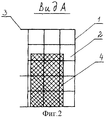
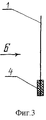
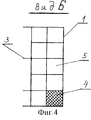
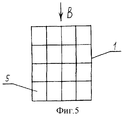
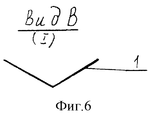
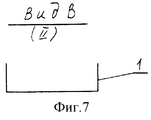
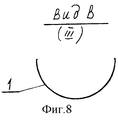
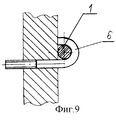
На фиг.1, 3 и 5 показан способ изготовления ручки дверной, ручка дверная и способ рекламирования изделия; на фиг.2 - вид А на фиг.1; на фиг.4 - вид Б на фиг.3; на фиг.6-8 - вид В на фиг.5 (варианты); на фиг.9 - показан способ монтажа ручки дверной к опорной поверхности.1, 3 and 5 show a method of manufacturing a door handle, a door handle and a method of advertising an article; figure 2 - a view of figure 1; figure 4 is a view of B in figure 3; in Fig.6-8 - view In Fig.5 (options); figure 9 shows a method of mounting a door handle to a supporting surface.
На фиг.1-9 позициями обозначены следующие детали: рукоятка 1, замкнутый объем 2, средство крепежа 3, геометрическое тело или/и рекламируемое изделие 4, ячейки 5 и крючки 6.1-9, the following details are indicated by positions:
Рукоятка 1 (см. фиг.1-8) изготовлена или выполнена из сетки, а сетку изготавливают из гибких или/и жестких нитей, а в качестве материала нитей используют металл или кожу или волокна. При изготовлении сетки из металлической проволоки или металлических прутков их соединяют между собой посредством точечной электрической сварки с плетением проволоки между собой или без таковой. При использовании в качестве нитей кожи их связывают в узлы в местах образования узлов ячеек. При использовании нитей из волокна используют нити: хлопчатобумажные, льняные, хлопковые, конопляные, искусственные нити и т.д. Рукоятка 1 образована сеткой и может иметь плоскую форму и не плоскую форму, может иметь замкнутый объем или частично замкнутый объем (в качестве одной из поверхностей рукоятки может использоваться опорная поверхность, где нет сетки, а может и не использоваться, это необходимо для размещения и удаления геометрического тела в замкнутом объеме). Рукоятка 1 может быть выполнена в виде шара или части шара, в виде цилиндра или части цилиндра, в виде трубы или части трубы, в виде куба или части куба, в виде призмы или части призмы и т.д. Замкнутый объем 2 может иметь соответствующие формы и его размеры больше геометрического тела, который размещают в замкнутом объеме 2. Ручка дверная имеет средство ее крепежа 3, которое выполнено в виде выступающих в сторону опорной поверхности частей сетки (решетки) с резьбовыми участками или без таковых (ручка дверная может крепиться к опорной поверхности посредством крепежных изделий или посредством сварных швов). Геометрическое тело или рекламируемое изделие 4 могут быть размещены в замкнутом объеме или размещены в ячейке или ячейках сетки или могут быть подвешены к элементам сетки, т.е. рукоятки 1. Сетка или решетка имеет ячейки 5, которые могут иметь любую геометрическую форму (прямоугольник, квадрат, ромб, круг, сектор, сегмент, треугольник (равносторонний, равнобедренный, прямоугольный) и т. д.). Размер ячеек 5 выбирается таким, чтобы в ячейки 5 могли быть размещены пальцы человеческой руки и то же время ручка дверная должна иметь достаточные прочностные свойства и жесткость, обеспечивающие ее эксплуатацию. В связи с этим размер ячеек 5 должен быть выбран из диапазона 23-40 мм. Закрепление ручки дверной к опорной поверхности может производиться посредством крючков 6 (см. фиг.9) с резьбовыми участками. Ручка дверная выступает в роли средства или подставки для рекламируемого изделий. Ручка дверная используется в качестве подставки или в качестве дополнительного корпуса или упаковки для пачки сигарет, пачки сигар, трубки курительной, бутылки, банки, освежителя воздуха, средства против насекомых и т.д.The handle 1 (see FIGS. 1-8) is made or made of mesh, and the mesh is made of flexible and / or rigid threads, and metal or leather or fibers are used as the material of the threads. In the manufacture of a mesh of metal wire or metal rods, they are interconnected by spot electric welding with or without weaving wire. When used as skin threads, they are tied into nodes at the sites of formation of cell nodes. When using fiber yarns, yarns are used: cotton, linen, cotton, hemp, artificial yarns, etc. The
Способ изготовления ручки дверной (вариант 1) реализуется следующим образом.A method of manufacturing a door handle (option 1) is implemented as follows.
Взяли сетку, изготовленную из проволоки диаметром 4 мм. Изготовили рукоятку 1 с замкнутым объемом 2 из сетки (см. фиг.1 и 2), причем рукоятку 1 изготовили в виде объемного изделия с пятью поверхностями, образованными сеткой (на месте шестой поверхности сетка отсутствует, т.к. этот участок выполнен в виде входа - выхода в замкнутый объем, очерченный сеткой или решеткой). Грани поверхностей рукоятки 1, контактирующие с опорной поверхностью, образуют контактную поверхность ручки дверной. При закреплении ручки дверной к опорной поверхности осуществляют закрывание входа-выхода в замкнутый объем 2 посредством самой опорной поверхности. На контактной поверхности ручки дверной изготовили средство крепежа 3 в виде отдельных выступающих частей элементов сетки - проволоки, причем на выступающих частях изготовили резьбовые участки (M4×6G). Изготовили на опорной поверхности дверного полотна и оконною полотна отверстия. Разместили в замкнутом объеме 2 ручки дверной (в порядке очередности) геометрическое тело в виде пачки с сигаретами, пачки с сигарами, трубки курительной, бутылки с водой или соком, или напитком, или пивом, или водкой, или с иными ликероводочными изделиями, средство для освежения воздуха, средство против насекомых и т.д., причем ручка дверная использовалась в качестве подставки для перечисленных геометрических тел или в качестве подставки для рекламируемых изделий или в качестве корпуса или упаковки для изделий или в качестве корпуса для изделий, указанных выше. Ввели крепежные средства 3 в изготовленные отверстия и закрепили их посредством гаек и шайб. Опорную поверхность дополнительно использовали в качестве средства для закрывания входа-выхода в замкнутый объем 2 ручки дверной. В качестве материала сетки или решетки использовали и иные материалы, перечисленные выше. При данном исполнении ручки дверной геометрическое тело может быть размещено в замкнутом объеме 2 или/и в ячейке сетки или решетки.We took a mesh made of wire with a diameter of 4 mm. A
Способ изготовления ручки дверной (вариант 2) реализуется следующим образом.A method of manufacturing a door handle (option 2) is implemented as follows.
Изготовили ручку дверную с замкнутым объемом 2, но без размещения геометрического тела в замкнутом объеме (см. фиг.1 и 2, но без геометрических тел 4). Все операции проделали, как и при реализации способа по варианту 1.A door handle was made with a closed volume of 2, but without placing a geometric body in a closed volume (see figures 1 and 2, but without geometric bodies 4). All operations were done, as in the implementation of the method according to
Изготовили ручку дверную из сетки 1 или решетки без замкнутого объеме (см. фиг.3 и 4), т.е. использовали сетку без элементов формообразования из ее геометрических фигур (условно не считается объем ячейки, очерченный элементами сетки, в качестве объемного элемента, т.к. его геометрические размеры вписываются в геометрические размеры сетки). В данном исполнении ручки дверной в качестве элемента для размещения геометрического тела на ручке дверной использовали ячейку или ячейки 5, или часть или части ячеек 5 сетки, или решетки. В качестве геометрических тел использовали те же геометрические тела, указанные выше.A door handle was made from
Изготовили ручки дверные из сетки или решетки с формированием объемной пространственной фигуры с частично замкнутым объемом (см. фиг.5-8), т.e. вход-выход в замкнутый объем 2 не закрыт или частично закрыт, причем опорная поверхность используется в качестве одной из поверхностей объемной пространственной фигуры. При данном исполнении ручки дверной геометрическое тело 4 (условно не показано) может быть размещено в частично замкнутом объеме или/и в ячейке 5 сетки. Закрепили ручку дверную к опорной поверхности способом, описанным выше или ниже.Door handles were made of mesh or lattice with the formation of a three-dimensional spatial figure with a partially enclosed volume (see Figs. 5-8), i.e. the input-output in the closed
Осуществили монтаж ручки дверной к опорной поверхности с использованием крючков 6 (см. фиг.9) путем предварительного обхвата элементов сетки или решетки крючками 6 и последующего закрепления крючков 6 к опорной поверхности.The door handle was mounted to the supporting surface using hooks 6 (see Fig. 9) by preliminary grasping the mesh or lattice elements with
Указанные выше отдельные способы реализуют собой способы рекламирования изделий.The above individual methods implement methods for advertising products.
Способ рекламирования изделия (вариант 1) реализуется следующим образом.The method of advertising products (option 1) is implemented as follows.
Изготовили ручку дверную из сетки или решетки с замкнутым объемом 2, а рекламируемые изделия (геометрические тела) 4 разместили в замкнутом объеме 2 ручки дверной (рукоятки) 1, причем в качестве опорной поверхности использовали части поверхности элементов, формирующих ручку дверную, обращенные в сторону замкнутого объема. Ручку дверную (рукоятку) также изготовили из светопрозрачного материала с внутренней полостью (условно не показано). В качестве рекламируемых изделий может быть использовано изделие, указанное выше или любое другое изделие.A door handle was made of a grid or lattice with a closed volume of 2, and the advertised products (geometric bodies) 4 were placed in a closed volume of 2 door handles (handles) 1, and parts of the surface of the elements forming the door handle facing the closed side were used as a supporting surface volume. The door handle (handle) was also made of translucent material with an internal cavity (not shown conditionally). As advertised products can be used the product specified above or any other product.
Способ рекламирования изделия (вариант 2) реализуется следующим образом.The method of advertising products (option 2) is implemented as follows.
Изготовили ручку дверную известными способами или в виде объемного тела любой известной или неизвестной конструкции или в виде сетки или решетки. В качестве опорной поверхности для рекламируемого изделия, использовали ручку дверную. Рекламируемое изделие может быть закреплено к опорной поверхности известными или неизвестными средствами.A door handle was made by known methods or in the form of a volumetric body of any known or unknown design or in the form of a grid or lattice. As a supporting surface for the advertised product, a door handle was used. The advertised product may be fixed to the supporting surface by known or unknown means.
Ручка дверная или ручка оконная или ручка работает следующим образом.The door handle or window handle or handle works as follows.
Если ручка изготовлена из сетки или решетки.If the handle is made of mesh or grille.
Вводят пальцы кисти руки в ячейки сетки или решетки, частично обхватывают элементы сетки, а затем перемещают ручку дверную совместно с опорной поверхностью в требуемом направлении.The fingers of the hand are introduced into the cells of the grid or lattice, partially grasp the elements of the grid, and then the door handle is moved together with the supporting surface in the desired direction.
Если ручка изготовлена не из сетки. Берутся за рукоятку и перемещают рукоятку совместно с опорной поверхностью в требуемом направлении.If the handle is not made of mesh. Grasp the handle and move the handle together with the supporting surface in the desired direction.
Таким образом, заявляемые технические решения “Способ изготовления ручки дверной (варианты)”, “Ручка дверная (варианты)”, “Способ монтажа ручки дверной к опорной поверхности” и “Способ рекламирования изделия (варианты)” обеспечивают достижение поставленной задачи и получение нового технического результата.Thus, the claimed technical solutions “Method of manufacturing the door handle (options)”, “Door handle (options)”, “Method of mounting the door handle to the supporting surface” and “Method of advertising the product (options)” ensure the achievement of the task and a new technical result.
Claims (2)
Priority Applications (1)
| Application Number | Priority Date | Filing Date | Title |
|---|---|---|---|
| RU2003108338/12A RU2244792C2 (en) | 2003-03-27 | 2003-03-27 | Method for attaching door handle to support surface and door handle |
Applications Claiming Priority (1)
| Application Number | Priority Date | Filing Date | Title |
|---|---|---|---|
| RU2003108338/12A RU2244792C2 (en) | 2003-03-27 | 2003-03-27 | Method for attaching door handle to support surface and door handle |
Publications (2)
| Publication Number | Publication Date |
|---|---|
| RU2003108338A RU2003108338A (en) | 2005-01-10 |
| RU2244792C2 true RU2244792C2 (en) | 2005-01-20 |
Family
ID=34880995
Family Applications (1)
| Application Number | Title | Priority Date | Filing Date |
|---|---|---|---|
| RU2003108338/12A RU2244792C2 (en) | 2003-03-27 | 2003-03-27 | Method for attaching door handle to support surface and door handle |
Country Status (1)
| Country | Link |
|---|---|
| RU (1) | RU2244792C2 (en) |
Citations (4)
| Publication number | Priority date | Publication date | Assignee | Title |
|---|---|---|---|---|
| US4782556A (en) * | 1987-06-29 | 1988-11-08 | Airway Industries, Inc. | Handle for luggage case |
| US5699587A (en) * | 1995-01-16 | 1997-12-23 | American Standard, Inc. | Handle for a sanitary fitting |
| RU2104378C1 (en) * | 1996-05-24 | 1998-02-10 | Акционерное общество открытого типа "Машиностроительный завод" | Handle |
| US6351873B1 (en) * | 1996-10-31 | 2002-03-05 | Daniel Donck | Decorative equipment piece used as a handle |
-
2003
- 2003-03-27 RU RU2003108338/12A patent/RU2244792C2/en active
Patent Citations (4)
| Publication number | Priority date | Publication date | Assignee | Title |
|---|---|---|---|---|
| US4782556A (en) * | 1987-06-29 | 1988-11-08 | Airway Industries, Inc. | Handle for luggage case |
| US5699587A (en) * | 1995-01-16 | 1997-12-23 | American Standard, Inc. | Handle for a sanitary fitting |
| RU2104378C1 (en) * | 1996-05-24 | 1998-02-10 | Акционерное общество открытого типа "Машиностроительный завод" | Handle |
| US6351873B1 (en) * | 1996-10-31 | 2002-03-05 | Daniel Donck | Decorative equipment piece used as a handle |
Also Published As
| Publication number | Publication date |
|---|---|
| RU2003108338A (en) | 2005-01-10 |
Similar Documents
| Publication | Publication Date | Title |
|---|---|---|
| US20100242339A1 (en) | Prism traps for fruit and vegetable insects-pests | |
| DE60232828D1 (en) | SURGICAL DEVICE FOR REMOVING A FOREIGN BODY AND METHOD FOR THE PRODUCTION THEREOF | |
| CN202857585U (en) | A kind of insect cage for cultivating Bactrocera dorsalis | |
| US6742470B2 (en) | Bird deterring apparatus | |
| RU2244792C2 (en) | Method for attaching door handle to support surface and door handle | |
| WO2014040961A3 (en) | Shaking device for harvesting small fruit | |
| EP1130955A1 (en) | Plant arrangement with a holder for objects therein | |
| CN206165128U (en) | Degassing unit suitable for multiple agricultural crop seed | |
| JP2981849B2 (en) | Washing basket | |
| Kumar et al. | Pyramids and their shapes effect | |
| WO2020117179A1 (en) | Device for decoratively moulding fruits | |
| CN214636770U (en) | Fruit fly innocent treatment device | |
| CN217742843U (en) | Fruit fly catching and killing device | |
| JPH10179990A (en) | Drying hanger | |
| CN2321218Y (en) | Mosquito attraction and trapping device | |
| CN212937442U (en) | A kind of fruit fly egg-laying attracting device | |
| CN214339571U (en) | Fruit tree cultivation insect catching device | |
| CN201422340Y (en) | Small cockroach trap | |
| CN203896761U (en) | Simple picking frame for small berries | |
| KR200477391Y1 (en) | Guide weight for a branch of fruit-tree for the improvement of fruit-blooming | |
| JP2004225382A (en) | Structure of bamboo rail fence panel | |
| JP3754442B1 (en) | Planar support and display device, display device, flower stand, and seedling device using the same | |
| CN205390092U (en) | Lure worm color disc placer | |
| GB2373761A (en) | A trolley | |
| CN207733496U (en) | A kind of fruit fly monitoring tool box special |