RU2425695C2 - Fluid regeneration system and method - Google Patents
Fluid regeneration system and method Download PDFInfo
- Publication number
- RU2425695C2 RU2425695C2 RU2007134365/14A RU2007134365A RU2425695C2 RU 2425695 C2 RU2425695 C2 RU 2425695C2 RU 2007134365/14 A RU2007134365/14 A RU 2007134365/14A RU 2007134365 A RU2007134365 A RU 2007134365A RU 2425695 C2 RU2425695 C2 RU 2425695C2
- Authority
- RU
- Russia
- Prior art keywords
- dialysis fluid
- blood
- fluid
- filter
- cell
- Prior art date
Links
Images





Classifications
-
- A—HUMAN NECESSITIES
- A61—MEDICAL OR VETERINARY SCIENCE; HYGIENE
- A61M—DEVICES FOR INTRODUCING MEDIA INTO, OR ONTO, THE BODY; DEVICES FOR TRANSDUCING BODY MEDIA OR FOR TAKING MEDIA FROM THE BODY; DEVICES FOR PRODUCING OR ENDING SLEEP OR STUPOR
- A61M1/00—Suction or pumping devices for medical purposes; Devices for carrying-off, for treatment of, or for carrying-over, body-liquids; Drainage systems
- A61M1/14—Dialysis systems; Artificial kidneys; Blood oxygenators ; Reciprocating systems for treatment of body fluids, e.g. single needle systems for hemofiltration or pheresis
- A61M1/16—Dialysis systems; Artificial kidneys; Blood oxygenators ; Reciprocating systems for treatment of body fluids, e.g. single needle systems for hemofiltration or pheresis with membranes
- A61M1/1694—Dialysis systems; Artificial kidneys; Blood oxygenators ; Reciprocating systems for treatment of body fluids, e.g. single needle systems for hemofiltration or pheresis with membranes with recirculating dialysing liquid
- A61M1/1696—Dialysis systems; Artificial kidneys; Blood oxygenators ; Reciprocating systems for treatment of body fluids, e.g. single needle systems for hemofiltration or pheresis with membranes with recirculating dialysing liquid with dialysate regeneration
-
- A—HUMAN NECESSITIES
- A61—MEDICAL OR VETERINARY SCIENCE; HYGIENE
- A61M—DEVICES FOR INTRODUCING MEDIA INTO, OR ONTO, THE BODY; DEVICES FOR TRANSDUCING BODY MEDIA OR FOR TAKING MEDIA FROM THE BODY; DEVICES FOR PRODUCING OR ENDING SLEEP OR STUPOR
- A61M1/00—Suction or pumping devices for medical purposes; Devices for carrying-off, for treatment of, or for carrying-over, body-liquids; Drainage systems
- A61M1/34—Filtering material out of the blood by passing it through a membrane, i.e. hemofiltration or diafiltration
- A61M1/342—Adding solutions to the blood, e.g. substitution solutions
- A61M1/3455—Substitution fluids
- A61M1/3465—Substitution fluids using dialysate as substitution fluid
-
- A—HUMAN NECESSITIES
- A61—MEDICAL OR VETERINARY SCIENCE; HYGIENE
- A61M—DEVICES FOR INTRODUCING MEDIA INTO, OR ONTO, THE BODY; DEVICES FOR TRANSDUCING BODY MEDIA OR FOR TAKING MEDIA FROM THE BODY; DEVICES FOR PRODUCING OR ENDING SLEEP OR STUPOR
- A61M1/00—Suction or pumping devices for medical purposes; Devices for carrying-off, for treatment of, or for carrying-over, body-liquids; Drainage systems
- A61M1/34—Filtering material out of the blood by passing it through a membrane, i.e. hemofiltration or diafiltration
- A61M1/342—Adding solutions to the blood, e.g. substitution solutions
- A61M1/3455—Substitution fluids
- A61M1/3468—Substitution fluids using treated filtrate as substitution fluid
-
- A—HUMAN NECESSITIES
- A61—MEDICAL OR VETERINARY SCIENCE; HYGIENE
- A61M—DEVICES FOR INTRODUCING MEDIA INTO, OR ONTO, THE BODY; DEVICES FOR TRANSDUCING BODY MEDIA OR FOR TAKING MEDIA FROM THE BODY; DEVICES FOR PRODUCING OR ENDING SLEEP OR STUPOR
- A61M1/00—Suction or pumping devices for medical purposes; Devices for carrying-off, for treatment of, or for carrying-over, body-liquids; Drainage systems
- A61M1/34—Filtering material out of the blood by passing it through a membrane, i.e. hemofiltration or diafiltration
- A61M1/3472—Filtering material out of the blood by passing it through a membrane, i.e. hemofiltration or diafiltration with treatment of the filtrate
-
- A—HUMAN NECESSITIES
- A61—MEDICAL OR VETERINARY SCIENCE; HYGIENE
- A61M—DEVICES FOR INTRODUCING MEDIA INTO, OR ONTO, THE BODY; DEVICES FOR TRANSDUCING BODY MEDIA OR FOR TAKING MEDIA FROM THE BODY; DEVICES FOR PRODUCING OR ENDING SLEEP OR STUPOR
- A61M1/00—Suction or pumping devices for medical purposes; Devices for carrying-off, for treatment of, or for carrying-over, body-liquids; Drainage systems
- A61M1/34—Filtering material out of the blood by passing it through a membrane, i.e. hemofiltration or diafiltration
- A61M1/3472—Filtering material out of the blood by passing it through a membrane, i.e. hemofiltration or diafiltration with treatment of the filtrate
- A61M1/3482—Filtering material out of the blood by passing it through a membrane, i.e. hemofiltration or diafiltration with treatment of the filtrate by filtrating the filtrate using another cross-flow filter, e.g. a membrane filter
-
- B—PERFORMING OPERATIONS; TRANSPORTING
- B01—PHYSICAL OR CHEMICAL PROCESSES OR APPARATUS IN GENERAL
- B01D—SEPARATION
- B01D61/00—Processes of separation using semi-permeable membranes, e.g. dialysis, osmosis or ultrafiltration; Apparatus, accessories or auxiliary operations specially adapted therefor
- B01D61/14—Ultrafiltration; Microfiltration
- B01D61/145—Ultrafiltration
-
- B—PERFORMING OPERATIONS; TRANSPORTING
- B01—PHYSICAL OR CHEMICAL PROCESSES OR APPARATUS IN GENERAL
- B01D—SEPARATION
- B01D63/00—Apparatus in general for separation processes using semi-permeable membranes
- B01D63/16—Rotary, reciprocated or vibrated modules
-
- A—HUMAN NECESSITIES
- A61—MEDICAL OR VETERINARY SCIENCE; HYGIENE
- A61M—DEVICES FOR INTRODUCING MEDIA INTO, OR ONTO, THE BODY; DEVICES FOR TRANSDUCING BODY MEDIA OR FOR TAKING MEDIA FROM THE BODY; DEVICES FOR PRODUCING OR ENDING SLEEP OR STUPOR
- A61M1/00—Suction or pumping devices for medical purposes; Devices for carrying-off, for treatment of, or for carrying-over, body-liquids; Drainage systems
- A61M1/14—Dialysis systems; Artificial kidneys; Blood oxygenators ; Reciprocating systems for treatment of body fluids, e.g. single needle systems for hemofiltration or pheresis
- A61M1/28—Peritoneal dialysis ; Other peritoneal treatment, e.g. oxygenation
- A61M1/287—Dialysates therefor
-
- B—PERFORMING OPERATIONS; TRANSPORTING
- B01—PHYSICAL OR CHEMICAL PROCESSES OR APPARATUS IN GENERAL
- B01D—SEPARATION
- B01D2313/00—Details relating to membrane modules or apparatus
- B01D2313/08—Flow guidance means within the module or the apparatus
-
- B—PERFORMING OPERATIONS; TRANSPORTING
- B01—PHYSICAL OR CHEMICAL PROCESSES OR APPARATUS IN GENERAL
- B01D—SEPARATION
- B01D2313/00—Details relating to membrane modules or apparatus
- B01D2313/24—Specific pressurizing or depressurizing means
-
- B—PERFORMING OPERATIONS; TRANSPORTING
- B01—PHYSICAL OR CHEMICAL PROCESSES OR APPARATUS IN GENERAL
- B01D—SEPARATION
- B01D2313/00—Details relating to membrane modules or apparatus
- B01D2313/24—Specific pressurizing or depressurizing means
- B01D2313/243—Pumps
-
- B—PERFORMING OPERATIONS; TRANSPORTING
- B01—PHYSICAL OR CHEMICAL PROCESSES OR APPARATUS IN GENERAL
- B01D—SEPARATION
- B01D2315/00—Details relating to the membrane module operation
- B01D2315/02—Rotation or turning
Landscapes
- Health & Medical Sciences (AREA)
- Heart & Thoracic Surgery (AREA)
- Engineering & Computer Science (AREA)
- Hematology (AREA)
- Animal Behavior & Ethology (AREA)
- Veterinary Medicine (AREA)
- Anesthesiology (AREA)
- Biomedical Technology (AREA)
- Public Health (AREA)
- Life Sciences & Earth Sciences (AREA)
- Vascular Medicine (AREA)
- General Health & Medical Sciences (AREA)
- Urology & Nephrology (AREA)
- Water Supply & Treatment (AREA)
- Chemical & Material Sciences (AREA)
- Chemical Kinetics & Catalysis (AREA)
- Emergency Medicine (AREA)
- External Artificial Organs (AREA)
Abstract
Description
ОБЛАСТЬ ТЕХНИКИFIELD OF TECHNOLOGY
Настоящее изобретение относится к способу и системе регенерации жидкости для системы очистки крови, предназначенной для выведения растворимых продуктов из жидкости организма, которая выполнена портативной с возможностью постоянного подключения к пациенту, чтобы пациент мог носить систему с собой. Система предназначена для выведения продуктов выделения из крови пациента с нарушенной или совсем не выполняемой функцией почек.The present invention relates to a method and system for liquid regeneration for a blood purification system designed to remove soluble products from body fluids, which is portable with the possibility of constant connection to the patient so that the patient can carry the system with him. The system is designed to remove the products of excretion from the blood of a patient with impaired or not at all fulfilled renal function.
ПРЕДШЕСТВУЮЩИЙ УРОВЕНЬ ТЕХНИКИBACKGROUND OF THE INVENTION
Пациенты с нарушением или полным отсутствием функции почек обычно проходят лечение диализом. Гемодиализ может занимать, например, четыре часа каждый второй день. Во время гемодиализа кровь пациента направляют на циркуляцию по экстракорпоральному контуру и пропускают через диализатор, содержащий полупроницаемую мембрану, одна сторона которой находится в контакте с кровью. Другая сторона полупроницаемой мембраны находится в контакте с диализирующей жидкостью, имеющей некоторый состав. Продукты выделения, например мочевина и креатинин, могут проходить из крови через мембрану в диализирующую жидкость посредством диффузии под действием градиента концентрации. Другие растворенные вещества, например бикарбонат, могут проходить, наоборот, из диализирующей жидкости через мембрану в кровь, например, для противодействия накоплению кислоты в крови пациента. Жидкость выводится из крови пациента через мембрану. Диализирующую жидкость обычно выбрасывают после процедуры. В течение четырехчасовой процедуры диализа часто расходуется несколько сотен литров диализата. Подобную процедуру обычно проводят в центре диализа под контролем обученного персонала.Patients with impaired or complete lack of kidney function are usually treated with dialysis. Hemodialysis can take, for example, four hours every second day. During hemodialysis, the patient’s blood is circulated along an extracorporeal circuit and passed through a dialyzer containing a semipermeable membrane, one side of which is in contact with the blood. The other side of the semipermeable membrane is in contact with a dialysis fluid having some composition. Excretion products, such as urea and creatinine, can pass from the blood through the membrane into the dialysis fluid through diffusion under the influence of a concentration gradient. Other solutes, such as bicarbonate, can, conversely, pass from the dialysis fluid through the membrane into the blood, for example, to counteract the accumulation of acid in the patient's blood. The fluid is removed from the patient’s blood through the membrane. Dialysis fluid is usually discarded after the procedure. During the four-hour dialysis procedure, several hundred liters of dialysate are often consumed. A similar procedure is usually performed in a dialysis center under the supervision of trained personnel.
Недавно стали производить диализаторы, предназначенные для домашнего применения, причем из соображений безопасности пациенту обычно помогает другое лицо. Непрерывный мониторинг дает возможность управлять или осуществлять контроль за работой из больницы. Такой домашний диализ может совершаться чаще. Процедура домашнего диализа дает возможность выполнять диализ ежедневно или даже дважды в сутки.Recently, dialyzers designed for home use have been started, and for reasons of safety, another person usually helps the patient. Continuous monitoring allows you to manage or monitor work from the hospital. Such home dialysis can occur more often. The home dialysis procedure makes it possible to perform dialysis daily or even twice a day.
Недостаток обычного гемодиализа, как указано выше, состоит в том, что продукты выделения накапливаются между процедурами и организм подвергается воздействию сильно изменяющихся концентраций, например, мочевины и креатинина в жидкостях организма. Кроме того, пациент не может избавиться от лишней жидкости между процедурами, что приводит к тому, что масса пациента изменяется, например, на 4 кг между процедурами. В данном случае 4 л жидкости могут выводиться из пациента во время каждой процедуры. Изменяющаяся концентрация веществ и накопившаяся жидкость могут вредить пациенту, и более предпочтительно будет более непрерывная процедура гемодиализа.The disadvantage of conventional hemodialysis, as described above, is that the excretion products accumulate between procedures and the body is exposed to highly variable concentrations, for example, urea and creatinine in body fluids. In addition, the patient cannot get rid of excess fluid between the procedures, which leads to the fact that the patient's weight changes, for example, by 4 kg between the procedures. In this case, 4 liters of fluid can be removed from the patient during each procedure. A changing concentration of substances and accumulated fluid can harm the patient, and more preferably there will be a more continuous hemodialysis procedure.
Следовательно, существует потребность в процедуре гемодиализа, которую можно выполнять непрерывно, а это означает, что система диализа должна быть портативной, чтобы пользователь мог жить нормальной жизнью.Therefore, there is a need for a hemodialysis procedure that can be performed continuously, which means that the dialysis system must be portable so that the user can live a normal life.
Подобное портативное устройство для гемодиализа раскрыто, например, в патенте США 4269708. Устройство содержит диализатор, подсоединяемый к пациенту обычными иглами или катетерами. Диализатор подсоединяется также к контуру диализа, содержащему емкость для чистой диализирующей жидкости, имеющую объем около 10 л. Очевидно, что данная аппаратура для диализа является довольно тяжелой, но ее можно переносить, например, в ранце. Возможно подсоединение емкости меньшего размера для временного уменьшения веса. Устройство содержит также фильтры для выведения токсичных компонентов, например фильтр с активированным углем. Жидкость выводится из крови в процесс ультрафильтрации и непосредственно сбрасывается в резервуар-приемник. Однако устройство по патенту США 4269708 является слишком тяжелым для переноски в любое время. Следовательно, существует потребность в системе диализа, которая имеет небольшой размер и может быть постоянно подсоединенной к пациенту. Система должна быть носимой и не слишком тяжелой.Such a portable device for hemodialysis is disclosed, for example, in US Pat. No. 4,269,708. The device comprises a dialyzer connected to a patient by conventional needles or catheters. The dialyzer is also connected to a dialysis circuit containing a container for clean dialysis fluid having a volume of about 10 l. Obviously, this dialysis equipment is quite heavy, but it can be carried, for example, in a satchel. A smaller container can be connected to temporarily reduce weight. The device also contains filters for removing toxic components, for example, an activated carbon filter. The liquid is removed from the blood into the ultrafiltration process and is directly discharged into the receiver tank. However, the device of US Pat. No. 4,269,708 is too heavy to carry at any time. Therefore, there is a need for a dialysis system that is small and can be permanently connected to a patient. The system should be wearable and not too heavy.
СУЩНОСТЬ ИЗОБРЕТЕНИЯSUMMARY OF THE INVENTION
Технической задачей настоящего изобретения является создание способа и системы для регенерации жидкости для очистки крови, предназначенной для непрерывного применения и достаточно легкой, чтобы ее можно было носить ежедневно.An object of the present invention is to provide a method and system for the regeneration of a blood purification fluid intended for continuous use and light enough to be worn daily.
В соответствии с первым аспектом предложена система для регенерации жидкости, содержащейся в ячейке и находящейся в контакте с кровью через мембрану и/или отфильтрованной из крови, при этом система содержит: устройство для подачи жидкости из ячейки в устройство фильтрации для отфильтровывания, по существу, только воды из жидкости для получения концентрированной жидкости; устройство для выведения, по меньшей мере, части концентрированной жидкости и устройство для возвращения невыведенной части и воды в качестве регенерированной жидкости в ячейку и/или непосредственно в кровь. Концентрированная жидкость в упомянутом устройстве фильтрации может концентрироваться, по меньшей мере, при соотношении 3 к 1, например, 10 к 1 или, например, 15 к 1.According to a first aspect, there is provided a system for regenerating a fluid contained in a cell and in contact with blood through a membrane and / or filtered from blood, the system comprising: a device for supplying fluid from a cell to a filtration device for filtering, essentially only water from a liquid to obtain a concentrated liquid; a device for removing at least a portion of the concentrated liquid; and a device for returning the unexposed part and water as regenerated liquid to the cell and / or directly to the blood. The concentrated liquid in said filtration device may be concentrated at least in a ratio of 3 to 1, for example 10 to 1 or, for example, 15 to 1.
В одном варианте осуществления ячейка может быть брюшной полостью пациента и мембрана является перитонеальной мембраной в брюшной полости.In one embodiment, the cell may be a patient’s abdominal cavity and the membrane is a peritoneal membrane in the abdominal cavity.
Система может дополнительно содержать разделительный фильтр, подсоединенный к отверстию для выпуска ретентанта (продукт процесса концентрирования после фильтрации) фильтрующего устройства, и, тем самым, ретентант разделительного устройства возвращается в ячейку, и отфильтрованная жидкость (фильтрат) разделительного устройства выводится из системы в качестве отработанной жидкости (отхода). Разделительный фильтр может представлять собой фильтровальную систему, содержащую, по меньшей мере, две разделительные мембраны.The system may further comprise a separation filter connected to the outlet for releasing the retentant (product of the concentration process after filtration) of the filter device, and thereby the retentant of the separation device is returned to the cell, and the filtered liquid (filtrate) of the separation device is removed from the system as waste liquid (departure). The separation filter may be a filter system containing at least two separation membranes.
В варианте осуществления система может содержать первый насос для передачи жидкости из ячейки в устройство фильтрации, второй насос для передачи ретентанта из устройства фильтрации в разделительный фильтр и третий насос для передачи фильтрата из разделительного фильтра в резервуар-приемник в качестве отработанной жидкости. В альтернативном варианте система может содержать: первый насос для передачи жидкости из ячейки в устройство фильтрации, второй регулируемый клапан для пропускания ретентанта из устройства фильтрации в разделительный фильтр и третий насос для передачи фильтрата из разделительного фильтра в резервуар-приемник в качестве отработанной жидкости.In an embodiment, the system may comprise a first pump for transferring liquid from the cell to the filtering device, a second pump for transferring the retentant from the filtering device to the separation filter, and a third pump for transferring the filtrate from the separation filter to the receiver reservoir as waste fluid. Alternatively, the system may comprise: a first pump for transferring liquid from the cell to the filter device, a second adjustable valve for passing the retentant from the filter device to the separation filter, and a third pump for transferring the filtrate from the separation filter to the receiver reservoir as waste fluid.
В другом варианте осуществления система может содержать канал, расположенный в контуре циркуляции крови, содержащем мембрану и ячейку, при этом канал подсоединен для пропускания, по меньшей мере, части регенерированной жидкости в контур циркуляции крови перед ячейкой для так называемого предварительного разбавления. В альтернативном варианте канал может быть подсоединен для пропускания, по меньшей мере, части регенерированной жидкости в контур циркуляции крови за ячейкой для так называемого последующего разбавления.In another embodiment, the system may comprise a channel located in the blood circulation loop containing the membrane and the cell, the channel being connected to allow at least a portion of the regenerated fluid to pass into the blood circulation loop in front of the cell for so-called pre-dilution. Alternatively, a channel may be connected to allow at least a portion of the regenerated fluid to pass into the blood circulation loop behind the cell for so-called subsequent dilution.
В дополнительном варианте осуществления система может содержать разделительный фильтр, подсоединенный между ячейкой и устройством фильтрации, при этом ретентант устройства фильтрации возвращается в ячейку, а фильтрат устройства фильтрации пропускается в устройство фильтрации для концентрирования и выведения из системы в качестве отработанной жидкости.In a further embodiment, the system may comprise a separation filter connected between the cell and the filtration device, wherein the retentant of the filtration device is returned to the cell, and the filtrate of the filtration device is passed to the filtration device to concentrate and withdraw from the system as waste fluid.
В еще одном дополнительном варианте осуществления система может содержать фильтр ультрафильтрации, подсоединенный к выпускному отверстию ретентанта устройства фильтрации, при этом фильтрат фильтра ультрафильтрации возвращается в ячейку, а ретентант фильтра ультрафильтрации пропускается в устройство фильтрации для концентрирования. Каждый насос, расположенный непосредственно перед впускным отверстием устройства фильтрации, может представлять собой мощный насос, выполненный с возможностью обеспечения давления, достаточного для пропускания, по существу, только воды через мембрану устройства фильтрации. К выпускному отверстию для ретентанта разделительного фильтра может быть подсоединен клапан для направления выпускаемой жидкости в фильтр ультрафильтрации и/или ячейку. Между впускным отверстием и выпускным отверстием для ретентанта любого из разделительного фильтра, фильтра ультрафильтрации и устройства фильтрации может быть расположен циркуляционный насос для усиления касательного потока жидкости по поверхности мембраны каждого фильтра.In yet a further embodiment, the system may comprise an ultrafiltration filter connected to the outlet of the retentant of the filtration device, wherein the filtrate of the ultrafiltration filter is returned to the cell and the retentant of the ultrafiltration filter is passed to the filtration device for concentration. Each pump located immediately in front of the inlet of the filtration device may be a powerful pump configured to provide a pressure sufficient to allow substantially only water to pass through the membrane of the filtration device. A valve may be connected to the outlet for the retentant of the separation filter to direct the discharged liquid into the ultrafiltration filter and / or cell. Between the inlet and the outlet for the retentant of any of the separation filter, the ultrafiltration filter and the filtration device, a circulation pump can be arranged to enhance the tangential flow of liquid along the membrane surface of each filter.
В соответствии с другим аспектом изобретения предложен способ регенерации жидкости, содержащейся в ячейке и находящейся в контакте с кровью через мембрану и/или отфильтрованной из крови, при этом способ содержит следующие этапы:In accordance with another aspect of the invention, there is provided a method for regenerating a liquid contained in a cell and in contact with blood through a membrane and / or filtered from blood, the method comprising the following steps:
концентрируют жидкость посредством устройства фильтрации для формирования концентрированной жидкости и фильтрата, который представляет собой, по существу, только воду, возвращают фильтрат в ячейку и/или непосредственно в кровь и удаляют, по меньшей мере, часть концентрированной жидкости в качестве отработанной жидкости.the liquid is concentrated by means of a filtration device to form a concentrated liquid and a filtrate, which is essentially only water, the filtrate is returned to the cell and / or directly to the blood and at least part of the concentrated liquid is removed as waste liquid.
Ниже перечислены некоторые преимущества, получаемые соответственно одному или нескольким вышеупомянутым аспектам и вариантам осуществления:Listed below are some of the benefits accorded to one or more of the above aspects and embodiments, respectively:
сокращение времени диализа;dialysis time reduction;
повторное использование диализата;dialysate reuse;
предоставление большей свободы пациенту;providing greater freedom to the patient;
более широкое использование клиник и персонала;wider use of clinics and staff;
сокращение затрат;cost reduction;
удобство эксплуатации;ease of use;
простота конструкции;simplicity of construction;
простое получение из широко доступных компонентов;simple retrieval from widely available components;
отсутствие потребности в специальном или сложном обслуживании;lack of need for special or complex maintenance;
улучшение самочувствия пациента благодаря непрерывности процедуры.Improving the well-being of the patient due to the continuity of the procedure.
КРАТКОЕ ОПИСАНИЕ ЧЕРТЕЖЕЙBRIEF DESCRIPTION OF THE DRAWINGS
Дополнительные цели, признаки и преимущества изобретения очевидны из нижеследующего описания вариантов осуществления изобретения, приведенного со ссылками на чертежи, на которых:Additional objectives, features and advantages of the invention are apparent from the following description of embodiments of the invention, given with reference to the drawings, in which:
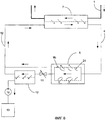
Фиг.1 схематично изображает вариант осуществления устройства согласно изобретению;Figure 1 schematically depicts an embodiment of a device according to the invention;
Фиг.2 - схему другого варианта осуществления устройства с представлением так называемого предварительного разбавления согласно изобретению;2 is a diagram of another embodiment of a device with the presentation of a so-called pre-dilution according to the invention;
Фиг.3 - схему другого варианта осуществления устройства с представлением так называемого последующего разбавления согласно изобретению;Figure 3 is a diagram of another embodiment of a device with the presentation of the so-called subsequent dilution according to the invention;
Фиг.4 - схему еще одного варианта осуществления устройства согласно изобретению;4 is a diagram of another embodiment of a device according to the invention;
Фиг.5 - схему еще одного варианта осуществления устройства, оборудованного насосами и разделительным фильтром, согласно изобретению;5 is a diagram of another embodiment of a device equipped with pumps and a separation filter, according to the invention;
Фиг.6 - схему еще одного варианта осуществления устройства с вращающимся обратноосмотическим фильтром согласно изобретению;6 is a diagram of another embodiment of a device with a rotating reverse osmosis filter according to the invention;
Фиг.7 - схему еще одного варианта осуществления устройства согласно изобретению;7 is a diagram of another embodiment of a device according to the invention;
Фиг.8 - схему еще одного варианта осуществления устройства с несколькими разделительными фильтрами согласно изобретению;Fig. 8 is a diagram of another embodiment of a device with several separation filters according to the invention;
Фиг.9 - схему еще одного варианта осуществления устройства с добавлением вещества согласно изобретению;Fig.9 is a diagram of another embodiment of a device with the addition of a substance according to the invention;
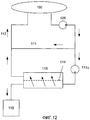
Фиг.10-12 - схему вариантов осуществления устройства, использующих перитонеальную мембрану пациента и обратноосмотический фильтр, согласно изобретению;10-12 is a diagram of embodiments of a device using a patient’s peritoneal membrane and reverse osmosis filter according to the invention;
Фиг.13 - схему еще одного варианта осуществления устройства с нанофильтром согласно изобретению;13 is a diagram of another embodiment of a nanofilter device according to the invention;
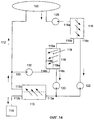
Фиг.14 - схему еще одного варианта осуществления устройства с ультрафильтром согласно изобретению;14 is a diagram of another embodiment of an ultrafilter device according to the invention;
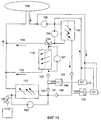
Фиг.15 - схему еще одного варианта осуществления устройства с системой насоса согласно изобретению.15 is a diagram of another embodiment of a device with a pump system according to the invention.
ПОДРОБНОЕ ОПИСАНИЕ ВАРИАНТОВ ОСУЩЕСТВЛЕНИЯ ИЗОБРЕТЕНИЯDETAILED DESCRIPTION OF EMBODIMENTS OF THE INVENTION
Вариант осуществления системы регенерации жидкости для очистки крови показан на фиг.1. Система содержит фильтр 7 очистки крови, который является ультрафильтром или диализатором, содержащим ячейку 7a для крови и ячейку 7c для диализата, разделенные полупроницаемой мембраной 7b. Через ячейку 7a для крови прокачивают кровь по контуру 1 циркуляции крови, как показано стрелкой 1a. Диализат или диализирующую жидкость прокачивают через диализную ячейку 7c, как показано стрелкой 4a, обычно противотоком.An embodiment of a fluid regeneration system for purifying blood is shown in FIG. The system comprises a
Контур 1 циркуляции крови может содержать первую иглу или катетер, подсоединенный к впускной линии 1b, и вторую иглу или катетер, подсоединенный к выпускной линии 1c. Иглы или катетеры можно вводить в кровеносные сосуды или один кровеносный сосуд млекопитающего, проходящего лечение с помощью данной системы. Иглы можно вводить в фистулу, установленную в руке пациента. В альтернативном варианте катетеры можно вводить в подходящие артерии и/или вены пациента. В случае когда первый катетер введен в артерию, второй катетер введен в вену, разность давлений между артерией и веной может двигать кровь по контуру 1 циркуляции крови. Контур циркуляции крови может быть экстракорпоральным, как показано на фиг.1. Однако в некоторых вариантах осуществления диализатор может быть хирургически введен внутрь пациента более или менее надолго. Ток крови в экстракорпоральном контуре может нагнетаться насосом. Возможно применение защитных устройств, обычных для гемодиализа, например воздухоуловительных камер, мониторов давления и т.п.The
На стороне мембраны 7b, обращенной к ячейке 7c для диализата, прокачивают по замкнутому контуру диализирующую жидкость, как показано стрелкой 4a. Через мембрану будет происходить ионный обмен, показанный пунктирными стрелками 7d. Данный транспорт ионов и веществ осуществляется при градиенте концентрации через мембрану обычно из крови в диализат. Через мембрану транспортируется также небольшое количество жидкости, как указано сплошной стрелкой 7e. Течение жидкостей в контуре циркуляции крови может быть противоположно течению жидкостей в ячейке для диализата, но возможны также течения в одинаковых направлениях.On the side of the
По мере того как вещества транспортируются через мембрану, будет происходить приведение в равновесие концентраций данных веществ в ячейке 7a для крови и в ячейке 7c для диализата. Уравновешиваться будут только вещества, которые являются достаточно мелкомолекулярными для прохождения через мембрану, тогда как молекулы и клетки крови, имеющие размер, который больше, чем размер пор мембраны, будут оставаться в крови. Если мембрана 7b характеризуется эксклюзией по размеру около 50000 D, то все ионы и вещества с меньшим размером молекул будут проходить через мембрану, а альбумин и более крупные молекулы и клетки будут задерживаться мембраной на стороне крови.As the substances are transported through the membrane, the concentrations of these substances will be balanced in the
Контур 4 циркуляции диализата дополнительно содержит второй фильтр 9. Диализат из ячейки 7c поступает во второй фильтр в первую ячейку 9a. Фильтр 9 выполнен как обратноосмотический фильтр или RO-фильтр, т.е. жидкость поступает в фильтр через впускное отверстие 9d в первую ячейку 9a и выходит из фильтра в виде ретентанта через выпускное отверстие 9e и фильтрат через выпускное отверстие 9f после проникновения через мембрану 9c фильтра, как показано стрелками 9g. Мембрана фильтра является мембраной, имеющей очень мелкие поры и пропускающей, по существу, только воду.The
Ретентант проходит через выпускное отверстие 9e во впускное отверстие 13d разделительного фильтра 13, содержащего первую ячейку 13a, мембрану 13b и вторую ячейку 13c. Ретентант из RO-фильтра 9 поступает в разделительный фильтр 13 через впускное отверстие 13d и выходит из третьего фильтра через выпускное отверстие 13e, и фильтрат выходит из третьего фильтра через выпускное отверстие 13f. Фильтрат накапливается в резервуаре-приемнике 19. Мембрана 13b в фильтре 13 может иметь размер пор, исключающий молекулы крупнее, чем приблизительно молекулы мочевины и креатинина. Следовательно, фильтрат содержит воду и мелкие молекулы, например мочевину, креатинин, Na+, K+, C++ и т.п. и, возможно, немного глюкозы.The retentant passes through an
Ретентант фильтра 13 и фильтрат фильтра 9 возвращаются в диализатор 7 по линии 12. Диализирующая жидкость нагнетается и регулируется в контуре 4 диализа подходящими насосами или дроссельными вентилями или клапанами, как подробно описано ниже.The retentant of the
Контур диализа, показанный на фиг.1, действует следующим образом. Продукты выделения и другие мелкомолекулярные вещества и/или ионы, содержащиеся в крови, проходят через мембрану 7b фильтра 7 очистки крови в диализирующую жидкость, как показано стрелками 7d. Диализирующая жидкость передается в RO-фильтр 9, в котором, по существу, только вода проходит через мембрану 9c фильтра, чтобы концентрировать диализирующую жидкость в виде ретентанта в первой камере или ячейке 9a. Концентрированная диализирующая жидкость или ретентант передается в разделительный фильтр 13, в котором часть проходит через мембрану фильтра и выходит из системы в резервуар-приемник 19. Из системы выводятся только ионы с размерами меньше, чем размер эксклюзии мембраны в разделительном фильтре. Оставшийся концентрированный диализат или ретентант в разделительном фильтре объединяется с водой, выделенной в RO-фильтре 9, и возвращается в диализатор 7. Таким образом, диализат, поступающий в ячейку 7c для диализата, будет характеризоваться низкой концентрацией мочевины и креатинина (и других мелких ионов), которые были отделены фильтром 13. Следовательно, мочевина и креатинин переносятся из крови в диализат, как показано стрелками 7d. Другие ионы типа фосфата или другие более крупномолекулярные вещества не выводятся разделительным фильтром 13 и остаются в контуре циркуляции диализата. Следовательно, градиент концентрации между кровью и диализатом для данных более крупномолекулярных веществ отсутствует, и данные вещества будут оставаться в крови.The dialysis circuit shown in FIG. 1 operates as follows. Isolation products and other small molecules and / or ions contained in the blood pass through the
При выведении некоторого количества жидкости из системы в резервуар-приемник 19 из крови отбирается соответствующее количество жидкости, как показано стрелкой 7e. Такой жидкости может набираться около 1,5 л в сутки, что соответствует нормальному количеству мочи, выделяемой здоровым человеком. Поскольку система является замкнутой, система будет саморегулирующейся. Упомянутая выводимая жидкость будет называться искусственной мочой.When a certain amount of fluid is removed from the system into the
Преимущество вышеописанной системы состоит в том, что она дает возможность использовать очень малое количество диализирующей жидкости в контуре, порядка нескольких литров или даже менее одного литра. Кроме того, свежая диализирующая жидкость не требуется, а циркулирующая жидкость регенерируется, например постоянно регенерируется. Фильтры могут быть небольшими, так как они используются непрерывно.The advantage of the above system is that it makes it possible to use a very small amount of dialysis fluid in the circuit, on the order of several liters or even less than one liter. In addition, fresh dialysis fluid is not required, and the circulating fluid is regenerated, for example constantly regenerated. Filters can be small, as they are used continuously.
Например, диализатор или фильтр очистки крови может иметь активную поверхность не более 0,1 м2, RO-фильтр может иметь активную поверхность не более 0,005 м2, и разделительный фильтр может иметь активную поверхность не более 0,05 м2.For example, a dialyzer or blood purification filter may have an active surface of not more than 0.1 m 2 , an RO filter may have an active surface of not more than 0.005 m 2 , and a separation filter may have an active surface of not more than 0.05 m 2 .
Кровоток может быть слабее чем 50 мл/мин, например слабее 20 мл/мин.Blood flow may be weaker than 50 ml / min, for example weaker than 20 ml / min.
Таким образом, система в комплекте будет очень малогабаритной и может быть носимой пациентом все время. Как упоминалось выше, преимущество системы состоит в том, что она является системой, по существу, непрерывного действия, которую можно эксплуатировать все время или часть времени, по желанию пациента. Возможно, пациент желает выключать систему на ночь по той или иной причине.Thus, the complete system will be very small and can be worn by the patient all the time. As mentioned above, the advantage of the system is that it is a system of essentially continuous operation, which can be operated all the time or part of the time, at the request of the patient. Perhaps the patient wants to turn off the system at night for one reason or another.
Вариант осуществления, описанный выше со ссылкой на фиг.1, действует как обычная система диализа, использующая диффузию для переноса выделяемых веществ из крови в диализат и использующая разделение и концентрирование для выведения выделяемых веществ из диализирующей жидкости в резервуар-приемник 19. Кроме того, концентрирование диализата происходит в RO-фильтре перед разделительным фильтром.The embodiment described above with reference to FIG. 1 acts as a conventional dialysis system using diffusion to transfer the released substances from the blood to the dialysate and using separation and concentration to remove the released substances from the dialysis liquid into the
В другом варианте осуществления, показанном на фиг.2, контур циркуляции диализата выполнен в виде системы гемофильтрации. В данном случае первый фильтр 7' действует как ультрафильтр. То есть кровь поступает в ячейку 7a' для диализата и крови, жидкость проходит через мембрану 7b' фильтра во вторую ячейку 7c'. Жидкость проходит по контуру 4, как прежде, и возвращается в кровь перед ультрафильтром 7'. В данном случае кровь перед поступлением в ультрафильтр 7' разбавляют, что именуется предварительным разбавлением.In another embodiment, shown in FIG. 2, the dialysate circulation loop is configured as a hemofiltration system. In this case, the first filter 7 'acts as an ultrafilter. That is, blood enters the dialysate and
Дополнительный вариант осуществления изображен на фиг.3, где показана гемофильтрация крови с последующим разбавлением крови. Порядок работы идентичен вышеописанному, но кровь разбавляют после ультрафильтрации 7''.An additional embodiment is shown in figure 3, which shows blood hemofiltration followed by dilution of the blood. The procedure is identical to the above, but the blood is diluted after ultrafiltration 7 ''.
На фиг.4 изображен другой вариант осуществления, отличающийся от варианта осуществления, представленного на фиг.1, тем, что третий фильтр заменен клапаном 25, расположенным в выпускном отверстии для ретентанта из RO-фильтра 9. Клапан 25 делит выходящий поток на первую часть, направляемую в резервуар-приемник 19, и вторую часть, возвращаемую в диализатор 7 в соединении с водой, получаемой в виде фильтрата из RO-фильтра 9. В остальном порядок работы идентичен вышеописанному.Figure 4 shows another embodiment, different from the embodiment shown in Figure 1, in that the third filter is replaced by a
Мембрана 7b в диализаторе 7 в варианте осуществления, показанном на фиг.4, может быть мембраной, имеющей поры меньшего размера, чем в предыдущих вариантах осуществления, пропускающей только вещества и ионы величиной меньше минимального размера, например меньше чем около 1000 D.The
На фиг.5 представлен вариант осуществления, соответствующий фиг.1, содержащий насосы для управления потоками в контуре 4 диализа. Таким образом, первый насос 6 подсоединен между диализатором 7 и RO-фильтром 9. Второй насос 21 подсоединен между RO-фильтром 9 и разделительным фильтром 13. Третий насос 18 подсоединен между разделительным фильтром 13 и резервуаром-приемником 19.Figure 5 presents the embodiment corresponding to figure 1, containing pumps for controlling flows in the
Насосы действуют, например, следующим образом. Третий насос 18 регулируют так, чтобы выполнять выведение конкретного количества жидкости, требуемой пациенту, для достижения баланса с поступающей жидкостью, например жидкостью, которую пациент выпил, и жидкостью, содержащейся в принимаемой пище. Обычно из пациента требуется выводить от 1 до 2 л/сутки, что соответствует около 1 мл/мин. Поэтому насос 18 настраивают на 1 мл/мин. Насос можно приводить в действие непрерывно или с перерывами.Pumps operate, for example, as follows. The
Насос 21 нужно отрегулировать на расход, который больше расхода насоса 18, например, на около 2 мл/мин. Насос 6 регулируют так, чтобы обеспечивать требуемую концентрацию диализирующей жидкости в фильтре 9. Если необходимо десятикратное концентрирование, то насос 6 работает с расходом, который в десять раз выше расхода насоса 21, т.е. около 20 мл/мин. Насос будет развивать давление, требуемое для пропускания 18 мл/мин воды через мембрану и 2 мл/мин в виде ретентанта в разделительный фильтр.The
Так как фильтр 9 является обратноосмотическим фильтром, пропускающим только воду, то от насоса 6 требуется нагнетание высокого давления, например выше 10 бар, или выше 25 бар и иногда еще выше. Насос автоматически регулируется по расходам. Высокое давление необходимо для обратноосмотической мембраны потому, что мелкие ионы, которые не допускаются к прохождению мембраны 9b, будут создавать высокое осмотическое давление, которое необходимо уравновешивать насосом 6 для пропускания воды через обратноосмотическую мембрану 9b. Это означает также, что фильтр 9 должен иметь конструкцию, выдерживающую такое высокое давление, что известно в технике.Since the
В варианте осуществления, показанном на фиг.5, насосы 21 и 18 можно заменить сужениями или дроссельными вентилями, настраиваемыми на обеспечение подходящего перепада давлений. Таким образом, регулируемый дроссельный вентиль 11 может заменять насос 21 для снижения давления, например, с 25 бар до 1,5 бар (фиг.6). Сужение 16 может заменять насос 18 и настраивается так, чтобы пропускать обычно около 1 мл/мин в резервуар-приемник 19. В данном случае единственным необходимым насосом в системе является насос 6 (фиг.7).In the embodiment shown in FIG. 5, pumps 21 and 18 can be replaced by constrictions or butterfly valves that are configured to provide a suitable differential pressure. Thus, the
Цилиндр, вращающийся с высокой скоростью, может развивать высокое давление, необходимое для прохода воды через обратноосмотическую мембрану 9b. Данный вариант осуществления изображен на фиг.6. Мембрана 9b выполнена в форме цилиндра, который свободно вращается и приводится во вращение электродвигателем (не показан). Жидкость диализата подается в цилиндр через центральное впускное отверстие, и ретентант выходит из фильтра через центральное выпускное отверстие в другом торце цилиндра. Цилиндр оборудован несколькими лопастями 24, приводящими жидкость в движение в продольном направлении от впускного отверстия к выпускному отверстию. Когда цилиндр вращается, диализат будет проходить по цилиндру и отводиться наружу к полупроницаемым стенкам мембраны. Центробежные усилия будут уравновешивать противодействующее осмотическое давление, и вода будет протекать через мембрану. Количество воды, вытекающей через мембрану, регулируется частотой вращения цилиндра. Следовательно, частота вращения цилиндра регулирует степень концентрирования, которая требуется от фильтра 9. Степень концентрирования должна быть равна, по меньшей мере, трем, например, десяти или, например, пятнадцати. Ретентант, выпускается из обратноосмотического фильтра 9 через регулируемый дроссельный вентиль 11 в разделительный фильтр 13. Фильтрат через мембрану разделительного фильтра выводится через насос 18 в резервуар-приемник 19. Как и ранее, дроссельный вентиль может заменить насос 18.A cylinder rotating at high speed can develop the high pressure required for water to pass through the
Степень концентрирования настраивают так, чтобы обеспечивать искомый вывод продуктов выделения. Если объем выводимых продуктов выделения составляет 1,5 л в сутки и ежедневно следует выводить 750 ммоль мочевины, то концентрация мочевины в ретентанте RO-фильтра 9 должна быть 500 мМ. Если концентрация мочевины в крови составляет около 50 мМ и на мембране в диализаторе 7 получают полное равновесное состояние мочевины, то следует применять десятикратную степень концентрирования. Такое же концентрирование и выведение получают для других мелкомолекулярных растворенных веществ, например NaCl и KCl. В настоящем случае и в предположении, что концентрация NaCl в крови составляет около 140 мМ, достигают выведения 1,4 моль (82 г) NaCl в сутки. При концентрации KCl около 4 мМ в крови выводится около 40 ммоль (3 г) в сутки. Данные количества можно легко восполнить приемом соответствующих количеств в пищевых продуктах. Если в крови требуется поддерживать концентрацию мочевины 33 мМ, то насосы настраивают так, чтобы имело место пятнадцатикратное концентрирование. Так как концентрирующим фильтром является RO-фильтр, то все вещества в ретентанте концентрируются в одинаковой степени, поскольку через мембрану RO-фильтра пропускается одна вода. Количество мочевины, подлежащей ежедневному выведению, зависит от скорости выработки мочевины пациентом, которая зависит от приема белков и других факторов.The degree of concentration is adjusted so as to provide the desired output of the isolation products. If the volume of output excretion products is 1.5 L per day and 750 mmol of urea should be withdrawn daily, then the urea concentration in the retentant of the
Устройство должно быть оборудовано схемами, контролирующими работу устройства. На фиг.7 представлен вариант осуществления, снабженный центральным устройством 5 управления, которое управляет работой насоса 6, а также регулируемыми дроссельными вентилями 11, 15, 16 и насосом 18 (фиг.6). Кроме того, устройство 5 управления может содержать датчики, подключенные к диализатору 7 для контроля концентрации ионов в ячейке для крови и ячейке для диализата диализатора 7. Кроме того, показано, что насос 2 приводится в действие регулируемым приводом 3 для нагнетания крови в контуре циркуляции крови. Устройство 5 управления может управлять другими параметрами, а также, например, давлением крови в линиях, подсоединенных к пациенту, трансмембранным давлением и т.п.The device must be equipped with circuits that control the operation of the device. FIG. 7 shows an embodiment provided with a
Другой вариант осуществления изображен на фиг.8, который, по существу, соответствует варианту осуществления, показанному на фиг.7, за исключением того, что разделительный фильтр заменен фильтровальной системой, содержащей четыре фильтровальных блока. Каждый фильтр 13A, 13B, 13C, 13D выполнен с возможностью пропускания некоторого типа веществ или ионов. Следовательно, фильтр 13A может быть обычным фильтром, обладающим эксклюзией по размеру около 100 D, пропускающим, по существу, мочевину и креатинин и молекулы и ионы меньшего размера. Фильтр 13B может быть фильтром с электрическими зарядами для предотвращения прохождения ионов через фильтр, но более свободного пропускания незаряженных частиц. Мембрана в фильтре 13C может представлять собой мембрану, обладающую свойством активного транспорта некоторых молекул, например кислотных ионов. Фильтр 13D может содержать мембрану, обладающую другими свойствами. В комбинации данных фильтров возможно достижение еще более эффективной работы.Another embodiment is shown in FIG. 8, which essentially corresponds to the embodiment shown in FIG. 7, except that the separation filter is replaced by a filter system comprising four filter units. Each
Фильтры 13A-13D могут действовать по очереди, чтобы, если один из фильтров загрязняется или закупоривается, подсоединялся следующий.
Кроме того, фильтры 13A-13D могут быть расположены последовательно вместо параллельного расположения.In addition, filters 13A-13D may be arranged in series instead of in parallel.
Мембраны фильтров системы могут быть точно настроены на пропускание растворенных и нерастворенных веществ разных размеров. В одном варианте осуществления мембрана очистки крови пропускает из крови в диализат вещества с размерами лишь менее чем около 1000 D. В другом варианте осуществления можно применить мембрану очистки крови, имеющую предел эксклюзии по размеру 100 D. Однако часто от мембраны требуется предел эксклюзии по размеру от более чем 10000 D до 50000 D. Обычно следует избегать эксклюзии по размеру более чем 50000 D из-за потери альбумина из крови.The membrane filters of the system can be finely tuned to allow the passage of dissolved and undissolved substances of different sizes. In one embodiment, the blood purification membrane allows substances with sizes of less than about 1000 D to pass from the blood into the dialysate. In another embodiment, a blood purification membrane having an exclusion limit of 100 D can be used. However, often an exclusion limit of size from more than 10,000 D to 50,000 D. Usually, exclusions of more than 50,000 D in size should be avoided due to loss of albumin from the blood.
Обратноосмотическая мембрана (RO-мембрана) RO-фильтра обычно должна пропускать только воду.The reverse osmosis membrane (RO membrane) of an RO filter should normally only allow water to pass through.
Разделительная мембрана должна пропускать продукты выделения, вырабатываемые организмом, но задерживать важные вещества и ионы растворенных веществ, чтобы не допускать их выведения. Часть продуктов выделения представляют собой мочевину и креатинин. Данные продукты сами по себе не считаются токсичными, но служат маркерами для других молекул, которые могут быть токсичными и иметь такой же молекулярный размер, как мочевина и креатинин. Поскольку продукты выделения вырабатываются организмом и обычно выводятся почками, данные продукты выделения будут накапливаться в организме, если их не выводить посредством диализа или какого-либо другого процесса.The separation membrane must allow the excretion products produced by the body to pass through, but retain important substances and ions of dissolved substances in order to prevent their excretion. Some of the excretion products are urea and creatinine. These products alone are not considered toxic, but serve as markers for other molecules that may be toxic and have the same molecular size as urea and creatinine. Since excretion products are produced by the body and are usually excreted by the kidneys, these excretion products will accumulate in the body if they are not excreted through dialysis or some other process.
Продуктами, которые не подлежат выведению системой, являются, например: Na+, K+, Ca++, фосфат, глюкоза и т.п. Предотвращение вывода данных продуктов системой может быть сложной задачей. Однако данное выведение можно нейтрализовать регулируемым добавлением данных продуктов в пищу, принимаемую пациентами.Products that cannot be eliminated by the system are, for example: Na + , K + , Ca ++ , phosphate, glucose, etc. Preventing the output of these products by the system can be challenging. However, this elimination can be neutralized by the regulated addition of these products to the food taken by patients.
Эксклюзия по размеру может иметь в мембранах следующие значения. Возможны мембраны очистки крови с 100 D, 1000 D, 10000 D или 50000 D в зависимости от искомого результата, как изложено выше. RO-мембрана должна пропускать, по существу, только воду. Некоторые RO-мембраны пропускают также небольшие количества других веществ, например ионы натрия, что можно допускать в представленной системе. Разделительная мембрана должна пропускать только мелкомолекулярные растворенные вещества и может иметь характеристику около 100 D.Size exclusions may have the following meanings in membranes. Blood purification membranes with 100 D, 1000 D, 10000 D or 50000 D are possible depending on the desired result, as described above. The RO membrane should pass essentially only water. Some RO membranes also allow small amounts of other substances to pass through, such as sodium ions, which can be assumed in the present system. The separation membrane should allow only small molecular solutes to pass through and may have a characteristic of about 100 D.
Перепад давления на мембране зависит от коэффициента перфорирования пор мембраны. Если применяют более плотную мембрану, то для обеспечения работы системы требуются более высокие давления.The pressure drop across the membrane depends on the perforation coefficient of the pores of the membrane. If a denser membrane is used, higher pressures are required to ensure the operation of the system.
Мембраны в разных фильтрах можно выбирать исходя из разных принципов. Фильтры могут относится к любому типу из пластинчатых фильтров, спиральных фильтров или полых волокон, которые широко применяются в технике. Материал мембраны может быть любым широко применяемым материалом, например на целлюлозной основе, полиамидным, полисульфоновым, полиэфирсульфоновым, полиакрилониловым и т.п.Membranes in different filters can be selected based on different principles. Filters can be any type of plate filter, spiral filter or hollow fiber, which are widely used in technology. The membrane material can be any widely used material, for example, on a cellulose basis, polyamide, polysulfone, polyethersulfone, polyacrylonyl, etc.
Фильтр 7 можно применять продолжительное время, поскольку его используют непрерывно. Со временем осаждающиеся вещества, например белки, пристающие к поверхности, покроют внутреннюю сторону мембраны, обращенную к крови. Когда такое загрязнение становится слишком сильным, фильтр следует заменять.The
Отличительной особенностью является то, что диализат концентрируется во втором фильтре 9 перед выведением в резервуар-приемник 19. Следовательно, имитируется работа человеческой почки, и жидкость, выводимая в резервуар-приемник 19, напоминает раствор мочи.A distinctive feature is that the dialysate is concentrated in the
Другой отличительной особенностью является то, что во время работы системы не требуется добавления жидкости. Жидкость циркулирует по замкнутому контуру и регенерируется. Концентрирование веществ в жидкости происходит в зависимости от работы системы и регулируется соответствующими насосами и мембранами, применяемыми в системе.Another distinguishing feature is that no fluid is added during system operation. The fluid circulates in a closed loop and is regenerated. The concentration of substances in the liquid depends on the operation of the system and is regulated by the corresponding pumps and membranes used in the system.
Жидкость поддерживается стерильной, так как ее не пополняют. Сразу после включения системы в работу не требуется никаких дополнительных мер по сохранению стерильности.The fluid is kept sterile as it is not replenished. Immediately after turning on the system, no additional measures are required to maintain sterility.
Устройство содержит только относительно небольшие устройства, которые можно уложить в небольшой футляр, который удобен для ношения пациентом. Следовательно, систему можно использовать непрерывно, а это означает, что пациент освобождается от воздействия изменяющихся концентраций продуктов выделения в крови, что фактически имеет место при нормальной процедуре диализа. Следовательно, организм будет положительно реагировать и сможет выдерживать нарушение функции почек.The device contains only relatively small devices that can be packed in a small case that is comfortable to carry by the patient. Therefore, the system can be used continuously, which means that the patient is freed from the effects of changing concentrations of excretion products in the blood, which actually takes place during the normal dialysis procedure. Consequently, the body will respond positively and be able to withstand impaired renal function.
Система допускает применение пациентами, обладающими еще какой-то остаточной функцией почек, вследствие чего почка будет освобождаться от части ее нормальной работы. Следовательно, остаточный клиренс частично еще действующей почки поддерживает выведение системой. Существуют некоторые показания, что частично еще действующая почка может продолжать работать более продолжительный период времени при ее поддержке путем выведения некоторого количества продуктов выделения, в частности, если концентрация продуктов выделения в крови изменяется не слишком сильно.The system allows the use of patients who still have some residual renal function, as a result of which the kidney will be freed from part of its normal work. Consequently, the residual clearance of the partially still functioning kidney supports excretion by the system. There are some indications that the partially functioning kidney can continue to work for a longer period of time with its support by removing a certain amount of excretory products, in particular, if the concentration of excretory products in the blood does not change too much.
Контур диализа можно запускать разными способами. По одному способу можно вводить стерильную воду в систему с момента включения. Насос 6 запускают в очень медленном режиме, и поэтому диализат в диализной ячейке фильтра 7 будет приходить в равновесие с кровью. Циркуляция продолжается, пока весь диализат не получит приблизительно такие же концентрации ионов, как в крови. Затем в работу включают RO-фильтр 9 посредством повышения давления насоса 6 и сужением дроссельного вентиля 11, чтобы происходило концентрирование во втором фильтре 9. И, наконец, запускают второй насос 18 для выведения надлежащего количества жидкости из системы.The dialysis circuit can be started in many ways. In one method, sterile water can be introduced into the system from the moment it is turned on. The
В альтернативном варианте диализирующая жидкость, приготавливаемая с некоторыми концентрациями ионов, может запускать в работу контур диализа. Диализирующая жидкость может являться водой, содержащей физиологическое количество соли, NaCl. Можно также вводить другие вещества, например KCl, NaHCO3, CaCl2 и т.п.Alternatively, dialysis fluid prepared with certain ion concentrations may trigger a dialysis circuit. The dialysis fluid may be water containing a physiological amount of salt, NaCl. Other substances can also be introduced, for example KCl, NaHCO 3 , CaCl 2, and the like.
Диализат можно подогревать до температуры, близкой к температуре тела. Однако в некоторых вариантах осуществления никакого нагревания не требуется.The dialysate can be heated to a temperature close to body temperature. However, in some embodiments, no heating is required.
В варианте осуществления, показанном на фиг.5, как мочевина, так и креатинин и мелкомолекулярные растворенные вещества, например Na+, K+ и т.п., будут проходить через разделительную мембрану в резервуар-приемник 19. Однако мелкомолекулярные растворенные вещества должны, по возможности, оставаться в контуре диализа. Однако организм способен достаточно хорошо адаптироваться к различному выведению упомянутых мелкомолекулярных растворенных веществ, и организм может легко адаптироваться к данной ситуации в течение нескольких суток. Возможно, следует добавлять в принимаемую пищу соли натрия и калия.In the embodiment shown in FIG. 5, both urea and creatinine and small molecular solutes, such as Na + , K + , etc., will pass through the separation membrane into the
Выше приведено описание вариантов осуществления для экстракорпорального контура циркуляции крови. Как упоминалось выше, диализатор можно также располагать внутри тела и подсоединять к сосудам на более или менее продолжительное время.The above is a description of embodiments for the extracorporeal circulation circuit. As mentioned above, the dialyzer can also be located inside the body and connected to the vessels for a more or less long time.
Альтернативный метод состоит в использовании эндогенной мембраны вместо диализатора, например перитонеальной мембраны. Диализирующую жидкость прокачивают в контакте с перитонеальной мембраной и затем регенерируют. Для выведения жидкости можно добавлять глюкозу или декстрозу, как известно в перитонеальном диализе. Диализирующую жидкость можно вводить в полость брюшины и непрерывно выводить для регенерации. Подобное выведение можно осуществлять двумя катетерами или одним двухпросветным катетером.An alternative method is to use an endogenous membrane instead of a dialyzer, such as a peritoneal membrane. Dialysis fluid is pumped in contact with the peritoneal membrane and then regenerated. To remove fluid, glucose or dextrose can be added, as is known in peritoneal dialysis. Dialysis fluid can be introduced into the peritoneal cavity and continuously withdrawn for regeneration. Such removal can be carried out by two catheters or one double-lumen catheter.
Жидкость, например диализат, прокачивается, и ионный обмен происходит через перитонеальную мембрану. Транспорт ионов и веществ вызывается градиентом концентраций на мембране обычно из крови в жидкость. Через мембрану транспортируется также небольшое количество жидкости.A fluid, such as dialysate, is pumped, and ion exchange occurs through the peritoneal membrane. The transport of ions and substances is caused by a concentration gradient on the membrane, usually from blood to liquid. A small amount of liquid is also transported through the membrane.
По мере того как вещества транспортируются через мембрану, будет происходить уравнивание концентраций данных веществ в крови и жидкости. К равновесию будут приходить только такие вещества, молекулы которых достаточно малы для прохождения через мембрану, тогда как молекулы, имеющие размер, который имеют размер больше пор мембраны, будут оставаться в крови.As substances are transported through the membrane, equalization of the concentrations of these substances in blood and fluid will occur. Only substances whose molecules are small enough to pass through the membrane will come to equilibrium, while molecules having a size that are larger than the pores of the membrane will remain in the blood.
На фиг.10 изображен вариант осуществления системы, специально предназначенной для регенерации жидкости, содержащейся в полости брюшины млекопитающего, например человека, подлежащего лечению. Перитонеальная жидкость содержит осмотически активное средство для выведения жидкости из крови через перитонеальную мембрану. Данным средством может быть глюкоза, но в качестве альтернативы может представлять собой декстран или вещество с другим молекулярным составом, обладающим осмотической или коллоидно-осмотической активностью. Молекулы декстрана могут вырабатываться с разной молекулярной массой. В этом смысле можно воспользоваться молекулами декстрана, имеющими молекулярную массу около 40000 D. Данные молекулы с трудом поглощаются организмом через перитонеальную мембрану и создают сильный осмотический эффект, приводящий к выведению воды в перитонеальную жидкость. Перитонеальная жидкость может содержать другие растворенные вещества, например NaCl, KCl, CaCl2 и т.п., как широко известно в данной области. Поскольку молекулы декстрана поглощаются организмом медленно, перитонеальную жидкость заменяют, когда концентрация молекул декстрана становится ниже некоторого уровня. Подобная замена может происходить каждый день или каждую неделю.Figure 10 shows an embodiment of a system specifically designed to regenerate the fluid contained in the peritoneal cavity of a mammal, for example, a person to be treated. The peritoneal fluid contains an osmotically active agent for removing fluid from the blood through the peritoneal membrane. This agent may be glucose, but as an alternative, it may be a dextran or a substance with a different molecular composition having osmotic or colloidal osmotic activity. Dextran molecules can be produced with different molecular weights. In this sense, dextran molecules having a molecular weight of about 40,000 D can be used. These molecules are hardly absorbed by the body through the peritoneal membrane and create a strong osmotic effect, leading to the release of water into the peritoneal fluid. The peritoneal fluid may contain other solutes, for example, NaCl, KCl, CaCl 2 and the like, as is widely known in the art. Since dextran molecules are absorbed slowly by the body, the peritoneal fluid is replaced when the concentration of dextran molecules becomes lower than a certain level. Such a replacement can occur every day or every week.
Контур перитонеального диализа содержит некоторый объем жидкости, находящейся в полости брюшины пациента, обозначенной как ячейка 100. Система регенерации, показанная на фиг.10, регенерирует эту жидкость.The peritoneal dialysis circuit contains a certain volume of fluid located in the peritoneal cavity of the patient, designated as
Жидкость удаляется из ячейки 100, и одна часть жидкости проходит по обходной линии 111, а другая часть жидкости поступает в RO-фильтр 113 в первой ячейке 114a. Фильтр 113 выполнен в виде обратноосмотического (RO) фильтра, и это означает, что жидкость в фильтр поступает через впускное отверстие 113a в первую ячейку 114b и выходит из фильтра в виде ретентанта через выпускное отверстие 113b и в виде фильтрата (воды) через выпускное отверстие 113c после прохождения через мембрану 114 фильтра, как показано стрелками. Мембрана фильтра является мембраной, имеющей очень мелкие поры и пропускающей, по существу, только воду. Ретентант накапливается в резервуаре-приемнике 115.The liquid is removed from the
Фильтрат фильтра 113 возвращается в ячейку 100, т.е. полость брюшины, по линии 112. Жидкость прокачивается в контуре регенерации подходящими насосами 125, 111a или дроссельными вентилями, как подробнее описано ниже.The filtrate of
Контур циркуляции жидкости, показанный на фиг.10, действует следующим образом. Продукты выделения и другие мелкомолекулярные вещества и/или ионы, содержащиеся в крови, проходят через перитонеальную мембрану в жидкость в полости 110 брюшины. Жидкость прокачивается в обходную линию 111 или во второй фильтр 113, пропорция регулируется насосом 125 в комбинации с насосом 111a (фиг.10), дроссельным вентилем 111b (фиг.11) или насосом 111c (фиг.12). Жидкость, которая прокачивается в RO-фильтр, концентрируется, так как, по существу, одна вода проходит через RO-мембрану 114. Концентрированная жидкость или ретентант проходит в резервуар-приемник 115. Вода или фильтрат RO-фильтра возвращается в полость 110 брюшины. Таким образом, жидкость, поступающая в полость 110 брюшины, будет иметь низкое содержание, в частности, мочевины и креатинина, которые отделены фильтром 113.The fluid circuit shown in FIG. 10 operates as follows. Excretion products and other small molecular substances and / or ions contained in the blood pass through the peritoneal membrane into the fluid in the
В другом варианте осуществления (фиг.13) контур циркуляции жидкости выполнен для процедуры нанофильтрации. В данном случае разделительный фильтр 116, нанофильтр (NF), установлен перед RO-фильтром. Это означает, что жидкость поступает в первую ячейку 117a и проходит через мембрану 117 фильтра во вторую ячейку 117b. Ретентант возвращается в полость 110 брюшины по линии 131, и фильтрат передается в RO-фильтр 113 для концентрирования. В RO-фильтр передаются только ионы, имеющие размер меньше, чем размер эксклюзии мембраны в разделительном фильтре. Описанный порядок фильтров можно также применять в других вариантах осуществления.In another embodiment (FIG. 13), a fluid circuit is provided for the nanofiltration procedure. In this case, a
Система, показанная на фиг.13, действует следующим образом. Жидкость передается в разделительный фильтр 116. Одна часть жидкости проходит через мембрану 117 с регулировкой насосами 125 и 122 и далее в виде фильтрата в RO-фильтр, в котором жидкость концентрируется. Другая часть или ретентант, который содержит все вещества и ионы, которые не могут проходить через разделительную мембрану, возвращается в полость брюшины по линии 131 и линии 112.The system shown in FIG. 13 operates as follows. The liquid is transferred to a
Концентрированная жидкость или ретентант RO-фильтра проходит в резервуар-приемник 115, фильтрат второго фильтра возвращается в полость 110 брюшины. Таким образом, жидкость, поступающая в полость 110 брюшины, будет иметь низкое содержание, в частности, мочевины и креатинина, которые отделены фильтром 116 и концентрированы фильтром 113.The concentrated liquid or RO filter retentant passes into the
Разделительная мембрана имеет такие размеры, что ретентант содержит осмотически активное средство, например глюкозу или декстран, которые должны оставаться в контуре и не подлежат выведению в резервуар-приемник 115. Следовательно, сохраняется как можно больше осмотически активного средства, и это приводит к тому, что реже возникает необходимость замены перитонеальной жидкости. Перитонеальная жидкость проявляет свою осмотическую активность и вытягивает жидкость из крови, когда в первый раз вводится в полость брюшины, с увеличением, тем самым, своего объема в первые часы. Затем организм частично в зависимости от того, что осмотически активное средство поглощается, медленно впитывает жидкость обратно. Чем медленнее поглощается осмотически активное средство, тем дольше перитонеальная жидкость может оставаться в организме для выведения других продуктов выделения. Поскольку в соответствии с настоящим изобретением упомянутые другие продукты выделения выводятся непрерывно, то можно избежать колебаний концентраций упомянутых других продуктов выделения в крови.The separation membrane is dimensioned so that the retentant contains an osmotically active agent, such as glucose or dextran, which must remain in the loop and cannot be discharged into the
В дополнительном варианте осуществления (фиг.14) система дополнительно содержит ультрафильтр 118 (UF), расположенный между разделительным фильтром и RO-фильтром. Ретентант из разделительного фильтра, который содержит осмотически активное средство, поступает в первую ячейку 119a ультрафильтра 118 и проходит через мембрану 119 во вторую ячейку 119b. Фильтрат возвращается в ячейку 100 по линии 133, а ретентант передается в RO-фильтра 113.In a further embodiment (FIG. 14), the system further comprises an ultrafilter 118 (UF) located between the separation filter and the RO filter. The retentant from the separation filter, which contains an osmotically active agent, enters the
Система, показанная на фиг.14, действует следующим образом. Жидкость передается в ультрафильтр 118. Одна часть жидкости проходит через мембрану 119, и количество регулируется насосами 125, 120 и 132, и затем в виде фильтрата возвращается в полость 100 брюшины по линии 133. Другая часть или ретентант передается в RO-фильтр, в котором концентрируется. Концентрированная жидкость или ретентант RO-фильтра передается в резервуар-приемник 115, и фильтрат RO-фильтра возвращается в полость 110 брюшины. Таким образом, жидкость, поступающая в полость 110 брюшины, будет иметь низкое содержание, в частности, мочевины и креатинина, которые отделены фильтром 118.The system shown in FIG. 14 operates as follows. The fluid is transferred to the
Мембрана ультрафильтра имеет такой размер, что она может пропускать осмотически активное средство, но задерживать более крупные молекулы или вещества, так называемые средние молекулы. Таким образом, средние молекулы выводятся в резервуар-приемник 115 с регулировкой насосом 120, а мелкие молекулы выводятся с насосом 122.The ultrafilter membrane is so large that it can pass an osmotically active agent, but retain larger molecules or substances, the so-called medium molecules. Thus, the middle molecules are discharged into the
На фиг.15 показан вариант осуществления в соответствии с фиг.14, содержащий насосы для управления потоками в контуре циркуляции жидкости.On Fig shows an embodiment in accordance with Fig, containing pumps for controlling flows in the fluid circuit.
Для пропускания через мембрану одной воды RO-фильтр должен работать под высоким давлением из-за высокого осмотического противодавления. В варианте осуществления на фиг.15 усилитель давления, например поршневой усилитель давления, обеспечивает высокое давление.To pass only water through the membrane, the RO filter must operate under high pressure due to the high osmotic backpressure. In the embodiment of FIG. 15, a pressure amplifier, for example a piston pressure amplifier, provides high pressure.
Усилитель давления или насос содержит поршень 140, имеющий небольшую площадь на приводной стороне (слева на фиг.15) и большую площадь на рабочей стороне (справа на фиг.15). Жидкость, подлежащая нагнетанию, подается к цилиндру 141 малой площади через обратный клапан 142 и вводится в цилиндр 141. Когда цилиндр наполнен, рабочая жидкость подается в цилиндр 144 большой площади, действующий на поршень 140 и на выжимающий цилиндр 141 малой площади из цилиндра, через другой обратный клапан 143 под давлением, которое усиливается при отношении площадей поршня.The pressure amplifier or pump comprises a
Рабочая жидкость может быть получена от насоса в системе, например насоса 125 на фиг.15. Обычно давление за насосом 125 может составлять около 3 бар и отношение площадей поверхности поршня может равняться девяти для обеспечения усиленного давления до 27 бар.The working fluid can be obtained from a pump in the system, for
Клапан 121 направляет рабочую жидкость в цилиндр 144 большой площади поршня после включения клапана, чтобы жидкость вытеснялась из цилиндра малой площади под давлением до 27 бар.The
Когда вся жидкость вытеснена из цилиндра, клапан 121 перекидывается и жидкость выпускается из большого цилиндра через клапан 121 в то же время, когда новая жидкость поступает в небольшой цилиндр, и процесс повторяется.When all the liquid has been displaced from the cylinder, the
Дроссельный вентиль 124 может быть выполнен с возможностью перенаправления ретентанта непосредственно из разделительного фильтра в контур циркуляции диализата по линии 134 в случае, когда ультрафильтрация нежелательна.The
Дополнительные насосы 126, 127 и 128 служат для усиления касательного потока жидкости по поверхности мембраны соответствующего фильтра для противодействия закупоривания фильтра. Поток может иметь любое направление, например противоточное, как показано для разделительного фильтра 116 и насоса 126, или параллельное, как показано для ультрафильтра 118 и насоса 127.
В альтернативном варианте экстракорпоральная система может работать с перерывами.Alternatively, the extracorporeal system may operate intermittently.
Система не содержит регулировки кислотности, которая обычно выполняется почками. Следовательно, пациенту может потребоваться пероральный прием бикарбоната натрия или аналогичных веществ. Если почка обладает остаточной функцией, то данной функции может быть достаточно для регулирования кислотности крови.The system does not contain acid regulation, which is usually performed by the kidneys. Therefore, the patient may require oral administration of sodium bicarbonate or similar substances. If the kidney has a residual function, then this function may be sufficient to regulate the acidity of the blood.
В альтернативном варианте систему можно снабдить возможностью добавления некоторых веществ в контур диализа, как показано на фиг.9. Такой добавкой может быть бикарбонат натрия. Другими добавками могут быть ионы натрия и калия. Вещества могут содержаться в резервуаре-приемнике 23 в очень концентрированной форме, и их можно инфузионно нагнетать в контур диализа насосом 22. В качестве альтернативы такие вещества можно принимать перорально. В случае перитонеального диализа вещество может представлять собой осмотически активное средство, например глюкозу или декстран.Alternatively, the system can be provided with the ability to add certain substances to the dialysis circuit, as shown in FIG. 9. Such an additive may be sodium bicarbonate. Other additives may include sodium and potassium ions. The substances can be contained in the
Выше изобретение описано со ссылками на несколько вариантов осуществления, содержащих отдельные признаки. Однако данные признаки можно объединять иначе, чем представлено в описании. Третий фильтр на фиг.1 можно располагать перед RO-фильтром, как показано на фиг.13. Изобретение не ограничено описанными вариантами осуществления, а характеризуется прилагаемой формулой изобретения.The invention has been described above with reference to several embodiments containing individual features. However, these features can be combined differently than described in the description. The third filter in FIG. 1 can be placed in front of the RO filter, as shown in FIG. 13. The invention is not limited to the described embodiments, but is characterized by the appended claims.
Claims (16)
устройство для подачи диализирующей жидкости из ячейки для диализирующей жидкости и крови в устройство фильтрации,
устройство фильтрации, выполненное с возможностью фильтрования воды из диализирующей жидкости для получения концентрированной диализирующей жидкости;
устройство для выведения из системы части концентрированной диализирующей жидкости;
устройство для возврата по одной линии невыведенной части концентрированной диализирующей жидкости и воды, отфильтрованной из диализирующей жидкости устройством фильтрации, в качестве регенерированной диализирующей жидкости в ячейку для диализирующей жидкости и/или непосредственно в кровь.1. A system for regenerating dialysis fluid for a blood purification system, comprising
a device for supplying dialysis fluid from the cell for dialysis fluid and blood to the filtration device,
a filtration device configured to filter water from the dialysis fluid to obtain a concentrated dialysis fluid;
a device for removing parts of the concentrated dialysis fluid from the system;
a device for returning in one line the unexposed portion of the concentrated dialysis fluid and water filtered from the dialysis fluid by the filtration device as a regenerated dialysis fluid into the dialysis fluid cell and / or directly into the blood.
третий насос для передачи фильтрата из разделительного фильтра в резервуар-приемник в качестве отработанной жидкости.6. The system according to claim 4, characterized in that it further comprises a first pump for transferring fluid from the cell to the filtration device, a second pump for transferring the retentant from the filtration device to a separation filter, and
a third pump for transferring the filtrate from the separation filter to the receiver reservoir as waste fluid.
второй регулируемый клапан для пропускания ретентанта из устройства фильтрации в разделительный фильтр и
третий насос для передачи фильтрата из разделительного фильтра в резервуар-приемник в качестве отработанной жидкости.7. The system according to claim 4, characterized in that it further comprises a first pump for transmitting fluid from the cell to the filtering device;
a second adjustable valve for passing the retentant from the filtration device into a separation filter and
a third pump for transferring the filtrate from the separation filter to the receiver reservoir as waste fluid.
циркуляционный насос, расположенный между впускным отверстием и выпускным отверстием для ретентанта любого из разделительного фильтра, фильтра ультрафильтрации и устройства фильтрации, для усиления касательного потока жидкости по поверхности мембраны каждого фильтра.14. The system according to any one of paragraphs.11 or 13, characterized in that it further comprises
a circulation pump located between the inlet and the outlet for the retentant of any of the separation filter, ultrafiltration filter and filtration device, to enhance the tangential flow of fluid along the membrane surface of each filter.
Applications Claiming Priority (2)
| Application Number | Priority Date | Filing Date | Title |
|---|---|---|---|
| SE0500369A SE532147C2 (en) | 2005-02-16 | 2005-02-16 | Portable dialysis system |
| SE0500369-4 | 2005-02-16 |
Publications (2)
| Publication Number | Publication Date |
|---|---|
| RU2007134365A RU2007134365A (en) | 2009-03-27 |
| RU2425695C2 true RU2425695C2 (en) | 2011-08-10 |
Family
ID=36916864
Family Applications (1)
| Application Number | Title | Priority Date | Filing Date |
|---|---|---|---|
| RU2007134365/14A RU2425695C2 (en) | 2005-02-16 | 2006-02-16 | Fluid regeneration system and method |
Country Status (9)
| Country | Link |
|---|---|
| US (1) | US7976709B2 (en) |
| EP (1) | EP1933898B1 (en) |
| JP (1) | JP4594990B2 (en) |
| CN (1) | CN101155607B (en) |
| AU (1) | AU2006214829A1 (en) |
| CA (1) | CA2598486C (en) |
| RU (1) | RU2425695C2 (en) |
| SE (1) | SE532147C2 (en) |
| WO (1) | WO2006088419A2 (en) |
Families Citing this family (73)
| Publication number | Priority date | Publication date | Assignee | Title |
|---|---|---|---|---|
| US9055995B2 (en) | 2002-11-04 | 2015-06-16 | Aspire Bariatrics, Inc. | Method for treating obesity by extracting food |
| US7815629B2 (en) | 2002-11-04 | 2010-10-19 | Deka Products Limited Partnership | Apparatus for treating obesity by extracting food |
| US7794141B2 (en) | 2006-04-14 | 2010-09-14 | Deka Products Limited Partnership | Thermal and coductivity sensing systems, devices and methods |
| US10537671B2 (en) | 2006-04-14 | 2020-01-21 | Deka Products Limited Partnership | Automated control mechanisms in a hemodialysis apparatus |
| US8414561B2 (en) * | 2006-08-03 | 2013-04-09 | Aspire Bariatrics, Llc | Systems and methods for removing ingested material from a stomach |
| SE532971C2 (en) | 2006-08-16 | 2010-05-25 | Triomed Ab | Liquid regeneration system |
| US8631683B2 (en) | 2007-02-06 | 2014-01-21 | Fresenius Medical Care Holdings, Inc. | Dialysis systems including non-invasive multi-function sensor systems |
| US8562834B2 (en) | 2007-02-27 | 2013-10-22 | Deka Products Limited Partnership | Modular assembly for a portable hemodialysis system |
| US8042563B2 (en) | 2007-02-27 | 2011-10-25 | Deka Products Limited Partnership | Cassette system integrated apparatus |
| US8491184B2 (en) | 2007-02-27 | 2013-07-23 | Deka Products Limited Partnership | Sensor apparatus systems, devices and methods |
| US8366655B2 (en) | 2007-02-27 | 2013-02-05 | Deka Products Limited Partnership | Peritoneal dialysis sensor apparatus systems, devices and methods |
| CA2681912C (en) * | 2007-02-27 | 2015-09-29 | Deka Products Limited Partnership | Hemodialysis systems and methods |
| US8393690B2 (en) | 2007-02-27 | 2013-03-12 | Deka Products Limited Partnership | Enclosure for a portable hemodialysis system |
| US8409441B2 (en) | 2007-02-27 | 2013-04-02 | Deka Products Limited Partnership | Blood treatment systems and methods |
| US20090107335A1 (en) | 2007-02-27 | 2009-04-30 | Deka Products Limited Partnership | Air trap for a medical infusion device |
| US9028691B2 (en) | 2007-02-27 | 2015-05-12 | Deka Products Limited Partnership | Blood circuit assembly for a hemodialysis system |
| US8357298B2 (en) | 2007-02-27 | 2013-01-22 | Deka Products Limited Partnership | Hemodialysis systems and methods |
| US10463774B2 (en) | 2007-02-27 | 2019-11-05 | Deka Products Limited Partnership | Control systems and methods for blood or fluid handling medical devices |
| CN101254318B (en) * | 2007-02-28 | 2011-12-07 | 法哈德·阿赫默德·阿坎哈尔 | Continuously working portable hemodialysis instrument |
| US8889004B2 (en) * | 2007-11-16 | 2014-11-18 | Fresenius Medical Care Holdings, Inc. | Dialysis systems and methods |
| CA2704011C (en) * | 2007-11-16 | 2016-07-05 | Fresenius Medical Care Holdings, Inc. | Dialysis systems and methods |
| US11975128B2 (en) | 2008-01-23 | 2024-05-07 | Deka Products Limited Partnership | Medical treatment system and methods using a plurality of fluid lines |
| EP3620191B1 (en) | 2008-01-23 | 2023-12-13 | DEKA Products Limited Partnership | Fluid line autoconnect apparatus and methods for medical treatment system |
| US10195330B2 (en) | 2008-01-23 | 2019-02-05 | Deka Products Limited Partnership | Medical treatment system and methods using a plurality of fluid lines |
| US10201647B2 (en) | 2008-01-23 | 2019-02-12 | Deka Products Limited Partnership | Medical treatment system and methods using a plurality of fluid lines |
| US12171922B2 (en) | 2008-08-27 | 2024-12-24 | Deka Products Limited Partnership | Blood treatment systems and methods |
| DE102009026901A1 (en) * | 2009-06-10 | 2010-12-16 | Fresenius Medical Care Deutschland Gmbh | dialysis machine |
| US8080161B2 (en) | 2009-06-11 | 2011-12-20 | Baxter International Inc. | Dialysis treatment devices for removing urea |
| US8801922B2 (en) * | 2009-06-24 | 2014-08-12 | State Of Oregon Acting By And Through The State Board Of Higher Education On Behalf Of Oregon State University | Dialysis system |
| AU2010279725B2 (en) * | 2009-08-04 | 2014-10-02 | Fresenius Medical Care Holdings, Inc. | Dialysis systems, components, and methods |
| EP3072545B1 (en) | 2009-10-30 | 2019-05-08 | DEKA Products Limited Partnership | Apparatus for detecting disconnection of an intravascular access device |
| WO2011069110A1 (en) * | 2009-12-05 | 2011-06-09 | Home Dialysis Plus, Ltd. | Modular dialysis system |
| US8753515B2 (en) | 2009-12-05 | 2014-06-17 | Home Dialysis Plus, Ltd. | Dialysis system with ultrafiltration control |
| CN102107032B (en) * | 2009-12-29 | 2014-08-27 | 重庆医科大学 | External medicine feeding device applied in macromolecular drug of low-molecular substance in blood and application thereof |
| US8449686B2 (en) | 2010-04-26 | 2013-05-28 | Fresenius Medical Care Holdings, Inc. | Methods for cleaning a drain line of a dialysis machine |
| US8501009B2 (en) | 2010-06-07 | 2013-08-06 | State Of Oregon Acting By And Through The State Board Of Higher Education On Behalf Of Oregon State University | Fluid purification system |
| DE102011008223B4 (en) * | 2011-01-10 | 2019-07-04 | Fresenius Medical Care Deutschland Gmbh | Dialysis treatment unit |
| US8836519B2 (en) | 2011-05-12 | 2014-09-16 | Fresenius Medical Care Holdings, Inc. | Determining the absence or presence of fluid in a dialysis system |
| US9333286B2 (en) | 2011-05-12 | 2016-05-10 | Fresenius Medical Care Holdings, Inc. | Medical tubing installation detection |
| AU2012258687C1 (en) | 2011-05-24 | 2018-03-08 | Deka Products Limited Partnership | Hemodial ysis system |
| US9999717B2 (en) | 2011-05-24 | 2018-06-19 | Deka Products Limited Partnership | Systems and methods for detecting vascular access disconnection |
| SG195155A1 (en) | 2011-05-24 | 2013-12-30 | Deka Products Lp | Blood treatment systems and methods |
| US8906240B2 (en) | 2011-08-29 | 2014-12-09 | Fresenius Medical Care Holdings, Inc. | Early detection of low bicarbonate level |
| WO2013052951A2 (en) * | 2011-10-07 | 2013-04-11 | The Trustees Of Columbia University In The City Of New York | Fluid component separation devices, methods, and systems |
| CN103957960B (en) | 2011-10-07 | 2016-04-13 | 霍姆透析普拉斯有限公司 | Heat-exchange fluid for dialysis system purifies |
| EP3219342B1 (en) | 2011-11-04 | 2019-01-09 | DEKA Products Limited Partnership | Medical treatment system and methods using a plurality of fluid lines |
| US12303631B2 (en) | 2011-11-04 | 2025-05-20 | Deka Products Limited Partnership | Medical treatment system and methods using a plurality of fluid lines |
| US9526822B2 (en) * | 2013-02-01 | 2016-12-27 | Medtronic, Inc. | Sodium and buffer source cartridges for use in a modular controlled compliant flow path |
| WO2014130757A1 (en) | 2013-02-23 | 2014-08-28 | Aspire Bariatrics, Inc. | Apparatus and method for draining material from a stomach |
| EP3838308A1 (en) | 2014-04-29 | 2021-06-23 | Outset Medical, Inc. | Dialysis system and methods |
| US12026271B2 (en) | 2014-05-27 | 2024-07-02 | Deka Products Limited Partnership | Control systems and methods for blood or fluid handling medical devices |
| CN104826185A (en) * | 2015-03-11 | 2015-08-12 | 中国航天员科研训练中心 | Dialysate regeneration device |
| CN108601879A (en) * | 2015-05-28 | 2018-09-28 | 库克医学技术有限责任公司 | peritoneal dialysis system and method |
| ES2973506T3 (en) * | 2015-12-31 | 2024-06-20 | Baxter Int | Methods and apparatus using permselective diffusion of urea through charged membranes |
| WO2017116515A1 (en) * | 2015-12-31 | 2017-07-06 | Baxter International Inc. | Methods and apparatuses using urea permselective diffusion through charged membranes |
| US11116881B2 (en) | 2016-05-27 | 2021-09-14 | Cook Medical Technologies Llc | Filtration system and process for peritoneal dialysis |
| ES2908601T3 (en) | 2016-08-19 | 2022-05-03 | Outset Medical Inc | Peritoneal dialysis system and methods |
| EP3311861A1 (en) * | 2016-10-18 | 2018-04-25 | Cook Medical Technologies LLC | Dialysate regenerating device |
| US10744258B1 (en) * | 2017-03-06 | 2020-08-18 | Qualigen Inc. | Devices and methods for on-line whole blood treatment |
| DE102018105120A1 (en) | 2018-03-06 | 2019-09-12 | Fresenius Medical Care Deutschland Gmbh | Apparatus and method for regenerating a dialysis solution |
| DE102018118564A1 (en) * | 2018-07-31 | 2020-02-06 | Fresenius Medical Care Deutschland Gmbh | Device and method for producing a dialysis solution |
| JP2021533881A (en) | 2018-08-23 | 2021-12-09 | アウトセット・メディカル・インコーポレイテッドOutset Medical, Inc. | Dialysis system and method |
| BR112021021836A2 (en) | 2019-04-30 | 2022-01-04 | Outset Medical Inc | Methods for calculating blood pressure, for creating dialysate in a dialysis system, for measuring the percentage of rejection in a dialysis system, for collecting and analyzing blood plasma, for removing gas from an extracorporeal circuit of a dialysis system, for inferring a line pressure in an extracorporeal circuit of a dialysis system, to provide extracorporeal and intracorporeal dialysis therapy, to mount a cartridge-style patient tube set in a dialysis machine, and to prepare a dialysis machine for dialysis therapy , air removal and flow chambers, dialysis system, dialysate dispensing subsystem, single-use microbe/endotoxin filter, dialyzer, device for measuring pressure from a dialysis system, and blood tube set |
| EP4100077A1 (en) * | 2020-02-06 | 2022-12-14 | Gambro Lundia AB | A system and method for producing fluid for peritoneal dialysis |
| AU2021255746A1 (en) * | 2020-04-13 | 2022-11-24 | Temasek Polytechnic | Dialysate regenerator comprising reversible retainer |
| USD952157S1 (en) | 2020-06-19 | 2022-05-17 | Qualigen Inc. | Whole blood treatment cartridge |
| WO2021262147A1 (en) | 2020-06-23 | 2021-12-30 | Qualigen Inc. | Devices and methods for on-line whole blood treatment |
| JP2024513440A (en) * | 2021-04-06 | 2024-03-25 | ユニバーシティ オブ ワシントン | Dialysis system with integrated toxin removal loop |
| EP4319832A1 (en) * | 2021-04-09 | 2024-02-14 | Gambro Lundia AB | Apparatus and methods for efficient production of dialysis fluid using forward osmosis |
| EP4442352A4 (en) * | 2021-11-30 | 2025-10-29 | Toray Industries | METHOD AND DEVICE FOR SOLUTION PROCESSING |
| EP4335468A1 (en) * | 2022-09-08 | 2024-03-13 | Fraunhofer-Gesellschaft zur Förderung der angewandten Forschung e.V. | Apparatus for generating dialysate for dialysis |
| CN115721797A (en) * | 2022-11-14 | 2023-03-03 | 中国船舶集团有限公司第七一六研究所 | Wearable artificial kidney waste peritoneal dialysate circulation treatment system |
| CN119215253A (en) * | 2024-09-26 | 2024-12-31 | 上海心光生物医药有限责任公司 | Dialysis fluid regeneration system and dialysis equipment |
Citations (9)
| Publication number | Priority date | Publication date | Assignee | Title |
|---|---|---|---|---|
| US3839200A (en) * | 1971-03-17 | 1974-10-01 | Rhone Poulenc Sa | Dialysis apparatus |
| US3926797A (en) * | 1971-03-17 | 1975-12-16 | Rhone Poulenc Sa | Separation apparatus using ultrafiltration |
| US4269708A (en) * | 1978-05-03 | 1981-05-26 | Vittorio Bonomini | Hemodialysis and/or ultrafiltration apparatus |
| IT1157297B (en) * | 1982-07-20 | 1987-02-11 | Joerg Schulz Und Partner | Regenerating part of blood dialysis filtrate |
| EP0864334A1 (en) * | 1996-09-26 | 1998-09-16 | Noriaki Tanaka | Method of regenerating dialyzer and regenerative apparatus |
| WO1999042159A1 (en) * | 1998-02-19 | 1999-08-26 | Schorr, Amir | Catheter and method for unblocking a partially restricted body lumen |
| RU2223720C2 (en) * | 2002-02-26 | 2004-02-20 | Колганов Андрей Сергеевич | Device for implanting cellular culture possessing excretory function |
| RU2229900C2 (en) * | 2002-02-22 | 2004-06-10 | Колганов Андрей Сергеевич | Implanted artificial kidney with function of filtrate's concentration |
| US20040182787A1 (en) * | 2003-03-17 | 2004-09-23 | Hospal International Marketing Management Snc. | Apparatus and process for extracorporeal treatment of blood with selective extraction of solutes |
Family Cites Families (8)
| Publication number | Priority date | Publication date | Assignee | Title |
|---|---|---|---|---|
| JPS5628570A (en) | 1979-08-17 | 1981-03-20 | Sony Corp | Video signal processing circuit |
| JPS6214861A (en) | 1985-07-11 | 1987-01-23 | 堀口 幸夫 | Artificial kidney apparatus |
| JP3257613B2 (en) | 1994-05-27 | 2002-02-18 | ニプロ株式会社 | Dialysis fluid management device for hemodialysis machine |
| US5944684A (en) * | 1995-08-31 | 1999-08-31 | The Regents Of The University Of California | Wearable peritoneum-based system for continuous renal function replacement and other biomedical applications |
| JPH1071201A (en) * | 1996-01-19 | 1998-03-17 | Terumo Corp | Hemocatharsis drainage regenerating device, hemocatharsis liquid circuit, and hemocatharsis device |
| US6582385B2 (en) | 1998-02-19 | 2003-06-24 | Nstage Medical, Inc. | Hemofiltration system including ultrafiltrate purification and re-infusion system |
| JP4890761B2 (en) * | 2002-07-19 | 2012-03-07 | バクスター・インターナショナル・インコーポレイテッド | System and method for performing peritoneal dialysis |
| FR2852515B1 (en) | 2003-03-17 | 2005-11-18 | DEVICE AND METHOD FOR BLOOD TREATMENT WITH SELECTIVE EXTRACTION OF SOLUTES |
-
2005
- 2005-02-16 SE SE0500369A patent/SE532147C2/en not_active IP Right Cessation
-
2006
- 2006-02-16 WO PCT/SE2006/000212 patent/WO2006088419A2/en not_active Ceased
- 2006-02-16 CN CN2006800112049A patent/CN101155607B/en not_active Expired - Fee Related
- 2006-02-16 CA CA2598486A patent/CA2598486C/en not_active Expired - Fee Related
- 2006-02-16 AU AU2006214829A patent/AU2006214829A1/en not_active Abandoned
- 2006-02-16 EP EP06716902.9A patent/EP1933898B1/en not_active Expired - Lifetime
- 2006-02-16 JP JP2007556111A patent/JP4594990B2/en not_active Expired - Fee Related
- 2006-02-16 RU RU2007134365/14A patent/RU2425695C2/en not_active IP Right Cessation
- 2006-02-16 US US11/884,353 patent/US7976709B2/en not_active Expired - Fee Related
Patent Citations (9)
| Publication number | Priority date | Publication date | Assignee | Title |
|---|---|---|---|---|
| US3839200A (en) * | 1971-03-17 | 1974-10-01 | Rhone Poulenc Sa | Dialysis apparatus |
| US3926797A (en) * | 1971-03-17 | 1975-12-16 | Rhone Poulenc Sa | Separation apparatus using ultrafiltration |
| US4269708A (en) * | 1978-05-03 | 1981-05-26 | Vittorio Bonomini | Hemodialysis and/or ultrafiltration apparatus |
| IT1157297B (en) * | 1982-07-20 | 1987-02-11 | Joerg Schulz Und Partner | Regenerating part of blood dialysis filtrate |
| EP0864334A1 (en) * | 1996-09-26 | 1998-09-16 | Noriaki Tanaka | Method of regenerating dialyzer and regenerative apparatus |
| WO1999042159A1 (en) * | 1998-02-19 | 1999-08-26 | Schorr, Amir | Catheter and method for unblocking a partially restricted body lumen |
| RU2229900C2 (en) * | 2002-02-22 | 2004-06-10 | Колганов Андрей Сергеевич | Implanted artificial kidney with function of filtrate's concentration |
| RU2223720C2 (en) * | 2002-02-26 | 2004-02-20 | Колганов Андрей Сергеевич | Device for implanting cellular culture possessing excretory function |
| US20040182787A1 (en) * | 2003-03-17 | 2004-09-23 | Hospal International Marketing Management Snc. | Apparatus and process for extracorporeal treatment of blood with selective extraction of solutes |
Non-Patent Citations (1)
| Title |
|---|
| ЭВЕНТОВ В.Л. и др. Методы регенерации диализирующего раствора. Урология и нефрология, №2, 1994, с.52-54. DE SIMONE W, et al., Aspects of the on-line hemodiafiltration with regeneration and reinfusion of the ultrafiltrate (HFR): multicenter study., G Ital Nefrol. 2004 Nov-Dec; 21 Suppl 30:S161-7, реферат. * |
Also Published As
| Publication number | Publication date |
|---|---|
| US20090114595A1 (en) | 2009-05-07 |
| EP1933898A2 (en) | 2008-06-25 |
| EP1933898B1 (en) | 2013-12-11 |
| SE532147C2 (en) | 2009-11-03 |
| SE0500369L (en) | 2006-08-17 |
| CN101155607B (en) | 2010-05-19 |
| CN101155607A (en) | 2008-04-02 |
| WO2006088419A2 (en) | 2006-08-24 |
| JP2008529715A (en) | 2008-08-07 |
| WO2006088419A3 (en) | 2007-02-15 |
| CA2598486A1 (en) | 2006-08-24 |
| CA2598486C (en) | 2014-03-25 |
| AU2006214829A1 (en) | 2006-08-24 |
| US7976709B2 (en) | 2011-07-12 |
| RU2007134365A (en) | 2009-03-27 |
| EP1933898A4 (en) | 2012-08-15 |
| JP4594990B2 (en) | 2010-12-08 |
Similar Documents
| Publication | Publication Date | Title |
|---|---|---|
| JP4594990B2 (en) | System and method for regenerating fluid | |
| US6582385B2 (en) | Hemofiltration system including ultrafiltrate purification and re-infusion system | |
| US6409699B1 (en) | Continuous flow-through peritoneal dialysis (CFPD) method with control of intraperitoneal pressure | |
| US5944684A (en) | Wearable peritoneum-based system for continuous renal function replacement and other biomedical applications | |
| US6620120B2 (en) | Method for high efficiency hemofiltration | |
| EP2440264B1 (en) | Dialysis treatment devices for removing urea | |
| US20160375190A1 (en) | Peritoneal dialysis systems and methods | |
| WO2009083011A2 (en) | A method for dialysis fluid regeneration | |
| JP2004512873A (en) | Two-stage diafiltration method and apparatus | |
| JP2002528241A (en) | Permeation type filtration system by osmotic pressure difference | |
| JP4129726B2 (en) | Peritoneal dialysis machine | |
| CA2759744C (en) | Dialysis device | |
| US11116881B2 (en) | Filtration system and process for peritoneal dialysis | |
| KR102400189B1 (en) | dialysate regeneration apparatus and wearable artificial kidney apparatus based on forward osmosis | |
| AU2012202882B2 (en) | System and method for regeneration of a fluid | |
| JP2637621B2 (en) | Peritoneal dialysis machine | |
| JP2512628B2 (en) | Peritoneal filtration device |
Legal Events
| Date | Code | Title | Description |
|---|---|---|---|
| MM4A | The patent is invalid due to non-payment of fees |
Effective date: 20170217 |