RU2425893C2 - Method to produce tanned half stuff from skin of all kinds of fresh-water fish - Google Patents
Method to produce tanned half stuff from skin of all kinds of fresh-water fish Download PDFInfo
- Publication number
- RU2425893C2 RU2425893C2 RU2009124002/12A RU2009124002A RU2425893C2 RU 2425893 C2 RU2425893 C2 RU 2425893C2 RU 2009124002/12 A RU2009124002/12 A RU 2009124002/12A RU 2009124002 A RU2009124002 A RU 2009124002A RU 2425893 C2 RU2425893 C2 RU 2425893C2
- Authority
- RU
- Russia
- Prior art keywords
- skins
- fish
- solution
- temperature
- carried out
- Prior art date
Links
- 241000251468 Actinopterygii Species 0.000 title claims abstract description 63
- 238000000034 method Methods 0.000 title claims abstract description 30
- 239000013505 freshwater Substances 0.000 title claims description 25
- 108090000790 Enzymes Proteins 0.000 claims abstract description 31
- 102000004190 Enzymes Human genes 0.000 claims abstract description 31
- 229940088598 enzyme Drugs 0.000 claims abstract description 31
- 238000002360 preparation method Methods 0.000 claims abstract description 22
- FAPWRFPIFSIZLT-UHFFFAOYSA-M Sodium chloride Chemical compound [Na+].[Cl-] FAPWRFPIFSIZLT-UHFFFAOYSA-M 0.000 claims abstract description 21
- 238000011282 treatment Methods 0.000 claims abstract description 17
- XLYOFNOQVPJJNP-UHFFFAOYSA-N water Substances O XLYOFNOQVPJJNP-UHFFFAOYSA-N 0.000 claims abstract description 16
- 239000011780 sodium chloride Substances 0.000 claims abstract description 11
- 108010027350 protosubtilin Proteins 0.000 claims abstract description 10
- 102000029816 Collagenase Human genes 0.000 claims abstract description 9
- 108060005980 Collagenase Proteins 0.000 claims abstract description 9
- 241000124033 Salix Species 0.000 claims abstract description 9
- 229960002424 collagenase Drugs 0.000 claims abstract description 9
- QTBSBXVTEAMEQO-UHFFFAOYSA-N Acetic acid Chemical compound CC(O)=O QTBSBXVTEAMEQO-UHFFFAOYSA-N 0.000 claims description 20
- 239000011265 semifinished product Substances 0.000 claims description 19
- QGZKDVFQNNGYKY-UHFFFAOYSA-N Ammonia Chemical compound N QGZKDVFQNNGYKY-UHFFFAOYSA-N 0.000 claims description 16
- 230000000737 periodic effect Effects 0.000 claims description 12
- 238000003756 stirring Methods 0.000 claims description 12
- 238000005554 pickling Methods 0.000 claims description 10
- 229960000583 acetic acid Drugs 0.000 claims description 8
- 229910021529 ammonia Inorganic materials 0.000 claims description 8
- 239000004359 castor oil Substances 0.000 claims description 8
- 235000019438 castor oil Nutrition 0.000 claims description 8
- ZEMPKEQAKRGZGQ-XOQCFJPHSA-N glycerol triricinoleate Natural products CCCCCC[C@@H](O)CC=CCCCCCCCC(=O)OC[C@@H](COC(=O)CCCCCCCC=CC[C@@H](O)CCCCCC)OC(=O)CCCCCCCC=CC[C@H](O)CCCCCC ZEMPKEQAKRGZGQ-XOQCFJPHSA-N 0.000 claims description 8
- 239000012362 glacial acetic acid Substances 0.000 claims description 4
- 239000002304 perfume Substances 0.000 claims description 4
- 150000003839 salts Chemical class 0.000 claims description 4
- 230000002421 anti-septic effect Effects 0.000 claims description 3
- 235000013861 fat-free Nutrition 0.000 claims description 3
- 206010033675 panniculitis Diseases 0.000 claims description 3
- 210000004304 subcutaneous tissue Anatomy 0.000 claims description 3
- 210000000713 mesentery Anatomy 0.000 claims description 2
- 230000036620 skin dryness Effects 0.000 claims 1
- 230000008961 swelling Effects 0.000 claims 1
- 230000000694 effects Effects 0.000 abstract description 4
- 239000000126 substance Substances 0.000 abstract description 3
- 239000004599 antimicrobial Substances 0.000 abstract 1
- 238000010327 methods by industry Methods 0.000 abstract 1
- 210000003491 skin Anatomy 0.000 description 97
- 239000002994 raw material Substances 0.000 description 11
- 235000002639 sodium chloride Nutrition 0.000 description 11
- 239000000047 product Substances 0.000 description 10
- 241000252233 Cyprinus carpio Species 0.000 description 9
- 239000003599 detergent Substances 0.000 description 7
- 238000004519 manufacturing process Methods 0.000 description 7
- 238000001035 drying Methods 0.000 description 6
- 238000005516 engineering process Methods 0.000 description 6
- 230000002255 enzymatic effect Effects 0.000 description 6
- 239000003795 chemical substances by application Substances 0.000 description 5
- 238000005520 cutting process Methods 0.000 description 5
- 230000007062 hydrolysis Effects 0.000 description 5
- 238000006460 hydrolysis reaction Methods 0.000 description 5
- 241000252234 Hypophthalmichthys nobilis Species 0.000 description 4
- 210000004207 dermis Anatomy 0.000 description 4
- 229940079919 digestives enzyme preparation Drugs 0.000 description 4
- 102000004169 proteins and genes Human genes 0.000 description 4
- 108090000623 proteins and genes Proteins 0.000 description 4
- 230000002797 proteolythic effect Effects 0.000 description 4
- 238000002791 soaking Methods 0.000 description 4
- 229920001222 biopolymer Polymers 0.000 description 3
- 238000005238 degreasing Methods 0.000 description 3
- 230000007613 environmental effect Effects 0.000 description 3
- 239000010985 leather Substances 0.000 description 3
- 210000001519 tissue Anatomy 0.000 description 3
- 238000005406 washing Methods 0.000 description 3
- 102000009027 Albumins Human genes 0.000 description 2
- 108010088751 Albumins Proteins 0.000 description 2
- WSFSSNUMVMOOMR-UHFFFAOYSA-N Formaldehyde Chemical compound O=C WSFSSNUMVMOOMR-UHFFFAOYSA-N 0.000 description 2
- 102000006395 Globulins Human genes 0.000 description 2
- 108010044091 Globulins Proteins 0.000 description 2
- UIIMBOGNXHQVGW-UHFFFAOYSA-M Sodium bicarbonate Chemical compound [Na+].OC([O-])=O UIIMBOGNXHQVGW-UHFFFAOYSA-M 0.000 description 2
- WGLPBDUCMAPZCE-UHFFFAOYSA-N Trioxochromium Chemical compound O=[Cr](=O)=O WGLPBDUCMAPZCE-UHFFFAOYSA-N 0.000 description 2
- 229910000423 chromium oxide Inorganic materials 0.000 description 2
- 230000006378 damage Effects 0.000 description 2
- 244000005700 microbiome Species 0.000 description 2
- 210000003097 mucus Anatomy 0.000 description 2
- 235000013311 vegetables Nutrition 0.000 description 2
- 239000002699 waste material Substances 0.000 description 2
- VYZAMTAEIAYCRO-UHFFFAOYSA-N Chromium Chemical compound [Cr] VYZAMTAEIAYCRO-UHFFFAOYSA-N 0.000 description 1
- 102000008186 Collagen Human genes 0.000 description 1
- 108010035532 Collagen Proteins 0.000 description 1
- 241000252230 Ctenopharyngodon idella Species 0.000 description 1
- 229920002683 Glycosaminoglycan Polymers 0.000 description 1
- 108091005804 Peptidases Proteins 0.000 description 1
- 102000035195 Peptidases Human genes 0.000 description 1
- 241000656145 Thyrsites atun Species 0.000 description 1
- 230000002378 acidificating effect Effects 0.000 description 1
- 238000004458 analytical method Methods 0.000 description 1
- 239000003963 antioxidant agent Substances 0.000 description 1
- 230000003078 antioxidant effect Effects 0.000 description 1
- 238000010009 beating Methods 0.000 description 1
- 150000001844 chromium Chemical class 0.000 description 1
- 229910052804 chromium Inorganic materials 0.000 description 1
- 239000011651 chromium Substances 0.000 description 1
- 230000015271 coagulation Effects 0.000 description 1
- 238000005345 coagulation Methods 0.000 description 1
- 239000011248 coating agent Substances 0.000 description 1
- 238000000576 coating method Methods 0.000 description 1
- 229920001436 collagen Polymers 0.000 description 1
- 210000002808 connective tissue Anatomy 0.000 description 1
- 239000000356 contaminant Substances 0.000 description 1
- 229940079593 drug Drugs 0.000 description 1
- 239000003814 drug Substances 0.000 description 1
- 230000002500 effect on skin Effects 0.000 description 1
- 238000000605 extraction Methods 0.000 description 1
- 239000000835 fiber Substances 0.000 description 1
- 235000013332 fish product Nutrition 0.000 description 1
- 239000003205 fragrance Substances 0.000 description 1
- 230000003301 hydrolyzing effect Effects 0.000 description 1
- 239000012535 impurity Substances 0.000 description 1
- 230000003993 interaction Effects 0.000 description 1
- 230000002366 lipolytic effect Effects 0.000 description 1
- 230000014759 maintenance of location Effects 0.000 description 1
- 239000000203 mixture Substances 0.000 description 1
- 210000003205 muscle Anatomy 0.000 description 1
- 230000003472 neutralizing effect Effects 0.000 description 1
- 238000010979 pH adjustment Methods 0.000 description 1
- 238000010422 painting Methods 0.000 description 1
- 231100000614 poison Toxicity 0.000 description 1
- 238000011112 process operation Methods 0.000 description 1
- 230000001105 regulatory effect Effects 0.000 description 1
- 235000017557 sodium bicarbonate Nutrition 0.000 description 1
- 229910000030 sodium bicarbonate Inorganic materials 0.000 description 1
- 239000001648 tannin Substances 0.000 description 1
- 229920001864 tannin Polymers 0.000 description 1
- 235000018553 tannin Nutrition 0.000 description 1
- 239000003440 toxic substance Substances 0.000 description 1
- 239000002351 wastewater Substances 0.000 description 1
- 238000004018 waxing Methods 0.000 description 1
- 230000003313 weakening effect Effects 0.000 description 1
Images
Landscapes
- Treatment And Processing Of Natural Fur Or Leather (AREA)
Abstract
Description
Изобретение относится к рыбоперерабатывающей промышленности, а именно к безотходной технологии переработки вторичных продуктов разделки пресноводной рыбы с получением дубленого кожевенного полуфабриката, который может быть использован в качестве дополнительного источника натурального сырья при производстве изделий технического назначения и галантереи.The invention relates to the fish processing industry, and in particular to a non-waste technology for processing secondary products of cutting freshwater fish to obtain a tanned leather semi-finished product, which can be used as an additional source of natural raw materials in the manufacture of technical goods and haberdashery.
Наиболее близким по технической сущности и достигаемому эффекту является способ получения рыбьих кож, предусматривающий отмоку сырья, обезжиривание, мездрение, промывку, обработку раствором ферментного препарата протеолитического действия, снятие чешуи, дубление раствором хромовых солей, нейтрализацию, покраску, жировку, сушку и отделку [Патент №2026884. Способ получения рыбьих кож / Л.К.Петриченко, - №2026884; Заявлено 28.08.1992; Опубл. 20.01.1995].The closest in technical essence and the achieved effect is a method of obtaining fish skin, which provides for soaking the raw materials, degreasing, waxing, washing, treatment with a solution of an enzymatic preparation of proteolytic action, removing scales, tanning with a solution of chromium salts, neutralizing, painting, oiling, drying and finishing [Patent No. 2026884. A method of obtaining fish skin / L.K. Petrichenko, No. 2026884; Stated August 28, 1992; Publ. 01/20/1995].
Недостатками известного способа являются обезжиривание сырья раствором моющего средства и последующая промывка в воде для удаления остатков моющего средства; использование большой концентрации ферментного препарата протеолитического действия; использование для дубления окиси хрома, что приводит к загрязненности сточных вод и ухудшению условий труда производственных рабочих; недостаточное специфическое действие ферментных препаратов, в результате чего увеличивается длительность и многостадийность технологического процесса, требуются дополнительные операции по обработке сырья, недостаточно высокое качество кож.The disadvantages of this method are the degreasing of raw materials with a detergent solution and subsequent washing in water to remove residual detergent; the use of a large concentration of an enzyme preparation with a proteolytic effect; the use of chromium oxide for tanning, which leads to pollution of wastewater and worsening working conditions of production workers; insufficient specific action of enzyme preparations, as a result of which the duration and multi-stage process increases, additional operations on processing of raw materials, insufficiently high quality of leathers are required.
Технической задачей изобретения является разработка способа получения дубленого полуфабриката из шкур всех видов пресноводных рыб, позволяющего реализовать безотходную технологию переработки вторичных продуктов разделки пресноводной рыбы, расширить сырьевую базу кожеобрабатывающей промышленности, повысить экологичность процесса и качество получаемой кожи, возможность использования промывных вод, обогащенных продуктами гидролиза биополимеров, на каждой технологической операции, а также упростить технологический процесс и сократить его длительность.An object of the invention is to develop a method for producing a tanned semi-finished product from the skins of all types of freshwater fish, which allows implementing a waste-free technology for processing secondary products of cutting freshwater fish, expanding the raw material base of the leather processing industry, increasing the environmental friendliness of the process and the quality of the resulting skin, the possibility of using washings enriched with hydrolysis products of biopolymers , at each technological operation, and also simplify the technological process and thread its duration.
Для решения технической задачи изобретения предложен способ получения дубленого полуфабриката из шкур всех видов пресноводных рыб, характеризующийся тем, что шкуры рыб подвергают отмоке в растворе, содержащем 4,5-5,0 мас.% хлористого натрия и 0,1 мас.% антисептика при температуре 18-20°С в течение 4,0-6,0 ч, затем их обезжиривают путем обработки 0,8-1,0% раствором ферментного препарата Липоризин ГЗх, обработку проводят в течение 1,5-2,0 ч при температуре 37-40°С и при периодическом перемешивании, обезжиренные шкуры рыб подвергают обработке 0,3-0,6% раствором ферментного препарата Протосубтилин ГЗх, обработку проводят в течение 1,5-2,0 ч при температуре 37-40°С и при периодическом перемешивании, обработанные Протосубтилином ГЗх шкуры рыб заливают 0,3-0,6% раствором ферментного препарата Коллагеназы, обработку проводят в течение 1,5-2,0 ч при температуре 37-40°С и при периодическом перемешивании после каждой ферментной обработки шкуры рыб тщательно промывают холодной проточной водой для удаления остатков ферментов, после обработки Коллагеназой со шкур удаляют чешую и проводят мездрение - удаляют мускульно-жировой слой и подкожную клетчатку, после чего осуществляют пикелевание шкур путем обработки их раствором, содержащим 6% ледяной уксусной кислоты и 3-3,5% пищевой поваренной соли к массе раствора, процесс пикелевания проводят в течение 8-12 ч при температуре 18-20°С, затем шкуры рыб подвергают дублению, которое осуществляют отваром коры ивы, причем кору и веточки ивы в количестве 100 г предварительно кипятят в течение 30-40 мин, охлаждают, фильтруют и вносят в него хлористый натрий в количестве 30-40 г на 2 л отвара, этим раствором заливают шкуры рыб, дубление проводят в течение 12-20 ч при температуре 18-20°С, после дубления осуществляют отдушку для удаления специфического запаха шкур, процесс отдушки проводят 1%-м раствором уксусной кислоты при температуре 4-6°С в течение 5-6 часов, после отдушки проводят жировку шкур рыб касторовым маслом и нашатырным спиртом, взятым при объемном соотношении касторовое масло: нашатырный спирт = 4:1, процесс ведут при температуре 37-40°С в течение 8-12 часов, затем шкуры рыб сушат при комнатной температуре в течение 5-6 дней, сушка считается законченной, если поверхность кож становится сухой, мягкой и дает потяжку во все стороны.To solve the technical problem of the invention, a method for producing a tanned semi-finished product from the skins of all types of freshwater fish is proposed, characterized in that the fish skins are soaked in a solution containing 4.5-5.0 wt.% Sodium chloride and 0.1 wt.% Antiseptic when a temperature of 18-20 ° C for 4.0-6.0 hours, then they are degreased by treatment with 0.8-1.0% solution of the enzyme preparation Liporizin Gxx, processing is carried out for 1.5-2.0 hours at a temperature 37-40 ° C and with periodic stirring, fat-free skins of fish are treated with 0.3-0.6% solution f The enzyme preparation Protosubtilin GZh, the treatment is carried out for 1.5-2.0 hours at a temperature of 37-40 ° C and with periodic stirring, the skins of fish treated with Protosubtilin GZx are poured with a 0.3-0.6% solution of the enzyme preparation Collagenase, the treatment is carried out for 1.5-2.0 hours at a temperature of 37-40 ° C and with periodic stirring after each enzyme treatment, the fish skins are thoroughly washed with cold running water to remove the remaining enzymes, after processing with Collagenase, the skin is removed from the skins and the mesentery is performed - muscle is removed o-fat layer and subcutaneous tissue, after which the skins are pickled by treating them with a solution containing 6% glacial acetic acid and 3-3.5% edible salt to the mass of the solution, the pickling process is carried out for 8-12 hours at a temperature of 18 -20 ° C, then the fish skins are tanned, which is a decoction of willow bark, and the bark and willow twigs in an amount of 100 g are pre-boiled for 30-40 minutes, cooled, filtered and sodium chloride in an amount of 30-40 g is introduced into it for 2 l of broth, this solution is filled with fish skins, do beating is carried out for 12-20 hours at a temperature of 18-20 ° C, after tanning, perfume is carried out to remove the specific smell of hides, the perfume process is carried out with a 1% solution of acetic acid at a temperature of 4-6 ° C for 5-6 hours, after flavoring, the fish skins are fattened with castor oil and ammonia, taken at a volume ratio of castor oil: ammonia = 4: 1, the process is carried out at a temperature of 37-40 ° C for 8-12 hours, then the fish skins are dried at room temperature in within 5-6 days, drying is considered complete if surface be skins becomes dry, soft and gives potyazhku in all directions.
Технический результат заключается в повышении качества готовой продукции, в расширении функциональных возможностей вторичного сырья, полученного при разделке пресноводной рыбы, реализации безотходной технологии глубокой переработки вторичных продуктов, сокращении длительности технологического процесса получения дубленого полуфабриката из шкур всех видов пресноводных рыб, повышении экологичности процесса за счет применения растительного дубителя, дополнительной возможности использования промывных вод на каждой технологической операции, так как они обогащены продуктами гидролиза биополимеров.The technical result consists in improving the quality of the finished product, in expanding the functionality of the secondary raw materials obtained by cutting freshwater fish, implementing a waste-free technology for the deep processing of secondary products, reducing the duration of the technological process for obtaining tanned semi-finished products from the skins of all types of freshwater fish, and increasing the environmental friendliness of the process through the use of vegetable tanning agent, an additional possibility of using wash water at each process operations, since they are enriched with hydrolysis products of biopolymers.
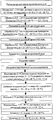
На чертеже представлена технологическая схема получения дубленого полуфабриката из шкур всех видов пресноводных рыб.The drawing shows a technological scheme for obtaining a tanned semi-finished product from the skins of all types of freshwater fish.
Способ получения дубленого полуфабриката из шкур всех видов пресноводных рыб осуществляют следующим образом.A method of obtaining a tanned semi-finished product from the skins of all types of freshwater fish is as follows.
Шкуры всех видов пресноводных рыб подвергают отмоке в растворе, содержащем 4,5-5,0 мас.% хлористого натрия и 0,1 мас.% антисептика при температуре 18-20°С в течение 4,0-6,0 ч для удаления с поверхности шкур слизи, загрязнений, извлечения балластных глобулиновых и альбуминовых белков, а также для уничтожения микроорганизмов, скапливающихся на поверхности сырья.The skins of all types of freshwater fish are soaked in a solution containing 4.5-5.0 wt.% Sodium chloride and 0.1 wt.% Antiseptic at a temperature of 18-20 ° C for 4.0-6.0 hours to remove from the surface of mucus skins, contaminants, the extraction of ballast globulin and albumin proteins, as well as for the destruction of microorganisms that accumulate on the surface of raw materials.
После отмоки шкуры рыб для обезжиривания погружают в 0,8-1,0% раствор ферментного препарата Липоризин ГЗх, предварительно нагретого до температуры 37-40°С, выдерживают шкуры рыб в этом растворе при периодическом перемешивании в течение 1,5-2,0 ч, после ферментной обработки шкуры рыб тщательно промывают холодной проточной водой для удаления остатков фермента. Воздействие Липоризина ГЗх приводит к гидролизу жировых компонентов на поверхности кожи, что увеличивает доступ и площадь поверхности контакта ферментного препарата протеолитического действия Протосубтилина ГЗх, а это приводит к сокращению времени обработки и сокращению его расхода.After soaking, the skins of fish for degreasing are immersed in a 0.8-1.0% solution of the enzyme preparation Liporizin GZh, previously heated to a temperature of 37-40 ° C, the skins of fish are kept in this solution with periodic stirring for 1.5-2.0 h, after enzymatic treatment, the fish skins are thoroughly washed with cold running water to remove residual enzyme. The effect of Liporizin GZx leads to the hydrolysis of fatty components on the skin surface, which increases the access and contact surface area of the proteolytic enzyme preparation Protosubtilin GZx, and this leads to a reduction in processing time and its consumption.
Обезжиренные шкуры всех видов пресноводных рыб опускают в 0,3-0,6% раствор ферментного препарата Протосубтилина ГЗх, предварительно нагретого до температуры 37-40°С, выдерживают шкуры рыб в этом растворе при периодическом перемешивании в течение 1,5-2,0 ч, после ферментной обработки шкуры рыб тщательно промывают холодной проточной водой для удаления остатков фермента. Протосубтилин ГЗх благодаря своим гидролитическим свойствам при воздействии на шкуру рыб ослабляет связи, удерживающие чешую в полостях дермального слоя кожи, приводит к ослаблению и частичному разрыву связей между белковыми веществами, белково-липидными комплексами, происходит разрушение и извлечение из шкур мукополисахаридов, вымывание белковых образований бесструктурных веществ дермы.Fat-free skins of all types of freshwater fish are dipped in a 0.3-0.6% solution of the enzyme preparation Protosubtilin GZx, previously heated to a temperature of 37-40 ° C, the fish skins are kept in this solution with periodic stirring for 1.5-2.0 h, after enzymatic treatment, the fish skins are thoroughly washed with cold running water to remove residual enzyme. Protosubtilin GZh, due to its hydrolytic properties when exposed to the skin of fish, weakens the bonds that hold the skin in the cavities of the dermal layer of the skin, weakens and partially breaks the bonds between protein substances, protein-lipid complexes, mucopolysaccharides are destroyed and removed from the skins, and protein structures are washed out dermis substances.
Промытые шкуры всех видов пресноводных рыб обрабатывают 0,3-0,6% раствором ферментного препарата Коллагеназы, предварительно нагретого до температуры 37-40°С, выдерживают шкуры рыб в этом растворе при периодическом перемешивании в течение 1,5-2,0 ч, после ферментной обработки шкуры рыб тщательно промывают холодной проточной водой для удаления остатков фермента. Обработка Коллагеназой способствует размягчению присутствующих в коже соединительно-тканных белков. При обработке данным ферментным препаратом дополнительно происходит удаление балластных сопутствующих белков за счет гидролиза, так как он обладает не только липолитической, но и протеолитической активностью. На нативный коллаген препарат действует ограниченно. При обработке Коллагеназой происходит дальнейшее ослабление силы удержания чешуи, и кожа приобретает гладкую глянцевую поверхность.The washed skins of all types of freshwater fish are treated with a 0.3-0.6% solution of the enzyme preparation Collagenase, previously heated to a temperature of 37-40 ° C, the fish skins are kept in this solution with periodic stirring for 1.5-2.0 hours, after enzymatic treatment, the fish skins are thoroughly washed with cold running water to remove residual enzyme. Collagenase treatment helps soften connective tissue proteins present in the skin. When processing with this enzyme preparation, ballast accompanying proteins are additionally removed due to hydrolysis, since it has not only lipolytic, but also proteolytic activity. The drug has a limited effect on native collagen. When processing Collagenase, there is a further weakening of the retention force of the scales, and the skin acquires a smooth glossy surface.
После ферментной обработки технологический процесс осуществляют следующим образом: шкуры ополаскивают в воде, удаляют чешую и проводят мездрение - удаление мускульно-жирового слоя и подкожной клетчатки. Мездрение можно осуществлять вручную или автоматизировать.After enzymatic treatment, the technological process is carried out as follows: the skins are rinsed in water, the scales are removed, and the coagulation is performed — removal of the muscle-fat layer and subcutaneous tissue. Coating can be done manually or automated.
Дальнейшим этапом является пикелевание, обеспечивающее тягучесть, пластичность и мягкость кожевой ткани. Для этого готовят раствор, содержащий 6% ледяной уксусной кислоты и 3-3,5% пищевой поваренной соли к массе раствора. Пикелевание проводят в течение 8-12 ч при температуре 18-20°С. Процесс пикелевания способствует разрыхлению волокнистой структуры дермы, обезвоживает кожевую ткань и переводит ее в "кислое состояние", необходимое для очередного процесса выделки - дубления.The next step is pickling, which provides ductility, ductility and softness of the skin tissue. To do this, prepare a solution containing 6% glacial acetic acid and 3-3.5% edible salt to the mass of the solution. Pickling is carried out for 8-12 hours at a temperature of 18-20 ° C. The pickling process contributes to loosening the fibrous structure of the dermis, dehydrates the skin tissue and puts it in an “acidic state”, necessary for the next process of dressing - tanning.
Дубление проводят в отваре коры ивы, так как это органический дубитель, который не содержит токсичных веществ, следовательно, процесс не требует регулирования рН неорганическими солями. В результате процесса дубления кожи становятся толще, плотнее и в результате взаимодействия таннинов дубителя с волокнами кожи последняя приобретает насыщенный коричневый цвет. Кору и веточки ивы в количестве 100 г предварительно кипятят в течение 30-40 мин, охлаждают, фильтруют и вносят в отвар хлористый натрий в количестве 30-40 г на 2 л отвара, этим раствором заливают шкуры рыб, дубление проводят в течение 12-20 ч при температуре 18-20°С.Tanning is carried out in a decoction of willow bark, since it is an organic tanning agent that does not contain toxic substances, therefore, the process does not require pH adjustment with inorganic salts. As a result of the process of tanning, the skin becomes thicker, denser and as a result of the interaction of tannins of the tanning agent with the skin fibers, the latter acquires a rich brown color. 100 g of bark and willow twigs are pre-boiled for 30-40 minutes, cooled, filtered and sodium chloride is added to the broth in the amount of 30-40 g per 2 l of broth, the skins of fish are poured with this solution, tanning is carried out for 12-20 h at a temperature of 18-20 ° C.
Дальнейшей обработкой является отдушка, которую проводят с целью удаления специфического запаха шкур. Шкуры погружают в 1%-й раствор уксусной кислоты температурой 4-6°С на 5-6 часов.Further processing is a fragrance, which is carried out in order to remove the specific smell of skins. The skins are immersed in a 1% solution of acetic acid with a temperature of 4-6 ° C for 5-6 hours.
Затем осуществляют жировку касторовым маслом, в качестве антиокислителя применяют нашатырный спирт. Соотношение касторовое масло: нашатырный спирт = 4:1, процесс ведут при температуре 37-40°С в течение 8-12 часов. Жировка повышает мягкость кож, пластичность, прочность, снижает способность дермы к промоканию.Then they carry out the fatliquoring with castor oil, ammonia is used as an antioxidant. The ratio of castor oil: ammonia = 4: 1, the process is carried out at a temperature of 37-40 ° C for 8-12 hours. Greasing increases softness of the skin, plasticity, strength, reduces the ability of the dermis to get wet.
Шкуры всех видов пресноводных рыб сушат при комнатной температуре в течение 5-6 дней. Сушка считается законченной, если поверхность шкур становится сухой, мягкой и дает потяжку во все стороны. Высушенный дубленый полуфабрикат из шкур всех видов пресноводных рыб хранят в складских помещениях при температуре не ниже 5°С и не выше 25°С и относительной влажности воздуха 50-80%. Используют дубленый полуфабрикат для производства элитных галантерейных изделий.The skins of all types of freshwater fish are dried at room temperature for 5-6 days. Drying is considered complete if the surface of the skins becomes dry, soft and gives a pull in all directions. The dried tanned semi-finished product from the skins of all types of freshwater fish is stored in warehouses at a temperature of not lower than 5 ° C and not higher than 25 ° C and relative humidity of 50-80%. Use a tanned semi-finished product for the production of elite haberdashery products.
Учитывая высокую массовую долю шкур всех видов пресноводных рыб при разделке и общую тенденцию накопления ее при выпуске рыбной продукции в виде филе и полуфабрикатов, а также копченой, соленой и вяленой продукции, главной задачей ставится вовлечение их в основное производство, так как они представляет практически прямые потери.Given the high mass fraction of skins of all types of freshwater fish during cutting and the general tendency to accumulate it in the production of fish products in the form of fillets and semi-finished products, as well as smoked, salted and dried products, the main task is to involve them in the main production, since they are almost direct losses.
По внешнему виду дубленый полуфабрикат из шкур всех видов пресноводных рыб является полностью продубленным с гладкой, хорошо отделанной поверхностью.In appearance, the tanned semi-finished product from the skins of all types of freshwater fish is completely hollowed out with a smooth, well-finished surface.
Для получения дубленого полуфабриката из шкур всех видов пресноводных рыб можно использовать кожу следующих видов рыб: карпа, белого амура, щуки, толстолобика и т.д. и использовать шкуры, снятые со свежих, соленых, вяленых, копченых рыб.To obtain a tanned semi-finished product from the skins of all types of freshwater fish, you can use the skin of the following types of fish: carp, grass carp, pike, silver carp, etc. and use skins taken from fresh, salted, dried, smoked fish.
Способ получения дубленого полуфабриката из шкур всех видов пресноводных рыб поясняется следующими примерами.A method of obtaining a tanned semi-finished product from the skins of all types of freshwater fish is illustrated by the following examples.
Пример 1 (прототип).Example 1 (prototype).
1 кг шкур рыб подвергают отмоке в 0,5%-м растворе моющего средства, при соотношении шкуры: раствор моющее средство = 1:3. Отмоку проводят в течение 20 ч при температуре 28°С. Затем вручную производят мездрение. Затем шкуры помещают в 0,6%-й раствор моющего средства, при соотношении шкуры: раствор моющее средство = 1:3, время обработки 3 ч, температура 40°С. После шкуры промывают холодной водой для удаления остатков моющих веществ. Обработанные шкуры опускают в 10%-й раствор ферментного препарата протеолитического действия, при соотношении шкуры: раствор ферментного препарата = 1:4, в течение 3 ч при температуре 40°С. После обработки ферментным препаратом шкуры промывают в холодной воде, удаляют чешую, промывают, производят дубление раствором хромового дубителя из расчета содержания окиси хрома 2% к массе шкур. Дубление ведут при рН 4,4, который регулируют добавлением бикарбоната натрия в течение 20 ч при температуре 20°С. Далее проводят жировку, сушку.1 kg of fish skins are soaked in a 0.5% detergent solution, with the ratio of the skins: solution detergent = 1: 3. Soaking is carried out for 20 hours at a temperature of 28 ° C. Then manually make mezdreniya. Then the skins are placed in a 0.6% detergent solution, with the ratio of the skins: detergent solution = 1: 3, processing time 3 hours, temperature 40 ° C. After the skins are washed with cold water to remove residual detergents. Treated skins are dipped in a 10% solution of the enzyme preparation with a proteolytic effect, with the ratio of the skins: the solution of the enzyme preparation = 1: 4, for 3 hours at a temperature of 40 ° C. After treatment with an enzyme preparation, the skins are washed in cold water, the scales are removed, washed, and tanning is carried out with a solution of chromium tanning agent based on the content of chromium oxide 2% by weight of the skins. Tanning is carried out at a pH of 4.4, which is regulated by the addition of sodium bicarbonate for 20 hours at a temperature of 20 ° C. Next, carry out the oiling, drying.
Пример 2.Example 2
1 кг шкур карпа подвергают отмоке. Готовят 2 л раствора с содержанием хлористого натрия 5% и формалина 0,1% к массе раствора, температурой 20°С, погружают в раствор шкурки на 4,0 ч с целью удаления с поверхности сырья слизи, загрязнений, извлечения балластных глобулиновых и альбуминовых белков, а также для уничтожения микроорганизмов, скапливающихся на поверхности сырья. Затем готовят 1,0%-й раствор ферментного препарата Липоризина ГЗх, температурой 37°С, приготовленным раствором заливают шкуры карпа, выдерживают их в растворе в течение 2,0 ч при периодическом перемешивании, после ферментной обработки шкуры карпа тщательно промывают холодной проточной водой для удаления остатков фермента. Затем готовят раствор 0,5% раствор ферментного препарата Протосубтилина ГЗх, температурой 37°С, приготовленным раствором заливают шкуры карпа, выдерживают их в растворе в течение 2,0 ч при периодическом перемешивании, по истечении указанного времени шкуры карпа промывают холодной проточной водой для удаления остатков фермента.1 kg of carp skins are soaked. Prepare 2 l of a solution with a content of sodium chloride 5% and formalin 0.1% by weight of the solution at a temperature of 20 ° C, immerse the skins in the solution for 4.0 hours in order to remove mucus, impurities from the surface of the raw material, and extract ballast globulin and albumin proteins , as well as for the destruction of microorganisms that accumulate on the surface of raw materials. Then prepare a 1.0% solution of the enzyme preparation Liporizin GZh, 37 ° C, pour the skins of carp into the prepared solution, keep them in the solution for 2.0 hours with periodic stirring, after enzymatic treatment of the carp skins, thoroughly rinse with cold running water to removal of enzyme residues. Then prepare a solution of a 0.5% solution of the enzyme preparation Protosubtilin GZh, 37 ° C, pour the skins of carp into the prepared solution, keep them in the solution for 2.0 hours with periodic stirring, after which time the carp skins are washed with cold running water to remove residues of the enzyme.
Промытые шкуры карпа погружают в 0,5% раствор ферментного препарата Коллагеназы температурой 37°С, выдерживают их в растворе в течение 2,0 ч при периодическом перемешивании, по истечении указанного времени шкуры карпа промывают холодной проточной водой для удаления остатков фермента.The washed carp skins are immersed in a 0.5% solution of the enzyme preparation Collagenase at a temperature of 37 ° C, they are kept in the solution for 2.0 hours with periodic stirring; after this time, the carp skins are washed with cold running water to remove residual enzyme.
После обработки сырья ферментными препаратами удаляют чешую и проводят мездрение.After processing the raw materials with enzyme preparations, the scales are removed and the coiling is performed.
После мездрения осуществляют пикелевание. Для этой цели готовят раствор, содержащий 6% ледяной уксусной кислоты и 3,5% пищевой поваренной соли к массе раствора. Процесс пикелевания проводят в течение 8 ч при температуре 20°С. Пикелевание обеспечивает тягучесть, пластичность и мягкость кожевой ткани.After coiling, pickling is carried out. For this purpose, a solution is prepared containing 6% glacial acetic acid and 3.5% edible table salt by weight of the solution. The pickling process is carried out for 8 hours at a temperature of 20 ° C. Pickling provides ductility, ductility and softness of the skin tissue.
После пикелевания шкуры подвергают дублению заранее приготовленным отваром коры ивы. Кору и веточки ивы в количестве 100 г предварительно кипятят в течение 40 мин, далее охлаждают, отфильтровывают и вносят в отвар хлористый натрий в количестве 40 г на 2 л отвара, этим раствором заливают шкуры рыб, дубление проводят в течение 18 ч при температуре 20°С.After pickling, the skins are tanned by a pre-prepared decoction of willow bark. 100 g of bark and willow twigs are pre-boiled for 40 minutes, then cooled, filtered and sodium chloride is added to the broth in the amount of 40 g per 2 l of broth, fish skins are poured with this solution, tanning is carried out for 18 hours at a temperature of 20 ° FROM.
После дубления шкуры подвергают отдушке с целью удаления специфического запаха. К шкурам добавляют 2 л воды, вносят 20 мл уксусной кислоты и выдерживают при температуре 4°С в течение 5 часов.After tanning, the skins are perfumed in order to remove a specific odor. 2 l of water are added to the skins, 20 ml of acetic acid are added and kept at 4 ° C for 5 hours.
Далее шкуры подвергают жировке с целью повышения мягкости кож, пластичности, прочности, снижения способности дермы к промоканию. К 40 мл касторового масла добавляют 10 мл нашатырного спирта (соотношение касторовое масло: нашатырный спирт = 4:1), смесь нагревают до 40°С и обрабатывают ею поверхность шкур. Жировку проводят в течение 8 ч.Further, the skins are subjected to adiposity in order to increase the softness of the skin, plasticity, strength, reduce the ability of the dermis to get wet. To 40 ml of castor oil add 10 ml of ammonia (ratio of castor oil: ammonia = 4: 1), the mixture is heated to 40 ° C and treated with the surface of the skins. Oiling is carried out for 8 hours
После жировки шкуры подвергают сушке при 20°С в течение 5 дней. Сушка считается законченной, если поверхность кож становится сухой, мягкой и дает потяжку во все стороны.After fatliquoring, the skins are dried at 20 ° C for 5 days. Drying is considered complete if the surface of the skin becomes dry, soft and gives a pull in all directions.
Хранят дубленые полуфабрикаты из шкур всех видов пресноводных рыб в складских помещениях при температуре 15°С и относительной влажности воздуха 70%.Tanned semi-finished products from the skins of all types of freshwater fish are stored in warehouses at a temperature of 15 ° C and a relative humidity of 70%.
Пример 3.Example 3
Берут 1 кг шкур толстолобика. Способ получения дубленого полуфабриката из шкур толстолобика аналогичен примеру 2.Take 1 kg of silver carp skins. A method of obtaining a tanned semi-finished product from the skins of silver carp is similar to example 2.
Кожи, полученные по примерам 1-3, анализировали, определяли физико-механические показатели: среднюю толщину кожи, сопротивление раздиру, предел прочности при растяжении, удлинение при разрыве, остаточное удлинение. Данные анализа представлены в таблице 1.The skin obtained in examples 1-3 was analyzed, physico-mechanical parameters were determined: average skin thickness, tear resistance, tensile strength, elongation at break, residual elongation. The analysis data are presented in table 1.
Как видно из таблицы 1, физико-механическими показателями кожи рыб: средняя толщина кожи, сопротивление раздиру, предел прочности при растяжении, удлинение при разрыве, остаточное удлинение, полученные по предложенной технологии, выше, чем полученные по данным прототипа.As can be seen from table 1, physico-mechanical characteristics of the skin of fish: average skin thickness, tear resistance, tensile strength, elongation at break, residual elongation obtained by the proposed technology is higher than obtained according to the prototype.
Если отмоку осуществлять раствором хлористого натрия с концентрацией менее 4,5% или более 5%, качество полученного дубленого полуфабриката из шкур всех видов пресноводных рыб ухудшается. Применение других ферментных препаратов или использование их в меньшей концентрации и при пониженной или повышенной температуре не обеспечивает заданных качественных показателей кожи, а использование большей концентрации ферментных препаратов является экономически нецелесообразно. Проведение пикелевания, дубления, отдушки, жировки и сушки необходимо осуществлять в указанных температурных, временных режимах и в указанной концентрации, так как эти показатели являются оптимальными для данной технологии.If the soaking is carried out with a solution of sodium chloride with a concentration of less than 4.5% or more than 5%, the quality of the obtained tanned semi-finished product from the skins of all types of freshwater fish deteriorates. The use of other enzyme preparations or their use in a lower concentration and at a lower or elevated temperature does not provide the specified quality indicators of the skin, and the use of a higher concentration of enzyme preparations is not economically feasible. Pickling, tanning, perfuming, fatliquoring and drying should be carried out in the indicated temperature, time conditions and in the indicated concentration, since these indicators are optimal for this technology.
Предложенный способ получения дубленого полуфабриката из шкур всех видов пресноводных рыб позволяет:The proposed method for obtaining tanned semi-finished products from the skins of all types of freshwater fish allows you to:
- получить дубленый полуфабрикат из шкур всех видов пресноводных рыб более высокого качества по сравнению с прототипом;- get a tanned semi-finished product from the skins of all types of freshwater fish of higher quality in comparison with the prototype;
- реализовать безотходную технологию переработки вторичных продуктов разделки пресноводной рыбы;- implement a non-waste technology for processing secondary products of cutting freshwater fish;
- рационально использовать маловостребованное в технических целях кожевенное сырье рыбной промышленности;- rational use of low-demand for technical purposes leather raw materials of the fishing industry;
- сократить длительность технологического процесса получения дубленого полуфабриката из шкур всех видов пресноводных рыб по сравнению с прототипом;- reduce the duration of the technological process for obtaining tanned semi-finished products from the skins of all types of freshwater fish in comparison with the prototype;
- повысить экологичность процесса за счет применения растительного дубителя;- increase the environmental friendliness of the process through the use of vegetable tanning agent;
- использовать промывные воды на каждой технологической операции, обогащенные продуктами гидролиза биополимеров.- use wash water for each technological operation enriched with hydrolysis products of biopolymers.
Claims (1)
Priority Applications (1)
| Application Number | Priority Date | Filing Date | Title |
|---|---|---|---|
| RU2009124002/12A RU2425893C2 (en) | 2009-06-23 | 2009-06-23 | Method to produce tanned half stuff from skin of all kinds of fresh-water fish |
Applications Claiming Priority (1)
| Application Number | Priority Date | Filing Date | Title |
|---|---|---|---|
| RU2009124002/12A RU2425893C2 (en) | 2009-06-23 | 2009-06-23 | Method to produce tanned half stuff from skin of all kinds of fresh-water fish |
Publications (1)
| Publication Number | Publication Date |
|---|---|
| RU2425893C2 true RU2425893C2 (en) | 2011-08-10 |
Family
ID=44754805
Family Applications (1)
| Application Number | Title | Priority Date | Filing Date |
|---|---|---|---|
| RU2009124002/12A RU2425893C2 (en) | 2009-06-23 | 2009-06-23 | Method to produce tanned half stuff from skin of all kinds of fresh-water fish |
Country Status (1)
| Country | Link |
|---|---|
| RU (1) | RU2425893C2 (en) |
Cited By (4)
| Publication number | Priority date | Publication date | Assignee | Title |
|---|---|---|---|---|
| RU2596838C2 (en) * | 2014-12-25 | 2016-09-10 | Федеральное государственное бюджетное научное учреждение "ГосНИОРХ" (ФГБНУ "ГосНИОРХ") | METHOD FOR ARTIFICIAL REPRODUCTION OF CATFISH (Silurus glanis L) |
| RU2704442C1 (en) * | 2018-09-11 | 2019-10-28 | Федеральное государственное бюджетное образовательное учреждение высшего образования "Воронежский государственный университет инженерных технологий" (ФГБОУ ВО "ВГУИТ") | Method for production of leather semi-product of all types of freshwater fish |
| RU2711915C1 (en) * | 2019-03-14 | 2020-01-23 | Федеральное государственное бюджетное образовательное учреждение высшего образования "Воронежский государственный университет инженерных технологий" (ФГБОУ ВО "ВГУИТ") | Method of producing protein hydrolyzate from secondary fish raw material |
| RU2736583C2 (en) * | 2017-12-08 | 2020-11-18 | Общество с ограниченной ответственностью "Рыбий мех" | Method for producing fish skin and fish skin obtained by a method for producing fish skin |
Citations (6)
| Publication number | Priority date | Publication date | Assignee | Title |
|---|---|---|---|---|
| GB191203481A (en) * | 1912-02-12 | 1913-01-23 | Skindfabriken Unicum K Bendixe | A Process for Tanning Fish Skins and the like. |
| US4755186A (en) * | 1985-09-26 | 1988-07-05 | Bernardo von Beck | Process for the preparation of fish skin |
| RU2026884C1 (en) * | 1992-08-28 | 1995-01-20 | Людмила Константиновна Петриченко | Method of fish skin preparing |
| RU2111257C1 (en) * | 1997-07-15 | 1998-05-20 | Таисия Николаевна Козлова | Method of production of fishskin leather |
| RU2132389C1 (en) * | 1998-10-08 | 1999-06-27 | Московская государственная академия легкой промышленности | Method of soaking-defatting fish skins |
| RU2202622C1 (en) * | 2001-08-21 | 2003-04-20 | Чертова Елена Николаевна | Fish skin softening method |
-
2009
- 2009-06-23 RU RU2009124002/12A patent/RU2425893C2/en not_active IP Right Cessation
Patent Citations (6)
| Publication number | Priority date | Publication date | Assignee | Title |
|---|---|---|---|---|
| GB191203481A (en) * | 1912-02-12 | 1913-01-23 | Skindfabriken Unicum K Bendixe | A Process for Tanning Fish Skins and the like. |
| US4755186A (en) * | 1985-09-26 | 1988-07-05 | Bernardo von Beck | Process for the preparation of fish skin |
| RU2026884C1 (en) * | 1992-08-28 | 1995-01-20 | Людмила Константиновна Петриченко | Method of fish skin preparing |
| RU2111257C1 (en) * | 1997-07-15 | 1998-05-20 | Таисия Николаевна Козлова | Method of production of fishskin leather |
| RU2132389C1 (en) * | 1998-10-08 | 1999-06-27 | Московская государственная академия легкой промышленности | Method of soaking-defatting fish skins |
| RU2202622C1 (en) * | 2001-08-21 | 2003-04-20 | Чертова Елена Николаевна | Fish skin softening method |
Cited By (4)
| Publication number | Priority date | Publication date | Assignee | Title |
|---|---|---|---|---|
| RU2596838C2 (en) * | 2014-12-25 | 2016-09-10 | Федеральное государственное бюджетное научное учреждение "ГосНИОРХ" (ФГБНУ "ГосНИОРХ") | METHOD FOR ARTIFICIAL REPRODUCTION OF CATFISH (Silurus glanis L) |
| RU2736583C2 (en) * | 2017-12-08 | 2020-11-18 | Общество с ограниченной ответственностью "Рыбий мех" | Method for producing fish skin and fish skin obtained by a method for producing fish skin |
| RU2704442C1 (en) * | 2018-09-11 | 2019-10-28 | Федеральное государственное бюджетное образовательное учреждение высшего образования "Воронежский государственный университет инженерных технологий" (ФГБОУ ВО "ВГУИТ") | Method for production of leather semi-product of all types of freshwater fish |
| RU2711915C1 (en) * | 2019-03-14 | 2020-01-23 | Федеральное государственное бюджетное образовательное учреждение высшего образования "Воронежский государственный университет инженерных технологий" (ФГБОУ ВО "ВГУИТ") | Method of producing protein hydrolyzate from secondary fish raw material |
Similar Documents
| Publication | Publication Date | Title |
|---|---|---|
| JP5250382B2 (en) | Tannery pre-treatment method and tannery method | |
| IT7370757A1 (en) | PROCEDURE FOR PREPARING PURIFIED HIDES READY FOR TANNING FROM ANIMAL SKINS | |
| CN101314799B (en) | Goose-down fur processing technique | |
| DE3429047C2 (en) | ||
| CN105603133A (en) | Raw material skin unhairing method | |
| JP2009286993A (en) | Animal skin tanning method using no heavy metal such as chromium or aldehyde tanning agent | |
| KR101572919B1 (en) | Natural dyes for leather tanning methods | |
| KR100489725B1 (en) | The processing method of natural leather | |
| Kavitha et al. | Cold active lipase from Pseudomonas sp. VITCLP4 as degreasing agent in leather processing. | |
| RU2704442C1 (en) | Method for production of leather semi-product of all types of freshwater fish | |
| CN103757148A (en) | Tanning process for making fur-bearing animal specimen | |
| KR20040037328A (en) | Fragrance or leather processing method | |
| RU2026884C1 (en) | Method of fish skin preparing | |
| RU2026883C1 (en) | Method of fish skin preparing | |
| CN105886488A (en) | Enzymatic soaking agent compound and application thereof | |
| JP4738005B2 (en) | Fish skin pretreatment method | |
| KR101918417B1 (en) | Manufacture of anti-bacterial leather using Zinc zeolite and application technology of shoe material | |
| CN105525047B (en) | A kind of aluminium oil process for tanning of mustrat | |
| DE622213C (en) | Process for improving the softness and suppleness of leather | |
| DE1233530B (en) | Process for the enzymatic depilation and / or dressing of skins and pelts | |
| RU2736583C2 (en) | Method for producing fish skin and fish skin obtained by a method for producing fish skin | |
| RU2588984C2 (en) | Method for manufacture of fur skins | |
| JP2848859B2 (en) | Animal Bark Purification Method | |
| RU2202622C1 (en) | Fish skin softening method | |
| RU2486258C1 (en) | Method of obtaining collagen dissolution products |
Legal Events
| Date | Code | Title | Description |
|---|---|---|---|
| MM4A | The patent is invalid due to non-payment of fees |
Effective date: 20140624 |