RU2668942C1 - Thermoluminophore - Google Patents
Thermoluminophore Download PDFInfo
- Publication number
- RU2668942C1 RU2668942C1 RU2017125639A RU2017125639A RU2668942C1 RU 2668942 C1 RU2668942 C1 RU 2668942C1 RU 2017125639 A RU2017125639 A RU 2017125639A RU 2017125639 A RU2017125639 A RU 2017125639A RU 2668942 C1 RU2668942 C1 RU 2668942C1
- Authority
- RU
- Russia
- Prior art keywords
- temperature
- alon
- thermoluminophore
- low
- aln
- Prior art date
Links
- 239000000203 mixture Substances 0.000 claims abstract description 19
- 229910052693 Europium Inorganic materials 0.000 claims abstract description 15
- 229910052742 iron Inorganic materials 0.000 claims abstract description 10
- 229910052799 carbon Inorganic materials 0.000 claims abstract description 9
- PMHQVHHXPFUNSP-UHFFFAOYSA-M copper(1+);methylsulfanylmethane;bromide Chemical compound Br[Cu].CSC PMHQVHHXPFUNSP-UHFFFAOYSA-M 0.000 claims abstract description 9
- 239000012535 impurity Substances 0.000 claims abstract description 9
- 238000004980 dosimetry Methods 0.000 claims abstract description 7
- 229910018072 Al 2 O 3 Inorganic materials 0.000 claims description 7
- 150000002500 ions Chemical class 0.000 claims description 7
- 238000000034 method Methods 0.000 claims description 5
- 238000000137 annealing Methods 0.000 claims description 3
- 239000012467 final product Substances 0.000 claims description 3
- 230000002829 reductive effect Effects 0.000 claims description 3
- OAICVXFJPJFONN-UHFFFAOYSA-N Phosphorus Chemical compound [P] OAICVXFJPJFONN-UHFFFAOYSA-N 0.000 claims description 2
- 230000003213 activating effect Effects 0.000 claims 2
- PNEYBMLMFCGWSK-UHFFFAOYSA-N aluminium oxide Inorganic materials [O-2].[O-2].[O-2].[Al+3].[Al+3] PNEYBMLMFCGWSK-UHFFFAOYSA-N 0.000 claims 1
- 229910052738 indium Inorganic materials 0.000 claims 1
- 230000005855 radiation Effects 0.000 abstract description 11
- 239000000126 substance Substances 0.000 abstract description 6
- IJGRMHOSHXDMSA-UHFFFAOYSA-N Atomic nitrogen Chemical compound N#N IJGRMHOSHXDMSA-UHFFFAOYSA-N 0.000 abstract description 4
- 230000005865 ionizing radiation Effects 0.000 abstract description 4
- 238000000904 thermoluminescence Methods 0.000 abstract description 4
- 230000000694 effects Effects 0.000 abstract description 3
- 239000007788 liquid Substances 0.000 abstract description 3
- OGPBJKLSAFTDLK-UHFFFAOYSA-N europium atom Chemical compound [Eu] OGPBJKLSAFTDLK-UHFFFAOYSA-N 0.000 abstract description 2
- 229910052757 nitrogen Inorganic materials 0.000 abstract description 2
- 239000002887 superconductor Substances 0.000 abstract description 2
- 229910017109 AlON Inorganic materials 0.000 abstract 3
- XEEYBQQBJWHFJM-UHFFFAOYSA-N iron Substances [Fe] XEEYBQQBJWHFJM-UHFFFAOYSA-N 0.000 description 11
- OKKJLVBELUTLKV-UHFFFAOYSA-N Methanol Chemical compound OC OKKJLVBELUTLKV-UHFFFAOYSA-N 0.000 description 6
- KRKNYBCHXYNGOX-UHFFFAOYSA-N citric acid Chemical compound OC(=O)CC(O)(C(O)=O)CC(O)=O KRKNYBCHXYNGOX-UHFFFAOYSA-N 0.000 description 6
- 239000000843 powder Substances 0.000 description 6
- 239000000758 substrate Substances 0.000 description 6
- 239000002966 varnish Substances 0.000 description 6
- OKTJSMMVPCPJKN-UHFFFAOYSA-N Carbon Chemical compound [C] OKTJSMMVPCPJKN-UHFFFAOYSA-N 0.000 description 5
- -1 cerium ions Chemical class 0.000 description 5
- RYGMFSIKBFXOCR-UHFFFAOYSA-N Copper Chemical compound [Cu] RYGMFSIKBFXOCR-UHFFFAOYSA-N 0.000 description 4
- LFQSCWFLJHTTHZ-UHFFFAOYSA-N Ethanol Chemical compound CCO LFQSCWFLJHTTHZ-UHFFFAOYSA-N 0.000 description 4
- KFZMGEQAYNKOFK-UHFFFAOYSA-N Isopropanol Chemical compound CC(C)O KFZMGEQAYNKOFK-UHFFFAOYSA-N 0.000 description 4
- CUJRVFIICFDLGR-UHFFFAOYSA-N acetylacetonate Chemical compound CC(=O)[CH-]C(C)=O CUJRVFIICFDLGR-UHFFFAOYSA-N 0.000 description 4
- YRKCREAYFQTBPV-UHFFFAOYSA-N acetylacetone Chemical compound CC(=O)CC(C)=O YRKCREAYFQTBPV-UHFFFAOYSA-N 0.000 description 4
- 230000015572 biosynthetic process Effects 0.000 description 4
- 229910052802 copper Inorganic materials 0.000 description 4
- 239000010949 copper Substances 0.000 description 4
- 238000003786 synthesis reaction Methods 0.000 description 4
- XAGFODPZIPBFFR-UHFFFAOYSA-N aluminium Chemical compound [Al] XAGFODPZIPBFFR-UHFFFAOYSA-N 0.000 description 3
- 229910052782 aluminium Inorganic materials 0.000 description 3
- 238000010438 heat treatment Methods 0.000 description 3
- PQXKHYXIUOZZFA-UHFFFAOYSA-M lithium fluoride Chemical compound [Li+].[F-] PQXKHYXIUOZZFA-UHFFFAOYSA-M 0.000 description 3
- 238000005259 measurement Methods 0.000 description 3
- POILWHVDKZOXJZ-ARJAWSKDSA-M (z)-4-oxopent-2-en-2-olate Chemical compound C\C([O-])=C\C(C)=O POILWHVDKZOXJZ-ARJAWSKDSA-M 0.000 description 2
- 229910052684 Cerium Inorganic materials 0.000 description 2
- 239000000853 adhesive Substances 0.000 description 2
- 230000001070 adhesive effect Effects 0.000 description 2
- SMZOGRDCAXLAAR-UHFFFAOYSA-N aluminium isopropoxide Chemical compound [Al+3].CC(C)[O-].CC(C)[O-].CC(C)[O-] SMZOGRDCAXLAAR-UHFFFAOYSA-N 0.000 description 2
- 238000004458 analytical method Methods 0.000 description 2
- WUKWITHWXAAZEY-UHFFFAOYSA-L calcium difluoride Chemical compound [F-].[F-].[Ca+2] WUKWITHWXAAZEY-UHFFFAOYSA-L 0.000 description 2
- 229910001634 calcium fluoride Inorganic materials 0.000 description 2
- 238000005136 cathodoluminescence Methods 0.000 description 2
- 238000001816 cooling Methods 0.000 description 2
- 239000012153 distilled water Substances 0.000 description 2
- 239000002019 doping agent Substances 0.000 description 2
- AKYVEELUVDHHLT-UHFFFAOYSA-K europium acetylacetonate Chemical compound [Eu+3].CC([O-])=CC(C)=O.CC([O-])=CC(C)=O.CC([O-])=CC(C)=O AKYVEELUVDHHLT-UHFFFAOYSA-K 0.000 description 2
- 229910001940 europium oxide Inorganic materials 0.000 description 2
- AEBZCFFCDTZXHP-UHFFFAOYSA-N europium(3+);oxygen(2-) Chemical compound [O-2].[O-2].[O-2].[Eu+3].[Eu+3] AEBZCFFCDTZXHP-UHFFFAOYSA-N 0.000 description 2
- 229910002804 graphite Inorganic materials 0.000 description 2
- 239000010439 graphite Substances 0.000 description 2
- 239000001307 helium Substances 0.000 description 2
- 229910052734 helium Inorganic materials 0.000 description 2
- SWQJXJOGLNCZEY-UHFFFAOYSA-N helium atom Chemical compound [He] SWQJXJOGLNCZEY-UHFFFAOYSA-N 0.000 description 2
- 238000001748 luminescence spectrum Methods 0.000 description 2
- 238000004020 luminiscence type Methods 0.000 description 2
- 230000003287 optical effect Effects 0.000 description 2
- 238000002360 preparation method Methods 0.000 description 2
- 238000000746 purification Methods 0.000 description 2
- 239000000565 sealant Substances 0.000 description 2
- 239000002904 solvent Substances 0.000 description 2
- XLYOFNOQVPJJNP-UHFFFAOYSA-N water Chemical compound O XLYOFNOQVPJJNP-UHFFFAOYSA-N 0.000 description 2
- 238000005303 weighing Methods 0.000 description 2
- 238000009529 body temperature measurement Methods 0.000 description 1
- JJWKPURADFRFRB-UHFFFAOYSA-N carbonyl sulfide Chemical compound O=C=S JJWKPURADFRFRB-UHFFFAOYSA-N 0.000 description 1
- GWXLDORMOJMVQZ-UHFFFAOYSA-N cerium Chemical compound [Ce] GWXLDORMOJMVQZ-UHFFFAOYSA-N 0.000 description 1
- 239000000470 constituent Substances 0.000 description 1
- 238000000295 emission spectrum Methods 0.000 description 1
- 238000005265 energy consumption Methods 0.000 description 1
- 238000005516 engineering process Methods 0.000 description 1
- 230000005284 excitation Effects 0.000 description 1
- 238000009472 formulation Methods 0.000 description 1
- 229910010272 inorganic material Inorganic materials 0.000 description 1
- 239000011147 inorganic material Substances 0.000 description 1
- TWNQGVIAIRXVLR-UHFFFAOYSA-N oxo(oxoalumanyloxy)alumane Chemical compound O=[Al]O[Al]=O TWNQGVIAIRXVLR-UHFFFAOYSA-N 0.000 description 1
- 239000010453 quartz Substances 0.000 description 1
- 230000035945 sensitivity Effects 0.000 description 1
- VYPSYNLAJGMNEJ-UHFFFAOYSA-N silicon dioxide Inorganic materials O=[Si]=O VYPSYNLAJGMNEJ-UHFFFAOYSA-N 0.000 description 1
- 230000003595 spectral effect Effects 0.000 description 1
- 238000001228 spectrum Methods 0.000 description 1
Images
Classifications
-
- G—PHYSICS
- G01—MEASURING; TESTING
- G01T—MEASUREMENT OF NUCLEAR OR X-RADIATION
- G01T1/00—Measuring X-radiation, gamma radiation, corpuscular radiation, or cosmic radiation
- G01T1/02—Dosimeters
- G01T1/10—Luminescent dosimeters
- G01T1/11—Thermo-luminescent dosimeters
Landscapes
- Physics & Mathematics (AREA)
- Health & Medical Sciences (AREA)
- Life Sciences & Earth Sciences (AREA)
- General Physics & Mathematics (AREA)
- High Energy & Nuclear Physics (AREA)
- Molecular Biology (AREA)
- Spectroscopy & Molecular Physics (AREA)
- Luminescent Compositions (AREA)
Abstract
Description
Изобретение относится к области низкотемпературной термолюминесцентной дозиметрии рентгеновского и гамма-излучения, пригодно для определения дозовой нагрузки/дозозатрат элементов и устройств, работающих в полях ионизирующих излучений при пониженной температуре, включая устройства космического базирования, например, для определения дозозатрат солнечных батарей или других элементов космического базирования, работающих в открытом космосе и подверженных воздействию космической радиации. Предлагаемый термолюминофор пригоден для создания компактных ТСЛ-фотосенсорных датчиков с фотодиодной PIN-регистрацией.The invention relates to the field of low-temperature thermoluminescent dosimetry of x-ray and gamma radiation, suitable for determining the dose / dose of elements and devices operating in the fields of ionizing radiation at low temperature, including space-based devices, for example, for determining the dose-rate of solar cells or other space-based elements working in outer space and exposed to cosmic radiation. The proposed thermoluminophore is suitable for creating compact TSL photosensor sensors with photodiode PIN registration.
Известен термолюминофор на основе фтористого кальция (В.И. Иванов. Курс дозиметрии. М.: Атомиздат. 1970. 320 с.) для дозиметрии рентгеновского и гамма-излучения, для которого кривые термо-стимулированной люминесценции (ТСЛ) имеют три рабочих максимума при 70-100, 150-190 и 250-300°C. Известный термолюминофор пригоден для регистрации экспозиционных доз рентгеновского и гамма-излучения от 1 мР до 5000 Р с погрешностью ±2%. Однако известный термолюминофор набирает информацию о дозе облучения только при комнатной температуре. Использование термолюминофора на основе фтористого кальция для определения дозовой нагрузки на объекты облучения при низких температурах 25-180 K неизвестно.A thermoluminophore based on calcium fluoride is known (V.I. Ivanov. Dosimetry course. M .: Atomizdat. 1970. 320 p.) For X-ray and gamma radiation dosimetry, for which thermally stimulated luminescence (TSL) curves have three operating maxima at 70-100, 150-190 and 250-300 ° C. Known thermoluminophore is suitable for recording exposure doses of x-ray and gamma radiation from 1 mR to 5000 R with an error of ± 2%. However, the known thermoluminophore collects information about the radiation dose only at room temperature. The use of thermoluminophores based on calcium fluoride to determine the dose load on irradiated objects at low temperatures of 25-180 K is unknown.
Известен термолюминофор на основе фторида лития LiF-Mg (ТЛД-100) (Cooke D.W., Rhodes J.F. J. Appl. Phys 1981, v. 52(6), p. 4244-4247) для регистрации рентгеновского и гамма-излучения, который имеет низкотемпературные пики термолюминесценции при 20, 40, 60 и 138 K. Однако интенсивность этих низкотемпературных пиков невысока, их использование неэффективно для низкотемпературной дозиметрии. Кроме того, известный термолюминофор обладает синим спектром свечения и не пригоден для разработки устройств, использующих в качестве фотосенсорных датчиков компактные PIN-фотодиоды.Known thermoluminophore based on lithium fluoride LiF-Mg (TLD-100) (Cooke DW, Rhodes JFJ Appl. Phys 1981, v. 52 (6), p. 4244-4247) for recording x-ray and gamma radiation, which has low temperature peaks thermoluminescence at 20, 40, 60 and 138 K. However, the intensity of these low-temperature peaks is low, their use is ineffective for low-temperature dosimetry. In addition, the well-known thermoluminophore has a blue emission spectrum and is not suitable for the development of devices using compact PIN photodiodes as photosensor sensors.
Достаточно близким по составу к заявляемому термолюминофору является известный люминесцентный светосостав на основе алона Al5O6N, активированного ионами церия Се3+ и ионами Eu2+, сведения о котором опубликованы в статье «Effect of Dopant Concentration on the Phase Composition and Luminescence Properties of Eu2+ - and Ce3+ - Doped ALONs». Авторы N.S. Akhmadullina, A.S. Lysenkov, A.A. Ashmarin, Yu.F. Kargin, A.V. Ishchenko and B.V. Shulgin. (ISSN 0020-1685, Inorganic Materials, 2015, Vol. 51, №5, pp. 473-481). Однако этот известный светосостав на основе «of Eu2+ - and Се3+ - Doped ALONs» близок к заявляемому только по входящим в него компонентам, а не по исполняемым функциям, поскольку он представлен в статье (и в Abstract, строки 7-8 и на стр. 474, левая колонка, строки 10-13) только как люминесцентный состав, только как люминофор, обладающий импульсной катодолюминесценцией при соответствующем возбуждении (pulsed cathodoluminescence (PSL)spectra). О термолюминесцентных свойствах светосостава на основе алона Al5O6N, активированного ионами церия Се3+ и ионами Eu2+, в указанной статье (ни в Abstract, строки 7-8; ни на стр. 474, левая колонка, строки 10-13) даже упоминания нет.Composition close enough to the claimed thermoluminophore is the known luminescent light composition based on Al 5 O 6 N alon activated by cerium Ce 3+ ions and Eu 2+ ions , information about which is published in the article “Effect of Dopant Concentration on the Phase Composition and Luminescence Properties of Eu 2+ - and Ce 3+ - Doped ALONs. " Authors NS Akhmadullina, AS Lysenkov, AA Ashmarin, Yu.F. Kargin, AV Ishchenko and BV Shulgin. (ISSN 0020-1685, Inorganic Materials, 2015, Vol. 51, No. 5, pp. 473-481). However, this well-known light composition based on “of Eu 2+ - and Ce 3+ - Doped ALONs” is close to the claimed one only in terms of its constituent components, and not in its function, since it is presented in the article (and in Abstract, lines 7-8 and on page 474, left column, lines 10-13) only as a luminescent composition, only as a phosphor having pulsed cathodoluminescence with appropriate excitation (pulsed cathodoluminescence (PSL) spectra). On the thermoluminescent properties of the light composition based on Al 5 O 6 N alon activated by cerium ions Ce 3+ and Eu 2+ ions , in this article (neither in Abstract, lines 7-8; nor on page 474, left column, lines 10- 13) there is not even a mention.
Наиболее близким по составу к заявляемому термолюминофору является термолюминофор на основе алона Al5O6N, активированного ионами Eu2+. Сведения о его термолюминесцентных свойствах опубликованы в статье «Thermoluminescence of Aluminium Oxynitride Doped with Ce3+ and Eu2+ Ions». V.V. Yagodin, G.F. Gilyazetdinova, A.V. Ishchenko, B.V. Shulgin, Yu.F. Kargin, N.S. Akhmadullina, A.S. Lysenkov. AIP Conference Proceedings 1886, 020077-1 - 020077-4. Published by the American Institute of Physics. Physics, Technologies and Innovation (PTI-2017). AIP Conf. Proc. 1886, 020077-1 - 020077-4; doi: 10.1063/1.5002974. Однако светосостав на основе алона Al5O6N, допированного ионами Се3+ и Eu2+, известен только как высокотемпературный термолюминофор с максимумами ТСЛ при 350 -360 K. О его возможной ТСЛ-активности в области низких температур, близких к гелиевым температурам в указанной выше статье информации нет.The closest in composition to the claimed thermoluminophore is a thermoluminophore based on Alon Al 5 O 6 N activated by Eu 2+ ions . Information on its thermoluminescent properties is published in the article "Thermoluminescence of Aluminum Oxynitride Doped with Ce 3+ and Eu 2+ Ions". VV Yagodin, GF Gilyazetdinova, AV Ishchenko, BV Shulgin, Yu.F. Kargin, NS Akhmadullina, AS Lysenkov. AIP Conference Proceedings 1886, 020077-1 - 020077-4. Published by the American Institute of Physics. Physics, Technologies and Innovation (PTI-2017). AIP Conf. Proc. 1886, 020077-1 - 020077-4; doi: 10.1063 / 1.5002974. However, the light composition based on Al 5 O 6 N alon doped with Ce 3+ and Eu 2+ ions is known only as a high-temperature thermoluminophore with TSL maxima at 350-360 K. About its possible TSL activity at low temperatures close to helium temperatures there is no information in the above article.
Техническая проблема, решаемая в настоящем изобретении, связана с разработкой низкотемпературного термолюминофора, для которого максимумы рабочих пиков ТСЛ лежат в области низких температур при 75 K и 170 K (второй пик). Такой термолюминофор (как детектор сопровождения) при определении дозозатрат элементов и устройств, работающих при низких температурах в полях ионизирующих излучений, в том числе в условиях их космического базирования, требует нагрева всего до 120-220 K и обеспечивает более оперативное получение дозиметрической информации при гораздо меньших энергозатратах на работу дозиметрического тракта, поскольку необходимость нагревать ТСЛ-датчик до температур 350-360 K отпадает.The technical problem to be solved in the present invention relates to the development of a low-temperature thermoluminophore, for which the maximums of the TSL working peaks lie in the low-temperature region at 75 K and 170 K (second peak). When determining the dose-rate of elements and devices operating at low temperatures in the fields of ionizing radiation, including in space-based conditions, such a thermoluminophore (as a tracking detector) requires heating to a total of 120-220 K and provides more efficient receipt of dosimetric information at much lower energy consumption for the operation of the dosimetric path, since there is no need to heat the TSL sensor to temperatures of 350-360 K.
Для решения вышеуказанной технической проблемы предложен термолюминофор, основным рабочим веществом которого является алон Al5O6N, включающий особо чистый оксид алюминия Al2O3, а также технический нитрид алюминия AlN, содержащий примесь европия Eu2+ (0,3-0,5 ат. % отн. Al), а также содержащий N2 - не менее 33,0 мас. %, О2 - не более 1,2 мас %, Fe - 0,08-1 мас %, С - не более 0,05 мас %, с содержанием в термолюминофоре основного вещества Al5O6N не менее 96 мас. %. Для предлагаемого термолюминофора пики ТСЛ расположены низкотемпературный области: первый пик в области 50-100 K (максимум при 75 K), а второй - в области 130-230 K (максимум при 170 K).To solve the above technical problem, a thermoluminophore is proposed, the main working substance of which is Alon Al 5 O 6 N, including highly pure aluminum oxide Al 2 O 3 , as well as technical aluminum nitride AlN containing an admixture of europium Eu 2+ (0.3-0, 5 at.% Rel. Al), and also containing N 2 - not less than 33.0 wt. %, O 2 - not more than 1.2 wt.%, Fe - 0.08-1 wt.%, C - not more than 0.05 wt.%, With the content in the thermoluminophore of the main substance Al 5 O 6 N not less than 96 wt. % For the proposed thermoluminophore, TSL peaks have low-temperature regions: the first peak is in the region of 50–100 K (maximum at 75 K), and the second is in the region of 130–230 K (maximum at 170 K).
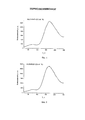
Примеры кривых ТСЛ для различных составов ALON : Eu2+ (примеры 1 и 2) приведены на Фиг. 1 и Фиг. 2.Examples of TSL curves for various ALON: Eu 2+ formulations (Examples 1 and 2) are shown in FIG. 1 and FIG. 2.
Пример 1. Термолюминофор на основе Al5O6N, активированного ионами европия с концентрацией (относительно алюминия) 0,3 ат % Eu2, получали по известным методикам посредством восстановительного отжига смесей α-Al2O3 и AlN с Eu2O3, или смесей α-Al2O3 и AlN с соответствующим ацетилацетонатным комплексом Eu(асас)3. В качестве исходных компонентов использовали изопропоксид алюминия Al(OiPr)3 марки «х.ч.» (Fluka), оксид европия Eu2O3 марки «х.ч.»,), ацетилацетон марки «х.ч.», лимонную кислоту марки «х.ч.», ацетилацетонат европия Eu(асас)3 и нитрид алюминия AlN, полученный методом самораспространяющегося высокотемпературного синтеза (СВС) в ИСМ РАН (г. Черноголовка). Использовали химически чистый α-Al2O3. Однако, используемый нитрид алюминия AlN содержал ряд примесей: использовали технический порошок нитрида алюминия для клеев герметиков, имеющий состав: N2 - не менее 33.0 мас. %, O2 - не более 1.2 мас %, Fe - не более 0,08-0.1 мас %, углерод С - не более 0.05%; содержание Al5O6N как основного вещества в конечном продукте составляло не менее 96%. В качестве растворителей использовали дистиллированную воду, метанол марки «х.ч.», этанол марки «х.ч.» и изопропанол марки «х.ч.» без дополнительной очистки. Фазовый состав исходных порошков и полученных порошкообразных образцов Al5O6N : Eu2+ (Fe, С) был подтвержден результатами рентгеновского фазового анализа (РФА, дифрактометр XRD 6000 «Shimadzu», CuKα излучение, графитовый монохроматор, 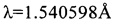
В качестве держателя образцов при измерениях ТСЛ использовали медную подложку размером 1,2×1,2 см, которую предварительно покрывали специальным лаком, не обладающим люминесцентными свойствами. Содержащий вышеуказанные примеси исследуемый порошок Al5O6N, массой до 0,5 г насыпали на эту покрытую лаком подложку (расположенную в процессе приготовления пробы горизонтально) в количестве достаточном для обеспечения достаточной толщины образца с сохранением адгезии после высыхания лака. После этого медная подложка с готовым исследуемым образцом, закреплялась вертикально в криопальце RDK - 2050 измерительной установки. В измерительной установке для охлаждения образца термолюминофора до температуры 8 K использовали оптический криостат с системой охлаждения, работающей по замкнутому циклу Гиффорда - Мак-Магона. Термолюминофор при температуре 8 K был облучен рентгеновским излучением, доза 1 кГр (флюенс 3*1012 см-2). Регистрация кривых ТСЛ выполнена в интегральном режиме в диапазоне длин волн от ультрафиолетовых (от 200 нм, - кварцевые входные окна криостата позволяли это делать) до красных, - до 650 нм с использованием ФЭУ-130 при линейном нагреве со скоростью 6 K/мин в диапазоне температур 8 -250 K.As a sample holder for TSL measurements, a 1.2 × 1.2 cm copper substrate was used, which was previously coated with a special varnish that did not have luminescent properties. The Al 5 O 6 N test powder containing the above impurities, weighing up to 0.5 g, was poured onto this varnish-coated substrate (located horizontally during the preparation of the sample) in an amount sufficient to ensure a sufficient thickness of the sample while maintaining adhesion after the varnish had dried. After that, the copper substrate with the finished test sample was fixed vertically in the cryo-finger of the RDK - 2050 measuring device. An optical cryostat with a cooling system operating in a closed Gifford – McMahon cycle was used in a measuring setup to cool a thermoluminophore sample to a temperature of 8 K. Thermoluminophore at a temperature of 8 K was irradiated with x-ray radiation, a dose of 1 kGy (fluence 3 * 10 12 cm -2 ). The TSL curves were recorded in the integrated mode in the wavelength range from ultraviolet (from 200 nm, the quartz input windows of the cryostat allowed this to be done) to red, up to 650 nm using a PMT-130 with linear heating at a speed of 6 K / min in the range temperatures 8 -250 K.
Кривые ТСЛ термолюминофора на основе алона ALON : Eu2+, Fe, С (с концентрацией ионов европия 0,3 ат % Eu2+) приведены на Фиг. 1. Самый низкотемпературный пик ТСЛ предложенного термолюминофора расположен при температуре 70-80 K. Более интенсивный основной рабочий пик для низкотемпературного диапазона измерений имеет максимум при 160-170 K, он полностью показан на Фиг. 1 в диапазоне температур 100-250 K. Основной рабочий пик пригоден для определения дозозатрат элементов и устройств, изготовленных на основе высокотемпературных сверхпроводников, функционирующих в этой области температур, а также для определения дозозатрат других устройств, работающих в полях ионизирующих излучений при температуре от жидкого гелия до жидкого азота.The TSL curves of a thermoluminophore based on ALON alon: Eu 2+ , Fe, C (with a concentration of europium ions of 0.3 at% Eu 2+ ) are shown in FIG. 1. The lowest-temperature TSL peak of the proposed thermoluminophore is located at a temperature of 70-80 K. The more intense main working peak for the low-temperature measurement range has a maximum at 160-170 K, it is fully shown in FIG. 1 in the temperature range 100-250 K. The main working peak is suitable for determining the dose rates of elements and devices made on the basis of high-temperature superconductors operating in this temperature range, as well as for determining the dose rates of other devices operating in the fields of ionizing radiation at a temperature from liquid helium to liquid nitrogen.
Для предложенного термолюминофора спектр свечения, имея максимумом при 500 нм, захватывает и красную область. Последнее позволяет применять предложенный темолюминофор для создания дозиметрических систем с компактной фотодиодной PIN-регистрацией, поскольку сенсорные PIN-структуры характеризуются повышенной чувствительностью в оранжево-красном (и инфракрасном) диапазонах спектра.For the proposed thermoluminophore, the luminescence spectrum, having a maximum at 500 nm, also captures the red region. The latter allows us to use the proposed tempoluminophore to create dosimetric systems with compact photodiode PIN registration, since the sensor PIN structures are characterized by increased sensitivity in the orange-red (and infrared) spectral ranges.
Пример 2.Example 2
Термолюминофор на основе Al5O6N, активированного ионами европия с концентрацией (относительно алюминия) 0,5 ат % Eu2 получали по известным методикам, как и в Примере 1, посредством восстановительного отжига смесей α-Al2O3 и AlN с Eu2O3, а также с соответствующим ацетилацетонатным комплексом Eu(асас)3. В качестве исходных компонентов использовали изопропоксид алюминия Al(OiPr)3 марки «х.ч.» (Fluka), оксид европия Eu2O3 марки «х.ч.», ацетилацетон марки «х.ч.», лимонную кислоту марки «х.ч.», ацетилацетонат европия Eu(асас)3 и нитрид алюминия AlN, полученный методом самораспространяющегося высокотемпературного синтеза (СВС) в ИСМ РАН (г.Черноголовка). Нитрид алюминия AlN (использовали технический порошок нитрида алюминия для клеев герметиков) в отличие от химически чистого α-Al2O3, содержал ряд примесей и имел состав: N2 - не менее 33.0 мас. %, О2 - не более 1.2%, Fe - не более 0,08-0.1%, С - не более 0.05%; содержание основного вещества Al5O6N в конечном продукте - не менее 96%. В качестве растворителей использовали дистиллированную воду, метанол марки «х.ч.», этанол марки «х.ч.» и изопропанол марки «х.ч.» без дополнительной очистки. Фазовый состав исходных порошков и полученных порошкообразных образцов Al5O6N : Eu2+ был подтвержден результатами рентгеновского фазового анализа (РФА, дифрактометр XRD 6000 «Shimadzu», CuKα излучение, графитовый монохроматор 
В качестве держателя образцов, как и в Примере 1, использовали медную подложку размером 1,2×1,2 см, которую предварительно покрывали специальным лаком, не обладающим люминесцентными свойствами. Исследуемый (имеющий вышеуказанные примеси) порошок Al5O6N массой до 0,5 г насыпали на эту покрытую лаком подложку, расположенную в процессе приготовления пробы горизонтально, в количестве необходимом для обеспечения достаточной толщины образца с сохранением адгезии после высыхания лака. Затем медную подложку с исследуемым образцом, закрепляли вертикально в криопальце измерительной установки.As the sample holder, as in Example 1, a 1.2 × 1.2 cm copper substrate was used, which was previously coated with a special varnish that did not have luminescent properties. The investigated (having the above impurities) Al 5 O 6 N powder weighing up to 0.5 g was poured onto this varnish-coated substrate, which was placed horizontally during the preparation of the sample in an amount necessary to ensure sufficient thickness of the sample while maintaining adhesion after the varnish had dried. Then the copper substrate with the test sample was fixed vertically in the cryo-finger of the measuring unit.
В используемой измерительной установке для охлаждения образца термолюминофора до температуры 8 K применяли оптический криостат с системой охлаждения, работающей по замкнутому циклу Гиффорда - Мак-Магона. Термолюминофор при температуре 8 K был облучен рентгеновским излучением, с той же дозой, что и Примере 1, то есть 1 кГр (флюенс 3*1012 см-2). Регистрация кривых ТСЛ выполнена в интегральном режиме в диапазоне длин волн от ультрафиолетовых до красных, - до 650 нм, с использованием ФЭУ-130, при линейном нагреве со скоростью 6 K/мин в диапазоне температур 8-250 К.An optical cryostat with a cooling system operating in a closed Gifford – McMahon cycle was used in the measuring device used to cool the thermoluminophore sample to a temperature of 8 K. Thermoluminophore at a temperature of 8 K was irradiated with x-ray, with the same dose as Example 1, that is, 1 kGy (fluence 3 * 10 12 cm -2 ). The TSL curves were recorded in the integrated mode in the wavelength range from ultraviolet to red, up to 650 nm, using a PMT-130, with linear heating at a speed of 6 K / min in a temperature range of 8-250 K.
Кривые ТСЛ термолюминофора Al5O6N, активированного ионами европия с концентрацией 0,5 ат % Eu2+, с добавками примеси железа (не более 0,08-0,1 мас %) и примеси углерода (не более 0,05 мас %) приведены на Фиг. 2. Самый низкотемпературный пик ТСЛ предложенного термолюминофора расположен при температуре 70-80 K. Основной рабочий пик для низкотемпературного диапазона для предложенного термолюминофора (в области температур 100-250 K) имеет максимум при 160-170 K. Он показан на Фиг. 2. Интенсивность обеих вышеуказанных пиков пиков ТСЛ для термолюминофора с концентрацией 0,5 ат % Eu2 в два раза выше, чем для образцов с концентрацией 0,3 ат % Eu2. Как показали дополнительные измерения концентрация допанта 0,5 ат % Eu2 является оптимальной для данного типа термолюминофора. Дополнительная примесь железа, атомный номер которого (Z=26) в два раза превышает атомный номер Al (Z=13), обеспечивает при радиационном воздействии повышенное светозапасание и соответственно повышенный световыход термолюминесцеции. Для предложенного термолюминофора на основе Al5O6N с концентрацией 0,5 ат % Eu2 и с добавками примесей железа и углерода спектр свечения, имея максимумом при 500 нм, захватывает и красную область. Последнее позволяет рекомендовать предложенный темолюминофор для создания дозиметрических систем с компактной PIN-фотодиодной регистрацией.TSL curves of the thermoluminophore Al 5 O 6 N, activated by europium ions with a concentration of 0.5 at% Eu 2+ , with the addition of iron impurities (not more than 0.08-0.1 wt%) and carbon impurities (not more than 0.05 wt %) are shown in FIG. 2. The lowest-temperature TSL peak of the proposed thermoluminophore is located at a temperature of 70-80 K. The main working peak for the low-temperature range for the proposed thermoluminophore (in the temperature range 100-250 K) has a maximum at 160-170 K. It is shown in FIG. 2. The intensity of both of the above peaks of TSL peaks for thermoluminophore with a concentration of 0.5 at% Eu 2 is two times higher than for samples with a concentration of 0.3 at% Eu 2 . As additional measurements showed, the dopant concentration of 0.5 at% Eu 2 is optimal for this type of thermoluminophore. An additional admixture of iron, the atomic number of which (Z = 26) is twice the atomic number of Al (Z = 13), provides radiation with increased light storage and, accordingly, increased light output of thermoluminescence. For the proposed thermoluminophore based on Al 5 O 6 N with a concentration of 0.5 at% Eu 2 and with the addition of iron and carbon impurities, the luminescence spectrum, having a maximum at 500 nm, also captures the red region. The latter allows us to recommend the proposed tempoluminophore for creating dosimetric systems with compact PIN photodiode registration.
Диапазон измеряемых доз предлагаемого термолюминофора путем дополнительных измерений определен в области 0,1-50 кГр (флюенс 3*1011 - 1,5*1014 см-2) и выше.The range of measured doses of the proposed thermoluminophore by additional measurements is determined in the range of 0.1-50 kGy (fluence 3 * 10 11 - 1.5 * 10 14 cm -2 ) and above.
Claims (1)
Priority Applications (1)
| Application Number | Priority Date | Filing Date | Title |
|---|---|---|---|
| RU2017125639A RU2668942C1 (en) | 2017-07-17 | 2017-07-17 | Thermoluminophore |
Applications Claiming Priority (1)
| Application Number | Priority Date | Filing Date | Title |
|---|---|---|---|
| RU2017125639A RU2668942C1 (en) | 2017-07-17 | 2017-07-17 | Thermoluminophore |
Publications (1)
| Publication Number | Publication Date |
|---|---|
| RU2668942C1 true RU2668942C1 (en) | 2018-10-05 |
Family
ID=63798143
Family Applications (1)
| Application Number | Title | Priority Date | Filing Date |
|---|---|---|---|
| RU2017125639A RU2668942C1 (en) | 2017-07-17 | 2017-07-17 | Thermoluminophore |
Country Status (1)
| Country | Link |
|---|---|
| RU (1) | RU2668942C1 (en) |
Citations (3)
| Publication number | Priority date | Publication date | Assignee | Title |
|---|---|---|---|---|
| SU1011666A1 (en) * | 1981-11-04 | 1983-04-15 | Ордена Ленина физико-технический институт им.А.Ф.Иоффе | Thermophosphor for composite detector of ionizing radiation |
| US6723995B2 (en) * | 2001-11-22 | 2004-04-20 | Ftni Inc. | Direct conversion flat panel X-ray detector with automatic cancellation of ghost images |
| RU2445646C2 (en) * | 2008-06-11 | 2012-03-20 | Федеральное государственное автономное образовательное учреждение высшего профессионального образования "Уральский федеральный университет имени первого Президента России Б.Н.Ельцина" (ФГАОУ ВПО "УрФУ имени первого Президента России Б.Н.Ельцина") | Working medium for thermoluminescent nuetron detector |
-
2017
- 2017-07-17 RU RU2017125639A patent/RU2668942C1/en not_active IP Right Cessation
Patent Citations (3)
| Publication number | Priority date | Publication date | Assignee | Title |
|---|---|---|---|---|
| SU1011666A1 (en) * | 1981-11-04 | 1983-04-15 | Ордена Ленина физико-технический институт им.А.Ф.Иоффе | Thermophosphor for composite detector of ionizing radiation |
| US6723995B2 (en) * | 2001-11-22 | 2004-04-20 | Ftni Inc. | Direct conversion flat panel X-ray detector with automatic cancellation of ghost images |
| RU2445646C2 (en) * | 2008-06-11 | 2012-03-20 | Федеральное государственное автономное образовательное учреждение высшего профессионального образования "Уральский федеральный университет имени первого Президента России Б.Н.Ельцина" (ФГАОУ ВПО "УрФУ имени первого Президента России Б.Н.Ельцина") | Working medium for thermoluminescent nuetron detector |
Non-Patent Citations (1)
| Title |
|---|
| N. S. Akhmadullina, A. S. Lysenkov et al. Effect of Dopant Concentration on the Phase Composition and Luminescence Properties of Eu2+ - and Ce3+ - Doped AlONs. Inorganic Materials, 2015, Vol. 51, No. 5. pp. 473-481. * |
Similar Documents
| Publication | Publication Date | Title |
|---|---|---|
| Ueda et al. | Thermal ionization and thermally activated crossover quenching processes for 5 d-4 f luminescence in Y 3 A l 5− x G ax O 12: P r 3+ | |
| Li et al. | Thermally stimulated luminescence studies for dysprosium doped strontium tetraborate | |
| Jiang et al. | Thermoluminescence studies of LiSrBO3: RE3+ (RE= Dy, Tb, Tm and Ce) | |
| Aitasalo et al. | Low temperature thermoluminescence properties of Eu2+ and R3+ doped CaAl2O4 | |
| Onderisinova et al. | Temperature-dependent nonradiative energy transfer from Gd3+ to Ce3+ ions in co-doped LuAG: Ce, Gd garnet scintillators | |
| Grippa et al. | Crystal growth and scintillation properties of CsCaBr3: Eu2+ (CsCa1− xEuxBr3, 0≤ x≤ 0.08) | |
| Nagpure et al. | Synthesis and luminescence characteristics of terbium (III) activated NaSrBO3 | |
| Juan et al. | Photoluminescence and thermoluminescence properties of dysprosium doped zinc metaborate phosphors | |
| Hua et al. | Effect of B2O3 on luminescence and scintillation properties of Ce3+-doped gadolinium aluminium–silicate glass | |
| Li et al. | Synthesis, photoluminescence, thermoluminescence and dosimetry properties of novel phosphor Zn (BO2) 2: Tb | |
| Guo et al. | Thermoluminescent properties of Eu2+ and RE3+ co-doped phosphors CaGa2S4: Eu2+, RE3+ (RE= Ln, excluding Pm, Eu and Lu) | |
| Ju et al. | Persistent luminescence in CaAl2Si2O8: Eu2+, R3+ (R= Pr, Nd, Dy, Ho and Er) | |
| Kawano et al. | Scintillation and thermoluminescent properties of Dy-doped calcium borate chloride | |
| Sidletskiy et al. | Crystal composition and afterglow in mixed silicates: the role of melting temperature | |
| Nagirnyi et al. | Recombination luminescence in Li2B4O7 doped with manganese and copper | |
| Palan et al. | Synthesis and TL/OSL properties of a novel high-sensitive blue-emitting LiSrPO4: Eu2+ phosphor for radiation dosimetry | |
| Setlur et al. | Charge creation, trapping, and long phosphorescence in Sr2MgSi2O7: Eu2+, RE3+ | |
| Onoda et al. | Thermally stimulated luminescence properties of Eu-doped AlN ceramic | |
| Patra et al. | Silver doped lithium tetraborate (Li2B4O7) single crystals as efficient dosimeter material with sub-micro-Gy sensitivity | |
| Bilski et al. | New efficient OSL detectors based on the crystals of Ce3+ doped Gd3Al5− xGaxO12 mixed garnet | |
| Wu et al. | Crystal growth, structure, optical and scintillation properties of Ce 3+-doped Tb 2.2 Lu 0.8 Al 5 O 12 single crystals | |
| Palatnikov et al. | Luminescence Properties of Sol–Gel Derived Ceramic GdNb х Ta1–х O4 and YNb х Ta1–х O4 Solid Solutions | |
| Fujimoto et al. | Lithium aluminate crystals as scintillator for thermal neutron detection | |
| Öztürk et al. | Thermoluminescence and photoluminescence properties of Mn4+, Pr3+, 4+, Nd3+ and Eu3+ in MgAl2Si2O8 | |
| Trinkler et al. | Thermoluminescence properties of AlN ceramics |
Legal Events
| Date | Code | Title | Description |
|---|---|---|---|
| MM4A | The patent is invalid due to non-payment of fees |
Effective date: 20190718 |