RU2768942C1 - Hollow multilayer woven frame of three-dimensional structure and method of manufacturing thereof - Google Patents
Hollow multilayer woven frame of three-dimensional structure and method of manufacturing thereof Download PDFInfo
- Publication number
- RU2768942C1 RU2768942C1 RU2020139360A RU2020139360A RU2768942C1 RU 2768942 C1 RU2768942 C1 RU 2768942C1 RU 2020139360 A RU2020139360 A RU 2020139360A RU 2020139360 A RU2020139360 A RU 2020139360A RU 2768942 C1 RU2768942 C1 RU 2768942C1
- Authority
- RU
- Russia
- Prior art keywords
- shell
- frame
- woven
- annular
- annular recesses
- Prior art date
Links
- 238000004519 manufacturing process Methods 0.000 title claims abstract description 18
- 239000002131 composite material Substances 0.000 claims abstract description 23
- 230000000694 effects Effects 0.000 claims abstract description 15
- 230000003014 reinforcing effect Effects 0.000 claims abstract description 10
- 238000000034 method Methods 0.000 claims description 17
- 238000009941 weaving Methods 0.000 claims description 12
- CSCPPACGZOOCGX-UHFFFAOYSA-N Acetone Chemical compound CC(C)=O CSCPPACGZOOCGX-UHFFFAOYSA-N 0.000 claims description 8
- 239000004744 fabric Substances 0.000 claims description 6
- GTACSIONMHMRPD-UHFFFAOYSA-N 2-[4-[2-(benzenesulfonamido)ethylsulfanyl]-2,6-difluorophenoxy]acetamide Chemical compound C1=C(F)C(OCC(=O)N)=C(F)C=C1SCCNS(=O)(=O)C1=CC=CC=C1 GTACSIONMHMRPD-UHFFFAOYSA-N 0.000 claims description 4
- 101710130081 Aspergillopepsin-1 Proteins 0.000 claims description 4
- 102100031007 Cytosolic non-specific dipeptidase Human genes 0.000 claims description 4
- 239000003822 epoxy resin Substances 0.000 claims description 4
- 229920000647 polyepoxide Polymers 0.000 claims description 4
- 239000004848 polyfunctional curative Substances 0.000 claims description 4
- 239000004753 textile Substances 0.000 abstract description 3
- 239000000126 substance Substances 0.000 abstract 1
- 230000015572 biosynthetic process Effects 0.000 description 7
- 238000007493 shaping process Methods 0.000 description 6
- 229920000049 Carbon (fiber) Polymers 0.000 description 3
- 239000004917 carbon fiber Substances 0.000 description 3
- 239000000945 filler Substances 0.000 description 3
- VNWKTOKETHGBQD-UHFFFAOYSA-N methane Chemical compound C VNWKTOKETHGBQD-UHFFFAOYSA-N 0.000 description 3
- 230000002787 reinforcement Effects 0.000 description 3
- OKTJSMMVPCPJKN-UHFFFAOYSA-N Carbon Chemical compound [C] OKTJSMMVPCPJKN-UHFFFAOYSA-N 0.000 description 2
- CREMABGTGYGIQB-UHFFFAOYSA-N carbon carbon Chemical compound C.C CREMABGTGYGIQB-UHFFFAOYSA-N 0.000 description 2
- 239000011203 carbon fibre reinforced carbon Substances 0.000 description 2
- 230000032798 delamination Effects 0.000 description 2
- 229910002804 graphite Inorganic materials 0.000 description 2
- 239000010439 graphite Substances 0.000 description 2
- 238000005470 impregnation Methods 0.000 description 2
- 208000018747 cerebellar ataxia with neuropathy and bilateral vestibular areflexia syndrome Diseases 0.000 description 1
- 238000005056 compaction Methods 0.000 description 1
- 238000005516 engineering process Methods 0.000 description 1
- 239000000463 material Substances 0.000 description 1
- 239000002184 metal Substances 0.000 description 1
- 238000000465 moulding Methods 0.000 description 1
- 238000003825 pressing Methods 0.000 description 1
- 230000000717 retained effect Effects 0.000 description 1
Images
Classifications
-
- D—TEXTILES; PAPER
- D03—WEAVING
- D03D—WOVEN FABRICS; METHODS OF WEAVING; LOOMS
- D03D37/00—Circular looms
Landscapes
- Engineering & Computer Science (AREA)
- Textile Engineering (AREA)
- Woven Fabrics (AREA)
- Tires In General (AREA)
Abstract
Description
Изобретение относится к текстильной промышленности, в частности к полым многослойным тканым каркасам, предназначенным для создания армирующих элементов композиционных материалов.The invention relates to the textile industry, in particular to hollow multilayer woven frames designed to create reinforcing elements of composite materials.
Известен полый многослойный тканый каркас объемной структуры, формируемый путем переплетения уточных нитей и систем основных нитей. Он усматривается из способа изготовления многослойной контурно-профильной ткани [пат. RU 2466219, 2011 г.]. В соответствии с ним каркас имеет саржевое переплетение уточных и основных нитей. Кроме того, каркас имеет два условных шва, образованных только нитями утка.Known is a hollow multilayer woven frame of a three-dimensional structure, formed by interlacing weft threads and systems of warp threads. It is seen from the method of manufacturing a multilayer contour-profile fabric [US Pat. RU 2466219, 2011]. In accordance with it, the frame has a twill weave of weft and warp threads. In addition, the carcass has two conditional seams formed only by weft threads.
Недостатком каркаса является низкая прочность изготавливаемого из него композиционного материала в зоне расположения двух условных швов. Еще одним недостатком каркаса является недостаточный эффект крутящего момента от воздушного потока для изделий из композиционного материала в форме тел вращения, изготавливаемых на основе такого каркаса.The disadvantage of the frame is the low strength of the composite material made from it in the area of two conditional seams. Another disadvantage of the frame is the insufficient effect of the torque from the air flow for composite material products in the form of bodies of revolution, made on the basis of such a frame.
Наиболее близким к заявляемому по технической сущности и достигаемому эффекту является полый многослойный тканый каркас объемной структуры, нарабатываемый путем переплетения уточных нитей и систем основных нитей на круглоткацкой машине и состоящий из двух соединенных между собой внутренней и наружной тканых оболочек, выполненных с чередующимися между собой кольцевыми углублениями и выступами соответственно со стороны их наружной и внутренней поверхности, которые соединены между собой за счет того, что в кольцевые углубления внутренней оболочки входят кольцевые выступы наружной оболочки и наоборот кольцевые ее выступы входят в кольцевые углубления наружной оболочки [пат. RU 2707100, 2019 г.].The closest to the claimed technical essence and the achieved effect is a hollow multilayer woven frame of a three-dimensional structure, produced by weaving weft threads and systems of warp threads on a circular weaving machine and consisting of two interconnected inner and outer woven shells, made with alternating annular recesses and protrusions respectively from the side of their outer and inner surfaces, which are interconnected due to the fact that the annular recesses of the inner shell include the annular protrusions of the outer shell and vice versa, its annular protrusions enter the annular recesses of the outer shell [US Pat. RU 2707100, 2019].
Каркас указанной структуры не имеет условных швов и поэтому изготавливаемые на его основе изделия из композиционного материала имеют высокие механические свойства.The frame of this structure has no conditional seams and, therefore, composite material products made on its basis have high mechanical properties.
Однако, в изготавливаемых на его основе изделиях из композиционного материала отсутствует эффект крутящего момента, что имеет важное значение для изделий, эксплуатация которых предусматривает их полет в атмосфере с обеспечением его доставки в строго определенное место.However, there is no effect of torque in the products made on its basis from a composite material, which is important for products whose operation involves their flight in the atmosphere with the provision of its delivery to a strictly defined place.
Задачей изобретения является создание такого конструктивного исполнения тканого каркаса, при использовании которого в качестве армирующего элемента композиционных материалов в изделиях в форме тел вращения обеспечивается возможность задания направления их вращения, с сохранением высокой прочности композита вдоль образующей изделия.The objective of the invention is to create such a design of a woven frame, when used as a reinforcing element of composite materials in products in the form of bodies of revolution, it is possible to set the direction of their rotation, while maintaining high strength of the composite along the generatrix of the product.
Известен способ изготовления полого многослойного тканого каркаса объемной структуры, заключающийся в наработке его из уточных нитей и систем основных нитей [пат. RU 2466219, 2011 г.]. В соответствии с ним каркас формируют методом плоского ткачества в виде двух полотен, соединенных между собой условными швами. Способ обеспечивает саржевое переплетение из уточных и основных нитей с диагональными рисунком на заданную глубину от наружной поверхности.A known method of manufacturing a hollow multilayer woven frame of a three-dimensional structure, which consists in working it out of weft threads and systems of warp threads [US Pat. RU 2466219, 2011]. In accordance with it, the frame is formed by the flat weaving method in the form of two canvases connected to each other by conditional seams. The method provides a twill weave of weft and warp yarns with a diagonal pattern to a predetermined depth from the outer surface.
Недостатком способа является низкая прочность изделия из композиционного материала на основе каркаса, изготовленного указанным способом. Еще одним недостатком способа является недостаточный эффект крутящего момента от воздушного потока для изделий из композиционного материала на основе каркаса, изготовленного указанным способом.The disadvantage of this method is the low strength of the product made of composite material based on the frame, made in this way. Another disadvantage of the method is the insufficient effect of torque from the air flow for products from a composite material based on a carcass made in this way.
Наиболее близким к заявляемому по технической сущности и достигаемому эффекту является способ изготовления полого многослойного тканого каркаса объемной структуры с чередующимися по его наружной поверхности кольцевыми углублениями и выступами, для чего его наработку осуществляют в соответствии с рисунком ткани, в котором заданы места отсутствия уточных нитей на его наружной поверхности, после чего поверх наработанной оболочки, не снимая ее с оправки, нарабатывают наружную тканую оболочку; причем наработку их осуществляют таким образом, что в кольцевые углубления внутренней оболочки входят кольцевые выступы наружной тканой оболочки и наоборот, кольцевые выступы внутренней оболочки входят в кольцевые углубления наружной оболочки [пат. RU 2707100,2019 г.].Closest to the claimed technical essence and the achieved effect is a method for manufacturing a hollow multilayer woven frame of a three-dimensional structure with annular recesses and protrusions alternating along its outer surface, for which its operating time is carried out in accordance with the pattern of the fabric, in which the places of the absence of weft threads on it are specified. the outer surface, after which an outer woven shell is produced over the finished shell, without removing it from the mandrel; moreover, they are worked out in such a way that annular protrusions of the outer woven shell enter into the annular recesses of the inner shell and vice versa, the annular protrusions of the inner shell enter into the annular recesses of the outer shell [US Pat. RU 2707100, 2019].
Способ обеспечивает возможность изготовления каркасов без «условных» швов и поэтому изготавливаемые на основе тканого каркаса изделия из композиционных материалов имеют более высокую механическую прочность.The method makes it possible to manufacture frames without "conditional" seams, and therefore products made of composite materials made on the basis of a woven frame have a higher mechanical strength.
Однако, способ не обеспечивает изготовление каркаса, на основе которого можно было бы изготовить изделие из композиционного материала, создающее при полете в атмосфере эффект крутящего момента вокруг своей оси, т.к. каркас не имеет саржевого переплетения уточных и основных нитей, а саржевый эффект, создаваемый перевязочными нитями основы, не значителен.However, the method does not provide for the manufacture of a frame, on the basis of which it would be possible to manufacture a product from a composite material, which, when flying in the atmosphere, creates the effect of a torque around its axis, because the frame does not have a twill weave of weft and warp threads, and the twill effect created by the warp dressing threads is not significant.
Задачей изобретения является создание способа получения полого многослойного тканого каркаса объемной структуры для использования в качестве армирующего элемента композиционных материалов в изделиях с обеспечением возможности задания направления их вращения вокруг своей оси при полете в атмосфере и обеспечением их высокой прочности в направлении образующей.The objective of the invention is to create a method for producing a hollow multilayer woven frame of a three-dimensional structure for use as a reinforcing element of composite materials in products with the possibility of setting the direction of their rotation around its axis when flying in the atmosphere and ensuring their high strength in the direction of the generatrix.
Поставленная задача решается за счет того, что в полом многослойном тканом каркасе объемной структуры, нарабатываемом путем переплетения уточных нитей и систем основных нитей на установленной в круглоткацкую машину оправке и состоящем из двух соединенных между собой внутренней и наружной тканых оболочек, выполненных с чередующимися между собой кольцевыми углублениями и выступами соответственно со стороны их наружной и внутренней поверхности, которые соединены между собой за счет того, что в кольцевые углубления внутренней оболочки входят кольцевые выступы наружной оболочки и наоборот кольцевые ее выступы входят в кольцевые выступы углубления в его наружной оболочке, в соответствии с заявляемым техническим решением нити основы наружной оболочки сами по себе, или с расположенными на ней со стороны наружной поверхности и/или в глубине цепочками точечных углублений, отклонены от образующей наружной оболочки в ту или иную сторону.The problem is solved due to the fact that in a hollow multilayer woven frame of a three-dimensional structure, produced by interlacing weft threads and systems of warp threads on a mandrel installed in a circular weaving machine and consisting of two interconnected inner and outer woven shells made with alternating annular recesses and protrusions, respectively, from the side of their outer and inner surfaces, which are interconnected due to the fact that the annular recesses of the inner shell include the annular protrusions of the outer shell and vice versa, its annular protrusions enter the annular protrusions of the recess in its outer shell, in accordance with the claimed technical solution warp threads of the outer shell by themselves, or located on it from the side of the outer surface and/or in the depth of chains of dotted recesses, deviated from the generatrix of the outer shell in one direction or another.
Благодаря тому, что в наружной оболочке формируемого на круглоткацкой машине каркаса нити наполнительной основы отклонены от образующей каркаса, на нем возникает диагональный рисунок, имитирующий саржевый эффект.Due to the fact that in the outer shell of the carcass formed on the circular weaving machine, the filling warp threads are deviated from the generatrix of the carcass, a diagonal pattern appears on it, imitating the twill effect.
То, что наружная оболочка каркаса дополнительно может иметь цепочки точечных уплотнений, направление которых совпадает с отклонением нитей основы от образующей, позволяет усилить саржевый эффект. Благодаря тому, что во внутренней оболочке нити наполнительной основы расположены вдоль образующей (это следует из признака ограничительной части п. 1 формулы изобретения), в целом каркас имеет сравнительно высокую прочность вдоль образующей.The fact that the outer shell of the carcass can additionally have chains of point seals, the direction of which coincides with the deviation of the warp threads from the generatrix, makes it possible to enhance the twill effect. Due to the fact that in the inner shell the threads of the filling base are located along the generatrix (this follows from the sign of the restrictive part of
В новой совокупности существенных признаков у объекта изобретения появляется новое свойство: наличие у каркаса саржевого эффекта, причем более сильного, чем просто саржевое переплетение, при сохранении в его основной части направления нитей наполнительной основы вдоль образующей.In a new set of essential features, the object of the invention has a new property: the presence of a twill effect in the frame, moreover, stronger than just a twill weave, while maintaining the direction of the filling warp threads along the generatrix in its main part.
Благодаря новому свойству решается поставленная задача, а именно: при использовании каркаса в качестве армирующего элемента композиционных материалов обеспечивается возможность задания изделиям из них при полете вращения вокруг своей оси, следствием чего является повышение стабильности их полета, при высокой прочности их вдоль образующей.Thanks to the new property, the task is solved, namely: when using the frame as a reinforcing element of composite materials, it is possible to set the products made of them during the flight of rotation around their axis, which results in an increase in the stability of their flight, with high strength along the generatrix.
Поставленная задача решается также за счет того, что в способе изготовления каркаса, предусматривающем наработку его из уточных нитей и систем основных нитей на установленной в круглоткацкую машину оправке, и в котором вначале нарабатывают тканую оболочку с чередующимися по ее наружной поверхности кольцевыми углублениями и выступами (для чего наработку оболочки осуществляют в соответствии с рисунком ткани, в котором заданы места отсутствия уточных нитей на ее наружной поверхности), после чего поверх наработанной оболочки, не снимая ее с оправки, нарабатывают наружную тканую оболочку; причем наработку их осуществляют таким образом, что в кольцевые углубления внутренней оболочки входят кольцевые выступы наружной тканой оболочки и наоборот, кольцевые выступы внутренней оболочки входят в кольцевые углубления наружной оболочки, в соответствии с заявляемым техническим решением при наработке наружной оболочки каркаса периодически принудительно производят поворот оправки вокруг своей оси в ту или иную сторону; при этом в программе наработки наружной оболочки тканого каркаса при необходимости еще и задают формирование цепочек точечных уплотнений, которые получают, например путем перевода к наружной поверхности и обратно нитей основы в пределах одной или нескольких ячеек, локально расположенных вдоль нитей основы таким образом, что на поверхности и/или в толщине наружной оболочки каркаса возникают локальные участки с нитями перпендикулярными его поверхности, за счет локальных выводов из структуры нитей основы. Решению поставленной задачи способствует также то, что внутреннюю оболочку каркаса или совместно с наружной аппретируют, например, раствором эпоксидной смолы ЭД-20 с отвердителем ПЭПА в ацетоне.The problem is also solved due to the fact that in the method of manufacturing a carcass, which provides for the production of it from weft threads and systems of warp threads on a mandrel installed in a circular weaving machine, and in which a woven sheath is first produced with annular recesses and protrusions alternating along its outer surface (for after which the shell is worked out in accordance with the pattern of the fabric, in which the places of the absence of weft threads on its outer surface are specified), after which the outer woven shell is worked over the worn shell, without removing it from the mandrel; moreover, their operating time is carried out in such a way that annular protrusions of the outer woven shell enter into the annular recesses of the inner shell and vice versa, the annular protrusions of the inner shell enter the annular recesses of the outer shell, in accordance with the claimed technical solution, when the outer shell of the frame is developed, the mandrel is periodically forcibly rotated around its axis in one direction or another; at the same time, in the program for developing the outer shell of the woven frame, if necessary, the formation of chains of point seals is also set, which are obtained, for example, by transferring the warp threads to the outer surface and back within one or more cells locally located along the warp threads in such a way that on the surface and/or in the thickness of the outer shell of the carcass there are local sections with threads perpendicular to its surface, due to local conclusions from the structure of the warp threads. The solution of the problem is also facilitated by the fact that the inner shell of the frame or together with the outer one is dressed, for example, with a solution of epoxy resin ED-20 with a PEPA hardener in acetone.
То, что при наработке наружной оболочки каркаса на установленной в круглоткацкую машину формообразующей оправке периодически принудительно производят поворот оправки вокруг своей оси, позволяет придать наружной оболочке каркаса винтовой рисунок, имитирующий саржевый эффект.The fact that during the development of the outer shell of the frame on the shaping mandrel installed in the circular weaving machine, the mandrel is periodically forcibly rotated around its axis, which makes it possible to give the outer shell of the frame a helical pattern that imitates the twill effect.
То, что при этом в программе наработки наружной оболочки каркаса при необходимости задают формирование цепочек точечных уплотнений, которые получают, например, переводом к наружной поверхности и обратно нитей основы в пределах одной или нескольких ячеек, локально расположенных вдоль наполнительных нитей основы таким образом, что на поверхности и/или в толщине каркаса возникают локальные участки с нитями перпендикулярными его поверхности позволяет усилить саржевый эффект.The fact that in this case, in the program for developing the outer shell of the frame, if necessary, the formation of chains of point seals is set, which are obtained, for example, by transferring the warp threads to the outer surface and back within one or more cells locally located along the filler threads of the warp in such a way that on surface and / or in the thickness of the frame there are local areas with threads perpendicular to its surface allows you to enhance the twill effect.
То, что в предпочтительном варианте выполнения способа каркас аппретируют путем пропитки, например, раствором эпоксидной смолы ЭД-20 с отвердителем ПЭПА в ацетоне, работает на сохранение приданной ему геометрии структуры. То, что внутренняя оболочка каркаса нарабатывается с ориентацией нитей наполнительной основы вдоль образующей (это следует из признака ограничительной части п. 2 формулы изобретения) в целом каркас имеет сравнительно высокую прочность вдоль образующей.The fact that, in the preferred embodiment of the method, the frame is finished by impregnation, for example, with a solution of epoxy resin ED-20 with PEPA hardener in acetone, works to preserve the geometry of the structure given to it. The fact that the inner shell of the carcass is produced with the orientation of the filler base threads along the generatrix (this follows from the feature of the restrictive part of
В новой совокупности существенных признаков у объекта изобретения возникает новое свойство: способность придать нарабатываемому на круглотканой машине каркасу более сильный саржевый эффект, чем саржевое переплетение из уточных и основных нитей, при ориентации нитей наполнительной основы вдоль его образующей.In a new set of essential features, the object of the invention has a new property: the ability to give the carcass produced on a circular woven machine a stronger twill effect than a twill weave of weft and warp threads, when the filling warp threads are oriented along its generatrix.
Благодаря новому свойству решается поставленная задача, а именно: создан способ получения полого многослойного тканого каркаса объемной структуры для использования в качестве армирующего элемента композиционных материалов в изделиях с обеспечением возможности задания направления из вращения вокруг своей оси при полете в атмосфере при сравнительно высокой их прочности вдоль образующей.Thanks to the new property, the task is solved, namely: a method has been created for obtaining a hollow multilayer woven frame of a three-dimensional structure for use as a reinforcing element of composite materials in products with the possibility of setting the direction from rotation around its axis when flying in the atmosphere with a relatively high strength along the generatrix .
Заявляемые изобретения настолько взаимосвязаны, что образуют единый изобретательский замысел, а именно: изобретено новое конструктивное исполнение каркаса и изобретен новый способ его изготовления. Это свидетельствует о соблюдении единства изобретения.The claimed inventions are so interconnected that they form a single inventive concept, namely: a new design of the frame has been invented and a new method of its manufacture has been invented. This testifies to the observance of the unity of the invention.
Полый тканый каркас выполнен многослойной объемной структуры и сформирован на круглоткацкой машине путем переплетения уточных нитей и систем основных нитей. Каркас состоит из внутренней и наружной оболочек, выполненных с чередующимися между собой кольцевыми углублениями и выступами соответственно со стороны их наружной и внутренней поверхности. Оболочки соединены между собой за счет того, что в кольцевые углубления внутренней оболочки входят кольцевые выступы наружной оболочки и наоборот ее выступы входят в кольцевые углубления наружной оболочки. При этом в наружной оболочке нити основы сами по себе, или с расположенными на ней со стороны наружной поверхности и/или в глубине цепочками точечных уплотнений, отклонены от образующей наружной оболочки каркаса в ту или иную сторону.The hollow woven frame is made of a multilayer three-dimensional structure and formed on a circular weaving machine by interweaving weft threads and systems of warp threads. The frame consists of inner and outer shells, made with alternating annular recesses and protrusions, respectively, from the side of their outer and inner surfaces. The shells are interconnected due to the fact that the annular projections of the outer shell enter into the annular recesses of the inner shell and vice versa, its projections enter the annular recesses of the outer shell. At the same time, in the outer sheath, the warp threads by themselves, or with chains of point seals located on it from the side of the outer surface and / or in depth, are deviated from the generatrix of the outer shell of the carcass in one direction or another.
Способ изготовления каркаса указанной выше структуры заключается в наработке его из уточных нитей и систем основных нитей на установленной в круглоткацкую машину формообразующей оправке. Вначале нарабатывают внутреннюю оболочку каркаса с чередующимися по ее наружной поверхности кольцевыми углублениями и выступами. Для этого наработку внутренней оболочки осуществляют в соответствие с рисунком ткани, в котором заданы места отсутствия уточных нитей на ее наружной поверхности. После этого поверх наработанной оболочки, не снимая ее с оправки, нарабатывают наружную тканую оболочку. Причем наработку их осуществляют таким образом, что в кольцевые углубления внутренней оболочки входят кольцевые выступы наружной тканой оболочки и наоборот, кольцевые выступы внутренней оболочки входят в кольцевые углубления наружной оболочки. При наработке наружной оболочки каркаса периодически принудительно производят поворот оправки вокруг своей оси в ту или другую сторону.The method for manufacturing the carcass of the above structure consists in making it from weft threads and systems of warp threads on a forming mandrel installed in the circular weaving machine. First, the inner shell of the frame is produced with annular recesses and protrusions alternating along its outer surface. To do this, the inner shell is worked out in accordance with the pattern of the fabric, in which the places of the absence of weft threads on its outer surface are specified. After that, over the accumulated shell, without removing it from the mandrel, an outer woven shell is produced. Moreover, their operating time is carried out in such a way that annular protrusions of the outer woven shell enter into the annular recesses of the inner shell and vice versa, the annular protrusions of the inner shell enter the annular recesses of the outer shell. During the development of the outer shell of the frame, the mandrel is periodically forcibly rotated around its axis in one direction or another.
При необходимости, в программе наработки тканого каркаса задают цепочки точечных уплотнений, которые получают, например, путем перевода к наружной поверхности и обратно нитей основы в пределах одной или нескольких ячеек, локально расположенных вдоль наполнительных нитей основы таким образом, что на поверхности и/или в толщине каркаса возникают локальные участки с нитями перпендикулярными его поверхности.If necessary, in the program for developing a woven carcass, chains of point seals are set, which are obtained, for example, by transferring the warp threads to the outer surface and back within one or more cells locally located along the filling warp threads in such a way that on the surface and / or in the thickness of the frame, there are local sections with threads perpendicular to its surface.
С целью гарантированного плотного соединения между внутренней и наружной оболочками каркаса, его аппретируют, но и каркас, не подвергнутый аппретированию, если его наработать на оправке, которая используется при изготовлении изделия из композиционного материала, позволяет получить изделия, в которых отсутствуют расслоения между внутренней и наружной оболочкой.In order to guarantee a tight connection between the inner and outer shells of the frame, it is finished, but the frame, not subjected to finishing, if it is worked out on a mandrel that is used in the manufacture of a product from a composite material, makes it possible to obtain products in which there are no delaminations between the inner and outer shell.
Изобретение поясняется рисунками и конкретными примерами изготовления тканого каркаса.The invention is illustrated by drawings and specific examples of the manufacture of a woven carcass.
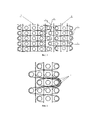
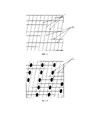
На фиг. 1 приведен рисунок каркаса, которые состоит из внутренней 1 и наружной оболочек 2. объемной структуры из основных 3 и уточных нитей 4. Оболочки 1 и 2 имеют чередующиеся между собой кольцевые углубления 5 и выступами 6 соответственно со стороны их наружной и внутренней поверхности, соединенные между собой за счет того, что в кольцевые углубления 5 внутренней оболочки входят кольцевые выступы 6 наружной оболочки 2 и наоборот кольцевые ее выступы 6 входят в кольцевые углубления 5 наружной оболочки 1. На фиг. 2 приведен вариант локального уплотнения, выполненного выводом наполнительных нитей 3 на наружную поверхность и вводом их на свое место в соседней ячейке ткани. На фиг. 3 показана схема армирования наружной оболочки 2 с наклонным относительно образующей расположением нитей наполнительной основы 3., при этом уточные витки 4 остаются концентричными. На фиг. 4 показана схема армирования наружной оболочки 2 с наклонным относительно образующей расположением нитей наполнительной основы 3 с цепочками уплотнений 7.In FIG. Figure 1 shows a frame drawing, which consists of an inner 1 and an
Примеры формирования многослойного тканого каркаса.Examples of the formation of a multilayer woven carcass.
В конкретном случае изготовили полый тканый каркас в виде усеченного конуса с длиной образующей ~500 мм и диаметрами верхнего и нижнего торцов - 100 мм и 300 мм соответственно, суммарной толщиной 14 мм.In a specific case, a hollow woven frame was made in the form of a truncated cone with a generatrix length of ~500 mm and diameters of the upper and lower ends of 100 mm and 300 mm, respectively, with a total thickness of 14 mm.
Наработку каркаса произвели на установленной в круглоткацкую машину формообразующей оправке. Формирование каркаса осуществили в соответствии со способом, описанным в пат. RU 2130093, 2000 г. Вначале наработали внутреннею оболочку каркаса толщиной ~ 8 мм с чередующимися по ее наружной поверхности кольцевыми углублениями и выступами величиной в толщину витков утка, осуществили это в соответствии с рисунком ткани, в котором задали места отсутствия уточных нитей на его наружной поверхности. После этого поверх этой (внутренней) оболочки, не снимая ее с оправки, наработали наружную оболочку толщиной 6 мм. Причем наработку внутренней и наружной оболочки осуществили таким образом, что в кольцевые углубления внутренней оболочки вошли кольцевые выступы наружной оболочки и наоборот, кольцевые выступы внутренней оболочки вошли в кольцевые углубления наружной оболочки. При наработке наружной оболочки внесли соответствующие изменения для отклонения нитей основы от образующей на угол до 10 градусов. Для этого, при наработке наружной оболочки каркаса, через определенное количество оборотов программы принудительно произвели поворот оправки вокруг своей оси в направлении хода челнока на определенную величину. При повороте оправки равновесие сил при структурообразовании каркаса нарушается, а именно: нити основы стремятся сместиться в сторону противоположную повороту оправки, чем и достигается армирование нитями наполнительной основы под углом относительно образующей каркаса. Величина угла определяется величиной поворота оправки, но она ограничена. При дальнейшей наработке каркаса, провели последующие принудительные повороты формообразующей оправки вокруг своей оси в направлении хода челнока.The frame was worked out on a forming mandrel installed in a circular weaving machine. The formation of the frame was carried out in accordance with the method described in US Pat. RU 2130093, 2000. First, the inner shell of the carcass was produced with a thickness of ~ 8 mm with annular recesses and protrusions alternating along its outer surface, the size of the thickness of the turns of the weft, this was done in accordance with the pattern of the fabric, in which the places of the absence of weft threads on its outer surface were set . After that, over this (inner) shell, without removing it from the mandrel, an outer shell with a thickness of 6 mm was produced. Moreover, the operating time of the inner and outer shells was carried out in such a way that the annular protrusions of the outer shell entered the annular recesses of the inner shell and vice versa, the annular protrusions of the inner shell entered the annular recesses of the outer shell. During the development of the outer shell, appropriate changes were made to deviate the warp threads from the generatrix at an angle of up to 10 degrees. To do this, during the development of the outer shell of the frame, after a certain number of revolutions of the program, the mandrel was forcibly rotated around its axis in the direction of the shuttle by a certain amount. When the mandrel is rotated, the balance of forces during the structure formation of the frame is disturbed, namely: the warp threads tend to shift in the direction opposite to the mandrel rotation, which results in the reinforcement of the filling warp threads at an angle relative to the frame generatrix. The value of the angle is determined by the amount of rotation of the mandrel, but it is limited. With further development of the frame, subsequent forced rotations of the shaping mandrel around its axis in the direction of the shuttle were carried out.
Во втором примере также изготовили полый тканый каркас в виде усеченного конуса с длиной образующей ~500 мм и диаметрами верхнего и нижнего торцов - 100 мм и 300 мм, толщиной 14 мм с закруткой нитей основы в наружной оболочке, аналогичной первому примеру. Дополнительно, в процессе наработки из структуры наружной оболочки каркаса на определенном шаге управляющей программы вывели нити основы, необходимые для формирования уплотнений, а при достижении наработки лицевой (наружной) поверхности, опять же в соответствии с программой, выведенные нити основы ввели обратно в структуру оболочки. Тем самым, нити основы создали точечные уплотнения, проходящие в радиальном направлении (перпендикулярном поверхности) на заданную толщину (глубину) структуры каркаса.In the second example, a hollow woven frame was also made in the form of a truncated cone with a generatrix length of ~500 mm and diameters of the upper and lower ends - 100 mm and 300 mm, 14 mm thick with a twist of the warp threads in the outer sheath, similar to the first example. Additionally, in the process of operating time, the warp threads necessary for the formation of seals were removed from the structure of the outer shell of the frame at a certain step of the control program, and when the operating time of the front (outer) surface was reached, again in accordance with the program, the removed warp threads were introduced back into the shell structure. Thereby, the warp threads created point seals extending in the radial direction (perpendicular to the surface) for a given thickness (depth) of the carcass structure.
При дальнейшей наработке наружной оболочки каркаса провели последующие принудительные повороты формообразующей оправки вокруг своей оси в направлении хода челнока с формированием таких же точечных уплотнений и разряжений в определенной последовательности.With further development of the outer shell of the frame, subsequent forced rotations of the shaping mandrel around its axis in the direction of the shuttle were carried out with the formation of the same point seals and discharges in a certain sequence.
При закрутке каркаса на заданный угол вместе со всеми наполнительными нитями основы закручиваются и данные цепочки уплотнений.When the frame is twisted at a given angle, these seal chains are twisted along with all the filling threads of the warp.
В результате экспериментальной отработки технологии изготовления конических каркасов, диаметром от 100 мм до 300 мм, нити основы которых отклонены от образующей, установлено, что достигается закрутка армирования нитями основы с углом до 10 градусов, что связано с ограничением величины угла поворота оправки.As a result of experimental testing of the technology for manufacturing conical frames with a diameter of 100 mm to 300 mm, the warp threads of which are deviated from the generatrix, it was found that the twisting of the reinforcement with warp threads at an angle of up to 10 degrees is achieved, which is associated with a limitation of the angle of rotation of the mandrel.
Для гарантированного сохранения формы тканых каркасов с нитями основы, имеющими отклонение от образующей, после наработки каркасов применили операцию аппретирования путем пропитки раствором эпоксидной смолы ЭД-20 с отвердителем ПЭПА в ацетоне.To ensure that the shape of woven frames with warp threads that deviate from the generatrix is retained, after the frames have been worked out, a finishing operation was used by impregnation with a solution of epoxy resin ED-20 with a PEPA hardener in acetone.
Таким образом, получили тканые каркасы с отклонением в наружной оболочке нитей основы от образующей на определенный угол и каркас с отклонением нитей основы от образующей и равномерно распределенными по наружной поверхности точечными уплотнениями.Thus, woven frames were obtained with a deviation in the outer shell of the warp threads from the generatrix at a certain angle and a carcass with a deviation of the warp threads from the generatrix and point seals evenly distributed over the outer surface.
Некоторые из каркасов, в которых внутреннюю и наружную оболочки аппретировали, сняли с оправок, затем на их основе изготовили углепластиковую заготовку. Для этого каркас надели на формообразующую металлическую оправку, входящую в оснастку для формования углепластиковой заготовки прессованием. На основе других каркасов изготовили заготовки из углерод - углеродного композиционного материала. Для этого каркас надели на формообразующую оправку, выполненную из графита, после чего уплотнили пироуглеродом термоградиентным методом. Один из каркасов наработали непосредственно на формообразующей графитовой оправке и, не снимая с нее, уплотнили пироуглеродом термоградиентным методом.Some of the frames, in which the inner and outer shells were finished, were removed from the mandrels, then a carbon-fiber blank was made on their basis. To do this, the frame was put on a shaping metal mandrel, which is included in the equipment for molding a carbon fiber blank by pressing. On the basis of other frameworks, blanks were made from a carbon-carbon composite material. To do this, the frame was put on a shaping mandrel made of graphite, after which it was compacted with pyrocarbon by the thermogradient method. One of the frameworks was worked out directly on a shaping graphite mandrel and, without removing it, was compacted with pyrocarbon by the thermogradient method.
Все без исключения заготовки из углепластика и углерод - углеродного композиционного материала не имели расслоений в зоне контакта внутренней и наружной оболочек. Выполнение каркасов заявляемой структуры позволило придать композиционным материалам прочность на 20-30% большую в сравнении с материалами на основе каркасов, в которых все основные нити были ориентированы под углом к образующей.Without exception, all blanks made of carbon fiber and carbon-carbon composite material did not have delaminations in the contact zone of the inner and outer shells. The implementation of the frameworks of the claimed structure made it possible to give composite materials strength by 20-30% greater in comparison with materials based on frameworks, in which all the main threads were oriented at an angle to the generatrix.
Claims (3)
Priority Applications (1)
| Application Number | Priority Date | Filing Date | Title |
|---|---|---|---|
| RU2020139360A RU2768942C1 (en) | 2020-11-30 | 2020-11-30 | Hollow multilayer woven frame of three-dimensional structure and method of manufacturing thereof |
Applications Claiming Priority (1)
| Application Number | Priority Date | Filing Date | Title |
|---|---|---|---|
| RU2020139360A RU2768942C1 (en) | 2020-11-30 | 2020-11-30 | Hollow multilayer woven frame of three-dimensional structure and method of manufacturing thereof |
Publications (1)
| Publication Number | Publication Date |
|---|---|
| RU2768942C1 true RU2768942C1 (en) | 2022-03-25 |
Family
ID=80819571
Family Applications (1)
| Application Number | Title | Priority Date | Filing Date |
|---|---|---|---|
| RU2020139360A RU2768942C1 (en) | 2020-11-30 | 2020-11-30 | Hollow multilayer woven frame of three-dimensional structure and method of manufacturing thereof |
Country Status (1)
| Country | Link |
|---|---|
| RU (1) | RU2768942C1 (en) |
Cited By (1)
| Publication number | Priority date | Publication date | Assignee | Title |
|---|---|---|---|---|
| RU2819057C1 (en) * | 2023-03-31 | 2024-05-13 | Акционерное общество "Центральный научно-исследовательский институт имени Д.И. Менделеева" (АО "ЦНИИМ") | Method of making elastic casing with pile coating |
Citations (4)
| Publication number | Priority date | Publication date | Assignee | Title |
|---|---|---|---|---|
| RU2130093C1 (en) * | 1998-03-02 | 1999-05-10 | Федеральное государственное унитарное предприятие "Институт Термохимии" | Woven enclosure manufacture method |
| US20110155276A1 (en) * | 2008-07-15 | 2011-06-30 | Klaus Leppla | Loom for producing a woven article with a profiled cross section, in particular a rope |
| RU2466219C1 (en) * | 2011-08-02 | 2012-11-10 | Закрытое акционерное общество "ТРИ-Д" | Method of manufacturing multilayer contour-profiled tissue |
| RU2707100C1 (en) * | 2019-06-14 | 2019-11-22 | Акционерное общество "Уральский научно-исследовательский институт композиционных материалов" | Hollow article in the form of a woven web, method of its formation and method of formation based on it of thick-walled article, including large-size |
-
2020
- 2020-11-30 RU RU2020139360A patent/RU2768942C1/en active
Patent Citations (4)
| Publication number | Priority date | Publication date | Assignee | Title |
|---|---|---|---|---|
| RU2130093C1 (en) * | 1998-03-02 | 1999-05-10 | Федеральное государственное унитарное предприятие "Институт Термохимии" | Woven enclosure manufacture method |
| US20110155276A1 (en) * | 2008-07-15 | 2011-06-30 | Klaus Leppla | Loom for producing a woven article with a profiled cross section, in particular a rope |
| RU2466219C1 (en) * | 2011-08-02 | 2012-11-10 | Закрытое акционерное общество "ТРИ-Д" | Method of manufacturing multilayer contour-profiled tissue |
| RU2707100C1 (en) * | 2019-06-14 | 2019-11-22 | Акционерное общество "Уральский научно-исследовательский институт композиционных материалов" | Hollow article in the form of a woven web, method of its formation and method of formation based on it of thick-walled article, including large-size |
Cited By (1)
| Publication number | Priority date | Publication date | Assignee | Title |
|---|---|---|---|---|
| RU2819057C1 (en) * | 2023-03-31 | 2024-05-13 | Акционерное общество "Центральный научно-исследовательский институт имени Д.И. Менделеева" (АО "ЦНИИМ") | Method of making elastic casing with pile coating |
Similar Documents
| Publication | Publication Date | Title |
|---|---|---|
| US3749138A (en) | Thick fabrics | |
| KR101936275B1 (en) | Tubular woven preforms, fiber reinforced composites, and methods of making therof | |
| CA2778982C (en) | Fiber preform, fiber reinforced composite, and method of making thereof | |
| US3719212A (en) | Circular weaving apparatus product and process | |
| CN110258003B (en) | Top-sealing weaving method of rotary shell fabric and weaving method of rotary shell fabric | |
| US4729860A (en) | Multiple, thick graphite fabric production | |
| RU2768942C1 (en) | Hollow multilayer woven frame of three-dimensional structure and method of manufacturing thereof | |
| CN108004650B (en) | Large-size variable-thickness revolving body preform and preparation method thereof | |
| CN102051763B (en) | Plating weaving method for three-dimensional woven special-shaped prefabricated parts | |
| CN105297278A (en) | Braiding molding technology suitable for composite materials and braiding machinery | |
| RU2130093C1 (en) | Woven enclosure manufacture method | |
| RU2759017C1 (en) | Hollow multi-layered woven frame with a three-dimensional structure and method for manufacture thereof | |
| RU2751123C2 (en) | Hollow multilayer woven preform of a bulk structure with twill-line effect imitation and method of manufacture thereof | |
| CN1932101A (en) | Weaving process in two-dimensional conic-casing loom | |
| CN111910326A (en) | A three-dimensional fabric top forming method and three-dimensional fabric | |
| RU2023073C1 (en) | Method for manufacture of hollow multilayer woven intermediate product | |
| RU2800722C1 (en) | Methods for forming a woven multilayer shell (variants) | |
| CN108883549A (en) | The device and method for being used to form the fiber preform of the rotary body with the profile changed in radial cross-section | |
| RU2713990C1 (en) | One-piece multilayer shell with stiffeners and method of its formation | |
| RU2752184C1 (en) | Method for manufacturing two- and three-layer seamless casings | |
| RU2783134C2 (en) | Methods for formation of thick-wall multilayer shells of cylindrical or conical shape with low conicity angle on circular weaving machine | |
| CN117043403A (en) | Method for manufacturing a turbine component made of composite material with reinforced areas | |
| CN1821466B (en) | Three-dimensional barrel-shaped fabric with end frames and its weaving method | |
| RU2752185C1 (en) | Method for manufacturing thin-walled woven casing | |
| RU2765455C1 (en) | Methods of forming solid-woven multilayer shells of variable thickness (embodiments) |