TW202000928A - Rare earth metal oxide preparation - Google Patents
Rare earth metal oxide preparation Download PDFInfo
- Publication number
- TW202000928A TW202000928A TW108120753A TW108120753A TW202000928A TW 202000928 A TW202000928 A TW 202000928A TW 108120753 A TW108120753 A TW 108120753A TW 108120753 A TW108120753 A TW 108120753A TW 202000928 A TW202000928 A TW 202000928A
- Authority
- TW
- Taiwan
- Prior art keywords
- rare earth
- earth metal
- group
- ionic liquid
- aqueous phase
- Prior art date
Links
- 229910001404 rare earth metal oxide Inorganic materials 0.000 title claims abstract description 28
- 238000002360 preparation method Methods 0.000 title description 4
- 229910052761 rare earth metal Inorganic materials 0.000 claims abstract description 274
- 150000002910 rare earth metals Chemical class 0.000 claims abstract description 255
- 239000002608 ionic liquid Substances 0.000 claims abstract description 130
- 238000000034 method Methods 0.000 claims abstract description 92
- 239000000203 mixture Substances 0.000 claims abstract description 83
- 239000008346 aqueous phase Substances 0.000 claims abstract description 57
- 239000003929 acidic solution Substances 0.000 claims abstract description 42
- 238000012545 processing Methods 0.000 claims abstract description 15
- -1 selenazolium Chemical compound 0.000 claims description 109
- 239000000243 solution Substances 0.000 claims description 60
- 238000000605 extraction Methods 0.000 claims description 53
- 239000002253 acid Substances 0.000 claims description 42
- 125000000217 alkyl group Chemical group 0.000 claims description 41
- 150000001450 anions Chemical class 0.000 claims description 37
- VEXZGXHMUGYJMC-UHFFFAOYSA-N Hydrochloric acid Chemical compound Cl VEXZGXHMUGYJMC-UHFFFAOYSA-N 0.000 claims description 33
- MUBZPKHOEPUJKR-UHFFFAOYSA-N Oxalic acid Chemical compound OC(=O)C(O)=O MUBZPKHOEPUJKR-UHFFFAOYSA-N 0.000 claims description 32
- 230000002378 acidificating effect Effects 0.000 claims description 27
- 150000001768 cations Chemical class 0.000 claims description 26
- IJGRMHOSHXDMSA-UHFFFAOYSA-N Atomic nitrogen Chemical compound N#N IJGRMHOSHXDMSA-UHFFFAOYSA-N 0.000 claims description 23
- 229910052751 metal Inorganic materials 0.000 claims description 18
- 239000002184 metal Substances 0.000 claims description 18
- 230000008569 process Effects 0.000 claims description 16
- 239000002699 waste material Substances 0.000 claims description 16
- 229910052757 nitrogen Inorganic materials 0.000 claims description 12
- 229910052692 Dysprosium Inorganic materials 0.000 claims description 11
- 229910052779 Neodymium Inorganic materials 0.000 claims description 11
- 229910052736 halogen Inorganic materials 0.000 claims description 11
- 125000005647 linker group Chemical group 0.000 claims description 11
- XYFCBTPGUUZFHI-UHFFFAOYSA-O phosphonium Chemical compound [PH4+] XYFCBTPGUUZFHI-UHFFFAOYSA-O 0.000 claims description 11
- BTBUEUYNUDRHOZ-UHFFFAOYSA-N Borate Chemical compound [O-]B([O-])[O-] BTBUEUYNUDRHOZ-UHFFFAOYSA-N 0.000 claims description 10
- 229910052500 inorganic mineral Inorganic materials 0.000 claims description 10
- 239000011707 mineral Substances 0.000 claims description 10
- 229910052684 Cerium Inorganic materials 0.000 claims description 9
- 239000007864 aqueous solution Substances 0.000 claims description 9
- 125000003118 aryl group Chemical group 0.000 claims description 9
- SMWDFEZZVXVKRB-UHFFFAOYSA-O hydron;quinoline Chemical compound [NH+]1=CC=CC2=CC=CC=C21 SMWDFEZZVXVKRB-UHFFFAOYSA-O 0.000 claims description 9
- 239000003960 organic solvent Substances 0.000 claims description 9
- 235000006408 oxalic acid Nutrition 0.000 claims description 9
- 150000003839 salts Chemical class 0.000 claims description 9
- RAXXELZNTBOGNW-UHFFFAOYSA-O Imidazolium Chemical compound C1=C[NH+]=CN1 RAXXELZNTBOGNW-UHFFFAOYSA-O 0.000 claims description 8
- 238000002386 leaching Methods 0.000 claims description 8
- 239000012071 phase Substances 0.000 claims description 8
- JUJWROOIHBZHMG-UHFFFAOYSA-O pyridinium Chemical compound C1=CC=[NH+]C=C1 JUJWROOIHBZHMG-UHFFFAOYSA-O 0.000 claims description 8
- 238000011084 recovery Methods 0.000 claims description 8
- 125000001425 triazolyl group Chemical group 0.000 claims description 8
- ITMCEJHCFYSIIV-UHFFFAOYSA-M triflate Chemical compound [O-]S(=O)(=O)C(F)(F)F ITMCEJHCFYSIIV-UHFFFAOYSA-M 0.000 claims description 8
- QGZKDVFQNNGYKY-UHFFFAOYSA-O Ammonium Chemical compound [NH4+] QGZKDVFQNNGYKY-UHFFFAOYSA-O 0.000 claims description 7
- WTKZEGDFNFYCGP-UHFFFAOYSA-O Pyrazolium Chemical compound C1=CN[NH+]=C1 WTKZEGDFNFYCGP-UHFFFAOYSA-O 0.000 claims description 7
- 229910052739 hydrogen Inorganic materials 0.000 claims description 7
- 238000002156 mixing Methods 0.000 claims description 7
- VLTRZXGMWDSKGL-UHFFFAOYSA-N perchloric acid Chemical compound OCl(=O)(=O)=O VLTRZXGMWDSKGL-UHFFFAOYSA-N 0.000 claims description 7
- 125000006552 (C3-C8) cycloalkyl group Chemical group 0.000 claims description 6
- 229910052693 Europium Inorganic materials 0.000 claims description 6
- NQRYJNQNLNOLGT-UHFFFAOYSA-O Piperidinium(1+) Chemical compound C1CC[NH2+]CC1 NQRYJNQNLNOLGT-UHFFFAOYSA-O 0.000 claims description 6
- KAESVJOAVNADME-UHFFFAOYSA-N Pyrrole Chemical compound C=1C=CNC=1 KAESVJOAVNADME-UHFFFAOYSA-N 0.000 claims description 6
- RWRDLPDLKQPQOW-UHFFFAOYSA-O Pyrrolidinium ion Chemical compound C1CC[NH2+]C1 RWRDLPDLKQPQOW-UHFFFAOYSA-O 0.000 claims description 6
- 239000002585 base Substances 0.000 claims description 6
- 238000001354 calcination Methods 0.000 claims description 6
- KBQHZAAAGSGFKK-UHFFFAOYSA-N dysprosium atom Chemical compound [Dy] KBQHZAAAGSGFKK-UHFFFAOYSA-N 0.000 claims description 6
- 150000004820 halides Chemical class 0.000 claims description 6
- ZCQWOFVYLHDMMC-UHFFFAOYSA-O hydron;1,3-oxazole Chemical compound C1=COC=[NH+]1 ZCQWOFVYLHDMMC-UHFFFAOYSA-O 0.000 claims description 6
- AWJUIBRHMBBTKR-UHFFFAOYSA-O isoquinolin-2-ium Chemical compound C1=[NH+]C=CC2=CC=CC=C21 AWJUIBRHMBBTKR-UHFFFAOYSA-O 0.000 claims description 6
- 229910052746 lanthanum Inorganic materials 0.000 claims description 6
- QEFYFXOXNSNQGX-UHFFFAOYSA-N neodymium atom Chemical compound [Nd] QEFYFXOXNSNQGX-UHFFFAOYSA-N 0.000 claims description 6
- JWVCLYRUEFBMGU-UHFFFAOYSA-N quinazoline Chemical compound N1=CN=CC2=CC=CC=C21 JWVCLYRUEFBMGU-UHFFFAOYSA-N 0.000 claims description 6
- SBYHFKPVCBCYGV-UHFFFAOYSA-O 1-azoniabicyclo[2.2.2]octane Chemical compound C1CC2CC[NH+]1CC2 SBYHFKPVCBCYGV-UHFFFAOYSA-O 0.000 claims description 5
- IANQTJSKSUMEQM-UHFFFAOYSA-N 1-benzofuran Chemical compound C1=CC=C2OC=CC2=C1 IANQTJSKSUMEQM-UHFFFAOYSA-N 0.000 claims description 5
- FCEHBMOGCRZNNI-UHFFFAOYSA-N 1-benzothiophene Chemical compound C1=CC=C2SC=CC2=C1 FCEHBMOGCRZNNI-UHFFFAOYSA-N 0.000 claims description 5
- HYZJCKYKOHLVJF-UHFFFAOYSA-N 1H-benzimidazole Chemical compound C1=CC=C2NC=NC2=C1 HYZJCKYKOHLVJF-UHFFFAOYSA-N 0.000 claims description 5
- BAXOFTOLAUCFNW-UHFFFAOYSA-N 1H-indazole Chemical compound C1=CC=C2C=NNC2=C1 BAXOFTOLAUCFNW-UHFFFAOYSA-N 0.000 claims description 5
- SIKJAQJRHWYJAI-UHFFFAOYSA-O 1H-indol-1-ium Chemical compound C1=CC=C2[NH2+]C=CC2=C1 SIKJAQJRHWYJAI-UHFFFAOYSA-O 0.000 claims description 5
- 229910002651 NO3 Inorganic materials 0.000 claims description 5
- NHNBFGGVMKEFGY-UHFFFAOYSA-N Nitrate Chemical compound [O-][N+]([O-])=O NHNBFGGVMKEFGY-UHFFFAOYSA-N 0.000 claims description 5
- YTPLMLYBLZKORZ-UHFFFAOYSA-O Thiophenium Chemical compound [SH+]1C=CC=C1 YTPLMLYBLZKORZ-UHFFFAOYSA-O 0.000 claims description 5
- QRUDEWIWKLJBPS-UHFFFAOYSA-N benzotriazole Chemical compound C1=CC=C2N[N][N]C2=C1 QRUDEWIWKLJBPS-UHFFFAOYSA-N 0.000 claims description 5
- GWXLDORMOJMVQZ-UHFFFAOYSA-N cerium Chemical compound [Ce] GWXLDORMOJMVQZ-UHFFFAOYSA-N 0.000 claims description 5
- 150000001983 dialkylethers Chemical class 0.000 claims description 5
- 238000000227 grinding Methods 0.000 claims description 5
- ZRALSGWEFCBTJO-UHFFFAOYSA-O guanidinium Chemical compound NC(N)=[NH2+] ZRALSGWEFCBTJO-UHFFFAOYSA-O 0.000 claims description 5
- 239000001257 hydrogen Substances 0.000 claims description 5
- LPAGFVYQRIESJQ-UHFFFAOYSA-N indoline Chemical compound C1=CC=C2NCCC2=C1 LPAGFVYQRIESJQ-UHFFFAOYSA-N 0.000 claims description 5
- XLYOFNOQVPJJNP-UHFFFAOYSA-O oxonium Chemical compound [OH3+] XLYOFNOQVPJJNP-UHFFFAOYSA-O 0.000 claims description 5
- VLTRZXGMWDSKGL-UHFFFAOYSA-M perchlorate Inorganic materials [O-]Cl(=O)(=O)=O VLTRZXGMWDSKGL-UHFFFAOYSA-M 0.000 claims description 5
- WVIICGIFSIBFOG-UHFFFAOYSA-N pyrylium Chemical compound C1=CC=[O+]C=C1 WVIICGIFSIBFOG-UHFFFAOYSA-N 0.000 claims description 5
- 125000003831 tetrazolyl group Chemical group 0.000 claims description 5
- JOXIMZWYDAKGHI-UHFFFAOYSA-N toluene-4-sulfonic acid Chemical compound CC1=CC=C(S(O)(=O)=O)C=C1 JOXIMZWYDAKGHI-UHFFFAOYSA-N 0.000 claims description 5
- ZXMGHDIOOHOAAE-UHFFFAOYSA-N 1,1,1-trifluoro-n-(trifluoromethylsulfonyl)methanesulfonamide Chemical compound FC(F)(F)S(=O)(=O)NS(=O)(=O)C(F)(F)F ZXMGHDIOOHOAAE-UHFFFAOYSA-N 0.000 claims description 4
- YLQBMQCUIZJEEH-UHFFFAOYSA-N Furan Chemical compound C=1C=COC=1 YLQBMQCUIZJEEH-UHFFFAOYSA-N 0.000 claims description 4
- GRYLNZFGIOXLOG-UHFFFAOYSA-N Nitric acid Chemical compound O[N+]([O-])=O GRYLNZFGIOXLOG-UHFFFAOYSA-N 0.000 claims description 4
- 229910019142 PO4 Inorganic materials 0.000 claims description 4
- 150000002367 halogens Chemical class 0.000 claims description 4
- CZPWVGJYEJSRLH-UHFFFAOYSA-O hydron;pyrimidine Chemical compound C1=CN=C[NH+]=C1 CZPWVGJYEJSRLH-UHFFFAOYSA-O 0.000 claims description 4
- XLYOFNOQVPJJNP-UHFFFAOYSA-M hydroxide Chemical compound [OH-] XLYOFNOQVPJJNP-UHFFFAOYSA-M 0.000 claims description 4
- 125000000468 ketone group Chemical group 0.000 claims description 4
- 229910017604 nitric acid Inorganic materials 0.000 claims description 4
- 239000010452 phosphate Substances 0.000 claims description 4
- IMNIMPAHZVJRPE-UHFFFAOYSA-N triethylenediamine Chemical compound C1CN2CCN1CC2 IMNIMPAHZVJRPE-UHFFFAOYSA-N 0.000 claims description 4
- KXDHJXZQYSOELW-UHFFFAOYSA-M Carbamate Chemical compound NC([O-])=O KXDHJXZQYSOELW-UHFFFAOYSA-M 0.000 claims description 3
- IOVCWXUNBOPUCH-UHFFFAOYSA-M Nitrite anion Chemical compound [O-]N=O IOVCWXUNBOPUCH-UHFFFAOYSA-M 0.000 claims description 3
- 239000003513 alkali Substances 0.000 claims description 3
- 229910052799 carbon Inorganic materials 0.000 claims description 3
- 125000004432 carbon atom Chemical group C* 0.000 claims description 3
- CTAPFRYPJLPFDF-UHFFFAOYSA-O hydron;1,2-oxazole Chemical compound C=1C=[NH+]OC=1 CTAPFRYPJLPFDF-UHFFFAOYSA-O 0.000 claims description 3
- ZLTPDFXIESTBQG-UHFFFAOYSA-N isothiazole Chemical compound C=1C=NSC=1 ZLTPDFXIESTBQG-UHFFFAOYSA-N 0.000 claims description 3
- FZLIPJUXYLNCLC-UHFFFAOYSA-N lanthanum atom Chemical compound [La] FZLIPJUXYLNCLC-UHFFFAOYSA-N 0.000 claims description 3
- 125000000325 methylidene group Chemical group [H]C([H])=* 0.000 claims description 3
- OHENQANLQNOMAO-UHFFFAOYSA-N oxaborole Chemical compound O1B=CC=C1 OHENQANLQNOMAO-UHFFFAOYSA-N 0.000 claims description 3
- NBIIXXVUZAFLBC-UHFFFAOYSA-K phosphate Chemical compound [O-]P([O-])([O-])=O NBIIXXVUZAFLBC-UHFFFAOYSA-K 0.000 claims description 3
- UEZVMMHDMIWARA-UHFFFAOYSA-M phosphonate Chemical compound [O-]P(=O)=O UEZVMMHDMIWARA-UHFFFAOYSA-M 0.000 claims description 3
- XRBCRPZXSCBRTK-UHFFFAOYSA-N phosphonous acid Chemical compound OPO XRBCRPZXSCBRTK-UHFFFAOYSA-N 0.000 claims description 3
- BDHFUVZGWQCTTF-UHFFFAOYSA-M sulfonate Chemical compound [O-]S(=O)=O BDHFUVZGWQCTTF-UHFFFAOYSA-M 0.000 claims description 3
- RYYWUUFWQRZTIU-UHFFFAOYSA-K thiophosphate Chemical compound [O-]P([O-])([O-])=S RYYWUUFWQRZTIU-UHFFFAOYSA-K 0.000 claims description 3
- DHCDFWKWKRSZHF-UHFFFAOYSA-L thiosulfate(2-) Chemical compound [O-]S([S-])(=O)=O DHCDFWKWKRSZHF-UHFFFAOYSA-L 0.000 claims description 3
- GWIKYPMLNBTJHR-UHFFFAOYSA-M thiosulfonate group Chemical group S(=S)(=O)[O-] GWIKYPMLNBTJHR-UHFFFAOYSA-M 0.000 claims description 3
- AHXNYDBSLAVPLY-UHFFFAOYSA-M 1,1,1-trifluoro-N-(trifluoromethylsulfonyl)methanesulfonimidate Chemical compound [O-]S(=O)(=NS(=O)(=O)C(F)(F)F)C(F)(F)F AHXNYDBSLAVPLY-UHFFFAOYSA-M 0.000 claims description 2
- NPLIJOZANQMZIS-UHFFFAOYSA-N 1,4-diazabicyclo[2.2.2]octane Chemical compound C1CN2CCN1CC2.C1CN2CCN1CC2 NPLIJOZANQMZIS-UHFFFAOYSA-N 0.000 claims description 2
- LJKVHZGQVDCXMY-UHFFFAOYSA-N 1H-borol-1-ium Chemical compound [BH2+]1C=CC=C1 LJKVHZGQVDCXMY-UHFFFAOYSA-N 0.000 claims description 2
- PGPALTXHBOPBSH-UHFFFAOYSA-N 1h-pyrazole;1,2-thiazole Chemical compound C=1C=NNC=1.C=1C=NSC=1 PGPALTXHBOPBSH-UHFFFAOYSA-N 0.000 claims description 2
- BCHZICNRHXRCHY-UHFFFAOYSA-N 2h-oxazine Chemical compound N1OC=CC=C1 BCHZICNRHXRCHY-UHFFFAOYSA-N 0.000 claims description 2
- ZOXJGFHDIHLPTG-UHFFFAOYSA-N Boron Chemical compound [B] ZOXJGFHDIHLPTG-UHFFFAOYSA-N 0.000 claims description 2
- BVKZGUZCCUSVTD-UHFFFAOYSA-L Carbonate Chemical compound [O-]C([O-])=O BVKZGUZCCUSVTD-UHFFFAOYSA-L 0.000 claims description 2
- ABLZXFCXXLZCGV-UHFFFAOYSA-N Phosphorous acid Chemical compound OP(O)=O ABLZXFCXXLZCGV-UHFFFAOYSA-N 0.000 claims description 2
- KYQCOXFCLRTKLS-UHFFFAOYSA-N Pyrazine Chemical compound C1=CN=CC=N1 KYQCOXFCLRTKLS-UHFFFAOYSA-N 0.000 claims description 2
- CZPWVGJYEJSRLH-UHFFFAOYSA-N Pyrimidine Chemical compound C1=CN=CN=C1 CZPWVGJYEJSRLH-UHFFFAOYSA-N 0.000 claims description 2
- QAOWNCQODCNURD-UHFFFAOYSA-L Sulfate Chemical compound [O-]S([O-])(=O)=O QAOWNCQODCNURD-UHFFFAOYSA-L 0.000 claims description 2
- LSNNMFCWUKXFEE-UHFFFAOYSA-N Sulfurous acid Chemical compound OS(O)=O LSNNMFCWUKXFEE-UHFFFAOYSA-N 0.000 claims description 2
- GNVMUORYQLCPJZ-UHFFFAOYSA-M Thiocarbamate Chemical compound NC([S-])=O GNVMUORYQLCPJZ-UHFFFAOYSA-M 0.000 claims description 2
- CYUBECYEVLLYPK-UHFFFAOYSA-N [O+]=1BC=CC=1 Chemical compound [O+]=1BC=CC=1 CYUBECYEVLLYPK-UHFFFAOYSA-N 0.000 claims description 2
- PTHKTFIRHVAWPY-UHFFFAOYSA-N [O+]=1PC=CC=1 Chemical compound [O+]=1PC=CC=1 PTHKTFIRHVAWPY-UHFFFAOYSA-N 0.000 claims description 2
- 150000001335 aliphatic alkanes Chemical class 0.000 claims description 2
- 125000003342 alkenyl group Chemical group 0.000 claims description 2
- VUEDNLCYHKSELL-UHFFFAOYSA-N arsonium Chemical compound [AsH4+] VUEDNLCYHKSELL-UHFFFAOYSA-N 0.000 claims description 2
- QUXFOKCUIZCKGS-UHFFFAOYSA-M bis(2,4,4-trimethylpentyl)phosphinate Chemical compound CC(C)(C)CC(C)CP([O-])(=O)CC(C)CC(C)(C)C QUXFOKCUIZCKGS-UHFFFAOYSA-M 0.000 claims description 2
- 229910052796 boron Inorganic materials 0.000 claims description 2
- 150000007942 carboxylates Chemical class 0.000 claims description 2
- 125000004663 dialkyl amino group Chemical group 0.000 claims description 2
- ZOOODBUHSVUZEM-UHFFFAOYSA-N ethoxymethanedithioic acid Chemical compound CCOC(S)=S ZOOODBUHSVUZEM-UHFFFAOYSA-N 0.000 claims description 2
- OGPBJKLSAFTDLK-UHFFFAOYSA-N europium atom Chemical compound [Eu] OGPBJKLSAFTDLK-UHFFFAOYSA-N 0.000 claims description 2
- GLUUGHFHXGJENI-UHFFFAOYSA-O hydron piperazine Chemical compound [H+].C1CNCCN1 GLUUGHFHXGJENI-UHFFFAOYSA-O 0.000 claims description 2
- YNAVUWVOSKDBBP-UHFFFAOYSA-O morpholinium Chemical compound [H+].C1COCCN1 YNAVUWVOSKDBBP-UHFFFAOYSA-O 0.000 claims description 2
- 125000000538 pentafluorophenyl group Chemical group FC1=C(F)C(F)=C(*)C(F)=C1F 0.000 claims description 2
- 125000001997 phenyl group Chemical group [H]C1=C([H])C([H])=C(*)C([H])=C1[H] 0.000 claims description 2
- PBMFSQRYOILNGV-UHFFFAOYSA-N pyridazine Chemical compound C1=CC=NN=C1 PBMFSQRYOILNGV-UHFFFAOYSA-N 0.000 claims description 2
- XSCHRSMBECNVNS-UHFFFAOYSA-O quinoxalin-1-ium Chemical compound [NH+]1=CC=NC2=CC=CC=C21 XSCHRSMBECNVNS-UHFFFAOYSA-O 0.000 claims description 2
- UMGDCJDMYOKAJW-UHFFFAOYSA-N thiourea Chemical compound NC(N)=S UMGDCJDMYOKAJW-UHFFFAOYSA-N 0.000 claims description 2
- 125000005500 uronium group Chemical group 0.000 claims description 2
- 239000012991 xanthate Substances 0.000 claims description 2
- 125000004435 hydrogen atom Chemical class [H]* 0.000 claims 2
- AWJUIBRHMBBTKR-UHFFFAOYSA-N isoquinoline Chemical compound C1=NC=CC2=CC=CC=C21 AWJUIBRHMBBTKR-UHFFFAOYSA-N 0.000 claims 2
- MMNSHNBVSJFTNA-UHFFFAOYSA-N 1h-phosphole-2-carboxylic acid Chemical compound OC(=O)C1=CC=CP1 MMNSHNBVSJFTNA-UHFFFAOYSA-N 0.000 claims 1
- 150000001413 amino acids Chemical class 0.000 claims 1
- JHRWWRDRBPCWTF-OLQVQODUSA-N captafol Chemical compound C1C=CC[C@H]2C(=O)N(SC(Cl)(Cl)C(Cl)Cl)C(=O)[C@H]21 JHRWWRDRBPCWTF-OLQVQODUSA-N 0.000 claims 1
- 125000002091 cationic group Chemical group 0.000 claims 1
- WCVXAYSKMJJPLO-UHFFFAOYSA-N furan Chemical compound C=1C=COC=1.C=1C=COC=1 WCVXAYSKMJJPLO-UHFFFAOYSA-N 0.000 claims 1
- 229910021653 sulphate ion Inorganic materials 0.000 claims 1
- 238000000926 separation method Methods 0.000 description 48
- XLYOFNOQVPJJNP-UHFFFAOYSA-N water Substances O XLYOFNOQVPJJNP-UHFFFAOYSA-N 0.000 description 36
- CSNNHWWHGAXBCP-UHFFFAOYSA-L Magnesium sulfate Chemical compound [Mg+2].[O-][S+2]([O-])([O-])[O-] CSNNHWWHGAXBCP-UHFFFAOYSA-L 0.000 description 28
- HEDRZPFGACZZDS-UHFFFAOYSA-N Chloroform Chemical compound ClC(Cl)Cl HEDRZPFGACZZDS-UHFFFAOYSA-N 0.000 description 22
- ZMANZCXQSJIPKH-UHFFFAOYSA-N Triethylamine Chemical compound CCN(CC)CC ZMANZCXQSJIPKH-UHFFFAOYSA-N 0.000 description 21
- 239000000047 product Substances 0.000 description 20
- 239000012044 organic layer Substances 0.000 description 19
- YMWUJEATGCHHMB-UHFFFAOYSA-N Dichloromethane Chemical compound ClCCl YMWUJEATGCHHMB-UHFFFAOYSA-N 0.000 description 17
- 239000011541 reaction mixture Substances 0.000 description 16
- 239000008367 deionised water Substances 0.000 description 15
- 229910021641 deionized water Inorganic materials 0.000 description 15
- 238000009826 distribution Methods 0.000 description 15
- 239000002904 solvent Substances 0.000 description 15
- 239000007788 liquid Substances 0.000 description 14
- 229910052943 magnesium sulfate Inorganic materials 0.000 description 14
- 235000019341 magnesium sulphate Nutrition 0.000 description 14
- 239000000460 chlorine Substances 0.000 description 11
- WEVYAHXRMPXWCK-UHFFFAOYSA-N Acetonitrile Chemical compound CC#N WEVYAHXRMPXWCK-UHFFFAOYSA-N 0.000 description 9
- UHOVQNZJYSORNB-UHFFFAOYSA-N Benzene Chemical compound C1=CC=CC=C1 UHOVQNZJYSORNB-UHFFFAOYSA-N 0.000 description 9
- 239000003085 diluting agent Substances 0.000 description 9
- VLKZOEOYAKHREP-UHFFFAOYSA-N n-Hexane Chemical compound CCCCCC VLKZOEOYAKHREP-UHFFFAOYSA-N 0.000 description 9
- 239000012074 organic phase Substances 0.000 description 9
- OAICVXFJPJFONN-UHFFFAOYSA-N Phosphorus Chemical compound [P] OAICVXFJPJFONN-UHFFFAOYSA-N 0.000 description 8
- 230000015572 biosynthetic process Effects 0.000 description 8
- 239000003921 oil Substances 0.000 description 8
- 235000019198 oils Nutrition 0.000 description 8
- 239000007787 solid Substances 0.000 description 8
- 235000010755 mineral Nutrition 0.000 description 7
- ARVSNCMWOCPYNR-UHFFFAOYSA-N 2-chloro-n,n-bis(2-methylpropyl)acetamide Chemical compound CC(C)CN(CC(C)C)C(=O)CCl ARVSNCMWOCPYNR-UHFFFAOYSA-N 0.000 description 6
- HEMHJVSKTPXQMS-UHFFFAOYSA-M Sodium hydroxide Chemical compound [OH-].[Na+] HEMHJVSKTPXQMS-UHFFFAOYSA-M 0.000 description 6
- YXFVVABEGXRONW-UHFFFAOYSA-N Toluene Chemical compound CC1=CC=CC=C1 YXFVVABEGXRONW-UHFFFAOYSA-N 0.000 description 6
- 125000004429 atom Chemical group 0.000 description 6
- 238000006243 chemical reaction Methods 0.000 description 6
- 230000002209 hydrophobic effect Effects 0.000 description 6
- 238000002844 melting Methods 0.000 description 6
- 230000008018 melting Effects 0.000 description 6
- 238000005065 mining Methods 0.000 description 6
- 238000003786 synthesis reaction Methods 0.000 description 6
- 238000000622 liquid--liquid extraction Methods 0.000 description 5
- 238000010992 reflux Methods 0.000 description 5
- 238000000638 solvent extraction Methods 0.000 description 5
- QGZKDVFQNNGYKY-UHFFFAOYSA-N Ammonia Chemical compound N QGZKDVFQNNGYKY-UHFFFAOYSA-N 0.000 description 4
- QAOWNCQODCNURD-UHFFFAOYSA-N Sulfuric acid Chemical compound OS(O)(=O)=O QAOWNCQODCNURD-UHFFFAOYSA-N 0.000 description 4
- 229910052771 Terbium Inorganic materials 0.000 description 4
- 125000006575 electron-withdrawing group Chemical group 0.000 description 4
- 238000001914 filtration Methods 0.000 description 4
- 150000002500 ions Chemical class 0.000 description 4
- 229910052747 lanthanoid Inorganic materials 0.000 description 4
- 239000010410 layer Substances 0.000 description 4
- 238000004519 manufacturing process Methods 0.000 description 4
- 239000000463 material Substances 0.000 description 4
- 239000000126 substance Substances 0.000 description 4
- 229910052727 yttrium Inorganic materials 0.000 description 4
- PQIYSSSTRHVOBW-UHFFFAOYSA-N 3-bromopropan-1-amine;hydron;bromide Chemical compound Br.NCCCBr PQIYSSSTRHVOBW-UHFFFAOYSA-N 0.000 description 3
- RTZKZFJDLAIYFH-UHFFFAOYSA-N Diethyl ether Chemical compound CCOCC RTZKZFJDLAIYFH-UHFFFAOYSA-N 0.000 description 3
- MWUXSHHQAYIFBG-UHFFFAOYSA-N Nitric oxide Chemical compound O=[N] MWUXSHHQAYIFBG-UHFFFAOYSA-N 0.000 description 3
- 150000001298 alcohols Chemical class 0.000 description 3
- 150000001412 amines Chemical class 0.000 description 3
- 125000000129 anionic group Chemical group 0.000 description 3
- 230000008901 benefit Effects 0.000 description 3
- 238000001816 cooling Methods 0.000 description 3
- 125000004122 cyclic group Chemical group 0.000 description 3
- NJDNXYGOVLYJHP-UHFFFAOYSA-L disodium;2-(3-oxido-6-oxoxanthen-9-yl)benzoate Chemical compound [Na+].[Na+].[O-]C(=O)C1=CC=CC=C1C1=C2C=CC(=O)C=C2OC2=CC([O-])=CC=C21 NJDNXYGOVLYJHP-UHFFFAOYSA-L 0.000 description 3
- 238000005516 engineering process Methods 0.000 description 3
- RAXXELZNTBOGNW-UHFFFAOYSA-N imidazole Natural products C1=CNC=N1 RAXXELZNTBOGNW-UHFFFAOYSA-N 0.000 description 3
- 239000012535 impurity Substances 0.000 description 3
- 150000002602 lanthanoids Chemical class 0.000 description 3
- 150000002739 metals Chemical class 0.000 description 3
- 239000002244 precipitate Substances 0.000 description 3
- 238000001556 precipitation Methods 0.000 description 3
- 238000000746 purification Methods 0.000 description 3
- 239000002002 slurry Substances 0.000 description 3
- 239000011734 sodium Substances 0.000 description 3
- 239000000725 suspension Substances 0.000 description 3
- 210000000707 wrist Anatomy 0.000 description 3
- 125000000008 (C1-C10) alkyl group Chemical group 0.000 description 2
- QPFMBZIOSGYJDE-UHFFFAOYSA-N 1,1,2,2-tetrachloroethane Chemical compound ClC(Cl)C(Cl)Cl QPFMBZIOSGYJDE-UHFFFAOYSA-N 0.000 description 2
- UPYKKMDXNPTXPZ-UHFFFAOYSA-M 3-aminopropyl(triphenyl)phosphanium;bromide Chemical compound [Br-].C=1C=CC=CC=1[P+](C=1C=CC=CC=1)(CCCN)C1=CC=CC=C1 UPYKKMDXNPTXPZ-UHFFFAOYSA-M 0.000 description 2
- KDHWOCLBMVSZPG-UHFFFAOYSA-N 3-imidazol-1-ylpropan-1-amine Chemical compound NCCCN1C=CN=C1 KDHWOCLBMVSZPG-UHFFFAOYSA-N 0.000 description 2
- VHUUQVKOLVNVRT-UHFFFAOYSA-N Ammonium hydroxide Chemical compound [NH4+].[OH-] VHUUQVKOLVNVRT-UHFFFAOYSA-N 0.000 description 2
- 0 CC1=C(*)*(*)*(*)=C1C Chemical compound CC1=C(*)*(*)*(*)=C1C 0.000 description 2
- 239000004215 Carbon black (E152) Substances 0.000 description 2
- LFQSCWFLJHTTHZ-UHFFFAOYSA-N Ethanol Chemical compound CCO LFQSCWFLJHTTHZ-UHFFFAOYSA-N 0.000 description 2
- XPDWGBQVDMORPB-UHFFFAOYSA-N Fluoroform Chemical compound FC(F)F XPDWGBQVDMORPB-UHFFFAOYSA-N 0.000 description 2
- OAKJQQAXSVQMHS-UHFFFAOYSA-N Hydrazine Chemical compound NN OAKJQQAXSVQMHS-UHFFFAOYSA-N 0.000 description 2
- UFHFLCQGNIYNRP-UHFFFAOYSA-N Hydrogen Chemical compound [H][H] UFHFLCQGNIYNRP-UHFFFAOYSA-N 0.000 description 2
- AFVFQIVMOAPDHO-UHFFFAOYSA-N Methanesulfonic acid Chemical compound CS(O)(=O)=O AFVFQIVMOAPDHO-UHFFFAOYSA-N 0.000 description 2
- BZLVMXJERCGZMT-UHFFFAOYSA-N Methyl tert-butyl ether Chemical compound COC(C)(C)C BZLVMXJERCGZMT-UHFFFAOYSA-N 0.000 description 2
- KWIUHFFTVRNATP-UHFFFAOYSA-O N,N,N-trimethylglycinium Chemical class C[N+](C)(C)CC(O)=O KWIUHFFTVRNATP-UHFFFAOYSA-O 0.000 description 2
- VYPSYNLAJGMNEJ-UHFFFAOYSA-N Silicium dioxide Chemical compound O=[Si]=O VYPSYNLAJGMNEJ-UHFFFAOYSA-N 0.000 description 2
- CDBYLPFSWZWCQE-UHFFFAOYSA-L Sodium Carbonate Chemical compound [Na+].[Na+].[O-]C([O-])=O CDBYLPFSWZWCQE-UHFFFAOYSA-L 0.000 description 2
- 229940100389 Sulfonylurea Drugs 0.000 description 2
- 229910021529 ammonia Inorganic materials 0.000 description 2
- 239000000908 ammonium hydroxide Substances 0.000 description 2
- 239000003849 aromatic solvent Substances 0.000 description 2
- 229910052794 bromium Inorganic materials 0.000 description 2
- 230000008859 change Effects 0.000 description 2
- 229910052801 chlorine Inorganic materials 0.000 description 2
- MVPPADPHJFYWMZ-UHFFFAOYSA-N chlorobenzene Chemical compound ClC1=CC=CC=C1 MVPPADPHJFYWMZ-UHFFFAOYSA-N 0.000 description 2
- 239000012230 colorless oil Substances 0.000 description 2
- 230000002860 competitive effect Effects 0.000 description 2
- 150000001875 compounds Chemical class 0.000 description 2
- 125000000753 cycloalkyl group Chemical group 0.000 description 2
- SEGLCEQVOFDUPX-UHFFFAOYSA-N di-(2-ethylhexyl)phosphoric acid Chemical compound CCCCC(CC)COP(O)(=O)OCC(CC)CCCC SEGLCEQVOFDUPX-UHFFFAOYSA-N 0.000 description 2
- 238000010586 diagram Methods 0.000 description 2
- 229910001873 dinitrogen Inorganic materials 0.000 description 2
- KACTUDRDWYCYMT-UHFFFAOYSA-H dysprosium(3+);oxalate Chemical compound [Dy+3].[Dy+3].[O-]C(=O)C([O-])=O.[O-]C(=O)C([O-])=O.[O-]C(=O)C([O-])=O KACTUDRDWYCYMT-UHFFFAOYSA-H 0.000 description 2
- 230000007613 environmental effect Effects 0.000 description 2
- 239000012527 feed solution Substances 0.000 description 2
- 125000001153 fluoro group Chemical group F* 0.000 description 2
- 238000010438 heat treatment Methods 0.000 description 2
- ZSIAUFGUXNUGDI-UHFFFAOYSA-N hexan-1-ol Chemical compound CCCCCCO ZSIAUFGUXNUGDI-UHFFFAOYSA-N 0.000 description 2
- 229930195733 hydrocarbon Natural products 0.000 description 2
- 150000002430 hydrocarbons Chemical class 0.000 description 2
- 229910052740 iodine Inorganic materials 0.000 description 2
- 238000005342 ion exchange Methods 0.000 description 2
- 239000003446 ligand Substances 0.000 description 2
- 229910052987 metal hydride Inorganic materials 0.000 description 2
- ZUZLIXGTXQBUDC-UHFFFAOYSA-N methyltrioctylammonium Chemical compound CCCCCCCC[N+](C)(CCCCCCCC)CCCCCCCC ZUZLIXGTXQBUDC-UHFFFAOYSA-N 0.000 description 2
- 238000005192 partition Methods 0.000 description 2
- 229910052698 phosphorus Inorganic materials 0.000 description 2
- 239000011574 phosphorus Substances 0.000 description 2
- 239000000843 powder Substances 0.000 description 2
- 238000003825 pressing Methods 0.000 description 2
- JHJLBTNAGRQEKS-UHFFFAOYSA-M sodium bromide Chemical compound [Na+].[Br-] JHJLBTNAGRQEKS-UHFFFAOYSA-M 0.000 description 2
- 235000011121 sodium hydroxide Nutrition 0.000 description 2
- 238000003756 stirring Methods 0.000 description 2
- 239000004575 stone Substances 0.000 description 2
- RIOQSEWOXXDEQQ-UHFFFAOYSA-N triphenylphosphine Chemical compound C1=CC=CC=C1P(C=1C=CC=CC=1)C1=CC=CC=C1 RIOQSEWOXXDEQQ-UHFFFAOYSA-N 0.000 description 2
- NWZSZGALRFJKBT-KNIFDHDWSA-N (2s)-2,6-diaminohexanoic acid;(2s)-2-hydroxybutanedioic acid Chemical compound OC(=O)[C@@H](O)CC(O)=O.NCCCC[C@H](N)C(O)=O NWZSZGALRFJKBT-KNIFDHDWSA-N 0.000 description 1
- ZGZUKKMFYTUYHA-HNNXBMFYSA-N (2s)-2-amino-3-(4-phenylmethoxyphenyl)propane-1-thiol Chemical compound C1=CC(C[C@@H](CS)N)=CC=C1OCC1=CC=CC=C1 ZGZUKKMFYTUYHA-HNNXBMFYSA-N 0.000 description 1
- 125000003837 (C1-C20) alkyl group Chemical group 0.000 description 1
- CQHYICHMGNSGQH-UHFFFAOYSA-N 1,3-oxazole-2-carboxylic acid Chemical compound OC(=O)C1=NC=CO1 CQHYICHMGNSGQH-UHFFFAOYSA-N 0.000 description 1
- DURPTKYDGMDSBL-UHFFFAOYSA-N 1-butoxybutane Chemical compound CCCCOCCCC DURPTKYDGMDSBL-UHFFFAOYSA-N 0.000 description 1
- IQQRAVYLUAZUGX-UHFFFAOYSA-N 1-butyl-3-methylimidazolium Chemical compound CCCCN1C=C[N+](C)=C1 IQQRAVYLUAZUGX-UHFFFAOYSA-N 0.000 description 1
- RVEJOWGVUQQIIZ-UHFFFAOYSA-N 1-hexyl-3-methylimidazolium Chemical compound CCCCCCN1C=C[N+](C)=C1 RVEJOWGVUQQIIZ-UHFFFAOYSA-N 0.000 description 1
- GRIXINIGTYIHSN-UHFFFAOYSA-N 2-chloro-n,n-diphenylacetamide Chemical compound C=1C=CC=CC=1N(C(=O)CCl)C1=CC=CC=C1 GRIXINIGTYIHSN-UHFFFAOYSA-N 0.000 description 1
- VSKLQQGKYWNXMV-UHFFFAOYSA-M 3-aminopropyl(tributyl)phosphanium bromide Chemical compound [Br-].CCCC[P+](CCCC)(CCCC)CCCN VSKLQQGKYWNXMV-UHFFFAOYSA-M 0.000 description 1
- VKPCBCLJMFIHHU-UHFFFAOYSA-N 3-aminopropyl(trioctyl)phosphanium bis(trifluoromethylsulfonyl)azanide Chemical compound [N-](S(=O)(=O)C(F)(F)F)S(=O)(=O)C(F)(F)F.NCCC[P+](CCCCCCCC)(CCCCCCCC)CCCCCCCC VKPCBCLJMFIHHU-UHFFFAOYSA-N 0.000 description 1
- SPWSTGQUSXVZIE-UHFFFAOYSA-M 3-aminopropyl(trioctyl)phosphanium bromide Chemical compound [Br-].NCCC[P+](CCCCCCCC)(CCCCCCCC)CCCCCCCC SPWSTGQUSXVZIE-UHFFFAOYSA-M 0.000 description 1
- WXMVWUBWIHZLMQ-UHFFFAOYSA-N 3-methyl-1-octylimidazolium Chemical compound CCCCCCCCN1C=C[N+](C)=C1 WXMVWUBWIHZLMQ-UHFFFAOYSA-N 0.000 description 1
- YXFWFUSVDJIVIV-UHFFFAOYSA-N 4-nitro-2h-triazole Chemical compound [O-][N+](=O)C=1C=NNN=1 YXFWFUSVDJIVIV-UHFFFAOYSA-N 0.000 description 1
- ZCYVEMRRCGMTRW-UHFFFAOYSA-N 7553-56-2 Chemical compound [I] ZCYVEMRRCGMTRW-UHFFFAOYSA-N 0.000 description 1
- 229910000897 Babbitt (metal) Inorganic materials 0.000 description 1
- 229910014265 BrCl Inorganic materials 0.000 description 1
- WKBOTKDWSSQWDR-UHFFFAOYSA-N Bromine atom Chemical compound [Br] WKBOTKDWSSQWDR-UHFFFAOYSA-N 0.000 description 1
- PZKOHWNQKXUUKU-UHFFFAOYSA-N CCCCCCCCCC(CCCCCCCC)C(CCCCCCCC)CCCN Chemical compound CCCCCCCCCC(CCCCCCCC)C(CCCCCCCC)CCCN PZKOHWNQKXUUKU-UHFFFAOYSA-N 0.000 description 1
- ZAMOUSCENKQFHK-UHFFFAOYSA-N Chlorine atom Chemical compound [Cl] ZAMOUSCENKQFHK-UHFFFAOYSA-N 0.000 description 1
- 235000001258 Cinchona calisaya Nutrition 0.000 description 1
- 229910020366 ClO 4 Inorganic materials 0.000 description 1
- PXGOKWXKJXAPGV-UHFFFAOYSA-N Fluorine Chemical compound FF PXGOKWXKJXAPGV-UHFFFAOYSA-N 0.000 description 1
- 229910052688 Gadolinium Inorganic materials 0.000 description 1
- WHXSMMKQMYFTQS-UHFFFAOYSA-N Lithium Chemical compound [Li] WHXSMMKQMYFTQS-UHFFFAOYSA-N 0.000 description 1
- 229910052765 Lutetium Inorganic materials 0.000 description 1
- PWHULOQIROXLJO-UHFFFAOYSA-N Manganese Chemical compound [Mn] PWHULOQIROXLJO-UHFFFAOYSA-N 0.000 description 1
- 238000005481 NMR spectroscopy Methods 0.000 description 1
- CTQNGGLPUBDAKN-UHFFFAOYSA-N O-Xylene Chemical compound CC1=CC=CC=C1C CTQNGGLPUBDAKN-UHFFFAOYSA-N 0.000 description 1
- 235000019502 Orange oil Nutrition 0.000 description 1
- WTKZEGDFNFYCGP-UHFFFAOYSA-N Pyrazole Chemical compound C=1C=NNC=1 WTKZEGDFNFYCGP-UHFFFAOYSA-N 0.000 description 1
- LOUPRKONTZGTKE-WZBLMQSHSA-N Quinine Natural products C([C@H]([C@H](C1)C=C)C2)C[N@@]1[C@@H]2[C@H](O)C1=CC=NC2=CC=C(OC)C=C21 LOUPRKONTZGTKE-WZBLMQSHSA-N 0.000 description 1
- 229910018286 SbF 6 Inorganic materials 0.000 description 1
- 238000003723 Smelting Methods 0.000 description 1
- PMZURENOXWZQFD-UHFFFAOYSA-L Sodium Sulfate Chemical compound [Na+].[Na+].[O-]S([O-])(=O)=O PMZURENOXWZQFD-UHFFFAOYSA-L 0.000 description 1
- UIIMBOGNXHQVGW-DEQYMQKBSA-M Sodium bicarbonate-14C Chemical compound [Na+].O[14C]([O-])=O UIIMBOGNXHQVGW-DEQYMQKBSA-M 0.000 description 1
- NINIDFKCEFEMDL-UHFFFAOYSA-N Sulfur Chemical compound [S] NINIDFKCEFEMDL-UHFFFAOYSA-N 0.000 description 1
- 229910052775 Thulium Inorganic materials 0.000 description 1
- 229910052769 Ytterbium Inorganic materials 0.000 description 1
- UXEXBRCJELNCOU-UHFFFAOYSA-N [Ca].[Y].[Ce] Chemical compound [Ca].[Y].[Ce] UXEXBRCJELNCOU-UHFFFAOYSA-N 0.000 description 1
- NNGZQUOWHTWWHJ-UHFFFAOYSA-N [Cs].[Nb] Chemical compound [Cs].[Nb] NNGZQUOWHTWWHJ-UHFFFAOYSA-N 0.000 description 1
- MOVILVAMZSPUAD-UHFFFAOYSA-N [N-](S(=O)(=O)C(F)(F)F)S(=O)(=O)C(F)(F)F.NCCC[P+](C1=CC=CC=C1)(C1=CC=CC=C1)C1=CC=CC=C1 Chemical compound [N-](S(=O)(=O)C(F)(F)F)S(=O)(=O)C(F)(F)F.NCCC[P+](C1=CC=CC=C1)(C1=CC=CC=C1)C1=CC=CC=C1 MOVILVAMZSPUAD-UHFFFAOYSA-N 0.000 description 1
- NPPQEHUXZFFITG-UHFFFAOYSA-N [N-](S(=O)(=O)C(F)(F)F)S(=O)(=O)C(F)(F)F.NCCC[P+](CCCC)(CCCC)CCCC Chemical compound [N-](S(=O)(=O)C(F)(F)F)S(=O)(=O)C(F)(F)F.NCCC[P+](CCCC)(CCCC)CCCC NPPQEHUXZFFITG-UHFFFAOYSA-N 0.000 description 1
- DIXINEGFTVINCO-UHFFFAOYSA-N [Nb].[Y] Chemical compound [Nb].[Y] DIXINEGFTVINCO-UHFFFAOYSA-N 0.000 description 1
- LENJPRSQISBMDN-UHFFFAOYSA-N [Y].[Ce] Chemical compound [Y].[Ce] LENJPRSQISBMDN-UHFFFAOYSA-N 0.000 description 1
- 238000010521 absorption reaction Methods 0.000 description 1
- 238000010669 acid-base reaction Methods 0.000 description 1
- 229910052783 alkali metal Inorganic materials 0.000 description 1
- 239000012670 alkaline solution Substances 0.000 description 1
- 150000001336 alkenes Chemical class 0.000 description 1
- 125000003545 alkoxy group Chemical group 0.000 description 1
- 125000005083 alkoxyalkoxy group Chemical group 0.000 description 1
- 125000002877 alkyl aryl group Chemical group 0.000 description 1
- 229910052782 aluminium Inorganic materials 0.000 description 1
- 150000001408 amides Chemical class 0.000 description 1
- 238000004458 analytical method Methods 0.000 description 1
- 229910052586 apatite Inorganic materials 0.000 description 1
- 125000003710 aryl alkyl group Chemical group 0.000 description 1
- QVGXLLKOCUKJST-UHFFFAOYSA-N atomic oxygen Chemical compound [O] QVGXLLKOCUKJST-UHFFFAOYSA-N 0.000 description 1
- 229910001570 bauxite Inorganic materials 0.000 description 1
- 230000009286 beneficial effect Effects 0.000 description 1
- 229910052790 beryllium Inorganic materials 0.000 description 1
- ATBAMAFKBVZNFJ-UHFFFAOYSA-N beryllium atom Chemical compound [Be] ATBAMAFKBVZNFJ-UHFFFAOYSA-N 0.000 description 1
- 239000012267 brine Substances 0.000 description 1
- 229910000182 britholite Inorganic materials 0.000 description 1
- GDTBXPJZTBHREO-UHFFFAOYSA-N bromine Substances BrBr GDTBXPJZTBHREO-UHFFFAOYSA-N 0.000 description 1
- CODNYICXDISAEA-UHFFFAOYSA-N bromine monochloride Chemical compound BrCl CODNYICXDISAEA-UHFFFAOYSA-N 0.000 description 1
- PASHVRUKOFIRIK-UHFFFAOYSA-L calcium sulfate dihydrate Chemical compound O.O.[Ca+2].[O-]S([O-])(=O)=O PASHVRUKOFIRIK-UHFFFAOYSA-L 0.000 description 1
- 229950005499 carbon tetrachloride Drugs 0.000 description 1
- 150000004649 carbonic acid derivatives Chemical class 0.000 description 1
- 239000003054 catalyst Substances 0.000 description 1
- 238000005119 centrifugation Methods 0.000 description 1
- IKNAJTLCCWPIQD-UHFFFAOYSA-K cerium(3+);lanthanum(3+);neodymium(3+);oxygen(2-);phosphate Chemical compound [O-2].[La+3].[Ce+3].[Nd+3].[O-]P([O-])([O-])=O IKNAJTLCCWPIQD-UHFFFAOYSA-K 0.000 description 1
- 239000003795 chemical substances by application Substances 0.000 description 1
- LOUPRKONTZGTKE-UHFFFAOYSA-N cinchonine Natural products C1C(C(C2)C=C)CCN2C1C(O)C1=CC=NC2=CC=C(OC)C=C21 LOUPRKONTZGTKE-UHFFFAOYSA-N 0.000 description 1
- 238000010960 commercial process Methods 0.000 description 1
- 238000004891 communication Methods 0.000 description 1
- 230000008602 contraction Effects 0.000 description 1
- 238000005336 cracking Methods 0.000 description 1
- 239000013078 crystal Substances 0.000 description 1
- 238000000354 decomposition reaction Methods 0.000 description 1
- 230000005347 demagnetization Effects 0.000 description 1
- 238000011161 development Methods 0.000 description 1
- URSLCTBXQMKCFE-UHFFFAOYSA-N dihydrogenborate Chemical compound OB(O)[O-] URSLCTBXQMKCFE-UHFFFAOYSA-N 0.000 description 1
- POLCUAVZOMRGSN-UHFFFAOYSA-N dipropyl ether Chemical compound CCCOCCC POLCUAVZOMRGSN-UHFFFAOYSA-N 0.000 description 1
- 239000012153 distilled water Substances 0.000 description 1
- 229910003440 dysprosium oxide Inorganic materials 0.000 description 1
- NLQFUUYNQFMIJW-UHFFFAOYSA-N dysprosium(iii) oxide Chemical compound O=[Dy]O[Dy]=O NLQFUUYNQFMIJW-UHFFFAOYSA-N 0.000 description 1
- 238000010891 electric arc Methods 0.000 description 1
- 238000004070 electrodeposition Methods 0.000 description 1
- 238000004993 emission spectroscopy Methods 0.000 description 1
- 238000004945 emulsification Methods 0.000 description 1
- 238000003912 environmental pollution Methods 0.000 description 1
- 239000004210 ether based solvent Substances 0.000 description 1
- 230000002349 favourable effect Effects 0.000 description 1
- 239000000706 filtrate Substances 0.000 description 1
- 239000012530 fluid Substances 0.000 description 1
- 239000011737 fluorine Substances 0.000 description 1
- 229910052731 fluorine Inorganic materials 0.000 description 1
- NBVXSUQYWXRMNV-UHFFFAOYSA-N fluoromethane Chemical compound FC NBVXSUQYWXRMNV-UHFFFAOYSA-N 0.000 description 1
- 239000011521 glass Substances 0.000 description 1
- PCHJSUWPFVWCPO-UHFFFAOYSA-N gold Chemical compound [Au] PCHJSUWPFVWCPO-UHFFFAOYSA-N 0.000 description 1
- 229910052737 gold Inorganic materials 0.000 description 1
- 239000010931 gold Substances 0.000 description 1
- 230000005484 gravity Effects 0.000 description 1
- 125000000623 heterocyclic group Chemical group 0.000 description 1
- IKDUDTNKRLTJSI-UHFFFAOYSA-N hydrazine monohydrate Substances O.NN IKDUDTNKRLTJSI-UHFFFAOYSA-N 0.000 description 1
- 150000002431 hydrogen Chemical class 0.000 description 1
- 238000009854 hydrometallurgy Methods 0.000 description 1
- 238000007654 immersion Methods 0.000 description 1
- 230000006872 improvement Effects 0.000 description 1
- 238000010348 incorporation Methods 0.000 description 1
- 238000009616 inductively coupled plasma Methods 0.000 description 1
- 239000002440 industrial waste Substances 0.000 description 1
- 239000011630 iodine Substances 0.000 description 1
- 229910000358 iron sulfate Inorganic materials 0.000 description 1
- BAUYGSIQEAFULO-UHFFFAOYSA-L iron(2+) sulfate (anhydrous) Chemical compound [Fe+2].[O-]S([O-])(=O)=O BAUYGSIQEAFULO-UHFFFAOYSA-L 0.000 description 1
- 125000001518 isoselenocyanato group Chemical group *N=C=[Se] 0.000 description 1
- 229910052744 lithium Inorganic materials 0.000 description 1
- 229910052748 manganese Inorganic materials 0.000 description 1
- 239000011572 manganese Substances 0.000 description 1
- 238000004949 mass spectrometry Methods 0.000 description 1
- 239000011159 matrix material Substances 0.000 description 1
- 238000005259 measurement Methods 0.000 description 1
- 125000002496 methyl group Chemical group [H]C([H])([H])* 0.000 description 1
- 229910052590 monazite Inorganic materials 0.000 description 1
- PYLWMHQQBFSUBP-UHFFFAOYSA-N monofluorobenzene Chemical compound FC1=CC=CC=C1 PYLWMHQQBFSUBP-UHFFFAOYSA-N 0.000 description 1
- 229910001172 neodymium magnet Inorganic materials 0.000 description 1
- 230000007935 neutral effect Effects 0.000 description 1
- 125000004433 nitrogen atom Chemical group N* 0.000 description 1
- QJGQUHMNIGDVPM-UHFFFAOYSA-N nitrogen group Chemical group [N] QJGQUHMNIGDVPM-UHFFFAOYSA-N 0.000 description 1
- 230000000269 nucleophilic effect Effects 0.000 description 1
- 239000005304 optical glass Substances 0.000 description 1
- 238000005457 optimization Methods 0.000 description 1
- 239000010502 orange oil Substances 0.000 description 1
- 229910052760 oxygen Inorganic materials 0.000 description 1
- 239000001301 oxygen Substances 0.000 description 1
- VSIIXMUUUJUKCM-UHFFFAOYSA-D pentacalcium;fluoride;triphosphate Chemical compound [F-].[Ca+2].[Ca+2].[Ca+2].[Ca+2].[Ca+2].[O-]P([O-])([O-])=O.[O-]P([O-])([O-])=O.[O-]P([O-])([O-])=O VSIIXMUUUJUKCM-UHFFFAOYSA-D 0.000 description 1
- 230000002093 peripheral effect Effects 0.000 description 1
- 238000005191 phase separation Methods 0.000 description 1
- 239000002367 phosphate rock Substances 0.000 description 1
- ACVYVLVWPXVTIT-UHFFFAOYSA-M phosphinate Chemical compound [O-][PH2]=O ACVYVLVWPXVTIT-UHFFFAOYSA-M 0.000 description 1
- 125000005499 phosphonyl group Chemical group 0.000 description 1
- OJMIONKXNSYLSR-UHFFFAOYSA-N phosphorous acid Chemical compound OP(O)O OJMIONKXNSYLSR-UHFFFAOYSA-N 0.000 description 1
- 230000000704 physical effect Effects 0.000 description 1
- 238000005498 polishing Methods 0.000 description 1
- FYRHIOVKTDQVFC-UHFFFAOYSA-M potassium phthalimide Chemical compound [K+].C1=CC=C2C(=O)[N-]C(=O)C2=C1 FYRHIOVKTDQVFC-UHFFFAOYSA-M 0.000 description 1
- 239000002243 precursor Substances 0.000 description 1
- 150000003141 primary amines Chemical class 0.000 description 1
- 238000010298 pulverizing process Methods 0.000 description 1
- 229910052903 pyrophyllite Inorganic materials 0.000 description 1
- 229960000948 quinine Drugs 0.000 description 1
- 239000002516 radical scavenger Substances 0.000 description 1
- 238000001953 recrystallisation Methods 0.000 description 1
- 238000004064 recycling Methods 0.000 description 1
- 229910052706 scandium Inorganic materials 0.000 description 1
- 239000000377 silicon dioxide Substances 0.000 description 1
- 229910000029 sodium carbonate Inorganic materials 0.000 description 1
- 229910052938 sodium sulfate Inorganic materials 0.000 description 1
- 235000011152 sodium sulphate Nutrition 0.000 description 1
- HPALAKNZSZLMCH-UHFFFAOYSA-M sodium;chloride;hydrate Chemical compound O.[Na+].[Cl-] HPALAKNZSZLMCH-UHFFFAOYSA-M 0.000 description 1
- 239000007858 starting material Substances 0.000 description 1
- 238000003860 storage Methods 0.000 description 1
- 125000001424 substituent group Chemical group 0.000 description 1
- 238000006467 substitution reaction Methods 0.000 description 1
- 150000004763 sulfides Chemical class 0.000 description 1
- 229940124530 sulfonamide Drugs 0.000 description 1
- 150000003456 sulfonamides Chemical class 0.000 description 1
- 229910052717 sulfur Inorganic materials 0.000 description 1
- 239000011593 sulfur Substances 0.000 description 1
- NNTJREVEEOPLFV-UHFFFAOYSA-N tantalum yttrium Chemical compound [Y][Ta] NNTJREVEEOPLFV-UHFFFAOYSA-N 0.000 description 1
- DZLFLBLQUQXARW-UHFFFAOYSA-N tetrabutylammonium Chemical compound CCCC[N+](CCCC)(CCCC)CCCC DZLFLBLQUQXARW-UHFFFAOYSA-N 0.000 description 1
- VZGDMQKNWNREIO-UHFFFAOYSA-N tetrachloromethane Chemical compound ClC(Cl)(Cl)Cl VZGDMQKNWNREIO-UHFFFAOYSA-N 0.000 description 1
- BBNISNJBVLWCLJ-UHFFFAOYSA-N titanium uranium Chemical compound [Ti].[U].[U] BBNISNJBVLWCLJ-UHFFFAOYSA-N 0.000 description 1
- 231100000419 toxicity Toxicity 0.000 description 1
- 230000001988 toxicity Effects 0.000 description 1
- 229910052723 transition metal Inorganic materials 0.000 description 1
- 150000003623 transition metal compounds Chemical class 0.000 description 1
- 150000003624 transition metals Chemical class 0.000 description 1
- TUQOTMZNTHZOKS-UHFFFAOYSA-N tributylphosphine Chemical compound CCCCP(CCCC)CCCC TUQOTMZNTHZOKS-UHFFFAOYSA-N 0.000 description 1
- QCLVFLIIJODTJU-UHFFFAOYSA-N triethyl(octyl)phosphanium Chemical compound CCCCCCCC[P+](CC)(CC)CC QCLVFLIIJODTJU-UHFFFAOYSA-N 0.000 description 1
- PYVOHVLEZJMINC-UHFFFAOYSA-N trihexyl(tetradecyl)phosphanium Chemical compound CCCCCCCCCCCCCC[P+](CCCCCC)(CCCCCC)CCCCCC PYVOHVLEZJMINC-UHFFFAOYSA-N 0.000 description 1
- RMZAYIKUYWXQPB-UHFFFAOYSA-N trioctylphosphane Chemical compound CCCCCCCCP(CCCCCCCC)CCCCCCCC RMZAYIKUYWXQPB-UHFFFAOYSA-N 0.000 description 1
- MHIYLNAEUJEVOK-UHFFFAOYSA-N tris(2-ethylhexyl)-methylazanium Chemical compound CCCCC(CC)C[N+](C)(CC(CC)CCCC)CC(CC)CCCC MHIYLNAEUJEVOK-UHFFFAOYSA-N 0.000 description 1
- 231100000925 very toxic Toxicity 0.000 description 1
- 238000005406 washing Methods 0.000 description 1
- 239000008096 xylene Substances 0.000 description 1
- VWQVUPCCIRVNHF-UHFFFAOYSA-N yttrium atom Chemical compound [Y] VWQVUPCCIRVNHF-UHFFFAOYSA-N 0.000 description 1
Images


Classifications
-
- C—CHEMISTRY; METALLURGY
- C22—METALLURGY; FERROUS OR NON-FERROUS ALLOYS; TREATMENT OF ALLOYS OR NON-FERROUS METALS
- C22B—PRODUCTION AND REFINING OF METALS; PRETREATMENT OF RAW MATERIALS
- C22B3/00—Extraction of metal compounds from ores or concentrates by wet processes
- C22B3/20—Treatment or purification of solutions, e.g. obtained by leaching
- C22B3/26—Treatment or purification of solutions, e.g. obtained by leaching by liquid-liquid extraction using organic compounds
- C22B3/38—Treatment or purification of solutions, e.g. obtained by leaching by liquid-liquid extraction using organic compounds containing phosphorus
- C22B3/384—Pentavalent phosphorus oxyacids, esters thereof
- C22B3/3842—Phosphinic acid, e.g. H2P(O)(OH)
-
- C—CHEMISTRY; METALLURGY
- C22—METALLURGY; FERROUS OR NON-FERROUS ALLOYS; TREATMENT OF ALLOYS OR NON-FERROUS METALS
- C22B—PRODUCTION AND REFINING OF METALS; PRETREATMENT OF RAW MATERIALS
- C22B59/00—Obtaining rare earth metals
-
- C—CHEMISTRY; METALLURGY
- C01—INORGANIC CHEMISTRY
- C01F—COMPOUNDS OF THE METALS BERYLLIUM, MAGNESIUM, ALUMINIUM, CALCIUM, STRONTIUM, BARIUM, RADIUM, THORIUM, OR OF THE RARE-EARTH METALS
- C01F17/00—Compounds of rare earth metals
- C01F17/10—Preparation or treatment, e.g. separation or purification
-
- C—CHEMISTRY; METALLURGY
- C01—INORGANIC CHEMISTRY
- C01F—COMPOUNDS OF THE METALS BERYLLIUM, MAGNESIUM, ALUMINIUM, CALCIUM, STRONTIUM, BARIUM, RADIUM, THORIUM, OR OF THE RARE-EARTH METALS
- C01F17/00—Compounds of rare earth metals
- C01F17/20—Compounds containing only rare earth metals as the metal element
- C01F17/206—Compounds containing only rare earth metals as the metal element oxide or hydroxide being the only anion
- C01F17/224—Oxides or hydroxides of lanthanides
-
- C—CHEMISTRY; METALLURGY
- C22—METALLURGY; FERROUS OR NON-FERROUS ALLOYS; TREATMENT OF ALLOYS OR NON-FERROUS METALS
- C22B—PRODUCTION AND REFINING OF METALS; PRETREATMENT OF RAW MATERIALS
- C22B1/00—Preliminary treatment of ores or scrap
- C22B1/14—Agglomerating; Briquetting; Binding; Granulating
- C22B1/24—Binding; Briquetting ; Granulating
- C22B1/248—Binding; Briquetting ; Granulating of metal scrap or alloys
-
- C—CHEMISTRY; METALLURGY
- C22—METALLURGY; FERROUS OR NON-FERROUS ALLOYS; TREATMENT OF ALLOYS OR NON-FERROUS METALS
- C22B—PRODUCTION AND REFINING OF METALS; PRETREATMENT OF RAW MATERIALS
- C22B3/00—Extraction of metal compounds from ores or concentrates by wet processes
- C22B3/04—Extraction of metal compounds from ores or concentrates by wet processes by leaching
- C22B3/06—Extraction of metal compounds from ores or concentrates by wet processes by leaching in inorganic acid solutions, e.g. with acids generated in situ; in inorganic salt solutions other than ammonium salt solutions
- C22B3/065—Nitric acids or salts thereof
-
- C—CHEMISTRY; METALLURGY
- C22—METALLURGY; FERROUS OR NON-FERROUS ALLOYS; TREATMENT OF ALLOYS OR NON-FERROUS METALS
- C22B—PRODUCTION AND REFINING OF METALS; PRETREATMENT OF RAW MATERIALS
- C22B3/00—Extraction of metal compounds from ores or concentrates by wet processes
- C22B3/04—Extraction of metal compounds from ores or concentrates by wet processes by leaching
- C22B3/06—Extraction of metal compounds from ores or concentrates by wet processes by leaching in inorganic acid solutions, e.g. with acids generated in situ; in inorganic salt solutions other than ammonium salt solutions
- C22B3/10—Hydrochloric acid, other halogenated acids or salts thereof
-
- C—CHEMISTRY; METALLURGY
- C22—METALLURGY; FERROUS OR NON-FERROUS ALLOYS; TREATMENT OF ALLOYS OR NON-FERROUS METALS
- C22B—PRODUCTION AND REFINING OF METALS; PRETREATMENT OF RAW MATERIALS
- C22B3/00—Extraction of metal compounds from ores or concentrates by wet processes
- C22B3/20—Treatment or purification of solutions, e.g. obtained by leaching
- C22B3/26—Treatment or purification of solutions, e.g. obtained by leaching by liquid-liquid extraction using organic compounds
-
- C—CHEMISTRY; METALLURGY
- C22—METALLURGY; FERROUS OR NON-FERROUS ALLOYS; TREATMENT OF ALLOYS OR NON-FERROUS METALS
- C22B—PRODUCTION AND REFINING OF METALS; PRETREATMENT OF RAW MATERIALS
- C22B3/00—Extraction of metal compounds from ores or concentrates by wet processes
- C22B3/20—Treatment or purification of solutions, e.g. obtained by leaching
- C22B3/26—Treatment or purification of solutions, e.g. obtained by leaching by liquid-liquid extraction using organic compounds
- C22B3/38—Treatment or purification of solutions, e.g. obtained by leaching by liquid-liquid extraction using organic compounds containing phosphorus
- C22B3/381—Phosphines, e.g. compounds with the formula PRnH3-n, with n = 0-3
-
- C—CHEMISTRY; METALLURGY
- C07—ORGANIC CHEMISTRY
- C07C—ACYCLIC OR CARBOCYCLIC COMPOUNDS
- C07C211/00—Compounds containing amino groups bound to a carbon skeleton
- C07C211/62—Quaternary ammonium compounds
- C07C211/63—Quaternary ammonium compounds having quaternised nitrogen atoms bound to acyclic carbon atoms
-
- C—CHEMISTRY; METALLURGY
- C07—ORGANIC CHEMISTRY
- C07D—HETEROCYCLIC COMPOUNDS
- C07D233/00—Heterocyclic compounds containing 1,3-diazole or hydrogenated 1,3-diazole rings, not condensed with other rings
- C07D233/54—Heterocyclic compounds containing 1,3-diazole or hydrogenated 1,3-diazole rings, not condensed with other rings having two double bonds between ring members or between ring members and non-ring members
- C07D233/56—Heterocyclic compounds containing 1,3-diazole or hydrogenated 1,3-diazole rings, not condensed with other rings having two double bonds between ring members or between ring members and non-ring members with only hydrogen atoms or radicals containing only hydrogen and carbon atoms, attached to ring carbon atoms
- C07D233/61—Heterocyclic compounds containing 1,3-diazole or hydrogenated 1,3-diazole rings, not condensed with other rings having two double bonds between ring members or between ring members and non-ring members with only hydrogen atoms or radicals containing only hydrogen and carbon atoms, attached to ring carbon atoms with hydrocarbon radicals, substituted by nitrogen atoms not forming part of a nitro radical, attached to ring nitrogen atoms
-
- Y—GENERAL TAGGING OF NEW TECHNOLOGICAL DEVELOPMENTS; GENERAL TAGGING OF CROSS-SECTIONAL TECHNOLOGIES SPANNING OVER SEVERAL SECTIONS OF THE IPC; TECHNICAL SUBJECTS COVERED BY FORMER USPC CROSS-REFERENCE ART COLLECTIONS [XRACs] AND DIGESTS
- Y02—TECHNOLOGIES OR APPLICATIONS FOR MITIGATION OR ADAPTATION AGAINST CLIMATE CHANGE
- Y02P—CLIMATE CHANGE MITIGATION TECHNOLOGIES IN THE PRODUCTION OR PROCESSING OF GOODS
- Y02P10/00—Technologies related to metal processing
- Y02P10/20—Recycling
Landscapes
- Chemical & Material Sciences (AREA)
- Engineering & Computer Science (AREA)
- Organic Chemistry (AREA)
- Life Sciences & Earth Sciences (AREA)
- Geology (AREA)
- Mechanical Engineering (AREA)
- Materials Engineering (AREA)
- General Life Sciences & Earth Sciences (AREA)
- Metallurgy (AREA)
- Environmental & Geological Engineering (AREA)
- Manufacturing & Machinery (AREA)
- Geochemistry & Mineralogy (AREA)
- Inorganic Chemistry (AREA)
- Analytical Chemistry (AREA)
- Manufacture And Refinement Of Metals (AREA)
- Compounds Of Alkaline-Earth Elements, Aluminum Or Rare-Earth Metals (AREA)
- Organic Low-Molecular-Weight Compounds And Preparation Thereof (AREA)
- Extraction Or Liquid Replacement (AREA)
- Oxygen, Ozone, And Oxides In General (AREA)
Abstract
Description
發明領域 本發明有關稀土金屬氧化物之製備。特別是,本發明有關使用其中使用特別設計的離子液體來萃取及分離稀土金屬之方法,製備稀土金屬氧化物。Field of invention The invention relates to the preparation of rare earth metal oxides. In particular, the invention relates to the preparation of rare earth metal oxides using methods in which specially designed ionic liquids are used to extract and separate rare earth metals.
發明背景 稀土金屬,其包括鑭系元素(La至Lu)、Y及Sc,具有獨特的物化特性,使得其等成為許多高科技產品及環境科技如風車、LCD/LED顯示器、磷光體、磁驅動器(硬碟)及其它之關鍵組份。此等應用需要持續不斷的供應高純度稀土金屬給產業,目前是經由開採及加工此等金屬之天然礦石達到此需求。然而,令人關切的是,對此等金屬倍數增長的需求在未來幾年將超過供應,因此,探索此等有價值的金屬之其它次要來源變得具有吸引力。一此來源是從報廢產品及生產製造廢材回收稀土金屬(通常稱作“城市採礦”),其雖然十分具挑戰性,但可能可以持續的供給稀土金屬。城市採礦最重要的要求之一,是開發具成本效益且能夠選擇及有效的使稀土金屬彼此分離(族內分離)以產生高純度稀土金屬之強大的分離製程/技術。Background of the invention Rare earth metals, including lanthanides (La to Lu), Y and Sc, have unique physical and chemical properties, making them etc. many high-tech products and environmental technologies such as windmills, LCD/LED displays, phosphors, magnetic drives (hard Dish) and other key components. These applications require the continuous supply of high-purity rare earth metals to the industry, which is currently achieved by mining and processing natural ores of these metals. However, it is a matter of concern that the demand for the multiple growth of these metals will exceed the supply in the next few years, so it is becoming attractive to explore other secondary sources of these valuable metals. One such source is the recovery of rare earth metals (usually referred to as "urban mining") from scrap products and manufacturing waste materials. Although they are very challenging, they may be able to continue to supply rare earth metals. One of the most important requirements for urban mining is the development of a powerful separation process/technology that is cost-effective and capable of selecting and effectively separating rare earth metals from each other (intra-family separation) to produce high-purity rare earth metals.
近五十年期間已開發出各種製程,諸如液-液萃取(如,Rhône-Poulenc製程)、離子交換及沉澱。在各種可用技術中,液-液萃取由於其可擴縮性、適應性和可回收再利用性,被認為是最適合的商業製程。另外,目前所使用的液-液萃取製程使用商業有機磷萃取劑,其對個別稀土金屬不具專一選擇性,從而導致需要許多的階段來使稀土金屬彼此分離(見表1)。此外,通常需要額外的加工步驟來回收高純度的稀土金屬。此等因素導致加工成本增加許多,從而對消費產品之總成本構成壓力。且,大部分用於分離稀土金屬的方法需使用有機溶劑,其等由於毒性、揮發性及可燃性而被視為不環保。During the past fifty years, various processes have been developed, such as liquid-liquid extraction (eg, Rhône-Poulenc process), ion exchange, and precipitation. Among the various available technologies, liquid-liquid extraction is considered to be the most suitable commercial process due to its scalability, adaptability and recyclability. In addition, the currently used liquid-liquid extraction process uses commercial organic phosphorus extractants, which are not specific for individual rare earth metals, resulting in the need for many stages to separate rare earth metals from each other (see Table 1). In addition, additional processing steps are usually required to recover high purity rare earth metals. These factors have led to a significant increase in processing costs, thus putting pressure on the total cost of consumer products. Moreover, most of the methods used to separate rare earth metals require the use of organic solvents, which are considered environmentally unfriendly due to toxicity, volatility and flammability.
表1中比較了一些目前可用於族內分離稀土金屬(如,分離鏑與釹)之工業液-液萃取製程。Table 1 compares some of the industrial liquid-liquid extraction processes currently used to separate rare earth metals (eg, dysprosium and neodymium) within the family.
個別稀土金屬對之分離因數,以稀土金屬之分配率(DM )的比值表示,其中個別稀土金屬之分配率,測定為其在非水相中相對於在水相中之濃度比值,即DM =[M]非水相 /[M]水相 。例如,鏑相對於釹之分離因數=DDy /DNd 。The separation factor of individual rare earth metal pairs is expressed as the ratio of the distribution ratio of rare earth metals (D M ), where the distribution ratio of individual rare earth metals is determined as the ratio of the concentration in the non-aqueous phase relative to the aqueous phase, namely D M =[M] non-aqueous phase /[M] aqueous phase . For example, the separation factor of dysprosium with respect to neodymium = D Dy /D Nd .
表1:常用的REM萃取劑之分離因數的比較。
另一個最常用的有機磷萃取劑,P507 (2-乙己基磷酸單(2-乙己基)酯),亦提供低分離因數,對重稀土金屬之選擇性一般低於對輕稀土金屬(如,Tm/Er (3.34)、Yb/Tm (3.56)及Lu/Yb (1.78))。許多常用的稀土金屬萃取劑如P507之另一顯著的缺點是,即使在較高的酸度下,其仍很難完全地反萃出重稀土金屬,特別是Tm(lll)、Yb(lll)及(III)。對稀土金屬具低選擇性會產生太多需要有效分離的階段,稀土金屬之低萃取率需要使用較高濃度的萃取劑。有機磷萃取劑之生產亦需要從有害的起始材料開始之複雜的合成過程,且此等萃取劑之安定性及回收再利用性受限。萃取劑的乳化及浸出被視為另一常見的問題。Another most commonly used organic phosphorus extractant, P507 (2-ethylhexyl phosphate mono(2-ethylhexyl) ester), also provides a low separation factor, and the selectivity for heavy rare earth metals is generally lower than for light rare earth metals (eg, Tm/Er (3.34), Yb/Tm (3.56) and Lu/Yb (1.78)). Another significant disadvantage of many commonly used rare earth metal extractants such as P507 is that even at higher acidity, it is still difficult to completely extract heavy rare earth metals, especially Tm(lll), Yb(lll) and (III). Low selectivity for rare earth metals will produce too many stages that require effective separation. The low extraction rate of rare earth metals requires the use of a higher concentration of extractant. The production of organophosphorus extractants also requires a complex synthesis process starting from harmful starting materials, and the stability and recovery of these extractants are limited. The emulsification and leaching of extractants are considered another common problem.
Fryxellet al .報告用於分離鑭系元素之附著於二氧化矽載體之螯合二醯胺萃取劑(Inorganic Chemistry Communications , 2011,14 , 971-974)。然而,此系統不能在酸性條件(pH > 5)下萃取稀土金屬,且關鍵是顯示出非常低的吸收及稀土金屬間之分離因數。Fryxell et al . reported chelating diamide extraction agents attached to silica support for separating lanthanides ( Inorganic Chemistry Communications , 2011, 14 , 971-974). However, this system cannot extract rare earth metals under acidic conditions (pH> 5), and the key is to show very low absorption and separation factors between rare earth metals.
離子液體亦被用作稀土金屬之可能的萃取劑。Binnemanset al .報告用質子化甜菜鹼(betainium)雙(三氟甲基磺醯基)醯亞胺離子液體,從過渡金屬化合物之混合物中萃取出Nd與Dy或Y與Eu (Green Chemistry , 2015,17 , 2150-2163;Green Chemistry , 2015,17 , 856-868)。然而,此系統無法選擇性地進行稀土金屬間之族內分離。Ionic liquids have also been used as possible extractants for rare earth metals. Binnemans et al . Reported the use of protonated betaine (betainium) bis(trifluoromethylsulfonyl) amide imine ionic liquid to extract Nd and Dy or Y and Eu from a mixture of transition metal compounds ( Green Chemistry , 2015 , 17 , 2150-2163; Green Chemistry , 2015, 17 , 856-868). However, this system cannot selectively perform intra-family separation of rare earth metals.
Chaiet al. 報告使用基於2-乙己基磷酸單(2-乙己基)酯(P507)與三辛基甲基銨陽離子的離子液體,來分離稀土金屬(Hydrometallurgy , 2015,157(C) , 256-260)。在此案例中,僅觀察到低分配因數及分離因數,指出缺少萃取率及選擇性。此外,在從離子液體回收稀土金屬期間,加入的酸會分解酸-鹼對離子液體,其之後必須經由置換再生。Chai et al. reported the use of ionic liquids based on 2-ethylhexyl phosphate mono(2-ethylhexyl) ester (P507) and trioctylmethylammonium cation to separate rare earth metals ( Hydrometallurgy , 2015, 157(C) , 256 -260). In this case, only low distribution factors and separation factors were observed, indicating a lack of extraction efficiency and selectivity. In addition, during the recovery of rare earth metals from the ionic liquid, the added acid will decompose the acid-base pair ionic liquid, which must then be regenerated via replacement.
Schelteret al. 報告有關Nd與Dy的分離,其中使用三足氮氧化物配位基,形成在苯中具有不同溶解度的Nd與Dy錯合物,從而藉由沉澱達成分離。然而,沉澱不被認為是商業上可行的製程,此外,該製程需使用特定的稀土金屬前驅物及惰性無水環境,這對於商業規模來說是非常不切實際的。Schelter et al. reported on the separation of Nd and Dy, which uses a tripod nitrogen oxide ligand to form a complex of Nd and Dy with different solubility in benzene, thereby achieving separation by precipitation. However, precipitation is not considered a commercially viable process. In addition, the process requires the use of specific rare earth metal precursors and an inert anhydrous environment, which is very impractical for commercial scale.
此製程亦仰賴使用苯來達到高分離率,這是很毒的溶劑。This process also relies on the use of benzene to achieve a high separation rate, which is a very toxic solvent.
因此,需要開發能提高分離選擇性及萃取率,同時使環境污染減至最小之有效的製程。Therefore, there is a need to develop an effective process that can improve separation selectivity and extraction rate while minimizing environmental pollution.
此外,一旦分離出稀土金屬,就需要以適合貯存、運輸及使用之形式提供。據此,亦需要開發可提高分離選擇性及萃取率,同時亦提供有用形式之稀土金屬之製程。In addition, once the rare earth metal is separated, it needs to be provided in a form suitable for storage, transportation and use. Accordingly, there is also a need to develop processes that can improve the separation selectivity and extraction rate while also providing useful forms of rare earth metals.
發明概要 已發現,比起使用不同萃取劑之已知方法,使用具有包含特定特徵之陽離子的離子液體,可以較高的選擇性及萃取率萃取稀土金屬並使稀土金屬彼此分離。當該方法使用離子液體時,該萃取劑還可提供較低的揮發性及可燃性,可能產生更安全和更環保的稀土金屬萃取。Summary of the invention It has been found that the use of ionic liquids with cations containing specific characteristics can extract rare earth metals and separate them from each other with higher selectivity and extraction rate than known methods using different extractants. When the method uses ionic liquids, the extractant can also provide lower volatility and flammability, which may result in safer and more environmentally friendly extraction of rare earth metals.
因此,在第一態樣中,本發明提供一種用於從一或多種稀土金屬之混合物中萃取稀土金屬之方法,該方法包含:
使該稀土金屬之酸性溶液與包含離子液體之組成物接觸,形成一水相及該稀土金屬已被選擇地萃入其中之一非水相,
從該非水相中回收該稀土金屬,及
將該回收的稀土金屬加工成稀土金屬氧化物,
其中該離子液體具有下式:
[Cat+
][X-
]
其中:
[Cat+
]代表具有以下結構之陽離子物種: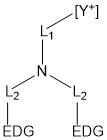
本文中所使用的術語“離子液體”,意指能夠經由將鹽熔化而產生且當如此產生時僅由離子構成之液體。離子液體可由包含一種陽離子及一種陰離子之同質物質形成,或其可由超過一種陽離子和/或超過一種陰離子構成。因此,離子液體可由超過一種陽離子及一種陰離子構成。離子液體可進一步由一種陽離子及超過一種陰離子構成。又進一步,離子液體可由超過一種陽離子及超過一種陰離子構成。The term "ionic liquid" as used herein means a liquid that can be produced by melting salts and is composed of only ions when so produced. The ionic liquid may be formed of a homogeneous substance containing a cation and an anion, or it may be composed of more than one cation and/or more than one anion. Therefore, ionic liquids can be composed of more than one cation and one anion. The ionic liquid may be further composed of one cation and more than one anion. Still further, the ionic liquid may be composed of more than one cation and more than one anion.
術語“離子液體”包括具有均高熔點之化合物及具有低熔點之化合物,如室溫或低於室溫。因此,許多離子液體具有低於200℃,特別是低於100℃、室溫附近(15至30℃)或甚至低於0℃之熔點。具有熔點低於約30℃之離子液體一般稱作“室溫離子液體”,通常是從具有含氮雜環陽離子之有機鹽類衍生而來。在室溫離子液體中,陽離子及陰離子之結構阻止有序結晶結構的形成,因此該鹽在室溫下是液態的。The term "ionic liquid" includes both compounds with a high melting point and compounds with a low melting point, such as room temperature or below room temperature. Therefore, many ionic liquids have melting points below 200°C, especially below 100°C, around room temperature (15 to 30°C), or even below 0°C. Ionic liquids with melting points below about 30°C are generally referred to as "room temperature ionic liquids" and are usually derived from organic salts with nitrogen-containing heterocyclic cations. In room temperature ionic liquids, the structure of cations and anions prevents the formation of ordered crystalline structures, so the salt is liquid at room temperature.
離子液體最廣為人知的是作為溶劑。許多離子液體已顯示出具有可忽略蒸氣壓、溫度安定性、低可燃性及可回收再利用性。由於可獲得大量的陰離子/陽離子之組合,所以能夠微調離子液體之物理特性(如,熔點、密度、黏度及與水或有機溶劑之可溶混性),以便符合特別應用之要求。Ionic liquids are best known as solvents. Many ionic liquids have been shown to have negligible vapor pressure, temperature stability, low flammability, and recyclability. Since a large number of anion/cation combinations are available, it is possible to fine-tune the physical properties of ionic liquids (eg, melting point, density, viscosity, and miscibility with water or organic solvents) to meet the requirements of special applications.
通常,當從如礦石或廢材之來源萃取稀土金屬時,所產生的產物是溶解於酸性水溶液中之稀土金屬的混合物。在根據本發明之方法中,可直接從含水酸性進料中選擇性地萃取出稀土金屬,萃取前不需對該進料施予大量的加工。Generally, when rare earth metals are extracted from sources such as ore or scrap, the resulting product is a mixture of rare earth metals dissolved in an acidic aqueous solution. In the method according to the invention, the rare earth metals can be selectively extracted directly from the aqueous acidic feed, without extensive processing of the feed before extraction.
可理解的是,為了在與該酸性溶液接觸時形成水相及非水相,該包含離子液體之組成物應具有足夠的疏水性,以便使該水相與該組成物之間發生相分離。Understandably, in order to form an aqueous phase and a non-aqueous phase upon contact with the acidic solution, the composition containing the ionic liquid should have sufficient hydrophobicity so that phase separation occurs between the aqueous phase and the composition.
經由使用包含本文所定義的離子液體之組成物,令人驚訝地發現,在從酸性溶液中萃取稀土金屬時,可獲得提高的選擇性及萃取率。高萃取率(由分配率表示)與選擇性(由分離因數表示)之結合,是商業有效分離製程之關鍵,因為可在不犧牲純度之情況下,減少產生產物時所必須的分離階段數。例如,根據本發明之方法,可在單次接觸下,以超過1000:1之選擇性(分離因數)分離鏑與釹之混合物。此比表1中報告的已知系統大幅增加。Through the use of a composition comprising an ionic liquid as defined herein, it was surprisingly found that when extracting rare earth metals from acidic solutions, improved selectivity and extraction efficiency can be obtained. The combination of high extraction rate (represented by partition rate) and selectivity (represented by separation factor) is the key to a commercially effective separation process, because the number of separation stages necessary to produce the product can be reduced without sacrificing purity. For example, according to the method of the present invention, a mixture of dysprosium and neodymium can be separated in a single contact with a selectivity (separation factor) exceeding 1000:1. This is a significant increase from the known systems reported in Table 1.
不欲受任何特定理論之約束,但一般認為離子液體中中心氮供體原子的存在,允許因鑭系收縮導致的離子半徑不同,而對不同的稀土金屬產生不同的結合強度。如此,某些稀土金屬會優先被疏水性離子液體萃取劑結合,產生有效的稀土金屬族內分離。據信,此可變氮結合作為離子液體的一部分之排列,提供了本文所述之特別有效的稀土金屬萃取。雖係如此,應可理解,包含氮供體之離子液體雖然可區分不同的稀土金屬,但為了提供足夠的萃取率,必須具有額外附加的推電子基團。Without wishing to be bound by any particular theory, it is generally believed that the presence of the central nitrogen donor atom in the ionic liquid allows different ionic radii due to lanthanide contraction and produces different bonding strengths for different rare earth metals. In this way, certain rare earth metals will be preferentially bound by the hydrophobic ionic liquid extractant, resulting in effective separation of rare earth metals within the family. It is believed that this arrangement of variable nitrogen incorporation as part of the ionic liquid provides particularly effective extraction of rare earth metals as described herein. Despite this, it should be understood that although the ionic liquid containing a nitrogen donor can distinguish between different rare earth metals, in order to provide a sufficient extraction rate, it must have additional electron-pushing groups.
該稀土金屬一旦被萃入該離子液體中,則可從該非水相中回收該稀土金屬。此回收可使用任何適合的方式進行,然而較佳的是用酸性反萃溶液反萃,從該非水相中回收該稀土金屬。此獲得包含該回收的稀土金屬之酸性反萃溶液。Once the rare earth metal is extracted into the ionic liquid, the rare earth metal can be recovered from the non-aqueous phase. This recovery can be carried out in any suitable manner, however, it is preferable to back-extract with acidic stripping solution to recover the rare earth metal from the non-aqueous phase. This obtains an acidic stripping solution containing the recovered rare earth metal.
可以理解的是,該酸性反萃溶液可為任何能使稀土金屬從離子液體中釋出之酸性溶液。在大部分的實施例中,該酸性反萃溶液為酸性反萃水溶液,且在與離子液體接觸時,該酸大部分保留在水相中。較佳地,該酸性反萃溶液包含鹽酸或硝酸水溶液。It can be understood that the acidic stripping solution can be any acidic solution that can release the rare earth metal from the ionic liquid. In most embodiments, the acidic stripping solution is an acidic stripping aqueous solution, and when in contact with the ionic liquid, the acid remains mostly in the aqueous phase. Preferably, the acidic stripping solution contains hydrochloric acid or nitric acid aqueous solution.
稀土金屬之反萃可以任何適合的方式進行。較佳地,使離子液體與酸性反萃溶液接觸,進行2或更多個反萃周期,以完全地反萃出該稀土金屬,更佳地使用2或3個反萃周期。在一些實施例中,可使用單一次反萃周期。本文所指的“反萃周期”通常包含使該酸性反萃溶液與該組成物接觸,平衡一段時間,例如5至30分鐘,然後分開水相與有機相。第二周期可經由使該組成物與另一實質上無稀土金屬之酸性反萃溶液接觸來進行。The back extraction of rare earth metals can be carried out in any suitable manner. Preferably, the ionic liquid is brought into contact with the acidic stripping solution and 2 or more stripping cycles are performed to completely strip the rare earth metal, and more preferably 2 or 3 stripping cycles are used. In some embodiments, a single stripping cycle may be used. The "back extraction cycle" referred to herein generally includes contacting the acidic back extraction solution with the composition, equilibrating for a period of time, such as 5 to 30 minutes, and then separating the aqueous phase from the organic phase. The second cycle may be performed by contacting the composition with another acidic stripping solution that is substantially free of rare earth metals.
本文所述有關第一態樣之離子液體萃取劑之一優點是,可在相對高pH下從離子液體中反萃出稀土金屬。此節省了從離子液體中反萃出稀土金屬所需的酸之數量及強度及處理此強酸所需設備相關的成本。此外,可在相對高pH下從離子液體中完全反萃出稀土金屬,至於許多已知的萃取劑如P507,其即使在低pH下,亦很難完全地反萃出重稀土金屬(如,Tm(III)、Yb(III)、Lu(III))。One of the advantages of the first aspect of the ionic liquid extractant described herein is that it can back-extract rare earth metals from ionic liquids at relatively high pH. This saves the amount and strength of the acid required to back-extract rare earth metals from the ionic liquid and the costs associated with the equipment required to process this strong acid. In addition, rare earth metals can be completely stripped from ionic liquids at relatively high pH. As for many known extractants such as P507, even at low pH, it is difficult to completely strip heavy rare earth metals (eg, Tm(III), Yb(III), Lu(III)).
因此,該酸性反萃溶液較佳地具有0或更高的pH。在較佳實施例中,該酸性反萃溶液具有1或更低的pH。Therefore, the acidic stripping solution preferably has a pH of 0 or higher. In a preferred embodiment, the acidic stripping solution has a pH of 1 or lower.
可利用下列,將包含回收的稀土金屬之酸性反萃溶液加工成稀土金屬: 使該包含回收的稀土金屬之酸性反萃溶液與草酸接觸,獲得稀土金屬草酸鹽;及 利用如煅燒,將該稀土金屬草酸鹽轉換成稀土金屬氧化物。The following can be used to process acidic stripping solutions containing recovered rare earth metals into rare earth metals: Contacting the acidic stripping solution containing the recovered rare earth metal with oxalic acid to obtain rare earth metal oxalate; and Using, for example, calcination, the rare earth metal oxalate is converted into rare earth metal oxide.
該包含回收的稀土金屬之酸性反萃溶液與草酸較佳地在室溫下接觸,如在15至30°C之溫度下。例如,該接觸可在沒有施予加熱或冷卻之情況下進行。The acidic stripping solution containing the recovered rare earth metal and oxalic acid are preferably contacted at room temperature, such as at a temperature of 15 to 30°C. For example, the contacting can be performed without applying heating or cooling.
該接觸較佳地在環境壓力(如,在將近100kPa之壓力)下進行。例如,該接觸可在沒有施予壓力之情況下進行。The contact is preferably performed under ambient pressure (eg, at a pressure of approximately 100 kPa). For example, the contact can be performed without applying pressure.
該包含回收的稀土金屬之酸性反萃溶液與該草酸較佳地經由例如攪拌混合。The acidic stripping solution containing the recovered rare earth metal and the oxalic acid are preferably mixed by, for example, stirring.
該草酸可在足以將該稀土金屬以稀土金屬草酸鹽之形式沉澱下來之數量使用,如與該稀土金屬相比莫耳過量之數量。本發明之方法較佳地包含在將其轉換成其氧化物形式之前,如利用過濾或其它已知的固-液分離技術,分離該酸性反萃溶液與沉澱的稀土金屬。可用如水洗滌該分離的固體。The oxalic acid can be used in an amount sufficient to precipitate the rare earth metal in the form of a rare earth metal oxalate, such as a molar excess compared to the rare earth metal. The method of the present invention preferably includes separating the acidic stripping solution from the precipitated rare earth metal, such as using filtration or other known solid-liquid separation techniques, before converting it to its oxide form. The separated solid can be washed with water, for example.
可在至少500°C,較佳地至少700°C及更佳地至少900°C之溫度下煅燒該稀土金屬草酸鹽。可在高達1500°C,較佳地高達1300°C及更佳地高達1100°C之溫度下煅燒該稀土金屬草酸鹽。因此,可在500至1500°C,較佳地700至1300°C及更佳地900至1100°C之溫度下煅燒該稀土金屬草酸鹽。The rare earth metal oxalate can be calcined at a temperature of at least 500°C, preferably at least 700°C and more preferably at least 900°C. The rare earth metal oxalate can be calcined at temperatures up to 1500°C, preferably up to 1300°C and more preferably up to 1100°C. Therefore, the rare earth metal oxalate can be calcined at a temperature of 500 to 1500°C, preferably 700 to 1300°C and more preferably 900 to 1100°C.
該煅燒較佳地在環境壓力下(如,在約100kPa之壓力下)進行。例如,該煅燒可在沒有施予壓力之情況下進行。The calcination is preferably performed at ambient pressure (eg, at a pressure of about 100 kPa). For example, the calcination can be performed without applying pressure.
煅燒可在氧環境或空氣中發生。Calcination can occur in an oxygen environment or in air.
選擇性地,可利用電沈積從該非水相中回收該稀土金屬。之後可將該電沈積的稀土金屬加工成稀土金屬氧化物,任擇地先轉換成氫氧化物或硝酸鹽。Alternatively, electrodeposition can be used to recover the rare earth metal from the non-aqueous phase. The electrodeposited rare earth metal can then be processed into a rare earth metal oxide, optionally converted to hydroxide or nitrate.
該稀土金屬氧化物通常具有式:M2 O3 ,其中M是稀土金屬。該稀土金屬氧化物通常是製成粉末形式。The rare earth metal oxide generally has the formula: M 2 O 3 , where M is a rare earth metal. The rare earth metal oxide is usually made in powder form.
稀土金屬氧化物形式具有安定的優點,使得稀土金屬除其它事項外能夠被貯存、運輸或使用。例如,可將稀土金屬氧化物進一步加工成氧化物衍生材料。稀土金屬氧化物之一用途是磁鐵。因此,本發明之方法可進一步包含將該稀土金屬氧化物加工成磁鐵。在該稀土金屬之來源亦為磁鐵之實施例中,本發明之方法因此代表一個完全回收再利用之方法。The rare earth metal oxide form has the advantage of stability, so that the rare earth metal can be stored, transported or used, among other things. For example, rare earth metal oxides can be further processed into oxide-derived materials. One use of rare earth metal oxides is magnets. Therefore, the method of the present invention may further include processing the rare earth metal oxide into a magnet. In the embodiment where the source of the rare earth metal is also a magnet, the method of the present invention therefore represents a completely recycled method.
在某些情況下,可能需要提供稀土金屬草酸鹽而不是稀土金屬氧化物。因此,本發明可提供一種用於從一或多種稀土金屬之混合物製備稀土金屬草酸鹽之方法,該方法包含:使該稀土金屬之酸性溶液與包含離子液體之組成物接觸(如本文所述的),形成一水相及該稀土金屬已被選擇地萃入其中之一非水相;從該非水相中回收(如本文所述的)該稀土金屬;及將該回收的稀土金屬加工(如本文所述的)成稀土金屬草酸鹽。In some cases, it may be necessary to provide rare earth metal oxalate instead of rare earth metal oxide. Therefore, the present invention can provide a method for preparing a rare earth metal oxalate from a mixture of one or more rare earth metals, the method comprising: contacting an acidic solution of the rare earth metal with a composition containing an ionic liquid (as described herein) ), forming an aqueous phase and the rare earth metal has been selectively extracted into one of the non-aqueous phases; recovering (as described herein) the rare earth metal from the non-aqueous phase; and processing the recovered rare earth metal ( As described herein) into rare earth metal oxalate.
在較佳實施例中,該方法包含從二或多種稀土金屬之混合物中萃取出稀土金屬。較佳地,該酸性溶液包含一第一及一第二稀土金屬,且該方法包含: (a) 優先將該第一稀土金屬分配進入該非水相中,從該非水相中回收該第一稀土金屬及將該回收的第一稀土金屬加工成稀土金屬氧化物。In a preferred embodiment, the method includes extracting rare earth metals from a mixture of two or more rare earth metals. Preferably, the acidic solution includes a first and a second rare earth metal, and the method includes: (a) Preferentially allocate the first rare earth metal into the non-aqueous phase, recover the first rare earth metal from the non-aqueous phase and process the recovered first rare earth metal into a rare earth metal oxide.
可理解的是,該回收及加工步驟較佳地如上文所述。Understandably, the recovery and processing steps are preferably as described above.
較佳地,該方法進一步包含,在步驟(a)中,從該酸性溶液分離出該非水相;及 (b)使排空該第一稀土金屬之酸性溶液與包含離子液體之組成物接觸,及任擇地從其中回收該第二稀土金屬。Preferably, the method further comprises, in step (a), separating the non-aqueous phase from the acidic solution; and (b) contacting the acid solution that evacuates the first rare earth metal with a composition containing an ionic liquid, and optionally recovering the second rare earth metal therefrom.
該方法較佳地包含從該非水相中回收該第二稀土金屬及將該回收的第二稀土金屬加工成稀土金屬氧化物。該回收及加工步驟較佳地如上文所述的進行。The method preferably includes recovering the second rare earth metal from the non-aqueous phase and processing the recovered second rare earth metal into a rare earth metal oxide. The recovery and processing steps are preferably carried out as described above.
在一些較佳實施例中,在步驟(a)中從該非水相中回收該第一稀土金屬,且回收再利用該非水相並作為步驟(b)中之組成物。In some preferred embodiments, the first rare earth metal is recovered from the non-aqueous phase in step (a), and the non-aqueous phase is recovered and reused as the composition in step (b).
可理解的是,因為對特定稀土金屬之萃取率(分配因數)會隨著pH而改變,所以較佳的可在不同pH位準下萃取不同的稀土金屬。例如,該酸性溶液在步驟(a)中可具有比在步驟(b)中低的pH。較佳地,該酸性溶液在步驟(a)中具有低於3.5的pH,而該酸性溶液在步驟(b)中具有高於3.5之pH。通常,在一特定pH下會進行2或3個萃取周期。雖然以上實施例描述僅在二種不同的pH值下萃取,但可理解的是,稀土金屬之分離通常是在一系列pH值範圍內進行,逐漸增加pH及多個萃取步驟。例如,當分離三或更多種稀土金屬時,可在一特定pH範圍內,例如從pH 1至4,進行數個分離步驟。Understandably, because the extraction rate (partition factor) of a particular rare earth metal will change with pH, it is better to extract different rare earth metals at different pH levels. For example, the acidic solution may have a lower pH in step (a) than in step (b). Preferably, the acidic solution has a pH lower than 3.5 in step (a), and the acidic solution has a pH higher than 3.5 in step (b). Usually, 2 or 3 extraction cycles are performed at a specific pH. Although the above examples describe extraction at only two different pH values, it is understandable that the separation of rare earth metals is usually carried out within a range of pH values, gradually increasing the pH and multiple extraction steps. For example, when separating three or more rare earth metals, several separation steps can be performed in a specific pH range, for example from
從其中萃取出稀土金屬之酸性溶液,可具有任何適合的pH。較佳地在超過1之pH下,更佳地2至4之pH下萃取該稀土金屬。The acidic solution from which rare earth metals are extracted can have any suitable pH. The rare earth metal is preferably extracted at a pH exceeding 1, more preferably at a pH of 2 to 4.
該稀土金屬之酸性溶液的pH位準,可以熟悉此技藝之人士所熟知之任何適合的方法調整。例如,可藉由添加酸清除劑,如包括碳酸鈉、碳酸氫鈉、氨、CO2 、胺類或醇類之弱鹼溶液,改變該酸性溶液的pH位準。The pH level of the acid solution of the rare earth metal can be adjusted by any suitable method known to those skilled in the art. For example, the pH level of the acidic solution can be changed by adding an acid scavenger, such as a weak alkaline solution including sodium carbonate, sodium bicarbonate, ammonia, CO 2 , amines or alcohols.
以上實施例是指在不同的pH位準下,直接從稀土金屬之酸性溶液中分離一特定稀土金屬與另一個。然而,可理解的是,可使用任何適合的萃取順序來分離稀土金屬。例如,可在較高pH下,從該酸性溶液中將二或多種稀土金屬同時萃取至非水相中,接著用具有較低pH之酸性溶液逆萃取(back-extraction)該非水相,分離個別的稀土金屬。因此,可使用包含該離子液體之組成物,先從該酸性溶液中萃取出存在該酸性溶液中之全部或僅某些稀土金屬。The above embodiment refers to the separation of a specific rare earth metal and another directly from the acid solution of the rare earth metal at different pH levels. However, it is understandable that any suitable extraction sequence can be used to separate the rare earth metals. For example, two or more rare earth metals can be simultaneously extracted into the non-aqueous phase from the acidic solution at a higher pH, and then the non-aqueous phase can be back-extracted with an acidic solution having a lower pH to separate the individual Of rare earth metals. Therefore, a composition containing the ionic liquid may be used to first extract all or only some rare earth metals present in the acidic solution from the acidic solution.
可理解的是,某些稀土金屬對之分離特別重要,因其等同時從有用的廢材中回收。例如,Nd與Dy廣泛用於許多應用如硬碟、MRI掃描器、電動機及發電機之永久磁鐵。La與Eu亦是很重要的配對,因其等常用於燈磷光體,其它磷光體包括Y與Eu (YOX磷光體);La、Ce與Tb (LAP磷光體);Gd、Ce與Tb (CBT磷光體);及Ce、Tb (CAT磷光體)。Understandably, certain rare earth metals are particularly important for their separation, as they are also recovered from useful waste materials. For example, Nd and Dy are widely used in permanent magnets for many applications such as hard drives, MRI scanners, motors and generators. La and Eu are also very important pairs, because they are commonly used in lamp phosphors. Other phosphors include Y and Eu (YOX phosphor); La, Ce and Tb (LAP phosphor); Gd, Ce and Tb (CBT Phosphor); and Ce, Tb (CAT phosphor).
因此,在較佳實施例中,該第一稀土金屬是鏑,而該第二稀土金屬是釹。在其它較佳實施例中,該第一稀土金屬是銪,而該第二稀土金屬是鑭。在又其它較佳實施例中,該第一稀土金屬是鋱,而該第二稀土金屬是鈰。Therefore, in a preferred embodiment, the first rare earth metal is dysprosium, and the second rare earth metal is neodymium. In other preferred embodiments, the first rare earth metal is europium, and the second rare earth metal is lanthanum. In still other preferred embodiments, the first rare earth metal is lanthanum, and the second rare earth metal is cerium.
該組成物可以任何適合在該水相與非水相之間達到稀土金屬交換之方法及比例與該酸性溶液接觸。The composition can be contacted with the acidic solution in any method and ratio suitable for achieving rare earth metal exchange between the aqueous phase and the non-aqueous phase.
該組成物較佳地以從0.5:1至2:1,較佳地0.7:1至1.5:1,更佳地0.8:1至1.2:1,例如1:1之體積比添加至該酸性溶液中。雖係如此,可理解的是,該體積比會隨著該酸性溶液與該包含離子液體之組成物之接觸方式而改變。The composition is preferably added to the acidic solution in a volume ratio from 0.5:1 to 2:1, preferably 0.7:1 to 1.5:1, more preferably 0.8:1 to 1.2:1, for example 1:1 in. Nonetheless, it is understandable that the volume ratio will vary with the way the acidic solution contacts the composition containing the ionic liquid.
較佳地,在使該組成物與稀土金屬之酸性溶液接觸之前,先用具有與該稀土金屬之酸性溶液相同的pH之酸性溶液平衡該組成物。如此,該組成物與該酸性溶液之混合物在萃取期間大致上維持在所需的pH位準下。Preferably, before contacting the composition with the acid solution of the rare earth metal, the composition is balanced with an acid solution having the same pH as the acid solution of the rare earth metal. As such, the mixture of the composition and the acidic solution is maintained substantially at the desired pH level during extraction.
可在任何適合萃取稀土金屬之條件下,使該組成物與該稀土金屬之酸性溶液接觸。The composition can be brought into contact with the acidic solution of the rare earth metal under any conditions suitable for the extraction of rare earth metals.
可理解的是,在使該酸性溶液與該包含離子液體之組成物接觸期間所使用的溫度,可為任何適合的溫度,且可根據該包含離子液體之組成物的黏度而改變。例如,當使用較高黏度的組成物時,可能需要較高的溫度,以便獲得最好的結果。Understandably, the temperature used during contacting the acidic solution with the ionic liquid-containing composition may be any suitable temperature, and may vary according to the viscosity of the ionic liquid-containing composition. For example, when using higher viscosity compositions, higher temperatures may be required in order to obtain the best results.
在一實施例中,在環境溫度下,即沒有外部加熱或冷卻下,使該酸性溶液與該組成物接觸。僅管如此,但可理解的是,萃取期間溫度可能因該組成物與該酸性溶液之接觸而自然地發生變化。In one embodiment, the acidic solution is brought into contact with the composition at ambient temperature, ie without external heating or cooling. Notwithstanding this, it is understandable that the temperature during extraction may naturally change due to the contact of the composition with the acidic solution.
可使該組成物與該稀土金屬之酸性溶液接觸任一適合幫助將該稀土金屬萃入非水相之時間長度。較佳地,該時間長度是使達到平衡且稀土金屬在水相與非水相中之比例達到恆定之長度。在較佳實施例中,該方法包含使該稀土金屬之酸性溶液與該組成物接觸1至40分鐘,較佳地5至30分鐘。The composition can be contacted with the acidic solution of the rare earth metal for any length of time suitable to help extract the rare earth metal into the non-aqueous phase. Preferably, the length of time is such that equilibrium is reached and the ratio of rare earth metals in the aqueous phase to the non-aqueous phase is constant. In a preferred embodiment, the method includes contacting the acidic solution of the rare earth metal with the composition for 1 to 40 minutes, preferably 5 to 30 minutes.
較佳地,該方法包含接觸及物理性混合該稀土金屬之酸性溶液與該組成物。此混合通常可加速稀土金屬的萃取。任何適合的裝置均可用於達成此目的,且混合裝置是業界熟知的。例如,可使用攪動器(agitator)或攪拌器(stirrer)混合該混合物。混合裝置可包含專門設計用於多相混合的儀器,如高剪力設備。選擇性地,混合可包含搖動該混合物,例如,使用腕式振盪器。Preferably, the method includes contacting and physically mixing the acid solution of the rare earth metal and the composition. This mixing usually accelerates the extraction of rare earth metals. Any suitable device can be used for this purpose, and mixing devices are well known in the industry. For example, the mixture can be mixed using an agitator or stirrer. The mixing device may contain instruments specifically designed for multiphase mixing, such as high-shear devices. Alternatively, mixing may include shaking the mixture, for example, using a wrist shaker.
水相與非水相之分離,可經由任何適合的方法進行,例如,使用小型裝置,如分液漏斗或Craig裝置。可理解的是,在分離之前,按理應先沈降。沈降可在重力下,或較佳地使用額外的儀器,如離心機。選擇性地,可使用會接觸及分離相二者之儀器分離水相與非水相,例如離心型萃取機、脈衝柱或組合式混合器-沈降器。The separation of the aqueous phase and the non-aqueous phase can be carried out by any suitable method, for example, using a small device such as a separating funnel or a Craig device. Understandably, before separation, it is reasonable to settle first. The settling can be under gravity, or preferably using additional equipment, such as a centrifuge. Alternatively, instruments that contact both and separate phases can be used to separate the aqueous and non-aqueous phases, such as centrifugal extractors, pulse columns, or combined mixer-settlers.
可理解的是,為了萃取或分離一些稀土金屬,可進行多次萃取及分離。此可能涉及用該組成物多次萃取稀土金屬之酸性溶液,但亦可能涉及用酸性水溶液多次逆萃取該非水相。由於該離子液體萃取劑提供比先前系統常見的高的分離因素及分配率,所以本發明之方法需要的步驟較少。Understandably, in order to extract or separate some rare earth metals, multiple extractions and separations can be performed. This may involve multiple extractions of the acidic solution of rare earth metals with the composition, but it may also involve multiple back-extractions of the non-aqueous phase with an acidic aqueous solution. Since the ionic liquid extractant provides higher separation factors and distribution rates than are common in previous systems, the method of the present invention requires fewer steps.
本文中所使用的術語推電子基團(EDG),應理解成包括任何具有能與拉電子基形成配位鍵之電子對之基團。特別是,應可理解本文所定義的推電子基團,意指具有能與稀土金屬配位形成金屬-配位基錯合物之可用電子對之基團。亦應理解,EDGs通常具有單一個由其供給電子以形成鍵結之原子。然而,電子可由原子之間的一或多個鍵交替地供給,即EDG可代表具有哈普托數(hapticity)為2或以上之配位基。The term electron pushing group (EDG) as used herein should be understood to include any group having an electron pair capable of forming a coordinate bond with an electron-withdrawing group. In particular, it should be understood that an electron-withdrawing group as defined herein means a group having an available electron pair that can coordinate with a rare earth metal to form a metal-coordination complex. It should also be understood that EDGs generally have a single atom from which electrons are supplied to form bonds. However, electrons can be alternately supplied by one or more bonds between atoms, that is, EDG can represent a ligand having a Hapto number of 2 or more.
可理解的是,EDG與連接基團L2 之排列將使得該EDG與中心氮能夠同時與稀土金屬配位。It is understandable that the arrangement of the EDG and the linking group L 2 will enable the EDG and the central nitrogen to coordinate with the rare earth metal at the same time.
較佳地,當連接L1 至各L2 之氮與一個EDG均配位至金屬時,由該氮、L2 、該EDG及該金屬形成的環是5或6員環,較佳地5員環。Preferably, when the nitrogen connecting L 1 to each L 2 and an EDG are coordinated to the metal, the ring formed by the nitrogen, L 2 , the EDG and the metal is a 5 or 6 member ring, preferably 5 Member ring.
在較佳實施例中,[Y+ ]代表選自下列之非環狀陽離子: [–N(Ra )(Rb )(Rc )]+ 、[–P(Ra )(Rb )(Rc )]+ 及[–S(Ra )(Rb )]+ , 其中:Ra 、Rb 及Rc 各獨立地選自任擇地取代的C1-30 烷基、C3-8 環烷基及C6-10 芳基基團。In a preferred embodiment, [Y + ] represents an acyclic cation selected from the following: [–N(R a )(R b )(R c )] + , [–P(R a )(R b ) (R c )] + and [–S(R a )(R b )] + , wherein: R a , R b and R c are each independently selected from optionally substituted C 1-30 alkyl, C 3 -8 cycloalkyl and C 6-10 aryl groups.
在其它較佳實施例中,[Y+
]代表選自下列之環狀陽離子: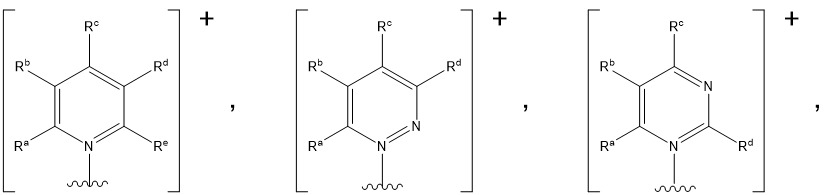
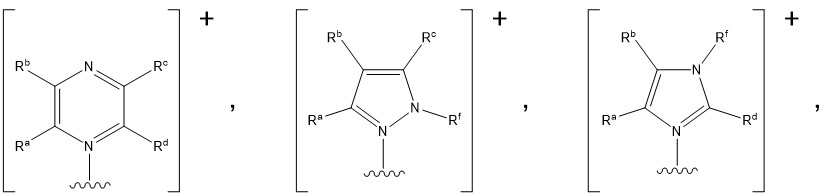
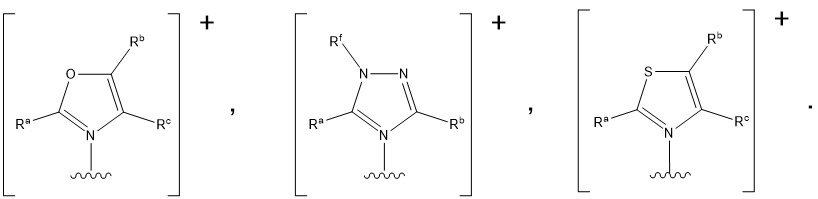
適當地,在較佳實施例中,Ra 、Rb 、Rc 、Rd 、Re 及Rf 中之至少一個是經–O2 Rx 、–OC(O)Rx 、–CS2 Rx 、–SC(S)Rx 、–S(O)ORx 、–OS(O)Rx 、–NRx C(O)NRy Rz 、–NRx C(O)ORy 、–OC(O)NRy Rz 、–NRx C(S)ORy 、–OC(S)NRy Rz 、–NRx C(S)SRy 、–SC(S)NRy Rz 、–NRx C(S)NRy Rz 、–C(O)NRy Rz 、–C(S)NRy Rz 取代的C1-5 烷基基團,其中Rx 、Ry 及Rz 獨立地選自氫或C1-6 烷基。Suitably, in the preferred embodiment, R a, R b, R c, R d, R e , and in R f is at least one via -O 2 R x, -OC (O ) R x, -CS 2 R x , –SC(S)R x , –S(O)OR x , –OS(O)R x , –NR x C(O)NR y R z , –NR x C(O)OR y , – OC(O)NR y R z , –NR x C(S)OR y , –OC(S)NR y R z , –NR x C(S)SR y , –SC(S)NR y R z , – C 1-5 alkyl groups substituted by NR x C(S)NR y R z , -C(O)NR y R z , -C(S)NR y R z , where R x , R y and R z Independently selected from hydrogen or C 1-6 alkyl.
在本發明之另一較佳實施例中,[Y+ ]代表選自下列之飽和雜環陽離子:環狀銨、1,4-二氮雜二環[2.2.2]辛烷鎓、𠰌啉鎓、環狀鏻、哌𠯤鎓、哌啶鎓、奎寧環鎓及環狀鋶。In another preferred embodiment of the present invention, [Y + ] represents a saturated heterocyclic cation selected from the group consisting of cyclic ammonium, 1,4-diazabicyclo[2.2.2]octanium, 𠰌olin Onium, cyclic phosphonium, piperonium, piperidinium, quinine cyclic onium and cyclic manganese.
較佳地,[Y+
]代表具有下式之飽和雜環陽離子: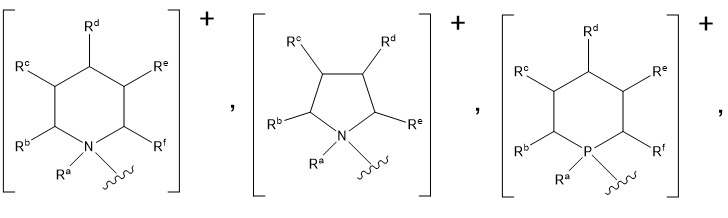
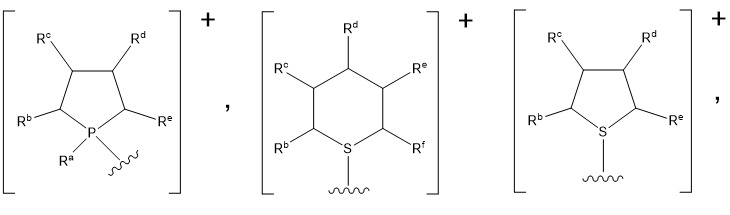
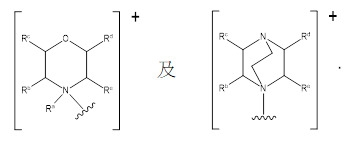
較佳地,Ra 、Rb 、Rc 、Rd 、Re 及Rf 中至少一個是經CO2 Rx , –C(O)NRy Rz 取代的C1-3 烷基基團,其中Rx 、Ry 及Rz 各獨立地選自C3-6 烷基。 Preferably, R a, R b, R c, R d, R e , and in R f is at least by a CO 2 R x, -C (O ) NR y R z is substituted with a C 1-3 alkoxy group , Wherein R x , R y and R z are each independently selected from C 3-6 alkyl.
更佳地,Ra
、Rb
、Rc
、Rd
、Re
及Rf
中至少一個代表選自下列之基團: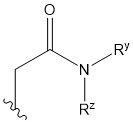

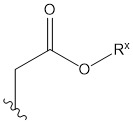
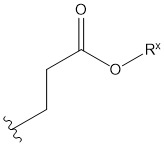
又更佳地,Ra
、Rb
、Rc
、Rd
、Re
及Rf
中至少一個代表選自下列之基團:
在較佳實施例中,Ra 、Rb 、Rc 、Rd 、Re 及Rf 中之一個是取代的C1-5 烷基基團,而Ra 、Rb 、Rc 、Rd 、Re 及Rf 中剩餘的部分獨立地選自H及未取代的C1-5 烷基基團,較佳地Ra 、Rb 、Rc 、Rd 、Re 及Rf 中剩餘的部分是H。In a preferred embodiment, R a, R b, R c, R d, R e , and in R f is a substituent of the C 1-5 alkyl group, and R a, R b, R c , R d, R e, and the remaining part in R f is independently selected from H and unsubstituted C 1-5 alkyl group, preferably R a, R b, R c , R d, R e , and in R f The rest is H.
較佳地,[Y+
]代表選自下列之環狀陽離子:

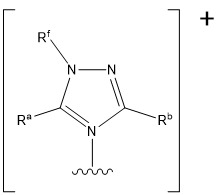
在較佳實施例中,L1 代表選自C1-10 烷二基及C1-10 烯二基基團,更佳地選自C1-5 烷二基及C2-5 烯二基基團及最佳地選自C1-5 烷二基基團之連接基團,例如選自–CH2 –、–C2 H4 –及–C3 H6 –之連接基團。In the preferred embodiment, L 1 represents a group selected C 1-10 alkanediyl group, and two C 1-10 alkenyl group, more preferably selected from the C 1-5 alkanediyl group and C 2-5 alkenediyl The group and the linking group optimally selected from C 1-5 alkanediyl groups, for example, the linking group selected from —CH 2 —, —C 2 H 4 — and —C 3 H 6 —.
在較佳實施例中,各L2 代表獨立地選自C1-2 烷二基及C2 烯二基基團,較佳地選自C1-2 烷二基,例如獨立地選自–CH2 –及–C2 H4 –之連接基團。In a preferred embodiment, each L 2 represents a group independently selected from C 1-2 alkanediyl and C 2 alkenediyl groups, preferably from a C 1-2 alkanediyl group, for example independently selected from − The connecting group of CH 2 -and -C 2 H 4 -.
各EDG可為任何能夠與稀土金屬形成配位鍵而形成金屬-配位基錯合物之適合的推電子基團。Each EDG may be any suitable electron-withdrawing group capable of forming a coordination bond with a rare earth metal to form a metal-coordination complex.
較佳地,各EDG代表獨立地選自下列之推電子基團: –CO2 Rx 、–OC(O)Rx 、–CS2 Rx 、–SC(S)Rx 、–S(O)ORx 、–OS(O)Rx 、–NRx C(O)NRy Rz 、–NRx C(O)ORy 、–OC(O)NRy Rz 、–NRx C(S)ORy 、–OC(S)NRy Rz 、–NRx C(S)SRy 、–SC(S)NRy Rz 、–NRx C(S)NRy Rz 、–C(O)NRy Rz 、–C(S)NRy Rz ,其中Rx 、Ry 及Rz 獨立地選自H或C1-6 烷基。更佳地,各EDG代表獨立地選自下列之推電子基團:–CO2 Rx 及–C(O)NRy Rz ,其中Rx 、Ry 及Rz 各獨立地選自C3-6 烷基。Preferably, each EDG represents an electron-pushing group independently selected from the following: -CO 2 R x , -OC(O)R x , -CS 2 R x , -SC(S)R x , -S(O )OR x , --OS(O)R x , --NR x C(O)NR y R z , --NR x C(O)OR y , --OC(O)NR y R z , --NR x C(S ) OR y , –OC(S)NR y R z , –NR x C(S)SR y , –SC(S)NR y R z , –NR x C(S)NR y R z , –C(O ) NR y R z , -C(S)NR y R z , wherein R x , R y and R z are independently selected from H or C 1-6 alkyl. More preferably, each EDG represents an electron-pushing group independently selected from the following: -CO 2 R x and -C(O)NR y R z , where R x , R y and R z are each independently selected from C 3 -6 alkyl.
在較佳實施例中,各–L2
–EDG代表獨立地選自下列之推電子基團:
更佳地,各–L2
–EDG代表獨立地選自下列之推電子基團:
應可理解,如上文中所詳述的,稀土金屬的萃取是經由該離子液體之陽離子的特定功能所提供。因此,任何適合的陰離子物種[X− ]均可用作為本文所述的離子液體的一部分。It should be understood that, as detailed above, the extraction of rare earth metals is provided by the specific function of the cation of the ionic liquid. Therefore, any suitable anionic species [X − ] can be used as part of the ionic liquid described herein.
較佳地,[X- ]代表一或多種選自下列之陰離子物種:氫氧根、鹵根離子、全鹵根離子、擬鹵根離子、硫酸根、亞硫酸根、磺酸根、磺醯亞胺、磷酸根、亞磷酸根、膦酸根、亞膦酸根、甲基化物、硼酸根、羧酸根、唑酸根、碳酸根、胺基甲酸根、硫代磷酸根、硫代羧酸根、硫代胺基甲酸根、硫代碳酸根、黃原酸根、硫代磺酸根、硫代硫酸根、硝酸根、亞硝酸根、四氟硼酸根、六氟磷酸根及過氯酸根、鹵素金屬酸根、胺基酸、硼酸根、聚氟烷氧鋁酸根。Preferably, [X -] represents one or more anion species selected from the group of: hydroxide, halide ion, a halide ion whole, to be halide, sulfate, sulfite, sulfonate, alkylene sulfonylurea Amine, phosphate, phosphite, phosphonate, phosphonite, methylate, borate, carboxylate, oxazolate, carbonate, carbamate, thiophosphate, thiocarboxylate, thioamine Carbamate, thiocarbonate, xanthate, thiosulfonate, thiosulfate, nitrate, nitrite, tetrafluoroborate, hexafluorophosphate and perchlorate, halogen metal acid, amine Acid, borate, polyfluoroalkoxyaluminate.
例如,[X- ]較佳地代表一或多種選自下列之陰離子物種: a) 選自下列之鹵根陰離子:F- 、Cl- 、Br- 、I- ; b) 選自下列之全鹵根陰離子:[I3 ]- 、[I2 Br]- 、[IBr2 ]- 、[Br3 ]- 、[Br2 C]- 、[BrCl2 ]- 、[ICl2 ]- 、[I2 Cl]- 、[Cl3 ]- ; c) 選自下列之擬鹵根陰離子:[N3 ]- 、[NCS]- 、[NCSe]- 、[NCO]- 、[CN]- ; d) 選自下列之硫酸根陰離子:[HSO4 ]- 、[SO4 ]2- 、[R2 OSO2 O]- ; e) 選自下列之亞硫酸根陰離子:[HSO3 ]- 、[SO3 ]2- 、[R2 OSO2 ]- ; f) 選自下列之磺酸根陰離子:[R1 SO2 O]- ; g) 選自下列之磺醯亞胺陰離子:[(R1 SO2 )2 N]- ; h) 選自下列之磷酸根陰離子:[H2 PO4 ]- 、[HPO4 ]2- 、[PO4 ]3- 、[R2 OPO3 ]2- 、[(R2 O)2 PO2 ]- ; i) 選自下列之亞磷酸根陰離子:[H2 PO3 ]- 、[HPO3 ]2- 、[R2 OPO2 ]2- 、[(R2 O)2 PO]- ; j) 選自下列之膦酸根陰離子:[R1 PO3 ]2- 、[R1 P(O)(OR2 )O]- ; k) 選自下列之亞膦酸根陰離子:[R1 R2 P(O)O]- ; l) 選自下列之甲基化陰離子:[(R1 SO2 )3 C]- ; m) 選自下列之硼酸根陰離子:[雙草酸硼酸根]、[雙丙二酸硼酸根]、四[3,5-雙(三氟甲基)苯基]硼酸根、四(五氟苯基)硼酸根; n) 選自下列之羧酸根陰離子:[R2 CO2 ]- ; o) 選自下列之唑酸根陰離子:[3,5-二硝基-1,2,4-三唑酸根]、[4-硝基-1,2,3-三唑酸根]、[2,4-二硝基咪唑酸根]、[4,5-二硝基咪唑酸根]、[4,5-二氰基-咪唑酸根]、[4-硝基咪唑酸根]、[四唑酸根]; p) 選自下列之含硫陰離子:硫代碳酸根(如,[R2 OCS2 ]- )、硫代胺基甲酸根(如,[R2 2 NCS2 ]- )、硫代羧酸根(如,[R1 CS2 ]- )、硫代磷酸根(如,[(R2 O)2 PS2 ]- )、硫代磺酸根(如,[RS(O)2 S]- )、硫代硫酸根(如,[ROS(O)2 S]- ); q) 硝酸根([NO3 ]- )或亞硝酸根([NO2 ]- )陰離子; r) 四氟硼酸根([BF4 - ])、六氟磷酸根([PF6 - ])、六氟銻酸根([SbF6 - ])或過氯酸根([ClO4 - ])陰離子; s) 選自下列之碳酸根陰離子:[CO3 ]2- 、[HCO3 ]- 、[R2 CO3 ]‑ ;較佳地[MeCO3 ]‑ ; t) 選自下列之聚氟烷氧鋁酸根陰離子:[Al(ORF )4 - ],其中RF 是選自經一或多個氟基團取代的C1-6 烷基; 其中:R1 及R2 獨立地選自由下列所構成之基團:C1 -C10 烷基、C6 芳基、C1 -C10 烷基(C6 )芳基及C6 芳基(C1 -C10 )烷基,其各可被一或多個選自下列之基團取代:氟基、氯基、溴基、碘基、C1 至C6 烷氧基、C2 至C12 烷氧烷氧基、C3 至C8 環烷基、C6 至C10 芳基、C7 至C10 烷芳基、C7 至C10 芳烷基、‑CN、‑OH、‑SH、‑NO2 、‑CO2 Rx 、‑OC(O)Rx 、‑C(O)Rx 、‑C(S)Rx 、‑CS2 Rx 、‑SC(S)Rx 、‑S(O)(C1 至C6 )烷基、‑S(O)O(C1 至C6 )烷基、‑OS(O)(C1 至C6 )烷基、‑S(C1 至C6 )烷基、‑S‑S(C1 至C6 烷基)、‑NRx C(O)NRy Rz 、‑NRx C(O)ORy 、‑OC(O)NRy Rz 、‑NRx C(S)ORy 、‑OC(S)NRy Rz 、‑NRx C(S)SRy 、‑SC(S)NRy Rz 、‑NRx C(S)NRy Rz 、‑C(O)NRy Rz 、‑C(S)NRy Rz 、‑NRy Rz 或雜環基團,其中Rx 、Ry 及Rz 獨立地選自氫或C1 至C6 烷基,其中R1 亦可為氟、氯、溴或碘。For example, [X -] preferably represents one or more anion species selected from the following: a) a halogen anion selected from the following: F -, Cl -, Br -, I -; b) a halogen selected from the whole of the following Root anions: [I 3 ] - , [I 2 Br] - , [IBr 2 ] - , [Br 3 ] - , [Br 2 C] - , [BrCl 2 ] - , [ICl 2 ] - , [I 2 Cl] - , [Cl 3 ] - ; c) Pseudohalide anions selected from the following: [N 3 ] - , [NCS] - , [NCSe] - , [NCO] - , [CN] - ; d) Sulfate anions from the following: [HSO 4 ] - , [SO 4 ] 2- , [R 2 OSO 2 O] - ; e) Sulfite anions selected from the following: [HSO 3 ] - , [SO 3 ] 2- , [R 2 OSO 2 ] - ; f) a sulfonate anion selected from the following: [R 1 SO 2 O] - ; g) a sulfonimide anion selected from the following: [(R 1 SO 2 ) 2 N] - ; h) a phosphate anion selected from the following: [H 2 PO 4 ] - , [HPO 4 ] 2- , [PO 4 ] 3- , [R 2 OPO 3 ] 2- , [(R 2 O ) 2 PO 2 ] - ; i) phosphite anion selected from the following: [H 2 PO 3 ] - , [HPO 3 ] 2- , [R 2 OPO 2 ] 2- , [(R 2 O) 2 PO ] - ; J) Phosphonate anions selected from the following: [R 1 PO 3 ] 2- , [R 1 P(O)(OR 2 )O] - ; k) Phosphonate anions selected from the following: [R 1 R 2 P(O)O] - ; l) a methylated anion selected from the following: [(R 1 SO 2 ) 3 C] - ; m) a borate anion selected from the following: [bisoxalate borate] , [Bismalonate borate], tetra[3,5-bis(trifluoromethyl)phenyl] borate, tetra(pentafluorophenyl) borate; n) carboxylate anion selected from the following: [ R 2 CO 2 ] - ; o) selected from the following oxazolate anions: [3,5-dinitro-1,2,4-triazolate], [4-nitro-1,2,3-triazole Oxazolate], [2,4-dinitroimidazolate], [4,5-dinitroimidazolate], [4,5-dicyano-imidazolate], [4-nitroimidazolate], [Tetrazolate]; p) Sulfur-containing anions selected from the following: thiocarbonate (eg, [R 2 OCS 2 ] - ), thiocarbamate (eg, [R 2 2 NCS 2 ] - ), thiocarboxylate (eg, [R 1 CS 2 ] - ), thiophosphate (eg, [(R 2 O) 2 PS 2 ] - ), thiosulfonate (eg , [RS(O) 2 S] - ), thiosulfate (eg, [ROS(O) 2 S] - ); q) nitrate ([NO 3 ] - ) or nitrite ([NO 2 ] -) anion; R & lt) tetrafluoroborate ([BF 4 -]), hexafluorophosphate ([PF 6 -]), hexafluoroantimonate ([SbF 6 -]) or perchlorate ([ClO 4 - ]) Anions; s) Carbonate anions selected from the following: [CO 3 ] 2- , [HCO 3 ] - , [R 2 CO 3 ] ‑ ; preferably [MeCO 3 ] ‑ ; t) selected from the following poly-fluoroalkoxy aluminum anions: [Al (oR F) 4 -], where R F is selected by one or more fluorine groups substituted with C 1-6 alkyl; wherein: R 1 and R 2 are independently Selected from the group consisting of C 1 -C 10 alkyl, C 6 aryl, C 1 -C 10 alkyl (C 6 ) aryl and C 6 aryl (C 1 -C 10 ) alkyl, Each of them may be substituted with one or more groups selected from the group consisting of fluoro, chloro, bromo, iodo, C 1 to C 6 alkoxy, C 2 to C 12 alkoxyalkoxy, C 3 To C 8 cycloalkyl, C 6 to C 10 aryl, C 7 to C 10 alkaryl, C 7 to C 10 aralkyl, ‑CN, ‑OH, ‑SH, ‑NO 2 , ‑CO 2 R x , ‑OC(O)R x , ‑C(O)R x , ‑C(S)R x , ‑CS 2 R x , ‑SC(S)R x , ‑S(O)(C 1 to C 6 )alkyl, ‑S(O)O(C 1 to C 6 )alkyl, ‑OS(O)(C 1 to C 6 )alkyl, ‑S(C 1 to C 6 )alkyl, ‑S ‑S(C 1 to C 6 alkyl), ‑NR x C(O)NR y R z ,‑NR x C(O)OR y ,‑OC(O)NR y R z ,‑NR x C(S ) OR y , ‑OC(S)NR y R z , ‑NR x C(S)SR y , ‑SC(S)NR y R z , ‑NR x C(S)NR y R z , ‑C(O ) NR y R z , ‑C(S)NR y R z , ‑NR y R z or heterocyclic group, wherein R x , R y and R z are independently selected from hydrogen or C 1 to C 6 alkyl, Wherein R 1 can also be fluorine, chlorine, bromine or iodine.
雖然[X- ]可為任一適合的陰離子,但較佳地[X- ]代表非配位陰離子。本文中所使用的術語"非配位陰離子"是離子液體及金屬配位化學領域中常見的,意指不會與金屬原子或離子配位或僅弱配位之陰離子。通常,非配位陰離子之電荷分散在分子中的幾個原子上,此顯著地限制其等之配位能力。此限制了該陰離子干擾陽離子[Cat+ ]與稀土金屬選擇配位之作用。Although the [X -] can be any suitable anion but preferably [X -] represents a non-coordinating anion. The term "non-coordinating anion" as used herein is common in the field of ionic liquids and metal coordination chemistry, and means an anion that does not coordinate or only weakly coordinate with a metal atom or ion. Generally, the charge of a non-coordinating anion is dispersed on several atoms in the molecule, which significantly limits its coordination ability. This limits the role of the anion to interfere with the selective coordination of cation [Cat + ] with rare earth metals.
因此,較佳地,[X- ]代表一或多個選自下列之非配位陰離子物種:雙三氟甲磺醯亞胺(bistriflimide)、三氟甲磺酸根(triflate)、雙(烷基)亞膦酸根,諸如雙(2,4,4-三甲戊基)亞膦酸根、甲苯磺酸根(tosylate)、過氯酸根、[Al(OC(CF3 )3 )4 - ]、四[3,5-雙(三氟甲基)苯基]硼酸根、四(五氟苯基)硼酸根、四氟硼酸根、六氟銻酸根及六氟磷酸根陰離子;最佳地選自雙三氟甲磺醯亞胺、三氟甲磺酸根及雙(2,4,4-三甲戊基)亞膦酸根陰離子。亞膦酸根陰離子特別顯示出可獲得高位準的萃取率。Thus, preferably, [X -] represents one or more species selected from non-coordinating anion of the following: sulfonylureas bis (trifluoromethanesulfonyl) imide (bistriflimide), trifluoromethanesulfonate (triflate as a), bis (alkyl ) phosphonite, such as bis (2,4,4-trimethylpentyl) phosphinate, tosylate (as tosylate), perchlorate, [Al (OC (CF 3 ) 3) 4 -], tetrakis [3 ,5-bis(trifluoromethyl)phenyl]borate, tetrakis(pentafluorophenyl)borate, tetrafluoroborate, hexafluoroantimonate and hexafluorophosphate anions; best selected from bistrifluoro Mesylate, trifluoromethanesulfonate and bis(2,4,4-trimethylpentyl)phosphinate anions. Phosphonite anions have shown particularly high extraction rates.
在一些較佳實施例中,[Cat+
]代表一或多種具有以下結構之離子種類:
可理解的是,該組成物可包含本文所定義的離子液體與稀釋劑之組合。通常,為了降低其中離子液體具有高黏度之組成物(其會限制其在液-液萃取之實際應用)的黏度,可使用稀釋劑。當稀釋劑的生產比離子液體便宜時,使用稀釋劑亦可節省成本。可理解的是,任何加至該組成物之稀釋劑應具有足夠的疏水性,以便能將該組成物及該稀土金屬之酸性溶液分成水相及非水相。在一些實施例中,該稀釋劑可提高該組成物之疏水性。Understandably, the composition may comprise a combination of ionic liquid and diluent as defined herein. Generally, in order to reduce the viscosity of the composition in which the ionic liquid has a high viscosity, which will limit its practical application in liquid-liquid extraction, a diluent may be used. When the production of diluent is cheaper than ionic liquid, the use of diluent can also save costs. Understandably, any diluent added to the composition should be sufficiently hydrophobic so that the acid solution of the composition and the rare earth metal can be separated into an aqueous phase and a non-aqueous phase. In some embodiments, the diluent can increase the hydrophobicity of the composition.
因此,在較佳實施例中,該組成物進一步包含一較低黏度的離子液體。術語“較低黏度的離子液體”之意思應理解為此離子液體具有比之前所述的離子液體萃取劑低的黏度。如所述的,可理解的是該較低黏度的離子液體應具有足夠的疏水性,以便能夠將該組成物與該稀土金屬之酸性溶液分成水相及非水相。亦可理解的是,疏水性可由該較低黏度的離子液體之陽離子或陰離子之一或二者提供。Therefore, in a preferred embodiment, the composition further includes a lower viscosity ionic liquid. The term "lower viscosity ionic liquid" is understood to mean that the ionic liquid has a lower viscosity than the aforementioned ionic liquid extractant. As mentioned, it is understandable that the lower viscosity ionic liquid should be sufficiently hydrophobic to be able to separate the composition and the acidic solution of the rare earth metal into an aqueous phase and a non-aqueous phase. It can also be understood that the hydrophobicity can be provided by one or both of cations or anions of the lower viscosity ionic liquid.
使用離子液體作為稀釋劑,可維持由該離子液體萃取劑提供之較低的揮發性及可燃性,以提供可能更安全及更環保的稀土金屬萃取製程。The use of ionic liquid as a diluent can maintain the lower volatility and flammability provided by the ionic liquid extractant to provide a potentially safer and more environmentally friendly extraction process of rare earth metals.
在較佳實施例中,該較低黏度的離子液體中之陽離子係選自銨、苯并咪唑鎓、苯并呋喃鎓、苯并噻吩鎓、苯并三唑鎓、硼雜環戊烯鎓、㖕啉鎓、二氮雜二環癸烯鎓、二氮雜二環壬烯鎓、1,4-二氮雜二環[2.2.2]辛烷鎓、二氮雜二環十一碳烯鎓、二噻唑鎓、呋喃鎓、胍鎓、咪唑鎓、吲唑鎓、二氫吲哚鎓、吲哚鎓、𠰌啉鎓、氧硼雜環戊烯鎓、氧磷雜環戊烯鎓、㗁𠯤鎓、㗁唑鎓、異㗁唑鎓、㗁噻唑鎓、磷雜環戊烯鎓、鏻、酞𠯤鎓、哌𠯤鎓、哌啶鎓、吡喃鎓、吡𠯤鎓、吡唑鎓、嗒𠯤鎓、吡啶鎓、嘧啶鎓、吡咯烷鎓、吡咯鎓、喹唑啉鎓、喹啉鎓、異喹啉鎓、喹㗁啉鎓、奎寧環鎓、硒唑鎓、鋶、四唑鎓、噻二唑鎓、異噻二唑鎓、噻𠯤鎓、噻唑鎓、異噻唑鎓、噻吩鎓、硫脲鎓、三𠯤鎓、三唑鎓、異三唑鎓及脲鎓基團。In a preferred embodiment, the cations in the lower viscosity ionic liquid are selected from ammonium, benzimidazolium, benzofuranium, benzothiophenium, benzotriazolium, boropentenium,㖕olinium, diazabicyclodecenium, diazabicyclononenium, 1,4-diazabicyclo[2.2.2]octanium, diazabicycloundecenium , Dithiazolium, furanium, guanidinium, imidazolium, indazolium, indolinium, indolium, oxonium, oxaborole, oxaphosphonium, oxaphosphonium, 㗁𠯤 Onium, oxazolium, isoxazolium, thiazolium, phosphonyl, phosphonium, phthalium, piperonium, piperidinium, pyranium, pyronium, pyrazolium, tatanium Onium, pyridinium, pyrimidinium, pyrrolidinium, pyrrolium, quinazolinium, quinolinium, isoquinolinium, quinolinium, quinuclidinium, selenazolium, cerium, tetrazolium, thiazolium Diazolium, isothiadiazolium, thiazolium, thiazolium, isothiazolium, thiophenium, thioureonium, triazolium, triazolium, isotriazolium and ureonium groups.
較佳地,該較低黏度的離子液體中之陽離子係選自鏻、咪唑鎓及銨基團。Preferably, the cation in the lower viscosity ionic liquid is selected from phosphonium, imidazolium and ammonium groups.
在一些較佳實施例中,該較低黏度的離子液體中之陽離子係選自: [N(R3 )(R4 )(R5 )(R6 )]+ 及[P(R3 )(R4 )(R5 )(R6 )]+ , 其中:R3 、R4 、R5 及R6 各獨立地選自任擇地取代的C1-20 烷基、C3-8 環烷基及C6-10 芳基基團。In some preferred embodiments, the cations in the lower viscosity ionic liquid are selected from: [N(R 3 )(R 4 )(R 5 )(R 6 )] + and [P(R 3 )( R 4 )(R 5 )(R 6 )] + , wherein: R 3 , R 4 , R 5 and R 6 are each independently selected from optionally substituted C 1-20 alkyl, C 3-8 cycloalkane Group and C 6-10 aryl group.
在更佳實施例中,該較低黏度的離子液體中之陽離子係[P(R3 )(R4 )(R5 )(R6 )]+ ,其中R3 、R4 、R5 係選自C1-10 烷基,較佳地C2-6 烷基,而R6 係選自C4-20 烷基,較佳地C8-14 烷基。例如,該較低黏度的離子液體中之陽離子可選自三乙基辛基鏻(P222(8) ]+ )、三丁基辛基鏻(P444(8) ]+ )、三己基辛基鏻(P666(8) ]+ )、三己基癸基鏻(P666(10) ]+ )及三己基十四基鏻(P666(14) ]+ )。In a more preferred embodiment, the cation system in the lower viscosity ionic liquid is [P(R 3 )(R 4 )(R 5 )(R 6 )] + , where R 3 , R 4 and R 5 are selected From C 1-10 alkyl, preferably C 2-6 alkyl, and R 6 is selected from C 4-20 alkyl, preferably C 8-14 alkyl. For example, the cation in the lower viscosity ionic liquid may be selected from triethyloctylphosphonium (P 222(8) ] + ), tributyloctylphosphonium (P 444(8) ] + ), trihexyloctyl Base phosphonium (P 666(8) ] + ), trihexyldecyl phosphonium (P 666(10) ] + ) and trihexyl tetradecyl phosphonium (P 666(14) ] + ).
在其它更佳實施例中,該較低黏度的離子液體中之陽離子是[N(R3 )(R4 )(R5 )(R6 )]+ ,其中R3 、R4 、R5 係選自C4-14 烷基,較佳地C6-10 烷基,而R6 係選自C1-4 烷基,較佳地C1-2 烷基。例如,該較低黏度的離子液體中之陽離子可選自三辛基甲基銨、三(2-乙己基)甲基銨及四丁基銨。In other more preferred embodiments, the cation in the lower viscosity ionic liquid is [N(R 3 )(R 4 )(R 5 )(R 6 )] + , where R 3 , R 4 , R 5 are It is selected from C 4-14 alkyl, preferably C 6-10 alkyl, and R 6 is selected from C 1-4 alkyl, preferably C 1-2 alkyl. For example, the cation in the lower viscosity ionic liquid may be selected from trioctylmethylammonium, tri(2-ethylhexyl)methylammonium and tetrabutylammonium.
在其它較佳實施例中,該較低黏度的離子液體中之陽離子係選自經一或多個C1-20 烷基、C3-8 環烷基及C6-10 芳基基團取代的,較佳地經二個C1-10 烷基基團取代的,更佳地經一個甲基基團及一個C1-10 烷基基團取代的咪唑鎓陽離子。例如,該較低黏度的離子液體中之陽離子可選自1-丁基-3-甲基咪唑鎓、1-己基-3-甲基咪唑鎓及1-辛基-3-甲基咪唑鎓。In other preferred embodiments, the cations in the lower viscosity ionic liquid are selected from one or more C 1-20 alkyl groups, C 3-8 cycloalkyl groups, and C 6-10 aryl groups. The imidazolium cation is preferably substituted with two C 1-10 alkyl groups, and more preferably substituted with one methyl group and one C 1-10 alkyl group. For example, the cation in the lower viscosity ionic liquid may be selected from 1-butyl-3-methylimidazolium, 1-hexyl-3-methylimidazolium, and 1-octyl-3-methylimidazolium.
可理解的是,任何適合的陰離子基團均可用作為該較低黏度的離子液體中之陰離子。較佳地,該較低黏度的離子液體中之陰離子,與前文有關陰離子基團[X- ]之說明一樣。例如,最佳的是該較低黏度的離子液體中之陰離子是如前文所述的非配位陰離子。可理解的是,相較於該離子液體萃取劑,可以存在從該較低黏度的離子液體來的過量陰離子。因此,特佳的是該較低黏度的離子液體中之陰離子是非配位陰離子。Understandably, any suitable anionic group can be used as the anion in the lower viscosity ionic liquid. Preferably, the low viscosity of the ionic liquid anion, with the foregoing related anionic groups [X -] of the same description. For example, it is optimal that the anion in the lower viscosity ionic liquid is a non-coordinating anion as described above. Understandably, there may be excess anions from the lower viscosity ionic liquid compared to the ionic liquid extractant. Therefore, it is particularly preferable that the anion in the lower viscosity ionic liquid is a non-coordinating anion.
為此,最好是限制該組成物中之鹵根或擬鹵根陰離子之總量。例如,在較佳實施例中,該組成物包含占總陰離子的比例低於25%,較佳地低於20%,更佳地低於15%,最佳地低於10%,例如低於5%之鹵根或擬鹵根陰離子。在一些實施例中,該組成物實質上不含鹵根或擬鹵根陰離子。For this reason, it is preferable to limit the total amount of halide or pseudohalide anions in the composition. For example, in a preferred embodiment, the composition contains less than 25% of the total anions, preferably less than 20%, more preferably less than 15%, and most preferably less than 10%, such as 5% halide or pseudohalide anion. In some embodiments, the composition is substantially free of halide or pseudohalide anions.
該組成物可選擇性地或額外地進一步包含一或多種非離子液體稀釋劑。例如,在一些較佳實施例中,該組成物進一步包含一或多種有機溶劑。可理解的是,適合的有機溶劑包括疏水性及非配位溶劑。本文中所使用之術語"非配位溶劑",其是金屬配位化學領域中常見的,意指不會與金屬原子或離子配位或僅弱配位之溶劑。The composition may optionally or additionally further comprise one or more non-ionic liquid diluents. For example, in some preferred embodiments, the composition further includes one or more organic solvents. Understandably, suitable organic solvents include hydrophobic and non-coordinating solvents. The term "non-coordinating solvent" as used herein is common in the field of metal coordination chemistry, and means a solvent that does not coordinate or only weakly coordinate with a metal atom or ion.
適合的有機溶劑包括但不限於烴溶劑,如C1-20 烷類、烯類或環烷類;芳族溶劑,如甲苯或苯;C6+ 醇類,如正-己醇;醚類溶劑,如二乙醚、二丙醚、二丁醚及甲基-叔-丁醚;或鹵化溶劑,如四氯甲烷、四氯乙烷、氯仿、二氯甲烷、氯苯或氟苯。較佳地,該有機溶劑是烴溶劑。Suitable organic solvents include but are not limited to hydrocarbon solvents such as C 1-20 alkanes, alkenes or naphthenes; aromatic solvents such as toluene or benzene; C 6+ alcohols such as n-hexanol; ether solvents , Such as diethyl ether, dipropyl ether, dibutyl ether and methyl-tert-butyl ether; or halogenated solvents such as tetrachloromethane, tetrachloroethane, chloroform, dichloromethane, chlorobenzene or fluorobenzene. Preferably, the organic solvent is a hydrocarbon solvent.
該離子液體可以任何適合於萃取稀土金屬的濃度存在於該組合物中,且可理解的是此濃度會隨著特定的應用及pH而改變。特別可理解的是,稀土金屬的分離需要競爭性分離。例如,該離子液體之濃度應夠低,以避免萃取到所有存在的稀土金屬。因此,該離子液體之濃度通常是取決於待萃取之稀土金屬的濃度及進行分離時之pH。在一些較佳實施例中,該組成物中存在該離子液體之濃度為至少0.001M,較佳地0.005M至0.01M。The ionic liquid may be present in the composition at any concentration suitable for extracting rare earth metals, and it is understood that this concentration will vary with specific applications and pH. It is particularly understandable that the separation of rare earth metals requires competitive separation. For example, the concentration of the ionic liquid should be low enough to avoid extraction of all rare earth metals present. Therefore, the concentration of the ionic liquid usually depends on the concentration of the rare earth metal to be extracted and the pH at the time of separation. In some preferred embodiments, the concentration of the ionic liquid present in the composition is at least 0.001M, preferably 0.005M to 0.01M.
在其它實施例中,該組成物可基本上由該離子液體構成。In other embodiments, the composition may consist essentially of the ionic liquid.
可理解的是,為達到該組成物的特定目標黏度,可改變該組成物中該離子液體之濃度。亦可理解的是,為獲得特定黏度位準,可改變該較低黏度的離子液體或其它稀釋劑之特性。Understandably, in order to achieve a specific target viscosity of the composition, the concentration of the ionic liquid in the composition can be changed. It can also be understood that in order to obtain a specific viscosity level, the characteristics of the lower viscosity ionic liquid or other diluent can be changed.
在較佳實施例中,當該組成物包含配製於較低黏度的離子液體中之離子液體的溶液時,該組成物於298K下之黏度在50至500mPa.s之範圍內。當該離子液體是配製在有機溶劑之溶液中時,可理解的是該組成物同樣地具有較低的黏度,例如,低於50mPa.s。黏度可透過任何適合的方法測得,例如可使用可變溫度旋轉盤式黏度計測量黏度。In a preferred embodiment, when the composition contains a solution of an ionic liquid formulated in a lower viscosity ionic liquid, the viscosity of the composition at 298K is in the range of 50 to 500 mPa.s. When the ionic liquid is formulated in a solution of an organic solvent, it is understandable that the composition also has a lower viscosity, for example, less than 50 mPa.s. Viscosity can be measured by any suitable method, for example, the viscosity can be measured using a variable temperature rotating disc viscometer.
較佳地,該稀土金屬之來源是礦物或廢材。在一些實施例中,該酸性溶液可經由使用酸,例如礦酸如鹽酸、硝酸、過氯酸或硫酸,通常是鹽酸或硝酸,從稀土金屬之來源浸出該稀土金屬而獲得。然而,可理解的是,該稀土金屬或稀土金屬混合物之酸性溶液,可以任何適合的方式從任一稀土金屬來源獲得。Preferably, the source of the rare earth metal is minerals or waste materials. In some embodiments, the acidic solution may be obtained by leaching the rare earth metal from a source of rare earth metal using an acid, such as mineral acid such as hydrochloric acid, nitric acid, perchloric acid, or sulfuric acid, usually hydrochloric acid or nitric acid. However, it is understandable that the acid solution of the rare earth metal or rare earth metal mixture can be obtained from any rare earth metal source in any suitable manner.
在較佳實施例中,在浸出前先粉碎該稀土金屬來源。此可增加該稀土金屬曝露於浸出的表面積。適合用於粉碎該稀土金屬來源之方法包括壓碎、磨碎或研磨。In a preferred embodiment, the rare earth metal source is crushed before leaching. This can increase the surface area of the rare earth metal exposed to leaching. Suitable methods for crushing the source of rare earth metals include crushing, grinding or grinding.
該酸性溶液中稀土金屬之濃度通常是從60至2000ppm。雖係如此,可理解的是,在該酸性溶液中可使用任何適合濃度的稀土金屬。The concentration of rare earth metals in the acidic solution is usually from 60 to 2000 ppm. Nevertheless, it is understandable that any suitable concentration of rare earth metal can be used in the acidic solution.
通常,稀土金屬是從稀土礦石獲得,其是經由各種取決於特定礦石的方法開採及加工的。此加工是業界熟知的。通常,開採後,此加工可包括諸如下列之步驟:磨碎、焙燒以除去碳酸鹽類、化學處理(如,鹼/氫氧化物處理)及最後用酸浸出,以獲得含稀土金屬之混合物之酸性水溶液。Generally, rare earth metals are obtained from rare earth ores, which are mined and processed through various methods depending on the particular ore. This process is well known in the industry. Generally, after mining, this process may include steps such as: grinding, roasting to remove carbonates, chemical treatment (eg, alkali/hydroxide treatment), and finally acid leaching to obtain a mixture of rare earth metals Acidic aqueous solution.
稀土礦石中所含的帶稀土金屬礦物之例子為易解石、褐簾石、磷灰石、氟碳鈰鑭礦、鈦鈾礦、矽磷灰石(britholite)、異性石、黑稀金礦、褐釔鉭礦、矽鈹釔礦、鈣釔鈰礦、銫鈮鈣鈦礦、獨居石、氟碳鈣鈰石、鈣鈦磺、燒綠石、磷釔礦、鈰釔礦、黃河石、氟碳鈰鋇礦、磷鋁鈰礦、新奇鈣礦(synchysite)、鈮釔磺及鈰鈣鈦礦。Examples of rare earth-bearing metal minerals contained in the rare earth ore are pyrophyllite, brownite, apatite, cerium cerium lanthanide, titanium uranium ore, britholite, heterogeneous stone, black rare gold ore, Brown yttrium tantalum ore, beryllium yttrium ore, calcium yttrium cerium ore, cesium niobium perovskite, monazite, fluorocarbon perovskite, perovskite, pyrochlore, phosphorite, cerium yttrium ore, yellow river stone, Bastnaesite, bauxite, synchysite, niobium yttrium sulfonate and cerium perovskite.
稀土金屬亦越來越多可從回收材料獲得。隨著全球稀土金屬需求的成長,特別是在無可開採的稀土礦床的國家,從回收廢材中獲得稀土金屬的吸引力越來越大。稀土廢材可從各種來源獲得,例如,直接從消費前製造業回收再利用稀土廢料/殘留物、含稀土金屬之報廢產品的“城市採礦”或含有稀土之城市及工業廢材的垃圾掩埋場採礦。隨著消費產品中使用越來越多的稀土金屬,從此廢材中獲得稀土金屬的量亦越來越多。Rare earth metals are also increasingly available from recycled materials. As the global demand for rare earth metals grows, especially in countries with no mineable rare earth deposits, it is becoming more and more attractive to obtain rare earth metals from recycled waste materials. Rare earth waste materials can be obtained from various sources, such as “urban mining” that directly recycles rare earth waste/residues from the pre-consumer manufacturing industry, scrap products containing rare earth metals, or landfills of urban and industrial waste materials containing rare earths mining. As more and more rare earth metals are used in consumer products, more and more rare earth metals are obtained from this waste material.
可能含有稀土金屬之廢材包括磁屑及廢磁鐵;來自金屬產品/回收再利用的含稀土殘留物(如,冶煉後及電弧爐殘留物或工廠殘留物,如磷石膏及紅泥);諸如螢光燈、LEDs、LCD背光、電漿螢幕及陰極射線管中之磷光體;諸如該等用於汽車、行動電話、硬碟驅動器、電腦及周邊設備、電子廚具、手持工具、電動刮鬍刀、工業電動機、電動自行車、電動汽車及混合汽車電動機、風力渦輪發電機之永久磁鐵(如,NdFeB);如用於可充電電池及油電混合車電池之鎳氫電池;玻璃拋光粉;流體裂解催化劑及光學玻璃。在價值方面,稀土的主要報廢廢材來源是永久磁鐵、鎳氫電池及燈磷光體以及廢磁屑形式的廢料。Waste materials that may contain rare earth metals include magnetic scraps and waste magnets; rare earth-containing residues from metal products/recycling (eg, after smelting and electric arc furnace residues or factory residues, such as phosphogypsum and red mud); such as Phosphors in fluorescent lamps, LEDs, LCD backlights, plasma screens and cathode ray tubes; such as those used in automobiles, mobile phones, hard disk drives, computers and peripherals, electronic kitchen utensils, hand tools, electric shavers , Industrial motors, electric bicycles, electric cars and hybrid car motors, permanent magnets of wind turbine generators (eg, NdFeB); such as nickel-metal hydride batteries for rechargeable batteries and hybrid electric vehicle batteries; glass polishing powder; fluid cracking Catalyst and optical glass. In terms of value, the main sources of scrap materials for rare earths are waste materials in the form of permanent magnets, nickel-metal hydride batteries and lamp phosphors, and waste magnetic debris.
稀土金屬通常是從廢材中,經由礦酸浸出並任擇地進一步處理除去諸如過渡金屬之雜質萃取而得。此產生稀土金屬之酸性溶液,其可用作為分離及純化個別稀土金屬之來源。Rare earth metals are usually extracted from waste materials through mineral acid leaching and optionally further processing to remove impurities such as transition metals. This produces an acid solution of rare earth metals, which can be used as a source to separate and purify individual rare earth metals.
較佳地,經由包含下列之方法,將該稀土金屬來源加工成包含稀土金屬之酸性溶液: i. 將該稀土金屬來源溶於一第一礦酸中; ii. 添加鹼,使該稀土金屬呈鹽之形式沉澱下來; iii. 將該鹽轉換成氧化物; iv. 將該氧化物轉換成鹵鹽;及 v. 將該鹵鹽溶於一第二礦酸中,以形成該包含稀土金屬之酸性溶液。Preferably, the source of rare earth metal is processed into an acid solution containing rare earth metal by the following method: i. Dissolve the rare earth metal source in a first mineral acid; ii. Add alkali to precipitate the rare earth metal in the form of salt; iii. convert the salt to an oxide; iv. converting the oxide to a halogen salt; and v. Dissolve the halogen salt in a second mineral acid to form the acidic solution containing rare earth metals.
此方法特別適合於廢材之稀土金屬來源,諸如金屬磁鐵廢材。因為此等來源通常含有稀土金屬之混合物,所以步驟ii.之產物可為混合的稀土金屬鹽,步驟iii.之產物可為混合的稀土金屬氧化物,步驟iv.之產物可為混合的稀土金屬鹵化物及步驟v.之產物可為包含混合的稀土金屬(即,至少一第一及一第二稀土金屬)之酸性溶液。進行此等預處理步驟,可提供純化的混合稀土金屬溶液。This method is particularly suitable for the source of rare earth metals of waste materials, such as metal magnet waste materials. Because these sources usually contain a mixture of rare earth metals, the product of step ii. can be a mixed rare earth metal salt, the product of step iii. can be a mixed rare earth metal oxide, and the product of step iv. can be a mixed rare earth metal The halide and the product of step v. may be an acidic solution containing mixed rare earth metals (ie, at least one first and one second rare earth metals). Performing these pretreatment steps can provide a purified mixed rare earth metal solution.
在進行步驟i.之前,較佳地先如上文所述的粉碎該稀土金屬來源。當該稀土金屬來源是磁鐵時,在步驟i.之前,亦可先在如300至400°C之溫度下使其消磁。消磁較佳地在粉碎稀土金屬之前進行。Before performing step i., the source of rare earth metal is preferably pulverized as described above. When the source of the rare earth metal is a magnet, it can also be demagnetized at a temperature of, for example, 300 to 400°C before step i. Demagnetization is preferably performed before pulverizing the rare earth metal.
步驟i.中使用之礦酸較佳地為硫酸。步驟i.可在提高的溫度(如100至200°C之溫度)及提高的壓力(如3至7巴之壓力)下進行,然而亦適合在環境條件下進行。The mineral acid used in step i. is preferably sulfuric acid. Step i. can be carried out at elevated temperature (such as a temperature of 100 to 200°C) and increased pressure (such as a pressure of 3 to 7 bar), but it is also suitable to be carried out under ambient conditions.
在步驟ii中可使用廣泛的鹼類。適合的鹼類包括氨、氫氧化銨及苛性鈉。步驟ii.可在提高的溫度(如100至200°C之溫度,或較佳地70至90°C之溫度,例如75至85°C)及提高的壓力(如3至7巴之壓力)下進行,然而亦適合在環境條件下進行。因為該酸-鹼反應是放熱反應,所在步驟ii一般最好是慢慢添加鹼。可將步驟ii中形成的沉澱鹽過濾,然後在步驟iii.前進行洗滌。A wide range of bases can be used in step ii. Suitable bases include ammonia, ammonium hydroxide and caustic soda. Step ii. At elevated temperature (eg 100 to 200°C, or preferably 70 to 90°C, for example 75 to 85°C) and increased pressure (
步驟i.及ii.可在相同的容器,較佳地攪拌容器中進行。 步驟iii可利用下列進行 iiia.使該鹽與草酸接觸,獲得草酸鹽;及 iiib.經由如煅燒,將該草酸鹽轉換成該稀土金屬氧化物。Steps i. and ii. can be performed in the same container, preferably a stirred container. Step iii can be performed using the following iiia. contacting the salt with oxalic acid to obtain oxalate; and iiib. Converting the oxalate to the rare earth metal oxide via, for example, calcination.
步驟iiia可在環境條件下(如,15至30°C之溫度及約100kPa之壓力下)進行。可在進行步驟iiib.之前先過濾並洗滌該草酸鹽。步驟iiib.可在900至1100°C之溫度及環境壓力下(如約100kPa之壓力下)進行。可在進行步驟iv.之前,過濾並洗滌該氧化物。Step iiia can be performed under ambient conditions (eg, at a temperature of 15 to 30°C and a pressure of about 100 kPa). The oxalate can be filtered and washed before performing step iiib. Step iiib. can be carried out at a temperature of 900 to 1100°C and ambient pressure (eg, a pressure of about 100 kPa). The oxide can be filtered and washed before performing step iv.
步驟iv.之進行,較佳地經由使該氧化物與氫鹵酸接觸,更佳地鹽酸。步驟iv.可在提高的溫度下(如100至200°C之溫度下)及提高的壓力下進行,然而亦適合在環境條件下進行。在進行步驟v.之前,可進一步經由如再結晶純化該鹵鹽。然而,通常簡單地用水或氫鹵酸洗滌該鹵鹽就足夠了。Step iv. is performed, preferably by contacting the oxide with hydrohalic acid, more preferably hydrochloric acid. Step iv. can be carried out at elevated temperature (e.g. at a temperature of 100 to 200°C) and at elevated pressure, but it is also suitable to be carried out under ambient conditions. Before performing step v., the halide salt may be further purified via eg recrystallization. However, it is usually sufficient to simply wash the halogen salt with water or hydrohalic acid.
步驟v.較佳地經由將該鹵鹽溶於氫鹵酸,較佳地鹽酸中來進行。Step v. is preferably carried out by dissolving the halogen salt in hydrohalic acid, preferably hydrochloric acid.
因此,本發明之優點是可以高選擇性及萃取率直接從稀土金屬之酸性溶液(此很容易從礦石或廢料的萃取過程中獲得)中萃取出稀土金屬。Therefore, the advantage of the present invention is that the rare earth metal can be directly extracted from the acid solution of rare earth metal (which is easily obtained from the extraction process of ore or waste) with high selectivity and extraction rate.
本文中所定義的離子液體可經由包含將下列作反應之方法製備:

本文中使用的“脫離基團”應理解成意指可經由與親核中心反應而被從一分子上移置的基團,特別是脫離基團會與異裂鍵分解中的電子對一起離開。脫離基團通常是一個能夠穩定因鍵異裂產生之額外的電子密度之基團。此基團是化學領域熟知的。"Leaving group" as used herein should be understood to mean a group that can be displaced from a molecule by reaction with a nucleophilic center, especially the leaving group will leave together with the electron pair in the decomposition of the heterocrack bond . A breakaway group is usually a group that can stabilize the extra electron density due to bond heterocracks. This group is well known in the chemical field.
應可理解,基團[Z]可為任何能夠移置脫基團而形成上文中所定義的[Z+ ]陽離子之基團。It should be understood that the group [Z] may be any group capable of translocating a degroup to form the [Z + ] cation defined above.
應可理解,本文中所定義的脫離基團將使得經由L1 偶合至[Z]之一級胺可移置該脫離基團,在氮與L2 基團之間形成鍵結,及使得基團[Z]可移置該脫離基團,在[Z]與L2 基團之間形成鍵結。It should be understood that the leaving group as defined herein will allow a primary amine coupled to [Z] via L 1 to displace the leaving group, form a bond between the nitrogen and the L 2 group, and cause the group [Z] can displace the leaving group to form a bond between [Z] and the L 2 group.
脫離基團可包括例如選自下列之基團:二氮、二烷基醚、全氟烷基磺酸根,如三氟甲磺酸根、甲苯磺酸根或甲磺酸根;鹵素,如Cl、Br及I、水、醇類、硝酸根、磷酸根、硫醚類及胺類。較佳地,該脫離基團LG選自鹵根離子,更佳地該脫離基團LG是Cl。The leaving group may include, for example, a group selected from dinitrogen, dialkyl ether, perfluoroalkylsulfonate, such as trifluoromethanesulfonate, tosylate, or mesylate; halogen, such as Cl, Br, and I. Water, alcohols, nitrate, phosphate, sulfides and amines. Preferably, the leaving group LG is selected from halide ions, more preferably the leaving group LG is Cl.
本文所述的取代反應是業界熟知的,且可由熟悉此技藝之人士毫無困難的完成。The substitution reactions described in this article are well known in the industry and can be accomplished without difficulty by those familiar with this skill.
利用此方法製備離子液體,可在單一步驟中輕易地合成具有有利的稀土金屬萃取特性之離子液體,降低與多個步驟合成相關的成本。Using this method to prepare ionic liquids, ionic liquids with favorable rare earth metal extraction characteristics can be easily synthesized in a single step, reducing the costs associated with multiple-step synthesis.
範例 範例1 :離子液體之合成 根據本發明之實施例之用於合成離子液體的一般程序 Examples Example 1 : Synthesis of ionic liquids General procedures for the synthesis of ionic liquids according to embodiments of the present invention
使包含3莫耳之N,N-二烷基-2-氯乙醯胺與具有結構H2
N-L1
-[Z]基質之反應混合物,在60至70°C,鹵化溶劑(如,CHCl3
、CH2
Cl2
等等)或芳族溶劑(如,甲苯、二甲苯等等)中攪拌7至15天。冷卻後,過濾掉固體,並用0.1至0.2M之HCl重複洗滌有機相直到水相顯示出中酸度(pH ≥ 2)。之後用0.1M Na2
CO3
(洗2-3次),最後用去離子水洗滌該有機相直到該水相顯示出中性pH。在高真空下除去溶劑,得到呈高度黏稠液體之離子液體產物(具氯陰離子)。此離子液體可原樣使用,或可使用慣用的置換途徑,用不同的陰離子(如,雙三氟甲磺醯亞胺、三氟甲磺酸根、六氟磷酸根等等)交換氯陰離子,例如,藉由使所需陰離子之鹼金屬鹽與該離子液體於有機溶劑中反應。
咪唑鎓離子液體之合成
[MAIL+
][NTf2 −
]: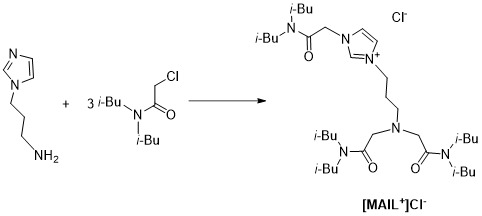
將1-(3-胺基丙基)-咪唑(0.05莫耳)加至一個具有N,N -二異丁基-2-氯乙醯胺(0.15莫耳)之500ml三頸圓底瓶中。之後加入三乙胺(0.11莫耳)以及氯仿(200ml)。在室溫下攪拌該反應6個小時,之後在60至70℃下攪拌7天。之後令反應混合物冷卻,過濾後,依序用0.1M HCl、0.1M Na2 CO3 及去離子水洗滌(如一般程序所述)。在8毫巴(6mmHg)下,最後在60℃與0.067毫巴(0.05mmHg)下除去中和的有機相中之溶劑。回收到呈高度黏稠黃色液體狀之離子液體[MAIL+ ]Cl− 。Add 1-(3-aminopropyl)-imidazole (0.05 mol) to a 500ml three-necked round-bottom bottle with N,N -diisobutyl-2-chloroacetamide (0.15 mol) . Then, triethylamine (0.11 mol) and chloroform (200 ml) were added. The reaction was stirred at room temperature for 6 hours, and then stirred at 60 to 70°C for 7 days. The reaction mixture was then allowed to cool, and after filtration, it was washed sequentially with 0.1 M HCl, 0.1 M Na 2 CO 3 and deionized water (as described in the general procedure). At 8 mbar (6 mmHg) and finally at 60° C. and 0.067 mbar (0.05 mmHg), the solvent in the neutralized organic phase was removed. Ionic liquid [MAIL + ]Cl − was recovered as a highly viscous yellow liquid.
將離子液體[MAIL+
]Cl−
(0.025莫耳)溶於氯仿中,然後加入雙(三氟甲烷)磺醯胺鋰(LiNTf2
) (0.03莫耳)。攪拌該反應混合物1個小時,然後用去離子水重複洗滌有機相。最後,在真空(0.13毫巴、0.1mmHg)、65℃下除去有機相中之溶劑,產生雙三氟甲磺醯亞胺陰離子形式的離子液體([MAIL+
][NTf2 −
])。
[MAIL-6C+
][NTf2 −
]: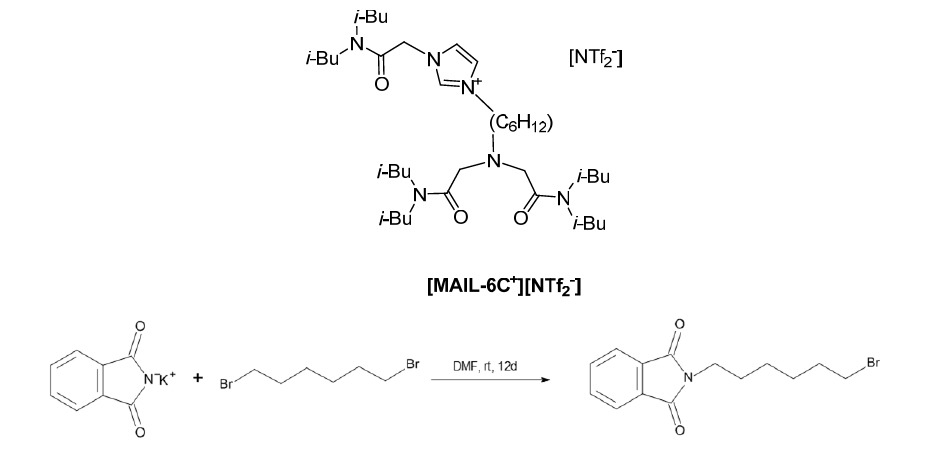
在室溫下攪拌配製於乾DMF (100mL)中之鄰苯二甲醯亞胺鉀(10.0g,54.0mmol)與1,6-二溴丁烷(9.97mL,64.8mmol)之混合物12天。將混合物濃縮,並用氯仿(3x30mL)萃取,然後用去離子水(3x80mL)及濃鹽水(100mL)洗滌。透過硫酸鎂乾燥有機層並濃縮獲得白色漿液。用己烷研製該漿液,過濾並乾燥,獲得白色固體產物(3
) (14.3g,85%)。
在0℃,N2
下,加入配製於THF中之NaH (0.645g,26.9mmol),在30分鐘內加入配製於THF中之咪唑(1.21g,17.7mmol),並在0℃下進一步攪拌30分鐘。在0℃下加入配製於THF中之3
(5.00g,16.1mmol),然後在室溫下攪拌該混合物1個小時,之後在70℃下回流一整夜。過濾該混合物,用THF洗滌殘留的NaBr。將濾液濃縮獲得漿液,將其溶於DCM內以獲得黃色溶液,之後用水洗滌,然後透過硫酸鈉乾燥,且用己烷研製沉澱出白色固體,將其過濾並用己烷洗滌(4
) (1.52g,32%)。
在室溫下將4
(0.750g,2.54mmol)溶於EtOH:H2
O混合物(160mL,3:1)中,並加入水合肼(50-60%,0.174mL,5.55mmol),使該混合物回流一整夜。令該溶液冷卻至室溫,並加入濃HCl (2mL),在添加期間,反應混合物從無色變成黃色、紅色至淡黃色。使混合物在回流下攪拌6個小時,然後過濾。將溶液濃縮,然後溶於蒸餾水中,獲得黃色溶液。加入氫氧化鈉直到混合物達到pH 11,之後用氯仿(4x40mL)萃取,透過硫酸鎂乾燥及濃縮,獲得橘色油狀物(5
) (0.329g,78%)。
於一高壓容器中加入5
(0.257g,1.54mmol)、三乙胺(0.623g,6.16mmol)、N,N
-二異丁基-2-氯乙醯胺(0.950g,4.62mmol)及氯仿(5mL)。塞住容器,在140℃之油浴上攪拌16個小時。用pH1 HCl (40mL)、Na2
CO3
(2x40mL)然後水(4x40mL)洗滌反應混合物。透過硫酸鎂乾燥有機層,然後在真空中濃縮獲得黏稠暗棕色液體(6
) (0.648g,59%)。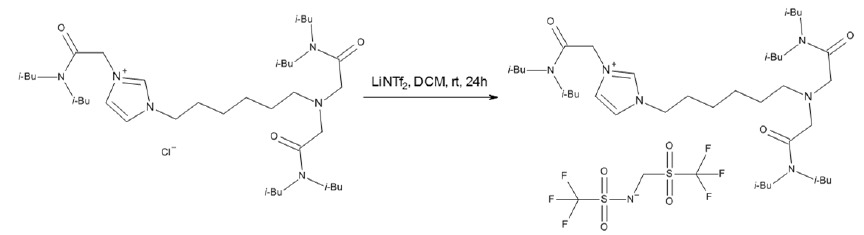
於一圓底燒瓶中加入6
(0.6255g,0.88mmol),接著DCM (50mL)。加入LiNTf2
(0.7572g,2.64mmol),接著水(50mL)。在室溫下攪拌反應混合物24個小時。除去水層,用去離子水(4x40mL)洗滌有機層。透過硫酸鎂乾燥有機層並濃縮。使產物乾燥一整夜,獲得黑色黏稠液體,[MAIL-6C+
][NTf2 −
],(0.7467g,89%)。
[MAIL-Ph+
][NTf2 −
]:

於一高壓容器中加入1-(3-胺基丙基)咪唑(0.200g,1.60mmol)、三乙胺(0.647g,6.39mmol)、2-氯-N,N-二苯乙醯胺(1.18g,4.49mmol)及氯仿(5mL)。將容器塞住,然後在145℃之油浴上攪拌16個小時。用pH1 HCl (15mL),然後水(4x150mL)洗滌反應混合物。透過硫酸鎂乾燥有機層且於真空中濃縮,獲得橘色/棕色固體(7
) (0.883g,70%)。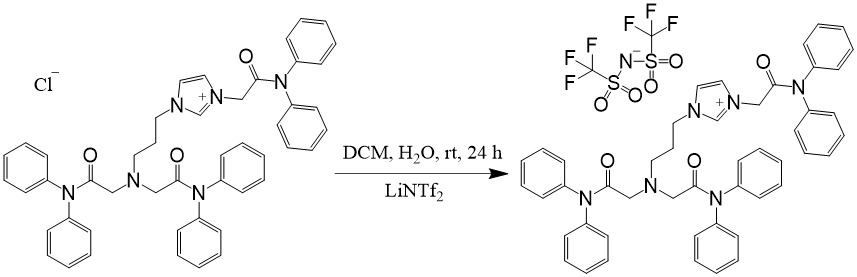
於50mL圓底燒瓶中加入7 (0.444g,0.560mmol),接著DCM (20mL)。加入LiNTf2 (0.484g,1.69mmol),接著去離子水(20mL)。在室溫下攪拌反應混合物24個小時。除去水相,用去離子水(5x15mL)洗滌有機層。透過硫酸鎂乾燥有機層並濃縮。將產物乾燥一整夜,獲得黏稠棕色液體,[MAIL-Ph+ ][NTf2 − ],(0.351g,65%)。In a 50 mL round bottom flask was added 7 (0.444 g, 0.560 mmol), followed by DCM (20 mL). LiNTf 2 (0.484 g, 1.69 mmol) was added, followed by deionized water (20 mL). The reaction mixture was stirred at room temperature for 24 hours. The aqueous phase was removed and the organic layer was washed with deionized water (5x15 mL). The organic layer was dried through magnesium sulfate and concentrated. The product was dried overnight to obtain a viscous brown liquid, [MAIL-Ph + ][NTf 2 − ], (0.351 g, 65%).
亦利用離子交換合成亞膦酸根離子液體[MAIL+
][R2
P(O)O−
] (R=2,4,4-三甲戊基)。
鏻離子液體之合成
[MAIL-PPh3 +
][NTf2 −
]:
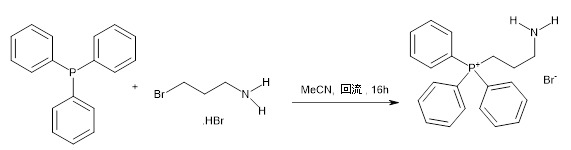
於一配備磁攪拌子之50mL圓底燒瓶中加入三苯膦(0.836g,3.19mmol)、3-溴丙胺氫溴酸鹽(1.00g,4.57mmol)及乙腈(25mL)。之後將懸浮液加熱,並在回流下攪拌16個小時。使反應冷卻至室溫,在減壓下除去溶劑,之後在真空中乾燥所產生的白色固體,且在沒有進一步純化之情況下用於隨後的步驟(1.01g,79%)。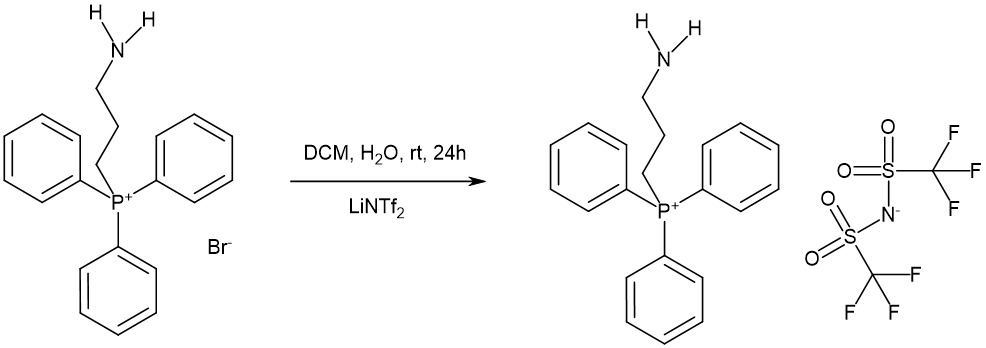
於50mL圓底燒瓶中加入(3-胺基丙基)(三苯基)溴化鏻(1.01g,0.252mmol),接著DCM (20mL)。加入LiNTf2
(2.17g,7.55mmol),接著去離子水(20mL)。在室溫下攪拌該反應混合物24個小時。除去水層,並用去離子水(5x15mL)洗滌有機層。透過硫酸鎂乾燥有機層,然後濃縮。使產物乾燥一整夜,獲得白色固體(1.26g,84%)。
於一高壓容器中加入(3-胺基丙基)(三苯基)鏻雙三氟甲磺醯亞胺(0.200g,0.333mmol)、三乙胺(0.135g,1.33mmol)、N,N
-二異丁基-2-氯乙醯胺(0.137g,0.666mmol)及氯仿(5mL)。將容器塞住,然後在145℃之油浴上攪拌48個小時。用pH1 HCl (15mL),然後水(4x150mL)洗滌反應混合物。透過硫酸鎂乾燥有機層,然後在真空中濃縮,獲得黏稠暗棕色液體,[MAIL-PPh3 +
][NTf2 −
],(0.282g,90%)。
[MAIL-PPh3 +
][R2
P(O)O−
]: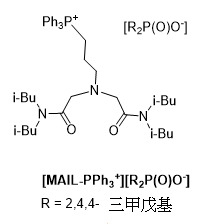
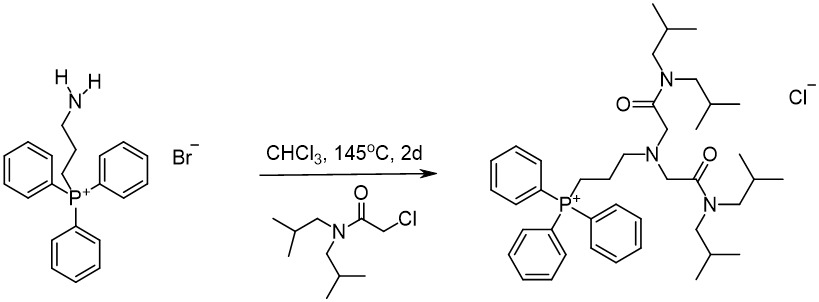
於一高壓容器中加入(3-胺基丙基)(三苯基)溴化鏻(1.01g,2.53mmol)、三乙胺(1.03g,10.1mmol)、N,N
-二異丁基-2-氯乙醯基(1.04g,5.07mmol)及氯仿(5mL)。將容器塞住,然後在145℃之油浴上攪拌48個小時。用pH1 HCl (15mL),然後水(4x150mL)洗滌反應混合物。透過硫酸鎂乾燥有機層,之後在真空中濃縮,獲得黏稠暗棕色液體(0.981g,56%)。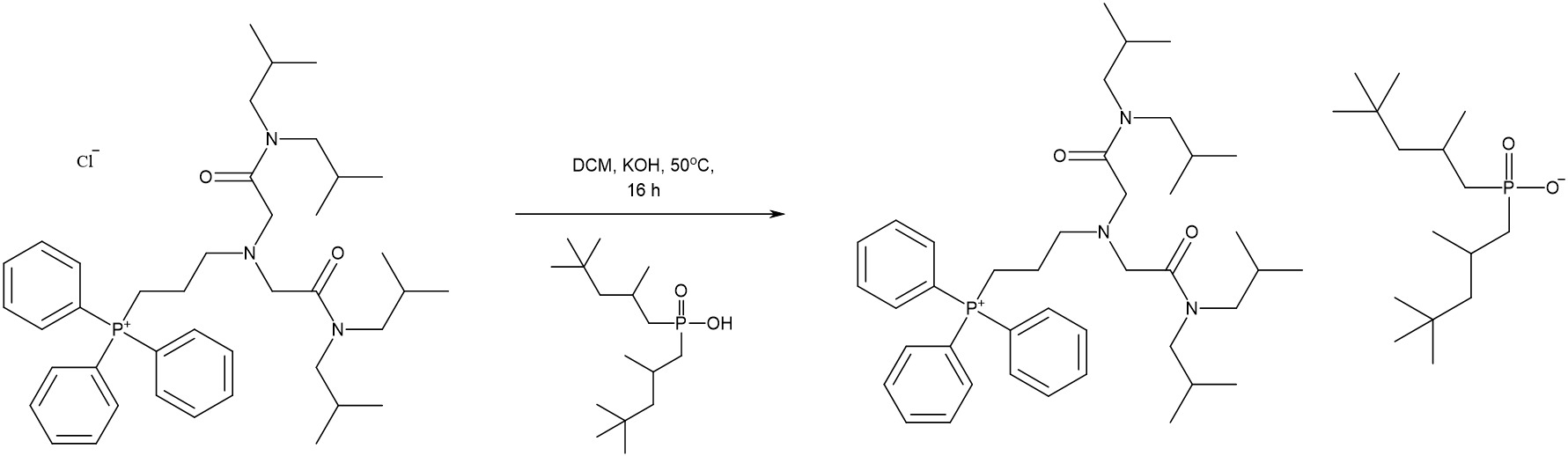
於50mL圓底燒瓶中加入二醯胺鏻(0.898g,1.29mmol),接著DCM (20mL)。加入R2
P(O)OH (R=2,4,4-三甲戊基) (0.356g,1.29mmol),接著KOH溶液(40%,20mL)。在50℃下攪拌反應混合物16個小時。除去水層,然後用去離子水(5x15mL)洗滌有機層。透過硫酸鎂乾燥有機層並濃縮。使產物乾燥一整夜,獲得白色固體,[MAIL-PPh3 +
][R2
P(O)O−
],(0.943g,77%)。
[MAIL-P444 +
][NTf2 −
]: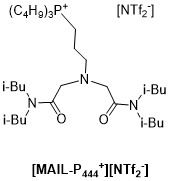
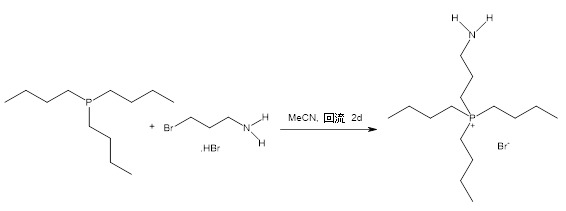
於配備磁攪拌子之50mL圓底燒瓶中加入三丁基膦(0.823g,4.07mmol)、3-溴丙胺氫溴酸鹽(0.890g,4.07mmol)及乙腈(25 mL)。之後將懸浮液加熱,並在回流下攪拌48個小時。使反應冷卻至室溫,且在減壓下除去溶劑,之後於真空中乾燥所產生的油狀物,然後在沒有進一步純化之情況下用於後續的步驟(1.24g,89%)。
於50mL圓底燒瓶中加入(3-胺丙基)(三丁基)溴化鏻(0.559g,1.64mmol),接著DCM (20mL)。加入LiNTf2
(1.41g,4.93mmol),接著去離子水(20mL)。在室溫下攪拌反應混合物24個小時。除去水相及用去離子水(5x15mL)洗滌有機層。透過硫酸鎂乾燥有機層並濃縮。使產物乾燥一整夜,獲得無色油狀物(0.304g,34%)。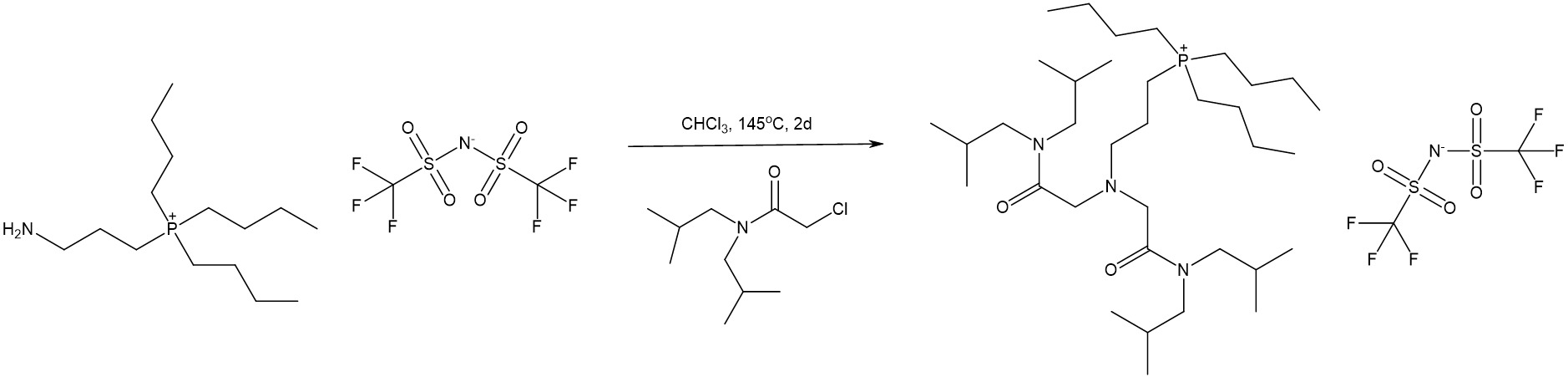
於一高壓容器中加入(3-胺丙基)(三丁基)鏻雙三氟甲磺醯亞胺(0.200g,0.370mmol)、三乙胺(0.150g,1.48mmol)、N,N
-二異丁基-2-氯乙醯胺(0.152g,0.740mmol)及氯仿(5mL)。將容器塞住,在145℃之油浴上攪拌48個小時。用pH1 HCl (15mL),然後水(4x150mL)洗滌反應混合物。透過硫酸鎂乾燥有機層並於真空中濃縮,獲得黏稠暗棕色液體,[MAIL-P444 +
][NTf2 −
],(0.250g,77%)。
[MAIL-P888 +
][NTf2 −
]: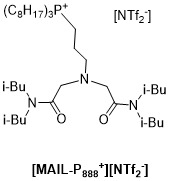
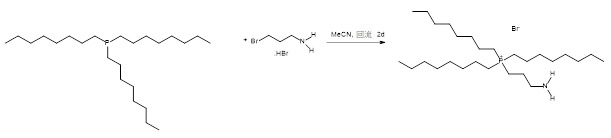
於配備磁攪拌子之50mL圓底燒瓶中加入三辛基膦(0.872g,2.35mmol)、3-溴丙胺氫溴酸鹽(0.500g,2.28mmol)及乙腈(25mL)。之後將懸浮液加熱且在回流下攪拌48個小時。使反應冷卻至室溫,且在減壓下除去溶劑,之後在真空中乾燥所產生的油狀物,在沒有進一步純化之情況下用於後續的步驟(0.889g,85%)。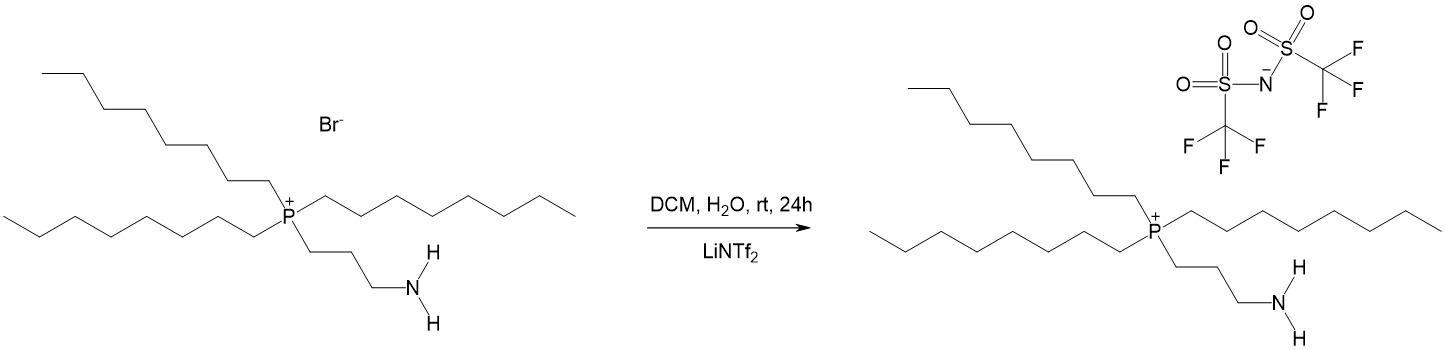
於50mL圓底燒瓶中加入(3-胺丙基)(三辛基)溴化鏻(0.564g,1.11mmol),接著DCM (20mL)。加入LiNTf2
(0.954g,3.32mmol),接著去離子水(20mL)。在室溫下攪拌反應混合物24個小時。除去水層,用去離子水(5x15mL)洗滌有機層。透過硫酸鎂乾燥有機層並濃縮。使產物乾燥一整夜,獲得無色油狀物(0.542g,69%)。
於高壓容器中加入(3-胺丙基)(三辛基)鏻雙三氟甲磺醯亞胺(0.200g,0.282mmol)、三乙胺(0.114g,1.13mmol)、N,N
-二異丁基-2-氯乙醯胺(0.116g,0.564mmol)及氯仿(5mL)。將容器塞住,在145℃之油浴上攪拌48個小時。用pH1 HCl (15mL),然後水(4x150mL)洗滌反應混合物。透過硫酸鎂乾燥有機層且在真空中濃縮,獲得黏稠暗棕色液體,[MAIL-P888 +
][NTf2 −
],(0.313g,99%)。範例2 :使用[MAIL+
][NTf2 -
] 液- 液萃取稀土金屬
用於萃取稀土金屬之一般程序In a high-pressure vessel, add (3-aminopropyl) (trioctyl) phosphonium bistrifluoromethanesulfonimide (0.200g, 0.282mmol), triethylamine (0.114g, 1.13mmol), N,N -di Isobutyl-2-chloroacetamide (0.116g, 0.564mmol) and chloroform (5mL). The container was stoppered and stirred on an oil bath at 145°C for 48 hours. The reaction mixture was washed with
讓等體積(2至5ml)的離子液體萃取劑(配製於[P666(14) + ][NTf2 − ]中之[MAIL+ ][NTf2 − ])與含有稀土金屬配製於HCl中之酸性水溶液料液,在腕式振盪器上平衡15至30分鐘。離心分離出各相,使用感應耦合電漿發射光譜技術(ICP-OES)分析水相之稀土金屬含量,然而可理解的是,可使用任何適合的分析技術。使用ICP-OES測量,透過質量平衡測定萃取至離子液體(有機)相中之稀土金屬的比例。Make an equal volume (2 to 5 ml) of ionic liquid extractant (prepared in [P 666(14) + ][NTf 2 − ][MAIL + ][NTf 2 − ]) and rare earth metal in HCl The acidic aqueous solution is equilibrated on a wrist shaker for 15 to 30 minutes. The phases are separated by centrifugation, and inductively coupled plasma emission spectroscopy (ICP-OES) is used to analyze the rare earth metal content of the water phase. However, it is understood that any suitable analysis technique can be used. Using ICP-OES measurement, the ratio of rare earth metals extracted into the ionic liquid (organic) phase is determined by mass balance.
個別稀土金屬之分配率,測定為其在離子液體相中之濃度對其在水相中之濃度(萃餘物)的比值。DM = [M]IL /[M]Aq ,其中IL代表離子液體相,而Aq代表水相(萃餘物)。The distribution rate of individual rare earth metals is determined as the ratio of its concentration in the ionic liquid phase to its concentration in the aqueous phase (raffinate). D M = [M] IL /[M] Aq , where IL represents the ionic liquid phase and Aq represents the water phase (raffinate).
對於個別稀土金屬對的分離因素(SF),表示為第一稀土金屬之分配率與第二稀土金屬之分配率的比值。例如,鏑對釹之分離因素=DDy /DNd 。可理解的是,從獨立獲得的分配率估算而得之分離因素,將低於在競爭性分離期間之稀土金屬混合物之分離期間獲得的實際的分離因素(如下文之例示說明)。The separation factor (SF) of individual rare earth metal pairs is expressed as the ratio of the distribution ratio of the first rare earth metal to the distribution ratio of the second rare earth metal. For example, the separation factor of dysprosium to neodymium = D Dy /D Nd . Understandably, the separation factor estimated from the independently obtained distribution rate will be lower than the actual separation factor obtained during the separation of the rare earth metal mixture during the competitive separation (as illustrated in the following example).
根據上文之一般程序,在使用配製於[P666(14) + ][NTf2 − ]中之0.0075M [MAIL+ ][NTf2 − ]與具有相關稀土金屬氯化物之200mg/l (ppm) HCl溶液(其中200ppm意指溶液中元素金屬的濃度)之分離萃取中,獲得個別的稀土金屬之分配率。圖1顯示各稀土金屬之分配率作為pH之函數的曲線圖,顯示出根據本發明之離子液體可用於在一系列的pH值範圍內萃取稀土金屬。According to the general procedure above, the use of 0.0075M [MAIL + ][NTf 2 − ] formulated in [P 666(14) + ][NTf 2 − ] and 200 mg/l (ppm (ppm ) In the separation extraction of HCl solution (where 200ppm means the concentration of elemental metal in the solution), the distribution ratio of individual rare earth metals is obtained. Figure 1 shows a graph of the distribution rate of each rare earth metal as a function of pH, showing that the ionic liquid according to the present invention can be used to extract rare earth metals over a range of pH values.
亦經由以上的方法,使用配製於[P666(14) + ][NTf2 − ]中之0.0075M的離子液體[MAIL+ ][R2 P(O)O− ]、[MAIL-6C+ ][NTf2 − ]及[MAIL-Ph+ ][NTf2 − ]進行稀土金屬之分離。亦發現此等離子液體可在pH1至pH4下差異萃取稀土金屬,如圖3、4及5所示。 離子液體之回收再利用Also through the above method, using 0.0075M ionic liquid [MAIL + ][R 2 P(O)O − ], [MAIL-6C + ] formulated in [P 666(14) + ][NTf 2 − ] [NTf 2 − ] and [MAIL-Ph + ][NTf 2 − ] separate rare earth metals. It was also found that this plasma liquid can differentially extract rare earth metals at pH1 to pH4, as shown in Figures 3, 4 and 5. Recovery and reuse of ionic liquids
使用配製於[P666(14) +
][NTf2 −
]中之0.025M [MAIL+
][NTf2 −
],在pH4下從Dy水溶液(180ppm)中萃取出Dy (萃取>95%),然後使用HCl (1:1離子液體對反萃溶液比)在pH 1下接觸4次反萃該離子液體。用去離子水洗滌離子液體,將pH提高到7,然後用於進一步的萃取。與第一次萃取相比,萃出的Dy量掉了約20%,但在經過四次之後的萃取仍保持恆定位準。
Dy與Nd之分離Using 0.025M [MAIL + ][NTf 2 − ] formulated in [P 666(14) + ][NTf 2 − ], Dy was extracted from the Dy aqueous solution (180 ppm) at pH 4 (extraction>95%), The ionic liquid was then back extracted 4 times at
根據上述之一般程序,用離子液體萃取劑(配製於[P666(14) + ][NTf2 − ]中之0.005M [MAIL+ ][NTf2 − ]),在pH3下萃取含有DyCl3 .6H2 O (60mg/l (ppm) Dy)與NdCl3 .6H2 O (1400mg/l (ppm) Nd)之HCl水溶液。單次接觸(萃取)獲得DDy =13.45、DNd =0.0124,得到SFDy-Nd 為1085。According to the above-described general procedure, with the ionic liquid extractant (formulated in [P 666 (14) +] [NTf 2 -] 0.005M in the [MAIL +] [NTf 2 - ]), containing DyCl 3 extracted at pH3. 6H 2 O (60 mg/l (ppm) Dy) and NdCl 3 .6H 2 O (1400 mg/l (ppm) Nd) in HCl. Single contact (extraction) obtained D Dy = 13.45, D Nd = 0.0124, and SF Dy-Nd was 1085.
此分離因素(1085)顯著地高於表1所示的,利用先前技術之系統對Dy/Nd分離所獲得之分離因素(最大239)。This separation factor (1085) is significantly higher than the separation factor (maximum 239) obtained using the prior art system for Dy/Nd separation as shown in Table 1.
使用配製於[P666(14) +
][NTf2 −
]中之0.0075M離子液體,在pH2下重複以上之分離。使用[MAIL+
][NTf2 −
]、[MAIL+
][R2
P(O)O−
]、[MAIL-6C+
][NTf2 −
]、[MAIL-P444 +
][NTf2 −
]、[MAIL-P888 +
][NTf2 −
]、[MAIL-PPh3 +
][NTf2 −
]及[MAIL-PPh3 +
][R2
P(O)O−
]進行萃取,結果示於表2中。可看出本文所述的離子液體可用於從Nd中完全選擇性地萃取出Dy。亦觀察到,在pH1.8下使用[MAIL+
][NTf2 −
]、[MAIL+
][R2
P(O)O−
]及[MAIL-6C+
][NTf2 −
],可從Nd中完全選擇性地萃取出Dy,萃出超過50%的Dy。
表2
根據以上所述的一般程序,用離子液體萃取劑(配製於[P666(14) + ][NTf2 − ]中之0.005M [MAIL+ ][NTf2 − ]),在pH3下萃取含有EuCl3 .6H2 O (65mg/l (ppm) Eu)及LaCl3 .7H2 O (470mg/l (ppm) La)之HCl水溶液。單次接觸(萃取)獲得DEu =9.3、DLa =0.044,得到SFEu-La 為211。 Tb與Ce之分離According to the general procedure described above, with an ionic liquid extractant (formulated in [P 666 (14) +] [2 NTf -] in the 0.005M [MAIL +] [NTf 2 -]), containing at pH3 and extracted EuCl 3 .6H 2 O (65mg / l (ppm) Eu) and LaCl 3 .7H 2 O (470mg / l (ppm) La) of an aqueous solution of HCl. A single contact (extraction) obtained D Eu =9.3, D La =0.044, and SF Eu-La was 211. Separation of Tb and Ce
根據以上所述的一般程序,用離子液體萃取劑(配製於[P666(14) + ][NTf2 − ]中之0.0075M [MAIL+ ][NTf2 − ]),在pH3下萃取含有TbCl3 .6H2 O (530 mg/l (ppm) Tb)及CeCl3 .6H2 O (950 mg/l (ppm) Ce)之HCl水溶液。單次接觸(萃取)獲得DTb =11.2、DCe =0.068,得到SFTb-Ce 為162。範例3 :從[MAIL+ ][NTf2 - ] 中反萃稀土金屬 According to the general procedure described above, with an ionic liquid extractant (formulated in [P 666 (14) +] [2 NTf -] in the 0.0075M [MAIL +] [NTf 2 -]), containing at pH3 and extracted TbCl 3. 6H 2 O (530 mg/l (ppm) Tb) and CeCl 3 .6H 2 O (950 mg/l (ppm) Ce) in HCl. Single contact (extraction) obtained D Tb =11.2, D Ce =0.068, and SF Tb-Ce was 162. Example 3: From the [MAIL +] [NTf 2 - ] of the rare earth metal stripping
在3次連續的接觸中,從包含配製於[P666(14) + ][NTf2 − ]中之[MAIL+ ][NTf2 − ](0.0075M)、pH 0.25之有機相中反萃出Dy(III) (80ppm)。將有機相與等體積的HCl水溶液(0.55M)接觸,在腕式振盪器上平衡15至30分鐘。在第一次接觸中反萃出67ppm的Dy(III),在第二次接觸中反萃出10ppm,而在第三次接觸中反萃出2ppm。In 3 consecutive contacts, back-extracted from the organic phase containing [MAIL + ][NTf 2 − ](0.0075M), pH 0.25 formulated in [P 666(14) + ][NTf 2 − ] Dy(III) (80ppm). The organic phase was contacted with an equal volume of aqueous HCl (0.55M) and equilibrated on a wrist shaker for 15 to 30 minutes. 67 ppm of Dy(III) was back-extracted in the first contact, 10 ppm was back-extracted in the second contact, and 2 ppm was back-extracted in the third contact.
相似地,從圖1中之分配率的觀察,很清楚地,酸度越高,如Tm、Yb及Lu之重稀土金屬具有顯著降低的分配因素。因此,亦預期可在相對高的pH值下從本發明之離子液體中反萃出重稀土金屬。Similarly, from the observation of the distribution ratio in FIG. 1, it is clear that the higher the acidity, the heavy rare earth metals such as Tm, Yb, and Lu have significantly lower distribution factors. Therefore, it is also expected that heavy rare earth metals can be back-extracted from the ionic liquid of the present invention at a relatively high pH value.
以上範例顯示,使用根據本發明之離子液體,可獲得主要稀土金屬對(如,Nd/Dy:Nd-Dy磁鐵、Eu/La:白燈磷光體、Tb/Ce:綠燈磷光體)間之分離因素大幅的增加。相較於習知技藝之系統,亦有利於在相對高的pH下從離子液體中反萃出稀土金屬。The above example shows that using the ionic liquid according to the present invention, the separation between the main rare earth metal pairs (eg, Nd/Dy: Nd-Dy magnet, Eu/La: white lamp phosphor, Tb/Ce: green lamp phosphor) can be obtained Factors have increased significantly. Compared with the system of the prior art, it is also beneficial for the back extraction of rare earth metals from ionic liquids at relatively high pH.
不欲受任何特定理論之約束,但一般認為因為較疏水性的雙配位稀土金屬物種M.([MAIL+ ][NTf2 − ])2 形成之增加高於單配位物種M.([MAIL+ ][NTf2 − ]),使得在較重的稀土金屬中觀察到分配率之增加,比在較輕的稀土金屬中更明顯。據信,在分離期間,較疏水性之物種更易被萃取進入有機相,導致分配率增加。Without wishing to be bound by any particular theory, it is generally believed that the formation of M.([MAIL + ][NTf 2 − ]) 2 due to the more hydrophobic double coordination rare earth metal species is higher than the single coordination species M.([ MAIL + ][NTf 2 − ]), so that the increase in the distribution rate is observed in heavier rare earth metals than in lighter rare earth metals. It is believed that during the separation, more hydrophobic species are more easily extracted into the organic phase, resulting in an increase in the distribution rate.
核磁共振、紅外質譜研究顯示出,Lu與離子液體之溶液中的雙配位物種,比La與離子液體之溶液中的豐富,使得本發明之離子液體達到重與輕稀土金屬間之區別更顯著。Nuclear magnetic resonance and infrared mass spectrometry studies have shown that the double coordination species in the solution of Lu and ionic liquid is more abundant than the solution of La and ionic liquid, which makes the difference between the heavy and light rare earth metals of the ionic liquid of the present invention more significant .
此外,錯合物LaCl3 .([MAIL+ ][Cl- ])2 與LuCl3 .([MAIL+ ][Cl- ])2 之優化的幾何形狀顯示,在La (~2.9Å,非鍵結)之情況下,離子液體陽離子之三級中心氮與金屬間之距離遠大於在Lu (~2.6Å,鍵結)之情況,此亦支持了離子液體與較輕的稀土金屬之鍵結較弱。同時,在二種情況下,推電子基團(在這種情況下是醯胺)均以非常相似的方式連接至鍵結金屬的氮原子。此結果顯示,具有三級氮供體之離子液體陽離子的中心模體,對較重與較輕的稀土金屬間所獲得的區分以及因此產生的選擇性之改善很重要。範例4 :稀土金屬氧化物之製備 Further, complexes LaCl 3 ([MAIL +] [ Cl -]). 2 and LuCl 3 ([MAIL +] [ Cl -]). The optimization of the geometry of the display 2, in La (~ 2.9Å, nonbonding In the case of ), the distance between the tertiary central nitrogen of the ionic liquid cation and the metal is much greater than in the case of Lu (~2.6Å, bonding), which also supports the bonding of the ionic liquid to lighter rare earth metals. weak. At the same time, in both cases, the electron-withdrawing group (in this case, amide) is connected to the nitrogen atom of the bonding metal in a very similar manner. This result shows that the central phantom of the ionic liquid cation with a tertiary nitrogen donor is important for the distinction between heavier and lighter rare earth metals and the resulting improvement in selectivity. Example 4 : Preparation of rare earth metal oxides
使包含Dy之HCl反萃水溶液組成物與草酸在室溫及壓力下接觸。攪拌該混合物。草酸鏑(Dy2 (C2 O4 )2 )從該溶液中沉澱出來。利用過濾分離該沉澱物與該酸性反萃溶液,然後用水洗滌。在1000°C下煅燒草酸鏑沉澱物,獲得氧化鏑(Dy2 O3 )。範例5 :從磁鐵樣本中萃取稀土金屬 The aqueous HCl stripping composition containing Dy was contacted with oxalic acid at room temperature and pressure. The mixture was stirred. Dysprosium oxalate (Dy 2 (C 2 O 4 ) 2 ) precipitates out of this solution. The precipitate was separated from the acidic stripping solution by filtration, and then washed with water. The dysprosium oxalate precipitate was calcined at 1000°C to obtain dysprosium oxide (Dy 2 O 3 ). Example 5 : Extracting rare earth metals from magnet samples
取得粉末狀之含稀土金屬的磁鐵樣本,並如下將其轉換成氯化物形式。將磁鐵進料溶於2M H2 SO4 中。利用過濾除去未溶解的雜質。在60℃下使用氫氧化銨將pH提高至1.5。在60℃下,稀土硫酸鹽從溶液中脫出,留下硫酸鐵雜質在溶液中。將分離的稀土硫酸鹽轉換成草酸鹽(藉由與草酸接觸並用水洗滌稀土草酸鹽),且在900℃下煅燒以形成稀土氧化物。經由浸入HCl溶液將稀土氧化物轉換成稀土氯化物,並結晶。Take a powdered magnet sample containing rare earth metals and convert it to chloride form as follows. The magnet feed is dissolved in 2M H 2 SO 4 . Remove undissolved impurities by filtration. The pH was increased to 1.5 using ammonium hydroxide at 60°C. At 60°C, the rare earth sulfate is stripped from the solution, leaving iron sulfate impurities in the solution. The separated rare earth sulfate is converted to oxalate (by contacting oxalic acid and washing the rare earth oxalate with water), and calcined at 900°C to form a rare earth oxide. The rare earth oxide is converted into rare earth chloride by immersion in HCl solution and crystallized.
製備0.2g稀土氯鹽配製於50mL pH2溶液 (HCl)中之進料溶液。該進料溶液具有20.93ppm之Dy及1573.81ppm之Nd的起始濃度。A feed solution of 0.2 g of rare earth chloride salt prepared in 50 mL of
如範例2中所述的,使用配製於[P666(14) + ][NTf2 − ]中之0.0075M [MAIL+ ][NTf2 − ]或[MAIL+ ][R2 P(O)O− ],在pH2下進行分離萃取。發現在4次接觸後,該二種離子液體均於溶液中萃取出超過90%的Dy,而萃取出小於5%的Nd。As described in Example 2, use 0.0075M [MAIL + ][NTf 2 − ] or [MAIL + ][R 2 P(O)O formulated in [P 666(14) + ][NTf 2 − ] − ], separate and extract at pH2. It was found that after 4 contacts, the two ionic liquids extracted more than 90% of Dy in the solution and less than 5% of Nd.
現在將藉由下列範例並參考以下圖式來說明本發明,其中:The invention will now be explained by the following examples and with reference to the following drawings, in which:
圖1是顯示根據本發明之實施例,用於萃取選擇的稀土金屬之分配因素的圖表;及FIG. 1 is a graph showing distribution factors for extracting selected rare earth metals according to an embodiment of the present invention; and
圖2顯示在從含NdCl3 . 6H2 O之酸性(HCl)溶液中萃取後,配位至Nd之[MAIL]+ 陽離子的結晶結構;Figure 2 shows the extraction solution containing from NdCl 3 6H 2 O of acid (HCl), coordinated to [MAIL] + cations in the crystal structure of Nd.;
圖3是顯示使用[MAIL+ ][R2 P(O)O− ]萃取選定的稀土金屬之圖表;Figure 3 is a graph showing the extraction of selected rare earth metals using [MAIL + ][R 2 P(O)O − ];
圖4是顯示使用[MAIL‑6C+ ][NTf2 − ]萃取選定的稀土金屬之圖表;Figure 4 is a diagram showing the extraction of selected rare earth metals using [MAIL‑6C + ][NTf 2 − ];
圖5是顯示使用[MAIL‑Ph+ ][NTf2 − ]萃取選定的稀土金屬之圖表。Figure 5 is a diagram showing the extraction of selected rare earth metals using [MAIL‑Ph + ][NTf 2 − ].
Claims (25)


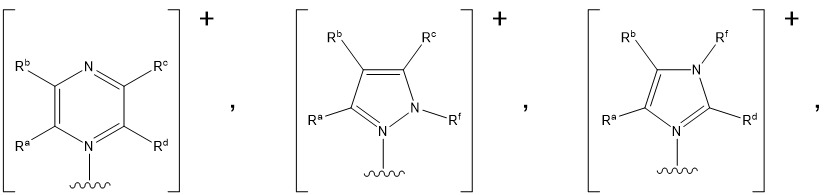
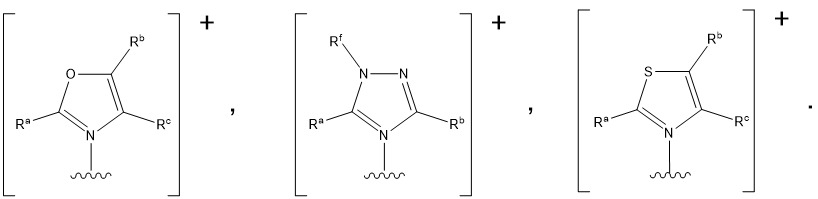
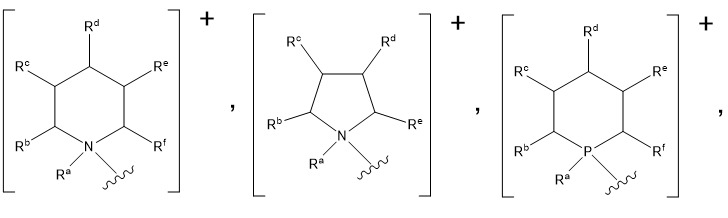

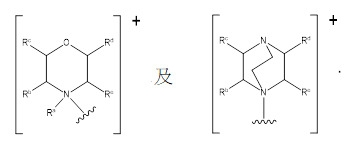
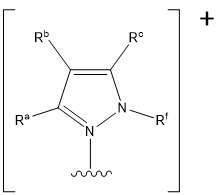
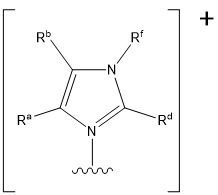
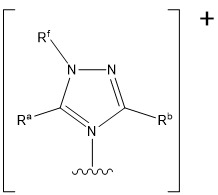
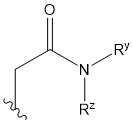
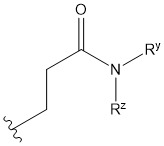
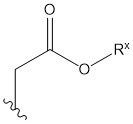
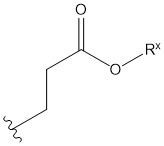

Applications Claiming Priority (2)
| Application Number | Priority Date | Filing Date | Title |
|---|---|---|---|
| GB1809817.8 | 2018-06-15 | ||
| GB1809817.8A GB2607851B (en) | 2018-06-15 | 2018-06-15 | Rare earth metal oxide preparation |
Publications (2)
| Publication Number | Publication Date |
|---|---|
| TW202000928A true TW202000928A (en) | 2020-01-01 |
| TWI822796B TWI822796B (en) | 2023-11-21 |
Family
ID=63042187
Family Applications (1)
| Application Number | Title | Priority Date | Filing Date |
|---|---|---|---|
| TW108120753A TWI822796B (en) | 2018-06-15 | 2019-06-14 | Rare earth metal oxide preparation |
Country Status (10)
| Country | Link |
|---|---|
| US (1) | US11401579B2 (en) |
| EP (1) | EP3807431A1 (en) |
| JP (1) | JP7394473B2 (en) |
| CN (1) | CN112639141B (en) |
| AR (1) | AR115556A1 (en) |
| AU (1) | AU2019285391B2 (en) |
| GB (1) | GB2607851B (en) |
| MY (1) | MY199847A (en) |
| TW (1) | TWI822796B (en) |
| WO (1) | WO2019239152A1 (en) |
Families Citing this family (10)
| Publication number | Priority date | Publication date | Assignee | Title |
|---|---|---|---|---|
| GB2560871B (en) * | 2016-12-16 | 2020-06-03 | Univ Belfast | Separation of rare earth matals |
| GB2607851B (en) * | 2018-06-15 | 2026-02-04 | Seren Tech Limited | Rare earth metal oxide preparation |
| CN111961071B (en) * | 2020-08-24 | 2023-06-02 | 江西理工大学 | An organic-inorganic hybrid rare earth double perovskite compound, preparation method and application thereof |
| CN114276384A (en) * | 2022-01-07 | 2022-04-05 | 重庆西南制药二厂有限责任公司 | Synthetic method of desmethyl olopatadine and its intermediates |
| CN114807638B (en) * | 2022-06-28 | 2022-09-02 | 中国矿业大学(北京) | Method for separating and extracting rare earth elements from coal gangue and application thereof |
| CN115261647A (en) * | 2022-08-05 | 2022-11-01 | 成都理工大学 | Morpholine carboxylic acid ionic liquid and method for extracting and separating samarium |
| CN115536053A (en) * | 2022-10-29 | 2022-12-30 | 中稀(广西)金源稀土新材料有限公司 | Preparation method of low-chloride high-purity lutetium oxide |
| CN115992317B (en) * | 2022-11-30 | 2024-06-18 | 核工业北京化工冶金研究院 | Method for separating rare earth uranium beryllium from sulfuric acid leaching solution containing rare earth uranium beryllium |
| FR3148426A1 (en) * | 2023-05-05 | 2024-11-08 | Carester | PROCESS FOR SEPARATION AND PURIFICATION OF HEAVY RARE EARTHS BY LIQUID/LIQUID EXTRACTION |
| EP4484377A1 (en) * | 2023-06-26 | 2025-01-01 | ETH Zurich | An efficient separation process for rare earth element compounds and novel rare earth element complexes used therefor |
Family Cites Families (22)
| Publication number | Priority date | Publication date | Assignee | Title |
|---|---|---|---|---|
| JP2641108B2 (en) * | 1990-06-21 | 1997-08-13 | 大日精化工業株式会社 | Method for producing cerium oxide fine powder |
| CN1040889C (en) * | 1992-11-25 | 1998-11-25 | 北京有色金属研究总院 | Extracting technological method for purifying separating rare earth element |
| FR2724330B1 (en) * | 1994-09-12 | 1997-01-31 | Rhone Poulenc Chimie | COLLOIDAL DISPERSION OF A HIGH CONCENTRATION CERIUM COMPOUND AND PROCESS FOR PREPARING THE SAME |
| JP4019453B2 (en) * | 1996-07-30 | 2007-12-12 | 日産化学工業株式会社 | Method for producing crystalline ceric oxide |
| JP2000203834A (en) * | 1998-12-28 | 2000-07-25 | Kose Corp | Ultrafine cerium oxide particle and ultrafine metal oxide.cerium oxide particle, its production and resin composition and cosmetic containing the same |
| US7025943B2 (en) * | 2002-05-15 | 2006-04-11 | The Curators Of The University Of Missouri | Method for preparation of nanometer cerium-based oxide particles |
| JP3950968B2 (en) * | 2003-01-27 | 2007-08-01 | 独立行政法人産業技術総合研究所 | Method for separating and recovering Y and Eu |
| WO2007071028A1 (en) * | 2005-12-23 | 2007-06-28 | St. Mary's University | Compounds, complexes and uses thereof |
| CN102281945A (en) * | 2008-12-17 | 2011-12-14 | 丝润技术有限公司 | Fuel additive containing lattice engineered cerium dioxide nanoparticles |
| CN101781706A (en) * | 2009-01-15 | 2010-07-21 | 有研稀土新材料股份有限公司 | Process for separating rare-earth element by extraction |
| GB0905894D0 (en) * | 2009-04-06 | 2009-05-20 | Univ Belfast | Ionic liquids solvents for metals and metal compounds |
| CN101994004B (en) * | 2009-08-11 | 2012-07-11 | 北京有色金属研究总院 | A process for extracting and separating rare earth elements |
| CN102618736B (en) * | 2012-03-31 | 2013-09-04 | 中国科学院长春应用化学研究所 | Extraction separation method of rare-earth element |
| JP6348796B2 (en) * | 2013-07-25 | 2018-06-27 | 国立大学法人横浜国立大学 | Recovery method of rare earth elements using ionic liquid |
| CN103451427B (en) * | 2013-09-24 | 2014-11-26 | 兰州大学 | A kind of separation method and separation extraction agent of heavy rare earth and light rare earth metal |
| US10689727B2 (en) * | 2015-04-23 | 2020-06-23 | Ut-Battelle, Llc | Methods for liquid extraction of rare earth metals using ionic liquids |
| CA2925149C (en) * | 2015-05-25 | 2022-10-04 | Xiamen Institute Of Rare Earth Materials | Extractant and method for extracting and separating yttrium |
| WO2017096470A1 (en) | 2015-12-10 | 2017-06-15 | Université de Montréal | Ionic liquids and their use in the extraction of rare earth elements and/or gallium |
| GB2560871B (en) * | 2016-12-16 | 2020-06-03 | Univ Belfast | Separation of rare earth matals |
| GB2607551B (en) * | 2018-06-15 | 2026-02-04 | Seren Tech Limited | Countercurrent rare earth separation process |
| GB2607851B (en) * | 2018-06-15 | 2026-02-04 | Seren Tech Limited | Rare earth metal oxide preparation |
| GB2574662B (en) * | 2018-06-15 | 2023-03-01 | Seren Tech Limited | Ionic Liquid Preparation |
-
2018
- 2018-06-15 GB GB1809817.8A patent/GB2607851B/en active Active
-
2019
- 2019-06-14 JP JP2021519009A patent/JP7394473B2/en active Active
- 2019-06-14 AU AU2019285391A patent/AU2019285391B2/en active Active
- 2019-06-14 US US17/252,032 patent/US11401579B2/en active Active
- 2019-06-14 MY MYPI2020006681A patent/MY199847A/en unknown
- 2019-06-14 AR ARP190101656A patent/AR115556A1/en active IP Right Grant
- 2019-06-14 TW TW108120753A patent/TWI822796B/en active
- 2019-06-14 EP EP19732428.8A patent/EP3807431A1/en active Pending
- 2019-06-14 WO PCT/GB2019/051664 patent/WO2019239152A1/en not_active Ceased
- 2019-06-14 CN CN201980052643.1A patent/CN112639141B/en active Active
Also Published As
| Publication number | Publication date |
|---|---|
| TWI822796B (en) | 2023-11-21 |
| GB201809817D0 (en) | 2018-08-01 |
| GB2607851B (en) | 2026-02-04 |
| US20210254191A1 (en) | 2021-08-19 |
| AU2019285391A1 (en) | 2021-01-14 |
| WO2019239152A1 (en) | 2019-12-19 |
| CN112639141A (en) | 2021-04-09 |
| CN112639141B (en) | 2022-11-15 |
| JP2021528359A (en) | 2021-10-21 |
| JP7394473B2 (en) | 2023-12-08 |
| MY199847A (en) | 2023-11-24 |
| GB2607851A (en) | 2022-12-21 |
| EP3807431A1 (en) | 2021-04-21 |
| AU2019285391B2 (en) | 2025-01-30 |
| AR115556A1 (en) | 2021-02-03 |
| US11401579B2 (en) | 2022-08-02 |
Similar Documents
| Publication | Publication Date | Title |
|---|---|---|
| US20230059863A1 (en) | Separation of rare earth metals | |
| TWI822796B (en) | Rare earth metal oxide preparation | |
| TWI850232B (en) | Enhanced separation of rare earth metals | |
| TWI826466B (en) | Ionic liquid preparation | |
| TWI822797B (en) | Countercurrent rare earth separation process | |
| HK40077439A (en) | Rare earth metal oxide preparation | |
| HK40016093A (en) | Separation of rare earth metals | |
| HK40016093B (en) | Separation of rare earth metals | |
| EA040373B1 (en) | SEPARATION OF RARE EARTH METALS |