TW202307004A - Anti-cea antibodies and methods of use - Google Patents
Anti-cea antibodies and methods of use Download PDFInfo
- Publication number
- TW202307004A TW202307004A TW111118554A TW111118554A TW202307004A TW 202307004 A TW202307004 A TW 202307004A TW 111118554 A TW111118554 A TW 111118554A TW 111118554 A TW111118554 A TW 111118554A TW 202307004 A TW202307004 A TW 202307004A
- Authority
- TW
- Taiwan
- Prior art keywords
- seq
- antibody
- antigen
- cea
- binding fragment
- Prior art date
Links
Images


Classifications
-
- A—HUMAN NECESSITIES
- A61—MEDICAL OR VETERINARY SCIENCE; HYGIENE
- A61P—SPECIFIC THERAPEUTIC ACTIVITY OF CHEMICAL COMPOUNDS OR MEDICINAL PREPARATIONS
- A61P35/00—Antineoplastic agents
-
- A—HUMAN NECESSITIES
- A61—MEDICAL OR VETERINARY SCIENCE; HYGIENE
- A61K—PREPARATIONS FOR MEDICAL, DENTAL OR TOILETRY PURPOSES
- A61K45/00—Medicinal preparations containing active ingredients not provided for in groups A61K31/00 - A61K41/00
- A61K45/06—Mixtures of active ingredients without chemical characterisation, e.g. antiphlogistics and cardiaca
-
- A—HUMAN NECESSITIES
- A61—MEDICAL OR VETERINARY SCIENCE; HYGIENE
- A61K—PREPARATIONS FOR MEDICAL, DENTAL OR TOILETRY PURPOSES
- A61K47/00—Medicinal preparations characterised by the non-active ingredients used, e.g. carriers or inert additives; Targeting or modifying agents chemically bound to the active ingredient
- A61K47/50—Medicinal preparations characterised by the non-active ingredients used, e.g. carriers or inert additives; Targeting or modifying agents chemically bound to the active ingredient the non-active ingredient being chemically bound to the active ingredient, e.g. polymer-drug conjugates
- A61K47/51—Medicinal preparations characterised by the non-active ingredients used, e.g. carriers or inert additives; Targeting or modifying agents chemically bound to the active ingredient the non-active ingredient being chemically bound to the active ingredient, e.g. polymer-drug conjugates the non-active ingredient being a modifying agent
- A61K47/62—Medicinal preparations characterised by the non-active ingredients used, e.g. carriers or inert additives; Targeting or modifying agents chemically bound to the active ingredient the non-active ingredient being chemically bound to the active ingredient, e.g. polymer-drug conjugates the non-active ingredient being a modifying agent the modifying agent being a protein, peptide or polyamino acid
- A61K47/64—Drug-peptide, drug-protein or drug-polyamino acid conjugates, i.e. the modifying agent being a peptide, protein or polyamino acid which is covalently bonded or complexed to a therapeutically active agent
- A61K47/6415—Toxins or lectins, e.g. clostridial toxins or Pseudomonas exotoxins
-
- C—CHEMISTRY; METALLURGY
- C07—ORGANIC CHEMISTRY
- C07K—PEPTIDES
- C07K16/00—Immunoglobulins [IG], e.g. monoclonal or polyclonal antibodies
- C07K16/18—Immunoglobulins [IG], e.g. monoclonal or polyclonal antibodies against material from animals or humans
- C07K16/28—Immunoglobulins [IG], e.g. monoclonal or polyclonal antibodies against material from animals or humans against receptors, cell surface antigens or cell surface determinants
- C07K16/30—Immunoglobulins [IG], e.g. monoclonal or polyclonal antibodies against material from animals or humans against receptors, cell surface antigens or cell surface determinants from tumour cells
- C07K16/3007—Carcino-embryonic Antigens
-
- A—HUMAN NECESSITIES
- A61—MEDICAL OR VETERINARY SCIENCE; HYGIENE
- A61K—PREPARATIONS FOR MEDICAL, DENTAL OR TOILETRY PURPOSES
- A61K39/00—Medicinal preparations containing antigens or antibodies
- A61K2039/505—Medicinal preparations containing antigens or antibodies comprising antibodies
-
- C—CHEMISTRY; METALLURGY
- C07—ORGANIC CHEMISTRY
- C07K—PEPTIDES
- C07K2317/00—Immunoglobulins specific features
- C07K2317/20—Immunoglobulins specific features characterized by taxonomic origin
- C07K2317/24—Immunoglobulins specific features characterized by taxonomic origin containing regions, domains or residues from different species, e.g. chimeric, humanized or veneered
-
- C—CHEMISTRY; METALLURGY
- C07—ORGANIC CHEMISTRY
- C07K—PEPTIDES
- C07K2317/00—Immunoglobulins specific features
- C07K2317/50—Immunoglobulins specific features characterized by immunoglobulin fragments
- C07K2317/52—Constant or Fc region; Isotype
-
- C—CHEMISTRY; METALLURGY
- C07—ORGANIC CHEMISTRY
- C07K—PEPTIDES
- C07K2317/00—Immunoglobulins specific features
- C07K2317/50—Immunoglobulins specific features characterized by immunoglobulin fragments
- C07K2317/56—Immunoglobulins specific features characterized by immunoglobulin fragments variable (Fv) region, i.e. VH and/or VL
-
- C—CHEMISTRY; METALLURGY
- C07—ORGANIC CHEMISTRY
- C07K—PEPTIDES
- C07K2317/00—Immunoglobulins specific features
- C07K2317/50—Immunoglobulins specific features characterized by immunoglobulin fragments
- C07K2317/56—Immunoglobulins specific features characterized by immunoglobulin fragments variable (Fv) region, i.e. VH and/or VL
- C07K2317/565—Complementarity determining region [CDR]
-
- C—CHEMISTRY; METALLURGY
- C07—ORGANIC CHEMISTRY
- C07K—PEPTIDES
- C07K2317/00—Immunoglobulins specific features
- C07K2317/70—Immunoglobulins specific features characterized by effect upon binding to a cell or to an antigen
- C07K2317/73—Inducing cell death, e.g. apoptosis, necrosis or inhibition of cell proliferation
- C07K2317/732—Antibody-dependent cellular cytotoxicity [ADCC]
-
- C—CHEMISTRY; METALLURGY
- C07—ORGANIC CHEMISTRY
- C07K—PEPTIDES
- C07K2317/00—Immunoglobulins specific features
- C07K2317/70—Immunoglobulins specific features characterized by effect upon binding to a cell or to an antigen
- C07K2317/73—Inducing cell death, e.g. apoptosis, necrosis or inhibition of cell proliferation
- C07K2317/734—Complement-dependent cytotoxicity [CDC]
-
- C—CHEMISTRY; METALLURGY
- C07—ORGANIC CHEMISTRY
- C07K—PEPTIDES
- C07K2317/00—Immunoglobulins specific features
- C07K2317/90—Immunoglobulins specific features characterized by (pharmaco)kinetic aspects or by stability of the immunoglobulin
- C07K2317/92—Affinity (KD), association rate (Ka), dissociation rate (Kd) or EC50 value
Landscapes
- Health & Medical Sciences (AREA)
- Life Sciences & Earth Sciences (AREA)
- Chemical & Material Sciences (AREA)
- General Health & Medical Sciences (AREA)
- Medicinal Chemistry (AREA)
- Organic Chemistry (AREA)
- Immunology (AREA)
- Proteomics, Peptides & Aminoacids (AREA)
- Public Health (AREA)
- Veterinary Medicine (AREA)
- Animal Behavior & Ethology (AREA)
- Pharmacology & Pharmacy (AREA)
- Molecular Biology (AREA)
- Epidemiology (AREA)
- Bioinformatics & Cheminformatics (AREA)
- Engineering & Computer Science (AREA)
- Cell Biology (AREA)
- Biophysics (AREA)
- Nuclear Medicine, Radiotherapy & Molecular Imaging (AREA)
- General Chemical & Material Sciences (AREA)
- Oncology (AREA)
- Chemical Kinetics & Catalysis (AREA)
- Biochemistry (AREA)
- Genetics & Genomics (AREA)
- Toxicology (AREA)
- Peptides Or Proteins (AREA)
- Preparation Of Compounds By Using Micro-Organisms (AREA)
- Micro-Organisms Or Cultivation Processes Thereof (AREA)
- Medicines That Contain Protein Lipid Enzymes And Other Medicines (AREA)
- Medicines Containing Antibodies Or Antigens For Use As Internal Diagnostic Agents (AREA)
Abstract
Description
本文揭露了結合人CEA的抗體或其抗原結合片段以及用於治療癌症之方法。Antibodies or antigen-binding fragments thereof that bind human CEA and methods for treating cancer are disclosed herein.
癌胚抗原(CEA,也稱為CEACAM5或CD66e)係一種糖蛋白,其分子量為約70-100 kDa,具體取決於所存在的糖基化的量。Gold等人, J. Exp. Med. [實驗醫學雜誌], 121, 439 (1965)首先報導了與人腺癌中的癌症特異性抗原相關的CEA之存在。CEA通常在多種腺上皮組織(諸如胃腸道、呼吸道和泌尿生殖道)中表現,在該等腺上皮組織中它似乎位於細胞的頂端表面(Hammarstrom, S. Semin. Cancer Biol. [癌症生物學研討會] 9, 67-81 (1999))。例如,發現它存在於結腸的柱狀上皮細胞和杯狀細胞中(Fraengsmyr等人, Tumor Biol. [腫瘤生物學] 20:277-292(1999))。在由該等組織類型產生的腫瘤中,CEA表現從頂端膜到細胞表面增加,並且一旦從細胞表面除去,就會進入血流(Hammarstrom, S. Semin. Cancer Biol. [癌症生物學研討會] 9, 67-81;(1999),還參見Fraengsmyr等人, Tumor Biol. [腫瘤生物學] 20:277-292(1999))。在許多類型的癌症中觀察到CEA過表現,該等癌症包括結腸直腸癌、胰臟癌、肺癌、胃癌、肝細胞癌、乳癌和甲狀腺癌。因此,在癌症的預後和治療中,CEA已經用作診斷性腫瘤標誌物以確定癌症患者血液中的CEA水平升高(Chevinsky, A. H. (1991) Semin. Surg. Oncol. [外科腫瘤學研討會] 7, 162-166;Shively, J. E.等人, (1985) Crit. Rev. Oncol. Hematol. [腫瘤學/血液學評論] 2, 355-399)。Carcinoembryonic antigen (CEA, also known as CEACAM5 or CD66e) is a glycoprotein with a molecular weight of approximately 70-100 kDa, depending on the amount of glycosylation present. Gold et al., J. Exp. Med., 121, 439 (1965) were the first to report the presence of CEA in association with cancer-specific antigens in human adenocarcinoma. CEA is commonly expressed in various glandular epithelial tissues, such as the gastrointestinal, respiratory, and genitourinary tracts, where it appears to be located on the apical surface of cells (Hammarstrom, S. Semin. Cancer Biol. Cancer Biol. Conference] 9, 67-81 (1999)). For example, it is found in the columnar epithelium and goblet cells of the colon (Fraengsmyr et al., Tumor Biol. 20:277-292 (1999)). In tumors arising from these tissue types, CEA appears to increase from the apical membrane to the cell surface and, once removed from the cell surface, enters the bloodstream (Hammarstrom, S. Semin. Cancer Biol. [Cancer Biology Symposium] 9, 67-81; (1999), see also Fraengsmyr et al., Tumor Biol. 20:277-292 (1999)). CEA overexpression is observed in many types of cancers including colorectal, pancreatic, lung, gastric, hepatocellular, breast and thyroid cancers. Therefore, in the prognosis and treatment of cancer, CEA has been used as a diagnostic tumor marker to determine the elevated level of CEA in the blood of cancer patients (Chevinsky, A. H. (1991) Semin. Surg. Oncol. [Surgical Oncology Symposium] 7, 162-166; Shively, J. E. et al., (1985) Crit. Rev. Oncol. Hematol. [Reviews in Oncology/Hematology] 2, 355-399).
CEA已被認為是用於靶向治療的有用的腫瘤相關抗原(Kuroki M等人, (2002) Anticancer Res [抗癌研究] 22:4255-64)。一種方法係產生展示抗CEA scFv的反轉錄病毒構建體,並將一氧化氮合酶(iNOS)基因遞送至表現CEA的癌細胞。(Kuroki M.等人, (2000) Anticancer Res. [抗癌研究] 20(6A): 4067-71)。另一種方法係將放射性同位素與抗CEA抗體連接,並證明放射特異性針對表現CEA的腫瘤(Wilkinson等人, PNAS USA [美國國家科學院院刊] 98, 10256-60 (2001);Goldenberg等人, Am. J. Gastroenterol. [美國胃腸病學雜誌], 86: 1392-1403 (1991);Olafsen T.等人, Protein Engineering, Design & Selection [蛋白質工程設計與選擇], 17, 21-27, (2004);Meyer等人, Clin. Cancer Res. [臨床癌症研究] 15:4484-4492 (2009);Sharkey等人, J. Nucl. Med. [核醫學雜誌] 46:620-633 (2005))。放射性同位素方法已擴展到抗CEA抗體藥物軛合物(ADC)。例如,Shinmi等人報導了一種與單甲基澳瑞他汀E(MMAE)軛合的抗CEA抗體(Shinmi等人, Cancer Med. [癌症醫學] 6(4): 798-808 (2017))。CEA has been recognized as a useful tumor-associated antigen for targeted therapy (Kuroki M et al. (2002) Anticancer Res 22:4255-64). One approach is to generate a retroviral construct displaying an anti-CEA scFv and deliver the nitric oxide synthase (iNOS) gene to CEA-expressing cancer cells. (Kuroki M. et al., (2000) Anticancer Res. 20(6A): 4067-71). Another approach was to link a radioisotope to an anti-CEA antibody and demonstrate radiospecificity for tumors expressing CEA (Wilkinson et al., PNAS USA [Proceedings of the National Academy of Sciences of the United States of America] 98, 10256-60 (2001); Goldenberg et al., Am. J. Gastroenterol. [American Journal of Gastroenterology], 86: 1392-1403 (1991); Olafsen T. et al., Protein Engineering, Design & Selection, 17, 21-27, ( 2004); Meyer et al., Clin. Cancer Res. 15:4484-4492 (2009); Sharkey et al., J. Nucl. Med. 46:620-633 (2005)) . The radioisotope approach has been extended to anti-CEA antibody-drug conjugates (ADCs). For example, Shinmi et al. reported an anti-CEA antibody conjugated to monomethylauristatin E (MMAE) (Shinmi et al., Cancer Med. 6(4): 798-808 (2017)).
然而,抗CEA抗體的問題之一係交叉反應性。CEA與其他CEACAM家族成員高度同源,例如,人CEA與CEACAM6顯示出84%同源性,與CECAM8顯示出77%同源性,與CEACAM1顯示出73%同一性。本揭露提供了對CEA特異的抗CEA抗體。However, one of the problems with anti-CEA antibodies is cross-reactivity. CEA is highly homologous to other CEACAM family members, for example, human CEA shows 84% homology with CEACAM6, 77% homology with CECAM8, and 73% homology with CEACAM1. The present disclosure provides anti-CEA antibodies specific for CEA.
本揭露關於抗CEA抗體及其抗原結合片段。本揭露涵蓋以下實施方式。The present disclosure pertains to anti-CEA antibodies and antigen-binding fragments thereof. This disclosure covers the following implementations.
一種抗CEA抗體或其抗原結合片段,其包含在SEQ ID NO: 52的胺基酸596至674處特異性結合人CEA的抗體或其結合片段。An anti-CEA antibody or antigen-binding fragment thereof comprising an antibody or binding fragment thereof that specifically binds to human CEA at amino acids 596 to 674 of SEQ ID NO: 52.
該抗CEA抗體或抗原結合片段,其中該抗體或抗原結合片段不結合其他CEACAM家族成員。The anti-CEA antibody or antigen-binding fragment, wherein the antibody or antigen-binding fragment does not bind other CEACAM family members.
如請求項1所述之抗CEA抗體或抗原結合片段,其包含:
(i) 重鏈可變區,該重鏈可變區包含 (a) SEQ ID NO: 7的HCDR1(重鏈互補決定區1)、(b) SEQ ID NO: 8的HCDR2、(c) SEQ ID NO: 9的HCDR3,以及輕鏈可變區,該輕鏈可變區包含:(d) SEQ ID NO: 10的LCDR1(輕鏈互補決定區1)、(e) SEQ ID NO: 11的LCDR2和 (f) SEQ ID NO: 6的LCDR3;
(ii) 重鏈可變區,該重鏈可變區包含 (a) SEQ ID NO: 24的HCDR1、(b) SEQ ID NO: 25的HCDR2、(c) SEQ ID NO: 26的HCDR3;以及輕鏈可變區,該輕鏈可變區包含:(d) SEQ ID NO: 27的LCDR1、(e) SEQ ID NO: 28的LCDR2和 (f) SEQ ID NO: 23的LCDR3;或
(iii) 重鏈可變區,該重鏈可變區包含 (a) SEQ ID NO: 41的HCDR1、(b) SEQ ID NO: 42的HCDR2、(c) SEQ ID NO: 43的HCDR3;以及輕鏈可變區,該輕鏈可變區包含:(d) SEQ ID NO: 44的LCDR1、(e) SEQ ID NO: 45的LCDR2和 (f) SEQ ID NO: 40的LCDR3。
The anti-CEA antibody or antigen-binding fragment as claimed in
該抗CEA抗體或抗原結合片段,其包含: (i) 重鏈可變區(VH),該重鏈可變區包含與SEQ ID NO: 14至少90%、91%、92%、93%、94%、95%、96%、97%、98%或99%相同的胺基酸序列,以及輕鏈可變區(VL),該輕鏈可變區包含與SEQ ID NO: 15至少90%、91%、92%、93%、94%、95%、96%、97%、98%或99%相同的胺基酸序列; (ii) 重鏈可變區(VH),該重鏈可變區包含與SEQ ID NO: 31至少90%、91%、92%、93%、94%、95%、96%、97%、98%或99%相同的胺基酸序列,以及輕鏈可變區(VL),該輕鏈可變區包含與SEQ ID NO: 32至少90%、91%、92%、93%、94%、95%、96%、97%、98%或99%相同的胺基酸序列;或 (iii) 重鏈可變區(VH),該重鏈可變區包含與SEQ ID NO: 48至少90%、91%、92%、93%、94%、95%、96%、97%、98%或99%相同的胺基酸序列,以及輕鏈可變區(VL),該輕鏈可變區包含與SEQ ID NO: 49至少90%、91%、92%、93%、94%、95%、96%、97%、98%或99%相同的胺基酸序列。 The anti-CEA antibody or antigen-binding fragment comprising: (i) a heavy chain variable region (VH) comprising at least 90%, 91%, 92%, 93%, 94%, 95%, 96%, 97%, 98% or 99% identical amino acid sequence, and a light chain variable region (VL) comprising at least 90%, 91%, 92%, 93%, 94% of SEQ ID NO: 15 , 95%, 96%, 97%, 98% or 99% identical amino acid sequences; (ii) a heavy chain variable region (VH) comprising at least 90%, 91%, 92%, 93%, 94%, 95%, 96%, 97%, 98% or 99% identical amino acid sequence, and a light chain variable region (VL) comprising at least 90%, 91%, 92%, 93%, 94% of SEQ ID NO: 32 , 95%, 96%, 97%, 98%, or 99% identical amino acid sequences; or (iii) a heavy chain variable region (VH) comprising at least 90%, 91%, 92%, 93%, 94%, 95%, 96%, 97%, 98% or 99% identical amino acid sequence, and a light chain variable region (VL) comprising at least 90%, 91%, 92%, 93%, 94% of SEQ ID NO: 49 , 95%, 96%, 97%, 98%, or 99% identical amino acid sequences.
該抗CEA抗體或抗原結合片段,其中SEQ ID NO: 14、15、31、32、48或49中已插入、缺失或取代一個、兩個、三個、四個、五個、六個、七個、八個、九個或十個胺基酸。The anti-CEA antibody or antigen-binding fragment, wherein one, two, three, four, five, six, seven have been inserted, deleted or substituted in SEQ ID NO: 14, 15, 31, 32, 48 or 49 one, eight, nine or ten amino acids.
該抗CEA抗體或抗原結合片段,其包含: (i) 包含SEQ ID NO: 14的重鏈可變區(VH)和包含SEQ ID NO: 15的輕鏈可變區(VL); (ii) 包含SEQ ID NO: 31的重鏈可變區(VH)和包含SEQ ID NO: 32的輕鏈可變區(VL);或 (iii) 包含SEQ ID NO: 48的重鏈可變區(VH)和包含SEQ ID NO: 49的輕鏈可變區(VL)。 The anti-CEA antibody or antigen-binding fragment comprising: (i) a heavy chain variable region (VH) comprising SEQ ID NO: 14 and a light chain variable region (VL) comprising SEQ ID NO: 15; (ii) a heavy chain variable region (VH) comprising SEQ ID NO: 31 and a light chain variable region (VL) comprising SEQ ID NO: 32; or (iii) A heavy chain variable region (VH) comprising SEQ ID NO: 48 and a light chain variable region (VL) comprising SEQ ID NO: 49.
該抗CEA抗體或抗原結合片段,其為單株抗體、嵌合抗體、人源化抗體、人工程化抗體、單鏈抗體(scFv)、Fab片段、Fab'片段或F(ab') 2片段。 The anti-CEA antibody or antigen-binding fragment, which is a monoclonal antibody, a chimeric antibody, a humanized antibody, a humanized antibody, a single-chain antibody (scFv), a Fab fragment, a Fab' fragment or a F(ab') 2 fragment .
該抗CEA抗體或抗原結合片段,其中該抗體或其抗原結合片段具有抗體依賴性細胞毒性(ADCC)或補體依賴性細胞毒性(CDC)。The anti-CEA antibody or antigen-binding fragment, wherein the antibody or antigen-binding fragment thereof has antibody-dependent cellular cytotoxicity (ADCC) or complement-dependent cytotoxicity (CDC).
該抗CEA抗體或抗原結合片段,其中該抗體或其抗原結合片段具有降低的糖基化或無糖基化或係低岩藻糖基化的。The anti-CEA antibody or antigen-binding fragment, wherein the antibody or antigen-binding fragment thereof has reduced or aglycosylated or is hypofucosylated.
該抗CEA抗體或抗原結合片段,其中該抗體或其抗原結合片段包含增加的二等分GlcNac結構。The anti-CEA antibody or antigen-binding fragment, wherein the antibody or antigen-binding fragment thereof comprises an increased bisecting GlcNac structure.
該抗CEA抗體或抗原結合片段,其中該Fc結構域係IgG1。In the anti-CEA antibody or antigen-binding fragment, the Fc domain is IgG1.
該抗CEA抗體或抗原結合片段,其中該抗體軛合到毒素。The anti-CEA antibody or antigen-binding fragment, wherein the antibody is conjugated to a toxin.
一種包含該抗CEA抗體或抗原結合片段的藥物組成物,其進一步包含藥學上可接受的載劑。A pharmaceutical composition comprising the anti-CEA antibody or antigen-binding fragment, further comprising a pharmaceutically acceptable carrier.
一種治療癌症之方法,其包括向有需要的患者投與有效量的該抗體或抗原結合片段。A method of treating cancer, comprising administering an effective amount of the antibody or antigen-binding fragment to a patient in need.
該方法,其中該癌症係胃癌、結腸癌、胰臟癌、乳癌、頭頸癌、腎癌、肝癌、小細胞肺癌、非小細胞肺癌、卵巢癌、皮膚癌、間皮瘤、淋巴瘤、白血病、骨髓瘤和肉瘤。The method, wherein the cancer is gastric cancer, colon cancer, pancreatic cancer, breast cancer, head and neck cancer, kidney cancer, liver cancer, small cell lung cancer, non-small cell lung cancer, ovarian cancer, skin cancer, mesothelioma, lymphoma, leukemia, Myeloma and sarcoma.
該方法,其中該抗體或抗原結合片段與另一種治療劑組合投與。The method, wherein the antibody or antigen-binding fragment is administered in combination with another therapeutic agent.
該方法,其中該治療劑係紫杉醇或紫杉醇藥劑、多西他賽、卡鉑、托泊替康、順鉑、伊立替康、多柔比星、來那度胺或5-氮雜胞苷。The method, wherein the therapeutic agent is paclitaxel or a paclitaxel agent, docetaxel, carboplatin, topotecan, cisplatin, irinotecan, doxorubicin, lenalidomide, or 5-azacytidine.
該方法,其中該治療劑係抗PD1或抗PDL1抗體。The method, wherein the therapeutic agent is an anti-PD1 or anti-PDL1 antibody.
一種分離的核酸,其編碼該抗CEA抗體或抗原結合片段。An isolated nucleic acid encoding the anti-CEA antibody or antigen-binding fragment.
一種載體,其包含該核酸。A vector comprising the nucleic acid.
一種宿主細胞,其包含該核酸或載體。A host cell comprising the nucleic acid or vector.
一種用於生產抗CEA抗體或其抗原結合片段之方法,其包括培養宿主細胞以及從培養物中回收該抗體或抗原結合片段。A method for producing an anti-CEA antibody or antigen-binding fragment thereof comprising culturing host cells and recovering the antibody or antigen-binding fragment from the culture.
在一個實施方式中,該抗CEA抗體或其抗原結合片段包含一或多個互補決定區(CDR),該一或多個互補決定區包含選自由以下組成之群組的胺基酸序列:SEQ ID NO:7、SEQ ID NO:8、SEQ ID NO:9、SEQ ID NO:10、SEQ ID NO:11、SEQ ID NO:6、SEQ ID NO:24、SEQ ID NO:25、SEQ ID NO:26、SEQ ID NO:27、SEQ ID NO:28、SEQ ID NO:23、SEQ ID NO:41、SEQ ID NO:42、SEQ ID NO:43、SEQ ID NO:44、SEQ ID NO:45或SEQ ID NO:40。In one embodiment, the anti-CEA antibody or antigen-binding fragment thereof comprises one or more complementarity determining regions (CDRs) comprising an amino acid sequence selected from the group consisting of: SEQ ID NO:7, SEQ ID NO:8, SEQ ID NO:9, SEQ ID NO:10, SEQ ID NO:11, SEQ ID NO:6, SEQ ID NO:24, SEQ ID NO:25, SEQ ID NO :26, SEQ ID NO:27, SEQ ID NO:28, SEQ ID NO:23, SEQ ID NO:41, SEQ ID NO:42, SEQ ID NO:43, SEQ ID NO:44, SEQ ID NO:45 or SEQ ID NO:40.
在另一個實施方式中,該抗體或其抗原結合片段包含:(a) 包含一或多個互補決定區(HCDR)的重鏈可變區,該一或多個互補決定區包含選自由以下組成之群組的胺基酸序列:SEQ ID NO: 7、SEQ ID NO: 8、SEQ ID NO: 9、SEQ ID NO: 24、SEQ ID NO: 25、SEQ ID NO: 26、SEQ ID NO: 41、SEQ ID NO: 42或SEQ ID NO: 43;和/或 (b) 包含一或多個互補決定區(LCDR)的輕鏈可變區,該一或多個互補決定區具有選自由以下組成之群組的胺基酸序列:SEQ ID NO: 10、SEQ ID NO: 11、SEQ ID NO: 6、SEQ ID NO: 27、SEQ ID NO: 28、SEQ ID NO: 23、SEQ ID NO: 44 SEQ ID NO: 45或SEQ ID NO: 40。In another embodiment, the antibody or antigen-binding fragment thereof comprises: (a) a heavy chain variable region comprising one or more complementarity determining regions (HCDRs) comprising The amino acid sequence of the group: SEQ ID NO: 7, SEQ ID NO: 8, SEQ ID NO: 9, SEQ ID NO: 24, SEQ ID NO: 25, SEQ ID NO: 26, SEQ ID NO: 41 , SEQ ID NO: 42 or SEQ ID NO: 43; and/or (b) a light chain variable region comprising one or more complementarity determining regions (LCDRs) having a composition selected from The amino acid sequence of the group: SEQ ID NO: 10, SEQ ID NO: 11, SEQ ID NO: 6, SEQ ID NO: 27, SEQ ID NO: 28, SEQ ID NO: 23, SEQ ID NO: 44 SEQ ID NO: 45 or SEQ ID NO: 40.
在另一個實施方式中,該抗體或其抗原結合片段包含:(a) 包含三個互補決定區(HCDR)的重鏈可變區,這三個互補決定區係包含SEQ ID NO: 7、SEQ ID NO: 24或SEQ ID NO:41的胺基酸序列的HCDR1,包含SEQ ID NO: 8、SEQ ID NO: 25或SEQ ID NO: 42的胺基酸序列的HCDR2,以及包含SEQ ID NO: 9、SEQ ID NO: 26或SEQ ID NO: 43的胺基酸序列的HCDR3,和/或 (b) 包含三個互補決定區(LCDR)的輕鏈可變區,這三個互補決定區係包含SEQ ID NO: 10、SEQ ID NO: 27或SEQ ID NO: 44的胺基酸序列的LCDR1,包含SEQ ID NO: 11、SEQ ID NO: 28或SEQ ID NO: 45的胺基酸序列的LCDR2,以及包含SEQ ID NO: 6、SEQ ID NO: 23、SEQ ID NO: 40的胺基酸序列的LCDR3。In another embodiment, the antibody or antigen-binding fragment thereof comprises: (a) a heavy chain variable region comprising three complementarity determining regions (HCDRs) comprising SEQ ID NO: 7, SEQ ID NO: HCDR1 comprising the amino acid sequence of ID NO: 24 or SEQ ID NO: 41, HCDR2 comprising the amino acid sequence of SEQ ID NO: 8, SEQ ID NO: 25 or SEQ ID NO: 42, and comprising the amino acid sequence of SEQ ID NO: 9. HCDR3 of the amino acid sequence of SEQ ID NO: 26 or SEQ ID NO: 43, and/or (b) a light chain variable region comprising three complementarity determining regions (LCDRs), the three complementarity determining regions LCDR1 comprising the amino acid sequence of SEQ ID NO: 10, SEQ ID NO: 27 or SEQ ID NO: 44, comprising the amino acid sequence of SEQ ID NO: 11, SEQ ID NO: 28 or SEQ ID NO: 45 LCDR2, and LCDR3 comprising the amino acid sequences of SEQ ID NO: 6, SEQ ID NO: 23, and SEQ ID NO: 40.
在另一個實施方式中,該抗CEA抗體或其抗原結合片段包含:(a) 包含三個互補決定區(HCDR)的重鏈可變區,這三個互補決定區係包含SEQ ID NO: 7的胺基酸序列的HCDR1,包含SEQ ID NO: 8的胺基酸序列的HCDR2,以及包含SEQ ID NO: 9的胺基酸序列的HCDR3;或包含SEQ ID NO: 24的胺基酸序列的HCDR1,包含SEQ ID NO: 25的胺基酸序列的HCDR2,以及包含SEQ ID NO: 26的胺基酸序列的HCDR3;或包含SEQ ID NO: 41的胺基酸序列的HCDR1,包含SEQ ID NO: 42的胺基酸序列的HCDR2,以及包含SEQ ID NO: 43的胺基酸序列的HCDR3;和/或 (b) 包含三個互補決定區(LCDR)的輕鏈可變區,這三個互補決定區係包含SEQ ID NO: 10的胺基酸序列的LCDR1,包含SEQ ID NO: 11的胺基酸序列的LCDR2,以及包含SEQ ID NO: 6的胺基酸序列的LCDR3;或包含SEQ ID NO: 27的胺基酸序列的LCDR1,包含SEQ ID NO: 28的胺基酸序列的LCDR2,以及包含SEQ ID NO: 23的胺基酸序列的LCDR3;或包含SEQ ID NO: 44的胺基酸序列的LCDR1,包含SEQ ID NO: 45的胺基酸序列的LCDR2,以及包含SEQ ID NO: 40的胺基酸序列的LCDR3。In another embodiment, the anti-CEA antibody or antigen-binding fragment thereof comprises: (a) a heavy chain variable region comprising three complementarity determining regions (HCDRs) comprising SEQ ID NO: 7 HCDR1 comprising the amino acid sequence of SEQ ID NO: 8, and HCDR3 comprising the amino acid sequence of SEQ ID NO: 9; or comprising the amino acid sequence of SEQ ID NO: 24 HCDR1, HCDR2 comprising the amino acid sequence of SEQ ID NO: 25, and HCDR3 comprising the amino acid sequence of SEQ ID NO: 26; or HCDR1 comprising the amino acid sequence of SEQ ID NO: 41, comprising SEQ ID NO : HCDR2 of the amino acid sequence of 42, and HCDR3 comprising the amino acid sequence of SEQ ID NO: 43; and/or (b) a light chain variable region comprising three complementarity determining regions (LCDR), the three The complementarity determining region comprises the LCDR1 of the amino acid sequence of SEQ ID NO: 10, the LCDR2 comprising the amino acid sequence of SEQ ID NO: 11, and the LCDR3 comprising the amino acid sequence of SEQ ID NO: 6; or comprises SEQ ID NO: ID NO: LCDR1 of the amino acid sequence of 27, LCDR2 comprising the amino acid sequence of SEQ ID NO: 28, and LCDR3 comprising the amino acid sequence of SEQ ID NO: 23; or comprising the amine of SEQ ID NO: 44 LCDR1 comprising the amino acid sequence, LCDR2 comprising the amino acid sequence of SEQ ID NO: 45, and LCDR3 comprising the amino acid sequence of SEQ ID NO: 40.
在另一個實施方式中,該抗CEA抗體或其抗原結合片段包含:重鏈可變區,該重鏈可變區包含 (a) SEQ ID NO: 7的HCDR1、(b) SEQ ID NO: 8的HCDR2、(c) SEQ ID NO: 9的HCDR3,以及輕鏈可變區,該輕鏈可變區包含:(d) SEQ ID NO: 10的LCDR1、(e) SEQ ID NO: 11的LCDR2和 (f) SEQ ID NO: 6的LCDR3。In another embodiment, the anti-CEA antibody or antigen-binding fragment thereof comprises: a heavy chain variable region comprising (a) HCDR1 of SEQ ID NO: 7, (b) SEQ ID NO: 8 HCDR2, (c) HCDR3 of SEQ ID NO: 9, and a light chain variable region comprising: (d) LCDR1 of SEQ ID NO: 10, (e) LCDR2 of SEQ ID NO: 11 and (f) LCDR3 of SEQ ID NO: 6.
在另一個實施方式中,抗CEA抗體或其抗原結合片段包含:重鏈可變區,該重鏈可變區包含 (a) SEQ ID NO: 24的HCDR1、(b) SEQ ID NO: 25的HCDR2、(c) SEQ ID NO: 26的HCDR3;以及輕鏈可變區,該輕鏈可變區包含:(d) SEQ ID NO: 27的LCDR1、(e) SEQ ID NO: 28的LCDR2和 (f) SEQ ID NO: 23的LCDR3。In another embodiment, the anti-CEA antibody or antigen-binding fragment thereof comprises: a heavy chain variable region comprising (a) HCDR1 of SEQ ID NO: 24, (b) of SEQ ID NO: 25 HCDR2, (c) HCDR3 of SEQ ID NO: 26; and a light chain variable region comprising: (d) LCDR1 of SEQ ID NO: 27, (e) LCDR2 of SEQ ID NO: 28 and (f) LCDR3 of SEQ ID NO:23.
在又一個實施方式中,該抗CEA抗體或抗原結合片段包含:重鏈可變區,該重鏈可變區包含 (a) SEQ ID NO: 41的HCDR1、(b) SEQ ID NO: 42的HCDR2和 (c) SEQ ID NO: 43的HCDR3;以及輕鏈可變區,該輕鏈可變區包含:(d) SEQ ID NO: 44的LCDR1、(e) SEQ ID NO: 45的LCDR2和 (f) SEQ ID NO: 40的LCDR3。In yet another embodiment, the anti-CEA antibody or antigen-binding fragment comprises: a heavy chain variable region comprising (a) HCDR1 of SEQ ID NO: 41, (b) of SEQ ID NO: 42 HCDR2 and (c) HCDR3 of SEQ ID NO: 43; and a light chain variable region comprising: (d) LCDR1 of SEQ ID NO: 44, (e) LCDR2 of SEQ ID NO: 45 and (f) LCDR3 of SEQ ID NO:40.
在一個實施方式中,本揭露的抗體或其抗原結合片段包含:(a) 重鏈可變區,該重鏈可變區具有SEQ ID NO: 14、SEQ ID NO: 31或SEQ ID NO: 48的胺基酸序列或與SEQ ID NO: 14、SEQ ID NO: 31或SEQ ID NO: 48中的任一個至少95%、96%、97%、98%或99%相同的胺基酸序列;和/或 (b) 輕鏈可變區,該輕鏈可變區包含SEQ ID NO: 15、SEQ ID NO: 32或SEQ ID NO: 49的胺基酸序列或與SEQ ID NO: 15、SEQ ID NO: 32或SEQ ID NO: 49中的任一個至少95%、96%、97%、98%或99%相同的胺基酸序列。In one embodiment, an antibody of the present disclosure or an antigen-binding fragment thereof comprises: (a) a heavy chain variable region having SEQ ID NO: 14, SEQ ID NO: 31 or SEQ ID NO: 48 or an amino acid sequence at least 95%, 96%, 97%, 98% or 99% identical to any one of SEQ ID NO: 14, SEQ ID NO: 31 or SEQ ID NO: 48; And/or (b) light chain variable region, this light chain variable region comprises the aminoacid sequence of SEQ ID NO: 15, SEQ ID NO: 32 or SEQ ID NO: 49 or with SEQ ID NO: 15, SEQ ID NO: An amino acid sequence that is at least 95%, 96%, 97%, 98% or 99% identical to either ID NO: 32 or SEQ ID NO: 49.
在另一個實施方式中,本揭露的抗CEA抗體或其抗原結合片段包含:(a) 重鏈可變區,該重鏈可變區包含SEQ ID NO: 14、SEQ ID NO: 31或SEQ ID NO: 48的胺基酸序列或在SEQ ID NO: 14、SEQ ID NO: 31或SEQ ID NO: 48的胺基酸序列中包含一個、兩個或三個胺基酸取代的胺基酸序列,和/或 (b) 輕鏈可變區,該輕鏈可變區包含SEQ ID NO: 15、SEQ ID NO: 32或SEQ ID NO: 49的胺基酸序列或在SEQ ID NO: 15、SEQ ID NO: 32或SEQ ID NO: 49的胺基酸序列中包含一個、兩個、三個、四個或五個胺基酸取代的胺基酸序列。在另一個實施方式中,該等胺基酸取代係保守胺基酸取代。In another embodiment, an anti-CEA antibody of the present disclosure, or an antigen-binding fragment thereof, comprises: (a) a heavy chain variable region comprising SEQ ID NO: 14, SEQ ID NO: 31, or SEQ ID The amino acid sequence of NO: 48 or the amino acid sequence comprising one, two or three amino acid substitutions in the amino acid sequence of SEQ ID NO: 14, SEQ ID NO: 31 or SEQ ID NO: 48 , and/or (b) a light chain variable region comprising the amino acid sequence of SEQ ID NO: 15, SEQ ID NO: 32 or SEQ ID NO: 49 or in SEQ ID NO: 15, The amino acid sequence of SEQ ID NO: 32 or SEQ ID NO: 49 contains one, two, three, four or five amino acid substituted amino acid sequences. In another embodiment, the amino acid substitutions are conservative amino acid substitutions.
在一個實施方式中,本揭露的抗體係IgG1、IgG2、IgG3或IgG4同種型。在更特定的實施方式中,本揭露的抗體包含野生型人IgG1(也稱為人IgG1wt或huIgG1)或IgG2的Fc結構域。在另一個實施方式中,本揭露的抗體包含具有S228P和/或R409K取代(根據EU編號系統)的人IgG4的Fc結構域。In one embodiment, an antibody of the present disclosure is of the IgGl, IgG2, IgG3 or IgG4 isotype. In a more specific embodiment, an antibody of the present disclosure comprises the Fc domain of wild-type human IgGl (also known as human IgGlwt or huIgGl ) or IgG2. In another embodiment, an antibody of the present disclosure comprises the Fc domain of human IgG4 with S228P and/or R409K substitutions (according to the EU numbering system).
在一個實施方式中,本揭露的抗CEA抗體以1×10 -6M至1×10 -10M的結合親和力(K D)結合CEA。在另一個實施方式中,本揭露的抗體以約1×10 -6M、約1×10 -7M、約1×10 -8M、約1×10 -9M或約1×10 -10M的結合親和力(K D)結合CEA。 In one embodiment, the anti-CEA antibody of the present disclosure binds to CEA with a binding affinity (K D ) of 1×10 −6 M to 1×10 −10 M. In another embodiment, an antibody of the present disclosure is present at about 1×10 -6 M, about 1×10 -7 M, about 1×10 -8 M, about 1×10 -9 M, or about 1×10 -10 Binding affinity ( KD ) of M for binding to CEA.
在另一個實施方式中,本揭露的抗人CEA抗體顯示對石蟹獼猴CEA的跨物種結合活性。In another embodiment, the anti-human CEA antibody of the present disclosure exhibits cross-species binding activity to Cynomolgus macaque CEA.
在一個實施方式中,本揭露的抗體具有強的Fc介導的效應子功能。抗體介導對表現CEA的靶細胞的抗體依賴性細胞毒性(ADCC)。In one embodiment, the antibodies of the present disclosure have strong Fc-mediated effector functions. Antibodies mediate antibody-dependent cellular cytotoxicity (ADCC) against CEA-expressing target cells.
本揭露關於分離的核酸,該等分離的核酸包含編碼抗CEA抗體或抗原結合片段的胺基酸序列的核苷酸序列。在一個實施方式中,分離的核酸包含SEQ ID NO: 16、SEQ ID NO: 33或SEQ ID NO: 50的VH核苷酸序列或與SEQ ID NO: 16、SEQ ID NO: 33或SEQ ID NO: 50具有至少95%、96%、97%、98%或99%同一性的核苷酸序列,並且編碼本揭露的抗體或抗原結合片段的VH區。替代性地或另外地,分離的核酸包含SEQ ID NO: 17、SEQ ID NO: 34、或SEQ ID NO: 51的VL核苷酸序列或與SEQ ID NO: 17、SEQ ID NO: 34、或SEQ ID NO: 51具有至少95%、96%、97%、98%或99%同一性的核苷酸序列,並且編碼本揭露的抗體或抗原結合片段的VL區。The present disclosure pertains to isolated nucleic acids comprising a nucleotide sequence encoding the amino acid sequence of an anti-CEA antibody or antigen-binding fragment. In one embodiment, the nucleic acid of separation comprises the VH nucleotide sequence of SEQ ID NO: 16, SEQ ID NO: 33 or SEQ ID NO: 50 or with SEQ ID NO: 16, SEQ ID NO: 33 or SEQ ID NO :50 nucleotide sequences having at least 95%, 96%, 97%, 98% or 99% identity and encoding the VH region of an antibody or antigen-binding fragment of the present disclosure. Alternatively or additionally, the isolated nucleic acid comprises the VL nucleotide sequence of SEQ ID NO: 17, SEQ ID NO: 34, or SEQ ID NO: 51 or with SEQ ID NO: 17, SEQ ID NO: 34, or SEQ ID NO: 51 has a nucleotide sequence that is at least 95%, 96%, 97%, 98% or 99% identical and encodes the VL region of an antibody or antigen-binding fragment of the present disclosure.
在另一方面,本揭露關於包含抗CEA抗體或其抗原結合片段和視需要藥學上可接受的賦形劑的藥物組成物。In another aspect, the present disclosure pertains to pharmaceutical compositions comprising an anti-CEA antibody or antigen-binding fragment thereof and optionally pharmaceutically acceptable excipients.
在又一方面,本揭露關於治療受試者的疾病之方法,該方法包括向有需要的受試者投與治療有效量的抗CEA抗體或其抗原結合片段或抗CEA抗體藥物組成物。在另一個實施方式中,待由該抗體或抗原結合片段治療的疾病係癌症。In yet another aspect, the present disclosure relates to a method of treating a disease in a subject, the method comprising administering a therapeutically effective amount of an anti-CEA antibody or antigen-binding fragment thereof or an anti-CEA antibody pharmaceutical composition to the subject in need. In another embodiment, the disease to be treated by the antibody or antigen-binding fragment is cancer.
本揭露關於抗CEA抗體或其抗原結合片段或抗CEA抗體藥物組成物用於治療疾病諸如癌症之用途。The present disclosure relates to the use of an anti-CEA antibody or an antigen-binding fragment thereof or an anti-CEA antibody pharmaceutical composition for treating diseases such as cancer.
定義definition
除非在本文件的其他地方具體定義,否則本文所用的所有其他技術和科學術語具有本領域的普通技術者通常理解的含義。Unless specifically defined elsewhere in this document, all other technical and scientific terms used herein have the meaning commonly understood by one of ordinary skill in the art.
如本文所用,包括所附申請專利範圍,除非上下文另外明確說明,否則如「一個」、「一種」和「該」的單數形式包括它們相應的複數指代。As used herein, including the appended claims, singular forms such as "a", "an" and "the" include their corresponding plural references unless the context clearly dictates otherwise.
除非上下文另外明確說明,否則術語「或」意指術語「和/或」並且可與術語「和/或」互換使用。Unless the context clearly dictates otherwise, the term "or" means and is used interchangeably with the term "and/or".
如本文所用的術語「抗癌劑」係指可用於治療細胞增殖性障礙(如癌症)的任何藥劑,包括但不限於細胞毒性劑、化療劑、放射療法和放射治療劑、靶向性抗癌劑、和免疫治療劑。As used herein, the term "anticancer agent" refers to any agent useful in the treatment of a cell proliferative disorder such as cancer, including but not limited to cytotoxic agents, chemotherapeutic agents, radiotherapy and radiotherapeutic agents, targeted anticancer agents, and immunotherapeutics.
術語「癌胚抗原」或「CEA」係指大約70-100 kDa的糖蛋白。CEA也稱為CEACAM5或CD66e。人CEA的胺基酸序列(SEQ ID NO: 52)也可在登錄號P06731或NM_004363.2中找到。The term "carcinoembryonic antigen" or "CEA" refers to a glycoprotein of approximately 70-100 kDa. CEA is also known as CEACAM5 or CD66e. The amino acid sequence of human CEA (SEQ ID NO: 52) can also be found in Accession No. P06731 or NM_004363.2.
如本文所用的術語「投與(administration/administering)」和「治療(treating/treatment)」,當應用於動物、人、實驗受試者、細胞、組織、器官或生物流體時,意指外源性藥物、治療劑、診斷劑或組成物與該動物、人、受試者、細胞、組織、器官或生物流體接觸。細胞的處理涵蓋試劑與細胞的接觸以及試劑與流體的接觸,其中該流體與細胞接觸。術語「投與」和「治療」還意指藉由試劑、診斷劑、結合化合物或另一種細胞進行的例如細胞的體外和離體處理。本文中的術語「受試者」包括任何生物,較佳的是動物,更較佳的是哺乳動物(例如,大鼠、小鼠、狗、貓、兔),最較佳的是人。在一方面,治療任何疾病或障礙係指改善該疾病或障礙(即,減緩或阻止或減少疾病或其至少一種臨床症狀的發展)。在另一方面,「治療(treat/treating/treatment)」係指緩解或改善至少一個身體參數,包括患者可能無法辨別的那些。在又另一方面,「治療(treat/treating/treatment)」係指在身體上(例如,可辨別症狀的穩定化)、在生理上(例如,身體參數的穩定化)或兩者上調節疾病或障礙。在又另一方面,「治療(treat/treating/treatment)」係指預防或延遲疾病或障礙的發作或發展或進展。The terms "administration/administering" and "treating/treatment" as used herein, when applied to an animal, human, experimental subject, cell, tissue, organ or biological fluid, mean an exogenous Sexual drugs, therapeutic agents, diagnostic agents or compositions are in contact with the animal, human, subject, cell, tissue, organ or biological fluid. Treatment of cells encompasses contacting a reagent with a cell as well as contacting a reagent with a fluid wherein the fluid contacts the cell. The terms "administering" and "treating" also mean in vitro and ex vivo treatment of, for example, a cell by an agent, diagnostic agent, binding compound or another cell. The term "subject" herein includes any organism, preferably an animal, more preferably a mammal (eg, rat, mouse, dog, cat, rabbit), most preferably a human. In one aspect, treating any disease or disorder refers to ameliorating the disease or disorder (ie, slowing or arresting or reducing the development of the disease or at least one clinical symptom thereof). In another aspect, "treat/treating/treatment" refers to alleviating or improving at least one physical parameter, including those that the patient may not be able to discern. In yet another aspect, "treat/treating/treatment" refers to the regulation of a disease either physically (e.g., stabilization of discernible symptoms), physiologically (e.g., stabilization of physical parameters), or both. or obstacles. In yet another aspect, "treat/treating/treatment" refers to preventing or delaying the onset or development or progression of a disease or disorder.
在本揭露的上下文中,術語「受試者」係哺乳動物,例如,靈長類動物,較佳的是高等靈長類動物,例如人(例如,患有本文所述之障礙或處於患上本文所述之障礙的風險中的患者)。In the context of the present disclosure, the term "subject" is a mammal, such as a primate, preferably a higher primate, such as a human (for example, suffering from a disorder described herein or suffering from patients at risk for the disorders described herein).
如本文所用的術語「親和力」係指抗體與抗原之間相互作用的強度。在抗原內,抗體的可變區通過非共價力與抗原在許多位點相互作用。通常,相互作用越多,親和力越強。The term "affinity" as used herein refers to the strength of the interaction between an antibody and an antigen. Within an antigen, the variable region of an antibody interacts with the antigen at many sites through non-covalent forces. In general, the more interactions, the stronger the affinity.
如本文所用的術語「抗體」係指免疫球蛋白家族的多肽,其可以非共價地、可逆地和以特異性方式結合相應的抗原。例如,天然存在的IgG抗體係包含藉由二硫鍵相互連接的至少兩條重(H)鏈和兩條輕(L)鏈的四聚體。每條重鏈由重鏈可變區(本文縮寫為VH)和重鏈恒定區構成。重鏈恒定區由三個結構域CH1、CH2和CH3構成。每條輕鏈由輕鏈可變區(本文縮寫為VL或Vκ)和輕鏈恒定區構成。輕鏈恒定區由一個結構域CL構成。VH和VL區可以進一步細分為高變區,稱為互補決定區(CDR),其間插有更保守的區域,稱為框架區(FR)。每個VH和VL由從胺基末端到羧基末端按以下順序排列的三個CDR和四個框架區(FR)構成:FR1、CDR1、FR2、CDR2、FR3、CDR3和FR4。重鏈和輕鏈的可變區含有與抗原相互作用的結合結構域。抗體的恒定區可以介導免疫球蛋白與宿主組織或因子(包括免疫系統的各種細胞(例如,效應細胞)以及經典補體系統的第一組分(Clq))的結合。The term "antibody" as used herein refers to a polypeptide of the immunoglobulin family that can bind a corresponding antigen non-covalently, reversibly and in a specific manner. For example, naturally occurring IgG antibodies comprise a tetramer of at least two heavy (H) chains and two light (L) chains interconnected by disulfide bonds. Each heavy chain is composed of a heavy chain variable region (abbreviated herein as VH) and a heavy chain constant region. The heavy chain constant region consists of three domains CH1, CH2 and CH3. Each light chain is composed of a light chain variable region (abbreviated herein as VL or Vκ) and a light chain constant region. The light chain constant region consists of one domain, CL. The VH and VL regions can be further subdivided into hypervariable regions called complementarity determining regions (CDRs), interspersed with more conserved regions called framework regions (FRs). Each VH and VL is composed of three CDRs and four framework regions (FRs) arranged from amino-terminus to carboxy-terminus in the following order: FR1, CDR1, FR2, CDR2, FR3, CDR3, and FR4. The variable regions of the heavy and light chains contain binding domains that interact with the antigen. The constant regions of the antibodies can mediate the binding of the immunoglobulin to host tissues or factors, including various cells of the immune system (eg, effector cells) and the first component (Clq) of the classical complement system.
術語「抗體」包括但不限於單株抗體、人抗體、人源化抗體、嵌合抗體和抗獨特型(抗Id)抗體。抗體可為任何同種型/類別(例如IgG、IgE、IgM、IgD、IgA和IgY)或亞類(例如IgG1、IgG2、IgG3、IgG4、IgA1和IgA2)。The term "antibody" includes, but is not limited to, monoclonal antibodies, human antibodies, humanized antibodies, chimeric antibodies, and anti-idiotypic (anti-Id) antibodies. Antibodies may be of any isotype/class (eg, IgG, IgE, IgM, IgD, IgA, and IgY) or subclass (eg, IgGl, IgG2, IgG3, IgG4, IgAl, and IgA2).
在一些實施方式中,抗CEA抗體包含至少一個抗原結合位點,至少一個可變區。在一些實施方式中,抗CEA抗體包含來自本文所述CEA抗體的抗原結合片段。在一些實施方式中,抗CEA抗體係分離的或重組的。In some embodiments, an anti-CEA antibody comprises at least one antigen binding site, at least one variable region. In some embodiments, an anti-CEA antibody comprises an antigen-binding fragment from a CEA antibody described herein. In some embodiments, the anti-CEA antibody is isolated or recombinant.
本文中的術語「單株抗體」或「mAb」或「Mab」係指基本上同質的抗體的群體,即,除了可能少量存在的可能天然發生的突變外,該群體中包含的抗體分子在胺基酸序列上係相同的。相比之下,常規(多株)抗體製劑典型地包括在其可變結構域中具有不同胺基酸序列的多種不同抗體,特別地其互補決定區(CDR),它們通常對不同的表位具有特異性。修飾語「單株」指示獲得自基本上均質的抗體群體的抗體的特徵並且不應理解為要求藉由任何特定方法產生抗體。可以藉由熟悉該項技術者已知的方法獲得單株抗體(mAb)。參見,例如Kohler等人, Nature [自然] 1975 256:495-497;美國專利案號4,376,110;Ausubel等人 ,CURRENT PROTOCOLS IN MOLECULAR BIOLOGY [分子生物學現代方法] 1992 ;Harlow等人, ANTIBODIES: A LABORATORY MANUAL [抗體:實驗室手冊], Cold spring Harbor Laboratory [冷泉港實驗室] 1988;以及Colligan等人, CURRENT PROTOCOLS IN IMMUNOLOGY [當代免疫學方案] 1993。本文揭露的抗體可為任何免疫球蛋白類別(包括IgG、IgM、IgD、IgE、IgA),及其任何亞類(例如IgG1、IgG2、IgG3、IgG4)。產生單株抗體的融合瘤可以在體外或在體內培養。高效價的單株抗體可以在體內產生中獲得,其中將來自單個融合瘤的細胞腹膜內注射到小鼠中,例如原始引發的Balb/c小鼠,以產生含有高濃度所需抗體的腹水。可以使用熟悉該項技術者熟知的柱層析方法從這樣的腹水,或從培養上清液中純化同種型IgM或IgG的單株抗體。 As used herein, the term "monoclonal antibody" or "mAb" or "Mab" refers to a population of substantially homogeneous antibodies, i.e., comprising antibody molecules in the amine identical in amino acid sequence. In contrast, conventional (polyclonal) antibody preparations typically include a number of different antibodies with different amino acid sequences in their variable domains, particularly their complementarity determining regions (CDRs), which often respond to different epitopes specific. The modifier "monoclonal" indicates the characteristics of an antibody obtained from a substantially homogeneous population of antibodies and should not be construed as requiring that the antibody be produced by any particular method. Monoclonal antibodies (mAbs) can be obtained by methods known to those skilled in the art. See, e.g., Kohler et al., Nature 1975 256:495-497; U.S. Pat. No. 4,376,110; Ausubel et al. , CURRENT PROTOCOLS IN MOLECULAR BIOLOGY 1992; Harlow et al. , ANTIBODIES: A LABORATORY MANUAL [Antibodies: A Laboratory Manual], Cold spring Harbor Laboratory 1988; and Colligan et al., CURRENT PROTOCOLS IN IMMUNOLOGY 1993. Antibodies disclosed herein can be of any immunoglobulin class (including IgG, IgM, IgD, IgE, IgA), and any subclass thereof (eg, IgGl, IgG2, IgG3, IgG4). Fusomas producing monoclonal antibodies can be cultured in vitro or in vivo. High titers of monoclonal antibodies can be obtained in vivo in which cells from a single fusion tumor are injected intraperitoneally into mice, such as primordially primed Balb/c mice, to generate ascites fluid containing high concentrations of the desired antibody. Monoclonal antibodies of the isotype IgM or IgG can be purified from such ascitic fluid, or from culture supernatants, using column chromatography methods well known to those skilled in the art.
通常,基本抗體結構單元包含四聚體。每個四聚體包括兩對相同的多肽鏈,每對具有一條「輕鏈」(約25 kDa)和一條「重鏈」(約50-70 kDa)。每條鏈的胺基末端部分包括主要負責抗原識別的約100至110或更多個胺基酸的可變區。重鏈的羧基末端部分可以定義為主要負責效應子功能的恒定區。典型地,人輕鏈被分類為κ和λ輕鏈。此外,人重鏈典型地分類為α、δ、ε、γ或μ,並且分別將抗體的同種型定義為IgA、IgD、IgE、IgG和IgM。在輕鏈和重鏈內,可變區和恒定區藉由約12個或更多個胺基酸的「J」區連接,重鏈還包括約10個以上胺基酸的「D」區。Typically, basic antibody structural units comprise tetramers. Each tetramer consists of two identical pairs of polypeptide chains, each pair having a "light" chain (about 25 kDa) and a "heavy chain" (about 50-70 kDa). The amino-terminal portion of each chain includes a variable region of about 100 to 110 or more amino acids primarily responsible for antigen recognition. The carboxy-terminal portion of the heavy chain can be defined as the constant region primarily responsible for effector functions. Typically, human light chains are classified as kappa and lambda light chains. Furthermore, human heavy chains are typically classified as alpha, delta, epsilon, gamma, or mu, and define the antibody's isotype as IgA, IgD, IgE, IgG, and IgM, respectively. Within the light and heavy chains, the variable and constant regions are joined by a "J" region of about 12 or more amino acids, with the heavy chain also including a "D" region of about 10 or more amino acids.
每個輕鏈/重鏈(VL/VH)對的可變區形成抗體結合位點。因此,一般而言,完整抗體具有兩個結合位點。除了在雙功能或雙特異性抗體中,兩個結合位點通常在一級序列中係相同的。The variable region of each light chain/heavy chain (VL/VH) pair forms the antibody combining site. Thus, in general, whole antibodies have two binding sites. Except in bifunctional or bispecific antibodies, the two binding sites are usually identical in primary sequence.
典型地,重鏈和輕鏈的可變結構域包含三個高變區,也稱為「互補決定區(CDR)」,其位於相對保守的框架區(FR)之間。CDR通常由框架區對齊,使得能夠結合特異性表位。一般而言,從N-末端到C-末端,輕鏈和重鏈可變結構域兩者都包含FR-1(或FR1)、CDR-1(或CDR1)、FR-2(FR2)、CDR-2(CDR2)、FR-3(或FR3)、CDR-3(CDR3)和FR-4(或FR4)。CDR和框架區的位置可以使用本領域熟知的多種定義確定,例如Kabat、Chothia、AbM和IMGT(參見,例如Johnson等人, Nucleic Acids Res. [核酸研究], 29:205-206 (2001);Chothia和Lesk, J. Mol. Biol. [分子生物學雜誌], 196:901-917 (1987);Chothia等人, Nature [自然], 342:877-883 (1989);Chothia等人, J. Mol. Biol. [分子生物學雜誌], 227:799-817 (1992);Al-Lazikani等人, J. Mol. Biol. [分子生物學雜誌], 273:927-748 (1997))、ImMunoGenTics(IMGT)編號(Lefranc, M.-P., The Immunologist [免疫學者], 7, 132-136 (1999);Lefranc, M.-P.等人, Dev. Comp.Immunol. [發育與比較免疫學], 27, 55-77 (2003)(「IMGT」編號方案))。抗原結合位點的定義還在以下文獻中描述:Ruiz等人, Nucleic Acids Res. [核酸研究], 28:219-221 (2000);和Lefranc, M. P., Nucleic Acids Res. [核酸研究], 29:207-209 (2001);MacCallum等人, J. Mol. Biol. [分子生物學雜誌], 262:732-745 (1996);和Martin等人, Proc. Natl. Acad. Sci. USA [美國國家科學院院刊], 86:9268-9272 (1989);Martin等人, Methods Enzymol. [酶學方法], 203:121-153 (1991);和Rees等人, 在Sternberg M. J. E.(編), Protein Structure Prediction [蛋白質結構預測], Oxford University Press [牛津大學出版社], 牛津, 141-172 (1996)中。例如,根據Kabat,重鏈可變結構域(VH)中的CDR胺基酸殘基編號為31-35(HCDR1)、50-65(HCDR2)和95-102(HCDR3);並且輕鏈可變結構域(VL)中的CDR胺基酸殘基編號為24-34(LCDR1)、50-56(LCDR2)和89-97(LCDR3)。根據Chothia,VH中的CDR胺基酸編號為26-32(HCDR1)、52-56(HCDR2)和95-102(HCDR3);VL中的胺基酸殘基編號為26-32(LCDR1)、50-52(LCDR2)和91-96(LCDR3)。藉由結合Kabat和Chothia的CDR定義,CDR由人VH中的胺基酸殘基26-35(HCDR1)、50-65(HCDR2)和95-102(HCDR3)以及人VL中的胺基酸殘基24-34(LCDR1)、50-56(LCDR2)和89-97(LCDR3)組成。根據IMGT,VH中的CDR胺基酸殘基編號為約26-35(HCDR1)、51-57(HCDR2)和93-102(HCDR3),VL中的CDR胺基酸殘基編號為約27-32(LCDR1)、50-52(LCDR2)和89-97(LCDR3)(編號根據Kabat)。根據IMGT,可以使用程式IMGT/DomainGap Align確定抗體的CDR區。Typically, the variable domains of the heavy and light chains contain three hypervariable regions, also called "complementarity determining regions (CDRs)", which are located between relatively conserved framework regions (FRs). CDRs are usually aligned by framework regions, enabling binding of specific epitopes. In general, from N-terminus to C-terminus, both light and heavy chain variable domains comprise FR-1 (or FR1), CDR-1 (or CDR1), FR-2 (FR2), CDR -2 (CDR2), FR-3 (or FR3), CDR-3 (CDR3) and FR-4 (or FR4). The positions of CDRs and framework regions can be determined using various definitions well known in the art, such as Kabat, Chothia, AbM, and IMGT (see, e.g., Johnson et al., Nucleic Acids Res., 29:205-206 (2001); Chothia and Lesk, J. Mol. Biol., 196:901-917 (1987); Chothia et al., Nature, 342:877-883 (1989); Chothia et al., J. Mol. Biol., 227:799-817 (1992); Al-Lazikani et al., J. Mol. Biol., 273:927-748 (1997)), ImMunoGenTics (IMGT) No. (Lefranc, M.-P., The Immunologist, 7, 132-136 (1999); Lefranc, M.-P. et al., Dev. Comp. Immunol. [Developmental and Comparative Immunol. Science], 27, 55-77 (2003) (“IMGT” numbering plan)). The definition of an antigen binding site is also described in: Ruiz et al., Nucleic Acids Res. [Nucleic Acids Res.], 28:219-221 (2000); and Lefranc, M. P., Nucleic Acids Res. [Nucleic Acids Res.], 29 :207-209 (2001); MacCallum et al., J. Mol. Biol. [Journal of Molecular Biology], 262:732-745 (1996); and Martin et al., Proc. Natl. Acad. Sci. USA [USA Proceedings of the National Academy of Sciences], 86:9268-9272 (1989); Martin et al., Methods Enzymol. [Methods in Enzymology], 203:121-153 (1991); and Rees et al., in Sternberg M. J. E. (eds.), Protein Structure Prediction [Protein Structure Prediction], Oxford University Press [Oxford University Press], Oxford, 141-172 (1996). For example, according to Kabat, the CDR amino acid residues in the heavy chain variable domain (VH) are numbered 31-35 (HCDR1), 50-65 (HCDR2), and 95-102 (HCDR3); and the light chain variable The CDR amino acid residues in the domain (VL) are numbered 24-34 (LCDR1), 50-56 (LCDR2) and 89-97 (LCDR3). According to Chothia, the CDR amino acid numbers in VH are 26-32 (HCDR1), 52-56 (HCDR2) and 95-102 (HCDR3); the amino acid residues in VL are numbered 26-32 (LCDR1), 50-52 (LCDR2) and 91-96 (LCDR3). Defined by combining the CDRs of Kabat and Chothia, which consist of amino acid residues 26-35 (HCDR1), 50-65 (HCDR2), and 95-102 (HCDR3) in human VH and amino acid residues in human VL Base 24-34 (LCDR1), 50-56 (LCDR2) and 89-97 (LCDR3). According to IMGT, the CDR amino acid residues in VH are numbered approximately 26-35 (HCDR1), 51-57 (HCDR2) and 93-102 (HCDR3), and the CDR amino acid residues in VL are numbered approximately 27- 32 (LCDR1), 50-52 (LCDR2) and 89-97 (LCDR3) (numbering according to Kabat). According to IMGT, the CDR regions of antibodies can be determined using the program IMGT/DomainGap Align.
術語「高變區」係指抗體中負責抗原結合的胺基酸殘基。高變區包含來自「CDR」(例如輕鏈可變結構域中的LCDR1,LCDR2和LCDR3以及重鏈可變結構域中的HCDR1,HCDR2和HCDR3)的胺基酸殘基。參見Kabat等人, (1991) Sequences of Proteins of Immunological Interest [免疫學上感興趣的蛋白質序列], 第5版 Public Health Service [公共衛生署], National Institutes of Health [國立衛生研究院], 貝塞斯達, 馬里蘭州(藉由序列定義抗體的CDR區);還參見Chothia和Lesk (1987) J. Mol. Biol. [分子生物學雜誌] 196: 901-917(藉由結構定義抗體的CDR區)。術語「框架」或「FR」殘基意指除了本文定義為CDR殘基的高變區殘基之外的那些可變結構域殘基。The term "hypervariable region" refers to the amino acid residues in an antibody that are responsible for antigen binding. Hypervariable regions comprise amino acid residues from "CDRs" such as LCDR1, LCDR2 and LCDR3 in the light chain variable domain and HCDR1, HCDR2 and HCDR3 in the heavy chain variable domain. See Kabat et al., (1991) Sequences of Proteins of Immunological Interest, 5th ed. Public Health Service, National Institutes of Health, Bethesda Star, Md. (Definition of CDR regions of antibodies by sequence); see also Chothia and Lesk (1987) J. Mol. Biol. 196: 901-917 (Definition of CDR regions of antibodies by structure ). The term "framework" or "FR" residues means those variable domain residues other than the hypervariable region residues defined herein as CDR residues.
除非另外說明,否則「抗原結合片段」係指抗體的抗原結合片段,即保留與全長抗體結合的抗原特異性結合的能力的抗體片段,例如保留一或多個CDR區的片段。抗原結合片段之實例包括但不限於Fab、Fab'、F(ab')2和Fv片段;雙抗體;線性抗體;單鏈抗體分子(例如,單鏈Fv(ScFv));奈米抗體以及從抗體片段形成的抗體。Unless otherwise stated, "antigen-binding fragment" refers to an antigen-binding fragment of an antibody, ie, a fragment of an antibody that retains the ability to specifically bind to an antigen bound by a full-length antibody, eg, a fragment that retains one or more CDR regions. Examples of antigen-binding fragments include, but are not limited to, Fab, Fab', F(ab')2, and Fv fragments; diabodies; linear antibodies; single-chain antibody molecules (e.g., single-chain Fv (ScFv)); Antibodies formed from antibody fragments.
如本文所用,抗體「特異性結合」靶蛋白,係指與其他蛋白相比,抗體表現出優先結合靶蛋白,但這種特異性不需要絕對的結合特異性。在描述抗原(例如蛋白質)與抗體或抗原結合抗體片段之間的相互作用的上下文中使用的抗體「特異性結合」或「選擇性結合」係指決定抗原在蛋白質和其他生物製劑的異質群體中(例如在生物樣本、血液、血清、血漿或組織樣本中)的存在的結合反應。因此,在某些指定的免疫測定條件下,抗體或其抗原結合片段與特定抗原特異性結合係背景水平的至少兩倍,並且不以顯著量與樣本中存在的其他抗原特異性結合。在一方面,在指定的免疫測定條件下,抗體或其抗原結合片段與特定抗原的特異性結合係背景結合水平的至少十(10)倍,並且不以顯著量與樣本中存在的其他抗原特異性結合。As used herein, an antibody "specifically binds" a target protein, meaning that the antibody exhibits preferential binding to the target protein over other proteins, but such specificity does not require absolute binding specificity. An antibody "specifically binds" or "selectively binds" as used in the context of describing the interaction between an antigen (e.g., a protein) and an antibody or antigen-binding antibody fragment refers to the determination of the presence of an antigen in a heterogeneous population of proteins and other biologics (eg, in biological samples, blood, serum, plasma or tissue samples) in the presence of binding reactions. Thus, under certain specified immunoassay conditions, an antibody or antigen-binding fragment thereof specifically binds a particular antigen at least twice the background level and does not specifically bind in significant amounts to other antigens present in the sample. In one aspect, the antibody or antigen-binding fragment thereof specifically binds a particular antigen at least ten (10) times the background binding level under specified immunoassay conditions and is not specific in significant amounts to other antigens present in the sample sexual union.
本文中的術語「人抗體」意指僅包含人免疫球蛋白蛋白質序列的抗體。如果在小鼠、小鼠細胞或源自小鼠細胞的融合瘤中產生,人抗體可以含有鼠碳水化合物鏈。類似地,「小鼠抗體」或「大鼠抗體」意指分別僅包含小鼠或大鼠免疫球蛋白蛋白質序列的抗體。The term "human antibody" herein means an antibody comprising only human immunoglobulin protein sequences. Human antibodies may contain murine carbohydrate chains if produced in mice, mouse cells, or fusionomas derived from mouse cells. Similarly, a "mouse antibody" or "rat antibody" means an antibody comprising only mouse or rat immunoglobulin protein sequences, respectively.
術語「人源化」或「人源化抗體」意指含有來自非人(例如鼠)抗體以及人抗體的序列的抗體形式。此類抗體含有源自非人免疫球蛋白的最小序列。通常,人源化抗體將包含基本上至少一個、並且典型地兩個可變結構域的全部,其高變環的全部或基本上全部對應於非人免疫球蛋白的那些,並且FR的全部或基本上全部係人免疫球蛋白序列的那些。人源化抗體還將視需要包含免疫球蛋白恒定區(Fc)的至少一部分,典型地是人免疫球蛋白的至少一部分。當有必要區分人源化抗體與親本齧齒動物抗體時,將前綴「hum」、「hu」、「Hu」或「h」添加到抗體殖株名稱中。人源化形式的齧齒動物抗體會通常包含親本齧齒動物抗體的相同CDR序列,但是可包括某些胺基酸取代以增加親和力,增加人源化抗體的穩定性,除去翻譯後修飾或出於其他原因。The term "humanized" or "humanized antibody" means a form of an antibody that contains sequences from non-human (eg, murine) antibodies as well as human antibodies. Such antibodies contain minimal sequence derived from non-human immunoglobulin. In general, a humanized antibody will comprise substantially all of at least one, and typically two, variable domains, all or substantially all of the hypervariable loops of which correspond to those of a non-human immunoglobulin, and all or all of the FRs. Those that are essentially all human immunoglobulin sequences. A humanized antibody will also optionally comprise at least a portion of an immunoglobulin constant region (Fc), typically that of a human immunoglobulin. When it is necessary to distinguish a humanized antibody from the parental rodent antibody, the prefix "hum", "hu", "Hu", or "h" is added to the antibody strain name. Humanized forms of rodent antibodies will generally contain the same CDR sequences of the parental rodent antibody, but may include certain amino acid substitutions to increase affinity, increase the stability of the humanized antibody, remove post-translational modifications or for other reasons.
術語「相應的人種系序列」係指編碼人可變區胺基酸序列或亞序列的核酸序列,與由人種系免疫球蛋白可變區序列編碼的所有其他已知可變區胺基酸序列相比,其與參考可變區胺基酸序列或亞序列具有最高確定的胺基酸序列同一性。相應的人種系序列也可以指與所有其他評估的可變區胺基酸序列相比,與參考可變區胺基酸序列或亞序列具有最高胺基酸序列同一性的人可變區胺基酸序列或亞序列。相應的人種系序列可以僅是框架區,僅互補決定區,框架和互補決定區,可變區段(如上定義),或包含可變區的序列或亞序列的其他組合。可以使用本文所述之方法確定序列同一性,例如使用BLAST、ALIGN或本領域已知的另一種比對演算法比對兩個序列。相應的人種系核酸或胺基酸序列可以與參考可變區核酸或胺基酸序列具有至少約90%、91、92%、93%、94%、95%、96%、97%、98%、99%或100%序列同一性。此外,如果抗體含有恒定區,則恒定區也衍生自此類人序列,例如人種系序列,或突變形式的人種系序列或含有衍生自人框架序列分析的共有框架序列的抗體,例如Knappik等人, J. Mol. Biol. [分子生物學雜誌] 296:57-86, 2000中所述。The term "corresponding human germline sequence" refers to a nucleic acid sequence encoding a human variable region amino acid sequence or subsequence that is identical to all other known variable region amino acid sequences encoded by human germline immunoglobulin variable region sequences. It has the highest determined amino acid sequence identity to a reference variable region amino acid sequence or subsequence compared to an amino acid sequence. A corresponding human germline sequence can also refer to the human variable region amino acid sequence having the highest amino acid sequence identity to a reference variable region amino acid sequence or subsequence compared to all other evaluated variable region amino acid sequences. amino acid sequence or subsequence. The corresponding human germline sequences may be framework regions only, complementarity determining regions only, framework and complementarity determining regions, variable segments (as defined above), or other combinations of sequences or subsequences comprising variable regions. Sequence identity can be determined using methods described herein, such as aligning two sequences using BLAST, ALIGN, or another alignment algorithm known in the art. A corresponding human germline nucleic acid or amino acid sequence may be at least about 90%, 91, 92%, 93%, 94%, 95%, 96%, 97%, 98% identical to a reference variable region nucleic acid or amino acid sequence. %, 99% or 100% sequence identity. Furthermore, if the antibody contains constant regions, the constant regions are also derived from such human sequences, such as human germline sequences, or mutated forms of human germline sequences or antibodies containing consensus framework sequences derived from analysis of human framework sequences, such as Knappik et al., J. Mol. Biol. 296:57-86, 2000.
術語「平衡解離常數(K D,M)」係指解離速率常數(kd,時間 -1)除以締合速率常數(ka,時間 -1,M -l)。平衡解離常數可以使用本領域任何已知的方法測量。本揭露的抗體通常將具有小於約10 -7或10 -8M,例如小於約10 -9M或10 -10M,在一些方面,小於約10 -11M、10 -12M或10 -13M的平衡解離常數。 The term "equilibrium dissociation constant ( KD , M)" refers to the dissociation rate constant (kd, time -1 ) divided by the association rate constant (ka, time -1 , M -l ). Equilibrium dissociation constants can be measured using any method known in the art. Antibodies of the present disclosure will typically have less than about 10 −7 or 10 −8 M, such as less than about 10 −9 M or 10 −10 M, in some aspects, less than about 10 −11 M, 10 −12 M or 10 −13 The equilibrium dissociation constant for M.
本文中的術語「癌症」或「腫瘤」具有如本領域理解的最廣泛的含義,並且係指哺乳動物中典型地以不受調控的細胞生長為特徵的生理病症。在本揭露的上下文中,癌症不限於某個類型或位置。The term "cancer" or "tumor" herein has the broadest meaning as understood in the art and refers to a physiological condition in mammals typically characterized by unregulated cell growth. In the context of this disclosure, cancer is not limited to a certain type or location.
在本揭露的上下文中,當提及胺基酸序列時,術語「保守取代」意指用新胺基酸取代原始胺基酸,該新胺基酸基本上不改變抗體或片段的化學、物理和/或功能性質,例如其與CEA的結合親和力。具體地,胺基酸的常見保守取代係本領域熟知的。In the context of this disclosure, the term "conservative substitution" when referring to an amino acid sequence means the replacement of an original amino acid with a new amino acid that does not substantially alter the chemical, physical, or chemical properties of the antibody or fragment. and/or functional properties, such as its binding affinity to CEA. In particular, common conservative substitutions for amino acids are well known in the art.
如本文所用的術語「杵臼(knob-into-hole)」技術係指胺基酸在體外或體內藉由在它們相互作用的介面上將空間突起(杵)引入一個多肽並將穴袋或空腔(臼)引入另一個多肽從而引導將兩條多肽配對在一起。例如,杵臼已經被引入了抗體的Fc: Fc結合介面、C L: C HI介面、或V H/V L介面(參見例如US 2011/0287009、US2007/0178552、WO 96/027011、WO 98/050431和Zhu等人, 1997, Protein Science [蛋白質科學] 6:781-788)。在一些實施方式中,杵臼確保了抗體製備期間兩個不同重鏈正確配對在一起。例如,在其Fc區中具有杵臼胺基酸的抗體還可包含與每個Fc區連接的單個可變結構域,或者進一步包含與相似或不同輕鏈可變結構域配對的不同重鏈可變結構域。杵臼技術還可在VH或VL區中使用,以確保正確配對。 The term "knob-into-hole" technique as used herein refers to the in vitro or in vivo process by which amino acids introduce spatial protrusions (knobs) into a polypeptide and place pockets or cavities at their interacting interface. (hole) introduces another polypeptide to guide the pairing of the two polypeptides together. For example, knobs have been introduced into the Fc:Fc binding interface, CL : CHI interface, or VH / VL interface of antibodies (see for example US 2011/0287009, US 2007/0178552, WO 96/027011, WO 98/ 050431 and Zhu et al., 1997, Protein Science 6:781-788). In some embodiments, the pestle ensures that two different heavy chains are properly paired together during antibody production. For example, an antibody with knobby amino acids in its Fc region may also comprise a single variable domain linked to each Fc region, or further comprise different heavy chain variable domains paired with similar or different light chain variable domains. domain. The pestle and socket technique can also be used in the VH or VL regions to ensure proper pairing.
如本文在「杵臼」技術的上下文中所用的術語「杵」係指向多肽在該多肽與另一多肽相互作用的介面處引入突起(杵)的胺基酸改變。在一些實施方式中,另一多肽具有臼突變。The term "knob" as used herein in the context of the "knob" technique refers to an amino acid change in a polypeptide that introduces a protrusion (knob) at the interface where the polypeptide interacts with another polypeptide. In some embodiments, the other polypeptide has a hole mutation.
如本文在「杵臼」的上下文中所用的術語「臼」係指向多肽在該多肽與另一多肽相互作用的介面處引入穴袋或空腔(臼)的胺基酸改變。在一些實施方式中,另一多肽具有杵突變。The term "hole" as used herein in the context of "hole" refers to an amino acid change in a polypeptide that introduces a pocket or cavity (hole) at the interface where the polypeptide interacts with another polypeptide. In some embodiments, the other polypeptide has a knob mutation.
適用於確定百分比序列同一性和序列相似性的演算法之實例係BLAST演算法,其分別描述於Altschul等人, Nuc.Acids Res. [核酸研究] 25:3389-3402, 1977和Altschul等人, J. Mol. Biol. [分子生物學雜誌] 215:403-410, 1990中。用於進行BLAST分析的軟體可通過國家生物技術資訊中心(National Center for Biotechnology Information)揭露獲得。此演算法包括首先藉由鑒定查詢序列中短字長W鑒定高得分序列對(HSP),當與數據庫序列中相同字長比對時,其匹配或滿足一些正值閾值得分T。T被稱為鄰域字得分閾值。該等初始鄰域字命中作為開始搜索以找到包含它們的較長HSP的值。字命中沿著每個序列在兩個方向上延伸,直到累積比對得分可以增加為止。對於核苷酸序列,使用參數M(一對匹配殘基的獎勵得分;始終 > 0)和N(錯配殘基的罰分;始終 < 0)來計算累積得分。對於胺基酸序列,使用得分矩陣來計算累積得分。在以下情況下,將停止字命中在每個方向上的延伸:累積比對得分從其最大實現值下降了數量X;由於一或多個負得分殘基比對的累積,累積得分趨於零或更低;或者到達任一序列的末端。BLAST演算法參數W、T和X決定了比對的靈敏度和速度。BLASTN程式(對於核苷酸序列)默認使用字長(W)11,期望值(E)10,M = 5,N = -4並比較兩條股。對於胺基酸序列,BLAST程式預設使用字長3,期望值(E)10和BLOSUM62得分矩陣(參見Henikoff和Henikoff, (1989) Proc. Natl. Acad. Sci. USA [美國國家科學院院刊] 89: 10915)比對(B)50,期望值(E)10,M = 5,N = -4並比較兩條股。An example of an algorithm suitable for determining percent sequence identity and sequence similarity is the BLAST algorithm described in Altschul et al., Nuc. Acids Res. 25:3389-3402, 1977 and Altschul et al., respectively. J. Mol. Biol. 215:403-410, 1990. Software for performing BLAST analyzes is publicly available through the National Center for Biotechnology Information. This algorithm involves first identifying high scoring sequence pairs (HSPs) by identifying short wordlengths in the query sequence, which either match or satisfy some positive-valued threshold score T when aligned with the same wordlength in a database sequence. T is called the neighborhood word score threshold. These initial neighborhood word hits serve as values to start searching for longer HSPs containing them. Word hits are extended in both directions along each sequence until the cumulative alignment score can be increased. For nucleotide sequences, the cumulative score is calculated using the parameters M (reward score for a pair of matching residues; always >0) and N (penalty score for mismatching residues; always <0). For amino acid sequences, a scoring matrix is used to calculate the cumulative score. Extension of a word hit in each direction will be stopped when: the cumulative alignment score drops by the amount X from its maximum achieved value; the cumulative score approaches zero due to the accumulation of one or more negative scoring residue alignments or lower; or to the end of either sequence. The BLAST algorithm parameters W, T, and X determine the sensitivity and speed of the alignment. The BLASTN program (for nucleotide sequences) defaults to using a wordlength (W) of 11, an expectation (E) of 10, M=5, N=-4 and compares two strands. For amino acid sequences, the BLAST program defaults to a word size of 3, an expectation (E) of 10, and a BLOSUM62 scoring matrix (see Henikoff and Henikoff, (1989) Proc. Natl. Acad. Sci. USA [Proceedings of the National Academy of Sciences] 89 : 10915) alignment (B) 50, expectation (E) 10, M = 5, N = -4 and compares two strands.
BLAST演算法還對兩個序列之間的相似性進行統計分析(參見例如Karlin和Altschul, Proc. Natl. Acad. Sci. USA [美國國家科學院院刊] 90:5873-5787, 1993)。BLAST演算法提供的一種相似性度量係最小總和概率(P(N)),其提供了兩個核苷酸或胺基酸序列之間偶然發生匹配的概率的指示。例如,如果測試核酸與參考核酸的比較中最小總和概率小於約0.2,更較佳的是小於約0.01,最較佳的是小於約0.001,則認為該核酸與參考序列相似。The BLAST algorithm also performs a statistical analysis of the similarity between two sequences (see, eg, Karlin and Altschul, Proc. Natl. Acad. Sci. USA 90:5873-5787, 1993). One measure of similarity provided by the BLAST algorithm is the smallest sum probability (P(N)), which provides an indication of the probability by which a match between two nucleotide or amino acid sequences would occur by chance. For example, a nucleic acid is considered similar to a reference sequence if the smallest sum probability in the comparison of the test nucleic acid to the reference nucleic acid is less than about 0.2, more preferably less than about 0.01, and most preferably less than about 0.001.
兩個胺基酸序列之間的同一性百分比還可使用以下的演算法來確定:E. Meyers和W. Miller, Comput. Appl. Biosci. [生物科學中的電腦應用] 4: 11-17, (1988),其已併入ALIGN程式(2.0版本),使用PAM120權重殘基表,空位長度罰分為12,空位罰分為4。此外,可以使用以下確定兩個胺基酸序列之間的同一性百分比:Needleman和Wunsch, J.Mol.Biol. [分子生物學雜誌] 48:444-453 (1970) 的演算法,其已併入GCG套裝軟體中的GAP程式中,使用BLOSUM62矩陣或PAM250矩陣,空位權重為16、14、12、10、8、6或4,並且長度權重為1、2、3、4、5或6。The percent identity between two amino acid sequences can also be determined using the following algorithm: E. Meyers and W. Miller, Comput. Appl. Biosci. 4: 11-17, (1988), which has been incorporated into the ALIGN program (version 2.0), uses a PAM120 weight residue table with a gap length penalty of 12 and a gap penalty of 4. Additionally, the percent identity between two amino acid sequences can be determined using the algorithm of Needleman and Wunsch, J. Mol. Biol. 48:444-453 (1970), which has incorporated Into the GAP program in the GCG package software, use a BLOSUM62 matrix or a PAM250 matrix, with gap weights of 16, 14, 12, 10, 8, 6, or 4, and length weights of 1, 2, 3, 4, 5, or 6.
術語「核酸」在本文中可與術語「多核苷酸」互換使用,並且係指單股或雙股形式的去氧核糖核苷酸或核糖核苷酸及其聚合物。該術語涵蓋含有已知的核苷酸類似物或經修飾的主鏈殘基或連接的核酸,它們係合成的,天然存在的和非天然存在的,具有與參考核酸相似的結合特性,並且以與參考核苷酸相似的方式代謝。此類類似物之實例包括但不限於硫代磷酸酯、胺基磷酸酯、甲基膦酸酯、手性甲基膦酸酯、2-O-甲基核糖核苷酸、肽-核酸(PNA)。The term "nucleic acid" is used herein interchangeably with the term "polynucleotide" and refers to deoxyribonucleotides or ribonucleotides and polymers thereof in single- or double-stranded form. The term encompasses nucleic acids containing known nucleotide analogs or modified backbone residues or linkages, which are synthetic, naturally occurring and non-naturally occurring, have similar binding properties to the reference nucleic acid, and are Metabolized in a similar manner to the reference nucleotide. Examples of such analogs include, but are not limited to, phosphorothioates, phosphoroamidates, methylphosphonates, chiral methylphosphonates, 2-O-methyl ribonucleotides, peptide-nucleic acid (PNA ).
在核酸的上下文中,術語「可操作地連接」係指兩個或更多個多核苷酸(例如DNA)區段之間的功能關係。典型地,它係指轉錄調節序列與轉錄序列的功能關係。例如,啟動子或強化子序列如果在合適的宿主細胞或其他表現系統中刺激或調節編碼序列的轉錄,則可操作地連接至編碼序列。通常,可操作地連接至轉錄序列的啟動子轉錄調節序列與轉錄序列在物理上鄰接,即它們係順式作用的。然而,一些轉錄調節序列(如強化子)不需要在物理上鄰接或緊鄰它們增強其轉錄的編碼序列。In the context of nucleic acids, the term "operably linked" refers to a functional relationship between two or more polynucleotide (eg, DNA) segments. Typically, it refers to the functional relationship of a transcriptional regulatory sequence to a transcribed sequence. For example, a promoter or enhancer sequence is operably linked to a coding sequence if it stimulates or regulates the transcription of the coding sequence in a suitable host cell or other expression system. Typically, promoter transcriptional regulatory sequences operably linked to the transcribed sequence are physically contiguous to the transcribed sequence, ie, they are cis-acting. However, some transcriptional regulatory sequences, such as enhancers, do not need to be physically adjacent or in close proximity to the coding sequences whose transcription they enhance.
在一些方面,本揭露提供了組成物,例如藥學上可接受的組成物,其包含與至少一種藥學上可接受的賦形劑一起配製的如本文所述之抗CEA抗體。如本文所用,術語「藥學上可接受的賦形劑」包括生理學上相容的任何和所有溶劑、分散介質、等滲劑和吸收延遲劑等。賦形劑可適於靜脈內、肌內、皮下、腸胃外、直腸、脊柱或表皮投與(例如藉由注射或輸注)。In some aspects, the disclosure provides compositions, such as pharmaceutically acceptable compositions, comprising an anti-CEA antibody as described herein formulated together with at least one pharmaceutically acceptable excipient. As used herein, the term "pharmaceutically acceptable excipient" includes any and all solvents, dispersion media, isotonic and absorption delaying agents, and the like that are physiologically compatible. The excipient can be suitable for intravenous, intramuscular, subcutaneous, parenteral, rectal, spinal or epidermal administration (eg, by injection or infusion).
本文揭露的組成物可為多種形式。該等包括例如液體、半固體和固體劑型,如液體溶液(例如可注射和輸注溶液)、分散液或懸浮液、脂質體和栓劑。合適的形式取決於預期的投與方式和治療應用。典型的合適組成物係可注射或輸注溶液的形式。一種合適的投與方式係腸胃外(例如靜脈內、皮下、腹膜內、肌內)。在一些實施方式中,該抗體藉由靜脈內輸注或注射來投與。在某些實施方式中,該抗體藉由肌內或皮下注射來投與。The compositions disclosed herein can take a variety of forms. These include, for example, liquid, semi-solid and solid dosage forms, such as liquid solutions (eg, injectable and infusion solutions), dispersions or suspensions, liposomes and suppositories. Suitable forms depend on the intended mode of administration and therapeutic use. Typical suitable compositions are in the form of injectable or infusion solutions. One suitable mode of administration is parenteral (eg intravenous, subcutaneous, intraperitoneal, intramuscular). In some embodiments, the antibody is administered by intravenous infusion or injection. In certain embodiments, the antibody is administered by intramuscular or subcutaneous injection.
如本文所用的術語「治療有效量」係指當投與於受試者以治療疾病、或疾病或障礙的至少一種臨床症狀時,足以影響該疾病、障礙或症狀的治療的抗體之量。「治療有效量」可以隨抗體,疾病,障礙,和/或疾病或障礙的症狀,疾病、障礙、和/或疾病或障礙的症狀的嚴重程度,待治療的受試者的年齡,和/或待治療的受試者的體重而變化。在任何給定情況下的合適量對於熟悉該項技術者而言係顯而易見的,或者可以藉由常規實驗確定。在組合療法的情況下,「治療有效量」係指用於有效治療疾病、障礙或病症的組成對象的總量。The term "therapeutically effective amount" as used herein refers to the amount of antibody sufficient to effect treatment of the disease, disorder or symptom when administered to a subject to treat the disease, or at least one clinical symptom of the disease or disorder. The "therapeutically effective amount" can vary with the antibody, the disease, disorder, and/or symptoms of the disease or disorder, the severity of the disease, disorder, and/or symptoms of the disease or disorder, the age of the subject to be treated, and/or The weight of the subject to be treated will vary. The appropriate amount in any given case will be apparent to those skilled in the art, or can be determined by routine experimentation. In the context of combination therapy, "therapeutically effective amount" refers to the total amount of the constituents used to effectively treat the disease, disorder or condition.
術語「組合療法」係指投與兩種或更多種治療劑以治療本揭露中所述之治療病症或障礙。這種投與涵蓋以基本上同時的方式共同投與該等治療劑。這種投與也涵蓋在多個容器中或在每種活性成分的獨立容器(例如,膠囊、粉末和液體)中共同投與。可以將粉末和/或液體在投與之前重構或稀釋到所需劑量。此外,這種投與也涵蓋在大致相同的時間或在不同的時間以順序方式使用每種類型的治療劑。在任何一種情況下,治療方案將在治療本文所述之病症或障礙方面提供藥物組合的有益作用。The term "combination therapy" refers to the administration of two or more therapeutic agents for the treatment of the conditions or disorders described in this disclosure. Such administration encompasses co-administration of the therapeutic agents in a substantially simultaneous manner. Such administration also encompasses co-administration in multiple containers or in separate containers for each active ingredient (eg, capsules, powders, and liquids). Powders and/or liquids can be reconstituted or diluted to the desired dosage prior to administration. Furthermore, such administration also encompasses the use of each type of therapeutic agent in a sequential fashion at approximately the same time or at different times. In either case, the treatment regimen will provide a beneficial effect of the drug combination in treating the conditions or disorders described herein.
如本文所用,短語「與…組合」意指將抗CEA抗體在投與另外的治療劑的同時、就在該投與前或就在該投與後投與於受試者。在某些實施方式中,將抗CEA抗體作為與另外的治療劑的共同配製物來投與。As used herein, the phrase "in combination with" means that the anti-CEA antibody is administered to the subject at the same time as, immediately before, or immediately after the administration of the additional therapeutic agent. In certain embodiments, an anti-CEA antibody is administered as a co-formulation with an additional therapeutic agent.
術語「毒素」或「有效負荷」或「細胞毒性劑」在本文中用作抑制或減少細胞中的分子表現、細胞功能、誘導細胞凋亡和/或引起細胞破壞的分子。該術語包括放射性同位素、化療劑和毒素諸如細菌、真菌、植物或動物來源的小分子毒素或酶活性毒素,包括其片段和/或變體。細胞毒性劑之實例包括但不限於奧瑞他汀類(auristatins)(例如,奧瑞他汀E、奧瑞他汀F、MMAE和MMAF)、金黴素類(auromycins)、美登素類(maytansinoids)、吡咯并苯并二氮呯(PBD)、蓖麻毒素、蓖麻毒素A鏈、康普瑞汀(combrestatin)、倍癌黴素類(duocarmycins)、朵拉司他汀類(dolastatins)、阿黴素、道諾黴素、紫杉醇、順鉑、絲裂黴素、依託泊苷、替諾泊苷、長春新鹼、長春鹼、秋水仙鹼、二羥基蒽二酮、放線菌素、白喉毒素、假單胞菌外毒素(PE)A、PE40、相思豆毒素、相思豆毒素A鏈、莫迪素(modeccin)A鏈、α-八疊球菌素(alpha-sarcin)、白樹毒素(gelonin)、絲林黴素(mitogellin)、局限麴菌素(restrictocin)、酚黴素(phenomycin)、依諾黴素(enomycin)、麻瘋樹逆境蛋白(curicin)、巴豆毒素(crotin)、卡利奇黴素(calicheamicin)以及放射性同位素諸如At211、I131、I125、Y90、Re186、Re188、Sm153、Bi212或213、P32和Lu177。The term "toxin" or "payload" or "cytotoxic agent" is used herein as a molecule that inhibits or reduces molecular expression, cellular function, induces apoptosis and/or causes cellular destruction in cells. The term includes radioisotopes, chemotherapeutic agents and toxins such as small molecule toxins or enzymatically active toxins of bacterial, fungal, plant or animal origin, including fragments and/or variants thereof. Examples of cytotoxic agents include, but are not limited to, auristatins (e.g., auristatin E, auristatin F, MMAE, and MMAF), auromycins, maytansinoids, Pyrrolobenzodiazepines (PBD), ricin, ricin A chain, combrestatin, duocarmycins, dolastatins, doxorubicin , daunomycin, paclitaxel, cisplatin, mitomycin, etoposide, tenoposide, vincristine, vinblastine, colchicine, dihydroxyanthracendione, actinomycin, diphtheria toxin, pseudo Monascus exotoxin (PE) A, PE40, abrin, abrin A chain, modeccin A chain, alpha-sarcin, gelonin, mitogellin, restrictocin, phenomycin, enomycin, curicin, crotin, calicheamicin Calicheamicin and radioactive isotopes such as At211, I131, I125, Y90, Re186, Re188, Sm153, Bi212 or 213, P32 and Lu177.
本揭露提供了抗CEA抗體及其抗原結合片段。此外,本揭露提供了具有所需的藥物動力學特徵和其他期望的屬性的抗體,並且因此可用於降低癌症的可能性或治療癌症。本揭露進一步提供了包含抗體的藥物組成物以及製備和使用此類藥物組成物用於預防和治療癌症和相關障礙之方法。 抗 CEA 抗體 The present disclosure provides anti-CEA antibodies and antigen-binding fragments thereof. Furthermore, the present disclosure provides antibodies that have desirable pharmacokinetic characteristics and other desirable attributes, and are therefore useful for reducing the likelihood of or treating cancer. The disclosure further provides pharmaceutical compositions comprising antibodies and methods of making and using such pharmaceutical compositions for the prevention and treatment of cancer and related disorders. anti- CEA antibody
本揭露提供了特異性結合CEA的抗體或其抗原結合片段。本揭露的抗體或抗原結合片段包括但不限於如下所述產生的抗體或其抗原結合片段。The present disclosure provides antibodies or antigen-binding fragments thereof that specifically bind CEA. Antibodies or antigen-binding fragments of the present disclosure include, but are not limited to, antibodies or antigen-binding fragments thereof generated as described below.
本揭露提供了特異性結合CEA的抗體或抗原結合片段,其中所述抗體或抗體片段(例如,抗原結合片段)包含具有SEQ ID NO: 14、31或48的胺基酸序列(表1)的VH結構域。本揭露還提供了特異性結合CEA的抗體或抗原結合片段,其中所述抗體或抗原結合片段包含具有表1中列出的HCDR中的任一個的胺基酸序列的HCDR。在一方面,本揭露提供了特異性結合CEA的抗體或抗原結合片段,其中所述抗體包含(或替代性地,由其組成)具有表1中列出的HCDR中的任一個的胺基酸序列的一個、兩個、三個或更多個HCDR。The present disclosure provides an antibody or antigen-binding fragment that specifically binds CEA, wherein the antibody or antibody fragment (eg, antigen-binding fragment) comprises an amino acid sequence having the amino acid sequence of SEQ ID NO: 14, 31, or 48 (Table 1 ). VH domain. The disclosure also provides an antibody or antigen-binding fragment that specifically binds CEA, wherein the antibody or antigen-binding fragment comprises an HCDR having the amino acid sequence of any one of the HCDRs listed in Table 1. In one aspect, the present disclosure provides an antibody or antigen-binding fragment that specifically binds CEA, wherein the antibody comprises (or alternatively, consists of) an amino acid having any one of the HCDRs listed in Table 1 One, two, three or more HCDRs of the sequence.
本揭露提供了特異性結合CEA的抗體或抗原結合片段,其中所述抗體或抗原結合片段包含具有SEQ ID NO: 15、32或49的胺基酸序列(表1)的VL結構域。本揭露還提供了特異性結合CEA的抗體或抗原結合片段,其中所述抗體或抗原結合片段包含具有表1中列出的LCDR中的任一個的胺基酸序列的LCDR。具體地,本揭露提供了特異性結合CEA的抗體或抗原結合片段,所述抗體或抗原結合片段包含(或替代性地,由其組成)具有表1中列出的LCDR中的任一個的胺基酸序列的一個、兩個、三個或更多個LCDR。The present disclosure provides an antibody or antigen-binding fragment that specifically binds CEA, wherein the antibody or antigen-binding fragment comprises a VL domain having the amino acid sequence of SEQ ID NO: 15, 32 or 49 (Table 1). The disclosure also provides an antibody or antigen-binding fragment that specifically binds CEA, wherein the antibody or antigen-binding fragment comprises an LCDR having the amino acid sequence of any one of the LCDRs listed in Table 1. Specifically, the present disclosure provides antibodies or antigen-binding fragments that specifically bind CEA, the antibodies or antigen-binding fragments comprising (or alternatively, consisting of) an amine having any of the LCDRs listed in Table 1 One, two, three or more LCDRs of amino acid sequences.
本揭露的其他抗體或其抗原結合片段包括已被改變,但在CDR區中與表1中揭露的CDR區具有至少60%、70%、80%、90%、95%或99%百分比同一性的胺基酸。在一些方面,其包括胺基酸改變,其中當與表1中描述的序列中描繪的CDR區相比時,在CDR區中改變不超過1、2、3、4或5個胺基酸。Other antibodies or antigen-binding fragments thereof of the present disclosure include those that have been altered but have at least 60%, 70%, 80%, 90%, 95%, or 99% percent identity in the CDR regions to the CDR regions disclosed in Table 1 of amino acids. In some aspects, it comprises amino acid changes wherein no more than 1, 2, 3, 4 or 5 amino acids are changed in the CDR regions when compared to the CDR regions depicted in the sequences described in Table 1.
本揭露的其他抗體包括其中胺基酸或編碼胺基酸的核酸已被改變,但與表1中描述的序列具有至少60%、70%、80%、90%、95%或99%百分比同一性的那些。在一些方面,其包括胺基酸序列的改變,其中當與表1中描述的序列中描繪的可變區相比時,在可變區中改變不超過1、2、3、4或5個胺基酸,同時保持基本上相同的治療活性。Other antibodies of the disclosure include those in which the amino acid or the nucleic acid encoding the amino acid has been altered but is at least 60%, 70%, 80%, 90%, 95%, or 99% percent identical to the sequence described in Table 1 sexual ones. In some aspects, it comprises changes in amino acid sequence, wherein when compared to the variable regions depicted in the sequences described in Table 1, there are no more than 1, 2, 3, 4 or 5 changes in the variable region amino acids while maintaining essentially the same therapeutic activity.
本揭露還提供了編碼特異性結合CEA的抗體的VH、VL、全長重鏈和全長輕鏈的核酸序列。可以優化此類核酸序列以在哺乳動物細胞中表現。
[ 表 1].
本揭露提供了結合人CEA的表位的抗體及其抗原結合片段。在某些方面,抗體和抗原結合片段可以結合CEA的相同表位。The present disclosure provides antibodies and antigen-binding fragments thereof that bind epitopes of human CEA. In certain aspects, the antibody and antigen-binding fragment can bind the same epitope of CEA.
本揭露還提供了結合與表1中描述的抗CEA抗體相同的表位的抗體及其抗原結合片段。因此,其他抗體及其抗原結合片段可以基於它們在結合測定中與其他抗體交叉競爭(例如,以統計學顯著的方式競爭性抑制其結合)的能力來鑒定。測試抗體抑制本揭露的抗體及其抗原結合片段結合CEA的能力證明測試抗體可與該抗體或其抗原結合片段競爭結合CEA。不受任何一種理論的束縛,這種抗體可以結合CEA上的與其競爭的抗體或其抗原結合片段相同或相關(例如,在結構上相似或在空間上鄰近)的表位。在某些方面,結合CEA上的與本揭露的抗體或其抗原結合片段相同的表位的抗體係人或人源化單株抗體。這種人或人源化單株抗體可以如本文所述製備和分離。 連接子 The disclosure also provides antibodies and antigen-binding fragments thereof that bind the same epitope as the anti-CEA antibodies described in Table 1. Accordingly, other antibodies and antigen-binding fragments thereof can be identified based on their ability to cross-compete (eg, competitively inhibit their binding in a statistically significant manner) other antibodies in binding assays. The ability of a test antibody to inhibit binding of an antibody or antigen-binding fragment thereof of the present disclosure to CEA demonstrates that the test antibody can compete with the antibody or antigen-binding fragment thereof for binding to CEA. Without being bound by any one theory, such an antibody may bind the same or related (eg, structurally similar or spatially adjacent) epitope on CEA with which it competes, an antibody or antigen-binding fragment thereof. In certain aspects, the antibody that binds to the same epitope on CEA as the disclosed antibody or antigen-binding fragment thereof is a human or humanized monoclonal antibody. Such human or humanized monoclonal antibodies can be prepared and isolated as described herein. Linker
還應理解,抗體的多肽鏈的結構域和/或區可被各種長度的連接子區分開。在一些實施方式中,抗原結合結構域藉由連接子區與彼此CL、CH1、鉸鏈、CH2、CH3或整個Fc區分開。例如,VL1-CL-(連接子)VH2-CH1這種連接子區可以包含隨機分類的胺基酸,或一組受限的胺基酸。此類連接子區可為柔性的或剛性的(參見US2009/0155275)。It is also understood that domains and/or regions of the polypeptide chains of antibodies may be separated by linkers of various lengths. In some embodiments, the antigen binding domains are distinguished from each other by a linker region, CL, CH1, hinge, CH2, CH3, or the entire Fc. For example, a linker region such as VL1-CL-(linker)VH2-CH1 may contain a random assortment of amino acids, or a restricted set of amino acids. Such linker regions may be flexible or rigid (see US2009/0155275).
在不同的實施方式中,連接子可用於將化合物軛合在毒素與抗體之間,在一些實施方式中,連接子在細胞內條件下可裂解,使得連接子的裂解在細胞內環境中從抗體釋放毒素。在其他實施方式中,連接子單元係不可裂解的,毒素例如藉由抗體降解而釋放。連接子可為但不限於可裂解的連接子、不可裂解的連接子、親水性連接子、預先帶電荷的連接子和基於二羧酸的連接子。 二聚化特異性胺基酸 In various embodiments, a linker can be used to conjugate a compound between the toxin and the antibody. In some embodiments, the linker is cleavable under intracellular conditions such that cleavage of the linker occurs in the intracellular environment from the antibody to the antibody. Release toxins. In other embodiments, the linker unit is non-cleavable and the toxin is released, eg, by degradation by antibodies. Linkers can be, but are not limited to, cleavable linkers, non-cleavable linkers, hydrophilic linkers, precharged linkers, and dicarboxylic acid-based linkers. dimerization specific amino acid
在一個實施方式中,抗體包含至少一個二聚化特異性胺基酸改變。二聚化特異性胺基酸改變導致「突起到孔中」相互作用,並增加正確抗體的組裝。二聚化特異性胺基酸可以在CH1結構域或CL結構域或其組合內。用於將CH1結構域與其他CH1結構域(CH1-CH1)和CL結構域與其他CL結構域(CL-CL)配對的二聚化特異性胺基酸至少可以在WO 2014082179、WO 2015181805家族和WO 2017059551的揭露內容中找到。二聚化特異性胺基酸也可以在Fc結構域內,並且可以與CH1或CL結構域內的二聚化特異性胺基酸組合。在一個實施方式中,本揭露提供了包含至少一個二聚化特異性胺基酸對的抗體。 對 Fc 區框架的進一步改變 In one embodiment, the antibody comprises at least one dimerization-specific amino acid change. Dimerization-specific amino acid changes result in "protrusion-to-hole" interactions and increase assembly of the correct antibody. The dimerization-specific amino acid can be within the CH1 domain or the CL domain or a combination thereof. Dimerization-specific amino acids for pairing CH1 domains with other CH1 domains (CH1-CH1) and CL domains with other CL domains (CL-CL) can be found in at least WO 2014082179, WO 2015181805 families and Found in the disclosure of WO 2017059551. Dimerization-specific amino acids can also be within the Fc domain and can be combined with dimerization-specific amino acids within the CH1 or CL domains. In one embodiment, the present disclosure provides antibodies comprising at least one dimerization-specific amino acid pair. Further changes to the Fc region framework
在其他方面,藉由用不同的胺基酸殘基替代至少一個胺基酸殘基來改變Fc區,以改變抗體的效應子功能。例如,可以用不同的胺基酸殘基替代一或多個胺基酸,使得抗體對效應配體具有改變的親和力,但保留親本抗體的抗原結合能力。親和力改變的效應子配體可為例如Fc受體或補體的C1組分。此方法描述於例如Winter等人的美國專利案號5,624,821和5,648,260中。In other aspects, the Fc region is altered by replacing at least one amino acid residue with a different amino acid residue to alter the effector function of the antibody. For example, one or more amino acids can be substituted with a different amino acid residue such that the antibody has an altered affinity for the effector ligand but retains the antigen binding ability of the parent antibody. The affinity-altered effector ligand can be, for example, an Fc receptor or the C1 component of complement. This approach is described, for example, in US Patent Nos. 5,624,821 and 5,648,260 to Winter et al.
在另一方面,可以用一或多個不同的胺基酸殘基替代一或多個胺基酸殘基,使得抗體具有改變的C1q結合和/或降低的或消除的補體依賴性細胞毒性(CDC)。此方法描述於例如Idusogie等人的美國專利案號6,194,551中。In another aspect, one or more amino acid residues can be substituted with one or more different amino acid residues such that the antibody has altered C1q binding and/or reduced or eliminated complement-dependent cytotoxicity ( CDC). This approach is described, for example, in US Patent No. 6,194,551 to Idusogie et al.
另一方面,改變一或多個胺基酸殘基從而改變抗體固定補體的能力。此方法描述於例如Bodmer等人的公開WO 94/29351中。在特定的方面,本揭露的抗體或其抗原結合片段的一或多個胺基酸被IgG1亞類和κ同種型的一或多個同種異型胺基酸殘基替代。同種異型胺基酸殘基還包括但不限於IgG1、IgG2和IgG3亞類的重鏈恒定區以及κ同種型的輕鏈恒定區,如Jefferis等人, MAbs. [單株抗體] 1:332-338 (2009)所述。In another aspect, one or more amino acid residues are altered to alter the ability of the antibody to fix complement. This method is described, for example, in publication WO 94/29351 by Bodmer et al. In particular aspects, one or more amino acids of the disclosed antibodies or antigen-binding fragments thereof are replaced by one or more allotype amino acid residues of the IgGl subclass and kappa isotype. Allotype amino acid residues also include, but are not limited to, heavy chain constant regions of the IgG1, IgG2, and IgG3 subclasses and light chain constant regions of the kappa isotype as described in Jefferis et al., MAbs. [Monoclonal Antibody] 1:332- 338 (2009).
在另一方面,藉由修飾一或多個胺基酸來修飾Fc區以增加抗體介導抗體依賴性細胞毒性(ADCC)的能力和/或增加抗體對Fcγ受體的親和力。此方法描述於例如Presta的公開WO 00/42072中。此外,已經繪製了在人IgG1上與FcγRI、FcγRII、FcγRIII和FcRn的結合位點,並且已經描述了具有改善的結合的變體(參見Shields等人, J. Biol. Chem. [生物化學雜誌] 276:6591-6604, 2001)。In another aspect, the Fc region is modified by modifying one or more amino acids to increase the ability of the antibody to mediate antibody-dependent cellular cytotoxicity (ADCC) and/or to increase the affinity of the antibody for Fcγ receptors. This method is described, for example, in Presta publication WO 00/42072. Furthermore, the binding sites on human IgG1 to FcγRI, FcγRII, FcγRIII and FcRn have been mapped and variants with improved binding have been described (see Shields et al., J. Biol. Chem. [Biochemical Journal] 276:6591-6604, 2001).
在另一方面,抗體的糖基化被修飾。例如,可以製備無糖基化抗體(即,抗體缺乏或具有降低的糖基化)。例如,可以改變糖基化以增加抗體對「抗原」的親和力。這種碳水化合物修飾可以藉由例如改變抗體序列內的一或多個糖基化位點來實現。例如,可以進行一或多個胺基酸取代,其導致消除一或多個可變區框架糖基化位點,從而消除該位點的糖基化。這種無糖基化可以增加抗體對抗原的親和力。此方法描述於例如Co等人的美國專利案號5,714,350和6,350,861中。In another aspect, the glycosylation of the antibody is modified. For example, an aglycosylated antibody can be prepared (ie, the antibody lacks or has reduced glycosylation). For example, glycosylation can be altered to increase the affinity of the antibody for the "antigen". Such carbohydrate modifications can be accomplished, for example, by altering one or more glycosylation sites within the antibody sequence. For example, one or more amino acid substitutions can be made that result in the elimination of one or more variable region framework glycosylation sites, thereby eliminating glycosylation at that site. This aglycosylation can increase the affinity of the antibody for the antigen. This approach is described, for example, in US Patent Nos. 5,714,350 and 6,350,861 to Co et al.
另外地或替代性地,可以製備具有改變的糖基化類型的抗體,如具有減少量的岩藻糖基殘基的低岩藻糖基化抗體或具有增加的二等分GlcNac結構的抗體。已經證明此類改變的糖基化模式增加抗體的ADCC能力。這種碳水化合物修飾可藉由例如在具有改變的糖基化途徑的宿主細胞中表現抗體來實現。具有改變的糖基化途徑的細胞已經在本領域中描述並且可以用作宿主細胞,在其中表現重組抗體從而產生具有改變的糖基化的抗體。例如,Hang等人的EP 1,176,195描述了具有功能性破壞的FUT8基因的細胞系,其編碼岩藻糖基轉移酶,使得在這種細胞系中表現的抗體表現出低岩藻糖基化。Presta的公開WO 03/035835描述了變體CHO細胞系Lecl3細胞,其具有降低的將岩藻糖連接至Asn(297)-連接的碳水化合物的能力,也導致在該宿主細胞中表現的抗體的低岩藻糖基化(也參見Shields等人, (2002) J. Biol. Chem.[生物化學雜誌] 277:26733-26740)。Umana等人的WO 99/54342描述了被工程化以表現糖蛋白修飾的糖基轉移酶(例如,β(1,4)-N乙醯胺基葡萄糖轉移酶III(GnTIII))的細胞系,使得在工程化的細胞系中表現的抗體表現出增加的二等分GlcNac結構,這導致抗體的ADCC活性增加(還參見Umana等人, Nat. Biotech. [自然生物技術] 17:176-180, 1999)。Additionally or alternatively, antibodies can be prepared with altered types of glycosylation, such as hypofucosylated antibodies with reduced amounts of fucosyl residues or antibodies with increased bisecting GlcNac structures. Such altered glycosylation patterns have been shown to increase the ADCC ability of antibodies. Such carbohydrate modifications can be accomplished, for example, by expressing the antibody in a host cell with an altered glycosylation pathway. Cells with altered glycosylation pathways have been described in the art and can be used as host cells in which to express recombinant antibodies to produce antibodies with altered glycosylation. For example, EP 1,176,195 by Hang et al. describes a cell line with a functionally disrupted FUT8 gene, which encodes a fucosyltransferase, such that antibodies expressed in such cell lines exhibit hypofucosylation. Publication WO 03/035835 by Presta describes a variant CHO cell line Lecl3 cells with a reduced ability to attach fucose to Asn(297)-linked carbohydrates, also resulting in the expression of antibodies in this host cell Hypofucosylation (see also Shields et al., (2002) J. Biol. Chem. 277:26733-26740). WO 99/54342 by Umana et al. describes cell lines engineered to express glycoprotein modified glycosyltransferases such as β(1,4)-N-acetylglucosyltransferase III (GnTIII), Antibodies expressed in engineered cell lines exhibit increased bisecting GlcNac structure, which results in increased ADCC activity of the antibody (see also Umana et al., Nat. Biotech. 17:176-180, 1999).
在另一方面,如果所需的ADCC降低,許多先前的報導顯示人抗體亞類IgG4僅具有適度的ADCC並且幾乎沒有CDC效應子功能(Moore G L等人, 2010 MAbs [單株抗體], 2:181-189)。然而,發現天然IgG4在應激條件下(如在酸性緩衝劑中或在升高的溫度下)較不穩定(Angal, S. 1993 Mol Immunol [分子免疫學], 30:105-108;Dall'Acqua, W.等人, 1998 Biochemistry [生物化學], 37:9266-9273;Aalberse等人, 2002 Immunol [免疫學], 105:9-19)。降低的ADCC可以藉由將抗體可操作地連接至用降低FcγR結合或C1q結合活性的改變的組合工程化的IgG4 Fc,從而降低或消除ADCC和CDC效應子功能來實現。考慮到抗體作為生物藥物的物理化學性質,IgG4的較不期望的固有特性之一係其兩條重鏈在溶液中動態分離以形成半抗體,這導致通過稱為「Fab臂交換」的過程在體內產生雙特異性抗體(Van der Neut Kolfschoten M等人, 2007 Science [科學], 317:1554-157)。228位(EU編號系統)絲胺酸突變為脯胺酸表現出對IgG4重鏈分離的抑制作用(Angal, S. 1993 Mol Immunol [分子免疫學], 30:105-108;Aalberse等人, 2002 Immunol [免疫學], 105:9-19)。據報導,鉸鏈區和γFc區中的一些胺基酸殘基對抗體與Fcγ受體的相互作用具有影響(Chappel S M等人, 1991 Proc. Natl. Acad. Sci. USA [美國國家科學院學報], 88:9036-9040;Mukherjee, J.等人, 1995 FASEB J [美國實驗生物學學會聯合會雜誌], 9:115-119;Armour, K. L.等人, 1999 Eur J Immunol [歐洲免疫學雜誌], 29:2613-2624;Clynes, R. A.等人, 2000 Nature Medicine [自然醫學], 6:443-446;Arnold J. N., 2007 Annu Rev immunol [免疫學年鑒], 25:21-50)。此外,在人群中一些罕見的IgG4同種型也可引起不同的物理化學特性(Brusco, A.等人, 1998 Eur J Immunogenet [歐洲免疫遺傳學雜誌], 25:349-55;Aalberse等人, 2002 Immunol [免疫學], 105:9-19)。為了產生具有低ADCC和CDC但具有良好穩定性的抗體,可以修飾人IgG4的鉸鏈區和Fc區並引入許多改變。該等經修飾的IgG4 Fc分子可在SEQ ID NO: 83-88,Li等人的美國專利案號8,735,553中找到。 抗體產生 On the other hand, if the required ADCC is reduced, many previous reports have shown that the human antibody subclass IgG4 has only modest ADCC and little CDC effector function (Moore GL et al., 2010 MAbs [monoclonal antibodies], 2: 181-189). However, native IgG4 was found to be less stable under stressful conditions, such as in acidic buffers or at elevated temperatures (Angal, S. 1993 Mol Immunol, 30:105-108; Dall' Acqua, W. et al., 1998 Biochemistry, 37:9266-9273; Aalberse et al., 2002 Immunol, 105:9-19). Reduced ADCC can be achieved by operably linking the antibody to an IgG4 Fc combinatorially engineered with alterations that reduce FcγR binding or C1q binding activity, thereby reducing or eliminating ADCC and CDC effector functions. Considering the physicochemical properties of antibodies as biopharmaceuticals, one of the less desirable intrinsic properties of IgG4 is the dynamic separation of its two heavy chains in solution to form half-antibodies, which results in the formation of half-antibodies through a process called "Fab arm exchange". Bispecific antibodies are produced in vivo (Van der Neut Kolfschoten M et al., 2007 Science, 317:1554-157). Mutation of serine at position 228 (EU numbering system) to proline showed inhibitory effect on IgG4 heavy chain segregation (Angal, S. 1993 Mol Immunol, 30:105-108; Aalberse et al., 2002 Immunol [Immunology], 105:9-19). Some amino acid residues in the hinge and γFc regions have been reported to have an effect on the interaction of antibodies with Fcγ receptors (Chappel SM et al., 1991 Proc. Natl. Acad. Sci. USA [Proceedings of the National Academy of Sciences of the United States], 88:9036-9040; Mukherjee, J. et al., 1995 FASEB J [Journal of the Federation of American Societies for Experimental Biology], 9:115-119; Armour, KL et al., 1999 Eur J Immunol [European Journal of Immunology], 29:2613-2624; Clynes, RA et al., 2000 Nature Medicine, 6:443-446; Arnold JN, 2007 Annu Rev immunol, 25:21-50). In addition, some rare IgG4 isotypes in human populations can also cause different physicochemical properties (Brusco, A. et al., 1998 Eur J Immunogenet, 25:349-55; Aalberse et al., 2002 Immunol [Immunology], 105:9-19). In order to generate antibodies with low ADCC and CDC but good stability, the hinge and Fc regions of human IgG4 can be modified and many changes introduced. Such modified IgG4 Fc molecules can be found in SEQ ID NOs: 83-88, US Patent No. 8,735,553 to Li et al. antibody production
抗體及其抗原結合片段可藉由本領域已知的任何方法產生,包括但不限於抗體四聚體的重組表現、化學合成和酶消化,而全長單株抗體可藉由例如融合瘤或重組產生獲得。重組表現可以來自本領域已知的任何合適的宿主細胞,例如哺乳動物宿主細胞、細菌宿主細胞、酵母宿主細胞、昆蟲宿主細胞等。Antibodies and antigen-binding fragments thereof can be produced by any method known in the art, including but not limited to recombinant expression of antibody tetramers, chemical synthesis, and enzymatic digestion, while full-length monoclonal antibodies can be obtained, for example, by fusionoma or recombinant production . Recombinant expression can be from any suitable host cell known in the art, such as mammalian host cells, bacterial host cells, yeast host cells, insect host cells, and the like.
本揭露還提供了編碼本文所述抗體的多核苷酸,例如編碼包含本文所述之互補決定區的重鏈或輕鏈可變區或區段的多核苷酸。在一些方面,編碼重鏈可變區的多核苷酸與選自由SEQ ID NO: 16、SEQ ID NO: 33或SEQ ID NO: 50組成之群組的多核苷酸具有至少85%、89%、90%、91%、92%、93%、94%、95%、96%、97%、98%、99%或100%核酸序列同一性。在一些方面,編碼輕鏈可變區的多核苷酸與選自由SEQ ID NO: 17、34或51組成之群組的多核苷酸具有至少85%、89%、90%、91%、92%、93%、94%、95%、96%、97%、98%、99%或100%核酸序列同一性。The disclosure also provides polynucleotides encoding the antibodies described herein, eg, polynucleotides encoding heavy or light chain variable regions or segments comprising the complementarity determining regions described herein. In some aspects, the polynucleotide encoding the heavy chain variable region shares at least 85%, 89%, 90%, 91%, 92%, 93%, 94%, 95%, 96%, 97%, 98%, 99%, or 100% nucleic acid sequence identity. In some aspects, the polynucleotide encoding the light chain variable region is at least 85%, 89%, 90%, 91%, 92% identical to a polynucleotide selected from the group consisting of SEQ ID NO: 17, 34, or 51 , 93%, 94%, 95%, 96%, 97%, 98%, 99% or 100% nucleic acid sequence identity.
本揭露的多核苷酸可以編碼抗CEA抗體的可變區序列。它們還可以編碼抗體的可變區和恒定區。一些多核苷酸序列編碼包含示例性抗CEA抗體的重鏈和輕鏈的可變區的多肽。The polynucleotides of the present disclosure may encode variable region sequences of anti-CEA antibodies. They can also encode variable and constant regions of antibodies. Some of the polynucleotide sequences encode polypeptides comprising the variable regions of the heavy and light chains of exemplary anti-CEA antibodies.
本揭露還提供了用於產生抗CEA抗體的表現載體和宿主細胞。表現載體的選擇取決於表現載體的預期宿主細胞。通常,表現載體含有可操作地連接至編碼抗CEA抗體鏈或抗原結合片段的多核苷酸的啟動子和其他調節序列(例如,強化子)。在一些方面,除了在誘導條件的控制下,使用誘導型啟動子來防止插入序列的表現。誘導型啟動子包括例如阿拉伯糖、lacZ、金屬硫蛋白啟動子或熱激啟動子。可以在非誘導條件下、而不在偏向宿主細胞更好耐受其表現產物的編碼序列的群體的情況下擴大經轉化的生物體的培養。除啟動子外,其他調節元件也可為有效表現抗CEA抗體或抗原結合片段所需要或期望的。該等元件典型地包括ATG起始密碼子和相鄰的核糖體結合位點或其他序列。此外,藉由包含適合於使用中的細胞系統的強化子,可以提高表現效率(參見,例如,Scharf等人, Results Probl. Cell Differ. [細胞分化中的結果和問題] 20:125, 1994;以及Bittner等人, Meth. Enzymol. [酶學方法], 153:516, 1987)。例如,SV40強化子或CMV強化子可以用來增加哺乳動物宿主細胞中的表現。The disclosure also provides expression vectors and host cells for producing anti-CEA antibodies. The choice of expression vector depends on the intended host cell for the expression vector. Typically, expression vectors contain a promoter and other regulatory sequences (eg, enhancers) operably linked to a polynucleotide encoding an anti-CEA antibody chain or antigen-binding fragment. In some aspects, an inducible promoter is used to prevent expression of the inserted sequence except under the control of inducing conditions. Inducible promoters include, for example, arabinose, lacZ, metallothionein promoters, or heat shock promoters. Cultivation of transformed organisms can be expanded under non-inducing conditions without biasing the population of coding sequences whose expression products are better tolerated by the host cell. In addition to the promoter, other regulatory elements may also be required or desired for efficient expression of the anti-CEA antibody or antigen-binding fragment. Such elements typically include the ATG initiation codon and adjacent ribosome binding site or other sequences. Furthermore, expression efficiency can be increased by including enhancers appropriate to the cell system in use (see, e.g., Scharf et al., Results Probl. Cell Differ. 20:125, 1994; and Bittner et al., Meth. Enzymol. [Methods in Enzymology], 153:516, 1987). For example, the SV40 enhancer or the CMV enhancer can be used to increase expression in mammalian host cells.
用於攜帶並表現抗CEA抗體鏈的宿主細胞可為原核或真核的。大腸桿菌係一種可用於選殖和表現本揭露多核苷酸的原核宿主。其他適用的微生物宿主包括桿菌,如枯草芽孢桿菌(Bacillus subtilis),和其他腸桿菌科(enterobacteriaceae),如沙門氏菌屬(Salmonella)、沙雷氏菌屬(Serratia)和各種假單胞菌屬(Pseudomonas)物種。在該等原核宿主中,還可以製備表現載體,其典型地含有與宿主細胞相容的表現控制序列(例如複製起點)。此外,將存在任何數量的多種熟知的啟動子,如乳糖啟動子系統、色胺酸(trp)啟動子系統、β-內醯胺酶啟動子系統或來自噬菌體λ的啟動子系統。啟動子典型地視需要用操縱子序列控制表現,並具有核糖體結合位點序列等,用於啟動和完成轉錄和翻譯。其他微生物如酵母也可用於表現抗CEA抗體。也可以使用昆蟲細胞與桿狀病毒載體的組合。Host cells for carrying and expressing anti-CEA antibody chains can be prokaryotic or eukaryotic. Escherichia coli is a prokaryotic host that can be used for the selection and expression of the polynucleotides disclosed herein. Other suitable microbial hosts include bacilli, such as Bacillus subtilis, and other enterobacteriaceae, such as Salmonella, Serratia, and various Pseudomonas ) species. In such prokaryotic hosts, expression vectors can also be prepared, which typically contain expression control sequences (eg, origin of replication) compatible with the host cell. In addition, any number of various well-known promoters will be present, such as the lactose promoter system, the tryptophan (trp) promoter system, the β-lactamase promoter system or the promoter system from bacteriophage lambda. A promoter typically controls expression, optionally with operator sequences, and has ribosomal binding site sequences, etc., for initiating and completing transcription and translation. Other microorganisms such as yeast can also be used to express anti-CEA antibodies. Combinations of insect cells and baculovirus vectors can also be used.
在其他方面,哺乳動物宿主細胞用於表現和產生本揭露的抗CEA抗體。例如,它們可為表現內源性免疫球蛋白基因的融合瘤細胞系或攜帶外源性表現載體的哺乳動物細胞系。該等包括任何正常死亡或正常或異常永生化動物或人細胞。例如,已經開發了幾種能夠分泌完整免疫球蛋白的合適宿主細胞系,包括CHO細胞系、各種COS細胞系、HEK 293細胞、骨髓瘤細胞系、轉化的B細胞和融合瘤。使用哺乳動物組織細胞培養物來表現多肽一般在例如Winnacker, From Genes to Clones, VCH Publishers, NY, N.Y. [從基因到殖株,紐約VCH出版社,紐約市], 1987中討論。用於哺乳動物宿主細胞的表現載體可以包括表現控制序列,如複製起點、啟動子和強化子(參見例如Queen等人, Immunol. Rev. [免疫學綜述] 89:49-68, 1986)和必要的加工資訊位點,如核糖體結合位點、RNA剪接位點、聚腺苷酸化位點和轉錄終止子序列。該等表現載體通常含有衍生自哺乳動物基因或哺乳動物病毒的啟動子。合適的啟動子可為組成型的、細胞類型特異性的、階段特異性的、和/或可調控的或可調節的。有用的啟動子包括但不限於金屬硫蛋白啟動子、組成型腺病毒主要晚期啟動子、地塞米松誘導型MMTV啟動子、SV40啟動子、MRP polIII啟動子、組成型MPSV啟動子、四環素誘導型CMV啟動子(如人立即早期CMV啟動子)、組成型CMV啟動子和本領域已知的啟動子-強化子組合。 檢測和診斷方法 In other aspects, mammalian host cells are used to express and produce the anti-CEA antibodies of the disclosure. For example, they may be fusionoma cell lines expressing endogenous immunoglobulin genes or mammalian cell lines carrying exogenous expression vectors. These include any normally dead or normal or abnormally immortalized animal or human cells. For example, several suitable host cell lines capable of secreting intact immunoglobulins have been developed, including CHO cell lines, various COS cell lines, HEK 293 cells, myeloma cell lines, transformed B cells, and fusionomas. The use of mammalian tissue cell cultures to express polypeptides is generally discussed in, eg, Winnacker, From Genes to Clones, VCH Publishers, NY, NY, 1987. Expression vectors for use in mammalian host cells may include expression control sequences, such as origins of replication, promoters, and enhancers (see, e.g., Queen et al., Immunol. Rev. 89:49-68, 1986) and necessary Processing information sites, such as ribosome binding sites, RNA splicing sites, polyadenylation sites, and transcription terminator sequences. Such expression vectors typically contain promoters derived from mammalian genes or mammalian viruses. Suitable promoters may be constitutive, cell type specific, stage specific, and/or regulatable or regulatable. Useful promoters include, but are not limited to, metallothionein promoter, constitutive adenovirus major late promoter, dexamethasone-inducible MMTV promoter, SV40 promoter, MRP polIII promoter, constitutive MPSV promoter, tetracycline-inducible CMV promoters (such as the human immediate early CMV promoter), constitutive CMV promoters, and promoter-enhancer combinations known in the art. Detection and Diagnostic Methods
本揭露的抗體或抗原結合片段可用於多種應用,包括但不限於檢測CEA之方法。在一方面,抗體或抗原結合片段可用於檢測生物樣本中CEA的存在。如本文所用的術語「檢測」包括定量或定性檢測。在某些方面,生物樣本包括細胞或組織。在其他方面,此類組織包括相對於其他組織以更高水平表現CEA的正常和/或癌性組織。Antibodies or antigen-binding fragments of the present disclosure can be used in a variety of applications, including but not limited to methods of detecting CEA. In one aspect, antibodies or antigen-binding fragments can be used to detect the presence of CEA in a biological sample. The term "detection" as used herein includes quantitative or qualitative detection. In some aspects, biological samples include cells or tissues. In other aspects, such tissues include normal and/or cancerous tissues that express CEA at higher levels relative to other tissues.
在一方面,本揭露提供了檢測生物樣本中CEA的存在之方法。在某些方面,該方法包括在允許抗體與抗原結合的條件下,將生物樣本與抗CEA抗體接觸,並檢測抗體與抗原之間是否形成複合物。生物樣本可以包括但不限於尿液、組織、痰或血液樣本。In one aspect, the present disclosure provides methods of detecting the presence of CEA in a biological sample. In certain aspects, the method comprises contacting the biological sample with an anti-CEA antibody under conditions that permit binding of the antibody to the antigen, and detecting whether a complex is formed between the antibody and the antigen. Biological samples may include, but are not limited to, urine, tissue, sputum, or blood samples.
還包括診斷與CEA表現相關的障礙之方法。在某些方面,該方法包括使測試細胞與抗CEA抗體接觸;藉由檢測抗CEA抗體與CEA多肽的結合來測定測試細胞表現的CEA的表現水平(定量或定性);以及將測試細胞的表現水平與對照細胞(例如,與測試細胞相同組織來源的正常細胞或非CEA表現細胞)中的CEA表現水平進行比較,其中與對照細胞相比,測試細胞中較高水平的CEA表現表明存在與CEA表現相關的障礙。 治療方法 Also included are methods of diagnosing disorders associated with the manifestations of CEA. In certain aspects, the method comprises contacting a test cell with an anti-CEA antibody; determining the expression level (quantitative or qualitative) of CEA expressed by the test cell by detecting binding of the anti-CEA antibody to a CEA polypeptide; The level is compared to the level of CEA expression in control cells (e.g., normal cells of the same tissue origin as the test cells or non-CEA expressing cells), where a higher level of CEA expression in the test cells compared to the control cells indicates the presence of CEA performance-related impairments. treatment method
本揭露的抗體或抗原結合片段可用於多種應用,包括但不限於治療CEA相關障礙或疾病之方法。在一方面,CEA相關障礙或疾病係癌症。Antibodies or antigen-binding fragments of the present disclosure find use in a variety of applications including, but not limited to, methods of treating CEA-associated disorders or diseases. In one aspect, the CEA-related disorder or disease is cancer.
在一方面,本揭露提供了治療癌症之方法。在某些方面,該方法包括向有需要的患者投與有效量的抗CEA抗體或抗原結合片段。癌症可包括但不限於胃癌、結腸癌、胰臟癌、乳癌、頭頸癌、腎癌、肝癌、小細胞肺癌、非小細胞肺癌、卵巢癌、皮膚癌、間皮瘤、淋巴瘤、白血病、骨髓瘤和肉瘤。In one aspect, the present disclosure provides methods of treating cancer. In certain aspects, the method comprises administering to a patient in need thereof an effective amount of an anti-CEA antibody or antigen-binding fragment. Cancers may include but are not limited to gastric cancer, colon cancer, pancreatic cancer, breast cancer, head and neck cancer, kidney cancer, liver cancer, small cell lung cancer, non-small cell lung cancer, ovarian cancer, skin cancer, mesothelioma, lymphoma, leukemia, bone marrow tumors and sarcomas.
本文揭露的抗體或抗原結合片段可以藉由任何合適的方式投與,包括腸胃外、肺內和鼻內,並且如果需要用於局部治療、病灶內投與。腸胃外輸注包括肌內、靜脈內、動脈內、腹膜內或皮下投與。給藥可以藉由任何合適的途徑,例如藉由注射,如靜脈內或皮下注射,這部分取決於投與是短暫的還是長期的。本文考慮了多種給藥方案,包括但不限於單次投與或在不同時間點的多次投與、推注投與、和脈衝輸注。Antibodies or antigen-binding fragments disclosed herein may be administered by any suitable means, including parenteral, intrapulmonary, and intranasal, and if desired for local therapy, intralesional administration. Parenteral infusions include intramuscular, intravenous, intraarterial, intraperitoneal or subcutaneous administration. Administration may be by any suitable route, for example by injection, eg intravenous or subcutaneous injection, depending in part on whether the administration is transient or chronic. A variety of dosing regimens are contemplated herein, including, but not limited to, single administration or multiple administrations at different time points, bolus administration, and pulse infusion.
本揭露的抗體或抗原結合片段可以以符合良好醫學實踐的方式配製、給藥和投與。關於這點要考慮的因素包括治療的特定障礙、治療的特定哺乳動物、個體患者的臨床病症、障礙的起因、藥劑的遞送位點、投與方法、投與方案、和醫療從業者已知的其他因素。抗體不需要但視需要與目前用於預防或治療所研究的障礙的一或多種藥劑一起配製。此類其他藥劑的有效量取決於配製物中存在的抗體的量、障礙或治療的類型、以及上文討論的其他因素。該等通常以與如本文所述相同的劑量和投與途徑使用,或以本文所述劑量的約1%-99%使用,或以經驗/臨床確定為合適的任何劑量和任何途徑使用。Antibodies or antigen-binding fragments of the present disclosure can be formulated, dosed, and administered in a manner consistent with good medical practice. Factors to consider in this regard include the particular disorder being treated, the particular mammal being treated, the clinical condition of the individual patient, the cause of the disorder, the site of delivery of the agent, the method of administration, the regimen of administration, and known to medical practitioners. other factors. Antibodies need not, but are optionally formulated with one or more agents currently used to prevent or treat the disorder under study. The effective amount of such other agents depends on the amount of antibody present in the formulation, the type of disorder or treatment, and other factors discussed above. These are generally used at the same dosage and route of administration as described herein, or at about 1%-99% of the dosage described herein, or at any dosage and by any route as empirically/clinically determined to be appropriate.
為預防或治療疾病,本揭露的抗體或抗原結合片段的合適的劑量將取決於待治療的疾病的類型、抗體的類型、疾病的嚴重程度和病程、投與抗體是用於預防還是治療目的、先前療法、患者的臨床病史和對抗體的響應、以及主治醫生的判斷。抗體適當地以一次或經一系列治療投與於患者。取決於疾病的類型和嚴重性,約1 μg/kg至100 mg/kg的抗體可為用於向患者投與的初始候選劑量,無論是例如藉由一次或多次分開投與,還是藉由連續輸注。取決於上述因素,一個典型的日劑量可以為約1 μg/kg至100 mg/kg或更多。對於幾天或更長時間內的重複投與,取決於病症,治療通常會持續直到出現疾病症狀的期望抑制。此類劑量可以間歇地投與,例如每週或每三週(例如使得患者接受約兩個至約二十個,或例如約六個劑量的抗體)。投與初始較高負載劑量,隨後投與一或多個較低劑量。但是,其他給藥方案可為有用的。藉由常規技術和測定可以容易地監測此療法的進展。 組合療法 For the prophylaxis or treatment of disease, appropriate dosages of the antibodies or antigen-binding fragments of the present disclosure will depend on the type of disease being treated, the type of antibody, the severity and course of the disease, whether the antibody is being administered for prophylactic or therapeutic purposes, Prior therapy, patient's clinical history and response to antibodies, and the judgment of the treating physician. The antibody is suitably administered to the patient at one time or over a series of treatments. Depending on the type and severity of the disease, about 1 μg/kg to 100 mg/kg of the antibody may be an initial candidate dose for administration to a patient, whether for example, by one or more separate administrations, or by Continuous infusion. A typical daily dosage might range from about 1 μg/kg to 100 mg/kg or more, depending on the factors mentioned above. With repeated administrations over several days or longer, depending on the condition, treatment is generally continued until the desired suppression of disease symptoms occurs. Such doses may be administered intermittently, eg, every week or every three weeks (eg, such that the patient receives from about two to about twenty, or eg, about six doses of the antibody). An initial higher loading dose is administered, followed by one or more lower doses. However, other dosing regimens may be useful. The progress of this therapy is readily monitored by conventional techniques and assays. combination therapy
在一方面,本揭露的抗CEA抗體可與其他治療劑組合使用。可以與本揭露的抗CEA抗體一起使用的其他治療劑包括:但不限於化療劑(例如,紫杉醇或紫杉醇藥劑;(例如Abraxane®)、多西他賽;卡鉑;拓撲替康;順鉑;伊立替康、多柔比星、來那度胺、 5-氮雜胞苷、異環磷醯胺、奧沙利鉑、培美曲塞二鈉、環磷醯胺、依託泊苷、地西他濱、氟達拉濱、長春新鹼、苯達莫司汀、苯丁酸氮芥、白消安、吉西他濱、黴法蘭、噴司他丁、米托蒽醌、培美曲塞二鈉)、酪胺酸激酶抑制劑(例如EGFR抑制劑(例如厄洛替尼)、多激酶抑制劑(例如MGCD265、RGB-286638)、CD-20靶向劑(例如利妥昔單抗、奧法木單抗、RO5072759、LFB-R603)、CD52靶向劑(例如阿侖單抗)、普賴蘇穠、達貝泊汀α、來那度胺、Bcl-2抑制劑(例如奧利默森鈉)、極光激酶抑制劑(例如MLN8237、TAK-901)、蛋白酶體抑制劑(例如硼替佐米)、CD-19靶向劑(例如MEDI-551、MOR208)、MEK抑制劑(例如ABT-348)、JAK-2抑制劑(例如INCB018424)、mTOR抑制劑(例如坦羅莫司、依維莫司)、BCR/ABL抑制劑(例如伊馬替尼)、ET-A受體拮抗劑(例如ZD4054)、TRAIL受體2(TR-2)促效劑(例如CS-1008)、EGEN-001、Polo樣激酶1抑制劑(例如BI 672)。In one aspect, the anti-CEA antibodies of the present disclosure can be used in combination with other therapeutic agents. Other therapeutic agents that can be used with the anti-CEA antibodies of the present disclosure include, but are not limited to, chemotherapeutic agents (e.g., paclitaxel or paclitaxel agents; (e.g., Abraxane®), docetaxel; carboplatin; topotecan; cisplatin; Irinotecan, doxorubicin, lenalidomide, 5-azacytidine, ifosfamide, oxaliplatin, pemetrexed disodium, cyclophosphamide, etoposide, diazepam Tatabine, fludarabine, vincristine, bendamustine, chlorambucil, busulfan, gemcitabine, mephran, pentostatin, mitoxantrone, pemetrexed disodium ), tyrosine kinase inhibitors (e.g. EGFR inhibitors (e.g. erlotinib), multi-kinase inhibitors (e.g. MGCD265, RGB-286638), CD-20 targeting agents (e.g. rituximab, offa Alimumab, RO5072759, LFB-R603), CD52 targeting agents (e.g. alemtuzumab), prisuximide, darbepoetin alfa, lenalidomide, Bcl-2 inhibitors (e.g. Olimerson sodium), Aurora kinase inhibitors (e.g. MLN8237, TAK-901), proteasome inhibitors (e.g. bortezomib), CD-19 targeting agents (e.g. MEDI-551, MOR208), MEK inhibitors (e.g. ABT-348 ), JAK-2 inhibitors (such as INCB018424), mTOR inhibitors (such as temsirolimus, everolimus), BCR/ABL inhibitors (such as imatinib), ET-A receptor antagonists (such as ZD4054 ), TRAIL receptor 2 (TR-2) agonists (eg CS-1008), EGEN-001, Polo-like kinase 1 inhibitors (eg BI 672).
在另一方面,抗CEA抗體可與抗PD1抗體組合使用。抗PD1抗體可包括但不限於替雷利珠單抗、帕博利珠單抗(Pembrolizumab)或納武利尤單抗(Nivolumab)。替雷利珠單抗揭露於US 8,735,553中。由默克公司(Merck)揭露於US 8,354,509和US 8,900,587中的帕博利珠單抗(以前稱為MK-3475)係人源化lgG4-K免疫球蛋白,其靶向PD1受體並抑制PD1受體配體PD-L1和PD-L2的結合。帕博利珠單抗已被批准用於轉移性黑色素瘤和轉移性非小細胞肺癌(NSCLC)的適應症,並且正在進行用於治療頭頸部鱗狀細胞癌(HNSCC)和難治性何杰金氏淋巴瘤(cHL)的臨床研究。納武利尤單抗(如由百時美施貴寶公司(Bristol-Meyers Squibb)所揭露的)係全人lgG4-K單株抗體。納武利尤單抗(殖株5C4)揭露於美國專利案號US 8,008,449和WO 2006/121168中。納武利尤單抗被批准用於治療黑色素瘤、肺癌、腎癌、和何杰金氏淋巴瘤。 藥物組成物和配製物 In another aspect, anti-CEA antibodies can be used in combination with anti-PD1 antibodies. Anti-PD1 antibodies may include, but are not limited to, Tislelizumab, Pembrolizumab or Nivolumab. Tislelizumab is disclosed in US 8,735,553. Pembrolizumab (formerly known as MK-3475), disclosed by Merck in US 8,354,509 and US 8,900,587, is a humanized IgG4-K immunoglobulin that targets the PD1 receptor and inhibits PD1 receptors. Binding of ligands PD-L1 and PD-L2. Pembrolizumab is approved for indications in metastatic melanoma and metastatic non-small cell lung cancer (NSCLC), and is in development for the treatment of head and neck squamous cell carcinoma (HNSCC) and refractory Hodgkin's disease Clinical research in lymphoma (cHL). Nivolumab (as disclosed by Bristol-Meyers Squibb) is a fully human IgG4-K monoclonal antibody. Nivolumab (colon 5C4) is disclosed in US Pat. No. US 8,008,449 and WO 2006/121168. Nivolumab is approved for the treatment of melanoma, lung cancer, kidney cancer, and Hodgkin's lymphoma. Pharmaceutical Compositions and Formulations
還提供了包含抗CEA抗體或其抗原結合片段或包含編碼抗CEA抗體或抗原結合片段的序列的多核苷酸的組成物,包括藥物配製物。在某些實施方式中,組成物包含一或多種抗CEA抗體或抗原結合片段,或包含編碼一或多種抗CEA抗體或抗原結合片段的序列的一或多種多核苷酸。該等組成物還可包含合適的載劑,如本領域熟知的藥學上可接受的賦形劑,包括緩衝劑。Compositions, including pharmaceutical formulations, comprising an anti-CEA antibody or antigen-binding fragment thereof or a polynucleotide comprising a sequence encoding an anti-CEA antibody or antigen-binding fragment are also provided. In certain embodiments, the composition comprises one or more anti-CEA antibodies or antigen-binding fragments, or one or more polynucleotides comprising sequences encoding one or more anti-CEA antibodies or antigen-binding fragments. Such compositions may also comprise suitable carriers, such as pharmaceutically acceptable excipients well known in the art, including buffers.
藉由將具有所需純度的這種抗體或抗原結合片段與一或多種視需要的藥學上可接受的載劑混合來製備本文所述之抗CEA抗體或抗原結合片段的藥物配製物(Remington's Pharmaceutical Sciences 16th edition [雷明頓藥物科學第16版], Osol, A. 編 (1980)),呈凍乾配製物或水溶液的形式。藥學上可接受的載劑在所採用的劑量和濃度下對於接受者通常是無毒性的,並且包括但不限於:緩衝劑,如磷酸鹽、檸檬酸鹽、和其他有機酸;抗氧化劑,包括抗壞血酸和甲硫胺酸;防腐劑(如十八烷基二甲基苄基氯化銨;氯化六甲雙銨;苯紮氯銨;氯化本索寧;苯酚、丁醇或苯甲醇;對羥基苯甲酸烷基酯,如對羥基苯甲酸甲酯或對羥基苯甲酸丙酯;兒茶酚;間苯二酚;環己醇;3-戊醇;和間甲酚);低分子量(少於約10個殘基)的多肽;蛋白質,如血清白蛋白、明膠或免疫球蛋白;親水性聚合物,如聚乙烯吡咯啶酮;胺基酸,如甘胺酸、麩醯胺酸、天冬醯胺、組胺酸、精胺酸或離胺酸;單糖、二糖和其他碳水化合物,包括葡萄糖、甘露糖或糊精;螯合劑,如EDTA;糖,如蔗糖、甘露醇、海藻糖或山梨醇;成鹽反離子,如鈉;金屬絡合物(例如Zn-蛋白絡合物);和/或非離子型界面活性劑,如聚乙二醇(PEG)。本文的示例性藥學上可接受的載劑進一步包括間質藥物分散劑,例如可溶性中性活性透明質酸酶糖蛋白(sHASEGP),例如人可溶性PH-20透明質酸酶糖蛋白,如rHuPH20(HYLENEX ®,百特國際有限公司(Baxter International, Inc.))。在美國專利案號US 7,871,607和2006/0104968中描述了某些示例性sHASEGP和使用方法,包括rHuPH20。在一方面,將sHASEGP與一或多種另外的糖胺聚糖酶如軟骨素酶組合。 Pharmaceutical formulations of the anti-CEA antibodies or antigen-binding fragments described herein are prepared by mixing such antibodies or antigen-binding fragments having the desired purity with one or more optional pharmaceutically acceptable carriers (Remington's Pharmaceutical Sciences 16th edition [Remington Pharmaceutical Sciences 16th Edition], Osol, A. ed. (1980)), in the form of a lyophilized formulation or an aqueous solution. Pharmaceutically acceptable carriers are generally nontoxic to recipients at the dosages and concentrations employed, and include, but are not limited to: buffers, such as phosphates, citrates, and other organic acids; antioxidants, including Ascorbic acid and methionine; preservatives (such as octadecyldimethylbenzyl ammonium chloride; hexamethonium chloride; benzalkonium chloride; benzolion chloride; phenol, butanol, or benzyl alcohol; para Alkyl hydroxybenzoates such as methylparaben or propylparaben; catechol; resorcinol; cyclohexanol; 3-pentanol; and m-cresol); low molecular weight (less about 10 residues); proteins, such as serum albumin, gelatin, or immunoglobulin; hydrophilic polymers, such as polyvinylpyrrolidone; amino acids, such as glycine, glutamic acid, natural Paragine, histidine, arginine, or lysine; monosaccharides, disaccharides, and other carbohydrates, including glucose, mannose, or dextrin; chelating agents, such as EDTA; sugars, such as sucrose, mannitol, seaweed Sugars or sorbitol; salt-forming counterions such as sodium; metal complexes (such as Zn-protein complexes); and/or nonionic surfactants such as polyethylene glycol (PEG). Exemplary pharmaceutically acceptable carriers herein further include interstitial drug dispersants, such as soluble neutral active hyaluronidase glycoprotein (sHASEGP), such as human soluble PH-20 hyaluronidase glycoprotein, such as rHuPH20 ( HYLENEX ® , Baxter International, Inc.). Certain exemplary sHASEGPs and methods of use, including rHuPH20, are described in US Pat. Nos. US 7,871,607 and 2006/0104968. In one aspect, sHASEGP is combined with one or more additional glycosaminoglycanases, such as chondroitinases.
示例性凍乾抗體配製物描述於美國專利案號6,267,958中。水性抗體配製物包括美國專利案號6,171,586和WO 2006/044908中所述的那些,後者的配製物包含組胺酸-乙酸鹽緩衝液。Exemplary lyophilized antibody formulations are described in US Pat. No. 6,267,958. Aqueous antibody formulations include those described in US Pat. No. 6,171,586 and WO 2006/044908, the latter formulations comprising a histidine-acetate buffer.
可以製備緩釋製劑。緩釋製劑之合適實例包括含有該抗體的固體疏水性聚合物的半透性基質,該基質為成形製品的形式,例如膜或微膠囊。Sustained release formulations can be prepared. Suitable examples of sustained release formulations include semipermeable matrices of solid hydrophobic polymers containing the antibody in the form of shaped articles such as films or microcapsules.
用於體內投與的配製物通常是無菌的。無菌性可以例如通過無菌過濾膜過濾而容易地實現。 實例 實例 1 :抗 CEA 單株抗體的產生 用於免疫和結合測定的 CEA 重組蛋白 Formulations for in vivo administration are generally sterile. Sterility can be readily achieved, for example, by filtration through sterile filtration membranes. Examples Example 1 : Generation of Anti -CEA Monoclonal Antibody CEA Recombinant Protein for Immunization and Binding Assays
為了發現在含有結構域B3(SEQ ID NO: 52的胺基酸596-674,參見Beauchemin等人, Mol. Cell Bio. [分子細胞生物學], 1987, 7(9):3321-3330)的膜周圍區域與人和獼猴CEA發生交叉反應但不與其他人CEACAM成員脫靶結合的針對CEA的新抗體,設計並表現了幾種重組蛋白用於抗體篩選(參見 表 2)。 In order to find that in the domain containing domain B3 (amino acids 596-674 of SEQ ID NO: 52, see Beauchemin et al., Mol. Cell Bio. [Molecular Cell Biology], 1987, 7(9):3321-3330) New antibodies against CEA that cross-react with human and macaque CEA in the perimembrane region but do not bind off-target to other human CEACAM members, designed and expressed several recombinant proteins for antibody screening (see Table 2 ).
將全長人CEA(SEQ ID NO: 52)、獼猴CEA(SEQ ID NO: 53)和全長人CEACAM6(SEQ ID NO: 54)的cDNA編碼區根據GenBank序列排序。對於人CEA(登錄號:NM_004363.2),該基因可獲自Sinobio,目錄號HG11077-UT。對於獼猴CEA(登錄號:NM_001047125),該基因可獲自Genscript,目錄號OMb23865D。對於人CEACAM6(登錄號:NM_002483.4),該基因可獲自Sinobio,目錄號HG10823-UT。CEA融合蛋白之示意圖如 圖 1所示。據報導,人CEA的剪接變體與全長CEA在腫瘤上同時表現(Peng等人, PloS one [公共科學圖書館:綜合], 7, e36412-e36412 (2012)),並且因此製備了變體(CEA-v)。為了產生此構建體,將由huCEA(SEQ ID NO: 55)的胺基酸(AA)1-687組成的細胞外結構域(ECD)的編碼區、猴CEA(SEQ ID NO: 56)的胺基酸(AA)1-690的區域和CEACAM6(SEQ ID NO: 57)的胺基酸(AA)1-320的區域進行PCR擴增。將CEA胺基酸(AA)1-78(SEQ ID NO: 58)和CEA的胺基酸398-687(SEQ ID NO: 59)的區域進行PCR擴增,然後藉由重疊PCR軛合以製備CEA變體(CEA-v)(SEQ ID NO: 60)。替代性地,將CEACAM6胺基酸(AA)1-273(SEQ ID NO: 61)的區域和含有CEA胺基酸(AA)596-687的結構域B3(SEQ ID NO: 62)的膜周圍區域進行PCR擴增,然後藉由重疊PCR軛合以製備嵌合構建體(CHIM)(SEQ ID NO: 63)。然後將所有構建體選殖到基於pcDNA3.1的表現載體(美國加利福尼亞州卡爾斯巴德的英傑公司(Invitrogen, Carlsbad, CA, USA))中,其C末端分別與6xHis標籤融合,從而產生五個重組融合蛋白表現質體CEA、猴CEA、CEACAM6、CEA-v和CHIM。為了產生重組融合蛋白,將CEA、猴CEA、CEACAM6、CEA-v和CHIM質體瞬時轉染到基於HEK293的哺乳動物細胞表現系統(內部產生)中,並在裝備有旋轉振盪器的CO 2培養箱中培養5-7天。收集含有重組蛋白的上清液並離心澄清。使用Ni-NTA瓊脂糖(目錄號R90115,英傑公司)純化重組蛋白。將所有重組蛋白用磷酸鹽緩衝鹽水(PBS)透析,並以小等分試樣保存在-80°C冰箱中。 在細胞系中穩定表現 The cDNA coding regions of full-length human CEA (SEQ ID NO: 52), macaque CEA (SEQ ID NO: 53) and full-length human CEACAM6 (SEQ ID NO: 54) were sequenced according to GenBank sequences. For human CEA (accession number: NM_004363.2), the gene is available from Sinobio, catalog number HG11077-UT. For macaque CEA (accession number: NM_001047125), the gene is available from Genscript, catalog number OMb23865D. For human CEACAM6 (accession number: NM_002483.4), the gene is available from Sinobio, catalog number HG10823-UT. The schematic diagram of the CEA fusion protein is shown in Figure 1 . Splice variants of human CEA have been reported to be co-expressed on tumors with full-length CEA (Peng et al., PloS one [PLOS ONE [PLOS ONE], 7, e36412-e36412 (2012)), and thus variants ( CEA-v). To generate this construct, the coding region of the extracellular domain (ECD) consisting of amino acids (AA) 1-687 of huCEA (SEQ ID NO: 55), the amine groups of monkey CEA (SEQ ID NO: 56) The region of amino acid (AA) 1-690 and the region of amino acid (AA) 1-320 of CEACAM6 (SEQ ID NO: 57) were amplified by PCR. The regions of CEA amino acids (AA) 1-78 (SEQ ID NO: 58) and CEA amino acids 398-687 (SEQ ID NO: 59) were PCR amplified and then conjugated by overlapping PCR to prepare CEA variant (CEA-v) (SEQ ID NO: 60). Alternatively, the region of CEACAM6 amino acids (AA) 1-273 (SEQ ID NO: 61 ) and the membrane perimeter of domain B3 (SEQ ID NO: 62) containing CEA amino acids (AA) 596-687 The region was PCR amplified and then conjugated by overlapping PCR to make a chimeric construct (CHIM) (SEQ ID NO: 63). All constructs were then cloned into a pcDNA3.1-based expression vector (Invitrogen, Carlsbad, CA, USA) whose C-termini were individually fused to a 6xHis tag to generate five The recombinant fusion proteins expressed plastid CEA, monkey CEA, CEACAM6, CEA-v and CHIM. To generate recombinant fusion proteins, CEA, monkey CEA, CEACAM6, CEA-v, and CHIM plasmids were transiently transfected into a HEK293-based mammalian cell expression system (produced in-house) and cultured in CO2 equipped with a rotary shaker Cultivate in the box for 5-7 days. The supernatant containing the recombinant protein was collected and clarified by centrifugation. Recombinant proteins were purified using Ni-NTA agarose (catalog number R90115, Invitrogen). All recombinant proteins were dialyzed against phosphate-buffered saline (PBS) and stored in small aliquots in a -80 °C freezer. Stable expression in cell lines
為了建立表現全長人CEA的穩定細胞系(登錄號:NM_004363.2),將表現CEA的cDNA選殖到反轉錄病毒載體pFB-Neo(目錄號217561,美國的安捷倫公司(Agilent, USA))中。根據先前的方案(Zhang等人, Blood. [血液] 2005 106(5):1544-51)產生雙嗜性反轉錄病毒載體。將含有人CEA的病毒載體轉導到L929(美國維吉尼亞州馬納薩斯的美國典型培養物保藏中心(ATCC, Manassas, VA, USA))和CT26細胞(美國維吉尼亞州馬納薩斯的美國典型培養物保藏中心)中,以產生人CEA表現細胞系。藉由在含有10% FBS和G418的完全RPMI1640培養基中培養來選擇高表現細胞系,然後藉由FACS結合測定來驗證。 免疫、融合瘤融合和選殖 To establish a stable cell line expressing full-length human CEA (Accession No.: NM_004363.2), the cDNA expressing CEA was cloned into the retroviral vector pFB-Neo (Cat. No. 217561, Agilent, USA) . Amphitropic retroviral vectors were generated according to a previous protocol (Zhang et al., Blood. 2005 106(5):1544-51). Viral vectors containing human CEA were transduced into L929 (American Type Culture Collection (ATCC, Manassas, VA, USA) Nassas American Type Culture Collection) to generate human CEA expressing cell lines. High expressing cell lines were selected by culturing in complete RPMI1640 medium containing 10% FBS and G418, and then validated by FACS binding assay. Immunization, fusion tumor fusion and selection
用500 µl含有或不含水溶性佐劑(目錄號KX0210041,中國北京的康碧泉公司(KangBiQuan, Beijing, China))的1 × 10 7個L929/huCEA細胞腹膜內(i.p.)免疫八至十二週齡Balb/c小鼠(中國北京的華阜康生物科技有限公司(HFK BIOSCIENCE CO., LTD, Beijing, China))。兩週後重複該過程以促進抗體產生。第三次免疫後兩週,藉由ELISA和FACS評估小鼠血清的可溶性CEA(sCEA)結合。使用標準技術(Colligan JE等人, CURRENT PROTOCOLS IN IMMUNOLOGY [免疫學實驗手冊], 1993)分離脾細胞並與鼠骨髓瘤細胞系SP2/0細胞(美國維吉尼亞州馬納薩斯的美國典型培養物保藏中心)融合。 藉由 ELISA 和 FACS 評估抗體的 CEA 結合活性 Eight to twelve weeks old were immunized intraperitoneally (ip) with 500 µl of 1 × 10⁷ L929/huCEA cells with or without water-soluble adjuvant (Cat. No. KX0210041, KangBiQuan, Beijing, China) Balb/c mice (HFK BIOSCIENCE CO., LTD, Beijing, China). The process is repeated two weeks later to boost antibody production. Two weeks after the third immunization, mouse sera were assessed for soluble CEA (sCEA) binding by ELISA and FACS. Splenocytes were isolated using standard techniques (Colligan JE et al., CURRENT PROTOCOLS IN IMMUNOLOGY [Laboratory Manual of Immunology], 1993) and incubated with the murine myeloma cell line SP2/0 cells (American Type, Manassas, Virginia, USA). Culture Collection) fusion. Antibody CEA- binding activity assessed by ELISA and FACS
為了篩選結合人CEA但不結合CEACAM6或sCEA的抗體,篩選並反篩選結合CHIM但不結合sCEA、CEACAM6和CEA-v的抗體,以及結合CHIM、sCEA和CEA-v但不結合CEACAM6的抗體。融合瘤殖株的上清液最初藉由(Methods in Molecular Biology [分子生物學方法] (2007) 378:33-52)中所述的ELISA(略作修改)進行篩選。簡而言之,將sCEA、CHIM、CEACAM6或CEA-v分別以3 µg/ml的低濃度包被在96孔板中。使用HRP-連接的抗小鼠IgG抗體(目錄號7076S,美國的細胞傳導技術公司(Cell Signaling Technology, USA))和底物(目錄號00-4201-56,美國的伊生物技術公司(eBioscience, USA))進行顯色,並使用酶標儀(SpectraMax Paradigm™,美國的分子設備公司(Molecular Devices, USA))測量450 nm波長處的吸光度信號。使用L929/huCEA和/或MKN45細胞(ATCC)藉由FACS進一步驗證ELISA陽性殖株。MKN45細胞來源於人胃癌。將表現CEA的細胞(10 5個細胞/孔)與ELISA陽性融合瘤上清液一起孵育,隨後與Alexa Fluro-647標記的山羊抗小鼠IgG抗體(目錄號A0473,中國的碧雲天生物技術公司(Beyotime Biotechnology, China))結合。使用流式細胞儀(Guava easyCyte™ 8HT,美國的默克密理博公司(Merck-Millipore, USA))定量細胞螢光。 To screen for antibodies that bind human CEA but not CEACAM6 or sCEA, antibodies that bind CHIM but not sCEA, CEACAM6 and CEA-v, and antibodies that bind CHIM, sCEA and CEA-v but not CEACAM6 were screened and counter-screened. Supernatants of fusionoma colonies were initially screened by ELISA (with slight modifications) as described in (Methods in Molecular Biology (2007) 378:33-52). Briefly, sCEA, CHIM, CEACAM6, or CEA-v were coated in 96-well plates at a low concentration of 3 µg/ml, respectively. HRP-linked anti-mouse IgG antibody (Cat. No. 7076S, Cell Signaling Technology, USA) and substrate (Cat. No. 00-4201-56, eBioscience, USA) were used. USA)) for color development, and the absorbance signal at a wavelength of 450 nm was measured using a microplate reader (SpectraMax Paradigm™, Molecular Devices, USA). ELISA-positive colonies were further verified by FACS using L929/huCEA and/or MKN45 cells (ATCC). MKN45 cells were derived from human gastric carcinoma. CEA-expressing cells ( 105 cells/well) were incubated with ELISA-positive fusion tumor supernatants, followed by Alexa Fluro-647-labeled goat anti-mouse IgG antibody (Cat. No. A0473, Beyond Biotech, China) (Beyotime Biotechnology, China)) combined. Cell fluorescence was quantified using a flow cytometer (Guava easyCyte™ 8HT, Merck-Millipore, USA).
對來自融合瘤的在FACS篩選中表現出陽性信號並且與CHIM而不是CEACAM6和sCEA結合的條件培養基進行功能測定,以評估sCEA的存在對CEA抗體與CEA表現細胞的結合的影響(參見下面的實例)。對具有所需結合特異性和功能活性的抗體進一步亞選殖和表徵。 融合瘤亞選殖和對無血清或低血清培養基的適應 Functional assays were performed on conditioned medium from fusion tumors that exhibited a positive signal in the FACS screen and bound CHIM but not CEACAM6 and sCEA to assess the effect of the presence of sCEA on the binding of CEA antibodies to CEA expressing cells (see Example below ). Antibodies with the desired binding specificity and functional activity are further sub-selected and characterized. Fusogenic tumor subcloning and adaptation to serum-free or low-serum media
主要藉由ELISA、FACS和功能測定進行初步篩選後,藉由有限稀釋亞克選殖性融合瘤殖株。通過功能測定而驗證的靠前抗體亞殖株在含3% FBS的CDM4MAb培養基(目錄號SH30801.02,美國的海殖株公司(Hyclone, USA))中適應生長。 單株抗體的表現和純化 After preliminary screening mainly by ELISA, FACS and functional assays, genital fusion tumor colonies were selected by sub-grams by limiting dilution. Frontal antibody subclones validated by functional assays were adapted for growth in CDM4MAb medium (Catalog No. SH30801.02, Hyclone, USA) containing 3% FBS. Expression and purification of monoclonal antibodies
將融合瘤細胞在CDM4MAb培養基(目錄號SH30801.02,海殖株公司)中培養,並在37°C下、在CO
2培養箱中孵育5至7天。通過離心收集條件培養基並在純化前通過0.22 µm膜過濾。依照製造商的指導中的方案應用含有鼠抗體的上清液並結合到蛋白A柱(目錄號17127901,通用生命科學公司(GE Life Sciences))。該程序通常產生純度高於90%的抗體。將蛋白A親和純化的抗體用PBS透析或使用HiLoad 16/60 Superdex™ 200柱(目錄號17531801,通用生命科學公司)進一步純化以去除聚集物。藉由測量280 nm處的吸光度來確定蛋白質濃度。將最終的抗體製劑以等分試樣儲存在-80°C冰箱中。
[ 表 2] :胺基酸和核酸序列 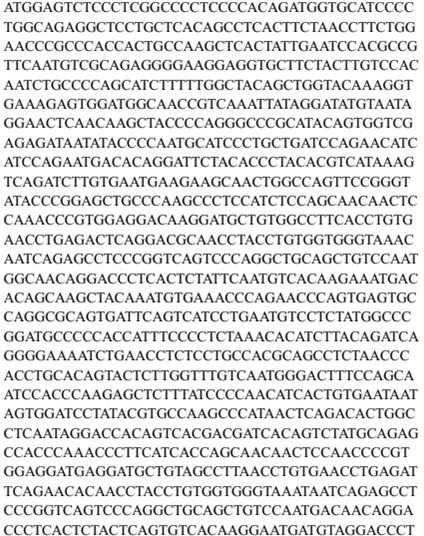
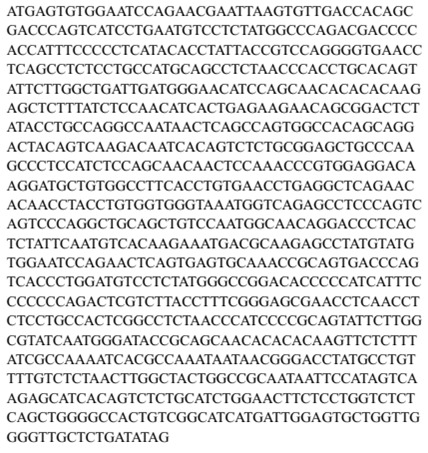


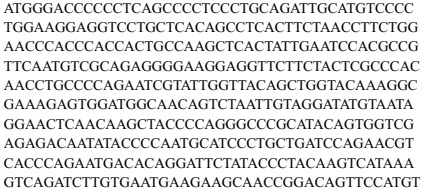
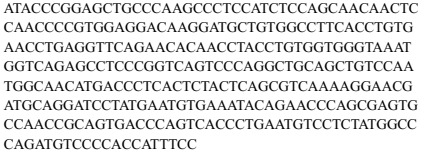


根據製造商的方案,使用Ultrapure RNA套組(kit)(目錄號74104,德國的凱傑公司(QIAGEN, Germany))收穫鼠融合瘤細胞以製備總RNA。使用來自英傑公司的cDNA合成套組(目錄號18080-051)合成第一條股cDNA,並使用PCR套組(目錄號CW0686,中國北京的康為世紀公司(CWBio, Beijing, China))進行鼠單株抗體的VH和VL基因的PCR擴增。基於先前報導的序列(Brocks等人, Mol Med. [分子醫學] 2001 7(7):461-9)合成用於重鏈可變區(VH)和κ輕鏈可變區(VL)的抗體cDNA選殖的寡核苷酸引物。然後將PCR產物亞選殖到pEASY-Blunt選殖載體(目錄號CB101-02,中國的全式金公司(TransGen, China))中,並定序。從DNA定序結果確定VH和VL區的胺基酸序列。Murine fusionoma cells were harvested for total RNA preparation using the Ultrapure RNA kit (cat. no. 74104, QIAGEN, Germany) according to the manufacturer's protocol. The first strand cDNA was synthesized using the cDNA synthesis kit from Invitrogen (Cat. No. 18080-051), and the PCR kit (Cat. No. CW0686, CWBio, Beijing, China) was used for mouse PCR amplification of VH and VL genes of monoclonal antibodies. Antibodies for heavy chain variable region (VH) and kappa light chain variable region (VL) were synthesized based on previously reported sequences (Brocks et al., Mol Med. 2001 7(7):461-9) Oligonucleotide primers for cDNA cloning. The PCR product was then subcloned into the pEASY-Blunt cloning vector (Cat. No. CB101-02, TransGen, China), and sequenced. The amino acid sequences of the VH and VL regions were determined from the DNA sequencing results.
單株抗體藉由比較序列同源性來分析,並基於序列相似性分組(
圖 2)。根據IMGT(Lefranc等人, 1999 Nucleic Acids Research [核酸研究] 27:209-212)系統藉由序列注釋來定義互補決定區(CDR)。代表性殖株BGA13的胺基酸序列在
表 3中列出。
[ 表 3] :胺基酸序列
藉由使用BIAcore TMT-200(通用生命科學公司)的SPR測定,表徵了具有CEA特異性結合(如藉由ELISA和FACS顯示的)以及沒有sCEA干擾的CEA抗體的結合動力學( 圖 3A)。簡言之,將抗鼠IgG抗體固定在活化的CM5生物感測器晶片(目錄號BR100530,通用生命科學公司)上。使純化的鼠抗體流過晶片表面並被抗鼠IgG抗體捕獲。然後使純化的CHIM、CEA-v、CEA或猴CEA重組蛋白的連續稀釋液(6.0 nM至2150 nM)流過晶片表面,並藉由使用一對一Langmuir結合模型(BIA評估軟體,通用生命科學公司)分析表面電漿共振信號的變化以計算締合速率( k on)和解離速率( k off)。將平衡解離常數( K D)計算為比率 k off/ k on。BGA13的結合親和力概況在下 表 4中示出。 The binding kinetics of CEA antibodies with CEA-specific binding (as shown by ELISA and FACS) and without sCEA interference were characterized by SPR assay using a BIAcore ™ T-200 (General Life Sciences) ( FIG. 3A ) . Briefly, anti-mouse IgG antibodies were immobilized on activated CM5 biosensor wafers (Catalog No. BR100530, General Life Sciences). Purified murine antibodies were flowed over the wafer surface and captured by anti-mouse IgG antibodies. Serial dilutions (6.0 nM to 2150 nM) of purified CHIM, CEA-v, CEA, or monkey CEA recombinant proteins were then flowed over the chip surface and analyzed by using a one-to-one Langmuir binding model (BIA Evaluation Software, General Life Sciences). company) to analyze changes in the surface plasmon resonance signal to calculate the association rate ( k on ) and dissociation rate ( k off ). The equilibrium dissociation constant (KD ) was calculated as the ratio koff /kon . The binding affinity profile of BGA13 is shown in Table 4 below.
通過抗原ELISA檢查BGA13的結合概況,觀察到純化的BGA13與huCEA和猴CEA的結合,這表明BGA13對可溶性huCEA和猴CEA係弱結合劑,或者可溶性CEA在固定時具有不同的構象(
圖 3B)。對於該實驗,將sCEA、CHIM、猴CEA、CEA-v和BSA以10 µg/ml的高濃度在4°C下包被在96孔板中過夜。BGA13或對照抗體ab4451(目錄號ab4451,美國的艾博抗公司(abcam, USA))以2 µg/ml的濃度孵育1小時。使用HRP-連接的抗小鼠IgG抗體(目錄號7076S,美國的細胞傳導技術公司)和底物(目錄號00-4201-56,美國的伊生物技術公司)進行顯色,並使用酶標儀(SpectraMax Paradigm,美國的分子設備公司)測量450 nm波長處的吸光度信號。
[ 表 4] :藉由 SPR 比較 BGA13 結合親和力
通過流式細胞術評估可溶性CEA的存在對各種CEA抗體與CEA表現細胞的特異性結合之影響。簡言之,在20 µg/ml額外的重組可溶性CEA蛋白的存在下,將表現人CEA的細胞(10 5個細胞/孔)與2 µg/ml純化的CEA鼠單株抗體一起孵育,隨後與Alexa Fluro-647標記的山羊抗小鼠IgG抗體(目錄號A0473,中國的碧雲天生物技術公司)結合。使用流式細胞儀(Guava easyCyte™ 8HT,美國的默克密理博公司)定量細胞螢光。如 圖 4A 和圖 4B所示,BGA13與CEA表現細胞的結合不受可溶性CEA存在的影響。 實例 5. 鼠抗人 CEA 抗體的人源化 mAb 人源化和工程化 The effect of the presence of soluble CEA on the specific binding of various CEA antibodies to CEA expressing cells was assessed by flow cytometry. Briefly, human CEA-expressing cells ( 105 cells/well) were incubated with 2 µg/ml purified mouse monoclonal antibody to CEA in the presence of 20 µg/ml additional recombinant soluble CEA protein, followed by incubation with Alexa Fluro-647-labeled goat anti-mouse IgG antibody (Cat. No. A0473, Beyond Biotech, China) was conjugated. Cell fluorescence was quantified using a flow cytometer (Guava easyCyte™ 8HT, Merck Millipore, USA). As shown in Figures 4A and 4B , the binding of BGA13 to CEA expressing cells was not affected by the presence of soluble CEA. Example 5. Humanized mAb humanization and engineering of mouse anti-human CEA antibody
對於BGA13的人源化,藉由在IMGT和NCBI的人免疫球蛋白基因數據庫中進行序列比較,搜索人種系IgG基因中與BGA13可變區的cDNA序列具有高度同源性的序列。選擇以高頻率存在於人抗體庫(Glanville等人,2009 PNAS [美國國家科學院院刊] 106:20216-20221)中並且與BGA13高度同源的人IGVH和IGVL基因作為人源化的模板。在人源化之前,將BGA13重鏈和輕鏈可變結構域分別與命名為人IgG1wt的野生型人IgG1恒定區(SEQ ID NO: 87)和人κ恒定(CL)區(SEQ ID NO: 88)融合。
[ 表 5] :胺基酸序列
藉由CDR移植進行人源化(Methods in Molecular Biology [分子生物學方法], 第248卷: Antibody Engineering, Methods and Protocols [抗體工程、方法和方案], Humana Press [胡馬納出版社])並將BGA13抗體以人IgG1形式工程化。在第一輪人源化中,框架區中從鼠到人胺基酸殘基的突變由模擬的3D結構指導,並且在人源化抗體BGA13的第一版本BGA131中保留了對於維持CDR的規範結構具有結構重要性的鼠框架殘基(重鏈和輕鏈的胺基酸序列在SEQ ID NO: 89和90中示出)。
[ 表 6] :胺基酸序列
具體地,將BGA13 VL的CDR移植到保留了2個鼠框架殘基(N66和V68)的人種系可變基因IGVK1-27的框架中(輕鏈可變結構域的胺基酸序列在SEQ ID NO: 92中示出)。將BGA13 VH的CDR移植到保留了5個鼠框架(L39、I53、Y55、N66、S68)殘基的人種系可變基因IGVH1-46的框架中(重鏈可變結構域的胺基酸序列在SEQ ID NO: 91中示出)。
[ 表 7] :胺基酸序列
使用內部開發的表現載體將BGA13-1構建為人全長抗體形式,該等表現載體含有野生型人IgG1的恒定區,具有容易適應的亞選殖位點。藉由將上述兩種構建體共轉染到293G細胞中並使用蛋白A柱(目錄號17543802,通用生命科學公司)純化來實現BGA13-1抗體的表現和製備。將純化的抗體在PBS中濃縮至0.5-5 mg/mL並以等分試樣儲存在-80°C冰箱中。BGA13-1 was constructed as a human full-length antibody format using in-house developed expression vectors containing the constant region of wild-type human IgG1 with easily adaptable subcloning sites. Expression and production of the BGA13-1 antibody was achieved by co-transfecting the above two constructs into 293G cells and purifying using a protein A column (Catalog No. 17543802, General Life Sciences). Concentrate the purified antibody to 0.5-5 mg/mL in PBS and store in aliquots in a -80 °C freezer.
使用BGA131,進行額外數量的單個或多個胺基酸改變,將VH和VL框架區中的人殘基轉化為相應的鼠種系殘基,其分別包括VH中的V68A、R72A和V79A以及VL中的V43S。這產生BGA132(VH中的V68A、R72A)、BGA133(VH中的V79A)、BGA134(VH中的V68A、R72A、V79A)、BGA135(VL中的V43S)、BGA136(VH中的V68A、R72A和VL中的V43S)、BGA137(VH中的V79A、VL中的V43S)和BGA138(VH中的V68A、R72A、V79A和VL中的V43S)。所有含有修飾的抗體都具有與BGA131相似的結合活性,並且沒有一種改變消除結合。Using BGA131, an additional number of single or multiple amino acid changes were made to convert human residues in the VH and VL framework regions to the corresponding murine germline residues, which include V68A, R72A, and V79A in VH and VL, respectively V43S in. This produces BGA132 (V68A, R72A in VH), BGA133 (V79A in VH), BGA134 (V68A, R72A, V79A in VH), BGA135 (V43S in VL), BGA136 (V68A, R72A in VH, and VL V43S in VH), BGA137 (V79A in VH, V43S in VL) and BGA138 (V68A, R72A, V79A in VH and V43S in VL). All antibodies containing modifications had similar binding activity to BGA131, and none of the changes abolished binding.
為了去除翻譯後修飾(PTM)位點,藉由基於BGA131序列在CDR和框架區中引入突變來進行進一步工程化,該等突變包括VH區中的N52T、N54Q、N59S、N102G、N104Q和S61A胺基酸改變。這產生BGA131A(N52T(VH))、BGA131B(N54Q(VH))、BGA131C(N59S(VH))、BGA131D(N102G(VH))、BGA131E(N104Q(VH))和BGA131F(N54Q、N59S、S61A(VH)),並且所有抗體都具有與BGA131相似的結合特異性,沒有一種改變消除結合。在保持特異性的同時,還考慮了胺基酸組成和表現水平。使用在特定位置含有突變的引物和定點誘變套組(目錄號FM111-02,中國北京的全式金公司)進行所有人源化突變。藉由序列分析驗證所需的突變。與BGA13-1相比,BGA13-1F具有顯著降低的結合親和力,沒有糖基化位點,但具有高表現水平(
表 8)。
[ 表 8] :胺基酸序列
藉由標準分子生物學技術使用噬菌粒載體pCANTAB 5E(通用電氣醫療集團(GE Healthcare))構建噬菌粒,該噬菌粒被設計成在M13噬菌體的表面上展示BGA13-1F Fab片段作為與基因-3次要外殼蛋白片段的N末端的融合體。在基因-3序列之前有一個琥珀終止密碼子,以允許直接從噬菌粒殖株表現Fab片段。使用噬菌粒作為模板來構建含有10 8個獨特成員的噬菌體展示文庫。 Phagemid was constructed by standard molecular biology techniques using the phagemid vector pCANTAB 5E (GE Healthcare), which was designed to display the BGA13-1F Fab fragment on the surface of M13 phage as Fusion to the N-terminus of the gene-3 minor coat protein fragment. An amber stop codon precedes the gene-3 sequence to allow expression of Fab fragments directly from phagemid colonies. Phagemids were used as templates to construct a phage display library containing 108 unique members.
構建兩個文庫(H-AM、L-AM),分別隨機化重鏈和輕鏈中的CDR位置。所有三個CDR在每個文庫中隨機化,但每個CDR在每個殖株中具有最多一個突變,HCDR3除外,其可具有兩個同時突變。每個位置用編碼任何胺基酸的NNK密碼子(IUPAC編碼)或琥珀終止密碼子隨機化。組合的重鏈和輕鏈文庫設計具有5.0 × 10 6個獨特全長殖株的潛在多樣性,沒有終止密碼子或半胱胺酸密碼子,並且預期分佈分別為約0.02%、1.1%、17%和82%的殖株分別具有0、1、2和3個突變。由於HCDR3區域中的引物設計,預期一小部分重鏈殖株具有4個突變。作為第一步,使用pCANTAB 5E(作為模板)和含有隨機化CDR3位置的引物擴增DNA片段(參見 圖 5A 和圖 5B)。然後將PCR產物凝膠純化並與含有隨機化CDR2位置的引物組裝。用針對隨機CDR1位置的引物重複該過程。然後藉由重疊PCR將所得的重鏈或輕鏈的PCR產物與其相應的CH片段或CL片段組裝。藉由重疊PCR將片段進一步與沒有突變的輕鏈或重鏈組裝。然後將所得片段凝膠純化,並在NcoI/NotI消化後與pCANTAB 5E連接。藉由電穿孔將純化的連接物轉化到TG1細菌中。來自每個文庫的48個殖株的定序證實了每個位置的隨機化(數據未示出),儘管由於取樣深度有限,並非在每個位置都觀察到所有的胺基酸突變。約52%和55%的輕鏈和重鏈文庫具有全長隨機殖株,足以覆蓋設計的所有潛在多樣性,即使在寡核苷酸合成和文庫構建中存在適度的摻入偏差,也會產生10 8個獨立殖株。 實例 7. 親和力成熟的人源化 BGA13 變體的產生 文庫選擇和篩選 Two libraries (H-AM, L-AM) were constructed to randomize the CDR positions in the heavy and light chains, respectively. All three CDRs were randomized in each library, but each CDR had at most one mutation per clone, except HCDR3, which could have two simultaneous mutations. Each position was randomized with an NNK codon (IUPAC code) or an amber stop codon encoding any amino acid. The combined heavy and light chain library design has a potential diversity of 5.0 × 10 unique full-length clones, no stop or cysteine codons, and expected distributions of approximately 0.02%, 1.1%, 17%, respectively and 82% of the colonies had 0, 1, 2 and 3 mutations, respectively. Due to the primer design in the HCDR3 region, a small fraction of the heavy chain clones were expected to have 4 mutations. As a first step, a DNA fragment was amplified using pCANTAB 5E (as template) and primers containing randomized CDR3 positions (see Figure 5A and Figure 5B ). PCR products were then gel purified and assembled with primers containing randomized CDR2 positions. This process was repeated with primers targeting random CDR1 positions. The resulting PCR products of the heavy or light chains were then assembled with their corresponding CH or CL fragments by overlap PCR. The fragments were further assembled with light or heavy chains without mutations by overlap PCR. The resulting fragment was then gel purified and ligated with pCANTAB 5E after NcoI/NotI digestion. The purified ligation was transformed into TG1 bacteria by electroporation. Sequencing of 48 colonies from each library confirmed randomization at each position (data not shown), although not all amino acid mutations were observed at every position due to limited sampling depth. Approximately 52% and 55% of the light and heavy chain libraries had full-length random colonies, enough to cover all potential diversity in the design, yielding 10 even with modest incorporation bias in oligonucleotide synthesis and library construction. 8 independent colonies. Example 7. Generation of affinity matured humanized BGA13 variants Library selection and screening
使用標準方案藉由噬菌體展示進行親和力成熟的人源化BGA13 Fab的產生(Silacci等人, (2005) Proteomics [蛋白質組學], 5, 2340-50;Zhao等人, (2014) PLoS One [公共科學圖書館:綜合], 9, e111339)。對於第一輪和第二輪選擇,在免疫管(目錄號470319,賽默飛世爾科技公司(ThermoFisher))中對固定化的CHIM進行競爭選擇。簡言之,免疫管用1 ml CHIM(5 µg/ml的PBS溶液)在4°C下包被過夜。在各種濃度的BGA13-1F IgG(第1輪,1 µg/ml;第2輪,5 µg/ml)存在下,將所有親和力成熟文庫與包被的免疫管一起孵育1小時。對於第三輪和第四輪選擇,使用L929/huCEA細胞(第3輪)或LOVO細胞(ATCC CCL-229)(第4輪)進行細胞淘選,其中HEK293細胞作為耗竭細胞。在四輪選擇之後,挑選單個殖株並使用標準方案製備含有噬菌體的上清液。對ELISA陽性殖株定序,並分析突變位點。
CDR 中的突變頻率分析 Generation of affinity matured humanized BGA13 Fab by phage display using standard protocols (Silacci et al., (2005) Proteomics [Proteomics], 5, 2340-50; Zhao et al., (2014) PLoS One [public Science Library: General], 9, e111339). For the first and second rounds of selection, competitive selection was performed on immobilized CHIM in immunotubes (Catalog No. 470319, ThermoFisher). Briefly, immunotubes were coated overnight at 4°C with 1 ml of CHIM (5 µg/ml in PBS). All affinity matured libraries were incubated with the coated immunotubes for 1 hr in the presence of various concentrations of BGA13-1F IgG (1 µg/ml for
在四輪選擇之後,每個CDR中的突變頻率相對較高,範圍從HCDR3中的17%到LCDR2中的95%。關於重鏈,在H-AM文庫中鑒定的大約一半殖株與親本殖株相同。其他殖株在HCDR2中的Q54N處含有一個回復突變。After four rounds of selection, the frequency of mutations in each CDR was relatively high, ranging from 17% in HCDR3 to 95% in LCDR2. Regarding the heavy chain, approximately half of the clones identified in the H-AM library were identical to the parental strains. The other clones contained a back mutation at Q54N in HCDR2.
在分析輕鏈時,突變更加多樣化。兩個位點分別在LCDR1的幾乎所有殖株中都發生了突變。輕鏈殘基29和31分別在47.09%和35.29%的殖株中從Ile突變為Gln和從Gly突變為Gln。位置29不僅具有高頻率的Gln突變,而且具有突變為酪胺酸的殖株子集。位置31不僅具有高頻率的Gln突變,而且有約12.5%的機會突變為Leu。由於文庫設計限制,沒有發現位置29和31的突變彼此結合。然而,這兩個位點中的每一個中的突變通常與其他CDR中的突變組合。關於LCDR2,只有A51在至少64.71%的殖株中發生突變,但沒有任何明顯的模式,其包括大的疏水和極性殘基,諸如Tyr、Phe、Thr和Asn。關於LCDR3,兩個位點在至少50%的殖株中發生了突變。輕鏈殘基90和92分別在11.76%和47.06%的殖株中從His突變為Leu和從Tyr突變為Leu。
圖 6示出了四輪選擇後輕鏈CDR區的序列差異。
所選擇的人源化 BGA13 變體的表現 Mutations were more diverse when analyzing light chains. Two loci were mutated in almost all colonies of LCDR1 respectively.
進行了突變的組合。將來自所選噬菌體殖株的輕鏈可變區亞選殖到人κ輕鏈表現哺乳動物表現載體中。將輕鏈表現載體與表現BGA13-1F重鏈的哺乳動物表現載體以1 : 1的比例共轉染到293G細胞中。藉由蛋白A親和層析法(目錄號17543802,通用生命科學公司)從培養上清液中純化CEA抗體形式。將純化的抗體在PBS中濃縮至0.5-5 mg/mL並以等分試樣儲存在-80°C冰箱中。 親和力成熟的人源化 BGA13 變體的表徵 Combinations of mutations were made. The light chain variable regions from selected phage colonies were subcloned into human kappa light chain expressing mammalian expression vectors. The light chain expression vector and the mammalian expression vector expressing the BGA13-1F heavy chain were co-transfected into 293G cells at a ratio of 1:1. Antibody forms of CEA were purified from culture supernatants by protein A affinity chromatography (Cat# 17543802, General Life Sciences). Concentrate the purified antibody to 0.5-5 mg/mL in PBS and store in aliquots in a -80 °C freezer. Characterization of affinity matured humanized BGA13 variants
藉由使用BIAcore™ T-200(通用生命科學公司)的SPR測定(
表 9)和流式細胞術(
圖 7)進行BGA13-1F和其他親和力成熟殖株的親和力比較。對於該實驗,將抗人IgG(Fc)抗體固定在活化的CM5生物感測器晶片(目錄號BR100839,通用生命科學公司)上。抗CEA抗體流過晶片表面並被抗人Fab抗體捕獲。然後使CHIM的連續稀釋液(1.37 nM至333 nM)流過晶片表面,並藉由使用一對一Langmuir結合模型(BIA評估軟體,通用生命科學公司)分析表面電漿共振信號的變化以計算締合速率(
k on)和解離速率(
k off)。對於流式細胞術,將表現CEA的細胞(10
5個細胞/孔)與各種濃度的純化的親和力成熟抗體一起孵育,隨後與Alexa Fluro-647標記的抗hu IgG Fc抗體(目錄號409320,美國的百進生化技術公司(BioLegend, USA))結合。使用流式細胞儀(Guava easyCyte™ 8HT,美國的默克密理博公司)定量細胞螢光。將平衡解離常數(
K D)計算為比率
k off/
k on。BGA131F-ph-L(SEQ ID NO: 95)和BGA131F-ph-M(SEQ ID NO: 96)顯示出對huCEA表面蛋白的親和力提高(
表 10)。
[ 表 9] :藉由 SPR 比較結合親和力
藉由在基於BGA131F-ph-M模板的CDR中引入突變進行了進一步的工程化,該模板包括VH中的W33Y、Q54N和S59N以及VL中的T51Y。這產生BGA1132A(W33Y(VH))、BGA1132B(Q54N(VH))、BGA 1132C(S59N(VH))、BGA 1131A(T51Y(VL)),它們都具有改進的與BGA-1131F的結合活性,其中改進最大的抗體最終產生具有(W33Y(VH)、T51Y(VL))改變的BGA113抗體(
表 11),序列在
表 12中示出。
[ 表 11] :藉由 SPR 比較與 CHIM 的結合親和力 


為了進一步改善生物化學/生物物理學性質,藉由在CDR和框架區中引入取代來優化BGA113(
表 13)。選擇大的疏水殘基並將其改變為極性殘基,K13和Q53除外,它們係基於觀察到的人VH種系之間的差異而選擇的。考慮因素包括胺基酸組成、熱穩定性(Tm)、表面疏水性和等電點(pI),同時保持功能活性。如實例6所述,藉由選殖到載體pCANTAB-5E中以Fab形式表現變體。然後藉由ELISA和SPR分析篩選含有Fab的上清液的CEA結合。選擇沒有顯著親和力降低的變體並鑒定出可耐受取代的殘基。證明輕鏈中的L92E,重鏈中的K13E、Q54E、Y57D/E和Y57K對親和力的影響極小。因此,表現和純化具有單個鑒定出的突變或組合的IgG形式的BGA113變體,如實例8中所述。進行SPR研究和FACS分析並總結在
表 14中。證實了特異性和表位沒有由於引入的胺基酸取代而發生改變(數據未示出)。總之,結果表明該等單一或組合突變(重鏈中的K13E、Q54E、Y57D和Y57K,輕鏈中的L92E)對親和力的影響極小,L92E除外,它略微降低了與CEA的結合親和力。總之,Y57K改變優化了BGA113抗體的表現、CEA結合和親和力,從而產生BGA113K(
表 1)。
[ 表 13] :用於取代的殘基的總結
BGA113K和先前揭露的CEA抗體(在U.S. 2012/0251529中命名為抗體2F1)以人IgG1形式產生並使用BIAcore TMT-200(通用生命科學公司)藉由SPR測定表徵它們的結合動力學。 BGA113K and a previously disclosed CEA antibody (designated antibody 2F1 in US 2012/0251529) were produced in human IgG1 format and their binding kinetics were characterized by SPR assay using a BIAcore ™ T-200 (General Life Sciences).
為了獲得該數據,將抗人IgG(Fc)抗體固定在活化的CM5生物感測器晶片(目錄號BR100839,通用生命科學公司)上。BGA113K抗體流過晶片表面並被抗人Fab抗體捕獲。然後使可溶性huCEA或cynoCEA(目錄號:CE5-C52H5,北京百普賽斯生物科技股份有限公司(Acrobiosystem))的連續稀釋液(1.37 nM至2150 nM)流過晶片表面,並藉由使用一對一Langmuir結合模型(BIA評估軟體,通用生命科學公司)分析表面電漿共振信號的變化以計算締合速率( k on)和解離速率( k off)。將平衡解離常數( K D)計算為比率 k off/ k on。BGA113K和2F1對照抗體表現出不同的結合親和力。BGA113K對人CEA具有非常高的親和力,對cynoCEA也具有相當的親和力,如下 表 15所示。 To obtain this data, an anti-human IgG (Fc) antibody was immobilized on an activated CM5 biosensor wafer (cat# BR100839, General Life Sciences). BGA113K antibody flowed over the wafer surface and was captured by anti-human Fab antibody. Serial dilutions (1.37 nM to 2150 nM) of soluble huCEA or cynoCEA (Catalogue No.: CE5-C52H5, Acrobiosystem) were then flowed over the surface of the wafer, and filtered by using a pair of A Langmuir binding model (BIA Evaluation Software, General Life Sciences) analyzed changes in the surface plasmon resonance signal to calculate association rates ( k on ) and dissociation rates ( k off ). The equilibrium dissociation constant (KD ) was calculated as the ratio koff /kon . BGA113K and 2F1 control antibodies exhibit different binding affinities. BGA113K has a very high affinity for human CEA and a considerable affinity for cynoCEA, as shown in Table 15 below.
對於流式細胞術,將表現CEA的MKN45細胞(10
5個細胞/孔)與各種濃度的純化的親和力成熟抗體一起孵育,隨後與Alexa Fluro-647標記的抗hu IgG Fc抗體(目錄號409320,美國的百進生化技術公司)結合。使用流式細胞儀(Guava easyCyte™ 8HT,美國的默克密理博公司)定量細胞螢光。如
圖 8所示,BGA-113K以劑量反應方式與活細胞上的天然CEA特異性結合,EC50為2.92 µg/ml。
[ 表 15] :藉由 SPR 比較抗 CEA 抗體的結合親和力
通過ELISA和流式細胞術評估BGA113K的脫靶特異性。對於流式細胞術,將CEACAM3(SEQ ID NO: 65)、CEACAM7(SEQ ID NO: 66)或CEACAM8(SEQ ID NO: 67)瞬時轉染到HEK293細胞(10 5個細胞/孔)中,然後與2 µg/ml純化的BGA113K一起孵育,隨後與Alexa Fluor-647標記的抗huIgG Fc抗體(目錄號409320,美國的百進生化技術公司)結合。使用流式細胞儀(Guava easyCyte™ 8HT,美國的默克密理博公司)定量細胞螢光。對於抗原ELISA、CEACAM1(SEQ ID NO: 64)(目錄號10822-H08H,中國的義翹神州公司(Sino Biological, China))、CHIM(SEQ ID NO: 63)、CEA(SEQ ID NO: 55)或CEACAM6(SEQ ID NO: 57)以10 µg/ml的濃度在4°C下包被在96孔板中過夜。使用HRP-連接的抗人Fc(Fc特異性)IgG抗體(目錄號A0170,美國的西格瑪公司(Sigma, USA))和底物(目錄號00-4201-56,美國的伊生物技術公司)進行顯色,並使用酶標儀(SpectraMax Paradigm,美國的分子設備公司)測量450 nm波長處的吸光度信號。如 圖 9A 至圖 9B所示,沒有觀察到與其他CEACAM家族成員的交叉反應性,因此BGA113K僅表現出對CEA的特異性( 圖 9A-B中的CEACAM5)。 實例 12. 可溶性 huCEA 對 BGA113K 與 CEA 表現細胞的結合之影響 The off-target specificity of BGA113K was assessed by ELISA and flow cytometry. For flow cytometry, CEACAM3 (SEQ ID NO: 65), CEACAM7 (SEQ ID NO: 66) or CEACAM8 (SEQ ID NO: 67) were transiently transfected into HEK293 cells ( 105 cells/well), then Incubate with 2 µg/ml of purified BGA113K, followed by binding to Alexa Fluor-647-labeled anti-huIgG Fc antibody (cat. no. 409320, Biotech, USA). Cell fluorescence was quantified using a flow cytometer (Guava easyCyte™ 8HT, Merck Millipore, USA). For antigen ELISA, CEACAM1 (SEQ ID NO: 64) (Cat. No. 10822-H08H, Sino Biological, China), CHIM (SEQ ID NO: 63), CEA (SEQ ID NO: 55) Or CEACAM6 (SEQ ID NO: 57) was coated in 96-well plates overnight at 4°C at a concentration of 10 µg/ml. Using HRP-linked anti-human Fc (Fc-specific) IgG antibody (Cat. No. A0170, Sigma, USA) and substrate (Cat. No. 00-4201-56, Yi Biotech, USA) Color was developed, and the absorbance signal at a wavelength of 450 nm was measured using a microplate reader (SpectraMax Paradigm, Molecular Devices, USA). As shown in Figures 9A - 9B , no cross-reactivity with other CEACAM family members was observed, thus BGA113K only exhibited specificity for CEA (CEACAM5 in Figure 9A-B ). Example 12. Effect of Soluble huCEA on Binding of BGA113K to CEA Expressing Cells
為了確定可溶性CEA(sCEA)是否對BGA113K的特異性結合有任何影響,將不同濃度(0、0.5、1、2 µg/ml)的重組可溶性CEA與(0.01-100 µg/ml)BGA113K預混合並孵育5分鐘。然後將混合物與2 × 10 5個CEA表現細胞諸如MKN45細胞在4°C下孵育30分鐘。將細胞用第二抗體抗huFc-APC(目錄號409320,美國的百進生化技術公司)染色並藉由流式細胞術分析。在2 µg/ml重組sCEA存在下,BGA113K與CEA表現細胞的結合不受影響。該結果針對MKN45細胞顯示( 圖 10),並表明BGA113K對CEA的膜結合形式的特異性。 實例 13. BGA113 誘導對 CEA + 腫瘤細胞的有效 ADCC 作用 To determine whether soluble CEA (sCEA) had any effect on the specific binding of BGA113K, different concentrations (0, 0.5, 1, 2 µg/ml) of recombinant soluble CEA were premixed with (0.01-100 µg/ml) BGA113K and Incubate for 5 minutes. The mixture is then incubated with 2 x 10⁵ CEA expressing cells such as MKN45 cells for 30 minutes at 4°C. Cells were stained with the secondary antibody anti-huFc-APC (Cat# 409320, Biogen Biotech, USA) and analyzed by flow cytometry. Binding of BGA113K to CEA expressing cells was unaffected in the presence of 2 µg/ml recombinant sCEA. This result was shown for MKN45 cells ( Figure 10 ) and indicates the specificity of BGA113K for the membrane-bound form of CEA. Example 13. BGA113 Induces Potent ADCC Effects on CEA + Tumor Cells
為了確定野生型IgG1形式的BGA113是否可以誘導抗體依賴性細胞毒性(ADCC),將表現CD16(V158)的NK92MI細胞(NK92MI/CD16V)用作效應細胞,並與表現CEA的小鼠結腸癌細胞(CT26 - ATCC CRL-2638)共培養。在指定濃度(0.00005-5 μg/ml)的BGA113存在下,以1 : 1的E:T比率進行共培養5小時,並藉由乳酸脫氫酶(LDH)釋放確定細胞毒性。使用CytoTox™ 96非放射性細胞毒性測定套組(威斯康辛州麥迪森的普洛麥格公司(Promega, Madison, WI))測量上清液中LDH的量,並根據製造商的說明計算特異性裂解的量。如 圖 11所示,BGA113可在體外誘導ADCC,EC 50為約6.7 ng/ml。 實例 14. BGA113 的體內抗腫瘤功效 To determine whether the wild-type IgG1 form of BGA113 could induce antibody-dependent cellular cytotoxicity (ADCC), CD16(V158)-expressing NK92MI cells (NK92MI/CD16V) were used as effector cells and compared with CEA-expressing mouse colon carcinoma cells ( CT26 - ATCC CRL-2638) co-culture. In the presence of BGA113 at the indicated concentrations (0.00005-5 μg/ml), co-culture was carried out at an E:T ratio of 1:1 for 5 hours, and cytotoxicity was determined by lactate dehydrogenase (LDH) release. The amount of LDH in the supernatant was measured using the CytoTox™ 96 Non-Radioactive Cytotoxicity Assay Kit (Promega, Madison, WI) and the LDH of specific lysis was calculated according to the manufacturer's instructions. quantity. As shown in Figure 11 , BGA113 can induce ADCC in vitro with an EC 50 of about 6.7 ng/ml. Example 14. In vivo antitumor efficacy of BGA113
為了確定BGA113針對CEA
+腫瘤細胞的體內功效,將NK92MI/CD16V細胞(5 × 10
6)與CT26/CEA細胞(10
6)混合並皮下注射到NCG小鼠中。在腫瘤注射當天開始,每週兩次給予BGA113(0.12、0.62或3.1 mg/kg)或媒介物對照(每組7隻小鼠)。與媒介物相比,3.1 mg/kg劑量的BGA113表現出少量的腫瘤抑制,儘管與媒介物對照的差異在統計學上不顯著(P > 0.05)(
圖 12)。
參考文獻Abdul-Wahid, A., M. Cydzik, N. W. Fischer, A. Prodeus, J. E. Shively, A. Martel, S. Alminawi, Z. Ghorab, N. L. Berinstein & J. Gariépy (2018) Serum-derived carcinoembryonic antigen (CEA) activates fibroblasts to induce a local re-modeling of the extracellular matrix that favors the engraftment of CEA-expressing tumor cells.International Journal of Cancer, 143, 1963-1977.
Abdul-Wahid, A., E. H. B. Huang, M. Cydzik, E. Bolewska-Pedyczak & J. Gariépy (2014) The carcinoembryonic antigen IgV-like N domain plays a critical role in the implantation of metastatic tumor cells. Molecular Oncology, 8, 337-350.
Augugliaro, R., S. Parolini, R. Castriconi, E. Marcenaro, C.Cantoni, M. Nanni, L. Moretta, A. Moretta & C.Bottino (2003) Selective cross-talk among natural cytotoxicity receptors in human natural killer cells.
Eur J Immunol,33
,1235-41.
Bacac, M., C.Klein & P. Umana (2016) CEA TCB: A novel head-to-tail 2:1 T cell bispecific antibody for treatment of CEA-positive solid tumors.Oncoimmunology, 5, e1203498.
Barrow, A. D., C.J. Martin & M. Colonna (2019) The Natural Cytotoxicity Receptors in Health and Disease.
Front Immunol,10
,909.
Beauchemin, N. 2017.CEA Gene Family.In Encyclopedia of Cancer, ed. M. Schwab, 870-874.Berlin, Heidelberg: Springer Berlin Heidelberg.
Beck, A., T. Wurch, C.Bailly & N. Corvaia (2010) Strategies and challenges for the next generation of therapeutic antibodies.
Nat Rev Immunol,10
,345-52.
Biron, C.A., K. B. Nguyen, G. C. Pien, L. P. Cousens & T. P. Salazar-Mather (1999) Natural killer cells in antiviral defense: function and regulation by innate cytokines.
Annu Rev Immunol,17
,189-220.
Brocks, B., P. Garin-Chesa, E. Behrle, J. E. Park, W. J. Rettig, K. Pfizenmaier & D. Moosmayer (2001) Species-crossreactive scFv against the tumor stroma marker "fibroblast activation protein" selected by phage display from an immunized FAP-/- knock-out mouse. Molecular medicine (Cambridge, Mass.), 7, 461-469.
Chau, I., M. J. Allen, D. Cunningham, A. R. Norman, G. Brown, H. E. Ford, N. Tebbutt, D. Tait, M. Hill, P. J. Ross & J. Oates (2004) The value of routine serum carcino-embryonic antigen measurement and computed tomography in the surveillance of patients after adjuvant chemotherapy for colorectal cancer. J Clin Oncol, 22, 1420-9.
de St Groth, S. F. & D. Scheidegger (1980) Production of monoclonal antibodies: strategy and tactics. J Immunol Methods, 35, 1-21.
Dotan, E., A. Starodub, J. Berlin, C.H. Lieu, M. J. Guarino, J. Marshall, J. R. Hecht, S. J. Cohen, W. A. Messersmith, P. P. Maliakal, W. A. Wegener, R. M. Sharkey & D. M. Goldenberg (2015) A new anti-CEA-SN-38 antibody-drug conjugate (ADC), IMMU-130, is active in controlling metastatic colorectal cancer (mCRC) in patients (pts) refractory or relapsing after irinotecan-containing chemotherapies: Initial results of a phase I/II study. Journal of Clinical Oncology, 33, 2505-2505.
Durbin, H., S. Young, L. M. Stewart, F. Wrba, A. J. Rowan, D. Snary & W. F. Bodmer (1994) An epitope on carcinoembryonic antigen defined by the clinically relevant antibody PR1A3.Proc Natl Acad Sci U S A, 91, 4313-7.
Engler, F. A., J. R. Polli, T. Li, B. An, M. Otteneder, J. Qu & J. P. Balthasar (2018) "Catch-and-Release" Anti-Carcinoembryonic Antigen Monoclonal Antibody Leads to Greater Plasma and Tumor Exposure in a Mouse Model of Colorectal Cancer. J Pharmacol Exp Ther, 366, 205-219.
Fischer, E., K. Chaitanya, T. Wuest, A. Wadle, A. M. Scott, M. van den Broek, R. Schibli, S. Bauer & C.Renner (2012) Radioimmunotherapy of fibroblast activation protein positive tumors by rapidly internalizing antibodies.
Clin Cancer Res,18
,6208-18.
Flamini, E., L. Mercatali, O. Nanni, D. Calistri, R. Nunziatini, W. Zoli, P. Rosetti, N. Gardini, A. Lattuneddu, G. M. Verdecchia & D. Amadori (2006) Free DNA and carcinoembryonic antigen serum levels: an important combination for diagnosis of colorectal cancer. Clin Cancer Res, 12, 6985-8.
Gangopadhyay, A., D. A. Lazure & P. Thomas (1997) Carcinoembryonic antigen induces signal transduction in Kupffer cells. Cancer Letters, 118, 1-6.
Gauthier, L., A. Morel, N. Anceriz, B. Rossi, A. Blanchard-Alvarez, G. Grondin, S. Trichard, C.Cesari, M. Sapet, F. Bosco, H. Rispaud-Blanc, F. Guillot, S. Cornen, A. Roussel, B. Amigues, G. Habif, F. Caraguel, S. Arrufat, R. Remark, F. Romagne, Y. Morel, E. Narni-Mancinelli & E. Vivier (2019) Multifunctional Natural Killer Cell Engagers Targeting NKp46 Trigger Protective Tumor Immunity.
Cell,177
,1701-1713 e16.
Gold, P. & S. O. Freedman (1965) Demonstration of tumor-specific antigens in human colonic carcinomata by immunological tolerance and absorption techniques. J Exp Med, 121, 439-62.
Goldenberg, D. M. (1992) Cancer imaging with CEA antibodies: historical and current perspectives. Int J Biol Markers, 7, 183-8.
Hammarström, S. (1999) The carcinoembryonic antigen (CEA) family: structures, suggested functions and expression in normal and malignant tissues. Seminars in Cancer Biology, 9, 67-81.
Hezareh, M., A. J. Hessell, R. C. Jensen, J. G. van de Winkel & P. W. Parren (2001) Effector function activities of a panel of mutants of a broadly neutralizing antibody against human immunodeficiency virus type 1.
J Virol,75
,12161-8.
Hohenberger, P., P. M. Schlag, T. Gerneth & C.Herfarth (1994) Pre- and postoperative carcinoembryonic antigen determinations in hepatic resection for colorectal metastases.Predictive value and implications for adjuvant treatment based on multivariate analysis.
Ann Surg,219
,135-43.
Hudspeth, K., B. Silva-Santos & D. Mavilio (2013) Natural cytotoxicity receptors: broader expression patterns and functions in innate and adaptive immune cells.
Front Immunol,4
,69.
Hurwitz, E., I. Stancovski, M. Sela & Y. Yarden (1995) Suppression and promotion of tumor growth by monoclonal antibodies to ErbB-2 differentially correlate with cellular uptake.
Proc Natl Acad Sci U S A,92
,3353-7.
Igawa, T., H. Tsunoda, Y. Kikuchi, M. Yoshida, M. Tanaka, A. Koga, Y. Sekimori, T. Orita, Y. Aso, K. Hattori & M. Tsuchiya (2010) VH/VL interface engineering to promote selective expression and inhibit conformational isomerization of thrombopoietin receptor agonist single-chain diabody.
Protein Eng Des Sel,23
,667-77.
Koch, J., A. Steinle, C.Watzl & O. Mandelboim (2013) Activating natural cytotoxicity receptors of natural killer cells in cancer and infection.
Trends Immunol,34
,182-91.
Kuespert, K., S. Pils & C.R. Hauck (2006) CEACAMs: their role in physiology and pathophysiology. Current Opinion in Cell Biology, 18, 565-571.
Kruse, P. H., J. Matta, S. Ugolini & E. Vivier (2014) Natural cytotoxicity receptors and their ligands.
Immunol Cell Biol,92
,221-9.
Lanier, L. L. (2015) NKG2D Receptor and Its Ligands in Host Defense.
Cancer Immunol Res,3
,575-82.
Lee, J. H. & S.-W. Lee (2017) The Roles of Carcinoembryonic Antigen in Liver Metastasis and Therapeutic Approaches. Gastroenterology Research and Practice, 2017, 11.
Lee, K.-A., E.-A. Bae, Y. C. Song, E.-K. Kim, Y.-S. Lee, T.-G. Kim & C.-Y. Kang (2015) A multimeric carcinoembryonic antigen signal inhibits the activation of human T cells by a SHP-independent mechanism: A potential mechanism for tumor-mediated suppression of T-cell immunity.International Journal of Cancer, 136, 2579-2587.
Lefranc, M. P., V. Giudicelli, C.Ginestoux, J. Bodmer, W. Muller, R. Bontrop, M. Lemaitre, A. Malik, V. Barbie & D. Chaume (1999) IMGT, the international ImMunoGeneTics database. Nucleic Acids Res, 27, 209-12.
Liersch, T., J. Meller, M. Bittrich, B. Kulle, H. Becker & D. M. Goldenberg (2007) Update of carcinoembryonic antigen radioimmunotherapy with (131)I-labetuzumab after salvage resection of colorectal liver metastases: comparison of outcome to a contemporaneous control group. Ann Surg Oncol, 14, 2577-90.
Liu, L., W. Zeng, M. A. Wortinger, S. B. Yan, P. Cornwell, V. L. Peek, J. R. Stephens, J. W. Tetreault, J. Xia, J. R. Manro, K. M. Credille, D. W. Ballard, P. Brown-Augsburger, V. Wacheck, C.K. Chow, L. Huang, Y. Wang, I. Denning, J. Davies, Y. Tang, P. Vaillancourt & J. Lu (2014) LY2875358, a neutralizing and internalizing anti-MET bivalent antibody, inhibits HGF-dependent and HGF-independent MET activation and tumor growth.
Clin Cancer Res,20
,6059-70.
Matsuoka, Y., Y. Matsuo, K. Sugano, H. Ohkura, M. Kuroki & M. Kuroki (1990) Characterization of Carcinoembryonic Antigen-related Antigens in Normal Adult Feces. Japanese Journal of Cancer Research, 81, 514-519.
Mechetner, E. (2007) Development and characterization of mouse hybridomas. Methods Mol Biol, 378, 1-13.
Moertel, C.G., T. R. Fleming, J. S. Macdonald, D. G. Haller, J. A. Laurie & C.Tangen (1993) An evaluation of the carcinoembryonic antigen (CEA) test for monitoring patients with resected colon cancer. Jama, 270, 943-7.
Nap, M., M. L. Hammarstrom, O. Bormer, S. Hammarstrom, C.Wagener, S. Handt, M. Schreyer, J. P. Mach, F. Buchegger, S. von Kleist & et al., (1992) Specificity and affinity of monoclonal antibodies against carcinoembryonic antigen. Cancer Res, 52, 2329-39.
Nap, M., K. Mollgard, P. Burtin & G. J. Fleuren (1988) Immunohistochemistry of carcino-embryonic antigen in the embryo, fetus and adult. Tumour Biol, 9, 145-53.
Oberst, M. D., S. Fuhrmann, K. Mulgrew, M. Amann, L. Cheng, P. Lutterbuese, L. Richman, S. Coats, P. A. Baeuerle & S. A. Hammond (2014) CEA/CD3 bispecific antibody MEDI-565/AMG 211 activation of T cells and subsequent killing of human tumors is independent of mutations commonly found in colorectal adenocarcinomas.
MAbs,6
,1571-84.
Pegram, H. J., D. M. Andrews, M. J. Smyth, P. K. Darcy & M. H. Kershaw (2011) Activating and inhibitory receptors of natural killer cells.
Immunol Cell Biol,89
,216-24.
Peng, L., M. D. Oberst, J. Huang, P. Brohawn, C.Morehouse, K. Lekstrom, P. A. Baeuerle, H. Wu, Y. Yao, S. R. Coats, W. Dall'Acqua, M. Damschroder & S. A. Hammond (2012) The CEA/CD3-bispecific antibody MEDI-565 (MT111) binds a nonlinear epitope in the full-length but not a short splice variant of CEA. PloS one, 7, e36412-e36412.
Poul, M. A., B. Becerril, U. B. Nielsen, P. Morisson & J. D. Marks (2000) Selection of tumor-specific internalizing human antibodies from phage libraries.
J Mol Biol,301
,1149-61.
Primrose, J. N., R. Perera, A. Gray, P. Rose, A. Fuller, A. Corkhill, S. George & D. Mant (2014) Effect of 3 to 5 years of scheduled CEA and CT follow-up to detect recurrence of colorectal cancer: the FACS randomized clinical trial. Jama, 311, 263-70.
Richman, P. I. & W. F. Bodmer (1987) Monoclonal antibodies to human colorectal epithelium: markers for differentiation and tumour characterization. Int J Cancer, 39, 317-28.
Ridgway, J. B., L. G. Presta & P. Carter (1996) 'Knobs-into-holes' engineering of antibody CH3 domains for heavy chain heterodimerization.
Protein Eng,9
,617-21.
Saito, G., S. Sadahiro, K. Okada, A. Tanaka, T. Suzuki & A. Kamijo (2016) Relation between Carcinoembryonic Antigen Levels in Colon Cancer Tissue and Serum Carcinoembryonic Antigen Levels at Initial Surgery and Recurrence. Oncology, 91, 85-9.
Sakurai, Y., S. Hirohashi, T. Ohishi, Y. Shimosato, S. Kodaira & O. Abe (1989) Conformational epitopes specific to carcinoembryonic antigen defined by monoclonal antibodies raised against colon cancer xenografts. J Surg Oncol, 42, 39-46.
Sheahan, K., M. J. O'Brien, B. Burke, P. A. Dervan, J. C. O'Keane, L. S. Gottlieb & N. Zamcheck (1990) Differential reactivities of carcinoembryonic antigen (CEA) and CEA-related monoclonal and polyclonal antibodies in common epithelial malignancies. Am J Clin Pathol, 94, 157-64.
Shinmi, D., R. Nakano, K. Mitamura, M. Suzuki-Imaizumi, J. Iwano, Y. Isoda, J. Enokizono, Y. Shiraishi, E. Arakawa, K. Tomizuka & K. Masuda (2017) Novel anticarcinoembryonic antigen antibody-drug conjugate has antitumor activity in the existence of soluble antigen. Cancer Med, 6, 798-808.
Silacci, M., S. Brack, G. Schirru, J. Marlind, A. Ettorre, A. Merlo, F. Viti & D. Neri (2005) Design, construction, and characterization of a large synthetic human antibody phage display library. Proteomics, 5, 2340-50.
Stern, N., G. Markel, T. I. Arnon, R. Gruda, H. Wong, S. D. Gray-Owen & O. Mandelboim (2005) Carcinoembryonic Antigen (CEA) Inhibits NK Killing via Interaction with CEA-Related Cell Adhesion Molecule 1. The Journal of Immunology, 174, 6692-6701.
Stewart, L. M., S. Young, G. Watson, S. J. Mather, P. A. Bates, H. A. Band, R. W. Wilkinson, E. L. Ross & D. Snary (1999) Humanisation and characterisation of PR1A3, a monoclonal antibody specific for cell-bound carcinoembryonic antigen. Cancer Immunol Immunother, 47, 299-306.
Takahashi, T., S. Minami, Y. Tsuchiya, K. Tajima, N. Sakai, K. Suga, S. I. Hisanaga, N. Ohbayashi, M. Fukuda & H. Kawahara (2019) Cytoplasmic control of Rab family small GTPases through BAG6.
EMBO Rep,20.
Thompson, J. A., F. Grunert & W. Zimmermann (1991) Carcinoembryonic antigen gene family: Molecular biology and clinical perspectives. Journal of Clinical Laboratory Analysis, 5, 344-366.
Wong, J. Y., D. Z. Chu, L. E. Williams, D. M. Yamauchi, D. N. Ikle, C.S. Kwok, A. Liu, S. Wilczynski, D. Colcher, P. J. Yazaki, J. E. Shively, A. M. Wu & A. A. Raubitschek (2004) Pilot trial evaluating an 123I-labeled 80-kilodalton engineered anticarcinoembryonic antigen antibody fragment (cT84.66 minibody) in patients with colorectal cancer. Clin Cancer Res, 10, 5014-21.
Wu, J., Y. Song, A. B. Bakker, S. Bauer, T. Spies, L. L. Lanier & J. H. Phillips (1999) An activating immunoreceptor complex formed by NKG2D and DAP10.
Science,285
,730-2.
Wu, T. T. & E. A. Kabat (1970) An analysis of the sequences of the variable regions of Bence Jones proteins and myeloma light chains and their implications for antibody complementarity. J Exp Med, 132, 211-50.
Zhang, T., B. A. Lemoi & C.L. Sentman (2005) Chimeric NK-receptor-bearing T cells mediate antitumor immunotherapy. Blood, 106, 1544-1551.
Zhang, T., X. Song, L. Xu, J. Ma, Y. Zhang, W. Gong, Y. Zhang, X. Zhou, Z. Wang, Y. Wang, Y. Shi, H. Bai, N. Liu, X. Yang, X. Cui, Y. Cao, Q. Liu, J. Song, Y. Li, Z. Tang, M. Guo, L. Wang & K. Li (2018) The binding of an anti-PD-1 antibody to FcgammaRIota has a profound impact on its biological functions.
Cancer Immunol Immunother,67
,1079-1090.
Zhao, L., L. Qu, J. Zhou, Z. Sun, H. Zou, Y. Y. Chen, J. D. Marks & Y. Zhou (2014) High throughput identification of monoclonal antibodies to membrane bound and secreted proteins using yeast and phage display. PLoS One, 9, e111339.
To determine the in vivo efficacy of BGA113 against CEA + tumor cells, NK92MI/CD16V cells (5 × 10 6 ) were mixed with CT26/CEA cells (10 6 ) and injected subcutaneously into NCG mice. BGA113 (0.12, 0.62, or 3.1 mg/kg) or vehicle control (7 mice per group) were administered twice weekly starting on the day of tumor injection. The 3.1 mg/kg dose of BGA113 exhibited a small amount of tumor inhibition compared to vehicle, although the difference from vehicle control was not statistically significant (P > 0.05) ( FIG. 12 ). References Abdul-Wahid, A., M. Cydzik, NW Fischer, A. Prodeus, JE Shively, A. Martel, S. Alminawi, Z. Ghorab, NL Berinstein & J. Gariépy (2018) Serum-derived carcinoembryonic antigen ( CEA) activates fibroblasts to induce a local re-modeling of the extracellular matrix that favors the engraftment of CEA-expressing tumor cells. International Journal of Cancer, 143, 1963-1977. Abdul-Wahid, A., EHB Huang, M. Cydzik , E. Bolewska-Pedyczak & J. Gariépy (2014) The carcinoembryonic antigen IgV-like N domain plays a critical role in the implantation of metastatic tumor cells. Molecular Oncology, 8, 337-350. Augugliaro, R., S. Parolini , R. Castriconi, E. Marcenaro, C.Cantoni, M. Nanni, L. Moretta, A. Moretta & C.Bottino (2003) Selective cross-talk among natural cytotoxicity receptors in human natural killer cells. Eur J Immunol, 33 , 1235-41. Bacac, M., C.Klein & P. Umana (2016) CEA TCB: A novel head-to-tail 2:1 T cell bispecific antibody for treatment of CEA-positive solid tumors. Oncoimmunology, 5, e120 3498. Barrow, AD, CJ Martin & M. Colonna (2019) The Natural Cytotoxicity Receptors in Health and Disease. Front Immunol, 10 , 909. Beauchemin, N. 2017. CEA Gene Family. In Encyclopedia of Cancer, ed. M. Schwab, 870-874. Berlin, Heidelberg: Springer Berlin Heidelberg. Beck, A., T. Wurch, C. Bailly & N. Corvaia (2010) Strategies and challenges for the next generation of therapeutic antibodies. Nat Rev Immunol, 10 , 345-52. Biron, CA, KB Nguyen, GC Pien, LP Cousens & TP Salazar-Mather (1999) Natural killer cells in antiviral defense: function and regulation by innate cytokines. Annu Rev Immunol, 17 , 189-220. Brocks, B., P. Garin-Chesa, E. Behrle, JE Park, WJ Rettig, K. Pfizenmaier & D. Moosmayer (2001) Species-crossreactive scFv against the tumor stroma marker "fibroblast activation protein" selected by phage display from an immunized FAP-/- knock-out mouse. Molecular medicine (Cambridge, Mass.), 7, 461-469. Chau, I., MJ Allen, D. Cunningham, AR Norman, G. Brown, HE Ford, N. Tebbutt, D. Tait , M. Hill, PJ Ross & J. Oates (2004) The value of routine serum carcinoma-embryonic antigen measurement and computed tomography in the surveillance of patients after adjuvant chemotherapy for colorectal cancer. J Clin Oncol, 22, 1420-9. de St Groth, SF & D. Scheidegger (1980) Production of monoclonal antibodies: strategy and tactics. J Immunol Methods, 35, 1-21. Dotan, E., A. Starodub, J. Berlin, CH Lieu, MJ Guarino, J . Marshall, JR Hecht, SJ Cohen, WA Messersmith, PP Maliakal, WA Wegener, RM Sharkey & DM Goldenberg (2015) A new anti-CEA-SN-38 antibody-drug conjugate (ADC), IMMU-130, is active in controlling metastatic colorectal cancer (mCRC) in patients (pts) refractory or relapsing after irinotecan-containing chemotherapy: Initial results of a phase I/II study. Journal of Clinical Oncology, 33, 2505-2505. Durbin, H., S. Young , LM Stewart, F. Wrba, AJ Rowan, D. Snary & WF Bodmer (1994) An epitope on carcinoembryonic antigen defined by the clinically relevant antibody PR1A3.Proc Natl Acad Sci USA, 91, 4313-7. Engler, FA, JR Polli, T. Li, B. An, M. Otteneder, J. Qu & JP Balthasar (2018) "Catch-and-Release" Anti-Carcinoembryonic Antigen Monoclonal Antibody Leads to Greater Plasma and Tumor Exposure in a Mouse Model of Colorectal Cancer. J Pharmacol Exp Ther, 366, 205-219. Fischer, E., K. Chaitanya, T. Wuest, A. Wadle, AM Scott, M. van den Broek, R. Schibli, S. Bauer & C.Renner (2012) Radioimmunotherapy of fibroblast activation protein positive tumors by rapidly internalizing antibodies. Clin Cancer Res, 18 , 6208-18. Flamini, E., L. Mercatali, O. Nanni, D. Calistri, R. Nunziatini, W. Zoli, P. Rosetti, N. Gardini, A. Lattuneddu, GM Verdecchia & D. Amadori (2006) Free DNA and carcinoembryonic antigen serum levels: an important combination for diagnosis of colorectal cancer. Clin Cancer Res, 12, 6985-8. Gangopadhyay, A., DA Lazure & P. Thomas (1997) Carcinoembryonic antigen induces signal transduction in Kupffer cells. Cancer Letters, 118, 1-6. Gauthier, L., A . Morel, N . Anceriz, B. Rossi, A. Blanchard-Alvarez, G. Grondin, S. Trichard, C. Cesari, M. Sapet, F. Bosco, H. Rispaud-Blanc, F. Guillot, S. Cornen, A. Roussel , B. Amigues, G. Habif, F. Caraguel, S. Arrufat, R. Remark, F. Romagne, Y. Morel, E. Narni-Mancinelli & E. Vivier (2019) Multifunctional Natural Killer Cell Engagers Targeting NKp46 Trigger Protective Tumor Immunity. Cell, 177 , 1701-1713 e16. Gold, P. & SO Freedman (1965) Demonstration of tumor-specific antigens in human colonic carcinomaa by immunological tolerance and absorption techniques. J Exp Med, 121, 439-62. Goldenberg , DM (1992) Cancer imaging with CEA antibodies: historical and current perspectives. Int J Biol Markers, 7, 183-8. Hammarström, S. (1999) The carcinoembryonic antigen (CEA) family: structures, suggested functions and expression in normal and malignant tissues. Seminars in Cancer Biology, 9, 67-81. Hezareh, M., AJ Hessell, RC Jensen, JG van de Winkel & PW Parren (2001) Effector function activities of a panel of mutant ts of a broadly neutralizing antibody against human
無none
[ 圖 1]示出了脫落CEA(sCEA)、嵌合CEA(CHIM)、CEACAM6和CEA變體(CEA-v)之示意圖。在CEA中,標記了N結構域、A1、B1、A2、B2、A3、B3和GPI連接子(GPI);在CEACAM6中,標記了結構域N'、A'和B'。 [ Fig. 1 ] A schematic diagram showing shed CEA (sCEA), chimeric CEA (CHIM), CEACAM6 and CEA variant (CEA-v). In CEA, the N domain, A1, B1, A2, B2, A3, B3, and the GPI linker (GPI) are labeled; in CEACAM6, the domains N', A', and B' are labeled.
[ 圖 2A- 圖 2B]描繪了抗CEA結構域B3抗體VH(圖2A)和VL( 圖 2B)區之系統發生樹。使用DNASTAR的Megalign™軟體對候選抗CEA抗體的VH和VL序列進行比對。序列同源性在系統發生樹中顯示。 [ FIG . 2A- FIG. 2B ] Depict the phylogenetic tree of the VH ( FIG. 2A ) and VL ( FIG. 2B ) regions of the anti-CEA domain B3 antibody. The VH and VL sequences of candidate anti-CEA antibodies were aligned using DNASTAR's Megalign™ software. Sequence homology is shown in the phylogenetic tree.
[ 圖 3A]示出了藉由表面電漿共振(SPR)對嵌合構建體(CHIM)上的純化的鼠抗CEA抗體BGA13之親和力測定。 圖 3B描繪了藉由抗原ELISA分析的BGA13之結合概況。 [ FIG. 3A ] shows the affinity determination of the purified murine anti-CEA antibody BGA13 on the chimeric construct (CHIM) by surface plasmon resonance (SPR). Figure 3B depicts the binding profile of BGA13 analyzed by antigen ELISA.
[ 圖 4A- 圖 4B]示出了可溶性CEA(sCEA)對CEA抗體與MKN45細胞的結合之影響。 圖 4A示出了在可溶性CEA(sCEA)存在或不存在下結構域B3抗體之結合概況; 圖 4B係 圖 4A的抗體結合概況,示出為直方圖。 [ FIG . 4A- FIG. 4B] shows the effect of soluble CEA (sCEA) on the binding of CEA antibody to MKN45 cells. Figure 4A shows the binding profile of the domain B3 antibody in the presence or absence of soluble CEA (sCEA); Figure 4B is the antibody binding profile of Figure 4A , shown as a histogram.
[ 圖 5A- 圖 5B]示出了產生用於人源化BGA13抗體輕鏈CDR(LCDR)區( 圖 5A)和重鏈CDR(HCDR)區( 圖 5B)的親和力成熟的抗體文庫之隨機化位點。 [ FIG . 5A- FIG. 5B] shows the randomization to generate antibody libraries for affinity maturation of the humanized BGA13 antibody light chain CDR (LCDR) region ( Fig. 5A ) and heavy chain CDR (HCDR) region ( Fig. 5B ) location.
[ 圖 6]示出了四輪選擇後BGA13輕鏈CDR區的胺基酸改變。 [ Fig. 6 ] shows amino acid changes in the CDR region of the light chain of BGA13 after four rounds of selection.
[ 圖 7]示出了藉由流式細胞術測定的親和力成熟的人源化BGA13變體與LOVO細胞的結合。 [ Fig. 7 ] shows the binding of affinity matured humanized BGA13 variants to LOVO cells as determined by flow cytometry.
[ 圖 8]係藉由流式細胞術測定的優化的人源化BGA113變體與MKN45細胞的結合。 [ FIG. 8 ] Binding of optimized humanized BGA113 variants to MKN45 cells determined by flow cytometry.
[ 圖 9A 和圖 9B]表明藉由流式細胞術( 圖 9A)和抗原ELISA( 圖 9B)所發現,抗體BGA113K與各種CEACAM家族成員沒有脫靶結合。 [ FIG. 9A and FIG. 9B ] showed that the antibody BGA113K had no off-target binding to various CEACAM family members as found by flow cytometry ( FIG. 9A ) and antigen ELISA ( FIG. 9B ).
[ 圖 10]示出了在各種濃度的可溶性CEA存在下,可溶性CEA對BGA113K與CEA表現細胞MKN45細胞結合之影響。 [ Fig. 10 ] shows the effect of soluble CEA on the binding of BGA113K to CEA expressing cell MKN45 cells in the presence of various concentrations of soluble CEA.
[ 圖 11]表明抗體BGA113在體外藉由ADCC殺傷細胞。 [ FIG. 11 ] shows that antibody BGA113 kills cells by ADCC in vitro.
[ 圖 12]描繪了當用BGA113抗體治療時鼠癌症模型的腫瘤體積減小。 [ Fig. 12 ] depicts the decrease in tumor volume of a murine cancer model when treated with BGA113 antibody.
無。none.
Claims (22)
Applications Claiming Priority (4)
| Application Number | Priority Date | Filing Date | Title |
|---|---|---|---|
| WOPCT/CN2021/095113 | 2021-05-21 | ||
| CN2021095113 | 2021-05-21 | ||
| WOPCT/CN2022/088175 | 2022-04-21 | ||
| CN2022088175 | 2022-04-21 |
Publications (1)
| Publication Number | Publication Date |
|---|---|
| TW202307004A true TW202307004A (en) | 2023-02-16 |
Family
ID=84140248
Family Applications (1)
| Application Number | Title | Priority Date | Filing Date |
|---|---|---|---|
| TW111118554A TW202307004A (en) | 2021-05-21 | 2022-05-18 | Anti-cea antibodies and methods of use |
Country Status (6)
| Country | Link |
|---|---|
| US (1) | US20240190990A1 (en) |
| EP (1) | EP4341299A4 (en) |
| JP (1) | JP2024519078A (en) |
| CN (1) | CN117396516A (en) |
| TW (1) | TW202307004A (en) |
| WO (1) | WO2022242681A1 (en) |
Families Citing this family (2)
| Publication number | Priority date | Publication date | Assignee | Title |
|---|---|---|---|---|
| WO2024165403A1 (en) * | 2023-02-06 | 2024-08-15 | Philogen S.P.A. | Anti-cea antibodies |
| WO2025242091A1 (en) * | 2024-05-21 | 2025-11-27 | 康诺亚生物医药科技(成都)有限公司 | Antibody against ceacam5, and use thereof |
Family Cites Families (3)
| Publication number | Priority date | Publication date | Assignee | Title |
|---|---|---|---|---|
| KR101528013B1 (en) * | 2009-08-31 | 2015-06-16 | 로슈 글리카트 아게 | Affinity-matured humanized anti cea monoclonal antibodies |
| CN101928347B (en) * | 2010-05-05 | 2013-03-27 | 上海海抗中医药科技发展有限公司 | Anti-carcinoembryonic-antigen (CEA) antibody and application thereof |
| DK3199552T3 (en) * | 2012-11-20 | 2020-03-30 | Sanofi Sa | ANTI-CEACAM5 ANTIBODIES AND APPLICATIONS THEREOF |
-
2022
- 2022-05-18 JP JP2023571814A patent/JP2024519078A/en active Pending
- 2022-05-18 TW TW111118554A patent/TW202307004A/en unknown
- 2022-05-18 WO PCT/CN2022/093566 patent/WO2022242681A1/en not_active Ceased
- 2022-05-18 EP EP22804001.0A patent/EP4341299A4/en active Pending
- 2022-05-18 CN CN202280036537.6A patent/CN117396516A/en active Pending
-
2023
- 2023-11-17 US US18/513,255 patent/US20240190990A1/en active Pending
Also Published As
| Publication number | Publication date |
|---|---|
| US20240190990A1 (en) | 2024-06-13 |
| EP4341299A1 (en) | 2024-03-27 |
| EP4341299A4 (en) | 2026-01-14 |
| JP2024519078A (en) | 2024-05-08 |
| WO2022242681A1 (en) | 2022-11-24 |
| CN117396516A (en) | 2024-01-12 |
Similar Documents
| Publication | Publication Date | Title |
|---|---|---|
| US20240409655A1 (en) | Anti-ox40 antibodies and methods of use | |
| US20240209106A1 (en) | Anti-cd137 antibodies and methods of use | |
| US20240190990A1 (en) | Anti-cea antibodies and methods of use | |
| EP4061850A1 (en) | Methods of cancer treatment using anti-ox40 antibodies in combination with anti-pd1 or anti-pdl1 antibodies | |
| US20240190989A1 (en) | Anti-cea and anti-cd137 multispecific antibodies and methods of use | |
| WO2021098757A1 (en) | Methods of cancer treatment using anti-ox40 antibodies in combination with anti-tigit antibodies | |
| CN114728063B (en) | Cancer treatment with anti-OX40 antibodies and multikinase inhibitors | |
| WO2021098748A1 (en) | Methods of cancer treatment with anti-ox40 antibody in combination with chemotherapeutic agents | |
| WO2021098758A1 (en) | Methods of cancer treatment using anti-ox40 antibodies in combination with anti-tim3 antibodies | |
| US20240209113A1 (en) | Anti-gpc3 and anti-cd137 multispecific antibodies and methods of use | |
| HK40109079A (en) | Methods of cancer treatment using anti-ox40 antibodies in combination with anti-tim3 antibodies | |
| HK40074321B (en) | Methods of cancer treatment using anti-ox40 antibodies in combination with anti-tim3 antibodies |