TWI655201B - Amino acid and peptide conjugates and conjugation process - Google Patents
Amino acid and peptide conjugates and conjugation process Download PDFInfo
- Publication number
- TWI655201B TWI655201B TW103122466A TW103122466A TWI655201B TW I655201 B TWI655201 B TW I655201B TW 103122466 A TW103122466 A TW 103122466A TW 103122466 A TW103122466 A TW 103122466A TW I655201 B TWI655201 B TW I655201B
- Authority
- TW
- Taiwan
- Prior art keywords
- peptide
- amino acid
- xaa
- alkyl
- hydrogen
- Prior art date
Links
- 150000001413 amino acids Chemical class 0.000 title claims abstract description 270
- 238000000034 method Methods 0.000 title claims abstract description 143
- 230000021615 conjugation Effects 0.000 title claims description 8
- 239000000863 peptide conjugate Substances 0.000 title abstract description 176
- 230000008569 process Effects 0.000 title description 3
- 238000006243 chemical reaction Methods 0.000 claims abstract description 123
- 238000004519 manufacturing process Methods 0.000 claims abstract description 26
- 239000008194 pharmaceutical composition Substances 0.000 claims abstract description 21
- 239000003814 drug Substances 0.000 claims abstract description 18
- 108090000765 processed proteins & peptides Proteins 0.000 claims description 561
- 229910052739 hydrogen Inorganic materials 0.000 claims description 185
- 239000001257 hydrogen Substances 0.000 claims description 184
- 125000000217 alkyl group Chemical group 0.000 claims description 147
- 125000004435 hydrogen atom Chemical group [H]* 0.000 claims description 116
- 150000001875 compounds Chemical class 0.000 claims description 112
- 125000000539 amino acid group Chemical group 0.000 claims description 88
- 239000002253 acid Substances 0.000 claims description 77
- 150000002632 lipids Chemical class 0.000 claims description 73
- UFHFLCQGNIYNRP-UHFFFAOYSA-N Hydrogen Chemical compound [H][H] UFHFLCQGNIYNRP-UHFFFAOYSA-N 0.000 claims description 65
- 125000004169 (C1-C6) alkyl group Chemical group 0.000 claims description 58
- 150000003839 salts Chemical class 0.000 claims description 57
- 125000006239 protecting group Chemical group 0.000 claims description 53
- 125000005913 (C3-C6) cycloalkyl group Chemical group 0.000 claims description 45
- 125000003275 alpha amino acid group Chemical group 0.000 claims description 45
- 230000028993 immune response Effects 0.000 claims description 45
- 125000004404 heteroalkyl group Chemical group 0.000 claims description 41
- 230000003381 solubilizing effect Effects 0.000 claims description 36
- 239000011203 carbon fibre reinforced carbon Substances 0.000 claims description 34
- 125000000753 cycloalkyl group Chemical group 0.000 claims description 27
- 125000003277 amino group Chemical group 0.000 claims description 17
- 238000002360 preparation method Methods 0.000 claims description 16
- 125000006242 amine protecting group Chemical group 0.000 claims description 15
- 125000002496 methyl group Chemical group [H]C([H])([H])* 0.000 claims description 15
- 150000003573 thiols Chemical class 0.000 claims description 15
- 150000001412 amines Chemical class 0.000 claims description 14
- 125000000729 N-terminal amino-acid group Chemical group 0.000 claims description 12
- MTCFGRXMJLQNBG-UHFFFAOYSA-N Serine Natural products OCC(N)C(O)=O MTCFGRXMJLQNBG-UHFFFAOYSA-N 0.000 claims description 12
- 229910052717 sulfur Inorganic materials 0.000 claims description 12
- 239000011593 sulfur Substances 0.000 claims description 11
- 125000001931 aliphatic group Chemical group 0.000 claims description 10
- 239000003937 drug carrier Substances 0.000 claims description 9
- 125000003178 carboxy group Chemical group [H]OC(*)=O 0.000 claims description 8
- 230000000977 initiatory effect Effects 0.000 claims description 5
- 125000001424 substituent group Chemical group 0.000 claims description 5
- 125000004737 (C1-C6) haloalkoxy group Chemical group 0.000 claims description 2
- 125000000171 (C1-C6) haloalkyl group Chemical group 0.000 claims description 2
- FWMNVWWHGCHHJJ-SKKKGAJSSA-N 4-amino-1-[(2r)-6-amino-2-[[(2r)-2-[[(2r)-2-[[(2r)-2-amino-3-phenylpropanoyl]amino]-3-phenylpropanoyl]amino]-4-methylpentanoyl]amino]hexanoyl]piperidine-4-carboxylic acid Chemical compound C([C@H](C(=O)N[C@H](CC(C)C)C(=O)N[C@H](CCCCN)C(=O)N1CCC(N)(CC1)C(O)=O)NC(=O)[C@H](N)CC=1C=CC=CC=1)C1=CC=CC=C1 FWMNVWWHGCHHJJ-SKKKGAJSSA-N 0.000 claims description 2
- 238000011081 inoculation Methods 0.000 claims description 2
- 150000002431 hydrogen Chemical class 0.000 claims 5
- 150000001924 cycloalkanes Chemical class 0.000 claims 1
- 125000001475 halogen functional group Chemical group 0.000 claims 1
- 239000000562 conjugate Substances 0.000 abstract description 69
- 229940079593 drug Drugs 0.000 abstract description 11
- 230000036039 immunity Effects 0.000 abstract description 11
- 229940024606 amino acid Drugs 0.000 description 260
- 235000001014 amino acid Nutrition 0.000 description 257
- 230000027455 binding Effects 0.000 description 185
- 239000000427 antigen Substances 0.000 description 181
- 108091007433 antigens Proteins 0.000 description 179
- 102000036639 antigens Human genes 0.000 description 179
- -1 unsaturated fatty acid esters Chemical class 0.000 description 121
- 229920005989 resin Polymers 0.000 description 100
- 239000011347 resin Substances 0.000 description 100
- DTQVDTLACAAQTR-UHFFFAOYSA-N Trifluoroacetic acid Chemical compound OC(=O)C(F)(F)F DTQVDTLACAAQTR-UHFFFAOYSA-N 0.000 description 92
- 239000000203 mixture Substances 0.000 description 88
- 102000004196 processed proteins & peptides Human genes 0.000 description 69
- 206010028980 Neoplasm Diseases 0.000 description 63
- 238000010168 coupling process Methods 0.000 description 62
- 230000008878 coupling Effects 0.000 description 59
- 238000005859 coupling reaction Methods 0.000 description 59
- ZMXDDKWLCZADIW-UHFFFAOYSA-N N,N-Dimethylformamide Chemical compound CN(C)C=O ZMXDDKWLCZADIW-UHFFFAOYSA-N 0.000 description 57
- 125000005647 linker group Chemical group 0.000 description 45
- RTZKZFJDLAIYFH-UHFFFAOYSA-N Diethyl ether Chemical compound CCOCC RTZKZFJDLAIYFH-UHFFFAOYSA-N 0.000 description 43
- 150000002148 esters Chemical class 0.000 description 34
- 150000003254 radicals Chemical class 0.000 description 34
- 239000000243 solution Substances 0.000 description 34
- 125000003396 thiol group Chemical group [H]S* 0.000 description 34
- 239000000047 product Substances 0.000 description 33
- 239000002904 solvent Substances 0.000 description 31
- 229960005486 vaccine Drugs 0.000 description 31
- 210000001744 T-lymphocyte Anatomy 0.000 description 30
- 239000003999 initiator Substances 0.000 description 29
- 239000011541 reaction mixture Substances 0.000 description 27
- 238000012360 testing method Methods 0.000 description 27
- 125000003088 (fluoren-9-ylmethoxy)carbonyl group Chemical group 0.000 description 26
- 108090000623 proteins and genes Proteins 0.000 description 26
- 239000012453 solvate Substances 0.000 description 25
- WEVYAHXRMPXWCK-UHFFFAOYSA-N Acetonitrile Chemical compound CC#N WEVYAHXRMPXWCK-UHFFFAOYSA-N 0.000 description 24
- LFQSCWFLJHTTHZ-UHFFFAOYSA-N Ethanol Chemical compound CCO LFQSCWFLJHTTHZ-UHFFFAOYSA-N 0.000 description 24
- 235000014113 dietary fatty acids Nutrition 0.000 description 24
- 229930195729 fatty acid Natural products 0.000 description 24
- 239000000194 fatty acid Substances 0.000 description 24
- 238000004128 high performance liquid chromatography Methods 0.000 description 24
- 239000007790 solid phase Substances 0.000 description 24
- 230000000890 antigenic effect Effects 0.000 description 23
- 230000015572 biosynthetic process Effects 0.000 description 23
- 235000018102 proteins Nutrition 0.000 description 23
- 102000004169 proteins and genes Human genes 0.000 description 23
- 239000007787 solid Substances 0.000 description 23
- OXBLVCZKDOZZOJ-UHFFFAOYSA-N 2,3-Dihydrothiophene Chemical compound C1CC=CS1 OXBLVCZKDOZZOJ-UHFFFAOYSA-N 0.000 description 22
- 125000000391 vinyl group Chemical group [H]C([*])=C([H])[H] 0.000 description 22
- 238000006596 Alder-ene reaction Methods 0.000 description 21
- NQRYJNQNLNOLGT-UHFFFAOYSA-N Piperidine Chemical compound C1CCNCC1 NQRYJNQNLNOLGT-UHFFFAOYSA-N 0.000 description 21
- OZAIFHULBGXAKX-UHFFFAOYSA-N 2-(2-cyanopropan-2-yldiazenyl)-2-methylpropanenitrile Chemical group N#CC(C)(C)N=NC(C)(C)C#N OZAIFHULBGXAKX-UHFFFAOYSA-N 0.000 description 20
- SJRJJKPEHAURKC-UHFFFAOYSA-N N-Methylmorpholine Chemical compound CN1CCOCC1 SJRJJKPEHAURKC-UHFFFAOYSA-N 0.000 description 20
- 150000004665 fatty acids Chemical class 0.000 description 20
- PSGAAPLEWMOORI-PEINSRQWSA-N medroxyprogesterone acetate Chemical compound C([C@@]12C)CC(=O)C=C1[C@@H](C)C[C@@H]1[C@@H]2CC[C@]2(C)[C@@](OC(C)=O)(C(C)=O)CC[C@H]21 PSGAAPLEWMOORI-PEINSRQWSA-N 0.000 description 20
- 102100025570 Cancer/testis antigen 1 Human genes 0.000 description 19
- 101000856237 Homo sapiens Cancer/testis antigen 1 Proteins 0.000 description 19
- 229920002554 vinyl polymer Polymers 0.000 description 19
- IAZDPXIOMUYVGZ-UHFFFAOYSA-N Dimethylsulphoxide Chemical compound CS(C)=O IAZDPXIOMUYVGZ-UHFFFAOYSA-N 0.000 description 18
- SECXISVLQFMRJM-UHFFFAOYSA-N N-Methylpyrrolidone Chemical compound CN1CCCC1=O SECXISVLQFMRJM-UHFFFAOYSA-N 0.000 description 18
- 210000000612 antigen-presenting cell Anatomy 0.000 description 18
- 201000011510 cancer Diseases 0.000 description 18
- 239000007819 coupling partner Substances 0.000 description 18
- 125000002915 carbonyl group Chemical group [*:2]C([*:1])=O 0.000 description 17
- 238000011161 development Methods 0.000 description 17
- 230000018109 developmental process Effects 0.000 description 17
- 210000004027 cell Anatomy 0.000 description 16
- 239000002552 dosage form Substances 0.000 description 16
- 229910052757 nitrogen Inorganic materials 0.000 description 16
- WFDIJRYMOXRFFG-UHFFFAOYSA-N Acetic anhydride Chemical compound CC(=O)OC(C)=O WFDIJRYMOXRFFG-UHFFFAOYSA-N 0.000 description 15
- 239000006227 byproduct Substances 0.000 description 15
- 230000000694 effects Effects 0.000 description 15
- 238000003786 synthesis reaction Methods 0.000 description 15
- 238000011282 treatment Methods 0.000 description 15
- 101100084595 Caenorhabditis elegans pam-1 gene Proteins 0.000 description 14
- 239000012043 crude product Substances 0.000 description 14
- 239000002671 adjuvant Substances 0.000 description 13
- 229910052799 carbon Inorganic materials 0.000 description 13
- 238000010511 deprotection reaction Methods 0.000 description 13
- 238000004007 reversed phase HPLC Methods 0.000 description 13
- 239000007858 starting material Substances 0.000 description 13
- YMWUJEATGCHHMB-UHFFFAOYSA-N Dichloromethane Chemical compound ClCCl YMWUJEATGCHHMB-UHFFFAOYSA-N 0.000 description 12
- 238000005481 NMR spectroscopy Methods 0.000 description 12
- 102000008228 Toll-like receptor 2 Human genes 0.000 description 12
- 108010060888 Toll-like receptor 2 Proteins 0.000 description 12
- 239000000654 additive Substances 0.000 description 12
- 239000003153 chemical reaction reagent Substances 0.000 description 12
- FEMOMIGRRWSMCU-UHFFFAOYSA-N ninhydrin Chemical compound C1=CC=C2C(=O)C(O)(O)C(=O)C2=C1 FEMOMIGRRWSMCU-UHFFFAOYSA-N 0.000 description 12
- 238000000746 purification Methods 0.000 description 12
- MTCFGRXMJLQNBG-REOHCLBHSA-N (2S)-2-Amino-3-hydroxypropansäure Chemical compound OC[C@H](N)C(O)=O MTCFGRXMJLQNBG-REOHCLBHSA-N 0.000 description 11
- QTBSBXVTEAMEQO-UHFFFAOYSA-N Acetic acid Chemical compound CC(O)=O QTBSBXVTEAMEQO-UHFFFAOYSA-N 0.000 description 11
- 208000026310 Breast neoplasm Diseases 0.000 description 11
- 230000006044 T cell activation Effects 0.000 description 11
- 239000002585 base Substances 0.000 description 11
- 125000000524 functional group Chemical group 0.000 description 11
- 239000007788 liquid Substances 0.000 description 11
- 239000000463 material Substances 0.000 description 11
- 201000001441 melanoma Diseases 0.000 description 11
- 238000010647 peptide synthesis reaction Methods 0.000 description 11
- 239000012429 reaction media Substances 0.000 description 11
- 229920006395 saturated elastomer Polymers 0.000 description 11
- 239000000126 substance Substances 0.000 description 11
- BWZVCCNYKMEVEX-UHFFFAOYSA-N 2,4,6-Trimethylpyridine Chemical compound CC1=CC(C)=NC(C)=C1 BWZVCCNYKMEVEX-UHFFFAOYSA-N 0.000 description 10
- IJGRMHOSHXDMSA-UHFFFAOYSA-N Atomic nitrogen Chemical compound N#N IJGRMHOSHXDMSA-UHFFFAOYSA-N 0.000 description 10
- 230000015556 catabolic process Effects 0.000 description 10
- 238000006731 degradation reaction Methods 0.000 description 10
- 239000000843 powder Substances 0.000 description 10
- 230000004044 response Effects 0.000 description 10
- DQJCDTNMLBYVAY-ZXXIYAEKSA-N (2S,5R,10R,13R)-16-{[(2R,3S,4R,5R)-3-{[(2S,3R,4R,5S,6R)-3-acetamido-4,5-dihydroxy-6-(hydroxymethyl)oxan-2-yl]oxy}-5-(ethylamino)-6-hydroxy-2-(hydroxymethyl)oxan-4-yl]oxy}-5-(4-aminobutyl)-10-carbamoyl-2,13-dimethyl-4,7,12,15-tetraoxo-3,6,11,14-tetraazaheptadecan-1-oic acid Chemical compound NCCCC[C@H](C(=O)N[C@@H](C)C(O)=O)NC(=O)CC[C@H](C(N)=O)NC(=O)[C@@H](C)NC(=O)C(C)O[C@@H]1[C@@H](NCC)C(O)O[C@H](CO)[C@H]1O[C@H]1[C@H](NC(C)=O)[C@@H](O)[C@H](O)[C@@H](CO)O1 DQJCDTNMLBYVAY-ZXXIYAEKSA-N 0.000 description 9
- 206010006187 Breast cancer Diseases 0.000 description 9
- XEKOWRVHYACXOJ-UHFFFAOYSA-N Ethyl acetate Chemical compound CCOC(C)=O XEKOWRVHYACXOJ-UHFFFAOYSA-N 0.000 description 9
- 108010015899 Glycopeptides Proteins 0.000 description 9
- 102000002068 Glycopeptides Human genes 0.000 description 9
- 108010028921 Lipopeptides Proteins 0.000 description 9
- 125000003118 aryl group Chemical group 0.000 description 9
- QVGXLLKOCUKJST-UHFFFAOYSA-N atomic oxygen Chemical compound [O] QVGXLLKOCUKJST-UHFFFAOYSA-N 0.000 description 9
- 235000018417 cysteine Nutrition 0.000 description 9
- XUJNEKJLAYXESH-UHFFFAOYSA-N cysteine Natural products SCC(N)C(O)=O XUJNEKJLAYXESH-UHFFFAOYSA-N 0.000 description 9
- 125000000151 cysteine group Chemical group N[C@@H](CS)C(=O)* 0.000 description 9
- 238000005304 joining Methods 0.000 description 9
- 229910052760 oxygen Inorganic materials 0.000 description 9
- 239000001301 oxygen Substances 0.000 description 9
- 229920001223 polyethylene glycol Polymers 0.000 description 9
- 229920001282 polysaccharide Polymers 0.000 description 9
- 239000005017 polysaccharide Substances 0.000 description 9
- IUVKMZGDUIUOCP-BTNSXGMBSA-N quinbolone Chemical compound O([C@H]1CC[C@H]2[C@H]3[C@@H]([C@]4(C=CC(=O)C=C4CC3)C)CC[C@@]21C)C1=CCCC1 IUVKMZGDUIUOCP-BTNSXGMBSA-N 0.000 description 9
- 125000003607 serino group Chemical group [H]N([H])[C@]([H])(C(=O)[*])C(O[H])([H])[H] 0.000 description 9
- XLYOFNOQVPJJNP-UHFFFAOYSA-N water Substances O XLYOFNOQVPJJNP-UHFFFAOYSA-N 0.000 description 9
- INNTZVXVIZIYBF-PXSLIBMESA-N (2S)-6-amino-2-[[(2S)-6-amino-2-[[(2S)-6-amino-2-[[(2S)-6-amino-2-[[(2S)-2-[[(2R)-3-[2,3-di(hexadecanoyloxy)propylsulfanyl]-2-(hexadecanoylamino)propanoyl]amino]-3-hydroxypropanoyl]amino]hexanoyl]amino]hexanoyl]amino]hexanoyl]amino]hexanoic acid trihydrochloride Chemical compound Cl.Cl.Cl.CCCCCCCCCCCCCCCC(=O)N[C@@H](CSCC(COC(=O)CCCCCCCCCCCCCCC)OC(=O)CCCCCCCCCCCCCCC)C(=O)N[C@@H](CO)C(=O)N[C@@H](CCCCN)C(=O)N[C@@H](CCCCN)C(=O)N[C@@H](CCCCN)C(=O)N[C@@H](CCCCN)C(O)=O INNTZVXVIZIYBF-PXSLIBMESA-N 0.000 description 8
- KLBPUVPNPAJWHZ-UMSFTDKQSA-N (2r)-2-(9h-fluoren-9-ylmethoxycarbonylamino)-3-tritylsulfanylpropanoic acid Chemical compound C([C@@H](C(=O)O)NC(=O)OCC1C2=CC=CC=C2C2=CC=CC=C21)SC(C=1C=CC=CC=1)(C=1C=CC=CC=1)C1=CC=CC=C1 KLBPUVPNPAJWHZ-UMSFTDKQSA-N 0.000 description 8
- 206010009944 Colon cancer Diseases 0.000 description 8
- 102000003886 Glycoproteins Human genes 0.000 description 8
- 108090000288 Glycoproteins Proteins 0.000 description 8
- XUJNEKJLAYXESH-REOHCLBHSA-N L-Cysteine Chemical compound SC[C@H](N)C(O)=O XUJNEKJLAYXESH-REOHCLBHSA-N 0.000 description 8
- 210000000481 breast Anatomy 0.000 description 8
- 201000010099 disease Diseases 0.000 description 8
- 208000037265 diseases, disorders, signs and symptoms Diseases 0.000 description 8
- RWSXRVCMGQZWBV-WDSKDSINSA-N glutathione Chemical compound OC(=O)[C@@H](N)CCC(=O)N[C@@H](CS)C(=O)NCC(O)=O RWSXRVCMGQZWBV-WDSKDSINSA-N 0.000 description 8
- 238000010438 heat treatment Methods 0.000 description 8
- 238000001727 in vivo Methods 0.000 description 8
- 229920000642 polymer Polymers 0.000 description 8
- HCZMHWVFVZAHCR-UHFFFAOYSA-N 2-[2-(2-sulfanylethoxy)ethoxy]ethanethiol Chemical compound SCCOCCOCCS HCZMHWVFVZAHCR-UHFFFAOYSA-N 0.000 description 7
- 208000001333 Colorectal Neoplasms Diseases 0.000 description 7
- 239000002202 Polyethylene glycol Substances 0.000 description 7
- VYPSYNLAJGMNEJ-UHFFFAOYSA-N Silicium dioxide Chemical compound O=[Si]=O VYPSYNLAJGMNEJ-UHFFFAOYSA-N 0.000 description 7
- 239000000556 agonist Substances 0.000 description 7
- 238000004458 analytical method Methods 0.000 description 7
- 239000002775 capsule Substances 0.000 description 7
- 239000003795 chemical substances by application Substances 0.000 description 7
- 238000004108 freeze drying Methods 0.000 description 7
- 238000004949 mass spectrometry Methods 0.000 description 7
- 239000012071 phase Substances 0.000 description 7
- 238000006116 polymerization reaction Methods 0.000 description 7
- 125000002924 primary amino group Chemical group [H]N([H])* 0.000 description 7
- 102000005962 receptors Human genes 0.000 description 7
- 108020003175 receptors Proteins 0.000 description 7
- GFYHSKONPJXCDE-UHFFFAOYSA-N sym-collidine Natural products CC1=CN=C(C)C(C)=C1 GFYHSKONPJXCDE-UHFFFAOYSA-N 0.000 description 7
- WMXCDAVJEZZYLT-UHFFFAOYSA-N tert-butylthiol Chemical compound CC(C)(C)S WMXCDAVJEZZYLT-UHFFFAOYSA-N 0.000 description 7
- 238000004809 thin layer chromatography Methods 0.000 description 7
- DHBXNPKRAUYBTH-UHFFFAOYSA-N 1,1-ethanedithiol Chemical compound CC(S)S DHBXNPKRAUYBTH-UHFFFAOYSA-N 0.000 description 6
- 229920000858 Cyclodextrin Polymers 0.000 description 6
- 201000011001 Ebola Hemorrhagic Fever Diseases 0.000 description 6
- OKKJLVBELUTLKV-UHFFFAOYSA-N Methanol Chemical compound OC OKKJLVBELUTLKV-UHFFFAOYSA-N 0.000 description 6
- ZMANZCXQSJIPKH-UHFFFAOYSA-N Triethylamine Chemical compound CCN(CC)CC ZMANZCXQSJIPKH-UHFFFAOYSA-N 0.000 description 6
- 238000006640 acetylation reaction Methods 0.000 description 6
- 230000000996 additive effect Effects 0.000 description 6
- 125000004429 atom Chemical group 0.000 description 6
- 230000004071 biological effect Effects 0.000 description 6
- 125000000484 butyl group Chemical group [H]C([*])([H])C([H])([H])C([H])([H])C([H])([H])[H] 0.000 description 6
- 230000001413 cellular effect Effects 0.000 description 6
- 238000005119 centrifugation Methods 0.000 description 6
- 238000005516 engineering process Methods 0.000 description 6
- 125000005842 heteroatom Chemical group 0.000 description 6
- IPCSVZSSVZVIGE-UHFFFAOYSA-N hexadecanoic acid Chemical compound CCCCCCCCCCCCCCCC(O)=O IPCSVZSSVZVIGE-UHFFFAOYSA-N 0.000 description 6
- 125000001360 methionine group Chemical group N[C@@H](CCSC)C(=O)* 0.000 description 6
- 239000002244 precipitate Substances 0.000 description 6
- 230000002829 reductive effect Effects 0.000 description 6
- 239000011734 sodium Substances 0.000 description 6
- 241000193738 Bacillus anthracis Species 0.000 description 5
- OKTJSMMVPCPJKN-UHFFFAOYSA-N Carbon Chemical compound [C] OKTJSMMVPCPJKN-UHFFFAOYSA-N 0.000 description 5
- 239000007821 HATU Substances 0.000 description 5
- 101000914484 Homo sapiens T-lymphocyte activation antigen CD80 Proteins 0.000 description 5
- FFEARJCKVFRZRR-BYPYZUCNSA-N L-methionine Chemical compound CSCC[C@H](N)C(O)=O FFEARJCKVFRZRR-BYPYZUCNSA-N 0.000 description 5
- 101710116435 Outer membrane protein Proteins 0.000 description 5
- NINIDFKCEFEMDL-UHFFFAOYSA-N Sulfur Chemical compound [S] NINIDFKCEFEMDL-UHFFFAOYSA-N 0.000 description 5
- 102100027222 T-lymphocyte activation antigen CD80 Human genes 0.000 description 5
- YXFVVABEGXRONW-UHFFFAOYSA-N Toluene Chemical compound CC1=CC=CC=C1 YXFVVABEGXRONW-UHFFFAOYSA-N 0.000 description 5
- 241000700605 Viruses Species 0.000 description 5
- 241000710886 West Nile virus Species 0.000 description 5
- 230000004913 activation Effects 0.000 description 5
- 125000001584 benzyloxycarbonyl group Chemical group C(=O)(OCC1=CC=CC=C1)* 0.000 description 5
- 125000006243 carbonyl protecting group Chemical group 0.000 description 5
- 239000007795 chemical reaction product Substances 0.000 description 5
- 238000004587 chromatography analysis Methods 0.000 description 5
- XBDQKXXYIPTUBI-UHFFFAOYSA-N dimethylselenoniopropionate Natural products CCC(O)=O XBDQKXXYIPTUBI-UHFFFAOYSA-N 0.000 description 5
- UJRIYYLGNDXVTA-UHFFFAOYSA-N ethenyl hexadecanoate Chemical compound CCCCCCCCCCCCCCCC(=O)OC=C UJRIYYLGNDXVTA-UHFFFAOYSA-N 0.000 description 5
- 238000009472 formulation Methods 0.000 description 5
- 150000004676 glycans Chemical class 0.000 description 5
- 238000002649 immunization Methods 0.000 description 5
- 230000001965 increasing effect Effects 0.000 description 5
- 208000020816 lung neoplasm Diseases 0.000 description 5
- 230000001404 mediated effect Effects 0.000 description 5
- 229930182817 methionine Natural products 0.000 description 5
- 238000012544 monitoring process Methods 0.000 description 5
- 239000000546 pharmaceutical excipient Substances 0.000 description 5
- 108091033319 polynucleotide Proteins 0.000 description 5
- 102000040430 polynucleotide Human genes 0.000 description 5
- 239000002157 polynucleotide Substances 0.000 description 5
- 229920001184 polypeptide Polymers 0.000 description 5
- 239000002243 precursor Substances 0.000 description 5
- 210000002307 prostate Anatomy 0.000 description 5
- 229910052705 radium Inorganic materials 0.000 description 5
- 229910052701 rubidium Inorganic materials 0.000 description 5
- 241000894007 species Species 0.000 description 5
- 238000003756 stirring Methods 0.000 description 5
- 239000006228 supernatant Substances 0.000 description 5
- 239000000725 suspension Substances 0.000 description 5
- 230000002194 synthesizing effect Effects 0.000 description 5
- 239000003826 tablet Substances 0.000 description 5
- 125000000999 tert-butyl group Chemical group [H]C([H])([H])C(*)(C([H])([H])[H])C([H])([H])[H] 0.000 description 5
- 238000002255 vaccination Methods 0.000 description 5
- 239000013598 vector Substances 0.000 description 5
- 229920001567 vinyl ester resin Polymers 0.000 description 5
- DNIAPMSPPWPWGF-GSVOUGTGSA-N (R)-(-)-Propylene glycol Chemical compound C[C@@H](O)CO DNIAPMSPPWPWGF-GSVOUGTGSA-N 0.000 description 4
- WSLDOOZREJYCGB-UHFFFAOYSA-N 1,2-Dichloroethane Chemical compound ClCCCl WSLDOOZREJYCGB-UHFFFAOYSA-N 0.000 description 4
- AUHZEENZYGFFBQ-UHFFFAOYSA-N 1,3,5-Me3C6H3 Natural products CC1=CC(C)=CC(C)=C1 AUHZEENZYGFFBQ-UHFFFAOYSA-N 0.000 description 4
- 102100030310 5,6-dihydroxyindole-2-carboxylic acid oxidase Human genes 0.000 description 4
- HBAQYPYDRFILMT-UHFFFAOYSA-N 8-[3-(1-cyclopropylpyrazol-4-yl)-1H-pyrazolo[4,3-d]pyrimidin-5-yl]-3-methyl-3,8-diazabicyclo[3.2.1]octan-2-one Chemical class C1(CC1)N1N=CC(=C1)C1=NNC2=C1N=C(N=C2)N1C2C(N(CC1CC2)C)=O HBAQYPYDRFILMT-UHFFFAOYSA-N 0.000 description 4
- JGLMVXWAHNTPRF-CMDGGOBGSA-N CCN1N=C(C)C=C1C(=O)NC1=NC2=CC(=CC(OC)=C2N1C\C=C\CN1C(NC(=O)C2=CC(C)=NN2CC)=NC2=CC(=CC(OCCCN3CCOCC3)=C12)C(N)=O)C(N)=O Chemical compound CCN1N=C(C)C=C1C(=O)NC1=NC2=CC(=CC(OC)=C2N1C\C=C\CN1C(NC(=O)C2=CC(C)=NN2CC)=NC2=CC(=CC(OCCCN3CCOCC3)=C12)C(N)=O)C(N)=O JGLMVXWAHNTPRF-CMDGGOBGSA-N 0.000 description 4
- 102100025064 Cellular tumor antigen p53 Human genes 0.000 description 4
- QOSSAOTZNIDXMA-UHFFFAOYSA-N Dicylcohexylcarbodiimide Chemical compound C1CCCCC1N=C=NC1CCCCC1 QOSSAOTZNIDXMA-UHFFFAOYSA-N 0.000 description 4
- DHMQDGOQFOQNFH-UHFFFAOYSA-N Glycine Chemical compound NCC(O)=O DHMQDGOQFOQNFH-UHFFFAOYSA-N 0.000 description 4
- 102000025850 HLA-A2 Antigen Human genes 0.000 description 4
- 108010074032 HLA-A2 Antigen Proteins 0.000 description 4
- 101000721661 Homo sapiens Cellular tumor antigen p53 Proteins 0.000 description 4
- CKLJMWTZIZZHCS-REOHCLBHSA-N L-aspartic acid Chemical compound OC(=O)[C@@H](N)CC(O)=O CKLJMWTZIZZHCS-REOHCLBHSA-N 0.000 description 4
- 102100031413 L-dopachrome tautomerase Human genes 0.000 description 4
- ZDXPYRJPNDTMRX-VKHMYHEASA-N L-glutamine Chemical compound OC(=O)[C@@H](N)CCC(N)=O ZDXPYRJPNDTMRX-VKHMYHEASA-N 0.000 description 4
- 206010058467 Lung neoplasm malignant Diseases 0.000 description 4
- 102100034256 Mucin-1 Human genes 0.000 description 4
- 102100035703 Prostatic acid phosphatase Human genes 0.000 description 4
- JUJWROOIHBZHMG-UHFFFAOYSA-N Pyridine Chemical compound C1=CC=NC=C1 JUJWROOIHBZHMG-UHFFFAOYSA-N 0.000 description 4
- FAPWRFPIFSIZLT-UHFFFAOYSA-M Sodium chloride Chemical compound [Na+].[Cl-] FAPWRFPIFSIZLT-UHFFFAOYSA-M 0.000 description 4
- WYURNTSHIVDZCO-UHFFFAOYSA-N Tetrahydrofuran Chemical compound C1CCOC1 WYURNTSHIVDZCO-UHFFFAOYSA-N 0.000 description 4
- 102000002689 Toll-like receptor Human genes 0.000 description 4
- 108020000411 Toll-like receptor Proteins 0.000 description 4
- 125000004202 aminomethyl group Chemical group [H]N([H])C([H])([H])* 0.000 description 4
- 239000007864 aqueous solution Substances 0.000 description 4
- 125000000319 biphenyl-4-yl group Chemical group [H]C1=C([H])C([H])=C([H])C([H])=C1C1=C([H])C([H])=C([*])C([H])=C1[H] 0.000 description 4
- 125000004432 carbon atom Chemical group C* 0.000 description 4
- 230000008859 change Effects 0.000 description 4
- 230000004069 differentiation Effects 0.000 description 4
- 238000006471 dimerization reaction Methods 0.000 description 4
- POULHZVOKOAJMA-UHFFFAOYSA-N dodecanoic acid Chemical compound CCCCCCCCCCCC(O)=O POULHZVOKOAJMA-UHFFFAOYSA-N 0.000 description 4
- 108010051081 dopachrome isomerase Proteins 0.000 description 4
- 238000012377 drug delivery Methods 0.000 description 4
- 238000005886 esterification reaction Methods 0.000 description 4
- 235000019439 ethyl acetate Nutrition 0.000 description 4
- 238000013265 extended release Methods 0.000 description 4
- 239000012634 fragment Substances 0.000 description 4
- 238000013467 fragmentation Methods 0.000 description 4
- 238000006062 fragmentation reaction Methods 0.000 description 4
- 150000002270 gangliosides Chemical class 0.000 description 4
- 229960003180 glutathione Drugs 0.000 description 4
- NPZTUJOABDZTLV-UHFFFAOYSA-N hydroxybenzotriazole Substances O=C1C=CC=C2NNN=C12 NPZTUJOABDZTLV-UHFFFAOYSA-N 0.000 description 4
- 206010022000 influenza Diseases 0.000 description 4
- 125000005928 isopropyloxycarbonyl group Chemical group [H]C([H])([H])C([H])(OC(*)=O)C([H])([H])[H] 0.000 description 4
- 210000004072 lung Anatomy 0.000 description 4
- 201000005202 lung cancer Diseases 0.000 description 4
- 210000004698 lymphocyte Anatomy 0.000 description 4
- 230000036210 malignancy Effects 0.000 description 4
- 230000001717 pathogenic effect Effects 0.000 description 4
- 108010043671 prostatic acid phosphatase Proteins 0.000 description 4
- 230000002797 proteolythic effect Effects 0.000 description 4
- 238000003419 tautomerization reaction Methods 0.000 description 4
- 238000012546 transfer Methods 0.000 description 4
- 201000008827 tuberculosis Diseases 0.000 description 4
- 108010014402 tyrosinase-related protein-1 Proteins 0.000 description 4
- 238000005406 washing Methods 0.000 description 4
- VXGGBPQPMISJCA-STQMWFEESA-N (2s)-2-[[(2s)-2-(9h-fluoren-9-ylmethoxycarbonylamino)propanoyl]amino]propanoic acid Chemical compound C1=CC=C2C(COC(=O)N[C@@H](C)C(=O)N[C@@H](C)C(O)=O)C3=CC=CC=C3C2=C1 VXGGBPQPMISJCA-STQMWFEESA-N 0.000 description 3
- HNSDLXPSAYFUHK-UHFFFAOYSA-N 1,4-bis(2-ethylhexyl) sulfosuccinate Chemical compound CCCCC(CC)COC(=O)CC(S(O)(=O)=O)C(=O)OCC(CC)CCCC HNSDLXPSAYFUHK-UHFFFAOYSA-N 0.000 description 3
- JFLSOKIMYBSASW-UHFFFAOYSA-N 1-chloro-2-[chloro(diphenyl)methyl]benzene Chemical compound ClC1=CC=CC=C1C(Cl)(C=1C=CC=CC=1)C1=CC=CC=C1 JFLSOKIMYBSASW-UHFFFAOYSA-N 0.000 description 3
- CSCPPACGZOOCGX-UHFFFAOYSA-N Acetone Chemical compound CC(C)=O CSCPPACGZOOCGX-UHFFFAOYSA-N 0.000 description 3
- WVDDGKGOMKODPV-UHFFFAOYSA-N Benzyl alcohol Chemical compound OCC1=CC=CC=C1 WVDDGKGOMKODPV-UHFFFAOYSA-N 0.000 description 3
- 206010006500 Brucellosis Diseases 0.000 description 3
- 102000014914 Carrier Proteins Human genes 0.000 description 3
- 108010078791 Carrier Proteins Proteins 0.000 description 3
- 102000004127 Cytokines Human genes 0.000 description 3
- 108090000695 Cytokines Proteins 0.000 description 3
- 108020004414 DNA Proteins 0.000 description 3
- 208000001490 Dengue Diseases 0.000 description 3
- 206010012310 Dengue fever Diseases 0.000 description 3
- 102000004190 Enzymes Human genes 0.000 description 3
- 108090000790 Enzymes Proteins 0.000 description 3
- LYCAIKOWRPUZTN-UHFFFAOYSA-N Ethylene glycol Chemical compound OCCO LYCAIKOWRPUZTN-UHFFFAOYSA-N 0.000 description 3
- 241000710831 Flavivirus Species 0.000 description 3
- 108010059234 HLA-DPw4 antigen Proteins 0.000 description 3
- 241000701806 Human papillomavirus Species 0.000 description 3
- VEXZGXHMUGYJMC-UHFFFAOYSA-N Hydrochloric acid Chemical compound Cl VEXZGXHMUGYJMC-UHFFFAOYSA-N 0.000 description 3
- AYFVYJQAPQTCCC-GBXIJSLDSA-N L-threonine Chemical compound C[C@@H](O)[C@H](N)C(O)=O AYFVYJQAPQTCCC-GBXIJSLDSA-N 0.000 description 3
- 201000009906 Meningitis Diseases 0.000 description 3
- 241001465754 Metazoa Species 0.000 description 3
- AFVFQIVMOAPDHO-UHFFFAOYSA-N Methanesulfonic acid Chemical compound CS(O)(=O)=O AFVFQIVMOAPDHO-UHFFFAOYSA-N 0.000 description 3
- 108010008707 Mucin-1 Proteins 0.000 description 3
- 206010033128 Ovarian cancer Diseases 0.000 description 3
- 235000021314 Palmitic acid Nutrition 0.000 description 3
- 239000004743 Polypropylene Substances 0.000 description 3
- 206010060862 Prostate cancer Diseases 0.000 description 3
- 208000000236 Prostatic Neoplasms Diseases 0.000 description 3
- XTXRWKRVRITETP-UHFFFAOYSA-N Vinyl acetate Chemical compound CC(=O)OC=C XTXRWKRVRITETP-UHFFFAOYSA-N 0.000 description 3
- 238000010521 absorption reaction Methods 0.000 description 3
- 230000021736 acetylation Effects 0.000 description 3
- 239000004480 active ingredient Substances 0.000 description 3
- 150000001335 aliphatic alkanes Chemical class 0.000 description 3
- 102000013529 alpha-Fetoproteins Human genes 0.000 description 3
- 108010026331 alpha-Fetoproteins Proteins 0.000 description 3
- 150000001409 amidines Chemical class 0.000 description 3
- HOPRXXXSABQWAV-UHFFFAOYSA-N anhydrous collidine Natural products CC1=CC=NC(C)=C1C HOPRXXXSABQWAV-UHFFFAOYSA-N 0.000 description 3
- 229960000754 anthrax vaccine adsorbed Drugs 0.000 description 3
- 238000013459 approach Methods 0.000 description 3
- 235000003704 aspartic acid Nutrition 0.000 description 3
- 210000003719 b-lymphocyte Anatomy 0.000 description 3
- 125000001797 benzyl group Chemical group [H]C1=C([H])C([H])=C(C([H])=C1[H])C([H])([H])* 0.000 description 3
- OQFSQFPPLPISGP-UHFFFAOYSA-N beta-carboxyaspartic acid Natural products OC(=O)C(N)C(C(O)=O)C(O)=O OQFSQFPPLPISGP-UHFFFAOYSA-N 0.000 description 3
- 210000004369 blood Anatomy 0.000 description 3
- 239000008280 blood Substances 0.000 description 3
- 238000010322 bone marrow transplantation Methods 0.000 description 3
- 238000001311 chemical methods and process Methods 0.000 description 3
- KRKNYBCHXYNGOX-UHFFFAOYSA-N citric acid Chemical compound OC(=O)CC(O)(C(O)=O)CC(O)=O KRKNYBCHXYNGOX-UHFFFAOYSA-N 0.000 description 3
- 238000003776 cleavage reaction Methods 0.000 description 3
- UTBIMNXEDGNJFE-UHFFFAOYSA-N collidine Natural products CC1=CC=C(C)C(C)=N1 UTBIMNXEDGNJFE-UHFFFAOYSA-N 0.000 description 3
- 210000004443 dendritic cell Anatomy 0.000 description 3
- 208000025729 dengue disease Diseases 0.000 description 3
- 239000002270 dispersing agent Substances 0.000 description 3
- 238000002330 electrospray ionisation mass spectrometry Methods 0.000 description 3
- 239000003480 eluent Substances 0.000 description 3
- 239000000839 emulsion Substances 0.000 description 3
- 125000001495 ethyl group Chemical group [H]C([H])([H])C([H])([H])* 0.000 description 3
- 238000011156 evaluation Methods 0.000 description 3
- 238000007429 general method Methods 0.000 description 3
- ZDXPYRJPNDTMRX-UHFFFAOYSA-N glutamine Natural products OC(=O)C(N)CCC(N)=O ZDXPYRJPNDTMRX-UHFFFAOYSA-N 0.000 description 3
- 150000004820 halides Chemical class 0.000 description 3
- 208000014829 head and neck neoplasm Diseases 0.000 description 3
- 208000006454 hepatitis Diseases 0.000 description 3
- 231100000283 hepatitis Toxicity 0.000 description 3
- IXCSERBJSXMMFS-UHFFFAOYSA-N hydrogen chloride Substances Cl.Cl IXCSERBJSXMMFS-UHFFFAOYSA-N 0.000 description 3
- 229910000041 hydrogen chloride Inorganic materials 0.000 description 3
- XMBWDFGMSWQBCA-UHFFFAOYSA-N hydrogen iodide Chemical compound I XMBWDFGMSWQBCA-UHFFFAOYSA-N 0.000 description 3
- 125000002887 hydroxy group Chemical group [H]O* 0.000 description 3
- 230000001900 immune effect Effects 0.000 description 3
- 230000003053 immunization Effects 0.000 description 3
- 238000000338 in vitro Methods 0.000 description 3
- 238000011065 in-situ storage Methods 0.000 description 3
- 239000011261 inert gas Substances 0.000 description 3
- 238000001802 infusion Methods 0.000 description 3
- 238000011068 loading method Methods 0.000 description 3
- 239000007937 lozenge Substances 0.000 description 3
- 210000002540 macrophage Anatomy 0.000 description 3
- 150000007522 mineralic acids Chemical class 0.000 description 3
- 210000001616 monocyte Anatomy 0.000 description 3
- WQEPLUUGTLDZJY-UHFFFAOYSA-N n-Pentadecanoic acid Natural products CCCCCCCCCCCCCCC(O)=O WQEPLUUGTLDZJY-UHFFFAOYSA-N 0.000 description 3
- QIQXTHQIDYTFRH-UHFFFAOYSA-N octadecanoic acid Chemical compound CCCCCCCCCCCCCCCCCC(O)=O QIQXTHQIDYTFRH-UHFFFAOYSA-N 0.000 description 3
- 239000003921 oil Substances 0.000 description 3
- 150000007524 organic acids Chemical class 0.000 description 3
- 244000052769 pathogen Species 0.000 description 3
- 102000007863 pattern recognition receptors Human genes 0.000 description 3
- 108010089193 pattern recognition receptors Proteins 0.000 description 3
- 229940023041 peptide vaccine Drugs 0.000 description 3
- UYWQUFXKFGHYNT-UHFFFAOYSA-N phenylmethyl ester of formic acid Natural products O=COCC1=CC=CC=C1 UYWQUFXKFGHYNT-UHFFFAOYSA-N 0.000 description 3
- 229920001155 polypropylene Polymers 0.000 description 3
- 150000003141 primary amines Chemical class 0.000 description 3
- 238000012545 processing Methods 0.000 description 3
- 235000019260 propionic acid Nutrition 0.000 description 3
- 108010014186 ras Proteins Proteins 0.000 description 3
- 230000009257 reactivity Effects 0.000 description 3
- 230000001105 regulatory effect Effects 0.000 description 3
- 230000007017 scission Effects 0.000 description 3
- 230000011218 segmentation Effects 0.000 description 3
- 210000002966 serum Anatomy 0.000 description 3
- 239000000741 silica gel Substances 0.000 description 3
- 229910002027 silica gel Inorganic materials 0.000 description 3
- FVAUCKIRQBBSSJ-UHFFFAOYSA-M sodium iodide Chemical compound [Na+].[I-] FVAUCKIRQBBSSJ-UHFFFAOYSA-M 0.000 description 3
- 125000005931 tert-butyloxycarbonyl group Chemical group [H]C([H])([H])C(OC(*)=O)(C([H])([H])[H])C([H])([H])[H] 0.000 description 3
- 230000001225 therapeutic effect Effects 0.000 description 3
- 210000001519 tissue Anatomy 0.000 description 3
- 125000004044 trifluoroacetyl group Chemical group FC(C(=O)*)(F)F 0.000 description 3
- VNQXSTWCDUXYEZ-UHFFFAOYSA-N 1,7,7-trimethylbicyclo[2.2.1]heptane-2,3-dione Chemical compound C1CC2(C)C(=O)C(=O)C1C2(C)C VNQXSTWCDUXYEZ-UHFFFAOYSA-N 0.000 description 2
- KWVGIHKZDCUPEU-UHFFFAOYSA-N 2,2-dimethoxy-2-phenylacetophenone Chemical group C=1C=CC=CC=1C(OC)(OC)C(=O)C1=CC=CC=C1 KWVGIHKZDCUPEU-UHFFFAOYSA-N 0.000 description 2
- 125000001917 2,4-dinitrophenyl group Chemical group [H]C1=C([H])C(=C([H])C(=C1*)[N+]([O-])=O)[N+]([O-])=O 0.000 description 2
- HZAXFHJVJLSVMW-UHFFFAOYSA-N 2-Aminoethan-1-ol Chemical class NCCO HZAXFHJVJLSVMW-UHFFFAOYSA-N 0.000 description 2
- 125000006280 2-bromobenzyl group Chemical group [H]C1=C([H])C(Br)=C(C([H])=C1[H])C([H])([H])* 0.000 description 2
- LKKMLIBUAXYLOY-UHFFFAOYSA-N 3-Amino-1-methyl-5H-pyrido[4,3-b]indole Chemical compound N1C2=CC=CC=C2C2=C1C=C(N)N=C2C LKKMLIBUAXYLOY-UHFFFAOYSA-N 0.000 description 2
- LUJMEECXHPYQOF-UHFFFAOYSA-N 3-hydroxyacetophenone Chemical compound CC(=O)C1=CC=CC(O)=C1 LUJMEECXHPYQOF-UHFFFAOYSA-N 0.000 description 2
- NPFYZDNDJHZQKY-UHFFFAOYSA-N 4-Hydroxybenzophenone Chemical compound C1=CC(O)=CC=C1C(=O)C1=CC=CC=C1 NPFYZDNDJHZQKY-UHFFFAOYSA-N 0.000 description 2
- 125000006181 4-methyl benzyl group Chemical group [H]C1=C([H])C(=C([H])C([H])=C1C([H])([H])[H])C([H])([H])* 0.000 description 2
- VQVIHDPBMFABCQ-UHFFFAOYSA-N 5-(1,3-dioxo-2-benzofuran-5-carbonyl)-2-benzofuran-1,3-dione Chemical compound C1=C2C(=O)OC(=O)C2=CC(C(C=2C=C3C(=O)OC(=O)C3=CC=2)=O)=C1 VQVIHDPBMFABCQ-UHFFFAOYSA-N 0.000 description 2
- YYVYAPXYZVYDHN-UHFFFAOYSA-N 9,10-phenanthroquinone Chemical compound C1=CC=C2C(=O)C(=O)C3=CC=CC=C3C2=C1 YYVYAPXYZVYDHN-UHFFFAOYSA-N 0.000 description 2
- HHNJBGORPSTJDX-UHFFFAOYSA-N 9h-fluoren-9-ylmethyl n-hydroxycarbamate Chemical compound C1=CC=C2C(COC(=O)NO)C3=CC=CC=C3C2=C1 HHNJBGORPSTJDX-UHFFFAOYSA-N 0.000 description 2
- DLFVBJFMPXGRIB-UHFFFAOYSA-N Acetamide Chemical compound CC(N)=O DLFVBJFMPXGRIB-UHFFFAOYSA-N 0.000 description 2
- KWOLFJPFCHCOCG-UHFFFAOYSA-N Acetophenone Chemical compound CC(=O)C1=CC=CC=C1 KWOLFJPFCHCOCG-UHFFFAOYSA-N 0.000 description 2
- 239000004475 Arginine Substances 0.000 description 2
- XKRFYHLGVUSROY-UHFFFAOYSA-N Argon Chemical compound [Ar] XKRFYHLGVUSROY-UHFFFAOYSA-N 0.000 description 2
- CIWBSHSKHKDKBQ-JLAZNSOCSA-N Ascorbic acid Chemical compound OC[C@H](O)[C@H]1OC(=O)C(O)=C1O CIWBSHSKHKDKBQ-JLAZNSOCSA-N 0.000 description 2
- 208000032791 BCR-ABL1 positive chronic myelogenous leukemia Diseases 0.000 description 2
- KAKZBPTYRLMSJV-UHFFFAOYSA-N Butadiene Chemical compound C=CC=C KAKZBPTYRLMSJV-UHFFFAOYSA-N 0.000 description 2
- FERIUCNNQQJTOY-UHFFFAOYSA-N Butyric acid Chemical compound CCCC(O)=O FERIUCNNQQJTOY-UHFFFAOYSA-N 0.000 description 2
- HEDRZPFGACZZDS-UHFFFAOYSA-N Chloroform Chemical compound ClC(Cl)Cl HEDRZPFGACZZDS-UHFFFAOYSA-N 0.000 description 2
- 208000010833 Chronic myeloid leukaemia Diseases 0.000 description 2
- 108010071942 Colony-Stimulating Factors Proteins 0.000 description 2
- 208000035473 Communicable disease Diseases 0.000 description 2
- 241000701022 Cytomegalovirus Species 0.000 description 2
- 101710088334 Diacylglycerol acyltransferase/mycolyltransferase Ag85B Proteins 0.000 description 2
- 101710121417 Envelope glycoprotein Proteins 0.000 description 2
- 101710186862 Factor H binding protein Proteins 0.000 description 2
- WHUUTDBJXJRKMK-UHFFFAOYSA-N Glutamic acid Natural products OC(=O)C(N)CCC(O)=O WHUUTDBJXJRKMK-UHFFFAOYSA-N 0.000 description 2
- 108010024636 Glutathione Proteins 0.000 description 2
- 239000004471 Glycine Substances 0.000 description 2
- AEMRFAOFKBGASW-UHFFFAOYSA-N Glycolic acid Chemical compound OCC(O)=O AEMRFAOFKBGASW-UHFFFAOYSA-N 0.000 description 2
- 102100039620 Granulocyte-macrophage colony-stimulating factor Human genes 0.000 description 2
- 101710154606 Hemagglutinin Proteins 0.000 description 2
- 208000005176 Hepatitis C Diseases 0.000 description 2
- CPELXLSAUQHCOX-UHFFFAOYSA-N Hydrogen bromide Chemical compound Br CPELXLSAUQHCOX-UHFFFAOYSA-N 0.000 description 2
- DGAQECJNVWCQMB-PUAWFVPOSA-M Ilexoside XXIX Chemical compound C[C@@H]1CC[C@@]2(CC[C@@]3(C(=CC[C@H]4[C@]3(CC[C@@H]5[C@@]4(CC[C@@H](C5(C)C)OS(=O)(=O)[O-])C)C)[C@@H]2[C@]1(C)O)C)C(=O)O[C@H]6[C@@H]([C@H]([C@@H]([C@H](O6)CO)O)O)O.[Na+] DGAQECJNVWCQMB-PUAWFVPOSA-M 0.000 description 2
- 206010062016 Immunosuppression Diseases 0.000 description 2
- 108010002586 Interleukin-7 Proteins 0.000 description 2
- ODKSFYDXXFIFQN-BYPYZUCNSA-P L-argininium(2+) Chemical compound NC(=[NH2+])NCCC[C@H]([NH3+])C(O)=O ODKSFYDXXFIFQN-BYPYZUCNSA-P 0.000 description 2
- HNDVDQJCIGZPNO-YFKPBYRVSA-N L-histidine Chemical compound OC(=O)[C@@H](N)CC1=CN=CN1 HNDVDQJCIGZPNO-YFKPBYRVSA-N 0.000 description 2
- AGPKZVBTJJNPAG-WHFBIAKZSA-N L-isoleucine Chemical compound CC[C@H](C)[C@H](N)C(O)=O AGPKZVBTJJNPAG-WHFBIAKZSA-N 0.000 description 2
- KDXKERNSBIXSRK-YFKPBYRVSA-N L-lysine Chemical compound NCCCC[C@H](N)C(O)=O KDXKERNSBIXSRK-YFKPBYRVSA-N 0.000 description 2
- COLNVLDHVKWLRT-QMMMGPOBSA-N L-phenylalanine Chemical compound OC(=O)[C@@H](N)CC1=CC=CC=C1 COLNVLDHVKWLRT-QMMMGPOBSA-N 0.000 description 2
- QIVBCDIJIAJPQS-VIFPVBQESA-N L-tryptophane Chemical compound C1=CC=C2C(C[C@H](N)C(O)=O)=CNC2=C1 QIVBCDIJIAJPQS-VIFPVBQESA-N 0.000 description 2
- OUYCCCASQSFEME-QMMMGPOBSA-N L-tyrosine Chemical compound OC(=O)[C@@H](N)CC1=CC=C(O)C=C1 OUYCCCASQSFEME-QMMMGPOBSA-N 0.000 description 2
- KZSNJWFQEVHDMF-BYPYZUCNSA-N L-valine Chemical compound CC(C)[C@H](N)C(O)=O KZSNJWFQEVHDMF-BYPYZUCNSA-N 0.000 description 2
- 239000005639 Lauric acid Substances 0.000 description 2
- KDXKERNSBIXSRK-UHFFFAOYSA-N Lysine Natural products NCCCCC(N)C(O)=O KDXKERNSBIXSRK-UHFFFAOYSA-N 0.000 description 2
- 241000124008 Mammalia Species 0.000 description 2
- 102100022430 Melanocyte protein PMEL Human genes 0.000 description 2
- 102100034216 Melanocyte-stimulating hormone receptor Human genes 0.000 description 2
- 108010052285 Membrane Proteins Proteins 0.000 description 2
- 108010063954 Mucins Proteins 0.000 description 2
- 102000015728 Mucins Human genes 0.000 description 2
- 208000033761 Myelogenous Chronic BCR-ABL Positive Leukemia Diseases 0.000 description 2
- JGFZNNIVVJXRND-UHFFFAOYSA-N N,N-Diisopropylethylamine (DIPEA) Chemical compound CCN(C(C)C)C(C)C JGFZNNIVVJXRND-UHFFFAOYSA-N 0.000 description 2
- QTUVCTXXMOZFHS-UHFFFAOYSA-N N-(8-aminooctyl)-2-[2-(2,6-dioxopiperidin-3-yl)-1,3-dioxoisoindol-4-yl]oxyacetamide Chemical compound NCCCCCCCCNC(=O)COC1=CC=CC2=C1C(=O)N(C1CCC(=O)NC1=O)C2=O QTUVCTXXMOZFHS-UHFFFAOYSA-N 0.000 description 2
- 125000001429 N-terminal alpha-amino-acid group Chemical group 0.000 description 2
- 102000005348 Neuraminidase Human genes 0.000 description 2
- 108010006232 Neuraminidase Proteins 0.000 description 2
- ZQPPMHVWECSIRJ-UHFFFAOYSA-N Oleic acid Natural products CCCCCCCCC=CCCCCCCCC(O)=O ZQPPMHVWECSIRJ-UHFFFAOYSA-N 0.000 description 2
- 101710093908 Outer capsid protein VP4 Proteins 0.000 description 2
- 101710135467 Outer capsid protein sigma-1 Proteins 0.000 description 2
- 206010061535 Ovarian neoplasm Diseases 0.000 description 2
- 206010061902 Pancreatic neoplasm Diseases 0.000 description 2
- 102000035195 Peptidases Human genes 0.000 description 2
- 108091005804 Peptidases Proteins 0.000 description 2
- KFSLWBXXFJQRDL-UHFFFAOYSA-N Peracetic acid Chemical compound CC(=O)OO KFSLWBXXFJQRDL-UHFFFAOYSA-N 0.000 description 2
- ISWSIDIOOBJBQZ-UHFFFAOYSA-N Phenol Chemical compound OC1=CC=CC=C1 ISWSIDIOOBJBQZ-UHFFFAOYSA-N 0.000 description 2
- NBIIXXVUZAFLBC-UHFFFAOYSA-N Phosphoric acid Chemical compound OP(O)(O)=O NBIIXXVUZAFLBC-UHFFFAOYSA-N 0.000 description 2
- GLUUGHFHXGJENI-UHFFFAOYSA-N Piperazine Chemical compound C1CNCCN1 GLUUGHFHXGJENI-UHFFFAOYSA-N 0.000 description 2
- 102000010780 Platelet-Derived Growth Factor Human genes 0.000 description 2
- 108010038512 Platelet-Derived Growth Factor Proteins 0.000 description 2
- 239000004793 Polystyrene Substances 0.000 description 2
- 101710176177 Protein A56 Proteins 0.000 description 2
- 102100030086 Receptor tyrosine-protein kinase erbB-2 Human genes 0.000 description 2
- 235000021355 Stearic acid Nutrition 0.000 description 2
- QAOWNCQODCNURD-UHFFFAOYSA-N Sulfuric acid Chemical compound OS(O)(=O)=O QAOWNCQODCNURD-UHFFFAOYSA-N 0.000 description 2
- 101800001271 Surface protein Proteins 0.000 description 2
- 230000005867 T cell response Effects 0.000 description 2
- 108010017842 Telomerase Proteins 0.000 description 2
- 208000024313 Testicular Neoplasms Diseases 0.000 description 2
- 206010057644 Testis cancer Diseases 0.000 description 2
- AYFVYJQAPQTCCC-UHFFFAOYSA-N Threonine Natural products CC(O)C(N)C(O)=O AYFVYJQAPQTCCC-UHFFFAOYSA-N 0.000 description 2
- 239000004473 Threonine Substances 0.000 description 2
- QIVBCDIJIAJPQS-UHFFFAOYSA-N Tryptophan Natural products C1=CC=C2C(CC(N)C(O)=O)=CNC2=C1 QIVBCDIJIAJPQS-UHFFFAOYSA-N 0.000 description 2
- 102000003425 Tyrosinase Human genes 0.000 description 2
- 108060008724 Tyrosinase Proteins 0.000 description 2
- KZSNJWFQEVHDMF-UHFFFAOYSA-N Valine Natural products CC(C)C(N)C(O)=O KZSNJWFQEVHDMF-UHFFFAOYSA-N 0.000 description 2
- DPXJVFZANSGRMM-UHFFFAOYSA-N acetic acid;2,3,4,5,6-pentahydroxyhexanal;sodium Chemical compound [Na].CC(O)=O.OCC(O)C(O)C(O)C(O)C=O DPXJVFZANSGRMM-UHFFFAOYSA-N 0.000 description 2
- 150000008065 acid anhydrides Chemical class 0.000 description 2
- 125000005075 adamantyloxy group Chemical group C12(CC3CC(CC(C1)C3)C2)O* 0.000 description 2
- WNLRTRBMVRJNCN-UHFFFAOYSA-N adipic acid Chemical compound OC(=O)CCCCC(O)=O WNLRTRBMVRJNCN-UHFFFAOYSA-N 0.000 description 2
- 230000002411 adverse Effects 0.000 description 2
- 230000008484 agonism Effects 0.000 description 2
- 150000001336 alkenes Chemical class 0.000 description 2
- 125000003342 alkenyl group Chemical group 0.000 description 2
- DTOSIQBPPRVQHS-PDBXOOCHSA-N alpha-linolenic acid Chemical compound CC\C=C/C\C=C/C\C=C/CCCCCCCC(O)=O DTOSIQBPPRVQHS-PDBXOOCHSA-N 0.000 description 2
- 229910052782 aluminium Inorganic materials 0.000 description 2
- XAGFODPZIPBFFR-UHFFFAOYSA-N aluminium Chemical compound [Al] XAGFODPZIPBFFR-UHFFFAOYSA-N 0.000 description 2
- 239000003125 aqueous solvent Substances 0.000 description 2
- YZXBAPSDXZZRGB-DOFZRALJSA-N arachidonic acid Chemical compound CCCCC\C=C/C\C=C/C\C=C/C\C=C/CCCC(O)=O YZXBAPSDXZZRGB-DOFZRALJSA-N 0.000 description 2
- ODKSFYDXXFIFQN-UHFFFAOYSA-N arginine Natural products OC(=O)C(N)CCCNC(N)=N ODKSFYDXXFIFQN-UHFFFAOYSA-N 0.000 description 2
- 230000001580 bacterial effect Effects 0.000 description 2
- ISAOCJYIOMOJEB-UHFFFAOYSA-N benzoin Chemical compound C=1C=CC=CC=1C(O)C(=O)C1=CC=CC=C1 ISAOCJYIOMOJEB-UHFFFAOYSA-N 0.000 description 2
- RWCCWEUUXYIKHB-UHFFFAOYSA-N benzophenone Chemical compound C=1C=CC=CC=1C(=O)C1=CC=CC=C1 RWCCWEUUXYIKHB-UHFFFAOYSA-N 0.000 description 2
- 239000012965 benzophenone Substances 0.000 description 2
- 125000000051 benzyloxy group Chemical group [H]C1=C([H])C([H])=C(C([H])=C1[H])C([H])([H])O* 0.000 description 2
- 239000011230 binding agent Substances 0.000 description 2
- 229930006711 bornane-2,3-dione Natural products 0.000 description 2
- 150000001721 carbon Chemical group 0.000 description 2
- 239000001768 carboxy methyl cellulose Substances 0.000 description 2
- 239000001913 cellulose Substances 0.000 description 2
- 229920002678 cellulose Polymers 0.000 description 2
- 235000010980 cellulose Nutrition 0.000 description 2
- 125000001309 chloro group Chemical group Cl* 0.000 description 2
- 208000029742 colonic neoplasm Diseases 0.000 description 2
- 230000000139 costimulatory effect Effects 0.000 description 2
- 239000006071 cream Substances 0.000 description 2
- 239000013078 crystal Substances 0.000 description 2
- 125000004093 cyano group Chemical group *C#N 0.000 description 2
- 125000002933 cyclohexyloxy group Chemical group C1(CCCCC1)O* 0.000 description 2
- 230000009089 cytolysis Effects 0.000 description 2
- 238000013461 design Methods 0.000 description 2
- 239000003085 diluting agent Substances 0.000 description 2
- 150000002019 disulfides Chemical class 0.000 description 2
- VHJLVAABSRFDPM-QWWZWVQMSA-N dithiothreitol Chemical compound SC[C@@H](O)[C@H](O)CS VHJLVAABSRFDPM-QWWZWVQMSA-N 0.000 description 2
- ZQPPMHVWECSIRJ-MDZDMXLPSA-N elaidic acid Chemical compound CCCCCCCC\C=C\CCCCCCCC(O)=O ZQPPMHVWECSIRJ-MDZDMXLPSA-N 0.000 description 2
- 101150079015 esxB gene Proteins 0.000 description 2
- 125000003754 ethoxycarbonyl group Chemical group C(=O)(OCC)* 0.000 description 2
- 238000001914 filtration Methods 0.000 description 2
- 238000003818 flash chromatography Methods 0.000 description 2
- 125000003983 fluorenyl group Chemical group C1(=CC=CC=2C3=CC=CC=C3CC12)* 0.000 description 2
- 238000001943 fluorescence-activated cell sorting Methods 0.000 description 2
- 239000006260 foam Substances 0.000 description 2
- 239000000499 gel Substances 0.000 description 2
- 210000003128 head Anatomy 0.000 description 2
- 239000000185 hemagglutinin Substances 0.000 description 2
- 238000011134 hematopoietic stem cell transplantation Methods 0.000 description 2
- HNDVDQJCIGZPNO-UHFFFAOYSA-N histidine Natural products OC(=O)C(N)CC1=CN=CN1 HNDVDQJCIGZPNO-UHFFFAOYSA-N 0.000 description 2
- 150000002430 hydrocarbons Chemical group 0.000 description 2
- 230000007062 hydrolysis Effects 0.000 description 2
- 238000006460 hydrolysis reaction Methods 0.000 description 2
- 238000003018 immunoassay Methods 0.000 description 2
- 230000002163 immunogen Effects 0.000 description 2
- 230000005847 immunogenicity Effects 0.000 description 2
- 230000001506 immunosuppresive effect Effects 0.000 description 2
- 238000009169 immunotherapy Methods 0.000 description 2
- 238000011534 incubation Methods 0.000 description 2
- 150000007529 inorganic bases Chemical class 0.000 description 2
- 238000007918 intramuscular administration Methods 0.000 description 2
- 238000001990 intravenous administration Methods 0.000 description 2
- 230000001678 irradiating effect Effects 0.000 description 2
- SUMDYPCJJOFFON-UHFFFAOYSA-N isethionic acid Chemical compound OCCS(O)(=O)=O SUMDYPCJJOFFON-UHFFFAOYSA-N 0.000 description 2
- 238000002955 isolation Methods 0.000 description 2
- AGPKZVBTJJNPAG-UHFFFAOYSA-N isoleucine Natural products CCC(C)C(N)C(O)=O AGPKZVBTJJNPAG-UHFFFAOYSA-N 0.000 description 2
- 229960000310 isoleucine Drugs 0.000 description 2
- QXJSBBXBKPUZAA-UHFFFAOYSA-N isooleic acid Natural products CCCCCCCC=CCCCCCCCCC(O)=O QXJSBBXBKPUZAA-UHFFFAOYSA-N 0.000 description 2
- JVTAAEKCZFNVCJ-UHFFFAOYSA-N lactic acid Chemical compound CC(O)C(O)=O JVTAAEKCZFNVCJ-UHFFFAOYSA-N 0.000 description 2
- 239000006210 lotion Substances 0.000 description 2
- 125000003588 lysine group Chemical group [H]N([H])C([H])([H])C([H])([H])C([H])([H])C([H])([H])C([H])(N([H])[H])C(*)=O 0.000 description 2
- BJEPYKJPYRNKOW-UHFFFAOYSA-N malic acid Chemical compound OC(=O)C(O)CC(O)=O BJEPYKJPYRNKOW-UHFFFAOYSA-N 0.000 description 2
- 208000015486 malignant pancreatic neoplasm Diseases 0.000 description 2
- 238000001819 mass spectrum Methods 0.000 description 2
- 239000011159 matrix material Substances 0.000 description 2
- 239000002609 medium Substances 0.000 description 2
- 210000004379 membrane Anatomy 0.000 description 2
- 239000012528 membrane Substances 0.000 description 2
- 238000002156 mixing Methods 0.000 description 2
- 230000004048 modification Effects 0.000 description 2
- 238000012986 modification Methods 0.000 description 2
- 239000000178 monomer Substances 0.000 description 2
- 210000004877 mucosa Anatomy 0.000 description 2
- CMWYAOXYQATXSI-UHFFFAOYSA-N n,n-dimethylformamide;piperidine Chemical compound CN(C)C=O.C1CCNCC1 CMWYAOXYQATXSI-UHFFFAOYSA-N 0.000 description 2
- VLKZOEOYAKHREP-UHFFFAOYSA-N n-Hexane Chemical compound CCCCCC VLKZOEOYAKHREP-UHFFFAOYSA-N 0.000 description 2
- 210000002850 nasal mucosa Anatomy 0.000 description 2
- 101150009274 nhr-1 gene Proteins 0.000 description 2
- QJGQUHMNIGDVPM-UHFFFAOYSA-N nitrogen group Chemical group [N] QJGQUHMNIGDVPM-UHFFFAOYSA-N 0.000 description 2
- 208000002154 non-small cell lung carcinoma Diseases 0.000 description 2
- 125000001736 nosyl group Chemical group S(=O)(=O)(C1=CC=C([N+](=O)[O-])C=C1)* 0.000 description 2
- OQCDKBAXFALNLD-UHFFFAOYSA-N octadecanoic acid Natural products CCCCCCCC(C)CCCCCCCCC(O)=O OQCDKBAXFALNLD-UHFFFAOYSA-N 0.000 description 2
- 239000002674 ointment Substances 0.000 description 2
- 239000006186 oral dosage form Substances 0.000 description 2
- 150000007530 organic bases Chemical class 0.000 description 2
- 239000003960 organic solvent Substances 0.000 description 2
- SECPZKHBENQXJG-FPLPWBNLSA-N palmitoleic acid Chemical compound CCCCCC\C=C/CCCCCCCC(O)=O SECPZKHBENQXJG-FPLPWBNLSA-N 0.000 description 2
- 201000002528 pancreatic cancer Diseases 0.000 description 2
- 208000008443 pancreatic carcinoma Diseases 0.000 description 2
- 239000002245 particle Substances 0.000 description 2
- 239000006072 paste Substances 0.000 description 2
- 238000005897 peptide coupling reaction Methods 0.000 description 2
- 239000012466 permeate Substances 0.000 description 2
- 229940124531 pharmaceutical excipient Drugs 0.000 description 2
- COLNVLDHVKWLRT-UHFFFAOYSA-N phenylalanine Natural products OC(=O)C(N)CC1=CC=CC=C1 COLNVLDHVKWLRT-UHFFFAOYSA-N 0.000 description 2
- 229910052698 phosphorus Inorganic materials 0.000 description 2
- 238000006303 photolysis reaction Methods 0.000 description 2
- 210000002706 plastid Anatomy 0.000 description 2
- 239000002798 polar solvent Substances 0.000 description 2
- 229920005990 polystyrene resin Polymers 0.000 description 2
- 239000013641 positive control Substances 0.000 description 2
- 230000002265 prevention Effects 0.000 description 2
- 235000019833 protease Nutrition 0.000 description 2
- UMJSCPRVCHMLSP-UHFFFAOYSA-N pyridine Natural products COC1=CC=CN=C1 UMJSCPRVCHMLSP-UHFFFAOYSA-N 0.000 description 2
- 238000010791 quenching Methods 0.000 description 2
- 238000010992 reflux Methods 0.000 description 2
- 230000002441 reversible effect Effects 0.000 description 2
- 238000012552 review Methods 0.000 description 2
- YGSDEFSMJLZEOE-UHFFFAOYSA-N salicylic acid Chemical compound OC(=O)C1=CC=CC=C1O YGSDEFSMJLZEOE-UHFFFAOYSA-N 0.000 description 2
- 125000005630 sialyl group Chemical group 0.000 description 2
- 239000010703 silicon Substances 0.000 description 2
- 229910052710 silicon Inorganic materials 0.000 description 2
- 229920002379 silicone rubber Polymers 0.000 description 2
- 239000004945 silicone rubber Substances 0.000 description 2
- 229960000714 sipuleucel-t Drugs 0.000 description 2
- 229910052708 sodium Inorganic materials 0.000 description 2
- 235000019812 sodium carboxymethyl cellulose Nutrition 0.000 description 2
- 229920001027 sodium carboxymethylcellulose Polymers 0.000 description 2
- 239000011780 sodium chloride Substances 0.000 description 2
- 238000000638 solvent extraction Methods 0.000 description 2
- 239000011877 solvent mixture Substances 0.000 description 2
- 238000001228 spectrum Methods 0.000 description 2
- 239000008117 stearic acid Substances 0.000 description 2
- UCSJYZPVAKXKNQ-HZYVHMACSA-N streptomycin Chemical compound CN[C@H]1[C@H](O)[C@@H](O)[C@H](CO)O[C@H]1O[C@@H]1[C@](C=O)(O)[C@H](C)O[C@H]1O[C@@H]1[C@@H](NC(N)=N)[C@H](O)[C@@H](NC(N)=N)[C@H](O)[C@H]1O UCSJYZPVAKXKNQ-HZYVHMACSA-N 0.000 description 2
- 238000007920 subcutaneous administration Methods 0.000 description 2
- 239000000758 substrate Substances 0.000 description 2
- RWSOTUBLDIXVET-UHFFFAOYSA-O sulfonium Chemical compound [SH3+] RWSOTUBLDIXVET-UHFFFAOYSA-O 0.000 description 2
- 238000001308 synthesis method Methods 0.000 description 2
- 229920001059 synthetic polymer Polymers 0.000 description 2
- 230000009885 systemic effect Effects 0.000 description 2
- 101150047061 tag-72 gene Proteins 0.000 description 2
- CIHOLLKRGTVIJN-UHFFFAOYSA-N tert‐butyl hydroperoxide Chemical compound CC(C)(C)OO CIHOLLKRGTVIJN-UHFFFAOYSA-N 0.000 description 2
- 201000003120 testicular cancer Diseases 0.000 description 2
- VZGDMQKNWNREIO-UHFFFAOYSA-N tetrachloromethane Chemical compound ClC(Cl)(Cl)Cl VZGDMQKNWNREIO-UHFFFAOYSA-N 0.000 description 2
- TUNFSRHWOTWDNC-HKGQFRNVSA-N tetradecanoic acid Chemical compound CCCCCCCCCCCCC[14C](O)=O TUNFSRHWOTWDNC-HKGQFRNVSA-N 0.000 description 2
- YLQBMQCUIZJEEH-UHFFFAOYSA-N tetrahydrofuran Natural products C=1C=COC=1 YLQBMQCUIZJEEH-UHFFFAOYSA-N 0.000 description 2
- WROMPOXWARCANT-UHFFFAOYSA-N tfa trifluoroacetic acid Chemical compound OC(=O)C(F)(F)F.OC(=O)C(F)(F)F WROMPOXWARCANT-UHFFFAOYSA-N 0.000 description 2
- 125000003944 tolyl group Chemical group 0.000 description 2
- ZGYICYBLPGRURT-UHFFFAOYSA-N tri(propan-2-yl)silicon Chemical compound CC(C)[Si](C(C)C)C(C)C ZGYICYBLPGRURT-UHFFFAOYSA-N 0.000 description 2
- GETQZCLCWQTVFV-UHFFFAOYSA-N trimethylamine Chemical class CN(C)C GETQZCLCWQTVFV-UHFFFAOYSA-N 0.000 description 2
- 208000029729 tumor suppressor gene on chromosome 11 Diseases 0.000 description 2
- 125000004417 unsaturated alkyl group Chemical group 0.000 description 2
- 230000003827 upregulation Effects 0.000 description 2
- 239000004474 valine Substances 0.000 description 2
- 239000003981 vehicle Substances 0.000 description 2
- 210000002845 virion Anatomy 0.000 description 2
- 150000003751 zinc Chemical class 0.000 description 2
- KFAVYTNQNNQDLD-UHFFFAOYSA-N (2,5-dimethylphenyl)-phenylmethanone Chemical compound CC1=C(C(=O)C2=CC=CC=C2)C=C(C=C1)C.CC1=C(C(=O)C2=CC=CC=C2)C=C(C=C1)C KFAVYTNQNNQDLD-UHFFFAOYSA-N 0.000 description 1
- CKGKXGQVRVAKEA-UHFFFAOYSA-N (2-methylphenyl)-phenylmethanone Chemical compound CC1=CC=CC=C1C(=O)C1=CC=CC=C1 CKGKXGQVRVAKEA-UHFFFAOYSA-N 0.000 description 1
- KDGNCLDCOVTOCS-UHFFFAOYSA-N (2-methylpropan-2-yl)oxy propan-2-yl carbonate Chemical compound CC(C)OC(=O)OOC(C)(C)C KDGNCLDCOVTOCS-UHFFFAOYSA-N 0.000 description 1
- RMTDKXQYAKLQKF-INIZCTEOSA-N (2r)-2-(9h-fluoren-9-ylmethoxycarbonylamino)-3-sulfanylpropanoic acid Chemical compound C1=CC=C2C(COC(=O)N[C@@H](CS)C(=O)O)C3=CC=CC=C3C2=C1 RMTDKXQYAKLQKF-INIZCTEOSA-N 0.000 description 1
- REITVGIIZHFVGU-IBGZPJMESA-N (2s)-2-(9h-fluoren-9-ylmethoxycarbonylamino)-3-[(2-methylpropan-2-yl)oxy]propanoic acid Chemical compound C1=CC=C2C(COC(=O)N[C@@H](COC(C)(C)C)C(O)=O)C3=CC=CC=C3C2=C1 REITVGIIZHFVGU-IBGZPJMESA-N 0.000 description 1
- UCARTONYOJORBQ-UMSFTDKQSA-N (2s)-2-(9h-fluoren-9-ylmethoxycarbonylamino)-3-trityloxypropanoic acid Chemical compound C([C@@H](C(=O)O)NC(=O)OCC1C2=CC=CC=C2C2=CC=CC=C21)OC(C=1C=CC=CC=1)(C=1C=CC=CC=1)C1=CC=CC=C1 UCARTONYOJORBQ-UMSFTDKQSA-N 0.000 description 1
- RRBGTUQJDFBWNN-MUGJNUQGSA-N (2s)-6-amino-2-[[(2s)-6-amino-2-[[(2s)-6-amino-2-[[(2s)-2,6-diaminohexanoyl]amino]hexanoyl]amino]hexanoyl]amino]hexanoic acid Chemical group NCCCC[C@H](N)C(=O)N[C@@H](CCCCN)C(=O)N[C@@H](CCCCN)C(=O)N[C@@H](CCCCN)C(O)=O RRBGTUQJDFBWNN-MUGJNUQGSA-N 0.000 description 1
- SHULEACXTONYPS-UHFFFAOYSA-N (3-hydroxyphenyl)-phenylmethanone Chemical compound OC1=CC=CC(C(=O)C=2C=CC=CC=2)=C1 SHULEACXTONYPS-UHFFFAOYSA-N 0.000 description 1
- URBLVRAVOIVZFJ-UHFFFAOYSA-N (3-methylphenyl)-phenylmethanone Chemical compound CC1=CC=CC(C(=O)C=2C=CC=CC=2)=C1 URBLVRAVOIVZFJ-UHFFFAOYSA-N 0.000 description 1
- WTKQMHWYSBWUBE-UHFFFAOYSA-N (3-nitropyridin-2-yl) thiohypochlorite Chemical compound [O-][N+](=O)C1=CC=CN=C1SCl WTKQMHWYSBWUBE-UHFFFAOYSA-N 0.000 description 1
- OYHQOLUKZRVURQ-NTGFUMLPSA-N (9Z,12Z)-9,10,12,13-tetratritiooctadeca-9,12-dienoic acid Chemical compound C(CCCCCCC\C(=C(/C\C(=C(/CCCCC)\[3H])\[3H])\[3H])\[3H])(=O)O OYHQOLUKZRVURQ-NTGFUMLPSA-N 0.000 description 1
- WRIDQFICGBMAFQ-UHFFFAOYSA-N (E)-8-Octadecenoic acid Natural products CCCCCCCCCC=CCCCCCCC(O)=O WRIDQFICGBMAFQ-UHFFFAOYSA-N 0.000 description 1
- LNOLJFCCYQZFBQ-BUHFOSPRSA-N (ne)-n-[(4-nitrophenyl)-phenylmethylidene]hydroxylamine Chemical compound C=1C=C([N+]([O-])=O)C=CC=1C(=N/O)/C1=CC=CC=C1 LNOLJFCCYQZFBQ-BUHFOSPRSA-N 0.000 description 1
- BCWCEHMHCDCJAD-UHFFFAOYSA-N 1,2-bis(4-methylphenyl)ethane-1,2-dione Chemical compound C1=CC(C)=CC=C1C(=O)C(=O)C1=CC=C(C)C=C1 BCWCEHMHCDCJAD-UHFFFAOYSA-N 0.000 description 1
- VYMPLPIFKRHAAC-UHFFFAOYSA-N 1,2-ethanedithiol Chemical compound SCCS VYMPLPIFKRHAAC-UHFFFAOYSA-N 0.000 description 1
- BDNKZNFMNDZQMI-UHFFFAOYSA-N 1,3-diisopropylcarbodiimide Chemical compound CC(C)N=C=NC(C)C BDNKZNFMNDZQMI-UHFFFAOYSA-N 0.000 description 1
- DKEGCUDAFWNSSO-UHFFFAOYSA-N 1,8-dibromooctane Chemical compound BrCCCCCCCCBr DKEGCUDAFWNSSO-UHFFFAOYSA-N 0.000 description 1
- VWFSTYYLZNYFJW-UHFFFAOYSA-N 1-(4-ethoxyphenyl)ethanone Chemical compound C(C)OC1=CC=C(C=C1)C(C)=O.C(C)OC1=CC=C(C=C1)C(C)=O VWFSTYYLZNYFJW-UHFFFAOYSA-N 0.000 description 1
- MVNVIVWSAFEIII-UHFFFAOYSA-N 1-(4-hydroxyphenyl)ethanone Chemical compound CC(=O)C1=CC=C(O)C=C1.CC(=O)C1=CC=C(O)C=C1 MVNVIVWSAFEIII-UHFFFAOYSA-N 0.000 description 1
- DJNIFZYQFLFGDT-UHFFFAOYSA-N 1-(4-phenoxyphenyl)ethanone Chemical compound C1=CC(C(=O)C)=CC=C1OC1=CC=CC=C1 DJNIFZYQFLFGDT-UHFFFAOYSA-N 0.000 description 1
- VFWCMGCRMGJXDK-UHFFFAOYSA-N 1-chlorobutane Chemical compound CCCCCl VFWCMGCRMGJXDK-UHFFFAOYSA-N 0.000 description 1
- 239000012956 1-hydroxycyclohexylphenyl-ketone Substances 0.000 description 1
- IIZPXYDJLKNOIY-JXPKJXOSSA-N 1-palmitoyl-2-arachidonoyl-sn-glycero-3-phosphocholine Chemical compound CCCCCCCCCCCCCCCC(=O)OC[C@H](COP([O-])(=O)OCC[N+](C)(C)C)OC(=O)CCC\C=C/C\C=C/C\C=C/C\C=C/CCCCC IIZPXYDJLKNOIY-JXPKJXOSSA-N 0.000 description 1
- UTQNKKSJPHTPBS-UHFFFAOYSA-N 2,2,2-trichloroethanone Chemical group ClC(Cl)(Cl)[C]=O UTQNKKSJPHTPBS-UHFFFAOYSA-N 0.000 description 1
- PIZHFBODNLEQBL-UHFFFAOYSA-N 2,2-diethoxy-1-phenylethanone Chemical compound CCOC(OCC)C(=O)C1=CC=CC=C1 PIZHFBODNLEQBL-UHFFFAOYSA-N 0.000 description 1
- NGNBDVOYPDDBFK-UHFFFAOYSA-N 2-[2,4-di(pentan-2-yl)phenoxy]acetyl chloride Chemical compound CCCC(C)C1=CC=C(OCC(Cl)=O)C(C(C)CCC)=C1 NGNBDVOYPDDBFK-UHFFFAOYSA-N 0.000 description 1
- OWMCODAXNFNLCU-UHFFFAOYSA-N 2-[[2-(1h-imidazol-5-yl)ethylamino]methyl]phenol Chemical compound OC1=CC=CC=C1CNCCC1=CN=CN1 OWMCODAXNFNLCU-UHFFFAOYSA-N 0.000 description 1
- ZCDADJXRUCOCJE-UHFFFAOYSA-N 2-chlorothioxanthen-9-one Chemical compound C1=CC=C2C(=O)C3=CC(Cl)=CC=C3SC2=C1 ZCDADJXRUCOCJE-UHFFFAOYSA-N 0.000 description 1
- SJEBAWHUJDUKQK-UHFFFAOYSA-N 2-ethylanthraquinone Chemical compound C1=CC=C2C(=O)C3=CC(CC)=CC=C3C(=O)C2=C1 SJEBAWHUJDUKQK-UHFFFAOYSA-N 0.000 description 1
- LRRQSCPPOIUNGX-UHFFFAOYSA-N 2-hydroxy-1,2-bis(4-methoxyphenyl)ethanone Chemical compound C1=CC(OC)=CC=C1C(O)C(=O)C1=CC=C(OC)C=C1 LRRQSCPPOIUNGX-UHFFFAOYSA-N 0.000 description 1
- NLGDWWCZQDIASO-UHFFFAOYSA-N 2-hydroxy-1-(7-oxabicyclo[4.1.0]hepta-1,3,5-trien-2-yl)-2-phenylethanone Chemical compound OC(C(=O)c1cccc2Oc12)c1ccccc1 NLGDWWCZQDIASO-UHFFFAOYSA-N 0.000 description 1
- BQZJOQXSCSZQPS-UHFFFAOYSA-N 2-methoxy-1,2-diphenylethanone Chemical compound C=1C=CC=CC=1C(OC)C(=O)C1=CC=CC=C1 BQZJOQXSCSZQPS-UHFFFAOYSA-N 0.000 description 1
- TYUMXVASANUTKG-UHFFFAOYSA-N 2-methyl-1-(4-methylsulfanylphenyl)-2-morpholin-4-ylpropan-1-one propan-2-one Chemical compound CC(C(=O)C1=CC=C(C=C1)SC)(C)N1CCOCC1.CC(=O)C TYUMXVASANUTKG-UHFFFAOYSA-N 0.000 description 1
- RFSCGDQQLKVJEJ-UHFFFAOYSA-N 2-methylbutan-2-yl benzenecarboperoxoate Chemical compound CCC(C)(C)OOC(=O)C1=CC=CC=C1 RFSCGDQQLKVJEJ-UHFFFAOYSA-N 0.000 description 1
- LQJBNNIYVWPHFW-UHFFFAOYSA-N 20:1omega9c fatty acid Natural products CCCCCCCCCCC=CCCCCCCCC(O)=O LQJBNNIYVWPHFW-UHFFFAOYSA-N 0.000 description 1
- WEVYNIUIFUYDGI-UHFFFAOYSA-N 3-[6-[4-(trifluoromethoxy)anilino]-4-pyrimidinyl]benzamide Chemical compound NC(=O)C1=CC=CC(C=2N=CN=C(NC=3C=CC(OC(F)(F)F)=CC=3)C=2)=C1 WEVYNIUIFUYDGI-UHFFFAOYSA-N 0.000 description 1
- IRQYKZZFOSDZHP-UHFFFAOYSA-N 3-[[2-carboxy-2-(9h-fluoren-9-ylmethoxycarbonylamino)ethyl]disulfanyl]-2-(9h-fluoren-9-ylmethoxycarbonylamino)propanoic acid Chemical compound C12=CC=CC=C2C2=CC=CC=C2C1COC(=O)NC(C(=O)O)CSSCC(C(O)=O)NC(=O)OCC1C2=CC=CC=C2C2=CC=CC=C21 IRQYKZZFOSDZHP-UHFFFAOYSA-N 0.000 description 1
- 125000000474 3-butynyl group Chemical group [H]C#CC([H])([H])C([H])([H])* 0.000 description 1
- RXNYJUSEXLAVNQ-UHFFFAOYSA-N 4,4'-Dihydroxybenzophenone Chemical compound C1=CC(O)=CC=C1C(=O)C1=CC=C(O)C=C1 RXNYJUSEXLAVNQ-UHFFFAOYSA-N 0.000 description 1
- CSDQQAQKBAQLLE-UHFFFAOYSA-N 4-(4-chlorophenyl)-4,5,6,7-tetrahydrothieno[3,2-c]pyridine Chemical compound C1=CC(Cl)=CC=C1C1C(C=CS2)=C2CCN1 CSDQQAQKBAQLLE-UHFFFAOYSA-N 0.000 description 1
- HVBSAKJJOYLTQU-UHFFFAOYSA-N 4-aminobenzenesulfonic acid Chemical compound NC1=CC=C(S(O)(=O)=O)C=C1 HVBSAKJJOYLTQU-UHFFFAOYSA-N 0.000 description 1
- 125000004217 4-methoxybenzyl group Chemical group [H]C1=C([H])C(=C([H])C([H])=C1OC([H])([H])[H])C([H])([H])* 0.000 description 1
- 101710163573 5-hydroxyisourate hydrolase Proteins 0.000 description 1
- 108010068996 6,7-dimethyl-8-ribityllumazine synthase Proteins 0.000 description 1
- 102100038222 60 kDa heat shock protein, mitochondrial Human genes 0.000 description 1
- MMNWSHJJPDXKCH-UHFFFAOYSA-N 9,10-dioxoanthracene-2-sulfonic acid Chemical compound C1=CC=C2C(=O)C3=CC(S(=O)(=O)O)=CC=C3C(=O)C2=C1 MMNWSHJJPDXKCH-UHFFFAOYSA-N 0.000 description 1
- QSBYPNXLFMSGKH-UHFFFAOYSA-N 9-Heptadecensaeure Natural products CCCCCCCC=CCCCCCCCC(O)=O QSBYPNXLFMSGKH-UHFFFAOYSA-N 0.000 description 1
- 102100030840 AT-rich interactive domain-containing protein 4B Human genes 0.000 description 1
- OQLZINXFSUDMHM-UHFFFAOYSA-N Acetamidine Chemical compound CC(N)=N OQLZINXFSUDMHM-UHFFFAOYSA-N 0.000 description 1
- 229920001450 Alpha-Cyclodextrin Polymers 0.000 description 1
- GUBGYTABKSRVRQ-XLOQQCSPSA-N Alpha-Lactose Chemical compound O[C@@H]1[C@@H](O)[C@@H](O)[C@@H](CO)O[C@H]1O[C@@H]1[C@@H](CO)O[C@H](O)[C@H](O)[C@H]1O GUBGYTABKSRVRQ-XLOQQCSPSA-N 0.000 description 1
- 101710145634 Antigen 1 Proteins 0.000 description 1
- 102100035526 B melanoma antigen 1 Human genes 0.000 description 1
- 208000003950 B-cell lymphoma Diseases 0.000 description 1
- 101000585552 Bacillus anthracis Protective antigen Proteins 0.000 description 1
- 101500000960 Bacillus anthracis Protective antigen PA-63 Proteins 0.000 description 1
- 239000004342 Benzoyl peroxide Substances 0.000 description 1
- OMPJBNCRMGITSC-UHFFFAOYSA-N Benzoylperoxide Chemical compound C=1C=CC=CC=1C(=O)OOC(=O)C1=CC=CC=C1 OMPJBNCRMGITSC-UHFFFAOYSA-N 0.000 description 1
- 108060000903 Beta-catenin Proteins 0.000 description 1
- 102000015735 Beta-catenin Human genes 0.000 description 1
- 229940124899 Biothrax Drugs 0.000 description 1
- 102000004506 Blood Proteins Human genes 0.000 description 1
- 108010017384 Blood Proteins Proteins 0.000 description 1
- 101100439426 Bradyrhizobium diazoefficiens (strain JCM 10833 / BCRC 13528 / IAM 13628 / NBRC 14792 / USDA 110) groEL4 gene Proteins 0.000 description 1
- 208000003174 Brain Neoplasms Diseases 0.000 description 1
- CPELXLSAUQHCOX-UHFFFAOYSA-M Bromide Chemical compound [Br-] CPELXLSAUQHCOX-UHFFFAOYSA-M 0.000 description 1
- KNBJQHMNZVLYGH-UHFFFAOYSA-N C(OCCS)COCCS.C(OCCS)COCCS Chemical compound C(OCCS)COCCS.C(OCCS)COCCS KNBJQHMNZVLYGH-UHFFFAOYSA-N 0.000 description 1
- DYBQIOKGEUTZCF-INIZCTEOSA-N C1(=CC=CC=2C3=CC=CC=C3CC1=2)COC(=O)N[C@@H](CS)C(=O)O Chemical compound C1(=CC=CC=2C3=CC=CC=C3CC1=2)COC(=O)N[C@@H](CS)C(=O)O DYBQIOKGEUTZCF-INIZCTEOSA-N 0.000 description 1
- MGLJSJDZBAKKJY-UHFFFAOYSA-N C1=CC=C(C=C1)C2=CC=C(C=C2)C(=O)C(=O)C3=C(C(=C(C=C3)C4=CC=CC=C4)C5=CC=CC=C5)C6=CC=CC=C6 Chemical compound C1=CC=C(C=C1)C2=CC=C(C=C2)C(=O)C(=O)C3=C(C(=C(C=C3)C4=CC=CC=C4)C5=CC=CC=C5)C6=CC=CC=C6 MGLJSJDZBAKKJY-UHFFFAOYSA-N 0.000 description 1
- 108010008629 CA-125 Antigen Proteins 0.000 description 1
- 102000007269 CA-125 Antigen Human genes 0.000 description 1
- RDRBIXSNGAYLPT-UHFFFAOYSA-N CC1=CC=C(COC2=CC3=C(C=C2)C(NC(=O)OCC2C4=C(C=CC=C4)C4=C2C=CC=C4)C2=C(O3)C=CC=C2)C=C1 Chemical compound CC1=CC=C(COC2=CC3=C(C=C2)C(NC(=O)OCC2C4=C(C=CC=C4)C4=C2C=CC=C4)C2=C(O3)C=CC=C2)C=C1 RDRBIXSNGAYLPT-UHFFFAOYSA-N 0.000 description 1
- OKZPKUKIJYDVBB-UHFFFAOYSA-N CC=1C=C(C(=O)C2=CC=CC=C2)C=CC1C.CC=1C=C(C(=O)C2=CC=CC=C2)C=CC1C Chemical compound CC=1C=C(C(=O)C2=CC=CC=C2)C=CC1C.CC=1C=C(C(=O)C2=CC=CC=C2)C=CC1C OKZPKUKIJYDVBB-UHFFFAOYSA-N 0.000 description 1
- 108091008048 CMVpp65 Proteins 0.000 description 1
- HXNFWPFZICUIST-UHFFFAOYSA-N CN(C)C1=C(C(=C(C2=C1CC3=CC=CC=C32)ON4C5=CC=CC=C5N=N4)N(C)C)N(C)C Chemical compound CN(C)C1=C(C(=C(C2=C1CC3=CC=CC=C32)ON4C5=CC=CC=C5N=N4)N(C)C)N(C)C HXNFWPFZICUIST-UHFFFAOYSA-N 0.000 description 1
- RNANIZLIMGERTD-UHFFFAOYSA-N CN(C1=CC=C(C(=O)C2=CC=C(C=C2)N(C)C)C=C1)C.CN(C1=CC=C(C(=O)C2=CC=C(C=C2)N(C)C)C=C1)C Chemical compound CN(C1=CC=C(C(=O)C2=CC=C(C=C2)N(C)C)C=C1)C.CN(C1=CC=C(C(=O)C2=CC=C(C=C2)N(C)C)C=C1)C RNANIZLIMGERTD-UHFFFAOYSA-N 0.000 description 1
- 101100008046 Caenorhabditis elegans cut-2 gene Proteins 0.000 description 1
- 101100438971 Caenorhabditis elegans mat-1 gene Proteins 0.000 description 1
- OYPRJOBELJOOCE-UHFFFAOYSA-N Calcium Chemical compound [Ca] OYPRJOBELJOOCE-UHFFFAOYSA-N 0.000 description 1
- 108090000209 Carbonic anhydrases Proteins 0.000 description 1
- 102000003846 Carbonic anhydrases Human genes 0.000 description 1
- 102100027668 Carboxy-terminal domain RNA polymerase II polypeptide A small phosphatase 1 Human genes 0.000 description 1
- 101710134395 Carboxy-terminal domain RNA polymerase II polypeptide A small phosphatase 1 Proteins 0.000 description 1
- 108010022366 Carcinoembryonic Antigen Proteins 0.000 description 1
- 102100025475 Carcinoembryonic antigen-related cell adhesion molecule 5 Human genes 0.000 description 1
- 201000009030 Carcinoma Diseases 0.000 description 1
- 102100026548 Caspase-8 Human genes 0.000 description 1
- 108090000538 Caspase-8 Proteins 0.000 description 1
- 102100035882 Catalase Human genes 0.000 description 1
- 108010053835 Catalase Proteins 0.000 description 1
- 108010058432 Chaperonin 60 Proteins 0.000 description 1
- 102100037364 Craniofacial development protein 1 Human genes 0.000 description 1
- 102000013701 Cyclin-Dependent Kinase 4 Human genes 0.000 description 1
- 108010025464 Cyclin-Dependent Kinase 4 Proteins 0.000 description 1
- 108010072210 Cyclophilin C Proteins 0.000 description 1
- FBPFZTCFMRRESA-KVTDHHQDSA-N D-Mannitol Chemical compound OC[C@@H](O)[C@@H](O)[C@H](O)[C@H](O)CO FBPFZTCFMRRESA-KVTDHHQDSA-N 0.000 description 1
- 150000008574 D-amino acids Chemical class 0.000 description 1
- WHUUTDBJXJRKMK-GSVOUGTGSA-N D-glutamic acid Chemical compound OC(=O)[C@H](N)CCC(O)=O WHUUTDBJXJRKMK-GSVOUGTGSA-N 0.000 description 1
- 108700025699 DCC Genes Proteins 0.000 description 1
- 239000004375 Dextrin Substances 0.000 description 1
- 229920001353 Dextrin Polymers 0.000 description 1
- FEWJPZIEWOKRBE-JCYAYHJZSA-N Dextrotartaric acid Chemical compound OC(=O)[C@H](O)[C@@H](O)C(O)=O FEWJPZIEWOKRBE-JCYAYHJZSA-N 0.000 description 1
- 101710088335 Diacylglycerol acyltransferase/mycolyltransferase Ag85A Proteins 0.000 description 1
- 101710088427 Diacylglycerol acyltransferase/mycolyltransferase Ag85C Proteins 0.000 description 1
- HTIRHQRTDBPHNZ-UHFFFAOYSA-N Dibutyl sulfide Chemical group CCCCSCCCC HTIRHQRTDBPHNZ-UHFFFAOYSA-N 0.000 description 1
- LJSQFQKUNVCTIA-UHFFFAOYSA-N Diethyl sulfide Natural products CCSCC LJSQFQKUNVCTIA-UHFFFAOYSA-N 0.000 description 1
- RWSOTUBLDIXVET-UHFFFAOYSA-N Dihydrogen sulfide Chemical class S RWSOTUBLDIXVET-UHFFFAOYSA-N 0.000 description 1
- 101100000251 Drosophila simulans Acp70A gene Proteins 0.000 description 1
- 102000001301 EGF receptor Human genes 0.000 description 1
- 108060006698 EGF receptor Proteins 0.000 description 1
- 238000002965 ELISA Methods 0.000 description 1
- 239000004150 EU approved colour Substances 0.000 description 1
- 102100038132 Endogenous retrovirus group K member 6 Pro protein Human genes 0.000 description 1
- 241000792859 Enema Species 0.000 description 1
- 101710091045 Envelope protein Proteins 0.000 description 1
- 102000018651 Epithelial Cell Adhesion Molecule Human genes 0.000 description 1
- 108010066687 Epithelial Cell Adhesion Molecule Proteins 0.000 description 1
- OTMSDBZUPAUEDD-UHFFFAOYSA-N Ethane Chemical compound CC OTMSDBZUPAUEDD-UHFFFAOYSA-N 0.000 description 1
- IMROMDMJAWUWLK-UHFFFAOYSA-N Ethenol Chemical compound OC=C IMROMDMJAWUWLK-UHFFFAOYSA-N 0.000 description 1
- PIICEJLVQHRZGT-UHFFFAOYSA-N Ethylenediamine Chemical class NCCN PIICEJLVQHRZGT-UHFFFAOYSA-N 0.000 description 1
- 108050000784 Ferritin Proteins 0.000 description 1
- 102000008857 Ferritin Human genes 0.000 description 1
- 238000008416 Ferritin Methods 0.000 description 1
- 102100028073 Fibroblast growth factor 5 Human genes 0.000 description 1
- 108090000380 Fibroblast growth factor 5 Proteins 0.000 description 1
- 241000711950 Filoviridae Species 0.000 description 1
- KRHYYFGTRYWZRS-UHFFFAOYSA-N Fluorane Chemical compound F KRHYYFGTRYWZRS-UHFFFAOYSA-N 0.000 description 1
- 241000589602 Francisella tularensis Species 0.000 description 1
- 102000001390 Fructose-Bisphosphate Aldolase Human genes 0.000 description 1
- 108010068561 Fructose-Bisphosphate Aldolase Proteins 0.000 description 1
- 102100039717 G antigen 1 Human genes 0.000 description 1
- 101710113436 GTPase KRas Proteins 0.000 description 1
- 102000000805 Galectin 4 Human genes 0.000 description 1
- 108010001515 Galectin 4 Proteins 0.000 description 1
- 102100040510 Galectin-3-binding protein Human genes 0.000 description 1
- 101710197901 Galectin-3-binding protein Proteins 0.000 description 1
- 102100031351 Galectin-9 Human genes 0.000 description 1
- 101710121810 Galectin-9 Proteins 0.000 description 1
- 102400000921 Gastrin Human genes 0.000 description 1
- 108010052343 Gastrins Proteins 0.000 description 1
- 201000003741 Gastrointestinal carcinoma Diseases 0.000 description 1
- 206010017993 Gastrointestinal neoplasms Diseases 0.000 description 1
- 108010010803 Gelatin Proteins 0.000 description 1
- WQZGKKKJIJFFOK-GASJEMHNSA-N Glucose Natural products OC[C@H]1OC(O)[C@H](O)[C@@H](O)[C@@H]1O WQZGKKKJIJFFOK-GASJEMHNSA-N 0.000 description 1
- 102100041003 Glutamate carboxypeptidase 2 Human genes 0.000 description 1
- 102000006354 HLA-DR Antigens Human genes 0.000 description 1
- 108010058597 HLA-DR Antigens Proteins 0.000 description 1
- 101000900206 Hantaan virus (strain 76-118) Envelopment polyprotein Proteins 0.000 description 1
- 102000002812 Heat-Shock Proteins Human genes 0.000 description 1
- 108010004889 Heat-Shock Proteins Proteins 0.000 description 1
- 241000700721 Hepatitis B virus Species 0.000 description 1
- 241000709721 Hepatovirus A Species 0.000 description 1
- 241000789014 Hexaplex Species 0.000 description 1
- 208000017604 Hodgkin disease Diseases 0.000 description 1
- 208000010747 Hodgkins lymphoma Diseases 0.000 description 1
- 241000282412 Homo Species 0.000 description 1
- 101000792935 Homo sapiens AT-rich interactive domain-containing protein 4B Proteins 0.000 description 1
- 101000874316 Homo sapiens B melanoma antigen 1 Proteins 0.000 description 1
- 101100005713 Homo sapiens CD4 gene Proteins 0.000 description 1
- 101000886137 Homo sapiens G antigen 1 Proteins 0.000 description 1
- 101000892862 Homo sapiens Glutamate carboxypeptidase 2 Proteins 0.000 description 1
- 101001011441 Homo sapiens Interferon regulatory factor 4 Proteins 0.000 description 1
- 101000934372 Homo sapiens Macrosialin Proteins 0.000 description 1
- 101001134060 Homo sapiens Melanocyte-stimulating hormone receptor Proteins 0.000 description 1
- 101000578784 Homo sapiens Melanoma antigen recognized by T-cells 1 Proteins 0.000 description 1
- 101000946889 Homo sapiens Monocyte differentiation antigen CD14 Proteins 0.000 description 1
- 101001131670 Homo sapiens PWWP domain-containing DNA repair factor 3A Proteins 0.000 description 1
- 101001135738 Homo sapiens Parathyroid hormone-related protein Proteins 0.000 description 1
- 101001136592 Homo sapiens Prostate stem cell antigen Proteins 0.000 description 1
- 101000880770 Homo sapiens Protein SSX2 Proteins 0.000 description 1
- 101001012157 Homo sapiens Receptor tyrosine-protein kinase erbB-2 Proteins 0.000 description 1
- 101001062222 Homo sapiens Receptor-binding cancer antigen expressed on SiSo cells Proteins 0.000 description 1
- 101000973629 Homo sapiens Ribosome quality control complex subunit NEMF Proteins 0.000 description 1
- 101000763579 Homo sapiens Toll-like receptor 1 Proteins 0.000 description 1
- 101000669406 Homo sapiens Toll-like receptor 6 Proteins 0.000 description 1
- 101000671653 Homo sapiens U3 small nucleolar RNA-associated protein 14 homolog A Proteins 0.000 description 1
- 206010062904 Hormone-refractory prostate cancer Diseases 0.000 description 1
- 108091006905 Human Serum Albumin Proteins 0.000 description 1
- 102000008100 Human Serum Albumin Human genes 0.000 description 1
- 241000701024 Human betaherpesvirus 5 Species 0.000 description 1
- 241000701044 Human gammaherpesvirus 4 Species 0.000 description 1
- 108010052919 Hydroxyethylthiazole kinase Proteins 0.000 description 1
- 108010027436 Hydroxymethylpyrimidine kinase Proteins 0.000 description 1
- 108010043496 Immunoglobulin Idiotypes Proteins 0.000 description 1
- 206010061218 Inflammation Diseases 0.000 description 1
- 102000003746 Insulin Receptor Human genes 0.000 description 1
- 108010001127 Insulin Receptor Proteins 0.000 description 1
- 108010030506 Integrin alpha6beta4 Proteins 0.000 description 1
- 102100030126 Interferon regulatory factor 4 Human genes 0.000 description 1
- 102000004890 Interleukin-8 Human genes 0.000 description 1
- 108090001007 Interleukin-8 Proteins 0.000 description 1
- 108010063738 Interleukins Proteins 0.000 description 1
- 102000015696 Interleukins Human genes 0.000 description 1
- 229930194542 Keto Natural products 0.000 description 1
- 208000008839 Kidney Neoplasms Diseases 0.000 description 1
- ONIBWKKTOPOVIA-BYPYZUCNSA-N L-Proline Chemical compound OC(=O)[C@@H]1CCCN1 ONIBWKKTOPOVIA-BYPYZUCNSA-N 0.000 description 1
- QNAYBMKLOCPYGJ-REOHCLBHSA-N L-alanine Chemical compound C[C@H](N)C(O)=O QNAYBMKLOCPYGJ-REOHCLBHSA-N 0.000 description 1
- WHUUTDBJXJRKMK-VKHMYHEASA-N L-glutamic acid Chemical compound OC(=O)[C@@H](N)CCC(O)=O WHUUTDBJXJRKMK-VKHMYHEASA-N 0.000 description 1
- ROHFNLRQFUQHCH-YFKPBYRVSA-N L-leucine Chemical compound CC(C)C[C@H](N)C(O)=O ROHFNLRQFUQHCH-YFKPBYRVSA-N 0.000 description 1
- 102100039648 Lactadherin Human genes 0.000 description 1
- 101710191666 Lactadherin Proteins 0.000 description 1
- GUBGYTABKSRVRQ-QKKXKWKRSA-N Lactose Natural products OC[C@H]1O[C@@H](O[C@H]2[C@H](O)[C@@H](O)C(O)O[C@@H]2CO)[C@H](O)[C@@H](O)[C@H]1O GUBGYTABKSRVRQ-QKKXKWKRSA-N 0.000 description 1
- 239000004166 Lanolin Substances 0.000 description 1
- YIVJZNGAASQVEM-UHFFFAOYSA-N Lauroyl peroxide Chemical compound CCCCCCCCCCCC(=O)OOC(=O)CCCCCCCCCCC YIVJZNGAASQVEM-UHFFFAOYSA-N 0.000 description 1
- ROHFNLRQFUQHCH-UHFFFAOYSA-N Leucine Natural products CC(C)CC(N)C(O)=O ROHFNLRQFUQHCH-UHFFFAOYSA-N 0.000 description 1
- 108090001030 Lipoproteins Proteins 0.000 description 1
- 102000004895 Lipoproteins Human genes 0.000 description 1
- WHXSMMKQMYFTQS-UHFFFAOYSA-N Lithium Chemical compound [Li] WHXSMMKQMYFTQS-UHFFFAOYSA-N 0.000 description 1
- 239000004472 Lysine Substances 0.000 description 1
- 108700001646 MCC Genes Proteins 0.000 description 1
- 108010000410 MSH receptor Proteins 0.000 description 1
- 102100025136 Macrosialin Human genes 0.000 description 1
- FYYHWMGAXLPEAU-UHFFFAOYSA-N Magnesium Chemical compound [Mg] FYYHWMGAXLPEAU-UHFFFAOYSA-N 0.000 description 1
- 229930195725 Mannitol Natural products 0.000 description 1
- 102100028389 Melanoma antigen recognized by T-cells 1 Human genes 0.000 description 1
- 102000018697 Membrane Proteins Human genes 0.000 description 1
- LSDPWZHWYPCBBB-UHFFFAOYSA-N Methanethiol Chemical compound SC LSDPWZHWYPCBBB-UHFFFAOYSA-N 0.000 description 1
- 102100035877 Monocyte differentiation antigen CD14 Human genes 0.000 description 1
- 241000699666 Mus <mouse, genus> Species 0.000 description 1
- 241000699670 Mus sp. Species 0.000 description 1
- 101100291912 Mycobacterium bovis (strain ATCC BAA-935 / AF2122/97) mpb64 gene Proteins 0.000 description 1
- 101001043272 Mycobacterium tuberculosis (strain ATCC 25177 / H37Ra) Lipoprotein LpqH Proteins 0.000 description 1
- 101000856404 Mycobacterium tuberculosis (strain ATCC 25618 / H37Rv) Carboxylesterase Culp1 Proteins 0.000 description 1
- 101000941208 Mycobacterium tuberculosis (strain ATCC 25618 / H37Rv) Probable carboxylesterase Culp2 Proteins 0.000 description 1
- 101100385666 Mycobacterium tuberculosis (strain ATCC 25618 / H37Rv) cut7 gene Proteins 0.000 description 1
- 101100274117 Mycobacterium tuberculosis (strain ATCC 25618 / H37Rv) groEL2 gene Proteins 0.000 description 1
- 101100395578 Mycobacterium tuberculosis (strain ATCC 25618 / H37Rv) hrp1 gene Proteins 0.000 description 1
- 102000010168 Myeloid Differentiation Factor 88 Human genes 0.000 description 1
- 108010077432 Myeloid Differentiation Factor 88 Proteins 0.000 description 1
- JIKLBERNNOSYTO-UHFFFAOYSA-N N(=NC1(CCCCC1)C#N)C1(CCCCC1)C#N.N(=NC1(CCCCC1)C#N)C1(CCCCC1)C#N Chemical compound N(=NC1(CCCCC1)C#N)C1(CCCCC1)C#N.N(=NC1(CCCCC1)C#N)C1(CCCCC1)C#N JIKLBERNNOSYTO-UHFFFAOYSA-N 0.000 description 1
- 108010084333 N-palmitoyl-S-(2,3-bis(palmitoyloxy)propyl)cysteinyl-seryl-lysyl-lysyl-lysyl-lysine Proteins 0.000 description 1
- 241000588650 Neisseria meningitidis Species 0.000 description 1
- GRYLNZFGIOXLOG-UHFFFAOYSA-N Nitric acid Chemical compound O[N+]([O-])=O GRYLNZFGIOXLOG-UHFFFAOYSA-N 0.000 description 1
- 101800001030 Non-structural protein 2A Proteins 0.000 description 1
- 101710144111 Non-structural protein 3 Proteins 0.000 description 1
- 101800001020 Non-structural protein 4A Proteins 0.000 description 1
- 101800001019 Non-structural protein 4B Proteins 0.000 description 1
- 101710144121 Non-structural protein 5 Proteins 0.000 description 1
- RMINQIRDFIBNLE-NNRWGFCXSA-N O-[N-acetyl-alpha-neuraminyl-(2->6)-N-acetyl-alpha-D-galactosaminyl]-L-serine Chemical compound O1[C@H](OC[C@H](N)C(O)=O)[C@H](NC(=O)C)[C@@H](O)[C@@H](O)[C@H]1CO[C@@]1(C(O)=O)O[C@@H]([C@H](O)[C@H](O)CO)[C@H](NC(C)=O)[C@@H](O)C1 RMINQIRDFIBNLE-NNRWGFCXSA-N 0.000 description 1
- 239000005642 Oleic acid Substances 0.000 description 1
- 108700020796 Oncogene Proteins 0.000 description 1
- 102000043276 Oncogene Human genes 0.000 description 1
- 108010061952 Orosomucoid Proteins 0.000 description 1
- 102000012404 Orosomucoid Human genes 0.000 description 1
- BPQQTUXANYXVAA-UHFFFAOYSA-N Orthosilicate Chemical compound [O-][Si]([O-])([O-])[O-] BPQQTUXANYXVAA-UHFFFAOYSA-N 0.000 description 1
- 229910019142 PO4 Inorganic materials 0.000 description 1
- 101150009192 PPE68 gene Proteins 0.000 description 1
- 101150056612 PPIA gene Proteins 0.000 description 1
- 102000036673 PRAME Human genes 0.000 description 1
- 108060006580 PRAME Proteins 0.000 description 1
- 235000021319 Palmitoleic acid Nutrition 0.000 description 1
- 229930182555 Penicillin Natural products 0.000 description 1
- JGSARLDLIJGVTE-MBNYWOFBSA-N Penicillin G Chemical compound N([C@H]1[C@H]2SC([C@@H](N2C1=O)C(O)=O)(C)C)C(=O)CC1=CC=CC=C1 JGSARLDLIJGVTE-MBNYWOFBSA-N 0.000 description 1
- 102100024968 Peptidyl-prolyl cis-trans isomerase C Human genes 0.000 description 1
- KHGNFPUMBJSZSM-UHFFFAOYSA-N Perforine Natural products COC1=C2CCC(O)C(CCC(C)(C)O)(OC)C2=NC2=C1C=CO2 KHGNFPUMBJSZSM-UHFFFAOYSA-N 0.000 description 1
- 108010090127 Periplasmic Proteins Proteins 0.000 description 1
- 108010092494 Periplasmic binding proteins Proteins 0.000 description 1
- 101710181935 Phosphate-binding protein PstS 1 Proteins 0.000 description 1
- 101710181937 Phosphate-binding protein PstS 2 Proteins 0.000 description 1
- 101710181936 Phosphate-binding protein PstS 3 Proteins 0.000 description 1
- OAICVXFJPJFONN-UHFFFAOYSA-N Phosphorus Chemical compound [P] OAICVXFJPJFONN-UHFFFAOYSA-N 0.000 description 1
- 206010035226 Plasma cell myeloma Diseases 0.000 description 1
- 229920000361 Poly(styrene)-block-poly(ethylene glycol) Polymers 0.000 description 1
- 229920001401 Poly-gamma-D-glutamate Polymers 0.000 description 1
- 239000004698 Polyethylene Substances 0.000 description 1
- ZLMJMSJWJFRBEC-UHFFFAOYSA-N Potassium Chemical compound [K] ZLMJMSJWJFRBEC-UHFFFAOYSA-N 0.000 description 1
- 241000288906 Primates Species 0.000 description 1
- ONIBWKKTOPOVIA-UHFFFAOYSA-N Proline Natural products OC(=O)C1CCCN1 ONIBWKKTOPOVIA-UHFFFAOYSA-N 0.000 description 1
- OFOBLEOULBTSOW-UHFFFAOYSA-N Propanedioic acid Natural products OC(=O)CC(O)=O OFOBLEOULBTSOW-UHFFFAOYSA-N 0.000 description 1
- 102100036735 Prostate stem cell antigen Human genes 0.000 description 1
- 102000007327 Protamines Human genes 0.000 description 1
- 108010007568 Protamines Proteins 0.000 description 1
- 102100037686 Protein SSX2 Human genes 0.000 description 1
- 101710188315 Protein X Proteins 0.000 description 1
- 239000012980 RPMI-1640 medium Substances 0.000 description 1
- 241000700159 Rattus Species 0.000 description 1
- 101710100968 Receptor tyrosine-protein kinase erbB-2 Proteins 0.000 description 1
- 102100029165 Receptor-binding cancer antigen expressed on SiSo cells Human genes 0.000 description 1
- 206010038389 Renal cancer Diseases 0.000 description 1
- 102000002278 Ribosomal Proteins Human genes 0.000 description 1
- 108010000605 Ribosomal Proteins Proteins 0.000 description 1
- 102100022213 Ribosome quality control complex subunit NEMF Human genes 0.000 description 1
- 229920002472 Starch Polymers 0.000 description 1
- 208000005718 Stomach Neoplasms Diseases 0.000 description 1
- 244000028419 Styrax benzoin Species 0.000 description 1
- 235000000126 Styrax benzoin Nutrition 0.000 description 1
- KDYFGRWQOYBRFD-UHFFFAOYSA-N Succinic acid Natural products OC(=O)CCC(O)=O KDYFGRWQOYBRFD-UHFFFAOYSA-N 0.000 description 1
- 241001115376 Sudan ebolavirus Species 0.000 description 1
- QAOWNCQODCNURD-UHFFFAOYSA-L Sulfate Chemical compound [O-]S([O-])(=O)=O QAOWNCQODCNURD-UHFFFAOYSA-L 0.000 description 1
- 235000008411 Sumatra benzointree Nutrition 0.000 description 1
- 230000024932 T cell mediated immunity Effects 0.000 description 1
- 208000027585 T-cell non-Hodgkin lymphoma Diseases 0.000 description 1
- 230000029662 T-helper 1 type immune response Effects 0.000 description 1
- 101150031162 TM4SF1 gene Proteins 0.000 description 1
- KTVAHLGKTSPDOG-UHFFFAOYSA-N TRAM-3 Chemical compound C=1C=CC=CC=1C(C=1C(=CC=CC=1)Cl)(O)C1=CC=CC=C1 KTVAHLGKTSPDOG-UHFFFAOYSA-N 0.000 description 1
- FEWJPZIEWOKRBE-UHFFFAOYSA-N Tartaric acid Natural products [H+].[H+].[O-]C(=O)C(O)C(O)C([O-])=O FEWJPZIEWOKRBE-UHFFFAOYSA-N 0.000 description 1
- 102100027010 Toll-like receptor 1 Human genes 0.000 description 1
- 102100039387 Toll-like receptor 6 Human genes 0.000 description 1
- 108010031127 Transferrin-Binding Protein B Proteins 0.000 description 1
- 102100034902 Transmembrane 4 L6 family member 1 Human genes 0.000 description 1
- 102000005924 Triose-Phosphate Isomerase Human genes 0.000 description 1
- 108700015934 Triose-phosphate isomerases Proteins 0.000 description 1
- 208000034784 Tularaemia Diseases 0.000 description 1
- 108010078814 Tumor Suppressor Protein p53 Proteins 0.000 description 1
- 102000015098 Tumor Suppressor Protein p53 Human genes 0.000 description 1
- 102100040099 U3 small nucleolar RNA-associated protein 14 homolog A Human genes 0.000 description 1
- 108090000848 Ubiquitin Proteins 0.000 description 1
- 102000044159 Ubiquitin Human genes 0.000 description 1
- 208000007097 Urinary Bladder Neoplasms Diseases 0.000 description 1
- 244000290333 Vanilla fragrans Species 0.000 description 1
- 235000009499 Vanilla fragrans Nutrition 0.000 description 1
- 235000012036 Vanilla tahitensis Nutrition 0.000 description 1
- 241000251539 Vertebrata <Metazoa> Species 0.000 description 1
- 208000008383 Wilms tumor Diseases 0.000 description 1
- 241000289690 Xenarthra Species 0.000 description 1
- 241001115400 Zaire ebolavirus Species 0.000 description 1
- VORIUEAZEKLUSJ-UHFFFAOYSA-M [(6-chlorobenzotriazol-1-yl)oxy-(dimethylamino)methylidene]-dimethylazanium;trifluoroborane;fluoride Chemical compound [F-].FB(F)F.C1=C(Cl)C=C2N(OC(N(C)C)=[N+](C)C)N=NC2=C1 VORIUEAZEKLUSJ-UHFFFAOYSA-M 0.000 description 1
- BEUGBYXJXMVRFO-UHFFFAOYSA-N [4-(dimethylamino)phenyl]-phenylmethanone Chemical compound C1=CC(N(C)C)=CC=C1C(=O)C1=CC=CC=C1 BEUGBYXJXMVRFO-UHFFFAOYSA-N 0.000 description 1
- NERFNHBZJXXFGY-UHFFFAOYSA-N [4-[(4-methylphenyl)methoxy]phenyl]methanol Chemical class C1=CC(C)=CC=C1COC1=CC=C(CO)C=C1 NERFNHBZJXXFGY-UHFFFAOYSA-N 0.000 description 1
- FPQVGDGSRVMNMR-JCTPKUEWSA-N [[(z)-(1-cyano-2-ethoxy-2-oxoethylidene)amino]oxy-(dimethylamino)methylidene]-dimethylazanium;tetrafluoroborate Chemical compound F[B-](F)(F)F.CCOC(=O)C(\C#N)=N/OC(N(C)C)=[N+](C)C FPQVGDGSRVMNMR-JCTPKUEWSA-N 0.000 description 1
- 125000002777 acetyl group Chemical group [H]C([H])([H])C(*)=O 0.000 description 1
- 238000005903 acid hydrolysis reaction Methods 0.000 description 1
- 230000002378 acidificating effect Effects 0.000 description 1
- 150000007513 acids Chemical class 0.000 description 1
- 230000009471 action Effects 0.000 description 1
- 239000012190 activator Substances 0.000 description 1
- 239000013543 active substance Substances 0.000 description 1
- 239000001361 adipic acid Substances 0.000 description 1
- 235000011037 adipic acid Nutrition 0.000 description 1
- 239000000443 aerosol Substances 0.000 description 1
- 235000004279 alanine Nutrition 0.000 description 1
- 150000001298 alcohols Chemical class 0.000 description 1
- 229910052783 alkali metal Inorganic materials 0.000 description 1
- 229910052784 alkaline earth metal Inorganic materials 0.000 description 1
- 125000003282 alkyl amino group Chemical group 0.000 description 1
- 238000005804 alkylation reaction Methods 0.000 description 1
- 125000000304 alkynyl group Chemical group 0.000 description 1
- 230000000735 allogeneic effect Effects 0.000 description 1
- HSFWRNGVRCDJHI-UHFFFAOYSA-N alpha-acetylene Natural products C#C HSFWRNGVRCDJHI-UHFFFAOYSA-N 0.000 description 1
- 150000001370 alpha-amino acid derivatives Chemical class 0.000 description 1
- 235000008206 alpha-amino acids Nutrition 0.000 description 1
- HFHDHCJBZVLPGP-RWMJIURBSA-N alpha-cyclodextrin Chemical compound OC[C@H]([C@H]([C@@H]([C@H]1O)O)O[C@H]2O[C@@H]([C@@H](O[C@H]3O[C@H](CO)[C@H]([C@@H]([C@H]3O)O)O[C@H]3O[C@H](CO)[C@H]([C@@H]([C@H]3O)O)O[C@H]3O[C@H](CO)[C@H]([C@@H]([C@H]3O)O)O3)[C@H](O)[C@H]2O)CO)O[C@@H]1O[C@H]1[C@H](O)[C@@H](O)[C@@H]3O[C@@H]1CO HFHDHCJBZVLPGP-RWMJIURBSA-N 0.000 description 1
- 229940043377 alpha-cyclodextrin Drugs 0.000 description 1
- 235000020661 alpha-linolenic acid Nutrition 0.000 description 1
- PNEYBMLMFCGWSK-UHFFFAOYSA-N aluminium oxide Inorganic materials [O-2].[O-2].[O-2].[Al+3].[Al+3] PNEYBMLMFCGWSK-UHFFFAOYSA-N 0.000 description 1
- 229910000147 aluminium phosphate Inorganic materials 0.000 description 1
- CEGOLXSVJUTHNZ-UHFFFAOYSA-K aluminium tristearate Chemical compound [Al+3].CCCCCCCCCCCCCCCCCC([O-])=O.CCCCCCCCCCCCCCCCCC([O-])=O.CCCCCCCCCCCCCCCCCC([O-])=O CEGOLXSVJUTHNZ-UHFFFAOYSA-K 0.000 description 1
- 229940063655 aluminum stearate Drugs 0.000 description 1
- 150000001408 amides Chemical class 0.000 description 1
- 150000008064 anhydrides Chemical class 0.000 description 1
- 210000004102 animal cell Anatomy 0.000 description 1
- PYKYMHQGRFAEBM-UHFFFAOYSA-N anthraquinone Natural products CCC(=O)c1c(O)c2C(=O)C3C(C=CC=C3O)C(=O)c2cc1CC(=O)OC PYKYMHQGRFAEBM-UHFFFAOYSA-N 0.000 description 1
- 150000004056 anthraquinones Chemical class 0.000 description 1
- 229960002235 anthrax antigen Drugs 0.000 description 1
- 230000000840 anti-viral effect Effects 0.000 description 1
- 230000030741 antigen processing and presentation Effects 0.000 description 1
- 239000003963 antioxidant agent Substances 0.000 description 1
- 235000006708 antioxidants Nutrition 0.000 description 1
- 229940114079 arachidonic acid Drugs 0.000 description 1
- 235000021342 arachidonic acid Nutrition 0.000 description 1
- GLGAUBPACOBAMV-DOFZRALJSA-N arachidonylcyclopropylamide Chemical compound CCCCC\C=C/C\C=C/C\C=C/C\C=C/CCCC(=O)NC1CC1 GLGAUBPACOBAMV-DOFZRALJSA-N 0.000 description 1
- 125000000637 arginyl group Chemical group N[C@@H](CCCNC(N)=N)C(=O)* 0.000 description 1
- 229910052786 argon Inorganic materials 0.000 description 1
- 239000012300 argon atmosphere Substances 0.000 description 1
- 235000010323 ascorbic acid Nutrition 0.000 description 1
- 239000011668 ascorbic acid Substances 0.000 description 1
- 229960005070 ascorbic acid Drugs 0.000 description 1
- 229960005261 aspartic acid Drugs 0.000 description 1
- 238000003556 assay Methods 0.000 description 1
- 239000012298 atmosphere Substances 0.000 description 1
- 108010027375 bacterioferritin Proteins 0.000 description 1
- 239000011324 bead Substances 0.000 description 1
- 230000009286 beneficial effect Effects 0.000 description 1
- 230000008901 benefit Effects 0.000 description 1
- 239000000440 bentonite Substances 0.000 description 1
- 229910000278 bentonite Inorganic materials 0.000 description 1
- SVPXDRXYRYOSEX-UHFFFAOYSA-N bentoquatam Chemical compound O.O=[Si]=O.O=[Al]O[Al]=O SVPXDRXYRYOSEX-UHFFFAOYSA-N 0.000 description 1
- PXXJHWLDUBFPOL-UHFFFAOYSA-N benzamidine Chemical compound NC(=N)C1=CC=CC=C1 PXXJHWLDUBFPOL-UHFFFAOYSA-N 0.000 description 1
- SRSXLGNVWSONIS-UHFFFAOYSA-N benzenesulfonic acid Chemical compound OS(=O)(=O)C1=CC=CC=C1 SRSXLGNVWSONIS-UHFFFAOYSA-N 0.000 description 1
- 229940092714 benzenesulfonic acid Drugs 0.000 description 1
- HFACYLZERDEVSX-UHFFFAOYSA-N benzidine Chemical class C1=CC(N)=CC=C1C1=CC=C(N)C=C1 HFACYLZERDEVSX-UHFFFAOYSA-N 0.000 description 1
- 229960002130 benzoin Drugs 0.000 description 1
- 125000003236 benzoyl group Chemical group [H]C1=C([H])C([H])=C(C([H])=C1[H])C(*)=O 0.000 description 1
- 235000019400 benzoyl peroxide Nutrition 0.000 description 1
- 235000019445 benzyl alcohol Nutrition 0.000 description 1
- 150000001576 beta-amino acids Chemical class 0.000 description 1
- WHGYBXFWUBPSRW-FOUAGVGXSA-N beta-cyclodextrin Chemical compound OC[C@H]([C@H]([C@@H]([C@H]1O)O)O[C@H]2O[C@@H]([C@@H](O[C@H]3O[C@H](CO)[C@H]([C@@H]([C@H]3O)O)O[C@H]3O[C@H](CO)[C@H]([C@@H]([C@H]3O)O)O[C@H]3O[C@H](CO)[C@H]([C@@H]([C@H]3O)O)O[C@H]3O[C@H](CO)[C@H]([C@@H]([C@H]3O)O)O3)[C@H](O)[C@H]2O)CO)O[C@@H]1O[C@H]1[C@H](O)[C@@H](O)[C@@H]3O[C@@H]1CO WHGYBXFWUBPSRW-FOUAGVGXSA-N 0.000 description 1
- 229960004853 betadex Drugs 0.000 description 1
- 230000000975 bioactive effect Effects 0.000 description 1
- 229920002988 biodegradable polymer Polymers 0.000 description 1
- 239000004621 biodegradable polymer Substances 0.000 description 1
- 230000005540 biological transmission Effects 0.000 description 1
- MQDJYUACMFCOFT-UHFFFAOYSA-N bis[2-(1-hydroxycyclohexyl)phenyl]methanone Chemical compound C=1C=CC=C(C(=O)C=2C(=CC=CC=2)C2(O)CCCCC2)C=1C1(O)CCCCC1 MQDJYUACMFCOFT-UHFFFAOYSA-N 0.000 description 1
- 238000006664 bond formation reaction Methods 0.000 description 1
- 210000000988 bone and bone Anatomy 0.000 description 1
- 239000000872 buffer Substances 0.000 description 1
- 239000004067 bulking agent Substances 0.000 description 1
- LOCHFZBWPCLPAN-UHFFFAOYSA-N butane-2-thiol Chemical group CCC(C)S LOCHFZBWPCLPAN-UHFFFAOYSA-N 0.000 description 1
- KDYFGRWQOYBRFD-NUQCWPJISA-N butanedioic acid Chemical compound O[14C](=O)CC[14C](O)=O KDYFGRWQOYBRFD-NUQCWPJISA-N 0.000 description 1
- WQAQPCDUOCURKW-UHFFFAOYSA-N butanethiol Chemical group CCCCS WQAQPCDUOCURKW-UHFFFAOYSA-N 0.000 description 1
- 125000004106 butoxy group Chemical group [*]OC([H])([H])C([H])([H])C(C([H])([H])[H])([H])[H] 0.000 description 1
- 230000006208 butylation Effects 0.000 description 1
- 125000004744 butyloxycarbonyl group Chemical group 0.000 description 1
- 229910052791 calcium Inorganic materials 0.000 description 1
- 239000011575 calcium Substances 0.000 description 1
- 150000004657 carbamic acid derivatives Chemical class 0.000 description 1
- 150000001718 carbodiimides Chemical class 0.000 description 1
- CREMABGTGYGIQB-UHFFFAOYSA-N carbon carbon Chemical compound C.C CREMABGTGYGIQB-UHFFFAOYSA-N 0.000 description 1
- 229910002091 carbon monoxide Inorganic materials 0.000 description 1
- 150000004649 carbonic acid derivatives Chemical class 0.000 description 1
- SKOLWUPSYHWYAM-UHFFFAOYSA-N carbonodithioic O,S-acid Chemical compound SC(S)=O SKOLWUPSYHWYAM-UHFFFAOYSA-N 0.000 description 1
- 150000001732 carboxylic acid derivatives Chemical class 0.000 description 1
- 239000000969 carrier Substances 0.000 description 1
- 239000005018 casein Substances 0.000 description 1
- BECPQYXYKAMYBN-UHFFFAOYSA-N casein, tech. Chemical compound NCCCCC(C(O)=O)N=C(O)C(CC(O)=O)N=C(O)C(CCC(O)=N)N=C(O)C(CC(C)C)N=C(O)C(CCC(O)=O)N=C(O)C(CC(O)=O)N=C(O)C(CCC(O)=O)N=C(O)C(C(C)O)N=C(O)C(CCC(O)=N)N=C(O)C(CCC(O)=N)N=C(O)C(CCC(O)=N)N=C(O)C(CCC(O)=O)N=C(O)C(CCC(O)=O)N=C(O)C(COP(O)(O)=O)N=C(O)C(CCC(O)=N)N=C(O)C(N)CC1=CC=CC=C1 BECPQYXYKAMYBN-UHFFFAOYSA-N 0.000 description 1
- 235000021240 caseins Nutrition 0.000 description 1
- 230000003197 catalytic effect Effects 0.000 description 1
- 238000004113 cell culture Methods 0.000 description 1
- 230000004663 cell proliferation Effects 0.000 description 1
- 230000003833 cell viability Effects 0.000 description 1
- 210000002421 cell wall Anatomy 0.000 description 1
- 101150027583 cfp32 gene Proteins 0.000 description 1
- 101150001139 cfp6 gene Proteins 0.000 description 1
- 238000012512 characterization method Methods 0.000 description 1
- AOXOCDRNSPFDPE-UKEONUMOSA-N chembl413654 Chemical compound C([C@H](C(=O)NCC(=O)N[C@H](CC=1C2=CC=CC=C2NC=1)C(=O)N[C@H](CCSC)C(=O)N[C@H](CC(O)=O)C(=O)N[C@H](CC=1C=CC=CC=1)C(N)=O)NC(=O)[C@@H](C)NC(=O)[C@@H](CCC(O)=O)NC(=O)[C@@H](CCC(O)=O)NC(=O)[C@@H](CCC(O)=O)NC(=O)[C@H](CCC(O)=O)NC(=O)[C@H](CCC(O)=O)NC(=O)[C@H](CC(C)C)NC(=O)[C@H](CC=1C2=CC=CC=C2NC=1)NC(=O)[C@H]1N(CCC1)C(=O)CNC(=O)[C@@H](N)CCC(O)=O)C1=CC=C(O)C=C1 AOXOCDRNSPFDPE-UKEONUMOSA-N 0.000 description 1
- 125000003636 chemical group Chemical group 0.000 description 1
- 239000003638 chemical reducing agent Substances 0.000 description 1
- 150000001805 chlorine compounds Chemical class 0.000 description 1
- 125000002668 chloroacetyl group Chemical group ClCC(=O)* 0.000 description 1
- SECPZKHBENQXJG-UHFFFAOYSA-N cis-palmitoleic acid Natural products CCCCCCC=CCCCCCCCC(O)=O SECPZKHBENQXJG-UHFFFAOYSA-N 0.000 description 1
- 235000015165 citric acid Nutrition 0.000 description 1
- 238000004140 cleaning Methods 0.000 description 1
- 210000001072 colon Anatomy 0.000 description 1
- 230000002860 competitive effect Effects 0.000 description 1
- 238000012790 confirmation Methods 0.000 description 1
- 239000005289 controlled pore glass Substances 0.000 description 1
- 238000013270 controlled release Methods 0.000 description 1
- 230000001276 controlling effect Effects 0.000 description 1
- 238000007796 conventional method Methods 0.000 description 1
- 238000001816 cooling Methods 0.000 description 1
- 239000007822 coupling agent Substances 0.000 description 1
- 239000012045 crude solution Substances 0.000 description 1
- 125000006165 cyclic alkyl group Chemical group 0.000 description 1
- 125000004122 cyclic group Chemical group 0.000 description 1
- 125000000392 cycloalkenyl group Chemical group 0.000 description 1
- 229940097362 cyclodextrins Drugs 0.000 description 1
- 125000000582 cycloheptyl group Chemical group [H]C1([H])C([H])([H])C([H])([H])C([H])([H])C([H])(*)C([H])([H])C1([H])[H] 0.000 description 1
- 125000000113 cyclohexyl group Chemical group [H]C1([H])C([H])([H])C([H])([H])C([H])(*)C([H])([H])C1([H])[H] 0.000 description 1
- 125000001511 cyclopentyl group Chemical group [H]C1([H])C([H])([H])C([H])([H])C([H])(*)C1([H])[H] 0.000 description 1
- 150000001944 cysteine derivatives Chemical class 0.000 description 1
- 231100000433 cytotoxic Toxicity 0.000 description 1
- 230000001472 cytotoxic effect Effects 0.000 description 1
- GVJHHUAWPYXKBD-UHFFFAOYSA-N d-alpha-tocopherol Natural products OC1=C(C)C(C)=C2OC(CCCC(C)CCCC(C)CCCC(C)C)(C)CCC2=C1C GVJHHUAWPYXKBD-UHFFFAOYSA-N 0.000 description 1
- 230000006378 damage Effects 0.000 description 1
- 238000000354 decomposition reaction Methods 0.000 description 1
- 230000003111 delayed effect Effects 0.000 description 1
- 239000007950 delayed release tablet Substances 0.000 description 1
- 230000004041 dendritic cell maturation Effects 0.000 description 1
- 235000019425 dextrin Nutrition 0.000 description 1
- LSXWFXONGKSEMY-UHFFFAOYSA-N di-tert-butyl peroxide Chemical compound CC(C)(C)OOC(C)(C)C LSXWFXONGKSEMY-UHFFFAOYSA-N 0.000 description 1
- 238000010586 diagram Methods 0.000 description 1
- SNVTZAIYUGUKNI-UHFFFAOYSA-N dibenzo[1,2-a:1',2'-e][7]annulen-11-one Chemical compound C1=CC2=CC=CC=C2C(=O)C2=CC=CC=C21 SNVTZAIYUGUKNI-UHFFFAOYSA-N 0.000 description 1
- LMEDOLJKVASKTP-UHFFFAOYSA-N dibutyl sulfate Chemical group CCCCOS(=O)(=O)OCCCC LMEDOLJKVASKTP-UHFFFAOYSA-N 0.000 description 1
- ZBCBWPMODOFKDW-UHFFFAOYSA-N diethanolamine Chemical class OCCNCCO ZBCBWPMODOFKDW-UHFFFAOYSA-N 0.000 description 1
- 125000004177 diethyl group Chemical group [H]C([H])([H])C([H])([H])* 0.000 description 1
- HPNMFZURTQLUMO-UHFFFAOYSA-N diethylamine Chemical class CCNCC HPNMFZURTQLUMO-UHFFFAOYSA-N 0.000 description 1
- 125000004639 dihydroindenyl group Chemical group C1(CCC2=CC=CC=C12)* 0.000 description 1
- FSBVERYRVPGNGG-UHFFFAOYSA-N dimagnesium dioxido-bis[[oxido(oxo)silyl]oxy]silane hydrate Chemical compound O.[Mg+2].[Mg+2].[O-][Si](=O)O[Si]([O-])([O-])O[Si]([O-])=O FSBVERYRVPGNGG-UHFFFAOYSA-N 0.000 description 1
- 125000000118 dimethyl group Chemical group [H]C([H])([H])* 0.000 description 1
- 125000002147 dimethylamino group Chemical group [H]C([H])([H])N(*)C([H])([H])[H] 0.000 description 1
- IPZJQDSFZGZEOY-UHFFFAOYSA-N dimethylmethylene Chemical group C[C]C IPZJQDSFZGZEOY-UHFFFAOYSA-N 0.000 description 1
- GAFRWLVTHPVQGK-UHFFFAOYSA-N dipentyl sulfate Chemical compound CCCCCOS(=O)(=O)OCCCCC GAFRWLVTHPVQGK-UHFFFAOYSA-N 0.000 description 1
- ZZVUWRFHKOJYTH-UHFFFAOYSA-N diphenhydramine Chemical group C=1C=CC=CC=1C(OCCN(C)C)C1=CC=CC=C1 ZZVUWRFHKOJYTH-UHFFFAOYSA-N 0.000 description 1
- ZPWVASYFFYYZEW-UHFFFAOYSA-L dipotassium hydrogen phosphate Chemical compound [K+].[K+].OP([O-])([O-])=O ZPWVASYFFYYZEW-UHFFFAOYSA-L 0.000 description 1
- BNIILDVGGAEEIG-UHFFFAOYSA-L disodium hydrogen phosphate Chemical compound [Na+].[Na+].OP([O-])([O-])=O BNIILDVGGAEEIG-UHFFFAOYSA-L 0.000 description 1
- 238000004821 distillation Methods 0.000 description 1
- 239000006196 drop Substances 0.000 description 1
- 239000012636 effector Substances 0.000 description 1
- 239000003792 electrolyte Substances 0.000 description 1
- 239000003995 emulsifying agent Substances 0.000 description 1
- 150000002081 enamines Chemical class 0.000 description 1
- 239000007920 enema Substances 0.000 description 1
- 229940095399 enema Drugs 0.000 description 1
- 239000003623 enhancer Substances 0.000 description 1
- 230000002708 enhancing effect Effects 0.000 description 1
- 230000008995 epigenetic change Effects 0.000 description 1
- 230000032050 esterification Effects 0.000 description 1
- 101150069551 esxH gene Proteins 0.000 description 1
- WCQOBLXWLRDEQA-UHFFFAOYSA-N ethanimidamide;hydrochloride Chemical compound Cl.CC(N)=N WCQOBLXWLRDEQA-UHFFFAOYSA-N 0.000 description 1
- BEFDCLMNVWHSGT-UHFFFAOYSA-N ethenylcyclopentane Chemical compound C=CC1CCCC1 BEFDCLMNVWHSGT-UHFFFAOYSA-N 0.000 description 1
- 125000002534 ethynyl group Chemical group [H]C#C* 0.000 description 1
- 239000012467 final product Substances 0.000 description 1
- 239000000796 flavoring agent Substances 0.000 description 1
- 238000000684 flow cytometry Methods 0.000 description 1
- AFMVESZOYKHDBJ-UHFFFAOYSA-N fluoren-9-ol Chemical compound C1=CC=C2C(O)C3=CC=CC=C3C2=C1 AFMVESZOYKHDBJ-UHFFFAOYSA-N 0.000 description 1
- 229910052731 fluorine Inorganic materials 0.000 description 1
- 235000013355 food flavoring agent Nutrition 0.000 description 1
- 125000002485 formyl group Chemical group [H]C(*)=O 0.000 description 1
- 238000005194 fractionation Methods 0.000 description 1
- 239000012458 free base Substances 0.000 description 1
- GDSRMADSINPKSL-HSEONFRVSA-N gamma-cyclodextrin Chemical compound OC[C@H]([C@H]([C@@H]([C@H]1O)O)O[C@H]2O[C@@H]([C@@H](O[C@H]3O[C@H](CO)[C@H]([C@@H]([C@H]3O)O)O[C@H]3O[C@H](CO)[C@H]([C@@H]([C@H]3O)O)O[C@H]3O[C@H](CO)[C@H]([C@@H]([C@H]3O)O)O[C@H]3O[C@H](CO)[C@H]([C@@H]([C@H]3O)O)O[C@H]3O[C@H](CO)[C@H]([C@@H]([C@H]3O)O)O3)[C@H](O)[C@H]2O)CO)O[C@@H]1O[C@H]1[C@H](O)[C@@H](O)[C@@H]3O[C@@H]1CO GDSRMADSINPKSL-HSEONFRVSA-N 0.000 description 1
- 229940080345 gamma-cyclodextrin Drugs 0.000 description 1
- 206010017758 gastric cancer Diseases 0.000 description 1
- 210000001035 gastrointestinal tract Anatomy 0.000 description 1
- 239000008273 gelatin Substances 0.000 description 1
- 229920000159 gelatin Polymers 0.000 description 1
- 235000019322 gelatine Nutrition 0.000 description 1
- 235000011852 gelatine desserts Nutrition 0.000 description 1
- 210000004907 gland Anatomy 0.000 description 1
- 239000011521 glass Substances 0.000 description 1
- 239000008103 glucose Substances 0.000 description 1
- 235000013922 glutamic acid Nutrition 0.000 description 1
- 239000004220 glutamic acid Substances 0.000 description 1
- 229960002989 glutamic acid Drugs 0.000 description 1
- 125000005456 glyceride group Chemical group 0.000 description 1
- 101150077981 groEL gene Proteins 0.000 description 1
- 239000001963 growth medium Substances 0.000 description 1
- 235000019382 gum benzoic Nutrition 0.000 description 1
- 229940093915 gynecological organic acid Drugs 0.000 description 1
- 125000005843 halogen group Chemical group 0.000 description 1
- 230000002140 halogenating effect Effects 0.000 description 1
- 238000005658 halogenation reaction Methods 0.000 description 1
- 201000010536 head and neck cancer Diseases 0.000 description 1
- 230000036541 health Effects 0.000 description 1
- 208000002672 hepatitis B Diseases 0.000 description 1
- 206010073071 hepatocellular carcinoma Diseases 0.000 description 1
- 231100000844 hepatocellular carcinoma Toxicity 0.000 description 1
- IPCSVZSSVZVIGE-UHFFFAOYSA-M hexadecanoate Chemical compound CCCCCCCCCCCCCCCC([O-])=O IPCSVZSSVZVIGE-UHFFFAOYSA-M 0.000 description 1
- 101150007644 hspX gene Proteins 0.000 description 1
- 210000005260 human cell Anatomy 0.000 description 1
- 230000028996 humoral immune response Effects 0.000 description 1
- 230000008348 humoral response Effects 0.000 description 1
- 150000004677 hydrates Chemical class 0.000 description 1
- 229910000042 hydrogen bromide Inorganic materials 0.000 description 1
- 230000002209 hydrophobic effect Effects 0.000 description 1
- VKOBVWXKNCXXDE-UHFFFAOYSA-N icosanoic acid Chemical compound CCCCCCCCCCCCCCCCCCCC(O)=O VKOBVWXKNCXXDE-UHFFFAOYSA-N 0.000 description 1
- 150000002466 imines Chemical class 0.000 description 1
- 239000012729 immediate-release (IR) formulation Substances 0.000 description 1
- 210000002865 immune cell Anatomy 0.000 description 1
- 208000015181 infectious disease Diseases 0.000 description 1
- 230000004054 inflammatory process Effects 0.000 description 1
- 239000004615 ingredient Substances 0.000 description 1
- 230000002401 inhibitory effect Effects 0.000 description 1
- 239000007924 injection Substances 0.000 description 1
- 238000002347 injection Methods 0.000 description 1
- 210000005007 innate immune system Anatomy 0.000 description 1
- 229940047122 interleukins Drugs 0.000 description 1
- 201000002313 intestinal cancer Diseases 0.000 description 1
- 150000002500 ions Chemical class 0.000 description 1
- 125000000959 isobutyl group Chemical group [H]C([H])([H])C([H])(C([H])([H])[H])C([H])([H])* 0.000 description 1
- 125000001449 isopropyl group Chemical group [H]C([H])([H])C([H])(*)C([H])([H])[H] 0.000 description 1
- 230000000155 isotopic effect Effects 0.000 description 1
- 125000000468 ketone group Chemical group 0.000 description 1
- 201000010982 kidney cancer Diseases 0.000 description 1
- 239000004310 lactic acid Substances 0.000 description 1
- 235000014655 lactic acid Nutrition 0.000 description 1
- 239000008101 lactose Substances 0.000 description 1
- 229940039717 lanolin Drugs 0.000 description 1
- 235000019388 lanolin Nutrition 0.000 description 1
- 239000000787 lecithin Substances 0.000 description 1
- 235000010445 lecithin Nutrition 0.000 description 1
- 229940067606 lecithin Drugs 0.000 description 1
- 208000032839 leukemia Diseases 0.000 description 1
- 239000003446 ligand Substances 0.000 description 1
- 230000000670 limiting effect Effects 0.000 description 1
- 229960004488 linolenic acid Drugs 0.000 description 1
- 230000029226 lipidation Effects 0.000 description 1
- 239000002502 liposome Substances 0.000 description 1
- 238000004895 liquid chromatography mass spectrometry Methods 0.000 description 1
- 239000007791 liquid phase Substances 0.000 description 1
- 229910052744 lithium Inorganic materials 0.000 description 1
- 230000007774 longterm Effects 0.000 description 1
- 239000000314 lubricant Substances 0.000 description 1
- 229910052749 magnesium Inorganic materials 0.000 description 1
- 239000011777 magnesium Substances 0.000 description 1
- 239000000391 magnesium silicate Substances 0.000 description 1
- 229940099273 magnesium trisilicate Drugs 0.000 description 1
- 229910000386 magnesium trisilicate Inorganic materials 0.000 description 1
- 235000019793 magnesium trisilicate Nutrition 0.000 description 1
- 238000012423 maintenance Methods 0.000 description 1
- VZCYOOQTPOCHFL-UPHRSURJSA-N maleic acid Chemical compound OC(=O)\C=C/C(O)=O VZCYOOQTPOCHFL-UPHRSURJSA-N 0.000 description 1
- 239000011976 maleic acid Substances 0.000 description 1
- 210000004962 mammalian cell Anatomy 0.000 description 1
- 239000000594 mannitol Substances 0.000 description 1
- 235000010355 mannitol Nutrition 0.000 description 1
- 230000013011 mating Effects 0.000 description 1
- 230000007246 mechanism Effects 0.000 description 1
- 230000037353 metabolic pathway Effects 0.000 description 1
- 229910052751 metal Inorganic materials 0.000 description 1
- 239000002184 metal Substances 0.000 description 1
- FJQXCDYVZAHXNS-UHFFFAOYSA-N methadone hydrochloride Chemical compound Cl.C=1C=CC=CC=1C(CC(C)N(C)C)(C(=O)CC)C1=CC=CC=C1 FJQXCDYVZAHXNS-UHFFFAOYSA-N 0.000 description 1
- 229940098779 methanesulfonic acid Drugs 0.000 description 1
- 125000001160 methoxycarbonyl group Chemical group [H]C([H])([H])OC(*)=O 0.000 description 1
- 125000004184 methoxymethyl group Chemical group [H]C([H])([H])OC([H])([H])* 0.000 description 1
- 125000000325 methylidene group Chemical group [H]C([H])=* 0.000 description 1
- 239000004530 micro-emulsion Substances 0.000 description 1
- 230000000813 microbial effect Effects 0.000 description 1
- 244000000010 microbial pathogen Species 0.000 description 1
- 238000010369 molecular cloning Methods 0.000 description 1
- 210000002200 mouth mucosa Anatomy 0.000 description 1
- 101150047914 mpt51 gene Proteins 0.000 description 1
- 101150076681 mpt63 gene Proteins 0.000 description 1
- 101150014428 mpt64 gene Proteins 0.000 description 1
- 101150023079 mpt83 gene Proteins 0.000 description 1
- 101150009453 mtc28 gene Proteins 0.000 description 1
- 229940051875 mucins Drugs 0.000 description 1
- 230000035772 mutation Effects 0.000 description 1
- 201000000050 myeloid neoplasm Diseases 0.000 description 1
- PUPNJSIFIXXJCH-UHFFFAOYSA-N n-(4-hydroxyphenyl)-2-(1,1,3-trioxo-1,2-benzothiazol-2-yl)acetamide Chemical compound C1=CC(O)=CC=C1NC(=O)CN1S(=O)(=O)C2=CC=CC=C2C1=O PUPNJSIFIXXJCH-UHFFFAOYSA-N 0.000 description 1
- DUWWHGPELOTTOE-UHFFFAOYSA-N n-(5-chloro-2,4-dimethoxyphenyl)-3-oxobutanamide Chemical compound COC1=CC(OC)=C(NC(=O)CC(C)=O)C=C1Cl DUWWHGPELOTTOE-UHFFFAOYSA-N 0.000 description 1
- DAZSWUUAFHBCGE-KRWDZBQOSA-N n-[(2s)-3-methyl-1-oxo-1-pyrrolidin-1-ylbutan-2-yl]-3-phenylpropanamide Chemical compound N([C@@H](C(C)C)C(=O)N1CCCC1)C(=O)CCC1=CC=CC=C1 DAZSWUUAFHBCGE-KRWDZBQOSA-N 0.000 description 1
- 125000004108 n-butyl group Chemical group [H]C([H])([H])C([H])([H])C([H])([H])C([H])([H])* 0.000 description 1
- 125000004123 n-propyl group Chemical group [H]C([H])([H])C([H])([H])C([H])([H])* 0.000 description 1
- 125000001624 naphthyl group Chemical group 0.000 description 1
- 239000007923 nasal drop Substances 0.000 description 1
- 229940097496 nasal spray Drugs 0.000 description 1
- 239000007922 nasal spray Substances 0.000 description 1
- 210000003739 neck Anatomy 0.000 description 1
- 201000008026 nephroblastoma Diseases 0.000 description 1
- 229910017604 nitric acid Inorganic materials 0.000 description 1
- 239000012299 nitrogen atmosphere Substances 0.000 description 1
- 231100000252 nontoxic Toxicity 0.000 description 1
- 230000003000 nontoxic effect Effects 0.000 description 1
- 238000000655 nuclear magnetic resonance spectrum Methods 0.000 description 1
- JRZJOMJEPLMPRA-UHFFFAOYSA-N olefin Natural products CCCCCCCC=C JRZJOMJEPLMPRA-UHFFFAOYSA-N 0.000 description 1
- 238000002515 oligonucleotide synthesis Methods 0.000 description 1
- 238000005580 one pot reaction Methods 0.000 description 1
- 229940006093 opthalmologic coloring agent diagnostic Drugs 0.000 description 1
- 235000005985 organic acids Nutrition 0.000 description 1
- 125000000913 palmityl group Chemical group [H]C([*])([H])C([H])([H])C([H])([H])C([H])([H])C([H])([H])C([H])([H])C([H])([H])C([H])([H])C([H])([H])C([H])([H])C([H])([H])C([H])([H])C([H])([H])C([H])([H])C([H])([H])C([H])([H])[H] 0.000 description 1
- FJKROLUGYXJWQN-UHFFFAOYSA-N papa-hydroxy-benzoic acid Natural products OC(=O)C1=CC=C(O)C=C1 FJKROLUGYXJWQN-UHFFFAOYSA-N 0.000 description 1
- 239000006201 parenteral dosage form Substances 0.000 description 1
- 230000036961 partial effect Effects 0.000 description 1
- 230000037361 pathway Effects 0.000 description 1
- 229940049954 penicillin Drugs 0.000 description 1
- 125000001151 peptidyl group Chemical group 0.000 description 1
- 229930192851 perforin Natural products 0.000 description 1
- 230000000737 periodic effect Effects 0.000 description 1
- 239000005011 phenolic resin Substances 0.000 description 1
- 125000001997 phenyl group Chemical group [H]C1=C([H])C([H])=C(*)C([H])=C1[H] 0.000 description 1
- LYXOWKPVTCPORE-UHFFFAOYSA-N phenyl-(4-phenylphenyl)methanone Chemical group C=1C=C(C=2C=CC=CC=2)C=CC=1C(=O)C1=CC=CC=C1 LYXOWKPVTCPORE-UHFFFAOYSA-N 0.000 description 1
- 235000021317 phosphate Nutrition 0.000 description 1
- 150000003013 phosphoric acid derivatives Chemical class 0.000 description 1
- 239000011574 phosphorus Substances 0.000 description 1
- 230000026731 phosphorylation Effects 0.000 description 1
- 238000006366 phosphorylation reaction Methods 0.000 description 1
- RDNZDMDLRIQQAX-UHFFFAOYSA-N piperidine-2,4-dione Chemical compound O=C1CCNC(=O)C1 RDNZDMDLRIQQAX-UHFFFAOYSA-N 0.000 description 1
- 125000003386 piperidinyl group Chemical group 0.000 description 1
- 210000002381 plasma Anatomy 0.000 description 1
- 229920001481 poly(stearyl methacrylate) Polymers 0.000 description 1
- 229920000058 polyacrylate Polymers 0.000 description 1
- 229920000768 polyamine Polymers 0.000 description 1
- 229940113116 polyethylene glycol 1000 Drugs 0.000 description 1
- 229920002643 polyglutamic acid Polymers 0.000 description 1
- 238000003752 polymerase chain reaction Methods 0.000 description 1
- 239000002954 polymerization reaction product Substances 0.000 description 1
- 229920001296 polysiloxane Polymers 0.000 description 1
- 229920000136 polysorbate Polymers 0.000 description 1
- 229920002223 polystyrene Polymers 0.000 description 1
- 239000001267 polyvinylpyrrolidone Substances 0.000 description 1
- 229920000036 polyvinylpyrrolidone Polymers 0.000 description 1
- 235000013855 polyvinylpyrrolidone Nutrition 0.000 description 1
- 230000034190 positive regulation of NF-kappaB transcription factor activity Effects 0.000 description 1
- 229910052700 potassium Inorganic materials 0.000 description 1
- 239000011591 potassium Substances 0.000 description 1
- GCHCGDFZHOEXMP-UHFFFAOYSA-L potassium adipate Chemical compound [K+].[K+].[O-]C(=O)CCCCC([O-])=O GCHCGDFZHOEXMP-UHFFFAOYSA-L 0.000 description 1
- 239000001608 potassium adipate Substances 0.000 description 1
- 235000011051 potassium adipate Nutrition 0.000 description 1
- 239000012286 potassium permanganate Substances 0.000 description 1
- USHAGKDGDHPEEY-UHFFFAOYSA-L potassium persulfate Chemical compound [K+].[K+].[O-]S(=O)(=O)OOS([O-])(=O)=O USHAGKDGDHPEEY-UHFFFAOYSA-L 0.000 description 1
- 230000003334 potential effect Effects 0.000 description 1
- 238000001556 precipitation Methods 0.000 description 1
- 239000003755 preservative agent Substances 0.000 description 1
- 125000001436 propyl group Chemical group [H]C([*])([H])C([H])([H])C([H])([H])[H] 0.000 description 1
- 229950008679 protamine sulfate Drugs 0.000 description 1
- 230000001681 protective effect Effects 0.000 description 1
- 230000006337 proteolytic cleavage Effects 0.000 description 1
- 229940034080 provenge Drugs 0.000 description 1
- 239000002516 radical scavenger Substances 0.000 description 1
- 239000000376 reactant Substances 0.000 description 1
- 238000001953 recrystallisation Methods 0.000 description 1
- 210000000664 rectum Anatomy 0.000 description 1
- 230000009467 reduction Effects 0.000 description 1
- 238000011160 research Methods 0.000 description 1
- 229960004889 salicylic acid Drugs 0.000 description 1
- 239000004576 sand Substances 0.000 description 1
- 150000004671 saturated fatty acids Chemical class 0.000 description 1
- 229930195734 saturated hydrocarbon Natural products 0.000 description 1
- HFHDHCJBZVLPGP-UHFFFAOYSA-N schardinger α-dextrin Chemical compound O1C(C(C2O)O)C(CO)OC2OC(C(C2O)O)C(CO)OC2OC(C(C2O)O)C(CO)OC2OC(C(O)C2O)C(CO)OC2OC(C(C2O)O)C(CO)OC2OC2C(O)C(O)C1OC2CO HFHDHCJBZVLPGP-UHFFFAOYSA-N 0.000 description 1
- 150000003335 secondary amines Chemical class 0.000 description 1
- 208000011581 secondary neoplasm Diseases 0.000 description 1
- 230000003248 secreting effect Effects 0.000 description 1
- 238000004062 sedimentation Methods 0.000 description 1
- 230000035945 sensitivity Effects 0.000 description 1
- 238000000926 separation method Methods 0.000 description 1
- 239000000377 silicon dioxide Substances 0.000 description 1
- 125000003808 silyl group Chemical group [H][Si]([H])([H])[*] 0.000 description 1
- 238000010181 skin prick test Methods 0.000 description 1
- 238000002791 soaking Methods 0.000 description 1
- 235000009518 sodium iodide Nutrition 0.000 description 1
- 239000007909 solid dosage form Substances 0.000 description 1
- 238000007614 solvation Methods 0.000 description 1
- 235000010199 sorbic acid Nutrition 0.000 description 1
- 239000004334 sorbic acid Substances 0.000 description 1
- 229940075582 sorbic acid Drugs 0.000 description 1
- 238000004611 spectroscopical analysis Methods 0.000 description 1
- 238000009987 spinning Methods 0.000 description 1
- 239000007921 spray Substances 0.000 description 1
- 239000008107 starch Substances 0.000 description 1
- 235000019698 starch Nutrition 0.000 description 1
- 229960004274 stearic acid Drugs 0.000 description 1
- 230000004936 stimulating effect Effects 0.000 description 1
- 201000011549 stomach cancer Diseases 0.000 description 1
- 229960005322 streptomycin Drugs 0.000 description 1
- 238000006467 substitution reaction Methods 0.000 description 1
- KDYFGRWQOYBRFD-UHFFFAOYSA-L succinate(2-) Chemical compound [O-]C(=O)CCC([O-])=O KDYFGRWQOYBRFD-UHFFFAOYSA-L 0.000 description 1
- 229950000244 sulfanilic acid Drugs 0.000 description 1
- 239000000829 suppository Substances 0.000 description 1
- 239000004094 surface-active agent Substances 0.000 description 1
- 229920003002 synthetic resin Polymers 0.000 description 1
- 239000000057 synthetic resin Substances 0.000 description 1
- 239000006188 syrup Substances 0.000 description 1
- 235000020357 syrup Nutrition 0.000 description 1
- 239000011975 tartaric acid Substances 0.000 description 1
- 235000002906 tartaric acid Nutrition 0.000 description 1
- GJBRNHKUVLOCEB-UHFFFAOYSA-N tert-butyl benzenecarboperoxoate Chemical compound CC(C)(C)OOC(=O)C1=CC=CC=C1 GJBRNHKUVLOCEB-UHFFFAOYSA-N 0.000 description 1
- SWAXTRYEYUTSAP-UHFFFAOYSA-N tert-butyl ethaneperoxoate Chemical compound CC(=O)OOC(C)(C)C SWAXTRYEYUTSAP-UHFFFAOYSA-N 0.000 description 1
- 125000001981 tert-butyldimethylsilyl group Chemical group [H]C([H])([H])[Si]([H])(C([H])([H])[H])[*]C(C([H])([H])[H])(C([H])([H])[H])C([H])([H])[H] 0.000 description 1
- 150000003512 tertiary amines Chemical class 0.000 description 1
- 238000010998 test method Methods 0.000 description 1
- DZLFLBLQUQXARW-UHFFFAOYSA-N tetrabutylammonium Chemical compound CCCC[N+](CCCC)(CCCC)CCCC DZLFLBLQUQXARW-UHFFFAOYSA-N 0.000 description 1
- 229940124597 therapeutic agent Drugs 0.000 description 1
- 150000003568 thioethers Chemical class 0.000 description 1
- YRHRIQCWCFGUEQ-UHFFFAOYSA-N thioxanthen-9-one Chemical compound C1=CC=C2C(=O)C3=CC=CC=C3SC2=C1 YRHRIQCWCFGUEQ-UHFFFAOYSA-N 0.000 description 1
- 102000004217 thyroid hormone receptors Human genes 0.000 description 1
- 108090000721 thyroid hormone receptors Proteins 0.000 description 1
- AOBORMOPSGHCAX-DGHZZKTQSA-N tocofersolan Chemical compound OCCOC(=O)CCC(=O)OC1=C(C)C(C)=C2O[C@](CCC[C@H](C)CCC[C@H](C)CCCC(C)C)(C)CCC2=C1C AOBORMOPSGHCAX-DGHZZKTQSA-N 0.000 description 1
- 229960000984 tocofersolan Drugs 0.000 description 1
- 238000011200 topical administration Methods 0.000 description 1
- 230000000699 topical effect Effects 0.000 description 1
- 125000002088 tosyl group Chemical group [H]C1=C([H])C(=C([H])C([H])=C1C([H])([H])[H])S(*)(=O)=O 0.000 description 1
- 231100000331 toxic Toxicity 0.000 description 1
- 230000002588 toxic effect Effects 0.000 description 1
- VZCYOOQTPOCHFL-UHFFFAOYSA-N trans-butenedioic acid Natural products OC(=O)C=CC(O)=O VZCYOOQTPOCHFL-UHFFFAOYSA-N 0.000 description 1
- 108010020589 trehalose-6-phosphate synthase Proteins 0.000 description 1
- ITMCEJHCFYSIIV-UHFFFAOYSA-N triflic acid Chemical compound OS(=O)(=O)C(F)(F)F ITMCEJHCFYSIIV-UHFFFAOYSA-N 0.000 description 1
- 125000000026 trimethylsilyl group Chemical group [H]C([H])([H])[Si]([*])(C([H])([H])[H])C([H])([H])[H] 0.000 description 1
- JBWKIWSBJXDJDT-UHFFFAOYSA-N triphenylmethyl chloride Chemical compound C=1C=CC=CC=1C(C=1C=CC=CC=1)(Cl)C1=CC=CC=C1 JBWKIWSBJXDJDT-UHFFFAOYSA-N 0.000 description 1
- 125000002221 trityl group Chemical group [H]C1=C([H])C([H])=C([H])C([H])=C1C([*])(C1=C(C(=C(C(=C1[H])[H])[H])[H])[H])C1=C([H])C([H])=C([H])C([H])=C1[H] 0.000 description 1
- 229960001005 tuberculin Drugs 0.000 description 1
- 229910052721 tungsten Inorganic materials 0.000 description 1
- 230000029069 type 2 immune response Effects 0.000 description 1
- OUYCCCASQSFEME-UHFFFAOYSA-N tyrosine Natural products OC(=O)C(N)CC1=CC=C(O)C=C1 OUYCCCASQSFEME-UHFFFAOYSA-N 0.000 description 1
- 235000021122 unsaturated fatty acids Nutrition 0.000 description 1
- XSQUKJJJFZCRTK-UHFFFAOYSA-N urea group Chemical group NC(=O)N XSQUKJJJFZCRTK-UHFFFAOYSA-N 0.000 description 1
- 210000003708 urethra Anatomy 0.000 description 1
- VBEQCZHXXJYVRD-GACYYNSASA-N uroanthelone Chemical compound C([C@@H](C(=O)N[C@H](C(=O)N[C@@H](CS)C(=O)N[C@@H](CC(N)=O)C(=O)N[C@@H](CS)C(=O)N[C@H](C(=O)N[C@@H]([C@@H](C)CC)C(=O)NCC(=O)N[C@@H](CC=1C=CC(O)=CC=1)C(=O)N[C@@H](CO)C(=O)NCC(=O)N[C@@H](CC(O)=O)C(=O)N[C@@H](CCCNC(N)=N)C(=O)N[C@@H](CS)C(=O)N[C@@H](CCC(N)=O)C(=O)N[C@@H]([C@@H](C)O)C(=O)N[C@@H](CCCNC(N)=N)C(=O)N[C@@H](CC(O)=O)C(=O)N[C@@H](CC(C)C)C(=O)N[C@@H](CCCNC(N)=N)C(=O)N[C@@H](CC=1C2=CC=CC=C2NC=1)C(=O)N[C@@H](CC=1C2=CC=CC=C2NC=1)C(=O)N[C@@H](CCC(O)=O)C(=O)N[C@@H](CC(C)C)C(=O)N[C@@H](CCCNC(N)=N)C(O)=O)C(C)C)[C@@H](C)O)NC(=O)[C@H](CO)NC(=O)[C@H](CC(O)=O)NC(=O)[C@H](CC(C)C)NC(=O)[C@H](CO)NC(=O)[C@H](CCC(O)=O)NC(=O)[C@@H](NC(=O)[C@H](CC=1NC=NC=1)NC(=O)[C@H](CCSC)NC(=O)[C@H](CS)NC(=O)[C@@H](NC(=O)CNC(=O)CNC(=O)[C@H](CC(N)=O)NC(=O)[C@H](CC(C)C)NC(=O)[C@H](CS)NC(=O)[C@H](CC=1C=CC(O)=CC=1)NC(=O)CNC(=O)[C@H](CC(O)=O)NC(=O)[C@H](CC=1C=CC(O)=CC=1)NC(=O)[C@H](CO)NC(=O)[C@H](CO)NC(=O)[C@H]1N(CCC1)C(=O)[C@H](CS)NC(=O)CNC(=O)[C@H]1N(CCC1)C(=O)[C@H](CC=1C=CC(O)=CC=1)NC(=O)[C@H](CO)NC(=O)[C@@H](N)CC(N)=O)C(C)C)[C@@H](C)CC)C1=CC=C(O)C=C1 VBEQCZHXXJYVRD-GACYYNSASA-N 0.000 description 1
- 125000005500 uronium group Chemical group 0.000 description 1
- 229940124856 vaccine component Drugs 0.000 description 1
- 210000001215 vagina Anatomy 0.000 description 1
- 229910052720 vanadium Inorganic materials 0.000 description 1
- 235000013311 vegetables Nutrition 0.000 description 1
- 230000007419 viral reactivation Effects 0.000 description 1
- 230000003612 virological effect Effects 0.000 description 1
- 239000011534 wash buffer Substances 0.000 description 1
- 239000001993 wax Substances 0.000 description 1
- 229910052727 yttrium Inorganic materials 0.000 description 1
- 239000002076 α-tocopherol Substances 0.000 description 1
- 235000004835 α-tocopherol Nutrition 0.000 description 1
Classifications
-
- A—HUMAN NECESSITIES
- A61—MEDICAL OR VETERINARY SCIENCE; HYGIENE
- A61K—PREPARATIONS FOR MEDICAL, DENTAL OR TOILETRY PURPOSES
- A61K39/00—Medicinal preparations containing antigens or antibodies
- A61K39/39—Medicinal preparations containing antigens or antibodies characterised by the immunostimulating additives, e.g. chemical adjuvants
-
- A—HUMAN NECESSITIES
- A61—MEDICAL OR VETERINARY SCIENCE; HYGIENE
- A61K—PREPARATIONS FOR MEDICAL, DENTAL OR TOILETRY PURPOSES
- A61K39/00—Medicinal preparations containing antigens or antibodies
- A61K39/0005—Vertebrate antigens
- A61K39/0011—Cancer antigens
-
- A—HUMAN NECESSITIES
- A61—MEDICAL OR VETERINARY SCIENCE; HYGIENE
- A61K—PREPARATIONS FOR MEDICAL, DENTAL OR TOILETRY PURPOSES
- A61K39/00—Medicinal preparations containing antigens or antibodies
- A61K39/12—Viral antigens
-
- A—HUMAN NECESSITIES
- A61—MEDICAL OR VETERINARY SCIENCE; HYGIENE
- A61P—SPECIFIC THERAPEUTIC ACTIVITY OF CHEMICAL COMPOUNDS OR MEDICINAL PREPARATIONS
- A61P31/00—Antiinfectives, i.e. antibiotics, antiseptics, chemotherapeutics
- A61P31/12—Antivirals
-
- A—HUMAN NECESSITIES
- A61—MEDICAL OR VETERINARY SCIENCE; HYGIENE
- A61P—SPECIFIC THERAPEUTIC ACTIVITY OF CHEMICAL COMPOUNDS OR MEDICINAL PREPARATIONS
- A61P35/00—Antineoplastic agents
-
- A—HUMAN NECESSITIES
- A61—MEDICAL OR VETERINARY SCIENCE; HYGIENE
- A61P—SPECIFIC THERAPEUTIC ACTIVITY OF CHEMICAL COMPOUNDS OR MEDICINAL PREPARATIONS
- A61P37/00—Drugs for immunological or allergic disorders
- A61P37/02—Immunomodulators
- A61P37/04—Immunostimulants
-
- A—HUMAN NECESSITIES
- A61—MEDICAL OR VETERINARY SCIENCE; HYGIENE
- A61K—PREPARATIONS FOR MEDICAL, DENTAL OR TOILETRY PURPOSES
- A61K39/00—Medicinal preparations containing antigens or antibodies
- A61K2039/60—Medicinal preparations containing antigens or antibodies characteristics by the carrier linked to the antigen
- A61K2039/6018—Lipids, e.g. in lipopeptides
-
- A—HUMAN NECESSITIES
- A61—MEDICAL OR VETERINARY SCIENCE; HYGIENE
- A61K—PREPARATIONS FOR MEDICAL, DENTAL OR TOILETRY PURPOSES
- A61K39/00—Medicinal preparations containing antigens or antibodies
- A61K2039/62—Medicinal preparations containing antigens or antibodies characterised by the link between antigen and carrier
- A61K2039/627—Medicinal preparations containing antigens or antibodies characterised by the link between antigen and carrier characterised by the linker
-
- C—CHEMISTRY; METALLURGY
- C12—BIOCHEMISTRY; BEER; SPIRITS; WINE; VINEGAR; MICROBIOLOGY; ENZYMOLOGY; MUTATION OR GENETIC ENGINEERING
- C12N—MICROORGANISMS OR ENZYMES; COMPOSITIONS THEREOF; PROPAGATING, PRESERVING, OR MAINTAINING MICROORGANISMS; MUTATION OR GENETIC ENGINEERING; CULTURE MEDIA
- C12N2710/00—MICROORGANISMS OR ENZYMES; COMPOSITIONS THEREOF; PROPAGATING, PRESERVING, OR MAINTAINING MICROORGANISMS; MUTATION OR GENETIC ENGINEERING; CULTURE MEDIA dsDNA viruses
- C12N2710/00011—Details
- C12N2710/16011—Herpesviridae
- C12N2710/16111—Cytomegalovirus, e.g. human herpesvirus 5
- C12N2710/16134—Use of virus or viral component as vaccine, e.g. live-attenuated or inactivated virus, VLP, viral protein
Landscapes
- Health & Medical Sciences (AREA)
- Life Sciences & Earth Sciences (AREA)
- Chemical & Material Sciences (AREA)
- Public Health (AREA)
- Medicinal Chemistry (AREA)
- Veterinary Medicine (AREA)
- General Health & Medical Sciences (AREA)
- Pharmacology & Pharmacy (AREA)
- Immunology (AREA)
- Animal Behavior & Ethology (AREA)
- Mycology (AREA)
- Microbiology (AREA)
- Epidemiology (AREA)
- General Chemical & Material Sciences (AREA)
- Chemical Kinetics & Catalysis (AREA)
- Virology (AREA)
- Oncology (AREA)
- Organic Chemistry (AREA)
- Nuclear Medicine, Radiotherapy & Molecular Imaging (AREA)
- Communicable Diseases (AREA)
- Bioinformatics & Cheminformatics (AREA)
- Engineering & Computer Science (AREA)
- Peptides Or Proteins (AREA)
- Medicines That Contain Protein Lipid Enzymes And Other Medicines (AREA)
- Medicines Containing Antibodies Or Antigens For Use As Internal Diagnostic Agents (AREA)
- Medicinal Preparation (AREA)
Abstract
本發明係關於胺基酸及胜肽接合物(conjugate)、製造胺基酸及胜肽接合物的方法、該方法製造的接合物、包含該接合物的醫藥組合物、在一個體中引起免疫反應的方法及接種一個體的方法、使用該接合物於該目的、及使用該接合物於製造用於該目的之藥物。 The present invention relates to an amino acid and a peptide conjugate, a method for producing an amino acid and a peptide conjugate, a conjugate produced by the method, a pharmaceutical composition containing the conjugate, and causing immunity in one body. A method of reaction and a method of inoculating a single body, using the conjugate for the purpose, and using the conjugate for manufacturing a drug for the purpose.
Description
本發明係關於胺基酸及胜肽接合物(conjugate)、製造胺基酸及胜肽接合物的方法、該方法製造的接合物、包含該接合物的醫藥組合物、在一個體中引起免疫反應的方法及接種一個體的方法、使用該接合物於該目的、及使用該接合物於製造用於該目的之藥物。 The present invention relates to an amino acid and a peptide conjugate, a method for producing an amino acid and a peptide conjugate, a conjugate produced by the method, a pharmaceutical composition containing the conjugate, and causing immunity in one body. A method of reaction and a method of inoculating a single body, using the conjugate for the purpose, and using the conjugate for manufacturing a drug for the purpose.
合成胜肽疫苗通常包含蛋白質抗原之引起免疫部分的合成複本。這樣的手段對疫苗開發具有許多優點,包括容易合成、避免潛在毒性生物副產物及直接的特性(straightforward characterisation)。 Synthetic peptide vaccines usually contain a synthetic copy of the immunogenic part of the protein antigen. Such an approach has many advantages for vaccine development, including ease of synthesis, avoidance of potentially toxic biological by-products, and straightforward characterisation.
於胜肽疫苗開發中的一個關鍵問題為缺少顯示免疫原性(immunogenicity)的胜肽以做為唯一的疫苗組份。疫苗通常必須包括一佐劑,其係經設計以活化先天性免性系統的組分(例如,弗氏佐劑(Freund's adjuvant))。 A key issue in the development of peptide vaccines is the lack of peptides that exhibit immunogenicity as the sole vaccine component. Vaccines must generally include an adjuvant that is a component designed to activate the innate immune system (eg, Freund's adjuvant).
胜肽疫苗設計的一替代性策略為建立自佐劑(self-adjuvanting)疫苗,其中所關注的胜肽抗原決定位係共價連接至一適當的佐劑。相較於帶有一外部佐劑之抗原的簡易共調配物(co-formulation),此自佐劑疫苗係可具有增進的抗原吸收、呈 現及樹突細胞成熟。 An alternative strategy for peptide vaccine design is to establish a self-adjuvanting vaccine in which the peptide epitope of interest is covalently linked to an appropriate adjuvant. Compared with a simple co-formulation of an antigen with an external adjuvant, this self-adjuvant vaccine can have improved antigen absorption, presentation Dendritic cells are now mature.
業已開發數種自佐劑疫苗,然而該等疫苗的製備可為複雜的。 Several self-adjuvant vaccines have been developed, however the preparation of such vaccines can be complicated.
對於新的自佐劑疫苗及製造自佐劑疫苗的新方法乃存在持續的需求。本發明之一目的在於朝向符合此等需求的方向;及/或至少提供公眾一有用的選擇。 There is a continuing need for new self-adjuvant vaccines and new methods for making self-adjuvant vaccines. It is an object of the present invention to meet these needs; and / or at least provide the public with a useful option.
從以下僅供例示的描述中,本發明的其他目的將顯得更為明顯。 Other objects of the present invention will become more apparent from the following description, which is only for illustration.
在本發明說明書中所包括的任何文件、行動、材料、裝置、物品或其類似物之討論,僅係為了提供本發明內容的目的,而非作為承認此等之任何或全部係形成先前技術基礎的部分或如同其在優先權日已存在之為本發明相關領域的一般通常知識。 The discussion of any document, act, material, device, article, or the like included in the description of the present invention is only for the purpose of providing the content of the present invention, and not as an acknowledgement that any or all of these form the basis of prior art Or as if it existed at the priority date and is generally common knowledge in the field relevant to this invention.
在一方面,本發明係提供一種製造胺基酸接合物(conjugate)或胜肽接合物的方法,該方法包含透過碳-碳雙鍵與硫醇基(thiol)的氫硫反應(hydrothiolation),使一含脂質的接合配偶體(conjugation partner)以及一包含胺基酸的接合配偶體,在有效於將該含脂質的接合配偶體接合到該包含胺基酸的接合配偶體的條件下反應。 In one aspect, the present invention provides a method of making an amino conjugate or peptide conjugate, the method comprising hydrothiolation through a carbon-carbon double bond with a thiol, A lipid-containing conjugation partner and an amino acid-containing conjugation partner are reacted under conditions effective to join the lipid-containing conjugation partner to the amino acid-containing conjugation partner.
本文描述的任何實施態樣係關於任何本文的方面。 Any embodiment described herein relates to any aspect herein.
在一實施態樣中,該包含胺基酸的接合配偶體係一含胜肽的接合配偶體,且該含脂質的接合配偶體係耦合至該含胜肽之接合配偶體的胜肽上。 In one embodiment, the amino acid-containing coupling partner system is a peptide-containing coupling partner, and the lipid-containing coupling partner system is coupled to the peptide of the peptide-containing coupling partner.
在一些實施態樣中,該含脂質的接合配偶體係接合 至該包含胺基酸的接合配偶體的該或一胺基酸上,或該含胜肽的接合配偶體的胜肽上。 In some embodiments, the lipid-containing engagement partner system is engaged To the amino acid-containing binding partner of the or monoamino acid, or to the peptide of the peptide-containing binding partner.
在特定實施態樣中,該含脂質的接合配偶體係接合至該包含胺基酸的接合配偶體的該或一胺基酸上。 In a specific embodiment, the lipid-containing joining partner system is attached to the or monoamino acid of the amino acid-containing joining partner.
因此,在另一方面,本發明係提供一種製造一胜肽接合物的方法,該方法包含透過碳-碳雙鍵與硫醇基的氫硫反應,使一含脂質的接合配偶體以及一含胜肽的接合配偶體,在有效於將該含脂質的接合配偶體接合至該含胜肽的接合配偶體的條件下反應。 Therefore, in another aspect, the present invention provides a method for manufacturing a peptide conjugate, the method comprising reacting a carbon-carbon double bond with a hydrogen-sulfur group of a thiol group to make a lipid-containing binding partner and a The peptide binding partner is reacted under conditions effective to join the lipid-containing binding partner to the peptide-containing binding partner.
在一實施態樣中,該接合物係一脂肽,使得該方法係用於製造一脂肽。 In one embodiment, the conjugate is a lipopeptide, such that the method is used to produce a lipopeptide.
在一實施態樣中,該含脂質的接合配偶體係包含該碳-碳雙鍵,且該含胜肽之接合配偶體的胜肽係包含該硫醇基。 In one embodiment, the lipid-containing junction partner system comprises the carbon-carbon double bond, and the peptide system of the peptide-containing junction partner comprises the thiol group.
在一實施態樣中,該包含胺基酸的接合配偶體係包含一抗原決定位(epitope)。在一實施態樣中,該含胜肽的接合配偶體係包含一抗原決定位。在一實施態樣中,該包含胺基酸的接合配偶體係包含二或多個抗原決定位。在一實施態樣中,該含胜肽的接合配偶體係包含二或多個抗原決定位。在一實施態樣中,該胜肽接合物係包含二或多個抗原決定位。在一實施態樣中,該抗原決定位係一胜肽抗原決定位。在一實施態樣中,該包含胺基酸的接合配偶體係由一胜肽所組成。在一實施態樣中,該包含胺基酸的接合配偶體係由一包含一胜肽抗原決定位的胜肽所組成。在一實施態樣中,該含胜肽的接合配偶體係由一胜肽所組成。在一實施態樣中,該含胜肽的接合配偶體係由一包含一胜肽抗原決 定位的胜肽所組成。 In one embodiment, the binding partner system comprising an amino acid comprises an epitope. In one embodiment, the peptide-containing binding partner system comprises an epitope. In one embodiment, the binding partner system comprising an amino acid comprises two or more epitopes. In one embodiment, the peptide-containing junction partner system comprises two or more epitopes. In one embodiment, the peptide conjugate system comprises two or more epitopes. In one embodiment, the epitope is a peptide epitope. In one embodiment, the amino acid-containing coupling partner system consists of a peptide. In one embodiment, the binding partner system comprising an amino acid consists of a peptide comprising a peptide epitope. In one embodiment, the peptide-containing binding partner system consists of a peptide. In one embodiment, the peptide-containing binding partner system consists of a peptide antigen Localized peptides.
在一些實施態樣中,該包含胺基酸的接合配偶體係包含一鍵結至該接合配偶體的該或一胺基酸的抗原決定位。在一些實施態樣中,該含胜肽之接合配偶體係包含一鍵結至該含接合配偶體之胜肽的抗原決定位。在一些實施態樣中,該抗原決定位係經由連結基團(linker group)鍵結至該胜肽。 In some embodiments, the amino acid-containing binding partner system comprises an epitope of the or monoamino acid that is bonded to the binding partner. In some embodiments, the peptide-containing binding partner system comprises an epitope that is bonded to the peptide-containing binding partner. In some embodiments, the epitope is linked to the peptide via a linker group.
在一些實施態樣中,該包含胺基酸的接合配偶體係包含一經由一連結基團鍵結至該接合配偶體之該或一胺基酸的胜肽抗原決定位。在一些實施態樣中,該含胜肽的接合配偶體係包含一經由一連結基團鍵結至該胜肽的胜肽抗原決定位。 In some embodiments, the amino acid-containing coupling partner system comprises a peptide epitope of the or amino acid that is bonded to the coupling partner via a linking group. In some embodiments, the peptide-containing binding partner system comprises a peptide epitope that is bonded to the peptide via a linking group.
在一些實施態樣中,該包含胺基酸的接合配偶體及/或該含胜肽的接合配偶體係包含一抗原性(antigenic)胜肽。在一些實施態樣中,該胜肽接合物係包含一抗原性胜肽。 In some embodiments, the amino acid-containing binding partner and / or the peptide-containing binding partner system comprises an antigenic peptide. In some embodiments, the peptide conjugate system comprises an antigenic peptide.
在一些實施態樣中,該方法更包含耦合該胺基酸接合物的胺基酸至一胺基酸或一胜肽以提供一胜肽接合物。 In some embodiments, the method further comprises coupling the amino acid of the amino acid conjugate to a monoamino acid or a peptide to provide a peptide conjugate.
在一些實施態樣中,耦合一胜肽係包含個別耦合一或多個胺基酸及/或一或多個胜肽。 In some embodiments, the coupling of a peptide system comprises individually coupling one or more amino acids and / or one or more peptides.
在一些實施態樣中,該方法更包含耦合該胺基酸接合物的胺基酸或該胜肽接合物的一胺基酸至一胺基酸或一胜肽,從而提供一包含一連結基團或其一或多個胺基酸的胜肽接合物。 In some embodiments, the method further includes coupling an amino acid of the amino acid conjugate or a monoamino acid of the peptide conjugate to a monoamino acid or a peptide, thereby providing a linker containing Or a peptide conjugate of one or more amino acids.
在一些實施態樣中,該方法更包含耦合該包含一連結基團或其一或多個胺基酸的胜肽接合物的一胺基酸至一胺基酸或一胜肽,從而提供一包含一鍵結至該胺基酸之胜肽抗原決定位的胜肽接合物,含脂質的接合配偶體係經由一連結基團而接合至 該胺基酸。 In some embodiments, the method further comprises coupling a monoamino acid to a monoamino acid or a peptide of the peptide conjugate comprising a linking group or one or more amino acids thereof, thereby providing a A peptide conjugate comprising a peptide epitope bonded to the amino acid, and a lipid-containing coupling partner system is bonded to the peptide via a linking group. The amino acid.
在一些實施態樣中,該含脂質的接合物所接合之該胜肽接合物的胺基酸係一N端的胺基酸殘基(N-terminal amino acid residue)。 In some embodiments, the amino acid of the peptide conjugate to which the lipid-containing conjugate is joined is an N-terminal amino acid residue.
在一些實施態樣中,該方法更包含耦合該胺基酸接合物的胺基酸或該胜肽接合物的一胺基酸至一胺基酸或一胜肽,從而提供一包含一胜肽抗原決定位的胜肽接合物。 In some embodiments, the method further comprises coupling an amino acid of the amino acid conjugate or a monoamino acid of the peptide conjugate to a monoamino acid or a peptide, thereby providing a peptide comprising Epitope peptide conjugate.
在一些實施態樣中,該方法更包含耦合一抗原決定位至該胺基酸接合物的胺基酸或該胜肽接合物的一胺基酸。在一些實施態樣中,該方法更包含耦合一胜肽抗原決定位至該胺基酸接合物的胺基酸或該胜肽接合物的一胺基酸。在一些實施態樣中,該抗原決定位係經由一連結基團來耦合或鍵結。 In some embodiments, the method further comprises coupling an epitope to the amino acid of the amino acid conjugate or the monoamino acid of the peptide conjugate. In some embodiments, the method further comprises coupling a peptide epitope to the amino acid of the amino acid conjugate or the monoamino acid of the peptide conjugate. In some embodiments, the epitope is coupled or bonded via a linking group.
在一些實施態樣中,該方法更包含耦合一抗原決定位至該胜肽接合物的胜肽。在一些實施態樣中,該方法更包含耦合一胜肽抗原決定位至該胜肽接合物的胜肽。在一些實施態樣中,該抗原決定位係經由一連結基團鍵結至該胜肽。 In some embodiments, the method further comprises a peptide coupling an epitope to the peptide conjugate. In some embodiments, the method further comprises a peptide coupling a peptide epitope to the peptide conjugate. In some embodiments, the epitope is linked to the peptide via a linking group.
在一實施態樣中,該包含胺基酸的接合配偶體係由一胺基酸所組成。在一實施態樣中,該胺基酸之C-端的羰基係由一羰基保護基團所保護,及/或該胺基酸的Nα-胺基基團係由一胺基保護基團所保護。 In one embodiment, the joining partner system comprising an amino acid is composed of an amino acid. In an embodiment, the carbonyl group at the C-terminus of the amino acid is protected by a carbonyl protecting group, and / or the Nα-amino group of the amino acid is protected by an amino protecting group. .
在一些實施態樣中,該胜肽之C-端的羰基係由一羰基保護基團所保護及/或該胜肽的Nα-胺基基團係由一胺基保護基團所保護。 In some embodiments, the carbonyl group at the C-terminus of the peptide is protected by a carbonyl protecting group and / or the Nα-amino group of the peptide is protected by a monoamine protecting group.
在一實施態樣中,該含脂質的接合配偶體係包含一 或多個視需要經取代之直鏈或側鏈脂肪族或雜脂肪族鏈,各含有至少4個鏈結原子(chain-linked atoms)。在一實施態樣中,該含脂質的接合配偶體係包含一或多個視需要經取代之直鏈或側鏈脂肪族或雜脂肪族鏈,各含有至少6個鏈結原子。在一具體考量的實施態樣中,該一或多個鏈係脂肪族。在一具體考量的實施態樣中,該一或多個鏈係飽和的。 In one aspect, the lipid-containing binding partner system comprises a Or more optionally substituted straight or side chain aliphatic or heteroaliphatic chains, each containing at least 4 chain-linked atoms. In one embodiment, the lipid-containing junction partner system comprises one or more optionally substituted straight or side chain aliphatic or heteroaliphatic chains, each containing at least 6 chain atoms. In a specific embodiment, the one or more chains are aliphatic. In a particular considered aspect, the one or more chains are saturated.
在一些實施態樣中,該一或多個鏈係視需要經取代。在一些實施態樣中,該一或多個鏈係視需要經一或多個芳基取代。 In some embodiments, the one or more chains are optionally substituted. In some embodiments, the one or more chains are optionally substituted with one or more aryl groups.
在一些實施態樣中,該一或多個鏈係包含至少4、6、8、10、12或14個鏈結原子。在一些實施態樣中,該一或多個鏈係包含4-22、6-22、8-22、10-22、12-22或14-22個鏈結原子。 In some embodiments, the one or more chains comprise at least 4, 6, 8, 10, 12 or 14 chain atoms. In some embodiments, the one or more chains include 4-22, 6-22, 8-22, 10-22, 12-22, or 14-22 chain atoms.
在一實施態樣中,該一或多個鏈係經由一含雜原子的官能基而共價鍵結至一含有碳-碳雙鍵或硫醇基的部分(moiety)。含雜原子的官能基的例子包括,但不限於乙醚、胺、硫化物、亞碸、碸、酯、醯胺、碳酸酯、胺甲酸酯(carbamate)及尿素基團。 In one embodiment, the one or more chains are covalently bonded to a carbon-carbon double bond or a thiol-containing moiety via a hetero atom-containing functional group. Examples of heteroatom-containing functional groups include, but are not limited to, diethyl ether, amines, sulfides, sulfonium, amidine, esters, amidines, carbonates, carbamates and urea groups.
在一例示性的實施態樣中,該一或多個鏈係經由酯官能基而共價鍵結至該部分。 In an exemplary embodiment, the one or more chains are covalently bonded to the moiety via an ester function.
在一實施態樣中,該含脂質的接合配偶體係包含一或多個飽和或不飽合脂肪酸酯。在一些實施態樣中,該脂肪酸係飽和的。在一實施態樣中,一或多個脂肪酸酯係鍵結至該部分,包含鍵結至碳-碳雙鍵或硫醇基。在一實施態樣中,該酯係該脂肪酸之羰基與該部分之醇的酯。 In one embodiment, the lipid-containing junction partner system comprises one or more saturated or unsaturated fatty acid esters. In some embodiments, the fatty acid is saturated. In one embodiment, one or more fatty acid esters are bonded to the moiety and include a carbon-carbon double bond or a thiol group. In one embodiment, the ester is an ester of a carbonyl group of the fatty acid and an alcohol of the moiety.
在一實施態樣中,該脂肪酸係一C4-22脂肪酸。在一實施態樣中,該脂肪酸係一C6-22脂肪酸。在另一實施態樣中,該脂肪酸係一C10-22脂肪酸。在又一實施態樣中,該脂肪酸係一C12-22脂肪酸。在一例示性的實施態樣中,該脂肪酸係一C12、C14、C16、C18或C20脂肪酸。 In one embodiment, the fatty acid is a C4-22 fatty acid. In one embodiment, the fatty acid is a C6-22 fatty acid. In another embodiment, the fatty acid is a C10-22 fatty acid. In another embodiment, the fatty acid is a C12-22 fatty acid. In an exemplary embodiment, the fatty acid is a C12, C14, C16, C18, or C20 fatty acid.
在一些實施態樣中,該脂肪酸係月桂酸(lauric acid)、肉豆蔻酸(myristic acid)、軟脂酸(palmitic acid)、硬酯酸(stearic acid)、二十酸(arachic acid)、十六烯酸(palmitoleic acid)、十八烯酸(oleic acid)、反十八烯酸(elaidic acid)、十八碳二烯酸(linoleic acid)、α-十八碳三烯酸(α-linolenic acid)及二十碳四烯酸(arachidonic acid)。在一實施態樣中,該脂肪酸係月桂酸、肉豆蔻酸、軟脂酸或硬酯酸。在一具體考量的實施態樣中,該脂肪酸係軟脂酸。 In some embodiments, the fatty acid is lauric acid, myristic acid, palmitic acid, steric acid, arachic acid, ten Palmitoleic acid, oleic acid, elaidic acid, linoleic acid, α-octadecadienoic acid (α-linolenic acid) and arachidonic acid. In one embodiment, the fatty acid is lauric acid, myristic acid, palmitic acid, or stearic acid. In a specific embodiment, the fatty acid is palmitic acid.
在一例示性的實施態樣中,該含脂質的接合配偶體係包含一或二個脂肪酸酯。在一具體考量的實施態樣中,該含脂質的接合配偶體係包含一個脂肪酸酯。 In an exemplary embodiment, the lipid-containing junction partner system comprises one or two fatty acid esters. In a particular considered aspect, the lipid-containing junction partner system comprises a fatty acid ester.
在特定實施態樣中,該脂肪酸之酯係一包含該碳-碳雙鍵或硫醇基之醇的酯。在一實施態樣中,該醇係一元、二元、或三元C2-6脂肪族醇。在另一實施態樣中,該醇係一元或二元C2-4脂肪族醇。在一例示性的實施態樣中,該醇係一元C2脂肪族醇或一元或二元C3脂肪族醇。在一具體考量的實施態樣中,該醇係一元C2醇。 In a specific embodiment, the ester of the fatty acid is an ester of an alcohol containing the carbon-carbon double bond or a thiol group. In one embodiment, the alcohol is a mono-, di- or tri-valent C2-6 aliphatic alcohol. In another embodiment, the alcohol is a mono- or divalent C2-4 aliphatic alcohol. In an exemplary embodiment, the alcohol is a mono-C2 aliphatic alcohol or a mono- or di-C3 aliphatic alcohol. In a specific embodiment, the alcohol is a monovalent C2 alcohol.
在特定實施態樣中,該含脂質的接合配偶體係包含該碳-碳雙鍵。 In a particular embodiment, the lipid-containing junction partner system comprises the carbon-carbon double bond.
在一個例示性的實施態樣中,該醇係包含碳-碳雙鍵。在一具體考量的實施態樣中,該醇係乙烯醇。 In an exemplary embodiment, the alcohol system includes a carbon-carbon double bond. In a specific embodiment, the alcohol is vinyl alcohol.
在具體考量的實施態樣中,該胜肽係一合成性胜肽。 In a specific embodiment considered, the peptide is a synthetic peptide.
在一實施態樣中,該包含胺基酸的接合配偶體及/或胜肽接合物係包含一合成性胜肽。在一些實施態樣中,該合成性胜肽係一經由包含固相胜肽合成(solid phase peptide synthesis,SPPS)的方法而製備的胜肽。 In one embodiment, the amino acid-containing binding partner and / or peptide conjugate system comprises a synthetic peptide. In some embodiments, the synthetic peptide is a peptide prepared by a method including solid phase peptide synthesis (SPPS).
在一些實施態樣中,該包含胺基酸的接合配偶體的該或一胺基酸係包含該碳-碳雙鍵或硫醇基。在一些實施態樣中,該含胜肽的接合配偶體之胜肽的一胺基酸殘基係包含該碳-碳雙鍵或硫醇基。 In some embodiments, the or monoamino acid of the amino acid-containing binding partner comprises the carbon-carbon double bond or thiol group. In some embodiments, the monoamino acid residue of the peptide of the peptide-containing binding partner comprises the carbon-carbon double bond or thiol group.
在一些實施態樣中,該包含碳-碳雙鍵或硫醇基的胺基酸殘基係一末端胺基酸殘基。在一些實施態樣中,該末端胺基酸殘基係一N端殘基。 In some embodiments, the amino acid residue comprising a carbon-carbon double bond or a thiol group is a terminal amino acid residue. In some embodiments, the terminal amino acid residue is an N-terminal residue.
在一些實施態樣中,包含該碳-碳雙鍵或硫醇基之胺基酸的Nα-胺基係經醯化(acylated)。 In some embodiments, the Nα-amino group of the amino acid comprising the carbon-carbon double bond or the thiol group is acylated.
在特定實施態樣中,該方法更包含醯化該胺基酸接合物之該胺基酸的Nα-胺基或該胜肽接合物的胺基酸殘基,該含脂質的接合配偶體係經由該胺基酸殘基而接合。在特定實施態樣中,該方法更包含以C2-20脂肪酸醯化該Nα-胺基。 In a specific embodiment, the method further comprises tritiating the Nα-amino group of the amino acid of the amino acid conjugate or the amino acid residue of the peptide conjugate, and the lipid-containing coupling partner system is passed through This amino acid residue is joined. In a specific embodiment, the method further comprises tritiating the Nα-amino group with a C2-20 fatty acid.
在特定實施態樣中,含該胺基酸之接合配偶體的該或一胺基酸係包含該硫醇基。在特定實施態樣中,該含胜肽之接合配偶體之胜肽的一胺基酸殘基係包含該硫醇基。在特定實施態樣中,該硫醇基係一半胱氨酸殘基的硫醇基。 In a specific embodiment, the or monoamino acid of the amino acid-containing binding partner comprises the thiol group. In a specific embodiment, the monoamino acid residue of the peptide of the peptide-containing binding partner comprises the thiol group. In a specific embodiment, the thiol group is a thiol group of a cysteine residue.
在特定實施態樣中,該半胱氨酸殘基系一末端殘基。在特定實施態樣中,該半胱氨酸殘基係一N-端殘基。 In a specific embodiment, the cysteine residue is a terminal residue. In a specific embodiment, the cysteine residue is an N-terminal residue.
在一些實施態樣中,該半胱氨酸殘基的該胺基係經醯化。 In some embodiments, the amine group of the cysteine residue is tritiated.
在一實施態樣中,該胺基係以C2-20脂肪酸醯化。 In one embodiment, the amine group is tritiated with a C2-20 fatty acid.
在一例示性的實施態樣中,該C2-20脂肪酸係乙醯基或十六醯基。在另一例示性的實施態樣中,該C2-20脂肪酸係乙醯基。 In an exemplary embodiment, the C2-20 fatty acid is ethenyl or hexadecyl. In another exemplary embodiment, the C2-20 fatty acid is acetamyl.
在一些實施態樣中,該包含胺基酸的接合配偶體及/或胜肽接合物係包含8至220、8至200、8至175、8至150、8至125、8至100、8至90、8至80、8至70、8至60、8至50、8至40、8至30、8至25、8至20、或8至15個胺基酸。在一些實施態樣中,該含胜肽的接合配偶體係包含8至220、8至200、8至175、8至150、8至125、8至100、8至90、8至80、8至70、8至60、8至50、8至40、8至30、8至25、8至20或8至15個胺基酸。 In some embodiments, the amino acid-containing binding partner and / or peptide conjugate system comprises 8 to 220, 8 to 200, 8 to 175, 8 to 150, 8 to 125, 8 to 100, 8 To 90, 8 to 80, 8 to 70, 8 to 60, 8 to 50, 8 to 40, 8 to 30, 8 to 25, 8 to 20, or 8 to 15 amino acids. In some embodiments, the peptide-containing junction partner system comprises 8 to 220, 8 to 200, 8 to 175, 8 to 150, 8 to 125, 8 to 100, 8 to 90, 8 to 80, 8 to 70, 8 to 60, 8 to 50, 8 to 40, 8 to 30, 8 to 25, 8 to 20 or 8 to 15 amino acids.
在一例示性的實施態樣中,該包含胺基酸的接合配偶體及/或胜肽接合物係包含一胜肽,其包含8至60個胺基酸。在一例示性的實施態樣中,該胜肽係包含8至60個胺基酸。 In an exemplary embodiment, the amino acid-containing binding partner and / or peptide conjugate system comprises a peptide comprising 8 to 60 amino acids. In an exemplary embodiment, the peptide comprises 8 to 60 amino acids.
在另一實施態樣中,該包含胺基酸的接合配偶體及/或胜肽接合物係包含5至220、8至220、5至175、8至175、8至150、10至150、15至125、20至100、20至80、20至60、25至100、25至80、25至60、30至80、40至60或50至60個胺基酸。在其他實施態樣中,該含胜肽的接合配偶體係包含5至 220、8至220、5至175、8至175、8至150、10至150、15至125、20至100、20至80、20至60、25至100、25至80、25至60、30至80、40至60、或50至60個胺基酸。 In another embodiment, the amino acid-containing binding partner and / or peptide binder system comprises 5 to 220, 8 to 220, 5 to 175, 8 to 175, 8 to 150, 10 to 150, 15 to 125, 20 to 100, 20 to 80, 20 to 60, 25 to 100, 25 to 80, 25 to 60, 30 to 80, 40 to 60 or 50 to 60 amino acids. In other embodiments, the peptide-containing binding partner system comprises 5 to 220, 8 to 220, 5 to 175, 8 to 175, 8 to 150, 10 to 150, 15 to 125, 20 to 100, 20 to 80, 20 to 60, 25 to 100, 25 to 80, 25 to 60, 30 to 80, 40 to 60, or 50 to 60 amino acids.
在其他實施態樣中,該包含胺基酸的接合配偶體及/或胜肽接合物係包含5至150、5至125、5至100、5至75、5至60、5至50、5至40、5至30、5至25、5至20、8至150、8至125、8至100、8至75、8至60、8至50、8至40、8至30、8至25、或8至20個胺基酸。在其他實施態樣中,該含胜肽的接合配偶體係包含5至150、5至125、5至100、5至75、5至60、5至50、5至40、5至30、5至25、5至20、8至150、8至125、8至100、8至75、8至60、8至50、8至40、8至30、8至25、或8至20個胺基酸。 In other embodiments, the amino acid-containing binding partner and / or peptide conjugate system comprises 5 to 150, 5 to 125, 5 to 100, 5 to 75, 5 to 60, 5 to 50, 5 To 40, 5 to 30, 5 to 25, 5 to 20, 8 to 150, 8 to 125, 8 to 100, 8 to 75, 8 to 60, 8 to 50, 8 to 40, 8 to 30, 8 to 25 , Or 8 to 20 amino acids. In other embodiments, the peptide-containing binding partner system comprises 5 to 150, 5 to 125, 5 to 100, 5 to 75, 5 to 60, 5 to 50, 5 to 40, 5 to 30, 5 to 25, 5 to 20, 8 to 150, 8 to 125, 8 to 100, 8 to 75, 8 to 60, 8 to 50, 8 to 40, 8 to 30, 8 to 25, or 8 to 20 amino acids .
在一實施態樣中,該包含胺基酸的接合配偶體及/或胜肽接合物係包含一或多個增溶性基團(solublilizing group)。在一實施態樣中,該含胜肽的接合配偶體係包含一或多個增溶性基團。 In one embodiment, the amino acid-containing binding partner and / or peptide conjugate system comprises one or more solubilizing groups. In one embodiment, the peptide-containing binding partner system comprises one or more solubilizing groups.
在特定實施態樣中,該增溶性基團係於該胜肽鏈中的一包含二或多個親水性胺基酸殘基的胺基酸序列。在特定實施態樣中,該增溶性基團係於該胜肽鏈中的一包含二或多個連續親水性胺基酸殘基之一序列的胺基酸序列。在一實施態樣中,該親水性胺基酸殘基係陽離子胺基酸殘基。在一實施態樣中,該陽離子胺基酸殘基係精胺酸殘基或離胺酸殘基。在一具體考量的實施態樣中,該陽離子胺基酸殘基係離胺酸殘基。在一實施態樣中,該序列係包含2至20、2至15、2至10、3至7、或3至5個胺基 酸。在一實施態樣中,該增溶性基團係三(tri-)、四(tetra-)、五(penta-)、六(hexa-)、或七(hepta-)離胺酸序列。在一具體考量的實施態樣中,該增溶性基團係四離胺酸(tetralysine)序列。 In a specific embodiment, the solubilizing group is an amino acid sequence comprising two or more hydrophilic amino acid residues in the peptide chain. In a specific embodiment, the solubilizing group is an amino acid sequence in the peptide chain that includes one of two or more consecutive hydrophilic amino acid residues. In one embodiment, the hydrophilic amino acid residue is a cationic amino acid residue. In one embodiment, the cationic amino acid residue is an arginine residue or an lysine residue. In a specific embodiment, the cationic amino acid residue is an amino acid residue. In one embodiment, the sequence comprises 2 to 20, 2 to 15, 2 to 10, 3 to 7, or 3 to 5 amine groups. acid. In one embodiment, the solubilizing group is a tri-, tetra-, penta-, hexa-, or hepta- lysine sequence. In a specific embodiment, the solubilizing group is a tetralysine sequence.
在一些實施態樣中,該胜肽接合物及/或包含胺基酸的接合配偶體係包含一鄰近該含脂質配偶體所接合之胺基酸殘基的絲胺酸殘基。在一具體考量的實施態樣中,該含胜肽的接合配偶體的胜肽係包含一鄰近該含脂質的接合配偶體所接合之胺基酸殘基的絲胺酸殘基。在一例示性的實施態樣中,該含脂質的接合配偶體所接合之該胺基酸殘基係N端。在一具體考量的實施態樣中,該胜肽更包含一鄰近該絲胺酸之二或多個親水性胺基酸殘基的連續性序列。 In some embodiments, the peptide conjugate and / or the amino acid-containing coupling partner system comprises a serine residue adjacent to the amino acid residue to which the lipid-containing partner is conjugated. In a specific embodiment, the peptide system of the peptide-containing binding partner comprises a serine residue adjacent to the amino acid residue to which the lipid-containing binding partner is conjugated. In an exemplary embodiment, the amino acid residue to which the lipid-containing binding partner is joined is the N-terminus. In a specific embodiment, the peptide further comprises a contiguous sequence adjacent to two or more hydrophilic amino acid residues of the serine.
在特定實施態樣中,該胜肽接合物及/或包含胺基酸的接合配偶體係包含鄰近該絲胺酸殘基的二或多個親水性胺基酸殘基的一連續性序列。 In a specific embodiment, the peptide conjugate and / or the amino acid-containing coupling partner system comprises a contiguous sequence of two or more hydrophilic amino acid residues adjacent to the serine residue.
在特定實施態樣中,該胜肽接合物及/或包含胺基酸的接合配偶體只包含自然存在的胺基酸。在特定實施態樣中,該含胜肽的接合配偶體只包含自然存在的胺基酸。在其他實施態樣中,該胜肽中的75%或更多、80%或更多、85%或更多、90%或更多、95%或更多、97%或更多、或99%或更多的胺基酸殘基係自然存在的胺基酸。 In a specific embodiment, the peptide conjugate and / or the binding partner comprising an amino acid comprises only a naturally occurring amino acid. In a specific embodiment, the peptide-containing binding partner comprises only a naturally occurring amino acid. In other embodiments, 75% or more, 80% or more, 85% or more, 90% or more, 95% or more, 97% or more, or 99% of the peptide % Or more amino acid residues are naturally occurring amino acids.
在其他實施態樣中,該胜肽的接合物中及/或包含胺基酸的接合配偶體中的75%或更多、80%或更多、85%或更多、90%或更多、95%或更多、97%或更多或者99%或更多的胺基酸殘基係自然存在的胺基酸。 In other embodiments, 75% or more, 80% or more, 85% or more, 90% or more of the peptide conjugate and / or the amino acid-containing binding partner , 95% or more, 97% or more, or 99% or more amino acid residues are naturally occurring amino acids.
在例示性的實施態樣中,該胜肽接合物及/或包含胺基酸的接合配偶體係包含一包含胜肽抗原決定位的胜肽。在例示性的實施態樣中,該含胜肽的接合配偶體的胜肽係包含一或多個胜肽抗原決定位。 In an exemplary embodiment, the peptide conjugate and / or an amino acid-containing coupling partner system comprises a peptide comprising a peptide epitope. In an exemplary embodiment, the peptide line of the peptide-containing binding partner comprises one or more peptide epitopes.
在一實施態樣中,該胜肽係包含,或實質上由或由選自以下群組的胺基酸序列所組成:(a)序列Xaa1Xaa2Xaa3Xaa4GARGPESRLLEFYLAMPFATPMEAELARRSLAQDAPPL〔SEQ ID NO:1〕中的8或更多個連續胺基酸殘基,其中Xaa1係不存在或者係S,Xaa2係不存在或者係親水性胺基酸,Xaa3係不存在或者係親水性胺基酸,且Xaa4係不存在或者係一或多個親水性胺基酸,(b)序列Xaa1Xaa2Xaa3GARGPESRLLEFYLAMPFATPMEAELARRSLAQDAPPL〔SEQ ID NO:2〕中的8或更多個連續胺基酸殘基,其中Xaa1係不存在或者係S,Xaa2係不存在或者係親水性胺基酸,且Xaa3係不存在或者係一至十個親水性胺基酸,(c)序列Xaa1Xaa2GARGPESRLLEFYLAMPFATPMEAELARRSLAQDAPPL〔SEQ ID NO:3〕中的8或更多個連續胺 基酸殘基,其中Xaa1係不存在或者係S,且Xaa2係不存在或者係一至四個親水性胺基酸,(d)序列SKKKKGARGPESRLLEFYLAMPFATPMEAELARRSLAQDAPPL〔SEQ ID NO:4〕中的8或更多個連續胺基酸殘基,(e)SEQ ID NOs:1至4中的任一序列,(f)序列GARGPESRLLEFYLAMPFATPMEAELARRSLAQDAPPL〔SEQ ID NO:5〕中的8或更多個連續胺基酸殘基,(g)SEQ ID NO:5的序列,(h)序列LAMPFATPM〔SEQ ID NO:6〕中的8或更多個連續胺基酸殘基,(i)SEQ ID NO:6的序列,(j)序列FATPMEAEL〔SEQ ID NO:7〕中的8或更多個連續胺基酸殘基,(k)SEQ ID NO:7的序列,(l)序列Xaa1Xaa2Xaa3Xaa4VPGVLLKEFTVSGNILTIRLTAADHR〔SEQ ID NO:8〕中的8或更多個連續胺基酸殘基,其中Xaa1係不存在或者係S,Xaa2係不存在或者係親水性胺基酸,Xaa3係不存在或者係親水性胺基酸,且Xaa4係不存在或者係一或多個親水性胺基酸,(m)序列 Xaa1Xaa2Xaa3VPGVLLKEFTVSGNILTIRLTAADHR〔SEQ ID NO:9〕中的8或更多個連續胺基酸殘基,其中Xaa1係不存在或者係S,Xaa2係不存在或者係親水性胺基酸,且Xaa3係不存在或者係一至十個親水性胺基酸,(n)序列Xaa1Xaa2VPGVLLKEFTVSGNILTIRLTAADHR〔SEQ ID NO:10〕中的8或更多個連續胺基酸殘基,其中Xaa1係不存在或者係S,且Xaa2係不存在或者係一至四個親水性胺基酸,(o)序列SKKKKVPGVLLKEFTVSGNILTIRLTAADHR〔SEQ ID NO:11〕中的8或更多個連續胺基酸殘基,(p)SEQ ID NOs:8至11中的任一序列,(q)序列VPGVLLKEFTVSGNILTIRLTAADHR〔SEQ ID NO:12〕中的8或更多個連續胺基酸殘基,(r)SEQ ID NO:12的序列,(s)序列EFTVSGNIL〔SEQ ID NO:13〕中的8或更多個連續胺基酸殘基,(t)SEQ ID NO:13的序列,(u)序列Xaa1Xaa2Xaa3Xaa4LQQLSLLMWITQCFLPVFLAQPPSGQRR〔SEQ ID NO:14〕中的8或更多個連續胺基酸殘基,其中Xaa1係不存在或者係S,Xaa2係不存在或者係親水性胺基酸,Xaa3係不存在或者係親水性胺基酸,且Xaa4係不存在或者係一或多個親水性胺基酸, (v)序列Xaa1Xaa2Xaa3LQQLSLLMWITQCFLPVFLAQPPSGQRR〔SEQ ID NO:15〕中的8或更多個連續胺基酸殘基,其中Xaa1係不存在或者係S,Xaa2係不存在或者係親水性胺基酸,且Xaa3係不存在或者係一至十個親水性胺基酸,(w)序列Xaa1Xaa2LQQLSLLMWITQCFLPVFLAQPPSGQRR〔SEQ ID NO:16〕中的8或更多個連續胺基酸殘基,其中Xaa1係不存在或者係S,且Xaa2係不存在或者係一至四個親水性胺基酸,(x)序列SKKKKLQQLSLLMWITQCFLPVFLAQPPSGQRR〔SEQ ID NO:17〕中的8或更多個連續胺基酸殘基,(y)SEQ ID NO:14至17中的任一序列,(z)序列LQQLSLLMWITQCFLPVFLAQPPSGQRR〔SEQ ID NO:18〕中的8或更多個連續胺基酸殘基,(aa)SEQ ID NO:18的序列,(bb)序列SLLMWITQCFLPVF〔SEQ ID NO:19〕中的8或更多個連續胺基酸殘基,(cc)SEQ ID NO:19的序列,(dd)序列SLLMWITQC〔SEQ ID NO:20〕中的8或更多個連續胺基酸殘基,(ee)SEQ ID NO:20的序列,(ff)或上述(a)至(ee)中的二或多者的任意組合。 In one embodiment, the peptide comprises, or consists essentially of, an amino acid sequence selected from the group consisting of: (a) the sequence Xaa 1 Xaa 2 Xaa 3 Xaa 4 GARGPESRLLEFYLAMPFATPMEAELARRSLAQDAPPL [SEQ ID NO: 1] 8 or more continuous amino acid residues in which Xaa 1 is absent or is S, Xaa 2 is absent or is a hydrophilic amino acid, Xaa 3 is absent or is a hydrophilic amino group Acid, and Xaa 4 is absent or is one or more hydrophilic amino acids, (b) 8 or more consecutive amino acid residues in the sequence Xaa 1 Xaa 2 Xaa 3 GARGPESRLLEFYLAMPFATPMEAELARRSLAQDAPPL [SEQ ID NO: 2] Group, where Xaa 1 is absent or is S, Xaa 2 is absent or is a hydrophilic amino acid, and Xaa 3 is absent or is one to ten hydrophilic amino acids, (c) the sequence Xaa 1 Xaa 2 8 or more consecutive amino acid residues in GARGPESRLLEFYLAMPFATPMEAELARRSLAQDAPPL [SEQ ID NO: 3], where Xaa 1 is absent or is S, and Xaa 2 is absent or is one to four hydrophilic amino acids, ( d) the sequence SKKKKGARGPESRLLEFYLAMPFATPMEAELARRSLAQDAPPL [SEQ ID NO: 4 8 or more consecutive amino acid residues in (e) SEQ ID NOs: any one of 1 to 4, and (f) 8 or more consecutive amino acids in sequence GARGPESRLLEFYLAMPFATPMEAELARRSLAQDAPPL [SEQ ID NO: 5] Amino acid residues, (g) the sequence of SEQ ID NO: 5, (h) 8 or more consecutive amino acid residues in the sequence LAMPFATPM [SEQ ID NO: 6], (i) SEQ ID NO: The sequence of 6, (j) 8 or more consecutive amino acid residues in the sequence FATMPEAEL [SEQ ID NO: 7], (k) the sequence of SEQ ID NO: 7, and (1) the sequence Xaa 1 Xaa 2 Xaa 3 Xaa 4 8 or more consecutive amino acid residues in VPGVLLKEFTVSGNILTIRLTAADHR [SEQ ID NO: 8], where Xaa 1 is absent or is S, Xaa 2 is absent or is a hydrophilic amino acid, Xaa 3 Is absent or is a hydrophilic amino acid, and Xaa 4 is absent or is one or more hydrophilic amino acids, (m) the sequence Xaa 1 Xaa 2 Xaa 3 VPGVLLKEFTVSGNILTIRLTAADHR [SEQ ID NO: 9] 8 Or more consecutive amino acid residues, where Xaa 1 is absent or is S, Xaa 2 is absent or is a hydrophilic amino acid, and Xaa 3 is not present or is one to ten hydrophilic Amino acid, 8 or more consecutive amino acid residues in (n) sequence Xaa 1 Xaa 2 VPGVLLKEFTVSGNILTIRLTAADHR [SEQ ID NO: 10], where Xaa 1 is absent or S is, and Xaa 2 is absent Or one to four hydrophilic amino acids, (o) 8 or more consecutive amino acid residues in the sequence SKKKKVPGVLLKEFTVSGNILTIRLTAADHR [SEQ ID NO: 11], (p) any of SEQ ID NOs: 8 to 11 One sequence, (q) 8 or more consecutive amino acid residues in the sequence VPGVLLKEFTVSGNILTIRLTAADHR [SEQ ID NO: 12], (r) the sequence of SEQ ID NO: 12, and (s) the sequence EFTVSGNIL [SEQ ID NO: 13] 8 or more consecutive amino acid residues, (t) the sequence of SEQ ID NO: 13, and (u) the sequence Xaa 1 Xaa 2 Xaa 3 Xaa 4 LQQLSLLMWITQCFLPVFLAQPPSGQRR [SEQ ID NO: 14] 8 Or more consecutive amino acid residues, where Xaa 1 is absent or is S, Xaa 2 is absent or is a hydrophilic amino acid, Xaa 3 is absent or is a hydrophilic amino acid, and Xaa 4 is based system or absence of one or more hydrophilic amino acids, (v) a sequence Xaa 1 Xaa 2 Xaa 3 LQQLSLLMWITQCFLPVFLAQPPSGQRR: [in SEQ ID nO 15] 8 or more consecutive amino acid residues, wherein Xaa 1 is absent or based system S, Xaa 2 is absent or Department of hydrophilic amino acids, and Xaa 3 is absent or system-based hydrophilic amine of one to ten Acid, (w) 8 or more consecutive amino acid residues in the sequence Xaa 1 Xaa 2 LQQLSLLMWITQCFLPVFLAQPPSGQRR [SEQ ID NO: 16], where Xaa 1 is absent or is S, and Xaa 2 is absent or is One to four hydrophilic amino acids, (x) 8 or more consecutive amino acid residues in the sequence SKKKKLQQLSLLMWITQCFLPVFLAQPPSGQRR [SEQ ID NO: 17], (y) any of SEQ ID NOs: 14 to 17 , (Z) 8 or more consecutive amino acid residues in the sequence LQQLSLLMWITQCFLPVFLAQPPSGQRR [SEQ ID NO: 18], (aa) the sequence of SEQ ID NO: 18, (bb) the sequence SLLMWITQCFLPVF [SEQ ID NO: 19] 8 or more consecutive amino acid residues in (cc) the sequence of SEQ ID NO: 19, (dd) 8 or more consecutive amino acid residues in the sequence SLLMWITQC [SEQ ID NO: 20] (Ee) the sequence of SEQ ID NO: 20, (ff) or any combination of two or more of the above (a) to (ee).
在一例示性的實施態樣中,該胜肽抗原決定位係源自NY-ESO-1。在一具體考量的實施態樣中,該胜肽係包含,或實質上由或由選自以下群組的8或更多個連續胺基酸殘基所組成:SEQ ID NO:5、6、7、12、13、18、19及20。 In an exemplary embodiment, the peptide epitope is derived from NY-ESO-1. In a specific considered embodiment, the peptide comprises, or consists essentially of, or consists of 8 or more consecutive amino acid residues selected from the group consisting of: SEQ ID NO: 5, 6, 7, 12, 13, 18, 19, and 20.
在一實施態樣中,該胜肽係包含,或實質上由或由選自以下群組的胺基酸序列所組成:SEQ ID NO:5、6、7、12、13、18、19及20。 In one embodiment, the peptide comprises or consists essentially of or consists of an amino acid sequence selected from the group consisting of: SEQ ID NO: 5, 6, 7, 12, 13, 18, 19, and 20.
在一實施態樣中,該胜肽係包含,或實質上由或由選自以下群組的胺基酸序列所組成:SEQ ID NO:5、12及18。 In one embodiment, the peptide comprises or consists essentially of or consists of an amino acid sequence selected from the group consisting of SEQ ID NOs: 5, 12, and 18.
在一實施態樣中,該胜肽係包含,或實質上由或由選自以下群組的胺基酸序列所組成:SEQ ID NO:4、11及17。 In one embodiment, the peptide comprises or consists essentially of or consists of an amino acid sequence selected from the group consisting of SEQ ID NOs: 4, 11 and 17.
在一具體考量的實施態樣中,該含胜肽的接合配偶體之該胺基酸的反應官能基團係未受保護。 In a specific embodiment, the reactive functional group of the amino acid of the peptide-containing binding partner is not protected.
在特定實施態樣中,該胜肽接合物之一或多個胺基酸的一或多個反應官能基團係未受保護。 In a particular embodiment, one or more reactive functional groups of one or more amino acids of the peptide conjugate are unprotected.
在特定實施態樣中,該胺基酸接合物之該胺基酸的一或多個反應官能基團係未受保護。 In a specific embodiment, one or more reactive functional groups of the amino acid of the amino acid conjugate are not protected.
在特定實施態樣中,該包含胺基酸之接合配偶體之一或多個胺基酸的一或多個反應官能基團係未受保護。 In a specific embodiment, one or more reactive functional groups of one or more amino acids of the amino acid-containing binding partner are unprotected.
在特定實施態樣中,該含該胺基酸的接合配偶體係包含一胜肽,其中該胜肽之胺基酸之側鏈的反應官能基團係未受保護,除了待反應的硫醇基之外的任何硫醇基係受到保護。 In a specific embodiment, the binding partner system containing the amino acid comprises a peptide, wherein the reactive functional group of the side chain of the amino acid of the peptide is not protected, except for the thiol group to be reacted. Any other thiol group is protected.
在一具體考量的實施態樣中,該含胜肽的接合配偶體之胜肽之胺基酸的反應官能基係未受保護。在一具體考量的實施態樣中,該含胜肽的配偶體之胜肽之胺基酸的反應官能基係未受保護,除了待反應的硫醇基之外的任何硫醇基係受到保護。 In a specific embodiment, the reactive functional group of the amino acid of the peptide containing the binding partner of the peptide is not protected. In a specific considered embodiment, the reactive functional group of the amino acid of the peptide-containing partner is not protected, and any thiol group other than the thiol group to be reacted is protected. .
在一實施態樣中,該方法包含製造一包含一具式(A)結構的胺基酸接合物或胜肽接合物、或其醫藥上可接受之鹽或溶劑化物:
在一實施態樣中,該方法包含係製造一包含一具式(A)結構的胜肽接合物、或其醫藥上可接受之鹽或溶劑化物:
在一實施態樣中,該方法係包含製造一包含一具式(B)結構的胺基酸接合物或胜肽接合物、或其醫藥上可接受之鹽或溶劑化物:
在一實施態樣中,該方法包含係製造一包含一具式(B)結構的胜肽接合物、或其醫藥上可接受之鹽或溶劑化物:
在一實施態樣中,該含脂質的接合配偶體係一式(A1)的化合物、或其醫藥上可接受之鹽或溶劑化物:
在另一實施態樣中,該含脂質的接合配偶體係一式(B1)的化合物、或其醫藥上可接受之鹽或溶劑化物:
在一實施態樣中,該含脂質之接合配偶體係一如本文描述之任一實施態樣所定義之式(Ⅱ)的化合物。 In one embodiment, the lipid-containing binding partner system is a compound of formula (II) as defined in any of the embodiments described herein.
在一實施態樣中,該含脂質之接合配偶體係一如本文描述之任一實施態樣所定義之式(IIA)的化合物。 In one embodiment, the lipid-containing binding partner system is a compound of formula (IIA) as defined in any of the embodiments described herein.
在一實施態樣中,該包含胺基酸之接合配偶體係一如本文描述之任一實施態樣所定義之式(Ⅲ)的化合物。 In one embodiment, the binding partner system comprising an amino acid is a compound of formula (III) as defined in any of the embodiments described herein.
在一實施態樣中,該含胜肽之接合配偶體係一如本文描述之任一實施態樣所定義之式(Ⅲ)的化合物。 In one embodiment, the peptide-containing binding partner system is a compound of formula (III) as defined in any of the embodiments described herein.
在一實施態樣中,該包含胺基酸之接合配偶體係一如本文描述之任一實施態樣所定義之式(ⅢA)的化合物。 In one embodiment, the binding partner system comprising an amino acid is a compound of formula (IIIA) as defined in any of the embodiments described herein.
在一實施態樣中,該含胜肽之接合配偶體係一如本文描述之任一實施態樣所定義之式(ⅢA)的化合物。 In one embodiment, the peptide-containing binding partner system is a compound of formula (IIIA) as defined in any of the embodiments described herein.
在一實施態樣中,該方法係包含製造一包含一具式(I)結構的胺基酸接合物或胜肽接合物、或其醫藥上可接受之鹽或溶劑化物:
在一實施態樣中,該方法係包含製造一包含一具式(I)結構的胜肽接合物、或其醫藥上可接受之鹽或溶劑化物:
在一實施態樣中,該方法係包含製造一包含一具式(IA)結構的胺基酸接合物或胜肽接合物、或其醫藥上可接受之鹽或溶劑化物:
在一實施態樣中,該方法係包含製造一包含一具式(IA)結構的胜肽接合物、或其醫藥上可接受之鹽或溶劑化物:
在一實施態樣中,L1及L2之至少一者係C5-22烷 基。 In one embodiment, at least one of L1 and L2 is a C5-22 alkane base.
在一實施態樣中,p係一0至2的整數。在另一實施態樣中,p係0或1。 In one embodiment, p is an integer from 0 to 2. In another embodiment, p is 0 or 1.
在一些實施態樣中,R11及R22在p的各個情況中係各自獨立為氫;或R11係L2-C(O)-OCH2。在一實施態樣中,在鄰近L1-C(O)-O之碳上的R11係L2-C(O)-OCH2。 In some embodiments, R11 and R22 are each independently hydrogen in each case of p; or R11 is L2-C (O) -OCH2. In one embodiment, R11 on the carbon adjacent to L1-C (O) -O is L2-C (O) -OCH2.
在一具體考量的實施態樣中,R11及R22在p的各個情況中係各自獨立為氫。 In a specific embodiment, R11 and R22 are each independently hydrogen in each case of p.
在一實施態樣中,R33係氫或L2-C(O)-OCH2。 In one embodiment, R33 is hydrogen or L2-C (O) -OCH2.
在一實施態樣中,R33及R44係各自為氫。 In one embodiment, R33 and R44 are each hydrogen.
在一具體考量的實施態樣,q係0或1。在一具體考量的實施態樣中,q係0。 In a specific consideration, q is 0 or 1. In a specific consideration, q is zero.
在一具體考量的實施態樣中,R55、R66及R77係各自為氫。 In a specific embodiment, R55, R66 and R77 are each hydrogen.
在一些實施態樣中,q的Ra及Rb在每個實例中係各自為氫。 In some embodiments, Ra and Rb of q are each hydrogen in each example.
在一實施態樣中,L1係C11-21烷基;p係1;R11係氫或L2-C(O)-OCH2;R22係氫;R33係氫或L2-C(O)-OCH2;R44係氫;以及L2係C11-21烷基。 In one embodiment, L1 is C11-21 alkyl; p is 1; R11 is hydrogen or L2-C (O) -OCH2; R22 is hydrogen; R33 is hydrogen or L2-C (O) -OCH2; R44 Is hydrogen; and L2 is C11-21 alkyl.
在一實施態樣中,R55、R66、R77、Ra、Rb以及R8係各自為氫;以及R9係氫、L3-C(O)、或A2。在一實施態樣中,R55、R66、R77、Ra、Rb以及R8係各自為氫;以及R9係氫或L3-C(O)。 In one embodiment, each of R55, R66, R77, Ra, Rb, and R8 is hydrogen; and R9 is hydrogen, L3-C (O), or A2. In one embodiment, each of R55, R66, R77, Ra, Rb, and R8 is hydrogen; and R9 is hydrogen or L3-C (O).
在一實施態樣中,L1係C11-21烷基;p係1;R11 係氫或L2-C(O)-OCH2;R22係氫;R33係氫或L2-C(O)-OCH2;R44係氫;L2係C11-21烷基;R55、R66、R77、Ra、Rb以及R8係各自為氫;以及R9係氫、L3-C(O)、或A2。 In one embodiment, L1 is C11-21 alkyl; p is 1; R11 Series hydrogen or L2-C (O) -OCH2; R22 series hydrogen; R33 series hydrogen or L2-C (O) -OCH2; R44 series hydrogen; L2 series C11-21 alkyl; R55, R66, R77, Ra, Rb And R8 are each hydrogen; and R9 are hydrogen, L3-C (O), or A2.
在一實施態樣中,L1係C5-21烷基。在另一實施態樣中,L1係C9-21烷基。在又一實施態樣中,L1係C11-21烷基。在一例示性的實施態樣中,L1係C11、C13、C15、C17或C19烷基。在一具體考量的實施態樣中,L1係C15烷基。 In one embodiment, L1 is C5-21 alkyl. In another embodiment, L1 is C9-21 alkyl. In another embodiment, L1 is C11-21 alkyl. In an exemplary embodiment, L1 is a C11, C13, C15, C17, or C19 alkyl group. In a specific embodiment, L1 is C15 alkyl.
在一實施態樣中,L1係一9-21碳原子的直鏈。在一具體考量的實施態樣中,L1係直鏈C15烷基。 In one embodiment, L1 is a straight chain of 9-21 carbon atoms. In a specific embodiment, L1 is a linear C15 alkyl group.
在一實施態樣中,m係一0至2的整數。在另一實施態樣中,m係0或1。在一具體考量的實施態樣中,m係0。 In one embodiment, m is an integer from 0 to 2. In another embodiment, m is 0 or 1. In a specific embodiment, m is zero.
在一些實施態樣中,R1及R2在m的各個情況中係各自獨立為氫;或R1係L2-C(O)-OCH2。在一實施態樣中,在鄰近L1-C(O)-O之碳原子上的R1係L2-C(O)-OCH2。 In some embodiments, R1 and R2 are each independently hydrogen in each case of m; or R1 is L2-C (O) -OCH2. In one embodiment, R1 on the carbon atom adjacent to L1-C (O) -O is L2-C (O) -OCH2.
在一具體考量的實施態樣中,R1及R2在m的各個情況中係各自獨立為氫。 In a specific embodiment, R1 and R2 are each independently hydrogen in each case of m.
在一實施態樣中,R3係氫或L2-C(O)-OCH2。在一具體考量的實施態樣中,R3係氫。 In one embodiment, R3 is hydrogen or L2-C (O) -OCH2. In a specific embodiment, R3 is hydrogen.
在一實施態樣中,L2係C5-21烷基。在另一實施態樣中,L2係C9-21烷基。在又一實施態樣中,L2係C11-21烷基。在一例示性的實施態樣中,L2係C11、C13、C15、C17或C19烷基。在另一例示性的實施態樣中,L2係C15烷基。 In one embodiment, L2 is C5-21 alkyl. In another embodiment, L2 is C9-21 alkyl. In another embodiment, L2 is C11-21 alkyl. In an exemplary embodiment, L2 is a C11, C13, C15, C17, or C19 alkyl group. In another exemplary embodiment, L2 is a C15 alkyl group.
在一具體考量的實施態樣中,R4及R5係各自為氫。 In a specific embodiment, R4 and R5 are each hydrogen.
在一具體考量的實施態樣中,n係1。 In a specific embodiment, n is 1.
在一具體考量的實施態樣中,R6及R7係各自為氫。 In a specific embodiment, R6 and R7 are each hydrogen.
在一例示性的實施態樣中,R8係氫。 In an exemplary embodiment, R8 is hydrogen.
在一實施態樣中,R8及R9係各自為氫;或R9係L3-C(O)或A2。在一例示性的實施態樣中,R8係氫而且R9係L3-C(O)。 In one embodiment, R8 and R9 are each hydrogen; or R9 is L3-C (O) or A2. In an exemplary embodiment, R8 is hydrogen and R9 is L3-C (O).
在一些實施態樣中,L3係C1-21烷基。在一具體考量的實施態樣中,L3係甲基或直鏈C15烷基。在一例示性的實施態樣中,L3係甲基。 In some embodiments, L3 is C1-21 alkyl. In a specific embodiment, L3 is a methyl group or a linear C15 alkyl group. In an exemplary embodiment, L3 is a methyl group.
熟習此項技術者將理解該式(Ⅲ)及(ⅢA)結構可包含該含胜肽的接合配偶體的一胜肽。如本文所描述,該胜肽可視需要經取代、修改或鍵結至如本文所描述的其他部分以提供該含胜肽的接合配偶體。 Those skilled in the art will understand that the structures of formulae (III) and (IIIA) may include a peptide of the peptide-containing binding partner. As described herein, the peptide may optionally be substituted, modified, or bonded to other portions as described herein to provide the peptide-containing junction partner.
在一實施態樣中,A1係一包含一抗原決定位的胜肽。在一實施態樣中,A2係一包含一抗原決定位的胜肽。 In one embodiment, A1 is a peptide comprising an epitope. In one embodiment, A2 is a peptide comprising an epitope.
在一些實施態樣中,A1係一包含一胜肽抗原決定位的胜肽。在一些實施態樣中,A2係一包含一胜肽抗原決定位的胜肽。在一實施態樣中,A1係一胜肽,其中該胜肽係包含一胜肽抗原決定位。 In some embodiments, A1 is a peptide comprising a peptide epitope. In some embodiments, A2 is a peptide comprising a peptide epitope. In one embodiment, A1 is a peptide, wherein the peptide comprises a peptide epitope.
在另一實施態樣中,A2係一胜肽,其中該胜肽係包含一胜肽抗原決定位。 In another embodiment, A2 is a peptide, wherein the peptide comprises a peptide epitope.
在一實施態樣中,A1係一經抗原決定位取代的胜肽。在一實施態樣中,A2係一經抗原決定位取代的胜肽。 In one embodiment, A1 is an epitope-substituted peptide. In one embodiment, A2 is an epitope-substituted peptide.
在一實施態樣中,該抗原決定位係經由一連結基團而鍵結至該胜肽。 In one embodiment, the epitope is bonded to the peptide via a linking group.
在一實施態樣中,該抗原決定位係一胜肽抗原決定位。 In one embodiment, the epitope is a peptide epitope.
在一些實施態樣中,A1及/或A2係各自獨立為一包含約8至220、8至200、8至175、8至150、8至125、8至100、8至90、8至80、8至70、8至60、8至50、8至40、8至30、8至25、8至20或8至15個胺基酸的胜肽。在一例示性的實施態樣中,A1及A2係各自獨立為一包含約8至60個胺基酸的胜肽。 In some embodiments, each of A1 and / or A2 is independently composed of about 8 to 220, 8 to 200, 8 to 175, 8 to 150, 8 to 125, 8 to 100, 8 to 90, 8 to 80 , 8 to 70, 8 to 60, 8 to 50, 8 to 40, 8 to 30, 8 to 25, 8 to 20, or 8 to 15 peptides of amino acids. In an exemplary embodiment, A1 and A2 are each independently a peptide containing about 8 to 60 amino acids.
在另一實施態樣中,A1及/或A2係各自獨立為一包含約5至150、5至125、5至100、5至75、5至60、5至50、5至40、5至30、5至25、5至20、8至150、8至125、8至100、8至75、8至60、8至50、8至40、8至30、8至25、或8至20個胺基酸的胜肽。 In another embodiment, each of A1 and / or A2 is independently composed of about 5 to 150, 5 to 125, 5 to 100, 5 to 75, 5 to 60, 5 to 50, 5 to 40, 5 to 30, 5 to 25, 5 to 20, 8 to 150, 8 to 125, 8 to 100, 8 to 75, 8 to 60, 8 to 50, 8 to 40, 8 to 30, 8 to 25, or 8 to 20 Peptides of amino acids.
在一些實施態樣中,A1及/或A2係各自獨立為一胜肽,其中該胜肽係包含8至60個胺基酸。 In some embodiments, each of A1 and / or A2 is independently a peptide, wherein the peptide comprises 8 to 60 amino acids.
在一些實施態樣中,A1及/或A2係各自獨立為一包含或經一胜肽抗原決定位取代的胜肽,其中該胜肽抗原決定位係包含8至60個胺基酸。 In some embodiments, each of A1 and / or A2 is independently a peptide comprising or substituted by a peptide epitope, wherein the peptide epitope comprises 8 to 60 amino acids.
在一實施態樣中,L1係C11-21烷基;m係0;R3係氫或L2-C(O)-OCH2;L2係C11-21烷基;而且R4及R5係各自為氫。 In one embodiment, L1 is C11-21 alkyl; m is 0; R3 is hydrogen or L2-C (O) -OCH2; L2 is C11-21 alkyl; and R4 and R5 are each hydrogen.
在一實施態樣中,n係1;R6、R7、及R8係各自為氫;及R9係氫、L3-C(O)、或A2。在一實施態樣中,n係1;R6、R7、及R8係各自為氫;及R9係氫或L3-C(O)。在一實施態樣中,L3係甲基或直鏈C15烷基。 In one embodiment, n is 1; R6, R7, and R8 are each hydrogen; and R9 is hydrogen, L3-C (O), or A2. In one embodiment, n is 1; R6, R7, and R8 are each hydrogen; and R9 is hydrogen or L3-C (O). In one embodiment, L3 is a methyl group or a linear C15 alkyl group.
在一實施態樣中,L1係C11-21烷基;m係0;R3係氫或L2-C(O)-OCH2;L2係C11-21烷基;R4及R5係各自為氫;n係1;R6、R7、及R8係各自為氫;R9係氫、L3-C(O)、或A2。在一實施態樣中,L1係C11-21烷基;m係0;R3係氫或L2-C(O)-OCH2;L2係C11-21烷基;R4及R5係各自為氫;n係1;R6、R7、及R8係各自為氫;R9係氫或L3-C(O)。 In one embodiment, L1 is C11-21 alkyl; m is 0; R3 is hydrogen or L2-C (O) -OCH2; L2 is C11-21 alkyl; R4 and R5 are each hydrogen; n is 1; R6, R7, and R8 are each hydrogen; R9 is hydrogen, L3-C (O), or A2. In one embodiment, L1 is C11-21 alkyl; m is 0; R3 is hydrogen or L2-C (O) -OCH2; L2 is C11-21 alkyl; R4 and R5 are each hydrogen; n is 1; R6, R7, and R8 are each hydrogen; R9 is hydrogen or L3-C (O).
在一實施態樣中,L1係C11-21烷基;m係0;R3係氫;而且R4及R5係各自為氫。 In one embodiment, L1 is C11-21 alkyl; m is 0; R3 is hydrogen; and R4 and R5 are each hydrogen.
在一實施態樣中,n係1;R6、R7、及R8係各自為氫;及R9係氫、L3-C(O)、或A2。在一實施態樣中,n係1;R6、R7、及R8係各自為氫;及R9係氫或L3-C(O)。在一實施態樣中,n係1;R6、R7、及R8係各自為氫;及R9係氫或L3-C(O),其中L3係甲基。 In one embodiment, n is 1; R6, R7, and R8 are each hydrogen; and R9 is hydrogen, L3-C (O), or A2. In one embodiment, n is 1; R6, R7, and R8 are each hydrogen; and R9 is hydrogen or L3-C (O). In one embodiment, n is 1; R6, R7, and R8 are each hydrogen; and R9 is hydrogen or L3-C (O), wherein L3 is methyl.
在一實施態樣中,L1係C11-21烷基;m係0;R3係氫;R4及R5係各自為氫;n係1;R6、R7、及R8係各自為氫;R9係氫、L3-C(O)、或A2。在一實施態樣中,L1係C11-21烷基;m係0;R3係氫;R4及R5係各自為氫;n係1;R6、R7、及R8係各自為氫;R9係氫或L3-C(O)。 In one embodiment, L1 is C11-21 alkyl; m is 0; R3 is hydrogen; R4 and R5 are each hydrogen; n is 1; R6, R7 and R8 are each hydrogen; R9 is hydrogen, L3-C (O), or A2. In one embodiment, L1 is C11-21 alkyl; m is 0; R3 is hydrogen; R4 and R5 are each hydrogen; n is 1; R6, R7 and R8 are each hydrogen; R9 is hydrogen or L3-C (O).
在一實施態樣中,L1係C11-21烷基;m係0;R3係氫;R4及R5係各自為氫;n係1;R6、R7、及R8係各自為氫;R9係氫或L3-C(O),其中L3係甲基。 In one embodiment, L1 is C11-21 alkyl; m is 0; R3 is hydrogen; R4 and R5 are each hydrogen; n is 1; R6, R7 and R8 are each hydrogen; R9 is hydrogen or L3-C (O), where L3 is methyl.
在一實施態樣中,L1係C11-21烷基;m係0;R3係氫;而且R4及R5係各自為氫。 In one embodiment, L1 is C11-21 alkyl; m is 0; R3 is hydrogen; and R4 and R5 are each hydrogen.
在一實施態樣中,n係1;R6、R7、及R8係各自為 氫;及R9係氫、L3-C(O)、或A2。在一實施態樣中,n係1;R6、R7、及R8係各自為氫;及R9係氫或L3-C(O)。在一實施態樣中,n係1;R6、R7、及R8係各自為氫;及R9係氫或L3-C(O),其中L3係甲基。 In one embodiment, n is 1; R6, R7, and R8 are each Hydrogen; and R9 is hydrogen, L3-C (O), or A2. In one embodiment, n is 1; R6, R7, and R8 are each hydrogen; and R9 is hydrogen or L3-C (O). In one embodiment, n is 1; R6, R7, and R8 are each hydrogen; and R9 is hydrogen or L3-C (O), wherein L3 is methyl.
在一實施態樣中,L1係C11-21烷基;m係0;R3係氫;R4及R5係各自為氫;n係1;R6、R7、及R8係各自為氫;R9係氫、L3-C(O)、或A2。在一實施態樣中,L1係C11-21烷基;m係0;R3係氫;R4及R5係各自為氫;n係1;R6、R7、及R8係各自為氫;R9係氫或L3-C(O)。 In one embodiment, L1 is C11-21 alkyl; m is 0; R3 is hydrogen; R4 and R5 are each hydrogen; n is 1; R6, R7 and R8 are each hydrogen; R9 is hydrogen, L3-C (O), or A2. In one embodiment, L1 is C11-21 alkyl; m is 0; R3 is hydrogen; R4 and R5 are each hydrogen; n is 1; R6, R7 and R8 are each hydrogen; R9 is hydrogen or L3-C (O).
在一實施態樣中,L1係C11-21烷基;m係0;R3係氫;R4及R5係各自為氫;n係1;R6、R7、及R8係各自為氫;R9係氫或L3-C(O),其中L3係甲基。 In one embodiment, L1 is C11-21 alkyl; m is 0; R3 is hydrogen; R4 and R5 are each hydrogen; n is 1; R6, R7 and R8 are each hydrogen; R9 is hydrogen or L3-C (O), where L3 is methyl.
在一些實施態樣中,A1係一包含以絲胺酸作為第一N端之胺基酸殘基的胜肽。在一些實施態樣中,A1及/或A2係一包含增溶性基團的胜肽。在一些實施態樣中,該增溶性基團係包含一胜肽鏈中包含二或多個親水性胺基酸殘基的胺基酸序列。在特定實施態樣中,A1係包含一增溶性基團的胜肽,該基團係包含一在該胜肽鏈中包含二或多個親水性胺基酸殘基的胺基酸序列。 In some embodiments, A1 is a peptide comprising serine as a first N-terminal amino acid residue. In some embodiments, A1 and / or A2 is a peptide containing a solubilizing group. In some embodiments, the solubilizing group comprises an amino acid sequence comprising two or more hydrophilic amino acid residues in a peptide chain. In a specific embodiment, A1 is a peptide comprising a solubilizing group, and the group comprises an amino acid sequence comprising two or more hydrophilic amino acid residues in the peptide chain.
在一些實施態樣中,A1係一胜肽,包含以絲胺酸作為第一N端之胺基酸殘基以及一包含一胺基酸序列之增溶性基團,該序列於鄰近該絲胺酸之胜肽鏈中包含二或多個親水性胺基酸殘基。 In some embodiments, A1 is a peptide comprising serine as the first N-terminal amino acid residue and a solubilizing group comprising a monoamino acid sequence, which is adjacent to the serine The acid peptide contains two or more hydrophilic amino acid residues.
在一些實施態樣中,該增溶性基團係包含一胜肽鏈 中包含二或多個連續親水性胺基酸殘基的胺基酸序列。 In some embodiments, the solubilizing group comprises a peptide chain An amino acid sequence containing two or more consecutive hydrophilic amino acid residues.
在一實施態樣中,該親水性胺基酸殘基係陽離子胺基酸殘基。在一實施態樣中,該陽離子胺基酸殘基係精胺酸或絲胺酸殘基。在一具體考量的實施態樣中,該陽離子胺基酸殘基係絲胺酸殘基。在一實施態樣中,該序列係包含2至20、2至15、2至10、3至7、或3至5個胺基酸。在一實施態樣中,該增溶性基團係一三(tri-)、四(tetra-)、五(penta-)、六(hexa-)、或七(hepta-)離胺酸序列,在一具體考量的實施態樣中,該增溶性基團係四離胺酸。 In one embodiment, the hydrophilic amino acid residue is a cationic amino acid residue. In one embodiment, the cationic amino acid residue is an arginine or serine residue. In a specific embodiment, the cationic amino acid residue is a serine residue. In one embodiment, the sequence comprises 2 to 20, 2 to 15, 2 to 10, 3 to 7, or 3 to 5 amino acids. In one embodiment, the solubilizing group is a tri-, tetra-, penta-, hexa-, or hepta- lysine sequence. In a specific embodiment, the solubilizing group is tetra-L-amino acid.
在一些實施態樣中,R9係氫、一胺基保護基團或一L3-C(O)。在一些實施態樣中,R9係氫或L3-C(O)。 In some embodiments, R9 is hydrogen, a monoamine protecting group, or L3-C (O). In some embodiments, R9 is hydrogen or L3-C (O).
在一些實施態樣中,R9係氫或一胺基保護基團,且該方法更包含醯化該胺基酸接合物或胜肽接合物,從而以L3-C(O)取代R9上的氫或胺基保護基團。在一些實施態樣中,醯化該胺基酸接合物或胜肽接合物,從而以L3-C(O)取代R9上的胺基保護基團,包含移除在R9上的胺基保護基團以在R9上提供一氫。 In some embodiments, R9 is hydrogen or a monoamine protecting group, and the method further comprises tritiating the amino acid conjugate or peptide conjugate, thereby replacing the hydrogen on R9 with L3-C (O). Or an amine protecting group. In some embodiments, the amino acid conjugate or peptide conjugate is tritiated, thereby replacing the amine protecting group on R9 with L3-C (O), including removing the amine protecting group on R9. Group to provide a hydrogen on R9.
在一些實施態樣中,A1及/或A2係一胺基酸或一胜肽。在一些實施態樣中,A1及/或A2係一胜肽。 In some embodiments, A1 and / or A2 is a monoamino acid or a peptide. In some embodiments, Al and / or A2 is a peptide.
在一些實施態樣中,A1係OH或OP1及/或R9係氫、一胺基保護基團或L3-C(O)。在一些實施態樣中,A1係OP1或OH及/或R9係氫、一胺基保護基團或L3-C(O)。在一些實施態樣中,A1係OP1或OH且R9係氫、一胺基保護基團或L3-C(O)。 In some embodiments, A1 is OH or OP1 and / or R9 is hydrogen, a monoamine protecting group, or L3-C (O). In some embodiments, A1 is OP1 or OH and / or R9 is hydrogen, a monoamine protecting group, or L3-C (O). In some embodiments, A1 is OP1 or OH and R9 is hydrogen, a monoamine protecting group, or L3-C (O).
在一些實施態樣中,A1係OP1或OH及/或R9係氫、一胺基保護基團或L3-C(O),且該方法包含耦合一胺基酸或 一胜肽,從而以該胺基酸或胜肽取代A1及/或R9。 In some embodiments, A1 is OP1 or OH and / or R9 is hydrogen, a monoamine protecting group or L3-C (O), and the method comprises coupling a monoamino acid or A peptide, thereby replacing A1 and / or R9 with the amino acid or peptide.
在一些實施態樣中,A1係OP1或OH且R9係氫、一胺基保護基團或L3-C(O),且該方法更包含耦合一胺基酸或一胜肽,從而以該胺酸或胜肽取代A1及/或R9。 In some embodiments, A1 is OP1 or OH and R9 is hydrogen, a monoamine protecting group or L3-C (O), and the method further comprises coupling an amino acid or a peptide, so that the amine is An acid or peptide replaces A1 and / or R9.
在一些實施態樣中,耦合一胜肽係包含獨立耦合一或多個胺基酸及/或一或多個胜肽。 In some embodiments, coupling a peptide comprises independently coupling one or more amino acids and / or one or more peptides.
在一些實施態樣中,耦合胺基酸或胜肽提供一包含一胜肽抗原決定位的胜肽接合物。在一些實施態樣中,耦合該胺基酸或胜肽以提供一含有一連結基團或其一或多個胺基酸的胜肽接合物。在一些實施態樣中,耦合該胺基酸或胜肽提供一包含一胜肽抗原決定位的胜肽接合物,該胜肽抗原決定位係鍵結至其中含脂質的接合配偶體經由一連結基團而與其接合的胺基酸。 In some embodiments, coupling the amino acid or peptide provides a peptide conjugate comprising a peptide epitope. In some embodiments, the amino acid or peptide is coupled to provide a peptide conjugate containing a linking group or one or more amino acids. In some embodiments, coupling the amino acid or peptide provides a peptide conjugate comprising a peptide epitope, the peptide epitope is bound to a lipid-containing binding partner via a linkage Group and an amino acid bonded to it.
在一些實施態樣中,該胺基保護基團係三級丁基氧羰基(tert-butyloxycarbonyl,Boc)、氯甲酸9H-芴-9-基甲基酯(chloroformic acid 9H-fluoren-9-ylmethyl ester,Fmoc)、苄氧羰基(carboxybenzyl,Cbz)、鄰-或對-硝基苯基磺醯基(o- or p-nitrophenylsulfonyl,Nosyl)、2-(4-聯苯基)異丙氧基羰基(2-(4-biphenyl)isopropoxycarbonyl,Bpoc)及1-(4,4-二甲基-2,6-二氧代亞己基乙基)(1-(4,4-dimethyl-2,6-dioxo hexylidene)ethyl,Dde)。在一些實施態樣中,該胺基保護基團係Boc或Fmoc。 In some embodiments, the amine protecting group is tert-butyloxycarbonyl (Boc), chloroformic acid 9H-fluoren-9-ylmethyl ester, Fmoc), carboxybenzyl (Cbz), o- or p-nitrophenylsulfonyl (Nosyl), 2- (4-biphenyl) isopropoxy Carbonyl (2- (4-biphenyl) isopropoxycarbonyl, Bpoc) and 1- (4,4-dimethyl-2,6-dioxohexyleneethyl) (1- (4,4-dimethyl-2,6 -dioxo hexylidene) ethyl, Dde). In some embodiments, the amine protecting group is Boc or Fmoc.
在一些實施態樣中,該羰基保護基團係三級丁基或苄基。在一實施態樣中,該式(I)的化合物係一式(IV)化合物、或其醫藥上可接受之鹽或溶劑化物:
在一實施態樣中,該式(I)化合物係一式(IV)化合物、或其醫藥上可接受之鹽或溶劑化物:
在一實施態樣中,式(Ⅳ)之化合物的L1、A1、A2、L2及L3係各自獨立如在關於式(I)化合物之任何實施態樣中所定義者。 In one embodiment, L1, A1, A2, L2, and L3 of the compound of formula (IV) are each independently as defined in any embodiment of the compound of formula (I).
在一具體考量的實施態樣中,R3係氫。 In a specific embodiment, R3 is hydrogen.
在另一具體考量的實施態樣中,R9係乙醯基。 In another embodiment that is specifically considered, R9 is ethenyl.
在另一具體考量的實施態樣中,R3係氫且R9係乙醯基。 In another specific embodiment, R3 is hydrogen and R9 is ethenyl.
在一些實施態樣中,該方法係用於製造式(Ⅳ)的一化合物,其中L1係C15直鏈烷基,R3係氫,R9係Fmoc,且A1係OH,且該方法包含使軟酯酸乙烯酯(vinyl palmitate)與Fmoc-半胱胺酸-OH(Fmoc-Cys-OH)反應。 In some embodiments, the method is used to make a compound of formula (IV), wherein L1 is a C15 linear alkyl group, R3 is a hydrogen group, R9 is a Fmoc group, and A1 is an OH group. Vinyl palmitate is reacted with Fmoc-Cysteine-OH (Fmoc-Cys-OH).
在一些實施態樣中,該胺基保護基團不是Fmoc。在一些實施態樣中,該胺基保護基團係Boc。 In some embodiments, the amine protecting group is not Fmoc. In some embodiments, the amine protecting group is Boc.
在一些實施態樣中,該包含胺基酸之接合配偶體不是Fmoc-Cys-OH。 In some embodiments, the amino acid-containing binding partner is not Fmoc-Cys-OH.
在一些實施態樣中,該胜肽接合物係包含3或更多個、4或更多個、或5或更多個連續胺基酸。在一些實施態樣中,式(I)化合物係包含3或更多個、4或更多個、或5或更多個連續胺基酸。 In some embodiments, the peptide conjugate system comprises 3 or more, 4 or more, or 5 or more continuous amino acids. In some embodiments, the compound of formula (I) comprises 3 or more, 4 or more, or 5 or more continuous amino acids.
在一實施態樣中,該有效於使該含脂質的接合配偶體與該包含胺基酸的接合配偶體接合的條件係包含產生一或多個自由基。在一實施態樣中,該有效於使該含脂質的接合配偶體與該含胜肽的接合配偶體接合的條件係包含產生一或多個自由基。 In one aspect, the conditions effective for joining the lipid-containing binding partner with the amino acid-containing binding partner include the generation of one or more free radicals. In one embodiment, the conditions effective for joining the lipid-containing binding partner with the peptide-containing binding partner include the generation of one or more free radicals.
在一些實施態樣中,產生一或多個自由基係由熱及/或光化學來引發。在特定實施態樣中,產生一或多個自由基係由自由基引發劑的熱及/或光化學降解來引發。在例示性實施態樣中,產生一或多個自由基係由一熱引發劑的熱降解或一光化學引發劑的光化學降解來引發。 In some embodiments, the generation of one or more free radicals is initiated by heat and / or photochemistry. In a particular embodiment, the generation of one or more free radicals is initiated by thermal and / or photochemical degradation of the free radical initiator. In an exemplary embodiment, the generation of one or more free radicals is initiated by thermal degradation of a thermal initiator or photochemical degradation of a photochemical initiator.
在一些實施態樣中,自由基引發劑的熱降解係包含在一合適的溫度下加熱該反應混合物。在一些實施態樣中,該反應混合物係在約40℃至約200℃、約50℃至約180℃、約60℃至約150℃、約65℃至約120℃、約70℃至約115℃、約75℃至約110℃、或約80℃至約100℃的溫度加熱。在其他的實施態樣中,該反應混合物係在至少約40℃、至少約50℃、至少約60℃、或者至少約65℃的溫度加熱。在一具體考量的實施態樣中,該反應混合物係在約90℃的溫度加熱。 In some embodiments, the thermal degradation of the free radical initiator comprises heating the reaction mixture at a suitable temperature. In some embodiments, the reaction mixture is at about 40 ° C to about 200 ° C, about 50 ° C to about 180 ° C, about 60 ° C to about 150 ° C, about 65 ° C to about 120 ° C, about 70 ° C to about 115 Heating at a temperature of about 0 ° C, about 75 ° C to about 110 ° C, or about 80 ° C to about 100 ° C. In other embodiments, the reaction mixture is heated at a temperature of at least about 40 ° C, at least about 50 ° C, at least about 60 ° C, or at least about 65 ° C. In a specific embodiment, the reaction mixture is heated at a temperature of about 90 ° C.
在一些實施態樣中,該自由基引發劑的光化學降解係包含以紫外光照射。在一具體考量的實施態樣中,該紫外光係具有約365奈米的波長。在例示性的實施態樣中,該自由基引發劑的光化學降解係在約環境溫度下進行。 In some embodiments, the photochemical degradation of the free radical initiator comprises irradiating with ultraviolet light. In a specific embodiment, the ultraviolet light has a wavelength of about 365 nanometers. In an exemplary embodiment, the photochemical degradation of the free radical initiator is performed at about ambient temperature.
在一具體考量的實施態樣中,該熱引發劑係2,2'-偶氮二異丁腈(2,2'-azobisisobutyronitrile,AIBN)。在一具體考量的實施態樣中,該光引發劑係2,2-二甲氧基-2-苯基苯乙酮(2,2-dimethoxy-2-phenylacetophenone,DMPA)。 In a specific embodiment, the thermal initiator is 2,2'-azobisisobutyronitrile (AIBN). In a specific embodiment, the photoinitiator is 2,2-dimethoxy-2-phenylacetophenone (DMPA).
在特定實施態樣中,該反應係在一液體介質中進行。在一實施態樣中,該液體介質係包含一溶劑。在一實施態樣中,該溶劑係選自以下所組成的群組:N-甲基吡咯烷酮 (N-methylpyrrolidone,NMP)、二甲基亞碸(DMSO)、N,N-二甲基甲醯胺(N,N-dimethylformamide,DMF)、二氯甲烷(DCM)、1,2-二氯乙烷及其混合物。在一具體考量的實施態樣中,該溶劑係包含NMP、DMSO或其混合物。 In a specific embodiment, the reaction is performed in a liquid medium. In one embodiment, the liquid medium comprises a solvent. In one embodiment, the solvent is selected from the group consisting of: N-methylpyrrolidone (N-methylpyrrolidone (NMP)), dimethyl sulfene (DMSO), N, N-dimethylformamide (DMF), dichloromethane (DCM), 1,2-dichloro Ethane and mixtures thereof. In a specific embodiment, the solvent comprises NMP, DMSO, or a mixture thereof.
在一具體考量的實施態樣中,該溶劑係包含DMSO。 In a specific embodiment, the solvent comprises DMSO.
在一些實施態樣中,該反應係在一或多個抑制二聚化反應(dimerisation)、調聚反應(telomerisation)、或聚合反應之添加物存在下進行。在一些例示性的實施態樣中,該添加物劑係選自以下所組成的群組:麩胺基硫(glutathione,GSH)、2,2'-(亞乙基二氧基)二乙硫醇(2,2'-(ethylenedioxy)di ethanethiol,DODT)、1,4-二硫蘇糖醇(1,4-dithiothreitol,DTT)、及蛋白質。在一具體考量的實施態樣中,該添加物係DTT。在一些實施態樣中,該添加物係DTT或三級丁基硫醇(tert-butyl mercaptan)。 In some embodiments, the reaction is performed in the presence of one or more additives that inhibit dimerisation, telomerisation, or polymerization. In some exemplary embodiments, the additive is selected from the group consisting of: glutathione (GSH), 2,2 '-(ethylenedioxy) diethylsulfide Alcohols (2,2 '-(ethylenedioxy) di ethanethiol (DODT), 1,4-dithiothreitol (DTT), and proteins. In a specific embodiment, the additive is DTT. In some embodiments, the additive is DTT or tert -butyl mercaptan.
在一些實施態樣中,該一或多個添加物係選自以下所組成的群組:三氟乙酸(Trifluoroacetic acid,TFA)、三級丁基硫醇、及其組合物。在特定實施態樣中,該一或多個添加物係TFA及三級丁基硫醇的組合物。在一些實施態樣中,該反應係進行約5分鐘至約48小時、5分鐘至約24小時、約5分鐘至約12小時、5分鐘至約6小時、約5分鐘至約3小時、約5分鐘至約2小時、或約5分鐘至約1小時的時間。在例示性的實施態樣中,該反應係進行約5分鐘至約1小時。在一些實施態樣中,該反應係進行直到接合配偶體之一者的至少約70%、80%、90%、95%、97%、99%或100%被消耗。 In some embodiments, the one or more additives are selected from the group consisting of: Trifluoroacetic acid (TFA), tributyl mercaptan, and combinations thereof. In a specific embodiment, the one or more additives are a combination of TFA and tertiary butyl mercaptan. In some embodiments, the reaction is performed for about 5 minutes to about 48 hours, 5 minutes to about 24 hours, about 5 minutes to about 12 hours, 5 minutes to about 6 hours, about 5 minutes to about 3 hours, about 5 minutes to about 2 hours, or about 5 minutes to about 1 hour. In an exemplary embodiment, the reaction is performed for about 5 minutes to about 1 hour. In some embodiments, the reaction is performed until at least about 70%, 80%, 90%, 95%, 97%, 99%, or 100% of one of the binding partners is consumed.
在特定實施態樣中,該反應係在實質上不含氧的條 件下進行。 In a specific embodiment, the reaction is in a strip that is substantially free of oxygen. Under the conditions.
在部分實施態樣中,該方法係包含:反應該含脂質的接合配偶體以及一包含胺基酸的接合配偶體以提供一胺基酸接合物或胜肽接合物;藉由固相胜肽合成(SPPS)合成一胜肽的胺基酸序列;藉由SPPS耦合該胺基酸接合物的胺基酸或該胜肽接合物的一胺基酸至鍵結於固相的胜肽,以提供一包含一胜肽抗原決定位的胜肽接合物、一包含一連結基團或其一或多個胺基酸的胜肽接合物、或者一包含一胜肽抗原決定位的胜肽接合物,其中該胜肽抗原決定位係鍵結至一經由一連結基團與含脂質接合配偶體接合的胺基酸。 In some embodiments, the method comprises: reacting the lipid-containing binding partner and an amino acid-containing binding partner to provide an amino acid conjugate or peptide conjugate; by using a solid phase peptide Synthesis (SPPS) Synthesizes the amino acid sequence of a peptide; SPPS couples the amino acid of the amino acid conjugate or the monoamino acid of the peptide conjugate to the peptide bound to the solid phase to Provide a peptide conjugate containing a peptide epitope, a peptide conjugate containing a linking group or one or more amino acids thereof, or a peptide conjugate containing a peptide epitope Wherein the peptide antigenic determinant is bonded to an amino acid joined to the lipid-containing binding partner via a linking group.
在一些實施態樣中,該方法更包含醯化該胺基酸接合物之該胺基酸的Nα-基團,或醯化任一與胜肽接合物之含脂質接合配偶體接合的胺基酸。 In some embodiments, the method further comprises tritiating the Nα-group of the amino acid of the amino acid conjugate, or tritiating any amine group that is bonded to the lipid-containing binding partner of the peptide conjugate. acid.
在一些實施態樣中,該方法包含自固相支持體(support)分割(cleaving)該胜肽接合物。 In some embodiments, the method comprises cleaving the peptide conjugate from a solid support.
在一些實施態樣中,該方法包含藉由固相胜肽合成(SPPS)合成該含胜肽的接合配偶體之胜肽的胺基酸序列;以及根據本文所描述之任何實施態樣,將該含脂質的接合配偶體與含胜肽的接合配偶體反應。 In some embodiments, the method comprises synthesizing the amino acid sequence of the peptide containing the binding partner of the peptide by solid phase peptide synthesis (SPPS); and according to any embodiment described herein, The lipid-containing binding partner reacts with the peptide-containing binding partner.
在例示性的實施態樣中,該方法包含藉由SPPS合成該含胜肽的接合配偶體之胜肽的胺基酸序列,自該固相支持體分割該胜肽;以及 根據本文所描述之任何實施態樣,將該含脂質的接合配偶體與含胜肽的接合配偶體反應。 In an exemplary embodiment, the method includes synthesizing an amino acid sequence of a peptide of the peptide-containing binding partner by SPPS, and segmenting the peptide from the solid support; and According to any of the embodiments described herein, the lipid-containing binding partner is reacted with a peptide-containing binding partner.
在一實施態樣中,該含胜肽的接合配偶體在與該含脂質的接合配偶體反應之前未經純化。 In one embodiment, the peptide-containing binding partner is not purified before reacting with the lipid-containing binding partner.
在一些實施態樣中,在自該固相支持體分割胜肽時移除一或多個保護基團。在特定實施態樣中,存在該胜肽的該所有保護基團皆被移除。 In some embodiments, one or more protecting groups are removed when the peptide is fragmented from the solid support. In a specific embodiment, all the protecting groups in which the peptide is present are removed.
在一實施態樣中,該SPPS係Fmoc-SPPS。 In one embodiment, the SPPS is Fmoc-SPPS.
在一些實施態樣中,該具有待反應之碳-碳雙鍵或硫醇基之含胜肽的接合配偶體之胜肽中的胺基酸殘基,係一N-端胺基酸殘基,且該方法係包含自該固相分割該胜肽之前醯化該N-端胺基。在例示性的實施態樣中,該胺基酸殘基係一N-端殘基。在具體考量的實施態樣中,該N-端殘基係一半胱胺酸殘基。 In some embodiments, the amino acid residue in the peptide of the peptide-containing binding partner having a carbon-carbon double bond or a thiol group to be reacted is an N-terminal amino acid residue And the method comprises tritiating the N-terminal amine group before segmenting the peptide from the solid phase. In an exemplary embodiment, the amino acid residue is an N-terminal residue. In a specifically considered embodiment, the N-terminal residue is a cysteine residue.
在一實施態樣中,該方法更包含自該反應介質中分割該胜肽接合物,並視需要純化該胜肽接合物。 In one aspect, the method further includes segmenting the peptide conjugate from the reaction medium, and purifying the peptide conjugate if necessary.
在另一方面,本發明係提供一種經由本發明方法製造的胺基酸接合物或胜肽接合物。 In another aspect, the present invention provides an amino acid conjugate or peptide conjugate produced by the method of the present invention.
在另一方面,本發明係提供一種經由本發明方法製造的胜肽接合物。 In another aspect, the present invention provides a peptide conjugate produced by the method of the present invention.
在另一方面,本發明係提供一種式(V)化合物、或其醫藥上可接受之鹽或溶劑化物:
在另一方面,本發明係提供一種式(V)化合物、或其醫藥上可接受之鹽或溶劑化物:
在一實施態樣中,m、n、R6、R7、A1及A2係各自獨立為如關於式(I)化合物的任何實施態樣所定義者。 In one embodiment, m, n, R6, R7, A1 and A2 are each independently as defined for any embodiment of the compound of formula (I).
在一實施態樣中,L1係C5-21烷基。在一實施態樣 中,L1係C5-21烷基。在另一實施態樣中,L1係C9-21烷基。在另一實施態樣中,L1係C11-21烷基。在一例示性的實施態樣中,L1係C11、C13、C15、C17、或C19烷基。在一具體考量的實施態樣中,L1係C15烷基。 In one embodiment, L1 is C5-21 alkyl. In an implementation In the formula, L1 is a C5-21 alkyl group. In another embodiment, L1 is C9-21 alkyl. In another embodiment, L1 is C11-21 alkyl. In an exemplary embodiment, L1 is a C11, C13, C15, C17, or C19 alkyl group. In a specific embodiment, L1 is C15 alkyl.
在一實施態樣中,L1包含9-21碳原子的一直鏈。在一具體考量的實施態樣中,L1係直鏈C15烷基。 In one embodiment, L1 comprises a straight chain of 9-21 carbon atoms. In a specific embodiment, L1 is a linear C15 alkyl group.
在一實施態樣中,m係0至2的一整數。在另一實施態樣中,m係0或1。在一具體考量的實施態樣中,m係0。 In one embodiment, m is an integer from 0 to 2. In another embodiment, m is 0 or 1. In a specific embodiment, m is zero.
在一具體考量的實施態樣中,R1及R2在m的各個情況中係各自獨立為氫。 In a specific embodiment, R1 and R2 are each independently hydrogen in each case of m.
在一具體考量的實施態樣中,R3係氫。 In a specific embodiment, R3 is hydrogen.
在一具體考量的實施態樣中,R4及R5係各自為氫。 In a specific embodiment, R4 and R5 are each hydrogen.
在一具體考量的實施態樣中,n係1。 In a specific embodiment, n is 1.
在一具體考量的實施態樣中,R6及R7係各自為氫。 In a specific embodiment, R6 and R7 are each hydrogen.
在例示性的實施態樣中,R8係氫。 In an exemplary embodiment, R8 is hydrogen.
在一些實施態樣中,R8係氫及R9係氫、一胺基保護基團、L3-C(O)、或A2。在一實施態樣中,R8及R9係各自為氫;或R9係L3-C(O)或A2。在一例示性的實施態樣中,R8係氫而且R9係L3-C(O)。在一具體考量的實施態樣中,L3係甲基。 In some embodiments, R8-based hydrogen and R9-based hydrogen, a monoamine protecting group, L3-C (O), or A2. In one embodiment, R8 and R9 are each hydrogen; or R9 is L3-C (O) or A2. In an exemplary embodiment, R8 is hydrogen and R9 is L3-C (O). In a specific embodiment, L3 is methyl.
在一些實施態樣中,A1係OP1或OH,且R9係氫、一胺基保護基團或L3-C(O)。 In some embodiments, A1 is OP1 or OH, and R9 is hydrogen, a monoamine protecting group, or L3-C (O).
在一些實施態樣中,A1及/或A2係一胺基酸或一胜肽。在一些實施態樣中,該胜肽係包含一抗原決定位。 In some embodiments, A1 and / or A2 is a monoamino acid or a peptide. In some embodiments, the peptide comprises an epitope.
在一些實施態樣中,A1係絲胺酸或一包含絲胺酸做 為第一N端之胺基酸殘基的胜肽。 In some embodiments, A1 serine or a serine-containing serine The peptide is the first N-terminal amino acid residue.
在一些實施態樣中A1及/或A2係一包含一含一胺基酸序列之增溶性基團的胜肽,該胺基酸序列係包含二或多個親水性胺基酸殘基在該胜肽鏈中。 In some embodiments, A1 and / or A2 is a peptide containing a solubilizing group containing an amino acid sequence, and the amino acid sequence comprises two or more hydrophilic amino acid residues in the Peptide chain.
在一些實施態樣中,A1係一胜肽,包含絲胺酸做為第一N端之胺基酸殘基,以及一增溶性基團在鄰近該絲胺酸之胜肽鏈中包含一包含二或多個親水性胺基酸殘基的胺基酸序列。 In some embodiments, A1 is a peptide comprising serine as the amino acid residue at the first N-terminus, and a solubilizing group comprising a peptide in the peptide chain adjacent to the serine An amino acid sequence of two or more hydrophilic amino acid residues.
在一實施態樣中,L1係C11-21烷基;m係0;R3係氫;且R4及R5係各自為氫。 In one embodiment, L1 is C11-21 alkyl; m is 0; R3 is hydrogen; and R4 and R5 are each hydrogen.
在一實施態樣中,n係1;R6、R7、及R8係各自為氫;且R9係氫、L3-C(O)、或A2。在一實施態樣中,n係1;R6、R7、及R8係各自為氫;且R9係氫或L3-C(O)。在一實施態樣中,n係1;R6、R7、及R8係各自為氫;且R9係氫或L3-C(O),其中L3係甲基。 In one embodiment, n is 1; R6, R7, and R8 are each hydrogen; and R9 is hydrogen, L3-C (O), or A2. In one embodiment, n is 1; R6, R7, and R8 are each hydrogen; and R9 is hydrogen or L3-C (O). In one embodiment, n is 1; R6, R7, and R8 are each hydrogen; and R9 is hydrogen or L3-C (O), wherein L3 is methyl.
在一實施態樣中,L1係C11-21烷基;m係0;R3係氫;R4及R5係各自為氫;n係1;R6、R7、及R8係各自為氫;R9係氫、L3-C(O)、或A2。在一實施態樣中,L1係C11-21烷基;m係0;R3係氫;R4及R5係各自為氫;n係1;R6、R7、及R8係各自為氫;R9係氫或L3-C(O)。 In one embodiment, L1 is C11-21 alkyl; m is 0; R3 is hydrogen; R4 and R5 are each hydrogen; n is 1; R6, R7 and R8 are each hydrogen; R9 is hydrogen, L3-C (O), or A2. In one embodiment, L1 is C11-21 alkyl; m is 0; R3 is hydrogen; R4 and R5 are each hydrogen; n is 1; R6, R7 and R8 are each hydrogen; R9 is hydrogen or L3-C (O).
在一實施態樣中,L1係C11-21烷基;m係0;R3係氫;R4及R5係各自為氫;n係1;R6、R7、及R8係各自為氫;R9係氫或L3-C(O),其中L3係甲基。 In one embodiment, L1 is C11-21 alkyl; m is 0; R3 is hydrogen; R4 and R5 are each hydrogen; n is 1; R6, R7 and R8 are each hydrogen; R9 is hydrogen or L3-C (O), where L3 is methyl.
在一些實施態樣中,L1係C15直鏈烷基;m係0;n係1;R3、R4、R5、R6、R7、及R8係各自為氫;R9係Fmoc, 且在式(V)的化合物中的A1係OH。 In some embodiments, L1 is C15 straight-chain alkyl; m is 0; n is 1; R3, R4, R5, R6, R7, and R8 are each hydrogen; R9 is Fmoc, And A1 in the compound of formula (V) is OH.
在一些實施態樣中,R9的該胺基保護基團不是Fmoc。在一些實施態樣中,R9的胺基保護基團係Boc。 In some embodiments, the amine protecting group of R9 is not Fmoc. In some embodiments, the amine protecting group of R9 is Boc.
在一些實施態樣中,式(V)的化合物係包含3或更多個、4或更多個或5或更多個連續性胺基酸。 In some embodiments, the compound of formula (V) comprises 3 or more, 4 or more, or 5 or more continuous amino acids.
在一些實施態樣中,該胺基保護基團及/或羰基保護基團係如關於式(I)化合物的任何實施態樣所定義者。 In some embodiments, the amine protecting group and / or carbonyl protecting group is as defined with respect to any embodiment of the compound of formula (I).
熟習此項技術者將理解式(V)的化合物係一胜肽接合物,且本文描述之關於該接合方法之該胜肽接合物的特定實施態樣也適用於式(V)的化合物。 Those skilled in the art will understand that the compound of formula (V) is a peptide conjugate, and that the specific embodiment of the peptide conjugate described herein with respect to the method of attachment is also applicable to the compound of formula (V).
在一些實施態樣中,式(V)的化合物係一自佐劑胜肽(self adjuvanting peptide)。 In some embodiments, the compound of formula (V) is a self adjuvanting peptide.
在一些實施態樣中,該化合物係包含一連結體(linker)或其一或多個胺基酸。在一些實施態樣中,該胜肽係包含一連結體或其一或多個胺基酸。在一些實施態樣中,該胜肽係包含一經由一連結體鍵結至L1所鍵結之胺基酸的胜肽抗原結合位。在一些實施態樣中,該胜肽係包含二或多個抗原決定位。在一些實施態樣中,該胜肽係包含一胜肽抗原。在一些實施態樣中,該連結體係一胺基酸序列,長度為約2至20、2至18、2至16、2至14、2至12、2至10、或2至8個胺基酸。 In some embodiments, the compound comprises a linker or one or more amino acids. In some embodiments, the peptide comprises a linker or one or more amino acids. In some embodiments, the peptide comprises a peptide antigen-binding site bonded to the amino acid bound by L1 via a linker. In some embodiments, the peptide comprises two or more epitopes. In some embodiments, the peptide line comprises a peptide antigen. In some embodiments, the linkage system is an amino acid sequence having a length of about 2 to 20, 2 to 18, 2 to 16, 2 to 14, 2 to 12, 2 to 10, or 2 to 8 amino groups. acid.
在另一方面,本發明係提供一經單離、純化、或重組的胜肽,包含或者由20個或更多個來自SEQ ID NOs 1-5、8-12、或14-18之任一胺基酸序列之連續性胺基酸所組成。 In another aspect, the present invention provides a peptide that is isolated, purified, or recombinant, comprising or consisting of 20 or more amines from any of SEQ ID NOs 1-5, 8-12, or 14-18 Consecutive amino acid sequences.
在一實施態樣中,該胜肽係包含一胺基酸序列、或 實質上由或由該胺基酸序列所組成,該胺基酸序列係選自由SEQ ID NOs 1-5、8-12、或14-18所組成的群組。 In one embodiment, the peptide system comprises a monoamino acid sequence, or Substantially consisting of or consisting of the amino acid sequence, the amino acid sequence is selected from the group consisting of SEQ ID NOs 1-5, 8-12, or 14-18.
在一實施態樣中,該胜肽係包含一胺基酸序列、或實質上由或由該胺基酸序列所組成,該胺基酸序列係選自SEQ ID NOs 4、5、11、12、17、及18所組成的群組。 In one aspect, the peptide system comprises or consists essentially of an amino acid sequence, the amino acid sequence is selected from the group consisting of SEQ ID NOs 4, 5, 11, 12 , 17, and 18.
在另一方面,本發明係提供一種醫藥組合物,包含有效量之本發明胜肽接合物或其醫藥上可接受之鹽或溶劑化物,及一醫藥上可接受之載體。 In another aspect, the present invention provides a pharmaceutical composition comprising an effective amount of the peptide conjugate of the present invention or a pharmaceutically acceptable salt or solvate thereof, and a pharmaceutically acceptable carrier.
在一實施態樣中,該醫藥組合物係一免疫性的組合物。 In one embodiment, the pharmaceutical composition is an immunological composition.
在一實施態樣中,該組合物並不包括一外部佐劑。 In one embodiment, the composition does not include an external adjuvant.
在一些實施態樣中,該組合物係一疫苗。 In some embodiments, the composition is a vaccine.
在一實施態樣中,該醫藥組合物係包含有效量之二或多個本發明胜肽接合物,例如該醫藥組合物係包含有效量之三或多個本發明胜肽接合物。 In one embodiment, the pharmaceutical composition comprises an effective amount of two or more peptide conjugates of the present invention, for example, the pharmaceutical composition comprises an effective amount of three or more of the peptide conjugates of the present invention.
在另一方面,本發明係提供一種醫藥組合物,包含有效量之本發明胜肽或其醫藥上可接受之鹽或溶劑化物,及一醫藥上可接受的載體。 In another aspect, the present invention provides a pharmaceutical composition comprising an effective amount of a peptide of the present invention or a pharmaceutically acceptable salt or solvate thereof, and a pharmaceutically acceptable carrier.
在一實施態樣中,該醫藥組合物係包含有效量之二或多個本發明胜肽,例如該醫藥組合物係包含有效量之三或多個本發明胜肽。 In one embodiment, the pharmaceutical composition comprises an effective amount of two or more peptides of the present invention, for example, the pharmaceutical composition comprises an effective amount of three or more peptides of the present invention.
在一實施態樣中,該醫藥組合物係包含有效量之一或多個本發明胜肽接合物,以及一或多個本發明胜肽,或其任意組合。舉例言之,該醫藥組合物係包含有效量之二或多個本發明 胜肽接合物及一或多個本發明胜肽,或有效量之一或多個本發明胜肽接合物及二或多個本發明胜肽。 In one embodiment, the pharmaceutical composition comprises an effective amount of one or more peptide conjugates of the present invention, and one or more peptides of the present invention, or any combination thereof. For example, the pharmaceutical composition comprises an effective amount of two or more of the invention The peptide conjugate and one or more peptides of the invention, or an effective amount of one or more peptide conjugates of the invention and two or more peptides of the invention.
在另一方面,本發明係提供一種在一個體中接種或引發免疫反應的方法,包含投予該個體有效量之本發明胜肽接合物或胜肽。 In another aspect, the invention provides a method of inoculating or eliciting an immune response in a subject, comprising administering to the individual an effective amount of a peptide conjugate or peptide of the invention.
在另一方面,本發明係提供本發明胜肽接合物或胜肽在一個體中接種或引發免疫反應的用途。 In another aspect, the invention provides the use of a peptide conjugate or peptide of the invention to inoculate or elicit an immune response in a body.
在另一方面,本發明係提供本發明胜肽接合物或胜肽於製造一用於在一個體中接種或引發免疫反應之藥劑的用途。 In another aspect, the present invention provides the use of a peptide conjugate or peptide of the present invention for the manufacture of a medicament for inoculating or eliciting an immune response in a body.
在另一方面,本發明係提供一種在一個體中接種或引發一免疫反應的方法,包含投予該個體有效量之本發明醫藥組合物。 In another aspect, the invention provides a method of inoculating or eliciting an immune response in an individual, comprising administering to the individual an effective amount of a pharmaceutical composition of the invention.
在另一方面,本發明係提供使用本發明醫藥組合物於一個體中接種或引發免疫反應。 In another aspect, the invention provides the use of a pharmaceutical composition of the invention to vaccinate or elicit an immune response in a subject.
在另一方面,本發明係提供使用一或多個本發明胜肽或一或多個本發明胜肽接合物於製造一用於在一個體中接種或引發免疫反應之藥劑的用途。 In another aspect, the invention provides the use of one or more peptides of the invention or one or more peptide conjugates of the invention for the manufacture of a medicament for inoculation or initiation of an immune response in a body.
在另一方面,本發明係提供一種在一個體中引發免疫反應的方法,包含投予該個體有效量之本發明胜肽接合物或其醫藥上可接受之鹽或溶劑化物。 In another aspect, the invention provides a method for eliciting an immune response in a subject, comprising administering to the individual an effective amount of a peptide conjugate of the invention, or a pharmaceutically acceptable salt or solvate thereof.
在另一方面,本發明係提供使用本發明胜肽或其醫藥上可接受之鹽或溶劑化物於一個體中引發免疫反應的用途。 In another aspect, the invention provides the use of a peptide of the invention or a pharmaceutically acceptable salt or solvate thereof to elicit an immune response in a subject.
在另一方面,本發明係提供使用本發明胜肽接合物或其醫藥上可接受之鹽或溶劑化物於製造一於一個體中引發免疫 反應之藥劑的用途。 In another aspect, the present invention provides the use of a peptide conjugate of the present invention, or a pharmaceutically acceptable salt or solvate thereof, to elicit immunity in the manufacture of one organism. The use of reactive agents.
在另一方面,本發明係提供一種接種一個體的方法,包含投予該個體有效量之本發明胜肽接合物或其藥學可接受之鹽或溶劑化物。 In another aspect, the invention provides a method of inoculating an individual comprising administering to the individual an effective amount of a peptide conjugate of the invention, or a pharmaceutically acceptable salt or solvate thereof.
在另一方面,本發明係提供使用本發明胜肽接合物、其醫藥上可接受之鹽或溶劑化物於接種一個體的用途。 In another aspect, the present invention provides the use of a peptide conjugate of the present invention, a pharmaceutically acceptable salt or solvate thereof for inoculating an individual.
在另一方面,本發明係提供使用本發明胜肽接合物或其醫藥上可接受之鹽或溶劑化物於製造一用於接種一個體之藥劑的用途。 In another aspect, the present invention provides the use of a peptide conjugate of the present invention, or a pharmaceutically acceptable salt or solvate thereof, for the manufacture of a medicament for inoculating an individual.
在一些實施態樣中,該方法係包含投予一或多個本發明胜肽及/或一或多個本發明胜肽接合物,例如一或多個胜肽組合一或多個胜肽接合物至該個體。 In some embodiments, the method comprises administering one or more peptides of the invention and / or one or more peptide conjugates of the invention, such as one or more peptide combinations in combination with one or more peptide conjugates To the individual.
在一些實施態樣中,一或多個本發明胜肽或一或多個本發明胜肽接合物,例如一或多個胜肽組合一或多個胜肽接合物係用於在該個體中接種或引發免疫反應,或用於製造一在該個體中接種或引發免疫反應的藥劑。 In some embodiments, one or more peptides of the invention or one or more peptide conjugates of the invention, such as one or more peptides in combination with one or more peptide conjugates are used in the individual Vaccination or eliciting an immune response, or used to make an agent that inoculates or elicits an immune response in the individual.
在一些實施態樣中,係使用或投予二或多個胜肽、二或多個胜肽接合物、或一或多個胜肽及一或多個胜肽接合物。在一些實施態樣中,係同時、依序、或分開使用或投予二或多個胜肽、二或多個胜肽接合物、或一或多個胜肽及一或多個胜肽接合物。 In some embodiments, two or more peptides, two or more peptide conjugates, or one or more peptides and one or more peptide conjugates are used or administered. In some embodiments, two or more peptides, two or more peptide conjugates, or one or more peptides and one or more peptides are conjugated simultaneously, sequentially, or separately. Thing.
不對稱中心可存在於本文所描述的化合物中。該不對稱中心可稱為(R)或(S),取決於取代基在對掌性碳原子(chiral carbon atom)中三度空間中的構形。所有該等化合物的立體化學 異構物,包括非對映異構物(diastereomeric)、鏡像異構物、及差向異構物(epimeric forms)、以及d-異構物及l-異構物、及前述之混合物,包括富含對映異構物(enantiomerically)及富含非對映異構物之立體化學異構物的混合物,均在本發明的範圍內。 Asymmetric centers may be present in the compounds described herein. This asymmetric center may be referred to as (R) or (S), depending on the configuration of the substituent in the third degree space in the chiral carbon atom. Stereochemistry of all these compounds Isomers, including diastereoisomers, mirror isomers, and epimeric forms, as well as d-isomers and l-isomers, and mixtures of the foregoing, including Enantiomerically rich and diastereomeric rich stereochemically isomeric mixtures are within the scope of the present invention.
個別的對映異構物可從商購的映純(enantiopure)起始物料合成製備或由製備對映異構物混合物並分解該混合物成個別的對映異構物來製備。分解方法包括,轉換該對映異構物混合物成非對映異構物的混合物,並分離該非對映異構物,藉由例如,再結晶或色層分析、及任何其他該技術領域中已知的合適的方法。具經定義之立體化學的起始物料可為商購或製得且,如果需要,可由業界已知的技術來分解。 Individual enantiomers can be prepared synthetically from commercially available enantiopure starting materials or by preparing a mixture of enantiomers and decomposing the mixture into individual enantiomers. Decomposition methods include converting the mixture of enantiomers into a mixture of diastereomers, and separating the diastereomers, for example, by recrystallization or chromatographic analysis, and any other methods already known in the art. Know the appropriate method. The starting materials with defined stereochemistry may be commercially available or prepared and, if desired, may be decomposed by techniques known in the industry.
本文所描述的化合物可以構形或幾何異構物存在,包括順式(cis)、反式(trans)、同向(syn)、異向(anti)、對面(entgegen,E)、及共同(zusammen,Z)異構物。所有此等異構物及其任何混合物皆在本發明的範圍內。 The compounds described herein can exist in conformational or geometrical isomers, including cis, trans, syn, anti, entgegen (E), and common ( zusammen, Z) isomers. All such isomers and any mixtures thereof are within the scope of the invention.
所描述之化合物的任何互變異構物(tautomeric isomers)或其混合物也在本發明範圍內。如熟習此項技術者可理解,眾多官能基及其他結構係可呈現互變異構性(tautomerism)。例子包括,但不限於,酮基/醯醇互變異構性、亞胺/烯胺互變異構性、及硫酮/烯硫醇(enethiol)互變異構性。 Any tautomeric isomers of the described compounds or mixtures thereof are also within the scope of the invention. As will be understood by those skilled in the art, many functional groups and other structural systems can exhibit tautomerism. Examples include, but are not limited to, keto / fluorenol tautomerism, imine / enamine tautomerism, and thioketone / enethiol tautomerism.
本文所描述的化合物亦可以同位素分子(isotopologues)及同位素的同分異構體(isotopomers)存在,其中化合物中的一或多個原子係經不同的同位素所取代。合適的同位素包括,例如1H、2H(D)、3H(T)、12C、13C、14C、16O、及 18O。用於將此等同位素併至本文所描述該化合物中的程序,對於熟習此項技術者係明顯的。本文所描述化合物之同位素分子及同分異構體也在本發明的範圍內。 The compounds described herein may also exist as isotopologues and isotopomers, where one or more atoms in the compound are replaced with different isotopes. Suitable isotopes include, for example, 1 H, 2 H (D), 3 H (T), 12 C, 13 C, 14 C, 16 O, and 18 O. The procedures used to incorporate this isotope into the compounds described herein will be apparent to those skilled in the art. Isotopic molecules and isomers of the compounds described herein are also within the scope of the invention.
亦在本發明範圍內者為本文所描述化合物之醫藥上可接受鹽及溶劑化物,包括水合物。此等鹽包括,酸加成鹽(acid addition salts)、鹼加成鹽(base addition salts)、及鹼性含氮基團的四級鹽。 Also within the scope of this invention are pharmaceutically acceptable salts and solvates, including hydrates, of the compounds described herein. Such salts include acid addition salts, base addition salts, and quaternary salts of basic nitrogen-containing groups.
酸加成鹽可經由反應游離鹼形式的化合物與無機或有機酸來製備。無機酸的例子包括,但不限於,氯化氫、溴化氫、硝酸、硫酸及磷酸。有機酸的例子包括,但不限於,乙酸、三氟乙酸、丙酸、丁二酸、乙醇酸、乳酸、羥基丁二酸、酒石酸、檸檬酸、抗壞血酸、馬來酸、丁烯二酸、丙酮酸、天冬胺酸、麩胺酸、硬酯酸、水楊酸、甲磺酸、苯磺酸、2-羥乙磺酸、對胺苯磺酸、己二酸、丁酸、及三甲基乙酸。 Acid addition salts can be prepared by reacting a compound in free base form with an inorganic or organic acid. Examples of inorganic acids include, but are not limited to, hydrogen chloride, hydrogen bromide, nitric acid, sulfuric acid, and phosphoric acid. Examples of organic acids include, but are not limited to, acetic acid, trifluoroacetic acid, propionic acid, succinic acid, glycolic acid, lactic acid, hydroxysuccinic acid, tartaric acid, citric acid, ascorbic acid, maleic acid, butadiene acid, acetone Acid, aspartic acid, glutamic acid, stearic acid, salicylic acid, methanesulfonic acid, benzenesulfonic acid, 2-hydroxyethanesulfonic acid, p-aminobenzenesulfonic acid, adipic acid, butyric acid, and trimethyl Based acetic acid.
鹼加成鹽可經由反應游離酸形式的化合物與無機或有機鹼來製備。無機鹼加成鹽的例子包括,但不限於,鹼金屬鹽、鹼土金屬鹽、及其他生理可接受金屬鹽,例如,鋁、鈣、鋰、鎂、鉀、鈉、或鋅鹽。有機鹼加成鹽的例子包括,但不限於,胺鹽,例如,三甲胺、二乙胺、乙醇胺、二乙醇胺、及乙二胺的鹽。 Base addition salts can be prepared by reacting a compound in free acid form with an inorganic or organic base. Examples of inorganic base addition salts include, but are not limited to, alkali metal salts, alkaline earth metal salts, and other physiologically acceptable metal salts, such as aluminum, calcium, lithium, magnesium, potassium, sodium, or zinc salts. Examples of organic base addition salts include, but are not limited to, amine salts, such as salts of trimethylamine, diethylamine, ethanolamine, diethanolamine, and ethylenediamine.
化合物中的鹼性含氮基團的四級鹽可經由,例如,反應該化合物與鹵化烷(例如甲基、乙基、丙基、及丁基氯化物、溴化物及碘化物;二烷基硫酸鹽,例如二甲基、二乙基、二丁基、及二戊基硫酸鹽;及其類似物)來製備。 The quaternary salt of a basic nitrogen-containing group in a compound can be reacted, for example, by reacting the compound with a halogenated alkane such as methyl, ethyl, propyl, and butyl chloride, bromide, and iodide; Sulfate, such as dimethyl, diethyl, dibutyl, and dipentyl sulfate; and the like).
用於本文所述式中的一般化學術語係具有他們的通 常意義。 The general chemical terms used in the formulae described herein have their general Often meaning.
術語「脂肪族(aliphatic)」係欲包括飽和及未飽和、非芳香族、直鏈、側鏈、非環狀、及環狀烴類。熟習此項技術者可理解脂肪族基團包括,例如,烷基、烯基、炔基、環烷基、及環烯基。在一些實施態樣中,該脂肪族基團係飽和的。 The term "aliphatic" is intended to include saturated and unsaturated, non-aromatic, straight-chain, side-chain, non-cyclic, and cyclic hydrocarbons. Those skilled in the art will understand that aliphatic groups include, for example, alkyl, alkenyl, alkynyl, cycloalkyl, and cycloalkenyl. In some embodiments, the aliphatic group is saturated.
術語「雜脂肪族(heteroaliphatic)」係欲包括脂肪族基團,其中一或多個鏈碳原子係經一雜原子所取代。在一些實施態樣中,該雜脂肪族係飽和的。 The term "heteroaliphatic" is intended to include aliphatic groups in which one or more chain carbon atoms are replaced by a heteroatom. In some embodiments, the heteroaliphatic is saturated.
術語「烷基」係欲包括飽和或未飽和直鏈及側鏈烴基。飽和烴基的例子包括甲基、乙基、正丙基、異丙基、正丁基、三級丁基、異丁基、二級丁基、及其類似物。未飽和烷基具有一或多個碳-碳雙鍵或三鍵。未飽和烷基的例子包括乙烯基、丙-2-烯基(prop-2-enyl)、巴豆基(crotyl)、異戊-2-烯基(isopent-2-enyl)、2-丁二烯基(2-butadienyl)、戊-2,4-二烯基(penta-2,4-dienyl)、戊-1,4-二烯基(penta-1,4-dienyl)、乙炔基、丙-3-炔基(prop-3-ynyl)、丁-3-炔基(but-3-ynyl)、及其類似物。在一些實施態樣中,該烷基係飽和的。 The term "alkyl" is intended to include saturated or unsaturated straight and side chain hydrocarbon groups. Examples of the saturated hydrocarbon group include methyl, ethyl, n-propyl, isopropyl, n-butyl, tertiary butyl, isobutyl, secondary butyl, and the like. Unsaturated alkyl has one or more carbon-carbon double or triple bonds. Examples of unsaturated alkyl include vinyl, prop-2-enyl, crotyl, isopent-2-enyl, 2-butadiene 2-butadienyl, penta-2,4-dienyl, penta-1,4-dienyl, ethynyl, prop- 3-propynyl (prop-3-ynyl), but-3-ynyl, and the like. In some embodiments, the alkyl is saturated.
術語「雜烷基(heteroalkyl)」係欲包括烷基,其中一或多個碳鏈原子係經雜原子所取代。在一些實施態樣中,該雜烷基係飽和的。 The term "heteroalkyl" is intended to include alkyl groups in which one or more carbon chain atoms are replaced with heteroatoms. In some embodiments, the heteroalkyl is saturated.
術語「環烷基」係欲包括非芳香環烷基(non-aromatic cyclic alkyl groups)。環烷基的例子包括,但不限於環戊基、環己基、環己-1-烯基(cyclohex-1-enyl)、環己-3-烯基、環庚基。在一些實施態樣中,該環烷基係飽和的。 The term "cycloalkyl" is intended to include non-aromatic cyclic alkyl groups. Examples of cycloalkyl include, but are not limited to, cyclopentyl, cyclohexyl, cyclohex-1-enyl, cyclohex-3-enyl, cycloheptyl. In some embodiments, the cycloalkyl is saturated.
術語「雜原子(heteroatom)」係欲包括氧、氮、硫、或磷。在一些實施態樣中,該雜原子係選自以下所組成的群組:氧、氮、及硫。 The term "heteroatom" is intended to include oxygen, nitrogen, sulfur, or phosphorus. In some embodiments, the heteroatom is selected from the group consisting of oxygen, nitrogen, and sulfur.
術語「芳基(aryl)」係欲包括芳香族自由基(aromatic radical)。例子包括,但不限於,苯基、甲苯基(tolyl)、萘基、二氫茚基、及其類似物。在一些實施態樣中,芳基係在芳香環系統中包含4至8個或6至8個碳原子。 The term "aryl" is intended to include aromatic radicals. Examples include, but are not limited to, phenyl, tolyl, naphthyl, dihydroindenyl, and the like. In some embodiments, the aryl system contains 4 to 8 or 6 to 8 carbon atoms in the aromatic ring system.
如本文所使用,術語「經取代」係欲指在所指出的基團中的一或多個氫原子係經一或多個獨立選定的合適的取代基所取代,條件為不超過取代基所附之各原子的正常價位(valency),以及該取代係產生一穩定化合物。 As used herein, the term "substituted" is intended to mean that one or more hydrogen atoms in the indicated group are substituted with one or more independently selected suitable substituents, provided that no more than the substituents are substituted. The normal valency of each atom is attached, and the substitution results in a stable compound.
本文描述之化合物中的脂肪族、雜脂肪族、烷基、雜烷基、及環烷基之視需要取代基的例子係包括但不限於,鹵基、CN、NO2、OH、NH2、NHR1、NR1R2、C1-6鹵烷基、C1-6鹵烷氧基、C(O)NH2、C(O)NHR1、C(O)NR1R1、SO2R1、OR1、SR1、S(O)R1、C(O)R1、及C1-6脂肪族基;其中R1及R2係各自獨立為C1-6烷基。 Examples of the optional substituents of aliphatic, heteroaliphatic, alkyl, heteroalkyl, and cycloalkyl in the compounds described herein include, but are not limited to, halo, CN, NO 2 , OH, NH 2 , NHR1, NR1R2, C1-6 haloalkyl, C1-6 haloalkoxy, C (O) NH 2 , C (O) NHR1, C (O) NR1R1, SO 2 R1, OR1, SR1, S (O) R1, C (O) R1, and C1-6 aliphatic groups; wherein R1 and R2 are each independently a C1-6 alkyl group.
本文所使用的術語「羰基保護基團」係表示一基團,其在合成程序中能易於被去除以提供一羰基的OH基團並保護該羰基免於不欲的反應。此等保護基團係描述於由T.W.Greene等人所編纂的Protective Groups in Organic Synthesis(John Wiley & Sons,1999)及'Amino Acid-Protecting Groups' by Fernando Albericio(with Albert Isidro-Llobet and Mercedes Alvarez)Chemical Reviews 2009(109)2455-2504。例子包括,但不限於烷基及矽烷 基(silyl group),舉例言之,甲基、乙基、三級丁基、甲基氧甲基(methoxymethyl)、2,2,2-三氯乙基(2,2,2-trichloroethyl)、苯甲基、二苯甲基、三甲基矽烷基、及三級丁基二甲矽烷基(tert-butyldimethylsilyl)、及其類似物。 The term "carbonyl protecting group" as used herein refers to a group that can be easily removed during synthetic procedures to provide an OH group of a carbonyl group and protect the carbonyl group from unwanted reactions. These protective groups are described in Protective Groups in Organic Synthesis (John Wiley & Sons, 1999) and 'Amino Acid-Protecting Groups' by Fernando Albericio (with Albert Isidro-Llobet and Mercedes Alvarez) Chemical, compiled by TW Greene et al. Reviews 2009 (109) 2455-2504. Examples include, but are not limited to, alkyl and silyl groups, for example, methyl, ethyl, tertiary butyl, methoxymethyl, 2,2,2-trichloroethyl (2,2,2-trichloroethyl), benzyl, benzhydryl, trimethylsilyl, and tert- butyldimethylsilyl, and the like.
本文所使用的術語「胺基保護基團」係指一基團,其在合成程序中能夠易於被去除以提供一胺基的NH2基團並保護胺基免於不欲的反應。此等保護基團係描述於由T.W.Greene等人所編纂的Protective Groups in Organic Synthesis(John Wiley & Sons,1999)及'Amino Acid-Protecting Groups' by Fernando Albericio(with Albert Isidro-Llobet and Mercedes Alvarez)Chemical Reviews 2009(109)2455-2504。例子包括,但不限於,醯基及醯氧基,例如乙醯基、氯乙醯基(chloroacetyl)、三氯乙醯基(trichloroacetyl)、鄰-硝基乙醯基(o-nitrophenylacetyl)、鄰-硝基苯氧基乙醯基(o-nitrophenoxy-acetyl)、三氟乙醯基(trifluoroacetyl)、乙醯乙醯基、4-氯丁醯基(4-chlorobutyryl)、異丁醯基、吡啶甲基(picolinoyl)、胺基己醯基(aminocaproyl)、苯甲醯基、甲氧-羰基(methoxy-carbonyl)、9-芴基甲氧基羰基(9-fluorenylmethoxycarbonyl)、2,2,2-三氟乙氧基羰基(2,2,2-trifluoroethoxycarbonyl)、2-三甲基甲矽烷基-羰基(2-trimethylsilylethoxy-carbonyl)、三級丁基氧羰基(tert-butyloxycarbonyl)、苯甲氧羰基(benzyloxycarbonyl)、對-硝基芐氧基羰基(p-nitrobenzyloxycarbonyl)、2,4-二氯芐氧基羰基(2,4-dichloro-benzyloxycarbonyl)、及其類似物。更多的例子包括Cbz(苄氧羰基(carboxybenzyl))、Nosyl(鄰-或對-硝基苯基磺酰 基(o- or p-nitrophenylsulfonyl))、Bpoc(2-(4-聯苯基)異丙氧基羰基(2-(4-biphenyl)isopropoxycarbonyl))、及Dde(1-(4,4-二甲基-2,6-二氧代亞己基)乙基(1-(4,4-dimethyl-2,6-dioxohexylidene)ethyl))。 As used herein, the term "amino-protecting group" refers to a group that can be easily removed during synthetic procedures to provide an NH 2 group of an amino group and protect the amine group from unwanted reactions. These protective groups are described in Protective Groups in Organic Synthesis (John Wiley & Sons, 1999) and 'Amino Acid-Protecting Groups' by Fernando Albericio (with Albert Isidro-Llobet and Mercedes Alvarez) Chemical, compiled by TW Greene et al. Reviews 2009 (109) 2455-2504. Examples include, but are not limited to, fluorenyl and fluorenyl, such as ethenyl, chloroacetyl, trichloroacetyl, o-nitrophenylacetyl, ortho O-nitrophenoxy-acetyl, trifluoroacetyl, trifluoroacetyl, 4-chlorobutyryl, 4-chlorobutyryl, isobutylfluorenyl, picolinoyl ), Aminocaproyl, benzamidine, methoxy-carbonyl, 9-fluorenylmethoxycarbonyl, 2,2,2-trifluoroethoxy 2,2,2-trifluoroethoxycarbonyl, 2-trimethylsilylethoxy-carbonyl, tert -butyloxycarbonyl, benzyloxycarbonyl, benzyloxycarbonyl, P-nitrobenzyloxycarbonyl, 2,4-dichloro-benzyloxycarbonyl, and the like. More examples include Cbz (carboxybenzyl), Nosyl (o- or p-nitrophenylsulfonyl), Bpoc (2- (4-biphenyl) iso Propoxycarbonyl (2- (4-biphenyl) isopropoxycarbonyl)), and Dde (1- (4,4-dimethyl-2,6-dioxohexylene) ethyl (1- (4,4- dimethyl-2,6-dioxohexylidene) ethyl)).
當使用於本文,術語「及/或」係意指「及」,或者「或」,或二者。 As used herein, the term "and / or" means "and", or "or", or both.
名詞術語的「複數形式(s)」係考量為單數或複數形式,或二者。 The "plurality (s)" of the nouns is considered to be singular or plural, or both.
本說明書所使用的用語「包含」係意指「至少部分由以下所組成」。當解釋本說明書中每一個包括用語「包含」的陳述時,也可存在由該用語所呈現的該或該等特徵以外的特徵。相關的用語例如「包含(comprise)」及「包含(comprises)」係以相同方式解釋。「含有(containing)」亦以相同方式解釋。 The term "comprising" used in this specification means "consisting at least in part of". When interpreting each statement in this specification that includes the term "comprising", there may also be features other than the feature or features presented by that term. Related terms such as "comprise" and "comprises" are interpreted in the same way. "Containing" is also explained in the same way.
本發明也可以廣義的說係單獨或整體地在於本申請案說明書中所引述或指出的部分、元件或特徵,在於所述部分、元件或特徵之任一或二或多者的所有組合,其中本文所特別提及的整數,其係具有與本發明相關技術領域中已知的均等物(equivalents),此已知的均等物係被視為併入本文,如同單獨闡述。 The present invention can also be broadly described as being alone or wholly in the parts, elements or features cited or indicated in the specification of this application, in all combinations of any one or two or more of the parts, elements or features, wherein The integers specifically mentioned herein have equivalents known in the technical field related to the present invention, and this known equivalent is considered to be incorporated herein as if set forth separately.
此處所揭露一範圍之數字(例如,1至10)的引述係意指亦併含對於在該範圍內的所有有理數(例如,1、1.1、2、3、3.9、4、5、6、6.5、7、8、9、及10)以及在該範圍內的有理數的任何範圍(例如,2至8、1.5至5.5、及3.1至4.7)的引述,且因此,所有本文所揭露之範圍的所有子範圍係在此被明確揭露。 這些僅是特別想要的例子,且所有介於所列舉之最低及該最高數值的可能的數值組合係被理解為於本說明書中以類似方法被明確陳述。 References to a range of numbers (e.g., 1 to 10) disclosed herein are meant to also include all rational numbers within the range (e.g., 1, 1.1, 2, 3, 3.9, 4, 5, 6, 6.5 , 7, 8, 9, and 10) and any range of rational numbers within that range (e.g., 2 to 8, 1.5 to 5.5, and 3.1 to 4.7) are quoted, and therefore, all of the ranges disclosed herein are all The sub-ranges are explicitly revealed here. These are only examples that are particularly desired, and all possible numerical combinations between the lowest and highest enumerated values are understood to be expressly stated in a similar manner in this specification.
儘管本發明係於上述廣泛定義,熟習此項技術者可理解本發明並不限於其中,且本發明也包括下述給出之實施例的實施態樣。 Although the present invention is in the above-mentioned broad definition, those skilled in the art will understand that the present invention is not limited thereto, and the present invention also includes the implementation modes of the embodiments given below.
本發明將參照附圖而描述,其中:第1圖係一系列顯示Pam3CSK4、22、20及26在五個予體(donors)間的CD80反應的圖。MFI:平均螢光強度;UT:未處理;Pam3CSK4=Pam3Cys;22=8;20=9;26=11。 The present invention will be described with reference to the accompanying drawings, wherein: Fig. 1 is a series of graphs showing CD80 responses of Pam3CSK4, 22 , 20, and 26 among five donors. MFI: average fluorescence intensity; UT: untreated; Pam3CSK4 = Pam3Cys; 22 = 8; 20 = 9; 26 = 11.
第2a圖及第2b圖係純的25(2a)及26(2b)在210奈米之高效能液相層析(HPLC)的層析圖。 FIGS. 2a and Fig. 2b based pure 25 (2a), and 26 is (2b) at 210 nm of the high performance liquid chromatography (HPLC) chromatograms.
第2c圖係26之HPLC層析圖之主峰的ESI-MS。 Figure 2c is ESI-MS of the main peak of the HPLC chromatogram of 26 .
第3圖係一顯示T細胞活化試驗的結果的圖,該試驗係使用CMV pp65495-503構築體(construct)及以同種異株(allogenic)之HLA-A2+MoDC作為APC的CD8+ T細胞克隆(clone)4D9,如本文實施例4中所描述。 Figure 3 is a graph showing the results of a T cell activation test using a CMV pp65 495-503 construct and a CD8 + T cell clone using allogeneic HLA-A2 + MoDC as APC (clone) 4D9, as described in Example 4 herein.
第4圖係一顯示T細胞活化試驗的結果的圖,該試驗係使用NY-ESO-1153-180構築體及以自體的類淋巴母細胞株(autologous LCL)的T細胞作為APC的CD8+ T細胞克隆2F2,如本文實施例5所描述。 Figure 4 is a graph showing the results of a T-cell activation test using the NY-ESO-1 153-180 construct and the autologous LCL-like T cells as CD8 + of APC T cell clone 2F2, as described in Example 5 herein.
第5圖係一顯示T細胞活化試驗的結果的圖,該試驗係使用NY-ESO-1153-180構築體及以同種異株之HLA-A2+HLA-DP4+MoDC 作為APC的CD8+ T細胞克隆2F2,如本文實施例5所描述。 Figure 5 is a graph showing the results of a T-cell activation test using a NY-ESO-1 153-180 construct and CD8 + T cells with HLA-A2 + HLA-DP4 + MoDC of the same strain as APC Clone 2F2, as described in Example 5 herein.
第6圖係一顯示T細胞活化試驗的結果的圖,該試驗係使用NY-ESO-1153-180構築體及以自體LCL作為APC的CD4+ T細胞克隆1B7,如本文實施例6所描述。 Figure 6 is a graph showing the results of a T cell activation test using the NY-ESO-1 153-180 construct and CD4 + T cell clone 1B7 with autologous LCL as APC, as described in Example 6 herein .
第7圖係一顯示T細胞活化試驗的結果的圖,該試驗係使用NY-ESO-1153-180構築體及以同種異株之HLA-A2+HLA-DP4+MoDC作為APC的CD4+ T細胞克隆1B7,如本文實施例6所描述。 Fig. 7 is a graph showing the results of a T cell activation test using a NY-ESO-1 153-180 construct and CD4 + T cells with HLA-A2 + HLA-DP4 + MoDC of the same strain as APC Clone 1B7, as described in Example 6 herein.
第8圖係一顯示T細胞活化試驗的結果的圖,該試驗係使用NY-ESO-1153-180構築體及以同種異株之HLA-A2+HLA-DP4+MoDC作為APC的CD4+ T細胞克隆1C11,如本文實施例6所描述。 Figure 8 is a graph showing the results of a T-cell activation test using a NY-ESO-1 153-180 construct and CD4 + T cells with HLA-A2 + HLA-DP4 + MoDC of the same strain as APC Clone 1C11, as described in Example 6 herein.
第9圖係一顯示T細胞活化試驗的結果的圖,該試驗係使用NY-ESO-179-116構築體及以自體的LCL作為APC的CD8+ T細胞克隆1D7,如本文實施例7所描述。 Figure 9 is a graph showing the results of a T cell activation test using the NY-ESO-1 79-116 construct and CD8 + T cell clone 1D7 with autologous LCL as APC, as described in Example 7 herein. description.
第10圖係一顯示T細胞活化試驗的結果的圖,該試驗係使用NY-ESO-179-116構築體及以自體的LCL作為APC的CD8+ T細胞克隆1F10,如本文實施例7所描述。 Figure 10 is a graph showing the results of a T cell activation test using a NY-ESO-1 79-116 construct and CD8 + T cell clone 1F10 with autologous LCL as APC, as described in Example 7 herein. description.
第11圖係一顯示T細胞活化試驗的結果的圖,該試驗係使用NY-ESO-1118-143構築體及以自體的LCL作為APC的CD8+ T細胞克隆1C11,如本文實施例8所描述。 Figure 11 is a graph showing the results of a T cell activation test using the NY-ESO-1 118-143 construct and CD8 + T cell clone 1C11 with autologous LCL as APC, as described in Example 8 herein. description.
第12圖係一顯示T細胞活化試驗的結果的圖,該試驗係使用NY-ESO-1118-143構築體及以自體的LCL作為APC的CD4+ T細胞克隆1E4,如本文實施例9所描述。 Figure 12 is a graph showing the results of a T-cell activation test using a NY-ESO-1 118-143 construct and CD4 + T cell clone 1E4 with autologous LCL as APC, as described in Example 9 herein. description.
第13圖係一顯示T細胞活化試驗的結果的圖,該試驗係使用NY-ESO-1118-143構築體及以自體的LCL作為APC的CD4+ T細胞 克隆1D6,如本文實施例9所描述。 FIG. 13 is a graph showing the results of a T cell activation test using a NY-ESO-1 118-143 construct and CD4 + T cell clone 1D6 using autologous LCL as APC, as described in Example 9 herein. description.
第14圖係一顯示類鐸受體(TLR)促效作用(agonism)試驗之結果的圖,該試驗係使用NY-ESO-1構築體及HekBlueTM,如本文實施例10所描述。 Figure 14 is a graph showing the results of a agonism test of the TLR receptor, which uses the NY-ESO-1 construct and HekBlue (TM) , as described in Example 10 herein.
第15圖係四張顯示類鐸受體促效作用之結果的圖,其係使用NY-ESO-1構築體及IL-8試驗,如本文實施例10所描述。 Figure 15 is a graph showing the results of the agonist-like effects of the dorso-like receptor, using NY-ESO-1 construct and IL-8 test, as described in Example 10 herein.
本發明係關於一種製造胺基酸及胜肽接合物的方法。該方法係包含使一含脂質的接合配偶體與一包含胺基酸的接合配偶體反應,該反應係在有效於使該含脂質的接合配偶體在硫醇-烯反應中接合至該包含胺基酸的接合配偶體的條件下進行。在一些實施態樣中,該方法包含使一含脂質的接合配偶體與一含胜肽的接合配偶體反應,該反應係在有效於使該含脂質的接合配偶體在硫醇-烯反應中接合至該含胜肽的接合配偶體的條件下進行。 The present invention relates to a method for producing amino acid and peptide conjugates. The method includes reacting a lipid-containing binding partner with an amino acid-containing binding partner, and the reaction is effective to join the lipid-containing binding partner to the amine-containing reaction in a thiol-ene reaction. It is carried out under the condition of a binding partner of a basic acid. In some embodiments, the method comprises reacting a lipid-containing binding partner with a peptide-containing binding partner, the reaction being effective in bringing the lipid-containing binding partner into a thiol-ene reaction Ligation to the peptide-containing binding partner was performed under conditions.
該硫醇-烯反應係涉及透過一非芳香族碳-碳雙鍵而添加硫醇(即,該碳-碳雙鍵的氫硫作用)。該反應係經由一自由基機制而進行。在該反應中有三個不同的階段:引發、聚合或耦合、及終止。自由基生成會引發親電子含硫自由基(其透過烯基而傳播)形成一以碳為中心的自由基。而後來自一額外硫醇基分子的鏈轉移係淬滅該碳上自由基而給出終產物。 The thiol-ene reaction involves the addition of a thiol through a non-aromatic carbon-carbon double bond (ie, the hydrogen-sulfur effect of the carbon-carbon double bond). The reaction proceeds via a free radical mechanism. There are three different stages in this reaction: initiation, polymerization or coupling, and termination. Free radical generation will trigger electrophilic sulfur-containing free radicals (which propagate through alkenyl groups) to form a carbon-centric free radical. The chain transfer from an additional thiol-based molecule then quenches the free radicals on the carbon to give the final product.
在本發明方法中,一接合配偶體係包含硫醇基,且其他則包含碳碳雙鍵。 In the method of the present invention, one bonding partner system includes a thiol group, and the other includes a carbon-carbon double bond.
可以業界所知任何方法在本發明方法中產生一或多個自由基。該等自由基可以熱及/或光化學方式產生。可使用一 或多個自由基引發劑來引發自由基的產生。合適的自由基引發劑包括熱引發劑及光引發劑。 Any method known in the art can be used to generate one or more free radicals in the method of the invention. These radicals can be generated thermally and / or photochemically. Can use one Or multiple free radical initiators to initiate free radical production. Suitable free radical initiators include thermal initiators and photoinitiators.
藉由加熱而從熱引發劑中產生自由基。熱引發劑的降解速度及產生自由基的形成速度係取決於該引發劑以及該引發劑所加熱的溫度。較高的溫度通常造成較快的降解速度。熟習此項技術者可選擇一合適的溫度以加熱該引發劑而無需過度實驗。 Free radicals are generated from the thermal initiator by heating. The degradation rate of thermal initiators and the rate of formation of free radicals depend on the initiator and the temperature at which the initiator is heated. Higher temperatures usually result in faster degradation rates. Those skilled in the art can choose a suitable temperature to heat the initiator without undue experimentation.
許多熱引發劑為商業上可購得的。熱引發劑的例子包括,但不限於三級戊基過氧苯甲酸酯(tert-amyl peroxybenzoate)、1,1'-偶氮雙(環己烷腈)(1,1'-azobis(cyclohexanecarbonitrile))、2,2'-偶氮二異丁腈(2,2'-azobisisobutyronitrile,AIBN)、過氧化苯甲醯(benzoyl peroxide)、三級丁基氫化過氧化物(tert-butyl hydroperoxide)、過乙酸三級丁酯(tert-butyl peracetate)、三級丁基過氧化物(tert-butyl peroxide)、三級丁基過氧化苯甲酸酯(tert-butyl peroxybenzoate)、三級丁基過氧化異丙基碳酸酯(tert-butylperoxy isopropyl carbonate)、過氧化月桂醯(lauroyl peroxide)、過氧乙酸(peracetic acid)及過硫酸鉀(potassium persulfate)。 Many thermal initiators are commercially available. Examples of thermal initiators include, but are not limited to, tert- amyl peroxybenzoate, 1,1'-azobis (cyclohexanecarbonitrile) (1,1'-azobis (cyclohexanecarbonitrile) )), 2,2'-azobisisobutyronitrile (AIBN), benzoyl peroxide, tert- butyl hydroperoxide, Tert- butyl peracetate, tert -butyl peroxide, tert -butyl peroxybenzoate, tert- butyl peroxyate Tert- butylperoxy isopropyl carbonate, lauroyl peroxide, peracetic acid, and potassium persulfate.
可藉由照光而由光引發劑中產生自由基。引起光引發劑的降解及自由基形成所必須的光頻率係取決於該引發劑。許多光引發劑可經由紫外光來引發。 Free radicals can be generated from photoinitiators by irradiating light. The frequency of light necessary to cause photoinitiator degradation and free radical formation depends on the initiator. Many photoinitiators can be initiated via ultraviolet light.
可使用特定波長或特定波長範圍的光以選擇性地照射該引發劑,其中該含脂質的接合配偶體或包含胺基酸的接合配偶體(例如一含胜肽的接合配偶體)係包含光敏感基團。在本發明方法的特定實施態樣中,係使用約365奈米的頻率。此頻率的 光通常可與自然產生之胺基酸的側鏈相容。 The initiator may be selectively irradiated with light at a specific wavelength or a specific wavelength range, wherein the lipid-containing binding partner or an amino acid-containing binding partner (such as a peptide-containing binding partner) comprises light Sensitive group. In a particular embodiment of the method of the invention, a frequency of about 365 nanometers is used. At this frequency Light is generally compatible with the side chains of naturally occurring amino acids.
範圍廣泛的光引發劑係可商購的。光引發劑的例子包括,但不限於苯乙酮、對二甲氧苯偶姻(anisoin)、蒽醌(anthraquinone)、蒽醌-2-磺酸(anthraquinone-2-sulfonic acid)、二苯二甲酮(benzil)、安息香、安息香乙醚、安息香異丁基醚(benzoin isobutyl ether)、安息香甲醚(benzoin methyl ether)、二苯甲酮、3,3',4,4'-二苯甲酮四羧酸二酐(3,3',4,4'-benzophenonetetracarboxylic dianhydride)、4-苯甲醯基聯苯(4-benzoylbiphenyl)、2-芐基-2-(二甲氨基)琥珀醯基嗎啉代丁醯苯(2-benzyl-2-(dimethylamino)-4'-morpholinobutyrophenone)、4'-雙(二乙基氨基)二苯甲酮(4'-bis(diethylamino)benzophenone)、4,4'-雙(二甲氨基)二苯甲酮(4,4'-bis(dimethylamino)benzophenone)、樟腦醌(camphorquinone)、2-氯噻噸-9-酮(2-chlorothioxanthen-9-one)、二苯并環庚烯酮(dibenzosuberenone)、2,2-二乙氧基苯乙酮(2,2-diethoxyacetophenone)、4,4'-二羥基二苯甲酮(4,4'-dihydroxybenzophenone)、2,2-二甲氧基-2-苯基苯乙酮(2,2-dimethoxy-2-phenylacetophenone,DMPA)、4-(二甲基氨基)二苯甲酮(4-(dimethylamino)benzophenone)、4,4'-二甲基聯苯醯(4,4'-dimethylbenzil)、2,5-二甲基二苯甲酮(2,5-dimethylbenzophenone)、3,4-二甲基二苯甲酮(3,4-dimethylbenzophenone)、4'-乙氧基苯乙酮(4'-ethoxyacetophenone)、2-乙基蒽醌(2-ethylanthraquinone)、3'-羥基乙醯苯酮(3'-hydroxyacetophenone)、4'-羥基乙酰苯酮 (4'-hydroxyacetophenone)、3-羥基二苯甲酮(3-hydroxybenzophenone)、4-羥基二苯甲酮(4-hydroxybenzophenone)、1-羥基環己基苯基酮(1-hydroxycyclohexyl phenyl ketone)、2-羥基-2-甲基苯丙酮(2-hydroxy-2-methylpropiophenone)、2-甲基二苯甲酮(2-methylbenzophenone)、3-甲基二苯甲酮(3-methylbenzophenone)、甲基苯甲醯甲酸鹽(methybenzoylformate)、2-甲基-4'-(甲硫基)-2-嗎啉代苯丙酮(2-methyl-4'-(methylthio)-2-morpholinopropiophenone)、菲醌(phenanthrenequinone)、4'-苯氧基苯乙酮(4'-phenoxyacetophenone)、及噻噸-9-酮(thioxanthen-9-one)。 A wide range of photoinitiators are commercially available. Examples of the photoinitiator include, but are not limited to, acetophenone, anisoin, anthraquinone, anthraquinone-2-sulfonic acid, diphenyl diphenyl Benzil, benzoin, benzoin ether, benzoin isobutyl ether, benzoin methyl ether, benzophenone, 3,3 ', 4,4'-benzophenone Tetracarboxylic dianhydride (3,3 ', 4,4'-benzophenonetetracarboxylic dianhydride), 4-benzoylbiphenyl, 4-benzyl-2- (dimethylamino) succinyl 2-benzyl-2- (dimethylamino) -4'-morpholinobutyrophenone, 4'-bis (diethylamino) benzophenone, 4,4 '-Bis (dimethylamino) benzophenone (4,4'-bis (dimethylamino) benzophenone), camphorquinone (camphorquinone), 2-chlorothioxant-9-one (2-chlorothioxanthen-9-one), Dibenzosuberenone, 2,2-diethoxyacetophenone, 4,4'-dihydroxybenzophenone, 2,2-dimethoxy-2-phenylacetophenone tophenone (DMPA), 4- (dimethylamino) benzophenone, 4,4'-dimethylbenzil, 2,5- Dimethyl benzophenone (2,5-dimethylbenzophenone), 3,4-dimethylbenzophenone (3,4-dimethylbenzophenone), 4'-ethoxyacetophenone (4'-ethoxyacetophenone), 2-ethylanthraquinone, 3'-hydroxyacetophenone, 4'-hydroxyacetophenone (4'-hydroxyacetophenone), 3-hydroxybenzophenone, 4-hydroxybenzophenone, 1-hydroxycyclohexyl phenyl ketone, 2 -2-hydroxy-2-methylpropiophenone, 2-methylbenzophenone, 3-methylbenzophenone, methylbenzene Methobenzoylformate, 2-methyl-4 '-(methylthio) -2-morpholinophenyl acetone (2-methyl-4'-(methylthio) -2-morpholinopropiophenone), phenanthrenequinone ( phenanthrenequinone), 4'-phenoxyacetophenone, and thioxanthen-9-one.
熟習此項技術者將能選擇用於該方法中的合適的自由基引發劑,考慮例如,該含脂質的接合配偶體、包含胺基酸的接合配偶體(例如含胜肽的接合配偶體)、以及任何存在於該反應混合物中的其他成分的性質。在一些實施態樣中,引發劑係以相對於包含該硫醇基之起始物料為約20:1至約0.05:1、約10:1至約0.05:1、約5:1至約0.05:1、約3:1至約0.5:1的化學計量比例存於該反應中。 Those skilled in the art will be able to select a suitable free radical initiator for use in the method, considering, for example, the lipid-containing binding partner, an amino acid-containing binding partner (e.g., peptide-containing binding partner) , And the properties of any other ingredients present in the reaction mixture. In some embodiments, the initiator is about 20: 1 to about 0.05: 1, about 10: 1 to about 0.05: 1, about 5: 1 to about 0.05 relative to the starting material containing the thiol group. A stoichiometric ratio of 1: 1, about 3: 1 to about 0.5: 1 is present in the reaction.
在該反應中的含脂質的接合配偶體及包含胺基酸的接合配偶體(例如含胜肽的接合配偶體),係如本說明書所描述的任何實施態樣所定義者。 The lipid-containing binding partner and the amino acid-containing binding partner (such as a peptide-containing binding partner) in this reaction are as defined in any of the embodiments described in this specification.
可使用已知的合成化學技術來製備該含脂質的接合配偶體及包含胺基酸的接合配偶體(例如含胜肽的接合配偶體)(舉例言之,大致描述於Louis F Fieser and Mary F,Reagents for Organic Synthesis v.1-19,Wiley,New York(1967-1999 ed.)或Beilsteins Handbuch der organischen Chemie,4,Aufl.Ed.Springer-Verlag Berlin,包括附件,的方法)(亦可由Beilsteins線上資料庫(Beilstein online database)取得)),或者,在一些實施態樣中,可商購取得。 The known synthetic chemistry techniques can be used to prepare the lipid-containing binding partner and the amino acid-containing binding partner (such as a peptide-containing binding partner) (for example, broadly described in Louis F Fieser and Mary F , Reagents for Organic Synthesis v.1-19, Wiley, New York (1967-1999 ed.) Or Beilsteins Handbuch der organischen Chemie , 4, Aufl. Ed. Springer-Verlag Berlin, including accessories, method) (also by Beilsteins Online database (Beilstein online database)), or, in some implementations, commercially available.
式(Ⅱ)之含脂質的接合配偶體化合物係可經由在有效於酯化反應的條件下,經由反應式(VI)化合物與式(Ⅶ)化合物來製備
L1-C(O)-X(VI) L 1 -C (O) -X (VI)
許多式(Ⅵ)化合物為可商購的。其他的則可使用標準的合成化學技術從可商購的前驅物製備。例如,式(Ⅵ)化合物,其中X係氯基,可經由在合適的溶劑或溶劑混合物中以亞硫醯氯(thioyl choride)處理相對應的羧酸而製備。 Many compounds of formula (VI) are commercially available. Others can be prepared from commercially available precursors using standard synthetic chemistry techniques. For example, a compound of formula (VI) in which the X-based chloro group can be prepared by treating the corresponding carboxylic acid with thioyl choride in a suitable solvent or solvent mixture.
式(IIA)之含脂質的接合配偶體化合物可在有效於酯化反應的條件下,經由反應如上述定義之式(Ⅵ)化合物及式(Ⅷ)化合物並接著移除保護基團來製備:
或者,式(IIA)化合物可在有效於酯化反應的條件下,經由反應如上界定之式(VI)化合物及式(Ⅸ)化合物,移除該保護基團,接著轉換相對應的醇成為硫醇來製備:
該化合物的製備可涉及多種化學基團的保護及去保護。對於保護及去保護的需要、以及合適保護基團的選擇,係熟習此項技術者可輕易選定者。保護基團以及用以保護及去保護的方法係業界所習知的(可參見例如T.W.Greene and P.G.M.Wuts,Protective Groups in Organic Synthesis,3rd Ed.,Wiley & Sons,Inc.,New York(1999))。 The preparation of the compound may involve the protection and deprotection of various chemical groups. The need for protection and deprotection, as well as the selection of suitable protecting groups, can be easily selected by those skilled in the art. And protecting groups for protection and deprotection methods conventional in the industry based (see e.g. TWGreene and PGMWuts, Protective Groups in Organic Synthesis, 3 rd Ed., Wiley & Sons, Inc., New York (1999)) .
同樣的,式(Ⅶ)、(Ⅷ)、及(Ⅸ)化合物也為可商購的,或可經由使用可商購的前驅物以標準的合成化學技術來製備。 Similarly, the compounds of formulae (IX), (IX), and (IX) are also commercially available, or can be prepared by using commercially available precursors using standard synthetic chemistry techniques.
引入含脂質的接合配偶體及包含胺基酸的接合配偶體(例如含胜肽的接合配偶體),及其他在反應混合物中存在的任何組分至反應容器中的順序為可改變的。該反應可以一鍋化程序(one-pot procedure)來進行。 The order of introducing a lipid-containing binding partner and an amino acid-containing binding partner (such as a peptide-containing binding partner), and any other components present in the reaction mixture into the reaction vessel can be changed. This reaction can be performed in a one-pot procedure.
含脂質的接合配偶體及包含胺基酸的接合配偶體 (例如一含胜肽的接合配偶體)該反應中的化學計量比為可改變的。在一些實施態樣中,包含胺基酸的接合配偶體與含脂質的接合配偶體的化學計量比係約1:0.5至約1:20、約1:1至約1:10、約1:1至約1:5、約1:1至約1:3。在一些實施態樣中,含胜肽的接合配偶體與含脂質的接合配偶體的化學計量係約1:0.5至約1:20、約1:1至約1:10、約1:1至約1:5、約1:1至約1:3。 Lipid-containing binding partner and amino acid-containing binding partner (E.g., a peptide-containing binding partner) The stoichiometric ratio in this reaction can be changed. In some embodiments, the stoichiometric ratio of the amino acid-containing binding partner to the lipid-containing binding partner is about 1: 0.5 to about 1:20, about 1: 1 to about 1:10, and about 1: 1 to about 1: 5, about 1: 1 to about 1: 3. In some embodiments, the stoichiometry of the peptide-containing binding partner and the lipid-containing binding partner is about 1: 0.5 to about 1:20, about 1: 1 to about 1:10, about 1: 1 to About 1: 5, about 1: 1 to about 1: 3.
可在任何合適的溫度下進行該反應。在一些實施態樣中,該反應係在約-25℃至約200℃、約-10℃至約150℃、約0℃至約125℃、約環境溫度至約100℃的溫度下進行。在一些實施態樣中,該反應係在低於約200℃,低於約175℃、低於約150℃、低於約125℃、或低於約100℃的溫度下進行。 The reaction can be carried out at any suitable temperature. In some embodiments, the reaction is performed at a temperature of about -25 ° C to about 200 ° C, about -10 ° C to about 150 ° C, about 0 ° C to about 125 ° C, and about ambient temperature to about 100 ° C. In some embodiments, the reaction is performed at a temperature of less than about 200 ° C, less than about 175 ° C, less than about 150 ° C, less than about 125 ° C, or less than about 100 ° C.
在一些實施態樣中,該反應係在高於環境溫度的溫度進行。在一實施態樣中,該反應係在40至200℃、50至150℃、60至100℃、65至90℃、或70至80℃的溫度下進行。在一些實施態樣中,該反應係在大於40℃、大於50℃、大於75℃、大於100℃、或大於150℃的溫度下進行。 In some embodiments, the reaction is performed at a temperature above ambient temperature. In one embodiment, the reaction is performed at a temperature of 40 to 200 ° C, 50 to 150 ° C, 60 to 100 ° C, 65 to 90 ° C, or 70 to 80 ° C. In some embodiments, the reaction is performed at a temperature greater than 40 ° C, greater than 50 ° C, greater than 75 ° C, greater than 100 ° C, or greater than 150 ° C.
進行反應的溫度係可取決於反應中自由基如何產生而定。可選定所使用的溫度以控制反應的速度。可在反應過程中調整溫度以控制反應的速度。藉由控制反應的速度,可能可不欲副產物的形成(例如,調聚反應或者聚合反應產物)最小化或避免。 The temperature at which the reaction proceeds may depend on how free radicals are generated during the reaction. The temperature used can be selected to control the speed of the reaction. The temperature can be adjusted during the reaction to control the speed of the reaction. By controlling the speed of the reaction, the formation of by-products (eg, telomerization reaction or polymerization reaction products) may not be minimized or avoided.
如果自由基係由熱產生(例如,使用熱引發劑),該反應一般將在高於環境溫度的溫度下進行。該溫度將取決於產生 自由基之物種的反應性。 If the free radicals are generated by heat (for example, using a thermal initiator), the reaction will generally proceed at a temperature above ambient temperature. This temperature will depend on the Reactivity of free radical species.
如果自由基係由光化學產生,該反應有利的是在環境溫度下進行。在特定實施態樣中,冷卻反應混合物以減緩反應的速度,或者相反地,加熱反應混合物以增加反應的速度可為所欲者。 If the free radicals are generated by photochemistry, the reaction is advantageously carried out at ambient temperature. In particular embodiments, it may be desirable to cool the reaction mixture to slow down the reaction rate, or conversely, to heat the reaction mixture to increase the reaction rate.
熟習此項技術者將可選擇合適溫度以進行該方法,該方法係顧及含脂質的接合配偶體、包含胺基酸的接合配偶體(例如含胜肽的接合配偶體)、及若使用之自由基引發劑的反應性。 Those skilled in the art will be able to select an appropriate temperature to perform this method, which takes into account lipid-containing binding partners, amino acid-containing binding partners (such as peptide-containing binding partners), and if used freely Reactivity of the base initiator.
進行反應的溫度可由加熱或冷卻反應混合物來控制。反應混合物的溫度可由業界已知的合適的方法來控制。可將熱施用至反應混合物上,例如,在反應容器中使用一熱交換器,在反應容器周圍使用一加熱外套(heating jacket),或者經由將反應容器浸泡在一經加熱的液體中(例如,一油浴或一沙浴)。在特定的例示性實施態樣中,該反應混合物係經由微波照射來加熱。 The reaction temperature can be controlled by heating or cooling the reaction mixture. The temperature of the reaction mixture can be controlled by suitable methods known in the art. Heat may be applied to the reaction mixture, for example, using a heat exchanger in the reaction vessel, a heating jacket around the reaction vessel, or by soaking the reaction vessel in a heated liquid (e.g., a Oil bath or sand bath). In a specific exemplary embodiment, the reaction mixture is heated via microwave irradiation.
可以任何合適的手段來監控反應的過程,例如,由薄層色層分析(TLC)或高效能液相層析(HPLC)。可允許反應進行至實質上完成,藉由監控至少一個起始物料的消耗量而進行。在一些實施態樣中,可與許該反應進行1分鐘至7天、5分鐘至72小時、10分鐘至48小時,10分鐘至24小時。在其他實施態樣中,係允許該反應進行少於72小時、少於48小時、少於24小時、少於12小時、少於6小時、少於4小時、少於2小時、或少於1小時的時間。 The progress of the reaction can be monitored by any suitable means, for example, by thin layer chromatography (TLC) or high performance liquid chromatography (HPLC). The reaction may be allowed to proceed to substantial completion by monitoring the consumption of at least one starting material. In some embodiments, the reaction may be performed for 1 minute to 7 days, 5 minutes to 72 hours, 10 minutes to 48 hours, and 10 minutes to 24 hours. In other embodiments, the reaction is allowed to proceed for less than 72 hours, less than 48 hours, less than 24 hours, less than 12 hours, less than 6 hours, less than 4 hours, less than 2 hours, or less than 1 hour.
在一些實施態樣中,該反應係進行到含脂質的接合配偶體或包含胺基酸的接合配偶體之化學計量較低者消耗至少約 50%,至少約60%、至少約70%、至少約75%、至少約80%、至少約85%,至少約90%、至少約95%、至少約97%、至少約99%。在一些實施態樣中,該反應係進行到含脂質的接合配偶體或含胜肽的接合配偶體之化學計量較低者消耗至少約50%、至少約60%、至少約70%、至少約75%、至少約80%、至少約85%、至少約90%、至少約95%、至少約97%、至少約99%。可以任何合適的方法來監控起始物料的消耗量,例如,HPLC。 In some embodiments, the reaction proceeds to a lipid-containing binding partner or an amino acid-containing binding partner having a lower stoichiometry that consumes at least about 50%, at least about 60%, at least about 70%, at least about 75%, at least about 80%, at least about 85%, at least about 90%, at least about 95%, at least about 97%, at least about 99%. In some embodiments, the reaction proceeds to a lipid-containing binding partner or a peptide-containing binding partner with a lower stoichiometry that consumes at least about 50%, at least about 60%, at least about 70%, at least about 75%, at least about 80%, at least about 85%, at least about 90%, at least about 95%, at least about 97%, at least about 99%. The consumption of the starting material can be monitored by any suitable method, for example, HPLC.
可以該技術領域中已知的任何合適的方法來混合反應混合物,例如,使用磁力或機械攪拌器。所使用的方法可取決於反應所進行的規模。 The reaction mixture can be mixed in any suitable method known in the art, for example, using a magnetic or mechanical stirrer. The method used may depend on the scale of the reaction.
該反應一般係在一液體反應介質(medium)中進行。該液體反應介質可包含一溶劑。合適溶劑的例子包括二甲基甲醯胺、二氯甲烷、1,2-二氯乙烷、三氯甲烷、四氯化碳、水、甲醇、乙醇、二甲基亞颯、三氟乙酸、乙酸、乙腈、及前述之混合物。 The reaction is generally carried out in a liquid reaction medium. The liquid reaction medium may include a solvent. Examples of suitable solvents include dimethylformamide, dichloromethane, 1,2-dichloroethane, chloroform, carbon tetrachloride, water, methanol, ethanol, dimethylmethylene, trifluoroacetic acid, Acetic acid, acetonitrile, and mixtures of the foregoing.
可基於含脂質的接合配偶體及包含胺基酸的接合配偶體(例如含胜肽的接合配偶體),在溶劑中的溶解度而選擇溶劑。自由基引發劑的溶解度也是相關的。在一些實施態樣中,含脂質的接合配偶體係疏水性的。包含胺基酸的接合配偶體(例如一含胜肽的接合配偶體)的疏水性或親水性係可依例如含胜肽的接合配偶體之胜肽的胺基酸序列而變化。在含胜肽的接合配偶體中之增溶性基團的存係可增加在極性溶劑(例如水)中的溶解度。熟習此項技術者可選擇合適的溶劑而無須過度實驗。 The solvent can be selected based on the solubility of the lipid-containing joining partner and the amino acid-containing joining partner (for example, a peptide-containing joining partner) in a solvent. The solubility of free radical initiators is also relevant. In some embodiments, the lipid-containing junction partner system is hydrophobic. The hydrophobicity or hydrophilicity of the amino acid-containing binding partner (for example, a peptide-containing binding partner) can vary depending on, for example, the amino acid sequence of the peptide of the peptide-containing binding partner. The presence of a solubilizing group in a peptide-containing binding partner can increase solubility in a polar solvent such as water. Those skilled in the art can choose the appropriate solvent without undue experimentation.
該反應可在實質上不含氧的條件下進行。氧會淬滅 在反應中形成的自由基。反應混合物可以一實質上不含氧的惰性氣體(例如,氮或氬)來脫氣,以在產生自由基之前移除任何溶解氧。或者,反應混合物的個別組分可在於反應容器中結合之前,以實質上不含氧的惰性氣體脫氣。該反應可在實質上不含氧之惰性氣體的氣氛下進行。 This reaction can be carried out under conditions substantially free of oxygen. Oxygen will quench Free radicals formed during the reaction. The reaction mixture may be degassed with an inert gas (eg, nitrogen or argon) that is substantially free of oxygen to remove any dissolved oxygen before generating free radicals. Alternatively, the individual components of the reaction mixture may be degassed with an inert gas that is substantially free of oxygen prior to combining in the reaction vessel. The reaction can be performed under an atmosphere of an inert gas that is substantially free of oxygen.
可在環境壓力下進行本發明方法。 The method of the invention can be carried out under ambient pressure.
如果在硫醇-烯反應中鏈轉移速度相對於鏈傳播(propagation)低,則可能會發生非所欲的二聚化反應、調聚反應、或聚合反應。 If the chain transfer speed is low relative to the chain propagation in the thiol-ene reaction, an undesired dimerization reaction, telomerization reaction, or polymerization reaction may occur.
抑制二聚化反應、調聚反應、或聚合反應的添加物 可併含在本發明方法的反應混合物中。發明人已發現在一些實施態樣中,在反應混合物中併含一可加速鏈轉移的外來硫醇做為添加物,係可降低非所欲的副產物的形成。在一些實施態樣中,該外來硫醇可增加所欲之硫醇烯反應的效率。合適之外來硫醇的例子包括,但不限於還原的麩胺基硫、DODT、DTT、蛋白質、及其類似物。發明人已發現在一些實施態樣中,併含DTT會導致沒有非所欲的副產物。 Additives that inhibit dimerization, telomerization, or polymerization It may be incorporated in the reaction mixture of the method of the present invention. The inventors have discovered that in some embodiments, the reaction mixture does not contain an external thiol that can accelerate chain transfer as an additive, which can reduce the formation of undesired by-products. In some embodiments, the foreign thiol can increase the efficiency of the desired thiolene reaction. Examples of suitable alien thiols include, but are not limited to, reduced glutamine sulfur, DODT, DTT, proteins, and the like. The inventors have discovered that in some embodiments, the inclusion of DTT results in no unwanted by-products.
在特定實施態樣中,該外來硫醇係一立體障礙硫醇(sterically hindered thiol)。合適的立體障礙外來硫醇的非限制性例子包括,三級丁基硫醇基及1-甲基丙基硫醇基。 In a specific embodiment, the foreign thiol is a sterically hindered thiol. Non-limiting examples of suitable steric foreign thiols include tertiary butyl thiol and 1-methylpropyl thiol.
在一些實施態樣中,併含酸亦可抑止二聚化反應、調聚反應、或聚合反應。酸可為一強無機酸,例如,HCl,或有機酸,例如TFA。在特定實施態樣中,該添加物係TFA。 In some embodiments, the addition of an acid can also inhibit the dimerization reaction, telomerization reaction, or polymerization reaction. The acid may be a strong inorganic acid, such as HCl, or an organic acid, such as TFA. In a specific embodiment, the additive is TFA.
發明人已發現在一些於反應混合物中包括三級丁基 硫醇及TFA作為添加物的實施態樣中,可降低寡聚物的形成及增加起始物料轉換成所欲的產物。因此,在特定的例示性實施態樣中,該反應混合物係包含TFA及三級丁基硫醇的組合。 The inventors have found that in some reaction mixtures, tertiary butyl is included In the embodiment of thiol and TFA as additives, the formation of oligomers can be reduced and the conversion of starting materials into desired products can be increased. Therefore, in a specific exemplary embodiment, the reaction mixture includes a combination of TFA and tertiary butyl mercaptan.
添加物一般係以足以使非所欲副產物的形成最小化,且對反應或者任何該方法的後續視需要步驟沒有不利影響的用量使用。在一些實施態樣中,添加物係以相對於包含該硫醇之起始物料的化學計量比為約20:1至約0.05:1、約10:1至約0.5:1、約5:1至約1:1、約3:1至約1:1存在於反應中。 Additives are generally used in amounts sufficient to minimize the formation of undesired by-products without adversely affecting the reaction or any subsequent optional steps of the method. In some embodiments, the additive is in a stoichiometric ratio of about 20: 1 to about 0.05: 1, about 10: 1 to about 0.5: 1, and about 5: 1 with respect to the stoichiometric ratio of the starting material containing the thiol. Up to about 1: 1, about 3: 1 to about 1: 1 are present in the reaction.
在一些實施態樣中,按重量計,少於約50%、少於約40%、少於約30%、少於約25%、少於約20%、少於約15%、少於約10%、少於約5%、少於約3%、或少於約1%之用於反應中的含脂質的接合配偶體及包含胺基酸的接合配偶體起始物料是由二聚化反應、調聚反應或聚合反應所產生的非所欲副產物。在一些實施態樣中,按重量計,少於約50%、少於約40%,少於約30%、少於約25%、少於約20%、少於約15%、少於約10%、少於約5%、少於約3%、或者少於約1%的用於反應中的含脂質的接合配偶體及含胜肽的接合配偶體是由二聚化反應、調聚反應或聚合反應所產生的非所欲副產物。反應之產物的純度可由,例如HPLC來測定。 In some embodiments, by weight, less than about 50%, less than about 40%, less than about 30%, less than about 25%, less than about 20%, less than about 15%, and less than about 10%, less than about 5%, less than about 3%, or less than about 1% of the lipid-containing junction partner and the amino acid-containing junction partner starting material used in the reaction are dimerized Undesired by-products from reaction, telomerization, or polymerization. In some embodiments, by weight, less than about 50%, less than about 40%, less than about 30%, less than about 25%, less than about 20%, less than about 15%, and less than about 10%, less than about 5%, less than about 3%, or less than about 1% of the lipid-containing binding partners and peptide-containing binding partners used in the reaction are dimerization reactions, telomerization Unwanted by-products from a reaction or polymerization. The purity of the reaction product can be determined, for example, by HPLC.
在反應混合物中之含脂質的接合配偶體及包含胺基酸的接合配偶體(例如含胜肽的接合配偶體)的濃度,也可能會分別影響反應。熟習此項技術者可改變反應混合物中含脂質的接合配偶體及含胜肽的接合配偶體的濃度以例如在毋需過度實驗下最適化產量及純度。 The concentration of a lipid-containing binding partner and an amino acid-containing binding partner (such as a peptide-containing binding partner) in the reaction mixture may also affect the reaction separately. Those skilled in the art can change the concentration of lipid-containing binding partners and peptide-containing binding partners in the reaction mixture to, for example, optimize yield and purity without undue experimentation.
在一些實施態樣中,包含硫醇基的起始物料係以濃度為約0.05毫莫耳濃度(mM)至約1莫耳濃度、約0.5毫莫耳濃度至約1莫耳濃度、約1毫莫耳濃度至約1莫耳濃度存在。在一些實施態樣中,該濃度係至少約0.05毫莫耳濃度、0.5毫莫耳濃度或1毫莫耳濃度。 In some embodiments, the starting material comprising a thiol group is at a concentration of about 0.05 millimolar (mM) to about 1 mole, a concentration of about 0.5 millimolar to about 1 mole, Millimolar concentrations exist to concentrations of about 1 mole. In some embodiments, the concentration is at least about 0.05 millimolar, 0.5 millimolar, or 1 millimolar.
在一些實施態樣中,包含烯類的起始物料的濃度為至少約0.05毫莫耳濃度、0.5毫莫耳濃度、或1毫莫耳濃度。 In some embodiments, the concentration of the olefin-containing starting material is at least about 0.05 millimolar, 0.5 millimolar, or 1 millimolar.
在一些實施態樣中,該胺基酸接合物或胜肽接合物可在反應後從反應介質中分離並視需要純化。在一些實施態樣中,胜肽接合物可在反應後從反應介質中分離並視需要純化。可使用任何業界已知的合適方法,例如,藉由沉降以自反應介質中分離接合物。 In some embodiments, the amino acid conjugate or peptide conjugate can be separated from the reaction medium after the reaction and purified if necessary. In some embodiments, the peptide conjugate can be separated from the reaction medium after the reaction and purified if necessary. Any suitable method known in the art can be used, for example, to separate the conjugate from the reaction medium by sedimentation.
在一些實施態樣中,該胺基酸或胜肽接合物係在自反應介質中分離後純化。在一些實施態樣中,該胜肽接合物係在自反應介質中分離後純化。在特別考量的實施態樣中,以使用一或多種合適的溶劑的HPLC來純化接合物。 In some embodiments, the amino acid or peptide conjugate is purified after isolation from the reaction medium. In some embodiments, the peptide conjugate is purified after isolation from the reaction medium. In a particularly considered embodiment, the conjugate is purified by HPLC using one or more suitable solvents.
本發明方法所製造的胜肽接合物及/或含胜肽的接合配偶體係可包含一合成性胜肽。可使用固相胜肽合成(SPPS)來製備合成性胜肽。 The peptide conjugate produced by the method of the present invention and / or the peptide-containing coupling partner system may include a synthetic peptide. Synthetic peptides can be prepared using solid phase peptide synthesis (SPPS).
固相胜肽合成(SPPS)的基本原則係逐步加入胺基酸至經由連結分子而錨固(anchored)至一固相支持體之增長中的多胜肽鏈,該固相支持體典型為樹脂顆粒,其係允許於多胜肽鏈完成後的分割(cleavage)及純化。簡言之,使固相樹脂支持體及起始胺基酸經由一連結分子而互相連接。此樹脂-連結體-酸基質為 可商購獲得的。 The basic principle of solid phase peptide synthesis (SPPS) is to gradually add amino acids to the growing peptide chain that is anchored to a solid support via a linking molecule, which is typically a resin particle , Which allows cleavage and purification after completion of the peptide. In short, the solid-phase resin support and the starting amino acid are connected to each other via a linking molecule. This resin-linker-acid matrix is Commercially available.
待耦合至樹脂的胺基酸係藉由一化學保護基團而保護其Nα-端。 The amino acid to be coupled to the resin protects its Nα-terminus by a chemical protecting group.
該胺基酸亦可具有一側鏈保護基團。此保護基團可防止在待耦合之胺基酸的羰基與附著在樹脂上之胜肽鏈的未受保護Nα-胺基之間形成新胜肽鍵的過程中發生非所欲或有害的反應。 The amino acid may have a side chain protecting group. This protecting group prevents unwanted or harmful reactions during the formation of a new peptide bond between the carbonyl group of the amino acid to be coupled and the unprotected Nα-amino group of the peptide chain attached to the resin. .
該待耦合之胺基酸係與胜肽鏈之N端之胺基酸的未受保護Nα-胺基基團反應,增加該胜肽鏈的鏈長度一胺基酸。可經由一合適的化學活化劑來活化該待耦合之胺基酸的羰基,以促進與胜肽鏈之Nα-胺基的反應。胜肽鏈之N端胺基酸的Nα-保護基團接著被移除,以準備與下一個胺基酸殘基耦合。此技術由許多重覆的步驟所組成,使得自動化只要在有可能的情形下,無論何時皆具吸引力。熟習此項技術者可理解,胜肽可耦合至鍵結在固相上之胺基酸或胜肽的Nα-胺基而不是個別胺基酸的Nα-胺基,例如,若一收斂性(convergent)胜肽合成係為所欲者。 The amino acid to be coupled reacts with an unprotected Nα-amino group of an amino acid at the N-terminus of the peptide chain to increase the chain length of the peptide chain. The carbonyl group of the amino acid to be coupled may be activated by a suitable chemical activator to promote the reaction with the Nα-amine group of the peptide chain. The Nα-protecting group of the N-terminal amino acid of the peptide chain is then removed in preparation for coupling to the next amino acid residue. This technology consists of many iterative steps, making automation attractive whenever and wherever possible. Those skilled in the art will understand that peptides can be coupled to amino acids or peptide Nα-amino groups bonded to a solid phase instead of Nα-amino groups of individual amino acids. For example, if a convergence ( Convergent) peptide synthesis system is desirable.
當所欲的胺基酸序列完成,從該固相支持體的連結分子上分割該胜肽。 When the desired amino acid sequence is completed, the peptide is split from the linker molecule of the solid support.
可使用連續流動方法(continuous flow method)或批次流動方法(batch flow method)來進行SPPS。連續流動法容許通過分光光度計的即時監控反應程序,但仍有二個明顯的缺點-與在樹脂上之胜肽接觸的試劑係經稀釋,且其規模因固相樹脂的物理尺寸限制而受到限制。批次流動係發生於一過濾反應容器中,且因反應物為可取得的並可手動加入或自動加入而為有用的。 SPPS can be performed using a continuous flow method or a batch flow method. The continuous flow method allows instant monitoring of the reaction process by a spectrophotometer, but there are still two significant disadvantages-the reagent in contact with the peptide on the resin is diluted and its size is limited by the physical size limitations of the solid phase resin limit. Batch flow occurs in a filtered reaction vessel and is useful because the reactants are available and can be added manually or automatically.
保護基團的種類係通常用於保護N-α-胺基端:「Boc」 (三級丁基氧羰基)及「Fmoc」(9-芴基甲氧基羰基(9-fluorenylmethyloxycarbonyl))。用於Boc方法的試劑係相對便宜,然而其係高腐蝕性且需要昂貴的設備,並需採取更多謹慎的預防措施。Fmoc方法,其使用上較不具腐蝕性,儘管更為昂貴,然而一般而言是較佳的試劑。 The type of protecting group is usually used to protect the N-α-amino end: "Boc" (Tertiary butyloxycarbonyl) and "Fmoc" (9-fluorenylmethyloxycarbonyl). The reagents used in the Boc method are relatively cheap, however they are highly corrosive and require expensive equipment, and more careful precautions need to be taken. The Fmoc method is less corrosive to use and, although more expensive, is generally a better reagent.
對SPPS而言,可取得廣泛的固相支持體。用於合成的固相支持體可為一適用於合成目的合成樹脂、一合成聚合物膜、或一矽或矽酸鹽表面(例如,受控制的多孔玻璃(pore glass))。一般而言,係使用樹脂,通常為聚苯乙烯懸浮液、或聚苯乙烯-聚乙二醇(polystyrene-polyethyleneglycol)、或聚合物支持體,例如聚醯胺。經連結體官能化之適用於Boc-化學之樹脂的例子包括PAM樹脂、肟樹脂SS、酚醛樹脂、溴化王氏樹脂(brominated Wang resin)及溴化PPOA樹脂。適用於Fmoc化學之樹脂的例子包括AMPB-BHA樹脂、錫伯醯胺樹脂(Sieber amide resin)、瑞克酸樹脂(Rink acid resin)、天泰膠(tentagel)S AC樹脂(Tentagel S AC resin)、2-氯三苯甲基氯樹脂(2-chlorotrityl chloride resin)、2-氯三苯甲基醇樹脂(2-chlorotrityl alcohol resin)、天泰膠S Trt-OH樹脂(TentaGel S Trt-OH resin)、克諾爾-2-氯三苯甲基樹脂(Knorr-2-chlorotrityl resin)、肼-2-氯三苯甲基樹脂(hydrazine-2-chlorotrityl resin)、ANP樹脂、Fmoc耐光樹脂(Fmoc photolabile resin)、HMBA-MBHA樹脂、天泰膠S HMB樹脂、芳香族安全鎖扣resinBAI樹脂(Aromatic Safety Catch resinBAl resin)、及Fmoc-羥胺2氯三苯甲基樹脂(Fmoc-hydroxylamine 2 chlorotrityl resin)。其他樹脂包括PL Cl-Trt樹脂、PL-肟樹脂及 PL-HMBA樹脂。 For SPPS, a wide range of solid support is available. The solid support used for synthesis may be a synthetic resin suitable for synthesis purposes, a synthetic polymer film, or a silicon or silicate surface (eg, controlled pore glass). Generally speaking, a resin is used, usually a polystyrene suspension, or a polystyrene-polyethyleneglycol, or a polymer support, such as polyamine. Examples of Boc-chemically-functionalized resins functionalized with the linker include PAM resin, oxime resin SS, phenol resin, brominated Wang resin, and brominated PPOA resin. Examples of resins suitable for Fmoc chemistry include AMPB-BHA resin, Sieber amide resin, Rink acid resin, tentagel S AC resin, Tentagel S AC resin, 2-chlorotrityl chloride resin, 2-chlorotrityl alcohol resin, TentaGel S Trt-OH resin Knorr-2-chlorotrityl resin, hydrazine-2-chlorotrityl resin, ANP resin, Fmoc photolabile resin ), HMBA-MBHA resin, Tiantaijiao S HMB resin, aromatic safety lock resinBAI resin (Aromatic Safety Catch resinBAl resin), and Fmoc-hydroxylamine 2 chlorotrityl resin (Fmoc-hydroxylamine 2 chlorotrityl resin). Other resins include PL Cl-Trt resin, PL-oxime resin and PL-HMBA resin.
對於每個樹脂,合適的耦合條件係可由文獻得知,以將起始單體或子單元附上。 For each resin, suitable coupling conditions are known from the literature to attach the starting monomer or subunit.
固相支持體的製備係包括在合適的溶劑(例如,二甲基甲醯胺)中溶劑化該支持體。該固相的體積通常會在溶劑化作用中增加,進而增加可用以進行胜肽合成的表面積。 Preparation of a solid support includes solvating the support in a suitable solvent (eg, dimethylformamide). The volume of the solid phase usually increases during solvation, which in turn increases the surface area available for peptide synthesis.
接著將一連結分子附著至支持體,以將胜肽鏈連接至該固相支持體。連結分子一般係設計成使得最後的分割(eventual cleavage)在該C端提供一游離酸或醯胺。連結體通常不具樹脂專一性。連結體的例子包括4-羥甲基苯氧乙酰基-4'-甲基二苯甲基胺(4-hydroxymethylphenoxyacetyl-4'-methylbenzyhydrylamine,HMP),或胜肽醯胺,例如二苯甲胺衍生物。 A linker molecule is then attached to the support to link the peptide chain to the solid support. The linker is generally designed such that the final cleavage provides a free acid or amidine at the C-terminus. Linkers are usually not resin-specific. Examples of the linker include 4-hydroxymethylphenoxyacetyl-4'-methylbenzyhydrylamine (HMP), or a peptide amide, such as a derivative of benzidine Thing.
該胜肽序列的第一胺基酸可在連結體附著至該固相支持體後附至該連結體,或使用一包括該胜肽序列中之第一胺基酸之連結體而附至固相支持體。包括胺基酸的連結體係可商購的。 The first amino acid of the peptide sequence may be attached to the linker after the linker is attached to the solid support, or may be attached to the solid using a linker including the first amino acid in the peptide sequence. Phase support. Linking systems including amino acids are commercially available.
下個步驟係使第一胺基酸的Nα-胺基去保護。對於Fmoc SPPS而言,可以弱鹼(例如,哌嗪(piperazine)或哌啶(piperidine))處理來進行Nα-胺基的去保護。可以中度的酸解(例如,三氟乙酸(TFA))來移除側鏈保護基團。對於Boc SPPS而言,可使用例如TFA來進行Nα-胺基的去保護。 The next step is to deprotect the Nα-amino group of the first amino acid. For Fmoc SPPS, deprotection of the Nα-amine group can be performed with a weak base (eg, piperazine or piperidine) treatment. Moderate acid hydrolysis (eg, trifluoroacetic acid (TFA)) can be used to remove side chain protecting groups. For Boc SPPS, for example, TFA can be used to deprotect the Nα-amine group.
在去保護之後,胺基酸鏈延長、或耦合,係經由胜肽鍵的形成來進行。這個過程需要活化待耦合胺基酸的C-α-羰 基。此可經由使用,例如原位劑(in situ reagents)、預先形成的對稱酸酐、活化酯、酸鹵化物、或經胺甲酸乙酯保護的N-羧酸酐來完成。該原位方法係允許同時活化及耦合。耦合試劑包括碳二醯亞胺衍生物,例如N,N’-二環己碳二醯亞胺(N,N'-dicyclohexylcarbodiimide)或N,N-二異丙基碳二醯亞胺(N,N-diisopropylcarbodiimide)。耦合劑也包括苯并三唑(benzotriazol)的脲鎓(uronium)或鏻(phosphonium)鹽衍生物。這類脲鎓及鏻鹽衍生物的例子包括HBTU((O-1H-苯并三唑-1-基)-N,N,N’,N’-四甲基脲鎓六氟磷酸((O-1H-benzotriazole-1-yl)-N,N,N′,N′-tetramethyluronium hexafluorophosphate))、BOP(苯并三唑-1-基-氧基-三-(二甲基氨基)-鏻六氟磷酸鹽)(benzotriazole-1-yl-oxy-tris-(dimethylamino)-phosphonium hexafluorophosphate)、PyBOP(苯并三唑-1-基-氧基-三吡咯烷基六氟磷酸鹽)(Benzotriazole-1-yl-oxy-tripyrrolidinophosphonium hexafluorophosphate)、PyAOP、HCTU((O-(1H-6-氯苯并三唑-1-基)-1,1,3,3-四甲基脲鎓六氟磷酸酯))((O-(1H-6-chloro-benzotriazole-1-yl)-1,1,3,3-tetramethyluronium hexafluorophosphate))、TCTU((O-1H-6-氯苯并三唑-1-基)-1,1,3,3-四甲基脲鎓四氟硼酸鹽))((O-1H-6-chlorobenzotriazole-1-yl)-1,1,3,3-tetramethyluronium tetrafluoroborate))、HATU(O-(7-氮雜苯并三唑-1-基)-1,1,3,3-四甲基脲鎓六氟磷酸酯)((O-(7-azabenzotriazol-1-yl)-1,1,3,3-tetramethyluronium hexafluorophosphate))、TATU(O-(7-氮雜苯并三唑-1-基)-1,1,3,3-四甲基脲鎓四氟硼酸鹽)(O-(7-azabenzotriazol-1-yl) -1,1,3,3-tetramethyluronium tetrafluoroborate)、TOTU(O-[氰基(乙氧基羰基)亞甲基氨基]-N,N,N',N“-四甲基脲鎓四氟硼酸鹽)(O-[cyano(ethoxycarbonyl)methyleneamino]-N,N,N′,N〃-tetramethyluronium tetrafluoroborate)、及HAPyU(O-(苯并三唑-1-基)氧基雙-(吡咯烷基)-脲鎓六氟磷酸鹽)(O-(benzotriazol-1-yl)oxybis-(pyrrolidino)-uronium hexafluorophosphate)。在一些實施態樣中,該耦合試劑係HBTU、HATU、BOP、或PyBOP。 After deprotection, the amino acid chain is extended, or coupled, via the formation of peptide bonds. This process requires the activation of the C-α-carbonyl of the amino acid to be coupled base. This can be done using, for example, in situ reagents, pre-formed symmetrical anhydrides, activated esters, acid halides, or urethane-protected N-carboxylic anhydrides. This in situ method allows simultaneous activation and coupling. Coupling reagents include carbodiimide derivatives, such as N, N'-dicyclohexylcarbodiimide or N, N-diisopropylcarbodiimide (N, N- N-diisopropylcarbodiimide). Coupling agents also include uronium or phosphonium salt derivatives of benzotriazol. Examples of such urenium and sulfonium salt derivatives include HBTU ((O-1H-benzotriazol-1-yl) -N, N, N ', N'-tetramethylurenium hexafluorophosphate ((O -1H-benzotriazole-1-yl) -N, N, N ′, N′-tetramethyluronium hexafluorophosphate)), BOP (benzotriazol-1-yl-oxy-tri- (dimethylamino) -fluorene) (Benzotriazole-1-yl-oxy-tris- (dimethylamino) -phosphonium hexafluorophosphate), PyBOP (benzotriazole-1-yl-oxy-tripyrrolidinyl hexafluorophosphate) (Benzotriazole-1 -yl-oxy-tripyrrolidinophosphonium hexafluorophosphate), PyAOP, HCTU ((O- (1H-6-chlorobenzotriazol-1-yl) -1,1,3,3-tetramethylurenium hexafluorophosphate) ) ((O- (1H-6-chloro-benzotriazole-1-yl) -1,1,3,3-tetramethyluronium hexafluorophosphate)), TCTU ((O-1H-6-chlorobenzotriazol-1-yl ) -1,1,3,3-tetramethyluronium tetrafluoroborate)) ((O-1H-6-chlorobenzotriazole-1-yl) -1,1,3,3-tetramethyluronium tetrafluoroborate)), HATU (O- (7-azabenzotriazol-1-yl) -1,1,3,3-tetramethylurenium hexafluorophosphate) ((O- (7-azabenzotriazol-1-yl)- 1,1,3,3-tetramethyluronium hexafluorophosphate)), TATU (O- (7-azabenzo -1-yl) -1,1,3,3-tetramethyluronium tetrafluoroborate) (O- (7-azabenzotriazol-1-yl) -1,1,3,3-tetramethyluronium tetrafluoroborate), TOTU (O- [cyano (ethoxycarbonyl) methyleneamino] -N, N, N ', N "-tetramethylurenium tetrafluoroborate Salt) (O- [cyano (ethoxycarbonyl) methyleneamino] -N, N, N ', N, -tetramethyluronium tetrafluoroborate), and HAPyU (O- (benzotriazol-1-yl) oxybis- (pyrrolidinyl ) -Urenium hexafluorophosphate) (O- (benzotriazol-1-yl) oxybis- (pyrrolidino) -uronium hexafluorophosphate). In some embodiments, the coupling reagent is HBTU, HATU, BOP, or PyBOP.
在合成所欲的胺基酸序列後,將胜肽係自樹脂上分割。在這個過程中所使用的條件係取決於該胜肽及該側鏈保護基團之胺基酸組合物的敏感性。一般而言,分割係在含有複數個清除劑(scavenging agents)以淬滅源自保護基團及連結體之反應性碳離子的環境下進行。分割劑通常包括,例如,TFA及氟化氫(HF)。在一些實施態樣中,當胜肽係經由一連結體而鍵結至固相支持體上,該胜肽鏈係經由自連結體上分割該胜肽而自固相支持體上分割。 After synthesizing the desired amino acid sequence, the peptide is divided from the resin. The conditions used in this process depend on the sensitivity of the peptide and the amino acid composition of the side chain protecting group. Generally, the division is performed in an environment containing a plurality of scavenging agents to quench reactive carbon ions derived from the protecting group and the linker. Partitioning agents typically include, for example, TFA and hydrogen fluoride (HF). In some embodiments, when the peptide is bonded to the solid support via a linker, the peptide chain is split from the solid support by dividing the peptide from the linker.
用於自樹脂上分割胜肽的條件係可伴隨移除一或多個保護基團的側鏈。 The conditions used to split the peptide from the resin can be accompanied by the removal of one or more protecting groups' side chains.
保護基團在SPPS中的用途業經確立。常見的保護基團的例子包括,但不限於乙醯胺基(acetamidomethyl,Acm)、乙醯基(acetyl,Ac)、金剛烷氧基(adamantyloxy,AdaO)、苄醯基(benzoyl,Bz)、苄基(benzyl,Bzl)、2-溴芐基(2-bromobenzyl)、苄氧基(benzyloxy,BzlO)、苄氧羰基(benzyloxycarbonyl,Z)、芐氧基甲基(benzyloxymethyl,Bom)、2-溴芐氧基羰基 (2-bromobenzyloxycarbonyl,2-Br-Z)、三級丁氧基(tBuO)、三級丁氧基羰基(tert-butoxycarbonyl,Boc)、三級丁氧基甲基(tert-butoxymethyl,Bum)、三級丁基(tert-butyl,tBu)、三級丁基硫醇(tert-butylthio,tButhio)、2-氯芐氧基羰基(2-chlorobenzyloxycarbonyl,2-Cl-Z)、環己氧基(cyclohexyloxy,cHxO)、2,6-二氯代芐基(2,6-DiCl-Bzl)、4,4-二甲氧基二苯甲基(4,4'-dimethoxybenzhydryl,Mbh)、1-(4,4-二甲基-2,6-二氧代環己基)3-甲基-丁基(1-(4,4-dimethyl-2,6-dioxo-cyclohexylidene)3-methyl-butyl,ivDde)、4-{N-[1-(4,4-二甲基-2,6-二氧代環己基)3-甲基丁基]-氨基甲基)芐氧基(4-{N-[1-(4,4-dimethyl-2,6-dioxo-cyclohexylidene)3-methylbutyl]-amino)benzyloxy,ODmab)、2,4-二硝基苯基(2,4-dinitrophenyl,Dnp)、芴甲氧羰基(fluorenylmethoxycarbonyl,Fmoc)、甲醯基(formyl,For)、均三甲苯-2-磺醯基(mesitylene-2-sulfonyl,Mts)、4-甲氧基芐基(4-methoxybenzyl,MeOBzl)、4-甲氧基-2,3,6-三甲基-苯磺醯基(4-methoxy-2,3,6-trimethyl-benzenesulfonyl,Mtr)、4-對甲氧基(4-methoxytrityl,Mmt)、4-甲苄基(4-methylbenzyl,MeBzl)、4-甲基三苯甲基(4-methyltrityl,Mtt)、3-硝基-2-吡啶氧硫基(3-nitro-2-pyridinesulfenyl,Npys)、2,2,4,6,7-五甲基二氫苯并呋喃-5-磺酰基(2,2,4,6,7-pentamethyldihydrobenzofurane-5-sulfonyl,pbf)、2,2,5,7,8-五甲基苯并二氫吡喃-6-磺酰基(2,2,5,7,8-pentamethyl-chromane-6-sulfonyl,Pmc)、甲苯磺醯基(tosyl,Tos)、三氟乙醯基(trifluoroacetyl,Tfa)、三甲基乙醯氨 基(trimethylacetamidomethyl,Tacm)、三苯甲基(trityl,Trt)及黃嘌呤酸基(xanthyl,Xan)。 The use of protecting groups in SPPS is well established. Examples of common protecting groups include, but are not limited to, acetamidomethyl (Acm), acetyl (Ac), adamantyloxy (AdaO), benzoyl (Bz), Benzyl (Bzl), 2-bromobenzyl, 2-bromobenzyl, benzyloxy (BzlO), benzyloxycarbonyl (Z), benzyloxymethyl (Bom), 2- Bromobenzyloxycarbonyl (2-Br-Z), tertiary butoxy (tBuO), tert -butoxycarbonyl (Boc), tert -butoxymethyl (tert- butoxymethyl (Bum), tert -butyl (tBu), tert -butylthio (tButhio), 2-chlorobenzyloxycarbonyl (2-Cl-Z), Cyclohexyloxy (cHxO), 2,6-dichlorobenzyl (2,6-DiCl-Bzl), 4,4-dimethoxybenzyl (4,4'-dimethoxybenzhydryl, Mbh ), 1- (4,4-dimethyl-2,6-dioxocyclohexyl) 3-methyl-butyl (1- (4,4-dimethyl-2,6-dioxo-cyclohexylidene) 3- methyl-butyl, ivDde), 4- {N- [1- (4,4-dimethyl-2,6-dioxocyclohexyl) 3-methylbutyl] -carbamic acid Benzyloxy (4- {N- [1- (4,4-dimethyl-2,6-dioxo-cyclohexylidene) 3-methylbutyl] -amino) benzyloxy (ODmab), 2,4-dinitrophenyl (2,4-dinitrophenyl, Dnp), fluorenylmethoxycarbonyl (Fmoc), formyl (For), mesitylene-2-sulfonyl (Mts), 4- 4-methoxybenzyl (MeOBzl), 4-methoxy-2,3,6-trimethyl-benzenesulfonyl (Mtr) , 4-methoxytrityl (Mmt), 4-methylbenzyl (MeBzl), 4-methyltrityl (Mtt), 3-nitro-2 -3-nitro-2-pyridinesulfenyl (Npys), 2,2,4,6,7-pentamethyldihydrobenzofuran-5-sulfonyl (2,2,4,6,7 -pentamethyldihydrobenzofurane-5-sulfonyl (pbf), 2,2,5,7,8-pentamethylbenzodihydropyran-6-sulfonyl (2,2,5,7,8-pentamethyl-chromane-6 -sulfonyl (Pmc), tosyl (Tos), trifluoroacetyl (Tfa), trimethylacetamidomethyl (Tacm), trityl (Trt), and yellow Xanthy l, Xan).
當胜肽之胺基酸的一或多個側鏈係含有官能基(例如額外的羰基、胺基、羥基或硫醇基)時,則額外的保護基團可為必要。舉例言之,如果使用Fmoc策略,Mtt、Pmc、Pbf可用以保護Arg;Trt、Tmob可用以保護Asn及Gln;Boc可用以保護Trp及Lys;tBu可用以保護Asp、Glu、Ser、Thr及Tyr;及Acm、tBu、tButhio、Trt及Mmt可用以保護Cys。熟習此項技術者可理解還有許多其他合適的組合。 When one or more of the side chains of the amino acid of the peptide contains a functional group (such as an additional carbonyl, amine, hydroxyl, or thiol group), an additional protecting group may be necessary. For example, if the Fmoc strategy is used, Mtt, Pmc, and Pbf can be used to protect Arg; Trt and Tmob can be used to protect Asn and Gln; Boc can be used to protect Trp and Lys; tBu can be used to protect Asp, Glu, Ser, Thr, and Tyr ; And Acm, tBu, tButhio, Trt and Mmt can be used to protect Cys. Those skilled in the art will appreciate that there are many other suitable combinations.
上述用於SPPS的方法係業界所周知的。可參見,例如,Atherton and Sheppard,“Solid Phase Peptide Synthesis:A Practical Approach,”New York:IRL Press,1989;Stewart and Young:“Solid-Phase Peptide Synthesis 2nd Ed.,”Rockford,Illinois:Pierce Chemical Co.,1984;Jones,“The Chemical Synthesis of Peptides,”Oxford:Clarendon Press,1994;Merrifield,J.Am.Soc.85:2146-2149(1963);Marglin,A.and Merrifield,R.B.Annu.Rev.Biochem.39:841-66(1970);及Merrifield R.B.JAMA.210(7):1247-54(1969);及“Solid Phase Peptide Synthesis-A Practical Approach”(W.C.Chan and P.D.White,eds.Oxford University Press,2000)。用於胜肽或多胜肽自動合成的設備係易於自供應商,例如Perkin Elmer公司/應用生物系統(福斯特城,加利福尼亞州)商購獲得,且可以根據製造商的使用說明來操作。 The above methods for SPPS are well known in the industry. See, for example, Atherton and Sheppard, "Solid Phase Peptide Synthesis: A Practical Approach," New York: IRL Press, 1989; Stewart and Young: "Solid-Phase Peptide Synthesis 2nd Ed.," Rockford, Illinois: Pierce Chemical Co. ., 1984; Jones, "The Chemical Synthesis of Peptides," Oxford: Clarendon Press, 1994; Merrifield, J. Am. Soc. 85: 2146-2149 (1963); Marglin, A. and Merrifield, RB Annu. Rev. Biochem. 39: 841-66 (1970); and Merrifield RBJAMA.210 (7): 1247-54 (1969); and "Solid Phase Peptide Synthesis-A Practical Approach" (WCChan and PDWhite, eds. Oxford University Press, 2000 ). Equipment for the automatic synthesis of peptides or peptides is readily available from suppliers such as Perkin Elmer / Applied Biosystems (Foster City, California) and can be operated according to the manufacturer's instructions.
在自樹脂上分割後,胜肽可自反應介質分離,例如藉由離心或過濾。隨後可例如經由使用一或多個合適溶劑的HPLC 而純化胜肽。 After fragmentation from the resin, the peptide can be separated from the reaction medium, for example by centrifugation or filtration. This can be followed, for example, by HPLC using one or more suitable solvents And purified peptide.
有利的是,發明人已發現在一些實施態樣中,該含胜肽的接合配偶體係可用於本發明方法,而無須在自該樹脂分割之後進行純化。 Advantageously, the inventors have found that in some embodiments, the peptide-containing conjugation partner system can be used in the method of the present invention without the need for purification after partitioning from the resin.
發明人也有利地發現本發明方法可使用含胜肽的接合配偶體來進行,其中該胜肽係不含Nα-基團保護基團或任何側鏈保護基團。該反應一般係對硫醇基與非芳香族碳-碳雙鍵的反應具選擇性。 The inventors have also found advantageously that the method of the present invention can be performed using a peptide-containing binding partner, wherein the peptide system does not contain a Na-group protecting group or any side chain protecting group. This reaction is generally selective for the reaction of thiol groups with non-aromatic carbon-carbon double bonds.
以保護基團保護存在該含胜肽的接合配偶體中(例如,在該胜肽中的半胱胺酸殘基中)的硫醇基團可為必須的,以避免在本發明方法中之非所欲的競爭反應。該硫醇基可受到一保護基團的保護,該保護基團在用於移除一或多個其他存在於胜肽中的其他保護基團或自樹脂分割胜肽的條件下係不會被移除。通常,該胜肽係使用帶有合適保護基團的胺基酸來合成。熟習此項技術者將可選擇合適的保護基團而無需過度實驗。 It may be necessary to protect the thiol group present in the peptide-containing binding partner (e.g., in a cysteine residue in the peptide) with a protecting group to avoid the use of the peptide in the method of the present invention. Undesirable competitive response. The thiol group may be protected by a protecting group which will not be protected under conditions used to remove one or more other protecting groups present in the peptide or to separate the peptide from the resin. Removed. Generally, the peptide is synthesized using an amino acid with a suitable protecting group. Those skilled in the art will be able to select suitable protecting groups without undue experimentation.
在特定實施態樣中,除了待反應的碳-碳雙鍵之外,該包含胺基酸的接合配偶體及含脂質的接合配偶體係包含一或多個未飽和碳-碳鍵。在特定實施態樣中,除了待反應的碳-碳雙鍵之外,該含胜肽的接合配偶體及含脂質的接合配偶體係包含一或多個未飽和碳-碳鍵。熟習此項技術者將理解,此等在特定實施態樣中,硫醇基對待反應之碳-碳雙鍵的選擇性係可取決於,例如,該碳-碳雙鍵相對於一或多個未飽和碳-碳鍵的空間及/或電子環境。在特定實施態樣中,該待反應的碳-碳雙鍵係,相對於在包含胺基酸的接合配偶體及含脂質的接合配偶體中之任何其他未飽和 的碳-碳鍵,而被活化。在特定實施態樣中,該待反應的碳-碳雙鍵係,相對於在含胜肽的接合配偶體及含脂質的接合配偶體中的任何其他未飽和的碳-碳鍵,而被活化。 In a specific embodiment, in addition to the carbon-carbon double bonds to be reacted, the amino acid-containing coupling partner and the lipid-containing coupling partner system include one or more unsaturated carbon-carbon bonds. In a specific embodiment, in addition to the carbon-carbon double bonds to be reacted, the peptide-containing binding partner and the lipid-containing binding partner system include one or more unsaturated carbon-carbon bonds. Those skilled in the art will appreciate that in certain embodiments, the selectivity of the thiol group to which the carbon-carbon double bond to be reacted may depend, for example, on the carbon-carbon double bond relative to Spatial and / or electronic environment of unsaturated carbon-carbon bonds. In a specific embodiment, the carbon-carbon double bond system to be reacted is relative to any other unsaturated in the amino acid-containing binding partner and the lipid-containing binding partner The carbon-carbon bond is activated. In a specific embodiment, the carbon-carbon double bond system to be reacted is activated relative to any other unsaturated carbon-carbon bonds in the peptide-containing binding partner and the lipid-containing binding partner. .
在一些實施態樣中,該包含碳-碳雙鍵或硫醇基的包含胺基酸之接合配偶體之胺基酸的Nα-胺基係經醯化,例如經乙醯化。在一些實施態樣中,本發明方法可包含醯化(例如乙醯化)該包含待反應的碳-碳雙鍵或硫醇基的包含胺基酸之接合配偶體之胺基酸的Nα-胺基。 In some embodiments, the Nα-amino group of the amino acid of the amino acid-containing binding partner comprising a carbon-carbon double bond or a thiol group is tritiated, for example, acetylated. In some embodiments, the method of the present invention may comprise deuterating (eg, ethylating) the Nα- of the amino acid of an amino acid-containing binding partner comprising a carbon-carbon double bond or a thiol group to be reacted. Amine.
當一含胜肽的接合配偶體已由SPPS合成,可在自該樹脂分割之前或之後進行醯化反應。在一些實施態樣中,具有待反應碳-碳雙鍵或硫醇基之含胜肽的接合配偶體的胺基酸殘基係一N-端的胺基酸殘基,且該方法係包含在分割該胜肽之前,醯化該N-端的胺基酸。 When a peptide-containing binding partner has been synthesized from SPPS, the tritiated reaction can be performed before or after fragmentation from the resin. In some embodiments, the amino acid residue of the peptide-containing binding partner having a carbon-carbon double bond or a thiol group to be reacted is an N-terminal amino acid residue, and the method comprises Prior to fragmenting the peptide, the N-terminal amino acid is tritiated.
在一些實施態樣中,該方法更包含醯化該胺基酸接合物之胺基酸的Nα-胺基或含脂質的接合配偶體所接合的胜肽接合物的胺基酸殘基。 In some embodiments, the method further comprises tritiating the amino acid residue of the peptide conjugate to which the Nα-amino group of the amino acid of the amino acid conjugate or the lipid-containing binding partner is conjugated.
可在一合適的溶劑(例如DMF)中、於鹼存在下,藉由反應一胺基酸或胜肽與一醯化劑來進行胺基酸之Nα-胺基的醯化。醯化劑的非限制性例子包括酸鹵化物,舉例言之,酸氯化物,例如氯化乙醯,及酸酐,例如乙酐。此等試劑可商購或可由業界已知的方法來製備。合適的鹼的非限制性例子包括三乙胺、二異丙基乙胺(diisopropylethylamine)、4-甲基嗎啉(4-methylmorpholine)、及其類似物。 The deuteration of the Nα-amino group of an amino acid can be carried out in a suitable solvent (such as DMF) in the presence of a base by reacting an amino acid or a peptide with a halogenating agent. Non-limiting examples of halides include acid halides, for example, acid chlorides, such as acetamidine chloride, and acid anhydrides, such as acetic anhydride. These reagents are commercially available or can be prepared by methods known in the industry. Non-limiting examples of suitable bases include triethylamine, diisopropylethylamine, 4-methylmorpholine, and the like.
在其他實施態樣中,含胜肽的接合配偶體的胜肽的 合成係包含耦合一胺基酸或一含一胺基酸的胜肽,其係於Nα-胺基進行醯化且包含該待反應至一或多個胺基酸及/或一或多個胜肽的碳-碳雙鍵或硫醇基。 In other embodiments, the peptide-containing binding partner of the peptide is The synthesis system comprises a monoamino acid or a monoamino acid-containing peptide, which is deuterated with Nα-amino group and contains the reaction to be performed to one or more amino acids and / or one or more Carbon-carbon double bond or thiol group of the peptide.
在一些實施態樣中,該方法係包含將該胺基酸接合物的胺基酸耦合至一胺基酸或一胜肽以提供一胜肽接合物。在一些實施態樣中,該方法係包含藉由SPPS而將該胺基酸接合物的胺基酸耦合至一鍵結在一固相樹脂支持體上的胺基酸或胜肽。在一些實施態樣中,該方法係包含藉由SPPS而將該胺基酸接合物的胺基酸耦合至一鍵結在一固相樹脂支持體上的胜肽。該方法可包含藉由SPPS合成鍵結在該固相樹脂支持體上的胜肽。 In some embodiments, the method comprises coupling the amino acid of the amino acid conjugate to a monoamino acid or a peptide to provide a peptide conjugate. In some embodiments, the method includes coupling the amino acid of the amino acid conjugate to an amino acid or peptide that is bonded to a solid phase resin support via SPPS. In some embodiments, the method comprises coupling the amino acid of the amino acid conjugate to a peptide bonded to a solid phase resin support via SPPS. The method may include synthesizing a peptide bonded to the solid-phase resin support by SPPS.
在一些實施態樣中,該方法更包含將該胺基酸接合物的胺基酸或該胜肽接合物的一胺基酸耦合至一胺基酸或一胜肽以提供一包含一胜肽抗原結合位的胜肽接合物。在一些實施態樣中,該待耦合的胜肽係包含一胜肽抗原決定位。在其他實施態樣中,一胜肽抗原決定位係經耦合形成。該耦合可藉由如本說明書所述的SPPS來進行。 In some embodiments, the method further comprises coupling an amino acid of the amino acid conjugate or a monoamino acid of the peptide conjugate to a monoamino acid or a peptide to provide a peptide comprising a peptide Antigen-binding peptide conjugate. In some embodiments, the peptide line to be coupled comprises a peptide epitope. In other embodiments, a peptide epitope is formed by coupling. This coupling can be performed by SPPS as described in this specification.
在一些實施態樣中,該方法係包含藉由SPPS而將該胺基酸接合物的胺基酸耦合至一鍵結在一固相樹脂支持體上的胜肽,以提供一包含一胜肽抗原決定位的胜肽接合物。 In some embodiments, the method comprises coupling the amino acid of the amino acid conjugate to a peptide bonded to a solid phase resin support by SPPS to provide a peptide comprising a peptide Epitope peptide conjugate.
在一實施態樣中,該待耦合之胜肽接合物的胜肽係鍵結至一固相樹脂支持體,且該方法係包含將待耦合之胜肽接合物的一胺基酸耦合至一胺基酸或一胜肽,以提供一包含一胜肽抗原決定位的胜肽接合物。 In one embodiment, the peptide system of the peptide conjugate to be coupled is bonded to a solid-phase resin support, and the method comprises coupling an amino acid of the peptide conjugate to be coupled to a An amino acid or a peptide to provide a peptide conjugate comprising a peptide epitope.
在一替代的實施態樣中,該方法係包含藉由SPSS將 該胜肽接合物的一胺基酸耦合至一鍵結至固相樹脂支持體上的一胺基酸或一胜肽,以提供一包含一胜肽抗原決定位的胜肽。 In an alternative embodiment, the method includes using SPSS to The monoamino acid of the peptide conjugate is coupled to a monoamino acid or a peptide bonded to a solid-phase resin support to provide a peptide comprising an epitope of the peptide.
在一些實施態樣中,該方法更包含將一抗原決定位,例如一胜肽抗原決定位,耦合至一胺基酸接合物或胜肽接合物。當該方法包含耦合一胜肽抗原決定位時,該耦合可藉由如此處所描述的SPPS來進行。 In some embodiments, the method further comprises coupling an epitope, such as a peptide epitope, to an amino acid conjugate or a peptide conjugate. When the method includes coupling a peptide epitope, the coupling can be performed by SPPS as described herein.
在特定實施態樣中,該抗原決定位,例如一胜肽抗原決定位,係經由一連結基團來耦合或鍵結。在特定實施態樣中,該連結基團係一胺基酸序列,例如二或多個、三或多個、或四或多個連續胺基酸的序列。在特定實施態樣中,該連結體係包含約2至20、2至18、2至16、2至14、2至12、2至10、4至20、4至18、4至16、4至14、4至12、或4至10個胺基酸。 In a particular embodiment, the epitope, such as a peptide epitope, is coupled or bonded via a linking group. In a particular embodiment, the linking group is an amino acid sequence, such as a sequence of two or more, three or more, or four or more consecutive amino acids. In a specific embodiment, the connection system comprises about 2 to 20, 2 to 18, 2 to 16, 2 to 14, 2 to 12, 2 to 10, 4 to 20, 4 to 18, 4 to 16, 4 to 14, 4 to 12, or 4 to 10 amino acids.
熟習此項技術者可理解此處所描述之將一胺基酸或一胜肽耦合至其他胺基酸或胜肽,係可包含在該胺基酸的Nα-端或一耦合配偶體之胜肽的一胺基酸,以及該胺基酸之C-端或其他耦合配偶體之胜肽的一胺基酸之間形成一胜肽鍵。 Those skilled in the art will understand that coupling of an amino acid or a peptide to other amino acids or peptides described herein is a peptide that may be included at the Nα-terminus of the amino acid or a coupling partner A peptide bond is formed between the mono-amino acid of the amino acid and the mono-amino acid of the peptide of the amino acid of the coupling partner or other coupling partners.
在一些實施態樣中,本發明方法係包含藉由SPSS合成該含胜肽的接合配偶體之胜肽的胺基酸序列;以及反應該含脂質的接合配偶體與該含胜肽的接合配偶體。 In some embodiments, the method of the present invention comprises synthesizing an amino acid sequence of a peptide of the peptide-containing binding partner by SPSS; and reacting the lipid-containing binding partner with the peptide-containing binding partner body.
在一些實施態樣中,藉由SPPS合成該含胜肽的接合配偶體之胜肽的胺基酸序列係包含將一胺基酸或一胜肽耦合至一鍵結在一固相樹脂支持體上的胺基酸或胜肽,以提供該胜肽之胺基酸序列或其一部分。在特定實施態樣中,該含胜肽的接合配偶體之全部胜肽的胺基酸序列係經由SPPS來合成。 In some embodiments, the amino acid sequence of the peptide of the peptide-containing binding partner is synthesized by SPPS comprising coupling an amino acid or a peptide to a solid phase resin support To provide the amino acid sequence or a portion of the peptide. In a specific embodiment, the amino acid sequence of all peptides of the peptide-containing binding partner is synthesized via SPPS.
該含胜肽的接合配偶體可與含脂質的接合配偶體反應,但鍵結至一固相樹脂支持體。或者,該胜肽可自該固相樹脂支持體上分割,並視需要在與該含脂質的接合配偶體反應前純化。 The peptide-containing binding partner can react with a lipid-containing binding partner, but is bonded to a solid-phase resin support. Alternatively, the peptide can be fragmented from the solid-phase resin support and purified if necessary before reacting with the lipid-containing binding partner.
該胜肽接合物及/或包含胺基酸的接合配偶體(例如一含胜肽的接合配偶體),係可包含一或多個增溶性基團。該一或多個增溶性基團,係可增加例如該含胜肽的接合配偶體在諸如水之極性溶劑中的溶解度。在例示性的實施態樣中,該增溶性基團對於該胜肽接合物的生物活性並沒有不利的影響。 The peptide conjugate and / or an amino acid-containing binding partner (for example, a peptide-containing binding partner) may include one or more solubilizing groups. The one or more solubilizing groups can increase, for example, the solubility of the peptide-containing binding partner in a polar solvent such as water. In an exemplary embodiment, the solubilizing group does not adversely affect the biological activity of the peptide conjugate.
增溶性基團的存在係可有利於胜肽接合物作為一醫藥組合物的製劑及/或投予。 The presence of the solubilizing group may facilitate the formulation and / or administration of the peptide conjugate as a pharmaceutical composition.
在一些實施態樣中,增溶性基團係鍵結至胜肽接合物及/或含胜肽的接合配偶體的胜肽上。在一些實施態樣中,增溶性基團係鍵結至該含胜肽的接合配偶體的胜肽。在一些實施態樣中,胜肽接合物的胜肽及/或含胜肽配偶體的胜肽係包含一增溶性基團。在一些實施態樣中,含胜肽配偶體的胜肽係包含一增溶性基團。 In some embodiments, the solubilizing group is bonded to the peptide conjugate and / or the peptide of the peptide-containing binding partner. In some embodiments, the solubilizing group is bonded to the peptide of the peptide-containing binding partner. In some embodiments, the peptide of the peptide conjugate and / or the peptide system containing the peptide partner comprises a solubilizing group. In some embodiments, the peptide-containing peptide system comprises a solubilizing group.
在一些實施態樣中,增溶性基團係鍵結至在該胜肽鏈中一胺基酸的側鏈上。在一些實施態樣中,增溶性基團係鍵結至該胜肽鏈的C-或N-端。在一些實施態樣中,該增溶性基團係鍵結在該胜肽鏈中的二個胺基酸殘基之間。在一些實施態樣中,該增溶性基團係鍵結至在該胜肽鏈中之一胺基酸殘基的Nα-基團上及在該胜肽鏈中之其他胺基酸殘基的羰基上。 In some embodiments, the solubilizing group is bonded to a side chain of a monoamino acid in the peptide chain. In some embodiments, the solubilizing group is bound to the C- or N-terminus of the peptide chain. In some embodiments, the solubilizing group is bonded between two amino acid residues in the peptide chain. In some embodiments, the solubilizing group is bonded to the Nα-group of one amino acid residue in the peptide chain and other amino acid residues in the peptide chain. Carbonyl.
增溶性基團的例子包括,但不限於親水性胺基酸序列或聚乙二醇(PEGs)。 Examples of solubilizing groups include, but are not limited to, hydrophilic amino acid sequences or polyethylene glycols (PEGs).
在一實施態樣中,增溶性基團係一親水性胺基酸序列,其在胜肽鏈中包含二或多個親水性胺基酸殘基。在一些實施態樣中,增溶性基團係一胺基酸序列,其在胜肽鏈中包含二或多個連續性親水性胺基酸殘基的序列。此增溶性基團可藉由SPPS透過將增溶性基團的各個胺基酸加至該胜肽鏈中來形成。 In one embodiment, the solubilizing group is a hydrophilic amino acid sequence, which comprises two or more hydrophilic amino acid residues in the peptide chain. In some embodiments, the solubilizing group is an amino acid sequence, which comprises a sequence of two or more consecutive hydrophilic amino acid residues in the peptide chain. This solubilizing group can be formed by SPPS by adding each amino acid of the solubilizing group to the peptide chain.
在另一實施態樣中,該增溶性基團係聚乙二醇。在一些實施態樣中,該聚乙二醇係鍵結至在該胜肽鏈中之一胺基酸殘基的Nα-基團上及在該胜肽鏈中之其他胺基酸殘基的羰基上。 In another embodiment, the solubilizing group is polyethylene glycol. In some embodiments, the polyethylene glycol is bonded to the Nα-group of one amino acid residue in the peptide chain and other amino acid residues in the peptide chain. Carbonyl.
在一些實施態樣中,該聚乙二醇係包括約1至約100、約1至約50、約1至約25、約1至約20、約1至約15、約1至約10、約2至約10、或約2至約4個乙二醇單體。耦合聚乙二醇至胜肽的方法係為已知。 In some embodiments, the polyethylene glycol system comprises about 1 to about 100, about 1 to about 50, about 1 to about 25, about 1 to about 20, about 1 to about 15, about 1 to about 10, About 2 to about 10, or about 2 to about 4 ethylene glycol monomers. Methods for coupling polyethylene glycol to peptides are known.
在一些實施態樣中,該胜肽接合物及/或含胜肽的接合配偶體係包含一抗原,例如,一抗原性胜肽。在一實施態樣中,該胜肽接合物或含胜肽的接合配偶體的胜肽係或係包含一抗原;或一抗原係視需要經由一連結體而鍵結至胜肽。在一些實施態樣中,該含胜肽的接合配偶體係包含一抗原,例如,一抗原性胜肽。在一實施態樣中,該含胜肽的接合配偶體的胜肽係或係包含一抗原;或一抗原係視需要經由一連結體而鍵結至胜肽。 In some embodiments, the peptide conjugate and / or peptide-containing junction partner system comprises an antigen, for example, an antigenic peptide. In one aspect, the peptide conjugate or peptide-containing binding partner's peptide line or line comprises an antigen; or an antigen line is bound to the peptide via a linker if necessary. In some embodiments, the peptide-containing junction partner system comprises an antigen, for example, an antigenic peptide. In one embodiment, the peptide line or line of the peptide-containing binding partner comprises an antigen; or an antigen line is bound to the peptide via a linker as needed.
在一實施態樣中,該抗原係包含一含一抗原決定位的胜肽。在一實施態樣中,該包含一抗原決定位的胜肽係一包含一抗原決定位的醣肽。在一實施態樣中,該抗原係包含一包含一抗原決定位的醣肽。 In one embodiment, the antigenic line comprises a peptide containing an epitope. In one embodiment, the epitope-containing peptide is an epitope-containing glycopeptide. In one embodiment, the antigenic system comprises a glycopeptide comprising an epitope.
在一些實施態樣中,該胜肽接合物及/或含胜肽的 接合配偶體係包含一抗原決定位。在一些實施態樣中,該胜肽接合物及/或含胜肽的接合配偶體的胜肽係包含一抗原決定位。在一些實施態樣中,該含胜肽的接合配偶體係包含一抗原決定位。在一些實施態樣中,該含胜肽的接合配偶體的胜肽係包含一抗原決定位。 In some embodiments, the peptide conjugate and / or peptide-containing The mating partner system contains an epitope. In some embodiments, the peptide conjugate and / or the peptide line of the peptide-containing binding partner comprises an epitope. In some embodiments, the peptide-containing junction partner system comprises an epitope. In some embodiments, the peptide line of the peptide-containing binding partner comprises an epitope.
在一些實施態樣中,該胜肽接合物及/或含胜肽的接合配偶體係包含二或多個抗原決定位,例如,該胜肽接合物及/或含胜肽的接合配偶體的胜肽係包含二或多個抗原決定位。 In some embodiments, the peptide conjugate and / or peptide-containing junction partner system comprises two or more epitopes, for example, the peptide conjugate and / or peptide-containing junction partner The peptide system contains two or more epitopes.
在一些實施態樣中,該胜肽接合物及/或含胜肽的接合配偶體係或係包含一包含一抗原決定位的醣肽。在一些實施態樣中,該胜肽接合物及/或含胜肽的接合配偶體的胜肽係一醣肽。在一些實施態樣中,該胜肽接合物及/或含胜肽的接合配偶體係包含一包含一鍵結至該胜肽接合物及/或含胜肽的接合配偶體之胜肽之抗原決定位的醣肽。在一些實施態樣中,該含胜肽的接合配偶體係或係包含一包含一抗原決定位的醣肽。在一些實施態樣中,該含胜肽的接合配偶體的胜肽係一醣肽。在一些實施態樣中,該含胜肽的接合配偶體係包含一醣肽,其包含一鍵結至該含胜肽的接合配偶體之該胜肽的抗原決定位。 In some embodiments, the peptide conjugate and / or peptide-containing junction partner system or system comprises a glycopeptide comprising an epitope. In some embodiments, the peptide conjugate and / or the peptide-containing binding partner's peptide is a glycopeptide. In some embodiments, the peptide conjugate and / or peptide-containing junction partner system comprises an antigenic determination of the peptide comprising a peptide bound to the peptide conjugate and / or peptide-containing junction partner Glycopeptide. In some embodiments, the peptide-containing binding partner system or system comprises a glycopeptide comprising an epitope. In some embodiments, the peptide-containing binding partner's peptide is a glycopeptide. In some embodiments, the peptide-containing junction partner system comprises a glycopeptide comprising an epitope of the peptide that is bonded to the peptide-containing junction partner.
在一些實施態樣中,該胜肽接合物及/或含胜肽的接合配偶體係包含一蛋白質分解分割位(proteolytic cleavage site)。在一些實施態樣中,該胜肽接合物及/或含胜肽的接合配偶體的胜肽係包含一蛋白質分解分割位。在一些實施態樣中,該含胜肽的接合配偶體係包含一蛋白質分解分割位。在一些實施態樣中,該含胜肽的接合配偶體的胜肽係包含一蛋白質分解分割位。 In some embodiments, the peptide conjugate and / or peptide-containing junction partner system comprises a proteolytic cleavage site. In some embodiments, the peptide conjugate and / or peptide-containing binding partner's peptide line comprises a proteolytic segmentation site. In some embodiments, the peptide-containing binding partner system comprises a proteolytic split site. In some embodiments, the peptide system of the peptide-containing binding partner comprises a proteolytic split site.
在一些實施態樣中,該胜肽接合物及/或含胜肽的接合配偶體的胜肽係包含一或多個連結基團。在一些實施態樣中,該含胜肽的接合配偶體的胜肽係包含一或多個連結基團。 In some embodiments, the peptide conjugate and / or the peptide system of the peptide-containing binding partner comprises one or more linking groups. In some embodiments, the peptide system of the peptide-containing binding partner comprises one or more linking groups.
在一些實施態樣中,該胜肽接合物及/或含胜肽的接合配偶體係包含一個連結基團。在一些實施態樣中,該含胜肽的接合配偶體係包含一個連結基團。 In some embodiments, the peptide conjugate and / or peptide-containing junction partner system comprises a linking group. In some embodiments, the peptide-containing junction partner system comprises a linking group.
在一些實施態樣中,該胜肽接合物及/或含胜肽的接合配偶體係包含一經由一連結基團鍵結至該胜肽接合物及/或含胜肽的接合配偶體的抗原決定位。在一些實施態樣中,該含胜肽的接合配偶體係包含一經由一連結基團鍵結至該含胜肽的接合配偶體的胜肽的抗原決定位。 In some embodiments, the peptide conjugate and / or peptide-containing junction partner system comprises an antigenic determination of the peptide conjugate and / or peptide-containing junction partner via a linking group. Bit. In some embodiments, the peptide-containing junction partner system comprises an epitope of the peptide that is bonded to the peptide-containing junction partner via a linking group.
連結基團的例子包括,但不限於胺基酸序列(例如,一胜肽)、聚乙二醇、烷基胺基酸、及其類似物。在一些實施態樣中,該連結體係或係包含一蛋白質分解分割位。在一些實施態樣中,該連結體係或係包含一增溶性基團。 Examples of linking groups include, but are not limited to, amino acid sequences (eg, a peptide), polyethylene glycol, alkylamino acids, and the like. In some embodiments, the linkage system or system comprises a proteolytic segmentation site. In some embodiments, the linking system or system comprises a solubilizing group.
在一些實施態樣中,該連結體係鍵結在該胜肽鏈中的二個胺基酸殘基之間。 In some embodiments, the linking system is bonded between two amino acid residues in the peptide chain.
在一些實施態樣中,該連結基團係鍵結至在該胜肽接合物及/或含胜肽的接合配偶體中之一胺基酸殘基的Nα-胺基上、及在該含胜肽的接合配偶體中之另一胺基酸殘基的羰基上。在一些實施態樣中,該連結基團係鍵結至在該含胜肽的接合配偶體中之一胺基酸殘基的Nα-胺基上及在該含胜肽的接合配偶體中之另一胺基酸殘基的羰基上。 In some embodiments, the linking group is bonded to the Nα-amino group of an amino acid residue in the peptide conjugate and / or the peptide-containing binding partner, and at the On the carbonyl of another amino acid residue in the binding partner of the peptide. In some embodiments, the linking group is bonded to the Nα-amino group of an amino acid residue in the peptide-containing binding partner and to the peptide-containing binding partner. On the carbonyl of another amino acid residue.
在特定實施態樣中,該連結基團係可在體內(in vivo) 自其所鍵結的胺基酸分割。在特定實施態樣中,該連結基團係可在體內藉由水解來分割。在特定實施態樣中,該連結基團係可在體內藉由酵素水解來分割。連結基團可由業界已知的任何合適的方法來引入。 In a specific embodiment, the linking group can be split in vivo from the amino acid to which it is bound. In a specific embodiment, the linking group can be split in vivo by hydrolysis. In a specific embodiment, the linking group can be split in vivo by enzyme hydrolysis. The linking group can be introduced by any suitable method known in the art.
該方法可更包含將一抗原決定位耦合至該胺基酸接合物的胺基酸或該胜肽接合物的胜肽。該抗原決定位可經由一連結基團而鍵結,如上述所描述。在一些實施態樣中,該抗原決定位係一胜肽抗原決定位。在一些實施態樣中,該方法係包含耦合一包含一抗原決定位的醣肽。 The method may further include coupling an epitope to an amino acid of the amino acid conjugate or a peptide of the peptide conjugate. The epitope can be bonded via a linking group, as described above. In some embodiments, the epitope is a peptide epitope. In some embodiments, the method comprises coupling a glycopeptide comprising an epitope.
可理解在特定的理想的實施態樣中,本發明胜肽接合物係藉由抗原呈現細胞而維持合適的吸收、加工、及呈現。所欲的是,該含脂質的接合物不會干擾在該接合物中藉由抗原呈現細胞所呈現的任何抗原性胜肽的呈現。本文呈現的例子是,本發明接合物係藉由抗原呈現細胞來呈現,與非經接合、相關的胜肽同等。 It can be understood that in a specific ideal embodiment, the peptide conjugate of the present invention maintains proper absorption, processing, and presentation by antigen-presenting cells. It is desirable that the lipid-containing conjugate does not interfere with the presentation of any antigenic peptides presented by the antigen-presenting cells in the conjugate. The example presented here is that the conjugate of the present invention is presented by antigen-presenting cells, which is equivalent to a non-conjugated, related peptide.
所合成之胜肽的識別確認可便捷地藉由,例如,胺基酸分析、質譜分析、埃德曼降解法(Edman degradation)等來完成。 The identification of the synthesized peptide can be conveniently performed by, for example, amino acid analysis, mass spectrometry, Edman degradation, and the like.
本發明方法可更包含自該液體反應介質分離該胺基酸接合物。或者,本發明方法更可包含自該液體反應介質中分離該胜肽接合物。可使用業界已知的任何合適的分離方法,例如,沉澱及過濾。可隨後純化該接合物,例如,藉由使用一或多個合適溶劑的HPLC。 The method of the present invention may further include separating the amino acid conjugate from the liquid reaction medium. Alternatively, the method of the present invention may further include separating the peptide conjugate from the liquid reaction medium. Any suitable separation method known in the industry can be used, for example, precipitation and filtration. The conjugate can be subsequently purified, for example, by HPLC using one or more suitable solvents.
本發明也關於藉由本發明方法所製造的胺基酸接合 物及胜肽接合物。該接合物係如本文的任何實施態樣所定義。 The invention also relates to amino acid bonding produced by the method of the invention And peptide conjugates. The conjugate is as defined in any embodiment herein.
本發明也關於式(V)化合物,其係一胺基酸接合物。 The invention also relates to compounds of formula (V), which are monoamino acid conjugates.
本發明也關於式(V)化合物,其係一胜肽接合物。 The invention also relates to a compound of formula (V), which is a peptide conjugate.
該胜肽接合物可為純的或經純化的、或者實質上純的。 The peptide conjugate may be pure or purified, or substantially pure.
用於本文的「經純化的」並不要求絕對的純度;其係一相對的術語,意指所述材料相較於在之前的環境中更純。該材料在實際上通常,例如,經過分餾以移除各式其他組分,且所得的材料係實質上保留其所欲之生物活性或活性。術語「實質上經純化的」指的是材料係至少約60%不含在製造過程中與其伴隨的其他組分、較佳係至少約75%不含、及最佳係至少約90%不含、至少約95%不含、至少約98%不含、或更高。 "Purified" as used herein does not require absolute purity; it is a relative term meaning that the material is purer than in the previous environment. The material is generally, for example, fractionated to remove various other components, and the resulting material essentially retains its desired biological activity or activity. The term "substantially purified" means that the material is at least about 60% free of other components accompanying it during the manufacturing process, preferably at least about 75% free, and optimally at least about 90% free , At least about 95% free, at least about 98% free, or higher.
術語「α-胺基酸」或「胺基酸」指的是一含有鍵結至指定為α-碳之碳上之胺基以及一羰基的分子。合適的胺基酸包括,但不限於,自然存在的D-及L-異構物胺基酸,以及藉由有機合成或其他代謝路徑製備的非自然存在的胺基酸。除非本文有特別指明,否則本文所使用的術語胺基酸,係意指包括胺基酸類似物。 The term "α-amino acid" or "amino acid" refers to a molecule containing an amine group and a carbonyl group bonded to a carbon designated as an α-carbon. Suitable amino acids include, but are not limited to, naturally occurring D- and L-isomer amino acids, as well as non-naturally occurring amino acids prepared by organic synthesis or other metabolic pathways. Unless specifically stated herein, the term amino acid as used herein is meant to include amino acid analogs.
在特定實施態樣中,該含胜肽接合物配偶體係只包含自然胺基酸。術語「自然存在的胺基酸」指的是在自然界合成之胜肽中一般發現的二十個胺基酸中的任何一個,且已知可由一個字母縮寫表示:A、R、N、C、D、Q、E、G、H、I、L、K、M、F、P、S、T、W、Y及V。 In a specific embodiment, the peptide-containing conjugate partner system contains only natural amino acids. The term "naturally occurring amino acids" refers to any of the twenty amino acids commonly found in peptides synthesized in nature and is known to be represented by a single letter abbreviation: A, R, N, C, D, Q, E, G, H, I, L, K, M, F, P, S, T, W, Y, and V.
術語「胺基酸類似物」或「非自然存在的胺基酸」係指的是一結構類似胺基酸,且可取代胺基酸的分子。胺基酸類似物包括,但不限於,與一胺基酸結構相同的化合物,如本文所定義,除了在胺基及羰基之間包含一或多個額外伸甲基(例如,α-胺基β-羧基酸(a-amino β-carboxy acids)),或者藉由一類似反應基團取代該胺基或羰基(例如,以二級或三級胺取代該一級胺,或以一酯取代該羰基)。 The term "amino acid analog" or "non-naturally occurring amino acid" refers to a molecule that resembles an amino acid in structure and can replace the amino acid. Amino acid analogs include, but are not limited to, compounds having the same structure as a monoamino acid, as defined herein, except that one or more additional methyl groups (e.g., alpha-amino groups) are included between the amino group and the carbonyl group. a-amino β-carboxy acids), or by replacing the amine or carbonyl group with a similar reactive group (for example, replacing the primary amine with a secondary or tertiary amine, or replacing the amine with an ester Carbonyl).
除非額外指明,該領域技術可採用的分子生物學、微生物學、細胞生物學、生物化學及免疫學的常規技術,可用以實施本文所描述的方法。此等技術係完整解釋在文獻中,例如,Molecular Cloning:A Laboratory Manual,second edition(Sambrook等人,1989);Oligonucleotide Synthesis(M.J.Gait,ed.,1984);Animal Cell Culture(R.I.Freshney,ed.,1987);Handbook of Experimental Immunology(D.M.Weir & C.C.Blackwell,eds.);Gene Transfer Vectors for Mammalian Cells(J.M.Miller & M.P.Calos,eds.,1987);Current Protocols in Molecular Biology(F.M.Ausubel等人,eds.,1987);PCR:The Polymerase Chain Reaction,(Mullis等人,eds.,1994);Current Protocols in Immunology(J.E.Coligan等人,eds.,1991);The Immunoassay Handbook(David Wild,ed.,Stockton Press NY,1994);Antibodies:A Laboratory Manual(Harlow等人,eds.,1987);以及Methods of Immunological Analysis(R.Masseyeff,W.H.Albert,and N.A.Staines,eds.,Weinheim:VCH Verlags gesellschaft mbH,1993)。 Unless otherwise indicated, conventional techniques of molecular biology, microbiology, cell biology, biochemistry, and immunology that can be employed in the art in this field can be used to implement the methods described herein. These techniques are fully explained in the literature, for example, Molecular Cloning: A Laboratory Manual, second edition (Sambrook et al., 1989); Oligonucleotide Synthesis (MJGait, ed., 1984); Animal Cell Culture (RIFreshney, ed. , 1987); Handbook of Experimental Immunology (DMWeir & CCBlackwell, eds.); Gene Transfer Vectors for Mammalian Cells (JMMiller & MPCalos, eds., 1987); Current Protocols in Molecular Biology (FMAusubel et al., Eds (1987); PCR: The Polymerase Chain Reaction, (Mullis et al., Eds., 1994); Current Protocols in Immunology (JEColigan et al., Eds., 1991); The Immunoassay Handbook (David Wild, ed., Stockton Press NY, 1994); Antibodies: A Laboratory Manual (Harlow et al., Eds., 1987); and Methods of Immunological Analysis (R. Masseyeff, WHAlbert, and NAStaines, eds., Weinheim: VCH Verlags gesellschaft mbH, 1993 ).
術語「胜肽」及本文所使用的類似術語指的是任何 長度之胺基酸殘基的任何聚合物。該聚合物可為直鏈或非直鏈(例如,支鏈),其可包含經修改的胺基酸或胺基酸類似物。該術語也包括經自然修改或藉由干涉(intervention),例如藉由雙硫鍵的形成、醣化、酯化(lipidation)、乙醯化、磷酸化、或任何其他的修改或處理,例如以標記或生物活性組分接合的胺基酸聚合物。 The term "peptide" and similar terms used herein refer to any Any polymer of amino acid residues of length. The polymer may be linear or non-linear (eg, branched), which may include modified amino acids or amino acid analogs. The term also includes natural modification or by interference, such as by the formation of a disulfide bond, saccharification, lipidation, acetylation, phosphorylation, or any other modification or processing, such as by marking Or bioactive polymer-linked amino acid polymers.
發明人已發現本發明該特定胜肽接合物係具有免疫活性。 The inventors have discovered that this particular peptide conjugate system of the present invention is immunologically active.
細胞媒介免疫(cell-mediated immunity)主要係由T淋巴球所調節。病原性抗原係由抗原呈現細胞(例如巨噬細胞、B-淋巴球、及樹狀細胞)的表面來表現,鍵結至主要組織相容性MHC類型I分子或MHC類型Ⅱ分子。耦合至MHC類型Ⅱ之病原性抗原的呈現係活化輔助性(CD4+)T細胞的反應。經由T細胞與抗原-MHC Ⅱ複合物結合,CD4+ T細胞會釋放細胞介素並增殖。 Cell-mediated immunity is mainly regulated by T lymphocytes. Pathogenic antigens are expressed on the surface of antigen-presenting cells (such as macrophages, B-lymphocytes, and dendritic cells) and are bound to major histocompatibility MHC type I molecules or MHC type II molecules. Presentation of a pathogenic antigen coupled to MHC type II is a response that activates helper (CD4 +) T cells. By binding T cells to the antigen-MHC II complex, CD4 + T cells release interleukins and proliferate.
鍵結至MHC類型I分子之病原性抗原的呈現會活化胞毒殺性(CD8+)T細胞反應。經由T細胞與抗原-MHC I複合物結合,CD8+ T細胞將分泌穿孔素及其他調節物(mediator),造成目標細胞死亡。在不受任何理論限制的情形下,申請人相信在特定實施態樣中,在由CD4+細胞辨識的一或多個抗原決定位存在下,CD8+細胞的反應將會增強。 The presence of pathogenic antigens bound to MHC type I molecules activates cytotoxic (CD8 +) T cell responses. By binding T cells with the antigen-MHC I complex, CD8 + T cells will secrete perforin and other mediators, causing the target cells to die. Without being bound by any theory, the applicant believes that in a specific embodiment, the response of CD8 + cells will be enhanced in the presence of one or more epitopes recognized by CD4 + cells.
評估及監控在一個體中之細胞媒介反應的發生或進行的方法係為業界所周知。簡便的例示性方法包括評估那些在一或多個與細胞媒介反應相關之細胞介素的存在或濃度,例如那些本文所確定者。同樣的,評估或監控一細胞媒介反應的發生或進行之基於細胞的方法可使用在本發明中,且可包括細胞增生或活 化試驗,包括目標為確定的一或多個免疫細胞族群(例如,T淋巴球)的活化或擴大之評估。 Methods for assessing and monitoring the occurrence or progress of cellular-mediated responses in a body are well known in the industry. Convenient exemplary methods include assessing the presence or concentration of one or more cytokines associated with a cellular mediator response, such as those identified herein. Similarly, cell-based methods for assessing or monitoring the occurrence or progress of a cell-mediated response may be used in the present invention and may include cell proliferation or viability. Chemical assays, including assessments of activation or expansion of one or more populations of immune cells (e.g., T-lymphocytes) that are targeted.
在特定實施態樣中,本發明方法引發細胞媒介的免疫反應及體液性反應(humoral response)。 In a specific embodiment, the method of the invention elicits a cellular-mediated immune response and a humoral response.
體液性免疫反應係經由B細胞所製造分泌的抗體來調節。分泌的抗體與出現在入侵病原體表面的抗原結合,標記他們以摧毀。 The humoral immune response is regulated by antibodies secreted by B cells. The secreted antibodies bind to antigens that appear on the surface of invading pathogens, marking them for destruction.
評估及監控體液性反應的發生或進行的方法係業界已知。此等包括抗體結合試驗、酵素免疫測定法(ELISA)、皮膚點刺測試(skin-prick test)等。 Methods for assessing and monitoring the occurrence or progress of humoral reactions are known in the industry. These include antibody binding tests, enzyme immunoassays (ELISA), skin-prick tests, and the like.
不欲受任何理論的約束,發明人相信在一些實施態樣中,該胜肽接合物會刺激Toll類似受體(Toll like receptors,TLRs)。 Without intending to be bound by any theory, the inventors believe that in some embodiments, the peptide conjugate stimulates Toll like receptors (TLRs).
Toll類似受體係高度保守的模式辨識受體(pattern recognition receptors,PRRs),其辨識病原相關分子模式並傳送危險訊號至細胞(Kawai,T.,Akira,S.,Immunity 2011, 34,637-650)。TLR2係表現在一範圍之不同種細胞表面的受體,包括樹狀細胞、巨噬細胞及淋巴細胞(Coffman,R.L.,Sher,A.,Seder,R.A.,Immunity 2010, 33,492-503)。 Toll is similar to pattern recognition receptors (PRRs), which are highly conserved in the system. It recognizes pathogen-associated molecular patterns and transmits dangerous signals to cells (Kawai, T., Akira, S., Immunity 2011, 34 , 637-650 ). TLR2 represents a range of receptors on different types of cell surfaces, including dendritic cells, macrophages, and lymphocytes (Coffman, RL, Sher, A., Seder, RA, Immunity 2010, 33, 492-503).
TLR2辨識廣範圍的微生物組分,包括酯多醣、肽聚醣及酯壁酸。在TLRs中特別的是其與任一TLR1或TLR6形成異二聚體;與其他PRRs形成錯合物的能力可解釋TLR2的廣泛促效劑(Feldmann,M.,Steinman,L.,Nature 2005, 435,612-619)。當配位子結合及雜二聚化(heterodimerisation)時,訊號會經由MyD88 傳遞路徑發生,造成NFκB活化以及發炎及效應物細胞介素(effector cytokines)的隨後產生。 TLR2 recognizes a wide range of microbial components, including ester polysaccharides, peptidoglycans, and ester wall acids. What is special among TLRs is that they form heterodimers with either TLR1 or TLR6; the ability to form complexes with other PRRs can explain the broad agonists of TLR2 (Feldmann, M., Steinman, L., Nature 2005, 435, 612-619). When ligands are bound and heterodimerisation, signals occur via the MyD88 transmission pathway, resulting in NFκB activation and subsequent production of inflammation and effector cytokines.
衍生自細菌細胞壁組分的二-及三醯基化脂肽已如同TLR2促效劑般地被深入的研究(Eriksson,E.M.Y.,Jackson,D.C.,Curr.Prot.and Pept.Sci. 2007,8,412-417)。脂肽已被報導為可促進樹狀細胞成熟,造成在細胞表面上共刺激分子的正向調控並增強抗原呈現。脂肽也被報導為可刺激巨噬細胞以釋出細胞介素並促進包括B細胞以及CD8+ T細胞之淋巴細胞的活性。 Di- and tris-methylated lipopeptides derived from bacterial cell wall components have been studied intensively as TLR2 agonists (Eriksson, EMY, Jackson, DC, Curr. Prot. And Pept. Sci. 2007 , 8 , 412-417). Lipopeptides have been reported to promote dendritic cell maturation, cause positive regulation of costimulatory molecules on the cell surface, and enhance antigen presentation. Lipopeptides have also been reported to stimulate macrophages to release cytokines and promote the activity of lymphocytes including B cells and CD8 + T cells.
在一些實施態樣中,該胜肽接合物係具有TLR2促效劑的活性。在一些實施態樣中,該胜肽接合物具有相當於Pam3CSK4之TLR2促效劑的活性。在一些實施態樣中,該胜肽接合物係具有Pam3CSK4之活性的至少約50%、約60%、約70%、約80%、約90%的TLR2促效劑活性。在一些實施態樣中,例如在欲調節免疫反應的實施態樣中,該胜肽接合物係具有低於Pam3CSK4的TLR2促效劑活性。在一些實施態樣中,胜肽接合物係具有Pam3CSK4之活性的低於約50%、低於約40%、低於約30%、低於約20%、低於約10%的TLR2促效劑活性。 In some embodiments, the peptide conjugate system has the activity of a TLR2 agonist. In some embodiments, the peptide conjugate has activity equivalent to a TLR2 agonist of Pam3CSK4. In some embodiments, the peptide conjugate has at least about 50%, about 60%, about 70%, about 80%, about 90% of the TLR2 agonist activity of Pam3CSK4 activity. In some embodiments, such as in embodiments where the immune response is to be modulated, the peptide conjugate system has a TLR2 agonist activity that is lower than Pam3CSK4. In some embodiments, the peptide conjugate system has a TLR2 potency of less than about 50%, less than about 40%, less than about 30%, less than about 20%, or less than about 10% of the activity of Pam3CSK4.剂 活性。 Agent activity.
在一些實施態樣中,該胜肽接合物及/或含胜肽的接合配偶體的胜肽係包含一鄰近該胺基酸的絲胺酸殘基,含脂質的接合配偶體由之而接合至該胜肽。在一些實施態樣中,該含胜肽的接合配偶體的胜肽係包含一鄰近該胺基酸的絲胺酸殘基,含脂質的接合配偶體由之而接合至該胜肽。該絲胺酸殘基的存在可增強TLR2的結合。在一些實施態樣中,該絲胺酸殘基係與該胺基酸的C-端結合,該含脂質接合配偶體由之而與該胜肽接合。 In some embodiments, the peptide conjugate and / or peptide-containing binding partner's peptide system comprises a serine residue adjacent to the amino acid from which the lipid-containing binding partner is joined. To the peptide. In some embodiments, the peptide system of the peptide-containing binding partner comprises a serine residue adjacent to the amino acid from which the lipid-containing binding partner is conjugated to the peptide. The presence of this serine residue enhances TLR2 binding. In some embodiments, the serine residue is bound to the C-terminus of the amino acid, and the lipid-containing binding partner is thereby conjugated to the peptide.
熟習此項技術者在閱讀本揭露後將可理解,該胜肽接合物可包含一抗原決定位,包括,例如二或多個抗原決定位。在一些實施態樣中,該抗原決定位係一胜肽抗原決定位。熟習此項技術者可了解本發明可以採用廣範圍的胜肽抗原決定位。 Those skilled in the art will understand after reading this disclosure that the peptide conjugate may comprise an epitope, including, for example, two or more epitopes. In some embodiments, the epitope is a peptide epitope. Those skilled in the art will understand that the invention can employ a wide range of peptide epitopes.
抗原antigen
可理解的事,大量的抗原,例如,腫瘤抗原或來自多種病原性有機體的抗原,係已被描述其特徵且適於用在本發明中。所有能夠引發一免疫反應的抗原,無論現在是否描述其特徵,均為本文所考量者。 Understandably, a large number of antigens, such as tumor antigens or antigens from a variety of pathogenic organisms, have been characterized and are suitable for use in the present invention. All antigens that can elicit an immune response, whether or not their characteristics are now described, are considered in this paper.
因此,根據抗原的選擇,本發明接合物可應用在廣泛的免疫治療中,包括但不限於傳染病的預防及治療、癌症的預防及治療、及在免疫抑制其間或之後的病毒再活化的治療,例如在有骨髓移植或造血幹細胞移植的病患中。 Therefore, according to the selection of the antigen, the conjugate of the present invention can be used in a wide range of immunotherapy, including but not limited to the prevention and treatment of infectious diseases, the prevention and treatment of cancer, and the treatment of virus reactivation during or after immunosuppression , For example in patients with bone marrow transplantation or hematopoietic stem cell transplantation.
本文也考量包含一或多個胺基酸取代基的抗原,例如一或多個保守性胺基酸取代基。 Antigens containing one or more amino acid substituents are also considered herein, such as one or more conservative amino acid substituents.
一「保守性胺基酸取代基」係一個經其他具有化學相似或衍生側鏈之殘基取代的胺基酸殘基。具有例如相似側鏈之胺基酸殘基的家族,已於業界被定義。此等家族包括,例如,胺基酸之帶有鹼性側鏈者(例如,離胺酸、精胺酸、組胺酸)、帶有酸性側鏈者(例如,天冬胺酸、麩胺酸)、不帶電荷之極性側鏈者(例如,甘胺酸、天冬醯胺酸、麩醯胺酸、絲胺酸、蘇胺酸、酪胺酸、半胱胺酸)、非極性側鏈者(例如,丙胺酸、纈胺酸、白胺酸、異白胺酸、脯胺酸、苯丙胺酸、甲硫胺酸、色胺酸)、β-分支側鏈者(例如,蘇胺酸、纈胺酸、異白胺酸)及芳香族側鏈者(例如,酪 胺酸、苯丙胺酸、色胺酸、組胺酸)。本發明也考量胺基酸類似物(例如,經磷酸化或醣基化的胺基酸),為經非自然存在胺基酸取代的胜肽,包括但不限於N-烷基化胺基酸(例如,N-甲基化胺基酸)、D-胺基酸、β-胺基酸、及γ-胺基酸。 A "conservative amino acid substituent" is an amino acid residue substituted with another residue having a chemically similar or derived side chain. A family of amino acid residues having, for example, similar side chains has been defined in the industry. These families include, for example, amino acids with basic side chains (e.g., lysine, arginine, histidine), acidic side chains (e.g., aspartic acid, glutamine) Acid), non-charged polar side chains (e.g., glycine, aspartic acid, glutamine, serine, threonine, tyrosine, cysteine), non-polar side Chain (e.g., alanine, valine, leucine, isoleucine, proline, phenylalanine, methionine, tryptophan), β-branched side chain (for example, threonine , Valine, isoleucine) and aromatic side chains (e.g. casein (Amino acids, phenylalanine, tryptophan, histidine). The present invention also considers amino acid analogs (eg, phosphorylated or glycosylated amino acids), which are peptides substituted with non-naturally occurring amino acids, including but not limited to N-alkylated amino acids (For example, N-methylated amino acid), D-amino acid, β-amino acid, and γ-amino acid.
也特別考量抗原的片段及變體(variant)。 Particular consideration is also given to fragments and variants of the antigen.
一胜肽的「片段」,係該胜肽的一子序列,其係進行一為酵素活性或結合活性所必須的功能及/或提供該胜肽的三維結構,例如一多胜肽的三維結構。 A "fragment" of a peptide is a subsequence of the peptide, which performs a function necessary for enzyme activity or binding activity and / or provides the three-dimensional structure of the peptide, such as the three-dimensional structure of a peptide .
本文所使用的用語「變體」指的是胜肽序列,包括例如不同於特別辨識之序列的胜肽序列,其中一或多個胺基酸殘基係經刪除、取代、或增加。變體係自然存在的變體,或係非自然存在的變體。變體係來自相同或其他物種且可包含同系物(homologues)、旁系物(paralogues)及直系物(orthologues)。在特定實施態樣中,胜肽的變體包括胜肽所具備之生物活性係與野生種胜肽相同或類似。用語「變體」使用於胜肽係包含本文所定義之所有形式的胜肽。 The term "variant" as used herein refers to a peptide sequence, including, for example, a peptide sequence that is different from a specifically recognized sequence in which one or more amino acid residues have been deleted, substituted, or added. A naturally occurring variant, or a non-naturally occurring variant. Variants are from the same or other species and may include homologs, paralogues, and orthologues. In a particular embodiment, the variant of the peptide includes that the peptide has the same or similar biological activity as the wild species peptide. The term "variant" is used in peptides to include all forms of peptides as defined herein.
熟習此項技術者將理解本發明接合物在特定的實施態樣中係特別適於刺激T細胞反應,例如在治療腫瘤疾病、包括癌症。特別考量者係包含一或多個腫瘤抗原之本發明接合物。將理解被考量以用於製備本發明胜肽接合物之腫瘤抗原一般係包含一或多個胜肽。在本發明特定實施態樣中,包括例如本發明醫藥組合物,可存在一或多個額外的腫瘤抗原,其中該一或多個腫瘤抗原係不包含胜肽。腫瘤抗原一般而言係分類為獨特抗原(unique antigens)或共享抗原(shared antigens),後者群組係包括分化抗原、 癌症專一性抗原、及過度表現抗原。每一類別的例子皆適合使用於本發明。用於治療的代表性腫瘤抗原,例如免疫治療、或對抗包括癌症之腫瘤疾病的接種,係於下述討論。使用該等免疫方法所製備之化合物、疫苗及包含一或多種抗原的組合物係特別被考量者。 Those skilled in the art will understand that the conjugates of the present invention are particularly suitable for stimulating T cell responses in particular embodiments, such as in the treatment of tumor diseases, including cancer. Particular considerations are conjugates of the invention comprising one or more tumor antigens. It will be understood that the tumor antigens considered for use in preparing the peptide conjugates of the present invention generally comprise one or more peptides. In a particular embodiment of the invention, including, for example, the pharmaceutical composition of the invention, one or more additional tumor antigens may be present, wherein the one or more tumor antigen lines do not contain a peptide. Tumor antigens are generally classified as unique antigens or shared antigens. The latter group includes differentiation antigens, Cancer-specific antigens and overrepresentation antigens. Examples of each category are suitable for use in the present invention. Representative tumor antigens for treatment, such as immunotherapy, or vaccination against tumor diseases including cancer, are discussed below. Compounds, vaccines and compositions comprising one or more antigens prepared using these immunization methods are particularly considered.
在特定實施態樣中,該腫瘤抗原係一含胜肽的腫瘤抗原,例如一多胜肽腫瘤抗原或醣蛋白腫瘤抗原。在特定實施態樣中,該腫瘤抗原係一含多醣的腫瘤抗原,例如糖酯腫瘤抗原或神經節苷酯腫瘤抗原。在特定實施態樣中,該腫瘤抗原係一表現一含多胜肽之腫瘤抗原的含聚核苷酸的腫瘤抗原,例如,一RNA載體構築體或一DNA載體構築體,例如質體DNA。 In a specific embodiment, the tumor antigen is a peptide-containing tumor antigen, such as a polypeptide tumor antigen or a glycoprotein tumor antigen. In a specific embodiment, the tumor antigen is a polysaccharide-containing tumor antigen, such as a sugar ester tumor antigen or a ganglioside tumor antigen. In a specific embodiment, the tumor antigen is a polynucleotide-containing tumor antigen representing a tumor antigen containing a polypeptide, such as an RNA vector construct or a DNA vector construct, such as plastid DNA.
適合用於本發明的腫瘤抗原係包含多種不同的分子,例如(a)含抗原的腫瘤抗原,包括胜肽抗原決定位(其長度可為8至20個胺基酸,儘管在這個範圍外的長度亦為常見)、酯多胜肽及醣蛋白、(b)含多醣的腫瘤抗原,包括聚多醣、液素、神經節苷酯、醣酯及醣蛋白、包括及(c)聚核苷酸,其表現抗原性多胜肽。再一次,熟習此項技術者將意識到存在於本發明接合物或組合物的腫瘤抗原通常將包含胜肽。然而,所考量者為本發明實施態樣中,其中一或多個接合物係包含一腫瘤抗原,其本身不包含胜肽、但是例如結合至包含胺基酸或含胜肽的接合配偶體。同樣的,所考量者為本發明組合物中,存在一或多個其本身不含胜肽的腫瘤抗原。 A tumor antigen line suitable for use in the present invention comprises a number of different molecules, such as (a) antigen-containing tumor antigens, including peptide epitopes (which may be 8 to 20 amino acids in length, although outside this range Length is also common), ester peptides and glycoproteins, (b) polysaccharide-containing tumor antigens, including polysaccharides, lysins, gangliosides, glycoesters and glycoproteins, and (c) polynucleotides , Which displays antigenic polypeptides. Again, those skilled in the art will recognize that tumor antigens present in conjugates or compositions of the present invention will typically include peptides. However, in the embodiment of the present invention, one or more of the conjugates include a tumor antigen, which does not contain a peptide, but for example, binds to a binding partner containing an amino acid or a peptide. Similarly, the person under consideration is the presence of one or more tumor antigens in the composition of the invention that does not contain peptides.
在特定實施態樣中,該腫瘤抗原係,例如,(a)與癌症細胞有關的完整長度分子,(b)其同系物及修改形式,包括具有經刪除、加入及/或取代部分的分子,及(c)其片段,其條件 為該片段係維持其抗原性或免疫性。在特定實施態樣中,該腫瘤抗原係以重組的形式提供。在特定實施態樣中,該腫瘤抗原係包括,例如,由CD8+淋巴細胞所辨識的類形I-限制抗原或者由CD4+淋巴細胞所辨識的類型Ⅱ-限制抗原。 In a specific embodiment, the tumor antigen line, for example, (a) a full-length molecule associated with a cancer cell, (b) a homologue and a modified form thereof, including a molecule having a deleted, added, and / or substituted portion, And (c) its fragments, its conditions The fragment is maintained for its antigenicity or immunity. In a specific embodiment, the tumor antigen line is provided in a recombinant form. In a specific embodiment, the tumor antigen line includes, for example, a type I-restricted antigen recognized by CD8 + lymphocytes or a type II-restricted antigen recognized by CD4 + lymphocytes.
一般認為共享腫瘤抗原(shared tumour antigens)係天然、未突變的序列,其係因表觀遺傳改變(epigenetic change)而由腫瘤表現,該改變允許發育性抑制基因(developmentally-repressed genes)的去抑制(de-repression)。因此,共享抗原通常係被認為較佳係過度表現或分化相關的抗原,因為其在正常組織中不會表現。同時,相同抗原可在一些癌症患者中被標記。舉例言之,睪丸癌抗原NY-ESO-1係出現在主要帶有許多腫瘤的患者,以及為數眾多之次要帶有其他腫瘤的患者中。在另一例子中,乳房分化腫瘤抗原NYBR-1及NYBR-1.1係發現於一比例的乳癌病患中。共享腫瘤抗原從而代表一吸引人的開發標的。 It is generally believed that shared tumour antigens are natural, unmutated sequences that are expressed by tumors due to epigenetic changes that allow the de-suppression of developmentally-repressed genes (de-repression). Therefore, shared antigens are generally considered to be better over-represented or differentiation-associated antigens because they are not expressed in normal tissues. At the same time, the same antigen can be labeled in some cancer patients. For example, the testicular cancer antigen NY-ESO-1 line appears in patients with many tumors predominantly, and in a large number of patients with secondary tumors. In another example, breast differentiation tumor antigens NYBR-1 and NYBR-1.1 are found in a proportion of breast cancer patients. Sharing tumor antigens thus represents an attractive development target.
在本發明接合物中使用共享腫瘤抗原,例如睪丸癌抗原包括NY-ESO-1、CTSP-1、CTSP-2、CTSP-3、CTSP-4、SSX2、及SCP1,及乳癌抗原NYBR-1及NYBR-1.1,係於本文中被特別考量。 Shared tumor antigens are used in the conjugates of the present invention, for example testicular cancer antigens include NY-ESO-1, CTSP-1, CTSP-2, CTSP-3, CTSP-4, SSX2, and SCP1, and breast cancer antigens NYBR-1 and NYBR-1.1 is specifically considered in this article.
在一例示性的實施態樣中,該含胜肽的接合配偶體或該胜肽接合物的胜肽係包含一或多個衍生自NY-ESO-1的抗原決定位。在一實施態樣中,該胜肽係包含一或多個衍生自NY-ESO-1殘基79-116的抗原決定位。在一實施態樣中,該胜肽係包含一或多個衍生自NY-ESO-1殘基118-143的抗原決定位。在一實施態樣中,該胜肽係包含一或多個衍生自NY-ESO-1殘基153-180的抗原 決定位。 In an exemplary embodiment, the peptide-containing binding partner or the peptide line of the peptide conjugate comprises one or more epitopes derived from NY-ESO-1. In one embodiment, the peptide comprises one or more epitopes derived from residues 79-116 of NY-ESO-1. In one embodiment, the peptide comprises one or more epitopes derived from residues 118-143 of NY-ESO-1. In one embodiment, the peptide comprises one or more antigens derived from residues 153-180 of NY-ESO-1. Decision bit.
在一特別考量的實施態樣中,該含胜肽的接合配偶體或胜肽接合物的胜肽係一包含、實質上由、或係由SEQ ID NOs:1至20中的8或更多個、10或更多個鄰接的、12或更多個鄰接的、15或更多個鄰接的、20或更多個鄰接的、或25或更多個鄰接的胺基酸所組成的胺基酸序列。 In a particularly considered embodiment, the peptide-containing binding partner or peptide conjugate comprises a peptide comprising, substantially consisting of, or consisting of 8 or more of SEQ ID NOs: 1 to 20. Amino groups consisting of 10, 10 or more contiguous, 12 or more contiguous, 15 or more contiguous, 20 or more contiguous, or 25 or more contiguous amino acids Acid sequence.
在各式實施態樣中,該胜肽係包含多於一個選自由SEQ ID NOs:1至20所組成之群組的胺基酸序列。在一實施態樣中,該胜肽係包含選自由SEQ ID NOs:4-7、12、13、及18-20所組成的一或多個胺基酸序列。 In various embodiments, the peptide system comprises more than one amino acid sequence selected from the group consisting of SEQ ID NOs: 1 to 20. In one embodiment, the peptide comprises one or more amino acid sequences selected from the group consisting of SEQ ID NOs: 4-7, 12, 13, and 18-20.
同樣的,前列腺疫苗Sipuleucel-T(APC8015,ProvengeTM),其包含該抗原前列腺酸性磷酸酶(antigen prostatic acid phosphatase,PAP),係存在於95%的前列腺癌症細胞中。至少部分由於在顯著比例之前列腺癌症患者中的潛在效果,FDA在2010核准在治療無症狀、抗激素型前列腺(hormone-refractory prostate cancer)的癌症中使用Sipuleucel-T。在本發明中特別考量的是在本發明接合物中使用PAP抗原。 Similarly, the prostate vaccine Sipuleucel-T (APC8015, Provenge ™ ), which contains the antigen prostate prostatic acid phosphatase (PAP), is present in 95% of prostate cancer cells. Due at least in part to its potential effect in a significant proportion of prostate cancer patients, the FDA approved Sipuleucel-T in 2010 for the treatment of asymptomatic, anti-hormone-refractory prostate cancer. Of particular consideration in the present invention is the use of PAP antigens in the conjugates of the present invention.
獨特抗原(unique antigens)被認為是彼等對於一個體是獨特的或被少部分癌症患者中所共享的抗原,且通常係由突變所造成而導致獨特的蛋白質序列。獨特腫瘤抗原的代表性例子包括突變的Ras抗原、及突變的p53抗原。熟習此項技術者在閱讀本說明書後將可理解,本發明方法使得得以迅速製備包含一或多個獨特腫瘤抗原的接合物,以例如引發特定T細胞對一或多個特定腫瘤抗原的反應,例如在患者特定(patient-specific)治療的製備中。 Unique antigens are considered to be antigens that are unique to an individual or shared by a small number of cancer patients, and are usually caused by mutations that result in unique protein sequences. Representative examples of unique tumor antigens include mutated Ras antigen and mutated p53 antigen. Those skilled in the art will understand after reading this specification that the method of the present invention enables rapid preparation of conjugates containing one or more unique tumor antigens, for example, to elicit a response of a specific T cell to one or more specific tumor antigens, For example in the preparation of patient-specific treatments.
因此,代表性腫瘤抗原包括,但不限於,(a)抗原,例如RAGE、BAGE、GAGE及MAGE家族多胜肽,例如,GAGE-1、GAGE-2、MAGE-1、MAGE-2、MAGE-3、MAGE-4、MAGE-5、MAGE-6、及MAGE-12(其可用於,例如,處理黑色素瘤、肺、頭及頸、非小細胞肺癌(NSCLC)、乳房、胃腸道、及膀胱腫瘤),(b)突變抗原,例如,p53(與多種固體腫瘤有關,例如,結腸直腸、肺、頭及頸癌症)、p21/Ras(例如,與黑色素瘤、胰臟癌症及結腸直腸癌症有關)、CDK4(例如,與黑色素瘤有關)、MUM1(例如,與黑色素瘤有關)、凋亡蛋白酶-8(caspase-8)(例如,與頭及頸癌症有關)、CIA 0205(例如,與膀胱癌症有關)、HLA-A2-R1701、β-鏈蛋白(beta catenin)(例如,與黑色素瘤有關)、TCR(例如,與T細胞非霍奇金淋巴瘤(T-cell non-Hodgkins lymphoma)有關)、BCR-abl(例如,與慢性骨髓性白血病(chronic myelogenous leukemia)有關)、磷酸丙醣異構酶(triosephosphate isomerase)、MA 0205、CDC-27、及LDLR-FUT,(C)過度表現抗原,例如,半乳糖凝集素4(Galectin 4)(例如,與結腸直腸癌有關)、半乳糖凝集素9(例如,與霍奇金病(Hodgkin's disease)有關)、蛋白質酶3(proteinase 3)(例如,與慢性骨髓白血病有關)、威耳姆氏腫瘤抗原-1(Wilm's tumour antigen-1,WT 1)(例如,與多種白血病有關)、碳酸酐酶(例如,與腎癌有關)、醛醇酶A(aldolase A)(例如,與肺癌症有關)、PRAME(例如,與黑色素瘤有關)、HER-2/neu(例如,與乳房、結腸、肺及卵巢癌症有關)、α-胎兒蛋白(alpha-fetoprotein)(例如,與肝細胞瘤有關)、KSA(例如,與結腸直腸癌有關)、胃泌素(例如,與胰臟及胃癌症有 關)、端粒酶催化蛋白(MUC-1)(例如,與乳房及卵巢癌有關)、G-250(例如,與腎細胞惡性腫瘤有關)、p53(例如,與乳房、結腸癌有關)、及胚性癌抗原(carcinoembryonic antigen)(例如,與乳癌、肺癌、及該腸胃道癌症例如結腸直腸癌有關),(d)共享抗原,例如,黑色素瘤-黑色素細胞分化抗原,例如MART-1/Melan A、gp100、MC1R、黑色素細胞-刺激激素受體、酪胺酸酶、酪胺酸酶相關蛋白質-1/TRP1(tyrosinase related protein-1/TRP1)及酪胺酸酶相關蛋白質-2/TRP2(tyrosinase related protein-2/TRP2)(例如,與黑色素瘤相關),(e)前列腺相關抗原,例如PAP、前列腺血清抗原(PSA)、PSMA、PSH-P1、PSM-P1、PSM-P2,例如,與前列腺癌相關,(f)免疫球蛋白獨特型(immunoglobulin idiotypes)(例如,與骨髓瘤及B細胞淋巴瘤有關),及(g)額外腫瘤抗原,例如含多胜肽-及多醣的抗原,包括(i)醣蛋白,例如唾液化Tn(sialyl Tn)及唾液化Le.sup.x(sialyl Le.sup.x)(例如,與乳癌及結腸直腸癌有關)及各種黏液素;醣蛋白係耦合至一載體蛋白(例如,MUC-1係耦合至KLH);(ii)酯多胜肽(例如,MUC-1連接至一脂質部分);(iii)多醣(例如,Globo H合成性六醣),其係耦合至一載體蛋白(例如,至KLH);(iv)神經節苷酯,例如GM2、GM12、GD2、GD3(例如,與腦癌、肺癌、黑色素瘤有關),其亦耦合至載體蛋白(例如,KLH)。 Therefore, representative tumor antigens include, but are not limited to, (a) antigens, such as RAGE, BAGE, GAGE, and MAGE family peptides, such as GAGE-1, GAGE-2, MAGE-1, MAGE-2, MAGE- 3. MAGE-4, MAGE-5, MAGE-6, and MAGE-12 (which can be used, for example, to treat melanoma, lung, head and neck, non-small cell lung cancer (NSCLC), breast, gastrointestinal tract, and bladder Tumor), (b) mutant antigens, such as p53 (associated with a variety of solid tumors, such as colorectal, lung, head, and neck cancers), p21 / Ras (such as those associated with melanoma, pancreatic cancer, and colorectal cancer ), CDK4 (e.g., related to melanoma), MUM1 (e.g., related to melanoma), caspase-8 (e.g., related to head and neck cancer), CIA 0205 (e.g., related to bladder) Cancer-related), HLA-A2-R1701, beta catenin (for example, related to melanoma), TCR (for example, related to T-cell non-Hodgkins lymphoma) ), BCR-abl (e.g., related to chronic myelogenous leukemia), triosephosphate isome rase), MA 0205, CDC-27, and LDLR-FUT, (C) overexpressing antigens, such as Galectin 4 (e.g., associated with colorectal cancer), galectin 9 (e.g., Related to Hodgkin's disease), proteinase 3 (for example, related to chronic myeloid leukemia), Wilm's tumour antigen-1 (WT 1) (for example Related to a variety of leukemias), carbonic anhydrase (e.g., related to kidney cancer), aldolase A (e.g., related to lung cancer), PRAME (e.g., related to melanoma), HER-2 / neu (e.g., related to breast, colon, lung, and ovarian cancer), alpha-fetoprotein (e.g., related to hepatocellular carcinoma), KSA (e.g., related to colorectal cancer), gastrin ( For example, with pancreatic and gastric cancer Off), Telomerase Catalytic Protein (MUC-1) (e.g., related to breast and ovarian cancer), G-250 (e.g., related to renal cell malignancies), p53 (e.g., related to breast and colon cancer), And carcinoembryonic antigen (for example, associated with breast cancer, lung cancer, and the gastrointestinal cancer such as colorectal cancer), (d) shared antigens, such as melanoma-melanocyte differentiation antigens, such as MART-1 / Melan A, gp100, MC1R, melanocyte-stimulating hormone receptor, tyrosinase, tyrosinase related protein-1 / TRP1 (tyrosinase related protein-1 / TRP1), and tyrosinase related protein-2 / TRP2 (tyrosinase related protein-2 / TRP2) (e.g., related to melanoma), (e) prostate-related antigens such as PAP, prostate serum antigen (PSA), PSMA, PSH-P1, PSM-P1, PSM-P2, such as Associated with prostate cancer, (f) immunoglobulin idiotypes (e.g., related to myeloma and B-cell lymphoma), and (g) additional tumor antigens, such as polypeptide- and polysaccharide-containing antigens Including (i) glycoproteins such as sialyl Tn and sialyl L e.sup.x (sialyl Le.sup.x) (for example, related to breast and colorectal cancer) and various mucins; glycoproteins are coupled to a carrier protein (for example, MUC-1 is coupled to KLH); ( ii) an ester peptide (e.g., MUC-1 is attached to a lipid moiety); (iii) a polysaccharide (e.g., Globo H synthetic hexasaccharide) that is coupled to a carrier protein (e.g., to KLH); (iv) ) Gangliosides, such as GM2, GM12, GD2, GD3 (eg, related to brain cancer, lung cancer, melanoma), which are also coupled to carrier proteins (eg, KLH).
其他適合用於本發明的代表性腫瘤抗原包括TAG-72(參見,例如,美國專利第5,892,020號);人類惡性腫瘤抗原(參見,例如,美國專利第5,808,005號);來自骨惡性腫瘤的TP1及TP3抗原(參見,例如,美國專利第5,855,866號);來 自腺惡性腫瘤的湯姆森-弗三氏(Thomsen-Friedenreich,TF)抗原(參見,例如,美國專利第5,110,911號);來自人類前列腺腺惡性腫瘤的KC-4抗原(參見,例如,美國專利第4,743,543號);人類結腸直腸癌抗原(參見,例如,美國專利第4,921,789號);來自囊腺惡性腫瘤的CA125抗原(參見,例如,美國專利第4,921,790號);來自人類乳房惡性腫瘤的DF3抗原(參見,例如,美國專利第4,963,484號及5,053,489號);人類乳房腫瘤抗原(參見,例如,參見例如美國專利第4,939,240號);人類黑色素瘤的p97抗原(參見,例如,美國專利第4,918,164號);惡性腫瘤或血清類黏蛋白相關抗原(carcinoma or orosomucoid-related antigen,CORA)(參見,例如,美國專利第4,914,021號);人類乳房惡性腫瘤之醣蛋白中的T及Tn半抗原、MSA乳房惡性腫瘤醣蛋白;MFGM乳房惡性腫瘤抗原;DU-PAN-2胰臟惡性腫瘤抗原;CA125卵巢惡性腫瘤抗原;YH206肺惡性腫瘤抗原、α胎兒蛋白(Alphafetoprotein,AFP)、肝細胞惡性腫瘤抗原;胚性癌抗原(CEA);腸道癌抗原;皮膜腫瘤抗原(ETA);乳癌抗原;酪胺酸酶;該raf至癌基因產物;gp75;gp100;EBV-LMP 1 & 2;EBV-EBNA 1、2 & 3C;HPV-E4、6、7;CO17-1A;GA733;gp72;p53;蛋白質酶3;端粒酶;及黑色素瘤神經節苷酯。這些及其他腫瘤抗原,無論目前是否已被描述其特徵,均被考量以用於本發明中。 Other representative tumor antigens suitable for use in the present invention include TAG-72 (see, e.g., U.S. Patent No. 5,892,020); human malignant tumor antigens (see, e.g., U.S. Patent No. 5,808,005); TP1 from bone malignancies and TP3 antigen (see, for example, US Patent No. 5,855,866); Thomsen-Friedenreich (TF) antigen from gland malignant tumors (see, for example, US Patent No. 5,110,911); KC-4 antigen from human prostate gland malignant tumors (see, for example, US Patent No. 4,743,543); human colorectal cancer antigen (see, for example, U.S. Patent No. 4,921,789); CA125 antigen from cystic malignant tumors (see, for example, U.S. Patent No. 4,921,790); DF3 antigen from human breast malignant tumors ( See, for example, U.S. Patent Nos. 4,963,484 and 5,053,489; human breast tumor antigens (see, for example, see, e.g., U.S. Patent No. 4,939,240); p97 antigen of human melanoma (see, for example, U.S. Patent No. 4,918,164); Carcinoma or orosomucoid-related antigen (CORA) (see, for example, U.S. Patent No. 4,914,021); T and Tn haptens in glycoproteins of human breast malignancies, MSA breast malignancies Glycoprotein; MFGM Breast Malignant Tumor Antigen; DU-PAN-2 Pancreatic Malignant Tumor Antigen; CA125 Ovarian Malignant Tumor Antigen; YH206 Lung malignant tumor antigen, alpha fetoprotein (AFP), hepatocellular malignant tumor antigen; embryonic cancer antigen (CEA); bowel cancer antigen; epithelial tumor antigen (ETA); breast cancer antigen; tyrosinase; the raf To oncogene products; gp75; gp100; EBV-LMP 1 &2; EBV-EBNA 1, 2 &3C; HPV-E4, 6, 7; CO17-1A; GA733; gp72; p53; proteinase 3; telomerase ; And melanoma ganglioside. These and other tumor antigens, whether or not currently characterized, have been considered for use in the present invention.
在特定實施態樣中,腫瘤抗原係衍生自經突變或改變的細胞組分。經改變的細胞組分的代表性例子包括,但不限於ras、p53、Rb、由威耳姆氏腫瘤基因編碼的經改變蛋白質、泛素、黏液素、由DCC、APC、及MCC基因編碼的蛋白質,及受體或類 似受體的結構,例如neu、甲狀腺激素受體(thyroid hormone receptor)、血小板衍生生長因子(platelet derived growth factor,PDGF)受體、胰島素受體、表皮生長因子(epidermal growth factor,EGF)受體、及群落刺激因子(colony stimulating factor,CSF)受體。 In a specific embodiment, the tumor antigen line is derived from a mutated or altered cellular component. Representative examples of altered cellular components include, but are not limited to, ras, p53, Rb, altered proteins encoded by Wilm's tumor genes, ubiquitin, mucin, and DCC, APC, and MCC genes. Protein, and receptor or class Receptor-like structures, such as neu, thyroid hormone receptor, platelet derived growth factor (PDGF) receptor, insulin receptor, epidermal growth factor (EGF) receptor , And colony stimulating factor (CSF) receptors.
使用於本發明的含聚核苷酸抗原係包括編碼如上所列之多胜肽腫瘤抗原的聚核苷酸。在特定實施態樣中,該含聚核苷酸抗原係包括,但不限於,DNA或RNA載體構築體,例如質體載體(例如,pCMV),其可在體內表現多胜肽腫瘤抗原。 The polynucleotide-containing antigen system used in the present invention includes a polynucleotide encoding a polypeptide tumor antigen as listed above. In a specific embodiment, the polynucleotide-containing antigen system includes, but is not limited to, a DNA or RNA vector construct, such as a plastid vector (eg, pCMV), which can express a polypeptide tumor antigen in vivo.
本發明也考量包含病毒抗原之接合物的製備,該抗原可在經免疫抑制的患者中刺激T細胞引發有效的對抗病毒的免疫力,例如骨髓移植、造血幹細胞移植、或其他進行免疫抑制的患者。 The invention also considers the preparation of conjugates containing viral antigens that can stimulate T cells in immunosuppressed patients to trigger effective anti-viral immunity, such as bone marrow transplantation, hematopoietic stem cell transplantation, or other immunosuppressed patients .
同樣地,衍生自與癌症發病率增加有關之病毒,或被報導為造成癌症的抗原,例如人類乳突狀病毒、A型肝炎病毒、及B型肝炎病毒,係被考量以使用於本發明中。 Similarly, viruses derived from or associated with increased cancer incidence, such as human papilloma virus, hepatitis A virus, and hepatitis B virus, are considered for use in the present invention .
例如,在特定實施態樣中,該腫瘤抗原係包括但不限於,p15、Hom/Mel-40、H-Ras、E2A-PRL、H4-RET、IGH-IGK、MYL-RAR、艾司坦-巴爾病毒抗原(Epstein Barr virus antigens)、人類乳突狀病毒(HPV)抗原,包括E6及E7、肝炎B及C型病毒抗原、人類T細胞淋巴細胞抗原、TSP-180、p185erbB2、p180erB-3、c-met、mn-23H1、TAG-72-4、CA 19-9、CA 72-4、CAM 17.1、NuMa、K-ras、p16、TAGE、PSCA、CT7、43-9F、5T4、791 Tgp72、beta-HCG、BCA225、BTAA、CA 125、CA 15-3(CA 27.29 \BCAA)、CA 195、CA 242、CA-50、CAM43、CD68\KP1、CO-029、FGF-5、Ga733(EpCAM)、HTgp-175、M344、MA-50、MG7-Ag、MOV18、NB/70K、NY-CO-1、RCAS1、SDCCAG16、TA-90(Mac-2結合蛋白\親環素C-相關蛋白(Mac-2 binding protein\cyclophilin C-associated protein))、TAAL6、TAG72、TLP、TPS、及其類似物。 For example, in a specific embodiment, the tumor antigen line includes, but is not limited to, p15, Hom / Mel-40, H-Ras, E2A-PRL, H4-RET, IGH-IGK, MYL-RAR, Istan- Barstein virus antigens (Epstein Barr virus antigens), human papillomavirus (HPV) antigens, including E6 and E7, hepatitis B and C virus antigens, human T cell lymphocyte antigens, TSP-180, p185erbB2, p180erB-3, c-met, mn-23H1, TAG-72-4, CA 19-9, CA 72-4, CAM 17.1, NuMa, K-ras, p16, TAGE, PSCA, CT7, 43-9F, 5T4, 791 Tgp72, beta-HCG, BCA225, BTAA, CA 125, CA 15-3 (CA 27.29 \ BCAA), CA 195, CA 242, CA-50, CAM43, CD68 \ KP1, CO-029, FGF-5, Ga733 (EpCAM), HTgp-175, M344, MA-50, MG7-Ag, MOV18, NB / 70K, NY-CO-1, RCAS1, SDCCAG16, TA-90 (Mac-2 binding protein \ cyclophilin C-associated protein), TAAL6, TAG72, TLP , TPS, and the like.
用於對抗病原性微生物之疫苗免疫作用的代表性抗原係於下述討論。使用該等免疫方法所製備之化合物、疫苗及包含一或多個抗原的組合物係特別被考量者。 Representative antigens for vaccine immunization against pathogenic microorganisms are discussed below. Compounds, vaccines and compositions comprising one or more antigens prepared using these immunization methods are particularly considered.
結核病抗原Tuberculosis antigen
將理解的是,大量的M.tuberculosis抗原已被描述其特徵且係適用於本發明。所有M.tuberculosis抗原,無論目前是否已被描述其特徵,只要可以引發免疫反應皆為所考量者。 It will be understood that a large number of M. tuberculosis antigens have been characterized and are suitable for use in the present invention. All M.tuberculosis antigens, whether or not they have been characterized, are considered as long as they can elicit an immune response.
適用的例示性M.tuberculosis抗原係包括早期分泌抗原標的(early secretory antigen target)(ESAT)-6、Ag85A、Ag85B(MPT59)、Ag85B、Ag85C、MPT32、MPT51、MPT59、MPT63、MPT64、MPT83、MPB5、MPB59、MPB64、MTC28、Mtb2、Mtb8.4、Mtb9.9、Mtb32A、Mtb39、Mtb41、TB10.4、TB10C、TB11B、TB12.5、TB13A、TB14、TB15、TB15A、TB16、TB16A、TB17、TB18、TB21、TB20.6、TB24、TB27B、TB32、TB32A、TB33、TB38、TB40.8、TB51、TB54、TB64、CFP6、CFP7、CFP7A、CFP7B、CFP8A、CFP8B、CFP9、CFP10、CFP11、CFP16、CFP17、CFP19、CFP19A、CFP19B、CFP20、CFP21、CFP22、CFP22A、CFP23、CFP23A、CFP23B、CFP25、CFP25A、CFP27、CFP28、CFP28B、 CFP29、CFP30A、CFP30B、CFP50、CWP32、hspX(α-結晶)、APA、結核菌純化蛋白衍生物(Tuberculin purified protein derivative,PPD)、ST-CF、PPE68、LppX、PstS-1、PstS-2、PstS-3、HBHA、GroEL、GroEL2、GrpES、LHP、19千道爾頓酯蛋白(19kDa lipoprotein)、71千道爾頓蛋白質(71kDa)、RD1-ORF2、RD1-ORF3、RD1-ORF4、RD1-ORF5、RD1-ORF8、RD1-ORF9A、RD1-ORF9B、Rv1984c、Rv0577、Rv1827、BfrB、Tpx.Rv1352、Rv1810、PpiA、Cut2、FbpB、FbpA、FbpC、DnaK、FecB、Ssb、RplL、FixA、FixB、AhpC2、Rv2626c、Rv1211、Mdh、Rv1626、Adk、ClpP、SucD(Belisle et al,2005;US 7,037,510;US 2004/0057963;US 2008/0199493;US 2008/0267990),或者上述所提抗原的至少一個抗原性部分或任何T細胞抗原決定位。 Suitable exemplary M. tuberculosis antigens include early secretory antigen target (ESAT) -6, Ag85A, Ag85B (MPT59), Ag85B, Ag85C, MPT32, MPT51, MPT59, MPT63, MPT64, MPT83, MPB5 , MPB59, MPB64, MTC28, Mtb2, Mtb8.4, Mtb9.9, Mtb32A, Mtb39, Mtb41, TB10.4, TB10C, TB11B, TB12.5, TB13A, TB14, TB15, TB15A, TB16, TB16A, TB17, TB18 TB21, TB20.6, TB24, TB27B, TB32, TB32A, TB33, TB38, TB40.8, TB51, TB54, TB64, CFP6, CFP7, CFP7A, CFP7B, CFP8A, CFP8B, CFP9, CFP10, CFP11, CFP16, CFP17 , CFP19, CFP19A, CFP19B, CFP20 , CFP21, CFP22, CFP22A, CFP23, CFP23A, CFP23B, CFP25, CFP25A, CFP27, CFP28, CFP28B, CFP29, CFP30A, CFP30B, CFP50, CWP32, hspX (α - crystal), APA, Tuberculin purified protein derivative (PPD), ST-CF, PPE68, LppX, PstS-1, PstS-2, PstS-3, HBHA, GroEL, GroEL2, GrpES, LHP, 19 kilodaltons Ester protein (19kDa lipoprotein), 71 kilodalton protein (71kDa), RD1-ORF2 RD1-ORF3, RD1-ORF4, RD1-ORF5, RD1-ORF8, RD1-ORF9A, RD1-ORF9B, Rv1984c, Rv0577, Rv1827, BfrB, Tpx.Rv1352, Rv1810, PpiA, Cut2, FbpB, FbpA, FbpC, DnaK, FecB, Ssb, RplL, FixA, FixB, AhpC2, Rv2626c, Rv1211, Mdh, Rv1626, Adk, ClpP, SucD (Belisle et al, 2005; US 7,037,510; US 2004/0057963; US 2008/0267990; US 2008/0267990) Or at least one antigenic portion of the antigen mentioned above or any T cell epitope.
肝炎抗原Hepatitis antigen
許多肝炎抗原已被描述其特徵,且係適於用於本發明。例示性的C型肝炎抗原包括C-p22、E1-gp35、E2-gp70、NS1-p7、NS2-p23、NS3-p70、NS4A-p8、NS4B-p27、NS5A-p56/58、及NS5B-p68,以及一或多個自其所衍生的抗原性部分或抗原決定位,皆各(無論是單獨或是組合)適用於本發明的應用中。所有的肝炎抗原,無論目前是否已被描述其特徵,只要可引發免應反應就為所考量者。 Many hepatitis antigens have been characterized and are suitable for use in the present invention. Exemplary hepatitis C antigens include C-p22, E1-gp35, E2-gp70, NS1-p7, NS2-p23, NS3-p70, NS4A-p8, NS4B-p27, NS5A-p56 / 58, and NS5B-p68 , And one or more antigenic portions or epitopes derived from it, each (whether alone or in combination) are suitable for use in the application of the present invention. All hepatitis antigens, whether or not currently characterized, are considered as long as they can elicit an immune response.
流行性感冒抗原Influenza antigen
許多流行性感冒抗原已被描述其特徵,且係適用於本發明。適用於本發明之例示性的流行性感冒抗原包括PB、PB2、PA、任何的血球凝集素(HA)或神經胺酸酶(NA)蛋白質、NP、 M、及NS、以及一或多個自其所衍生的抗原性部分或抗原決定位,皆各(無論是單獨或是組合)適用於本發明的應用中。所有的流行性感冒抗原,無論目前是否已被描述其特徵,只要可以引發免疫反應就為所考量者。 Many influenza antigens have been characterized and are suitable for use in the present invention. Exemplary influenza antigens suitable for use in the present invention include PB, PB2, PA, any hemagglutinin (HA) or neuraminidase (NA) protein, NP, M, and NS, and one or more antigenic moieties or epitopes derived therefrom, each (whether alone or in combination) are suitable for use in the application of the present invention. All influenza antigens, whether or not they have been characterized, are considered as long as they can elicit an immune response.
炭疽病抗原Anthrax antigen
許多B.anthracis抗原已被定義為用於接種研究的潛力候選者,且有用於本發明。例如,PA83係一用於疫苗開發的此種抗原。目前,只有一個經FDA認證的可用於炭疽病的疫苗,稱為「炭疽病吸附疫苗(Anthrax Vaccine Adsorbed,AVA)」或者BioThrax®。此疫苗係衍生自該吸附至鋁佐劑之B.anthracis之無莢膜株的無細胞上清液中。PA係AVA中的初級免疫原。其他適合用於本發明之例示性的炭疽病抗原包括保護性抗原(PA或PA63)、LF及EF(蛋白質)、聚-γ-(D-麩胺酸)膠囊(poly-gamma-(D-glutamate)capsule)、孢子抗原(內生孢子特異性組分)、BclA(外芽孢膜特異性蛋白質)、BxpB(孢子相關蛋白質)、及分泌蛋白質。所有的炭疽病抗原以及一或多個自其衍生的抗原性部分或抗原決定位,無論目前是否已被描述其特徵,只要可引發免疫反應就為所考量者。 Many B. anthracis antigens have been defined as potential candidates for vaccination studies and are useful in the present invention. For example, PA83 is one such antigen used for vaccine development. Currently, there is only one FDA-approved vaccine for anthrax, called the "Anthrax Vaccine Adsorbed (AVA)" or BioThrax®. This vaccine was derived from the cell-free supernatant of the capsule-free strain of B. anthracis adsorbed to an aluminum adjuvant. PA is the primary immunogen in AVA. Other exemplary anthrax antigens suitable for use in the present invention include protective antigens (PA or PA63), LF and EF (protein), poly-gamma- (D-glutamic acid) capsules (poly-gamma- (D- glutamate), spore antigen (endospore-specific component), BclA (exo-spore membrane-specific protein), BxpB (spore-related protein), and secreted protein. All anthrax antigens and one or more antigenic portions or epitopes derived from them, whether or not currently characterized, are considered as long as they can elicit an immune response.
土勒病抗原(Tularemia antigens)Tularemia antigens
許多F.tularensis抗原已被定義為用於疫苗開發之具潛力的候選者,且有用於本發明。舉例言之,AcpA及IglC係一適用於疫苗開發的此種抗原。其他適用於本發明之例示性的土勒病抗原包括O-抗原(O-antigen)、CPS、外膜蛋白質(例如,FopA)、酯蛋白(例如,Tul4)、分泌性蛋白質及酯多醣。所有的土勒病抗 原以及一或多個自其衍生的抗原性部分或抗原決定位,無論目前是否已被描述其特徵,只要可引發免疫反應就為所考量者。 Many F. tularensis antigens have been defined as potential candidates for vaccine development and are useful in the present invention. For example, AcpA and IglC are such antigens suitable for vaccine development. Other exemplary toll disease antigens suitable for use in the present invention include O-antigen, CPS, outer membrane proteins (eg, FopA), ester proteins (eg, Tul4), secreted proteins, and ester polysaccharides. All Tully's disease antigens and one or more antigenic portions or epitopes derived from them, whether or not currently characterized, are considered as long as they can elicit an immune response.
布氏桿菌病抗原(Brucellosis antigens)Brucellosis antigens
許多B.abortusis抗原已被定義為用於疫苗開發之具潛力的候選者,且有用於本發明。舉例言之,Omp16係一適用於疫苗開發的此種抗原。其他適用於本發明之例示性的布氏桿菌病抗原包括O-抗原、酯多醣、外膜蛋白質(例如,Omp16)、分泌性蛋白質、核醣體蛋白質(例如,L7及L12)、細菌鐵蛋白(bacterioferritin)、p39(一推定細胞週質結合蛋白質(putative periplasmic binding protein))、groEL(熱休克蛋白質)、2,4二氧四氫蝶啶合成酶(lumazine synthase)、BCSP31表面蛋白質、PAL16.5外膜酯蛋白(OM lipoprotein)、過氧化氫酶、26千道爾頓細胞週質蛋白質、31千道爾頓Omp31、28千道爾頓外膜蛋白質、25千道爾頓外膜蛋白質及10千道爾頓外膜酯蛋白。所有的布氏桿菌病抗原以及一或多個自其衍生的抗原性部分或抗原決定位,無論目前是否已被描述其特徵,只要可引發免疫反應皆為所考量者。 Many B. abortusis antigens have been defined as potential candidates for vaccine development and are useful in the present invention. By way of example, Omp16 is one such antigen suitable for vaccine development. Other exemplary brucellosis antigens suitable for use in the present invention include O-antigens, ester polysaccharides, outer membrane proteins (e.g., Omp16), secreted proteins, ribosomal proteins (e.g., L7 and L12), bacterial ferritin ( bacterioferritin), p39 (a putative periplasmic binding protein), groEL (heat shock protein), 2,4 dioxotetrahydropyridine synthase (lumazine synthase), BCSP31 surface protein, PAL16.5 OM lipoprotein, catalase, 26 kilodalton periplasmic protein, 31 kilodalton Omp31, 28 kilodalton outer membrane protein, 25 kilodalton outer membrane protein, and 10 Thousand Dalton Outer Membrane Ester Protein. All brucellosis antigens and one or more antigenic portions or epitopes derived from them, whether or not currently characterized, are considered as long as they can elicit an immune response.
腦膜炎抗原Meningitis antigen
許多N.meningitidis抗原已被定義為用於疫苗開發之具潛力的候選者,且有用於本發明。舉例言之,Cys6、PorA、PorB、FetA、及ZnuD係適用於疫苗開發的抗原。其他適用於本發明之例示性的腦膜炎抗原包括O-抗原、因子H結合蛋白(factor H binding protein,fHbp)、TbpB、NspA、NadA、外膜蛋白質、B群CPS、分泌蛋白質及酯多醣。所有的腦膜炎抗原以及一或多個自其衍生的抗原性部分或抗原決定位,無論目前是否已被描述其特 徵,只要可引發免疫反應就為所考量者。 Many N. meningitidis antigens have been defined as potential candidates for vaccine development and are useful in the present invention. For example, Cys6, PorA, PorB, FetA, and ZnuD are suitable antigens for vaccine development. Other exemplary meningitis antigens suitable for the present invention include O-antigen, factor H binding protein (fHbp), TbpB, NspA, NadA, outer membrane protein, group B CPS, secreted protein, and ester polysaccharide. All meningitis antigens and one or more antigenic portions or epitopes derived from them, whether or not currently characterized, are considered as long as they can elicit an immune response.
登革熱抗原Dengue fever antigen
許多黃病毒抗原已被定義為用於疫苗開發之具潛力的候選者,且有用於本發明。舉例言之,黃病毒套膜蛋白質E1-E4及膜蛋白M1-M4係適用於疫苗開發的抗原。其他適用於本發明之例示性的登革熱抗原包括C、preM、1、2A、2B、3、4A、4B及5。所有的登革熱抗原以及一或多個自其衍生的抗原性部分或抗原決定位,無論目前是否已被描述其特徵,只要可引發免疫反應就為所考量者。 Many flavivirus antigens have been defined as potential candidates for vaccine development and are useful in the present invention. For example, flavivirus envelope proteins E1-E4 and membrane proteins M1-M4 are suitable antigens for vaccine development. Other exemplary dengue antigens suitable for use in the present invention include C, preM, 1, 2A, 2B, 3, 4A, 4B, and 5. All dengue antigens and one or more antigenic portions or epitopes derived from them, whether or not currently characterized, are considered as long as they can elicit an immune response.
伊波拉抗原(Ebola antigens)Ebola antigens
許多伊波拉抗原已被定義為用於疫苗開發之具潛力的候選者,且有用於本發明。舉例言之,絲狀病毒屬(Filoviridae)之薩伊伊波拉病毒病毒粒子尖刺醣蛋白前驅抗原(Zaire ebolavirus virion spike glycoprotein precursor antigens,ZEBOV-GP)及蘇丹伊波拉病毒病毒粒子尖刺醣蛋白前驅抗原(Sudan ebolavirus virion spike glycoprotein precursor antigens,SEBOV-GP)係分別適用於疫苗開發。其他適用於本發明之例示性的伊波拉抗原包括NP、vp35、vp40、GP、vp30、vp24及L。所有的伊波拉抗原以及一或多個自其衍生的抗原性部分或抗原決定位,無論目前是否已被描述其特徵,只要可引發免疫反應就為所考量者。 Many Ebola antigens have been defined as potential candidates for vaccine development and are useful in the present invention. For example words, filamentous virus genus (Filoviridae) of Ebola Zaire glycoprotein spikes virion antigen precursor (Zaire ebolavirus virion spike glycoprotein precursor antigens , ZEBOV-GP) and Ebola Sudan glycoprotein precursor virion spikes Antigens (Sudan ebolavirus virion spike glycoprotein precursor antigens, SEBOV-GP) are suitable for vaccine development. Other exemplary Ebola antigens suitable for use in the present invention include NP, vp35, vp40, GP, vp30, vp24, and L. All Ebola antigens and one or more antigenic portions or epitopes derived from them, whether or not currently characterized, are considered as long as they can elicit an immune response.
西尼羅河抗原(West Nile antigens)West Nile antigens
許多西尼羅河病毒(West Nile virus,WNV)抗原已被定義為用於疫苗開發之具潛力的候選者,且有用於本發明。舉例言之,源自西尼羅河病毒的黃病毒套膜抗原(Flavivirus envelope antigen,E)係表現於WNV病毒粒子(WNVE)表面上的非毒性蛋白質,且係適用於疫苗開發。其他適合用於本發明之例示性的WNV抗原包括Cp、Prm、NS1、NS2A、NS2B、NS3、NS4A、NS4B及NS5。 Many West Nile virus (WNV) antigens have been defined as potential candidates for vaccine development and are useful in the present invention. For example, Flavivirus envelope antigen (E) derived from West Nile virus is a non-toxic protein expressed on the surface of WNV virus particles (WNVE), and is suitable for vaccine development. Other exemplary WNV antigens suitable for use in the present invention include Cp, Prm, NS1, NS2A, NS2B, NS3, NS4A, NS4B, and NS5.
所有的西尼羅河抗原以及一或多個自其衍生的抗原性部分或抗原決定位,無論目前是否已被描述其特徵,只要可引發免疫反應就為所考量者。 All West Nile antigens and one or more antigenic portions or epitopes derived from them, whether or not currently characterized, are considered as long as they can elicit an immune response.
上述所列或參照的抗原係用以例示,而非限制本發明。 The above-listed or referenced antigens are used for illustration, but not for limiting the present invention.
本發明亦關於一種醫藥組合物,包含有效量之本發明胜肽接合物或其醫藥上可接受之鹽或其溶劑,及一醫藥上可接受之載劑。 The present invention also relates to a pharmaceutical composition comprising an effective amount of the peptide conjugate of the present invention or a pharmaceutically acceptable salt thereof or a solvent thereof, and a pharmaceutically acceptable carrier.
本發明係關於一種醫藥組合物,包含有效量之本發明胜肽或其醫藥上可接受之鹽或其溶劑的,及一醫藥上可接受之載劑。 The present invention relates to a pharmaceutical composition comprising an effective amount of the peptide of the present invention or a pharmaceutically acceptable salt thereof or a solvent thereof, and a pharmaceutically acceptable carrier.
該醫藥組合物可包含有效量的二或多個本發明胜肽、二或多個本發明胜肽接合物、或組合一或多個本發明胜肽及一或多個本發明胜肽接合物。 The pharmaceutical composition may comprise an effective amount of two or more peptides of the invention, two or more peptides of the invention, or a combination of one or more peptides of the invention and one or more of the peptide conjugates of the invention .
用語「醫藥上可接受之載劑」係指一載劑(佐劑或載具(vehicle))其可與本發明胜肽或胜肽接合物,或其醫藥上可接受之鹽或其溶劑,及一醫藥上可接受之載劑一起投予至一個體中。 The term "pharmaceutically acceptable carrier" means a carrier (adjuvant or vehicle) which can be combined with the peptide or peptide conjugate of the present invention, or a pharmaceutically acceptable salt or solvent thereof, Administration into a body with a pharmaceutically acceptable carrier.
可用於組合物之醫藥上可接受的載劑包括,但不限於,離子交換劑、氧化鋁、硬酯酸鋁、卵磷酯、自乳化藥物傳輸 系統(self-emulsifying drug delivery systems,SEDDS)(例如d-α-生育酚聚乙二醇1000琥珀酸酯,d-α-tocopherol polyethyleneglycol 1000 succinate)、用於醫藥劑型的界面活性劑(例如Tweens或其他類似的聚合傳送基質)、血清蛋白質(例如人類血清蛋白素,human serum albumin)、緩衝物質(例如磷酸鹽)、甘胺酸、山梨酸、己二烯酸鉀、飽和植物性酯肪酸的偏甘油酯混合物、水,鹽或電解質,例如硫酸魚精蛋白、磷酸氫二鈉、磷酸氫二鉀、氯化鈉、鋅鹽、膠態矽、三矽酸鎂、聚乙烯氫吡咯酮(polyvinyl pyrrolidone)、纖維素基物質(cellulose-based substances)、聚乙二醇、羧甲基纖維素鈉、蠟、聚丙烯酸酯(polyacrylates)、聚乙烯-聚氧丙烯嵌段聚合物(polyethylene-polyoxypropylene-block polymers)、聚乙二醇及羊毛酯。亦可有利地使用環糊精,例如α-、β-、及γ-環糊精、或者化學修改衍生物,例如羥烷基環糊精,包括2-及3-羥丙基-β-環糊精(3-hydroxypropyl-β-cyclodextrins),或其他可溶性衍生物,以增進傳送。油溶液或懸浮液可亦含一長鏈醇稀釋劑或分散劑,或羧甲基纖維素鈉或類似的分散劑,其係通常使用於醫藥上可接受劑型,例如乳化液及或懸浮液的製劑中。 Pharmaceutically acceptable carriers that can be used in the composition include, but are not limited to, ion exchangers, alumina, aluminum stearate, lecithin, self-emulsifying drug delivery Systems (self-emulsifying drug delivery systems, SEDDS) (e.g. d-α-tocopherol polyethylene glycol 1000 succinate), surfactants for pharmaceutical dosage forms (e.g. Tweens or Other similar polymeric delivery matrices), serum proteins (e.g. human serum albumin), buffer substances (e.g. phosphates), glycine, sorbic acid, potassium adipate, partial glycerides of saturated vegetable fatty acids Mixtures, water, salts or electrolytes, such as protamine sulfate, disodium hydrogen phosphate, dipotassium hydrogen phosphate, sodium chloride, zinc salts, colloidal silicon, magnesium trisilicate, polyvinyl pyrrolidone, Cellulose-based substances, polyethylene glycol, sodium carboxymethyl cellulose, waxes, polyacrylates, polyethylene-polyoxypropylene-block polymers , Polyethylene glycol and lanolin. Cyclodextrins such as α-, β-, and γ-cyclodextrin, or chemically modified derivatives such as hydroxyalkyl cyclodextrin, including 2- and 3-hydroxypropyl-β-cyclo, can also be advantageously used. Dextrin (3-hydroxypropyl-β-cyclodextrins), or other soluble derivatives, to enhance delivery. Oil solutions or suspensions may also contain a long-chain alcohol diluent or dispersant, or sodium carboxymethyl cellulose or similar dispersants, which are commonly used in pharmaceutically acceptable dosage forms such as emulsions and or suspensions. In the preparation.
組合物係配製為允許以任何選定的途徑投予至一個體中,包括但不限於經口服或腸胃外(包括局部、皮下、肌肉內及靜脈內)投予。 The composition is formulated to allow administration to a subject by any selected route, including but not limited to oral or parenteral (including topical, subcutaneous, intramuscular, and intravenous) administration.
舉例言之,該組合物可根據投藥路徑及標準醫藥實務而選擇一合適的醫藥上可接受的載劑(包括賦形劑、稀釋劑、助劑、及其組合)來配製。例如,該組合可為口服投予之粉末、液體、錠劑或膠囊,或局部給藥(topically)之軟膏劑、膏劑(cream) 或洗劑。合適的配方可視需要含有額外的試劑,包括乳化劑、抗氧化劑、增香劑(flavouring agents)或著色劑(colouring agents),且可適於立即釋放、延遲釋放、修正釋放(modified-release)、持續釋放、脈衝型釋放或控制釋放。 For example, the composition can be formulated by selecting a suitable pharmaceutically acceptable carrier (including excipients, diluents, adjuvants, and combinations thereof) according to the route of administration and standard medical practice. For example, the combination may be a powder, liquid, lozenge or capsule for oral administration, or an topically applied ointment, cream Or lotion. Suitable formulations may contain additional agents as needed, including emulsifiers, antioxidants, flavouring agents or colouring agents, and may be suitable for immediate release, delayed release, modified-release, Continuous release, pulsed release or controlled release.
該組合物可經配製以最適化生物活性、免疫原性(immunogenicity)、或維持血漿、血液、或組織濃度在免疫性或者治療性範圍中,包括延長的期間。例如,經控制的傳送製劑亦可用以最適化在作用部位的抗原濃度。 The composition can be formulated to optimize biological activity, immunogenicity, or maintain plasma, blood, or tissue concentrations in the immunological or therapeutic range, including for extended periods of time. For example, controlled delivery formulations can also be used to optimize the concentration of antigen at the site of action.
該組合物可經配製以週期性投予,例如提供連續性的暴露。引發一有利於免疫反應的策略,例如那些採用一或多個「追加(booster)」疫苗免疫作用係業界已知的,且此策略可被採納。 The composition can be formulated for periodic administration, such as to provide continuous exposure. Eliciting a strategy conducive to the immune response, such as those using one or more "booster" vaccines, is known in the industry, and this strategy can be adopted.
該組合物可經由腸胃外途徑投予。腸胃外劑型的例子包括水性溶液、等張鹽水或5%葡萄糖的活性劑、或其他已知的醫藥上可接受的賦形劑。例如,環糊精,或其他熟習此項技藝之人士所熟知的增溶性試劑,可用作一醫藥賦形劑以傳送該治療試劑。 The composition can be administered via a parenteral route. Examples of parenteral dosage forms include aqueous solutions, isotonic saline or 5% glucose active agents, or other known pharmaceutically acceptable excipients. For example, cyclodextrin, or other solubilizing agents known to those skilled in the art, can be used as a pharmaceutical excipient to deliver the therapeutic agent.
適於口服的劑型的例子包括,但不限於,片劑、膠囊、錠劑、或類似形式、或者任何液體形式例如糖漿、水性溶液、乳劑及其類似物,可以提供一治療有效量的組合物。膠囊可含任何標準的醫藥上可接受物質,例如明膠或纖維素。片劑可根據傳統程序,由壓縮該活性成分的混合物與一固體載劑及一潤滑劑來配製。固體載劑的例子包括澱粉及醣基膨潤土(sugar bentonite)。活性成分可以硬殼片劑或者含一結合劑的膠囊來投予,其中該結 合劑例如乳醣或甘露醇、一普通的填充劑、及一成片劑(tabletting agent)。 Examples of dosage forms suitable for oral administration include, but are not limited to, tablets, capsules, lozenges, or the like, or any liquid form such as syrup, aqueous solution, emulsion, and the like, which can provide a therapeutically effective amount of the composition . Capsules can contain any standard pharmaceutically acceptable substance, such as gelatin or cellulose. Tablets can be formulated according to conventional procedures by compressing the active ingredient mixture with a solid carrier and a lubricant. Examples of solid carriers include starch and sugar bentonite. The active ingredient can be administered as a hard shell tablet or a capsule containing a binding agent, wherein the Mixtures such as lactose or mannitol, a common bulking agent, and a tabletting agent.
適合經皮投予(transdermal administration)之劑型的例子包括,但不限於,經皮貼劑(transdermal patches)、經皮繃帶(transdermal bandages)、及其類似物。 Examples of dosage forms suitable for transdermal administration include, but are not limited to, transdermal patches, transdermal bandages, and the like.
適用於局部投予該組合物之劑型的例子包括任何洗劑、黏劑(stick)、噴劑、軟膏劑、糊劑(paste)、乳劑、凝膠等,無論是否直接或者經由媒介物例如一襯墊(pad)、貼劑或其類似物施用在皮膚上。 Examples of dosage forms suitable for topical administration of the composition include any lotions, sticks, sprays, ointments, pastes, emulsions, gels, etc., whether or not directly or via a vehicle such as a A pad, patch, or the like is applied to the skin.
適用於栓劑投予(suppository administration)該組合物之劑型的例子包括插入身體孔洞,特別是插入直腸、陰道、及尿道的任何固體劑型。 Examples of dosage forms suitable for suppository administration of the composition include any solid dosage form inserted into a body hole, particularly the rectum, vagina, and urethra.
適用於注射該組合物之劑型的例子包括經由丸劑(bolus)傳送,例如單次或多次藉由靜脈注射、皮下、真皮下、及肌肉內投予或口服投予。 Examples of dosage forms suitable for injecting the composition include delivery via bolus, such as single or multiple injections by intravenous, subcutaneous, subdermal, and intramuscular or oral administration.
適用於長效投予(depot administration)該組合物之劑型的例子包括該胜肽或胜肽接合物的沉澱物或固體形式,其中該胜肽或胜肽接合物係包埋在一可生物降解聚合物的基質、微乳劑、脂質體中或經微囊包埋者(microencapsulated)。 Examples of dosage forms suitable for depot administration of the composition include the precipitate or solid form of the peptide or peptide conjugate, wherein the peptide or peptide conjugate is embedded in a biodegradable In a polymer matrix, microemulsion, liposome, or microencapsulated.
用於該組合物之輸注裝置的例子包括提供所欲劑量或穩定投予的輸注泵,且包括植入式藥物泵。 Examples of infusion devices for the composition include infusion pumps that provide a desired dose or stable administration, and include implantable drug pumps.
用於該組合物之可植入輸注裝置的例子包括任何固體形式,其中該胜肽或胜肽接合物係包覆在該固體形式中或係透過一生物可降解聚合物或合成性聚合物,例如矽氧烷、矽氧橡膠、 矽橡膠或類似的聚合物而分散在該固體形式中。 Examples of implantable infusion devices for the composition include any solid form, wherein the peptide or peptide conjugate is encapsulated in the solid form or penetrates a biodegradable polymer or synthetic polymer, Such as silicone, silicone rubber, Silicone rubber or similar polymers are dispersed in the solid form.
適用於經黏膜(transmucosal)傳送該組合物之劑型的例子包括存用於灌腸用直腸注射器(enemas)、子宮帽(pessaries)、衛生棉(tampons)、膏劑、凝膠、糊劑、泡沫體(foams)、霧化溶液(nebulised solutions)、粉末及含有其他業界已知之合適之活性成分的類似形式的溶液。此劑型包括適於該組合物的吸入(inhalation)或灌氣(insufflation),包括包含醫藥上可接受之水性、或有機溶劑,或其混合物及/或粉末的溶液及/或懸浮液的組合物。該組合物的黏膜投予可用於任何黏膜,但一般係用於鼻黏膜、口腔黏膜、陰道黏膜、直腸組織。該組合物適於投予鼻黏膜的形式可以液體形式投予,例如,鼻噴灑劑、鼻滴劑、或藉由噴霧器的氣霧投予劑(aerosol administration),包括該聚合物顆粒的水性或油性溶液。製劑可製為水性溶液的形式,例如在鹽水中,溶液採用苯甲醇或額外合適防腐劑、增強生物利用性的吸收促進劑、碳化氟、及/或其他業界已知的增溶劑或分散劑。 Examples of dosage forms suitable for transmucosal delivery of the composition include recene syringes for enema, pessaries, tampons, creams, gels, pastes, foams ( foams), nebulised solutions, powders and similar forms of solutions containing other suitable active ingredients known in the industry. This dosage form includes inhalation or inflation suitable for the composition, including a composition comprising a pharmaceutically acceptable aqueous, or organic solvent, or a solution and / or suspension of a mixture and / or powder thereof . The mucosal administration of the composition can be applied to any mucosa, but is generally used for nasal mucosa, oral mucosa, vaginal mucosa, and rectal tissue. The form of the composition suitable for administration to the nasal mucosa may be administered in a liquid form, for example, a nasal spray, a nasal drop, or an aerosol administration by a sprayer, including an aqueous or Oily solution. The formulation may be in the form of an aqueous solution, such as in saline, using benzyl alcohol or additional suitable preservatives, bioavailability absorption enhancers, fluorocarbons, and / or other solubilizers or dispersants known in the industry.
適於口腔含化投予劑(buccal administration)或舌下投予之組合物之劑型的例子包括錠劑、片劑及其類似物。適於眼用投予(opthalmic administration)之組合物之劑型的例子包括插劑(inserts)及/或包含在醫藥上可接受之水性、或有機溶劑中之溶液及/或懸浮液的組合物。 Examples of dosage forms suitable for buccal administration or sublingual administration include lozenges, tablets, and the like. Examples of dosage forms of compositions suitable for opthalmic administration include inserts and / or compositions comprising solutions and / or suspensions in pharmaceutically acceptable aqueous or organic solvents.
組合物之劑型的例子,包括疫苗,可發現於,例如:Sweetman,S.C.(Ed.).Martindale.The Complete Drug Reference,33rd Edition,Pharmaceutical Press,Chicago,2002,2483 pp.;Aulton,M.E.(Ed.)Pharmaceutics.The Science of Dosage Form Design.Churchill Livingstone,Edinburgh,2000,734 pp.;and,Ansel,H.C.,Allen,L.V.and Popovich,N.G.Pharmaceutical Dosage Forms and Drug Delivery Systems,7th Ed.,Lippincott 1999,676 pp.。在藥物傳送系統的製造中所採用的賦形劑係描述於熟習此項技藝之人士所知之公開物,包括例如Kibbe,E.H.Handbook of Pharmaceutical Excipients,3rd Ed.,American Pharmaceutical Association,Washington,2000,665 pp。美國藥典委員會(The United States Pharmacopeial Convention,USP)也提供修改釋放之口服劑型的例子,包括該些配製成片劑或膠囊者。參見,例如,The United States Pharmacopeia 23/National Formulary 18,The United States Pharmacopeial Convention,Inc.,Rockville MD,1995(以下稱為「USP」),其亦描述用以測定藥品於延長釋放(extended-release)及緩慢釋放(delayed-release)片劑及膠囊之釋放能力的特定試驗。該用於延長釋放及緩慢釋放物品之藥物釋放的USP試驗,係基於經過試驗時間自該劑型單位所溶解出的藥劑。各種試驗設備及程序的描述可於USP中發現。F.D.A.已提供有關延長釋放劑型之分析的進一步指引(參見Guidance for Industry.Extended release oral dosage forms:development,evaluation,and application of in vitro/in vivo correlations.Rockville,MD:Center for Drug Evaluation and Research,Food and Drug Administration,1997)。 Examples of dosage forms of the composition, including vaccines, can be found in, for example: Sweetman, S.C. (Ed.). Martindale. The Complete Drug Reference, 33rd Edition, Pharmaceutical Press, Chicago, 2002, 2483 pp .; Aulton, ME (Ed.) Pharmaceutics. The Science of Dosage Form Design. Churchill Livingstone, Edinburgh, 2000, 734 pp .; and, Ansel, HC, Allen, LV and Popovich, NG Pharmaceutical Dosage Forms and Drug Delivery Systems 7th Ed., Lippincott 1999, 676 pp. Excipients used in the manufacture of drug delivery systems are described in publications known to those skilled in the art, including, for example, Kibbe, EH Handbook of Pharmaceutical Excipients, 3rd Ed., American Pharmaceutical Association, Washington, 2000, 665 pp. The United States Pharmacopeial Convention (USP) also provides examples of modified release oral dosage forms, including those formulated as tablets or capsules. See, for example, The United States Pharmacopeia 23 / National Formulary 18, The United States Pharmacopeial Convention, Inc., Rockville MD, 1995 (hereinafter referred to as "USP"), which is also described for determining the extended-release of a drug ) And specific tests on the release capabilities of delayed-release tablets and capsules. The USP test for drug release for extended release and slow release articles is based on the medicament dissolved from the dosage unit over the test time. A description of the various test equipment and procedures can be found in the USP. FDA has provided further guidance on the analysis of extended release dosage forms (see Guidance for Industry. Extended release oral dosage forms: development, evaluation, and application of in vitro / in vivo correlations. Rockville, MD: Center for Drug Evaluation and Research, Food and Drug Administration, 1997).
雖然組合物可包含一或多個外部佐劑,然而有利的是在一些實施態樣中,這是沒有必要的。在一些實施態樣中,胜 肽接合物係包含一抗原決定位且係自體佐劑化(self adjuvanting)。 Although the composition may contain one or more external adjuvants, it is advantageous in some embodiments that this is not necessary. In some implementations, winning The peptide conjugate system comprises an epitope and is self adjuvanting.
本發明係提供一種在一個體中接種疫苗或引起一免疫反應的方法,包含投予該個體有效量之本發明胜肽接合物或胜肽。本發明亦關於使用本發明胜肽接合物或胜肽於一個體中接種疫苗或引起一免疫反應之用途,以及使用本發明胜肽接合物或胜肽來製造一用於一個體中接種疫苗或引起一免疫反應之藥物的用途。 The present invention provides a method for vaccinating or eliciting an immune response in a subject, comprising administering to the individual an effective amount of a peptide conjugate or peptide of the present invention. The invention also relates to the use of the peptide conjugate or peptide of the invention to vaccinate or elicit an immune response in an individual, and the use of the peptide conjugate or peptide of the invention to produce a vaccine or Use of a drug that elicits an immune response.
本發明亦提供一種在一個體中接種疫苗或引起一免疫反應的方法,包含投予該個體有效量之本發明醫藥組合物。本發明也關於使用本發明醫藥組合物在一個體中接種疫苗或或引發一免疫反應的用途,以及使用一或多個本發明胜肽或一或多個本發明胜肽接合物來製造一在一個體接種疫苗或引起免疫反應之藥物的用途。 The invention also provides a method of vaccinating or eliciting an immune response in a subject, comprising administering to the individual an effective amount of a pharmaceutical composition of the invention. The invention also relates to the use of the pharmaceutical composition of the invention to vaccinate or elicit an immune response in a body, and to use one or more peptides of the invention or one or more peptide conjugates of the invention to make a The use of a body for vaccination or an immune response.
本發明係提供一種在一個體中引起一免疫反應的方法,包含投予該個體有效量之本發明胜肽。本發明也關於使用本發明接合物來引發一免疫反應的用途,及使用本發明胜肽接合物來製造一在一個體中引起免疫反應之藥物的用途。 The present invention provides a method for eliciting an immune response in a subject, comprising administering to the individual an effective amount of a peptide of the present invention. The invention also relates to the use of the conjugate of the invention to elicit an immune response, and the use of the peptide conjugate of the invention to produce a drug that elicits an immune response in a body.
本發明係提供一種對一個體接種疫苗的方法,包含投予該個體有效量之本發明胜肽。本發明亦關於使用本發明接合物來引起免疫反應的用途,及使用本發明胜肽接合物來製造一在一個體中引起免疫反應之藥物的用途。 The present invention provides a method for vaccinating an individual comprising administering to the individual an effective amount of a peptide of the present invention. The invention also relates to the use of the conjugate of the invention to elicit an immune response, and the use of the peptide conjugate of the invention to produce a drug that elicits an immune response in a body.
投予或使用一或多個本發明胜肽及/或一或多個本發明胜肽接合物,例如,一或多個胜肽以及一或多個胜肽接合物,於一個體中接種疫苗或引起一免疫反應係本文所考量者。 Administration or use of one or more peptides of the invention and / or one or more peptide conjugates of the invention, e.g., one or more peptides and one or more peptide conjugates, for vaccination in one body Or cause an immune response is considered in this article.
當投予或使用二或多個胜肽、二或多個胜肽接合物、或一或多個胜肽及一或多個胜肽接合物,該二或多個胜肽、二或多個胜肽接合物、或一或多個胜肽及一或多個胜肽接合物係可被同時、依序或分開投予或使用。 When two or more peptides, two or more peptide conjugates, or one or more peptides and one or more peptide conjugates are administered or used, the two or more peptides, two or more The peptide conjugate, or one or more peptides and one or more peptide conjugate systems can be administered or used simultaneously, sequentially, or separately.
一「個體」係意指一脊椎動物,其係哺乳動物,例如,一人類。哺乳動物包括,但不限於,人類、農場動物、放養動物(sport animals)、寵物、靈長類動物、小鼠及大鼠。 An "individual" means a vertebrate that is a mammal, for example, a human. Mammals include, but are not limited to, humans, farm animals, sport animals, pets, primates, mice, and rats.
「有效量」係足以產生有益或所欲結果(包括臨床結果)的劑量。有效量係可藉由不同的投予路徑一或多次投予。 An "effective amount" is a dose sufficient to produce a beneficial or desired result, including clinical results. The effective amount can be administered one or more times through different routes of administration.
有效量可基於,除了其他因子外,所指疾病、疾病的嚴重程度、個體的年齡及相關的健康狀況、投予化合物的藥效、投予模式及所欲的治療而有所不同。熟習此項技術者可考量這些任何其他相關因子來決定合適的劑量。 The effective amount may vary based on, among other factors, the disease referred to, the severity of the disease, the age of the individual and the related health condition, the efficacy of the compound administered, the mode of administration, and the desired treatment. Those skilled in the art can consider these any other relevant factors to determine the appropriate dosage.
可在體外及體內評估組合物的效力。舉例言之,可在體外或體內測定組合物引起細胞媒介免疫的能力。對於體內研究而言,組合物可被餵食或注射至一動物中(例如,一小鼠),並評估其引發免疫反應的功效。基於這些結果,可決定合適的劑量範圍及投予途徑。 The effectiveness of the composition can be evaluated in vitro and in vivo. For example, the ability of a composition to elicit cellular-mediated immunity can be measured in vitro or in vivo. For in vivo studies, the composition can be fed or injected into an animal (eg, a mouse) and evaluated for its efficacy in eliciting an immune response. Based on these results, a suitable dosage range and route of administration can be determined.
可以單一劑量或多次劑量排程投予該組合物。多次劑量可用於一初級免疫排程(primary immunisation schedule)及/或在一個追加免疫排程(booster immunisation schedule)中。 The composition can be administered in a single dose or multiple doses. Multiple doses can be used in a primary immunisation schedule and / or in a booster immunisation schedule.
在特定實施態樣中,引起免疫反應係包含提高或增強免疫反應。在一例示性的實施態樣中,引起免疫反應係包含引起液體性反應及細胞媒介反應。 In a particular embodiment, eliciting an immune response comprises increasing or enhancing the immune response. In an exemplary embodiment, eliciting an immune response includes eliciting a liquid response and a cell-mediated response.
在特定實施態樣中,引起一免疫反應可提供免疫力。 In a particular embodiment, eliciting an immune response can provide immunity.
該免疫反應係被引起以治療一疾病或病情。熟習此項技術者可理解本文所描述的胜肽及胜肽接合物於治療不同的疾病及病情是有用的,取決於,例如,抗原決定位的性質。 The immune response is elicited to treat a disease or condition. Those skilled in the art will understand that the peptides and peptide conjugates described herein are useful for treating different diseases and conditions, depending on, for example, the nature of the epitope.
在一些實施態樣中,該疾病或病情係選自該等與本文所描述之各種抗原相關者。 In some embodiments, the disease or condition is selected from those associated with various antigens described herein.
在一些實施態樣中,一傳染疾病、癌症、或骨髓移植後的病毒重新活化,或者後續因任何原因誘發的長久的免疫抑制。 In some embodiments, an infectious disease, cancer, or virus after bone marrow transplantation is reactivated, or the long-term immunosuppression induced by any reason is followed.
本文所使用的術語「治療(treatment)」,及相關術語例如「治療(treating and treat)」一般係關於人類或非人類個體的治療,以完成一些所欲的治療效果。該治療效果可為例如抑制、降低、改善、停止、或預防一疾病或病情。 As used herein, the term "treatment" and related terms such as "treating and treat" generally refer to the treatment of human or non-human individuals to achieve some desired therapeutic effect. The therapeutic effect may be, for example, inhibiting, reducing, ameliorating, stopping, or preventing a disease or condition.
該組合物可用於引起全身性及或黏膜性的免疫。增強的全身性及或黏膜性免疫可以增強的TH1及/或TH2免疫反應來反映。該增強的免疫反應可包括IgG1及/或IgG2a及或IgA製造的增加。 The composition can be used to elicit systemic and / or mucosal immunity. Enhanced systemic and / or mucosal immunity can be reflected by enhanced TH1 and / or TH2 immune responses. The enhanced immune response may include an increase in IgG1 and / or IgG2a and / or IgA production.
實施例Examples
實施例1 接合物200、20、22、及26的製備Example 1 Preparation of Joints 200, 20, 22, and 26
1.1 一般細節1.1 General details
從Acros Organics、Ajax Finechem、Alfa Aesar、CEM、GL-Biochem、Merck、NOVA Biochem、Sigma Aldrich及TCI購買可商購起始物料,並用以供給。在N2或氬氣氣氛下透過蒸餾製備乾燥溶劑。自鈉/二苯甲酮羰自由基 (sodium/benzophenone ketyl)中新鮮蒸餾出四氫呋喃(tetrahydrofuran,THF)。自氫化鈣中新鮮蒸餾出甲醇及甲苯。除非另有指出,產量係參照均質材料的層析分析(chromatographically)及光譜分析(1H NMR)。 Commercially available starting materials were purchased from Acros Organics, Ajax Finechem, Alfa Aesar, CEM, GL-Biochem, Merck, NOVA Biochem, Sigma Aldrich, and TCI and supplied. A dry solvent was prepared by distillation under an N 2 or argon atmosphere. Tetrahydrofuran (THF) was freshly distilled from sodium / benzophenone ketyl. Methanol and toluene were freshly distilled from the calcium hydride. Unless otherwise indicated, reference to production based chromatographic analysis of homogeneous material (chromatographically) and spectroscopy (1 H NMR).
在Merck Kieselgel F254 200微米的二氧化矽板上進行薄層色層分析(TLC)。使用紫外光做為顯像劑及作為在鹼性水溶液之過錳酸鉀以及在乙醇溶液之香草晶的一般顯影劑。所使用的特定顯影劑係用作辨識一級胺之帶酸茚三酮的乙醇溶液。在使用任何顯影劑時加熱。在快速管柱色層分析(flash column chromatography)中使用二氧化矽凝膠(0.063-0.100毫米)。 Thin layer color analysis (TLC) was performed on a Merck Kieselgel F 254 200 micron silica plate. Ultraviolet light is used as a developer and as a general developer of potassium permanganate in alkaline aqueous solution and vanilla crystal in ethanol solution. The specific developer used was an ethanolic solution of ninhydrin with acid used to identify primary amines. Heat when using any developer. Silica gel (0.063-0.100 mm) was used in flash column chromatography.
在室溫下,於CDCl3或D2O中,在Bruker DRX400光譜儀上對1H核以400兆赫茲操作且對13C核以100兆赫茲操作,以取得核磁共振(NMR)光譜。1H及13C光譜的參考峰值,係分別設定為針對CDCl3為δ0.00與δ 77.0且針對在D2O中的1H光譜為δ4.79。NMR數據係以δ尺規上之以百萬分之一(ppm)為單位的化學位移值及以赫茲(hertz,Hz)為單位之耦合常數來報導。多重性(Multiplicities)係以如下方式報導:s=單峰、d=雙重峰、t=三重峰、q=四重峰、dd=雙雙重峰、dt=雙三重峰、tt=三三重峰、dq=雙四重峰、dqn=雙五重峰、sx=六重峰、br s=寬單峰、及m=多峰。Cq的指定係用來表示四級碳。 At room temperature, or in CDCl 3 in D 2 O, for 1 H nucleus to operate on a 400 megahertz Bruker DRX400 spectrometer and for 13 C at 100 MHz nuclear operation, to obtain nuclear magnetic resonance (NMR) spectroscopy. The reference peaks of the 1 H and 13 C spectra were set to δ0.00 and δ 77.0 for CDCl 3 and δ4.79 for the 1 H spectrum in D 2 O, respectively. NMR data are reported in terms of chemical shifts in parts per million (ppm) on a delta ruler and coupling constants in hertz (Hz). Multiplicities are reported as follows: s = single peak, d = doublet, t = triplet, q = quadruplex, dd = double doublet, dt = double triplet, tt = triple triplet , Dq = double quartet, dqn = double quintet, sx = hexaplex, br s = broad singlet, and m = multimodal. The designation C q is used to represent quaternary carbon.
於Bruker DRX400 microOTOF-Q II質譜儀上以5000的標稱解析度(nominal resolution)獲得高解析度質譜。在配有Finnigan Surveyor MSQ Plus質譜儀的Dionex UltiMate 3000 HPLC系統上或在配有Hewlett Packard Series 1100 MSD質譜儀的 Agilent 1120 Compact LC系統上獲得分析級高效能液相層析法(HPLC)及液相層析質譜法(LC-MS)色譜。使用MeCN/H2O+0.1% TFA溶劑系統來進行分析級逆相HPLC(Analytical reverse phase(RP)HPLC)。在一Dionex UltiMate 3000 HPLC系統上使用MeCN/H2O+0.1% TFA溶劑系統來進行半製備級RP HPLC。使用CEM Liberty Automated Microwave系統來進行微波反應。 A high-resolution mass spectrum was obtained on a Bruker DRX400 microOTOF-Q II mass spectrometer at a nominal resolution of 5000. Analytical high-performance liquid chromatography (HPLC) and liquid phase analysis were performed on a Dionex UltiMate 3000 HPLC system equipped with a Finnigan Surveyor MSQ Plus mass spectrometer or on an Agilent 1120 Compact LC system equipped with a Hewlett Packard Series 1100 MSD mass spectrometer. Chromatographic mass spectrometry (LC-MS) chromatography. A MeCN / H 2 O + 0.1% TFA solvent system was used for Analytical reverse phase (RP) HPLC. Semi-preparative RP HPLC was performed on a Dionex UltiMate 3000 HPLC system using a MeCN / H 2 O + 0.1% TFA solvent system. A CEM Liberty Automated Microwave system was used for microwave reactions.
1.2 用於胜肽鏈延長的一般方法1.2 General methods for peptide chain extension
人工合成方法Artificial synthesis method
在DMF(5.0毫升)中以20% v/v哌啶處理經溶脹(swelled)的胜肽-樹脂並在室溫下搖動20分鐘。瀝乾該溶液並以DMF(x2)及DCM(x2)清洗該樹脂。在DMF(1毫升)中加入Fmoc-AA-OH(2.0當量)、HBTU(2.0當量)及iPr2NEt(4.0當量)的一耦合混合物並搖動該樹脂1小時。瀝乾該樹脂並再次清洗。針對序列中的其餘殘基重覆該程序。 The swelled peptide-resin was treated with 20% v / v piperidine in DMF (5.0 ml) and shaken at room temperature for 20 minutes. The solution was drained and the resin was washed with DMF (x2) and DCM (x2). A coupling mixture of Fmoc-AA-OH (2.0 equivalents), HBTU (2.0 equivalents), and i Pr 2 NEt (4.0 equivalents) was added to DMF (1 mL) and the resin was shaken for 1 hour. The resin was drained and washed again. This procedure is repeated for the remaining residues in the sequence.
自動合成方法(標準,0.2毫莫耳規模)Automatic synthesis method (standard, 0.2 millimolar scale)
將胜肽-樹脂轉移至一Tribute自動化胜肽合成器的反應容器中。以Fmoc去保護及Fmoc-AA-OH耦合步驟的循環來進行自動化合成。以在DMF(6.0毫升)中加入20% v/v哌啶並攪拌(2 x 7分鐘)來進行去保護。在樹脂引流(resin drainage)及DMF清洗(4毫升x 3)之後,以溶解在HBTU(0.24毫莫耳濃度,在DMF中,4毫升)的5當量Fmoc-AA-OH來進行耦合步驟。在鹼加成(base-addition)步驟中使用在DMF(4毫升)中的2莫耳濃度(2M)N-甲基嗎啉(N-methylmorpholine,NMM)。進行耦合1小時。在DMF清洗步驟後,開始下一個去保護及耦合的循環, 重覆至所有胺基酸皆被耦合。 The peptide-resin was transferred to a reaction vessel of a Tribute automated peptide synthesizer. Fmoc deprotection and Fmoc-AA-OH coupling steps were used to automate the synthesis. Deprotection was performed by adding 20% v / v piperidine to DMF (6.0 mL) and stirring (2 x 7 minutes). After resin drainage and DMF washing (4 ml x 3), the coupling step was performed with 5 equivalents of Fmoc-AA-OH dissolved in HBTU (0.24 millimolar concentration in DMF, 4 ml). In use DMF (4 mL) the addition of a base (base-addition) Step 2 molarity (2M) N- methylmorpholine (N -methylmorpholine, NMM). Coupling was performed for 1 hour. After the DMF cleaning step, the next cycle of deprotection and coupling begins, repeating until all amino acids are coupled.
耦合半胱胺酸衍生物的程序(0.1毫莫耳規模)Procedure for coupling cysteine derivatives (0.1 millimolar scale)
在1:1 CH2Cl2:DMF中溶脹胜肽-樹脂30分鐘,接著瀝乾。將Cys胺基酸(0.2毫莫耳,2當量)、BOP(0.4毫莫耳,4當量)及HOBt.H2O(0.4毫莫耳,4當量)的混和物溶解在1:1之CH2Cl2:DMF(2毫升)中。接著加入2,4,6-可力丁(2,4,6-collidine)(0.4毫莫耳,4當量),並將所得溶液加入至胜肽-樹脂中。攪拌樹脂1小時,或直到茚三酮試驗顯示沒有游離的胺。接著瀝乾樹脂,以DMF(2x)及CH2Cl2(2x)清洗,接著乾燥。 In 1: 1 CH 2 Cl 2: DMF in the swollen peptide - resin 30 minutes, then drain. A mixture of Cys amino acid (0.2 mmol, 2 eq), BOP (0.4 mmol, 4 eq), and HOBt.H 2 O (0.4 mmol, 4 eq) was dissolved in 1: 1 CH 2 Cl 2: DMF (2 mL). Then 2,2,4,6-collidine (0.4 mmol, 4 equivalents) was added, and the resulting solution was added to the peptide-resin. The resin was stirred for 1 hour, or until the ninhydrin test showed no free amine. Next drained resin to DMF (2x), and washed CH 2 Cl 2 (2x), and then dried.
茚三酮測試程序Ninhydrin test procedure
取一小部分樹脂,以CH2Cl2清洗並使其乾燥。加入各一滴之5% v/v茚三酮在乙醇中的溶液、80% w/v石碳酸在乙醇中的溶液及2% v/v KCN在砒啶中的溶液至該樹脂中,並加熱該混合物至90℃二分鐘。藍色的珠子及溶液表示存在游離一級胺,而黃色則表示不存在游離胺基。 A small portion of the resin was taken, washed with CH 2 Cl 2 and allowed to dry. Add one drop of 5% v / v ninhydrin solution in ethanol, 80% w / v phenol solution in ethanol, and 2% v / v KCN solution in pyridine to the resin and heat The mixture was brought to 90 ° C for two minutes. Blue beads and solutions indicate the presence of free primary amines, while yellow indicates the absence of free amine groups.
1.3 胺基酸接合物200的製備1.3 Preparation of amino acid conjugate 200
N-芴甲氧羰基-[R]-半胱胺酸 N-fluorenylmethoxycarbonyl- [R] -cysteine
將Fmoc-Cys(Trt)-OH(1.0公克,1.7毫莫耳)溶解在CH2Cl2(50毫升)中。加入TFA(1.5毫升,19.6毫莫耳)及iPr2NEt(0.75毫升),使該溶液轉為黃色。在室溫下攪拌該溶 液2小時,此時溶液轉為無色。藉由加入Na2CO3.H2O使該混合物鹼化至pH為9,接著以EtOAc清洗。以10莫耳濃度(10M)HCl酸化該溶液,以EtOAc來萃取並真空濃縮以取得一白色粉末及一粉紅色殘餘物。將該粉末及殘餘物溶解在4:1 MeCN:H2O中並冷凍乾燥(lyophilised),得到一粗製的粉紅-白色粉末(424毫克,粗產量73.1%)。此粗製產物係透過下述之硫醇-烯反應來進行。 Fmoc-Cys (Trt) -OH (1.0 g, 1.7 mmol) was dissolved in CH 2 Cl 2 (50 ml). TFA (1.5 ml, 19.6 mmol) and i Pr 2 NEt (0.75 ml) were added and the solution turned yellow. The solution was stirred at room temperature for 2 hours, at which time the solution turned colorless. The mixture was basified by adding Na 2 CO 3 .H 2 O to pH 9 and then washed with EtOAc. The solution was acidified with 10 moles (10M) HCl, extracted with EtOAc and concentrated in vacuo to obtain a white powder and a pink residue. This powder and residue were dissolved in 4: 1 MeCN: H 2 O and lyophilised to obtain a crude pink-white powder (424 mg, crude yield 73.1%). This crude product was carried out by the thiol-ene reaction described below.
(R)-2-((((9H-芴-9-基)甲氧基)羰基)氨基)-3-((2-(棕櫚醯氧基)乙基)硫基)丙酸(200)((R)-2-((((9H-fluoren-9-yl)methoxy)carbonyl)amino)-3-((2-(palmitoyloxy)ethyl)thio)propanoic acid(200))(R) -2-(((((9H-fluoren-9-yl) methoxy) carbonyl) amino) -3-((2- (palmitinyloxy) ethyl) thio) propionic acid (200) (( R ) -2-(((((9H-fluoren-9-yl) methoxy) carbonyl) amino) -3-((2- (palmitoyloxy) ethyl) thio) propanoic acid (200))
熱引發(Thermal Initiation)(Li,J.Dong,S.等人Chemistry as an Expanding Resource in Protein Science:Fully Synthetic and Fully Active Human Parathyroid Hormone-Related Protein(1-141).Angewandte Chemie International Edition 2012,51(49),12263-12267). Thermal initiator (Thermal Initiation) (Li, J.Dong , S et al., Chemistry as an Expanding Resource in Protein Science :. Fully Synthetic and Fully Active Human Parathyroid Hormone-Related Protein (1-141) Angewandte Chemie International Edition 2012, 51 (49), 12263-12267).
將Fmoc-Cys-OH(100毫克,0.29毫莫耳)、軟酯酸乙烯酯(476微升,1.5毫莫耳)及AIBN(9.6毫克,59微莫耳)溶解在脫氣的1,2-二氯乙烷(3毫升)中。在回流下(90℃)加熱 該反應混合物24小時,在此之後TLC顯示Fmoc-Cys-OH的消耗已完成。接著將該溶液冷卻至室溫。在減壓下移除該溶劑。藉由質譜儀確認該粗製反應混合物中之所欲產物200的存在。 Fmoc-Cys-OH (100 mg, 0.29 mmol), vinyl palmitate (476 μl, 1.5 mmol) and AIBN (9.6 mg, 59 μmol) were dissolved in degassed 1,2 -Dichloroethane (3 ml). The reaction mixture was heated under reflux (90 ° C) for 24 hours, after which TLC showed that the consumption of Fmoc-Cys-OH had been completed. The solution was then cooled to room temperature. The solvent was removed under reduced pressure. The presence of the desired product 200 in the crude reaction mixture was confirmed by a mass spectrometer.
MS(ESI-):用於C36H51NO6S-[M-H]- m/z計算值:625.96,發現值:626.0 MS (ESI -): for C 36 H 51 NO 6 S - [MH] - m / z Calcd: 625.96, Found: 626.0
光引發(Photo-initiation) Photoinitiator (Photo-initiation)
將Fmoc-Cys-OH(100毫克,0.29毫莫耳)溶解於脫氣、無水的DMF(500微升)中。將軟酯酸乙烯酯(90微升,0.3毫莫耳)及DMPA(5.0毫克,20微莫耳)溶解於脫氣的CH2Cl2(200微升)中。合併該二溶液,在一標準光化學設備中照射所得之混合物6小時(365奈紫外光)。當該反應混合物以TLC觀察沒有進一步的變化時,在減壓下移除溶劑。以二氧化矽凝膠快速色層分析(3:1 EtOAc:n-己烷+2% AcOH)來純化該粗製產物,接著自1:1 H2O:MeCN+0.1% TFA冷凍乾燥以獲得如標題之化合物的白色粉狀固體(24毫克,13%)。以質譜儀確認該所欲產物200的結構。 Fmoc-Cys-OH (100 mg, 0.29 mmol) was dissolved in degassed, anhydrous DMF (500 microliters). Soft vinyl acetate (90 [mu] L, 0.3 mmol) and DMPA (5.0 mg, 20 [mu] mole) was dissolved (200 microliters) CH 2 Cl 2 in degassed. The two solutions were combined and the resulting mixture was irradiated in a standard photochemical apparatus for 6 hours (365 nanometer ultraviolet light). When the reaction mixture was observed without further change by TLC, the solvent was removed under reduced pressure. The crude product was purified by silica gel rapid chromatography (3: 1 EtOAc: n-hexane + 2% AcOH), followed by freeze drying from 1: 1 H2O: MeCN + 0.1% TFA to obtain the title as The compound was a white powdery solid (24 mg, 13%). The structure of the desired product 200 was confirmed by a mass spectrometer.
MS(ESI-):用於C36H51NO6S-[M-H]- m/z計算值:625.96,發現值:626.0 MS (ESI -): for C 36 H 51 NO 6 S - [MH] - m / z Calcd: 625.96, Found: 626.0
1.4 胜肽接合物20、22、及26胜肽的製備1.4 Preparation of Peptide Conjugates 20, 22, and 26
AcN-Cys-Ser-Lys-Lys-Lys-Lys-Asn-Leu-Val-Pro-Met-Val-Ala-Thr-Val-OH 25[SEQ ID NO:21]AcN-Cys-Ser-Lys-Lys-Lys-Lys-Lys-Asn-Leu-Val-Pro-Met-Val-Ala-Thr-Val-OH 25 [SEQ ID NO: 21]
將在DMF(3毫升)中之Fmoc-L-Val-O-CH2-phi-OCH2-CH2-COOH(155.2毫克、0.3毫莫耳)、HBTU(113.8毫克、0.3毫莫耳)及iPr2Net(104微升、0.6毫莫耳)的耦合混合物加入在1:1 CH2Cl2:DMF中之預溶脹的氨甲基聚苯乙烯(aminomethyl polystyrene,PS)樹脂(0.2公克,裝載1.0毫莫耳/公克,0.2毫莫耳規模)。在室溫搖晃該樹脂2小時,在此之後茚三酮試驗指出耦合完成。接著在室溫下藉由以20% v/v之在DMF(5毫升)中的哌啶處理該樹脂20分鐘以去保護該Fmoc-Val胺基。該樹脂被轉移至一Tribute自動化胜肽合成器中。使用一般自動化耦合法以延長鏈至並包括Ser殘基。經由加入在1:1 CH2Cl2:DMF(2毫升)中的Fmoc-Cys(Trt)-OH(235毫克,0.4毫莫耳)、BOP(360毫克,0.8毫莫耳)、HOBt.H2O(120毫克,0.8毫莫耳)及2,4,6-可力丁(120微升,0.8毫莫耳)的混合物,以人工進行該Fmoc-Cys(Trt)-OH殘基的耦合。在室溫搖晃該樹脂1小時,在此之後茚三酮試驗指出耦合完成。在室溫下藉由以20% v/v之在DMF(5毫升)中的哌啶處理該樹脂20分鐘,以完成最終的Fmoc去保護。 Fmoc-L-Val-O-CH 2 -phi-OCH 2 -CH 2 -COOH (155.2 mg, 0.3 mmol), HBTU (113.8 mg, 0.3 mmol) in DMF (3 ml) and i The coupling mixture of Pr 2 Net (104 μl, 0.6 mmol) was added to a pre-swelled aminomethyl polystyrene (PS) resin (0.2 g, 1: 1 CH 2 Cl 2 : DMF). Loading 1.0 millimoles / g, 0.2 millimoles scale). The resin was shaken at room temperature for 2 hours, after which the ninhydrin test indicated that the coupling was complete. The resin was then deprotected by treating the resin with 20% v / v of piperidine in DMF (5 ml) for 20 minutes at room temperature. The resin was transferred to a Tribute automated peptide synthesizer. General automated coupling methods are used to extend the strand to and include Ser residues. Via addition of Fmoc-Cys (Trt) -OH (235 mg, 0.4 mmol) in 1: 1 CH 2 Cl 2 : DMF (2 ml), BOP (360 mg, 0.8 mmol), HOBt.H A mixture of 2 O (120 mg, 0.8 mmol) and 2,4,6-collidine (120 μl, 0.8 mmol) to manually couple the Fmoc-Cys (Trt) -OH residues . The resin was shaken at room temperature for 1 hour, after which the ninhydrin test indicated that the coupling was complete. The resin was treated with piperidine in DMF (5 ml) at 20% v / v for 20 minutes at room temperature to complete the final Fmoc deprotection.
在Fmoc去保護之後,藉由在該樹脂中加入在DMF (3毫升)中的乙酸酐(50微升)及iPr2Net(50微升)來進行N-乙醯化。在茚三酮試驗指出沒有殘餘游離胺後,接著在室溫下搖晃該樹脂30分鐘。瀝乾樹脂,以DMF及CH2Cl2清洗並風乾。在乾樹脂中加入TFA:H2O:DODT:iPr2Net(94:2.5:2.5:1% v/v,10.0毫升)的一裂解混合液(cleavage cocktail)並在室溫下搖晃該混合物4小時。接著以冷的二乙醚處理該裂解混合液以沉澱出粗製胜肽,其以4000rpm離心5分鐘。在重覆該離心步驟(spinning step)之前,丟棄上清液並以二乙醚清洗沉澱物。丟棄該醚相且以N2流乾燥該胜肽。自H2O+0.1%TFA冷凍乾燥出該粗製的胜肽。使該粗製產物進行於下概述的硫醇-烯反應。 After Fmoc deprotection, N-acetylation was performed by adding to the resin acetic anhydride (50 microliters) and i Pr 2 Net (50 microliters) in DMF (3 ml). After the ninhydrin test indicated no residual free amine, the resin was then shaken at room temperature for 30 minutes. The resin was drained, washed with DMF and CH 2 Cl 2 and air-dried. To the dry resin was added a cleavage cocktail of TFA: H 2 O: DODT: i Pr 2 Net (94: 2.5: 2.5: 1% v / v, 10.0 ml) and the mixture was shaken at room temperature. 4 hours. The lysed mixture was then treated with cold diethyl ether to precipitate the crude peptide, which was centrifuged at 4000 rpm for 5 minutes. Prior to repeating the spinning step, the supernatant was discarded and the precipitate was washed with diethyl ether. The ether phase was discarded, and dried in a stream of N 2 peptide. Since H 2 O + 0.1% TFA freeze drying out of the crude peptide. This crude product was subjected to a thiol-ene reaction as outlined below.
MS(ESI+):用於C74H134N20O20S2 +[M+H]+ m/z計算值:1688.11,發現值:1688.8 MS (ESI +): for C 74 H 134 N 20 O 20 S 2 + [M + H] + m / z Calculated value: 1688.11, found value: 1688.8
Cys-Ser-Lys-Lys-Lys-Lys-NHCys-Ser-Lys-Lys-Lys-Lys-NH 22 [SEQ ID NO:22][SEQ ID NO: 22]
將在DMF(2毫升)中之Fmoc-Rink-Amide-OH(216毫克、0.4毫莫耳)、HBTU(151.8毫克、0.4毫莫耳)及iPr2Net(140微升、0.8毫莫耳)的耦合混合物加入在1:1 CH2Cl2:DMF中預溶脹之氨甲基聚苯乙烯樹脂(0.2公克,裝載1.0毫莫耳/公克,0.2毫莫耳規模)。在室溫搖晃該樹脂1小時,在此之後茚三酮試驗指出耦合完成。接著在室溫下藉由20% v/v之在DMF(5毫升) 中的哌啶處理該樹脂20分鐘以去保護該連結胺基。轉移該樹脂至一Tribute自動化胜肽合成器中。使用一般自動化耦合方法以延長鏈至並包括該Ser殘基。在1:1 CH2Cl2:DMF(2毫升)中加入Fmoc-Cys(Trt)-OH(235毫克,0.4毫莫耳)、BOP(360毫克,0.8毫莫耳)、HOBt.H2O(120毫克,0.8毫莫耳)及2,4,6-可力丁(120微升,0.8毫莫耳)的混合物,以人工進行該Cys殘基的耦合。在室溫搖晃該樹脂1小時,在此之後茚三酮試驗指出耦合完成。在室溫下藉由20% v/v之在DMF(5毫升)中的哌啶處理該樹脂20分鐘,以完成最終的Fmoc去保護。瀝乾該樹脂,並以DMF及CH2Cl2清洗及風乾。在乾樹脂中加入TFA:H2O:DODT:iPr2Net(94:2.5:2.5:1% v/v,10.0毫升)的一裂解混合液並在室溫下搖晃該混合物2小時。接著以冷的二乙醚處理該裂解混合液以沉澱出粗製胜肽,其以4000rpm離心5分鐘。在重覆該離心步驟之前,丟棄上清液並以二乙醚清洗沉澱物。丟棄該醚相且以N2流乾燥該胜肽。自H2O+0.1%TFA冷凍乾燥出該粗製的胜肽。使該粗製產物進行於下概述的硫醇-烯反應。 Fmoc-Rink-Amide-OH (216 mg, 0.4 mmol), HBTU (151.8 mg, 0.4 mmol) and i Pr 2 Net (140 μl, 0.8 mmol) in DMF (2 ml) ) coupling the mixture was added in 1: 1 CH 2 Cl 2: DMF in the pre-swollen aminomethyl polystyrene resin (0.2 g, loading 1.0 mmol / g, 0.2 mmol scale). The resin was shaken at room temperature for 1 hour, after which the ninhydrin test indicated that the coupling was complete. The resin was then treated with 20% v / v piperidine in DMF (5 ml) at room temperature for 20 minutes to deprotect the bound amine group. The resin was transferred to a Tribute automated peptide synthesizer. General automated coupling methods are used to extend the strand to and include the Ser residue. Fmoc-Cys (Trt) -OH (235 mg, 0.4 mmol), BOP (360 mg, 0.8 mmol), HOBt.H 2 O were added to 1: 1 CH 2 Cl 2 : DMF (2 ml). (120 mg, 0.8 mmol) and 2,4,6-collidine (120 μl, 0.8 mmol) to manually couple the Cys residues. The resin was shaken at room temperature for 1 hour, after which the ninhydrin test indicated that the coupling was complete. The resin was treated with 20% v / v piperidine in DMF (5 ml) for 20 minutes at room temperature to complete the final Fmoc deprotection. The resin was drained, washed with DMF and CH 2 Cl 2 and air-dried. To the dry resin was added a lysis mixture of TFA: H 2 O: DODT: i Pr 2 Net (94: 2.5: 2.5: 1% v / v, 10.0 ml) and the mixture was shaken at room temperature for 2 hours. The lysed mixture was then treated with cold diethyl ether to precipitate the crude peptide, which was centrifuged at 4000 rpm for 5 minutes. Prior to repeating this centrifugation step, the supernatant was discarded and the precipitate was washed with diethyl ether. The ether phase was discarded, and dried in a stream of N 2 peptide. Since H 2 O + 0.1% TFA freeze drying out of the crude peptide. This crude product was subjected to a thiol-ene reaction as outlined below.
MS(ESI+):用於C30H61N11O7S+[M+H]+ m/z計算值:719.94,發現值:720.0 MS (ESI +): for C 30 H 61 N 11 O 7 S + [M + H] + m / z Calculated: 719.94, Found: 720.0
Ac-Cys-Ser-Lys-Lys-Lys-Lys-NHAc-Cys-Ser-Lys-Lys-Lys-Lys-NH 22 24[SEQ ID NO:22] 24 [SEQ ID NO: 22]
將在DMF(3毫升)中之Fmoc-Rink-Amide-OH(216毫克、0.4毫莫耳)、HBTU(151.8毫克、0.4毫莫耳)及iPr2Net(140微升、0.8毫莫耳)的耦合混合物加入在1:1 CH2Cl2:DMF中預溶脹之氨甲基聚苯乙烯樹脂(0.20公克,裝載1.0毫莫耳/公克,0.2毫莫耳規模)。在室溫搖晃該樹脂1小時,在此之後茚三酮試驗指出耦合完成。接著在室溫下藉由20% v/v之在DMF(5毫升)中的哌啶處理樹脂20分鐘,以去保護該連結胺基。轉移該樹脂至一Tribute自動化胜肽合成器中。使用一般自動化耦合方法以延長鏈至並包括該Ser殘基。經由加入在1:1 CH2Cl2:DMF(2毫升)中之Fmoc-Cys(Trt)-OH(235毫克,0.4毫莫耳)、BOP(360毫克,0.8毫莫耳)、HOBt.H2O(120毫克,0.8毫莫耳)及2,4,6-可力丁(120微升,0.8毫莫耳)的混合物,以人工進行該Cys殘基的耦合。在室溫搖晃該樹脂1小時,在此之後茚三酮試驗指出耦合完成。在Fmoc去保護之後,藉由在該樹脂中加入在DMF(3毫升)中之乙酸酐(50微升)及iPr2Net(50微升)來進行N-乙醯化。接著在室溫下搖晃該樹脂30分鐘,在此之後茚三酮試驗指出沒有殘餘游離胺。瀝乾該樹脂,以DMF及CH2Cl2清洗及風乾。在乾樹脂中加入TFA:H2O:DODT:iPr2Net(94:2.5:2.5:1% v/v,10.0毫升)的一裂解混合液並在室溫下搖晃該混合物2小時。接著以冷的二乙醚處理該裂解混合液以沉澱出粗製胜肽,其以4000rpm離心5分鐘。在重覆該離心步驟之前,丟棄上清液並以二乙醚清洗沉澱物。丟棄該醚相並以N2流乾燥該胜肽。自H2O+0.1%TFA冷凍乾燥出該粗製的胜肽。使該粗製產物進行於 下概述的硫醇-烯反應。 Fmoc-Rink-Amide-OH (216 mg, 0.4 mmol), HBTU (151.8 mg, 0.4 mmol) and i Pr 2 Net (140 μl, 0.8 mmol) in DMF (3 ml) ) coupling the mixture was added in 1: 1 CH 2 Cl 2: DMF in the pre-swollen aminomethyl polystyrene resin (0.20 g, loading 1.0 mmol / g, 0.2 mmol scale). The resin was shaken at room temperature for 1 hour, after which the ninhydrin test indicated that the coupling was complete. The resin was then treated with 20% v / v piperidine in DMF (5 ml) for 20 minutes at room temperature to deprotect the bound amine group. The resin was transferred to a Tribute automated peptide synthesizer. General automated coupling methods are used to extend the strand to and include the Ser residue. Was added via a 1: 1 CH 2 Cl 2: DMF (2 ml) of Fmoc-Cys (Trt) -OH ( 235 mg, 0.4 mmol), BOP (360 mg, 0.8 mmol), HOBt. A mixture of H 2 O (120 mg, 0.8 mmol) and 2,4,6-collidine (120 μl, 0.8 mmol) was used to manually couple the Cys residue. The resin was shaken at room temperature for 1 hour, after which the ninhydrin test indicated that the coupling was complete. After Fmoc deprotection, N-acetylation was performed by adding acetic anhydride (50 microliters) and i Pr 2 Net (50 microliters) in DMF (3 ml) to the resin. The resin was then shaken at room temperature for 30 minutes, after which the ninhydrin test indicated no residual free amine. The resin was drained, washed with DMF and CH 2 Cl 2 and air-dried. To the dry resin was added a lysis mixture of TFA: H 2 O: DODT: i Pr 2 Net (94: 2.5: 2.5: 1% v / v, 10.0 ml) and the mixture was shaken at room temperature for 2 hours. The lysed mixture was then treated with cold diethyl ether to precipitate the crude peptide, which was centrifuged at 4000 rpm for 5 minutes. Prior to repeating this centrifugation step, the supernatant was discarded and the precipitate was washed with diethyl ether. The ether phase was discarded and the N 2 flow was dried in the peptide. Since H 2 O + 0.1% TFA freeze drying out of the crude peptide. This crude product was subjected to a thiol-ene reaction as outlined below.
MS(ESI+):用於C32H63N11O8S+[M+H]+ m/z計算值:761.98,發現值:762.0 MS (ESI +): for C 32 H 63 N 11 O 8 S + [M + H] + m / z Calculated value: 761.98, Found value: 762.0
胜肽接合物Peptide conjugate
Ac-Cys-Ser-Lys-Lys-Lys-Lys-NH 2 24[SEQ ID NO:22]及軟酯酸乙烯酯的硫醇-烯反應產物 22 Ac-Cys-Ser-Lys-Lys-Lys-Lys-Lys-NH 2 24 [SEQ ID NO: 22] and thiol-ene reaction product of vinyl ester of soft acid 22
將軟酯酸乙烯酯(52.9微升,0.16毫莫耳)加入在NMP溶液(4毫升)中之粗製胜肽24(25毫克,32.6微莫耳)及DMPA(3.3毫克,13.1微莫耳)中。在一標準UV光化學設備中以365奈米照射1小時並攪拌該所得混合物。藉由質譜分析來檢測該所欲產物22。在一Phenomenex Gemini C18管柱運行5-65% MeCN:H2O+0.1% TFA(每分鐘3% MeCN,50℃)的梯度,並經由半製備級RP HPLC來純化該粗製產物22。質譜儀確認該所欲產物22(5.1毫克,「自粗製產物」14.94%)的結構。 Vinyl palmitate (52.9 μl, 0.16 mmol) was added to crude peptide 24 (25 mg, 32.6 μmol) and DMPA (3.3 mg, 13.1 μmol) in NMP solution (4 ml). in. The resulting mixture was irradiated at 365 nm for one hour in a standard UV photochemical apparatus. The desired product 22 is detected by mass spectrometry. A crude gradient of 5-65% MeCN: H 2 O + 0.1% TFA (3% MeCN per minute, 50 ° C.) was run on a Phenomenex Gemini C18 column, and the crude product 22 was purified via semi-preparative RP HPLC. The mass spectrometer confirmed the structure of the desired product 22 (5.1 mg, "self-crude product" 14.94%).
R t =11.50分鐘,在一Phenomenex Gemini C18 3微米110埃2.0 x 50的毫米管柱使用每分鐘梯度5-95% MeCN:H2O+0.1% TFA、3% MeCN; MS(ESI+):用於C50H97N11O10S+[M+H]+ m/z計算值:1044.4,發現值:1044.9 R t = 11.50 minutes, using a Phenomenex Gemini C18 3 micron 110 Angstrom 2.0 x 50 mm column with a gradient of 5-95% per minute MeCN: H 2 O + 0.1% TFA, 3% MeCN; MS (ESI +): use Calculated for C 50 H 97 N 11 O 10 S + [M + H] + m / z : 1044.4. Found 1044.9
Cys-Ser-Lys-Lys-Lys-Lys-NHCys-Ser-Lys-Lys-Lys-Lys-NH 22 [SEQ ID NO:22]及軟酯酸乙烯酯的硫醇-烯反應產物20[SEQ ID NO: 22] and the mercaptan-ene reaction product of vinyl acid ester 20
在NMP中粗製之Cys-Ser-Lys-Lys-Lys-Lys-NH2與5當量的軟酯酸乙烯酯、0.4當量的DMPA之間的該硫醇-烯反應,在365奈米照射1小時後經MS分析給出所欲產物20(Pam-CSK4)。 This thiol-ene reaction between the crude Cys-Ser-Lys-Lys-Lys-Lys-Lys-NH 2 in NMP and 5 equivalents of vinyl soft acid ester and 0.4 equivalent of DMPA was irradiated at 365 nm for 1 hour Analysis by MS gave the desired product 20 (Pam-CSK 4 ).
Ac-Cys-Ser-Lys-Lys-Lys-Lys-Asn-Leu-Val-Pro-Met-Val-Ala-Thr-Val-OH 25[SEQ ID NO:21]及軟酯酸乙烯酯的硫醇烯反應產物26 Ac-Cys-Ser-Lys-Lys-Lys-Lys-Lys-Asn-Leu-Val-Pro-Met-Val-Ala-Thr-Val-OH 25 [SEQ ID NO: 21] and thiol of vinyl acid ester Ene reaction product 26
將軟酯酸乙烯酯(19.2微升,59.3毫莫耳)加入在粗製之胜肽25(20毫克,11.9微莫耳)及DMPA(1.2毫克,4.74微莫耳)的NMP溶液(3毫升)中。在一標準UV光化學設備中以365奈米照射1小時並攪拌該所得之混合物。藉由質譜分析來 檢測該所欲產物26。經由半製備級RP HPLC上的一Phenomenex Gemini C18管柱運行5-65% MeCN:H2O+0.1% TFA(每分鐘3% MeCN,50℃)的梯度來純化該粗製產物26。以質譜儀確認該所欲產物26及該經氧化的Met(O)副產物(1.67毫克,7.15%「自粗製產物」-包括Met(O)產物)的結構。 Vinyl soft ester (19.2 μl, 59.3 mmol) was added to a crude solution of peptide 25 (20 mg, 11.9 μmol) and DMPA (1.2 mg, 4.74 μmol) in NMP (3 ml). in. The resulting mixture was irradiated at 365 nm for one hour in a standard UV photochemical apparatus. The desired product 26 is detected by mass spectrometry. The crude product 26 was purified via a gradient of 5-65% MeCN: H 2 O + 0.1% TFA (3% MeCN per minute, 50 ° C.) on a Phenomenex Gemini C18 column on semi-preparative RP HPLC. The structure of the desired product 26 and the oxidized Met (O) by-product (1.67 mg, 7.15% "self-crude product"-including Met (O) product) were confirmed by mass spectrometry.
R t =11.90分鐘,在一Phenomenex Gemini C18 3微米110埃2.0 x 50毫米的管柱使用每分鐘梯度5-95% MeCN:H2O+0.1% TFA、3% MeCN;MS(ESI+):用於C50H97N11O10S+[M+H]+ m/z計算值:985.1,發現值:993.6(Met(O)) R t = 11.90 minutes, using a Phenomenex Gemini C18 3 micron 110 Angstrom 2.0 x 50 mm column with a gradient of 5-95% per minute MeCN: H 2 O + 0.1% TFA, 3% MeCN; MS (ESI +): use Calculated at C 50 H 97 N 11 O 10 S + [M + H] + m / z : 985.1, found: 993.6 (Met (O))
1.5 在胜肽之硫醇-烯反應的一般方法1.5 General method for thiol-ene reaction in peptides
將軟酯酸乙烯酯(50毫莫耳濃度)加入在DMSO溶液中之粗製或經純化的胜肽(10毫莫耳濃度)、DTT(30毫莫耳濃度)及DMPA(4毫莫耳濃度)中。在一標準UV光化學設備中以365奈米照射15分鐘並攪拌所得之混合物。藉由ESI質譜分析來檢測該所欲產物。為了完成該完整轉換,有時需要再加入DMPA光引發劑。經由半製備級RP HPLC上的一Phenomenex Gemini C18管柱運行1-65% MeCN:H2O+0.1% TFA(每分鐘3% MeCN)的梯度來純化該粗製產物。冷凍乾燥所匯集的部分以得到白色粉末的純產物。 Vinyl soft ester (50 mmol) was added to the crude or purified peptide (10 mmol), DTT (30 mmol) and DMPA (4 mmol) in DMSO solution. )in. The resulting mixture was irradiated at 365 nm for 15 minutes in a standard UV photochemical apparatus and stirred. The desired product was detected by ESI mass spectrometry. To complete this complete conversion, it is sometimes necessary to add a DMPA photoinitiator. The crude product was purified via a gradient of 1-65% MeCN: H 2 O + 0.1% TFA (3% MeCN per minute) on a Phenomenex Gemini C18 column on semi-preparative RP HPLC. The pooled portions were freeze-dried to give the pure product as a white powder.
1.6 討論1.6 Discussion
使用5當量的烯類及0.2當量的AIBN做為自由基引發劑,在1,2-二氯乙烷中進行軟酯酸乙烯酯與Fmoc-Cys-OH的熱反應。 Using 5 equivalents of olefins and 0.2 equivalents of AIBN as a free radical initiator, the thermal reaction of vinyl soft acid ester and Fmoc-Cys-OH was performed in 1,2-dichloroethane.
在回流(90度)下進行該反應24小時。微波加熱(1000瓦,1小時)產生相同的結果。以TLC檢測該所欲產物。也形成了許多副產物。 The reaction was carried out under reflux (90 degrees) for 24 hours. Microwave heating (1000 watts, 1 hour) produced the same results. The desired product was detected by TLC. Many by-products are also formed.
以1當量的軟酯酸乙烯酯及0.2當量的DMPA做為光引發劑來進行該反應的光引發作用。反應係在脫氣之DMF:DMC溶劑混合物中進行,在標準光-化學設備中以365奈UV光照射1小時。以TLC觀察到Fmoc-Cys-OH幾乎完全轉換。形成最小量的副產物。提供純化後約15%產量的該產物200。使用2當量軟酯酸乙烯酯提供純化後44%產量的產物200。 The photoinitiation of this reaction was performed with 1 equivalent of vinyl soft acid ester and 0.2 equivalent of DMPA as the photoinitiator. The reaction was performed in a degassed DMF: DMC solvent mixture and irradiated with 365 nanometer UV light for 1 hour in a standard photo-chemical equipment. Almost complete conversion of Fmoc-Cys-OH was observed with TLC. A minimal amount of by-products is formed. The product 200 was provided in about 15% yield after purification. The use of 2 equivalents of vinyl soft acid ester provided 200 % yield of the product 200 after purification.
使用NAc-CSK4來進行硫醇-烯反應。如上述合成所需的胜肽基序(peptide motif)。在Rink-Amide連結體附上氨甲基樹脂之後,使用自動化Fmoc-SPPS(標準耦合條件)來建立該SK4序列。接著使用減少差向異構化(epimerisation)的條件以人工方式耦合Fmoc-Cys(Trt)-OH。接著進行N-乙醯化。 NAc-CSK 4 was used for the thiol-ene reaction. The peptide motif required for the synthesis as described above. After the Rink-Amide conjugate was attached with aminomethyl resin, the automated Fmoc-SPPS (standard coupling conditions) was used to establish the SK 4 sequence. Fmoc-Cys (Trt) -OH was then artificially coupled using conditions that reduced epimerisation. Next, N-acetylation was performed.
質譜分析指出,因為半胱胺酸的三級丁基化(+56),該副產物的形成在該胜肽自該樹脂分割的時候發生。使用Fmoc-Ser(Trt)-OH,而不是Fmoc-Ser(t-Bu)-OH來重覆NAc-CSK4的合成,造成一不含半胱胺酸-烷基化產物的產物。分割該胜肽並接著冷凍乾燥。 Mass spectrometry analysis indicated that because of the tertiary butylation (+56) of cysteine, the formation of the by-product occurred when the peptide was cleaved from the resin. Using Fmoc-Ser (Trt) -OH instead of Fmoc-Ser (t-Bu) -OH to repeat the synthesis of NAc-CSK 4 resulted in a product that was free of cysteine-alkylated products. The peptide was partitioned and then freeze-dried.
接著進行軟酯酸乙烯酯與粗製產物24的硫醇-烯反應。N-甲基吡咯烷酮(NMP)有效的溶劑化該親水性CSK4胜肽及該親油性軟酯酸乙烯酯分子。 The vinyl ester of a soft ester is then reacted with the thiol-ene of the crude product 24. N-methylpyrrolidone (NMP) effectively solvates the hydrophilic CSK 4 peptide and the lipophilic vinyl vinyl ester molecule.
使用過量的軟酯酸乙烯酯(至多20當量),以AIBN及微波加熱對粗製及經純化胜肽進行熱引發作用。該反應的光引 發作用提供較佳的結果。使用粗製胜肽以DMPA作為光引發劑在照射1小時後完成該反應(在2毫升NMP中,5當量的軟酯酸乙烯酯,0.4當量DMPA)。藉由MS確認所欲產物(>90%轉換率,HPLC純度為60%)。 Thermal initiation of crude and purified peptides was carried out using an excess of vinyl soft acid ester (up to 20 equivalents) with AIBN and microwave heating. Photoreaction It provides better results. The reaction was completed using crude peptide with DMPA as a photoinitiator after 1 hour of irradiation (in 2 ml of NMP, 5 equivalents of vinyl soft acid ester, 0.4 equivalent of DMPA). The desired product was confirmed by MS (> 90% conversion, HPLC purity 60%).
有利地,在分割後,在該硫醇-烯耦合前不需純化。藉由RP-HPLC的純化通常不夠有效率,常見>50%的材料損失。一般而言,盡可能減少HPLC所需的純化步驟是有利的。 Advantageously, after fragmentation, no purification is required before the thiol-ene coupling. Purification by RP-HPLC is usually not efficient enough, and> 50% material loss is common. In general, it is advantageous to minimize the purification steps required for HPLC.
使用半製備級RP HPLC上的一Phenomenex Gemini C18管柱運行5-95% MeCN:H2O+0.1% TFA(每分鐘3% MeCN)的梯度來完成該N-乙醯化單醯基脂肽22的純化。接著冷凍乾燥該純化胜肽以得到白色粉末的所欲產物(5.1毫克,自粗製胜肽14.9%)。可能因為在該硫醇-烯反應中副產物的形成而導致相對低的產量。 The N-acetylated monofluorinated lipopeptide was completed using a Phenomenex Gemini C18 column on a semi-preparative RP HPLC run with a gradient of 5-95% MeCN: H 2 O + 0.1% TFA (3% MeCN per minute). Purification of 22. The purified peptide was then lyophilized to give the desired product as a white powder (5.1 mg, from crude peptide 14.9%). Relatively low yields may result from the formation of by-products in this thiol-ene reaction.
增加該胜肽濃度至25毫莫耳濃度導致副產物形成的少量降低(>90%轉換率,HPLC純度為80%)。將濃度降低至5毫莫耳濃度會有反效果。 Increasing the peptide concentration to 25 millimoles resulted in a small reduction in by-product formation (> 90% conversion, 80% purity by HPLC). Reducing the concentration to 5 millimolars has the opposite effect.
在麩胱甘胺酸(GSH)(3當量)存在下,以5毫莫耳濃度胜肽在NMP:H2O:DMSO(4:2:1)的混合物中進行反應,導致經混合雙硫鍵的形成(50%轉換率,HPLC純度為75%)。使用在NMP中之2,2'-(亞乙二氧基)二乙硫醇(2,2'-(ethylenedioxy)diethanethiol)(DODT)(3當量)與5毫莫耳濃度胜肽,產生產物的一複合混合物(HPLC轉換率為80%)。 The reaction was performed in a mixture of NMP: H 2 O: DMSO (4: 2: 1) at a concentration of 5 mmoles in the presence of glutathione (GSH) (3 equivalents), resulting in mixed disulfide Bond formation (50% conversion, HPLC purity 75%). Using 2,2 '-(ethylenedioxy) diethanethiol (2,2'-(ethylenedioxy) diethanethiol) (DODT) (3 equivalents) in NMP with 5 millimolar peptides to produce the product A complex mixture (80% HPLC conversion).
有利地,在該反應混合物中(NMP中10毫莫耳濃度胜肽)加入3當量的DTT,自軟酯酸乙烯酯之調聚反應中未觀察 到有副產物或混合二硫化物的產生,而且該反應以高轉換率進行(>90%轉換率,HPLC純度為85%)。可在DMSO中使用DTT來進行該反應(25毫莫耳濃度胜肽),DMSO為一良性且更通用的溶劑。 Advantageously, 3 equivalents of DTT were added to the reaction mixture (10 mmol of peptide in NMP), and no observation was made from the telomerization reaction of vinyl soft ester When by-products or mixed disulfides are produced, and the reaction proceeds with a high conversion rate (> 90% conversion rate, HPLC purity is 85%). This reaction can be performed using DTT in DMSO (25 millimolar peptide concentration), which is a benign and more versatile solvent.
亦使用非乙醯化類似物CSK4來進行該硫醇-烯反應。使用上述程序來進行CSK4基序之合成。自該樹脂分割胜肽並且冷凍乾燥。在NMP中使用5當量軟酯酸乙烯酯、0.4當量DMPA,以365奈米照射1小時以順利進行該粗製產物的硫醇-烯反應,並給出所欲產物20(Pam-CSK4),以MS來分析。 The non-acetylated analog CSK 4 was also used to perform this thiol-ene reaction. The above procedure was used to synthesize the CSK 4 motif. The peptide was split from the resin and freeze-dried. NMP was used in 5 equivalents of soft acid vinyl ester, 0.4 equivalent of DMPA, and irradiated at 365 nm for 1 hour to smoothly perform the thiol-ene reaction of the crude product, and the desired product 20 (Pam-CSK 4 ) was given as MS analysis.
也進行軟酯酸乙烯酯與衍生自該巨細胞病毒(CMV)ppUL83蛋白質(「NLV胜肽」)之免疫優勢A*0201限制抗原決定位的硫醇-烯反應(Kopycinski,J.等人,Sequence flexibility of the immunodominant HLA A* 0201 restricted ppUL83 CD8 T-cell of human cytomegalovirus.Journal of medical virology 2009,82(1)94-103)。 The immunodominant A * 0201 restricted epitope thiol-ene reaction of vinyl palmitate with the cytomegalovirus (CMV) ppUL83 protein ("NLV peptide") was also performed (Kopycinski, J. et al., Sequence flexibility of the immunodominant HLA A * 0201 restricted ppUL83 CD8 T-cell of human cytomegalovirus. Journal of medical virology 2009 , 82 (1) 94-103).
藉由使用標準條件的自動化Fmoc-SPPS來建立該NLV序列。接著耦合一K4標籤及一絲胺酸殘基至該序列的N-端上。接著使用標準條件,自該合成體(synthesiser)及經人工方式耦合之半胱胺酸殘基上移除該肽基樹脂。接著進行N-醯化。接著自該樹脂分割該胜肽並且冷凍乾燥以提供良好產量的一白色粉末。 The NLV sequence was established by automated Fmoc-SPPS using standard conditions. K 4 is then coupled tag and a trace of lysine residues to the N- terminus of the sequence. The peptidyl resin was then removed from the synthesiser and cysteine residues that were manually coupled using standard conditions. Next, N-halogenation is performed. The peptide was then split from the resin and freeze-dried to provide a white powder in good yield.
如對於胜肽20及22的描述,使用光引發作用來進行未經保護之胜肽25及軟酯酸乙烯酯的硫醇-烯反應。質譜分析指出轉換為棕櫚醯化(palmitoylated)產物26。使用經由半製備 級RP-HPLC上的一的Phenomenex Gemini C18管柱運行5-95% MeCN:H2O與0.1% TFA的梯度來完成純化。冷凍乾燥該純化胜肽以得到白色粉末的所欲產物(7.5%),以及該相對應的Met(O)產物(~30%)。 As described for peptides 20 and 22, a photo-priming effect was used to perform the thiol-ene reaction of unprotected peptide 25 and vinyl acid ester. Mass spectrometric analysis indicated conversion to palmitoylated product 26. Purification was performed using a gradient of 5-95% MeCN: H 2 O and 0.1% TFA via a Phenomenex Gemini C18 column on a semi-preparative grade RP-HPLC. The purified peptide was freeze-dried to obtain the desired product (7.5%) as a white powder and the corresponding Met (O) product (~ 30%).
遵循上述程序來進行該軟酯酸乙烯酯及粗製物25的硫醇-烯反應。ESI-MS及HPLC分析指出轉換為棕櫚醯化產物26的高轉換率(第2a圖及第2b圖)。藉由半製備級RP-HPLC完成純化,給出>95%純度的所欲產物(第2b圖及第2c圖)。 The thiol-ene reaction of the vinyl vinyl ester and the crude product 25 was carried out following the above procedure. ESI-MS and HPLC analysis indicated high conversions to palmitate 26 (Figures 2a and 2b). Purification was completed by semi-preparative RP-HPLC, giving the desired product> 95% purity (Figures 2b and 2c).
實施例2 胜肽接合物20、22、及26的生物活性Example 2 Biological activity of peptide conjugates 20, 22, and 26
2.1 程序2.1 Procedure
活化全血中的人類單核球Human mononuclear spheres in activated whole blood
將100微升之肝素化全血(whole blood,WB)與100奈莫耳濃度、1微莫耳濃度及10微莫耳濃度的個別化合物一起培養過夜(37℃,5% CO2,潮濕培養箱),進行二重複。使用Pam3CSK4(10微莫耳濃度;EMC Microcollections)做為陽性控制組。為了檢測單核球的活化,在室溫下以抗-CD14-FITC、抗-HLA-DR-Alexa700、抗-80-CD80-PE-Cy7、抗-CD40-PE、抗-CD86-APC、抗-CD16-APC-Cy7(皆來自Biolegend)避光染色WB樣品20分鐘。在培養之後,接著加入2毫升BD FACS分割液(BD Biosciences),在室溫下培養15分鐘,接著以冰冷清洗緩衝液(PBS,1%人類血清)清洗2次。以BD FACS Aria II(Becton Dickinson)進行數據讀取,並使用FlowJo software version 7.6.5(TreeStar)來進行分析。藉由閘控(gating)CD14+ HLA-DR+的細胞來檢測在單核球上之CD80受體表現。 100 microliters of heparinized whole blood (WB) were cultured overnight with individual compounds at a concentration of 100 nanomolar, 1 micromolar, and 10 micromolar (37 ° C, 5% CO 2 , humid culture). Box), performing two replicates. Pam 3 CSK 4 (10 micromolar concentration; EMC Microcollections) was used as a positive control group. In order to detect the activation of monocytes, anti-CD14-FITC, anti-HLA-DR-Alexa700, anti-80-CD80-PE-Cy7, anti-CD40-PE, anti-CD86-APC, anti-CD14 -CD16-APC-Cy7 (both from Biolegend) stained WB samples in the dark for 20 minutes. After the incubation, 2 ml of BD FACS fractionation solution (BD Biosciences) was added, followed by incubation at room temperature for 15 minutes, followed by washing twice with ice-cold washing buffer (PBS, 1% human serum). Data were read using BD FACS Aria II (Becton Dickinson) and analyzed using FlowJo software version 7.6.5 (TreeStar). CD80 receptor performance on monocytes was detected by gating CD14 + HLA-DR + cells.
2.2 討論2.2 Discussion
藉由流式細胞儀來評定脂肽20、22、及26的生物活性,以評估在新鮮血液樣品中人類單核球上之共刺激分子CD80的增量調節(up-regulation)(第1圖)。 The biological activity of lipopeptides 20, 22, and 26 was assessed by flow cytometry to assess the up-regulation of the costimulatory molecule CD80 on human monocytes in fresh blood samples (Figure 1) ).
在五個予體樣品中,經由特徵性細胞表面標記物(characteristic cell surface markers)來辨識單核球,並且在暴露於三種劑量之各種化合物的前後測定CD80的表現量,以商購的Pam3CSK4(10微莫耳濃度)做為陽性控制組。 In five donor samples, mononuclear spheres were identified via characteristic cell surface markers, and the expression of CD80 was measured before and after exposure to three doses of various compounds, using commercially available Pam3CSK4 ( 10 micromolar concentration) as a positive control group.
在所有經測試的劑量中,22及26皆強烈增量調節CD80的表現量,證實大多數的予體在10微莫耳濃度與Pam3CSK4的效力相同。 In all tested doses, 22 and 26 strongly up-regulated the expression of CD80, confirming that most donors were as effective as Pam3CSK4 at a concentration of 10 micromolar.
在三個予體中,相較於22及26,20顯示較低的效力,與半胱胺酸胺基的乙醯化會增強人類細胞中TLR2促效作用的效力一致。26的效力證實其抗原性胜肽的接合物不會影響TLR2促效作用。 Among the three donors, they showed lower potency than 22 and 26,20, consistent with the potency of cysteine amine acetylation to enhance the TLR2 agonist effect in human cells. The efficacy of 26 confirms that its conjugate of antigenic peptides does not affect TLR2 agonism.
實施例3 接合物200、120、121、110-112、112A、及113-116的製備Example 3 Preparation of Joints 200, 120, 121, 110-112, 112A, and 113-116
3.1 一般細節3.1 General details
經保護胺基酸及耦合試劑係自GL-Biochem(Shanghai)購入。用於固體-支持合成的樹脂係來自Rapp Polymere GmbH(Tuebingen)的預裝填天泰膠樹脂,而其他溶劑及試劑係自Sigma(St Louis,Mo)及Novabiochem所獲得。 Protected amino acids and coupling reagents were purchased from GL-Biochem (Shanghai). The resins used for solid-supported synthesis were pre-filled Tiantai gum resins from Rapp Polymere GmbH (Tuebingen), while other solvents and reagents were obtained from Sigma (St Louis, Mo) and Novabiochem.
在一Tribute胜肽合成器(Protein Technologies International,Tucson,AZ)中使用標準的反覆的Fmoc-固體-相胜 肽合成技術來進行以下描述的胜肽合成。通常以0.1毫莫耳規模來進行去保護及耦合循環,使用二次20%之DMF中的哌啶處理(4毫升x 5分鐘),接著以DMF清洗該樹脂,從該樹脂鍵結胺基酸移除Fmoc保護基團。在單獨的容器中,在DMF(1.5毫升)中溶解Fmoc胺基酸(0.5毫莫耳)及耦合試劑(1-[雙(二甲氨基)亞甲基]-1H-1,2,3-三唑並[4,5-B]吡啶3-氧化物六氟磷酸鹽(1-[bis(dimethylamino)methylene]-1H-1,2,3-triazolo[4,5-b]pyridinium 3-oxide hexafluorophosphate,HATU),0.45毫莫耳)並加入鹼(4-甲基嗎啉,1毫莫耳)。混合1分鐘後,轉移此溶液至該樹脂在室溫下攪拌1小時,瀝乾並清洗。 Standard Triplicate Fmoc-Solid-Phase Wins in a Tribute Peptide Synthesizer (Protein Technologies International, Tucson, AZ) Peptide synthesis technology to perform peptide synthesis described below. Deprotection and coupling cycles are usually performed on a 0.1 millimolar scale, using a secondary piperidine treatment in 20% DMF (4 ml x 5 minutes), followed by washing the resin with DMF, and bonding the amino acid to the resin Remove the Fmoc protecting group. In a separate container, dissolve the Fmoc amino acid (0.5 mmol) and the coupling reagent (1- [bis (dimethylamino) methylene] -1H-1,2,3- Triazolo [4,5-B] pyridine 3-oxide hexafluorophosphate (1- [bis (dimethylamino) methylene] -1H-1,2,3-triazolo [4,5-b] pyridinium 3-oxide hexafluorophosphate (HATU), 0.45 millimolar) and base (4-methylmorpholine, 1 millimolar) was added. After mixing for 1 minute, the solution was transferred to the resin and stirred at room temperature for 1 hour, drained and washed.
藉由在5毫升含5% v/v乙二硫醇(ethanedithiol,EDT)的三氟乙酸(TFA)中懸浮該樹脂並在室溫下攪拌3小時來分割該胜肽(0.1毫莫耳規模)。在將該TFA倒入冷乙醚(40毫升)之前,加入1% v/v三異丙基矽烷(Triisopropylsilane,TIPS)並持續攪拌5分鐘。以離心沉澱出該沉澱材料,丟棄醚,以醚(25毫升)清洗一次並風乾或冷凍乾燥該沉澱物。 The peptide (0.1 millimolar scale) was partitioned by suspending the resin in 5 ml of trifluoroacetic acid (TFA) containing 5% v / v ethanedithiol (EDT) and stirring at room temperature for 3 hours. ). Before pouring the TFA into cold ether (40 ml), 1% v / v Triisopropylsilane (TIPS) was added and stirring was continued for 5 minutes. The precipitated material was precipitated by centrifugation, the ether was discarded, washed once with ether (25 ml) and the precipitate was air-dried or freeze-dried.
使用Dionex UltiMate 3000 HPLC系統來進行反相(RP)-HPLC。對於半製備級純化,將一胜肽樣品注入至一反相Phenomenex Gemini C18管柱(5微米,110埃;10 x 250毫米)中,該管柱係在一合適洗提液A(水/0.1%TFA)及洗提液B(MeCN/0.1%TFA)的混和物中平衡,接著產生洗提液B之濃度梯度的提高,以洗提出該成分組分。使用一Phenomenex Gemini C18管柱(3微米,110埃;4.6 x 150毫米)以類似方式進行分析級HPLC。 A Dionex UltiMate 3000 HPLC system was used for reversed-phase (RP) -HPLC. For semi-preparative purification, a peptide sample was injected into a reversed-phase Phenomenex Gemini C18 column (5 microns, 110 angstroms; 10 x 250 mm), which was fitted with a suitable eluent A (water / 0.1 % TFA) and eluent B (MeCN / 0.1% TFA) in the mixture equilibrium, and then increase the concentration gradient of eluent B to elute this component. Analytical grade HPLC was performed in a similar manner using a Phenomenex Gemini C18 column (3 microns, 110 Angstroms; 4.6 x 150 mm).
使用Agilent Technologies 6120 Quadrapole質譜儀獲得低解析度質譜圖譜。 Low-resolution mass spectra were obtained using an Agilent Technologies 6120 Quadrapole mass spectrometer.
使用Bruker BRX400光譜儀,對1H NMR使用400兆赫茲,對13C NMR使用100兆赫茲以獲得NMR圖譜。 A Bruker BRX400 spectrometer was used, 400 MHz was used for 1 H NMR and 100 MHz was used for 13 C NMR to obtain an NMR spectrum.
在下述之胺基酸接合物及胜肽接合物中,縮寫AcN-C(Pam-1)-以及H2N-C(Pam-1)-意指 其中,R係根據需要為Ac或H。 In the following amino acid conjugates and peptide conjugates, the abbreviations AcN-C (Pam-1)-and H 2 NC (Pam-1)-mean Among them, R is Ac or H as necessary.
3.2 藉由直接接合製備胜肽接合物3.2 Preparation of peptide conjugates by direct ligation
胜肽Peptide
如下述合成及描繪胜肽100、102、103、104、105及106(表1)(流程圖1)。 The peptides 100, 102, 103, 104, 105, and 106 were synthesized and depicted as follows (Table 1) (Scheme 1).
在使用反覆的Fmoc-SPPS來合成該胜肽序列至倒數第二個胺基酸之後,藉由與在DMF中的Fmoc-Cys(Trt)-OH、HATU、及4-甲基嗎啉反應,引入Fmoc-半胱胺酸做為該樹脂胜肽上的N-端殘基。使用20%之DMF中的哌啶來移除該Fmoc基團。如果需要,藉由20%之DMF(2毫升)中的酸酐以及4-甲基嗎啉(1毫莫耳)的混合物處理,使該生成的胺基轉換為乙醯胺。 After using the repeated Fmoc-SPPS to synthesize the peptide sequence to the penultimate amino acid, by reacting with Fmoc-Cys (Trt) -OH, HATU, and 4-methylmorpholine in DMF, Fmoc-cysteine was introduced as the N-terminal residue on the resin peptide. The Fmoc group was removed using piperidine in 20% DMF. If desired, the resulting amine group was converted to acetamidin by treatment with a mixture of acid anhydride in 20% DMF (2 ml) and 4-methylmorpholine (1 mmol).
以TFA/EDT自樹酯分割胜肽及在醚中其沉澱後,將該固體溶解在1:1的水/MeCN中並冷凍乾燥。如果該胜肽含有一甲硫胺酸殘基,在冷凍-乾燥前加熱該溶液至60℃ 1小時,以扭轉在分割中可能發生的任何S-烷基化。接著經由RP-HPLC來純化該胜肽,以給出>95%的材料。 After the peptide was split from the resin with TFA / EDT and precipitated in ether, the solid was dissolved in 1: 1 water / MeCN and freeze-dried. If the peptide contains monomethionine residues, the solution is heated to 60 ° C for 1 hour before freeze-drying to reverse any S-alkylation that may occur during segmentation. The peptide was then purified via RP-HPLC to give> 95% material.
因為胜肽102在非端點半胱胺酸殘基上合成了三級丁基硫醚,可以避免在此位置上發生不希望的側鏈反應。 Because peptide 102 synthesizes tertiary butyl sulfide on non-terminal cysteine residues, unwanted side chain reactions at this position can be avoided.
胜肽接合物Peptide conjugate
接著對胜肽100及102-106進行硫醇-烯反應,以產生相對應的胜肽接合物110、112A、及113-116(表2)。 The thiol-ene reaction was then performed on the peptides 100 and 102-106 to generate corresponding peptide conjugates 110, 112A, and 113-116 (Table 2).
將DMPA(2.6毫克)、二硫蘇醣醇(9.2毫克)、及軟酯酸乙烯酯(40毫克,毫莫耳)溶解在脫氣NMP(2毫升)中。在一小的聚丙烯容器中加入100微升的該溶液,接著秤入1微莫耳該胜肽,以給出一含10毫莫耳濃度胜肽、5毫莫耳濃度DMPA、30毫莫耳濃度DTT及50毫莫耳濃度軟酯酸乙烯酯的溶液。NMP係相容於該反應條件且可有效溶劑化該反應混合物中的所有組分。 DMPA (2.6 mg), dithiothreitol (9.2 mg), and vinyl palmitate (40 mg, millimolar) were dissolved in degassed NMP (2 ml). Add 100 microliters of the solution to a small polypropylene container and then weigh in 1 micromolar of the peptide to give a peptide containing 10 millimolar peptide, 5 millimolar DMPA, 30 millimolar Ear concentration DTT and a solution of 50 millimolar vinyl acetate. NMP is compatible with the reaction conditions and effectively solvates all components in the reaction mixture.
以氮氣沖洗(flushed)該反應容器並且劇烈攪拌該混合物,以手持6瓦UV燈(Spectronics,NY)在365奈米操作照射。在30分鐘後,由HPLC分析該反應並且顯示該所欲產物的轉換率。接著以RP-HPLC分離出該產物並且回收未反應的起始物料。 The reaction vessel was flushed with nitrogen and the mixture was stirred vigorously, and irradiated with a 6 watt UV lamp (Spectronics, NY) at 365 nanometers. After 30 minutes, the reaction was analyzed by HPLC and the conversion of the desired product was shown. The product was then isolated by RP-HPLC and unreacted starting material was recovered.
在純化112A之後,藉由以三氟甲磺酸(triflic acid)及三氟乙酸(1:16 v/v)的混合物處理3分鐘,以移除半胱胺酸的三級丁基保護基團,乾淨地給出完全去保護的脂肽112(表2A)。 After purification of 112A, the tertiary butyl protecting group of cysteine was removed by treating with a mixture of triflic acid and trifluoroacetic acid (1:16 v / v) for 3 minutes. , Giving cleanly deprotected lipopeptide 112 (Table 2A).
僅管在還原劑DTT的存在下,具有未乙醯化N-端半胱胺酸的胜肽仍會形成顯著量的二硫化二聚物(disulfide dimer)。相對應之N-乙醯化胜肽並沒有觀察到此現象。 Even in the presence of the reducing agent DTT, peptides with unacetylated N-terminal cysteine will still form a significant amount of disulfide dimer. The corresponding N-acetylated peptide did not observe this phenomenon.
藉由下述供替代之程序由胜肽100及103-106製備胜肽接合物110及113-116(表2B)。 Peptide conjugates 110 and 113-116 were prepared from peptide 100 and 103-106 by the following alternative procedure (Table 2B).
在此程序中,使用三級丁基硫醇(tBuSH)硫醇基來 取代DTT。此造成該受質胜肽至該所欲胜肽接合物的轉換增加且更乾淨。 In this procedure, a tertiary butyl mercaptan (tBuSH) thiol group is used to Replaces DTT. This results in an increased and cleaner conversion of the receptor peptide to the desired peptide conjugate.
在反應混合物中引入三氟乙酸(TFA)。此可進一步增進反應輪廓(reaction profile)。藉由加入TFA,可大量抑制寡聚體、由該產物胜肽接合物與軟酯酸乙烯酯之第二分子反應而給出一雙棕櫚醯化物質(bis-palmitoylated species)所形成之次要副產物的形成。 Trifluoroacetic acid (TFA) was introduced into the reaction mixture. This can further enhance the reaction profile. By adding TFA, a large amount of oligomers can be inhibited, and the secondary formation of a bis-palmitoylated species is given by the reaction of the second peptide molecule of the product peptide conjugate with vinyl acid ester of soft esters. Formation of by-products.
在此條件下,由於該甲硫胺酸明顯傾向氧化成相對應的亞碸,將那些具甲硫胺酸基團之胜肽的粗製產物混合物冷凍乾燥,溶解在TFA中並且以四丁基銨處理,以減少甲硫胺酸氧化物變回甲硫胺酸。 Under this condition, the crude product mixture of those peptides having a methionine group was freeze-dried, dissolved in TFA and tetrabutylammonium due to the obvious tendency of the methionine to oxidize to the corresponding sulfonium. Treatment to reduce the change of methionine oxide back to methionine.
一通常的程序係如下述。將DMPA(6.5毫克)溶解在脫氣NMP(0.5毫升)中在一獨立容器裡,並加入三級丁基硫醇(17微升),並將軟酯酸乙烯酯(11.3毫克)溶解在脫氣NMP(0.5毫升)中。將該胜肽(1微莫耳)秤重至一設有小攪拌器的小聚丙烯容器中,並加入10微升的DMPA/tBuSH溶液,接著加入100微升的軟酯酸乙烯酯,以給出約10毫莫耳濃度胜肽、5毫莫耳濃度DMPA、30毫莫耳濃度DTT及80毫莫耳濃度軟酯酸乙烯酯的溶液。接著加入TFA(5.5微升),以給出5%溶液。以氮氣沖洗該反應容器,並劇烈攪拌混合物,以手持6瓦UV燈(Spectronics,NY)在365奈米操作照射。在20分鐘後再加入DMPA(10微升)及軟酯酸乙烯酯(50微升)並持續照射20分鐘。 A general procedure is as follows. Dissolve DMPA (6.5 mg) in degassed NMP (0.5 ml) in a separate container, add tertiary butyl mercaptan (17 μl), and dissolve vinyl soft ester (11.3 mg) in degassed Gas NMP (0.5 ml). The peptide (1 micromolar) was weighed into a small polypropylene container equipped with a small stirrer, and 10 microliters of DMPA / tBuSH solution was added, followed by 100 microliters of vinyl soft acid ester. A solution of about 10 millimolar peptide, 5 millimolar DMPA, 30 millimolar DTT and 80 millimolar vinyl acetate was given. TFA (5.5 microliters) was then added to give a 5% solution. The reaction vessel was flushed with nitrogen, and the mixture was stirred vigorously and irradiated with a 6 watt UV lamp (Spectronics, NY) at 365 nanometers. After 20 minutes, DMPA (10 microliters) and vinyl soft ester (50 microliters) were added and the irradiation continued for 20 minutes.
對於那些含甲硫胺酸的胜肽,加入水(0.5毫升)及MeCN(0.5毫升),並冷凍乾燥該混合物。將所得固體溶解在純的 TFA(150微升)中,冷卻至0℃並加入在25毫升TFA中的四級-n-丁基碘化胺(3.7毫克,10微莫耳)。加入冷乙醚(0.5毫升)1分鐘後,以離心及冷凍乾燥沉澱出該還原脂肽。 For those peptides containing methionine, water (0.5 ml) and MeCN (0.5 ml) were added and the mixture was lyophilized. Dissolve the resulting solid in pure In TFA (150 μl), cool to 0 ° C. and add quaternary-n-butylamine iodide (3.7 mg, 10 μmol) in 25 ml TFA. After adding cold ether (0.5 ml) for 1 minute, the reduced lipopeptide was precipitated by centrifugation and lyophilization.
藉由HPLC來分析該反應以顯示所欲產物的轉換率(表2B),藉由RP-HPLC分離所欲產物。 The reaction was analyzed by HPLC to show the conversion of the desired product (Table 2B), and the desired product was separated by RP-HPLC.
3.3 胺基酸接合物的製備3.3 Preparation of amino acid conjugates
分別經由N-α-Fmoc-、N-α-乙醯基-及N-α-Boc-經保護半胱胺酸來製備胺基酸接合物200、120、及121,如下描述及說明(示意圖2)。 Amino acid conjugates 200, 120, and 121 were prepared via N-α-Fmoc-, N-α-acetamyl-, and N-α-Boc-protected cysteine, respectively, as described and illustrated below (schematic diagram) 2).
R=Fmoc,R=Ac,R=Boc 200 R=Fmoc;120 R=Ac;121 R=Boc R = Fmoc, R = Ac, R = Boc 200 R = Fmoc; 120 R = Ac; 121 R = Boc
(i)自由基引發劑,hu(365奈米)或加熱 (i) Free radical initiator, hu (365 nm) or heated
將固體N-α-保護半胱胺酸溶解或懸浮於所指溶劑(表3)中至100毫克/毫升的濃度。接著加入軟酯酸乙烯酯(1.5莫耳當量),隨後加入所指量的引發劑。對於在光分解條件下進行的反應,在一聚丙烯容器中製備溶液,加入所指莫耳比例的DMPA(表3),攪拌該混合物接著以365奈米照射。對於在熱條件下進行的反應,在一玻璃管中製備溶液,加入所指量的AIBN(偶氮二異丁腈),並在油浴或微波爐中加熱及攪拌該混合物。 The solid N-α-protected cysteine was dissolved or suspended in the indicated solvent (Table 3) to a concentration of 100 mg / ml. Vinyl soft acid ester (1.5 mole equivalents) was then added, followed by the indicated amount of initiator. For the reaction performed under photodecomposition conditions, a solution was prepared in a polypropylene container, DMPA (Table 3) was added in the indicated mole ratio, and the mixture was stirred and then irradiated with 365 nm. For the reaction performed under thermal conditions, a solution is prepared in a glass tube, the indicated amount of AIBN (azobisisobutyronitrile) is added, and the mixture is heated and stirred in an oil bath or a microwave oven.
使用薄層色層分析來監控反應過程並允許基於該半胱胺酸起始物料的消耗量進行至完成。接著移除該溶劑並在二氧化矽凝膠上藉由快速管柱色層分析純化該殘基,以乙烷/乙酸乙酯的混合物來洗滌。由1H及13C NMR及質譜儀來確認Fmoc-Cys(Pam-1)-OH(200)、Ac-Cys(Pam-1)-OH(120)及Boc-Cys (Pam-1)-OH(121)的性質。 A thin layer chromatographic analysis is used to monitor the reaction process and allow to proceed to completion based on the consumption of the cysteine starting material. The solvent was then removed and the residue was purified by flash column chromatography on silica gel and washed with a mixture of ethane / ethyl acetate. Confirmation of Fmoc-Cys (Pam-1) -OH (200), Ac-Cys (Pam-1) -OH (120), and Boc-Cys (Pam-1) -OH by 1 H and 13 C NMR and mass spectrometer (121).
N-Fmoc-Cys(Pam-1)-OH(200) N -Fmoc-Cys (Pam-1) -OH (200)
1H NMR(400MHz,CDCl3):δ7.76(d,J 7.61Hz,2H),7.60(br s,J 6.80Hz,2H),7.39(t,J 7.50Hz,2H),7.31(dt,J 1 0.77 J 2 7.50Hz,2H),6.92-6.42(br s,1H,COOH),5.72(d,J 7.66Hz,1H,FmocNH),4.70-4.62(m,1H),4.45-4.38(m,2H),4.26-4.18(m,3H),3.14(dd,J 1 4.67 J 2 13.66Hz,1H),3.06(dd,J 1 5.36,J 2 13.84Hz,1H),2.78(t,J 6.40Hz,2H),2.29(t,J 7.50Hz,2H),1.59(m,2H),1.28-1.21(m,24H),0.88(t,J 6.87Hz,3H);13C NMR(100MHz,CDCl3):δ174.1,173.9,155.9,143.69,143.62,143.5,141.3,127.7,127.0,125.0,119.9,67.3,63.0,53.5,47.0,34.3,34.1,31.9,31.2,29.67,29.64,29.60,29.4,29.3,29.2,29.1,24.8,22.6,14.0;HRMS發現值(ESI):[M+Na]+648.3328,C36H51NO6SNa理論值:648.3329。 1 H NMR (400MHz, CDCl 3 ): δ 7.76 (d, J 7.61Hz, 2H), 7.60 (br s, J 6.80Hz, 2H), 7.39 (t, J 7.50Hz, 2H), 7.31 (dt, J 1 0.77 J 2 7.50Hz, 2H), 6.92-6.42 (br s, 1H, COO H ), 5.72 (d, J 7.66Hz, 1H, FmocN H ), 4.70-4.62 (m, 1H), 4.45-4.38 ( m, 2H), 4.26-4.18 (m, 3H), 3.14 (dd, J 1 4.67 J 2 13.66 Hz, 1H), 3.06 (dd, J 1 5.36, J 2 13.84 Hz, 1H), 2.78 (t, J 6.40Hz, 2H), 2.29 (t, J 7.50Hz, 2H), 1.59 (m, 2H), 1.28-1.21 (m, 24H), 0.88 (t, J 6.87Hz, 3H); 13 C NMR (100MHz, CDCl 3 ): δ 174.1, 173.9, 155.9, 143.69, 143.62, 143.5, 141.3, 127.7, 127.0, 125.0, 119.9, 67.3, 63.0, 53.5, 47.0, 34.3, 34.1, 31.9, 31.2, 29.67, 29.64, 29.60, 29.4 , 29.3, 29.2, 29.1, 24.8, 22.6, 14.0; HRMS found value (ESI): [M + Na] + 648.3328, C 36 H 51 NO 6 SNa theoretical value: 648.3329.
N-Ac-Cys(Pam-1)-OH(120) N -Ac-Cys (Pam-1) -OH (120)
1H NMR(400MHz,CDCl3):δ8.21-7.70(br s,1H,COOH),6.29(d,J 7.51 Hz,1H,NHAc),4.79(ddd,J 1 5.06 J 2 5.49 J 3 6.94Hz,1H),4.22(t,J 6.72Hz,1H),4.21(t,J 6.53Hz,1H),3.12(dd,J 1 4.72 J 2 14.08Hz,1H),3.05(dd,J 1 5.80 J 2 13.93Hz,1H),2.78(t,J 6.60Hz,1H),2.77(t,J 6.76Hz, 1H),2.33(t,J 7.50Hz,2H),2.09(s,3H),1.65-1.55(m,2H),1.27-1.22(s,24H),0.87(t,J 6.92Hz,3H);13C NMR(100MHz,CDCl3):δ174.0,172.7,171.4,62.9,52.1,34.2,33.8,31.8,31.2,29.6,29.63,29.60,294,29.3,29.2,29.1,24.8,22.8,22.6,14.0;HRMS發現值(ESI):[M+Na]+468.2750,C23H43NO5SNa理論值:468.2754。 1 H NMR (400 MHz, CDCl 3 ): δ 8.21-7.70 (br s, 1H, COO H ), 6.29 (d, J 7.51 Hz, 1H, N H Ac), 4.79 (ddd, J 1 5.06 J 2 5.49 J 3 6.94Hz, 1H), 4.22 (t, J 6.72Hz, 1H), 4.21 (t, J 6.53Hz, 1H), 3.12 (dd, J 1 4.72 J 2 14.08Hz, 1H), 3.05 (dd, J 1 5.80 J 2 13.93Hz, 1H), 2.78 (t, J 6.60Hz, 1H), 2.77 (t, J 6.76Hz, 1H), 2.33 (t, J 7.50Hz, 2H), 2.09 (s, 3H), 1.65 -1.55 (m, 2H), 1.27-1.22 (s, 24H), 0.87 (t, J 6.92Hz, 3H); 13 C NMR (100MHz, CDCl 3 ): δ 174.0, 172.7, 171.4, 62.9, 52.1, 34.2 , 33.8, 31.8, 31.2, 29.6, 29.63, 29.60, 294, 29.3, 29.2, 29.1, 24.8, 22.8, 22.6, 14.0; HRMS found value (ESI): [M + Na] + 468.2750, C 23 H 43 NO 5 SNa theoretical value: 468.2754.
N-Boc-Cys(Pam-1)-OH(121) N -Boc-Cys (Pam-1) -OH ( 121 )
1H NMR(400MHz,CDCl3):δ9.71-8.84(br s,1H,COOH),5.43-5.36(m,1H,BocNH),4.60-4.49(m,1H),4.21(t,J 6.80Hz,2H),3.14-2.93(m,2H),2.78(t,J 6.73Hz,2H),2.30(t,J 7.46Hz,2H),1.64-1.56(m,2H),1.44(s,9H),1.24(s,24H),0.56(t,J 6.82Hz,3H);13C NMR(100MHz,CDCl3):δ174.7,173.8,1554,63.1,53.2,344,34.2,31.9,31.2,29.69,29.66,29.62,29.4,29.3,29.2,29.1,28.2,28.1,24.9,22.6,14.1;HRMS發現值(ESI):[M+Na]+526.3176,C26H49NO6SNa理論值:526.3173。 1 H NMR (400 MHz, CDCl 3 ): δ 9.71-8.84 (br s, 1H, COO H ), 5.43-5.36 (m, 1H, BocN H ), 4.60-4.49 (m, 1H), 4.21 (t, J 6.80Hz, 2H), 3.14-2.93 (m, 2H), 2.78 (t, J 6.73Hz, 2H), 2.30 (t, J 7.46Hz, 2H), 1.64-1.56 (m, 2H), 1.44 (s, 9H), 1.24 (s, 24H), 0.56 (t, J 6.82Hz, 3H); 13 C NMR (100MHz, CDCl 3 ): δ 174.7, 173.8, 1554, 63.1, 53.2, 344, 34.2, 31.9, 31.2, 29.69, 29.66, 29.62, 29.4, 29.3, 29.2, 29.1, 28.2, 28.1, 24.9, 22.6, 14.1; HRMS found value (ESI): [M + Na] + 526.3176, C 26 H49NO 6 SNa theoretical value: 526.3173.
接合反應係在不同的條件下進行,其係統整於表3。 The joining reaction was performed under different conditions, and the system is shown in Table 3.
從表3中可以看到,無論該半胱胺酸受質的N-保護基團以及該光引發劑的相對濃度為何,使用光分解條件可產生相對一致產量的所欲產物。 It can be seen from Table 3 that regardless of the N-protecting group of the cysteine substrate and the relative concentration of the photoinitiator, the use of photodecomposition conditions can produce a relatively consistent yield of the desired product.
在熱條件下使用AIBN做為引發劑的產量差別很大。該N-乙醯化之受質提供優異產量的所欲產物120(項目9)。使用微波加熱係特別有效的,給出一定產量的乙醯化產物120(項目7)及高產量的Boc產物121(項目10)。 The yields of using AIBN as an initiator under thermal conditions vary widely. The N-acetylated substrate provides excellent yields of the desired product 120 (item 9). The use of microwave heating systems is particularly effective, giving a certain yield of acetylation product 120 (item 7) and high yield of Boc product 121 (item 10).
3.4 經由耦合胺基酸接合物來製備胜肽接合物3.4 Preparation of peptide conjugates via coupling of amino conjugates
如下述(示意圖3)製備及描繪胜肽接合物110-116(表4)。 The peptide conjugates 110-116 (Table 4) were prepared and depicted as described below (Schematic 3).
(i)反覆的Fmoc-SPPS;(ii)Fmoc-Cys(Pam-1)-OH(200)、PyBOP、可力丁、DMF;(iii)Ac-Cys(Pam-1)-OH(120)或Boc-Cys(Pam-1)-OH(121)、PyBOP、可力丁、dmp;(iv)20%哌啶/DMF;(v)Ac2O/NMM,DMF;(vi)TFA/EDT。 (i) Repeated Fmoc-SPPS; (ii) Fmoc-Cys (Pam-1) -OH (200), PyBOP, Collidine, DMF; (iii) Ac-Cys (Pam-1) -OH (120) Or Boc-Cys (Pam-1) -OH (121), PyBOP, collidine, dmp; (iv) 20% piperidine / DMF; (v) Ac2O / NMM, DMF; (vi) TFA / EDT.
如前面所描述,使用標準的反覆的Fmoc SPPS技術在Tribute胜肽合成器中合成所欲的胜肽序列。在耦合倒數第二個胺基酸殘基之後,使用在DMF中的PyBOP及可力丁,使該樹脂-鍵結胜肽鏈衍生為胺基酸接合物N-Fmoc-Cys(Pam-1)-OH200。接著使用20%之DMF的哌啶,以移除該Fmoc基團。 As described previously, the desired peptide sequence is synthesized in the Tribute peptide synthesizer using standard iterative Fmoc SPPS technology. After coupling the penultimate amino acid residue, the resin-bonded peptide chain was derivatized into the amino acid conjugate N-Fmoc-Cys (Pam-1) using PyBOP and collidine in DMF. -OH200. 20% DMF in piperidine was then used to remove the Fmoc group.
接著使用TFA/EDT自該樹脂上分割所產生的胜肽,同時移除保護基團,以提供胜肽接合物111、113及115。 The resulting peptide was then split from the resin using TFA / EDT, and the protecting group was removed at the same time to provide the peptide conjugates 111, 113, and 115.
或者藉由20%之DMF的乙酸酐及4-甲基嗎啉(1 毫莫耳)處理,使該所產生的胜肽轉換為相對應的乙醯胺,接著自該樹脂上分割以提供胜肽接合物110、112、114及116。 Or with 20% DMF in acetic anhydride and 4-methylmorpholine (1 Millimolar) treatment, the resulting peptide is converted into the corresponding acetamide, and then divided from the resin to provide the peptide conjugates 110, 112, 114, and 116.
或者,該樹脂-鍵結胜肽係衍生為該胺基酸接合物N-Boc-Cys(Pam-1)-OH 121或N-Ac-Cys(Pam-1)-OH 120。不用因為該Fmoc基團而有額外必要的操作,自該樹脂上分割而直接提供該胜肽接合物110-116。 Alternatively, the resin-bonded peptide system is derived from the amino acid conjugate N- Boc-Cys (Pam-1) -OH 121 or N- Ac-Cys (Pam-1) -OH 120. The peptide conjugates 110-116 are provided directly without fragmentation from the resin without additional necessary operations due to the Fmoc group.
用於耦合該胺基酸接合物的條件係降低該胺基酸之α-碳在激活時的外消旋化(racemise)。結合該胺基酸接合物(0.075毫莫耳)及PyBOP(苯并三唑-1-基-氧基三吡咯烷基六氟磷酸鹽(benzotriazol-1-yl-oxytripyrrolidinophosphonium hexafluorophosphate))(0.1毫莫耳)並溶解在DMF(0.3毫升)中。加入純2,4,6-三甲基吡啶(0.1毫莫耳)並於混合30秒後將該溶液移轉至0.025毫莫耳的樹脂中,接著攪拌90分鐘,瀝乾並且清洗(DMF)。 The conditions used to couple the amino acid conjugate are to reduce the racemise of the alpha carbon of the amino acid upon activation. Combining this amino acid conjugate (0.075 mmol) with PyBOP (benzotriazol-1-yl-oxytripyrrolidinophosphonium hexafluorophosphate) (0.1 mmol Ear) and dissolved in DMF (0.3 ml). Pure 2,4,6-trimethylpyridine (0.1 mmol) was added and the solution was transferred to 0.025 mmol of resin after 30 seconds of mixing, followed by stirring for 90 minutes, draining and washing (DMF) .
接著在室溫下以1毫升含5% v/v乙二硫醇的三氟乙酸中攪拌0.015毫莫耳的該樹脂3小時來分割該胜肽。接著使上清液瀝乾通過一燒結物(sinter)至10毫升冷凍的乙醚中,並以額外之1毫升的TFA清洗樹脂,也加入至該醚中。 The peptide was then partitioned by stirring the resin at 0.015 mmol in 1 ml of trifluoroacetic acid containing 5% v / v ethylenedithiol for 3 hours at room temperature. The supernatant was then drained through a sinter into 10 ml of frozen ether, and the resin was washed with an additional 1 ml of TFA and added to the ether.
藉由離心沉澱該析出的材料,並在將該沉澱物在溶解於1:1 MeCN/水(+0.1% TFA)之前,以醚(5毫升)清洗該沉澱物一次,並冷凍乾燥。如果胜肽含有甲硫胺酸殘基,在冷凍乾燥前加熱該溶液至60℃ 1個小時。接著以RP-HPLC純化該胜肽(>95%)並藉由分析級RP-HPLC及質譜儀來確認他們的性質。 The precipitated material was precipitated by centrifugation, and the precipitate was washed once with ether (5 ml) before being dissolved in 1: 1 MeCN / water (+ 0.1% TFA), and freeze-dried. If the peptide contains methionine residues, heat the solution to 60 ° C for 1 hour before freeze drying. The peptides were then purified by RP-HPLC (> 95%) and their properties were confirmed by analytical grade RP-HPLC and mass spectrometer.
實施例4-10 胜肽及胜肽接合物的生物活性Example 4-10 Bioactivity of peptides and peptide conjugates
這些實施例描述本發明胜肽及胜肽接合物於支持藉由抗原呈現細胞(APC)將各種抗原性胜肽構築體處理及呈現至各種T細胞克隆之功效的評估 These examples describe the evaluation of the efficacy of the peptides and peptide conjugates of the present invention in supporting the processing and presentation of various antigenic peptide constructs to various T cell clones by antigen-presenting cells (APC).
材料material
下述實施例所使用的胜肽及胜肽接合物構築體係概述於下表5中。 The peptides and peptide conjugate building systems used in the following examples are summarized in Table 5 below.
一般方法General method
T細胞克隆之維持T cell clone maintenance
以1-3x10⁶個/毫升的濃度將人類CD4+及CD8+ T細胞維持在RPMI 1640(添加Glutamix,Penicillin/Streptomycin以及5% v/v人類血清)(「RS5」,所有試劑皆來自Life Technologie)中。每周更換50% v/v培養液二次。用於CD4+T細胞克隆的RS5 係添加IL-7及IL-21,而用於CD8+ T細胞克隆的RS5係添加IL-7+IL-15(所有細胞激素皆來自PeproTech,所使用的最終濃度為5奈公克/毫升)。 Maintain human CD4 + and CD8 + T cells in RPMI 1640 (with Glutamix, Penicillin / Streptomycin and 5% v / v human serum) at a concentration of 1-3x10 6 cells / ml ("RS5", all reagents from Life Technologie) . Change 50% v / v culture medium twice a week. The RS5 line for CD4 + T cell clones was supplemented with IL-7 and IL-21, while the RS5 line for CD8 + T cell clones was supplemented with IL-7 + IL-15 (all cytokines were from PeproTech, the final concentration used (5 nanograms / ml).
類淋巴母細胞株(「LCL」)的產生及維持Production and maintenance of lymphoblastoid cell line (`` LCL '')
使艾司坦-巴爾病毒(Epstein-Barr Virus,EBV)-製造的B95-8 MMK細胞生長於含RPMI 1640(添加Glutamix,Penicillin/Streptomycin,10% v/v胎牛血清)(「RF10」,所有試劑皆來自Invitrogen)的T75三角錐瓶(BD Biosciences)中。收集並離心含EBV培養液以沉澱非貼附細胞,接著過濾滅菌(0.22微米)該含EBV的上清液。在T25三角錐瓶(BD Biosciences)中以1.5毫升的RF10懸浮10x106予體周邊血液單核球細胞(donor Peripheral Blood Mononuclear Cells,PBMC)。加入2.5毫升B95-8細胞培養上清液並培養細胞2小時。接著加入1毫升含5% v/v植物血球凝集素(Phytohemagglutinin,PHA)(Gibco)的RF10(最終濃度為1% v/v)。使用三角錐瓶監控B細胞LCL生長,需要時,通常在4-6星期後轉移至T75三角錐瓶(BD Biosciences)中。冷凍保存LCL株,以0.5-1.5 x 10⁶個/毫升在RF10中維持工作庫存(working stocks)。 Estein-Barr Virus (EBV) -made B95-8 MMK cells were grown in RPMI 1640 (with addition of Glutamix, Penicillin / Streptomycin, 10% v / v fetal bovine serum) ("RF10", All reagents were from T75 Erlenmeyer flasks (BD Biosciences) from Invitrogen. The EBV-containing culture was collected and centrifuged to pellet non-adherent cells, and then the EBV-containing supernatant was sterilized by filtration (0.22 microns). In the Triangle T25 flasks (BD Biosciences) suspended in 1.5 ml of the RF10 to 10x10 6 to the ball body peripheral blood mononuclear cells (donor Peripheral Blood Mononuclear Cells, PBMC ). Add 2.5 ml B95-8 cell culture supernatant and culture the cells for 2 hours. Then 1 ml of RF10 (final concentration of 1% v / v) containing 5% v / v phytohemagglutinin (Phytohemagglutinin (PHA) (Gibco)) was added. Use a Erlenmeyer flask to monitor B-cell LCL growth and transfer to a T75 Erlenmeyer flask (BD Biosciences) typically after 4-6 weeks if needed. LCL strains were stored frozen and working stocks were maintained in RF10 at 0.5-1.5 x 10 6 cells / ml.
培養單核球-衍生的樹狀細胞(Monocyte-Derived Dendritic Cells,MoDC)Culture Monocyte-Derived Dendritic Cells (MoDC)
自健康予體經其同意下取得血液。藉由使用Lymphoprep(Axis Shield)的密度離心來純化PBMC。使用單核球單離套件Ⅱ(Monocyte Isolation Kit II)(Miltenyi Biotec)自PBMC中單離單核球,並在RF10(添加100奈公克/毫升GM-CSF,50 奈公克/毫升IL-4(皆來自Peprotech))中培養6天以產生MoDC。每二天更換50% v/v培養液。 Blood was obtained from a healthy donor with his consent. PBMCs were purified by density centrifugation using Lymphoprep (Axis Shield). Mononuclear spheres were isolated from PBMC using Monocyte Isolation Kit II (Miltenyi Biotec), and RF10 (added with 100 ng / ml GM-CSF, 50 Ng / ml IL-4 (both from Peprotech) was cultured for 6 days to produce MoDC. The 50% v / v culture medium was changed every two days.
CD8+ T細胞克隆活化試驗CD8 + T cell clone activation test
以所欲濃度將予體LCL或MoDC(本文也被稱為抗原呈現細胞,APC)培養於RF10+胜肽/構築體中16小時。在Pam3Cys(「P3C」)及胜肽部分皆存在但沒有接合的樣品中,以P3C預處理LCL 30分鐘,接著更換為含P3C及胜肽的RF10。在RF10中培養未處理的APC。依照該試驗的性質及每個處理所需的APC個數,在96孔培養盤或48wp(平底,BD Biosciences)中(U型底部,BD Biosciences)培養APC/構築體。在培養後,以RPMI 1640清洗APC 4次,以移除未鍵結的構築體/P3C。 Precursor LCL or MoDC (also referred to herein as antigen-presenting cells, APC) was cultured at a desired concentration in an RF10 + peptide / construct for 16 hours. In samples in which both Pam3Cys ("P3C") and the peptide were present but not ligated, the LCL was pretreated with P3C for 30 minutes, and then replaced with RF10 containing P3C and peptide. Untreated APC was cultured in RF10. Depending on the nature of the test and the number of APCs required for each treatment, APCs / constructs were cultured in 96-well culture plates or 48wp (flat bottom, BD Biosciences) (U-bottom, BD Biosciences). After incubation, APCs were washed 4 times with RPMI 1640 to remove unbound constructs / P3C.
為了可用流式細胞儀檢測,遵照製造商的使用說明,如以下描述在種植(seeding)到APC孔前,以0.5微莫耳濃度的CellTraceTM Violet(「CTV」)(Life Technologies)預染色CD8+ T細胞,或以抗CD8抗體染色,然後共培養。 For detection by flow cytometry, follow the manufacturer's instructions, as described below, and pre-stain CD8 + with CellTrace ™ Violet ("CTV") (Life Technologies) at a concentration of 0.5 micromolar before seeding into APC wells as described below. T cells, or stained with anti-CD8 antibodies, are then co-cultured.
在96孔培養盤(U型底部)中以4:1的比例(APC:T細胞)二重複種植經沖擊(plused)/清洗的APC及經CTV染色的T細胞克隆(所使用細胞的通常數目係1.25x104個細胞/毫升T細胞及5x104個細胞/毫升APC)。在種植之後,溫和離心(≦300 x g,3分鐘)APC/T細胞培養盤以允許立即交互作用,並且在一標準細胞培養箱中共培養26小時。 Shocked / washed APCs and CTV-stained T-cell clones (usual number of cells used) were duplicated in 96-well culture plates (bottom U-shaped) in a 4: 1 ratio (APC: T cells) Line 1.25x10 4 cells / ml T cells and 5x10 4 cells / ml APC). After planting, the APC / T cell culture plate was gently centrifuged (≦ 300 xg, 3 minutes) to allow immediate interaction, and co-cultured in a standard cell incubator for 26 hours.
為了檢測T細胞的活化,以顯示於下表6的抗體以總體積50微升的清洗緩衝液(PBS/FCS(1% v/v))中染色樣品(若不以CTV預染細胞,則僅使用抗-CD8)。 To detect T cell activation, samples were stained with antibodies shown in Table 6 below in a total volume of 50 μl of washing buffer (PBS / FCS (1% v / v)) (if cells were not pre-stained with CTV, Use only anti-CD8).
在冰上避光培養樣品30分鐘,接著以清洗緩衝液清洗二次,以移除未鍵結的抗體。在擷取數據之前立即加入DAPI(最終濃度為1微克/毫升)至各個樣品中,以允許存活/死亡的排除。 The samples were incubated on ice for 30 minutes in the dark and then washed twice with washing buffer to remove unbound antibodies. DAPI (final concentration 1 μg / ml) was added to each sample immediately before data acquisition to allow exclusion of survival / death.
使用具FACSDiva軟體的BD FACSAria II來進行數據擷取,並且使用FlowJo軟體(Treestar)來進行數據分析。以相對於CD137之正向(positive)表現之活克隆細胞的平均%+SD來呈現數據。 BD FACSAria II with FACSDiva software was used for data acquisition, and FlowJo software (Treestar) was used for data analysis. Data are presented as the average% + SD of live cloned cells showing positive performance relative to CD137.
CD4+T細胞克隆活化試驗CD4 + T cell clone activation test
以如上述「用於CD8+試驗的抗體」的描述來進行所有APC沖擊/清洗/種植;T細胞克隆CTV染色;及APC/T細胞共培養步驟。 All APC shocks / washes / plantations were performed as described above for "antibodies for CD8 + assays"; T cell clone CTV staining; and APC / T cell co-culture steps.
為了檢測T細胞活化,以顯示於下表7的抗體,在總體積50微升的清洗緩衝液(PBS/FCS(1% v/v))中染色樣品(若不以CTV預染細胞,則僅使用抗-CD4)。 To detect T cell activation, with the antibodies shown in Table 7 below, samples were stained in a total volume of 50 μl of washing buffer (PBS / FCS (1% v / v)) (if cells were not pre-stained with CTV, Use only anti-CD4).
在冰上避光培養樣品30分鐘,接著以清洗緩衝液清洗二次,以移除未鍵結的抗體。在擷取數據之前,立即加入DAPI(最終濃度為1微克/毫升)至各個樣品中,以允許存活/死亡的排除。 The samples were incubated on ice for 30 minutes in the dark and then washed twice with washing buffer to remove unbound antibodies. DAPI (final concentration 1 μg / ml) was added to each sample immediately before data acquisition to allow exclusion of survival / death.
使用具FACSDiva軟體的BD FACSAria II來進行數據擷取,並使用FlowJo軟體(Treestar)來進行數據分析。以在活克隆細胞上之CD25及CD134表現量的螢光強度中位數(median fluorescence intensity,MFI)+SD來呈現數據。 BD FACSAria II with FACSDiva software was used for data acquisition, and FlowJo software (Treestar) was used for data analysis. Data are presented as median fluorescence intensity (MFI) + SD of CD25 and CD134 expression on live clone cells.
實施例4Example 4
本實施例描述本發明胜肽及胜肽接合物於支持藉由抗原呈現細胞(APC)將各種抗原性胜肽構築體處理及呈現至各種T細胞克隆之功效的評估。 This example describes the evaluation of the efficacy of the peptides and peptide conjugates of the present invention in supporting the processing and presentation of various antigenic peptide constructs to various T cell clones by antigen presenting cells (APC).
材料material
用於本實施例中之受CD8+ T細胞克隆(克隆4D9)辨識的胜肽抗原決定位,p495-503,係以粗體顯示於下述構築體序列中:142:Ac-Cys-SKKKK- NLVPMVATV K(Ac)-NH2[SEQ ID NO:27] The peptide epitope recognized by CD8 + T cell clone (clone 4D9) used in this example, p495-503, is shown in bold in the following construct sequence: 142: Ac-Cys-SKKKK- NLVPMVATV K (Ac) -NH2 [SEQ ID NO: 27]
131:Pam2Cys-SKKKK- NLVPMVATV K(Ac)-NH2[SEQ ID NO:27] 131: Pam2Cys-SKKKK- NLVPMVATV K (Ac) -NH2 [SEQ ID NO: 27]
110:Pam1Cys(Ac)-SKKKK- NLVPMVATV K(Ac)-NH2[SEQ ID NO:27] 110: Pam1Cys (Ac) -SKKKK- NLVPMVATV K (Ac) -NH2 [SEQ ID NO: 27]
以如下描述的方法來進行MoDC之製備及CD8+ T細胞克隆活化試驗。 The preparation of MoDC and the activation of CD8 + T cell clones were performed as described below.
結果result
如第3圖所示,對於所有胜肽構築體而言,10微莫耳濃度即可檢測到所有T細胞活化,然而對於胜肽構築體131及110而言,只需要100奈莫耳濃度就可檢測到T細胞活化。 As shown in Figure 3, for all peptide constructs, all T cell activation can be detected at a concentration of 10 micromolar, whereas for peptide constructs 131 and 110, only 100 nanomolar concentrations are required. T cell activation can be detected.
在二種濃度中,相較於構築體142,構築體131及110可引起較好的T細胞活化。這些結果可支持當使用本發明方法接合至TLR-促效劑時,本發明胜肽構築體於維持及可能地增強此抗原決定位之呈現的效力。 Among the two concentrations, constructs 131 and 110 caused better T cell activation than construct 142. These results may support the efficacy of the peptide constructs of the invention in maintaining and possibly enhancing the presentation of this epitope when joined to a TLR-agonist using the methods of the invention.
實施例5Example 5
本實施例描述本發明胜肽及胜肽接合物於支持藉由自體LCL及同種異體HLA-A2+HLA-DP4+MoDC將NY-ESO-1153-180構築體處理及呈現至CD8+ T細胞克隆之功效的評估的處理以及呈現。 This example describes the peptides and peptide conjugates of the present invention supporting the processing and presentation of NY-ESO-1 153-180 constructs to CD8 + T cells by autologous LCL and allogeneic HLA-A2 + HLA-DP4 + MoDC. Processing and presentation of the evaluation of the efficacy of cloning.
材料material
用於本實施例中之受該CD8+ T細胞克隆(克隆2F2)辨識的胜肽抗原決定位,p157-165,係以粗體顯示於下述構築體序列中:143:LQQL SLLMWITQC FLPVFLAQPPSGQRR-OH[SEQ ID NO:18] The epitope of the peptide recognized by the CD8 + T cell clone (clone 2F2) used in this example, p157-165, is shown in bold in the following construct sequence: 143: LQQL SLLMWITQC FLPVFLAQPPSGQRR-OH [ SEQ ID NO: 18]
144:SKKKK-LQQL SLLMWITQC FLPVFLAQPPSGQRR-OH[SEQ ID NO:17] 144: SKKKK-LQQL SLLMWITQC FLPVFLAQPPSGQRR-OH [SEQ ID NO: 17]
112:Pam1Cys(Ac)-SKKKK-LQQL SLLMWITQC FLPVFLAQPPSGQRR-OH[SEQ ID NO:24] 112: Pam1Cys (Ac) -SKKKK-LQQL SLLMWITQC FLPVFLAQPPSGQRR-OH [SEQ ID NO: 24]
111:Pam1Cys(NH2)-SKKKK-LQQL SLLMWITQC FLPVFLAQPPSGQRR-OH[SEQ ID NO:24] 111: Pam1Cys (NH2) -SKKKK-LQQL SLLMWITQC FLPVFLAQPPSGQRR-OH [SEQ ID NO: 24]
132:Pam2Cys-SKKKK-LQQL SLLMWITQC FLPVFLAQPPSGQRR-OH[SEQ ID NO:24] 132: Pam2Cys-SKKKK-LQQL SLLMWITQC FLPVFLAQPPSGQRR-OH [SEQ ID NO: 24]
使用如實施例4中所描述的方法進行LCL/MoDC的製備及CD8+ T細胞克隆活化試驗。 Preparation of LCL / MoDC and CD8 + T cell clone activation tests were performed using the method as described in Example 4.
結果result
使用LCL在10微莫耳濃度的所有構築體中(+/- P3C)皆可100%引起T細胞活化(見第4圖)。使用100奈莫耳濃度的構築體143及144(+/-外生性P3C)可以觀察到50-100%的T細胞活化。在100奈莫耳濃度時,只有胜肽構築體143會引起100% 的T細胞活化(第四圖,第一長柱),表示該N-端SKKKK基序可能具有抗原決定位p157-165的減弱處理(impaired processing)。100奈莫耳濃度的胜肽構築體112、111及132會引起<20%的T細胞活化,表示僅管該TLR促效劑接合作用,仍然允許p157-165抗原呈現至CD8+ T細胞,其無法增強該抗原決定位的處理及呈現。 The use of LCL in all constructs at a concentration of 10 micromolar (+/- P3C) caused 100% T cell activation (see Figure 4). Using constructs 143 and 144 (+/- exogenous P3C) at a concentration of 100 nmole, 50-100% T cell activation can be observed. At 100 nmole concentration, only peptide construct 143 caused 100% T cell activation (fourth panel, first long column), indicating that the N-terminal SKKKK motif may have impaired processing of epitopes p157-165. The peptide constructs 112, 111, and 132 at a concentration of 100 nanomoles will cause <20% T cell activation, indicating that despite the TLR agonist conjugation, p157-165 antigen is still allowed to appear on CD8 + T cells, which cannot Enhance the processing and presentation of this epitope.
如第5圖所示,當10微莫耳濃度的MoDC被用作APC時,可檢測到達到55-95%之T細胞活化。 As shown in Fig. 5, when MoDC at a concentration of 10 micromolar was used as APC, T cell activation reaching 55-95% could be detected.
實施例6Example 6
本實施例描述本發明胜肽及胜肽接合物於支持藉由自體LCL及同種異體HLA-A2+HLA-DP4+MoDC將NY-ESO-1153-180構築體處理及呈現至CD4+T細胞克隆之功效的評估。 This example describes that the peptides and peptide conjugates of the present invention support the processing and presentation of NY-ESO-1 153-180 constructs to CD4 + T by autologous LCL and allogeneic HLA-A2 + HLA-DP4 + MoDC . Evaluation of the efficacy of cell cloning.
材料material
用於本實施例中之受CD4+T細胞克隆1B7及1C11辨識的胜肽抗原決定位,p157-170,係以粗體顯示於下述構築體序列中:143:LQQL SLLMWITQCFLPVF LAQPPSGQRR-OH[SEQ ID NO:18] The peptide epitopes recognized by CD4 + T cell clones 1B7 and 1C11, p157-170, used in this example are shown in bold in the following construct sequence: 143: LQQL SLLMWITQCFLPVF LAQPPSGQRR-OH [SEQ ID NO: 18]
144:SKKKK-LQQL SLLMWITQCFLPVF LAQPPSGQRR-OH[SEQ ID NO:17] 144: SKKKK-LQQL SLLMWITQCFLPVF LAQPPSGQRR-OH [SEQ ID NO: 17]
112:Pam1Cys(Ac)-SKKKK-LQQL SLLMWITQCFLPVF LAQPPSGQRR-OH[SEQ ID NO:24] 112: Pam1Cys (Ac) -SKKKK-LQQL SLLMWITQCFLPVF LAQPPSGQRR-OH [SEQ ID NO: 24]
111:Pam1Cys(NH2) -SKKKK-LQQLSLLMWITQCFLPVF LAQPPSGQRR-OH[SEQ ID NO:24] 111: Pam1Cys (NH2) -SKKKK-LQQL S LLMWITQCFLPVF LAQPPSGQRR-OH [SEQ ID NO: 24]
132:Pam2Cys-SKKKK-LQQL SLLMWITQCFLPVF LAQPPSGQRR-OH[SEQ ID NO:24] 132: Pam2Cys-SKKKK-LQQL SLLMWITQCFLPVF LAQPPSGQRR-OH [SEQ ID NO: 24]
使用如實施例4中所描述的方法進行LCL/MoDC的製備及CD8+ T細胞克隆活化試驗。 Preparation of LCL / MoDC and CD8 + T cell clone activation tests were performed using the method as described in Example 4.
結果result
如同在第6至第8圖可以看到,當使用LCL(僅克隆1B7,第6圖)或MoDC(克隆1B7,第7圖及克隆1C22,第8圖)的時候,所有構築體在10微莫耳濃度及100奈莫耳濃度時可檢測到T細胞的活化。如第6圖與第7圖及第6圖與第8圖的比較所顯示,相較於同種異體MoDC,自體LCL似乎可引起更高的CD25增量調節。 As can be seen in Figures 6 to 8, when using LCL (clone 1B7 only, Figure 6) or MoDC (clone 1B7, Figure 7 and clone 1C22, Figure 8), all constructs T cell activation can be detected at Mohr concentration and 100 nmole concentration. As shown in the comparison of Figures 6 and 7, and Figures 6 and 8, autologous LCL appears to cause higher CD25 incremental regulation compared to allogeneic MoDC.
相較於用於此抗原決定位(p157-170)的游離胜肽,TLR促效劑接合作用可給出對等的抗原決定位在MHC Ⅱ上的處理及呈現。此結果確認使用本發明方法與TLR促效劑的接合作用可維持抗原處理及呈現至CD4+T細胞。 Compared with the free peptides used for this epitope (p157-170), TLR agonist conjugation can give equivalent epitope processing and presentation on MHC Ⅱ. This result confirms that the conjugation effect with the TLR agonist using the method of the present invention can maintain antigen processing and present to CD4 + T cells.
結合第4-8圖的結果顯示,使用本發明方法,與一TLR促效劑的接合可保持該胜肽抗原NY-ESO-1153-180至CD4+及CD8+人類T細胞之抗原決定位的處理及呈現。 Combining the results of Figs. 4-8 shows that using the method of the present invention, the binding to a TLR agonist can maintain the epitope processing of the peptide antigen NY-ESO-1153-180 to CD4 + and CD8 + human T cells and Render.
實施例7Example 7
本實施例描述本發明胜肽及胜肽接合物於支持藉由自體LCL將NY-ESO-179-116構築體處理及呈現至CD8+ T細胞克隆 之功效的評估。 This example describes the evaluation of the efficacy of the peptides and peptide conjugates of the present invention in supporting the processing and presentation of NY-ESO-1 79-116 constructs to CD8 + T cell clones by autologous LCL.
材料material
使用於本實施例中之受CD8+ T細胞克隆1D7辨識的胜肽抗原決定位,p92-100,係以粗體顯示於下述構築體序列中: 145:GARGPESRLLEFY LAMPFATPM EAELARRSLAQDAPPL-OH[SEQ ID NO:5] The epitope of the peptide recognized by CD8 + T cell clone 1D7, p92-100, used in this example is shown in bold in the following construct sequence: 145: GARGPESRLLEFY LAMPFATPM EAELARRSLAQDAPPL-OH [SEQ ID NO: 5]
114:Pam1Cys(Ac)-SKKKK-GARGPESRLLEFY LAMPFATPM EAELARRSLAQDAPPL-OH[SEQ ID NO:25] 114: Pam1Cys (Ac) -SKKKK-GARGPESRLLEFY LAMPFATPM EAELARRSLAQDAPPL-OH [SEQ ID NO: 25]
113:Pam1Cys(NH2)-SKKKK-GARGPESRLLEFY LAMPFATPM EAELARRSLAQDAPPL-OH[SEQ ID NO:25] 113: Pam1Cys (NH2) -SKKKK-GARGPESRLLEFY LAMPFATPM EAELARRSLAQDAPPL-OH [SEQ ID NO: 25]
使用在本實施例中之受CD8+ T細胞克隆1F10辨識的胜肽抗原決定位,p96-104,係以粗體顯示於下述構築體序列中: 145:GARGPESRLLEFYLAMP FATPMEAEL ARRSLAQDAPPL-OH[SEQ ID NO:5] The peptide epitope recognized by CD8 + T cell clone 1F10 in this example, p96-104, is shown in bold in the following construct sequence: 145: GARGPESRLLEFYLAMP FATPMEAEL ARRSLAQDAPPL-OH [SEQ ID NO: 5]
114:Pam1Cys(Ac)-SKKKK-GARGPESRLLEFYLAMP FATPMEAEL ARRSLAQDAPPL-OH[SEQ ID NO:25] 114: Pam1Cys (Ac) -SKKKK-GARGPESRLLEFYLAMP FATPMEAEL ARRSLAQDAPPL-OH [SEQ ID NO: 25]
113:Pam1Cys(NH2)-SKKKK-GARGPESRLLEFYLAMP FATPMEAEL ARRSLAQDAPPL-OH[SEQ ID NO:25] 113: Pam1Cys (NH2) -SKKKK-GARGPESRLLEFYLAMP FATPMEAEL ARRSLAQDAPPL-OH [SEQ ID NO: 25]
使用如上述實施例4中所描述的方法進行LCL的製備及CD8+ T細胞克隆活化試驗。以經100奈莫耳濃度的最小胜肽抗原決定位進行沖擊的LCL作為陽性控制組(數據未顯示)。 Preparation of LCL and CD8 + T cell clone activation tests were performed using the method as described in Example 4 above. LCL that was impacted by the minimal peptide epitope at a concentration of 100 nmole was used as a positive control group (data not shown).
結果result
克隆1D7(p92-100)在所有經測試的濃度下回應所有的構築體(參見第9圖)。在相應的濃度中,特別在1微莫耳濃度/100奈莫耳濃度,對於胜肽構築體114及113的回應該係稍差於胜肽構築體145 +/- P3C。 Clone 1D7 (p92-100) responded to all constructs at all tested concentrations (see Figure 9). Among the corresponding concentrations, especially at 1 micromolar concentration / 100 nanomolar concentration, the response to peptide constructs 114 and 113 should be slightly worse than that of peptide construct 145 +/- P3C.
克隆1F10(p96-104)在所有經測試的濃度下回應所有的構築體(第10圖)。特別在10微莫耳濃度下,回應該胜肽構築體114及113係相當於,或稍微優於對於胜肽構築體114 +/- P3C者(最好由CD137 MFI的增加來展示;數據未顯示)。 Clone 1F10 (p96-104) responded to all constructs at all tested concentrations (Figure 10). Especially at a concentration of 10 micromolar, the peptide constructs 114 and 113 are equivalent to, or slightly better than, those for peptide construct 114 +/- P3C (preferably shown by an increase in CD137 MFI; data not shown) display).
本結果確立,在使用本發明方法與一TLR促效劑接合之後,胜肽NY-ESO-179-116可保持其處理及呈現至可辨識二不同抗原決定位(p92-100及p96-104)的二不同的CD8+ T細胞株的能力。 This result establishes that, after conjugation with a TLR agonist using the method of the present invention, the peptide NY-ESO-1 79-116 can maintain its processing and presentation to recognizable two different epitopes (p92-100 and p96-104 ) Of two different CD8 + T cell lines.
實施例8Example 8
本實施例描述本發明胜肽及胜肽接合物於支持藉由自體LCL將NY-ESO-1118-143構築體處理及呈現至CD8+ T細胞克隆1C11之功效的評估。 This example describes the evaluation of the efficacy of the peptides and peptide conjugates of the present invention in supporting the processing and presentation of the NY-ESO-1 118-143 construct to CD8 + T cell clone 1C11 by autologous LCL.
材料material
使用於本實施例中之受CD8+ T細胞克隆1C11辨識的胜肽抗原決定位,p125-133,係以粗體顯示於下述構築體序列中: 147:VPGVLLK EFTVSGNIL TIRLTAADHR-OH[SEQ ID NO:12] The peptide epitope, p125-133, recognized by CD8 + T cell clone 1C11 used in this example is shown in bold in the following construct sequence: 147: VPGVLLK EFTVSGNIL TIRLTAADHR-OH [SEQ ID NO: 12]
116:Pam1Cys(Ac)-SKKKK-VPGVLLK EFTVSGNIL TIRLTAADHR-OH[SEQ ID NO:26] 116: Pam1Cys (Ac) -SKKKK-VPGVLLK EFTVSGNIL TIRLTAADHR-OH [SEQ ID NO: 26]
115:Pam1Cys(NH2)-SKKKK-VPGVLLK EFTVSGNIL TIRLTAADHR-OH[SEQ ID NO:26] 115: Pam1Cys (NH2) -SKKKK-VPGVLLK EFTVSGNIL TIRLTAADHR-OH [SEQ ID NO: 26]
使用如上述實施例4中所描述的方法進行LCL的製備及CD8+ T細胞克隆活化試驗。以經1微莫耳濃度的NY-ESO-1121-138進行沖擊的LCL作為陽性控制組(數據未顯示)。 Preparation of LCL and CD8 + T cell clone activation tests were performed using the method as described in Example 4 above. LCL that was impacted with NY-ESO-1 121-138 at a concentration of 1 micromolar was used as a positive control group (data not shown).
結果result
如第11圖所示,所有構築體(+/- P3C)在10微莫耳濃度時可引起大於95%的T細胞活化。在1微莫耳濃度時,由胜肽構築體147(+/-外源性P3C)的T細胞活化分別降至75%/60%,但對於胜肽構築體116及115而言仍然維持≧90。對於100奈濃度的胜肽構築體147時,沒有觀察到T細胞的活化或可忽略,然而胜肽構築體116及115可分別引起>30%及20%的T細胞活化。 As shown in Figure 11, all constructs (+/- P3C) caused greater than 95% T cell activation at a concentration of 10 micromolar. At a concentration of 1 micromolar, T-cell activation from peptide construct 147 (+/- exogenous P3C) was reduced to 75% / 60%, respectively, but remained unchanged for peptide constructs 116 and 115 ≧ 90. For the peptide construct 147 at a concentration of 100 nanometers, no T cell activation was observed or negligible, however, the peptide constructs 116 and 115 could cause> 30% and 20% T cell activation, respectively.
胜肽構築體116及115在引起T細胞活化的優勢代表接合至TLR-促效劑可增進此抗原決定位(p125-133)的處理及呈現。 The superiority of the peptide constructs 116 and 115 in causing T cell activation indicates that binding to a TLR-agonist can enhance the processing and presentation of this epitope (p125-133).
實施例9Example 9
本實施例描述本發明胜肽及胜肽接合物於支持藉由 自體LCL將NY-ESO-1118-143構築體處理及呈現至CD4+T細胞克隆1E4及1D6之功效的評估。 This example describes the evaluation of the efficacy of the peptides and peptide conjugates of the present invention in supporting the processing and presentation of NY-ESO-1 118-143 constructs to CD4 + T cell clones 1E4 and 1D6 by autologous LCL.
材料material
本實施例中所使用的胜肽構築體係顯示如下:147:VPGVLLKEFTVSGNILTIRLTAADHR-OH[SEQ ID NO:12] The peptide building system used in this example is shown below: 147: VPGVLLKEFTVSGNILTIRLTAADHR-OH [SEQ ID NO: 12]
116:Pam1Cys(Ac)-SKKKK-VPGVLLKEFTVSGNILTIRLTAADHR-OH[SEQ ID NO:26] 116: Pam1Cys (Ac) -SKKKK-VPGVLLKEFTVSGNILTIRLTAADHR-OH [SEQ ID NO: 26]
115:Pam1Cys(NH2)-SKKKK-VPGVLLKEFTVSGNILTIRLTAADHR-OH[SEQ ID NO:26] 115: Pam1Cys (NH2) -SKKKK-VPGVLLKEFTVSGNILTIRLTAADHR-OH [SEQ ID NO: 26]
使用於本實施例之受CD4+克隆1E4所辨識的該推定胜肽抗原決定位,p127-138,係以粗體顯示於下述構築體序列中:147:VPGVLLKEFTVSGNILTIRLTAADHR-OH[SEQ ID NO:12] The putative peptide epitope identified by CD4 + clone 1E4 used in this example, p127-138, is shown in bold in the following construct sequence: 147: VPGVLLKEF TVSGNILTIRLT AADHR-OH [SEQ ID NO: 12]
116:Pam1Cys(Ac)-SKKKK-VPGVLLKEFTVSGNILTIRLTAADHR-OH[SEQ ID NO:26] 116: Pam1Cys (Ac) -SKKKK-VPGVLLKEF TVSGNILTIRLT AADHR-OH [SEQ ID NO: 26]
115:Pam1Cys(NH2)-SKKKK-VPGVLLKEFTVSGNILTIRLTAADHR-OH[SEQ ID NO:26] 115: Pam1Cys (NH2) -SKKKK-VPGVLLKEF TVSGNILTIRLT AADHR-OH [SEQ ID NO: 26]
使用於本實施例之受CD4+克隆1D6所辨識的推定胜肽抗原決定位,p121-132,係以粗體顯示於下述構築體序列中: 147:VPGVLLKEFTVSGNILTIRLTAADHR-OH[SEQ ID NO:12] The putative peptide epitope identified by CD4 + clone 1D6 used in this example, p121-132, is shown in bold in the following construct sequence: 147: VPG VLLKEFTVSGNI LTIRLTAADHR-OH [SEQ ID NO: 12 ]
116:Pam1Cys(Ac)-SKKKK-VPGVLLKEFTVSGNILTIRLTAADHR-OH[SEQ ID NO:26] 116: Pam1Cys (Ac) -SKKKK-VPG VLLKEFTVSGNI LTIRLTAADHR-OH [SEQ ID NO: 26]
115:Pam1Cys(NH2)-SKKKK-VPGVLLKEFTVSGNILTIRLTAADHR-OH[SEQ ID NO:26] 115: Pam1Cys (NH2) -SKKKK-VPG VLLKEFTVSGNI LTIRLTAADHR-OH [SEQ ID NO: 26]
使用如上述實施例4中所描述的方法進行LCL的製備及CD4+T細胞克隆活化試驗。以經1微莫耳濃度的NY-ESO-1121-138進行沖擊的LCL作為陽性控制組(數據未顯示)。 Preparation of LCL and CD4 + T cell clone activation tests were performed using the method described in Example 4 above. LCL that was impacted with NY-ESO-1 121-138 at a concentration of 1 micromolar was used as a positive control group (data not shown).
結果result
如可在第12圖中清楚的看見,克隆1E4在所有經測試的濃度下回應所有的構築體(+/-外源性P3C)。這些結果顯示對於來自118-143的克隆,該接合物抗原決定位的處理是有效的,且不取決於或不受TLR促效劑連結的影響。 As can be clearly seen in Figure 12, clone 1E4 responded to all constructs (+/- exogenous P3C) at all tested concentrations. These results show that for clones from 118-143, the processing of this conjugate epitope is effective and does not depend on or is affected by TLR agonist ligation.
如第13圖中所示,克隆1D6對於以p121-138沖擊的LCL回應良好(數據未顯示),但不回應胜肽構築體147(p118-143)+/- P3C,顯示其同原抗原決定位的減弱處理。這可能是由於在不存在TLR促效劑接合的情況下,該N-端VPG或C-端TAADHR的存在所導致。本處理的缺點不被同時的TLR反式接合所逆轉。 As shown in Figure 13, clone 1D6 responded well to LCL shocked with p121-138 (data not shown), but did not respond to peptide construct 147 (p118-143) +/- P3C, showing its identity with the original antigen Bit weakening. This may be due to the presence of this N-terminal VPG or C-terminal TAADHR in the absence of TLR agonist conjugation. The disadvantages of this process are not reversed by simultaneous TLR trans junctions.
然而,在一滴定的方式中,克隆1D6並不回應胜肽 構築體116及115(116較115引起較佳的反應)(見第13圖)。此顯示經由接合至一TLR促效劑,胜肽部分有效標記至一晚期胞內體(endosomal)/溶體(lysosomal)傳遞路徑,以緩解所觀察到之非接合性胜肽構築體147的處理阻隔。不希望受到任何理論的拘束,申請人提出此係至少部分由於暴露於晚期胞內體或專一性-溶體蛋白質分解酶(lysosome-specific protease)或處理路徑。 However, in a titration manner, clone 1D6 did not respond to the peptide Structures 116 and 115 (116 causes a better response than 115) (see Figure 13). This shows that via binding to a TLR agonist, the peptide moiety is effectively labeled to a late endosomal / lysosomal transmission pathway to ease processing of the observed non-binding peptide construct 147 Block. Without wishing to be bound by any theory, the applicant proposes that this is due at least in part to exposure to late endosomes or lysosome-specific protease or processing pathways.
實施例10Example 10
本實施例藉由本發明的構築體探討TLR促效作用。 In this embodiment, the structure of the present invention is used to explore the TLR agonistic effect.
方法method
使用前述實施例中所載的構築體,進行下述TLR試驗。 The following TLR test was performed using the structures described in the foregoing examples.
使用HekBlue細胞的類鐸受體(Toll-like Receptor 2(TLR2))促效作用Toll-like Receptor 2 (TLR2) agonism using HekBlue cells
自Invivogen購買HEK-BlueTM-hTLR2及HEK-BlueTM-mTLR2。藉由共轉染報導基因SEAP(分泌胚胎鹼性磷酸酶(embryonic alkaline phosphatase))及人類或鼠類的任一者的TLR2來製造此HekBlue細胞。在IFN-B最小啟動子(minimal promoter)的控制下,將該SEAP報導基因融合至五AP-1及五NF κ B結合位。根據製造商的使用說明來培養細胞。於試驗當天,在96-孔培養盤中,於20微升無內毒素的水中加入所指濃度的構築體。在HEK-BlueTM檢測培養液中重新懸浮HEK-BlueTM-hTLR2或HEK-BlueTM-mTLR2細胞至2.83x10⁴個細胞/毫升,並立即加 入180毫升的細胞懸浮液(每孔~5x10⁴個細胞)。在37℃,5%CO2下培養該細胞隔夜。使用一EnSpire培養盤讀取機(EnSpire plate reader)(PerkinElmer)在635奈米定量SEAP的表現量。 HEK-Blue ™ -hTLR2 and HEK-Blue ™ -mTLR2 were purchased from Invivogen. This HekBlue cell was produced by co-transfection of the reporter gene SEAP (embryonic alkaline phosphatase) and either human or murine TLR2. Under the control of the IFN-B minimal promoter, the SEAP reporter gene was fused to the five AP-1 and five NF κ B binding sites. Culture the cells according to the manufacturer's instructions. On the day of the test, in a 96-well culture plate, 20 microliters of endotoxin-free water was added to the indicated concentration of the construct. Resuspend HEK-Blue TM -hTLR2 or HEK-Blue TM -mTLR2 cells to 2.83 x 10 4 cells / ml in HEK-Blue TM detection medium, and immediately add 180 ml of cell suspension (~ 5 x 10 4 per well) cell). At 37 ℃, 5% CO 2 The cells were cultured overnight. An EnSpire plate reader (PerkinElmer) was used to quantify the expression of SEAP at 635 nm.
自TLR2-暫時轉染的HEK293細胞檢測IL-8分泌的方法Method for detecting IL-8 secretion from TLR2-transfected HEK293 cells
在含10%FBS之DMEM的96孔培養盤中接種每50微升3x10⁴個Hek-293細胞(該培養液不添加抗體)。以pflag-TLR2質體及pcDNA3.1的組合(a kind gift from Shimizu,as reported in Shimizu,T.,Y.Kida and K.Kuwano(2005)."A dipalmitoylated lipoprotein from Mycoplasma pneumoniae activates NF-kappa B through TLR1,TLR2,and TLR6."J Immunol 175(7):4641-4646),或者只有控制組質體(pcDNA3.1)來轉染細胞。每50微升樣品中,以Opti-MEM、0.3微升螢光金奈團簇(Lipofectamine)、100奈公克DNA來組成螢光金奈團簇/DNA複合物的主要混合物。接著培養20分鐘,加入該質體混合物至該細胞中。在加入構築體之前,誘導蛋白質表現24小時。 A 96-well culture plate containing 10% FBS DMEM was seeded with 3 × 10 4 Hek-293 cells per 50 μl (the culture medium was not added with antibodies). A combination of pflag-TLR2 plastid and pcDNA3.1 (a kind gift from Shimizu, as reported in Shimizu, T., Y. Kida and K. Kuwano (2005). "A dipalmitoylated lipoprotein from Mycoplasma pneumoniae activates NF-kappa B through TLR1, TLR2, and TLR6. "J Immunol 175 (7): 4641-4646 ), or only the control histisome (pcDNA3.1) to transfect cells. For every 50 microliters of sample, Opti-MEM, 0.3 microliters of fluorescent Chennai clusters (Lipofectamine), and 100 nanograms of DNA were used to form the main mixture of fluorescent Chennai clusters / DNA complexes. After incubating for 20 minutes, the plastid mixture was added to the cells. The protein was induced for 24 hours before the construct was added.
加入所指濃度的構築體,使每孔中的最終體積為200微升。在18小時的刺激後,收集每個樣品,並在需要前儲存在-20℃下。遵照製造商的使用說明,以Cytometric Bead Array(BD Biosciences)來確定IL-8分泌量,只有一處經修改:使用25微升而不是50微升的條件性培養液。為了精準確認分泌之IL-8的濃度,進行11點標準曲線(1-5000奈公克/毫升)。使用一BD-FACS Aria Ⅱ(BD Biosciences)來分析樣品,並且使用FCAP ARRAY軟體(版本1.0.1)來分析數據。 Add the indicated concentration of the construct so that the final volume in each well is 200 microliters. After 18 hours of stimulation, each sample was collected and stored at -20 ° C until needed. Following the manufacturer's instructions, Cytometric Bead Array (BD Biosciences) was used to determine IL-8 secretion with only one modification: 25 microliters instead of 50 microliters of conditioned medium. In order to accurately determine the concentration of secreted IL-8, an 11-point standard curve (1-5000 nanograms / ml) was performed. Use a BD-FACS Aria II (BD Biosciences) was used to analyze the samples and the FCAP ARRAY software (version 1.0.1) was used to analyze the data.
結果result
如第14圖及第15圖所示,在HekBlueTM(第14圖)及IL-8(第15圖)報導系統中,所有經測試的構築體皆展示TLR促效作用。TLR促效作用係可滴定的,而且在上述經測試濃度下的背景中可被偵測。 As shown in Figures 14 and 15, in the HekBlue TM (Figure 14) and IL-8 (Figure 15) reporting systems, all tested constructs exhibited TLR agonism. TLR potency is titratable and can be detected in the background at the tested concentrations described above.
在二種試驗系統中,Pam1C(Ac)構築體相較於相對應的Pam1C(NH2)引起較強的反應。 In the two experimental systems, the Pam1C (Ac) construct caused a stronger response than the corresponding Pam1C (NH 2 ).
並不意圖限制本發明的範疇至僅為上述所提及的實施例。如熟習此項技術者可理解,在不背離本發明範疇下可有多種變化。 It is not intended to limit the scope of the invention to only the embodiments mentioned above. As will be appreciated by those skilled in the art, many variations can be made without departing from the scope of the invention.
<110> 布萊博,瑪格蕾特 登巴,羅德艾瑞克 瑞特,湯瑪斯 威廉斯,傑佛瑞 <110> Blaibo, Margaret Demba, Rod Eric Wright, Thomas Williams, Jeffrey
<120> 胺基酸及胜肽接合物及結合方法 <120> Amino acid and peptide conjugates and binding methods
<130> 689160 <130> 689160
<150> NZ612654 <150> NZ612654
<151> 2013-06-28 <151> 2013-06-28
<160> 27 <160> 27
<170> PatentIn version 3.5 <170> PatentIn version 3.5
<210> 1 <210> 1
<211> 42 <211> 42
<212> PRT <212> PRT
<213> 人造序列 <213> Artificial sequence
<220> <220>
<223> 合成性胜肽 <223> Synthetic peptide
<220> <220>
<221> 其他特徵(MISC_feature) <221> Other features (MISC_feature)
<222> (1)..(1) <222> (1) .. (1)
<223> X1係不存在或者係S <223> X1 does not exist or S
<220> <220>
<221> 其他特徵 <221> Other characteristics
<222> (2)..(2) <222> (2) .. (2)
<223> X2係不存在或者係一親水性殘基 <223> X2 is absent or is a hydrophilic residue
<220> <220>
<221> 其他特徵 <221> Other characteristics
<222> (3)..(3) <222> (3) .. (3)
<223> X3係不存在或者係一親水性殘基 <223> X3 is absent or is a hydrophilic residue
<220> <220>
<221> 其他特徵 <221> Other characteristics
<222> (4)..(4) <222> (4) .. (4)
<223> X4係不存在或者係一或多個親水性殘基 <223> X4 is absent or one or more hydrophilic residues
<400> 1
<210> 2 <210> 2
<211> 41 <211> 41
<212> PRT <212> PRT
<213> 人造序列 <213> Artificial sequence
<220> <220>
<223> 合成性胜肽 <223> Synthetic peptide
<220> <220>
<221> 其他特徵 <221> Other characteristics
<222> (1)..(1) <222> (1) .. (1)
<223> X1係不存在或者係S <223> X1 does not exist or S
<220> <220>
<221> 其他特徵 <221> Other characteristics
<222> (2)..(2) <222> (2) .. (2)
<223> X2係不存在或者係一親水性殘基 <223> X2 is absent or is a hydrophilic residue
<220> <220>
<221> 其他特徵 <221> Other characteristics
<222> (3)..(3) <222> (3) .. (3)
<223> X3係不存在或者係一至十個親水性殘基 <223> X3 is absent or is one to ten hydrophilic residues
<400> 2
<210> 3 <210> 3
<211> 40 <211> 40
<212> PRT <212> PRT
<213> 人造序列 <213> Artificial sequence
<220> <220>
<223> 合成性胜肽 <223> Synthetic peptide
<220> <220>
<221> 其他特徵 <221> Other characteristics
<222> (1)..(1) <222> (1) .. (1)
<223> X1係不存在或者係S <223> X1 does not exist or S
<220> <220>
<221> 其他特徵 <221> Other characteristics
<222> (2)..(2) <222> (2) .. (2)
<223> X2係不存在或者係一至四個親水性殘基 <223> X2 is absent or one to four hydrophilic residues
<400> 3 <400> 3
<210> 4 <210> 4
<211> 43 <211> 43
<212> PRT <212> PRT
<213> 人造序列 <213> Artificial sequence
<220> <220>
<223> 合成性胜肽 <223> Synthetic peptide
<400> 4
<210> 5 <210> 5
<211> 38 <211> 38
<212> PRT <212> PRT
<213> 人造的 <213> Artificial
<220> <220>
<223> 合成性胜肽 <223> Synthetic peptide
<400> 5
<210> 6 <210> 6
<211> 9 <211> 9
<212> PRT <212> PRT
<213> 人造序列 <213> Artificial sequence
<220> <220>
<223> 合成性胜肽 <223> Synthetic peptide
<400> 6
<210> 7 <210> 7
<211> 9 <211> 9
<212> PRT <212> PRT
<213> 人造序列 <213> Artificial sequence
<220> <220>
<223> 合成性胜肽 <223> Synthetic peptide
<400> 7
<210> 8 <210> 8
<211> 30 <211> 30
<212> PRT <212> PRT
<213> 人造序列 <213> Artificial sequence
<220> <220>
<223> 合成性胜肽 <223> Synthetic peptide
<220> <220>
<221> 其他特徵 <221> Other characteristics
<222> (1)..(1) <222> (1) .. (1)
<223> X1係不存在或係S <223> X1 does not exist or S
<220> <220>
<221> 其他特徵 <221> Other characteristics
<222> (2)..(2) <222> (2) .. (2)
<223> X2係不存在或係一親水性殘基 <223> X2 is absent or is a hydrophilic residue
<220> <220>
<221> 其他特徵 <221> Other characteristics
<222> (3)..(3) <222> (3) .. (3)
<223> X3係不存在或係一親水性殘基 <223> X3 is absent or is a hydrophilic residue
<220> <220>
<221> 其他特徵 <221> Other characteristics
<222> (4)..(4) <222> (4) .. (4)
<223> X4係不存在或係一或多個親水性殘基 <223> X4 is absent or is one or more hydrophilic residues
<400> 8
<210> 9 <210> 9
<211> 29 <211> 29
<212> PRT <212> PRT
<213> 人造序列 <213> Artificial sequence
<220> <220>
<223> 合成性胜肽 <223> Synthetic peptide
<220> <220>
<221> 其他特徵 <221> Other characteristics
<222> (1)..(1) <222> (1) .. (1)
<223> X1係不存在或係S <223> X1 does not exist or S
<220> <220>
<221> 其他特徵 <221> Other characteristics
<222> (2)..(2) <222> (2) .. (2)
<223> X2係不存在或係一親水性殘基 <223> X2 is absent or is a hydrophilic residue
<220> <220>
<221> 其他特徵 <221> Other characteristics
<222> (3)..(3) <222> (3) .. (3)
<223> X3係不存在或係一至十個親水性殘基 <223> X3 is absent or one to ten hydrophilic residues
<400> 9
<210> 10 <210> 10
<211> 28 <211> 28
<212> PRT <212> PRT
<213> 人造序列 <213> Artificial sequence
<220> <220>
<223> 合成性胜肽 <223> Synthetic peptide
<220> <220>
<221> 其他特徵 <221> Other characteristics
<222> (1)..(1) <222> (1) .. (1)
<223> X1係不存在或係S <223> X1 does not exist or S
<220> <220>
<221> 其他特徵 <221> Other characteristics
<222> (2)..(2) <222> (2) .. (2)
<223> X2係不存在或係一至四個親水性胜肽 <223> X2 is absent or one to four hydrophilic peptides
<400> 10
<210> 11 <210> 11
<211> 31 <211> 31
<212> PRT <212> PRT
<213> 人造序列 <213> Artificial sequence
<220> <220>
<223> 合成性胜肽 <223> Synthetic peptide
<400> 11
<210> 12 <210> 12
<211> 26 <211> 26
<212> PRT <212> PRT
<213> 人造序列 <213> Artificial sequence
<220> <220>
<223> 合成性胜肽 <223> Synthetic peptide
<400> 12
<210> 13 <210> 13
<211> 9 <211> 9
<212> PRT <212> PRT
<213> 人造序列 <213> Artificial sequence
<220> <220>
<223> 合成性胜肽 <223> Synthetic peptide
<400> 13
<210> 14 <210> 14
<211> 32 <211> 32
<212> PRT <212> PRT
<213> 人造序列 <213> Artificial sequence
<220> <220>
<223> 合成性胜肽 <223> Synthetic peptide
<220> <220>
<221> 其他特徵 <221> Other characteristics
<222> (1)..(1) <222> (1) .. (1)
<223> X1係不存在或係S <223> X1 does not exist or S
<220> <220>
<221> 其他特徵 <221> Other characteristics
<222> (2)..(2) <222> (2) .. (2)
<223> X2係不存在或係一親水性殘基 <223> X2 is absent or is a hydrophilic residue
<220> <220>
<221> 其他特徵 <221> Other characteristics
<222> (3)..(3) <222> (3) .. (3)
<223> X3係不存在或係一親水性殘基 <223> X3 is absent or is a hydrophilic residue
<220> <220>
<221> 其他特徵 <221> Other characteristics
<222> (4)..(4) <222> (4) .. (4)
<223> X4係不存在或係一或多個親水性殘基 <223> X4 is absent or is one or more hydrophilic residues
<400> 14
<210> 15 <210> 15
<211> 31 <211> 31
<212> PRT <212> PRT
<213> 人造序列 <213> Artificial sequence
<220> <220>
<223> 合成性胜肽 <223> Synthetic peptide
<220> <220>
<221> 其他特徵 <221> Other characteristics
<222> (1)..(1) <222> (1) .. (1)
<223> X1係不存在或係S <223> X1 does not exist or S
<220> <220>
<221> 其他特徵 <221> Other characteristics
<222> (2)..(2) <222> (2) .. (2)
<223> X2係不存在或係一親水性殘基 <223> X2 is absent or is a hydrophilic residue
<220> <220>
<221> 其他特徵 <221> Other characteristics
<222> (3)..(3) <222> (3) .. (3)
<223> X3係不存在或係一至十個親水性殘基 <223> X3 is absent or one to ten hydrophilic residues
<400> 15
<210> 16 <210> 16
<211> 30 <211> 30
<212> PRT <212> PRT
<213> 人造序列 <213> Artificial sequence
<220> <220>
<223> 合成性胜肽 <223> Synthetic peptide
<220> <220>
<221> 其他特徵 <221> Other characteristics
<222> (1)..(1) <222> (1) .. (1)
<223> X1係不存在或係S <223> X1 does not exist or S
<220> <220>
<221> 其他特徵 <221> Other characteristics
<222> (2)..(2) <222> (2) .. (2)
<223> X2係不存在或係一至四個親水性殘基 <223> X2 is absent or one to four hydrophilic residues
<400> 16 <400> 16
<210> 17 <210> 17
<211> 33 <211> 33
<212> PRT <212> PRT
<213> 人造序列 <213> Artificial sequence
<220> <220>
<223> 合成性胜肽 <223> Synthetic peptide
<400> 17 <400> 17
<210> 18 <210> 18
<211> 28 <211> 28
<212> PRT <212> PRT
<213> 人造序列 <213> Artificial sequence
<220> <220>
<223> 合成性胜肽 <223> Synthetic peptide
<400> 18 <400> 18
<210> 19 <210> 19
<211> 14 <211> 14
<212> PRT <212> PRT
<213> 人造序列 <213> Artificial sequence
<220> <220>
<223> 合成性胜肽 <223> Synthetic peptide
<400> 19 <400> 19
<210> 20 <210> 20
<211> 9 <211> 9
<212> PRT <212> PRT
<213> 人造序列 <213> Artificial sequence
<220> <220>
<223> 合成性胜肽 <223> Synthetic peptide
<400> 20 <400> 20
<210> 21 <210> 21
<211> 15 <211> 15
<212> PRT <212> PRT
<213> 人造序列 <213> Artificial sequence
<220> <220>
<223> 合成性胜肽 <223> Synthetic peptide
<400> 21 <400> 21
<210> 22 <210> 22
<211> 6 <211> 6
<212> PRT <212> PRT
<213> 人造序列 <213> Artificial sequence
<220> <220>
<223> 合成性胜肽 <223> Synthetic peptide
<400> 22 <400> 22
<210> 23 <210> 23
<211> 17 <211> 17
<212> PRT <212> PRT
<213> 人造序列 <213> Artificial sequence
<220> <220>
<223> 合成性胜肽 <223> Synthetic peptide
<400> 23 <400> 23
<210> 24 <210> 24
<211> 34 <211> 34
<212> PRT <212> PRT
<213> 人造序列 <213> Artificial sequence
<220> <220>
<223> 合成性胜肽 <223> Synthetic peptide
<400> 24 <400> 24
<210> 25 <210> 25
<211> 44 <211> 44
<212> PRT <212> PRT
<213> 人造序列 <213> Artificial sequence
<220> <220>
<223> 合成性胜肽 <223> Synthetic peptide
<400> 25 <400> 25
<210> 26 <210> 26
<211> 32 <211> 32
<212> PRT <212> PRT
<213> 人造序列 <213> Artificial sequence
<220> <220>
<223> 合成性胜肽 <223> Synthetic peptide
<400> 26 <400> 26
<210> 27 <210> 27
<211> 16 <211> 16
<212> PRT <212> PRT
<213> 人造序列 <213> Artificial sequence
<220> <220>
<223> 合成性胜肽 <223> Synthetic peptide
<400> 27 <400> 27
Claims (19)
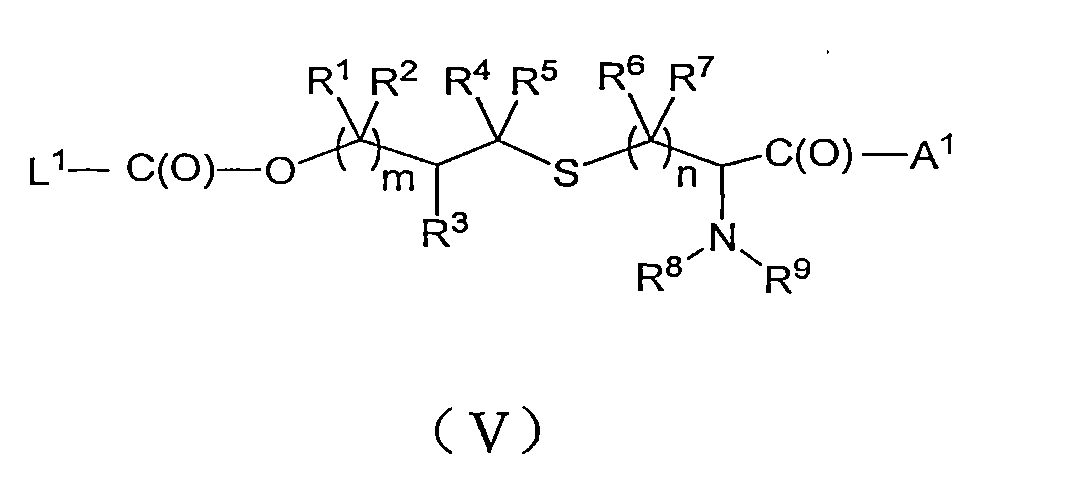
Applications Claiming Priority (2)
| Application Number | Priority Date | Filing Date | Title |
|---|---|---|---|
| NZ61265413 | 2013-06-28 | ||
| ??612654 | 2013-06-28 |
Publications (2)
| Publication Number | Publication Date |
|---|---|
| TW201542583A TW201542583A (en) | 2015-11-16 |
| TWI655201B true TWI655201B (en) | 2019-04-01 |
Family
ID=52142779
Family Applications (2)
| Application Number | Title | Priority Date | Filing Date |
|---|---|---|---|
| TW108105646A TW201920229A (en) | 2013-06-28 | 2014-06-30 | Amino acid and peptide conjugates and conjugation process |
| TW103122466A TWI655201B (en) | 2013-06-28 | 2014-06-30 | Amino acid and peptide conjugates and conjugation process |
Family Applications Before (1)
| Application Number | Title | Priority Date | Filing Date |
|---|---|---|---|
| TW108105646A TW201920229A (en) | 2013-06-28 | 2014-06-30 | Amino acid and peptide conjugates and conjugation process |
Country Status (8)
| Country | Link |
|---|---|
| US (2) | US10576144B2 (en) |
| EP (2) | EP3013789B1 (en) |
| JP (2) | JP6659535B2 (en) |
| CN (2) | CN105555756B (en) |
| AU (3) | AU2014300503B2 (en) |
| CA (1) | CA2953747A1 (en) |
| TW (2) | TW201920229A (en) |
| WO (1) | WO2014207708A2 (en) |
Families Citing this family (17)
| Publication number | Priority date | Publication date | Assignee | Title |
|---|---|---|---|---|
| DK2618842T3 (en) | 2010-09-22 | 2019-07-01 | Ena Therapeutics Pty Ltd | HOWEVER, UNKNOWN IMMUNICATIVE PROCEDURE |
| WO2014207708A2 (en) | 2013-06-28 | 2014-12-31 | Auckland Uniservices Limited | Amino acid and peptide conjugates and conjugation process |
| BR112017013574A2 (en) * | 2014-12-23 | 2018-03-06 | Verdon Daniel | amino acid and peptide conjugates and uses thereof |
| EP3419962A4 (en) * | 2016-02-26 | 2020-03-11 | Auckland Uniservices Limited | AMINO ACID AND PEPTIDE CONJUGATES AND CONJUGATION METHOD |
| KR20200058424A (en) * | 2017-08-30 | 2020-05-27 | 오클랜드 유니서비시즈 리미티드 | Peptide conjugates, conjugation methods, and uses thereof |
| WO2019087161A1 (en) * | 2017-11-06 | 2019-05-09 | Auckland Uniservices Limited | Peptide conjugate cgrp receptor antagonists and methods of preparation and uses thereof |
| EP3728289B1 (en) | 2017-12-21 | 2025-09-10 | Axelia Oncology Pty Ltd | Optimised compounds |
| WO2019183577A1 (en) * | 2018-03-23 | 2019-09-26 | Carmot Therapeutics, Inc. | Modulators of g-protein coupled receptors |
| JP7748284B2 (en) | 2019-03-04 | 2025-10-02 | ユニバーシティー ヘルス ネットワーク | T cell receptors and methods of use thereof |
| AU2020231927A1 (en) * | 2019-03-04 | 2021-09-30 | University Health Network | T cell receptors and methods of use thereof |
| MX2021010541A (en) | 2019-03-04 | 2021-12-15 | Univ Health Network | T cell receptors and methods of use thereof. |
| CN113795586B (en) | 2019-03-25 | 2026-03-27 | 大学健康网络 | T-cell receptors and their usage |
| KR20220050873A (en) | 2019-06-26 | 2022-04-25 | 악셀리아 온콜로지 피티와이 리미티드 | novel molecule |
| WO2021215952A1 (en) | 2020-04-24 | 2021-10-28 | Общество С Ограниченной Ответственностью "Индженик" | Method for producing particles of bacteriophages of the genus levivirus |
| CN111921001A (en) * | 2020-08-19 | 2020-11-13 | 兰州百源基因技术有限公司 | Film for wound healing and preparation method thereof |
| IL308392A (en) | 2021-05-13 | 2024-01-01 | Carmot Therapeutics Inc | Modulators of g-protein coupled receptors |
| EP4488283A1 (en) * | 2022-04-08 | 2025-01-08 | Chugai Seiyaku Kabushiki Kaisha | Production method for peptide compound |
Citations (4)
| Publication number | Priority date | Publication date | Assignee | Title |
|---|---|---|---|---|
| CN1684700A (en) * | 2002-06-10 | 2005-10-19 | 瓦西尼斯公司 | Differentially expressed genes and encoded polypeptides in breast cancer and bladder cancer |
| CN101113178A (en) * | 2002-08-12 | 2008-01-30 | 昆士兰医学研究所理事会 | Novel immunogenic lipopeptides comprising t-helper and cytotoxic t lymphocyte (CTL) epitopes |
| US20090123488A1 (en) * | 2006-08-14 | 2009-05-14 | Thymon, Llc | Compositions and methods for the treatment and prophylaxis of Alzheimer's disease |
| WO2013036543A2 (en) * | 2011-09-10 | 2013-03-14 | H. Lee Moffitt Cancer Center And Research Institute, Inc. | Molecular imaging of cancer cells in vivo |
Family Cites Families (96)
| Publication number | Priority date | Publication date | Assignee | Title |
|---|---|---|---|---|
| EP0014815A3 (en) | 1978-12-20 | 1980-10-29 | Ciba-Geigy Ag | Peptide derivatives, process for their preparation and intermediates, and pharmaceutical compositions containing one of these compounds |
| US4939240A (en) | 1983-03-04 | 1990-07-03 | Health Research, Inc. | Monoclonal antibodies to human breast carcinoma cells and their use in diagnosis and therapy |
| US4918164A (en) | 1987-09-10 | 1990-04-17 | Oncogen | Tumor immunotherapy using anti-idiotypic antibodies |
| US6074650A (en) | 1985-06-24 | 2000-06-13 | Hoechst Aktiengesellschaft | Membrane anchor/active compound conjugate, its preparation and its uses |
| DE3813821A1 (en) | 1988-04-22 | 1989-11-02 | Hoechst Ag | SYNTHETIC VACCINE AGAINST MOUTH AND CLAUS DISEASE AND METHOD FOR THEIR PRODUCTION |
| US6024964A (en) | 1985-06-24 | 2000-02-15 | Hoechst Aktiengesellschaft | Membrane anchor/active compound conjugate, its preparation and its uses |
| US4743543A (en) | 1985-09-09 | 1988-05-10 | Coulter Corporation | Method for enhancing and/or accelerating immunoassay detection of human carcinoma tumor associated antigen in a pathology sample |
| US4921790A (en) | 1987-04-24 | 1990-05-01 | Research Corporation | Tumor specific assay for CA125 ovarian cancer antigen |
| US4963484A (en) | 1988-01-29 | 1990-10-16 | Dana-Farber Cancer Institute, Inc. | Genetically engineered polypeptides with determinants of the human DF3 breast carcinoma-associated antigen |
| US5053489A (en) | 1988-01-29 | 1991-10-01 | Dana-Farber Cancer Institute, Inc. | Genetically engineered polypeptides with determinants of the human DF3 breast carcinoma-associated antigen |
| US4914021A (en) | 1988-03-04 | 1990-04-03 | New England Deaconess Hospital Corporation | Carcinoma orosomucoid-related antigen, a monoclonal antibody thereto, and their uses |
| US4921789A (en) | 1988-04-20 | 1990-05-01 | New England Deaconess Hospital Corporation | Marker for colorectal carcinoma and methods of detecting the same |
| JPH02172946A (en) | 1988-12-26 | 1990-07-04 | Shinetsu Sakusan Vinyl Kk | Production of alkenyl carboxylate |
| US5110911A (en) | 1989-11-02 | 1992-05-05 | Biomira, Inc. | Human tumor-associated thomsen-friedenreich antigen |
| EP1306095A3 (en) | 1992-03-05 | 2003-06-25 | Board Of Regents, The University Of Texas System | Methods and compositions for targeting the vasculature of solid tumors |
| WO1994013806A1 (en) | 1992-12-11 | 1994-06-23 | The Dow Chemical Company | Multivalent single chain antibodies |
| JP4122050B2 (en) | 1993-02-05 | 2008-07-23 | イージェニックス,インク. | Human carcinoma antigen (HCA), HCA antibody, HCA immunoassay, imaging method and therapy |
| US6310180B1 (en) | 1993-06-21 | 2001-10-30 | Vanderbilt University | Method for synthesis of proteins |
| DE4331011A1 (en) | 1993-09-13 | 1995-03-16 | Bayer Ag | C-branched oligomers that bind nucleic acids for therapy and diagnostics |
| AUPM446594A0 (en) | 1994-03-16 | 1994-04-14 | Csl Limited | Cytotoxic t-cell epitopes identified within epstein-barr virus |
| JPH08248579A (en) | 1995-03-14 | 1996-09-27 | Mitsubishi Paper Mills Ltd | Silver halide photographic material and processing method thereof |
| US5994294A (en) | 1996-02-02 | 1999-11-30 | Nitromed, Inc. | Nitrosated and nitrosylated α-adrenergic receptor antagonist compounds, compositions and their uses |
| AUPO007396A0 (en) | 1996-05-24 | 1996-06-20 | Csl Limited | Ebv ctl epitopes |
| US6251603B1 (en) | 1996-10-03 | 2001-06-26 | Ludwig Institute For Cancer Research | Method for determining status of a cancerous condition by determining antibodies to NY-ESO-1 in a patient sample |
| US6982085B2 (en) | 1997-04-02 | 2006-01-03 | Statens Serum Institut | TB diagnostic based on antigens from M. tuberculosis |
| US7037510B2 (en) | 1997-04-18 | 2006-05-02 | Statens Serum Institut | Hybrids of M. tuberculosis antigens |
| AUPO784197A0 (en) | 1997-07-10 | 1997-08-07 | Csl Limited | Treatment of nasopharyngeal carcinoma |
| US5965535A (en) * | 1997-09-12 | 1999-10-12 | Ludwig Institute For Cancer Research | Mage-3 peptides presented by HLA class II molecules |
| AU9572098A (en) * | 1997-10-08 | 1999-04-27 | Government Of The United States Of America, As Represented By The Secretary Of The Department Of Health And Human Services, The | Novel human cancer antigen ny eso-1/cag-3 and gene encoding same |
| IL125608A0 (en) | 1998-07-30 | 1999-03-12 | Yeda Res & Dev | Tumor associated antigen peptides and use of same as anti-tumor vaccines |
| ES2223464T3 (en) | 1999-02-01 | 2005-03-01 | Eisai Co., Ltd. | IMMUNOLOGICAL ASSISTANT COMPOUNDS. |
| US20040006242A1 (en) | 1999-02-01 | 2004-01-08 | Hawkins Lynn D. | Immunomodulatory compounds and method of use thereof |
| EP2311950A1 (en) | 2000-01-28 | 2011-04-20 | The Government of the United States of America, as represented by the Secretary, Department of Health and Human Services | Novel MHC class II restricted T cell epitopes from the cancer antigen, NY ESO-1 |
| AUPQ776100A0 (en) * | 2000-05-26 | 2000-06-15 | Australian National University, The | Synthetic molecules and uses therefor |
| WO2002000623A2 (en) | 2000-06-26 | 2002-01-03 | Neurogen Corporation | Aryl fused substituted 4-oxy-pyridines |
| US6506875B1 (en) * | 2000-09-26 | 2003-01-14 | Ludwig Institute For Cancer Research | Isolated peptides which bind to HLA-C molecules and uses thereof |
| GB0030067D0 (en) | 2000-12-11 | 2001-01-24 | Univ Bristol | Therapeutic agent |
| EP1229043A1 (en) | 2001-01-30 | 2002-08-07 | Cyto-Barr B.V. | Peptides derived from Epstein Barr virus (EBV) proteins LMP1, LMP2 and BARF1 antibody reagents reactive therewith |
| WO2003008537A2 (en) | 2001-04-06 | 2003-01-30 | Mannkind Corporation | Epitope sequences |
| EP1461014B1 (en) | 2001-12-04 | 2021-07-14 | Ben Gurion University Of The Negev Research And Development Authority | Amphiphilic compounds and vesicles/liposomes for organ-specific drug targeting |
| FR2836684B1 (en) * | 2002-03-04 | 2004-12-17 | Inst Nat Sante Rech Med | RAS MUTED PEPTIDES AND THEIR USE IN IMMUNOTHERAPY |
| GB0214528D0 (en) | 2002-06-24 | 2002-08-07 | Univ Aberdeen | Materials and methods for induction of immune tolerance |
| AU2003242504A1 (en) | 2002-07-13 | 2004-02-02 | Statens Serum Institut | Therapeutic tuberculosis vaccines |
| EP2301972A1 (en) | 2002-08-12 | 2011-03-30 | The Council Of The Queensland Institute Of Medical Research | Method to prepare immunogenic lipopeptides comprising T-helper and B-cell epitopes |
| WO2004041849A1 (en) | 2002-11-07 | 2004-05-21 | The Council Of The Queensland Institute Of Medical Research | Epstein barr virus peptide epitopes, polyepitopes and delivery system therefor |
| US7491395B2 (en) | 2002-11-20 | 2009-02-17 | Bestewil Holding B.V. | Compositions comprising antigen-complexes, method of making same as well as methods of using the antigen-complexes for vaccination |
| WO2005000870A2 (en) * | 2003-05-30 | 2005-01-06 | Ludwig Institute Of Cancer Research | Isolated ny-eso-1 peptides which bind to hla class ii molecules and uses thereof |
| WO2005012270A2 (en) | 2003-07-29 | 2005-02-10 | Rib-X Pharmaceuticals, Inc. | Biaryl heterocyclic amines, amides, and sulfur-containing compounds and methods of making and using the same |
| AU2005285513B2 (en) | 2004-05-25 | 2011-02-24 | Oregon Health And Science University | SIV and HIV vaccination using RhCMV- and HCMV-based vaccine vectors |
| EP1666056A1 (en) | 2004-12-06 | 2006-06-07 | Bestewil Holding B.V. | Cancer vaccine vesicles |
| FR2881746B1 (en) | 2005-02-07 | 2007-04-13 | Centre Nat Rech Scient | CD4 + EPITOPES OF TYTE I AND II LATENCY ANTIGENS OF THE EPSTEIN-BARR VIRUS FIT TO BE RECOGNIZED BY THE MAJORITY OF INDIVIDUALS OF THE CAUCASIAN POPULATION AND THEIR APPLICATIONS |
| EP1850832B1 (en) | 2005-02-07 | 2014-12-31 | Lipotek PTY Ltd | Adjuvanting material |
| BRPI0607605A2 (en) | 2005-02-08 | 2009-09-15 | Queensland Inst Med Res | immunogenic molecules |
| GB0507003D0 (en) * | 2005-04-06 | 2005-05-11 | Molmed Spa | Therapeutic |
| AU2006247471A1 (en) | 2005-05-12 | 2006-11-23 | Tapestry Pharmaceuticals, Inc. | Molecular constructs suitable for targeted conjugates |
| WO2007044406A2 (en) * | 2005-10-04 | 2007-04-19 | Ludwig Institute For Cancer Research | Methods for stimulating an immune response using bacterial antigen delivery system |
| US20090258917A1 (en) | 2005-10-12 | 2009-10-15 | Benjamin Pelcman | Benzoxazoles Useful in the Treatment of Inflammation |
| JP4824389B2 (en) | 2005-10-28 | 2011-11-30 | 株式会社医学生物学研究所 | Cytotoxic T cell epitope peptide that specifically attacks Epstein-Barr virus infected cells and uses thereof |
| CN101379078A (en) | 2005-12-06 | 2009-03-04 | 赛文医疗私人有限公司 | Treatment of epstein-barr virus related diseases |
| WO2007078879A2 (en) | 2005-12-21 | 2007-07-12 | Vaxinnate Corporation | Lipopeptide compositions and methods of use thereof |
| FR2896162B1 (en) | 2006-01-13 | 2008-02-15 | Sanofi Pasteur Sa | EMULSION OIL IN THERMOREVERSIBLE WATER |
| JP2010532656A (en) | 2007-01-15 | 2010-10-14 | グラクソスミスクライン バイオロジカルズ ソシエテ アノニム | Fusion protein containing cancer regression antigens NY-ESO-1 and LAGE-1 |
| US8309096B2 (en) * | 2007-01-15 | 2012-11-13 | Glaxosmithkline Biologicals S.A. | Fusion protein |
| WO2008118017A2 (en) | 2007-03-26 | 2008-10-02 | Academisch Ziekenhuis Leiden H.O.D.N. Lumc | Prame derived peptides and immunogenic compositions comprising these |
| WO2008151197A2 (en) | 2007-06-04 | 2008-12-11 | The Regents Of The University Of California | Tumor-derived endogenous toll-like receptor 4 ligands |
| WO2010003178A1 (en) | 2008-07-07 | 2010-01-14 | The University Of Melbourne | A synthetic vaccine component |
| US20100266623A1 (en) | 2008-07-07 | 2010-10-21 | The University Of Melbourne | Synthetic, self adjuvanting vaccines |
| EP2334332A4 (en) * | 2008-09-05 | 2013-01-09 | Id Biomedical Corp Quebec | Novel compositions and adjuvants |
| EP2346830B1 (en) | 2008-09-15 | 2015-05-13 | Merck Sharp & Dohme Corp. | Glucagon receptor antagonist compounds, compositions containing such compounds and methods of use |
| EP2504330A1 (en) | 2009-11-23 | 2012-10-03 | Amgen Inc. | Amino heteroaryl compounds as beta-secretase modulators and methods of use |
| US9296698B2 (en) | 2009-11-23 | 2016-03-29 | Amgen Inc. | Amino heteroaryl compounds as beta-secretase modulators and methods of use |
| WO2011109237A2 (en) | 2010-03-02 | 2011-09-09 | Emory University | Uses of noscapine and derivatives in subjects diagnosed with fap |
| WO2011119628A2 (en) | 2010-03-23 | 2011-09-29 | The Regents Of The University Of California | Compositions and methods for self-adjuvanting vaccines against microbes and tumors |
| US20130029358A1 (en) | 2010-04-01 | 2013-01-31 | Ludwig Institute For Cancer Research Ltd. | Immunodominant mhc dr52b restricted ny-eso-1 epitopes, mhc class ii monomers and multimers, and uses thereof |
| WO2011156686A2 (en) | 2010-06-11 | 2011-12-15 | The Regents Of The University Of Colorado, A Body Corporate | Method for synthesizing a cyclic multivalent peptide using a thiol-mediated reaction |
| WO2012020215A1 (en) | 2010-08-09 | 2012-02-16 | Centro Nacional De Investigaciones Oncológicas (Cnio) | Amino- imidazolothiadiazoles for use as protein or lipid kinase inhibitors |
| JP2013541507A (en) | 2010-08-25 | 2013-11-14 | ヘルムホルツ ツェントゥルム ミュンヘン ドイチェス フォルシュングスツェントゥルム フューア ゲズントハイト ウント ウムヴェルト (ゲーエムベーハー) | Epstein-Barr virus vaccine |
| AU2011295845B2 (en) | 2010-09-01 | 2016-09-22 | Baylor College Of Medicine | EBV-specific cytotoxic T-lymphocytes for the treatment of locoregional nasopharyngeal carcinoma (NPC) |
| BR112013005970A2 (en) | 2010-09-14 | 2016-07-05 | Council Scient Ind Res | Synthetic immunogen, useful for generating lasting immunity and protection against pathogens. |
| ES2635335T3 (en) | 2010-09-20 | 2017-10-03 | Biontech Cell & Gene Therapies Gmbh | Antigen specific T cell receptors and T cell epitopes |
| DK2618842T3 (en) | 2010-09-22 | 2019-07-01 | Ena Therapeutics Pty Ltd | HOWEVER, UNKNOWN IMMUNICATIVE PROCEDURE |
| WO2012069188A1 (en) | 2010-11-24 | 2012-05-31 | Max-Planck-Gesellschaft Zur Foerderung Der Wissenschaften E.V | Continuous flow processes for photoconjugation of high-molecular chemical entities |
| US9187534B2 (en) * | 2011-03-11 | 2015-11-17 | Universite De Geneve | Multi-epitopic vaccine |
| JP6130307B2 (en) | 2011-03-17 | 2017-05-17 | ザ ユニバーシティ オブ バーミンガム | Redirected immunotherapy |
| CN103534235A (en) | 2011-05-13 | 2014-01-22 | 南洋理工大学 | Method for modification of organic molecules |
| US20120328660A1 (en) | 2011-06-03 | 2012-12-27 | Tsuji Takemasa | Immunogenic compositions useful in provoking an integrated response to tumor antigens |
| CN102839186A (en) * | 2011-06-21 | 2012-12-26 | 上海生物制品研究所有限责任公司 | Preparation and application of recombinant Mycobacterium smegmatis expressing NY-ESO-1 |
| GB201114051D0 (en) | 2011-08-15 | 2011-09-28 | Domainex Ltd | Compounds and their uses |
| NL2007536C2 (en) | 2011-10-05 | 2013-04-08 | Academisch Ziekenhuis Leiden Lumc | Adjuvant compound. |
| JP6240077B2 (en) | 2011-10-06 | 2017-11-29 | イムノバクシーン・テクノロジーズ・インコーポレイテッドImmunovaccine Technologies Inc. | Liposome composition comprising an adjuvant that activates or increases its activity and its use |
| WO2013181597A2 (en) | 2012-05-31 | 2013-12-05 | Synchem, Inc. | Thiol-ene click chemistry for drug conjugates |
| US9861702B2 (en) | 2012-10-22 | 2018-01-09 | Wisconsin Alumni Research Foundation | Lipid-conjugated rhamnose for immune system recruitment and oncotherapy |
| CA2893918C (en) * | 2012-12-06 | 2020-11-24 | Callaghan Innovation Research Limited | Conjugate compounds |
| WO2014207708A2 (en) | 2013-06-28 | 2014-12-31 | Auckland Uniservices Limited | Amino acid and peptide conjugates and conjugation process |
| BR112017013574A2 (en) | 2014-12-23 | 2018-03-06 | Verdon Daniel | amino acid and peptide conjugates and uses thereof |
| EP3419962A4 (en) | 2016-02-26 | 2020-03-11 | Auckland Uniservices Limited | AMINO ACID AND PEPTIDE CONJUGATES AND CONJUGATION METHOD |
-
2014
- 2014-06-27 WO PCT/IB2014/062648 patent/WO2014207708A2/en not_active Ceased
- 2014-06-27 CN CN201480042833.2A patent/CN105555756B/en not_active Expired - Fee Related
- 2014-06-27 JP JP2016522936A patent/JP6659535B2/en not_active Expired - Fee Related
- 2014-06-27 CN CN201811491358.3A patent/CN109893648A/en active Pending
- 2014-06-27 AU AU2014300503A patent/AU2014300503B2/en not_active Ceased
- 2014-06-27 EP EP14818659.6A patent/EP3013789B1/en active Active
- 2014-06-27 US US14/392,231 patent/US10576144B2/en active Active
- 2014-06-27 CA CA2953747A patent/CA2953747A1/en not_active Abandoned
- 2014-06-27 EP EP19192675.7A patent/EP3604271A1/en not_active Withdrawn
- 2014-06-30 TW TW108105646A patent/TW201920229A/en unknown
- 2014-06-30 TW TW103122466A patent/TWI655201B/en not_active IP Right Cessation
-
2019
- 2019-02-08 AU AU2019200884A patent/AU2019200884B2/en not_active Ceased
- 2019-10-25 JP JP2019194647A patent/JP2020023567A/en active Pending
-
2020
- 2020-01-27 US US16/773,241 patent/US20200306370A1/en not_active Abandoned
- 2020-11-25 AU AU2020277160A patent/AU2020277160A1/en not_active Abandoned
Patent Citations (4)
| Publication number | Priority date | Publication date | Assignee | Title |
|---|---|---|---|---|
| CN1684700A (en) * | 2002-06-10 | 2005-10-19 | 瓦西尼斯公司 | Differentially expressed genes and encoded polypeptides in breast cancer and bladder cancer |
| CN101113178A (en) * | 2002-08-12 | 2008-01-30 | 昆士兰医学研究所理事会 | Novel immunogenic lipopeptides comprising t-helper and cytotoxic t lymphocyte (CTL) epitopes |
| US20090123488A1 (en) * | 2006-08-14 | 2009-05-14 | Thymon, Llc | Compositions and methods for the treatment and prophylaxis of Alzheimer's disease |
| WO2013036543A2 (en) * | 2011-09-10 | 2013-03-14 | H. Lee Moffitt Cancer Center And Research Institute, Inc. | Molecular imaging of cancer cells in vivo |
Non-Patent Citations (4)
| Title |
|---|
| Deepak B. Salunke et al., " Structure–Activity Relationships in Human Toll-like Receptor 2-Specific Monoacyl Lipopeptides", J. Med. Chem., 2012, 55 (7), pp 3353–3363 |
| DEEPAK B. SALUNKE ET AL.: "Structure–Activity Relationships in Human Toll-like Receptor 2-Specific Monoacyl Lipopeptides", J. MED. CHEM, vol. 55, no. 7, 2012, pages 3353 - 3363, XP055330670, doi:10.1021/jm3000533 * |
| YUK FAI LAU ET AL: "Lipid-containing mimetics of natural triggers of innate immunity as CTL-inducing influenza vaccines", INTERNATIONAL IMMUNOLOGY, vol. 18, no. 12, 2006, pages 1801 - 1813, XP055018602, doi:10.1093/intimm/dxl114 * |
| Yuk Fai Lau etal., "Lipid-containing mimetics of natural triggers of innate immunity as CTL-inducing influenza vaccines", International Immunology, Volume 18, Issue 12, 2006, Pages1801–1813 |
Also Published As
| Publication number | Publication date |
|---|---|
| AU2020277160A1 (en) | 2020-12-24 |
| AU2014300503B2 (en) | 2018-11-22 |
| AU2019200884A1 (en) | 2019-03-21 |
| EP3604271A1 (en) | 2020-02-05 |
| CN109893648A (en) | 2019-06-18 |
| EP3013789A4 (en) | 2017-02-08 |
| JP2016523891A (en) | 2016-08-12 |
| JP2020023567A (en) | 2020-02-13 |
| AU2014300503A1 (en) | 2016-01-21 |
| TW201542583A (en) | 2015-11-16 |
| US10576144B2 (en) | 2020-03-03 |
| AU2019200884B2 (en) | 2020-11-05 |
| TW201920229A (en) | 2019-06-01 |
| US20200306370A1 (en) | 2020-10-01 |
| CN105555756B (en) | 2018-12-07 |
| WO2014207708A2 (en) | 2014-12-31 |
| HK1224279A1 (en) | 2017-08-18 |
| CN105555756A (en) | 2016-05-04 |
| WO2014207708A3 (en) | 2015-04-16 |
| EP3013789B1 (en) | 2020-03-04 |
| JP6659535B2 (en) | 2020-03-04 |
| EP3013789A2 (en) | 2016-05-04 |
| US20170095554A1 (en) | 2017-04-06 |
| CA2953747A1 (en) | 2014-12-31 |
Similar Documents
| Publication | Publication Date | Title |
|---|---|---|
| TWI655201B (en) | Amino acid and peptide conjugates and conjugation process | |
| US11014960B2 (en) | Amino acid and peptide conjugates and uses thereof | |
| JP7161404B2 (en) | Amino acid and peptide conjugates and conjugation methods | |
| TW201925240A (en) | Peptide conjugates, conjugation process, and uses thereof | |
| HK40013754A (en) | Peptides for amino acid and peptide conjugates and conjugation process | |
| HK1224279B (en) | Amino acid and peptide conjugates and conjugation process |
Legal Events
| Date | Code | Title | Description |
|---|---|---|---|
| MM4A | Annulment or lapse of patent due to non-payment of fees |