TWI720344B - Techniques and apparatuses for wakeup signal transmission - Google Patents
Techniques and apparatuses for wakeup signal transmission Download PDFInfo
- Publication number
- TWI720344B TWI720344B TW107132042A TW107132042A TWI720344B TW I720344 B TWI720344 B TW I720344B TW 107132042 A TW107132042 A TW 107132042A TW 107132042 A TW107132042 A TW 107132042A TW I720344 B TWI720344 B TW I720344B
- Authority
- TW
- Taiwan
- Prior art keywords
- base sequence
- wake
- signal
- sequence
- mode
- Prior art date
Links
Images


Classifications
-
- H—ELECTRICITY
- H04—ELECTRIC COMMUNICATION TECHNIQUE
- H04W—WIRELESS COMMUNICATION NETWORKS
- H04W52/00—Power management, e.g. Transmission Power Control [TPC] or power classes
- H04W52/02—Power saving arrangements
- H04W52/0209—Power saving arrangements in terminal devices
- H04W52/0225—Power saving arrangements in terminal devices using monitoring of external events, e.g. the presence of a signal
- H04W52/0229—Power saving arrangements in terminal devices using monitoring of external events, e.g. the presence of a signal where the received signal is a wanted signal
-
- H—ELECTRICITY
- H04—ELECTRIC COMMUNICATION TECHNIQUE
- H04W—WIRELESS COMMUNICATION NETWORKS
- H04W52/00—Power management, e.g. Transmission Power Control [TPC] or power classes
- H04W52/02—Power saving arrangements
- H04W52/0209—Power saving arrangements in terminal devices
- H04W52/0261—Power saving arrangements in terminal devices managing power supply demand, e.g. depending on battery level
- H04W52/0274—Power saving arrangements in terminal devices managing power supply demand, e.g. depending on battery level by switching on or off the equipment or parts thereof
- H04W52/028—Power saving arrangements in terminal devices managing power supply demand, e.g. depending on battery level by switching on or off the equipment or parts thereof switching on or off only a part of the equipment circuit blocks
-
- Y—GENERAL TAGGING OF NEW TECHNOLOGICAL DEVELOPMENTS; GENERAL TAGGING OF CROSS-SECTIONAL TECHNOLOGIES SPANNING OVER SEVERAL SECTIONS OF THE IPC; TECHNICAL SUBJECTS COVERED BY FORMER USPC CROSS-REFERENCE ART COLLECTIONS [XRACs] AND DIGESTS
- Y02—TECHNOLOGIES OR APPLICATIONS FOR MITIGATION OR ADAPTATION AGAINST CLIMATE CHANGE
- Y02D—CLIMATE CHANGE MITIGATION TECHNOLOGIES IN INFORMATION AND COMMUNICATION TECHNOLOGIES [ICT], I.E. INFORMATION AND COMMUNICATION TECHNOLOGIES AIMING AT THE REDUCTION OF THEIR OWN ENERGY USE
- Y02D30/00—Reducing energy consumption in communication networks
- Y02D30/70—Reducing energy consumption in communication networks in wireless communication networks
Landscapes
- Engineering & Computer Science (AREA)
- Computer Networks & Wireless Communication (AREA)
- Signal Processing (AREA)
- Mobile Radio Communication Systems (AREA)
Abstract
Description
概括而言,本案內容的各態樣涉及無線通訊,並且更特定而言,本案內容的各態樣涉及用於喚醒信號傳輸的技術和裝置。In a nutshell, the various aspects of the content of this case involve wireless communication, and more specifically, the various aspects of the content of this case involve technologies and devices for wake-up signal transmission.
無線通訊系統被廣泛地部署以提供諸如電話、視訊、資料、訊息傳遞以及廣播之類的各種電信服務。典型的無線通訊系統可以採用能夠經由共享可用的系統資源(例如,頻寬、發射功率等)來支援與多個使用者的通訊的多工存取技術。此種多工存取技術的實例係包括分碼多工存取(CDMA)系統、分時多工存取(TDMA)系統、分頻多工存取(FDMA)系統、正交分頻多工存取(OFDMA)系統、單載波分頻多工存取(SC-FDMA)系統、時分同步分碼多工存取(TD-SCDMA)系統以及長期進化(LTE)。LTE/改進的LTE是對由第三代合作夥伴計畫(3GPP)發佈的通用行動電信系統(UMTS)行動服務標準的增強集。Wireless communication systems are widely deployed to provide various telecommunication services such as telephone, video, data, messaging, and broadcasting. A typical wireless communication system may adopt a multiple access technology that can support communication with multiple users by sharing available system resources (for example, bandwidth, transmission power, etc.). Examples of such multiple access technologies include code division multiple access (CDMA) systems, time division multiple access (TDMA) systems, frequency division multiple access (FDMA) systems, orthogonal frequency division multiple access Access (OFDMA) system, single carrier frequency division multiple access (SC-FDMA) system, time division synchronous code division multiple access (TD-SCDMA) system, and long-term evolution (LTE). LTE/Improved LTE is a set of enhancements to the Universal Mobile Telecommunications System (UMTS) mobile service standard promulgated by the Third Generation Partnership Project (3GPP).
無線通訊網路可以包括能夠支援針對多個使用者設備(UE)的通訊的多個基地台(BS)。UE可以經由下行鏈路和上行鏈路來與基地台(BS)進行通訊。下行鏈路(或前向鏈路)代表從BS到UE的通訊鏈路,而上行鏈路(或反向鏈路)代表從UE到BS的通訊鏈路。如本文中將更詳細描述的,BS可以被稱為節點B、gNB、存取點(AP)、無線電頭端、發送接收點(TRP)、5G BS、5G節點B等。The wireless communication network may include multiple base stations (BS) capable of supporting communication for multiple user equipment (UE). The UE can communicate with a base station (BS) via downlink and uplink. The downlink (or forward link) represents the communication link from the BS to the UE, and the uplink (or reverse link) represents the communication link from the UE to the BS. As will be described in more detail herein, the BS may be referred to as Node B, gNB, Access Point (AP), Radio Head, Transceiver Point (TRP), 5G BS, 5G Node B, etc.
已經在各種電信標準中採用了上述多工存取技術,以提供使不同的無線通訊設備能夠在城市、國家、地區以及甚至全球層面上進行通訊的公共協定。5G(亦可以被稱為新無線電(NR))是對由第三代合作夥伴計畫(3GPP)發佈的LTE行動服務標準的增強集。5G被設計為:經由提高頻譜效率、降低成本、改善服務、使用新頻譜以及在下行鏈路(DL)上使用具有循環字首(CP)的正交分頻多工(OFDM)(CP-OFDM)、在上行鏈路(UL)上使用CP-OFDM及/或SC-FDM(例如,亦被稱為離散傅裡葉變換展頻OFDM(DFT-s-OFDM))來與其他開放標準更好地整合,從而更好地支援行動寬頻網際網路存取,以及支援波束成形、多輸入多輸出(MIMO)天線技術和載波聚合。然而,隨著針對行動寬頻存取的需求持續增加,存在對LTE和5G技術進一步改進的需求。優選地,該等改進應當適用於其他多工存取技術和採用該等技術的電信標準。The above-mentioned multiple access technology has been adopted in various telecommunication standards to provide a public agreement that enables different wireless communication devices to communicate on a city, country, region, and even global level. 5G (also known as New Radio (NR)) is a set of enhancements to the LTE mobile service standard promulgated by the Third Generation Partnership Project (3GPP). 5G is designed to: improve spectrum efficiency, reduce costs, improve services, use new spectrum, and use orthogonal frequency division multiplexing (OFDM) (CP-OFDM) with cyclic prefix (CP) on the downlink (DL) ), use CP-OFDM and/or SC-FDM (for example, also known as Discrete Fourier Transform Spread Spectrum OFDM (DFT-s-OFDM)) on the uplink (UL) to better match other open standards Local integration to better support mobile broadband Internet access, as well as support for beamforming, multiple-input multiple-output (MIMO) antenna technology and carrier aggregation. However, as the demand for mobile broadband access continues to increase, there is a need for further improvements in LTE and 5G technologies. Preferably, these improvements should be applicable to other multiple access technologies and telecommunication standards that adopt these technologies.
BS可以向UE發送用於指示UE是否應當對後續通訊(例如,下行鏈路通道)進行解碼的信號。此可以提高UE的電池效率,此是因為除非UE接收到該信號,否則UE可以不掃描後續通訊。例如,此種信號可以被稱為喚醒信號。The BS may send a signal to the UE indicating whether the UE should decode subsequent communications (for example, a downlink channel). This can improve the battery efficiency of the UE, because unless the UE receives the signal, the UE may not scan for subsequent communications. For example, such a signal can be called a wake-up signal.
在一些情況下,喚醒信號可以應用於多個UE。例如,經由將UE指派給兩個或更多個UE組,可以使用單個喚醒信號來喚醒UE組中的所有UE。此與向單個UE發送喚醒信號相比可以是更高效的,並且與喚醒所有UE(而不是僅喚醒一組UE)進行後續通訊相比可以是更高效的。然而,UE在辨識喚醒信號時可能遇到困難。此外,向喚醒信號中添加額外資訊來指示向其應用該喚醒信號的UE可能是麻煩的。In some cases, the wake-up signal can be applied to multiple UEs. For example, by assigning UEs to two or more UE groups, a single wake-up signal can be used to wake up all UEs in the UE group. This can be more efficient than sending a wake-up signal to a single UE, and can be more efficient than waking up all UEs (rather than just waking up a group of UEs) for subsequent communication. However, the UE may encounter difficulties in recognizing the wake-up signal. In addition, it may be troublesome to add additional information to the wake-up signal to indicate the UE to which the wake-up signal is applied.
本文描述的一些技術和裝置可以提供要利用前序信號來對喚醒信號進行編碼,其中前序信號指示喚醒信號是否與特定的UE組相關聯。該編碼可以跨越多個不同的符號,或者可以關於單個符號進行應用。在一些態樣中,前序信號可以指示系統訊框編號(SFN),SFN可以賦能UE在不讀取實體廣播通道(PBCH)的情況下辨識喚醒信號。此外,本文描述的一些技術和裝置可以提供使用對現有序列、代碼及/或循環移位的修改來對喚醒信號前序信號進行編碼,此消除了對向喚醒信號添加額外位元或大小的需求。更進一步地,本文描述的技術和裝置可以提供利用多種級別的同步來進行喚醒信號的UE側處理,此提高了喚醒信號傳遞的通用性。用此種方式,針對輕型和靈活的喚醒信號的設計是以提供向後相容和改進的UE效能的方式提供的。Some of the techniques and devices described herein may provide for the use of a preamble signal to encode a wake-up signal, where the preamble signal indicates whether the wake-up signal is associated with a specific UE group. The encoding can span multiple different symbols, or can be applied with respect to a single symbol. In some aspects, the preamble signal can indicate the system frame number (SFN), and the SFN can enable the UE to recognize the wake-up signal without reading the physical broadcast channel (PBCH). In addition, some of the techniques and devices described herein can provide the use of modifications to existing sequences, codes, and/or cyclic shifts to encode the wake-up signal preamble, which eliminates the need to add extra bits or size to the wake-up signal . Furthermore, the techniques and devices described herein can provide UE-side processing of wake-up signals using multiple levels of synchronization, which improves the versatility of wake-up signal transmission. In this way, the design for a light and flexible wake-up signal is provided in a way that provides backward compatibility and improved UE performance.
與保護頻帶模式中的UE(例如,被配置為在保護頻帶中通訊的UE)或者獨立模式中的UE(例如,使用用於給定系統(例如,窄頻(NB)物聯網路(IOT)(NB-IoT))的專用載波進行通訊並且因此不在LTE頻帶中的UE)相比,對於頻帶內模式中的UE(例如,被配置為在更寬的系統頻寬(例如,LTE頻帶)內進行通訊的UE)而言,喚醒信號可以是不同的。例如,頻帶內子訊框的前N個符號(例如,前三個符號或者其他數量的符號)可以被控制通道(例如,LTE實體下行鏈路控制通道(PDCCH))佔用。因此,對於頻帶內UE而言,並非所有符號都可以用於喚醒信號傳輸。出於配置簡化、處理器效率等目的,增加頻帶內模式喚醒信號與保護頻帶模式或獨立模式(GB/SA模式)喚醒信號之間的通用性(例如,使該通用性最大化)可以是有益的。With a UE in guard band mode (for example, a UE configured to communicate in a guard band) or a UE in standalone mode (for example, used for a given system (for example, narrowband (NB) Internet of Things (IOT)) (NB-IoT)) for UEs in intra-band mode (for example, configured to be in a wider system bandwidth (for example, LTE frequency band) compared to UEs that are not in the LTE frequency band). For the UE communicating, the wake-up signal can be different. For example, the first N symbols (for example, the first three symbols or other symbols) of the subframe in the frequency band may be occupied by the control channel (for example, the LTE physical downlink control channel (PDCCH)). Therefore, for in-band UEs, not all symbols can be used for wake-up signal transmission. For purposes such as configuration simplification, processor efficiency, etc., it can be beneficial to increase the versatility (for example, to maximize the versatility) between the in-band mode wake-up signal and the guard-band mode or independent mode (GB/SA mode) wake-up signal of.
本文描述的一些技術和裝置提供針對第一部署模式(例如,GB/SA模式等)中的UE的喚醒信號,該喚醒信號使用與針對第二部署模式(例如,頻帶內模式等)中的UE的喚醒信號相比更多的符號。在一些情況下,頻帶內模式喚醒信號中的至少一部分用於GB/SA模式喚醒信號,此改善了頻帶內模式喚醒信號與GB/SA模式喚醒信號之間的通用性。例如,GB/SA模式喚醒信號可以包括具有頻帶內模式喚醒信號的一或多個重複符號的頻帶內模式喚醒信號,或者可以與頻帶內模式喚醒信號共享Zadoff-Chu(ZC)序列或覆蓋碼中的至少一項。在一些態樣中,GB/SA模式喚醒信號可以是使用頻帶內喚醒信號的類似部分(例如,ZC序列、覆蓋碼,及/或可選的相位偏移)並且每子訊框使用不同長度(例如,可以使用不同的ZC序列和不同的覆蓋碼)來產生的,此可以增強序列屬性,例如,與不同細胞相對應的不同喚醒信號之間的自相關及/或互相關屬性。Some techniques and devices described herein provide a wake-up signal for UEs in a first deployment mode (for example, GB/SA mode, etc.), and the wake-up signal is used for UEs in a second deployment mode (for example, in-band mode, etc.). The wake-up signal has more symbols compared to it. In some cases, at least a part of the in-band mode wake-up signal is used for the GB/SA mode wake-up signal, which improves the versatility between the in-band mode wake-up signal and the GB/SA mode wake-up signal. For example, the GB/SA mode wake-up signal may include an in-band mode wake-up signal with one or more repeated symbols of the in-band mode wake-up signal, or may share the Zadoff-Chu (ZC) sequence or coverage code with the in-band mode wake-up signal At least one item of. In some aspects, the GB/SA mode wake-up signal can use similar parts of the wake-up signal in the frequency band (for example, ZC sequence, coverage code, and/or optional phase offset) and each sub-frame uses a different length ( For example, it can be generated using different ZC sequences and different coverage codes), which can enhance sequence properties, for example, auto-correlation and/or cross-correlation properties between different wake-up signals corresponding to different cells.
在本案內容的一個態樣中,提供了一種由基地台執行的方法、一種由使用者設備執行的方法、一種裝置、一種基地台、一種使用者設備和一種電腦程式產品。In one aspect of the content of this case, a method executed by a base station, a method executed by a user equipment, a device, a base station, a user equipment, and a computer program product are provided.
在一些態樣中,由該基地台執行的該方法可以包括:產生針對使用者設備(UE)組中的至少一個UE的喚醒信號,其中以下各項中的至少一項是由該喚醒信號的前序信號辨識的:與該UE組相關聯的UE組辨識符中的一部分,或者與該UE組相關聯的細胞標識中的一部分;及向該至少一個UE發送該喚醒信號。In some aspects, the method performed by the base station may include: generating a wake-up signal for at least one UE in a user equipment (UE) group, wherein at least one of the following items is triggered by the wake-up signal The preamble signal identifies: part of the UE group identifier associated with the UE group, or part of the cell identifier associated with the UE group; and sending the wake-up signal to the at least one UE.
在一些態樣中,該基地台可以包括記憶體和操作地耦合到該記憶體的一或多個處理器。該記憶體和該一或多個處理器可以被配置為:產生針對UE組中的至少一個UE的喚醒信號,其中以下各項中的至少一項是由該喚醒信號的前序信號辨識的:與該UE組相關聯的UE組辨識符中的一部分,或者與該UE組相關聯的細胞標識中的一部分;及向該至少一個UE發送該喚醒信號。In some aspects, the base station may include a memory and one or more processors operatively coupled to the memory. The memory and the one or more processors may be configured to generate a wake-up signal for at least one UE in the UE group, wherein at least one of the following items is identified by a preamble signal of the wake-up signal: Part of the UE group identifier associated with the UE group or part of the cell identifier associated with the UE group; and sending the wake-up signal to the at least one UE.
在一些態樣中,該裝置可以包括:用於產生針對UE組中的至少一個UE的喚醒信號的手段,其中以下各項中的至少一項是由該喚醒信號的前序信號辨識的:與該UE組相關聯的UE組辨識符中的一部分,或者與該UE組相關聯的細胞標識中的一部分;及用於向該至少一個UE發送該喚醒信號的手段。In some aspects, the apparatus may include: means for generating a wake-up signal for at least one UE in the UE group, wherein at least one of the following items is identified by the preamble signal of the wake-up signal: and Part of the UE group identifier associated with the UE group, or part of the cell identifier associated with the UE group; and means for sending the wake-up signal to the at least one UE.
在一些態樣中,該電腦程式產品可以包括儲存一或多個指令的非暫時性電腦可讀取媒體,該一或多個指令在被基地台的一或多個處理器執行時使得該一或多個處理器進行以下操作:產生針對UE組中的至少一個UE的喚醒信號,其中以下各項中的至少一項是由該喚醒信號的前序信號辨識的:與該UE組相關聯的UE組辨識符中的一部分,或者與該UE組相關聯的細胞標識中的一部分;及向該至少一個UE發送該喚醒信號。In some aspects, the computer program product may include a non-transitory computer readable medium storing one or more instructions that when executed by one or more processors of the base station cause the one Or multiple processors perform the following operations: generate a wake-up signal for at least one UE in the UE group, where at least one of the following items is identified by the preamble signal of the wake-up signal: the UE group is associated Part of the UE group identifier or part of the cell identifier associated with the UE group; and sending the wake-up signal to the at least one UE.
在一些態樣中,由該UE執行的該方法可以包括:至少部分地基於由該UE偵測到的喚醒信號是針對包括該UE的UE組的,來決定該喚醒信號與該UE相關聯,其中以下各項中的至少一項是由該喚醒信號的前序信號辨識的:與該UE組相關聯的UE組辨識符中的一部分,或者與該UE組相關聯的細胞標識中的一部分;及至少部分地基於該喚醒信號來接收通訊。In some aspects, the method performed by the UE may include determining that the wake-up signal is associated with the UE based at least in part on the wake-up signal detected by the UE for a group of UEs that includes the UE, At least one of the following items is identified by the preamble signal of the wake-up signal: a part of the UE group identifier associated with the UE group, or a part of the cell identifier associated with the UE group; And receiving communication based at least in part on the wake-up signal.
在一些態樣中,該UE可以包括記憶體和操作地耦合到該記憶體的一或多個處理器。該記憶體和該一或多個處理器可以被配置為:至少部分地基於由該UE偵測到的喚醒信號是針對包括該UE的UE組的,來決定該喚醒信號與該UE相關聯,其中以下各項中的至少一項是由該喚醒信號的前序信號辨識的:與該UE組相關聯的UE組辨識符中的一部分,或者與該UE組相關聯的細胞標識中的一部分;及至少部分地基於該喚醒信號來接收通訊。In some aspects, the UE may include a memory and one or more processors operatively coupled to the memory. The memory and the one or more processors may be configured to determine that the wake-up signal is associated with the UE based at least in part on the wake-up signal detected by the UE for a UE group including the UE, At least one of the following items is identified by the preamble signal of the wake-up signal: a part of the UE group identifier associated with the UE group, or a part of the cell identifier associated with the UE group; And receiving communication based at least in part on the wake-up signal.
在一些態樣中,該裝置可以包括:用於至少部分地基於由該裝置偵測到的喚醒信號是針對包括該裝置的UE組的,來決定該喚醒信號與該裝置相關聯的手段,其中以下各項中的至少一項是由該喚醒信號的前序信號辨識的:與該UE組相關聯的UE組辨識符中的一部分,或者與該UE組相關聯的細胞標識中的一部分;及用於至少部分地基於該喚醒信號來接收通訊的手段。In some aspects, the device may include: means for determining that the wake-up signal is associated with the device based at least in part on the wake-up signal detected by the device is for the UE group including the device, wherein At least one of the following items is identified by the preamble signal of the wake-up signal: part of the UE group identifier associated with the UE group, or part of the cell identifier associated with the UE group; and Means for receiving communication based at least in part on the wake-up signal.
在一些態樣中,該電腦程式產品可以包括儲存一或多個指令的非暫時性電腦可讀取媒體,該一或多個指令在被基地台的一或多個處理器執行時使得該一或多個處理器進行以下操作:至少部分地基於由該UE偵測到的喚醒信號是針對包括該UE的UE組的,來決定該喚醒信號與該UE相關聯,其中以下各項中的至少一項是由該喚醒信號的前序信號辨識的:與該UE組相關聯的UE組辨識符中的一部分,或者與該UE組相關聯的細胞標識中的一部分;及至少部分地基於該喚醒信號來接收通訊。In some aspects, the computer program product may include a non-transitory computer readable medium storing one or more instructions that when executed by one or more processors of the base station cause the one The or multiple processors perform the following operations: determine that the wake-up signal is associated with the UE based at least in part on the wake-up signal detected by the UE for the UE group including the UE, wherein at least one of the following One item is identified by the preamble signal of the wake-up signal: a part of the UE group identifier associated with the UE group, or a part of the cell identification associated with the UE group; and based at least in part on the wake-up Signal to receive communications.
在一些態樣中,由該基地台執行的該方法可以包括:產生針對保護頻帶模式或獨立模式(GB/SA模式)中的使用者設備(UE)的喚醒信號,其中該喚醒信號是至少部分地基於與第一部署模式相關聯的第一基序列的,並且該第一基序列包括同與第二部署模式相關聯的第二基序列相比更多的符號;及發送該喚醒信號。In some aspects, the method executed by the base station may include: generating a wake-up signal for a user equipment (UE) in guard band mode or independent mode (GB/SA mode), wherein the wake-up signal is at least partially The ground is based on a first base sequence associated with the first deployment mode, and the first base sequence includes more symbols than the second base sequence associated with the second deployment mode; and sending the wake-up signal.
在一些態樣中,該基地台可以包括記憶體和操作地耦合到該記憶體的一或多個處理器。該記憶體和該一或多個處理器可以被配置為:產生針對保護頻帶模式或獨立模式(GB/SA模式)中的使用者設備(UE)的喚醒信號,其中該喚醒信號是至少部分地基於與第一部署模式相關聯的第一基序列的,並且該第一基序列包括同與第二部署模式相關聯的第二基序列相比更多的符號;及發送該喚醒信號。In some aspects, the base station may include a memory and one or more processors operatively coupled to the memory. The memory and the one or more processors may be configured to: generate a wake-up signal for a user equipment (UE) in guard band mode or independent mode (GB/SA mode), wherein the wake-up signal is at least partially Based on a first base sequence associated with the first deployment mode, and the first base sequence includes more symbols than the second base sequence associated with the second deployment mode; and sending the wake-up signal.
在一些態樣中,該裝置可以包括:用於產生針對保護頻帶模式或獨立模式(GB/SA模式)中的使用者設備(UE)中的喚醒信號的手段,其中該喚醒信號是至少部分地基於與第一部署模式相關聯的第一基序列的,並且該第一基序列包括同與第二部署模式相關聯的第二基序列相比更多的符號;及用於發送該喚醒信號的手段。In some aspects, the apparatus may include: means for generating a wake-up signal for a user equipment (UE) in a guard band mode or a stand-alone mode (GB/SA mode), wherein the wake-up signal is at least partially Based on a first base sequence associated with the first deployment mode, and the first base sequence includes more symbols than the second base sequence associated with the second deployment mode; and for sending the wake-up signal means.
在一些態樣中,該電腦程式產品可以包括儲存一或多個指令的非暫時性電腦可讀取媒體,該一或多個指令在被基地台的一或多個處理器執行時使得該一或多個處理器進行以下操作:產生針對保護頻帶模式或獨立模式(GB/SA模式)中的使用者設備(UE)中的喚醒信號,其中該喚醒信號是至少部分地基於與第一部署模式相關聯的第一基序列的,並且該第一基序列包括同與第二部署模式相關聯的第二基序列相比更多的符號;及發送該喚醒信號。In some aspects, the computer program product may include a non-transitory computer readable medium storing one or more instructions that when executed by one or more processors of the base station cause the one Or multiple processors perform the following operations: generate a wake-up signal for a user equipment (UE) in a guard band mode or a stand-alone mode (GB/SA mode), where the wake-up signal is based at least in part on the first deployment mode The first base sequence is associated with the first base sequence, and the first base sequence includes more symbols than the second base sequence associated with the second deployment mode; and the wake-up signal is sent.
在一些態樣中,由該UE執行的該方法可以包括:在保護頻帶模式或獨立模式(GB/SA模式)中接收喚醒信號,其中該喚醒信號是至少部分地基於與第一部署模式相關聯的第一基序列的,並且該第一基序列包括同與第二部署模式相關聯的第二基序列相比更多的符號;及至少部分地基於該喚醒信號來執行喚醒。In some aspects, the method performed by the UE may include: receiving a wake-up signal in a guard band mode or a stand-alone mode (GB/SA mode), where the wake-up signal is based at least in part on being associated with the first deployment mode And the first base sequence includes more symbols than the second base sequence associated with the second deployment pattern; and the wake-up is performed based at least in part on the wake-up signal.
在一些態樣中,該UE可以包括記憶體和操作地耦合到該記憶體的一或多個處理器。該記憶體和該一或多個處理器可以被配置為:在保護頻帶模式或獨立模式(GB/SA模式)中接收喚醒信號,其中該喚醒信號是至少部分地基於與第一部署模式相關聯的第一基序列的,並且該第一基序列包括同與第二部署模式相關聯的第二基序列相比更多的符號;及至少部分地基於該喚醒信號來執行喚醒。In some aspects, the UE may include a memory and one or more processors operatively coupled to the memory. The memory and the one or more processors may be configured to receive a wake-up signal in a guard band mode or an independent mode (GB/SA mode), wherein the wake-up signal is based at least in part on being associated with the first deployment mode And the first base sequence includes more symbols than the second base sequence associated with the second deployment pattern; and the wake-up is performed based at least in part on the wake-up signal.
在一些態樣中,該裝置可以包括:用於在保護頻帶模式或獨立模式(GB/SA模式)中接收喚醒信號的手段,其中該喚醒信號是至少部分地基於與第一部署模式相關聯的第一基序列的,並且該第一基序列包括同與第二部署模式相關聯的第二基序列相比更多的符號;及用於至少部分地基於該喚醒信號來執行喚醒的手段。In some aspects, the apparatus may include: means for receiving a wake-up signal in a guard band mode or a stand-alone mode (GB/SA mode), wherein the wake-up signal is based at least in part on being associated with the first deployment mode Of the first base sequence, and the first base sequence includes more symbols than the second base sequence associated with the second deployment pattern; and means for performing wake-up based at least in part on the wake-up signal.
在一些態樣中,該電腦程式產品可以包括儲存一或多個指令的非暫時性電腦可讀取媒體,該一或多個指令在被UE的一或多個處理器執行時可以使得該一或多個處理器進行以下操作:在保護頻帶模式或獨立模式(GB/SA模式)中接收喚醒信號,其中該喚醒信號是至少部分地基於與第一部署模式相關聯的第一基序列的,並且該第一基序列包括同與第二部署模式相關聯的第二基序列相比更多的符號;及至少部分地基於該喚醒信號來執行喚醒。In some aspects, the computer program product may include a non-transitory computer readable medium storing one or more instructions that, when executed by one or more processors of the UE, can cause the one Or multiple processors performing the following operations: receiving a wake-up signal in guard band mode or independent mode (GB/SA mode), where the wake-up signal is based at least in part on the first base sequence associated with the first deployment mode, And the first base sequence includes more symbols than the second base sequence associated with the second deployment mode; and the wake-up is performed based at least in part on the wake-up signal.
概括而言,各態樣包括如在本文中參照附圖和說明書充分描述的並且由附圖和說明書示出的方法、裝置、系統、電腦程式產品、非暫時性電腦可讀取媒體、基地台、使用者設備、無線通訊設備和處理系統。In a nutshell, various aspects include methods, devices, systems, computer program products, non-transitory computer readable media, and base stations as fully described herein with reference to the drawings and descriptions and illustrated by the drawings and descriptions. , User equipment, wireless communication equipment and processing systems.
為了更好地理解下文的詳細描述,前文已經相當寬泛地概述了根據本案內容的實例的特徵和技術優點。在下文中將描述另外的特徵和優點。所揭示的概念和具體實例可以容易地用作用於修改或設計用於實施本案內容的相同目的的其他結構的基礎。此種等效構造並不脫離所附請求項的範疇。當結合附圖考慮時,根據下文的描述中將會更好地理解本文所揭示的概念的特性(其組織和操作方法二者)以及相關聯的優點。每一圖式是出於說明和描述的目的而提供的,而不意欲作為請求項的限制。In order to better understand the detailed description below, the foregoing has fairly broadly summarized the features and technical advantages of the examples based on the content of this case. Additional features and advantages will be described below. The disclosed concepts and specific examples can be easily used as a basis for modifying or designing other structures for the same purpose of implementing the content of this case. This equivalent structure does not depart from the scope of the appended claims. When considered in conjunction with the drawings, the characteristics of the concepts disclosed herein (both their organization and operation methods) and the associated advantages will be better understood according to the following description. Each drawing is provided for the purpose of illustration and description, and is not intended to be a limitation of the claims.
下文結合附圖提供的詳細描述意欲作為各種配置的描述,而非意欲表示在其中可以實施本文中所描述的概念的配置。出於提供對各種概念的透徹理解的目的,詳細描述包括具體細節。然而,對於本領域技藝人士來說將顯而易見的是,可以在沒有該等具體細節的情況下實施該等概念。在一些實例中,以方塊圖的形式圖示公知的結構和部件以避免使此種概念混淆不清。The detailed description provided below in conjunction with the accompanying drawings is intended as a description of various configurations, and is not intended to represent a configuration in which the concepts described herein can be implemented. The detailed description includes specific details for the purpose of providing a thorough understanding of various concepts. However, it will be obvious to those skilled in the art that these concepts can be implemented without such specific details. In some instances, well-known structures and components are illustrated in the form of block diagrams to avoid confusing such concepts.
現在將參照各種裝置和方法來提供電信系統的數個態樣。將經由各個框、模組、元件、電路、步驟、程序、演算法等(統稱為「元素」),在下文的詳細描述中描述並且在附圖中示出該等裝置和方法。該等元素可以使用電子硬體、電腦軟體或其任意組合來實現。至於此種元素是實現為硬體還是軟體,取決於特定的應用和對整個系統所施加的設計約束。Several aspects of the telecommunication system will now be provided with reference to various devices and methods. These devices and methods will be described in the following detailed description through various blocks, modules, elements, circuits, steps, procedures, algorithms, etc. (collectively referred to as “elements”) and shown in the accompanying drawings. These elements can be implemented using electronic hardware, computer software, or any combination thereof. As for whether such elements are implemented as hardware or software, it depends on the specific application and the design constraints imposed on the entire system.
舉例而言,元素或者元素的任何部分或者元素的任意組合可以利用包括一或多個處理器的「處理系統」來實現。處理器的實例係包括微處理器、微控制器、數位信號處理器(DSP)、現場可程式設計閘陣列(FPGA)、可程式設計邏輯裝置(PLD)、狀態機、閘控邏輯、個別硬體電路以及被配置以執行本案內容全篇所描述的各種功能的其他適當的硬體。處理系統中的一或多個處理器可以執行軟體。無論是被稱為軟體、韌體、中介軟體、微代碼、硬體描述語言或其他名稱,軟體皆應當被廣義地解釋為意指指令、指令集、代碼、程式碼片段、程式碼、程式、副程式、軟體模組、應用程式、軟體應用、套裝軟體、常式、子常式、物件、可執行檔、執行緒、程序、函數等。For example, an element or any part of an element or any combination of elements may be implemented using a "processing system" including one or more processors. Examples of processors include microprocessors, microcontrollers, digital signal processors (DSP), field programmable gate arrays (FPGA), programmable logic devices (PLD), state machines, gate control logic, individual hardware Hardware circuits and other appropriate hardware configured to perform the various functions described throughout the content of this case. One or more processors in the processing system can execute software. Whether it is called software, firmware, intermediary software, microcode, hardware description language or other names, software should be broadly interpreted as meaning instructions, instruction sets, codes, code fragments, code, programs, Subroutines, software modules, applications, software applications, packaged software, routines, subroutines, objects, executable files, threads, procedures, functions, etc.
相應地,在一或多個示例實施例中,可以用硬體、軟體、韌體或者其任意組合來實現所描述的功能。若用軟體來實現,則功能可以被儲存在電腦可讀取媒體上或者編碼成電腦可讀取媒體上的一或多個指令或代碼。電腦可讀取媒體包括電腦儲存媒體。儲存媒體可以是能夠由電腦存取的任何可用媒體。經由舉例而非限制的方式,此種電腦可讀取媒體可以包括隨機存取記憶體(RAM)、唯讀記憶體(ROM)、電子可抹除可程式設計ROM(EEPROM)、壓縮光碟ROM(CD-ROM)或其他光碟儲存、磁碟儲存或其他磁儲存裝置、上述類型的電腦可讀取媒體的組合,或者能夠用於儲存能夠由電腦存取的具有指令或資料結構形式的電腦可執行代碼的任何其他媒體。Accordingly, in one or more exemplary embodiments, hardware, software, firmware, or any combination thereof may be used to implement the described functions. If implemented by software, the functions can be stored on a computer-readable medium or encoded into one or more instructions or codes on a computer-readable medium. Computer readable media include computer storage media. The storage medium can be any available medium that can be accessed by a computer. By way of example and not limitation, such computer-readable media may include random access memory (RAM), read-only memory (ROM), electronically erasable programmable ROM (EEPROM), and compact disc ROM ( CD-ROM) or other optical disk storage, magnetic disk storage or other magnetic storage devices, a combination of the above-mentioned types of computer-readable media, or a computer executable that can be used to store instructions or data structures that can be accessed by a computer Any other media for the code.
應注意的是,儘管在本文中可能使用通常與3G及/或4G無線技術相關聯的術語描述了各態樣,但是本案內容的各態樣可以應用於基於其他代的通訊系統(諸如5G和之後的版本(包括5G技術))。It should be noted that, although the terms generally associated with 3G and/or 4G wireless technologies may be used in this article to describe various aspects, the various aspects of the content of this case can be applied to communication systems based on other generations (such as 5G and 5G). Later versions (including 5G technology)).
圖1是圖示可以在其中實施本案內容的各態樣的網路100的圖。網路100可以是LTE網路或某種其他無線網路,諸如5G網路。無線網路100可以包括多個BS 110(被示為BS 110a、BS 110b、BS 110c和BS 110d)和其他網路實體。BS是與使用者設備(UE)進行通訊的實體,並且亦可以被稱為基地台、5G BS、節點B、gNB、5G NB、存取點、發送接收點(TRP)等。每個BS可以針對特定的地理區域提供通訊覆蓋。在3GPP中,術語「細胞」可以代表BS的覆蓋區域及/或服務於該覆蓋區域的BS子系統,此取決於使用該術語的上下文。FIG. 1 is a diagram illustrating a
BS可以針對巨集細胞、微微細胞、毫微微細胞及/或另一種類型的細胞提供通訊覆蓋。巨集細胞可以覆蓋相對大的地理區域(例如,半徑為數公里),並且可以允許由具有服務訂製的UE進行不受限的存取。微微細胞可以覆蓋相對小的地理區域,並且可以允許由具有服務訂製的UE進行不受限的存取。毫微微細胞可以覆蓋相對小的地理區域(例如,住宅),並且可以允許由與該毫微微細胞具有關聯的UE(例如,封閉使用者群組(CSG)中的UE)進行受限的存取。用於巨集細胞的BS可以被稱為巨集BS。用於微微細胞的BS可以被稱為微微BS。用於毫微微細胞的BS可以被稱為毫微微BS或家庭BS。在圖1中所示的實例中,BS 110a可以是用於巨集細胞102a的巨集BS,BS 110b可以是用於微微細胞102b的微微BS,而BS 110c可以是用於毫微微細胞102c的毫微微BS。BS可以支援一或多個(例如,三個)細胞。術語「eNB」、「基地台」、「5G BS」、「gNB」、「TRP」、「AP」、「節點B」、「5G NB」和「細胞」在本文中可以互換地使用。BS can provide communication coverage for macro cells, pico cells, femto cells, and/or another type of cell. Macro cells can cover a relatively large geographic area (for example, several kilometers in radius), and can allow unrestricted access by UEs with service subscriptions. Pico cells can cover a relatively small geographic area and can allow unrestricted access by UEs with service subscriptions. A femto cell can cover a relatively small geographic area (for example, a residence), and may allow restricted access by UEs associated with the femto cell (for example, UEs in a closed user group (CSG)) . The BS used for macro cells may be referred to as macro BS. The BS used for pico cells may be referred to as pico BS. The BS used for femto cells may be referred to as femto BS or home BS. In the example shown in FIG. 1,
在一些實例中,細胞可能未必是靜態的,並且細胞的地理區域可以根據移動BS的位置而移動。在一些實例中,BS可以經由各種類型的回載介面(諸如直接實體連接、虛擬網路及/或使用任何適當的傳輸網路的類似介面)互連到彼此及/或存取網路100中的一或多個其他BS或網路節點(未圖示)。In some instances, the cell may not necessarily be static, and the geographic area of the cell may move according to the location of the mobile BS. In some instances, the BSs can be interconnected to each other and/or the
無線網路100亦可以包括中繼站。中繼站是可以從上游站(例如,BS或UE)接收資料的傳輸並且向下游站(例如,UE或BS)發送該資料的傳輸的實體。中繼站亦可以是可以為其他UE中繼傳輸的UE。在圖1中示出的實例中,中繼站110d可以與巨集BS 110a和UE 120d進行通訊,以便促進BS 110a與UE 120d之間的通訊。中繼站亦可以被稱為中繼BS、中繼基地台、中繼器等。The
無線網路100可以是包括不同類型的BS(例如,巨集BS、微微BS、毫微微BS、中繼BS等)的異質網路。該等不同類型的BS在無線網路100中可以具有不同的發射功率位準、不同的覆蓋區域以及對干擾的不同影響。例如,巨集BS可以具有高發射功率位準(例如,5至40瓦特),而微微BS、毫微微BS和中繼BS可以具有較低的發射功率位準(例如,0.1至2瓦特)。The
網路控制器130可以耦合到一組BS,並且可以提供針對該等BS的協調和控制。網路控制器130可以經由回載與BS進行通訊。BS亦可以經由無線或有線回載(例如,直接地或間接地)相互通訊。The
UE 120(例如,120a、120b、120c)可以分散在整個無線網路100中,並且每個UE可以是靜態的或行動的。UE亦可以被稱為存取終端、終端、行動站、使用者單元、站等。UE可以是蜂巢式電話(例如,智慧型電話)、個人數位助理(PDA)、無線數據機、無線通訊設備、手持設備、膝上型電腦、無線電話、無線區域迴路(WLL)站、平板設備、照相機、遊戲裝置、小筆電、智慧型電腦、超級本、醫療設備或裝置、生物計量感測器/設備、可穿戴設備(智慧手錶、智慧服裝、智慧眼鏡、智慧腕帶、智慧珠寶(例如,智慧指環、智慧手環))、娛樂設備(例如,音樂或視訊設備,或者衛星無線電手段)、車輛部件或感測器、智慧型儀器表/感測器、工業製造設備、全球定位系統設備,或者被配置為經由無線或有線媒體進行通訊的任何其他適當的設備。The UE 120 (for example, 120a, 120b, 120c) may be scattered throughout the
一些UE可以被認為是機器類型通訊(MTC)或者進化型或增強型機器類型通訊(eMTC)UE。MTC和eMTC UE包括例如機器人、無人機、遠端設備(諸如感測器、儀錶、監視器、位置標籤等),其可以與基地台、另一個設備(例如,遠端設備)或某個其他實體進行通訊。無線節點可以提供例如經由有線或無線通訊鏈路的針對網路或到網路(例如,諸如網際網路或蜂巢網路之類的廣域網)的連接。一些UE可以被認為是物聯網路(IoT)設備,及/或可以被實現為NB-IoT(窄頻物聯網)設備。在一些態樣中,NB-IoT及/或eMTC UE可以保持在休眠或閒置狀態中,直到被用於接收通訊的喚醒信號喚醒為止,如本文中在別處描述的。Some UEs can be considered as machine type communication (MTC) or evolved or enhanced machine type communication (eMTC) UEs. MTC and eMTC UEs include, for example, robots, drones, remote devices (such as sensors, meters, monitors, location tags, etc.), which can interact with the base station, another device (for example, remote device), or some other The entity communicates. A wireless node may provide, for example, a connection to a network or to a network (for example, a wide area network such as the Internet or a cellular network) via a wired or wireless communication link. Some UEs may be considered as Internet of Things (IoT) devices, and/or may be implemented as NB-IoT (Narrowband Internet of Things) devices. In some aspects, the NB-IoT and/or eMTC UE may remain in a dormant or idle state until awakened by a wake-up signal for receiving communication, as described elsewhere herein.
通常,可以在給定的地理區域中部署任何數量的無線網路。每個無線網路可以支援特定的RAT並且可以在一或多個頻率上操作。RAT亦可以被稱為無線電技術、空中介面等。頻率亦可以被稱為載波、頻率通道等。每個頻率可以在給定的地理區域中支援單個RAT,以便避免具有不同RAT的無線網路之間的干擾。在一些情況下,可以部署5G RAT網路。Generally, any number of wireless networks can be deployed in a given geographic area. Each wireless network can support a specific RAT and can operate on one or more frequencies. RAT can also be called radio technology, air interface, etc. Frequency can also be called carrier, frequency channel, etc. Each frequency can support a single RAT in a given geographic area in order to avoid interference between wireless networks with different RATs. In some cases, 5G RAT networks can be deployed.
在一些實例中,可以排程對空中介面的存取,其中排程實體(例如,基地台)為排程實體的服務區域或細胞內的一些或全部設備和裝置之間的通訊分配資源。在本案內容內,如下文進一步論述的,排程實體可以負責排程、指派、重新配置和釋放用於一或多個從屬實體的資源。亦即,對於被排程的通訊,從屬實體使用由排程實體分配的資源。In some instances, access to the air interface can be scheduled, where the scheduling entity (for example, a base station) allocates resources for communication between some or all devices and devices in the service area or cell of the scheduling entity. Within the content of this case, as discussed further below, the scheduling entity may be responsible for scheduling, assigning, reconfiguring, and releasing resources for one or more subordinate entities. That is, for the scheduled communication, the subordinate entity uses the resources allocated by the scheduling entity.
基地台不是可以用作排程實體的唯一實體。亦即,在一些實例中,UE可以用作排程實體,其為一或多個從屬實體(例如,一或多個其他UE)排程資源。在該實例中,UE正在用作排程實體,而其他UE使用由該UE排程的資源進行無線通訊。UE可以用作同級間(P2P)網路中及/或網狀網路中的排程實體。在網狀網路實例中,除了與排程實體進行通訊之外,UE亦可以可選地直接相互通訊。The base station is not the only entity that can be used as a scheduling entity. That is, in some instances, the UE may be used as a scheduling entity, which is one or more subordinate entities (for example, one or more other UEs) scheduling resources. In this example, the UE is acting as a scheduling entity, and other UEs use the resources scheduled by the UE for wireless communication. The UE can be used as a scheduling entity in a peer-to-peer (P2P) network and/or a mesh network. In the mesh network instance, in addition to communicating with the scheduling entity, the UEs can also optionally communicate directly with each other.
因此,在具有被排程的對時間頻率資源的存取並且具有蜂巢配置、P2P配置以及網狀配置的無線通訊網路中,排程實體和一或多個從屬實體可以使用所排程的資源來進行通訊。Therefore, in a wireless communication network that has scheduled access to time-frequency resources and has cellular configuration, P2P configuration, and mesh configuration, the scheduling entity and one or more subordinate entities can use the scheduled resources to To communicate.
如上所指出的,圖1僅是作為實例提供的。其他實例是可能的,並且可以不同於關於圖1所描述的實例。As noted above, Figure 1 is provided as an example only. Other examples are possible and may be different from the examples described with respect to FIG. 1.
圖2圖示BS 110和UE 120的設計的方塊圖200,基地台110和UE 120可以是圖1中的基地台之一者和UE之一者。BS 110可以配備有T個天線234a至234t,並且UE 120可以配備有R個天線252a至252r,其中通常T≧1並且R≧1。FIG. 2 illustrates a block diagram 200 of the design of the
在BS 110處,發送處理器220可以從資料來源212接收用於一或多個UE的資料,至少部分地基於從每個UE接收的通道品質指示符(CQI)為該UE選擇一或多個調變和編碼方案(MCS),至少部分地基於為每個UE選擇的MCS對針對該UE的資料進行處理(例如,編碼和調變),並且提供針對所有UE的資料符號。發送處理器220亦可以對系統資訊(例如,針對半靜態資源劃分資訊(SRPI)等)和控制資訊(例如,CQI請求、授權、上層信號傳遞等)進行處理,並且提供管理負擔符號和控制符號。發送處理器220亦可以針對參考信號(例如,細胞特定參考信號(CRS))和同步信號(例如,主要同步信號(PSS)、輔同步信號(SSS)、窄頻PSS(NPSS)、窄頻SSS(NSSS)等)產生參考符號。發送處理器220亦可以產生用於後續通訊的喚醒信號。發送(TX)多輸入多輸出(MIMO)處理器230可以對資料符號、控制符號、管理負擔符號及/或參考符號執行空間處理(例如,預編碼)(若適用),並且可以向T個調變器(MOD)232a至232t提供T個輸出符號串流。每個調變器232可以對相應的輸出符號串流進行處理(例如,針對OFDM等),以獲得輸出取樣串流。每個調變器232可以進一步處理(例如,變換到模擬、放大、濾波以及升頻轉換)輸出取樣串流以獲得下行鏈路信號。來自調變器232a至232t的T個下行鏈路信號可以分別經由T個天線234a至234t進行發送。根據下文更詳細描述的某些態樣,可以使用位置編碼來產生同步信號以傳送另外的資訊。At
在UE 120處,天線252a到252r可以從BS 110及/或其他基地台接收下行鏈路信號,並且可以分別向解調器(DEMOD)254a至254r提供接收的信號。每個解調器254可以對接收的信號進行調節(例如,濾波、放大、降頻轉換以及數位化)以獲得輸入取樣。每個解調器254可以對輸入取樣進一步處理(例如,針對OFDM等)以獲得接收符號。MIMO偵測器256可以從所有R個解調器254a至254r獲得接收符號,對接收符號執行MIMO偵測(若適用的話),並且提供經偵測的符號。接收(RX)處理器258可以處理(例如,解調和解碼)經偵測的符號,向資料槽260提供經解碼的針對UE 120的資料,以及向控制器/處理器280提供經解碼的控制資訊和系統資訊。通道處理器可以決定參考信號接收功率(RSRP)、接收信號強度指示符(RSSI)、參考信號接收品質(RSRQ)、通道品質指示符(CQI)等。At
在上行鏈路上,在UE 120處,發送處理器264可以對來自資料來源262的資料以及來自控制器/處理器280的控制資訊(例如,針對包括RSRP、RSSI、RSRQ、CQI等的報告)進行接收和處理。發送處理器264亦可以針對一或多個參考信號產生參考符號。來自發送處理器264的符號可以由TX MIMO處理器266預編碼(若適用),由調變器254a至254r進一步處理(例如,針對DFT-s-OFDM、CP-OFDM等),並且被發送至BS 110。在BS 110處,來自UE 120和其他UE的上行鏈路信號可以由天線234接收,由解調器232處理,由MIMO偵測器236偵測(若適用),並且由接收處理器238進一步處理以獲得經解碼的由UE 120發送的資料和控制資訊。接收處理器238可以向資料槽239提供經解碼的資料,並且向控制器/處理器240提供經解碼的控制資訊。BS 110可以包括通訊單元244,並且經由通訊單元244與網路控制器130進行通訊。網路控制器130可以包括:通訊單元294、控制器/處理器290和記憶體292。On the uplink, at the
BS 110的控制器/處理器240、UE 120的控制器/處理器280及/或圖2中的任何其他部件可以執行5G中的喚醒信號產生和傳輸。例如,BS 110的控制器/處理器240、UE 120的控制器/處理器280及/或圖2的任何其他部件可以執行或指導例如圖4的方法400、圖5的方法500、圖11的方法1100、圖14的方法1400及/或如本文描述的其他程序的操作。記憶體242和282可以分別儲存用於BS 110和UE 120的資料和程式碼。排程器246可以排程UE在下行鏈路及/或上行鏈路上進行資料傳輸。The controller/
如上所指出的,圖2僅是作為實例來提供的。其他實例是可能的,並且可以不同於關於圖2所描述的實例。喚醒信號產生 As noted above, Figure 2 is provided as an example only. Other examples are possible and may be different from the examples described with respect to FIG. 2. Wake-up signal generation
圖3是示出針對UE組的喚醒信號的產生和傳輸的實例300的圖。FIG. 3 is a diagram showing an example 300 of the generation and transmission of a wake-up signal for a UE group.
如元件符號305所示,BS 110可以產生針對被示為UE組1的UE組的喚醒信號。在一些態樣中,UE組可以與UE組辨識符(例如,1、123456、ABCD、19D76等)相關聯。UE組可以包括一或多個UE。出於圖3的目的,假設在UE組中包括UE 120。BS 110可以產生喚醒信號,以使得UE 120可以決定喚醒信號與UE 120及/或UE組1相關聯,如下文更詳細描述的。例如,喚醒信號的前序信號可以辨識UE組1及/或由BS 110提供的細胞的細胞標識。As indicated by
如元件符號310所示,BS 110可以對喚醒信號的前序信號進行編碼,以指示細胞辨識符中的至少一部分。例如,BS 110可以使用具有特定根的Zadoff-Chu(ZC)序列來指示細胞辨識符。在一些態樣中,BS 110可以使用具有特定根的ZC序列來指示UE組辨識符。As shown by the
在一些態樣中,前序信號可以跨越多個符號擴展。在此種情況下,ZC序列可以是131長度ZC序列,其可以被映射到實體資源區塊(PRB)的11個符號中的131個資源元素。在一些態樣中,ZC序列可以使用相同的根作為同步信號。例如,ZC序列可以使用相同的根作為窄頻輔同步信號(NSSS),此可以減少與重新調諧以偵測喚醒信號及/或前序信號相關聯的時間。作為一個更特定的實例,喚醒信號是具有循環移位的ZC序列,進一步由覆蓋碼加擾,此可以是至少部分地基於以下公式來決定的: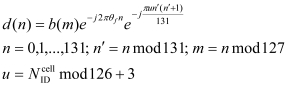


在一些態樣中,循環移位元可以指示至少部分地基於循環移位的UE組辨識符中的至少一部分及/或細胞標識中的至少一部分。例如,UE 120可以使用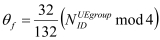
如元件符號315所示,BS 110可以將覆蓋碼編碼到前序信號中,以指示UE組辨識符中的至少一部分及/或細胞辨識符中的至少一部分。當前序信號跨越多個符號擴展時,可以使用具有特定長度(例如,127等的長度)的黃金序列(Gold sequence)來決定資源元素位準覆蓋碼。更特定而言,可以至少部分地基於以下方程和值來決定覆蓋碼b(m):

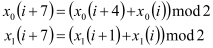
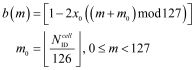


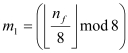
在一些態樣中,覆蓋碼可以是至少部分地基於BS 110的系統訊框編號(SFN)的。例如,覆蓋碼可以是至少部分地基於與SFN相關的索引的。此可以賦能UE至少部分地基於NPSS及/或NSSS來辨識喚醒信號,而不需要在喚醒信號偵測之前對實體廣播通道(PBCH)進行偵測或解碼。在此種情況下,上述方程中的m1
可以計算如下: 若
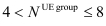

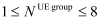


在一些態樣中,喚醒信號是不具有循環移位或由覆蓋碼加擾的ZC序列,此ZC序列可以是至少部分地基於以下公式來決定的:
此處,若ZC序列不使用循環移位,則在對抗定時漂移態樣是更穩健的。如元件符號315所示,BS 110可以對前序信號的覆蓋碼進行編碼,以指示UE組辨識符中的至少一部分及/或細胞辨識符中的至少一部分。當前序信號跨越多個符號擴展時,可以使用具有特定長度(例如,127等的長度)的黃金序列來決定資源元素位準覆蓋碼。更特定而言,可以至少部分地基於以下方程和值來決定覆蓋碼b(m):
在一些態樣中,覆蓋碼可以是至少部分地基於BS 110的系統訊框編號(SFN)的。例如,覆蓋碼可以是至少部分地基於與SFN相關的索引的。此可以賦能UE至少部分地基於NPSS及/或NSSS來辨識喚醒信號,而不需要在喚醒信號偵測之前對PBCH進行偵測或解碼。在此種情況下,上述方程中的m1
可以經由
在一些態樣中,前序信號可以是至少部分地基於具有單個長度符號的序列的,並且可以被擴展到多個符號。例如,可以針對兩個或更多個符號來串接及/或重複多個較短的單符號前序信號。重複的符號可以由覆蓋碼加擾。在此種情況下,ZC序列可以具有11符號長度,其可以類似於同步信號(例如,窄頻主要同步信號(NPSS))的ZC序列,由此賦能時域自相關和互相關。另外或替代地,此種ZC序列可以使用與NPSS不同的根,此可以避免喚醒信號與NPSS之間的混淆。例如,該根可以是從為2、3、4、6、7、8、9、10的可能值中選擇的,其中漏掉5是因為根5用於NPSS。在此種情況下,UE 120可以至少部分地基於索引值q來選擇根,q可以被選擇成

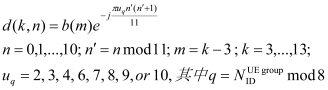
在一些態樣中,當覆蓋碼處於每符號位準時,可以伴隨11長度序列來使用符號位準覆蓋碼,以使得覆蓋碼的相應元素被應用於11個符號。例如,可以使用經截斷的m序列。更特定而言,經截斷的m序列可以是根據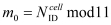



另外或替代地,可以使用資源元素位準覆蓋碼。在此種情況下,覆蓋碼可以具有121的長度。作為一個更具體的實例,喚醒信號是由此種資源元素位準覆蓋碼加擾的ZC序列,此可以是至少部分地基於以下公式來決定的: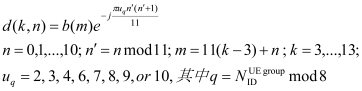
例如,覆蓋碼可以是使用經截斷的黃金序列(例如,127長度黃金序列)來決定的。更特定而言,可以使用以下方程來決定覆蓋碼:

用此種方式,覆蓋碼是基於每個符號或者基於每個資源元素來決定的,以指示與向其應用覆蓋碼的喚醒信號相關聯的細胞及/或UE組。In this way, the coverage code is determined on a per-symbol or per-resource element basis to indicate the cell and/or UE group associated with the wake-up signal to which the coverage code is applied.
在一些態樣中,可以針對兩個或更多個符號使用不同根的組合來串接多個較短的單符號前序信號,以擴展前序信號的容量。該根可以是從為2、3、4、6、7、8、9、10的可能值中選擇的,其中漏掉5是因為根5用於NPSS。例如,用於11符號前序信號的根可以被選擇成使用不同的根組合,例如,所有11個符號使用相同的根u,或者11個符號中的一部分使用根u1,但是11個符號中的剩餘部分使用共軛根作為u2。若u1+u2=11,則該等根可以是共軛根對。要注意的是,可以同時偵測ZC序列的共軛根對,以降低接收器複雜度。下表利用索引c圖示用於產生經串接/重複的一符號前序信號的根組合。在此種情況下,UE 120可以選擇根組合中的一個根,例如,

在一些態樣中,喚醒信號可以被映射到特定資源。例如,佔用1個實體資源區塊(PRB)的喚醒信號可以佔用180 kHz(例如,對應於12個15 kHz的次載波)的頻寬內的一組連續符號(例如,符號3至13)。另外或替代地,喚醒信號可以將PRB的一或多個信號刪餘。例如,喚醒信號可以將被預留用於細胞特定參考信號(CRS)、窄頻參考信號(NRS)等的資源元素刪餘。更特定而言,喚醒信號可以將用於所有天線埠上的CRS的RE刪餘,可以將用於第一天線埠(例如,天線埠0)上的NRS的RE刪餘,並且可以將用於第二天線埠(例如,天線埠1)上的NRS的RE刪餘。在一些態樣中,喚醒信號可以在特定情況下(例如,針對頻帶內NB-IoT)將RE刪餘。在使用11長度ZC序列的情況下(例如,用於每個符號映射),ZC序列可以被映射到PRB的11個次載波上,並且可以不使用第12個次載波(例如,與特定索引相關聯的次載波)。In some aspects, the wake-up signal can be mapped to a specific resource. For example, a wake-up signal occupying 1 physical resource block (PRB) may occupy a set of consecutive symbols (for example, symbols 3 to 13) within a bandwidth of 180 kHz (for example, corresponding to 12 sub-carriers of 15 kHz). Additionally or alternatively, the wake-up signal may puncture one or more signals of the PRB. For example, the wake-up signal may puncture resource elements reserved for cell-specific reference signals (CRS), narrow-band reference signals (NRS), and so on. More specifically, the wake-up signal can puncture REs used for CRS on all antenna ports, can puncture REs used for NRS on the first antenna port (for example, antenna port 0), and can use RE puncturing of NRS on the second antenna port (for example, antenna port 1). In some aspects, the wake-up signal can censor the RE under certain circumstances (for example, for in-band NB-IoT). In the case of using an 11-length ZC sequence (for example, for each symbol mapping), the ZC sequence can be mapped to the 11 sub-carriers of the PRB, and the 12th sub-carrier may not be used (for example, related to a specific index Connected sub-carriers).
如元件符號320所示,BS 110可以發送喚醒信號。在一些態樣中,BS 110可以在特定的資源中及/或使用特定的天線埠來發送喚醒信號,如上文更詳細描述的。As shown by the
如元件符號325所示,UE 120可以接收喚醒信號。在一些態樣中,UE 120可以至少部分地基於UE 120所選擇的技術來接收喚醒信號。例如,UE 120可以使用第一種技術,在第一種技術中,UE 120接收喚醒信號,而不使用傳統的同步信號(例如,NPSS、NSSS、CRS、NRS、主要同步信號(PSS)、輔同步信號(SSS)等)來執行同步。在一些態樣中,UE 120可以使用喚醒信號來執行同步,此可能要求至少部分地基於喚醒信號的自相關及/或互相關的定時及/或頻率漂移估計。As shown by the
在一些態樣中,UE 120可以使用第二種技術,在第二種技術中,執行局部同步。在此種情況下,在偵測喚醒信號之前,UE 120可以使用PSS或NPSS來決定原始定時及/或頻率漂移校正。用此種方式,經由使用PSS或NPSS來執行局部同步,UE 120可以以減小的定時及/或頻率誤差來偵測喚醒信號。In some aspects,
在一些態樣中,UE 120可以使用第三種技術,在第三種技術中,在偵測到喚醒信號之前,執行全同步。在此種情況下,UE 120可以使用傳統的同步信號進行細微的定時及/或頻率校正。另外或替代地,UE 120可以使用傳統的同步信號來決定相位參考,例如,當傳統的同步信號與喚醒信號是使用相同的埠發送時。In some aspects, the
UE 120可以至少部分地基於UE 120的參數及/或操作條件來從第一種技術、第二種技術和第三種技術中選擇一種技術。例如,參數及/或操作條件可以包括以下各項:UE的不連續接收(DRX)週期配置、UE 120的擴展型DRX(eDRX)週期、遇到傳呼時機的概率、UE的本端振盪器或即時時鐘的頻率誤差或頻率漂移等。用此種方式,UE 120可以至少部分地基於資源可用性及/或UE 120的操作條件來決定技術,此提高喚醒信號傳遞程序的效率,並且減少與在不需要局部或全同步時執行局部或全同步相關聯的浪費。The
如元件符號330所示,UE 120可以決定喚醒信號的前序信號與和UE 120相關聯的細胞標識和UE組辨識符相匹配。例如,BS 110可以為UE 120配置辨識細胞標識及/或UE組辨識符的資訊。另外或替代地,UE 120可以決定UE組辨識符(例如,至少部分地基於UE 120的UE辨識符等)。As shown by the
如元件符號335所示,UE 120可以根據喚醒信號來監測後續通訊。例如,UE 120可以退出休眠或閒置狀態,並且可以掃描與下行鏈路通訊相關聯的傳呼及/或授權。如元件符號340所示,UE 120可以接收通訊。在一些態樣中,UE 120可以至少部分地基於喚醒信號來喚醒或執行喚醒。如本文所使用的,喚醒或執行喚醒可以是指在傳呼時機處監測或開始監測傳呼。例如,當喚醒或執行喚醒時,UE可以監測或開始監測控制通道(例如,PDCCH(例如,MTC PDCCH或窄頻PDCCH等))、資料通道(例如,PDSCH(例如,MTC PDSCH或窄頻PDSCH等))及/或不同類型的傳呼。As shown by the
用此種方式,使用覆蓋碼、ZC序列及/或循環移位來對喚醒信號進行編碼,以向UE 120傳送辨識喚醒信號的UE組辨識符及/或細胞標識的資訊。經由使用覆蓋碼、ZC序列及/或循環移位,改善了與傳統實現的相容性。此外,可以在不顯著地增加喚醒信號的大小的情況下向UE 120提供UE組辨識符及/或細胞標識,此進一步改善了與傳統實現的相容性並且節省了無線電資源。In this way, the cover code, ZC sequence, and/or cyclic shift are used to encode the wake-up signal, so as to transmit the UE group identifier and/or cell identification information that recognizes the wake-up signal to the
如上所指出的,圖3是作為實例提供的。其他實例是可能的,並且可以不同於關於圖3所描述的實例。As noted above, Figure 3 is provided as an example. Other examples are possible and may be different from the examples described with respect to FIG. 3.
圖4是一種無線通訊的方法400的流程圖。該方法可以由基地台(例如,圖1的BS 110、裝置602/602'等)來執行。FIG. 4 is a flowchart of a
在410處,基地台可以產生針對UE組中的至少一個UE(例如,UE 120、裝置802/802'等)的喚醒信號。例如,BS 110可以對喚醒信號的前序信號進行編碼,以辨識以下各項中的至少一項:喚醒信號的UE組辨識符中的一部分,或者喚醒信號的細胞標識中的一部分。在一些態樣中,前序信號可以跨越多個不同的符號。在一些態樣中,前序信號可以是基於每個符號來決定及/或應用的。在一些態樣中,喚醒信號由在窄頻內的多個資源區塊上重複的序列組成。At 410, the base station may generate a wake-up signal for at least one UE (for example,
在一些態樣中,UE組辨識符中的一部分包括UE組辨識符的全部,及/或其中細胞標識中的一部分包括細胞標識的全部。在一些態樣中,前序信號是使用具有與兩個或更多個符號相對應的長度的序列來編碼的。在一些態樣中,前序信號的循環移位辨識UE組辨識符中的一部分。In some aspects, a part of the UE group identifier includes all of the UE group identifier, and/or a part of the cell identifier includes all of the cell identifier. In some aspects, the preamble signal is encoded using a sequence having a length corresponding to two or more symbols. In some aspects, the cyclic shift of the preamble signal identifies a part of the UE group identifier.
在一些態樣中,前序信號是使用Zadoff-Chu序列來產生的,Zadoff-Chu序列被配置為辨識UE組辨識符中的一部分及/或細胞標識中的一部分。例如,Zadoff-Chu序列可以使用除了與同步信號相關聯的根以外的根。在一些態樣中,Zadoff-Chu序列與同步信號使用相同的根。另外或替代地,Zadoff-Chu序列可以被映射到資源區塊的複數個次載波,並且Zadoff-Chu序列可以不被映射到與特定索引相關聯的次載波。In some aspects, the preamble signal is generated using the Zadoff-Chu sequence, and the Zadoff-Chu sequence is configured to identify a part of the UE group identifier and/or a part of the cell identifier. For example, the Zadoff-Chu sequence may use roots other than the roots associated with the synchronization signal. In some aspects, the Zadoff-Chu sequence uses the same root as the synchronization signal. Additionally or alternatively, the Zadoff-Chu sequence may be mapped to a plurality of sub-carriers of the resource block, and the Zadoff-Chu sequence may not be mapped to the sub-carrier associated with a specific index.
在一些態樣中,前序信號的循環移位辨識UE組辨識符中的一部分及/或細胞標識中的一部分。在一些態樣中,前序信號的覆蓋碼辨識UE組辨識符中的一部分及/或細胞標識中的一部分。覆蓋碼可以是至少部分地基於與前序信號的符號數量相對應的長度來配置的,並且覆蓋碼的每個元素可以被應用於單個符號。在一些態樣中,覆蓋碼是至少部分地基於基地台的系統訊框編號的。In some aspects, the cyclic shift of the preamble signal identifies a part of the UE group identifier and/or a part of the cell identifier. In some aspects, the coverage code of the preamble signal identifies a part of the UE group identifier and/or a part of the cell identifier. The cover code may be configured based at least in part on a length corresponding to the number of symbols of the preamble signal, and each element of the cover code may be applied to a single symbol. In some aspects, the coverage code is based at least in part on the base station's system frame number.
在一些態樣中,前序信號是使用具有與單個符號相對應的長度的序列來編碼的複數個前序信號中的一個前序信號,並且其中複數個前序信號被串接成兩個或更多個符號。在一些態樣中,細胞標識與UE組的常駐細胞或連接細胞相對應。In some aspects, the preamble signal is one preamble signal of a plurality of preamble signals encoded using a sequence having a length corresponding to a single symbol, and the plurality of preamble signals are concatenated into two or More symbols. In some aspects, the cell identifier corresponds to a resident cell or connected cell of the UE group.
在420處,基地台可以向至少一個UE發送喚醒信號。例如,基地台可以在特定的資源(其可以是如本文中在別處描述地來分配的)中廣播喚醒信號。至少一個UE可以至少部分地基於前序信號來辨識喚醒信號。例如,至少一個UE可以決定前序信號中的細胞標識及/或UE組辨識符是否與至少一個UE相關聯。在一些態樣中,喚醒信號將被分配用於至少一個參考信號的一或多個資源刪餘。At 420, the base station may send a wake-up signal to at least one UE. For example, the base station may broadcast a wake-up signal in a specific resource (which may be allocated as described elsewhere herein). At least one UE may recognize the wake-up signal based at least in part on the preamble signal. For example, at least one UE may determine whether the cell identifier and/or UE group identifier in the preamble signal is associated with at least one UE. In some aspects, the wake-up signal will be allocated for one or more resource puncturing of at least one reference signal.
在430處,基地台可以至少部分地基於喚醒信號來向UE發送通訊。例如,基地台可以立即地或者在基地台及/或UE已知的延遲之後發送通訊。用此種方式,基地台將UE配置為針對通訊來喚醒,此賦能UE保持在低功率狀態中,在低功率狀態中,UE不檢查傳呼或授權。因此改善了UE的電池壽命。At 430, the base station may send a communication to the UE based at least in part on the wake-up signal. For example, the base station may send the communication immediately or after a delay known to the base station and/or UE. In this way, the base station configures the UE to wake up for communication. This enables the UE to remain in a low-power state. In the low-power state, the UE does not check paging or authorization. Therefore, the battery life of the UE is improved.
儘管圖4圖示無線通訊的方法的示例方塊步驟,但是在一些態樣中,該方法可以包括與圖4中示出的彼等框相比另外的方塊步驟、更少的方塊步驟、不同的方塊步驟或者以不同方式佈置的方塊步驟。另外或替代地,圖4中示出的兩個或更多個方塊步驟可以同時執行。Although FIG. 4 illustrates example block steps of the wireless communication method, in some aspects, the method may include additional block steps, fewer block steps, and different blocks than those shown in FIG. 4 Block steps or block steps arranged in different ways. Additionally or alternatively, two or more of the block steps shown in FIG. 4 may be executed simultaneously.
圖5是一種無線通訊的方法500的流程圖。該方法可以由UE(例如,圖1的UE 120、裝置802/802'等)來執行。FIG. 5 is a flowchart of a
在510處,UE可以可選地選擇用於偵測喚醒信號的技術。例如,UE可以選擇第一種同步技術、第二種同步技術或第三種同步技術。在第一種同步技術中,不執行UE的同步。在第二種同步技術中,執行UE的局部同步。例如,可以在使用同步信號進行UE的局部同步之後偵測喚醒信號。在一些態樣中,喚醒信號是至少部分地基於系統訊框編號(SFN)來偵測的,並且SFN由喚醒信號的前序信號來指示。在第三種同步技術中,執行UE的全同步。例如,可以在使用一或多個同步信號進行UE的全同步之後偵測喚醒信號。UE可以至少部分地基於UE的操作條件或參數來選擇技術。At 510, the UE can optionally select a technique for detecting the wake-up signal. For example, the UE may select the first synchronization technology, the second synchronization technology, or the third synchronization technology. In the first synchronization technique, the synchronization of the UE is not performed. In the second synchronization technique, partial synchronization of the UE is performed. For example, the wake-up signal can be detected after the local synchronization of the UE is performed using the synchronization signal. In some aspects, the wake-up signal is detected based at least in part on the system frame number (SFN), and the SFN is indicated by the preamble of the wake-up signal. In the third synchronization technique, full synchronization of the UE is performed. For example, the wake-up signal may be detected after performing full synchronization of the UE using one or more synchronization signals. The UE may select a technology based at least in part on the operating conditions or parameters of the UE.
在520處,UE可以決定由UE偵測到的喚醒信號與UE相關聯。例如,UE可以至少部分地基於喚醒信號的UE組辨識符及/或細胞標識來決定喚醒信號與UE相關聯,如本文中在別處更詳細描述的。At 520, the UE may determine that the wake-up signal detected by the UE is associated with the UE. For example, the UE may determine that the wake-up signal is associated with the UE based at least in part on the UE group identifier and/or cell identification of the wake-up signal, as described in more detail elsewhere herein.
在530處,UE可以至少部分地基於喚醒信號來接收通訊。例如,UE可以在偵測到喚醒信號之後立即地或者在偵測到喚醒信號之後的特定延遲之後接收通訊。UE可以喚醒或者退出閒置或休眠狀態以接收通訊。At 530, the UE may receive the communication based at least in part on the wake-up signal. For example, the UE may receive the communication immediately after detecting the wake-up signal or after a certain delay after detecting the wake-up signal. The UE can wake up or exit the idle or dormant state to receive communications.
在540處,UE可以可選地使用喚醒信號來執行同步。例如,UE可以決定參考值、定時及/或頻率漂移估計等。用此種方式,UE可以減少對傳統的同步信號的依賴,此提高頻譜效率。At 540, the UE may optionally use the wake-up signal to perform synchronization. For example, the UE may decide the reference value, timing and/or frequency drift estimation, etc. In this way, the UE can reduce the dependence on the traditional synchronization signal, which improves the spectrum efficiency.
儘管圖5圖示無線通訊的方法的示例方塊步驟,但是在一些態樣中,該方法可以包括與圖5中示出的彼等方塊步驟相比另外的方塊步驟、更少的方塊步驟、不同的方塊步驟或者以不同方式佈置的方塊步驟。另外或替代地,圖5中示出的兩個或更多個方塊步驟可以同時執行。Although FIG. 5 illustrates example block steps of the method of wireless communication, in some aspects, the method may include additional block steps, fewer block steps, and different block steps than those shown in FIG. 5 Block steps or block steps arranged in different ways. Additionally or alternatively, two or more block steps shown in FIG. 5 may be executed simultaneously.
圖6是示出示例裝置602中的不同模組/手段/部件之間的資料流的概念性資料流程圖600。裝置602可以是基地台(例如,eNB、gNB等)。在一些態樣中,裝置602包括接收模組604、產生模組606及/或發送模組608。FIG. 6 is a conceptual data flow diagram 600 showing the data flow between different modules/means/components in the
接收模組604可以從UE 650(例如,UE 120等)接收資料610。在一些態樣中,資料610可以指示UE的UE組辨識符等。接收模組604可以將資料610作為資料612提供給產生模組606。產生模組606可以產生針對UE組中的至少一個UE 650的喚醒信號。產生模組可以將喚醒信號作為資料614提供給發送模組608。發送模組608可以將喚醒信號作為信號616發送給UE 650。The receiving
該裝置可以包括執行上述圖4的流程圖中的演算法的每一個方塊的額外模組。因此,上述圖4的流程圖之每一個方塊可以由模組來執行,並且該裝置可以包括彼等模組中的一或多個模組。該等模組可以是以下一或多個硬體部件:被專門配置為執行該程序/演算法,由被配置為執行該程序/演算法的處理器來實現,被儲存在電腦可讀取媒體之內以由處理器來實現,或者上述各者的某種組合。The device may include additional modules that execute each block of the algorithm in the flowchart of FIG. 4 described above. Therefore, each block of the above-mentioned flowchart of FIG. 4 may be executed by a module, and the apparatus may include one or more of these modules. The modules may be one or more of the following hardware components: specifically configured to execute the program/algorithm, implemented by a processor configured to execute the program/algorithm, and stored in a computer readable medium It can be implemented by a processor, or some combination of the above.
圖6中所示的模組的數量和佈置是作為實例來提供的。實際上,與圖6所示的彼等模組相比,可以存在額外模組、更少的模組、不同的模組或者以不同方式佈置的模組。此外,圖6中所示的兩個或更多個模組可以在單個模組內實現,或者圖6中所示的單個模組可以實現為多個分散式模組。另外或替代地,圖6中所示的一組模組(例如,一或多個模組)可以執行被描述為由圖6中所示的另一組模組執行的一或多個功能。The number and arrangement of the modules shown in Figure 6 are provided as examples. In fact, there may be additional modules, fewer modules, different modules, or modules arranged in different ways compared to the modules shown in FIG. 6. In addition, the two or more modules shown in FIG. 6 may be implemented in a single module, or the single module shown in FIG. 6 may be implemented as multiple distributed modules. Additionally or alternatively, a set of modules (eg, one or more modules) shown in FIG. 6 may perform one or more functions described as being performed by another set of modules shown in FIG. 6.
圖7是圖示針對採用處理系統702的裝置602'的硬體實現的實例的圖700。裝置602'可以是基地台(例如,eNB、gNB等)。FIG. 7 is a diagram 700 illustrating an example of a hardware implementation for a
處理系統702可以用通常由匯流排704表示的匯流排架構來實現。匯流排704可以包括任何數量的互連匯流排以及橋接器,此取決於處理系統702的特定應用以及整體設計約束。匯流排704將各種電路連接在一起,該等電路包括由處理器706、模組604、606、608和電腦可讀取媒體/記憶體708表示的一或多個處理器及/或硬體模組。匯流排704亦可以連接諸如定時源、周邊設備、電壓調節器以及功率管理電路之類的各種其他電路,該等電路是本技術領域中公知的,並且因此將不再進行描述。The
處理系統702可以耦合到收發機710。收發機710耦合到一或多個天線712。收發機710提供用於在傳輸媒體上與各種其他裝置進行通訊的手段。收發機710從一或多個天線712接收信號,從所接收的信號中提取資訊,並且向處理系統702(具體而言,接收模組604)提供所提取的資訊。此外,收發機710從處理系統702(具體而言,發送模組608)接收資訊,並且至少部分地基於所接收的資訊來產生要施加於一或多個天線712的信號。處理系統702包括耦合到電腦可讀取媒體/記憶體708的處理器706。處理器706負責一般處理,其包括執行電腦可讀取媒體/記憶體708上儲存的軟體。軟體在由處理器706執行時使得處理系統702執行以上針對任何特定的裝置所描述的各種功能。電腦可讀取媒體/記憶體708亦可以用於儲存由處理器706在執行軟體時操控的資料。處理系統亦包括模組604、606和608中的至少一個模組。模組可以是位於/儲存在電腦可讀取媒體/記憶體708中在處理器706中執行的軟體模組、耦合到處理器706的一或多個硬體模組,或其某種組合。處理系統902可以是BS 110的部件,並且可以包括記憶體242,及/或TX MIMO處理器230、接收理器238及/或控制器/處理器240中的至少一者。The
在一些態樣中,用於無線通訊的裝置602/602'包括:用於產生針對UE組中的至少一個UE的喚醒信號的手段;用於向至少一個UE發送喚醒信號的手段;等等。上述手段可以是裝置602的上述模組中的一或多個及/或是裝置602'的被配置為執行由上述手段所記載的功能的處理系統702。如前述,處理系統702可以包括TX MIMO處理器230、接收處理器238及/或控制器/處理器240。因此,在一種配置中,上述手段可以是被配置為執行上述手段所記載的功能的TX MIMO處理器230、接收處理器238及/或控制器/處理器240。In some aspects, the
圖7是作為實例來提供的。其他實例是可能的,並且可以不同於結合圖7所描述的實例。Figure 7 is provided as an example. Other examples are possible and may be different from the examples described in connection with FIG. 7.
圖8是示出示例裝置802中的不同模組/手段/部件之間的資料流的概念性資料流程圖800。裝置802可以是UE。在一些態樣中,裝置802包括接收模組804、決定模組806、執行模組808及/或發送模組810。FIG. 8 is a conceptual data flow diagram 800 illustrating the data flow between different modules/means/components in the
接收模組804可以從BS 850接收信號812。信號812可以包括喚醒信號。例如,接收模組804可以偵測喚醒信號。接收模組可以向決定模組806及/或執行模組808提供資料814。資料814可以辨識喚醒信號。決定模組806可以至少部分地基於喚醒信號是針對包括裝置802的UE組的,來決定喚醒信號與裝置802相關聯。執行模組808可以至少部分地基於喚醒信號來執行同步。發送模組810可以發送裝置802的資訊。The receiving
該裝置可以包括執行上述圖5的流程圖中的演算法的每一個方塊步驟的額外模組。因此,上述圖5的流程圖之每一個方塊步驟可以由模組來執行,並且該裝置可以包括彼等模組中的一或多個模組。該等模組可以是以下一或多個硬體部件:被專門配置為執行該程序/演算法,由被配置為執行該程序/演算法的處理器來實現,被儲存在電腦可讀取媒體之內以由處理器來實現,或者其某種組合。The device may include additional modules that execute each block step of the algorithm in the flowchart of FIG. 5 described above. Therefore, each block step in the flowchart of FIG. 5 can be executed by a module, and the device can include one or more of these modules. The modules may be one or more of the following hardware components: specifically configured to execute the program/algorithm, implemented by a processor configured to execute the program/algorithm, and stored in a computer readable medium It can be realized by the processor, or some combination thereof.
圖8中所示的模組的數量和佈置是作為實例來提供的。實際上,與圖6所示的彼等模組相比,可以存在另外的模組、更少的模組、不同的模組或者以不同方式佈置的模組。此外,圖8中所示的兩個或更多個模組可以在單個模組內實現,或者圖8中所示的單個模組可以實現為多個分散式模組。另外或替代地,圖8中所示的一組模組(例如,一或多個模組)可以執行被描述為由圖8中所示的另一組模組執行的一或多個功能。The number and arrangement of the modules shown in Figure 8 are provided as examples. In fact, there may be additional modules, fewer modules, different modules, or modules arranged in different ways compared to the modules shown in FIG. 6. In addition, two or more modules shown in FIG. 8 may be implemented in a single module, or the single module shown in FIG. 8 may be implemented as a plurality of distributed modules. Additionally or alternatively, a set of modules (eg, one or more modules) shown in FIG. 8 may perform one or more functions described as being performed by another set of modules shown in FIG. 8.
圖9是圖示採用處理系統902的裝置802'的硬體實現的實例900的圖。裝置802'可以是UE(例如,UE 120等)。FIG. 9 is a diagram illustrating an example 900 of a hardware implementation of the
處理系統902可以用通常由匯流排904表示的匯流排架構來實現。匯流排904可以包括任何數量的互連匯流排以及橋接器,此取決於處理系統902的特定應用以及整體設計約束。匯流排904將各種電路連接在一起,該等電路包括由處理器906、模組804、806、808、810和電腦可讀取媒體/記憶體908表示的一或多個處理器及/或硬體模組。匯流排904亦可以連接諸如定時源、周邊設備、電壓調節器以及功率管理電路之類的各種其他電路,該等電路是本技術領域中公知的,並且因此將不再進行描述。The
處理系統902可以耦合到收發機910。收發機910耦合到一或多個天線912。收發機910提供用於在傳輸媒體上與各種其他裝置進行通訊的手段。收發機910從一或多個天線912接收信號,從所接收的信號中提取資訊,並且向處理系統902(具體而言,接收模組804)提供所提取的資訊。此外,收發機910從處理系統902(具體而言,發送模組810)接收資訊,並且至少部分地基於所接收的資訊來產生要施加於一或多個天線912的信號。處理系統902包括耦合到電腦可讀取媒體/記憶體908的處理器906。處理器906負責一般處理,其包括執行電腦可讀取媒體/記憶體908上儲存的軟體。軟體在由處理器906執行時使得處理系統902執行以上針對任何特定的裝置所描述的各種功能。電腦可讀取媒體/記憶體908亦可以用於儲存由處理器906在執行軟體時操控的資料。處理系統亦包括模組804、806、808和810中的至少一個模組。模組可以是位於/儲存在電腦可讀取媒體/記憶體908中在處理器906中執行的軟體模組、耦合到處理器906的一或多個硬體模組,或其某種組合。處理系統902可以是UE 120的部件,並且可以包括記憶體282,及/或TX MIMO處理器266、接收理器258及/或控制器/處理器280中的至少一者。The
在一些態樣中,用於無線通訊的裝置802/802'包括:用於決定由裝置802/802'偵測到的喚醒信號與裝置802/802'相關聯的手段;用於至少部分地基於喚醒信號來接收通訊的手段;用於至少部分地基於裝置802/802'的定時或頻率漂移估計,使用喚醒信號來執行同步的手段;用於至少部分地基於裝置802/802'的操作條件或參數來選擇要用來偵測喚醒信號的技術的手段。上述手段可以是裝置802的上述模組中的一或多個及/或是裝置802'的被配置為執行由上述手段所記載的功能的處理系統902。如前述,處理系統902可以包括TX MIMO處理器266、接收處理器258及/或控制器/處理器280。因此,在一種配置中,上述手段可以是被配置為執行上述手段所記載的功能的TX MIMO處理器266、接收處理器258及/或控制器/處理器280。In some aspects, the
圖9是作為實例來提供的。其他實例是可能的,並且可以不同於結合圖9所描述的實例。針對保護頻帶 / 獨立使用者設備的喚醒信號 Figure 9 is provided as an example. Other examples are possible and may be different from the examples described in connection with FIG. 9. Wake-up signal for guard band /independent user equipment
圖10是示出針對保護頻帶模式或獨立模式中的UE的喚醒信號的產生和傳輸的實例1000的圖。如在圖10中並且經由元件符號1005示出的,UE 120可以在GB/SA模式中。在一些態樣中,BS 110可以決定UE 120在GB/SA模式中(例如,至少部分地基於UE 120的配置、與UE 120的連接類型、從UE 120接收的指示UE 120在GB/SA模式中的資訊等)。在一些情況下,BS 110可以基於BS 110的部署類型來決定UE 120在GB/SA模式中。FIG. 10 is a diagram showing an example 1000 of the generation and transmission of a wake-up signal for a UE in a guard band mode or an independent mode. As in FIG. 10 and shown via
儘管將單個縮寫用於GB/SA模式,但是GB/SA模式可以是兩種不同的模式:保護頻帶模式,其中UE 120在保護頻帶中進行通訊;及獨立模式,其中UE 120使用與任何其他無線存取技術(RAT)(例如,其中控制通道不總是佔用子訊框的一或多個特定符號的RAT)皆不相關聯的載波進行通訊。此外,本文描述的值、技術和裝置不需要針對GB模式和SA模式以相同的方式實現。例如,與SA模式相比,可以將不同的實現用於GB模式,或者本文描述的值和技術以及裝置可以僅用於GB模式或SA模式中的一項。在一些態樣中,當在不具有控制區域的RAT內部署載波(例如,新無線電(NR)載波)時,有可能使用GB模式。Although a single abbreviation is used for the GB/SA mode, the GB/SA mode can be two different modes: a guard band mode, in which the
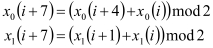
在一些態樣中,喚醒信號可以具有如下結構:


如元件符號1010所示,BS 110可以產生針對UE 120的喚醒信號。例如,BS 110可以使用基序列來產生喚醒信號。如本文所使用的,當產生喚醒信號時,基序列可以辨識要用於子訊框的一或多個符號的值。如進一步示出的,該基序列(其可以是用於第一部署模式(例如,GB/SA模式)的)與用於第二部署模式(例如,頻帶內模式)的基序列相比,每個子訊框可以包括更多的符號。作為一個非限制性實例,用於GB/SA模式的基序列可以包括14個符號,並且用於頻帶內模式的基序列可以包括11個符號。例如,用於頻帶內模式的基序列中的前三個符號可以用於每個子訊框的PDCCH。As shown by the symbol 1010, the
在一些態樣中,BS 110可以使用從用於頻帶內模式的基序列中選擇的一或多個額外值來產生喚醒信號。例如,用於GB/SA模式的基序列可以包括一或多個額外值和用於頻帶內模式的基序列(例如,用於頻帶內模式的基序列的全部或者用於頻帶內模式的基序列的子集)。作為一個實例,用於頻帶內模式的基序列可以在每個子訊框中使用如下序列:[x x x 0 1 2 3 4 5 6 7 8 9 10],此是因為前三個符號用於PDCCH。在此種情況下,用於GB/SA模式的基序列的非限制性實例可以包括[8 9 10 0 1 2 3 4 5 6 7 8 9 10]、[0 1 2 3 4 5 6 7 8 9 10 0 1 2]和[4 5 6 0 1 2 3 4 5 6 7 8 9 10],但是在本文中可能使用和設想其他實例。在一些態樣中,一或多個額外值被映射到第一時槽的前3個符號並且是從用於頻帶內模式的基序列的內部選擇的。在此種情況下,用於頻帶內模式的基序列的內部包括第二時槽的前3個符號(例如,[4 5 6 0 1 2 3 4 5 6 7 8 9 10])。如本文所使用的,基序列的內部是指不在基地台的開始或結束處的值。例如,用於基序列[x x x 0 1 2 3 4 5 6 7 8 9 10]的一或多個額外值可以包括值1、2、3、4、5、6、7、8及/或9中的任何一或多個值。In some aspects, the
在一些態樣中,可以經由以下操作來實現以上實例:將132長度基序列以頻率第一、時間第二的方式映射到子訊框的11個符號(例如,對應於頻帶內符號[x x x 0 1 2 3 4 5 6 7 8 9 10])之每一者符號中的12個次載波,並且隨後在剩餘的3個符號中重複該等符號中的一些符號。In some aspects, the above example can be implemented by the following operations: mapping the 132-length base sequence to the 11 symbols of the subframe in a frequency first and time second manner (for example, corresponding to the in-band symbol [
在一些態樣中,BS 110可以至少部分地基於循環字首長度針對子訊框的不同符號是不同的,來將[4 5 6 0 1 2 3 4 5 6 7 8 9 10]用於GB/SA模式的基序列。例如,時槽的第一符號可以具有與子訊框的其他符號相比更長的循環字首(CP)。每個子訊框可以具有兩個時槽,其中每個時槽具有7個符號。例如,在此種情況下,[4 5 6 0 1 2 3]可以在第一時槽中,並且[4 5 6 7 8 9 10]可以在第二時槽中,此可以提供待用於頻帶內基序列中的第四符號的相同的循環字首,因此改善用於頻帶內模式和GB/SA模式的喚醒信號之間的通用性。In some aspects,
在一些態樣中,BS 110可以使用與用於頻帶內模式的基序列相同的序列(例如,ZC序列或另一序列)或覆蓋碼中的至少一項來產生用於GB/SA模式的基序列。例如,在一些態樣中,BS 110可以使用用於頻帶內模式的基序列的131長度ZC和132長度覆蓋碼來產生基序列。在一些態樣中,BS 110可以重用131-長度ZC,並且可以使用不同長度的覆蓋碼(例如,168長度覆蓋碼等)(可以選擇168是因為跨越14個符號存在12個次載波)。在一些態樣中,BS 110可以重用132-長度覆蓋碼,並且可以使用不同長度的序列(例如,151長度ZC等)。In some aspects, the
在一些態樣中,BS 110可以使用與頻帶內模式不同的序列和不同的覆蓋碼來產生用於GB/SA模式的基序列。例如,BS 110可以使用151長度ZC和168長度覆蓋碼來產生基序列。在一些態樣中,BS 110可以應用相位偏移來產生用於GB/SA模式的基序列。In some aspects, the
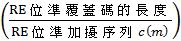
在一些態樣中,BS 110可以執行對基序列的時域加擾。例如,BS 110可以在符號位準上(例如,每符號)執行時域加擾。在一些態樣中,BS 110可以在時間上改變時域加擾。例如,第一時間(例如,符號、時槽、子訊框、訊框等)處的時域加擾可以不同於第二時間(例如,符號、時槽、子訊框、訊框等)處的時域加擾。在一些態樣中,時域加擾可以是至少部分地基於假性隨機雜訊(PN)序列的。例如,PN序列可以是至少部分地基於細胞辨識符或時間索引中的至少一項的。在一個實例中,可以經由在頻域中加擾來實現時域加擾,其中同一OFDM符號中的所有資源元素由相同的值加擾。在另一個實例中,可以將時域加擾與基序列覆蓋碼
如元件符號1015所示,BS 110可以向UE 120發送喚醒信號。如元件符號1020所示,在一些態樣中,UE 120可以至少部分地基於接收到喚醒信號來喚醒(例如,可以執行喚醒)。在一些態樣中,UE 120可以被配置有辨識用於GB/SA模式的基序列的資訊。在一些態樣中,UE 120可以決定用於GB/SA模式的基序列。例如,UE 120可以執行本文描述的操作中的一或多個操作來決定用於GB/SA模式的基序列,並且可以至少部分地基於用於GB/SA模式的基序列來偵測喚醒信號。As shown by the
圖10是作為實例提供的。其他實例是可能的,並且可以不同於結合圖10所描述的實例。Figure 10 is provided as an example. Other examples are possible and may be different from the examples described in connection with FIG. 10.
圖11是無線通訊的一方法1100的流程圖。該方法可以由基地台(例如,圖1的BS 110、裝置1202/1202'等)來執行。FIG. 11 is a flowchart of a
在1110處,基地台可以決定UE與保護頻帶模式或獨立模式相關聯。例如,BS 110(例如,使用控制器/處理器240等)可以決定UE 120在GB/SA模式中。在一些態樣中,BS 110可以至少部分地基於UE 120的配置來決定UE 120在GB/SA模式中。在一些態樣中,BS 110可以至少部分地基於與UE 120的連接類型來決定UE 120在GB/SA模式中。在一些態樣中,BS 110可以至少部分地基於從UE 120接收的指示UE 120在GB/SA模式等中的資訊來決定UE 120在GB/SA模式中。在一些態樣中,BS 110可以基於BS 110的部署類型來決定UE在GB/SA模式中。At 1110, the base station may determine that the UE is associated with guard band mode or independent mode. For example, the BS 110 (eg, using the controller/
在1120處,基地台可以產生針對GB/SA模式中的UE的喚醒信號。例如,基地台(例如,使用控制器/處理器240等)可以產生喚醒信號。在一些態樣中,基地台可以至少部分地基於與第一部署模式相關聯的第一基序列來產生喚醒信號。第一基序列可以包括同與第二部署模式相關聯的第二基序列相比更多的符號。在一些態樣中,第一部署模式可以是GB/SA模式,並且第二部署模式可以是頻帶內模式。At 1120, the base station may generate a wake-up signal for the UE in GB/SA mode. For example, the base station (for example, using the controller/
在一些態樣中,用於GB/SA模式的基序列包括從用於頻帶內模式的基序列中選擇的一或多個重用值,並且其中用於GB/SA模式的基序列包括用於頻帶內模式的基序列。在一個態樣中,一或多個重用值是從用於頻帶內模式的基序列的結尾起選擇的。在一些態樣中,一或多個重用值是從用於頻帶內模式的基序列的開頭起選擇的。在一些態樣中,一或多個重用值是從用於頻帶內模式的基序列的內部選擇的。在一些態樣中,一或多個重用值被映射到第一時槽的前3個符號並且是從用於頻帶內模式的基序列的內部選擇的,並且其中用於頻帶內模式的基序列的內部包括第二時槽的前3個符號。In some aspects, the base sequence for the GB/SA mode includes one or more reuse values selected from the base sequence for the in-band mode, and wherein the base sequence for the GB/SA mode includes the base sequence for the frequency band The base sequence of the inner pattern. In one aspect, one or more reuse values are selected from the end of the base sequence for the in-band mode. In some aspects, one or more reuse values are selected from the beginning of the base sequence for the in-band mode. In some aspects, the one or more reuse values are selected from within the base sequence used for the in-band mode. In some aspects, one or more reuse values are mapped to the first 3 symbols of the first time slot and are selected from within the base sequence used for the intra-band mode, and where the base sequence used for the intra-band mode The inside of includes the first 3 symbols of the second time slot.
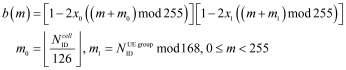
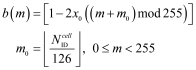
在一些態樣中,用於GB/SA模式的基序列和用於頻帶內模式的基序列使用相同的Zadoff-Chu序列和相同的覆蓋碼。在一些態樣中,用於GB/SA模式的基序列和用於頻帶內模式的基序列使用相同的Zadoff-Chu序列和不同的覆蓋碼。在一些態樣中,用於GB/SA模式的基序列和用於頻帶內模式的基序列使用不同的Zadoff-Chu序列和相同的覆蓋碼。 在一些態樣中,與用於頻帶內模式的基序列相比,用於GB/SA模式的基序列是使用不同的Zadoff-Chu序列和不同的覆蓋碼來產生的。在一些態樣中,用於針對GB/SA模式的基序列的Zadoff-Chu序列是151長度Zadoff-Chu序列。在一些態樣中,用於針對GB/SA模式的基序列的覆蓋碼是168長度覆蓋碼。在一些態樣中,用於針對GB/SA模式的基序列的覆蓋碼是至少部分地基於以下各項中的至少一項的:經截斷的255長度黃金序列、255長度m序列或256長度Hadamard碼。例如,具有151長度ZC序列和經由使用255長度黃金序列產生的168長度覆蓋碼的喚醒信號由以下公式得出: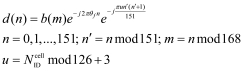




在一些態樣中,對用於GB/SA模式的基序列的時域加擾是在符號位準上執行的並且在時間上是變化的。在一些態樣中,時域加擾是至少部分地基於假性隨機雜訊(PN)序列的,假性隨機雜訊序列是至少部分地基於每個子訊框與用於GB/SA模式的基序列組合的細胞辨識符或時間索引中的至少一項的。In some aspects, the time-domain scrambling of the base sequence used in the GB/SA mode is performed on the sign level and varies in time. In some aspects, the time-domain scrambling is based at least in part on a pseudorandom noise (PN) sequence, which is based at least in part on each subframe and the basis used for the GB/SA mode. At least one of the cell identifier or time index of the sequence combination.
在一些態樣中,第一基序列包括第二基序列,並且包括來自第二基序列的一或多個額外值。在一些態樣中,一或多個額外值是從第二基序列的內部選擇的。在一些態樣中,一或多個額外值被映射到子訊框中的第一時槽的前3個符號並且是從第二基序列的內部選擇的,並且其中第二基序列的內部包括子訊框中的第二時槽的前3個符號。在一些態樣中,第一基序列是使用與第二基序列相同的Zadoff-Chu序列和相同的覆蓋碼來產生的。In some aspects, the first base sequence includes the second base sequence and includes one or more additional values from the second base sequence. In some aspects, the one or more additional values are selected from within the second base sequence. In some aspects, one or more additional values are mapped to the first 3 symbols of the first time slot in the subframe and are selected from the inside of the second base sequence, and the inside of the second base sequence includes The first 3 symbols of the second time slot in the subframe. In some aspects, the first base sequence is generated using the same Zadoff-Chu sequence and the same cover code as the second base sequence.
在一些態樣中,對第一基序列的時域加擾是在符號位準上執行的並且在時間上是變化的。在一些態樣中,時域加擾是至少部分地基於假性隨機雜訊(PN)序列的,假性隨機雜訊序列是至少部分地基於每子訊框與第一基序列組合的細胞辨識符或時間索引中的至少一項的。In some aspects, the time-domain scrambling of the first base sequence is performed on the sign level and varies in time. In some aspects, the time-domain scrambling is based at least in part on a pseudo-random noise (PN) sequence, which is based at least in part on the cell identification of each sub-frame combined with the first base sequence At least one of the symbol or time index.
在1130處,基地台可以發送喚醒信號。例如,基地台(例如,使用控制器/處理器240、發送處理器220、TX MIMO處理器230、MOD 232、天線234等)可以向UE發送喚醒信號。在一些態樣中,UE可以至少部分地基於接收到喚醒信號來執行喚醒。在一些態樣中,喚醒信號可以被發送給一組UE。At 1130, the base station can send a wake-up signal. For example, the base station (for example, using the controller/
儘管圖11圖示無線通訊的方法的示例方塊步驟,但是在一些態樣中,該方法可以包括與圖11中示出的彼等方塊步驟相比額外的方塊步驟、更少的方塊步驟、不同的方塊步驟或者以不同方式佈置的方塊步驟。另外或替代地,圖11中示出的兩個或更多個方塊步驟可以同時執行。Although FIG. 11 illustrates example block steps of the wireless communication method, in some aspects, the method may include additional block steps, fewer block steps, and different block steps than those shown in FIG. 11 Block steps or block steps arranged in different ways. Additionally or alternatively, two or more block steps shown in FIG. 11 may be executed simultaneously.
圖12是示出示例裝置1202中的不同模組/手段/部件之間的資料流的概念性資料流程圖1200。裝置1202可以是基地台(例如,eNB、gNB等)。在一些態樣中,裝置1202包括接收模組1204、產生模組1206及/或發送模組1208。FIG. 12 is a conceptual data flow diagram 1200 showing the data flow between different modules/means/components in an
接收模組1204可以從UE 1250(例如,UE 120等)接收資料1210。在一些態樣中,資料1210可以指示UE 1250與第一部署模式(例如,GB/SA模式)相關聯。在一些態樣中,接收模組1204可以提供資料1212,資料1212指示UE 1250與第一部署模式相關聯。The
產生模組可以產生針對第一部署模式中的UE 1250的喚醒信號,其中喚醒信號是至少部分地基於用於第一部署模式的第一基序列來產生的,第一基序列每子訊框包括與用於第二部署模式(例如,頻帶內模式)的第二基序列相比更多的符號。在一些態樣中,產生模組1206可以結合從接收模組1204接收的、指示UE 1250在第一部署中的資料1212來產生喚醒信號。產生模組1206可以將喚醒信號作為資料1214來提供。The generation module can generate a wake-up signal for the
發送模組1208可以將作為資料1214接收的喚醒信號作為信號1216來發送。在一些態樣中,UE 1250可以接收喚醒信號,並且可以至少部分地基於接收到喚醒信號來執行喚醒操作。The sending
該裝置可以包括執行上述圖11的流程圖中的演算法的每一個方塊步驟的另外的模組。因此,上述圖11的流程圖之每一個方塊步驟可以由模組來執行,並且該裝置可以包括彼等模組中的一或多個模組。該等模組可以是以下一或多個硬體部件:被專門配置為執行該程序/演算法,由被配置為執行該程序/演算法的處理器來實現,被儲存在電腦可讀取媒體之內以由處理器來實現,或者其某種組合。The device may include additional modules that execute each block step of the algorithm in the flowchart of FIG. 11 described above. Therefore, each block step in the flowchart of FIG. 11 can be executed by a module, and the device can include one or more of these modules. The modules may be one or more of the following hardware components: specifically configured to execute the program/algorithm, implemented by a processor configured to execute the program/algorithm, and stored in a computer readable medium It can be realized by the processor, or some combination thereof.
圖12中所示的模組的數量和佈置是作為實例來提供的。實際上,與圖12所示的彼等模組相比,可以存在額外的模組、更少的模組、不同的模組或者以不同方式佈置的模組。此外,圖12中所示的兩個或更多個模組可以在單個模組內實現,或者圖12中所示的單個模組可以實現為多個分散式模組。另外或替代地,圖12中所示的一組模組(例如,一或多個模組)可以執行被描述為由圖12中所示的另一組模組執行的一或多個功能。The number and arrangement of the modules shown in Figure 12 are provided as examples. In fact, there may be additional modules, fewer modules, different modules, or modules arranged in different ways compared to the modules shown in FIG. 12. In addition, two or more modules shown in FIG. 12 may be implemented in a single module, or the single module shown in FIG. 12 may be implemented as a plurality of distributed modules. Additionally or alternatively, a set of modules (eg, one or more modules) shown in FIG. 12 may perform one or more functions described as being performed by another set of modules shown in FIG. 12.
圖13是圖示針對採用處理系統1302的裝置1202'的硬體實現的實例的圖1300。裝置1202'可以是基地台(例如,eNB、gNB等)。FIG. 13 is a diagram 1300 illustrating an example of a hardware implementation for a
處理系統1302可以用通常由匯流排1304表示的匯流排架構來實現。匯流排1304可以包括任何數量的互連匯流排以及橋接器,此取決於處理系統1302的特定應用以及整體設計約束。匯流排1304將各種電路連接在一起,該等電路包括由處理器1306、模組1204、1206、1208和電腦可讀取媒體/記憶體1308表示的一或多個處理器及/或硬體模組。匯流排1304亦可以連接諸如定時源、周邊設備、電壓調節器以及功率管理電路之類的各種其他電路,該等電路是本技術領域中公知的,並且因此將不再進行描述。The
處理系統1302可以耦合到收發機1310。收發機1310耦合到一或多個天線1312。收發機1310提供用於在傳輸媒體上與各種其他裝置進行通訊的手段。收發機1310從一或多個天線1312接收信號,從所接收的信號中提取資訊,並且向處理系統1302(具體而言,接收模組1204)提供所提取的資訊。此外,收發機1310從處理系統1302(具體而言,發送模組1208)接收資訊,並且至少部分地基於所接收的資訊來產生要施加於一或多個天線1312的信號。處理系統1302包括耦合到電腦可讀取媒體/記憶體1308的處理器1306。處理器1306負責通用處理,其包括執行電腦可讀取媒體/記憶體1308上儲存的軟體。軟體在由處理器1306執行時使得處理系統1302執行以上針對任何特定的裝置所描述的各種功能。電腦可讀取媒體/記憶體1308亦可以用於儲存由處理器1306在執行軟體時操控的資料。處理系統亦包括模組1204、1206和1208中的至少一個模組。模組可以是位於/儲存在電腦可讀取媒體/記憶體1308中在處理器1306中執行的軟體模組、耦合到處理器1306的一或多個硬體模組,或其某種組合。處理系統902可以是BS 110的部件,並且可以包括TX MIMO處理器230、接收理器238及/或控制器/處理器240中的至少一個及/或記憶體242。The
在一些態樣中,用於無線通訊的裝置1202/1202'包括:用於產生針對保護頻帶模式或獨立模式中的使用者設備(UE)的喚醒信號的手段,其中喚醒信號是至少部分地基於與第一部署模式相關聯的第一基序列的,並且第一基序列包括同與第二部署模式相關聯的第二基序列相比更多的符號;用於發送喚醒信號的手段;等等。上述手段可以是裝置1202的上述模組中的一或多個及/或是裝置1202'的被配置為執行由上述手段所記載的功能的處理系統1302。如前述,處理系統1302可以包括TX MIMO處理器230、接收處理器238及/或控制器/處理器240。因此,在一種配置中,上述手段可以是被配置為執行上述手段所記載的功能的TX MIMO處理器230、接收處理器238及/或控制器/處理器240。In some aspects, the
圖13是作為實例來提供的。其他實例是可能的,並且可以不同於結合圖13所描述的實例。Figure 13 is provided as an example. Other examples are possible and may be different from the examples described in connection with FIG. 13.
圖14是無線通訊的一方法1400的流程圖。該方法可以由UE(例如,圖1的UE 120、裝置802/802'等)來執行。FIG. 14 is a flowchart of a
在1410處,UE(例如,使用天線252、DEMOD 254、MIMO偵測器256、接收處理器258、控制器/處理器280等)可以在GB/SA模式中接收喚醒信號。例如,UE可以在第一部署模式(例如,GB模式或SA模式)中操作。UE可以接收喚醒信號。例如,UE可以監測喚醒信號,並且可以至少部分地基於以下各項來辨識或偵測喚醒信號:喚醒信號的前序信號、在其中接收喚醒信號的資源等。喚醒信號可以是至少部分地基於與第一部署模式相關聯的第一基序列的。第一基序列可以包括同與第二部署模式相關聯的第二基序列相比更多的符號。在一些態樣中,第一部署是GB/SA模式,並且第二部署模式是頻帶內模式。在一些態樣中,第一基序列是14符號序列,並且第二基序列是11符號序列。At 1410, the UE (eg, using antenna 252, DEMOD 254,
在一些態樣中,第一基序列包括第二基序列,並且包括來自第二基序列的一或多個額外值。在一些態樣中,一或多個額外值是從第二基序列的內部選擇的。在一些態樣中,一或多個額外值被映射到子訊框中的第一時槽的前3個符號並且是從第二基序列的內部選擇的,並且其中第二基序列的內部包括子訊框中的第二時槽的前3個符號。在一些態樣中,第一基序列是使用與第二基序列相同的Zadoff-Chu序列和相同的覆蓋碼來產生的。In some aspects, the first base sequence includes the second base sequence and includes one or more additional values from the second base sequence. In some aspects, the one or more additional values are selected from within the second base sequence. In some aspects, one or more additional values are mapped to the first 3 symbols of the first time slot in the subframe and are selected from the inside of the second base sequence, and the inside of the second base sequence includes The first 3 symbols of the second time slot in the subframe. In some aspects, the first base sequence is generated using the same Zadoff-Chu sequence and the same cover code as the second base sequence.
在一些態樣中,對第一基序列的時域加擾是在符號位準上執行的並且在時間上是變化的。在一些態樣中,時域加擾是至少部分地基於假性隨機雜訊(PN)序列的,假性隨機雜訊序列是至少部分地基於每子訊框與第一基序列組合的細胞辨識符或時間索引中的至少一項的。In some aspects, the time-domain scrambling of the first base sequence is performed on the sign level and varies in time. In some aspects, the time-domain scrambling is based at least in part on a pseudo-random noise (PN) sequence, which is based at least in part on the cell identification of each sub-frame combined with the first base sequence At least one of the symbol or time index.
在1420處,UE(例如,使用天線252、DEMOD 254、MIMO偵測器256、接收處理器258、控制器/處理器280等)可以至少部分地基於喚醒信號來執行喚醒。例如,UE可以至少部分地基於喚醒信號來啟動接收模組等,如本文中在別處更詳細描述的。在一些態樣中,UE可以至少部分地基於喚醒信號來辨識要監測的特定資源。例如,UE可以至少部分地基於以下各項來辨識特定資源:喚醒信號、與喚醒信號相關聯的配置、喚醒信號與通訊之間的間隙等。At 1420, the UE (eg, using antenna 252, DEMOD 254,
在1430處,UE(例如,使用天線252、DEMOD 254、MIMO偵測器256、接收處理器258、控制器/處理器280等)可以可選地至少部分地基於喚醒信號來接收通訊。例如,UE可以在喚醒信號之後的間隙或延遲之後接收通訊。在一些態樣中,UE可以啟動接收模組或接收鏈來接收通訊。At 1430, the UE (eg, using antenna 252, DEMOD 254,
儘管圖14圖示無線通訊的方法的示例方塊步驟,但是在一些態樣中,該方法可以包括與圖14中示出的彼等方塊步驟相比另外的方塊步驟、更少的方塊步驟、不同的方塊步驟或者以不同方式佈置的方塊步驟。另外或替代地,圖14中示出的兩個或更多個方塊步驟可以同時執行。Although FIG. 14 illustrates example block steps of the method of wireless communication, in some aspects, the method may include additional block steps, fewer block steps, and different block steps than those shown in FIG. 14 Block steps or block steps arranged in different ways. Additionally or alternatively, two or more of the block steps shown in FIG. 14 may be executed simultaneously.
圖15是示出示例裝置1502中的不同模組/手段/部件之間的資料流的概念性資料流程圖1500。裝置1502可以是UE。在一些態樣中,裝置1502包括接收模組1504、執行模組1506及/或發送模組1508。15 is a conceptual data flow diagram 1500 showing the data flow between different modules/means/components in an
接收模組1504可以從BS 1550接收信號1510。信號1510可以包括喚醒信號。例如,接收模組1504可以偵測喚醒信號。在一些態樣中,接收模組1504可以至少部分地基於用於第一部署模式(例如,GB/SA模式)的基序列來偵測喚醒信號,其中用於第一部署模式的基序列包括與用於第二部署模式(例如,頻帶內模式)的基序列相比更多的符號。接收模組1504可以向執行模組1506提供資料1512。資料1512可以辨識喚醒信號或者可以至少部分地基於喚醒信號來指示執行喚醒。在一些態樣中,接收模組1504可以至少部分地基於喚醒信號來監測及/或接收通訊。例如,接收模組1504可以在跟在喚醒信號之後的延遲或間隙之後接收通訊,等等。The
執行模組1506可以至少部分地基於喚醒信號來執行喚醒。例如,執行模組可以使得裝置1502(例如,接收模組1504或裝置1502的另一個模組或部件)喚醒,以便監測與喚醒信號相關聯的資源,接收與通訊相關聯的授權或傳呼,等等。發送模組1508可以向BS 1550發送信號1514,例如,用於提供辨識UE的能力的資訊的信號等。The
該裝置可以包括執行上述圖14的流程圖中的演算法的每一個方塊步驟的另外的模組。因此,上述圖14的流程圖之每一個方塊步驟可以由模組來執行,並且該裝置可以包括彼等模組中的一或多個模組。該等模組可以是以下一或多個硬體部件:被專門配置為執行該程序/演算法,由被配置為執行該程序/演算法的處理器來實現,被儲存在電腦可讀取媒體之內以由處理器來實現,或者其某種組合。The device may include additional modules that execute each block step of the algorithm in the flowchart of FIG. 14 described above. Therefore, each block step of the above-mentioned flowchart of FIG. 14 can be executed by a module, and the device can include one or more of these modules. The modules may be one or more of the following hardware components: specifically configured to execute the program/algorithm, implemented by a processor configured to execute the program/algorithm, and stored in a computer readable medium It can be realized by the processor, or some combination thereof.
圖15中所示的模組的數量和佈置是作為實例來提供的。實際上,與圖15所示的彼等模組相比,可以存在額外的模組、更少的模組、不同的模組或者以不同方式佈置的模組。此外,圖15中所示的兩個或更多個模組可以在單個模組內實現,或者圖15中所示的單個模組可以實現為多個分散式模組。另外或替代地,圖15中所示的一組模組(例如,一或多個模組)可以執行被描述為由圖15中所示的另一組模組執行的一或多個功能。The number and arrangement of the modules shown in Fig. 15 are provided as examples. In fact, there may be additional modules, fewer modules, different modules, or modules arranged in different ways compared to the modules shown in FIG. 15. In addition, the two or more modules shown in FIG. 15 may be implemented in a single module, or the single module shown in FIG. 15 may be implemented as a plurality of distributed modules. Additionally or alternatively, a group of modules (eg, one or more modules) shown in FIG. 15 may perform one or more functions described as being performed by another group of modules shown in FIG. 15.
圖16是圖示針對採用處理系統1602的裝置1502'的硬體實現的實例1600的圖。裝置1502'可以是UE(例如,UE 120等)。FIG. 16 is a diagram illustrating an example 1600 for a hardware implementation of a device 1502' employing a
處理系統1602可以用通常由匯流排1604表示的匯流排架構來實現。匯流排1604可以包括任何數量的互連匯流排以及橋接器,此取決於處理系統1602的特定應用以及整體設計約束。匯流排1604將各種電路連接在一起,該等電路包括由處理器1606、模組1504、1506、1508和電腦可讀取媒體/記憶體1608表示的一或多個處理器及/或硬體模組。匯流排1604亦可以連接諸如定時源、周邊設備、電壓調節器以及功率管理電路之類的各種其他電路,該等電路是本技術領域中公知的,並且因此將不再進行描述。The
處理系統1602可以耦合到收發機1610。收發機1610耦合到一或多個天線1612。收發機1610提供用於在傳輸媒體上與各種其他裝置進行通訊的方式。收發機1610從一或多個天線1612接收信號,從所接收的信號中提取資訊,並且向處理系統1602(具體而言,接收模組1504)提供所提取的資訊。此外,收發機1610從處理系統1602(具體而言,發送模組1508)接收資訊,並且至少部分地基於所接收的資訊來產生要施加於一或多個天線1612的信號。處理系統1602包括耦合到電腦可讀取媒體/記憶體1608的處理器1606。處理器1606負責通用處理,其包括執行電腦可讀取媒體/記憶體1608上儲存的軟體。軟體在由處理器1606執行時使得處理系統1602執行以上針對任何特定的裝置所描述的各種功能。電腦可讀取媒體/記憶體1608亦可以用於儲存由處理器1606在執行軟體時操控的資料。處理系統亦包括模組1504、1506和1508中的至少一個模組。模組可以是位於/儲存在電腦可讀取媒體/記憶體1608中在處理器1606中執行的軟體模組、耦合到處理器1606的一或多個硬體模組,或其某種組合。處理系統1602可以是UE 120的元件,並且可以包括TX MIMO處理器266、接收理器258及/或控制器/處理器280中的至少一個及/或記憶體282。The
在一些態樣中,用於無線通訊的裝置1502/1502'包括:用於在保護頻帶模式或獨立模式(GB/SA模式)中接收喚醒信號的手段,其中喚醒信號是至少部分地基於與第一部署模式相關聯的第一基序列的,並且第一基序列包括同與第二部署模式相關聯的第二基序列相比更多的符號;及用於至少部分地基於喚醒信號來執行喚醒的手段。上述手段可以是裝置1502的上述模組中的一或多個及/或是裝置1502'的被配置為執行由上述手段所記載的功能的處理系統1602。如前述,處理系統1602可以包括TX MIMO處理器266、接收處理器258及/或控制器/處理器280。因此,在一種配置中,上述手段可以是被配置為執行上述手段所記載的功能的TX MIMO處理器266、接收處理器258及/或控制器/處理器280。In some aspects, the
圖16是作為實例來提供的。其他實例是可能的,並且可以不同於結合圖16所描述的實例。Figure 16 is provided as an example. Other examples are possible and may be different from the examples described in connection with FIG. 16.
應當理解的是,所揭示的程序/流程圖中的方塊步驟的特定次序或層次是示例方法的說明。應當理解的是,根據設計偏好,可以重新排列該等程序/流程圖中的方塊步驟的特定次序或層次。此外,可以將一些方塊步驟組合或者將其省略。所附的方法請求項以示例性次序提供了各個方塊步驟的元素,而並不意味著限於所提供的特定次序或層次。It should be understood that the specific order or hierarchy of the block steps in the disclosed program/flow chart is an illustration of an example method. It should be understood that the specific order or level of the block steps in the procedures/flow charts can be rearranged according to design preferences. In addition, some block steps can be combined or omitted. The attached method request items provide the elements of each block step in an exemplary order, and are not meant to be limited to the specific order or hierarchy provided.
提供了先前描述以使本領域任何技藝人士能夠實施本文所描述的各個態樣。對該等態樣的各種修改對於本領域技藝人士而言將是顯而易見的,並且本文定義的通用原理可以應用於其他態樣。因此,請求項並不意欲限於本文所示出的態樣,而是被賦予與文字請求項一致的全部範疇,其中除非明確地聲明如此,否則以單數形式對元素的提及不意欲意指「一個且僅一個」,而是意指「一或多個」。本文中使用「示例性」一詞意指「用作實例、實例或說明」。在本文中被描述為「示例性」的任何態樣不一定被解釋為比其他態樣優選或者有優勢。除非另外明確聲明,否則術語「一些」代表一或多個。諸如「A、B或C中的至少一個」、「A、B和C中的至少一個」以及「A、B、C或其任意組合」之類的組合包括A、B及/或C的任意組合,並且可以包括A的倍數、B的倍數或C的倍數。具體而言,諸如「A、B或C中的至少一個」、「A、B和C中的至少一個」以及「A、B、C或其任意組合」之類的組合可以是僅A、僅B、僅C、A和B、A和C、B和C,或者A和B和C,其中任何此種組合可以包含A、B或C中的一或多個成員或一些成員。貫穿本案內容所描述的各個態樣的元素的所有結構和功能均等物皆經由引用的方式明確地併入本文,並且意欲被請求項所包括,該等結構和功能均等物對於本領域技藝人士來說是已知的或者將要是已知的。此外,本文中沒有任何公開的內容意欲奉獻給公眾,不管此種公開內容是否被明確地記載在請求項中。沒有請求項元素要被解釋為手段加功能,除非該元素是使用短語「用於……的手段」來明確地記載的。The previous description is provided to enable any person skilled in the art to implement the various aspects described herein. Various modifications to these aspects will be obvious to those skilled in the art, and the general principles defined herein can be applied to other aspects. Therefore, the claim is not intended to be limited to the state shown in this article, but to be given all categories consistent with the literal claim, where the reference to the element in the singular form is not intended to mean " "One and only one", but means "one or more." The word "exemplary" is used herein to mean "serving as an example, instance, or illustration." Any aspect described herein as "exemplary" is not necessarily construed as being preferred or advantageous over other aspects. Unless expressly stated otherwise, the term "some" means one or more. Combinations such as "at least one of A, B, or C", "at least one of A, B, and C", and "A, B, C or any combination thereof" include any of A, B, and/or C Combinations, and can include multiples of A, multiples of B, or multiples of C. Specifically, combinations such as "at least one of A, B, or C", "at least one of A, B, and C", and "A, B, C or any combination thereof" may be A, only B. Only C, A and B, A and C, B and C, or A and B and C, where any such combination may include one or more members or some members of A, B or C. All structural and functional equivalents of the various aspects of the elements described throughout the content of this case are expressly incorporated herein by reference, and are intended to be included in the claim. Such structural and functional equivalents are important to those skilled in the art. Said to be known or will be known. In addition, none of the disclosures in this article are intended to be dedicated to the public, regardless of whether such disclosures are explicitly recorded in the claim. No claim element is to be interpreted as means plus function, unless the element is clearly stated using the phrase "means for...".
100‧‧‧網路102a‧‧‧巨集細胞102b‧‧‧微微細胞102c‧‧‧毫微微細胞110‧‧‧基地台(BS)110a‧‧‧BS110b‧‧‧BS110c‧‧‧BS110d‧‧‧BS120‧‧‧使用者設備(UE)120a‧‧‧UE120b‧‧‧UE120c‧‧‧UE120d‧‧‧UE130‧‧‧網路控制器200‧‧‧方塊圖212‧‧‧資料來源220‧‧‧發送處理器230‧‧‧發送(TX)多輸入多輸出(MIMO)處理器232a‧‧‧調變器(MOD)232t‧‧‧調變器(MOD)234a‧‧‧天線234t‧‧‧天線236‧‧‧MIMO偵測器238‧‧‧接收處理器239‧‧‧資料槽240‧‧‧控制器/處理器242‧‧‧記憶體244‧‧‧通訊單元246‧‧‧排程器252a‧‧‧天線252r‧‧‧天線254a‧‧‧解調器(DEMOD)254r‧‧‧解調器(DEMOD)256‧‧‧MIMO偵測器258‧‧‧接收處理器260‧‧‧資料槽262‧‧‧資料來源264‧‧‧發送處理器266‧‧‧TX MIMO處理器280‧‧‧控制器/處理器282‧‧‧記憶體290‧‧‧控制器/處理器292‧‧‧記憶體294‧‧‧通訊單元300‧‧‧實例305‧‧‧步驟310‧‧‧步驟315‧‧‧步驟320‧‧‧步驟325‧‧‧步驟330‧‧‧步驟335‧‧‧步驟340‧‧‧步驟400‧‧‧步驟410‧‧‧步驟420‧‧‧步驟430‧‧‧步驟500‧‧‧方法510‧‧‧步驟520‧‧‧步驟530‧‧‧步驟540‧‧‧步驟600‧‧‧資料流程圖602‧‧‧裝置602'‧‧‧裝置604‧‧‧模組606‧‧‧模組608‧‧‧模組610‧‧‧資料612‧‧‧資料614‧‧‧資料616‧‧‧信號650‧‧‧UE700‧‧‧實例圖702‧‧‧處理系統704‧‧‧匯流排706‧‧‧處理器708‧‧‧電腦可讀取媒體/記憶體710‧‧‧收發機712‧‧‧天線800‧‧‧資料流程圖802‧‧‧裝置802'‧‧‧裝置804‧‧‧接收模組806‧‧‧決定模組808‧‧‧執行模組810‧‧‧發送模組812‧‧‧信號814‧‧‧資料850‧‧‧BS900‧‧‧實例902‧‧‧處理系統904‧‧‧匯流排906‧‧‧處理器908‧‧‧電腦可讀取媒體/記憶體910‧‧‧收發機912‧‧‧天線1000‧‧‧實例1005‧‧‧步驟1010‧‧‧步驟1015‧‧‧步驟1020‧‧‧步驟1100‧‧‧方法1110‧‧‧步驟1120‧‧‧步驟1130‧‧‧步驟1200‧‧‧資料流程圖1202‧‧‧裝置1202'‧‧‧裝置1204‧‧‧接收模組1206‧‧‧產生模組1208‧‧‧發送模組1210‧‧‧資料1212‧‧‧資料1214‧‧‧資料1216‧‧‧信號1250‧‧‧UE1300‧‧‧實例圖1302‧‧‧處理系統1304‧‧‧匯流排1306‧‧‧處理器1308‧‧‧電腦可讀取媒體/記憶體1310‧‧‧收發機1312‧‧‧天線1400‧‧‧方法1410‧‧‧步驟1420‧‧‧步驟1430‧‧‧步驟1500‧‧‧資料流程圖1502‧‧‧裝置1502'‧‧‧裝置1504‧‧‧接收模組1506‧‧‧執行模組1508‧‧‧發送模組1510‧‧‧信號1512‧‧‧資料1514‧‧‧信號1550‧‧‧B1600‧‧‧實例1602‧‧‧處理系統1604‧‧‧匯流排1606‧‧‧處理器1608‧‧‧電腦可讀取媒體/記憶體1610‧‧‧收發機1612‧‧‧天線100‧‧‧Network 102a‧‧‧Macro cell 102b‧‧‧Pico cell 102c‧‧‧Femto cell 110‧‧‧Base station (BS)110a‧‧‧BS110b‧‧‧BS110c‧‧‧BS110d‧‧ ‧BS120‧‧‧User Equipment (UE)120a‧‧‧UE120b‧‧‧UE120c‧‧‧UE120d‧‧‧UE130‧‧‧Network Controller 200‧‧‧Block Diagram 212‧‧‧Data Source 220‧‧ ‧Transmit processor 230‧‧‧Transmit (TX) multiple input multiple output (MIMO) processor 232a‧‧‧Modulator (MOD) 232t‧‧‧Modulator (MOD) 234a‧‧‧Antenna 234t‧‧‧ Antenna 236‧‧‧MIMO detector 238‧‧‧Receiving processor 239‧‧‧Data slot 240‧‧‧Controller/processor 242‧‧‧Memory 244‧‧‧Communication unit 246‧‧‧Scheduler 252a‧‧‧antenna 252r‧‧‧antenna 254a‧‧‧demodulator (DEMOD) 254r‧‧‧ demodulator (DEMOD)256‧‧‧MIMO detector 258‧‧‧receiving processor 260‧‧‧data Slot 262‧‧‧Data source 264‧‧‧Transmit processor 266‧‧‧TX MIMO processor 280‧‧‧Controller/processor 282‧‧‧Memory 290‧‧‧Controller/processor 292‧‧‧ Memory 294‧‧‧Communication unit 300‧‧‧Instance 305‧‧‧Step 310‧‧‧Step 315‧‧‧Step 320‧‧Step 325‧‧‧Step 330‧‧‧Step 335‧‧‧Step 340‧ ‧‧Step 400‧‧‧Step 410‧‧‧Step 420‧‧‧Step 430‧‧‧Step 500‧‧‧Method 510‧‧Step 520‧‧‧Step 530‧‧‧Step 540‧‧‧Step 600‧ ‧‧Data flow chart 602‧‧‧Device 602'‧‧‧Device 604‧‧‧Module 606‧‧‧Module 608‧‧‧Module 610‧‧‧Data 612‧‧‧Data 614‧‧‧Data 616 ‧‧‧Signal 650‧‧‧UE700‧‧‧Example diagram 702‧‧‧Processing system 704‧‧‧Bus 706‧‧‧Processor 708‧‧‧Computer readable media/memory 710‧‧‧Transceiver 712‧‧‧Antenna 800‧‧‧Data flow chart 802‧‧‧Device 802'‧‧‧Device 804‧‧‧Receiving module 806‧‧‧Decision module 808‧‧Execute module 810‧‧‧Transmitting module Group 812‧‧‧Signal 814‧‧‧Data 850‧‧‧BS900‧‧Example 902‧‧‧Processing system 904‧‧‧Bus 906‧‧Processor 908‧‧‧Computer readable media/memory 910‧‧‧Transceiver 912‧‧‧Antenna 1000‧‧‧Example 1005‧‧‧Step 1010‧ ‧‧Step 1015‧‧‧Step 1020‧‧‧Step 1100‧‧‧Method 1110‧‧‧Step 1120‧‧‧Step 1130‧‧‧Step 1200‧‧‧Data Flow Chart 1202‧‧‧Device 1202'‧‧‧ Device 1204‧‧‧Receiving module 1206‧‧‧Generating module 1208‧‧‧Sending module 1210‧‧‧Data 1212‧‧‧Data 1214‧‧‧Data 1216‧‧‧Signal 1250‧‧‧UE1300‧‧‧ Example diagram 1302‧‧‧Processing system 1304‧‧‧Bus 1306‧‧‧Processor 1308‧‧‧Computer readable media/memory 1310‧‧‧Transceiver 1312‧‧‧Antenna 1400‧‧‧Method 1410‧ ‧‧Step 1420‧‧‧Step 1430‧‧‧Step 1500‧‧‧Data Flow Chart 1502‧‧‧Device 1502'‧‧‧Device 1504‧‧‧Receiving Module 1506‧‧‧Executing Module 1508‧‧‧Sending Module 1510‧‧‧Signal 1512‧‧‧Data 1514‧‧‧Signal 1550‧‧‧B1600‧‧Example 1602‧‧‧Processing system 1604‧‧‧Bus 1606‧‧‧Processor 1608‧‧‧Computer can Read media/memory 1610‧‧‧transceiver 1612‧‧‧antenna
圖1是示出無線通訊網路的實例的圖。Fig. 1 is a diagram showing an example of a wireless communication network.
圖2是示出在無線通訊網路中與使用者設備(UE)相通訊的基地台實例的圖。FIG. 2 is a diagram showing an example of a base station communicating with user equipment (UE) in a wireless communication network.
圖3是示出UE組的喚醒信號的產生和傳輸的實例的圖。FIG. 3 is a diagram showing an example of generation and transmission of a wake-up signal of a UE group.
圖4是無線通訊的一方法的流程圖。Fig. 4 is a flowchart of a method of wireless communication.
圖5是無線通訊的一方法的流程圖。Fig. 5 is a flowchart of a method of wireless communication.
圖6是示出示例裝置中的不同模組/手段/部件之間的資料流的概念性資料流程圖。Figure 6 is a conceptual data flow diagram showing the data flow between different modules/means/components in an example device.
圖7是示出針對採用處理系統的裝置的硬體實現的實例的圖。FIG. 7 is a diagram showing an example of a hardware implementation of a device adopting a processing system.
圖8是示出示例裝置中的不同模組/手段/部件之間的資料流的概念性資料流程圖。Figure 8 is a conceptual data flow diagram showing the data flow between different modules/means/components in an example device.
圖9是示出針對採用處理系統的裝置的硬體實現的實例的圖。Fig. 9 is a diagram showing an example of a hardware implementation of a device employing a processing system.
圖10是示出針對保護頻帶模式或獨立模式中的UE的喚醒信號的產生和傳輸的實例的圖。FIG. 10 is a diagram showing an example of generation and transmission of a wake-up signal for a UE in a guard band mode or an independent mode.
圖11是無線通訊的一方法的流程圖。Fig. 11 is a flowchart of a method of wireless communication.
圖12是示出示例裝置中的不同模組/手段/元件之間的資料流的概念性資料流程圖。Figure 12 is a conceptual data flow diagram showing the data flow between different modules/means/components in an example device.
圖13是示出針對採用處理系統的裝置的硬體實現的實例的圖。Fig. 13 is a diagram showing an example of a hardware implementation of a device employing a processing system.
圖14是無線通訊的一方法的流程圖。Fig. 14 is a flowchart of a method of wireless communication.
圖15是示出示例裝置中的不同模組/手段/元件之間的資料流的概念性資料流程圖。Figure 15 is a conceptual data flow diagram showing the data flow between different modules/means/components in an example device.
圖16是示出針對採用處理系統的裝置的硬體實現的實例的圖。Fig. 16 is a diagram showing an example of a hardware implementation of a device adopting a processing system.
國內寄存資訊 (請依寄存機構、日期、號碼順序註記) 無Domestic hosting information (please note in the order of hosting organization, date, and number) None
國外寄存資訊 (請依寄存國家、機構、日期、號碼順序註記) 無Foreign hosting information (please note in the order of hosting country, institution, date, and number) None
110‧‧‧基地台(BS) 110‧‧‧Base Station (BS)
120‧‧‧使用者設備(UE) 120‧‧‧User Equipment (UE)
1000‧‧‧實例 1000‧‧‧Example
1005‧‧‧步驟 1005‧‧‧Step
1010‧‧‧步驟 1010‧‧‧Step
1015‧‧‧步驟 1015‧‧‧Step
1020‧‧‧步驟 1020‧‧‧Step
Claims (36)
Applications Claiming Priority (8)
| Application Number | Priority Date | Filing Date | Title |
|---|---|---|---|
| US201762559356P | 2017-09-15 | 2017-09-15 | |
| US62/559,356 | 2017-09-15 | ||
| US201762585430P | 2017-11-13 | 2017-11-13 | |
| US62/585,430 | 2017-11-13 | ||
| US201862666673P | 2018-05-03 | 2018-05-03 | |
| US62/666,673 | 2018-05-03 | ||
| US16/127,036 US10743257B2 (en) | 2017-09-15 | 2018-09-10 | Techniques and apparatuses for wakeup signal transmission |
| US16/127,036 | 2018-09-10 |
Publications (2)
| Publication Number | Publication Date |
|---|---|
| TW201921993A TW201921993A (en) | 2019-06-01 |
| TWI720344B true TWI720344B (en) | 2021-03-01 |
Family
ID=65719492
Family Applications (2)
| Application Number | Title | Priority Date | Filing Date |
|---|---|---|---|
| TW107132042A TWI720344B (en) | 2017-09-15 | 2018-09-12 | Techniques and apparatuses for wakeup signal transmission |
| TW107132040A TWI752263B (en) | 2017-09-15 | 2018-09-12 | Techniques and apparatuses for wakeup signal transmission |
Family Applications After (1)
| Application Number | Title | Priority Date | Filing Date |
|---|---|---|---|
| TW107132040A TWI752263B (en) | 2017-09-15 | 2018-09-12 | Techniques and apparatuses for wakeup signal transmission |
Country Status (9)
| Country | Link |
|---|---|
| US (3) | US10743257B2 (en) |
| EP (3) | EP3796720B1 (en) |
| JP (2) | JP6997298B2 (en) |
| KR (2) | KR102178611B1 (en) |
| CN (2) | CN111095994B (en) |
| BR (2) | BR112020004946A2 (en) |
| CA (2) | CA3072615C (en) |
| TW (2) | TWI720344B (en) |
| WO (2) | WO2019055419A1 (en) |
Families Citing this family (48)
| Publication number | Priority date | Publication date | Assignee | Title |
|---|---|---|---|---|
| KR101720334B1 (en) * | 2010-01-12 | 2017-04-05 | 삼성전자주식회사 | Method and apparatus for supporting discontinuous reception operation in mobile communication system |
| USRE49879E1 (en) | 2010-01-12 | 2024-03-19 | Samsung Electronics Co., Ltd. | Method and apparatus for supporting discontinuous reception operation in mobile communication system |
| US10743257B2 (en) | 2017-09-15 | 2020-08-11 | Qualcomm Incorporated | Techniques and apparatuses for wakeup signal transmission |
| US11290957B2 (en) * | 2017-11-17 | 2022-03-29 | Samsung Electronics Co., Ltd. | Sequence design of wake-up signals and resynchronization sequence |
| WO2019136742A1 (en) * | 2018-01-15 | 2019-07-18 | Zte Corporation | Method and apparatus for low power channel access |
| EP3734925A4 (en) * | 2018-01-26 | 2021-10-06 | LG Electronics Inc. | METHOD AND DEVICE FOR SENDING / RECEIVING A WIRELESS SIGNAL IN A WIRELESS COMMUNICATION SYSTEM |
| DE112019000822T5 (en) * | 2018-02-15 | 2020-10-22 | Sony Corporation | WAKE UP CANDIDATE INDICATOR |
| US10484228B2 (en) * | 2018-03-05 | 2019-11-19 | Qualcomm Incorporated | Wakeup radio transmit diversity |
| CN111937442A (en) * | 2018-04-11 | 2020-11-13 | Oppo广东移动通信有限公司 | Energy-saving signal transmission method and device |
| KR102594994B1 (en) | 2018-05-11 | 2023-10-26 | 후아웨이 테크놀러지 컴퍼니 리미티드 | Signal transmission method, signal reception method and device |
| KR102415868B1 (en) * | 2018-06-27 | 2022-06-30 | 광동 오포 모바일 텔레커뮤니케이션즈 코포레이션 리미티드 | Signal transmission method, network device and terminal device |
| DE112019003995T5 (en) * | 2018-08-09 | 2021-04-29 | Lg Electronics Inc. | METHOD OF TRANSMITTING AND RECEIVING A SIGNAL IN A WIRELESS COMMUNICATION SYSTEM AND DEVICE FOR THEREFORE |
| CN115802460B (en) * | 2018-08-10 | 2026-01-09 | 大唐移动通信设备有限公司 | A signal transmission and reception method, network device and terminal |
| WO2020060203A1 (en) * | 2018-09-18 | 2020-03-26 | 엘지전자 주식회사 | Method and apparatus for supporting operation of standalone mtc that uses multi-narrowband in wireless communication system |
| EP3913955A4 (en) * | 2019-02-15 | 2022-02-09 | Guangdong Oppo Mobile Telecommunications Corp., Ltd. | PHYSICAL DOWNLINK CONTROL CHANNEL DETECTION METHOD AND DEVICE AND TERMINAL |
| US12022393B2 (en) * | 2019-03-29 | 2024-06-25 | Apple Inc. | Physical downlink control channel based wake up signal |
| CN113366890B (en) * | 2019-03-29 | 2022-09-23 | 华为技术有限公司 | Wake-up signal sending method and device |
| CN111757432B (en) * | 2019-03-29 | 2024-04-26 | 华为技术有限公司 | A wake-up method and related device |
| US12177777B2 (en) | 2019-04-02 | 2024-12-24 | Apple Inc. | Cross-slot scheduling power saving techniques |
| US12156136B2 (en) | 2019-04-04 | 2024-11-26 | Apple Inc. | Wake-up signal sub-grouping for REL-16 EMTC and NB-IOT |
| US11356946B2 (en) * | 2019-05-02 | 2022-06-07 | Qualcomm Incorporated | Multi-user wake-up signal |
| US20200351774A1 (en) | 2019-05-03 | 2020-11-05 | Mediatek Inc. | Power saving adaptation inside drx active time |
| JP7287463B2 (en) * | 2019-06-17 | 2023-06-06 | 日本電気株式会社 | DATA ENCODER, DATA COMMUNICATION SYSTEM, DATA COMMUNICATION METHOD, AND PROGRAM |
| CN110536386B (en) * | 2019-08-09 | 2023-04-25 | 中兴通讯股份有限公司 | Method, device and storage medium for transmitting wake-up signal |
| CN114208301B (en) * | 2019-08-16 | 2023-11-03 | 华为技术有限公司 | Method and device for sending and receiving wake-up signal sequence |
| EP3993513A4 (en) * | 2019-08-16 | 2022-08-10 | LG Electronics Inc. | Method for transmitting and receiving signal in wireless communication system, and apparatus therefor |
| KR20220047569A (en) * | 2019-08-16 | 2022-04-18 | 엘지전자 주식회사 | Method for transmitting and receiving signals in wireless communication system and apparatus therefor |
| WO2021034032A1 (en) * | 2019-08-16 | 2021-02-25 | 엘지전자 주식회사 | Method for transmitting or receiving signal in wireless communication system, and device therefor |
| CN113905429B (en) * | 2019-09-29 | 2023-11-24 | Oppo广东移动通信有限公司 | Method for monitoring wake-up signal, electronic equipment and storage medium |
| US11147014B2 (en) * | 2020-02-07 | 2021-10-12 | Hewlett Packard Enterprise Development Lp | Wake-up radio group-ID allocation |
| EP4104526A1 (en) * | 2020-02-14 | 2022-12-21 | Sony Group Corporation | Method of operating a wireless communication device in a disconnected operational mode, wireless communication device and base station |
| WO2021208109A1 (en) * | 2020-04-18 | 2021-10-21 | 华为技术有限公司 | Communication method and apparatus |
| US11778556B2 (en) * | 2020-04-24 | 2023-10-03 | Qualcomm Incorporated | Communication of WUS indicating selected PCIs of a PCI group |
| US11297573B2 (en) * | 2020-04-24 | 2022-04-05 | Texas Instruments Incorporated | Open loop wake-up radio based on transmitter fingerprinting |
| US11758592B2 (en) | 2020-04-30 | 2023-09-12 | Qualcomm Incorporated | Implicit beam indication |
| CN113965980A (en) * | 2020-07-20 | 2022-01-21 | 大唐移动通信设备有限公司 | Signal receiving and transmitting method, node and network side equipment |
| CN116325951A (en) * | 2020-07-23 | 2023-06-23 | Tcl通讯(宁波)有限公司 | Wake-up Signals in Cellular Systems |
| TWI746083B (en) * | 2020-07-24 | 2021-11-11 | 聯陽半導體股份有限公司 | Signal redriver system |
| CN113852444B (en) * | 2021-08-26 | 2024-05-24 | 杭州粒合信息科技有限公司 | A RF wireless wake-up method |
| CN116321367A (en) * | 2021-12-20 | 2023-06-23 | 展讯通信(上海)有限公司 | A communication method and related device |
| CN117641536A (en) * | 2022-08-18 | 2024-03-01 | 北京三星通信技术研究有限公司 | A method and device for low-power wake-up technology |
| CN118042562A (en) * | 2022-11-04 | 2024-05-14 | 展讯通信(上海)有限公司 | Wake-up signal processing method and device, network equipment |
| WO2024119380A1 (en) * | 2022-12-06 | 2024-06-13 | Nec Corporation | Methods, devices, and medium for communication |
| WO2024148445A1 (en) * | 2023-01-09 | 2024-07-18 | Qualcomm Incorporated | Wake-up signals for energy harvesting devices |
| CN118830302A (en) * | 2023-02-16 | 2024-10-22 | 北京小米移动软件有限公司 | Wake-up signal encoding method and device |
| WO2024197847A1 (en) * | 2023-03-31 | 2024-10-03 | Mediatek Singapore Pte. Ltd. | Methods for papr reduction |
| CN118945788A (en) * | 2023-05-11 | 2024-11-12 | 华为技术有限公司 | Signal transmission method and device |
| KR20250123326A (en) * | 2024-02-08 | 2025-08-18 | 삼성전자주식회사 | Method and apparatus for configuring transmission resources for low power communication in a wireless system |
Citations (3)
| Publication number | Priority date | Publication date | Assignee | Title |
|---|---|---|---|---|
| CN105340334A (en) * | 2013-04-03 | 2016-02-17 | 谷歌技术控股有限责任公司 | Methods and devices for cell discovery |
| WO2017070955A1 (en) * | 2015-10-30 | 2017-05-04 | 华为技术有限公司 | Method for information transmission, method for information processing, base station, and user equipment |
| CN106856670A (en) * | 2015-09-30 | 2017-06-16 | 联发科技(新加坡)私人有限公司 | Method and device for decoding DL physical channel in narrowband system |
Family Cites Families (84)
| Publication number | Priority date | Publication date | Assignee | Title |
|---|---|---|---|---|
| IL100213A (en) * | 1990-12-07 | 1995-03-30 | Qualcomm Inc | CDMA microcellular telephone system and distributed antenna system therefor |
| GB2342018B (en) | 1998-09-24 | 2003-11-05 | Nokia Mobile Phones Ltd | Communication network |
| US7372825B1 (en) * | 1999-07-13 | 2008-05-13 | Texas Instruments Incorporated | Wireless communications system with cycling of unique cell bit sequences in station communications |
| US6289228B1 (en) * | 1999-07-20 | 2001-09-11 | Motorola, Inc. | Method and apparatus for reducing power consumption of a communication device |
| US6973098B1 (en) * | 2000-10-25 | 2005-12-06 | Qualcomm, Incorporated | Method and apparatus for determining a data rate in a high rate packet data wireless communications system |
| US7398408B2 (en) | 2004-11-24 | 2008-07-08 | Conexant Systems, Inc. | Systems and methods for waking up wireless LAN devices |
| US7756548B2 (en) * | 2005-09-19 | 2010-07-13 | Qualcomm Incorporated | Methods and apparatus for use in a wireless communications system that uses a multi-mode base station |
| US7567791B2 (en) * | 2005-09-19 | 2009-07-28 | Qualcomm Incorporated | Wireless terminal methods and apparatus for use in a wireless communications system that uses a multi-mode base station |
| US8279909B2 (en) * | 2006-09-26 | 2012-10-02 | Lg Electronics Inc. | Method for transmitting information using sequence |
| US7889777B2 (en) * | 2006-11-08 | 2011-02-15 | Silicon Laboratories Inc. | System and method for data transfer in frequency hopping wireless networks |
| US8830818B2 (en) * | 2007-06-07 | 2014-09-09 | Qualcomm Incorporated | Forward handover under radio link failure |
| EP2316238A1 (en) * | 2008-05-23 | 2011-05-04 | Nokia Siemens Networks OY | Re-activation of a base station in standby mode |
| US8725502B2 (en) * | 2008-06-05 | 2014-05-13 | Qualcomm Incorporated | System and method of an in-band modem for data communications over digital wireless communication networks |
| US8682331B2 (en) | 2009-02-10 | 2014-03-25 | Qualcomm Incorporated | System and method for interference beacon transmission |
| US20100238984A1 (en) * | 2009-03-19 | 2010-09-23 | Motorola, Inc. | Spatial Information Feedback in Wireless Communication Systems |
| KR101294279B1 (en) | 2009-12-21 | 2013-08-07 | 한국전자통신연구원 | Sensor Node Comprising Wake-up Module, Apparatus and Method Controlling Wake-up Sequence |
| JP5404919B2 (en) | 2010-04-02 | 2014-02-05 | 三菱電機株式会社 | Mobile communication system |
| US9585043B2 (en) * | 2010-04-13 | 2017-02-28 | Interdigital Patent Holdings, Inc. | Group transmissions in wireless local area networks |
| US8831119B2 (en) * | 2010-06-28 | 2014-09-09 | Lg Electronics Inc. | Method and apparatus for transmitting synchronization signal in multi-node system |
| US9094175B2 (en) * | 2010-07-16 | 2015-07-28 | Qualcomm, Incorporated | Method and apparatus for saving power by using signal field of preamble |
| US9769635B2 (en) * | 2010-11-23 | 2017-09-19 | Lg Electronics Inc. | Broadcast signal transmitting apparatus, broadcast signal receiving apparatus, and broadcast signal transceiving method in broadcasting signal transmitting and receiving apparatuses |
| TWI521989B (en) * | 2011-01-11 | 2016-02-11 | 聯發科技股份有限公司 | Handover method for wireless communication system and user equipment |
| WO2012138112A2 (en) | 2011-04-04 | 2012-10-11 | 엘지전자 주식회사 | Method for transmitting uplink control information in a wireless communication system and device for same. |
| US9060328B2 (en) * | 2011-04-13 | 2015-06-16 | Interdigital Patent Holdings, Inc. | Method and apparatus for small cell discovery in heterogeneous networks |
| CN103636264B (en) * | 2011-04-29 | 2018-05-11 | 黑莓有限公司 | Receive the message related with LTE wake-ups |
| KR102023016B1 (en) * | 2011-06-28 | 2019-09-19 | 엘지전자 주식회사 | Method and apparatus for transmitting/receiving uplink signal, and method and apparatus for transmitting/receiving downlink signal |
| US9125152B2 (en) * | 2011-08-16 | 2015-09-01 | Utc Fire & Security Corporation | Beacon synchronization in wifi based systems |
| US20150003422A1 (en) | 2011-09-16 | 2015-01-01 | Nokia Corporation | Probing data |
| WO2013063808A1 (en) | 2011-11-04 | 2013-05-10 | Renesas Mobile Corporation | Method and apparatus for synchronization mechanisms on un-licensed band |
| CN103107872B (en) * | 2011-11-09 | 2015-09-23 | 上海贝尔股份有限公司 | Strengthen method and the device thereof of the transmission of descending ack/nack signal |
| KR20130106131A (en) * | 2012-03-19 | 2013-09-27 | 주식회사 팬택 | Resource allocation method for hybrid arq information |
| US20140003312A1 (en) * | 2012-07-02 | 2014-01-02 | Vadim Sergeyev | Wake-up functionality for an lte enodeb |
| GB2506153A (en) * | 2012-09-21 | 2014-03-26 | Sony Corp | A base station punctures OFDM reference symbols to provide fast physical-layer signaling of periods during which a terminal may enter a low power mode. |
| US8908605B1 (en) * | 2012-10-09 | 2014-12-09 | Sprint Spectrum L.P. | Coordination of codec assignment and radio configuration in wireless communications |
| ES2836786T3 (en) * | 2012-11-16 | 2021-06-28 | Innovative Sonic Corp | Method and apparatus for improving proximity service discovery in a wireless communication system |
| KR101973795B1 (en) * | 2012-12-28 | 2019-04-29 | 텔레콤 이탈리아 소시에떼 퍼 아찌오니 | Activating deactivated small coverage nodes in heterogeneous cellular network |
| EP3709730A1 (en) * | 2013-01-16 | 2020-09-16 | Interdigital Patent Holdings, Inc. | Discovery signal generation and reception |
| CN104105138B (en) * | 2013-04-03 | 2019-04-05 | 中兴通讯股份有限公司 | Data channel transmission and reception processing method and device |
| KR101832785B1 (en) * | 2013-08-09 | 2018-02-27 | 엘지전자 주식회사 | Apparatus for transmitting broadcast signals, apparatus for receiving broadcast signals, method for transmitting broadcast signals and method for receiving broadcast signals |
| WO2015023098A1 (en) * | 2013-08-12 | 2015-02-19 | 엘지전자 주식회사 | Broadcast signal transmitting apparatus, broadcast signal receiving method, broadcast signal transmitting method, and broadcast signal receiving method. |
| US9596650B2 (en) * | 2013-09-11 | 2017-03-14 | Microsemi Corporation | Radio wake-up system with multi-mode operation |
| US9516541B2 (en) * | 2013-09-17 | 2016-12-06 | Intel IP Corporation | Congestion measurement and reporting for real-time delay-sensitive applications |
| US20150365785A1 (en) * | 2013-11-05 | 2015-12-17 | Sascha Simon | System and method for detecting a handshake signal |
| JP6483030B2 (en) * | 2014-01-21 | 2019-03-13 | 株式会社巴川製紙所 | Anisotropic optical film |
| EP2941063B1 (en) | 2014-04-29 | 2017-11-01 | NTT Docomo, Inc. | Macro-Cell Assisted Small Cell Discovery and Activation |
| WO2015180085A1 (en) * | 2014-05-29 | 2015-12-03 | Qualcomm Incorporated | Methods and apparatuses for paging monitoring management for multi-rat devices |
| CN107148789B (en) * | 2014-11-06 | 2023-04-25 | 夏普株式会社 | Terminal device, base station device and method |
| US10484127B2 (en) | 2015-01-30 | 2019-11-19 | Lg Electronics Inc. | Method and apparatus for tranceiving common control message in wireless access system supporting narrow band internet of things |
| US20160278013A1 (en) | 2015-03-20 | 2016-09-22 | Qualcomm Incorporated | Phy for ultra-low power wireless receiver |
| US10028283B2 (en) * | 2015-04-10 | 2018-07-17 | Alcatel-Lucent Usa Inc. | Dynamic physical uplink control channel (PUCCH) |
| WO2016182602A1 (en) * | 2015-05-08 | 2016-11-17 | Intel IP Corporation | Device and method of configurable synchronization signal and channel design |
| US9504012B1 (en) * | 2015-05-22 | 2016-11-22 | Sony Corporation | Extended discontinuous reception mechanism |
| US10057854B2 (en) | 2015-06-11 | 2018-08-21 | Intel IP Corporation | Waking up internet of things devices in a high efficiency wireless local-area network |
| US9801133B2 (en) * | 2015-06-16 | 2017-10-24 | Intel Corporation | Apparatus, system and method of communicating a wakeup packet response |
| US9525540B1 (en) * | 2015-06-18 | 2016-12-20 | Qualcomm Incorporated | Embedded wake-up signaling |
| US9998989B2 (en) | 2015-07-09 | 2018-06-12 | Verizon Patent And Licensing Inc. | Wakeup method for devices in power saving mode |
| US10285129B2 (en) * | 2015-07-09 | 2019-05-07 | Verizon Patent And Licensing Inc. | Wakeup system and method for devices in power saving mode |
| US9894471B1 (en) * | 2015-07-25 | 2018-02-13 | Gary M. Zalewski | Wireless coded communication (WCC) devices with power harvesting power sources for processing biometric identified functions |
| WO2017039373A1 (en) | 2015-09-02 | 2017-03-09 | Lg Electronics Inc. | Method and apparatus for indicating center frequency offset for narrowband ue in wireless communication system |
| US9960911B2 (en) * | 2015-09-11 | 2018-05-01 | Signalchip Innovations Private Limited | System and method for securing wireless communication through physical layer control and data channel |
| US20170093530A1 (en) * | 2015-09-24 | 2017-03-30 | Qualcomm Incorporated | Techniques for channel estimation and packet decoding using an enhanced license assisted wi-fi header |
| US10492142B2 (en) * | 2015-09-25 | 2019-11-26 | Intel Corporation | Low-power wakeup radio for mobile devices |
| US9998936B2 (en) * | 2015-09-25 | 2018-06-12 | Motorola Mobility Llc | Enhanced filters in a wireless communication system |
| US10256955B2 (en) | 2015-09-29 | 2019-04-09 | Qualcomm Incorporated | Synchronization signals for narrowband operation |
| US10728078B2 (en) * | 2015-10-19 | 2020-07-28 | Lg Electronics Inc. | Method and user equipment for receiving downlink signal, and method and base station for transmitting downlink signal |
| US10784901B2 (en) * | 2015-11-12 | 2020-09-22 | Qualcomm Incorporated | Puncturing for structured low density parity check (LDPC) codes |
| CN108370364B (en) * | 2016-01-09 | 2021-06-08 | 联想创新有限公司(香港) | Cell-specific reference signal generation device and method in wireless communication system |
| EP3430761B1 (en) * | 2016-03-16 | 2019-11-27 | Telefonaktiebolaget LM Ericsson (PUBL) | Wireless device, network node and methods in a wireless communication system |
| US10491444B2 (en) * | 2016-04-08 | 2019-11-26 | Electronics And Telecommunications Research Institute | Method and apparatus for generating synchronization signal in internet of things |
| US10660032B2 (en) * | 2016-04-13 | 2020-05-19 | Qualcomm Incorporated | Micro sleep indicator techniques in a wireless communication system |
| US10445107B2 (en) * | 2016-07-14 | 2019-10-15 | Huawei Technologies Co., Ltd. | Security design for a wake up frame |
| EP3556149B1 (en) * | 2016-12-14 | 2021-02-24 | Telefonaktiebolaget LM Ericsson (publ) | Wake-up signal construction |
| US10470125B2 (en) * | 2016-12-22 | 2019-11-05 | Mediatek Inc. | Multi-user (MU) wake-up signal transmission by using FDMA scheme in WLAN |
| WO2018200682A1 (en) * | 2017-04-25 | 2018-11-01 | Marvell World Trade Ltd. | Low power wakeup in a wireless network |
| GB2562111B (en) * | 2017-05-05 | 2021-11-10 | Tcl Communication Ltd | Methods and devices associated with a wake up signal in a radio access network |
| WO2018217657A1 (en) * | 2017-05-26 | 2018-11-29 | Marvell World Trade Ltd. | Wakeup radio (wur) preamble design |
| WO2019018149A1 (en) * | 2017-07-18 | 2019-01-24 | Marvell World Trade Ltd. | Wakeup packet modulation and demodulation |
| US10743257B2 (en) | 2017-09-15 | 2020-08-11 | Qualcomm Incorporated | Techniques and apparatuses for wakeup signal transmission |
| WO2019079069A1 (en) * | 2017-10-19 | 2019-04-25 | Marvell World Trade Ltd. | Wakeup radio (wur) packet multi-format design |
| US10887837B1 (en) * | 2018-01-29 | 2021-01-05 | Marvell Asia Pte, Ltd. | Wakeup radio packet with neighbor access point information |
| US10772056B2 (en) * | 2018-04-03 | 2020-09-08 | Marvell Asia Pte, Ltd. | Wakeup radio (WUR) packet preamble design |
| US10873909B1 (en) * | 2018-05-08 | 2020-12-22 | Marvell Asia Pte, Ltd. | Frequency division multiple access (FDMA) support for wakeup radio (WUR) operation |
| EP3895478B1 (en) * | 2018-12-13 | 2026-02-04 | Telefonaktiebolaget Lm Ericsson (Publ) | Wakeup receiver and wakeup signal transmission |
| CN113424575B (en) * | 2019-02-13 | 2024-12-03 | 苹果公司 | Design of quality reporting for enhanced machine type communications and NB-IoT in Message 3 |
-
2018
- 2018-09-10 US US16/127,036 patent/US10743257B2/en active Active
- 2018-09-10 US US16/127,155 patent/US10945205B2/en active Active
- 2018-09-11 CN CN201880059550.7A patent/CN111095994B/en active Active
- 2018-09-11 BR BR112020004946-8A patent/BR112020004946A2/en unknown
- 2018-09-11 KR KR1020207007096A patent/KR102178611B1/en active Active
- 2018-09-11 KR KR1020207007095A patent/KR102291428B1/en active Active
- 2018-09-11 WO PCT/US2018/050483 patent/WO2019055419A1/en not_active Ceased
- 2018-09-11 CA CA3072615A patent/CA3072615C/en active Active
- 2018-09-11 EP EP20206785.6A patent/EP3796720B1/en active Active
- 2018-09-11 EP EP18782584.9A patent/EP3682678A1/en active Pending
- 2018-09-11 JP JP2020514735A patent/JP6997298B2/en active Active
- 2018-09-11 EP EP18782258.0A patent/EP3682677B1/en active Active
- 2018-09-11 CN CN201880059521.0A patent/CN111095993B/en active Active
- 2018-09-11 CA CA3072607A patent/CA3072607C/en active Active
- 2018-09-11 JP JP2020514734A patent/JP6905150B2/en active Active
- 2018-09-11 BR BR112020004932-8A patent/BR112020004932A2/en unknown
- 2018-09-11 WO PCT/US2018/050486 patent/WO2019055421A1/en not_active Ceased
- 2018-09-12 TW TW107132042A patent/TWI720344B/en active
- 2018-09-12 TW TW107132040A patent/TWI752263B/en active
-
2020
- 2020-10-08 US US16/948,986 patent/US11463956B2/en active Active
Patent Citations (3)
| Publication number | Priority date | Publication date | Assignee | Title |
|---|---|---|---|---|
| CN105340334A (en) * | 2013-04-03 | 2016-02-17 | 谷歌技术控股有限责任公司 | Methods and devices for cell discovery |
| CN106856670A (en) * | 2015-09-30 | 2017-06-16 | 联发科技(新加坡)私人有限公司 | Method and device for decoding DL physical channel in narrowband system |
| WO2017070955A1 (en) * | 2015-10-30 | 2017-05-04 | 华为技术有限公司 | Method for information transmission, method for information processing, base station, and user equipment |
Also Published As
Similar Documents
| Publication | Publication Date | Title |
|---|---|---|
| TWI720344B (en) | Techniques and apparatuses for wakeup signal transmission | |
| KR102796676B1 (en) | Sequence design of wake-up signal and resynchronization sequence | |
| TWI748129B (en) | Techniques and apparatuses for wakeup signal design and resource allocation | |
| CN115567180B (en) | Base station, terminal and method thereof in communication system | |
| CN110959261B (en) | Method and apparatus for synchronization signal and PBCH block enhancement | |
| US11075709B2 (en) | Variable spreading factor codes for non-orthogonal multiple access | |
| HK40028163B (en) | Techniques and apparatuses for wakeup signal transmission | |
| HK40027743B (en) | Techniques and apparatuses for wakeup signal transmission | |
| HK40028163A (en) | Techniques and apparatuses for wakeup signal transmission | |
| HK40027743A (en) | Techniques and apparatuses for wakeup signal transmission |