TWI802491B - Galvanized Steel - Google Patents
Galvanized Steel Download PDFInfo
- Publication number
- TWI802491B TWI802491B TW111131499A TW111131499A TWI802491B TW I802491 B TWI802491 B TW I802491B TW 111131499 A TW111131499 A TW 111131499A TW 111131499 A TW111131499 A TW 111131499A TW I802491 B TWI802491 B TW I802491B
- Authority
- TW
- Taiwan
- Prior art keywords
- ray diffraction
- phase
- corrosion resistance
- layer
- diffraction
- Prior art date
Links
Images

Classifications
-
- C—CHEMISTRY; METALLURGY
- C23—COATING METALLIC MATERIAL; COATING MATERIAL WITH METALLIC MATERIAL; CHEMICAL SURFACE TREATMENT; DIFFUSION TREATMENT OF METALLIC MATERIAL; COATING BY VACUUM EVAPORATION, BY SPUTTERING, BY ION IMPLANTATION OR BY CHEMICAL VAPOUR DEPOSITION, IN GENERAL; INHIBITING CORROSION OF METALLIC MATERIAL OR INCRUSTATION IN GENERAL
- C23C—COATING METALLIC MATERIAL; COATING MATERIAL WITH METALLIC MATERIAL; SURFACE TREATMENT OF METALLIC MATERIAL BY DIFFUSION INTO THE SURFACE, BY CHEMICAL CONVERSION OR SUBSTITUTION; COATING BY VACUUM EVAPORATION, BY SPUTTERING, BY ION IMPLANTATION OR BY CHEMICAL VAPOUR DEPOSITION, IN GENERAL
- C23C2/00—Hot-dipping or immersion processes for applying the coating material in the molten state without affecting the shape; Apparatus therefor
- C23C2/04—Hot-dipping or immersion processes for applying the coating material in the molten state without affecting the shape; Apparatus therefor characterised by the coating material
- C23C2/06—Zinc or cadmium or alloys based thereon
-
- C—CHEMISTRY; METALLURGY
- C22—METALLURGY; FERROUS OR NON-FERROUS ALLOYS; TREATMENT OF ALLOYS OR NON-FERROUS METALS
- C22C—ALLOYS
- C22C18/00—Alloys based on zinc
- C22C18/04—Alloys based on zinc with aluminium as the next major constituent
-
- C—CHEMISTRY; METALLURGY
- C23—COATING METALLIC MATERIAL; COATING MATERIAL WITH METALLIC MATERIAL; CHEMICAL SURFACE TREATMENT; DIFFUSION TREATMENT OF METALLIC MATERIAL; COATING BY VACUUM EVAPORATION, BY SPUTTERING, BY ION IMPLANTATION OR BY CHEMICAL VAPOUR DEPOSITION, IN GENERAL; INHIBITING CORROSION OF METALLIC MATERIAL OR INCRUSTATION IN GENERAL
- C23C—COATING METALLIC MATERIAL; COATING MATERIAL WITH METALLIC MATERIAL; SURFACE TREATMENT OF METALLIC MATERIAL BY DIFFUSION INTO THE SURFACE, BY CHEMICAL CONVERSION OR SUBSTITUTION; COATING BY VACUUM EVAPORATION, BY SPUTTERING, BY ION IMPLANTATION OR BY CHEMICAL VAPOUR DEPOSITION, IN GENERAL
- C23C2/00—Hot-dipping or immersion processes for applying the coating material in the molten state without affecting the shape; Apparatus therefor
- C23C2/02—Pretreatment of the material to be coated, e.g. for coating on selected surface areas
-
- C—CHEMISTRY; METALLURGY
- C23—COATING METALLIC MATERIAL; COATING MATERIAL WITH METALLIC MATERIAL; CHEMICAL SURFACE TREATMENT; DIFFUSION TREATMENT OF METALLIC MATERIAL; COATING BY VACUUM EVAPORATION, BY SPUTTERING, BY ION IMPLANTATION OR BY CHEMICAL VAPOUR DEPOSITION, IN GENERAL; INHIBITING CORROSION OF METALLIC MATERIAL OR INCRUSTATION IN GENERAL
- C23C—COATING METALLIC MATERIAL; COATING MATERIAL WITH METALLIC MATERIAL; SURFACE TREATMENT OF METALLIC MATERIAL BY DIFFUSION INTO THE SURFACE, BY CHEMICAL CONVERSION OR SUBSTITUTION; COATING BY VACUUM EVAPORATION, BY SPUTTERING, BY ION IMPLANTATION OR BY CHEMICAL VAPOUR DEPOSITION, IN GENERAL
- C23C2/00—Hot-dipping or immersion processes for applying the coating material in the molten state without affecting the shape; Apparatus therefor
- C23C2/02—Pretreatment of the material to be coated, e.g. for coating on selected surface areas
- C23C2/022—Pretreatment of the material to be coated, e.g. for coating on selected surface areas by heating
- C23C2/0224—Two or more thermal pretreatments
-
- C—CHEMISTRY; METALLURGY
- C23—COATING METALLIC MATERIAL; COATING MATERIAL WITH METALLIC MATERIAL; CHEMICAL SURFACE TREATMENT; DIFFUSION TREATMENT OF METALLIC MATERIAL; COATING BY VACUUM EVAPORATION, BY SPUTTERING, BY ION IMPLANTATION OR BY CHEMICAL VAPOUR DEPOSITION, IN GENERAL; INHIBITING CORROSION OF METALLIC MATERIAL OR INCRUSTATION IN GENERAL
- C23C—COATING METALLIC MATERIAL; COATING MATERIAL WITH METALLIC MATERIAL; SURFACE TREATMENT OF METALLIC MATERIAL BY DIFFUSION INTO THE SURFACE, BY CHEMICAL CONVERSION OR SUBSTITUTION; COATING BY VACUUM EVAPORATION, BY SPUTTERING, BY ION IMPLANTATION OR BY CHEMICAL VAPOUR DEPOSITION, IN GENERAL
- C23C2/00—Hot-dipping or immersion processes for applying the coating material in the molten state without affecting the shape; Apparatus therefor
- C23C2/02—Pretreatment of the material to be coated, e.g. for coating on selected surface areas
- C23C2/024—Pretreatment of the material to be coated, e.g. for coating on selected surface areas by cleaning or etching
-
- C—CHEMISTRY; METALLURGY
- C23—COATING METALLIC MATERIAL; COATING MATERIAL WITH METALLIC MATERIAL; CHEMICAL SURFACE TREATMENT; DIFFUSION TREATMENT OF METALLIC MATERIAL; COATING BY VACUUM EVAPORATION, BY SPUTTERING, BY ION IMPLANTATION OR BY CHEMICAL VAPOUR DEPOSITION, IN GENERAL; INHIBITING CORROSION OF METALLIC MATERIAL OR INCRUSTATION IN GENERAL
- C23C—COATING METALLIC MATERIAL; COATING MATERIAL WITH METALLIC MATERIAL; SURFACE TREATMENT OF METALLIC MATERIAL BY DIFFUSION INTO THE SURFACE, BY CHEMICAL CONVERSION OR SUBSTITUTION; COATING BY VACUUM EVAPORATION, BY SPUTTERING, BY ION IMPLANTATION OR BY CHEMICAL VAPOUR DEPOSITION, IN GENERAL
- C23C2/00—Hot-dipping or immersion processes for applying the coating material in the molten state without affecting the shape; Apparatus therefor
- C23C2/26—After-treatment
- C23C2/28—Thermal after-treatment, e.g. treatment in oil bath
-
- C—CHEMISTRY; METALLURGY
- C23—COATING METALLIC MATERIAL; COATING MATERIAL WITH METALLIC MATERIAL; CHEMICAL SURFACE TREATMENT; DIFFUSION TREATMENT OF METALLIC MATERIAL; COATING BY VACUUM EVAPORATION, BY SPUTTERING, BY ION IMPLANTATION OR BY CHEMICAL VAPOUR DEPOSITION, IN GENERAL; INHIBITING CORROSION OF METALLIC MATERIAL OR INCRUSTATION IN GENERAL
- C23C—COATING METALLIC MATERIAL; COATING MATERIAL WITH METALLIC MATERIAL; SURFACE TREATMENT OF METALLIC MATERIAL BY DIFFUSION INTO THE SURFACE, BY CHEMICAL CONVERSION OR SUBSTITUTION; COATING BY VACUUM EVAPORATION, BY SPUTTERING, BY ION IMPLANTATION OR BY CHEMICAL VAPOUR DEPOSITION, IN GENERAL
- C23C2/00—Hot-dipping or immersion processes for applying the coating material in the molten state without affecting the shape; Apparatus therefor
- C23C2/26—After-treatment
- C23C2/28—Thermal after-treatment, e.g. treatment in oil bath
- C23C2/29—Cooling or quenching
-
- C—CHEMISTRY; METALLURGY
- C23—COATING METALLIC MATERIAL; COATING MATERIAL WITH METALLIC MATERIAL; CHEMICAL SURFACE TREATMENT; DIFFUSION TREATMENT OF METALLIC MATERIAL; COATING BY VACUUM EVAPORATION, BY SPUTTERING, BY ION IMPLANTATION OR BY CHEMICAL VAPOUR DEPOSITION, IN GENERAL; INHIBITING CORROSION OF METALLIC MATERIAL OR INCRUSTATION IN GENERAL
- C23C—COATING METALLIC MATERIAL; COATING MATERIAL WITH METALLIC MATERIAL; SURFACE TREATMENT OF METALLIC MATERIAL BY DIFFUSION INTO THE SURFACE, BY CHEMICAL CONVERSION OR SUBSTITUTION; COATING BY VACUUM EVAPORATION, BY SPUTTERING, BY ION IMPLANTATION OR BY CHEMICAL VAPOUR DEPOSITION, IN GENERAL
- C23C2/00—Hot-dipping or immersion processes for applying the coating material in the molten state without affecting the shape; Apparatus therefor
- C23C2/34—Hot-dipping or immersion processes for applying the coating material in the molten state without affecting the shape; Apparatus therefor characterised by the shape of the material to be treated
- C23C2/36—Elongated material
- C23C2/40—Plates; Strips
-
- C—CHEMISTRY; METALLURGY
- C23—COATING METALLIC MATERIAL; COATING MATERIAL WITH METALLIC MATERIAL; CHEMICAL SURFACE TREATMENT; DIFFUSION TREATMENT OF METALLIC MATERIAL; COATING BY VACUUM EVAPORATION, BY SPUTTERING, BY ION IMPLANTATION OR BY CHEMICAL VAPOUR DEPOSITION, IN GENERAL; INHIBITING CORROSION OF METALLIC MATERIAL OR INCRUSTATION IN GENERAL
- C23C—COATING METALLIC MATERIAL; COATING MATERIAL WITH METALLIC MATERIAL; SURFACE TREATMENT OF METALLIC MATERIAL BY DIFFUSION INTO THE SURFACE, BY CHEMICAL CONVERSION OR SUBSTITUTION; COATING BY VACUUM EVAPORATION, BY SPUTTERING, BY ION IMPLANTATION OR BY CHEMICAL VAPOUR DEPOSITION, IN GENERAL
- C23C30/00—Coating with metallic material characterised only by the composition of the metallic material, i.e. not characterised by the coating process
- C23C30/005—Coating with metallic material characterised only by the composition of the metallic material, i.e. not characterised by the coating process on hard metal substrates
Landscapes
- Chemical & Material Sciences (AREA)
- Engineering & Computer Science (AREA)
- Materials Engineering (AREA)
- Mechanical Engineering (AREA)
- Metallurgy (AREA)
- Organic Chemistry (AREA)
- Chemical Kinetics & Catalysis (AREA)
- Thermal Sciences (AREA)
- Physics & Mathematics (AREA)
- Oil, Petroleum & Natural Gas (AREA)
- Coating With Molten Metal (AREA)
- Other Surface Treatments For Metallic Materials (AREA)
- Electroplating Methods And Accessories (AREA)
- Heat Treatment Of Sheet Steel (AREA)
- Glass Compositions (AREA)
- Superconductors And Manufacturing Methods Therefor (AREA)
Abstract
一種鍍敷鋼板,其在鋼板表面具有鍍敷層,前述鍍敷層之Sn、Bi、In之合計量ΣA小於0.75%,Ca、Y、La、Ce之合計量ΣB為0.03~0.60%,Cr、Ti、Ni、Co、V、Nb、Cu及Mn之合計量ΣC為0~1.00%,並滿足Sn≦Si及20.0≦Mg/Si;在鍍敷層表面之X射線繞射圖中,Al 2.15Zn 1.85Ca之X射線繞射峰、CaZn 2之X射線繞射峰、及η’-MgZn 2之X射線繞射峰滿足預定關係。 A plated steel plate, which has a plated layer on the surface of the steel plate, the total amount ΣA of Sn, Bi, In of the aforementioned plated layer is less than 0.75%, the total amount ΣB of Ca, Y, La, Ce is 0.03~0.60%, Cr , Ti, Ni, Co, V, Nb, Cu and Mn total amount ΣC is 0~1.00%, and satisfy Sn≦Si and 20.0≦Mg/Si; The X-ray diffraction peaks of 2.15 Zn 1.85 Ca, the X-ray diffraction peaks of CaZn 2 , and the X-ray diffraction peaks of η'-MgZn 2 satisfy the predetermined relationship.
Description
發明領域 本發明是有關於一種鍍敷鋼板。 本案基於2021年10月26日在日本提申之特願2021-174676號主張優先權,並在此援引其內容。 field of invention The present invention relates to a coated steel plate. This case claims priority based on Japanese Patent Application No. 2021-174676 filed in Japan on October 26, 2021, and its contents are cited here.
發明背景
鍍敷鋼板被使用在各種建材領域中。建築物的壽命由於仰賴鍍敷層之損耗速度,因此使用高耐蝕性鍍敷鋼板作為建築材料即可。例如,專利文獻1~3所記載之鍍敷鋼板作為顯現出高度耐蝕性的鋼板而廣為人知。
Background of the invention
Plated steel sheets are used in various building material fields. Since the life of the building depends on the wear rate of the plating layer, it is sufficient to use a high corrosion resistance plated steel plate as a building material. For example, the plated steel sheets described in
日本國內存在有各種環境,在會產生火山性氣體之區域或工業區等中,大氣中的SO x氣體會溶入雨水而形成酸雨,有時會大幅減損鍍敷鋼板之壽命。一般而言,以Galvalume鋼板(註冊商標)而廣為人知的Al系鍍敷鋼板,其在酸性環境下的耐蝕性雖較良好,但在鹼性環境下的耐蝕性低。據此,Al系鍍敷鋼板在從牛舍・豬舍等堆肥舍產生氨氣氣體環境的這種鹼性環境下之耐蝕性、犧牲防蝕性低,故其使用範圍受到侷限。 There are various environments in Japan. In areas where volcanic gases are produced or industrial areas, etc., SOx gas in the atmosphere will dissolve into rainwater to form acid rain, which may greatly reduce the life of plated steel sheets. Generally, an Al-based plated steel sheet known as a Galvalume steel sheet (registered trademark) has relatively good corrosion resistance in an acidic environment, but has low corrosion resistance in an alkaline environment. Accordingly, Al-based plated steel sheets have low corrosion resistance and sacrificial corrosion resistance in an alkaline environment such as an ammonia gas atmosphere generated from a composting house such as a cowshed or a pigsty, so the range of use thereof is limited.
因此,專利文獻1~3所示的那種Zn系鍍敷鋼板,其應用範圍雖較廣,但相較於Al系鍍敷鋼板,Zn系鍍敷鋼板則有在酸性環境下耐蝕性低的傾向而需要提升在酸性環境下的耐蝕性。亦即,對於鍍敷鋼板要求一種在酸方面~鹼方面的所有區域下都顯現出高度耐蝕性的鍍敷鋼板。Therefore, the Zn-based coated steel sheets shown in
[先行技術文獻] [專利文獻] [專利文獻1]日本國特開平10-226865號公報 [專利文獻2]國際公開第2000/71773號 [專利文獻3]國際公開第2018/139619號 [Prior Art Literature] [Patent Document] [Patent Document 1] Japanese Patent Application Laid-Open No. 10-226865 [Patent Document 2] International Publication No. 2000/71773 [Patent Document 3] International Publication No. 2018/139619
發明概要 發明所欲解決之課題 本發明是有鑑於上述情況而完成者,其課題在於提供一種在酸~鹼環境下顯現出高度耐蝕性的鍍敷鋼板。 Summary of the invention The problem to be solved by the invention This invention is made|formed in view of the said situation, and the object is to provide the plated steel sheet which shows high corrosion resistance in an acid-alkaline environment.
用以解決課題之手段
[1]一種鍍敷鋼板,其在鋼板表面具有鍍敷層,前述鍍敷層之平均化學組成以質量%計:
Al:大於15.0%且在30.0%以下、
Mg:大於5.0%且在15.0%以下、
Sn:0~0.70%、
Bi:0~0.35%、
In:0~0.35%、
Ca:0.03~0.60%、
Y:0~0.30%、
La:0~0.30%、
Ce:0~0.30%、
Si:0.01~0.75%、
Cr:0~0.25%、
Ti:0~0.25%、
Ni:0~1.00%、
Co:0~0.25%、
V:0~0.25%、
Nb:0~0.25%、
Cu:0~0.25%、
Mn:0~0.25%、
Fe:0~5.0%、
Sr:0~0.5%、
Sb:0~0.5%、
Pb:0~0.5%、
B:0~0.5%、
Li:0~0.5%、
Zr:0~0.5%、
Mo:0~0.5%、
W:0~0.5%、
Ag:0~0.5%、
P:0~0.5%、
剩餘部分由Zn及不純物所構成,
Sn、Bi及In之合計量ΣA為0%以上且小於0.75%,
Ca、Y、La及Ce之合計量ΣB為0.03~0.60%,
Cr、Ti、Ni、Co、V、Nb、Cu及Mn之合計量ΣC為0~1.00%,
滿足Sn≦Si及20.0≦Mg/Si;
使用Cu-Kα線並以X射線輸出為40kV及150mA之條件測定前述鍍敷層表面,在所測定之前述鍍敷層表面之X射線繞射圖中,由Al
2.15Zn
1.85Ca的X射線繞射峰求出I
1~I
3、由CaZn
2的X射線繞射峰求出I
4、及由η’-MgZn
2的X射線繞射峰求出I
5及I
6,並將I
1~I
6透過下述式(1)~(6)來定義,此時會滿足下述式(A)及(B);
[數學式1]

[2]如[1]所記載的鍍敷鋼板,其中,前述鍍敷層之平均化學組成滿足20.0≦Mg/Si≦38.0及3.00≦Al/Mg≦4.00;
使用Cu-Kα線並以X射線輸出為40kV及150mA之條件測定前述鍍敷層表面,在所測定之前述鍍敷層表面之X射線繞射圖中,由MgAlSi的X射線繞射峰所求出之I
7~I
9是透過下述式(7)~(9)來定義,此時會滿足下述式(C);
[數學式2]
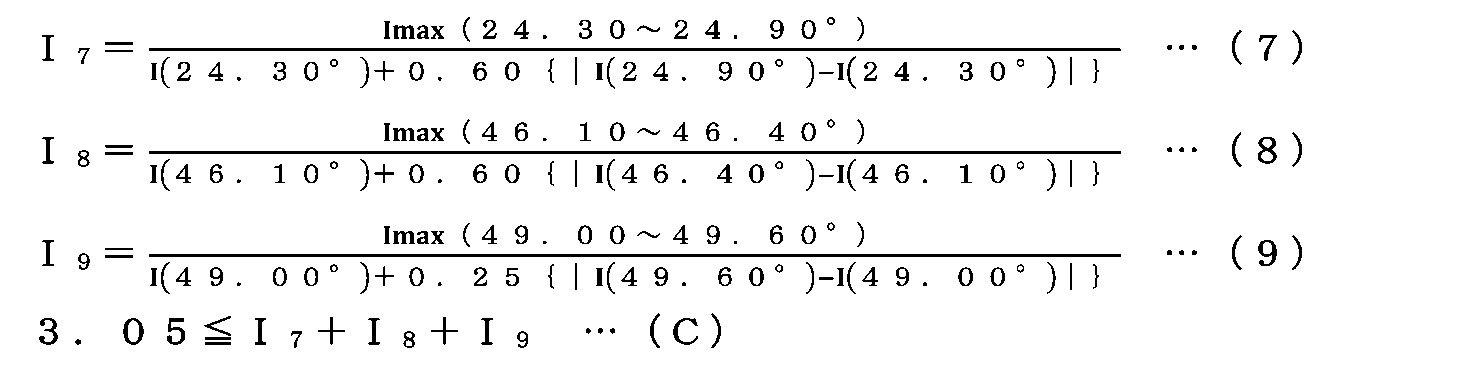
[3]如[1]或[2]所記載的鍍敷鋼板,其中前述鍍敷層之平均化學組成滿足0.01≦Sn;
使用Cu-Kα線並以X射線輸出為40kV及150mA之條件測定前述鍍敷層表面,在所測定之前述鍍敷層表面之X射線繞射圖中,由Mg
9Sn
5的X射線繞射峰所求出之I
10是透過下述式(10)來定義,此時會滿足下述式(D);
[數學式3]

[4]如[1]至[3]中任一項所記載的鍍敷鋼板,其中,使用Cu-Kα線並以X射線輸出為40kV及150mA之條件測定前述鍍敷層表面,在所測定之前述鍍敷層表面之X射線繞射圖中,由金屬氧化物的X射線繞射峰所求出之I
11~I
13是透過下述式(11)~(13)來定義,此時會滿足下述式(E);
[數學式4]
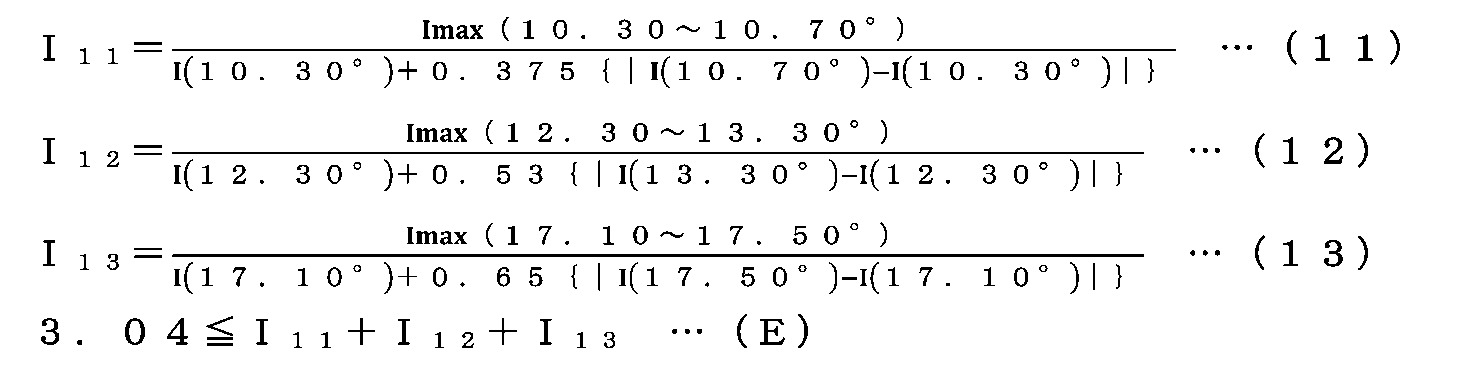
[5]如[1]至[4]中任一項所記載的鍍敷鋼板,其中,在前述鍍敷層中含有:Zn相、Al相、Al-Zn相、η’-MgZn 2相及MgZn 2相。 [5] The plated steel sheet according to any one of [1] to [4], wherein the plated layer contains: Zn phase, Al phase, Al-Zn phase, η'-MgZn phase and MgZn 2 phases.
發明效果 依照本發明,即可提供一種在酸~鹼環境下顯現出高度耐蝕性的鍍敷鋼板。 Invention effect According to the present invention, it is possible to provide a plated steel sheet exhibiting high corrosion resistance in an acid-alkali environment.
本發明的實施形態 用以實施發明之形態 若在鍍敷層中以金屬相單相形式存在有Zn相及Al相,則鍍敷層就容易顯現出兩性金屬的性質。再者,透過改變鍍敷層中所含之相的存在形態,會使鍍敷層之耐蝕性變化。更甚者,Al及Zn由於原子半徑大小相近,因而容易在鍍敷層中互溶。據此,在含Zn及Al之鍍敷層中,除了Zn相及Al相之外,還容易形成Al-Zn相(含Al:15mass-25mass%;宜含約20mass%之Al)。惟,Zn相及Al-Zn相是一種耐蝕性低的相,尤其在酸性環境及鹼性環境下耐蝕性會變得極低,因此必須降低此等相之含量。又,關於含Mg之相,一般而言,在鹼性環境下的耐蝕性高,但在酸性環境下的耐蝕性則不怎麼高。 Embodiment of the present invention form for carrying out the invention If the Zn phase and the Al phase exist in the form of a single metal phase in the plating layer, the plating layer will easily exhibit the properties of an amphoteric metal. Furthermore, the corrosion resistance of the plating layer will be changed by changing the existence form of the phase contained in the plating layer. What's more, since Al and Zn have similar atomic radii, they are easy to dissolve in the plating layer. Accordingly, in the plating layer containing Zn and Al, in addition to Zn phase and Al phase, it is also easy to form Al-Zn phase (containing Al: 15mass-25mass%, preferably containing about 20mass% Al). However, Zn phase and Al-Zn phase are phases with low corrosion resistance, especially in acidic environment and alkaline environment, the corrosion resistance will become extremely low, so the content of these phases must be reduced. Moreover, the phase containing Mg generally has high corrosion resistance in an alkaline environment, but the corrosion resistance in an acidic environment is not so high.
本案發明人等發現,為了提升在酸性環境下的耐蝕性,有效的是:去除Al-Zn相、減少Zn相量、或者透過含有其他添加元素來形成含Al及Zn之金屬間化合物。尤其本案發明人等發現,關於金屬間化合物,通常在Al-Zn相中,Zn與Al分別形成微細的單相而處在分離成二相之狀態,因此,有效的是使鍍敷層中含有Ca元素來作為生成出Zn與Al之金屬間化合物的元素。透過使鍍敷層中含有Ca,就會形成Ca-Al-Zn化合物,而含有微細Zn相及Al相的Al-Zn相則會減少。Ca-Al-Zn化合物是一種自然電位比Al還高的化合物,其腐蝕速度會比Al相還低,因而能提升耐蝕性。The inventors of the present invention found that in order to improve the corrosion resistance in an acidic environment, it is effective to remove the Al-Zn phase, reduce the amount of Zn phase, or form an intermetallic compound containing Al and Zn by adding other elements. In particular, the inventors of the present invention have found that with respect to intermetallic compounds, usually in the Al-Zn phase, Zn and Al form a fine single phase and are in a state of being separated into two phases. Therefore, it is effective to make the plating layer contain Ca element is used as an element forming an intermetallic compound of Zn and Al. By including Ca in the plating layer, a Ca-Al-Zn compound is formed, and the Al-Zn phase including the fine Zn phase and the Al phase decreases. The Ca-Al-Zn compound is a compound with a higher natural potential than Al, and its corrosion rate is lower than that of the Al phase, thus improving corrosion resistance.
另一方面,若是透過減少鍍敷層中Zn相的量來提升在酸性環境下的耐蝕性,則在鹼性環境下的耐蝕性會降低。吾人認為,減少Al相可作為其對策。由於透過減少Al相會提升在鹼性環境下的耐蝕性,因此,就能防止鹼性環境下的耐蝕性隨Zn相減少而劣化一事。On the other hand, if the corrosion resistance in acidic environment is improved by reducing the amount of Zn phase in the plating layer, the corrosion resistance in alkaline environment will be reduced. We think that reducing the Al phase can be used as a countermeasure. Since the corrosion resistance in the alkaline environment is improved by reducing the Al phase, it is possible to prevent the corrosion resistance in the alkaline environment from deteriorating due to the reduction of the Zn phase.
吾人認為,去除Al-Zn相或者增加含Mg之MgZn 2相,可確實提升在鹼性環境下的耐蝕性。MgZn 2相在鹼性環境下的耐蝕性良好。而且,為了更加提升在鹼性環境下的耐蝕性,宜在鍍敷層中導入鹼耐蝕性比MgZn 2相還優異的化合物。 We believe that removing the Al-Zn phase or increasing the Mg-containing MgZn 2 phase can indeed improve the corrosion resistance in alkaline environments. The MgZn 2 phase has good corrosion resistance in an alkaline environment. Furthermore, in order to further improve the corrosion resistance in an alkaline environment, it is preferable to introduce a compound having better alkali corrosion resistance than the MgZn 2 phase into the plating layer.
就這種化合物而言可舉η’-MgZn 2相,其結晶結構不同於MgZn 2相。η’-MgZn 2相尤其在鹼性環境下的耐蝕性高,又,即使從MgZn 2相而相變態成η’-MgZn 2相,也不會導致元素量增減,因此能不損及在酸性環境下之耐蝕性,就提升鹼性環境下的耐蝕性。如此一般,透過含有MgZn 2相及η’-MgZn 2相,就能形成一種鍍敷層,其提升了酸性環境下及鹼性環境下這兩者之耐蝕性。以下,說明本發明實施形態之鍍敷鋼板。 As such a compound there may be mentioned the η'-MgZn 2 phase, whose crystal structure is different from the MgZn 2 phase. The η'-MgZn 2 phase has high corrosion resistance especially in an alkaline environment, and even if the phase transition from the MgZn 2 phase to the η'-MgZn 2 phase does not cause an increase or decrease in the amount of elements, it can not damage the Corrosion resistance in acidic environment improves corrosion resistance in alkaline environment. In general, by containing the MgZn 2 phase and the η'-MgZn 2 phase, a plating layer can be formed, which improves the corrosion resistance of both the acidic environment and the alkaline environment. Hereinafter, a plated steel sheet according to an embodiment of the present invention will be described.
關於本發明實施形態之鍍敷鋼板(以下稱為本實施形態之鍍敷鋼板),其在鋼板表面具有鍍敷層,鍍敷層之平均化學組成以質量%計:Al:大於15.0%且在30.0%以下、Mg:大於5.0%且在15.0%以下、Sn:0~0.70%、Bi:0~0.35%、In:0~0.35%、Ca:0.03~0.60%、Y:0~0.30%、La:0~0.30%、Ce:0~0.30%、Si:0.01~0.75%、Cr:0~0.25%、Ti:0~0.25%、Ni:0~1.00%、Co:0~0.25%、V:0~0.25%、Nb:0~0.25%、Cu:0~0.25%、Mn:0~0.25%、Fe:0~5.0%、Sr:0~0.5%、Sb:0~0.5%、Pb:0~0.5%、B:0~0.5%、Li:0~0.5%、Zr:0~0.5%、Mo:0~0.5%、W:0~0.5%、Ag:0~0.5%、P:0~0.5%、剩餘部分由Zn及不純物所構成,Sn、Bi及In之合計量ΣA為0%以上且小於0.75%,Ca、Y、La及Ce之合計量ΣB為0.03~0.60%,Cr、Ti、Ni、Co、V、Nb、Cu及Mn之合計量ΣC為0~1.00%,滿足Sn≦Si及20.0≦Mg/Si; 使用Cu-Kα線並以X射線輸出為40kV及150mA之條件測定鍍敷層表面,在所測定之鍍敷層表面之X射線繞射圖中,由Al 2.15Zn 1.85Ca的X射線繞射峰求出I 1~I 3、由CaZn 2的X射線繞射峰求出I 4、及由η’-MgZn 2的X射線繞射峰求出I 5及I 6,並將I 1~I 6透過下述式(1)~(6)來定義,此時會滿足下述式(A)及(B)。 Regarding the plated steel sheet of the embodiment of the present invention (hereinafter referred to as the plated steel sheet of this embodiment), it has a plated layer on the surface of the steel plate, and the average chemical composition of the plated layer is in mass %: Al: more than 15.0% and in 30.0% or less, Mg: more than 5.0% and less than 15.0%, Sn: 0~0.70%, Bi: 0~0.35%, In: 0~0.35%, Ca: 0.03~0.60%, Y: 0~0.30%, La: 0~0.30%, Ce: 0~0.30%, Si: 0.01~0.75%, Cr: 0~0.25%, Ti: 0~0.25%, Ni: 0~1.00%, Co: 0~0.25%, V : 0~0.25%, Nb: 0~0.25%, Cu: 0~0.25%, Mn: 0~0.25%, Fe: 0~5.0%, Sr: 0~0.5%, Sb: 0~0.5%, Pb: 0~0.5%, B: 0~0.5%, Li: 0~0.5%, Zr: 0~0.5%, Mo: 0~0.5%, W: 0~0.5%, Ag: 0~0.5%, P: 0 ~0.5%, the rest is composed of Zn and impurities, the total amount of Sn, Bi and In ΣA is more than 0% and less than 0.75%, the total amount of Ca, Y, La and Ce ΣB is 0.03~0.60%, Cr, The total amount of Ti, Ni, Co, V, Nb, Cu and Mn ΣC is 0~1.00%, satisfying the conditions of Sn≦Si and 20.0≦Mg/Si; using Cu-Kα line and using X-ray output as 40kV and 150mA Measure the surface of the coating layer, and in the X-ray diffraction pattern of the measured coating layer surface, calculate I 1 ~ I 3 from the X-ray diffraction peak of Al 2.15 Zn 1.85 Ca, and obtain the X-ray diffraction peak of CaZn 2 I 4 is obtained from the peak, and I 5 and I 6 are obtained from the X-ray diffraction peak of η'-MgZn 2 , and I 1 to I 6 are defined by the following formulas (1) to (6). At this time The following formulas (A) and (B) are satisfied.
[數學式5]

其中,在前述式(1)~(6)中,Imax(k~m°)是以繞射角度2θ計在k~m°之間的X射線繞射強度最大值,I(n°)是以繞射角度2θ計在n°的X射線繞射強度,k、m、n分別是前述式(1)~(6)中所示之繞射角度2θ。Among them, in the aforementioned formulas (1)~(6), Imax(k~m°) is the maximum value of X-ray diffraction intensity between k~m° in terms of diffraction angle 2θ, and I(n°) is X-ray diffraction intensity at n° in terms of diffraction angle 2θ, k, m, and n are the diffraction angles 2θ shown in the aforementioned formulas (1)~(6).
另外,在以下說明中,化學組成之各元素含量的「%」標示意指「質量%」。又,使用「~」所示之數值範圍意指:以「~」前後所記載之數值為下限值及上限值所包含的範圍。又,標註「大於」或「小於」時的數值範圍意指:不含此等數值作為下限值或上限值的範圍。In addition, in the following description, the indication "%" of each element content of a chemical composition means "mass %". In addition, the numerical range indicated by "~" means that the numerical values described before and after "~" are the range including the lower limit value and the upper limit value. In addition, the numerical range when "greater than" or "less than" is indicated means a range that does not include these numerical values as a lower limit or an upper limit.
又,所謂「耐蝕性」是表示鍍敷鋼板難以腐蝕之性質。Zn系鍍敷層對於鋼材具有犧牲防蝕作用。具有Zn系鍍敷層之鍍敷鋼板,在其腐蝕過程中,在鋼板腐蝕前鍍敷層會腐蝕而白鏽化;在白鏽化之鍍敷層消失後,鋼板才會腐蝕而產生紅鏽。In addition, "corrosion resistance" means the property that a plated steel sheet is hardly corroded. The Zn-based coating layer has a sacrificial anti-corrosion effect on steel materials. In the corrosion process of the plated steel plate with Zn-based plated layer, the plated layer will be corroded and white rusted before the steel plate is corroded; after the white rusted plated layer disappears, the steel plate will corrode and produce red rust .
針對作為鍍敷對象之鋼板,進行說明。 關於鋼板形狀,主要為板材,不過其尺寸並無特別限制。於板材上形成鍍敷層而成的鍍敷鋼板,其所適合者有:以通常之熔融鍍鋅步驟所製造的鍍敷鋼板,且以連續熔融鍍鋅產線(CGL)、批式浸漬鍍鋅步驟等,透過浸漬於熔融金屬並使其凝固之步驟所製造的鍍敷鋼板。若是將此種方法所製造出的鍍敷鋼板予以加工(包含熔接)、組合,就能加工成各種製品而能製造出耐蝕性優異的鋼結構構件。 The steel plate to be plated will be described. Regarding the shape of the steel plate, it is mainly a plate, but its size is not particularly limited. The galvanized steel sheet formed by forming a galvanized layer on the sheet is suitable for: galvanized steel sheets manufactured by the usual hot-dip galvanizing process, and continuous hot-dip galvanizing lines (CGL), batch dip galvanizing Galvanized steel sheet produced by dipping in molten metal and solidifying it, such as in the zinc process. If the plated steel sheets produced by this method are processed (including welding) and combined, they can be processed into various products and steel structural members with excellent corrosion resistance can be manufactured.
對於鋼板之母板材質,並無特別限制。例如,JIS G 3193:2019所示熱輥軋鋼板、JIS G 3141:2021所示冷軋鋼板是一般最常作為鍍敷的母板。另外例如可應用:一般鋼(SS材(一般結構用輥軋鋼材))、薄薄地鍍敷各種金屬後的預鍍敷鋼(JIS G 3302:2019)、鋁脫氧鋼(Al killed steel)、極低碳鋼、高碳鋼、各種高張力鋼(JIS G 3135:2018)、一部分的高合金鋼(含Ni、Cr等強化耐蝕性元素的鋼JIS G 3114:2016等)等各種鋼板。再者,鋼板針對鋼材之製鋼方法(高爐材、電爐材)、鋼板之製造方法(熱輥軋方法、酸洗方法、冷輥軋方法等)等條件也無特別限制。更甚者,在所應用之鋼板材料並不易鍍敷的情況下,亦可使用預鍍敷鋼板,其是事前在鋼板表面預鍍敷厚度30μm以下的鍍敷層,該鍍敷層係Zn、Ni、Sn、Fe或組合此等元素之合金系等的鍍敷層。若使用這種預鍍敷鋼板,則在浸漬於鍍敷浴時,預鍍敷層中的金屬元素會置換成鍍敷浴的金屬元素,從而消除未鍍(鍍敷金屬因為氧化披膜等而被排斥的部位)。There is no special restriction on the material of the mother plate of the steel plate. For example, hot-rolled steel sheets specified in JIS G 3193:2019 and cold-rolled steel sheets specified in JIS G 3141:2021 are generally the most commonly used mother plates for plating. In addition, for example, general steel (SS material (rolled steel for general structure)), pre-coated steel (JIS G 3302: 2019) after thinly plating various metals, aluminum deoxidized steel (Al killed steel), extremely Low-carbon steel, high-carbon steel, various high-tensile steels (JIS G 3135:2018), some high-alloy steels (JIS G 3114:2016, etc., steel containing elements that enhance corrosion resistance such as Ni and Cr) and other steel plates. Furthermore, there are no special restrictions on the conditions of the steel plate, such as the steel making method of the steel material (blast furnace material, electric furnace material), the manufacturing method of the steel plate (hot rolling method, pickling method, cold rolling method, etc.). What's more, in the case that the steel plate material used is not easy to be plated, a pre-coated steel plate can also be used, which is to pre-plate a plated layer with a thickness of 30 μm or less on the surface of the steel plate in advance, and the plated layer is Zn, Plating layer of Ni, Sn, Fe or alloy system combining these elements, etc. If such a pre-coated steel sheet is used, when immersed in the coating bath, the metal elements in the pre-coating layer will be replaced by the metal elements of the plating bath, thereby eliminating the unplated (plated metal due to oxide film, etc.) excluded parts).
接著,說明鍍敷層。本實施形態的鍍敷層含有Zn-Al-Mg合金層。若在Zn中添加Al、Mg等合金元素,就會改善耐蝕性,因此,薄膜以例如通常Zn鍍敷層之一半程度就會具有同等之耐蝕性。因此,本實施形態也透過薄膜的鍍敷層而確保了與通常Zn鍍敷層同等或以上的耐蝕性。又,鍍敷層亦可含有Al-Fe合金層。Next, the plating layer will be described. The plating layer of this embodiment contains a Zn-Al-Mg alloy layer. If alloying elements such as Al and Mg are added to Zn, the corrosion resistance will be improved. Therefore, the thin film will have the same corrosion resistance as the usual Zn plating layer, for example. Therefore, also in this embodiment, the corrosion resistance equal to or higher than that of a normal Zn plating layer is ensured through the thin-film plating layer. In addition, the plating layer may contain an Al-Fe alloy layer.
Zn-Al-Mg系合金層是由Zn-Al-Mg系合金所構成。所謂Zn-Al-Mg系合金意指:含Zn、Al及Mg之三元系合金。The Zn—Al—Mg alloy layer is composed of a Zn—Al—Mg alloy. The so-called Zn-Al-Mg alloy means: a ternary alloy containing Zn, Al and Mg.
Al-Fe合金層是一種位於鋼板與Zn-Al-Mg合金層之間的界面合金層。The Al-Fe alloy layer is an interfacial alloy layer located between the steel plate and the Zn-Al-Mg alloy layer.
亦即,本實施形態的鍍敷層可為Zn-Al-Mg合金層的單層結構,亦可為含有Zn-Al-Mg合金層與Al-Fe合金層的積層結構。又,若使用預鍍敷材作為鍍敷基材且該預鍍敷材是以熔點大於高熔點金屬(大於600℃)之金屬來披覆,在此情況下,依據原本鍍敷厚度,有時會有厚度小於1μm且含該金屬層之層體殘留在Fe面上,或者會變成Al-Fe金屬間化合物之置換體而以某些形式的痕跡殘留下來。會在鍍敷浴溫附近熔解的金屬等,則幾乎不會殘留所述痕跡。若為積層結構,使Zn-Al-Mg合金層為構成鍍敷層表面的層體即可。不過,在鍍敷層最外表面有時會形成出鍍敷層構成元素的氧化披膜小於1μm左右。鍍敷層所含元素由於通常會在鍍敷層表面與氧鍵結,所以會存在氧化披膜,其係一種以XPS(X射線分光分析)等表面分析可確認出Zn-O、Mg-O、Al-O、Si-O、Ca-O等鍵結的薄膜。越容易氧化的元素,就越傾向存在於鍍敷表面。That is, the plating layer of this embodiment may be a single-layer structure of a Zn-Al-Mg alloy layer, or may be a laminated structure including a Zn-Al-Mg alloy layer and an Al-Fe alloy layer. Also, if a pre-plating material is used as the plating substrate and the pre-plating material is coated with a metal with a melting point higher than that of a high melting point metal (greater than 600°C), in this case, depending on the original plating thickness, sometimes There will be a layer body with a thickness of less than 1 μm and containing the metal layer remaining on the Fe surface, or it will become a substitute of Al-Fe intermetallic compound and remain in some form of traces. Metals or the like that melt near the plating bath temperature hardly leave such traces. In the case of a laminated structure, the Zn-Al-Mg alloy layer may be a layer body constituting the surface of the plated layer. However, the oxide film of the constituent elements of the plating layer may be formed on the outermost surface of the plating layer to be less than about 1 μm. Because the elements contained in the plating layer are usually bonded to oxygen on the surface of the plating layer, there will be an oxide film. It is a kind of surface analysis such as XPS (X-ray spectroscopy) that can confirm Zn-O, Mg-O , Al-O, Si-O, Ca-O and other bonded films. Elements that are easier to oxidize tend to exist on the plating surface.
若鍍敷層為一種含有Zn-Al-Mg合金層與Al-Fe合金層的積層結構時,可透過Al-Fe合金層來結合鋼材與Zn-Al-Mg系合金層。界面合金層的厚度可透過製造鍍敷鋼板時的鍍敷浴溫或鍍敷浴浸漬時間來予以控制。在以森吉米爾(Sendzimir)法為核心的熔融鍍敷鋼板製造方法中,Zn-Al-Mg合金層會是鍍敷層的主體,Al-Fe合金層的厚度足夠薄因而對於鍍敷層之耐蝕性帶來的影響較小,又因為是形成在界面附近,所以對於腐蝕初期、鍍敷層外觀之耐蝕性幾乎不會帶來影響。 在2段鍍敷、預鍍敷等置換析鍍的形成過程中,因應預鍍敷層的厚度,有時Al-Fe合金層會含有預鍍敷層中所含之元素。有時在鍍敷後會以預鍍敷層形式而殘存在Fe面上,此外有時也會出現界面合金層。又,鍍敷元素會活躍地進行擴散,鍍敷成分若朝Fe側擴散,則在預鍍敷層下有時會形成Al-Fe合金層;視反應性而定,有時會局部產生;雖無法嚴格定義其位置,不過因為厚度薄,所以此等層所造成的性能變化並不大。 If the plating layer is a layered structure including a Zn-Al-Mg alloy layer and an Al-Fe alloy layer, the steel material and the Zn-Al-Mg alloy layer can be combined through the Al-Fe alloy layer. The thickness of the interfacial alloy layer can be controlled by the temperature of the coating bath or the immersion time of the coating bath when manufacturing the coated steel sheet. In the hot-dip steel sheet manufacturing method centered on the Sendzimir method, the Zn-Al-Mg alloy layer will be the main body of the coating layer, and the thickness of the Al-Fe alloy layer is thin enough to affect the corrosion resistance of the coating layer. The impact of corrosion resistance is small, and because it is formed near the interface, it has almost no impact on the corrosion resistance of the initial corrosion and the appearance of the plating layer. In the formation process of displacement plating such as two-stage plating and pre-plating, depending on the thickness of the pre-plating layer, the Al-Fe alloy layer may contain elements contained in the pre-plating layer. After plating, it may remain on the Fe surface in the form of a pre-plating layer, and an interfacial alloy layer may also appear. In addition, the plating element will actively diffuse, and if the plating component diffuses toward the Fe side, an Al-Fe alloy layer may be formed under the pre-plating layer; depending on the reactivity, it may be locally generated; although Its position cannot be strictly defined, but because of its thin thickness, the performance change caused by these layers is not large.
另外,鍍敷層全體的厚度由於受到鍍敷條件左右,因而不特別限定。再者,關於鍍敷層全體的厚度,例如在通常的熔融鍍敷法中是仰賴鍍敷浴之黏性及比重。更甚者,鍍敷量可因應鋼板(鍍敷母板)之抽出速度及抹拭(wiping)強弱,來調整單位面積重量。以通常的熔融鍍敷法所形成的鍍敷層,關於其厚度最大值,透過連續熔融鍍敷多半為100μm以下,透過批式鍍敷則多半為200μm以下。In addition, the thickness of the entire plating layer is not particularly limited because it depends on the plating conditions. In addition, the thickness of the whole plating layer depends on the viscosity and specific gravity of a plating bath, for example in a normal hot-dip plating method. What's more, the amount of plating can be adjusted according to the drawing speed of the steel plate (plating mother plate) and the strength of wiping (wiping), so as to adjust the weight per unit area. The maximum thickness of the plated layer formed by the usual hot-dip plating method is usually 100 μm or less by continuous hot-dip plating, and 200 μm or less by batch-type plating.
Al-Fe合金層會形成在鋼板表面(具體而言,是鋼板與Zn-Al-Mg合金層之間);就組織而言,其是一種Al 5Fe 2相為主相的層體。Al-Fe合金層是透過基鐵(鋼板)及鍍敷浴相互原子擴散而形成。若使用熔融鍍敷法作為鍍敷層的形成方法,在含Al元素的鍍敷層中容易形成出Al-Fe合金層。在後述的製造方法中,由於鍍敷浴中含有一定濃度以上的Al,因此Al 5Fe 2相是形成最多的。惟,若與Al在界面合金層結合,則在鍍敷浴內就會產生固相。與鍍敷浴這種液體不同的是,該金屬間化合物內的Al、Fe原子擴散需要時間,因此,在界面合金層附近會發生以Al、Fe成分濃度為速率決定步驟(rate-determining step)。據此,在Al-Fe合金層中會形成複數種不同原子配比的金屬間化合物,一般而言越接近界面則Fe濃度越高。但是,視擴散狀況而定,有時在Al-Fe層內部也會暫時存在Al成分、Fe成分低的層。因此,Al-Fe合金層有時也會局部地少量含有Al 5Fe 2相以外的相,如AlFe相、Al 3Fe相等。又,由於鍍敷浴中也含有一定濃度的Zn,所以在Al-Fe合金層中也少量含有Zn。又,在Al-Fe合金層中也少量含有:容易聚集在界面的Si。 The Al-Fe alloy layer will be formed on the surface of the steel plate (specifically, between the steel plate and the Zn-Al-Mg alloy layer); in terms of structure, it is a layer body with Al 5 Fe 2 phase as the main phase. The Al-Fe alloy layer is formed through the mutual atomic diffusion of the base iron (steel plate) and the plating bath. If the hot-dip plating method is used as the formation method of the plated layer, an Al—Fe alloy layer is easily formed in the plated layer containing the Al element. In the production method described later, since the plating bath contains Al at a certain concentration or more, the Al 5 Fe 2 phase is formed the most. However, if combined with Al in the interface alloy layer, a solid phase will be generated in the plating bath. Unlike a liquid such as a plating bath, it takes time for the Al and Fe atoms in the intermetallic compound to diffuse, so a rate-determining step occurs near the interface alloy layer with the concentration of the Al and Fe components as the rate-determining step. . Accordingly, a plurality of intermetallic compounds with different atomic ratios are formed in the Al—Fe alloy layer, and generally speaking, the closer to the interface, the higher the Fe concentration. However, depending on the state of diffusion, a layer having a low Al component and a low Fe component may temporarily exist inside the Al—Fe layer. Therefore, the Al-Fe alloy layer sometimes locally contains a small amount of phases other than Al 5 Fe 2 phase, such as AlFe phase, Al 3 Fe phase, etc. Moreover, since Zn is also contained in a certain concentration in the plating bath, a small amount of Zn is also contained in the Al-Fe alloy layer. In addition, the Al-Fe alloy layer also contains a small amount of Si that tends to gather at the interface.
當鍍敷層中含有Si時,Si由於特別容易組入Al-Fe合金層中,因此有時Al-Fe合金層會變成Al-Fe-Si金屬間化合物相。在Al-Fe-Si金屬間化合物相中可鑑別出的金屬間化合物相有AlFeSi相,異構物則存在α、β、q1,q2-AlFeSi相等。因此,關於Al-Fe合金層,有時會檢測出這些AlFeSi相等。含這些AlFeSi相等的層稱為Al-Fe-Si合金層。 亦即,本實施形態的鍍敷層可由Zn-Al-Mg合金層所構成,也可由Zn-Al-Mg合金層與Al-Fe合金層所構成,亦可由Zn-Al-Mg合金層與Al-Fe-Si合金層所構成。另外,在Al-Fe合金層中,必然會發生原子半徑與Al接近的Zn等會以置換體的形式局部組入於其中,而且還無法避免原子半徑與Fe接近的過渡金屬Ni、Cr、Co等會以置換體的形式組入於此等金屬間化合物中;儘管如此,主要的結構仍可視作Al-Fe合金層。 When Si is contained in the plating layer, since Si is particularly easily incorporated into the Al-Fe alloy layer, the Al-Fe alloy layer may become an Al-Fe-Si intermetallic compound phase. The intermetallic compound phase that can be identified in the Al-Fe-Si intermetallic compound phase is the AlFeSi phase, and the isomers exist in α, β, q1, q2-AlFeSi and so on. Therefore, with regard to the Al—Fe alloy layer, it may be detected that these AlFeSi are equal. Layers containing these AlFeSi equals are called Al-Fe-Si alloy layers. That is to say, the plating layer of this embodiment can be made of Zn-Al-Mg alloy layer, also can be made of Zn-Al-Mg alloy layer and Al-Fe alloy layer, also can be made of Zn-Al-Mg alloy layer and Al -Consisting of Fe-Si alloy layer. In addition, in the Al-Fe alloy layer, it is inevitable that Zn, etc., whose atomic radius is close to that of Al, will be locally incorporated in it in the form of substitutions, and transition metals Ni, Cr, and Co, whose atomic radius is close to Fe, cannot be avoided. etc. will be incorporated in these intermetallic compounds in the form of substitutions; nevertheless, the main structure can still be regarded as an Al-Fe alloy layer.
接著,說明鍍敷層之平均化學組成。在鍍敷層為Zn-Al-Mg合金層之單層結構的情況下,鍍敷層全體之平均化學組成為Zn-Al-Mg合金層之平均化學組成。又,在鍍敷層為Al-Fe合金層及Zn-Al-Mg合金層之積層結構的情況下,則為Al-Fe合金層及Zn-Al-Mg合金層的合計平均化學組成。又,在鍍敷層為Al-Fe-Si合金層及Zn-Al-Mg合金層之積層結構的情況下,則為Al-Fe-Si合金層及Zn-Al-Mg合金層的合計平均化學組成。Next, the average chemical composition of the plating layer will be described. When the plating layer has a single-layer structure of the Zn-Al-Mg alloy layer, the average chemical composition of the entire plating layer is the average chemical composition of the Zn-Al-Mg alloy layer. Also, when the plating layer has a laminated structure of an Al-Fe alloy layer and a Zn-Al-Mg alloy layer, it is the total average chemical composition of the Al-Fe alloy layer and the Zn-Al-Mg alloy layer. Also, in the case where the plating layer is a laminated structure of an Al-Fe-Si alloy layer and a Zn-Al-Mg alloy layer, the total average chemical composition.
通常,在熔融鍍敷法中,由於形成鍍敷層的反應幾乎在鍍敷浴內就完成,因此Zn-Al-Mg合金層之化學組成會大致等同於鍍敷浴。又,在熔融鍍敷法中,Al-Fe合金層在鍍敷浴浸漬後當下的瞬間即形成、成長。然後,Al-Fe合金層則是在鍍敷浴內或從鍍敷浴拉起來後,於後續的鍍敷凝固反應中,達到550℃前後為止,形成・成長反應便完成,其厚度相對Zn-Al-Mg合金層也多半夠薄。據此,只要鍍敷後沒有進行加熱合金化處理等特別的熱處理,則鍍敷層全體之平均化學組成實質等同於Zn-Al-Mg合金層之化學組成,而可忽視Al-Fe合金層之成分。Al-Fe-Si合金層也與Al-Fe合金層相同,可忽視Al-Fe-Si合金層之成分。Generally, in the hot-dip plating method, since the reaction for forming the plating layer is almost completed in the plating bath, the chemical composition of the Zn-Al-Mg alloy layer will be approximately equal to that of the plating bath. Also, in the hot-dip plating method, the Al—Fe alloy layer is formed and grown immediately after immersion in the plating bath. Then, the Al-Fe alloy layer is in the plating bath or pulled up from the plating bath, and in the subsequent plating solidification reaction, the formation and growth reaction is completed until it reaches around 550°C, and its thickness is relatively Zn- The Al-Mg alloy layer is also likely to be sufficiently thin. Accordingly, as long as no special heat treatment such as heat alloying treatment is carried out after plating, the average chemical composition of the entire plating layer is substantially equal to that of the Zn-Al-Mg alloy layer, and the difference in the Al-Fe alloy layer can be ignored. Element. The Al-Fe-Si alloy layer is also the same as the Al-Fe alloy layer, and the composition of the Al-Fe-Si alloy layer can be ignored.
開頭先來說明本實施形態之鍍敷層所含的元素。First, the elements contained in the plating layer of this embodiment will be described.
Al:大於15.0%且在30.0%以下 關於Al,其Zn同樣是構成鍍敷層主體的元素。就Zn-Al-Mg系鍍敷而言,在鍍敷層中主要形成Al相。若Al含量為15.0%以下,則在酸性環境下的耐蝕性會不足。因此,Al含量設為大於15.0%。宜為18.0%以上。更宜為20%以上。另一方面,若Al含量大於30.0%,則在鹼性環境下的耐蝕性會不足。因此,Al含量設為30.0%以下。宜為25.0%以下。另外,由於鍍敷層中Al含量若變高則Zn含量相對會減少而犧牲防蝕性會降低,因此,就鍍敷鋼板而言為了確保犧牲防蝕性,Al含量必須設為大於15.0%且在30.0%以下。不過,在該組成範圍中,會形成出耐蝕性低的Al-Zn相(含Al約20mass%的相)。因此,在本實施形態中,是透過採用後述製造方法來減少Al-Zn相。藉此提升耐蝕性,而變得易於確保在酸性環境、鹼性環境下的耐蝕性。 Al: more than 15.0% and less than 30.0% As for Al, Zn is also an element constituting the main body of the plating layer. In Zn-Al-Mg-based plating, the Al phase is mainly formed in the plating layer. If the Al content is 15.0% or less, the corrosion resistance in an acidic environment will be insufficient. Therefore, the Al content is set to be greater than 15.0%. It should be above 18.0%. More preferably more than 20%. On the other hand, if the Al content is greater than 30.0%, the corrosion resistance in an alkaline environment may be insufficient. Therefore, the Al content is made 30.0% or less. It should be below 25.0%. In addition, if the Al content in the plating layer becomes higher, the Zn content will decrease relatively and the sacrificial corrosion resistance will decrease. Therefore, in order to ensure the sacrificial corrosion resistance for the plated steel sheet, the Al content must be set to be greater than 15.0% and within 30.0% %the following. However, in this composition range, an Al-Zn phase (a phase containing about 20 mass% Al) with low corrosion resistance is formed. Therefore, in this embodiment, the Al—Zn phase is reduced by adopting a manufacturing method described later. Thereby, corrosion resistance is improved, and it becomes easy to ensure the corrosion resistance in acidic environment and alkaline environment.
Mg:大於5.0%且在15.0%以下 關於Mg,其Zn同樣是構成鍍敷層主體的元素。若Mg不足則在鹼性環境下的耐蝕性傾向於變低,因此Mg含量設為大於5.0%。宜為7.0%以上。另一方面,Mg含量大於15.0%時,在酸性環境下的耐蝕性會惡化。因此,Mg含量設為15.0%以下。宜為13.0%以下,較宜為10.0%以下。 Mg: more than 5.0% and less than 15.0% As for Mg, Zn is also an element constituting the main body of the plating layer. When Mg is insufficient, the corrosion resistance in an alkaline environment tends to be lowered, so the Mg content is made more than 5.0%. It should be above 7.0%. On the other hand, when the Mg content exceeds 15.0%, the corrosion resistance in an acidic environment will deteriorate. Therefore, the Mg content is made 15.0% or less. It is preferably less than 13.0%, more preferably less than 10.0%.
元素群A Sn:0~0.70% Bi:0~0.35% In:0~0.35% Sn、Bi及In之合計量ΣA:0%以上且小於0.75% 元素群A(Sn、Bi、In)之各元素由於是可任意含有之元素,所以各自含量設為0%以上。又,Sn是形成Mg 9Sn 5的必要元素,所述Mg 9Sn 5會大幅提升鍍敷層在酸性環境及鹼性環境下的耐蝕性。形成Mg 9Sn 5所需最低限度的Sn含量為0.01%,因此Sn含量亦可設為0.01%以上。 Element group A Sn: 0~0.70% Bi: 0~0.35% In: 0~0.35% The total amount of Sn, Bi and In ΣA: 0% or more and less than 0.75% Each element group A (Sn, Bi, In) Since the elements are optional elements, the content of each element is set to 0% or more. In addition , Sn is an essential element for forming Mg 9 Sn 5 which greatly improves the corrosion resistance of the plating layer in acidic environment and alkaline environment . The minimum Sn content required to form Mg 9 Sn 5 is 0.01%, so the Sn content can also be set to 0.01% or more.
此外,會顯示出與Sn同樣效果的元素還有Bi及In,其等會形成金屬間化合物,所述金屬間化合物會提升在鹼性環境下耐蝕性。就此種金屬間化合物而言,Bi 2Mg 3、InMg 3等符合資格。Sn、Bi、In由於會相互形成相互置換體,故Sn可含有0.70%以下,Bi、In分別含有0.35%以下的範圍。元素群A的元素雖然對於鹼性環境下的耐蝕性很有效果,但此等含量若大於上限,則在酸性環境下的耐蝕性會極端惡化。 In addition, elements that exhibit the same effect as Sn include Bi and In, which form an intermetallic compound that improves corrosion resistance in an alkaline environment. As such an intermetallic compound, Bi 2 Mg 3 , InMg 3 , etc. qualify. Since Sn, Bi, and In form mutual substitution bodies, Sn may be contained in an amount of 0.70% or less, and Bi and In may be contained in a range of 0.35% or less. The elements of the element group A are effective in corrosion resistance in an alkaline environment, but if the content exceeds the upper limit, the corrosion resistance in an acidic environment will be extremely deteriorated.
又,由於元素群A的元素之合計量過量時在酸性環境下的耐蝕性也會惡化,故Sn、Bi及In之合計量ΣA設為0%以上且小於0.75%。合計量ΣA宜為0.01%以下,較宜為0.05%以下,更宜為0.10%以上。又,合計量ΣA宜為0.60%以下,較宜為0.50%以下。 另外,所謂Sn、Bi及In之合計量ΣA是Sn、Bi及In之合計含量。 Also, since the corrosion resistance in an acidic environment deteriorates when the total amount of the elements of the element group A is excessive, the total amount ΣA of Sn, Bi, and In is set to 0% or more and less than 0.75%. The total amount ΣA is preferably 0.01% or less, more preferably 0.05% or less, more preferably 0.10% or more. Also, the total amount ΣA is preferably 0.60% or less, more preferably 0.50% or less. In addition, the total amount ΣA of Sn, Bi, and In is the total content of Sn, Bi, and In.
元素群B Ca:0.03~0.60% Y:0~0.30% La:0~0.30% Ce:0~0.30% Ca、Y、La及Ce之合計量ΣB:0.03~0.60% Ca雖然不是鍍敷層中的主要元素,卻是用以形成Al 2.15Zn 1.85Ca的必要元素。又,Ca也是用以形成CaZn 2的必要元素。因此,形成此等金屬間化合物所需最低限度的Ca含量為0.03%以上,因此Ca含量設為0.03%以上。透過含有此等金屬間化合物,會改善在酸性環境及鹼性環境下的耐蝕性。Ca含量宜為0.05%以上,較宜為0.10%以上,更宜為0.20%以上。另一方面,若Ca含量大於0.60%,則在酸性環境及鹼性環境下的耐蝕性會劣化。因此,Ca含量設為0.60%以下。宜為0.50%以下,較宜為0.40%以下。 Element group B Ca: 0.03~0.60% Y: 0~0.30% La: 0~0.30% Ce: 0~0.30% The total amount of Ca, Y, La and Ce ΣB: 0.03~0.60% Although Ca is not in the plating layer The main element, but it is used to form the necessary elements of Al 2.15 Zn 1.85 Ca. In addition, Ca is also an essential element for forming CaZn 2 . Therefore, the minimum Ca content required to form such an intermetallic compound is 0.03% or more, so the Ca content is made 0.03% or more. By containing these intermetallic compounds, the corrosion resistance in acidic environment and alkaline environment will be improved. The Ca content is preferably at least 0.05%, more preferably at least 0.10%, more preferably at least 0.20%. On the other hand, if the Ca content exceeds 0.60%, the corrosion resistance in acidic environment and alkaline environment will deteriorate. Therefore, the Ca content is made 0.60% or less. Preferably it is 0.50% or less, more preferably 0.40% or less.
與Ca達成同樣作用的元素還有Y、La、Ce。此等元素由於是任意添加元素,故各自的含量設為0%以上。此等元素具有與Ca置換的傾向。不過,在不含Ca之情況下,即使含有Y、La、Ce也無法發揮出充分的性能。含有上述含量的Ca之外,還含有Y、La、Ce分別在0.30%以下的範圍,藉此,會相互形成相互置換體並提升在鹼性環境下的耐蝕性。惟,若Y、La、Ce分別大於0.30%,則在鹼性環境下的耐蝕性會極端惡化。因此,Y、La、Ce之含量分別設為0.30%以下。Elements that achieve the same effect as Ca include Y, La, and Ce. Since these elements are optional addition elements, the content of each is made 0% or more. These elements have a tendency to be substituted with Ca. However, when Ca is not contained, sufficient performance cannot be exhibited even if Y, La, and Ce are contained. In addition to the above-mentioned content of Ca, Y, La, and Ce are also contained in the range of 0.30% or less, thereby forming mutual substitution bodies and improving corrosion resistance in alkaline environments. However, if Y, La, and Ce are more than 0.30% respectively, the corrosion resistance in an alkaline environment will be extremely deteriorated. Therefore, the contents of Y, La, and Ce are each set to 0.30% or less.
又,由於元素群B的元素之合計量過量時在鹼性環境下的耐蝕性會惡化,故Ca、Y、La及Ce之合計量ΣB設為0.03~0.60%。合計量ΣB宜為0.05%以上,較宜為0.10%以上,更宜為0.20%以上。又,合計量ΣB宜為0.50%以下,較宜為0.40%以下。 另外,所謂Ca、Y、La及Ce之合計量ΣB是Ca、Y、La及Ce之合計含量。 Also, since the corrosion resistance in an alkaline environment deteriorates when the total amount of elements of the element group B is excessive, the total amount ΣB of Ca, Y, La, and Ce is set to 0.03 to 0.60%. The total amount ΣB is preferably at least 0.05%, more preferably at least 0.10%, and more preferably at least 0.20%. Also, the total amount ΣB is preferably 0.50% or less, more preferably 0.40% or less. In addition, the total amount ΣB of Ca, Y, La, and Ce is the total content of Ca, Y, La, and Ce.
Si:0.01~0.75% Si是在鍍敷層中用以形成金屬間化合物的必要元素。本實施形態中的鍍敷組成由於熔點高,因此在進行熔融鍍敷時就會是500℃左右的作業溫度。在該作業溫度下,將鋼板浸漬於鍍敷浴時,Al及Zn雖會與Fe發生活躍的相互擴散現象而形成金屬間化合物,不過Si則會抑制該過度的反應。Si含量若為0.01%以上,就會大幅抑制Fe的擴散反應,而易於控制鍍敷層所含金屬間化合物的形成。惟,Si含量小於0.01%時,由於Fe過度擴散至鍍敷層內而使鍍敷層成分變得不均一,在酸性環境及鹼性環境下的耐蝕性會極端惡化。因此,Si含量設為0.01%以上。宜為0.10%以上,較宜為0.20%以上。Si含量過高時,Si會與鍍敷層的構成元素鍵結而使酸性環境及鹼性環境下的耐蝕性惡化,因此,Si含量設為0.75%以下。宜為0.50%以下,較宜為0.40%以下。 Si: 0.01~0.75% Si is an essential element for forming an intermetallic compound in the plating layer. Since the plating composition in this embodiment has a high melting point, the working temperature is about 500° C. when hot-dip plating is performed. At this operating temperature, when the steel sheet is immersed in the coating bath, Al and Zn will actively interdiffusion with Fe to form intermetallic compounds, but Si will suppress this excessive reaction. If the Si content is 0.01% or more, the diffusion reaction of Fe will be greatly suppressed, and the formation of intermetallic compounds contained in the plating layer will be easily controlled. However, when the Si content is less than 0.01%, the composition of the plating layer becomes inhomogeneous due to excessive diffusion of Fe into the plating layer, and the corrosion resistance in acidic and alkaline environments will be extremely deteriorated. Therefore, the Si content is set to 0.01% or more. It is preferably at least 0.10%, more preferably at least 0.20%. When the Si content is too high, Si bonds to the constituent elements of the plating layer to deteriorate the corrosion resistance in an acidic environment and an alkaline environment, so the Si content is made 0.75% or less. Preferably it is 0.50% or less, more preferably 0.40% or less.
另外,Si是一種極易與Ca鍵結的元素,容易形成例如CaAlSi、Al 2CaSi 2、Ca 2Al 4Si 3、Ca 2Al 3Si 4等各種Al-Ca-Si化合物。在本實施形態中,為了確保在酸性環境及鹼性環境下的耐蝕性,雖宜作出游離Ca,不過Si含量若高則會變得容易形成此等金屬間化合物。 In addition, Si is an element that easily bonds with Ca and easily forms various Al-Ca-Si compounds such as CaAlSi, Al 2 CaSi 2 , Ca 2 Al 4 Si 3 , and Ca 2 Al 3 Si 4 . In this embodiment, in order to ensure the corrosion resistance in an acidic environment and an alkaline environment, it is preferable to form free Ca, but if the Si content is high, these intermetallic compounds will be easily formed.
元素群C Cr:0~0.25% Ti:0~0.25% Ni:0~1.00% Co:0~0.25% V:0~0.25% Nb:0~0.25% Cu:0~0.25% Mn:0~0.25% Cr、Ti、Ni、Co、V、Nb、Cu及Mn之合計量ΣC:0~1.00% 元素群C的元素由於是鍍敷層中的任意添加元素,故各自的含量設為0%以上。此等金屬在鍍敷層中會與Al、Zn等進行置換,並具有使電位變高的傾向;透過含有上述含量範圍,會傾向改善在酸性環境下的耐蝕性。過量含有此等元素會形成含此等元素的金屬間化合物,因而使在酸性環境及鹼性環境下的耐蝕性惡化。據此,Cr、Ti、Co、V、Nb、Cu、Mn之含量分別設為0.25%以下。又,Ni之含量設為1.00%以下。此外,若元素群C之合計量過量,則會使在酸性環境及鹼性環境下的耐蝕性惡化,故Cr、Ti、Ni、Co、V、Nb、Cu及Mn之合計量ΣC設為1.00%以下。合計量ΣC宜為0.80%以下,較宜為0.50%以下。 另外,所謂Cr、Ti、Ni、Co、V、Nb、Cu及Mn之合計量ΣC是Cr、Ti、Ni、Co、V、Nb、Cu及Mn之合計含量。 Element group C Cr: 0~0.25% Ti: 0~0.25% Ni: 0~1.00% Co: 0~0.25% V: 0~0.25% Nb: 0~0.25% Cu: 0~0.25% Mn: 0~0.25% The total amount of Cr, Ti, Ni, Co, V, Nb, Cu and Mn ΣC: 0~1.00% Since the elements of the element group C are optional additive elements in the plating layer, the content of each is made 0% or more. These metals tend to be substituted with Al, Zn, etc. in the plating layer, and tend to increase the potential; by containing the above-mentioned content range, the corrosion resistance in an acidic environment tends to be improved. Excessive content of these elements will form intermetallic compounds containing these elements, thereby deteriorating the corrosion resistance in acidic environment and alkaline environment. Accordingly, the contents of Cr, Ti, Co, V, Nb, Cu, and Mn are each set to 0.25% or less. Also, the content of Ni is set to be 1.00% or less. In addition, if the total amount of element group C is excessive, the corrosion resistance in acidic environment and alkaline environment will be deteriorated, so the total amount ΣC of Cr, Ti, Ni, Co, V, Nb, Cu, and Mn is set to 1.00 %the following. The total amount ΣC is preferably 0.80% or less, more preferably 0.50% or less. In addition, the total amount ΣC of Cr, Ti, Ni, Co, V, Nb, Cu, and Mn is the total content of Cr, Ti, Ni, Co, V, Nb, Cu, and Mn.
Fe:0~5.0% 本實施形態的鍍敷鋼板由於是熔融鍍敷鋼板,因此在製造時Fe有時會從鋼板(鍍敷母板)擴散至鍍敷層。鍍敷層中有時含Fe最大至5.0%,不過並未確認到含有該元素所導致之耐蝕性變化。因此,Fe含量設為0~5.0%。 Fe: 0~5.0% Since the plated steel sheet of the present embodiment is a hot-dip plated steel sheet, Fe may diffuse from the steel sheet (plating mother sheet) to the plated layer during production. Fe may be contained in the plating layer up to 5.0%, but the change in corrosion resistance due to the inclusion of this element has not been confirmed. Therefore, the Fe content is set at 0 to 5.0%.
元素群D Sr:0~0.5% Sb:0~0.5% Pb:0~0.5% B:0~0.5% Li:0~0.5% Zr:0~0.5% Mo:0~0.5% W:0~0.5% Ag:0~0.5% P:0~0.5% 元素群D的元素是亦可含於鍍敷層的任意添加元素,故各自的含量設為0%以上。此等元素具有與先前說明之元素群C元素同樣之效果,且其等比起元素群C是比較容易含有的元素。因此,元素群D各元素之含量分別設為0~0.5%。Sr、Sb、Pb、B、Li、Zr、Mo、W、Ag及P之合計量ΣD亦可設為0~0.5%。 另外,所謂Sr、Sb、Pb、B、Li、Zr、Mo、W、Ag及P之合計量ΣD是Sr、Sb、Pb、B、Li、Zr、Mo、W、Ag及P之合計含量。 Element group D Sr: 0~0.5% Sb: 0~0.5% Pb: 0~0.5% B: 0~0.5% Li: 0~0.5% Zr: 0~0.5% Mo: 0~0.5% W: 0~0.5% Ag: 0~0.5% P: 0~0.5% The elements of the element group D are optional additional elements that may be contained in the plating layer, so the content of each is made 0% or more. These elements have the same effect as the elements of the element group C described above, and these elements are relatively easy to contain than the element group C. Therefore, the content of each element of the element group D is set to 0-0.5% respectively. The total amount ΣD of Sr, Sb, Pb, B, Li, Zr, Mo, W, Ag and P can also be set to 0~0.5%. In addition, the total amount ΣD of Sr, Sb, Pb, B, Li, Zr, Mo, W, Ag, and P is the total content of Sr, Sb, Pb, B, Li, Zr, Mo, W, Ag, and P.
剩餘部分:Zn及不純物 Zn宜含有大於50.00%之比例。本實施形態的鍍敷鋼板由於是通用性高的Zn系鍍敷鋼板,基於確保犧牲防蝕性之目的而含有一定量以上之Zn,藉此對鋼板賦予適切之犧牲防蝕性。例如,即使是在敞開1.6mm以上之切斷端面的這種環境下,若Zn量大於50.0%,則在切斷端面部就會展現出充分的犧牲防蝕性作用,能維持高的耐蝕性。尤其是當Zn含量為50.00%以下時,在鹼性環境下的耐蝕性會極端惡化,因此Zn含量宜設為大於50.00%。Zn含量宜為55.00%以上,較宜為60.00%以上,更宜為65.00%以上。 The remainder: Zn and impurities Zn preferably contains more than 50.00% ratio. Since the plated steel sheet of this embodiment is a highly versatile Zn-based plated steel sheet, a certain amount or more of Zn is contained for the purpose of securing sacrificial corrosion resistance, thereby imparting appropriate sacrificial corrosion resistance to the steel sheet. For example, even in such an environment where the cut end face is opened more than 1.6mm, if the Zn content exceeds 50.0%, sufficient sacrificial corrosion protection effect will be exhibited on the cut end face, and high corrosion resistance can be maintained. Especially when the Zn content is below 50.00%, the corrosion resistance in an alkaline environment will be extremely deteriorated, so the Zn content should be set to be greater than 50.00%. The Zn content is preferably more than 55.00%, more preferably more than 60.00%, more preferably more than 65.00%.
不純物是指:原材料所含之成分或製造步驟中混入之成分且非刻意含有之成分,及/或,對本實施形態的鍍敷鋼板不會帶來不良影響之範圍下所容許的成分。例如,因為鋼板(基鐵)與鍍敷浴相互原子擴散,有時在鍍敷層中也會微量混入Fe以外之成分作為不純物。Impurities refer to components contained in raw materials or components mixed in manufacturing steps that are not intentionally contained, and/or components that are allowed within the range that does not adversely affect the plated steel sheet of this embodiment. For example, due to mutual atomic diffusion between the steel sheet (base iron) and the plating bath, components other than Fe may be mixed in a small amount as impurities in the plating layer.
Sn≦Si Si含量必須設為Sn含量以上。若Si含量小於Sn含量,則過量的Fe會從鋼板擴散至鍍敷層中,會變得難以形成目標之金屬間化合物。結果,在酸性環境及鹼性環境下的耐蝕性會惡化。 另外,「Sn≦Si」中的Sn、Si分別表示鍍敷層中的Sn、Si以質量%計之含量。 Sn≦Si The Si content must be equal to or greater than the Sn content. If the Si content is smaller than the Sn content, excessive Fe diffuses from the steel sheet into the plating layer, making it difficult to form a target intermetallic compound. As a result, corrosion resistance in acidic environment and alkaline environment deteriorates. In addition, Sn and Si in "Sn≦Si" represent contents of Sn and Si in the plating layer in mass %, respectively.
20.0≦Mg/Si 進一步關於Si含量,必須滿足20.0≦Mg/Si。Si含量相對Mg含量較高時,就會在鍍敷層中形成大量的Mg 2Si,而變得無法充分發揮出在酸性環境下的耐蝕性。又,若Si含量相對Mg含量較高,則會促進形成Al-Ca-Si化合物而變得不會形成金屬間化合物(Al 2.15Zn 1.85Ca)。不過,若Mg/Si大於38.0,則如後所述,會變得難以在鍍敷層中形成MgAlSi。因此,若要使鍍敷層中形成MgAlSi,宜將Mg/Si設為38.0以下。 另外,「Mg/Si」中的Mg、Si分別表示鍍敷層中的Mg、Si以質量%計之含量。 20.0≦Mg/Si Furthermore, regarding the Si content, 20.0≦Mg/Si must be satisfied. When the Si content is higher than the Mg content, a large amount of Mg 2 Si is formed in the plating layer, and the corrosion resistance in an acidic environment cannot be fully exhibited. Also, when the Si content is higher than the Mg content, the formation of the Al-Ca-Si compound is promoted, and the intermetallic compound (Al 2.15 Zn 1.85 Ca) is not formed. However, when Mg/Si exceeds 38.0, it becomes difficult to form MgAlSi in the plating layer as described later. Therefore, in order to form MgAlSi in the plating layer, Mg/Si is preferably set to 38.0 or less. In addition, Mg and Si in "Mg/Si" represent the contents in mass % of Mg and Si in the plating layer, respectively.
3.00≦Al/Mg≦4.00 關於Al含量及Mg含量,亦可設為使其等滿足3.00≦Al/Mg≦4.00。透過滿足3.00≦Al/Mg≦4.00,就會變得能在鍍敷層中形成MgAlSi。另外,「Al/Mg」中的Al、Mg分別表示鍍敷層中的Al、Mg以質量%計之含量。 3.00≦Al/Mg≦4.00 About Al content and Mg content, you may satisfy|fill so that 3.00≦Al/Mg≦4.00 etc. may be satisfied. By satisfying 3.00≦Al/Mg≦4.00, MgAlSi can be formed in the plating layer. In addition, Al and Mg in "Al/Mg" represent the content by mass % of Al and Mg in a plating layer, respectively.
針對鍍敷層平均化學組成之鑑別方法進行說明。首先,透過含抑制劑的酸將鍍敷層剝離溶解後獲得酸液;所述抑制劑會抑制基鐵(鋼板)腐蝕。接著,針對所得酸液以ICP發光分光分析法或ICP-MS法進行測定,藉此就能獲得鍍敷層之平均化學組成。關於酸的種類,若為能溶解鍍敷層之酸,則無特別限制。測定剝離前後之面積與重量,也能同時獲得鍍敷附著量(g/m 2)。 The identification method of the average chemical composition of the plating layer is explained. Firstly, an acid solution is obtained after stripping and dissolving the plating layer through an acid containing an inhibitor; the inhibitor can inhibit the corrosion of the base iron (steel plate). Next, the obtained acid solution is measured by ICP emission spectrometry or ICP-MS, whereby the average chemical composition of the plating layer can be obtained. The kind of acid is not particularly limited as long as it is an acid capable of dissolving the plating layer. The area and weight before and after peeling can be measured, and the plating adhesion (g/m 2 ) can also be obtained at the same time.
接著,針對鍍敷層中所含之金屬間化合物進行說明。 本實施形態的鍍敷層由於是由Zn-Al-Mg系合金鍍敷所形成,因此在鍍敷層中含有Zn相、Al相、Al-Zn相、η’-MgZn 2相及MgZn 2相作為主相。耐蝕性雖會隨各相之含量而變化,不過透過含有金屬間化合物等對鍍敷組織之控制,藉此,在小於pH3.5之酸性環境下的耐蝕性、與在大於pH11.5之鹼性環境下的耐蝕性這兩者之差值會變小,而能確保耐蝕性。另外,關於主相以外的相,添加Zn、Al、Mg元素以外之元素而產生上開記載的金屬間化合物,如Al-Ca-Si化合物、Mg-Sn化合物等。 Next, the intermetallic compound contained in the plating layer will be described. Since the plating layer of this embodiment is formed by Zn-Al-Mg alloy plating, the plating layer contains Zn phase, Al phase, Al-Zn phase, η'-MgZn 2 phase, and MgZn 2 phase. as the main phase. Although the corrosion resistance will change with the content of each phase, but through the control of the plating structure through the inclusion of intermetallic compounds, the corrosion resistance in an acidic environment less than pH3.5 is the same as that in an alkali greater than pH11.5 The difference between the corrosion resistance in a harsh environment becomes smaller, and the corrosion resistance can be ensured. In addition, for phases other than the main phase, elements other than Zn, Al, and Mg are added to form intermetallic compounds described above, such as Al-Ca-Si compounds, Mg-Sn compounds, and the like.
Zn相(η相:Zn-Al狀態圖內) Zn相存在於鍍敷層中,且主要存在於三元共晶組織(Zn/Al/MgZn 2三元共晶組織)中。Zn相包含:含Al約小於20mass%的Zn相。鍍敷層中的Zn相能確保在pH5.0~11.5之環境下的耐蝕性;在該範圍中的腐蝕量雖少,但此以外之範圍中的腐蝕速度則大。 Zn phase (η phase: Zn-Al state diagram) The Zn phase exists in the plating layer, and mainly exists in the ternary eutectic structure (Zn/Al/MgZn 2 ternary eutectic structure). The Zn phase includes: a Zn phase containing about less than 20 mass% Al. The Zn phase in the plating layer can ensure the corrosion resistance in the environment of pH5.0~11.5; the amount of corrosion in this range is small, but the corrosion rate in other ranges is large.
Al相(α相:Zn-Al狀態圖內) Al相除了作為Al初晶而以塊狀形式存在於鍍敷層中,在三元共晶組織中也還含有一定的量。鍍敷層中的Al相能確保在pH3.5~10.5之環境下的耐蝕性;在該範圍中的腐蝕量雖少,但pH3.5~10.5之外之範圍中的腐蝕速度則大。 Al相中含有約90mass%之Al且剩餘部分含有Zn。因此會強烈表現出作為Al的性質,其Al含量與後述Al-Zn相有別。 Al phase (α phase: Zn-Al state diagram) In addition to existing in the plated layer in bulk form as Al primary crystals, the Al phase also contains a certain amount in the ternary eutectic structure. The Al phase in the plating layer can ensure the corrosion resistance in the environment of pH3.5~10.5; although the amount of corrosion in this range is small, the corrosion rate in the range other than pH3.5~10.5 is large. The Al phase contains about 90 mass% Al and the remainder contains Zn. Therefore, it exhibits strong properties as Al, and its Al content is different from that of the Al—Zn phase described later.
Al-Zn相(在Zn-Al狀態圖內是由Al、Zn所構成之構成物,且是α相、η相以外的相)及η’-MgZn 2相 Al-Zn相是一種含Al約20mass%以上的Zn相,其會表現出Al相、Zn相兩者的性質。Al-Zn相在製作本實施形態的鍍敷層時,自然而然就會生成。在此所謂Al-Zn相,其與前述Al相、Zn相兩者有別,是由Al及Zn這2種元素所構成的相。 Al-Zn相是一種在鍍敷層之凝固中Zn相從Al相分離所生成的相,主要是在到達室溫為止之過程中因為Al相之固溶極限降低而形成者。以結晶尺寸來確認時,其是一種數nm~約3μm之細小結晶粒集合而成的組織。Al-Zn相之所以會顯示出作為Zn相、Al相兩者的性能,是因為其內部以細小結晶粒單位而具有Zn相、Al相的集合體,並不是因為具有甚麼特別性質。另一方面,關於微細相,由於結晶晶界或電位不同之相的鄰接會促進偶合反應,因此,關於該相之耐蝕性,比起鍍敷層中的Al相(α)、Zn相(η),是更傾向於耐蝕性較差。 Al-Zn相會使在酸性環境・鹼性環境下的耐蝕性極度惡化。不過,透過適切之熱處理(用以形成η’-MgZn 2相的熱處理),能減少Al-Zn相,而消弭在酸性環境・鹼性環境下耐蝕性惡化的隱憂。透過熱處理,Al-Zn相會減少且η’-MgZn 2會生成,藉此會提升在pH3.5~10.5之範圍中的耐蝕性。 Al-Zn phase (in the Zn-Al state diagram is composed of Al and Zn, and is a phase other than α phase and η phase) and η'-MgZn 2 phase Al-Zn phase is a kind of Al-Zn phase containing about The Zn phase of 20 mass% or more exhibits properties of both the Al phase and the Zn phase. The Al—Zn phase is naturally formed when the plating layer of this embodiment is produced. Here, the Al—Zn phase is different from the above-mentioned Al phase and Zn phase, and is a phase composed of two elements, Al and Zn. The Al-Zn phase is a phase formed by the separation of the Zn phase from the Al phase during the solidification of the plating layer, and is mainly formed when the solid solution limit of the Al phase decreases in the process of reaching room temperature. When confirmed by the crystal size, it is a structure composed of fine crystal grains ranging from a few nm to about 3 μm. The reason why the Al-Zn phase exhibits the performance of both the Zn phase and the Al phase is because it has aggregates of the Zn phase and the Al phase in the unit of fine crystal grains, not because it has any special properties. On the other hand, with regard to the fine phase, the coupling reaction is promoted due to the adjacency of crystal grain boundaries or phases with different potentials. Therefore, the corrosion resistance of this phase is lower than that of the Al phase (α) and Zn phase (η) in the plating layer. ), is more prone to poor corrosion resistance. The Al-Zn phase will extremely deteriorate the corrosion resistance in acidic environment and alkaline environment. However, through appropriate heat treatment (heat treatment for forming η'-MgZn 2 phase), the Al-Zn phase can be reduced, and the hidden danger of deterioration of corrosion resistance in acidic environment and alkaline environment can be eliminated. Through heat treatment, the Al-Zn phase will be reduced and η'-MgZn 2 will be generated, thereby improving the corrosion resistance in the range of pH3.5~10.5.
MgZn 2相 MgZn 2相存在於鍍敷層中,除了作為MgZn 2相而以塊狀形式存在之外,在樹枝狀結晶狀組織或三元共晶組織(Zn/Al/MgZn 2)中也還含有一定的量;所述樹枝狀結晶狀組織是MgZn 2相與Al相一起在Al-MgZn 2共晶線上凝固時所形成者。鍍敷層中的MgZn 2相能提升在pH5.0~pH11.5之範圍中的耐蝕性,且能減少在該範圍中的腐蝕量。惟,幾乎無法使這以外之pH範圍中的腐蝕速度產生變化。由於鍍敷層所含之相中存在最多的相是MgZn 2相,因此,透過改變相構成之比例所能確保耐蝕性的pH範圍,是3.5~11.5;而難以確保在這範圍外之耐蝕性。 MgZn 2 phase MgZn 2 phase exists in the plating layer, in addition to existing in the bulk form as the MgZn 2 phase, also in the dendritic crystal structure or ternary eutectic structure (Zn/Al/MgZn 2 ) It contains a certain amount; the dendritic structure is formed when the MgZn 2 phase and the Al phase are solidified on the Al-MgZn 2 eutectic line. The MgZn 2 phase in the plating layer can improve the corrosion resistance in the range of pH5.0~pH11.5, and can reduce the amount of corrosion in this range. However, it is almost impossible to change the corrosion rate in pH ranges other than this. Since the most existing phase in the plating layer is the MgZn 2 phase, the pH range in which corrosion resistance can be ensured by changing the proportion of the phase composition is 3.5~11.5; it is difficult to ensure corrosion resistance outside this range .
本案發明人等以確保pH3.5~11.5範圍外之耐蝕性為目的而試圖改良鍍敷層,結果理解到,透過形成特定金屬間化合物就能確保在pH3.5~11.5之範圍外的耐蝕性。為了判斷鍍敷層所含有之特定金屬間化合物,宜使用X射線繞射法。相較於SEM觀察、TEM觀察等,該檢測出方法可取得鍍敷層之平均資訊,測定部位(視野)的選擇性少且在定量化方面優異。又,若規範測定條件,當存在特定金屬間化合物時,在相同角度(2θ)下能以預定比例獲得繞射峰強度,因而能簡單地推測鍍敷層之內部結構。The inventors of this case tried to improve the plating layer for the purpose of ensuring the corrosion resistance outside the range of pH 3.5~11.5, and found that the corrosion resistance outside the range of pH 3.5~11.5 can be ensured by forming a specific intermetallic compound . In order to determine the specific intermetallic compound contained in the plating layer, X-ray diffraction method should be used. Compared with SEM observation, TEM observation, etc., this detection method can obtain the average information of the plating layer, has less selectivity of the measurement site (field of view), and is excellent in quantification. Also, if the measurement conditions are standardized, when a specific intermetallic compound exists, the diffraction peak intensity can be obtained at a predetermined ratio at the same angle (2θ), so the internal structure of the plating layer can be easily estimated.
獲得X射線繞射影像之條件乃設為如下所述。Conditions for obtaining X-ray diffraction images were set as follows.
以Cu為靶材作為X射線源的X射線繞射法由於能獲得鍍敷層中構成相之平均資訊而最為合適。就測定條件之一例來說,使用Cu-Kα線,並將X射線輸出設為:電壓40kV、電流150mA。X射線繞射裝置無特別限制,不過可使用例如理科(Rigaku)(股)公司製之樣品水平型強力X射線繞射裝置RINT-TTR III。The X-ray diffraction method using Cu as the target material as the X-ray source is most suitable because it can obtain the average information of the constituent phases in the plating layer. As an example of measurement conditions, a Cu-Kα line is used, and the X-ray output is set to a voltage of 40 kV and a current of 150 mA. The X-ray diffraction device is not particularly limited, but for example, a sample-level powerful X-ray diffraction device RINT-TTR III manufactured by Rigaku Co., Ltd. can be used.
金屬間化合物:Al 2.15Zn 1.85Ca Al 2.15Zn 1.85Ca是數據庫編號(ICDD-JCPDS粉末繞射數據庫)01-078-9051所示之物質。關於Ca-Al-Zn系的金屬間化合物,例如在(Z,Kristallogr.224(2009)397-406)中有廣泛介紹,其形成與Al 4Ca相似之結構(其結構一部分是Zn置換體)。就此等相同結構之物質而言,例如:Al 4Ca、Ca 0.5Zn 3.5、Al 3CaZn、Al 2.5CaZn 1.5、Al 2.06CaZn 1.62、Al 2CaZn 2、Al 1.75CaZn 2.25等,因為Al位置中的一部分會經Zn(0~2.25)置換,經此置換後的物質也會顯示相似結構,故可預測其會具有同種性質。不過,此等物質由於是原子半徑不同的置換體,故並不一定會在相同位置獲得繞射峰。另一方面,在本實施形態中,是以特定角度所獲得之繞射峰來作為Al 2.15Zn 1.85Ca,故是以含有該物質之物來處理。 Intermetallic compound: Al 2.15 Zn 1.85 Ca Al 2.15 Zn 1.85 Ca is the substance shown in the database number (ICDD-JCPDS Powder Diffraction Database) 01-078-9051. The Ca-Al-Zn intermetallic compound is widely introduced in (Z, Kristallogr.224 (2009) 397-406), which forms a structure similar to Al 4 Ca (part of its structure is a Zn substitution body) . As far as the substances with the same structure are concerned, for example: Al 4 Ca, Ca 0.5 Zn 3.5 , Al 3 CaZn, Al 2.5 CaZn 1.5 , Al 2.06 CaZn 1.62 , Al 2 CaZn 2 , Al 1.75 CaZn 2.25, etc., because the Al position Part of it will be substituted by Zn (0~2.25), and the substituted substance will also show a similar structure, so it can be predicted that it will have the same properties. However, since these substances are substituents with different atomic radii, diffraction peaks may not necessarily be obtained at the same position. On the other hand, in this embodiment, since the diffraction peak obtained at a specific angle is used as Al 2.15 Zn 1.85 Ca, it is treated as a substance containing this substance.
在本實施形態之鍍敷組成中,要檢測出Al 2.15Zn 1.85Ca所適合的角度有3個角度。亦即,以繞射角度2θ計為22.89°(101面)、31.67°(103面)、43.94°(200面)。在此等繞射角度所顯現的繞射峰由於不會與鍍敷層主要結晶結構的繞射峰重疊,所以對於判明定量化與含量很合適。亦即,若在此等繞射角度獲得繞射強度大於一定量的繞射峰,就可以說是確實含有目標的金屬間化合物。 不過,就本案發明人等所探討的鍍敷層而言,與JCPDS數據的金屬間化合物之製造狀況未必相同而有別,因而會觀測到些微繞射峰的偏移,對應於22.89°(101面)的會是22.90°,對應於31.67°(103面)的會是31.62°,對應於43.94°(200面)的會是44.04°。 In the plating composition of this embodiment, there are three angles suitable for detecting Al 2.15 Zn 1.85 Ca. That is, the diffraction angles 2θ are 22.89° (101 planes), 31.67° (103 planes), and 43.94° (200 planes). The diffraction peaks that appear at these diffraction angles do not overlap with the diffraction peaks of the main crystal structure of the plating layer, so it is very suitable for determining the quantification and content. That is, if a diffraction peak with a diffraction intensity greater than a certain amount is obtained at these diffraction angles, it can be said that the target intermetallic compound is indeed contained. However, as far as the plating layer discussed by the inventors of the present case is concerned, the manufacturing conditions of the intermetallic compounds in the JCPDS data may not be the same but are different, so a slight deviation of the diffraction peak will be observed, corresponding to 22.89° (101 plane) would be 22.90°, that corresponding to 31.67° (103 planes) would be 31.62°, and that corresponding to 43.94° (200 planes) would be 44.04°.
金屬間化合物:CaZn 2該金屬間化合物是(ICDD-JCPDS粉末繞射數據庫)01-072-5741所示之物質。就置換體而言可設想為Ca(Al 1.7Zn 0.3)(JCPDS Card 01-077-6005),不過該置換體是一種以CaAl 2結構為主的不同物質,其與CaZn 2的繞射峰位置不同,因此在本實施形態中不以其為對象。 Intermetallic compound: CaZn 2 This intermetallic compound is a substance shown in (ICDD-JCPDS Powder Diffraction Database) 01-072-5741. As far as the substituent is concerned, it can be assumed to be Ca(Al 1.7 Zn 0.3 ) (JCPDS Card 01-077-6005), but the substituent is a different substance mainly composed of CaAl 2 , and its diffraction peak position with CaZn 2 are different, so they are not targeted in this embodiment.
在本實施形態之鍍敷組成中,要檢測出CaZn 2所適合的角度只有1個角度,以繞射角度2θ計為33.35°(121面)(最強線)。在該繞射角度中的繞射峰由於不會與鍍敷層中主要結晶結構的繞射峰重疊,所以對於判明定量化與含量很合適。亦即,若在該繞射角度獲得繞射強度大於一定量的繞射峰,就可以說是確實含有目標的金屬間化合物。不過,就本案發明人等所探討的鍍敷層而言,與JCPDS數據的金屬間化合物之製造狀況未必相同而有別,因而會觀測到些微繞射峰的偏移,不過作為對象的繞射峰為33.35°即可。 In the plating composition of this embodiment, there is only one angle suitable for detecting CaZn 2 , and the diffraction angle 2θ is 33.35° (121 planes) (the strongest line). Since the diffraction peak at this diffraction angle does not overlap with the diffraction peak of the main crystal structure in the plating layer, it is suitable for quantification and content determination. That is, if a diffraction peak with a diffraction intensity greater than a certain amount is obtained at the diffraction angle, it can be said that the target intermetallic compound is definitely contained. However, for the plating layer considered by the inventors of the present application, the production status of the intermetallic compound in the JCPDS data may not be the same as that of the JCPDS data, so a slight shift in the diffraction peak will be observed, but the target diffraction The peak is 33.35°.
這些Al 2.15Zn 1.85Ca及CaZn 2的金屬間化合物,是在形成本實施形態之鍍敷組成的鍍敷層之同時,透過施行特別的熱處理所形成的金屬間化合物。上述金屬間化合物是藉由將本來應該析出為Zn相的Zn去置換Al 4Ca之一部份來形成,或者是藉由將Al-Ca-Si中容易組入別的金屬間化合物的Ca去與Al、Zn鍵結來形成。 These intermetallic compounds of Al 2.15 Zn 1.85 Ca and CaZn 2 are intermetallic compounds formed by performing a special heat treatment while forming the plating layer of the plating composition of this embodiment. The above-mentioned intermetallic compound is formed by replacing a part of Al 4 Ca with Zn that should be precipitated as Zn phase, or by removing Ca that is easy to form another intermetallic compound in Al-Ca-Si. Formed by bonding with Al and Zn.
又,個別調查此等金屬間化合物之性質,結果理解到會提升在pH3.0(酸性環境)中的耐蝕性。推測是因為這些金屬間化合物對酸是穩定的,因而會提升在酸性環境下的耐蝕性。Moreover, as a result of investigating the properties of these intermetallic compounds individually, it was found that the corrosion resistance in pH 3.0 (acidic environment) improves. It is presumed that these intermetallic compounds are stable to acids and thus improve corrosion resistance in acidic environments.
另一方面,含有此等金屬間化合物會使鍍敷層中Zn相的量減少,因此,鹼性環境之耐蝕性在pH10.0以上時會略微傾向降低。On the other hand, containing these intermetallic compounds will reduce the amount of Zn phase in the plating layer, therefore, the corrosion resistance in alkaline environment tends to decrease slightly when the pH is above 10.0.
為了確保在pH3.5~11.5之範圍外的耐蝕性,必須滿足下開事項:對於鍍敷層表面,使用Cu-Kα線並以X射線輸出為40kV及150mA之條件施行X射線繞射,藉此獲得鍍敷層表面之X射線繞射圖,在該繞射圖中,由Al 2.15Zn 1.85Ca的X射線繞射峰所求出之I 1~I 3及由CaZn 2的X射線繞射峰所求出之I 4是分別透過下述式(1)~(4)來定義,此時必須滿足下述式(A)。 In order to ensure the corrosion resistance outside the pH range of 3.5~11.5, the following items must be met: For the surface of the plating layer, use Cu-Kα line and perform X-ray diffraction under the conditions of X-ray output of 40kV and 150mA, by This obtains the X-ray diffraction pattern on the surface of the coating layer. In this diffraction pattern, I 1 ~ I 3 obtained by the X-ray diffraction peak of Al 2.15 Zn 1.85 Ca and X-ray diffraction by CaZn 2 The I 4 obtained from the peak is defined by the following formulas (1) to (4), respectively, and the following formula (A) must be satisfied at this time.
[數學式6]
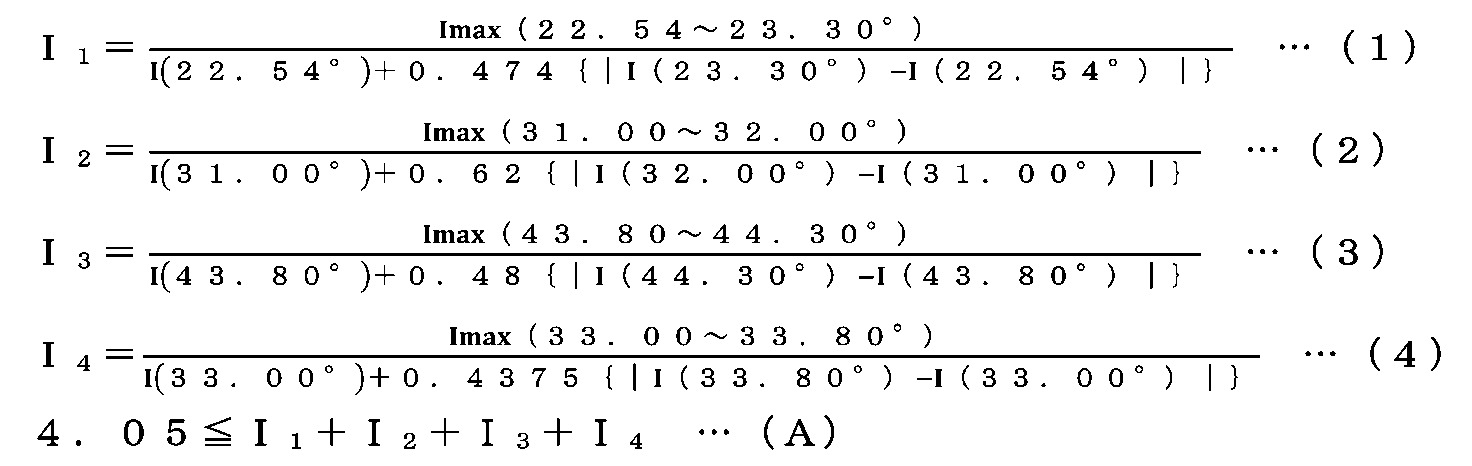
其中,在上述式(1)~(4)中,Imax(k~m°)是以繞射角度2θ計在k~m°之間的X射線繞射強度最大值,I(n°)是以繞射角度2θ計在n°的X射線繞射強度,k、m、n分別是上述式(1)~(4)中所示之繞射角度2θ。Among them, in the above formulas (1)~(4), Imax(k~m°) is the maximum value of X-ray diffraction intensity between k~m° in terms of diffraction angle 2θ, and I(n°) is The X-ray diffraction intensity at n° in terms of diffraction angle 2θ, k, m, and n are the diffraction angles 2θ shown in the above formulas (1)~(4).
亦即,上述式(1)中的Imax(22.54~23.30°)是以繞射角度2θ計在22.54°~23.30°之間的X射線繞射強度最大值;I(22.54°)、I(23.30°)則分別是以繞射角度2θ計在22.54°、23.30°的X射線繞射強度。That is to say, Imax (22.54 ~ 23.30°) in the above formula (1) is the maximum value of X-ray diffraction intensity between 22.54° and 23.30° in terms of diffraction angle 2θ; I (22.54°), I (23.30 °) are the X-ray diffraction intensities measured at 22.54° and 23.30° at the diffraction angle 2θ, respectively.
上述式(2)中的Imax(31.00~32.00°)是以繞射角度2θ計在31.00°~32.00°之間的X射線繞射強度最大值;I(31.00°)、I(32.00°)則分別是以繞射角度2θ計在31.00°、32.00°的X射線繞射強度。Imax (31.00~32.00°) in the above formula (2) is the maximum X-ray diffraction intensity between 31.00°~32.00° measured by the diffraction angle 2θ; I(31.00°) and I(32.00°) are They are the X-ray diffraction intensities at 31.00° and 32.00° in terms of diffraction angle 2θ, respectively.
式(3)中的Imax(43.80~44.30°)是以繞射角度2θ計在43.80~44.30°之間的X射線繞射強度最大值;I(43.80°)、I(44.30°)則分別是以繞射角度2θ計在43.80°、44.30°的X射線繞射強度。Imax(43.80~44.30°) in formula (3) is the maximum value of X-ray diffraction intensity between 43.80~44.30° in terms of diffraction angle 2θ; I(43.80°) and I(44.30°) are respectively X-ray diffraction intensity at 43.80° and 44.30° in terms of diffraction angle 2θ.
式(4)中的Imax(33.00~33.80°)是以繞射角度2θ計在33.00~33.80°之間的X射線繞射強度最大值;I(33.00°)、I(33.80°)則分別是以繞射角度2θ計在33.00°、33.80°的X射線繞射強度。Imax(33.00~33.80°) in formula (4) is the maximum value of X-ray diffraction intensity measured at the diffraction angle 2θ between 33.00~33.80°; I(33.00°) and I(33.80°) are respectively X-ray diffraction intensity at 33.00° and 33.80° in terms of diffraction angle 2θ.
式(1)是有關於Al 2.15Zn 1.85Ca之繞射峰強度的式子,並且是相當於2θ=22.89°(101面)之繞射峰其相對於在22.89°之背景強度的繞射強度比。以下,說明式(1)的分母及分子。 Equation (1) is a formula related to the intensity of the diffraction peak of Al 2.15 Zn 1.85 Ca, and is equivalent to the diffraction intensity of the diffraction peak at 2θ=22.89° (101 plane) relative to the background intensity at 22.89° Compare. Hereinafter, the denominator and numerator of formula (1) are demonstrated.
式(1)的分子(Imax(22.54~23.30°))是金屬間化合物Al 2.15Zn 1.85Ca其相當於2θ=22.90°(101面)之繞射峰的強度,且是包含背景強度之繞射峰的最大繞射強度。因為X射線繞射之測定誤差,有時(101)面之繞射角度2θ會落於22.90°之外,所以才選取22.54~23.30°之間的最大值。 The molecule (Imax(22.54~23.30°)) of formula (1) is the intermetallic compound Al 2.15 Zn 1.85 Ca, which is equivalent to the intensity of the diffraction peak at 2θ=22.90° (101 planes), and is the diffraction peak including the background intensity The maximum diffraction intensity of the peak. Due to the measurement error of X-ray diffraction, sometimes the diffraction angle 2θ of the (101) plane will fall outside 22.90°, so the maximum value between 22.54° and 23.30° is selected.
式(1)的分母則是:從在22.54°及23.30°的繞射強度計算求出以繞射角度2θ計在22.90°的背景強度。亦即,如圖1所示,劃出一條直線來連結在22.54°的繞射線與在23.30°的繞射線。該直線就是繞射峰的基線(base line)。接著,求出I(23.30°)-I(22.54°)。再求出:以繞射角度2θ計22.54°與22.90°之差值(0.36°)相對以繞射角度2θ計22.54°與23.30°之差值(0.76°)兩者的比(0.36/0.76=0.474)。然後,透過上述式(1)的分母所記載的數學式來計算以繞射角度2θ計在22.89°的背景強度。The denominator of the formula (1) is: Calculate the background intensity at 22.90° as the diffraction angle 2θ from the diffraction intensities at 22.54° and 23.30°. That is, as shown in FIG. 1 , a straight line is drawn to connect the orbiting ray at 22.54° and the orbiting ray at 23.30°. This straight line is the base line of the diffraction peak. Next, I(23.30°)-I(22.54°) is obtained. Find again: the ratio (0.36/0.76=) of the difference (0.36°) between 22.54° and 22.90° in diffraction angle 2θ is relative to the difference (0.76°) in diffraction angle 2θ between 22.54° and 23.30° 0.474). Then, the background intensity at 22.89° in terms of the diffraction angle 2θ is calculated through the mathematical formula described in the denominator of the above formula (1).
以上述方式來設定式(1),藉此就算因為測定條件不同而產生測定誤差、背景變動,仍能精準測定金屬間化合物Al 2.15Zn 1.85Ca之2θ=22.90°(101)的繞射峰強度。 Formula (1) is set in the above way, so that even if there are measurement errors and background changes due to different measurement conditions, the diffraction peak intensity of the intermetallic compound Al 2.15 Zn 1.85 Ca at 2θ=22.90°(101) can still be accurately measured .
式(1)已說明完畢,至於式(2)~(4)及以下說明之式(5)~(13)也是基於與式(1)同樣的思維來設定。Formula (1) has been explained, and formulas (2)~(4) and formulas (5)~(13) described below are also set based on the same thinking as formula (1).
如上述式(A)所示,I 1、I 2、I 3及I 4的合計為4.05以上,藉此會提升在酸性環境下的耐蝕性。較宜的是,達4.10以上為佳。另一方面,提升在酸性環境下之耐蝕性的同時,在鹼性環境下的耐蝕性會傾向變得劣等,因此,I 1~I 4的合計宜設為4.15以下。 As shown in the above formula (A), the total of I 1 , I 2 , I 3 , and I 4 is 4.05 or more, whereby the corrosion resistance in an acidic environment is improved. More preferably, it is more than 4.10. On the other hand, while improving the corrosion resistance in an acidic environment, the corrosion resistance in an alkaline environment tends to be inferior. Therefore, the total of I 1 to I 4 is preferably 4.15 or less.
關於上述式(A),鍍敷層的Ca含量若相對Si含量較高,就容易形成Al 2.15Zn 1.85Ca及CaZn 2,因此Ca/Si比亦可設為0.40~0.70。又,要想滿足上述式(A),鍍敷層之化學組成滿足本發明範圍的同時,在製造方法中必須施行適切的熱處理。 Regarding the above formula (A), if the Ca content of the plating layer is higher than the Si content, Al 2.15 Zn 1.85 Ca and CaZn 2 are easily formed, so the Ca/Si ratio may be set to 0.40~0.70. Also, in order to satisfy the above formula (A), the chemical composition of the plated layer must satisfy the scope of the present invention, and appropriate heat treatment must be performed in the manufacturing method.
金屬間化合物:η’-MgZn 2η’-MgZn 2是(ICDD-JCPDS粉末繞射數據庫)01-073-2566所示之物質。該金屬間化合物例如在(ACTA,METALLURGICA VOL,18 AUGUST 1970 881-890)中有廣泛介紹,其與主相的MgZn 2是結晶結構相異的物質。在本實施形態之鍍敷層的組成範圍中,要檢測出該金屬間化合物所適合的繞射角度2θ有2個,以繞射角度2θ計為26.20°(100面)及49.22°(-221面)。此等繞射角度中的繞射峰由於鍍敷層主要結晶結構的繞射峰不會重疊,所以對於判明定量化與含量很合適。亦即,若在此等繞射角度獲得繞射強度大於一定量的繞射峰,就可以說是確實含有目標的金屬間化合物。不過,就本案發明人等所探討的鍍敷層而言,與JCPDS數據的金屬間化合物之製造狀況未必相同而有別,所以會觀測到些微繞射峰的偏移,對應於26.20°(100面)的是26.15°,49.22°(-221面)則維持原樣49.22°即可。 Intermetallic compound: η'-MgZn 2 η'-MgZn 2 is a substance shown in (ICDD-JCPDS Powder Diffraction Database) 01-073-2566. This intermetallic compound is widely described in (ACTA, METALLURGICA VOL, 18 AUGUST 1970 881-890), for example, and has a crystal structure different from MgZn 2 of the main phase. In the composition range of the plating layer of the present embodiment, there are two diffraction angles 2θ suitable for detecting the intermetallic compound, and the diffraction angle 2θ is 26.20° (100 planes) and 49.22° (-221 noodle). Diffraction peaks in these diffraction angles are suitable for determining quantification and content because the diffraction peaks of the main crystal structure of the plating layer do not overlap. That is, if a diffraction peak with a diffraction intensity greater than a certain amount is obtained at these diffraction angles, it can be said that the target intermetallic compound is indeed contained. However, as far as the plating layer discussed by the inventors of the present case is concerned, it is not necessarily the same as the manufacturing status of the intermetallic compound in the JCPDS data, so a slight shift in the diffraction peak will be observed, corresponding to 26.20° (100 surface) is 26.15°, and 49.22° (-221 surface) is 49.22° as it is.
為了確保在pH3.5~11.5之範圍外的耐蝕性,必須滿足下開事項:對於鍍敷層表面,使用Cu-Kα線並以X射線輸出為40kV及150mA之條件施行X射線繞射,藉此獲得鍍敷層表面之X射線繞射圖,在該繞射圖中,由η’-MgZn 2的X射線繞射峰所求出之I 5及I 6是透過下述式(5)、(6)來定義,此時必須滿足下述式(B)。 In order to ensure the corrosion resistance outside the pH range of 3.5~11.5, the following items must be met: For the surface of the plating layer, use Cu-Kα line and perform X-ray diffraction under the conditions of X-ray output of 40kV and 150mA, by This obtains the X-ray diffraction pattern of the plated layer surface, and in this diffraction pattern, I 5 and I 6 obtained by the X-ray diffraction peak of η'- MgZn are through the following formula (5), (6), it is necessary to satisfy the following formula (B) in this case.
[數學式7]

不過,在上述式(5)、(6)中,Imax(k°~m°)是以繞射角度2θ計在k°~m°之間的X射線繞射強度最大值,I(n°)是以繞射角度2θ計在n°的X射線繞射強度,k、m、n分別是上述式(5)、(6)中所示之繞射角度2θ。However, in the above formulas (5) and (6), Imax(k°~m°) is the maximum value of X-ray diffraction intensity between k°~m° in terms of diffraction angle 2θ, and I(n° ) is the X-ray diffraction intensity at n° measured by the diffraction angle 2θ, k, m, and n are the diffraction angles 2θ shown in the above formulas (5) and (6), respectively.
亦即,上述式(5)中的Imax(26.00°~26.40°)是以繞射角度2θ計在26.00°~26.40°之間的X射線繞射強度最大值;I(26.00°)、I(26.40°)則分別是以繞射角度2θ計在26.00°、26.40°的X射線繞射強度。That is to say, Imax (26.00 ° ~ 26.40 °) in the above formula (5) is the X-ray diffraction intensity maximum value between 26.00 ° ~ 26.40 ° in the diffraction angle 2θ; I (26.00 °), I ( 26.40°) are the X-ray diffraction intensities at 26.00° and 26.40° measured by the diffraction angle 2θ, respectively.
又,上述式(6)中的Imax(49.00°~49.60°)是以繞射角度2θ計在49.00°~46.60°之間的X射線繞射強度最大值;I(49.00°)、I(49.60°)則分別是以繞射角度2θ計在49.00°、49.60°的X射線繞射強度。Again, Imax (49.00 ° ~ 49.60 °) in the above formula (6) is the maximum X-ray diffraction intensity between 49.00 ° ~ 46.60 ° in terms of diffraction angle 2θ; I (49.00 °), I (49.60 °) are the X-ray diffraction intensities at 49.00° and 49.60° measured by the diffraction angle 2θ, respectively.
如上述式(B)所示,I 5及I 6的合計為2.05以上,藉此會提升在pH3.0之酸性環境下及在pH11.8之鹼性環境下的耐蝕性。η’-MgZn 2的耐蝕性是比通常的MgZn 2還高。關於I 5及I 6的合計,也是數值越大越好,不過適宜的是2.30以下為佳。 As shown in the above formula (B), the total of I 5 and I 6 is 2.05 or more, thereby improving the corrosion resistance in an acidic environment of pH 3.0 and in an alkaline environment of pH 11.8. The corrosion resistance of η'-MgZn 2 is higher than that of ordinary MgZn 2 . As for the total of I 5 and I 6 , the larger the numerical value, the better, but it is preferably 2.30 or less.
關於上述式(B),鍍敷層的Ca含量若相對Si含量較高,就容易形成η’-MgZn 2,且Ca/Si比宜為0.40~0.70。又,要想滿足式(B),鍍敷層之化學組成滿足本發明範圍的同時,在製造方法中必須施行適切的熱處理。 Regarding the above formula (B), if the Ca content of the plating layer is higher than the Si content, η'-MgZn 2 is easily formed, and the Ca/Si ratio is preferably 0.40~0.70. In addition, in order to satisfy the formula (B), the chemical composition of the plating layer satisfies the scope of the present invention, and appropriate heat treatment must be performed in the manufacturing method.
η’-MgZn 2傾向於與Al 2.15Zn 1.85Ca及Al 4Ca同時形成,可認為是η’-MgZn 2複雜且特別的結晶結構對周圍金屬間化合物的形成帶來影響。藉由同時形成此等金屬間化合物,會一併改善在酸性環境及鹼性環境下的耐蝕性。 η'-MgZn 2 tends to form simultaneously with Al 2.15 Zn 1.85 Ca and Al 4 Ca. It can be considered that the complex and special crystal structure of η'-MgZn 2 affects the formation of surrounding intermetallic compounds. By forming these intermetallic compounds at the same time, the corrosion resistance in acidic environment and alkaline environment will be improved together.
金屬間化合物:MgAlSi 此外,當鍍敷層為特定成分組成且滿足特定製造條件時,在鍍敷層中就會形成金屬間化合物MgAlSi。亦即,鍍敷層之平均化學組成滿足20.0≦Mg/Si≦38.0及3.00≦Al/Mg≦4.00,同時在容易形成η’-MgZn 2的溫度區域保持足夠的時間,此時就會形成MgAlSi。 Intermetallic compound: MgAlSi In addition, when the plating layer has a specific composition and satisfies specific manufacturing conditions, an intermetallic compound MgAlSi is formed in the plating layer. That is to say, the average chemical composition of the plating layer satisfies 20.0≦Mg/Si≦38.0 and 3.00≦Al/Mg≦4.00, and at the same time keep enough time in the temperature region where η'-MgZn 2 is easy to form, then MgAlSi will be formed .
該金屬間化合物MgAlSi是(ICDD-JCPDS粉末繞射數據庫)01-074-9054所示之物質。在本實施形態之鍍敷層的組成範圍中,要檢測出該金屬間化合物所適合的繞射角度有3個,以繞射角度2θ計為24.66°(011面)、46.35°(302面)、49.15°(213面)。此等繞射角度中的繞射峰由於不會與鍍敷層主要結晶結構的繞射峰重疊,所以對於判明定量化與含量很合適。亦即,若在此等繞射角度獲得繞射強度大於一定量的繞射峰,就可以說是確實含有目標的金屬間化合物。不過,就本案發明人等所探討的鍍敷層而言,與JCPDS數據的金屬間化合物之製造狀況未必相同而有別,所以會觀測到些微繞射峰的偏移,24.66°(011面)維持24.66°即可,對應於46.35°(302面)的是46.28°,49.15°(213面)維持49.15°即可。This intermetallic compound MgAlSi is a substance shown in (ICDD-JCPDS Powder Diffraction Database) 01-074-9054. In the composition range of the plating layer of this embodiment, there are three diffraction angles suitable for detecting the intermetallic compound, and the diffraction angle 2θ is 24.66° (011 plane), 46.35° (302 plane) , 49.15° (213 planes). Since the diffraction peaks at these diffraction angles do not overlap with the diffraction peaks of the main crystalline structure of the plating layer, it is suitable for determining quantification and content. That is, if a diffraction peak with a diffraction intensity greater than a certain amount is obtained at these diffraction angles, it can be said that the target intermetallic compound is indeed contained. However, as far as the plating layer discussed by the inventors of this case is concerned, it is not necessarily the same as the manufacturing status of the intermetallic compound in the JCPDS data, so a slight shift of the diffraction peak will be observed, 24.66° (011 plane) It is sufficient to maintain 24.66°, 46.28° corresponding to 46.35° (302 planes), and 49.15° to 49.15° (213 planes).
使用Cu-Kα線並以X射線輸出為40kV及150mA之條件測定鍍敷層表面,在所測定之鍍敷層表面之X射線繞射圖中,由MgAlSi的X射線繞射峰所求出之I 7~I 9是透過下述式(7)~(9)來定義,此時宜滿足下述式(C)。 Using Cu-Kα line and measuring the surface of the coating layer under the conditions of X-ray output of 40kV and 150mA, in the X-ray diffraction pattern of the measured coating layer surface, it is obtained from the X-ray diffraction peak of MgAlSi I 7 to I 9 are defined by the following formulas (7) to (9), and in this case, the following formula (C) should be satisfied.
[數學式8]
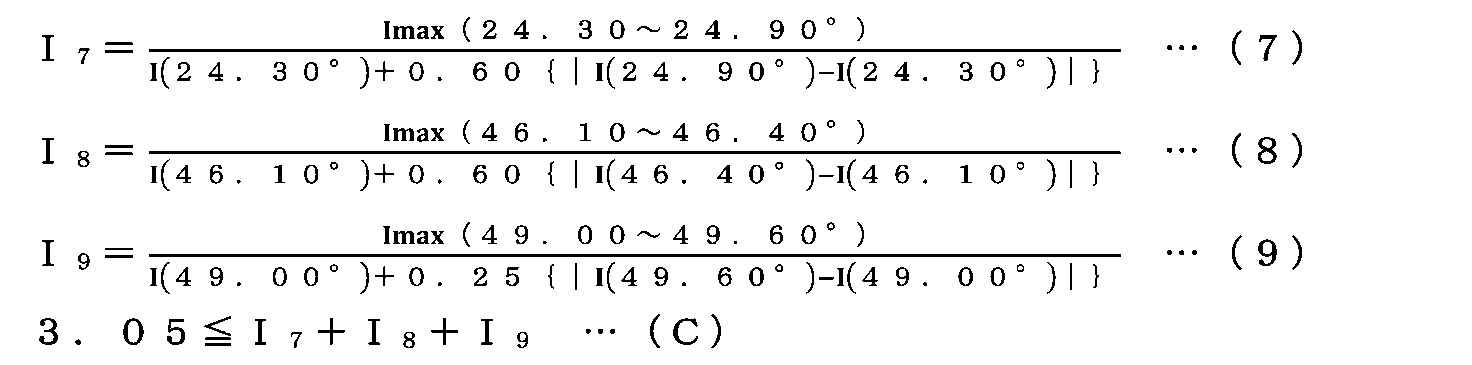
其中,在上述式(7)~(9)中,Imax(k°~m°)是以繞射角度2θ計在k°~m°之間的X射線繞射強度最大值,I(n°)是以繞射角度2θ計在n°的X射線繞射強度,k、m、n分別是上述式(7)~(9)中所示之繞射角度2θ。Among them, in the above formulas (7)~(9), Imax(k°~m°) is the maximum value of X-ray diffraction intensity between k°~m° in terms of diffraction angle 2θ, and I(n° ) is the X-ray diffraction intensity at n° in terms of diffraction angle 2θ, k, m, and n are the diffraction angles 2θ shown in the above formulas (7)~(9) respectively.
亦即,式(7)中的Imax(24.30°~24.90°)是以繞射角度2θ計在24.30°~24.90°之間的X射線繞射強度最大值;I(24.30°)、I(24.90°)則分別是以繞射角度2θ計在24.30°、24.90°的X射線繞射強度。That is to say, Imax(24.30°~24.90°) in formula (7) is the maximum value of X-ray diffraction intensity between 24.30°~24.90° in terms of diffraction angle 2θ; I(24.30°), I(24.90 °) are the X-ray diffraction intensities at 24.30° and 24.90° measured by the diffraction angle 2θ, respectively.
上述式(8)中的Imax(46.10°~46.40°)是以繞射角度2θ計在46.10°~46.40°之間的X射線繞射強度最大值;I(46.10°)、I(46.40°)則分別是以繞射角度2θ計在46.10°、46.40°的X射線繞射強度。Imax (46.10 ° ~ 46.40 °) in the above formula (8) is the maximum X-ray diffraction intensity between 46.10 ° ~ 46.40 ° in the diffraction angle 2θ; I (46.10 °), I (46.40 °) They are the X-ray diffraction intensities measured at 46.10° and 46.40° at the diffraction angle 2θ, respectively.
上述式(9)中的Imax(49.00°~49.60°)是以繞射角度2θ計在49.00°~49.60°之間的X射線繞射強度最大值;I(49.00°)、I(49.60°)則分別是以繞射角度2θ計在49.00°、49.60°的X射線繞射強度。Imax (49.00 ° ~ 49.60 °) in the above formula (9) is the maximum value of the X-ray diffraction intensity between 49.00 ° ~ 49.60 ° in the diffraction angle 2θ; I (49.00 °), I (49.60 °) They are the X-ray diffraction intensities measured at 49.00° and 49.60° at the diffraction angle 2θ, respectively.
如上述式(C)所示,I 7、I 8及I 9的合計為3.05以上,藉此會更加提升在大於pH11.5之鹼性環境下的耐蝕性。 I 7、I 8及I 9的合計亦可設為3.10以下。 As shown in the above formula (C), the total of I 7 , I 8 and I 9 is 3.05 or more, thereby further improving the corrosion resistance in an alkaline environment higher than pH 11.5. The total of I 7 , I 8 and I 9 may be 3.10 or less.
金屬間化合物:Mg 9Sn 5此外,鍍敷層之平均化學組成滿足0.01≦Sn,且在容易形成η’-MgZn 2的溫度區域保持足夠時間,此時在鍍敷層中會生成Mg 9Sn 5。 Intermetallic compound: Mg 9 Sn 5 In addition, the average chemical composition of the plating layer satisfies 0.01≦Sn, and it is kept in the temperature region where η'-MgZn 2 is easily formed for a sufficient time. At this time, Mg 9 Sn will be generated in the plating layer 5 .
該金屬間化合物Mg 9Sn 5是(ICDD-JCPDS粉末繞射數據庫)01-072-8010所示之物質。通常在Zn-Al-Mg系鍍敷鋼板中含有Sn時,例如會形成Mg 2Sn(00-031-0812或01-080-4461),不過Mg 9Sn 5是與此等金屬間化合物的結晶結構完全不同。 This intermetallic compound Mg 9 Sn 5 is a substance shown in (ICDD-JCPDS Powder Diffraction Database) 01-072-8010. Usually, when Sn is contained in Zn-Al-Mg plated steel sheet, for example, Mg 2 Sn (00-031-0812 or 01-080-4461) is formed, but Mg 9 Sn 5 is a crystal with these intermetallic compounds The structure is completely different.
在本實施形態之鍍敷層的組成範圍中,要檢測出該金屬間化合物所適合的繞射角度有1個,以繞射角度2θ計僅為23.29°(300面)。在該繞射角度中的繞射峰由於不會與鍍敷層主要結晶結構的繞射峰重疊,所以對於判明定量化與含量很合適。亦即,若在此等繞射角度獲得繞射強度大於一定量的繞射峰,就可以說是確實含有目標的金屬間化合物。不過,就本案發明人等所探討的鍍敷層而言,與JCPDS數據的金屬間化合物之製造狀況未必相同而有別,所以會觀測到些微繞射峰的偏移,對應於23.29°(300面)的是23.40°。In the composition range of the plating layer of this embodiment, there is only one diffraction angle suitable for detecting the intermetallic compound, and the diffraction angle 2θ is only 23.29° (300 planes). Since the diffraction peak at this diffraction angle does not overlap with the diffraction peak of the main crystalline structure of the plating layer, it is suitable for determining quantification and content. That is, if a diffraction peak with a diffraction intensity greater than a certain amount is obtained at these diffraction angles, it can be said that the target intermetallic compound is indeed contained. However, as far as the plating layer discussed by the inventors of the present case is concerned, it is not necessarily the same as the manufacturing status of the intermetallic compound in the JCPDS data, so a slight shift in the diffraction peak will be observed, corresponding to 23.29° (300 surface) is 23.40°.
使用Cu-Kα線並以X射線輸出為40kV及150mA之條件測定鍍敷層表面,在所測定之鍍敷層表面之X射線繞射圖中,由Mg 9Sn 5的X射線繞射峰所求出之I 10是透過下述式(10)來定義,此時宜滿足下述式(D)。 Using Cu-Kα line and measuring the surface of the coating layer under the condition that the X-ray output is 40kV and 150mA, in the X-ray diffraction pattern of the measured coating layer surface, it is determined by the X-ray diffraction peak of Mg 9 Sn 5 The obtained I 10 is defined by the following formula (10), and at this time, the following formula (D) should be satisfied.
[數學式9]

其中,在上述式(10)中,Imax(23.10°~23.30°)是以繞射角度2θ計在23.10°~23.30°之間的X射線繞射強度最大值,I(23.10°)是以繞射角度2θ計在23.10°的X射線繞射強度,I(23.30°)則是以繞射角度2θ計在23.30°的X射線繞射強度。Among them, in the above formula (10), Imax(23.10°~23.30°) is the maximum value of the X-ray diffraction intensity measured at the diffraction angle 2θ between 23.10°~23.30°, and I(23.10°) is the I(23.30°) is the X-ray diffraction intensity at 23.30° measured by the diffraction angle 2θ.
如上述式(D)所示,I 10為1.04以上,藉此會提升在大於pH11.5之鹼性環境下的耐蝕性。由於比起Mg 2Sn而言,Mg 9Sn 5之Sn與Mg的鍵結數較少,故自然電位略高於Mg 9Sn 5,在鹼性環境下的耐蝕性很穩定。 I 10亦可設為1.10以下。 As shown in the above formula (D), I 10 is 1.04 or more, thereby improving the corrosion resistance in an alkaline environment higher than pH 11.5. Compared with Mg 2 Sn, the number of bonds between Sn and Mg of Mg 9 Sn 5 is less, so the natural potential is slightly higher than that of Mg 9 Sn 5 , and the corrosion resistance in alkaline environment is very stable. I 10 can also be set to 1.10 or less.
金屬氧化物 又,若是為了在大氣環境中形成η’-MgZn 2而長時間保持在高溫區域,則有時在鍍敷層表面會形成氧化披膜。可透過在氮氣體環境中加熱來變更是否形成此等。 Also, if the metal oxide is kept in a high-temperature region for a long time in order to form η'-MgZn 2 in the air environment, an oxide film may be formed on the surface of the plating layer. The formation of these can be altered by heating in a nitrogen atmosphere.
不過,雖然無法充分鑑別出該氧化披膜中的化合物,但透過X射線繞射而以繞射角度2θ計在0~20°之範圍會出現些許繞射峰,因此可設想是因金屬氧化物而來的氧化披膜。以繞射角度2θ計10.45°、12.83°、17.36°之繞射峰由於不會與鍍敷層主要結晶結構的繞射峰重疊,故對於判明定量化與含量很合適。亦即,若在此等繞射角度獲得繞射強度大於一定量的繞射峰,就可以說是確實含有目標的金屬氧化物。However, although the compounds in the oxide film cannot be fully identified, some diffraction peaks appear in the range of 0 to 20° in terms of the diffraction angle 2θ through X-ray diffraction, so it is conceivable that it is due to the metal oxide The resulting oxide film. The diffraction peaks of 10.45°, 12.83°, and 17.36° measured by the diffraction angle 2θ are suitable for determining the quantification and content because they do not overlap with the diffraction peaks of the main crystal structure of the plating layer. That is, if a diffraction peak with a diffraction intensity greater than a certain amount is obtained at these diffraction angles, it can be said that the target metal oxide is indeed contained.
使用Cu-Kα線並以X射線輸出為40kV及150mA之條件測定鍍敷層表面,在所測定之鍍敷層表面之X射線繞射圖中,由氧化物之X射線繞射峰所求出之I 11~I 13是透過下述式(11)~(13)來定義,此時宜滿足下述式(E)。 Use Cu-Kα line and measure the surface of the coating layer under the condition that the X-ray output is 40kV and 150mA. In the X-ray diffraction pattern of the measured coating layer surface, it is obtained from the X-ray diffraction peak of the oxide I 11 to I 13 are defined by the following formulas (11) to (13), and at this time, the following formula (E) should be satisfied.
[數學式10]
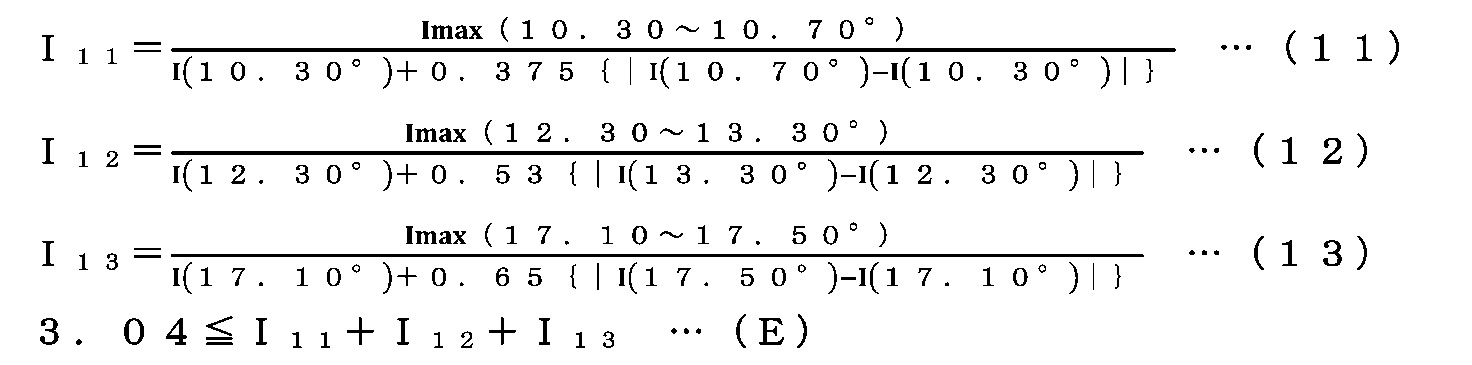
其中,在上述式(11)~(13)中,Imax(k°~m°)是以繞射角度2θ計在k°~m°之間的X射線繞射強度最大值,I(n°)是以繞射角度2θ計在n°的X射線繞射強度,k、m、n則分別是上述式(11)~(13)中所示之繞射角度2θ。Among them, in the above formulas (11)~(13), Imax(k°~m°) is the maximum value of X-ray diffraction intensity between k°~m° in terms of diffraction angle 2θ, and I(n° ) is the X-ray diffraction intensity at n° in terms of diffraction angle 2θ, and k, m, and n are the diffraction angles 2θ shown in the above formulas (11)~(13), respectively.
亦即,上述式(11)中的Imax(10.30°~10.70°)是以繞射角度2θ計在10.30°~10.70°之間的X射線繞射強度最大值;I(10.30°)、I(10.70°)則分別是以繞射角度2θ計在10.30°、10.70°的X射線繞射強度。That is to say, Imax (10.30 ° ~ 10.70 °) in the above formula (11) is the X-ray diffraction intensity maximum value between 10.30 ° ~ 10.70 ° in terms of diffraction angle 2θ; I (10.30 °), I ( 10.70°) are the X-ray diffraction intensities at 10.30° and 10.70° measured by the diffraction angle 2θ, respectively.
上述式(12)中的Imax(12.30°~13.30°)是以繞射角度2θ計在12.30°~13.30°之間的X射線繞射強度最大值;I(12.30°)、I(13.30°)則分別是以繞射角度2θ計在12.30°、13.30°的X射線繞射強度。Imax (12.30 ° ~ 13.30 °) in the above formula (12) is the maximum value of X-ray diffraction intensity between 12.30 ° ~ 13.30 ° in terms of diffraction angle 2θ; I (12.30 °), I (13.30 °) They are the X-ray diffraction intensities measured at 12.30° and 13.30° at the diffraction angle 2θ, respectively.
上述式(13)中的Imax(17.10°~17.50°)是以繞射角度2θ計在17.10°~17.50°之間的X射線繞射強度最大值;I(17.10°)、I(17.50°)則分別是以繞射角度2θ計在17.10°、17.50°的X射線繞射強度。Imax (17.10°~17.50°) in the above formula (13) is the maximum value of the X-ray diffraction intensity between 17.10°~17.50° in terms of diffraction angle 2θ; I(17.10°), I(17.50°) They are the X-ray diffraction intensities measured at 17.10° and 17.50° at the diffraction angle 2θ, respectively.
如上述式(E)所示,I 11、I 12及I 13的合計為3.04以上,藉此在大於pH11.5之鹼性環境方面之耐蝕性會提升。 I 11、I 12及I 13的合計亦可設為3.10以下。 As shown in the above formula (E), the total of I 11 , I 12 , and I 13 is 3.04 or more, whereby the corrosion resistance in an alkaline environment higher than pH 11.5 is improved. The total of I 11 , I 12 and I 13 may be 3.10 or less.
接著,說明本實施形態的鍍敷鋼板之製造方法。 本實施形態的鍍敷鋼板具備:鋼板、與形成於鋼板表面的鍍敷層。通常來說,Zn-Al-Mg系鍍敷是透過金屬堆積與凝固反應來形成鍍敷層。就最容易形成鍍敷層的手段而言,是以熔融鍍敷法於鋼板表面形成鍍敷層,可透過森吉米爾法或助熔劑法等來形成。 Next, the manufacturing method of the plated steel sheet of this embodiment is demonstrated. The plated steel sheet of the present embodiment includes a steel sheet and a plating layer formed on the surface of the steel sheet. Generally speaking, Zn-Al-Mg based plating forms a plating layer through metal accumulation and solidification reaction. The easiest way to form the plating layer is to form the plating layer on the surface of the steel plate by the hot-dip plating method, which can be formed by the Sendzimir method or the flux method.
以下,就本實施形態的鍍敷鋼板以熔融鍍敷法來製造之情況進行說明。本實施形態的鍍敷鋼板亦能以浸漬式鍍敷法(批式)、連續式鍍敷法之任一者來製造。Hereinafter, the case where the plated steel sheet of this embodiment is manufactured by the hot-dip plating method is demonstrated. The plated steel sheet of this embodiment can also be manufactured by any of the immersion plating method (batch method) and the continuous plating method.
作為鍍敷對象之鋼板,其大小、形狀、表面形態等並無特別限制。即使是通常的鋼板、不鏽鋼等,若為鋼板則皆能適用。一般結構用鋼之鋼帶最為適宜。亦可於事前先以珠粒噴擊(shot blasting)等進行表面精工;在表面附著Ni、Fe、Zn鍍敷等3g/m 2以下的金屬膜或合金膜後再進行鍍敷,此舉也沒有問題。也還可使用鍍敷母板、150g/m 2以下的鍍鋅板(熔融Zn鍍敷鋼板或電鍍鋼板)。又,就事前處理而言,宜以脫脂、酸洗來充分洗淨鋼板。 The size, shape, surface morphology, etc. of the steel plate to be plated are not particularly limited. Even if it is a common steel plate, stainless steel, etc., if it is a steel plate, it can apply to all. Steel strips for general structural use are most suitable. It is also possible to carry out surface finishing by shot blasting in advance; after attaching Ni, Fe, Zn plating and other metal films or alloy films below 3g/ m2 on the surface, plating is also carried out. no problem. It is also possible to use a plated mother plate, a galvanized plate of 150 g/m 2 or less (a molten Zn plated steel plate or an electroplated steel plate). Also, in terms of pretreatment, it is advisable to fully clean the steel plate by degreasing and pickling.
以H 2等還原性氣體將鋼板表面充分加熱、還原後,將鋼板浸漬於已調配成預定成分的鍍敷浴中。 After sufficiently heating and reducing the surface of the steel sheet with reducing gas such as H 2 , the steel sheet is immersed in a plating bath prepared with a predetermined composition.
就鍍敷層之成分而言,若為熔融鍍敷法,則可透過所建浴之鍍敷浴成分來加以控制。將純金屬混合預定量並以例如非活性氣體環境下之熔解法,藉此進行鍍敷浴之建浴。As far as the composition of the plating layer is concerned, if it is a hot-dip plating method, it can be controlled by the composition of the plating bath in the built bath. Pure metals are mixed in a predetermined amount and used, for example, by melting in an inert gas atmosphere to build up a plating bath.
將表面還原過後的鋼板浸漬於已維持在預定濃度的鍍敷浴中,藉此會形成與鍍敷浴大致同等成分的鍍敷層。若浸漬時間變長或者至完成凝固花費長時間,則界面合金層之形成會變得活躍,因此,鍍敷層中的Fe含量有時會變高。鍍敷浴之浴溫小於500℃時,鋼板與鍍敷層之反應會急速變緩,故鍍敷層中所含之Fe含量通常會壓制在小於5.0%。By immersing the steel sheet after surface reduction in a plating bath maintained at a predetermined concentration, a plating layer having substantially the same composition as that of the plating bath is formed. If the immersion time becomes longer or it takes a long time until the solidification is completed, the formation of the interfacial alloy layer becomes active, so the Fe content in the plating layer may become high. When the bath temperature of the coating bath is lower than 500°C, the reaction between the steel plate and the coating layer will slow down rapidly, so the Fe content in the coating layer is usually suppressed to less than 5.0%.
為了形成鍍敷層,宜將還原過後的鋼板浸漬於500~650℃之鍍敷浴數秒鐘。在還原過後的鋼板表面,Fe會擴散至鍍敷浴並與鍍敷浴中之成分發生反應,而界面合金層(主要是Al-Fe合金層)會形成在鍍敷層與鋼板之界面。透過界面合金層,界面合金層下方之鋼板與上方之鍍敷層會以金屬化學形式結合。In order to form a plating layer, it is advisable to immerse the reduced steel sheet in a plating bath at 500~650°C for a few seconds. On the surface of the reduced steel sheet, Fe will diffuse into the coating bath and react with the components in the coating bath, and an interfacial alloy layer (mainly Al-Fe alloy layer) will be formed at the interface between the coating layer and the steel sheet. Through the interfacial alloy layer, the steel plate under the interfacial alloy layer and the upper plating layer will be chemically combined in metal form.
將鋼板浸漬於鍍敷浴預定時間後,將鋼板從鍍敷浴拉起來,附著於表面之金屬還呈熔融狀態時進行N 2抹拭,藉此將鍍敷層調整至預定厚度。鍍敷層的厚度宜調整至3~80μm。換算成鍍敷層之附著量時,則為10~500g/m 2(單面)。又,鍍敷層的厚度亦可調整至5~70μm。換算成附著量時,則為20~400g/m 2(單面)。 After immersing the steel plate in the plating bath for a predetermined time, pull the steel plate out of the plating bath, and wipe with N2 when the metal attached to the surface is still in a molten state, so as to adjust the plating layer to a predetermined thickness. The thickness of the plating layer should be adjusted to 3~80μm. When converted into the adhesion amount of the plating layer, it is 10~500g/m 2 (single side). Moreover, the thickness of a plating layer can also be adjusted to 5-70 micrometers. When converted into adhesion amount, it is 20~400g/m 2 (single side).
調整鍍敷層之附著量後,使所附著之熔融金屬凝固。鍍敷凝固時之冷卻手段可透過吹噴氮、空氣或氫氦混合氣體來進行,亦可透過水霧冷卻,也可透過水淹。鍍敷凝固時之冷卻手段宜為水霧冷卻,較宜為氮中含水的水霧冷卻。冷卻速度透過含水比例來調整即可。想要在鍍敷表面形成氧化披膜等時,則在大氣環境下進行冷卻來製造即可。另一方面,為了避免形成氧化披膜等,則宜將氧濃度壓制在小於20ppm,例如在N 2置換爐內的冷卻並以N 2氣體來實施冷卻。 After adjusting the adhesion amount of the plating layer, the attached molten metal is solidified. The cooling method during plating solidification can be carried out by blowing nitrogen, air or hydrogen-helium mixed gas, cooling by water mist, or flooding by water. The cooling means for plating solidification is preferably water mist cooling, more preferably water mist cooling containing water in nitrogen. The cooling rate can be adjusted through the water content ratio. When it is desired to form an oxide film or the like on the plating surface, it may be produced by cooling in an air environment. On the other hand, in order to avoid the formation of oxide films, etc., it is advisable to suppress the oxygen concentration to less than 20ppm, such as cooling in a N 2 replacement furnace and using N 2 gas for cooling.
就本實施形態的鍍敷層在製造時適宜條件而言,在鍍敷凝固時的冷卻中,500~480℃之平均冷卻速度宜為30℃/秒以上。Al-Ca-Si、Mg 2Si等金屬間化合物由於容易在500~480℃形成,因此透過在該溫度區域進行急冷卻,藉此讓這些化合物難以析出。具體而言,淹沒在溫度30℃左右(室溫左右)的冷媒(例如水)中等等冷卻速度極快的手段來進行冷卻,此舉在酸性環境及鹼性環境下的耐蝕性會傾向於變高。 In terms of suitable conditions for the production of the plated layer of this embodiment, the average cooling rate at 500°C to 480°C is preferably 30°C/sec or more in the cooling when the plated layer is solidified. Intermetallic compounds such as Al-Ca-Si and Mg 2 Si are easy to form at 500~480°C, so rapid cooling in this temperature range makes it difficult for these compounds to precipitate. Specifically, submerge in a refrigerant (such as water) at a temperature of about 30°C (about room temperature) to cool it by means of a very fast cooling rate. This will tend to reduce the corrosion resistance in acidic and alkaline environments. high.
接著,施行時效處理。要形成本實施形態中重要的Al 2.15Zn 1.85Ca、CaZn 2、η’-MgZn 2、MgAlSi及Mg 9Sn 5的金屬間化合物,是透過長時間保持在低溫下的時效處理來進行。時效處理中的溫度必須嚴格限制下限及上限。 Next, aging treatment is performed. The intermetallic compounds of Al 2.15 Zn 1.85 Ca, CaZn 2 , η'-MgZn 2 , MgAlSi, and Mg 9 Sn 5 important in this embodiment are formed by aging treatment kept at low temperature for a long time. The temperature in the aging treatment must be strictly limited to the lower limit and the upper limit.
時效處理之溫度範圍設為80~140℃,較宜設為90~110℃。溫度若小於80℃,則溫度過低而不會形成出所欲的金屬間化合物,又,Al-Zn相(約20mass%Al)會殘存下來而耐蝕性會惡化。溫度若大於140℃,所欲之金屬間化合物以外的相會旺盛地形成,尤其因為Al-Zn相(約20mass%Al)會穩定,故進一步耐蝕性會變差。又,比起η’-MgZn 2相而言,MgZn 2相會穩定化而變得無法形成出η’-MgZn 2相。 The temperature range of aging treatment is set at 80~140°C, more preferably at 90~110°C. If the temperature is lower than 80°C, the desired intermetallic compound will not be formed due to the low temperature, and the Al-Zn phase (about 20 mass% Al) will remain and the corrosion resistance will deteriorate. If the temperature is higher than 140°C, phases other than the desired intermetallic compound will be vigorously formed, especially because the Al-Zn phase (about 20mass%Al) will be stable, so the corrosion resistance will deteriorate further. In addition, the MgZn 2 phase is stabilized compared with the η'-MgZn 2 phase, and the η'-MgZn 2 phase cannot be formed.
又,時效處理之保持時間設為72~750小時。透過72小時以上的時效,就能形成出金屬間化合物。又,透過750小時以下的時效,就能防止鍍敷層過度氧化與耐蝕性劣化。較宜的是,保持時間設為250小時以上且500小時以下。In addition, the holding time of the aging treatment was set at 72 to 750 hours. After aging for more than 72 hours, intermetallic compounds can be formed. In addition, by aging for less than 750 hours, excessive oxidation of the plating layer and deterioration of corrosion resistance can be prevented. Preferably, the holding time is set to 250 hours or more and 500 hours or less.
又,時效處理之氣體環境並無特別限制。可在大氣中,也可在氮、氬等非活性氣體環境中。Also, the gas environment for the aging treatment is not particularly limited. It can be in the atmosphere or in an inert gas environment such as nitrogen and argon.
另外,透過時效處理,在鍍敷層中除了形成η’-MgZn 2相之外有時會形成Mg 2Zn 11相,不過並未確認到因為形成Mg 2Zn 11相而導致耐蝕性惡化。關於Mg 2Zn 11相,可設想是因為結晶結構轉變成η’-MgZn 2而形成的副產物。 In addition, by aging treatment, a Mg 2 Zn 11 phase may be formed in addition to the η'-MgZn 2 phase in the plating layer, but corrosion resistance deterioration due to the formation of the Mg 2 Zn 11 phase has not been confirmed. Regarding the Mg 2 Zn 11 phase, it is assumed to be a by-product formed due to the transformation of the crystal structure into η′-MgZn 2 .
在實施了時效處理之情況下,若Mg、Al、Si之含量滿足所期望之關係,則進一步會形成MgAlSi。又,當鍍敷層中含有所期望之含量的Sn等時,就會容易形成出Mg 9Sn 5。此外,若在大氣環境下進行時效處理時,金屬氧化物會形成於表面。 以上,即完成本實施形態所定義之鍍敷鋼板的鍍敷層。 When the aging treatment is performed, if the contents of Mg, Al, and Si satisfy the desired relationship, MgAlSi will be further formed. Also, when a desired content of Sn or the like is contained in the plating layer, Mg 9 Sn 5 is easily formed. In addition, metal oxides will form on the surface when the aging treatment is performed in an atmospheric environment. As above, the plated layer of the plated steel sheet defined in this embodiment is completed.
時效處理後,亦可各種化學轉化處理、塗裝處理。可利用鍍敷表面凹凸狀的花紋而賦予Cr、Ni、Au等鍍敷層,更進一步可進行塗裝而賦予設計。又,為了更進一步提高防蝕性,在溶接部、加工部等亦可實施用以補修的修補塗裝(touch-up paint)、熔射處理等。After aging treatment, various chemical conversion treatments and coating treatments are also available. Plating layers such as Cr, Ni, and Au can be given by using the uneven pattern on the plating surface, and further, it can be painted to give a design. In addition, in order to further improve the corrosion resistance, touch-up paint for repairing, spray treatment, etc. may be performed on welded parts, processed parts, and the like.
對於本實施形態的鍍敷鋼板,亦可在鍍敷層上形成披膜。披膜可形成1層或2層以上。鍍敷層正上方之披膜種類可舉例如:鉻酸鹽披膜、磷酸鹽披膜、無鉻酸鹽披膜。用以形成此等披膜之鉻酸鹽處理、磷酸鹽處理、無鉻酸鹽處理,則可採行已知方法。In the plated steel sheet of this embodiment, a film may be formed on the plated layer. The film may be formed in one layer or two or more layers. The types of coatings directly above the plating layer include, for example, chromate coatings, phosphate coatings, and chromate-free coatings. Chromate treatment, phosphate treatment, and chromate-free treatment for forming such films can be performed by known methods.
鉻酸鹽處理如下有:透過電解形成鉻酸鹽披膜的電解鉻酸鹽處理;利用與素材反應來形成披膜後洗去多餘處理液的反應型鉻酸鹽處理;將處理液塗佈至被塗物後不進行水洗而使之乾燥形成披膜的塗佈型鉻酸鹽處理。可採用任一處理。 另外,在鍍敷層表面具有披膜之情況下,則透過濕式研磨等,以機械去除方式,並且使鍍敷層不受熱之方式予以完全去除後,再實施上述Ⅹ射線繞射。 Chromate treatment is as follows: electrolytic chromate treatment that forms a chromate film through electrolysis; reactive chromate treatment that uses the reaction with materials to form a film and then washes off excess treatment liquid; applies the treatment liquid to Coating-type chromate treatment in which the coated object is not washed with water but dried to form a film. Either treatment can be used. In addition, if there is a film on the surface of the plated layer, the above-mentioned X-ray diffraction is performed after the plated layer is completely removed by mechanical removal through wet grinding or the like without heat.
電解鉻酸鹽處理可例示使用下述成分之電解鉻酸鹽處理:鉻酸、氧化矽溶膠、樹脂(磷酸、丙烯酸樹脂、乙烯酯樹脂、乙酸乙烯酯丙烯酸乳液、羧基化苯乙烯丁二烯乳膠、二異丙醇胺改質環氧樹脂等)、及硬質氧化矽。Electrolytic chromate treatment can exemplify electrolytic chromate treatment using the following components: chromic acid, silica sol, resin (phosphoric acid, acrylic resin, vinyl ester resin, vinyl acetate acrylic emulsion, carboxylated styrene butadiene latex , Diisopropanolamine modified epoxy resin, etc.), and hard silicon oxide.
磷酸鹽處理可例示如:磷酸鋅處理、磷酸鋅鈣處理、磷酸錳處理。Phosphate treatment may, for example, be zinc phosphate treatment, zinc calcium phosphate treatment or manganese phosphate treatment.
無鉻酸鹽處理尤其不對環境造成負擔而為適宜。無鉻酸鹽處理如下有:透過電解形成無鉻酸鹽披膜的電解型無鉻酸鹽處理、利用與素材反應來形成披膜後洗去多餘處理液的反應型無鉻酸鹽處理、將處理液塗佈於被塗物後不進行水洗而使之乾燥形成披膜的塗佈型無鉻酸鹽處理。可採用任一處理。In particular, chromate-free treatment is preferable because it does not impose a burden on the environment. The chromate-free treatment is as follows: electrolytic chromate-free treatment that forms a chromate-free film by electrolysis, reaction-type chromate-free treatment that uses a reaction with materials to form a film and then washes off excess treatment liquid, and A coating-type chromate-free treatment in which the treatment liquid is applied to the object to be coated and dried without washing with water to form a film. Either treatment can be used.
在鍍敷層正上方之披膜上,也還可具有1層或2層以上的有機樹脂披膜。有機樹脂並未限定於特定種類,可舉例如:聚酯樹脂、聚胺甲酸乙酯樹脂、環氧樹脂、丙烯酸樹脂、聚烯烴樹脂、或此等樹脂之改質物等。在此所謂改質物是指:使此等樹脂結構中所含反應性官能基與其他化合物(單體或交聯劑等)反應而得之樹脂,所述其他化合物在結構中含有可與該官能基反應之官能基。On the coating directly above the plating layer, there may also be one or more organic resin coatings. The organic resin is not limited to a specific type, and examples thereof include polyester resin, polyurethane resin, epoxy resin, acrylic resin, polyolefin resin, or modified products of these resins. The so-called modifier here refers to the resin obtained by reacting the reactive functional groups contained in the resin structure with other compounds (monomers or crosslinking agents, etc.), and the other compounds contain functional groups in the structure that can react with the functional groups. Functional groups for radical reactions.
就此種有機樹脂而言,可混合使用1種或2種以上之有機樹脂(尚未改質者),亦可混合使用1種或2種以上的下述有機樹脂:於至少1種有機樹脂存在下將至少1種其他有機樹脂改質而得者。又,有機樹脂披膜中亦可含有任意著色顏料、防鏽顏料。亦可使用:透過溶解或分散於水中而水系化之物。As far as this kind of organic resin is concerned, one or two or more organic resins (unmodified) can be mixed and used, and one or two or more of the following organic resins can also be mixed and used: in the presence of at least one organic resin Modified at least one other organic resin. In addition, the organic resin coating may contain optional coloring pigments and antirust pigments. It can also be used: those that are water-systemized by dissolving or dispersing in water.
另外,本實施形態中,在酸性環境下、在鹼性環境下的耐蝕性是採以下方式來測定、評價。In addition, in this embodiment, the corrosion resistance in an acidic environment and an alkaline environment was measured and evaluated as follows.
在酸性環境下之耐蝕性的測定方法 滴下稀硫酸(0.4體積%)來將純水調整成pH3.0,製作出1公升的酸溶液(常溫23℃)。 將試驗片浸漬於酸溶液1秒鐘並拉起後,以水平放置方式設置於溫度:50℃、濕度:小於10%之大氣敞開型乾燥爐24小時。 以此做為1次循環而反覆循環60次。 循環60次後,將試驗片浸漬於30重量%鉻酸(VI)(常溫23℃)中,再除去形成於鍍敷層表面的腐蝕生成物,測定試驗前後之腐蝕失重(weight loss)並評斷在酸性環境下之耐蝕性的優劣(6階段評價)。若評價為D~S+,即可判斷為在酸性環境下之耐蝕性優異。 Determination method of corrosion resistance in acidic environment Dilute sulfuric acid (0.4% by volume) was dropped to adjust the pure water to pH 3.0 to prepare 1 liter of acid solution (normal temperature 23°C). After immersing the test piece in the acid solution for 1 second and pulling it up, place it horizontally in an open-air drying oven with a temperature of 50°C and a humidity of less than 10% for 24 hours. This was regarded as one cycle, and the cycle was repeated 60 times. After 60 cycles, the test piece was immersed in 30% by weight chromic acid (VI) (room temperature 23°C), and then the corrosion products formed on the surface of the plating layer were removed, and the corrosion weight loss before and after the test was measured and evaluated. The pros and cons of corrosion resistance in acidic environments (6-stage evaluation). If the evaluation is D~S+, it can be judged that the corrosion resistance in acidic environment is excellent.
循環60次後的腐蝕失重小於5g/m 2者定為酸性環境方面之耐蝕性「S+」 循環60次後的腐蝕失重為5g/m 2以上且小於10g/m 2者定為酸性環境之耐蝕性「S」 循環60次後的腐蝕失重為10g/m 2以上且小於15g/m 2者定為酸性環境之耐蝕性「A+」 循環60次後的腐蝕失重為15g/m 2以上且小於20g/m 2者定為酸性環境之耐蝕性「A」 循環60次後的腐蝕失重為20g/m 2以上且小於30g/m 2者定為酸性環境之耐蝕性「B」 循環60次後的腐蝕失重為30g/m 2以上且小於40g/m 2者定為酸性環境之耐蝕性「C」 循環60次後的腐蝕失重為40g/m 2以上且小於50g/m 2者定為酸性環境之耐蝕性「D」 循環60次後的腐蝕失重為50g/m 2以上者定為酸性環境之耐蝕性「E」 If the corrosion weight loss after 60 cycles is less than 5g/ m2 , it is defined as the corrosion resistance in acidic environment "S+". Resistance "S" After 60 cycles, the corrosion weight loss is more than 10g/ m2 and less than 15g/ m2 , which is defined as the corrosion resistance in acidic environment "A+" After 60 cycles, the corrosion weight loss is more than 15g/ m2 and less than 20g Corrosion resistance in acidic environment "A" if the corrosion weight loss after 60 cycles is more than 20g/m2 and less than 30g/ m2 is defined as corrosion resistance in acidic environment "B" Corrosion after 60 cycles If the weight loss is more than 30g/ m2 and less than 40g/ m2 , it is defined as the corrosion resistance "C" in acidic environment. After 60 cycles, the corrosion weight loss is more than 40g/m2 and less than 50g/ m2 . Resistance "D" Corrosion resistance after 60 cycles of 50g/m2 or more is defined as corrosion resistance in acidic environment "E"
在鹼性環境下之耐蝕性的測定方法 滴下氨水(3體積%)來將純水調整成pH11.8,製作出1公升的鹼溶液(常溫23℃)。 將試驗片浸漬於鹼溶液1秒鐘並拉起後,以水平放置方式設置於溫度:50℃、濕度:小於10%之大氣敞開型乾燥爐24小時。 以此做為1次循環而反覆循環60次。 循環60次後,將試驗片浸漬於30重量%鉻酸(VI)(常溫23℃)中,再除去形成於鍍敷層表面的腐蝕生成物,測定試驗前後之腐蝕失重並判定在鹼性環境下之耐蝕性的優劣。若評價為D~S+,即可判斷在鹼性環境下之耐蝕性優異。 Determination method of corrosion resistance in alkaline environment Ammonia water (3% by volume) was dropped to adjust the pure water to pH 11.8 to prepare 1 liter of alkali solution (normal temperature 23° C.). After immersing the test piece in the alkaline solution for 1 second and pulling it up, place it horizontally in an open-air drying oven with a temperature of 50°C and a humidity of less than 10% for 24 hours. This was regarded as one cycle, and the cycle was repeated 60 times. After 60 cycles, the test piece was immersed in 30% by weight chromic acid (VI) (room temperature 23°C), and then the corrosion products formed on the surface of the plating layer were removed, and the corrosion weight loss before and after the test was measured and judged to be in an alkaline environment. The pros and cons of corrosion resistance. If the evaluation is D~S+, it can be judged that the corrosion resistance in alkaline environment is excellent.
循環60次後的腐蝕失重小於5g/m 2者定為鹼性環境之耐蝕性「S+」 循環60次後的腐蝕失重為5g/m 2以上且小於10g/m 2者定為鹼性環境之耐蝕性「S」 循環60次後的腐蝕失重為10g/m 2以上且小於15g/m 2者定為鹼性環境之耐蝕性「A+」 循環60次後的腐蝕失重為15g/m 2以上且小於20g/m 2者定為鹼性環境之耐蝕性「A」 循環60次後的腐蝕失重為20g/m 2以上且小於30g/m 2者定為鹼性環境之耐蝕性「B+」 循環60次後的腐蝕失重為30g/m 2以上且小於35g/m 2者定為鹼性環境之耐蝕性「B」 循環60次後的腐蝕失重為35g/m 2以上且小於40g/m 2者定為鹼性環境之耐蝕性「C」 循環60次後的腐蝕失重為40g/m 2以上且小於50g/m 2者定為鹼性環境之耐蝕性「D」 循環60次後的腐蝕失重為50g/m 2以上者定為鹼性環境之耐蝕性「E」 [實施例] Those whose corrosion weight loss after 60 cycles is less than 5g/m 2 are classified as the corrosion resistance "S+" in alkaline environment. Those whose corrosion weight loss after 60 cycles is more than 5g/m 2 and less than 10g/m 2 are classified as alkaline environment Corrosion resistance "S" Corrosion weight loss after 60 cycles is more than 10g/m 2 and less than 15g/m 2 is defined as corrosion resistance in alkaline environment "A+" Corrosion weight loss after 60 cycles is 15g/m 2 or more and Less than 20g/m 2 is defined as the corrosion resistance in alkaline environment "A". After 60 cycles, the corrosion weight loss is more than 20g/m 2 and less than 30g/m 2. It is defined as the corrosion resistance in alkaline environment "B+" after 60 cycles If the corrosion weight loss after 60 cycles is more than 30g/ m2 and less than 35g/ m2 , it is defined as the corrosion resistance "B" in alkaline environment. After 60 cycles, the corrosion weight loss is more than 35g/m2 and less than 40g/ m2 . Corrosion resistance "C" in alkaline environment, the corrosion weight loss after 60 cycles is 40g/ m2 or more and less than 50g/ m2 , the corrosion resistance "D" in alkaline environment, the corrosion weight loss after 60 cycles is 50g / m2 or more is defined as the corrosion resistance "E" in alkaline environment [Example]
接著,以實施例更加具體說明本發明一態樣之效果,不過實施例中的條件是用以確認本發明可實施性及效果所採用的一條件例,本發明並不受限於此一條件例。只要不脫離本發明之要點且會達成本發明之目的,本發明可採用各種條件。 製造表2A-1~表6B-2所示之鍍敷鋼板,並評價性能。 各種鍍敷浴是透過調配純金屬來建浴。關於鍍敷合金之成分,建浴後添加Fe粉使試驗中Fe濃度不會提高。 另外,在表中記載「0」之值,表示小於ICP中0.005%檢測臨界值。 Next, the effect of an aspect of the present invention will be described in more detail with examples, but the conditions in the examples are a conditional example used to confirm the feasibility and effect of the present invention, and the present invention is not limited to this condition example. The present invention can adopt various conditions as long as the gist of the present invention is not departed from and the object of the present invention can be achieved. The plated steel sheets shown in Table 2A-1 to Table 6B-2 were produced, and their properties were evaluated. Various plating baths are built by mixing pure metals. Regarding the composition of the plating alloy, Fe powder was added after the bath was built so that the Fe concentration would not increase during the test. In addition, the value of "0" recorded in the table means that it is less than the 0.005% detection threshold in ICP.
鍍敷鋼板之鋼板是使用180×100尺寸之鋼板(1.6mm)。另外,使用JIS G 3141:2021所示之冷軋鋼板。鍍敷層在形成上是使用批式熔融鍍敷模擬器(自家製)。K熱電偶安裝在鍍敷鋼板之一部分,並於N 295vol%-H 25vol%混合氣體之氣體環境中加熱・保持在800℃進行退火,藉此充分還原鋼板表面。之後,浸漬於浴溫500~650℃之鍍敷浴3秒鐘,之後拉起來,再以N 2氣體抹拭將鍍敷層的厚度調整成25~30μm。 As for the plated steel plate, a steel plate (1.6mm) with a size of 180×100 was used. In addition, cold-rolled steel sheets indicated in JIS G 3141:2021 were used. The plating layer was formed using a batch-type hot-dip plating simulator (made in-house). The K thermocouple is installed on a part of the galvanized steel plate, and it is heated and kept at 800°C for annealing in a gas environment of N 2 95vol%-H 2 5vol% mixed gas, so as to fully restore the surface of the steel plate. After that, immerse in a plating bath with a bath temperature of 500~650°C for 3 seconds, then pull it up, and then wipe with N 2 gas to adjust the thickness of the plating layer to 25~30μm.
關於N 2氣體抹拭後之熱處理,是進行下述3個模式的冷卻。另外,在表1A-1~表1B-2則記載為「鍍敷製法」。 Regarding the heat treatment after N 2 gas wiping, the following three modes of cooling are performed. In addition, in Table 1A-1 to Table 1B-2, it is described as "plating manufacturing method".
A:N 2氣體抹拭後,從500℃進行水淹(冷卻速度100℃/秒以上,在2秒以內達到水溫(30℃左右)),來進行冷卻 B:N 2氣體抹拭後,以500~480℃之平均冷卻速度達40℃/秒之方式吹送N 2氣體,之後,再以480~50℃之平均冷卻速度達10~20℃/秒之方式吹送N 2氣體,來進行冷卻 C:N 2氣體抹拭後,以500~50℃之平均冷卻速度達10~20℃/秒之方式吹送N 2氣體,來進行冷卻 A: After wiping with N 2 gas, water flooding from 500°C (cooling rate over 100°C/sec, reaching water temperature (about 30°C) within 2 seconds) for cooling B: After wiping with N 2 gas, Blow N 2 gas at an average cooling rate of 40°C/s at 500~480°C, and then blow N2 gas at an average cooling rate of 10~20°C/s at 480~50°C for cooling C: After wiping with N 2 gas, blow N 2 gas at an average cooling rate of 10~20°C/sec at 500~50°C for cooling
之後,如表1A-1~表1B-2所示,對於各樣品實施熱處理(時效處理)。在表1A-1~表1B-2中,「氣體環境」表示時效處理時之氣體環境,「再次加熱溫度」表示時效處理時之加熱溫度,「時間」則表示時效處理時之保持時間。Thereafter, as shown in Table 1A-1 to Table 1B-2, heat treatment (aging treatment) was performed on each sample. In Table 1A-1~Table 1B-2, "gas environment" indicates the gas environment during aging treatment, "reheating temperature" indicates the heating temperature during aging treatment, and "time" indicates the holding time during aging treatment.
將所得之鍍敷鋼板裁切成20mm見方,使用理科(股)公司製之樣品水平型強力X射線繞射裝置(型號RINT-TTR III)來解析鍍敷層表面之X射線繞射圖。具體而言,使用Cu-Kα線,X射線輸出為40kV及150mA,並定為:銅靶材、測角器TTR(水平測角器)、Kβ濾波器之狹縫寬度0.05mm、長邊限制狹縫寬度2mm、受光狹縫寬度8mm、受光狹縫2敞開,測定條件則設定:掃描速度5deg./min、間距寬度0.01deg、掃描軸2θ(5~90°),以此方式來實施測定,並獲得在各角度的X射線繞射強度。The obtained plated steel sheet was cut into 20 mm squares, and the X-ray diffraction pattern on the surface of the plated layer was analyzed using a sample horizontal powerful X-ray diffraction device (model RINT-TTR III) manufactured by Rike Co., Ltd. Specifically, using Cu-Kα line, the X-ray output is 40kV and 150mA, and it is determined as: copper target, goniometer TTR (horizontal goniometer), Kβ filter slit width 0.05mm, long side limit The slit width is 2mm, the light-receiving slit width is 8mm, and the light-receiving slit 2 is open. The measurement conditions are set: scanning speed 5deg./min, pitch width 0.01deg, and scanning axis 2θ (5~90°). Measure in this way , and obtain the X-ray diffraction intensities at various angles.
在酸性環境下及鹼性環境下的耐蝕性,是採以下方式來測定、評價。結果列示於表7A-1~表7B-2。Corrosion resistance in acidic environment and alkaline environment is measured and evaluated in the following manner. The results are listed in Table 7A-1~Table 7B-2.
在酸性環境下之耐蝕性的測定方法 滴下稀硫酸(0.4體積%)來將純水調整成pH3.0,製作出1公升的酸溶液(常溫23℃)。接著,將試驗片浸漬於酸溶液1秒鐘並拉起後,以水平放置方式設置於溫度:50℃、濕度:小於10%之大氣敞開型乾燥爐24小時。以此做為1次循環而反覆循環60次。循環60次後,將試驗片浸漬於30重量%鉻酸(VI)(常溫23℃)中,再除去形成於鍍敷層表面的腐蝕生成物,測定試驗前後之腐蝕失重並判定在酸性環境下之耐蝕性的優劣(6階段評價)。 評價為D~S+時,在酸性環境下之耐蝕性優異而判定為合格。另一方面,評價為E時,在酸性環境下之耐蝕性差而判定為不合格。 Determination method of corrosion resistance in acidic environment Dilute sulfuric acid (0.4% by volume) was dropped to adjust the pure water to pH 3.0 to prepare 1 liter of acid solution (normal temperature 23°C). Next, after immersing the test piece in the acid solution for 1 second and pulling it up, place it horizontally in an open-air drying oven with a temperature of 50°C and a humidity of less than 10% for 24 hours. This was regarded as one cycle, and the cycle was repeated 60 times. After 60 cycles, immerse the test piece in 30% by weight chromic acid (VI) (normal temperature 23°C), remove the corrosion products formed on the surface of the plating layer, measure the corrosion weight loss before and after the test, and judge that it is in an acidic environment The advantages and disadvantages of corrosion resistance (6-stage evaluation). When the evaluation is D~S+, the corrosion resistance in an acidic environment is excellent and it is judged as a pass. On the other hand, when the evaluation was E, the corrosion resistance in an acidic environment was poor and it was judged as unacceptable.
循環60次後的腐蝕失重小於5g/m 2者定為酸性環境方面之耐蝕性「S+」 循環60次後的腐蝕失重為5g/m 2以上且小於10g/m 2者定為酸性環境方面之耐蝕性「S」 循環60次後的腐蝕失重為10g/m 2以上且小於15g/m 2者定為酸性環境之耐蝕性「A+」 循環60次後的腐蝕失重為15g/m 2以上且小於20g/m 2者定為酸性環境之耐蝕性「A」 循環60次後的腐蝕失重為20g/m 2以上且小於30g/m 2者定為酸性環境之耐蝕性「B」 循環60次後的腐蝕失重為30g/m 2以上且小於40g/m 2者定為酸性環境之耐蝕性「C」 循環60次後的腐蝕失重為40g/m 2以上且小於50g/m 2者定為酸性環境之耐蝕性「D」 循環60次後的腐蝕失重為50g/m 2以上者定為酸性環境之耐蝕性「E」 Corrosion resistance after 60 cycles of less than 5g/m 2 is defined as "S+" corrosion resistance in acidic environments. Corrosion resistance after 60 cycles of 5g/m 2 or more and less than 10g/m 2 is defined as superior in acidic environments Corrosion resistance "S" After 60 cycles , the corrosion weight loss is more than 10g/ m2 and less than 15g/ m2. The corrosion resistance of 20g/ m2 is defined as "A" in acidic environment. The corrosion weight loss after 60 cycles is more than 20g/ m2 and less than 30g/ m2 . It is defined as the corrosion resistance of acidic environment "B". After 60 cycles If the corrosion weight loss is more than 30g/ m2 and less than 40g/ m2 , it is defined as the corrosion resistance "C" in acidic environment. After 60 cycles, the corrosion weight loss is more than 40g/m2 and less than 50g/ m2 . Corrosion resistance "D" After 60 cycles, the corrosion weight loss is 50g/ m2 or more, which is defined as the corrosion resistance "E" in acidic environment
在鹼性環境下之耐蝕性的測定方法 滴下氨水(3體積%)來將純水調整成pH11.8,製作出1公升的鹼溶液(常溫23℃)。接著,將試驗片浸漬於鹼溶液1秒鐘並拉起後,以水平放置方式設置於溫度:50℃、濕度:小於10%之大氣敞開型乾燥爐24小時。以此做為1次循環而反覆循環60次。循環60次後,將試驗片浸漬於30重量%鉻酸(VI)(常溫23℃)中,再除去形成於鍍敷層表面的腐蝕生成物,測定試驗前後之腐蝕失重並判定耐蝕性的優劣。 Determination method of corrosion resistance in alkaline environment Ammonia water (3% by volume) was dropped to adjust the pure water to pH 11.8 to prepare 1 liter of alkali solution (normal temperature 23° C.). Next, after immersing the test piece in the alkaline solution for 1 second and pulling it up, set it horizontally in an open-air drying oven with a temperature of 50°C and a humidity of less than 10% for 24 hours. This was regarded as one cycle, and the cycle was repeated 60 times. After 60 cycles, immerse the test piece in 30% by weight chromic acid (VI) (room temperature 23°C), remove the corrosion products formed on the surface of the plating layer, measure the corrosion weight loss before and after the test, and judge the quality of the corrosion resistance .
循環60次後的腐蝕失重小於5g/m 2者定為鹼性環境方面之耐蝕性「S+」 循環60次後的腐蝕失重為5g/m 2以上且小於10g/m 2者定為鹼性環境方面之耐蝕性「S」 循環60次後的腐蝕失重為10g/m 2以上且小於15g/m 2者定為鹼性環境之耐蝕性「A+」 循環60次後的腐蝕失重為15g/m 2以上且小於20g/m 2者定為鹼性環境之耐蝕性「A」 循環60次後的腐蝕失重為20g/m 2以上且小於30g/m 2者定為鹼性環境之耐蝕性「B+」 循環60次後的腐蝕失重為30g/m 2以上且小於35g/m 2者定為鹼性環境之耐蝕性「B」 循環60次後的腐蝕失重為35g/m 2以上且小於40g/m 2者定為鹼性環境之耐蝕性「C」 循環60次後的腐蝕失重為40g/m 2以上且小於50g/m 2者定為鹼性環境之耐蝕性「D」 循環60次後的腐蝕失重為50g/m 2以上者定為鹼性環境之耐蝕性「E」 If the corrosion weight loss after 60 cycles is less than 5g/ m2 , it is defined as the corrosion resistance "S+" in alkaline environment; if the corrosion weight loss after 60 cycles is more than 5g/m2 and less than 10g/ m2 , it is defined as alkaline environment Corrosion resistance "S" after 60 cycles, the corrosion weight loss is more than 10g/m 2 and less than 15g/m 2 , which is defined as the corrosion resistance in alkaline environment "A+", the corrosion weight loss after 60 cycles is 15g/m 2 Above and less than 20g/m 2 is defined as corrosion resistance in alkaline environment "A" Corrosion weight loss after 60 cycles is above 20g/m 2 and less than 30g/m 2 is defined as corrosion resistance in alkaline environment "B+" Corrosion weight loss after 60 cycles of more than 30g/m 2 and less than 35g/m 2 is defined as corrosion resistance "B" in alkaline environment. Corrosion weight loss after 60 cycles is more than 35g/m 2 and less than 40g/m 2 Corrosion resistance "C" in alkaline environment, corrosion weight loss after 60 cycles is 40g/m 2 or more and less than 50g/m 2 , corrosion resistance in alkaline environment "D" Corrosion weight loss after 60 cycles Corrosion resistance "E" in alkaline environment is defined as 50g/m2 or more
關於下述試驗例,其鍍敷層之化學組成在本發明之範圍內,且製造條件在適宜範圍,因而在酸性環境及鹼性環境這兩者中耐蝕性優異。另外,此等試驗例之鍍敷層中含有下列作為主體相:Zn相、Al相、Al-Zn相、η’-MgZn 2相及MgZn 2相。 Regarding the following test examples, the chemical composition of the plating layer is within the scope of the present invention, and the production conditions are within an appropriate range, so the corrosion resistance is excellent in both an acidic environment and an alkaline environment. In addition, the plating layers of these test examples contain the following as main phases: Zn phase, Al phase, Al-Zn phase, η'-MgZn 2 phase, and MgZn 2 phase.
No.2~16、18~28、30~33、35、37、42、43、45、48~50、52~56、58、60、63、65、67、69、71、75、76、78、79、81、82、84、85、87、88、90、91、93、94、96、97、99、100、102、103、105、109~114、117、118、120~124、128~132。No.2~16, 18~28, 30~33, 35, 37, 42, 43, 45, 48~50, 52~56, 58, 60, 63, 65, 67, 69, 71, 75, 76, 78, 79, 81, 82, 84, 85, 87, 88, 90, 91, 93, 94, 96, 97, 99, 100, 102, 103, 105, 109~114, 117, 118, 120~124, 128~132.
另一方面,以下的試驗例,其鍍敷層之化學組成在本發明之範圍外,又不滿足式(A)及式(B),因而在酸性環境及鹼性環境這兩者中評價為E,耐蝕性為劣等。On the other hand, in the following test examples, the chemical composition of the plating layer is outside the scope of the present invention, and does not satisfy the formula (A) and formula (B), so it is evaluated in both acidic environment and alkaline environment as E, the corrosion resistance is inferior.
No.1、17、29、34、36、38~41、44、46、47、51、57、59、61、62、64、66、68、70、72~74、77、80、83、86、89、92、95、98、101、104、106、136、137。No.1, 17, 29, 34, 36, 38~41, 44, 46, 47, 51, 57, 59, 61, 62, 64, 66, 68, 70, 72~74, 77, 80, 83, 86, 89, 92, 95, 98, 101, 104, 106, 136, 137.
又,關於以下的試驗例,其鍍敷層之化學組成雖在本發明之範圍,但由於製造條件脫離適宜範圍外,因而不滿足式(A)及式(B),在酸性環境及鹼性環境這兩者中評價為E,耐蝕性為劣等。Also, regarding the following test examples, although the chemical composition of the plating layer is within the scope of the present invention, it does not satisfy formula (A) and formula (B) because the manufacturing conditions deviate from the appropriate range. The environment was evaluated as E in both, and the corrosion resistance was inferior.
No.107、108、115、116、119、125~127、133~135、138。No.107, 108, 115, 116, 119, 125~127, 133~135, 138.
[表1A-1]
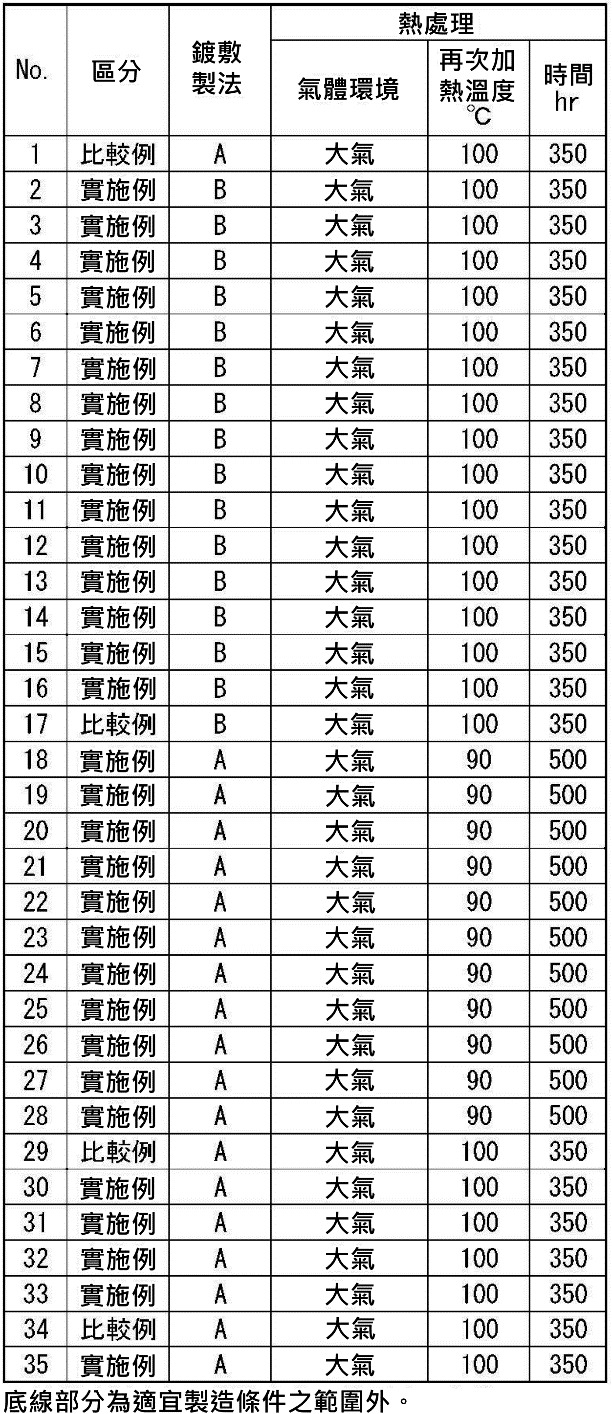
[表1A-2]
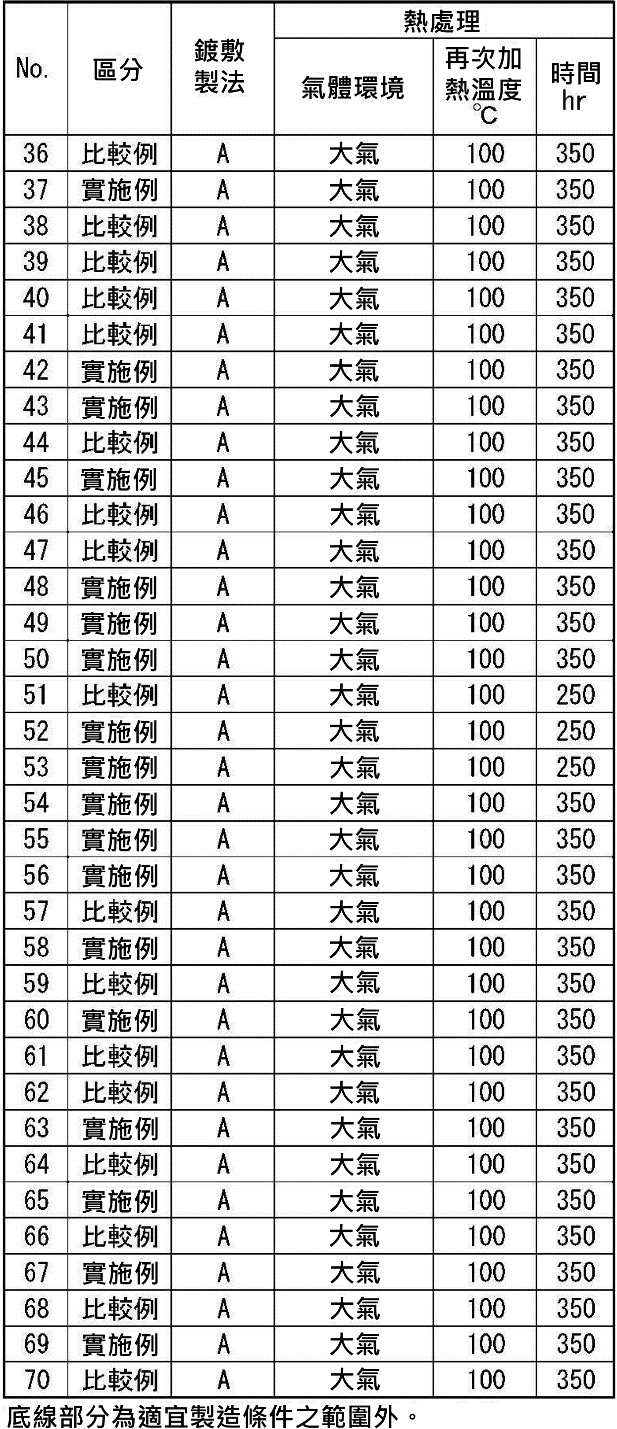
[表1B-1]
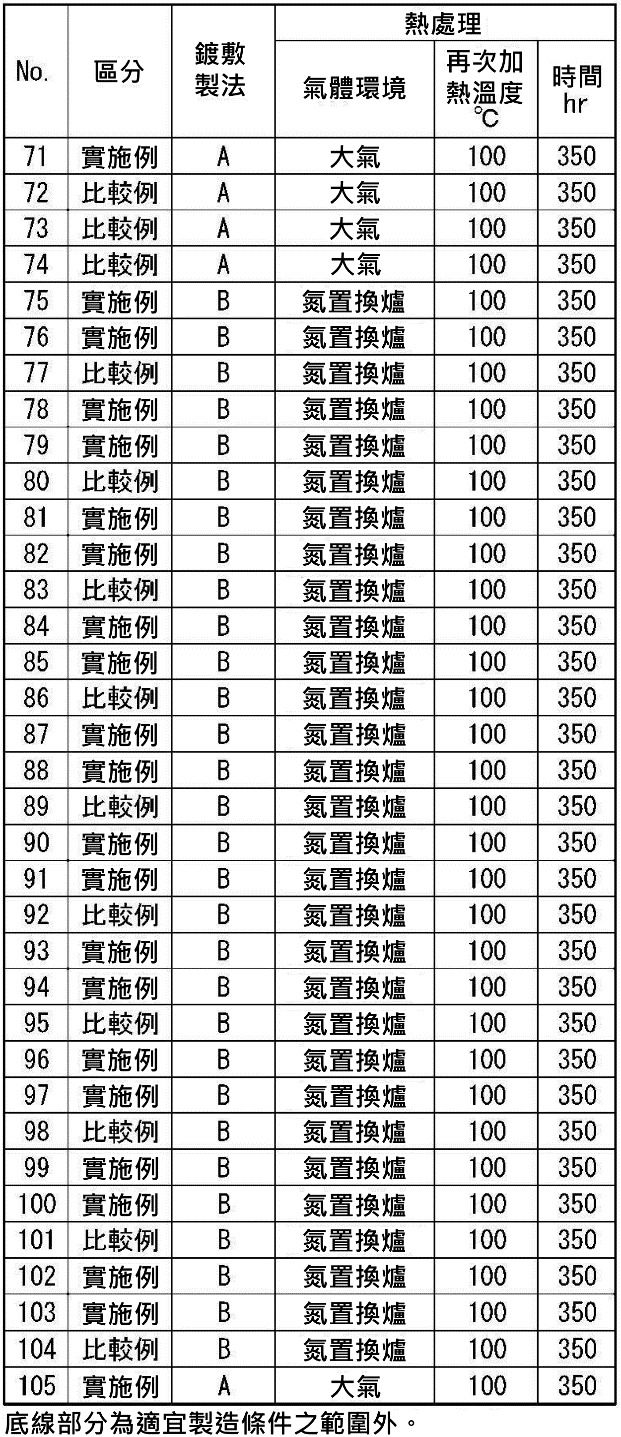
[表1B-2]
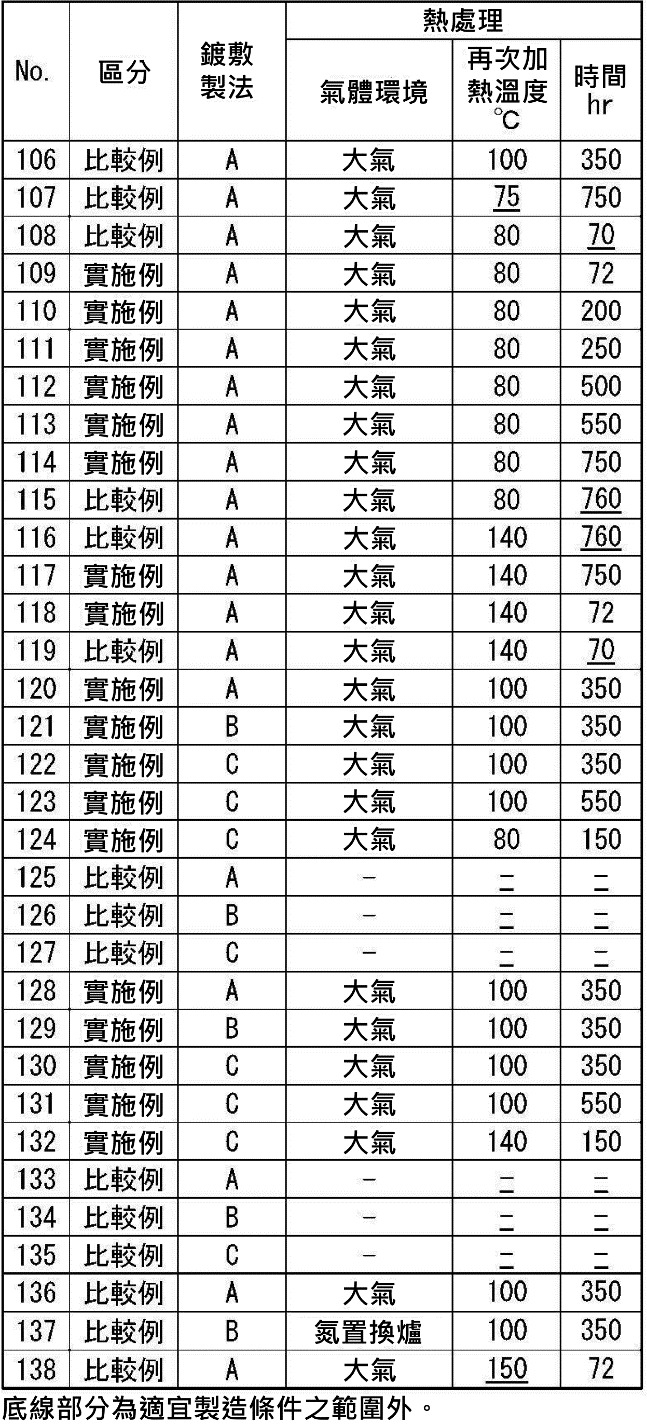
[表2A-1]
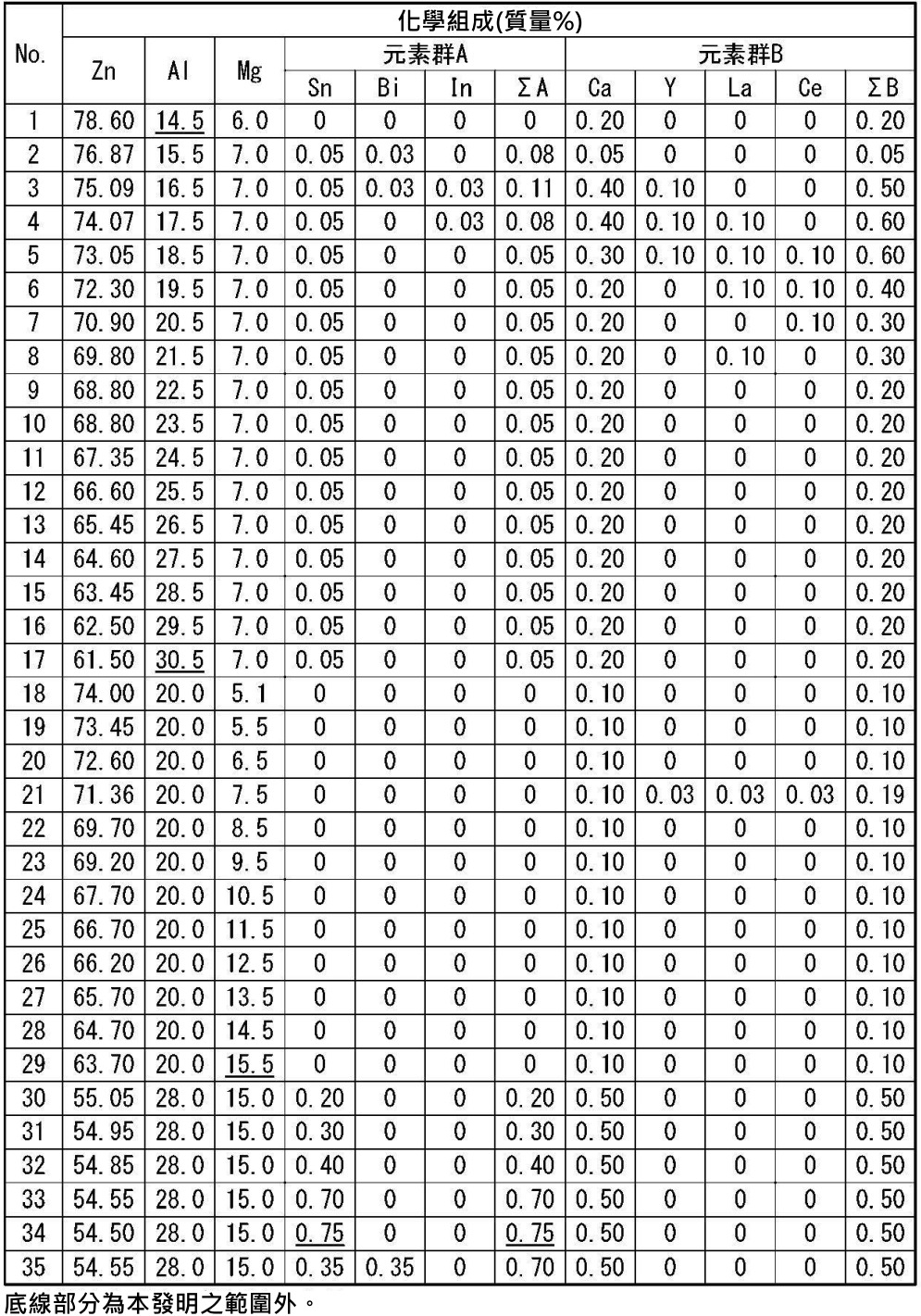
[表2A-2]
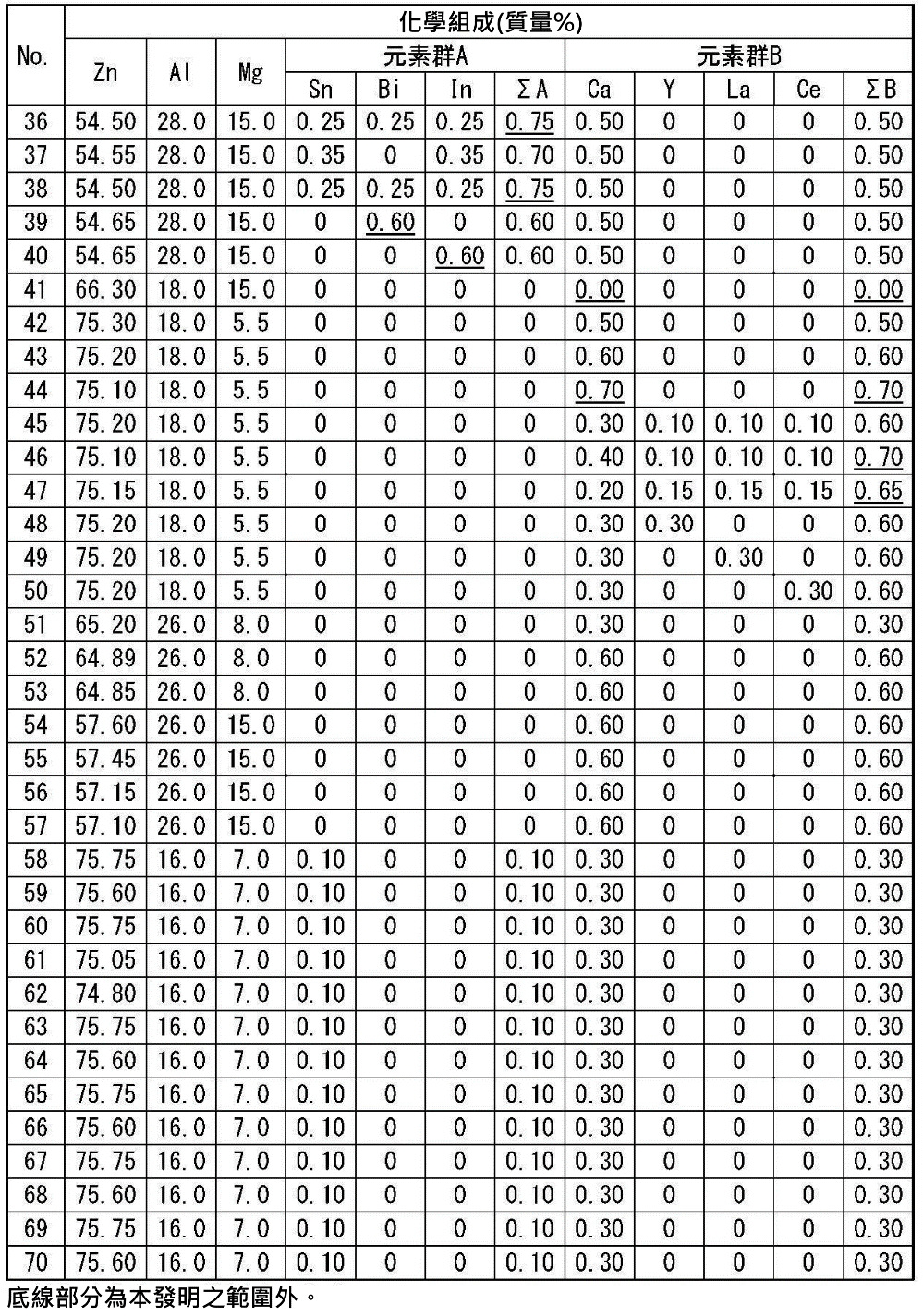
[表2B-1]
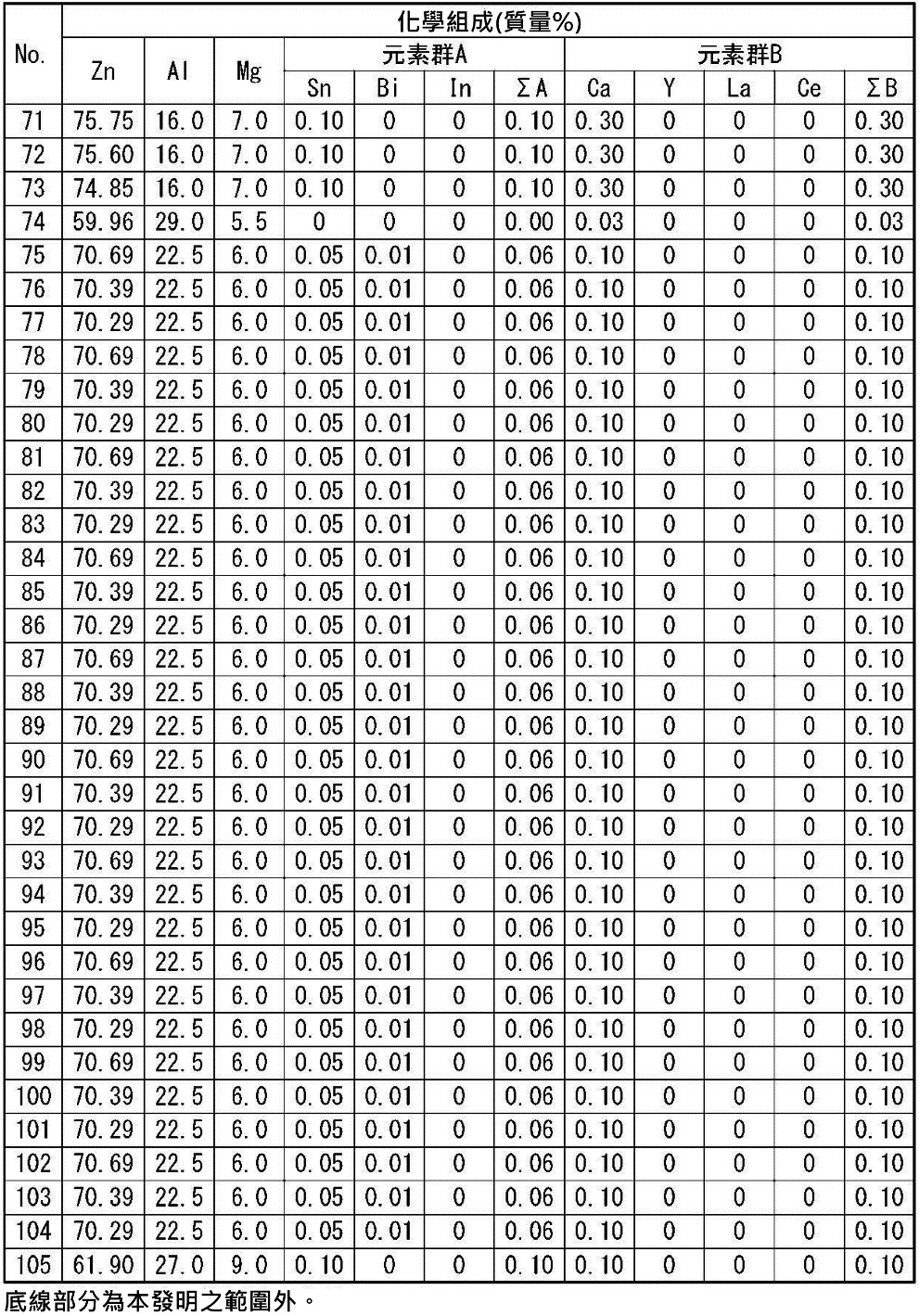
[表2B-2]

[表3A-1]
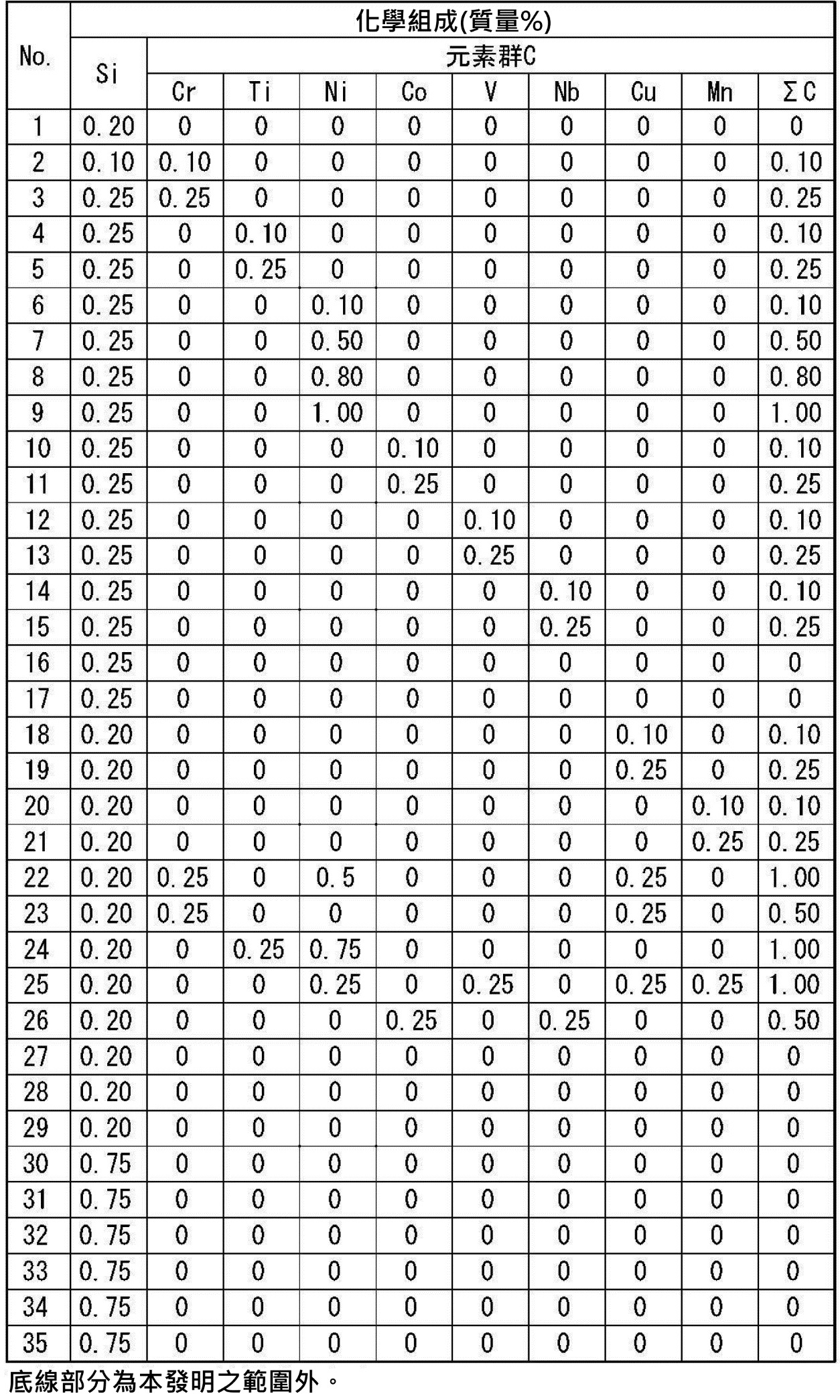
[表3A-2]

[表3B-1]
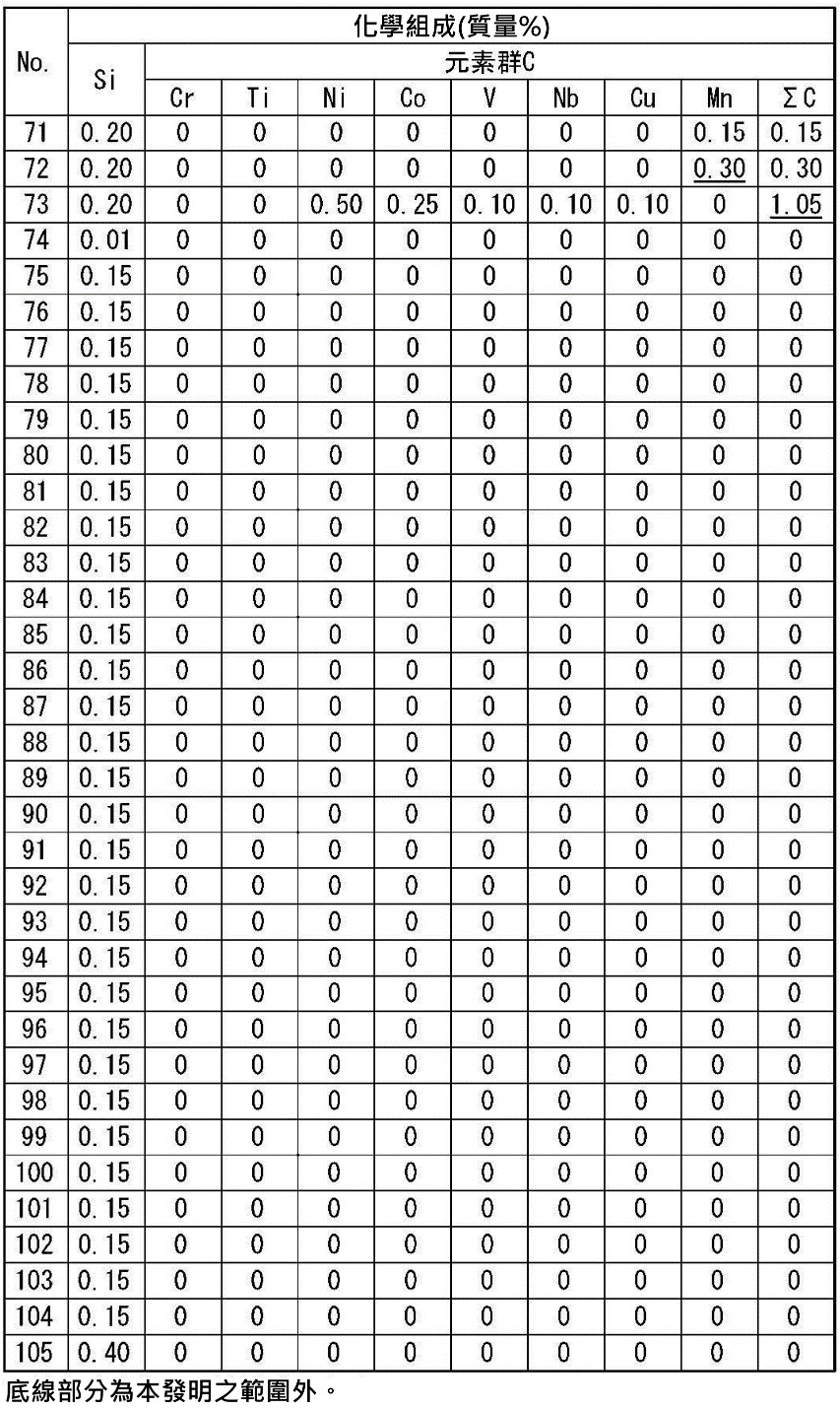
[表3B-2]
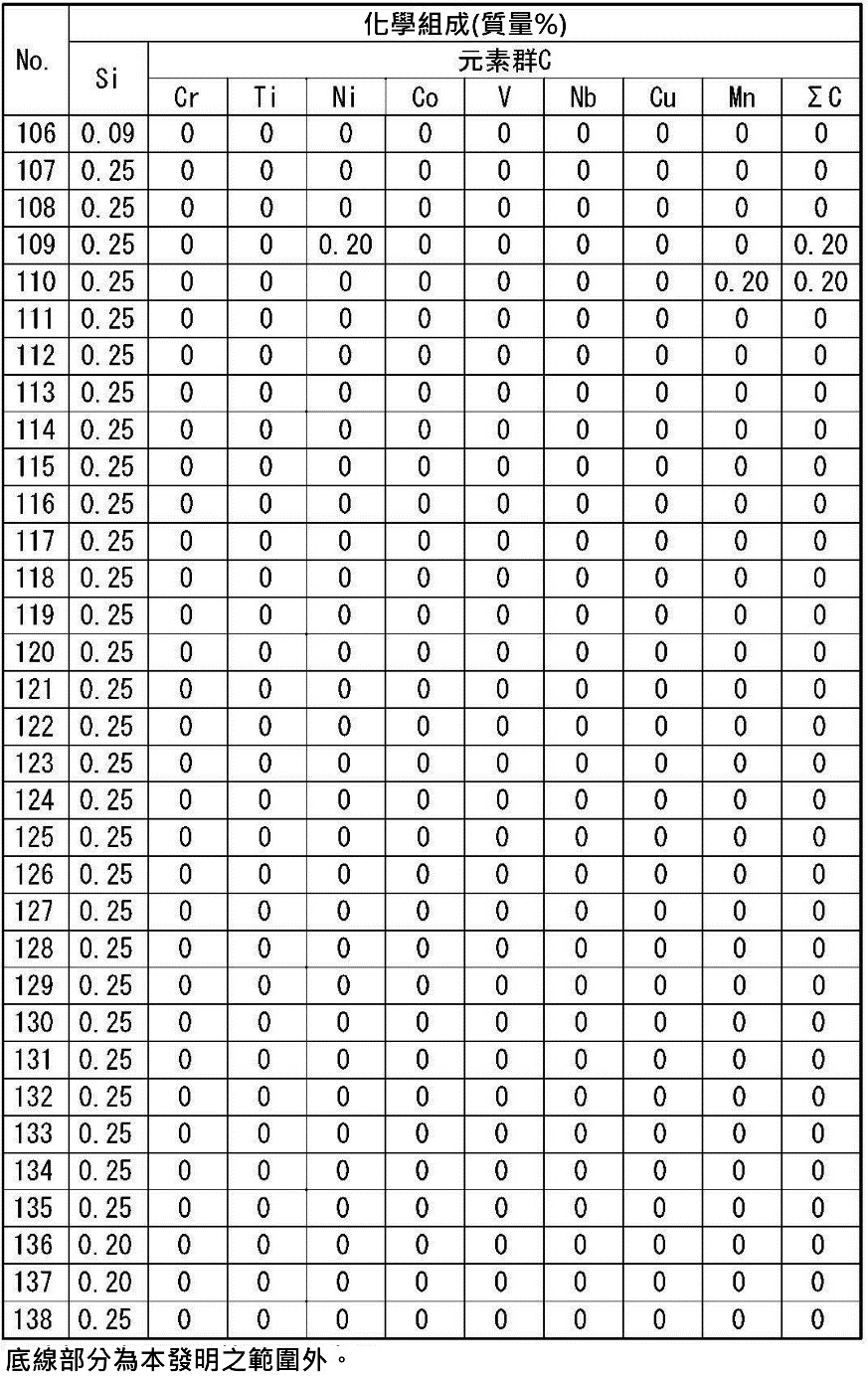
[表4A-1]
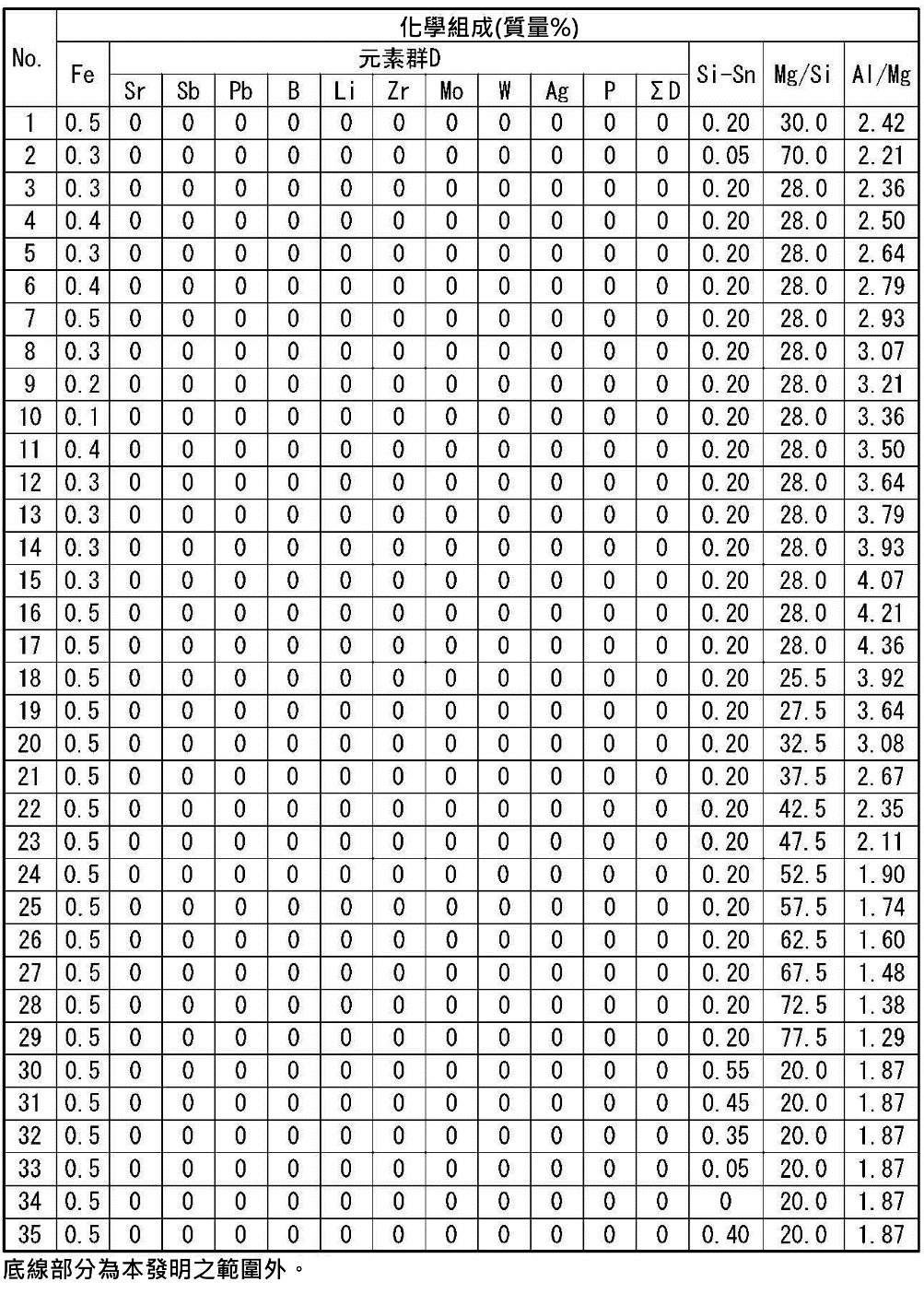
[表4A-2]

[表4B-1]
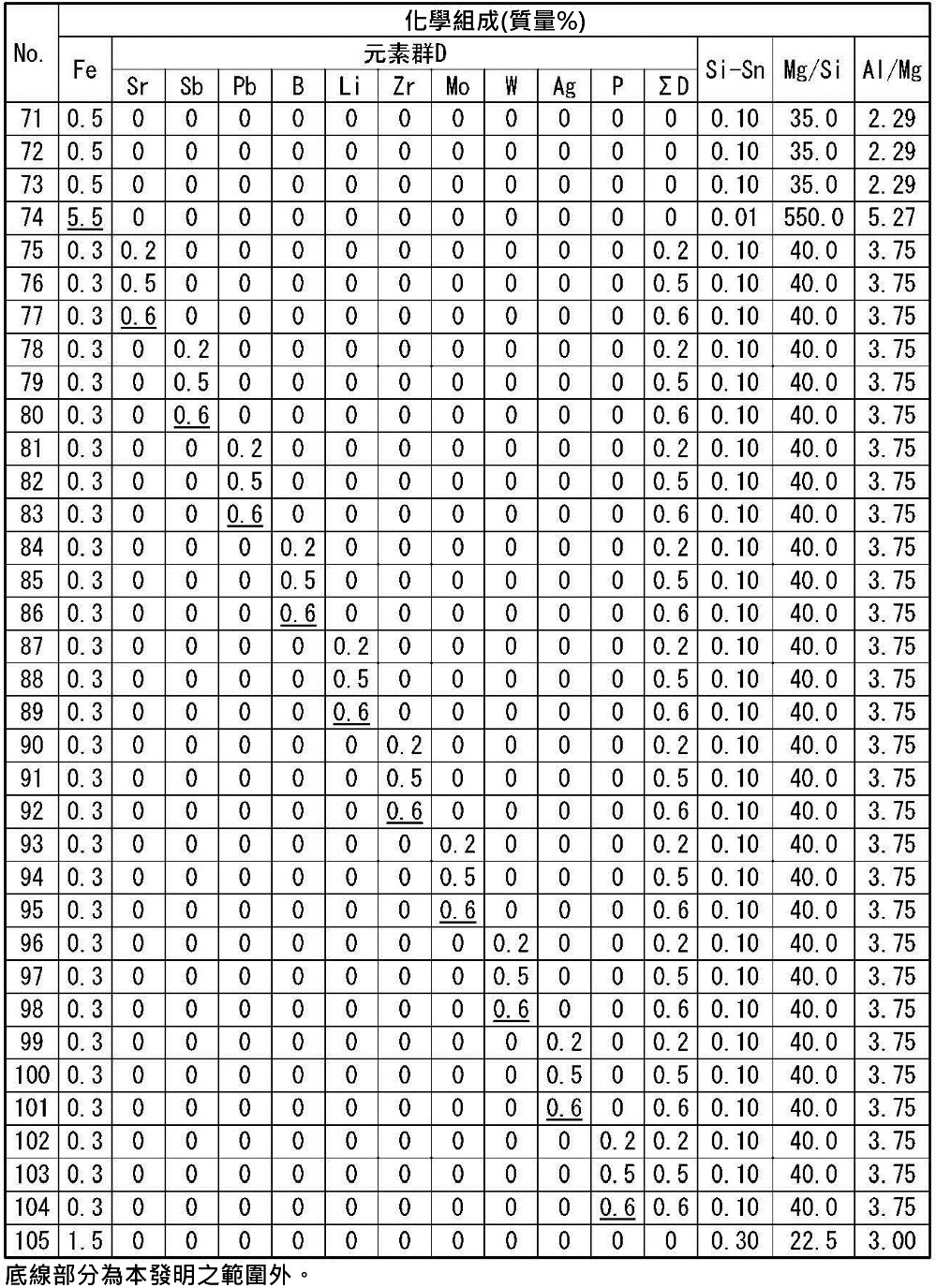
[表4B-2]
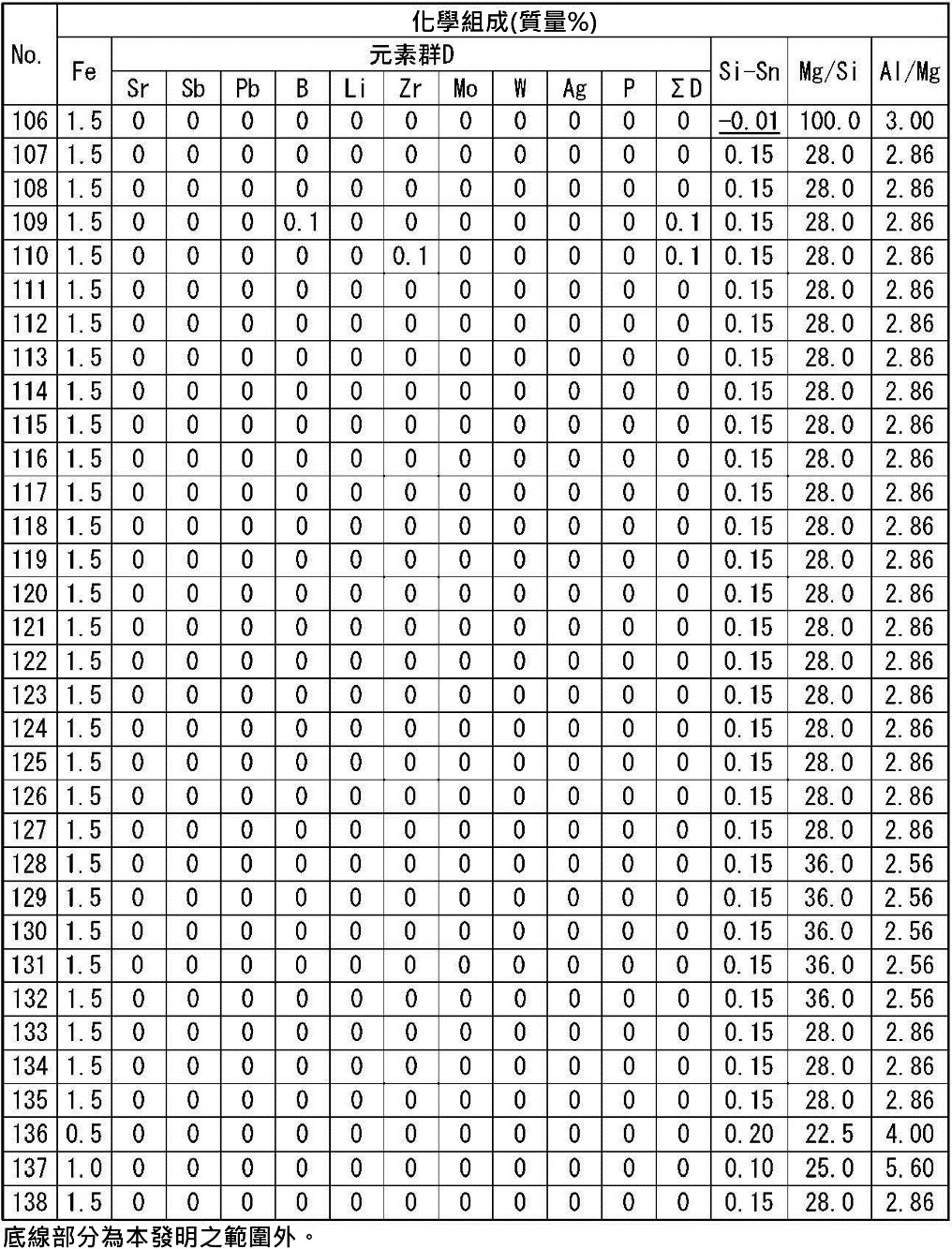
[表5A-1]

[表5A-2]
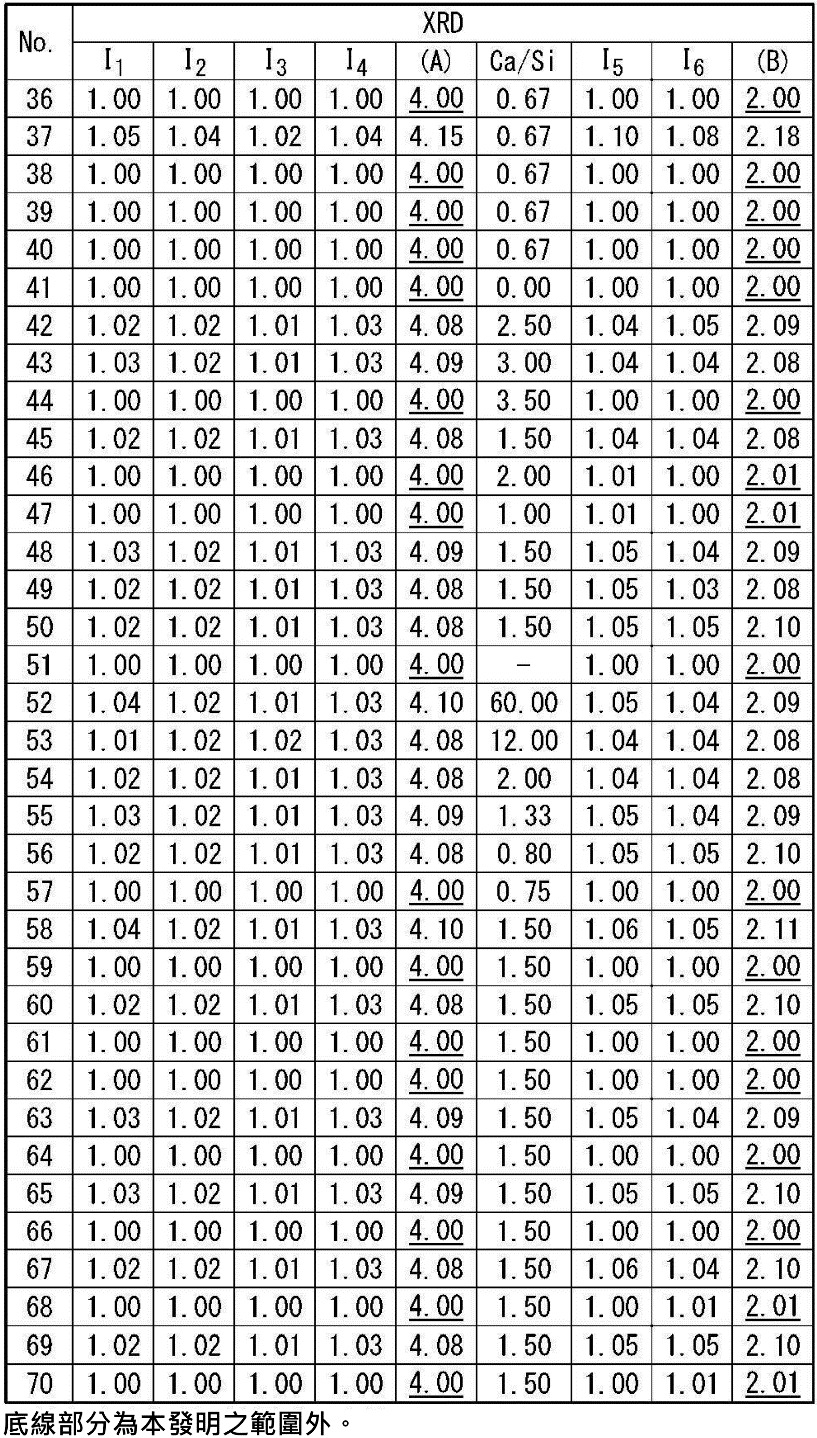
[表5B-1]
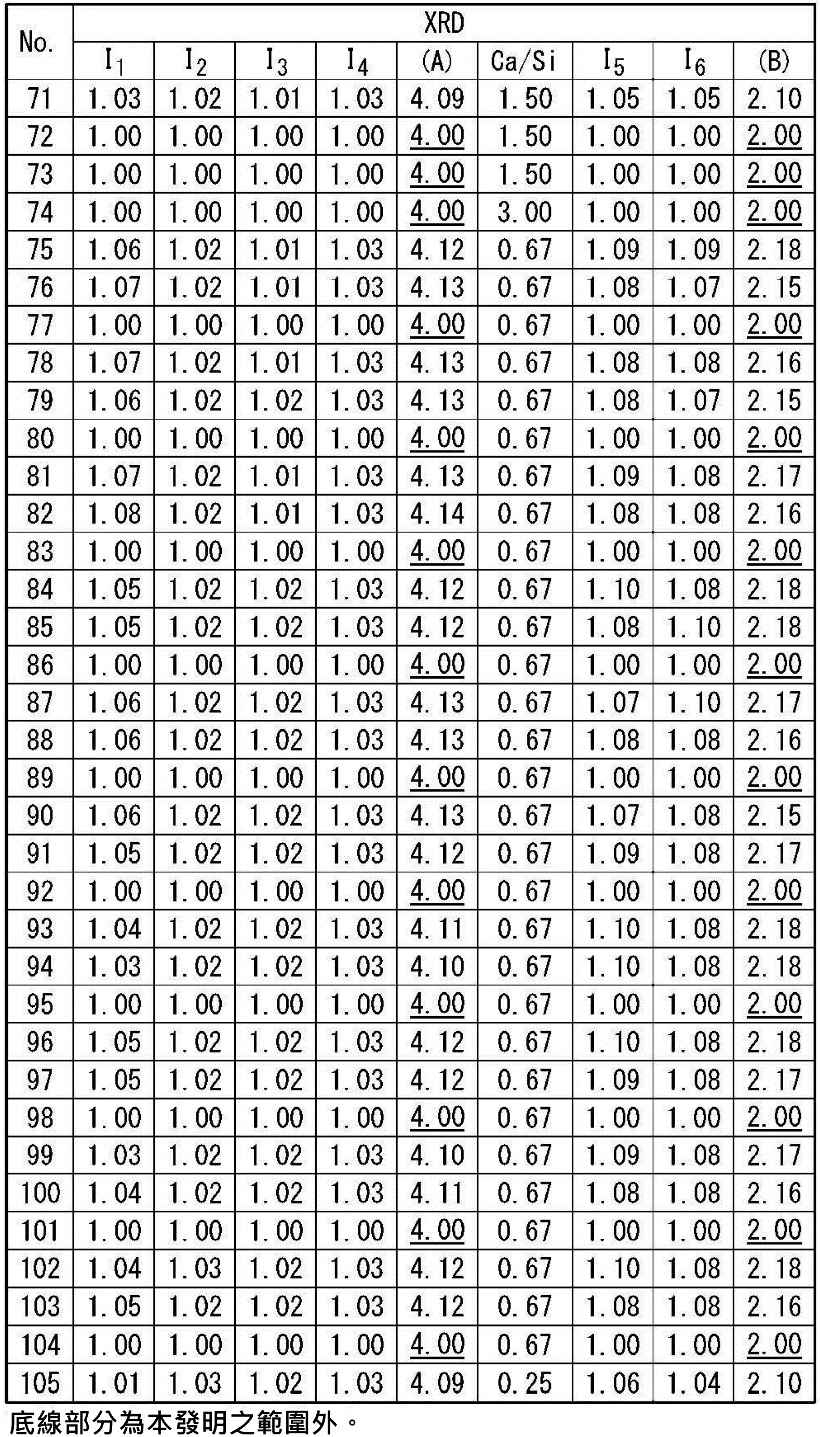
[表5B-2]
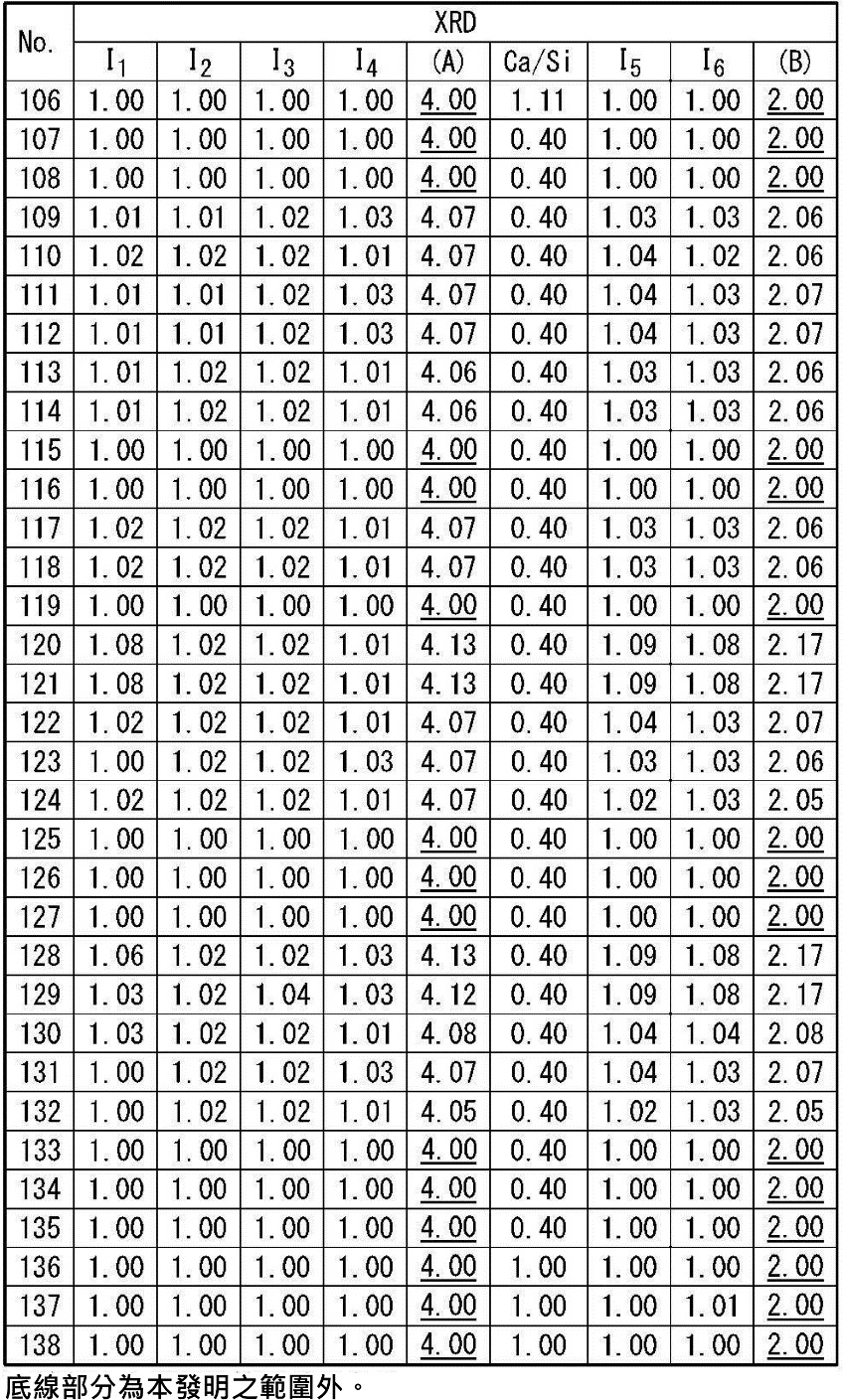
[表6A-1]
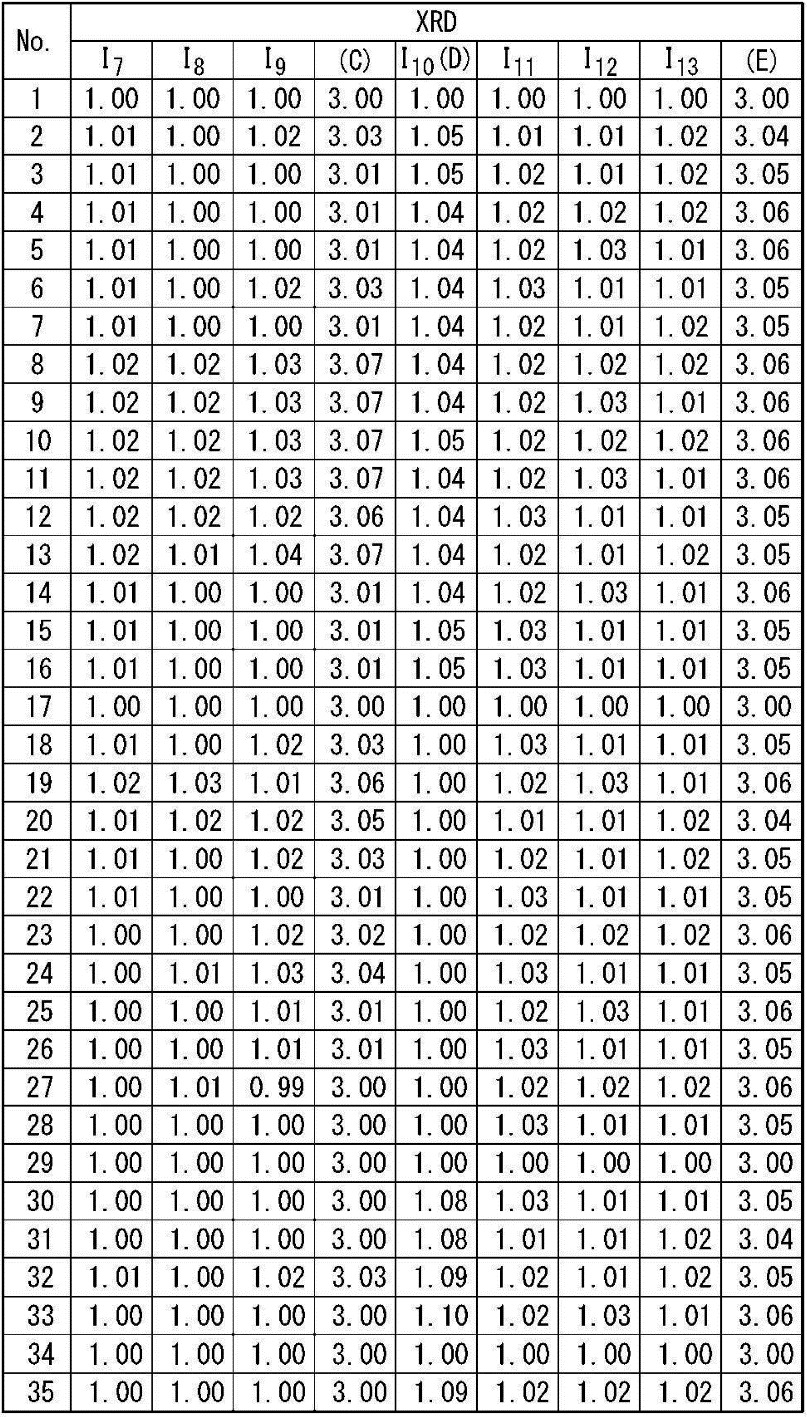
[表6A-2]
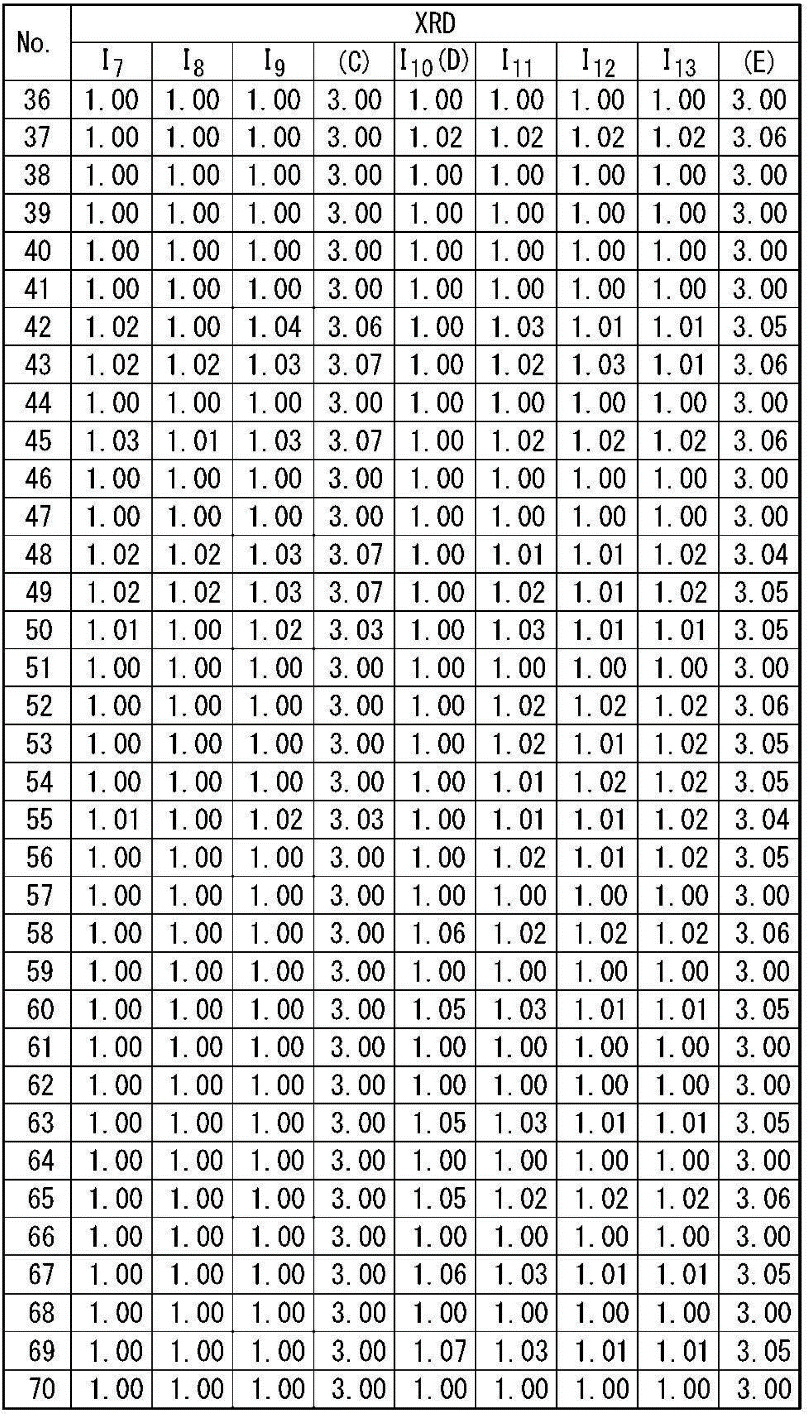
[表6B-1]
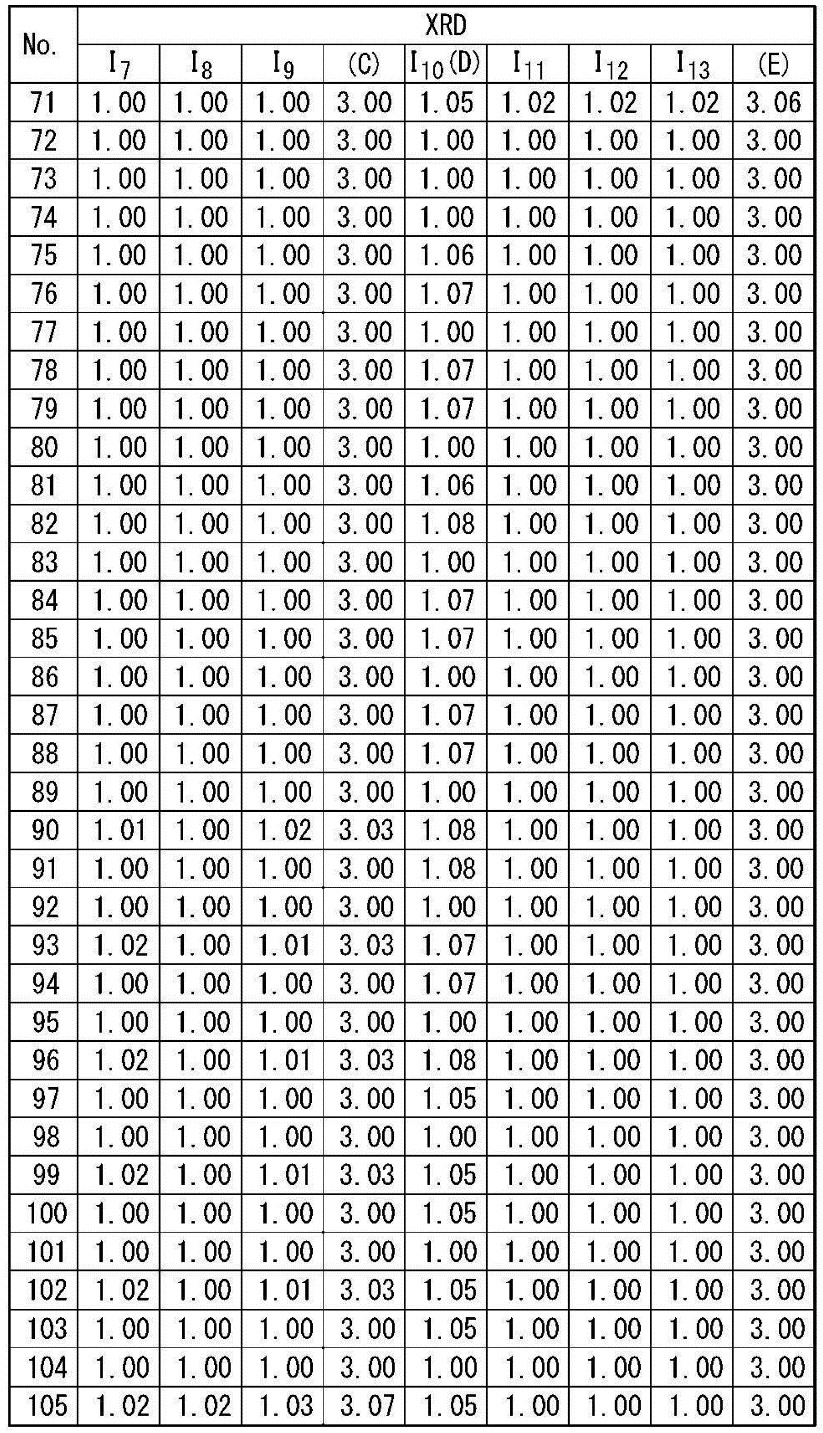
[表6B-2]
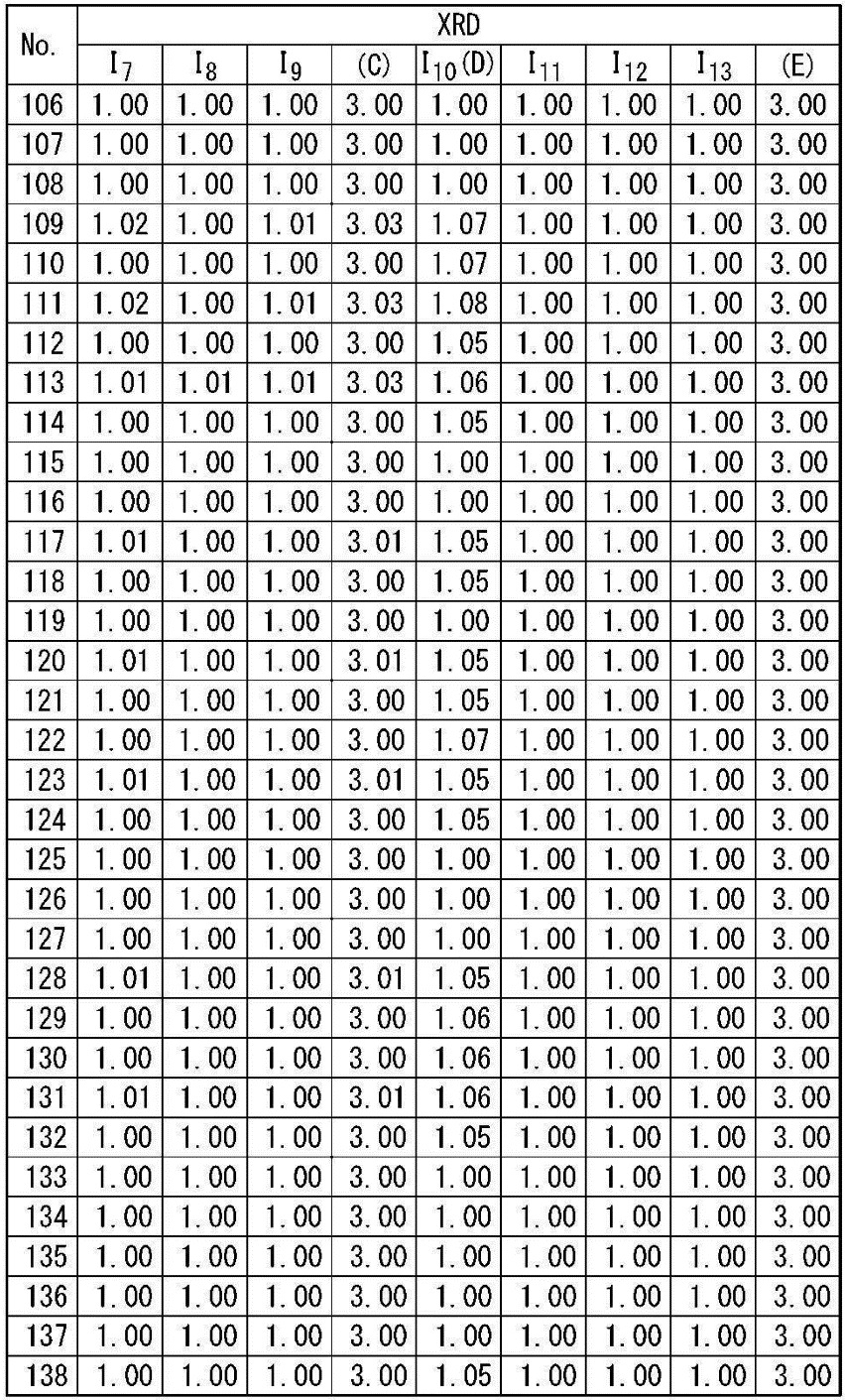
[表7A-1]
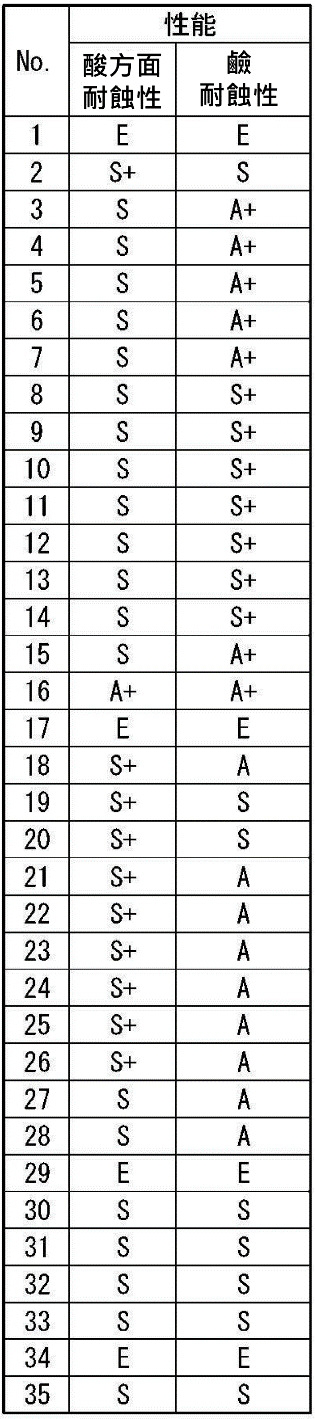
[表7A-2]
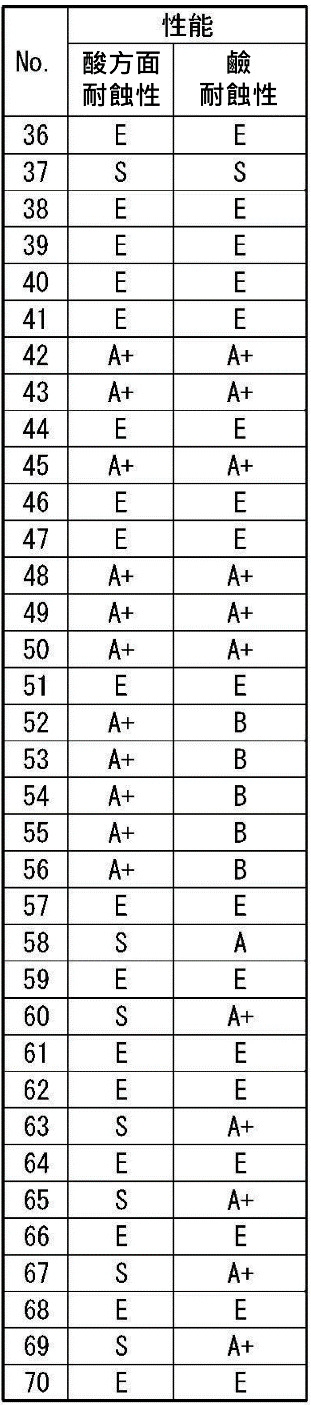
[表7B-1]
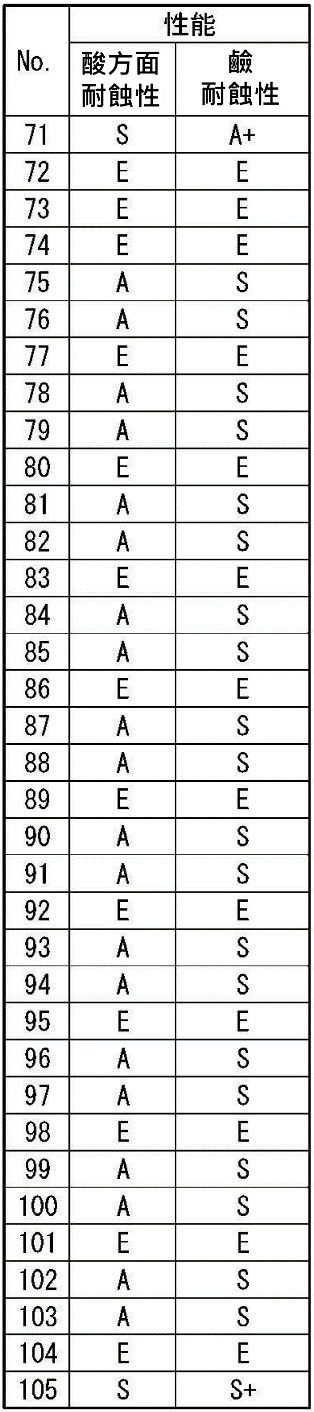
[表7B-2]
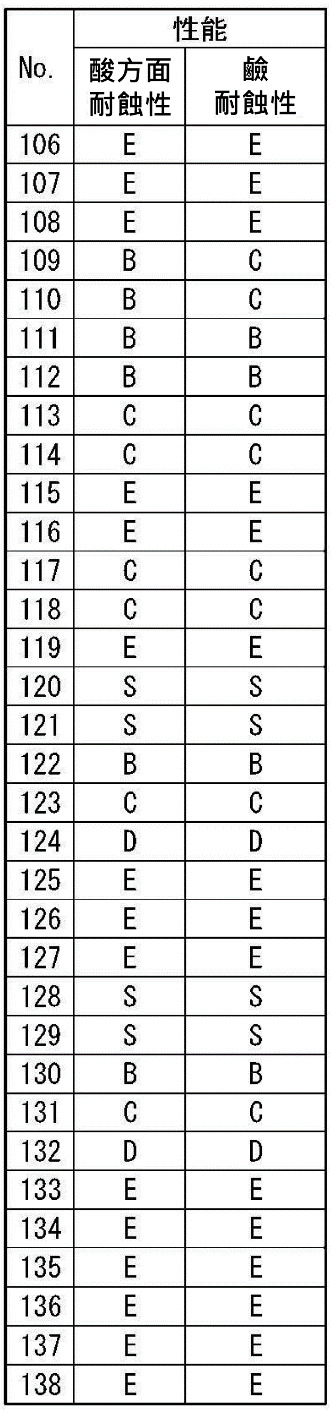
(無)(none)
圖1是用以說明式(1)的示意圖。FIG. 1 is a schematic diagram for explaining formula (1).
(無)(none)
Claims (7)
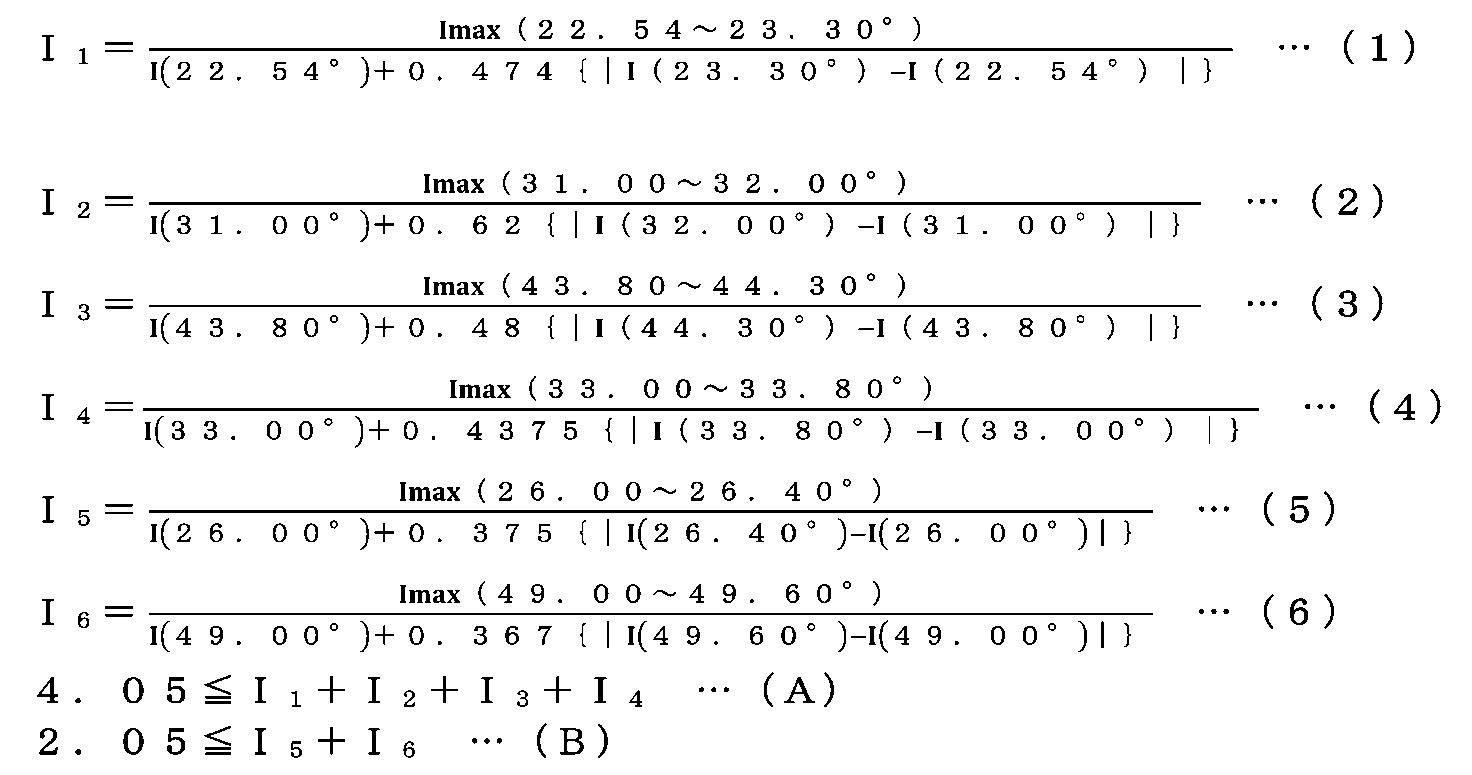
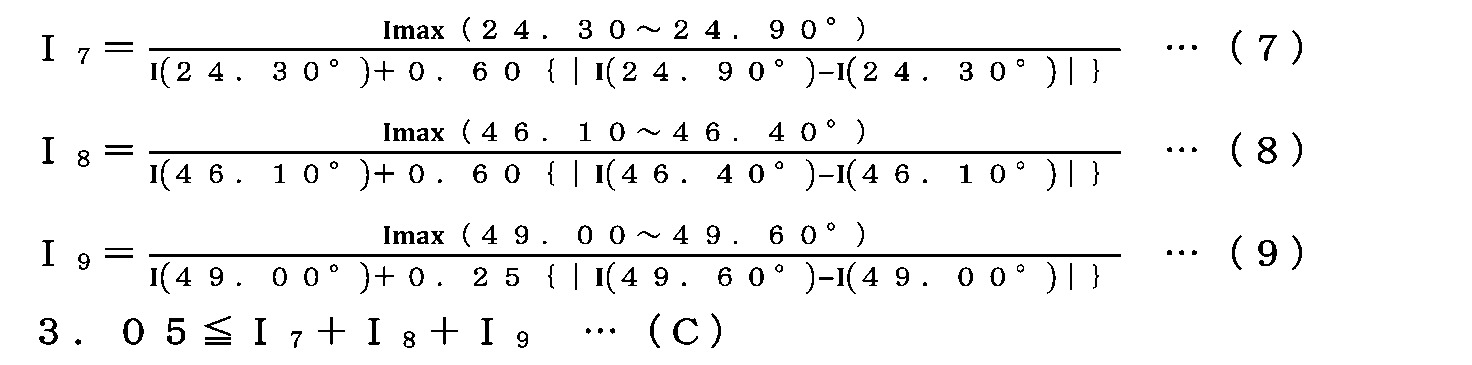


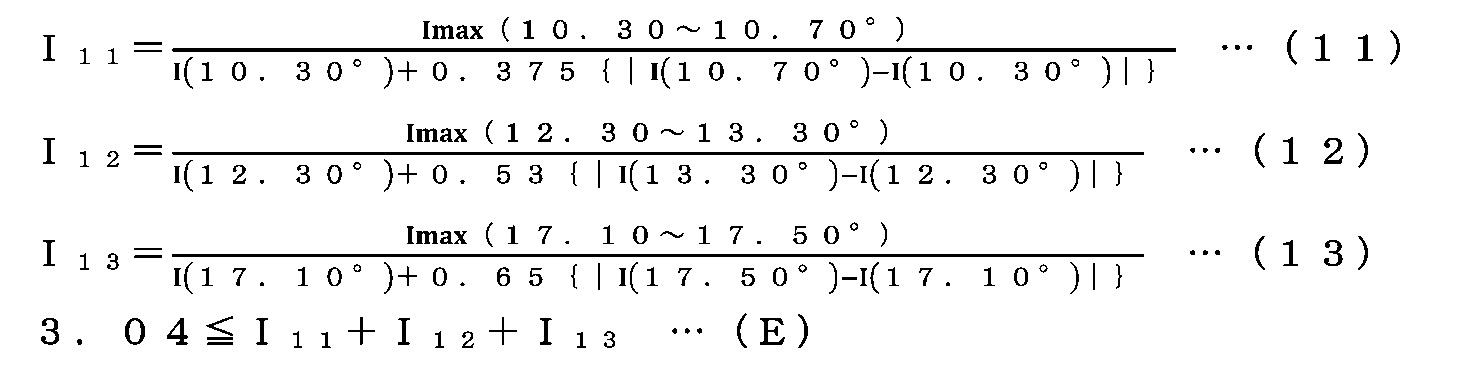
Applications Claiming Priority (2)
| Application Number | Priority Date | Filing Date | Title |
|---|---|---|---|
| JP2021174676 | 2021-10-26 | ||
| JP2021-174676 | 2021-10-26 |
Publications (2)
| Publication Number | Publication Date |
|---|---|
| TW202317786A TW202317786A (en) | 2023-05-01 |
| TWI802491B true TWI802491B (en) | 2023-05-11 |
Family
ID=86159329
Family Applications (1)
| Application Number | Title | Priority Date | Filing Date |
|---|---|---|---|
| TW111131499A TWI802491B (en) | 2021-10-26 | 2022-08-22 | Galvanized Steel |
Country Status (14)
| Country | Link |
|---|---|
| US (1) | US12180564B2 (en) |
| EP (1) | EP4424865A4 (en) |
| JP (1) | JP7328611B1 (en) |
| KR (1) | KR102757957B1 (en) |
| CN (1) | CN118140005B (en) |
| AU (1) | AU2022377493A1 (en) |
| CL (1) | CL2024001088A1 (en) |
| CO (1) | CO2024005685A2 (en) |
| JO (1) | JOP20240099A1 (en) |
| MX (1) | MX2024004091A (en) |
| PE (1) | PE20241421A1 (en) |
| TW (1) | TWI802491B (en) |
| WO (1) | WO2023074088A1 (en) |
| ZA (1) | ZA202403938B (en) |
Families Citing this family (2)
| Publication number | Priority date | Publication date | Assignee | Title |
|---|---|---|---|---|
| WO2025079391A1 (en) * | 2023-10-12 | 2025-04-17 | 日本製鉄株式会社 | Plated steel sheet |
| WO2025258684A1 (en) * | 2024-06-14 | 2025-12-18 | 日本製鉄株式会社 | Zn-Al-Mg HOT-DIP PLATED STEEL MATERIAL |
Citations (4)
| Publication number | Priority date | Publication date | Assignee | Title |
|---|---|---|---|---|
| EP2455509A1 (en) * | 2009-05-29 | 2012-05-23 | JFE Steel Corporation | Hot-dip al-zn plated steel sheet |
| CN102560312A (en) * | 2010-12-16 | 2012-07-11 | 贵州华科铝材料工程技术研究有限公司 | Seven-combination modified low-zinc aluminum alloy plating material for hot-dip plating and preparation method thereof |
| US20200002798A1 (en) * | 2017-01-27 | 2020-01-02 | Nippon Steel Corporation | Metallic coated steel product |
| JP6787002B2 (en) * | 2015-09-29 | 2020-11-18 | 日本製鉄株式会社 | Al-Mg hot-dip galvanized steel |
Family Cites Families (14)
| Publication number | Priority date | Publication date | Assignee | Title |
|---|---|---|---|---|
| KR100324893B1 (en) | 1996-12-13 | 2002-08-21 | 닛신 세이코 가부시키가이샤 | HOT-DIP Zn-Al-Mg COATED STEEL SHEET EXCELLENT IN CORROSION RESISTANCE AND SURFACE APPEARANCE AND PROCESS FOR THE PRODUCTION THEREOF |
| JP3179401B2 (en) | 1996-12-13 | 2001-06-25 | 日新製鋼株式会社 | Hot-dip Zn-Al-Mg plated steel sheet with good corrosion resistance and surface appearance and method for producing the same |
| US6465114B1 (en) | 1999-05-24 | 2002-10-15 | Nippon Steel Corporation | -Zn coated steel material, ZN coated steel sheet and painted steel sheet excellent in corrosion resistance, and method of producing the same |
| KR20120112450A (en) * | 2010-02-18 | 2012-10-11 | 신닛뽄세이테쯔 카부시키카이샤 | Hot-dipped steel and method of producing same |
| JP5962615B2 (en) * | 2012-08-13 | 2016-08-03 | Jfeスチール株式会社 | Method for measuring the degree of alloying of galvannealed steel sheets |
| PL3575433T3 (en) * | 2017-01-27 | 2024-05-06 | Nippon Steel Corporation | Coated steel product |
| AU2018297757B2 (en) * | 2017-07-05 | 2021-02-25 | Jfe Steel Corporation | STEEL SHEET HAVING A HOT-DIP Zn-Al-Mg-BASED COATING FILM EXCELLENT IN TERMS OF SURFACE APPEARANCE AND METHOD FOR MANUFACTURING THE SAME |
| EP3957764A4 (en) * | 2019-04-19 | 2022-08-24 | Nippon Steel Corporation | GALVANIZED STEEL PLATE |
| EP3957763A4 (en) * | 2019-04-19 | 2022-08-24 | Nippon Steel Corporation | PLATED STEEL MATERIAL |
| JP7315826B2 (en) * | 2019-06-27 | 2023-07-27 | 日本製鉄株式会社 | Plated steel and method for producing plated steel |
| KR102384674B1 (en) * | 2019-09-24 | 2022-04-11 | 주식회사 포스코 | Plated steel sheet having excellent corrosion resistance, galling resistance, workability and surface property and method for manufacturing the same |
| JP7229197B2 (en) | 2020-04-24 | 2023-02-27 | Jx金属株式会社 | Lithium recovery method |
| MX2023002381A (en) * | 2020-10-16 | 2023-03-21 | Nippon Steel Corp | Hot-dip zn plated steel sheet. |
| MX2023014806A (en) * | 2021-07-09 | 2024-01-15 | Nippon Steel Corp | Plated steel material. |
-
2022
- 2022-08-16 EP EP22886422.9A patent/EP4424865A4/en active Pending
- 2022-08-16 KR KR1020247016422A patent/KR102757957B1/en active Active
- 2022-08-16 CN CN202280070881.7A patent/CN118140005B/en active Active
- 2022-08-16 US US18/703,998 patent/US12180564B2/en active Active
- 2022-08-16 MX MX2024004091A patent/MX2024004091A/en unknown
- 2022-08-16 WO PCT/JP2022/030932 patent/WO2023074088A1/en not_active Ceased
- 2022-08-16 PE PE2024000723A patent/PE20241421A1/en unknown
- 2022-08-16 JP JP2023537330A patent/JP7328611B1/en active Active
- 2022-08-16 AU AU2022377493A patent/AU2022377493A1/en active Pending
- 2022-08-22 TW TW111131499A patent/TWI802491B/en active
-
2024
- 2024-04-11 CL CL2024001088A patent/CL2024001088A1/en unknown
- 2024-04-25 JO JOJO/P/2024/0099A patent/JOP20240099A1/en unknown
- 2024-04-30 CO CONC2024/0005685A patent/CO2024005685A2/en unknown
- 2024-05-21 ZA ZA2024/03938A patent/ZA202403938B/en unknown
Patent Citations (4)
| Publication number | Priority date | Publication date | Assignee | Title |
|---|---|---|---|---|
| EP2455509A1 (en) * | 2009-05-29 | 2012-05-23 | JFE Steel Corporation | Hot-dip al-zn plated steel sheet |
| CN102560312A (en) * | 2010-12-16 | 2012-07-11 | 贵州华科铝材料工程技术研究有限公司 | Seven-combination modified low-zinc aluminum alloy plating material for hot-dip plating and preparation method thereof |
| JP6787002B2 (en) * | 2015-09-29 | 2020-11-18 | 日本製鉄株式会社 | Al-Mg hot-dip galvanized steel |
| US20200002798A1 (en) * | 2017-01-27 | 2020-01-02 | Nippon Steel Corporation | Metallic coated steel product |
Also Published As
| Publication number | Publication date |
|---|---|
| PE20241421A1 (en) | 2024-07-11 |
| KR20240093763A (en) | 2024-06-24 |
| JOP20240099A1 (en) | 2024-04-25 |
| JPWO2023074088A1 (en) | 2023-05-04 |
| CL2024001088A1 (en) | 2024-08-02 |
| CN118140005A (en) | 2024-06-04 |
| US12180564B2 (en) | 2024-12-31 |
| WO2023074088A1 (en) | 2023-05-04 |
| CN118140005B (en) | 2024-12-27 |
| CO2024005685A2 (en) | 2024-08-08 |
| US20240336996A1 (en) | 2024-10-10 |
| TW202317786A (en) | 2023-05-01 |
| MX2024004091A (en) | 2024-04-19 |
| EP4424865A1 (en) | 2024-09-04 |
| ZA202403938B (en) | 2025-02-26 |
| JP7328611B1 (en) | 2023-08-17 |
| KR102757957B1 (en) | 2025-01-22 |
| EP4424865A4 (en) | 2025-01-29 |
| AU2022377493A1 (en) | 2024-05-30 |
| CA3235741A1 (en) | 2023-05-04 |
Similar Documents
| Publication | Publication Date | Title |
|---|---|---|
| AU2021418839B2 (en) | Plated steel material | |
| JP7674695B2 (en) | Plated Steel | |
| TWI802491B (en) | Galvanized Steel | |
| TWI826270B (en) | hot-dip steel plate | |
| TW202436644A (en) | Coated Steel | |
| CA3235741C (en) | Plated steel sheet | |
| TWI889485B (en) | Coated Steel | |
| TWI844276B (en) | Melt-plated steel | |
| TWI919932B (en) | Zn-Al-Mg based melt-coated steel | |
| TW202605171A (en) | Zn-Al-Mg based melt-coated steel | |
| CN120641597A (en) | Plated steel sheets and automotive components |