US10126010B2 - Controlling system for environmental comfort degree and controlling method of the controlling system - Google Patents
Controlling system for environmental comfort degree and controlling method of the controlling system Download PDFInfo
- Publication number
- US10126010B2 US10126010B2 US14/936,085 US201514936085A US10126010B2 US 10126010 B2 US10126010 B2 US 10126010B2 US 201514936085 A US201514936085 A US 201514936085A US 10126010 B2 US10126010 B2 US 10126010B2
- Authority
- US
- United States
- Prior art keywords
- target
- adjustment value
- comfort
- indoor
- controlling
- Prior art date
- Legal status (The legal status is an assumption and is not a legal conclusion. Google has not performed a legal analysis and makes no representation as to the accuracy of the status listed.)
- Active, expires
Links
- 238000000034 method Methods 0.000 title claims abstract description 94
- 230000007613 environmental effect Effects 0.000 title claims description 6
- 238000004364 calculation method Methods 0.000 claims abstract description 46
- CURLTUGMZLYLDI-UHFFFAOYSA-N Carbon dioxide Chemical compound O=C=O CURLTUGMZLYLDI-UHFFFAOYSA-N 0.000 claims description 16
- 229910002092 carbon dioxide Inorganic materials 0.000 claims description 8
- 239000001569 carbon dioxide Substances 0.000 claims description 8
- 238000012544 monitoring process Methods 0.000 claims description 6
- FGUUSXIOTUKUDN-IBGZPJMESA-N C1(=CC=CC=C1)N1C2=C(NC([C@H](C1)NC=1OC(=NN=1)C1=CC=CC=C1)=O)C=CC=C2 Chemical compound C1(=CC=CC=C1)N1C2=C(NC([C@H](C1)NC=1OC(=NN=1)C1=CC=CC=C1)=O)C=CC=C2 FGUUSXIOTUKUDN-IBGZPJMESA-N 0.000 claims 3
- YTAHJIFKAKIKAV-XNMGPUDCSA-N [(1R)-3-morpholin-4-yl-1-phenylpropyl] N-[(3S)-2-oxo-5-phenyl-1,3-dihydro-1,4-benzodiazepin-3-yl]carbamate Chemical compound O=C1[C@H](N=C(C2=C(N1)C=CC=C2)C1=CC=CC=C1)NC(O[C@H](CCN1CCOCC1)C1=CC=CC=C1)=O YTAHJIFKAKIKAV-XNMGPUDCSA-N 0.000 claims 1
- 230000003213 activating effect Effects 0.000 claims 1
- 230000001131 transforming effect Effects 0.000 claims 1
- 230000000694 effects Effects 0.000 description 4
- 230000007423 decrease Effects 0.000 description 3
- 230000004048 modification Effects 0.000 description 3
- 238000012986 modification Methods 0.000 description 3
- 230000002730 additional effect Effects 0.000 description 2
- 230000008859 change Effects 0.000 description 2
- 230000003247 decreasing effect Effects 0.000 description 2
- 230000009471 action Effects 0.000 description 1
- 230000006870 function Effects 0.000 description 1
- 235000021268 hot food Nutrition 0.000 description 1
- 230000008569 process Effects 0.000 description 1
Images



Classifications
-
- F—MECHANICAL ENGINEERING; LIGHTING; HEATING; WEAPONS; BLASTING
- F24—HEATING; RANGES; VENTILATING
- F24F—AIR-CONDITIONING; AIR-HUMIDIFICATION; VENTILATION; USE OF AIR CURRENTS FOR SCREENING
- F24F11/00—Control or safety arrangements
- F24F11/30—Control or safety arrangements for purposes related to the operation of the system, e.g. for safety or monitoring
-
- F—MECHANICAL ENGINEERING; LIGHTING; HEATING; WEAPONS; BLASTING
- F24—HEATING; RANGES; VENTILATING
- F24F—AIR-CONDITIONING; AIR-HUMIDIFICATION; VENTILATION; USE OF AIR CURRENTS FOR SCREENING
- F24F11/00—Control or safety arrangements
- F24F11/50—Control or safety arrangements characterised by user interfaces or communication
- F24F11/52—Indication arrangements, e.g. displays
- F24F11/523—Indication arrangements, e.g. displays for displaying temperature data
-
- F—MECHANICAL ENGINEERING; LIGHTING; HEATING; WEAPONS; BLASTING
- F24—HEATING; RANGES; VENTILATING
- F24F—AIR-CONDITIONING; AIR-HUMIDIFICATION; VENTILATION; USE OF AIR CURRENTS FOR SCREENING
- F24F11/00—Control or safety arrangements
- F24F11/62—Control or safety arrangements characterised by the type of control or by internal processing, e.g. using fuzzy logic, adaptive control or estimation of values
-
- F—MECHANICAL ENGINEERING; LIGHTING; HEATING; WEAPONS; BLASTING
- F24—HEATING; RANGES; VENTILATING
- F24F—AIR-CONDITIONING; AIR-HUMIDIFICATION; VENTILATION; USE OF AIR CURRENTS FOR SCREENING
- F24F11/00—Control or safety arrangements
- F24F11/62—Control or safety arrangements characterised by the type of control or by internal processing, e.g. using fuzzy logic, adaptive control or estimation of values
- F24F11/63—Electronic processing
-
- F—MECHANICAL ENGINEERING; LIGHTING; HEATING; WEAPONS; BLASTING
- F24—HEATING; RANGES; VENTILATING
- F24F—AIR-CONDITIONING; AIR-HUMIDIFICATION; VENTILATION; USE OF AIR CURRENTS FOR SCREENING
- F24F11/00—Control or safety arrangements
- F24F11/62—Control or safety arrangements characterised by the type of control or by internal processing, e.g. using fuzzy logic, adaptive control or estimation of values
- F24F11/63—Electronic processing
- F24F11/65—Electronic processing for selecting an operating mode
-
- G—PHYSICS
- G05—CONTROLLING; REGULATING
- G05B—CONTROL OR REGULATING SYSTEMS IN GENERAL; FUNCTIONAL ELEMENTS OF SUCH SYSTEMS; MONITORING OR TESTING ARRANGEMENTS FOR SUCH SYSTEMS OR ELEMENTS
- G05B13/00—Adaptive control systems, i.e. systems automatically adjusting themselves to have a performance which is optimum according to some preassigned criterion
- G05B13/02—Adaptive control systems, i.e. systems automatically adjusting themselves to have a performance which is optimum according to some preassigned criterion electric
- G05B13/0265—Adaptive control systems, i.e. systems automatically adjusting themselves to have a performance which is optimum according to some preassigned criterion electric the criterion being a learning criterion
-
- F—MECHANICAL ENGINEERING; LIGHTING; HEATING; WEAPONS; BLASTING
- F24—HEATING; RANGES; VENTILATING
- F24F—AIR-CONDITIONING; AIR-HUMIDIFICATION; VENTILATION; USE OF AIR CURRENTS FOR SCREENING
- F24F11/00—Control or safety arrangements
- F24F11/50—Control or safety arrangements characterised by user interfaces or communication
- F24F11/56—Remote control
- F24F11/58—Remote control using Internet communication
-
- F—MECHANICAL ENGINEERING; LIGHTING; HEATING; WEAPONS; BLASTING
- F24—HEATING; RANGES; VENTILATING
- F24F—AIR-CONDITIONING; AIR-HUMIDIFICATION; VENTILATION; USE OF AIR CURRENTS FOR SCREENING
- F24F2110/00—Control inputs relating to air properties
- F24F2110/50—Air quality properties
- F24F2110/65—Concentration of specific substances or contaminants
- F24F2110/70—Carbon dioxide
-
- F—MECHANICAL ENGINEERING; LIGHTING; HEATING; WEAPONS; BLASTING
- F24—HEATING; RANGES; VENTILATING
- F24F—AIR-CONDITIONING; AIR-HUMIDIFICATION; VENTILATION; USE OF AIR CURRENTS FOR SCREENING
- F24F2120/00—Control inputs relating to users or occupants
-
- F—MECHANICAL ENGINEERING; LIGHTING; HEATING; WEAPONS; BLASTING
- F24—HEATING; RANGES; VENTILATING
- F24F—AIR-CONDITIONING; AIR-HUMIDIFICATION; VENTILATION; USE OF AIR CURRENTS FOR SCREENING
- F24F2120/00—Control inputs relating to users or occupants
- F24F2120/10—Occupancy
-
- F—MECHANICAL ENGINEERING; LIGHTING; HEATING; WEAPONS; BLASTING
- F24—HEATING; RANGES; VENTILATING
- F24F—AIR-CONDITIONING; AIR-HUMIDIFICATION; VENTILATION; USE OF AIR CURRENTS FOR SCREENING
- F24F2120/00—Control inputs relating to users or occupants
- F24F2120/20—Feedback from users
-
- Y—GENERAL TAGGING OF NEW TECHNOLOGICAL DEVELOPMENTS; GENERAL TAGGING OF CROSS-SECTIONAL TECHNOLOGIES SPANNING OVER SEVERAL SECTIONS OF THE IPC; TECHNICAL SUBJECTS COVERED BY FORMER USPC CROSS-REFERENCE ART COLLECTIONS [XRACs] AND DIGESTS
- Y02—TECHNOLOGIES OR APPLICATIONS FOR MITIGATION OR ADAPTATION AGAINST CLIMATE CHANGE
- Y02B—CLIMATE CHANGE MITIGATION TECHNOLOGIES RELATED TO BUILDINGS, e.g. HOUSING, HOUSE APPLIANCES OR RELATED END-USER APPLICATIONS
- Y02B30/00—Energy efficient heating, ventilation or air conditioning [HVAC]
- Y02B30/70—Efficient control or regulation technologies, e.g. for control of refrigerant flow, motor or heating
Definitions
- the invention relates to a controlling system, and in particularly to a controlling system and a controlling method for controlling indoor comfort degree.
- the above indoor apparatuses are controlled manually by a user.
- he or she controls the indoor apparatuses manually to turn on/turn off or adjust temperature/humidity of the indoor environment when he or she feels uncomfortable, for example, the environment being too cold, too hot or too wet.
- the manual control is very inconvenient for the user.
- those automatic controlling systems can solve the problem caused by manual control.
- different users have different senses, even same user has different feelings in different time (for example, winter and summer).
- the user still needs to adjust the indoor apparatuses manually via using the above automatic controlling systems when feeling uncomfortable indoor.
- the above mentioned automatic controlling systems are usually not provided with learning function, and cannot record the setting related to manual adjustments from the user. Therefore, the user needs to adjust the indoor apparatuses manually to make the indoor environment satisfy his or her own demand even the user enters the same indoor environment again. It is to say, the automatic controlling systems mentioned above are not human friendly enough.
- the object of the present invention is to provide a controlling system and a controlling method for controlling a comfort degree, which can adjust the comfort degree of an indoor environment automatically by controlling indoor apparatuses when a person is detected indoor.
- the other object of the present invention is to provide the controlling system and the controlling method for controlling the comfort degree, which can calculate a target comfort temperature/humidity adjustment value for the indoor environment to reach a best comfort-index based on a current comfort-index, and can further control the indoor apparatuses to adjust the indoor environment to be in the best comfort-index.
- the another object of the present invention is to provide the controlling system and the controlling method for controlling the comfort degree, which can records a user-feedback and current environment parameters to build a learning model.
- the present invention can helps the indoor environment to satisfy user demands quickly by using the pre-built learning model directly when the current indoor environment has the environment parameters same as the learning model.
- the controlling method in the present invention executes an auto-calculation procedure of a controlling system when a person is detected indoor.
- the auto-calculation procedure firstly collects the current environment parameters via sensors for calculating the current comfort-index based on the sensed current environment parameters. Secondly, it calculates the target comfort temperature/humidity adjustment value for the environment to reach the best comfort-index based on the current comfort-index. Then, it controls indoor apparatuses based on the calculated target comfort temperature/humidity adjustment value to adjust the environment to be in the best comfort-index.
- the controlling system in the present invention can execute a learning procedure, the learning procedure records the current environment parameters and the user-feedback when the user-feedback is inputted by the user manually to build the learning model. Therefore, it helps the indoor environment to satisfy user demands quickly by using the learning model directly when the indoor environment has the environment parameters same as the learning model.
- the present invention can automatically control the indoor apparatuses via one or more modes of the controlling system when a person is detected indoor by the sensors, so as to adjust the indoor environment to reach the best comfort-index. Therefore, the user needs not to setup or control the indoor apparatuses (such as fans or air-conditioners) manually.
- the controlling system of the present invention comprises an auto-calculation mode, and the controlling system in the auto-calculation mode can calculate the target comfort temperature/humidity adjustment value for the indoor environment to reach the best comfort-index based on the current comfort-index of the indoor environment. Therefore, the controlling system can control the indoor apparatuses by using the calculated target comfort temperature/humidity adjustment value directly. In this case, the comfort degree of the indoor environment can be adjusted to reach a target directly, and prevent the probability that the adjusted comfort degree of the indoor environment cannot satisfy the user demands.
- the controlling system of the present invention can further comprise a learning mode, if the user cannot bear the current indoor environment and inputs the user-feedback manually, the controlling system in the learning mode can save the inputted user-feedback to build the learning model. Therefore, the controlling system can control the indoor apparatuses by using the pre-built learning model to help the indoor environment to reach the comfort degree needed by the user quickly if the indoor environment has the environment parameters same as the learning model.
- FIG. 1 is a schematic view of a controlling system of a first embodiment according to the present invention.
- FIG. 2 is a schematic view of a human machine interface of a first embodiment according to the present invention.
- FIG. 3 is a flowchart for default control of a first embodiment according to the present invention.
- FIG. 4 is a flowchart for auto-calculation control of a first embodiment according to the present invention.
- FIG. 5 is a flowchart for alerting of a first embodiment according to the present invention.
- FIG. 6 is a flowchart for first learning control of a first embodiment according to the present invention.
- FIG. 7 is a flowchart for second learning control of a first embodiment according to the present invention.
- FIG. 8 is a flowchart for third learning control of a first embodiment according to the present invention.
- FIG. 9 is a flowchart for user setting of a first embodiment according to the present invention.
- FIG. 1 is a schematic view of a controlling system of a first embodiment according to the present invention.
- the system mainly comprises a controlling apparatus 1 , a human machine interface (HMI) 2 , a plurality of indoor apparatuses 3 and a plurality of sensors 4 .
- the controlling apparatus 1 , the HMI 2 and the indoor apparatuses 3 are arranged in an indoor space Z 1 , and are implemented to adjust an indoor environment of the indoor space Z 1 .
- the plurality of sensors 4 can be arranged in the indoor space Z 1 , and also can be arranged out of the indoor space Z 1 , and the arranged sensors 4 are used to detect environment parameters indoor and/or outdoor.
- the controlling apparatus 1 is a core of the system, and is operatively connected with the HMI 2 , the indoor apparatuses 3 and the sensors 4 .
- the controlling apparatus 1 and the HMI 2 are two separate devices and electrically connected with each other through a physical cable (not shown).
- the controlling apparatus 1 and the HMI 2 can be integrated together, but not limited thereto.
- the controlling apparatus 1 can also be connected with the indoor apparatuses 3 and the sensors 4 wirelessly through a local area network (LAN) or a network, but not limited thereto.
- LAN local area network
- the controlling apparatus 1 comprises a memory (not shown), and the memory at least stores a default control procedure 11 , an auto-calculation procedure 12 and a learning procedure 13 .
- the default control procedure 11 is used to control the indoor apparatuses 3 according to default control parameters.
- the auto-calculation procedure 12 is used to execute automatic calculations based on indoor and/or outdoor environment parameters, and control the indoor apparatuses 3 according to the calculation result.
- the learning procedure 13 is used to records one or more user-feedback inputted by a user to build one or more learning models 131 , and the controlling apparatus 1 controls the indoor apparatuses 3 according to the contents of a corresponding learning model 131 of the learning models 131 if the corresponding learning model 131 has the environment parameters same as the current indoor environment.
- the plurality of indoor apparatuses 3 are apparatuses arranged for adjusting the indoor environment of the indoor space Z 1 , such as air-conditioners, fans, dehumidifiers, circulation fans, etc.
- the plurality of indoor apparatuses 3 are controlled by the controlling apparatus 1 to operate to adjust a comfort degree of the indoor environment, so as to make the user in the indoor space Z 1 feels comfortable.
- the plurality of sensors 4 can be, basically, thermometers, hygrometers, wind speed detectors, IR detectors, etc.
- the sensors 4 are used to sense a plurality of environment parameters inside and/or outside of the indoor space Z 1 , such as temperature, radiant temperature, air velocity, humidity, activity of person and clothing of person.
- the sensors 4 transmit the sensed environment parameters to the controlling apparatus 1 to calculate and record the sensed environment parameters at the controlling apparatus 1 before controlling.
- the controlling apparatus 1 can provide multiple modes related to the activity of person for the user to select through the HMI 2 , for example, it can provide a factory mode or an office mode for the user to select, and each mode is corresponding to different type of the activity of person respectively.
- the controlling apparatus 1 can also provide the user to set the clothing of person through the HMI 2 , for example, the user can set different climate or different season, and each climate/each season is corresponding to different type of the clothing of person respectively.
- the HMI 2 mainly comprises a keyboard, a mouse, a monitor and/or a touch screen, but not limited thereto.
- the HMI 2 is used to display each information of the system, for example, the environment parameters mentioned above, a current comfort-index of the indoor space Z 1 , and an operating status of the indoor apparatuses 3 , etc.
- the HMI 2 can receive a manual operation from the user, and select a corresponding operating mode of the system, control the indoor apparatuses 3 , and inquire the environment parameters based on the operation.
- FIG. 2 is a schematic view of a human machine interface of a first embodiment according to the present invention.
- the system when the system works initially, it displays a selection page for the user to select operating modes through a display monitor 21 of the HMI 2 .
- the user can select a default mode or an auto-calculation mode for the system to work through the selection page. Further, the user can decide if the system needs to enable a learning mode or not.
- the system in the present invention can further comprise a global positioning system (GPS, not shown) for determining which country and/or which area the system is now located (for example, Taipei city in Taiwan or New York city in the USA).
- GPS global positioning system
- the system can further provide an area selection page for the user to manually select or input a located country or a located area of the system.
- the default mode applies different default value in accordance with the located country or the located area of the system, it does not apply same default value for every country and every area.
- the default mode is used to be an area-related setting mode, and the default mode applies one of the plurality of pre-stored default values in accordance with the located position of the system.
- Each of the plurality of default values mentioned above is corresponding to different country and/or different area respectively in this embodiment, but not limited thereto.
- the default control procedure 11 applies a corresponding default value in accordance with the located country or the located area of the system, so as to control the indoor apparatuses 3 appropriately.
- Each of the plurality of default values mentioned above comprises a corresponding warmth and a corresponding humidity respectively.
- the auto-control procedure 12 applies a corresponding algorithm to calculate a best comfort-index and a target comfort temperature/humidity based on the located country and/or the located area of the system. In this case, no matter the system is used in which country or which area, it can satisfy the demands for the comfort from local users.
- the system can further receive a type of the indoor space Z 1 (for example, an office, a meeting room, a storage, a factory or a lobby), current date (a working day or a holiday), and time (in the morning or in the afternoon). Therefore, the system can get more and more detailed environment parameters and execute accurate controls.
- a type of the indoor space Z 1 for example, an office, a meeting room, a storage, a factory or a lobby
- current date a working day or a holiday
- time in the morning or in the afternoon. Therefore, the system can get more and more detailed environment parameters and execute accurate controls.
- the controlling apparatus 1 will apply the default control procedure 11 while the system is working. If the user selects the auto-calculation mode, the controlling apparatus 1 will apply the auto-calculation procedure 12 while the system is working.
- the controlling apparatus 1 will apply the learning procedure 13 with the default control procedure 11 or the auto-calculation mode 12 at the same time, and the controlling apparatus 1 learns user demands through the learning procedure 13 to build or update the learning models 131 .
- the controlling apparatus 1 can build and record one or more of the learning models 131 , not limited thereto. If there are more than one learning models 131 in the controlling apparatus 1 , each of the plurality of learning models 131 is corresponding to different space, time, date, temperature or humility, and is applied for different indoor environment respectively.
- the controlling apparatus 1 firstly obtains the environment parameters indoor and/or outdoor through the sensors 4 when a person enters the indoor space Z 1 , then the controlling apparatus 1 selects one of the plurality of learning models 131 which has the environment parameters same as the current environment parameters of the indoor space Z 1 , and decides a target temperature/humidity to control the plurality of indoor apparatuses 3 based on the selected learning model 131 .
- the controlling apparatus 1 uses the default mode or the auto-calculation mode to decides the target temperature/humidity to control the plurality of indoor apparatuses 3 .
- the controlling apparatus 1 applies the default mode or the auto-calculation mode based on the operation of the user through the HMI 2 .
- FIG. 3 is a flowchart for default control of a first embodiment according to the present invention. If the system applies the default mode based on the operation of the user, the system will work according to the following steps as shown in FIG. 3 . Firstly, the system keeps detecting if a person enters the indoor space Z 1 or not continually through at least one of the plurality of sensors 4 (step S 10 ). In this invention, the system can detect if a person enters the indoor space Z 1 through a thermos sensor, an IR sensor or a monitor. If a person is detected indoor, the controlling apparatus 1 activates the default control procedure 11 (step S 12 ).
- controlling apparatus 1 can activates the default control procedure 11 immediately after the default mode is selected by the user through the HMI 2 , else, the controlling apparatus 1 can activate the default control procedure 11 only after the person is detected in the indoor space Z 1 , but not limited thereto.
- the default control procedure 11 is executed to obtain a default comfort temperature and a default comfort humidity set by the user or a manufacturer of the system (step S 14 ), therefore, the controlling apparatus 1 can control the plurality of indoor apparatuses 3 through the default comfort temperature and the default comfort humidity (referred to as the default comfort temperature/humidity hereinafter) to adjust the comfort degree of the indoor space Z 1 (step S 16 ).
- the default comfort temperature/humidity can also be a default comfort temperature/humidity range, for example, 24° C. to 25.5° C.
- the controlling apparatus 1 can control the indoor apparatuses 3 in accordance with a higher temperature/humidity in the default comfort temperature/humidity range, so as to save power in the meantime adjusting the comfort degree of the indoor environment of the indoor space Z 1 .
- the default control procedure 11 can comprise only one set of the default comfort temperature/humidity, or comprise multiple sets of the default comfort temperature/humidity for being applied for different country, area, date, time, or type of the indoor space Z 1 respectively. If the default control procedure 11 comprises multiple sets of the default comfort temperature/humidity, the controlling apparatus 1 can apply an appropriate set of the default comfort temperature/humidity to control the indoor apparatuses 3 in accordance with the current environment parameters (for example, in Asia or in America, in an office or in a factory, in working day or in holidy, in the morning or in the afternoon). Therefore, even the system is moved to a different environment, it can still adjust the current environment to reach a best comfort condition immediately after being booted.
- the current environment parameters for example, in Asia or in America, in an office or in a factory, in working day or in holidy, in the morning or in the afternoon. Therefore, even the system is moved to a different environment, it can still adjust the current environment to reach a best comfort condition immediately after being
- the controlling apparatus 1 keeps controlling the indoor apparatuses 3 , so as to keep the indoor space Z 1 in a best comfort condition. In the meantime, the controlling apparatus 1 keeps determining if the system is shut down or not, or if the person in the indoor space Z 1 is left or not (step S 18 ). If yes, the system shuts down for saving power. It should be mentioned is the system can also activate a carbon dioxide monitoring procedure (now shown) of the controlling apparatus 1 when detecting the person enters the indoor space Z 1 . The carbon dioxide monitoring procedure controls one of the plurality of indoor apparatuses 3 (such as the circulation fan) for adjusting the amount of carbon dioxide of the indoor space Z 1 . Therefore, the system in this invention can adjust indoor temperature, humidity and quality of air at the same time, and make the user feel comfortable.
- FIG. 4 is a flowchart for auto-calculation control of a first embodiment according to the present invention. If the system applies the auto-calculation mode based on the operation of the user, the system will work according to the following steps as shown in FIG. 4 . Firstly, the system keeps detecting if a person enters the indoor space Z 1 or not continually through at least one of the plurality of sensors 4 (step S 20 ), and if a person is detected indoor, the controlling apparatus 1 activates the auto-calculation procedure 12 (step S 22 ). At the same time, the controlling apparatus 1 can also activate the carbon dioxide monitoring procedure mentioned above (step S 24 ). Also, the auto-calculation procedure 12 is activated immediately after the auto-calculation mode is selected by the user through the HMI 2 or activated after the person is detected in the indoor space Z 1 .
- the controlling apparatus 1 obtains the current environment parameters through the pluraity of sensors 4 (step S 26 ), wherein the current environment parameters mentioned here comprises environment parameters in the indoor space Z 1 and environment parameters out of the indoor space Z 1 .
- the current environment parameters at least includes temperature, radiant temperature, humidity, air velocity, activity of person and clothing of person, but not limited thereto.
- the auto-calculation procedure 12 calculates a current comfort-index of the indoor space Z 1 based on those environment parameters obtained from the sensors 4 (step S 28 ).
- the above mentioned comfort-index can be, for example, the index of a comfort zone defined by ASHARE Standard 55 of ASHARE.
- the comfort zone defined by ASHARE is appropriate for about 80% people, and the index of the comfort zone comprises seven degrees (which is ⁇ 3 to +3), wherein ⁇ 3 is defined as very cold, 0 is defined as comfortable, and +3 is defined as very hot.
- the comfort-index in this invention can be a value between ⁇ 3 to +3, which indicates a current comfortable level felt by the user in the indoor zone Z 1 .
- the system in this invention can apply other standard than the ASHARE Standard 55, for example, the comfort-index can be set between ⁇ 5 to +5, not intended to limit the scope of this invention.
- the main object of this invention is to adjust the indoor environment to reach the best comfort-index.
- the system can obtain the current comfort-index of the indoor space Z 1 (for example, one value between ⁇ 3 to +3).
- the auto-calculation procedure 12 calculates a target comfort temperature adjustment value for the indoor environment to reach the best comfort-index (for example, the value “0” in this embodiment) based on the current comfort-index (step S 30 ). For example, if the best temperature for the current environment parameters is 26° C., then the comfort-index will be “0” when the temperature indoor reaches to 26° C.
- the auto-calculation procedure 12 can find out that the target comfort temperature adjustment value is “ ⁇ 3° C.” for the indoor environment to change the current comfort-index from “+2” to “0”.
- the auto-calculation procedure 12 can also calculate a target comfort humidity adjustment value based on the target comfort temperature adjustment value (step S 32 ). For example, if the best humidity is 50% when the temperature indoor is 26° C., while the real humidity indoor now is 70%, then the auto-calculation procedure 12 can find out that the target comfort humidity adjustment value is “ ⁇ 20%”.
- the controlling apparatus 1 controls the plurality of indoor apparatuses 3 based on the calculated target comfort temperature adjustment value and the calculated target comfort humidity adjustment value (step S 34 ), so as to adjust the indoor environment to reach a target temperature and a target humidity.
- the auto-calculation procedure 12 calculates the above mentioned “adjustment value”, so the controlling apparatus 1 mainly controls the indoor apparatuses 3 by commanding “increases/decreases the temperature n° C.” or “increases/decreases the humidity m %”.
- the auto-calculation procedure 12 can calculate a certain target comfort temperature and a target comfort humidity, and the controlling apparatus 1 can command the indoor apparatuses to operate toward the target comfort temperature and the target comfort humidity directly.
- the best comfort-index in the auto-calculation mode can be a best comfort range as described in the default mode (for example, between ⁇ 1 to +1).
- the auto-calculation procedure 12 calculates a target comfort temperature adjustment range for the indoor environment to reach the best comfort range in the step S 30 .
- the target comfort temperature adjustment range is ⁇ 3.5° C. to ⁇ 5° C. for the indoor environment to change the current comfort-index from +2 to a value between ⁇ 1 to +1.
- the auto-calculation procedure 12 can also calculate a target comfort humidity adjustment range by the same way in the step S 32 . And, if the auto-calculation procedure 12 applies the target comfort temperature adjustment range and the target comfort humidity adjustment range to control the plurality of indoor apparatuses 3 , the controlling apparatus 1 can use a higher temperature/humidity in the target comfort temperature adjustment range and the target comfort humidity adjustment range to control the plurality of indoor apparatuses 3 for saving power in the meantime adjusting the comfort degree of the indoor environment.
- the controlling apparatus 1 determines if the system is shut down or not, or if the person in the indoor space Z 1 is left or not (step S 36 ). If the system is not shut down, and the person stays in the indoor space Z 1 , then the procedure is back to the step S 26 , the plurality of sensors 4 keeps obtaining the current environment parameters, the auto-calculation procedure 12 keeps calculating the best target comfort temperature adjustment value (or the target comfort temperature adjustment range) and the target comfort humidity adjustment value (or the target comfort humidity adjustment range), and the controlling apparatus 1 keeps controlling the plurality of indoor apparatuses 3 . On the contrary, if the system is shut down, or the person in the indoor space Z 1 is left, then the auto-calculation procedure 12 ends.
- the auto-control system in the related art has a problem that the system usually sets a target (for example, set the temperature indoor to 20° C.) which can not ever be reached.
- a target for example, set the temperature indoor to 20° C.
- there are many external forces causing the indoor temperature fails to decrease, for example, too many people indoor, opened windows, air-conditioner is too old to reach the target or the user eats hot food indoor, etc.
- FIG. 5 is a flowchart for alerting of a first embodiment according to the present invention.
- the controlling apparatus 1 activates the auto-calculation procedure 12 for calculating the target comfort temperature adjustment value and the target comfort humidity adjustment value (referred to as the target comfort temperature/humidity adjustment value hereinafter), and controls the plurality of indoor apparatuses 3 based on the calculated target comfort temperature/humidity adjustment value (step S 40 ). Then, the controlling apparatus 1 keeps determining if the indoor environment is adjusted to reach the target temperature and the target humidity during a threshold time (step S 42 ). If yes, the controlling apparatus 1 does not execute additional actions, otherwise, the controlling apparatus 1 makes an alert to notify the user (step S 44 ).
- the threshold time is a default value of the system, or a setting value set by the user through the HMI 2 , not limited thereto.
- the controlling apparatus 1 alerts the user through lighting or sending images or voices by the HMI 2 , or sending messages or e-mails to the user, not limited thereto. If the user receives a notification from the controlling apparatus 1 , he or she can check the indoor space Z 1 for determining the failed reach of the target temperature and the target humidity is caused by environment problems (for example, opened windows or too much people indoor) or apparatus problems (for example, the air-conditioner is too old), and the user can solve the problems directly, or re-set a new target temperature and a new target humidity manually.
- environment problems for example, opened windows or too much people indoor
- apparatus problems for example, the air-conditioner is too old
- FIG. 6 is a flowchart for first learning control of a first embodiment according to the present invention.
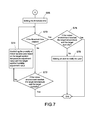
- FIG. 7 is a flowchart for second learning control of a first embodiment according to the present invention.
- FIG. 8 is a flowchart for third learning control of a first embodiment according to the present invention. If the system applies the learning mode based on the operation of the user, the system will work according to the following steps as shown in FIG. 6 , FIG. 7 and FIG. 8 . Firstly, the system keeps detecting if a person enters the indoor space Z 1 or not through at least one of the plurality of sensors 4 (step S 50 ), and if a person is detected indoor, the controlling apparatus 1 activates the learning procedure 13 (step S 52 ). At the same time, the controlling apparatus 1 can also activate the carbon dioxide monitoring procedure mentioned above (step S 54 ).
- the user can select the default mode and the learning mode at the same time.
- the system in this embodiment controls the plurality of indoor apparatuses 3 initially by using one of the learning models 131 which is corresponding to the current environment parameters in advance, and applies the default control procedure 11 to control the plurality of indoor apparatususes 3 initially if none of learning model 131 is corresponding to the current envrionment parameters.
- the system updates the current learning models 131 or builds new learning models 131 when the user adjusts the target temperature or the target humidity manually through the learning procedure 13 (as shown in FIG. 8 ).
- the system in this embodiment controls the plurality of indoor apparatuses 3 initially by using one of the learning models 131 which is corresponding to the current environment parameters in advance, and applies the auto-calculate procedure 12 to control the plurality of indoor apparatususes 3 initially if none of learning model 131 is corresponding to the current envrionment parameters. Also, the system updates the current learning models 131 or builds new learning models 131 in this embodiment when the user adjusts the target temperature or the target humidity manually through the learning procedure 13 .
- the system obtains the current environment parameters indoor and/or outdoor through the plurality of sensors 4 through the learning procedure 13 after the learning procedure 13 is activated (step S 56 ).
- the learning procedure 13 determines if any one of the learning models 131 in the controlling apparatus 1 is corresponding to the current environment parameters (step S 58 ).
- the controlling apparatus 1 applies other mode co-selected with the learning mode at the same time (such as the default mode or the auto-calculation mode) to control the plurality of indoor apparatuses 3 initially (step S 60 ), so as to set a default value for the indoor apparatuses 3 .
- other mode co-selected with the learning mode at the same time such as the default mode or the auto-calculation mode
- the controlling apparatus 1 determines whether the indoor environment is adjusted to reach the target temperature and the target humidity. If the indoor environment is adjusted to reach the target temperature and the target humidity, then it can satisfy the user demands inputted to the system by the user in advance.
- the user can set the above mentioned threshold time through the HMI 2 (step S 68 ), else, the threshold time can be a default value of the system, not limited thereto.
- the controlling apparatus 1 keeps determining if the threshold time (such as 15 minutes, half hour or 1 hour) is reached or not (step S 70 ). Before the threshold time is reached, the controlling apparatus 1 keeps determining if the indoor environment reaches the target temperature and the target humidity (or the target comfort temperature/humidity range) or not (step S 72 ). If the indoor environment reaches the target temperature and the target humidity, the control action of the controlling apparatus 1 for this process flow ends.
- the controlling apparatus 1 keeps controlling the plurality of indoor apparatuses 3 based on the calculated target comfort temperature/humidity adjustment value to adjust the indoor environment before the indoor environment reaches the target temperature and the target humidity (step S 74 ).
- the controlling apparatus 1 keeps determining if the threshold time is reached after the step S 74 .
- the controlling apparatus 1 determines if the indoor environment reaches the target temperature and the target humidity or not (step S 76 ). If yes, the controlling apparatus 1 does not execute additional actions, otherwise, the controlling apparatus 1 makes an alert to notify the user (step S 78 ).
- the learning procedure 13 can receive a user-feedback inputted by the user (for example, the user sets a target temperature manually through the HMI 2 ) in any time, and the learning procedure 13 uses the user-feedback to update the current learning models 131 , or builds new learning models 131 .
- a user-feedback inputted by the user for example, the user sets a target temperature manually through the HMI 2
- the learning procedure 13 uses the user-feedback to update the current learning models 131 , or builds new learning models 131 .
- the method for learning the user-feedback is detailed described below.
- the controlling apparatus 1 can receive the user-feedback inputted by the user (step S 80 ).
- the learning procedure 13 is executed to obtain the current environment parameters through the plurality of sensors 4 at the time the user inputs the user-feedback, and the learning procedure 13 records the inputted user-feedback and the current environment parameters to update or to build one of the learning models 131 (step S 82 ).
- the learning procedure 13 records the user-feedback inputted by the user, and records the current environment parameters at the time the user-feedback is inputted, then builds a new learning model 131 in view of the user-feedback and the current environment parameters.
- the controlling apparatus 1 has one of the learning models 131 which is corresponding to the inputted user-feedback, it updates the corresponding learning model 131 based on the received user-feedback, but not build the new learning model 131 .
- the controlling apparatus 1 adjusts the target temperature and the target humidity in accordance with the inputted user-feedback.
- the user-feedback is deemed an available user-feedback by the controlling apparatus 1 only when the adjusted target temperature and the adjusted target humidity, adjusted in accordance with the user-feedback, can be reached within the threshold time
- only the available user-feedback will be used to update the current learning models 131 or to build the new learning model 131 . For example, if a user-feedback inputted by the user is to adjust the indoor temperature to 5° C. or to 40° C., the controlling apparatus 1 will considers the user-feedback as a mistake and does not add the user-feedback into the learning models 131 this time because it is not able to be reached.
- the learning mode the user-feedback inputted by the user will be received and learnt continually by the system, so as to update or build the learning models 131 by the controlling apparatus 1 .
- the advanced user-feedback is considered as an invalid user-feedback.
- the learning procedure 13 ignores the advance user-feedback and do not add it into the learning models 131 .
- the user-feedback which is not able to be reached or is covered by following user-feedback inputted by the user before the threshold time elapses will not be recorded by the learning procedure 13 , and not be added into the learning models 131 .
- the system provides a corresponding feedback interface through the HMI 2 for the user to manually input the user-feedback related to the comfort degree of the current indoor environment.
- the user-feedback can be vague and indirect information (such as a too hot complaining), and the user-feedback can also be concrete and direct information (such as setting the target temperature to 26° C. or decreasing the indoor temperature 1° C.).
- the system can generate the target comfort temperature/humidity adjustment value (or the target comfort temperature/humidity adjustment range) based on the user-feedback directly, and control the indoor apparatuses 3 based on the generated target comfort temperature/humidity adjustment value.
- the system needs to transform the indirect information into the direct information based on the current environment parameters in advance, and then generates the target comfort temperature/humidity adjustment value based on the transformed direct information, and finally controls the indoor apparatuses 3 based on the generated target comfort temperature/humidity adjustment value.
- the system can transform the indirect information indicating the three times of too hot complaint into the direct information indicating “decreasing temperature 3° C.”.
- the above mentioned description is just a specific embodiment of the present invention, not intended to limit the scope of the present invention.
- FIG. 9 is a flowchart for user setting of a first embodiment according to the present invention.
- the controlling apparatus 1 determines if receiving the indirect information inputted by the user or not (step S 100 ). If yes, the controlling apparatus 1 calculates and transforms the indirect information into the direct information based on the current environment parameters, and generates the target comfort temperature adjustment value based on the calculated and transformed direct information (step S 102 ).
- the controlling apparatus 1 determines if receiving the direct information inputted by the user or not (step S 104 ). If yes, the controlling apparatus 1 generates the target comfort temperature adjustment value based on the direct information directly (step S 106 ). It should be mentioned is the user can input the indirect information and/or the direct information through interfaces provided by the HMI 2 of the controlling apparatus 1 , so the step S 100 and the step S 104 can be executed at the same time, there does not exist an execution sequence.
- the controlling apparatus 1 determines the user demand is not changed (step S 108 ), in other words, the user does not input any of the user-feedback.
Landscapes
- Engineering & Computer Science (AREA)
- Chemical & Material Sciences (AREA)
- General Engineering & Computer Science (AREA)
- Mechanical Engineering (AREA)
- Combustion & Propulsion (AREA)
- Signal Processing (AREA)
- Physics & Mathematics (AREA)
- Mathematical Physics (AREA)
- Fuzzy Systems (AREA)
- Artificial Intelligence (AREA)
- Human Computer Interaction (AREA)
- Evolutionary Computation (AREA)
- Computer Vision & Pattern Recognition (AREA)
- Medical Informatics (AREA)
- Software Systems (AREA)
- General Physics & Mathematics (AREA)
- Automation & Control Theory (AREA)
- Health & Medical Sciences (AREA)
- Air Conditioning Control Device (AREA)
Applications Claiming Priority (3)
| Application Number | Priority Date | Filing Date | Title |
|---|---|---|---|
| TW103142095 | 2014-12-04 | ||
| TW103142095A TWI546506B (zh) | 2014-12-04 | 2014-12-04 | 環境舒適度控制系統及其控制方法 |
| TW103142095A | 2014-12-04 |
Publications (2)
| Publication Number | Publication Date |
|---|---|
| US20160161137A1 US20160161137A1 (en) | 2016-06-09 |
| US10126010B2 true US10126010B2 (en) | 2018-11-13 |
Family
ID=54601667
Family Applications (1)
| Application Number | Title | Priority Date | Filing Date |
|---|---|---|---|
| US14/936,085 Active 2036-07-04 US10126010B2 (en) | 2014-12-04 | 2015-11-09 | Controlling system for environmental comfort degree and controlling method of the controlling system |
Country Status (5)
| Country | Link |
|---|---|
| US (1) | US10126010B2 (de) |
| EP (1) | EP3029389B1 (de) |
| JP (1) | JP6114807B2 (de) |
| ES (1) | ES2728381T3 (de) |
| TW (1) | TWI546506B (de) |
Cited By (3)
| Publication number | Priority date | Publication date | Assignee | Title |
|---|---|---|---|---|
| US10794609B2 (en) * | 2018-02-05 | 2020-10-06 | Mitsubishi Electric Research Laboratories, Inc. | Methods and systems for personalized heating, ventilation, and air conditioning |
| US20240003564A1 (en) * | 2022-06-29 | 2024-01-04 | Alarm.Com Incorporated | Automated property humidity control |
| US12051419B1 (en) * | 2022-03-28 | 2024-07-30 | Amazon Technologies, Inc. | Device control using near real time modeling |
Families Citing this family (81)
| Publication number | Priority date | Publication date | Assignee | Title |
|---|---|---|---|---|
| KR101939756B1 (ko) * | 2016-07-05 | 2019-01-18 | 현대자동차주식회사 | 사물인터넷 시스템 및 그 제어 방법 |
| US11143423B2 (en) | 2016-12-07 | 2021-10-12 | Carrier Corporation | Group dynamic environmental control system and method of operation |
| KR101758321B1 (ko) | 2017-04-13 | 2017-07-17 | 가천대학교 산학협력단 | 쾌적한 환경 조성을 위한 영향 요소 모델링 방법 및 시스템 |
| JP6979786B2 (ja) * | 2017-04-27 | 2021-12-15 | 三菱電機株式会社 | 空調制御装置および空調制御方法 |
| CN107120804B (zh) * | 2017-06-01 | 2020-02-04 | 青岛海信日立空调系统有限公司 | 空气装置的控制方法、空调室内机、空调及空气净化设备 |
| CN107289594B (zh) * | 2017-07-24 | 2020-03-10 | 珠海格力电器股份有限公司 | 空调机组、空调控制网络和空调控制方法 |
| JP6853167B2 (ja) * | 2017-09-08 | 2021-03-31 | 株式会社コロナ | 空気調和機 |
| JP2019066135A (ja) * | 2017-10-04 | 2019-04-25 | ファナック株式会社 | 空調制御システム |
| EP3695287B1 (de) * | 2017-10-11 | 2024-04-17 | Bechara Philippe Assouad | Automatisches umschaltthermostatsystem auf der basis der scheinbaren temperatur und verfahren zur bestimmung und automatischen steuerung der scheinbaren temperatur eines klimatisierten raumes |
| CN108151241A (zh) * | 2017-11-10 | 2018-06-12 | 珠海格力电器股份有限公司 | 空调控制方法及装置 |
| US10767878B2 (en) | 2017-11-21 | 2020-09-08 | Emerson Climate Technologies, Inc. | Humidifier control systems and methods |
| CN108444051B (zh) * | 2018-02-28 | 2024-04-16 | 中冶置业集团有限公司 | 一种室内温度智能化动态控制系统及其控制方法 |
| CN108489014B (zh) * | 2018-02-28 | 2024-10-11 | 清华大学 | 一种室内环境智能化动态控制系统及其控制方法 |
| CN108489042B (zh) * | 2018-03-08 | 2021-12-03 | 广东美的制冷设备有限公司 | 空气调节器控制方法、空气调节器、服务器及存储介质 |
| JP7062475B2 (ja) * | 2018-03-14 | 2022-05-06 | 株式会社東芝 | 空調制御装置、空調システム、空調制御方法及びプログラム |
| CN108567259B (zh) * | 2018-04-04 | 2023-11-14 | 北京广袤科技有限公司 | 高精度智能温控沙发及控制方法 |
| KR102026020B1 (ko) * | 2018-04-10 | 2019-11-26 | 엘지전자 주식회사 | 인공지능을 이용한 파라미터 학습에 기반한 공기조화기, 클라우드 서버, 공기조화기의 구동 및 제어 방법 |
| WO2019204789A1 (en) | 2018-04-20 | 2019-10-24 | Emerson Climate Technologies, Inc. | Indoor air quality sensor calibration systems and methods |
| WO2019204792A1 (en) | 2018-04-20 | 2019-10-24 | Emerson Climate Technologies, Inc. | Coordinated control of standalone and building indoor air quality devices and systems |
| WO2019204788A1 (en) | 2018-04-20 | 2019-10-24 | Emerson Climate Technologies, Inc. | Systems and methods for adjusting mitigation thresholds |
| US12018852B2 (en) | 2018-04-20 | 2024-06-25 | Copeland Comfort Control Lp | HVAC filter usage analysis system |
| US11486593B2 (en) | 2018-04-20 | 2022-11-01 | Emerson Climate Technologies, Inc. | Systems and methods with variable mitigation thresholds |
| US12259148B2 (en) | 2018-04-20 | 2025-03-25 | Copeland Lp | Computerized HVAC filter evaluation system |
| US11609004B2 (en) | 2018-04-20 | 2023-03-21 | Emerson Climate Technologies, Inc. | Systems and methods with variable mitigation thresholds |
| US11371726B2 (en) | 2018-04-20 | 2022-06-28 | Emerson Climate Technologies, Inc. | Particulate-matter-size-based fan control system |
| US12311308B2 (en) | 2018-04-20 | 2025-05-27 | Copeland Lp | Particulate-matter-size-based fan control system |
| WO2019204779A1 (en) | 2018-04-20 | 2019-10-24 | Emerson Climate Technologies, Inc. | Indoor air quality and occupant monitoring systems and methods |
| US20190354074A1 (en) * | 2018-05-17 | 2019-11-21 | Johnson Controls Technology Company | Building management system control using occupancy data |
| CN109631237B (zh) * | 2018-12-12 | 2020-11-06 | 珠海格力电器股份有限公司 | 一种数据中心群控系统及方法 |
| JP6699764B1 (ja) * | 2019-01-16 | 2020-05-27 | 株式会社富士通ゼネラル | 空気調和システム |
| JP7313158B2 (ja) * | 2019-02-21 | 2023-07-24 | 三菱電機株式会社 | 空気調和機制御装置、空気調和機制御方法およびプログラム |
| JP7389314B2 (ja) * | 2019-03-05 | 2023-11-30 | ダイキン工業株式会社 | 空気調和装置の制御システム |
| US11448412B2 (en) | 2019-04-02 | 2022-09-20 | Lg Electronics Inc. | Air conditioner with an artificial intelligence |
| JP6939841B2 (ja) * | 2019-04-22 | 2021-09-22 | ダイキン工業株式会社 | 空調システム |
| CN110454919A (zh) * | 2019-08-09 | 2019-11-15 | 江西理工大学 | 一种智能家居空调控制系统及控制方法 |
| WO2021038759A1 (ja) * | 2019-08-28 | 2021-03-04 | 富士通株式会社 | モデル選択方法、モデル選択プログラムおよび情報処理装置 |
| CN110925972A (zh) * | 2019-11-04 | 2020-03-27 | 佛山市云米电器科技有限公司 | 一种多人场景下的目标人物机身特定时间变动风力加持智能出风系统 |
| JP7378497B2 (ja) * | 2019-12-13 | 2023-11-13 | 三菱電機株式会社 | モデル共有システム、モデル管理装置、および空気調和装置の制御装置 |
| CN113324319A (zh) * | 2020-02-28 | 2021-08-31 | 青岛海尔空调器有限总公司 | 用于空调器的控制方法及空调器 |
| CN113495487A (zh) * | 2020-03-18 | 2021-10-12 | 海信集团有限公司 | 一种调节目标设备运行参数的终端和方法 |
| CN113494759B (zh) * | 2020-03-18 | 2022-09-02 | 海信集团有限公司 | 一种对pmv值进行调整的设备和方法 |
| JP7407915B2 (ja) | 2020-04-28 | 2024-01-04 | 三菱電機株式会社 | 情報処理装置および空調システム |
| CN112097378A (zh) * | 2020-08-21 | 2020-12-18 | 深圳市建滔科技有限公司 | 一种基于前馈型神经网络的空调舒适度调节方法 |
| CN112418669A (zh) * | 2020-11-23 | 2021-02-26 | 青岛海尔科技有限公司 | 作业执行方法、装置和存储介质及电子装置 |
| CN112484259B (zh) * | 2020-12-04 | 2021-11-16 | 珠海格力电器股份有限公司 | 湿度控制方法、装置、电子设备及存储介质 |
| CN112611080A (zh) * | 2020-12-10 | 2021-04-06 | 浙江大学 | 一种基于联邦学习的智能空调控制系统和方法 |
| BR102020026026A2 (pt) * | 2020-12-18 | 2022-06-28 | Robert Bosch Limitada | Método e sistema de gerenciamento de conforto térmico em ambientes com ar-condicionado |
| CN112762576A (zh) * | 2020-12-29 | 2021-05-07 | 广东美的白色家电技术创新中心有限公司 | 空调系统控制方法、达温时间预测模型训练方法及设备 |
| CN112923504B (zh) * | 2020-12-31 | 2022-08-02 | 广州市昊铭机电科技有限公司 | 一种教室环境控制装置及方法 |
| CN113110649B (zh) * | 2021-03-24 | 2022-07-26 | 北京戴纳实验科技有限公司 | 一种细胞间室内温湿度联动控制方法及系统 |
| CN113110082B (zh) * | 2021-04-15 | 2023-05-16 | 青岛海尔空调器有限总公司 | 用于家电控制的方法、装置和家电 |
| CN113126679A (zh) * | 2021-04-19 | 2021-07-16 | 广东电网有限责任公司计量中心 | 一种基于强化学习的电能计量检定环境控制方法和系统 |
| JPWO2022224460A1 (de) * | 2021-04-23 | 2022-10-27 | ||
| CN113280466B (zh) * | 2021-06-11 | 2022-05-27 | 珠海格力电器股份有限公司 | 空调器控制方法及装置 |
| CN113847714A (zh) * | 2021-06-29 | 2021-12-28 | 浪潮软件科技有限公司 | 基于家庭边缘计算的室内环境自动调节方法及装置 |
| AU2021455295A1 (en) * | 2021-07-05 | 2023-11-23 | Mitsubishi Electric Corporation | Satisfaction level calculation device, satisfaction level calculation method, and satisfaction level calculation program |
| CN113485498B (zh) * | 2021-07-19 | 2022-10-18 | 北京工业大学 | 一种基于深度学习的室内环境舒适度调节方法及系统 |
| CN113739374B (zh) * | 2021-08-16 | 2022-05-20 | 珠海格力电器股份有限公司 | 空调除湿控制方法、装置、控制器和空调 |
| CN113503632A (zh) * | 2021-08-24 | 2021-10-15 | 珠海拓芯科技有限公司 | 一种变频空调运行控制方法、控制装置及空调器 |
| CN113760022B (zh) * | 2021-09-29 | 2022-11-22 | 西安建筑科技大学 | 一种公共空间热环境空调控制装置及方法 |
| CN116085927B (zh) * | 2021-11-05 | 2025-08-01 | 广东美的环境电器制造有限公司 | 空气处理设备及其控制方法、控制装置和可读存储介质 |
| CN116245384A (zh) * | 2021-12-07 | 2023-06-09 | 中移物联网有限公司 | 一种室内舒适度评价方法、装置、设备及存储介质 |
| KR102462408B1 (ko) * | 2021-12-08 | 2022-11-04 | 재단법인 국가농림기상센터 | 폭염에 의한 가축 폐사 방지를 위한 서비스 제공 장치 |
| CN114281135A (zh) * | 2021-12-23 | 2022-04-05 | 广东芬尼克兹节能设备有限公司 | 一种体感环境调节方法、装置、计算机设备及存储介质 |
| CN114440421B (zh) * | 2022-01-18 | 2023-06-16 | 上海铼锶信息技术有限公司 | 一种环境温度调节方法及环境温度调节系统 |
| CN117091245B (zh) * | 2022-05-11 | 2026-04-03 | 广东美的环境电器制造有限公司 | 控制方法、装置、存储介质、温度、湿度调节装置和系统 |
| CN117167910A (zh) * | 2022-05-27 | 2023-12-05 | 青岛海尔空调器有限总公司 | 用于控制空调器的方法及装置、空调器、存储介质 |
| CN114992814B (zh) * | 2022-06-20 | 2023-12-15 | 南京天加环境科技有限公司 | 一种空调舒适性的控制方法、系统及空调 |
| CN115289655B (zh) * | 2022-06-28 | 2025-01-24 | 青岛海信日立空调系统有限公司 | 一种水温控制型多联机 |
| CN115183436A (zh) * | 2022-07-11 | 2022-10-14 | 青岛海尔空调电子有限公司 | 一种空调控制方法及系统 |
| CN115560379B (zh) * | 2022-07-25 | 2023-05-30 | 湖南全家富电器科技有限公司 | 一种基于红外探测技术的取暖器智能控温系统 |
| CN115187128A (zh) * | 2022-07-28 | 2022-10-14 | 上海建工四建集团有限公司 | 一种办公环境智能调节系统及方法 |
| CN117709478A (zh) * | 2022-09-08 | 2024-03-15 | 开利公司 | 用于评估环境的方法和数据处理系统 |
| CN115614908B (zh) * | 2022-09-30 | 2024-08-23 | 珠海格力电器股份有限公司 | 空调控制方法、装置和空调 |
| CN115900002B (zh) * | 2022-11-14 | 2024-07-26 | 宁波奥克斯电气股份有限公司 | 一种空调控制方法、控制装置和空调器 |
| CN115654648A (zh) * | 2022-11-14 | 2023-01-31 | 吉林大学 | 一种空调温湿度调节系统及调节方法 |
| CN115900005B (zh) * | 2022-11-29 | 2025-04-29 | 珠海格力智能装备有限公司 | 空调器的控制方法及装置、空调器 |
| CN116734419B (zh) * | 2023-05-25 | 2025-10-14 | 珠海格力电器股份有限公司 | 一种空调的控制方法、装置、存储介质及空调 |
| CN117387172B (zh) * | 2023-12-11 | 2024-05-17 | 江苏中江数字建设技术有限公司 | 基于精准推荐设备控制参数的末端空调节能方法和系统 |
| CN118383590B (zh) * | 2024-05-09 | 2025-02-11 | 深圳市天元奇境科技有限公司 | 基于智能手环集群的温控方法、装置、设备及存储介质 |
| CN120085551B (zh) * | 2025-03-05 | 2025-09-23 | 西南交通大学 | 基于环境因素补偿机制的环控方法 |
Citations (30)
| Publication number | Priority date | Publication date | Assignee | Title |
|---|---|---|---|---|
| EP0495118A1 (de) | 1990-07-30 | 1992-07-22 | Yamatake-Honeywell Co. Ltd. | Verfahren und vorrichtung zur berechnung eines schätzwertes der mittleren empfundenen temperatur |
| JPH09196434A (ja) | 1996-01-17 | 1997-07-31 | Toshiba Corp | 空調制御装置 |
| US20050284158A1 (en) | 2004-06-25 | 2005-12-29 | Lg Electronics Inc. | Air conditioning system and method for controlling the same |
| EP1691141A1 (de) | 2005-02-15 | 2006-08-16 | Lg Electronics Inc. | Verfahren zur Steuerung einer Klimaanlage |
| JP2006322624A (ja) | 2005-05-17 | 2006-11-30 | Mitsubishi Electric Building Techno Service Co Ltd | 空気調和機 |
| US20070138307A1 (en) * | 2003-09-11 | 2007-06-21 | Khoo Teck H | Control method and apparatus for an air conditioner using occupant feedback |
| US20070240437A1 (en) * | 2006-04-14 | 2007-10-18 | Kabushiki Kaisha Toshiba | Air conditioning controller |
| KR20080095563A (ko) | 2007-04-25 | 2008-10-29 | 신성델타테크 주식회사 | 실내 환경제어 시스템 및 방법 |
| US20100036533A1 (en) * | 2007-01-17 | 2010-02-11 | Daikin Industries, Ltd. | Air-conditioning system |
| US20100262298A1 (en) * | 2009-03-27 | 2010-10-14 | Siemens Energy & Automation, Inc. | System and Method for Climate Control Set-Point Optimization Based On Individual Comfort |
| US20100332044A1 (en) * | 2009-04-30 | 2010-12-30 | Mclean Donald John | Method for determining and using a climate energy index |
| US20110093126A1 (en) * | 2009-10-21 | 2011-04-21 | Hitachi, Ltd. | Intra-Area Environmental Control System and Intra-Area Environmental Control Method |
| US20110202181A1 (en) * | 2010-02-12 | 2011-08-18 | Enphase Energy, Inc. | Method and apparatus for smart climate control |
| JP2011190972A (ja) | 2010-03-12 | 2011-09-29 | Mitsubishi Electric Corp | 空調制御システム |
| TWI351494B (en) | 2008-10-24 | 2011-11-01 | Chunghwa Telecom Co Ltd | Energy saving control system and energy saving war |
| WO2011141506A1 (fr) | 2010-05-12 | 2011-11-17 | Commissariat A L'energie Atomique Et Aux Energies Alternatives | Contrôle personnalisé du confort thermique d'un occupant d'un bâtiment |
| US20110313579A1 (en) * | 2010-05-25 | 2011-12-22 | Cheuk Ting Ling | Method for Energy Saving On Electrical Systems Using Habit Oriented Control |
| US20120125559A1 (en) * | 2010-11-19 | 2012-05-24 | Nest Labs, Inc. | Temperature controller with time to target display |
| US20120232715A1 (en) * | 2011-03-11 | 2012-09-13 | Honeywell International Inc. | Room thermal comfort monitor |
| CN102840647A (zh) | 2012-04-25 | 2012-12-26 | 中华电信股份有限公司 | 结合影像辨识的空调舒适度控制系统与方法 |
| CN202648705U (zh) | 2012-06-29 | 2013-01-02 | 安徽医科大学 | 一种室内环境监测系统 |
| US20130158722A1 (en) | 2011-12-14 | 2013-06-20 | Industrial Technology Research Institute | Air conditioning control device and method thereof |
| JP2013164260A (ja) | 2013-05-28 | 2013-08-22 | Toshiba Corp | 空調制御装置、空調制御方法、および空調制御用プログラム |
| US20130245847A1 (en) * | 2009-10-23 | 2013-09-19 | Alain P. Steven | Facilitating revenue generation from wholesale electricity markets using an enineering-based energy asset model |
| US20140142773A1 (en) * | 2010-05-25 | 2014-05-22 | Cheuk Ting Ling | Methods for Energy Saving On Electrical Systems Using Habit Oriented Control |
| US20140148706A1 (en) | 2011-06-15 | 2014-05-29 | Fraunhofer Gesellschaft Zur Förderung Der Angew. Forschung E.V. | Method and device for detecting thermal comfort |
| TW201420970A (zh) | 2012-11-23 | 2014-06-01 | Ind Tech Res Inst | 空調系統及其控制方法 |
| CN203719034U (zh) | 2014-01-29 | 2014-07-16 | 天津大学 | 一种能控制室内空气品质的空调机组/器控制器及系统 |
| US20140277765A1 (en) * | 2013-03-15 | 2014-09-18 | University Of Southern California | Human-building interaction framework for personalized comfort driven system operations in buildings |
| US20140358291A1 (en) * | 2013-05-30 | 2014-12-04 | Honeywell International Inc. | Comfort controller with user feedback |
Family Cites Families (3)
| Publication number | Priority date | Publication date | Assignee | Title |
|---|---|---|---|---|
| JP2707890B2 (ja) * | 1991-11-12 | 1998-02-04 | 松下電器産業株式会社 | 空気調和機の制御装置 |
| JP2002286274A (ja) * | 2001-03-26 | 2002-10-03 | Energy Save Kk | 空調機器の制御方法および制御装置 |
| JP2012042074A (ja) * | 2010-08-17 | 2012-03-01 | Panasonic Corp | 空気調和機 |
-
2014
- 2014-12-04 TW TW103142095A patent/TWI546506B/zh not_active IP Right Cessation
-
2015
- 2015-11-09 US US14/936,085 patent/US10126010B2/en active Active
- 2015-11-18 ES ES15195246T patent/ES2728381T3/es active Active
- 2015-11-18 EP EP15195246.2A patent/EP3029389B1/de not_active Not-in-force
- 2015-12-04 JP JP2015237332A patent/JP6114807B2/ja active Active
Patent Citations (33)
| Publication number | Priority date | Publication date | Assignee | Title |
|---|---|---|---|---|
| EP0495118A1 (de) | 1990-07-30 | 1992-07-22 | Yamatake-Honeywell Co. Ltd. | Verfahren und vorrichtung zur berechnung eines schätzwertes der mittleren empfundenen temperatur |
| JPH09196434A (ja) | 1996-01-17 | 1997-07-31 | Toshiba Corp | 空調制御装置 |
| US20070138307A1 (en) * | 2003-09-11 | 2007-06-21 | Khoo Teck H | Control method and apparatus for an air conditioner using occupant feedback |
| US20050284158A1 (en) | 2004-06-25 | 2005-12-29 | Lg Electronics Inc. | Air conditioning system and method for controlling the same |
| EP1691141A1 (de) | 2005-02-15 | 2006-08-16 | Lg Electronics Inc. | Verfahren zur Steuerung einer Klimaanlage |
| US20060184283A1 (en) | 2005-02-15 | 2006-08-17 | Lg Electronics Inc. | Method for controlling air conditioning system |
| JP2006322624A (ja) | 2005-05-17 | 2006-11-30 | Mitsubishi Electric Building Techno Service Co Ltd | 空気調和機 |
| US20070240437A1 (en) * | 2006-04-14 | 2007-10-18 | Kabushiki Kaisha Toshiba | Air conditioning controller |
| US20100036533A1 (en) * | 2007-01-17 | 2010-02-11 | Daikin Industries, Ltd. | Air-conditioning system |
| KR20080095563A (ko) | 2007-04-25 | 2008-10-29 | 신성델타테크 주식회사 | 실내 환경제어 시스템 및 방법 |
| TWI351494B (en) | 2008-10-24 | 2011-11-01 | Chunghwa Telecom Co Ltd | Energy saving control system and energy saving war |
| US20100262298A1 (en) * | 2009-03-27 | 2010-10-14 | Siemens Energy & Automation, Inc. | System and Method for Climate Control Set-Point Optimization Based On Individual Comfort |
| US20100332044A1 (en) * | 2009-04-30 | 2010-12-30 | Mclean Donald John | Method for determining and using a climate energy index |
| US20110093126A1 (en) * | 2009-10-21 | 2011-04-21 | Hitachi, Ltd. | Intra-Area Environmental Control System and Intra-Area Environmental Control Method |
| US20130245847A1 (en) * | 2009-10-23 | 2013-09-19 | Alain P. Steven | Facilitating revenue generation from wholesale electricity markets using an enineering-based energy asset model |
| US20110202181A1 (en) * | 2010-02-12 | 2011-08-18 | Enphase Energy, Inc. | Method and apparatus for smart climate control |
| JP2011190972A (ja) | 2010-03-12 | 2011-09-29 | Mitsubishi Electric Corp | 空調制御システム |
| WO2011141506A1 (fr) | 2010-05-12 | 2011-11-17 | Commissariat A L'energie Atomique Et Aux Energies Alternatives | Contrôle personnalisé du confort thermique d'un occupant d'un bâtiment |
| US20130048263A1 (en) | 2010-05-12 | 2013-02-28 | Commissariat A L'energie Atomique Et Aux Energies Alternatives | Customized Control of the Thermal Comfort of an Occupant of a Building |
| US20140142773A1 (en) * | 2010-05-25 | 2014-05-22 | Cheuk Ting Ling | Methods for Energy Saving On Electrical Systems Using Habit Oriented Control |
| US20110313579A1 (en) * | 2010-05-25 | 2011-12-22 | Cheuk Ting Ling | Method for Energy Saving On Electrical Systems Using Habit Oriented Control |
| US20120125559A1 (en) * | 2010-11-19 | 2012-05-24 | Nest Labs, Inc. | Temperature controller with time to target display |
| US20120232715A1 (en) * | 2011-03-11 | 2012-09-13 | Honeywell International Inc. | Room thermal comfort monitor |
| US8700227B2 (en) * | 2011-03-11 | 2014-04-15 | Honeywell International Inc. | Room thermal comfort monitor |
| US20140148706A1 (en) | 2011-06-15 | 2014-05-29 | Fraunhofer Gesellschaft Zur Förderung Der Angew. Forschung E.V. | Method and device for detecting thermal comfort |
| US20130158722A1 (en) | 2011-12-14 | 2013-06-20 | Industrial Technology Research Institute | Air conditioning control device and method thereof |
| CN102840647A (zh) | 2012-04-25 | 2012-12-26 | 中华电信股份有限公司 | 结合影像辨识的空调舒适度控制系统与方法 |
| CN202648705U (zh) | 2012-06-29 | 2013-01-02 | 安徽医科大学 | 一种室内环境监测系统 |
| TW201420970A (zh) | 2012-11-23 | 2014-06-01 | Ind Tech Res Inst | 空調系統及其控制方法 |
| US20140277765A1 (en) * | 2013-03-15 | 2014-09-18 | University Of Southern California | Human-building interaction framework for personalized comfort driven system operations in buildings |
| JP2013164260A (ja) | 2013-05-28 | 2013-08-22 | Toshiba Corp | 空調制御装置、空調制御方法、および空調制御用プログラム |
| US20140358291A1 (en) * | 2013-05-30 | 2014-12-04 | Honeywell International Inc. | Comfort controller with user feedback |
| CN203719034U (zh) | 2014-01-29 | 2014-07-16 | 天津大学 | 一种能控制室内空气品质的空调机组/器控制器及系统 |
Non-Patent Citations (4)
| Title |
|---|
| European Search Report dated Aug. 24, 2016 from corresponding application No. EP 15195246.2. |
| Office Action dated Jun. 1, 2017 from corresponding application No. CN 201410734232.X. |
| Office Action dated Mar. 15, 2016 from corresponding application No. TW 103142095. |
| Office Action dated Sep. 20, 2016 from corresponding application No. JP 2015-237332. |
Cited By (3)
| Publication number | Priority date | Publication date | Assignee | Title |
|---|---|---|---|---|
| US10794609B2 (en) * | 2018-02-05 | 2020-10-06 | Mitsubishi Electric Research Laboratories, Inc. | Methods and systems for personalized heating, ventilation, and air conditioning |
| US12051419B1 (en) * | 2022-03-28 | 2024-07-30 | Amazon Technologies, Inc. | Device control using near real time modeling |
| US20240003564A1 (en) * | 2022-06-29 | 2024-01-04 | Alarm.Com Incorporated | Automated property humidity control |
Also Published As
| Publication number | Publication date |
|---|---|
| JP6114807B2 (ja) | 2017-04-12 |
| US20160161137A1 (en) | 2016-06-09 |
| EP3029389B1 (de) | 2019-03-06 |
| TW201621239A (zh) | 2016-06-16 |
| EP3029389A2 (de) | 2016-06-08 |
| JP2016109422A (ja) | 2016-06-20 |
| EP3029389A3 (de) | 2016-09-21 |
| TWI546506B (zh) | 2016-08-21 |
| ES2728381T3 (es) | 2019-10-24 |
Similar Documents
| Publication | Publication Date | Title |
|---|---|---|
| US10126010B2 (en) | Controlling system for environmental comfort degree and controlling method of the controlling system | |
| CN105717960B (zh) | 环境舒适度控制系统及其控制方法 | |
| US11934214B2 (en) | Comfort controller with user feedback | |
| CN111397131B (zh) | 空气调节设备及其控制方法、装置、电子设备 | |
| US10625193B2 (en) | Intelligent air-conditioning controlling system and intelligent controlling method for the same | |
| US10712038B2 (en) | Multi-function thermostat with air quality display | |
| EP3732537B1 (de) | Verfahren und vorrichtung zur intelligenten temperaturregelung | |
| JP7542312B2 (ja) | 空気調和制御装置 | |
| US10408483B2 (en) | Dynamic climate control adjustment system | |
| US20150025693A1 (en) | System and method of temperature control | |
| US20240053044A1 (en) | Thermostat for conveying expected thermal responses to users | |
| CN111397153B (zh) | 空气调节设备及其控制方法、装置、电子设备 | |
| US20180238565A1 (en) | Floor warming systems with weather compensation | |
| US11549713B2 (en) | Universal wireless HVAC controller with an internally stored infrared (IR) database | |
| JP6473937B2 (ja) | 扇風機制御システムおよび扇風機制御プログラム | |
| US11506215B1 (en) | Fan with automatic thermal comfort control | |
| US20230194116A1 (en) | Control device and method for controlling personal environmental comfort | |
| JP7855092B2 (ja) | 空気調和制御システム | |
| US20240392990A1 (en) | Device and method for regulating user temperature in an environment | |
| US20260126204A1 (en) | Thermostat for conveying expected thermal responses to users |
Legal Events
| Date | Code | Title | Description |
|---|---|---|---|
| AS | Assignment |
Owner name: DELTA ELECTRONICS, INC., TAIWAN Free format text: ASSIGNMENT OF ASSIGNORS INTEREST;ASSIGNORS:CHEN, MENG-SENG;LO, TIEN-SZU;SIGNING DATES FROM 20150930 TO 20151005;REEL/FRAME:036994/0956 |
|
| STCF | Information on status: patent grant |
Free format text: PATENTED CASE |
|
| MAFP | Maintenance fee payment |
Free format text: PAYMENT OF MAINTENANCE FEE, 4TH YEAR, LARGE ENTITY (ORIGINAL EVENT CODE: M1551); ENTITY STATUS OF PATENT OWNER: LARGE ENTITY Year of fee payment: 4 |