US10583486B2 - Hot isostatic pressing apparatus and hot isostatic pressing methods for reducing surface-area chemical degradation on an article of manufacture - Google Patents
Hot isostatic pressing apparatus and hot isostatic pressing methods for reducing surface-area chemical degradation on an article of manufacture Download PDFInfo
- Publication number
- US10583486B2 US10583486B2 US15/397,950 US201715397950A US10583486B2 US 10583486 B2 US10583486 B2 US 10583486B2 US 201715397950 A US201715397950 A US 201715397950A US 10583486 B2 US10583486 B2 US 10583486B2
- Authority
- US
- United States
- Prior art keywords
- shroud
- article
- manufacture
- enclosed volume
- containment vessel
- Prior art date
- Legal status (The legal status is an assumption and is not a legal conclusion. Google has not performed a legal analysis and makes no representation as to the accuracy of the status listed.)
- Expired - Fee Related, expires
Links
- 238000004519 manufacturing process Methods 0.000 title claims abstract description 53
- 238000000034 method Methods 0.000 title claims abstract description 44
- 238000001513 hot isostatic pressing Methods 0.000 title claims abstract description 24
- 238000002144 chemical decomposition reaction Methods 0.000 title claims description 6
- 239000000463 material Substances 0.000 claims abstract description 62
- 239000011261 inert gas Substances 0.000 claims abstract description 26
- 229910000881 Cu alloy Inorganic materials 0.000 claims abstract description 4
- 229910000990 Ni alloy Inorganic materials 0.000 claims abstract description 4
- 239000007789 gas Substances 0.000 claims description 25
- 239000007787 solid Substances 0.000 claims description 9
- QVGXLLKOCUKJST-UHFFFAOYSA-N atomic oxygen Chemical compound [O] QVGXLLKOCUKJST-UHFFFAOYSA-N 0.000 claims description 7
- 239000001301 oxygen Substances 0.000 claims description 7
- 229910052760 oxygen Inorganic materials 0.000 claims description 7
- VYPSYNLAJGMNEJ-UHFFFAOYSA-N Silicium dioxide Chemical compound O=[Si]=O VYPSYNLAJGMNEJ-UHFFFAOYSA-N 0.000 claims description 6
- 229910001092 metal group alloy Inorganic materials 0.000 claims description 6
- 229910010293 ceramic material Inorganic materials 0.000 claims description 5
- XKRFYHLGVUSROY-UHFFFAOYSA-N Argon Chemical compound [Ar] XKRFYHLGVUSROY-UHFFFAOYSA-N 0.000 claims description 4
- 239000000919 ceramic Substances 0.000 claims description 4
- 239000010936 titanium Substances 0.000 claims description 4
- OKTJSMMVPCPJKN-UHFFFAOYSA-N Carbon Chemical compound [C] OKTJSMMVPCPJKN-UHFFFAOYSA-N 0.000 claims description 3
- RTAQQCXQSZGOHL-UHFFFAOYSA-N Titanium Chemical compound [Ti] RTAQQCXQSZGOHL-UHFFFAOYSA-N 0.000 claims description 3
- 229910052799 carbon Inorganic materials 0.000 claims description 3
- 239000012255 powdered metal Substances 0.000 claims description 3
- 229910052719 titanium Inorganic materials 0.000 claims description 3
- 229910052786 argon Inorganic materials 0.000 claims description 2
- QJGQUHMNIGDVPM-UHFFFAOYSA-N nitrogen group Chemical group [N] QJGQUHMNIGDVPM-UHFFFAOYSA-N 0.000 claims description 2
- 239000004576 sand Substances 0.000 claims description 2
- 239000000377 silicon dioxide Substances 0.000 claims description 2
- QCWXUUIWCKQGHC-UHFFFAOYSA-N Zirconium Chemical compound [Zr] QCWXUUIWCKQGHC-UHFFFAOYSA-N 0.000 claims 2
- 229910052726 zirconium Inorganic materials 0.000 claims 2
- RYGMFSIKBFXOCR-UHFFFAOYSA-N Copper Chemical compound [Cu] RYGMFSIKBFXOCR-UHFFFAOYSA-N 0.000 abstract description 2
- 239000010949 copper Substances 0.000 abstract description 2
- IJGRMHOSHXDMSA-UHFFFAOYSA-N Atomic nitrogen Chemical compound N#N IJGRMHOSHXDMSA-UHFFFAOYSA-N 0.000 description 4
- 238000005304 joining Methods 0.000 description 4
- 229910045601 alloy Inorganic materials 0.000 description 3
- 239000000956 alloy Substances 0.000 description 3
- 238000009792 diffusion process Methods 0.000 description 3
- 230000002401 inhibitory effect Effects 0.000 description 3
- 239000000203 mixture Substances 0.000 description 3
- XEEYBQQBJWHFJM-UHFFFAOYSA-N Iron Chemical compound [Fe] XEEYBQQBJWHFJM-UHFFFAOYSA-N 0.000 description 2
- PXHVJJICTQNCMI-UHFFFAOYSA-N Nickel Chemical compound [Ni] PXHVJJICTQNCMI-UHFFFAOYSA-N 0.000 description 2
- PNEYBMLMFCGWSK-UHFFFAOYSA-N aluminium oxide Inorganic materials [O-2].[O-2].[O-2].[Al+3].[Al+3] PNEYBMLMFCGWSK-UHFFFAOYSA-N 0.000 description 2
- 239000011248 coating agent Substances 0.000 description 2
- 238000000576 coating method Methods 0.000 description 2
- 229910044991 metal oxide Inorganic materials 0.000 description 2
- 150000004706 metal oxides Chemical class 0.000 description 2
- 229910052757 nitrogen Inorganic materials 0.000 description 2
- 238000007747 plating Methods 0.000 description 2
- 239000000843 powder Substances 0.000 description 2
- 238000007789 sealing Methods 0.000 description 2
- 239000000126 substance Substances 0.000 description 2
- 230000001052 transient effect Effects 0.000 description 2
- 229910000859 α-Fe Inorganic materials 0.000 description 2
- 239000000654 additive Substances 0.000 description 1
- 238000006243 chemical reaction Methods 0.000 description 1
- 238000011109 contamination Methods 0.000 description 1
- 230000002950 deficient Effects 0.000 description 1
- 230000001627 detrimental effect Effects 0.000 description 1
- 230000009977 dual effect Effects 0.000 description 1
- 239000012530 fluid Substances 0.000 description 1
- 238000010438 heat treatment Methods 0.000 description 1
- -1 i.e. Substances 0.000 description 1
- 230000005764 inhibitory process Effects 0.000 description 1
- 229910052742 iron Inorganic materials 0.000 description 1
- NLYAJNPCOHFWQQ-UHFFFAOYSA-N kaolin Chemical compound O.O.O=[Al]O[Si](=O)O[Si](=O)O[Al]=O NLYAJNPCOHFWQQ-UHFFFAOYSA-N 0.000 description 1
- 229910052622 kaolinite Inorganic materials 0.000 description 1
- 239000002184 metal Substances 0.000 description 1
- 229910052751 metal Inorganic materials 0.000 description 1
- 150000002739 metals Chemical class 0.000 description 1
- 229910052759 nickel Inorganic materials 0.000 description 1
- 150000004767 nitrides Chemical class 0.000 description 1
- 230000003647 oxidation Effects 0.000 description 1
- 238000007254 oxidation reaction Methods 0.000 description 1
- 238000012856 packing Methods 0.000 description 1
- 239000002245 particle Substances 0.000 description 1
- 230000002093 peripheral effect Effects 0.000 description 1
- 230000000750 progressive effect Effects 0.000 description 1
- 230000000979 retarding effect Effects 0.000 description 1
- VSZWPYCFIRKVQL-UHFFFAOYSA-N selanylidenegallium;selenium Chemical compound [Se].[Se]=[Ga].[Se]=[Ga] VSZWPYCFIRKVQL-UHFFFAOYSA-N 0.000 description 1
- 238000005245 sintering Methods 0.000 description 1
- 229910000601 superalloy Inorganic materials 0.000 description 1
- 238000006557 surface reaction Methods 0.000 description 1
- 238000011282 treatment Methods 0.000 description 1
- 238000003466 welding Methods 0.000 description 1
Images


Classifications
-
- B—PERFORMING OPERATIONS; TRANSPORTING
- B22—CASTING; POWDER METALLURGY
- B22F—WORKING METALLIC POWDER; MANUFACTURE OF ARTICLES FROM METALLIC POWDER; MAKING METALLIC POWDER; APPARATUS OR DEVICES SPECIALLY ADAPTED FOR METALLIC POWDER
- B22F3/00—Manufacture of workpieces or articles from metallic powder characterised by the manner of compacting or sintering; Apparatus specially adapted therefor ; Presses and furnaces
- B22F3/12—Both compacting and sintering
- B22F3/14—Both compacting and sintering simultaneously
- B22F3/15—Hot isostatic pressing
-
- B—PERFORMING OPERATIONS; TRANSPORTING
- B22—CASTING; POWDER METALLURGY
- B22F—WORKING METALLIC POWDER; MANUFACTURE OF ARTICLES FROM METALLIC POWDER; MAKING METALLIC POWDER; APPARATUS OR DEVICES SPECIALLY ADAPTED FOR METALLIC POWDER
- B22F3/00—Manufacture of workpieces or articles from metallic powder characterised by the manner of compacting or sintering; Apparatus specially adapted therefor ; Presses and furnaces
- B22F3/02—Compacting only
- B22F3/03—Press-moulding apparatus therefor
-
- B—PERFORMING OPERATIONS; TRANSPORTING
- B22—CASTING; POWDER METALLURGY
- B22F—WORKING METALLIC POWDER; MANUFACTURE OF ARTICLES FROM METALLIC POWDER; MAKING METALLIC POWDER; APPARATUS OR DEVICES SPECIALLY ADAPTED FOR METALLIC POWDER
- B22F3/00—Manufacture of workpieces or articles from metallic powder characterised by the manner of compacting or sintering; Apparatus specially adapted therefor ; Presses and furnaces
- B22F3/10—Sintering only
- B22F3/1003—Use of special medium during sintering, e.g. sintering aid
- B22F3/1007—Atmosphere
-
- B—PERFORMING OPERATIONS; TRANSPORTING
- B22—CASTING; POWDER METALLURGY
- B22F—WORKING METALLIC POWDER; MANUFACTURE OF ARTICLES FROM METALLIC POWDER; MAKING METALLIC POWDER; APPARATUS OR DEVICES SPECIALLY ADAPTED FOR METALLIC POWDER
- B22F5/00—Manufacture of workpieces or articles from metallic powder characterised by the special shape of the product
- B22F5/009—Manufacture of workpieces or articles from metallic powder characterised by the special shape of the product of turbine components other than turbine blades
-
- B—PERFORMING OPERATIONS; TRANSPORTING
- B30—PRESSES
- B30B—PRESSES IN GENERAL
- B30B11/00—Presses specially adapted for forming shaped articles from material in particulate or plastic state, e.g. briquetting presses, tabletting presses
- B30B11/001—Presses specially adapted for forming shaped articles from material in particulate or plastic state, e.g. briquetting presses, tabletting presses using a flexible element, e.g. diaphragm, urged by fluid pressure; Isostatic presses
- B30B11/002—Isostatic press chambers; Press stands therefor
-
- B—PERFORMING OPERATIONS; TRANSPORTING
- B22—CASTING; POWDER METALLURGY
- B22F—WORKING METALLIC POWDER; MANUFACTURE OF ARTICLES FROM METALLIC POWDER; MAKING METALLIC POWDER; APPARATUS OR DEVICES SPECIALLY ADAPTED FOR METALLIC POWDER
- B22F3/00—Manufacture of workpieces or articles from metallic powder characterised by the manner of compacting or sintering; Apparatus specially adapted therefor ; Presses and furnaces
- B22F3/10—Sintering only
- B22F3/1003—Use of special medium during sintering, e.g. sintering aid
- B22F2003/1014—Getter
-
- B—PERFORMING OPERATIONS; TRANSPORTING
- B22—CASTING; POWDER METALLURGY
- B22F—WORKING METALLIC POWDER; MANUFACTURE OF ARTICLES FROM METALLIC POWDER; MAKING METALLIC POWDER; APPARATUS OR DEVICES SPECIALLY ADAPTED FOR METALLIC POWDER
- B22F3/00—Manufacture of workpieces or articles from metallic powder characterised by the manner of compacting or sintering; Apparatus specially adapted therefor ; Presses and furnaces
- B22F3/12—Both compacting and sintering
- B22F3/14—Both compacting and sintering simultaneously
- B22F3/15—Hot isostatic pressing
- B22F2003/153—Hot isostatic pressing apparatus specific to HIP
-
- B—PERFORMING OPERATIONS; TRANSPORTING
- B22—CASTING; POWDER METALLURGY
- B22F—WORKING METALLIC POWDER; MANUFACTURE OF ARTICLES FROM METALLIC POWDER; MAKING METALLIC POWDER; APPARATUS OR DEVICES SPECIALLY ADAPTED FOR METALLIC POWDER
- B22F2301/00—Metallic composition of the powder or its coating
- B22F2301/10—Copper
-
- B—PERFORMING OPERATIONS; TRANSPORTING
- B22—CASTING; POWDER METALLURGY
- B22F—WORKING METALLIC POWDER; MANUFACTURE OF ARTICLES FROM METALLIC POWDER; MAKING METALLIC POWDER; APPARATUS OR DEVICES SPECIALLY ADAPTED FOR METALLIC POWDER
- B22F2301/00—Metallic composition of the powder or its coating
- B22F2301/15—Nickel or cobalt
-
- B—PERFORMING OPERATIONS; TRANSPORTING
- B22—CASTING; POWDER METALLURGY
- B22F—WORKING METALLIC POWDER; MANUFACTURE OF ARTICLES FROM METALLIC POWDER; MAKING METALLIC POWDER; APPARATUS OR DEVICES SPECIALLY ADAPTED FOR METALLIC POWDER
- B22F2998/00—Supplementary information concerning processes or compositions relating to powder metallurgy
- B22F2998/10—Processes characterised by the sequence of their steps
Definitions
- the present disclosure generally relates to apparatus and methods employed in the manufacture of various articles. More particularly, the present disclosure relates to hot isostatic pressing apparatus and hot isostatic pressing methods for reducing surface-area chemical degradation on an article of manufacture.
- Hot isostatic pressing is a method of manufacturing articles, which is used to reduce the porosity of metals and to increase the density of ceramic materials.
- the HIP process subjects the article to both an elevated temperature and an isostatic gas pressure in a high-pressure containment vessel.
- an inert gas is supplied, to reduce the any chemical reactions that may occur between the gas and the article.
- the vessel is heated, causing the pressure inside the vessel to increase.
- the heated, high-pressure gas is applied to the material from all directions, i.e., in an “isostatic” manner.
- U.S. Pat. No. 3,992,200 to Chandhok discloses a HIP process using powdered metal in a mold, surrounded by a secondary pressure media in solid, particle form, which may include a getter material.
- U.S. Pat. No. 3,627,521 to Vordahl discloses a HIP process using an iron-containing powdered metal in a collapsible container, wherein the collapsible container also includes a solid-form getter material.
- a method for hot isostatic pressing includes the steps of providing or obtaining an article of manufacture, which optionally includes a copper or nickel alloy, disposing the article of manufacture in a shroud, the shroud defining an enclosed volume wherein the article of manufacture is disposed, the shroud being configured as a multi-piece joined structure to retard gaseous mass transport from outside the shroud to inside the enclosed volume, disposing the shroud in a containment vessel of a hot isostatic pressing apparatus and disposing a getter material in the shroud and/or in the containment vessel, and introducing an inert gas at an elevated temperature and pressure into the containment vessel for hot isostatic pressing.
- a hot isostatic pressing apparatus in another exemplary embodiment, includes a sealable containment vessel comprising a first gaseous atmosphere comprising an inert gas and trace amounts of a reactive gas, the first gaseous atmosphere being at a first temperature and a first pressure, a first shroud disposed in the containment vessel, the first shroud defining an enclosed volume, the first shroud being configured as a multi-piece joined structure to retard gaseous mass transport from outside the shroud to inside the enclosed volume, a getter material incorporated within the first shroud and/or within the containment vessel, wherein the getter material has an amount of the reactive gas chemically or physically adsorbed thereto, and a solid, non-powdered article of manufacture having a surface area disposed in the enclosed volume of the first shroud.
- FIG. 1 is a cross-sectional view of a HIP apparatus in accordance with some embodiments of the present disclosure.
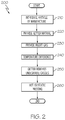
- FIG. 2 is a flowchart of a method for HIP processing in accordance with some embodiments of the present disclosure.
- the word “exemplary” means “serving as an example, instance, or illustration.” Thus, any HIP apparatus or method embodiment described herein as “exemplary” is not necessarily to be construed as preferred or advantageous over other embodiments. All of the embodiments described herein are exemplary embodiments provided to enable persons skilled in the art to make or use the invention and not to limit the scope of the invention which is defined by the claims. As further used herein, the word “about” means a possible variance (+/ ⁇ ) of the stated value of up to 10%, or alternatively up to 5%. Furthermore, there is no intention to be bound by any expressed or implied theory presented in the preceding technical field, background, brief summary, or the following detailed description. For example, the present disclosure discusses mass transport, which should be understood as a non-limiting theory.
- the present disclosure provides improved HIP methods and HIP apparatus, in connection with an article of manufacture.
- the term “HIP method” refers to the treatment of any article with an inert gas at greater-than-ambient temperatures and greater-than-ambient pressures for a period of time, wherein the inert gas is applied against the article from substantially all directions.
- exemplary greater-than-ambient temperatures may range from about 900° F. to about 2,400° F. (about 482° C. to about 1320° C.).
- Exemplary greater-than-ambient pressures may range from about 7,350 psi to about 45,000 psi (about 50.7 MPa to about 310 MPa).
- An exemplary period of time may range from about 30 minutes to about 48 hours.
- An exemplary inert gas is argon (Ar), or more broadly any of the noble gasses. Particular temperatures, pressures, periods of time, and inert gasses may be selected for a particular article including a particular material based on HIP principles that have been well-established in the art.
- the aforementioned exemplary HIP method may be executed in a HIP apparatus.
- the term “HIP apparatus” refers to any device or means capable of containing the article and supplying there-against the inert gas at the above noted greater-than-ambient temperatures and greater-than-ambient pressures.
- Some exemplary HIP apparatus include a sealable containment vessel operably coupled with a vacuum pump, a compressed inert gas source, and a heat exchanger.
- the containment vessel encloses the article of manufacture, and may be provided in any shape or size.
- the vacuum pump evacuates the containment vessel of standard atmospheric gasses such as oxygen and nitrogen.
- the compressed inert gas source supplies the inert gas at a suitable operating pressure, in place of the standard atmospheric gasses, within the containment vessel.
- the heat exchanger maintains the containment vessel at a suitable operating temperature.
- the HIP method performed using the HIP apparatus desirably improves the material properties, such as density and porosity, of the article of manufacture.
- article of manufacture refers to any solid piece, or any collection of solid pieces, that has previously undergone some manufacturing process, and that has a defined surface area and configuration.
- the term article of manufacture is thus used to distinguish from powdered alloys disposed in a mold, collapsible container, or the like, which have yet to take solid shape and form.
- Articles of manufacture may include any material susceptible to improve with HIP processing, such as metal-alloy articles and ceramic articles.
- An exemplary metal alloy is a nickel alloy, such as a nickel-based superalloy.
- Another exemplary alloy is a copper alloy.
- Exemplary, non-limiting articles of manufacture include rotating machine components, such as turbine components, for example turbine wheels and disks, and in particular dual alloy turbine wheels that undergo diffusion bonding during the HIP process.
- getter material refers to any material, in any shape or form, that is capable of removing a particular gas (or gasses) from a mixture of a plurality of gasses (by physical or chemical means), and maintaining said particular gas or gasses adsorbed or chemically bonded with the material in solid form such that said particular gas or gasses is (are) substantially incapable of disassociating from the getter material and rejoining the mixture of gasses.
- those gasses that are desirably removed by the getter material are those that may chemically degrade the surface of the article of manufacture.
- nitrogen-containing gasses such as N 2
- carbon-containing gasses such as CO or CO 2
- oxygen-containing gasses such as CO, CO 2 , or O 2
- Getter materials are thus selected in the context of the particular gas/gasses that are desired to be removed.
- titanium (Ti) and zirconium (Zr) based getter materials have found application in the removal carbon, nitrogen, and particularly oxygen from a mixture of gasses. Further, the person having ordinary skill in the art is aware of other getter materials and their known uses.
- the inventive HIP methods may employ the use of a shroud (or multiple shrouds) placed within the HIP apparatus containment vessel and enclosing the article of manufacture.
- shroud refers to any device that substantially or wholly encloses an interior volume.
- the shroud may be of any shape and size, and consequently its interior volume may be of any shape and size.
- Exemplary shrouds provide an interior volume of sufficient shape and size to wholly contain the article of manufacture.
- a shroud may be specially configured (with regard to shape and size) for a particular application (i.e., for a particular article of manufacture). Moreover, a shroud may be initially provided in two or more pieces, which are then joined together with the article or manufacture enclosed therein, for ease of use. Joining may be accomplished by any method, such as welding, mechanical fastening, peripheral interlocking (such as a double-walled lip), and the like.
- the shroud may generally include any material, but in some embodiments, the shroud material is selected to withstand the elevated temperatures and pressures encountered within the containment vessel during the HIP process without being substantially deformed or otherwise altered in shape and size. By virtue of its multi-piece joining, the shroud is thus configured to retard or inhibit mass transport into the interior volume of the shroud.
- One example, as noted above, is joining using a double-walled lip, wherein the double walled lip is responsible for retarding or inhibiting mass transport into the shroud.
- the driving force for such gaseous mass transport is provided by the elevated pressure during HIP processing in the containment vessel, as the pressure of the containment vessel is increased for normal HIP operations.
- Suitable materials for the shroud include ceramic materials, such as earth-based ceramic materials (e.g., kaolinite) or alumina. Methods for controlling the strength of ceramic materials are generally known in the art, and include the use of various additives, mechanical processing, and heat treatments.
- the shroud material may include the getter material disposed within its enclosed volume (in addition to the article of manufacture. In such applications, the getter material should be kept physically separate and apart from the article of manufacture at all time during HIP processing.
- HIP apparatus 100 includes containment vessel 110 , which is sealable with respect to the outside atmosphere 101 .
- vacuum pump 111 which is provided to withdraw standard atmospheric gasses (i.e., O 2 and N 2 ) from within the containment vessel 110
- compressor 112 which is provided to supply a compressed inert gas (e.g., Ar) to the containment vessel 110 (the inert gas being provided from inert gas source 113 ), and a heat exchanger 114 , which is provided to control the temperature within the containment vessel 110 .
- a compressed inert gas e.g., Ar
- first shroud 120 Disposed within the containment vessel 110 are a first shroud 120 and a getter material 150 .
- the first shroud 120 may be placed anywhere within the containment vessel 110 , and it may occupy any volume fraction thereof.
- the getter material 150 may be placed anywhere (or in multiple locations) within the containment vessel 110 , and it may occupy any volume fraction thereof.
- the first shroud 120 may be provided in two or more parts to allow for easy access to its enclosed volume, and the first shroud 120 therefore includes some connection and/or sealing means 121 , such as a weld line, a double-walled lip, or any mechanical fastening means.
- the first shroud 120 is made of material 125 , such as a ceramic, as noted above.
- the containment vessel 110 may further include a non-reactive material 151 , such as silica sand, disposed anywhere around, about, underneath, and/or over the first shroud 120 for purposes of further sealing and inhibition of fluid flow/convection/mass transport.
- a non-reactive material 151 such as silica sand
- a second shroud 130 and further getter material 150 Disposed and contained wholly within the first shroud 120 , optionally, are a second shroud 130 and further getter material 150 .
- the second shroud 130 is smaller in size as compared to the first shroud 120 , but itself may be of any shape or configuration that is similar or dissimilar with respect to the first shroud 120 .
- the further getter material 150 may be provided in any amount and at any location. Accordingly, the second shroud 130 and further getter material 150 may each, independently, occupy any volume fraction of the enclosed interior of the first shroud 120 .
- the second shroud 130 is made of material 135 , which may be the same or different as compared to the material 125 .
- the second shroud 130 may be a multi-piece device, sealed/joined together in any manner as noted above (not illustrated).
- Optional non-reactive material (not illustrated) may also be provided anywhere within the first shroud 120 , in the manner and for the purposes described above with regard to the containment vessel 110 .
- article of manufacture 140 Disposed and contained wholly within the second shroud 130 (or the first shroud 120 if no second shroud 130 is provided) is an article of manufacture 140 .
- article of manufacture may be of any shape or size, and may be positioned anywhere in the second shroud 130 and occupy any volume fraction thereof.
- the article of manufacture 140 should not be in physical contact with the getter material 150 in the second shroud 130 , if present.
- optionally included within the second shroud are further getter material 150 and a non-reactive stop-off material 152 (such as alumina), which is used to physically separate the second shroud 130 from direct contact with the article of manufacture 140 .
- a non-reactive stop-off material 152 such as alumina
- the optional further getter material 150 and stop-off material 152 may be positioned in any manner within the second shroud 130 and about, around, underneath, or over the article of manufacture 140 , and may each independently occupy any volume fraction of the interior enclosure of the second shroud 130 .
- the enclosed volume of the containment vessel 110 defines a first gaseous atmosphere 118 a
- the enclosed volume of the first shroud 120 defines a second gaseous atmosphere 118 b
- the enclosed volume of the second shroud 130 defines a third gaseous atmosphere 118 c .
- mass transport is retarded or inhibited from atmosphere 118 a to atmosphere 118 b to atmosphere 118 c . That is, as time passes, mass transport causes some gas of the atmosphere 118 a to migrate into atmosphere 118 b in an inhibited manner, and heat convention/conduction causes an increase in temperature of atmosphere 118 b .
- atmospheres 118 b and 118 c As further time passes, the same happens between atmospheres 118 b and 118 c . Eventually, after enough time has passed, the temperatures within all three atmospheres 118 a - c substantially equalize (as used herein, “substantially equalize” refers to a temperature differential of less than about 10%, such as less than about 5%). This amount of time may be anywhere from about 10 minutes to about 10 hours. As atmospheres 118 a and 118 b become hotter, initially, than 118 c , the getter material is able to react with some of the reactive gasses in these areas first. Mass transport is inhibited into atmosphere 118 c , wherein, at a later time, the gasses that do transport into the enclosed volume wherein the article of manufacture is held will have a lower concentration of the reactive gasses.
- the temperature of the atmosphere 118 a exceeds that of atmosphere 118 b , which in turn exceeds that of atmosphere 118 c .
- the atmospheric gasses pass from atmosphere 118 a to atmosphere 118 b to atmosphere 118 c , they encounter the various placements of getter materials in a progressive fashion (in the containment vessel 110 , in the first shroud 120 enclosed volume, and/or in the second shroud 130 enclosed volume).
- gasses that pass from the atmosphere 118 a to the atmosphere 118 b to the atmosphere 118 c should be expected to have progressively lower reactive (undesirable) gas content.
- FIG. 2 is a flowchart of a method 200 for HIP processing in accordance with some embodiments of the present disclosure.
- method step 210 an article of manufacture is introduced into a first shroud, the first shroud is optionally introduced into a second shroud, and the shroud(s) are introduced into the containment vessel of the HIP apparatus.
- method step 220 a getter material is provided in any or all of the first shroud enclosed volume, second shroud enclosed volume, and containment vessel.
- an inert gas at elevated temperature and pressure is introduced into the containment vessel.
- a transient temperature difference is formed from the containment vessel atmosphere to the first shroud enclosure atmosphere to the second shroud enclosure atmosphere. Mass transport is retarded or inhibited into the first and/or second shrouds.
- the getter material removes reactive (undesirable) gasses from the various atmospheres, with those atmospheres being at higher temperature experiencing a greater rate of removal.
- the temperatures equalize in all of the atmospheres, and the article of manufacture is exposed to HIP processing conditions with an atmosphere that has relatively less reactive (undesirable) gas content as compared to the atmosphere that existed immediately after the elevated temperature and pressure inert gas was introduced into the containment vessel (method step 230 ).
- the surface area of the article of manufacture experiences less chemical degradation (such as oxidation) as compared to conventional HIP processing.
- the present disclosure has provided various embodiments of improved hot isostatic pressing apparatus and hot isostatic pressing methods for reducing surface-area chemical degradation on an article of manufacture. While at least one exemplary embodiment has been presented in the foregoing detailed description of the invention, it should be appreciated that a vast number of variations exist. It should also be appreciated that the exemplary embodiment or exemplary embodiments are only examples, and are not intended to limit the scope, applicability, or configuration of the invention in any way. Rather, the foregoing detailed description will provide those skilled in the art with a convenient road map for implementing an exemplary embodiment of the invention. It being understood that various changes may be made in the function and arrangement of elements described in an exemplary embodiment without departing from the scope of the invention as set forth in the appended claims.
Landscapes
- Engineering & Computer Science (AREA)
- Mechanical Engineering (AREA)
- Manufacturing & Machinery (AREA)
- Physics & Mathematics (AREA)
- Fluid Mechanics (AREA)
- Powder Metallurgy (AREA)
Priority Applications (2)
| Application Number | Priority Date | Filing Date | Title |
|---|---|---|---|
| US15/397,950 US10583486B2 (en) | 2017-01-04 | 2017-01-04 | Hot isostatic pressing apparatus and hot isostatic pressing methods for reducing surface-area chemical degradation on an article of manufacture |
| EP18150088.5A EP3345700B1 (fr) | 2017-01-04 | 2018-01-02 | Procédés de pressage isostatique à chaud pour réduire la dégradation chimique de surface sur un article de fabrication |
Applications Claiming Priority (1)
| Application Number | Priority Date | Filing Date | Title |
|---|---|---|---|
| US15/397,950 US10583486B2 (en) | 2017-01-04 | 2017-01-04 | Hot isostatic pressing apparatus and hot isostatic pressing methods for reducing surface-area chemical degradation on an article of manufacture |
Publications (2)
| Publication Number | Publication Date |
|---|---|
| US20180185918A1 US20180185918A1 (en) | 2018-07-05 |
| US10583486B2 true US10583486B2 (en) | 2020-03-10 |
Family
ID=61005684
Family Applications (1)
| Application Number | Title | Priority Date | Filing Date |
|---|---|---|---|
| US15/397,950 Expired - Fee Related US10583486B2 (en) | 2017-01-04 | 2017-01-04 | Hot isostatic pressing apparatus and hot isostatic pressing methods for reducing surface-area chemical degradation on an article of manufacture |
Country Status (2)
| Country | Link |
|---|---|
| US (1) | US10583486B2 (fr) |
| EP (1) | EP3345700B1 (fr) |
Families Citing this family (1)
| Publication number | Priority date | Publication date | Assignee | Title |
|---|---|---|---|---|
| EP4299315A1 (fr) * | 2022-06-29 | 2024-01-03 | Fraunhofer-Gesellschaft zur Förderung der angewandten Forschung e.V. | Réduction de la teneur en oxygène dans une chambre de traitement |
Citations (18)
| Publication number | Priority date | Publication date | Assignee | Title |
|---|---|---|---|---|
| US2926981A (en) | 1957-09-11 | 1960-03-01 | Gen Electric | Method of gettering using zirconiumtitanium alloy |
| US3627521A (en) | 1969-02-28 | 1971-12-14 | Crucible Inc | Method of forming a powdered-metal compact employing a beta-titanium alloy as a getter for gaseous impurities |
| US3700435A (en) | 1971-03-01 | 1972-10-24 | Crucible Inc | Method for making powder metallurgy shapes |
| US3992200A (en) | 1975-04-07 | 1976-11-16 | Crucible Inc. | Method of hot pressing using a getter |
| US4032335A (en) | 1974-12-19 | 1977-06-28 | Sintermetallwerk Krebsoege Gmbh | Process for making metallic, molded composite bodies |
| US4038738A (en) | 1975-01-10 | 1977-08-02 | Uddeholms Aktiebolag | Method and means for the production of bar stock from metal powder |
| US4098450A (en) | 1977-03-17 | 1978-07-04 | General Electric Company | Superalloy article cleaning and repair method |
| US4108652A (en) | 1976-08-17 | 1978-08-22 | Nippon Tungsten Co., Ltd. | Method for producing a sintered body of high density |
| US4151400A (en) | 1977-06-15 | 1979-04-24 | Autoclave Engineers, Inc. | Autoclave furnace with mechanical circulation |
| US4552710A (en) | 1984-01-03 | 1985-11-12 | International Business Machines Corporation | Process of hot isostatic pressing of ferrite material |
| US4717551A (en) | 1984-07-07 | 1988-01-05 | Daimler-Benz Aktiengesellschaft | Titanium-based alloy used as a gettering material |
| US4983339A (en) | 1987-08-05 | 1991-01-08 | Commissariat A L'energie Atomique | Process for shaping a material by hot isostatic pressing and titanium sheath usable in this process |
| US5505248A (en) | 1990-05-09 | 1996-04-09 | Lanxide Technology Company, Lp | Barrier materials for making metal matrix composites |
| US6331271B1 (en) | 1995-12-01 | 2001-12-18 | Flow Holdings Gmbh, (Sagl) Llc | Method for hot-isostatic pressing of parts |
| US7135141B2 (en) | 2003-03-31 | 2006-11-14 | Hitachi Metals, Ltd. | Method of manufacturing a sintered body |
| US7931855B2 (en) | 2004-10-07 | 2011-04-26 | Roger Berglund | Method of controlling the oxygen content of a powder |
| US8449279B2 (en) | 2009-11-20 | 2013-05-28 | Kobe Steel, Ltd. | Hot isostatic pressing device |
| US20160184895A1 (en) | 2013-05-22 | 2016-06-30 | Aubert & Duval | Method of fabricating a steel part by powder metallurgy, and resulting steel part |
-
2017
- 2017-01-04 US US15/397,950 patent/US10583486B2/en not_active Expired - Fee Related
-
2018
- 2018-01-02 EP EP18150088.5A patent/EP3345700B1/fr not_active Not-in-force
Patent Citations (18)
| Publication number | Priority date | Publication date | Assignee | Title |
|---|---|---|---|---|
| US2926981A (en) | 1957-09-11 | 1960-03-01 | Gen Electric | Method of gettering using zirconiumtitanium alloy |
| US3627521A (en) | 1969-02-28 | 1971-12-14 | Crucible Inc | Method of forming a powdered-metal compact employing a beta-titanium alloy as a getter for gaseous impurities |
| US3700435A (en) | 1971-03-01 | 1972-10-24 | Crucible Inc | Method for making powder metallurgy shapes |
| US4032335A (en) | 1974-12-19 | 1977-06-28 | Sintermetallwerk Krebsoege Gmbh | Process for making metallic, molded composite bodies |
| US4038738A (en) | 1975-01-10 | 1977-08-02 | Uddeholms Aktiebolag | Method and means for the production of bar stock from metal powder |
| US3992200A (en) | 1975-04-07 | 1976-11-16 | Crucible Inc. | Method of hot pressing using a getter |
| US4108652A (en) | 1976-08-17 | 1978-08-22 | Nippon Tungsten Co., Ltd. | Method for producing a sintered body of high density |
| US4098450A (en) | 1977-03-17 | 1978-07-04 | General Electric Company | Superalloy article cleaning and repair method |
| US4151400A (en) | 1977-06-15 | 1979-04-24 | Autoclave Engineers, Inc. | Autoclave furnace with mechanical circulation |
| US4552710A (en) | 1984-01-03 | 1985-11-12 | International Business Machines Corporation | Process of hot isostatic pressing of ferrite material |
| US4717551A (en) | 1984-07-07 | 1988-01-05 | Daimler-Benz Aktiengesellschaft | Titanium-based alloy used as a gettering material |
| US4983339A (en) | 1987-08-05 | 1991-01-08 | Commissariat A L'energie Atomique | Process for shaping a material by hot isostatic pressing and titanium sheath usable in this process |
| US5505248A (en) | 1990-05-09 | 1996-04-09 | Lanxide Technology Company, Lp | Barrier materials for making metal matrix composites |
| US6331271B1 (en) | 1995-12-01 | 2001-12-18 | Flow Holdings Gmbh, (Sagl) Llc | Method for hot-isostatic pressing of parts |
| US7135141B2 (en) | 2003-03-31 | 2006-11-14 | Hitachi Metals, Ltd. | Method of manufacturing a sintered body |
| US7931855B2 (en) | 2004-10-07 | 2011-04-26 | Roger Berglund | Method of controlling the oxygen content of a powder |
| US8449279B2 (en) | 2009-11-20 | 2013-05-28 | Kobe Steel, Ltd. | Hot isostatic pressing device |
| US20160184895A1 (en) | 2013-05-22 | 2016-06-30 | Aubert & Duval | Method of fabricating a steel part by powder metallurgy, and resulting steel part |
Non-Patent Citations (1)
| Title |
|---|
| Extended EP Search Report for Application No. 18150088.5 dated Jun. 6, 2018. |
Also Published As
| Publication number | Publication date |
|---|---|
| EP3345700B1 (fr) | 2020-06-03 |
| US20180185918A1 (en) | 2018-07-05 |
| EP3345700A1 (fr) | 2018-07-11 |
Similar Documents
| Publication | Publication Date | Title |
|---|---|---|
| JP5719543B2 (ja) | 調節可能な容積及び隅部を有する熱間等方圧加圧容器のための改良機器及び方法 | |
| CN102398028B (zh) | 一种真空热动态金属粉末除气包套方法 | |
| US10760139B2 (en) | Method for repairing defects on hot parts of turbomachines through hybrid hot isostatic pressing (HIP) process | |
| CN100581684C (zh) | 控制粉末氧含量的方法 | |
| EP3345700B1 (fr) | Procédés de pressage isostatique à chaud pour réduire la dégradation chimique de surface sur un article de fabrication | |
| US7135141B2 (en) | Method of manufacturing a sintered body | |
| EP3148732A1 (fr) | Procédés de formation de diamant polycristallin et éléments de coupe et outils comprenant du diamant polycristallin | |
| WO2019205830A1 (fr) | Procédé pour favoriser la densification d'un corps métallique en utilisant une expansion par absorption d'hydrogène métallique | |
| JP2016526099A (ja) | 粉末冶金による鋼部品を製造する方法、及び結果的に得られる鋼部品 | |
| EP0485353A1 (fr) | Procédé de densification sous haute-pression isostatique | |
| US11638956B2 (en) | Hot isostatic pressing consolidation of powder derived parts | |
| CN117026011A (zh) | 特别适用于氢气和一氧化碳吸附的非蒸散型吸气剂合金 | |
| KR20100010159A (ko) | 변태초소성 현상을 적용한 가압확산접합 방법 및 이를이용한 열간등방가압공정 방법 | |
| GB2085032A (en) | Isostatic Pressing of Chromium Sputtering Targets | |
| US20090098004A1 (en) | Method for Hot Isostatic Pressing | |
| CN115026279A (zh) | 一种钛粉及其约束钝化控氧方法 | |
| CN108660300A (zh) | 一种防止金属圆筒热处理吸气劣化和减少变形的方法 | |
| JPS635321B2 (fr) | ||
| JP2003193225A (ja) | スパッタリング用タングステンターゲットの製造方法 | |
| CN112251658B (zh) | 一种超细晶粒梯度硬质合金及其制备方法和应用方法 | |
| JP2009108355A (ja) | 粉末固化成形体の機械加工方法 | |
| GB2548714B (en) | Assembly for synthesis of a superhard material | |
| JPH01156404A (ja) | 希土類含有金属の焼結法 | |
| JPH058056A (ja) | ステンレス鋼とアルミニウム又はアルミニウム合金の接合方法 | |
| JP4081762B2 (ja) | 焼結体の製造方法 |
Legal Events
| Date | Code | Title | Description |
|---|---|---|---|
| AS | Assignment |
Owner name: HONEYWELL INTERNATIONAL INC., NEW JERSEY Free format text: ASSIGNMENT OF ASSIGNORS INTEREST;ASSIGNORS:GATTO, CHRISTOPHER DAVID;COBB, JAMES J;MORETH, AARON;AND OTHERS;REEL/FRAME:040838/0980 Effective date: 20170103 |
|
| STPP | Information on status: patent application and granting procedure in general |
Free format text: RESPONSE TO NON-FINAL OFFICE ACTION ENTERED AND FORWARDED TO EXAMINER |
|
| STPP | Information on status: patent application and granting procedure in general |
Free format text: NON FINAL ACTION MAILED |
|
| STPP | Information on status: patent application and granting procedure in general |
Free format text: RESPONSE TO NON-FINAL OFFICE ACTION ENTERED AND FORWARDED TO EXAMINER |
|
| STPP | Information on status: patent application and granting procedure in general |
Free format text: NOTICE OF ALLOWANCE MAILED -- APPLICATION RECEIVED IN OFFICE OF PUBLICATIONS |
|
| ZAAA | Notice of allowance and fees due |
Free format text: ORIGINAL CODE: NOA |
|
| ZAAB | Notice of allowance mailed |
Free format text: ORIGINAL CODE: MN/=. |
|
| STPP | Information on status: patent application and granting procedure in general |
Free format text: PUBLICATIONS -- ISSUE FEE PAYMENT RECEIVED |
|
| STPP | Information on status: patent application and granting procedure in general |
Free format text: PUBLICATIONS -- ISSUE FEE PAYMENT VERIFIED |
|
| ZAAA | Notice of allowance and fees due |
Free format text: ORIGINAL CODE: NOA |
|
| ZAAA | Notice of allowance and fees due |
Free format text: ORIGINAL CODE: NOA |
|
| STCF | Information on status: patent grant |
Free format text: PATENTED CASE |
|
| FEPP | Fee payment procedure |
Free format text: MAINTENANCE FEE REMINDER MAILED (ORIGINAL EVENT CODE: REM.); ENTITY STATUS OF PATENT OWNER: LARGE ENTITY |
|
| LAPS | Lapse for failure to pay maintenance fees |
Free format text: PATENT EXPIRED FOR FAILURE TO PAY MAINTENANCE FEES (ORIGINAL EVENT CODE: EXP.); ENTITY STATUS OF PATENT OWNER: LARGE ENTITY |
|
| STCH | Information on status: patent discontinuation |
Free format text: PATENT EXPIRED DUE TO NONPAYMENT OF MAINTENANCE FEES UNDER 37 CFR 1.362 |
|
| FP | Lapsed due to failure to pay maintenance fee |
Effective date: 20240310 |