US10648519B2 - Torque path coupling assemblies for tiltrotor aircraft - Google Patents
Torque path coupling assemblies for tiltrotor aircraft Download PDFInfo
- Publication number
- US10648519B2 US10648519B2 US15/914,527 US201815914527A US10648519B2 US 10648519 B2 US10648519 B2 US 10648519B2 US 201815914527 A US201815914527 A US 201815914527A US 10648519 B2 US10648519 B2 US 10648519B2
- Authority
- US
- United States
- Prior art keywords
- rotating speed
- output
- assembly
- input
- gear assembly
- Prior art date
- Legal status (The legal status is an assumption and is not a legal conclusion. Google has not performed a legal analysis and makes no representation as to the accuracy of the status listed.)
- Active, expires
Links
Images


Classifications
-
- F—MECHANICAL ENGINEERING; LIGHTING; HEATING; WEAPONS; BLASTING
- F16—ENGINEERING ELEMENTS AND UNITS; GENERAL MEASURES FOR PRODUCING AND MAINTAINING EFFECTIVE FUNCTIONING OF MACHINES OR INSTALLATIONS; THERMAL INSULATION IN GENERAL
- F16D—COUPLINGS FOR TRANSMITTING ROTATION; CLUTCHES; BRAKES
- F16D47/00—Systems of clutches, or clutches and couplings, comprising devices of types grouped under at least two of the following sets of groups: F16D1/00 - F16D9/00, F16D11/00 - F16D23/00, F16D25/00 - F16D29/00, F16D31/00 - F16D39/00, F16D41/00 - F16D45/00
- F16D47/04—Systems of clutches, or clutches and couplings, comprising devices of types grouped under at least two of the following sets of groups: F16D1/00 - F16D9/00, F16D11/00 - F16D23/00, F16D25/00 - F16D29/00, F16D31/00 - F16D39/00, F16D41/00 - F16D45/00 of which at least one is a freewheel
-
- B—PERFORMING OPERATIONS; TRANSPORTING
- B64—AIRCRAFT; AVIATION; COSMONAUTICS
- B64C—AEROPLANES; HELICOPTERS
- B64C11/00—Propellers, e.g. of ducted type; Features common to propellers and rotors for rotorcraft
-
- B—PERFORMING OPERATIONS; TRANSPORTING
- B64—AIRCRAFT; AVIATION; COSMONAUTICS
- B64C—AEROPLANES; HELICOPTERS
- B64C11/00—Propellers, e.g. of ducted type; Features common to propellers and rotors for rotorcraft
- B64C11/16—Blades
- B64C11/20—Constructional features
- B64C11/28—Collapsible or foldable blades
-
- B—PERFORMING OPERATIONS; TRANSPORTING
- B64—AIRCRAFT; AVIATION; COSMONAUTICS
- B64C—AEROPLANES; HELICOPTERS
- B64C27/00—Rotorcraft; Rotors peculiar thereto
- B64C27/22—Compound rotorcraft, i.e. aircraft using in flight the features of both aeroplane and rotorcraft
- B64C27/28—Compound rotorcraft, i.e. aircraft using in flight the features of both aeroplane and rotorcraft with forward-propulsion propellers pivotable to act as lifting rotors
-
- B—PERFORMING OPERATIONS; TRANSPORTING
- B64—AIRCRAFT; AVIATION; COSMONAUTICS
- B64C—AEROPLANES; HELICOPTERS
- B64C27/00—Rotorcraft; Rotors peculiar thereto
- B64C27/22—Compound rotorcraft, i.e. aircraft using in flight the features of both aeroplane and rotorcraft
- B64C27/30—Compound rotorcraft, i.e. aircraft using in flight the features of both aeroplane and rotorcraft with provision for reducing drag of inoperative rotor
-
- B—PERFORMING OPERATIONS; TRANSPORTING
- B64—AIRCRAFT; AVIATION; COSMONAUTICS
- B64C—AEROPLANES; HELICOPTERS
- B64C27/00—Rotorcraft; Rotors peculiar thereto
- B64C27/52—Tilting of rotor bodily relative to fuselage
-
- B—PERFORMING OPERATIONS; TRANSPORTING
- B64—AIRCRAFT; AVIATION; COSMONAUTICS
- B64C—AEROPLANES; HELICOPTERS
- B64C29/00—Aircraft capable of landing or taking-off vertically, e.g. vertical take-off and landing [VTOL] aircraft
- B64C29/0008—Aircraft capable of landing or taking-off vertically, e.g. vertical take-off and landing [VTOL] aircraft having its flight directional axis horizontal when grounded
- B64C29/0016—Aircraft capable of landing or taking-off vertically, e.g. vertical take-off and landing [VTOL] aircraft having its flight directional axis horizontal when grounded the lift during taking-off being created by free or ducted propellers or by blowers
- B64C29/0033—Aircraft capable of landing or taking-off vertically, e.g. vertical take-off and landing [VTOL] aircraft having its flight directional axis horizontal when grounded the lift during taking-off being created by free or ducted propellers or by blowers the propellers being tiltable relative to the fuselage
-
- B—PERFORMING OPERATIONS; TRANSPORTING
- B64—AIRCRAFT; AVIATION; COSMONAUTICS
- B64D—EQUIPMENT FOR FITTING IN OR TO AIRCRAFT; FLIGHT SUITS; PARACHUTES; ARRANGEMENT OR MOUNTING OF POWER PLANTS OR PROPULSION TRANSMISSIONS IN AIRCRAFT
- B64D35/00—Transmitting power from power plants to propellers or rotors; Arrangements of transmissions
- B64D35/04—Transmitting power from power plants to propellers or rotors; Arrangements of transmissions characterised by the transmission driving a plurality of propellers or rotors
-
- F—MECHANICAL ENGINEERING; LIGHTING; HEATING; WEAPONS; BLASTING
- F16—ENGINEERING ELEMENTS AND UNITS; GENERAL MEASURES FOR PRODUCING AND MAINTAINING EFFECTIVE FUNCTIONING OF MACHINES OR INSTALLATIONS; THERMAL INSULATION IN GENERAL
- F16D—COUPLINGS FOR TRANSMITTING ROTATION; CLUTCHES; BRAKES
- F16D23/00—Details of mechanically-actuated clutches not specific for one distinct type
- F16D23/02—Arrangements for synchronisation, also for power-operated clutches
- F16D23/04—Arrangements for synchronisation, also for power-operated clutches with an additional friction clutch
-
- F—MECHANICAL ENGINEERING; LIGHTING; HEATING; WEAPONS; BLASTING
- F16—ENGINEERING ELEMENTS AND UNITS; GENERAL MEASURES FOR PRODUCING AND MAINTAINING EFFECTIVE FUNCTIONING OF MACHINES OR INSTALLATIONS; THERMAL INSULATION IN GENERAL
- F16D—COUPLINGS FOR TRANSMITTING ROTATION; CLUTCHES; BRAKES
- F16D41/00—Freewheels or freewheel clutches
- F16D41/06—Freewheels or freewheel clutches with intermediate wedging coupling members between an inner and an outer surface
- F16D41/069—Freewheels or freewheel clutches with intermediate wedging coupling members between an inner and an outer surface the intermediate members wedging by pivoting or rocking, e.g. sprags
Definitions
- the present disclosure relates, in general, to tiltrotor aircraft having rotary and non rotary flight modes and, in particular, to rotary propulsion systems for tiltrotor aircraft having a torque path coupling assembly between the engine and the proprotor assembly to selectively provide and interrupt the torque path therebetween.
- Fixed-wing aircraft such as airplanes, are capable of flight using wings that generate lift responsive to the forward airspeed of the aircraft, which is generated by thrust from one or more jet engines or propellers.
- the wings generally have an airfoil cross section that deflects air downward as the aircraft moves forward, generating the lift force to support the aircraft in flight.
- Fixed-wing aircraft typically require a runway that is hundreds or thousands of feet long for takeoff and landing.
- VTOL aircraft Unlike fixed-wing aircraft, vertical takeoff and landing (VTOL) aircraft do not require runways. Instead, VTOL aircraft are capable of taking off, hovering and landing vertically.
- VTOL aircraft is a helicopter which is a rotorcraft having one or more rotors that provide lift and thrust to the aircraft. The rotors not only enable hovering and vertical takeoff and landing, but also enable forward, backward and lateral flight. These attributes make helicopters highly versatile for use in congested, isolated or remote areas. Helicopters, however, typically lack the forward airspeed of fixed-wing aircraft due to the phenomena of retreating blade stall and advancing blade compression.
- Tiltrotor aircraft attempt to overcome this drawback by utilizing proprotors that can change their plane of rotation based on the operation being performed.
- Tiltrotor aircraft typically have a pair of nacelles mounted near the outboard ends of a fixed wing with each nacelle housing a propulsion system that provides torque and rotational energy to a proprotor.
- the nacelles are rotatable relative to the fixed wing such that the proprotors have a generally horizontal plane of rotation providing vertical thrust for takeoff, hovering and landing, much like a conventional helicopter, and a generally vertical plane of rotation providing forward thrust for cruising in forward flight with the fixed wing providing lift, much like a conventional propeller driven airplane. It has been found, however, that forward airspeed induced proprotor aeroelastic instability is a limiting factor relating to the maximum airspeed of conventional tiltrotor aircraft in forward flight.
- the present disclosure is directed to a rotary propulsion system for a tiltrotor aircraft operable to transition between rotary and non rotary flight modes.
- the rotary propulsion system includes an engine having an engine rotating speed in the non rotary flight mode.
- a freewheeling unit is coupled to the engine.
- a gear system has a torque path coupling assembly between first and second gear assemblies.
- the first gear assembly is coupled to the freewheeling unit and has an output.
- the second gear assembly has an input.
- a proprotor assembly is coupled to the second gear assembly and has a proprotor rotating speed in the non rotary flight mode.
- the proprotor assembly has a plurality of proprotor blades with a radially extended orientation.
- the torque path coupling assembly has an engaged position wherein the output of the first gear assembly is coupled to the input of the second gear assembly thereby providing a torque path between the engine and the proprotor assembly.
- the torque path coupling assembly has a disengaged position wherein the output of the first gear assembly is independent of the input of the second gear assembly thereby interrupting the torque path between the engine and the proprotor assembly.
- the freewheeling unit may be a sprag clutch.
- the torque path coupling assembly may include a coupling sleeve having internal splines that are in mesh with the input of the second gear assembly and in mesh with the output of the first gear assembly when the torque path coupling assembly is in the engaged position. In such embodiments, the internal splines of the coupling sleeve are not in mesh with the output of the first gear assembly when the torque path coupling assembly is in the disengaged position.
- the torque path coupling assembly may include a synchronizing ring having outer splines and an inner friction cone.
- the outer splines may be operable to selectively align with the inner splines of the coupling sleeve.
- the inner friction cone may be operable for friction contact with an outer conical face of the output of the first gear assembly to synchronize the output rotating speed and the input rotating speed.
- the torque path coupling assembly may include a hub coupled to the input of the second gear assembly and a plurality of struts spring mounted to the hub such that axially shifting the coupling sleeve toward the output of the first gear assembly from the disengaged position causes the struts to contact the synchronizing ring to shift the inner friction cone of the synchronizing ring into friction contact with the outer conical face of the output of the first gear assembly.
- the rotating speed of the output of the first gear assembly is proportional to the engine rotating speed
- the rotating speed of the input of the second gear assembly is proportional to the proprotor rotating speed
- the torque path coupling assembly is shiftable from the disengaged position to the engaged position when the output rotating speed and the input rotating speed are synchronized and/or the input rotating speed is greater than the output rotating speed prior to synchronizing the output rotating speed and the input rotating speed.
- the input rotating speed may be between about 0.5 percent and about 1 percent greater than the output rotating speed prior to synchronizing the output rotating speed and the input rotating speed. In other embodiments, the input rotating speed may be between about 1 percent and about 2 percent greater than the output rotating speed prior to synchronizing the output rotating speed and the input rotating speed.
- the present disclosure is directed to a tiltrotor aircraft operable to transition between rotary and non rotary flight modes.
- the tiltrotor aircraft includes an engine having an engine rotating speed in the non rotary flight mode.
- a freewheeling unit is coupled to the engine.
- a proprotor assembly has a plurality of proprotor blades with a radially extended orientation and a proprotor rotating speed in the non rotary flight mode.
- a gear system has a torque path coupling assembly between first and second gear assemblies.
- the first gear assembly is coupled to the freewheeling unit and has an output with an output rotating speed that is proportional to the engine rotating speed.
- the second gear assembly is coupled to the proprotor assembly and has an input with an input rotating speed that is proportional to the proprotor rotating speed.
- the torque path coupling assembly has an engaged position wherein the output of the first gear assembly is coupled to the input of the second gear assembly thereby providing a torque path between the engine and the proprotor assembly.
- the torque path coupling assembly has a disengaged position wherein the output of the first gear assembly is independent of the input of the second gear assembly thereby interrupting the torque path between the engine and the proprotor assembly.
- the torque path coupling assembly is shiftable from the disengaged position to the engaged position when the output rotating speed and the input rotating speed are synchronized.
- the engine may be selectively operable in a turboshaft mode and a turbofan mode.
- the input rotating speed is greater than the output rotating speed prior to synchronizing the output rotating speed and the input rotating speed.
- the proprotor rotating speed in the non rotary flight mode may be generated responsive to aerodynamic forces acting on the proprotor blades.
- the proprotor blades may have a non rotating and folded configuration in the non rotary flight mode.
- the present disclosure is directed to a method of transitioning a tiltrotor aircraft from a non rotary flight mode to a rotary flight mode.
- the method includes operating an engine in a turbofan mode at an engine rotating speed; rotating an output of a first gear assembly of a gear system at an output rotating speed that is proportional to the engine rotating speed, a freewheeling unit coupled between the engine and the first gear assembly; rotating a proprotor assembly at a proprotor rotating speed responsive to aerodynamic forces acting on a plurality of proprotor blades; rotating an input of a second gear assembly of the gear system at an input rotating speed that is proportional to the proprotor rotating speed, the input rotating speed being greater than the output rotating speed; and actuating a torque path coupling assembly of the gear system from a disengaged position wherein the output of the first gear assembly is independent of the input of the second gear assembly thereby interrupting a torque path between the engine and the proprotor assembly to an engaged position including synchronizing the rotating speed of the output of the first gear assembly
- the method may also include establishing the input rotating speed between about 0.5 percent and about 1 percent higher than the output rotating speed prior to synchronizing the output rotating speed and the input rotating speed; establishing the input rotating speed between about 1 percent and about 2 percent higher than the output rotating speed prior to synchronizing the output rotating speed and the input rotating speed; increasing the engine rotating speed to transition the freewheeling unit from an over running mode to a driving mode after actuating the torque path coupling assembly; shifting an inner friction cone of a synchronizing ring into frictional contact with an outer conical face of the output of the first gear assembly and/or shifting a coupling sleeve having internal splines in mesh with the input of the second gear assembly and the output of the first gear assembly to provide the torque path between the engine and the proprotor assembly.
- FIGS. 1A-1D are schematic illustrations of a tiltrotor aircraft in various flight modes in accordance with embodiments of the present disclosure
- FIG. 2 is a block diagram of a rotary propulsion system having a torque path coupling assembly for use in a tiltrotor aircraft in accordance with embodiments of the present disclosure
- FIGS. 3A-3D are cross sectional views of a torque path coupling assembly for use in a rotary propulsion system of a tiltrotor aircraft in accordance with embodiments of the present disclosure.
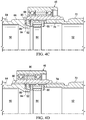
- FIGS. 4A-4D are cross sectional views depicting the operation of a torque path coupling assembly for use in a rotary propulsion system of a tiltrotor aircraft in accordance with embodiments of the present disclosure.
- the devices, members, apparatuses, and the like described herein may be positioned in any desired orientation.
- the use of terms such as “above,” “below,” “upper,” “lower” or other like terms to describe a spatial relationship between various components or to describe the spatial orientation of aspects of such components should be understood to describe a relative relationship between the components or a spatial orientation of aspects of such components, respectively, as the device described herein may be oriented in any desired direction.
- the term “coupled” may include direct or indirect coupling by any means, including moving and/or non-moving mechanical connections.
- Aircraft 10 includes a fuselage 12 , a wing 14 and tail assembly 16 including control surfaces operable for horizontal and/or vertical stabilization during forward flight.
- wing 14 Located proximate the outboard ends of wing 14 are pylon assemblies 18 a , 18 b that are rotatable relative to wing 14 between a generally vertical orientation, as best seen in FIG. 1A , and a generally horizontal orientation, as best seen in FIGS. 1B-1D .
- Pylon assemblies 18 a , 18 b each house a portion of the drive system that is used to rotate proprotor assemblies 20 a , 20 b , respectively.
- a proprotor gearbox 22 a is housed within pylon assembly 18 a .
- Each proprotor gearbox includes a proprotor gearbox housing and a plurality of gears, such as planetary gears, used to adjust the engine output to a suitable rotational speed so that the engines and the proprotor assemblies may rotate at optimum speeds in rotary flight modes of aircraft 10 .
- Each proprotor assembly 20 a , 20 b includes a plurality of proprotor blades 24 that are operable to be rotated, as best seen in FIGS. 1A-1B , operable to be feathered, stopped, clocked and locked, as best seen in FIG. 1C and operable to be folded, as best seen in FIG. 1D .
- proprotor assembly 20 a is rotated responsive to torque and rotational energy provided by one or both of engines 26 a , 26 b via mid-wing gearbox 30 , output shaft 32 a , proprotor gearbox 22 a and a mast 34 a .
- proprotor assembly 20 b is rotated responsive to torque and rotational energy provided by one or both of engines 26 a , 26 b via mid-wing gearbox 30 , an output shaft (not pictured), a proprotor gearbox (not pictured) and a mast (not pictured).
- Engines 26 a , 26 b are located in the aft portion of fuselage 12 .
- Engines 26 a , 26 b may be operated in either a turboshaft mode, as best seen in FIGS. 1A-1B or a turbofan mode, as best seen in FIGS. 1C-1D .
- FIG. 1A illustrates aircraft 10 in VTOL or helicopter flight mode, in which proprotor assemblies 20 a , 20 b are rotating in a substantially horizontal plane to provide vertical lift, such that aircraft 10 flies much like a conventional helicopter.
- engines 26 a , 26 b are operating in turboshaft mode wherein hot combustion gases in each engine 26 a , 26 b cause rotation of a power turbine that is mechanically coupled to proprotor assemblies 20 a , 20 b .
- aircraft 10 is considered to be in a rotary flight mode, wherein the rotary propulsion system of aircraft 10 , including engines 26 a , 26 b , mid-wing gearbox 30 , the proprotor gearboxes and proprotor assemblies 20 a , 20 b as well as the shafts and/or other elements coupled therebetween provides thrust, in the form of vertical lift, for aircraft 10 .
- FIG. 1B illustrates aircraft 10 in proprotor forward flight mode, in which proprotor assemblies 20 a , 20 b are rotating in a substantially vertical plane to provide forward thrust enabling wing 14 to provide a lifting force responsive to forward airspeed, such that aircraft 10 flies much like a conventional propeller driven aircraft.
- engines 26 a , 26 b are operating in the turboshaft mode and aircraft 10 is considered to be in the rotary flight mode.
- proprotor assemblies 20 a , 20 b rotate in opposite directions to provide torque balancing to aircraft 10 .
- proprotor assembly 20 a rotates clockwise, as indicated by motion arrows 36 a
- proprotor assembly 20 b rotates counterclockwise, as indicated by motion arrows 36 b .
- proprotor assemblies 20 a , 20 b each include three proprotor blades 24 that are equally spaced apart circumferentially at approximately 120 degree intervals.
- proprotor assemblies of the present disclosure could have proprotor blades with other designs and other configurations including proprotor assemblies having four, five or more proprotor blades.
- aircraft 10 can be operated such that proprotor assemblies 20 a , 20 b are selectively positioned between proprotor forward flight mode and helicopter mode, which can be referred to as a conversion flight mode.
- FIG. 1C illustrates aircraft 10 in transition from proprotor forward flight mode to airplane forward flight mode, in which the torque path between engines 26 a , 26 b and proprotor assemblies 20 a , 20 b has been interrupted and proprotor blades 24 have been feathered, or oriented to be streamlined in the direction of flight, such that proprotor blades 24 act as brakes to aerodynamically slow the rotation of proprotor assemblies 20 a , 20 b .
- the rotation of proprotor assemblies 20 a , 20 b is stopped using, for example, brake systems.
- the brake systems include position sensors such that the output shafts can be stopped at predetermined rotational positions.
- engines 26 a , 26 b are operating in turbofan mode wherein hot combustion gases in each engine 26 a , 26 b cause rotation of a power turbine coupled to an output shaft that is used to power a turbofan that forces bypass air through a fan duct to create forward thrust enabling wing 14 to provide a lifting force responsive to forward airspeed, such that aircraft 10 flies much like a conventional jet aircraft.
- aircraft 10 is considered to be in a non rotary flight mode as proprotor assemblies 20 a , 20 b are no longer providing thrust for aircraft 10 .
- FIG. 1D illustrates aircraft 10 in high speed, airplane forward flight mode, in which proprotor blades 24 have been folded to be oriented substantially parallel to respective pylon assemblies 18 a , 18 b to minimize the drag force generated by proprotor blades 24 .
- proprotor blades 24 are preferably received within slots 40 of pylon assemblies 18 a , 18 b .
- engines 26 a , 26 b are operating in the turbofan mode and aircraft 10 is considered to be in the non rotary flight mode.
- the forward cruising speed of aircraft 10 can be significantly higher in airplane forward flight mode versus proprotor forward flight mode as the forward airspeed induced proprotor aeroelastic instability is overcome.
- the rotary propulsion system includes engines 26 a , 26 b , mid-wing gearbox 30 , proprotor gearboxes 22 a , 22 b and proprotor assemblies 20 a , 20 b .
- a freewheeling unit depicted as sprag clutch 42 a is coupled between engine 26 a and mid-wing gearbox 30 .
- a freewheeling unit depicted as sprag clutch 42 b is coupled between engine 26 b and mid-wing gearbox 30 .
- Sprag clutches 42 a , 42 b have a drive mode wherein torque from engines 26 a , 26 b is coupled to mid-wing gearbox 30 when the input rotating speed to sprag clutches 42 a , 42 b is matched with the output rotating speed from sprag clutches 42 a , 42 b .
- sprag clutches 42 a , 42 b have an over running mode wherein torque from engines 26 a , 26 b is not coupled to mid-wing gearbox 30 when the input rotating speed to sprag clutches 42 a , 42 b is less than the output rotating speed from sprag clutches 42 a , 42 b .
- operating sprag clutches 42 a , 42 b in the over running mode aids in transitioning aircraft 10 from the non rotary flight mode to the rotary flight mode.
- mid-wing gearbox 30 includes a gear system having a first gear assembly 44 , a torque path coupling assembly 46 and a second gear assembly 48 .
- the gear system could be housed in multi discrete gearboxes that are coupled together with suitable shafts.
- First gear assembly 44 is coupled to each of sprag clutches 42 a , 42 b and is operable to be driven by one or both of engines 26 a , 26 b .
- First gear assembly 44 may include one or more gears or gear subassemblies such as spiral beveled gear sets to change the direction of the torque from sprag clutches 42 a , 42 b .
- First gear assembly 44 includes an output 50 , such as an output gear and/or output shaft, that is rotatable during operation of first gear assembly 44 .
- the rotating speed of output 50 is proportional to the rotating speed of engines 26 a , 26 b when sprag clutches 42 a , 42 b are in drive mode based upon the gear ratio of first gear assembly 44 .
- Second gear assembly 48 is coupled to each of proprotor gearboxes 22 a , 22 b and thus to proprotor assemblies 20 a , 20 b by one or more shafts.
- Second gear assembly 48 may include one or more gears or gear subassemblies.
- Second gear assembly 48 includes an input 52 , such as an input gear and/or input shaft, that is rotatable during operation of second gear assembly 48 .
- the rotating speed of input 52 is proportional to the rotating speed of proprotor assemblies 20 a , 20 b based upon the gear ratio of second gear assembly 48 and proprotor gearboxes 22 a , 22 b.
- torque path coupling assembly 46 is positioned between output 50 of first gear assembly 44 and input 52 of second gear assembly 48 .
- Torque path coupling assembly 46 is operable to selectively provide and interrupt the torque path between output 50 of first gear assembly 44 and input 52 of second gear assembly 48 and thus between engines 26 a , 26 b and proprotor assemblies 20 a , 20 b .
- Torque path coupling assembly 46 is shiftable between engaged and disengaged positions by a hydraulic actuator 54 or other suitable actuation system that is controlled by the pilot and/or the flight control system of aircraft 10 .
- torque path coupling assembly 46 couples output 50 of first gear assembly 44 with input 52 of second gear assembly 48 such that output 50 of first gear assembly 44 and input 52 of second gear assembly 48 rotate at the same speed and torque is coupled therebetween.
- output 50 of first gear assembly 44 is independent of input 52 of second gear assembly 48 such that output 50 of first gear assembly 44 and input 52 of second gear assembly 48 may rotate at different speeds and torque is not coupled therebetween.
- aircraft 10 is represented in transition from airplane flight mode to proprotor forward flight mode.
- aircraft 10 in airplane flight mode, aircraft 10 is considered to be in a non rotary flight mode as proprotor assemblies 20 a , 20 b are not providing thrust for aircraft 10 and torque from engines 26 a , 26 b is interrupted due to the disengaged position of torque path coupling assembly 46 .
- proprotor blades 24 have been transitioned from the folded configuration in FIG. 1D to the radially extended configuration in FIG. 1C .
- Any brakes or locking mechanisms associated with proprotor assemblies 20 a , 20 b are now released, which allows proprotor assemblies 20 a , 20 b to windmill, as indicated by motion arrows 36 a , 36 b .
- the pitch of proprotor blades 24 may be collectively manipulated such that aerodynamic forces acting on proprotor blades 24 responsive to the forward airspeed of aircraft 10 cause proprotor assemblies 20 a , 20 b to rotate.
- the rotating speed of proprotor assemblies 20 a , 20 b is controlled based upon the pitch of proprotor blades 24 , which is selected by the pilot and/or the flight control system of aircraft 10 .
- the rotating speed of input 52 is proportional to the rotating speed of proprotor assemblies 20 a , 20 b , the rotating speed of input 52 is controlled based upon the pitch of proprotor blades 24 .
- the rotating speed of output 50 is proportional to the rotating speed of engines 26 a , 26 b , the rotating speed of output 50 is controlled based upon the engine rotating speed. It is noted that even when engines 26 a , 26 b are in turbofan mode, the power shafts of engines 26 a , 26 b continue to rotate which in turn drives sprag clutches 42 a , 42 a as well as first gear assembly 44 including output 50 .
- the pitch of proprotor blades 24 is used to adjust the rotating speed of input 52 to be greater than the rotating speed of output 50 .
- the rotating speed of input 52 may be adjusted to be between about 0.5 percent and about 1 percent greater than the rotating speed of output 50 .
- the rotating speed of input 52 may be adjusted to be between about 1 percent and about 2 percent greater than the rotating speed of output 50 .
- the rotating speed of input 52 may be adjusted to be between about 2 percent and about 5 percent greater than the rotating speed of output 50 .
- output 50 of first gear assembly 44 includes a gear element 60 having a plurality of external teeth 62 that are operable to mesh with another gear element (not pictured) of first gear assembly 44 .
- output 50 of first gear assembly 44 includes a shaft element 64 having external splines 66 that are operable to selectively mesh with torque path coupling assembly 46 .
- input 52 of second gear assembly 48 includes a gear element 68 having a plurality of external teeth 70 that are operable to mesh with another gear element (not pictured) of second gear assembly 48 .
- input 52 of second gear assembly 48 includes a shaft element 72 having external splines 74 that are operable to mesh with torque path coupling assembly 46 .
- FIGS. 3A and 3C show torque path coupling assembly 46 in the disengaged position wherein output 50 of first gear assembly 44 is independent of input 52 of second gear assembly 48 thereby interrupting the torque path between engines 26 a , 26 b and proprotor assemblies 20 a , 20 b .
- FIGS. 3B and 3D show torque path coupling assembly 46 in the engaged position wherein output 50 of first gear assembly 44 is coupled to input 52 of second gear assembly 48 thereby providing the torque path between engines 26 a , 26 b and proprotor assemblies 20 a , 20 b.
- torque path coupling assembly 46 includes a non rotating carriage 76 that is coupled to hydraulic actuator 54 .
- a bearing assembly depicted as ball bearing assembly 78 to allow relative rotation between non rotating carriage 76 and the rotating elements of torque path coupling assembly 46 .
- a coupling sleeve 80 Positioned within ball bearing assembly 78 is a coupling sleeve 80 having internal splines 82 .
- Torque path coupling assembly 46 also includes a hub 84 that is coupled to input 52 of second gear assembly 48 with a plurality of struts 86 spring mounted therearound.
- torque path coupling assembly 46 includes three spring mounted struts 86 but in other embodiments, a torque path coupling assembly could have other numbers of spring mounted struts.
- Torque path coupling assembly 46 includes a synchronizing ring 88 having outer splines 90 and an inner friction cone 92 .
- torque path coupling assembly 46 Prior to actuating torque path coupling assembly 46 from the disengaged position ( FIG. 4A ), wherein the torque path between engines 26 a , 26 b and proprotor assemblies 20 a , 20 b is interrupted, to the engaged position ( FIG. 4D ), wherein the torque path between engines 26 a , 26 b and proprotor assemblies 20 a , 20 b is provided, aircraft 10 is operated such that the rotating speed of input 52 to be greater than the rotating speed of output 50 . As discussed herein, this is achieved by controlling the rotating speed of engines 26 a , 26 b and the rotating speed of proprotor assemblies 20 a , 20 b .
- input 52 rotates with coupling sleeve 80 , hub 84 , struts 86 and synchronizing ring 88 .
- output 50 rotates independent of input 52 at a slightly slow rotating speed.
- the pilot and/or flight control system of aircraft 10 now signals hydraulic actuator 50 to shift coupling sleeve 80 toward output 50 which causes struts 86 to contact synchronizing ring 88 bringing inner friction cone 92 of synchronizing ring 88 into friction contact with an outer conical face 94 of output 50 .
- the friction contact causes an increase in the rotating speed of output 50 , which causes sprag clutches 42 a , 42 b to operate in the over running mode as the input rotating speed to sprag clutches 42 a , 42 b is less than the output rotating speed from sprag clutches 42 a , 42 b .
- Operating sprag clutches 42 a , 42 b in the over running mode reduces and/or eliminates the applied torque from engines 26 a , 26 b allowing for smoother meshing of torque path coupling assembly 46 with outer splines 66 of output 50 .
- hydraulic actuator 54 shifts coupling sleeve 80 further toward output 50 which causes keys 96 to radially contact struts 86 , as best seen in FIG. 4B .
- struts 86 no longer contact synchronizing ring 88 , however, the front edges of inner splines 82 of coupling sleeve 80 maintain pressure on outer splines 90 of synchronizing ring 88 which maintains the friction contact between inner friction cone 92 of synchronizing ring 88 and outer conical face 94 of output 50 .
- aircraft 10 has been described as having a rotary propulsion system having two engines located within the fuselage and two proprotor assemblies at outboard stations of the wing, it should be understood by those having ordinary skill in the art that other engine and other proprotor assembly arrangements are possible and are considered to be within the scope of the present disclosure.
- the rotary propulsion system has been described and illustrated in the context of tiltrotor aircraft 10 , it should be understood by those having ordinary skill in the art that the rotary propulsion system disclosed herein can be implemented on other aircraft including, for example, multi rotor aircraft wherein selective operation of certain rotors during flight may be desirable.
Landscapes
- Engineering & Computer Science (AREA)
- Mechanical Engineering (AREA)
- Aviation & Aerospace Engineering (AREA)
- General Engineering & Computer Science (AREA)
- Chemical & Material Sciences (AREA)
- Combustion & Propulsion (AREA)
- Retarders (AREA)
Priority Applications (3)
| Application Number | Priority Date | Filing Date | Title |
|---|---|---|---|
| US15/914,527 US10648519B2 (en) | 2018-03-07 | 2018-03-07 | Torque path coupling assemblies for tiltrotor aircraft |
| EP18195581.6A EP3536610B1 (de) | 2018-03-07 | 2018-09-19 | Drehmomentwegkopplungsanordnungen für kipprotorflugzeuge |
| US16/212,045 US10759527B2 (en) | 2018-03-07 | 2018-12-06 | Torque path coupling assemblies for tiltrotor aircraft |
Applications Claiming Priority (1)
| Application Number | Priority Date | Filing Date | Title |
|---|---|---|---|
| US15/914,527 US10648519B2 (en) | 2018-03-07 | 2018-03-07 | Torque path coupling assemblies for tiltrotor aircraft |
Related Child Applications (1)
| Application Number | Title | Priority Date | Filing Date |
|---|---|---|---|
| US16/212,045 Continuation-In-Part US10759527B2 (en) | 2018-03-07 | 2018-12-06 | Torque path coupling assemblies for tiltrotor aircraft |
Publications (2)
| Publication Number | Publication Date |
|---|---|
| US20190277353A1 US20190277353A1 (en) | 2019-09-12 |
| US10648519B2 true US10648519B2 (en) | 2020-05-12 |
Family
ID=63667705
Family Applications (1)
| Application Number | Title | Priority Date | Filing Date |
|---|---|---|---|
| US15/914,527 Active 2038-12-19 US10648519B2 (en) | 2018-03-07 | 2018-03-07 | Torque path coupling assemblies for tiltrotor aircraft |
Country Status (2)
| Country | Link |
|---|---|
| US (1) | US10648519B2 (de) |
| EP (1) | EP3536610B1 (de) |
Cited By (4)
| Publication number | Priority date | Publication date | Assignee | Title |
|---|---|---|---|---|
| US11279464B2 (en) * | 2019-09-18 | 2022-03-22 | Textron Innovations Inc. | Stowed blade pneumatic clamp |
| US20230182887A1 (en) * | 2021-12-15 | 2023-06-15 | Bell Textron Inc. | Passive proprotor-blade retention systems |
| US12415599B1 (en) * | 2024-08-26 | 2025-09-16 | Textron Eaviation Inc. | Wing spindle retention |
| US12448120B2 (en) * | 2023-12-29 | 2025-10-21 | Lockheed Martin Corporation | Shaft assembly for split torque gear box |
Families Citing this family (2)
| Publication number | Priority date | Publication date | Assignee | Title |
|---|---|---|---|---|
| US11498672B2 (en) * | 2019-09-27 | 2022-11-15 | Textron Innovations Inc. | Stowed blade active restraint |
| DE112024001882T5 (de) * | 2023-04-25 | 2026-03-05 | Means Industries, Inc. | Kupplungsanordnung |
Citations (12)
| Publication number | Priority date | Publication date | Assignee | Title |
|---|---|---|---|---|
| US3419121A (en) * | 1966-01-06 | 1968-12-31 | Gen Motors Corp | Positive-clutch coupling arrangements having synchronizer mechanisms and cylindricalbearing means |
| US3515500A (en) | 1968-03-20 | 1970-06-02 | United Aircraft Corp | Aircraft rotor or propeller having blades which fold with pitch control mechanism controlling blade pitch during normal operation and during the folding and unfolding operation |
| US3528630A (en) | 1968-03-20 | 1970-09-15 | United Aircraft Corp | Pitch and fold mechanism for a tiltable rotor usable in an aircraft capable of helicopter and propeller modes of operation |
| US20010017061A1 (en) | 2000-01-31 | 2001-08-30 | Friel Dominic P. | Low-inertia, clutchable shaft for transmissions |
| US6622962B1 (en) | 2002-04-29 | 2003-09-23 | Bruce D. White | Fixed wing aircraft having powered rotor VTOL capability with rotor blades stowable during horizontal flight |
| US6669137B1 (en) * | 2002-08-26 | 2003-12-30 | Zhuo Chen | Air vehicle having rotor/scissors wing |
| US20090224096A1 (en) | 2008-03-06 | 2009-09-10 | Karem Aircraft, Inc. | Rotorcraft engine and rotor speed synchronization |
| US8231503B2 (en) | 2008-03-06 | 2012-07-31 | Karem Aircraft | Torque balancing gearbox |
| US8567582B2 (en) * | 2010-12-14 | 2013-10-29 | GM Global Technology Operations LLC | Synchronizer assembly |
| US8998125B2 (en) | 2010-06-15 | 2015-04-07 | Textron Innovations Inc. | Method and apparatus for in-flight blade folding |
| US20160076629A1 (en) | 2014-04-10 | 2016-03-17 | Bell Helicopter Textron Inc. | Variable speed aircraft transmission |
| US20160152329A1 (en) | 2014-12-02 | 2016-06-02 | Bell Helicopter Textron Inc. | Folding Proprotor Gimbal Lock and Blade Lock Mechanism |
-
2018
- 2018-03-07 US US15/914,527 patent/US10648519B2/en active Active
- 2018-09-19 EP EP18195581.6A patent/EP3536610B1/de active Active
Patent Citations (12)
| Publication number | Priority date | Publication date | Assignee | Title |
|---|---|---|---|---|
| US3419121A (en) * | 1966-01-06 | 1968-12-31 | Gen Motors Corp | Positive-clutch coupling arrangements having synchronizer mechanisms and cylindricalbearing means |
| US3515500A (en) | 1968-03-20 | 1970-06-02 | United Aircraft Corp | Aircraft rotor or propeller having blades which fold with pitch control mechanism controlling blade pitch during normal operation and during the folding and unfolding operation |
| US3528630A (en) | 1968-03-20 | 1970-09-15 | United Aircraft Corp | Pitch and fold mechanism for a tiltable rotor usable in an aircraft capable of helicopter and propeller modes of operation |
| US20010017061A1 (en) | 2000-01-31 | 2001-08-30 | Friel Dominic P. | Low-inertia, clutchable shaft for transmissions |
| US6622962B1 (en) | 2002-04-29 | 2003-09-23 | Bruce D. White | Fixed wing aircraft having powered rotor VTOL capability with rotor blades stowable during horizontal flight |
| US6669137B1 (en) * | 2002-08-26 | 2003-12-30 | Zhuo Chen | Air vehicle having rotor/scissors wing |
| US20090224096A1 (en) | 2008-03-06 | 2009-09-10 | Karem Aircraft, Inc. | Rotorcraft engine and rotor speed synchronization |
| US8231503B2 (en) | 2008-03-06 | 2012-07-31 | Karem Aircraft | Torque balancing gearbox |
| US8998125B2 (en) | 2010-06-15 | 2015-04-07 | Textron Innovations Inc. | Method and apparatus for in-flight blade folding |
| US8567582B2 (en) * | 2010-12-14 | 2013-10-29 | GM Global Technology Operations LLC | Synchronizer assembly |
| US20160076629A1 (en) | 2014-04-10 | 2016-03-17 | Bell Helicopter Textron Inc. | Variable speed aircraft transmission |
| US20160152329A1 (en) | 2014-12-02 | 2016-06-02 | Bell Helicopter Textron Inc. | Folding Proprotor Gimbal Lock and Blade Lock Mechanism |
Non-Patent Citations (2)
| Title |
|---|
| European Exam Report; Application No. EP 18195581.6; European Patent Office; dated Aug. 23, 2019. |
| European Search Report; Application No. EP 18195581.6; European Patent Office; dated Mar. 6, 2019. |
Cited By (5)
| Publication number | Priority date | Publication date | Assignee | Title |
|---|---|---|---|---|
| US11279464B2 (en) * | 2019-09-18 | 2022-03-22 | Textron Innovations Inc. | Stowed blade pneumatic clamp |
| US20230182887A1 (en) * | 2021-12-15 | 2023-06-15 | Bell Textron Inc. | Passive proprotor-blade retention systems |
| US11814153B2 (en) * | 2021-12-15 | 2023-11-14 | Textron Innovations Inc. | Passive proprotor-blade retention systems |
| US12448120B2 (en) * | 2023-12-29 | 2025-10-21 | Lockheed Martin Corporation | Shaft assembly for split torque gear box |
| US12415599B1 (en) * | 2024-08-26 | 2025-09-16 | Textron Eaviation Inc. | Wing spindle retention |
Also Published As
| Publication number | Publication date |
|---|---|
| EP3536610B1 (de) | 2021-02-17 |
| EP3536610A1 (de) | 2019-09-11 |
| US20190277353A1 (en) | 2019-09-12 |
Similar Documents
| Publication | Publication Date | Title |
|---|---|---|
| US10759527B2 (en) | Torque path coupling assemblies for tiltrotor aircraft | |
| EP3536610B1 (de) | Drehmomentwegkopplungsanordnungen für kipprotorflugzeuge | |
| US10526068B2 (en) | Tilrotor aircraft having rotary and non rotary flight modes | |
| US11325719B2 (en) | Lift engine auxiliary thrust system for stop fold aircraft | |
| EP3495260B1 (de) | Doppelrotorantriebssysteme für kipprotorflugzeug | |
| US11577831B2 (en) | High speed rotorcraft propulsion configuration | |
| US10933985B2 (en) | Rolling gimbal lock systems for rotorcraft | |
| US10696391B2 (en) | Extended range quad tiltrotor aircraft | |
| US12552528B2 (en) | Proprotor lockout systems for tiltrotor aircraft | |
| US9701406B2 (en) | Convertible tiltrotor aircraft | |
| US10843798B2 (en) | Mast lockout systems for tiltrotor aircraft | |
| US10946955B2 (en) | Gimbal lock hook systems for rotorcraft | |
| US10875640B2 (en) | Mast lockout systems for tiltrotor aircraft | |
| US20190016441A1 (en) | Blade fold mechanism | |
| US11358731B2 (en) | Clutch with synchronizer and locking mechanism | |
| US9856029B2 (en) | Tiltrotor aircraft having tip rib mounted pylon assemblies | |
| EP3360780B1 (de) | Kipprotorflugzeug mit drehenden und nichtdrehenden flugmodi | |
| US11142300B2 (en) | Length adjustable link | |
| US11572155B2 (en) | Rotorcraft having propeller generated power during autorotations | |
| US12435783B1 (en) | Gearbox heat recovery system |
Legal Events
| Date | Code | Title | Description |
|---|---|---|---|
| AS | Assignment |
Owner name: BELL HELICOPTER TEXTRON INC., TEXAS Free format text: ASSIGNMENT OF ASSIGNORS INTEREST;ASSIGNOR:PRZYBYLA, MARK ALAN;REEL/FRAME:045134/0811 Effective date: 20180305 |
|
| FEPP | Fee payment procedure |
Free format text: ENTITY STATUS SET TO UNDISCOUNTED (ORIGINAL EVENT CODE: BIG.); ENTITY STATUS OF PATENT OWNER: LARGE ENTITY |
|
| AS | Assignment |
Owner name: TEXTRON INNOVATIONS INC., RHODE ISLAND Free format text: ASSIGNMENT OF ASSIGNORS INTEREST;ASSIGNOR:BELL HELICOPTER TEXTRON INC.;REEL/FRAME:050922/0223 Effective date: 20190110 |
|
| STPP | Information on status: patent application and granting procedure in general |
Free format text: RESPONSE TO NON-FINAL OFFICE ACTION ENTERED AND FORWARDED TO EXAMINER |
|
| STCF | Information on status: patent grant |
Free format text: PATENTED CASE |
|
| MAFP | Maintenance fee payment |
Free format text: PAYMENT OF MAINTENANCE FEE, 4TH YEAR, LARGE ENTITY (ORIGINAL EVENT CODE: M1551); ENTITY STATUS OF PATENT OWNER: LARGE ENTITY Year of fee payment: 4 |