US10655155B2 - Bioprocess for coproduction of ethanol and mycoproteins - Google Patents
Bioprocess for coproduction of ethanol and mycoproteins Download PDFInfo
- Publication number
- US10655155B2 US10655155B2 US15/518,952 US201515518952A US10655155B2 US 10655155 B2 US10655155 B2 US 10655155B2 US 201515518952 A US201515518952 A US 201515518952A US 10655155 B2 US10655155 B2 US 10655155B2
- Authority
- US
- United States
- Prior art keywords
- fermentation
- ethanol
- mycoprotein
- fusarium venenatum
- produced
- Prior art date
- Legal status (The legal status is an assumption and is not a legal conclusion. Google has not performed a legal analysis and makes no representation as to the accuracy of the status listed.)
- Active
Links
Images



Classifications
-
- C—CHEMISTRY; METALLURGY
- C12—BIOCHEMISTRY; BEER; SPIRITS; WINE; VINEGAR; MICROBIOLOGY; ENZYMOLOGY; MUTATION OR GENETIC ENGINEERING
- C12P—FERMENTATION OR ENZYME-USING PROCESSES TO SYNTHESISE A DESIRED CHEMICAL COMPOUND OR COMPOSITION OR TO SEPARATE OPTICAL ISOMERS FROM A RACEMIC MIXTURE
- C12P21/00—Preparation of peptides or proteins
-
- A—HUMAN NECESSITIES
- A23—FOODS OR FOODSTUFFS; TREATMENT THEREOF, NOT COVERED BY OTHER CLASSES
- A23K—FODDER
- A23K10/00—Animal feeding-stuffs
- A23K10/30—Animal feeding-stuffs from material of plant origin, e.g. roots, seeds or hay; from material of fungal origin, e.g. mushrooms
- A23K10/37—Animal feeding-stuffs from material of plant origin, e.g. roots, seeds or hay; from material of fungal origin, e.g. mushrooms from waste material
- A23K10/38—Animal feeding-stuffs from material of plant origin, e.g. roots, seeds or hay; from material of fungal origin, e.g. mushrooms from waste material from distillers' or brewers' waste
-
- C—CHEMISTRY; METALLURGY
- C12—BIOCHEMISTRY; BEER; SPIRITS; WINE; VINEGAR; MICROBIOLOGY; ENZYMOLOGY; MUTATION OR GENETIC ENGINEERING
- C12M—APPARATUS FOR ENZYMOLOGY OR MICROBIOLOGY; APPARATUS FOR CULTURING MICROORGANISMS FOR PRODUCING BIOMASS, FOR GROWING CELLS OR FOR OBTAINING FERMENTATION OR METABOLIC PRODUCTS, i.e. BIOREACTORS OR FERMENTERS
- C12M43/00—Combinations of bioreactors or fermenters with other apparatus
- C12M43/02—Bioreactors or fermenters combined with devices for liquid fuel extraction; Biorefineries
-
- C—CHEMISTRY; METALLURGY
- C12—BIOCHEMISTRY; BEER; SPIRITS; WINE; VINEGAR; MICROBIOLOGY; ENZYMOLOGY; MUTATION OR GENETIC ENGINEERING
- C12N—MICROORGANISMS OR ENZYMES; COMPOSITIONS THEREOF; PROPAGATING, PRESERVING, OR MAINTAINING MICROORGANISMS; MUTATION OR GENETIC ENGINEERING; CULTURE MEDIA
- C12N1/00—Microorganisms; Compositions thereof; Processes of propagating, maintaining or preserving microorganisms or compositions thereof; Processes of preparing or isolating a composition containing a microorganism; Culture media therefor
- C12N1/14—Fungi; Culture media therefor
-
- C—CHEMISTRY; METALLURGY
- C12—BIOCHEMISTRY; BEER; SPIRITS; WINE; VINEGAR; MICROBIOLOGY; ENZYMOLOGY; MUTATION OR GENETIC ENGINEERING
- C12P—FERMENTATION OR ENZYME-USING PROCESSES TO SYNTHESISE A DESIRED CHEMICAL COMPOUND OR COMPOSITION OR TO SEPARATE OPTICAL ISOMERS FROM A RACEMIC MIXTURE
- C12P7/00—Preparation of oxygen-containing organic compounds
- C12P7/02—Preparation of oxygen-containing organic compounds containing a hydroxy group
- C12P7/04—Preparation of oxygen-containing organic compounds containing a hydroxy group acyclic
- C12P7/06—Ethanol, i.e. non-beverage
-
- C—CHEMISTRY; METALLURGY
- C12—BIOCHEMISTRY; BEER; SPIRITS; WINE; VINEGAR; MICROBIOLOGY; ENZYMOLOGY; MUTATION OR GENETIC ENGINEERING
- C12P—FERMENTATION OR ENZYME-USING PROCESSES TO SYNTHESISE A DESIRED CHEMICAL COMPOUND OR COMPOSITION OR TO SEPARATE OPTICAL ISOMERS FROM A RACEMIC MIXTURE
- C12P7/00—Preparation of oxygen-containing organic compounds
- C12P7/02—Preparation of oxygen-containing organic compounds containing a hydroxy group
- C12P7/04—Preparation of oxygen-containing organic compounds containing a hydroxy group acyclic
- C12P7/06—Ethanol, i.e. non-beverage
- C12P7/065—Ethanol, i.e. non-beverage with microorganisms other than yeasts
-
- C—CHEMISTRY; METALLURGY
- C12—BIOCHEMISTRY; BEER; SPIRITS; WINE; VINEGAR; MICROBIOLOGY; ENZYMOLOGY; MUTATION OR GENETIC ENGINEERING
- C12P—FERMENTATION OR ENZYME-USING PROCESSES TO SYNTHESISE A DESIRED CHEMICAL COMPOUND OR COMPOSITION OR TO SEPARATE OPTICAL ISOMERS FROM A RACEMIC MIXTURE
- C12P7/00—Preparation of oxygen-containing organic compounds
- C12P7/02—Preparation of oxygen-containing organic compounds containing a hydroxy group
- C12P7/04—Preparation of oxygen-containing organic compounds containing a hydroxy group acyclic
- C12P7/06—Ethanol, i.e. non-beverage
- C12P7/14—Multiple stages of fermentation; Multiple types of microorganisms or re-use of microorganisms
-
- C—CHEMISTRY; METALLURGY
- C12—BIOCHEMISTRY; BEER; SPIRITS; WINE; VINEGAR; MICROBIOLOGY; ENZYMOLOGY; MUTATION OR GENETIC ENGINEERING
- C12P—FERMENTATION OR ENZYME-USING PROCESSES TO SYNTHESISE A DESIRED CHEMICAL COMPOUND OR COMPOSITION OR TO SEPARATE OPTICAL ISOMERS FROM A RACEMIC MIXTURE
- C12P2203/00—Fermentation products obtained from optionally pretreated or hydrolyzed cellulosic or lignocellulosic material as the carbon source
-
- Y—GENERAL TAGGING OF NEW TECHNOLOGICAL DEVELOPMENTS; GENERAL TAGGING OF CROSS-SECTIONAL TECHNOLOGIES SPANNING OVER SEVERAL SECTIONS OF THE IPC; TECHNICAL SUBJECTS COVERED BY FORMER USPC CROSS-REFERENCE ART COLLECTIONS [XRACs] AND DIGESTS
- Y02—TECHNOLOGIES OR APPLICATIONS FOR MITIGATION OR ADAPTATION AGAINST CLIMATE CHANGE
- Y02E—REDUCTION OF GREENHOUSE GAS [GHG] EMISSIONS, RELATED TO ENERGY GENERATION, TRANSMISSION OR DISTRIBUTION
- Y02E50/00—Technologies for the production of fuel of non-fossil origin
- Y02E50/10—Biofuels, e.g. bio-diesel
-
- Y02E50/17—
-
- Y—GENERAL TAGGING OF NEW TECHNOLOGICAL DEVELOPMENTS; GENERAL TAGGING OF CROSS-SECTIONAL TECHNOLOGIES SPANNING OVER SEVERAL SECTIONS OF THE IPC; TECHNICAL SUBJECTS COVERED BY FORMER USPC CROSS-REFERENCE ART COLLECTIONS [XRACs] AND DIGESTS
- Y02—TECHNOLOGIES OR APPLICATIONS FOR MITIGATION OR ADAPTATION AGAINST CLIMATE CHANGE
- Y02P—CLIMATE CHANGE MITIGATION TECHNOLOGIES IN THE PRODUCTION OR PROCESSING OF GOODS
- Y02P60/00—Technologies relating to agriculture, livestock or agroalimentary industries
- Y02P60/80—Food processing, e.g. use of renewable energies or variable speed drives in handling, conveying or stacking
- Y02P60/87—Re-use of by-products of food processing for fodder production
-
- Y02P60/873—
Definitions
- the present invention relates to the co-production and isolation of mycoprotein and ethanol from carbohydrate feedstock material (e.g cereals).
- carbohydrate feedstock material e.g cereals
- the present invention also provides a fermentation system for the co-production of mycoprotein from a carbohydrate feedstock material.
- Livestock farming satisfies the rapidly growing consumer driven demand for meat and dairy products and utilises approximately 70% of total global agricultural land for grazing and feed crop production.
- growing population and changing dietary preferences for meat and dairy will place increasing demand on global agricultural land.
- Biotechnology offers some potential for meat substitutes to be produced more efficiently with lower environmental impact.
- Mycoprotein Quorn
- Livestock feed largely comprises of cereals (maize, wheat) providing the majority of carbohydrate, combined with protein enhancement (main source soymeal) to enhance the protein content for optimal nutrition. Approx 40% of grains are used as livestock feed. Agricultural yield of soybeans is typically significantly lower than cereals.
- Fermentation from grain feedstock typically converts carbohydrates leaving a distiller dried grains with solubles (DDGS) residue concentrated in protein. This is used as a high protein component in livestock feed, however it's relatively low digestibility limits its mix ratio.
- DDGS distiller dried grains with solubles
- U.S. Pat. No. 4,447,534 describes a process of producing ethanol using yeast where control of the growth conditions can increase the yield of the yeast and hence yeast derived unicellular protein.
- WO2009/079183 describes a process for improving the nutritional quality of a feed spent waste product which remains after fermentation of grain to produce alcohol.
- the spent waste product may be fermented with a microbe which is capable of breaking down cellulose and/or hemicellulose to one or more sugars and in turn using the sugar(s) to proliferate.
- a microbe which is capable of breaking down cellulose and/or hemicellulose to one or more sugars and in turn using the sugar(s) to proliferate.
- the microbes contain protein their proliferation serves to increase the protein content of the spent waste product.
- a variety of microbes including bacteria, yeasts and fungi are described, but there is no teaching of providing any single cell protein in isolation of the spent waste product.
- an integrated system capable of producing and isolating mycoprotein derived from filamentous fungi and ethanol from a carbohydrate feedstock.
- the carbohydrate feedstock may be a mixed or single feedstock.
- mycoprotein is produced initially, followed by ethanol.
- the methods and systems of the present invention are integrated and controllable in terms of the amount of mycoprotein or ethanol which can be produced.
- the substrate used to obtain the mycoprotein or ethanol and growth conditions, especially oxygen content it is possible to vary, in a controllable manner, the amount of mycoprotein or ethanol produced.
- This may be achieved manually, semi-automatically or fully automatically.
- a user may indicate or input into a user programmable interface, for example, the desired mycoprotein to ethanol ratio and the system can then control the substrate flux and growth conditions in order to achieve the required mycoprotein to ethanol ratio.
- Mycoprotein as referred to herein is understood to be a form of single cell protein specifically produced by filamentous fungi, such as Fusarium species including Fusarium venenatum.
- the single feedstock may comprise a plurality of metabolisable substrates, typically carbohydrate containing substrate(s).
- the feedstock comprises one or more cereal materials.
- the present system may be differentiated from non-integrated systems which may require separate feedstocks being provided for a mycoprotein producing process and an ethanol producing process.
- Mycoprotein may be obtained through aerobic digestion of a substrate material.
- Ethanol may be produced through anaerobic fermentation of a substrate material, although optionally there may be an initial period of aerobic digestion in order to allow growth of the microorganism(s) which are capable of generating ethanol during anaerobic digestion.
- the microorganism(s) for use in producing mycoprotein and ethanol are different.
- the microorganism(s) capable of producing mycoprotein is a Fusarium species, such as Fusarium venenatum and the microorganism(s) capable of producing ethanol are a Saccharomyces species, such as Saccharomyces cerevisiae .
- the inventors have observed that is it possible for a single type of microorganism to be capable of producing both mycoprotein and thereafter ethanol.
- the integrated method of the invention employs a single type of microorganism to produce both mycoprotein and ethanol.
- Such a single type of microorganism may be a Fusarium species such as F. venenatum , or multiple species.
- an integrated method for the co-production of mycoprotein and ethanol from a cereal material comprising the steps of:
- Said partially fermented broth may be derived from an initial fermentation broth which has undergone an initial fermentation in order to produce mycoprotein or ethanol.
- the partially fermented broth is capable of being fermented in order to produce the second product, namely ethanol or mycoprotein, depending on what has been produced first.
- mycoprotein is produced initially, followed by ethanol.
- the methods of the present invention can be carried out in a batch, continuous or semi-continuous manner.
- the method may further comprise the step of separating the spent fermentation residue (also known as stillage) to obtain a wet solids fraction and a soluble fraction.
- the soluble fraction can be concentrated and the resulting syrup may be combined with the wet solids fraction, which may be dried in order to obtain a material known as Dried Distillers Grains with Solubles (DDGS).
- DDGS Dried Distillers Grains with Solubles
- said one or more cereal materials may include wheat, maize (corn), barley, rice, sorghum, buckwheat, oats, rye and the like.
- the cereal may be of food grade quality or may in fact be material which is no longer suitable for human consumption.
- One of the aforementioned examples may be used, or mixtures comprising two or more types of cereals may be employed in the present invention.
- the present invention is not intended to be limited by the type or types of cereals which may be employed and this may simply be dictated by prevailing economic and/or geographical and hence availability considerations at the time.
- the one or more cereal materials may be subjected to a milling, grinding and/or cutting process in order to break the cereal material down into smaller fragments and also potentially to release some of the proteins, sugars and other materials which may be present in the cereal.
- the broken down material may be mixed with water to a concentration of for example 170-500 to 50 g/L and the pH adjusted as necessary, in order to provide the fermentation broth.
- Any starch which may be present in the fermentation broth may be subjected to hydrolysation or partial hydrolysation by employing one or more of gelatinization, liquefaction and/or saccharification.
- Starch is found in nature as insoluble, non-dispersible granules resistant to enzymic breakdown. Gelatinisation is the swelling of the starch granule in the presence of heat and water. At this point, the starch or ground cereal slurry thickens considerably and would be difficult to process if an alpha-amylase were not added to partially hydrolyse the starch to dextrins.
- a dextrin containing solution is generally much more fluid or liquefied.
- the alpha-amylase serves to reduce the viscosity of the solution and also to produce a lower molecular size substrate.
- a lower molecular size substrate molecule is desired for the efficient action of glucoamylase which hydrolyses the dextrins to glucose.
- Enzymes such as alpha-amylase and glucoamylase may be added in order to break down or hydrolyse the starch which is present.
- the alpha-amylase is a bacterial thermostable endo-amylase. It hydrolyses ⁇ -1,4 bonds at random points in the starch molecule to rapidly reduce the viscosity of gelatinised starch solutions.
- This enzyme is a metal ion-containing protein and requires a small amount of calcium ion during use for maximum activity and stability. The enzyme cannot hydrolyse ⁇ -1,6 bonds but can bypass these branch points in amylopectin.
- the product of the reaction is dextrins—short glucose chains, and small amounts of glucose and maltose.
- Glucoamylase produced by fungi, is an exo-amylase. It hydrolyses the maltose and dextrins from the non-reducing end of the molecule. Glucoamylase hydrolyses both ⁇ -1,4 and ⁇ -1,6 bonds to completely degrade the dextrins to glucose.
- the enzyme is optimally active at pH 3.5-4.5. Typically alpha-amylase may be added at a concentration of 0.25-1.5% w/w of the solid material and glucoamylase may be added at a concentration of 0.25-3% w/w of the solid material.
- the fermentation broth may be subjected to a heat treatment in order to destroy the enzymes and kill any bacteria which may be present and which could interfere with subsequent process steps.
- Mycoprotein production is carried out using a filamentous fungus such as F. venenatum to ferment material within the fermentable broth.
- a filamentous fungus such as F. venenatum
- hydrolysis of starch may or may not be carried out prior to the fermentation being carried out.
- An appropriate source of nitrogen and nutrients, such as Vogel salts, may be provided for effective mycoprotein fermentation (approximately 1-L of Vogel salts supplemented with 40 g of glucose). This may be added prior to and/or during fermentation.
- rapeseed oil may be added at a concentration up to 1% (v/v). Not only can this serve as an anti-foaming agent, but the rapeseed oil can also be used as a carbon source and hence can be fermented. It may only be necessary to add an anti-foaming agent, such as rapeseed oil, at the beginning of the fermentation.
- mycoprotein requires the addition of a source of oxygen as either air or oxygen. Together with the control of other fermentation conditions the extent of aeration will influence the relative conversion of carbohydrate to mycoprotein and ethanol and can be used to influence the conversion ratio.
- the integrated process producing both products allows operating conditions which do not require the minimisation of ethanol (which would be a waste byproduct in conventional mycoprotein fermentation) during mycoprotein fermentation. Conditions favouring mycoprotein/ethanol production could be selectively altered in modes of either sequential or phased operation. Desirably operating conditions could be phased to match the extent of more energy intensive aerobic fermentation to mycoprotein with energy supply phasing to match daily energy cycles of renewable energy availability.
- Mycoprotein and/or ethanol fermentations may be carried out as batch, semi-continuous, or continuous processes.
- a continuous process may offer advantage in an ability to maintain optimal steady state control conditions and interface with continuous separation processes.
- the mycoprotein and spent fermentation broth may be subjected to a heat treatment in order to remove/destroy nucleic acid, such as RNA, which may be present.
- the mycoprotein may then be separated/isolated from the spent fermentation broth, such as by centrifugation or filtering, for example and then dried.
- the dried mycoprotein material may then be further processed in order to provide a suitable food grade material.
- Spent mycoprotein fermentation liquors can be further fermented for ethanol production.
- S. cerevisiae may be used in order to ferment the material and produce ethanol.
- a typical process is described in Finn et al. (2006).
- Non-ethanol containing material which is removed during the distillation process includes solids and soluble material which is typically called stillage. This solids and soluble material may be separated by pressing or centrifugation, for example, in order to provide a wet solids material and a liquid. The wet solids material may be further dried and the liquid may be concentrated in order to provide a syrup. The dried solid and syrup may be used separately, or combined in order to provide a material known as Dried Distillers Grains with Solubles (DDGS).
- DDGS Dried Distillers Grains with Solubles
- the present invention provides a process which is capable of converting a relatively low grade/value material into mycoprotein, which can be used as a human food source; ethanol, which can be used as a biofuel; and spent material, such as DDGS, which can be used as an animal feed.
- FIG. 1 shows in schematic flow diagram from a typical configuration of an existing method for ethanol production
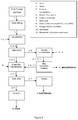
- FIG. 2 to FIG. 8 show in schematic flow diagram from a number of example system configurations in accordance with the present invention whereby mycoprotein and ethanol can be co-produced from a grain feedstock.
- FIG. 1 Flow diagram of typical configuration of existing method for ethanol production.
- FIG. 2 Flow diagram of an integrated configuration of co-production method for mycoprotein and ethanol production using two microorganisms.
- FIG. 3 Further flow diagram of an integrated configuration of co-production method for mycoprotein and ethanol production using two microorganisms.
- FIG. 4 Further flow diagram of an integrated configuration of co-production method for mycoprotein and ethanol production using two microorganisms and different feedstocks.
- FIG. 5 Flow diagram of a possible integrated configuration of co-production method for mycoprotein and ethanol production using a single microorganism (Aerobic fermentation followed by anaerobic fermentation).
- FIG. 6 Flow diagram of an integrated configuration of co-production method for mycoprotein and ethanol production using a single microorganism (Anaerobic fermentation followed by aerobic fermentation).
- FIG. 7 Flow diagram of an integrated configuration of co-production method for mycoprotein and ethanol production using a single microorganism.
- FIG. 8 Flow diagram of an integrated configuration of co-production method for mycoprotein and ethanol production using a single microorganism (Anaerobic fermentation followed by aerobic fermentation).
- FIG. 9 Comparison of growth of F. venenatum in minimal Vogel medium (flasks 1-3) and wheat hydrolysate supplemented with Vogel salts (flasks 4-6). The shake flasks were incubated on an orbital shaker at 30° C. and 150 rpm. The experiment was performed in triplicate as well as the estimation of the biomass. Samples were taken after 72 h (Experiment 1).
- FIG. 11 Growth of F. venenatum in 70 g/L flour containing hydrolysate without enzymes ( ⁇ ), with 0.5% w/w ⁇ -amylase ( ⁇ ) and with both 0.5% w/w ⁇ -amylase and 1% w/w glucoamylase ( ⁇ ) grown in shake flasks at 28° C. and 150 rpm on an orbital shaker. Samples were taken after 24, 48 and 72 hours and analysed in triplicate for biomass content (Experiment 1).
- FIG. 12 Optical density (OD) and Dry Cell weight of S. cerevisiae shake flasks with MYPG and wheat hydrolysate supplemented with Vogel salts. The flasks were incubated at 30° C. and 250 rpm and all contained 20 g/L glucose as a carbon source. They were grown and analysed in triplicate (Experiment 2).
- FIG. 13 Ethanol fermentation with S. cerevisiae using MYPG and Wheat Hydrolysate respectively. Depicted are the optical densities over the course of the fermentation. MYPG was used in fermenter 1 ( ⁇ ) and fermenter 2 ( ⁇ ) whereas wheat hydrolysate supplemented with Vogel salts was used in fermenter 3 ( ⁇ ) and fermenter 4 ( ⁇ ). Aeration was 0.82 vvm between 8-18 h otherwise 0 vvm. The temperature was held constant at 30° C. and the pH at 5.5 (Experiment 2).
- FIG. 14 Ethanol fermentation with S. cerevisiae using MYPG and wheat hydrolysate respectively. Shown is the dry biomass increase over the course of the fermentation. MYPG was used in fermenter 1 ( ⁇ ) and fermenter 2 ( ⁇ ) whereas wheat hydrolysate supplemented with Vogel salts was used in fermenter 3 ( ⁇ ) and fermenter 4 ( ⁇ ). Aeration was 0.82 vvm between 8-18 h otherwise 0 vvm. The temperature was held constant at 30° C. and the pH at 5.5 (Experiment 2).
- FIG. 15 Dry cell weight (DCW) and glucose trend for first fermentation of the integrated process with F. venenatum (Experiment 3).
- FIG. 16 Dry cell weight (DCW), glucose and ethanol trends for second part of integrated bioprocess with S. cerevisiae
- FIG. 17 Comparison of the dry cell weight trends of the Fusarium venenatum fermentations with the application of different aeration profiles (Experiment 4).
- FIG. 18 Ethanol production over the course of the Fusarium venenatum fermentations with varying oxygen supply (Experiment 4).
- FIG. 19 Terend of glucose concentrations over the course of the F. venenatum fermentations with different fermentation media and differing oxygen supply (Experiment 4).
- FIG. 20 Dissolved oxygen (DO, %) profile during the time course of F. venenatum fermentations (Experiment 4).
- Grain milling physically breaks down the grain to enable starch extraction in downstream processing
- Liquefaction is a process to extract and hydrolyse the starch from the grain to obtain water soluble carbohydrates suitable for physical processing and fermentation.
- the grain is mixed and heated with water, typically with the use of enzymes.
- the heating process additionally sterilises the solution for fermentation;
- Aerobic Fermentation provides fermentation growth of the mycoprotein. This operation can be carried out in either batch or continuous mode.
- a nitrogen source eg ammonia
- nutrients and air/oxygen are fed to the fermenter with cooling under controlled conditions to favour mycoprotein growth.
- Conditions can be controlled to optimise mycoprotein growth rate/selectivity or to achieve a preferred ratio of mycoprotein to ethanol by manipulating physiological conditions through process variables such as substrate flux or/and oxygen level;
- Heat Treatment and Isolation of the mycoprotein fermentation brew provides an isolated (by filtration or centrifugation) and dried solid bulk mycoprotein product.
- the heat treatment of the mixture is carried out to reduce the nucleic acid (RNA) content of the product;
- Anaerobic Fermentation is carried out to convert residual carbohydrates to ethanol. This can be carried out using either or both mycoprotein and conventional brewer's yeast (e.g. S. cerevisiae );
- Distillation is used to separate ethanol from the fermentation mixtures
- Drying removes residual water from the distilled ethanol to satisfy the specification of bio-ethanol fuel. This is conventionally carried out using molecular sieves; Isolation of the solid protein/fibre from the grain produces a high protein product typically used as livestock feed. When isolated and dried together with the evaporated residue from distillation incorporating the soluble components of the fermentation mixtures it is conventionally called distillers dried grains with solubles (DDGS).
- DDGS distillers dried grains with solubles
- the present invention provides a separation phase where insoluble materials such as protein and fibre are removed in order to provide a solution which comprises solubilised carbohydrates suitable for subsequent fermentation.
- an integrated process is provided which can produce both ethanol and mycoprotein, as well as a spent waste material, dried distiller grains with solubles (DDGS) which may be used as an animal feed product.
- DDGS dried distiller grains with solubles
- the microorganism used in the mycoprotein (and ethanol) fermentations was the filamentous fungus F. venenatum A3/5 (20334), purchase from ATCC.
- Master cultures were produced by inoculating liquid cultures containing minimal Vogel medium with 40 g/L glucose from potato dextrose agar (PDA) plates. They were incubated for 72 h at 150 rpm and 28° C. on an orbital shaker, before adding 20% glycerol to the cultures and storing them at ⁇ 80° C. in cryo vials.
- PDA plates were grown at 30° C. and 0% CO 2 in an incubator and then stored at 4° C.
- yeast S. cerevisiae was also used (supplied from the culture collection of Strathclyde Institute of Pharmacy and Biomedical Sciences). It was grown in MYPG medium with 1 L containing: 3 g malt extract, 3 g yeast extract, 5 g peptone and 10 g glucose, whereas the glucose was added after autoclaving in order to prevent the Maillard reaction. The pH was adjusted to 5.5 and to solidify the medium 15 g/L agar were added. Plates were inoculated with a loop and incubated for 24 h at 30° C. in an incubator and then stored at 4° C. Master cultures were produced by inoculating a liquid culture and incubating it for 24 h on an orbital shaker at 30° C. and 250 rpm prior to adding 20% glycerol and storing at ⁇ 80° C. in cryo vials.
- the inoculum of F. venenatum was prepared by inoculating a de-frosted vial from the ⁇ 80° C. cell bank into a 200 mL aliquot of Vogels media. The culture was incubated at 30 degree's for a period of twenty-four hours. A 50 mL aliquot of this culture (giving an inoculum of 10% v/v) was removed and transferred to a centrifuge tube. This was centrifuged at 8000 rpm for a period of 10 minutes. The supernatant was removed and an equal volume of sterile distilled water was added to re-suspend the pellet of F. venenatum . This was then centrifuged as before at 8000 rpm for a 10 minute period.
- the supernatant was again removed and the Fusarium venentum pellet re-suspended in a 20 mL aliquot of sterile wheat medium. This aliquot was used to inoculate the bioreactor via the syringe septum port.
- the defined medium used for the fermentation and shake flasks was prepared according to Vogel (1956).
- the carbon source sucrose was substituted with glucose and 40 g/L instead of 15 g/L were used.
- 1 L of medium contained: 2.17 g Trisodium citrate, 5 g Potassium dihydrogen phosphate, 2 g Ammonium nitrate, 0.2 g Magnesium sulfate heptahydrate, 0.1 g calcium chloride dihydrate, 0.25 mg Biotin and 5 mL Trace Element Solution.
- trace element solution the following trace elements were dissolved in 95 mL distilled water: 5 g Citric acid monohydrate, 5 g zinc sulfate heptahydrate, 1 g ammonium ferrous sulphate hexahydrate, 0.25 g cupric sulfate pentahydrate, 0.05 g manganese sulfate monohydrate, 0.05 g boric acid and 0.05 g sodium molybdate dihydrate.
- the wheat grain was milled to a flour material using an IKA analytical mill.
- This flour was dissolved in distilled water heated to 90° C. with a final flour concentration in the region of 70 g/L.
- the pH of the system was adjusted to 7 before the addition of ⁇ -amylase enzyme at a loading of 1% w/w of the added wheat flour.
- This solution was maintained at 90° C. and agitated for a 1 hour period.
- the solution was then allowed to cool whilst still being agitated until a temperature in the region of 50° C. was reached.
- the pH of the solution was then adjusted to 4.6-4.8 using 1 M hydrochloric acid.
- the glucoamylase enzyme was then added again with a loading of 1% w/w relative to the amount of wheat flour added. This solution was then incubated for a 16 hour period in a shaking incubator at 50° C. and 100 rpm.
- the enzyme treated media was then cooled to room temperature, transferred to centrifuge vessels and centrifuged at 6,000 rpm for a 10-minute period.
- the supernatant was passed through a 0.2 ⁇ m filter paper using a Buchner funnel and the filtrate collected for use in the fermentation process.
- the filtrate was then autoclaved again.
- the procedure of the starch hydrolysis was performed referring to Panagiotopoulos et al. (2009), Gadonna-Widehem et al. (2012) and the enzyme datasheets provided by Sigma.
- the biomass levels of F. venenatum and S. cerevisiae were estimated for each of the samples taken during the fermentations.
- F. venenatum cell weight estimation was achieved using microfiber filters.
- a glass microfiber filter was numbered and the mass of the dry filter recorded. The filter was placed in a Buchner funnel and a 1 mL aliquot of the fermentation sample passed through the filter. This process was repeated in triplicate for each sample. Filters were subsequently placed in a petri dish and dried in an oven at 50° C. for a period of 24 hours. The filters were then re-weighed, and if necessary dried again until a stable reading was observed. Biomass was calculated by subtracting the previously recorded weight of the empty filter. Since the process was carried out in triplicate the reported value was the average of the three weights recorded.
- S. cerevisiae dry cell weight estimation was carried out using eppendorf tubes. Eppendorf tubes were dried in a desiccator and the weight of the dry, empty tube recorded. A 1 mL aliquot of the fermentation sample was pipetted into the tube and then centrifuged at 6000 rpm for a 10-minute period. The supernatant was removed and the cell pellet dried. The tube was re-weighed, until a stable reading was observed, and the mass of the empty tube subtracted to give the mass of cells present. Since a 1 mL aliquot of the fermentation sample was utilised, the value determined here was quoted as the dry cell weight in g/mL. All samples were again analysed in triplicate with the quoted value the average of the three replicates.
- the glucose concentration present in each sample was measured using the YSI biochemistry analyser. Early samples required a dilution factor in the region of ⁇ 10 to be applied in order to reduce the glucose concentrations to levels that the biochemistry analyser was able to reproducibly quantify. During the Saccharomyces fermentation the later samples could be analysed directly without the need for any dilution steps to be performed.
- the quantification of ethanol in the samples was achieved using a high performance liquid chromatography (HPLC) method. Separation was achieved using a REZEX ROA-H + organic acid chromatography column and a 0.005 N sulphuric acid mobile phase at a flow rate of 1 mL/min. Detection was via a refractive index detector.
- HPLC high performance liquid chromatography
- Shake flask culture cultivations were performed in 500 mL or 100 mL conical flasks containing 200 mL or 40 mL medium (MYPG or Wheat Hydrolysate with Vogel salts). The flasks were incubated on a vertical shaker set to 150 rpm and 28° C. for F. venenatum cultures and at 30° C. and 250 rpm for S. cerevisae cultures.
- MYPG Wheat Hydrolysate with Vogel salts
- the mycoprotein batch fermentations were performed in two different fermentation systems which are described below.
- the fermentation temperature was 28° C. and the pH was controlled to 6 with 2M sodium hydroxide.
- the DO probe was calibrated with oxygen free nitrogen for the 0% O 2 value and the slope calibration was performed with compressed air.
- the probe calibration was performed at fermentation conditions.
- the inoculum a 72 hour shake flask culture grown at 28° C. and 150 rpm on a vertical shaker, made up 10% v/v of the final fermentation volume.
- the medium used for the fermentation was either Medium N (Vogel 1956) or wheat hydrolysate supplemented with Vogel salts. In case of using the wheat hydrolysate as the fermentation medium, rapeseed oil was used as an antifoam reagent whenever required.
- the borosilicate vessel of this fermentation system has a total volume of 2 L and the fermentations were performed at a working volume of 1.5 L with a height to diameter ratio of 2:1.
- the fermenter is equipped with four removable baffles and two six bladed Rushton impellers, powered by an overhead Applikon P100 Motor.
- the aeration was realised by sparging filtered air through a ring sparger positioned underneath the impeller.
- the pH was measured with a Mettler Toledo pH probe and for determination of the dissolved oxygen a Mettler Toledo DO probe was used.
- An Applikon heating jacket was used to heat the fermenter.
- the system was furthermore equipped with a temperature probe and a condenser to prevent evaporation.
- An Applikon Bio-Console ADI 1035 unit was used in combination with the Applikon Bio-Control ADI 1031 control unit to control the parameters.
- the agitation used with this fermentation system was 600 rpm.
- the ethanol fermentation was performed in two different fermentation systems described below in detail.
- the agitation used was 500 rpm and the temperature was controlled at 30° C.
- the pO 2 probe calibration was performed at fermentation conditions.
- the 0% 02 value was set by aerating with oxygen free nitrogen and the slope of the probe was calibrated with compressed air.
- the pH was controlled with 2M sulphuric acid and 25% v/v ammonia to a value of 5.5.
- the fermentation broth was only aerated with 0.82 vvm between 8 and 18 hours of fermentation time.
- the stainless steel fermenter has a total volume of 22 L and a double wall which allows heating or cooling of the fermenter. It was a side wall viewing window and is equipped with four baffles, as well as three six bladed Rushton impellers which are above a ring sparger.
- the pO 2 probe as well as pH probe were from Mettler Toledo.
- the height to diameter ratio was 3:1 with a diameter of 21 cm and a height of 57 cm.
- the DCU-3 Unit allowed controlling and monitoring of the fermentation.
- the pH was controlled with help of the acid and base pumps. Furthermore the system is equipped with an antifoam pump which was used as required.
- the fermentation system allows the performance of four parallel fermentations, which can be controlled independently.
- the flat bottom fermenter vessels have a diameter of 9 cm and a height of 24 cm which equals a height to diameter ratio of 3:1.
- the vessels have a working volume of 400-1500 mL.
- the overhead drive agitates the two six bladed Rushton impellers. Aeration is achieved by pumping air through a sterile filter through an L-sparger.
- the system is fully equipped with a main unit which heats the vessels, acid and base pumps, pH and pO 2 detection units, temperature detector, off-gas analysis, and agitation control.
- the wheat media utilised for this fermentation was obtained following the procedure outlined (1.3). This particular media preparation was using the ‘RCS’ identified batch of wheat with a loading of 146 g wheat flour dissolved in 2 L of distilled water. An enzyme loading of 1.46 g of ⁇ -amylase and 1.5 g of glucoamylase were utilised in the process.
- Glucose concentrations measured using the YSI biochemical analyser at the various stages in the media preparation are listed in Table 1.
- Experiment Aim Production of mycoprotein from a carbohydrate feedstock (wheat hydrolysate) using a single microorganism.
- Experiment 2 Production of ethanol from a carbohydrate feedstock (wheat hydrolysate) using a single microorganism.
- Experiment 3 Production of mycoprotein and ethanol by a 2 step fermentation with partial conversion of the carbohydrate in the first step and where the operating conditions are controlled in favour of each product. Two microorganisms are used.
- the objective of this experiment was to investigate the feasibility of growing F. venenatum for mycoprotein production using a carbohydrate feedstock (wheat hydrolysate).
- the fermentation set-up for the mycoprotein fermentation was: aeration with 1 slpm and the stirrer speed was set to 1000 rpm.
- the temperature was held at 28° C.
- the pH was set to 6
- the fermenter was inoculated with a 72 h shake flask culture of 10% v/v of the final fermentation volume.
- the wheat hydrolysate for the fermentation was supplemented with Vogel salts.
- the first fermentations revealed the problem of strong build-up of foam at the beginning of the fermentation. This led to accumulation of biomass in the foam and in conclusion only growth on top of the fermentation broth but not in solution.
- the foaming is presumably caused by the proteins in the wheat hydrolysate and as the minimal Vogel medium used in previous fermentations did not contain proteins foaming was not an issue in previous batch fermentations and furthermore also does not present a problem in the current used industrial process.
- Rapeseed oil was used as an antifoam reagent. Rapeseed oil was chosen because it could be used in a food grade product and would be an economical solution. It may also be used as a carbon source by the Fusarium which would lead to higher yields and as foaming was only a significant problem at the beginning of a process this would not be a problem at later time points.
- the HPLC analysis of the different hydrolysates showed that only the hydrolysate with both the liquefaction and saccharification step contained glucose and 70 g/L wheat flour yielded 48 g/L glucose.
- the experiment was performed in triplicate in 500 mL shake flasks containing 200 mL medium supplemented with Vogel salts and samples were taken after 24, 48 and 72 hours and analysed in triplicate.
- a fermentation of S. cerevisiae with Wheat Hydrolysate was performed.
- the used fermentation system was DASGIP (Eppendorf) which allowed the execution of four fermentations at the same time.
- Two fermentations were performed with MYPG as a control and two fermentations with Wheat Hydrolysate (35 g/L flour, 0.5% w/w ⁇ -amylase, 1% w/w glucoamylase) supplemented with Vogel salts.
- the working volume was 800 mL and the fermentation was run for 24 hours, whereas aeration at 0.82 vvm was only present between 8 to 18 hours of fermentation time.
- the growth of the yeast was monitored by measuring the optical density and determination of the dry biomass.
- the objective of this experiment was to demonstrate the feasibility of an integrated bioprocess for the production of mycoprotein ( F. venenatum ) and ethanol (using S. cerevisiae ) using expired feed grade wheat as the growth medium.
- Previous experiments carried out had suggested that both the Fusarium and Saccharomyces could be successfully grown on the hydrolysed wheat medium (section 1.10 and 1.11).
- This experiment built on these findings, attempting to grow the Fusarium to a point where sufficient biomass was obtained whilst glucose still remained present in the system to further be utilised by S. cerevisiae.
- Glucose concentrations were estimated for each of the collected samples using the YSI biochemistry analyser (1.5) as well as the biomass levels of each organism (1.4). As this analysis was carried out in triplicate the reported values were the mean of the three replicates (5 and FIG. 16 ).
- This experiment demonstrated the ability to integrate the two fermentation processes of interest.
- the first stage demonstrated the ability to grow the F. venenatum to a biomass level in the region of 10 g/L. This biomass was then harvested and the media, still containing in the region of 20 g/L glucose, re-sterilised. This media was then inoculated with S. cerevisiae and the growth of this organism subsequently achieved. After a period of approximately 16 hours the culture was starved of oxygen to promote the production of ethanol. The fermentation was continued until a total fermentation time of approximately forty hours was reached, with samples taken at various time points for ethanol quantification using the developed HPLC method (1.6).
- the objective of this experiment was to demonstrate the feasibility of a bioprocess using Fusarium venenatum for the production of both mycoprotein and ethanol using hydrolysed feed grade wheat as a substrate.
- Aeration Aeration Oxygen Fermentation Medium 1-20 h 20-95 h limitation 1 VM1 1-3 vvm (30% 1-3 vvm (30% no limitation DO) DO) 2 WH2 1-3 vvm (30% 1-3 vvm (30% no limitation DO) DO) 3 WH3 1-3 vvm (30% 0.1 vvm Limitation DO) 4 WH4 1-3 vvm (30% 0 vvm starvation DO)
- the wheat hydrolysate which was used in fermentation two, three and four was prepared according to 1.3.
- Samples of the culture media were taken pre inoculation and immediately post inoculation. Samples were then taken twice daily over the course of the fermentation. Details of the samples, their times and the various monitored process parameters were recorded.
- Glucose concentrations were estimated for each of the collected samples using the YSI biochemistry analyser (1.5) as well as the biomass levels of each organism (1.4). As this analysis was carried out in triplicate the reported values were the mean of the three replicates. Ethanol quantification in the samples was achieved using the HPLC method described in 1.6.
- Fermentation one was run without oxygen limitation for the Fusarium venenatum . This fermentation was used as a control, for which reason Vogel medium with glucose as a carbon source was used as the fermentation medium instead of wheat hydrolysate. The purpose of this was to compare the growth between the different media and determine possible differences. It was expected to yield more biomass in the fermentations without oxygen limitations and not detect considerable amounts of ethanol.
- biomass production could probably be increased by feeding substrate into the fermenter and harvesting biomass. With increasing biomass an increased viscosity can be observed, which impedes mixing and oxygen transfer. Therefore harvesting biomass can be beneficial for the production of biomass.
- the substrate used in fermentation two was wheat hydrolysate supplemented with Vogel salts which was also used in fermentation three (1.13.3.3) and four (1.13.3.4). It was not oxygen limited over the course of the fermentation. This fermentation was compared to Fermentation one in order to give conclusions about differences in yield between the used media. It was expected to obtain closer results from this fermentation compared to fermentation one with Vogel medium.
- the dry biomass, ethanol and glucose trends of the fermentation with wheat hydrolysate and no oxygen limitation are shown in 7, 8 and 9.
- the maximum dry biomass concentration of 21 g/L was reached after 44 hours although glucose levels reached 0.13 g/L after 27 hours.
- Ethanol was only present after 20 hours but was possibly used as a carbon source afterwards and no ethanol could be detected in the further course of the fermentation.
- the fermentation yielded approximately the same biomass levels as the first fermentation.
- the initial glucose levels were lower which explains the difference in reached biomass levels.
- a process with oxygen starving conditions seems preferable for a high ethanol yield. Even with very low biomass levels a substantial amount of ethanol can be produced (and is favoured) in the absence of oxygen (fermentation four). It is possible to harvest large amounts of biomass before the start of ethanol production phase (first 20 h of the process). Therefore, by manipulating the process conditions it is possible to adjust the process in order to obtain the desired product.
- a production process can be adapted according to the demand of mycoprotein (biomass) or ethanol by having a prolonged or shortened aerated phase.
- the process could be improved furthermore by harvesting biomass and feeding more wheat hydrolysate into the fermentation.
- Producing ethanol without the necessity of aeration would reduce production costs substantially and would therefore influence the overall process economy.
Landscapes
- Chemical & Material Sciences (AREA)
- Life Sciences & Earth Sciences (AREA)
- Organic Chemistry (AREA)
- Engineering & Computer Science (AREA)
- Zoology (AREA)
- Wood Science & Technology (AREA)
- Health & Medical Sciences (AREA)
- Biotechnology (AREA)
- Bioinformatics & Cheminformatics (AREA)
- Genetics & Genomics (AREA)
- Microbiology (AREA)
- Biochemistry (AREA)
- General Engineering & Computer Science (AREA)
- General Health & Medical Sciences (AREA)
- Chemical Kinetics & Catalysis (AREA)
- General Chemical & Material Sciences (AREA)
- Molecular Biology (AREA)
- Polymers & Plastics (AREA)
- Botany (AREA)
- Mycology (AREA)
- Food Science & Technology (AREA)
- Animal Husbandry (AREA)
- Physiology (AREA)
- Biomedical Technology (AREA)
- Sustainable Development (AREA)
- Virology (AREA)
- Tropical Medicine & Parasitology (AREA)
- Medicinal Chemistry (AREA)
- Preparation Of Compounds By Using Micro-Organisms (AREA)
- Micro-Organisms Or Cultivation Processes Thereof (AREA)
Applications Claiming Priority (3)
| Application Number | Priority Date | Filing Date | Title |
|---|---|---|---|
| GB1418739.7 | 2014-10-22 | ||
| GBGB1418739.7A GB201418739D0 (en) | 2014-10-22 | 2014-10-22 | Bioprocess for corproduction of products |
| PCT/GB2015/053145 WO2016063053A1 (en) | 2014-10-22 | 2015-10-21 | Bioprocess for coproduction of ethanol and mycoproteins |
Related Parent Applications (1)
| Application Number | Title | Priority Date | Filing Date |
|---|---|---|---|
| PCT/GB2015/053145 A-371-Of-International WO2016063053A1 (en) | 2014-10-22 | 2015-10-21 | Bioprocess for coproduction of ethanol and mycoproteins |
Related Child Applications (1)
| Application Number | Title | Priority Date | Filing Date |
|---|---|---|---|
| US16/783,739 Continuation US11293044B2 (en) | 2014-10-22 | 2020-02-06 | Bioprocess for coproduction of ethanol and mycoproteins |
Publications (2)
| Publication Number | Publication Date |
|---|---|
| US20170226551A1 US20170226551A1 (en) | 2017-08-10 |
| US10655155B2 true US10655155B2 (en) | 2020-05-19 |
Family
ID=52013382
Family Applications (2)
| Application Number | Title | Priority Date | Filing Date |
|---|---|---|---|
| US15/518,952 Active US10655155B2 (en) | 2014-10-22 | 2015-10-21 | Bioprocess for coproduction of ethanol and mycoproteins |
| US16/783,739 Active US11293044B2 (en) | 2014-10-22 | 2020-02-06 | Bioprocess for coproduction of ethanol and mycoproteins |
Family Applications After (1)
| Application Number | Title | Priority Date | Filing Date |
|---|---|---|---|
| US16/783,739 Active US11293044B2 (en) | 2014-10-22 | 2020-02-06 | Bioprocess for coproduction of ethanol and mycoproteins |
Country Status (9)
| Country | Link |
|---|---|
| US (2) | US10655155B2 (pl) |
| EP (2) | EP3209789B1 (pl) |
| CN (1) | CN107002099B (pl) |
| AU (2) | AU2015334672B2 (pl) |
| ES (1) | ES2811255T3 (pl) |
| GB (1) | GB201418739D0 (pl) |
| HU (1) | HUE051494T2 (pl) |
| PL (1) | PL3209789T3 (pl) |
| WO (1) | WO2016063053A1 (pl) |
Cited By (1)
| Publication number | Priority date | Publication date | Assignee | Title |
|---|---|---|---|---|
| GB2636838A (en) * | 2023-12-22 | 2025-07-02 | Adamo Foods Ltd | Method and bioreactor system for producing mycelium biomass |
Families Citing this family (13)
| Publication number | Priority date | Publication date | Assignee | Title |
|---|---|---|---|---|
| EP3712248A1 (en) | 2014-07-03 | 2020-09-23 | The Fynder Group, Inc. | Acidophilic fusarium oxysporum strain, methods of its growth and methods of its use |
| GB201418739D0 (en) | 2014-10-22 | 2014-12-03 | Univ Strathclyde | Bioprocess for corproduction of products |
| HUE054917T2 (hu) | 2016-03-01 | 2021-10-28 | The Fynder Group Inc | Gombafonalas bioszõnyegek, ezek elõállítási módszerei és felhasználási módjai |
| IL272918B2 (en) | 2017-08-30 | 2024-02-01 | The Fynder Group Inc | Edible composition with filamentous fungi and bioreactor system for processing |
| KR20210018354A (ko) * | 2018-06-08 | 2021-02-17 | 에멀쥐 아이엔씨 | 진균성 균사체를 성장시키는 방법 및 식용 산물을 만드는 방법 |
| MX2021010231A (es) | 2019-02-27 | 2021-12-10 | The Fynder Group Inc | Materiales alimenticios que comprenden particulas de hongo filamentoso y dise?o de biorreactores de membrana. |
| EP3986186A4 (en) | 2019-06-18 | 2023-05-17 | The Fynder Group, Inc. | FUNGI TEXTILE MATERIALS AND LEATHER ANALOGUES |
| GB201919079D0 (en) * | 2019-12-20 | 2020-02-05 | 3F Bio Ltd | Process and product thereof |
| AU2021223603A1 (en) | 2020-02-21 | 2022-09-01 | Braskem S.A. | Production of ethanol with one or more co-products in yeast |
| GB2594692A (en) | 2020-03-10 | 2021-11-10 | Marlow Foods Ltd | Process |
| CN112226373B (zh) * | 2020-12-07 | 2021-04-20 | 中国科学院天津工业生物技术研究所 | 一株产蛋白的菌株及其应用 |
| GB202100819D0 (en) | 2021-01-21 | 2021-03-10 | 3F Bio Ltd | Process and Product Thereof |
| CN119385235A (zh) * | 2025-01-06 | 2025-02-07 | 南京农业大学三亚研究院 | 一种真菌蛋白的加工方法 |
Citations (11)
| Publication number | Priority date | Publication date | Assignee | Title |
|---|---|---|---|---|
| EP0058426A1 (de) | 1981-02-16 | 1982-08-25 | Otto Dr. Moebus | Verfahren zur Herstellung von Äthanol durch Fermentation von Kohlenhydraten |
| US4782024A (en) | 1985-11-06 | 1988-11-01 | Imperial Chemical Industries Plc | Fermentation process and fermenter |
| US20030044951A1 (en) | 1998-07-14 | 2003-03-06 | Sporleder Robert A. | Bio-reaction process and product |
| US20070231869A1 (en) | 2003-12-01 | 2007-10-04 | Swetree Technologies | Fermentation Process, Starter Culture and Growth Medium |
| WO2009079183A1 (en) | 2007-12-14 | 2009-06-25 | Abengoa Bioenergy R & D | Improved quality and value of co-products of the ethanol production industry |
| CN101691539A (zh) | 2009-04-30 | 2010-04-07 | 哈尔滨工业大学 | 利用木糖发酵产生乙醇的丝状真菌及其制备方法 |
| US20100178675A1 (en) | 2008-12-31 | 2010-07-15 | Poet Research Incorporated | System for extracting protein from a fermentation product |
| CN103039699A (zh) | 2013-01-05 | 2013-04-17 | 湖南省微生物研究所 | 一种混合菌发酵饲料及其制备和应用方法 |
| WO2014014682A1 (en) | 2012-07-17 | 2014-01-23 | Poet Research, Inc. | Protein compositions derived from fermentation products and process of making same |
| WO2014020142A1 (en) | 2012-08-03 | 2014-02-06 | Dupont Nutrition Biosciences Aps | Xylanases for solubilising arabinoxylan-containing material |
| US20160312247A1 (en) * | 2013-12-13 | 2016-10-27 | Lantmännen Energi | Integration of First and Second Generation Bioethanol Processes |
Family Cites Families (2)
| Publication number | Priority date | Publication date | Assignee | Title |
|---|---|---|---|---|
| GB8308162D0 (en) | 1983-03-24 | 1983-05-05 | Ranks Hovis Mcdougall Plc | Edible protein containing substances |
| GB201418739D0 (en) | 2014-10-22 | 2014-12-03 | Univ Strathclyde | Bioprocess for corproduction of products |
-
2014
- 2014-10-22 GB GBGB1418739.7A patent/GB201418739D0/en not_active Ceased
-
2015
- 2015-10-21 EP EP15790186.9A patent/EP3209789B1/en active Active
- 2015-10-21 HU HUE15790186A patent/HUE051494T2/hu unknown
- 2015-10-21 CN CN201580064222.2A patent/CN107002099B/zh active Active
- 2015-10-21 AU AU2015334672A patent/AU2015334672B2/en active Active
- 2015-10-21 PL PL15790186.9T patent/PL3209789T3/pl unknown
- 2015-10-21 WO PCT/GB2015/053145 patent/WO2016063053A1/en not_active Ceased
- 2015-10-21 EP EP20167314.2A patent/EP3692801A3/en not_active Withdrawn
- 2015-10-21 ES ES15790186T patent/ES2811255T3/es active Active
- 2015-10-21 US US15/518,952 patent/US10655155B2/en active Active
-
2019
- 2019-12-09 AU AU2019279925A patent/AU2019279925A1/en not_active Abandoned
-
2020
- 2020-02-06 US US16/783,739 patent/US11293044B2/en active Active
Patent Citations (12)
| Publication number | Priority date | Publication date | Assignee | Title |
|---|---|---|---|---|
| EP0058426A1 (de) | 1981-02-16 | 1982-08-25 | Otto Dr. Moebus | Verfahren zur Herstellung von Äthanol durch Fermentation von Kohlenhydraten |
| US4447534A (en) | 1981-02-16 | 1984-05-08 | Otto Moebus | Method of producing ethanol through fermentation of carbohydrates |
| US4782024A (en) | 1985-11-06 | 1988-11-01 | Imperial Chemical Industries Plc | Fermentation process and fermenter |
| US20030044951A1 (en) | 1998-07-14 | 2003-03-06 | Sporleder Robert A. | Bio-reaction process and product |
| US20070231869A1 (en) | 2003-12-01 | 2007-10-04 | Swetree Technologies | Fermentation Process, Starter Culture and Growth Medium |
| WO2009079183A1 (en) | 2007-12-14 | 2009-06-25 | Abengoa Bioenergy R & D | Improved quality and value of co-products of the ethanol production industry |
| US20100178675A1 (en) | 2008-12-31 | 2010-07-15 | Poet Research Incorporated | System for extracting protein from a fermentation product |
| CN101691539A (zh) | 2009-04-30 | 2010-04-07 | 哈尔滨工业大学 | 利用木糖发酵产生乙醇的丝状真菌及其制备方法 |
| WO2014014682A1 (en) | 2012-07-17 | 2014-01-23 | Poet Research, Inc. | Protein compositions derived from fermentation products and process of making same |
| WO2014020142A1 (en) | 2012-08-03 | 2014-02-06 | Dupont Nutrition Biosciences Aps | Xylanases for solubilising arabinoxylan-containing material |
| CN103039699A (zh) | 2013-01-05 | 2013-04-17 | 湖南省微生物研究所 | 一种混合菌发酵饲料及其制备和应用方法 |
| US20160312247A1 (en) * | 2013-12-13 | 2016-10-27 | Lantmännen Energi | Integration of First and Second Generation Bioethanol Processes |
Non-Patent Citations (24)
| Title |
|---|
| Anderson, et al., "Primary Metabolism and Biomass production from Fusarium" 2011, Applied Mycology of Fusarium, pp. 1-10. |
| Cardona, C. et al., "Fuel ethanol production: Process design trends and integration opportunities," Bioresource Technology, 2007, 98, 2415-2457. |
| EPO Statement on non-relevance of the Third Party Observations for EP15790186 pp. 1. |
| Ferreira, Jorge A. , et al., "Production of Ethanol and Biomass from Thin Stillage Using Food-Grade Zygomycetes and Ascomycetes Filamentous Fungi," 2014, Energies. vol. 7, No. 6, pp. 3872-3885. |
| Finn, B. et al., "Near-infrared spectroscopic monitoring of biomass, glucose, ethanol and protein content in a high cell density baker's yeast fed-batch bioprocess," Yeast, 2006, 23, 507-517. |
| Gadonna-Widehem, P.I et al., "A laboratory protocol for determining glucose and maximum ethanol production from wheat grain: application to a complete genetic set of near-isogenic waxy lines," Journal of Agricultural and Food Chemistry, 2012, 60, 985-990. |
| Moore, et al., "21st Century Guide Book to Fungi" 2018, Alcoholic Fermentations, pp. 1-5. |
| Mycroprotein GRAS Application, GRN No. 91, 2001, 74 pages. |
| ODonnell "Molecular Phylogenetic, Morphological, and Mycotoxin Data Support Reidentification of the Quorn Mycoprotein Fungus as Fusarium venenatum" Fungal Genetics and Biology 23, 57-67 (1998) (Year: 1998). * |
| Panagiotopoulos, I.A., et al., "Fermentative hydrogen production from pretreated biomass: A comparative study," Bioresource Technology, 2009, 100, 6331-6338. |
| PCT Search Report and Written Opinion for PCT/GB2015/053145, completed Dec. 16, 2015, 11 pages. |
| Rachael Link "Mycoprotein: Beneficial Vegetarian Protein Source or Dangerous Allergen" Apr. 22, 2018, 8 pgs (Year: 2018). * |
| Rasmussen M. L. , et al., "Water Reclamation and Value-Added Animal Feed from Corn-Ethanol Stillage by Fungal Processing," 2014, Bioresource Technology. vol. 151, pp. 284-290. |
| Ratpukdi, et al. "Ethanol production potential from fermented rice noodle waste water treatment using entrapped yeast cell sequencing batch reactor," Applied Water Sci., 2012, 2, pp. 47-53. |
| Sigma-Aldrich Enzyme Datasheet for A7420, 1 page. |
| Sigma-Aldrich Enzyme Datasheet for alpha-amylase, 1 page. |
| Silva et al., "Using the residue of spirit production and bio-ethanol for protein production by yeasts," Waste Management, vol. 31, Issue 1, 2011, 108-114. |
| Suihko et al. "The Production of Ethanol From D-Glucose and D-Xylose by Different Fusarium Strains" Biotechnology Letters vol. 3 No. 12 723-728 (1981) (Year: 1981). * |
| Third Party Observations filed in EP App. No. 15790186.9 filed 2019 in the EPO pp. 1-4. |
| Trinci, "'Quorn' Mycoprotein," Mycologist, 1991, 5, pp. 106-109. |
| Trinci, "‘Quorn’ Mycoprotein," Mycologist, 1991, 5, pp. 106-109. |
| Trinci, et al., "Myco-Protein: A twenty-year overnight success story," Mycol. Res. 1991, 96, pp. 1-13. |
| Wiebe et al. "Myco-protein from Fusarium venenatum : a well-established product for human consumption" Appl Microbiol Biotechnol (2002) 58:421-427 (Year: 2002). * |
| Wikipedia, "Fusarium Venenatum," 2019, pp. 1-3. |
Cited By (1)
| Publication number | Priority date | Publication date | Assignee | Title |
|---|---|---|---|---|
| GB2636838A (en) * | 2023-12-22 | 2025-07-02 | Adamo Foods Ltd | Method and bioreactor system for producing mycelium biomass |
Also Published As
| Publication number | Publication date |
|---|---|
| AU2015334672A1 (en) | 2017-05-04 |
| WO2016063053A1 (en) | 2016-04-28 |
| US20200248222A1 (en) | 2020-08-06 |
| ES2811255T3 (es) | 2021-03-11 |
| US11293044B2 (en) | 2022-04-05 |
| EP3209789A1 (en) | 2017-08-30 |
| EP3692801A2 (en) | 2020-08-12 |
| EP3692801A3 (en) | 2020-08-26 |
| HUE051494T2 (hu) | 2021-03-01 |
| AU2015334672B2 (en) | 2019-09-12 |
| PL3209789T3 (pl) | 2021-03-22 |
| CN107002099B (zh) | 2021-01-01 |
| CN107002099A (zh) | 2017-08-01 |
| EP3209789B1 (en) | 2020-05-27 |
| US20170226551A1 (en) | 2017-08-10 |
| AU2019279925A1 (en) | 2020-01-16 |
| GB201418739D0 (en) | 2014-12-03 |
Similar Documents
| Publication | Publication Date | Title |
|---|---|---|
| US11293044B2 (en) | Bioprocess for coproduction of ethanol and mycoproteins | |
| CA2517920C (en) | Method for producing ethanol using raw starch | |
| KR890000913B1 (ko) | 무증자 발효에 의한 알코올의 제조법 | |
| AU2017310017B2 (en) | Single cell protein from thermophilic fungi | |
| Tong et al. | Whole maize flour and isolated maize starch for production of citric acid by Aspergillus niger: A review | |
| US20230025560A1 (en) | Process for the production of mycoprotein | |
| JP2011092041A (ja) | エタノール生産微生物の連続培養発酵装置 | |
| EP2683996A2 (en) | Systems and methods for improving stillage | |
| CN1238486C (zh) | 多种生物酶酿造黄酒的方法 | |
| CN106893682B (zh) | 一种液化醪扩培酵母菌的方法及其应用和发酵乙醇的方法 | |
| US20180105843A1 (en) | Alcoholic fermentation process in the presence of a high alcohol tolerant yeast and a maltotriose positive yeast | |
| JP5249106B2 (ja) | エタノールの連続発酵製造方法 | |
| RU2701643C1 (ru) | Способ получения биоэтанола из целлюлозосодержащего сырья | |
| US20170233769A1 (en) | Dewatering methods in fermentation processes | |
| Pietrzak et al. | Effect of sieving and alkaline extraction of whole rye meal on the production of ethanol and valuable by-products in an integrated bioprocess | |
| Rathoure | Microbial biomass production | |
| CN112831390B (zh) | 一种生产糖化甜液和酸液的方法 | |
| RU2237718C1 (ru) | Способ производства спирта из отходов | |
| CA2768844C (en) | Method for producing ethanol using raw starch | |
| Ayhan et al. | PRODUCTION OF LACTIC ACID FROM BREWER’S SPENT GRAIN BY USING DIFFERENT NITROGEN SOURCES AND DIFFERENT LACTOBACILLUS PENTOSUS STRAINS: Utilization of brewer's spent grain | |
| US20250270497A1 (en) | Contamination control when growing yeasts | |
| Naim et al. | AN INVESTIGATION ON THE BIOCONVERSION 0F REFUSED RICE GRAINS TO ETHANOL |
Legal Events
| Date | Code | Title | Description |
|---|---|---|---|
| AS | Assignment |
Owner name: UNIVERSITY OF STRATHCLYDE, UNITED KINGDOM Free format text: ASSIGNMENT OF ASSIGNORS INTEREST;ASSIGNORS:FAZENDA, MARIANA;JOHNSTON, CRAIG;MCNEIL, BRIAN;SIGNING DATES FROM 20170609 TO 20170620;REEL/FRAME:042793/0394 |
|
| STPP | Information on status: patent application and granting procedure in general |
Free format text: NON FINAL ACTION MAILED |
|
| STPP | Information on status: patent application and granting procedure in general |
Free format text: RESPONSE TO NON-FINAL OFFICE ACTION ENTERED AND FORWARDED TO EXAMINER |
|
| STPP | Information on status: patent application and granting procedure in general |
Free format text: NOTICE OF ALLOWANCE MAILED -- APPLICATION RECEIVED IN OFFICE OF PUBLICATIONS |
|
| STPP | Information on status: patent application and granting procedure in general |
Free format text: AWAITING TC RESP., ISSUE FEE NOT PAID |
|
| FEPP | Fee payment procedure |
Free format text: ENTITY STATUS SET TO UNDISCOUNTED (ORIGINAL EVENT CODE: BIG.); ENTITY STATUS OF PATENT OWNER: LARGE ENTITY |
|
| STPP | Information on status: patent application and granting procedure in general |
Free format text: AWAITING TC RESP, ISSUE FEE PAYMENT RECEIVED |
|
| STPP | Information on status: patent application and granting procedure in general |
Free format text: DOCKETED NEW CASE - READY FOR EXAMINATION |
|
| STPP | Information on status: patent application and granting procedure in general |
Free format text: PUBLICATIONS -- ISSUE FEE PAYMENT VERIFIED |
|
| STCF | Information on status: patent grant |
Free format text: PATENTED CASE |
|
| AS | Assignment |
Owner name: 3F BIO LIMITED, SCOTLAND Free format text: ASSIGNMENT OF ASSIGNORS INTEREST;ASSIGNOR:THE UNIVERSITY OF STRATHCLYDE;REEL/FRAME:062712/0366 Effective date: 20230125 |
|
| MAFP | Maintenance fee payment |
Free format text: PAYMENT OF MAINTENANCE FEE, 4TH YEAR, LARGE ENTITY (ORIGINAL EVENT CODE: M1551); ENTITY STATUS OF PATENT OWNER: LARGE ENTITY Year of fee payment: 4 |