US11020059B2 - System and method for diagnosing and notification regarding the onset of a stroke - Google Patents
System and method for diagnosing and notification regarding the onset of a stroke Download PDFInfo
- Publication number
- US11020059B2 US11020059B2 US16/069,548 US201716069548A US11020059B2 US 11020059 B2 US11020059 B2 US 11020059B2 US 201716069548 A US201716069548 A US 201716069548A US 11020059 B2 US11020059 B2 US 11020059B2
- Authority
- US
- United States
- Prior art keywords
- patient
- limb
- limb activity
- time
- data
- Prior art date
- Legal status (The legal status is an assumption and is not a legal conclusion. Google has not performed a legal analysis and makes no representation as to the accuracy of the status listed.)
- Active, expires
Links
- 238000000034 method Methods 0.000 title claims abstract description 55
- 230000000694 effects Effects 0.000 claims abstract description 132
- 230000005540 biological transmission Effects 0.000 claims abstract description 61
- 238000012545 processing Methods 0.000 claims abstract description 55
- 238000005259 measurement Methods 0.000 claims abstract description 48
- 238000009792 diffusion process Methods 0.000 claims description 56
- 230000033001 locomotion Effects 0.000 claims description 48
- 238000004458 analytical method Methods 0.000 claims description 36
- 238000011156 evaluation Methods 0.000 claims description 12
- 230000006735 deficit Effects 0.000 claims description 11
- 230000004044 response Effects 0.000 claims description 10
- 230000004913 activation Effects 0.000 claims description 7
- 230000008569 process Effects 0.000 claims description 7
- 230000002547 anomalous effect Effects 0.000 claims description 5
- 210000003414 extremity Anatomy 0.000 description 89
- 208000006011 Stroke Diseases 0.000 description 74
- 230000001133 acceleration Effects 0.000 description 16
- 238000001514 detection method Methods 0.000 description 15
- 238000004891 communication Methods 0.000 description 14
- 102000003978 Tissue Plasminogen Activator Human genes 0.000 description 12
- 108090000373 Tissue Plasminogen Activator Proteins 0.000 description 12
- 238000007726 management method Methods 0.000 description 12
- 229960000187 tissue plasminogen activator Drugs 0.000 description 12
- 208000032382 Ischaemic stroke Diseases 0.000 description 7
- 238000013459 approach Methods 0.000 description 7
- 230000006870 function Effects 0.000 description 7
- 238000011002 quantification Methods 0.000 description 7
- 230000001154 acute effect Effects 0.000 description 6
- 238000002474 experimental method Methods 0.000 description 6
- 238000001990 intravenous administration Methods 0.000 description 6
- 238000005070 sampling Methods 0.000 description 6
- 210000000707 wrist Anatomy 0.000 description 6
- 208000001738 Nervous System Trauma Diseases 0.000 description 5
- 210000003423 ankle Anatomy 0.000 description 5
- 230000001413 cellular effect Effects 0.000 description 5
- 210000003169 central nervous system Anatomy 0.000 description 5
- 230000008859 change Effects 0.000 description 5
- 230000003993 interaction Effects 0.000 description 5
- 230000000926 neurological effect Effects 0.000 description 5
- 238000012731 temporal analysis Methods 0.000 description 5
- 238000000700 time series analysis Methods 0.000 description 5
- 238000012546 transfer Methods 0.000 description 5
- 238000003745 diagnosis Methods 0.000 description 4
- 238000013507 mapping Methods 0.000 description 4
- 238000012544 monitoring process Methods 0.000 description 4
- 238000000926 separation method Methods 0.000 description 4
- 238000002560 therapeutic procedure Methods 0.000 description 4
- 208000027418 Wounds and injury Diseases 0.000 description 3
- 230000009471 action Effects 0.000 description 3
- 230000002776 aggregation Effects 0.000 description 3
- 238000004220 aggregation Methods 0.000 description 3
- 230000008901 benefit Effects 0.000 description 3
- 230000006378 damage Effects 0.000 description 3
- 230000036541 health Effects 0.000 description 3
- 208000014674 injury Diseases 0.000 description 3
- 230000007246 mechanism Effects 0.000 description 3
- 210000003205 muscle Anatomy 0.000 description 3
- 230000009467 reduction Effects 0.000 description 3
- 208000023516 stroke disease Diseases 0.000 description 3
- 239000013598 vector Substances 0.000 description 3
- 102000004190 Enzymes Human genes 0.000 description 2
- 108090000790 Enzymes Proteins 0.000 description 2
- 208000016988 Hemorrhagic Stroke Diseases 0.000 description 2
- 230000003213 activating effect Effects 0.000 description 2
- 230000006399 behavior Effects 0.000 description 2
- 230000015556 catabolic process Effects 0.000 description 2
- 238000002591 computed tomography Methods 0.000 description 2
- 238000013480 data collection Methods 0.000 description 2
- 238000009110 definitive therapy Methods 0.000 description 2
- 238000011161 development Methods 0.000 description 2
- 229940088598 enzyme Drugs 0.000 description 2
- 238000000605 extraction Methods 0.000 description 2
- 210000001097 facial muscle Anatomy 0.000 description 2
- 210000004247 hand Anatomy 0.000 description 2
- 230000020169 heat generation Effects 0.000 description 2
- 208000020658 intracerebral hemorrhage Diseases 0.000 description 2
- 230000000302 ischemic effect Effects 0.000 description 2
- 239000011159 matrix material Substances 0.000 description 2
- 208000028412 nervous system injury Diseases 0.000 description 2
- 230000005180 public health Effects 0.000 description 2
- 238000005295 random walk Methods 0.000 description 2
- 230000000276 sedentary effect Effects 0.000 description 2
- 231100000430 skin reaction Toxicity 0.000 description 2
- 208000024891 symptom Diseases 0.000 description 2
- 238000012360 testing method Methods 0.000 description 2
- 239000010409 thin film Substances 0.000 description 2
- 230000007704 transition Effects 0.000 description 2
- 230000001960 triggered effect Effects 0.000 description 2
- 230000000007 visual effect Effects 0.000 description 2
- 206010053567 Coagulopathies Diseases 0.000 description 1
- 206010020772 Hypertension Diseases 0.000 description 1
- 206010070670 Limb asymmetry Diseases 0.000 description 1
- 208000016285 Movement disease Diseases 0.000 description 1
- 208000027089 Parkinsonian disease Diseases 0.000 description 1
- 206010034010 Parkinsonism Diseases 0.000 description 1
- 102000013566 Plasminogen Human genes 0.000 description 1
- 108010051456 Plasminogen Proteins 0.000 description 1
- 208000028017 Psychotic disease Diseases 0.000 description 1
- 208000034189 Sclerosis Diseases 0.000 description 1
- 102000012479 Serine Proteases Human genes 0.000 description 1
- 108010022999 Serine Proteases Proteins 0.000 description 1
- 208000007536 Thrombosis Diseases 0.000 description 1
- 230000003466 anti-cipated effect Effects 0.000 description 1
- 238000003491 array Methods 0.000 description 1
- 239000012620 biological material Substances 0.000 description 1
- 239000008280 blood Substances 0.000 description 1
- 210000004369 blood Anatomy 0.000 description 1
- 210000004204 blood vessel Anatomy 0.000 description 1
- 230000036760 body temperature Effects 0.000 description 1
- 210000004027 cell Anatomy 0.000 description 1
- 238000006243 chemical reaction Methods 0.000 description 1
- 230000035602 clotting Effects 0.000 description 1
- 230000001149 cognitive effect Effects 0.000 description 1
- 238000004040 coloring Methods 0.000 description 1
- 238000010276 construction Methods 0.000 description 1
- 230000001276 controlling effect Effects 0.000 description 1
- 230000002596 correlated effect Effects 0.000 description 1
- 230000000875 corresponding effect Effects 0.000 description 1
- 238000007405 data analysis Methods 0.000 description 1
- 238000001035 drying Methods 0.000 description 1
- 230000009977 dual effect Effects 0.000 description 1
- 238000005183 dynamical system Methods 0.000 description 1
- 210000002889 endothelial cell Anatomy 0.000 description 1
- 230000002349 favourable effect Effects 0.000 description 1
- 239000000945 filler Substances 0.000 description 1
- 230000005021 gait Effects 0.000 description 1
- 230000036571 hydration Effects 0.000 description 1
- 238000006703 hydration reaction Methods 0.000 description 1
- 230000010354 integration Effects 0.000 description 1
- 230000005389 magnetism Effects 0.000 description 1
- 239000003550 marker Substances 0.000 description 1
- 239000000203 mixture Substances 0.000 description 1
- 238000012986 modification Methods 0.000 description 1
- 230000004048 modification Effects 0.000 description 1
- 238000012806 monitoring device Methods 0.000 description 1
- 230000003387 muscular Effects 0.000 description 1
- 210000000653 nervous system Anatomy 0.000 description 1
- 230000000474 nursing effect Effects 0.000 description 1
- 238000000053 physical method Methods 0.000 description 1
- 230000035479 physiological effects, processes and functions Effects 0.000 description 1
- 229940012957 plasmin Drugs 0.000 description 1
- 208000028173 post-traumatic stress disease Diseases 0.000 description 1
- 238000003672 processing method Methods 0.000 description 1
- 102000004169 proteins and genes Human genes 0.000 description 1
- 108090000623 proteins and genes Proteins 0.000 description 1
- 208000020016 psychiatric disease Diseases 0.000 description 1
- 238000010223 real-time analysis Methods 0.000 description 1
- 238000011897 real-time detection Methods 0.000 description 1
- 230000004043 responsiveness Effects 0.000 description 1
- 239000007787 solid Substances 0.000 description 1
- 230000003595 spectral effect Effects 0.000 description 1
- 238000004611 spectroscopical analysis Methods 0.000 description 1
- 230000003319 supportive effect Effects 0.000 description 1
- 210000004243 sweat Anatomy 0.000 description 1
- 230000001360 synchronised effect Effects 0.000 description 1
- 230000002537 thrombolytic effect Effects 0.000 description 1
- 238000012384 transportation and delivery Methods 0.000 description 1
- 238000005406 washing Methods 0.000 description 1
- 230000036642 wellbeing Effects 0.000 description 1
Images




Classifications
-
- A—HUMAN NECESSITIES
- A61—MEDICAL OR VETERINARY SCIENCE; HYGIENE
- A61B—DIAGNOSIS; SURGERY; IDENTIFICATION
- A61B5/00—Measuring for diagnostic purposes; Identification of persons
- A61B5/72—Signal processing specially adapted for physiological signals or for diagnostic purposes
- A61B5/7271—Specific aspects of physiological measurement analysis
- A61B5/7282—Event detection, e.g. detecting unique waveforms indicative of a medical condition
-
- A—HUMAN NECESSITIES
- A61—MEDICAL OR VETERINARY SCIENCE; HYGIENE
- A61B—DIAGNOSIS; SURGERY; IDENTIFICATION
- A61B5/00—Measuring for diagnostic purposes; Identification of persons
- A61B5/0002—Remote monitoring of patients using telemetry, e.g. transmission of vital signals via a communication network
- A61B5/0015—Remote monitoring of patients using telemetry, e.g. transmission of vital signals via a communication network characterised by features of the telemetry system
- A61B5/0022—Monitoring a patient using a global network, e.g. telephone networks, internet
-
- A—HUMAN NECESSITIES
- A61—MEDICAL OR VETERINARY SCIENCE; HYGIENE
- A61B—DIAGNOSIS; SURGERY; IDENTIFICATION
- A61B5/00—Measuring for diagnostic purposes; Identification of persons
- A61B5/103—Measuring devices for testing the shape, pattern, colour, size or movement of the body or parts thereof, for diagnostic purposes
- A61B5/11—Measuring movement of the entire body or parts thereof, e.g. head or hand tremor or mobility of a limb
- A61B5/1113—Local tracking of patients, e.g. in a hospital or private home
- A61B5/1114—Tracking parts of the body
-
- A—HUMAN NECESSITIES
- A61—MEDICAL OR VETERINARY SCIENCE; HYGIENE
- A61B—DIAGNOSIS; SURGERY; IDENTIFICATION
- A61B5/00—Measuring for diagnostic purposes; Identification of persons
- A61B5/103—Measuring devices for testing the shape, pattern, colour, size or movement of the body or parts thereof, for diagnostic purposes
- A61B5/11—Measuring movement of the entire body or parts thereof, e.g. head or hand tremor or mobility of a limb
- A61B5/1118—Determining activity level
-
- A—HUMAN NECESSITIES
- A61—MEDICAL OR VETERINARY SCIENCE; HYGIENE
- A61B—DIAGNOSIS; SURGERY; IDENTIFICATION
- A61B5/00—Measuring for diagnostic purposes; Identification of persons
- A61B5/68—Arrangements of detecting, measuring or recording means, e.g. sensors, in relation to patient
- A61B5/6801—Arrangements of detecting, measuring or recording means, e.g. sensors, in relation to patient specially adapted to be attached to or worn on the body surface
- A61B5/6813—Specially adapted to be attached to a specific body part
- A61B5/6824—Arm or wrist
-
- A—HUMAN NECESSITIES
- A61—MEDICAL OR VETERINARY SCIENCE; HYGIENE
- A61B—DIAGNOSIS; SURGERY; IDENTIFICATION
- A61B5/00—Measuring for diagnostic purposes; Identification of persons
- A61B5/68—Arrangements of detecting, measuring or recording means, e.g. sensors, in relation to patient
- A61B5/6801—Arrangements of detecting, measuring or recording means, e.g. sensors, in relation to patient specially adapted to be attached to or worn on the body surface
- A61B5/6813—Specially adapted to be attached to a specific body part
- A61B5/6828—Leg
-
- A—HUMAN NECESSITIES
- A61—MEDICAL OR VETERINARY SCIENCE; HYGIENE
- A61B—DIAGNOSIS; SURGERY; IDENTIFICATION
- A61B5/00—Measuring for diagnostic purposes; Identification of persons
- A61B5/68—Arrangements of detecting, measuring or recording means, e.g. sensors, in relation to patient
- A61B5/6801—Arrangements of detecting, measuring or recording means, e.g. sensors, in relation to patient specially adapted to be attached to or worn on the body surface
- A61B5/6813—Specially adapted to be attached to a specific body part
- A61B5/6829—Foot or ankle
-
- A—HUMAN NECESSITIES
- A61—MEDICAL OR VETERINARY SCIENCE; HYGIENE
- A61B—DIAGNOSIS; SURGERY; IDENTIFICATION
- A61B5/00—Measuring for diagnostic purposes; Identification of persons
- A61B5/72—Signal processing specially adapted for physiological signals or for diagnostic purposes
- A61B5/7271—Specific aspects of physiological measurement analysis
- A61B5/7275—Determining trends in physiological measurement data; Predicting development of a medical condition based on physiological measurements, e.g. determining a risk factor
-
- A—HUMAN NECESSITIES
- A61—MEDICAL OR VETERINARY SCIENCE; HYGIENE
- A61B—DIAGNOSIS; SURGERY; IDENTIFICATION
- A61B5/00—Measuring for diagnostic purposes; Identification of persons
- A61B5/74—Details of notification to user or communication with user or patient; User input means
- A61B5/746—Alarms related to a physiological condition, e.g. details of setting alarm thresholds or avoiding false alarms
-
- G—PHYSICS
- G16—INFORMATION AND COMMUNICATION TECHNOLOGY [ICT] SPECIALLY ADAPTED FOR SPECIFIC APPLICATION FIELDS
- G16H—HEALTHCARE INFORMATICS, i.e. INFORMATION AND COMMUNICATION TECHNOLOGY [ICT] SPECIALLY ADAPTED FOR THE HANDLING OR PROCESSING OF MEDICAL OR HEALTHCARE DATA
- G16H10/00—ICT specially adapted for the handling or processing of patient-related medical or healthcare data
- G16H10/60—ICT specially adapted for the handling or processing of patient-related medical or healthcare data for patient-specific data, e.g. for electronic patient records
-
- G—PHYSICS
- G16—INFORMATION AND COMMUNICATION TECHNOLOGY [ICT] SPECIALLY ADAPTED FOR SPECIFIC APPLICATION FIELDS
- G16H—HEALTHCARE INFORMATICS, i.e. INFORMATION AND COMMUNICATION TECHNOLOGY [ICT] SPECIALLY ADAPTED FOR THE HANDLING OR PROCESSING OF MEDICAL OR HEALTHCARE DATA
- G16H40/00—ICT specially adapted for the management or administration of healthcare resources or facilities; ICT specially adapted for the management or operation of medical equipment or devices
- G16H40/60—ICT specially adapted for the management or administration of healthcare resources or facilities; ICT specially adapted for the management or operation of medical equipment or devices for the operation of medical equipment or devices
- G16H40/67—ICT specially adapted for the management or administration of healthcare resources or facilities; ICT specially adapted for the management or operation of medical equipment or devices for the operation of medical equipment or devices for remote operation
-
- G—PHYSICS
- G16—INFORMATION AND COMMUNICATION TECHNOLOGY [ICT] SPECIALLY ADAPTED FOR SPECIFIC APPLICATION FIELDS
- G16H—HEALTHCARE INFORMATICS, i.e. INFORMATION AND COMMUNICATION TECHNOLOGY [ICT] SPECIALLY ADAPTED FOR THE HANDLING OR PROCESSING OF MEDICAL OR HEALTHCARE DATA
- G16H50/00—ICT specially adapted for medical diagnosis, medical simulation or medical data mining; ICT specially adapted for detecting, monitoring or modelling epidemics or pandemics
- G16H50/30—ICT specially adapted for medical diagnosis, medical simulation or medical data mining; ICT specially adapted for detecting, monitoring or modelling epidemics or pandemics for calculating health indices; for individual health risk assessment
-
- A—HUMAN NECESSITIES
- A61—MEDICAL OR VETERINARY SCIENCE; HYGIENE
- A61B—DIAGNOSIS; SURGERY; IDENTIFICATION
- A61B2505/00—Evaluating, monitoring or diagnosing in the context of a particular type of medical care
- A61B2505/01—Emergency care
-
- A—HUMAN NECESSITIES
- A61—MEDICAL OR VETERINARY SCIENCE; HYGIENE
- A61B—DIAGNOSIS; SURGERY; IDENTIFICATION
- A61B2505/00—Evaluating, monitoring or diagnosing in the context of a particular type of medical care
- A61B2505/09—Rehabilitation or training
-
- A—HUMAN NECESSITIES
- A61—MEDICAL OR VETERINARY SCIENCE; HYGIENE
- A61B—DIAGNOSIS; SURGERY; IDENTIFICATION
- A61B2562/00—Details of sensors; Constructional details of sensor housings or probes; Accessories for sensors
- A61B2562/02—Details of sensors specially adapted for in-vivo measurements
- A61B2562/0219—Inertial sensors, e.g. accelerometers, gyroscopes, tilt switches
-
- A—HUMAN NECESSITIES
- A61—MEDICAL OR VETERINARY SCIENCE; HYGIENE
- A61B—DIAGNOSIS; SURGERY; IDENTIFICATION
- A61B5/00—Measuring for diagnostic purposes; Identification of persons
- A61B5/02—Detecting, measuring or recording for evaluating the cardiovascular system, e.g. pulse, heart rate, blood pressure or blood flow
- A61B5/0205—Simultaneously evaluating both cardiovascular conditions and different types of body conditions, e.g. heart and respiratory condition
- A61B5/02055—Simultaneously evaluating both cardiovascular condition and temperature
-
- A—HUMAN NECESSITIES
- A61—MEDICAL OR VETERINARY SCIENCE; HYGIENE
- A61B—DIAGNOSIS; SURGERY; IDENTIFICATION
- A61B5/00—Measuring for diagnostic purposes; Identification of persons
- A61B5/02—Detecting, measuring or recording for evaluating the cardiovascular system, e.g. pulse, heart rate, blood pressure or blood flow
- A61B5/024—Measuring pulse rate or heart rate
- A61B5/02438—Measuring pulse rate or heart rate with portable devices, e.g. worn by the patient
-
- A—HUMAN NECESSITIES
- A61—MEDICAL OR VETERINARY SCIENCE; HYGIENE
- A61B—DIAGNOSIS; SURGERY; IDENTIFICATION
- A61B5/00—Measuring for diagnostic purposes; Identification of persons
- A61B5/05—Detecting, measuring or recording for diagnosis by means of electric currents or magnetic fields; Measuring using microwaves or radio waves
- A61B5/053—Measuring electrical impedance or conductance of a portion of the body
- A61B5/0531—Measuring skin impedance
- A61B5/0533—Measuring galvanic skin response
-
- A—HUMAN NECESSITIES
- A61—MEDICAL OR VETERINARY SCIENCE; HYGIENE
- A61B—DIAGNOSIS; SURGERY; IDENTIFICATION
- A61B5/00—Measuring for diagnostic purposes; Identification of persons
- A61B5/103—Measuring devices for testing the shape, pattern, colour, size or movement of the body or parts thereof, for diagnostic purposes
- A61B5/11—Measuring movement of the entire body or parts thereof, e.g. head or hand tremor or mobility of a limb
- A61B5/1121—Determining geometric values, e.g. centre of rotation or angular range of movement
- A61B5/1122—Determining geometric values, e.g. centre of rotation or angular range of movement of movement trajectories
-
- A—HUMAN NECESSITIES
- A61—MEDICAL OR VETERINARY SCIENCE; HYGIENE
- A61B—DIAGNOSIS; SURGERY; IDENTIFICATION
- A61B5/00—Measuring for diagnostic purposes; Identification of persons
- A61B5/40—Detecting, measuring or recording for evaluating the nervous system
- A61B5/4058—Detecting, measuring or recording for evaluating the nervous system for evaluating the central nervous system
- A61B5/4064—Evaluating the brain
Definitions
- the invention relates to a system and method for diagnosis, detection and notification regarding the onset of a stroke.
- Ischemic stroke is the fifth leading cause of death, and a leading cause of disability in the United States, affecting 700,000 Americans every year. Even though intravenous (IV) tissue plasminogen activator (tPA) has been an FDA approved therapy since 1995, twenty years later, less than 10% of eligible patients receive this therapy.
- IV intravenous
- tPA tissue plasminogen activator
- IV tPA is a treatment for acute ischemic stroke with proven benefit.
- tPA is a protein involved in the breakdown of blood clots. It is a serine protease found on endothelial cells, the cells that line the blood vessels. As an enzyme, it catalyzes the conversion of plasminogen to plasmin, the major enzyme responsible for clot breakdown. As a result of its work on the clotting system, tPA is effectively used to treat strokes. Even though it is the only approved therapy for stroke, rates of tPA administration to all ischemic stroke patients are exceedingly low. In addition, there is robust population level data to show that every minute of delay results in worse outcome.
- Treatment with tPA in a 3-4.5 hour time-window after the onset of a stroke can increase favorable outcome, although this indication has not been approved by the FDA. Overall, only 22% of all stroke patients in the U.S. arrive within the first several hours of stroke onset, and recent epidemiological studies indicate that approximately 7% are treated with IV tPA. Mechanical thrombolysis may be effective in a subset of these early presenting patients, particularly in those whom IV tPA is not effective. Subsequent management is largely supportive, with a focus on identifying the etiology to prevent stroke recurrence. Because pain is usually absent from symptoms of stroke and because patients are neurologically disabled, patients routinely face a delay in timely diagnosis. Which in turn affects both their potential eligibility for these acute therapies and when received, the potential efficacy they may derive from its administration.
- the present invention seeks to solve this major gap in clinical practice, which is real-time diagnosis and/or detection of ischemic and hemorrhagic stroke and acute central nervous system injury.
- clinical practice which is real-time diagnosis and/or detection of ischemic and hemorrhagic stroke and acute central nervous system injury.
- an object of the present invention to provide a real-time automated method to diagnose and/or detect stroke and engage the patient, care-takers, emergency medical system and stroke neurologists in the management of this condition.
- the method includes the steps of continuously measuring natural limb activity, conveying the measurements to a cloud based real-time data processing system, identifying patient specific alert conditions, and determining solutions for acting upon needs of the patient.
- the system includes at least one body worn sensor continuously measuring natural limb activity and a patient worn data transmission device conveying the measurements to a cloud based real-time data processing system that identifies patient specific alert conditions and determines solutions for acting upon needs of the patient.
- FIGS. 1 and 2 are schematics of the present system and method for detection and notification regarding the onset of a stroke.
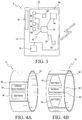
- FIG. 3 is a schematic showing the housing and sensor electronics of a body worn sensor in accordance with the present invention.
- FIGS. 4A and 4B are schematics of first and second embodiments of the body worn sensor.
- FIG. 5 is a schematic of a patient worn data transmission device in accordance with the present invention.
- FIG. 6 is a schematic of a cloud based real-time data processing system in accordance with the present invention.
- FIG. 7 shows diffusion maps of a pair of trial datasets for different runners.
- FIG. 8 shows diffusion maps depicting two trajectories produced by the same runner.
- FIG. 9 is a chart comparing various trials from runners.
- the acceleration values measured from each hand were averaged over the X, Y and Z axis.
- the results for the right hand are plotted as the ordinate (Y axis), and the results for the left hand are plotted as the abscissa (X axis).
- a linear classifier boundary is shown as a dashed line. A perfect classification results from the classification boundary. That is, there is complete separation between stroke patients and normal subjects.
- FIG. 11 shows exemplary diffusion maps calculated from acceleration values measured from two normal subjects (a,b), and two stroke patients (c,d) while the individuals were performing the following task: “cycle your fists in front of you”.
- the diffusion maps are shown separately for each hand. Note, the diffusion maps for the normal subjects capture the circular trajectory of the motion of each hand. For the patients however, the diffusion maps indicate the absence of circular motion for the left hand (the side of the weakness), and a distorted trajectory for the right hand. The hand dynamics for the normal subjects and the stroke patients are very different and this difference is clearly captured by the diffusion maps.
- the present invention provides a real-time automated system and method to diagnose and/or detect stroke and engage the patient, care-takers, emergency medical system and stroke neurologists in the management of this condition.
- the present system and method for diagnosis, detection and notification regarding the onset of a stroke (hereinafter “system 10 ”), employs body worn sensors 12 and a cloud based patient specific analysis to dramatically shorten the time to definitive therapy for patients with ischemic stroke.
- the system 10 continuously measures natural limb activity and conveys these measurements to a cloud based real-time data processing system 14 , which both identifies patient specific alert conditions and determines solutions for acting upon the needs of the specific patient (or user or subject) 100 .
- the system 10 further provides for notification of potential stroke syndromes in real-time and activation of acute stroke protocols.
- the system 10 also provides the ability to interact with the patient, to assess limb activity, physiology, and cognitive elements (such as audio and visual cues). It is appreciated the present system 10 is particularly suited for those individuals predisposed to the occurrence of a stroke, for example, individuals who have previously suffered a stroke, individuals with high blood pressure, individuals with a family history of strokes, etc.
- the data processing system 14 performs the step of identifying the potential onset of a stroke by first establishing a patient specific limb activity signature through the aggregation of continuously sampled data acquired over days, weeks and months, and the application of analytical methods as discussed below in greater detail.
- the system 10 facilitates interaction with the patient and the patient's caretaker(s). Further, the system 10 initiates the steps necessary for the transfer of the patient for rapid evaluation.
- the flow of information begins with sensor readings acquired by one or more body worn sensors 12 (referred to as BWS 1 -BWS 4 in FIG. 2 ).
- the body worn sensors 12 may be composed of four limb worn sensors 12 , as well as other body worn sensors that may be worn on other parts of the body of the patient 100 .
- the data collected by the body worn sensors 12 is relayed to the patient worn data transmission device 16 (for example, a smartphone 35 with a computer software application or “app” 36 operating in accordance with the present invention).
- a time-stamp is added to this data stream by the patient worn data transmission device 16 and the data from the multiple body worn sensors 12 is compiled into a single data stream.
- the data is then relayed by the patient worn data transmission device 16 to the cloud based data processing system 14 , in particular, the acquisition system 40 of the cloud based data processing system 14 .
- Cellular and/or Internet communication networks are preferably used to transfer the data from the patient worn data transmission device 16 to the cloud based data processing system 14 .
- the environment in which the patient resides is instrumented (that is, the majority of sensors picking up patient activity and functional data transmission components are positioned within the environment in which the patient resides; for example, sensors in the floors, and on the walls, and through cameras and microphones, wherein these sensors would continuously monitor the patient to determine the subject state and level of activity), and continuous readings are made through sensors embedded within the environment, of which continuous readings are then transmitted to the cloud based data processing system 14 for stroke detection.
- the patient 100 is instrumented (that is, functional components allowing for data transfer in accordance with the present invention are integrated into the body worn sensors 12 and the patient worn data transmission device 16 .
- the system 10 employs an approach wherein the patient 100 is instrumented; that is, the system 10 provides a solution which is centered around the patient 100 , and does not depend on the environment.
- cellular data transmission is the preferred mechanism for data transfer in accordance with the present invention.
- the patient worn data transmission device 16 switches to Wi-Fi when and where it is supported.
- the ability to switch to a trusted Wi-Fi network will save data on a cellular plan. It also reduces power consumption and heat generation and increases battery life because Wi-Fi transmission is over a few meters and cellular transmission is over a few km.
- the present system 10 is open to both solution strategies; one where the patient 100 is instrumented and one where the environment is instrumented.
- the solution in which the environment is instrumented will become increasingly more important as nursing homes, rehab facilities, and homes become more instrumented. It is further appreciated that as the system 10 develops, an increasing number of sensors may be available within the environment, and it will be desirable to use data from those sensors in addition to the data from the body worn sensors 12 on the patient.
- the acquisition system 40 of the cloud based data processing system 14 adds an additional time-stamp, and conditions the data with nulls if there are missing data samples.
- the patient worn data transmission device 16 is a hub between the body worn sensors 12 and cloud based data processing system 14 .
- the patient worn data transmission device 16 always knows which data it has received and which data it has not received from the body worn sensors 12 .
- the patient worn data transmission device 16 indicates this to the cloud based data processing system 14 .
- the patient worn data transmission device 16 always conveys to the cloud based data processing system 14 how many body worn sensors 12 it is in contact with. For example, patient worn data transmission device 16 is expected to be in contact with body worn sensors 12 worn on the LH (left hand), RH (right hand), LL (left leg), and RL (right leg) of the patient 100 , and periodically (currently at the start of each second) informs the cloud based data processing system 14 know that it is in contact with these four body worn sensors 12 . That is, at the start of each second the patient worn data transmission device 16 transmits to the cloud based data processing system 14 the codes, for example, LH, RH, LL, RL, to indicate that it is receiving data, respectively, from those four body worn sensors 12 .
- the codes for example, LH, RH, LL, RL
- the patient worn data transmission device 16 marks this with a code value in lieu of the data values to indicate those data were missing. If the data stream from a body worn sensor 12 stops (e.g., currently if no data is received for >1 sec), then the patient worn data transmission device 16 indicates this to the cloud based data processing system 14 by updating which body worn sensor(s) 12 it is in contact with. That is, for example, at the top of the next second it indicates that it is in contact with LH, RH and LL body worn sensors 12 , and not the RL body worn sensor 12 .
- alerts are sent to the patient 100 , the patient's caretaker(s) 102 and the emergency medical system(s) 104 as required. Alerts may be sent via text message, email, or other mechanisms to communication devices 100 d , 102 d , 104 d of the patient 100 , the patient's caretaker(s) 102 or the emergency medical system(s) 104 in a manner known to those skilled in the art.
- the first part of the system 10 is the body worn sensor(s) 12 shaped and dimensioned to be worn on limb(s) of a patient 100 .
- the body worn sensors 12 are respectively worn on the left arm (LA), the right arm (RA), the left leg (LL), and the right leg (RL) of a patient 100 .
- the four limb worn sensors 12 each have 9-axis accelerometers. Additional sensors may be used on the body to capture additional information. Further, one or more of the four limb worn sensors 12 also measure galvanic skin response (GSR), heart rate (HR) and temperature (T).
- GSR galvanic skin response
- HR heart rate
- T temperature
- the body worn sensors 12 are preferably as unobtrusive as possible. As such, it is contemplated the body worn sensors 12 may be integrated within ordinary objects which are worn on the body such as, but not limited to, clothing, cufflinks, buttons, shoe or belt buckle, ring, bracelet, shoe laces, eyeglass frame and as a patch on the body, including on the chest.
- detection events indicative of the onset of a stroke are triggered by anomalous data.
- the primary detection signal is based on anomalous asymmetry in limb activity.
- the present system 10 uses additional sensors such as HR sensors 60 , GSR sensors 64 and T sensors 66 to discover other (anomalous) changes which may occur in the peri-stroke period. If these contribute, directly or indirectly, to a detectable difference during the peri-stroke time from baseline, then they are incorporated into the detection process. Though a preferred current approach does not depend on it, all activity is categorized into recognizable states.
- the system 10 evaluates if it is possible to detect when a person is standing, sitting, or lying down; OR when a person is awake or asleep; OR when a person is indoors or outdoors; In a car (or bus, train), or not; OR when a person is engaged in common tasks such as walking, eating, exercising, getting dressed/undressed.
- the purpose of this is to improve upon the ability to detect anomalies.
- Each of the body worn sensors 12 independently and continuously samples limb activity.
- the signals generated by the body worn sensors 12 are processed to minimize data size, and the signals are then wirelessly communicated to the data transmission device 16 .
- data size is reduced primarily to reduce battery power consumption, reduce transmission cost, and minimize heat generated.
- all data samples are transmitted.
- the patient worn data transmission device 16 filters out immaterial data so as to limit the data that is ultimately transmitted to the cloud based data processing system 14 .
- transmission in bursts may be employed in accordance with the present invention.
- the body worn sensors 12 include similar characteristics and a single representative body worn sensor 12 is described below.
- the system 10 may include various arrays of body worn sensors; for example, it may be desirable to provide limb worn sensors to pick up limb activity, and then additional sensors on one or two limbs, or another location such as the chest, or ear, where HR, GSR and T are measured and detected.
- the patient worn data transmission device 16 includes a microphone 16 a and a camera 16 b , and is used to also pick up audio (the person speaking) and video/snap shots of the person's face if necessary.
- the body worn sensor 12 is constructed to continuously identify limb position in conjunction with the duration of limb movements, and the speed of limb movements (or otherwise referred to herein as “limb activity”).
- the body worn sensor 12 includes a housing 50 for electronics associated therewith and a strap 52 for wrapping about the limb of the patient 100 .
- sensor electronics 54 and a power source 18 are stored within the housing 50 .
- the sensor electronics 54 include a clock 20 , a data processor 22 (for example, a microcontroller) controlling operation of the body worn sensor 12 , a 9-axis motion tracking device 24 , a pressure sensor 26 , a signal processor 28 continuously processing signals generated by the 9-axis motion tracking device 24 , and a wireless communication protocol (or module) 30 (for example, Bluetooth Low Energy) continuously transmitting signals to the data transmission device 16 .
- a data processor 22 for example, a microcontroller controlling operation of the body worn sensor 12
- a 9-axis motion tracking device 24 for example, a pressure sensor 26
- a signal processor 28 continuously processing signals generated by the 9-axis motion tracking device 24
- a wireless communication protocol (or module) 30 for example, Bluetooth Low Energy
- sensor elements may be employed in conjunction with (or integrated with as is shown in FIG. 3 in accordance with a preferred embodiment) the body worn sensor 12 .
- additional sensor elements may be worn on the limbs (in conjunction with the body worn sensors 12 described above, on the torso or on the ear.
- the additional sensors may include, but are not limited to, a heart rate (HR) monitor 60 , A 1 or 2 lead EKG (electrocardiogram) 62 (which would necessarily be worn on the torso), a galvanic skin response (GSR) monitor (an electrodermal activity or skin conductance monitor) 64 , a body temperature (T) monitor 66 , a sweat analysis monitor, a hydration monitor, a muscle tautness monitor, a blood composition monitor (achieved through spectrometry), a sleep monitor, an audio monitor, a video monitor and/or other monitoring devices that might provide information useful in the detection of the onset of strokes and other acute central nervous system injuries.
- HR heart rate
- a 1 or 2 lead EKG electrocardiogram
- GSR galvanic skin response
- T body temperature
- sweat analysis monitor a hydration monitor
- muscle tautness monitor a muscle tautness monitor
- a sleep monitor an audio monitor
- video monitor and/or other monitoring devices that might provide information useful in the detection of
- the data processor 22 , 9-axis motion tracking device 24 , signal processor 28 , wireless communication protocol (including an antenna) 30 , and other sensing devices are integrated into a single printed circuit board 32 .
- Preferred elements for the present body worn sensor 12 include a power source 18 in the form of a flexible thin film battery (it is also contemplated the power source may be in the form of a flexible thin film solid state battery).
- the 9-axis motion tracking device 24 is preferably composed of the InvenSense MPU-9255.
- the InvenSense MPU-9255 combines a 3-axis gyroscope, 3-axis accelerometer, 3-axis magnetometer and a digital motion processor to produce an output signal indicating the position and orientation of a limb to which the body worn sensor 12 is attached.
- the data processor 22 is preferably composed of a low power microcontroller unit and a wireless communication protocol 30 , for example a Bluetooth Low Energy transceiver.
- the body worn sensor 12 includes an LED interface display 34 having a touch screen allowing for various tap gestures used in the operation of the present body worn sensor 12 .
- the communication between the body worn sensors 12 and patient worn data transmission device 16 is performed over Bluetooth Low Energy (BLE). The communication follows the BLE 4 GATT data protocol.
- BLE 5 will make greater bandwidth and security available.
- the data are transmitted from the sensors to the phone app in a data stream of 16 bit (2 byte) words.
- the different sensor data streams are combined into one data stream, and a time-stamp is added.
- the data transmission device 16 continuously samples the body worn sensor(s) 12 , compiles the sensor data into a single synchronized data stream, and transmits the data to the cloud based data processing system 14 . It is appreciated that while the body worn sensor and the data transmission device are disclosed herein as separate and distinct components, these components could be combined into a single unit.
- the data structure holds 1-sec of data as follows:
- the data transmission device 16 further provides a time-stamp regarding the date and time of the limb activity, and associates the time-stamp with the data as transmitted in accordance with the present invention. While the time-stamp as discussed herein takes place in the data transmission device 16 , it is appreciated the data may also (or alternatively) be time-stamped as it is developed at the body worn sensor 12 or in the cloud based data processing system 14 .
- the data transmission device 16 is preferably a smartphone 35 employing an “app” 36 to achieve data transmission in accordance with the present invention, as well as electronics 37 commonly employed in a smartphone 35 .
- the smartphone operates under Apple's iOS operating system or Google's ANDROID® operating system. It is also appreciated tablets or other similar electronic devices may be used instead of smartphones.
- the smartphone 35 is also be used as the contact mechanism for communicating with the patient.
- a smartphone is disclosed for use in accordance with the present invention, it is appreciated other data transmission devices may be employed without departing from the spirit of the present invention.
- the third part of the system 10 is preferably a HIPAA (Health Insurance Portability and Accountability Act) compliant cloud based data processing system 14 acquiring and processing the data streamed from each patient 100 .
- the cloud based data processing system 14 detects, using a patient specific database and a powerful time-series analysis method, patient specific limb activity signatures representative of weakness due to stroke.
- the time-series analysis method employed in accordance with the present invention could be supplemented by adding any number of direct or indirect measures where such measures are determined to improve the performance of the time-series analysis method.
- limb activity data is the primary measure employed in the analysis method
- other sensor modalities for example, audio, video, heart rate, temperature, etc.
- the cloud based data processing system 14 Based upon patient specific limb activity signatures, the cloud based data processing system 14 identifies the likely onset of a stroke, that is, an alert condition, and initiates protocols for subsequent interaction with the patient, or the patient's caretaker(s).
- the interaction with the patient 100 may include acquisition of audio or video/snap-shots.
- the audio is analyzed to determine changes in speech.
- the video/snap-shots are analyzed to determine changes in facial muscles indicative of stroke.
- the cloud based data processing system 14 in conjunction with the identification of the likely onset of a stroke (or other acute central nervous system injuries, also initiates related treatment protocols, for example, activation of the emergency medical response system, the transport of the patient to the nearest Neurocritical Care Unit or emergency room for rapid evaluation and treatment.
- the cloud based data processing system 14 is composed of three parts: an acquisition system 40 ; an analysis system 44 ; and a patient management system 46 .
- the acquisition system 40 of the cloud based data processing system 14 compiles all the streaming data generated by the body worn sensor(s) 12 and transmitted by the data transmission device 16 .
- the generated data is stored in a patient specific database 42 .
- the acquisition system 40 also determines connectivity of the body worn sensor(s) 12 and the quality of acquired data.
- the compilation of the generated data and the determination of sensor connectivity are achieved by sampling the time-stamped data sent by the data transmission device 16 , identifying gaps in the data, and formatting the data for further processing. For example, the 9-axis motion tracking device 24 of the body worn sensor 12 continuously samples limb activity.
- the 9-axis motion tracking device 24 reads out three 16-bit gyroscope outputs (to detect rotation about the X-, Y-, and Z-axes), three 16-bit accelerometer outputs (to measure acceleration along the X-, Y-, and Z-axes), and three 16-bit magnetometer outputs (for detecting terrestrial magnetism in the X-, Y-, and Z-axes). Limb activity is determined from these nine measurements.
- the output of the 9-axis motion tracking device 24 is nine 16-bit words (that is 18 bytes) for each acquired sample. Current sampling is at 40 Hz; that is, 40 ⁇ 9 ⁇ 18 bytes per second are generated. This data is streamed from each limb worn sensor 12 to the data transmission device 16 .
- sampling frequency is adjusted to optimize power consumption and capture of salient aspect of limb activity. It is further appreciated other sensors may be added within the body worn sensors, and other sensors which are placed on the torso (for example, EKG sensors 62 ) or elsewhere on the body may be incorporated into the present system 10 .
- This data is transmitted to the cloud based data processing system 14 where it is processed for further analysis in accordance with the present invention. It should, however, be appreciated the movement analysis is performed in the second step (i.e. in the analysis system 44 as described below).
- the process performed by the acquisition system 40 is straightforward in that the acquisition system 40 time-stamps the received data, and merges it with the previously acquired data.
- operation of the acquisition system 40 may require an evaluation of continuity, and introduction of blanks (or NaNs) as filler data.
- the acquisition system 40 flags a patient's data stream for being discontinuous if there are many gaps in the stream. If the data are flagged in this manner, then that information is relayed back to the patient to help trouble shoot data connectivity and used to determine if the data should be analyzed by the analysis section.
- detection events for the identification of the onset of a stroke are triggered by the detection of anomalies in the data.
- the system 10 has an expectation of the signal characteristics for a given patient and deviations from this expectation are of interest as they may represent an event of interest, in particular, the onset of a stroke. All anomalies in the data stream are identified and analyzed. Any change in the data triggers a set of responses geared to understand why the change has occurred.
- This set of evaluations includes ruling out technical issues as a cause for the observed change (for example, it could be that the system 10 could suffer a loss of communication from the body worn sensors 12 to the smartphone 35 , or from the smartphone 35 to the cloud based data processing system 14 , or from the cloud based data processing system 14 to the patient 100 ; it could also be the case that this loss of one or more links could be due to technical reasons, and may have no implication on the health of the patient 100 ; or, it could be that that loss is reflective of an important change in patient state, beyond the technical issue, for example, a fall could jar a wrist worn sensor 12 loose, in which case it would transmit non-physiological data, or break it, in which case connection with the sensor 12 would be lost).
- the cloud based data processing system 14 builds a collection of analyzed, high quality data for each patient 100 .
- the data acquired is continuously analyzed using the analysis system 44 .
- the system 10 tracks an ensemble of diffusion geometry measurements and other time-series measures of signal magnitude, variability, complexity and interrelation determined from the measurements of the body worn sensor 12 .
- the system 10 continuously matches ensembles of measurements from limb movement to detect disruption of symmetry, and track as well ensembles of measurements built from HR, GSR and T and other sensor modalities to detect anomalies.
- the analysis system 44 employs the data processing methods developed by Professor Ronald Coifman of Yale University. These methods are described in Coifman, R. R. and S. Lafon, Diffusion maps. Applied and Computational Harmonic Analysis, 2006. 21(1): p. 5-30, Coifman, R. R., S.
- the analysis system 44 continuously processes limb activity and sensor data, and determines, in comparison to a previously determined patient specific limb activity signature if the current limb movements of the patient 100 are within expected parameters.
- the activity of major muscle groups and the nervous system control of these muscle groups are quantified through the present system 10 . This is accomplished by quantifying the geometry of the dynamics of the motion of limbs of a patient.
- Multi-dimensional representations of limb activity are built using diffusion maps, and the differences between a pre-established multi-dimensional representation of limb activity (that is, the patient specific limb activity signature) and a current multi-dimensional representation of limb activity are evaluated to identify changes from baseline (that is, the patient specific limb activity signature).
- the limb activity is not within expected parameters (that is, the current activity is not consistent with the patient specific limb activity signature) then an alert is generated.
- Diffusion geometry enables precise quantification of distance between data clouds (that is, distance between ensembles of measurements characteristic of a patient).
- the system 10 has precise statistical measures of the differences between ensembles of measurements, these measures are designed to test the hypothesis that a patient 100 conforms to his own normal model, and where measurements do not conform to the patient's normal model the anomaly is documented and appropriate action is taken.
- the alert is issued within a time-window of 10-20 minutes.
- the system 10 continuously quantifies limb activity, creates patient specific limb activity signatures, and compares real-time limb activity to a patient specific limb activity signature for the identification of anomalies that may be indicative of the onset of a stroke other acute central nervous system injuries.
- anomalies are detected alert conditions are identified and (as is described below with regard to the patient management system 46 ) alerts are initiated and action is taken.
- the analysis system 44 develops limb activity signatures which are specific for each patient 100 . These patient specific limb activity signatures are continuously compared against current patient behavior. In the event that a patient 100 has a deficit in limb activity introduced by a stroke, the previously established patient specific limb activity signatures can also be used to quantify the degree of success in restoring function during rehabilitation.
- Diffusion maps are a dimensionality reduction and feature extraction algorithm. Briefly, the Eigen functions of a Markov matrix defining a random walk on the data are used to obtain new descriptions of data sets via a family of mappings that it is termed “diffusion maps.” These mappings embed the data points into a Euclidean space in which the usual distance describes the relationship between pairs of points in terms of their connectivity. This defines a useful distance between points in the data set that is termed “diffusion distance.”
- the approach employed by Coifman generalizes the classical Newtonian paradigm in which local infinitesimal rules of transition of a system lead to global macroscopic descriptions by integration.
- Different geometric representations of the data set are obtained by iterating the Markov matrix of transition, or equivalently, by running the random walk forward, and the diffusion maps are precisely the tools that allow the spectral properties of the diffusion process to be related to the geometry of the data set.
- the diffusion maps are precisely the tools that allow the spectral properties of the diffusion process to be related to the geometry of the data set.
- data generated based upon patient limb activity is applied to create a multi-dimensional diffusional map as taught by Coifman.
- the multi-dimensional diffusion map defines a patient specific limb activity signature.
- This patient specific limb activity signature is then continuously compared with similar diffusion maps based upon real-time limb activity for the identification of anomalies indicative of the onset of a stroke. Anomalies are detected when the diffusion map based upon real-time limb activity deviates from the patient specific limb activity signature by a pre-established extent.
- the ability to apply the diffusion mapping methodology to the present system 10 based upon identified anomalies in limb activity has been proven by collecting data from patients and normal volunteers, including using it to differentiate between runners based on the movements of their limbs and the development of a cloud based data acquisition system and real-time analysis system.
- the first experiment was performed on 11 individuals. These 11 individuals consisted of 6 normal subjects (5 female, age range 29-51 years, all right hand dominant), and 5 patients who had recently suffered a right hemisphere stroke (3 female, age range 47-86, 3 right and 2 left hand dominant).
- the NIH Stroke Scale/Score (NIHSS) was evaluated for the 5 patients before the study and was 11, 9, 1, 5, and 2.
- the left and right arm strength was evaluated and was 0/5, 0/5, 4/5, 4/5, and 4/5 for the left arm and 4/5, 5/5, 5/5, 5/5, and 5/5 for the right arm (the stroke patients all had left side weakness).
- the 11 individuals wore a 3-axis accelerometer both on the left-hand and the right-hand.
- Acceleration data was collected during the performance of the tasks. The accelerations in the X, Y and Z axes for each hand was measured. The acceleration data were sampled at 25 Hz. The data were evaluated with different time-series analysis measures. Two sets of results are shown here to demonstrate the separation of the normal subjects and the stroke patients.
- FIG. 10 the average absolute acceleration for the left hand and right hand for each individual tested is presented. The average absolute acceleration was first averaged separately for each of the three axes studied, and then an average was calculated for the three axes. The data used here were collected when the individuals were performing a simple task “cross your arms over each other five times”. The average absolute acceleration values for the 6 normal subjects and 5 stroke patients are shown in FIG. 10 .
- a linear classification boundary was estimated and is displayed.
- the linear classification boundary indicates that there is a complete separation between the data from the stroke patients and normal subjects.
- FIG. 11 the diffusion maps analysis of acceleration data from two normal subjects and two stroke patients while they performed a second task “cycle your fists in front of you” is presented.
- the diffusion maps demonstrate a clear capture of the dynamics of the hand movement, and the difference between the stroke patients and the normal subjects. Both a simple measure of magnitude, the average absolute acceleration, and the diffusion maps have been included to underscore the following. It is possible that a number of time-series measures can be used to distinguish between patients and normal subjects. However, to create limb specific signatures more powerful methodology is needed to capture the dynamics of limb activity.
- the first method employed removes all information on the dynamics of limb activity, to obtain the average absolute acceleration value. This is sufficient to achieve a separation between patients and normal subjects, and thus is of value.
- the second method, diffusion maps is a more powerful method which allows capture and quantification of the rich dynamics of these data and thus can further extend the analysis which is performed by the simple time-series measures. The ability of the diffusion maps algorithm to create limb specific signatures is illustrated through the second experiment described below.
- acceleration and rotation data was gathered from the wrist and ankles of thirteen runners at speeds 5 and 7.5 on a treadmill, and this data was used in conjunction with the diffusion maps feature extraction technique to identify unique characteristics between runners.
- similarities between runners were computed by comparing their ergodic measures.
- Motion data samples were taken at 100 Hz, where each sample consisted of a 12-dimensional vector (6 values per ankle and wrist). Each workout consisted of two trials, one at a speed of 5 mph and one at a speed of 7.5 mph. A trial was defined to be the time series of 12-dimensional vectors at a given speed. Among the thirteen runners, five performed more than one workout, and the remaining eight performed only one workout, resulting in 40 total trials. Each trial generated a single dataset, for a total of 40 datasets.
- Diffusion maps were created and used to reduce the high dimensional datasets obtained from individual runners and attempt to extract relevant features to distinguish between them. From this similarities between motion datasets generated from the same person were detected.
- a novel algorithm was thereafter generated that combines diffusion maps for dimensionality reduction of a dataset and uses a generalization of the earth mover's distance as a similarity metric to compare datasets. Generally, this algorithm considers the various diffusion maps by applying eiginfunctions to the data and creating a broad representation diffusion map. With the plurality of diffusion maps generated in this manner, overlaps are identified and correlations are determined. For a given runner, the algorithm successfully found correlations between motion data at a speed of 5 mph with motion data at a speed of 7.5 mph for the same runner, and correlations also held for a given runner at the same speed over multiple workouts.
- an iPhone motion measurement app was produced to collect motion data, as well as extensive MATLAB code implementing the algorithm and data analysis techniques described.
- the iPhone app captures limb activity data using the sensors built into the phone, places a time-stamp into the data stream, and continuously transfers the time-stamped data to the cloud.
- the data on the cloud are continuously analyzed using the methods described above and a quantification of limb activity data is produced in real-time.
- the limb activity signature consists of a continuously updated activity map of the patient's limb activity.
- the signature is qualified by patient state, time of day, time of year, and geographical location. Deviations from this activity map are continuously obtained using a running window over past activity. The running window is compared to the signature. Deviations of the measurements within this running window are qualified by the magnitude of the deviation and the duration of the deviation.
- the length of the running window is determined for each patient. The running window is expected to be 10 minutes in duration for most individuals. For more sedentary individuals a longer running window is used.
- the evaluations are performed in three distinct manners.
- First, the evaluations are performed in the ward on patients who have recently suffered a stroke. These patients are studied over a few days while they are in the hospital. The limb asymmetry in these patients is resolved, to a degree, over the duration of their stay in the hospital. This restoration of function is measured, towards baseline. The time-line is then reversed and these measurements are used as a surrogate to develop the asymmetry signature, and quantify the magnitude of the deficit which results from a stroke.
- Second, patients are tested at a neuro-rehabilitation center. These are patients who have had a stroke. Patients are at the greatest risk of a subsequent stroke in the first 90 days after a stroke. These patients are measured in a controlled environment 24 hours/day for 90 days.
- the patient management system 46 In conjunction with data developed by the acquisition system 40 and the information generated by the analysis system 44 , the patient management system 46 identifies anomalies indicative of patient specific alert conditions. Upon the identification of a patient specific alert condition, the patient management system 46 performs various functions.
- the patient management system 46 directly interacts with the patient 100 to notify the patient 100 that a patient specific alert condition has been detected.
- the patient is contacted via the communication device 10 d , which in accordance with a preferred embodiment may be the smartphone 35 that is also functioning as the data transmission device 16 .
- the first contact with the patient 100 is used to determine if there are any untoward situations which have arisen, which resulted in the alert condition. This first contact is used to rule out conditions such as non-working body worn sensors 12 , or if the patient 100 has been unusually still for any reason other than normal behavior.
- the patient 100 is asked to perform a standard movement with each set of limbs. This standard movement task could be as simple as standing up and raising each arm. This interaction allows the operator of the system 10 to determine the responsiveness of the patient 100 , and score their response to a standard test, akin to a neurological exam. Additional evaluations may include analysis of audio and of facial muscles to detect changes reflective of stroke.
- the patient's caretaker(s) 102 is notified.
- the caretaker(s) is provided with detailed information on patient location, alert condition, the time of the attempt to interact with the patient, and the result of the attempt to interact with the patient. If the patient is outside a facility, then the patient management system 46 also, optionally, provides the caretaker(s) 102 with information on the nearest facility where the patient can be taken, and alert the staff at the facility as to the condition of the patient, and the alert condition which was generated.
- the system 10 brings together expertise in biomaterials, sensors, electronics, real-time monitoring, time-series analysis, cloud based analytics, stroke and emergency neurology, to provide a commercially attractive real-time monitoring system for rapid transmission of acute stroke systems. These efforts rapidly set the stage for use in patients, wireless communication of potential stroke syndromes in real-time, and activation of acute stroke protocols.
- the system has been described, in part for application for ischemic stroke, but it can be appreciated that it is equally applicable for both ischemic and hemorrhagic stroke. The result is a product ready for immediate use where there is a clear and urgent need to improve the delivery of care for patients with stroke.
- the system is also applicable for the detection and quantification of focal deficits which result from acute central nervous system injury or injury in general. It is appreciated that the measurements and analysis described allow quantification of focal deficits due to injury, and provide a quantitative marker for both normal function and the loss of function due to injury. Such quantification is invaluable for rehabilitation. This quantification may be more broadly applied as well. It is also contemplated the present system 10 may be applied as a surrogate measure for overall well-being by quantifying normal levels of activity for an individual and detecting changes from these levels. For example, it is contemplated the present system 10 may be applied in conjunction with the treatment and detection of neurological and psychiatric illnesses such as psychoses, depression, post-traumatic stress-disorder, muscular sclerosis, and Parkinsonism.
- neurological and psychiatric illnesses such as psychoses, depression, post-traumatic stress-disorder, muscular sclerosis, and Parkinsonism.
- the system 10 may also be used to quantify the neurological exam.
- an individual is asked to sit, stand and perform stereotyped movements, and the system 10 documents and quantifies the limb activity, and compares them against a normative database to allow a quantitative comparison to a normal population.
- This examination can be performed at a remote location, facilitating telemedicine.
- the system 10 is embedded within a game which can be played on smartphones and on gaming devices. This allows the quantitative determination of limb activity while an individual is playing a game, and the detection of subtle movement disorder through game playing.
Landscapes
- Health & Medical Sciences (AREA)
- Life Sciences & Earth Sciences (AREA)
- Engineering & Computer Science (AREA)
- Public Health (AREA)
- Medical Informatics (AREA)
- General Health & Medical Sciences (AREA)
- Biomedical Technology (AREA)
- Pathology (AREA)
- Heart & Thoracic Surgery (AREA)
- Molecular Biology (AREA)
- Surgery (AREA)
- Animal Behavior & Ethology (AREA)
- Physics & Mathematics (AREA)
- Biophysics (AREA)
- Veterinary Medicine (AREA)
- Physiology (AREA)
- Oral & Maxillofacial Surgery (AREA)
- Dentistry (AREA)
- Psychiatry (AREA)
- Computer Vision & Pattern Recognition (AREA)
- Artificial Intelligence (AREA)
- Signal Processing (AREA)
- Primary Health Care (AREA)
- Epidemiology (AREA)
- Computer Networks & Wireless Communication (AREA)
- Business, Economics & Management (AREA)
- Databases & Information Systems (AREA)
- Data Mining & Analysis (AREA)
- General Business, Economics & Management (AREA)
- Measurement Of The Respiration, Hearing Ability, Form, And Blood Characteristics Of Living Organisms (AREA)
- Measuring And Recording Apparatus For Diagnosis (AREA)
- Neurology (AREA)
- Alarm Systems (AREA)
- Cookers (AREA)
- Eye Examination Apparatus (AREA)
- Psychology (AREA)
- Neurosurgery (AREA)
Priority Applications (1)
| Application Number | Priority Date | Filing Date | Title |
|---|---|---|---|
| US16/069,548 US11020059B2 (en) | 2016-01-12 | 2017-01-12 | System and method for diagnosing and notification regarding the onset of a stroke |
Applications Claiming Priority (3)
| Application Number | Priority Date | Filing Date | Title |
|---|---|---|---|
| US201662277645P | 2016-01-12 | 2016-01-12 | |
| PCT/US2017/013149 WO2017123725A1 (en) | 2016-01-12 | 2017-01-12 | System and method for diagnosis and notification regarding the onset of a stroke |
| US16/069,548 US11020059B2 (en) | 2016-01-12 | 2017-01-12 | System and method for diagnosing and notification regarding the onset of a stroke |
Related Parent Applications (1)
| Application Number | Title | Priority Date | Filing Date |
|---|---|---|---|
| PCT/US2017/013149 A-371-Of-International WO2017123725A1 (en) | 2016-01-12 | 2017-01-12 | System and method for diagnosis and notification regarding the onset of a stroke |
Related Child Applications (1)
| Application Number | Title | Priority Date | Filing Date |
|---|---|---|---|
| US17/308,447 Continuation US12357244B2 (en) | 2016-01-12 | 2021-05-05 | System and method for diagnosing and notification regarding the onset of a stroke |
Publications (2)
| Publication Number | Publication Date |
|---|---|
| US20190029606A1 US20190029606A1 (en) | 2019-01-31 |
| US11020059B2 true US11020059B2 (en) | 2021-06-01 |
Family
ID=59311422
Family Applications (2)
| Application Number | Title | Priority Date | Filing Date |
|---|---|---|---|
| US16/069,548 Active 2037-09-13 US11020059B2 (en) | 2016-01-12 | 2017-01-12 | System and method for diagnosing and notification regarding the onset of a stroke |
| US17/308,447 Active US12357244B2 (en) | 2016-01-12 | 2021-05-05 | System and method for diagnosing and notification regarding the onset of a stroke |
Family Applications After (1)
| Application Number | Title | Priority Date | Filing Date |
|---|---|---|---|
| US17/308,447 Active US12357244B2 (en) | 2016-01-12 | 2021-05-05 | System and method for diagnosing and notification regarding the onset of a stroke |
Country Status (5)
| Country | Link |
|---|---|
| US (2) | US11020059B2 (de) |
| EP (2) | EP4233713A3 (de) |
| ES (1) | ES2947033T3 (de) |
| FI (1) | FI3402405T3 (de) |
| WO (1) | WO2017123725A1 (de) |
Cited By (5)
| Publication number | Priority date | Publication date | Assignee | Title |
|---|---|---|---|---|
| US11553935B2 (en) | 2019-12-18 | 2023-01-17 | Imperative Care, Inc. | Sterile field clot capture module for use in thrombectomy system |
| US11850349B2 (en) | 2018-07-06 | 2023-12-26 | Incept, Llc | Vacuum transfer tool for extendable catheter |
| US11937917B1 (en) | 2023-08-16 | 2024-03-26 | Alva Health Inc. | Detecting falls with multiple wearable motion sensors |
| US12232838B2 (en) | 2021-08-12 | 2025-02-25 | Imperative Care, Inc. | Method of robotically performing a neurovascular procedure |
| USD1077996S1 (en) | 2021-10-18 | 2025-06-03 | Imperative Care, Inc. | Inline fluid filter |
Families Citing this family (13)
| Publication number | Priority date | Publication date | Assignee | Title |
|---|---|---|---|---|
| US20170224224A1 (en) * | 2016-02-04 | 2017-08-10 | Chu-Yih Yu | Method of obtaining symmetric temperature change |
| EP3427127B1 (de) * | 2016-03-11 | 2022-06-15 | Limbic Life Ag | Insassenunterstützungsvorrichtung und system zur steuerung von objekten |
| US11253173B1 (en) * | 2017-05-30 | 2022-02-22 | Verily Life Sciences Llc | Digital characterization of movement to detect and monitor disorders |
| US20190117143A1 (en) * | 2017-10-23 | 2019-04-25 | Massachusetts Institute Of Technology | Methods and Apparatus for Assessing Depression |
| CN113226176B (zh) * | 2018-12-20 | 2024-11-05 | 优曼森斯公司 | 中风检测传感器 |
| US11134859B2 (en) * | 2019-10-15 | 2021-10-05 | Imperative Care, Inc. | Systems and methods for multivariate stroke detection |
| CN110755084B (zh) * | 2019-10-29 | 2023-06-23 | 南京茂森电子技术有限公司 | 基于主被动、分阶段动作的运动功能评估方法及设备 |
| JP7599478B2 (ja) * | 2020-03-10 | 2024-12-13 | テルモ株式会社 | 情報処理方法、コンピュータプログラム、情報処理装置及び情報処理システム |
| WO2022030591A1 (ja) * | 2020-08-05 | 2022-02-10 | パナソニックIpマネジメント株式会社 | 脳卒中検査システム、脳卒中検査方法、及び、プログラム |
| EP4346584A4 (de) * | 2021-05-25 | 2025-03-19 | The Trustees of The University of Pennsylvania | Überwachung der bewegungen der oberen gliedmassen zur erkennung eines schlaganfalls |
| CN114495425B (zh) * | 2022-02-13 | 2022-12-16 | 郑州大学 | 一种基于机器学习的缺血性心血管病监测预警系统 |
| USD1069809S1 (en) | 2022-08-25 | 2025-04-08 | Kandu Health, Inc. | Display screen or portion thereof with graphical user interface |
| US20240389887A1 (en) * | 2023-05-23 | 2024-11-28 | BioSensics LLC | Systems and methods for monitoring upper limb function during activities of daily living |
Citations (6)
| Publication number | Priority date | Publication date | Assignee | Title |
|---|---|---|---|---|
| US20080294019A1 (en) | 2007-05-24 | 2008-11-27 | Bao Tran | Wireless stroke monitoring |
| US20090149913A1 (en) | 2007-08-01 | 2009-06-11 | Putz David A | Wireless System for Epilepsy Monitoring and Measurement |
| US20090204030A1 (en) | 2006-03-08 | 2009-08-13 | Koninklijke Philips Electronics N.V. | Method and system for monitoring the functional use of limbs |
| US20090264785A1 (en) | 2008-04-18 | 2009-10-22 | Brainscope Company, Inc. | Method and Apparatus For Assessing Brain Function Using Diffusion Geometric Analysis |
| US20140243637A1 (en) | 2011-06-11 | 2014-08-28 | Aliphcom | Data-capable band for medical diagnosis, monitoring, and treatment |
| US20150157252A1 (en) * | 2013-12-05 | 2015-06-11 | Cyberonics, Inc. | Systems and methods of limb-based accelerometer assessments of neurological disorders |
Family Cites Families (2)
| Publication number | Priority date | Publication date | Assignee | Title |
|---|---|---|---|---|
| US20140018637A1 (en) * | 2012-07-12 | 2014-01-16 | Oakwell - Cayman Company | Cloud-Based Monitoring of Medical Devices |
| US20180249967A1 (en) * | 2015-09-25 | 2018-09-06 | Intel Corporation | Devices, systems, and associated methods for evaluating a potential stroke condition in a subject |
-
2017
- 2017-01-12 FI FIEP17738909.5T patent/FI3402405T3/fi active
- 2017-01-12 US US16/069,548 patent/US11020059B2/en active Active
- 2017-01-12 EP EP23160487.7A patent/EP4233713A3/de active Pending
- 2017-01-12 EP EP17738909.5A patent/EP3402405B1/de active Active
- 2017-01-12 WO PCT/US2017/013149 patent/WO2017123725A1/en not_active Ceased
- 2017-01-12 ES ES17738909T patent/ES2947033T3/es active Active
-
2021
- 2021-05-05 US US17/308,447 patent/US12357244B2/en active Active
Patent Citations (6)
| Publication number | Priority date | Publication date | Assignee | Title |
|---|---|---|---|---|
| US20090204030A1 (en) | 2006-03-08 | 2009-08-13 | Koninklijke Philips Electronics N.V. | Method and system for monitoring the functional use of limbs |
| US20080294019A1 (en) | 2007-05-24 | 2008-11-27 | Bao Tran | Wireless stroke monitoring |
| US20090149913A1 (en) | 2007-08-01 | 2009-06-11 | Putz David A | Wireless System for Epilepsy Monitoring and Measurement |
| US20090264785A1 (en) | 2008-04-18 | 2009-10-22 | Brainscope Company, Inc. | Method and Apparatus For Assessing Brain Function Using Diffusion Geometric Analysis |
| US20140243637A1 (en) | 2011-06-11 | 2014-08-28 | Aliphcom | Data-capable band for medical diagnosis, monitoring, and treatment |
| US20150157252A1 (en) * | 2013-12-05 | 2015-06-11 | Cyberonics, Inc. | Systems and methods of limb-based accelerometer assessments of neurological disorders |
Non-Patent Citations (4)
| Title |
|---|
| Jose R. Villar et al: "A hybrid intelligent recognition system for the early detection of strokes", Integrated Computer-Aided Engineering, val. 22, No. 3, Jun. 2, 2015 (Jun. 2, 2015), pp. 215-227, XP055589561, NL; ISSN: 1069-2509, DOI: 10.3233/ICA-150488. |
| JOSÉ R. VILLAR, CAMELIA CHIRA, JAVIER SEDANO, SILVIA GONZÁLEZ, JOSÉ M. TREJO: "A hybrid intelligent recognition system for the early detection of strokes", INTEGRATED COMPUTER-AIDED ENGINEERING, IOS PRESS, AMSTERDAM,, NL, vol. 22, no. 3, 2 June 2015 (2015-06-02), NL, pages 215 - 227, XP055589561, ISSN: 1069-2509, DOI: 10.3233/ICA-150488 |
| LAFON ; KELLER ; COIFMAN: "Data Fusion and Multicue Data Matching by Diffusion Maps", IEEE TRANSACTIONS ON PATTERN ANALYSIS AND MACHINE INTELLIGENCE, IEEE COMPUTER SOCIETY., USA, vol. 27, no. 11, 1 November 2006 (2006-11-01), USA, pages 1784 - 1797, XP011149295, ISSN: 0162-8828, DOI: 10.1109/TPAMI.2006.223 |
| Lafon et al: Data Fusion and Multicue Data Matching by Diffusion Maps:, IEEE Transactions on Pattern Analysis and Machine Intelligence, IEEE Computer Society, USA, vol. 27. No. 11, Nov. 1, 2006 (Nov. 1, 2006). pp. 1784-1797. XP011149295, ISSN: 0162-8828. DOI: 10.1109/TPAMI.2006.223. |
Cited By (10)
| Publication number | Priority date | Publication date | Assignee | Title |
|---|---|---|---|---|
| US11850349B2 (en) | 2018-07-06 | 2023-12-26 | Incept, Llc | Vacuum transfer tool for extendable catheter |
| US11553935B2 (en) | 2019-12-18 | 2023-01-17 | Imperative Care, Inc. | Sterile field clot capture module for use in thrombectomy system |
| US11633272B2 (en) | 2019-12-18 | 2023-04-25 | Imperative Care, Inc. | Manually rotatable thrombus engagement tool |
| US11638637B2 (en) | 2019-12-18 | 2023-05-02 | Imperative Care, Inc. | Method of removing embolic material with thrombus engagement tool |
| US12232838B2 (en) | 2021-08-12 | 2025-02-25 | Imperative Care, Inc. | Method of robotically performing a neurovascular procedure |
| US12376928B2 (en) | 2021-08-12 | 2025-08-05 | Imperative Care, Inc. | Catheter drive system for supra-aortic access |
| US12558175B2 (en) | 2021-08-12 | 2026-02-24 | Imperative Care, Inc. | Multi catheter method of performing a robotic neurovascular procedure |
| USD1077996S1 (en) | 2021-10-18 | 2025-06-03 | Imperative Care, Inc. | Inline fluid filter |
| US11937917B1 (en) | 2023-08-16 | 2024-03-26 | Alva Health Inc. | Detecting falls with multiple wearable motion sensors |
| US12367976B1 (en) | 2023-08-16 | 2025-07-22 | Alva Health Inc. | Detecting falls with multiple wearable motion sensors |
Also Published As
| Publication number | Publication date |
|---|---|
| FI3402405T3 (fi) | 2023-06-02 |
| US20210275109A1 (en) | 2021-09-09 |
| US12357244B2 (en) | 2025-07-15 |
| EP3402405B1 (de) | 2023-04-12 |
| EP3402405A1 (de) | 2018-11-21 |
| US20190029606A1 (en) | 2019-01-31 |
| EP4233713A2 (de) | 2023-08-30 |
| EP4233713A3 (de) | 2023-10-25 |
| EP3402405A4 (de) | 2019-07-17 |
| WO2017123725A1 (en) | 2017-07-20 |
| ES2947033T3 (es) | 2023-07-31 |
Similar Documents
| Publication | Publication Date | Title |
|---|---|---|
| US12357244B2 (en) | System and method for diagnosing and notification regarding the onset of a stroke | |
| Dian et al. | Wearables and the Internet of Things (IoT), applications, opportunities, and challenges: A Survey | |
| US20240108286A1 (en) | Wearable Appliance | |
| Mukhopadhyay | Wearable sensors for human activity monitoring: A review | |
| US12544008B2 (en) | Smart watch | |
| Shany et al. | Sensors-based wearable systems for monitoring of human movement and falls | |
| US8750971B2 (en) | Wireless stroke monitoring | |
| US8647268B2 (en) | Patient monitoring apparatus | |
| CN103417195A (zh) | 基于物联网的生理参数管理监控系统及方法 | |
| US20230245767A1 (en) | Wearable sensor system configured for monitoring and modeling health data | |
| Raja et al. | Internet of things based effective wearable healthcare monitoring system for remote areas | |
| WO2024191792A2 (en) | Microenvironmental monitoring utilizing different types of sensing devices in a body area network associated with a subject | |
| Srivastava et al. | Supervision of worldwide healthcare through an IoT-based system | |
| Xu et al. | Total health: Toward continuous personal monitoring | |
| US20250339105A1 (en) | System and method for diagnosis and notification regarding the onset of a stroke | |
| Moghaddam et al. | Health and wellness measurement approaches for mobile healthcare | |
| Malche et al. | Research Article Artificial Intelligence of Things-(AIoT-) Based Patient Activity Tracking System for Remote Patient Monitoring | |
| Duraiselvam et al. | Smart Multifunctional Vital Testing Kit for Patients | |
| De Silva | A New Face of Healthcare Through AI, Blockchain, HCI and MIoT | |
| Kumar et al. | IoT-Based Advanced Healthmonitoring System Using Cloud Platform | |
| Kañtoch | Technical verification of integrating wearable sensors into bsn-based telemedical monitoring system | |
| JP2024160905A (ja) | 運動・健康クラウドシステム | |
| EP4555784A1 (de) | Unterstütztes mobiles ad-hoc-netzwerk mit anpassung der physischen schicht | |
| WO2025042643A1 (en) | Machine learning-based reconstruction of sensor data from sensing devices in a body area network | |
| Singh et al. | Applications Of Sensors To Detect The Behavior Of Human. A Survey Paper |
Legal Events
| Date | Code | Title | Description |
|---|---|---|---|
| AS | Assignment |
Owner name: YALE UNIVERSITY, CONNECTICUT Free format text: ASSIGNMENT OF ASSIGNORS INTEREST;ASSIGNOR:SHETH, KEVIN N;REEL/FRAME:046328/0647 Effective date: 20180601 Owner name: YALE UNIVERSITY, CONNECTICUT Free format text: ASSIGNMENT OF ASSIGNORS INTEREST;ASSIGNOR:ZAVERI, HITTEN P;REEL/FRAME:046328/0487 Effective date: 20170531 Owner name: YALE UNIVERSITY, CONNECTICUT Free format text: ASSIGNMENT OF ASSIGNORS INTEREST;ASSIGNOR:COIFMAN, RONALD R;REEL/FRAME:046328/0577 Effective date: 20180607 |
|
| FEPP | Fee payment procedure |
Free format text: ENTITY STATUS SET TO UNDISCOUNTED (ORIGINAL EVENT CODE: BIG.); ENTITY STATUS OF PATENT OWNER: SMALL ENTITY |
|
| STPP | Information on status: patent application and granting procedure in general |
Free format text: APPLICATION UNDERGOING PREEXAM PROCESSING |
|
| FEPP | Fee payment procedure |
Free format text: ENTITY STATUS SET TO SMALL (ORIGINAL EVENT CODE: SMAL); ENTITY STATUS OF PATENT OWNER: SMALL ENTITY |
|
| STPP | Information on status: patent application and granting procedure in general |
Free format text: APPLICATION DISPATCHED FROM PREEXAM, NOT YET DOCKETED |
|
| STPP | Information on status: patent application and granting procedure in general |
Free format text: DOCKETED NEW CASE - READY FOR EXAMINATION |
|
| STPP | Information on status: patent application and granting procedure in general |
Free format text: NON FINAL ACTION MAILED |
|
| STPP | Information on status: patent application and granting procedure in general |
Free format text: NOTICE OF ALLOWANCE MAILED -- APPLICATION RECEIVED IN OFFICE OF PUBLICATIONS |
|
| STPP | Information on status: patent application and granting procedure in general |
Free format text: PUBLICATIONS -- ISSUE FEE PAYMENT RECEIVED |
|
| STPP | Information on status: patent application and granting procedure in general |
Free format text: PUBLICATIONS -- ISSUE FEE PAYMENT VERIFIED |
|
| STCF | Information on status: patent grant |
Free format text: PATENTED CASE |
|
| MAFP | Maintenance fee payment |
Free format text: PAYMENT OF MAINTENANCE FEE, 4TH YR, SMALL ENTITY (ORIGINAL EVENT CODE: M2551); ENTITY STATUS OF PATENT OWNER: SMALL ENTITY Year of fee payment: 4 |