US11073476B2 - Method for developing biological trace evidence on porous object - Google Patents
Method for developing biological trace evidence on porous object Download PDFInfo
- Publication number
- US11073476B2 US11073476B2 US16/479,707 US201716479707A US11073476B2 US 11073476 B2 US11073476 B2 US 11073476B2 US 201716479707 A US201716479707 A US 201716479707A US 11073476 B2 US11073476 B2 US 11073476B2
- Authority
- US
- United States
- Prior art keywords
- porous object
- development reagent
- fluorescent development
- biological
- indanedione
- Prior art date
- Legal status (The legal status is an assumption and is not a legal conclusion. Google has not performed a legal analysis and makes no representation as to the accuracy of the status listed.)
- Active, expires
Links
- 238000000034 method Methods 0.000 title claims abstract description 93
- XEKOWRVHYACXOJ-UHFFFAOYSA-N Ethyl acetate Chemical compound CCOC(C)=O XEKOWRVHYACXOJ-UHFFFAOYSA-N 0.000 claims abstract description 192
- 239000003153 chemical reaction reagent Substances 0.000 claims abstract description 191
- PEDCQBHIVMGVHV-UHFFFAOYSA-N Glycerine Chemical compound OCC(O)CO PEDCQBHIVMGVHV-UHFFFAOYSA-N 0.000 claims abstract description 165
- RTZKZFJDLAIYFH-UHFFFAOYSA-N Diethyl ether Chemical compound CCOCC RTZKZFJDLAIYFH-UHFFFAOYSA-N 0.000 claims abstract description 110
- WFFZGYRTVIPBFN-UHFFFAOYSA-N 3h-indene-1,2-dione Chemical compound C1=CC=C2C(=O)C(=O)CC2=C1 WFFZGYRTVIPBFN-UHFFFAOYSA-N 0.000 claims abstract description 83
- LFQSCWFLJHTTHZ-UHFFFAOYSA-N Ethanol Chemical compound CCO LFQSCWFLJHTTHZ-UHFFFAOYSA-N 0.000 claims abstract description 57
- 239000003208 petroleum Substances 0.000 claims abstract description 55
- 239000000203 mixture Substances 0.000 claims abstract description 29
- 238000009472 formulation Methods 0.000 claims abstract description 28
- 238000001035 drying Methods 0.000 claims abstract description 25
- 239000002994 raw material Substances 0.000 claims abstract description 14
- 238000005507 spraying Methods 0.000 claims abstract description 13
- 230000001678 irradiating effect Effects 0.000 claims abstract description 5
- 235000011187 glycerol Nutrition 0.000 claims description 55
- 239000002023 wood Substances 0.000 claims description 35
- 239000011449 brick Substances 0.000 claims description 34
- 239000004575 stone Substances 0.000 claims description 34
- 239000004744 fabric Substances 0.000 claims description 32
- 238000002156 mixing Methods 0.000 claims description 3
- 238000003756 stirring Methods 0.000 claims description 3
- 239000000123 paper Substances 0.000 claims 2
- 229920000742 Cotton Polymers 0.000 description 24
- 238000002425 crystallisation Methods 0.000 description 10
- 230000008025 crystallization Effects 0.000 description 10
- 238000010586 diagram Methods 0.000 description 9
- 230000035699 permeability Effects 0.000 description 6
- QTBSBXVTEAMEQO-UHFFFAOYSA-N Acetic acid Chemical compound CC(O)=O QTBSBXVTEAMEQO-UHFFFAOYSA-N 0.000 description 2
- 239000002253 acid Substances 0.000 description 2
- 239000013078 crystal Substances 0.000 description 2
- 238000012986 modification Methods 0.000 description 2
- 230000004048 modification Effects 0.000 description 2
- 230000001681 protective effect Effects 0.000 description 2
- 229960000583 acetic acid Drugs 0.000 description 1
- 238000005516 engineering process Methods 0.000 description 1
- 239000012362 glacial acetic acid Substances 0.000 description 1
- 239000010985 leather Substances 0.000 description 1
- 239000002904 solvent Substances 0.000 description 1
- 239000002699 waste material Substances 0.000 description 1
Images




Classifications
-
- G—PHYSICS
- G01—MEASURING; TESTING
- G01N—INVESTIGATING OR ANALYSING MATERIALS BY DETERMINING THEIR CHEMICAL OR PHYSICAL PROPERTIES
- G01N21/00—Investigating or analysing materials by the use of optical means, i.e. using sub-millimetre waves, infrared, visible or ultraviolet light
- G01N21/62—Systems in which the material investigated is excited whereby it emits light or causes a change in wavelength of the incident light
- G01N21/63—Systems in which the material investigated is excited whereby it emits light or causes a change in wavelength of the incident light optically excited
- G01N21/64—Fluorescence; Phosphorescence
- G01N21/6428—Measuring fluorescence of fluorescent products of reactions or of fluorochrome labelled reactive substances, e.g. measuring quenching effects, using measuring "optrodes"
-
- G—PHYSICS
- G01—MEASURING; TESTING
- G01N—INVESTIGATING OR ANALYSING MATERIALS BY DETERMINING THEIR CHEMICAL OR PHYSICAL PROPERTIES
- G01N31/00—Investigating or analysing non-biological materials by the use of the chemical methods specified in the subgroup; Apparatus specially adapted for such methods
- G01N31/22—Investigating or analysing non-biological materials by the use of the chemical methods specified in the subgroup; Apparatus specially adapted for such methods using chemical indicators
-
- A—HUMAN NECESSITIES
- A61—MEDICAL OR VETERINARY SCIENCE; HYGIENE
- A61B—DIAGNOSIS; SURGERY; IDENTIFICATION
- A61B5/00—Measuring for diagnostic purposes; Identification of persons
- A61B5/117—Identification of persons
- A61B5/1171—Identification of persons based on the shapes or appearances of their bodies or parts thereof
- A61B5/1172—Identification of persons based on the shapes or appearances of their bodies or parts thereof using fingerprinting
-
- G—PHYSICS
- G01—MEASURING; TESTING
- G01N—INVESTIGATING OR ANALYSING MATERIALS BY DETERMINING THEIR CHEMICAL OR PHYSICAL PROPERTIES
- G01N21/00—Investigating or analysing materials by the use of optical means, i.e. using sub-millimetre waves, infrared, visible or ultraviolet light
- G01N21/62—Systems in which the material investigated is excited whereby it emits light or causes a change in wavelength of the incident light
- G01N21/63—Systems in which the material investigated is excited whereby it emits light or causes a change in wavelength of the incident light optically excited
- G01N21/64—Fluorescence; Phosphorescence
- G01N21/6428—Measuring fluorescence of fluorescent products of reactions or of fluorochrome labelled reactive substances, e.g. measuring quenching effects, using measuring "optrodes"
- G01N2021/6439—Measuring fluorescence of fluorescent products of reactions or of fluorochrome labelled reactive substances, e.g. measuring quenching effects, using measuring "optrodes" with indicators, stains, dyes, tags, labels, marks
-
- G—PHYSICS
- G01—MEASURING; TESTING
- G01N—INVESTIGATING OR ANALYSING MATERIALS BY DETERMINING THEIR CHEMICAL OR PHYSICAL PROPERTIES
- G01N21/00—Investigating or analysing materials by the use of optical means, i.e. using sub-millimetre waves, infrared, visible or ultraviolet light
- G01N21/75—Systems in which material is subjected to a chemical reaction, the progress or the result of the reaction being investigated
- G01N21/77—Systems in which material is subjected to a chemical reaction, the progress or the result of the reaction being investigated by observing the effect on a chemical indicator
- G01N2021/7769—Measurement method of reaction-produced change in sensor
- G01N2021/7786—Fluorescence
Definitions
- the following relates to a method for developing biological trace evidence on a porous object.
- the prepared fluorescent development reagent can only be used within 2 weeks, and when more than 2 weeks, the fluorescent development reagent may crystallize or produce other variations, and cannot be used, which is easy to cause waste. Further, when the fluorescent development reagent is sprayed, the phenomenon that the precipitated crystals block the nozzle is likely to occur, resulting in uneven spraying.
- An aspect relates to a method for developing biological trace evidence on a porous object, and a biological fluorescent development reagent used in this method produces no obvious acid odor, and thus does not cause any unpleasant experience to operator.
- the present disclosure further provides a biological fluorescent development reagent.
- the present disclosure employs the following technical solution:
- a method for developing biological trace evidence on a porous object comprises immersing a porous object in a biological fluorescent development reagent or spraying a biological fluorescent development reagent on the porous object, drying the porous object in an environment having a relative humidity of less than 40% at a temperature of 50° C.-120° C., irradiating the dried porous object with a laser having a wavelength of 532 nm and a full width at half-maximum of less than 1 nm, controlling a surface of the porous object with an illuminance of over 300,000 lux, and using a cut-off filter under 540 nm to develop biological trace evidence on the porous object, and a raw material formulation of the biological fluorescent development reagent is, in percent by weight, 0.02%-0.5% of indanedione, 4%-10% of ethyl acetate, 0.5%-1.5% of glycerol, 5%-15.5% of pure alcohol, and 73.5%-90% of petroleum ether.
- the biological trace evidence comprises a handprint.
- the handprint refers to a fingerprint or a palmprint.
- a cut-off filter at 540 nm refers to a cut-off filter that allows only light waves of or above 540 nm to pass through, while other light waves cannot pass.
- the method of the present disclosure is applicable to various porous objects such as porous objects with high permeability, specifically including napkin, toilet paper, thermal paper, invoice paper, etc.; such as porous objects with moderate permeability, specifically including writing paper, cloth, etc.; such as porous objects with weak permeability, specifically including brick, wood, and stone.
- a biological fluorescent development reagent with a relatively low mass concentration of indanedione can be used for the porous objects with moderate permeability; for the porous objects with moderate permeability, a biological fluorescent development reagent with a moderate mass concentration of indanedione can be used; for the porous objects with weak permeability, a biological fluorescent development reagent with a relatively high mass concentration of indanedione can be used.
- concentration of indanedione is too high, the resulting handprint pattern is easily blurred and cannot be used, and when a low concentration of indanedione is used, a clear handprint pattern is easily generated, and if the concentration is too low, the handprint may also be unclear or cannot be seen.
- the raw material formulation of the biological fluorescent development reagent is, in percent by weight, 0.02%-0.15% of indanedione, 4%-10% of ethyl acetate, 0.5%-1.5% of glycerol, 5%-15.5% of pure alcohol, and 74%-90% of petroleum ether.
- the raw material formulation of the biological fluorescent development reagent is, in percent by weight, 0.05%-0.25% of indanedione, 4%-10% of ethyl acetate, 0.5%-1.5% of glycerol, 5%-15.5% of pure alcohol, and 74%-90% of petroleum ether.
- the raw material formulation of the biological fluorescent development reagent is, in percent by weight, 0.2%-0.5% of indanedione, 4%-10% of ethyl acetate, 0.5%-1.5% of glycerol, 5%-15.5% of pure alcohol, and 73.5%-89% of petroleum ether.
- pure alcohol refers to >99.7% absolute ethanol, C 2 H 5 OH.
- the immersing time is controlled to be 5-10 sec.
- a moisture content of the porous object is controlled to be less than 8%.
- the moisture content of the porous object is controlled to be 6-7%.
- the porous object is dried in an environment having a relative humidity of less than 30% at a temperature of 50° C.-90° C.
- a method for preparing the biological fluorescent development reagent comprises following steps:
- a biological fluorescent development reagent for developing biological trace evidence on a porous object is provided, and a raw material formulation of the biological fluorescent development reagent is, in percent by weight, 0.02%-0.5% of indanedione, 4%-10% of ethyl acetate, 0.5%-1.5% of glycerol, 5%-15.5% of pure alcohol, and 73.5%-90% of petroleum ether.
- the biological fluorescent development reagent is prepared by dissolving indanedione in ethyl acetate at a mass concentration of 0.0025-0.0333 g/mL.
- a preferable formulation of the biological fluorescent development reagent is, 0.02-0.10 g of indanedione; 3-8 mL of ethyl acetate, 0.3-0.8 mL of glycerol, 5-15 mL of pure alcohol, and 60-80 mL of petroleum ether.
- the biological fluorescent development reagent is prepared by dissolving indanedione in ethyl acetate at a mass concentration of 0.00625-0.05 g/mL.
- a preferable formulation of the biological fluorescent development reagent is, 0.05-0.15 g of indanedione; 3-8 mL of ethyl acetate, 0.3-0.8 mL of glycerol, 5-15 mL of pure alcohol, and 60-80 mL of petroleum ether.
- the biological fluorescent development reagent is prepared by dissolving indanedione in ethyl acetate at a mass concentration of 0.01875-0.1 g/mL.
- a preferable formulation of the biological fluorescent development reagent is, 0.15-0.30 g of indanedione; 3-8 mL of ethyl acetate, 0.3-0.8 mL of glycerol, 5-15 mL of pure alcohol, and 60-80 mL of petroleum ether.
- the biological fluorescent development reagent used in the present disclosure produces no obvious acid odor, and thus does not cause any unpleasant experience to operator.
- Glycerol is used in the biological fluorescent development reagent used in the method of the present disclosure, and glycerol has a function of slow volatility, and therefore, when the spraying method is employed, the phenomenon that the precipitated crystals block the nozzle will not occur after spraying a plurality of times (four times or more).
- the storage condition of the fluorescent development reagent of the present disclosure is widened, and the appearance of crystallization will not occur after storage at room temperature (25° C.) for 30 days.
- FIG. 1 is a photo of a fingerprint of Embodiment 1;
- FIG. 2 is a photo of a fingerprint of Embodiment 2
- FIG. 3 is a photo of a fingerprint of Embodiment 3
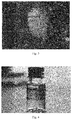
- FIG. 4 is a state diagram of a reagent used in Embodiment 1 after being stored for 30 days;
- FIG. 5 is a state diagram of a reagent used in Embodiment 2 after being stored for 30 days;
- FIG. 6 is a state diagram of a reagent used in Embodiment 3 after being stored for 30 days;
- FIG. 7 is a photo of a fingerprint of Embodiment 4.
- FIG. 8 is a photo of a fingerprint of Embodiment 5.
- FIG. 9 is a photo of a fingerprint of Embodiment 6.
- FIG. 10 is a state diagram of a reagent used in Embodiment 4 after being stored for 30 days;
- FIG. 11 is a state diagram of a reagent used in Embodiment 5 after being stored for 30 days;
- FIG. 12 is a state diagram of a reagent used in Embodiment 6 after being stored for 30 days;
- FIG. 13 is a photo of a fingerprint of Embodiment 7.
- FIG. 14 is a photo of a fingerprint of Embodiment 8.
- FIG. 15 is a photo of a fingerprint of Embodiment 9.
- FIG. 16 is a state diagram of a reagent used in Embodiment 7 after being stored for 30 days;
- FIG. 17 is a photo of a fingerprint of Embodiment 10.
- FIG. 18 is a photo of a fingerprint of Embodiment 11;
- FIG. 19 is a photo of a fingerprint of Embodiment 12.
- FIG. 20 is a state diagram of a reagent used in Embodiment 10 after being stored for 30 days;
- FIG. 21 is a photo of a fingerprint of Embodiment 13;
- FIG. 22 is a photo of a fingerprint of Embodiment 14.
- FIG. 23 is a photo of a fingerprint of Embodiment 15;
- FIG. 24 is a state diagram of a reagent used in Embodiment 13 after being stored for 30 days;
- FIG. 25 is a photo of a fingerprint of Control 1
- FIG. 26 is a photo of a fingerprint of Control 2
- FIG. 27 is a photo of a fingerprint of Control 3.
- FIG. 28 is a photo of a fingerprint of Control 4.
- FIG. 29 is a photo of a fingerprint of Control 5.
- This embodiment provides a method for developing a handprint on a porous object, and a formulation of a biological fluorescent development reagent used in this method was: indanedione 0.02 g; ethyl acetate 3 mL; glycerol 0.3 mL; pure alcohol 5 mL; petroleum ether 75 mL.
- the developing method comprises the following steps:
- the moisture content of the napkin was controlled by drying to be less than 7%.
- the napkin was immersed in the biological fluorescent development reagent for 5 sec.
- the napkin was volatilized under the ambient temperature (25° C.)
- the napkin was dried in an environment with a relative humidity of less than 30% and a temperature of 50° C.-55° C. for 10 min.
- the dried napkin was irradiated with a laser having a wavelength of 532 nm and a full width at half-maximum of less than 1 nm, an illuminance of 300,000 lux was controlled to be formed on a surface of the napkin, and the handprint was obtained by photographing under a 540 nm filter, see FIG. 1 .
- the state of the biological fluorescent development reagent used in the method of this embodiment after 30 days of storage is shown in FIG. 4 , and it was found that there was no crystallization or other variation appeared in the reagent.
- This embodiment provides a method for developing a handprint on a porous object, and a formulation of a biological fluorescent development reagent used in this method was: indanedione 0.05 g; ethyl acetate 5 mL; glycerol 0.5 mL; pure alcohol 10 mL; petroleum ether 75 mL.
- the developing method comprises the following steps:
- the moisture content of the napkin was controlled by drying to be less than 7%.
- the napkin was immersed in the fluorescent development reagent for 5 sec.
- the napkin was volatilized under the ambient temperature (25° C.)
- the napkin was dried in an environment with a relative humidity of less than 30% and a temperature of 50° C.-55° C. for 10 min.
- the dried napkin was irradiated with a laser having a wavelength of 532 nm and a full width at half-maximum of less than 1 nm, an illuminance of 300,000 lux was controlled to be formed on a surface of the napkin, and the handprint was obtained by photographing under a 540 nm filter, see FIG. 2 .
- the state of the biological fluorescent development reagent used in the method of this embodiment after 30 days of storage is shown in FIG. 5 , and it was found there was no crystallization or other variation appeared in the reagent.
- This embodiment provides a method for developing a handprint on a porous object, and a formulation of a biological fluorescent development reagent used in this method was: indanedione 0.10 g; ethyl acetate 8 mL; glycerol 0.8 mL; pure alcohol 15 mL; petroleum ether 75 mL.
- the developing method comprises the following steps:
- the moisture content of the napkin was controlled by drying to be less than 7%.
- the napkin was immersed in the fluorescent development reagent for 5 sec.
- the napkin was volatilized under the ambient temperature (25° C.)
- the napkin was dried in an environment with a relative humidity of less than 30% and a temperature of 50° C.-55° C. for 10 min.
- the dried napkin was irradiated with a laser having a wavelength of 532 nm and a full width at half-maximum of less than 1 nm, an illuminance of 300,000 lux was controlled to be formed on a surface of the napkin, and the handprint was obtained by photographing under a 540 nm filter, see FIG. 3 .
- the state of the biological fluorescent development reagent used in the method of this embodiment after 30 days of storage is shown in FIG. 6 , and it was found that there was no crystallization or other variation appeared in the reagent.
- This embodiment provides a method for developing a handprint on a porous object, and a formulation of a biological fluorescent development reagent used in this method was: indanedione 0.05 g; ethyl acetate 3 mL; glycerol 0.3 mL; pure alcohol 5 mL; petroleum ether 75 mL.
- the developing method comprises the following steps:
- the moisture content of the cotton cloth was controlled by drying to be less than 7%.
- the cotton cloth was immersed in the fluorescent development reagent for 8 sec.
- the cotton cloth was volatilized under the ambient temperature (25° C.)
- the cotton cloth was dried in an environment with a relative humidity of less than 30% and a temperature of 60° C.-65° C. for 10 min.
- the dried cotton cloth was irradiated with a laser having a wavelength of 532 nm and a full width at half-maximum of less than 1 nm, an illuminance of 300,000 lux was controlled to be formed on a surface of the cotton cloth, and the handprint was obtained by photographing under a 540 nm filter, see FIG. 7 .
- the state of the biological fluorescent development reagent used in the method of this embodiment after 30 days of storage is shown in FIG. 10 , and it was found that there was no crystallization or other variation appeared in the reagent.
- This embodiment provides a method for developing a handprint on a porous object, and a formulation of a biological fluorescent development reagent used in this method was: indanedione 0.10 g; ethyl acetate 5 mL; glycerol 0.5 mL; pure alcohol 10 mL; petroleum ether 75 mL.
- the developing method comprises the following steps:
- the moisture content of the cotton cloth was controlled by drying to be less than 7%.
- the cotton cloth was immersed in the fluorescent development reagent for 8 sec.
- the cotton cloth was volatilized under the ambient temperature (25° C.)
- the cotton cloth was dried in an environment with a relative humidity of less than 30% and a temperature of 60° C.-65° C. for 10 min.
- the dried cotton cloth was irradiated with a laser having a wavelength of 532 nm and a full width at half-maximum of less than 1 nm, an illuminance of 300,000 lux was controlled to be formed on a surface of the cotton cloth, and the handprint was obtained by photographing under a 540 nm filter, see FIG. 8 .
- the state of the biological fluorescent development reagent used in the method of this embodiment after 30 days of storage is shown in FIG. 11 , and it was found that there was no crystallization or other variation appeared in the reagent.
- This embodiment provides a method for developing a handprint on a porous object, and a formulation of a biological fluorescent development reagent used in this method was: indanedione 0.15 g; ethyl acetate 8 mL; glycerol 0.8 mL; pure alcohol 15 mL; petroleum ether 75 mL.
- the developing method comprises the following steps:
- the moisture content of the cotton cloth was controlled by drying to be less than 7%.
- the cotton cloth was immersed in the fluorescent development reagent for 8 sec.
- the cotton cloth was volatilized under the ambient temperature (25° C.)
- the cotton cloth was dried in an environment with a relative humidity of less than 30% and a temperature of 60° C.-65° C. for 10 min.
- the dried cotton cloth was irradiated with a laser having a wavelength of 532 nm and a full width at half-maximum of less than 1 nm, an illuminance of 300,000 lux was controlled to be formed on a surface of the cotton cloth, and the handprint was obtained by photographing under a 540 nm filter, see FIG. 9 .
- the state of the biological fluorescent development reagent used in the method of this embodiment after 30 days of storage is shown in FIG. 12 , and it was found that there was no crystallization or other variation appeared in the reagent.
- This embodiment provides a method for developing a handprint on a porous object, and a formulation of a biological fluorescent development reagent used in this method was: indanedione 0.15 g; ethyl acetate 3 mL; glycerol 0.3 mL; pure alcohol 5 mL; petroleum ether 75 mL.
- the developing method comprises the following steps:
- the moisture content of the brick was controlled by drying to be less than 7%.
- the brick was immersed in the fluorescent development reagent for 10 sec.
- the brick was dried in an environment with a relative humidity of less than 30% and a temperature of 80° C.-85° C. for 12 min.
- the dried brick was irradiated with a laser having a wavelength of 532 nm and a full width at half-maximum of less than 1 nm, an illuminance of 500,000 lux was controlled to be formed on a surface of the brick, and the handprint was obtained by photographing under a 540 nm filter, see FIG. 13 .
- the state of the biological fluorescent development reagent used in the method of this embodiment after 30 days of storage is shown in FIG. 16 , and it was found that there was no crystallization or other variation appeared in the reagent.
- This embodiment provides a method for developing a handprint on a porous object, and the biological fluorescent development reagent used in this embodiment was the same with that used in Embodiment 7.
- the developing method comprises the following steps:
- the moisture content of the wood was controlled by drying to be less than 7%.
- the wood was immersed in the fluorescent development reagent for 10 sec.
- the wood was volatilized under the ambient temperature (25° C.)
- the wood was dried in an environment with a relative humidity of less than 30% and a temperature of 70° C.-75° C. for 12 min.
- the dried wood was irradiated with a laser having a wavelength of 532 nm and a full width at half-maximum of less than 1 nm, an illuminance of 500,000 lux was controlled to be formed on a surface of the wood, and the handprint was obtained by photographing under a 540 nm filter, see FIG. 14 .
- This embodiment provides a method for developing a handprint on a porous object, and the biological fluorescent development reagent used in this embodiment was the same with that used in Embodiment 7.
- the developing method comprises the following steps:
- the moisture content of the stone was controlled by drying to be less than 7%.
- the stone was immersed in the fluorescent development reagent for 10 sec.
- the stone was volatilized under the ambient temperature (25° C.)
- the stone was dried in an environment with a relative humidity of less than 30% and a temperature of 80° C.-85° C. for 15 min.
- the dried stone was irradiated with a laser having a wavelength of 532 nm and a full width at half-maximum of less than 1 nm, an illuminance of 500,000 lux was controlled to be formed on a surface of the stone, and the handprint was obtained by photographing under a 540 nm filter, see FIG. 15 .
- This embodiment provides a method for developing a handprint on a porous object, and a formulation of a biological fluorescent development reagent used in this method was: indanedione 0.20 g; ethyl acetate 5 mL; glycerol 0.5 mL; pure alcohol 10 mL; petroleum ether 75 mL.
- the developing method comprises the following steps:
- the moisture content of the brick was controlled by drying to be less than 7%.
- the brick was immersed in the fluorescent development reagent for 10 sec.
- the attached reagent on the soaked brick was volatilized under the ambient temperature (25° C.), and then dried in an environment with a relative humidity of less than 30% and a temperature of 80° C.-85° C. for 12 min.
- the dried brick was irradiated with a laser having a wavelength of 532 nm and a full width at half-maximum of less than 1 nm, an illuminance of 500,000 lux was controlled to be formed on a surface of the brick, and the handprint was obtained by photographing under a 540 nm filter, see FIG. 17 .
- the state of the biological fluorescent development reagent used in the method of this embodiment after 30 days of storage is shown in FIG. 20 , and it was found that there was no crystallization or other variation appeared in the reagent.
- This embodiment provides a method for developing a handprint on a porous object, and the biological fluorescent development reagent used in this embodiment was the same with that used in Embodiment 10.
- the developing method comprises the following steps:
- the moisture content of the wood was controlled by drying to be less than 7%.
- the wood was immersed in the fluorescent development reagent for 10 sec.
- the wood was volatilized under the ambient temperature (25° C.)
- the wood was dried in an environment with a relative humidity of less than 30% and a temperature of 70° C.-75° C. for 12 min.
- the dried wood was irradiated with a laser having a wavelength of 532 nm and a full width at half-maximum of less than 1 nm, an illuminance of 500,000 lux was controlled to be formed on a surface of the wood, and the handprint was obtained by photographing under a 540 nm filter, see FIG. 18 .
- This embodiment provides a method for developing a handprint on a porous object, and the biological fluorescent development reagent used in this embodiment was the same with that used in Embodiment 10.
- the developing method comprises the following steps:
- the moisture content of the stone was controlled by drying to be less than 7%.
- the stone was immersed in the fluorescent development reagent for 10 sec.
- the attached reagent on the soaked stone was volatilized under the ambient temperature (25° C.), and then dried in an environment with a relative humidity of less than 30% and a temperature of 80° C.-85° C. for 15 min.
- the dried stone was irradiated with a laser having a wavelength of 532 nm and a full width at half-maximum of less than 1 nm, an illuminance of 500,000 lux was controlled to be formed on a surface of the stone, and the handprint was obtained by photographing under a 540 nm filter, see FIG. 19 .
- This embodiment provides a method for developing a handprint on a porous object, and a formulation of a biological fluorescent development reagent used in this method was: indanedione 0.30 g; ethyl acetate 8 mL; glycerol 0.8 mL; pure alcohol 15 mL; petroleum ether 75 mL.
- the developing method comprises the following steps:
- the moisture content of the brick was controlled by drying to be less than 7%.
- the brick was immersed in the fluorescent development reagent for 10 sec.
- the attached reagent on the soaked brick was volatilized under the ambient temperature (25° C.), and then dried in an environment with a relative humidity of less than 30% and a temperature of 80° C.-85° C. for 12 min.
- the dried brick was irradiated with a laser having a wavelength of 532 nm and a full width at half-maximum of less than 1 nm, an illuminance of 500,000 lux was controlled to be formed on a surface of the brick, and the handprint was obtained by photographing under a 540 nm filter, see FIG. 21 .
- the state of the biological fluorescent development reagent used in the method of this embodiment after 30 days of storage is shown in FIG. 24 , and it was found that was no crystallization or other variation appeared in the reagent.
- This embodiment provides a method for developing a handprint on a porous object, and the biological fluorescent development reagent used in this embodiment was the same with that used in Embodiment 13.
- the developing method comprises the following steps:
- the moisture content of the wood was controlled by drying to be less than 7%.
- the wood was immersed in the fluorescent development reagent for 10 sec.
- the wood was volatilized under the ambient temperature (25° C.)
- the wood was dried in an environment with a relative humidity of less than 30% and a temperature of 70° C.-75° C. for 12 min.
- the dried wood was irradiated with a laser having a wavelength of 532 nm and a full width at half-maximum of less than 1 nm, an illuminance of 500,000 lux was controlled to be formed on a surface of the wood, and the handprint was obtained by photographing under a 540 nm filter, see FIG. 22 .
- This embodiment provides a method for developing a handprint on a porous object, and the biological fluorescent development reagent used in this embodiment was the same with that used in Embodiment 13.
- the developing method comprises the following steps:
- the moisture content of the stone was controlled by drying to be less than 7%.
- This control embodiment provides a method for developing a handprint on a porous object, and a formulation of a biological fluorescent development reagent used in this method was: indanedione 0.01 g; ethyl acetate 2 mL; glycerol 0.2 mL; pure alcohol 4 mL; petroleum ether 75 mL.
- the developing method comprises the following steps:
- the moisture content of the napkin was controlled by drying to be less than 7%.
- This control embodiment provides a method for developing a handprint on a porous object, and a formulation of a biological fluorescent development reagent used in this method was: indanedione 0.20 g; ethyl acetate 10 mL; glycerol 1.0 mL; pure alcohol 15 mL; petroleum ether 75 mL.
- the developing method comprises the following steps:
- the moisture content of the cotton cloth was controlled by drying to be less than 7%.
- This control embodiment provides a method for developing a handprint on a porous object, and a formulation of a biological fluorescent development reagent used in this method was: indanedione 0.10 g; ethyl acetate 2 mL; glycerol 0.2 mL; pure alcohol 4 mL; petroleum ether 75 mL.
- the developing method comprises the following steps:
- the moisture content of the brick was controlled by drying to be less than 7%.
- This control embodiment provides a method for developing a handprint on a porous object, and the biological fluorescent development reagent used in this control embodiment was the same with that used in Control 3.
- the developing method comprises the following steps:
- the moisture content of the wood was controlled by drying to be less than 7%.
- This control embodiment provides a method for developing a handprint on a porous object, and the biological fluorescent development reagent used in this control embodiment was the same with that used in Control 3.
- the developing method comprises the following steps:
- the moisture content of the stone was controlled by drying to be less than 7%.
- the stone was immersed in the fluorescent development reagent for 10 sec.
- the stone was volatilized under the ambient temperature (25° C.)
- the stone was dried in an environment with a relative humidity of less than 30% and a temperature of 80° C.-85° C. for 15 min.
- the dried stone was irradiated with a laser having a wavelength of 532 nm and a full width at half-maximum of less than 1 nm, an illuminance of 500,000 lux was controlled to be formed on a surface of the stone, and the handprint was obtained by photographing under a 540 nm filter, see FIG. 29 .
- the biological fluorescent development reagent used in the present disclosure is very suitable for spraying, so after it is sprayed on the sample, the solvent can be volatilized very quickly, and the handprint can be quickly developed, which is very suitable for the requirement of rapid development.
Landscapes
- Health & Medical Sciences (AREA)
- Life Sciences & Earth Sciences (AREA)
- Physics & Mathematics (AREA)
- Immunology (AREA)
- Chemical & Material Sciences (AREA)
- Pathology (AREA)
- General Health & Medical Sciences (AREA)
- Analytical Chemistry (AREA)
- Biochemistry (AREA)
- General Physics & Mathematics (AREA)
- Optics & Photonics (AREA)
- Nuclear Medicine, Radiotherapy & Molecular Imaging (AREA)
- Chemical Kinetics & Catalysis (AREA)
- Molecular Biology (AREA)
- Biophysics (AREA)
- Veterinary Medicine (AREA)
- Surgery (AREA)
- Animal Behavior & Ethology (AREA)
- Public Health (AREA)
- Medical Informatics (AREA)
- Heart & Thoracic Surgery (AREA)
- Biomedical Technology (AREA)
- Engineering & Computer Science (AREA)
- Investigating Or Analysing Materials By The Use Of Chemical Reactions (AREA)
- Measuring Or Testing Involving Enzymes Or Micro-Organisms (AREA)
- Manufacture Of Porous Articles, And Recovery And Treatment Of Waste Products (AREA)
- Investigating Or Analysing Biological Materials (AREA)
- Sampling And Sample Adjustment (AREA)
Applications Claiming Priority (3)
| Application Number | Priority Date | Filing Date | Title |
|---|---|---|---|
| CN201710045379.1 | 2017-01-22 | ||
| CN201710045379.1A CN106802292B (zh) | 2017-01-22 | 2017-01-22 | 一种显现渗透性客体生物物证痕迹的方法 |
| PCT/CN2017/096564 WO2018133389A1 (zh) | 2017-01-22 | 2017-08-09 | 一种显现渗透性客体生物物证痕迹的方法 |
Publications (2)
| Publication Number | Publication Date |
|---|---|
| US20210010937A1 US20210010937A1 (en) | 2021-01-14 |
| US11073476B2 true US11073476B2 (en) | 2021-07-27 |
Family
ID=58987352
Family Applications (1)
| Application Number | Title | Priority Date | Filing Date |
|---|---|---|---|
| US16/479,707 Active 2037-10-31 US11073476B2 (en) | 2017-01-22 | 2017-08-09 | Method for developing biological trace evidence on porous object |
Country Status (4)
| Country | Link |
|---|---|
| US (1) | US11073476B2 (de) |
| EP (1) | EP3571993B1 (de) |
| CN (1) | CN106802292B (de) |
| WO (1) | WO2018133389A1 (de) |
Families Citing this family (5)
| Publication number | Priority date | Publication date | Assignee | Title |
|---|---|---|---|---|
| CN106841140B (zh) | 2017-01-22 | 2018-07-24 | 苏州晓松科技开发有限公司 | 一种生物物证痕迹的显现提取方法 |
| CN106802292B (zh) | 2017-01-22 | 2019-07-02 | 苏州晓松科技开发有限公司 | 一种显现渗透性客体生物物证痕迹的方法 |
| CN107582067B (zh) * | 2017-09-04 | 2021-09-24 | 苏州晓松科技开发有限公司 | 一种用于显现人体皮肤表面生物物证痕迹的生物荧光显现剂及显现方法 |
| CN107607504B (zh) * | 2017-09-04 | 2020-10-13 | 苏州晓松科技开发有限公司 | 一种用于显现金属客体上生物物证痕迹的生物荧光显现剂及显现方法 |
| CN116067933B (zh) * | 2023-03-23 | 2023-07-07 | 苏州晓松科技开发有限公司 | 一种生物荧光显现试剂及生物物证痕迹的显现方法和应用 |
Citations (8)
| Publication number | Priority date | Publication date | Assignee | Title |
|---|---|---|---|---|
| US4176205A (en) | 1976-03-24 | 1979-11-27 | Rockwell International Corporation | Fingerprint powder and method of application |
| WO2009067761A1 (en) | 2007-11-29 | 2009-06-04 | University Of Technology, Sydney | A method of developing latent fingerprints |
| US20090269478A1 (en) | 2008-04-14 | 2009-10-29 | Honeywell International Inc. | Carrier solvent for fingerprint formulations |
| CN202104921U (zh) | 2011-04-18 | 2012-01-11 | 裴浩 | 痕迹显现激光电筒 |
| CN102908149A (zh) | 2011-08-05 | 2013-02-06 | 吴世玉 | 指纹显现喷剂及利用该喷剂显现指纹的方法 |
| CN104605860A (zh) | 2015-03-03 | 2015-05-13 | 苏州晓松科技开发有限公司 | 一种粗糙面渗透性客体上的手印显现方法 |
| CN105527258A (zh) | 2014-10-24 | 2016-04-27 | 上海良相智能化工程有限公司 | 一种纸张上汗液手印快速无损显现方法 |
| CN106802292A (zh) | 2017-01-22 | 2017-06-06 | 苏州晓松科技开发有限公司 | 一种显现渗透性客体生物物证痕迹的方法 |
-
2017
- 2017-01-22 CN CN201710045379.1A patent/CN106802292B/zh active Active
- 2017-08-09 EP EP17892308.2A patent/EP3571993B1/de active Active
- 2017-08-09 US US16/479,707 patent/US11073476B2/en active Active
- 2017-08-09 WO PCT/CN2017/096564 patent/WO2018133389A1/zh not_active Ceased
Patent Citations (9)
| Publication number | Priority date | Publication date | Assignee | Title |
|---|---|---|---|---|
| US4176205A (en) | 1976-03-24 | 1979-11-27 | Rockwell International Corporation | Fingerprint powder and method of application |
| WO2009067761A1 (en) | 2007-11-29 | 2009-06-04 | University Of Technology, Sydney | A method of developing latent fingerprints |
| US20110076383A1 (en) | 2007-11-29 | 2011-03-31 | University Of Technology, Sydney | Method of Developing Latent Fingerprints |
| US20090269478A1 (en) | 2008-04-14 | 2009-10-29 | Honeywell International Inc. | Carrier solvent for fingerprint formulations |
| CN202104921U (zh) | 2011-04-18 | 2012-01-11 | 裴浩 | 痕迹显现激光电筒 |
| CN102908149A (zh) | 2011-08-05 | 2013-02-06 | 吴世玉 | 指纹显现喷剂及利用该喷剂显现指纹的方法 |
| CN105527258A (zh) | 2014-10-24 | 2016-04-27 | 上海良相智能化工程有限公司 | 一种纸张上汗液手印快速无损显现方法 |
| CN104605860A (zh) | 2015-03-03 | 2015-05-13 | 苏州晓松科技开发有限公司 | 一种粗糙面渗透性客体上的手印显现方法 |
| CN106802292A (zh) | 2017-01-22 | 2017-06-06 | 苏州晓松科技开发有限公司 | 一种显现渗透性客体生物物证痕迹的方法 |
Non-Patent Citations (7)
| Title |
|---|
| Bleay, S. M., et al., "Fingerprint Source Book", Feb. 2015, Home Office Centre for Applied Science and Technology (Year: 2015). * |
| Danna E. Bicknell, et al., "Use of an Optimized 1,2-Indanedione Process for the Development of Latent Prints", Sep. 2008, Journal of Forensic Sciences, vol. 53, No. 5, 1 (Sep. 1, 2008), pp. 1108-1116. (Year: 2008). * |
| Dutta—Fingerprint visualization enhancement by deposition of columnar thin films and fluorescent dye treatment; Forensic Science International 228 (2013). |
| International Search Report for PCT/CN2017/096564. |
| Translation of Wu, Shiyu, CN 102908149 A, Feb. 6, 2013 (Year: 2013). * |
| Translation of Xiaosong, Hu, CN 104605860 A, May 13, 2015 (Year: 2015). * |
| Zhoutao—Two Visualization Methods of Fingerprints on Porous Objects and Damp Non-porous Objects; China Public Security Academy Edition 2016 No. 4 Sum. No. 45. |
Also Published As
| Publication number | Publication date |
|---|---|
| EP3571993A1 (de) | 2019-11-27 |
| EP3571993A4 (de) | 2020-09-23 |
| US20210010937A1 (en) | 2021-01-14 |
| EP3571993B1 (de) | 2024-12-11 |
| CN106802292B (zh) | 2019-07-02 |
| CN106802292A (zh) | 2017-06-06 |
| WO2018133389A1 (zh) | 2018-07-26 |
Similar Documents
| Publication | Publication Date | Title |
|---|---|---|
| US11073476B2 (en) | Method for developing biological trace evidence on porous object | |
| DE1522449C3 (de) | Verfahren zum Entwickeln eines Zweikomponenten-Diazotypiematerials | |
| DE874704C (de) | Lichtempfindliche Schicht fuer Zeichenleinwand | |
| DE963295C (de) | Verfahren zur Einlagerung eines Kupplers oder Farbstoffbildners in eine photographische Halogensilber-Gelatineemulsion | |
| US10996171B2 (en) | Method for developing and extracting biological trace evidence | |
| JP2016094602A5 (de) | ||
| DE2363648C3 (de) | Lichtempfindliches Gemisch mit einem bei Lichteinwirkung ein Phenol abspaltenden Diazoniumsalz und Verfahren zur Herstellung negativer und positiver Bilder | |
| DE1081757B (de) | Verfahren zur Herstellung von aus Gasblasen gebildeten photographischen Bildern in hydrophoben Harzschichten | |
| CN106049030A (zh) | 一种驱虫纯棉织物的整理方法 | |
| CN107607504B (zh) | 一种用于显现金属客体上生物物证痕迹的生物荧光显现剂及显现方法 | |
| CN107582067B (zh) | 一种用于显现人体皮肤表面生物物证痕迹的生物荧光显现剂及显现方法 | |
| DE1289426B (de) | Verfahren zum Fixieren von Bildern in einer Schicht aus photochromen stickstoffhaltigen Spiropyranverbindungen | |
| DE858355C (de) | Sensibilisiertes Diazotypieblatt fuer die Raster-Reflektographie | |
| DE1447734B2 (de) | Verfahren zur Verbesserung der fotografischen Eigenschaften lichtstreuender fotografischer Materialien | |
| CN116067933B (zh) | 一种生物荧光显现试剂及生物物证痕迹的显现方法和应用 | |
| KR102927728B1 (ko) | 발포성 고체 수채화물감 및 이의 제조방법 | |
| KR102809387B1 (ko) | 발포성 고체 수채화물감 및 이의 제조방법 | |
| DE630389C (de) | Diazotypien, Verfahren zur Herstellung positiver Diazotypien und lichtempfindliche Schichten dazu | |
| DE1597590C3 (de) | Bildempfangsmaterial für das Silbersalzdiffusionsverfahren | |
| KR102809374B1 (ko) | 발포성 고체 수채화물감 및 이의 제조방법 | |
| DE2105488A1 (de) | Verfahren zur Herstellung photographischer Bilder | |
| DE1912161C (de) | Verfahren zur Herstellung losch barer Aufzeichnungen in photochromen Aufzeichnungsschichten | |
| DE1447620A1 (de) | Diazotypiematerialien | |
| DE254083C (de) | ||
| DE1294189B (de) | Gegen Schleierbildung stabilisiertes photographisches Aufzeichnungsmaterial und photographischer Entwickler mit einem Antischleiermittel |
Legal Events
| Date | Code | Title | Description |
|---|---|---|---|
| AS | Assignment |
Owner name: SUZHOU XIAOSONG SCIENCE & TECHNOLOGY DEVELOPMENT CO., LTD, CHINA Free format text: ASSIGNMENT OF ASSIGNORS INTEREST;ASSIGNOR:HU, XIAOSONG;REEL/FRAME:049821/0706 Effective date: 20190708 |
|
| FEPP | Fee payment procedure |
Free format text: ENTITY STATUS SET TO UNDISCOUNTED (ORIGINAL EVENT CODE: BIG.); ENTITY STATUS OF PATENT OWNER: SMALL ENTITY |
|
| FEPP | Fee payment procedure |
Free format text: ENTITY STATUS SET TO SMALL (ORIGINAL EVENT CODE: SMAL); ENTITY STATUS OF PATENT OWNER: SMALL ENTITY |
|
| STPP | Information on status: patent application and granting procedure in general |
Free format text: NON FINAL ACTION MAILED |
|
| STPP | Information on status: patent application and granting procedure in general |
Free format text: RESPONSE TO NON-FINAL OFFICE ACTION ENTERED AND FORWARDED TO EXAMINER |
|
| STPP | Information on status: patent application and granting procedure in general |
Free format text: NOTICE OF ALLOWANCE MAILED -- APPLICATION RECEIVED IN OFFICE OF PUBLICATIONS |
|
| STPP | Information on status: patent application and granting procedure in general |
Free format text: PUBLICATIONS -- ISSUE FEE PAYMENT RECEIVED |
|
| STPP | Information on status: patent application and granting procedure in general |
Free format text: PUBLICATIONS -- ISSUE FEE PAYMENT VERIFIED |
|
| STCF | Information on status: patent grant |
Free format text: PATENTED CASE |
|
| MAFP | Maintenance fee payment |
Free format text: PAYMENT OF MAINTENANCE FEE, 4TH YR, SMALL ENTITY (ORIGINAL EVENT CODE: M2551); ENTITY STATUS OF PATENT OWNER: SMALL ENTITY Year of fee payment: 4 |