US11123712B2 - Catalysts utilizing carbon dioxide for the epoxidation of olefins - Google Patents
Catalysts utilizing carbon dioxide for the epoxidation of olefins Download PDFInfo
- Publication number
- US11123712B2 US11123712B2 US16/320,116 US201716320116A US11123712B2 US 11123712 B2 US11123712 B2 US 11123712B2 US 201716320116 A US201716320116 A US 201716320116A US 11123712 B2 US11123712 B2 US 11123712B2
- Authority
- US
- United States
- Prior art keywords
- mixed
- catalyst
- molybdenum oxide
- oxide catalyst
- moo
- Prior art date
- Legal status (The legal status is an assumption and is not a legal conclusion. Google has not performed a legal analysis and makes no representation as to the accuracy of the status listed.)
- Active, expires
Links
- XZEJLMKKIZTNAN-UHFFFAOYSA-N C.C.C1CO1.C=C Chemical compound C.C.C1CO1.C=C XZEJLMKKIZTNAN-UHFFFAOYSA-N 0.000 description 1
Images




Classifications
-
- B—PERFORMING OPERATIONS; TRANSPORTING
- B01—PHYSICAL OR CHEMICAL PROCESSES OR APPARATUS IN GENERAL
- B01J—CHEMICAL OR PHYSICAL PROCESSES, e.g. CATALYSIS OR COLLOID CHEMISTRY; THEIR RELEVANT APPARATUS
- B01J21/00—Catalysts comprising the elements, oxides, or hydroxides of magnesium, boron, aluminium, carbon, silicon, titanium, zirconium, or hafnium
- B01J21/02—Boron or aluminium; Oxides or hydroxides thereof
- B01J21/04—Alumina
-
- B—PERFORMING OPERATIONS; TRANSPORTING
- B01—PHYSICAL OR CHEMICAL PROCESSES OR APPARATUS IN GENERAL
- B01J—CHEMICAL OR PHYSICAL PROCESSES, e.g. CATALYSIS OR COLLOID CHEMISTRY; THEIR RELEVANT APPARATUS
- B01J23/00—Catalysts comprising metals or metal oxides or hydroxides, not provided for in group B01J21/00
- B01J23/38—Catalysts comprising metals or metal oxides or hydroxides, not provided for in group B01J21/00 of noble metals
- B01J23/54—Catalysts comprising metals or metal oxides or hydroxides, not provided for in group B01J21/00 of noble metals combined with metals, oxides or hydroxides provided for in groups B01J23/02 - B01J23/36
- B01J23/56—Platinum group metals
- B01J23/64—Platinum group metals with arsenic, antimony, bismuth, vanadium, niobium, tantalum, polonium, chromium, molybdenum, tungsten, manganese, technetium or rhenium
- B01J23/652—Chromium, molybdenum or tungsten
- B01J23/6525—Molybdenum
-
- B—PERFORMING OPERATIONS; TRANSPORTING
- B01—PHYSICAL OR CHEMICAL PROCESSES OR APPARATUS IN GENERAL
- B01J—CHEMICAL OR PHYSICAL PROCESSES, e.g. CATALYSIS OR COLLOID CHEMISTRY; THEIR RELEVANT APPARATUS
- B01J23/00—Catalysts comprising metals or metal oxides or hydroxides, not provided for in group B01J21/00
- B01J23/38—Catalysts comprising metals or metal oxides or hydroxides, not provided for in group B01J21/00 of noble metals
- B01J23/54—Catalysts comprising metals or metal oxides or hydroxides, not provided for in group B01J21/00 of noble metals combined with metals, oxides or hydroxides provided for in groups B01J23/02 - B01J23/36
- B01J23/66—Silver or gold
- B01J23/68—Silver or gold with arsenic, antimony, bismuth, vanadium, niobium, tantalum, polonium, chromium, molybdenum, tungsten, manganese, technetium or rhenium
- B01J23/683—Silver or gold with arsenic, antimony, bismuth, vanadium, niobium, tantalum, polonium, chromium, molybdenum, tungsten, manganese, technetium or rhenium with chromium, molybdenum or tungsten
- B01J23/686—Silver or gold with arsenic, antimony, bismuth, vanadium, niobium, tantalum, polonium, chromium, molybdenum, tungsten, manganese, technetium or rhenium with chromium, molybdenum or tungsten with molybdenum
-
- B—PERFORMING OPERATIONS; TRANSPORTING
- B01—PHYSICAL OR CHEMICAL PROCESSES OR APPARATUS IN GENERAL
- B01J—CHEMICAL OR PHYSICAL PROCESSES, e.g. CATALYSIS OR COLLOID CHEMISTRY; THEIR RELEVANT APPARATUS
- B01J29/00—Catalysts comprising molecular sieves
- B01J29/03—Catalysts comprising molecular sieves not having base-exchange properties
- B01J29/0308—Mesoporous materials not having base exchange properties, e.g. Si-MCM-41
- B01J29/0316—Mesoporous materials not having base exchange properties, e.g. Si-MCM-41 containing iron group metals, noble metals or copper
- B01J29/0325—Noble metals
-
- B—PERFORMING OPERATIONS; TRANSPORTING
- B01—PHYSICAL OR CHEMICAL PROCESSES OR APPARATUS IN GENERAL
- B01J—CHEMICAL OR PHYSICAL PROCESSES, e.g. CATALYSIS OR COLLOID CHEMISTRY; THEIR RELEVANT APPARATUS
- B01J37/00—Processes, in general, for preparing catalysts; Processes, in general, for activation of catalysts
- B01J37/02—Impregnation, coating or precipitation
- B01J37/0236—Drying, e.g. preparing a suspension, adding a soluble salt and drying
-
- B—PERFORMING OPERATIONS; TRANSPORTING
- B01—PHYSICAL OR CHEMICAL PROCESSES OR APPARATUS IN GENERAL
- B01J—CHEMICAL OR PHYSICAL PROCESSES, e.g. CATALYSIS OR COLLOID CHEMISTRY; THEIR RELEVANT APPARATUS
- B01J37/00—Processes, in general, for preparing catalysts; Processes, in general, for activation of catalysts
- B01J37/02—Impregnation, coating or precipitation
- B01J37/03—Precipitation; Co-precipitation
- B01J37/031—Precipitation
- B01J37/033—Using Hydrolysis
-
- B—PERFORMING OPERATIONS; TRANSPORTING
- B01—PHYSICAL OR CHEMICAL PROCESSES OR APPARATUS IN GENERAL
- B01J—CHEMICAL OR PHYSICAL PROCESSES, e.g. CATALYSIS OR COLLOID CHEMISTRY; THEIR RELEVANT APPARATUS
- B01J37/00—Processes, in general, for preparing catalysts; Processes, in general, for activation of catalysts
- B01J37/02—Impregnation, coating or precipitation
- B01J37/03—Precipitation; Co-precipitation
- B01J37/031—Precipitation
- B01J37/035—Precipitation on carriers
-
- B—PERFORMING OPERATIONS; TRANSPORTING
- B01—PHYSICAL OR CHEMICAL PROCESSES OR APPARATUS IN GENERAL
- B01J—CHEMICAL OR PHYSICAL PROCESSES, e.g. CATALYSIS OR COLLOID CHEMISTRY; THEIR RELEVANT APPARATUS
- B01J37/00—Processes, in general, for preparing catalysts; Processes, in general, for activation of catalysts
- B01J37/08—Heat treatment
- B01J37/082—Decomposition and pyrolysis
- B01J37/088—Decomposition of a metal salt
-
- C—CHEMISTRY; METALLURGY
- C01—INORGANIC CHEMISTRY
- C01B—NON-METALLIC ELEMENTS; COMPOUNDS THEREOF; METALLOIDS OR COMPOUNDS THEREOF NOT COVERED BY SUBCLASS C01C
- C01B32/00—Carbon; Compounds thereof
- C01B32/40—Carbon monoxide
-
- C—CHEMISTRY; METALLURGY
- C07—ORGANIC CHEMISTRY
- C07D—HETEROCYCLIC COMPOUNDS
- C07D301/00—Preparation of oxiranes
- C07D301/02—Synthesis of the oxirane ring
- C07D301/03—Synthesis of the oxirane ring by oxidation of unsaturated compounds, or of mixtures of unsaturated and saturated compounds
-
- Y—GENERAL TAGGING OF NEW TECHNOLOGICAL DEVELOPMENTS; GENERAL TAGGING OF CROSS-SECTIONAL TECHNOLOGIES SPANNING OVER SEVERAL SECTIONS OF THE IPC; TECHNICAL SUBJECTS COVERED BY FORMER USPC CROSS-REFERENCE ART COLLECTIONS [XRACs] AND DIGESTS
- Y02—TECHNOLOGIES OR APPLICATIONS FOR MITIGATION OR ADAPTATION AGAINST CLIMATE CHANGE
- Y02P—CLIMATE CHANGE MITIGATION TECHNOLOGIES IN THE PRODUCTION OR PROCESSING OF GOODS
- Y02P20/00—Technologies relating to chemical industry
- Y02P20/50—Improvements relating to the production of bulk chemicals
- Y02P20/52—Improvements relating to the production of bulk chemicals using catalysts, e.g. selective catalysts
Definitions
- the present disclosure provides novel mixed molybdenum catalysts, methods for preparing epoxides from olefins, and methods of making the mixed molybdenum catalysts.
- the mixed molybdenum catalysts may be silver/molybdenum catalysts, ruthenium/molybdenum catalysts, or a combination thereof.
- EtO ethylene oxide
- ethylene oxide is produced commercially by silver catalyzed oxidation of ethylene using either air or high purity oxygen (>95 mol %).
- Dever et al “Ethylene Oxide” in Kirk-Othmer Encyclopedia of Chemical Technology Mar. 14, 2004.
- Propylene oxide is prepared either by a hydrochlorination of propylene, air oxidation with cumene with a titanium catalyst, or oxidation using hydrogen peroxide producing styrene or t-butanol as a co-product.
- Chongterdtoonskul et al. disclose a variety of silver based catalysts including a 17.16 wt % Ag/SrTiO 3 for selective ethylene epoxidation with oxygen. See Chongterdtoonskul, et al., Comparative study on the influence of second metals on Ag-loaded mesoporous SrTiO 3 catalysts for ethylene oxide evolution. Journal of Molecular Catalysis A: Chemical 2013, 372, 175-182.
- Dellamorte et al. disclose rhenium promoted Ag and Cu—Ag bimetallic catalysts for preparing ethylene oxide from ethylene and oxygen feed. See Dellamorte et al., Rhenium promotion of Ag and Cu—Ag bimetallic catalysts for ethylene epoxidation. Catal. Today 2007, 120, 182-185.
- Lambert et al. disclose single crystal studies of silver and copper to study the i-adsorbed alkene and adsorbed oxygen atoms (adatoms, O a ). They report that copper is more selective than silver when the alkene has allylic hydrogens, e.g., propylene. See Lambert et al. Journal of Molecular Catalysis A: Chemical 2005, 228, 27-33.
- Lauritzen (EP Pat. No. 0 266 015B1) disclose a silver alumina catalyst with a surface area of less than 20 m 2 /g and a promoting amount of rhenium. They also disclose a variety of metal promoters including molybdenum present at 10-3000 ppm by weight.
- Rizkalla et al. (U.S. Pat. No. 6,750,273) disclose a silver alumina ethylene oxide catalyst where surface sodium ions have been replaced by 1-10 ppm lithium ions. They test their catalyst with a gas mixture of ethylene, oxygen and an inert gas at 300 psig.
- WO2015/020862 discloses iron (II/III) catalysts for the extraction of oxygen from CO 2 and reactions with organic compounds including a schematic showing formation of epoxides from alkenes. Others have reported studies of CO 2 as a reagent for organic synthesis. See Colmenares, Novel Trends in the Utilization of CO 2 as a Reagent and Mild Oxidant in the C—C Coupling Reactions, Current Organic Synthesis 2010, 7(6), 533-542.
- the present disclosure provides a mixed molybdenum oxide catalyst which comprises a silver oxide, a ruthenium oxide, or a mixture thereof, for catalyzing the carbon dioxide oxidation of an organic compound containing one or more carbon-carbon double bonds to an organic epoxide compound.
- the mixed molybdenum oxide catalyst above may further comprise a Group IA or Group HA element promoter.
- the mixed molybdenum oxide catalyst above may further comprise a support.
- the mixed molybdenum oxide catalyst of above the support may be Al 2 O 3 , SiO 2 , TiO 2 , ZrO 2 , AlPO 4 , activated carbon, graphite, or a mixture thereof.
- the mixed molybdenum oxide catalyst above may be a mixed silver/molybdenum oxide catalyst.
- the molar ratio of Ag 2 O to MoO 3 may be in the range of about 1.0 to 0.05 to about 1.0 to 20.0, about 1.0 to 0.1 to about 1.0 to 10.0, about 1.0 to 0.5 to about 1.0 to 5.0, or about 1.0 to 1.0 to about 1.0 to 4.0.
- the mixed molybdenum oxide catalyst above may be a mixed ruthenium/molybdenum oxide catalyst.
- the molar ratio of RuO 2 to MoO 3 is in the range of about 1.0 to 0.05 to about 1.0 to 20.0, about 1.0 to 0.1 to about 1.0 to 10.0, about 1.0 to 0.5 to about 1.0 to 5.0, or about 1.0 to 1.0 to about 1.0 to 4.0.
- the mixed molybdenum oxide catalyst above may be a mixed silver/ruthenium/molybdenum oxide catalyst.
- the molar ratio of Ag 2 O to MoO 3 is in the range of about 1.0 to 0.05 to about 1.0 to 20.0 and the molar ratio of RuO 2 to MoO 3 is in the range of about 1.0 to 0.05 to about 1.0 to 20.0.
- the molar ratio of Ag 2 O to MoO 3 may be in the range of about 1.0 to 0.1 to about 1.0 to 10.0, about 1.0 to 0.5 to about 1.0 to 5.0, or about 1.0 to 1.0 to about 1.0 to 4.0 and the molar ratio of RuO 2 to MoO 3 is in the range of about 1.0 to 0.1 to about 1.0 to 10.0, about 1.0 to 0.5 to about 1.0 to 5.0, or about 1.0 to 1.0 to about 1.0 to 4.0.
- the organic compound containing one or more carbon-carbon double bonds may be an alkene and the organic epoxide compound may be an alkene oxide, e.g., alkene is ethylene and the alkene oxide is ethylene oxide.
- the disclosure also provides a method for converting an olefin to an epoxide which comprises contacting the olefin with a mixed molybdenum oxide catalyst with an appropriate CO 2 feed stream under suitable temperature and pressure conditions so as to convert the olefin to the epoxide.
- Suitable temperatures for the conversion of olefin to epoxide when combined with a CO 2 stream can be as low as 150° C. and as high as 550°.
- the temperature is between about 250° C. and about 400° C., more preferably the temperature is between about 275° C. and about 375° C., still more preferably the temperature is between about 300° C. and about 350° C.
- Suitable pressures for the conversion of olefin and carbon dioxide into epoxides can be up to 30 bar or lower.
- the partial pressures of olefin and carbon dioxide in the feed streams can be any combination which sums to 30 bar pressure or lower.
- the pressure for the conversion is between about 10 bar and about 30 bar, more preferably the pressure is between about 15 bar and about 25 bar, still more preferably the pressure is between about 22.5 bar and about 27.5 bar.
- the olefin, the mixed molybdenum oxide catalyst, and the appropriate CO 2 feed stream are reacted together at the same time. That is, all three reagents are present in the same reactor simultaneously.
- the olefin, the mixed molybdenum oxide catalyst, and the appropriate CO 2 feed stream are reacted sequentially.
- they may be reacted sequentially in a chemical looping process.
- the configuration for this process may be a swing operation in which CO 2 and the olefin are fed alternately to the reactor.
- the catalyst is reacted with CO 2 in one reactor and is moved to another reactor to where the catalyst reacts with the olefin, then the catalyst is returned to the CO 2 reactor.
- the mixed molybdenum oxide catalyst, and the appropriate CO 2 feed stream are reacted together in a fluidized bed.
- the olefin may be an alkene, a cycloalkene, a diene or a phenylalkene such as butadiene, butylene, ethylene, or propylene.
- the disclosure also provides a method for preparing a mixed molybdenum oxide catalyst which comprises: (a) contacting a support material with a mixed metal molybdenum salt solution; (b) drying the support material and the molybdenum salt solution; and (c) calcining the dried support material and the molybdenum salt so as to prepare the mixed molybdenum oxide catalyst.
- the mixed metal molybdenum salt solution may be a solution of molybdenum and silver salts; a solution of molybdenum and ruthenium salts; or a combination thereof.
- the support material may be Al 2 O 3 .
- the disclosure also provides a method for preparing a mixed molybdenum oxide catalyst which comprises: (a) contacting a solution containing mixed metal molybdenum salts and an aluminum salt with an aqueous base solution so as to form a co-precipitate; (b) drying the co-precipitate; and (c) calcining the dried co-precipitate so as to prepare the mixed molybdenum oxide catalyst.
- the mixed metal molybdenum salt solution may be a solution of molybdenum and silver salts; a solution of molybdenum and ruthenium salts; or a combination thereof.
- FIG. 1 Comparison of selectivity and conversion of conventional ethylene oxide catalysts (circles) to novel CO 2 -utilizing epoxidation catalysts (triangles).
- RTI Cat 1 is RuCl 3 MoO 3 ( ⁇ -Al 2 O 3 ) 22 and
- RTI Cat 2 is RuCl 3 MoO 3 ( ⁇ -Al 2 O 3 ) 22 .
- FIG. 2 Comparison of yield and conversion of conventional oxygen-utilizing epoxidation catalysts (circles) with unconventional CO 2 -utilizing epoxidation catalysts.
- the RTI catalyst is RuCl 3 MoO 3 ( ⁇ -Al 2 O 3 ) 22 .
- FIG. 3 XRD results of a RuCl 3 (MoO 3 ) 3 (Al 2 O 3 ) 22 catalyst.
- FIG. 4 the reactivity of the catalyst towards ethylene and CO 2 when the catalyst is exposed to the feed mixture.
- FIG. 5A - FIG. 5C show the RuO 2 (MoO 3 ) 3 (Al 2 O 3 ) 22 catalyst in a cofeed mode of operation to produce ethylene oxide.
- FIG. 6 shows thermogravimetric analysis (TGA) of the catalyst ((Ag 2 O)(MoO 3 ) 2 (Al 2 O 3 ) 2 catalyst).
- FIG. 7A - FIG. 7C show the (Ag 2 O)(MoO 3 ) 2 (Al 2 O 3 ) 2 catalyst in a cofeed mode of operation to produce ethylene oxide.
- FIG. 8 shows XRD analysis of AgRuMoSiClO x catalyst used for CO 2 -ethylene epoxidation.
- FIG. 9A - FIG. 9C show that the AgRuMoSiClO x catalyst in a cofeed mode of operation to produce ethylene oxide.
- FIG. 10 Process flow diagram for CO 2 utilization approach for Et oxidation.
- FIG. 11 A block diagram of the conventional Et oxidation process from a green house gas (GHG) perspective.
- GFG green house gas
- FIG. 12 A block flow diagram of the process disclosed herein from a GHG perspective.
- the conventional catalysts for epoxide product do not consume CO 2 in the production of alkene oxides, but rather produce CO 2 as an undesirable emission from the process.
- the use of CO 2 has an inherent advantage in that it obviates the need for an air separation unit for obtaining purified oxygen, however it does carry the need for a purified CO 2 stream as feedstock.
- Purified CO 2 streams are of interest to industries which produce CO 2 byproducts as regulations are debated for limitation of carbon emissions in future industry activities to mitigate the risk of global warming.
- the invention produces two valuable product streams, alkene oxides and carbon monoxide, while the existing conventional processes only produce alkene oxides.
- Carbon monoxide is a widely—utilized feedstock for the production of many petrochemicals with substantial markets.
- the catalysts described herein have been shown to be able to produce EtO in both a co-feed mode and a transport mode of operation. However, after incorporating experimental data into a process model, it was determined that the co-feed mode of operation is the most economical embodiment for a complete process. While the catalyst is not optimized, the current experimental results have achieved yields comparable to the conventional process with a yield of EtO between 5% and 8%. Analysis indicates that the technology could be economically viable given favorable market conditions. Optimization of the catalyst during continued development could increase the economic advantage of the technology beyond the conventional process. Modeling of the system has been performed to analyze the potential greenhouse gas (GHG) reductions of the process. Our studies show that greater than 4.7 Mt of CO 2 emissions may be avoided for each 1 Mt of EtO produced. Thus, one standard-sized 250 kt EtO plant would be able to achieve greater than 1 Mt of CO 2 emissions avoidance per annum.
- GFG greenhouse gas
- a support for the mixed molybdenum catalysts is exemplified by Al 2 O 3 .
- Supports may be Al 2 O 3 —SiO 2 , CaAl 2 O 4 , CaOZrO 2 , K 2 Al 2 O 4 , MgAl 2 O 4 , MgOZrO 2 , Na 2 Al 2 O 4 , SiO 2 , TiO 2 , Y 2 O 3 ZrO 2 , AlPO 4 , graphite, carbon, or ZrO 2 .
- Other, non-catalyst heat transfer media also can be used, such as alumina, silica, olivine, and sands.
- the catalysts may also include a promoter which will act to improve yield and/or specificity.
- the terms “about” and/or “approximately” may be used in conjunction with numerical values and/or ranges.
- the term “about” is understood to mean those values near to a recited value.
- “about 40 [units]” may mean within ⁇ 25% of 40 (e.g., from 30 to 50), within ⁇ 20%, ⁇ 15%, ⁇ 10%, ⁇ 9%, ⁇ 8%, ⁇ 7%, ⁇ 6%, ⁇ 5%, ⁇ 4%, ⁇ 3%, ⁇ 2%, ⁇ 1%, less than ⁇ 1%, or any other value or range of values therein or there below.
- the phrases “less than about [a value]” or “greater than about [a value]” should be understood in view of the definition of the term “about” provided herein.
- the terms “about” and “approximately” may be used interchangeably.
- ranges are provided for certain quantities. It is to be understood that these ranges comprise all subranges therein. Thus, the range “from 50 to 80” includes all possible ranges therein (e.g., 51-79, 52-78, 53-77, 54-76, 55-75, 60-70, etc.). Furthermore, all values within a given range may be an endpoint for the range encompassed thereby (e.g., the range 50-80 includes the ranges with endpoints such as 55-80, 50-75, etc.).
- the reagents disclosed herein may be epoxides used to produce commercially important products including, but not limited to, 1,2-epoxy butane, 3,4-epoxy-1-butene, crown ethers, dioxane, ethanolamines, ethylene glycol, ethoxylates, polyester, polyethers, polyethylene terephthalate, polyglycols, polyols, propanoic acid, propylene glycol, and polyurethanes.
- the invention is a novel method for making ethylene oxide and other alkene oxides by utilizing carbon dioxide and a catalyst.
- the invention differs from existing practices in using carbon dioxide as the source of oxygen for the alkene-oxide.
- the conventional process for making EtO is performed at moderate temperatures (approximately 275° C., 550° K).
- Catalyst compositions are primarily silver supported on ⁇ -alumina with common promoters of alkali and chloride salts.
- Typical single-pass ethylene conversion is approximately 13%, with a 42% selectivity to EtO, and the remainder to the competing side reaction of combustion of either the ethylene feed or produced EtO.
- Table 1 presents data reported in the open literature for epoxidation catalysts used in an O 2 -based process compared to the CO 2 -based process disclosed herein. Chongterdtoonskul et al. 2013; Dellamorte et al. 2007.
- the CO 2 utilization catalysts show higher conversion of ethylene than most of the conventional catalysts. They are less selective than the best conventional catalysts, however given the conversions, the yields compare favorably to some of the conventional catalysts, as is illustrated in FIG. 2 .
- the transfer of oxygen from carbon dioxide to ethylene is made possible only by the combination of specific metal oxide phases on the surface of the catalysts disclosed herein.
- the important phases are combinations of molybdenum trioxide and ruthenium oxide, or molybdenum trioxide and silver oxide.
- the catalysts have been characterized by powder x-ray diffraction spectroscopy and x-ray fluorescence spectroscopy.
- the metal oxide phases are supported on conventional heterogeneous catalyst supports.
- Various supports such as silica, titania, zirconia, and alumina have been tested and shown to be useful when combined with the specified catalyst phases, however supports of alumina show the highest levels of ethylene oxide production when combined with the specified catalyst phases.
- the alumina supports can be either gamma-, alpha-, or any other phase of alumina, however gamma- and alpha- show the most promising levels of production.
- Molybdenum oxide does not necessarily have to be the higher of the two concentrations, and the molar ratio of molybdenum oxide to ruthenium oxide can be 1:50, 1:40, 1:30, 1:20, 1:10, 1:9, 1:8, 1:7, 1:6, 1:5, 1:4, 1:3, 1:2, 1:1.
- Common inorganic salts are satisfactory precursor materials for formation of the catalysts
- Ammonium molybdate has been used as the primary source of molybdenum for the catalysts.
- Ruthenium chloride and ruthenium nitrosylnitrate have been utilized as inorganic sources of ruthenium.
- molybdenum containing or ruthenium containing reagents could be used as starting materials, and the invention covers any satisfactory molybdenum- or ruthenium-containing starting material.
- An exemplary catalyst composition as determined by X-ray fluorescence (XRF), is RuO 2 (MoO 3 ) 3 (Al 2 O 3 ) 22 , and the mole ratio of molybdenum to ruthenium is approximately 3:1. Results from XRF, along with the theoretical values based on the empirical amount of starting materials, are presented in the table below.
- the detection of titanium is an impurity that is not intended to be part of the catalyst formulation.
- the X-ray diffraction (XRD) spectrum of the catalyst is shown in FIG. 3 .
- the catalyst specified in the example was calcined at 350° C.
- the crystal size of specific phases are larger.
- the crystal size grows as the calcination temperature is increased or as the aging temperature is lengthened, and this is one aspect of the current catalyst that can be varied to purposefully obtain specified levels of activity.
- the phases that are detected by XRD in the specific example are the common oxide phases of the metals used in the preparation.
- Al 2 O 3 is the predominant phase as expected for the supported catalyst.
- a high purity, high surface area ⁇ -alumina was used as the support material.
- MoO 3 is the primary phase detected for molybdenum
- RuO 2 is the primary phase of ruthenium in the catalyst.
- An alloy of molybdenum and ruthenium could also be present in the sample based on this analysis.
- SiO 2 is likely not present in any substantial amount, but it could be present as a small impurity in starting materials, but silicon was not detected by XRF.
- the catalyst When the catalyst is exposed to a feed gas stream containing carbon dioxide and ethylene, the catalyst produces a product stream containing ethylene oxide and carbon monoxide.
- the feed gas stream does not contain molecular oxygen, and the only sources of atomic oxygen in the feed stream are the metal oxides in the catalysts along with carbon dioxide.
- ethylene oxide is observed in the product stream.
- FIG. 4 shows the reactivity of the catalyst towards ethylene and CO 2 when the catalyst is exposed to the feed mixture for approximately forty minutes. At the start of the experiment the amount of ethylene oxide produced is low, presumably due to a period of time required for the reactants to absorb to the catalyst surface.
- the reactants begin to combine and the concentration of ethylene oxide in the product stream rises to approximately 500 ppm.
- the concentration of ethylene oxide then rises and is sustained between 1500 and 2500 ppm and is maintained at this level for approximately five minutes.
- the level of ethylene oxide in the product stream then decreases to approximately 500 ppm and is maintained there for thirty minutes before gradually decreasing to below 100 ppm.
- the gradual decrease in activity is presumably due to carbon buildup on the catalyst surface which can be removed in a subsequent oxidation step to regenerate the catalyst surface.
- FIG. 5A - FIG. 5C shows the catalyst operated under various conditions and shows the catalyst ethylene oxide production levels in FIG. 5B .
- the reactor feed stream compositions are shown in FIG. 5A and temperature and pressure conditions are shown in FIG. 5C .
- FIG. 5A - FIG. 5C shows that the catalyst can be treated in a co-feed mode of operation to produce ethylene oxide.
- CO 2 and ethylene are fed simultaneously to the catalyst to produce ethylene oxide in a mixed product stream containing CO.
- the catalyst is treated sequentially by exposing the catalyst to CO 2 where an oxygen is removed from CO 2 to produce CO.
- the catalyst is exposed to ethylene to produce ethylene oxide.
- the catalysts which utilize the combination of silver and molybdenum are described below. Combinations of silver and molybdenum oxides are also effective for catalyzing the transfer of oxygen from CO 2 to alkenes.
- the molar ratio of molybdenum to silver can be approximately 1:1, 1:2, 1:3, 1:4, 1:5 or the catalyst can be formulated with a higher concentration of molybdenum with molar ratio of molybdenum to silver of 5:1, 4:1, 3:1, or 2:1.
- the catalyst was prepared by composing a solution of 0.0459 moles silver nitrate and 0.1001 moles aluminum nitrate in seventy-five mLs water. Another solution was made by dissolving 0.0065 moles ammonium heptamolybate in seventy-five mLs water. The two solutions were combined and the resulting solution pH was raised by adding ammonium hydroxide until the solution pH was >8. The resulting solid was filtered, washed, dried, then calcined at 550° C. for 3.0 hours.
- FIG. 6 demonstrates the redox behavior of the catalyst and shows the efficacy of the catalyst towards abstraction of oxygen from CO 2 .
- the dashed line is the weight % profile (left Y axis) and the black solid line is the temperature profile (right Y axis).
- Thermogravimetric analysis is used to show the gravimetric behavior of the catalyst ((Ag 2 O)(MoO 3 ) 2 (Al 2 O 3 ) 2 ) catalyst after a reductive step followed by exposure to CO 2 . Carbon monoxide is flowed over the catalyst during the reductive step (first 200 minutes of the experiment) to affect a weight loss of more than 10 wt %. During this time the catalyst is heated from ambient temperature to 800° C.
- the weight loss is due to loss of oxygen from the metal oxide and conversion of CO to CO 2 , indicative of the catalyst being reduced.
- the sample is then cooled back to near ambient temperature and the gas is switched to carbon dioxide.
- the mixed-metal oxide begins to gain weight, and as the temperature is elevated the sample gains approximately 8 wt % due to the transfer of oxygen from carbon dioxide to the catalyst.
- FIG. 7A - FIG. 7C shows the catalyst composed of silver and molybdenum oxides tested under CO 2 and ethylene flow under varying process parameters and demonstrates that the catalyst produces ethylene oxide ( FIG. 7B ).
- Ethylene oxide is detected by infrared spectrum using a multigas analyzer. The reactor feed stream compositions are recorded in the top graph and temperature and pressure conditions are shown in the bottom graph.
- FIG. 7A - FIG. 7C shows that the catalyst can be treated in a co-feed mode of operation to produce ethylene oxide. In the co-feed mode of operation CO 2 and ethylene are fed simultaneously to the catalyst to produce ethylene oxide in a mixed product stream containing CO. In alternative mode, the catalyst is treated sequentially by exposing the catalyst to CO 2 where an oxygen is removed from CO 2 to produce CO. In the next step, the catalyst is exposed to ethylene to produce ethylene oxide.
- the combination of molybdenum, silver, and ruthenium can also be used to transfer oxygen from carbon dioxide to alkenes to make epoxides.
- a catalyst was synthesized by combining 0.0046 moles ammonium heptamolybdate and 0.0059 moles silver nitrate in approximately 20 mL water. To this homogeneous solution, 10 grams of SBA-15 mesoporous silica was added to make a slurry. Water was removed from the slurry by rotary evaporation and the powder was set aside. In a separate solution, 0.0019 moles ruthenium chloride was dissolved in 10 mL water.
- the catalyst powder from the first solution was milled and dried then the aqueous ruthenium chloride solution was added to the powder with thorough mixing and dispersion. After all the solution was added the powder was further dried by rotary evaporation, then dried at 120° C. followed by calcination at 350° C.
- XRF confirms the presence of silver, ruthenium, and molybdenum on the mesoporous silica support.
- the material contains chlorine which is known to those of skill in the art to have positive impact on ethylene oxide catalysts which depend on molecular oxygen rather than CO 2 .
- the use of ruthenium chloride or other chloride salts as starting material, along with calcination temperatures, can be tuned to intentionally modify the amount of chloride in the catalyst.
- FIG. 8 shows the resulting XRD pattern of the obtained AgRuMoSiClO x powder.
- phase present in the material including ruthenium chloride, molybdenum trioxide, silicon dioxide, ruthenium oxide, and silver molybdenum oxide.
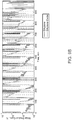
- FIG. 9A - FIG. 9C shows the AgRuMoSiClO x catalyst in the presence of CO 2 and ethylene feed-gas mixture flowing under a dynamic series process parameters and demonstrates that the catalyst produces ethylene oxide ( FIG. 9B , IR signal from multi-gas analyzer.
- the reactor feed stream compositions are recorded in the upper graph and temperature and pressure conditions are shown in the lowest graph.
- FIG. 9A - FIG. 9C shows that the catalyst can be treated in a co-feed mode of operation to produce ethylene oxide. In the co-feed mode of operation CO 2 and ethylene are fed simultaneously to the catalyst to produce ethylene oxide in a mixed product stream containing CO. In alternative mode, the catalyst is treated sequentially by exposing the catalyst to CO 2 where an oxygen is removed from CO 2 to produce CO. In the next step, the catalyst is exposed to ethylene to produce ethylene oxide.
- the catalysts described above can be prepared by a number of conventional heterogeneous catalyst preparation routes, including but not limited to, wet deposition, co-precipitation, and incipient wetness impregnation.
- Two exemplary methods for preparing the catalysts are described below: wet deposition and co-precipitation.
- Each preparation method has merit.
- Wet deposition has the merit of concentrating all of the active catalyst phase on the surface of the support, but it does not have as many phase interfaces, which could be important to the catalysis.
- Co-precipitation has more phase interfaces, but it could lead to some of the catalyst phases being in the bulk of the material and not exposed to the surface where gas-solid interactions take place.
- wet deposition is a catalyst preparation method during which the surfaces of inert support materials such as alumina (Al 2 O 3 ) or silica (SiO 2 ) are doped with small amounts of transition-metals.
- the transition-metals are deposited on the surface of the support as decomposable inorganic salts.
- the inorganic salts are calcined at a high temperature (between 300° C. and 550° C.) to make the transition-metal oxide, or mixed-metal oxides, when more than one transition metal is used.
- a preparation of molybdenum-impregnated alumina is provided here as an example.
- a round-bottomed flask with a ground-glass neck 3.5 g of ammonium molybdate was dissolved in 20 mL of H 2 O.
- a gravimetric balance was used to weigh out 15 g of ⁇ -alumina, and then the alumina was added to the round-bottomed flask containing the molybdenum solution.
- H 2 O was added to completely cover the alumina.
- a rotary evaporator was used to remove the H 2 O from the solution.
- calcination was performed by heating the solid at 120° C. for 2 hours to 350° C. at a 5° C. per minute ramp rate and holding for 3 hours to obtain 16.6 g of powder. This approach was used to prepare the most promising catalysts.
- Co-precipitation is a catalyst preparation method during which an aqueous solution of metal salts is created, typically containing more than one metal salt, followed by adding an aqueous base to the solution, which raises the pH of the aqueous solution, resulting in precipitation of the metal species in solution as insoluble metal hydroxides.
- the species often precipitate together and form solids that are filtered from the solution, are dried, and then are calcined to convert the metal hydroxides into the corresponding metal oxides.
- a preparation of a silver molybdate mixed-metal oxide by co-precipitation is given as an example.
- the reactions occur in a co-feed reactor, here both of the main reactants, CO 2 and Et, are fed together into the main reactor where the epoxidation and reduction reactions listed above occur sequentially in the same reactor.
- the overall reaction is slightly endothermic.
- An example of a process flow diagram of the technology is shown in FIG. 10 .
- the process models were developed to depict the overall process to produce 250,000 tons/yr of EtO.
- Et and CO 2 after heating and expansion from pipeline pressures, are mixed and heated to the reactor temperature. Additional external heat is supplied to the reactors to provide the heat required for the reactions to take place.
- the co-feed reactor was assumed to be isothermal in the process model, and the heat duty of the reactor was considered in the GHG life-cycle analysis (LCA) to estimate the cost of the thermal energy requirement for this process.
- the technology disclosed herein is compared to the conventional method for producing EtO.
- the block diagram of the conventional EtO manufacturing process is shown in FIG. 11 .
- Et and O 2 are mixed and are passed over a catalyst consisting of Ag 2 O.
- the O 2 stream is produced on site by using an air separation unit. During the conventional process, the complete oxidation side reaction yield is approximately 5.6%, which contributes to direct CO 2 emissions from the process.
- the gaseous product stream from the main reactor is cooled and sent to a scrubber where water is used as the scrubbing media.
- EtO dissolves in water and leaves with the aqueous stream.
- the aqueous stream is sent to a distillation column where the EtO is recovered from the aqueous stream and is sent for downstream processing or product storage.
- the main utility requirements for the conventional process are electricity and natural gas for heating. Other factors such as transportation and delivery costs would be similar for the conventional process and the process disclosed herein.
- FIG. 12 The block diagram for the process disclosed herein is shown in FIG. 12 .
- CO 2 is assumed to be sourced from a sequestration pipeline.
- Ethanol is assumed to be available from a distribution system or refinery.
- a process model to simulate the full-scale process for a plant producing 250 kt/year of EtO was developed. Electricity consumption, CO 2 requirement, and thermal energy input to the system were estimated using the process model. These estimates were used in the GHG LCA to estimate the total amount of CO 2 emitted per ton of EtO produced. Renewable and waste sources of energy were not considered for these utilities but could offer additional GHG benefits. To make comparisons easier, the GHG emissions for the C3-PEO and conventional processes are quantified in terms of the amount of CO 2-e emitted per ton of EtO.
- the outlet gas stream contains a mixture of products (CO, EtO, and H 2 O), as well as the unreacted CO 2 and Et.
- This stream is used for partial reheating of the feed gases and is sent to a scrubbing section that uses H 2 O as the scrubbing agent.
- Product EtO is recovered in the water stream exiting this section, and the H 2 O and EtO mixture is distilled to recover EtO as the product similar to conventional EtO production.
- the gas stream leaving the scrubbing section with CO, CO 2 , and unconverted Et is sent to a CO 2 capture system, where CO 2 is captured and recycled to the co-feed reactor.
- the outlet gas stream is a mixture of CO and Et and is sent to a cryogenic separation unit to condense Et from the mixture and obtain a pure product stream of CO.
- a cryogenic separation unit to condense Et from the mixture and obtain a pure product stream of CO.
- Unconverted Et is recycled to the co-feed reactor.
Landscapes
- Chemical & Material Sciences (AREA)
- Organic Chemistry (AREA)
- Engineering & Computer Science (AREA)
- Materials Engineering (AREA)
- Chemical Kinetics & Catalysis (AREA)
- Dispersion Chemistry (AREA)
- Physics & Mathematics (AREA)
- Thermal Sciences (AREA)
- Inorganic Chemistry (AREA)
- Epoxy Compounds (AREA)
- Catalysts (AREA)
Abstract
Description
| TABLE 1 |
| Comparison of Data from the Literature Regarding Epoxidation |
| Catalysts Used in O2-Based versus CO2-Based Processes |
 |
| Reaction | Ethylene | EtO | EtO | |
| Temperature | Conversion | Selectivity | Yield | |
| Catalyst | (° C.) | (%) | (%) | (%) |
| Ag-α-Al2O3 | 275 | 3.6 | 77.4 | 2.8 |
| Ag—SiO2 | 275 | 4.4 | 86.4 | 3.8 |
| Ag—TiO2 | 275 | 2.5 | 69.7 | 1.8 |
| Re—Ag—Al2O3 | 265 | 13.5 | 42.0 | 5.67 |
| RTI—Al2O3 CO2* | 350 | 25.0 | 34.0 | 8.5 |
| Note: | ||||
| Al2O3 = alumina; | ||||
| SiO2 = silica; | ||||
| TiO2 = titania; | ||||
| *RuO2(MoO3)3(Al2O3)22 | ||||
| TABLE 2 |
| XRF Results of a RuO2(MoO3)3(Al2O3)22 Catalyst |
| Alumi- | Molyb- | Ruthe- | Tita- | |||
| Wt % | num | denum | nium | nium | ||
| Analysis | Mass | Calc. | Calc. | Calc. | Calc. | Chlo- |
| Sample ID | (mg) | (% Wt.) | (% Wt.) | (% Wt.) | (% Wt.) | rine |
| RTI-Al2O3 | 134.367 | 42.073 | 14.613 | 4.220 | 0.123 | 0 |
| Theory | 42.278 | 10.250 | 3.599 | 0 | 0 | |
| TABLE 3 |
| Compositional analysis by XRF of AgRuMoSiClOx |
| catalyst used for CO2-ethylene epoxidation. |
| Si | Ag | Mo | Ru | Cl | ||
| Wt % | Calc. | Calc. | Calc. | Calc. | Calc. | |
| Analysis | Mass | (% | (% | (% | (% | (% |
| Sample ID | (mg) | Wt.) | Wt.) | Wt.) | Wt.) | Wt.) |
| AgRuMoSiClOx | 124.533 | 31.627 | 18.723 | 11.273 | 0.436 | 0.304 |
CO2 reduction: CO2+M0→CO+MO (Eq. 1)
Ethylene epoxidation: C2H4+MO→C2H4O+M0 (Eq. 2)
Overall reaction: C2H4+CO2→C2H4O+CO (Eq. 3)
-
- [M0=Reduced metal; MO=Metal oxide]
CO2 reduction: 6CO2+6M0→6CO+6MO (Eq. 4)
Ethylene oxidation: C2H4+6MO→2CO2+2H2O+6M0 (Eq. 5)
Overall reaction: C2H4+4CO2→6CO+2H2O (Eq. 6)
-
- [M0=Reduced metal; MO=Metal oxide]
Claims (21)
Priority Applications (1)
| Application Number | Priority Date | Filing Date | Title |
|---|---|---|---|
| US16/320,116 US11123712B2 (en) | 2016-07-26 | 2017-07-26 | Catalysts utilizing carbon dioxide for the epoxidation of olefins |
Applications Claiming Priority (3)
| Application Number | Priority Date | Filing Date | Title |
|---|---|---|---|
| US201662366795P | 2016-07-26 | 2016-07-26 | |
| US16/320,116 US11123712B2 (en) | 2016-07-26 | 2017-07-26 | Catalysts utilizing carbon dioxide for the epoxidation of olefins |
| PCT/US2017/043921 WO2018022740A2 (en) | 2016-07-26 | 2017-07-26 | Catalysts utilizing carbon dioxide for the epoxidation of olefins |
Publications (2)
| Publication Number | Publication Date |
|---|---|
| US20190270073A1 US20190270073A1 (en) | 2019-09-05 |
| US11123712B2 true US11123712B2 (en) | 2021-09-21 |
Family
ID=59523302
Family Applications (1)
| Application Number | Title | Priority Date | Filing Date |
|---|---|---|---|
| US16/320,116 Active 2037-10-30 US11123712B2 (en) | 2016-07-26 | 2017-07-26 | Catalysts utilizing carbon dioxide for the epoxidation of olefins |
Country Status (3)
| Country | Link |
|---|---|
| US (1) | US11123712B2 (en) |
| CA (1) | CA3031940C (en) |
| WO (1) | WO2018022740A2 (en) |
Citations (10)
| Publication number | Priority date | Publication date | Assignee | Title |
|---|---|---|---|---|
| US2781295A (en) * | 1954-11-19 | 1957-02-12 | Sinclair Refining Co | Catalyst process for treating an oil with the catalyst |
| US2799661A (en) * | 1953-07-15 | 1957-07-16 | Universal Oil Prod Co | Manufacture of molybdenumcontaining catalysts |
| EP0266015B1 (en) | 1986-10-31 | 1991-12-04 | Shell Internationale Researchmaatschappij B.V. | Ethylene oxide catalyst and process for the catalytic production of ethylene oxide |
| US5686380A (en) | 1996-01-31 | 1997-11-11 | Arco Chemical Technology, L.P. | Vapor phase oxidation of propylene to propylene oxide |
| US6750173B2 (en) | 2002-04-08 | 2004-06-15 | Scientific Design Company, Inc. | Ethylene oxide catalyst |
| WO2004058633A2 (en) | 2002-12-20 | 2004-07-15 | Honda Giken Kogyo Kabushiki Kaisha | Platinum-free ruthenium-cobalt catalyst formulations for hydrogen generation |
| US20140288335A1 (en) | 2011-08-23 | 2014-09-25 | Ube Industries, Ltd. | Hydrocracking catalyst, method for producing same, and method for producing hydroxy compound using said catalyst |
| WO2015020862A2 (en) * | 2013-07-31 | 2015-02-12 | Research Triangle Institute | Mixed metal iron oxides and uses thereof |
| CN104370692A (en) | 2013-08-13 | 2015-02-25 | 北京化工大学 | Polyol preparation method through glucose hydrogenolysis |
| US20150183701A1 (en) | 2012-08-15 | 2015-07-02 | Brian BLANK | Catalysts for hydrodeoxygenation of oxygenated hydrocarbons |
Family Cites Families (1)
| Publication number | Priority date | Publication date | Assignee | Title |
|---|---|---|---|---|
| US6750273B2 (en) | 2002-10-02 | 2004-06-15 | Dow Corning Corporation | Filled silicone composition and cured silicone product |
-
2017
- 2017-07-26 CA CA3031940A patent/CA3031940C/en active Active
- 2017-07-26 WO PCT/US2017/043921 patent/WO2018022740A2/en not_active Ceased
- 2017-07-26 US US16/320,116 patent/US11123712B2/en active Active
Patent Citations (10)
| Publication number | Priority date | Publication date | Assignee | Title |
|---|---|---|---|---|
| US2799661A (en) * | 1953-07-15 | 1957-07-16 | Universal Oil Prod Co | Manufacture of molybdenumcontaining catalysts |
| US2781295A (en) * | 1954-11-19 | 1957-02-12 | Sinclair Refining Co | Catalyst process for treating an oil with the catalyst |
| EP0266015B1 (en) | 1986-10-31 | 1991-12-04 | Shell Internationale Researchmaatschappij B.V. | Ethylene oxide catalyst and process for the catalytic production of ethylene oxide |
| US5686380A (en) | 1996-01-31 | 1997-11-11 | Arco Chemical Technology, L.P. | Vapor phase oxidation of propylene to propylene oxide |
| US6750173B2 (en) | 2002-04-08 | 2004-06-15 | Scientific Design Company, Inc. | Ethylene oxide catalyst |
| WO2004058633A2 (en) | 2002-12-20 | 2004-07-15 | Honda Giken Kogyo Kabushiki Kaisha | Platinum-free ruthenium-cobalt catalyst formulations for hydrogen generation |
| US20140288335A1 (en) | 2011-08-23 | 2014-09-25 | Ube Industries, Ltd. | Hydrocracking catalyst, method for producing same, and method for producing hydroxy compound using said catalyst |
| US20150183701A1 (en) | 2012-08-15 | 2015-07-02 | Brian BLANK | Catalysts for hydrodeoxygenation of oxygenated hydrocarbons |
| WO2015020862A2 (en) * | 2013-07-31 | 2015-02-12 | Research Triangle Institute | Mixed metal iron oxides and uses thereof |
| CN104370692A (en) | 2013-08-13 | 2015-02-25 | 北京化工大学 | Polyol preparation method through glucose hydrogenolysis |
Non-Patent Citations (14)
| Title |
|---|
| "Ethylene Oxide." Kirk-Othmer Enxyclopedia of Chemical Technology. vol. 10. pp. 632-673. |
| Chongterdtoonskul, Atiporn et al. 2012. "Effects of oxide supports on ethylene epoxidation activity over Ag-based catalysts." Journal of Molecular Catalysis A: Chemical. vol. 358, pp. 58-66. |
| Colmenares, Juan Carlos. 2010. Novel Trends in the Utilization of CO2 as a Reagent and Mild Oxidant in the C—C Coupling Reactions. Current Organic Synthesis. vol. 7. Pages 533-542. |
| Dellamorte, J.C. et al. 2007. "Rhenium promotion of Ag and Cu—Ag bimetallic catalysts for ethylene expoxidation." Catalysis Today vol. 120. pp. 182-185. |
| Epoxide. Wikipedia. Accessed Jul. 18, 2016 (five (5) pages). |
| Ethylene oxide. Wikipedia. Accessed Jul. 12, 2016. (nineteen (19) pages). |
| Guojie, Jin et al. "Effect of additive in feedstock on performance of AG—Mo03/Zr02 catalyst for propylene epoxidation by molecular oxygen." Reaction Kinetics and Catalysis Letters, vol. 89, No. 2, pp. 253-260. |
| International Preliminary Report on Patentability issued in counterpart PCT Application No. PCT/US2017/043921 dated Jan. 29, 2019 (twelve (12) pages). |
| International Search Report and Written Opinion issued in counterpart PCT Application No. PCT/US2017/043921 dated Sep. 6, 2018. |
| Kolb, Kenneth E, and Kolb, Doris. 1983. "Organic Chemicals from Carbon Monoxide." Real World of Industrial Chemistry. vol. 60. No. 1. pp. 57-59. |
| Lambert, Richard M., et al. "Heterogeneous alkene epoxidation: past, present and future." 2005. Journal of Molecular Catalysis A: Chemical. vol. 228. pp. 27-33. |
| Propylene oxide. Wikipedia. Accessed Jul. 18, 2016 (three (3) pages). |
| Shen, J., et al. "Mechanistic study of CO formation from CO2 using a mixed-metal oxide of tin, iron, and aluminum†." RSC Adv., 2014, 45198-45206, 4 (85), Royal Society of Chemistry, London. |
| Tsuji, Junpei. 2006. "Development of New Propylene Oxide Process." Sumitomo Kagaku. vol. 2006-I. pp. 1-8. |
Also Published As
| Publication number | Publication date |
|---|---|
| WO2018022740A3 (en) | 2018-06-21 |
| WO2018022740A2 (en) | 2018-02-01 |
| WO2018022740A9 (en) | 2018-10-04 |
| CA3031940C (en) | 2024-05-14 |
| CA3031940A1 (en) | 2018-02-01 |
| US20190270073A1 (en) | 2019-09-05 |
Similar Documents
| Publication | Publication Date | Title |
|---|---|---|
| JP6369817B2 (en) | Oxidative dehydrogenation of ethane to ethylene and preparation of multimetallic mixed oxides as catalysts for such processes | |
| JP5592250B2 (en) | Catalytic hydrogenation of carbon dioxide to synthesis gas. | |
| JP5432434B2 (en) | Method for producing catalyst for synthesis of dimethyl ether from synthesis gas containing carbon dioxide | |
| EP3288677A1 (en) | Methods for conversion of co2 into syngas | |
| EP2788117A1 (en) | Mixed oxide based catalyst for the conversion of carbon dioxide to syngas and method of preparation and use | |
| BR112014032466B1 (en) | CATALYST FOR THE OBTAINING OF HIGHER ALCOHOLS | |
| JP2005517727A (en) | Method and catalyst for producing formaldehyde from dimethyl ether | |
| CN107073455B (en) | Improved selective ammonia oxidation catalyst | |
| US11866387B2 (en) | Process for producing methacrylic acid or methacrylic acid esters | |
| US10676419B2 (en) | Production of products from natural resources | |
| Alotaibi | Liquid phase methanol synthesis by CO2 hydrogenation over Cu-Zn/Z catalysts: Influence of Cd promotion | |
| US12071400B2 (en) | Process of selective oxidation of glycerol | |
| WO2017085593A2 (en) | High temperature methods for hydrogenation of co2 to syngas for production of olefins | |
| US20190270073A1 (en) | Catalysts utilizing carbon dioxide for the epoxidation of olefins | |
| US20200299214A1 (en) | Production of ethanol from carbon dioxide and hydrogen | |
| US20240261772A1 (en) | Method for preparing water gas shift catalysts, catalysts and process for reducing carbon monoxide content | |
| WO2018015827A1 (en) | Process for high-pressure hydrogenation of carbon dioxide to syngas in the presence of copper-manganese-aluminum mixed metal oxide catalysts | |
| Koesnarpadi et al. | Oxidation of Styrene to Benzaldehyde Using Environmentally Friendly Calcium Sulfate Hemihydrate-Supported Titania Catalysts | |
| WO2018015824A1 (en) | Process for high-pressure hydrogenation of carbon dioxide to syngas in the presence of a copper/zinc/zirconium mixed metal oxide catalyst | |
| JP2014034023A (en) | Catalyst for manufacturing acrylic acid from glycerine and manufacturing method of the catalyst | |
| KR102773697B1 (en) | Al-Ti Mixed Oxide Catalysts for Dechlorination of Chloromethanes and the Method for Manufacturing Dechlorinated Chloromethanes Using the Catalysts | |
| WO2024211330A1 (en) | Heterogeneous catalyst composition and methods thereof | |
| JP2025080316A (en) | Propylene production method | |
| CN119368230A (en) | Metal oxide and preparation method thereof, catalyst and application thereof, and method for preparing hydrocarbon compounds by hydrogenating carbon dioxide | |
| WO2018020347A1 (en) | Process for high-pressure hydrogenation of carbon dioxide to oxo-syngas composition using a copper/zinc/zirconium mixed metal oxide catalyst |
Legal Events
| Date | Code | Title | Description |
|---|---|---|---|
| FEPP | Fee payment procedure |
Free format text: ENTITY STATUS SET TO UNDISCOUNTED (ORIGINAL EVENT CODE: BIG.); ENTITY STATUS OF PATENT OWNER: LARGE ENTITY |
|
| AS | Assignment |
Owner name: RESEARCH TRIANGLE INSTITUTE, NORTH CAROLINA Free format text: ASSIGNMENT OF ASSIGNORS INTEREST;ASSIGNORS:LAIL, MARTY;MOBLEY, PAUL;PETERS, JONATHAN;AND OTHERS;SIGNING DATES FROM 20190204 TO 20190222;REEL/FRAME:048464/0661 |
|
| STPP | Information on status: patent application and granting procedure in general |
Free format text: DOCKETED NEW CASE - READY FOR EXAMINATION |
|
| STPP | Information on status: patent application and granting procedure in general |
Free format text: NON FINAL ACTION MAILED |
|
| STPP | Information on status: patent application and granting procedure in general |
Free format text: RESPONSE TO NON-FINAL OFFICE ACTION ENTERED AND FORWARDED TO EXAMINER |
|
| STPP | Information on status: patent application and granting procedure in general |
Free format text: NON FINAL ACTION MAILED |
|
| STPP | Information on status: patent application and granting procedure in general |
Free format text: RESPONSE TO NON-FINAL OFFICE ACTION ENTERED AND FORWARDED TO EXAMINER |
|
| STPP | Information on status: patent application and granting procedure in general |
Free format text: NOTICE OF ALLOWANCE MAILED -- APPLICATION RECEIVED IN OFFICE OF PUBLICATIONS |
|
| STPP | Information on status: patent application and granting procedure in general |
Free format text: NOTICE OF ALLOWANCE MAILED -- APPLICATION RECEIVED IN OFFICE OF PUBLICATIONS Free format text: AWAITING TC RESP., ISSUE FEE NOT PAID |
|
| STPP | Information on status: patent application and granting procedure in general |
Free format text: PUBLICATIONS -- ISSUE FEE PAYMENT RECEIVED |
|
| STPP | Information on status: patent application and granting procedure in general |
Free format text: PUBLICATIONS -- ISSUE FEE PAYMENT VERIFIED |
|
| STCF | Information on status: patent grant |
Free format text: PATENTED CASE |
|
| MAFP | Maintenance fee payment |
Free format text: PAYMENT OF MAINTENANCE FEE, 4TH YEAR, LARGE ENTITY (ORIGINAL EVENT CODE: M1551); ENTITY STATUS OF PATENT OWNER: LARGE ENTITY Year of fee payment: 4 |