US11160271B2 - Anti-freezing agent for protecting biological tissue during freezing treatment and preparation method therefor - Google Patents
Anti-freezing agent for protecting biological tissue during freezing treatment and preparation method therefor Download PDFInfo
- Publication number
- US11160271B2 US11160271B2 US16/338,329 US201616338329A US11160271B2 US 11160271 B2 US11160271 B2 US 11160271B2 US 201616338329 A US201616338329 A US 201616338329A US 11160271 B2 US11160271 B2 US 11160271B2
- Authority
- US
- United States
- Prior art keywords
- freezing
- freezing agent
- present
- biological tissue
- ethylene glycol
- Prior art date
- Legal status (The legal status is an assumption and is not a legal conclusion. Google has not performed a legal analysis and makes no representation as to the accuracy of the status listed.)
- Expired - Fee Related, expires
Links
Images


Classifications
-
- A01N1/0221—
-
- A—HUMAN NECESSITIES
- A01—AGRICULTURE; FORESTRY; ANIMAL HUSBANDRY; HUNTING; TRAPPING; FISHING
- A01N—PRESERVATION OF BODIES OF HUMANS OR ANIMALS OR PLANTS OR PARTS THEREOF; BIOCIDES, e.g. AS DISINFECTANTS, AS PESTICIDES OR AS HERBICIDES; PEST REPELLANTS OR ATTRACTANTS; PLANT GROWTH REGULATORS
- A01N1/00—Preservation of bodies of humans or animals, or parts thereof
- A01N1/10—Preservation of living parts
- A01N1/12—Chemical aspects of preservation
- A01N1/122—Preservation or perfusion media
- A01N1/125—Freeze protecting agents, e.g. cryoprotectants or osmolarity regulators
-
- A—HUMAN NECESSITIES
- A61—MEDICAL OR VETERINARY SCIENCE; HYGIENE
- A61F—FILTERS IMPLANTABLE INTO BLOOD VESSELS; PROSTHESES; DEVICES PROVIDING PATENCY TO, OR PREVENTING COLLAPSING OF, TUBULAR STRUCTURES OF THE BODY, e.g. STENTS; ORTHOPAEDIC, NURSING OR CONTRACEPTIVE DEVICES; FOMENTATION; TREATMENT OR PROTECTION OF EYES OR EARS; BANDAGES, DRESSINGS OR ABSORBENT PADS; FIRST-AID KITS
- A61F7/00—Heating or cooling appliances for medical or therapeutic treatment of the human body
- A61F7/02—Compresses or poultices for effecting heating or cooling
Definitions
- the present invention relates to an anti-freezing agent and a method for preparing the same, and, in particular, to an anti-freezing agent used for protecting tissues during freezing treatment of human or animal tissues.
- Malignant bone sarcoma such as malignant osteosarcoma (Osteosarcoma)
- Ostosarcoma is a bone malignant tumor that often occurs in adolescents and children.
- the way of limb reconstruction includes tumor prosthesis and biological reconstruction.
- tumor prosthesis biological reconstruction can achieve better longevity of limb function, so it is still more commonly used despite the difficulty and time consumption of surgery.
- frozen autograft uses “real bones” to reconstruct bone defect.
- the willingness to donate bones is not high, the source of allogeneic bone is limited, and the bone size and shape of each person are not the same, so there are still deficiencies in real use.
- malignant bone sarcoma is a tumor that grows from inside or on the bone
- the bone that grows tumor does not necessarily have serious tumor destruction, even in osteoblastic osteosarcoma. Instead, more bones will grow out due to the tumor.
- their bones are not completely destroyed, so these bones that are full of tumors but still have good texture can be taken out and subject to special treatment that kills the tumor cells to get a clean bone, just like resource recycling, which is called “recycled autograft”.
- the biggest advantage of this method lies in that the bones are taken from the patient itself, so it is no need to worry about the size and shape of the bones as well as disease transmission.
- the so-called frozen autograft treated with liquid nitrogen means that the tumor-bearing bone is quickly immersed in liquid nitrogen at, for example, ⁇ 196° C. for a period of time that ensure the tumor's central temperature to reach the lowest temperature, and then thawed slowly at room temperature.
- Tumor cells can be completely killed during such rapid freezing and slow thawing.
- the principle of this cryopreservation is to reduce the temperature of the bone with tumor cells to a quite low temperature, so that water molecules inside and outside the bone cells undergo crystallization to form ice crystals, which can destroy the cell membrane and make the tumor cells die.
- some surrounding innocent normal tissues, including cartilage, bone and tendon will be destroyed at the same time. Therefore, how to protect the innocent normal tissues from being damaged by the freezing treatment is an issue that has yet to be solved.
- the present invention is to provide a method of preventing the biological tissue from being damaged during the freezing treatment.
- the present invention provides a method for preparing an anti-freezing agent, wherein the anti-freezing agent is used for protecting a biological tissue from being damaged during a freezing treatment for a biological tissue.
- the method comprises the following steps:
- the water is physiological saline.
- sodium polyacrylate is sodium polyacrylate having a molecular weight of 120,000.
- the weight ratio of ethylene glycol to water is about 2:1.
- the weight ratio of dimethyl sulfoxide to the aqueous ethylene glycol solution is about 1:10.
- the weight ratio of the matrix to sodium polyacrylate is about 10:1.
- the matrix prepared in step (3) is slowly heated and kept at about 70° C.
- the method for preparing an anti-freezing agent of the present invention comprises the following steps:
- Another aspect of the present invention provides an anti-freezing agent, which is prepared by the method of the present invention described above.
- a further aspect of the present invention provides a method for protecting a biological tissue of a human or animal during a freezing treatment, comprising applying the anti-freezing agent prepared by the method described above to the biological tissue to protect the biological tissue from being damaged during the freezing treatment.
- the biological tissue of the human or animal is cartilage, tendon or ligament. In a particular embodiment of the present invention, it is used to prepare a recycled bone autograft.
- a further aspect of the present invention provides a recycled bone autograft obtained by taking an autologous bone with tumor cells from a patient with bone tumor, killing the tumor cells of the autologous bone by a freezing treatment, and protecting the cartilage, tendon or ligament of the autologous bone with the anti-freezing agent of the present invention.
- the bone osteoma is malignant bone osteoma.
- the recycled bone autograft prepared by the method of the present invention can avoid worry about bone size and shape difference and will not cause disease infection because the bone is taken from the patient itself.
- the normal biological tissues will not be destroyed simultaneously when the tumor cells are killed by the freezing treatment due to the protection of the anti-freezing agent of the present invention.
- FIG. 1 shows an anti-freezing agent made in accordance with the present invention and having a transparent and viscous appearance.
- FIG. 2 shows the protective effect of the anti-freezing agent of the present invention on rat bone tissues.
- the anti-freezing agent of the present invention can protect cartilage tissues and avoid fragmentation caused by the freezing treatment.
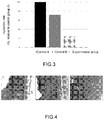
- FIG. 3 shows the effect of the anti-freezing agent of the present invention on apoptosis of rat chondrocytes. Compared with the control groups, the anti-freezing agent of the present invention can reduce apoptosis caused by the freezing treatment.
- FIG. 4 shows the protective effect of the anti-freezing agent of the present invention on human tissues. Compared with the control groups, the anti-freezing agent of the present invention can reduce the separation of cartilage from hard bone caused by freezing.
- FIG. 5 shows the effect of the anti-freezing agent of the present invention on the change of cartilage color index after freezing.
- the anti-freezing agent of the present invention can alleviate the change of cartilage color index caused by freezing.
- ethylene glycol 27 g of physiological saline, and 10 g of dimethyl sulfoxide (DMSO) were mixed and stirred uniformly to prepare an antifreeze matrix.
- DMSO dimethyl sulfoxide
- 30-70 g of the antifreeze matrix was heated to and kept at 70° C. in a water bath, and then 5-7 g of sodium polyacrylate (MW: 120,000) was slowly added into the antifreeze matrix, followed by cooling to room temperature with uniform stirring, thereby obtaining the anti-freezing agent of the present invention.
- the appearance of the anti-freezing agent is transparent and viscous, as shown in FIG. 1 .
- the rat knee cartilage was taken out.
- the control group A was not treated, and the control group B was coated with a conventional commercially available anti-freezing agent (dimethyl sulfoxide) at the articular cartilage.
- the experimental groups were coated with the anti-freezing agent of the present invention at the articular cartilage, separately placed in liquid nitrogen for 20 minutes, slowly warmed to room temperature for 20 minutes, fixed with 4% paraformaldehyde, pathologically sectioned, and then stained with hematoxylin-eosin (HE stain).
- the pathological sections of hematoxylin-eosin stained control group (A), control group (B), and experimental group (C). are shown in FIG. 2 .
- the cartilage surface After freezing, in the control group A the cartilage surface became brittle and uneven (as indicated by the arrow), and the control group B was also uneven (as indicated by the arrow). However, in the experimental group C, the intact cartilage surface was visible (as indicated by the arrow), showing that the anti-freezing agent of the present invention protects the cartilage tissue from fragmentation caused by the antifreeze treatment.
- control group A, control group B, and experimental group C described above were subjected to apoptosis analysis (TUNEL assay) to verify whether the anti-freezing agent of the present invention can avoid the deoxyribonucleic acid (DNA) of the chondrocytes from fragmentation caused by freezing.
- TUNEL assay apoptosis analysis
- the experimental results are shown in FIG. 3 . It can be found that the proportion of TUNEL-positive cells (representing apoptosis of the tumor cells) in the experimental group C is significantly lower than that of the control group A and the control group B, indicating that the anti-freezing agent of the present invention can reduce apoptosis.
- control group A was not treated; for control group B, traditional commercially available anti-freezing agent was applied to articular cartilage; and for experimental group C, the anti-freezing agent of the present invention was applied to the articular cartilage.
- the control and experimental groups were separately placed in liquid nitrogen to freeze for 20 minutes, slowly warmed to room temperature for 20 minutes, fixed with 4% paraformaldehyde, pathologically sectioned, and then stained by hematoxylin-eosin. The results are shown in FIG. 4 .
- control group A was not treated; for control group B, traditional commercially available anti-freezing agent was applied to articular cartilage; and for experimental group C, the anti-freezing agent of the present invention was applied to the articular cartilage.
- control and experimental groups were separately placed in liquid nitrogen to freeze for 20 minutes, and then slowly warmed to room temperature for 20 minutes. The color index change of the cartilage surface was observed by analyzing the decrease of luminance level of the cartilage surface. The results are shown in FIG. 5 .
- the luminance level of the cartilage surface was significantly decreased, indicating that the moisture in the cartilage tissue was largely released after freezing.
- the decrease in the experimental group C was rather small, indicating that the anti-freezing agent of the present invention can alleviate the change of cartilage color index caused by freezing, and the moisture in the cartilage tissues did not largely escape after freezing.
- the anti-freezing agent of the present invention can protect the biological tissue from damage caused by freezing during the freezing treatment.
- the anti-freezing agent of the present invention can be used for biological tissue protection during the freezing treatment.
Landscapes
- Life Sciences & Earth Sciences (AREA)
- Health & Medical Sciences (AREA)
- General Health & Medical Sciences (AREA)
- Engineering & Computer Science (AREA)
- Environmental Sciences (AREA)
- Zoology (AREA)
- Wood Science & Technology (AREA)
- Dentistry (AREA)
- Biomedical Technology (AREA)
- Animal Behavior & Ethology (AREA)
- Public Health (AREA)
- Veterinary Medicine (AREA)
- Vascular Medicine (AREA)
- Heart & Thoracic Surgery (AREA)
- Physics & Mathematics (AREA)
- Thermal Sciences (AREA)
- Materials For Medical Uses (AREA)
- Medicines Containing Material From Animals Or Micro-Organisms (AREA)
- Agricultural Chemicals And Associated Chemicals (AREA)
Applications Claiming Priority (1)
| Application Number | Priority Date | Filing Date | Title |
|---|---|---|---|
| PCT/CN2016/101112 WO2018058541A1 (fr) | 2016-09-30 | 2016-09-30 | Agent antigel pour protéger un tissu biologique pendant un traitement par congélation et son procédé de préparation |
Related Parent Applications (1)
| Application Number | Title | Priority Date | Filing Date |
|---|---|---|---|
| PCT/CN2016/101112 A-371-Of-International WO2018058541A1 (fr) | 2016-09-30 | 2016-09-30 | Agent antigel pour protéger un tissu biologique pendant un traitement par congélation et son procédé de préparation |
Related Child Applications (1)
| Application Number | Title | Priority Date | Filing Date |
|---|---|---|---|
| US17/397,506 Division US11596145B2 (en) | 2016-09-30 | 2021-08-09 | Anti-freezing agent for protecting biological tissue during freezing treatment and preparation method therefor |
Publications (2)
| Publication Number | Publication Date |
|---|---|
| US20200022361A1 US20200022361A1 (en) | 2020-01-23 |
| US11160271B2 true US11160271B2 (en) | 2021-11-02 |
Family
ID=61763227
Family Applications (2)
| Application Number | Title | Priority Date | Filing Date |
|---|---|---|---|
| US16/338,329 Expired - Fee Related US11160271B2 (en) | 2016-09-30 | 2016-09-30 | Anti-freezing agent for protecting biological tissue during freezing treatment and preparation method therefor |
| US17/397,506 Active 2037-01-01 US11596145B2 (en) | 2016-09-30 | 2021-08-09 | Anti-freezing agent for protecting biological tissue during freezing treatment and preparation method therefor |
Family Applications After (1)
| Application Number | Title | Priority Date | Filing Date |
|---|---|---|---|
| US17/397,506 Active 2037-01-01 US11596145B2 (en) | 2016-09-30 | 2021-08-09 | Anti-freezing agent for protecting biological tissue during freezing treatment and preparation method therefor |
Country Status (3)
| Country | Link |
|---|---|
| US (2) | US11160271B2 (fr) |
| EP (1) | EP3520746A4 (fr) |
| WO (1) | WO2018058541A1 (fr) |
Cited By (1)
| Publication number | Priority date | Publication date | Assignee | Title |
|---|---|---|---|---|
| US20210360916A1 (en) * | 2016-09-30 | 2021-11-25 | Taipei Veterans General Hospital | Anti-freezing agent for protecting biological tissue during freezing treatment and preparation method therefor |
Families Citing this family (3)
| Publication number | Priority date | Publication date | Assignee | Title |
|---|---|---|---|---|
| US12426594B2 (en) | 2020-09-24 | 2025-09-30 | Everest Medical Innovation GmbH | Cryoprotective compositions and methods for protection of a surgical site during cryosurgery |
| US12453805B2 (en) | 2020-09-24 | 2025-10-28 | Everest Medical Innovation GmbH | Cryoprotective compositions, surgical kits, and methods for protection of a surgical site during cryosurgery |
| JP2025537877A (ja) * | 2022-11-21 | 2025-11-20 | フラウンホッファー-ゲゼルシャフト ツァ フェルダールング デァ アンゲヴァンテン フォアシュンク エー.ファオ | 細胞および細胞凝集体の凍結保存のための凍結保護物質の同定 |
Citations (4)
| Publication number | Priority date | Publication date | Assignee | Title |
|---|---|---|---|---|
| CN101342192A (zh) * | 2007-07-09 | 2009-01-14 | 中国水产科学研究院东海水产研究所 | 褐牙鲆精子快速冷冻保存方法 |
| US20100008992A1 (en) * | 2006-05-19 | 2010-01-14 | Medistem Laboratories, Inc. | Treatment of disc degenerative disease and compositions for same |
| US20110274666A1 (en) | 2010-05-07 | 2011-11-10 | University Of North Carolina At Chapel Hill | Method of engrafting cells from solid tissues |
| CN103571439A (zh) | 2013-10-15 | 2014-02-12 | 昆山威胜干燥剂研发中心有限公司 | 一种蓄冷剂及其制备方法 |
Family Cites Families (3)
| Publication number | Priority date | Publication date | Assignee | Title |
|---|---|---|---|---|
| KR101368924B1 (ko) * | 2005-11-17 | 2014-03-04 | 니뽄젠야쿠코교 가부시키가이샤 | 세포 보존용 수용액 |
| WO2015150394A1 (fr) * | 2014-04-01 | 2015-10-08 | Pharmacosmos A/S | Agent cryoprotecteur, compositions cryoprotectrices et cryoconservées, leurs utilisations et procédés de cryoconservation |
| EP3520746A4 (fr) * | 2016-09-30 | 2020-05-06 | Taipei Veterans General Hospital | Agent antigel pour protéger un tissu biologique pendant un traitement par congélation et son procédé de préparation |
-
2016
- 2016-09-30 EP EP16917291.3A patent/EP3520746A4/fr not_active Withdrawn
- 2016-09-30 WO PCT/CN2016/101112 patent/WO2018058541A1/fr not_active Ceased
- 2016-09-30 US US16/338,329 patent/US11160271B2/en not_active Expired - Fee Related
-
2021
- 2021-08-09 US US17/397,506 patent/US11596145B2/en active Active
Patent Citations (5)
| Publication number | Priority date | Publication date | Assignee | Title |
|---|---|---|---|---|
| US20100008992A1 (en) * | 2006-05-19 | 2010-01-14 | Medistem Laboratories, Inc. | Treatment of disc degenerative disease and compositions for same |
| CN101342192A (zh) * | 2007-07-09 | 2009-01-14 | 中国水产科学研究院东海水产研究所 | 褐牙鲆精子快速冷冻保存方法 |
| US20110274666A1 (en) | 2010-05-07 | 2011-11-10 | University Of North Carolina At Chapel Hill | Method of engrafting cells from solid tissues |
| CN102985130A (zh) | 2010-05-07 | 2013-03-20 | 北卡罗来纳大学查伯山分校 | 移植来自实体组织的细胞的方法 |
| CN103571439A (zh) | 2013-10-15 | 2014-02-12 | 昆山威胜干燥剂研发中心有限公司 | 一种蓄冷剂及其制备方法 |
Non-Patent Citations (1)
| Title |
|---|
| International Search Report issued in PCT/CN2016/101112 (PCT/ISA/210), dated Jul. 5, 2017. |
Cited By (2)
| Publication number | Priority date | Publication date | Assignee | Title |
|---|---|---|---|---|
| US20210360916A1 (en) * | 2016-09-30 | 2021-11-25 | Taipei Veterans General Hospital | Anti-freezing agent for protecting biological tissue during freezing treatment and preparation method therefor |
| US11596145B2 (en) * | 2016-09-30 | 2023-03-07 | Taipei Veterans General Hospital | Anti-freezing agent for protecting biological tissue during freezing treatment and preparation method therefor |
Also Published As
| Publication number | Publication date |
|---|---|
| US20210360916A1 (en) | 2021-11-25 |
| EP3520746A4 (fr) | 2020-05-06 |
| EP3520746A1 (fr) | 2019-08-07 |
| US11596145B2 (en) | 2023-03-07 |
| US20200022361A1 (en) | 2020-01-23 |
| WO2018058541A1 (fr) | 2018-04-05 |
Similar Documents
| Publication | Publication Date | Title |
|---|---|---|
| US11596145B2 (en) | Anti-freezing agent for protecting biological tissue during freezing treatment and preparation method therefor | |
| Lu et al. | An injectable collagen-genipin-carbon dot hydrogel combined with photodynamic therapy to enhance chondrogenesis | |
| KR101107022B1 (ko) | 동결보존 무세포 진피 기질의 제조 방법 및 그로부터 제조된 동결보존 무세포 진피 기질 | |
| ES2710921T3 (es) | Composiciones para tratar y prevenir lesión y enfermedad tisular | |
| JP7156597B2 (ja) | 胎盤由来マトリックス並びにその調製方法及び使用 | |
| KR101089614B1 (ko) | 무세포 진피 기질의 제조 방법 및 그로부터 제조된 무세포 진피 기질 | |
| CN105658250B (zh) | 包含颗粒状脱细胞组织的混合凝胶 | |
| Pereira et al. | Effects of human mesenchymal stem cells isolated from Wharton’s jelly of the umbilical cord and conditioned media on skeletal muscle regeneration using a myectomy model | |
| WO2018064950A1 (fr) | Préparation gélifiée de cellules souches destinée à conserver l'activité de cellules congelées et son application | |
| US20190134099A1 (en) | Human tissue derived compositions and uses thereof | |
| KR20170075747A (ko) | 양막 분말 및 상처 치유 및 조직 공학 구축물에서의 그의 용도 | |
| JP2009247276A (ja) | 生体供給用、生体移植用、生体添加用、生体投与用の解凍器官若しくは組織または解凍細胞群とその製造方法及びそれらに用いる過冷却液並びに製造装置 | |
| CN117500533A (zh) | 用于监测愈合进展的着色生物伤口治疗物 | |
| Wang et al. | Management of the cavity after removal of giant cell tumor of the bone | |
| US20200288700A1 (en) | Stem cell preparations and application in the preparation of drugs for the treatment of osteoarthritis | |
| Pimentel et al. | Angiogenic effects of cryosurgery with liquid nitrogen on the normal skin of rats, through morphometric study | |
| HK40012469A (en) | Anti-freezing agent for protecting biological tissue during freezing treatment and preparation method therefor | |
| TWI621396B (zh) | 冷凍處理中保護生物組織的防凍劑及其製備方法 | |
| KR101092411B1 (ko) | 이식용 동종 피부의 처리 방법 및 그로부터 제조된 동결보존동종피부 | |
| CN106075575A (zh) | 一种用于膝骨性关节炎软骨修复的复合材料及其制备方法 | |
| Zheng et al. | Injectable crosslinked HA hydrogel: a promising carrier for cell transplantation to treat stable vitiligo | |
| WO2005039528A2 (fr) | Composition destinee au traitement de l'arthrose/arthrite touchant notamment les articulations | |
| Suzuki | Cold ischemic damage to bone | |
| Sananta et al. | Viability of Mesenchymal Stem Cells from Stromal Vascular Fraction to Tissue Engineering Scaffold Collagen, Calcium Alginate, Oxidized Cellulose, Gelatin, And Amnion Membrane (Primary Cell Culture in Vitro Study) | |
| Irsan et al. | The effect of liquid nitrogen exposure on the proliferative phase of Achilles tendon healing in Rattus norvegicus rats. |
Legal Events
| Date | Code | Title | Description |
|---|---|---|---|
| FEPP | Fee payment procedure |
Free format text: ENTITY STATUS SET TO UNDISCOUNTED (ORIGINAL EVENT CODE: BIG.); ENTITY STATUS OF PATENT OWNER: LARGE ENTITY |
|
| AS | Assignment |
Owner name: TAIPEI VETERANS GENERAL HOSPITAL, TAIWAN Free format text: ASSIGNMENT OF ASSIGNORS INTEREST;ASSIGNORS:WU, PO KUEI;CHEN, WEI MING;CHEN, CHENG FONG;AND OTHERS;SIGNING DATES FROM 20190419 TO 20190423;REEL/FRAME:049035/0685 |
|
| STPP | Information on status: patent application and granting procedure in general |
Free format text: DOCKETED NEW CASE - READY FOR EXAMINATION |
|
| STPP | Information on status: patent application and granting procedure in general |
Free format text: NON FINAL ACTION MAILED |
|
| STPP | Information on status: patent application and granting procedure in general |
Free format text: RESPONSE TO NON-FINAL OFFICE ACTION ENTERED AND FORWARDED TO EXAMINER |
|
| STPP | Information on status: patent application and granting procedure in general |
Free format text: NOTICE OF ALLOWANCE MAILED -- APPLICATION RECEIVED IN OFFICE OF PUBLICATIONS |
|
| STPP | Information on status: patent application and granting procedure in general |
Free format text: PUBLICATIONS -- ISSUE FEE PAYMENT VERIFIED |
|
| STCF | Information on status: patent grant |
Free format text: PATENTED CASE |
|
| FEPP | Fee payment procedure |
Free format text: MAINTENANCE FEE REMINDER MAILED (ORIGINAL EVENT CODE: REM.); ENTITY STATUS OF PATENT OWNER: LARGE ENTITY |
|
| LAPS | Lapse for failure to pay maintenance fees |
Free format text: PATENT EXPIRED FOR FAILURE TO PAY MAINTENANCE FEES (ORIGINAL EVENT CODE: EXP.); ENTITY STATUS OF PATENT OWNER: LARGE ENTITY |
|
| STCH | Information on status: patent discontinuation |
Free format text: PATENT EXPIRED DUE TO NONPAYMENT OF MAINTENANCE FEES UNDER 37 CFR 1.362 |
|
| FP | Lapsed due to failure to pay maintenance fee |
Effective date: 20251102 |