US11708357B2 - Crystal form of pyrrolidinyl urea derivative and application thereof - Google Patents
Crystal form of pyrrolidinyl urea derivative and application thereof Download PDFInfo
- Publication number
- US11708357B2 US11708357B2 US17/791,694 US202117791694A US11708357B2 US 11708357 B2 US11708357 B2 US 11708357B2 US 202117791694 A US202117791694 A US 202117791694A US 11708357 B2 US11708357 B2 US 11708357B2
- Authority
- US
- United States
- Prior art keywords
- compound
- crystal form
- formula
- present disclosure
- added
- Prior art date
- Legal status (The legal status is an assumption and is not a legal conclusion. Google has not performed a legal analysis and makes no representation as to the accuracy of the status listed.)
- Active
Links
Images




Classifications
-
- C—CHEMISTRY; METALLURGY
- C07—ORGANIC CHEMISTRY
- C07D—HETEROCYCLIC COMPOUNDS
- C07D405/00—Heterocyclic compounds containing both one or more hetero rings having oxygen atoms as the only ring hetero atoms, and one or more rings having nitrogen as the only ring hetero atom
- C07D405/14—Heterocyclic compounds containing both one or more hetero rings having oxygen atoms as the only ring hetero atoms, and one or more rings having nitrogen as the only ring hetero atom containing three or more hetero rings
-
- A—HUMAN NECESSITIES
- A61—MEDICAL OR VETERINARY SCIENCE; HYGIENE
- A61P—SPECIFIC THERAPEUTIC ACTIVITY OF CHEMICAL COMPOUNDS OR MEDICINAL PREPARATIONS
- A61P25/00—Drugs for disorders of the nervous system
-
- A—HUMAN NECESSITIES
- A61—MEDICAL OR VETERINARY SCIENCE; HYGIENE
- A61P—SPECIFIC THERAPEUTIC ACTIVITY OF CHEMICAL COMPOUNDS OR MEDICINAL PREPARATIONS
- A61P29/00—Non-central analgesic, antipyretic or antiinflammatory agents, e.g. antirheumatic agents; Non-steroidal antiinflammatory drugs [NSAID]
-
- A—HUMAN NECESSITIES
- A61—MEDICAL OR VETERINARY SCIENCE; HYGIENE
- A61P—SPECIFIC THERAPEUTIC ACTIVITY OF CHEMICAL COMPOUNDS OR MEDICINAL PREPARATIONS
- A61P31/00—Antiinfectives, i.e. antibiotics, antiseptics, chemotherapeutics
-
- A—HUMAN NECESSITIES
- A61—MEDICAL OR VETERINARY SCIENCE; HYGIENE
- A61P—SPECIFIC THERAPEUTIC ACTIVITY OF CHEMICAL COMPOUNDS OR MEDICINAL PREPARATIONS
- A61P35/00—Antineoplastic agents
-
- C—CHEMISTRY; METALLURGY
- C07—ORGANIC CHEMISTRY
- C07B—GENERAL METHODS OF ORGANIC CHEMISTRY; APPARATUS THEREFOR
- C07B2200/00—Indexing scheme relating to specific properties of organic compounds
- C07B2200/13—Crystalline forms, e.g. polymorphs
Definitions
- the present disclosure relates to a crystal form of a TrkA inhibitor and a preparation method therefor, and use thereof in the manufacture of medicaments for treating diseases associated with pain, cancer, inflammation, neurodegenerative diseases, and certain infectious diseases.
- Tropomyosin-related kinase is a high-affinity receptor tyrosine kinase activated by a group of soluble growth factors called nerve growth factor (NGF), brain-derived neurotrophic factor (BDNF) and neurotrophic factor (NT).
- NGF nerve growth factor
- BDNF brain-derived neurotrophic factor
- NT neurotrophic factor
- the family of the Trk consists of three members (TrkA, TrkB and TrkC).
- NGF, BDNF and NT-4/5 play an important role in many physiological regulation processes such as neuronal cell signal maintenance, neuronal cell signal transmission, cell proliferation, cell differentiation, and cell survival through a receptor Trk.
- TrkA inhibitors of the present disclosure can meet the treatment requirements of pain, cancer, inflammation, neurodegenerative diseases and certain infectious diseases.
- WO2015175788 patent reported a single compound with inhibitory activity against TrkA and a pharmaceutically acceptable salt thereof.
- WO2012158413, WO2016116900, WO2016021629, WO2017006953 patents reported a series of compounds with inhibitory activity against TrkA, including a pyrrolidinyl urea structure used in the present disclosure.
- the present disclosure provides a crystal form A of a compound of formula (I), which is characterized in that the X-ray powder diffraction pattern thereof comprises characteristic diffraction peaks at the following angles of 2 ⁇ : 13.40 ⁇ 0.20°, 18.71 ⁇ 0.20° and 19.51 ⁇ 0.20°.
- the X-ray powder diffraction pattern of the crystal form A comprises characteristic diffraction peaks at the following angles of 2 ⁇ : 9.34 ⁇ 0.20°, 13.40 ⁇ 0.20°, 14.57 ⁇ 0.20°, 15.59 ⁇ 0.20°, 16.95 ⁇ 0.20°, 18.71 ⁇ 0.20°, 19.51 ⁇ 0.20° and 24.07 ⁇ 0.20°.
- the X-ray powder diffraction pattern of the crystal form A comprises characteristic diffraction peaks at the following angles of 2 ⁇ : 6.06°, 8.30°, 9.05°, 9.34°, 10.52°, 11.86°, 12.34°, 13.40°, 14.25°, 14.57°, 15.30°, 15.59°, 16.95°, 17.74°, 18.45°, 18.71°, 19.51°, 19.88°, 20.33°, 21.03°, 21.60°, 22.61°, 23.64°, 24.07°, 24.53°, 25.37°, 26.41°, 27.05°, 27.74°, 28.10°, 30.48°, 34.72°, 36.84° and 37.60°.
- the X-ray powder diffraction (XRPD) pattern of the crystal form A is shown in FIG. 1 .
- the analytical data of the XRPD pattern of the crystal form A are shown in Table 1:
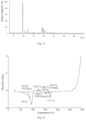
- the differential scanning calorimetry curve of the crystal form A has an endothermic peak at 75.3 ⁇ 3.0° C., 99.6 ⁇ 3.0° C. and 167.9 ⁇ 3.0° C. respectively and an exothermic peak at 132.3 ⁇ 3.0° C.
- the DSC pattern of the crystal form A is shown in FIG. 2 .
- thermogravimetric analysis curve of the crystal form A shows a weight loss of 1.75% occurred at 55.0 ⁇ 3.0° C., and a weight loss of 3.08% occurred at 100.0 ⁇ 3.0° C.
- the TGA pattern of the crystal form A is shown in FIG. 3 .
- the present disclosure also provides a crystal form B of the compound of formula (I), which is characterized in that the X-ray powder diffraction pattern thereof comprises characteristic diffraction peaks at the following angles of 2 ⁇ : 9.56 ⁇ 0.20°, 14.80 ⁇ 0.20° and 19.33 ⁇ 0.20°.
- the X-ray powder diffraction pattern of the crystal form B comprises characteristic diffraction peaks at the following angles of 2 ⁇ : 4.94 ⁇ 0.20°, 9.56 ⁇ 0.20°, 10.76 ⁇ 0.20°, 12.09 ⁇ 0.20°, 14.80 ⁇ 0.20°, 19.33 ⁇ 0.20°, 20.56 ⁇ 0.20° and 21.60 ⁇ 0.20°.
- the X-ray powder diffraction pattern of the crystal form B comprises characteristic diffraction peaks at the following angles of 2 ⁇ : 4.94°, 9.56°, 9.86°, 10.76°, 12.09°, 13.73°, 14.80°, 15.59°, 17.63°, 19.33°, 19.79°, 20.56°, 21.60°, 21.98°, 22.84°, 23.86°, 24.29°, 24.77°, 26.61°, 27.65°, 28.97°, 29.83°, 30.62°, 31.51°, 34.92°, 38.93° and 39.61°.
- the XRPD pattern of the crystal form B is shown in FIG. 4 .
- the analytical data of the XRPD pattern of the crystal form B are shown in Table 2:
- the differential scanning calorimetry curve of the crystal form B has an endothermic peak at 99.6 ⁇ 3.0° C., 159.5 ⁇ 3.0° C. and 172.9 ⁇ 3.0° C., respectively.
- the DSC pattern of the crystal form B is shown in FIG. 5 .
- thermogravimetric analysis curve of the crystal form B has a weight loss of 5.96% occurred at 130.0 ⁇ 3.0° C.
- the TGA pattern of the crystal form B is shown in FIG. 6 .
- the present disclosure also provides a crystal form C of the compound of formula (I), which is characterized in that the X-ray powder diffraction pattern thereof comprises characteristic diffraction peaks at the following angles of 2 ⁇ : 9.55° ⁇ 0.20°, 12.07° ⁇ 0.20° and 19.32° ⁇ 0.20°.
- the X-ray powder diffraction pattern of the crystal form C comprises characteristic diffraction peaks at the following angles of 2 ⁇ : 4.88 ⁇ 0.20°, 9.55 ⁇ 0.20°, 10.73 ⁇ 0.20°, 12.07 ⁇ 0.20°, 14.77 ⁇ 0.20°, 19.32 ⁇ 0.20°, 20.55 ⁇ 0.20° and 22.80 ⁇ 0.20°.
- the X-ray powder diffraction pattern of the crystal form C comprises characteristic diffraction peaks at the following angles of 2 ⁇ : 4.88°, 9.55°, 9.84°, 10.73°, 12.07°, 14.37°, 14.77°, 15.58°, 19.32°, 19.76°, 20.55°, 22.80°, 23.09°, 23.89°, 24.72°, 25.83° and 28.58°.
- the XRPD pattern of the crystal form C is shown in FIG. 7 .
- the analytical data of the XRPD pattern of the crystal form C are shown in Table 3:
- the differential scanning calorimetry curve of the crystal form C has an endothermic peak at 90.0 ⁇ 3.0° C., 156.2 ⁇ 3.0° C. and 175.0 ⁇ 3.0° C. respectively and an exothermic peak at 98.3 ⁇ 3.0° C.
- the DSC pattern of the crystal form C is shown in FIG. 8 .
- thermogravimetric analysis curve of the crystal form C has a weight loss of 4.68% occurred at 70.0 ⁇ 3.0° C., and a weight loss of 5.38% occurred at 100.0 ⁇ 3.0° C.
- the TGA pattern of the crystal form C is shown in FIG. 9 .
- the present disclosure also provides a crystal form D of the compound of formula (I), which is characterized in that the X-ray powder diffraction pattern thereof comprises characteristic diffraction peaks at the following angles of 2 ⁇ : 9.53° ⁇ 0.20°, 19.33° ⁇ 0.20° and 20.56° ⁇ 0.20°.
- the X-ray powder diffraction pattern of the crystal form D comprises characteristic diffraction peaks at the following angles of 2 ⁇ : 9.53 ⁇ 0.20°, 10.76 ⁇ 0.20°, 12.09 ⁇ 0.20°, 14.81 ⁇ 0.20°, 18.86 ⁇ 0.20°, 19.33 ⁇ 0.20°, 20.56 ⁇ 0.20° and 22.83 ⁇ 0.20°.
- the X-ray powder diffraction pattern of the crystal form D comprises characteristic diffraction peaks at the following angles of 2 ⁇ : 4.96°, 9.53°, 10.76°, 12.09°, 13.72°, 14.81°, 15.61°, 17.55°, 18.86°, 19.33°, 19.79°, 20.56°, 21.53°, 22.83°, 24.29°, 24.77°, 27.65°, 28.94°, 29.86°, 30.61°, 31.51°, 38.91° and 39.60°.
- the XRPD pattern of the crystal form D is shown in FIG. 10 .
- the analytical data of the XRPD pattern of the crystal form D are shown in Table 4:
- the differential scanning calorimetry curve of the crystal form D has an endothermic peak at 89.2 ⁇ 3.0° C., 157.6 ⁇ 3.0° C. and 162.7 ⁇ 3.0° C. respectively and an exothermic peak at 127.1 ⁇ 3.0° C.
- the DSC pattern of the crystal form D is shown in FIG. 11 .
- thermogravimetric analysis curve of the crystal form D has a weight loss of 5.13% occurred at 130.0 ⁇ 3.0° C.
- the TGA pattern of the crystal form D is shown in FIG. 12 .
- the present disclosure also provides a crystal form E of a compound of formula (II), which is characterized in that the X-ray powder diffraction pattern thereof comprises characteristic diffraction peaks at the following angles of 2 ⁇ : 9.56° ⁇ 0.20°, 12.08° ⁇ 0.20° and 19.29° ⁇ 0.20°, wherein, n is 0 or 2.
- the present disclosure also provides a crystal form E of the compound of formula (I), which is characterized in that the X-ray powder diffraction pattern thereof has characteristic diffraction peaks at the following angles of 2 ⁇ : 9.56° ⁇ 0.20°, 12.08° ⁇ 0.20° and 19.29° ⁇ 0.20°.
- the X-ray powder diffraction pattern of the crystal form E comprises characteristic diffraction peaks at the following angles of 2 ⁇ : 9.56 ⁇ 0.20°, 10.75 ⁇ 0.20°, 12.08 ⁇ 0.20°, 14.78 ⁇ 0.20°, 15.60 ⁇ 0.20°, 19.29 ⁇ 0.20°, 20.55 ⁇ 0.20° and 22.82 ⁇ 0.20°.
- the X-ray powder diffraction pattern of the crystal form E comprises characteristic diffraction peaks at the following angles of 2 ⁇ : 4.91°, 9.56°, 10.75°, 12.08°, 13.70°, 14.78°, 15.60°, 17.62°, 19.29°, 19.78°, 20.55°, 21.58°, 22.82°, 23.85°, 24.29°, 24.74°, 25.86°, 26.59°, 27.70°, 28.56°, 28.94°, 30.67°, 31.50° and 37.80°.
- the XRPD pattern of the crystal form E is shown in FIG. 13 .
- the analytical data of the XRPD pattern of the crystal form E are shown in Table 5:
- the differential scanning calorimetry curve of the crystal form E has an endothermic peak at 94.0 ⁇ 3.0° C., 154.0 ⁇ 3.0° C. and 171.7 ⁇ 3.0° C. respectively and an exothermic peak at 123.8 ⁇ 3.0° C.
- the DSC pattern of the crystal form E is shown in FIG. 14 .
- thermogravimetric analysis curve of the crystal form E has a weight loss of 5.84% occurred at 130.0 ⁇ 3.0° C.
- the TGA pattern of the crystal form E is shown in FIG. 15 .
- the present disclosure also provides a crystal form F of a compound of formula (IV), which is characterized in that the X-ray powder diffraction pattern thereof comprises characteristic diffraction peaks at the following angles of 2 ⁇ : 6.30° ⁇ 0.20°, 13.62° ⁇ 0.20° and 18.92° ⁇ 0.20°.
- the present disclosure also provides a crystal form F of the compound of formula (I), which is characterized in that the X-ray powder diffraction pattern thereof comprises characteristic diffraction peaks at the following angles of 2 ⁇ : 6.30° ⁇ 0.20°, 13.62° ⁇ 0.20° and 18.92° ⁇ 0.20°.
- the X-ray powder diffraction pattern of the crystal form F comprises characteristic diffraction peaks at the following angles of 2 ⁇ : 6.30 ⁇ 0.20°, 9.25 ⁇ 0.20°, 13.62 ⁇ 0.20°, 15.80 ⁇ 0.20°, 17.16 ⁇ 0.20°, 17.96 ⁇ 0.20°, 18.92 ⁇ 0.20° and 20.09 ⁇ 0.20°.
- the X-ray powder diffraction pattern of the crystal form F comprises characteristic diffraction peaks at the following angles of 2 ⁇ : 6.30°, 8.48°, 9.25°, 9.71°, 12.57°, 13.62°, 14.46°, 15.80°, 17.16°, 17.96°, 18.67°, 18.92°, 19.69°, 20.09°, 21.26°, 22.15°, 23.68°, 24.29°, 25.58°, 26.64°, 27.32°, 27.95°, 28.28°, 30.71° and 35.16°.
- the XRPD pattern of the crystal form F is shown in FIG. 16 .
- the analytical data of the XRPD pattern of the crystal form F are as shown in Table 6:
- the differential scanning calorimetry curve of the crystal form F has an endothermic peak at 100.0 ⁇ 3.0° C. and 172.7 ⁇ 3.0° C. respectively and an exothermic peak at 126.0 ⁇ 3.0° C.
- the DSC pattern of the crystal form F is shown in FIG. 17 .
- thermogravimetric analysis curve of the crystal form F has a weight loss of 3.92% occurred at 130.0 ⁇ 3.0° C.
- the TGA pattern of the crystal form F is shown in FIG. 18 .
- the present disclosure also provides a preparation method for the crystal form E of the compound of formula (I), comprising adding any form of the compound of formula (I) into an alcohol solvent, a mixed solvent of the alcohol solvent and water, or a mixed solvent of acetonitrile and water, stirring at a certain temperature for a certain time, then centrifuging, and drying a residue to obtain the crystal form E of the compound of formula (I).
- the alcohol solvent is selected from methanol and ethanol.
- the volume ratio of the alcohol solvent to water or acetonitrile to water is selected from 1:1 to 4.
- a temperature for the stirring is selected from 20° C. to 60° C.
- a time for the stirring is selected from 48 hours to 96 hours.
- the weight-to-volume (mg/mL) ratio of the compound of formula (I) to the solvent is selected from 10 to 100:1.
- the present disclosure also provides a crystal of the compound of formula (II), which is characterized in that the X-ray powder diffraction pattern thereof comprises characteristic diffraction peaks at the following angles of 2 ⁇ : 9.56 ⁇ 0.40°, 12.08 ⁇ 0.40° and 19.29 ⁇ 0.40°, wherein, n is 0 or 2.
- the X-ray powder diffraction pattern of the crystal of the compound of formula (II) comprises characteristic diffraction peaks at the following angles of 2 ⁇ : 9.56 ⁇ 0.40°, 12.08 ⁇ 0.40°, 19.29 ⁇ 0.40° and 20.55 ⁇ 0.40°.
- the X-ray powder diffraction pattern of the crystal of the compound of formula (II) comprises characteristic diffraction peaks at the following angles of 2 ⁇ : 9.56 ⁇ 0.40°, 10.75 ⁇ 0.40°, 12.08 ⁇ 0.40°, 14.78 ⁇ 0.40°, 19.29 ⁇ 0.40° and 20.55 ⁇ 0.40°.
- the X-ray powder diffraction pattern of the crystal of the compound of formula (II) comprises characteristic diffraction peaks at the following angles of 2 ⁇ : 9.56 ⁇ 0.40°, 10.75 ⁇ 0.40°, 12.08 ⁇ 0.40°, 14.78 ⁇ 0.40°, 19.29 ⁇ 0.40°, 20.55 ⁇ 0.40°, 22.82 ⁇ 0.40° and 24.74 ⁇ 0.40°.
- the crystal of the compound of formula (II) is selected from the crystal form B, the crystal form C, the crystal form D and the crystal form E.
- the present disclosure also provides the crystal of the compound of formula (II), wherein the compound of formula (II) has the following structure.
- the crystal of the compound of formula (II) is characterized in that the X-ray powder diffraction pattern thereof comprises characteristic diffraction peaks at the following angles of 2 ⁇ : 9.3138° ⁇ 0.2000°, 19.0764° ⁇ 0.2000° and 19.5885° ⁇ 0.2000°.
- the X-ray powder diffraction pattern of the crystal of the compound of formula (II) comprises characteristic diffraction peaks at the following angles of 2 ⁇ : 9.3138° ⁇ 0.2000°, 10.515° ⁇ 0.2000°, 11.9125° ⁇ 0.2000°, 19.0764° ⁇ 0.2000°, 19.5885° ⁇ 0.2000° and 22.7144° ⁇ 0.2000°.
- the X-ray powder diffraction pattern of the crystal of the compound of formula (II) comprises characteristic diffraction peaks at the following angles of 2 ⁇ : 9.3138° ⁇ 0.2000°, 10.515° ⁇ 0.2000°, 11.9125° ⁇ 0.2000°, 14.5999° ⁇ 0.2000°, 19.0764° ⁇ 0.2000°, 19.5885° ⁇ 0.2000°, 20.2743° ⁇ 0.2000°, 21.3180° ⁇ 0.2000°, 22.7144° ⁇ 0.20° and 24.5829° ⁇ 0.20°.
- the X-ray powder diffraction pattern of the crystal of the compound of formula (II) comprises characteristic diffraction peaks at the following angles of 2 ⁇ : 9.0233°, 9.3138°, 9.4821°, 10.5145°, 10.7290°, 11.9125°, 14.5999°, 18.9000°, 19.0764°, 19.2297°, 19.5885°, 19.7576°, 20.2743°, 20.4715°, 21.3180°, 21.5603°, 22.7144°, 23.6499° and 24.5829°.
- the XRPD pattern of the crystal of the compound of formula (II) is shown in FIG. 20 .
- the analytical data of the XRPD pattern of the crystal of the compound of formula (II) are shown in Table 15:
- the present disclosure also provides a preparation method for the crystal of the compound of formula (II), comprising adding the compound of formula (I) into a mixed solvent of an alcohol solvent and water, and then slowly volatilizing at room temperature for 10 days, and precipitating a solid to obtain the crystal of the compound of formula (II).
- the present disclosure also provides the crystal of the compound of formula (II), which is characterized in that the X-ray powder diffraction pattern thereof comprises characteristic diffraction peaks at the following angles of 2 ⁇ : 9.56 ⁇ 0.30°, 19.29 ⁇ 0.30° and 19.78 ⁇ 0.20°, wherein n is preferably 2.
- the X-ray powder diffraction pattern of the crystal of the compound of formula (II) comprises characteristic diffraction peaks at the following angles of 2 ⁇ : 9.56 ⁇ 0.30°, 12.08 ⁇ 0.30°, 19.29 ⁇ 0.30° and 19.78 ⁇ 0.20°.
- the X-ray powder diffraction pattern of the crystal of the compound of formula (II) comprises characteristic diffraction peaks at the following angles of 2 ⁇ : 9.56 ⁇ 0.30°, 10.75 ⁇ 0.30°, 12.08 ⁇ 0.30°, 19.29 ⁇ 0.30°, 19.78 ⁇ 0.20° and 22.82 ⁇ 0.30°.
- the X-ray powder diffraction pattern of the crystal of the compound of formula (II) comprises characteristic diffraction peaks at the following angles of 2 ⁇ : 4.91°, 9.56°, 10.75°, 12.08°, 13.70°, 14.78°, 15.60°, 17.62°, 19.29°, 19.78°, 20.55°, 21.58°, 22.82°, 23.85°, 24.29°, 24.74°, 25.86°, 26.59°, 27.70°, 28.56°, 28.94°, 30.67°, 31.50° and 37.80°.
- the X-ray powder diffraction pattern of the crystal of the compound of formula (II) comprises characteristic diffraction peaks at the following angles of 2 ⁇ : 9.0233°, 9.3138°, 9.4821°, 10.5145°, 10.7290°, 11.9125°, 14.5999°, 18.9000°, 19.0764°, 19.2297°, 19.5885°, 19.7576°, 20.2743°, 20.4715°, 21.3180°, 21.5603°, 22.7144°, 23.6499° and 24.5829°.
- the crystal of the compound of formula (II) is selected from the crystal form E and the crystal of the compound of formula (II).
- the present disclosure also provides a preparation method for the crystal of the compound of formula (II), comprising adding the compound of formula (I) into an alcohol solvent, a nitrile solvent, an ester solvent or a mixed solvent of alcohol, nitrile and water, stirring at a certain temperature for a certain time, then centrifuging, and drying a residue to obtain a crystal form of the compound of formula (II).
- the alcohol solvent is selected from methanol and ethanol
- the nitrile solvent is selected from acetonitrile
- the ester solvent is selected from ethyl acetate.
- the mixed solvent of alcohol, nitrile and water is selected from methanol and water, ethanol and water, and acetonitrile and water.
- a temperature for the stirring is selected from 20° C. to 60° C.
- a time for the stirring is selected from 48 hours to 96 hours.
- the present disclosure also provides use of the above crystal form A or B or C or D or E or F or the crystal form E prepared according to the above method in the manufacture of medicaments for treating diseases associated with pain, cancer, inflammation, neurodegenerative diseases, and certain infectious diseases.
- Each crystal form of the compounds of the present disclosure is stable, less affected by light, heat and humidity, and has good administration efficacy in vivo, and a promising pharmaceutical prospect;
- the compound of formula (I) has significant TrkA enzyme inhibitory effect, high unbound rate of plasma protein, low risk of drug-drug interaction and good metabolic stability of liver microsomes;
- the crystal form E of the compound of formula (I) has good pharmacokinetic properties and bioavailability.
- the intermediate compounds of the present disclosure can be prepared by various synthetic methods known to those skilled in the art, including the embodiments described below, the embodiments formed by combining the embodiments described below with other chemical synthesis methods, and equivalent alternatives well-known to those skilled in the art.
- Preferred embodiments include, but are not limited to, the embodiments of the present disclosure.
- the structures of the compounds of the present disclosure can be confirmed by conventional methods well known to those skilled in the art. If the present disclosure relates to an absolute configuration of the compound, the absolute configuration can be confirmed by conventional technical means in the art. For example, in single crystal X-ray diffraction (SXRD), diffraction intensity data of a cultured single crystal are collected by a Bruker D8 venture diffractometer, using CuK ⁇ radiation as a light source and ⁇ / ⁇ scanning as a scanning mode. After collecting relevant data, the absolute configuration can be confirmed by further analyzing the structure of the crystal form with a direct method (Shelxs97).
- SXRD single crystal X-ray diffraction
- the solvents used in the present disclosure are commercially available.
- the present disclosure employs the following abbreviations: EtOH represents ethanol; MeOH represents methanol; TFA represents trifluoroacetic acid; TsOH represents p-toluenesulfonic acid; mp represents melting point; EtSO 3 H represents ethanesulfonic acid; MeSO 3 H represents methanesulfonic acid; THF represents tetrahydrofuran; and EtOAc represents ethyl acetate.
- Detection method about 10 mg of the sample was used for XRPD detection.
- X-ray tube voltage 45 kV
- X-ray tube current 40 mA
- Receiving slit none, anti-scattering slit: 7.5 mm.
- X-ray tube voltage 40 kV
- X-ray tube current 40 mA
- Detection method A sample (about 1-5 mg) was placed in a DSC aluminum tray for detection, and the sample was heated from 25° C. (room temperature) to before the decomposition of the sample at a heating rate of 10° C./min under the condition of 50 mL/min nitrogen.
- TGA Thermal Gravimetric Analyzer
- Detection method A sample (about 1-5 mg) was placed in the TGA aluminum tray for detection, and the sample was heated from room temperature to 350° C. at a heating rate of 10° C./min under the condition of 10 mL/min nitrogen.
- Detection conditions A sample (10-30 mg) was placed in a DVS sample tray for detection.
- ⁇ W % indicates the hygroscopic weight gain of the test compound at 25 ⁇ 1° C. and 80 ⁇ 2% RH.
- FIG. 1 is the XRPD pattern of the crystal form A of the compound of formula (I) measured by Cu-K ⁇ radiation.
- FIG. 2 is the DSC pattern of the crystal form A of the compound of formula (I).
- FIG. 3 is the TGA pattern of the crystal form A of the compound of formula (I).
- FIG. 4 is the XRPD pattern of the crystal form B of the compound of formula (I) measured by Cu-K ⁇ radiation.
- FIG. 5 is the DSC pattern of the crystal form B of the compound of formula (I).
- FIG. 6 is the TGA pattern of the crystal form B of the compound of formula (I).
- FIG. 7 is the XRPD pattern of the crystal form C of the compound of formula (I) measured by Cu-K ⁇ radiation.
- FIG. 8 is the DSC pattern of the crystal form C of the compound of formula (I).
- FIG. 9 is the TGA pattern of the crystal form C of the compound of formula (I).
- FIG. 10 is the XRPD pattern of the crystal form D of the compound of formula (I) measured by Cu-K ⁇ radiation.
- FIG. 11 is the DSC pattern of the crystal form D of the compound of formula (I).
- FIG. 12 is the TGA pattern of the crystal form D of the compound of formula (I).
- FIG. 13 is the XRPD pattern of the crystal form E of the compound of formula (I) measured by Cu-K ⁇ radiation.
- FIG. 14 is the DSC pattern of the crystal form E of the compound of formula (I).
- FIG. 15 is the TGA pattern of the crystal form E of the compound of formula (I).
- FIG. 16 is the XRPD pattern of the crystal form F of the compound of formula (I) measured by Cu-K ⁇ radiation.
- FIG. 17 is the DSC pattern of the crystal form F of the compound of formula (I).
- FIG. 18 is the TGA pattern of the crystal form F of the compound of formula (I).
- FIG. 19 is the DVS pattern of the crystal form E of the compound of formula (I).
- FIG. 20 is the XRPD pattern of the crystal of the compound of formula (II) measured by Cu-K ⁇ radiation.
- the pH of the aqueous phase was adjusted to about 10 with ammonia water, and extracted with dichloromethane (80 mL*2).
- the combined organic phase was washed with 100 mL of brine, dried with anhydrous sodium sulfate, and filtered, and the organic solvent was removed under reduced pressure to obtain a crude product of compound 7, which was directly used for the next reaction without further purification.
- the crystal form E of the compound of formula (I) has good stability under the conditions of high temperature, high humidity, strong illumination and accelerated conditions.
- the hygroscopic weight gain of the crystal form E of the compound of formula (I) at 25° C. and 80% RH was 6.228%, which was hygroscopic.
- This experiment used Cisbio's homogeneous time-resolved fluorescence resonance energy transfer (HTRF® method) for activity test.
- the enzyme, biotin-labeled peptide substrate, ATP, and test compound were mixed, and incubated for reaction.
- ethylenediaminetetraacetic acid was added to terminate the reaction; at the same time, Eu-labeled antibody and streptavidin-labeled XL665 were added for reaction and detection.
- the data were expressed by the readings of the fluorescence signal at 665 nm and 620 nm, where a high ratio of 665 nm/620 nm indicated higher activity, and a low ratio of 665 nm/620 nm indicated inhibition of activity.
- test compound was 3-fold diluted to prepare a total of 11 concentrations, the concentration was from 10 ⁇ M to 0.17 nM in the final system;
- the inhibition rate of the compound was calculated from the data read by the instrument, and the IC 50 value was calculated using the mode 205 in XLFIT5 of IDBS.
- the protein binding rates of the test compound in the plasma of humans and SD rats were determined.
- the inhibitory activities of the test compound on different subtypes of human cytochrome P450 isozymes were determined.
- test compound 100 ⁇ final concentration
- a mixed substrate working solution 20 ⁇ L of the test compound and standard inhibitor solution were added to the corresponding wells, and at the same time 2 ⁇ L of the corresponding solvent was added to the non-inhibitor control wells (NIC) and blank control wells (Blank) wells; then 20 ⁇ L of mixed substrate solution was added to the corresponding wells, except for the Blank wells (20 ⁇ L of PB was added to the Blank wells); a human liver microsome solution was prepared (put back into the refrigerator immediately after using and marking the date), and then 158 ⁇ L of the human liver microsome solution was added to all wells; the above sample plate was placed in a 37° C.
- the coenzyme factor (NADPH) solution was prepared; 10 minutes later, 20 ⁇ L of the NADPH solution was added to all wells, and the sample plate was shaken well, placed in a 37° C. water bath and incubated for 10 minutes; at the corresponding time point, 400 ⁇ L of cold acetonitrile solution (internal standard: 200 ng/mL tolbutamide and labetalol) was added to terminate the reaction; the sample plate was evenly mixed, centrifuged at 4000 rpm for 20 minutes to precipitate proteins; 200 ⁇ L of the supernatant was added to 100 ⁇ L of water, shook well, and tested by LC/MS/MS.
- NADPH coenzyme factor
- Test compound (10 mM), Testosterone (reference compound, 10 mM), Diclofenac (reference compound, 10 mM) and Propafenone (reference compound, 10 mM).
- liver microsome solution final concentration: 0.5 mg protein/mL
- Microsomes Product information
- Human liver microsomes Cat No. 452117 BD Biosciences Lot No. 38291
- Rat liver microsomes Cat No. R1000 Xenotech Lot No. 1310030
- Canine liver microsomes Cat No. D1000 Xenotech Lot No. 1310086
- liver microsome solution 680 ⁇ L was added to each well of 96-well plates, then 80 ⁇ L was added to each well of the plates, and the plates were placed at 37° C. for pre-incubation for approximately 10 minutes.
- 300 ⁇ L of the stop solution (refrigerated at 4° C., containing 100 ng/mL tolbutamide and 100 ng/mL labetalol) was added into each sample well.
- the sample plate was shaken for about 10 minutes and centrifuged at 4000 rpm for 20 minutes at 4° C.
- liver weights of mice, rats, dogs, monkeys and humans were 88 g/kg, 40 g/kg, 32 g/kg, 30 g/kg and 20 g/kg, respectively.
- C t is the concentration at time t
- t is the incubation time
- C 0 is the concentration at 0
- k e is the elimination rate constant
- Cl int(mic) is the intrinsic clearance rate by liver microsome
- Cl int(liver) is the intrinsic clearance rate by liver.
- test compound The pharmacokinetic characteristics of the test compound in rodents after intravenous injection and oral administration were tested by standard protocols, in the experiment, the test compound was prepared into a clear solution or homogeneous suspension, and administered to the rats by single intravenous injection and oral administration.
- the menstruum was a certain proportion of ethanol and physiological saline solution or a certain proportion of dimethyl sulfoxide in HP- ⁇ cyclodextrin solution (the pH was adjusted to 3-4), the mixture was vortexed and stirred to prepare 1 mg/mL clear solution, then filtered with microporous membrane for later use; in the oral administration group, the menstruum was a certain proportion of sodium carboxymethyl cellulose solution or a certain proportion of dimethyl sulfoxide in HP- ⁇ cyclodextrin solution (the pH was adjusted to about 4), after the test compound was mixed with the solvent, the mixture was vortexed and stirred to prepare 30 mg/mL homogeneous suspension for later use.
- C 0 is the initial concentration
- T 1/2 is the elimination half-life
- V dss is the steady-state apparent volume of distribution
- Cl is the total clearance rate
- AUC 0-inf is the area under the plasma drug concentration-time curve from time 0 to infinity
- C max is the peak concentration
- T max is the time to peak concentration.
- mice Male CD-1 mice were used as test animals, the concentration of the compound in blood was determined after single administration to evaluate the pharmacokinetic behavior.
- CD-1 mice male, 20-40 g, 6-9 weeks, Shanghai Sippr-Bk Laboratory Animal Co., Ltd.
- test compound The pharmacokinetic characteristics of the test compound in rodents after intravenous injection and oral administration were tested by standard protocols, in the experiment, the test compound was prepared into a clear solution or homogeneous suspension, and administered to the mice by single intravenous injection and oral administration.
- the menstruum was a certain proportion of ethanol, Cremophor EL and physiological saline solution, the mixture was vortexed to prepare 1 mg/mL clear solution, then filtered with microporous membrane for later use; in the oral administration group, the menstruum was a certain proportion of methyl cellulose solution or certain proportion of methyl cellulose and Tween 80 aqueous solution, the test compound was mixed with the menstruum, and the mixture was vortexed to prepare 10 mg/mL clear or homogeneous suspension for later use.
- mice After 2 mg/kg intravenous administration or 100 mg/kg oral administration to the mice, a certain amount of whole blood samples were collected, centrifuged at 3200 g for 10 minutes, the supernatant was separated to obtain the plasma samples, and the samples were diluted multiple times with blank plasma according to actual needs.
- the plasma sample was added to acetonitrile solution containing the internal standard with a volume 20 times that of the plasma sample to precipitate proteins, and then centrifuged; the supernatant was separated, and water with a volume twice that of the supernatant was added to the supernatant, which was then centrifuged again; the supernatant was collected for analysis; LC-MS/MS analysis method was used to quantitatively analyze the blood drug concentration, and Phoenix WinNonlin software (Pharsight, USA) was used to calculate the pharmacokinetic parameters, such as peak concentration, time to peak concentration, clearance rate, half-life, area under the concentration-time curve, bioavailability, etc.
- pharmacokinetic parameters such as peak concentration, time to peak concentration, clearance rate, half-life, area under the concentration-time curve, bioavailability, etc.
- C 0 is the initial concentration
- T 1/2 is the elimination half-life
- V dss is the steady-state apparent volume of distribution
- Cl is the total clearance rate
- AUC 0-inf is the area under the plasma drug concentration-time curve from time 0 to infinity
- C max is the peak concentration
- T max is the time to peak concentration.
- test compound was prepared into a clear solution or homogeneous suspension and administered to the beagle dogs by single intravenous injection or oral administration.
- the menstruum was a certain proportion of dimethyl sulfoxide in HP- ⁇ -cyclodextrin solution or a certain proportion of ethanol, polyethylene glycol 400 and physiological saline solution, the mixture was vortexed and subjected to ultrasonic treatment to prepare 2 mg/mL clear solution, then filtered with microporous membrane for later use; in the oral administration group, the menstruum was a certain proportion of dimethyl sulfoxide in HP- ⁇ -cyclodextrin solution or a certain proportion of sodium carboxymethyl cellulose solution, the test compound was mixed with the menstruum, vortexed and subjected to ultrasonic treatment to prepare 2 mg/mL homogeneous suspension for later use.
- C 0 is the initial concentration
- T 1/2 is the elimination half-life
- V dss is the steady-state apparent volume of distribution
- Cl is the total clearance rate
- AUC 0-inf is the area under the plasma drug concentration-time curve from time 0 to infinity
- C max is the peak concentration
- T max is the time to peak concentration.
- the crystal form E of the compound of formula (I) shows a super-linear increase in exposure under low-dose (10 mpk) oral administration, indicating that the compound has good oral pharmacokinetic properties and bioavailability in beagle dogs.
Landscapes
- Health & Medical Sciences (AREA)
- Chemical & Material Sciences (AREA)
- Organic Chemistry (AREA)
- Pharmacology & Pharmacy (AREA)
- Animal Behavior & Ethology (AREA)
- Veterinary Medicine (AREA)
- Public Health (AREA)
- Chemical Kinetics & Catalysis (AREA)
- General Chemical & Material Sciences (AREA)
- Medicinal Chemistry (AREA)
- Nuclear Medicine, Radiotherapy & Molecular Imaging (AREA)
- General Health & Medical Sciences (AREA)
- Life Sciences & Earth Sciences (AREA)
- Engineering & Computer Science (AREA)
- Neurology (AREA)
- Bioinformatics & Cheminformatics (AREA)
- Biomedical Technology (AREA)
- Neurosurgery (AREA)
- Communicable Diseases (AREA)
- Oncology (AREA)
- Pain & Pain Management (AREA)
- Rheumatology (AREA)
- Pharmaceuticals Containing Other Organic And Inorganic Compounds (AREA)
- Plural Heterocyclic Compounds (AREA)
- Organic Low-Molecular-Weight Compounds And Preparation Thereof (AREA)
Applications Claiming Priority (3)
| Application Number | Priority Date | Filing Date | Title |
|---|---|---|---|
| CN202010027389 | 2020-01-10 | ||
| CN202010027389.4 | 2020-01-10 | ||
| PCT/CN2021/070956 WO2021139794A1 (zh) | 2020-01-10 | 2021-01-08 | 一种吡咯烷基脲衍生物的晶型及其应用 |
Publications (2)
| Publication Number | Publication Date |
|---|---|
| US20230103409A1 US20230103409A1 (en) | 2023-04-06 |
| US11708357B2 true US11708357B2 (en) | 2023-07-25 |
Family
ID=76787764
Family Applications (1)
| Application Number | Title | Priority Date | Filing Date |
|---|---|---|---|
| US17/791,694 Active US11708357B2 (en) | 2020-01-10 | 2021-01-08 | Crystal form of pyrrolidinyl urea derivative and application thereof |
Country Status (6)
| Country | Link |
|---|---|
| US (1) | US11708357B2 (de) |
| EP (1) | EP4089086B1 (de) |
| JP (1) | JP7289017B2 (de) |
| CN (2) | CN118515652B (de) |
| ES (1) | ES3058045T3 (de) |
| WO (1) | WO2021139794A1 (de) |
Citations (6)
| Publication number | Priority date | Publication date | Assignee | Title |
|---|---|---|---|---|
| WO2012158413A2 (en) | 2011-05-13 | 2012-11-22 | Array Biopharma Inc. | Pyrrolidinyl urea and pyrrolidinyl thiourea compounds as trka kinase inhibitors |
| WO2015175788A1 (en) | 2014-05-15 | 2015-11-19 | Array Biopharma Inc. | 1-((3s,4r)-4-(3-fluorophenyl)-1-(2-methoxyethyl)pyrrolidin-3-yl)-3-(4-methyl-3-(2-methylpyrimidin-5-yl)-1-phenyl-1h-pyrazol-5-yl)urea as a trka kinase inhibitor |
| WO2016021629A1 (ja) | 2014-08-06 | 2016-02-11 | 塩野義製薬株式会社 | TrkA阻害活性を有する複素環および炭素環誘導体 |
| WO2016116900A1 (en) | 2015-01-23 | 2016-07-28 | Gvk Biosciences Private Limited | Inhibitors of trka kinase |
| WO2017006953A1 (ja) | 2015-07-07 | 2017-01-12 | 塩野義製薬株式会社 | TrkA阻害活性を有する複素環誘導体 |
| WO2020011227A1 (zh) * | 2018-07-12 | 2020-01-16 | 南京明德新药研发有限公司 | 吡咯烷基脲衍生物及其在TrkA相关疾病的应用 |
Family Cites Families (1)
| Publication number | Priority date | Publication date | Assignee | Title |
|---|---|---|---|---|
| WO2017135399A1 (ja) * | 2016-02-04 | 2017-08-10 | 塩野義製薬株式会社 | TrkA阻害活性を有する含窒素複素環および炭素環誘導体 |
-
2021
- 2021-01-08 JP JP2022542633A patent/JP7289017B2/ja active Active
- 2021-01-08 ES ES21738026T patent/ES3058045T3/es active Active
- 2021-01-08 EP EP21738026.0A patent/EP4089086B1/de active Active
- 2021-01-08 CN CN202410626119.3A patent/CN118515652B/zh active Active
- 2021-01-08 CN CN202180008898.5A patent/CN114945565A/zh active Pending
- 2021-01-08 US US17/791,694 patent/US11708357B2/en active Active
- 2021-01-08 WO PCT/CN2021/070956 patent/WO2021139794A1/zh not_active Ceased
Patent Citations (17)
| Publication number | Priority date | Publication date | Assignee | Title |
|---|---|---|---|---|
| WO2012158413A2 (en) | 2011-05-13 | 2012-11-22 | Array Biopharma Inc. | Pyrrolidinyl urea and pyrrolidinyl thiourea compounds as trka kinase inhibitors |
| CN103649076A (zh) | 2011-05-13 | 2014-03-19 | 阵列生物制药公司 | 作为trka激酶抑制剂的吡咯烷基脲和吡咯烷基硫脲化合物 |
| JP2014514360A (ja) | 2011-05-13 | 2014-06-19 | アレイ バイオファーマ、インコーポレイテッド | Trkaキナーゼ阻害剤としてのピロリジニル尿素およびピロリジニルチオ尿素化合物 |
| US20190359597A1 (en) | 2011-05-13 | 2019-11-28 | Array Biopharma Inc. | Pyrrolidinyl urea, pyrrolidinyl thiourea and pyrrolidinyl guanidine compounds as trka kinase inhibitors |
| US9878997B2 (en) | 2011-05-13 | 2018-01-30 | Array Biopharma Inc. | Pyrrolidinyl urea, pyrrolidinyl thiourea and pyrrolidinyl guanidine compounds as TrkA kinase inhibitors |
| JP2017518981A (ja) | 2014-05-15 | 2017-07-13 | アレイ バイオファーマ、インコーポレイテッド | TrkAキナーゼ阻害剤としての1−((3S,4R)−4−(3−フルオロフェニル)−1−(2−メトキシエチル)ピロリジン−3−イル)−3−(4−メチル−3−(2−メチルピリミジン−5−イル)−1−フェニル−1H−ピラゾール−5−イル)尿素 |
| CN106459013A (zh) | 2014-05-15 | 2017-02-22 | 阵列生物制药公司 | 作为trka激酶抑制剂的1‑((3s,4r)‑4‑(3‑氟苯基)‑1‑(2‑甲氧基乙基)吡咯烷‑3‑基)‑3‑(4‑甲基‑3‑(2‑甲基嘧啶‑5‑基)‑1‑苯基‑1h‑吡唑‑5‑基)脲 |
| WO2015175788A1 (en) | 2014-05-15 | 2015-11-19 | Array Biopharma Inc. | 1-((3s,4r)-4-(3-fluorophenyl)-1-(2-methoxyethyl)pyrrolidin-3-yl)-3-(4-methyl-3-(2-methylpyrimidin-5-yl)-1-phenyl-1h-pyrazol-5-yl)urea as a trka kinase inhibitor |
| US10835533B2 (en) | 2014-05-15 | 2020-11-17 | Array Biopharma Inc. | 1 -((3S,4R)-4-(3-fluorophenyl)-1-(2-methoxyethyl)pyrrolidin-3-yl)-3-(4-methyl-3-(2-methylpyrimidin-5-yl)-1-phenyl-1H-pyrazol-5-yl)urea as a TrkA kinase inhibitor |
| US20170240512A1 (en) | 2014-08-06 | 2017-08-24 | Shionogi & Co., Ltd. | Heterocycle and carbocycle derivatives having trka inhibitory activity |
| WO2016021629A1 (ja) | 2014-08-06 | 2016-02-11 | 塩野義製薬株式会社 | TrkA阻害活性を有する複素環および炭素環誘導体 |
| WO2016116900A1 (en) | 2015-01-23 | 2016-07-28 | Gvk Biosciences Private Limited | Inhibitors of trka kinase |
| WO2017006953A1 (ja) | 2015-07-07 | 2017-01-12 | 塩野義製薬株式会社 | TrkA阻害活性を有する複素環誘導体 |
| US20180201607A1 (en) | 2015-07-07 | 2018-07-19 | Shionogi & Co., Ltd. | Heterocycle derivatives having trka inhibitory activity |
| WO2020011227A1 (zh) * | 2018-07-12 | 2020-01-16 | 南京明德新药研发有限公司 | 吡咯烷基脲衍生物及其在TrkA相关疾病的应用 |
| US20210147436A1 (en) | 2018-07-12 | 2021-05-20 | Zhangzhou Pien Tze Huang Pharmaceutical Co., Ltd. | Pyrrolidinyl urea derivatives and application thereof in trka-related diseases |
| JP7083436B2 (ja) | 2018-07-12 | 2022-06-13 | ▲ザン▼州片仔▲ファン▼薬業股▲フン▼有限公司 | ピロリジニル尿素誘導体とTrkA関連疾患への使用 |
Non-Patent Citations (3)
| Title |
|---|
| International Search Report (English and Chinese) issued in PCT/CN2021/070956, dated Apr. 16, 2021; ISA/CN. |
| Jan. 31, 2023 Japanese First Office Action issued in Japanese Patent Application No. 2022542633. |
| Written Opinion of the International Searching Authority (English and Chinese) issued in PCT/CN2021/070956, dated Apr. 16, 2021; ISA/CN. |
Also Published As
| Publication number | Publication date |
|---|---|
| EP4089086A4 (de) | 2023-07-05 |
| US20230103409A1 (en) | 2023-04-06 |
| CN118515652B (zh) | 2025-11-07 |
| JP7289017B2 (ja) | 2023-06-08 |
| WO2021139794A1 (zh) | 2021-07-15 |
| CN118515652A (zh) | 2024-08-20 |
| EP4089086A1 (de) | 2022-11-16 |
| ES3058045T3 (en) | 2026-03-06 |
| EP4089086B1 (de) | 2025-10-29 |
| JP2023510826A (ja) | 2023-03-15 |
| CN114945565A (zh) | 2022-08-26 |
Similar Documents
| Publication | Publication Date | Title |
|---|---|---|
| RS65747B1 (sr) | Kristalni oblik jedinjenja inhibitora wee1 i njegova upotreba | |
| Fatima et al. | Synthesis, molecular docking and xanthine oxidase inhibitory activity of 5-aryl-1H-tetrazoles | |
| CN114929701A (zh) | 一种pde3/pde4双重抑制剂的结晶及其应用 | |
| KR20240100424A (ko) | 푸로이미다조피리딘 화합물의 합성 방법, 푸로이미다조피리딘 화합물의 결정 형태, 및 그의 염의 결정 형태 | |
| CN115073543B (zh) | 一种jak抑制剂的化合物前药及其制备与应用 | |
| US11680061B2 (en) | Crystal forms C and E of pyrazin-2(1H)-one compound and preparation method therefor | |
| US20230174489A1 (en) | Crystal form of 2-methyl-2-propanol and amino-substituted aryl compound | |
| EP3511333A1 (de) | Kristallform und salzform einer 7h-pyrrolo[2,3-d]pyrimidin-verbindung und herstellungsverfahren dafür | |
| US11078194B2 (en) | Salt form and crystal form serving as FGFR and VEGFR inhibitor compounds, and preparation method therefor | |
| US11708357B2 (en) | Crystal form of pyrrolidinyl urea derivative and application thereof | |
| CN108349975A (zh) | 4H-吡唑并[1,5-α]苯并咪唑类化合物晶型及其制备方法和中间体 | |
| CN114728973A (zh) | 一种核蛋白抑制剂的晶型及其应用 | |
| WO2022237682A1 (zh) | 吡咯并三嗪类化合物的盐型、其晶型及其制备方法 | |
| CN116437915A (zh) | 一种吡咯并杂环类衍生物的晶型及其制备方法 | |
| EP3543228B1 (de) | Verbindung mit antikrebswirkung und herstellungsverfahren und anwendung davon | |
| WO2020224585A1 (zh) | 一种mTORC1/2双激酶活性抑制剂的盐型、晶型及其制备方法 | |
| CN112500353A (zh) | 一种左西孟旦的前药化合物、制备方法及其应用 | |
| US11691965B2 (en) | Method for preparing pyrrolidinyl urea derivative | |
| RU2794977C2 (ru) | Соль ингибитора lsd1 и её полиморфная форма | |
| WO2025157261A1 (zh) | G12d抑制剂化合物晶型及其制备方法 | |
| CN119264137A (zh) | 一种化合物a的晶型a及其制备方法与应用 | |
| WO2022048685A1 (zh) | 苯并四氢呋喃肟类化合物的晶型及其制备方法 | |
| WO2026061491A1 (zh) | 一种苯并吲哚衍生物的晶型、盐型及其制备方法 | |
| CN114644615A (zh) | 一种吲唑类衍生物的结晶形式及其制备方法 | |
| KR20250112264A (ko) | 퀴놀린아민계 화합물의 결정형 및 이의 제조 방법 |
Legal Events
| Date | Code | Title | Description |
|---|---|---|---|
| FEPP | Fee payment procedure |
Free format text: ENTITY STATUS SET TO UNDISCOUNTED (ORIGINAL EVENT CODE: BIG.); ENTITY STATUS OF PATENT OWNER: LARGE ENTITY |
|
| AS | Assignment |
Owner name: ZHANGZHOU PIEN TZE HUANG PHARMACEUTICAL CO., LTD., CHINA Free format text: ASSIGNMENT OF ASSIGNORS INTEREST;ASSIGNORS:HONG, FEI;CHEN, ZHILIANG;WANG, LIJU;AND OTHERS;REEL/FRAME:060576/0010 Effective date: 20220706 |
|
| STPP | Information on status: patent application and granting procedure in general |
Free format text: PUBLICATIONS -- ISSUE FEE PAYMENT VERIFIED |
|
| STCF | Information on status: patent grant |
Free format text: PATENTED CASE |