US20030184591A1 - Apparatus and method for configuring and displaying user interface in mobile communication terminal - Google Patents
Apparatus and method for configuring and displaying user interface in mobile communication terminal Download PDFInfo
- Publication number
- US20030184591A1 US20030184591A1 US10/386,987 US38698703A US2003184591A1 US 20030184591 A1 US20030184591 A1 US 20030184591A1 US 38698703 A US38698703 A US 38698703A US 2003184591 A1 US2003184591 A1 US 2003184591A1
- Authority
- US
- United States
- Prior art keywords
- data
- layer
- display
- avatar
- shape data
- Prior art date
- Legal status (The legal status is an assumption and is not a legal conclusion. Google has not performed a legal analysis and makes no representation as to the accuracy of the status listed.)
- Abandoned
Links
Images




Classifications
-
- G—PHYSICS
- G06—COMPUTING OR CALCULATING; COUNTING
- G06F—ELECTRIC DIGITAL DATA PROCESSING
- G06F3/00—Input arrangements for transferring data to be processed into a form capable of being handled by the computer; Output arrangements for transferring data from processing unit to output unit, e.g. interface arrangements
- G06F3/01—Input arrangements or combined input and output arrangements for interaction between user and computer
- G06F3/048—Interaction techniques based on graphical user interfaces [GUI]
- G06F3/0481—Interaction techniques based on graphical user interfaces [GUI] based on specific properties of the displayed interaction object or a metaphor-based environment, e.g. interaction with desktop elements like windows or icons, or assisted by a cursor's changing behaviour or appearance
-
- H—ELECTRICITY
- H04—ELECTRIC COMMUNICATION TECHNIQUE
- H04B—TRANSMISSION
- H04B1/00—Details of transmission systems, not covered by a single one of groups H04B3/00 - H04B13/00; Details of transmission systems not characterised by the medium used for transmission
- H04B1/38—Transceivers, i.e. devices in which transmitter and receiver form a structural unit and in which at least one part is used for functions of transmitting and receiving
- H04B1/40—Circuits
-
- H—ELECTRICITY
- H04—ELECTRIC COMMUNICATION TECHNIQUE
- H04M—TELEPHONIC COMMUNICATION
- H04M1/00—Substation equipment, e.g. for use by subscribers
- H04M1/72—Mobile telephones; Cordless telephones, i.e. devices for establishing wireless links to base stations without route selection
- H04M1/724—User interfaces specially adapted for cordless or mobile telephones
- H04M1/72403—User interfaces specially adapted for cordless or mobile telephones with means for local support of applications that increase the functionality
- H04M1/72427—User interfaces specially adapted for cordless or mobile telephones with means for local support of applications that increase the functionality for supporting games or graphical animations
-
- H—ELECTRICITY
- H04—ELECTRIC COMMUNICATION TECHNIQUE
- H04M—TELEPHONIC COMMUNICATION
- H04M1/00—Substation equipment, e.g. for use by subscribers
- H04M1/72—Mobile telephones; Cordless telephones, i.e. devices for establishing wireless links to base stations without route selection
- H04M1/724—User interfaces specially adapted for cordless or mobile telephones
- H04M1/72448—User interfaces specially adapted for cordless or mobile telephones with means for adapting the functionality of the device according to specific conditions
-
- H—ELECTRICITY
- H04—ELECTRIC COMMUNICATION TECHNIQUE
- H04M—TELEPHONIC COMMUNICATION
- H04M1/00—Substation equipment, e.g. for use by subscribers
- H04M1/72—Mobile telephones; Cordless telephones, i.e. devices for establishing wireless links to base stations without route selection
- H04M1/724—User interfaces specially adapted for cordless or mobile telephones
- H04M1/72469—User interfaces specially adapted for cordless or mobile telephones for operating the device by selecting functions from two or more displayed items, e.g. menus or icons
Definitions
- the present invention relates to an apparatus and method for displaying a user interface, and more particularly to an apparatus and method for displaying a user interface in a mobile communication terminal.
- the PC can change the configuration of an animated character of an avatar concept on the basis of a user's taste through a current Internet system.
- avatar was derived from Sanskrit for “incarnation of a god” and is a combination of the Sanskrit word “ava” meaning “descent” and “terr”, meaning “earth”.
- avatar is popularized as an incarnation of a user on the Internet.
- mobile communication terminals were developed for voice communications so that they can perform wireless voice communications.
- SMS Short Message Service
- a “1xEV-DO” system for a high data rate are proceeding rapidly.
- the standardization of a “1xEV-DV” system capable of providing one user with multiple services through multiple channels is now under way.
- the reason for the standardization and development of various services provided to mobile communication terminals and mobile communication systems is because users desire to use a greater variety of services.
- the mobile communication terminals have developed to an advanced form from the simple communication terminals at the time of the initial development.
- mobile communication terminals including, for example, a cellular phone, a PCS (Personal Communication Service) phone and a PDA (Personal Digital Assistant).
- the mobile communication terminal is configured to provide quick dialing based on an assigned number according to a telephone number storage function, and also receiving various information and various services over the Internet.
- the users of the mobile communication terminals desire to use various user interfaces. That is, a method for changing and displaying a user's personality is needed.
- the current mobile communication terminal displays a current state of the terminal to a user through various icons in addition to numerals, Korean characters, English letters, special characters, etc., enables the user to input keys or a message consisting of Korean characters, English letters and special characters for short message transmission, provides icons of various menu options, and provides an initial screen and a termination screen containing a particular picture such as a moving picture or still picture.
- an apparatus for configuring and displaying a user interface in a mobile communication terminal including a display unit for displaying letters, symbols and picture data, comprising a memory including at least two layers having data display areas and data transparently processed in other areas except for the data display areas; and a controller for reading pieces of data from the different layers, combining the data pieces, configuring shape data, and controlling the display unit to display the shape data.
- the memory may further include a storage area for storing pieces of the shape data configured by the combination of the respective layers, and a storage area for storing data pieces mapped to the shape data corresponding to each menu provided as the user interface.
- the controller may carry out a corresponding menu function in response to a user's selection of the shape data, read the shape data from the storage area storing the data pieces mapped to the shape data, and display the shape data at the time of a display of a predetermined menu.
- the controller may further configure transmission request data in the form of a message and control transmission of the message through a radio channel, when transmission of the layer data or the shape data is requested.
- the controller may classify received data layer by layer and control a process for storing the classified data in an empty storage area layer by layer, when the layer data or the shape data is requested.
- the transmitted message may include layer indication information and layer data.
- a method for configuring and displaying a user interface in a mobile communication terminal including a display unit for displaying letters, symbols and picture data, and a memory including at least two layers having data display areas and data transparently processed in other areas except for the data display areas, comprising the steps of a) reading pieces of data from different layers of the memory to configure a predetermined shape; b) combining the data pieces of the layers and configuring shape data; c) displaying the shape data on the display unit; d) storing pieces of shape data generated by combining the data pieces of the layers; c) storing each shape data piece so that it can correspond to each menu provided as a user interface in the mobile communication terminal; and f) reading and displaying the stored shape data when a display of the user interface mapped to the shape data is requested.
- the method may comprise the steps of: h) configuring transmission request data in the form of a message and transmitting the message through a radio channel, when transmission of the layer data or the shape data is requested; and i) classifying received data layer by layer and storing the classified data in an empty storage area layer by layer, when the layer data or the shape data is requested.
- FIG. 1 is a block diagram illustrating a mobile communication terminal to which the present invention is applied;
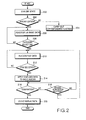
- FIG. 2 is a flow chart illustrating the generation of an avatar in a user interface in accordance with an embodiment of the present invention
- FIG. 3A is a view illustrating a layout of divided display areas contained in a display area of a display unit in accordance with an embodiment of the present invention
- FIG. 3B is a view illustrating display areas of respective layers for an avatar configuration in accordance with the present invention.
- FIG. 3C is a view illustrating combined data pieces of respective layers to configure one avatar
- FIG. 4 is a flow chart illustrating the downloading of data to configure an avatar in accordance with an embodiment of the present invention.
- FIG. 5 is a flow chart illustrating changing an avatar of a user interface in accordance with an embodiment of the present invention.
- FIG. 1 is a block diagram illustrating a mobile communication terminal to which the present invention is applied. An internal block configuration of the mobile communication terminal and operations of its elements will be described in detail with reference to FIG. 1.
- a controller 111 carries out an entire control operation of the mobile communication terminal.
- the controller 111 controls memory storage of respective components of an avatar in user interfaces, and controls the downloading of the respective components of the avatar and the generation of the avatar.
- the controller 111 controls the display of the generated avatar.
- a display control procedure based on the storage, generation and downloading of the respective components of the avatar will be described in detail with reference to the flow charts to be described.
- a duplexer 112 outputs an RF (Radio Frequency) signal received from an antenna (ANT) to an RF receiver 114 , and outputs a signal received from an RF transmitter 113 to the ANT.
- the RF receiver 114 converts an RF signal having a predetermined frequency received from a frequency synthesizer 115 into an IF (Intermediate Frequency) signal, and then converts the IF signal into a baseband signal.
- the RF receiver 114 outputs the baseband signal to a codec 116 and the controller 111 .
- the baseband signal is decoded in the codec 116 by a protocol decoding method of a communication system.
- the decoded signal is converted into an electrical voice signal as an audible indication, and the voice signal is outputted through a speaker (SPK) so that a user can listen to the voice signal.
- SPK speaker
- a microphone converts the voice signal into an electrical signal to output the electrical signal to the codec 116 .
- the codec 116 codes the electrical signal to output the coded signal to the RF transmitter 113 .
- the RF transmitter 113 converts a signal, inputted from the frequency synthesizer 113 , into a transmission band signal, and then outputs the transmission band signal to the duplexer 112 .
- the duplexer 112 transmits the transmission band signal to the ANT so that the voice signal transmission can be made.
- a signal by signalling is generated in the controller 111 to be transmitted by the RF transmitter 113 .
- the controller 111 receives a signal for signalling through the RF receiver 114 .
- a group including the ANT, the duplexer 112 , the RF transmitter 113 , the RF receiver 114 and the frequency synthesizer 115 , is referred to as a RF module.
- a memory 117 is composed of a ROM (Read Only Memory), a RAM (Random Access Memory), etc., and includes an area for storing data needed when the controller 111 performs a control operation, an area for storing user data, an area for temporarily storing data generated at the time of the control operation, etc. That is, the memory 117 can be randomly accessed, and is a readable and writable memory. Moreover, the area for storing data needed at the time of the control operation in the memory 117 stores control data in accordance with the present invention. The control data will be described in detail with reference to a flow chart relating to a control operation to be described.
- the memory 117 includes an area for storing data of respective components of the avatar of the present invention in the user interfaces, and an area for storing the generated avatar.
- Storage areas for storing a plurality of items, associated with a style for the components of the avatar, on a category basis are shown in the following blank Table 1 in accordance with the embodiment of the present invention. TABLE 1 Category First storage area Second storage area . . . Face style layer Pants style layer Jacket style layer Hair style layer Accessory style layer
- Each storage area shown in the above Table 1 has a predetermined address. Further, data stored in each storage area is data indicating specific locations in which components of the avatar are stored. The respective storage areas have corresponding coordinate values. Same portions, i.e., same face portions or same pants portions can have same coordinate values or different coordinate values. The data stored in the respective storage areas shown in Table 1 is associated with layers. This will be described in detail with reference to FIGS. 2 and 3.
- One avatar is generated using values stored on the basis of coordinate values, and the generated avatar is stored.
- a method for storing the generated avatar is divided into two methods. For example, a first method is the case where respective layers for each avatar have addresses of the storage areas in the memory.
- a second method is to store data itself in the storage areas. These methods will be described in detail with reference to the following Table 2 and Table 3.
- the above Table 2 is associated with the first avatar storage method being a method for storing addresses of storage areas.
- the first avatar storage method decreases memory-use capacity.
- a preset avatar is changed if data of a corresponding storage area is changed.
- the first avatar storage method can be appropriately applied according to memory capacity.
- the above Table 3 is associated with the second avatar storage method being a method for storing data in the storage areas.
- the second avatar storage method increases memory-use capacity.
- a preset avatar is not changed even though data of a corresponding storage area is changed.
- the second avatar storage method can be appropriately applied according to memory capacity.
- a key input unit 118 conventionally has a structure of a key matrix, and is made up of numeric keys for dialing, function keys for performing various functions, etc.
- the key input unit 118 generates key data corresponding to keys inputted from the user to output the generated key data to the controller 111 .
- the key input unit 118 of the present invention can include at least one special function key for configuring and changing the avatar for the user interface, and the avatar configuration and change can be implemented through other function key.
- the key input unit 118 includes keys for shifting a menu of the avatar up/down and/or left/right, a selection key for selection, etc.
- a display unit 119 can be implemented by a display device such as an LCD (Liquid Crystal Display).
- the display unit 119 displays a configuration state, etc. while configuring the avatar of the present invention, and displays characters, icons, etc. as in a conventional mobile communication terminal.
- the mobile communication terminal can further include a vibration motor, an alarm lamp for indicating an alarm, etc.
- FIG. 2 is a flow chart illustrating a control operation at the time of generating an avatar in user interfaces in accordance with an embodiment of the present invention. The control operation at the time of the avatar generation of the present invention will be described in detail with reference to FIG. 2.
- the controller 111 maintains a standby state at step 200 .
- the standby state means a state when the controller 111 waits for a key input of the user, reception of a call signal by signaling, etc. If a predetermined event is generated while the controller 111 maintains the standby state, the controller 111 proceeds to step 202 to determine whether avatar edition is requested.
- FIG. 2 explains only a part associated with the avatar edition for the user interface in accordance with the present invention. In other cases except where the avatar edition is requested, the controller 111 proceeds to step 204 to carry out a corresponding function.
- the determination of the avatar edition request is made differently on the basis of keys contained in the key input unit 118 .
- the controller 111 determines whether the separate key is inputted. Otherwise, where the avatar edition is set as one option of a menu, the avatar edition is requested where a key for the avatar edition is selected.
- the present invention can employ any of the two cases, but others, such as voice control, are also contemplated.
- step 206 If the avatar edition is requested at the above step 202 , the controller 111 proceeds to step 206 so that basic data stored in the memory 117 is read and the display unit 119 displays the read data.
- a display area displayed in the display unit 119 will be described with reference to FIG. 3A.
- FIG. 3A divided display areas of the display unit 119 in accordance with the present invention are shown.
- the display unit 119 in accordance with the embodiment of the present invention is configured by 120 dots in width and 144 dots in length. Coordinate values are shown on the display areas. The coordinate values can be different from the example shown in FIG. 3A.
- the (F) display area 300 displays the avatar being the user interface.
- An area below the (F) display area 300 is an area for informing a user of a selected function, and can display a text or word balloon.
- the avatar is configured using the basic data
- Five style layers exist in the above Table 1. That is, there are the face style layer, the pants style layer, the jacket style layer, the hair style layer and the accessory style layer in the above Table 1.
- Pieces of data associated with the above-described layers stored in the first storage area are read so that the avatar is configured and the configured avatar is displayed on the display unit 119 . That is, the pieces of data stored in the first storage area are used as the basic data to configure the avatar.
- the present invention includes a separate area for storing predetermined basic data to display the basic data. A method for configuring the avatar will be described in detail.
- the controller 111 displays the basic data at step 206 , displays the basic data on the (F) display area 300 shown in FIG. 3A, and displays respective style layers on the (A) to (E) display areas 300 a to 300 e . Further, the controller 111 shifts and displays a display area of a style layer shown in the above Table 1 when the user inputs an up/down shift key or a left/right shift key. This will be described through an example. Where the five layers can be displayed on the display unit 119 as shown in FIG. 3A, the display unit 119 indicates that each menu to be selected has been prepared using a shadow or embossment indication so that a first layer can be selected.
- the shadow or embossment indication is displayed and can be moved.
- a corresponding layer is displayed and can be selected. This will be described as an example with reference to FIG. 3A. It is assumed that the five layers are a first layer, a second layer, a third layer, a fourth layer and a fifth layer, and the five layers are configured to be displayed. However, there may be the case where the (D) display area 300 d and (E) display area 300 e cannot be displayed in relation to the layers.
- the display unit 119 shifts to the fifth layer to be displayed. Further, if a next layer is requested at a state in which the third layer is displayed, the fourth layer is displayed. Through this method, the respective layers are displayed.
- the controller 111 enables the display unit 119 to carry out a corresponding display when the user inputs the up/down shift key or the left/right shift key.
- the controller 111 then proceeds to step 208 , and determines whether a selection key of a specific category among the displayed layers is inputted. If the selection key of the specific category is inputted as a result of the determination, the controller 111 proceeds to step 210 in order to enable the display unit 119 to display a plurality of pieces of item data corresponding to the read specific category.
- the controller 111 then enables the display unit 119 to perform a corresponding display if the up/down shift key or the left/right shift key is inputted.
- the display unit 119 displays the stored data relating to the layers shown in the above Table 1, and performs a shift. That is, corresponding components of a selectable avatar are displayed on the (A) to (E) display areas 300 a to 300 e of FIG. 3A. If the first layer is selected and data of a face is stored, the display unit 119 displays displayable data pieces of items corresponding to the face from the stored data.
- the controller 111 enables the display unit 119 to carry out the above-described display, and proceeds to step 212 to determine whether the selection key of a specific item is inputted.
- categories can represent several style areas such as a face style area, a trousers style area, an upper garment style area, etc. Data can be stored in each style area. Only one style can be displayed on the display unit in steps 206 and 208 .
- Steps 206 and 208 illustrates that a specific style area is selected by key input by moving up, down, left, or/and right, and the data of the specific style is displayed on the display unit in the step 210 . If a key input is detected by moving up, down, left, or/and right, as step 206 , other data in the selected style area are scrolled and displayed. In the step 212 , it is determined whether or not specific data in a style area currently displayed is selected by a key input from a key input unit. If the selection key is inputted as a result of the determination, the controller 111 proceeds to step 214 .
- the controller 111 applies the selected data to the basic avatar displayed at the above step 206 , and enables the display unit 119 to carry out a corresponding display.
- the selected data applied to the (F) display area 300 is displayed, and hence the respective layers configure one avatar as shown in FIG. 3C. This will be described with reference to FIGS. 3B and 3C.
- FIG. 3B is a view illustrating display areas of respective layers for an avatar configuration in accordance with the present invention
- FIG. 3C is a view illustrating the case where data pieces of respective layers are combined to configure one avatar. That is, data pieces of the respective layers 310 , 320 , 330 , 340 and 350 are combined in the (F) display area 300 of FIG. 3A to configure the one avatar. Further, pieces of display data of the respective layers are in only the display areas shown in FIG. 3B, and other display areas become transparent display areas.
- the first layer 310 of FIG. 3C is the face style layer shown in the above Table 1, display data for the face style layer exists in only the display area 310 a shown in FIG. 3 b and other areas are transparently processed.
- the second layer 320 of FIG. 3C is the pants style layer shown in the above Table 1, display data for the pants style layer exists in only the display area 320 a shown in FIG. 3B and other areas are transparently processed.
- the third layer 330 of FIG. 3C is the jacket style layer shown in the above Table 1, display data for the jacket style layer exists in only the display area 330 a shown in FIG. 3B and other areas are transparently processed.
- 3C is the hair style layer shown in the above Table 1, display data for the hair style layer exists in only the display area 340 a shown in FIG. 3B and other areas are transparently processed. Furthermore, the accessory layer of the above Table 1 not shown in FIG. 3B can be placed in any location in the (F) display area 300 of FIG. 3A. As described above, respective display areas have locations and sizes, and other areas are transparently processed. If the respective layers are overlapped as shown in FIG. 3C, one avatar can be configured.
- the avatar configured as described above is displayed in the (F) display area 300 of FIG. 3A on the display unit 119 .
- a next procedure will be described with reference to FIG. 2.
- the controller 111 enables the display unit 119 to carry out the display after applying the changed data to the basic avatar at the above step 214 , and proceeds to step 216 . If the controller 111 proceeds to the above step 216 , it is determined whether a termination key is inputted from the key input unit 118 . If the termination key is inputted as a result of the determination, the controller 111 proceeds to step 220 to store the data displayed at the above step 214 in the avatar storage area shown in the above Table 2 or Table 3, and then terminates the procedure.
- the controller 111 proceeds to step 218 and determines whether a key for requesting selection of a category corresponding to an avatar layer displayed along with the avatar is inputted. If the key for requesting the selection of the category corresponding to the avatar layer is inputted, the controller 111 proceeds to the above step 210 to repeat the above-described procedure. If the termination key is not inputted and a key for requesting selection of a menu corresponding to a specific avatar layer is not inputted, the controller 111 enables the display unit 119 to carry out a corresponding display based on a key input. That is, if the up/down shift key or the left/right shift key is inputted, the controller 111 performs a corresponding shift. Other functions except for the above-described selections can be performed.
- FIG. 4 is a view illustrating a control operation when a mobile communication terminal downloads data to configure an avatar in accordance with an embodiment of the present invention.
- the control operation at the time of the download of the mobile communication terminal for configuring an avatar will be described with reference to FIGS. 1 to 4 .
- the controller 111 maintains a standby state at step 400 .
- the standby state is the same as that described in relation to the flow chart of the control operation of FIG. 2. If an event is generated while the controller 111 maintains the standby state, the controller 111 proceeds to step 402 and then determines whether an event for requesting a communication network connection for data download associated with the avatar is generated. If the event for requesting the communication network connection for data download associated with the avatar is generated as a result of the determination, the controller 111 proceeds to step 406 . Otherwise, the controller 111 proceeds to step 404 in order to carry out a corresponding function.
- the case where data for configuring the avatar is downloaded is considered in the embodiment of the present invention, and a detailed description of another case will be omitted.
- the controller 111 proceeds to the above step 406 , a procedure of the communication network connection for the data download of the avatar is carried out. For example, the controller 111 transmits a connection request signal to a base station for a connection with a specific server of a predetermined communication network, e.g., an Internet network. If a channel is allocated after a mobile communication network authenticates a call, the controller 111 proceeds to step 408 to perform a communication mode.
- the communication mode means an operating mode when the mobile communication terminal communicates data with the specific server of the Internet network through the mobile communication network.
- the controller 111 performs the communication mode at the above step 408 , and proceeds to step 410 to determine whether the download is requested. If the download is requested as a result of the determination, the controller 111 proceeds to step 412 . Otherwise, the controller 111 continuously performs the communication mode at the above step 408 . If the download is requested, the controller 111 performs the data download, stores the downloaded data and enables the display unit 119 to display the downloaded data at the above step 412 .
- the data download can be performed through various methods.
- the various methods include a first case where one avatar with its components combined as shown in FIG. 3C is downloaded, a second case where only data corresponding to each layer of the avatar as shown in FIG. 3B is downloaded, and a third case where avatar data not divided into the respective layers is downloaded at one time.
- the first case can employ two data storage methods.
- a first data storage method will be described.
- the data pieces of the one complete avatar are classified into data pieces of the respective layers, and the data pieces of the respective layers are sequentially received.
- the received data pieces are stored in the data storage areas shown in the above Table 3.
- a second storage method stores the data pieces as shown in the above Table 2.
- the data pieces corresponding to the respective layers are sequentially received, and the data pieces of the respective layers are stored in an empty storage area shown in the above Table 1.
- the storage areas of the above Table 1 in which the respective layers are stored are read and the respective layers are combined, thereby configuring one complete avatar.
- the connected Internet server should provide data shown in the above Table 4, and the mobile communication terminal determines the received layer data on the basis of a predetermined protocol and stores the received data in a corresponding storage area.
- the layer indication information should have at least three bits. That is, bit data corresponding to the first layer 310 is implemented as “000”, bit data corresponding to the second layer 320 is implemented as “001”, bit data corresponding to the third layer 330 is implemented as “010”, bit data corresponding to the fourth layer 340 is implemented as “011”, and bit data corresponding to the fifth layer 350 is implemented as “100”.
- the layer data is classified by the layer indication information and stored in the corresponding storage area.
- the third case is to download one complete avatar, which is conventionally employed in a current Internet communication.
- the one complete avatar is downloaded and stored as it is.
- the avatar can be divided on a layer basis as shown in FIG. 3B and divided data pieces can be stored. Where the divided data pieces are stored, the data pieces are stored in corresponding storage areas.
- the data pieces can be stored as shown in the above Table 2 or Table 3.
- the avatar is received and stored as one data piece.
- the controller 111 receives the data and stores the data in the memory 117 at the above step 412 .
- the controller 111 proceeds to step 414 to determine whether a key for requesting a connection release is inputted from the key input unit 118 . If the key for requesting the connection release is inputted from the key input unit 118 , the controller 111 proceeds to step 416 . Otherwise, the controller 111 proceeds to the above step 408 to continuously carry out the communication mode.
- controller 111 proceeds to the above step 416 where the connection release is requested, the signal processing based on the connection release is performed, and then the routine is terminated.
- FIG. 5 is a flow chart illustrating a control operation at the time of changing an avatar to a user interface in accordance with an embodiment of the present invention. The control operation at the time of changing the avatar to the user interface will be described in detail with reference to FIG. 5.
- the controller 111 maintains a standby state at step 500 .
- the standby state is the same as that described in relation to the flow charts of the control operations of FIGS. 2 and 4. If a predetermined event is generated while the controller 111 maintains the standby state, the controller 111 proceeds to step 502 to determine whether an event based on an input of a menu key is generated. The controller 111 proceeds to step 504 if the event based on the input of a menu key is generated. Otherwise, the controller 111 proceeds to step 520 to perform a corresponding function.
- the flow chart of the control operation of FIG. 5 explains a procedure of changing the avatar on a menu key basis. Other functions will not be described.
- the controller 111 proceeds to the above step 504 , displays menu data and shifts the menu according to a user key input.
- the menu is displayed in FIG. 3A. That is, a corresponding menu, icon or avatar is displayed in the (F) display area 300 and its description data is displayed below the (F) display area 300 .
- Data corresponding to a first menu is located in the (A) display area.
- the up/down shift key or the left/right shift key is inputted, the shift is performed in the (A) to (E) display areas 300 a to 300 e , and hence the menu, icon or avatar is displayed on the (F) display area 300 .
- the controller 111 performs the shift in response to the up/down shift key or the left/right shift key inputted from the key input unit 118 at the above step 504 .
- the controller 111 then proceeds to step 506 to determine whether a key for requesting selection of the displayed menu is inputted. If the menu selection key is inputted as a result of the determination, the controller 111 proceeds to step 508 . Otherwise, the controller 111 continuously performs the above step 504 .
- the controller 111 proceeds to the above step 508 , an avatar of a corresponding menu and its sub-menus are displayed in the display areas shown in FIG. 3A.
- the (A) to (E) display areas 300 a to 300 e display the sub-menus
- the (F) display area displays the avatar of the corresponding menu, an icon or a description.
- an avatar corresponding to each sub-menu exists, it is displayed on the (F) display area 300 .
- a higher-order avatar of the corresponding sub-menu is displayed on the (F) display area 300 .
- step 510 determines whether a signal for requesting change of an avatar is inputted from the key input unit 118 . If the avatar change request signal is inputted, the controller 111 proceeds to step 512 . Otherwise, the controller 111 proceeds to step 520 to perform a corresponding function.
- the controller 111 proceeds to the above step 512 and changes the avatar.
- the avatars are sequentially read and changed, and registered as icons of menu options.
- the changed avatars mapped to the menu options are stored, they are stored in a memory configured such as the following Table 5 so that the avatars can be changed.
- TABLE 5 Menu option list Avatar storage address My portable phone Third avatar address Avatar editor Second avatar address Internet connection Seventh avatar address Telephone number list Fourth avatar address . . . . . .
- addresses of avatars associated with the menu list are stored.
- a menu option of the list is read and an avatar can be set. If the avatar is changed on a layer basis, a corresponding avatar may not be in the storage area. At this time, a new avatar can be generated as shown in the above Table 2 or Table 3, and the newly generated avatar is stored. The stored avatar can be changed.
- the controller 111 performs an avatar change procedure at the above step 512 .
- the controller 111 determines whether a termination request signal is received in step 514 . If the termination request signal is received as a result of the determination, the changed avatar is stored in a corresponding storage area of the memory. That is, if the new avatar is generated, it is stored in the form of the above Table 2 or Table 3, and an address of the stored avatar is stored in the above Table 5. Through the above-described procedure, the avatar can be changed.
- an avatar and layer data pieces configuring the avatar stored in the mobile communication terminal can be transmitted in the form of a message to other mobile communication terminal in accordance with the present invention.
- the layer data can be transmitted in place of a short message of the SMS.
- a procedure of selecting an avatar to be transmitted is performed in place of a message input.
- the layer data of the avatar can be transmitted using the message form of the above Table 4 in addition to a destination telephone number.
- a special channel is provided to transmit the layer data of the avatar or the complete avatar data
- the avatar-related data transmission can be performed while the short message or a voice communication is employed.
- a channel for the avatar transmission can employ a voice channel, but a separated channel except for the voice channel can be employed.
- An avatar as a user interface has been described to represent an icon or description of a menu option in the embodiment of the present invention, but the present invention can be applied to all cases in which a graphic image can be employed as the user interface such as an initial drive screen, a message transmission screen, a message reception screen, etc.
- the mobile communication terminal can employ an avatar associated with layers as a user interface, readily change the user interface, reflect user's personality, and arbitrarily change the user interface to a desired shape at any time.
Landscapes
- Engineering & Computer Science (AREA)
- General Engineering & Computer Science (AREA)
- Human Computer Interaction (AREA)
- Theoretical Computer Science (AREA)
- Computer Networks & Wireless Communication (AREA)
- Signal Processing (AREA)
- General Physics & Mathematics (AREA)
- Physics & Mathematics (AREA)
- Mobile Radio Communication Systems (AREA)
- Processing Or Creating Images (AREA)
- Controls And Circuits For Display Device (AREA)
- Telephone Function (AREA)
- Devices For Indicating Variable Information By Combining Individual Elements (AREA)
- User Interface Of Digital Computer (AREA)
Applications Claiming Priority (2)
| Application Number | Priority Date | Filing Date | Title |
|---|---|---|---|
| KRP2002-17670 | 2002-03-30 | ||
| KR1020020017670A KR100547888B1 (ko) | 2002-03-30 | 2002-03-30 | 이동통신 단말기에서 사용자 인터페이스 구성 및 표시장치 및 방법 |
Publications (1)
| Publication Number | Publication Date |
|---|---|
| US20030184591A1 true US20030184591A1 (en) | 2003-10-02 |
Family
ID=27800699
Family Applications (1)
| Application Number | Title | Priority Date | Filing Date |
|---|---|---|---|
| US10/386,987 Abandoned US20030184591A1 (en) | 2002-03-30 | 2003-03-12 | Apparatus and method for configuring and displaying user interface in mobile communication terminal |
Country Status (6)
| Country | Link |
|---|---|
| US (1) | US20030184591A1 (fr) |
| EP (1) | EP1349351B1 (fr) |
| JP (1) | JP2004004696A (fr) |
| KR (1) | KR100547888B1 (fr) |
| CN (1) | CN1264372C (fr) |
| DE (1) | DE60322998D1 (fr) |
Cited By (15)
| Publication number | Priority date | Publication date | Assignee | Title |
|---|---|---|---|---|
| US20060075053A1 (en) * | 2003-04-25 | 2006-04-06 | Liang Xu | Method for representing virtual image on instant messaging tools |
| US20060276234A1 (en) * | 2005-06-01 | 2006-12-07 | Samsung Electronics Co., Ltd. | Character input method for adding visual effect to character when character is input and mobile station therefor |
| US20060294465A1 (en) * | 2005-06-22 | 2006-12-28 | Comverse, Inc. | Method and system for creating and distributing mobile avatars |
| WO2007073584A1 (fr) * | 2005-12-29 | 2007-07-05 | Ozmiz Pty. Ltd. | Procede et systeme d'affichage de donnees sur un terminal mobile |
| US20080096549A1 (en) * | 2006-10-24 | 2008-04-24 | Juha Arrasvuori | Mobile communication terminal |
| US20080301556A1 (en) * | 2007-05-30 | 2008-12-04 | Motorola, Inc. | Method and apparatus for displaying operational information about an electronic device |
| US20080297515A1 (en) * | 2007-05-30 | 2008-12-04 | Motorola, Inc. | Method and apparatus for determining the appearance of a character display by an electronic device |
| USD599367S1 (en) * | 2008-11-24 | 2009-09-01 | Microsoft Corporation | User interface for a portion of a display screen |
| USD599806S1 (en) * | 2008-11-24 | 2009-09-08 | Microsoft Corporation | Transitional user interface for a portion of a display screen |
| US20090252220A1 (en) * | 2006-01-16 | 2009-10-08 | Hae-Chul Choi | Method and apparatus for selective inter-layer prediction on macroblock basis |
| USD611485S1 (en) * | 2008-11-24 | 2010-03-09 | Microsoft Corporation | User interface for a portion of a display screen |
| USD611484S1 (en) * | 2008-11-24 | 2010-03-09 | Microsoft Corporation | User interface for a portion of a display screen |
| USRE47016E1 (en) | 2005-12-29 | 2018-08-28 | Ozmis Pty. Ltd. | Method and system for display data on a mobile terminal |
| USD936663S1 (en) * | 2017-06-04 | 2021-11-23 | Apple Inc. | Display screen or portion thereof with graphical user interface |
| USRE49187E1 (en) | 2005-09-06 | 2022-08-23 | Samsung Electronics Co., Ltd. | Mobile communication terminal and method of the same for outputting short message |
Families Citing this family (18)
| Publication number | Priority date | Publication date | Assignee | Title |
|---|---|---|---|---|
| KR100557130B1 (ko) * | 2004-05-14 | 2006-03-03 | 삼성전자주식회사 | 아바타 움직임 편집이 가능한 단말기 및 방법 |
| CN100377079C (zh) * | 2004-07-09 | 2008-03-26 | 英华达(南京)科技有限公司 | 利用个人电脑实现对终端设备内界面进行可视化配置的方法 |
| KR100456962B1 (ko) * | 2004-08-27 | 2004-11-10 | 엔에이치엔(주) | 게임 아이템 기능이 결합된 캐릭터 서비스 방법 및 시스템 |
| KR100803050B1 (ko) * | 2004-12-20 | 2008-02-18 | 삼성전자주식회사 | 휴대단말기의 메시지 관련 이벤트처리 장치 및 방법 |
| KR100663277B1 (ko) * | 2004-12-20 | 2007-01-02 | 삼성전자주식회사 | 휴대단말기의 시스템 관련 이벤트 처리 장치 및 방법 |
| EP1672884B1 (fr) | 2004-12-20 | 2017-01-04 | Samsung Electronics Co., Ltd. | Dispositif et procédé fournissant assistance pour un utilisateur d'un terminal sans fil en utilisant une figure virtuelle |
| KR100711194B1 (ko) * | 2005-02-04 | 2007-04-24 | 바이어스아이티 주식회사 | 다중 레이어 기반의 이미지 및 오디오 아바타 파일 생성및 재생 방법 |
| CN100352303C (zh) * | 2005-02-07 | 2007-11-28 | 中国联合通信有限公司 | 一种动态移动终端客户化信息定制界面的生成方法及系统 |
| KR100848502B1 (ko) * | 2005-09-07 | 2008-07-28 | 에스케이 텔레콤주식회사 | 통합 테마 팩 서비스를 제공하는 방법 및 시스템 |
| KR100651481B1 (ko) * | 2005-12-09 | 2006-11-30 | 삼성전자주식회사 | 데이터의 저장 정보에 따라 배경 화면을 변환하여 표시하기위한 계층 구조 제공 방법과 그에 따른 배경 화면 변환방법 및 이를 위한 이동 단말기 |
| CN100476820C (zh) * | 2006-02-27 | 2009-04-08 | 株式会社日立制作所 | 在用户终端设备上生成用户界面的入口服务器和方法 |
| JP4922743B2 (ja) * | 2006-11-30 | 2012-04-25 | エヌエイチエヌ コーポレーション | ゲームシステムと連動したアバター提供システム |
| CN101282525B (zh) * | 2007-04-06 | 2013-01-02 | 华为技术有限公司 | 感知终端定制外观内容改动的方法、装置及系统 |
| JP5527925B2 (ja) * | 2007-04-26 | 2014-06-25 | 株式会社バンダイナムコゲームス | プログラム及びゲーム装置 |
| JP2009000419A (ja) * | 2007-06-25 | 2009-01-08 | Sega Corp | ゲームシステム、及び合成オブジェクト画像の作成方法 |
| CN101384038A (zh) * | 2007-09-06 | 2009-03-11 | 华为技术有限公司 | 外观内容的整理方法、管理方法、装置 |
| JP5123089B2 (ja) * | 2008-07-17 | 2013-01-16 | 株式会社バンダイナムコゲームス | 画像配信システム、サーバ、その方法及びプログラム |
| CN106937366B (zh) * | 2015-12-31 | 2020-05-01 | 联芯科技有限公司 | Fdd_lte终端信号发射接收装置及fdd_lte终端 |
Citations (6)
| Publication number | Priority date | Publication date | Assignee | Title |
|---|---|---|---|---|
| US5553211A (en) * | 1991-07-20 | 1996-09-03 | Fuji Xerox Co., Ltd. | Overlapping graphic pattern display system |
| US5587823A (en) * | 1992-12-28 | 1996-12-24 | Casio Computer Co., Ltd. | Radio communication devices |
| US20020149602A1 (en) * | 2001-04-12 | 2002-10-17 | International Business Machines Corporation | System and method for simultaneous display of multiple object categories |
| US6532373B1 (en) * | 1998-11-06 | 2003-03-11 | Nec Corporation | Mobile phones producing an image using image templates |
| US6600936B1 (en) * | 1999-02-11 | 2003-07-29 | Sony International (Europe) Gmbh | Terminal for wireless telecommunication and method for displaying icons on a display of such a terminal |
| US7106275B2 (en) * | 1999-05-10 | 2006-09-12 | Apple Computer, Inc. | Rendering translucent layers in a display system |
Family Cites Families (5)
| Publication number | Priority date | Publication date | Assignee | Title |
|---|---|---|---|---|
| JP3261753B2 (ja) * | 1992-08-24 | 2002-03-04 | カシオ計算機株式会社 | モンタージュ作成装置及び顔画像作成方法 |
| US5805981A (en) * | 1994-06-06 | 1998-09-08 | Casio Computer Co., Ltd. | Communication terminal and communication system with image display and image storage section |
| GB2365676B (en) * | 2000-02-18 | 2004-06-23 | Sensei Ltd | Mobile telephone with improved man-machine interface |
| GB2359459A (en) * | 2000-02-18 | 2001-08-22 | Sensei Ltd | Mobile telephone with animated display |
| KR100458389B1 (ko) * | 2000-09-29 | 2004-11-26 | 산요덴키가부시키가이샤 | 통신단말장치 및 표시방법 |
-
2002
- 2002-03-30 KR KR1020020017670A patent/KR100547888B1/ko not_active Expired - Fee Related
-
2003
- 2003-03-12 US US10/386,987 patent/US20030184591A1/en not_active Abandoned
- 2003-03-28 CN CNB031084117A patent/CN1264372C/zh not_active Expired - Fee Related
- 2003-03-31 JP JP2003096713A patent/JP2004004696A/ja active Pending
- 2003-03-31 EP EP03007320A patent/EP1349351B1/fr not_active Expired - Lifetime
- 2003-03-31 DE DE60322998T patent/DE60322998D1/de not_active Expired - Lifetime
Patent Citations (6)
| Publication number | Priority date | Publication date | Assignee | Title |
|---|---|---|---|---|
| US5553211A (en) * | 1991-07-20 | 1996-09-03 | Fuji Xerox Co., Ltd. | Overlapping graphic pattern display system |
| US5587823A (en) * | 1992-12-28 | 1996-12-24 | Casio Computer Co., Ltd. | Radio communication devices |
| US6532373B1 (en) * | 1998-11-06 | 2003-03-11 | Nec Corporation | Mobile phones producing an image using image templates |
| US6600936B1 (en) * | 1999-02-11 | 2003-07-29 | Sony International (Europe) Gmbh | Terminal for wireless telecommunication and method for displaying icons on a display of such a terminal |
| US7106275B2 (en) * | 1999-05-10 | 2006-09-12 | Apple Computer, Inc. | Rendering translucent layers in a display system |
| US20020149602A1 (en) * | 2001-04-12 | 2002-10-17 | International Business Machines Corporation | System and method for simultaneous display of multiple object categories |
Cited By (19)
| Publication number | Priority date | Publication date | Assignee | Title |
|---|---|---|---|---|
| US20060075053A1 (en) * | 2003-04-25 | 2006-04-06 | Liang Xu | Method for representing virtual image on instant messaging tools |
| US20060276234A1 (en) * | 2005-06-01 | 2006-12-07 | Samsung Electronics Co., Ltd. | Character input method for adding visual effect to character when character is input and mobile station therefor |
| US8049755B2 (en) * | 2005-06-01 | 2011-11-01 | Samsung Electronics Co., Ltd. | Character input method for adding visual effect to character when character is input and mobile station therefor |
| WO2007001805A3 (fr) * | 2005-06-22 | 2009-05-22 | Comverse Inc | Procede et systeme permettant de creer et de distribuer des avatars mobile |
| US20060294465A1 (en) * | 2005-06-22 | 2006-12-28 | Comverse, Inc. | Method and system for creating and distributing mobile avatars |
| USRE49187E1 (en) | 2005-09-06 | 2022-08-23 | Samsung Electronics Co., Ltd. | Mobile communication terminal and method of the same for outputting short message |
| WO2007073584A1 (fr) * | 2005-12-29 | 2007-07-05 | Ozmiz Pty. Ltd. | Procede et systeme d'affichage de donnees sur un terminal mobile |
| USRE47016E1 (en) | 2005-12-29 | 2018-08-28 | Ozmis Pty. Ltd. | Method and system for display data on a mobile terminal |
| US8245142B2 (en) | 2005-12-29 | 2012-08-14 | Ozmiz Pty. Ltd. | Method and system for displaying data on a mobile terminal |
| US20090252220A1 (en) * | 2006-01-16 | 2009-10-08 | Hae-Chul Choi | Method and apparatus for selective inter-layer prediction on macroblock basis |
| US20080096549A1 (en) * | 2006-10-24 | 2008-04-24 | Juha Arrasvuori | Mobile communication terminal |
| US20080297515A1 (en) * | 2007-05-30 | 2008-12-04 | Motorola, Inc. | Method and apparatus for determining the appearance of a character display by an electronic device |
| US20080301556A1 (en) * | 2007-05-30 | 2008-12-04 | Motorola, Inc. | Method and apparatus for displaying operational information about an electronic device |
| USD599367S1 (en) * | 2008-11-24 | 2009-09-01 | Microsoft Corporation | User interface for a portion of a display screen |
| USD611484S1 (en) * | 2008-11-24 | 2010-03-09 | Microsoft Corporation | User interface for a portion of a display screen |
| USD611485S1 (en) * | 2008-11-24 | 2010-03-09 | Microsoft Corporation | User interface for a portion of a display screen |
| USD599806S1 (en) * | 2008-11-24 | 2009-09-08 | Microsoft Corporation | Transitional user interface for a portion of a display screen |
| USD936663S1 (en) * | 2017-06-04 | 2021-11-23 | Apple Inc. | Display screen or portion thereof with graphical user interface |
| USD971239S1 (en) | 2017-06-04 | 2022-11-29 | Apple Inc. | Display screen or portion thereof with graphical user interface |
Also Published As
| Publication number | Publication date |
|---|---|
| CN1264372C (zh) | 2006-07-12 |
| KR20030078553A (ko) | 2003-10-08 |
| DE60322998D1 (de) | 2008-10-02 |
| CN1449216A (zh) | 2003-10-15 |
| EP1349351A2 (fr) | 2003-10-01 |
| JP2004004696A (ja) | 2004-01-08 |
| EP1349351A3 (fr) | 2006-01-18 |
| KR100547888B1 (ko) | 2006-02-01 |
| EP1349351B1 (fr) | 2008-08-20 |
Similar Documents
| Publication | Publication Date | Title |
|---|---|---|
| EP1349351B1 (fr) | Dispositif et méthode de configuratiion et d'affichage d'un interface d'utilisateur dans un appareil de communication mobile | |
| AU723988B2 (en) | A communication network terminal supporting a plurality of applications | |
| US7088990B1 (en) | Communication network terminal supporting a plurality of applications | |
| US20030008686A1 (en) | Menu displaying method in a mobile terminal | |
| US20010055038A1 (en) | Method for changing menu icon and editing menu configuration in a mobile telephone | |
| KR100735227B1 (ko) | 문자의 폰트를 변경할 수 있는 휴대용 통신 단말기 및이를 이용한 문자의 폰트 변경 방법 | |
| BRPI0113636B1 (pt) | método para controlar as características operacionais de um perfil no terminal de comunicação, terminal de comunicação, e, método para fornecer as características operacionais para o perfil para o terminal de comunicação | |
| US20070113139A1 (en) | Method for setting environment of mobile communication terminal using multimedia message | |
| US20020019251A1 (en) | Method of selectively storing display message in a mobile telephone | |
| KR100563708B1 (ko) | 이동통신 단말기의 대기화면에서 동보전송을 위한전화번호 입력 방법 | |
| KR100782508B1 (ko) | 이동통신 단말기의 메시지 전송 방법 | |
| KR20060127466A (ko) | 가변 분할 화면을 갖는 이동 통신 단말기 및 그 제어방법 | |
| AU732484B2 (en) | A terminal and method for accessing the internet over a wireless communication network | |
| KR20030079477A (ko) | 휴대단말기에서 발신자의 전화번호 및 캐릭터 표시방법 | |
| KR20050051465A (ko) | 이동 통신 단말기의 문자메시지 송수신 방법 | |
| KR20040090737A (ko) | 휴대용 단말기에 있어 네비게이션 키를 이용한 사칙연산수행 장치 및 방법 | |
| KR20040063535A (ko) | 이동 통신 단말의 메뉴 디스플레이 화면 설정 방법 | |
| KR20030078266A (ko) | 이동무선 단말기의 바탕화면 편집방법 | |
| HK1070521A (en) | A communication network terminal supporting a plurality of applications |
Legal Events
| Date | Code | Title | Description |
|---|---|---|---|
| AS | Assignment |
Owner name: SAMSUNG ELECTRONICS CO., LTD., KOREA, REPUBLIC OF Free format text: ASSIGNMENT OF ASSIGNORS INTEREST;ASSIGNORS:YOUN, SU-JUNG;HWANG, BYEONG-CHEOL;KIM, BONG-HEE;AND OTHERS;REEL/FRAME:013864/0580 Effective date: 20030310 |
|
| STCB | Information on status: application discontinuation |
Free format text: ABANDONED -- FAILURE TO RESPOND TO AN OFFICE ACTION |