US20030190598A1 - Single-domain antigen-binding antibody fragments derived from llama antibodies - Google Patents
Single-domain antigen-binding antibody fragments derived from llama antibodies Download PDFInfo
- Publication number
- US20030190598A1 US20030190598A1 US10/031,874 US3187402A US2003190598A1 US 20030190598 A1 US20030190598 A1 US 20030190598A1 US 3187402 A US3187402 A US 3187402A US 2003190598 A1 US2003190598 A1 US 2003190598A1
- Authority
- US
- United States
- Prior art keywords
- seq
- gly
- antigen
- ser
- tyr
- Prior art date
- Legal status (The legal status is an assumption and is not a legal conclusion. Google has not performed a legal analysis and makes no representation as to the accuracy of the status listed.)
- Abandoned
Links
Images



Classifications
-
- C—CHEMISTRY; METALLURGY
- C40—COMBINATORIAL TECHNOLOGY
- C40B—COMBINATORIAL CHEMISTRY; LIBRARIES, e.g. CHEMICAL LIBRARIES
- C40B40/00—Libraries per se, e.g. arrays, mixtures
- C40B40/02—Libraries contained in or displayed by microorganisms, e.g. bacteria or animal cells; Libraries contained in or displayed by vectors, e.g. plasmids; Libraries containing only microorganisms or vectors
-
- C—CHEMISTRY; METALLURGY
- C07—ORGANIC CHEMISTRY
- C07K—PEPTIDES
- C07K16/00—Immunoglobulins [IG], e.g. monoclonal or polyclonal antibodies
-
- C—CHEMISTRY; METALLURGY
- C12—BIOCHEMISTRY; BEER; SPIRITS; WINE; VINEGAR; MICROBIOLOGY; ENZYMOLOGY; MUTATION OR GENETIC ENGINEERING
- C12N—MICROORGANISMS OR ENZYMES; COMPOSITIONS THEREOF; PROPAGATING, PRESERVING, OR MAINTAINING MICROORGANISMS; MUTATION OR GENETIC ENGINEERING; CULTURE MEDIA
- C12N15/00—Mutation or genetic engineering; DNA or RNA concerning genetic engineering, vectors, e.g. plasmids, or their isolation, preparation or purification; Use of hosts therefor
- C12N15/09—Recombinant DNA-technology
- C12N15/10—Processes for the isolation, preparation or purification of DNA or RNA
- C12N15/1034—Isolating an individual clone by screening libraries
- C12N15/1037—Screening libraries presented on the surface of microorganisms, e.g. phage display, E. coli display
-
- C—CHEMISTRY; METALLURGY
- C07—ORGANIC CHEMISTRY
- C07K—PEPTIDES
- C07K2317/00—Immunoglobulins specific features
- C07K2317/20—Immunoglobulins specific features characterized by taxonomic origin
- C07K2317/22—Immunoglobulins specific features characterized by taxonomic origin from camelids, e.g. camel, llama or dromedary
-
- C—CHEMISTRY; METALLURGY
- C07—ORGANIC CHEMISTRY
- C07K—PEPTIDES
- C07K2317/00—Immunoglobulins specific features
- C07K2317/50—Immunoglobulins specific features characterized by immunoglobulin fragments
- C07K2317/56—Immunoglobulins specific features characterized by immunoglobulin fragments variable (Fv) region, i.e. VH and/or VL
- C07K2317/569—Single domain, e.g. dAb, sdAb, VHH, VNAR or nanobody®
Definitions
- the invention relates to antigen-binding proteins, in particular to antigen-binding fragments of antibodies derived from a na ⁇ ve library of llama antibodies and to a phage display library of such fragments. More particularly, the present invention relates to antigen-binding fragments of llama antibodies comprising at least a part of the variable heavy domain (VH or V H H) of antibodies derived from a na ⁇ ve library of llama antibodies and to a phage display library of such fragments.
- VH or V H H variable heavy domain
- the immune system in vertebrates provides a defense mechanism against foreign intruders, such as foreign macromolecules or infecting microorganisms.
- foreign invaders both macromolecules (proteins, polysaccharides, or nucleic acids) and microbes (viruses or bacteria)
- antigenic determinants are recognized through specific binding of the proteins of the host immune system to specific sites on the antigen surface, known as antigenic determinants.
- B-cells of vertebrate organisms synthesize antigen-recognizing proteins known as antibodies or immunoglobulins (Ig).
- an antigen activates those B-cells of the host organism that have on their surface immunoglobulins that can recognize and bind the antigen.
- the binding triggers production of a clone of identical B-cells that secrete soluble antigen-binding immunoglobulins into the bloodstream.
- Antibodies secreted by B-cells bind to foreign material (antigen) to serve as tags or identifiers for such material.
- Antibody-tagged antigens are then recognized and disposed of by macrophages and other effector cells of the immune system or are directly lysed by a set of nonspecific serum proteins collectively called complement. In this way a small amount of antigen can elicit an amplified and specific immune response that helps to clear the host organism of the source of antigen.
- human B-cells Through a complex process of gene splicing combined with additional mutation mechanisms, human B-cells have been estimated to produce a “library” (repertoire) of more than a billion (10 9 ) different antibodies that differ in the composition of their binding sites.
- immunoglobulins of the IgG class are the major type in normal serum of humans and many other species and have the four-chain structure shown schematically in FIG. 1.
- Each chain of an IgG molecule is divided into domains of about 110 amino acid residues, with the light chains having two such domains and the heavy chains having four.
- Comparison of amino acid sequences between different IgGs shows that the amino-terminal domain of each chain (both light and heavy) is highly variable, whereas the remaining domains have substantially constant sequences.
- the light (L) chains of an IgG molecule are built up from one amino-terminal variable domain (VL) and one carboxy-terminal constant domain (CL), and the heavy (H) chains from one amino-terminal variable domain (VH) followed by three constant domains (CH1, CH2, and CH3).
- variable domains are not uniformly variable throughout their length.
- Three small regions of a variable domain known as hypervariable regions (loops) or complementarity determining regions (CDR1, CDR2, and CDR3) show much more variability than the rest of the domain.
- These regions which vary in size and sequence among various immunoglobulins, determine the specificity of the antigen-antibody interaction.
- the specificity of an antibody of the type shown in FIG. 1 is determined by the sequence and size of six hypervariable loops (regions), three in the VL domain and three in the VH domain.
- the IgG molecule By partial digestion with papain, which cleaves the heavy chains in the hinge region, the IgG molecule can be broken down into two identical Fab fragments (Fragment, antigen binding) and one Fc fragment (Fragment, crystallizes easily).
- Each Fab fragment comprises one complete light chain (consisting of VL and CL domains) linked by a disulfide bridge and noncovalent interactions to a fragment of the heavy chain consisting of VH and CH1 domains.
- the Fc fragment comprises CH2 and CH3 domains from both heavy chains, also linked by disulfide bridges and noncovalent interactions.
- the part of the Fab fragment consisting of variable domains of the light and the heavy chain (VL and VH) is known as Fv fragment (Fragment, variable).
- variable domains VL and VH are not covalently bound.
- VL and VH domains are covalently linked by a short peptide linker (spacer), usually 15 to 20 amino acids long, introduced at the genetic level (see FIG. 2).
- scFv fragments are recombinant fusion proteins and are produced by techniques of genetic engineering, by expressing in a suitable host, usually in bacteria, a chimeric gene coding for the fragment.
- Various other recombinant antibody fragments have been designed to substitute for large intact immunoglobulin molecules (see FIG. 2).
- these options include Fab or Fv fragments that are stabilized or covalently linked using various strategies (see, for example, Bird et al., Science, 242, 423-426 (1988); Huston et al., Proc. Natl. Acad. Sci.
- the genetic engineering has also made possible to screen in vitro for antibodies having a predetermined binding specificity. This may be achieved by constructing first a gene library of antibodies or antibody fragments, for example by polymerase chain reaction (PCR)-amplification of cDNA derived from B-lymphocytes using suitable primers, or by in vitro gene synthesis.
- the gene library may contain sequences corresponding to certain fragments of natural antibodies, or randomized antigen-binding regions, or new combinations of heavy/light chains, thus creating the potential for generating antibodies which could never be obtained from natural sources, for example, antibodies to highly toxic substances or antigens tolerated by the human immune system.
- the affinity or specificity of the antigen binding can be manipulated, for example, to reach affinities never observed with natural antibodies.
- a selection system comparable to that of the immune system is required.
- Such a selection system can be achieved by inserting the library genes into the genome of microorganisms capable of displaying on their surface the antibody corresponding to the inserted gene, in analogy to the expression of an immunoglobulin antigen receptor on the surface of a B-cell.
- Microorganisms most frequently used for providing such a display are filamentous bacteriophages, such as fd or M13 phages (phage display).
- the collection of phage particles having inserted genes of a library of proteins, such as antibodies, and displaying these proteins on the particles' surface is known as a phage display library.
- the display of the library of antibodies on the surface of phage particles provides a physical link between the antigen-binding function of an antibody and the antibody gene.
- the whole organism (phage) displaying this affinity can be identified and separated out of billions of non-specific clones, usually through binding to the antigen immobilized on a support, technique usually referred to as panning (see, for example, Scott et al., Science, 249, 386-390 (1990); Winter et al., Annual Rev. Immunology, 12, 433-455 (1994)).
- Phage clones binding to the antigen can be then amplified and used to produce the specific antibody or antibody fragment in E. coli or in other suitable organism.
- VH domains were isolated from expression libraries derived from immunized mice (Ward et al., Nature, 341, 544-546 (1989)).
- antigen-binding VH domains were rescued from an antibody phage library that was made from a vaccinated patient (Cai et al., Proc Natl. Acad. Sci. USA, 93, 6280-6285 (1996)).
- Antigen-binding antibody fragments consisting of a single VH domain known as dAbs or sdAbs (single-domain antibodies), are becoming an attractive alternative to single chain Fv (scFv) fragments.
- sdAbs are amenable to detailed NMR structural studies (Davies et al., FEBS Letters, 339, 285-290 (1994)). Additionally, due to their simpler structure, sdAbs are more stable and have simpler folding properties.
- HCA heavy chain antibodies
- camelids HCA-chain antibodies
- camelids Hamers-Casterman et al., Nature, 363, 446-448 (1993); see also U.S. Pat. No. 5,759,808; U.S. Pat. No. 5,800,988; U.S. Pat. No. 5,840,526; and U.S. Pat. No. 5,874,541.
- these antibodies Compared with conventional four-chain immunoglobulins of IgG-type, which are also produced by camelids, these antibodies lack the light chains and CH1 domains of conventional immunoglobulins.
- V H H H variable domain
- Glu, Arg and Gly at VL interface positions 44, 45 and 47 Kabat numbering
- cysteine pairs mediate the formation of a disulfide bridge and are therefore involved in modulating the surface topology of the antibody combining site.
- a rigid loop protruding from the sdAb and partly stabilized by a CDR disulfide linkage extends out of the combining site and penetrates deeply into the lysozyme active site (Desmyter et al., Nature Struct. Biol., 3, 803-811 (1996)).
- camelid sdAbs phage display libraries have been generated from the V H H repertoire of camelids immunized with various antigens (Arbabi et al., FEBS Letters, 414, 521-526 (1997); Lauwereys et al., EMBO J., 17, 3512-3520 (1998); Decanniere et al., Structure, 7, 361-370 (1999)).
- camelid sdAbs phage display libraries have been generated from the V H H repertoire of camelids immunized with various antigens.
- the present invention has overcome the above-discussed prior art limitations by generating a large size (in the order of 10 9 ) phage display library of antibody fragments of a non-immunized llama, which fragments comprise at least a part of the variable heavy domain (VH or V H H domain) of llama antibodies.
- the fragments consist essentially of the variable heavy domain (VH or V H H of llama antibodies (sdAb fragments).
- This library possesses a number of unique features which distinguish it from similar libraries generated from other camelids.
- the large size of the library considerably increases the probability of isolating therefrom antigen-binding fragments having high affinity to almost any predetermined target (antigen) of interest. This has been demonstrated by isolating from the library fragments binding specifically to several preselected antigens as targets.
- the invention provides a phage display library of antigen-binding fragments of llama antibodies, said fragments comprising at least a part of the variable heavy domain (VH or V H H) of the antibodies.
- the antigen-binding fragments consist of a complete variable heavy domain (VH or V H H) of the antibodies (sdAb fragments)
- the invention provides an antigen-binding fragment of a llama antibody, said fragment comprising at least a part of the variable heavy domain (VH or V H H) of the antibody.
- the antigen-binding fragment consists of a complete variable heavy domain (VH or V H H) of the antibody (sdAb fragment).
- the invention provides a cDNA library comprising nucleotide sequences coding for antigen-binding fragments of llama antibodies, said library obtained by isolating lymphocytes from a biological sample obtained from a non-immunized llama; isolating total RNA from the lymphocytes; reverse-transcribing and amplifying RNA sequences coding for the antigen-binding fragments; cloning the amplified cDNA in a vector; and recovering the obtained clones.
- the antigen-binding fragments consist of a complete variable domain (VH or V H H) of the antibodies (sdAb fragment) and the cloning vector is a filamentous bacteriophage.
- the invention provides a process for the preparation of an antigen-binding fragment of a llama antibody, said fragment binding to a predetermined antigen, said process comprising the steps of isolating lymphocytes from a biological sample obtained from a non-immunized llama; isolating total RNA from the lymphocytes; reverse-transcribing and amplifying RNA sequences coding for antigen-binding fragments; cloning the cDNA sequences so obtained into a first vector, said first vector capable of a surface display of the corresponding antigen-binding fragments; subjecting the clones to antigen affinity selection and recovering clones having the desired affinity; for the recovered clones, amplifying DNA sequences coding for antigen-binding fragments; cloning the amplified DNA sequences into a second vector; transforming prokaryotic cells with the second vector under conditions allowing expression of DNA coding for antigen-binding fragments; and recovering the antibody fragments
- FIG. 1 is a schematic representation of a typical four-chain IgG-type immunoglobulin (antibody) showing (a) the structure and arrangement of heavy and light chains and the approximate positioning of interchain disulfide bonds, and (b) the organization of the antibody molecule into paired domains.
- FIG. 2 is a schematic representation of various modifications and fragments of IgG-type antibodies, and antigen-binding fusion proteins derived from such fragments.
- FIG. 3 is a schematic representation of steps involved in construction of the phage display library of llama sdAb antibody fragments according to the present invention. For simplicity, only the coding sequences of the mRNA transcripts are shown.
- A, a heavy chain mRNA of conventional four-chain (A) and two-chain heavy chain (a) antibodies; B, b: RT-PCR product derived from A and a, respectively; c: V H H derived from heavy chain antibodies.
- VH variable
- CH constant domains are marked with dark and light shading, respectively.
- FIG. 4 is a bar graph showing fractional occurrence of the CDR3 lengths. Gray bars represent data according to the present invention, whereas the white bars represent the published data for llama V H H (Vu et al., Mol. Immunol., 34, 1121-1131 (1997)).
- FIG. 5 is a graph showing global fitting to 1:1 interaction model of the binding of Yst9.1 scFv to immobilized Bruc.C6 sdAb fragment at 20, 100, 200, 300, 400, and 600 nM. Open circle lines represent experimental data points, whereas solid lines represent the fit.
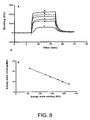
- FIG. 6 is a graph showing overlays of sensograms (A) and the Scatchard plot derived therefrom (B) for the binding of TNG.p1779 sdAb fragment (2.5 (f), 7.5 (e), 10 (d), 15 (c), 20 (b) and 30 (a) ⁇ M) to captured biotinylated p1779 peptide.
- FIG. 7 is a graph showing the Scatchard plot derived from sensograms for the binding of TNG.PTH50 sdAb fragment to captured biotinylated PTH2 peptide.
- the present invention provides a large size (in the order of 10 9 ) phage display library of single-domain fragments of variable heavy domains (VH and V H H) of llama antibodies.
- the library which has been generated using lymphocytes of a non-immunized animal (na ⁇ ve library), can be used for in vitro selection against any antigen of interest as a target.
- the size of the library makes it highly probable that an antibody specific to the target will be identified among the library's sdAb fragments. This utility of the library has been demonstrated by isolating therefrom sdAbs binding specifically to various preselected antigens as targets.
- Another advantage of choosing a na ⁇ ve library as the source of llama antibodies concerns anti-idiotypic antibodies.
- An anti-idiotypic antibody (a second antibody) recognizes the idiotope of another antibody (a first antibody) as an antigen, meaning that the first antibody recognizes in turn the second (anti-idiotypic) antibody as its antigen.
- Anti-idiotypic antibodies have gained a widespread clinical use, e.g., in vaccine development for cancer and cholera (Grant et al., Clin. Cancer Res., 1319-1323 (1999); Herlyn et al., Ann. Med., 66-78 (1999); Maxwell-Armstrong et al., Br. J.
- llama is the smallest animal which can survive in a severe, cold climate. Lymphocytes of a llama from a farm located in Osgoode (Canada) have been used to generate the phage display library of variable heavy domains of llama antibodies. From this library, sdAbs binding specifically to several preselected antigens have been subsequently isolated and characterized.
- FIG. 3 depicts a schematic representation of steps involved in the construction of the V H H-derived sdAb phage display library.
- lymphocytes from the fresh blood of llama (from a farm located at Osgoode, Ontario, Canada) were prepared and their RNA was isolated using techniques well known to those skilled in the art.
- RT-PCRs reverse transcriptase-polymerase chain reactions
- the amplified products were separated and fragments of the expected size derived from conventional IgG ( ⁇ 900 bp) and heavy chain IgG ( ⁇ 600 bp) were observed on the agarose gel.
- the smaller fragment was gel purified and used in a second PCR to amplify the V H H genes.
- the amplification products were cloned into fd-tet (GIIID) vector, between the leader signal and gene III, to produce fusion proteins, which were displayed on the filamentous phage particles using a modified procedure.
- GIIID fd-tet
- phagemid vectors Two different types of vectors are used for generating phage display libraries: phagemid vectors and phage vectors. Libraries having size in the order of 10 8 can be constructed with relative ease using phagemid vectors. However, a phagemid-based libraries suffers from some serious drawbacks. First, phagemid vectors provide typically a monovalent display and therefore may not select for lower binding (of lower affinity), but potentially important antibody fragments. Second, a phagemid-based library allows for the enrichment of phage particles displaying deleted versions of the antibody fragments.
- Such particles are preferably selected during the panning process over those displaying the full-length fragments and therefore obscure the process of selection of the full-length binders.
- constructing a phagemid-based library requires a helper phage and therefore library construction, panning and downstream phage binding assays become a far more complicated and tedious task. For these reasons the use a phage vector for the library construction is preferred.
- fd-tet Zacher III et al., Gene, 9, 127-140 (1980)
- Tn10 contains a tetracycline resistance gene, tetA, and thus confers tetracycline resistance to the host cells carrying the fd-tet vector.
- tetA tetracycline resistance gene
- the library was propagated as plaques in the absence of tetracycline, resulting in a llama V H H library of size of approximately 8.8 ⁇ 10 8 . This is the largest size library ever obtained using fd-tet vector. Due to its size, the library has an enhanced probability of selecting therefrom proteins (antibody fragments) binding to almost any given target (antigen).
- the display library of the invention could be generated using vectors other than phages, such as bacteria (e.g., E coli ) (Daugherty et al., Protein Eng., 613-621 (1999); Georgiou et al., Nat. Biotechnol., 29-34 (1997)) or yeast (e.g., Saccharomyces cerevisiae ) (Kieke et al., Proc. Natl. Acad. Sci. USA., 5651-5656 (1999); Kieke et al., Protein Eng., 1303-1310 (1997); Cho et al., J. Immunol.
- bacteria e.g., E coli
- yeast e.g., Saccharomyces cerevisiae
- Previously generated camelid sdAb libraries were characterized by typical presence of Glu, Arg and Gly in positions 44, 45 and 47, respectively, of the VL interface of V H H domain.
- the occurrence of cysteine at position 45 was also frequent in V H H, as opposed to VH domain of four-chain IgGs.
- the present library as shown by sequence analysis (Table 1), lacks these characteristics, as only one sdAb (C35) has Glu44, Arg45 and Gly47.
- the majority of sdAbs of the present library have Arg in position 45 of the VL interface.
- V H Hs variable heavy chain domains
- VHs typical conventional variable heavy domains
- sdAbs C1, C29, C43, C44 and C48 of Table 1, some sdAbs of Table 2 This contamination is most likely the results of PCR crossovers between the VHs and V H Hs during the step of RT-PCR (FIG. 3) (Tomlinson et al., J. Mol. Biol., 227, 776-798 (1992); Muyldermans et al., Protein Eng., 7, 1129-1135(1994)).
- VHs are genuine antigen binding fragments, as shown in Table 2, produced in high yield in Escherchia coli . They are highly soluble, have excellent temperature stability profiles and do not display any aggregation tendencies (Tanha et al., manuscript in preparation; Vranken et al., submitted). The very close similarity of these molecules to human VHs makes them potentially very useful as therapeutic sdAbs.
- amino acids of the VL interface are most frequently:
- CDRs can be selected from the following sequences: CDR1/H1: GFTFSSYAMS (SEQ ID NO: 85) GFTFSSYYMS (SEQ ID NO: 86) GFTFDEHAIG (SEQ ID NO: 87) GFTVSSNHMT (SEQ ID NO: 88) GFTFSSYHMA (SEQ ID NO: 89) GFTFSRHQMS (SEQ ID NO: 91) GFTFRTYYMN (SEQ ID NO: 92) GFIFSSYAMS (SEQ ID NO: 93) GFTFSTYAMT (SEQ ID NO: 95) GFTFSGYAMS (SEQ ID NO: 99) GFAFSNYRMT (SEQ ID NO: 100) GFTFSRYAMS (SEQ ID NO: 101) CDR2: GIEGGGGITRYADSVKG (SEQ ID NO: 102) TIKPGGGSTYYADSVKG (SEQ ID NO: 103) TIDIGGGRTYADSVKG
- Antigen-antigen reactions are those in which the antigen (Ag) is itself an antibody (Ab), as discussed above.
- Single domain anti-idioptypic (anti-id) antibody fragments have been isolated from the library of the present invention using phage display technology and an antibody serving as antigen. Such anti-Id antibody fragments have great potential in both evoking the immune system responses to pathological antigens and in vaccine development.
- Bruc.C7.2, Bruc.D10 and Bruc.E6 have the same CDR3 in addition to the first two, which share the same CDR2.
- These common sequences were encoded by identical nucleotides raising the possibility that divergent sdAbs may have arisen as a result of PCR cross-over in vitro.
- the interface amino acids are generally Gly44, Leu45 and Trp47, typical of human/murine VH domain.
- none of the isolated sdAbs have any cysteine in CDR1, 2, or 3.
- Table 2 also shows the identity of amino acids at positions 37, 44, 45 and 47 of the VL interface of V H H domain. Interestingly, all sdAbs shown in the table have VL TABLE 2 CDR/H1 sequences of dAbs which were isolated by panning the llama library against Yst9.1 scFv. The V L interface residues at positions 37, 44, 45 and 47 are also included.
- interface residues which are typical of murine or human VHs.
- half of the sdAbs have Val37, Gly44, Leu45 and Trp47, which are highly conserved in murine and human VH.
- all sdAbs have Val37 and Gly44, and majority has Leu45 and Trp47.
- Six, three and one sdAbs are characterized by the presence of Phe45 or Pro45, Tyr45 and Ser45, respectively. It is interesting to note that the presence of the same VL interface residues in the conventional antibodies would render the isolated VH highly hydrophobic, resulting in their aggregation, which is not observed for llama antibodies.
- Proteins of granulin/epithelin family are thought to play a role in inflammation, wound repair, tissue modeling and regulating enzyme activity (Vranken et al., J. Pept. Res., 590-597 (1999); Hrabal et al., Nat. Struct Biol., - 752 (1996)). They are implicated as potential co-factors for HIV Tat protein and in modulating the growth of human epidermal carcinoma cells, and inhibition of their expression is known to inhibit the tumorigenecity of certain cells.
- the granulin motif has been found throughout the animal kingdom, in fish and insects, and encoded in the genome of a nematode worm.
- the motif consists of a parallel stacks of beta-hairpins pinned together by disulfide bonds.
- the structural sub-domain of granulin containing the first two beta-hairpin and spanning the first N-terminal 30 amino acids is also shared by growth factor proteins such as epidermal growth factors, transforming growth factor (TGF)-alpha, as well as the epithelial cell-specific TGF (TGF-e) which modulates the growth of human epidermal carcinoma cells.
- TGF transforming growth factor
- TGF-e epithelial cell-specific TGF
- antibodies can be used to probe the structural changes caused by amino acid substitution.
- the changes in the stability of a sub-domains brought about by amino acid substitutions may be manifested as changes in its affinity for an antibody probe compared to the wild type.
- peptides p1779, p1780 and p1781 shown in Table 6 as a model system it was demonstrated that a sdAb isolated from the llama sdAbs phage display library by panning against p1779 may serve as a structural probe.
- the sdAb binds to the p1779 peptide with a K d of 10 ⁇ M, but shows no binding to the substituted versions of the peptide (peptides p1780 and p1781), which are known to have structures different from p1779. Other than serving as structural probes, such sdAbs can be used, for example, to interfere with granulin binding in pathways leading to cancer cell growth or HIV progression.
- TABLE 6 Sequences of the human granulinA-derived peptide p1779 and its substituted versions p1780 and p1781. For panning experiments the peptides were labelled at the N-terminal through a (Gly) 4 linker.
- TNG.P1779 Sequencing of twenty-one p1779-specific sdAb genes identified one fragment, namely, TNG.P1779, which was further expressed for detailed binding studies by BIACORE. In agreement with the phage ELISA results, TNG.P1779 was shown to be active by BIACORE analysis in which biotinylated p1779 was captured on a SA-coated CM5 sensor chip (FIG. 6, part A). No binding was detected to the reference surfaces on which a similar amount of p1780 or p1781 had been captured (data not shown). A Scatchard plot of the binding data gave a K d of 1.1 ⁇ 10 ⁇ 5 M (Table 5). These results demonstrate that the TNG.P1779 behaves like a structural probe, sensing the structural changes, which occur in p1780 or p1781 as a result of amino acid substitutions.
- Parathyroid hormone is the major regulator of serum calcium levels and its use for the treatment of bone loss due to osteoporosis has been postulated. Osteoporosis, which is characterized by bone loss, strikes at any age, affects both men and women, although women with higher frequency, and can results in hospitalization, disability and death (Morley et al., Current Medicinal Chemistry, 6, 1095-1106 (1999); Whitfield et al., Drugs & Aging, 15(2), 117-129 (1999)). Most of the available drugs slow down or stop further bone loss, but have no bone growth-stimulating effects, hence are not capable of replacing the lost bones.
- PTH parathyroid hormone
- TNG.PTH50 shows the binding profile for TNG.PTH50 which was isolated by panning against PTH2.
- the calculated K d for TNG.PTH50 is 4.3 ⁇ 10 ⁇ 6 which is shown in Table 8.
- TABLE 8 Equilibrium constants for the binding of TNG.PTH22, TNG.PTH23 and TNG.PTH50 to biotinylated PTH2. The values were determined from the respective sensograms and Scatchard plots, as shown in FIG. 7 for TNG.PTH50.
- sdAb K d (M) TNG.PTH22 1.4 ⁇ 10 ⁇ 5 TNG.PTH23 5.7 ⁇ 10 ⁇ 5 TNG.PTH50 4.3 ⁇ 10 ⁇ 6
- the mixture was autoclaved and stored solid at room temperature.
- the oligonucleotides were synthesized using the Applied Biosystems 394 DNA/RNA synthesizer. DNA sequencing was performed by the dideoxy method (Sanger et al., Biotechnology, 104-108 (1992)) using the AmpliTaq DNA Polymerase FS kit and 373A DNA Sequencer Stretch (PE Applied Biosystems, Mississauga, ON, Canada).
- the host bacteria used for cloning was TG1: supE hsd5 thi .(lac-proAB) F′ [traD36 proAB + lacI q lacZM15]. All the cloning steps were performed as described (Sambrook et al., supra).
- the vector fd-tet was purchased from American Type Culture Collection (Manassas, Va.) and engineered such that it contained ApaI and NotI restriction sites immediately following the gIIIp leader sequence codons (Simon J. Foote, personal communications).
- RT-PCR Reverse transcription-polymerase chain reaction
- the primers used included a CH2-specific primer, LlamaFOR, 5′(CGCCATCAAGGTACCAGTTGA)3′ [SEQ ID No: 207] and LlamaBACK primer, 5′(GATGTGCAGCTGCAGGCGTCTGGRGGAGG)3′ [SEQ ID No: 208], which anneals to the 5′ flanking region of VH genes.
- Amplified product of approximately 600 base pair was purified from the agarose gel using QIAquick Gel ExtractionTM kit (QIAGEN) and subjected to a second round of PCR using the primers LlamaApaII, 5′(CATGACCACAGTGCACAGGAKGTSCAGCT)3′ [SEQ ID No: 209] and LlamaNotI, 5′(CGATTCTGCGGCCGCTGAGGAGACGGTGACCTG)3′ [SEQ ID No: 210].
- the PCR mixture contained 10 pmol/ ⁇ l each of the two primers, 1 ⁇ buffer (Perkin Elmer), 200 ⁇ M each of the four dNTPs and 0.05 unit/ ⁇ l AmpliTaqTM DNA polymerase (Perkin Elmer).
- PCR protocol consisted of an initial denaturation step at 95° C. for 15 min followed by 35 cycles of 94° C. for 30 sec, 45° C. for 30 sec, and 72° C. for 1 min, and a final extension step at 72° C. for 10 min.
- the primers were complimentary to the 5′ and 3′ ends of the amplified product and incorporated ApaII and NotI restriction sites (underlined) at the end of VH genes.
- the amplified products were purified using QIAquick PCR Purification kitTM (QIAGEN), cut sequentially with ApaII and NotI restriction endonucleases, purified again, ligated to the ApaII/NotI-treated fd-tet phage vector and desalted using the above kit.
- Electrocompetent TG1 cells were prepared (Tung et al., Trends Genet., 128-129 (1995)) and 1.5 ⁇ g of the ligated product was mixed with 40 ⁇ l of competent E. coli strain TG1 and the cells were transformed by electroporation using the BIO-RAD Gene PulserTM according to the manufacturer's instructions.
- the transformed cells were immediately transferred into 1 ml of SOC medium and split into 3 sterile tubes containing 3 ml of 50° C. agarose top, vortexed immediately, poured onto pre-warmed 2 ⁇ YT petri dishes, and incubated at 37° C. overnight.
- the phage particles were eluted by adding five ml of sterile PBS to the plates gently shaked at 4° C. for 3 hr.
- the phage-containing PBS was collected, the plates were rinsed with an additional 5 ml PBS and the two supernatants were combined in a centrifuge bottle.
- the contents were centrifuged at 6000 g for 15 min at 4° C., the supernatant was decanted into a sterile centrifuge bottle and the phage was purified as described (Harrison et al., supra). At the end of the purification, the phage pellet was dissolved in 20 ml of sterile PBS and stored in liquid nitrogen in 100 ⁇ l aliquots.
- Panning was performed using the Nunc-Immuno MaxiSorpTM 8-well strips (Nunc). Briefly, the wells were coated overnight by adding 150 ⁇ l of 100 ⁇ g/ml antigen in PBS. In the morning, the wells were rinsed three times with PBS and subsequently blocked with 400 ⁇ l PBS-2% (w/v) skim milk (2% MPBS) at 37° C. for 2 hr. The wells were rinsed as above and 1012 transducing units phage in 2% MPBS were added. The mixture was incubated at room temperature for 1.5 hr after which the unbound phage in the supematant was removed.
- the wells were rinsed 10 times with PBS-0.1% (v/v) Tween 20 and then 10 times with PBS to remove the detergent.
- the bound phage was eluted by adding freshly prepared 200 ⁇ l 100 mM triethylamine, pipetting the content of the well up and down several times and incubating the mixture at room temperature for 10 min.
- the eluted phage was transferred to a tube containing 100 ⁇ l 1 M Tris-HCl, pH 7.4 and vortexed to neutralize the triethylamine.
- 10 ml of exponentially growing TG1 culture was infected with 150 ⁇ l eluted phage by incubating the mixture at 37° C. for 30 min.
- SA-PMP (1 mg/ml) obtained from Promega (Madison, Wis.). To maintain SA-PMP in solution during the panning process, the reaction tubes were flicked frequently during the incubation period. Briefly, for each target antigen 2 ⁇ 100 ⁇ l SA-PMPs was first dispersed by gently flicking the bottom of the tubes, and then captured at the side of the tube in a magnetic stand (approximately 30 sec.) followed by careful removal of the supematant. SA-PMPs were re-suspended in 100 ⁇ l 1 ⁇ PBS, re-captured and the supernatant was removed. This washing process was repeated three times.
- the phage particles were pre-incubated with SA-PMP in 2% MPBS for 1 hr at room temperature and the magnetic beads were captured.
- 10 12 t.u. phage (10 11 t.u. for further rounds) in the supernatant was incubated in 2% MPBS containing 20 mg/ml BSA, 0.05% Tn20 and 1 ⁇ g/ml biotinylated antigen in a total volume of 150 ⁇ l for 1 hr at room temperature.
- 100 ⁇ l of the washed SA-PMP was blocked in 400 ⁇ l 2% MPBS at 37° C. for 2 hr.
- the supematant was discarded and the phage-biotinylated antigen complex solution from the first tube was added to the blocked SA-PMP at room temperature for 30 min.
- the supematant was removed and the complex-bound SA-PMPs were washed twice with 100 ⁇ l PBS and then once with 100 ⁇ l 2% MPBS containing 0.05% Tn 20; this sequence of washes was repeated another three times and then finally SA-PMPs were washed twice with PBS.
- the bound phage was eluted by adding 200 ⁇ l of 100 mM freshly prepared triethylamine and standing at room temperature for 10 min. Phage elution, propagation, titering and purification were performed as described for solid phase panning.
- the procedure preceding the elution step was modified as described below.
- 100 ⁇ l SA-PMPs were blocked followed by removal of supernatant and subsequent incubation of SA-PMPs with 100 ill of 5 ⁇ g/ml biotinylated antigens in 2% MPBS at room temperature for 30 min.
- the antigen-bound SA-PMPs were washed 5 times with 0.5% MPBS and then incubated with phage in 2% MPBS at room temperature for 1.5 hr in a total volume of 100 ⁇ l.
- the supernatant was removed and the phage bound SA-PMPs were washed eight times with 0.5% MPBS and two times with PBS before proceeding with the elution step.
- Phage Enzyme-Linked Immunosorbent Assay (Phage ELISA)
- phage-infected TG1 colonies were used to inoculate 200 ⁇ l of LB in sterile 96-well plates. The cells were grown overnight at 100 rpm and 37° C. In the morning, the plates were spun down in a bench top centrifuge, and the sdAb phage-containing supematant was used for phage ELISA as described below. Briefly, Nunc-Immuno MaxiSorpTM plates (Nunc) were coated overnight at 4° C. with 150 ⁇ l of 10 ⁇ g/ml of target antigen or control proteins in PBS. The contents were removed and the plates were tapped on a paper towel to remove any liquid remaining in the wells.
- the wells were blocked by adding 300 ⁇ l of PBS-2% (w/v) skim milk (2% MPBS) and incubating for 2 hr at 37° C. The contents of the wells were emptied as before, 100 ⁇ l of sdAb phage supematant in 2% MPBS was added, and the wells were incubated at room temperature for 1.5 hr. For biotinylated antigen, the plates were pre-coated with 5 ⁇ g/ml streptavidin overnight followed by blocking. The wells were then coated with the target antigen by incubating plates with 150 ⁇ l of 1 ⁇ g/ml biotinylated antigen at room temperature for 30 min.
- the wells were washed six times as before and the binding of sdAb to the antigen was detected colorimetrically by adding 100 ⁇ l of equal mixtures of TMB Peroxidase Substrate and H2O2 (KPL, Maryland, USA) at room temperature for several min. The reaction was stopped by adding 100 ⁇ l of 1 M H3PO4 and the A450 was measured by DYNATECH MR5000 ELISA reader (DYNATECH).
- sdAb genes were amplified out of the phage vector by PCR using the primers, VH.Bbs, 5′(TATGAAGACACCAGGCCGATGTGCAGCTGCAGGCG)3′ [SEQ ID No: 211], and VH.Bam, 5′(TATGGATCCTGAGGAGACGGTGACCTG)3′ [SEQ ID No: 212] which also introduced BbsI and BamHI sites at the ends of the amplified fragments.
- sdAb genes were subsequently purified, cut sequentially with BbsI and BamHI restriction endonucleases, purified again with QIAquick Gel ExtractionTM kit (QIAGEN), and ligated to the BbsI/BamHI-treated pSJF-2 vector. An aliquot of the ligated product was used to transform E. coli strain TG1. Transformants were selected on ampicillin plates and the clones harbouring the sdAb genes were identified by PCR and sequencing. For expression, single positive clones were used to inoculate 25 ml of LB containing 100 ⁇ g/ml ampicillin and the culture was shaken at 240 rpm at 37° C. overnight.
- the entire overnight culture was used to inoculate 1 liter of M9 medium supplemented with 5 ⁇ g/ml vitamin B1, 0.4% casamino acid and 100 ⁇ g/ml ampicillin.
- the culture was shaken at room temperature for 30 hr at 180 rpm and subsequently supplemented with 100 ml of 10 ⁇ induction medium and 100 ⁇ l of 1 M isopropylthio-D-galactoside.
- the culture was shaken for another 60 hr, the periplasmic fraction was extracted by osmotic shock (Anand et al., Gene, 39-44 (1991) and the presence of sdAb in the extract was detected by Western blotting (MacKenzie et al., Biotechnology N.Y., 390-395 (1994)).
- the periplasmic fraction was dialyzed extensively in 10 mM HEPES (N-[2-hydroxyethyl]piperazine-N′-[2-ethanesulfonic acid]) buffer pH 7.0, 500 mM NaCl.
- the presence of the sdAb C-terminal His5 tag allowed a one step protein purification by immobilized metal affinity chromatography using HiTrap ChelatingTM column (Phamacia).
- the 5-ml column was charged with Ni 2+ by applying 30 ml of a 5 mg/ml NiCl2.6H2O solution and subsequently washed with 15 ml deionized water.
- Purification was carried out as described (MacKenzie, supra) except that the starting buffer was 10 mM HEPES buffer, 10 mM imidazole, 500 mM NaCl, pH 7.0, and the bound protein was eluted with a 10-500 mM imidazole gradient.
- the purity of the protein was determined by SDS-PAGE (Laemmeli U.K., in: Proteases and biological control [Reich et al., ed.], Cold Spring Harbour Laboratory, pp. 661-676 (1975)).
- sdAb preparation was further subjected to gel filtration chromatography using Superdex 75 column (Pharmacia) as described (Deng et al., Proc. Natl. Acad. Sci. USA., 4992-4996 (1995)) and the purified monomer species were used in binding studies by surface plasmon resonance.
- Binding studies were performed using BIACORE 1000 (Jonsson et al., BioTechniques, 620-627 (1991)) available from Biacore Inc., Piscataway, N.J. Binding of the anti-Yst9.1 sdAbs to Yst9.1 scFv was assessed under the same conditions except that in this case sdAb was immobilized (540 RU) and the flow rate was set at 20 ⁇ l/min. For PTH binders 186 RU (PTH2) or 70 RU (control peptide) was immobilized and the flow rate was also set at 20 ⁇ l/min. Surface regeneration was achieved by washing the sensor chips with HBST buffer.
- sdAb was passed over biotinylated p1779 (520 RU) or p1780 and p1781 control peptides (420 RU) which had been captured on a CM5 sensor chip coated with streptavidin (2260 RU).
- Kinetic rate constants were determined using BIAevaluation software and fitting to 1:1 interaction model. Affinity constants were calculated from the kinetic rate constants and by Scatchard analysis of equilibrium binding data as described (MacKenzie et al., J. Biol. Chem, 1527-1533 (1996)).
Landscapes
- Chemical & Material Sciences (AREA)
- Life Sciences & Earth Sciences (AREA)
- Health & Medical Sciences (AREA)
- Organic Chemistry (AREA)
- Genetics & Genomics (AREA)
- Molecular Biology (AREA)
- Biochemistry (AREA)
- Engineering & Computer Science (AREA)
- General Engineering & Computer Science (AREA)
- Wood Science & Technology (AREA)
- Zoology (AREA)
- Biophysics (AREA)
- General Health & Medical Sciences (AREA)
- Medicinal Chemistry (AREA)
- Bioinformatics & Cheminformatics (AREA)
- Microbiology (AREA)
- Biotechnology (AREA)
- Biomedical Technology (AREA)
- Chemical Kinetics & Catalysis (AREA)
- Physics & Mathematics (AREA)
- Crystallography & Structural Chemistry (AREA)
- Virology (AREA)
- Plant Pathology (AREA)
- Proteomics, Peptides & Aminoacids (AREA)
- General Chemical & Material Sciences (AREA)
- Immunology (AREA)
- Peptides Or Proteins (AREA)
- Micro-Organisms Or Cultivation Processes Thereof (AREA)
- Measuring Or Testing Involving Enzymes Or Micro-Organisms (AREA)
Priority Applications (1)
| Application Number | Priority Date | Filing Date | Title |
|---|---|---|---|
| US11/477,830 US8257705B2 (en) | 2000-05-26 | 2006-06-29 | Single-domain antigen-binding antibody fragments derived from llama antibodies |
Applications Claiming Priority (2)
| Application Number | Priority Date | Filing Date | Title |
|---|---|---|---|
| US20723400P | 2000-05-26 | 2000-05-26 | |
| PCT/CA2001/000763 WO2001090190A2 (fr) | 2000-05-26 | 2001-05-25 | Fragments d'anticorps de fixation d'antigenes monodomaines, derives d'anticorps de lamas |
Related Child Applications (1)
| Application Number | Title | Priority Date | Filing Date |
|---|---|---|---|
| US11/477,830 Division US8257705B2 (en) | 2000-05-26 | 2006-06-29 | Single-domain antigen-binding antibody fragments derived from llama antibodies |
Publications (1)
| Publication Number | Publication Date |
|---|---|
| US20030190598A1 true US20030190598A1 (en) | 2003-10-09 |
Family
ID=22769713
Family Applications (2)
| Application Number | Title | Priority Date | Filing Date |
|---|---|---|---|
| US10/031,874 Abandoned US20030190598A1 (en) | 2000-05-26 | 2001-05-25 | Single-domain antigen-binding antibody fragments derived from llama antibodies |
| US11/477,830 Expired - Fee Related US8257705B2 (en) | 2000-05-26 | 2006-06-29 | Single-domain antigen-binding antibody fragments derived from llama antibodies |
Family Applications After (1)
| Application Number | Title | Priority Date | Filing Date |
|---|---|---|---|
| US11/477,830 Expired - Fee Related US8257705B2 (en) | 2000-05-26 | 2006-06-29 | Single-domain antigen-binding antibody fragments derived from llama antibodies |
Country Status (4)
| Country | Link |
|---|---|
| US (2) | US20030190598A1 (fr) |
| AU (1) | AU2001268855A1 (fr) |
| CA (1) | CA2380443C (fr) |
| WO (1) | WO2001090190A2 (fr) |
Cited By (10)
| Publication number | Priority date | Publication date | Assignee | Title |
|---|---|---|---|---|
| WO2005090404A3 (fr) * | 2004-03-19 | 2006-03-02 | Zelos Therepeutics Inc | Compositions et methodes de detection d'analogues cycliques de hpth |
| US20070197444A1 (en) * | 2006-02-17 | 2007-08-23 | Nastech Pharmaceutical Company Inc. | Phage displayed cell binding peptides |
| US7329725B1 (en) | 2003-10-29 | 2008-02-12 | Nastech Pharmaceutical Company Inc. | Phage displayed Trp cage ligands |
| WO2010085790A1 (fr) * | 2009-01-26 | 2010-07-29 | Baylor College Of Medicine | Anticorps à chaîne unique dans la détection de norovirus |
| US20100330080A1 (en) * | 2008-07-02 | 2010-12-30 | Torsten Dreier | Antigen binding polypeptides |
| US8709424B2 (en) | 2009-09-03 | 2014-04-29 | Merck Sharp & Dohme Corp. | Anti-GITR antibodies |
| US20170059561A1 (en) * | 2015-08-28 | 2017-03-02 | The Florida International University Board Of Trustees | Thermally Stable Electrochemical Sensor With Long Shelf-Life |
| CN110776564A (zh) * | 2019-10-30 | 2020-02-11 | 西北农林科技大学 | 两株抗新城疫病毒纳米抗体及其表达制备方法和应用 |
| WO2021126672A1 (fr) * | 2019-12-20 | 2021-06-24 | Medimmune, Llc | Compositions et méthodes de traitement du cancer à l'aide de récepteurs antigéniques chimériques ciblant le glypicane 3 |
| US11702466B2 (en) * | 2017-01-30 | 2023-07-18 | National Research Council Of Canada | Fusion protein comprising a blood-brain barrier (BBB)-crossing single domain antibody Fc5, an immunoglobulin Fc fragment and a beta-amyloid binding polypeptide (ABP) |
Families Citing this family (241)
| Publication number | Priority date | Publication date | Assignee | Title |
|---|---|---|---|---|
| JP4213586B2 (ja) * | 2001-09-13 | 2009-01-21 | 株式会社抗体研究所 | ラクダ抗体ライブラリーの作製方法 |
| JP2005289809A (ja) | 2001-10-24 | 2005-10-20 | Vlaams Interuniversitair Inst Voor Biotechnologie Vzw (Vib Vzw) | 突然変異重鎖抗体 |
| CA2488441C (fr) | 2002-06-03 | 2015-01-27 | Genentech, Inc. | Bibliotheques de phages et anticorps synthetiques |
| AR047392A1 (es) | 2002-10-22 | 2006-01-18 | Wyeth Corp | Neutralizacion de anticuerpos contra gdf 8 y su uso para tales fines |
| WO2004065416A2 (fr) * | 2003-01-16 | 2004-08-05 | Genentech, Inc. | Banques de phages anticorps synthetiques |
| US7235641B2 (en) | 2003-12-22 | 2007-06-26 | Micromet Ag | Bispecific antibodies |
| US7785903B2 (en) | 2004-04-09 | 2010-08-31 | Genentech, Inc. | Variable domain library and uses |
| WO2006074947A2 (fr) | 2005-01-14 | 2006-07-20 | Ablynx N.V. | Methodes et essais pour distinguer differentes formes de maladies ou de troubles caracterises par la thrombocytopenie et/ou par l'interaction spontanee entre le facteur von willebrand (vwf) et les plaquettes sanguines |
| AU2006221823B2 (en) | 2005-03-11 | 2011-06-09 | Syngenta Limited | Rodent pest control |
| US8188223B2 (en) | 2005-05-18 | 2012-05-29 | Ablynx N.V. | Serum albumin binding proteins |
| ES2694247T3 (es) | 2005-05-20 | 2018-12-19 | Ablynx N.V. | NanobodiesTM mejorados para el tratamiento de trastornos mediados por agregación |
| DE102005023617A1 (de) | 2005-05-21 | 2006-11-23 | Aspre Ag | Verfahren zum Mischen von Farben in einem Display |
| PL1907420T3 (pl) * | 2005-07-21 | 2017-09-29 | Modiquest B.V. | Pleksyna D1 jako obiekt docelowy do diagnozowania i leczenia guza |
| EP1937814A4 (fr) * | 2005-09-01 | 2010-05-05 | Ca Nat Research Council | Anticorps protéiques anti-apoptotiques |
| ES2577292T3 (es) | 2005-11-07 | 2016-07-14 | Genentech, Inc. | Polipéptidos de unión con secuencias hipervariables de VH/VL diversificadas y consenso |
| EP2073898A1 (fr) | 2006-10-10 | 2009-07-01 | Academisch Ziekenhuis Bij De Universiteit Van Amsterdam | Inhibition du complément pour une régénération améliorée des nerfs |
| CA2673331A1 (fr) | 2006-12-19 | 2008-06-26 | Ablynx N.V. | Sequences d'acides amines dirigees contre les gpcr et polypeptides les contenant pour le traitement de maladies et de troubles lies au gpcr |
| EP2102244A2 (fr) | 2006-12-19 | 2009-09-23 | Ablynx N.V. | Séquences d'acides aminés dirigées contre une métalloprotéinase de la famille adam et polypeptides les comprenant à des fins de traitement de maladies et troubles liés à adam |
| PL2308514T3 (pl) | 2007-03-23 | 2013-11-29 | To Bbb Holding B V | Koniugaty do ukierunkowanego dostarczania leku poprzez barierę krew-mózg |
| EP2008666A1 (fr) | 2007-06-29 | 2008-12-31 | Institut Pasteur | Utilisation d'anticorps VHH pour la préparation de vecteurs de peptide pour fournir une substance d'intérêt et leurs applications |
| AU2008270274B2 (en) | 2007-07-03 | 2012-06-28 | Ablynx N.V. | Providing improved immunoglobulin sequences by mutating CDR and/or FR positions |
| US8426565B2 (en) * | 2007-08-30 | 2013-04-23 | Walter And Eliza Hall Institute Of Medical Research | Dendritic cell marker and uses thereof |
| EP2650311A3 (fr) | 2007-11-27 | 2014-06-04 | Ablynx N.V. | Séquences d'acides aminés dirigées contre des cytokines hétérodimériques et/ou leurs récepteurs et polypeptides les comprenant |
| WO2009109572A2 (fr) * | 2008-03-03 | 2009-09-11 | Ablynx Nv | Exposition sur phage monovalent de domaines variables simples |
| GB2470328A (en) | 2008-03-05 | 2010-11-17 | Ablynx Nv | Novel antigen binding dimer complexes, methods of making and uses thereof |
| US9908943B2 (en) | 2008-04-03 | 2018-03-06 | Vib Vzw | Single domain antibodies capable of modulating BACE activity |
| GB0809069D0 (en) | 2008-05-19 | 2008-06-25 | Univ Leuven Kath | Gene signatures |
| ES2447844T3 (es) | 2008-04-03 | 2014-03-13 | Vib Vzw | Anticuerpos de dominio individual capaces de modular la actividad BACE1 |
| JP2011516520A (ja) | 2008-04-07 | 2011-05-26 | アブリンクス エン.ヴェー. | Notch経路に指向性を有するアミノ酸配列及びその使用 |
| WO2009127691A1 (fr) | 2008-04-17 | 2009-10-22 | Ablynx N.V. | Peptides capables de se lier à des protéines sériques et composés, constructions et polypeptides les comprenant |
| EP2285833B1 (fr) | 2008-05-16 | 2014-12-17 | Ablynx N.V. | Séquences d'acides aminés dirigées contre cxcr4 et autres gpcr et composés renfermant ces dernières |
| LT2285408T (lt) | 2008-06-05 | 2019-01-25 | Ablynx N.V. | Aminorūgščių sekos, nukreiptos prieš viruso apvalkalo baltymus, ir tokias sekas turintys polipeptidai, skirti virusinių ligų gydymui |
| CN102257003B (zh) | 2008-12-19 | 2017-04-05 | 埃博灵克斯股份有限公司 | 用于产生针对细胞相关抗原如p2x7、cxcr7或cxcr4的免疫球蛋白的基因免疫 |
| US10005830B2 (en) | 2009-03-05 | 2018-06-26 | Ablynx N.V. | Antigen binding dimer-complexes, methods of making/avoiding and uses thereof |
| AU2010243551B2 (en) | 2009-04-30 | 2015-03-26 | Ablynx Nv | Method for the production of domain antibodies |
| WO2011003622A1 (fr) | 2009-07-10 | 2011-01-13 | Ablynx N.V. | Procédé pour la production de domaines variables |
| LT2805731T (lt) | 2009-09-03 | 2019-02-11 | Ablynx N.V. | Stabilios polipeptidų kompozicijos ir jų panaudojimas |
| WO2011049449A1 (fr) | 2009-10-22 | 2011-04-28 | University Of Twente | Vhh utilisable en réparation tissulaire, régénération d'organe, remplacement d'organe et ingéniérie tissulaire |
| US20120321640A1 (en) | 2009-12-01 | 2012-12-20 | Ablynx N.V. | Von willebrand factor specific binding agents and uses thereof |
| EP3309176B1 (fr) | 2009-12-14 | 2025-10-01 | Ablynx N.V. | Anticorps à domaine variable unique contre ox40l, constructions et leur utilisation thérapeutique |
| WO2011083140A1 (fr) | 2010-01-08 | 2011-07-14 | Ablynx Nv | Domaines variables simples d'immunoglobuline dirigés contre le cxcr4 doués d'une meilleure activité thérapeutique et produits de recombinaison les comprenant |
| EP2531523A1 (fr) | 2010-02-05 | 2012-12-12 | Ablynx N.V. | Peptides capables de se lier à la sérumalbumine, et composés, constructions, et polypeptides comprenant de tels peptides |
| US9120855B2 (en) | 2010-02-10 | 2015-09-01 | Novartis Ag | Biologic compounds directed against death receptor 5 |
| DK2533761T3 (da) | 2010-02-11 | 2019-06-24 | Ablynx Nv | Fremgangsmåder og sammensætninger til fremstilling af aerosoler |
| US9556273B2 (en) | 2010-03-29 | 2017-01-31 | Vib Vzw | Anti-macrophage mannose receptor single variable domains for targeting and in vivo imaging of tumor-associated macrophages |
| US9101674B2 (en) | 2010-03-29 | 2015-08-11 | Vib Vzw | Targeting and in vivo imaging of tumor-associated macrophages |
| KR20190000385A (ko) | 2010-05-04 | 2019-01-02 | 더 브리검 앤드 우먼즈 하스피털, 인크. | 섬유증의 검출 및 치료 |
| US8877188B2 (en) | 2010-05-04 | 2014-11-04 | The Brigham And Women's Hospital, Inc. | Detection and treatment of non-dermal fibrosis |
| EP2571901B1 (fr) | 2010-05-20 | 2019-01-02 | Ablynx N.V. | Matériaux biologiques associés à her3 |
| WO2011161263A1 (fr) | 2010-06-25 | 2011-12-29 | Ablynx Nv | Compositions pharmaceutiques destinées à une administration par voie cutanée |
| GB201014715D0 (en) | 2010-09-06 | 2010-10-20 | Vib Vzw | Nanobodies stabilizing functional conformational states of GPCRS |
| ES2646744T3 (es) | 2010-08-26 | 2017-12-15 | Agrosavfe N.V. | Proteínas de unión al antígeno de polisacáridos quitinosos |
| PL3279214T3 (pl) | 2010-10-29 | 2025-03-24 | Ablynx Nv | Sposób wytwarzania pojedynczych domen zmiennych immunoglobuliny |
| AU2012234282B2 (en) | 2011-03-28 | 2015-07-16 | Ablynx Nv | Method for producing solid formulations comprising immunoglobulin single variable domains |
| UA117218C2 (uk) | 2011-05-05 | 2018-07-10 | Мерк Патент Гмбх | Поліпептид, спрямований проти il-17a, il-17f та/або il17-a/f |
| WO2012152823A1 (fr) | 2011-05-09 | 2012-11-15 | Ablynx Nv | Procédé pour la production de domaines variables uniques d'immunoglobuline |
| WO2012163887A1 (fr) | 2011-05-27 | 2012-12-06 | Ablynx Nv | Inhibition de la résorption osseuse à l'aide de peptides se liant à rankl |
| EP2723772A1 (fr) | 2011-06-23 | 2014-04-30 | Ablynx N.V. | Domaines variables uniques d'immunoglobuline dirigés contre ige |
| NO2723764T3 (fr) | 2011-09-15 | 2018-05-26 | ||
| WO2013041722A1 (fr) | 2011-09-23 | 2013-03-28 | Ablynx Nv | Inhibition prolongée d'une signalisation à médiation par l'interleukine-6 |
| US10112988B2 (en) | 2012-01-09 | 2018-10-30 | Icb International, Inc. | Methods of assessing amyloid-beta peptides in the central nervous system by blood-brain barrier permeable peptide compositions comprising a vab domain of a camelid single domain heavy chain antibody against an anti-amyloid-beta peptide |
| US10112987B2 (en) | 2012-01-09 | 2018-10-30 | Icb International, Inc. | Blood-brain barrier permeable peptide compositions comprising a vab domain of a camelid single domain heavy chain antibody against an amyloid-beta peptide |
| EP2617732A1 (fr) | 2012-01-19 | 2013-07-24 | Vib Vzw | Outils et procédés pour l'expression de protéines de membrane |
| JP6411333B2 (ja) | 2012-05-24 | 2018-10-24 | ブイアイビー ブイゼットダブリュVib Vzw | 腫瘍関連マクロファージのターゲティングおよびinvivoイメージング用抗マクロファージマンノース受容体単一可変ドメイン |
| WO2014087010A1 (fr) | 2012-12-07 | 2014-06-12 | Ablynx N.V. | Polypeptides améliorés dirigés contre ige |
| US20150368339A1 (en) | 2013-02-05 | 2015-12-24 | Vib Vzw | Muscarinic acetylcholine receptor binding agents and uses thereof |
| JP6499090B2 (ja) | 2013-03-15 | 2019-04-10 | ブイアイビー ブイゼットダブリュVib Vzw | 心血管疾患において使用するための抗マクロファージマンノース受容体単一可変ドメイン |
| EP2992101B1 (fr) | 2013-04-29 | 2018-10-10 | Agrosavfe N.V. | Compositions agrochimiques comprenant des anticorps se liant à des sphingolipides |
| NL1040254C2 (en) | 2013-05-17 | 2014-11-24 | Ablynx Nv | Stable formulations of immunoglobulin single variable domains and uses thereof. |
| EP3066120B1 (fr) | 2013-11-04 | 2018-10-10 | INSERM (Institut National de la Santé et de la Recherche Médicale) | Anticorps à domaine unique synthétique |
| EP2883883A1 (fr) | 2013-12-16 | 2015-06-17 | Cardio3 Biosciences S.A. | Cibles thérapeutiques et agents utiles dans le traitement des lésions ischémiques de reperfusion |
| US10233241B2 (en) | 2014-01-30 | 2019-03-19 | Vib Vzw | Opioid receptor binding agents and uses thereof |
| DK3114141T3 (da) * | 2014-03-06 | 2020-08-10 | Nat Res Council Canada | Insulinlignende vækstfaktor 1-receptor-specifikke antistoffer og anvendelse deraf |
| PE20170088A1 (es) * | 2014-03-06 | 2017-03-09 | Nat Res Council Canada | Anticuerpos especificos del receptor del factor 1 de crecimiento similar a la insulina y usos de los mismos |
| NZ724869A (en) * | 2014-03-06 | 2022-07-01 | Nat Res Council Canada | Insulin-like growth factor 1 receptor -specific antibodies and uses thereof |
| NL2013661B1 (en) | 2014-10-21 | 2016-10-05 | Ablynx Nv | KV1.3 Binding immunoglobulins. |
| EP3718574A1 (fr) | 2014-07-29 | 2020-10-07 | Vrije Universiteit Brussel | Fragments d'anticorps radiomarqués pour une utilisation dans la prévention et/ou le traitement du cancer |
| WO2016016329A1 (fr) | 2014-07-29 | 2016-02-04 | Vrije Universiteit Brussel | Fragments d'anticorps radio-marqués destinés à être utilisés pour le pronostic et le diagnostic du cancer, ainsi que dans la prédiction de la réponse à un traitement anticancéreux |
| US10858666B2 (en) | 2014-11-05 | 2020-12-08 | Biotalys | Transgenic plants expressing a variable domain of a heavy chain antibody (VHH) that binds to a sphingolipid of a fungus |
| AU2015366284B2 (en) | 2014-12-19 | 2021-07-22 | Ablynx N.V. | Cysteine linked nanobody dimers |
| TW201702271A (zh) | 2015-04-30 | 2017-01-16 | 哈佛大學校長及研究員協會 | 治療代謝病症之抗-ap2抗體及抗原結合劑 |
| US9708412B2 (en) | 2015-05-21 | 2017-07-18 | Harpoon Therapeutics, Inc. | Trispecific binding proteins and methods of use |
| MX390949B (es) | 2015-07-17 | 2025-03-21 | Univ Brussel Vrije | Fragmentos de anticuerpos radiomarcados para uso en tratamiento de cancer. |
| CN105384825B (zh) | 2015-08-11 | 2018-06-01 | 南京传奇生物科技有限公司 | 一种基于单域抗体的双特异性嵌合抗原受体及其应用 |
| WO2018028647A1 (fr) | 2016-08-10 | 2018-02-15 | Legend Biotech Usa Inc. | Récepteurs d'antigène chimériques ciblant bcma et leurs procédés d'utilisation |
| KR20180080337A (ko) | 2015-11-27 | 2018-07-11 | 아블린쓰 엔.브이. | Cd40l을 억제하는 폴리펩티드 |
| CN116769054A (zh) | 2016-02-05 | 2023-09-19 | 奥里尼斯生物科学私人有限公司 | 双特异性信号传导剂及其用途 |
| EP3426278B1 (fr) | 2016-03-07 | 2024-01-03 | Vib Vzw | Anticorps à domaine unique ciblant cd20 |
| US11186641B2 (en) | 2016-03-17 | 2021-11-30 | Oslo Universitetssykehus Hf | Fusion proteins targeting tumour associated macrophages for treating cancer |
| US11243214B2 (en) | 2016-04-22 | 2022-02-08 | Université Libre de Bruxelles | Biomarker expressed in pancreatic beta cells useful in imaging or targeting beta cells |
| WO2017182605A1 (fr) | 2016-04-22 | 2017-10-26 | Université Libre de Bruxelles | Nouveau biomarqueur exprimé dans les cellules bêta pancréatiques utilisé pour l'imagerie ou le ciblage des cellules bêta |
| CN107304419A (zh) * | 2016-04-22 | 2017-10-31 | 中国农业科学院兰州兽医研究所 | 一种抗猪瘟病毒VHH抗体的酵母cDNA文库及其构建方法和用途 |
| CN109311968A (zh) | 2016-05-02 | 2019-02-05 | 埃博灵克斯股份有限公司 | 治疗rsv感染 |
| CN105821480A (zh) * | 2016-05-03 | 2016-08-03 | 中国农业科学院兰州兽医研究所 | 一种抗羊口疮病毒双峰驼VHH重链单域抗体cDNA文库及其制备方法 |
| EP3455245A2 (fr) | 2016-05-13 | 2019-03-20 | Orionis Biosciences NV | Ciblage thérapeutique de structures non cellulaires |
| WO2017201493A1 (fr) | 2016-05-20 | 2017-11-23 | Harpoon Therapeutics, Inc. | Protéines se liant au fragment monocaténaire variable de cd3 |
| US11623958B2 (en) | 2016-05-20 | 2023-04-11 | Harpoon Therapeutics, Inc. | Single chain variable fragment CD3 binding proteins |
| EP3493844A4 (fr) | 2016-05-20 | 2021-03-24 | Harpoon Therapeutics Inc. | Protéine de liaison à l'albumine sérique à domaine unique |
| WO2017213695A1 (fr) | 2016-06-07 | 2017-12-14 | The Brigham And Women's Hospital, Inc. | Compositions et méthodes se rapportant aux lymphocytes t auxiliaires périphériques dans des conditions associées aux autoanticorps |
| GB201610198D0 (en) | 2016-06-10 | 2016-07-27 | Ucb Biopharma Sprl | Anti-ige antibodies |
| WO2018007442A1 (fr) | 2016-07-06 | 2018-01-11 | Ablynx N.V. | Traitement de maladies associées à l'il-6r |
| WO2018014260A1 (fr) | 2016-07-20 | 2018-01-25 | Nanjing Legend Biotech Co., Ltd. | Protéines de liaison antigènes multi-spécifiques et leurs procédés d'utilisation |
| WO2018029182A1 (fr) | 2016-08-08 | 2018-02-15 | Ablynx N.V. | Anticorps à domaine variable unique d'il-6r pour le traitement de maladies liées à l'il-6r |
| US11098113B2 (en) | 2016-09-15 | 2021-08-24 | Vib Vzw | Immunoglobulin single variable domains directed against macrophage migration inhibitory factor |
| WO2018068201A1 (fr) | 2016-10-11 | 2018-04-19 | Nanjing Legend Biotech Co., Ltd. | Anticorps à domaine unique et ses variants contre ctla-4 |
| BR112019010061A2 (pt) | 2016-11-16 | 2019-08-13 | Ablynx Nv | polipeptídeos de recrutamento de células t capazes de se ligarem ao cd123 e tcr alfa/beta |
| WO2018098356A1 (fr) | 2016-11-23 | 2018-05-31 | Harpoon Therapeutics, Inc. | Protéines trispécifiques ciblang le psma et procédés d'utilisation |
| AU2017363300A1 (en) | 2016-11-23 | 2019-06-20 | Harpoon Therapeutics, Inc. | Prostate specific membrane antigen binding protein |
| WO2018099968A1 (fr) | 2016-11-29 | 2018-06-07 | Ablynx N.V. | Traitement d'une infection par le virus respiratoire syncytial (vrs) |
| KR102642385B1 (ko) | 2017-02-06 | 2024-03-04 | 오리오니스 바이오사이언시스 엔브이 | 표적화된 키메라 단백질 및 이의 용도 |
| US11535668B2 (en) | 2017-02-28 | 2022-12-27 | Harpoon Therapeutics, Inc. | Inducible monovalent antigen binding protein |
| JP7186401B2 (ja) | 2017-02-28 | 2022-12-09 | フエー・イー・ベー・フエー・ゼツト・ウエー | タンパク質の経口送達のための手段及び方法 |
| US20200033347A1 (en) | 2017-04-18 | 2020-01-30 | Universite Libre De Bruxelles | Biomarkers And Targets For Proliferative Diseases |
| KR20200005635A (ko) | 2017-05-11 | 2020-01-15 | 브이아이비 브이지더블유 | 가변 면역글로불린 도메인의 글리코실화 |
| EP3621994A4 (fr) | 2017-05-12 | 2020-12-30 | Harpoon Therapeutics, Inc. | Protéines de liaison à la mésothéline |
| WO2018209304A1 (fr) | 2017-05-12 | 2018-11-15 | Harpoon Therapeutics, Inc. | Protéines trispécifiques ciblant la msln et procédés d'utilisation |
| WO2018222587A1 (fr) | 2017-05-30 | 2018-12-06 | The Regents Of The University Of California | Nanocorps contre le facteur d'inhibition (cif) du régulateur de la conductance transmembranaire de la fibrose kystique (cftr) |
| JP7249961B2 (ja) | 2017-06-02 | 2023-03-31 | メルク パテント ゲゼルシャフト ミット ベシュレンクテル ハフツング | Adamts5、mmp13およびアグリカンに結合するポリペプチド |
| NZ759601A (en) | 2017-06-02 | 2023-06-30 | Merck Patent Gmbh | Aggrecan binding immunoglobulins |
| TW202417517A (zh) | 2017-06-02 | 2024-05-01 | 德商麥克專利有限公司 | 與mmp13結合之免疫球蛋白 |
| CN118894939A (zh) | 2017-06-02 | 2024-11-05 | 默克专利股份有限公司 | 结合adamts的免疫球蛋白 |
| WO2019000223A1 (fr) | 2017-06-27 | 2019-01-03 | Nanjing Legend Biotech Co., Ltd. | Activateurs de cellules effectrices immunitaires d'anticorps chimériques et leurs procédés d'utilisation |
| CA3070253A1 (fr) | 2017-07-19 | 2019-01-24 | Vib Vzw | Agents de liaison a la l'albumine serique |
| IL315737A (en) | 2017-10-13 | 2024-11-01 | Harpoon Therapeutics Inc | B-cell maturation antigen-binding proteins |
| MX2020003915A (es) | 2017-10-13 | 2020-10-08 | Harpoon Therapeutics Inc | Proteinas trispecificas y metodos de uso. |
| KR20200091400A (ko) | 2017-10-31 | 2020-07-30 | 브이아이비 브이지더블유 | 신규한 항원-결합 키메라 단백질 및 이의 방법 및 용도 |
| CN117050184A (zh) | 2017-12-28 | 2023-11-14 | 南京传奇生物科技有限公司 | 针对tigit的单域抗体和其变体 |
| CN111699200B (zh) | 2018-01-15 | 2023-05-26 | 南京传奇生物科技有限公司 | 针对pd-1的单域抗体和其变体 |
| EP3743448A4 (fr) | 2018-01-26 | 2021-11-03 | Orionis Biosciences, Inc. | Agents de liaison à xcr1 et leurs utilisations |
| KR102877915B1 (ko) | 2018-02-05 | 2025-10-29 | 오리오니스 바이오사이언시즈 인코포레이티드 | 섬유아세포 결합제 및 이의 용도 |
| WO2019155041A1 (fr) | 2018-02-12 | 2019-08-15 | Vib Vzw | ANTICORPS COMPLEXES Gβγ ET LEURS UTILISATIONS |
| CA3092421A1 (fr) | 2018-03-01 | 2019-09-06 | Vrije Universiteit Brussel | Immunoglobulines se liant au pd-l1 humain |
| IL277307B2 (en) | 2018-03-23 | 2025-03-01 | Univ Bruxelles | Wnt signaling agonist molecules |
| CA3095080A1 (fr) | 2018-03-27 | 2019-10-03 | Coen MAAS | Thrombolyse ciblee pour le traitement d'une thrombose microvasculaire |
| TW202003567A (zh) | 2018-03-30 | 2020-01-16 | 大陸商南京傳奇生物科技有限公司 | 針對lag-3之單一結構域抗體及其用途 |
| BR112020023330A2 (pt) | 2018-05-14 | 2021-04-20 | Harpoon Therapeutics, Inc. | porção de ligação para ativação condicional de moléculas de imunoglobulina |
| US12195544B2 (en) | 2018-09-21 | 2025-01-14 | Harpoon Therapeutics, Inc. | EGFR binding proteins and methods of use |
| US10815311B2 (en) | 2018-09-25 | 2020-10-27 | Harpoon Therapeutics, Inc. | DLL3 binding proteins and methods of use |
| US12410225B2 (en) | 2018-11-08 | 2025-09-09 | Orionis Biosciences, Inc | Modulation of dendritic cell lineages |
| JP7773372B2 (ja) | 2019-03-28 | 2025-11-19 | オリオニス バイオサイエンシズ,インコーポレイテッド | 線維芽細胞活性化タンパク質結合物質およびその使用 |
| EP3962599A1 (fr) | 2019-04-30 | 2022-03-09 | Vib Vzw | Agents de stabilisation de régulateur de conductance transmembranaire de fibrose kystique |
| AU2020275002A1 (en) | 2019-05-14 | 2021-12-23 | Harpoon Therapeutics, Inc. | EpCAM binding proteins and methods of use |
| EP3976067A1 (fr) | 2019-05-28 | 2022-04-06 | Vib Vzw | Lymphocytes t cd8 + dépourvus de plexines et leur application dans le traitement du cancer |
| WO2020239945A1 (fr) | 2019-05-28 | 2020-12-03 | Vib Vzw | Traitement du cancer par ciblage des plexines dans le compartiment immunitaire |
| CN110981958B (zh) * | 2019-08-23 | 2020-10-20 | 四川大学华西医院 | 一种pd-l1抗体 |
| WO2021078786A1 (fr) | 2019-10-21 | 2021-04-29 | Vib Vzw | Protéines chimériques se liant à l'antigène spécifiques du nanodisque |
| US20220411495A1 (en) | 2019-11-27 | 2022-12-29 | Vib Vzw | Positive allosteric modulators of the calcium-sensing receptor |
| GB201918279D0 (en) | 2019-12-12 | 2020-01-29 | Vib Vzw | Glycosylated single chain immunoglobulin domains |
| US20240027467A1 (en) | 2019-12-20 | 2024-01-25 | Vib Vzw | Nanobody Exchange Chromatography |
| JP2023509760A (ja) | 2020-01-08 | 2023-03-09 | シンシス セラピューティクス,インコーポレイテッド | Alk5阻害剤複合体およびその使用 |
| WO2021156490A2 (fr) | 2020-02-06 | 2021-08-12 | Vib Vzw | Liants du coronavirus |
| CN115768463A (zh) | 2020-02-21 | 2023-03-07 | 哈普恩治疗公司 | Flt3结合蛋白及使用方法 |
| KR20230012464A (ko) | 2020-02-25 | 2023-01-26 | 브이아이비 브이지더블유 | 류신-풍부 반복 키나제 2 알로스테릭 조절제 |
| WO2021198396A1 (fr) | 2020-03-31 | 2021-10-07 | Biotalys NV | Polypeptides antifongiques |
| CN113527488B (zh) | 2020-04-22 | 2026-04-17 | 迈威(上海)生物科技股份有限公司 | 一种靶向人程序性死亡配体1(pd-l1)的单可变域抗体及其衍生物 |
| WO2021229104A1 (fr) | 2020-05-15 | 2021-11-18 | Université de Liège | Anticorps anti-cd38 à domaine unique pour la surveillance et le traitement de maladies |
| CN115667307A (zh) | 2020-05-20 | 2023-01-31 | 居里研究所 | 合成的单域文库 |
| KR20230025005A (ko) | 2020-06-17 | 2023-02-21 | 얀센 바이오테크 인코포레이티드 | 만능 줄기세포의 제조를 위한 재료 및 방법 |
| WO2022003156A1 (fr) | 2020-07-02 | 2022-01-06 | Oncurious Nv | Liants non bloquants ccr8 |
| CA3185192A1 (fr) | 2020-07-10 | 2022-01-13 | Sujun DENG | Anticorps anti-ige modifie et son application |
| JP7846667B2 (ja) | 2020-07-16 | 2026-04-15 | レジェンド バイオテック アイルランド リミテッド | Cd20結合分子及びその使用 |
| WO2022023584A1 (fr) | 2020-07-31 | 2022-02-03 | Biotalys NV | Procédés d'augmentation du rendement en protéines recombinantes |
| WO2022063957A1 (fr) | 2020-09-24 | 2022-03-31 | Vib Vzw | Biomarqueur pour une thérapie antitumorale |
| WO2022063947A1 (fr) | 2020-09-24 | 2022-03-31 | Vib Vzw | Combinaison d'inhibiteurs de p2y6 et d'inhibiteurs de points de contrôle immunitaire |
| AU2021350156A1 (en) | 2020-09-25 | 2023-06-08 | Ablynx Nv | Polypeptides comprising immunoglobulin single variable domains targeting il-13 and ox40l |
| WO2022117569A1 (fr) | 2020-12-02 | 2022-06-09 | Oncurious Nv | Anticorps antagoniste de ccr8 en combinaison avec un anticorps agoniste du récepteur bêta de la lymphotoxine en thérapie contre le cancer |
| JP2024508207A (ja) | 2020-12-02 | 2024-02-26 | ブイアイビー ブイゼットダブリュ | がんに対する組み合わせ治療におけるltbrアゴニスト |
| US12024796B2 (en) * | 2020-12-03 | 2024-07-02 | Tavotek Biotherapeutics (Hong Kong) Limited | Variable heavy chain only libraries, methods of preparation thereof, and uses thereof |
| EP4263602A1 (fr) | 2020-12-18 | 2023-10-25 | Ablynx N.V. | Polypeptides comprenant des domaines variables uniques d'immunoglobuline ciblant il-6 et tnf-alpha |
| GB202020502D0 (en) | 2020-12-23 | 2021-02-03 | Vib Vzw | Antibody composistion for treatment of corona virus infection |
| EP4267621A1 (fr) | 2020-12-24 | 2023-11-01 | Vib Vzw | Liants ccr8 humains à réactivité croisée |
| WO2022136647A1 (fr) | 2020-12-24 | 2022-06-30 | Oncurious Nv | Liants ccr8 humains |
| CA3206124A1 (fr) | 2020-12-24 | 2022-06-30 | Vib Vzw | Liants ccr8 humains non bloquants |
| WO2022156908A1 (fr) | 2021-01-25 | 2022-07-28 | Vrije Universiteit Brussel | Procédé de préparation d'une composition lyophilisée |
| WO2022156907A1 (fr) | 2021-01-25 | 2022-07-28 | Vrije Universiteit Brussel | Procédé et kit pour marquer une biomolécule avec un ou plusieurs marqueurs détectables, comprenant un marqueur radioactif |
| WO2022157373A1 (fr) | 2021-01-25 | 2022-07-28 | Vrije Universiteit Brussel | Compositions et kits pour l'imagerie in vivo de la sarcoïdose cardiaque |
| IL304929A (en) | 2021-02-05 | 2023-10-01 | Vib Vzw [Be/Be | Sarbevirus binders |
| CN117794566A (zh) | 2021-02-05 | 2024-03-29 | Vib研究所 | 沙贝病毒结合剂 |
| WO2022175392A1 (fr) | 2021-02-17 | 2022-08-25 | Vib Vzw | Inhibition de slc4a4 dans le traitement du cancer |
| EP4294516A1 (fr) | 2021-02-19 | 2023-12-27 | Vib Vzw | Liants de récepteur de mannose-6-phosphate indépendants des cations |
| CN116917322A (zh) | 2021-02-19 | 2023-10-20 | 沙裴隆有限公司 | 针对pd-l1及cd47的双特异性单域抗体及其用途 |
| CN117321076A (zh) | 2021-02-19 | 2023-12-29 | 美国卫生及公众服务部代表 | 中和SARS-CoV-2的单结构域抗体 |
| JP7773237B2 (ja) | 2021-02-19 | 2025-11-19 | シャペロン インク. | Cd47に対する単一ドメイン抗体及びその用途 |
| BR112023016706A2 (pt) | 2021-02-19 | 2023-10-31 | Seoul Nat Univ R&Db Foundation | Anticorpo ou um fragmento de ligação ao antígeno do mesmo, molécula de ácido nucleico, métodos para produzir um anticorpo ou um fragmento de ligação ao antígeno do mesmo e para detectar agrupamento de diferenciação 47 ou determinar uma quantidade de agrupamento de diferenciação 47 em uma amostra, e, uso do anticorpo ou de um fragmento de ligação ao antígeno do mesmo |
| WO2022199804A1 (fr) | 2021-03-24 | 2022-09-29 | Vib Vzw | Inhibition de nek6 pour traiter als et ftd |
| US20240261446A1 (en) | 2021-05-17 | 2024-08-08 | Université de Liège | Anti-cd38 single domain antibodies in disease monitoring and treatment |
| US20230174651A1 (en) | 2021-06-23 | 2023-06-08 | Janssen Biotech, Inc. | Materials and methods for hinge regions in functional exogenous receptors |
| WO2022268993A1 (fr) | 2021-06-23 | 2022-12-29 | Vib Vzw | Moyens et procédés de sélection de liants spécifiques |
| WO2023274183A1 (fr) | 2021-06-29 | 2023-01-05 | 江苏先声药业有限公司 | Anticorps anti-cd16 et son utilisation |
| EP4377352A2 (fr) | 2021-07-30 | 2024-06-05 | Vib Vzw | Liants du récepteur mannose-6-phosphate indépendants des cations pour la dégradation ciblée de protéines |
| US20240343803A1 (en) | 2021-07-30 | 2024-10-17 | Shandong Simcere Biopharmaceutical Co., Ltd. | Anti-Pvrig/Anti-Tigit Bispecific Antibodies And Applications Thereof |
| US20250009908A1 (en) | 2021-10-05 | 2025-01-09 | Vrije Universiteit Brussel | Fluorescently Labeled Immunoglobulin Single Variable Domains |
| WO2023057601A1 (fr) | 2021-10-06 | 2023-04-13 | Biotalys NV | Polypeptides antifongiques |
| WO2023098846A1 (fr) | 2021-12-03 | 2023-06-08 | 江苏先声药业有限公司 | Nanocorps anti-bcma et son utilisation |
| KR20240122867A (ko) | 2021-12-17 | 2024-08-13 | 아블린쓰 | TCRαβ, CD33, 및 CD123을 표적화하는 면역글로불린 단일 가변 도메인을 포함하는 폴리펩티드 |
| WO2023125888A1 (fr) | 2021-12-31 | 2023-07-06 | 山东先声生物制药有限公司 | Anticorps gprc5d et son utilisation |
| WO2023135198A1 (fr) | 2022-01-12 | 2023-07-20 | Vib Vzw | Liants ntcp humains pour utilisation thérapeutique et administration ciblée spécifique au foie |
| EP4473108A1 (fr) | 2022-02-02 | 2024-12-11 | Biotalys NV | Procédé d'édition du génome |
| EP4476250A1 (fr) | 2022-02-07 | 2024-12-18 | Vib Vzw | Stabilisation modifiée de régions fc aglycosylées |
| US20250235534A1 (en) | 2022-04-13 | 2025-07-24 | Vib Vzw | An LTBR Agonist In Combination Therapy Against Cancer |
| WO2023213751A1 (fr) | 2022-05-02 | 2023-11-09 | Umc Utrecht Holding B.V | Anticorps à domaine unique pour la détection du vwf clivé par la plasmine |
| WO2023215888A2 (fr) * | 2022-05-06 | 2023-11-09 | The Children's Medical Center Corporation | Agents de liaison pour bcl11a et leurs méthodes d'utilisation |
| CA3249283A1 (fr) | 2022-05-18 | 2023-11-23 | Vib Vzw | Liants de sous-unités de spicule s2 de sarbecovirus |
| IL317463A (en) | 2022-06-06 | 2025-02-01 | Shandong Simcere Biopharmaceutical Co Ltd | Multispecific antibodies targeting BCMA, GPRC5D and T cells and their application |
| JP2025523630A (ja) | 2022-07-04 | 2025-07-23 | ブイアイビー ブイゼットダブリュ | 血液-脳脊髄液関門通過抗体 |
| WO2024018426A1 (fr) | 2022-07-22 | 2024-01-25 | Janssen Biotech, Inc. | Transfert amélioré d'instructions génétiques à des cellules immunitaires effectrices |
| EP4594348A1 (fr) | 2022-09-27 | 2025-08-06 | Vib Vzw | Antiviraux dirigés contre le virus parainfluenza humain |
| EP4349374A1 (fr) | 2022-10-05 | 2024-04-10 | Vrije Universiteit Brussel | Domaines variables uniques d'immunoglobulines du récepteur de l'activateur du plasminogène anti-urokinase |
| EP4605077A1 (fr) | 2022-10-18 | 2025-08-27 | Confo Therapeutics N.V. | Séquences d'acides aminés dirigées contre le récepteur de la mélanocortine 4 et polypeptides les comprenant pour le traitement de maladies et de troubles liés à mc4r |
| EP4619156A1 (fr) | 2022-11-15 | 2025-09-24 | Imec VZW | Procédé et système de manipulation de gouttelettes |
| WO2024126805A1 (fr) | 2022-12-15 | 2024-06-20 | Aarhus Universitet | Activation synthétique de récepteurs transmembranaires multimères |
| EP4638735A1 (fr) | 2022-12-22 | 2025-10-29 | Biotalys NV | Procédés d'édition génomique |
| US20260026500A1 (en) | 2022-12-29 | 2026-01-29 | Biotalys NV | Agrochemical compositions |
| WO2024141641A2 (fr) | 2022-12-30 | 2024-07-04 | Biotalys NV | Signaux de sécrétion |
| WO2024141645A1 (fr) | 2022-12-30 | 2024-07-04 | Biotalys N.V. | Agglomérat |
| EP4642232A1 (fr) | 2022-12-30 | 2025-11-05 | Biotalys NV | Concentré auto-émulsifiable |
| EP4655324A1 (fr) | 2023-01-27 | 2025-12-03 | Vib Vzw | Conjugués de liaison à cd163 |
| WO2024156881A1 (fr) | 2023-01-27 | 2024-08-02 | Vib Vzw | Polypeptides de liaison à cd8b |
| WO2024165710A1 (fr) | 2023-02-09 | 2024-08-15 | Seni-Preps B.V. | Domaines variables uniques d'immunoglobuline qui inhibent l'uréase et leur utilisation |
| WO2024175787A1 (fr) | 2023-02-24 | 2024-08-29 | Vrije Universiteit Brussel | Inhibiteurs du canal pannexine 1 anti-inflammatoires |
| EP4680624A1 (fr) | 2023-03-14 | 2026-01-21 | Aarhus Universitet | Kinases du récepteur nfr5 génétiquement modifiées |
| AU2024243709A1 (en) | 2023-04-03 | 2025-11-06 | Katholieke Universiteit Leuven | Blood-brain barrier crossing antibodies |
| EP4709753A1 (fr) | 2023-05-11 | 2026-03-18 | Vib Vzw | Inhibiteurs de slc4a4/nbce1 |
| CN121604979A (zh) | 2023-05-23 | 2026-03-03 | 上海联进生物科技有限公司 | 包含效应分子的pd-l1和trop-2靶向缀合物及其用途 |
| WO2024261344A1 (fr) | 2023-06-23 | 2024-12-26 | Vib Vzw | Nouveaux liants ciblant le pathogène résistant aux médicaments multiples acinetobacter baumannii |
| EP4483951A1 (fr) | 2023-06-30 | 2025-01-01 | Université de Liège | Anticorps à domaine unique pour l'inhibition de l'activité de l'élastase neutrophile |
| WO2025034806A1 (fr) | 2023-08-08 | 2025-02-13 | Wisconsin Alumni Research Foundation | Anticorps à domaine unique et variants de ceux-ci ciblant la protéine d'activation des fibroblastes |
| NL2036011B1 (en) | 2023-10-12 | 2025-04-30 | Synapse Res Institute | Molecules for reversing anti-coagulant activity of direct oral anticoagulants |
| WO2025088085A1 (fr) | 2023-10-26 | 2025-05-01 | Abscint Nv | Biopsie guidée par image de lésions her2 positives |
| WO2025093683A1 (fr) | 2023-11-03 | 2025-05-08 | Neuvasq Biotechnologies Sa | Agonistes de signalisation wnt7 |
| WO2025109176A1 (fr) | 2023-11-22 | 2025-05-30 | Exevir Bio Bv | Liants de sous-unités de spicule s2 de sarbecovirus optimisés et compositions les comprenant |
| WO2025125577A1 (fr) | 2023-12-14 | 2025-06-19 | Vib Vzw | Anticorps dirigés contre le virus de la grippe b |
| US12378306B2 (en) | 2023-12-22 | 2025-08-05 | Biotalys NV | Anti-fungal VHH antibodies |
| WO2025178959A1 (fr) | 2024-02-20 | 2025-08-28 | University Of Georgia Research Foundation, Inc. | Anticorps à domaine unique et variants de ceux-ci contre tab1 |
| WO2025181155A1 (fr) | 2024-02-26 | 2025-09-04 | Vib Vzw | Liants de bêta-glucocérébrosidase humaine et leurs utilisations |
| WO2025196308A1 (fr) | 2024-03-22 | 2025-09-25 | Vib Vzw | Moyens et procédés d'affichage de protéines contenant fc sur des cellules et leur sélection |
| WO2025219231A1 (fr) | 2024-04-15 | 2025-10-23 | Vib Vzw | Moyens et procédés mis en œuvre par ordinateur pour la conception de novo d'anticorps ciblant un épitope spécifique |
| WO2026008665A1 (fr) | 2024-07-01 | 2026-01-08 | Vib Vzw | Liants du complexe pd-1•pd-l1 et leur utilisation |
| WO2026008785A1 (fr) | 2024-07-03 | 2026-01-08 | Biotalys NV | Compositions agrochimiques |
| WO2026027659A1 (fr) | 2024-07-31 | 2026-02-05 | Seni-Preps B.V. | Domaines variables uniques d'immunoglobuline améliorés inhibant l'uréase et leur utilisation |
| WO2026068859A1 (fr) | 2024-09-30 | 2026-04-02 | Université Libre de Bruxelles | Molécules agonistes de signalisation wnt utilisées dans le traitement d'une maladie ou d'un trouble lié à l'os |
Citations (2)
| Publication number | Priority date | Publication date | Assignee | Title |
|---|---|---|---|---|
| US6172197B1 (en) * | 1991-07-10 | 2001-01-09 | Medical Research Council | Methods for producing members of specific binding pairs |
| US6399763B1 (en) * | 1999-01-19 | 2002-06-04 | Unilever Patent Holdings B.V. | Method for producing antibody fragments |
Family Cites Families (8)
| Publication number | Priority date | Publication date | Assignee | Title |
|---|---|---|---|---|
| US5182107A (en) * | 1989-09-07 | 1993-01-26 | Alkermes, Inc. | Transferrin receptor specific antibody-neuropharmaceutical or diagnostic agent conjugates |
| US5792457A (en) * | 1991-05-03 | 1998-08-11 | The Rockefeller University | Antibody recognizing endothelial cell ligand for leukocyte CR3 |
| DK1621554T4 (da) * | 1992-08-21 | 2012-12-17 | Univ Bruxelles | Immunoglobuliner blottet for lette kæder |
| US5855885A (en) * | 1993-01-22 | 1999-01-05 | Smith; Rodger | Isolation and production of catalytic antibodies using phage technology |
| EP0739981A1 (fr) * | 1995-04-25 | 1996-10-30 | Vrije Universiteit Brussel | Fragments variables d'immunoglobulines-utilisation thérapeutique ou vétérinaire |
| CA2253633A1 (fr) * | 1997-12-03 | 1999-06-03 | Boehringer Mannheim Corporation | Anticorps complexes particuliers, methode de preparation et utilisations |
| AU3596599A (en) | 1998-01-26 | 1999-08-09 | Unilever Plc | Method for producing antibody fragments |
| KR20010034512A (ko) * | 1998-02-19 | 2001-04-25 | 베렌슨, 론 | 림프구 활성화 조절을 위한 조성물 및 그 방법 |
-
2001
- 2001-05-25 US US10/031,874 patent/US20030190598A1/en not_active Abandoned
- 2001-05-25 WO PCT/CA2001/000763 patent/WO2001090190A2/fr not_active Ceased
- 2001-05-25 AU AU2001268855A patent/AU2001268855A1/en not_active Abandoned
- 2001-05-25 CA CA2380443A patent/CA2380443C/fr not_active Expired - Fee Related
-
2006
- 2006-06-29 US US11/477,830 patent/US8257705B2/en not_active Expired - Fee Related
Patent Citations (2)
| Publication number | Priority date | Publication date | Assignee | Title |
|---|---|---|---|---|
| US6172197B1 (en) * | 1991-07-10 | 2001-01-09 | Medical Research Council | Methods for producing members of specific binding pairs |
| US6399763B1 (en) * | 1999-01-19 | 2002-06-04 | Unilever Patent Holdings B.V. | Method for producing antibody fragments |
Cited By (22)
| Publication number | Priority date | Publication date | Assignee | Title |
|---|---|---|---|---|
| US8063178B2 (en) | 2003-10-29 | 2011-11-22 | Marina Biotech, Inc. | Phage displayed Trp cage ligands |
| US7329725B1 (en) | 2003-10-29 | 2008-02-12 | Nastech Pharmaceutical Company Inc. | Phage displayed Trp cage ligands |
| US20080096769A1 (en) * | 2003-10-29 | 2008-04-24 | Nastech Pharmaceutical Company Inc. | Phage displayed trp cage ligands |
| WO2005090404A3 (fr) * | 2004-03-19 | 2006-03-02 | Zelos Therepeutics Inc | Compositions et methodes de detection d'analogues cycliques de hpth |
| US20070197444A1 (en) * | 2006-02-17 | 2007-08-23 | Nastech Pharmaceutical Company Inc. | Phage displayed cell binding peptides |
| US7704953B2 (en) | 2006-02-17 | 2010-04-27 | Mdrna, Inc. | Phage displayed cell binding peptides |
| US20100330080A1 (en) * | 2008-07-02 | 2010-12-30 | Torsten Dreier | Antigen binding polypeptides |
| US9346891B2 (en) | 2008-07-02 | 2016-05-24 | Argen-X.N.V. | Antigen binding polypeptides |
| US8444976B2 (en) | 2008-07-02 | 2013-05-21 | Argen-X B.V. | Antigen binding polypeptides |
| US8524231B2 (en) | 2008-07-02 | 2013-09-03 | Argen-X B.V. | Antigen binding polypeptides |
| US9428580B2 (en) | 2008-07-02 | 2016-08-30 | Argen-X B.V. | Antigen binding polypeptides |
| US20150252105A1 (en) * | 2008-07-02 | 2015-09-10 | Argen-X B.V. | Antigen binding polypeptides |
| US9221918B2 (en) | 2008-07-02 | 2015-12-29 | Argen-X B.V. | Antigen binding polypeptides |
| US9315576B2 (en) * | 2008-07-02 | 2016-04-19 | Argen-X N.V. | Antigen binding polypeptides |
| WO2010085790A1 (fr) * | 2009-01-26 | 2010-07-29 | Baylor College Of Medicine | Anticorps à chaîne unique dans la détection de norovirus |
| US8709424B2 (en) | 2009-09-03 | 2014-04-29 | Merck Sharp & Dohme Corp. | Anti-GITR antibodies |
| US9701751B2 (en) | 2009-09-03 | 2017-07-11 | Merck Sharp & Dohme Corp. | Anti-GITR antibodies |
| US10400040B2 (en) | 2009-09-03 | 2019-09-03 | Merck Sharp & Dohme Corp. | Anti-GITR antibodies |
| US20170059561A1 (en) * | 2015-08-28 | 2017-03-02 | The Florida International University Board Of Trustees | Thermally Stable Electrochemical Sensor With Long Shelf-Life |
| US11702466B2 (en) * | 2017-01-30 | 2023-07-18 | National Research Council Of Canada | Fusion protein comprising a blood-brain barrier (BBB)-crossing single domain antibody Fc5, an immunoglobulin Fc fragment and a beta-amyloid binding polypeptide (ABP) |
| CN110776564A (zh) * | 2019-10-30 | 2020-02-11 | 西北农林科技大学 | 两株抗新城疫病毒纳米抗体及其表达制备方法和应用 |
| WO2021126672A1 (fr) * | 2019-12-20 | 2021-06-24 | Medimmune, Llc | Compositions et méthodes de traitement du cancer à l'aide de récepteurs antigéniques chimériques ciblant le glypicane 3 |
Also Published As
| Publication number | Publication date |
|---|---|
| US20080124324A9 (en) | 2008-05-29 |
| WO2001090190A3 (fr) | 2002-08-01 |
| AU2001268855A1 (en) | 2001-12-03 |
| US8257705B2 (en) | 2012-09-04 |
| CA2380443A1 (fr) | 2001-11-29 |
| CA2380443C (fr) | 2013-03-12 |
| US20060246058A1 (en) | 2006-11-02 |
| WO2001090190A2 (fr) | 2001-11-29 |
Similar Documents
| Publication | Publication Date | Title |
|---|---|---|
| US8257705B2 (en) | Single-domain antigen-binding antibody fragments derived from llama antibodies | |
| US8372954B2 (en) | Phage display libraries of human VH fragments | |
| Tanha et al. | Selection by phage display of llama conventional VH fragments with heavy chain antibody VHH properties | |
| US7943129B2 (en) | Single-domain brain-targeting antibody fragments derived from llama antibodies | |
| US9062305B2 (en) | Generation of human de novo pIX phage display libraries | |
| Nuttall et al. | Isolation of the new antigen receptor from wobbegong sharks, and use as a scaffold for the display of protein loop libraries | |
| JP3344584B2 (ja) | 組換えライブラリースクリーニング法 | |
| EP2242843B1 (fr) | Procédés et matériaux pour mutagenèse ciblée | |
| EP2513312B1 (fr) | Bibliothèques de polypeptides synthétiques et procédés de production de variants polypeptidiques naturellement diversifiés | |
| US20050214857A1 (en) | Method for displaying loops from immunoglobulin domains in different contexts | |
| Adda et al. | Random sequence libraries displayed on phage: identification of biologically important molecules | |
| Azriel-Rosenfeld et al. | A human synthetic combinatorial library of arrayable single-chain antibodies based on shuffling in vivo formed CDRs into general framework regions | |
| Dörsam et al. | Antibodies to steroids from a small human naive IgM library | |
| WO2001018058A2 (fr) | Bibliotheque amelioree d'affichage de phages de fragments de vh humain et procedes de production des memes | |
| US8716196B2 (en) | Synthetic polypeptide libraries and methods for generating naturally diversified polypeptide variants | |
| Teixeira et al. | Phage display technology for selection of antibody fragments | |
| GB2616707A (en) | Methods | |
| Gough et al. | Antibody phage display libraries | |
| CA2384388A1 (fr) | Bibliotheque amelioree d'affichage de phages de fragments de vh humain et procedes de production des memes | |
| Sixholo | Engineering recombinant chicken antibodies for improved characteristics |
Legal Events
| Date | Code | Title | Description |
|---|---|---|---|
| AS | Assignment |
Owner name: AVENTIS PHARMA DEUTSCHLAND GMBH, GERMANY Free format text: ASSIGNMENT OF ASSIGNORS INTEREST;ASSIGNOR:GUND, VITTHAL GENBHAU;REEL/FRAME:013793/0284 Effective date: 20020925 |
|
| AS | Assignment |
Owner name: HALLIBURTON ENERGY SERVICES, INC., TEXAS Free format text: ASSIGNMENT OF ASSIGNORS INTEREST;ASSIGNORS:SOLIMAN, MOHAMED;ADAMS, DAVID;REEL/FRAME:016430/0280;SIGNING DATES FROM 20050117 TO 20050119 |
|
| STCB | Information on status: application discontinuation |
Free format text: ABANDONED -- FAILURE TO RESPOND TO AN OFFICE ACTION |