US20180098269A1 - System Information Configuration Update in a Wireless Communication Network - Google Patents
System Information Configuration Update in a Wireless Communication Network Download PDFInfo
- Publication number
- US20180098269A1 US20180098269A1 US15/102,736 US201615102736A US2018098269A1 US 20180098269 A1 US20180098269 A1 US 20180098269A1 US 201615102736 A US201615102736 A US 201615102736A US 2018098269 A1 US2018098269 A1 US 2018098269A1
- Authority
- US
- United States
- Prior art keywords
- system information
- wireless terminal
- information configuration
- paging message
- updated
- Prior art date
- Legal status (The legal status is an assumption and is not a legal conclusion. Google has not performed a legal analysis and makes no representation as to the accuracy of the status listed.)
- Abandoned
Links
- 238000004891 communication Methods 0.000 title claims abstract description 54
- 238000000034 method Methods 0.000 claims abstract description 49
- 238000012545 processing Methods 0.000 claims description 8
- 238000004590 computer program Methods 0.000 abstract description 33
- 230000008859 change Effects 0.000 description 20
- 230000005540 biological transmission Effects 0.000 description 10
- 238000010586 diagram Methods 0.000 description 8
- 230000009471 action Effects 0.000 description 7
- 230000011664 signaling Effects 0.000 description 6
- 238000005265 energy consumption Methods 0.000 description 4
- 238000013459 approach Methods 0.000 description 3
- 230000001419 dependent effect Effects 0.000 description 3
- 238000012544 monitoring process Methods 0.000 description 3
- 230000001960 triggered effect Effects 0.000 description 3
- 238000006243 chemical reaction Methods 0.000 description 2
- 230000001934 delay Effects 0.000 description 2
- 230000003111 delayed effect Effects 0.000 description 2
- 239000000284 extract Substances 0.000 description 2
- 230000007774 longterm Effects 0.000 description 2
- 238000012423 maintenance Methods 0.000 description 2
- 238000013507 mapping Methods 0.000 description 2
- 238000012986 modification Methods 0.000 description 2
- 230000004048 modification Effects 0.000 description 2
- 230000003287 optical effect Effects 0.000 description 2
- 230000002085 persistent effect Effects 0.000 description 2
- 230000008569 process Effects 0.000 description 2
- 239000007787 solid Substances 0.000 description 2
- 241000854291 Dianthus carthusianorum Species 0.000 description 1
- 238000003491 array Methods 0.000 description 1
- 230000001413 cellular effect Effects 0.000 description 1
- 125000004122 cyclic group Chemical group 0.000 description 1
- 230000006870 function Effects 0.000 description 1
- 230000004044 response Effects 0.000 description 1
- 230000007727 signaling mechanism Effects 0.000 description 1
- 239000010454 slate Substances 0.000 description 1
Images

Classifications
-
- H—ELECTRICITY
- H04—ELECTRIC COMMUNICATION TECHNIQUE
- H04W—WIRELESS COMMUNICATION NETWORKS
- H04W48/00—Access restriction; Network selection; Access point selection
- H04W48/16—Discovering, processing access restriction or access information
-
- H—ELECTRICITY
- H04—ELECTRIC COMMUNICATION TECHNIQUE
- H04L—TRANSMISSION OF DIGITAL INFORMATION, e.g. TELEGRAPHIC COMMUNICATION
- H04L41/00—Arrangements for maintenance, administration or management of data switching networks, e.g. of packet switching networks
- H04L41/08—Configuration management of networks or network elements
- H04L41/0803—Configuration setting
- H04L41/0813—Configuration setting characterised by the conditions triggering a change of settings
-
- H—ELECTRICITY
- H04—ELECTRIC COMMUNICATION TECHNIQUE
- H04W—WIRELESS COMMUNICATION NETWORKS
- H04W48/00—Access restriction; Network selection; Access point selection
- H04W48/08—Access restriction or access information delivery, e.g. discovery data delivery
- H04W48/12—Access restriction or access information delivery, e.g. discovery data delivery using downlink control channel
-
- H—ELECTRICITY
- H04—ELECTRIC COMMUNICATION TECHNIQUE
- H04W—WIRELESS COMMUNICATION NETWORKS
- H04W68/00—User notification, e.g. alerting and paging, for incoming communication, change of service or the like
- H04W68/005—Transmission of information for alerting of incoming communication
-
- H—ELECTRICITY
- H04—ELECTRIC COMMUNICATION TECHNIQUE
- H04W—WIRELESS COMMUNICATION NETWORKS
- H04W68/00—User notification, e.g. alerting and paging, for incoming communication, change of service or the like
- H04W68/02—Arrangements for increasing efficiency of notification or paging channel
Definitions
- the disclosure relates to a method for indication of system information configuration updates to wireless terminals, and a network node, a wireless terminal, a computer program and a computer program product therefor.
- tracking is a functionality which supports locating a user equipment (UE).
- a network is broken down into tracking areas (TA).
- the network configures a UE with a list with one or more tracking areas. This allows the network to locate the UE within a certain defined region.
- the UE performs a tracking area update. This update assists the network to update the UE location information.
- the LTE tracking area is indicated via system information.
- a tracking area code (TAC) is contained in system information block type 1 (SIB1).
- SIB1 system information block type 1
- the system information is therefore location dependent i.e. it includes location information.
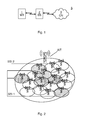
- FIG. 3 schematically illustrates three different TAs shown with different patterns. Each TA has a different TAC, TAC A, TAC B, and TAC C.
- Location information is typically used for paging purposes.
- the purpose of paging in LTE is to transmit paging information to a UE in radio resource control idle mode (RRC_IDLE) and/or to notify UEs in RRC_IDLE and UEs in RRC connected mode (RRC_CONNECTED) about a system information change and/or, to transmit an earthquake and tsunami warning system (ETWS) primary notification and/or ETWS secondary notification and/or, to transmit a commercial mobile alert system (CMAS) notification.
- RRC_IDLE radio resource control idle mode
- RRC_CONNECTED RRC connected mode
- ETWS earthquake and tsunami warning system
- CMAS commercial mobile alert system
- the paging message in LTE may include a paging record—which comprises one or more UE identities and the core network domain, and different indications such as system information modification, ETWS indication, CMAS indication, and extended access barring (EAB) parameters modification indication.
- a paging record which comprises one or more UE identities and the core network domain, and different indications such as system information modification, ETWS indication, CMAS indication, and extended access barring (EAB) parameters modification indication.
- the NW When the network (NW) sends a paging message to the UE, the NW includes the paging radio network temporary identity (P-RNTI) in a physical downlink control channel (PDCCH). All UEs which decode the P-RNTI will acquire the paging message which will be contained in a physical downlink shared channel (PDSCH).
- the PDCCH indicates resources blocks allocated in the PDSCH for a paging channel (PCH) where the paging message is contained.
- PCH paging channel
- the paging message will include the UE ID for which data is awaiting, and the UE will start a random access to get an RRC connection.
- the network can transmit the user plane data in a downlink shared channel (DL-SCH).
- DL-SCH downlink shared channel
- the UE needs to read the system information and acquire the new/updated information according to how it is specified.
- the system information block carrying such information may contain several hundreds of bits to deliver the message to all the UEs in a certain area.
- a paper “A clean slate radio network designed for maximum energy performance” was published in Personal, Indoor, and Mobile Radio Communication (PIMRC), 2014 IEEE 25th Annual International Symposium on 2-5 Sep. 2014 Page(s): 1300-1304.
- PIMRC Personal, Indoor, and Mobile Radio Communication
- AIT access information table
- SSI system signature sequence or system signature index
- the AIT is broadcasted to the terminal with a long periodicity, e.g. every 10 seconds.
- the SSI can be transmitted more frequently, e.g. every 100 ms.
- the SSI transmission also contains synchronization features to obtain time and frequency alignment.
- the SSI is typically transmitted much more often than the AIT, and the AIT may not even be transmitted by all access nodes and/or on all carrier frequencies.
- the AIT is a collection of different system information configurations, see e.g. FIG. 4 .
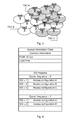
- FIG. 4 schematically illustrates an example of an AIT.
- the table is shown comprising a first common part including a public land mobile number (PLMN) ID list and a local time.
- the table is thereafter shown to include a SSI mapping for a first carrier frequency X, having three different SSIs 1 - 3 each having their own access configuration A-C.
- the table is finally shown to include another SSI mapping for a second carrier frequency Y, having two different SSIs 1 - 2 each having their own access configuration ⁇ - ⁇ .
- PLMN public land mobile number
- These system information configurations may carry information related to the network access, such as random access parameters.
- An AIT hence consists of a number of table records, each containing a complete set of access configuration parameters. Such a table record can be referred to as a table entry. Each record or entry is also associated with an index, which is above referred to as the SSI.
- a method for indicating system information configuration updates to wireless terminals is performed in a network node of a wireless communication network and comprises: determining that a system information configuration has been updated, and transmitting a paging message comprising information indicating to a wireless terminal receiving the paging message whether the updated system information configuration is relevant and/or how to react to the update.
- a wireless terminal can avoid unnecessary updates of system information configurations stored in the wireless terminal, thus reducing energy consumption and network access delays.
- the paging message may comprise at least one updated system information parameter of the updated system information configuration.
- the paging message may comprise an index associated with an entry in a table, the table comprising multiple different system information configurations mapped to respective indices, the index indicating system information configuration affected by the update.
- the paging message may comprise an indication to the wireless terminal to not use a stored copy of the indicated system information configuration until the wireless terminal has updated the stored copy of the system information configuration.
- the paging message may comprise an indication to the wireless terminal to not access the wireless communication network until the wireless terminal has updated a stored copy of the system information configuration.
- the paging message may comprise a validity value associated with the index, the validity value enabling to determine a validity of system information configuration indicated by the index.
- the paging message may comprise a validity area for the updated system information configuration, the validity area indicating an area wherein the updated system information configuration is applicable.
- the paging message may comprise an indication of where and/or how updated system information configuration can be acquired.
- a method for determining updates to system information configuration stored in a wireless terminal is performed in the wireless terminal of a wireless communication network and comprises: receiving a paging message from a network node comprising information indicating to the wireless terminal whether an updated system information configuration is relevant for the wireless terminal and/or how to react to the update, and determining whether to update at least a part of system information configuration stored in the wireless terminal based on the information comprised in the received paging message.
- the determining may comprise determining whether to update at least part of the system information configuration stored in the wireless terminal by comparing the stored system information configuration with the information comprised in the received paging message.
- the paging message may comprise an index associated with an entry in a table, the table comprising multiple different system information configurations mapped to respective indices, the index indicating system information configuration affected by the update.
- the wireless terminal may not use the stored system information configuration of the indicated index until the wireless terminal has updated the stored system information configuration.
- the wireless terminal may alternatively not access the wireless communication network until the wireless terminal has updated the stored system information configuration.
- the paging message may comprise a validity value associated with the index, wherein determining may comprise determining whether stored system information configuration indicated by the index is valid based on the validity value, and determine to update the stored system information configuration when determined to be invalid.
- the paging message may comprise a validity area for the updated system information configuration indicating whether the wireless terminal is in an area wherein the updated system information configuration is used and the determining may comprise determining to update the system information configuration stored in the wireless terminal when the wireless terminal is currently in the validity area.
- the method may further comprise extracting the indication from the received paging message.
- the method may further comprise updating at least a part of system information configuration stored in the wireless terminal when it is determined to update.
- a network node for indicating system information configuration updates to wireless terminals of a wireless communication network.
- the network node comprises processing circuitry, including a processor, and a computer program product storing instructions that, when executed by the processor, causes the network node to: determine that a system information configuration has been updated, and transmit a paging message comprising information indicating to a wireless terminal receiving the paging message whether the updated system information configuration is relevant and/or how to react to the update.
- a wireless terminal for determining updates to a system information configuration stored in a wireless terminal of a wireless communication network.
- the wireless terminal comprises processing circuitry, including a processor, and a computer program product storing instructions that, when executed by the processor, causes the wireless terminal to: receive a paging message from a network node comprising information indicating to the wireless terminal whether an updated system information configuration is relevant for the wireless terminal and/or how to react to the update, and determine whether to update at least a part of system information configuration stored in the wireless terminal based on the information comprised in the received paging message.
- a network node for indicating system information configuration updates to wireless terminals of a wireless communication network.
- the network node comprises: a determination module configured to determine that a system information configuration has been updated, and a communication module configured to transmit a paging message comprising information indicating to a wireless terminal receiving the paging message whether the updated system information configuration is relevant and/or how to react to the update.
- a wireless terminal for determining updates to a system information configuration stored in a wireless terminal of a wireless communication network.
- the wireless terminal comprises: a communication module configured to receive a paging message comprising information indicating to the wireless terminal whether an updated system information configuration is relevant for the wireless terminal and/or how to react to the update, a determination module configured to determine whether to update at least a part of system information configuration stored in the wireless terminal based on the information comprised in the received paging message.
- a computer program for indicating system information configuration updates to wireless terminals of a wireless communication network.
- the computer program comprises computer program code which, when run on a processor of a network node in the wireless communication network, causes the network node to: determine that a system information configuration has been updated, and transmit a paging message comprising information indicating to a wireless terminal receiving the paging message whether the updated system information configuration is relevant and/or how to react to the update.
- a computer program for determining updates to a system information configuration stored in a wireless terminal of a wireless communication network.
- the computer program comprises computer program code which, when run on a processor of a wireless terminal in the wireless communication network, causes the wireless terminal to: receive a paging message from a network node comprising information indicating to the wireless terminal whether an updated system information configuration is relevant for the wireless terminal and/or how to react to the update, and determine whether to update at least a part of system information configuration stored in the wireless terminal based on the information comprised in the received paging message.
- a computer program product comprising a computer program and a computer readable storage means on which the computer program is stored.
- FIG. 1 is a schematic diagram illustrating an environment where embodiments presented herein can be applied;
- FIG. 2 is a schematic diagram illustrating different set of nodes
- FIG. 3 is schematic diagram illustrating different tracking areas
- FIG. 4 is a schematic diagram illustrating an access information table
- FIG. 5 is a schematic diagram illustrating some components of a network node or a wireless terminal
- FIGS. 6A-6B are flow charts illustrating methods for embodiments presented herein;
- FIG. 7 is a schematic diagram showing functional modules of a network node or a wireless terminal according to embodiments.
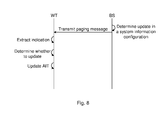
- FIG. 8 is a schematic sequence chart illustrating an embodiment presented herein.
- a paging message sent from a network to a user equipment indicates that there has been a change in system information but it does not carry further information.
- the UE does need to acquire master information block (MIB)/system information blocks (SIBs) to learn what system information that is new or updated.
- MIB master information block
- SIBs system information blocks
- a wireless terminal may be configured with a discontinuous reception (DRX) cycle for monitoring paging, like in a long term evolution (LTE) system.
- DRX discontinuous reception
- LTE long term evolution
- the UE wakes up in time to check whether a paging message for it is transmitted.
- a UE with a long DRX cycle may need to re-synchronize to a down link (DL), using e.g. the SSI signal or another available synch signal.
- DL down link
- the access information table is used to provide system information configurations, and may be changed more or less frequently as the network is dynamically optimized.
- the network may e.g. be dynamically optimized based on load, and when nodes are turned on and off.
- a connected UE may receive a dedicated AIT update message, or a dedicated indication to read a broadcasted MT.
- a dormant UE has a chance to read the AIT, verify its validity, and store a copy of it during wake-up periods according to its DRX configuration.
- the AIT contains a list of SSI, in which each SSI maps to a set of system information parameters of a system information configuration. When detecting and receiving a certain SSI, the UE retrieves the stored list, finds the matching SSI. The system information parameters in the entry associated with that SSI are used e.g. for accessing the network.
- the AIT which carries a set of possible system information configurations, may be updated at any point in time. This is similar to LTE, in which system information blocks (SIBs) can be changed.
- SIBs system information blocks
- the AIT may be transmitted by a macro layer and the UE may be served (or be camping) in a small cell which is within the macro cell coverage. These two layers may be in different frequencies. It may also be that one of the layers is defined by a portion of the total bandwidth and the other layer is another portion of the total available bandwidth (or the rest).
- the MT may further be transmitted with a long periodicity, in the order of seconds. This means that every time an MT change is indicated, an UE may take a long time to acquire the updated information. This could cause issues such as that the UE may access the network with the wrong (not updated) configuration. Another consequence could be increased delay to transmit data if the UE is aware that the system information or MT has been updated, and the UE hence delays its network access and transmissions until it acquires the MT again.
- An UE may be in a DRX cycle meaning that it does not monitor the DL channels for a period of time.
- the DRX cycle could be quite long, e.g. an hour. This means that UEs with long DRX cycles may miss the indications sent by the network.
- the UE needs to remain awake monitoring the DL until the AIT is transmitted. As indicated above, the AIT may not be transmitted often. This will result in an increased UE energy consumption.
- FIG. 2 schematically illustrates three set of network nodes.
- a first one of the set of network nodes is transmitting SSI 1 and is shown with three distinct dashed areas.
- a second set of network nodes is transmitting SSI 2 and is shown with adjacent areas.
- a third set of network nodes a macro area encompassing all areas of the first and second sets of network node, distributes an AIT which will contain random access parameters to access SSI 1 and SSI 2 .
- the AIT will cover many different configurations, potentially all configurations that are used in the entire network. If the AIT update only affects a limited set of configurations, the network will anyway need to inform all the UEs within an area in which the AIT is distributed, so all the UEs in that area have the updated information. Considering that the area could be quite large, potentially the entire network, and that there may be UEs with different DRX cycles, the network may need to send the system information change flag for a very long period of time, which increases signalling in that entire area.
- Wireless terminals may comprise, for example, cellular telephones, personal digital assistants, smart phones, laptop computers, handheld computers, machine-type communication/machine-to-machine (MTC/M2M) devices or other devices with wireless communication capabilities.
- Wireless terminals may refer to terminals that are installed in fixed configurations, such as in certain machine-to-machine applications, as well as to portable terminals, or terminals installed in motor vehicles.
- the system information configuration is comprised of system information parameters that may comprise one or more of the following examples: access configuration parameters, PLMNs information, frequency bands information and selection, cell selection, access barring parameters, ETWS, and CMAS.
- the further information may e.g. be one or more of the following: the AIT index, i.e. the SSI, which is updated; the AIT entry and the parameters changed in that configuration; indication(s) of where in the radio resource grid, such as time and frequency, the AIT is transmitted; importance and/or relevance of the system information change and actions upon it; and possible additional items.
- This further information can facilitate for the wireless terminal to quickly and/or efficiently acquire the updated AIT and can also form the basis for a decision of the wireless terminal of how to react to the indicated AIT update. Enabling such selective reactions minimizes the negative consequences for a wireless terminal in terms of e.g. delayed access and increased energy consumption.
- the wireless terminal does not have to wait for the MT to be transmitted.
- the wireless terminal monitors the DL paging channel and then returns to a DRX sleep mode i.e. the wireless terminal stops monitoring the DL until the next paging occasion. If all updates are transmitted during the time the wireless terminal is listening, there is very limited impact on the battery consumption thereof.
- the wireless communication network By controlling the area and wireless terminals to which the wireless communication network sends updated AIT information using the paging message, signalling in the wireless communication network is reduced.
- the information about the AIT updates that is included in the paging message with the AIT update indication can facilitate for the wireless terminal to quickly and/or efficiently form the basis for a decision of the wireless terminal of how to react to the indicated AIT update. Enabling such selective reactions minimizes the negative consequences for a wireless terminal in terms of e.g. delayed access and increased energy consumption.
- a wireless terminal can avoid unnecessary awake time to read possibly changed AIT information.
- a wireless terminal can also avoid unnecessary delay of a wireless communication network access and uplink (UL) transmission.
- the wireless communication network uses paging messages to indicate to the wireless terminals that a change has happened.
- the network node responsible for transmission of the concerned paging message may determine a change by being informed either by the network node responsible for the AIT transmission or by an operation and maintenance system.
- the change of the MT may be triggered and requested by the operation and maintenance system or by one or more of the network nodes.
- the system or node may e.g. use a self-organizing network function that implies that a change of some system information parameter(s) would be appropriate.
- the change may alternatively be based on preconfigured rules.
- certain circumstances change in the relevant part of the network i.e. the part for which the AIT is valid
- the AIT information should be adapted accordingly.
- a network node may e.g. be a base station, a baseband unit (i.e. containing part of the base station functionality), a controller node (such as a cluster head or a radio network controller) or a core network node (such as an Mobility Management Entity MME).
- a baseband unit i.e. containing part of the base station functionality
- a controller node such as a cluster head or a radio network controller
- a core network node such as an Mobility Management Entity MME
- the presented solution may comprise the transmission of one or more of the following information comprised in the paging message:
- a wireless terminal When a wireless terminal receives a paging message indicating update of system information configurations, it may react dependent thereon.
- the wireless terminal may have a set of rules of how to react to received information.
- the wireless terminal may alternatively or additionally react to received information based on indications or instructions additionally received in the paging message. Actions may be relevant, e.g. if the updated information content is not included or indicated in the message, and may be grouped in the following way:
- Examples of actions that are triggered dependent on different information sent to the wireless terminal in the paging message i.e. examples of how the wireless terminal may react to an update indicated in the paging message, are presented in the following.
- the signalled validity area in the paging message is the area in which the wireless terminal currently is.
- the validity value indicates to the wireless terminal that it has stored an outdated value for one or more system information configuration parameters, and the area in which the wireless terminal is camping is using a SSI which has been updated.
- the wireless terminal will then acquire the AIT immediately, or update the parameters immediately and may not access the wireless communication network otherwise.
- the signalled validity area in the paging message is the area in which the wireless terminal currently is.
- the validity value indicates to the wireless terminal that it has stored an outdated value, and the area in which the wireless terminal is camping is using a different SSI than the one(s) which has/have been updated.
- the wireless terminal will then not use the system access configuration of the indicated SSI(s) until the value is updated, but may use the system access configurations of other SSI, e.g. the one used in the area the wireless terminal is camping in.
- the signalled validity area in the paging message is a different area than the area the wireless terminal is currently located in.
- the wireless terminal shall not use the system access configuration of the indicated SSI in the indicated area until the value is updated, but the actions of the wireless terminal are unaffected as long as it remains in an area outside the signalled validity area.
- the signalled validity area in the paging message is the area in which the wireless terminal currently is located.
- the validity value indicates to the wireless terminal that it has stored an updated, i.e. valid, value.
- the wireless terminal does not need to do anything as it has the latest information.
- FIG. 1 schematically illustrates a wireless communication network 5 environment where embodiments presented herein can be applied.
- a wireless terminal (WT) 1 is connectable to a network node 2 acting as a base station (BS) in terms of sending paging messages to the wireless terminal 1 , in turn connectable to a core network 3 .
- BS base station
- a sequence chart schematically illustrates method steps with reference to FIG. 8 .
- the BS 2 first determines that a system information configuration has been updated and what parts of it that has been updated.
- the BS 2 thereafter sends a paging message to one or more WT(s) 1 in its operational area.
- the paging message comprises information indicating whether the updated system information configuration is relevant for the receiving wireless terminal and how to react to the update.
- a WT 1 receiving the paging message thereafter extracts the indication from the received paging message.
- the extracted information may include indication of one or more of: system information changes, system information signalling changes, affected SSIs, affected wireless terminals, and whether the access node transmitting the paging message is affected by the system information change.
- the WT 1 determines whether to update at least a part of its stored AIT based on the received and extracted indication. When the update is determined to be relevant for the WT 1 , at least the relevant parts of the AIT are read from the paging message and updated in a copy thereof stored in the WT 1 .
- the wireless terminal may e.g. check a sequence number of the received information and compare the received sequence number with a sequence number of stored corresponding information to determine if the stored information is outdated or not. When the update is determined not relevant for the WT 1 , no further action is needed by the wireless terminal.
- Relevance of system information configuration changes may comprise one or more of the aspects: elements of system information configuration, e.g. parameters in one entry associated with one SSI, of the AIT that have changed; system information signalling mechanisms that have changed, system information index instances that are affected, e.g. SSIs that are affected because their respective associated AIT entry has been changed in one or more parameter(s); wireless terminals that are affected; and whether the network node transmitting the system information change indication is affected by the system information configuration update; and embedding information about one or more of the aspects in a paging message and transmitting the paging message.
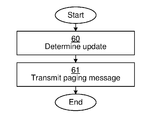
- a method, according to an embodiment, for indicating system information configuration updates to wireless terminals 1 is presented with reference to FIG. 6A .
- the method is performed in a network node 2 of a wireless communication network 5 and comprises: determining 60 that a system information configuration has been updated, and transmitting 61 a paging message comprising information indicating to a wireless terminal receiving the paging message whether the updated system information configuration is relevant and/or how to react to the update.
- the paging message may instead comprises information indicating to a wireless terminal receiving the paging message whether the updated system information configuration is relevant to it and/or indicating an expected action in response.
- the paging message may comprise an index associated with an entry in a table, the table comprising multiple different system information configurations mapped to respective indices, the index indicating system information configuration affected by the update.
- the index may be a SSI and the table may be an AIT as described previously.
- the paging message may comprises an indication to the wireless terminal to not use a stored copy of the indicated system information configuration until the wireless terminal has updated the stored copy of the system information configuration.
- the paging message may alternatively comprise an indication to the wireless terminal to not access the wireless communication network until the wireless terminal has updated a stored copy of the system information configuration.
- the paging message may comprise a validity value associated with the index, the validity value enabling to determine a validity of system information configuration indicated by the index.
- the paging message may comprise a validity area for the updated system information configuration, the validity area indicating an area wherein the updated system information configuration is applicable.
- the paging message may comprise an indication of where and/or how updated system information configuration can be acquired.
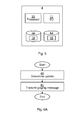
- a method, according to an embodiment, for determining updates to a system information configuration stored in a wireless terminal 1 is presented with reference to FIG. 6B .
- the method is performed in the wireless terminal of a wireless communication network 5 and comprises: receiving 62 a paging message from a network node comprising information indicating to the wireless terminal whether an updated system information configuration is relevant for the wireless terminal and/or how to react to the update, and determining 64 whether to update at least a part of system information configuration stored in the wireless terminal based on the information comprised in the received paging message.
- the determining 64 may comprise determining whether to update at least part of the system information configuration stored in the wireless terminal by comparing the stored system information configuration with the information comprised in the received paging message.
- the wireless terminal may e.g. check a sequence number of the received information and compare the received sequence number with a sequence number of stored corresponding information to determine if the stored information is outdated or not.
- the network may associate a sequence number with the entire system information and/or use one or more sequence numbers, each associated with a part of the system information. The network would increase a sequence number every time the information it is associated with is updated.
- Another way to enable similar possibilities for a wireless terminal to determine whether its stored information is still valid is to provide a piece of data that represents a condensed form of the information it is associated with. This data could e.g. be a hash or a redundancy check code (e.g. a Cyclic Redundancy Check, CRC) computed on the associated information.
- CRC Cyclic Redundancy Check
- the paging message may comprise an index associated with an entry in a table, the table comprising multiple different system information configurations mapped to respective indices, the index indicating system information configuration affected by the update.
- the wireless terminal may not use the stored system information configuration of the indicated index until the wireless terminal has updated the stored system information configuration.
- the wireless terminal may alternatively not access the wireless communication network until the wireless terminal has updated the stored system information configuration.
- the paging message may comprise a validity value associated with the index, wherein determining 64 comprises determining whether stored system information configuration indicated by the index is valid based on the validity value, and determine to update the stored system information configuration when determined to be invalid.
- the paging message may comprises a validity area for the updated system information configuration indicating whether the wireless terminal is in an area wherein the updated system information configuration is used and the determining 64 may comprise determining to update the system information configuration stored in the wireless terminal when the wireless terminal is currently in the validity area.
- the method may further comprise extracting 63 the indication from the received paging message.
- the method may further comprise updating 65 at least a part of system information configuration stored in the wireless terminal when it is determined 64 to update.
- a network node for indicating system information configuration updates to wireless terminals 1 of a wireless communication network 5 , is presented with reference to FIG. 5 .
- the network node 2 comprises processing circuitry, including: a processor 10 and a computer program product 12 , 13 storing instructions that, when executed by the processor, causes the network node to: determine 60 that a system information configuration has been updated, and transmit 61 a paging message comprising information indicating to a wireless terminal receiving the paging message whether the updated system information configuration is relevant and/or how to react to the update.
- a wireless terminal for determining updates to a system information configuration stored in a wireless terminal of a wireless communication network 5 , is presented with reference to FIG. 5 .
- the wireless terminal 1 comprises processing circuitry, including: a processor 10 and a computer program product 12 , 13 storing instructions that, when executed by the processor, causes the wireless terminal to: receive 62 a paging message from a network node comprising information indicating to the wireless terminal whether an updated system information configuration is relevant for the wireless terminal and/or how to react to the update, and determine 64 whether to update at least a part of system information configuration stored in the wireless terminal based on the information comprised in the received paging message.
- a network node for indicating system information configuration updates to wireless terminals 1 of a wireless communication network 5 , is presented with reference to FIG. 7 .
- the network node 2 comprises: a determination module 70 configured to determine 60 that a system information configuration has been updated, and a communication module 71 configured to transmit 61 a paging message comprising information indicating to a wireless terminal receiving the paging message whether the updated system information configuration is relevant and/or how to react to the update.
- a wireless terminal for determining updates to a system information configuration stored in a wireless terminal of a wireless communication network 5 , is presented with reference to FIG. 7 .
- the wireless terminal 1 comprises: a communication module 71 configured to receive 62 a paging message from a network node comprising information indicating to the wireless terminal whether an updated system information configuration is relevant for the wireless terminal and/or how to react to the update, and a determination module 70 configured to determine 64 whether to update at least a part of system information configuration stored in the wireless terminal based on the information comprised in the received paging message.
- a computer program 14 , 15 for indicating system information configuration updates to wireless terminals 1 of a wireless communication network 5 , is presented.
- the computer program comprises computer program code which, when run on a processor 10 of a network node 2 in the wireless communication network, causes the network node to: determine 60 that a system information configuration has been updated, and transmit 61 a paging message comprising information indicating to a wireless terminal receiving the paging message whether the updated system information configuration is relevant and/or how to react to the update.
- a computer program 14 , 15 for determining updates to a system information configuration stored in a wireless terminal of a wireless communication network 5 , is presented, the computer program comprises computer program code which, when run on a processor 10 of a wireless terminal 1 in the wireless communication network, causes the wireless terminal to: receive 62 a paging message from a network node comprising information indicating to the wireless terminal whether an updated system information configuration is relevant for the wireless terminal and/or how to react to the update, and determine 64 whether to update at least a part of system information configuration stored in the wireless terminal based on the information comprised in the received paging message.
- a computer program product 12 , 13 comprising a computer program 14 , 15 and a computer readable storage means on which the computer program 14 , 15 is stored, is presented.
- FIG. 5 is a schematic diagram showing some components of the network node 2 or the wireless terminal 1 , generically numbered 4 .
- a processor 10 may be provided using any combination of one or more of a suitable central processing unit, CPU, multiprocessor, microcontroller, digital signal processor, DSP, application specific integrated circuit etc., capable of executing software instructions of a computer program 14 stored in a memory.
- the memory can thus be considered to be or form part of the computer program product 12 .
- the processor 10 may be configured to execute methods described herein with reference to FIGS. 6A-6B .
- the memory may be any combination of read and write memory, RAM, and read only memory, ROM.
- the memory may also comprise persistent storage, which, for example, can be any single one or combination of magnetic memory, optical memory, solid state memory or even remotely mounted memory.
- a second computer program product 13 in the form of a data memory may also be provided, e.g. for reading and/or storing data during execution of software instructions in the processor 10 .
- the data memory can be any combination of read and write memory, RAM, and read only memory, ROM, and may also comprise persistent storage, which, for example, can be any single one or combination of magnetic memory, optical memory, solid state memory or even remotely mounted memory.
- the data memory may e.g. hold other software instructions 15 , to improve functionality for the network node 2 or the wireless terminal 1 .
- the network node 2 or wireless terminal 1 may further comprise an input/output, I/O, interface ii including e.g. a user interface.
- the network node or wireless terminal may further comprise a receiver configured to receive signalling from other nodes, and a transmitter configured to transmit signalling to other nodes (not illustrated).
- Other components of the network node or wireless terminal are omitted in order not to obscure the concepts presented herein.
- FIG. 7 is a schematic diagram showing functional blocks of the network node 2 or the wireless terminal 1 , generically numbered 4 .
- the modules may be implemented as only software instructions such as a computer program executing in the cache server or only hardware, such as application specific integrated circuits, field programmable gate arrays, discrete logical components, transceivers, etc. or as a combination thereof. In an alternative embodiment, some of the functional blocks may be implemented by software and other by hardware.
- the modules correspond to the steps in the methods illustrated in FIGS. 6A-6B , comprising a determination module unit 70 , and a communication module unit 71 .
- modules are implemented by a computer program, it shall be understood that these modules do not necessarily correspond to process modules, but can be written as instructions according to a programming language in which they would be implemented, since some programming languages do not typically contain process modules.
- the determination module 70 is for determining update in a system information configuration for the wireless communication network. This module corresponds to the determine step 60 of FIG. 6A , the extract step 63 of FIG. 6B , the determine step 64 of FIG. 6B , and the update step 65 of FIG. 6B . This module can e.g. be implemented by the processor 10 of FIG. 5 , when running the computer program.
- the communication module 71 is for controlling wireless communication with the wireless communication network. This module corresponds to the transmit step 61 of FIG. 6A , and the receive step 62 of FIG. 6B . This module can e.g. be implemented by the processor 10 of FIG. 5 , when running the computer program.
Landscapes
- Engineering & Computer Science (AREA)
- Computer Networks & Wireless Communication (AREA)
- Signal Processing (AREA)
- Computer Security & Cryptography (AREA)
- Mobile Radio Communication Systems (AREA)
Applications Claiming Priority (1)
| Application Number | Priority Date | Filing Date | Title |
|---|---|---|---|
| PCT/SE2016/050360 WO2017188866A1 (fr) | 2016-04-25 | 2016-04-25 | Mise à jour de configuration d'informations système dans un réseau de communication sans fil |
Publications (1)
| Publication Number | Publication Date |
|---|---|
| US20180098269A1 true US20180098269A1 (en) | 2018-04-05 |
Family
ID=56511845
Family Applications (1)
| Application Number | Title | Priority Date | Filing Date |
|---|---|---|---|
| US15/102,736 Abandoned US20180098269A1 (en) | 2016-04-25 | 2016-04-25 | System Information Configuration Update in a Wireless Communication Network |
Country Status (4)
| Country | Link |
|---|---|
| US (1) | US20180098269A1 (fr) |
| EP (1) | EP3449669B1 (fr) |
| CN (1) | CN109076438A (fr) |
| WO (1) | WO2017188866A1 (fr) |
Cited By (16)
| Publication number | Priority date | Publication date | Assignee | Title |
|---|---|---|---|---|
| US10390291B2 (en) * | 2016-08-17 | 2019-08-20 | Telefonaktiebolaget Lm Ericsson (Publ) | Risk aware validity assessment of system information |
| US20210220477A1 (en) * | 2020-01-09 | 2021-07-22 | Mersana Therapeutics, Inc. | Site specific antibody-drug conjugates with peptide-containing linkers |
| US20220124614A1 (en) * | 2019-01-11 | 2022-04-21 | Sony Group Corporation | Communications devices, infrastructure equipment and methods |
| US11399333B2 (en) * | 2016-12-22 | 2022-07-26 | Sony Corporation | Apparatus and method for a mobile telecommunications system |
| US20220263713A1 (en) * | 2021-02-13 | 2022-08-18 | Oracle International Corporation | Invalidating cached flow information in a cloud infrastructure |
| EP4000323A4 (fr) * | 2019-07-19 | 2022-08-31 | Telefonaktiebolaget Lm Ericsson (Publ) | Déblocage, suspension et reconfiguration en radiomessagerie |
| US11671355B2 (en) | 2021-02-05 | 2023-06-06 | Oracle International Corporation | Packet flow control in a header of a packet |
| US11689455B2 (en) | 2020-05-28 | 2023-06-27 | Oracle International Corporation | Loop prevention in virtual layer 2 networks |
| US20230246956A1 (en) * | 2021-02-13 | 2023-08-03 | Oracle International Corporation | Invalidating cached flow information in a cloud infrastructure |
| WO2023158165A1 (fr) * | 2022-02-17 | 2023-08-24 | Lg Electronics Inc. | Procédé et appareil de gestion d'un identifiant de sous-groupe de radiomessagerie dans un système de communication sans fil |
| US11757773B2 (en) | 2020-12-30 | 2023-09-12 | Oracle International Corporation | Layer-2 networking storm control in a virtualized cloud environment |
| US11777897B2 (en) | 2021-02-13 | 2023-10-03 | Oracle International Corporation | Cloud infrastructure resources for connecting a service provider private network to a customer private network |
| US12284113B2 (en) | 2020-12-30 | 2025-04-22 | Oracle International Corporation | Layer-2 networking using access control lists in a virtualized cloud environment |
| US12289284B2 (en) | 2021-02-13 | 2025-04-29 | Oracle International Corporation | Cloud infrastructure resources for connecting a service provider private network to a customer private network |
| US12328257B2 (en) | 2020-07-14 | 2025-06-10 | Oracle International Corporation | Virtual layer-2 network |
| US12562984B2 (en) | 2020-12-30 | 2026-02-24 | Oracle International Corporation | Layer-2 networking storm control in a virtualized cloud environment |
Families Citing this family (1)
| Publication number | Priority date | Publication date | Assignee | Title |
|---|---|---|---|---|
| WO2019157668A1 (fr) * | 2018-02-13 | 2019-08-22 | 华为技术有限公司 | Procédé et appareil permettant d'obtenir un message de système |
Family Cites Families (6)
| Publication number | Priority date | Publication date | Assignee | Title |
|---|---|---|---|---|
| CN101873694B (zh) * | 2009-04-27 | 2013-01-09 | 电信科学技术研究院 | 系统信息变更通知的方法、系统及装置 |
| CN103237350B (zh) * | 2009-09-11 | 2016-03-30 | 华为技术有限公司 | 系统广播消息更新的通知、读取方法及设备 |
| CN102123479B (zh) * | 2010-01-08 | 2015-09-16 | 索尼公司 | 支持载波汇聚的通信系统及其系统信息更新方法和设备 |
| CN103220652B (zh) * | 2012-01-21 | 2016-09-07 | 华为技术有限公司 | 系统信息更新方法及接入网设备、用户设备 |
| KR101579030B1 (ko) * | 2012-04-05 | 2015-12-18 | 옵티스 셀룰러 테크놀로지, 엘엘씨 | 페이징 구성정보의 수신을 위한 어드밴스드 웨이크업 |
| EP2912891B1 (fr) * | 2012-10-29 | 2019-06-26 | Telefonaktiebolaget LM Ericsson (publ) | Procédé pour envoyer ou recevoir des informations système |
-
2016
- 2016-04-25 EP EP16742038.9A patent/EP3449669B1/fr active Active
- 2016-04-25 CN CN201680084853.5A patent/CN109076438A/zh active Pending
- 2016-04-25 WO PCT/SE2016/050360 patent/WO2017188866A1/fr not_active Ceased
- 2016-04-25 US US15/102,736 patent/US20180098269A1/en not_active Abandoned
Cited By (26)
| Publication number | Priority date | Publication date | Assignee | Title |
|---|---|---|---|---|
| US10390291B2 (en) * | 2016-08-17 | 2019-08-20 | Telefonaktiebolaget Lm Ericsson (Publ) | Risk aware validity assessment of system information |
| US11399333B2 (en) * | 2016-12-22 | 2022-07-26 | Sony Corporation | Apparatus and method for a mobile telecommunications system |
| US20220124614A1 (en) * | 2019-01-11 | 2022-04-21 | Sony Group Corporation | Communications devices, infrastructure equipment and methods |
| EP4000323A4 (fr) * | 2019-07-19 | 2022-08-31 | Telefonaktiebolaget Lm Ericsson (Publ) | Déblocage, suspension et reconfiguration en radiomessagerie |
| US20230007623A1 (en) * | 2019-07-19 | 2023-01-05 | Telefonaktiebolaget Lm Ericsson (Publ) | Release, Suspend and Reconfiguration in Paging |
| US12317223B2 (en) * | 2019-07-19 | 2025-05-27 | Telefonaktiebolaget Lm Ericsson (Publ) | Release, suspend and reconfiguration in paging |
| US20210220477A1 (en) * | 2020-01-09 | 2021-07-22 | Mersana Therapeutics, Inc. | Site specific antibody-drug conjugates with peptide-containing linkers |
| US11689455B2 (en) | 2020-05-28 | 2023-06-27 | Oracle International Corporation | Loop prevention in virtual layer 2 networks |
| US12177120B2 (en) | 2020-05-28 | 2024-12-24 | Oracle International Corporation | Loop prevention in virtual layer 2 networks |
| US12341689B2 (en) | 2020-07-14 | 2025-06-24 | Oracle International Corporation | Interface-based ACLS in a layer-2 network |
| US12341690B2 (en) | 2020-07-14 | 2025-06-24 | Oracle International Corporation | Systems and methods for a VLAN switching and routing service |
| US12328257B2 (en) | 2020-07-14 | 2025-06-10 | Oracle International Corporation | Virtual layer-2 network |
| US11757773B2 (en) | 2020-12-30 | 2023-09-12 | Oracle International Corporation | Layer-2 networking storm control in a virtualized cloud environment |
| US11765080B2 (en) | 2020-12-30 | 2023-09-19 | Oracle International Corporation | Layer-2 networking span port in a virtualized cloud environment |
| US12562984B2 (en) | 2020-12-30 | 2026-02-24 | Oracle International Corporation | Layer-2 networking storm control in a virtualized cloud environment |
| US11909636B2 (en) | 2020-12-30 | 2024-02-20 | Oracle International Corporation | Layer-2 networking using access control lists in a virtualized cloud environment |
| US12015552B2 (en) | 2020-12-30 | 2024-06-18 | Oracle International Corporation | Layer-2 networking information in a virtualized cloud environment |
| US12284113B2 (en) | 2020-12-30 | 2025-04-22 | Oracle International Corporation | Layer-2 networking using access control lists in a virtualized cloud environment |
| US11671355B2 (en) | 2021-02-05 | 2023-06-06 | Oracle International Corporation | Packet flow control in a header of a packet |
| US12289284B2 (en) | 2021-02-13 | 2025-04-29 | Oracle International Corporation | Cloud infrastructure resources for connecting a service provider private network to a customer private network |
| US20230246956A1 (en) * | 2021-02-13 | 2023-08-03 | Oracle International Corporation | Invalidating cached flow information in a cloud infrastructure |
| US11637770B2 (en) * | 2021-02-13 | 2023-04-25 | Oracle International Corporation | Invalidating cached flow information in a cloud infrastructure |
| US20220263713A1 (en) * | 2021-02-13 | 2022-08-18 | Oracle International Corporation | Invalidating cached flow information in a cloud infrastructure |
| US11777897B2 (en) | 2021-02-13 | 2023-10-03 | Oracle International Corporation | Cloud infrastructure resources for connecting a service provider private network to a customer private network |
| US12592877B2 (en) | 2021-02-13 | 2026-03-31 | Oracle International Corporation | Packet flow in a cloud infrastructure based on cached and non-cached configuration information |
| WO2023158165A1 (fr) * | 2022-02-17 | 2023-08-24 | Lg Electronics Inc. | Procédé et appareil de gestion d'un identifiant de sous-groupe de radiomessagerie dans un système de communication sans fil |
Also Published As
| Publication number | Publication date |
|---|---|
| EP3449669B1 (fr) | 2020-09-02 |
| EP3449669A1 (fr) | 2019-03-06 |
| WO2017188866A1 (fr) | 2017-11-02 |
| CN109076438A (zh) | 2018-12-21 |
Similar Documents
| Publication | Publication Date | Title |
|---|---|---|
| EP3449669B1 (fr) | Mise à jour de configuration d'informations système dans un réseau de communication sans fil | |
| US20240049137A1 (en) | Transmitting Wake-up Signals for Paging Operations | |
| US9843988B2 (en) | Modified access classes for machine type communication (MTC) devices during emergencies | |
| KR102288062B1 (ko) | CEL에 기초하여 eDRX 사이클에서 페이징 어케이전들을 결정하고 페이징 어케이전들을 모니터링하기 위한 방법 | |
| US12185247B2 (en) | Terminal waking method, device and storage medium | |
| CN108353347B (zh) | 控制对无线通信网络的接入 | |
| US20130210467A1 (en) | Apparatus and method for receiving paging message in wireless access system | |
| US20100272037A1 (en) | Method of transmitting broadcasting information | |
| US20180035372A1 (en) | Method and communication device for establishing a discontinuous reception mode configuration | |
| CA3130409C (fr) | Dispositif de communication sans fil, noeud de reseau d'acces radioelectrique, procedes et programmes informatiques destines a une escalade de radiorecherche efficace en puissance | |
| US12279266B2 (en) | Information transmission method, base station and terminal | |
| CN107040899A (zh) | 系统信息更新方法及装置 | |
| WO2017133462A1 (fr) | Procédé, dispositif et système d'indication de mise à jour de message système | |
| CN110663270A (zh) | 无线通信系统中的系统信息的有效性时间 | |
| CN110073698B (zh) | 无线通信中的m2m半持续性调度方法及其装置 | |
| EP4185020A1 (fr) | Procédé d'émission et de réception de signaux, noeud, et dispositif côté réseau | |
| CN116209032A (zh) | 一种通信方法及设备 | |
| US20210235252A1 (en) | Network Assisted Emergency Monitoring | |
| CN118400210A (zh) | 永久禁用终端设备 | |
| US10045377B2 (en) | Method for managing a wireless device | |
| JP7753405B2 (ja) | 端末、基地局及び無線通信方法 | |
| CN114930929B (zh) | 用于在无线通信中配置寻呼资源的方法、装置及系统 | |
| GB2574854A (en) | Cell selection procedures | |
| CN118435674A (zh) | 终端、基站以及通信方法 | |
| CN118216110A (zh) | 确定可用参考信号配置的方法、装置、设备及介质 |
Legal Events
| Date | Code | Title | Description |
|---|---|---|---|
| AS | Assignment |
Owner name: TELEFONAKTIEBOLAGET LM ERICSSON (PUBL), SWEDEN Free format text: ASSIGNMENT OF ASSIGNORS INTEREST;ASSIGNORS:PRADAS, JOSE LUIS;REIAL, ANDRES;RUNE, JOHAN;SIGNING DATES FROM 20160426 TO 20160428;REEL/FRAME:038845/0364 |
|
| STCV | Information on status: appeal procedure |
Free format text: APPEAL BRIEF (OR SUPPLEMENTAL BRIEF) ENTERED AND FORWARDED TO EXAMINER |
|
| STCV | Information on status: appeal procedure |
Free format text: EXAMINER'S ANSWER TO APPEAL BRIEF MAILED |
|
| STCB | Information on status: application discontinuation |
Free format text: ABANDONED -- AFTER EXAMINER'S ANSWER OR BOARD OF APPEALS DECISION |