US20220024924A1 - Solid state forms of lumateperone salts and processes for preparation of lumateperone and salts thereof - Google Patents
Solid state forms of lumateperone salts and processes for preparation of lumateperone and salts thereof Download PDFInfo
- Publication number
- US20220024924A1 US20220024924A1 US17/297,035 US201917297035A US2022024924A1 US 20220024924 A1 US20220024924 A1 US 20220024924A1 US 201917297035 A US201917297035 A US 201917297035A US 2022024924 A1 US2022024924 A1 US 2022024924A1
- Authority
- US
- United States
- Prior art keywords
- lumateperone
- compound
- process according
- salt
- tosylate
- Prior art date
- Legal status (The legal status is an assumption and is not a legal conclusion. Google has not performed a legal analysis and makes no representation as to the accuracy of the status listed.)
- Abandoned
Links
- 0 *C1=C2C(=CC=C1)C1=C(CCN(C)C1)N2CC(=O)CC.*C1=C2NC3=C(CN(C)CC3)C2=CC=C1.CC1=CC=C(C(=O)O[C@@H](C(=O)O)[C@@H](OC(=O)C2=CC=C(C)C=C2)C(=O)O)C=C1.CN1CCC2=C(C1)C1=CC=CC3=C1N2CC(=O)N3C.CN1CCC2=C(C1)C1=CC=CC3=C1N2CCN3C.[H][C@]12CCNC[C@@]1([H])C1=C3C(=CC=C1)N(C)CCN32 Chemical compound *C1=C2C(=CC=C1)C1=C(CCN(C)C1)N2CC(=O)CC.*C1=C2NC3=C(CN(C)CC3)C2=CC=C1.CC1=CC=C(C(=O)O[C@@H](C(=O)O)[C@@H](OC(=O)C2=CC=C(C)C=C2)C(=O)O)C=C1.CN1CCC2=C(C1)C1=CC=CC3=C1N2CC(=O)N3C.CN1CCC2=C(C1)C1=CC=CC3=C1N2CCN3C.[H][C@]12CCNC[C@@]1([H])C1=C3C(=CC=C1)N(C)CCN32 0.000 description 25
- UJKDEBFHWZDPSW-UHFFFAOYSA-N CN1CCC2=C(C1)C1=CC=CC3=C1N2CCN3C Chemical compound CN1CCC2=C(C1)C1=CC=CC3=C1N2CCN3C UJKDEBFHWZDPSW-UHFFFAOYSA-N 0.000 description 8
- QLGUCSLWLPCOTR-RYUDHWBXSA-N [H][C@]12CCNC[C@@]1([H])C1=C3C(=CC=C1)N(C)CCN32 Chemical compound [H][C@]12CCNC[C@@]1([H])C1=C3C(=CC=C1)N(C)CCN32 QLGUCSLWLPCOTR-RYUDHWBXSA-N 0.000 description 8
- MJOHKLNIJOJXKE-UHFFFAOYSA-N [H]C12=C([H])(CCN(C)C1)N1CCN(C)C3=C1C2=CC=C3 Chemical compound [H]C12=C([H])(CCN(C)C1)N1CCN(C)C3=C1C2=CC=C3 MJOHKLNIJOJXKE-UHFFFAOYSA-N 0.000 description 7
- DZGCHZSLYJIVKC-JPSYZCRXSA-N CC1=CC=C(C(=O)O[C@@H](C(=O)O)[C@@H](OC(=O)C2=CC=C(C)C=C2)C(=O)O)C=C1.[H][C@]12CCNC[C@@]1([H])C1=C3C(=CC=C1)N(C)CCN32 Chemical compound CC1=CC=C(C(=O)O[C@@H](C(=O)O)[C@@H](OC(=O)C2=CC=C(C)C=C2)C(=O)O)C=C1.[H][C@]12CCNC[C@@]1([H])C1=C3C(=CC=C1)N(C)CCN32 DZGCHZSLYJIVKC-JPSYZCRXSA-N 0.000 description 6
- NXTPSNSWEYJWAK-UHFFFAOYSA-N CN1CCC2=C(C1)C1=CC=CC3=C1N2CC(=O)N3C Chemical compound CN1CCC2=C(C1)C1=CC=CC3=C1N2CC(=O)N3C NXTPSNSWEYJWAK-UHFFFAOYSA-N 0.000 description 6
- QLGUCSLWLPCOTR-UHFFFAOYSA-N CN1CCN2C3=C1C=CC=C3C1CNCCC12 Chemical compound CN1CCN2C3=C1C=CC=C3C1CNCCC12 QLGUCSLWLPCOTR-UHFFFAOYSA-N 0.000 description 5
- RCUNZWFOXOPDCR-OPULUGQUSA-N CC1=CC=C(C(=O)O[C@@H](C(=O)O)[C@@H](OC(=O)C2=CC=C(C)C=C2)C(=O)O)C=C1.[H][C@]12CCNC[C@@]1([H])C1=C3C(=CC=C1)NCCN32 Chemical compound CC1=CC=C(C(=O)O[C@@H](C(=O)O)[C@@H](OC(=O)C2=CC=C(C)C=C2)C(=O)O)C=C1.[H][C@]12CCNC[C@@]1([H])C1=C3C(=CC=C1)NCCN32 RCUNZWFOXOPDCR-OPULUGQUSA-N 0.000 description 3
- CGCMGMZCUPGABT-UHFFFAOYSA-N [H]C12CCCCC1([H])N1CCN(C)C3=CC=CC2=C31 Chemical compound [H]C12CCCCC1([H])N1CCN(C)C3=CC=CC2=C31 CGCMGMZCUPGABT-UHFFFAOYSA-N 0.000 description 3
- KKBIAENFRNJFHS-UHFFFAOYSA-N BrC1=C2NC3=C(CNCC3)C2=CC=C1.Cl.O=C(Cl)OCC1=CC=CC=C1.O=C(OCC1=CC=CC=C1)N1CCC2=C(C1)C1=CC=CC(Br)=C1N2 Chemical compound BrC1=C2NC3=C(CNCC3)C2=CC=C1.Cl.O=C(Cl)OCC1=CC=CC=C1.O=C(OCC1=CC=CC=C1)N1CCC2=C(C1)C1=CC=CC(Br)=C1N2 KKBIAENFRNJFHS-UHFFFAOYSA-N 0.000 description 2
- VTBJNFSIFQEBPB-UHFFFAOYSA-N CN1CCN2C3=C(C=CC=C31)C1CN(CCCC(=O)C3=CC=C(F)C=C3)CCC12.O=S(=O)(O)C1=CC=CC=C1 Chemical compound CN1CCN2C3=C(C=CC=C31)C1CN(CCCC(=O)C3=CC=C(F)C=C3)CCC12.O=S(=O)(O)C1=CC=CC=C1 VTBJNFSIFQEBPB-UHFFFAOYSA-N 0.000 description 2
- HOIIHACBCFLJET-SFTDATJTSA-N [H][C@]12CCN(CCCC(=O)C3=CC=C(F)C=C3)C[C@@]1([H])/C1=C/C=C\C3=C1N2CCN3C Chemical compound [H][C@]12CCN(CCCC(=O)C3=CC=C(F)C=C3)C[C@@]1([H])/C1=C/C=C\C3=C1N2CCN3C HOIIHACBCFLJET-SFTDATJTSA-N 0.000 description 2
- ZVESQAXXOIYIOQ-XCPAUPJFSA-N *.*.*.*.*.*.*.*.BrC1=C2NC3=C(CNCC3)C2=CC=C1.BrC1=C2NC3CCNCC3C2=CC=C1.C.CNC(=O)CCl.Cl.Cl.Cl.II.NC(=O)CCl.NNC1=C(Br)C=CC=C1.O=C(CCCCl)C1=CC=C(F)C=C1.O=C1CCNCC1.S.S.S.S.S.S.S.S.[H][C@]12CCN(C(=O)OCC)C[C@@]1([H])C1=CC=CC(Br)=C1N2.[H][C@]12CCN(C(=O)OCC)C[C@@]1([H])C1=CC=CC(Br)=C1N2CC(N)=O.[H][C@]12CCN(C(=O)OCC)C[C@@]1([H])C1=CC=CC3=C1N2CC(=O)N3.[H][C@]12CCN(C(=O)OCC)C[C@@]1([H])C1=CC=CC3=C1N2CC(=O)N3C.[H][C@]12CCN(C(=O)OCC)C[C@@]1([H])C1=CC=CC3=C1N2CCN3C.[H][C@]12CCN(CCCCC3=CC=C(F)C=C3)C[C@@]1([H])C1=CC=CC3=C1N2CCN3C.[H][C@]12CCNC[C@@]1([H])C1=CC=CC(Br)=C1N2.[H][C@]12CCNC[C@@]1([H])C1=CC=CC3=C1N2CCN3C Chemical compound *.*.*.*.*.*.*.*.BrC1=C2NC3=C(CNCC3)C2=CC=C1.BrC1=C2NC3CCNCC3C2=CC=C1.C.CNC(=O)CCl.Cl.Cl.Cl.II.NC(=O)CCl.NNC1=C(Br)C=CC=C1.O=C(CCCCl)C1=CC=C(F)C=C1.O=C1CCNCC1.S.S.S.S.S.S.S.S.[H][C@]12CCN(C(=O)OCC)C[C@@]1([H])C1=CC=CC(Br)=C1N2.[H][C@]12CCN(C(=O)OCC)C[C@@]1([H])C1=CC=CC(Br)=C1N2CC(N)=O.[H][C@]12CCN(C(=O)OCC)C[C@@]1([H])C1=CC=CC3=C1N2CC(=O)N3.[H][C@]12CCN(C(=O)OCC)C[C@@]1([H])C1=CC=CC3=C1N2CC(=O)N3C.[H][C@]12CCN(C(=O)OCC)C[C@@]1([H])C1=CC=CC3=C1N2CCN3C.[H][C@]12CCN(CCCCC3=CC=C(F)C=C3)C[C@@]1([H])C1=CC=CC3=C1N2CCN3C.[H][C@]12CCNC[C@@]1([H])C1=CC=CC(Br)=C1N2.[H][C@]12CCNC[C@@]1([H])C1=CC=CC3=C1N2CCN3C ZVESQAXXOIYIOQ-XCPAUPJFSA-N 0.000 description 1
- KFPQBWLUILQZKW-HCBNPGDDSA-N *.*.*.*.*.CC1=CC=C(C(=O)OC(C(=O)O)[C@@H](OC(=O)C2=CC=C(C)C=C2)C(=O)O)C=C1.CC1=CC=C(S(=O)(=O)O)C=C1.O=C(CCCCl)C1=CC=C(F)C=C1.O=C(O)[C@H](O)C1=CC=CC=C1.O=S(=O)(O)C1=CC=CC=C1.O=S(=O)(O)C1=CC=CC=C1.S.S.S.S.S.[H][C@]12CCN(CCCC(=O)C3=CC=C(F)C=C3)C[C@@]1([H])C1=CC=CC3=C1N2CCN3C.[H][C@]12CCN(CCCC(=O)C3=CC=C(F)C=C3)C[C@@]1([H])C1=CC=CC3=C1N2CCN3C.[H][C@]12CCN(CCCC(=O)C3=CC=C(F)C=C3)C[C@@]1([H])C1=CC=CC3=C1N2CCN3C.[H][C@]12CCN(CCCC(=O)C3=CC=C(F)C=C3)C[C@@]1([H])C1=CC=CC3=C1N2CCN3C.[H][C@]12CCNC[C@@]1([H])C1=CC=CC3=C1N2CCN3C.[H][C@]12CCNC[C@@]1([H])C1=CC=CC3=C1N2CCN3C Chemical compound *.*.*.*.*.CC1=CC=C(C(=O)OC(C(=O)O)[C@@H](OC(=O)C2=CC=C(C)C=C2)C(=O)O)C=C1.CC1=CC=C(S(=O)(=O)O)C=C1.O=C(CCCCl)C1=CC=C(F)C=C1.O=C(O)[C@H](O)C1=CC=CC=C1.O=S(=O)(O)C1=CC=CC=C1.O=S(=O)(O)C1=CC=CC=C1.S.S.S.S.S.[H][C@]12CCN(CCCC(=O)C3=CC=C(F)C=C3)C[C@@]1([H])C1=CC=CC3=C1N2CCN3C.[H][C@]12CCN(CCCC(=O)C3=CC=C(F)C=C3)C[C@@]1([H])C1=CC=CC3=C1N2CCN3C.[H][C@]12CCN(CCCC(=O)C3=CC=C(F)C=C3)C[C@@]1([H])C1=CC=CC3=C1N2CCN3C.[H][C@]12CCN(CCCC(=O)C3=CC=C(F)C=C3)C[C@@]1([H])C1=CC=CC3=C1N2CCN3C.[H][C@]12CCNC[C@@]1([H])C1=CC=CC3=C1N2CCN3C.[H][C@]12CCNC[C@@]1([H])C1=CC=CC3=C1N2CCN3C KFPQBWLUILQZKW-HCBNPGDDSA-N 0.000 description 1
- XYKQJVOWZDBKIL-GGODJZCLSA-M *.B.BC1CCCO1.CCOC(=O)N1CCC(=O)CC1.CCOC(=O)N1CCC2=C(C1)C1=CC=CC3=C1N2CC(=O)N3.CCOC(=O)N1CCC2C(C1)C1=CC=CC3=C1N2CC(=O)N3.CCOC(=O)N1CCC2C(C1)C1=CC=CC3=C1N2CC(=O)N3C.CCOC(=O)N1CCC2C(C1)C1=CC=CC3=C1N2CCN3C.CN1CCN2C3=C1C=CC=C3C1CNCCC12.N#C[Na].O=C(CCCCl)C1=CC=C(F)C=C1.O=C1CNC2=C(C=CC=C2)N1.O=NN1CC(=O)NC2=C1C=CC=C2.O[K].S.[H][C@]12CCN(CCCC(=O)C3=CC=C(F)C=C3)C[C@@]1([H])C1=CC=CC3=C1N2CCN3C Chemical compound *.B.BC1CCCO1.CCOC(=O)N1CCC(=O)CC1.CCOC(=O)N1CCC2=C(C1)C1=CC=CC3=C1N2CC(=O)N3.CCOC(=O)N1CCC2C(C1)C1=CC=CC3=C1N2CC(=O)N3.CCOC(=O)N1CCC2C(C1)C1=CC=CC3=C1N2CC(=O)N3C.CCOC(=O)N1CCC2C(C1)C1=CC=CC3=C1N2CCN3C.CN1CCN2C3=C1C=CC=C3C1CNCCC12.N#C[Na].O=C(CCCCl)C1=CC=C(F)C=C1.O=C1CNC2=C(C=CC=C2)N1.O=NN1CC(=O)NC2=C1C=CC=C2.O[K].S.[H][C@]12CCN(CCCC(=O)C3=CC=C(F)C=C3)C[C@@]1([H])C1=CC=CC3=C1N2CCN3C XYKQJVOWZDBKIL-GGODJZCLSA-M 0.000 description 1
- HZJZABGZWJKLSD-ZCVSATDHSA-N *.BrC1=C2NC3=C(CNCC3)C2=CC=C1.BrC1=C2NC3CCNCC3C2=CC=C1.CCOC(=O)N1CCC2C(C1)C1=CC=CC3=C1N2CC(=O)N3.CCOC(=O)N1CCC2C(C1)C1=CC=CC3=C1N2CC(=O)N3C.CCOC(=O)N1CCC2C(C1)C1=CC=CC3=C1N2CCN3C.CCOC(=O)N1CCC2NC3=C(Br)C=CC=C3C2C1.CCOC(=O)N1CCC2NC3=C(N=C(C4=CC=CC=C4)C4=CC=CC=C4)C=CC=C3C2C1.CN1CCN2C3=C1C=CC=C3C1CNCCC12.Cl.Cl.N=C(C1=CC=CC=C1)C1=CC=CC=C1.NNC1=C(Br)C=CC=C1.O=C(CCCCl)C1=CC=C(F)C=C1.O=C1CCNCC1.S.[H][C@]12CCN(CCCC(=O)C3=CC=C(F)C=C3)C[C@@]1([H])C1=CC=CC3=C1N2CCN3C Chemical compound *.BrC1=C2NC3=C(CNCC3)C2=CC=C1.BrC1=C2NC3CCNCC3C2=CC=C1.CCOC(=O)N1CCC2C(C1)C1=CC=CC3=C1N2CC(=O)N3.CCOC(=O)N1CCC2C(C1)C1=CC=CC3=C1N2CC(=O)N3C.CCOC(=O)N1CCC2C(C1)C1=CC=CC3=C1N2CCN3C.CCOC(=O)N1CCC2NC3=C(Br)C=CC=C3C2C1.CCOC(=O)N1CCC2NC3=C(N=C(C4=CC=CC=C4)C4=CC=CC=C4)C=CC=C3C2C1.CN1CCN2C3=C1C=CC=C3C1CNCCC12.Cl.Cl.N=C(C1=CC=CC=C1)C1=CC=CC=C1.NNC1=C(Br)C=CC=C1.O=C(CCCCl)C1=CC=C(F)C=C1.O=C1CCNCC1.S.[H][C@]12CCN(CCCC(=O)C3=CC=C(F)C=C3)C[C@@]1([H])C1=CC=CC3=C1N2CCN3C HZJZABGZWJKLSD-ZCVSATDHSA-N 0.000 description 1
- OFXABIHBFYIOOA-UHFFFAOYSA-N B.C1CCOC1.CN1C(=O)CN2C3=C(CN(C(=O)OCC4=CC=CC=C4)CC3)C3=CC=CC1=C32.CN1CCN2C3=C(CN(C(=O)OCC4=CC=CC=C4)CC3)C3=CC=CC1=C32 Chemical compound B.C1CCOC1.CN1C(=O)CN2C3=C(CN(C(=O)OCC4=CC=CC=C4)CC3)C3=CC=CC1=C32.CN1CCN2C3=C(CN(C(=O)OCC4=CC=CC=C4)CC3)C3=CC=CC1=C32 OFXABIHBFYIOOA-UHFFFAOYSA-N 0.000 description 1
- SABUXARJMNTTCA-UHFFFAOYSA-N BrC1=C2NC3=C(CNCC3)C2=CC=C1.Cl.Cl.Cl.NNC1=C(Br)C=CC=C1.O=C1CCNCC1 Chemical compound BrC1=C2NC3=C(CNCC3)C2=CC=C1.Cl.Cl.Cl.NNC1=C(Br)C=CC=C1.O=C1CCNCC1 SABUXARJMNTTCA-UHFFFAOYSA-N 0.000 description 1
- KAEBAODQUOYETP-GDLUGKSFSA-N C.CC1=CC=C(C(=O)O[C@@H](C(=O)O)[C@@H](OC(=O)C2=CC=C(C)C=C2)C(=O)O)C=C1.[H][C@]12CCNC[C@@]1([H])C1=C3C(=CC=C1)NCCN32 Chemical compound C.CC1=CC=C(C(=O)O[C@@H](C(=O)O)[C@@H](OC(=O)C2=CC=C(C)C=C2)C(=O)O)C=C1.[H][C@]12CCNC[C@@]1([H])C1=C3C(=CC=C1)NCCN32 KAEBAODQUOYETP-GDLUGKSFSA-N 0.000 description 1
- QZUPNCAAACSUNL-UHFFFAOYSA-N C.CN1CCN2C3=C(CN(C(=O)OCC4=CC=CC=C4)CC3)C3=CC=CC1=C32.[H]C12CN(C(=O)OCC3=CC=CC=C3)CCC1([H])N1CCN(C)C3=C1C2=CC=C3 Chemical compound C.CN1CCN2C3=C(CN(C(=O)OCC4=CC=CC=C4)CC3)C3=CC=CC1=C32.[H]C12CN(C(=O)OCC3=CC=CC=C3)CCC1([H])N1CCN(C)C3=C1C2=CC=C3 QZUPNCAAACSUNL-UHFFFAOYSA-N 0.000 description 1
- HHXVXSCZDNTDAQ-OOKFDIOVSA-N CC1=CC=C(C(=O)OC(C(=O)O)[C@@H](OC(=O)C2=CC=C(C)C=C2)C(=O)O)C=C1.CN1CCN2C3=C(CN(C(=O)OCC4=CC=CC=C4)CC3)C3=CC=CC1=C32.[H]C12CN(C(=O)OCC3=CC=CC=C3)CCC1([H])N1CCN(C)C3=C1C2=CC=C3.[H]C12CNCCC1([H])N1CCN(C)C3=C1C2=CC=C3.[H][C@]12CCNC[C@@]1([H])C1=CC=CC3=C1N2CCN3C Chemical compound CC1=CC=C(C(=O)OC(C(=O)O)[C@@H](OC(=O)C2=CC=C(C)C=C2)C(=O)O)C=C1.CN1CCN2C3=C(CN(C(=O)OCC4=CC=CC=C4)CC3)C3=CC=CC1=C32.[H]C12CN(C(=O)OCC3=CC=CC=C3)CCC1([H])N1CCN(C)C3=C1C2=CC=C3.[H]C12CNCCC1([H])N1CCN(C)C3=C1C2=CC=C3.[H][C@]12CCNC[C@@]1([H])C1=CC=CC3=C1N2CCN3C HHXVXSCZDNTDAQ-OOKFDIOVSA-N 0.000 description 1
- KQZPKZBDGSLMPV-SSSDMKJZSA-N CC1=CC=C(C(=O)O[C@@H](C(=O)O)[C@@H](OC(=O)C2=CC=C(C)C=C2)C(=O)O)C=C1.[H]C12CNCCC1([H])N1CCN(C)C3=CC=CC2=C31.[H][C@]12CCNC[C@@]1([H])C1=C3C(=CC=C1)N(C)CCN32.[H][C@]12CCNC[C@@]1([H])C1=C3C(=CC=C1)N(C)CCN32 Chemical compound CC1=CC=C(C(=O)O[C@@H](C(=O)O)[C@@H](OC(=O)C2=CC=C(C)C=C2)C(=O)O)C=C1.[H]C12CNCCC1([H])N1CCN(C)C3=CC=CC2=C31.[H][C@]12CCNC[C@@]1([H])C1=C3C(=CC=C1)N(C)CCN32.[H][C@]12CCNC[C@@]1([H])C1=C3C(=CC=C1)N(C)CCN32 KQZPKZBDGSLMPV-SSSDMKJZSA-N 0.000 description 1
- LQCIAZMHMCLEMM-UHFFFAOYSA-N CCC(=O)CN1C2=C(CN(C(=O)OCC3=CC=CC=C3)CC2)C2=CC=CC(Br)=C21.CN1C(=O)CN2C3=C(CN(C(=O)OCC4=CC=CC=C4)CC3)C3=CC=CC1=C32 Chemical compound CCC(=O)CN1C2=C(CN(C(=O)OCC3=CC=CC=C3)CC2)C2=CC=CC(Br)=C21.CN1C(=O)CN2C3=C(CN(C(=O)OCC4=CC=CC=C4)CC3)C3=CC=CC1=C32 LQCIAZMHMCLEMM-UHFFFAOYSA-N 0.000 description 1
- XUNXSQIXRDKNSG-UHFFFAOYSA-N CCC(=O)CN1C2=C(CN(C(=O)OCC3=CC=CC=C3)CC2)C2=CC=CC(Br)=C21.CN1C(=O)CN2C3=C(CN(C(=O)OCC4=CC=CC=C4)CC3)C3=CC=CC1=C32.CN1CCN2C3=C(CN(C(=O)OCC4=CC=CC=C4)CC3)C3=CC=CC1=C32.O=C(OCC1=CC=CC=C1)N1CCC2=C(C1)C1=CC=CC(Br)=C1N2 Chemical compound CCC(=O)CN1C2=C(CN(C(=O)OCC3=CC=CC=C3)CC2)C2=CC=CC(Br)=C21.CN1C(=O)CN2C3=C(CN(C(=O)OCC4=CC=CC=C4)CC3)C3=CC=CC1=C32.CN1CCN2C3=C(CN(C(=O)OCC4=CC=CC=C4)CC3)C3=CC=CC1=C32.O=C(OCC1=CC=CC=C1)N1CCC2=C(C1)C1=CC=CC(Br)=C1N2 XUNXSQIXRDKNSG-UHFFFAOYSA-N 0.000 description 1
- YTXNDNLRGSOIOF-UHFFFAOYSA-N CCC(=O)CN1C2=C(CN(C(=O)OCC3=CC=CC=C3)CC2)C2=CC=CC(Br)=C21.CNC(=O)CCl.O=C(OCC1=CC=CC=C1)N1CCC2=C(C1)C1=CC=CC(Br)=C1N2 Chemical compound CCC(=O)CN1C2=C(CN(C(=O)OCC3=CC=CC=C3)CC2)C2=CC=CC(Br)=C21.CNC(=O)CCl.O=C(OCC1=CC=CC=C1)N1CCC2=C(C1)C1=CC=CC(Br)=C1N2 YTXNDNLRGSOIOF-UHFFFAOYSA-N 0.000 description 1
- TWCSPOXCAASUDX-UHFFFAOYSA-N CN1CCN2C3=C(CN(C(=O)OCC4=CC=CC=C4)CC3)C3=CC=CC1=C32 Chemical compound CN1CCN2C3=C(CN(C(=O)OCC4=CC=CC=C4)CC3)C3=CC=CC1=C32 TWCSPOXCAASUDX-UHFFFAOYSA-N 0.000 description 1
- OIHPSVYFIDUJRQ-UHFFFAOYSA-N [H]C12CN(C(=O)OCC3=CC=CC=C3)CCC1([H])N1CCN(C)C3=C1C2=CC=C3 Chemical compound [H]C12CN(C(=O)OCC3=CC=CC=C3)CCC1([H])N1CCN(C)C3=C1C2=CC=C3 OIHPSVYFIDUJRQ-UHFFFAOYSA-N 0.000 description 1
- LXEHNKUVNQPDOM-UHFFFAOYSA-N [H]C12CN(C(=O)OCC3=CC=CC=C3)CCC1([H])N1CCN(C)C3=C1C2=CC=C3.[H]C12CNCCC1([H])N1CCN(C)C3=C1C2=CC=C3 Chemical compound [H]C12CN(C(=O)OCC3=CC=CC=C3)CCC1([H])N1CCN(C)C3=C1C2=CC=C3.[H]C12CNCCC1([H])N1CCN(C)C3=C1C2=CC=C3 LXEHNKUVNQPDOM-UHFFFAOYSA-N 0.000 description 1
Images






Classifications
-
- C—CHEMISTRY; METALLURGY
- C07—ORGANIC CHEMISTRY
- C07D—HETEROCYCLIC COMPOUNDS
- C07D471/00—Heterocyclic compounds containing nitrogen atoms as the only ring hetero atoms in the condensed system, at least one ring being a six-membered ring with one nitrogen atom, not provided for by groups C07D451/00 - C07D463/00
- C07D471/12—Heterocyclic compounds containing nitrogen atoms as the only ring hetero atoms in the condensed system, at least one ring being a six-membered ring with one nitrogen atom, not provided for by groups C07D451/00 - C07D463/00 in which the condensed system contains three hetero rings
- C07D471/16—Peri-condensed systems
-
- A—HUMAN NECESSITIES
- A61—MEDICAL OR VETERINARY SCIENCE; HYGIENE
- A61K—PREPARATIONS FOR MEDICAL, DENTAL OR TOILETRY PURPOSES
- A61K31/00—Medicinal preparations containing organic active ingredients
- A61K31/33—Heterocyclic compounds
- A61K31/395—Heterocyclic compounds having nitrogen as a ring hetero atom, e.g. guanethidine or rifamycins
- A61K31/495—Heterocyclic compounds having nitrogen as a ring hetero atom, e.g. guanethidine or rifamycins having six-membered rings with two or more nitrogen atoms as the only ring heteroatoms, e.g. piperazine or tetrazines
- A61K31/4985—Pyrazines or piperazines ortho- or peri-condensed with heterocyclic ring systems
-
- A—HUMAN NECESSITIES
- A61—MEDICAL OR VETERINARY SCIENCE; HYGIENE
- A61P—SPECIFIC THERAPEUTIC ACTIVITY OF CHEMICAL COMPOUNDS OR MEDICINAL PREPARATIONS
- A61P25/00—Drugs for disorders of the nervous system
-
- C—CHEMISTRY; METALLURGY
- C07—ORGANIC CHEMISTRY
- C07C—ACYCLIC OR CARBOCYCLIC COMPOUNDS
- C07C309/00—Sulfonic acids; Halides, esters, or anhydrides thereof
- C07C309/01—Sulfonic acids
- C07C309/28—Sulfonic acids having sulfo groups bound to carbon atoms of six-membered aromatic rings of a carbon skeleton
- C07C309/29—Sulfonic acids having sulfo groups bound to carbon atoms of six-membered aromatic rings of a carbon skeleton of non-condensed six-membered aromatic rings
-
- C—CHEMISTRY; METALLURGY
- C07—ORGANIC CHEMISTRY
- C07C—ACYCLIC OR CARBOCYCLIC COMPOUNDS
- C07C59/00—Compounds having carboxyl groups bound to acyclic carbon atoms and containing any of the groups OH, O—metal, —CHO, keto, ether, groups, groups, or groups
- C07C59/40—Unsaturated compounds
- C07C59/42—Unsaturated compounds containing hydroxy or O-metal groups
- C07C59/48—Unsaturated compounds containing hydroxy or O-metal groups containing six-membered aromatic rings
- C07C59/50—Mandelic acid
-
- C—CHEMISTRY; METALLURGY
- C07—ORGANIC CHEMISTRY
- C07C—ACYCLIC OR CARBOCYCLIC COMPOUNDS
- C07C69/00—Esters of carboxylic acids; Esters of carbonic or haloformic acids
- C07C69/76—Esters of carboxylic acids having a carboxyl group bound to a carbon atom of a six-membered aromatic ring
-
- C—CHEMISTRY; METALLURGY
- C07—ORGANIC CHEMISTRY
- C07D—HETEROCYCLIC COMPOUNDS
- C07D471/00—Heterocyclic compounds containing nitrogen atoms as the only ring hetero atoms in the condensed system, at least one ring being a six-membered ring with one nitrogen atom, not provided for by groups C07D451/00 - C07D463/00
- C07D471/02—Heterocyclic compounds containing nitrogen atoms as the only ring hetero atoms in the condensed system, at least one ring being a six-membered ring with one nitrogen atom, not provided for by groups C07D451/00 - C07D463/00 in which the condensed system contains two hetero rings
- C07D471/04—Ortho-condensed systems
-
- C—CHEMISTRY; METALLURGY
- C07—ORGANIC CHEMISTRY
- C07B—GENERAL METHODS OF ORGANIC CHEMISTRY; APPARATUS THEREFOR
- C07B2200/00—Indexing scheme relating to specific properties of organic compounds
- C07B2200/13—Crystalline forms, e.g. polymorphs
Definitions
- the present disclosure relates to solid state forms of Lumateperone besylate, processes for preparation thereof and pharmaceutical compositions thereof.
- Lumateperone 1-(4-fluorophenyl)-4-((6bR,10aS)-3-methyl-2,3,6b,9,10,10a-hexahydro-1H-pyrido[3′,4′:4,5]pyrrolo[1,2,3-de]quinoxalin-8(7H)-yl)butan-1-one, referred to herein as compound 1 has the following chemical structure:
- Lumateperone Tosylate is under development for the treatment of central nervous system disorders including: schizophrenia, bipolar disorder, depression, sleep and behavioral disturbance in dementia, autism, and other neuropsychiatric disorders.
- Lumateperone and its acceptable pharmaceutical salts are described in U.S. Pat. No. USRE39,680.
- WO 2017/172784 discloses that in free base form, lumateperone is an oily, sticky solid with poor solubility, that making salts of the compound has proven to be difficult; and that the hydrochloride salt of lumateperone disclosed in U.S. Pat. No. 7,183,282 is hygroscopic and shows poor stability.
- WO 2017/172784 further discloses oxalate, 4-aminosalicylate and cyclamate salts of Lumateperone and crystalline forms thereof.
- International Publication No. WO 2017/172811 discloses cocrystals of Lumateperone with nicotinamide and isonicotinamide co-crystal forms.
- International Publication No. WO 2019/069591 discloses crystalline forms of Lumateperone HCl.
- IPCOM000258304D and IPCOM000257454D each disclose a further route for preparation of Lumateperone.
- Polymorphism the occurrence of different crystal forms, is a property of some molecules and molecular complexes.
- a single compound, like Lumateperone or salt thereof, may give rise to a variety of polymorphs having distinct crystal structures and physical properties like melting point, thermal behaviors (e.g. measured by thermogravimetric analysis—“TGA”, or differential scanning calorimetry—“DSC”), X-ray powder diffraction (XRPD) pattern, infrared absorption fingerprint, Raman absorption fingerprint, and solid state (13C-) NMR spectrum.
- TGA thermogravimetric analysis
- DSC differential scanning calorimetry
- Different solid state forms (including solvated forms) of an active pharmaceutical ingredient may possess different properties. Such variations in the properties of different solid state forms and solvates may provide a basis for improving formulation, for example, by facilitating better processing or handling characteristics, improving the dissolution profile, or improving stability (polymorph as well as chemical stability) and shelf-life. These variations in the properties of different solid state forms may also provide improvements to the final dosage form, for instance, if they serve to improve bioavailability. Different solid state forms and solvates of an active pharmaceutical ingredient may also give rise to a variety of polymorphs or crystalline forms, which may in turn provide additional opportunities to use variations in the properties and characteristics of a solid active pharmaceutical ingredient for providing an improved product.
- Discovering new solid state forms and solvates of a pharmaceutical product can provide materials having desirable processing properties, such as ease of handling, ease of processing, storage stability, and ease of purification or as desirable intermediate crystal forms that facilitate conversion to other polymorphic forms.
- New polymorphic forms and solvates of a pharmaceutically useful compound can also provide an opportunity to improve the performance characteristics of a pharmaceutical product (dissolution profile, bioavailability, etc.). It enlarges the repertoire of materials that a formulation scientist has available for formulation optimization, for example by providing a product with different properties, e.g., a different crystal habit, higher crystallinity or polymorphic stability which may offer better processing or handling characteristics, improved dissolution profile, or improved shelf-life.
- the present disclosure relates to solid state forms of Lumateperone Besylate.
- the present disclosure also relates to processes for preparation thereof, and pharmaceutical compositions including the solid state forms of Lumateperone Besylate.
- the present disclosure also provides uses of the said solid state forms of Lumateperone Besylate in the preparation of other solid state forms of Lumateperone Besylate, Lumateperone or other salts of Lumateperone and solid state forms thereof.
- the present disclosure also provides the said solid state forms of Lumateperone Besylate for use in the preparation of other solid state forms of Lumateperone Besylate, Lumateperone or other salts of Lumateperone and solid state forms thereof.
- the present disclosure encompasses use of the described solid state forms of Lumateperone Besylate in the preparation of pharmaceutical compositions and/or formulations, optionally for the treatment of treatment of central nervous system disorders such as schizophrenia, bipolar disorder, depression, sleep and behavioral disturbance in dementia, autism, and other neuropsychiatric disorders.
- central nervous system disorders such as schizophrenia, bipolar disorder, depression, sleep and behavioral disturbance in dementia, autism, and other neuropsychiatric disorders.
- the present disclosure encompasses the described solid state forms of Lumateperone Besylate for use in the preparation of pharmaceutical compositions and/or formulations, optionally for the treatment of central nervous system disorders such as schizophrenia, bipolar disorder, depression, sleep and behavioral disturbance in dementia, autism, and other neuropsychiatric disorders.
- central nervous system disorders such as schizophrenia, bipolar disorder, depression, sleep and behavioral disturbance in dementia, autism, and other neuropsychiatric disorders.
- the present disclosure further provides pharmaceutical compositions including the solid state forms of Lumateperone Besylate according to the present disclosure.
- the present disclosure encompasses pharmaceutical formulations including the described solid state forms of Lumateperone Besylate and at least one pharmaceutically acceptable excipient.
- the present disclosure encompasses processes to prepare said pharmaceutical formulations of Lumateperone Besylate including combining the described solid state forms of Lumateperone Besylate and at least one pharmaceutically acceptable excipient.
- solid state forms defined herein as well as the pharmaceutical compositions or formulations of the improved solid state form of Lumateperone Besylate can be used as medicaments, particularly for the treatment of central nervous system disorders, as specified above.
- the present disclosure also provides methods of treating particularly central nervous system disorders, as specified above, including administering a therapeutically effective amount of the improved solid state form of Lumateperone Besylate of the present disclosure, or at least one of the herein described pharmaceutical compositions or formulations, to a subject suffering from the above specified diseases, or otherwise in need of the treatment.
- the present disclosure also provides uses of the improved solid state form of Lumateperone Besylate of the present disclosure, or at least one of the above pharmaceutical compositions or formulations for the manufacture of medicaments, particularly for medicaments, particularly for the treatment of central nervous system disorders, as specified above.
- the present disclosure relates to crystalline Lumateperone tosylate:R-( ⁇ )-mandelic acid and a solid state form thereof.
- the present disclosure also relates to processes for preparation thereof, and pharmaceutical compositions including crystalline Lumateperone tosylate:R-( ⁇ )-mandelic acid or the described solid state form thereof.
- the present disclosure encompasses use of crystalline Lumateperone tosylate:R-( ⁇ )-mandelic acid or the described solid state form thereof in the preparation of pharmaceutical compositions and/or formulations, optionally for the treatment of central nervous system disorders such as schizophrenia, bipolar disorder, depression, sleep and behavioral disturbance in dementia, autism, and other neuropsychiatric disorders.
- central nervous system disorders such as schizophrenia, bipolar disorder, depression, sleep and behavioral disturbance in dementia, autism, and other neuropsychiatric disorders.
- the present disclosure encompasses crystalline Lumateperone tosylate:R-( ⁇ )-mandelic acid or the described solid state form thereof for use in the preparation of pharmaceutical compositions and/or formulations, optionally for the treatment of central nervous system disorders such as schizophrenia, bipolar disorder, depression, sleep and behavioral disturbance in dementia, autism, and other neuropsychiatric disorders.
- the present disclosure further provides pharmaceutical compositions including crystalline Lumateperone tosylate:R-( ⁇ )-mandelic acid or the described solid state form thereof.
- the present disclosure encompasses pharmaceutical formulations including crystalline Lumateperone tosylate:R-( ⁇ )-mandelic acid or the described solid state form thereof and at least one pharmaceutically acceptable excipient.
- the present disclosure encompasses processes to prepare said pharmaceutical formulations of crystalline Lumateperone tosylate:R-( ⁇ )-mandelic acid including combining crystalline Lumateperone tosylate:R-( ⁇ )-mandelic acid or the described solid state form thereof and at least one pharmaceutically acceptable excipient.
- Crystalline Lumateperone tosylate:R-( ⁇ )-mandelic acid or the described solid state form thereof can be used as a medicament, particularly for the treatment of central nervous system disorders, as specified above.
- the present disclosure also provides methods of treatment, particularly for the treatment of central nervous system disorders, as specified above, by administering a therapeutically effective amount of crystalline Lumateperone tosylate:R-( ⁇ )-mandelic acid or of the described solid state form thereof, or at least one of the herein described pharmaceutical compositions or formulations, to a subject suffering from a central nervous system disorder or the above specified diseases, or otherwise in need of the treatment.
- the present disclosure also provides uses of crystalline Lumateperone tosylate:R-( ⁇ )-mandelic acid of the present disclosure, or of the described solid state form thereof, or at least one of the above pharmaceutical compositions or formulations for the manufacture of medicaments, in embodiments for the treatment of central nervous system disorders, as specified above.
- the present disclosure provides novel processes for preparation of Lumateperone or salts thereof.
- the disclosure further provides novel intermediates and crystalline forms thereof that can be advantageously used for preparation of Lumateperone or salts thereof and processes for preparation of the intermediates.
- the present disclosure provides the use of any one of the novel intermediates or the crystalline forms thereof for the preparation of Lumateperone or salts thereof, or a solid state for of Lumateperone or a salt thereof.
- the present disclosure provides Lumateperone or salts thereof produced by the processes of the present disclosure.
- the present disclosure also encompasses the use of the Lumateperone or salts thereof prepared by the processes of the present disclosure for the preparation of pharmaceutical compositions of Lumateperone or salts thereof.
- the present disclosure includes processes for preparing the above mentioned pharmaceutical compositions.
- the processes include combining the Lumateperone or salt thereof prepared by the processes of the present disclosure or salts thereof with at least one pharmaceutically acceptable excipient.
- Lumateperone or salts thereof prepared by the processes of the present disclosure and the pharmaceutical compositions of Lumateperone or salts thereof prepared by the processes of the present disclosure can be used as medicaments, in embodiments for the treatment of central nervous system (CNS) disorders.
- CNS central nervous system
- the present disclosure also provides methods for the treatment of central nervous system (CNS) disorders, by administering a therapeutically effective amount of Lumateperone or salts thereof prepared by the processes of the present disclosure, or at least one of the above pharmaceutical compositions, to a subject in need of the treatment.
- CNS central nervous system
- FIG. 1 shows an X-ray powder diffractogram (XRPD) of crystalline form A of Lumateperone Besylate.
- FIG. 2 shows DSC and TGA thermograms of crystalline form A of Lumateperone Besylate.
- FIG. 3 shows an X-ray powder diffractogram (XRPD) of crystalline form 1 of Lumateperone tosylate:R-( ⁇ )-mandelic acid.
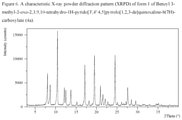
- FIG. 4 shows a characteristic X-ray powder diffraction pattern (XRPD) of form 1 of Benzyl 6-bromo-3,4-dihydro-1H-pyrido[4,3-b]indole-2(5H)-carboxylate (2a).
- XRPD characteristic X-ray powder diffraction pattern
- FIG. 4 a shows a characteristic X-ray powder diffraction pattern (XRPD) of form 2 of Benzyl 6-bromo-3,4-dihydro-1H-pyrido[4,3-b]indole-2(5H)-carboxylate (2a).
- XRPD characteristic X-ray powder diffraction pattern
- FIG. 5 shows a characteristic X-ray powder diffraction pattern (XRPD) of form 1 of benzyl 6-bromo-5-(2-(methylamino)-2-oxoethyl)-3,4-dihydro-1H-pyrido[4,3-b]indole-2(5H)-carboxylate (3a).
- XRPD characteristic X-ray powder diffraction pattern
- FIG. 6 shows a characteristic X-ray powder diffraction pattern (XRPD) of form 1 of Benzyl 3-methyl-2-oxo-2,3,9,10-tetrahydro-1H-pyrido[3′,4′:4,5]pyrrolo[1,2,3-de]quinoxaline-8(7H)-carboxylate (4a).
- XRPD characteristic X-ray powder diffraction pattern
- FIG. 7 shows a characteristic X-ray powder diffraction pattern (XRPD) of form 1 of benzyl 3-methyl-2,3,9,10-tetrahydro-1H-pyrido[3′,4′:4,5]pyrrolo[1,2,3-de]quinoxaline-8(7H)-carboxylate (5a).
- XRPD characteristic X-ray powder diffraction pattern
- FIG. 8 shows a characteristic X-ray powder diffraction pattern (XRPD) of form 1 of (6bR,10aS)-3-methyl-2,3,6b,7,8,9,10,10a-octahydro-1H-pyrido[3′,4′:4,5]pyrrolo[1,2,3-de]quinoxaline salt with ( ⁇ )-O,O′-Di-p-toluoyl-L-tartaric acid (8).
- XRPD characteristic X-ray powder diffraction pattern
- FIG. 9 shows an X-ray powder diffractogram (XRPD) of crystalline form A of Lumateperone dibenzenesulfonate obtained according to Example 12, step (B).
- XRPD X-ray powder diffractogram
- FIG. 10 shows DSC thermogram of crystalline form A of Lumateperone dibenzenesulfonate obtained according to Example 12, step (B).
- FIG. 11 shows TGA thermogram of crystalline form A of Lumateperone dibenzenesulfonate obtained according to Example 12, step (B).
- FIG. 12 shows 13 C solid state NMR spectrum of crystalline form A of Lumateperone dibenzenesulfonate, step (B).
- FIG. 13 shows FTIR spectrum of crystalline form A of Lumateperone dibenzenesulfonate obtained according to Example 12, step (B).
- FIG. 14 shows an X-ray powder diffractogram (XRPD) of crystalline form 1 of co-crystal of Lumateperone tosylate:R-( ⁇ )-mandelic acid obtained according to Example 12, step (D).
- XRPD X-ray powder diffractogram
- FIG. 15 shows DSC thermogram of crystalline form 1 of co-crystal of Lumateperone tosylate:R-( ⁇ )-mandelic acid obtained according to Example 12, step (D).
- FIG. 16 shows TGA thermogram of crystalline form 1 of co-crystal of Lumateperone tosylate:R-( ⁇ )-mandelic acid obtained according to Example 12, step (D).
- FIG. 17 shows 13 C solid state NMR spectrum of crystalline form 1 of co-crystal of Lumateperone tosylate:R-( ⁇ )-mandelic acid, step (D).
- FIG. 18 shows FTIR spectrum of crystalline form 1 of co-crystal of Lumateperone tosylate:R-( ⁇ )-mandelic acid obtained according to Example 12, step (D).
- FIG. 19 shows an X-ray powder diffractogram (XRPD) of crystalline form A of Lumateperone dibenzenesulfonate obtained according to Example 13, step (C).
- XRPD X-ray powder diffractogram
- FIG. 20 shows DSC thermogram of crystalline form A of Lumateperone dibenzenesulfonate obtained according to Example 13, step (C).
- FIG. 21 shows TGA thermogram of crystalline form A of Lumateperone dibenzenesulfonate obtained according to Example 13, step (C).
- FIG. 22 shows FTIR spectrum of crystalline form A of Lumateperone dibenzenesulfonate obtained according to Example 13, step (C).
- FIG. 23 shows an X-ray powder diffractogram (XRPD) of crystalline form 1 of co-crystal of Lumateperone tosylate:R-( ⁇ )-mandelic acid obtained according to Example 13, step (E).
- XRPD X-ray powder diffractogram
- FIG. 24 shows DSC thermogram of crystalline form 1 of co-crystal of Lumateperone tosylate:R-( ⁇ )-mandelic acid obtained according to Example 13, step (E).
- FIG. 25 shows TGA thermogram of crystalline form 1 of co-crystal of Lumateperone tosylate:R-( ⁇ )-mandelic acid obtained according to Example 13, step (E).
- FIG. 26 shows FTIR spectrum of crystalline form 1 of co-crystal of Lumateperone tosylate:R-( ⁇ )-mandelic acid obtained according to Example 13, step (E).
- FIG. 27 shows crystal structure of the co-crystal of Lumateperone tosylate:R-( ⁇ )-mandelic acid with labelled heteroatoms.
- FIG. 28 shows the calculated powder diffraction pattern of the co-crystal of Lumateperone tosylate:R-( ⁇ )-mandelic acid compared to the bulk material obtained according to example 13, step (E).
- the present disclosure relates to improved solid state forms of Lumateperone Besylate.
- the present disclosure also relates to processes for preparation thereof, and pharmaceutical compositions including the disclosed solid state forms.
- the solid state form of Lumateperone Besylate according to the present disclosure may have advantageous properties selected from at least one of: chemical or polymorphic purity, flowability, solubility, dissolution rate, bioavailability, morphology or crystal habit, stability—such as chemical stability as well as thermal and mechanical stability with respect to polymorphic conversion, stability towards dehydration and/or storage stability, a lower degree of hygroscopicity, low content of residual solvents and advantageous processing and handling characteristics such as compressibility, or bulk density.
- the present disclosure further relates to crystalline Lumateperone tosylate:R-( ⁇ )-mandelic acid, a solid state form thereof, processes for preparation thereof, and pharmaceutical compositions including the crystalline Lumateperone tosylate:R-( ⁇ )-mandelic acid or of the described solid state form thereof.
- the disclosure also relates to conversion of the crystalline Lumateperone tosylate:R-( ⁇ )-mandelic acid or the described solid state form thereof to other forms thereof, such as Lumateperone tosylate or other salts thereof and solid state forms thereof.
- Crystalline Lumateperone tosylate:R-( ⁇ )-mandelic acid may have advantageous properties selected from at least one of: chemical or polymorphic purity, flowability, solubility, dissolution rate, bioavailability, morphology or crystal habit, stability—such as chemical stability as well as thermal and mechanical stability with respect to polymorphic conversion, stability towards dehydration and/or storage stability, a lower degree of hygroscopicity, low content of residual solvents and advantageous processing and handling characteristics such as compressibility, or bulk density.
- a crystal form such as Crystalline Lumateperone tosylate:R-( ⁇ )-mandelic acid or Lumateperone besylate may be referred to herein as being characterized by graphical data “as depicted in” a Figure.
- Such data include, for example, powder X-ray diffractograms and solid state NMR spectra.
- the graphical data potentially provides additional technical information to further define the respective solid state form (a so-called “fingerprint”) which can not necessarily be described by reference to numerical values or peak positions alone.
- a crystal form of Lumateperone Besylate or Lumateperone tosylate:R-( ⁇ )-mandelic acid referred to herein as being characterized by graphical data “as depicted in” a Figure will thus be understood to include any crystal forms of the Lumateperone Besylate or Lumateperone tosylate:R-( ⁇ )-mandelic acid, characterized with the graphical data having such small variations, as are well known to the skilled person, in comparison with the Figure.
- a solid state form may be referred to herein as polymorphically pure or as substantially free of any other solid state (or polymorphic) forms.
- the expression “substantially free of any other forms” will be understood to mean that the solid state form contains about 20% or less, about 10% or less, about 5% or less, about 2% or less, about 1% or less, or 0% of any other forms of the subject compound as measured, for example, by XRPD.
- the solid state form of Lumateperone Besylate or Lumateperone tosylate:R-( ⁇ )-mandelic acid described herein as is substantially free of any other solid state forms would be understood to contain greater than about 80% (w/w), greater than about 90% (w/w), greater than about 95% (w/w), greater than about 98% (w/w), greater than about 99% (w/w), or 100% of the subject solid state form of Lumateperone Besylate or Lumateperone tosylate:R-( ⁇ )-mandelic acid respectively.
- the described solid state form of Lumateperone Besylate may contain from about 1% to about 20% (w/w), from about 5% to about 20% (w/w), or from about 5% to about 10% (w/w) of one or more other solid state forms of the Lumateperone Besylate.
- the described solid state form of Lumateperone tosylate:R-( ⁇ )-mandelic acid may contain from about 1% to about 20% (w/w), from about 5% to about 20% (w/w), or from about 5% to about 10% (w/w) of one or more other solid state forms of the Lumateperone tosylate:R-( ⁇ )-mandelic acid.
- DSC measurements are obtained at a heating rate of 10° C./minute, under a nitrogen flow of 50 mL/min.
- TGA measurement are obtained at a heating rate of 10° C./minute, under a nitrogen flow of 30 mL/min.
- anhydrous in relation to crystalline Lumateperone Besylate or Lumateperone tosylate:R-( ⁇ )-mandelic acid relates to crystalline Lumateperone Besylate or Lumateperone tosylate:R-( ⁇ )-mandelic acid which does not include any crystalline water (or other solvents) in a defined, stoichiometric amount within the crystal. Moreover, an “anhydrous” form does not contain more than about 1% (w/w) of either water or organic solvents as measured for example by TGA.
- solvate refers to a crystal form that incorporates a solvent in the crystal structure.
- the solvent is water, the solvate is often referred to as a “hydrate.”
- the solvent in a solvate may be present in either a stoichiometric or in a non-stoichiometric amount.
- crystalline form A of Lumateperone Tosylate refers to a crystalline form which may be characterized by X-ray powder diffraction pattern as disclosed in U.S. Pat. No. 8,648,077.
- the term “isolated” in reference to solid state form of Lumateperone Besylate of the present disclosure corresponds to solid state form of Lumateperone Besylate that is physically separated from the reaction mixture in which it is formed.
- the term “isolated” in reference to crystalline Lumateperone tosylate:R-( ⁇ )-mandelic acid of the present disclosure corresponds to crystalline Lumateperone tosylate:R-( ⁇ )-mandelic acid that is physically separated from the reaction mixture in which it is formed.
- a thing e.g., a reaction mixture
- room temperature often abbreviated “RT.” This means that the temperature of the thing is close to, or the same as, that of the space, e.g., the room or fume hood, in which the thing is located.
- room temperature is from about 20° C. to about 30° C., about 22° C. to about 27° C., or about 25° C.
- a process or step may be referred to herein as being carried out “overnight.” This refers to a time interval, e.g., for the process or step, that spans the time during the night, when that process or step may not be actively observed. This time interval is from about 8 to about 20 hours, about 10 to about 18 hours, or about 16 hours.
- the amount of solvent employed in a chemical process may be referred to herein as a number of “volumes” or “vol” or “V.”
- a material may be referred to as being suspended in 10 volumes (or 10 vol or 10V) of a solvent.
- this expression would be understood to mean milliliters of the solvent per gram of the material being suspended, such that suspending 5 grams of a material in 10 volumes of a solvent means that the solvent is used in an amount of 10 milliliters of the solvent per gram of the material that is being suspended or, in this example, 50 mL of the solvent.
- v/v may be used to indicate the number of volumes of a solvent that are added to a liquid mixture based on the volume of that mixture. For example, adding solvent X (1.5 v/v) to a 100 ml reaction mixture would indicate that 150 mL of solvent X was added.
- reduced pressure refers to a pressure of from about 10 mbar to about 500 mbar, or about 50 mbar.
- ambient conditions refer to atmospheric pressure, 22-24° C.
- chlorinated solvent refers to a C1-C6 chlorinated hydrocarbon.
- the chlorinated solvents are selected from carbon tetrachloride, dichloromethane (CH 2 Cl 2 ), dichloroethane, chlorobenzene, and chloroform.
- one pot process refers to a continuous process for preparing a desired product, in which penultimate product is converted to the desired product in the same vessel.
- Protecting group refers to a grouping of atoms that, when attached to a reactive functional group in molecule masks, reduces or prevents reactivity of the functional group. Examples of protecting groups can be found in Greene and Wuts “Greene's Protective Groups in Organic Synthesis”, 4th Edition, publ. Wiley, 2006 and Harrison et al., “Compendium of Synthetic Organic Methods”, Vols. 1-8 (John Wiley and Sons, 1971-1996).
- Representative amine protecting groups include, but are not limited to, Fmoc, cbz, benzyl, trityl, Boc, trifluoroacetyl derivative, phthalic anhydride, or succinic anhydride derivatives.
- halogen or “halide” refers to fluoride, chloride, bromide or iodide. In certain embodiments, the halogen is bromide or iodide.
- the present disclosure relates to Besylate salt of Lumateperone having the formula:
- X can be any number between 0.5 and 3.
- X may be 0.5, 1, 1.5, 2, 2.5 or 3.
- X may be 1 or 2, and more preferably X is 2.
- the besylate salt of Lumateperone is crystalline.
- the present disclosure further relates to a crystalline form of Lumateperone Besylate according to any one of the above embodiments, designated form A.
- the crystalline form A of Lumateperone Besylate may be characterized by data selected from one or more of the following: an XRPD pattern having peaks at 4.6, 9.2, 13.9, 20.5 and 23.2 degrees 2-theta ⁇ 0.2 degrees 2-theta; an XRPD pattern substantially as depicted in FIG. 1, 9 or 19 ; a solid state 13 C NMR spectrum substantially as depicted in FIG.
- Crystalline Form A of Lumateperone Besylate may be further characterized by an XRPD pattern having peaks at 4.6, 9.2, 13.9, 20.5 and 23.2 degrees 2-theta+0.2 degrees 2-theta, and also having one, two, three, four or five additional peaks selected from 15.3, 16.7, 18.0, 22.4 and 25.1 degrees two theta+0.2 degrees two theta.
- crystalline form A is a dibesylate salt of Lumateperone, more preferably a dibesylate salt of lumateperone.
- crystalline form A of Lumateperone Besylate may be isolated.
- crystalline form A of Lumataperone Besylate may be anhydrous.
- the disclosure relates to processes for preparation of crystalline form A of Lumateperone Besylate.
- the process for the preparation of crystalline Lumateperone Besylate may comprise crystallisation of Lumateperone Besylate from a solvent comprising one or more polar solvents.
- the solvent may be a polar aprotic solvent optionally in combination with a polar protic solvent.
- Suitable polar aprotic solvents include nitriles, ethers, ketones, and esters, or mixtures thereof.
- the polar aprotic solvent may be selected from: acetonitrile, methyl ethyl ketone, acetone, methyl t-butyl ether and isopropyl acetate.
- the polar aprotic solvent is a ketone, and more preferably acetone.
- Suitable polar protic solvents include alcohols, especially isopropanol or ethanol, and particularly isopropanol.
- crystalline Form A of Lumateperone Besylate may be prepared by crystallisation of Lumateperone Besylate from a solvent mixture comprising acetone and isopropanol.
- the volume ratio of the polar aprotic solvent to polar protic solvent, such as acetone:isopropanol may be from about 1:10 to about 10:1, about 2:1 to about 8:1, about 3:1 to about 8:1, about 5:1 to about 8:1, about 5:1 to about 7:1, or about 6:1.
- the crystallisation may be carried out by cooling a solution of Lumateperone besylate in the solvent or solvent mixture.
- the solution is cooled to a temperature of 0° C. to about 15° C., particularly 0° C. to about 10° C. or about 5° C.
- the solution may preferably be cooled from an elevated temperature of about 30° C. to about 70° C., about 40° C. to about 60° C., or about 50° C.
- the hot mixture may be stirred for about 5 minutes to about 120 minutes, about 15 minutes to about 60 minutes or about 15 to about 45 minutes, or about 30 minutes.
- the hot solution may first be allowed to cool to room temperature, and then further cooled to the temperature ranges below room temperature as indicated.
- the cooling to below room temperature may be carried out over about 30 minutes to about 240 minutes, about 60 minutes to about 180 minutes, or about 80 minutes to about 140 minutes, or about 120 minutes.
- the cooled mixture may be further stirred for about 5 minutes to about 120 minutes, about 15 minutes to about 60 minutes or about 15 to about 45 minutes, or about 30 minutes.
- the product may be isolated from the mixture by filtration.
- the disclosure relates to a process for preparation of crystalline Lumateperone Besylate, such as crystalline form A of Lumatapereone Besylate, wherein the process includes: a) providing Lumateperone optionally in the form of a solution in one or more polar solvents; b) adding benzenesulfonic acid, optionally in the form of a solution in one or more polar solvents; c) optionally stirring; d) optionally cooling; and e) optionally isolating crystalline Lumateperone Besylate.
- the process may include additional washing and drying steps.
- step a) includes providing Lumateperone in a polar aprotic solvent, preferably a ketone, more preferably acetone. In embodiments, step a) includes providing a solution of Lumateperone in acetone at a temperature of about 40° C. to about 60° C.
- step b) includes adding a solution of benzenesulfonic acid in one or more polar solvent, in embodiments in a mixture of a polar aprotic solvent and a polar protic solvent, in some embodiments a mixture of acetone and isopropanol.
- the polar solvents in step a) and/or step b) include nitriles, ethers, ketones, alcohols and esters or mixtures thereof.
- the solvents are selected from acetonitrile, methyl ethyl ketone, acetone, isopropanol, methyl t-butyl ether and isopropyl acetate and ethanol.
- the polar aprotic solvent is acetone and the polar protic solvent is isopropanol.
- step c) includes stirring the reaction mixture at a temperature of about 40° C. to about 60° C.
- step d) includes cooling the reaction mixture to room temperature and stirring and optionally further cooling to a temperature of about 0° C. to about 15° C. and stirring.
- the disclosure relates to a process for preparation of crystalline dibenzenesulfonate salt of Lumateperone, preferably crystalline form A of dibenzenesulfonate salt of Lumateperone, wherein the process may comprise crystallisation of Lumateperone dibesylate from a solvent comprising one or more polar solvents.
- the solvent may be at least one, or the solvent may comprise at least two, polar solvents.
- the solvent may comprise at least two polar aprotic solvents. Suitable polar aprotic solvents include nitriles, ethers, ketones, and esters or mixtures thereof.
- the solvent is a mixture of a nitrile and a ketone.
- crystalline Form A of Lumateperone dibesylate may be prepared by crystallisation of Lumateperone dibesylate from a solvent mixture comprising acetonitrile and methylethylketone.
- the volume ratio of the nitrile to ketone, such as acetonitrile:methylethylketone, can be from about 6:1 to about 1:4, or about 5:1 to about 1:3; or about 4:1 to about 1:3.
- the crystallisation may be effected by cooling a hot (preferably 40° C. to about 70° C., about 45° C.
- the cooling may be to about 10° C. to about 30° C., about 15° C. to about 25° C., or about 20° C.
- the hot mixture may be stirred for about 5 minutes to about 120 minutes, about 15 minutes to about 60 minutes or about 15 to about 45 minutes, preferably about 30 minutes.
- the cooled mixture may be further stirred for about 30 minutes to about 24 hours, about 1 hour to about 12 hours, or about 1 hour to about 8 hours.
- the crystallisation may be conducted in the presence of seed crystals of Lumateperone Dibesylate. Thus, seed crystals can be added to the hot mixture prior to cooling. However, seeding is optional.
- the disclosure relates to a process for preparation of crystalline dibenzenesulfonate salt of Lumateperone, preferably crystalline form A of dibenzenesulfonate salt of Lumateperone, wherein the process comprises:
- the disclosure relates to a process for preparation of crystalline dibenzenesulfonate salt of Lumateperone, preferably crystalline form A of dibenzenesulfonate salt of Lumateperone, wherein the process comprises:
- the amount of benzenesulfonic acid employed in the process for preparing Lumateperone dibesylate according to any aspect or embodiment of the present invention can be from about 1 to about 3 mol equivalent, about 1.2 to about 2.5 equivalent, or about 1.3 to about 2.3 equivalent. Preferably about 2 to about 2.6 mol equivalent, or about 2.1 to about 2.3 mol equivalent of benzenesulfonic acid is employed.
- the present disclosure also provides uses of the said solid state forms of Lumateperone Besylate (such as Lumateperone dibesylate) in the preparation of other solid state forms of Lumateperone Besylate, Lumateperone or other salts of Lumateperone and solid state forms thereof.
- Lumateperone Besylate such as Lumateperone dibesylate
- the present disclosure also provides the said solid state forms of Lumateperone Besylate (such as Lumateperone dibesylate) for use in the preparation of other solid state forms of Lumateperone Besylate, Lumateperone or other salts of Lumateperone and solid state forms thereof.
- Lumateperone Besylate such as Lumateperone dibesylate
- the present invention encompasses a process for preparing other Lumateperone salts or solid state forms of Lumateperone.
- the process includes preparing a solid state form of Lumateperone Besylate (such as Lumateperone dibesylate) by the processes of the present invention, and converting that salt to another Lumateperone salt.
- the conversion can be done, for example, by a process including basifying the above described Lumateperone salt and/or solid state form thereof and reacting the obtained Lumateperone base with an appropriate acid, to obtain the corresponding salt.
- the conversion can be done by salt switching, i.e., reacting Lumateperone Besylate (such as Lumateperone dibesylate) or a solid state form thereof, with an acid having a pK a which is lower than the pK a of the acid of Lumateperone Besylate.
- Lumateperone dibesylate offers significant impurity purging capabilities and enables preparation of Lumateperone or salts thereof in high purity and without the use of chromatographic methods.
- the present invention provides the use of the benzenesulfonate salt of Lumateperone as described in any embodiment herein, in a process for purifying Lumateperone.
- the present invention thus provides a process for purifying Lumateperone, wherein the process may comprise; a) providing a solution of Lumateperone and benzenesulfonic acid; b) crystallizing the Lumateperone dibenzenesulfonate; and c) converting the Lumateperone dibenzenesulfonate to form purified Lumateperone.
- steps (a) and (b) may be carried out according to a process as defined in any of the above-described processes for preparing Lumateperone dibesylate.
- the process may further comprise converting the purified Lumateperone to a Lumateperone salt, such as Lumateperone tosylate, or Lumateperone tosylate:R-( ⁇ )-mandelic acid.
- Lumateperone tosylate:R-( ⁇ )-mandelic acid obtainable by this process advantageously has high purity.
- the Lumateperone tosylate:R-( ⁇ )-mandelic acid has a total impurity content of not more than 0.3% area percent, or not more than 0.2% area percent, or not more than 0.1% area percent, particularly not more than 0.08% area percent, as measured by UPLC.
- the present disclosure encompasses use of the described solid state forms of Lumateperone Besylate (in embodiments Lumateperone dibesylate) in the preparation of pharmaceutical compositions and/or formulations, optionally for the treatment of treatment of central nervous system disorders such as schizophrenia, bipolar disorder, depression, sleep and behavioral disturbance in dementia, autism and other neuropsychiatric disorders.
- central nervous system disorders such as schizophrenia, bipolar disorder, depression, sleep and behavioral disturbance in dementia, autism and other neuropsychiatric disorders.
- the present disclosure encompasses the described solid state forms of Lumateperone Besylate (in embodiments Lumateperone dibesylate) for use in the preparation of pharmaceutical compositions and/or formulations, optionally for the treatment of central nervous system disorders such as schizophrenia, bipolar disorder, depression, sleep and behavioral disturbance in dementia, autism, and other neuropsychiatric disorders.
- central nervous system disorders such as schizophrenia, bipolar disorder, depression, sleep and behavioral disturbance in dementia, autism, and other neuropsychiatric disorders.
- the present disclosure further provides pharmaceutical compositions including the solid state forms of Lumateperone Besylate (in embodiments Lumateperone dibesylate) according to the present disclosure.
- the present disclosure encompasses pharmaceutical formulations including the described solid state forms of Lumateperone Besylate (in embodiments Lumateperone dibesylate) and at least one pharmaceutically acceptable excipient.
- the present disclosure encompasses processes to prepare said pharmaceutical formulations of Lumateperone Besylate (in embodiments Lumateperone dibesylate) including combining the described solid state forms of Lumateperone Besylate (in embodiments Lumateperone dibesylate) and at least one pharmaceutically acceptable excipient.
- the solid state forms defined herein as well as the pharmaceutical compositions or formulations of the improved solid state form of Lumateperone Besylate can be used as medicaments, particularly for the treatment of central nervous system disorders, as specified above.
- the present disclosure also provides methods of treating, particularly for the treatment of central nervous system disorders, as specified above including administering a therapeutically effective amount of the improved solid state form of Lumateperone Besylate (in embodiments Lumateperone dibesylate) of the present disclosure, or at least one of the herein described pharmaceutical compositions or formulations, to a subject suffering from the above specified diseases, or otherwise in need of the treatment.
- the present disclosure also provides uses of the improved solid state form of Lumateperone Besylate (in embodiments Lumateperone dibesylate) of the present disclosure, or at least one of the above pharmaceutical compositions or formulations for the manufacture of medicaments, particularly for medicaments, particularly for the treatment of central nervous system disorders, as specified above.
- the present invention further provides crystalline Lumateperone tosylate:R-( ⁇ )-mandelic acid.
- crystalline Lumateperone tosylate:R-( ⁇ )-mandelic acid is a distinct molecular species.
- crystalline Lumateperone tosylate:R-( ⁇ )-mandelic acid may be a co-crystal of lumateperone tosylate and R-( ⁇ )-mandelic acid.
- a co-crystal is a crystalline material composed of two or more molecules within the same crystal lattice, wherein the molecules interact with each other via non-ionic interactions.
- the molar ratio between the active pharmaceutical ingredient (lumateperone tosylate) and the conformer (R-( ⁇ )-mandelic acid) is between 1:1.5 and 1.5:1, in some embodiments between 1:1.25 and 1.25:1, in other embodiments about 1:1.
- the present disclosure further relates to a crystalline form of Lumateperone tosylate:R-( ⁇ )-mandelic acid designated form 1.
- the crystalline form 1 of Lumateperone tosylate:R-( ⁇ )-mandelic acid may be characterized by data selected from one or more of the following: an XRPD pattern having peaks at 5.8, 12.3, 16.3, 20.1 and 22.7 degrees 2-theta+0.2 degrees 2-theta; an XRPD pattern substantially as depicted in FIG. 3, 14 or 23 ; a solid state 13 C NMR spectrum substantially as depicted in FIG.
- form 1 of Lumateperone tosylate:R-( ⁇ )-mandelic acid can be characterized by the following unit cell data:
- the crystalline form 1 of Lumateperone tosylate:R-( ⁇ )-mandelic acid can be characterized by any combination of the above data.
- Crystalline Form 1 of Lumateperone tosylate:R-( ⁇ )-mandelic acid may be further characterized by an XRPD pattern having peaks at 5.8, 12.3, 16.3, 20.1 and 22.7 degrees 2-theta 0.2 degrees 2-theta, and also having one, two, three, four or five additional peaks selected from 12.9, 13.6, 15.8, 24.2 and 24.6 degrees two theta+0.2 degrees two theta.
- crystalline form 1 of Lumateperone tosylate:R-( ⁇ )-mandelic acid may be may be a co-crystal.
- crystalline form 1 of Lumateperone tosylate:R-( ⁇ )-mandelic acid may be anhydrous.
- crystalline form 1 of Lumateperone tosylate:R-( ⁇ )-mandelic acid may be isolated.
- the disclosure relates to processes for preparation of crystalline Lumateperone tosylate:R-( ⁇ )-mandelic acid.
- the present invention relates to a process for the preparation of a crystalline form of Lumateperone tosylate:R-( ⁇ )-mandelic acid, in embodiments crystalline form 1 of Lumateperone tosylate:R-( ⁇ )-mandelic acid, comprising suspending Lumateperone tosylate with R-( ⁇ )-mandelic acid in one or more organic solvents.
- the solvent may be an aromatic hydrocarbon, optionally in combination with an ester.
- the aromatic hydrocarbon may be toluene.
- the ester may be isopropylacetate.
- the process comprises suspending Lumateperone tosylate with R-( ⁇ )-mandelic acid in a mixture comprising toluene and isopropyl acetate.
- the volume ratio of toluene and isopropylacetate is from about 9:1 to about 5:4, from about 4:1 to about 5:3, or about 4:3.
- the process may comprise cooling a mixture of Lumateperone tosylate and R( ⁇ )-mandelic acid in the solvent or combination of solvents.
- the mixture may be cooled from a temperature of about 40° C. to about 80° C., about 45° C. to about 75° C., or about 50° C. to about 70° C.
- the mixture may be cooled to temperature of about ⁇ 10° C. to about 15° C., or about ⁇ 5° C. to about 10° C. or about 0° C. to about 5° C.
- the process may alternatively comprise stirring a mixture of Lumateperone tosylate and R( ⁇ )-mandelic acid in the solvent or combination of solvents at a temperature of about 10° C. to about 30° C., about 15° C. to about 25° C., or about 20° C.
- the process may comprise stirring a mixture of Lumateperone tosylate and R( ⁇ )-mandelic acid in the solvent or combination of solvents at a temperature of about 10° C. to about 30° C., about 15° C. to about 25° C., or about 20° C.
- the process is carried out under an inert atmosphere, preferably under nitrogen or argon.
- the disclosure relates to a process for preparation of crystalline Lumateperone tosylate:R-( ⁇ )-mandelic acid, such as crystalline form 1 of Lumateperone tosylate: R-( ⁇ )-mandelic acid, wherein the process includes: a) providing Lumateperone tosylate and R-( ⁇ )-mandelic acid optionally in the form of a suspension in one or more organic solvents; b) optionally stirring; c) optionally cooling; and d) optionally isolating crystalline R-( ⁇ )-mandelic acid.
- the process may include additional washing and drying steps.
- the Lumateperone tosylate is provided in amorphous form.
- Lumateperone tosylate and R-( ⁇ )-mandelic acid are provided in an aromatic solvent, such as toluene.
- the disclosure relates to a process for the preparation of a crystalline form of Lumateperone tosylate:R-( ⁇ )-mandelic acid, in embodiments crystalline form 1 of Lumateperone tosylate:R-( ⁇ )-mandelic acid, comprising suspending Lumateperone tosylate with R-( ⁇ )-mandelic acid in one or more organic solvents.
- the solvent can be an aromatic hydrocarbon, optionally with an ester.
- the solvent may be toluene optionally in combination with isopropylacetate.
- the preparation of Lumateperone tosylate:R-( ⁇ )-mandelic acid may comprise cooling a hot (preferably 40° C. to about 80° C., about 45° C. to about 75° C., or about 50° C. to about 70° C.) mixture of Lumateperone tosylate and R( ⁇ )-mandelic acid.
- the cooling may be to a temperature of ⁇ 10° C. to about 15° C., particularly ⁇ 5° C. to about 10° C. or about 0° C. to about 5° C.
- the mixture of Lumateperone tosylate and R( ⁇ )-mandelic acid may be stirred in the solvent at a temperature of about 10° C. to about 30° C., about 15° C. to about 25° C., or about 20° C.
- the process for the preparation of Lumateperone tosylate:R-( ⁇ )-mandelic acid is preferably carried out in an inert atmosphere, e.g. under nitrogen, or preferably under argon.
- the disclosure relates to a process for preparation of crystalline form of Lumateperone tosylate:R-( ⁇ )-mandelic acid, preferably crystalline form 1 of Lumateperone tosylate:R-( ⁇ )-mandelic acid, wherein the process comprises:
- step a) lumateperone is provided in a solvent system comprising toluene.
- a lumateperone is provided in a mixture of toluene and i-propylacetate.
- ratio of toluene and i-propylacetate in step a may be from about 9:1 to about 5:4, preferably from about 4:1 to about 5:3, more preferably about 4:3/In embodiments, steps a, b, c, d and/or e may advantageously be performed in an inert atmosphere. In any embodiment of this process or in any embodiment or aspect involving this process step, steps a, b, c, d, e and/or f, are carried out under a nitrogen or argon (in embodiments argon) atmosphere.
- the disclosure relates to a process for preparation of crystalline form of Lumateperone tosylate:R-( ⁇ )-mandelic acid, preferably crystalline form 1 of Lumateperone tosylate:R-( ⁇ )-mandelic acid wherein the process comprises:
- steps a, b, c, d, e and/or f may be performed under an inert atmosphere.
- steps (b)-(f) are carried out under an inert atmosphere (such as under an argon atmosphere.
- the present disclosure also provides uses of the said crystalline lumatereprone tosylate:R-( ⁇ )-mandelic acid in the preparation of other solid state forms of Lumateperone Tosylate, Lumateperone or other salts of Lumateperone and solid state forms thereof.
- the present disclosure also provides the said solid state forms of lumatereprone tosylate:R-( ⁇ )-mandelic acid for use in the preparation of other solid state forms of Lumateperone Tosylate, Lumateperone or other salts of Lumateperone and solid state forms thereof.
- the present disclosure encompasses use of crystalline Lumateperone tosylate:R-( ⁇ )-mandelic acid or the described solid state form thereof in the preparation of pharmaceutical compositions and/or formulations, optionally for the treatment of central nervous system disorders such as schizophrenia, bipolar disorder, depression, sleep and behavioral disturbance in dementia, autism, and other neuropsychiatric disorders.
- central nervous system disorders such as schizophrenia, bipolar disorder, depression, sleep and behavioral disturbance in dementia, autism, and other neuropsychiatric disorders.
- the present disclosure encompasses crystalline Lumateperone tosylate:R-( ⁇ )-mandelic acid or the described solid state form thereof for use in the preparation of pharmaceutical compositions and/or formulations, optionally for the treatment of central nervous system disorders such as schizophrenia, bipolar disorder, depression, sleep and behavioral disturbance in dementia, autism, and other neuropsychiatric disorders.
- the present disclosure further provides pharmaceutical compositions including crystalline Lumateperone tosylate:R-( ⁇ )-mandelic acid or the described solid state form thereof according to the present disclosure.
- the present disclosure encompasses pharmaceutical formulations including crystalline Lumateperone tosylate:R-( ⁇ )-mandelic acid or the described solid state form thereof and at least one pharmaceutically acceptable excipient.
- the present disclosure encompasses processes to prepare said pharmaceutical formulations of crystalline Lumateperone tosylate:R-( ⁇ )-mandelic acid by combining crystalline Lumateperone tosylate:R-( ⁇ )-mandelic acid or the described solid state form thereof and at least one pharmaceutically acceptable excipient.
- Crystalline Lumateperone tosylate:R-( ⁇ )-mandelic acid or the described solid state form thereof can be used as a medicament, in embodiments for the treatment of central nervous system disorders, as specified above.
- the present disclosure also provides methods of treating, in embodiments for the treatment of central nervous system disorders, as specified above, by administering a therapeutically effective amount of crystalline Lumateperone tosylate:R-( ⁇ )-mandelic acid or of the described solid state form thereof, or at least one of the herein described pharmaceutical compositions or formulations, to a subject suffering from central nervous system disorder or the above specified diseases, or otherwise in need of the treatment.
- the present disclosure also provides uses of crystalline Lumateperone tosylate:R-( ⁇ )-mandelic acid of the present disclosure, or of the described solid state form thereof, or at least one of the above pharmaceutical compositions or formulations, for the manufacture of medicaments, particularly for the treatment of central nervous system disorders, as specified above.
- the present disclosure encompasses processes to prepare said pharmaceutical formulations of Lumateperone Besylate or of crystalline Lumateperone tosylate:R-( ⁇ )-mandelic acid by combining the described solid state forms of Lumateperone Besylate or crystalline Lumateperone tosylate:R-( ⁇ )-mandelic acid respectively and at least one pharmaceutically acceptable excipient.
- Excipients are added to the formulation for a variety of purposes.
- Diluents increase the bulk of a solid pharmaceutical composition, and can make a pharmaceutical dosage form containing the composition easier for the patient and caregiver to handle.
- Diluents for solid compositions include, for example, microcrystalline cellulose (e.g.
- Avicel® microfine cellulose, lactose, starch, pregelatinized starch, calcium carbonate, calcium sulfate, sugar, dextrates, dextrin, dextrose, dibasic calcium phosphate dihydrate, tribasic calcium phosphate, kaolin, magnesium carbonate, magnesium oxide, maltodextrin, mannitol, polymethacrylates (e.g. Eudragit®), potassium chloride, powdered cellulose, sodium chloride, sorbitol, and talc.
- Solid pharmaceutical compositions that are compacted into a dosage form, such as a tablet can include excipients whose functions include helping to bind the active ingredient and other excipients together after compression.
- Binders for solid pharmaceutical compositions include acacia, alginic acid, carbomer (e.g. carbopol), carboxymethylcellulose sodium, dextrin, ethyl cellulose, gelatin, guar gum, hydrogenated vegetable oil, hydroxyethyl cellulose, hydroxypropyl cellulose (e.g. Klucel®), hydroxypropyl methyl cellulose (e.g. Methocel®), liquid glucose, magnesium aluminum silicate, maltodextrin, methylcellulose, polymethacrylates, povidone (e.g. Kollidon®, Plasdone®), pregelatinized starch, sodium alginate, and starch.
- carbomer e.g. carbopol
- carboxymethylcellulose sodium, dextrin ethyl cellulose
- gelatin
- the dissolution rate of a compacted solid pharmaceutical composition in the patient's stomach can be increased by the addition of a disintegrant to the composition.
- Disintegrants include alginic acid, carboxymethylcellulose calcium, carboxymethylcellulose sodium (e.g. Ac-Di-Sol®, Primellose®), colloidal silicon dioxide, croscarmellose sodium, crospovidone (e.g. Kollidon®, Polyplasdone®), guar gum, magnesium aluminum silicate, methyl cellulose, microcrystalline cellulose, polacrilin potassium, powdered cellulose, pregelatinized starch, sodium alginate, sodium starch glycolate (e.g. Explotab®), and starch.
- alginic acid include alginic acid, carboxymethylcellulose calcium, carboxymethylcellulose sodium (e.g. Ac-Di-Sol®, Primellose®), colloidal silicon dioxide, croscarmellose sodium, crospovidone (e.g. Kollidon®, Polyplasdone®
- Glidants can be added to improve the flowability of a non-compacted solid composition and to improve the accuracy of dosing.
- Excipients that can function as glidants include colloidal silicon dioxide, magnesium trisilicate, powdered cellulose, starch, talc, and tribasic calcium phosphate.
- a dosage form such as a tablet
- the composition is subjected to pressure from a punch and dye.
- Some excipients and active ingredients have a tendency to adhere to the surfaces of the punch and dye, which can cause the product to have pitting and other surface irregularities.
- a lubricant can be added to the composition to reduce adhesion and ease the release of the product from the dye.
- Lubricants include magnesium stearate, calcium stearate, glyceryl monostearate, glyceryl palmitostearate, hydrogenated castor oil, hydrogenated vegetable oil, mineral oil, polyethylene glycol, sodium benzoate, sodium lauryl sulfate, sodium stearyl fumarate, stearic acid, talc, and zinc stearate.
- Flavoring agents and flavor enhancers make the dosage form more palatable to the patient.
- Common flavoring agents and flavor enhancers for pharmaceutical products that can be included in the composition of the present disclosure include maltol, vanillin, ethyl vanillin, menthol, citric acid, fumaric acid, ethyl maltol, and tartaric acid.
- Solid and liquid compositions can also be dyed using any pharmaceutically acceptable colorant to improve their appearance and/or facilitate patient identification of the product and unit dosage level.
- crystalline Lumateperone Besylate or crystalline Lumateperone tosylate R-( ⁇ )-mandelic acid and any other solid excipients are dissolved or suspended in a liquid carrier such as water, vegetable oil, alcohol, polyethylene glycol, propylene glycol, or glycerin.
- Liquid pharmaceutical compositions can contain emulsifying agents to disperse uniformly throughout the composition an active ingredient or other excipient that is not soluble in the liquid carrier.
- Emulsifying agents that can be useful in liquid compositions of the present disclosure include, for example, gelatin, egg yolk, casein, cholesterol, acacia, tragacanth, chondrus, pectin, methyl cellulose, carbomer, cetostearyl alcohol, and cetyl alcohol.
- Liquid pharmaceutical compositions of the present disclosure can also contain a viscosity enhancing agent to improve the mouth-feel of the product and/or coat the lining of the gastrointestinal tract.
- a viscosity enhancing agent include acacia, alginic acid bentonite, carbomer, carboxymethylcellulose calcium or sodium, cetostearyl alcohol, methyl cellulose, ethylcellulose, gelatin guar gum, hydroxyethyl cellulose, hydroxypropyl cellulose, hydroxypropyl methyl cellulose, maltodextrin, polyvinyl alcohol, povidone, propylene carbonate, propylene glycol alginate, sodium alginate, sodium starch glycolate, starch tragacanth, and xanthan gum.
- Sweetening agents such as sorbitol, saccharin, sodium saccharin, sucrose, aspartame, fructose, mannitol, and invert sugar can be added to improve the taste.
- Preservatives and chelating agents such as alcohol, sodium benzoate, butylated hydroxyl toluene, butylated hydroxyanisole, and ethylenediamine tetraacetic acid can be added at levels safe for ingestion to improve storage stability.
- a liquid composition can also contain a buffer such as gluconic acid, lactic acid, citric acid, or acetic acid, sodium gluconate, sodium lactate, sodium citrate, or sodium acetate. Selection of excipients and the amounts used can be readily determined by the formulation scientist based upon experience and consideration of standard procedures and reference works in the field.
- a buffer such as gluconic acid, lactic acid, citric acid, or acetic acid, sodium gluconate, sodium lactate, sodium citrate, or sodium acetate.
- the solid compositions of the present disclosure include powders, granulates, aggregates, and compacted compositions.
- the dosages include dosages suitable for oral, buccal, rectal, parenteral (including subcutaneous, intramuscular, and intravenous), inhalant, and ophthalmic administration. Although the most suitable administration in any given case will depend on the nature and severity of the condition being treated, the most preferred route of the present disclosure is oral.
- the dosages can be conveniently presented in unit dosage form and prepared by any of the methods well-known in the pharmaceutical arts.
- Dosage forms include solid dosage forms like tablets, powders, capsules, suppositories, sachets, troches, and lozenges, as well as liquid syrups, suspensions, and elixirs.
- the dosage form of the present disclosure can be a capsule containing the composition, preferably a powdered or granulated solid composition of the disclosure, within either a hard or soft shell.
- the shell can be made from gelatin and optionally contain a plasticizer such as glycerin and sorbitol, and an opacifying agent or colorant.
- compositions and dosage forms can be formulated into compositions and dosage forms according to methods known in the art.
- a composition for tableting or capsule filling can be prepared by wet granulation.
- wet granulation some or all of the active ingredients and excipients in powder form are blended and then further mixed in the presence of a liquid, typically water, that causes the powders to clump into granules.
- the granulate is screened and/or milled, dried, and then screened and/or milled to the desired particle size.
- the granulate can then be tableted, or other excipients can be added prior to tableting, such as a glidant and/or a lubricant.
- a tableting composition can be prepared conventionally by dry blending.
- the blended composition of the actives and excipients can be compacted into a slug or a sheet and then comminuted into compacted granules. The compacted granules can subsequently be compressed into a tablet.
- a blended composition can be compressed directly into a compacted dosage form using direct compression techniques.
- Direct compression produces a more uniform tablet without granules.
- Excipients that are particularly well suited for direct compression tableting include microcrystalline cellulose, spray dried lactose, dicalcium phosphate dihydrate, and colloidal silica. The proper use of these and other excipients in direct compression tableting is known to those in the art with experience and skill in particular formulation challenges of direct compression tableting.
- a capsule filling of the present disclosure can include any of the aforementioned blends and granulates that were described with reference to tableting, but they are not subjected to a final tableting step.
- Lumateperone Besylate or crystalline Lumateperone tosylate:R-( ⁇ )-mandelic acid can be administered.
- Lumateperone Besylate or crystalline Lumateperone tosylate:R-( ⁇ )-mandelic acid is preferably formulated for administration to a mammal, preferably a human, by oral administration.
- Lumateperone Besylate or crystalline Lumateperone tosylate:R-( ⁇ )-mandelic acid can be formulated, for example, as a tablet or capsule.
- the formulation can contain one or more solvents.
- a suitable solvent can be selected by considering the solvent's physical and chemical stability at various pH levels, viscosity (which would allow for syringeability), fluidity, boiling point, miscibility, and purity.
- Suitable solvents include alcohol USP, benzyl alcohol NF, benzyl benzoate USP, and Castor oil USP. Additional substances can be added to the formulation such as buffers, solubilizers, and antioxidants, among others.
- the solid state forms defined herein as well as the pharmaceutical compositions or formulations of the improved solid state form of Lumateperone Besylate or crystalline Lumateperone tosylate:R-( ⁇ )-mandelic acid can be used as medicaments, particularly for the treatment of central nervous system disorders such as schizophrenia, bipolar disorder, depression, sleep and behavioral disturbance in dementia, autism, and other neuropsychiatric disorders.
- the present disclosure also provides methods of treating medicaments, particularly for the treatment of central nervous system disorders as specified above including administering a therapeutically effective amount of the improved solid state form of Lumateperone Besylate or crystalline Lumateperone tosylate:R-( ⁇ )-mandelic acid of the present disclosure, or at least one of the herein described pharmaceutical compositions or formulations, to a subject suffering from the above specified diseases, or otherwise in need of the treatment.
- the present disclosure also provides uses of the improved solid state form of Lumateperone Besylate or crystalline Lumateperone tosylate:R-( ⁇ )-mandelic acid of the present disclosure, or at least one of the above pharmaceutical compositions or formulations for the manufacture of medicaments, particularly for the treatment of and/or prophylaxis of central nervous system disorders such as specified above.
- the present disclosure relates to processes and intermediates for the preparation of Lumateperone and salts thereof
- the undesired diastereomer When the undesired diastereomer is first isolated as a salt of ( ⁇ )-dibenzoyl-D-tartaric acid mono(dimethylamide) and only then is the desired diastereomer isolated from the mother liquor as (+)-dibenzoyl-D-tartaric acid mono(dimethylamide) salt, the product contains 0.71% of the undesired diastereomer but still containing 0.31% of three other contaminants. Further, a yield of 45% is reported for the last method whereas for the direct isolation of the desired diastereomer, the yield is only 35%.
- the process of the present invention which employs the readily available ( ⁇ )-O—O′-Di-p-toluoyl-L-tartaric acid as the chiral resolution agent, enables the product of Lumateparone and salts thereof in high purity and without the use of undesirable chromatographic methods.
- L-DTTA ( ⁇ )-O—O′-Di-p-toluoyl-L-tartaric acid
- L-DTTA chiral acid
- D-DBTA dibenzoyl-D-tartaric acid
- D-malic acid D-malic acid
- (1S)-10-camphor sulfonic acid have failed to resolve compound III
- L-DTTA offers an exceptional effect.
- the process using L-DTTA offers a yield of 44% for the direct isolation of the desired diastereomer using a commercially available acid, with single peak UPLC purity as well as enantiomeric purity of the desired diastereomer.
- a particular embodiment of the present disclosure uses protecting group that can easily be removed under mild hydrogenation conditions yielding product of high purity and with excellent yield.
- both International Publication No. WO 2000/077022 and International Publication No. WO 2008/112280 disclose the method for removal of ethyl carbamate protecting group under harsh reaction conditions (KOH in n-butanol at reflux) yielding the compound of formula III or its diastereomer as a dark viscous liquid or with low purity (88%).
- the present disclosure provides novel intermediates of formulae 2, 3, 4, 5 and 8 that may advantageously be used for the preparation of Lumateperone:
- L is a leaving group and PG is a suitable amine protecting group.
- Suitable leaving groups may include, but are not limited to, tosylate, triflate or halogen.
- the leaving group is halogen, such as a bromine atom.
- Suitable amine protecting groups can be found in Greene and Wuts “Greene's Protective Groups in Organic Synthesis”, 4th Edition, publ. Wiley, 2006.
- Suitable amine protecting groups may include, but are not limited to, Fmoc, cbz (carbobenzyloxy), benzyl, trityl, Boc, ethyl carbamate, trifluoroacetyl derivative, phthalic anhydride, succinic anhydride derivative.
- the protecting group is selected from cbz or ethyl carbamate, with the amine protecting group being cbz in some embodiments.
- the compounds of formula 2a, 3a, 4a, 5a or 8 are provided in crystalline form.
- the disclosure further provides novel compounds 2a, 3a, 4a and 5a.
- any one of compounds 2a, 3a, 4a, 5a or 8 may be isolated in a solid form, such as a crystalline form.
- the present disclosure provides the use of any one of the compounds of formulae 2, 3, 4, 5, 8, 2a, 3a, 4a and 5a or the solid state forms thereof in the preparation of Lumateperone.
- the present disclosure provides processes for preparation of any one of the above compounds and a novel process for preparation of Lumateperone.
- the disclosure provides a process for preparation of compound 3
- L is a leaving group, such as where L is bromine
- PG is a protecting group as defined above, such as where PG is carbobenzyloxy (cbz) or carboethoxy, in embodiments cbz, including (b) N-alkylating compound 2:
- L is a leaving group, such as L is bromine
- PG is a protecting group as defined above, such as PG is carbobenzyloxy (cbz) or carboethoxy, in embodiments cbz to obtain compound 3.
- the N-alkylation is carried out by reacting the compound of formula (2) with a 2-substituted-N-methylacetamide derivative, wherein the 2-position is substituted with a leaving group (such as halo, e.g. chloro or bromo).
- the N-alkylation is carried out by reacting compound (2) with 2-chloro-N-methylacetamide.
- the N-alkylation may be carried out in a polar aprotic solvent, such as dimethylformamide.
- the N-alkylation may be carried out in presence of potassium phosphate and potassium iodide,
- the reaction may be carried out at 40° C. to about 70° C., about 40° C. to about 60° C., or at about 50° C.
- the starting material of formula 2 as used in any of the processes described herein, may be conveniently prepared by protecting a compound of formula (IV) or a salt thereof.
- the protecting group PG may be carbobenzyloxy (cbz) or carboethoxy:
- PG is a protecting group as defined above, such as PG is carbobenzyloxy, (cbz) or carboethoxy, in embodiments cbz, wherein the process includes (c) cyclizing compound 3
- L is a leaving group, such as where L is bromine
- PG is a protecting group as defined above, such as where PG is carbobenzyloxy (cbz) or carboethoxy, in embodiments cbz to obtain compound 4.
- the intramolecular cyclization of the compound of formula (3) may conveniently be effected by a palladium-catalysed cyclization or by a copper-catalysed cyclization.
- the compound of formula (3) may be reacted with a palladium complex and a phosphine ligand, in the presence of a base.
- the compound of formula (3) may be reacted with a copper salt and a diamine ligand, in the presence of a base.
- the reaction may be carried out in an aromatic solvent, such as toluene.
- the base may be an inorganic base, such as potassium phosphate.
- any suitable palladium complex such as a palladium (0) complex may be used.
- the palladium complex may be palladium tris dibenzylideneacetone
- phosphine ligand such as mono- or bisphosphine ligand may be used.
- the phosphine ligand may be 4,5-Bis(diphenylphosphino)-9,9-dimethylxanthene (XantPhos).
- the cyclisation may be effected by reaction of compound 3 with palladium tri-dibenzylidineacetone and XantPhos, in the presence of potassium phosphate.
- any suitable copper salt such as a copper (I) salt may be used.
- the copper salt may be copper (I) iodide.
- any suitable diamine ligand such as an alkyldiamine may be used.
- the alkyldiamine may be (N,N′-Dimethylethylenediamine) (DMEDA).
- the cyclisation may be effected by reaction of compound 3 with copper (I) iodide and DMEDA in the presence of potassium phosphate.
- the reaction may be carried out at a temperature of about 80° C. to about 120° C., preferably at about 100° C.
- the starting compound of formula 3 can be suitably prepared by the process as described in any embodiment discussed herein.
- the disclosure relates to a process for preparation of compound 5
- PG is a protecting group as defined above, such as PG is carbobenzyloxy (cbz) or carboethoxy, in embodiments cbz, wherein the process includes (d) reducing compound 4
- PG is a protecting group as defined above, such as PG is carbobenzyloxy, (cbz) or carboethoxy, in embodiments cbz, to obtain compound 5.
- the reduction is carried out in the presence of a reducing agent selected from a hydrogen, a hydride or a borohydride.
- the reducing agent may be a hydride, such as BH 3 -THF.
- the reaction is carried out in the presence of a polar aprotic solvent, such as a polar aprotic solvent selected from the group consisting of ethers, esters and nitriles.
- the reaction may be carried out using a solvent comprising THF.
- the starting compound of formula 4 can be conveniently prepared by a process as described in any embodiment herein.
- the starting compound of formula 4 can be conveniently prepared by a process as described in any embodiment herein.
- the disclosure relates to a process for preparation of compound 6
- PG is a protecting group as defined above, such as PG is carbobenzyloxy (cbz) or carboethoxy, in embodiments cbz including (e) reducing compound 5
- PG is a protecting group as defined above, such as PG is carbobenzyloxy (cbz) or carboethoxy, in embodiments cbz, to obtain compound 6.
- the compound of formula (5) may be reacted with a reducing agent, such as hydrogen, a hydride or a borane.
- a reducing agent such as hydrogen, a hydride or a borane.
- the reducing agent may be a hydride, such as sodium borohydride.
- the reaction may be carried out in the presence of an acid, such as hydrochloric acid, acetic acid or trifluoroacetic acid (TFA).
- the acid may be TFA.
- the reaction is suitably carried out in the presence of a polar aprotic solvent such as apolar aprotic solvent selected from the group consisting of an ether (such as TIF); an ester and a nitrile (such as acetonitrile).
- a polar aprotic solvent such as apolar aprotic solvent selected from the group consisting of an ether (such as TIF); an ester and a nitrile (such as acetonitrile).
- the reaction may be carried out in acetonitrile.
- the starting compound of formula 5 can be conveniently prepared by a process as described in any embodiment herein.
- the invention further relates to a process for the preparation of a compound of formula 8
- PG is a protecting group as defined above, such as PG is carbobenzyloxy (cbz) or carboethoxy, in embodiments cbz, to obtain the compound rac-7:
- the reaction with L-DTTA may be carried out in methanol or a combination of methanol with water or dichloromethane. Conveniently, methanol may be used.
- reaction with L-DTTA may be carried out in methanol and compound 8 is precipitated from the reaction mixture.
- the starting compound 6 can be prepared by a process as described in any of the embodiments discussed herein.
- the process advantageously provides a convenient synthesis of compound 8 from compound 6, wherein the intermediate rac-7 need not be isolated as a solid (e.g. the compound rac-7 can be obtained from the deprotection of compound 6, without isolation as a solid, and/or without purification after the reaction work up.
- the conversion of compound (6) to compound (8) can be carried out without purification of the compound rac-7.
- the reference to the term “without purification” in relation to a compound according to any aspect or embodiment of the invention means that the compound obtained from a reaction is not subjected to purification steps, such as chromatography, crystallisation/recrystallization.
- the term “without purification” refers to a compound that is obtained from the reaction mixture after any work-up step, but without purification.
- a compound may be referred to as a “crude compound”.
- Such a compound may be in the form of a solid (e.g. obtained after work-up and removal of any solvent from the work up) or the compound may be in a solution obtained after work-up without removal of solvent, or as a wet solid obtained after work-up and partial removal of solvent.
- the compound 6 can be prepared as described in any embodiment above.
- the reaction steps of the conversion of compound 5 to compound 8 may be carried out without purification of compound 6 and/or compound rac-7.
- the disclosure provides a process for preparation of Lumateperone (1) or salt thereof including:
- step (iii) includes converting lumateperone to lumateperone besylate, preferably Lumateperone dibesylate.
- step (iv) includes converting Lumateperone besylate, in embodiments lumateperone dibesylate to Lumateperone tosylate or solid states form thereof such as Lumateperone tosylate:R-( ⁇ )-mandelic acid.
- the starting compound 8 may be prepared by a process as described in any of the embodiments discussed herein.
- the present invention provides a convenient conversion of compound (8) to Lumateperone whereby the intermediate compound (7) can be carried out without purification of compound 7.
- the leaving group L in any of the intermediates is preferably Br.
- the protecting group PG is preferably cbz, Suitably, the leaving group L is Br and the protecting group is cbz.
- PG is a protecting group, preferably wherein PG is carbobenzyloxy (cbz) or carboethoxy, most preferably cbz, to obtain a compound of formula 6:
- the disclosure provides a process for preparation of Lumateperone (1) or salt thereof including:
- step (iv) includes converting Lumateperone besylate, in embodiments lumateperone dibesylate to Lumateperone tosylate or solid states form thereof such as Lumateperone tosylate:R-( ⁇ )-mandelic acid.
- the disclosure provides a process for preparation of Lumateperone tosylate:R-( ⁇ )-mandelic acid including:
- the disclosure provides a process for preparation of compound 3
- L is a leaving group, such as where L is bromine
- PG is a protecting group as defined above, such as where PG is carbobenzyloxy (cbz) or carboethoxy, in embodiments cbz, including:
- L is a leaving group, such as L is bromine
- PG is a protecting group as defined above, such as PG is carbobenzyloxy (cbz) or carboethoxy, in embodiments cbz, to obtain compound 2
- L is a leaving group, such as L is bromine
- PG is a protecting group as defined above, such as PG is carbobenzyloxy (cbz) or carboethoxy, in embodiments cbz;
- PG is a protecting group as defined above, such as PG is carbobenzyloxy, (cbz) or carboethoxy, in embodiments cbz, wherein the process includes:
- L is a leaving group, such as L is bromine
- PG is a protecting group as defined above, such as PG is carbobenzyloxy (cbz) or carboethoxy, in embodiments cbz, to obtain compound 2
- L is a leaving group, such as L is bromine
- PG is a protecting group as defined above, such as PG is carbobenzyloxy (cbz) or carboethoxy, in embodiments cbz;
- L is a leaving group, such as L is bromine
- PG is a protecting group as defined above, such as PG is carbobenzyloxy (cbz) or carboethoxy, in embodiments cbz;
- the disclosure relates to a process for preparation of compound 5
- PG is a protecting group as defined above, such as PG is carbobenzyloxy (cbz) or carboethoxy, in embodiments cbz, wherein the process includes:
- L is a leaving group, such as L is bromine
- PG is a protecting group as defined above, such as PG is carbobenzyloxy (cbz) or carboethoxy, in embodiments cbz, to obtain compound 2
- L is a leaving group, such as L is bromine
- PG is a protecting group as defined above, such as PG is carbobenzyloxy (cbz) or carboethoxy, in embodiments cbz;
- L is a leaving group, such as L is bromine
- PG is a protecting group as defined above, such as PG is carbobenzyloxy (cbz) or carboethoxy, in embodiments cbz;
- PG is a protecting group as defined above, such as PG is carbobenzyloxy (cbz) or carboethoxy, in embodiments cbz; and
- the disclosure provides a process for preparation of Lumateperone or salt thereof, wherein the process includes:
- PG is a protecting group as defined above, such as PG is carbobenzyloxy (cbz) or carboethoxy, in embodiments cbz to obtain compound 6
- PG is a protecting group as defined above, such as PG is carbobenzyloxy (cbz) or carboethoxy, in embodiments cbz;
- Lumateperone optionally converting Lumateperone to a salt thereof or a solid state form thereof.
- any one or more of compounds 7, rac-7 and/or 6 may be obtained from the reaction mixture as a solution (e.g. following work up), which may be directly used in the next step without further purification, or the intermediate compound can be isolated as solid (e.g. by removal or partial removal of solvent(s) following work-up, and used in the subsequent step without further purification.
- the disclosure relates to the above processes wherein any one of compounds 7, rac-7 and/or 6 is kept in solution and directly used in the next step or isolated as solids and later solubilized to be used in the next step without further purification.
- any one or all of the compounds 7, rac-7, and 6, are used in a subsequent reaction step without purification, i.e. the compound(s) are obtained as a solution from any reaction work up, or optionally obtained as a solid or wet solid after work up and solvent removal, and used directly in a subsequent reaction step.
- the disclosure relates to the above process wherein compound 7 is kept in solution and directly used in the next step or isolated as a solid and later solubilized to be used in the next step without further purification, i.e. the compound 7 is obtained as a solution following reaction work up, or optionally obtained as a solid or wet solid following work up and solvent removal, and used directly in a subsequent reaction step.
- the disclosure relates to the above process wherein compound 7 is kept in solution and directly used in the next step or isolated as a solid and later solubilized to be used in the next step without further purification, and wherein any one of compounds rac-7 and/or 6 is/are formed and used in the next step without further purification and/or compound rac-7 is afforded in a methanolic solution and is directly affected in the next step to the resolution conditions.
- the N-alkylation step to prepare the compound of formula (3) is preferably carried out by reaction with a 2-substituted-N-methylacetamide derivative, wherein the 2-position is substituted with a leaving group.
- the leaving group may be any suitable group, such as halo.
- the leaving group is chloro or bromo, preferably chloro.
- the compound of formula (3) is prepared by reaction of (2) with 2-chloro-N-methylacetamide.
- the N-alkylation reaction in step b) is performed in a polar aprotic solvent, such as DMF and in the presence of potassium phosphate and potassium iodide.
- a polar aprotic solvent such as DMF
- the reaction is performed at about 40° C. to about 60° C., in embodiments at about 50° C.
- the cyclization reaction in step c) is performed in an aromatic solvent, in the presence of a base, a palladium precursor and a ligand.
- aromatic solvent may include, but are not limited to xylene or toluene, in embodiments the aromatic solvent is toluene.
- Examples of the base may include, but are not limited to inorganic bases such as potassium carbonate, sodium carbonate, potassium acetate, potassium phosphate, in embodiments the base is potassium phosphate.
- Examples of the ligand may include, but are not limited to any mono- or bisphosphine ligand, in embodiments the ligand is XantPhos.
- the reaction is performed at about 80° C. to about 120° C., in embodiments at about 100° C.
- the reduction in step d) is performed in a polar aprotic solvent and in the presence of a reducing agent.
- a polar aprotic solvent may include, but are not limited to ethers, esters, nitriles, in embodiments the solvent is THF.
- the reducing agent may include, but are not limited to hydrides or boranes, in embodiments the reducing agent is BH 3 -THF.
- the reduction in step e) is performed in a polar aprotic solvent and in the presence of a reducing agent and an acid, such as TFA.
- a reducing agent and an acid such as TFA.
- the polar aprotic solvent may include, but are not limited to ethers, esters, nitriles, in embodiments ACN.
- the reducing agent may include, but are not limited to hydrogen, hydrides or boranes in combination with an acid, in embodiments the reducing agent is NaBH 4 .
- a suitable acid may include, but are not limited to hydrochloric acid, acetic acid or TFA, in embodiments the acid is TFA.
- the resolution step is done in methanol or combinations of methanol with water or dichloromethane. In some embodiments resolution is done in methanol and compound 8 is precipitated.
- the disclosure relates to the above process for preparation of Lumateperone as described above wherein the leaving group is bromine.
- the disclosure relates to the above process for preparation of Lumateperone as described above wherein the leaving group is bromine and the protecting group is cbz.
- the disclosure relates to the above process for preparation of Lumateperone as described above wherein the leaving group is bromine and the protecting group is cbz and wherein any one of compounds 6a and/or rac-7 and/or 7 may be formed and used in the next step without further purification.
- compounds 6a and/or rac-7 and/or 7 may be kept in solution and directly used in the next step or isolated as solids and later solubilized to be used in the next step without further purification.
- the disclosure relates to the above process for preparation of Lumateperone as described above wherein the leaving group is bromine and the protecting group is cbz and wherein compound 7 is formed and used in the next step without further purification.
- the disclosure relates to the above process for preparation of Lumateperone as described above wherein the leaving group is bromine and the protecting group is cbz and wherein compound 7 is formed and used in the next step without further purification and wherein compound 6a is formed and used in the next step without further purification and/or compound rac-7 is afforded in a methanolic solution and is directly affected in the next step to the resolution conditions.
- the disclosure relates to the above process wherein any one of compounds 6a and/or rac-7 and/or 7 may be formed and used in the next step without further purification.
- compounds 6a and/or rac-7 and/or 7 may be kept in solution and directly used in the next step or isolated as solids and later solubilized to be used in the next step without further purification.
- any one or all of the compounds 7, rac-7, and 6, are used in a subsequent reaction step without purification, i.e. the compound(s) are obtained as a solution from any reaction work up, or optionally obtained as a solid or wet solid after work up and solvent removal, and used directly in a subsequent reaction step.
- the disclosure relates to the above process for preparation of Lumateperone wherein compound 7 is formed and used in the next step without further purification, i.e. the compound 7 is obtained as a solution following reaction work up, or optionally obtained as a solid or wet solid following work up and solvent removal, and used directly in a subsequent reaction step.
- the disclosure relates to the above process for preparation of Lumateperone wherein compound 7 is formed and used in the next step without further purification and wherein compound 6a is formed and used in the next step without further purification and/or compound rac-7 is afforded in a methanolic solution and is directly affected in the next step to the resolution conditions.
- the present disclosure relates to a crystalline form of Benzyl 6-bromo-3,4-dihydro-1H-pyrido[4,3-b]indole-2(5H)-carboxylate (compound 2a), designated form 1.
- the crystalline form 1 of compound 2a may be characterized by data selected from one or more of the following: an X-ray powder diffraction pattern substantially as depicted in FIG. 4 ; an X-ray powder diffraction pattern having peaks at 5.1, 10.1, 15.2, 20.3 and 25.5 ⁇ 0.2 degrees 2-theta ⁇ 0.2 degrees 2-theta; and combinations of these data.
- Crystalline form 1 of compound 2a may be further characterized by an X-ray powder diffraction pattern having peaks at 5.1, 10.1, 15.2, 20.3 and 25.5 ⁇ 0.2 degrees 2-theta+0.2 degrees 2-theta, and also having any one, two, three, four or five additional peaks selected from 11.8, 20.7, 21.2, 22.2 and 30.4 degrees 2-theta+0.2 degrees 2-theta.
- the present disclosure relates to a crystalline form of benzyl 6-bromo-3,4-dihydro-1H-pyrido[4,3-b]indole-2(5H)-carboxylate (compound 2a), designated form 2.
- the crystalline form 2 of compound 2a may be characterized by data selected from one or more of the following: an X-ray powder diffraction pattern substantially as depicted in FIG. 4 a ; an X-ray powder diffraction pattern having peaks at 6.0, 17.1, 18.3, 19.6 and 24.5 ⁇ 0.2 degrees 2-theta+0.2 degrees 2-theta; and combinations of these data.
- Crystalline form 2 of compound 2a may be further characterized by an X-ray powder diffraction pattern having peaks at 6.0, 17.1, 18.3, 19.6 and 24.5 ⁇ 0.2 degrees 2-theta ⁇ 0.2 degrees 2-theta, and also having any one, two, three, four or five additional peaks selected from 14.2, 16.6, 18.0, 26.0 and 27.0 degrees 2-theta+0.2 degrees 2-theta.
- the present disclosure relates to a crystalline form of benzyl 6-bromo-5-(2-(methylamino)-2-oxoethyl)-3,4-dihydro-1H-pyrido[4,3-b]indole-2(5H)-carboxylate (compound 3a), designated form 1.
- the crystalline form 1 of compound 3a may be characterized by data selected from one or more of the following: an X-ray powder diffraction pattern substantially as depicted in FIG. 5 ; an X-ray powder diffraction pattern having peaks at 5.1, 10.2, 12.1, 15.2 and 22.2 ⁇ 0.2 degrees 2-theta+0.2 degrees 2-theta; and combinations of these data.
- Crystalline form 1 of compound 3a may be further characterized by an X-ray powder diffraction pattern having peaks at 5.1, 10.2, 12.1, 15.2 and 22.2 ⁇ 0.2 degrees 2-theta+0.2 degrees 2-theta, and also having any one, two, three, four or five additional peaks selected from 8.2, 12.7, 16.7, 17.3 and 23.5 degrees 2-theta+0.2 degrees 2-theta.
- the present disclosure relates to a crystalline form of Benzyl 3-methyl-2-oxo-2,3,9,10-tetrahydro-1H-pyrido[3′,4′:4,5]pyrrolo[1,2,3-de]quinoxaline-8(7H)-carboxylate (compound 4a), designated form 1.
- the crystalline form 1 of compound 4a may be characterized by data selected from one or more of the following: an X-ray powder diffraction pattern substantially as depicted in FIG. 6 ; an X-ray powder diffraction pattern having peaks at 8.0, 10.5, 17.1, 19.5 and 24.5 ⁇ 0.2 degrees 2-theta+0.2 degrees 2-theta; and combinations of these data.
- Crystalline form 1 of compound 4a may be further characterized by an X-ray powder diffraction pattern having peaks at 8.0, 10.5, 17.1, 19.5 and 24.5 ⁇ 0.2 degrees 2-theta+0.2 degrees 2-theta, and also having any one, two, three, four or five additional peaks selected from 8.7, 13.7, 21.0, 21.6 and 27.6 degrees 2-theta+0.2 degrees 2-theta.
- the present disclosure relates to a crystalline form of benzyl 3-methyl-2,3,9,10-tetrahydro-1H-pyrido[3′,4′:4,5]pyrrolo[1,2,3-de]quinoxaline-8(7H)-carboxylate (compound 5a), designated form 1.
- the crystalline form 1 of compound 5a may be characterized by data selected from one or more of the following: an X-ray powder diffraction pattern substantially as depicted in FIG. 7 ; an X-ray powder diffraction pattern having peaks at 6.1, 9.2, 12.2, 15.3 and 24.6 ⁇ 0.2 degrees 2-theta+0.2 degrees 2-theta; and combinations of these data.
- Crystalline form 1 of compound 5a may be further characterized by an X-ray powder diffraction pattern having peaks at 6.1, 9.2, 12.2, 15.3 and 24.6 ⁇ 0.2 degrees 2-theta+0.2 degrees 2-theta, and also having any one, two, three, four or five additional peaks selected from 16.8, 18.4, 19.9, 21.2 and 27.7 degrees 2-theta+0.2 degrees 2-theta.
- the present disclosure relates to a crystalline form of (6bR,10aS)-3-methyl-2,3,6b,7,8,9,10,10a-octahydro-1H-pyrido[3′,4′:4,5]pyrrolo[1,2,3-de]quinoxaline salt with ( ⁇ )-O,O′-Di-p-toluoyl-L-tartaric acid (compound 8), designated form 1.
- the crystalline form 1 of compound 8 may be characterized by data selected from one or more of the following: an X-ray powder diffraction pattern substantially as depicted in FIG. 8 ; an X-ray powder diffraction pattern having peaks at 7.1, 12.5, 13.7, 17.2 and 20.9 ⁇ 0.2 degrees 2-theta+0.2 degrees 2-theta; and combinations of these data.
- Crystalline form 1 of compound 8 may be further characterized by an X-ray powder diffraction pattern having peaks at 7.1, 12.5, 13.7, 17.2 and 20.9 ⁇ 0.2 degrees 2-theta+0.2 degrees 2-theta, and also having any one, two, three, four or five additional peaks selected from 6.4, 11.5, 14.1, 19.1 and 22.6 degrees 2-theta+0.2 degrees 2-theta.
- the present disclosure provides Lumateperone or salts thereof produced by the processes of the present disclosure.
- the present disclosure further provides: Lumateperone or salt thereof, such as Lumateperone dibenzenesulfonate or lumateperone tosylate or R-( ⁇ )-mandelic acid, obtainable by a process according to any embodiment described herein.
- the Lumateperone or salt thereof, such as Lumateperone dibenzenesulfonate or lumateperone tosylate or R-( ⁇ )-mandelic acid may have a total impurity content of not more than 1% area percent, not more than 0.8% area percent, or not more than 0.6% area percent as measured by UPLC.
- the present disclosure further provides Lumateperone tosylate:R-( ⁇ )-mandelic acid, obtainable by a process according to any embodiment described herein.
- the Lumateperone tosylate:R-( ⁇ )-mandelic acid may advantageously have a total impurity content of not more than 0.3% area percent, or not more than 0.2% area percent, more preferably not more than 0.1% area percent, or not more than 0.08% area percent, as measured by UPLC.
- the present disclosure further provides Lumateperone, obtainable by a process according to any embodiment described herein.
- the Lumateperone may have s an enantiomeric excess of more than 99% area percent, preferably more than 99.5% area percent, more preferably more than 99.9% area percent, as measured by UPLC.
- the present disclosure provides Lumateperone tosylate:R-( ⁇ )-mandelic acid, obtainable by a process according to any embodiment described herein, optionally wherein the Lumateperone tosylate:R-( ⁇ )-mandelic acid, has an enantiomeric excess of more than 99% area percent, or more than 99.5% area percent, or more than 99.9% area percent, as measured by UPLC.
- the present disclosure also encompasses the use of the Lumateperone or salts thereof prepared by the processes of the present disclosure for the preparation of pharmaceutical compositions of Lumateperone or salts thereof.
- the present disclosure includes processes for preparing the above mentioned pharmaceutical compositions.
- the processes include combining the Lumateperone or salt thereof prepared by the processes of the present disclosure or salts thereof with at least one pharmaceutically acceptable excipient.
- Lumateperone or salts thereof prepared by the processes of the present disclosure and the pharmaceutical compositions of Lumateperone or salts thereof prepared by the processes of the present disclosure can be used as medicaments, in embodiments for the treatment of central nervous system (CNS) disorders.
- CNS central nervous system
- the present disclosure also provides methods for the treatment of central nervous system (CNS) disorders, by administering a therapeutically effective amount of Lumateperone or salts thereof prepared by the processes of the present disclosure, or at least one of the above pharmaceutical compositions, to a subject in need of the treatment.
- CNS central nervous system
- DSC analysis was performed on instrument Q1000 MDSC TA with a heating rate of 10° C./min and under nitrogen flow of 50 mL/min. Standard aluminum closed pan (with hole) was used, sample mass was 1-5 mg.
- TGA analysis was performed on instruments Mettler Toledo TG-DSC 1 with a heating rate of 10° C./min and under nitrogen flow of 30 mL/min. Standard aluminum open pan was used, sample mass was 1-10 mg
- TG analysis was performed on instruments Discovery TGA (TA Instruments) with a heating rate of 10° C./min and under nitrogen flow of 50 mL/min. Standard aluminum open pan was used, sample mass was 3-7 mg.
- Solid State NMR Solid State NMR
- the spectra were measured at 11.7 T using a Bruker Avance III HD 500 US/WB NMR spectrometer (Karlsruhe, Germany, 2013).
- the 13 C CP/MAS NMR spectra employing cross-polarization were acquired using the standard pulse scheme at spinning frequency of 11 kHz.
- the recycle delay was 8 s and the cross-polarization contact time was 2 ms.
- the 13 C NMR scale was referenced to ⁇ -glycine (176.03 ppm). Frictional heating of the spinning samples was offset by active cooling, and the temperature calibration was performed with Pb(NO 3 ) 2 .
- the NMR spectrometer was completely calibrated and all experimental parameters were carefully optimized prior the investigation.
- Magic angle was set using KBr during standard optimization procedure and homogeneity of magnetic field was optimized using adamantane sample (resulting line-width at half-height ⁇ 1 ⁇ 2 was less than 3.5 Hz at 250 ms of acquisition time).
- Solid State NMR Solid State NMR
- FTIR Fourier-Transform Infrared Spectroscopy
- FTIR spectrum was recorded on a Nicolet 6700 interferometer between 4000 cm ⁇ 1 and 400 cm ⁇ 1 with resolution of 4 cm ⁇ 1 , in KBr technique. All the spectra were measured in 16 scans.
- SCXRD Single Crystal X-Ray Diffraction
- Lumateperone can be prepared by any known method, for example as disclosed in Example 9 of U.S. Pat. No. 8,309,722.
- Lumateperone base (0.50 g; 1.27 mmol) was dissolved in acetone (0.8 mL) at about 50° C.
- Benzenesulfonic acid (0.25 g; 1.60 mmol; 1.3 eq) was dissolved in acetone/IPA 4:1 (2 mL) at room temperature and added drop wise to the base solution at about 50° C.
- the reaction mixture was stirred at about 50° C. for 30 minutes, cooled, under stirring, over 40 minutes to room temperature and stirred for 1 hour, then further cooled, under stirring, over 120 minutes to about 5° C. and stirred for 30 minutes.
- the precipitate was filtered and washed with acetone (0.5 mL).
- the obtained solid was analysed by XRPD, DSC and TGA.
- the XRPD pattern is presented in FIG. 1 and the DSC and TGA thermograms are presented in FIG. 2 .
- Lumateperone tosylate (1.0 gram) was dissolved in acetone (50 mL) and evaporated by rotary evaporator at 20 mbar and 50° C. Obtained amorphous form of Lumateperone tosylate (0.025 grams; 0.044 mmol) and R-( ⁇ )-Mandelic acid (0.007 grams; 0.046 mmol) were suspended in toluene (0.2 mL) at RT (25° C.). Suspension was stirred during 2 days at RT (25° C.). Suspension was filtered and analysed by XRPD and the XRPD pattern is presented in FIG. 3 .
- 6-Bromo-2,3,4,5-tetrahydro-1H-pyrido[4,3-b]indole hydrochloride (234 grams; 82.20% assay; 669 mmol; 1 molEq), sodium carbonate (258.8 grams; 2.442 mol; 3.65 molEq) and acetonitrile (2.34 L) were charged in 6 L reactor.
- Benzyl chloroformate (233 mL; 1.629 mol; 2.43 molEq) was added dropwise over 1 hour. Reaction mixture was stirred 2 hours at room temperature. Water (2.34 L) was added dropwise over 1 hour and the resulting mixture was stirred 2 hours at RT.
- 6-Bromo-2,3,4,5-tetrahydro-1H-pyrido[4,3-b]indole hydrochloride 5 grams; 79.74% assay; 13.86 mmol; 1 molEq
- sodium carbonate 5.53 grams; 52.17 mol; 3.76 molEq
- 75 mL of acetonitrile/water (1/1) were charged in 100 ml flask.
- Benzyl chloroformate 4970 ⁇ L; 34.82 mol; 2.51 molEq was added dropwise over 2 minutes. Reaction mixture was stirred 2 hours at room temperature.
- Benzyl 6-bromo-3,4-dihydro-1H-pyrido[4,3-b]indole-2(5H)-carboxylate (228 grams; 98.84% assay; 585 mmol; 1 molEq), potassium iodide (117.95 grams; 710.18 mmol; 1.2 molEq) and 2-chloro-N-methylacetamide (190.93 grams; 1.78 mol, 3 molEq) were suspended in DMF (1.14 L). Potassium phosphate (376.88 grams; 1.78 mol; 3 molEq) was added and the resulting mixture was heated to 50° C. and stirred overnight. Water (1.14 L) was added dropwise at 50° C. over 50 minutes.
- Toluene (600 mL) was added, the resulting mixture was heated to 100° C. and was stirred at given temperature for 38 hours. Reaction mixture was cooled to 80° C., water (600 mL) was added and it was stirred at 80° C. for 30 minutes. Resulting two layer solution was filtered over diatomaceous earth (5.0 grams). Diatomaceous earth was washed with toluene (2 ⁇ 25 mL). Layers were separated and organic layer was concentrated in vacuo at 60° C. to volume of 250 mL. Product crystallized and the resulting suspension was cooled down to 22° C. over 1 hour and was stirred 1 hour at 22° C.
- Reaction mixture was cooled down to 0-5° C.
- Methanol 45 mL was added in a dropwise manner over 15 minutes.
- Water 500 mL was added in a dropwise manner over 1 hour.
- Suspension was stirred at 0-5° C. for 30 minutes. Crystals were filtered off, washed with 2 ⁇ 50 mL THF/water (1/2) and dried in vacuo.
- Benzyl 3-methyl-2,3,9,10-tetrahydro-1H-pyrido[3′,4′:4,5]pyrrolo[1,2,3-de]quinoxaline-8(7H)-carboxylate (30.0 g, 83 mmol; 1 molEq) was charged into a 1 L reactor. Acetonitrile (150 mL) was added. The resulting suspension was cooled to ⁇ 5° C. and TFA (75 mL, 979 mmol; 12 molEq) was added under nitrogen atmosphere. Sodium borohydride (7.2 grams, 190.90 mmol; 2.3 molEq) was added at ⁇ 5° C. in 6 portions, over 1 hour.
- reaction mixture was stirred 3 hours at 25° C. After 3 hours reaction mixture was cooled down to ⁇ 5° C. Methanol (50 mL) was added in a dropwise manner over 15 minutes. Aqueous solution of NaOH, (2 M; 420 mL) was added in a dropwise manner, over 45 minutes, and pH was set to 9.3. Resulting mixture (lightly yellow) was stirred at 25° C. overnight and pH was corrected to 9.3 with 30 mL 2M NaOH (aq). Reaction mixture was concentrated in vacuo to the volume of 400 mL. Dichloromethane (300 mL) was added and layers were separated. Aqueous layer was additionally extracted with DCM (300 mL). Combined organic layer was evaporated to dryness.
- Methyl ethyl ketone (3 mL) was added and obtained suspension was stirred at 50° C. for 30 min. Suspension was gradually cooled down to RT and was left stirring at RT overnight. Methyl ethyl ketone (9 mL) was added dropwise and stirred at RT for 1 h. Crystals were filtered off, washed with methyl ethyl ketone (2 ⁇ 3 mL) and dried in vacuo until constant mass (40° C., 10 mbar).
- Lumateperone tosylate can be prepared according to WO2009/114181.
- Lumateperone tosylate Form A (0.089 g; 0.16 mmol) and R-( ⁇ )mandelic acid (0.023 g, 0.15 mmol) were dissolved in EtOH (3.3 mL) at RT (25° C.).
- Toluene (6.6 mL) was added drop wise to the solution and it was left to evaporate at RT (25° C.) during 14 days.
Landscapes
- Chemical & Material Sciences (AREA)
- Organic Chemistry (AREA)
- Health & Medical Sciences (AREA)
- Veterinary Medicine (AREA)
- Medicinal Chemistry (AREA)
- Pharmacology & Pharmacy (AREA)
- Life Sciences & Earth Sciences (AREA)
- Animal Behavior & Ethology (AREA)
- General Health & Medical Sciences (AREA)
- Public Health (AREA)
- Epidemiology (AREA)
- Engineering & Computer Science (AREA)
- Bioinformatics & Cheminformatics (AREA)
- Biomedical Technology (AREA)
- Neurology (AREA)
- Neurosurgery (AREA)
- Chemical Kinetics & Catalysis (AREA)
- General Chemical & Material Sciences (AREA)
- Nuclear Medicine, Radiotherapy & Molecular Imaging (AREA)
- Organic Low-Molecular-Weight Compounds And Preparation Thereof (AREA)
- Acyclic And Carbocyclic Compounds In Medicinal Compositions (AREA)
Priority Applications (1)
| Application Number | Priority Date | Filing Date | Title |
|---|---|---|---|
| US17/297,035 US20220024924A1 (en) | 2018-11-27 | 2019-11-27 | Solid state forms of lumateperone salts and processes for preparation of lumateperone and salts thereof |
Applications Claiming Priority (6)
| Application Number | Priority Date | Filing Date | Title |
|---|---|---|---|
| US201862771863P | 2018-11-27 | 2018-11-27 | |
| US201962811761P | 2019-02-28 | 2019-02-28 | |
| US201962893348P | 2019-08-29 | 2019-08-29 | |
| US201962905565P | 2019-09-25 | 2019-09-25 | |
| US17/297,035 US20220024924A1 (en) | 2018-11-27 | 2019-11-27 | Solid state forms of lumateperone salts and processes for preparation of lumateperone and salts thereof |
| PCT/US2019/063519 WO2020112941A2 (en) | 2018-11-27 | 2019-11-27 | Solid state forms of lumateperone salts and processes for preparation of lumateperone and salts thereof |
Related Parent Applications (1)
| Application Number | Title | Priority Date | Filing Date |
|---|---|---|---|
| PCT/US2019/063519 A-371-Of-International WO2020112941A2 (en) | 2018-11-27 | 2019-11-27 | Solid state forms of lumateperone salts and processes for preparation of lumateperone and salts thereof |
Related Child Applications (1)
| Application Number | Title | Priority Date | Filing Date |
|---|---|---|---|
| US18/632,525 Continuation US20240287072A1 (en) | 2018-11-27 | 2024-04-11 | Solid state forms of lumateperone salts and processes for preparation of lumateperone and salts thereof |
Publications (1)
| Publication Number | Publication Date |
|---|---|
| US20220024924A1 true US20220024924A1 (en) | 2022-01-27 |
Family
ID=69005878
Family Applications (2)
| Application Number | Title | Priority Date | Filing Date |
|---|---|---|---|
| US17/297,035 Abandoned US20220024924A1 (en) | 2018-11-27 | 2019-11-27 | Solid state forms of lumateperone salts and processes for preparation of lumateperone and salts thereof |
| US18/632,525 Pending US20240287072A1 (en) | 2018-11-27 | 2024-04-11 | Solid state forms of lumateperone salts and processes for preparation of lumateperone and salts thereof |
Family Applications After (1)
| Application Number | Title | Priority Date | Filing Date |
|---|---|---|---|
| US18/632,525 Pending US20240287072A1 (en) | 2018-11-27 | 2024-04-11 | Solid state forms of lumateperone salts and processes for preparation of lumateperone and salts thereof |
Country Status (4)
| Country | Link |
|---|---|
| US (2) | US20220024924A1 (he) |
| EP (1) | EP3887374A2 (he) |
| IL (1) | IL283480A (he) |
| WO (1) | WO2020112941A2 (he) |
Cited By (5)
| Publication number | Priority date | Publication date | Assignee | Title |
|---|---|---|---|---|
| CN118557536A (zh) * | 2024-07-30 | 2024-08-30 | 山东则正医药技术有限公司 | 一种卢美哌隆口崩片组合物及其制备方法和应用 |
| US12384783B2 (en) | 2017-09-26 | 2025-08-12 | Intra-Cellular Therapies, Inc. | Salts and crystals |
| US12414948B2 (en) | 2022-05-18 | 2025-09-16 | Intra-Cellular Therapies, Inc. | Methods |
| US12465570B2 (en) | 2018-08-31 | 2025-11-11 | Intra-Cellular Therapies, Inc. | Methods |
| US12478623B2 (en) | 2019-09-25 | 2025-11-25 | Intra-Cellular Therapies, Inc. | Methods of treating central nervous system disorders comprising administering lumateperone and a nitric oxide donor |
Families Citing this family (9)
| Publication number | Priority date | Publication date | Assignee | Title |
|---|---|---|---|---|
| PL3497104T3 (pl) | 2016-08-09 | 2022-02-21 | Teva Pharmaceuticals International Gmbh | Postacie w stanie stałym soli ditosylanowej lumateperonu |
| WO2021127572A1 (en) * | 2019-12-19 | 2021-06-24 | Intra-Cellular Therapies, Inc. | Methods of schizophrenia treatment |
| IL300886A (he) * | 2020-09-04 | 2023-04-01 | Intra Cellular Therapies Inc | מלחים, גבישים וקו-גבישים חדשים |
| CN112062767B (zh) * | 2020-10-20 | 2022-03-11 | 杭州科巢生物科技有限公司 | 一种卢美哌隆的制备方法及其中间体 |
| WO2022195500A1 (en) * | 2021-03-16 | 2022-09-22 | Ami Organics Ltd. | A process for the preparation of lumateperone tosylate intermediate |
| CN115120593A (zh) * | 2021-03-26 | 2022-09-30 | 上海博志研新药物技术有限公司 | 卢美哌隆药用盐、制备方法、含其的药物组合物及应用 |
| US20250230160A1 (en) * | 2022-04-08 | 2025-07-17 | Msn Laboratories Private Limited, R&D Center | Process for the preparation of 4-((6br,10as)-3-methyl-2,3,6b,9,10,10a-hexahydro-1h,7h-pyrido[3',4':4,5]pyrrolo[1,2,3-de]quinoxalin-8-yl)-1-(4-fluoro-phenyl)-butan-1-one and intermediates thereof |
| WO2025154001A1 (en) * | 2024-01-18 | 2025-07-24 | Optimus Drugs Pvt Ltd | An improved process for the preparation of lumateperone and salt thereof |
| US20250352469A1 (en) | 2024-05-16 | 2025-11-20 | Intra-Cellular Therapies, Inc. | Novel compositions, devices, and methods |
Family Cites Families (14)
| Publication number | Priority date | Publication date | Assignee | Title |
|---|---|---|---|---|
| CA2382748A1 (en) | 1999-06-11 | 2000-12-21 | Human Genome Sciences, Inc. | 50 human secreted proteins |
| ATE277048T1 (de) | 1999-06-15 | 2004-10-15 | Bristol Myers Squibb Pharma Co | Substituierte hetercyclisch kondensierte gamma carboline |
| US7071186B2 (en) | 1999-06-15 | 2006-07-04 | Bristol-Myers Squibb Pharma Co. | Substituted heterocycle fused gamma-carbolines |
| KR102107954B1 (ko) | 2007-03-12 | 2020-05-07 | 인트라-셀룰라 써래피스, 인코퍼레이티드. | 치환된 헤테로환 융합 감마-카르볼린 합성 |
| AU2009223701B2 (en) | 2008-03-12 | 2015-04-16 | Intra-Cellular Therapies, Inc. | Substituted heterocycle fused gamma-carbolines solid |
| WO2012071425A1 (en) * | 2010-11-22 | 2012-05-31 | Teva Pharmaceutical Industries Ltd. | Solid state forms of sorafenib besylate, and processes for preparations thereof |
| CZ305436B6 (cs) * | 2014-07-10 | 2015-09-16 | Zentiva, K.S. | Pevná forma Ivabradin hydrochloridu a (R)-mandlové kyseliny a její farmaceutická kompozice |
| EP3436455A4 (en) | 2016-03-28 | 2019-09-04 | Intra-Cellular Therapies, Inc. | NOVEL SALTS AND CRYSTALS |
| US11014925B2 (en) | 2016-03-28 | 2021-05-25 | Intra-Cellular Therapies, Inc. | Co-crystals of 1-(4-fluoro-phenyl)-4-((6bR,1OaS)-3-methyl-2,3,6b,9,10,10a-hexahydro-1H,7H- pyrido[3′,4′:4,51_pyrrolo [1,2,3-delqcuinoxalin-8-yl)-butan-1-one with nicotinamide or isonicotinamide |
| PL3497104T3 (pl) | 2016-08-09 | 2022-02-21 | Teva Pharmaceuticals International Gmbh | Postacie w stanie stałym soli ditosylanowej lumateperonu |
| EP3525763B1 (en) | 2016-10-12 | 2025-03-05 | Intra-Cellular Therapies, Inc. | Amorphous solid dispersions |
| EP3609501A4 (en) | 2017-04-10 | 2020-08-19 | Dr. Reddy's Laboratories Limited | AMORPHIC FORM AND SOLID DISPERSIONS OF LUMATEPERONE P-TOSYLATE |
| JP7116459B2 (ja) | 2017-10-05 | 2022-08-10 | 国立研究開発法人宇宙航空研究開発機構 | ダクテッドファン、マルチコプタ、垂直離着陸機、cpu冷却用ファン及びラジエータ冷却用ファン |
| EP3717484A4 (en) | 2017-11-27 | 2021-08-04 | Egis Gyógyszergyár Zrt. | PROCESS FOR THE PRODUCTION OF LUMATEPERON AND ITS SALT |
-
2019
- 2019-11-27 EP EP19827939.0A patent/EP3887374A2/en not_active Withdrawn
- 2019-11-27 WO PCT/US2019/063519 patent/WO2020112941A2/en not_active Ceased
- 2019-11-27 US US17/297,035 patent/US20220024924A1/en not_active Abandoned
-
2021
- 2021-05-26 IL IL283480A patent/IL283480A/he unknown
-
2024
- 2024-04-11 US US18/632,525 patent/US20240287072A1/en active Pending
Cited By (5)
| Publication number | Priority date | Publication date | Assignee | Title |
|---|---|---|---|---|
| US12384783B2 (en) | 2017-09-26 | 2025-08-12 | Intra-Cellular Therapies, Inc. | Salts and crystals |
| US12465570B2 (en) | 2018-08-31 | 2025-11-11 | Intra-Cellular Therapies, Inc. | Methods |
| US12478623B2 (en) | 2019-09-25 | 2025-11-25 | Intra-Cellular Therapies, Inc. | Methods of treating central nervous system disorders comprising administering lumateperone and a nitric oxide donor |
| US12414948B2 (en) | 2022-05-18 | 2025-09-16 | Intra-Cellular Therapies, Inc. | Methods |
| CN118557536A (zh) * | 2024-07-30 | 2024-08-30 | 山东则正医药技术有限公司 | 一种卢美哌隆口崩片组合物及其制备方法和应用 |
Also Published As
| Publication number | Publication date |
|---|---|
| WO2020112941A3 (en) | 2020-07-09 |
| WO2020112941A2 (en) | 2020-06-04 |
| EP3887374A2 (en) | 2021-10-06 |
| IL283480A (he) | 2021-07-29 |
| US20240287072A1 (en) | 2024-08-29 |
Similar Documents
| Publication | Publication Date | Title |
|---|---|---|
| US20240287072A1 (en) | Solid state forms of lumateperone salts and processes for preparation of lumateperone and salts thereof | |
| US12421227B2 (en) | Ribociclib salts and solid state forms thereof | |
| US20220259162A1 (en) | Solid state forms of tafamidis and salts thereof | |
| CN111386272A (zh) | 一种改进的瑞博西尼及其盐的制备方法 | |
| US20090048448A1 (en) | Salts of cynnamide compound or solvates thereof | |
| US20190322640A1 (en) | Solid state forms of apalutamide | |
| JP2025526601A (ja) | ムスカリン受容体アゴニストの結晶形態および塩 | |
| US20260055072A1 (en) | Solid state forms of blarcamesine salts | |
| WO2023102085A1 (en) | Solid state forms of deucravacitinib, deucravacitinib hcl and process for preparation of deucravacitinib and intermediates | |
| US20220372019A1 (en) | Salts and solid state forms of plinabulin | |
| US20170267633A1 (en) | Novel crystalline arylalkylamine compound and process for producing the same | |
| US20210163498A1 (en) | Solid state forms of lorlatinib and their preparation | |
| US12215081B2 (en) | Pharmaceutical intermediate | |
| US12404267B2 (en) | Solid state forms of n-[2-(2-{4-[2-(6,7-dimethoxy-3,4-dihydro-2(1H)-isoquinolinyl)ethyl]phenyl}-2H-tetrazol-5-yl)-4,5-dimethoxyphenyl]-4-oxo-4H-chromene-2-carboxamide and of its mesylate salt | |
| US11407759B2 (en) | Solid forms of 3-(5-fluorobenzofuran-3-yl)-4-(5-methyl-5H-[1,3]dioxolo[4,5-f]indol-7-yl)pyrrole-2,5-dione | |
| US20240010632A1 (en) | Solid state forms of erdafitinib salts and processes for preparation of erdafitinib | |
| US20230271967A1 (en) | Solid state forms of fezolinetant and salts thereof | |
| US20220153744A1 (en) | Solid state forms of acalabrutinib | |
| WO2020163431A1 (en) | Crystalline solid forms of baricitinib | |
| US12391708B2 (en) | Crystalline Lorlatinib : fumaric acid and solid state form thereof | |
| WO2024218682A1 (en) | Solid state forms of fosgonimeton and salts thereof | |
| WO2025257758A1 (en) | Solid state forms of navacaprant | |
| EP4351734A1 (en) | Solid state forms of abexinostat and process for preparation thereof | |
| EP4665732A1 (en) | Salts and solid forms of elenestinib | |
| WO2021025969A1 (en) | Solid state forms of berotralstat |
Legal Events
| Date | Code | Title | Description |
|---|---|---|---|
| AS | Assignment |
Owner name: TEVA PHARMACEUTICALS INTERNATIONAL GMBH, SWITZERLAND Free format text: ASSIGNMENT OF ASSIGNORS INTEREST;ASSIGNOR:TEVA CZECH INDUSTRIES S.R.O.;REEL/FRAME:056340/0888 Effective date: 20210525 |
|
| STPP | Information on status: patent application and granting procedure in general |
Free format text: APPLICATION UNDERGOING PREEXAM PROCESSING |
|
| STPP | Information on status: patent application and granting procedure in general |
Free format text: DOCKETED NEW CASE - READY FOR EXAMINATION |
|
| STPP | Information on status: patent application and granting procedure in general |
Free format text: NON FINAL ACTION MAILED |
|
| STCB | Information on status: application discontinuation |
Free format text: ABANDONED -- FAILURE TO RESPOND TO AN OFFICE ACTION |
|
| AS | Assignment |
Owner name: PLIVA HRVATSKA D.O.O., CROATIA Free format text: ASSIGNMENT OF ASSIGNORS INTEREST;ASSIGNORS:JANTON, NIKOLINA;MRSIC, NATASA;LERMAN, LIDIJA;AND OTHERS;REEL/FRAME:069941/0316 Effective date: 20191114 Owner name: PLIVA HRVATSKA D.O.O., CROATIA Free format text: ASSIGNMENT OF ASSIGNORS INTEREST;ASSIGNORS:JANTON, NIKOLINA;CERIC, HELENA;REEL/FRAME:069939/0395 Effective date: 20181128 Owner name: PLIVA HRVATSKA D.O.O., CROATIA Free format text: ASSIGNMENT OF ASSIGNORS INTEREST;ASSIGNORS:JANTON, NIKOLINA;MRSIC, NATASA;LERMAN, LIDIJA;AND OTHERS;REEL/FRAME:069941/0228 Effective date: 20191009 Owner name: PLIVA HRVATSKA D.O.O., CROATIA Free format text: ASSIGNMENT OF ASSIGNORS INTEREST;ASSIGNORS:JANTON, NIKOLINA;MRSIC, NATASA;LERMAN, LIDIJA;AND OTHERS;REEL/FRAME:069941/0192 Effective date: 20191009 Owner name: PLIVA HRVATSKA D.O.O., CROATIA Free format text: ASSIGNMENT OF ASSIGNORS INTEREST;ASSIGNORS:JANTON, NIKOLINA;MATECIC MUSANIC, SANJA;REEL/FRAME:069941/0104 Effective date: 20190304 Owner name: TEVA PHARMACEUTICALS INTERNATIONAL GMBH, SWITZERLAND Free format text: ASSIGNMENT OF ASSIGNORS INTEREST;ASSIGNOR:TEVA CZECH INDUSTRIES S.R.O.;REEL/FRAME:069941/0472 Effective date: 20210501 Owner name: TEVA CZECH INDUSTRIES S.R.O., CZECHIA Free format text: ASSIGNMENT OF ASSIGNORS INTEREST;ASSIGNOR:PLIVA HRVATSKA D.O.O.;REEL/FRAME:069961/0676 Effective date: 20181018 |
|
| AS | Assignment |
Owner name: ASSIA CHEMICAL INDUSTRIES LTD., ISRAEL Free format text: ASSIGNMENT OF ASSIGNORS INTEREST;ASSIGNOR:TEVA PHARMACEUTICALS INTERNATIONAL GMBH;REEL/FRAME:071073/0001 Effective date: 20230701 |