US2575498A - Production of melamine - Google Patents
Production of melamine Download PDFInfo
- Publication number
- US2575498A US2575498A US2575498DA US2575498A US 2575498 A US2575498 A US 2575498A US 2575498D A US2575498D A US 2575498DA US 2575498 A US2575498 A US 2575498A
- Authority
- US
- United States
- Prior art keywords
- melamine
- tube
- ammonia
- aluminum
- dicyandiamide
- Prior art date
- Legal status (The legal status is an assumption and is not a legal conclusion. Google has not performed a legal analysis and makes no representation as to the accuracy of the status listed.)
- Expired - Lifetime
Links
- JDSHMPZPIAZGSV-UHFFFAOYSA-N melamine Chemical compound NC1=NC(N)=NC(N)=N1 JDSHMPZPIAZGSV-UHFFFAOYSA-N 0.000 title claims description 38
- 229920000877 Melamine resin Polymers 0.000 title claims description 37
- 238000004519 manufacturing process Methods 0.000 title description 7
- 238000006243 chemical reaction Methods 0.000 claims description 37
- 238000000034 method Methods 0.000 claims description 15
- 239000000126 substance Substances 0.000 claims description 14
- QGZKDVFQNNGYKY-UHFFFAOYSA-N Ammonia Chemical compound N QGZKDVFQNNGYKY-UHFFFAOYSA-N 0.000 description 54
- XAGFODPZIPBFFR-UHFFFAOYSA-N aluminium Chemical compound [Al] XAGFODPZIPBFFR-UHFFFAOYSA-N 0.000 description 27
- 229910021529 ammonia Inorganic materials 0.000 description 25
- 229910052782 aluminium Inorganic materials 0.000 description 24
- QGBSISYHAICWAH-UHFFFAOYSA-N dicyandiamide Chemical compound NC(N)=NC#N QGBSISYHAICWAH-UHFFFAOYSA-N 0.000 description 16
- XSQUKJJJFZCRTK-UHFFFAOYSA-N Urea Chemical compound NC(N)=O XSQUKJJJFZCRTK-UHFFFAOYSA-N 0.000 description 9
- 239000004202 carbamide Substances 0.000 description 9
- 239000010935 stainless steel Substances 0.000 description 9
- 229910001220 stainless steel Inorganic materials 0.000 description 9
- 239000000463 material Substances 0.000 description 7
- 229910052751 metal Inorganic materials 0.000 description 6
- 239000002184 metal Substances 0.000 description 6
- 239000007787 solid Substances 0.000 description 4
- 238000010438 heat treatment Methods 0.000 description 3
- 230000001105 regulatory effect Effects 0.000 description 3
- 230000035939 shock Effects 0.000 description 3
- YZEZMSPGIPTEBA-UHFFFAOYSA-N 2-n-(4,6-diamino-1,3,5-triazin-2-yl)-1,3,5-triazine-2,4,6-triamine Chemical compound NC1=NC(N)=NC(NC=2N=C(N)N=C(N)N=2)=N1 YZEZMSPGIPTEBA-UHFFFAOYSA-N 0.000 description 2
- NLXLAEXVIDQMFP-UHFFFAOYSA-N Ammonium chloride Substances [NH4+].[Cl-] NLXLAEXVIDQMFP-UHFFFAOYSA-N 0.000 description 2
- XZMCDFZZKTWFGF-UHFFFAOYSA-N Cyanamide Chemical compound NC#N XZMCDFZZKTWFGF-UHFFFAOYSA-N 0.000 description 2
- ZRALSGWEFCBTJO-UHFFFAOYSA-N Guanidine Chemical compound NC(N)=N ZRALSGWEFCBTJO-UHFFFAOYSA-N 0.000 description 2
- 229910000978 Pb alloy Inorganic materials 0.000 description 2
- 229910000831 Steel Inorganic materials 0.000 description 2
- 238000001816 cooling Methods 0.000 description 2
- 230000007797 corrosion Effects 0.000 description 2
- 238000005260 corrosion Methods 0.000 description 2
- 239000000203 mixture Substances 0.000 description 2
- BASFCYQUMIYNBI-UHFFFAOYSA-N platinum Chemical compound [Pt] BASFCYQUMIYNBI-UHFFFAOYSA-N 0.000 description 2
- 239000000843 powder Substances 0.000 description 2
- 239000000376 reactant Substances 0.000 description 2
- 239000011369 resultant mixture Substances 0.000 description 2
- 239000010959 steel Substances 0.000 description 2
- 241000239290 Araneae Species 0.000 description 1
- 229910000906 Bronze Inorganic materials 0.000 description 1
- 241000219112 Cucumis Species 0.000 description 1
- 235000015510 Cucumis melo subsp melo Nutrition 0.000 description 1
- 241000196324 Embryophyta Species 0.000 description 1
- SQSPRWMERUQXNE-UHFFFAOYSA-N Guanylurea Chemical compound NC(=N)NC(N)=O SQSPRWMERUQXNE-UHFFFAOYSA-N 0.000 description 1
- XEEYBQQBJWHFJM-UHFFFAOYSA-N Iron Chemical compound [Fe] XEEYBQQBJWHFJM-UHFFFAOYSA-N 0.000 description 1
- CHJJGSNFBQVOTG-UHFFFAOYSA-N N-methyl-guanidine Natural products CNC(N)=N CHJJGSNFBQVOTG-UHFFFAOYSA-N 0.000 description 1
- FJJCIZWZNKZHII-UHFFFAOYSA-N [4,6-bis(cyanoamino)-1,3,5-triazin-2-yl]cyanamide Chemical compound N#CNC1=NC(NC#N)=NC(NC#N)=N1 FJJCIZWZNKZHII-UHFFFAOYSA-N 0.000 description 1
- 229910045601 alloy Inorganic materials 0.000 description 1
- 239000000956 alloy Substances 0.000 description 1
- YSKUZVBSHIWEFK-UHFFFAOYSA-N ammelide Chemical compound NC1=NC(O)=NC(O)=N1 YSKUZVBSHIWEFK-UHFFFAOYSA-N 0.000 description 1
- MASBWURJQFFLOO-UHFFFAOYSA-N ammeline Chemical compound NC1=NC(N)=NC(O)=N1 MASBWURJQFFLOO-UHFFFAOYSA-N 0.000 description 1
- OHJMTUPIZMNBFR-UHFFFAOYSA-N biuret Chemical compound NC(=O)NC(N)=O OHJMTUPIZMNBFR-UHFFFAOYSA-N 0.000 description 1
- 239000005388 borosilicate glass Substances 0.000 description 1
- 239000010974 bronze Substances 0.000 description 1
- 239000000919 ceramic Substances 0.000 description 1
- 239000011248 coating agent Substances 0.000 description 1
- 238000000576 coating method Methods 0.000 description 1
- 238000010924 continuous production Methods 0.000 description 1
- KUNSUQLRTQLHQQ-UHFFFAOYSA-N copper tin Chemical compound [Cu].[Sn] KUNSUQLRTQLHQQ-UHFFFAOYSA-N 0.000 description 1
- GIVGDJZVMHYWDM-UHFFFAOYSA-N cyanourea Chemical compound NC(=O)NC#N GIVGDJZVMHYWDM-UHFFFAOYSA-N 0.000 description 1
- SWSQBOPZIKWTGO-UHFFFAOYSA-N dimethylaminoamidine Natural products CN(C)C(N)=N SWSQBOPZIKWTGO-UHFFFAOYSA-N 0.000 description 1
- 230000000694 effects Effects 0.000 description 1
- 238000001704 evaporation Methods 0.000 description 1
- 239000007789 gas Substances 0.000 description 1
- 239000012535 impurity Substances 0.000 description 1
- 238000009413 insulation Methods 0.000 description 1
- ZFSLODLOARCGLH-UHFFFAOYSA-N isocyanuric acid Chemical compound OC1=NC(O)=NC(O)=N1 ZFSLODLOARCGLH-UHFFFAOYSA-N 0.000 description 1
- 230000014759 maintenance of location Effects 0.000 description 1
- YSRVJVDFHZYRPA-UHFFFAOYSA-N melem Chemical compound NC1=NC(N23)=NC(N)=NC2=NC(N)=NC3=N1 YSRVJVDFHZYRPA-UHFFFAOYSA-N 0.000 description 1
- 150000002739 metals Chemical class 0.000 description 1
- 239000011490 mineral wool Substances 0.000 description 1
- 229910052697 platinum Inorganic materials 0.000 description 1
- 238000002360 preparation method Methods 0.000 description 1
- 238000011084 recovery Methods 0.000 description 1
- 238000004064 recycling Methods 0.000 description 1
- 230000008439 repair process Effects 0.000 description 1
- 150000003839 salts Chemical class 0.000 description 1
- 229910052709 silver Inorganic materials 0.000 description 1
- 239000004332 silver Substances 0.000 description 1
- 239000007921 spray Substances 0.000 description 1
- 238000005507 spraying Methods 0.000 description 1
- 238000003860 storage Methods 0.000 description 1
- 239000013589 supplement Substances 0.000 description 1
- 239000010409 thin film Substances 0.000 description 1
Images

Classifications
-
- C—CHEMISTRY; METALLURGY
- C07—ORGANIC CHEMISTRY
- C07D—HETEROCYCLIC COMPOUNDS
- C07D251/00—Heterocyclic compounds containing 1,3,5-triazine rings
- C07D251/02—Heterocyclic compounds containing 1,3,5-triazine rings not condensed with other rings
- C07D251/12—Heterocyclic compounds containing 1,3,5-triazine rings not condensed with other rings having three double bonds between ring members or between ring members and non-ring members
- C07D251/26—Heterocyclic compounds containing 1,3,5-triazine rings not condensed with other rings having three double bonds between ring members or between ring members and non-ring members with only hetero atoms directly attached to ring carbon atoms
- C07D251/40—Nitrogen atoms
- C07D251/54—Three nitrogen atoms
-
- C—CHEMISTRY; METALLURGY
- C07—ORGANIC CHEMISTRY
- C07D—HETEROCYCLIC COMPOUNDS
- C07D251/00—Heterocyclic compounds containing 1,3,5-triazine rings
- C07D251/02—Heterocyclic compounds containing 1,3,5-triazine rings not condensed with other rings
- C07D251/12—Heterocyclic compounds containing 1,3,5-triazine rings not condensed with other rings having three double bonds between ring members or between ring members and non-ring members
- C07D251/26—Heterocyclic compounds containing 1,3,5-triazine rings not condensed with other rings having three double bonds between ring members or between ring members and non-ring members with only hetero atoms directly attached to ring carbon atoms
- C07D251/40—Nitrogen atoms
- C07D251/54—Three nitrogen atoms
- C07D251/56—Preparation of melamine
- C07D251/60—Preparation of melamine from urea or from carbon dioxide and ammonia
Definitions
- This invention relates to an improvement in thev art of preparing melamine, and more particularly to the preparation of .melamine in a high temperature reaction tube.
- 'Ihe high temperature method of making melamine is an important one, but suffers from the disadvantage that the melamine-forming material, such as dicyandiamide, urea, or the like, generally dissolved in liquid ammonia, tends to corrode the interior of the reaction tube at the high temperatures necessary to form melamine by this method, resulting in a short life of the reaction tube and impurities in the melamine produced.
- the high temperature processes it is normal to use temperatures within the range 350-600 C. and ammonia pressures of 100- 10.000 p. s. i., or even higher. Under such stringent conditions the attack on the lining of the reaction tubes usually employed is severe. For example, it has been found that reaction tubes of stainless steel, platinum, and silver, are quickly corroded and that non-metallic surfaces such as borosilicate glass, ceramic liners, and glazed metals, are corrosion resistant but fail owing to thermal shock.
- a liner consisting of aluminum metal may be used to contain the reaction, and that the liner so used is resistant to bothcorrosion and thermal shock.
- the aluminum lining is preferably prepared by hotdipping a stainless steel tube in molten aluminum metal, but it can also be prepared by spraying molten aluminum into a tube of stainless steel or other high temperature resistant metal in such a way that the interior of the tube is covered with aluminum metal spray.
- the aluminum coating may also be deposited by evaporating molten aluminum in a vacuum and permitting the vapor to condense on the interior of a tube of metal that is structurally strong at high temperatures.
- Another method of forming the liner is to draw a stainless steel pipe (or other high temperature resistant metal or alloy such as aluminum bronze) down over an aluminum pipe.
- a still further method is to machine an aluminum tube to a predetermined outside dimension, and to swage a supporting tube of metal resistant to high temperatures over the thus machined aluminum tube.
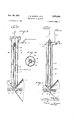
- Fig. 1 is a side elevation, with parts cut away, showing an aluminum-lined reaction tube with accessory apparatus for making melamine.
- Fig. 2 shows a cross section along the line 2-2 of the reactiontube of Fig. 1.
- Fig. 3 is a side elevation showing an additional embodiment of the reaction tube, involving its external and internal heating by hot ammonia.
- Fig.' 4 shows a cross section along the line 4-4 of the tube assembly of Fig. 3.
- Fig. 5 is a side elevation of a further embodimentof the reaction tube that permits either external or internal heating or both.
- Fig. l is shown a tube I of steel or other metal resistant toA high temperature and pressure surrounded by insulation 2 such as rock wool or the like.
- Tube I is coated with a thin film of aluminum 3 and is connected to entrance ducts 4 for the cold melamine-forming solution, and 5 for hot ammonia.
- the lower terminus of the tube assembly comprises a pressure release valve shown generally at 6, which is equipped ,with the conventional Sylphon 'I controlled by spring 8, which is adjustable to cause valve stem 9 to unseat at any predetermined pressure, and thus to permit melamine vapor to' be sprayed through valve Kiev I0 into melamine collecting chamber II, which is equipped with solids discharge gate I2 and gaseous discharge assembly comprising bag filter I3 agitated by vibrating means I4. The filtered gases are drawn off through tube I5 for storage or recycling.
- Fig. 3 an aluminum tube of substantial thickness is shown at I6, supported by a high temperature resistant tube I1 made of stainless steel or the like positioned axially by means of spiders I 8 or the like within a containing cham-A ber !9 of stainless steel or the like.
- Hot ammonia enters the system at 20, and heats the reaction tube on the outside as it rises, and then heats the cold ammonia-dicyandiamide (or other melamine-forming material) entering at II and converts it to melamine vapor during passage of., the materials through the aluminum reaction" tube I6.
- the melamine Vapor is sprayed through valve B into hopper I I with its various accessories as shown in Fig. 1.
- Fig. 5 there is shown an aluminum tube 2l supported by a high temperature resistant tube 22 such as stainless steel or the like contained axially within chamber 23 equipped with ports 24 and 25 for the passage of high temperature heat exchange media such as lead alloys and the like, for exterior heating of the reaction tube tail, with particular reference to Fig. l, which ⁇ represents a preferred embodiment of the invention.
- a high temperature resistant tube 22 such as stainless steel or the like contained axially within chamber 23 equipped with ports 24 and 25 for the passage of high temperature heat exchange media such as lead alloys and the like, for exterior heating of the reaction tube tail
- ammonia and a substance which forms melamine when heated is passed through inlet pipe 4 into tube I, along with hotl ammonia introduced through pipe 5.
- the ammonia is heated by means of a pre-heater (not shown) to a temperature within the range Im-600 C., and serves to heat the melamine- ,forming substance to a temperature at which melamine is formed.
- This hot ammonia passes throughthe reaction zone 3, and when the zone reaches optimum operating temperature (about 500 C.) a stream of cold, 50% dicyandiamdeammonia solution is pumped through inlet 4, where it mixes withthe hot ammonia from inlet 5.
- the solution enteringY through pipe i is held at a pressure of about 2000 p. s. i.
- the proportions of 50% dicyandiamide-ammonia solution and preheated ammonia are adjusted so that the resultant mixture contains about 15% dicyandiamide at the entrance of tube 3.
- the rate of feed is adjusted so that the reactants have a residence time rof at leastabout 7 seconds within reaction tube 3.
- the melamine so produced together with excess ammonia is vented from the end of the reaction tube 3 through pressure regulated valve 6 and sprayed into receiving chamber II.
- temperatures of Vthis mixture range from 400- 450 C., and it is important to maintain the exit temperature above the freeze-up point of valve 5, which is generally found to be about 370 C.
- Exit temperatures are easily regulated by reguf lating the entrance temperature of liquid ammonia into duct 5.
- an entrance temperature for said preheated ammonia of 500600 C. ordinarily suffices.
- the ammonia expands immediately and the resultant cooling effect causes the melamine vapor to pass quickly to the solid state so that it falls to bottom of the receiver as an extremely fine light powder.
- Dicyandiamide is a preferred melamine-forming substance because of the speed with which it is ,converted into melamine under the conditions of this process.
- various other melamine-forming materials such as urea may be used instead. If urea is used, the reaction tube should be somewhat longer, inasmuch as the conversion of urea to melamine requires a longer period of time.
- Still other melamine-iorming substances that may be used include cyanamide,
- guanylurea cyanourea, biuret, guanidine and its salts, cyanuric acid, ammelide, ammeline, melam, melem, melon, and others well known in the art.
- the length and diameter of the aluminumlined reaction tube obviously vary with the nature of the melamine-forming substance and the required capacity of the plant.
- the tube When using melamine-forming substances that are almost instantly converted into melamine at the high temperatures of the process, such as dicyandiamide, the tube may be rather short; one successful conversion tube and its aluminum liner were only thirty inches long. The tube may be much longer, however, since melamine vapors are quite stable under the conditions of the process.
- the tube and aluminum liner may be longer than a comparable tube suitable for dicyandiamide, or the rate at which the former materials ⁇ are passed through it may be slower.
- reaction tube When using dicyandiamide or other melamineforming substances that are rapidly converted to melamine at temperatures of the process, it has been found that a vertical tube is preferable, as there is less danger of plugging the tube with solid melamine.
- the reaction tube When using urea as the melamineforming substance, or other materials that form melamine more slowly than dieyandiamide or at higher temperatures, the reaction tube may be positioned horizontally or placed at an angle to the plane of the floor.
- the aluminum liner I6 was 11/2 inches, inner diameter, x 7 feet long, and 2%; inch thick, supported by a stainless steel cylinder of similar iength and about 3,4; inch thick.
- Liquid ammonia preheated to about 550 C. was Vpumped into inlet tube 20. This hot ammonia passed up over the top of the liner and down into the reaction zone.
- the reaction Zone had reached operating temperature (about 500 C.) a stream of cold, 50% dicyandiamide-ammonia solution was pumped through inlet 4, where it mixed with the hot ammonia.
- the solution entering through pipe was held at a pressure of about 2000 p. s. i.
- a heat exchange medium such as a lead alloy is passed through heat jacket 23 with its ports 24 and 25.
- the preferred temperature range for operating the invention is 350500 C. and the preferred pressure range 750-5000 p. s. i., and still more preferably, about 2000 p. s. i.
Landscapes
- Chemical & Material Sciences (AREA)
- Organic Chemistry (AREA)
- Organic Low-Molecular-Weight Compounds And Preparation Thereof (AREA)
Description
Nov. 20, 1951 J. s. MACKAY ET A1.
PRODUCTION OF MELAMINE 2 SHEETS-SHEET 1 Fiied March 2e, 1951 INVENTRS ATTO R N EY 'NOW 20, 1951 J, s. MACKAY ET AL 2,575,498
PRODUCTION 0F MELAMINE 7 un f Y ATTORNEY Patented Nov. 20, 1951 PRODUCTION OF MELAllIINE Johnstone S. Mackay, Old Greenwich, and William P. Lawler, Springdale, Conn., assignors to American Cyanamid Company, New York,
N. Y., a corporation of Maine Application March 26, 1951, Serial N0. 217,686 Claims. (Cl. 260-249.7)
This invention relates to an improvement in thev art of preparing melamine, and more particularly to the preparation of .melamine in a high temperature reaction tube.
'Ihe high temperature method of making melamine is an important one, but suffers from the disadvantage that the melamine-forming material, such as dicyandiamide, urea, or the like, generally dissolved in liquid ammonia, tends to corrode the interior of the reaction tube at the high temperatures necessary to form melamine by this method, resulting in a short life of the reaction tube and impurities in the melamine produced. In the high temperature processes, it is normal to use temperatures within the range 350-600 C. and ammonia pressures of 100- 10.000 p. s. i., or even higher. Under such stringent conditions the attack on the lining of the reaction tubes usually employed is severe. For example, it has been found that reaction tubes of stainless steel, platinum, and silver, are quickly corroded and that non-metallic surfaces such as borosilicate glass, ceramic liners, and glazed metals, are corrosion resistant but fail owing to thermal shock.
It is an object of this invention to provide a reaction tube for melamine production more suitable than those heretofore used. It is a further object to provide a more durable reaction tube relatively free from corrosion and shock under the conditions obtaining in high temperature processes for making melamine. It is a still further-object to provide a rapid and continuous process for making a high-purity melamine.
It has been found that a liner consisting of aluminum metal may be used to contain the reaction, and that the liner so used is resistant to bothcorrosion and thermal shock. The aluminum lining is preferably prepared by hotdipping a stainless steel tube in molten aluminum metal, but it can also be prepared by spraying molten aluminum into a tube of stainless steel or other high temperature resistant metal in such a way that the interior of the tube is covered with aluminum metal spray. The aluminum coating may also be deposited by evaporating molten aluminum in a vacuum and permitting the vapor to condense on the interior of a tube of metal that is structurally strong at high temperatures. Another method of forming the liner is to draw a stainless steel pipe (or other high temperature resistant metal or alloy such as aluminum bronze) down over an aluminum pipe. A still further method is to machine an aluminum tube to a predetermined outside dimension, and to swage a supporting tube of metal resistant to high temperatures over the thus machined aluminum tube.
Among the advantages that result from the use of an aluminum reaction tube liner two stand out, namely, much longer runs between shutdowns for repairs to the reaction tube, and production of a purer grade of melamine.
To describe the invention in greater particularity, reference is' made to the accompanying drawings.
Fig. 1 is a side elevation, with parts cut away, showing an aluminum-lined reaction tube with accessory apparatus for making melamine.
Fig. 2 shows a cross section along the line 2-2 of the reactiontube of Fig. 1.
Fig. 3 is a side elevation showing an additional embodiment of the reaction tube, involving its external and internal heating by hot ammonia.
Fig.' 4 shows a cross section along the line 4-4 of the tube assembly of Fig. 3.
Fig. 5 isa side elevation of a further embodimentof the reaction tube that permits either external or internal heating or both.
In Fig. l is shown a tube I of steel or other metal resistant toA high temperature and pressure surrounded by insulation 2 such as rock wool or the like. Tube I is coated with a thin film of aluminum 3 and is connected to entrance ducts 4 for the cold melamine-forming solution, and 5 for hot ammonia. The lower terminus of the tube assembly comprises a pressure release valve shown generally at 6, which is equipped ,with the conventional Sylphon 'I controlled by spring 8, which is adjustable to cause valve stem 9 to unseat at any predetermined pressure, and thus to permit melamine vapor to' be sprayed through valve orice I0 into melamine collecting chamber II, which is equipped with solids discharge gate I2 and gaseous discharge assembly comprising bag filter I3 agitated by vibrating means I4. The filtered gases are drawn off through tube I5 for storage or recycling.
In Fig. 3 an aluminum tube of substantial thickness is shown at I6, supported by a high temperature resistant tube I1 made of stainless steel or the like positioned axially by means of spiders I 8 or the like within a containing cham-A ber !9 of stainless steel or the like. Hot ammonia enters the system at 20, and heats the reaction tube on the outside as it rises, and then heats the cold ammonia-dicyandiamide (or other melamine-forming material) entering at II and converts it to melamine vapor during passage of., the materials through the aluminum reaction" tube I6. The melamine Vapor is sprayed through valve B into hopper I I with its various accessories as shown in Fig. 1.
In Fig. 5 there is shown an aluminum tube 2l supported by a high temperature resistant tube 22 such as stainless steel or the like contained axially within chamber 23 equipped with ports 24 and 25 for the passage of high temperature heat exchange media such as lead alloys and the like, for exterior heating of the reaction tube tail, with particular reference to Fig. l, which `represents a preferred embodiment of the invention.
In using the aluminum reaction tube shown in Fig. l, ammonia and a substance which forms melamine when heated, such as dicyandiamide, is passed through inlet pipe 4 into tube I, along with hotl ammonia introduced through pipe 5. The ammonia is heated by means of a pre-heater (not shown) to a temperature within the range Im-600 C., and serves to heat the melamine- ,forming substance to a temperature at which melamine is formed. This hot ammonia passes throughthe reaction zone 3, and when the zone reaches optimum operating temperature (about 500 C.) a stream of cold, 50% dicyandiamdeammonia solution is pumped through inlet 4, where it mixes withthe hot ammonia from inlet 5. The solution enteringY through pipe i is held at a pressure of about 2000 p. s. i. The proportions of 50% dicyandiamide-ammonia solution and preheated ammonia are adjusted so that the resultant mixture contains about 15% dicyandiamide at the entrance of tube 3. The rate of feed is adjusted so that the reactants have a residence time rof at leastabout 7 seconds within reaction tube 3. The melamine so produced together with excess ammonia is vented from the end of the reaction tube 3 through pressure regulated valve 6 and sprayed into receiving chamber II. temperatures of Vthis mixture range from 400- 450 C., and it is important to maintain the exit temperature above the freeze-up point of valve 5, which is generally found to be about 370 C.
Exit temperatures are easily regulated by reguf lating the entrance temperature of liquid ammonia into duct 5. For such purposes an entrance temperature for said preheated ammonia of 500600 C. ordinarily suffices. As the mixture of melamine and ammonia enters the receiving chamber II through orifice IB the ammonia expands immediately and the resultant cooling effect causes the melamine vapor to pass quickly to the solid state so that it falls to bottom of the receiver as an extremely fine light powder.
Dicyandiamide is a preferred melamine-forming substance because of the speed with which it is ,converted into melamine under the conditions of this process. However, various other melamine-forming materials, such as urea may be used instead. If urea is used, the reaction tube should be somewhat longer, inasmuch as the conversion of urea to melamine requires a longer period of time. Still other melamine-iorming substances that may be used include cyanamide,
Exit
guanylurea, cyanourea, biuret, guanidine and its salts, cyanuric acid, ammelide, ammeline, melam, melem, melon, and others well known in the art.
The length and diameter of the aluminumlined reaction tube obviously vary with the nature of the melamine-forming substance and the required capacity of the plant. When using melamine-forming substances that are almost instantly converted into melamine at the high temperatures of the process, such as dicyandiamide, the tube may be rather short; one successful conversion tube and its aluminum liner were only thirty inches long. The tube may be much longer, however, since melamine vapors are quite stable under the conditions of the process. When using urea, melam, and other substances that form melamine more slowly at the higher temperatures, the tube and aluminum liner may be longer than a comparable tube suitable for dicyandiamide, or the rate at which the former materials `are passed through it may be slower.
When using dicyandiamide or other melamineforming substances that are rapidly converted to melamine at temperatures of the process, it has been found that a vertical tube is preferable, as there is less danger of plugging the tube with solid melamine. When using urea as the melamineforming substance, or other materials that form melamine more slowly than dieyandiamide or at higher temperatures, the reaction tube may be positioned horizontally or placed at an angle to the plane of the floor.
The following is an example using dicyandiamide in the apparatus of Fig. 3. The aluminum liner I6 was 11/2 inches, inner diameter, x 7 feet long, and 2%; inch thick, supported by a stainless steel cylinder of similar iength and about 3,4; inch thick. Liquid ammonia preheated to about 550 C. was Vpumped into inlet tube 20. This hot ammonia passed up over the top of the liner and down into the reaction zone. When the reaction Zone had reached operating temperature (about 500 C.) a stream of cold, 50% dicyandiamide-ammonia solution was pumped through inlet 4, where it mixed with the hot ammonia. rThe solution entering through pipe was held at a pressure of about 2000 p. s. i. The proportions of 50% dicyandiain-ide and Ypreheated ammonia were so adjusted that the resultant mixture contained 25% dicyandiamide at the top of the reaction zone. The rate ci? feed was adjusted so that the reactants had a residence time of 25-75 seconds within the reaction tube I6. The melamine and excess ammonia were vented from the end of the reaction tube through pressure-regulated valve 'S and sprayed into receiving chamber II. Here the ammonia expanded immediately and the resultant cooling eiect caused the melamine vapor to pass with extreme rapidity to the solid state so that it fell to the bottom of the receiver as an exremely line light powder. Exit temperatures were of the order 400450 C'.
The following is an example using dicyandiamide in the apparatus of Fig. 5. Ammonia preheated' to about 550 C. was pumped into inlet tube 5, thence into aluminum liner 2l and out through valve 6. The aluminum liner 2| consisted of a Llil/2 foot length of standard inchV aluminum pipe, and was supported by an exterior steel shell 22, consisting of 3A inch stainlesssteel pipe. When the temperature within the aluminum reaction Zone 2l reached operating temperature (about 500 0.), a stream of dicyandiamide, dissolved in liquid ammonia in the 5 Weight ratio of about 1 part dicyandiamide to 1 part ammonia, was pumped into inlet tube at such a rate that the weight ratio of dicyandiamide to the total ammonia in reaction tube was about 1 to 3. Equilibrium pressure within the tube 2| was maintained at about 2000 p. s. i. The average retention time of material within the reaction zone was about 7 seconds. Recovery Was approximately 97%-98% of theoretical,
and the purity of melamine so produced was about 98.7%.
When it is desired to supplement heat provided by the pre-heated ammonia, a heat exchange medium such as a lead alloy is passed through heat jacket 23 with its ports 24 and 25.
The preferred temperature range for operating the invention is 350500 C. and the preferred pressure range 750-5000 p. s. i., and still more preferably, about 2000 p. s. i.
While the invention has been described with particular reference to specic embodiments, it is to be understood that it is not to be limited thereto but is to be construed broadly and restricted solely by the scope of the appended claims.
'I'his is a continuation-impart of applicants co-pending Serial No. 81,450, filed March 15, 1941, now abandoned.
We claim:
1. In the process of making melamine comprising continuously passing a melamineforming substance through a reaction zone in a tube maintained at a temperature Within the approximate range of 350600 C., and under a pressure of at least 100 p. s. i., the improvement which comprises passing said melamine-forming substance through a tube the inner surface of which is aluminum.
2. The process according to claim 1 in which the melamine-forming substance is dicyandiamide and the pressure is ammonia pressure.
3. The process according to claim 1 in which the melamine-forming substance is urea and the pressure is ammonia pressure.
4. In the process of making melamine comprising continuously passing dicyandiamide through a reaction zone in a tube maintained at a temperature Within the approximate range of 350-600 C., and under a pressure Within the approximate range '750-2000 lb./sq. in., the improvement which comprises passing said dicyandiamide through a tube the inner surface of which is aluminum.
5. In the process of making melamine comprising continuously passing urea through a reaction zone in a tube maintained at a temperature Within the approximate range of 350-600 C., and under a pressure Within the approximate range 'Z50-2000 lb./sq. in., the improvement which comprises passing said urea through a tube the inner surface of which is aluminum.
J OHN STONE S. MACKAY. WILLIAM P. LAWLER.
No references cited.
Claims (1)
1. IN THE PROCESS OF MAKING MELAMINE COMPRISING CONTINUOUSLY PASSING A MELAMINEFORMING SUBSTANCE THROUGH A REACTION ZONE IN A TUBE MAINTAINED AT A TEMPERATURE WITHIN THE APPROXIMATE RANGE OF 350*-600*., AND UNDER A
Publications (1)
| Publication Number | Publication Date |
|---|---|
| US2575498A true US2575498A (en) | 1951-11-20 |
Family
ID=3438529
Family Applications (1)
| Application Number | Title | Priority Date | Filing Date |
|---|---|---|---|
| US2575498D Expired - Lifetime US2575498A (en) | Production of melamine |
Country Status (1)
| Country | Link |
|---|---|
| US (1) | US2575498A (en) |
Cited By (4)
| Publication number | Priority date | Publication date | Assignee | Title |
|---|---|---|---|---|
| US2824104A (en) * | 1958-02-18 | Ammonia | ||
| US2925127A (en) * | 1953-11-25 | 1960-02-16 | Monsanto Chemicals | Apparatus for producing aerogels |
| US3256064A (en) * | 1962-07-11 | 1966-06-14 | Standard Oil Co | Cyclic process for the preparation of cyanamide and melamine |
| US4565867A (en) * | 1984-01-05 | 1986-01-21 | Melamine Chemicals, Inc. | Anhydrous high-pressure melamine synthesis |
-
0
- US US2575498D patent/US2575498A/en not_active Expired - Lifetime
Non-Patent Citations (1)
| Title |
|---|
| None * |
Cited By (4)
| Publication number | Priority date | Publication date | Assignee | Title |
|---|---|---|---|---|
| US2824104A (en) * | 1958-02-18 | Ammonia | ||
| US2925127A (en) * | 1953-11-25 | 1960-02-16 | Monsanto Chemicals | Apparatus for producing aerogels |
| US3256064A (en) * | 1962-07-11 | 1966-06-14 | Standard Oil Co | Cyclic process for the preparation of cyanamide and melamine |
| US4565867A (en) * | 1984-01-05 | 1986-01-21 | Melamine Chemicals, Inc. | Anhydrous high-pressure melamine synthesis |
Similar Documents
| Publication | Publication Date | Title |
|---|---|---|
| US3870739A (en) | Isocyanates from urethanes | |
| US2712491A (en) | Preparation of ammonium cyanate from urea | |
| US2527315A (en) | Preparation of urea | |
| EP0454227A1 (en) | Process for concentrating urea solutions under vacuum | |
| US2566224A (en) | Production of melamine | |
| US2566223A (en) | Preparation of melamine | |
| US2566227A (en) | Preparation of melamine | |
| US2762798A (en) | Cyanuric chlorike | |
| CA1039926A (en) | Process for preparing cyanic acid | |
| US6262261B1 (en) | Process for the preparation of melamine | |
| US2727037A (en) | Device and process for preparing | |
| US4271298A (en) | Process for the production of suspensions or solutions of cyanuric chloride in water | |
| US3308123A (en) | Method of separating melamine from waste gas | |
| US6579980B2 (en) | Method for preparing melamine | |
| GB2036735A (en) | Process for introducing three substituents into cyanuric chloride | |
| US4216053A (en) | Recovery of ammonium decavanadate from aqueous solution | |
| US3166390A (en) | Method of making hcno | |
| US4587334A (en) | Process for making cyanuric acid | |
| US2712492A (en) | Method of preparing ammonium cyanate | |
| US3133062A (en) | Process for preparation of s-triazine | |
| GB2036736A (en) | Process for the production of 2-alkoxy-4,6-dichloros-triazines | |
| JPS5917049B2 (en) | Production method of cyanic acid | |
| CA1102328A (en) | Process for producing suspensions or solutions of cyanuric chloride in organic solvents | |
| US3661973A (en) | Process for the preparation of adiponitrile from adipic acid and ammonia | |
| SU149726A1 (en) | The method of obtaining adiponitrile |