US2908043A - Converting bulk filament into staple fiber - Google Patents

Converting bulk filament into staple fiber Download PDF

Info

Publication number
US2908043A
US2908043A US501345A US50134555A US2908043A US 2908043 A US2908043 A US 2908043A US 501345 A US501345 A US 501345A US 50134555 A US50134555 A US 50134555A US 2908043 A US2908043 A US 2908043A
Authority
US
United States
Prior art keywords
apron
rolls
roll
fibers
section
Prior art date
Legal status (The legal status is an assumption and is not a legal conclusion. Google has not performed a legal analysis and makes no representation as to the accuracy of the status listed.)
Expired - Lifetime
Application number
US501345A
Inventor
Kenneth L Whitney
Current Assignee (The listed assignees may be inaccurate. Google has not performed a legal analysis and makes no representation or warranty as to the accuracy of the list.)
Akzo Nobel UK PLC
Original Assignee
American Viscose Corp
Priority date (The priority date is an assumption and is not a legal conclusion. Google has not performed a legal analysis and makes no representation as to the accuracy of the date listed.)
Filing date
Publication date
Application filed by American Viscose Corp filed Critical American Viscose Corp
Priority to US501310A priority Critical patent/US2908044A/en
Priority to US501345A priority patent/US2908043A/en
Application granted granted Critical
Publication of US2908043A publication Critical patent/US2908043A/en
Anticipated expiration legal-status Critical
Assigned to KELLOGG CREDIT CORPORATION A DE CORP. reassignment KELLOGG CREDIT CORPORATION A DE CORP. AGREEMENT WHEREBY SAID HELLER AND RAYONIER RELEASES ALL MORTGAGES AND SECURITY INTERESTS HELD BY AVTEX ON APRIL 28, 1978, AND JAN. 11, 1979, RESPECTIVELY AND ASSIGNS ITS ENTIRE INTEREST IN SAID MORT-AGAGE AGREEMENT TO ASSIGNEE (SEE RECORD FOR DETAILS) Assignors: AVTEX FIBERS INC., A NY CORP., ITT RAYONIER INCORPORATED, A DE CORP., WALTER E. HELLER & COMPANY, INC. A NY CORP.
Assigned to WALTER E. HELLER & COMPANY, INC., A CORP. OF DEL. reassignment WALTER E. HELLER & COMPANY, INC., A CORP. OF DEL. AGREEMENT WHEREBY AETNA RELEASES AVTEX FROM ALL MORTAGES AND SECURITY INTERESTS IN SAID INVENTIONS AS OF JANUARY 11,1979, AND ASSIGNS TO ASSIGNEE THE ENTIRE INTEREST IN SAID MORTAGE AGREEMENT TO ASSIGNEE (SEE RECORDS FOR DETAILS). Assignors: AETNA BUSINESS CREDIT, INC., A CORP. OF N.Y., AVTEX FIBERS, INC, A CORP. OF NY, KELLOGG CREDIT CORP., A CORP. OF DEL.
Assigned to JOHN HANCOCK MUTUAL LIFE INSURANCE COMPANY, PROVIDENT ALLIANCE LIFE INSURANCE COMPANY C/O THE PAUL REVERE EQUITY MANAGEMENT COMPANY, PAUL REVERE LIFE INSURANCE COMPANY THE C/O THE PAUL REVERE EQUITY MANAGEMENT COMPANY, WESTERN AND SOUTHERN LIFE INSURANCE COMPANY THE C/O NEW ENGLAND MUTUAL LIFE INSURANCE COMPANY, NEW ENGLAND MUTUAL LIFE INSURANCE COMPANY, BALBOA INSURANCE COMPANY C/O THE PAUL REVERE EQUITY MANAGEMENT COMPANY reassignment JOHN HANCOCK MUTUAL LIFE INSURANCE COMPANY AS SECURITY FOR INDEBTEDNESS RECITED ASSIGNOR GRANTS , BARGAINS, MORTGAGES, PLEDGES, SELLS AND CREATES A SECURITY INTEREST WITH A LIEN UNDER SAID PATENTS, SUBJECT TO CONDITIONS RECITED. (SEE DOCUMENT FOR DETAILS). Assignors: AVTEX FIBERS INC. A NY CORP.
Expired - Lifetime legal-status Critical Current

Links

Images

Classifications

    • DTEXTILES; PAPER
    • D01NATURAL OR MAN-MADE THREADS OR FIBRES; SPINNING
    • D01GPRELIMINARY TREATMENT OF FIBRES, e.g. FOR SPINNING
    • D01G1/00Severing continuous filaments or long fibres, e.g. stapling
    • D01G1/06Converting tows to slivers or yarns, e.g. in direct spinning
    • D01G1/10Converting tows to slivers or yarns, e.g. in direct spinning by cutting
    • DTEXTILES; PAPER
    • D02YARNS; MECHANICAL FINISHING OF YARNS OR ROPES; WARPING OR BEAMING
    • D02GCRIMPING OR CURLING FIBRES, FILAMENTS, THREADS, OR YARNS; YARNS OR THREADS
    • D02G1/00Producing crimped or curled fibres, filaments, yarns, or threads, giving them latent characteristics
    • D02G1/12Producing crimped or curled fibres, filaments, yarns, or threads, giving them latent characteristics using stuffer boxes
    • YGENERAL TAGGING OF NEW TECHNOLOGICAL DEVELOPMENTS; GENERAL TAGGING OF CROSS-SECTIONAL TECHNOLOGIES SPANNING OVER SEVERAL SECTIONS OF THE IPC; TECHNICAL SUBJECTS COVERED BY FORMER USPC CROSS-REFERENCE ART COLLECTIONS [XRACs] AND DIGESTS
    • Y10TECHNICAL SUBJECTS COVERED BY FORMER USPC
    • Y10TTECHNICAL SUBJECTS COVERED BY FORMER US CLASSIFICATION
    • Y10T29/00Metal working
    • Y10T29/51Plural diverse manufacturing apparatus including means for metal shaping or assembling
    • Y10T29/5136Separate tool stations for selective or successive operation on work
    • Y10T29/5137Separate tool stations for selective or successive operation on work including assembling or disassembling station

Definitions

  • This invention relates to apparatus for converting bulk filament of continuous length such as rayon and nylon tows into a drafted continuous product of staple liber ready for further drafting, testing, and other treatments suitable for converting the product into a yarn.
  • Equipment of the general nature described herein has been provided for the purpose of conveiting continuous filaments into Vstaple fibers which are then shaped into a web or sheet of substantially parallel fibers and finally drafted to distribute the fibers into a random arrangement.
  • the primary utility of such a machine is to avoid a substantial part of the carding, combing, gilling, and drafting operations conventionally performed in separate machines.
  • drafting is ordinarily accomplished by nip rolls rotatable about fixed axes, and thus this rigid design adapts the machines for use with a very limited range of fiber lengths.
  • An object of the present invention is to provide apparatus constituted as a single machine for progressively converting a continuous supply of fllamentary material into a continuous drafted staple product having better uniformity in texture and random fiber distribution and greater freedom from fiber concentrations than could be heretofore obtained.
  • Another object to provide apparatus which is adapted to convert filaments into staple fiber products having fibers of the same length and/or mixtures ⁇ o f different liber lengths.
  • Still another kobject is to provide apparatus that is readily adjustable in order to carry out the foregoing object.
  • a further object is to provide apparatus, in accordance with the foregoing objects, capable of converting a supply material comprising crimped filaments, and particularly a supply material such :as a plurality of heavy denier tows comprising crimped filaments.
  • a still further object is to provide apparatus, in accordance with the foregoing objects, capable of producing a crimped staple fiber product.
  • Fig. 1 is a partially diagrammatic longitudinal eleva- 2,908,043 Patented Oct.. 13, 195,9
  • Fig. la is a schematic elevation of the cutting rolls shown in Fig. 1;
  • Fig. 1b is a schematic elevation of axially reciprocating rolls shown in Fig. v1;
  • Fig. 2 is a diagrammatic fragmentary plan view of a portion of the machine shown in Fig. 1; i
  • Figs. 3 and 4 are diagrammatic views of different positions of parts of the liber drafting system of the apparatus shown in Fig. 1;
  • FIG. 5 is an enlarged fragmentary side View of apron adjusting apparatus shown in Fig. 1; j
  • Fig. 6 is a fragmentary sectional elevation taken along line VI--VI of Fig. 5;
  • Fig. 7 is a perspective view .of fiber debonding rolls included in the apparatus of Fig. 1;
  • Fig. 8 is a fragmentary sectional -view of-therolls shown in Fig. 7 taken along line VII-VII of Fig. 9;
  • Fig. 9 is a fragmentary sectional view taken along line IX-IX of Fig. 8.;
  • Fig. 10 is a fragmentary perspective viewgof crimping aprons shown in Fig. 1; and l .l
  • Fig. 1l is a diagrammatic elevation of the driving system for the machine illustrated in Fig. l.
  • the invention consists of apparatus for converting a running, supply -of continuous filaments into a drafted and uniformly textured bundle or sliver of staple filaments.
  • the apparatus hereafter described is adapted to handle different lengths of staple, whether it be cut to uniformv or mixed lengths.
  • 4thein'f vention is primarilyconcerned with Vaninlprovedfiber drafting system, the apparatus as a whole contains other structural features which are believed to distinguish the invention from prior systems and which cooperate with the drafting system to produce aA high quality staple liber bundle.
  • the apparatus of the invention comprises, in a preferred embodiment, a preliminary filament stretching and sheet developing Section; .a section for cutting the sheet transversely into successive .longitudinal portions; an adjustable driving system permitting changes of speed in fiber-advancing portions of the machine occurring after cutting to compensate for relaxation of the ber before drafting; al section of improved design operating on the sheet portions to separate the fibers one from kthe other; and a drafting section comprising an upwardly-facing apron, a holding roll in nip relation with vthe apron and which is adjustable length-wise of the apron, a second or upper apron spaced from the ⁇ holding roll and supported in adjacent relationship to an advanced portion of the first or lower apron and terminating therebeyond in nip relation with a traction roll.
  • the upper apron and the traction roll are driven -at a higher speed than the lower apron and the holding roll to shuffle the fibers, as they are released by the holding roll, to. an extent which progressively increases from the bottom fibers to the top fibers of Vthe web or .sheet-as it is carried onrthe lower apron.
  • the apparatus further comprises acrimping section consisting primarily .of.a pair of converging aprons, -driven at a slower linear speed than the traction roll and the upper apron, and a condensing section in which the crimped fibers are formedinto a sliver or bundle of rotund cross-section. ⁇
  • Fig. l diagrammatically illustrates a ilamentary material 5, ordinarilycomprising Va plurality oflilament tows as it entersra' preliminary'gtensioning section 6 comprising snubbing rolls7 and drafting rolls S.
  • theA laments may .optionallyu-bepassed around an additional pair of rolls along any one of the three paths indicated in full and dotted lines.
  • the rolls 10 may be reciprocated oppositely to one another in accordance with a conventional arrangement such as shown in Fig.
  • a guide 14 is positioned along the path of sheet 5 between the rolls 11 and 12, constituting the cutting section, and the rolls 8 of the tensioning section.
  • the guide 14 extends into close proximity to the nip of the cutting rolls and has lateral portions which engage the sheet edges to accurately restrict the sheet to a desired width before it enters the nip of the cutting rolls.
  • the rolls of the cutting section are of conventional type, wherein the roll 12 is a hard surface roll, known ordinarily as the anvil roll, while the periphery of the roll 11, known ordinarily as the cutting roll, comprises a helix formed of a hardened material, such as a hardened steel, which protrudes slightly above the cylindrical surface of a softer material, such as a resilient vulcanizate. Cutting is performed within the nip of the rolls 11 and 12 primarily by the crushing action of the helix against the fibrous filamentary material supported on the hard surface of the roll 12.
  • crimped filaments be tensioned to dispose ⁇ them in a substantially straight condition as they proceed into the nip of the cutting rolls.
  • satisfactory cutting is not achieved if such filament tensioning is obtained by draft exerted by the cutting rolls, and thus the tension section 6 serves to impose the tension needed to extend or straighten the lamentary material supplied to the rolls 7.
  • the peripheral speeds of the rolls 8 and the cutting rolls may then be adjusted so that a relatively small amount of tension is exerted on the filaments as they pass between the rolls 3 and the cutting rolls.
  • Such treatment of the filaments results in cleaner cutting and staple fiber of higher quality.
  • debonding or rfiber opening rolls 15 and 16 are provided.
  • rolls having longitudinally fiuted surfaces which are loosely meshed together work the fiber in a fashion as to produce separation of the fiber ends.
  • debonding rolls having intermeshing circumferentially-extending utes are preferred, as shown in Figs. 7, 8, and 9.
  • These debonding or fiber opening rolls 15 and 16 are formed with flutes which extend in accurate complementary, interdigital relationship.
  • the debonded fibers leaving the rolls 15 and 16 are then passed into a drafting section comprising a lower apron 18 carried by a plurality of driven rolls 19, 20, 21, and 22, and idler rolls 23 and 24.
  • a pair of rolls 27 and 23 are supported above and are driven at the same peripheral speed as the apron 18.
  • the apron 18 and rolls 27 and 23 together cooperate to advance the debonded fibers at the same linear speed at which they are moved through the debonding rolls.
  • the roll 27 is disposed directly above the roll 19 and is non-adjustable lengthwise of the path of the fibrous material, while the roll 28 is adjustable lengthwise of the path for reasons hereinafter explained.
  • the apron 18 and the rolls 27 and 28 may be considered to be the snubbing -portion of the drafting section.
  • the traction portion of the drafting section comprises an apron 30 carried by a pair of adjustable idler rolls 31 and '32 and a driven roll 33.
  • the apron 30, and its supporting rolls, are disposed above the fiber path with the lower reach of the apron 30 extending from the roll 32 to the roll 33 in superjacent relation with a driven roll 34 and the upper reach of the apron 18.
  • the rolls 33 and 34 are disposed in nip relationship with the roll 34 being driven at a speed common to the peripheral speed of the apron 30.
  • An important feature of this invention is that the traction portion is driven at a considerably higher speed than the snubbing portion of the drafting section.
  • the length of the apron 30 disposed above the apron 18 and the angle of inclination of its lower reach are adjustable, and in this manner the drafting of the fiber may be ⁇ controlled to an almost infinite degree.
  • a satisfactory speed ratio of the traction portion to the snubbing portions is 10 to l, although this ratio may be varied as desired to suit a large variety of conditions.
  • the inclination and length of the lower reach of the apron 30 is varied by adjustment of the idler rolls 31 and 32 relative to slots 35 and 36 formed in support plates 37 and 38, respectively. Similar supporting plates are provided on opposite sides of the machine for supporting each of the rolls 31 and 32 at both ends thereof.
  • Other adjustments of the apron 30, by changing the positions of the rolls 31 and 32 and the plates 37 and 38, are illustrated in Figs. 3 and 4. These figures also illustrate different positions of the roll 28, which are correlated with adjustment of the apron 30 to handle different lengths of staple fiber. For example, in Fig.
  • Figs. 3 and 4 illustrate the machine adjusted for handling fibers of shorter lengths wherein the roll 28 is positioned closer to the apron 30, which itself is provided with a lower reach of reduced length.
  • the uppermost fibers of the web carried by the upper reach of the apron 18 are advanced at the fastest rate by the apron 30 as soon as the web is released from the nip formed by the roll 28 and the apron 18.
  • the fibers within the web are thus advanced progressively more rapidly in accordance with their height within the web.
  • the nip formed by the aprons gradually becomes more effective, as the tra.
  • the drafted fiber is discharged from the traction portion of the drafting section as a sheet of..fibers which moves into a crimping section'comprising .two ⁇ opposed aprons 40 and 41.
  • These aprons have mutuallyfacing reaches Whichdeiinethe path of the staple fibers as they are advanced into a condensingfsection 42.1
  • the aprons 40 and 41 are supported so as'to provide a gradually :narrowing region 45 defined by the :opposing converging reaches of the aprons.
  • the aprons 40 andv 41% are driven at substantially slower speeds than .the traction portion of the drafting section Vby driven rolls 43 and 44 so as to gather or compress the sheet .of staple ber lengthwise into vplaits as it issues from the 'draftingisection and enters the enlarged end of the region 4'5.
  • the .plaits-are compressed as they arecarried Ybythe aprons -into iprogressively narrowing portions ofthe region '45, and' issue l'from the nip of these aprons in a packed-or highlyfcrimped state.
  • This 'treatment of the ber' sheet ⁇ tendsto restore all the crimp originally possessed .by the filament vand serves also to promote further'crimping.
  • the apron 40 normally has a fixed ,path with fan idler roll 47 being provided to maintain it in a taut condition.
  • the support lfor the apron 40 comprises, fin addition to the roll 44, a frame 48 which supports a small -idler.rol1 49, and forms a guide portion 48a vover which the. upper reach of the apron 40 .slides during fthe .berfcrimping action. f
  • the iaxes of rolls f43 and ⁇ 53 are xedwith respect to the frame 55,.'however, the frame itself yis lpivotally supported V1in slotted bearingrnembers ⁇ 5f8'loca'ted Yat o ppos'ite .sides fof-the machine.
  • the tippingrnotion of the iapron assembly is resiliently controlled by a ⁇ 'pair of rods 63 which extend .from the vframe Y55, ⁇ outwardly 'of the' apron 141, yto stationary adjustable brackets 64 Ythrough which; they .are longitudinally slidable.
  • the frame 55 ⁇ is resilientlyheld in a 'desired positionby-springs 66 andy 67 which encircle the rods and engage witha swivel element-64a, carried by the Ybracket 64, andkstops Y68 Vand 69 xed to ⁇ the opposite ends'fof therods 63.
  • each bracket 64 is slottedfin a directionparallel-to fthe axis; of the rods l63 whereby the entire lapron 'assen-iblyl mayible moved-to change the angle of inclination of -t-he -lower reach of the apron I41.
  • the crimped, fibrous sheet isultimately discharged into the condensing section '42 comprising.a-ume v7,1 having opposite Vrolled Ledges 72 and a :cover potion ⁇ 73.. -As the fibrous sheetprogresses .lengthwise ofthe fiume', :the .edges ithereof are ro1ledoverwandfthesheet as a ywholeiisfgatlrered' zinto 1a narroivzcrossLsection asrfit issues :from the rend of the iume and proceeds Linto :a'zcurvedfunnelilike con- 'denserf75i ⁇ .l'I-'his :condenser 75'sredu'ces theproduct to 1a xstill lsm'aller icross-section so that the :fibrous lbundlejmay easily .enterthe nip ⁇ formed by alpair of overlapping 'condens
  • the roll 577 ⁇ Acomprisesa center section 79 ofsmaller diameter: fthan its .endwsections r81 fand F82, Iwhile the roll'78 .'ts l:between the two sections 581 yand ⁇ 82 'of 'the 'roll 77. ⁇ .
  • the yroll 77 is ⁇ driven, 'while the roll 78 is :free fto rotate. as a resulttofits 'frictional contact with thevibrous 'bundle drawn- 'between 1th'es'e rolls.
  • Springs -83 :and "84 are positioned in slots formed in :the frame members 88 and 89 and ⁇ bear against lthe Vends yof the shaft carrying ithe roll 78 5to urge .the same towardtheroll 7.7,.
  • the condensing'rolls serve to .propel the fibrous bundle through thecondensinguxne 71 and the condenser 75,. asa highly/.condensed .bundle which is're'ceived by a'conventional'icoiler 86 comprising a frotatable -top *87.
  • Th'eiprime mover for fthe system is a vmotor 90 connected by a fsprocketdrive 91 to a main ydrive shaftf92.
  • Ti'he drive shaft is .connected with .the snubbing .rolls 7 ⁇ :of :the tensioning section by 'a variable drive unit '93 anda .sprocket drive which connects the .unit.93 lwith one of the shafts :of the snubbing rolls supporting one of fthe vintermeshing gears v7a.
  • the cutting section may .be ⁇ driven .inlxed ratio ⁇ withfthe .traction-.rolls V8 'o'f the itensioningsection
  • Thegears for.:driving .the traction vrolls ⁇ 33 .and 34 are 33k: l"and 34respe'c'tively@
  • the gear 34a ⁇ is connected by gear'f97 .and la 'of :speed reduction gears 95 and 96 to :gear 22h vin'fcoaxia'l relation, and turning with the 'roll .22 .and a gear .Z2-a.
  • the roll 34 isv primarily driven :bly a :sprocket ⁇ drive Sfrom a ⁇ variable speed unit 98,;thus the debonding section and Ithe entire drafting lsection of theconverting machine are driven from the variabl'efspeed unit 9S.
  • variable speed unit '99 is connected by a sprocket drive .to a sprocket 44h coaxialiwifh ytheiroll 44, the shaft yof which .requires a coaxial gear 44a' meshed with the gear 43a of the roll 43;
  • Another sprocket ⁇ 44e is connected 'by chain with a-"spr'ocket 77a 'for driving the condensing rolls 77 and 78...;
  • fa sprocket chain 149 extends around a sprocket 28a mounted :integrally and coaxially on the roll 28, a sprocket 146 which is attached Vcoaxially with a 'gear whichinterconnects gears 20a and 21a mounted integrally vvwithy irolls 20 and '21, an adjustable idler sprocket .147, .and a sprocket 148 which is attached coaxially with acgear interconnecting gears 21a yand 22a oflcorrespondingrrolls ,21.and '22.
  • Figs. 5 and 6 are detailed views of the traction portion of the strand-drafting system illustrated in Fig. l.
  • rolls 31, 32, and 33 support the apron 30.
  • the roll 33 is urged resiliently toward the roll 34 to produce tight engagement of the apron 30 with the roll 34.
  • Pressure on the roll 33 is obtained within two bearing assemblies located at opposite ends of the roll shaft.
  • One of such bearing assemblies is shown in Figs. 5 and 6 and comprises springs 105 and 106 supported in a compressed condition between plungers 107 and S, which are adapted for lengthwise movement within a guide portion 110 of a bearing frame 112, and a pressure plate 113 held against the springs by a set screw 114 threaded through the frame top portion 115.
  • the shaft 33d of the roll 33 extends through and is rotatable relative to a bearing block 117 which is slidably disposed between the spaced parallel side walls of the frame 112.
  • a bearing structure and supporting frame corresponding to that just described above is, of course, provided on the opposite side of the machine to receive a portion of the shaft extending beyond the opposite surface end of the roll 33.
  • the rolls 11, 15, 27, and 28 are all resiliently urged downwardly toward the path of the bers, as illustrated in Fig. l, and are mounted in bearing assemblies similar to that just described for roll 33.
  • the rolls 31 and 32 are provided for adjusting the length and inclination of the lower reach of the apron 30 lto vary the degree of contact between the apron 30 and the bers which are advanced from the nip of the roll 28 and the apron 18.
  • the rolls 31 and 32 have identical bearing systems at the opposite ends thereof which are adjustable relative to their respective supporting brackets 37 and 38.
  • the shaft 31a ⁇ of the roll 31 passes through a sleeve bearing 118 which extends through a slot 35 in the supporting bracket or plate 37.
  • the exterior surface of the bearing 118 is threaded to receive a nut 119 and also has a pair of shoulders 121, 122 (Figs. 5 and 6) which are sufficiently narrow to pass through the slot 35, but bear up against the plate 37 when rotated through 90 degrees, as shown best in Fig. 5.
  • the nut 119 is tightened against a washer 123, which engages the outer surface of the support plate 37 along both sides of the slot 35, the position of the bearing assembly relative to the plate is xed.
  • the rolls 31 and 32 have preferably a diameter smaller than the width of respective slots v35 and 36 so that an entire assembly comprising a roll ⁇ and its bearing assemblies may be removed simply by loosening the nuts 119 at both ends of the roll, rotating the bearings 118 to their shoulders with the support plate slots, and then transferring the roll endwise through the slot of the support plate 37. Adjustment of the rolls 31 and 32 along their respective support plate slots may be accomplished without removing the rolls from their supporting plates by simply unloosening the nuts of the respective bearing assemblies.
  • the machine illustrated in Fig. l comprises a frame member running lengthwise of the machine along each side of the path transversed by the filaments and staple fibers.
  • One of these frame members is shown in Fig. 6 and includes two longitudinally extending portions 126 and 127.
  • the frame portion 127 may be suitably bored as shown in Fig. 5 to journal the trunnions or stub shafts of rolls 20, 21, 22, and 24.
  • the stub shafts of rolls 16 and ⁇ 19 (not shown) are journaled in the frame member 127.
  • the upper frame portion 126 is secured to the frame portion 127 by a plurality of cap screws 128 and provides a section which overhangs the frame portion 127.
  • This overhanging section is longitudinally slotted to receive bolts 130 which extend through toe portions of the support plates 37 and 38.
  • the slot 131 for the bolts extends between dotted lines 132 and 133 shown in Fig. 5, and thus the support plates 37 and 38 are adjustable at opposite sides of the machine to provide desired adjustments of the apron 30.
  • a bearing housing 135, and its mating bearing housing at the other side of the machine are each provided with toes )136.
  • Bolts 13S and 139 extend through the toes 136 and are received in a slot 141 formed in the frame portion 126.
  • the lower face of the slot 141 is enlarged to provide space for the bolt heads and to form longitudinal shoulders with which the bolt heads engage when the nuts thereof are tightened.
  • the opposite housings for the roll 28 may be shifted lengthwise of the frame members 125. Since it is not necessary to change the position of the roll 33 lengthwise of the machine, the bearing housings 112 therefor may be fixed to the parallel frame members 125 of the machine by bolts 144, extending laterally of the housing 1112, and a bolt 145 extending through a toe overhanging the slot 141.
  • Apparatus for converting a continuous running sheet of longitudinally oriented filaments into a continuous product of drafted staple fibers comprising means for severing the sheet of filaments into successive strips of staple lbers, means for opening the cut strips of fibers and discharging the same as a sheet, a rst apron, means supporting said apron with a surface thereof extending along a path leading away from the opening means, first movable means positioned adjacent to said opening means and in nip relationship with said surface, second movable means positioned adjacent to the path and beyond the end of said apron furthest from the opening means, a second apron, means for supporting said second apron opposite the path with a surface thereof in nip relationship with said second movable means, said last-mentioned surface having a portion thereof disposed opposite said first-mentioned surface, third movable means, means for supporting said third movable means in nip relationship with the first-menti
  • Apparatus for drafting a continuous sheet of staple fibers comprising two endless aprons, one disposed abo-ve lthe other, means for driving vthe two aprons Vwith the upper apron moving at a substantially greater speed than the ⁇ lower-apron, means in nip relation with Vthe trailing portion of the upper reach of the lower apron for positively gripping lthe sheet of fibers andk advancing the same between the 'two aprons Iat the speed of the lower apron, and means in cooperative relation with the upper apron for advancing the sheet of drafted fibers discharged from between the two aprons, the upper apron and said lastmentioned means arranged to positively grip the fibers and advance the same at the speed of the upper apron.
  • Apparatus for converting a continuous running sheet of longitudinally oriented laments into a continuous product of drafted staple fibers comprising means 4for severing the sheet of filaments into successive ⁇ stripsiof staple fibers, means .for opening the fibers and discharging the same as a sheet, a lower apron, means for supporting the apron with an upwardly-facing section thereof extending along a path leading away from'the openingmeans, a first roll positioned in nip relation with a portionA of said apron section nearest the opening means, a second roll disposed adjacent to the path and beyond v'the endof said Yapron furthest from 'the 'opening means, a second apron, means for supporting said second apron above the path with a downwardly-facing section in nip relation with the second roll, said second apron extending rearwardly over a portion of the first apron, a third roll, means for supporting said third roll in
  • Apparatus as defined in claim 3 wherein the means for supporting the second apron comprises at least one idler roll for supporting the rearward end of said downwardly facing section, and further including means for adjusting the idler roll toward land away from said first apron.
  • Apparatus as defined in claim 4 wherein the supporting means for the second apron comprises at least a pair of spaced idler rolls adjustable along separate ambits extending toward and away from the first apron.
  • Apparatus as defined in claim 6 comprising separate means for supporting each idler roll, said idler roll supporting means being adjustable in a direction lengthwise of the path.
  • the opening means comprises a pair of rolls, each having circumferentially extending grooves and ridges extending in complementary meshing relation with the grooves and ridges of the other roll, the axes of rotation of said meshing rolls being spaced to provide substantially close uniform clearance between adjacent roll surfaces.
  • said driving means comprises a primary drive means and separate means for independently connecting the primary drive' means with the cutting means; and an assembly cornprising the first and second aprons, and the first, second, and third rolls; and the opening means, one of said separate means comprising a variable drive unit for altering the speed of the cutting means with respect to that of said assembly.
  • Apparatus as defined in claim 3 wherein said supporting means'for the second apron comprises a relatively large -rolldisposed in nip relation with sa'idsefcond roll and 'connected with said driving means, and further wherein all kof said rolls of the apparatus connected with the driving means and disposed above said'path having means associated therewith for resiliently urging the rolls toward the'path.
  • Apparatus for-converting a sheet of longitudinally oriented filaments into a continuous product of drafted crimped staple fibers comprising means for severing the sheet of filaments into successive strips ⁇ of staple fibers, means for opening the fibers and discharging the same as a sheet, a -lower apron, means for supporting the apron with ⁇ an upwardly-facing -section thereof extending along a path leading away from the opening means, a first roll positioned in nip relation withy a portion of said 'apron section ⁇ nearest the opening me'ans,'a second -roll disposed adjacent to the path and beyond the end of said apron furthest vfrorn'the opening means, a second apron, means for supporting said second apron with a downwardly-facing section in nip relation with the second roll, said second apron extending rearwardly over a portion of 'the first apron, Va third roll, means supporting said third
  • the crimping means comprises a lower apron having an upwardlyfacing section coinciding with said path, an upper apron having a downwardly-facing section disposed above said path, rolls having fixed axes supporting the lower apron of said crimping means, and adjustable resiliently mounted means 4for supporting the upper apron of said crimping means.
  • the opening means the first and second aprons, and the first, second, and third rolls; and the crimping means, the driving connections for said opening and crimping means each including a variable drive unit for independently varying the speeds of fiber advancement of said opening and crimping means with respect to the cutting means.
  • Apparatus as defined in claim 13 wherein said supporting means for said second apron comprises a relatively large roll disposed in nip relation with said second roll and connected with the driving means, and further wherein all of said rolls of the apparatus connected with the driving means and disposed above said path having means associated therewith for resiliently urging the rolls toward the path.
  • Apparatus for converting a plurality of filamentary tows into a continuous product of drafted staple fibers comprising a tensioning section including a plurality of snubbing rolls in nip relationship, a plurality of drafting rolls in nip relationhip and spaced from the snubbing rolls, at least one reciprocable roll disposed between said snubbing and drafting rolls in spaced relation therewith, means for reciprocating said last-mentioned roll lengthwise of its axis, all of said rolls of the tensioning section having axes of rotation substantially parallel;
  • a lower apron means for supporting the apron 'with an upwardly-facing section extending along a path leading away from the opening means; a roll positioned in nip relation to a portion of said apron section nearest the opening means; a second roll disposed adjacent to the path and beyond the end of said apron furthest from the opening means; a second apron, means for supporting said second apron above the path with a downwardly-facing section in nip relation with the second roll, said second apron extending rearwardly over a portion of the first apron; a third roll, means for adjustably supporting said third roll in nip relation with the upwardly-facing section of the first apron ⁇ within a range extending lengthwise of the path between the second apron and the first roll; and means for driving
  • a method of drafting staple fibers comprising disposing the fibers as a continuous web of substantially uniform width and thickness, advancing the web upon a flat running surface, snubbing the web against draft applied thereto by continuously engaging the upper surface of the web at the sarne speed as that of the running surface at a fixed position thereover to positively grip the web, engaging the upper surface of the web continuously along a path which is disposed above said running surface and extends from a point spaced forwardly of said snubbing position to a point beyond end of said running surface, drafting the fibers of the web by moving the upper surface thereof along said path at a speed greater than that of said running surface, positively gripping the drafted bers as they leave said running surface and advancing the same at the speed at which the upper surface of the web is moved along said path during the drafting thereof.
  • a method of drafting staple fibers comprising disposing the fibers as a continuous web of substantially uniform width and thickness, advancing the web upon a fiat running surface, snubbing the web against draft applied thereto by continuously engaging the upper surface of the web at the same speed as the running surface at a fixed position thereover to positively grip the web, continuously engaging the upper surface of the web along a path disposed above and inclined toward said running surface in the direction of fiber advancement, drafting the fibers of the web by moving the upper surface thereof at a speed greater than said running surface, and engaging said web at a location spaced from said snubbing position a distance at least equal to the length of the staple fibers.
  • a method of drafting staple fibers comprising disposing the fibers as a continuous web of substantially uniform width and thickness, advancing the web upon a at running surface, snubbing the web against draft applied thereto by continuously engaging the web face opposite said running surface at the sarne speed as the running surface at a fixed position to positively grip the web, continuously engaging said web face along a path extending from a point spaced forwardly of said snubbing position to a point beyond the end of said running surface, and drafting the fibers of the web by moving said web face at a speed greater than that of said running surface.

Landscapes

  • Engineering & Computer Science (AREA)
  • Textile Engineering (AREA)
  • Mechanical Engineering (AREA)
  • Preliminary Treatment Of Fibers (AREA)

Description

Oct. 13, 1959 K. l.. WHITNEY CONVERTING BULK FILAMENT INTO STAPL FIBER 3 Sheets-Sheet 1 Filed April 14, 1955 K. L. WHITNEY coNvRTING BULK FILAMENT INTO STAPLE FIBER 3 Sheets-Sheet 2 Filed April 14, 1955 3 Sheets-Sheet 3 K. l.. WHITNEY coNvERTxNG BULK FILAMENT INT0 STAPLBFIBER Oct. 13, 1959 Filed April 14, 1955 United States Patent O coNvERriNG BULK FEAMENT INT STAPLE FIBER Application April '14, 1955, Serial No. 501,345
20 Claims. (Cl. 19-.6)
This invention relates to apparatus for converting bulk filament of continuous length such as rayon and nylon tows into a drafted continuous product of staple liber ready for further drafting, testing, and other treatments suitable for converting the product into a yarn.
Equipment of the general nature described herein has been provided for the purpose of conveiting continuous filaments into Vstaple fibers which are then shaped into a web or sheet of substantially parallel fibers and finally drafted to distribute the fibers into a random arrangement. The primary utility of such a machine is to avoid a substantial part of the carding, combing, gilling, and drafting operations conventionally performed in separate machines. In the prior art machines, however, drafting is ordinarily accomplished by nip rolls rotatable about fixed axes, and thus this rigid design adapts the machines for use with a very limited range of fiber lengths. When it is attempted, in such known machine, to draft staple fibers of a length more than 2 inches less than the distance between successive nipping rolls, fiber concentrations and unevenness result, thus providing an unsatisfactory product for yarn production. An undesirable product is a'lso obtained when known equipment is used to process fibers of mixed lengths or varied cut staple in which the fibers may have a length greater or less than the optimum ber length range for such equipment. Unsatisfactory operationy of a conventional converter is further aggra Ivated when the continuous flamentary material supplied `thereto is crimped, because of the lossof eiiiciency of the drafting rolls resulting from the extensibility and resiliency of crimped fibers.
An object of the present invention is to provide apparatus constituted as a single machine for progressively converting a continuous supply of fllamentary material into a continuous drafted staple product having better uniformity in texture and random fiber distribution and greater freedom from fiber concentrations than could be heretofore obtained.
Another object to provide apparatus which is adapted to convert filaments into staple fiber products having fibers of the same length and/or mixtures `o f different liber lengths.
Still another kobject is to provide apparatus that is readily adjustable in order to carry out the foregoing object.
A further object is to provide apparatus, in accordance with the foregoing objects, capable of converting a supply material comprising crimped filaments, and particularly a supply material such :as a plurality of heavy denier tows comprising crimped filaments.
A still further object is to provide apparatus, in accordance with the foregoing objects, capable of producing a crimped staple fiber product.
, Other objects, features, and advantages will become apparent from the following description of'the invention and the drawing relating thereto. in which:
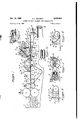
Fig. 1 is a partially diagrammatic longitudinal eleva- 2,908,043 Patented Oct.. 13, 195,9
ICC
tion of a tow-to-staple ber machine comprising the apparatus of the invention;
Fig. la is a schematic elevation of the cutting rolls shown in Fig. 1;
Fig. 1b is a schematic elevation of axially reciprocating rolls shown in Fig. v1;
Fig. 2 is a diagrammatic fragmentary plan view of a portion of the machine shown in Fig. 1; i
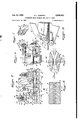
Figs. 3 and 4 are diagrammatic views of different positions of parts of the liber drafting system of the apparatus shown in Fig. 1;
Fig. 5 is an enlarged fragmentary side View of apron adjusting apparatus shown in Fig. 1; j
Fig. 6 is a fragmentary sectional elevation taken along line VI--VI of Fig. 5;
Fig. 7 is a perspective view .of fiber debonding rolls included in the apparatus of Fig. 1;
Fig. 8 is a fragmentary sectional -view of-therolls shown in Fig. 7 taken along line VII-VII of Fig. 9;
Fig. 9 is a fragmentary sectional view taken along line IX-IX of Fig. 8.;
Fig. 10 is a fragmentary perspective viewgof crimping aprons shown in Fig. 1; and l .l
Fig. 1l is a diagrammatic elevation of the driving system for the machine illustrated in Fig. l.
Broadly speaking, the invention consists of apparatus for converting a running, supply -of continuous filaments into a drafted and uniformly textured bundle or sliver of staple filaments. The apparatus hereafter described is adapted to handle different lengths of staple, whether it be cut to uniformv or mixed lengths, Although 4thein'f vention is primarilyconcerned with Vaninlprovedfiber drafting system, the apparatus as a whole contains other structural features which are believed to distinguish the invention from prior systems and which cooperate with the drafting system to produce aA high quality staple liber bundle. l
The apparatus of the inventioncomprises, in a preferred embodiment, a preliminary filament stretching and sheet developing Section; .a section for cutting the sheet transversely into successive .longitudinal portions; an adjustable driving system permitting changes of speed in fiber-advancing portions of the machine occurring after cutting to compensate for relaxation of the ber before drafting; al section of improved design operating on the sheet portions to separate the fibers one from kthe other; and a drafting section comprising an upwardly-facing apron, a holding roll in nip relation with vthe apron and which is adjustable length-wise of the apron, a second or upper apron spaced from the` holding roll and supported in adjacent relationship to an advanced portion of the first or lower apron and terminating therebeyond in nip relation with a traction roll. The upper apron and the traction roll are driven -at a higher speed than the lower apron and the holding roll to shuffle the fibers, as they are released by the holding roll, to. an extent which progressively increases from the bottom fibers to the top fibers of Vthe web or .sheet-as it is carried onrthe lower apron. The apparatus further comprises acrimping section consisting primarily .of.a pair of converging aprons, -driven at a slower linear speed than the traction roll and the upper apron, and a condensing section in which the crimped fibers are formedinto a sliver or bundle of rotund cross-section.`
- With reference to the drawing for description of the invention in greater detail, Fig. l diagrammatically illustrates a ilamentary material 5, ordinarilycomprising Va plurality oflilament tows as it entersra' preliminary'gtensioning section 6 comprising snubbing rolls7 and drafting rolls S. In.l passing Vbetween vthe'snubbingrolls and the drafting -rolls theA laments may .optionallyu-bepassed around an additional pair of rolls along any one of the three paths indicated in full and dotted lines. The rolls 10 may be reciprocated oppositely to one another in accordance with a conventional arrangement such as shown in Fig. 1b, to feed the filaments to a pair of cutting rolls 11 and 12 in a manner as to cause the rolls to cut the filaments to different staple lengths and/ or to convert the tows or bundles of filaments into a sheet of filaments which has a relatively uniform crimp and thickness as it enters the nip of the cutting rolls. This first-mentioned result is obtained by reciprocating the rolls 10 through a relatively long stroke, at low frequency, lengthwise of their axes, while the second purpose is accomplished by a short frequent reciprocation of the rolls 10. The frequency and length of the reciprocating stroke of the rolls 10 may be so selected to dispose the filaments into a sheet having sinuous arrangement whereby the filaments are also cut to mixed lengths. A guide 14 is positioned along the path of sheet 5 between the rolls 11 and 12, constituting the cutting section, and the rolls 8 of the tensioning section. The guide 14 extends into close proximity to the nip of the cutting rolls and has lateral portions which engage the sheet edges to accurately restrict the sheet to a desired width before it enters the nip of the cutting rolls.
The rolls of the cutting section are of conventional type, wherein the roll 12 is a hard surface roll, known ordinarily as the anvil roll, while the periphery of the roll 11, known ordinarily as the cutting roll, comprises a helix formed of a hardened material, such as a hardened steel, which protrudes slightly above the cylindrical surface of a softer material, such as a resilient vulcanizate. Cutting is performed within the nip of the rolls 11 and 12 primarily by the crushing action of the helix against the fibrous filamentary material supported on the hard surface of the roll 12. The cutting of most filamentary materials, and particularly filaments comprising thermoplastic resins, tends to coalesce or adhesively join adjacent severed ends of staple fiber contained in the same strip or group thereof as produced by successive tracks of the helix upon the filament sheet. These tracks extend transversely of the filament sheet on a bias with respect to its length and thus form successive transversely extending strips as the sheet travels through the cutting rolls.
For best results, it is essential that crimped filaments be tensioned to dispose `them in a substantially straight condition as they proceed into the nip of the cutting rolls. However, satisfactory cutting is not achieved if such filament tensioning is obtained by draft exerted by the cutting rolls, and thus the tension section 6 serves to impose the tension needed to extend or straighten the lamentary material supplied to the rolls 7. The peripheral speeds of the rolls 8 and the cutting rolls may then be adjusted so that a relatively small amount of tension is exerted on the filaments as they pass between the rolls 3 and the cutting rolls. Such treatment of the filaments results in cleaner cutting and staple fiber of higher quality.
Since the cutting rolls tend to coalesce adjacent fiber ends, it is necessary to separate each fiber at both ends, if possible, from its neighboring fibers. For this purpose a pair of debonding or rfiber opening rolls 15 and 16 are provided. In certain conventional machines, rolls having longitudinally fiuted surfaces which are loosely meshed together work the fiber in a fashion as to produce separation of the fiber ends. In the present invention, debonding rolls having intermeshing circumferentially-extending utes are preferred, as shown in Figs. 7, 8, and 9. These debonding or fiber opening rolls 15 and 16 are formed with flutes which extend in accurate complementary, interdigital relationship. In order that the clearances therebetween may be accurately held to settings which most effectively promote debonding, means are provided for adjusting the axes of the rolls toward and away from each other while maintaining the same in parallel relationship. Thrust bearings are provided along the shafts of both debonding rolls to minimize end play which is maintained below 0.005 inch. This structural arrangement is required in order that sufficient clearance between the flutes of the rolls may be maintained without severely pinching the fibers. However, the formation of the filament sheet within the tensioning section 6 provides uniform filament distribution which will, to a great extent, prevent non-uniform and severe fiber pinching between the debonding rolls. Rolls with circumferential flutes, such as rolls 1S and 16, are found to provide highly effective fiber separation as a result of the speed differences provided by the unequal diameters of the opposing corrugated surfaces of the intermeshing flutes.
The debonded fibers leaving the rolls 15 and 16 are then passed into a drafting section comprising a lower apron 18 carried by a plurality of driven rolls 19, 20, 21, and 22, and idler rolls 23 and 24. A pair of rolls 27 and 23 are supported above and are driven at the same peripheral speed as the apron 18. The apron 18 and rolls 27 and 23 together cooperate to advance the debonded fibers at the same linear speed at which they are moved through the debonding rolls.
The roll 27 is disposed directly above the roll 19 and is non-adjustable lengthwise of the path of the fibrous material, while the roll 28 is adjustable lengthwise of the path for reasons hereinafter explained. The apron 18 and the rolls 27 and 28 may be considered to be the snubbing -portion of the drafting section.
The traction portion of the drafting section comprises an apron 30 carried by a pair of adjustable idler rolls 31 and '32 and a driven roll 33. The apron 30, and its supporting rolls, are disposed above the fiber path with the lower reach of the apron 30 extending from the roll 32 to the roll 33 in superjacent relation with a driven roll 34 and the upper reach of the apron 18. The rolls 33 and 34 are disposed in nip relationship with the roll 34 being driven at a speed common to the peripheral speed of the apron 30. An important feature of this invention is that the traction portion is driven at a considerably higher speed than the snubbing portion of the drafting section. The length of the apron 30 disposed above the apron 18 and the angle of inclination of its lower reach are adjustable, and in this manner the drafting of the fiber may be `controlled to an almost infinite degree. A satisfactory speed ratio of the traction portion to the snubbing portions is 10 to l, although this ratio may be varied as desired to suit a large variety of conditions.
The inclination and length of the lower reach of the apron 30 is varied by adjustment of the idler rolls 31 and 32 relative to slots 35 and 36 formed in support plates 37 and 38, respectively. Similar supporting plates are provided on opposite sides of the machine for supporting each of the rolls 31 and 32 at both ends thereof. Other adjustments of the apron 30, by changing the positions of the rolls 31 and 32 and the plates 37 and 38, are illustrated in Figs. 3 and 4. These figures also illustrate different positions of the roll 28, which are correlated with adjustment of the apron 30 to handle different lengths of staple fiber. For example, in Fig. l the wide spacing between the roll 28 and the apron 30, taken with the relatively long length of the lower reach of the apron 30, adapts the apparatus for processing fibers of long length, while Figs. 3 and 4 illustrate the machine adjusted for handling fibers of shorter lengths wherein the roll 28 is positioned closer to the apron 30, which itself is provided with a lower reach of reduced length.
As a result of the difference in surface speeds of opposing sections of the apr0ns18 and 30, the uppermost fibers of the web carried by the upper reach of the apron 18 are advanced at the fastest rate by the apron 30 as soon as the web is released from the nip formed by the roll 28 and the apron 18. The fibers within the web are thus advanced progressively more rapidly in accordance with their height within the web. In view of the inclination of the lower reach of the apron V30, the nip formed by the aprons gradually becomes more effective, as the tra.
-v'veb of fibers advances 'therebetweenvin .shifting .thei'ibers relative to each other, with its maximum effect 4being exerted as-the web passes out from 'between opposing portions of the aprons and into the positivenip -provided "by -theapron andthe roll 34. L
The drafted fiber is discharged from the traction portion of the drafting section as a sheet of..fibers which moves into a crimping section'comprising .two `opposed aprons 40 and 41. These aprons have mutuallyfacing reaches Whichdeiinethe path of the staple fibers as they are advanced intoa condensingfsection 42.1 The aprons 40 and 41 are supported so as'to provide a gradually :narrowing region 45 defined by the :opposing converging reaches of the aprons. The aprons 40 andv 41%are driven at substantially slower speeds than .the traction portion of the drafting section Vby driven rolls 43 and 44 so as to gather or compress the sheet .of staple ber lengthwise into vplaits as it issues from the 'draftingisection and enters the enlarged end of the region 4'5. The .plaits-are compressed as they arecarried Ybythe aprons -into iprogressively narrowing portions ofthe region '45, and' issue l'from the nip of these aprons in a packed-or highlyfcrimped state. This 'treatment of the ber' sheet `tendsto restore all the crimp originally possessed .by the filament vand serves also to promote further'crimping.
The apron 40 normally has a fixed ,path with fan idler roll 47 being provided to maintain it in a taut condition. The support lfor the apron 40 comprises, fin addition to the roll 44, a frame 48 which supports a small -idler.rol1 49, and forms a guide portion 48a vover which the. upper reach of the apron 40 .slides during fthe .berfcrimping action. f
The apron 41 is supported by the driver roll4-3,=anidler roll 51 which is urged against the inner surfaceo'f the apron by springs 52, anda second-idler roll 53. .These rolls are rotatably vcarried by a frame 5'5 which also provides a sea'tfor the springs 52 and 'forms a guide portion 55a over which the lower Vreach ofithe apron-41 rides. The iaxes of rolls f43 and `53 are xedwith respect to the frame 55,.'however, the frame itself yis lpivotally supported V1in slotted bearingrnembers `5f8'loca'ted Yat o ppos'ite .sides fof-the machine. .These llearing .members each 4havea slot 59 for Ireceiving a11-.extensi'0nl of the ysha'ft 161 ofthe rol1143'and arelsupported for vvertical.reciprocatiori by guides .or supports=60- `Spring' 62, supported Ibetween thermemberf58 and'atset'screw62a.of the stationary :bracketf62c, 'resiliently urges the '-be'aring-Syfdownwardly, and thus the assembly .for :apron 41' may,` in effect, move lengthwise of the zpath for zthewber.y *Movement .in this direction is necessary inorder that this Vassembly may .move forward to allow lthe :apron 41 yto clear theapron 30 Whenever the end of the assemblyy-as-delined by the roll 53, needs to tip upward. With this adjustment of the apron assembly, the lower reachrof the apron 41, vof course, increases its inclination ltothe* lowe'r apron 40 Without necessarily changingrthe spacing `between the rolls '43 Vand 44. l
The tippingrnotion of the iapron assembly, .-asrdescribed above, is resiliently controlled by a `'pair of rods 63 which extend .from the vframe Y55, `outwardly 'of the' apron 141, yto stationary adjustable brackets 64 Ythrough which; they .are longitudinally slidable. Y The frame 55 `is resilientlyheld in a 'desired positionby-springs 66 andy 67 which encircle the rods and engage witha swivel element-64a, carried by the Ybracket 64, andkstops Y68 Vand 69 xed to `the opposite ends'fof therods 63. -In order thatthe normal positionof'tiltjof the apron- 41 Vmaybe changed,-each bracket 64 is slottedfin a directionparallel-to fthe axis; of the rods l63 whereby the entire lapron 'assen-iblyl mayible moved-to change the angle of inclination of -t-he -lower reach of the apron I41.
'The crimped, fibrous sheet isultimately discharged into the condensing section '42 comprising.a-ume v7,1 having opposite Vrolled Ledges 72 and a :cover potion `73.. -As the fibrous sheetprogresses .lengthwise ofthe fiume', :the .edges ithereof are ro1ledoverwandfthesheet as a ywholeiisfgatlrered' zinto 1a narroivzcrossLsection asrfit issues :from the rend of the iume and proceeds Linto :a'zcurvedfunnelilike con- 'denserf75i `.l'I-'his :condenser 75'sredu'ces theproduct to 1a xstill lsm'aller icross-section so that the :fibrous lbundlejmay easily .enterthe nip `formed by alpair of overlapping 'condensing.rolls 7.7 fandfZS. The roll 577` Acomprisesa center section 79 ofsmaller diameter: fthan its .endwsections r81 fand F82, Iwhile the roll'78 .'ts l:between the two sections 581 yand `82 'of 'the 'roll 77. `.Normally the yroll 77 is `driven, 'while the roll 78 is :free fto rotate. as a resulttofits 'frictional contact with thevibrous 'bundle drawn- 'between 1th'es'e rolls. Springs -83 :and "84 are positioned in slots formed in :the frame members 88 and 89 and `bear against lthe Vends yof the shaft carrying ithe roll 78 5to urge .the same towardtheroll 7.7,. The condensing'rolls serve to .propel the fibrous bundle through thecondensinguxne 71 and the condenser 75,. asa highly/.condensed .bundle which is're'ceived by a'conventional'icoiler 86 comprising a frotatable -top *87.
=Fig. l1'- .diagrammatically yillustrates a system .for driving fthe apparatus described hereinabove. The gearsor sprockets which are coaxial and rotatable with an-roll hereinbefore named have .the same numeral with `the letter a added. 'The letter fb is added inlthose instanceswwhere there isv a' lsecond gear or sprocket coaxial with la e'roll. Th'eiprime mover for fthe system is a vmotor 90 connected by a fsprocketdrive 91 to a main ydrive shaftf92.' Ti'he drive shaft is .connected with .the snubbing .rolls 7 `:of :the tensioning section by 'a variable drive unit '93 anda .sprocket drive which connects the .unit.93 lwith one of the shafts :of the snubbing rolls supporting one of fthe vintermeshing gears v7a. As the cutting section may .be `driven .inlxed ratio `withfthe .traction-.rolls V8 'o'f the itensioningsection, the' intel-meshing gears 8a :ofthe .'rolls'S are .connected :in direct `driving relation fvvith fgears -11a -and v12a "for Vdriving the rollswllia-n'd11'2.` I'hegears 11a and 12a'=intermesh fand one. o'f these igears, -ciname1y, 12a, ris Iconnected' .by a Ysprocket 'drive tto a bevel` gear unit *94 driven 'by the shaft 92. The debonding rolls 15 and 16 are driven 'at approximately `the :saine '.speed as the snubbin'g l.portion ofthe` @drafting section zand thusmay be connected in direct xdriverelationsliip with1roll's'19 and T27.'y f y `He'ncethe fgea'rsfforzfdriving these rolls are lconnected fin series relationship .extending through the Ysnubbing portion lto "the traction v`portion ofthejdra'fting system. Thegears for.:driving .the traction vrolls `33 .and 34 are 33k: l"and 34respe'c'tively@ The gear 34a `is connected by gear'f97 .and la 'of :speed reduction gears 95 and 96 to :gear 22h vin'fcoaxia'l relation, and turning with the 'roll .22 .and a gear .Z2-a. The roll 34 isv primarily driven :bly a :sprocket` drive Sfrom a `variable speed unit 98,;thus the debonding section and Ithe entire drafting lsection of theconverting machine are driven from the variabl'efspeed unit 9S. Another variable speed unit '99 is connected by a sprocket drive .to a sprocket 44h coaxialiwifh ytheiroll 44, the shaft yof which .requires a coaxial gear 44a' meshed with the gear 43a of the roll 43;'r Another sprocket `44e is connected 'by chain with a-"spr'ocket 77a 'for driving the condensing rolls 77 and 78...;
Adjustment of the roll '28 backward or forward along the .path :ofthebers may `make necessary the adjustment ofrthe V'sprocket .drive system therefor. As shown in 'SFigl 111, fa sprocket chain 149 extends around a sprocket 28a mounted :integrally and coaxially on the roll 28, a sprocket 146 which is attached Vcoaxially with a 'gear whichinterconnects gears 20a and 21a mounted integrally vvwithy irolls 20 and '21, an adjustable idler sprocket .147, .and a sprocket 148 which is attached coaxially with acgear interconnecting gears 21a yand 22a oflcorrespondingrrolls ,21.and '22. f' V- It rbe'xnoted thatall of v'the .rolls 'of the converter that are fdisposed'V-beyond the tensioning ,section -6 and inhalen.
above the path of the bers are spring-loaded in such a direction as to urge the rolls resiliently against the bers, and the bearings for these rolls are arranged for movement in a vertical direction. Provision is made in the guides for such bearings that the rolls may undergo vertical movement within a range of a few hundredths of an inch. Normally the range of movement does not exceed about two hundredths of an inch. Nothwithstanding this movement of the rolls toward and away from the lower rolls of the path of the brous material, construction of a drive system primarily from gears in parallel arrangement is preferable in order to eliminate the backlash or slackness that results from drive systems which are based essentially upon chain or belt drives. Although sprocket drives are employed in the driving system illustrated in Fig. 1l they are used primarily for connecting the separate functional systems or sections of the apparatus in relatively parallel arrangement from the main shaft 92. Thus, the use thereof does not result in accumulated slack or backlash such as might result if the rolls were generally interconnected by sprocket drives, and especially a series of sprocket drives.
Figs. 5 and 6 are detailed views of the traction portion of the strand-drafting system illustrated in Fig. l. As shown, rolls 31, 32, and 33 support the apron 30. The roll 33 is urged resiliently toward the roll 34 to produce tight engagement of the apron 30 with the roll 34. Pressure on the roll 33 is obtained within two bearing assemblies located at opposite ends of the roll shaft. One of such bearing assemblies is shown in Figs. 5 and 6 and comprises springs 105 and 106 supported in a compressed condition between plungers 107 and S, which are adapted for lengthwise movement within a guide portion 110 of a bearing frame 112, and a pressure plate 113 held against the springs by a set screw 114 threaded through the frame top portion 115. The shaft 33d of the roll 33 extends through and is rotatable relative to a bearing block 117 which is slidably disposed between the spaced parallel side walls of the frame 112.
A bearing structure and supporting frame corresponding to that just described above is, of course, provided on the opposite side of the machine to receive a portion of the shaft extending beyond the opposite surface end of the roll 33. The rolls 11, 15, 27, and 28 are all resiliently urged downwardly toward the path of the bers, as illustrated in Fig. l, and are mounted in bearing assemblies similar to that just described for roll 33.
The rolls 31 and 32 are provided for adjusting the length and inclination of the lower reach of the apron 30 lto vary the degree of contact between the apron 30 and the bers which are advanced from the nip of the roll 28 and the apron 18. The rolls 31 and 32 have identical bearing systems at the opposite ends thereof which are adjustable relative to their respective supporting brackets 37 and 38.
Referring now to Fig. 6 for a more detailed illustration of one of such bearings, the shaft 31a` of the roll 31 passes through a sleeve bearing 118 which extends through a slot 35 in the supporting bracket or plate 37. The exterior surface of the bearing 118 is threaded to receive a nut 119 and also has a pair of shoulders 121, 122 (Figs. 5 and 6) which are sufficiently narrow to pass through the slot 35, but bear up against the plate 37 when rotated through 90 degrees, as shown best in Fig. 5. When the nut 119 is tightened against a washer 123, which engages the outer surface of the support plate 37 along both sides of the slot 35, the position of the bearing assembly relative to the plate is xed. The rolls 31 and 32 have preferably a diameter smaller than the width of respective slots v35 and 36 so that an entire assembly comprising a roll` and its bearing assemblies may be removed simply by loosening the nuts 119 at both ends of the roll, rotating the bearings 118 to their shoulders with the support plate slots, and then transferring the roll endwise through the slot of the support plate 37. Adjustment of the rolls 31 and 32 along their respective support plate slots may be accomplished without removing the rolls from their supporting plates by simply unloosening the nuts of the respective bearing assemblies.
The machine illustrated in Fig. l comprises a frame member running lengthwise of the machine along each side of the path transversed by the filaments and staple fibers. One of these frame members is shown in Fig. 6 and includes two longitudinally extending portions 126 and 127. The frame portion 127 may be suitably bored as shown in Fig. 5 to journal the trunnions or stub shafts of rolls 20, 21, 22, and 24. In a similar manner, the stub shafts of rolls 16 and `19 (not shown) are journaled in the frame member 127. The upper frame portion 126 is secured to the frame portion 127 by a plurality of cap screws 128 and provides a section which overhangs the frame portion 127. This overhanging section is longitudinally slotted to receive bolts 130 which extend through toe portions of the support plates 37 and 38. The slot 131 for the bolts extends between dotted lines 132 and 133 shown in Fig. 5, and thus the support plates 37 and 38 are adjustable at opposite sides of the machine to provide desired adjustments of the apron 30.
Whenever the length of the lower reach of the apron 30 is changed, the longitudinal position of the roll 28 may need also to be altered. Such changes are made when it is desired to adapt the machine for handling a diiferent length and type of staple ber than previously processed in the machine. To permit adjustability off the roll 28 lengthwise of frame members 125, a bearing housing 135, and its mating bearing housing at the other side of the machine, are each provided with toes )136. Bolts 13S and 139 extend through the toes 136 and are received in a slot 141 formed in the frame portion 126. The lower face of the slot 141 is enlarged to provide space for the bolt heads and to form longitudinal shoulders with which the bolt heads engage when the nuts thereof are tightened. By loosening the bolts, the opposite housings for the roll 28 may be shifted lengthwise of the frame members 125. Since it is not necessary to change the position of the roll 33 lengthwise of the machine, the bearing housings 112 therefor may be fixed to the parallel frame members 125 of the machine by bolts 144, extending laterally of the housing 1112, and a bolt 145 extending through a toe overhanging the slot 141.
While a preferred embodiment of the invention has been shown and described, it is to be understood that changes and variations may be made without departing from the spirit and scope of the invention as defined in the appended claims.
I claim:
l. Apparatus for converting a continuous running sheet of longitudinally oriented filaments into a continuous product of drafted staple fibers comprising means for severing the sheet of filaments into successive strips of staple lbers, means for opening the cut strips of fibers and discharging the same as a sheet, a rst apron, means supporting said apron with a surface thereof extending along a path leading away from the opening means, first movable means positioned adjacent to said opening means and in nip relationship with said surface, second movable means positioned adjacent to the path and beyond the end of said apron furthest from the opening means, a second apron, means for supporting said second apron opposite the path with a surface thereof in nip relationship with said second movable means, said last-mentioned surface having a portion thereof disposed opposite said first-mentioned surface, third movable means, means for supporting said third movable means in nip relationship with the first-mentioned surface at a position between the second apron and the rst movable means, and means for driving said second apron and second movable means at 9 a faster speed than said -first -apron 'and first and vthird movable'means.
v2. Apparatus for drafting a continuous sheet of staple fibers comprising two endless aprons, one disposed abo-ve lthe other, means for driving vthe two aprons Vwith the upper apron moving at a substantially greater speed than the `lower-apron, means in nip relation with Vthe trailing portion of the upper reach of the lower apron for positively gripping lthe sheet of fibers andk advancing the same between the 'two aprons Iat the speed of the lower apron, and means in cooperative relation with the upper apron for advancing the sheet of drafted fibers discharged from between the two aprons, the upper apron and said lastmentioned means arranged to positively grip the fibers and advance the same at the speed of the upper apron.
3. Apparatus for converting a continuous running sheet of longitudinally oriented laments into a continuous product of drafted staple fibers comprising means 4for severing the sheet of filaments into successive `stripsiof staple fibers, means .for opening the fibers and discharging the same as a sheet, a lower apron, means for supporting the apron with an upwardly-facing section thereof extending along a path leading away from'the openingmeans, a first roll positioned in nip relation with a portionA of said apron section nearest the opening means, a second roll disposed adjacent to the path and beyond v'the endof said Yapron furthest from 'the 'opening means, a second apron, means for supporting said second apron above the path with a downwardly-facing section in nip relation with the second roll, said second apron extending rearwardly over a portion of the first apron, a third roll, means for supporting said third roll in `nip relation with the upwardly facing section of the first apronat a position between the second apron and the first roll, and means for driving said severing means, opening means, rolls, and aprons in synchronous relationship, with the second apron and the second roll 'being driven atafaster speed than the first apron and the' first and -thirdro'lls 4. Apparatus as de'ned'in claim 3 wherein themeans for supporting the third roll is adjustable lengthwise of the path between said second apron and the first roll.
5. Apparatus as defined in claim 3 wherein the means for supporting the second apron comprises at least one idler roll for supporting the rearward end of said downwardly facing section, and further including means for adjusting the idler roll toward land away from said first apron.
6. Apparatus as defined in claim 4 wherein the supporting means for the second apron comprises at least a pair of spaced idler rolls adjustable along separate ambits extending toward and away from the first apron.
7. Apparatus as defined in claim 6 comprising separate means for supporting each idler roll, said idler roll supporting means being adjustable in a direction lengthwise of the path.
8. Apparatus as defined in claim 3 wherein said means for opening the fibers comprises a pair of intermeshing grooved rolls.
9. Apparatus as defined in claim 3 wherein the opening means comprises a pair of rolls, each having circumferentially extending grooves and ridges extending in complementary meshing relation with the grooves and ridges of the other roll, the axes of rotation of said meshing rolls being spaced to provide substantially close uniform clearance between adjacent roll surfaces.
10. Apparatus as definedy in claim 3 wherein said driving means comprises a primary drive means and separate means for independently connecting the primary drive' means with the cutting means; and an assembly cornprising the first and second aprons, and the first, second, and third rolls; and the opening means, one of said separate means comprising a variable drive unit for altering the speed of the cutting means with respect to that of said assembly.
11. Apparatus as defined in claim 3 wherein said supporting means'for the second apron comprises a relatively large -rolldisposed in nip relation with sa'idsefcond roll and 'connected with said driving means, and further wherein all kof said rolls of the apparatus connected with the driving means and disposed above said'path having means associated therewith for resiliently urging the rolls toward the'path.
'12. Apparatus as defined-in claim 3wherein the third roll -is spaced lrearwardly* from the second apron a distance greater than the length of said stapleffiber, and wherein said second roll isspaced from the first apron a distance -less than said length of the staple fiber. u l
13. Apparatus for-converting a sheet of longitudinally oriented filaments into a continuous product of drafted crimped staple fibers comprising means for severing the sheet of filaments into successive strips `of staple fibers, means for opening the fibers and discharging the same as a sheet, a -lower apron, means for supporting the apron with` an upwardly-facing -section thereof extending along a path leading away from the opening means, a first roll positioned in nip relation withy a portion of said 'apron section `nearest the opening me'ans,'a second -roll disposed adjacent to the path and beyond the end of said apron furthest vfrorn'the opening means, a second apron, means for supporting said second apron with a downwardly-facing section in nip relation with the second roll, said second apron extending rearwardly over a portion of 'the first apron, Va third roll, means supporting said third rollin nip relation with the upwardly-facing section ofthe first 'apron for yadjustable movement vlengthwise of the lpath between-the second apron and the first 'roll,-means for crimpingfibers discharged fromthe nip Aofthe second apron and -the second roll, and means ifor driving said severing means, opening means, crimpingrmeansy-rolls, and vaprons in synchronous relationship, with `thesecond apron and the second roll -being driven at a faster speed than lthe first apron 'and the first and third rolls. u 14. Apparatus as defined in claim 13wherein.the crimping means comprises a lower apron having an upwardlyfacing section coinciding with said path, an upper apron having a downwardly-facing section disposed above said path, rolls having fixed axes supporting the lower apron of said crimping means, and adjustable resiliently mounted means 4for supporting the upper apron of said crimping means.
15. Apparatus as defined in claim 13 wherein said driving means comprises a primary driving means and independent connections thereof with the cutting means;
the opening means; the first and second aprons, and the first, second, and third rolls; and the crimping means, the driving connections for said opening and crimping means each including a variable drive unit for independently varying the speeds of fiber advancement of said opening and crimping means with respect to the cutting means.
16. Apparatus as defined in claim 13 wherein said supporting means for said second apron comprises a relatively large roll disposed in nip relation with said second roll and connected with the driving means, and further wherein all of said rolls of the apparatus connected with the driving means and disposed above said path having means associated therewith for resiliently urging the rolls toward the path.
17. Apparatus for converting a plurality of filamentary tows into a continuous product of drafted staple fibers comprising a tensioning section including a plurality of snubbing rolls in nip relationship, a plurality of drafting rolls in nip relationhip and spaced from the snubbing rolls, at least one reciprocable roll disposed between said snubbing and drafting rolls in spaced relation therewith, means for reciprocating said last-mentioned roll lengthwise of its axis, all of said rolls of the tensioning section having axes of rotation substantially parallel;
means for severing the filamentary tows discharged bylil fibers; means for opening the fibers and discharging the same as a sheet; a lower apron, means for supporting the apron 'with an upwardly-facing section extending along a path leading away from the opening means; a roll positioned in nip relation to a portion of said apron section nearest the opening means; a second roll disposed adjacent to the path and beyond the end of said apron furthest from the opening means; a second apron, means for supporting said second apron above the path with a downwardly-facing section in nip relation with the second roll, said second apron extending rearwardly over a portion of the first apron; a third roll, means for adjustably supporting said third roll in nip relation with the upwardly-facing section of the first apron `within a range extending lengthwise of the path between the second apron and the first roll; and means for driving the tensioning section, opening means, rolls, and aprons in synchronous relationship, with the second apron and the second roll being driven at a faster speed than the first and third rolls, and with said drafting rolls having a higher peripheral speed than the snubbing rolls.
18. A method of drafting staple fibers comprising disposing the fibers as a continuous web of substantially uniform width and thickness, advancing the web upon a flat running surface, snubbing the web against draft applied thereto by continuously engaging the upper surface of the web at the sarne speed as that of the running surface at a fixed position thereover to positively grip the web, engaging the upper surface of the web continuously along a path which is disposed above said running surface and extends from a point spaced forwardly of said snubbing position to a point beyond end of said running surface, drafting the fibers of the web by moving the upper surface thereof along said path at a speed greater than that of said running surface, positively gripping the drafted bers as they leave said running surface and advancing the same at the speed at which the upper surface of the web is moved along said path during the drafting thereof.
19. A method of drafting staple fibers comprising disposing the fibers as a continuous web of substantially uniform width and thickness, advancing the web upon a fiat running surface, snubbing the web against draft applied thereto by continuously engaging the upper surface of the web at the same speed as the running surface at a fixed position thereover to positively grip the web, continuously engaging the upper surface of the web along a path disposed above and inclined toward said running surface in the direction of fiber advancement, drafting the fibers of the web by moving the upper surface thereof at a speed greater than said running surface, and engaging said web at a location spaced from said snubbing position a distance at least equal to the length of the staple fibers.
20. A method of drafting staple fibers comprising disposing the fibers as a continuous web of substantially uniform width and thickness, advancing the web upon a at running surface, snubbing the web against draft applied thereto by continuously engaging the web face opposite said running surface at the sarne speed as the running surface at a fixed position to positively grip the web, continuously engaging said web face along a path extending from a point spaced forwardly of said snubbing position to a point beyond the end of said running surface, and drafting the fibers of the web by moving said web face at a speed greater than that of said running surface.
References Cited in the file of this patent UNITED STATES PATENTS 2,294,771 Campbell sept. 1, 1942 2,43 8,469 Wilkie Mar. 23, 1948 FOREIGN PATENTS 510,336 France Sept. 3, 1920 628,257 France June 27, 1927 915,733 France July 29, 1946
US501345A 1955-04-14 1955-04-14 Converting bulk filament into staple fiber Expired - Lifetime US2908043A (en)

Priority Applications (2)

Application Number Priority Date Filing Date Title
US501310A US2908044A (en) 1955-04-14 1955-04-14 Staple fiber crimping apparatus
US501345A US2908043A (en) 1955-04-14 1955-04-14 Converting bulk filament into staple fiber

Applications Claiming Priority (1)

Application Number Priority Date Filing Date Title
US501345A US2908043A (en) 1955-04-14 1955-04-14 Converting bulk filament into staple fiber

Publications (1)

Publication Number Publication Date
US2908043A true US2908043A (en) 1959-10-13

Family

ID=23993164

Family Applications (1)

Application Number Title Priority Date Filing Date
US501345A Expired - Lifetime US2908043A (en) 1955-04-14 1955-04-14 Converting bulk filament into staple fiber

Country Status (1)

Country Link
US (1) US2908043A (en)

Cited By (8)

* Cited by examiner, † Cited by third party
Publication number Priority date Publication date Assignee Title
US3028636A (en) * 1955-12-02 1962-04-10 Rieter Joh Jacob & Cie Ag Cradle for top rolls of double apron drafting arrangements
US3107412A (en) * 1961-01-06 1963-10-22 Ici Ltd Production of staple fibers from waste material
US3251475A (en) * 1955-04-18 1966-05-17 Fmc Corp Fibrous filter body
US3522634A (en) * 1967-11-28 1970-08-04 Burlington Industries Inc System for converting continuous filament tow into staple sliver
US3596458A (en) * 1966-07-06 1971-08-03 Asahi Chemical Ind Spun yarn of elastic fiber and preparation thereof
US4389752A (en) * 1979-07-10 1983-06-28 Rieter Machine Works Limited Method of producing a staple fibre sliver and apparatus for implementing the method
US4667463A (en) * 1978-03-24 1987-05-26 Toray Industries, Inc. Process and apparatus for making fasciated yarn
US4771596A (en) * 1970-04-20 1988-09-20 Brunswick Corporation Method of making fiber composite

Citations (5)

* Cited by examiner, † Cited by third party
Publication number Priority date Publication date Assignee Title
FR510336A (en) * 1919-07-30 1920-12-02 Jean Jacques Wack Method and device for drawing fibers used in spinning
FR628257A (en) * 1927-01-31 1927-10-21 Improvements to stretching and conveyor systems for ribbons and wicks, applicable to machines for preparing and spinning materials and fibers
US2294771A (en) * 1941-06-05 1942-09-01 Nelson S Campbell Staple fiber preparation
FR915733A (en) * 1943-12-10 1946-11-15 Improvements relating to the drawing of textile fibers
US2438469A (en) * 1941-11-23 1948-03-23 Pacific Mills Method and apparatus for converting bulk filament into staples

Patent Citations (5)

* Cited by examiner, † Cited by third party
Publication number Priority date Publication date Assignee Title
FR510336A (en) * 1919-07-30 1920-12-02 Jean Jacques Wack Method and device for drawing fibers used in spinning
FR628257A (en) * 1927-01-31 1927-10-21 Improvements to stretching and conveyor systems for ribbons and wicks, applicable to machines for preparing and spinning materials and fibers
US2294771A (en) * 1941-06-05 1942-09-01 Nelson S Campbell Staple fiber preparation
US2438469A (en) * 1941-11-23 1948-03-23 Pacific Mills Method and apparatus for converting bulk filament into staples
FR915733A (en) * 1943-12-10 1946-11-15 Improvements relating to the drawing of textile fibers

Cited By (8)

* Cited by examiner, † Cited by third party
Publication number Priority date Publication date Assignee Title
US3251475A (en) * 1955-04-18 1966-05-17 Fmc Corp Fibrous filter body
US3028636A (en) * 1955-12-02 1962-04-10 Rieter Joh Jacob & Cie Ag Cradle for top rolls of double apron drafting arrangements
US3107412A (en) * 1961-01-06 1963-10-22 Ici Ltd Production of staple fibers from waste material
US3596458A (en) * 1966-07-06 1971-08-03 Asahi Chemical Ind Spun yarn of elastic fiber and preparation thereof
US3522634A (en) * 1967-11-28 1970-08-04 Burlington Industries Inc System for converting continuous filament tow into staple sliver
US4771596A (en) * 1970-04-20 1988-09-20 Brunswick Corporation Method of making fiber composite
US4667463A (en) * 1978-03-24 1987-05-26 Toray Industries, Inc. Process and apparatus for making fasciated yarn
US4389752A (en) * 1979-07-10 1983-06-28 Rieter Machine Works Limited Method of producing a staple fibre sliver and apparatus for implementing the method

Similar Documents

Publication Publication Date Title
US2908043A (en) Converting bulk filament into staple fiber
US2938241A (en) Machine for stretching textile sheets into slivers
US3913176A (en) Apparatus for the draft and breaking of synthetic textile fibres
US4070811A (en) Machine for spinning textile fibers
US2795010A (en) Means for producing a drawable staple sliver
US2294771A (en) Staple fiber preparation
US3097399A (en) Process and apparatus for carding cotton fibers
US2427955A (en) Method and apparatus for converting continuous filaments into spinnable slivers
US3522634A (en) System for converting continuous filament tow into staple sliver
US2177929A (en) Drafting frame
US4126913A (en) Opening machinery for textile fibers
US4112548A (en) Drafting machine
US2248806A (en) Method and apparatus for forming staple fiber
US2249083A (en) Process for stapling continuous artificial fiber
US3283366A (en) Apparatus for removing a fibrous web from a rotatable surface
US2706834A (en) Process and apparatus for converting continuous filament into a sliver of combed, drafted and separated staplelength fibers
US3164047A (en) Method of cutting filament tow and conveying the slivers away
CN216499604U (en) Chipping and rolling composite crusher
CN1015719B (en) Fibre mat-removal device
US3218676A (en) Method of and apparatus for feeding fibrous material to a textile processing machine
US4347647A (en) Apparatus for making no-twist yarn
WO2012139231A1 (en) Manufacturing installation for bulk products
US3657773A (en) Apparatus for blending fibers
KR850000721B1 (en) Device for condensing the fleece emerging from a carding engine
USRE27764E (en) System for converting continuous fila- ment tow into staple sliver

Legal Events

Date Code Title Description
AS Assignment

Owner name: WESTERN AND SOUTHERN LIFE INSURANCE COMPANY THE C/

Free format text: AS SECURITY FOR INDEBTEDNESS RECITED ASSIGNOR GRANTS , BARGAINS, MORTGAGES, PLEDGES, SELLS AND CREATES A SECURITY INTEREST WITH A LIEN UNDER SAID PATENTS, SUBJECT TO CONDITIONS RECITED.;ASSIGNOR:AVTEX FIBERS INC. A NY CORP.;REEL/FRAME:003959/0219

Effective date: 19810301

Owner name: PAUL REVERE LIFE INSURANCE COMPANY THE C/O THE PAU

Free format text: AS SECURITY FOR INDEBTEDNESS RECITED ASSIGNOR GRANTS , BARGAINS, MORTGAGES, PLEDGES, SELLS AND CREATES A SECURITY INTEREST WITH A LIEN UNDER SAID PATENTS, SUBJECT TO CONDITIONS RECITED.;ASSIGNOR:AVTEX FIBERS INC. A NY CORP.;REEL/FRAME:003959/0219

Effective date: 19810301

Owner name: KELLOGG CREDIT CORPORATION A DE CORP.

Free format text: AGREEMENT WHEREBY SAID HELLER AND RAYONIER RELEASES ALL MORTGAGES AND SECURITY INTERESTS HELD BY AVTEX ON APRIL 28, 1978, AND JAN. 11, 1979, RESPECTIVELY AND ASSIGNS ITS ENTIRE INTEREST IN SAID MORT-AGAGE AGREEMENT TO ASSIGNEE;ASSIGNORS:WALTER E. HELLER & COMPANY, INC. A NY CORP.;ITT RAYONIER INCORPORATED, A DE CORP.;AVTEX FIBERS INC., A NY CORP.;REEL/FRAME:003959/0350

Effective date: 19800326

Owner name: JOHN HANCOCK MUTUAL LIFE INSURANCE COMPANY JOHN HA

Free format text: AS SECURITY FOR INDEBTEDNESS RECITED ASSIGNOR GRANTS , BARGAINS, MORTGAGES, PLEDGES, SELLS AND CREATES A SECURITY INTEREST WITH A LIEN UNDER SAID PATENTS, SUBJECT TO CONDITIONS RECITED.;ASSIGNOR:AVTEX FIBERS INC. A NY CORP.;REEL/FRAME:003959/0219

Effective date: 19810301

Owner name: PROVIDENT ALLIANCE LIFE INSURANCE COMPANY C/O THE

Free format text: AS SECURITY FOR INDEBTEDNESS RECITED ASSIGNOR GRANTS , BARGAINS, MORTGAGES, PLEDGES, SELLS AND CREATES A SECURITY INTEREST WITH A LIEN UNDER SAID PATENTS, SUBJECT TO CONDITIONS RECITED.;ASSIGNOR:AVTEX FIBERS INC. A NY CORP.;REEL/FRAME:003959/0219

Effective date: 19810301

Owner name: BALBOA INSURANCE COMPANY C/O THE PAUL REVERE EQUIT

Free format text: AS SECURITY FOR INDEBTEDNESS RECITED ASSIGNOR GRANTS , BARGAINS, MORTGAGES, PLEDGES, SELLS AND CREATES A SECURITY INTEREST WITH A LIEN UNDER SAID PATENTS, SUBJECT TO CONDITIONS RECITED.;ASSIGNOR:AVTEX FIBERS INC. A NY CORP.;REEL/FRAME:003959/0219

Effective date: 19810301

Owner name: NEW ENGLAND MUTUAL LIFE INSURANCE COMPANY 501 BOYL

Free format text: AS SECURITY FOR INDEBTEDNESS RECITED ASSIGNOR GRANTS , BARGAINS, MORTGAGES, PLEDGES, SELLS AND CREATES A SECURITY INTEREST WITH A LIEN UNDER SAID PATENTS, SUBJECT TO CONDITIONS RECITED.;ASSIGNOR:AVTEX FIBERS INC. A NY CORP.;REEL/FRAME:003959/0219

Effective date: 19810301

Owner name: WALTER E. HELLER & COMPANY, INC., A CORP. OF DEL.

Free format text: AGREEMENT WHEREBY AETNA RELEASES AVTEX FROM ALL MORTAGES AND SECURITY INTERESTS IN SAID INVENTIONS AS OF JANUARY 11,1979, AND ASSIGNS TO ASSIGNEE THE ENTIRE INTEREST IN SAID MORTAGE AGREEMENT TO ASSIGNEE;ASSIGNORS:AETNA BUSINESS CREDIT, INC., A CORP. OF N.Y.;AVTEX FIBERS, INC, A CORP. OF NY;KELLOGG CREDIT CORP., A CORP. OF DEL.;REEL/FRAME:003959/0250

Effective date: 19800326