US3254940A - Cellulosic textile finishing process and product - Google Patents
Cellulosic textile finishing process and product Download PDFInfo
- Publication number
- US3254940A US3254940A US125105A US12510561A US3254940A US 3254940 A US3254940 A US 3254940A US 125105 A US125105 A US 125105A US 12510561 A US12510561 A US 12510561A US 3254940 A US3254940 A US 3254940A
- Authority
- US
- United States
- Prior art keywords
- textile
- finished
- resin
- cellulosic
- strength
- Prior art date
- Legal status (The legal status is an assumption and is not a legal conclusion. Google has not performed a legal analysis and makes no representation as to the accuracy of the status listed.)
- Expired - Lifetime
Links
Images


Classifications
-
- D—TEXTILES; PAPER
- D06—TREATMENT OF TEXTILES OR THE LIKE; LAUNDERING; FLEXIBLE MATERIALS NOT OTHERWISE PROVIDED FOR
- D06M—TREATMENT, NOT PROVIDED FOR ELSEWHERE IN CLASS D06, OF FIBRES, THREADS, YARNS, FABRICS, FEATHERS OR FIBROUS GOODS MADE FROM SUCH MATERIALS
- D06M15/00—Treating fibres, threads, yarns, fabrics, or fibrous goods made from such materials, with macromolecular compounds; Such treatment combined with mechanical treatment
- D06M15/19—Treating fibres, threads, yarns, fabrics, or fibrous goods made from such materials, with macromolecular compounds; Such treatment combined with mechanical treatment with synthetic macromolecular compounds
- D06M15/37—Macromolecular compounds obtained otherwise than by reactions only involving carbon-to-carbon unsaturated bonds
- D06M15/39—Aldehyde resins; Ketone resins; Polyacetals
- D06M15/423—Amino-aldehyde resins
-
- D—TEXTILES; PAPER
- D06—TREATMENT OF TEXTILES OR THE LIKE; LAUNDERING; FLEXIBLE MATERIALS NOT OTHERWISE PROVIDED FOR
- D06M—TREATMENT, NOT PROVIDED FOR ELSEWHERE IN CLASS D06, OF FIBRES, THREADS, YARNS, FABRICS, FEATHERS OR FIBROUS GOODS MADE FROM SUCH MATERIALS
- D06M10/00—Physical treatment of fibres, threads, yarns, fabrics or fibrous goods made from such materials, e.g. by ultrasonic waves, corona discharge, irradiation, electric currents or magnetic fields; Physical treatment combined with treatment with chemical compounds or elements
- D06M10/04—Physical treatment combined with treatment with chemical compounds or elements
- D06M10/08—Organic compounds
-
- D—TEXTILES; PAPER
- D06—TREATMENT OF TEXTILES OR THE LIKE; LAUNDERING; FLEXIBLE MATERIALS NOT OTHERWISE PROVIDED FOR
- D06M—TREATMENT, NOT PROVIDED FOR ELSEWHERE IN CLASS D06, OF FIBRES, THREADS, YARNS, FABRICS, FEATHERS OR FIBROUS GOODS MADE FROM SUCH MATERIALS
- D06M10/00—Physical treatment of fibres, threads, yarns, fabrics or fibrous goods made from such materials, e.g. by ultrasonic waves, corona discharge, irradiation, electric currents or magnetic fields; Physical treatment combined with treatment with chemical compounds or elements
- D06M10/04—Physical treatment combined with treatment with chemical compounds or elements
- D06M10/08—Organic compounds
- D06M10/10—Macromolecular compounds
-
- D—TEXTILES; PAPER
- D06—TREATMENT OF TEXTILES OR THE LIKE; LAUNDERING; FLEXIBLE MATERIALS NOT OTHERWISE PROVIDED FOR
- D06M—TREATMENT, NOT PROVIDED FOR ELSEWHERE IN CLASS D06, OF FIBRES, THREADS, YARNS, FABRICS, FEATHERS OR FIBROUS GOODS MADE FROM SUCH MATERIALS
- D06M14/00—Graft polymerisation of monomers containing carbon-to-carbon unsaturated bonds on to fibres, threads, yarns, fabrics, or fibrous goods made from such materials
- D06M14/18—Graft polymerisation of monomers containing carbon-to-carbon unsaturated bonds on to fibres, threads, yarns, fabrics, or fibrous goods made from such materials using wave energy or particle radiation
- D06M14/20—Graft polymerisation of monomers containing carbon-to-carbon unsaturated bonds on to fibres, threads, yarns, fabrics, or fibrous goods made from such materials using wave energy or particle radiation on to materials of natural origin
- D06M14/22—Graft polymerisation of monomers containing carbon-to-carbon unsaturated bonds on to fibres, threads, yarns, fabrics, or fibrous goods made from such materials using wave energy or particle radiation on to materials of natural origin of vegetal origin, e.g. cellulose or derivatives thereof
-
- D—TEXTILES; PAPER
- D06—TREATMENT OF TEXTILES OR THE LIKE; LAUNDERING; FLEXIBLE MATERIALS NOT OTHERWISE PROVIDED FOR
- D06Q—DECORATING TEXTILES
- D06Q1/00—Decorating textiles
- D06Q1/08—Decorating textiles by fixation of mechanical effects, e.g. calendering, embossing or Chintz effects, using chemical means
-
- Y—GENERAL TAGGING OF NEW TECHNOLOGICAL DEVELOPMENTS; GENERAL TAGGING OF CROSS-SECTIONAL TECHNOLOGIES SPANNING OVER SEVERAL SECTIONS OF THE IPC; TECHNICAL SUBJECTS COVERED BY FORMER USPC CROSS-REFERENCE ART COLLECTIONS [XRACs] AND DIGESTS
- Y10—TECHNICAL SUBJECTS COVERED BY FORMER USPC
- Y10S—TECHNICAL SUBJECTS COVERED BY FORMER USPC CROSS-REFERENCE ART COLLECTIONS [XRACs] AND DIGESTS
- Y10S8/00—Bleaching and dyeing; fluid treatment and chemical modification of textiles and fibers
- Y10S8/18—Grafting textile fibers
Definitions
- This invention relates to an improved finished cellulosic textile product and to a process for very substantially enhancing certain of the physical or mechanical properties of a conventional crease-resistant finished cellulosic textile material. More particularly, it relates to an aldehydeor resin-finished cellulosic textile material exhibiting very substantially improved crease resistance, tensile or tearing strength and abrasive strength, and to a method whereby the properties of conventional aldehydeor resin-finished cellulosic textiles can be so improved.
- cellulosic textile material as employed herein is intended to include films, yarns, fibers, filaments or threads as such or in the form of cast sheets or woven, knit, felted or non-woven fabrics, consisting of natural or regenerated cellulose or a mixture of natural and regenerated cellulose.
- the term is also intended to include such fabrics, films, yarns, sheets, etc., which are made up .of a major portion of cellulose or regenerated cellulose and a minor portion of non-cellulosic material.
- the invention is particularly directed to a method for improving certain of the physical or mechanical properties of an already finished cellulosic textile, as measured by the dry crease angle, tensile or tearing strength and abrasive strength of the article.
- an already finished cellulosic textile we mean one which has been finished by treatment with a cross-linking chemical, such as one of the aldehydes, or with a resin-forming substance, for example a resin precondensate with the use of catalysts and in most instances with the application of elevated temperatures above about 100 C. to effect cross-linking through the aldehyde or to cure the resin-forming substance or precondensate in an on the textile.
- the aforementioned finishing techniques are well-known in the art and are referred to herein as conventional. These finishes are applied to a cellulosic textile fabric, for example, to impart crease resistance and/ or dimensional stability to the goods. It is well-known to treat cellulosic textiles in swollen condition with an aldehyde in an aqueous solution containing an appreciable quantity of sulfuric acid. .This treatment imparts a good wet crease resistance. That is to say, creases formed during laundering disappear during drying. However, the dry crease resistance, that is the capability of the fabric to recover in a short time after creasing in the dry state is not appreciably improved by such aldehyde treatment.
- the dry crease resistance, tearing strength and abrasive strength of the textile can be very substantially improved, and in fact a highly acceptable cellulosic textile bearing the aldehyde or resin finish can be produced if the thus finished material is subjected to a critical total dose of ionizing radiation between about 10 and 5x 10 rad. While the conventional finish alone increases the crease resistance of the textile so treated, this increase is at the expense of very substantially reduced tensile or tearing and abrasive strengths of the goods.
- the method of the present invention not only still further increases the dry crease resistance of the textile, but very greatly enhances, for example as much as two to four times, the tearing strength and abrasion strength of the goods.
- the ionizing-radiation employed in the present process may be of the electromagnetic type, for example gamma or X-rays. Suitable sources of gamma include C0 fission products of U and separated isotopes such as Cs etc.
- the ionizing radiation may consist of accelerated electrons, i.e. beta particles, but of a relatively low particle energy, namely between about 0.05 and l mev., preferably between about 0.05 and 0.6 mev., which may be produced With the aid of the usual electron acceleraters, such as the cascade, Van de Graaf or linear types, or from radioactive substances such as Sr
- An important aspect of the present invention is the use of accelerated electrons of the aforementioned low energy values.
- low energy beta particles that is, not above 1 mev., enable achievement of the improvements possible by the present method without any significant degradation of the cellulose or regenerated cellulose molecule.
- energy levels above about 1 mev. and equivalent total dose very significant deterioration of the cellulose occurs.
- the importance of the use of low energy beta particles is set forth in the related application of Fritz Munzel, Serial No. 125,089, filed on even date herewith, and the information therein with respect to the importance of the use of low energy particles I ing application contain molecular groups capable of absorbing ionizing radiation energy and resonating or transe ferring excitation energy to the cellulosic molecule.
- sensitizers The action of the sensitizers is to ultimately very greatly enhanCe the effect of ionizing radiation upon the finished textile, while also by reason of their absorptive and resonating efiiciency they serve to reduce the total dose which must be imparted to the textile to achieve the outstanding improvements attending the present process.
- a variety of materials suitable as sensitizers is set forth in the aforementioned copending application, and a particularly preferred material is 1,4-diphenylbenzene.
- the sensitizers are preferably applied to the cellulosic textile by application from aqueous media followed by squeezing off and 1 drying with the sensitized, conventionally finished textile then being ready for irradiation.
- cross-linking chemicals which may be employed in the conventional finishing above referred to, or which may be employed in the present process as a preliminary step to irradiation
- aldehydes such as formaldehyde, adipic aldehyde, glyoxal, etc.
- the textile is treated in the swollen state in an acid medium with the aldehyde, washed out and subsequently subjected to irradiation in wet or dry condition. It is also possible to impregnate the textile with an aqueous solution of the aldehyde and an acid catalyst, subsequently heat the'impregnated textile for a short time above 100 C., wash, and then irradiate in wet or dry condition.
- the textile is impregnated therewith as from a dispersion or solution of the resin-forming substance which generally also contains a condensation catalyst. Following impregnation, the excess resin-forming substance is squeezed out and the impregnated fabric is then subjected to temperatures above about 100 C. for a period of time sufficient to effect curing.
- Typical resin-forming substances are those customarily employed in the crease-proof finishing of cellulosic textiles by conventional methods which do not employ irradiation. They are compounds which contain oxygen in the molecule or which contain sulphur in place of oxygen, as in urea and thiourea.
- Typical condensable or resin-forming substances include precondensates of formaldehyde with urea, thiourea, ethyleneurea and its homologues, uron, acetylene-diurene and its derivatives, dicyandiamide, melamine, phenol and its derivatives, methylolurea, methylolamines. Also suitable are ketone-aldehyde precondensates, aziridinyl compounds, triazone derivatives and diglycide ethers. Particularly useful resin-forming substances include tetrahydro-1,3-bis (methoxymethyl) -5-methyl-2( 1 -s-triazone, as described in US. Patent No.
- the method of the present invention is applicable to textiles of all kinds, as noted above, particularly to fabrics or sheet material.
- the method is suited primarily for crease-proofing and imparting dimensional stability.
- it is also possible by this method to produce permanent embossing effects such as gotfering, ribbing, schreinering and moire effects as well as calendaring effects with or without friction.
- the method can of course be applied to textile yarns, filaments or threads.
- very good crease resistance and dimensional stability can be achieved in fabrics containing relatively highly twisted yarns, such as are employed in the pro duction of voiles and marquisettes, which materials show a strong tendency to shrink.
- the textile materials treated in accordance with the present invention also retain a pleasant soft hand.
- Example 11 v A cotton imitation poplin fabric was treated with the formaldehyde solution of Example I at 30 C. for a period of 15 seconds, and thereupon rinsed with water in accordance with Example I, treated with ammonia, rinsed again and dried.
- the thus treated fabric contained 0.18% by weight formaldehyde bound to the cellulose.
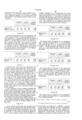
- Two sections, A and B, were detached and Section B was treated at 20 C., in a water bath containing about 1% of 1,4-diphenylbenzene, and subsequently dried at 60-70 C. Thereupon Section B was irradiated as described in Example I. Mechanical properties of the starting fabric, finished Section A and finished-irradiation Section B were as follows:
- Section B was subjected to gamma radiation from a C source to .a total dose of 7.2 10 rad.
- Changes in the mechanical properties of the starting fabric, finished Section A and finished-irradiated Section B were as follows:
- a bleached spun rayon calico was impregnated with an aqueous solution containing per liter 100 cc. of formaldehyde (technical grade, 40%) 20 g. of zinc chloride and 20 g. of alum, squeezed out, stretched slightly over its desired finished proportions and predried at 60 C.
- the fabric was subsequently heated to about 130 C. for one minute, acidulated with 5 g. of 80% acetic acid and a liter of water, rinsed with coldwater, squeezed out, stretched to the desired finished proportions and dried.
- the thus treated fabric was exposed to a stream of accelerated electrons of a particle energy of 0.12 mev. to a total dose of 10 rad.
- the formaldehyde treated-irradiated bleached spun rayon calico exhibited a substantially increased crease angle as Well as increased abrasive and tearing strengths.
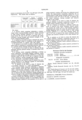
- Example VI A cotton imitation poplinfabric was impregnated with an aqueous solution containing per liter of water 110 g. of a melamine-formaldehyde precondensate and 10 g. of magnesium chloride catalyst, squeezed out and dried at about 60 C. The fabric was thereupon heated to 150 C. for five minutes, washed for five minutes in a The starting fabric of Example VI was impregnated with a solution containing 300 g. of a urea-formaldehyde precondensate and 24 g. of magnesium chloride catalyst in one liter of Water, squeezed out and dried at C. Further treatment and irradiation were then carried out as described in Example V1 with the following results:
- cross-linking chemical is a resin preoondensate.
- a method of finishing a cellulosic textile material to improve the crease resistance thereof including treating the textile with a resin-forming substance, condensing and curing the resin, the improvement comprising subjecting the so treated textile to high energy ionizing radiation to a total dose between about 10 and 5X 10 rad. to improve the crease resistance, tearing strength and abrasion strength of the resin finished textile.
- a method as set forth in claim 11 wherein the ionizing radiation comprises accelerated electrons of a particle energy between about 0.05 and 0.6 mev.
Landscapes
- Engineering & Computer Science (AREA)
- Textile Engineering (AREA)
- Health & Medical Sciences (AREA)
- Toxicology (AREA)
- Chemical & Material Sciences (AREA)
- Chemical Kinetics & Catalysis (AREA)
- Treatments For Attaching Organic Compounds To Fibrous Goods (AREA)
Applications Claiming Priority (1)
| Application Number | Priority Date | Filing Date | Title |
|---|---|---|---|
| CH1067960A CH390212A (de) | 1960-09-21 | 1960-09-21 | Verfahren zur Verbesserung der mechanischen Eigenschaften von zellulosehaltigem Textilgut |
Publications (1)
| Publication Number | Publication Date |
|---|---|
| US3254940A true US3254940A (en) | 1966-06-07 |
Family
ID=4365681
Family Applications (1)
| Application Number | Title | Priority Date | Filing Date |
|---|---|---|---|
| US125105A Expired - Lifetime US3254940A (en) | 1960-09-21 | 1961-07-19 | Cellulosic textile finishing process and product |
Country Status (3)
| Country | Link |
|---|---|
| US (1) | US3254940A (de) |
| CH (1) | CH390212A (de) |
| GB (1) | GB929741A (de) |
Cited By (5)
| Publication number | Priority date | Publication date | Assignee | Title |
|---|---|---|---|---|
| US3434161A (en) * | 1965-10-05 | 1969-03-25 | Research Corp | Textile fabric treatment |
| US3652212A (en) * | 1967-04-17 | 1972-03-28 | Deering Milliken Res Corp | Multi-step in situ polymer formation to produce fabric having improved soiling characteristics |
| US4396390A (en) * | 1981-09-04 | 1983-08-02 | Springs Mills, Inc. | Aqueous formaldehyde textile finishing process |
| WO2007039469A3 (en) * | 2005-09-21 | 2007-05-31 | Antonio Clemente | Crystallization of potassium alum onto various materials |
| CN117170223A (zh) * | 2023-09-01 | 2023-12-05 | 江苏虎豹集团有限公司 | 一种织物整理方法及系统 |
Citations (3)
| Publication number | Priority date | Publication date | Assignee | Title |
|---|---|---|---|---|
| GB758735A (en) * | 1952-12-06 | 1956-10-10 | Gen Electric | Improved pigment-printed textile and other fibrous materials |
| US3001922A (en) * | 1955-12-19 | 1961-09-26 | Gen Electric | Polymers |
| US3101276A (en) * | 1957-07-08 | 1963-08-20 | Du Pont | Process for grafting polymers to cellulose substrates |
-
1960
- 1960-09-21 CH CH1067960A patent/CH390212A/de unknown
-
1961
- 1961-07-19 US US125105A patent/US3254940A/en not_active Expired - Lifetime
- 1961-09-20 GB GB33696/61A patent/GB929741A/en not_active Expired
Patent Citations (3)
| Publication number | Priority date | Publication date | Assignee | Title |
|---|---|---|---|---|
| GB758735A (en) * | 1952-12-06 | 1956-10-10 | Gen Electric | Improved pigment-printed textile and other fibrous materials |
| US3001922A (en) * | 1955-12-19 | 1961-09-26 | Gen Electric | Polymers |
| US3101276A (en) * | 1957-07-08 | 1963-08-20 | Du Pont | Process for grafting polymers to cellulose substrates |
Cited By (6)
| Publication number | Priority date | Publication date | Assignee | Title |
|---|---|---|---|---|
| US3434161A (en) * | 1965-10-05 | 1969-03-25 | Research Corp | Textile fabric treatment |
| US3652212A (en) * | 1967-04-17 | 1972-03-28 | Deering Milliken Res Corp | Multi-step in situ polymer formation to produce fabric having improved soiling characteristics |
| US4396390A (en) * | 1981-09-04 | 1983-08-02 | Springs Mills, Inc. | Aqueous formaldehyde textile finishing process |
| WO2007039469A3 (en) * | 2005-09-21 | 2007-05-31 | Antonio Clemente | Crystallization of potassium alum onto various materials |
| CN117170223A (zh) * | 2023-09-01 | 2023-12-05 | 江苏虎豹集团有限公司 | 一种织物整理方法及系统 |
| CN117170223B (zh) * | 2023-09-01 | 2024-04-02 | 江苏虎豹集团有限公司 | 一种织物整理方法及系统 |
Also Published As
| Publication number | Publication date |
|---|---|
| CH390212A (de) | 1964-11-14 |
| GB929741A (en) | 1963-06-26 |
Similar Documents
| Publication | Publication Date | Title |
|---|---|---|
| US3841832A (en) | Process for treating cellulosic material with formaldehyde in liquid phase and sulfur dioxide | |
| US3357784A (en) | Exposure to intense ultraviolet light to improve characteristics of cellulosic fabrics in divinyl sulfone and glyoxal cross-linking processes | |
| US3140197A (en) | Finished textile and method of producing same | |
| US2412832A (en) | Textile material and method of preparing it | |
| US2846337A (en) | Magnesium chloride catalyst for modified urea resins | |
| US3144299A (en) | Wrinkle resistance finish for cellulosic textiles | |
| US3434794A (en) | Delayed cure of cellulosic articles | |
| US3254939A (en) | Process of modifying cellulosic materials with ionizing radiation | |
| US3146575A (en) | Bulky composite stretch yarn | |
| US3252750A (en) | Cellulosic textile finishing | |
| US3015584A (en) | Wrinkle resistance treatment for cellulosic textile fabrics | |
| US3627556A (en) | Durable press finish for wool/cellulosic fabrics (melamine/dihydroxy-imidazolidinone resins) | |
| US2715078A (en) | Process of impregnating cellulosic material with thermosetting resin | |
| US3026216A (en) | Treatment of textile fabrics with methylglycidyl ethers | |
| US3606992A (en) | Abrasion and wrinkle resistant cotton containing fabric and method of manufacture | |
| US3181927A (en) | Process of wet and dry wrinkleproofing cellulose fabric with an aminoplast resin and zinc chloride | |
| US3434161A (en) | Textile fabric treatment | |
| US3039167A (en) | Method for improving the properties of fabrics containing cross-linked regenerated cellulose material | |
| US3043719A (en) | Process for applying crease resistant finishes to cellulosic fabrics and products thereof | |
| US3427121A (en) | Wrinkle-resistant cotton fabrics with improved moisture absorption | |
| US3317345A (en) | Rot-resistant finish for textile materials | |
| US3175875A (en) | Cellulosic fabrics and methods for making the same | |
| US3451763A (en) | Cellulose-containing fabrics and process therefor | |
| GB929741A (en) | Improvements in or relating to the finishing of cellulosic textile materials | |
| GB871105A (en) | Improvements in the incorporation of thermosetting synthetic resins in linen textilefabrics |