US3335792A - Method for increasing oil recovery - Google Patents
Method for increasing oil recovery Download PDFInfo
- Publication number
- US3335792A US3335792A US419432A US41943264A US3335792A US 3335792 A US3335792 A US 3335792A US 419432 A US419432 A US 419432A US 41943264 A US41943264 A US 41943264A US 3335792 A US3335792 A US 3335792A
- Authority
- US
- United States
- Prior art keywords
- foam
- surfactant
- formation
- aqueous
- injected
- Prior art date
- Legal status (The legal status is an assumption and is not a legal conclusion. Google has not performed a legal analysis and makes no representation as to the accuracy of the status listed.)
- Expired - Lifetime
Links
- 238000011084 recovery Methods 0.000 title claims description 29
- 238000000034 method Methods 0.000 title description 42
- 239000004094 surface-active agent Substances 0.000 claims description 98
- 239000006260 foam Substances 0.000 claims description 76
- 230000015572 biosynthetic process Effects 0.000 claims description 65
- 239000012530 fluid Substances 0.000 claims description 56
- 239000000243 solution Substances 0.000 claims description 42
- 238000002347 injection Methods 0.000 claims description 27
- 239000007924 injection Substances 0.000 claims description 27
- 238000004519 manufacturing process Methods 0.000 claims description 18
- 239000003208 petroleum Substances 0.000 claims description 10
- 238000005755 formation reaction Methods 0.000 description 62
- 239000003921 oil Substances 0.000 description 33
- 239000011148 porous material Substances 0.000 description 29
- 239000007789 gas Substances 0.000 description 22
- 230000035699 permeability Effects 0.000 description 19
- XLYOFNOQVPJJNP-UHFFFAOYSA-N water Substances O XLYOFNOQVPJJNP-UHFFFAOYSA-N 0.000 description 19
- 239000007788 liquid Substances 0.000 description 13
- 239000007864 aqueous solution Substances 0.000 description 12
- 239000004576 sand Substances 0.000 description 10
- 239000012267 brine Substances 0.000 description 9
- HPALAKNZSZLMCH-UHFFFAOYSA-M sodium;chloride;hydrate Chemical compound O.[Na+].[Cl-] HPALAKNZSZLMCH-UHFFFAOYSA-M 0.000 description 9
- LFQSCWFLJHTTHZ-UHFFFAOYSA-N Ethanol Chemical compound CCO LFQSCWFLJHTTHZ-UHFFFAOYSA-N 0.000 description 7
- 238000011065 in-situ storage Methods 0.000 description 7
- IJGRMHOSHXDMSA-UHFFFAOYSA-N Atomic nitrogen Chemical compound N#N IJGRMHOSHXDMSA-UHFFFAOYSA-N 0.000 description 6
- FAPWRFPIFSIZLT-UHFFFAOYSA-M Sodium chloride Chemical compound [Na+].[Cl-] FAPWRFPIFSIZLT-UHFFFAOYSA-M 0.000 description 6
- 239000003795 chemical substances by application Substances 0.000 description 6
- 238000002474 experimental method Methods 0.000 description 6
- QGZKDVFQNNGYKY-UHFFFAOYSA-N Ammonia Chemical class N QGZKDVFQNNGYKY-UHFFFAOYSA-N 0.000 description 5
- GPRLSGONYQIRFK-MNYXATJNSA-N triton Chemical compound [3H+] GPRLSGONYQIRFK-MNYXATJNSA-N 0.000 description 5
- 239000003981 vehicle Substances 0.000 description 5
- 125000004432 carbon atom Chemical group C* 0.000 description 4
- 230000001186 cumulative effect Effects 0.000 description 4
- 239000000126 substance Substances 0.000 description 4
- IAYPIBMASNFSPL-UHFFFAOYSA-N Ethylene oxide Chemical compound C1CO1 IAYPIBMASNFSPL-UHFFFAOYSA-N 0.000 description 3
- DNIAPMSPPWPWGF-UHFFFAOYSA-N Propylene glycol Chemical compound CC(O)CO DNIAPMSPPWPWGF-UHFFFAOYSA-N 0.000 description 3
- 150000001408 amides Chemical class 0.000 description 3
- 239000010779 crude oil Substances 0.000 description 3
- 230000009977 dual effect Effects 0.000 description 3
- 230000000694 effects Effects 0.000 description 3
- 238000005187 foaming Methods 0.000 description 3
- 238000011835 investigation Methods 0.000 description 3
- 229910052757 nitrogen Inorganic materials 0.000 description 3
- 150000003839 salts Chemical class 0.000 description 3
- 239000011734 sodium Substances 0.000 description 3
- 239000011780 sodium chloride Substances 0.000 description 3
- -1 sulfo dicarboxylic acids Chemical class 0.000 description 3
- QGZKDVFQNNGYKY-UHFFFAOYSA-O Ammonium Chemical compound [NH4+] QGZKDVFQNNGYKY-UHFFFAOYSA-O 0.000 description 2
- PEDCQBHIVMGVHV-UHFFFAOYSA-N Glycerol Natural products OCC(O)CO PEDCQBHIVMGVHV-UHFFFAOYSA-N 0.000 description 2
- KFZMGEQAYNKOFK-UHFFFAOYSA-N Isopropanol Chemical compound CC(C)O KFZMGEQAYNKOFK-UHFFFAOYSA-N 0.000 description 2
- IYFATESGLOUGBX-YVNJGZBMSA-N Sorbitan monopalmitate Chemical compound CCCCCCCCCCCCCCCC(=O)OC[C@@H](O)[C@H]1OC[C@H](O)[C@H]1O IYFATESGLOUGBX-YVNJGZBMSA-N 0.000 description 2
- PRXRUNOAOLTIEF-ADSICKODSA-N Sorbitan trioleate Chemical compound CCCCCCCC\C=C/CCCCCCCC(=O)OC[C@@H](OC(=O)CCCCCCC\C=C/CCCCCCCC)[C@H]1OC[C@H](O)[C@H]1OC(=O)CCCCCCC\C=C/CCCCCCCC PRXRUNOAOLTIEF-ADSICKODSA-N 0.000 description 2
- 230000002378 acidificating effect Effects 0.000 description 2
- 230000002411 adverse Effects 0.000 description 2
- 229910021529 ammonia Inorganic materials 0.000 description 2
- 230000005465 channeling Effects 0.000 description 2
- 239000007795 chemical reaction product Substances 0.000 description 2
- 239000012141 concentrate Substances 0.000 description 2
- 125000003438 dodecyl group Chemical group [H]C([H])([H])C([H])([H])C([H])([H])C([H])([H])C([H])([H])C([H])([H])C([H])([H])C([H])([H])C([H])([H])C([H])([H])C([H])([H])C([H])([H])* 0.000 description 2
- 229920000136 polysorbate Polymers 0.000 description 2
- 229920006395 saturated elastomer Polymers 0.000 description 2
- 229910052708 sodium Inorganic materials 0.000 description 2
- CUOSYYRDANYHTL-UHFFFAOYSA-N 1,4-dioctoxy-1,4-dioxobutane-2-sulfonic acid;sodium Chemical compound [Na].CCCCCCCCOC(=O)CC(S(O)(=O)=O)C(=O)OCCCCCCCC CUOSYYRDANYHTL-UHFFFAOYSA-N 0.000 description 1
- ZZNDQCACFUJAKJ-UHFFFAOYSA-N 1-phenyltridecan-1-one Chemical compound CCCCCCCCCCCCC(=O)C1=CC=CC=C1 ZZNDQCACFUJAKJ-UHFFFAOYSA-N 0.000 description 1
- LRMSQVBRUNSOJL-UHFFFAOYSA-N 2,2,3,3,3-pentafluoropropanoic acid Chemical compound OC(=O)C(F)(F)C(F)(F)F LRMSQVBRUNSOJL-UHFFFAOYSA-N 0.000 description 1
- CDOUZKKFHVEKRI-UHFFFAOYSA-N 3-bromo-n-[(prop-2-enoylamino)methyl]propanamide Chemical compound BrCCC(=O)NCNC(=O)C=C CDOUZKKFHVEKRI-UHFFFAOYSA-N 0.000 description 1
- XZIIFPSPUDAGJM-UHFFFAOYSA-N 6-chloro-2-n,2-n-diethylpyrimidine-2,4-diamine Chemical compound CCN(CC)C1=NC(N)=CC(Cl)=N1 XZIIFPSPUDAGJM-UHFFFAOYSA-N 0.000 description 1
- VGGSQFUCUMXWEO-UHFFFAOYSA-N Ethene Chemical compound C=C VGGSQFUCUMXWEO-UHFFFAOYSA-N 0.000 description 1
- IMROMDMJAWUWLK-UHFFFAOYSA-N Ethenol Chemical group OC=C IMROMDMJAWUWLK-UHFFFAOYSA-N 0.000 description 1
- 239000005977 Ethylene Substances 0.000 description 1
- DGAQECJNVWCQMB-PUAWFVPOSA-M Ilexoside XXIX Chemical compound C[C@@H]1CC[C@@]2(CC[C@@]3(C(=CC[C@H]4[C@]3(CC[C@@H]5[C@@]4(CC[C@@H](C5(C)C)OS(=O)(=O)[O-])C)C)[C@@H]2[C@]1(C)O)C)C(=O)O[C@H]6[C@@H]([C@H]([C@@H]([C@H](O6)CO)O)O)O.[Na+] DGAQECJNVWCQMB-PUAWFVPOSA-M 0.000 description 1
- RVGRUAULSDPKGF-UHFFFAOYSA-N Poloxamer Chemical compound C1CO1.CC1CO1 RVGRUAULSDPKGF-UHFFFAOYSA-N 0.000 description 1
- 229920003171 Poly (ethylene oxide) Polymers 0.000 description 1
- 239000004721 Polyphenylene oxide Substances 0.000 description 1
- TWPPNQFINKXCLS-UHFFFAOYSA-N S(=O)(=O)(O)C(C(=O)OCCCCC)CCCC(=O)OCCCCC.[Na] Chemical compound S(=O)(=O)(O)C(C(=O)OCCCCC)CCCC(=O)OCCCCC.[Na] TWPPNQFINKXCLS-UHFFFAOYSA-N 0.000 description 1
- DBMJMQXJHONAFJ-UHFFFAOYSA-M Sodium laurylsulphate Chemical compound [Na+].CCCCCCCCCCCCOS([O-])(=O)=O DBMJMQXJHONAFJ-UHFFFAOYSA-M 0.000 description 1
- 239000004147 Sorbitan trioleate Substances 0.000 description 1
- 229920004890 Triton X-100 Polymers 0.000 description 1
- 229920004897 Triton X-45 Polymers 0.000 description 1
- LWZFANDGMFTDAV-BURFUSLBSA-N [(2r)-2-[(2r,3r,4s)-3,4-dihydroxyoxolan-2-yl]-2-hydroxyethyl] dodecanoate Chemical compound CCCCCCCCCCCC(=O)OC[C@@H](O)[C@H]1OC[C@H](O)[C@H]1O LWZFANDGMFTDAV-BURFUSLBSA-N 0.000 description 1
- 239000002253 acid Substances 0.000 description 1
- 150000007513 acids Chemical class 0.000 description 1
- 229910052783 alkali metal Inorganic materials 0.000 description 1
- 150000001340 alkali metals Chemical class 0.000 description 1
- 150000001346 alkyl aryl ethers Chemical class 0.000 description 1
- 125000002877 alkyl aryl group Chemical group 0.000 description 1
- 150000008055 alkyl aryl sulfonates Chemical class 0.000 description 1
- 150000005215 alkyl ethers Chemical class 0.000 description 1
- 125000000217 alkyl group Chemical group 0.000 description 1
- 150000001412 amines Chemical class 0.000 description 1
- 150000003863 ammonium salts Chemical class 0.000 description 1
- 125000000129 anionic group Chemical group 0.000 description 1
- 239000008135 aqueous vehicle Substances 0.000 description 1
- 239000012298 atmosphere Substances 0.000 description 1
- 230000003190 augmentative effect Effects 0.000 description 1
- 230000009286 beneficial effect Effects 0.000 description 1
- YRUCFSYUFCPONG-UHFFFAOYSA-M bis(dodec-1-enyl)-dimethylazanium;chloride Chemical compound [Cl-].CCCCCCCCCCC=C[N+](C)(C)C=CCCCCCCCCCC YRUCFSYUFCPONG-UHFFFAOYSA-M 0.000 description 1
- 210000000481 breast Anatomy 0.000 description 1
- 150000007942 carboxylates Chemical class 0.000 description 1
- 125000002091 cationic group Chemical group 0.000 description 1
- 150000003841 chloride salts Chemical class 0.000 description 1
- 230000005494 condensation Effects 0.000 description 1
- 238000009833 condensation Methods 0.000 description 1
- 239000007859 condensation product Substances 0.000 description 1
- 239000013078 crystal Substances 0.000 description 1
- FYRHTEOJFXQOIK-UHFFFAOYSA-M dec-1-enyl(trimethyl)azanium;chloride Chemical compound [Cl-].CCCCCCCCC=C[N+](C)(C)C FYRHTEOJFXQOIK-UHFFFAOYSA-M 0.000 description 1
- 230000001627 detrimental effect Effects 0.000 description 1
- GDAQRDCZGZTCGR-UHFFFAOYSA-N dibutyl decanedioate;sodium Chemical compound [Na].CCCCOC(=O)CCCCCCCCC(=O)OCCCC GDAQRDCZGZTCGR-UHFFFAOYSA-N 0.000 description 1
- HOEQBQIBLUXFEH-UHFFFAOYSA-M dibutyl-bis(hexadec-1-enyl)azanium;chloride Chemical compound [Cl-].CCCCCCCCCCCCCCC=C[N+](CCCC)(CCCC)C=CCCCCCCCCCCCCCC HOEQBQIBLUXFEH-UHFFFAOYSA-M 0.000 description 1
- 235000014113 dietary fatty acids Nutrition 0.000 description 1
- 235000019329 dioctyl sodium sulphosuccinate Nutrition 0.000 description 1
- 238000005553 drilling Methods 0.000 description 1
- 150000002148 esters Chemical class 0.000 description 1
- 125000001301 ethoxy group Chemical group [H]C([H])([H])C([H])([H])O* 0.000 description 1
- 239000000194 fatty acid Substances 0.000 description 1
- 229930195729 fatty acid Natural products 0.000 description 1
- 150000004665 fatty acids Chemical class 0.000 description 1
- 150000002191 fatty alcohols Chemical class 0.000 description 1
- 239000004088 foaming agent Substances 0.000 description 1
- 238000009533 lab test Methods 0.000 description 1
- 239000000463 material Substances 0.000 description 1
- UVQHCEGJIKJIQP-UHFFFAOYSA-M methyl-tris(oct-1-enyl)azanium;iodide Chemical compound [I-].CCCCCCC=C[N+](C)(C=CCCCCCC)C=CCCCCCC UVQHCEGJIKJIQP-UHFFFAOYSA-M 0.000 description 1
- 125000000325 methylidene group Chemical group [H]C([H])=* 0.000 description 1
- 239000000203 mixture Substances 0.000 description 1
- 125000001421 myristyl group Chemical group [H]C([*])([H])C([H])([H])C([H])([H])C([H])([H])C([H])([H])C([H])([H])C([H])([H])C([H])([H])C([H])([H])C([H])([H])C([H])([H])C([H])([H])C([H])([H])C([H])([H])[H] 0.000 description 1
- PSZYNBSKGUBXEH-UHFFFAOYSA-M naphthalene-1-sulfonate Chemical compound C1=CC=C2C(S(=O)(=O)[O-])=CC=CC2=C1 PSZYNBSKGUBXEH-UHFFFAOYSA-M 0.000 description 1
- UZUFPBIDKMEQEQ-UHFFFAOYSA-N perfluorononanoic acid Chemical compound OC(=O)C(F)(F)C(F)(F)C(F)(F)C(F)(F)C(F)(F)C(F)(F)C(F)(F)C(F)(F)F UZUFPBIDKMEQEQ-UHFFFAOYSA-N 0.000 description 1
- SNGREZUHAYWORS-UHFFFAOYSA-N perfluorooctanoic acid Chemical compound OC(=O)C(F)(F)C(F)(F)C(F)(F)C(F)(F)C(F)(F)C(F)(F)C(F)(F)F SNGREZUHAYWORS-UHFFFAOYSA-N 0.000 description 1
- 125000001997 phenyl group Chemical group [H]C1=C([H])C([H])=C(*)C([H])=C1[H] 0.000 description 1
- 229920000570 polyether Polymers 0.000 description 1
- 235000010482 polyoxyethylene sorbitan monooleate Nutrition 0.000 description 1
- 239000000244 polyoxyethylene sorbitan monooleate Substances 0.000 description 1
- 239000001816 polyoxyethylene sorbitan tristearate Substances 0.000 description 1
- 235000010988 polyoxyethylene sorbitan tristearate Nutrition 0.000 description 1
- 229920000053 polysorbate 80 Polymers 0.000 description 1
- 239000000047 product Substances 0.000 description 1
- BDERNNFJNOPAEC-UHFFFAOYSA-N propan-1-ol Chemical compound CCCO BDERNNFJNOPAEC-UHFFFAOYSA-N 0.000 description 1
- 238000011946 reduction process Methods 0.000 description 1
- 239000011347 resin Substances 0.000 description 1
- 229920005989 resin Polymers 0.000 description 1
- 239000011435 rock Substances 0.000 description 1
- 150000004671 saturated fatty acids Chemical class 0.000 description 1
- 235000003441 saturated fatty acids Nutrition 0.000 description 1
- 235000019333 sodium laurylsulphate Nutrition 0.000 description 1
- 159000000000 sodium salts Chemical class 0.000 description 1
- 229940035044 sorbitan monolaurate Drugs 0.000 description 1
- 235000011067 sorbitan monolaureate Nutrition 0.000 description 1
- 235000011071 sorbitan monopalmitate Nutrition 0.000 description 1
- 239000001570 sorbitan monopalmitate Substances 0.000 description 1
- 229940031953 sorbitan monopalmitate Drugs 0.000 description 1
- 235000019337 sorbitan trioleate Nutrition 0.000 description 1
- 229960000391 sorbitan trioleate Drugs 0.000 description 1
- 125000001424 substituent group Chemical group 0.000 description 1
- 150000003467 sulfuric acid derivatives Chemical class 0.000 description 1
- 239000003760 tallow Substances 0.000 description 1
- 239000002023 wood Substances 0.000 description 1
Images


Classifications
-
- C—CHEMISTRY; METALLURGY
- C09—DYES; PAINTS; POLISHES; NATURAL RESINS; ADHESIVES; COMPOSITIONS NOT OTHERWISE PROVIDED FOR; APPLICATIONS OF MATERIALS NOT OTHERWISE PROVIDED FOR
- C09K—MATERIALS FOR MISCELLANEOUS APPLICATIONS, NOT PROVIDED FOR ELSEWHERE
- C09K8/00—Compositions for drilling of boreholes or wells; Compositions for treating boreholes or wells, e.g. for completion or for remedial operations
- C09K8/50—Compositions for plastering borehole walls, i.e. compositions for temporary consolidation of borehole walls
- C09K8/516—Compositions for plastering borehole walls, i.e. compositions for temporary consolidation of borehole walls characterised by their form or by the form of their components, e.g. encapsulated material
- C09K8/518—Foams
-
- C—CHEMISTRY; METALLURGY
- C09—DYES; PAINTS; POLISHES; NATURAL RESINS; ADHESIVES; COMPOSITIONS NOT OTHERWISE PROVIDED FOR; APPLICATIONS OF MATERIALS NOT OTHERWISE PROVIDED FOR
- C09K—MATERIALS FOR MISCELLANEOUS APPLICATIONS, NOT PROVIDED FOR ELSEWHERE
- C09K8/00—Compositions for drilling of boreholes or wells; Compositions for treating boreholes or wells, e.g. for completion or for remedial operations
- C09K8/58—Compositions for enhanced recovery methods for obtaining hydrocarbons, i.e. for improving the mobility of the oil, e.g. displacing fluids
- C09K8/584—Compositions for enhanced recovery methods for obtaining hydrocarbons, i.e. for improving the mobility of the oil, e.g. displacing fluids characterised by the use of specific surfactants
-
- C—CHEMISTRY; METALLURGY
- C09—DYES; PAINTS; POLISHES; NATURAL RESINS; ADHESIVES; COMPOSITIONS NOT OTHERWISE PROVIDED FOR; APPLICATIONS OF MATERIALS NOT OTHERWISE PROVIDED FOR
- C09K—MATERIALS FOR MISCELLANEOUS APPLICATIONS, NOT PROVIDED FOR ELSEWHERE
- C09K8/00—Compositions for drilling of boreholes or wells; Compositions for treating boreholes or wells, e.g. for completion or for remedial operations
- C09K8/60—Compositions for stimulating production by acting on the underground formation
- C09K8/62—Compositions for forming crevices or fractures
- C09K8/70—Compositions for forming crevices or fractures characterised by their form or by the form of their components, e.g. foams
- C09K8/703—Foams
-
- C—CHEMISTRY; METALLURGY
- C09—DYES; PAINTS; POLISHES; NATURAL RESINS; ADHESIVES; COMPOSITIONS NOT OTHERWISE PROVIDED FOR; APPLICATIONS OF MATERIALS NOT OTHERWISE PROVIDED FOR
- C09K—MATERIALS FOR MISCELLANEOUS APPLICATIONS, NOT PROVIDED FOR ELSEWHERE
- C09K8/00—Compositions for drilling of boreholes or wells; Compositions for treating boreholes or wells, e.g. for completion or for remedial operations
- C09K8/60—Compositions for stimulating production by acting on the underground formation
- C09K8/62—Compositions for forming crevices or fractures
- C09K8/72—Eroding chemicals, e.g. acids
- C09K8/74—Eroding chemicals, e.g. acids combined with additives added for specific purposes
-
- C—CHEMISTRY; METALLURGY
- C09—DYES; PAINTS; POLISHES; NATURAL RESINS; ADHESIVES; COMPOSITIONS NOT OTHERWISE PROVIDED FOR; APPLICATIONS OF MATERIALS NOT OTHERWISE PROVIDED FOR
- C09K—MATERIALS FOR MISCELLANEOUS APPLICATIONS, NOT PROVIDED FOR ELSEWHERE
- C09K8/00—Compositions for drilling of boreholes or wells; Compositions for treating boreholes or wells, e.g. for completion or for remedial operations
- C09K8/60—Compositions for stimulating production by acting on the underground formation
- C09K8/92—Compositions for stimulating production by acting on the underground formation characterised by their form or by the form of their components, e.g. encapsulated material
- C09K8/94—Foams
Definitions
- This invention relates to methods of treating subterranean oil-bearing formations whereby preliminary operations prior to conducting ultimate recovery and/or the recovery of the oil are greatly facilitated. More specifically this invention pertains to methods of reducing formation permeability, methods of fracturing, acidizing and producing petroleum-bearing reservoirs and formations. Even more specifically the embodiments of this invention revolve around the use of surfactants in a novel manner whereby the hereinafter enumerated objects are readily obtained.
- this embodiment consists in generating an in situ foam bank in a petroleum-bearing formation or reservoir, injecting a dilute surfactant solution in an amount sufiicient to "ice form a buffer zone between the foam bank and subsequently injected driving fluid whereby the foam bank is not adversely affected and its integrity maintained and thereafter injecting an aqueous driving fluid to drive at least a major portion of the foam bank through the formation or reservoir to a production well.
- a further object of this invention is to provide a method of augmenting and maintaining a foam bank in a subterranean formation wherein the foam bank is driven through the formation by an aqueous fluid drive.
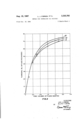
- FIGURE 1 depicts graphically the experimental data obtained to show the permeability reduction of a formation according to one embodiment of the invention
- FIGURE 2 graphically illustrates the data obtained in facsimile oil recovery experiments showing the increased oil recovery attained according to one embodiment of the invention over prior art methods of recovery;
- FIGURE 3 illustrates data experiment-ally obtained showing increased oil recovery, at low water content, according to the secondary oil recovery embodiment of the disclosed invention.
- Curve I illustrates the permeability of a core to water when practicing one embodiment of this invention.
- Curve II indicates the increased permeability of the same core when using a prior art method.
- the data, from which the graphs were constructed, were obtained in laboratory experiments.
- a cylinder 2 feet in length was filled with No. 16 sand.
- the sand pack was saturated with crude oil and driven to a residual oil saturation using a brine having a sodium chloride content of 1.5%.
- the permeability, K, of the sand pack to water was found to be 2,000 millidarcies.
- the first experiment consisted in injecting into one end of the pack, in sequential order, 0.10 pore volume of an aqueous solution containing 0.1% of O K Liquid, a commercially available surfactant, marketed by Procter & Gamble Co. and disclosed in US. Patent 2,941,950; sufficient air to saturate the sand pack to a 50% level, thus insuring substantially complete foaming of the surfactant; and brine containing 1.5% NaCl.
- Curve II depicts the data obtained wherein total pore volumes of fluids injected and percent of the permeability, K, of the sand pack are represented along the abscissa and ordinate axes respectively.
- Curve I was obtained using the same procedure as above except 0.10 pore volume of a dilute surfactant solution, containing 0.1% by weight of the identical surfactant initially injected, was injected intermediate the air and brine. It is readily apparent that the utilization of one of the embodiments of this invention significantly reduces permeability over a prior art method thus pointing up the applicability of the invention to acidizing, fracturing and permeability reduction processes.
- FIGURES 2 and 3 graphically represent data obtained in three additional experiments.
- the abscissa of both FIGURES 2 and 3 represents pore volumes of fiuid injected while the ordinate represents cumulative oil produced based on the percentage of original oil in place and the cumulative water/ oil ratio respectively,
- Curve V represents a prior art waterflood while Curve IV represents a prior art foam flood.
- Curve III represents a foam secondary recovery method in accordance with this invention. The following examples will illustrate in detail the procedure of each of the secondary recoveries wherein a foam bank was utilized.
- Example 1 Into the common inlet of the dual sand pack were injected 20% pore volume of an aqueous solution containing 1% by weight of O K Liquid; nitrogen; and water until the total cumulative amount of fluids injected comprised 2 pore volumes.
- the data obtained is accurately set forth as Curve IV in FIGURES 2 and 3.
- Example 11 Into the common inlet of the dual sand pack were injected 15% pore volume of an aqueous solution containing 1% by weight of O K Liquid; nitrogen; pore volume of an aqueous solution containing 0.5% by weight of O K Liquid; and water until the total cumulative amount of fluids injected totaled 2 pore volumes.
- the data obtained is graphically depicted as Curves III in FIGURES 2 and 3.
- a surfactant, foaming agent or surface-active agent having foam producing characteristics is injected into an injection well of a subterranean formation either per se if its form permits or in a vehicle in which the foam producing agent is miscible.
- aqueous driving fluid best results will be obtained where each of the injected fluids are miscible with each other.
- an aqueous vehicle and a water soluble surfactant or surface-active agent is preferred.
- a sufficient amount of gas such as air or nitrogen is injected to substantially completely foam the surfactant or surface-active agent thereby forming an in situ foam bank within the formation.
- a dilute surfactant or surface-active agent-containing solution preferably aqueous in form
- a suflicient amount of driving fluid will be injected to drive at least a major portion of the generated foam bank through the formation to a production well or wells whereby fluids are produced from the production well or wells until further production becomes economically unattractive.
- aqueous driving fluid i.e., acidizing, fracturing, permeability reduction
- only that amount of aqueous driving fluid will be injected into the injection well and thusly into the formation which will be suflicient to contact that area of the formation surrounding the injection well upon which it is desired to reduce the permeability, acidize or fracture.
- the generation gtgf tumult .tahlu ..larsgiah w i k by redifecting or channeling subsequefitly iiijected fluids iiilttj'f smallerwinterstices of the for rn ati on 'I he injection of a dilute surfactant or surface-active agent containing solution after the formation of the foam bank prohibits subsequently injected aqueous driving fluid from contacting and breaking down the generated foam.
- the surface-active agent contained in the dilute aqueous slug will tend to augment and replenish the generated foam bank as the foam bank moves through a portion of the formation.
- the surfactant preferably should be one capable of forming a stable foam under formation or reservoir conditions when it is intimately contacted with a liquid and a gas.
- the surfactants may be either anionic, cationic or nonionic so long as they meet the basic prerequisites stated above and may be readily selected from commercially published lists which describe their properties. Information concerning such surfactants may be found in Encyclopedia of Surface-Active Agents, by J. P. Sisley, translated from the French by P. J. Wood, Chemical Publishing Co., New York, 1952.
- the surfactant may be injected into the formation alone where suflicient connate water is present or it may be incorporated in an aqueous liquid vehicle.
- a vehicle will act to more readily disperse the surfactant within the interstices of the formation.
- foam is generated on the surface and thereafter injected into the subterranean formation. Utilizing this method as opposed to the in situ generation of foam within the formation will prove to necessitate higher injection pressures and create other detrimental effects which practical field experience teaches should be avoided.
- a watersoluble surfactant is polyoxethylated octylphenol known commercially under the trade name Triton X100.
- suitable foam producing agents include dimethyl didodecenyl ammonium chloride, methyl trioctenyl ammonium iodide, trimethyl decenyl ammonium chloride, dibutyl dihexadecenyl ammonium chloride, and water-soluble salts of esters of C -C sulfo dicarboxylic acids having the general formula wherein M is a substituent forming a water-soluble salt, such as alkali metals, ammonium, and substituted ammonium, R is C C alkyl substituent, and n is an integer from 1-4, e.g., monosodium dioctyl sulfosuccinate, ammonium dilanrylsulfosuccinate, monosodium dibutyl sebacate, monosodium diamyl
- Miranol HM concentrate Ethylene cyclomido 1 lauryl, 2 hydroxy ethylene NA alcoholate, methylene Na carboxylate. Miranol MM concentrate Same as Miranol HM except myristyl group is substituted for lauryl group.
- Nacconal NR Alkyl aryl sulfonate Nacconal NR Alkyl aryl sulfonate.
- Renex 650 Polyoxyethylene alkyl aryl ether.
- Sorbit AC Sodium alkyl naphthalene sulfonate Sorbit AC Sodium alkyl naphthalene sulfonate.
- Triton X-l Alkyl aryl polyether alcohol Triton X-l Alkyl aryl polyether alcohol.
- Tween 81 Polyoxyethylene sorbitan monooleate.
- Triton GR7 Dioctyl sodium sulfosuccinate.
- Triton Bl956 Modified phthalic glycerol alkyl resin.
- Triton X45 Isoctyl phenyl polyethoxy ethanol (about ethoxy groups per molecule).
- surfactants utilized in accordance with the invention may be injected into the formation in and of themselves, it is preferred that they be incorporated in aqueous solutions. Therefore, it should be understood that many surfactants which are primarily oil-soluble, nevertheless have sufficient water solubility to permit their use in aqueous solutions and have the ability to form tenacious foams under reservoir temperatures and pressures.
- the surfactants utilized in this invention are those which form a stable foam in the presence of crude oil; in reservoirs where the interstitial water contains a high concentration of salt, a surfactant is used which foams readily in the presence of oil and brine.
- the concentration of surfactant in the aqueous solution employed in accordance with the invention will depend in large part on the particular agent utilized and the type of formation which is to be produced. For instance, where a particular type of formation creates a condition under which much of the surfactant is adsorbed or absorbed in the interstices of the formation it will be necessary to employ a greater amount of surfactant so that a sufiicient amount will remain to form a foam bank within the reservoir upon the subsequent injection of a gas.
- Surfactant concentrations between about 0.01 to 10 weight percent of the solution in which they are incorporated are generally suitable for purposes of the invention with the preferable concentration being about 0.1 to 1.0 weight percent.
- the quantity of surfactant vehicle or carrier will depend largely upon such well recognized factors as the recovery pattern, the spacing between wells, the porosity of the formation, and the thickness of the formation. Ideally the quantity of vehicle or carrier employed should be such that a sufficient amount of liquid is available to completely foam the surfactant solution upon the intimate contact of the solution with a gas. Since the amount of solution required to accomplish this cannot be precisely determined in advance, the most convenient method of expressing the quantity of surfactant solution to be used is in terms of reservoir pore volume. In general from about 0.01 to 0.3 pore volume of solution will be utilized with the preferred range being about 0.05 to 0.10 pore volume.
- Quantities in the upper part of this range may be required for operations in which relatively dilute solutions are employed or in which surfactants having an afiinity to absorb upon the rock to a high degree are used. Lesser quantities may be utilized where the surfactant employed is a highly effective one and where the concentration of the solution is high.
- the dilute sufactant containing solution will normally be an aqueous one such as water or brine and is preferably nongaseous so as to inhibit the formation or generation of a foam distant from the main foam bank.
- the quantity of liquid will be an amount sufficient to form a buffer zone between the formed foam bank and subsequent aqueous driving fluid so that the subsequently injected driving fluid will not tend to break down the generated foam bank.
- the quantity of dilute surfactant solution will generally lie in the range of about 0.01 to 0.3 pore volume with a preferred practical range of about 0.05 to 0.10 pore volume being sufficient under most conditions.
- the concentration of the surfactant in this dilute, solution will normally range between 0.01 to 1.0 weight percent and preferably will be about 0.5 weight percent.
- the surfactant or surfactant solution is first injected into the reservoir or formation through one or more injection wells arranged in a logically spaced pattern. Five spot, seven spot, or other conventional well patterns may be utilized and generally are preferable. After a sufiicient amount of surfactant to effect the formation of a tenacious foam bank within the formation has been. introduced, a quantity of a gas sufiicient in size to substantially completely foam the introduced surfactant is then injected into the injection well and under normal circumstances this amount will range from about 0.10 to 0.5 pore volume, measured at 1 atmosphere and 60 F., with 0.3 pore volume (measured at the same conditions being), ample under most circumstances.
- the dilute surfactant solution is injected after the formation of the foam bank in a quantity suflicient to prevent the subsequently injected aqueous driving fluid from breaking down the foam bank.
- an aqueous driving fluid such as brine or water is injected to propel the foam bank through that portion of the formation which is to be treated. If the reservoir is to be produced, a sufiicient amount of aqueous driving fluid will be utilized to drive at least a major portion of the foam bank through the reservoir to the production well or wells.
- aqueous driving fluid such as sulfuric, hydrochloric, etc. may be injected immediately after the aqueous driving fluid thus preventing loss of the acidic fluid to a large portion of the formation surrounding the well bore area because of high permeability.
- acidizing fluid such as sulfuric, hydrochloric, etc.
- the subsequent portions of aqueous drive fiuid may be injected in quantities and under pressures suflicient to permit fracturing of the formation.
- an oil-bearing subterranean reservoir has drilled therethrough a plurality of wells conforming to the conventional five spot pattern.
- Through the center or injection well there is injected 0.05 pore volume of anlqueous solution containing 0.1% by weight of O K Liqhid under a'pressure of 200 p.s.i.
- 0.3 pore volume of air is injected at a pressure of 200 p.slifto cause substantially complete foaming of the surfactant containing solution.
- 05 pore volume of an aqueous solution containing tlf% "by weight of Triton X4993 is injected at a pressure of 350 p.s.i.
- 0 K Liquid is taken to mean a surfactant consisting of the mixture of (a) 25-40% of the sulfated and neutralized reaction product obtained from condensing l to 5 moles of ethylene oxide and 1 mole of monohydric alcohol of from -16 carbon atoms in the molecule; (b) 612% of an organic builder substance consisting essentially of alkylol amide of saturated fatty acids having 10, 12 and 14 carbon atoms and an alkylol amine, said alkylol amide hav ing not more than 3 carbon atoms in each alkylol radical; (0) 15-25% of alcohol from the group consisting of ethanol, normal propanol and isopropanol; (d) not over 5% of extraneous substances (such as sulfates and chlorides of the ammonia or substituted ammonia used, plus unsulfated alkyl ethers and other reaction products
- non-gaseous dilute surfactant solution is an aqueous solution of about 0.01 to 0.30 pore volume and the surfactant comprises about 0.01 to 10 weight percent of said solution.
- the method of treating a formation to reduce the permeability thereof which comprises the steps of drilling a well bore to the depth of the formation to be treated; injecting into said well bore and into said formation a first surfactant capable of forming foam under formation conditions when intimately contacted with a liquid and a gas; thereafter injecting a sufficient amount of gas to substantially completely foam said surfactant; immediately thereafter injecting a dilute aqueous solution of a second surfactant in an amount sufficient to form a buffer zone between the foam and a subsequently injected aqueous driving fluid; and injecting a driving fluid immediately following said dilute surfactant solution in an amount suflicient to drive said foam and said dilute surfactant solution through that portion of the formation to be treated.
- said dilute solution of said second surfactant comprises about 0.01 to 0.30 pore volume and the surfactant comprises about 001 to 1.0' weight percent of said solution.
Landscapes
- Chemical & Material Sciences (AREA)
- Life Sciences & Earth Sciences (AREA)
- General Life Sciences & Earth Sciences (AREA)
- Engineering & Computer Science (AREA)
- Materials Engineering (AREA)
- Organic Chemistry (AREA)
- Chemical Kinetics & Catalysis (AREA)
- General Chemical & Material Sciences (AREA)
- Oil, Petroleum & Natural Gas (AREA)
- Emulsifying, Dispersing, Foam-Producing Or Wetting Agents (AREA)
Description
Aug. 15, 1967 L. J. O'BRIEN ET AL Filed D60. 18, 1964 W IO I O o o o o o o 2 Q (D Q N 1 ALI'IIQVQWHBd MOVd CINVS =10 5 Sheets-Sheet 1 PORE VOLUMES OF FLUIDS lNJECTED FI G. I
INVENTORS.
LEO J. O'BRIEN ALLYN T. SAYRE ATTORNEY;
Aug. 15, 1967 OWEN ET AL 3,335,792
METHOD FOR INCREASING OIL RECOVERY Filed Dec. 18, 1964 x 3 $heetsSheet 2 I I y To 0 U1 0: U1 3 50 U LU I l-Ll Q i 40 E :1 o a E 30 9 a: o o E! PORE VOLUMES OF FLUIDS INJECTED ATTORN Y.
Aug. 15, 1967 I 1.. .1v O'BRIEN ET AL 3,335,792
METHOD FOR INCREASING OIL RECOVERY Filed Dec. 18, 1964 3 Sheets-Sheet 3 FIG.3
l 0 PORE VOLUMES 0F FLUIDS maecfeo m In r no on o o ouva NOLLOflCIOHcI 1|o/a31.vM,3/\u.v1nwno INVENTORS- LEO .1. O'BRIEN By ALLYN 1'. SAYRE ATTORNEY.
United States Patent 3,335,792 7 METHOD FOR INCREASING OIL RECOVERY Leo J. OBrien, Crystal Lake, 111., and Allyn T. Sayre, Denver, Colo., assignors, by mesne assignments, to Union Oil Company of California, Los Angeles, Calif,
a corporation of California Filed Dec. 18, 1964, Ser. No. 419,432 15 Claims. (Cl. 1669) This invention relates to methods of treating subterranean oil-bearing formations whereby preliminary operations prior to conducting ultimate recovery and/or the recovery of the oil are greatly facilitated. More specifically this invention pertains to methods of reducing formation permeability, methods of fracturing, acidizing and producing petroleum-bearing reservoirs and formations. Even more specifically the embodiments of this invention revolve around the use of surfactants in a novel manner whereby the hereinafter enumerated objects are readily obtained.
The use in oil recovery of surfactants, having foamproducing characteristics, in conjunction with gasiform ing in s was ostensibly initially advanced by D. C. Bond and O. C. Holbrook in US. Patent 2,866,507. Efficiency of the gas drive was found to be greatly enhanced by the presence of foam at the drive gas-oil interface which inherently prohibited extensive fingering and channeling of the gas through the formation fluids. Thus, this successful use of foam, though limited to gas drive processes, provided the necessary impetus for further investigations.
The further investigations and experiments of A. N. Fried, published in Bureau of Mines Report of Investigations 5866 (The Foam-Drive Process for Increasing Recovery of Oil, 1961), stimulated the industrys imagination as respects the application of surfactants in secondary and tertiary methods of oil recovery using other than gasiform driving fluids. While the increased oil recoveries through the use of surfactants in waterflooding operations had been experimentally attested to in the laboratory,- the art was not cognizant of the still greater recoveries that could be obtained when using surfactants in a different physical state, Le, a foam. Thus Bond, Holbrook and Fried madmaileible an eiitirely new vista for mans insatiable quest for more efficient methods of extracting petroleum from the bosom of the earth.
Fried, however, emphasized the use of foam as an oildi'splacement entity per se or with a gas drive rather than its use in bank form in conjunction with an aqueous driving fluid. In fact Fried concluded that a foam followed by an aqueous driving fluid did not effect additional oil recovery. In addition, while the permeability reducing characteristics of foam were recognized, the application of this knowledge remained for other workers in the art.
It has now been discovered that a foam bank generated in situ followed by a dilute surfactant solution, prior to the subsequent injection of an aqueous driving fluid, greatly reduces the permeability of a subterranean oilbearing formation. Thus, depending upon the ultimate goal, these steps form the prerequisite of either one of permeability reducing treatment, fracturing, acidizing or oil recovery method. The application of the requisite steps however, will find its greatest use in the secondary or tertiary recovery of oil. Generally, therefore, this embodiment consists in generating an in situ foam bank in a petroleum-bearing formation or reservoir, injecting a dilute surfactant solution in an amount sufiicient to "ice form a buffer zone between the foam bank and subsequently injected driving fluid whereby the foam bank is not adversely affected and its integrity maintained and thereafter injecting an aqueous driving fluid to drive at least a major portion of the foam bank through the formation or reservoir to a production well.
It is an object of this invention to provide a method of reducing subterranean formation permeability.
It is another object of this invention to provide a method ofproducing petroleum from subterranean reservoirs and formations wherein the efiiciency of an aqueous fluid drive is greatly enhanced.
It is a further object of this invention to provide a method of utilizing surfactants, surface-active agents and foam producing agents in a manner whereby oil recovery, fracturing and acidizing methods are greatly improved.
A further object of this invention is to provide a method of augmenting and maintaining a foam bank in a subterranean formation wherein the foam bank is driven through the formation by an aqueous fluid drive.
These and other objects will become apparent from the following detailed description of the invention taken in conjunction with the drawings wherein:
FIGURE 1 depicts graphically the experimental data obtained to show the permeability reduction of a formation according to one embodiment of the invention;
FIGURE 2 graphically illustrates the data obtained in facsimile oil recovery experiments showing the increased oil recovery attained according to one embodiment of the invention over prior art methods of recovery; and
FIGURE 3 illustrates data experiment-ally obtained showing increased oil recovery, at low water content, according to the secondary oil recovery embodiment of the disclosed invention.
Referring specifically to FIGURE 1, Curve I illustrates the permeability of a core to water when practicing one embodiment of this invention. Curve II indicates the increased permeability of the same core when using a prior art method, The data, from which the graphs were constructed, were obtained in laboratory experiments. A cylinder 2 feet in length was filled with No. 16 sand. The sand pack was saturated with crude oil and driven to a residual oil saturation using a brine having a sodium chloride content of 1.5%. The permeability, K, of the sand pack to water was found to be 2,000 millidarcies. The first experiment consisted in injecting into one end of the pack, in sequential order, 0.10 pore volume of an aqueous solution containing 0.1% of O K Liquid, a commercially available surfactant, marketed by Procter & Gamble Co. and disclosed in US. Patent 2,941,950; sufficient air to saturate the sand pack to a 50% level, thus insuring substantially complete foaming of the surfactant; and brine containing 1.5% NaCl. Curve II depicts the data obtained wherein total pore volumes of fluids injected and percent of the permeability, K, of the sand pack are represented along the abscissa and ordinate axes respectively. Curve I was obtained using the same procedure as above except 0.10 pore volume of a dilute surfactant solution, containing 0.1% by weight of the identical surfactant initially injected, was injected intermediate the air and brine. It is readily apparent that the utilization of one of the embodiments of this invention significantly reduces permeability over a prior art method thus pointing up the applicability of the invention to acidizing, fracturing and permeability reduction processes.
FIGURES 2 and 3 graphically represent data obtained in three additional experiments. A dual sand pack having equal volume parallel conduits with a common outlet with a 100-150 mesh sand in one conduit, having a permeability to water of 7930 millidarcies, and a random size sand in the other conduit with a permeability to water of 2840 rnillidarcies, were saturated with 88.8% pore volume of crude oil and 11.2% pore volume of 1.5 wt. percent NaCl brine prior to each experiment. All experiments were conducted at room temperature (75 F.) and at an inlet pressure of 15 p.s.i.g. The abscissa of both FIGURES 2 and 3 represents pore volumes of fiuid injected while the ordinate represents cumulative oil produced based on the percentage of original oil in place and the cumulative water/ oil ratio respectively,
Curve V represents a prior art waterflood while Curve IV represents a prior art foam flood. Curve III represents a foam secondary recovery method in accordance with this invention. The following examples will illustrate in detail the procedure of each of the secondary recoveries wherein a foam bank was utilized.
Example 1 Into the common inlet of the dual sand pack were injected 20% pore volume of an aqueous solution containing 1% by weight of O K Liquid; nitrogen; and water until the total cumulative amount of fluids injected comprised 2 pore volumes. The data obtained is accurately set forth as Curve IV in FIGURES 2 and 3.
Example 11 Into the common inlet of the dual sand pack were injected 15% pore volume of an aqueous solution containing 1% by weight of O K Liquid; nitrogen; pore volume of an aqueous solution containing 0.5% by weight of O K Liquid; and water until the total cumulative amount of fluids injected totaled 2 pore volumes. The data obtained is graphically depicted as Curves III in FIGURES 2 and 3.
It is readily apparent that the embodiment of the invention, as set forth in Example II, yielded greater oil recovery at low waterzoil ratios.
In accordance with the present invention a surfactant, foaming agent or surface-active agent having foam producing characteristics is injected into an injection well of a subterranean formation either per se if its form permits or in a vehicle in which the foam producing agent is miscible. Inasmuch as the instant invention contemplates an aqueous driving fluid, best results will be obtained where each of the injected fluids are miscible with each other. Thus, an aqueous vehicle and a water soluble surfactant or surface-active agent is preferred. Thereafter a sufficient amount of gas such as air or nitrogen is injected to substantially completely foam the surfactant or surface-active agent thereby forming an in situ foam bank within the formation. Thereafter a dilute surfactant or surface-active agent-containing solution, preferably aqueous in form, is injected in suflicient quantity to produce an effective buffer zone between the foam bank and subsequently injected fluids which fluids will generally be aqueous in form, in an amount which will vary with the particular application of the disclosed embodiment of the invention. For instance, if a secondary recovery operation is to be conducted upon the formation, a suflicient amount of driving fluid will be injected to drive at least a major portion of the generated foam bank through the formation to a production well or wells whereby fluids are produced from the production well or wells until further production becomes economically unattractive. In other embodiments, i.e., acidizing, fracturing, permeability reduction, only that amount of aqueous driving fluid will be injected into the injection well and thusly into the formation which will be suflicient to contact that area of the formation surrounding the injection well upon which it is desired to reduce the permeability, acidize or fracture.
It is believed that the improved results obtained in accordance with the various embodiments of this invention arise in several manners. Ostensibly the injection of the surfactant or surface-active agent transforms the formation or reservoir from a water wet to an oil wet state and thusly facilitates the removal of petroleum oil contained within the interstices of the formation. In addition, the generation gtgf tumult .tahlu ..larsgiah w i k by redifecting or channeling subsequefitly iiijected fluids iiilttj'f smallerwinterstices of the for rn ati on 'I he injection of a dilute surfactant or surface-active agent containing solution after the formation of the foam bank prohibits subsequently injected aqueous driving fluid from contacting and breaking down the generated foam. Also the surface-active agent contained in the dilute aqueous slug will tend to augment and replenish the generated foam bank as the foam bank moves through a portion of the formation. Those in the art will readily appreciate that the herein disclosed method of reducing formation permeability will not only have a beneficial effect on secondary and tertiary oil recovery but will also act to provide the requisite steps of a fracturing or acidizing operation. For instance, a combination of the generated in situ foam and dilute aque ous surfactant slug will prohibit loss of the subsequently injected acidizing fluid or subsequently injected fracturing fluid.
Surface-active agents and foam producing agents will hereinafter be referred to in the specification and appended claims as a surfactant. The surfactant preferably should be one capable of forming a stable foam under formation or reservoir conditions when it is intimately contacted with a liquid and a gas. The surfactants may be either anionic, cationic or nonionic so long as they meet the basic prerequisites stated above and may be readily selected from commercially published lists which describe their properties. Information concerning such surfactants may be found in Encyclopedia of Surface-Active Agents, by J. P. Sisley, translated from the French by P. J. Wood, Chemical Publishing Co., New York, 1952. If appropriate, the surfactant may be injected into the formation alone where suflicient connate water is present or it may be incorporated in an aqueous liquid vehicle. The use of a vehicle will act to more readily disperse the surfactant within the interstices of the formation. An alternative, though not preferred, is the instance where foam is generated on the surface and thereafter injected into the subterranean formation. Utilizing this method as opposed to the in situ generation of foam within the formation will prove to necessitate higher injection pressures and create other detrimental effects which practical field experience teaches should be avoided.
An example of a watersoluble surfactant is polyoxethylated octylphenol known commercially under the trade name Triton X100. Other examples of suitable foam producing agents include dimethyl didodecenyl ammonium chloride, methyl trioctenyl ammonium iodide, trimethyl decenyl ammonium chloride, dibutyl dihexadecenyl ammonium chloride, and water-soluble salts of esters of C -C sulfo dicarboxylic acids having the general formula wherein M is a substituent forming a water-soluble salt, such as alkali metals, ammonium, and substituted ammonium, R is C C alkyl substituent, and n is an integer from 1-4, e.g., monosodium dioctyl sulfosuccinate, ammonium dilanrylsulfosuccinate, monosodium dibutyl sebacate, monosodium diamyl sulfoadipate, and others; and water-soluble perfiuoroalkanoic acids and salts having 3-24 carbon atoms per molecule, e.g., perfluorooctanoic acid, perfluoropropanoic acid and perfluorononanoic acid.
Other surfactive agents which may be used in the practice of this invention are:
Trade name Chemical name Ethomid HT-60 Condensation of hydrogenated tallow amide and ethylene oxide. Hyonic FA-75 Modified fatty alkylolamide.
Miranol HM concentrate Ethylene cyclomido 1 lauryl, 2 hydroxy ethylene NA alcoholate, methylene Na carboxylate. Miranol MM concentrate Same as Miranol HM except myristyl group is substituted for lauryl group.
Nacconal NR Alkyl aryl sulfonate.
Ninol AA62 Lauric diethanolamide.
Ninol 1001 Fatty acid alkanolamide.
Petrowet R Sodium alkyl sulfonate.
Pluronic L44 Condensation product of ethylene oxide with propylene glycol.
Product BCO C-cetyl betaine.
Renex 650 Polyoxyethylene alkyl aryl ether.
Sorbit AC Sodium alkyl naphthalene sulfonate.
Sulfanole FAF--. Sodium salt of fatty alcohols, sulfated.
Triton AS30 Sodium lauryl sulfate.
Triton X-l Alkyl aryl polyether alcohol.
Span 20 Sorbitan monolaurate.
Span 40 Sorbitan monopalmitate.
Span 85 Sorbitan trioleate.
Tween 65 Polyoxyethylene sorbitan tristearate.
Tween 81 Polyoxyethylene sorbitan monooleate.
OPE 1 Octylphenoxyethanols.
OPE 2 Octylphenoxyethanols.
OPE 3 Octylphenoxyethanols.
Triton GR7 Dioctyl sodium sulfosuccinate.
Triton Bl956 Modified phthalic glycerol alkyl resin.
Triton X45 Isoctyl phenyl polyethoxy ethanol (about ethoxy groups per molecule).
While the surfactants utilized in accordance with the invention may be injected into the formation in and of themselves, it is preferred that they be incorporated in aqueous solutions. Therefore, it should be understood that many surfactants which are primarily oil-soluble, nevertheless have sufficient water solubility to permit their use in aqueous solutions and have the ability to form tenacious foams under reservoir temperatures and pressures.
Preferably the surfactants utilized in this invention are those which form a stable foam in the presence of crude oil; in reservoirs where the interstitial water contains a high concentration of salt, a surfactant is used which foams readily in the presence of oil and brine.
The concentration of surfactant in the aqueous solution employed in accordance with the invention will depend in large part on the particular agent utilized and the type of formation which is to be produced. For instance, where a particular type of formation creates a condition under which much of the surfactant is adsorbed or absorbed in the interstices of the formation it will be necessary to employ a greater amount of surfactant so that a sufiicient amount will remain to form a foam bank within the reservoir upon the subsequent injection of a gas. Surfactant concentrations between about 0.01 to 10 weight percent of the solution in which they are incorporated are generally suitable for purposes of the invention with the preferable concentration being about 0.1 to 1.0 weight percent.
The quantity of surfactant vehicle or carrier will depend largely upon such well recognized factors as the recovery pattern, the spacing between wells, the porosity of the formation, and the thickness of the formation. Ideally the quantity of vehicle or carrier employed should be such that a sufficient amount of liquid is available to completely foam the surfactant solution upon the intimate contact of the solution with a gas. Since the amount of solution required to accomplish this cannot be precisely determined in advance, the most convenient method of expressing the quantity of surfactant solution to be used is in terms of reservoir pore volume. In general from about 0.01 to 0.3 pore volume of solution will be utilized with the preferred range being about 0.05 to 0.10 pore volume. Quantities in the upper part of this range may be required for operations in which relatively dilute solutions are employed or in which surfactants having an afiinity to absorb upon the rock to a high degree are used. Lesser quantities may be utilized where the surfactant employed is a highly effective one and where the concentration of the solution is high.
The dilute sufactant containing solution will normally be an aqueous one such as water or brine and is preferably nongaseous so as to inhibit the formation or generation of a foam distant from the main foam bank. The quantity of liquid will be an amount sufficient to form a buffer zone between the formed foam bank and subsequent aqueous driving fluid so that the subsequently injected driving fluid will not tend to break down the generated foam bank. The quantity of dilute surfactant solution will generally lie in the range of about 0.01 to 0.3 pore volume with a preferred practical range of about 0.05 to 0.10 pore volume being sufficient under most conditions. The concentration of the surfactant in this dilute, solution will normally range between 0.01 to 1.0 weight percent and preferably will be about 0.5 weight percent. While it is desirable that all foam generated in situ will form part of a band or bank at the residual oil/ driving fluid interface it is to be understood that in some instances all of the surfactant will not be effectively displaced from the injection well area. Under these conditions the generation of a small amount of foam will not adversely affect the overall process to an appreciable extent.
In carrying out the process of the invention, the surfactant or surfactant solution is first injected into the reservoir or formation through one or more injection wells arranged in a logically spaced pattern. Five spot, seven spot, or other conventional well patterns may be utilized and generally are preferable. After a sufiicient amount of surfactant to effect the formation of a tenacious foam bank within the formation has been. introduced, a quantity of a gas sufiicient in size to substantially completely foam the introduced surfactant is then injected into the injection well and under normal circumstances this amount will range from about 0.10 to 0.5 pore volume, measured at 1 atmosphere and 60 F., with 0.3 pore volume (measured at the same conditions being), ample under most circumstances. Thereafter the dilute surfactant solution is injected after the formation of the foam bank in a quantity suflicient to prevent the subsequently injected aqueous driving fluid from breaking down the foam bank. Thereafter an aqueous driving fluid such as brine or water is injected to propel the foam bank through that portion of the formation which is to be treated. If the reservoir is to be produced, a sufiicient amount of aqueous driving fluid will be utilized to drive at least a major portion of the foam bank through the reservoir to the production well or wells. Where it is desired to restate, the rigat n f 'f elf ing secondary operations in the reservoir, only that quantity of aqueous driving fluid need be injected so as to have the foam and dilute surfactant solution contact that portion of the formation to be treated. In an acidizing operation the acidizing fluid such as sulfuric, hydrochloric, etc. may be injected immediately after the aqueous driving fluid thus preventing loss of the acidic fluid to a large portion of the formation surrounding the well bore area because of high permeability. Where fracturing is desired the subsequent portions of aqueous drive fiuid may be injected in quantities and under pressures suflicient to permit fracturing of the formation.
Asa specific example of one embodiment of the invention, an oil-bearing subterranean reservoir has drilled therethrough a plurality of wells conforming to the conventional five spot pattern. Through the center or injection well there is injected 0.05 pore volume of anlqueous solution containing 0.1% by weight of O K Liqhid under a'pressure of 200 p.s.i. Thereafter 0.3 pore volume of air is injected at a pressure of 200 p.slifto cause substantially complete foaming of the surfactant containing solution. Thereafter 05 pore volume of an aqueous solution containing tlf% "by weight of Triton X4993 is injected at a pressure of 350 p.s.i. followed by brine injection atapressure of about 350 p.s.i. to move the generated in situ foam bank through the reservoir to the production wells. Production of fluids from the production wells is carried on until the oil ratio from the produced fluids becomes economically unattractive at which time brine injection into the injection well and fluid production from the production wells are terminated.
Merely to make a full and complete disclosure, it is to be understood that when used herein 0 K Liquid is taken to mean a surfactant consisting of the mixture of (a) 25-40% of the sulfated and neutralized reaction product obtained from condensing l to 5 moles of ethylene oxide and 1 mole of monohydric alcohol of from -16 carbon atoms in the molecule; (b) 612% of an organic builder substance consisting essentially of alkylol amide of saturated fatty acids having 10, 12 and 14 carbon atoms and an alkylol amine, said alkylol amide hav ing not more than 3 carbon atoms in each alkylol radical; (0) 15-25% of alcohol from the group consisting of ethanol, normal propanol and isopropanol; (d) not over 5% of extraneous substances (such as sulfates and chlorides of the ammonia or substituted ammonia used, plus unsulfated alkyl ethers and other reaction products); and (e) water to make 100%.
The embodiments of this invention in which an exclusive property or privilege is claimed are defined as follows:
1. In the recovery of petroleum from a subterranean formation penetrated by an injection well and a production well wherein a foam bank is driven through the formatioii byfi fi aqueous driving fluid, the improvement which comprises injecting into said formation through said injection well a substantially non-gaseous dilute surfactant solution immediately after the foarn bank nd g fluid said surfactant solution b'eifig sutficient'irf quantity'to form a buffer zone between said foam bank and said driving fluid whereby said foam bank substantially maintains its integrity and thereafter recovering petroleum from said production well.
2. The method in accordance with claim 1 wherein said non-gaseous dilute surfactant solution is an aqueous solution of about 0.01 to 0.30 pore volume and the surfactant comprises about 0.01 to 10 weight percent of said solution.
3. The method of recovering petroleum from a subterranean formation penetrated by an injection well and a production well comprising the steps of injecting into said injection well in sequential order:
(a) a first surfactant capable of forming foam under formation conditions when intimately contacted with a liquid and a gas, in an amount sufficient to produce a foam bank at the residual oil and subsequently injected liquid interface,
(b) an effective quantity of gas to cause substantially complete foaming of said first surfactant,
(c) a suflicient quantity of a dilute aqueous solution of a second surfactant to form an effective buffer zone between the foam bank and the subsequently injected aqueous driving fluid hereinafter defined,
(d) a suflicient amount of aqueous driving fluid to drive at least a major portion of the foam bank through said formation to said production well,
and thereafter recovering fluids from said production well until further production becomes uneconomical.
4. The method in accordance with claim 3 wherein said first surfactant is water soluble and is incorporated in 0.01 to 0.30 pore volume of an aqueous liquid in the amount of about 0.01 to 10 weight percent.
5. The method in accordance with claim 3 wherein 0.10 to 0.5 pore volume of gas is injected after said first surfactant.
6. The method in accordance with claim 3 wherein said dilute solution of said second surfactant comprises about 0.01 to 0.30 pore volume and the surfactant contained therein is about 0.01 to 1.0 weight percent.
7. The method in accordance with claim 3 wherein said gas is air and said aqueous driving fluid is water.
8. The method defined in claim 3 wherein said first surfactant and said second surfactant are the same surfactant rr raterial 9. The method of treating a formation to reduce the permeability thereof which comprises the steps of drilling a well bore to the depth of the formation to be treated; injecting into said well bore and into said formation a first surfactant capable of forming foam under formation conditions when intimately contacted with a liquid and a gas; thereafter injecting a sufficient amount of gas to substantially completely foam said surfactant; immediately thereafter injecting a dilute aqueous solution of a second surfactant in an amount sufficient to form a buffer zone between the foam and a subsequently injected aqueous driving fluid; and injecting a driving fluid immediately following said dilute surfactant solution in an amount suflicient to drive said foam and said dilute surfactant solution through that portion of the formation to be treated.
10. The method in accordance with claim 9 wherein said first surfactant is incorporated in an aqueous solution of about 0.01 to 0.30 pore volume and comprises about 0.01 to 10 weight percent of said solution.
11. The method in accordance with claim 9 wherein said dilute solution of said second surfactant comprises about 0.01 to 0.30 pore volume and the surfactant comprises about 001 to 1.0' weight percent of said solution.
12. The method in accordance with claim 9 wherein said gas is air and said aqueous driving fluid is water.
13. The method defined in claim 9 wherein said first surfactant and said second surfactant are the same surfactant material.
14. The method of f ragt uring a subterranean formation penetrated by an injection well which comprises the steps of injecting into said formation through said injection well:
(a) a first surfactant solution containing a surfactant capable of forming a tenacious foam under formation conditions when intimately contacted by gas,
(b) an amount of gas suflicient in quantity to substantially completely foam said first surfactant solution,
(c) a second dilute surfactant solution immediately following said gas in an amount suflicient to form a bulfer zone between the foam and a subsequently injected aqueous fracturing fluid whereby said foam substantially maintains its integrity, and
(d) an aqueous fracturing fluid immediately following 9 said second dilute surfactant solution in an amount and under a pressure suflicient to cause fracturing of said formation.
15. The method of acidizing a subterranean formation penetrated by an injection well which comprises the steps of injecting into said formation through said injection well:
(a) a first surfactant solution containing a surfactant capable of forming a tenacious foam under formation conditions when intimately contacted by gas,
(b) an amount of gas sufiicient in quantity to substantially completely foam said first surfactant solution,
(c) a second dilute surfactant solution immediately ,following said gas in an amount suflicient to form a buffer zone between the foam and a subsequently injected aqueous driving fluid,
(d) an aqueous driving fluid immediately following said second dilute surfactant solution in an amount sufiicient to drive said foam and dilute surfactant solution through at least a portion of the formation to be acidized, and
(e) an amount of acidic fluid sufficient to treat at least that portion of the formation adjacent the injection well bore.
References Cited OTHER REFERENCES Bernard, George 6.: Effect of Foam on Recovery of Oil by Gas-Oil Drive, in Producers Monthly, 27(1), January 1963, pp. 18-21.
Bernard, George G., et al.: Effect of Foam on Perme- 20 ability of Porous Media to Gas, in J. Soc. Petroleum Engineers, 4(3), September 1964, pp. 267-274.
CHARLES E. OCONNELL, Primary Examiner.
I. A. CALVERT, Assistant Examiner.
Claims (1)
1. IN THE RECOVERY OF PETROLEUM FROM A SUBTERRANEAN FORMATION PENETRATED BY AN INJECTION WELL AND A PRODUCTION WELL WHEREIN A FOAM BANK IS DRIVEN THROUGH THE FORMATION BY AN AQUEOUS DRIVING FLUID, THE IMPROVEMENT WHICH COMPRISES INJECTING INTO SAID FORMATION THROUGH SAID INJECTION WELL A SUBSTANTIALY NON-GASEOUS DILUTE SURFACTANT SOLUTION IMMEDIATELY AFTER THE FOAM BANK AND PRIOR TO THE INJECTION OF THE DRIVING FLUID, SAID SURFACTANT SOLUTION BEING SUFFICIENT IN QUANTITY TO FOR A BUFFER ZONE BETWEEN SAID FOAM BANK AND SAID DRIVING FLUID WHEREBY SAID FOAM BANK SUBSTANTIALLY MAINTAINS ITS INTEGRITY AND THEREAFTER RECOVERING PETROLEUM FROM SAID PRODUCTION WELL.
Priority Applications (1)
| Application Number | Priority Date | Filing Date | Title |
|---|---|---|---|
| US419432A US3335792A (en) | 1964-12-18 | 1964-12-18 | Method for increasing oil recovery |
Applications Claiming Priority (1)
| Application Number | Priority Date | Filing Date | Title |
|---|---|---|---|
| US419432A US3335792A (en) | 1964-12-18 | 1964-12-18 | Method for increasing oil recovery |
Publications (1)
| Publication Number | Publication Date |
|---|---|
| US3335792A true US3335792A (en) | 1967-08-15 |
Family
ID=23662245
Family Applications (1)
| Application Number | Title | Priority Date | Filing Date |
|---|---|---|---|
| US419432A Expired - Lifetime US3335792A (en) | 1964-12-18 | 1964-12-18 | Method for increasing oil recovery |
Country Status (1)
| Country | Link |
|---|---|
| US (1) | US3335792A (en) |
Cited By (12)
| Publication number | Priority date | Publication date | Assignee | Title |
|---|---|---|---|---|
| US3491832A (en) * | 1968-08-12 | 1970-01-27 | Pan American Petroleum Corp | Plugging formations with foam |
| US3572439A (en) * | 1969-04-07 | 1971-03-30 | Chevron Res | Concentrates for the preparation of ammoniated foamed circulation fluids and use thereof |
| US3612179A (en) * | 1969-07-17 | 1971-10-12 | Byron Jackson Inc | Method of stimulating well production |
| US3612182A (en) * | 1969-08-25 | 1971-10-12 | Shell Oil Co | Oil recovery process |
| US3648772A (en) * | 1970-08-19 | 1972-03-14 | Marathon Oil Co | Miscible-type recovery process using foam as a mobility buffer |
| US4232741A (en) * | 1979-07-30 | 1980-11-11 | Shell Oil Company | Temporarily plugging a subterranean reservoir with a self-foaming aqueous solution |
| US4583784A (en) * | 1984-01-16 | 1986-04-22 | Mobil Oil Corporation | Use of foam as a borehole ground support system |
| US4981176A (en) * | 1989-10-26 | 1991-01-01 | Mobile Oil Corporation | Method for using foams to improve alkaline flooding oil recovery |
| FR2666621A1 (en) * | 1990-09-12 | 1992-03-13 | Schlumberger Cie Dowell | PRODUCT AND METHOD FOR ACID DIVERSION IN THE TREATMENT OF UNDERGROUND FORMATIONS. |
| US5279367A (en) * | 1992-06-10 | 1994-01-18 | Texaco Inc. | Fatty acid additives for surfactant foaming agents |
| US5333687A (en) * | 1992-12-24 | 1994-08-02 | Texaco Inc. | Long chain alcohol additives for surfactant foaming agents |
| CN110358517A (en) * | 2018-03-26 | 2019-10-22 | 中国石油化工股份有限公司 | A composite surfactant flooding system suitable for high calcium and magnesium reservoirs and its preparation method |
Citations (8)
| Publication number | Priority date | Publication date | Assignee | Title |
|---|---|---|---|---|
| US2053285A (en) * | 1935-09-30 | 1936-09-08 | Dow Chemical Co | Method of facilitating production of wells |
| US2866507A (en) * | 1956-12-24 | 1958-12-30 | Pure Oil Co | Gas drive oil recovery process |
| US3047066A (en) * | 1959-05-01 | 1962-07-31 | Pure Oil Co | Treating geological formation to improve flow of oil |
| US3136361A (en) * | 1959-05-11 | 1964-06-09 | Phillips Petroleum Co | Fracturing formations in wells |
| US3177939A (en) * | 1963-01-31 | 1965-04-13 | Pure Oil Co | Secondary recovery process using gasliquid drive fluids |
| US3185634A (en) * | 1961-07-14 | 1965-05-25 | Pan American Petroleum Corp | Oil recovery by foam drive |
| US3196944A (en) * | 1961-12-11 | 1965-07-27 | Pure Oil Co | Miscible-displacement process |
| US3207217A (en) * | 1963-08-12 | 1965-09-21 | Pure Oil Co | Miscible drive-waterflooding process |
-
1964
- 1964-12-18 US US419432A patent/US3335792A/en not_active Expired - Lifetime
Patent Citations (8)
| Publication number | Priority date | Publication date | Assignee | Title |
|---|---|---|---|---|
| US2053285A (en) * | 1935-09-30 | 1936-09-08 | Dow Chemical Co | Method of facilitating production of wells |
| US2866507A (en) * | 1956-12-24 | 1958-12-30 | Pure Oil Co | Gas drive oil recovery process |
| US3047066A (en) * | 1959-05-01 | 1962-07-31 | Pure Oil Co | Treating geological formation to improve flow of oil |
| US3136361A (en) * | 1959-05-11 | 1964-06-09 | Phillips Petroleum Co | Fracturing formations in wells |
| US3185634A (en) * | 1961-07-14 | 1965-05-25 | Pan American Petroleum Corp | Oil recovery by foam drive |
| US3196944A (en) * | 1961-12-11 | 1965-07-27 | Pure Oil Co | Miscible-displacement process |
| US3177939A (en) * | 1963-01-31 | 1965-04-13 | Pure Oil Co | Secondary recovery process using gasliquid drive fluids |
| US3207217A (en) * | 1963-08-12 | 1965-09-21 | Pure Oil Co | Miscible drive-waterflooding process |
Cited By (13)
| Publication number | Priority date | Publication date | Assignee | Title |
|---|---|---|---|---|
| US3491832A (en) * | 1968-08-12 | 1970-01-27 | Pan American Petroleum Corp | Plugging formations with foam |
| US3572439A (en) * | 1969-04-07 | 1971-03-30 | Chevron Res | Concentrates for the preparation of ammoniated foamed circulation fluids and use thereof |
| US3612179A (en) * | 1969-07-17 | 1971-10-12 | Byron Jackson Inc | Method of stimulating well production |
| US3612182A (en) * | 1969-08-25 | 1971-10-12 | Shell Oil Co | Oil recovery process |
| US3648772A (en) * | 1970-08-19 | 1972-03-14 | Marathon Oil Co | Miscible-type recovery process using foam as a mobility buffer |
| US4232741A (en) * | 1979-07-30 | 1980-11-11 | Shell Oil Company | Temporarily plugging a subterranean reservoir with a self-foaming aqueous solution |
| US4583784A (en) * | 1984-01-16 | 1986-04-22 | Mobil Oil Corporation | Use of foam as a borehole ground support system |
| US4981176A (en) * | 1989-10-26 | 1991-01-01 | Mobile Oil Corporation | Method for using foams to improve alkaline flooding oil recovery |
| FR2666621A1 (en) * | 1990-09-12 | 1992-03-13 | Schlumberger Cie Dowell | PRODUCT AND METHOD FOR ACID DIVERSION IN THE TREATMENT OF UNDERGROUND FORMATIONS. |
| AU652571B2 (en) * | 1990-09-12 | 1994-09-01 | Pumptech N.V. | Product and process for acid diversion in the treatment of subterranean formations |
| US5279367A (en) * | 1992-06-10 | 1994-01-18 | Texaco Inc. | Fatty acid additives for surfactant foaming agents |
| US5333687A (en) * | 1992-12-24 | 1994-08-02 | Texaco Inc. | Long chain alcohol additives for surfactant foaming agents |
| CN110358517A (en) * | 2018-03-26 | 2019-10-22 | 中国石油化工股份有限公司 | A composite surfactant flooding system suitable for high calcium and magnesium reservoirs and its preparation method |
Similar Documents
| Publication | Publication Date | Title |
|---|---|---|
| US3330346A (en) | Method of treating a subterranean formation with a foam bank | |
| US4706752A (en) | Method for foam emplacement in carbon dioxide enhanced recovery | |
| EP1257729B1 (en) | Foaming agents for use in coal seam reservoirs | |
| US3308885A (en) | Treatment of subsurface hydrocarbon fluid-bearing formations to reduce water production therefrom | |
| US4136739A (en) | Method for generating hydrofluoric acid in a subterranean formation | |
| US8759261B2 (en) | Method and composition for enhanced hydrocarbons recovery | |
| EP2046913B1 (en) | Method for the remediation of surfactant gel damage | |
| US6915854B2 (en) | Foaming agents for use in coal seam reservoirs | |
| US6225263B1 (en) | Use of oil and gas field chemicals | |
| US7691790B2 (en) | Composition and process for enhanced oil recovery | |
| US3335792A (en) | Method for increasing oil recovery | |
| WO1999051854A1 (en) | A foam drive method | |
| US4690217A (en) | Process for water injectivity improvement treatment of water injection wells | |
| CN103834379B (en) | A kind of vermiculate glues foam system and the method improving recovery ratio with it | |
| CN104284961A (en) | Desorbents for enhanced recovery of crude oil | |
| US4813484A (en) | Chemical blowing agents for improved sweep efficiency | |
| US3318379A (en) | Forming foam under reservoir conditions in petroleum recovery process | |
| CN108456511A (en) | A kind of layer is interior to generate CO2System and its application | |
| US3330352A (en) | Method for the subterranean storage of gas | |
| US3289759A (en) | Process for transporting surfactants thru permeable strata | |
| US3467188A (en) | Oil recovery process utilizing miniature slug of oil-external micellar dispersion | |
| US3759325A (en) | Foam for secondary and tertiary recovery | |
| US3323588A (en) | Method of secondary recovery employing successive foam drives of different ionic characteristics | |
| US3916995A (en) | Secondary recovery method | |
| CA3015994A1 (en) | In-situ carbon dioxide generation for heavy oil recovery method |