US3336251A - Rapid curing fluidized bed coating composition - Google Patents
Rapid curing fluidized bed coating composition Download PDFInfo
- Publication number
- US3336251A US3336251A US367573A US36757364A US3336251A US 3336251 A US3336251 A US 3336251A US 367573 A US367573 A US 367573A US 36757364 A US36757364 A US 36757364A US 3336251 A US3336251 A US 3336251A
- Authority
- US
- United States
- Prior art keywords
- polyepoxide
- parts
- weight
- bis
- coating composition
- Prior art date
- Legal status (The legal status is an assumption and is not a legal conclusion. Google has not performed a legal analysis and makes no representation as to the accuracy of the status listed.)
- Expired - Lifetime
Links
- 239000008199 coating composition Substances 0.000 title claims description 16
- 229920000647 polyepoxide Polymers 0.000 claims description 52
- 229920000570 polyether Polymers 0.000 claims description 23
- 239000004593 Epoxy Substances 0.000 claims description 22
- IISBACLAFKSPIT-UHFFFAOYSA-N bisphenol A Chemical compound C=1C=C(O)C=CC=1C(C)(C)C1=CC=C(O)C=C1 IISBACLAFKSPIT-UHFFFAOYSA-N 0.000 claims description 22
- 239000004721 Polyphenylene oxide Substances 0.000 claims description 15
- KSBAEPSJVUENNK-UHFFFAOYSA-L tin(ii) 2-ethylhexanoate Chemical compound [Sn+2].CCCCC(CC)C([O-])=O.CCCCC(CC)C([O-])=O KSBAEPSJVUENNK-UHFFFAOYSA-L 0.000 claims description 14
- 239000002245 particle Substances 0.000 claims description 11
- VGGSQFUCUMXWEO-UHFFFAOYSA-N Ethene Chemical compound C=C VGGSQFUCUMXWEO-UHFFFAOYSA-N 0.000 claims description 6
- 239000005977 Ethylene Substances 0.000 claims description 6
- SGFJJNBUMXQSMU-PDBXOOCHSA-N oxiran-2-ylmethyl (9z,12z,15z)-octadeca-9,12,15-trienoate Chemical class CC\C=C/C\C=C/C\C=C/CCCCCCCC(=O)OCC1CO1 SGFJJNBUMXQSMU-PDBXOOCHSA-N 0.000 claims 2
- 239000000203 mixture Substances 0.000 description 39
- LYCAIKOWRPUZTN-UHFFFAOYSA-N ethylene glycol Substances OCCO LYCAIKOWRPUZTN-UHFFFAOYSA-N 0.000 description 24
- 238000000576 coating method Methods 0.000 description 17
- 150000003839 salts Chemical class 0.000 description 15
- 125000004432 carbon atom Chemical group C* 0.000 description 14
- -1 cycloaliphatic Chemical group 0.000 description 14
- 150000005846 sugar alcohols Polymers 0.000 description 13
- 239000011248 coating agent Substances 0.000 description 12
- 239000000945 filler Substances 0.000 description 12
- 125000003055 glycidyl group Chemical group C(C1CO1)* 0.000 description 12
- 238000000034 method Methods 0.000 description 11
- VYPSYNLAJGMNEJ-UHFFFAOYSA-N Silicium dioxide Chemical compound O=[Si]=O VYPSYNLAJGMNEJ-UHFFFAOYSA-N 0.000 description 9
- 238000002844 melting Methods 0.000 description 9
- 230000008018 melting Effects 0.000 description 9
- 229920005989 resin Polymers 0.000 description 9
- 239000011347 resin Substances 0.000 description 9
- 239000002904 solvent Substances 0.000 description 9
- SRPWOOOHEPICQU-UHFFFAOYSA-N trimellitic anhydride Chemical compound OC(=O)C1=CC=C2C(=O)OC(=O)C2=C1 SRPWOOOHEPICQU-UHFFFAOYSA-N 0.000 description 9
- 150000002148 esters Chemical class 0.000 description 7
- PEDCQBHIVMGVHV-UHFFFAOYSA-N Glycerine Chemical compound OCC(O)CO PEDCQBHIVMGVHV-UHFFFAOYSA-N 0.000 description 6
- 235000014113 dietary fatty acids Nutrition 0.000 description 6
- MTHSVFCYNBDYFN-UHFFFAOYSA-N diethylene glycol Chemical compound OCCOCCO MTHSVFCYNBDYFN-UHFFFAOYSA-N 0.000 description 6
- 150000002118 epoxides Chemical class 0.000 description 6
- 239000000194 fatty acid Substances 0.000 description 6
- 229930195729 fatty acid Natural products 0.000 description 6
- 150000004665 fatty acids Chemical class 0.000 description 6
- 150000002762 monocarboxylic acid derivatives Chemical class 0.000 description 6
- BRLQWZUYTZBJKN-UHFFFAOYSA-N Epichlorohydrin Chemical compound ClCC1CO1 BRLQWZUYTZBJKN-UHFFFAOYSA-N 0.000 description 5
- 239000002253 acid Substances 0.000 description 5
- 239000003054 catalyst Substances 0.000 description 5
- 125000003700 epoxy group Chemical group 0.000 description 5
- 239000007788 liquid Substances 0.000 description 5
- 239000000463 material Substances 0.000 description 5
- 150000002989 phenols Chemical class 0.000 description 5
- 239000007787 solid Substances 0.000 description 5
- ZWEHNKRNPOVVGH-UHFFFAOYSA-N 2-Butanone Chemical compound CCC(C)=O ZWEHNKRNPOVVGH-UHFFFAOYSA-N 0.000 description 4
- ISWSIDIOOBJBQZ-UHFFFAOYSA-N Phenol Chemical compound OC1=CC=CC=C1 ISWSIDIOOBJBQZ-UHFFFAOYSA-N 0.000 description 4
- 239000003795 chemical substances by application Substances 0.000 description 4
- 150000001875 compounds Chemical class 0.000 description 4
- 239000004615 ingredient Substances 0.000 description 4
- 239000000843 powder Substances 0.000 description 4
- 229920001187 thermosetting polymer Polymers 0.000 description 4
- UHOVQNZJYSORNB-UHFFFAOYSA-N Benzene Chemical compound C1=CC=CC=C1 UHOVQNZJYSORNB-UHFFFAOYSA-N 0.000 description 3
- QIGBRXMKCJKVMJ-UHFFFAOYSA-N Hydroquinone Chemical compound OC1=CC=C(O)C=C1 QIGBRXMKCJKVMJ-UHFFFAOYSA-N 0.000 description 3
- KWYUFKZDYYNOTN-UHFFFAOYSA-M Potassium hydroxide Chemical compound [OH-].[K+] KWYUFKZDYYNOTN-UHFFFAOYSA-M 0.000 description 3
- DNIAPMSPPWPWGF-UHFFFAOYSA-N Propylene glycol Chemical compound CC(O)CO DNIAPMSPPWPWGF-UHFFFAOYSA-N 0.000 description 3
- 150000008064 anhydrides Chemical group 0.000 description 3
- 238000006243 chemical reaction Methods 0.000 description 3
- 229910052736 halogen Inorganic materials 0.000 description 3
- 150000002367 halogens Chemical class 0.000 description 3
- 125000002887 hydroxy group Chemical group [H]O* 0.000 description 3
- WGCNASOHLSPBMP-UHFFFAOYSA-N hydroxyacetaldehyde Natural products OCC=O WGCNASOHLSPBMP-UHFFFAOYSA-N 0.000 description 3
- 238000002156 mixing Methods 0.000 description 3
- 150000002763 monocarboxylic acids Chemical class 0.000 description 3
- 239000003921 oil Substances 0.000 description 3
- 235000019198 oils Nutrition 0.000 description 3
- 238000002360 preparation method Methods 0.000 description 3
- 239000011342 resin composition Substances 0.000 description 3
- 239000000377 silicon dioxide Substances 0.000 description 3
- HOSGXJWQVBHGLT-UHFFFAOYSA-N 6-hydroxy-3,4-dihydro-1h-quinolin-2-one Chemical group N1C(=O)CCC2=CC(O)=CC=C21 HOSGXJWQVBHGLT-UHFFFAOYSA-N 0.000 description 2
- KAKZBPTYRLMSJV-UHFFFAOYSA-N Butadiene Chemical compound C=CC=C KAKZBPTYRLMSJV-UHFFFAOYSA-N 0.000 description 2
- KRHYYFGTRYWZRS-UHFFFAOYSA-N Fluorane Chemical compound F KRHYYFGTRYWZRS-UHFFFAOYSA-N 0.000 description 2
- 244000068988 Glycine max Species 0.000 description 2
- 235000010469 Glycine max Nutrition 0.000 description 2
- ATUOYWHBWRKTHZ-UHFFFAOYSA-N Propane Chemical compound CCC ATUOYWHBWRKTHZ-UHFFFAOYSA-N 0.000 description 2
- 239000004965 Silica aerogel Substances 0.000 description 2
- 150000007513 acids Chemical class 0.000 description 2
- 150000001298 alcohols Chemical class 0.000 description 2
- 125000001931 aliphatic group Chemical group 0.000 description 2
- XAGFODPZIPBFFR-UHFFFAOYSA-N aluminium Chemical compound [Al] XAGFODPZIPBFFR-UHFFFAOYSA-N 0.000 description 2
- 125000003118 aryl group Chemical group 0.000 description 2
- 239000010425 asbestos Substances 0.000 description 2
- 235000012216 bentonite Nutrition 0.000 description 2
- YCIMNLLNPGFGHC-UHFFFAOYSA-N catechol Chemical compound OC1=CC=CC=C1O YCIMNLLNPGFGHC-UHFFFAOYSA-N 0.000 description 2
- 239000000460 chlorine Substances 0.000 description 2
- 230000000052 comparative effect Effects 0.000 description 2
- 229920001577 copolymer Polymers 0.000 description 2
- USIUVYZYUHIAEV-UHFFFAOYSA-N diphenyl ether Chemical compound C=1C=CC=CC=1OC1=CC=CC=C1 USIUVYZYUHIAEV-UHFFFAOYSA-N 0.000 description 2
- 238000010438 heat treatment Methods 0.000 description 2
- 229930195733 hydrocarbon Natural products 0.000 description 2
- QSHDDOUJBYECFT-UHFFFAOYSA-N mercury Chemical compound [Hg] QSHDDOUJBYECFT-UHFFFAOYSA-N 0.000 description 2
- 229910052753 mercury Inorganic materials 0.000 description 2
- 239000010445 mica Substances 0.000 description 2
- 229910052618 mica group Inorganic materials 0.000 description 2
- 238000000465 moulding Methods 0.000 description 2
- 229920000728 polyester Polymers 0.000 description 2
- GHMLBKRAJCXXBS-UHFFFAOYSA-N resorcinol Chemical compound OC1=CC=CC(O)=C1 GHMLBKRAJCXXBS-UHFFFAOYSA-N 0.000 description 2
- 229910052895 riebeckite Inorganic materials 0.000 description 2
- HEMHJVSKTPXQMS-UHFFFAOYSA-M sodium hydroxide Inorganic materials [OH-].[Na+] HEMHJVSKTPXQMS-UHFFFAOYSA-M 0.000 description 2
- 238000005507 spraying Methods 0.000 description 2
- 239000000126 substance Substances 0.000 description 2
- 239000000454 talc Substances 0.000 description 2
- 229910052623 talc Inorganic materials 0.000 description 2
- PUPZLCDOIYMWBV-UHFFFAOYSA-N (+/-)-1,3-Butanediol Chemical compound CC(O)CCO PUPZLCDOIYMWBV-UHFFFAOYSA-N 0.000 description 1
- PZIYGPCHDBRRRW-UHFFFAOYSA-N (3-methyloxiran-2-yl)methyl 2-(3-methyloxiran-2-yl)acetate Chemical compound CC1OC1COC(=O)CC1C(C)O1 PZIYGPCHDBRRRW-UHFFFAOYSA-N 0.000 description 1
- 239000001149 (9Z,12Z)-octadeca-9,12-dienoate Substances 0.000 description 1
- WTTJVINHCBCLGX-UHFFFAOYSA-N (9trans,12cis)-methyl linoleate Natural products CCCCCC=CCC=CCCCCCCCC(=O)OC WTTJVINHCBCLGX-UHFFFAOYSA-N 0.000 description 1
- BPJAIZKCDIIHAI-DQRAZIAOSA-N (Z)-2,3-bis[3-(3-heptyloxiran-2-yl)propyl]but-2-enedioic acid Chemical compound CCCCCCCC1OC1CCC\C(C(O)=O)=C(C(O)=O)/CCCC1C(CCCCCCC)O1 BPJAIZKCDIIHAI-DQRAZIAOSA-N 0.000 description 1
- QWUWMCYKGHVNAV-UHFFFAOYSA-N 1,2-dihydrostilbene Chemical group C=1C=CC=CC=1CCC1=CC=CC=C1 QWUWMCYKGHVNAV-UHFFFAOYSA-N 0.000 description 1
- GFSLNFHFVCYLOV-UHFFFAOYSA-N 1-(3-pentyloxirane-2-carbonyl)oxypentyl 3-pentyloxirane-2-carboxylate Chemical compound CCCCCC1OC1C(=O)OC(CCCC)OC(=O)C1C(CCCCC)O1 GFSLNFHFVCYLOV-UHFFFAOYSA-N 0.000 description 1
- FMEKNGLMZWUVJO-UHFFFAOYSA-N 2,3-bis(7-oxabicyclo[4.1.0]heptane-5-carbonyloxy)propyl 7-oxabicyclo[4.1.0]heptane-5-carboxylate Chemical compound C1CCC2OC2C1C(=O)OCC(OC(=O)C1C2OC2CCC1)COC(=O)C1C2OC2CCC1 FMEKNGLMZWUVJO-UHFFFAOYSA-N 0.000 description 1
- JDPBYYZMMSPVBS-UHFFFAOYSA-N 2-(2,2-diphenylpropoxy)-1-(oxiran-2-yl)ethanol Chemical compound C=1C=CC=CC=1C(C=1C=CC=CC=1)(C)COCC(O)C1CO1 JDPBYYZMMSPVBS-UHFFFAOYSA-N 0.000 description 1
- JRAHAOPPULISAY-UHFFFAOYSA-N 2-(7-oxabicyclo[4.1.0]heptan-2-ylmethoxycarbonyl)benzoic acid Chemical compound C1CC(C2C(C1)O2)COC(=O)C3=CC=CC=C3C(=O)O JRAHAOPPULISAY-UHFFFAOYSA-N 0.000 description 1
- MSWLVTVLWJRLOQ-UHFFFAOYSA-N 2-(7-oxabicyclo[4.1.0]heptane-5-carbonyloxy)ethyl 7-oxabicyclo[4.1.0]heptane-5-carboxylate Chemical compound C1CCC2OC2C1C(=O)OCCOC(=O)C1C2OC2CCC1 MSWLVTVLWJRLOQ-UHFFFAOYSA-N 0.000 description 1
- IQROXMUHJFAJIQ-UHFFFAOYSA-N 2-[3-[2-hydroxy-2-(oxiran-2-yl)ethoxy]phenoxy]-1-(oxiran-2-yl)ethanol Chemical compound C1OC1C(O)COC(C=1)=CC=CC=1OCC(O)C1CO1 IQROXMUHJFAJIQ-UHFFFAOYSA-N 0.000 description 1
- FADZHHSLTCASRS-UHFFFAOYSA-N 2-[3-[3-chloro-5-[3-(oxiran-2-yl)propoxy]phenoxy]propyl]oxirane Chemical compound C=1C(OCCCC2OC2)=CC(Cl)=CC=1OCCCC1CO1 FADZHHSLTCASRS-UHFFFAOYSA-N 0.000 description 1
- BCKFVXHJSVKKBD-UHFFFAOYSA-N 2-[8-(oxiran-2-ylmethoxy)octoxymethyl]oxirane Chemical compound C1OC1COCCCCCCCCOCC1CO1 BCKFVXHJSVKKBD-UHFFFAOYSA-N 0.000 description 1
- VWVDTBDXKCCJOL-UHFFFAOYSA-N 2-hydroxy-4-[(3-methyloxiran-2-yl)methoxy]-2-[2-[(3-methyloxiran-2-yl)methoxy]-2-oxoethyl]-4-oxobutanoic acid Chemical compound CC1OC1COC(=O)CC(O)(C(O)=O)CC(=O)OCC1C(C)O1 VWVDTBDXKCCJOL-UHFFFAOYSA-N 0.000 description 1
- ZTMADXFOCUXMJE-UHFFFAOYSA-N 2-methylbenzene-1,3-diol Chemical compound CC1=C(O)C=CC=C1O ZTMADXFOCUXMJE-UHFFFAOYSA-N 0.000 description 1
- QTWJRLJHJPIABL-UHFFFAOYSA-N 2-methylphenol;3-methylphenol;4-methylphenol Chemical compound CC1=CC=C(O)C=C1.CC1=CC=CC(O)=C1.CC1=CC=CC=C1O QTWJRLJHJPIABL-UHFFFAOYSA-N 0.000 description 1
- ODJQKYXPKWQWNK-UHFFFAOYSA-L 3-(2-carboxylatoethylsulfanyl)propanoate Chemical compound [O-]C(=O)CCSCCC([O-])=O ODJQKYXPKWQWNK-UHFFFAOYSA-L 0.000 description 1
- LNJCGNRKWOHFFV-UHFFFAOYSA-N 3-(2-hydroxyethylsulfanyl)propanenitrile Chemical compound OCCSCCC#N LNJCGNRKWOHFFV-UHFFFAOYSA-N 0.000 description 1
- RXNYJUSEXLAVNQ-UHFFFAOYSA-N 4,4'-Dihydroxybenzophenone Chemical compound C1=CC(O)=CC=C1C(=O)C1=CC=C(O)C=C1 RXNYJUSEXLAVNQ-UHFFFAOYSA-N 0.000 description 1
- CDBAMNGURPMUTG-UHFFFAOYSA-N 4-[2-(4-hydroxycyclohexyl)propan-2-yl]cyclohexan-1-ol Chemical compound C1CC(O)CCC1C(C)(C)C1CCC(O)CC1 CDBAMNGURPMUTG-UHFFFAOYSA-N 0.000 description 1
- WCUDAIJOADOKAW-UHFFFAOYSA-N 4-[2-(4-hydroxyphenyl)pentan-2-yl]phenol Chemical compound C=1C=C(O)C=CC=1C(C)(CCC)C1=CC=C(O)C=C1 WCUDAIJOADOKAW-UHFFFAOYSA-N 0.000 description 1
- 125000004203 4-hydroxyphenyl group Chemical group [H]OC1=C([H])C([H])=C(*)C([H])=C1[H] 0.000 description 1
- IETAPGPPPCOHRQ-UHFFFAOYSA-N 5-propoxy-7-oxabicyclo[4.1.0]heptane Chemical compound CCCOC1CCCC2OC12 IETAPGPPPCOHRQ-UHFFFAOYSA-N 0.000 description 1
- AESYRTORGDRTQL-UHFFFAOYSA-N 7-oxabicyclo[4.1.0]heptan-4-yl 3-(3-propyloxiran-2-yl)propanoate Chemical compound CCCC1OC1CCC(=O)OC1CC2OC2CC1 AESYRTORGDRTQL-UHFFFAOYSA-N 0.000 description 1
- FYTJMUYAPJUVHO-UHFFFAOYSA-N 7-oxabicyclo[4.1.0]heptan-6-ol Chemical compound C1CCCC2OC21O FYTJMUYAPJUVHO-UHFFFAOYSA-N 0.000 description 1
- KOJYENXGDXRGDK-ZUGARUELSA-N 9(Z),11(E),13(E)-Octadecatrienoic Acid methyl ester Chemical compound CCCC\C=C\C=C\C=C/CCCCCCCC(=O)OC KOJYENXGDXRGDK-ZUGARUELSA-N 0.000 description 1
- 240000002791 Brassica napus Species 0.000 description 1
- 235000004977 Brassica sinapistrum Nutrition 0.000 description 1
- 239000004215 Carbon black (E152) Substances 0.000 description 1
- ZAMOUSCENKQFHK-UHFFFAOYSA-N Chlorine atom Chemical compound [Cl] ZAMOUSCENKQFHK-UHFFFAOYSA-N 0.000 description 1
- RYGMFSIKBFXOCR-UHFFFAOYSA-N Copper Chemical compound [Cu] RYGMFSIKBFXOCR-UHFFFAOYSA-N 0.000 description 1
- FBPFZTCFMRRESA-FSIIMWSLSA-N D-Glucitol Natural products OC[C@H](O)[C@H](O)[C@@H](O)[C@H](O)CO FBPFZTCFMRRESA-FSIIMWSLSA-N 0.000 description 1
- FBPFZTCFMRRESA-KVTDHHQDSA-N D-Mannitol Chemical compound OC[C@@H](O)[C@@H](O)[C@H](O)[C@H](O)CO FBPFZTCFMRRESA-KVTDHHQDSA-N 0.000 description 1
- FBPFZTCFMRRESA-JGWLITMVSA-N D-glucitol Chemical compound OC[C@H](O)[C@@H](O)[C@H](O)[C@H](O)CO FBPFZTCFMRRESA-JGWLITMVSA-N 0.000 description 1
- WPYCRFCQABTEKC-UHFFFAOYSA-N Diglycidyl resorcinol ether Chemical compound C1OC1COC(C=1)=CC=CC=1OCC1CO1 WPYCRFCQABTEKC-UHFFFAOYSA-N 0.000 description 1
- LFQSCWFLJHTTHZ-UHFFFAOYSA-N Ethanol Chemical compound CCO LFQSCWFLJHTTHZ-UHFFFAOYSA-N 0.000 description 1
- 244000020551 Helianthus annuus Species 0.000 description 1
- 235000003222 Helianthus annuus Nutrition 0.000 description 1
- SQUHHTBVTRBESD-UHFFFAOYSA-N Hexa-Ac-myo-Inositol Natural products CC(=O)OC1C(OC(C)=O)C(OC(C)=O)C(OC(C)=O)C(OC(C)=O)C1OC(C)=O SQUHHTBVTRBESD-UHFFFAOYSA-N 0.000 description 1
- 229920013646 Hycar Polymers 0.000 description 1
- DGAQECJNVWCQMB-PUAWFVPOSA-M Ilexoside XXIX Chemical compound C[C@@H]1CC[C@@]2(CC[C@@]3(C(=CC[C@H]4[C@]3(CC[C@@H]5[C@@]4(CC[C@@H](C5(C)C)OS(=O)(=O)[O-])C)C)[C@@H]2[C@]1(C)O)C)C(=O)O[C@H]6[C@@H]([C@H]([C@@H]([C@H](O6)CO)O)O)O.[Na+] DGAQECJNVWCQMB-PUAWFVPOSA-M 0.000 description 1
- 240000007049 Juglans regia Species 0.000 description 1
- 235000009496 Juglans regia Nutrition 0.000 description 1
- 240000006240 Linum usitatissimum Species 0.000 description 1
- 235000004431 Linum usitatissimum Nutrition 0.000 description 1
- OFOBLEOULBTSOW-UHFFFAOYSA-L Malonate Chemical compound [O-]C(=O)CC([O-])=O OFOBLEOULBTSOW-UHFFFAOYSA-L 0.000 description 1
- 229930195725 Mannitol Natural products 0.000 description 1
- PKIXXJPMNDDDOS-UHFFFAOYSA-N Methyl linoleate Natural products CCCCC=CCCC=CCCCCCCCC(=O)OC PKIXXJPMNDDDOS-UHFFFAOYSA-N 0.000 description 1
- 229920000459 Nitrile rubber Polymers 0.000 description 1
- 235000010678 Paulownia tomentosa Nutrition 0.000 description 1
- 240000002834 Paulownia tomentosa Species 0.000 description 1
- 235000004347 Perilla Nutrition 0.000 description 1
- 244000124853 Perilla frutescens Species 0.000 description 1
- FQYUMYWMJTYZTK-UHFFFAOYSA-N Phenyl glycidyl ether Chemical compound C1OC1COC1=CC=CC=C1 FQYUMYWMJTYZTK-UHFFFAOYSA-N 0.000 description 1
- 241001272996 Polyphylla fullo Species 0.000 description 1
- 239000004372 Polyvinyl alcohol Substances 0.000 description 1
- 241001125046 Sardina pilchardus Species 0.000 description 1
- 229910000831 Steel Inorganic materials 0.000 description 1
- ZJCCRDAZUWHFQH-UHFFFAOYSA-N Trimethylolpropane Chemical compound CCC(CO)(CO)CO ZJCCRDAZUWHFQH-UHFFFAOYSA-N 0.000 description 1
- HCHKCACWOHOZIP-UHFFFAOYSA-N Zinc Chemical compound [Zn] HCHKCACWOHOZIP-UHFFFAOYSA-N 0.000 description 1
- 238000010521 absorption reaction Methods 0.000 description 1
- 239000000654 additive Substances 0.000 description 1
- 230000001476 alcoholic effect Effects 0.000 description 1
- 229910052782 aluminium Inorganic materials 0.000 description 1
- 150000004945 aromatic hydrocarbons Chemical class 0.000 description 1
- OGBUMNBNEWYMNJ-UHFFFAOYSA-N batilol Chemical class CCCCCCCCCCCCCCCCCCOCC(O)CO OGBUMNBNEWYMNJ-UHFFFAOYSA-N 0.000 description 1
- 239000000440 bentonite Substances 0.000 description 1
- 229910000278 bentonite Inorganic materials 0.000 description 1
- SVPXDRXYRYOSEX-UHFFFAOYSA-N bentoquatam Chemical compound O.O=[Si]=O.O=[Al]O[Al]=O SVPXDRXYRYOSEX-UHFFFAOYSA-N 0.000 description 1
- UTTHLMXOSUFZCQ-UHFFFAOYSA-N benzene-1,3-dicarbohydrazide Chemical compound NNC(=O)C1=CC=CC(C(=O)NN)=C1 UTTHLMXOSUFZCQ-UHFFFAOYSA-N 0.000 description 1
- LWGNVAUATSVTCO-UHFFFAOYSA-N bis(7-oxabicyclo[4.1.0]heptan-5-ylmethyl) hexanedioate Chemical compound C1CCC2OC2C1COC(=O)CCCCC(=O)OCC1C2OC2CCC1 LWGNVAUATSVTCO-UHFFFAOYSA-N 0.000 description 1
- MLVSWIXRZNPEKF-UPHRSURJSA-N bis(oxiran-2-ylmethyl) (z)-but-2-enedioate Chemical compound C1OC1COC(=O)\C=C/C(=O)OCC1CO1 MLVSWIXRZNPEKF-UPHRSURJSA-N 0.000 description 1
- JRPRCOLKIYRSNH-UHFFFAOYSA-N bis(oxiran-2-ylmethyl) benzene-1,2-dicarboxylate Chemical compound C=1C=CC=C(C(=O)OCC2OC2)C=1C(=O)OCC1CO1 JRPRCOLKIYRSNH-UHFFFAOYSA-N 0.000 description 1
- KIKYOFDZBWIHTF-UHFFFAOYSA-N bis(oxiran-2-ylmethyl) cyclohex-3-ene-1,2-dicarboxylate Chemical compound C1CC=CC(C(=O)OCC2OC2)C1C(=O)OCC1CO1 KIKYOFDZBWIHTF-UHFFFAOYSA-N 0.000 description 1
- KBWLNCUTNDKMPN-UHFFFAOYSA-N bis(oxiran-2-ylmethyl) hexanedioate Chemical compound C1OC1COC(=O)CCCCC(=O)OCC1CO1 KBWLNCUTNDKMPN-UHFFFAOYSA-N 0.000 description 1
- GISXQQJFNQQWGZ-UHFFFAOYSA-N bis[(3-methyloxiran-2-yl)methyl] benzene-1,4-dicarboxylate Chemical compound CC1OC1COC(=O)C1=CC=C(C(=O)OCC2C(O2)C)C=C1 GISXQQJFNQQWGZ-UHFFFAOYSA-N 0.000 description 1
- XEUGWLQVJZLDPM-UHFFFAOYSA-N bis[(3-methyloxiran-2-yl)methyl] hexanedioate Chemical compound CC1OC1COC(=O)CCCCC(=O)OCC1C(C)O1 XEUGWLQVJZLDPM-UHFFFAOYSA-N 0.000 description 1
- RTTKDGLGHLTZJD-UHFFFAOYSA-N bis[(3-methyloxiran-2-yl)methyl] oxalate Chemical compound CC1OC1COC(=O)C(=O)OCC1C(C)O1 RTTKDGLGHLTZJD-UHFFFAOYSA-N 0.000 description 1
- IOPXNFITHWTFFE-UHFFFAOYSA-N bis[(3-pentyloxiran-2-yl)methyl] cyclohex-3-ene-1,2-dicarboxylate Chemical compound CCCCCC1OC1COC(=O)C1C(C(=O)OCC2C(O2)CCCCC)C=CCC1 IOPXNFITHWTFFE-UHFFFAOYSA-N 0.000 description 1
- XJZXAKSDEWDIIR-UHFFFAOYSA-N bis[(3-propyloxiran-2-yl)methyl] butanedioate Chemical compound CCCC1OC1COC(=O)CCC(=O)OCC1C(CCC)O1 XJZXAKSDEWDIIR-UHFFFAOYSA-N 0.000 description 1
- 238000009835 boiling Methods 0.000 description 1
- NTXGQCSETZTARF-UHFFFAOYSA-N buta-1,3-diene;prop-2-enenitrile Chemical compound C=CC=C.C=CC#N NTXGQCSETZTARF-UHFFFAOYSA-N 0.000 description 1
- 239000001273 butane Substances 0.000 description 1
- QQNROWCMALTXCD-XQOKXTRKSA-N butyl (9z,12z,15z)-octadeca-9,12,15-trienoate Chemical compound CCCCOC(=O)CCCCCCC\C=C/C\C=C/C\C=C/CC QQNROWCMALTXCD-XQOKXTRKSA-N 0.000 description 1
- 125000000484 butyl group Chemical group [H]C([*])([H])C([H])([H])C([H])([H])C([H])([H])[H] 0.000 description 1
- 239000006229 carbon black Substances 0.000 description 1
- BVKZGUZCCUSVTD-UHFFFAOYSA-N carbonic acid Chemical class OC(O)=O BVKZGUZCCUSVTD-UHFFFAOYSA-N 0.000 description 1
- 150000001735 carboxylic acids Chemical class 0.000 description 1
- 239000004359 castor oil Substances 0.000 description 1
- 235000019438 castor oil Nutrition 0.000 description 1
- 230000015556 catabolic process Effects 0.000 description 1
- 229910052801 chlorine Inorganic materials 0.000 description 1
- 235000012343 cottonseed oil Nutrition 0.000 description 1
- 239000002385 cottonseed oil Substances 0.000 description 1
- 238000005336 cracking Methods 0.000 description 1
- 238000006731 degradation reaction Methods 0.000 description 1
- 230000001419 dependent effect Effects 0.000 description 1
- 150000001993 dienes Chemical class 0.000 description 1
- 125000004177 diethyl group Chemical group [H]C([H])([H])C([H])([H])* 0.000 description 1
- 125000000118 dimethyl group Chemical group [H]C([H])([H])* 0.000 description 1
- POULHZVOKOAJMA-UHFFFAOYSA-M dodecanoate Chemical compound CCCCCCCCCCCC([O-])=O POULHZVOKOAJMA-UHFFFAOYSA-M 0.000 description 1
- 230000000694 effects Effects 0.000 description 1
- 229920001971 elastomer Polymers 0.000 description 1
- 239000000806 elastomer Substances 0.000 description 1
- 239000003822 epoxy resin Substances 0.000 description 1
- RTZKZFJDLAIYFH-UHFFFAOYSA-N ether Substances CCOCC RTZKZFJDLAIYFH-UHFFFAOYSA-N 0.000 description 1
- 150000002170 ethers Chemical class 0.000 description 1
- FMMOOAYVCKXGMF-MVKOLZDDSA-N ethyl (9e,12e)-octadeca-9,12-dienoate Chemical compound CCCCC\C=C\C\C=C\CCCCCCCC(=O)OCC FMMOOAYVCKXGMF-MVKOLZDDSA-N 0.000 description 1
- 125000001495 ethyl group Chemical group [H]C([H])([H])C([H])([H])* 0.000 description 1
- 230000001747 exhibiting effect Effects 0.000 description 1
- 239000000835 fiber Substances 0.000 description 1
- 210000004905 finger nail Anatomy 0.000 description 1
- 235000004426 flaxseed Nutrition 0.000 description 1
- 235000013312 flour Nutrition 0.000 description 1
- 238000009472 formulation Methods 0.000 description 1
- ZEMPKEQAKRGZGQ-XOQCFJPHSA-N glycerol triricinoleate Natural products CCCCCC[C@@H](O)CC=CCCCCCCCC(=O)OC[C@@H](COC(=O)CCCCCCCC=CC[C@@H](O)CCCCCC)OC(=O)CCCCCCCC=CC[C@H](O)CCCCCC ZEMPKEQAKRGZGQ-XOQCFJPHSA-N 0.000 description 1
- 125000005843 halogen group Chemical group 0.000 description 1
- 125000000623 heterocyclic group Chemical group 0.000 description 1
- QZLKVQRFTHKQKP-UHFFFAOYSA-N hexadecanoic acid;tin Chemical compound [Sn].CCCCCCCCCCCCCCCC(O)=O QZLKVQRFTHKQKP-UHFFFAOYSA-N 0.000 description 1
- TZMQHOJDDMFGQX-UHFFFAOYSA-N hexane-1,1,1-triol Chemical compound CCCCCC(O)(O)O TZMQHOJDDMFGQX-UHFFFAOYSA-N 0.000 description 1
- FUZZWVXGSFPDMH-UHFFFAOYSA-M hexanoate Chemical compound CCCCCC([O-])=O FUZZWVXGSFPDMH-UHFFFAOYSA-M 0.000 description 1
- 150000002430 hydrocarbons Chemical class 0.000 description 1
- 125000001183 hydrocarbyl group Chemical group 0.000 description 1
- CDAISMWEOUEBRE-GPIVLXJGSA-N inositol Chemical compound O[C@H]1[C@H](O)[C@@H](O)[C@H](O)[C@H](O)[C@@H]1O CDAISMWEOUEBRE-GPIVLXJGSA-N 0.000 description 1
- 229960000367 inositol Drugs 0.000 description 1
- 229940070765 laurate Drugs 0.000 description 1
- 239000000594 mannitol Substances 0.000 description 1
- 235000010355 mannitol Nutrition 0.000 description 1
- 238000004519 manufacturing process Methods 0.000 description 1
- ASHGTJPOSUFTGB-UHFFFAOYSA-N methyl resorcinol Natural products COC1=CC=CC(O)=C1 ASHGTJPOSUFTGB-UHFFFAOYSA-N 0.000 description 1
- 238000012986 modification Methods 0.000 description 1
- 230000004048 modification Effects 0.000 description 1
- IJDNQMDRQITEOD-UHFFFAOYSA-N n-butane Chemical compound CCCC IJDNQMDRQITEOD-UHFFFAOYSA-N 0.000 description 1
- OFBQJSOFQDEBGM-UHFFFAOYSA-N n-pentane Natural products CCCCC OFBQJSOFQDEBGM-UHFFFAOYSA-N 0.000 description 1
- 125000005609 naphthenate group Chemical group 0.000 description 1
- AYEUBLSLHKBIAB-UHFFFAOYSA-N octadeca-8,10-diene Chemical compound CCCCCCCC=CC=CCCCCCCC AYEUBLSLHKBIAB-UHFFFAOYSA-N 0.000 description 1
- CYCFYXLDTSNTGP-UHFFFAOYSA-L octadecanoate;tin(2+) Chemical compound [Sn+2].CCCCCCCCCCCCCCCCCC([O-])=O.CCCCCCCCCCCCCCCCCC([O-])=O CYCFYXLDTSNTGP-UHFFFAOYSA-L 0.000 description 1
- WFMGDEZKUZALGX-UHFFFAOYSA-N octyl octadeca-9,12-dienoate Chemical compound CCCCCCCCOC(=O)CCCCCCCC=CCC=CCCCCC WFMGDEZKUZALGX-UHFFFAOYSA-N 0.000 description 1
- 229940049964 oleate Drugs 0.000 description 1
- ZQPPMHVWECSIRJ-KTKRTIGZSA-N oleic acid Chemical compound CCCCCCCC\C=C/CCCCCCCC(O)=O ZQPPMHVWECSIRJ-KTKRTIGZSA-N 0.000 description 1
- WXZMFSXDPGVJKK-UHFFFAOYSA-N pentaerythritol Chemical compound OCC(CO)(CO)CO WXZMFSXDPGVJKK-UHFFFAOYSA-N 0.000 description 1
- XNGIFLGASWRNHJ-UHFFFAOYSA-L phthalate(2-) Chemical compound [O-]C(=O)C1=CC=CC=C1C([O-])=O XNGIFLGASWRNHJ-UHFFFAOYSA-L 0.000 description 1
- 239000004848 polyfunctional curative Substances 0.000 description 1
- 229920000642 polymer Polymers 0.000 description 1
- 229920005862 polyol Polymers 0.000 description 1
- 150000007519 polyprotic acids Polymers 0.000 description 1
- 229920000136 polysorbate Polymers 0.000 description 1
- 229920002451 polyvinyl alcohol Polymers 0.000 description 1
- 239000001294 propane Substances 0.000 description 1
- 239000002994 raw material Substances 0.000 description 1
- 239000000376 reactant Substances 0.000 description 1
- 239000005060 rubber Substances 0.000 description 1
- 238000007665 sagging Methods 0.000 description 1
- 239000000523 sample Substances 0.000 description 1
- 239000004576 sand Substances 0.000 description 1
- 235000019512 sardine Nutrition 0.000 description 1
- 229920006395 saturated elastomer Polymers 0.000 description 1
- CDAISMWEOUEBRE-UHFFFAOYSA-N scyllo-inosotol Natural products OC1C(O)C(O)C(O)C(O)C1O CDAISMWEOUEBRE-UHFFFAOYSA-N 0.000 description 1
- APSBXTVYXVQYAB-UHFFFAOYSA-M sodium docusate Chemical group [Na+].CCCCC(CC)COC(=O)CC(S([O-])(=O)=O)C(=O)OCC(CC)CCCC APSBXTVYXVQYAB-UHFFFAOYSA-M 0.000 description 1
- 239000000600 sorbitol Substances 0.000 description 1
- 239000007921 spray Substances 0.000 description 1
- 239000010959 steel Substances 0.000 description 1
- 125000001424 substituent group Chemical group 0.000 description 1
- KDYFGRWQOYBRFD-UHFFFAOYSA-L succinate(2-) Chemical compound [O-]C(=O)CCC([O-])=O KDYFGRWQOYBRFD-UHFFFAOYSA-L 0.000 description 1
- 229920003051 synthetic elastomer Polymers 0.000 description 1
- 229920003002 synthetic resin Polymers 0.000 description 1
- 239000000057 synthetic resin Substances 0.000 description 1
- 239000002383 tung oil Substances 0.000 description 1
- 235000020234 walnut Nutrition 0.000 description 1
- 239000002023 wood Substances 0.000 description 1
Images
Classifications
-
- C—CHEMISTRY; METALLURGY
- C08—ORGANIC MACROMOLECULAR COMPOUNDS; THEIR PREPARATION OR CHEMICAL WORKING-UP; COMPOSITIONS BASED THEREON
- C08G—MACROMOLECULAR COMPOUNDS OBTAINED OTHERWISE THAN BY REACTIONS ONLY INVOLVING UNSATURATED CARBON-TO-CARBON BONDS
- C08G59/00—Polycondensates containing more than one epoxy group per molecule; Macromolecules obtained by polymerising compounds containing more than one epoxy group per molecule using curing agents or catalysts which react with the epoxy groups
- C08G59/18—Macromolecules obtained by polymerising compounds containing more than one epoxy group per molecule using curing agents or catalysts which react with the epoxy groups ; e.g. general methods of curing
- C08G59/40—Macromolecules obtained by polymerising compounds containing more than one epoxy group per molecule using curing agents or catalysts which react with the epoxy groups ; e.g. general methods of curing characterised by the curing agents used
- C08G59/42—Polycarboxylic acids; Anhydrides, halides or low molecular weight esters thereof
- C08G59/4223—Polycarboxylic acids; Anhydrides, halides or low molecular weight esters thereof aromatic
-
- C—CHEMISTRY; METALLURGY
- C08—ORGANIC MACROMOLECULAR COMPOUNDS; THEIR PREPARATION OR CHEMICAL WORKING-UP; COMPOSITIONS BASED THEREON
- C08G—MACROMOLECULAR COMPOUNDS OBTAINED OTHERWISE THAN BY REACTIONS ONLY INVOLVING UNSATURATED CARBON-TO-CARBON BONDS
- C08G59/00—Polycondensates containing more than one epoxy group per molecule; Macromolecules obtained by polymerising compounds containing more than one epoxy group per molecule using curing agents or catalysts which react with the epoxy groups
- C08G59/18—Macromolecules obtained by polymerising compounds containing more than one epoxy group per molecule using curing agents or catalysts which react with the epoxy groups ; e.g. general methods of curing
- C08G59/68—Macromolecules obtained by polymerising compounds containing more than one epoxy group per molecule using curing agents or catalysts which react with the epoxy groups ; e.g. general methods of curing characterised by the catalysts used
- C08G59/681—Metal alcoholates, phenolates or carboxylates
- C08G59/685—Carboxylates
-
- Y—GENERAL TAGGING OF NEW TECHNOLOGICAL DEVELOPMENTS; GENERAL TAGGING OF CROSS-SECTIONAL TECHNOLOGIES SPANNING OVER SEVERAL SECTIONS OF THE IPC; TECHNICAL SUBJECTS COVERED BY FORMER USPC CROSS-REFERENCE ART COLLECTIONS [XRACs] AND DIGESTS
- Y10—TECHNICAL SUBJECTS COVERED BY FORMER USPC
- Y10S—TECHNICAL SUBJECTS COVERED BY FORMER USPC CROSS-REFERENCE ART COLLECTIONS [XRACs] AND DIGESTS
- Y10S524/00—Synthetic resins or natural rubbers -- part of the class 520 series
- Y10S524/904—Powder coating compositions
Definitions
- This invention relates to a fast curing thermosetting resin coating composition. More particularly, this invention relates to a polyepoxide resin composition which is especially suitable for application in fluidized bed processes and molding compositions.
- the invention provides a fluidized polyepoxide coating composition which comprises (1) a polyepoxide having a Vic-epoxy equivalency greater than one, (2) certain adducts of trimellitic anhydride and (3) a stannous salt of a monocarboxylic acid containing at least 5 carbon atoms and preferably a fatty acid having from 5 to about carbon atoms.
- thermosetting resin coatings which cure relatively fast, i.e., less thana few minutes while exhibiting the necessary degree of hardness, solvent resistance and flexibility.
- Many thermosetting resin compositions are today employed; however, they lack to a greater or lesser extent one or more of these desirable properties.
- a relatively good resin composition having a relatively fast cure is a composition comprising an epoxy resin and a polyfunctional hardener hydrazide such as isophthalyl dihydrazide. Examples of such heat-curable compositions are described in US. 2,847,395, issued A g. 12, 1958.
- Other compositions which do not have the desired speed of cure and flexibility include certain polyepoxides cured with a trimellitic anhydride-ethylene glycol adduct. Therefore, while there are several compositions which possess rapid cure properties, such compositions do not possess the necessary flexibility demanded by some applications.
- thermosetting epoxy compositions having a greater flexibility and solvent resistance while curing very rapidly, say, in less than 60 seconds, are obtained when a stannous salt of a monocarboxylic acid, particularly a fatty acid having from about 5 to about 20 carbon atoms and more particularly from about 6 to 12 carbon atoms in the molecule, is used in combination with adducts of trimellitic anhydride and polyhydric alcohols containing from about 2 to about 20 carbon atoms and polyepoxides having a Vic-epoxy equivalency greater than 1.0.
- a stannous salt of a monocarboxylic acid particularly a fatty acid having from about 5 to about 20 carbon atoms and more particularly from about 6 to 12 carbon atoms in the molecule
- trimellitic anhydride and polyhydric alcohols containing from about 2 to about 20 carbon atoms and polyepoxides having a Vic-epoxy equivalency greater than 1.0.
- compositions which comprise a polyepoxide having a Vic-epoxy equivalency greater than 1.0, an adduct of trimellitic anhydride and a polyhydric alcohol containing from 2 to 20 carbon atoms and a stannous salt of a monocarboxylic acid, particularly a fatty acid having from about 5 to about 20 carbon atoms in the molecule.
- the polyepoxide materials used in preparing the compositions of the present invention comprise those organic 3,336,25l Patented Aug. 15, 1967 materials which have more than one vie-epoxy group, i.e., more than one group, which group may be in a terminal position, i.e., a
- the polyepoxides may be saturated or unsaturated, aliphatic, cycloaliphatic, aromatic or heterocyclic and may be substituted with substituents, such as chlorine, hydroxyl groups, ether radicals, and the like.
- polyepoxides examples include, among others, 1,4-bis 2,3-epoxypropoxy benzene, 1,3-bis (2,3-epoxypropoxy) benzene, 4,4'-bis(2,3-epoxypropoxy)diphenyl ether, 1,8-bis(2,3-epoxypropoxy) octane, 1,4 bis(2,3-epoxypropoxy cyclohexane, 4,4'-bis (2-hydroxy-3,4-epoxybutoxy) diphenyl dimethyl-methane, 1,3-bis(4,5-epoxypentoxy)-5- chlorobenzene, 1,4bis(3,4 epoxy-butoxy)-2chlorocyclohexane, 1,3-bis(2-hydroxy-3,4-epoxybutoxy)benzene, 1, bis 2-hydroxy-4,S-epoxypentoxy) benzene.
- 1,4-bis 2,3-epoxypropoxy benzene 1,3-bis (2,3-epoxy
- polyhydric phenols that can be used for this purpose include, among others, resorcinol, catechol, hydroquinone, methyl resorcinol, or polynuclear phenols, such as ,2-bis(4-hydroxyphenyl) propane (Bisphenol A), 2,2-bis(4-hydroxyphenol)butane, 4,4 dihydroxybenzophenone, bis(4-hydroxyphenyDethane, 2,2 bis(4-hydroxyphenyl)pentane and 1,S-dihydroxynaphthalene.
- resorcinol catechol
- hydroquinone methyl resorcinol
- polynuclear phenols such as ,2-bis(4-hydroxyphenyl) propane (Bisphenol A), 2,2-bis(4-hydroxyphenol)butane, 4,4 dihydroxybenzophenone, bis(4-hydroxyphenyDethane, 2,2 bis(4-hydroxyphenyl)pentane and 1,S-dihydroxynaphthalene.
- halogen-containing epoxides may be further exemplified by 3-chlor-o-1,2- epoxybutane, 3 -bromo-l,2-epoxyhexane, 3-chloro-L2- epoxyoctane, and the like.
- 3-chlor-o-1,2- epoxybutane 3 -bromo-l,2-epoxyhexane
- 3-chloro-L2- epoxyoctane 3-chloro-L2- epoxyoctane
- a preferred group of the above-described epoxy polyethers of polyhydric phenols are glycidyl polyethers of the dihydric phenols. These may be prepared by reacting the required proportions of the dihydric phenol and epichlorohydrin in an alkaline medium. The desired alkalinity is obtained by adding basic substances such as sodium or potassium hydroxide, preferably in stoichiometric excess to the epichlorohydrin. The reaction is preferably accomplished at temperatures within the range of 50 C. to C. The heating is continued for several hours to effect the reaction and the product is then washed free of salt and base.
- polyepoxides comprises the polyepoxypolyethers obtained by reacting, preferably in the presence of an acid-acting compound, such as hydrofluoric acid, or of the aforedescribed halogen-containing epox' ides, such as epichlorohydrin, with a polyhydric alcohol, and subsequently treating the resulting product With an alkaline component.
- an acid-acting compound such as hydrofluoric acid
- halogen-containing epox' ides such as epichlorohydrin
- Polyhydric alcohols that may be used for this purpose may be exemplified by glycerol, propylene glycol, ethylene glycol, diethylene glycol, butylene glycol, hexanetriol, sorbitol, mannitol,
- pentaerythritol polyalkyl alcohol, polyvinyl alcohol, inositol, trimethylolpropane, bis(4-hydroxycyclohexyl)dimethylmethane and the like.
- Particularly preferred members of this group comprise the glycidyl polyethers of aliphatic polyhydric alcohols containing from 2 to carbon atoms and having from 2 to 6 hydroxyl groups and more preferably the alkane polyols containing from 2 to 8 carbon atoms and having from 2 to 6 hydroxyl groups.
- Such products preferably have an epoxy equivalency greater than 1.0, and still more preferably between 1.1 and 4 and a molecular weight between 300 and 1000.
- polyepoxides include the epoxy esters of polybasic acids, such as diglycidyl phthalate and diglycidyl adipate, diglycidyl tetrahydrophthalate, diglycidyl maleate, epoxidized dimethylallyl phthalate and epoxidized dicrotyl phthalate.
- polyepoxides having internal epoxy groups include, among others, the epoxidized esters of polyethylenically unsaturated monocarboxylic acids, such as epoxidized linseed, soyabean, perilla, oiticica, tung, walnut and dehydrated caster oil, methyl linoleate, butyl linolinate, ethyl 9,12-octadecadienoate, butyl 9,12,15- octadecatrienoate, ethyl eleostearate, octyl 9,12-octadecadienoate, methyl eleostearate, mouoglycerides of tung oil fatty acids, monoglycerides of soyabean oil, sunflower, rapeseed, hempseed, sardine, cottonseed oil, and the like.
- epoxidized esters of polyethylenically unsaturated monocarboxylic acids
- epoxy-containing materials having internal epoxy groups include the epoxidized esters of unsaturated alcohols having the ethylenic group in an internal position and polycarboxylic acids, such as, for example di(2,3-epoxybutyl)adipate, di(2,3-epoxybutyl)- oxalate, di(2,3-epoxyhexyl)succinate, di(2,3-epoxyoctyl)- tetrahydrophthalate, di(4,5-epoxydodecyl)maleate, di(2, 3-epoxybutyl)terephthalate, di(2,3 epoxypentyl)thiodipropionate, di(2,3-epoxybutyl)citrate and di(4,5-epoxyoetadecyl)malonate, as well as the esters of epoxycyclohexanol and epoxycyclohexylalkanols, such as, for example, di(2,3
- Another group of materials having internal epoxy groups include epoxidized esters of unsaturated alcohols and unsaturated carboxylic acids, such as 2,3-epoxybutyl 3,4-epoxypentanoate, 3,4 epoxyhexyl, 3,4 epoxypentanoate, 3,4-epoxycyclohexyl 3,4-cyclohexanoate, 2,3-epoxycyclohexylmethyl 2,3 epoxycyclohexanoate, and 3,4- epoxycyclohexyl 4,5-epoxyoctanoate, and the like.
- epoxidized esters of unsaturated alcohols and unsaturated carboxylic acids such as 2,3-epoxybutyl 3,4-epoxypentanoate, 3,4 epoxyhexyl, 3,4 epoxypentanoate, 3,4-epoxycyclohexyl 3,4-cyclohexanoate, 2,3-epoxycyclohexylmethyl 2,3 epoxycyclohexano
- Another group of materials having internal epoxy groups include epoxidized esters of unsaturated monocarboxylic acids and polyhydric alcohols, such as ethylene glycol di(2,3-epoxycyclohexanoate), glycerol tri(2,3- epoxycyclohexanoate) and pentanediol di(2,3-epoxyoctanoate).
- epoxidized esters of unsaturated monocarboxylic acids and polyhydric alcohols such as ethylene glycol di(2,3-epoxycyclohexanoate), glycerol tri(2,3- epoxycyclohexanoate) and pentanediol di(2,3-epoxyoctanoate).
- Still another group of the epoxy compounds having internal epoxy groups include epoxidized derivatives of polyethylenically unsaturated polycarboxylic acids, such as, for example, dimethyl 8,9,11,13 diepoxyeicosanedioate, dibutyl 7,8,11,12 diepoxyoctadecanedioate, dioctyl 10,1l-diethyl 8,9,12,13 diepoxyeicosanedioate, dicyclohexyl 3,4,5,6-diepoxycyclohexane-dicarboxylate, dibenzyl 1,2,4,5-diepoxycyclohexane-1,2-dicarboxylate and diethyl 5,6,l0,1'1-diepoxyoctadecyl succinate.
- polyethylenically unsaturated polycarboxylic acids such as, for example, dimethyl 8,9,11,13 diepoxyeicosanedioate, dibutyl 7,8,11
- Still another group comprises the epoxidized polyesters obtained by reacting an unsaturated polyhydric alcohol and/or unsaturated polycarboxylic acid or anhydride groups, such as, for example, the polyester obtained by reacting 8,9,12,13-eicosadienedioic acid with ethylene glycol, the polyetster obtained by reacting diethylene glycol with 2-cyclohexane-l,4dicarboxylic acid and the like, and mixtures thereof.
- an unsaturated polyhydric alcohol and/or unsaturated polycarboxylic acid or anhydride groups such as, for example, the polyester obtained by reacting 8,9,12,13-eicosadienedioic acid with ethylene glycol, the polyetster obtained by reacting diethylene glycol with 2-cyclohexane-l,4dicarboxylic acid and the like, and mixtures thereof.
- Another group comprises the epoxidized polymers and copolymers of diolefins, such as butadiene.
- diolefins such as butadiene.
- examples of this include, among others, butadiene-acrylonitrile copoly- 4 mers (Hycar rubbers), butadiene styrene copolymers and the like.
- Still another group includes epoxidized hydrocarbons, such as epoxidized 2,3-bis(cyclohexenyl) propane, 2,2-bis- (cyclohexenyl)butane, 8,10-octadecadiene and the like.
- epoxidized hydrocarbons such as epoxidized 2,3-bis(cyclohexenyl) propane, 2,2-bis- (cyclohexenyl)butane, 8,10-octadecadiene and the like.
- Polyepoxides having an epoxy equivalent weight of between 400 and 4,000 are prefered.
- Polyepoxides having an average molecular weight above 500, as for example, be tween about 800 and 1500 and between about 2700 and 3100 are especially preferred.
- Very suitable polyepoxides are those formed from an epihalohydrin, and particularly epichlorohydrin, and a polyhydric compound, such as 2,2-bis (4-hydroxyphenyl) propane or glycerol.
- the polyepoxide which is used in the composition of the present invention may be entirely a solid grade of resin as are the polyethers D and E, noted above, or may be a blend of resins in which one of them is a liquid grade, such as, a polyepoxide having an epoxy equivalent weight of between 225 and 290 and an average molecular weight of between 450 and 500 as represented by polyether A.
- a suitable mixture of polyepoxides is a mixture containing between 60% by weight of a solid polyepoxide derived from an epihalohydrin and 2,2-bis- (4-hydroxyphenyl)propane having an epoxy equivalent weight of between 1,650 and 2,050 and an average molecular weight of between 2,700 and 3,100 (see, for example, U.S. 2,633,458, column 6, line 74 to column 7, line 9) and between 40% and 20% by weight of a liquid polyepoxide derived from an epihalohydrin and diphenylol propane having an epoxy equivalent weight of between 175 and 210, and an average molecular weight of between 350 and 400 (polyether A).
- the polyepoxide may also be a blend of solid resins, and preferably a blend of a resin having a melting point higher than C., and preferably, a resin having a melting point in the range of -160 C., and a resin having a melting point below 80 C., and preferably a resin having a melting point in the range of 6080 C., the melting point being determined according to Durrans Mercury Method.
- a suitable mixture of polyepoxides is a mixture containing between 30 and 50% by weight of a solid polyepoxide derived from an epihalohydrin and d'iphenylol propane and having an epoxy equivalent weight of between 1,650 and 2,050, and a melting point of between 120 and C.
- polyether D a solid polyepoxide derived from an epihalohydrin and diphenylol propane having an epoxy equivalent weight of between 450 and 525, and a melting point of between 60 and 80 C.
- trimellitic anhydride adducts may be represented by the general structural formula:
- R represents a hydrocarbon radical, preferably having from 2 to 12 carbon atoms, and wherein the aromatic nuclei may be substituted with one or more halogen atoms and/ or one or more hydrocarbyl groups.
- the adduct is an adduct of trimellitic anhydride and a polyhydric alcohol, preferably a glycol, such as ethylene glycol.
- trimellitic anhydrideethylene glycol adduct is represented by the formula:
- trimellitic anhydride adducts may be prepared by any well-known techniques, such as by an acidolysis exchange reaction between trimellitic anhydride and a glycol diester.
- a very suitable adduct may be prepared by reacting 2 moles of trimellitic anhydride with 1 mole of ethylene glycol diester (diacetic acid ester of ethylene glycol).
- Stannous salts which are especially suitable for catalyzing the present compositions are the stannous salts of monocarboxylic acids having at least 5 carbon atoms, preferably fatty acids containing from about 5 to about 20 carbon atoms and more preferably from about 6 to 12 carbon atoms.
- Suitable stannous salts include, among others, stannous caproate, stannous octoate, stannous laurate, stannous palmitate, stannous stearate, stannous oleate, and stannous naphthenate.
- Stannous octoate is particularly preferred because it promotes exceptionally rapid cures and imparts outstanding flexibility as well as high impact strength and solvent resistance to the cured films and molding compositions.
- the stannous salt catalyst is beneficially employed in concentrations from about 0.1 to 5 parts per one hundred parts of polyepoxide and preferably from about 0.5 to 5 parts per one hundred parts of polyepoxide.
- Suitable fillers which may be employed as desired, include, among many others, aluminum powder, mica, bentonites, clays, synthetic resins and elastomers, ignited A1 short-fiber asbestos, wood flour, carbon black, silica, zinc dust, talc and the like.
- a large number of fillers are available commercially in particle sizes from about 0.1 micron upward.
- the quantity of fillers used is dependent upon many factors such as, cost, particle size, particle shape, absorption characteristics and loading volume.
- the lightweight fillers such as asbestos and uncompressed mica are employed in ratios below 50 phr. (parts per one hundred parts of polyepoxide) and generally below 35 phr.; the medium weight fillers, such as talc and powdered aluminum, may be employed up to about 100 phr.; and the heavier fillers may be employed up to about 150 phr.
- the ratio of filler to polyepoxide ranged from about 10 to about 60 phr.
- thixotroping agent it is generally desirable, although not necessary, to employ a thixotroping agent to prevent dripping or sagging at high film build.
- thixotroping agents normally used in the art are suitable for use in the present compositions, including silica aerogels, bentonite clays and their derivatives, castor oil derivatives and the like.
- the proportions of the polyepoxide, trimellitic anhydride-polyhydric alcohol adduct, stannous salt of monocarboxylic acid, fillers, catalysts, thixotroping agents and other additives will vary within wide ranges; however, rapid cure and excellent film flexibility is achieved when the final composition comprises from about 50 to 80 parts by weight of polyepoxide and from about 5 to 20 parts by weight of the trimellitic anhydride-polyhydric alcohol adduct; from about 0.1 to 5 parts of a stannous salt of a monocarboxylic acid; and, optionally, from about 5 to 30 parts by weight of filler.
- a particularly good composition possessing outstanding flexibility and solvent resistance when cured in 1 minute or less at a temperature range of 400450 F. comprises from about 65 to 75 parts by weight of a glycidyl polyether of 2,2-bis(4-hydroxyphenyl)propane having a molecular weight of from about 900 to about 1500, an epoxide value of about 0.10 to about 0.20 eq./100 g., and a hydroxyl value of about 0.32 to 0.35 eq./O g., from about 8 to parts by weight of a trimellitic anhydride-ethylene glycol adduct and from about 0.5 to 2.0 parts by weight of stannous octoate. No appreciable degradation in coating properties are observed when from about 5 to 30 parts by weight of a filler is added to this composition.
- compositions having excellent flexibility and rapid curing properties are obtained when the polyepoxide in the above composition is a glycidyl polyether of 2,2-bis(4-hydroxyphenyl)propane having an epoxy value of about 0.05 eq./ g., a molecular weight of about 2900 and a melting point of from about 127133 C. by Durrans Mercury Method.
- the coating compositions of the present invention can be prepared as powders or in solution. When powders are desired, they can be prepared by dry blending techniques.
- the average particle size of the powders may range from rather small particle sizes of, say, 5 microns or even smaller,'to 600 microns or greater.
- An especially preferred range is between 50 and 300 microns.
- a very suitable fiuidizable composition was prepared by micropulverizing the blended components to pass through 100 mesh size screen (147 microns).
- any of the conventional fluidized bed coating techniques may be employed wherein the fluidized bed comprises the instant compositions maintained in a dense turbulent condition by means of a gaseous stream continuously introduced into the fluidized bed.
- the article in carrying out a fluidized bed coating process, is preferably heated to a temperature of at least 100 C., and preferably between about and 250 C., before it is dipped into the fluidized bed. If an article is to be completely coated it should of course be completely immersed in the fluidized bed.
- the article is preferably moved backwards and forwards in the bed, over a period of time determined by the desired thickness of coating. For the production of thin coatings, i.e., less than 0.015 inch thick, the period during which an article is dipped or immersed into the bed is usually less than 3 seconds.
- the article After the article has been in contact with the fluidized bed for the desired time, it is removed, excess powder adhering to the article is preferably removed, and the coating cured by heating to at least 0, preferably between 150 and 250 C.
- compositions of the instant invention may also be sprayed as by a compressed air spray gun or electrostatically, i.e., by maintaining a difference in electrostatic charge between the particles and the article to be coated,
- EXAMPLE I This example illustrates the preparation of the fiuidizable polyepoxide compositions as well as their superiority over a conventional fast-cure epoxy powdered system.
- a rapid curing flexible composition was prepared by dry blending the following components:
- Percent weight Polyepoxide (a glycidyl polyether of 2,2-bis(4-hydroxyphenyl)propane having a melting point of 98 C., a molecular weight of 1400 and an epoxide value of 0.103 eq./l00 g.) 63.28
- This composition was then evaluated for impact resistance, solvent resistance and flexibility at fast curing time.
- a fluidized bed was prepared and a coating having film thickness of 10 mils was applied to diameter, 6" long sandblasted round steel probes. The coating was then cured for 30 seconds at 450 F.
- the solvent resistance was determined by immersing the coated article in methyl ethyl ketone. The time was then recorded when the surface coating could be scratched withthe fingernail.
- a No. 10 copper wire was coated with the above-identified composition to a film thickness of 10 mils.
- the cured wire coating was then clamped firmly on a 1 inch-round mandrel.
- the free end was then bent around the mandrel until the first crack appeared on the wire coating.
- the angle at which such cracking occurred was measured in degrees.
- Example II Substantially the same procedure was repeated as in Example I except the polyepoxide employed was a glycidyl polyether of 2,2-bis(4-hydroxyphenyl) having a molecular weight of 2900, a softening point of 131 C., and an epoxy value of 0.05 eq./100 grams. Similar superior impact resistance and flexibility were observed. The solvent resistance while not as good as the polyepoxide coating composition of Example I, was still better than the hydrazide-epoxide system.
- the polyepoxide employed was a glycidyl polyether of 2,2-bis(4-hydroxyphenyl) having a molecular weight of 2900, a softening point of 131 C., and an epoxy value of 0.05 eq./100 grams. Similar superior impact resistance and flexibility were observed.
- EXAMPLE III This example illustrates the superiority of fluidized polyepoxide coating compositions cured with an adduct of ethylene glycol and trimellitic anhydride and catalyzed with stannous octoate over the same coating composition without the stannous octoate.
- Example I The procedure of Example I was repeated wherein the stannous octoate was incorporated into one composition and omitted from another.
- a fluidizable polyepoxide coating composition as in claim 1 which additionally comprises from 5 to 30 parts by weight of a filler.
- a heat-curable, fluidizable, pulverulent polyepoxide coating composition having a particle size range between about 50 and 300 microns and possessing fast-cure properties which comprises from 50 to 80 parts by weight of a glycidyl polyether of 2,2-bis(4-hydroxyphenyl)propane, from 5 to 20 parts by weight of an ethylene glycol-trimellitic anhydride adduct and from 0.5 to 5 parts of stannous octoate per one hundred parts of the glycidyl polyether.
- a heat-curable, fluidizable, pulverulent polyepoxide coating composition having a particle size range between about 50 and 300 microns and possessing fast-cure properties which comprises from 65 to 75 parts by weight of a glycidyl polyether of 2,2-bis(4-hydroxyphenyl)propane having a molecular weight of from 900 to 1500 and an epoxide value of from 0.10 to 0.20 eq./ g., from 8 to 15 parts by weight of an ethylene glycol-trimellitic anhydride adduct and from 0.5 to 2.0 parts by Weight of stannous octoate.
- composition as in claim 6 wherein the glycidyl polyether of 2,2-bis(4-hydroxyphenyl)propane has a 9 1O molecular weight of 2700 to 3100 and an epoxide value 3,269,974 8/1966 Childs 260-830 X Of about 0.05 eq./100 g. 3,269,975 8/1966 Childs 260-37 References Cited FOREIGN PATENTS UNITED STATES PATENTS 5 903,933 8/1962 Great Britain.
Landscapes
- Chemical & Material Sciences (AREA)
- Health & Medical Sciences (AREA)
- Chemical Kinetics & Catalysis (AREA)
- Medicinal Chemistry (AREA)
- Polymers & Plastics (AREA)
- Organic Chemistry (AREA)
- Paints Or Removers (AREA)
- Epoxy Resins (AREA)
- Application Of Or Painting With Fluid Materials (AREA)
Description
United States Patent 3,336,251 RAPID CURING FLUIDIZED BED COATING COMPOSITION Joseph P. Mauasia, Union, N.J., assignor to Shell Oil Company, New York, N.Y., a corporation of Delaware No Drawing. Filed May '14, 1964, Ser. No. 367,573 7 Claims. (Cl. 26018) This invention relates to a fast curing thermosetting resin coating composition. More particularly, this invention relates to a polyepoxide resin composition which is especially suitable for application in fluidized bed processes and molding compositions.
Specifically, the invention provides a fluidized polyepoxide coating composition which comprises (1) a polyepoxide having a Vic-epoxy equivalency greater than one, (2) certain adducts of trimellitic anhydride and (3) a stannous salt of a monocarboxylic acid containing at least 5 carbon atoms and preferably a fatty acid having from 5 to about carbon atoms.
There is a constant need to develop thermosetting resin coatings which cure relatively fast, i.e., less thana few minutes while exhibiting the necessary degree of hardness, solvent resistance and flexibility. Many thermosetting resin compositions are today employed; however, they lack to a greater or lesser extent one or more of these desirable properties. A relatively good resin composition having a relatively fast cure is a composition comprising an epoxy resin and a polyfunctional hardener hydrazide such as isophthalyl dihydrazide. Examples of such heat-curable compositions are described in US. 2,847,395, issued A g. 12, 1958. Other compositions which do not have the desired speed of cure and flexibility include certain polyepoxides cured with a trimellitic anhydride-ethylene glycol adduct. Therefore, while there are several compositions which possess rapid cure properties, such compositions do not possess the necessary flexibility demanded by some applications.
It was quite unexpectedly discovered that rapid-curing thermosetting epoxy compositions having a greater flexibility and solvent resistance while curing very rapidly, say, in less than 60 seconds, are obtained when a stannous salt of a monocarboxylic acid, particularly a fatty acid having from about 5 to about 20 carbon atoms and more particularly from about 6 to 12 carbon atoms in the molecule, is used in combination with adducts of trimellitic anhydride and polyhydric alcohols containing from about 2 to about 20 carbon atoms and polyepoxides having a Vic-epoxy equivalency greater than 1.0.
It is therefore the primary object of the present invention to provide a rapid-curing, flexible, chemical resistant polyepoxide coating composition which is particularly suitable for use in fluidized bed processes. This and other objects will become apparent to one skilled in the art from the following detailed disclosure.
The objects of the present invention may be accomplished by the instant compositions which comprise a polyepoxide having a Vic-epoxy equivalency greater than 1.0, an adduct of trimellitic anhydride and a polyhydric alcohol containing from 2 to 20 carbon atoms and a stannous salt of a monocarboxylic acid, particularly a fatty acid having from about 5 to about 20 carbon atoms in the molecule.
In the absence of stannous salts the speed of cure is measured in minutes rather than seconds. Further, unexpectedly outstanding flexibility and solvent resistance are obtained when such stannous salts are employed. Particularly rapid cures and particularly flexible coatings are obtained when stannous octoate is employed.
The polyepoxide materials used in preparing the compositions of the present invention comprise those organic 3,336,25l Patented Aug. 15, 1967 materials which have more than one vie-epoxy group, i.e., more than one group, which group may be in a terminal position, i.e., a
group, or in an internal position, i.e., a
The polyepoxides may be saturated or unsaturated, aliphatic, cycloaliphatic, aromatic or heterocyclic and may be substituted with substituents, such as chlorine, hydroxyl groups, ether radicals, and the like.
Examples of such polyepoxides include, among others, 1,4-bis 2,3-epoxypropoxy benzene, 1,3-bis (2,3-epoxypropoxy) benzene, 4,4'-bis(2,3-epoxypropoxy)diphenyl ether, 1,8-bis(2,3-epoxypropoxy) octane, 1,4 bis(2,3-epoxypropoxy cyclohexane, 4,4'-bis (2-hydroxy-3,4-epoxybutoxy) diphenyl dimethyl-methane, 1,3-bis(4,5-epoxypentoxy)-5- chlorobenzene, 1,4bis(3,4 epoxy-butoxy)-2chlorocyclohexane, 1,3-bis(2-hydroxy-3,4-epoxybutoxy)benzene, 1, bis 2-hydroxy-4,S-epoxypentoxy) benzene.
Other examples include the epoxy polyethers of polyhydric phenol with a halogen-containing epoxide or dihalohydrin in the presence of an alkaline medium. Polyhydric phenols that can be used for this purpose include, among others, resorcinol, catechol, hydroquinone, methyl resorcinol, or polynuclear phenols, such as ,2-bis(4-hydroxyphenyl) propane (Bisphenol A), 2,2-bis(4-hydroxyphenol)butane, 4,4 dihydroxybenzophenone, bis(4-hydroxyphenyDethane, 2,2 bis(4-hydroxyphenyl)pentane and 1,S-dihydroxynaphthalene. The halogen-containing epoxides may be further exemplified by 3-chlor-o-1,2- epoxybutane, 3 -bromo-l,2-epoxyhexane, 3-chloro-L2- epoxyoctane, and the like. By varying the ratios of the phenol and epichlorohydrin one obtains different molecular weight products as shown in US. ,6 ,458.
A preferred group of the above-described epoxy polyethers of polyhydric phenols are glycidyl polyethers of the dihydric phenols. These may be prepared by reacting the required proportions of the dihydric phenol and epichlorohydrin in an alkaline medium. The desired alkalinity is obtained by adding basic substances such as sodium or potassium hydroxide, preferably in stoichiometric excess to the epichlorohydrin. The reaction is preferably accomplished at temperatures within the range of 50 C. to C. The heating is continued for several hours to effect the reaction and the product is then washed free of salt and base.
The preparation of four suitable glycidyl polyethers of dihydric phenols is illustrated in US. 2,633,458 and are designated polyethers A, B, C and D.
Another group of polyepoxides comprises the polyepoxypolyethers obtained by reacting, preferably in the presence of an acid-acting compound, such as hydrofluoric acid, or of the aforedescribed halogen-containing epox' ides, such as epichlorohydrin, with a polyhydric alcohol, and subsequently treating the resulting product With an alkaline component. As used herein and in the claims, the expression polyhydric alcohol is meant to include those compounds having at least two free alcoholic OH groups and includes the polyhydric alcohols and their ethers and esters, hydroxy-aldehydes, hydroxy-ketones, halogenated polyhydric alcohols and the like. Polyhydric alcohols that may be used for this purpose may be exemplified by glycerol, propylene glycol, ethylene glycol, diethylene glycol, butylene glycol, hexanetriol, sorbitol, mannitol,
pentaerythritol, polyalkyl alcohol, polyvinyl alcohol, inositol, trimethylolpropane, bis(4-hydroxycyclohexyl)dimethylmethane and the like.
The preparation of suitable such polyepoxide polyethers is illustrated in US. 2,633,458 as polyether F.
Particularly preferred members of this group comprise the glycidyl polyethers of aliphatic polyhydric alcohols containing from 2 to carbon atoms and having from 2 to 6 hydroxyl groups and more preferably the alkane polyols containing from 2 to 8 carbon atoms and having from 2 to 6 hydroxyl groups. Such products, preferably have an epoxy equivalency greater than 1.0, and still more preferably between 1.1 and 4 and a molecular weight between 300 and 1000.
Another group of polyepoxides include the epoxy esters of polybasic acids, such as diglycidyl phthalate and diglycidyl adipate, diglycidyl tetrahydrophthalate, diglycidyl maleate, epoxidized dimethylallyl phthalate and epoxidized dicrotyl phthalate.
Examples of polyepoxides having internal epoxy groups include, among others, the epoxidized esters of polyethylenically unsaturated monocarboxylic acids, such as epoxidized linseed, soyabean, perilla, oiticica, tung, walnut and dehydrated caster oil, methyl linoleate, butyl linolinate, ethyl 9,12-octadecadienoate, butyl 9,12,15- octadecatrienoate, ethyl eleostearate, octyl 9,12-octadecadienoate, methyl eleostearate, mouoglycerides of tung oil fatty acids, monoglycerides of soyabean oil, sunflower, rapeseed, hempseed, sardine, cottonseed oil, and the like.
Another group of the epoxy-containing materials having internal epoxy groups include the epoxidized esters of unsaturated alcohols having the ethylenic group in an internal position and polycarboxylic acids, such as, for example di(2,3-epoxybutyl)adipate, di(2,3-epoxybutyl)- oxalate, di(2,3-epoxyhexyl)succinate, di(2,3-epoxyoctyl)- tetrahydrophthalate, di(4,5-epoxydodecyl)maleate, di(2, 3-epoxybutyl)terephthalate, di(2,3 epoxypentyl)thiodipropionate, di(2,3-epoxybutyl)citrate and di(4,5-epoxyoetadecyl)malonate, as well as the esters of epoxycyclohexanol and epoxycyclohexylalkanols, such as, for example, di(2,3-epoxycyclohexylmethyl)adipate and di(2, 3 -epoxycyclohexylmethyl phthalate.
Another group of materials having internal epoxy groups include epoxidized esters of unsaturated alcohols and unsaturated carboxylic acids, such as 2,3-epoxybutyl 3,4-epoxypentanoate, 3,4 epoxyhexyl, 3,4 epoxypentanoate, 3,4-epoxycyclohexyl 3,4-cyclohexanoate, 2,3-epoxycyclohexylmethyl 2,3 epoxycyclohexanoate, and 3,4- epoxycyclohexyl 4,5-epoxyoctanoate, and the like.
Another group of materials having internal epoxy groups include epoxidized esters of unsaturated monocarboxylic acids and polyhydric alcohols, such as ethylene glycol di(2,3-epoxycyclohexanoate), glycerol tri(2,3- epoxycyclohexanoate) and pentanediol di(2,3-epoxyoctanoate).
Still another group of the epoxy compounds having internal epoxy groups include epoxidized derivatives of polyethylenically unsaturated polycarboxylic acids, such as, for example, dimethyl 8,9,11,13 diepoxyeicosanedioate, dibutyl 7,8,11,12 diepoxyoctadecanedioate, dioctyl 10,1l-diethyl 8,9,12,13 diepoxyeicosanedioate, dicyclohexyl 3,4,5,6-diepoxycyclohexane-dicarboxylate, dibenzyl 1,2,4,5-diepoxycyclohexane-1,2-dicarboxylate and diethyl 5,6,l0,1'1-diepoxyoctadecyl succinate.
Still another group comprises the epoxidized polyesters obtained by reacting an unsaturated polyhydric alcohol and/or unsaturated polycarboxylic acid or anhydride groups, such as, for example, the polyester obtained by reacting 8,9,12,13-eicosadienedioic acid with ethylene glycol, the polyetster obtained by reacting diethylene glycol with 2-cyclohexane-l,4dicarboxylic acid and the like, and mixtures thereof.
Another group comprises the epoxidized polymers and copolymers of diolefins, such as butadiene. Examples of this include, among others, butadiene-acrylonitrile copoly- 4 mers (Hycar rubbers), butadiene styrene copolymers and the like.
Still another group includes epoxidized hydrocarbons, such as epoxidized 2,3-bis(cyclohexenyl) propane, 2,2-bis- (cyclohexenyl)butane, 8,10-octadecadiene and the like.
Polyepoxides having an epoxy equivalent weight of between 400 and 4,000 are prefered. Polyepoxides having an average molecular weight above 500, as for example, be tween about 800 and 1500 and between about 2700 and 3100 are especially preferred. Very suitable polyepoxides are those formed from an epihalohydrin, and particularly epichlorohydrin, and a polyhydric compound, such as 2,2-bis (4-hydroxyphenyl) propane or glycerol.
The polyepoxide which is used in the composition of the present invention may be entirely a solid grade of resin as are the polyethers D and E, noted above, or may be a blend of resins in which one of them is a liquid grade, such as, a polyepoxide having an epoxy equivalent weight of between 225 and 290 and an average molecular weight of between 450 and 500 as represented by polyether A. Thus, a suitable mixture of polyepoxides is a mixture containing between 60% by weight of a solid polyepoxide derived from an epihalohydrin and 2,2-bis- (4-hydroxyphenyl)propane having an epoxy equivalent weight of between 1,650 and 2,050 and an average molecular weight of between 2,700 and 3,100 (see, for example, U.S. 2,633,458, column 6, line 74 to column 7, line 9) and between 40% and 20% by weight of a liquid polyepoxide derived from an epihalohydrin and diphenylol propane having an epoxy equivalent weight of between 175 and 210, and an average molecular weight of between 350 and 400 (polyether A).
The polyepoxide may also be a blend of solid resins, and preferably a blend of a resin having a melting point higher than C., and preferably, a resin having a melting point in the range of -160 C., and a resin having a melting point below 80 C., and preferably a resin having a melting point in the range of 6080 C., the melting point being determined according to Durrans Mercury Method. Thus. another suitable mixture of polyepoxides is a mixture containing between 30 and 50% by weight of a solid polyepoxide derived from an epihalohydrin and d'iphenylol propane and having an epoxy equivalent weight of between 1,650 and 2,050, and a melting point of between 120 and C. and between 50 and 70% by weight of a solid polyepoxide derived from an epihalohydrin and diphenylol propane having an epoxy equivalent weight of between 450 and 525, and a melting point of between 60 and 80 C. (polyether D).
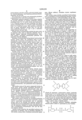
Suitable trimellitic anhydride adducts may be represented by the general structural formula:
wherein R represents a hydrocarbon radical, preferably having from 2 to 12 carbon atoms, and wherein the aromatic nuclei may be substituted with one or more halogen atoms and/ or one or more hydrocarbyl groups. Especially good results are obtained when the adduct is an adduct of trimellitic anhydride and a polyhydric alcohol, preferably a glycol, such as ethylene glycol.
Thus, an especially preferred trimellitic anhydrideethylene glycol adduct is represented by the formula:
This and other trimellitic anhydride adducts may be prepared by any well-known techniques, such as by an acidolysis exchange reaction between trimellitic anhydride and a glycol diester.
Thus, a very suitable adduct may be prepared by reacting 2 moles of trimellitic anhydride with 1 mole of ethylene glycol diester (diacetic acid ester of ethylene glycol).
Stannous salts which are especially suitable for catalyzing the present compositions are the stannous salts of monocarboxylic acids having at least 5 carbon atoms, preferably fatty acids containing from about 5 to about 20 carbon atoms and more preferably from about 6 to 12 carbon atoms. Suitable stannous salts include, among others, stannous caproate, stannous octoate, stannous laurate, stannous palmitate, stannous stearate, stannous oleate, and stannous naphthenate. Stannous octoate is particularly preferred because it promotes exceptionally rapid cures and imparts outstanding flexibility as well as high impact strength and solvent resistance to the cured films and molding compositions. The stannous salt catalyst is beneficially employed in concentrations from about 0.1 to 5 parts per one hundred parts of polyepoxide and preferably from about 0.5 to 5 parts per one hundred parts of polyepoxide.
Suitable fillers which may be employed as desired, include, among many others, aluminum powder, mica, bentonites, clays, synthetic resins and elastomers, ignited A1 short-fiber asbestos, wood flour, carbon black, silica, zinc dust, talc and the like. A large number of fillers are available commercially in particle sizes from about 0.1 micron upward.
The quantity of fillers used is dependent upon many factors such as, cost, particle size, particle shape, absorption characteristics and loading volume. The lightweight fillers such as asbestos and uncompressed mica are employed in ratios below 50 phr. (parts per one hundred parts of polyepoxide) and generally below 35 phr.; the medium weight fillers, such as talc and powdered aluminum, may be employed up to about 100 phr.; and the heavier fillers may be employed up to about 150 phr. In general, however, in order to optimize raw material costs without minimizing coating properties, the ratio of filler to polyepoxide ranged from about 10 to about 60 phr. It is generally desirable, although not necessary, to employ a thixotroping agent to prevent dripping or sagging at high film build. Any of the thixotroping agents normally used in the art are suitable for use in the present compositions, including silica aerogels, bentonite clays and their derivatives, castor oil derivatives and the like.
The proportions of the polyepoxide, trimellitic anhydride-polyhydric alcohol adduct, stannous salt of monocarboxylic acid, fillers, catalysts, thixotroping agents and other additives will vary within wide ranges; however, rapid cure and excellent film flexibility is achieved when the final composition comprises from about 50 to 80 parts by weight of polyepoxide and from about 5 to 20 parts by weight of the trimellitic anhydride-polyhydric alcohol adduct; from about 0.1 to 5 parts of a stannous salt of a monocarboxylic acid; and, optionally, from about 5 to 30 parts by weight of filler.
A particularly good composition possessing outstanding flexibility and solvent resistance when cured in 1 minute or less at a temperature range of 400450 F. comprises from about 65 to 75 parts by weight of a glycidyl polyether of 2,2-bis(4-hydroxyphenyl)propane having a molecular weight of from about 900 to about 1500, an epoxide value of about 0.10 to about 0.20 eq./100 g., and a hydroxyl value of about 0.32 to 0.35 eq./O g., from about 8 to parts by weight of a trimellitic anhydride-ethylene glycol adduct and from about 0.5 to 2.0 parts by weight of stannous octoate. No appreciable degradation in coating properties are observed when from about 5 to 30 parts by weight of a filler is added to this composition.
Another particularly good composition having excellent flexibility and rapid curing properties is obtained when the polyepoxide in the above composition is a glycidyl polyether of 2,2-bis(4-hydroxyphenyl)propane having an epoxy value of about 0.05 eq./ g., a molecular weight of about 2900 and a melting point of from about 127133 C. by Durrans Mercury Method.
The coating compositions of the present invention can be prepared as powders or in solution. When powders are desired, they can be prepared by dry blending techniques.
Mixtures of cresylic acid with high boiling aromatic hydrocarbons have been found suitable for preparing these coatings from solution.
In general, the average particle size of the powders may range from rather small particle sizes of, say, 5 microns or even smaller,'to 600 microns or greater. An especially preferred range is between 50 and 300 microns. A very suitable fiuidizable composition was prepared by micropulverizing the blended components to pass through 100 mesh size screen (147 microns).
Any of the conventional fluidized bed coating techniques may be employed wherein the fluidized bed comprises the instant compositions maintained in a dense turbulent condition by means of a gaseous stream continuously introduced into the fluidized bed. In general, in carrying out a fluidized bed coating process, the article is preferably heated to a temperature of at least 100 C., and preferably between about and 250 C., before it is dipped into the fluidized bed. If an article is to be completely coated it should of course be completely immersed in the fluidized bed. The article is preferably moved backwards and forwards in the bed, over a period of time determined by the desired thickness of coating. For the production of thin coatings, i.e., less than 0.015 inch thick, the period during which an article is dipped or immersed into the bed is usually less than 3 seconds.
After the article has been in contact with the fluidized bed for the desired time, it is removed, excess powder adhering to the article is preferably removed, and the coating cured by heating to at least 0, preferably between 150 and 250 C.
The compositions of the instant invention may also be sprayed as by a compressed air spray gun or electrostatically, i.e., by maintaining a difference in electrostatic charge between the particles and the article to be coated,
The invention is illustrated by the following examples. The reactants, their proportions and other specific ingredients of the formulations are presented as being typical and various modifications can be made in view of the foregoing disclosure without departing from the spirit or scope of the disclosure or of the claims. Unless otherwise specified, parts and percentages disclosed are by weight.
EXAMPLE I This example illustrates the preparation of the fiuidizable polyepoxide compositions as well as their superiority over a conventional fast-cure epoxy powdered system.
A rapid curing flexible composition was prepared by dry blending the following components:
Percent weight Polyepoxide (a glycidyl polyether of 2,2-bis(4-hydroxyphenyl)propane having a melting point of 98 C., a molecular weight of 1400 and an epoxide value of 0.103 eq./l00 g.) 63.28 An ethylene glycol-trimellitic anhydride adduct (TMX 220) 6.72 Filler (Silica 219, fine silica sand) 29.00 Thixotroping agent (Santocel 54, a silica aerogel containing 94% SiO 1.00 Stannous octoate phr. 1
a Parts per 100 parts of polyepoxide.
Any one of the following three dry blending procedures may be employed:
(1) All the dry ingredients are loaded into a Jar Mill with about a media charge and pulverized to 100 mesh or finer. The liquid stannous octoate is then added to the mill and the charge re-run for an additional minutes to insure a uniform coating of the catalyst on the particle surface of the blended dry ingredients.
(2) All the dry ingredients which have previously been ground to 100 mesh or finer are loaded into a Rota- Cone Blender equipped with agitator and liquid spraying device. The liquid stannous octoate catalyst is metered in by :pump pressure while the unit is operating.
(3) Similar to above but using a ribbon mixer with mullers and spraying the catalyst through the cover of the unit.
This composition was then evaluated for impact resistance, solvent resistance and flexibility at fast curing time.
A fluidized bed was prepared and a coating having film thickness of 10 mils was applied to diameter, 6" long sandblasted round steel probes. The coating was then cured for 30 seconds at 450 F.
The impact was determined on the film by direct impact measured in inch-pounds required to shatter the coating.
The solvent resistance was determined by immersing the coated article in methyl ethyl ketone. The time was then recorded when the surface coating could be scratched withthe fingernail.
To evaluate the flexibility, a No. 10 copper wire was coated with the above-identified composition to a film thickness of 10 mils. The cured wire coating was then clamped firmly on a 1 inch-round mandrel. The free end was then bent around the mandrel until the first crack appeared on the wire coating. The angle at which such cracking occurred was measured in degrees.
The procedure was essentially repeated wherein the novel polyepoxide composition of the present invention was replaced with a commercially available proprietary rapid curing hydrazide-epoxy system.
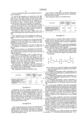
The comparative results are tabulated below.
Substantially the same procedure was repeated as in Example I except the polyepoxide employed was a glycidyl polyether of 2,2-bis(4-hydroxyphenyl) having a molecular weight of 2900, a softening point of 131 C., and an epoxy value of 0.05 eq./100 grams. Similar superior impact resistance and flexibility were observed. The solvent resistance while not as good as the polyepoxide coating composition of Example I, was still better than the hydrazide-epoxide system.
EXAMPLE III This example illustrates the superiority of fluidized polyepoxide coating compositions cured with an adduct of ethylene glycol and trimellitic anhydride and catalyzed with stannous octoate over the same coating composition without the stannous octoate.
The procedure of Example I was repeated wherein the stannous octoate was incorporated into one composition and omitted from another.
The comparative results are tabulated below:
Impact Solvent Composition Resistance Resistance Flexibility (in.-lbs.) (MEK) (dcg.)
(min) Polycpoxide and ethylene glycoltrimellitie anhydride adduct... None None 10 Polyepoxide, ethylene glycol-trimcllitio anhydride adduct and stannous octoate 20-25 3 EXAMPLE IV and (3) from 0.1 to 5 parts by weight per one hundred parts of the polyepoxide of a stannous salt of a monocarboxylic acid.
2. A fluidizable polyepoxide coating composition as in claim 1 wherein the polyepoxide is a glycidyl polyether of a polyhydric phenol.
3. A fluidizable polyepoxide coating composition as in claim 1 which additionally comprises from 5 to 30 parts by weight of a filler.
4. A fiuidizable polyepoxide coating composition as in claim 1 wherein the stannous salt is a salt of a fatty acid containing from 5 to 20 carbon atoms in the molecule.
5. A heat-curable, fluidizable, pulverulent polyepoxide coating composition having a particle size range between about 50 and 300 microns and possessing fast-cure properties which comprises from 50 to 80 parts by weight of a glycidyl polyether of 2,2-bis(4-hydroxyphenyl)propane, from 5 to 20 parts by weight of an ethylene glycol-trimellitic anhydride adduct and from 0.5 to 5 parts of stannous octoate per one hundred parts of the glycidyl polyether.
6. A heat-curable, fluidizable, pulverulent polyepoxide coating composition having a particle size range between about 50 and 300 microns and possessing fast-cure properties which comprises from 65 to 75 parts by weight of a glycidyl polyether of 2,2-bis(4-hydroxyphenyl)propane having a molecular weight of from 900 to 1500 and an epoxide value of from 0.10 to 0.20 eq./ g., from 8 to 15 parts by weight of an ethylene glycol-trimellitic anhydride adduct and from 0.5 to 2.0 parts by Weight of stannous octoate.
7. A composition as in claim 6 wherein the glycidyl polyether of 2,2-bis(4-hydroxyphenyl)propane has a 9 1O molecular weight of 2700 to 3100 and an epoxide value 3,269,974 8/1966 Childs 260-830 X Of about 0.05 eq./100 g. 3,269,975 8/1966 Childs 260-37 References Cited FOREIGN PATENTS UNITED STATES PATENTS 5 903,933 8/1962 Great Britain.
3,039,987 6/1962 Elbling 26037 3,102,043 8/1963 Winthrop et a1. 260-47 X DONALD CZAJA Examme" 3,182,074 5/1965 Loncrini 260-2 X LEON J. BERCOVITZ, Examiner.
3,183,248 5/1965 Hirsch et a1 260- 47 X 3,201,360 8/1965 Proops 260-18 10 Ass'smm Examme"
Claims (2)
1. A HEAT-CURABLE, FLUIDIZABLE, PULVERULENT POLYEPOXIDE COATING COMPOSITION HAVING A PARTICLE SIZE RANGE BETWEEN ABOUT 5 AND 600 MICRONS WHICH COMPRISES (1) FROM 50 TO 80 PARTS BY WEIGHT OF A POLYEPOXIDE HAVING A VIC-EPOXY EQUIVALENCY GREATER THAN 1.0 AND AN EPOXY EQUIVALENT WEIGHT OF BETWEEN 400 AND 4000, (2) FROM 5 TO 20 PARTS BY WEIGHT OF AN ADDUCT HAVING THE FORMULA:
5. A HEAT-CURABLE, FLUIDIZABLE, PULVERLENT POLYEPOXIDE COATING COMPOSITION HAVING A PARTICLE SIZE RANGE BETWEEN ABOUT 50 AND 300 MICRONS AND POSSESSING FAST-CURE PROPERTIES WHICH COMPRISES FROM 50 TO 80 PARTS BY WEIGHT OF A GLYCIDYL POLYETHER OF 2,2-BIS(4-HYDROXYPHENYL)PROPANE, FROM 5 TO 20 PARTS BY WEIGHT OF AN ETHYLENE GLYCOL-TRIMELLITIC ANHYDRIDE ADDUCT AND FROM 0.5 TO 5 PARTS OF STANNOUS OCTOATE PER ONE HUNDRED PARTS OF TH GLYCIDYL POLYETHER.
Priority Applications (6)
| Application Number | Priority Date | Filing Date | Title |
|---|---|---|---|
| US367573A US3336251A (en) | 1964-05-14 | 1964-05-14 | Rapid curing fluidized bed coating composition |
| BE663818D BE663818A (en) | 1964-05-14 | 1965-05-12 | |
| DE19651645274 DE1645274A1 (en) | 1964-05-14 | 1965-05-12 | Preparations for coatings in the fluidized bed process |
| GB20021/65A GB1034878A (en) | 1964-05-14 | 1965-05-12 | Rapid curing fluidized bed coating epoxy resin composition |
| FR16709A FR1436927A (en) | 1964-05-14 | 1965-05-12 | Fast Curing Fluid Bed Coating Composition |
| NL6506081A NL6506081A (en) | 1964-05-14 | 1965-05-13 |
Applications Claiming Priority (1)
| Application Number | Priority Date | Filing Date | Title |
|---|---|---|---|
| US367573A US3336251A (en) | 1964-05-14 | 1964-05-14 | Rapid curing fluidized bed coating composition |
Publications (1)
| Publication Number | Publication Date |
|---|---|
| US3336251A true US3336251A (en) | 1967-08-15 |
Family
ID=23447736
Family Applications (1)
| Application Number | Title | Priority Date | Filing Date |
|---|---|---|---|
| US367573A Expired - Lifetime US3336251A (en) | 1964-05-14 | 1964-05-14 | Rapid curing fluidized bed coating composition |
Country Status (5)
| Country | Link |
|---|---|
| US (1) | US3336251A (en) |
| BE (1) | BE663818A (en) |
| DE (1) | DE1645274A1 (en) |
| GB (1) | GB1034878A (en) |
| NL (1) | NL6506081A (en) |
Cited By (17)
| Publication number | Priority date | Publication date | Assignee | Title |
|---|---|---|---|---|
| US3477971A (en) * | 1966-10-06 | 1969-11-11 | Shell Oil Co | Rapid curing fluidized bed coating composition having improved flexibility |
| US3484398A (en) * | 1965-03-18 | 1969-12-16 | Dexter Corp | Powdered epoxy resin compositions |
| US3890284A (en) * | 1970-05-15 | 1975-06-17 | Bridgestone Tire Co Ltd | Trimellitoyl functional polymers, manufacturing process therefor and elastomeric epoxy compositions cured therewith |
| US4119593A (en) * | 1977-05-18 | 1978-10-10 | Union Carbide Corporation | Polyepoxide high solids coatings |
| US4138511A (en) * | 1973-07-19 | 1979-02-06 | Aluminum Company Of America | Method of producing glossy or frosted powder coatings |
| US4381334A (en) * | 1976-11-10 | 1983-04-26 | Pratt & Lambert, Inc. | Zinc-rich powders |
| US4427806A (en) | 1981-02-19 | 1984-01-24 | Ducati Elettrotecnica S.P.A. | Powder composition for preparing self-extinguishing coatings |
| US5728779A (en) * | 1992-12-01 | 1998-03-17 | Dsm N.V. | Powder paint of epoxy-reactive polymer and aliphatic chain-containing polyepoxide |
| US5789493A (en) * | 1993-05-11 | 1998-08-04 | Dsm N.V. | Powder print from melt-mixing and grinding binder particles and additives |
| US5981086A (en) * | 1996-10-08 | 1999-11-09 | Morton International, Inc. | Dual-layer coating on high-tensile steel |
| US6346292B1 (en) * | 1998-10-15 | 2002-02-12 | Rohm And Haas Company | Corrosion- and chip-resistant coatings for high tensile steel |
| US6663968B2 (en) | 2000-11-01 | 2003-12-16 | Rohm And Haas Company | Corrosion-and chip-resistant coatings for high tensile steel |
| US20040010084A1 (en) * | 2002-07-09 | 2004-01-15 | Ohrbom Walter H. | Powder coating with improved compatibility and appearance |
| US20090110934A1 (en) * | 2007-10-31 | 2009-04-30 | Cinoman Douglas S | Thin chip resistant powder topcoats for steel |
| US20100256282A1 (en) * | 2009-04-03 | 2010-10-07 | Jason Paul Breidenstein | Powder corrosion and chip-resistant coating |
| US20100297422A1 (en) * | 2008-01-25 | 2010-11-25 | Akzo Nobel Coatings International B.V. | Powder coating compositions having a substantially non-zinc containing primer |
| US10011736B2 (en) | 2009-07-29 | 2018-07-03 | Akzo Nobel Coatings International B.V. | Powder coating compositions capable of having a substantially non-zinc containing primer |
Families Citing this family (5)
| Publication number | Priority date | Publication date | Assignee | Title |
|---|---|---|---|---|
| JPS5130919B2 (en) * | 1972-11-30 | 1976-09-03 | ||
| FR2424307A2 (en) * | 1978-03-08 | 1979-11-23 | Rhone Poulenc Ind | SATURATED CROSS-LINKABLE COMPOSITIONS FOR POWDER PAINT |
| DE3016103A1 (en) * | 1980-04-25 | 1981-10-29 | Siemens AG, 1000 Berlin und 8000 München | METHOD FOR PRODUCING TRANSPARENT GOAT RESINS |
| DE3133295A1 (en) * | 1981-08-22 | 1983-03-03 | Hoechst Ag, 6000 Frankfurt | ESTER CONNECTIONS, METHOD FOR THEIR PRODUCTION AND THEIR USE AS HARDENERS |
| TW291492B (en) * | 1994-06-23 | 1996-11-21 | Kansai Paint Co Ltd |
Citations (8)
| Publication number | Priority date | Publication date | Assignee | Title |
|---|---|---|---|---|
| US3039987A (en) * | 1959-05-28 | 1962-06-19 | Westinghouse Electric Corp | Pulverulent coating compositions adapted for use in fluidizing processes containing epoxy resin and fillers |
| GB903933A (en) * | 1959-03-09 | 1962-08-22 | Argus Chem | Curing epoxidised resins and curing compositions therefor |
| US3102043A (en) * | 1958-01-30 | 1963-08-27 | Fluidized bed coating method | |
| US3182074A (en) * | 1962-04-27 | 1965-05-04 | Gen Electric | Cupric and zinc-bis(trimellitate) dianhydrides |
| US3183248A (en) * | 1961-08-02 | 1965-05-11 | Standard Oil Co | Esters of trimellitic anhydride |
| US3201360A (en) * | 1959-12-24 | 1965-08-17 | Union Carbide Corp | Curable mixtures comprising epoxide compositions and divalent tin salts |
| US3269975A (en) * | 1963-07-09 | 1966-08-30 | Hysol Corp | Tetracarboxylic acid hardeners for epoxy resins and powdered epoxy resin compositions including such hardeners |
| US3269974A (en) * | 1963-06-25 | 1966-08-30 | Hysol Corp | Powdered epoxy resin compositions |
-
1964
- 1964-05-14 US US367573A patent/US3336251A/en not_active Expired - Lifetime
-
1965
- 1965-05-12 DE DE19651645274 patent/DE1645274A1/en active Pending
- 1965-05-12 BE BE663818D patent/BE663818A/xx unknown
- 1965-05-12 GB GB20021/65A patent/GB1034878A/en not_active Expired
- 1965-05-13 NL NL6506081A patent/NL6506081A/xx unknown
Patent Citations (8)
| Publication number | Priority date | Publication date | Assignee | Title |
|---|---|---|---|---|
| US3102043A (en) * | 1958-01-30 | 1963-08-27 | Fluidized bed coating method | |
| GB903933A (en) * | 1959-03-09 | 1962-08-22 | Argus Chem | Curing epoxidised resins and curing compositions therefor |
| US3039987A (en) * | 1959-05-28 | 1962-06-19 | Westinghouse Electric Corp | Pulverulent coating compositions adapted for use in fluidizing processes containing epoxy resin and fillers |
| US3201360A (en) * | 1959-12-24 | 1965-08-17 | Union Carbide Corp | Curable mixtures comprising epoxide compositions and divalent tin salts |
| US3183248A (en) * | 1961-08-02 | 1965-05-11 | Standard Oil Co | Esters of trimellitic anhydride |
| US3182074A (en) * | 1962-04-27 | 1965-05-04 | Gen Electric | Cupric and zinc-bis(trimellitate) dianhydrides |
| US3269974A (en) * | 1963-06-25 | 1966-08-30 | Hysol Corp | Powdered epoxy resin compositions |
| US3269975A (en) * | 1963-07-09 | 1966-08-30 | Hysol Corp | Tetracarboxylic acid hardeners for epoxy resins and powdered epoxy resin compositions including such hardeners |
Cited By (24)
| Publication number | Priority date | Publication date | Assignee | Title |
|---|---|---|---|---|
| US3484398A (en) * | 1965-03-18 | 1969-12-16 | Dexter Corp | Powdered epoxy resin compositions |
| US3477971A (en) * | 1966-10-06 | 1969-11-11 | Shell Oil Co | Rapid curing fluidized bed coating composition having improved flexibility |
| US3890284A (en) * | 1970-05-15 | 1975-06-17 | Bridgestone Tire Co Ltd | Trimellitoyl functional polymers, manufacturing process therefor and elastomeric epoxy compositions cured therewith |
| US4138511A (en) * | 1973-07-19 | 1979-02-06 | Aluminum Company Of America | Method of producing glossy or frosted powder coatings |
| US4381334A (en) * | 1976-11-10 | 1983-04-26 | Pratt & Lambert, Inc. | Zinc-rich powders |
| US4119593A (en) * | 1977-05-18 | 1978-10-10 | Union Carbide Corporation | Polyepoxide high solids coatings |
| US4427806A (en) | 1981-02-19 | 1984-01-24 | Ducati Elettrotecnica S.P.A. | Powder composition for preparing self-extinguishing coatings |
| US5728779A (en) * | 1992-12-01 | 1998-03-17 | Dsm N.V. | Powder paint of epoxy-reactive polymer and aliphatic chain-containing polyepoxide |
| US5789493A (en) * | 1993-05-11 | 1998-08-04 | Dsm N.V. | Powder print from melt-mixing and grinding binder particles and additives |
| US5981086A (en) * | 1996-10-08 | 1999-11-09 | Morton International, Inc. | Dual-layer coating on high-tensile steel |
| US6346292B1 (en) * | 1998-10-15 | 2002-02-12 | Rohm And Haas Company | Corrosion- and chip-resistant coatings for high tensile steel |
| US7018716B2 (en) | 1998-10-15 | 2006-03-28 | Rohm And Haas Company | Corrosion-and chip-resistant coatings for high tensile steel |
| US20040101670A1 (en) * | 1998-10-15 | 2004-05-27 | Grubb Tina L. | Corrosion-and chip-resistant coatings for high tensile steel |
| US6663968B2 (en) | 2000-11-01 | 2003-12-16 | Rohm And Haas Company | Corrosion-and chip-resistant coatings for high tensile steel |
| US20040010084A1 (en) * | 2002-07-09 | 2004-01-15 | Ohrbom Walter H. | Powder coating with improved compatibility and appearance |
| US6777495B2 (en) * | 2002-07-09 | 2004-08-17 | Basf Corporation | Powder coating with tris(hydroxyethyl) isocyanurate-anhydride reaction product crosslinker |
| US20090110934A1 (en) * | 2007-10-31 | 2009-04-30 | Cinoman Douglas S | Thin chip resistant powder topcoats for steel |
| US8574708B2 (en) | 2007-10-31 | 2013-11-05 | Akzo Nobel Coatings International B.V. | Thin chip resistant powder topcoats for steel |
| US20100297422A1 (en) * | 2008-01-25 | 2010-11-25 | Akzo Nobel Coatings International B.V. | Powder coating compositions having a substantially non-zinc containing primer |
| US8647745B2 (en) | 2008-01-25 | 2014-02-11 | Akzo Nobel Coating International B.V. | Powder coating compositions having a substantially non-zinc containing primer |
| US20100256282A1 (en) * | 2009-04-03 | 2010-10-07 | Jason Paul Breidenstein | Powder corrosion and chip-resistant coating |
| US10344178B2 (en) | 2009-04-03 | 2019-07-09 | Akzo Nobel Coatings International B.V. | Powder corrosion and chip-resistant coating |
| US10011736B2 (en) | 2009-07-29 | 2018-07-03 | Akzo Nobel Coatings International B.V. | Powder coating compositions capable of having a substantially non-zinc containing primer |
| US10550283B2 (en) | 2009-07-29 | 2020-02-04 | Akzo Nobel Coating International B.V. | Powder coating compositions capable of having a substantially non-zinc containing primer |
Also Published As
| Publication number | Publication date |
|---|---|
| BE663818A (en) | 1965-11-12 |
| GB1034878A (en) | 1966-07-06 |
| NL6506081A (en) | 1965-11-15 |
| DE1645274A1 (en) | 1970-09-17 |
Similar Documents
| Publication | Publication Date | Title |
|---|---|---|
| US3533985A (en) | Powdered heat curable epoxy resin compositions and their preparation | |
| US2768153A (en) | Process for curing polyepoxides and resulting products | |
| US3477990A (en) | Process for reacting a phenol with an epoxy compound and resulting products | |
| US3694407A (en) | Epoxy-containing condensates,their preparation and use | |
| US3756984A (en) | Epoxy imidazole adducts as curing agents for epoxy resins | |
| US3547881A (en) | Process of reacting a phenol with a polyepoxide in the presence of an organic phosphine | |
| US3408421A (en) | Carboxyl-terminated polyesterepoxy adduct | |
| US3578615A (en) | Epoxy resin coatings having improved cathodic disbonding resistance | |
| US3344096A (en) | Fast curing fluidized bed coating composition | |
| US3374193A (en) | Polyepoxide fluidized bed coating compositions | |
| US2970983A (en) | Epoxy-containing condensates of polyepoxides and acidic materials, their preparation and polymers | |
| US3725341A (en) | Process for the preparation of high molecular weight polyepoxides from polyepoxides and polyhydroxyl-containing compounds | |
| US3269975A (en) | Tetracarboxylic acid hardeners for epoxy resins and powdered epoxy resin compositions including such hardeners | |
| US3219603A (en) | Epoxy-containing condensates of polyepoxides and hydrogenated polymeric acids, theirpreparation and polymers | |
| US2890196A (en) | Curable composition comprising a diepoxide, a polycarboxylic anhydride and a polyhydric compound | |
| US3772228A (en) | Process for preparing polyepoxide dispersion coating compositions | |
| US3689444A (en) | Latent catalysts for one-component epoxy resin/anhydride compositions | |
| US3538039A (en) | Powdered heat-curable compositions of (1) an epoxy-amine adduct,(2) an anhydride and (3) an imidazole | |
| US3362922A (en) | Process for preparing fast curing fluidized bed coating compositions | |
| US3647742A (en) | Treatment of alumina fillers with silane coupling agents for epoxy resins | |
| US3849366A (en) | Epoxy resin compositions and processes for preparing same | |
| US3477971A (en) | Rapid curing fluidized bed coating composition having improved flexibility | |
| US3562213A (en) | Latent cure acceleration of epoxy resins using imidazole salts of hydroxy polycarboxylic acids | |
| US3578633A (en) | Process for curing polyepoxides with polycarboxylic acid anhydrides in presence of alkaline metal salts of carboxylic acids | |
| US3557056A (en) | Curing of epoxy resins with certain aminoamides |