US3336344A - 2, 5-di-carbalkoxy-amino-3, 6-diamino-1, 4-benzoquinones - Google Patents
2, 5-di-carbalkoxy-amino-3, 6-diamino-1, 4-benzoquinones Download PDFInfo
- Publication number
- US3336344A US3336344A US298579A US29857963A US3336344A US 3336344 A US3336344 A US 3336344A US 298579 A US298579 A US 298579A US 29857963 A US29857963 A US 29857963A US 3336344 A US3336344 A US 3336344A
- Authority
- US
- United States
- Prior art keywords
- diamino
- benzoquinone
- benzoquinones
- amino
- reaction
- Prior art date
- Legal status (The legal status is an assumption and is not a legal conclusion. Google has not performed a legal analysis and makes no representation as to the accuracy of the status listed.)
- Expired - Lifetime
Links
- 150000001875 compounds Chemical class 0.000 claims description 5
- 241001465754 Metazoa Species 0.000 description 10
- 208000003495 Coccidiosis Diseases 0.000 description 7
- 206010023076 Isosporiasis Diseases 0.000 description 7
- 238000000034 method Methods 0.000 description 7
- VTYYLEPIZMXCLO-UHFFFAOYSA-L Calcium carbonate Chemical compound [Ca+2].[O-]C([O-])=O VTYYLEPIZMXCLO-UHFFFAOYSA-L 0.000 description 6
- 239000000047 product Substances 0.000 description 6
- DGQOCLATAPFASR-UHFFFAOYSA-N tetrahydroxy-1,4-benzoquinone Chemical compound OC1=C(O)C(=O)C(O)=C(O)C1=O DGQOCLATAPFASR-UHFFFAOYSA-N 0.000 description 6
- 235000013305 food Nutrition 0.000 description 5
- 239000000203 mixture Substances 0.000 description 5
- DNHCPEFCQYRQQN-UHFFFAOYSA-N 2,3,5,6-tetraaminocyclohexa-2,5-diene-1,4-dione Chemical compound NC1=C(N)C(=O)C(N)=C(N)C1=O DNHCPEFCQYRQQN-UHFFFAOYSA-N 0.000 description 4
- 241000287828 Gallus gallus Species 0.000 description 4
- JUJWROOIHBZHMG-UHFFFAOYSA-N Pyridine Chemical compound C1=CC=NC=C1 JUJWROOIHBZHMG-UHFFFAOYSA-N 0.000 description 4
- 235000013330 chicken meat Nutrition 0.000 description 4
- 208000015181 infectious disease Diseases 0.000 description 4
- 210000003250 oocyst Anatomy 0.000 description 4
- 238000011321 prophylaxis Methods 0.000 description 4
- 239000011541 reaction mixture Substances 0.000 description 4
- 239000002904 solvent Substances 0.000 description 4
- 238000003756 stirring Methods 0.000 description 4
- 239000000126 substance Substances 0.000 description 4
- 238000011282 treatment Methods 0.000 description 4
- XLYOFNOQVPJJNP-UHFFFAOYSA-N water Substances O XLYOFNOQVPJJNP-UHFFFAOYSA-N 0.000 description 4
- 229940005561 1,4-benzoquinone Drugs 0.000 description 3
- ZMXDDKWLCZADIW-UHFFFAOYSA-N N,N-Dimethylformamide Chemical compound CN(C)C=O ZMXDDKWLCZADIW-UHFFFAOYSA-N 0.000 description 3
- ZMANZCXQSJIPKH-UHFFFAOYSA-N Triethylamine Chemical compound CCN(CC)CC ZMANZCXQSJIPKH-UHFFFAOYSA-N 0.000 description 3
- 239000002253 acid Substances 0.000 description 3
- 239000013543 active substance Substances 0.000 description 3
- 229910000019 calcium carbonate Inorganic materials 0.000 description 3
- 125000004432 carbon atom Chemical group C* 0.000 description 3
- 210000004534 cecum Anatomy 0.000 description 3
- 238000001816 cooling Methods 0.000 description 3
- 235000012054 meals Nutrition 0.000 description 3
- 244000144977 poultry Species 0.000 description 3
- 235000013594 poultry meat Nutrition 0.000 description 3
- 239000000843 powder Substances 0.000 description 3
- 230000001225 therapeutic effect Effects 0.000 description 3
- OISVCGZHLKNMSJ-UHFFFAOYSA-N 2,6-dimethylpyridine Chemical compound CC1=CC=CC(C)=N1 OISVCGZHLKNMSJ-UHFFFAOYSA-N 0.000 description 2
- CSCPPACGZOOCGX-UHFFFAOYSA-N Acetone Chemical compound CC(C)=O CSCPPACGZOOCGX-UHFFFAOYSA-N 0.000 description 2
- IJGRMHOSHXDMSA-UHFFFAOYSA-N Atomic nitrogen Chemical compound N#N IJGRMHOSHXDMSA-UHFFFAOYSA-N 0.000 description 2
- PMDCZENCAXMSOU-UHFFFAOYSA-N N-ethylacetamide Chemical compound CCNC(C)=O PMDCZENCAXMSOU-UHFFFAOYSA-N 0.000 description 2
- ATHHXGZTWNVVOU-UHFFFAOYSA-N N-methylformamide Chemical compound CNC=O ATHHXGZTWNVVOU-UHFFFAOYSA-N 0.000 description 2
- SMWDFEZZVXVKRB-UHFFFAOYSA-N Quinoline Chemical compound N1=CC=CC2=CC=CC=C21 SMWDFEZZVXVKRB-UHFFFAOYSA-N 0.000 description 2
- CDBYLPFSWZWCQE-UHFFFAOYSA-L Sodium Carbonate Chemical compound [Na+].[Na+].[O-]C([O-])=O CDBYLPFSWZWCQE-UHFFFAOYSA-L 0.000 description 2
- 239000003242 anti bacterial agent Substances 0.000 description 2
- 229940088710 antibiotic agent Drugs 0.000 description 2
- 238000011888 autopsy Methods 0.000 description 2
- 238000009835 boiling Methods 0.000 description 2
- 239000013078 crystal Substances 0.000 description 2
- 239000003085 diluting agent Substances 0.000 description 2
- 125000001495 ethyl group Chemical group [H]C([H])([H])C([H])([H])* 0.000 description 2
- 238000001914 filtration Methods 0.000 description 2
- 125000001449 isopropyl group Chemical group [H]C([H])([H])C([H])(*)C([H])([H])[H] 0.000 description 2
- AWJUIBRHMBBTKR-UHFFFAOYSA-N isoquinoline Chemical compound C1=NC=CC2=CC=CC=C21 AWJUIBRHMBBTKR-UHFFFAOYSA-N 0.000 description 2
- ZXMSWXKZNMOVOP-UHFFFAOYSA-N methyl N-[2,5-diamino-4-(methoxycarbonylamino)-3,6-dioxocyclohexa-1,4-dien-1-yl]carbamate Chemical compound C(=O)(OC)NC=1C(C(=C(C(C1N)=O)NC(=O)OC)N)=O ZXMSWXKZNMOVOP-UHFFFAOYSA-N 0.000 description 2
- LQNUZADURLCDLV-UHFFFAOYSA-N nitrobenzene Chemical compound [O-][N+](=O)C1=CC=CC=C1 LQNUZADURLCDLV-UHFFFAOYSA-N 0.000 description 2
- BWHMMNNQKKPAPP-UHFFFAOYSA-L potassium carbonate Chemical compound [K+].[K+].[O-]C([O-])=O BWHMMNNQKKPAPP-UHFFFAOYSA-L 0.000 description 2
- UMJSCPRVCHMLSP-UHFFFAOYSA-N pyridine Natural products COC1=CC=CN=C1 UMJSCPRVCHMLSP-UHFFFAOYSA-N 0.000 description 2
- SMUQFGGVLNAIOZ-UHFFFAOYSA-N quinaldine Chemical compound C1=CC=CC2=NC(C)=CC=C21 SMUQFGGVLNAIOZ-UHFFFAOYSA-N 0.000 description 2
- 150000004053 quinones Chemical class 0.000 description 2
- 238000002560 therapeutic procedure Methods 0.000 description 2
- 238000009827 uniform distribution Methods 0.000 description 2
- 239000011782 vitamin Substances 0.000 description 2
- 235000013343 vitamin Nutrition 0.000 description 2
- 229940088594 vitamin Drugs 0.000 description 2
- 229930003231 vitamin Natural products 0.000 description 2
- CLTIKMDOPPJCLT-UHFFFAOYSA-N 2-[2,4,5-tris(1,3-dioxoisoindol-2-yl)-3,6-dioxocyclohexa-1,4-dien-1-yl]isoindole-1,3-dione Chemical compound O=C1C2=CC=CC=C2C(=O)N1C(C1=O)=C(N2C(C3=CC=CC=C3C2=O)=O)C(=O)C(N2C(C3=CC=CC=C3C2=O)=O)=C1N1C(=O)C2=CC=CC=C2C1=O CLTIKMDOPPJCLT-UHFFFAOYSA-N 0.000 description 1
- KTOQRRDVVIDEAA-UHFFFAOYSA-N 2-methylpropane Chemical compound [CH2]C(C)C KTOQRRDVVIDEAA-UHFFFAOYSA-N 0.000 description 1
- 241000223932 Eimeria tenella Species 0.000 description 1
- 240000005979 Hordeum vulgare Species 0.000 description 1
- 235000007340 Hordeum vulgare Nutrition 0.000 description 1
- 241000442132 Lactarius lactarius Species 0.000 description 1
- FXHOOIRPVKKKFG-UHFFFAOYSA-N N,N-Dimethylacetamide Chemical compound CN(C)C(C)=O FXHOOIRPVKKKFG-UHFFFAOYSA-N 0.000 description 1
- WKOCXPIOHONZAM-UHFFFAOYSA-N N,N-diethylacetamide Chemical compound C(C)(=O)N(CC)CC.C(C)(=O)N(CC)CC WKOCXPIOHONZAM-UHFFFAOYSA-N 0.000 description 1
- JLTDJTHDQAWBAV-UHFFFAOYSA-N N,N-dimethylaniline Chemical compound CN(C)C1=CC=CC=C1 JLTDJTHDQAWBAV-UHFFFAOYSA-N 0.000 description 1
- SUAKHGWARZSWIH-UHFFFAOYSA-N N,N‐diethylformamide Chemical compound CCN(CC)C=O SUAKHGWARZSWIH-UHFFFAOYSA-N 0.000 description 1
- OHLUUHNLEMFGTQ-UHFFFAOYSA-N N-methylacetamide Chemical compound CNC(C)=O OHLUUHNLEMFGTQ-UHFFFAOYSA-N 0.000 description 1
- UIIMBOGNXHQVGW-DEQYMQKBSA-M Sodium bicarbonate-14C Chemical compound [Na+].O[14C]([O-])=O UIIMBOGNXHQVGW-DEQYMQKBSA-M 0.000 description 1
- 235000019764 Soybean Meal Nutrition 0.000 description 1
- 241000209140 Triticum Species 0.000 description 1
- 235000021307 Triticum Nutrition 0.000 description 1
- 235000019752 Wheat Middilings Nutrition 0.000 description 1
- 240000008042 Zea mays Species 0.000 description 1
- 235000016383 Zea mays subsp huehuetenangensis Nutrition 0.000 description 1
- 235000002017 Zea mays subsp mays Nutrition 0.000 description 1
- 229910000288 alkali metal carbonate Inorganic materials 0.000 description 1
- 150000008041 alkali metal carbonates Chemical class 0.000 description 1
- 229910052784 alkaline earth metal Inorganic materials 0.000 description 1
- -1 alkaline earth metal carbonates Chemical class 0.000 description 1
- 125000000217 alkyl group Chemical group 0.000 description 1
- 150000001408 amides Chemical class 0.000 description 1
- HOPRXXXSABQWAV-UHFFFAOYSA-N anhydrous collidine Natural products CC1=CC=NC(C)=C1C HOPRXXXSABQWAV-UHFFFAOYSA-N 0.000 description 1
- 235000019728 animal nutrition Nutrition 0.000 description 1
- 239000002585 base Substances 0.000 description 1
- 150000004054 benzoquinones Chemical class 0.000 description 1
- 125000000484 butyl group Chemical group [H]C([*])([H])C([H])([H])C([H])([H])C([H])([H])[H] 0.000 description 1
- 239000001506 calcium phosphate Substances 0.000 description 1
- 229910000389 calcium phosphate Inorganic materials 0.000 description 1
- 235000011010 calcium phosphates Nutrition 0.000 description 1
- 150000001735 carboxylic acids Chemical class 0.000 description 1
- 239000000969 carrier Substances 0.000 description 1
- 235000013339 cereals Nutrition 0.000 description 1
- 239000007795 chemical reaction product Substances 0.000 description 1
- 239000003795 chemical substances by application Substances 0.000 description 1
- UTBIMNXEDGNJFE-UHFFFAOYSA-N collidine Natural products CC1=CC=C(C)C(C)=N1 UTBIMNXEDGNJFE-UHFFFAOYSA-N 0.000 description 1
- HPYNZHMRTTWQTB-UHFFFAOYSA-N dimethylpyridine Natural products CC1=CC=CN=C1C HPYNZHMRTTWQTB-UHFFFAOYSA-N 0.000 description 1
- 239000003814 drug Substances 0.000 description 1
- 238000000855 fermentation Methods 0.000 description 1
- 230000004151 fermentation Effects 0.000 description 1
- 239000004467 fishmeal Substances 0.000 description 1
- 235000013312 flour Nutrition 0.000 description 1
- 125000005843 halogen group Chemical group 0.000 description 1
- 239000012433 hydrogen halide Substances 0.000 description 1
- 229910000039 hydrogen halide Inorganic materials 0.000 description 1
- 229910052500 inorganic mineral Inorganic materials 0.000 description 1
- 239000007788 liquid Substances 0.000 description 1
- 235000009973 maize Nutrition 0.000 description 1
- 238000004519 manufacturing process Methods 0.000 description 1
- 238000002844 melting Methods 0.000 description 1
- 230000008018 melting Effects 0.000 description 1
- XMJHPCRAQCTCFT-UHFFFAOYSA-N methyl chloroformate Chemical compound COC(Cl)=O XMJHPCRAQCTCFT-UHFFFAOYSA-N 0.000 description 1
- 125000002496 methyl group Chemical group [H]C([H])([H])* 0.000 description 1
- 239000011707 mineral Substances 0.000 description 1
- 235000010755 mineral Nutrition 0.000 description 1
- 238000002156 mixing Methods 0.000 description 1
- KERBAAIBDHEFDD-UHFFFAOYSA-N n-ethylformamide Chemical compound CCNC=O KERBAAIBDHEFDD-UHFFFAOYSA-N 0.000 description 1
- 229910052757 nitrogen Inorganic materials 0.000 description 1
- 125000001477 organic nitrogen group Chemical group 0.000 description 1
- AZQWKYJCGOJGHM-UHFFFAOYSA-N para-benzoquinone Natural products O=C1C=CC(=O)C=C1 AZQWKYJCGOJGHM-UHFFFAOYSA-N 0.000 description 1
- 230000000144 pharmacologic effect Effects 0.000 description 1
- 229910000027 potassium carbonate Inorganic materials 0.000 description 1
- FYRHIOVKTDQVFC-UHFFFAOYSA-M potassium phthalimide Chemical compound [K+].C1=CC=C2C(=O)[N-]C(=O)C2=C1 FYRHIOVKTDQVFC-UHFFFAOYSA-M 0.000 description 1
- 238000002360 preparation method Methods 0.000 description 1
- 125000001436 propyl group Chemical group [H]C([*])([H])C([H])([H])C([H])([H])[H] 0.000 description 1
- 150000003254 radicals Chemical class 0.000 description 1
- 238000001953 recrystallisation Methods 0.000 description 1
- 150000003839 salts Chemical class 0.000 description 1
- 229910000029 sodium carbonate Inorganic materials 0.000 description 1
- 239000007787 solid Substances 0.000 description 1
- 239000004455 soybean meal Substances 0.000 description 1
- 125000001424 substituent group Chemical group 0.000 description 1
- GFYHSKONPJXCDE-UHFFFAOYSA-N sym-collidine Natural products CC1=CN=C(C)C(C)=C1 GFYHSKONPJXCDE-UHFFFAOYSA-N 0.000 description 1
- 150000003512 tertiary amines Chemical class 0.000 description 1
- UGNWTBMOAKPKBL-UHFFFAOYSA-N tetrachloro-1,4-benzoquinone Chemical compound ClC1=C(Cl)C(=O)C(Cl)=C(Cl)C1=O UGNWTBMOAKPKBL-UHFFFAOYSA-N 0.000 description 1
- QORWJWZARLRLPR-UHFFFAOYSA-H tricalcium bis(phosphate) Chemical compound [Ca+2].[Ca+2].[Ca+2].[O-]P([O-])([O-])=O.[O-]P([O-])([O-])=O QORWJWZARLRLPR-UHFFFAOYSA-H 0.000 description 1
- 235000015099 wheat brans Nutrition 0.000 description 1
Images
Classifications
-
- C—CHEMISTRY; METALLURGY
- C07—ORGANIC CHEMISTRY
- C07C—ACYCLIC OR CARBOCYCLIC COMPOUNDS
- C07C271/00—Derivatives of carbamic acids, i.e. compounds containing any of the groups, the nitrogen atom not being part of nitro or nitroso groups
- C07C271/06—Esters of carbamic acids
Definitions
- the present invention relates to 2,5-di-carbalkoxyamino-3,6-diamino-1,4-benzoquinones and to a process for their manufacture.
- the invention further relates to animal food or preparations containing the above-mentioned quinones as active substances against coccidiosis and to a process for the treatment of coccidiosis by applying said quinones.
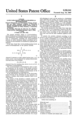
- 2,5-di-carbalkoxyamino-3,6-diamino-1,4-benzoquinones of the general formula wherein R represnts analkyl radical having from 1 to 4 carbon atoms can be prepared by causing chloroformic acid alkyl esters of the formula wherein R has the meaning given above, to act on 2,3,5, 6-tetramino-1,4-benzoquinone.
- the 2,3,5,6-tetramino-1,4-benzoquinone used as starting component for the process of the present invention can be prepared by the reaction of chloranil with potassium phthalimide and subsequent hydrazlnolysis of the 2,3,5,6-tetraphthalimido-1,4-benzoquinone.
- the substituent R may represent, for instance, a methyl, ethyl, propyl, isopropyl, butyl or isobutyl radical.
- the process of the invention is suitably carried out by suspending the 2,3,5,6-tetramino-1,4-benzoquinone in an appropriate anhydrous liquid serving as diluent or solvent, advantageously N-alkylated amides of lower carboxylic acids having from 1-2 carbon atoms such as N,N- dimethyl-formamide, N,N diethyl-formamide, N,N-dimethyl-acetamide, N,N diethyl-acetamide, N methylformamide, N-ethyl-formamide, N-methyl-acetamide and N-ethyl-acetamide and slowly, e.g. dropwise adding the chloroformic acid alkyl ester at a temperature of 0 to 30 C. while stirring.
- anhydrous liquid serving as diluent or solvent
- N-alkylated amides of lower carboxylic acids having from 1-2 carbon atoms such as N,N- dimethyl-formamide, N,N diethyl-formamide
- chloroformic acid alkyl ester in the reaction 2 mols of chloroformic acid alkyl ester can be used for 1 mol of 2,3,5,6- tetramino-l,4-benzoquinone; it is, however, advantageous to apply the first component in an excess which may amount to 100% if low-boiling chloroformic acid alkyl esters are used. After the decay of the reaction, it is of advantage to continue stirring for several hours at an elevated temperature, preferably near the boiling temperature of the solvent or diluent, e.g. at 90-l00 C.
- a suitable acid acceptor in order to bind the acid.
- tertiary amines such, for example, as trimethylamiue, triethylamine, dimethylaniline, or alkali metal carbonates or alkaline earth metal carbonates such as sodium carbonate, sodium bicarbonate, potassium carbonate and calcium carbonate. It is of spe- 3,336,344 Patented Aug; 15, 1967 cial advantage to carry out the reaction in a distributing agent which like the pyridine, for example, serves simultaneously as acid acceptor.
- organic nitrogen bases may likewise be used, for example, a-, B- and 'y-picoline, lutidine, collidine, quinoline, isoquinoline and quinaldine. It is advantageous to apply such a solvent in-lO to 20 times the weight of the benzoquinones.
- the reaction temperature may range from room temperature to 120 C. it is preferable to operate at -100" C. (steam bath).
- the reaction periods vary between one and several hours according to the chloroformic acid alkyl ester used and the other conditions applied in each case.
- the products obtained according to the process of the invention crystallize out in crystalline form or as a powder, immediately or on cooling the reaction mixture and can be isolated in the usual manner by suction-filtering. After filtering with suction, the reaction mixture is treated with Water; or the reaction mixture is preferably mixed with about the same volume of water before being suction-filtered, and the reaction product is then suction-filtered.
- the products obtained can, if desired, be purified by recrystallization from an appropriate solvent, such, for example, as nitrobenzene.
- the new products of the invention are valuable medicaments. They are particularly suitable for the prophylaxis and therapy of poultry coccidiosis.
- the products of the invention even when administered in small doses, cure a fully developed coccidiosis or prevent infections at all when being use dfor the prophylaxis.
- the following test demonstrates the excellent therapeutical efficiency of the 2,S-di-carbomethoxyamino-3,6- diamino-l,4-benzoquinone prepared according to the present invention in the treatment of chickens suffering from coccidiosis.
- One or a few days old chickens (white leghorn) were infected with a fixed quantity of spored oocysts of Eimeria tenella by means of the esophageal sound. 10 animals each were treated in one group.
- the therapeutical treatment was started one day after the infection and continued until the 9th day (once on successive days).
- the described therapeutical test showed the following results: All animals which had been treated with the compound prepared according to the process of the present invention survived. At the end of the test no oocysts were detected in the cecum. In spite of the infection, an average increase in weight of 70 grams per chicken could be observed. The non-treated chickens, which had been infected for control purposes, died without exception.
- the products of the present invention likewise exhibit an excellent efiiciency as can be seen from the feeding test described in the following:
- the products of the invention are administered per os.
- it is suitable to extend the substances advantageously with a solid, inert and well tolerable mass in which they are homogeneously distributed, most favorably by means of an appropriate mixing device.
- the active substances are preferably admixed with the food with which they are then taken up by the animals.
- Inorganic or organic substances may be used as carriers. There may be used, for example, calcium carbonate, flour of various types of grain or dry rnycelium of the fermentation of antibiotics. It is of advantage to use wheat middlings for the purpose in question.
- antibiotics or vitamins may be added to the preliminary mixtures.
- a corresponding amount of such a preliminary mixture is then thoroughly mixed with the chickenor hen food so that a uniformdistribution in the desired concentration is ensured.
- Example2 S-di-carbomethoxyam'ino-j,6-diamino- 1,4-benzoquinone 16.8 grams (0.1 mol) of finely powdered 2,3,5,6-tetramino-1,4-benzoquinone are suspended in 250 cc. of dry pyridine, and while stirring and cooling with ice 37.8 grams (0.4 mol) of chloroformic acid methyl ester are added dropwise. The reaction mixture is then heated for 5 hours on the steam bath while stirring. After cooling, the mixture .is mixed with about the same volume of water, filtered with suction, washed with water and acetone and dried on the steam bath.
- R represents an alkyl of 1 to 4 carbon atoms.
Landscapes
- Chemical & Material Sciences (AREA)
- Organic Chemistry (AREA)
- Organic Low-Molecular-Weight Compounds And Preparation Thereof (AREA)
- Indole Compounds (AREA)
Description
United States Patent 5 Claims. Ci. 260-396) The present invention relates to 2,5-di-carbalkoxyamino-3,6-diamino-1,4-benzoquinones and to a process for their manufacture. The invention further relates to animal food or preparations containing the above-mentioned quinones as active substances against coccidiosis and to a process for the treatment of coccidiosis by applying said quinones.
It has been found that 2,5-di-carbalkoxyamino-3,6-diamino-1,4-benzoquinones of the general formula wherein R represnts analkyl radical having from 1 to 4 carbon atoms, can be prepared by causing chloroformic acid alkyl esters of the formula wherein R has the meaning given above, to act on 2,3,5, 6-tetramino-1,4-benzoquinone.
The 2,3,5,6-tetramino-1,4-benzoquinone used as starting component for the process of the present invention can be prepared by the reaction of chloranil with potassium phthalimide and subsequent hydrazlnolysis of the 2,3,5,6-tetraphthalimido-1,4-benzoquinone.
In the chloroformic acid alkyl ester of the above-mentioned Formula II the substituent R may represent, for instance, a methyl, ethyl, propyl, isopropyl, butyl or isobutyl radical.
The process of the invention is suitably carried out by suspending the 2,3,5,6-tetramino-1,4-benzoquinone in an appropriate anhydrous liquid serving as diluent or solvent, advantageously N-alkylated amides of lower carboxylic acids having from 1-2 carbon atoms such as N,N- dimethyl-formamide, N,N diethyl-formamide, N,N-dimethyl-acetamide, N,N diethyl-acetamide, N methylformamide, N-ethyl-formamide, N-methyl-acetamide and N-ethyl-acetamide and slowly, e.g. dropwise adding the chloroformic acid alkyl ester at a temperature of 0 to 30 C. while stirring. In the reaction 2 mols of chloroformic acid alkyl ester can be used for 1 mol of 2,3,5,6- tetramino-l,4-benzoquinone; it is, however, advantageous to apply the first component in an excess which may amount to 100% if low-boiling chloroformic acid alkyl esters are used. After the decay of the reaction, it is of advantage to continue stirring for several hours at an elevated temperature, preferably near the boiling temperature of the solvent or diluent, e.g. at 90-l00 C.
Since the halogen atom is split off as hydrogen halide in the course of the reaction, it is appropriate to add a suitable acid acceptor in order to bind the acid. For this purpose there may be used tertiary amines such, for example, as trimethylamiue, triethylamine, dimethylaniline, or alkali metal carbonates or alkaline earth metal carbonates such as sodium carbonate, sodium bicarbonate, potassium carbonate and calcium carbonate. It is of spe- 3,336,344 Patented Aug; 15, 1967 cial advantage to carry out the reaction in a distributing agent which like the pyridine, for example, serves simultaneously as acid acceptor. Other organic nitrogen bases may likewise be used, for example, a-, B- and 'y-picoline, lutidine, collidine, quinoline, isoquinoline and quinaldine. It is advantageous to apply such a solvent in-lO to 20 times the weight of the benzoquinones.
The reaction temperature may range from room temperature to 120 C. it is preferable to operate at -100" C. (steam bath). The reaction periods vary between one and several hours according to the chloroformic acid alkyl ester used and the other conditions applied in each case.
In general, the products obtained according to the process of the invention crystallize out in crystalline form or as a powder, immediately or on cooling the reaction mixture and can be isolated in the usual manner by suction-filtering. After filtering with suction, the reaction mixture is treated with Water; or the reaction mixture is preferably mixed with about the same volume of water before being suction-filtered, and the reaction product is then suction-filtered. The products obtained can, if desired, be purified by recrystallization from an appropriate solvent, such, for example, as nitrobenzene.
The new products of the invention are valuable medicaments. They are particularly suitable for the prophylaxis and therapy of poultry coccidiosis. The products of the invention, even when administered in small doses, cure a fully developed coccidiosis or prevent infections at all when being use dfor the prophylaxis.
The following test demonstrates the excellent therapeutical efficiency of the 2,S-di-carbomethoxyamino-3,6- diamino-l,4-benzoquinone prepared according to the present invention in the treatment of chickens suffering from coccidiosis. One or a few days old chickens (white leghorn) were infected with a fixed quantity of spored oocysts of Eimeria tenella by means of the esophageal sound. 10 animals each were treated in one group. The therapeutical treatment was started one day after the infection and continued until the 9th day (once on successive days). 5 milligrams each of 2,5-di-carbomethoxyamino-3,6-diamino-l,4-benzoquinone per kg. of live weight of the animal were dissolved or suspended in a suitable medium and given as single dose by means of the esophageal sound. The number of the surviving animals, the increase in weight and the content of oocysts in the cecum detected in the autopsy at the end of the test, served as criteria for the good results of the treatment.
The described therapeutical test showed the following results: All animals which had been treated with the compound prepared according to the process of the present invention survived. At the end of the test no oocysts were detected in the cecum. In spite of the infection, an average increase in weight of 70 grams per chicken could be observed. The non-treated chickens, which had been infected for control purposes, died without exception.
For the prophylactic treatment of the poultry coccidiosis the products of the present invention likewise exhibit an excellent efiiciency as can be seen from the feeding test described in the following:
Animal food consisting of Kg. White-fish meal 3.5 Soya meal 9.0 Barley coarse meal 2.5 Maize coarse meal 20.75 Wheat coarse meal 10.00 Wheat bran 2.5 Calcium phosphate 0.5 Calcium carbonate 0.5
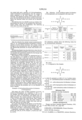
A mixture of vitamins and mineral salts Prophylactically treated animals Infected N on-inconcentration of I nonfer-ted in the food treated control control animals animals 0.006% 0.0125% Mortality/totally /10 0/10 10/10 0/10 Average increase in weight in percent +221 +192 +181 I=2,5-di-carbomethoxyamino-3,(i-diamino-l,4-benzoquinone.
After the infection the animals treated prophylactically with 2,5 di carbomethoxyamino-3,6-diamino-1,4-benzoquinone survived Without exception. The autopsy carried through on the fourteenth day after the beginning of the test showed that practically no oocysts were found in the cecum.
The pharmacological tests described above show that the compounds prepared according to the process of the present invention are particularly suitable for the therapy and prophylaxis of poultry coccidiosis.
The products of the invention are administered per os. For this purpose, it is suitable to extend the substances advantageously with a solid, inert and well tolerable mass in which they are homogeneously distributed, most favorably by means of an appropriate mixing device. The active substances are preferably admixed with the food with which they are then taken up by the animals. In order to attain a satisfying and uniform distribution it is useful to prepare at first a preliminary mixture in which the active substances are highly concentrated. In practice, concentrations of 10 to 50%, preferably of about 25%, enter into consideration. Inorganic or organic substances may be used as carriers. There may be used, for example, calcium carbonate, flour of various types of grain or dry rnycelium of the fermentation of antibiotics. It is of advantage to use wheat middlings for the purpose in question. Other substances important in animal nutrition, for
instance antibiotics or vitamins, may be added to the preliminary mixtures. A corresponding amount of such a preliminary mixture is then thoroughly mixed with the chickenor hen food so that a uniformdistribution in the desired concentration is ensured. The following example serves to illustrate the invention, but it is not intended to limit it thereto:
Example2,S-di-carbomethoxyam'ino-j,6-diamino- 1,4-benzoquinone 16.8 grams (0.1 mol) of finely powdered 2,3,5,6-tetramino-1,4-benzoquinone are suspended in 250 cc. of dry pyridine, and while stirring and cooling with ice 37.8 grams (0.4 mol) of chloroformic acid methyl ester are added dropwise. The reaction mixture is then heated for 5 hours on the steam bath while stirring. After cooling, the mixture .is mixed with about the same volume of water, filtered with suction, washed with water and acetone and dried on the steam bath.
23.5 grams (83 percent of the theory) of 2,5-di-carbomethoxyamino 3,6 diamino-ll,4-benzoquinone are obtained in the form of a dark brown powder. The compound does not show a characteristic melting point.
C H N O (molecular weight 284): Calculated: C, 42.2%; H, 4.2%; N, 19.7%. Found: C, 42.2%; H, 4.1%; N, 19.7%.
The following 2,5-di-carbalkoxy-amino-3,6-diamino- 1,4-benzoquinones can be prepared in the same way:
H HzN lNC0-OR R O CON%NH2 H Reaction Excess of period Yield in Substitucnt XCOOR on the percent Color R used, percent steam of the bath in theory hours Ethyl 10 3 Red-brown crystals. Isopropyl 10 3 72 Bright-oclrerous powder. Isolouryl- 10 3 76 Dark brown crystals.
The elementary analysis shows the following values for the aforementioned substances:
Nitrogen Summary Molecular Substitucnt formula weight Calculated, Found, percent percent Ethyl- CnHmNrOn 312 N, 18.0 N, 18.5 C, 46.2 C, 45.8 H, 5.1 H, 5.1 Isopropyl- CHH20N406 340 N, 16.5 N, 16.7 C, 49.4 C, 48.9 H, 5.9 H, 0.1 Isobutyl- CrsHzqNrOe 368 N, 15.2 N, 15.6 C, 52.2 C, 52.8 H, 6.5 II, 6.5
We clalm: 1. A compound of the formula H HzN N-COOR ROCON- NH:
in which R represents an alkyl of 1 to 4 carbon atoms.
2. 2,5 di carbomethoxyamino-3,6-diamino-1,4-benzoquinone.
3. 2,5 di carbo-ethoxyamino-3,6-diamino-1,4-benzoquinone.
4. 2,5 di carbo-isopropy1oXy-amino-3,6-diarnino41,4- benzoquinone.
5. 2,5 di carbo-isobutyloxy-amino-3,6-diamino-1,4- benzoquinone.
References Cited UNITED STATES PATENTS 2,715,636 8/1955 Carson 260-396 2,727,904 12/1955 Ochwat 260396 2,958,600 11/l1960 Thurman 992 2,965,488 12/1960 Belasco 992 3,065,133 11/1962 Tchelitchetf 167--53.1 3,085,937 4/1963 Hirayama 16753.1
OTHER REFERENCES Wagner and Zook: Synthetic Organic Chemistry, 1953, John Wiley & Sons, Inc., page 646.
LORRAINE A. WEINBERGER, Primary Examiner.
LEON ZITVER, Examiner.
D. P. CLARKE, L. A. THAXTON, Assistant Examiners.
Claims (1)
1. A COMPOUND OF THE FORMULA
Applications Claiming Priority (1)
| Application Number | Priority Date | Filing Date | Title |
|---|---|---|---|
| DEF37558A DE1177140B (en) | 1962-08-09 | 1962-08-09 | Process for the preparation of 2, 5-di-carbalkoxy-amino-3, 6-diamino-1, 4-benzoquinones |
Publications (1)
| Publication Number | Publication Date |
|---|---|
| US3336344A true US3336344A (en) | 1967-08-15 |
Family
ID=7096939
Family Applications (1)
| Application Number | Title | Priority Date | Filing Date |
|---|---|---|---|
| US298579A Expired - Lifetime US3336344A (en) | 1962-08-09 | 1963-07-30 | 2, 5-di-carbalkoxy-amino-3, 6-diamino-1, 4-benzoquinones |
Country Status (6)
| Country | Link |
|---|---|
| US (1) | US3336344A (en) |
| AT (1) | AT244348B (en) |
| CH (1) | CH438262A (en) |
| DE (1) | DE1177140B (en) |
| GB (1) | GB1026149A (en) |
| SE (1) | SE219195C1 (en) |
Citations (6)
| Publication number | Priority date | Publication date | Assignee | Title |
|---|---|---|---|---|
| US2715636A (en) * | 1953-11-17 | 1955-08-16 | John F Carson | Quinonediimine derivatives |
| US2727904A (en) * | 1953-04-30 | 1955-12-20 | Cassella Farbwerke Mainkur Ag | Therapeutically valuable aminosalicylic acid derivatives |
| US2958600A (en) * | 1956-11-23 | 1960-11-01 | Benjamin Clayton | Animal feeds and methods of producing same |
| US2965488A (en) * | 1959-04-07 | 1960-12-20 | Du Pont | Ruminant feed composition |
| US3065133A (en) * | 1956-09-28 | 1962-11-20 | Rhone Poulenc Sa | Imidazoles for the control of histomoniasis |
| US3085937A (en) * | 1960-11-21 | 1963-04-16 | Shionogi & Co | Method of combating coccidiosis with sulfonamide compositions |
-
1962
- 1962-08-09 DE DEF37558A patent/DE1177140B/en active Pending
-
1963
- 1963-07-30 US US298579A patent/US3336344A/en not_active Expired - Lifetime
- 1963-08-06 CH CH970763A patent/CH438262A/en unknown
- 1963-08-07 AT AT636563A patent/AT244348B/en active
- 1963-08-08 GB GB31422/63A patent/GB1026149A/en not_active Expired
- 1963-08-09 SE SE875363A patent/SE219195C1/en unknown
Patent Citations (6)
| Publication number | Priority date | Publication date | Assignee | Title |
|---|---|---|---|---|
| US2727904A (en) * | 1953-04-30 | 1955-12-20 | Cassella Farbwerke Mainkur Ag | Therapeutically valuable aminosalicylic acid derivatives |
| US2715636A (en) * | 1953-11-17 | 1955-08-16 | John F Carson | Quinonediimine derivatives |
| US3065133A (en) * | 1956-09-28 | 1962-11-20 | Rhone Poulenc Sa | Imidazoles for the control of histomoniasis |
| US2958600A (en) * | 1956-11-23 | 1960-11-01 | Benjamin Clayton | Animal feeds and methods of producing same |
| US2965488A (en) * | 1959-04-07 | 1960-12-20 | Du Pont | Ruminant feed composition |
| US3085937A (en) * | 1960-11-21 | 1963-04-16 | Shionogi & Co | Method of combating coccidiosis with sulfonamide compositions |
Also Published As
| Publication number | Publication date |
|---|---|
| DE1177140B (en) | 1964-09-03 |
| CH438262A (en) | 1967-06-30 |
| GB1026149A (en) | 1966-04-14 |
| AT244348B (en) | 1965-12-27 |
| SE219195C1 (en) | 1968-02-27 |
Similar Documents
| Publication | Publication Date | Title |
|---|---|---|
| DE2055337A1 (en) | Ureidocephalosporanic acid compounds, their salts, processes for their production and their use for the production of medicaments | |
| GB1353326A (en) | 8-oxo-5-thia-1-azabicyclo-4,2,0-oct-2-ene compounds process for their manufacture and compositions containing them | |
| GB1425354A (en) | Indole derivatives | |
| US3168531A (en) | 1-aryl-5-(p-lower alkoxyphenyl)-pyrrole-2-propionic acid compounds | |
| CS195508B1 (en) | Cyanacetylhydrazones of 2-formylquinoxalin-1,4-dioxide | |
| US3091633A (en) | Substituted and unsubstituted salicylanilide nu-lower aliphatic carbonator | |
| GB1337371A (en) | 3-amino-imidazo-1,5-a- pyridines processes for their preparation and pharmaceutical compositions incorporating them | |
| US3370069A (en) | 2, 5-diacylamino-3, 6-diamino-1, 4-benzoquinones | |
| US3714206A (en) | Benzo-2,3,1-diazaborines | |
| US3415838A (en) | Nitrogen-containing derivatives of 2,5-dichloro-3-nitrobenzoic acid | |
| GB1316361A (en) | 5h-dibenzazepines | |
| GB1335606A (en) | Process for the production of acyl isocyanide dichlorides and carboxylic acid chlorides | |
| US2852430A (en) | Chloramphenicol ester compositions | |
| US2967129A (en) | New erythromycin esters | |
| SU503522A3 (en) | The method of obtaining carbamate derivatives of 2,4-dioxymethylthiazole | |
| GB1505020A (en) | Substituted 2-phenylimino-thiazolines a process for their preparation and their use as ectoparasiticides | |
| US2988481A (en) | Compositions of aliphatic dibasic acid half esters of dichloracetyl-phenylpropanediols | |
| US2653955A (en) | Cortisone esters and process | |
| US3268516A (en) | Amino-acylamino-acylamino-penicillanic acids | |
| US3372172A (en) | Preparation of 2, 5-diacylamino-3, 6-diamino-1, 4-benzoquinones | |
| US3405164A (en) | 2, 5-diacylamino-3, 6-diamino-1, 4-dihydroxybenzenes | |
| US3594413A (en) | Cyclopentene derivatives | |
| US3493602A (en) | Process for preparing phenyl alanines | |
| US3303214A (en) | Nitrososemicarbazides | |
| US3906101A (en) | Pharmaceutical compositions containing substituted 5-nitrofurfurylideneamino-oxazolidinones |