US3353933A - Tungsten powder bodies infiltrated with copper-titanium alloys - Google Patents
Tungsten powder bodies infiltrated with copper-titanium alloys Download PDFInfo
- Publication number
- US3353933A US3353933A US600311A US60031166A US3353933A US 3353933 A US3353933 A US 3353933A US 600311 A US600311 A US 600311A US 60031166 A US60031166 A US 60031166A US 3353933 A US3353933 A US 3353933A
- Authority
- US
- United States
- Prior art keywords
- copper
- tungsten
- titanium
- alloy
- vacuum
- Prior art date
- Legal status (The legal status is an assumption and is not a legal conclusion. Google has not performed a legal analysis and makes no representation as to the accuracy of the status listed.)
- Expired - Lifetime
Links
Images
Classifications
-
- H—ELECTRICITY
- H01—ELECTRIC ELEMENTS
- H01H—ELECTRIC SWITCHES; RELAYS; SELECTORS; EMERGENCY PROTECTIVE DEVICES
- H01H1/00—Contacts
- H01H1/02—Contacts characterised by the material thereof
- H01H1/0203—Contacts characterised by the material thereof specially adapted for vacuum switches
-
- B—PERFORMING OPERATIONS; TRANSPORTING
- B22—CASTING; POWDER METALLURGY
- B22F—WORKING METALLIC POWDER; MANUFACTURE OF ARTICLES FROM METALLIC POWDER; MAKING METALLIC POWDER; APPARATUS OR DEVICES SPECIALLY ADAPTED FOR METALLIC POWDER
- B22F3/00—Manufacture of workpieces or articles from metallic powder characterised by the manner of compacting or sintering; Apparatus specially adapted therefor ; Presses and furnaces
- B22F3/24—After-treatment of workpieces or articles
- B22F3/26—Impregnating
-
- H—ELECTRICITY
- H01—ELECTRIC ELEMENTS
- H01B—CABLES; CONDUCTORS; INSULATORS; SELECTION OF MATERIALS FOR THEIR CONDUCTIVE, INSULATING OR DIELECTRIC PROPERTIES
- H01B1/00—Conductors or conductive bodies characterised by the conductive materials; Selection of materials as conductors
- H01B1/02—Conductors or conductive bodies characterised by the conductive materials; Selection of materials as conductors mainly consisting of metals or alloys
- H01B1/026—Alloys based on copper
-
- H—ELECTRICITY
- H01—ELECTRIC ELEMENTS
- H01H—ELECTRIC SWITCHES; RELAYS; SELECTORS; EMERGENCY PROTECTIVE DEVICES
- H01H1/00—Contacts
- H01H1/02—Contacts characterised by the material thereof
- H01H1/021—Composite material
- H01H1/025—Composite material having copper as the basic material
-
- Y—GENERAL TAGGING OF NEW TECHNOLOGICAL DEVELOPMENTS; GENERAL TAGGING OF CROSS-SECTIONAL TECHNOLOGIES SPANNING OVER SEVERAL SECTIONS OF THE IPC; TECHNICAL SUBJECTS COVERED BY FORMER USPC CROSS-REFERENCE ART COLLECTIONS [XRACs] AND DIGESTS
- Y10—TECHNICAL SUBJECTS COVERED BY FORMER USPC
- Y10S—TECHNICAL SUBJECTS COVERED BY FORMER USPC CROSS-REFERENCE ART COLLECTIONS [XRACs] AND DIGESTS
- Y10S428/00—Stock material or miscellaneous articles
- Y10S428/922—Static electricity metal bleed-off metallic stock
- Y10S428/9265—Special properties
- Y10S428/929—Electrical contact feature
-
- Y—GENERAL TAGGING OF NEW TECHNOLOGICAL DEVELOPMENTS; GENERAL TAGGING OF CROSS-SECTIONAL TECHNOLOGIES SPANNING OVER SEVERAL SECTIONS OF THE IPC; TECHNICAL SUBJECTS COVERED BY FORMER USPC CROSS-REFERENCE ART COLLECTIONS [XRACs] AND DIGESTS
- Y10—TECHNICAL SUBJECTS COVERED BY FORMER USPC
- Y10T—TECHNICAL SUBJECTS COVERED BY FORMER US CLASSIFICATION
- Y10T428/00—Stock material or miscellaneous articles
- Y10T428/12—All metal or with adjacent metals
- Y10T428/12014—All metal or with adjacent metals having metal particles
- Y10T428/1216—Continuous interengaged phases of plural metals, or oriented fiber containing
- Y10T428/12174—Mo or W containing
Definitions
- ABSTRACT OF THE DISCLOSURE A composite material for use as an electrical contact material in vacuum switching devices consisting of a tungsten powder body completely infiltrated with a coppertitanium alloy.
- the present invention relates to powder metallurgy and more particularly to improved means and methods of providing composite materials for use as an electrical contact material.
- Tungsten is used in electrical contact materials because of its inherent characteristics of hardness and of resistance to arcing which reduce pitting of the tungsten contact material.
- pure tungsten contact material possesses high electrical resistance which lowers the efficiency and reliability of the tungsten contact material.
- the copper provides the current carrying capability and thermal conductivity while the tungsten contributes hardness, resistance to arc erosion, and superior anti-weld properties.
- the metal In order to utilize the aforementioned characteristics of the copper and the tungsten, it is necessary to fabricate the metal into a tungsten-copper composite.
- Composites of tungstencopper may be prepared by pressing the mixed metal powders to the required shape in dies, and subsequently sintering in a hydrogen atmosphere above the melting point temperature of the copper, preferably between 1250 and 1350 centigrade. The hydrogen acts as a flux and the molten copper wets the tungsten particles and cements them together.
- Another method which provides a harder resultant body consists of first pressing and sintering the tungsten powder so as to form a coherent but porous body, which is then heated at a temperature of about 1200 C. to 1300 C.
- a copper melt shows no penetration into the tungsten powder body in a vacuum. It is thought that the lack of penetration of the copper into the tungsten powder body is due to the unfavorable surface energies that are present in the vacuum.
- Another object of the present invention is to provide a composite material of tungsten particles in a matrix of copper-titanium for use as an electrical contact material wherein the concentration of titanium in the tungsten interface region is much higher than the concentration of titanium between the tungsten particles thereby raising the overall electrical conductivity of the copper-titanium alloy matrix.
- Yet another object of the present invention is to provide a means and method of vacuum infiltrating a refractory material with an electrically conducting material thereby providing a composite contact material which is low in gas content and low in material which may be converted to gas during operation of the contact.
- Yet still another object of the present invention is to provide means and methods of using a copper-titanium alloy as infiltration stock for tungsten powder bodies so as to allow complete vacuum infiltration of the tungsten powder body thereby providing a composite contact material having integrally joined tungsten-copper-titanium materials.
- a further object of the present invention is to provide means and methods of fabricating a composite contact material using vacuum infiltration techniques, the composite contact material having high electrical and thermal conductivity, combined with low erosion under arcing and low deformation under pressure environments.
- Another object of the present invention is to provide an alloy which includes an agent that wets the tungsten, that is ductile, that has high electrical and thermal conductivity, and includes a melting point that is lower than tungsten.
- the present invention in another of its aspects relates to novel features of the instrumentalities of the invention described herein for teaching the principal object of the invention and to the novel principles employed in the instrumentalities whether or not these features and principles may be used in the said object and/or in the said field.
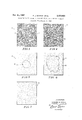
- FIGURE 1 is a photomicrograph of about 500 magnifications of a tungsten-copper-titanium composite contact material showing a sintered tungsten specimen completely vacuum infiltrated with a copper-titanium alloy containing about 0.5 percent by weight, titanium. The infiltration was carried out at 1250 C. for 1 hour at a pressure of 10- torr.
- FIGURE 2 is a photomicrograph of 500 magnifications of a tungsten-copper-titanium composite contact material illustrating a compacted tungsten specimen completely vacuum infiltrated with a copper-titanium alloy containing about 0.5 percent, by weight, titanium.
- FIGURE 2 also shows a greater dispersion of the tungsten powders in the copper-titanium matrix than is shown in FIGURE 1 using comparable sintering time-temperature.
- FIGURE 3 is an enlarged cross-sectional view of a tungsten-copper-titanium composite contact material showing a sintered tungsten specimen that is about 90 percent vacuum infiltrated with a copper-titanium alloy containing about 0.2 percent, by weight, titanium using the temperature treatments used in FIGURES l and 2, but lessening the time of the temperature treatment to 30 minutes.
- FIGURE 4 is an enlarged cross-sectional view of a tungsten-copper-titanium composite contact material illustrating a sintered tungsten specimen about 30 to 40 percent vacuum infiltrated with a copper-titanium alloy containing about 0.05 percent, by weight, titanium using the temperature treatments used in FIGURES 1 and 2 but reducing the length of the temperature treatment to 20 minutes.
- FIGURE 5 is an enlarged cross-sectional view of a tungsten-copper-titanium composite contact material illustrating a sintered tungsten specimen that was completely vacuum infiltrated by the copper-titanium alloy containing about 0.05 percent, by weight, titanium by subjecting the specimen to a temperature of 1450 C. for the time duration of FIGURE 4.
- the means and methods of the present invention relate to an electrical contact material for use in a switching device such as, for example, in a vacuum electrical power switching means.
- the contact material consists of a tungsten body completely vacuum infiltrated by a copper-titanium alloy.
- the copper-titanium alloy consists of to 0.05 percent, by weight, titanium, the remainder copper.
- the method of making a tungsten body infiltrated with an alloy of copper comprises the steps of compacting powdered tungsten particles into a desired body shape.
- the tungsten body is contacted with a copper-titanium alloy which when heated above its melting point makes use of its ability as an agent for wetting the tungsten particles.
- the tungsten body and the contacting copper alloy are placed in a vacuum atmosphere and heated so as to completely vacuum infiltrate the tungsten body with the copper alloy by capillary attraction thereby forming a composite contact material.
- the means and methods of the present invention relate to fabricating a tungsten body infiltrated with an alloy of copper-titanium for use as an electrical contact in vacuum environments.
- the tungsten powder has a particle size ranging between I and 10 microns and is compacted under pressure ranging from 20 to 35 tons per square inch into a desired body shape.
- the tungsten body may be presintered in a hydrogen atmosphere at about l250 centigrade for about 10 minutes.
- the surfaces of the sintered tungsten body are contacted with an alloy of copper-titanium.
- the copper-titanium alloy consisted of 0.05 to 0.5 percent, by weight, titanium, the remainder copper.
- the titanium is used to promote the wetting of the tungsten particles by the copper-titanium alloy.
- the tungsten body and the contacting copper-titanium alloy are placed in a vacuum atmosphere having a pressure of about l0 torr and heated at a temperature of between 1250 and 1450 centigrade for a time duration of between 20 minutes and 60 minutes.
- the tungsten body is completely vacuum infiltrated with the coppertitanium alloy thereby forming a tungsten-copper-titanium composite for use as a contact material in vacuum environments.
- the resultant composite is dense and has high electrical and thermal conductivity combined with a high resistance to deformation under pressure.
- a suitable mold is utilized to form the tungsten powder into a desired shape.
- the size of the particles of tungsten may vary in accordance with the desired density of the composite contact material and with the desired pore size distribution of the composite contact material.
- tungsten powder having a particle size of about 1 micron to 10 microns is utilized. However, it should be understood that tungsten powder having a larger or a smaller particle size may be used.
- the tungsten particles are compacted within the con fines of a suitable mold by a compacting pressure ranging between 20 and 35 tons per square inch thereby forming a porous tungsten body. If it is desired to further strengthen the tungsten body prior to infiltration and/or provide a composite having a higher tungsten content, the tungsten body may be sintered in an atmosphere of hydrogen at a temperature of about 1250 C. for a time duration of about 10 minutes.
- FIGURE 1 shows a composite structure wherein the tungsten compact was presintered. After the preparatory treatment is completed, the strength of the tungsten compact is materially increased, and the compact can be handled readily. Very little grain growth takes place during the presinter treatment, and the increase in strength of the compact may be due to the reduction of the surface film of oxide on the individual tungsten particles, the reduced metal acting as a cement which binds the tungsten particles together.
- FIGURE 2 shows a tungsten powder body which was not presintered but is completely vacuum infiltrated with the copper-titanium alloy.
- the dispersion differential of the tungsten particles between FIGURE 1 and FIGURE 2 should be noted.
- the dispersion of the tungsten particles in FIGURE 2 is greater than the dispersion of the tungsten particles of FIGURE 1 due only to the fact that the tungsten specimen of FIGURE 1 was subjected to a presintering step whereas the specimen of FIGURE 2 was not.
- the tungsten specimen, presintered or not, is placed in a vacuum having a pressure of 10* torr or less and contacted with a copper-titanium alloy containing about 0.5 percent, by weight, or less of titanium.
- the tungsten specimen and the contacting copper-titanium alloy is heated to a temperature of between about 1200 C. to 1450 C. The range of temperatures exceeds the 1085 C. melting point temperature of the copper-titanium alloy but is below the 3410 C. melting point temperature of tungsten.
- a chemical analysis of the resultant composite body showed that vacuum processing decreases the volume of hydrogen by more than an order and decreases the volume of other gaseous components by several orders.
- the bulk of the region between the tungsten particles contains a much lower concentration of titanium than that used in the infiltration stock. Since titanium in solid solution lowers the conductivity of copper, the titanium segregation has a dual advantage, that is, in addition to promoting the wetting and infiltration in a vacuum environment, the segregation also raises the overall electrical conductivity of the infiltration alloy above that which would be expected from the nominal concentration of the infiltration stock.
- FIGURE 1 illustrates a tungsten-copper-titanium composite consisting of a sintered porous compact of tungsten particles 11 which has been completely infiltrated by a coherent network of copper-titanium 12.
- the metal surfaces of the coppertitanium mixture are integrally bonded with the tungsten particles.
- the copper-titanium alloy used to contact the tungsten powder body prior to vacuum infiltration contains about 0.5 percent, by weight, titanium.
- the porous tungsten body and the contacting alloy were subjected to a temperature of about 1250 C. for about 60 minutes at a pressure of 10- torr, or less.
- FIGURE 2 shows a tungsten-copper-titanium composite 13 similar to that of FIGURE 1 except that the initial tungsten compact was not sintered prior to the vacuum infiltration.
- the dispersion differential of the tungsten particles between FIGURE 1 and FIGURE 2 should be noted.
- the dispersion of the tungsten particles in FIGURE 2 is greater than the dispersion of the tungsten particles in FIGURE 1 due only to the fact that the tungsten specimen of FIGURE 1 was subjected to a presintering treatment.
- FIGURE 3 illustrates a tungsten-copper-titanium composite 14 consisting of a sintered porous compact of tungsten particles about 90 percent infiltrated by a coherent network of a copper-titanium mixture.
- the area 25 represents void spaces among the tungsten particles, that is, an area not infiltrated with copper-titanium.
- the metal surfaces of the copper-titanium mixture are integrally bonded to the surfaces of the tungsten particles.
- the copper-titanium alloy used to contact the porous tungsten body prior to vacuum infiltration contains about 0.2 percent, by weight, titanium.
- the porous tungsten body and the contacting alloy were subjected to a temperature of about 1250 C. for about 30 minutes at a vacuum pressure of 10 torr, .or less.
- FIGURE 4 shows a tungsten-copper-titanium composite 17 consisting of a sintered porous compact of tungsten particles about 30 to 40 percent vacuum infiltrated by a coherent network of a copper-titanium alloy.
- the area 26 represents void spaces among the tungsten particles, that is, an area not infiltrated with coppertitanium.
- the metal surfaces of the copper-titanium mixture are integrally bonded with the surfaces of the tungsten particles.
- the copper-titanium alloy used to contact the porous tungsten body prior to vacuum infiltration contains about 0.05 percent, by weight, titanium. During vacuum infiltration, the porous tungsten body and the contacting alloy were subjected to a temperature of about 1250 C. for about 20 minutes at a vacuum pressure of 10" torr or less.
- FIGURE 5 illustrates a tungsten-copper-titanium composite 19 completely vacuum infiltrated with the coppertitanium alloy.
- the alloy contained about 0.05 percent, by weight, of titanium, like the alloy used to produce the composite of FIGURE 4.
- the porous tungsten body and the contacting alloy were subjected to a temperature of about 1450" C. for about 20 minutes at a vacuum pressure of 10 torr or less.
- FIGURES 1 to 5 illustrate that a decreasing amount of infiltration into the tungsten body takes place with a decreasing amount of titanium present in the coppertitanium alloy and/or a decreasing time-temperature treatment.
- FIGURE 5 shows that the reduced amount of titanium in the copper-titanium alloy and/or decreased heating time can be compensated for by increasing the heating temperature to which the tungsten body and the contacting copper-titanium alloy are subjected.
- Examples 1 to 5 are illustrative of the preparation of a tungsten-copper-titanium contact material by vacuum infiltration of a tungsten powder body with a copper-titanium alloy.
- Example 1 A sintered tungsten body completely vacuum infiltrated by an alloy of copper-titanium, the alloy containing about 025 percent, by weight, titanium, the remainder copper.
- Powdered tungsten having a particle size of about 1 to 10 microns was pressed by any suitable means such as by an automatic press at about 20 tons per square inch to provide a green compact sturdy enough to be handled.
- the green compact was presintered at about 1250 C. for about 10 minutes in an atmosphere of hydrogen so as to form a skeleton type structure.
- the presintering of the compact serves to increase the strength of the compact by cementing the tungsten particles each to the other thereby binding them together.
- the sintered porous compact is contacted with an alloy of copper-titanium having a titanium content of about 0.5 percent, by weight, the remainder copper.
- the sintered tungsten compact and the contacting alloy of copper-titanium are placed in a vacuum atmosphere having a pressure of about 10* or less and are heated at a temperature of about 1250 C. for a time duration of about 1 hour.
- the porous tungsten body was found to be completely vacuum infiltrated by the copper-titanium mixture.
- the resultant tungstencopper-titanium composite is illustrated in FIGURE 1 of the drawing.
- Example 2 A green tungsten powder body completely vacuum infiltrated by an alloy of copper-titanium, the alloy of Powdered tungsten having a particle size of about 1 micron to about 10 microns was pressed by any suitable means such as by an automatic press at about 20 tons per square inch to provide a green compact sturdy enough to be handled.
- the porous green compact is contacted with an alloy of copper-titanium having a tiianium content of about 0.5 percent, by weight, titanium, the remainder copper.
- the green tungsten compact and the contacting alloy of copper-titanium are placed in a vacuum atmosphere having a pressure of 10" 5 torr or less and are heated at about 1250 centigrade for about 1 hour.
- the porous tungsten body was found to be completely infiltrated by the copper-titanium alloy.
- the resultant tungsten copper-titanium composite is illustrated in FIGURE 2 of the drawings.
- the dispersion differential of the tungsten particles should be noted between the sintered tungsten specimen of FIGURE 1 and the green compact tungsten specimen of FIGURE 2.
- the dispersion of the tungsten particles of FIGURE 2 is greater than the dispersion of the tungsten particles of FIGURE 1.
- Example 3 A sintered tungsten body about 90 percent vacuum infiltrated by an alloy of copper-titanium, the alloy of copper-titanium containing about 0.2 percent, by weight, titanium, the remainder copper.
- Powdered tungsten having a particle size of about 1 micron to about 10 microns was pressed by any suitable means such as by an automatic press at about 20 tons per square inch to provide a green compact sturdy enough to be handled.
- the green compact was sintered at a temperature of about 1250" centrigrade for about 10 minutes in a hydrogen atmosphere.
- the sintered porous tungsten compact is contacted with an alloy of about 0.2 percent, by weight, titanium, the remainder copper.
- the sintered tungsten compact and the contacting alloy of copper-titanium are placed in a vacuum atmosphere having a pressure of l torr or less and heated at about 1250 centigrade for about 30 minutes.
- the porous tungsten body was found to be 90 percent infiltrated by the copper-titanium alloy.
- the resultant tungsten-coppertitanium is illustrated in FIGURE 3 of the drawings.
- a decrease in the amount of titanium in the copper-titanium alloy and/or infiltration time results in porous areas remaining in the tungsten specimen.
- the pores can be closed by increasing the infiltration temperature and/or the infiltration time.
- Example 4 A sintered tungsten body about 30 to 40 percent vacuum infiltrated by an alloy of copper-titanium, the alloy of copper-titanium containing about 0.05 percent, by weight, titanium, the remainder copper.
- Powdered tungsten having a particle size of about 1 micron to about microns was pressed by any suitable means such as by an automatic press at about tons per square inch to provide a green compact sturdy enough to be handled.
- the green compact was sintered at about 1250 centigrade for about 10 minutes in a hydrogen atmosphere.
- the sintered porous tungsten compact was contacted with an alloy containing about 0.05 percent, by weight, titanium, the remainder copper.
- the sintered tungsten compact and the contacting alloy of coppertitanium were placed in a vacuum atmosphere having a pressure of 10- torr or less and were heated at about l250 Centigrade for about 20 minutes.
- the porous tungsten body was found to be to percent infiltrated by the copper-titanium alloy.
- the resultant tungsten-cop ertitanium composite is illustrated in FIGURE 4 of the drawings.
- the pores can be closed by increasing the infiltration temperature and/or the infiltration time.
- Example 5 A sintered tungsten body completely vacuum infiltrated by an alloy of copper-titanium, the alloy of coppertitanium containing about 0.05 percent, by weight, titanium. the remainder copper.
- Powdered tungsten having a particle size of about 1 micron to about 10 microns was pressed by any suitable means such as by an automatic press at about 20 tons per square inch to provide a green compact sturdy enough to be handled.
- the green compact was sintered at a temperature of about l250 centigrade for a time duration of about 10 minutes in a hydrogen atmosphere.
- the sintered porous tungsten compact was contacted with an alloy of about 0.05 percent, by weight, titanium, the remainder copper.
- the sintered tungsten compact and the contacting alloy of copper-titanium were placed in a vacuum atmosphere having a pressure of 10 torr or less and were heated at about 1450 centigrade for about 20 minutes so as to form a structure similar to FIGURE 2.
- the porous tungsten body was found to be completely vacuum infiltrated by the copper-titanium alloy by increasing the infiltration temperature over that recited in Example 4.
- the resultant tungsten-copper-titanium composite is illustrated in FIGURE 5 of the drawings.
- the tungsten powder body or the presintered tungsten body may be coated with titanium by electrolytic or vapor phase plating, impregnation of the coated body could be carried out successfully with essentially pure (unalloyed) copper. Vacuum impregnation will occur as long as titanium is at the boundary.
- the amount of plated titanium would be such that its composition would amount to 0.5 to 0.05 percent by weight of that of the amount of copper required to fill the voids.
- a composite material having a low volume of gas content for use as an electrical contact material in vacuum switching devices consisting of tungsten particles surrounded by and integrally joined with an alloy matrix of copper-titanium, said matrix having a high concentration of said titanium in the interface region between said tungsten particles and said copper-titanium alloy matrix thereby raising the overall electrical conductivity of said copper-titanium alloy matrix.
- a composite material for use as an electrical contact material in vacuum switching devices consisting of a tungsten powder body completely infiltrated with a copper-titanium alloy wherein said tungsten particles are substantially surrounded by a matrix or" said coppertitanium alloy and wherein said matrix has a high concentration of said titanium in the interface region between said tungsten particles and said copper-titanium alloy matrix thereby raising the overall electrical conductivity of said copper-titanium alloy matrix.
- a composite material having a low volume of gas content for use as an electrical contact material in vacuum switching devices consisting of tungsten particles substan- 9 tially surrounded by a matrix of a copper-titanium alloy, said alloy consisting of about 0.5-0.05 percent, by weight, titanium, the remainder copper.
Landscapes
- Engineering & Computer Science (AREA)
- Chemical & Material Sciences (AREA)
- Composite Materials (AREA)
- Materials Engineering (AREA)
- Manufacturing & Machinery (AREA)
- Mechanical Engineering (AREA)
- Powder Metallurgy (AREA)
- Contacts (AREA)
Priority Applications (9)
| Application Number | Priority Date | Filing Date | Title |
|---|---|---|---|
| US600311A US3353933A (en) | 1966-03-11 | 1966-10-21 | Tungsten powder bodies infiltrated with copper-titanium alloys |
| NL6703209A NL6703209A (de) | 1966-03-11 | 1967-02-28 | |
| DE1967M0073067 DE1558532A1 (de) | 1966-03-11 | 1967-03-07 | Verfahren zum Herstellen von Sinterverbundstoffen und mittels dieses Verfahrens hergestellte Sinterverbundstoffe |
| GB10586/67A GB1130995A (en) | 1966-03-11 | 1967-03-07 | Improvements in and relating to powder metallurgy |
| CH352067A CH488810A (de) | 1966-03-11 | 1967-03-10 | Verfahren zur Herstellung eines Verbundmetalls |
| SE03376/67A SE368110B (de) | 1966-03-11 | 1967-03-10 | |
| FR98409A FR1513972A (fr) | 1966-03-11 | 1967-03-10 | Perfectionnements à la métallurgie des poudres |
| US671521A US3440043A (en) | 1966-03-11 | 1967-08-21 | Method of producing tungsten powder bodies infiltrated with copper titanium alloys |
| US26980D USRE26980E (en) | 1966-03-11 | 1969-02-07 | Vacuum infiltrating of tungsten |
Applications Claiming Priority (2)
| Application Number | Priority Date | Filing Date | Title |
|---|---|---|---|
| US533579A US3303026A (en) | 1966-03-11 | 1966-03-11 | Vacuum infiltrating of tungsten powder bodies with copper-titanium alloys |
| US600311A US3353933A (en) | 1966-03-11 | 1966-10-21 | Tungsten powder bodies infiltrated with copper-titanium alloys |
Publications (1)
| Publication Number | Publication Date |
|---|---|
| US3353933A true US3353933A (en) | 1967-11-21 |
Family
ID=27064222
Family Applications (1)
| Application Number | Title | Priority Date | Filing Date |
|---|---|---|---|
| US600311A Expired - Lifetime US3353933A (en) | 1966-03-11 | 1966-10-21 | Tungsten powder bodies infiltrated with copper-titanium alloys |
Country Status (7)
| Country | Link |
|---|---|
| US (1) | US3353933A (de) |
| CH (1) | CH488810A (de) |
| DE (1) | DE1558532A1 (de) |
| FR (1) | FR1513972A (de) |
| GB (1) | GB1130995A (de) |
| NL (1) | NL6703209A (de) |
| SE (1) | SE368110B (de) |
Cited By (7)
| Publication number | Priority date | Publication date | Assignee | Title |
|---|---|---|---|---|
| JPS5090993A (de) * | 1973-12-14 | 1975-07-21 | ||
| US3929424A (en) * | 1973-10-23 | 1975-12-30 | Mallory & Co Inc P R | Infiltration of refractory metal base materials |
| US6090179A (en) * | 1998-07-30 | 2000-07-18 | Remptech Ltd. | Process for manufacturing of metallic power |
| CN113593992A (zh) * | 2021-07-09 | 2021-11-02 | 陕西斯瑞新材料股份有限公司 | 一种超低铬含量CuW-CuCr整体电触头及其制备方法 |
| CN114799207A (zh) * | 2022-03-31 | 2022-07-29 | 西安航天发动机有限公司 | 一种金属发汗材料复杂预制件的成形方法 |
| CN116689761A (zh) * | 2023-06-08 | 2023-09-05 | 有研工程技术研究院有限公司 | 一种烧结态钨铜合金棒材的制备方法 |
| CN122012967A (zh) * | 2026-04-14 | 2026-05-12 | 深圳市好利时实业有限公司 | 一种纳米级致密化钨铜合金制备方法 |
Families Citing this family (2)
| Publication number | Priority date | Publication date | Assignee | Title |
|---|---|---|---|---|
| JPS5578429A (en) * | 1978-12-06 | 1980-06-13 | Mitsubishi Electric Corp | Contact material for vacuum breaker |
| EP0099066B2 (de) * | 1982-07-16 | 1992-07-22 | Siemens Aktiengesellschaft | Verfahren zum Herstellen eines Verbundwerkstoffes aus Chrom und Kupfer |
Citations (5)
| Publication number | Priority date | Publication date | Assignee | Title |
|---|---|---|---|---|
| US2669008A (en) * | 1951-06-30 | 1954-02-16 | Philips Lab Inc | Method of manufacturing tungsten articles of predetermined shape and dimensions |
| US2851381A (en) * | 1955-04-05 | 1958-09-09 | Gibson Electric Company | Simultaneous infiltrating and obtaining a brazable surface |
| GB836749A (en) * | 1957-07-17 | 1960-06-09 | Siemens Ag | Improvements in or relating to the production of composite metal |
| US3290124A (en) * | 1964-10-29 | 1966-12-06 | Rametco Inc | Porous electrical discharge machine electrodes |
| US3303559A (en) * | 1965-05-12 | 1967-02-14 | Rametco Inc | Electrical discharge machine electrodes |
-
1966
- 1966-10-21 US US600311A patent/US3353933A/en not_active Expired - Lifetime
-
1967
- 1967-02-28 NL NL6703209A patent/NL6703209A/xx unknown
- 1967-03-07 DE DE1967M0073067 patent/DE1558532A1/de active Pending
- 1967-03-07 GB GB10586/67A patent/GB1130995A/en not_active Expired
- 1967-03-10 SE SE03376/67A patent/SE368110B/xx unknown
- 1967-03-10 FR FR98409A patent/FR1513972A/fr not_active Expired
- 1967-03-10 CH CH352067A patent/CH488810A/de not_active IP Right Cessation
Patent Citations (5)
| Publication number | Priority date | Publication date | Assignee | Title |
|---|---|---|---|---|
| US2669008A (en) * | 1951-06-30 | 1954-02-16 | Philips Lab Inc | Method of manufacturing tungsten articles of predetermined shape and dimensions |
| US2851381A (en) * | 1955-04-05 | 1958-09-09 | Gibson Electric Company | Simultaneous infiltrating and obtaining a brazable surface |
| GB836749A (en) * | 1957-07-17 | 1960-06-09 | Siemens Ag | Improvements in or relating to the production of composite metal |
| US3290124A (en) * | 1964-10-29 | 1966-12-06 | Rametco Inc | Porous electrical discharge machine electrodes |
| US3303559A (en) * | 1965-05-12 | 1967-02-14 | Rametco Inc | Electrical discharge machine electrodes |
Cited By (8)
| Publication number | Priority date | Publication date | Assignee | Title |
|---|---|---|---|---|
| US3929424A (en) * | 1973-10-23 | 1975-12-30 | Mallory & Co Inc P R | Infiltration of refractory metal base materials |
| JPS5090993A (de) * | 1973-12-14 | 1975-07-21 | ||
| US6090179A (en) * | 1998-07-30 | 2000-07-18 | Remptech Ltd. | Process for manufacturing of metallic power |
| CN113593992A (zh) * | 2021-07-09 | 2021-11-02 | 陕西斯瑞新材料股份有限公司 | 一种超低铬含量CuW-CuCr整体电触头及其制备方法 |
| CN113593992B (zh) * | 2021-07-09 | 2023-09-15 | 陕西斯瑞新材料股份有限公司 | 一种超低铬含量CuW-CuCr整体电触头及其制备方法 |
| CN114799207A (zh) * | 2022-03-31 | 2022-07-29 | 西安航天发动机有限公司 | 一种金属发汗材料复杂预制件的成形方法 |
| CN116689761A (zh) * | 2023-06-08 | 2023-09-05 | 有研工程技术研究院有限公司 | 一种烧结态钨铜合金棒材的制备方法 |
| CN122012967A (zh) * | 2026-04-14 | 2026-05-12 | 深圳市好利时实业有限公司 | 一种纳米级致密化钨铜合金制备方法 |
Also Published As
| Publication number | Publication date |
|---|---|
| GB1130995A (en) | 1968-10-16 |
| SE368110B (de) | 1974-06-17 |
| DE1558532A1 (de) | 1970-04-02 |
| NL6703209A (de) | 1967-09-12 |
| FR1513972A (fr) | 1968-02-16 |
| CH488810A (de) | 1970-04-15 |
Similar Documents
| Publication | Publication Date | Title |
|---|---|---|
| US4032301A (en) | Composite metal as a contact material for vacuum switches | |
| US3957453A (en) | Sintered metal powder electric contact material | |
| US4909841A (en) | Method of making dimensionally reproducible compacts | |
| US3303559A (en) | Electrical discharge machine electrodes | |
| US2671955A (en) | Composite metal-ceramic body and method of making the same | |
| US2539298A (en) | Electrical contact of an internally oxidized composition | |
| US2470034A (en) | Electric contact formed of a ruthenium composition | |
| US4689196A (en) | Silver-tungsten carbide-graphite electrical contact | |
| US3305324A (en) | Tungsten powder bodies infiltrated with copper-titanium-bismuth or copper-titanium-tin | |
| US3440043A (en) | Method of producing tungsten powder bodies infiltrated with copper titanium alloys | |
| US3337338A (en) | Tungsten powder bodies infiltrated with copper-titanium bismuth or copper-titanium-tin | |
| JPH06244330A (ja) | 電子回路装置で使用される熱管理複合材料とその製造方法 | |
| US3303026A (en) | Vacuum infiltrating of tungsten powder bodies with copper-titanium alloys | |
| US2358326A (en) | Metal composition | |
| US3449120A (en) | Method of producing tungsten powder bodies infiltrated with zirconium | |
| US3411902A (en) | Method of producing infiltrated contact material | |
| US3393056A (en) | Tungsten powder bodies | |
| US3423203A (en) | Tungsten-indium powder bodies infiltrated with copper | |
| US3353931A (en) | Tungsten-indium powder bodies infiltrated with copper | |
| US4503010A (en) | Process of producing a compound material of chromium and copper | |
| US3340022A (en) | Tungsten powder bodies infiltrated with copper-zirconium alloy | |
| US4450135A (en) | Method of making electrical contacts | |
| US3401024A (en) | Electrical contact material | |
| US3199176A (en) | Method of manufacturing electrical contacts | |
| US3467517A (en) | Tungsten powder bodies impregnated with zr and bi or sn |