US3557775A - Method of implanting a hearing aid - Google Patents
Method of implanting a hearing aid Download PDFInfo
- Publication number
- US3557775A US3557775A US663603A US3557775DA US3557775A US 3557775 A US3557775 A US 3557775A US 663603 A US663603 A US 663603A US 3557775D A US3557775D A US 3557775DA US 3557775 A US3557775 A US 3557775A
- Authority
- US
- United States
- Prior art keywords
- ear
- implanting
- mastoid
- human body
- signal
- Prior art date
- Legal status (The legal status is an assumption and is not a legal conclusion. Google has not performed a legal analysis and makes no representation as to the accuracy of the status listed.)
- Expired - Lifetime
Links
Images

Classifications
-
- H—ELECTRICITY
- H04—ELECTRIC COMMUNICATION TECHNIQUE
- H04R—LOUDSPEAKERS, MICROPHONES, GRAMOPHONE PICK-UPS OR LIKE ACOUSTIC ELECTROMECHANICAL TRANSDUCERS; ELECTRIC HEARING AIDS; PUBLIC ADDRESS SYSTEMS
- H04R25/00—Electric hearing aids
- H04R25/60—Mounting or interconnection of hearing aid parts, e.g. inside tips, housings or to ossicles
- H04R25/604—Mounting or interconnection of hearing aid parts, e.g. inside tips, housings or to ossicles of acoustic or vibrational transducers
- H04R25/606—Mounting or interconnection of hearing aid parts, e.g. inside tips, housings or to ossicles of acoustic or vibrational transducers acting directly on the eardrum, the ossicles or the skull, e.g. mastoid, tooth, maxillary or mandibular bone, or mechanically stimulating the cochlea, e.g. at the oval window
-
- H—ELECTRICITY
- H04—ELECTRIC COMMUNICATION TECHNIQUE
- H04R—LOUDSPEAKERS, MICROPHONES, GRAMOPHONE PICK-UPS OR LIKE ACOUSTIC ELECTROMECHANICAL TRANSDUCERS; ELECTRIC HEARING AIDS; PUBLIC ADDRESS SYSTEMS
- H04R2225/00—Details of deaf aids covered by H04R25/00, not provided for in any of its subgroups
- H04R2225/31—Aspects of the use of accumulators in hearing aids, e.g. rechargeable batteries or fuel cells
-
- H—ELECTRICITY
- H04—ELECTRIC COMMUNICATION TECHNIQUE
- H04R—LOUDSPEAKERS, MICROPHONES, GRAMOPHONE PICK-UPS OR LIKE ACOUSTIC ELECTROMECHANICAL TRANSDUCERS; ELECTRIC HEARING AIDS; PUBLIC ADDRESS SYSTEMS
- H04R2225/00—Details of deaf aids covered by H04R25/00, not provided for in any of its subgroups
- H04R2225/67—Implantable hearing aids or parts thereof not covered by H04R25/606
Definitions
- Shapiro Att0rneylsler and Qmstein ABSTRACT A method is described of implanting a hearing improvement device within the human body, in which a postauricular incision is made in the skin of the anatomical area behind the auricular appendage of the external ear, to thereby expose the bony structure overlying the body of the mastoid, removing a predetermined area of bone down to the antrum cell of the mastoid, implanting the device in the cavity formed, and then closing the incision.
- the device has a portion which extends into the middle ear space.
- SHEET 2 OF 2 SKIN POSTERIOR TO AURICLE
- MICROPHONE TUBE ll
- AMPLIFIER UNIT IOI SPEAKER TUBE (IZI MIDDLE EAR CAVITY ROUND WINDOW DUCT TO COCHLEA I NVEN TOR.
- This invention relates generally to a method of implanting a hearing aid in the human body, but has reference more particularly to a method in which the hearing aid is so implanted as to be completely enclosed within the head of the individual utilizing the hearing aid.
- Hearing aids which are presently available on the market are usually worn outside of the body, and are therefore objectionable from an esthetic, cosmetic or functional viewpoint.
- the present invention has as its primary object the provision of a method whereby an audio implant in the nature of a miniaturized system for amplifying sound, is placed directly in the structure of the ear and utilizes the impaired or-damaged, but still functioning, normal channels for transmission of sound to the brain.
- Another object of the invention is to provide a method wherein an implant of the character described, is disposed in its entirety within the head structure of the user, and is entirely concealed from view, thereby eliminating any and all objections to its use from an esthetic or cosmetic point of view.
- a further object of the invention is to provide a method wherein the implant utilizes a battery which is enclosed within the head structure.
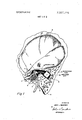
- FIG. I is a vertical cross-sectional view of aportion of a human head taken through theright side of the head.
- FIG. 2 is a fragmentary elevational view showing a portion of the right side of the head, and with theexternal ear pulled forwardly to show or indicate where the implant and microphone tube are placed;
- FIG. 3 is a tabulation of the means utilizing the implantiof the present invention, whereby sound is transmitted tothe temporal lobe of the brain, where the sound is heard.
- FIG. 1 An understand ing of FIG. 1 can be gained if the observer can imagine he is inside the head of the person depicted in FIG. '1, and is looking outwardly and through the right ear.
- the observer will see the auditory canal l, thetympanic membrane 2, the malleus 3, theincus 4. and themastoid antrum 5.
- the tip of the mastoid is' indicated by reference numeral 6, the chorda tympani by reference numeral 7, a facial nerve by reference numeral 8 and thesquama by reference numeral 9.
- I provide axhearing improvement device which Iterm an audio implant," and which consists of several components, including mainly a microphone, a battery, an amplifying system and a speaker,
- the unit 10 is rectangular in shape, measuring approximately l cm. X l c'm., and a few millimeters in thickness, and is provided with a silicone rubber tube 11 extending centrally from one en'd'of the unit 10, and a similar tube '12 extending centrally from one side of the unit 10.
- the tubes 11 and 12 are approximately IV: cm. in length, and approximately 2 mm. in diameter.
- the tube 11, which I term the microphone tube, is attached to the microphone within the unit 10, and both ends of the tube are sealed with a very thin membrane of silicone rubber.
- the tube 12, which I term the speaker tube is attached to the speaker within the unit 10, and both ends of this tube are sealed with a very thin membrane of silicone rubber.
- a postauricular incision is made adjacent the auricular appendage of the external ear, in the skin of the anatomical area of the ear. This incision is approximately three centimeters in length, and is carried out under local anesthesia.
- the bony structure overlying the body of the mastoid is exposed, and an area of bone, i.e., an area of approximately 2 square centimeters, is removed down to the antrum cell of the mastoid. A few of the air cells of the mastoid are then removed to enlarge the antrum cell to accommodate the unit 10.
- the unit 10 is then placed directly into this space in the manner shown in FIG. I, and the speaker tube 12 is then placed in a passageway which extends from the antrum cell of the mastoid into the middle'ear space behind the ear drum. More specifically, the speaker tube is brought up through a small opening near the introitus of the ear canal, and to a point closely adjacent to what is commonly referred to as the ""round window The wave motion is transmitted to the cochlea, which startsthe electrical impulses to the temporal lobe'of the brain.
- the microphone'tube '11 is then extended externally from -"the'ant'rum cell of the mastoid and is covered with skin and i will be disposed just beneath the skin behind the ear. The incision is th'en closed, and the ear again completely sealed. Since the'skin inc'isio'nis made in a hidden area adjacent the car, no noticeable scar will be produced, after healing.
- the unit l0 is preferably a silver-cadmium battery'and'ca'n becharged by a magnetic induction coil which is attaehedto a head-band, which can be worn on the head while sleeping, or at anyother time which is convenient.
- the induction coil is connected to a wire which leads to a transistorized charging'unit'which is energized from a conventional electrical outlet'ln charging the battery, the induction coil'onthehead'band' is placed directly over the main structure of the mastoid.
- the implant' will function for approximately eight days before it becomes necessary to recharge such a battery with the magnetic induction coilf'Recharging of the battery requires approximately 6 hours.
- One of theadvant'ages of the use of such an implant is that it is embeddedsolidly in the bone of the skull, and is so situated that it'c'an' drive' the sound directly into the inner car, without the necessity" of driving the's'ound'through the'tympanic mem brane, which offers considerable resistance to transmission of sound in cases of conductive deafness where the oval window and'stapesarefused by abnormal bone closure called otosclerosis.
- Another advantage is that there are no parts which are disposed-externally of the head'or are'visible, so' that objec tions to use ofthe device, based on psychological factors, and cosmet'i'c'view'points'are eliminated.
- a further advantage lies in the fact that the replacement batteries, and itsattendant costs, are eliminated.
- a still further advantage resides in the elimination of the rushing andclothing noise which is a constant source of annoyance to individuals from movement across the microphones of hearing aids which are carried about the body.
- the device is also of particular advantage for children who require the use of a hearing aid to hear sufficiently to carry on their school work, while finding it necessary to remove these aids during play and physical activity since external hearing aids and devices are easily dislodged or broken during such play or physical activity.
- l have provided an audio implant in the nature of a miniaturized system for amplifying sound, which is placed directly in the structure of the ear and utilizes the impaired or damaged, but still functional, normal channels for transmission of sound to the brain.
- the method of implanting a self-contained hearing improvement device within the human body in which said device contains a microphone, a battery, an amplifying system, which is neutral to the adjacent portions of the body, a microphone tube extending from the microphone in said unit; a speaker and a speaker tube extending therefrom including the steps of making an incision adjacent the auricular appendage of the external ear, in the skin'of the anotomical area of the ear, exposing the bony structure overlying the body of the mastoid, removing a predetermined area of bone down to the antrum cell of the mastoid, implanting the self-contained hearing improvement device in said antrum cell, situating an outer end of the microphone tube into position and adjacent the skin behind the auricular appendage and situating an outer end of said speaker tube into the middle ear space behind the ear drum through the antrum-inner ear passage; and thereafter closing the incision.
- a hearing improvement device including signal-receiving means for receiving an incoming signal representative of a sound wave existing outside of the human body, intermediate means for converting said incoming signal to an audiofrequency electrical signal, output means including electrical-mechanical transducer means to generate mechanical motion from said electrical signal, an operative connection between said signal-receiving means, said intermediate means and between said intermediate means and said output means, said method comprising the steps of.making an incision in the skin in the auricular area of the ear adjacent the auricular appendage of the external ear; exposing the bony structure overlying the body of the mastoid; removing an area of bony structure to expose the an trum cell cavity; positioning said hearing improvement device within said cavity and with at least part of said output means in the middle ear space to deliver said generated mechanical motion directly thereinto; and then closing the incision.
- a hearing improvement device in a human body, said device including signal-receiving means for receiving an incoming signal representative of a sound wave existing outside of said human body, intermediate means for converting said incoming signal to an audiofrequency electrical signal, output means including electrical-mechanical transducer means adapted to generate mechanical motion from the electrical signal, and operative connections from said signal-receiving means to said intermediate means and from the intermediate means to the output means; said method comprising the steps of surgically positioning at least a portion of said output means within the human body in the middle ear space at the round window to permit said generated mechanical motion to pass from said output means directly to the middle ear space behind the area of the tympanic membrane; concurrently positioning said signal-receiving means within the human body in position to receive said incoming signal; and further, surgically positioning said intermediate means within the human body at a locus removed from the middle ear space but adjacent the area of the auricular appendage of the ear and in operative relationship to said signal-receiving means
- the method of implanting a hearing improvement device within the human body comprising the steps of: making an incision adjacent the auricular appendage of the external ear in the skin of the anatomical area of the ear; exposing the bony structure overlying the body of the mastoid; removing a predetermined area of bone down to the antrum cell of the mastoid; implanting a hearing improvement device in the cavity formed by the bone removal and mastoid antrum cell with at least a portion of the device extending into the middle ear space; and closing the incision.
Landscapes
- Health & Medical Sciences (AREA)
- General Health & Medical Sciences (AREA)
- Otolaryngology (AREA)
- Neurosurgery (AREA)
- Physics & Mathematics (AREA)
- Engineering & Computer Science (AREA)
- Acoustics & Sound (AREA)
- Signal Processing (AREA)
- Prostheses (AREA)
Abstract
A method is described of implanting a hearing improvement device within the human body, in which a postauricular incision is made in the skin of the anatomical area behind the auricular appendage of the external ear, to thereby expose the bony structure overlying the body of the mastoid, removing a predetermined area of bone down to the antrum cell of the mastoid, implanting the device in the cavity formed, and then closing the incision. The device has a portion which extends into the middle ear space.
Description
United States Patent [72] Inventor Jack Lawrence Mahoney Carmel, Calif. (90] Pacific St., Monterey, Calif., 93940) [21] Appl. No. 663,603
Filed Aug. 28, 1967 Division of 338,858, Dec. 27, 1963, Patent No. 3,346,704. [45] Patented Jan. 26, 1971 [54] METHOD OF IMPLANTING A HEARING AID 5 Claims, 3 Drawing Figs.
[52] U.S.Cl 128/1, 179/107 [51] Int. Cl A6lf 11/04, H04r 25/00 [50] Field of Search 128/1,2,
2.1; 179/l07(all); 181/23 [56] References Cited UNITED STATES PATENTS 2,641,328 6/1953 Beaudry 181/23 2,967,913 [/1961 Aubert et al 179/107(E) 3,170,046 2/1965 Leale 179/107(E) 2,611,829 9/1952 Hazard 179/107(BC) 3,209,081 9/1965 Ducote et a1. 179/107(BC) Primary Examiner-Richard C. Pinkham Assistant Examiner-Paul E. Shapiro Att0rneylsler and Qmstein ABSTRACT: A method is described of implanting a hearing improvement device within the human body, in which a postauricular incision is made in the skin of the anatomical area behind the auricular appendage of the external ear, to thereby expose the bony structure overlying the body of the mastoid, removing a predetermined area of bone down to the antrum cell of the mastoid, implanting the device in the cavity formed, and then closing the incision. The device has a portion which extends into the middle ear space.
PATENTEDJANZBIQYI 3557.775
SHEET 1 [IF 2 JMCROPHONE TUBE -AMPLIFIER UNIT INVENTOR.
JACK L. MAHONEY LLC H ATTORNEYS PATENIEflJAnzslsn I $557,775
F/'g 3 JACK L. mmousv M ram ATTORNEYS METHOD OF IMPLANTING AHEARING AID This application is a division of my copending application, Ser. No. 333,858, filed Dec. 27, 1963, for MEANS FOR AID- ING HEARING and since matured into Pat. No. 3,364,704.
This invention relates generally to a method of implanting a hearing aid in the human body, but has reference more particularly to a method in which the hearing aid is so implanted as to be completely enclosed within the head of the individual utilizing the hearing aid.
Hearing aids which are presently available on the market are usually worn outside of the body, and are therefore objectionable from an esthetic, cosmetic or functional viewpoint.
Although attempts have been made to utilize such hearing aids in a manner to conceal them from view, as, for example, within the temples of spectacles, it is'virtually impossible to conceal certain portions of the hearing aid, such as wires, etc., and fort for this reason, many persons whose hearing facilities can be improved do not avail themselves of such aids.
The present invention has as its primary object the provision of a method whereby an audio implant in the nature of a miniaturized system for amplifying sound, is placed directly in the structure of the ear and utilizes the impaired or-damaged, but still functioning, normal channels for transmission of sound to the brain.
Another object of the invention is to provide a method wherein an implant of the character described, is disposed in its entirety within the head structure of the user, and is entirely concealed from view, thereby eliminating any and all objections to its use from an esthetic or cosmetic point of view.
A further object of the invention is to provide a method wherein the implant utilizes a battery which is enclosed within the head structure.
Other objects and advantages of the invention willbecome apparent in the course of the following'description, taken in conjunction with the accompanying drawings wherein:
FIG. I is a vertical cross-sectional view of aportion of a human head taken through theright side of the head. and
passing through the mastoid antrum and middle ear in a plane parallel to a plane passing through the nose and the back of the head, and showing the components of the audio implant of the present invention in'position;
FIG. 2 is a fragmentary elevational view showing a portion of the right side of the head, and with theexternal ear pulled forwardly to show or indicate where the implant and microphone tube are placed; and
FIG. 3 is a tabulation of the means utilizing the implantiof the present invention, whereby sound is transmitted tothe temporal lobe of the brain, where the sound is heard.
Referring more particularly to the drawings,-an understand ing of FIG. 1 can be gained if the observer can imagine he is inside the head of the person depicted in FIG. '1, and is looking outwardly and through the right ear.
The observer will see the auditory canal l, thetympanic membrane 2, the malleus 3, theincus 4. and themastoid antrum 5. The tip of the mastoid is' indicated by reference numeral 6, the chorda tympani by reference numeral 7, a facial nerve by reference numeral 8 and thesquama by reference numeral 9.
Normal hearing in an individual is accomplished by the help i of the external car, which concentrates'thesonorous vibrations of the air upon the tympanic membrane,--causing the latter to vibrate. The chain of bones in the middleeannamely the malleus, incus and stapes, transmitsthese vibrations to the internal ear, where, wholly or chiefly through the hair cells in t the organ of corti, they stimulate the fibers of theauditory nerve, which then carries the sound impulses to the temporal lobe of the brain.
In accordance with my invention, I provide axhearing improvement device which Iterm an audio implant," and which consists of several components, including mainly a microphone, a battery, an amplifying system and a speaker,
such as are found in a conventional hearing aidhThese-components are encased in a silicone rubber sponge. with a hardened coat of silicone rubber to form a unit, designated by reference numeral 10 in FIGS. 1 and 2.
The unit 10 is rectangular in shape, measuring approximately l cm. X l c'm., and a few millimeters in thickness, and is provided with a silicone rubber tube 11 extending centrally from one en'd'of the unit 10, and a similar tube '12 extending centrally from one side of the unit 10. The tubes 11 and 12 are approximately IV: cm. in length, and approximately 2 mm. in diameter. The tube 11, which I term the microphone tube, is attached to the microphone within the unit 10, and both ends of the tube are sealed with a very thin membrane of silicone rubber. The tube 12, which I term the speaker tube, is attached to the speaker within the unit 10, and both ends of this tube are sealed with a very thin membrane of silicone rubber.
When the device is to be implanted, a postauricular incision is made adjacent the auricular appendage of the external ear, in the skin of the anatomical area of the ear. This incision is approximately three centimeters in length, and is carried out under local anesthesia. The bony structure overlying the body of the mastoid is exposed, and an area of bone, i.e., an area of approximately 2 square centimeters, is removed down to the antrum cell of the mastoid. A few of the air cells of the mastoid are then removed to enlarge the antrum cell to accommodate the unit 10.
The unit 10 is then placed directly into this space in the manner shown in FIG. I, and the speaker tube 12 is then placed in a passageway which extends from the antrum cell of the mastoid into the middle'ear space behind the ear drum. More specifically, the speaker tube is brought up through a small opening near the introitus of the ear canal, and to a point closely adjacent to what is commonly referred to as the ""round window The wave motion is transmitted to the cochlea, which startsthe electrical impulses to the temporal lobe'of the brain.
The microphone'tube '11 is then extended externally from -"the'ant'rum cell of the mastoid and is covered with skin and i will be disposed just beneath the skin behind the ear. The incision is th'en closed, and the ear again completely sealed. Since the'skin inc'isio'nis made in a hidden area adjacent the car, no noticeable scar will be produced, after healing.
Referring to FIG. 3 of the drawing, it is seen that through theuseof the hearingaid of this invention, sound vibrations aretransmit'ted through the skin, posterior to the auricle, hence to themicrophone tube 11, amplifier unit 10, speaker tube 12,-middle ear cavity, round window, and duct to choclea, thence in the normal manner to the temporal lobe of the brain.
'I'he'batterywithin the unit l0 is preferably a silver-cadmium battery'and'ca'n becharged by a magnetic induction coil which is attaehedto a head-band, which can be worn on the head while sleeping, or at anyother time which is convenient. The induction coil is connected to a wire which leads to a transistorized charging'unit'which is energized from a conventional electrical outlet'ln charging the battery, the induction coil'onthehead'band' is placed directly over the main structure of the mastoid.
The implant' will function for approximately eight days before it becomes necessary to recharge such a battery with the magnetic induction coilf'Recharging of the battery requires approximately 6 hours.
One of theadvant'ages of the use of such an implant is that it is embeddedsolidly in the bone of the skull, and is so situated that it'c'an' drive' the sound directly into the inner car, without the necessity" of driving the's'ound'through the'tympanic mem brane, which offers considerable resistance to transmission of sound in cases of conductive deafness where the oval window and'stapesarefused by abnormal bone closure called otosclerosis.
Another advantage is that there are no parts which are disposed-externally of the head'or are'visible, so' that objec tions to use ofthe device, based on psychological factors, and cosmet'i'c'view'points'are eliminated.
A further advantage lies in the fact that the replacement batteries, and itsattendant costs, are eliminated.
A still further advantage resides in the elimination of the rushing andclothing noise which is a constant source of annoyance to individuals from movement across the microphones of hearing aids which are carried about the body.
The device is also of particular advantage for children who require the use of a hearing aid to hear sufficiently to carry on their school work, while finding it necessary to remove these aids during play and physical activity since external hearing aids and devices are easily dislodged or broken during such play or physical activity.
It is thus seen that l have provided a means of aiding hearing of individuals whose hearing is. not remediable medically or surgically, but who require amplification of sound for hearing.
it is also seen that l have provided an audio implant in the nature of a miniaturized system for amplifying sound, which is placed directly in the structure of the ear and utilizes the impaired or damaged, but still functional, normal channels for transmission of sound to the brain.
It is'further seen that l have provided an implant which is disposed in its entirety within the head structure of the user, and is entirely concealed from view, thereby eliminating any and all objections to its use from an esthetic or cosmetic point of view.
It will be understood that various changes may be made in the details of the invention, as described, without departing from the spirit of the invention, or the scope of the appended claims.
Iclaim:
l. The method of implanting a self-contained hearing improvement device within the human body, in which said device contains a microphone, a battery, an amplifying system, which is neutral to the adjacent portions of the body, a microphone tube extending from the microphone in said unit; a speaker and a speaker tube extending therefrom including the steps of making an incision adjacent the auricular appendage of the external ear, in the skin'of the anotomical area of the ear, exposing the bony structure overlying the body of the mastoid, removing a predetermined area of bone down to the antrum cell of the mastoid, implanting the self-contained hearing improvement device in said antrum cell, situating an outer end of the microphone tube into position and adjacent the skin behind the auricular appendage and situating an outer end of said speaker tube into the middle ear space behind the ear drum through the antrum-inner ear passage; and thereafter closing the incision.
2. The method of implanting in the human body a hearing improvement device including signal-receiving means for receiving an incoming signal representative of a sound wave existing outside of the human body, intermediate means for converting said incoming signal to an audiofrequency electrical signal, output means including electrical-mechanical transducer means to generate mechanical motion from said electrical signal, an operative connection between said signal-receiving means, said intermediate means and between said intermediate means and said output means, said method comprising the steps of.making an incision in the skin in the auricular area of the ear adjacent the auricular appendage of the external ear; exposing the bony structure overlying the body of the mastoid; removing an area of bony structure to expose the an trum cell cavity; positioning said hearing improvement device within said cavity and with at least part of said output means in the middle ear space to deliver said generated mechanical motion directly thereinto; and then closing the incision.
3. The method specified in claim 2 and the step'of removing sufficient air cells of the mastoid to enlarge the antrum cell cavity to accommodate the implanting of said hearing improvement device, said step being performed before the step of positioning said output means.
4. The method of implanting a hearing improvement device in a human body, said device including signal-receiving means for receiving an incoming signal representative of a sound wave existing outside of said human body, intermediate means for converting said incoming signal to an audiofrequency electrical signal, output means including electrical-mechanical transducer means adapted to generate mechanical motion from the electrical signal, and operative connections from said signal-receiving means to said intermediate means and from the intermediate means to the output means; said method comprising the steps of surgically positioning at least a portion of said output means within the human body in the middle ear space at the round window to permit said generated mechanical motion to pass from said output means directly to the middle ear space behind the area of the tympanic membrane; concurrently positioning said signal-receiving means within the human body in position to receive said incoming signal; and further, surgically positioning said intermediate means within the human body at a locus removed from the middle ear space but adjacent the area of the auricular appendage of the ear and in operative relationship to said signal-receiving means and said output means.
5. The method of implanting a hearing improvement device within the human body, said method comprising the steps of: making an incision adjacent the auricular appendage of the external ear in the skin of the anatomical area of the ear; exposing the bony structure overlying the body of the mastoid; removing a predetermined area of bone down to the antrum cell of the mastoid; implanting a hearing improvement device in the cavity formed by the bone removal and mastoid antrum cell with at least a portion of the device extending into the middle ear space; and closing the incision.
Claims (5)
1. The method of implanting a self-contained hearing improvement device within the human body, in which said device contains a microphone, a battery, an amplifying system, which is neutral to the adjacent portions of the body, a microphone tube extending from the microphone in said unit; a speaker and a speaker tube extending therefrom including the steps of making an incision adjacent the auricular appendage of the external ear, in the skin of the anotomical area of the ear, exposing the bony structure overlying the body of the mastoid, removing a predetermined area of bone down to the antrum cell of the mastoid, implanting the self-contained hearing improvement device in said antrum cell, situating an outer end of the microphone tube into position and adjacent the skin behind the auricular appendage and situating an outer end of said speaker tube into the middle ear space behind the ear drum through the antrum-inner ear passage; and thereafter closing the incision.
2. The method Of implanting in the human body a hearing improvement device including signal-receiving means for receiving an incoming signal representative of a sound wave existing outside of the human body, intermediate means for converting said incoming signal to an audiofrequency electrical signal, output means including electrical-mechanical transducer means to generate mechanical motion from said electrical signal, an operative connection between said signal-receiving means, said intermediate means and between said intermediate means and said output means, said method comprising the steps of making an incision in the skin in the auricular area of the ear adjacent the auricular appendage of the external ear; exposing the bony structure overlying the body of the mastoid; removing an area of bony structure to expose the antrum cell cavity; positioning said hearing improvement device within said cavity and with at least part of said output means in the middle ear space to deliver said generated mechanical motion directly thereinto; and then closing the incision.
3. The method specified in claim 2 and the step of removing sufficient air cells of the mastoid to enlarge the antrum cell cavity to accommodate the implanting of said hearing improvement device, said step being performed before the step of positioning said output means.
4. The method of implanting a hearing improvement device in a human body, said device including signal-receiving means for receiving an incoming signal representative of a sound wave existing outside of said human body, intermediate means for converting said incoming signal to an audiofrequency electrical signal, output means including electrical-mechanical transducer means adapted to generate mechanical motion from the electrical signal, and operative connections from said signal-receiving means to said intermediate means and from the intermediate means to the output means; said method comprising the steps of surgically positioning at least a portion of said output means within the human body in the middle ear space at the round window to permit said generated mechanical motion to pass from said output means directly to the middle ear space behind the area of the tympanic membrane; concurrently positioning said signal-receiving means within the human body in position to receive said incoming signal; and further, surgically positioning said intermediate means within the human body at a locus removed from the middle ear space but adjacent the area of the auricular appendage of the ear and in operative relationship to said signal-receiving means and said output means.
5. The method of implanting a hearing improvement device within the human body, said method comprising the steps of: making an incision adjacent the auricular appendage of the external ear in the skin of the anatomical area of the ear; exposing the bony structure overlying the body of the mastoid; removing a predetermined area of bone down to the antrum cell of the mastoid; implanting a hearing improvement device in the cavity formed by the bone removal and mastoid antrum cell with at least a portion of the device extending into the middle ear space; and closing the incision.
Applications Claiming Priority (2)
| Application Number | Priority Date | Filing Date | Title |
|---|---|---|---|
| US333858A US3346704A (en) | 1963-12-27 | 1963-12-27 | Means for aiding hearing |
| US66360367A | 1967-08-28 | 1967-08-28 |
Publications (1)
| Publication Number | Publication Date |
|---|---|
| US3557775A true US3557775A (en) | 1971-01-26 |
Family
ID=26988918
Family Applications (1)
| Application Number | Title | Priority Date | Filing Date |
|---|---|---|---|
| US663603A Expired - Lifetime US3557775A (en) | 1963-12-27 | 1967-08-28 | Method of implanting a hearing aid |
Country Status (1)
| Country | Link |
|---|---|
| US (1) | US3557775A (en) |
Cited By (52)
| Publication number | Priority date | Publication date | Assignee | Title |
|---|---|---|---|---|
| US4352960A (en) * | 1980-09-30 | 1982-10-05 | Baptist Medical Center Of Oklahoma, Inc. | Magnetic transcutaneous mount for external device of an associated implant |
| US4706682A (en) * | 1985-08-21 | 1987-11-17 | Minnesota Mining And Manufacturing Company | External ear canal electrode to be placed proximate the tympanic membrane |
| US4729366A (en) * | 1984-12-04 | 1988-03-08 | Medical Devices Group, Inc. | Implantable hearing aid and method of improving hearing |
| USRE32947E (en) * | 1980-09-30 | 1989-06-13 | Baptist Medical Center Of Oklahoma, Inc. | Magnetic transcutaneous mount for external device of an associated implant |
| WO1989005559A1 (en) * | 1987-12-04 | 1989-06-15 | Claus Jansen | Electroacoustic transducer |
| US4850962A (en) * | 1984-12-04 | 1989-07-25 | Medical Devices Group, Inc. | Implantable hearing aid and method of improving hearing |
| US4944301A (en) * | 1988-06-16 | 1990-07-31 | Cochlear Corporation | Method for determining absolute current density through an implanted electrode |
| WO1991012783A1 (en) * | 1990-03-02 | 1991-09-05 | Roger Tari | Heraing assistance device comprising a self-contained direct bone conduction hearing aid implant |
| US5239588A (en) * | 1988-12-21 | 1993-08-24 | Davis Murray A | Hearing aid |
| US5390254A (en) * | 1991-01-17 | 1995-02-14 | Adelman; Roger A. | Hearing apparatus |
| US5430801A (en) * | 1993-12-14 | 1995-07-04 | Hill; Frank C. | Hearing aid |
| US5707338A (en) * | 1996-08-07 | 1998-01-13 | St. Croix Medical, Inc. | Stapes vibrator |
| US5762583A (en) * | 1996-08-07 | 1998-06-09 | St. Croix Medical, Inc. | Piezoelectric film transducer |
| US5772575A (en) * | 1995-09-22 | 1998-06-30 | S. George Lesinski | Implantable hearing aid |
| US5814095A (en) * | 1996-09-18 | 1998-09-29 | Implex Gmbh Spezialhorgerate | Implantable microphone and implantable hearing aids utilizing same |
| US5836863A (en) * | 1996-08-07 | 1998-11-17 | St. Croix Medical, Inc. | Hearing aid transducer support |
| US5842967A (en) * | 1996-08-07 | 1998-12-01 | St. Croix Medical, Inc. | Contactless transducer stimulation and sensing of ossicular chain |
| US5879283A (en) * | 1996-08-07 | 1999-03-09 | St. Croix Medical, Inc. | Implantable hearing system having multiple transducers |
| US5881158A (en) * | 1996-05-24 | 1999-03-09 | United States Surgical Corporation | Microphones for an implantable hearing aid |
| US5951601A (en) * | 1996-03-25 | 1999-09-14 | Lesinski; S. George | Attaching an implantable hearing aid microactuator |
| US5954628A (en) * | 1997-08-07 | 1999-09-21 | St. Croix Medical, Inc. | Capacitive input transducers for middle ear sensing |
| US5977689A (en) * | 1996-07-19 | 1999-11-02 | Neukermans; Armand P. | Biocompatible, implantable hearing aid microactuator |
| US5984859A (en) * | 1993-01-25 | 1999-11-16 | Lesinski; S. George | Implantable auditory system components and system |
| US5997466A (en) * | 1996-08-07 | 1999-12-07 | St. Croix Medical, Inc. | Implantable hearing system having multiple transducers |
| US6001129A (en) * | 1996-08-07 | 1999-12-14 | St. Croix Medical, Inc. | Hearing aid transducer support |
| US6005955A (en) * | 1996-08-07 | 1999-12-21 | St. Croix Medical, Inc. | Middle ear transducer |
| US6010532A (en) * | 1996-11-25 | 2000-01-04 | St. Croix Medical, Inc. | Dual path implantable hearing assistance device |
| US6171229B1 (en) | 1996-08-07 | 2001-01-09 | St. Croix Medical, Inc. | Ossicular transducer attachment for an implantable hearing device |
| US6198971B1 (en) | 1999-04-08 | 2001-03-06 | Implex Aktiengesellschaft Hearing Technology | Implantable system for rehabilitation of a hearing disorder |
| US6214046B1 (en) | 1996-11-25 | 2001-04-10 | St. Croix Medical, Inc. | Method of implanting an implantable hearing assistance device with remote electronics unit |
| US6261224B1 (en) | 1996-08-07 | 2001-07-17 | St. Croix Medical, Inc. | Piezoelectric film transducer for cochlear prosthetic |
| US6264603B1 (en) | 1997-08-07 | 2001-07-24 | St. Croix Medical, Inc. | Middle ear vibration sensor using multiple transducers |
| US6315710B1 (en) | 1997-07-21 | 2001-11-13 | St. Croix Medical, Inc. | Hearing system with middle ear transducer mount |
| US20020012438A1 (en) * | 2000-06-30 | 2002-01-31 | Hans Leysieffer | System for rehabilitation of a hearing disorder |
| US20020051550A1 (en) * | 2000-08-25 | 2002-05-02 | Hans Leysieffer | Implantable hermetically sealed housing for an implantable medical device and process for producing the same |
| US6387039B1 (en) * | 2000-02-04 | 2002-05-14 | Ron L. Moses | Implantable hearing aid |
| US6516228B1 (en) | 2000-02-07 | 2003-02-04 | Epic Biosonics Inc. | Implantable microphone for use with a hearing aid or cochlear prosthesis |
| US6537200B2 (en) | 2000-03-28 | 2003-03-25 | Cochlear Limited | Partially or fully implantable hearing system |
| US20030063764A1 (en) * | 2001-10-03 | 2003-04-03 | Maltan Albert A. | Personal sound link module |
| US6565503B2 (en) | 2000-04-13 | 2003-05-20 | Cochlear Limited | At least partially implantable system for rehabilitation of hearing disorder |
| US6575894B2 (en) | 2000-04-13 | 2003-06-10 | Cochlear Limited | At least partially implantable system for rehabilitation of a hearing disorder |
| US6629923B2 (en) | 2000-09-21 | 2003-10-07 | Phonak Ag | At least partially implantable hearing system with direct mechanical stimulation of a lymphatic space of the inner ear |
| US6689045B2 (en) | 1998-09-24 | 2004-02-10 | St. Croix Medical, Inc. | Method and apparatus for improving signal quality in implantable hearing systems |
| US6697674B2 (en) | 2000-04-13 | 2004-02-24 | Cochlear Limited | At least partially implantable system for rehabilitation of a hearing disorder |
| US6730015B2 (en) | 2001-06-01 | 2004-05-04 | Mike Schugt | Flexible transducer supports |
| US6736770B2 (en) | 2000-08-25 | 2004-05-18 | Cochlear Limited | Implantable medical device comprising an hermetically sealed housing |
| US20040133066A1 (en) * | 2001-10-03 | 2004-07-08 | Mann Alfred E. | Implanted outer ear canal hearing aid |
| US6786860B2 (en) | 2001-10-03 | 2004-09-07 | Advanced Bionics Corporation | Hearing aid design |
| US20050203557A1 (en) * | 2001-10-30 | 2005-09-15 | Lesinski S. G. | Implantation method for a hearing aid microactuator implanted into the cochlea |
| EP0831673A3 (en) * | 1996-09-18 | 2006-08-09 | Phonak Ag | Implantable microphone |
| US20180063658A1 (en) * | 2016-08-31 | 2018-03-01 | Marcus ANDERSSON | Intracutaneous implantation techniques |
| US10319963B2 (en) * | 2013-06-12 | 2019-06-11 | Shinko Electric Industries Co., Ltd. | Battery and method for producing the same |
Citations (5)
| Publication number | Priority date | Publication date | Assignee | Title |
|---|---|---|---|---|
| US2611829A (en) * | 1949-06-17 | 1952-09-23 | Dictograph Products Co Inc | Audiphone |
| US2641328A (en) * | 1948-07-26 | 1953-06-09 | John R Beaudry | Mechanical hearing aid |
| US2967913A (en) * | 1956-04-26 | 1961-01-10 | Aubert Maurice | Electronic intensifying ear-drum |
| US3170046A (en) * | 1961-12-05 | 1965-02-16 | Earmaster Inc | Hearing aid |
| US3209081A (en) * | 1961-10-02 | 1965-09-28 | Behrman A Ducote | Subcutaneously implanted electronic device |
-
1967
- 1967-08-28 US US663603A patent/US3557775A/en not_active Expired - Lifetime
Patent Citations (5)
| Publication number | Priority date | Publication date | Assignee | Title |
|---|---|---|---|---|
| US2641328A (en) * | 1948-07-26 | 1953-06-09 | John R Beaudry | Mechanical hearing aid |
| US2611829A (en) * | 1949-06-17 | 1952-09-23 | Dictograph Products Co Inc | Audiphone |
| US2967913A (en) * | 1956-04-26 | 1961-01-10 | Aubert Maurice | Electronic intensifying ear-drum |
| US3209081A (en) * | 1961-10-02 | 1965-09-28 | Behrman A Ducote | Subcutaneously implanted electronic device |
| US3170046A (en) * | 1961-12-05 | 1965-02-16 | Earmaster Inc | Hearing aid |
Cited By (72)
| Publication number | Priority date | Publication date | Assignee | Title |
|---|---|---|---|---|
| USRE32947E (en) * | 1980-09-30 | 1989-06-13 | Baptist Medical Center Of Oklahoma, Inc. | Magnetic transcutaneous mount for external device of an associated implant |
| US4352960A (en) * | 1980-09-30 | 1982-10-05 | Baptist Medical Center Of Oklahoma, Inc. | Magnetic transcutaneous mount for external device of an associated implant |
| US4850962A (en) * | 1984-12-04 | 1989-07-25 | Medical Devices Group, Inc. | Implantable hearing aid and method of improving hearing |
| US4729366A (en) * | 1984-12-04 | 1988-03-08 | Medical Devices Group, Inc. | Implantable hearing aid and method of improving hearing |
| US4706682A (en) * | 1985-08-21 | 1987-11-17 | Minnesota Mining And Manufacturing Company | External ear canal electrode to be placed proximate the tympanic membrane |
| WO1989005559A1 (en) * | 1987-12-04 | 1989-06-15 | Claus Jansen | Electroacoustic transducer |
| US4944301A (en) * | 1988-06-16 | 1990-07-31 | Cochlear Corporation | Method for determining absolute current density through an implanted electrode |
| US5239588A (en) * | 1988-12-21 | 1993-08-24 | Davis Murray A | Hearing aid |
| WO1991012783A1 (en) * | 1990-03-02 | 1991-09-05 | Roger Tari | Heraing assistance device comprising a self-contained direct bone conduction hearing aid implant |
| FR2659009A1 (en) * | 1990-03-02 | 1991-09-06 | Tari Roger | HEARING AID DEVICE COMPRISING AN IMPLANTED AND AUTONOMOUS HEARING AID WITH DIRECT BONE CONDUCTION. |
| US6041129A (en) * | 1991-01-17 | 2000-03-21 | Adelman; Roger A. | Hearing apparatus |
| US5390254A (en) * | 1991-01-17 | 1995-02-14 | Adelman; Roger A. | Hearing apparatus |
| US5984859A (en) * | 1993-01-25 | 1999-11-16 | Lesinski; S. George | Implantable auditory system components and system |
| US5430801A (en) * | 1993-12-14 | 1995-07-04 | Hill; Frank C. | Hearing aid |
| US5772575A (en) * | 1995-09-22 | 1998-06-30 | S. George Lesinski | Implantable hearing aid |
| US5951601A (en) * | 1996-03-25 | 1999-09-14 | Lesinski; S. George | Attaching an implantable hearing aid microactuator |
| US5881158A (en) * | 1996-05-24 | 1999-03-09 | United States Surgical Corporation | Microphones for an implantable hearing aid |
| US6153966A (en) * | 1996-07-19 | 2000-11-28 | Neukermans; Armand P. | Biocompatible, implantable hearing aid microactuator |
| US5977689A (en) * | 1996-07-19 | 1999-11-02 | Neukermans; Armand P. | Biocompatible, implantable hearing aid microactuator |
| US5879283A (en) * | 1996-08-07 | 1999-03-09 | St. Croix Medical, Inc. | Implantable hearing system having multiple transducers |
| US20040181117A1 (en) * | 1996-08-07 | 2004-09-16 | Adams Theodore P. | Piezoelectric film transducer |
| US5707338A (en) * | 1996-08-07 | 1998-01-13 | St. Croix Medical, Inc. | Stapes vibrator |
| US5842967A (en) * | 1996-08-07 | 1998-12-01 | St. Croix Medical, Inc. | Contactless transducer stimulation and sensing of ossicular chain |
| US5836863A (en) * | 1996-08-07 | 1998-11-17 | St. Croix Medical, Inc. | Hearing aid transducer support |
| US5997466A (en) * | 1996-08-07 | 1999-12-07 | St. Croix Medical, Inc. | Implantable hearing system having multiple transducers |
| US6001129A (en) * | 1996-08-07 | 1999-12-14 | St. Croix Medical, Inc. | Hearing aid transducer support |
| US6005955A (en) * | 1996-08-07 | 1999-12-21 | St. Croix Medical, Inc. | Middle ear transducer |
| US6261224B1 (en) | 1996-08-07 | 2001-07-17 | St. Croix Medical, Inc. | Piezoelectric film transducer for cochlear prosthetic |
| US6488616B1 (en) | 1996-08-07 | 2002-12-03 | St. Croix Medical, Inc. | Hearing aid transducer support |
| US6050933A (en) * | 1996-08-07 | 2000-04-18 | St. Croix Medical, Inc. | Hearing aid transducer support |
| US5762583A (en) * | 1996-08-07 | 1998-06-09 | St. Croix Medical, Inc. | Piezoelectric film transducer |
| US6171229B1 (en) | 1996-08-07 | 2001-01-09 | St. Croix Medical, Inc. | Ossicular transducer attachment for an implantable hearing device |
| US5814095A (en) * | 1996-09-18 | 1998-09-29 | Implex Gmbh Spezialhorgerate | Implantable microphone and implantable hearing aids utilizing same |
| EP0831673A3 (en) * | 1996-09-18 | 2006-08-09 | Phonak Ag | Implantable microphone |
| US6214046B1 (en) | 1996-11-25 | 2001-04-10 | St. Croix Medical, Inc. | Method of implanting an implantable hearing assistance device with remote electronics unit |
| US6235056B1 (en) | 1996-11-25 | 2001-05-22 | St. Croix Medical, Inc. | Implantable hearing assistance device with remote electronics unit |
| US6010532A (en) * | 1996-11-25 | 2000-01-04 | St. Croix Medical, Inc. | Dual path implantable hearing assistance device |
| US6491722B1 (en) | 1996-11-25 | 2002-12-10 | St. Croix Medical, Inc. | Dual path implantable hearing assistance device |
| US6315710B1 (en) | 1997-07-21 | 2001-11-13 | St. Croix Medical, Inc. | Hearing system with middle ear transducer mount |
| US5954628A (en) * | 1997-08-07 | 1999-09-21 | St. Croix Medical, Inc. | Capacitive input transducers for middle ear sensing |
| US6264603B1 (en) | 1997-08-07 | 2001-07-24 | St. Croix Medical, Inc. | Middle ear vibration sensor using multiple transducers |
| US6689045B2 (en) | 1998-09-24 | 2004-02-10 | St. Croix Medical, Inc. | Method and apparatus for improving signal quality in implantable hearing systems |
| US6198971B1 (en) | 1999-04-08 | 2001-03-06 | Implex Aktiengesellschaft Hearing Technology | Implantable system for rehabilitation of a hearing disorder |
| US6387039B1 (en) * | 2000-02-04 | 2002-05-14 | Ron L. Moses | Implantable hearing aid |
| US6516228B1 (en) | 2000-02-07 | 2003-02-04 | Epic Biosonics Inc. | Implantable microphone for use with a hearing aid or cochlear prosthesis |
| US6537200B2 (en) | 2000-03-28 | 2003-03-25 | Cochlear Limited | Partially or fully implantable hearing system |
| US6575894B2 (en) | 2000-04-13 | 2003-06-10 | Cochlear Limited | At least partially implantable system for rehabilitation of a hearing disorder |
| US6565503B2 (en) | 2000-04-13 | 2003-05-20 | Cochlear Limited | At least partially implantable system for rehabilitation of hearing disorder |
| US6697674B2 (en) | 2000-04-13 | 2004-02-24 | Cochlear Limited | At least partially implantable system for rehabilitation of a hearing disorder |
| US20040172102A1 (en) * | 2000-04-13 | 2004-09-02 | Cochlear Limited | At least partially implantable system for rehabilitation of a hearing disorder |
| US7376563B2 (en) | 2000-06-30 | 2008-05-20 | Cochlear Limited | System for rehabilitation of a hearing disorder |
| US20020012438A1 (en) * | 2000-06-30 | 2002-01-31 | Hans Leysieffer | System for rehabilitation of a hearing disorder |
| US6736770B2 (en) | 2000-08-25 | 2004-05-18 | Cochlear Limited | Implantable medical device comprising an hermetically sealed housing |
| US20020051550A1 (en) * | 2000-08-25 | 2002-05-02 | Hans Leysieffer | Implantable hermetically sealed housing for an implantable medical device and process for producing the same |
| US6629923B2 (en) | 2000-09-21 | 2003-10-07 | Phonak Ag | At least partially implantable hearing system with direct mechanical stimulation of a lymphatic space of the inner ear |
| US6730015B2 (en) | 2001-06-01 | 2004-05-04 | Mike Schugt | Flexible transducer supports |
| US6786860B2 (en) | 2001-10-03 | 2004-09-07 | Advanced Bionics Corporation | Hearing aid design |
| US7853033B2 (en) * | 2001-10-03 | 2010-12-14 | Advanced Bionics, Llc | Hearing aid design |
| US6879695B2 (en) | 2001-10-03 | 2005-04-12 | Advanced Bionics Corporation | Personal sound link module |
| US20050157896A1 (en) * | 2001-10-03 | 2005-07-21 | Maltan Albert A. | Hollow tube enclosing an implantable personal sound link module |
| US20050031145A1 (en) * | 2001-10-03 | 2005-02-10 | Maltan Albert A. | Novel hearing aid design |
| US20040133066A1 (en) * | 2001-10-03 | 2004-07-08 | Mann Alfred E. | Implanted outer ear canal hearing aid |
| US7127078B2 (en) | 2001-10-03 | 2006-10-24 | Advanced Bionics Corporation | Implanted outer ear canal hearing aid |
| US7224815B2 (en) | 2001-10-03 | 2007-05-29 | Advanced Bionics Corporation | Hearing aid design |
| US20070217640A1 (en) * | 2001-10-03 | 2007-09-20 | Advanced Bionics Corporation | Hearing Aid Design |
| US20030063764A1 (en) * | 2001-10-03 | 2003-04-03 | Maltan Albert A. | Personal sound link module |
| US20050203557A1 (en) * | 2001-10-30 | 2005-09-15 | Lesinski S. G. | Implantation method for a hearing aid microactuator implanted into the cochlea |
| US8147544B2 (en) | 2001-10-30 | 2012-04-03 | Otokinetics Inc. | Therapeutic appliance for cochlea |
| US8876689B2 (en) | 2001-10-30 | 2014-11-04 | Otokinetics Inc. | Hearing aid microactuator |
| US10319963B2 (en) * | 2013-06-12 | 2019-06-11 | Shinko Electric Industries Co., Ltd. | Battery and method for producing the same |
| US20180063658A1 (en) * | 2016-08-31 | 2018-03-01 | Marcus ANDERSSON | Intracutaneous implantation techniques |
| US11943588B2 (en) * | 2016-08-31 | 2024-03-26 | Cochlear Limited | Intracutaneous implantation techniques |
Similar Documents
| Publication | Publication Date | Title |
|---|---|---|
| US3346704A (en) | Means for aiding hearing | |
| Goode et al. | The history and development of the implantable hearing aid | |
| US3764748A (en) | Implanted hearing aids | |
| US6048305A (en) | Apparatus and method for an open ear auditory pathway stimulator to manage tinnitus and hyperacusis | |
| US7266208B2 (en) | Auditory aid device for the rehabilitation of patients suffering from partial neurosensory hearing loss | |
| US5712917A (en) | System and method for creating auditory sensations | |
| US20040234091A1 (en) | Hearing aid apparatus | |
| JPH09507008A (en) | hearing aid | |
| CN100488473C (en) | Full-implanting type artificial cochlea and method for making same | |
| PT1951175E (en) | Cochlear implant | |
| Clark et al. | A multiple‐channel cochlear implant: An evaluation using open‐set cid sentences | |
| Zenner et al. | Human studies of a piezoelectric transducer and a microphone for a totally implantable electronic hearing device | |
| CN106331972A (en) | Methods and devices for correct and safe placement of an in-ear communication device in the ear canal of a user | |
| Holgers et al. | Sound stimulation via bone conduction for tinnitus relief: a pilot study: Estimulación Sonora por vía ósea para mejorar el acúfeno: un estudio piloto | |
| Spitzer et al. | Evolving applications in the use of bone-anchored hearing aids | |
| Gyo et al. | Implantable hearing aid using a piezoelectric ossicular vibrator: a speech audiometric study | |
| Poluan | The Effect of Headset/Earphone Use on Hearing Decrease | |
| EP0345345B1 (en) | Electroacoustic transducer | |
| Maltby | A Dictionary of Audiology | |
| Shimokura | Hearing Aids | |
| US20240245914A1 (en) | Inner ear apparauts | |
| Popelka et al. | Hearing aid evaluation and fitting | |
| Rigato | On Direct Drive Bone Conduction Devices-Hearing Rehabilitation and Objective Assessment of Stimulation Methods | |
| Politis et al. | Cochlear implants and wireless connectivity inner-core connectivity cradling into the 2.4 GHz arena | |
| Taghavi | The Bone Conduction Implant (BCI)-Preclinical Studies, Technical Design and a Clinical Evaluation |