US3560552A - 3-oxygenated 2-methyl-5-oxocyclopent-1-eneheptanoic acids and esters thereof - Google Patents
3-oxygenated 2-methyl-5-oxocyclopent-1-eneheptanoic acids and esters thereof Download PDFInfo
- Publication number
- US3560552A US3560552A US771300A US3560552DA US3560552A US 3560552 A US3560552 A US 3560552A US 771300 A US771300 A US 771300A US 3560552D A US3560552D A US 3560552DA US 3560552 A US3560552 A US 3560552A
- Authority
- US
- United States
- Prior art keywords
- methyl
- oxocyclopent
- hydroxy
- eneheptanoic
- acid
- Prior art date
- Legal status (The legal status is an assumption and is not a legal conclusion. Google has not performed a legal analysis and makes no representation as to the accuracy of the status listed.)
- Expired - Lifetime
Links
- -1 2-methyl-5-oxocyclopent-1-eneheptanoic acids Chemical class 0.000 title abstract description 13
- 150000002148 esters Chemical class 0.000 title description 4
- 150000001875 compounds Chemical class 0.000 abstract description 32
- WBZMCYHKHIBSOL-UHFFFAOYSA-N 7-(3-hydroxy-2-methyl-5-oxocyclopenten-1-yl)heptanoic acid Chemical compound CC1=C(CCCCCCC(O)=O)C(=O)CC1O WBZMCYHKHIBSOL-UHFFFAOYSA-N 0.000 abstract description 7
- AIJULSRZWUXGPQ-UHFFFAOYSA-N Methylglyoxal Chemical compound CC(=O)C=O AIJULSRZWUXGPQ-UHFFFAOYSA-N 0.000 abstract description 6
- 230000010933 acylation Effects 0.000 abstract description 2
- 238000005917 acylation reaction Methods 0.000 abstract description 2
- 230000003110 anti-inflammatory effect Effects 0.000 abstract description 2
- 238000009833 condensation Methods 0.000 abstract description 2
- 230000005494 condensation Effects 0.000 abstract description 2
- 230000003647 oxidation Effects 0.000 abstract description 2
- 238000007254 oxidation reaction Methods 0.000 abstract description 2
- 230000000144 pharmacologic effect Effects 0.000 abstract description 2
- CIAUCILXTJJXMM-UHFFFAOYSA-N 3-oxoundecanedioic acid Chemical compound OC(=O)CCCCCCCC(=O)CC(O)=O CIAUCILXTJJXMM-UHFFFAOYSA-N 0.000 abstract 1
- 150000001735 carboxylic acids Chemical group 0.000 abstract 1
- 239000003795 chemical substances by application Substances 0.000 abstract 1
- 230000032050 esterification Effects 0.000 abstract 1
- 238000005886 esterification reaction Methods 0.000 abstract 1
- 125000002496 methyl group Chemical group [H]C([H])([H])* 0.000 description 15
- FAPWRFPIFSIZLT-UHFFFAOYSA-M Sodium chloride Chemical compound [Na+].[Cl-] FAPWRFPIFSIZLT-UHFFFAOYSA-M 0.000 description 13
- 239000002253 acid Substances 0.000 description 11
- HEDRZPFGACZZDS-UHFFFAOYSA-N Chloroform Chemical compound ClC(Cl)Cl HEDRZPFGACZZDS-UHFFFAOYSA-N 0.000 description 10
- RTZKZFJDLAIYFH-UHFFFAOYSA-N Diethyl ether Chemical compound CCOCC RTZKZFJDLAIYFH-UHFFFAOYSA-N 0.000 description 10
- 239000000203 mixture Substances 0.000 description 10
- XLYOFNOQVPJJNP-UHFFFAOYSA-N water Chemical compound O XLYOFNOQVPJJNP-UHFFFAOYSA-N 0.000 description 10
- YMWUJEATGCHHMB-UHFFFAOYSA-N Dichloromethane Chemical compound ClCCl YMWUJEATGCHHMB-UHFFFAOYSA-N 0.000 description 9
- 239000000243 solution Substances 0.000 description 9
- 238000010521 absorption reaction Methods 0.000 description 8
- VEXZGXHMUGYJMC-UHFFFAOYSA-N Hydrochloric acid Chemical compound Cl VEXZGXHMUGYJMC-UHFFFAOYSA-N 0.000 description 7
- 239000011780 sodium chloride Substances 0.000 description 7
- WFDIJRYMOXRFFG-UHFFFAOYSA-N Acetic anhydride Chemical compound CC(=O)OC(C)=O WFDIJRYMOXRFFG-UHFFFAOYSA-N 0.000 description 6
- JUJWROOIHBZHMG-UHFFFAOYSA-N Pyridine Chemical compound C1=CC=NC=C1 JUJWROOIHBZHMG-UHFFFAOYSA-N 0.000 description 6
- HEMHJVSKTPXQMS-UHFFFAOYSA-M Sodium hydroxide Chemical compound [OH-].[Na+] HEMHJVSKTPXQMS-UHFFFAOYSA-M 0.000 description 6
- PMZURENOXWZQFD-UHFFFAOYSA-L Sodium Sulfate Chemical compound [Na+].[Na+].[O-]S([O-])(=O)=O PMZURENOXWZQFD-UHFFFAOYSA-L 0.000 description 5
- 230000008033 biological extinction Effects 0.000 description 5
- 125000001495 ethyl group Chemical group [H]C([H])([H])C([H])([H])* 0.000 description 5
- 229910052739 hydrogen Inorganic materials 0.000 description 5
- 239000001257 hydrogen Substances 0.000 description 5
- 125000004435 hydrogen atom Chemical group [H]* 0.000 description 5
- 238000000034 method Methods 0.000 description 5
- 239000002904 solvent Substances 0.000 description 5
- IJGRMHOSHXDMSA-UHFFFAOYSA-N Atomic nitrogen Chemical compound N#N IJGRMHOSHXDMSA-UHFFFAOYSA-N 0.000 description 4
- 238000009835 boiling Methods 0.000 description 4
- 125000002915 carbonyl group Chemical group [*:2]C([*:1])=O 0.000 description 4
- 235000010418 carrageenan Nutrition 0.000 description 4
- 229920001525 carrageenan Polymers 0.000 description 4
- 229920006395 saturated elastomer Polymers 0.000 description 4
- 230000008961 swelling Effects 0.000 description 4
- QTBSBXVTEAMEQO-UHFFFAOYSA-N Acetic acid Chemical compound CC(O)=O QTBSBXVTEAMEQO-UHFFFAOYSA-N 0.000 description 3
- UHOVQNZJYSORNB-UHFFFAOYSA-N Benzene Chemical compound C1=CC=CC=C1 UHOVQNZJYSORNB-UHFFFAOYSA-N 0.000 description 3
- XEKOWRVHYACXOJ-UHFFFAOYSA-N Ethyl acetate Chemical compound CCOC(C)=O XEKOWRVHYACXOJ-UHFFFAOYSA-N 0.000 description 3
- OKKJLVBELUTLKV-UHFFFAOYSA-N Methanol Chemical compound OC OKKJLVBELUTLKV-UHFFFAOYSA-N 0.000 description 3
- KWYUFKZDYYNOTN-UHFFFAOYSA-M Potassium hydroxide Chemical compound [OH-].[K+] KWYUFKZDYYNOTN-UHFFFAOYSA-M 0.000 description 3
- DNIAPMSPPWPWGF-UHFFFAOYSA-N Propylene glycol Chemical compound CC(O)CO DNIAPMSPPWPWGF-UHFFFAOYSA-N 0.000 description 3
- 241000700159 Rattus Species 0.000 description 3
- ZMANZCXQSJIPKH-UHFFFAOYSA-N Triethylamine Chemical compound CCN(CC)CC ZMANZCXQSJIPKH-UHFFFAOYSA-N 0.000 description 3
- 230000000694 effects Effects 0.000 description 3
- 238000000605 extraction Methods 0.000 description 3
- 238000002347 injection Methods 0.000 description 3
- 239000007924 injection Substances 0.000 description 3
- 125000000325 methylidene group Chemical group [H]C([H])=* 0.000 description 3
- UMJSCPRVCHMLSP-UHFFFAOYSA-N pyridine Natural products COC1=CC=CN=C1 UMJSCPRVCHMLSP-UHFFFAOYSA-N 0.000 description 3
- 239000011541 reaction mixture Substances 0.000 description 3
- CURLTUGMZLYLDI-UHFFFAOYSA-N Carbon dioxide Chemical compound O=C=O CURLTUGMZLYLDI-UHFFFAOYSA-N 0.000 description 2
- YXHKONLOYHBTNS-UHFFFAOYSA-N Diazomethane Chemical group C=[N+]=[N-] YXHKONLOYHBTNS-UHFFFAOYSA-N 0.000 description 2
- UIIMBOGNXHQVGW-UHFFFAOYSA-M Sodium bicarbonate Chemical compound [Na+].OC([O-])=O UIIMBOGNXHQVGW-UHFFFAOYSA-M 0.000 description 2
- 150000007513 acids Chemical class 0.000 description 2
- 239000007864 aqueous solution Substances 0.000 description 2
- 238000003556 assay Methods 0.000 description 2
- 125000001589 carboacyl group Chemical group 0.000 description 2
- 238000006243 chemical reaction Methods 0.000 description 2
- KRVSOGSZCMJSLX-UHFFFAOYSA-L chromic acid Substances O[Cr](O)(=O)=O KRVSOGSZCMJSLX-UHFFFAOYSA-L 0.000 description 2
- 229940117975 chromium trioxide Drugs 0.000 description 2
- WGLPBDUCMAPZCE-UHFFFAOYSA-N chromium trioxide Inorganic materials O=[Cr](=O)=O WGLPBDUCMAPZCE-UHFFFAOYSA-N 0.000 description 2
- GAMDZJFZMJECOS-UHFFFAOYSA-N chromium(6+);oxygen(2-) Chemical compound [O-2].[O-2].[O-2].[Cr+6] GAMDZJFZMJECOS-UHFFFAOYSA-N 0.000 description 2
- 238000004821 distillation Methods 0.000 description 2
- AWJWCTOOIBYHON-UHFFFAOYSA-N furo[3,4-b]pyrazine-5,7-dione Chemical compound C1=CN=C2C(=O)OC(=O)C2=N1 AWJWCTOOIBYHON-UHFFFAOYSA-N 0.000 description 2
- 239000000463 material Substances 0.000 description 2
- 229910052757 nitrogen Inorganic materials 0.000 description 2
- BWHMMNNQKKPAPP-UHFFFAOYSA-L potassium carbonate Chemical compound [K+].[K+].[O-]C([O-])=O BWHMMNNQKKPAPP-UHFFFAOYSA-L 0.000 description 2
- 238000006467 substitution reaction Methods 0.000 description 2
- QAOWNCQODCNURD-UHFFFAOYSA-N sulfuric acid Substances OS(O)(=O)=O QAOWNCQODCNURD-UHFFFAOYSA-N 0.000 description 2
- RQUIUZWLNMSDHI-UHFFFAOYSA-N 7-(cyclopenten-1-yl)heptanoic acid Chemical class OC(=O)CCCCCCC1=CCCC1 RQUIUZWLNMSDHI-UHFFFAOYSA-N 0.000 description 1
- 241001465754 Metazoa Species 0.000 description 1
- 206010030113 Oedema Diseases 0.000 description 1
- VYPSYNLAJGMNEJ-UHFFFAOYSA-N Silicium dioxide Chemical compound O=[Si]=O VYPSYNLAJGMNEJ-UHFFFAOYSA-N 0.000 description 1
- UIIMBOGNXHQVGW-DEQYMQKBSA-M Sodium bicarbonate-14C Chemical compound [Na+].O[14C]([O-])=O UIIMBOGNXHQVGW-DEQYMQKBSA-M 0.000 description 1
- 244000042324 Trifolium repens Species 0.000 description 1
- 235000013540 Trifolium repens var repens Nutrition 0.000 description 1
- 125000002777 acetyl group Chemical group [H]C([H])([H])C(*)=O 0.000 description 1
- 150000008065 acid anhydrides Chemical class 0.000 description 1
- 239000003929 acidic solution Substances 0.000 description 1
- 125000005907 alkyl ester group Chemical group 0.000 description 1
- 229940121363 anti-inflammatory agent Drugs 0.000 description 1
- 239000002260 anti-inflammatory agent Substances 0.000 description 1
- 125000000484 butyl group Chemical group [H]C([*])([H])C([H])([H])C([H])([H])C([H])([H])[H] 0.000 description 1
- 125000004063 butyryl group Chemical group O=C([*])C([H])([H])C([H])([H])C([H])([H])[H] 0.000 description 1
- 239000001569 carbon dioxide Substances 0.000 description 1
- 229910002092 carbon dioxide Inorganic materials 0.000 description 1
- 239000003153 chemical reaction reagent Substances 0.000 description 1
- ODZHLDRQCZXQFQ-UHFFFAOYSA-N chlorferron Chemical compound C1=C(O)C=CC2=C1OC(=O)C(Cl)=C2C ODZHLDRQCZXQFQ-UHFFFAOYSA-N 0.000 description 1
- 239000002026 chloroform extract Substances 0.000 description 1
- 238000004587 chromatography analysis Methods 0.000 description 1
- 239000000084 colloidal system Substances 0.000 description 1
- 239000012230 colorless oil Substances 0.000 description 1
- 239000002285 corn oil Substances 0.000 description 1
- 235000005687 corn oil Nutrition 0.000 description 1
- 239000012043 crude product Substances 0.000 description 1
- WLXALCKAKGDNAT-UHFFFAOYSA-N diazoethane Chemical compound CC=[N+]=[N-] WLXALCKAKGDNAT-UHFFFAOYSA-N 0.000 description 1
- 125000000118 dimethyl group Chemical group [H]C([H])([H])* 0.000 description 1
- 239000012153 distilled water Substances 0.000 description 1
- 230000002497 edematous effect Effects 0.000 description 1
- 238000010828 elution Methods 0.000 description 1
- 239000012259 ether extract Substances 0.000 description 1
- 239000000284 extract Substances 0.000 description 1
- 210000002683 foot Anatomy 0.000 description 1
- 125000002485 formyl group Chemical group [H]C(*)=O 0.000 description 1
- 230000035784 germination Effects 0.000 description 1
- 239000011521 glass Substances 0.000 description 1
- 150000004820 halides Chemical class 0.000 description 1
- 125000000268 heptanoyl group Chemical group O=C([*])C([H])([H])C([H])([H])C([H])([H])C([H])([H])C([H])([H])C([H])([H])[H] 0.000 description 1
- 125000003187 heptyl group Chemical group [H]C([*])([H])C([H])([H])C([H])([H])C([H])([H])C([H])([H])C([H])([H])C([H])([H])[H] 0.000 description 1
- 125000004051 hexyl group Chemical group [H]C([H])([H])C([H])([H])C([H])([H])C([H])([H])C([H])([H])C([H])([H])* 0.000 description 1
- 210000000548 hind-foot Anatomy 0.000 description 1
- 230000028709 inflammatory response Effects 0.000 description 1
- 238000004519 manufacturing process Methods 0.000 description 1
- KDHIOWQSFJTRQG-UHFFFAOYSA-N methyl 7-(5-oxocyclopenten-1-yl)heptanoate Chemical compound COC(=O)CCCCCCC1=CCCC1=O KDHIOWQSFJTRQG-UHFFFAOYSA-N 0.000 description 1
- 230000004048 modification Effects 0.000 description 1
- 238000012986 modification Methods 0.000 description 1
- 230000020477 pH reduction Effects 0.000 description 1
- 125000001147 pentyl group Chemical group C(CCCC)* 0.000 description 1
- 229910000027 potassium carbonate Inorganic materials 0.000 description 1
- WYVAMUWZEOHJOQ-UHFFFAOYSA-N propionic anhydride Chemical compound CCC(=O)OC(=O)CC WYVAMUWZEOHJOQ-UHFFFAOYSA-N 0.000 description 1
- 125000001501 propionyl group Chemical group O=C([*])C([H])([H])C([H])([H])[H] 0.000 description 1
- 125000001436 propyl group Chemical group [H]C([*])([H])C([H])([H])C([H])([H])[H] 0.000 description 1
- 239000000741 silica gel Substances 0.000 description 1
- 229910002027 silica gel Inorganic materials 0.000 description 1
- 229910000030 sodium bicarbonate Inorganic materials 0.000 description 1
- 235000017557 sodium bicarbonate Nutrition 0.000 description 1
- 239000007787 solid Substances 0.000 description 1
- 239000007858 starting material Substances 0.000 description 1
- 238000003756 stirring Methods 0.000 description 1
- 239000000126 substance Substances 0.000 description 1
- 125000003774 valeryl group Chemical group O=C([*])C([H])([H])C([H])([H])C([H])([H])C([H])([H])[H] 0.000 description 1
- 238000005303 weighing Methods 0.000 description 1
Images
Classifications
-
- A—HUMAN NECESSITIES
- A61—MEDICAL OR VETERINARY SCIENCE; HYGIENE
- A61K—PREPARATIONS FOR MEDICAL, DENTAL OR TOILETRY PURPOSES
- A61K31/00—Medicinal preparations containing organic active ingredients
- A61K31/185—Acids; Anhydrides, halides or salts thereof, e.g. sulfur acids, imidic, hydrazonic or hydroximic acids
- A61K31/19—Carboxylic acids, e.g. valproic acid
Definitions
- the lower alkyl radicals denoted in the foregoing structural representation are typified by methyl, ethyl, propyl, butyl, pentyl, hexyl, heptyl and the branched-chain groups isomeric therewith.
- Examples of the lower alkonyl radicals encompassed in the X term are formyl, acetyl, propionyl, butyryl, valeryl, caproyl, heptanoyl and the branched-chain isomers thereof.
- Suitable starting materials for the manufacture of the instant compounds are 3-oxoundecane-l,11-dioic acid and pyruvic aldehyde. Condensation of those two substances in aqueous solution affords 3-hydroxy-2-methyl-5-oxocyclopent-l-eneheptanoic acid. Reaction of that acid with a diazoalkane affords the corresponding lower alkyl esters. When the diazoalkane is diazomethane, for example, there is thus produced methyl 3-hydroxy-2-methyl- 5-oxocyclopent-l-eneheptanoate.
- Oxidation of the 3-hydroxy group of the compounds of this invention is conveniently accomplished by reaction with a reagent such as aqueous chromic acid.
- a reagent such as aqueous chromic acid.
- the compounds of this invention are useful as a result of their valuable pharmacological properties. They are, for example, anti-inflammatory agents as is evidenced by their ability to inhibit the edematous swelling associated with inflammatory responses. In addition, they display anti-germinant activity, in particular against T rifolium repens.
- the anti-inflammatory property of the instant compounds is specifically illustrated by the activity of 3- hydroxy-Z-methyl-S-oxocyclopent l eneheptanoic acid and methyl 3-hydroxy-2-methyl-5-oxocyclopent-l-eneheptanoate when tested in the following assay:
- Each of a group of 10 intact male rats weighing g. is injected under the plantar surface of each hind foot with 0.1 ml. of a 1% solution of carrageenin (Type 402, Marine Colloids, Inc.).
- the test compound dissolved or suspended in saline, corn oil or propylene glycol, is administered subcutaneously or intragastrically 1 hour prior to the carrageenin injection.
- the doses normally used are 25 mg. per rat subcutaneously and 5 mg. per rat intragastrically.
- Another such group serving as controls is treated in the identical manner save for omission of the test compound.
- the edema resulting from carrageenin injection is determined by measuring the circumference of the hind feet, in arbitrary units, 5 hours after the carrageenin injection and subtracting the average swelling of the group treated with the test compound from the average swelling of the control group. Compounds are rated active if they produce a significant decrease (P 0.05) in the swelling observed in control animals.
- anti-germinant property of the compounds of this invention is the activity of 3-hydroxy- 2-methyl-5-oxocyclopent-1eneheptanoic acid and methyl 3-acetoxy-2-methyl-5-oxocyclopent-l-eneheptanoate when tested in the following assay:
- EXAMPLE 1 A solution containing 76.4 parts of dimethyl 3-oxoundecane-l,ll-dioate in 400 parts by volume of cold 10% aqueous potassium hydroxide is allowed to stand at 05 for about 4 days, then is neutralized to pH 8 by the addition of solid carbon dioxide. To that solution is then added 132 parts by volume of an aqueous solution, adjusted to pH 8, containing 19.6 parts of pyruvic aldehyde. The resulting reaction mixture is allowed to stand at room temperature, under nitrogen, for about 53 hours, then is washed with ether, acidified with hydrochloric acid, saturated with sodium chloride and extracted with ether. That ether extract is washed with saturated aqueous sodium chloride, then concentrated to dryness.
- EXAMPLE 2 A mixture containing 2.5 parts of methyl 3-hydroxy-2- methyl--oxocyclopent 1 eneheptanoate, 0.5 part of sodium hydroxide and 50 parts by volume of 90% aqueous methanol is allowed to stand at room temperature for about 16 hours, then is diluted with water and acidified by the addition of hydrochloric acid. Extraction of that acidic solution with ether affords an organic solution, which is washed with saturated aqueous sodium chloride, dried over anhydrous sodium sulfate, stripped of solvent under reduced pressure and dried to afford 3-hydroxy-2- methyl-S-oxocyclopent-l-eneheptanoic acid.
- This compound exhibits infrared absorption maxima, in chloroform, at about 5.82, and 6.05 microns and an ultraviolet absorption maximum at 232 millimicrons with a molecular extinction coefficient of about 12,100. It is represented by the following structural formula (CHZMCOOII A mixture consisting of 16.1 parts of methyl 3-hydroxy- 2-methyl 5 oxocyclopent-l-eneheptanoate, 14 parts of acetic anhydride and 30 parts of pyridine is stored at room temperature for about 2 days, then is poured into a mixture of ice and water.
- CHZMCOOII A mixture consisting of 16.1 parts of methyl 3-hydroxy- 2-methyl 5 oxocyclopent-l-eneheptanoate, 14 parts of acetic anhydride and 30 parts of pyridine is stored at room temperature for about 2 days, then is poured into a mixture of ice and water.
- EXAMPLE 4 To a mixture containing 10.2 parts of methyl 3-hydroxy 2 methyl 5 oxocyclopent-l-eneheptanoate, 40 parts of methylene chloride and 20 parts of water is added, at a temperature between 5 and 0 with stirring, a mixture containing 4.5 parts of chromium trioxide, 13.2 parts of concentrated sulfuric acid and 20 parts of water. After completion of the addition, the mixture is stirred for approximately 1 hour at a temperature between 5 and 0, then is extracted with chloroform. The chloroform extract is washed successively with saturated aqueous sodium chloride and dilute aqueous sodium bicarbonate, then dried over anhydrous sodium sulfate and stripped of solvent under reduced pressure.
- the resulting crude product is purified by chromatography on silica gel followed by elution with 10% ethyl acetate in benzene. The eluate is stripped of solvent, then distilled at 0.2 mm. pressure to afford methyl 2-methyl-3,S-dioxocyclopent-1- eneheptanoate, boiling at about 156.
- This compound exhibits an ultraviolet absorption maximum at about 245.5 millimicrons with a molecular extinction coefficient of about 14,100.
- EXAMPLE 8 By substituting an equivalent quantity of ethyl 3-hydroxy-2-methy1 5 oxocyclopent-l-eneheptanoate and otherwise proceeding according to the processes described in Example 4, there is produced ethyl 2-methy1-3,5-dioxocyclopent-l-eneheptanoate.
Landscapes
- Health & Medical Sciences (AREA)
- Chemical & Material Sciences (AREA)
- Medicinal Chemistry (AREA)
- Pharmacology & Pharmacy (AREA)
- Epidemiology (AREA)
- Life Sciences & Earth Sciences (AREA)
- Animal Behavior & Ethology (AREA)
- General Health & Medical Sciences (AREA)
- Public Health (AREA)
- Veterinary Medicine (AREA)
- Organic Low-Molecular-Weight Compounds And Preparation Thereof (AREA)
Abstract
THE CONDENSATION OF 3-OXOUNDECANE-1,11-DIOIC ACID WITH PYRUVIC ALDEHYDE AFFORDS 3-HYDROXY-2-METHYL-5-OXOCYCLOPENT-1-ENEHEPTANOIC ACID, WHICH IS CONVERTED TO THE OTHER NOVEL COMPOUNDS OF THIS INVENTION BY ACYLATION OR OXIDATION OF THE HYDROXY GROUP OR BY ESTERIFICATION OF THE CARBOXYLIC ACID GROUP. THESE COMPOUNDS DISPLAY VALUABE PHARMACOLOGICAL, E.G. ANTI-INFLAMMATORY, PROPERTIES AND ARE USEFUL ALSO AS ANTI-GERMINANT AGENTS.
Description
United States Patent 3-OXYGENATED Z-METHYL-S-OXOCYCLOPENT-l- ENEHEPTANOIC ACIDS AND ESTERS THEREOF Masateru Miyano, Morton Grove, Ill., assignor to G. D. Searle & Co., Chicago, Ill. No Drawing. Filed Oct. 28, 1968, Ser. No. 771,300
Int. Cl. C07c 61/36, 69/74 US. Cl. 260-468 10 Claims ABSTRACT OF THE DISCLOSURE The present invention is concerned with novel substituted cyclopent-l-eneheptanoic acids and esters and, more particularly, with 3-oxygenated 2-methyl-5-oxocyclopentl-eneheptanoic acids and esters thereof represented by the following structural formula (CH2)aCOOR wherein R can be hydrogen or a lower alkyl radical and X is a carbonyl, hydroxymethylene or (lower alkanoyl) oxymethylene radical.
The lower alkyl radicals denoted in the foregoing structural representation are typified by methyl, ethyl, propyl, butyl, pentyl, hexyl, heptyl and the branched-chain groups isomeric therewith.
Examples of the lower alkonyl radicals encompassed in the X term are formyl, acetyl, propionyl, butyryl, valeryl, caproyl, heptanoyl and the branched-chain isomers thereof.
Suitable starting materials for the manufacture of the instant compounds are 3-oxoundecane-l,11-dioic acid and pyruvic aldehyde. Condensation of those two substances in aqueous solution affords 3-hydroxy-2-methyl-5-oxocyclopent-l-eneheptanoic acid. Reaction of that acid with a diazoalkane affords the corresponding lower alkyl esters. When the diazoalkane is diazomethane, for example, there is thus produced methyl 3-hydroxy-2-methyl- 5-oxocyclopent-l-eneheptanoate.
Acylation of the instant 3-hydroxy compounds with a lower alkanoic acid anhydride or halide, preferably in the presence of a suitable acid acceptor such as pyridine, triethylamine, etc., affords the corresponding 3-(lower alkanoyDoxy derivatives. Methyl 3-hydroxy-2-methyl-S- oxocyclopent-l-eneheptanoate, when allowed to react with acetic anhydride and pyridine at room temperature, thus yield methyl 3-acetoxy-2-methyl-Soxocyclopent-l-eneheptanoate.
Oxidation of the 3-hydroxy group of the compounds of this invention is conveniently accomplished by reaction with a reagent such as aqueous chromic acid. When 3- hydroxy-Z-methyl-5-oxocyclopent-l-eneheptanoic acid in methylene chloride is contacted with aqueous chromic acid, there is thus produced 2-methyl-3,S-dioxocyclopentl-eneheptanoic acid.
The compounds of this invention are useful as a result of their valuable pharmacological properties. They are, for example, anti-inflammatory agents as is evidenced by their ability to inhibit the edematous swelling associated with inflammatory responses. In addition, they display anti-germinant activity, in particular against T rifolium repens.
The anti-inflammatory property of the instant compounds is specifically illustrated by the activity of 3- hydroxy-Z-methyl-S-oxocyclopent l eneheptanoic acid and methyl 3-hydroxy-2-methyl-5-oxocyclopent-l-eneheptanoate when tested in the following assay:
Each of a group of 10 intact male rats weighing g. is injected under the plantar surface of each hind foot with 0.1 ml. of a 1% solution of carrageenin (Type 402, Marine Colloids, Inc.). The test compound, dissolved or suspended in saline, corn oil or propylene glycol, is administered subcutaneously or intragastrically 1 hour prior to the carrageenin injection. The doses normally used are 25 mg. per rat subcutaneously and 5 mg. per rat intragastrically. Another such group serving as controls is treated in the identical manner save for omission of the test compound. The edema resulting from carrageenin injection is determined by measuring the circumference of the hind feet, in arbitrary units, 5 hours after the carrageenin injection and subtracting the average swelling of the group treated with the test compound from the average swelling of the control group. Compounds are rated active if they produce a significant decrease (P 0.05) in the swelling observed in control animals.
Representative of the anti-germinant property of the compounds of this invention is the activity of 3-hydroxy- 2-methyl-5-oxocyclopent-1eneheptanoic acid and methyl 3-acetoxy-2-methyl-5-oxocyclopent-l-eneheptanoate when tested in the following assay:
Into each of two 60 mm. Petri dishes is placed a stack of three 42.5 mm. filter paper discs and each stack is moistened with 2 ml. of distilled water. Ten T rifolium repens (white clover) seeds are then arranged at approximately equal intervals around the periphery of each stack and approximately 5 mg. of the test compound is placed in the center of one seed circle. The other dish serves as a control. The dishes are then covered 'with glass lids and incubated at room temperature for 10 days, at the end of which time germination in the two dishes is compared.
The invention will appear more fully from the examples which follow. These examples are set forth by way of illustration only and it will be understood that the invention is not to be construed as limited either in spirit or in scope by the details contained therein as many modifications both in materials and methods will be apparent from this disclosure to those skilled in the art. In these examples temperatures are given in degrees centigrade C.) and quantities of materials in parts by weight unless otherwise noted.
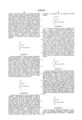
EXAMPLE 1 A solution containing 76.4 parts of dimethyl 3-oxoundecane-l,ll-dioate in 400 parts by volume of cold 10% aqueous potassium hydroxide is allowed to stand at 05 for about 4 days, then is neutralized to pH 8 by the addition of solid carbon dioxide. To that solution is then added 132 parts by volume of an aqueous solution, adjusted to pH 8, containing 19.6 parts of pyruvic aldehyde. The resulting reaction mixture is allowed to stand at room temperature, under nitrogen, for about 53 hours, then is washed with ether, acidified with hydrochloric acid, saturated with sodium chloride and extracted with ether. That ether extract is washed with saturated aqueous sodium chloride, then concentrated to dryness. The resulting residue is dissolved in cold 5% aqueous sodium hydroxide, then kept under nitrogen at room temperature for about 6 hours. Acidification of the mixture with concentrated hydrochloric acid followed by saturation of the solution with sodium chloride and extraction with ether affords an organic solution containing 3-hydroxy-2-methyl-5-oxocyclopent-l-eneheptanoic acid. To that solution is then added an ethereal solution containing 33.6 parts of diazomethane so that the total volume is approximately 1000 parts. That reaction mixture is allowed to stand at room temperature for about 1 minute, then is washed successively with dilute acetic acid, dilute aqueous sodium bicarbonate and water, dried over anhydrous sodium sulfate and stripped of solvent by distillation under reduced pressure. Distillation of the resulting residue at 0.5 mm. pressure affords methyl 3 hydroxy-2-methyl-5-oxocyclopent-leneheptanoate, boiling at 180-205 It displays infrared absorption peaks, in chloroform, at about 2.71, 2.83, 5.73, 5.82 and 6.02 microns and an ultraviolet absorption maximum at about 231.5 millimicrons with a molecular extinction coefficient of about 12,000. This compound is represented by the following structural formula (CHzMC O O CH:
EXAMPLE 2 A mixture containing 2.5 parts of methyl 3-hydroxy-2- methyl--oxocyclopent 1 eneheptanoate, 0.5 part of sodium hydroxide and 50 parts by volume of 90% aqueous methanol is allowed to stand at room temperature for about 16 hours, then is diluted with water and acidified by the addition of hydrochloric acid. Extraction of that acidic solution with ether affords an organic solution, which is washed with saturated aqueous sodium chloride, dried over anhydrous sodium sulfate, stripped of solvent under reduced pressure and dried to afford 3-hydroxy-2- methyl-S-oxocyclopent-l-eneheptanoic acid. This compound exhibits infrared absorption maxima, in chloroform, at about 5.82, and 6.05 microns and an ultraviolet absorption maximum at 232 millimicrons with a molecular extinction coefficient of about 12,100. It is represented by the following structural formula (CHZMCOOII A mixture consisting of 16.1 parts of methyl 3-hydroxy- 2-methyl 5 oxocyclopent-l-eneheptanoate, 14 parts of acetic anhydride and 30 parts of pyridine is stored at room temperature for about 2 days, then is poured into a mixture of ice and water. Extraction of that mixture with ether affords an organic solution, which is washed successively with dilute hydrochloric acid, water and aqueous potassium carbonate, then dried over anhydrous sodium sulfate and distilled under reduced pressure. The colorless oil boiling at 157-159 under 0.04 mm. pressure is methyl 3-acetoxy-2-methyl 5 oxocyclopent 1 eneheptanoate. It exhibits infrared absorption maxima, in chloroform, at about 5.76 and 6.02 microns and an ultraviolet absorption peak at about 229.5 millimicrons with a molecular extinction coefficient of about 13,900. This compound is represented by the following structural formula OCOCHJ I OH:
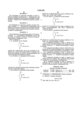
EXAMPLE 4 To a mixture containing 10.2 parts of methyl 3-hydroxy 2 methyl 5 oxocyclopent-l-eneheptanoate, 40 parts of methylene chloride and 20 parts of water is added, at a temperature between 5 and 0 with stirring, a mixture containing 4.5 parts of chromium trioxide, 13.2 parts of concentrated sulfuric acid and 20 parts of water. After completion of the addition, the mixture is stirred for approximately 1 hour at a temperature between 5 and 0, then is extracted with chloroform. The chloroform extract is washed successively with saturated aqueous sodium chloride and dilute aqueous sodium bicarbonate, then dried over anhydrous sodium sulfate and stripped of solvent under reduced pressure. The resulting crude product is purified by chromatography on silica gel followed by elution with 10% ethyl acetate in benzene. The eluate is stripped of solvent, then distilled at 0.2 mm. pressure to afford methyl 2-methyl-3,S-dioxocyclopent-1- eneheptanoate, boiling at about 156. This compound exhibits an ultraviolet absorption maximum at about 245.5 millimicrons with a molecular extinction coefficient of about 14,100. It is represented by the following structural formula (CHmC 0 0 CH3 EXAMPLE 5 A mixture containing 17.6 parts of 3-hydroxy-2-methyl- 5-oxocyclopent-1-eneheptanoic acid, parts of methylene chloride and 40 parts of water is cooled to a temperature between 5 and 0 and a mixture containing 9 parts of chromium trioxide, 27.6 parts of concentrated sulfuric acid and 40 parts of water is slowly added at 0-5". That reaction mixture is stirred for approximately 2 hours at about -S", then at 10 for about 10 minutes and finally is extracted with chloroform. The extract is washed with dilute aqueous sodium chloride, then dried over anhydrous sodium sulfate, stripped of solvent and distilled under reduced pressure. There is thus obtained 2-methyl-3,S-dioxocyclopent-l-eneheptanoic acid, boiling at 197 at 0.1 mm. pressure. This compound exhibits an ultraviolet absorption maximum at about 245 millimicrons with a molecular extinction coefficient of about 11,900 and is represented by the following structural formula (CHMC O OH EXAMPLE 6 When an equivalent quantity of diazoethane is substituted in the procedure of Example 1, there is produced ethyl 3-hydroxy-2-methyl-5-oxocyclopent -1- eneheptanoate.
5 EXAMPLE 7 The substitution of equivalent quantities of ethyl 3- hydroxy-Z-methyl-S-oxocyclopent-1 eneheptanoate and propionic anhydride in the procedure of Example 3 results in ethyl 2 methyl-5-oxo-3-propionoxycyc1opent-l-eneheptanoate.
EXAMPLE 8 By substituting an equivalent quantity of ethyl 3-hydroxy-2-methy1 5 oxocyclopent-l-eneheptanoate and otherwise proceeding according to the processes described in Example 4, there is produced ethyl 2-methy1-3,5-dioxocyclopent-l-eneheptanoate.
EXAMPLE 9 The substitution of an equivalent quantity of 3-hydroxy- 2-methyl 5 oxocyclopent-l-eneheptanoic acid in the procedure of Example 3 results in 3-acetoXy-2-methyl-5- oxocyclopent-l-eneheptanoic acid.
What is claimed is:
1. A compound of the formula (lower alkanoyl)-oxymethylene radicals.
2. As in claim 1, a compound of the formula wherein R is selected from the group consisting of hydrogen and a lower alkyl radical.
3. As in claim 1, a compound of the formula (CH2)0COOR (CHz)aCO OR wherein R is selected from the group consisting of hydrogen and a lower alkyl radical.
4. As in claim 1, a compound of the formula methylene radicals.
5. As in claim 1, a compound of the formula wherein Z is selected from the group consisting of carbonyl and hydroxymethylene radicals.
6. A compound according to claim 1, wherein R is methyl and X is hydroxymethylene, that compound being methyl 3-hydroxy 2 methyl-S-oxocyclopent-l-eneheptanoate.
7. A compound according to claim 1, wherein R is hydrogen and X is hydroxymethylene, that compound being 3-hydroxy-2-methyl 5-oxocyclopent-l-eneheptanoic acid.
8. A compound according to claim 1, wherein R is methyl and X. is acetoxymethylene, that compound being methyl S-acetoxy 2 methyl-S-oxocy'clopent-l-eneheptanoate.
9. A compound according to claim 1, wherein R is methyl and X is carbonyl, that compound being methyl 2-methyl-3,5-dioxocyclopent-l-eneheptanoate.
10. A compound according to claim 1, wherein R is hydrogen and X is carbonyl, that compound being 2- methyl-3,S-dioxocyclopent-l-eneheptanoic acid.
(CH2)nC O OH References Cited UNITED STATES PATENTS 3,466,319 9/1969 Finch et al. 260-468 3,505,387 4/1970 Beal III et a1 260-468 LORRAINE A. WEINBERGER, Primary Examiner R. GERSTL, Assistant Examiner US. Cl. X.R.
Applications Claiming Priority (1)
| Application Number | Priority Date | Filing Date | Title |
|---|---|---|---|
| US77130068A | 1968-10-28 | 1968-10-28 |
Publications (1)
| Publication Number | Publication Date |
|---|---|
| US3560552A true US3560552A (en) | 1971-02-02 |
Family
ID=25091376
Family Applications (1)
| Application Number | Title | Priority Date | Filing Date |
|---|---|---|---|
| US771300A Expired - Lifetime US3560552A (en) | 1968-10-28 | 1968-10-28 | 3-oxygenated 2-methyl-5-oxocyclopent-1-eneheptanoic acids and esters thereof |
Country Status (1)
| Country | Link |
|---|---|
| US (1) | US3560552A (en) |
-
1968
- 1968-10-28 US US771300A patent/US3560552A/en not_active Expired - Lifetime
Similar Documents
| Publication | Publication Date | Title |
|---|---|---|
| Sondheimer | The isolation and identification of 3-methyl-6-methoxy-8-hydroxy-3, 4-dihydroisocoumarin from Carrots1 | |
| Turner | Steroids Labeled with Isotopic Carbon: Cholestenone and Testosterone1 | |
| Bagby et al. | Laballenic Acid. A New Allenic Acid from Leonotis nepetaefolia Seed Oil1 | |
| Wynberg et al. | The Chemistry of Polythienyls. II1-3 | |
| Morisaki et al. | Mode of interaction of β-hydroxydecanoyl thioester dehydrase with allenic acid derivatives | |
| US3432541A (en) | 9,15-dihydroxyprost-13-enoic acid and ester and preparation thereof | |
| Stoffel et al. | Synthesis of eicosa-2-trans-8, 11, 14-all cis-tetraenoic acid-3-14C and dl-3-hydroxy eicosa-8, 11, 14-all cis-trienoic acid-3-14C | |
| US3558682A (en) | 2,3,5 - troxocyclopentaneheptanoic acid,derivatives thereof and intermediates thereto | |
| US2281622A (en) | Saturated and unsaturated derivatives of the 3-keto-cyclopentanopolyhydrophenanthrene series | |
| US2542937A (en) | beta-naphthyl-(2)-alpha:alpha-dialkyl-beta-alkyl propionaldehydes and corresponding propanols | |
| US3210406A (en) | A-norandrostenes and preparation thereof | |
| US3519681A (en) | 3,7-dimethyl-3,7-dihydroxy-oct-1-yne and esters thereof | |
| US3346602A (en) | 13beta-alkyl-11-alkylgona-1, 3, 5 (10)-trien-17-ones, ethers and esters thereof | |
| Manabe et al. | Sex pheromonal activity of (+)-bornyl acetate and related compounds to the American cockroach | |
| US2366204A (en) | Keto-steroids and method of obtaining same | |
| Rapoport et al. | The lactone ring of carpaine | |
| US3992413A (en) | Intermediates in the synthesis of prostaglandins | |
| Hirose et al. | Terpenoids Part IV. The Structure of Occidol, a New Sesquiterpene Alcohol from Thuja occidentalis L | |
| US2798879A (en) | 19-nortestosterone acylates and 3-enol acylates thereof | |
| Dreiding et al. | The Reformatsky Reaction with 2-Hydroxymethylenecyclohexanone. 5, 6, 7, 8-Tetrahydrocoumarin1 | |
| US3644502A (en) | Prostaglandin synthesis | |
| US3868413A (en) | 2-(4-Hydroxy-1-alkynyl)-5-oxocyclopent-1-enealkanoic acids, 3-hydroxy congeners corresponding and derivatives thereof | |
| US3155684A (en) | Optionally 17alpha-alkylated 17belta-(substituted-oxy)-2-oxa-5alpha-androstan-3-ones | |
| Nidy et al. | Synthesis of metabolites of prostaglandin F2. alpha. resulting from. beta.-oxidation of the carboxylic acid side chain | |
| US3707491A (en) | Insecticide with juvenile hormone activity and a process of its preparation |