US3758564A - Process for preparation of straight chain alkane dicarboxylic acids - Google Patents
Process for preparation of straight chain alkane dicarboxylic acids Download PDFInfo
- Publication number
- US3758564A US3758564A US00160757A US3758564DA US3758564A US 3758564 A US3758564 A US 3758564A US 00160757 A US00160757 A US 00160757A US 3758564D A US3758564D A US 3758564DA US 3758564 A US3758564 A US 3758564A
- Authority
- US
- United States
- Prior art keywords
- mother liquor
- acid
- reactor
- urea
- nitric acid
- Prior art date
- Legal status (The legal status is an assumption and is not a legal conclusion. Google has not performed a legal analysis and makes no representation as to the accuracy of the status listed.)
- Expired - Lifetime
Links
- 238000000034 method Methods 0.000 title claims abstract description 15
- 238000002360 preparation method Methods 0.000 title abstract description 7
- -1 alkane dicarboxylic acids Chemical class 0.000 title description 9
- 239000012452 mother liquor Substances 0.000 claims abstract description 37
- GRYLNZFGIOXLOG-UHFFFAOYSA-N Nitric acid Chemical compound O[N+]([O-])=O GRYLNZFGIOXLOG-UHFFFAOYSA-N 0.000 claims abstract description 29
- 229910017604 nitric acid Inorganic materials 0.000 claims abstract description 29
- XSQUKJJJFZCRTK-UHFFFAOYSA-N Urea Chemical compound NC(N)=O XSQUKJJJFZCRTK-UHFFFAOYSA-N 0.000 claims abstract description 25
- 239000004202 carbamide Substances 0.000 claims abstract description 25
- OFOBLEOULBTSOW-UHFFFAOYSA-N Malonic acid Chemical compound OC(=O)CC(O)=O OFOBLEOULBTSOW-UHFFFAOYSA-N 0.000 claims abstract description 17
- QGZKDVFQNNGYKY-UHFFFAOYSA-N Ammonia Chemical compound N QGZKDVFQNNGYKY-UHFFFAOYSA-N 0.000 claims abstract description 16
- IOVCWXUNBOPUCH-UHFFFAOYSA-N Nitrous acid Chemical compound ON=O IOVCWXUNBOPUCH-UHFFFAOYSA-N 0.000 claims abstract description 15
- 229910021529 ammonia Inorganic materials 0.000 claims abstract description 8
- SXVPOSFURRDKBO-UHFFFAOYSA-N Cyclododecanone Chemical compound O=C1CCCCCCCCCCC1 SXVPOSFURRDKBO-UHFFFAOYSA-N 0.000 claims description 12
- 238000011084 recovery Methods 0.000 claims description 7
- SFVWPXMPRCIVOK-UHFFFAOYSA-N cyclododecanol Chemical compound OC1CCCCCCCCCCC1 SFVWPXMPRCIVOK-UHFFFAOYSA-N 0.000 claims description 6
- 150000001923 cyclic compounds Chemical class 0.000 claims description 5
- WTKWFNIIIXNTDO-UHFFFAOYSA-N 3-isocyanato-5-methyl-2-(trifluoromethyl)furan Chemical compound CC1=CC(N=C=O)=C(C(F)(F)F)O1 WTKWFNIIIXNTDO-UHFFFAOYSA-N 0.000 claims description 2
- 150000001335 aliphatic alkanes Chemical class 0.000 claims description 2
- TVIDDXQYHWJXFK-UHFFFAOYSA-N n-Dodecanedioic acid Natural products OC(=O)CCCCCCCCCCC(O)=O TVIDDXQYHWJXFK-UHFFFAOYSA-N 0.000 claims description 2
- HQHCYKULIHKCEB-UHFFFAOYSA-N tetradecanedioic acid Natural products OC(=O)CCCCCCCCCCCCC(O)=O HQHCYKULIHKCEB-UHFFFAOYSA-N 0.000 claims description 2
- LFQSCWFLJHTTHZ-UHFFFAOYSA-N Ethanol Chemical compound CCO LFQSCWFLJHTTHZ-UHFFFAOYSA-N 0.000 abstract description 12
- 239000000203 mixture Substances 0.000 abstract description 11
- 150000003997 cyclic ketones Chemical class 0.000 abstract description 7
- 150000002576 ketones Chemical class 0.000 abstract description 7
- 230000001590 oxidative effect Effects 0.000 abstract description 7
- 239000007791 liquid phase Substances 0.000 abstract description 4
- 239000000376 reactant Substances 0.000 abstract description 4
- 239000006227 byproduct Substances 0.000 abstract description 3
- 230000003647 oxidation Effects 0.000 description 18
- 238000007254 oxidation reaction Methods 0.000 description 18
- LPXPTNMVRIOKMN-UHFFFAOYSA-M sodium nitrite Chemical compound [Na+].[O-]N=O LPXPTNMVRIOKMN-UHFFFAOYSA-M 0.000 description 14
- XLYOFNOQVPJJNP-UHFFFAOYSA-N water Substances O XLYOFNOQVPJJNP-UHFFFAOYSA-N 0.000 description 9
- 229910001868 water Inorganic materials 0.000 description 9
- 239000000243 solution Substances 0.000 description 8
- 239000012535 impurity Substances 0.000 description 7
- 235000010288 sodium nitrite Nutrition 0.000 description 7
- 239000002253 acid Substances 0.000 description 6
- MWUXSHHQAYIFBG-UHFFFAOYSA-N nitrogen oxide Inorganic materials O=[N] MWUXSHHQAYIFBG-UHFFFAOYSA-N 0.000 description 6
- 239000007788 liquid Substances 0.000 description 5
- QJGQUHMNIGDVPM-UHFFFAOYSA-N nitrogen group Chemical group [N] QJGQUHMNIGDVPM-UHFFFAOYSA-N 0.000 description 5
- PAWQVTBBRAZDMG-UHFFFAOYSA-N 2-(3-bromo-2-fluorophenyl)acetic acid Chemical compound OC(=O)CC1=CC=CC(Br)=C1F PAWQVTBBRAZDMG-UHFFFAOYSA-N 0.000 description 4
- IJGRMHOSHXDMSA-UHFFFAOYSA-N Atomic nitrogen Chemical compound N#N IJGRMHOSHXDMSA-UHFFFAOYSA-N 0.000 description 4
- 150000001991 dicarboxylic acids Chemical class 0.000 description 4
- 125000004432 carbon atom Chemical group C* 0.000 description 3
- 238000006243 chemical reaction Methods 0.000 description 3
- 239000007789 gas Substances 0.000 description 3
- UGFAIRIUMAVXCW-UHFFFAOYSA-N Carbon monoxide Chemical class [O+]#[C-] UGFAIRIUMAVXCW-UHFFFAOYSA-N 0.000 description 2
- 239000007864 aqueous solution Substances 0.000 description 2
- 229910002090 carbon oxide Inorganic materials 0.000 description 2
- 238000002425 crystallisation Methods 0.000 description 2
- 230000008025 crystallization Effects 0.000 description 2
- BAUZLFKYYIVGPM-UHFFFAOYSA-N cyclononanone Chemical compound O=C1CCCCCCCC1 BAUZLFKYYIVGPM-UHFFFAOYSA-N 0.000 description 2
- 230000000694 effects Effects 0.000 description 2
- 230000002401 inhibitory effect Effects 0.000 description 2
- 230000000977 initiatory effect Effects 0.000 description 2
- 150000002826 nitrites Chemical class 0.000 description 2
- 229910052757 nitrogen Inorganic materials 0.000 description 2
- 239000007787 solid Substances 0.000 description 2
- 238000003756 stirring Methods 0.000 description 2
- RYGMFSIKBFXOCR-UHFFFAOYSA-N Copper Chemical compound [Cu] RYGMFSIKBFXOCR-UHFFFAOYSA-N 0.000 description 1
- AZFNGPAYDKGCRB-XCPIVNJJSA-M [(1s,2s)-2-amino-1,2-diphenylethyl]-(4-methylphenyl)sulfonylazanide;chlororuthenium(1+);1-methyl-4-propan-2-ylbenzene Chemical compound [Ru+]Cl.CC(C)C1=CC=C(C)C=C1.C1=CC(C)=CC=C1S(=O)(=O)[N-][C@@H](C=1C=CC=CC=1)[C@@H](N)C1=CC=CC=C1 AZFNGPAYDKGCRB-XCPIVNJJSA-M 0.000 description 1
- 150000007513 acids Chemical class 0.000 description 1
- 150000001298 alcohols Chemical class 0.000 description 1
- QVGXLLKOCUKJST-UHFFFAOYSA-N atomic oxygen Chemical compound [O] QVGXLLKOCUKJST-UHFFFAOYSA-N 0.000 description 1
- 230000015572 biosynthetic process Effects 0.000 description 1
- 230000015556 catabolic process Effects 0.000 description 1
- 239000003054 catalyst Substances 0.000 description 1
- 150000001875 compounds Chemical class 0.000 description 1
- 229910052802 copper Inorganic materials 0.000 description 1
- 239000010949 copper Substances 0.000 description 1
- WFRBMXFCEAHLGH-UHFFFAOYSA-N cyclodecanol Chemical compound OC1CCCCCCCCC1 WFRBMXFCEAHLGH-UHFFFAOYSA-N 0.000 description 1
- SXOZDDAFVJANJP-UHFFFAOYSA-N cyclodecanone Chemical compound O=C1CCCCCCCCC1 SXOZDDAFVJANJP-UHFFFAOYSA-N 0.000 description 1
- FHADSMKORVFYOS-UHFFFAOYSA-N cyclooctanol Chemical compound OC1CCCCCCC1 FHADSMKORVFYOS-UHFFFAOYSA-N 0.000 description 1
- IIRFCWANHMSDCG-UHFFFAOYSA-N cyclooctanone Chemical compound O=C1CCCCCCC1 IIRFCWANHMSDCG-UHFFFAOYSA-N 0.000 description 1
- WFXNFNGXUAKZAY-UHFFFAOYSA-N cycloundecanol Chemical compound OC1CCCCCCCCCC1 WFXNFNGXUAKZAY-UHFFFAOYSA-N 0.000 description 1
- UPOSSYJVWXLPTA-UHFFFAOYSA-N cycloundecanone Chemical compound O=C1CCCCCCCCCC1 UPOSSYJVWXLPTA-UHFFFAOYSA-N 0.000 description 1
- 238000006731 degradation reaction Methods 0.000 description 1
- 230000000779 depleting effect Effects 0.000 description 1
- 238000002474 experimental method Methods 0.000 description 1
- 239000000706 filtrate Substances 0.000 description 1
- 238000001914 filtration Methods 0.000 description 1
- 239000011521 glass Substances 0.000 description 1
- 230000006698 induction Effects 0.000 description 1
- IDNHOWMYUQKKTI-UHFFFAOYSA-M lithium nitrite Chemical compound [Li+].[O-]N=O IDNHOWMYUQKKTI-UHFFFAOYSA-M 0.000 description 1
- 238000004519 manufacturing process Methods 0.000 description 1
- 229910017464 nitrogen compound Inorganic materials 0.000 description 1
- 150000002830 nitrogen compounds Chemical class 0.000 description 1
- 238000010525 oxidative degradation reaction Methods 0.000 description 1
- 239000001301 oxygen Substances 0.000 description 1
- 229910052760 oxygen Inorganic materials 0.000 description 1
- 235000010289 potassium nitrite Nutrition 0.000 description 1
- 239000004304 potassium nitrite Substances 0.000 description 1
- 238000001953 recrystallisation Methods 0.000 description 1
- 150000003681 vanadium Chemical class 0.000 description 1
- 238000005406 washing Methods 0.000 description 1
Images
Classifications
-
- C—CHEMISTRY; METALLURGY
- C07—ORGANIC CHEMISTRY
- C07C—ACYCLIC OR CARBOCYCLIC COMPOUNDS
- C07C51/00—Preparation of carboxylic acids or their salts, halides or anhydrides
- C07C51/16—Preparation of carboxylic acids or their salts, halides or anhydrides by oxidation
- C07C51/31—Preparation of carboxylic acids or their salts, halides or anhydrides by oxidation of cyclic compounds with ring-splitting
- C07C51/316—Preparation of carboxylic acids or their salts, halides or anhydrides by oxidation of cyclic compounds with ring-splitting with oxides of nitrogen or nitrogen-containing mineral acids
Definitions
- United States Patent 1 1 Davis PROCESS FOR PREPARATION OF STRAIGHT CHAIN ALKANE DICARBOXYLIC ACIDS inventor: Darwin Darrell Davis, Victoria, Tex.
- urea is added to the mother liquor during the recovery operation.
- difficulties are encountered in that urea inhibits initiation of oxidation of the alcohol/ketone mixture.
- a safety hazard may also be incurred in that some of the urea is converted to ammonia with resultant build-up of ammonium nitrate in the oxidation system. Accordingly, an improved process in respect to operation and safety is desired.
- the present invention provides an improved process for the preparation of straight-chain alkane dicarboxylic acids which comprises carrying out oxidation of a cyclic ketone or alcohol in aqueous nitric acid in a reactor followed by selective oxidation to reduce or eliminate by-products, especially organonitrogen impurities such as w, w-dinitrolauric acid, thereafter recovering the dicarboxylic acid from the nitric acid mother liquor to which is added urea to reduce oxidative degradation of the dicarboxylic acid, and finally adding nitrous acid to the residual mother liquor and returning it to the reactor for the further oxidation steps.
- the cyclic ketones and alcohols include those having from eight to 12 carbon atoms such as cycloundecanol, cycloundecanone, cyclodecanol, cyclodecanone, cyclododecanol, cyclododecanone, cyclononal, cyclononanone, cyclooctanol and cyclooctanone.
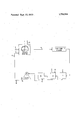
- Nitric acid and catalyst which can be in the form of a soluble copper or vanadium salt, are introduced into a stirred reactor 1 via line 2.
- the compounds to be oxidized usually an alcohol and/or ketone, (e.g., cyclododecanol and cyclododecanone) are introduced via line 3.
- the gaseous effluent which consists of carbon oxides, nitrogen oxides, water, ketone and small amounts of alcohol and nitric acid are directed to a suitable recovery system via line 4.
- the liquid is discharged from the reactor 1 into reactor 5 via line 6.
- Reactor 5 is preferably operated under conditions of plug flow.
- the effluent from reactor 5 is then directed to a gas liquid separator 7 wherein carbon oxides, nitrogen oxides, water and nitric acid are removed via line 8.
- the liquid is directed to a bleacher 9 into which air is injected through 10 to further remove dissolved oxides of nitrogen via line 11.
- the liquid then is directed toward a crystallizer 12 into which urea in the form of an aqueous solution is introduced through line 13 and wherein most of the acid crystallizes. Solids are removed via filter 14. The solid is dissolved in fresh nitric acid containing urea and after further crystallization and filtering, the filtrate is added to the mother liquor stream via line 15.
- aqueous solution of a nitrite salt such as sodium nitrite is introduced through line 16 and the mother liquor is returned to the stirred reactor 1 via line 17.
- the nitric acid which is present in the dibasic acid obtained from crystallizer 12 can be removed by washing in any manner similar to the techniques described in French Pat. Nos. 1,393,568 and 1,393,569.
- the amount of urea added to the mother liquor for recovering the dicarboxylic acid, particularly by recrystallization, is such that its concentration in the mother liquor after completion of reaction with residual nitrous acid is in the range of 0.001 to 0.1 percent by weight.
- the amount of nitrous acid added to the mother liquor prior to its being returned to the reactor which can be introduced in the form of any suitable nitrite salt such as sodium nitrite, potassium nitrite or lithium nitrite or as NO, NO, or mixture thereof should be at least in a 2:1 mole ratio based on urea present and at least in a 1:1 mole ratio based on ammonia present in the mother liquor.
- Ammonium nitrate levels in the recycled mother liquor of up to about 1 percent can be expected.
- the maximum amount of nitrous acid in the mother liquor recycled to the reactor would be about 2 percent.
- the reactants are maintained in a homogeneous condition, i.e., in a substantially liquid phase both during the oxidation of the ketone and alcohol and during the oxidation of the nitrogenous impurities formed concomitantly with the acid.
- the concentration of urea in the nitric acid mother liquor for recovery of the desired dicarboxylic acid is in the range of 0.001 to 0.02 percent by weight.
- the amount of nitrous acid present in the mother liquor being returned to the reactor is preferably in at least a 4:1 mole Examples, wherein parts and percentages are by weight unless otherwise specified.
- EXAMPLE 1 This example illustrates the effect of the addition of sodium nitrite to the mother liquor to overcome the inhibiting effect of urea on the subsequent oxidation.
- EXAMPLE 2 This example illustrates the inhibiting effect of urea on initiation of oxidation.
- a mixture of 321 g. of typical mother liquor of line 17 in the figure containing 10.6 percent of organic dicarboxylic acids (C and 49.1 percent nitric acid (nitric water basis) was treated with 0.5 ml. ofa 30 percent solution of urea and water corresponding to a urea concentration of about 500 ppm., was placed in a 500 ml. flask and heated to 97C. Thereafter with stirring there was injected quickly under the surface of the liquid, 1.0 ml. of molten cyclododecanol/cyclododecanone (about 90 percent and 7 percent respectively). No reaction was observed for a period of thirty seconds after which a color change occurred followed by oxidation at 35 seconds with evolution of oxides of nitrogen.
- EXAMPLE 3 This example illustrates the effect of nitrous acid on depleting ammonia in the mother liquor.
- the mixture also contained 1 percent of hydrolyzable nitrogen compounds (a), Determined by modified Kjeldahl analysis described in Kolthoff and Sandell, Textbook of Quantitative Inorganic Chemistry," rev. ed., MacMillian Co., N.Y. (1949) p. 562, calculated as ammonium nitrate.
- the reactor was heated to 85C., and a 30 percent solution of sodium nitrite in water was injected continuously at a variety of rates equal to several ratios of Na- N /NH NO
- concentration of ammonium nitrate in the effluent mixture, determined for each state, was found as shown in the following table.
- the efficiency of utilization of sodium nitrite was found to vary with the residence time, rate of addition, etc. since excess nitrous acid quickly decomposed and was lost as NO and N0 off-gas.
- the improvement which comprises (a) introducing into the nitric acid solution containing nitrous acid and a1- kane dicarboxylic acid to be recovered an amount of urea to give a concentration after depletion of nitrous acid in the range of 0.001 to 0.1 percent by weight, (b) recovering from the nitric acid solution the dicarboxylic acid substantially free from nitrogenous impurities, and (c) introducing into the nitric acid mother liquor after recovery of the dicarboxylic acid and prior to return of the mother liquor to the reactor an amount of nitrous acid to provide a mole ratio of at least 2:1 based on urea and a mole ratio of at least 1:] based on ammonia contained in the mother liquor.
Landscapes
- Chemical & Material Sciences (AREA)
- Organic Chemistry (AREA)
- Engineering & Computer Science (AREA)
- Oil, Petroleum & Natural Gas (AREA)
- Organic Low-Molecular-Weight Compounds And Preparation Thereof (AREA)
Applications Claiming Priority (1)
| Application Number | Priority Date | Filing Date | Title |
|---|---|---|---|
| US16075771A | 1971-07-08 | 1971-07-08 |
Publications (1)
| Publication Number | Publication Date |
|---|---|
| US3758564A true US3758564A (en) | 1973-09-11 |
Family
ID=22578306
Family Applications (1)
| Application Number | Title | Priority Date | Filing Date |
|---|---|---|---|
| US00160757A Expired - Lifetime US3758564A (en) | 1971-07-08 | 1971-07-08 | Process for preparation of straight chain alkane dicarboxylic acids |
Country Status (9)
| Country | Link |
|---|---|
| US (1) | US3758564A (fr) |
| JP (1) | JPS5629650B1 (fr) |
| BE (1) | BE785993A (fr) |
| CA (1) | CA985703A (fr) |
| DE (1) | DE2233590C2 (fr) |
| FR (1) | FR2144887B1 (fr) |
| GB (1) | GB1371721A (fr) |
| IT (1) | IT962648B (fr) |
| NL (1) | NL179648C (fr) |
Cited By (3)
| Publication number | Priority date | Publication date | Assignee | Title |
|---|---|---|---|---|
| US4014903A (en) * | 1975-08-11 | 1977-03-29 | Allied Chemical Corporation | Recovery of dicarboxylic acids from aqueous solution containing nitric acid |
| US20030195374A1 (en) * | 2002-04-11 | 2003-10-16 | Degussa Ag | Work-up of residues in the preparation of carboxylic acids |
| CN108017533A (zh) * | 2016-11-01 | 2018-05-11 | 万华化学集团股份有限公司 | 一种制备十二碳二酸的方法 |
Families Citing this family (2)
| Publication number | Priority date | Publication date | Assignee | Title |
|---|---|---|---|---|
| JPS60146562U (ja) * | 1984-03-09 | 1985-09-28 | 新日本製鐵株式会社 | タンデイツシユ用カセツト式フイルタ− |
| EP2257516A4 (fr) * | 2008-03-19 | 2012-12-12 | Invista Tech Sarl | Procédés de préparation du cyclododécatriène et procédés de préparation de la laurolactone |
Citations (1)
| Publication number | Priority date | Publication date | Assignee | Title |
|---|---|---|---|---|
| US3637832A (en) * | 1968-03-12 | 1972-01-25 | Du Pont | Preparation of straight chain dicarboxylic acids |
-
1971
- 1971-07-08 US US00160757A patent/US3758564A/en not_active Expired - Lifetime
-
1972
- 1972-07-04 CA CA146,320A patent/CA985703A/en not_active Expired
- 1972-07-07 NL NLAANVRAGE7209505,A patent/NL179648C/xx not_active IP Right Cessation
- 1972-07-07 FR FR7224771A patent/FR2144887B1/fr not_active Expired
- 1972-07-07 BE BE785993A patent/BE785993A/fr not_active IP Right Cessation
- 1972-07-07 IT IT26779/72A patent/IT962648B/it active
- 1972-07-07 DE DE2233590A patent/DE2233590C2/de not_active Expired
- 1972-07-07 JP JP6759072A patent/JPS5629650B1/ja active Pending
- 1972-07-07 GB GB3188772A patent/GB1371721A/en not_active Expired
Patent Citations (1)
| Publication number | Priority date | Publication date | Assignee | Title |
|---|---|---|---|---|
| US3637832A (en) * | 1968-03-12 | 1972-01-25 | Du Pont | Preparation of straight chain dicarboxylic acids |
Cited By (5)
| Publication number | Priority date | Publication date | Assignee | Title |
|---|---|---|---|---|
| US4014903A (en) * | 1975-08-11 | 1977-03-29 | Allied Chemical Corporation | Recovery of dicarboxylic acids from aqueous solution containing nitric acid |
| US20030195374A1 (en) * | 2002-04-11 | 2003-10-16 | Degussa Ag | Work-up of residues in the preparation of carboxylic acids |
| US7084300B2 (en) * | 2002-04-11 | 2006-08-01 | Degussa Ag | Work-up of residues in the preparation of carboxylic acids |
| CN108017533A (zh) * | 2016-11-01 | 2018-05-11 | 万华化学集团股份有限公司 | 一种制备十二碳二酸的方法 |
| CN108017533B (zh) * | 2016-11-01 | 2021-05-14 | 万华化学集团股份有限公司 | 一种制备十二碳二酸的方法 |
Also Published As
| Publication number | Publication date |
|---|---|
| DE2233590A1 (de) | 1973-01-25 |
| JPS5629650B1 (fr) | 1981-07-09 |
| NL179648C (nl) | 1986-10-16 |
| IT962648B (it) | 1973-12-31 |
| NL7209505A (fr) | 1973-01-10 |
| DE2233590C2 (de) | 1984-07-19 |
| GB1371721A (en) | 1974-10-23 |
| CA985703A (en) | 1976-03-16 |
| BE785993A (fr) | 1972-11-03 |
| FR2144887A1 (fr) | 1973-02-16 |
| FR2144887B1 (fr) | 1974-10-04 |
Similar Documents
| Publication | Publication Date | Title |
|---|---|---|
| US2673217A (en) | Selective oxidation of substituted aromatic compounds using aldehyde-activated catalysts | |
| US3022291A (en) | cuhno | |
| US2343534A (en) | Preparation of adipic acid | |
| Castellan et al. | Nitric acid reaction of cyclohexanol to adipic acid | |
| JPS5837300B2 (ja) | P−ニトロ安息香酸の製法 | |
| US4232175A (en) | Nitrosation of aromatic compounds | |
| US3914217A (en) | Process for the preparation of lactams | |
| US3637832A (en) | Preparation of straight chain dicarboxylic acids | |
| US4031139A (en) | Manufacture of cyclohexanone oxime | |
| US3366680A (en) | Process for preparing dodecandioic acid from cyclododecane | |
| US3761517A (en) | Process for the continuous production of saturated aliphatic dicarboxylic acids | |
| DE2233590C2 (de) | Verfahren zur Herstellung von geradkettigen Alkandicarbonsäuren mit 4 bis 12 C-Atomen | |
| US4704476A (en) | Working up reaction mixtures containing cyclohexyl hydro-peroxide, cyclohexanol and cyclohexanone | |
| US3852356A (en) | Production of aliphatic and cycloaliphatic alpha-nitroketones | |
| KR910002280B1 (ko) | 아디프산의 제조방법 | |
| US2683734A (en) | Method of concentrating gaseous hydrocyanic acid and the use of the method in the manufacture of acrylonitrile | |
| US3806547A (en) | Process for preparing alicyclic alpha-nitroketones | |
| US3642886A (en) | Oxidation process | |
| IE903940A1 (en) | "Continuous industrial manufacturing process for an aqueous solution of glyoxylic acid" | |
| US3658898A (en) | Process for producing adipic acid | |
| US3265733A (en) | Production of oximes of cyclo- aliphatic ketones | |
| US4178287A (en) | Process for the purification of caprolactam by means of ozone | |
| US2904393A (en) | Purification of co2 and nh3 | |
| US3654355A (en) | Process of preparing adipic acid by the nitric acid oxidation of cyclohexane | |
| US4133810A (en) | Process for the recovery of ε-caprolactam from a reaction mixture of ε-caprolactam and sulfuric acid |