US3765954A - Surface-hardened titanium and titanium alloys and method of processing same - Google Patents
Surface-hardened titanium and titanium alloys and method of processing same Download PDFInfo
- Publication number
- US3765954A US3765954A US00126634A US3765954DA US3765954A US 3765954 A US3765954 A US 3765954A US 00126634 A US00126634 A US 00126634A US 3765954D A US3765954D A US 3765954DA US 3765954 A US3765954 A US 3765954A
- Authority
- US
- United States
- Prior art keywords
- titanium
- metal
- hardened
- base
- type
- Prior art date
- Legal status (The legal status is an assumption and is not a legal conclusion. Google has not performed a legal analysis and makes no representation as to the accuracy of the status listed.)
- Expired - Lifetime
Links
- 239000010936 titanium Substances 0.000 title claims abstract description 61
- RTAQQCXQSZGOHL-UHFFFAOYSA-N Titanium Chemical compound [Ti] RTAQQCXQSZGOHL-UHFFFAOYSA-N 0.000 title claims abstract description 57
- 229910052719 titanium Inorganic materials 0.000 title claims abstract description 57
- 238000000034 method Methods 0.000 title claims abstract description 33
- 229910001069 Ti alloy Inorganic materials 0.000 title description 5
- 229910045601 alloy Inorganic materials 0.000 claims abstract description 66
- 239000000956 alloy Substances 0.000 claims abstract description 66
- 229910052751 metal Inorganic materials 0.000 claims abstract description 42
- 239000002184 metal Substances 0.000 claims abstract description 42
- 239000011248 coating agent Substances 0.000 claims abstract description 17
- 238000000576 coating method Methods 0.000 claims abstract description 17
- 239000010953 base metal Substances 0.000 claims abstract description 16
- 238000010438 heat treatment Methods 0.000 claims abstract description 8
- IJGRMHOSHXDMSA-UHFFFAOYSA-N Atomic nitrogen Chemical compound N#N IJGRMHOSHXDMSA-UHFFFAOYSA-N 0.000 claims description 18
- 229910052742 iron Inorganic materials 0.000 claims description 18
- 229910052759 nickel Inorganic materials 0.000 claims description 13
- 239000012299 nitrogen atmosphere Substances 0.000 claims description 11
- 229910052802 copper Inorganic materials 0.000 claims description 10
- 239000010949 copper Substances 0.000 claims description 10
- 230000032683 aging Effects 0.000 claims description 9
- 229910052757 nitrogen Inorganic materials 0.000 claims description 9
- 238000007747 plating Methods 0.000 claims description 7
- 238000000151 deposition Methods 0.000 claims description 4
- 238000003466 welding Methods 0.000 claims description 4
- 229910018140 Al-Sn Inorganic materials 0.000 claims description 3
- 229910018564 Al—Sn Inorganic materials 0.000 claims description 3
- 229910019589 Cr—Fe Inorganic materials 0.000 claims description 3
- 229910002065 alloy metal Inorganic materials 0.000 claims description 3
- 238000010422 painting Methods 0.000 claims description 3
- 229910017305 Mo—Si Inorganic materials 0.000 claims description 2
- 238000009792 diffusion process Methods 0.000 abstract description 7
- 239000012298 atmosphere Substances 0.000 abstract description 6
- 238000006467 substitution reaction Methods 0.000 abstract description 4
- QJGQUHMNIGDVPM-UHFFFAOYSA-N nitrogen group Chemical group [N] QJGQUHMNIGDVPM-UHFFFAOYSA-N 0.000 abstract description 3
- 239000010410 layer Substances 0.000 description 51
- XEEYBQQBJWHFJM-UHFFFAOYSA-N Iron Chemical compound [Fe] XEEYBQQBJWHFJM-UHFFFAOYSA-N 0.000 description 28
- PXHVJJICTQNCMI-UHFFFAOYSA-N Nickel Chemical compound [Ni] PXHVJJICTQNCMI-UHFFFAOYSA-N 0.000 description 22
- 238000011282 treatment Methods 0.000 description 18
- 238000005121 nitriding Methods 0.000 description 8
- RYGMFSIKBFXOCR-UHFFFAOYSA-N Copper Chemical compound [Cu] RYGMFSIKBFXOCR-UHFFFAOYSA-N 0.000 description 7
- 238000005728 strengthening Methods 0.000 description 5
- 229910052782 aluminium Inorganic materials 0.000 description 4
- 229910052804 chromium Inorganic materials 0.000 description 4
- 239000011651 chromium Substances 0.000 description 4
- 230000000694 effects Effects 0.000 description 4
- 239000002344 surface layer Substances 0.000 description 4
- VYZAMTAEIAYCRO-UHFFFAOYSA-N Chromium Chemical compound [Cr] VYZAMTAEIAYCRO-UHFFFAOYSA-N 0.000 description 3
- 238000007796 conventional method Methods 0.000 description 3
- 239000000463 material Substances 0.000 description 3
- 238000005498 polishing Methods 0.000 description 3
- QGZKDVFQNNGYKY-UHFFFAOYSA-N Ammonia Chemical compound N QGZKDVFQNNGYKY-UHFFFAOYSA-N 0.000 description 2
- UFHFLCQGNIYNRP-UHFFFAOYSA-N Hydrogen Chemical compound [H][H] UFHFLCQGNIYNRP-UHFFFAOYSA-N 0.000 description 2
- QVGXLLKOCUKJST-UHFFFAOYSA-N atomic oxygen Chemical compound [O] QVGXLLKOCUKJST-UHFFFAOYSA-N 0.000 description 2
- 238000003763 carbonization Methods 0.000 description 2
- 230000003247 decreasing effect Effects 0.000 description 2
- 239000001257 hydrogen Substances 0.000 description 2
- 229910052739 hydrogen Inorganic materials 0.000 description 2
- 230000003647 oxidation Effects 0.000 description 2
- 238000007254 oxidation reaction Methods 0.000 description 2
- 239000001301 oxygen Substances 0.000 description 2
- 229910052760 oxygen Inorganic materials 0.000 description 2
- 238000000926 separation method Methods 0.000 description 2
- ZOKXTWBITQBERF-UHFFFAOYSA-N Molybdenum Chemical compound [Mo] ZOKXTWBITQBERF-UHFFFAOYSA-N 0.000 description 1
- XUIMIQQOPSSXEZ-UHFFFAOYSA-N Silicon Chemical compound [Si] XUIMIQQOPSSXEZ-UHFFFAOYSA-N 0.000 description 1
- 229910000883 Ti6Al4V Inorganic materials 0.000 description 1
- 238000010521 absorption reaction Methods 0.000 description 1
- 230000004075 alteration Effects 0.000 description 1
- XAGFODPZIPBFFR-UHFFFAOYSA-N aluminium Chemical compound [Al] XAGFODPZIPBFFR-UHFFFAOYSA-N 0.000 description 1
- 229910021529 ammonia Inorganic materials 0.000 description 1
- 230000015572 biosynthetic process Effects 0.000 description 1
- 229910017052 cobalt Inorganic materials 0.000 description 1
- 239000010941 cobalt Substances 0.000 description 1
- GUTLYIVDDKVIGB-UHFFFAOYSA-N cobalt atom Chemical compound [Co] GUTLYIVDDKVIGB-UHFFFAOYSA-N 0.000 description 1
- 238000005260 corrosion Methods 0.000 description 1
- 230000007797 corrosion Effects 0.000 description 1
- 238000005336 cracking Methods 0.000 description 1
- 230000008021 deposition Effects 0.000 description 1
- 229910001873 dinitrogen Inorganic materials 0.000 description 1
- 238000004299 exfoliation Methods 0.000 description 1
- 239000007789 gas Substances 0.000 description 1
- 239000011261 inert gas Substances 0.000 description 1
- 238000003754 machining Methods 0.000 description 1
- WPBNNNQJVZRUHP-UHFFFAOYSA-L manganese(2+);methyl n-[[2-(methoxycarbonylcarbamothioylamino)phenyl]carbamothioyl]carbamate;n-[2-(sulfidocarbothioylamino)ethyl]carbamodithioate Chemical compound [Mn+2].[S-]C(=S)NCCNC([S-])=S.COC(=O)NC(=S)NC1=CC=CC=C1NC(=S)NC(=O)OC WPBNNNQJVZRUHP-UHFFFAOYSA-L 0.000 description 1
- 238000004519 manufacturing process Methods 0.000 description 1
- 238000012986 modification Methods 0.000 description 1
- 230000004048 modification Effects 0.000 description 1
- 239000006060 molten glass Substances 0.000 description 1
- 229910052750 molybdenum Inorganic materials 0.000 description 1
- 239000011733 molybdenum Substances 0.000 description 1
- 150000004767 nitrides Chemical class 0.000 description 1
- 230000001590 oxidative effect Effects 0.000 description 1
- -1 oxygen and nitrogen Chemical compound 0.000 description 1
- 238000006213 oxygenation reaction Methods 0.000 description 1
- 230000009467 reduction Effects 0.000 description 1
- 238000009877 rendering Methods 0.000 description 1
- 230000004044 response Effects 0.000 description 1
- 229910052710 silicon Inorganic materials 0.000 description 1
- 239000010703 silicon Substances 0.000 description 1
- 230000000087 stabilizing effect Effects 0.000 description 1
- 239000000126 substance Substances 0.000 description 1
- 229910002058 ternary alloy Inorganic materials 0.000 description 1
- 239000002023 wood Substances 0.000 description 1
Images


Classifications
-
- C—CHEMISTRY; METALLURGY
- C23—COATING METALLIC MATERIAL; COATING MATERIAL WITH METALLIC MATERIAL; CHEMICAL SURFACE TREATMENT; DIFFUSION TREATMENT OF METALLIC MATERIAL; COATING BY VACUUM EVAPORATION, BY SPUTTERING, BY ION IMPLANTATION OR BY CHEMICAL VAPOUR DEPOSITION, IN GENERAL; INHIBITING CORROSION OF METALLIC MATERIAL OR INCRUSTATION IN GENERAL
- C23C—COATING METALLIC MATERIAL; COATING MATERIAL WITH METALLIC MATERIAL; SURFACE TREATMENT OF METALLIC MATERIAL BY DIFFUSION INTO THE SURFACE, BY CHEMICAL CONVERSION OR SUBSTITUTION; COATING BY VACUUM EVAPORATION, BY SPUTTERING, BY ION IMPLANTATION OR BY CHEMICAL VAPOUR DEPOSITION, IN GENERAL
- C23C12/00—Solid state diffusion of at least one non-metal element other than silicon and at least one metal element or silicon into metallic material surfaces
-
- Y—GENERAL TAGGING OF NEW TECHNOLOGICAL DEVELOPMENTS; GENERAL TAGGING OF CROSS-SECTIONAL TECHNOLOGIES SPANNING OVER SEVERAL SECTIONS OF THE IPC; TECHNICAL SUBJECTS COVERED BY FORMER USPC CROSS-REFERENCE ART COLLECTIONS [XRACs] AND DIGESTS
- Y10—TECHNICAL SUBJECTS COVERED BY FORMER USPC
- Y10S—TECHNICAL SUBJECTS COVERED BY FORMER USPC CROSS-REFERENCE ART COLLECTIONS [XRACs] AND DIGESTS
- Y10S428/00—Stock material or miscellaneous articles
- Y10S428/922—Static electricity metal bleed-off metallic stock
- Y10S428/923—Physical dimension
- Y10S428/924—Composite
- Y10S428/926—Thickness of individual layer specified
-
- Y—GENERAL TAGGING OF NEW TECHNOLOGICAL DEVELOPMENTS; GENERAL TAGGING OF CROSS-SECTIONAL TECHNOLOGIES SPANNING OVER SEVERAL SECTIONS OF THE IPC; TECHNICAL SUBJECTS COVERED BY FORMER USPC CROSS-REFERENCE ART COLLECTIONS [XRACs] AND DIGESTS
- Y10—TECHNICAL SUBJECTS COVERED BY FORMER USPC
- Y10S—TECHNICAL SUBJECTS COVERED BY FORMER USPC CROSS-REFERENCE ART COLLECTIONS [XRACs] AND DIGESTS
- Y10S428/00—Stock material or miscellaneous articles
- Y10S428/922—Static electricity metal bleed-off metallic stock
- Y10S428/9335—Product by special process
- Y10S428/941—Solid state alloying, e.g. diffusion, to disappearance of an original layer
-
- Y—GENERAL TAGGING OF NEW TECHNOLOGICAL DEVELOPMENTS; GENERAL TAGGING OF CROSS-SECTIONAL TECHNOLOGIES SPANNING OVER SEVERAL SECTIONS OF THE IPC; TECHNICAL SUBJECTS COVERED BY FORMER USPC CROSS-REFERENCE ART COLLECTIONS [XRACs] AND DIGESTS
- Y10—TECHNICAL SUBJECTS COVERED BY FORMER USPC
- Y10T—TECHNICAL SUBJECTS COVERED BY FORMER US CLASSIFICATION
- Y10T428/00—Stock material or miscellaneous articles
- Y10T428/12—All metal or with adjacent metals
- Y10T428/12458—All metal or with adjacent metals having composition, density, or hardness gradient
-
- Y—GENERAL TAGGING OF NEW TECHNOLOGICAL DEVELOPMENTS; GENERAL TAGGING OF CROSS-SECTIONAL TECHNOLOGIES SPANNING OVER SEVERAL SECTIONS OF THE IPC; TECHNICAL SUBJECTS COVERED BY FORMER USPC CROSS-REFERENCE ART COLLECTIONS [XRACs] AND DIGESTS
- Y10—TECHNICAL SUBJECTS COVERED BY FORMER USPC
- Y10T—TECHNICAL SUBJECTS COVERED BY FORMER US CLASSIFICATION
- Y10T428/00—Stock material or miscellaneous articles
- Y10T428/12—All metal or with adjacent metals
- Y10T428/12493—Composite; i.e., plural, adjacent, spatially distinct metal components [e.g., layers, joint, etc.]
- Y10T428/12771—Transition metal-base component
- Y10T428/12778—Alternative base metals from diverse categories
-
- Y—GENERAL TAGGING OF NEW TECHNOLOGICAL DEVELOPMENTS; GENERAL TAGGING OF CROSS-SECTIONAL TECHNOLOGIES SPANNING OVER SEVERAL SECTIONS OF THE IPC; TECHNICAL SUBJECTS COVERED BY FORMER USPC CROSS-REFERENCE ART COLLECTIONS [XRACs] AND DIGESTS
- Y10—TECHNICAL SUBJECTS COVERED BY FORMER USPC
- Y10T—TECHNICAL SUBJECTS COVERED BY FORMER US CLASSIFICATION
- Y10T428/00—Stock material or miscellaneous articles
- Y10T428/12—All metal or with adjacent metals
- Y10T428/12493—Composite; i.e., plural, adjacent, spatially distinct metal components [e.g., layers, joint, etc.]
- Y10T428/12771—Transition metal-base component
- Y10T428/12806—Refractory [Group IVB, VB, or VIB] metal-base component
Definitions
- ABSTRACT Surface-hardened pure titanium or titanium-base alloys having a coating of a substitution type metal, which metal is characterized by a larger diffusion constant than titanium, is more readily nitrided than titanium, has a higher density than the base metal, is rich in stable beta phase, and which has a Vickers hardness of above 400.
- This hardened titanium or titanium-base alloy is produced by a method of hardening the surface of pure titanium or a titanium-base alloy which includes the steps of coating a substitution type metal of the above-mentioned type and heating the coated metal in a nitrogen-containing atmosphere.
- FIG. 2B mvsmos SHOICHI TOKUDA 0nd HIROMICHI KAWAHARA ATTORNEYS
- PATENTEUUBI 16 I973 SHEET 3 OF 3 has E54 $2 5 205 6 5 mmwzx BOO 100 THICKNESS 0F HARDENED LAYER OF TITANIUM (1*) DTSTANCE FROM THE SURFACE OF IRON PLATED TlTANlUM-BASE 28s wmmzom 5;
- This invention relates to surface-hardened pure titanium or titanium-base alloys and to a method of processing same. More particularly, this invention relates to surface-hardened pure titanium or titanium-base alloys having a relatively harder and thicker surface, and to a method of hardening said surface.
- titanium and titanium-base alloys have superior corrosion resistance, relatively low specific weight, and high tensile strength, they are used in strengthening members of aircraft and spacecraft and as materials in the rotary portions of a jet engine. Since they also have proper refractoriness, they have also been used as materials in various devices and equipment in the chemical industry. Thus, titanium and titanium-base alloys are broadly used in various fields.
- titanium and titanium-base alloys have, as their chief disadvantage, a very seizable property, and accordingly are characterized by a low wear resistance, thereby rendering them unsuitable for those applications which require high wear resistance.
- Commonly used surface-hardening methods include nitriding treatment, oxidation treatment, surfacehardening treatment for depositing titanium in an inert gas including small amounts of nitrogen and oxygen, and carbonization treatment.
- nitriding treatment oxidation treatment
- surfacehardening treatment for depositing titanium in an inert gas including small amounts of nitrogen and oxygen oxidation treatment
- carbonization treatment oxidation treatment
- chrome or nickel plating treatments high hardness special alloy welding treatments.
- the thickness of the nitrided layer is usually approximately 40 microns, in the case of pure titanium (heated at a temperature of 850C. for 100 hours), plus or minus approximately microns, depending upon the type (heated at a temperature of 850C. for 100 hours). Since these heat treatments are conducted at a high temperature for long periods of time, the treated metal tends to be deformed. If the deformation is corrected, such as by polishing, the hardened layer will be disadvantageously removed.
- the oxidized layer, obtained in a molten glass bath is even thicker than the nitrided layer, but the interstitial type elements for hardening of titanium, such as oxygen and nitrogen, abruptly reduce its hardening capacity if the temperature becomes 250300C., with the resultant disadvantage that the effectiveness of this surface-hardening treatment is extremely decreased.
- Even a surfacehardening treatment similar to the aforementioned oxidizing treatment has disadvantages, in that blow-holes may form during surface-hardening, and machining is required to form the final shape after surfacehardening.
- the carbonization treatment increases the hardness of the surface by the formation of carbonized titanium, the hardened layer disadvantageously becomes porous and fragile.
- one object of this invention is to eliminate the aforementioned disadvantages of the conventionally surface-hardened titanium, and titanium-base alloys and methods of processing same by providing novel and improved surface-hardened pure titanium and titanium-base alloys and a method of producing the same.
- Another object of the present invention is to provide surface-hardened pure titanium and titanium-base al- Ioys which have hardened layers of both sufficient surface hardness and thickness.
- Another object of the present invention is to provide a method of hardening the surface of pure titanium and titanium-base alloys which comprises the steps of coating a substitutional metal thereon and heating the coated metal in an atmosphere including nitrogen.
- a method of hardening the surface of pure titanium and titanium-base alloys which comprises the step, in addition to the above steps, of aging the surface.
- a process for preparing surface-hardened pure titanium and titanium-base alloys which comprises coating with a substitutional metal having a larger diffusion constant than titanium, which can be more readily nitrided than titanium, which has a higher density than the base metal, which is rich in the stable beta phase, and which has a Vickers hardness of above 400.
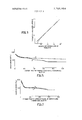
- FIG. 1 is a microscopic photograph of the surface layer obtained by nitriding a titanium-base alloy (5% Al 2% Cr 1% Fe balance Ti) at a temperature of 850C. for hours in a nitrogen atmosphere;
- FIGS. 2A and 2B are microscopic photographs of the surface layer of iron plates in thickness of 5 and 13 microns, respectively, on the surface of the titanium-base alloy and nitrided at a temperature of 850C. for 50 hours in a nitrogen atmosphere;
- FIG. 3 is a graph showing the relationship between the thickness of the iron plated layer and that of the hardened layer of titanium;
- FIG. 4 is a microscopic photograph of the surface layer on the titanium-base alloy shown in FIG. 28, age treated at a temperature of 500C. for 6 hours in a vacuum atmosphere;
- FIG. 5 is a graphical representation of the relationship between the Vickers hardness and the distance from the surface of iron plated titanium-base alloys shown in FIGS. 28 and 4;
- FIG. 6 is a microscopic photograph of the surface of the aforementioned titanium-base alloy, plated with a nickel layer having a thickness of microns, and nitrided at a temperature of 850C. for 50 hours in a nitrogen atmosphere;
- FIG. 7 is a graph showing the relationship between the Vickers hardness and the distance from the surface of the nickel or copper plated titanium-base alloys shown in FIGS. 6 and 8; and,
- FIG. 8 is a microscopic photograph of the surface of the aforesaid titanium-base alloy, copper plated to a thickness of 10 microns, and nitrided at a temperature of 850C. for 50 hours in a nitrogen atmosphere.
- the pure titanium may be commercially pure metal
- the titanium-base alloy may be any of the Ti-Al-V types such as Ti-6Al-4V: Ti-Al-Sn types such as Ti-5Al- 2.5Sn; Ti-Al-Cr-Fe types such as Ti-5Al-2Cr-1Fe; Ti- Al-Mo-V types such as Ti-4Al- 3Mo-1V; Ti-Al-V-Sn types such as Ti-6Al-6V-2Sn; Ti-l3V-l lCr-3Al, Til2Mo-6Zr-4.5Sn, Ti-2.25Al-llSn-5Zr-Mo-0.1Si, and other commercial titanium alloys.
- Ti-Al-V types such as Ti-6Al-4V: Ti-Al-Sn types such as Ti-5Al- 2.5Sn; Ti-Al-Cr-Fe types such as Ti-5Al-2Cr-1Fe; Ti- Al-Mo-V types such as Ti-4
- the substitutional metal may be, for example, iron, nickel, copper, aluminum, manganese, chromium, molybdenum, silicon, or cobalt.
- the most preferred metal is one which can prevent the hardness at high temperature from decreasing due to diffusion into the titanium, and which'can thicken the hardened layer.
- the ideal metal is one which has as large a diffusion constant as possible, relative to titanium, a large strengthening capacity, and is easily nitridable. In considering the diffusion constant, strengthening capacity and nitriding capacity, iron is the most preferred substitutional metal.
- the coating can be applied by any convenient method such as plating, deposition, welding, discharge coating and painting. It is only required that the coating be applied without undue concern over other existing problems such as separation of the coated layer.
- the coated titanium or titanium-base alloy is then heated in a pure nitrogen atmosphere. Then, the coated metal is nitrided. It is then heated at a raised temperature with the result that the coated metal starts to diffuse into the titanium or titanium-base alloy in the nitrogen atmosphere.
- nitrogen is also diffused into the titanium or titanium-base alloy so that the hardened layer becomes a ternary alloy metal of titanium-coated metal-nitrogen.
- the hardness of the surface layer becomes sufficiently high by the nitriding, and yet, since the coated metal is diffused into the base, the thickness of the surfacehardened layer is greater, above approximately 150 microns, than the layer hardened only by nitrogen. Since the substitutional metal is diffused, its strengthening capacity is not reduced even at relatively high temperatures.
- nitriding conditions of the metal in a nitrogen atmosphere will vary depending upon the type of alloy used, but temperatures of 750l050C. for periods of 10-100 hours are preferable. The particular conditions will depend upon the particular shape and size of the treating material, and accordingly may not always be within these stated ranges.
- the coated metal is a beta stabilizing element, it will diffuse to form an alloy with the titanium or titanium alloy of the base metal, and the beta phase portion will increase with the result that it sometimes becomes a beta single phase.
- a metastable beta phase is aged at temperatures of about 400600C., a fine alpha phase will be precipitated to increase the hardness.
- the hardness of the surface-hardened layer may be further increased while simultaneously enlarging the effective thickness of the hardened layer.
- Titanium-base alloy iron plated and nitrided It is known that in comparing pure titanium with titanium-base alloys, pure titanium is nitrided more readily and accordingly the nitrided layer is thicker. Therefore, this Example has used a titanium-base alloy, which is more difficultly nitrided.
- lron was electrically plated by conventional methods to a thickness of S to l3 microns on the surface of a titanium-base alloy (5% Al 2% Cr 1% Fe balance Ti).
- the thusly iron-plated titanium-base alloy was at once placed in a heating furnace of nitrogen atmosphere to be nitrided.
- FIGS. 2A and 2B The thus-obtained surface-hardened titanium-base alloy is shown in FIGS. 2A and 2B.
- the thickness of the surfacehardened layer obtained by the conventional method shown in FIG. 1 is approximately 20 microns, while that obtained according to the method of this invention shown in FIGS. 2A and 2B was approximately 65 microns for iron plated to a thickness of 5 microns, and was approximately microns for iron plated to a thickness of 13 microns.
- the effect of the method of this invention is clear.
- the relationship between the thickness of the iron plated layer and that of the surface-hardened layer is proportional, as shown in FIG. 3, so that the thickncr the plated layer is, the greater becomes the thickness of the hardened layer.
- the thickness of the surface-hardened layer may freely be selected by adjusting the thickness of the plated layer.
- the titanium-base alloy was iron plated to a thickness of 13 microns thereon and was then nitrided. Thereafter, it was aged in vacuo at a temperature of 500C. for 6 hours.
- the result of this treatment of the titanium-base alloy is shown in FIGS. 4 and 5. It is clearly seen from this that aging provides a fine structure in the hardened layer in comparison with that which is not aged. As shown in FIG. 5, comparing the hardened layer and the hardness of the titanium-base alloy with that which is not aged, as illustrated by curve A, the Vickers hardness became above 500 even in the interior 500 microns from the surface, as seen by curve B.
- the surface was superiorly hardened, and the effect of this invention may be further improved by the aging treatment.
- EXAMPLE 2 Titanium-base alloy, nickel plated.
- Nickel was plated to a thickness of microns on the surface of a titanium-base alloy (5% Al-2%Cr-1%Fe -balance Ti), and the titanium-base alloy was then nitrided under the same conditions as in Example 1. The results of this treatment of the alloy are shown in FIGS. 6 and 7.
- the nitrided layer is approximately 25 microns at the outermost portion of the surface of the hardened titanium-base alloy, and next to the nitrided layer there exists a copper diffused layer having a thickness of approximately 75 microns.
- a hardened layer which is thicker than that obtained by conventional methods is obtained.
- the hardened layer on the surface of the titanium-base alloy is almost the same as that in the case of 'nickel, but the thickness of the surface-hardened layer is slightly thinner, such as approximately 100 microns, and therefore it is considered to be necessary to form a copper plated layer thicker than about 10 microns.
- Aging treatment may provide the same effect as in Example 2.
- the method of the present invention simultaneously diffuses and nitrides the substitutional type metal entered into the titanium, the thickness of the surface-hardened layer becomes above 100 microns and is harder than heretofore attainable, with the result that it is no longer a severe drawback when portions of the hardened surface are to be removed by polishing. Yet, since the method provides a layer diffused with a substitutional metal, it will not suffer a weakened strengthening capacity at high temperatures, with the result that problems of separation of the'plated layer from the surface-hardened layer, such as are encountered with the conventional plating method, do not exist.
- a surface hardened pure titanium or titanium base alloy which is formed by coating a substitutional metal selected from the group consisting of Fe, Ni, and Cu, onto a titanium or titanium base alloy metal in sufticient thickness to provide a surface hardened layer of at least 100 microns and heat treating said metal in a nitrogen atmosphere at a temperature of 750 1,050C. for periods of 10 100 hours whereby the coated metal is nitrided and is diffused into the base metal and simultaneously nitrogen is diffused into the base metal, whereby a hardened layer which is richer in stable beta phase than the base metal and which has a Vickers hardness of about 400 is obtained.
- a method of hardening the surface of pure titanium or a titanium base alloy metal which comprises coating onto said base metal a substitutional metal, selected from the group consisting of Fe, Ni, Cu, in sufficient thickness to provide a surface hardened layer of at least 100 microns heating said coated metal in a nitrogen atmosphere at a temperature of 750 1,050C. for a period of 10 .100 hours, whereby the coated metal is nitrided and is diffused into the base metal and simultaneously nitrogen is diffused into the base metal whereby a hardened layer which is richer in stable beta phase than the base metal and which has a Vickers hardness of above 400 is obtained.
Landscapes
- Chemical & Material Sciences (AREA)
- Chemical Kinetics & Catalysis (AREA)
- Engineering & Computer Science (AREA)
- Materials Engineering (AREA)
- Mechanical Engineering (AREA)
- Metallurgy (AREA)
- Organic Chemistry (AREA)
- Solid-Phase Diffusion Into Metallic Material Surfaces (AREA)
Abstract
Surface-hardened pure titanium or titanium-base alloys having a coating of a substitution type metal, which metal is characterized by a larger diffusion constant than titanium, is more readily nitrided than titanium, has a higher density than the base metal, is rich in stable beta phase, and which has a Vickers hardness of above 400. This hardened titanium or titanium-base alloy is produced by a method of hardening the surface of pure titanium or a titanium-base alloy which includes the steps of coating a substitution type metal of the abovementioned type and heating the coated metal in a nitrogencontaining atmosphere.
Description
United States Patent [1 1 Tokuda et a1.
[ SURFACE-HARDENED TITANIUM AND TITANIUM ALLOYS AND METHOD OF PROCESSING SAME [75] Inventors: Shoichi Tokuda; Hiromichi Kawahara, both of Kobe, Japan [73] Assignees Kobe Steel, Ltd., Kobe City, Japan [22] Filed: Mar. 22, 1971 [21] Appl. No.: 126,634
[52] US. Cl 148/203, 29/198, 148/31.5, 148/325, 148/133 [51] Int. Cl. C23c 11/14, C22c 15/00 [58] Field of Search 148/13.1, 15.5, 16.6, 148/203, 31.5, 32.5, 133; 75/175.5; 29/198; 204/37, 38
[56] References Cited UNITED STATES PATENTS 3,471,342 10/1969 Wood 148/315 X 1,929,252 10/1933 Morris 148/166 2,864,731 12/1958 Gurinsky et a]. 148/15 X 1,944,179 1/1934 Homerberg 148/166 1,936,294 11/1933 Egan 148/166 2,858,600 11/1958 Vigor 29/198 [451 Oct. 16, 1973 7/1953 Herres 148/133 X 8/1960 Steinberg 204/37 OTHER PUBLICATIONS Primary ExaminerCharles N. Lovell Attorney-Oblon, Fisher & Spivak [5 7] ABSTRACT Surface-hardened pure titanium or titanium-base alloys having a coating of a substitution type metal, which metal is characterized by a larger diffusion constant than titanium, is more readily nitrided than titanium, has a higher density than the base metal, is rich in stable beta phase, and which has a Vickers hardness of above 400. This hardened titanium or titanium-base alloy is produced by a method of hardening the surface of pure titanium or a titanium-base alloy which includes the steps of coating a substitution type metal of the above-mentioned type and heating the coated metal in a nitrogen-containing atmosphere.
6 Claims, 9 Drawing Figures PAIENTEnncI 16 ms SHEET 10F 3 FIG. 1
mvsmos SHOICHI TOKUDA 0nd HIROMICHI KAWAHARA ATTORNEYS FIG. 2B
PATENTEUUBI 16 I973 SHEET 3 OF 3 has E54 $2 5 205 6 5 mmwzx BOO 100 THICKNESS 0F HARDENED LAYER OF TITANIUM (1*) DTSTANCE FROM THE SURFACE OF IRON PLATED TlTANlUM-BASE 28s wmmzom 5;
ALLOY (m FIG. '5
DISTANCE FROM THE SURFACE OF NTCKEL OR COPPER PLATED TITANIUM-BASE ALLOY FIG] SURFACE-HARDENED TITANIUM AND TITANIUM ALLOYS AND METHOD OF PROCESSING SAME BACKGROUND OF THE INVENTION 1. Field of Invention This invention relates to surface-hardened pure titanium or titanium-base alloys and to a method of processing same. More particularly, this invention relates to surface-hardened pure titanium or titanium-base alloys having a relatively harder and thicker surface, and to a method of hardening said surface.
2. Description Of The Prior Art Since titanium and titanium-base alloys have superior corrosion resistance, relatively low specific weight, and high tensile strength, they are used in strengthening members of aircraft and spacecraft and as materials in the rotary portions of a jet engine. Since they also have proper refractoriness, they have also been used as materials in various devices and equipment in the chemical industry. Thus, titanium and titanium-base alloys are broadly used in various fields.
However, titanium and titanium-base alloys have, as their chief disadvantage, a very seizable property, and accordingly are characterized by a low wear resistance, thereby rendering them unsuitable for those applications which require high wear resistance.
In order to overcome these disadvantages of titanium and titanium-base alloys, it is common to surfaceharden the metal or to plate the metal with a different metal to obtain increased wear resistance.
Commonly used surface-hardening methods include nitriding treatment, oxidation treatment, surfacehardening treatment for depositing titanium in an inert gas including small amounts of nitrogen and oxygen, and carbonization treatment. As methods of coating a different metal, there are chrome or nickel plating treatments and high hardness special alloy welding treatments.
These methods are adapted for practical use for their respective utilities, but each of these methods has corresponding disadvantages in addition to their advantages. For instance, when the surface is nitrided, the thickness of the nitrided layer is usually approximately 40 microns, in the case of pure titanium (heated at a temperature of 850C. for 100 hours), plus or minus approximately microns, depending upon the type (heated at a temperature of 850C. for 100 hours). Since these heat treatments are conducted at a high temperature for long periods of time, the treated metal tends to be deformed. If the deformation is corrected, such as by polishing, the hardened layer will be disadvantageously removed.
In the oxidation treatment, the oxidized layer, obtained in a molten glass bath, is even thicker than the nitrided layer, but the interstitial type elements for hardening of titanium, such as oxygen and nitrogen, abruptly reduce its hardening capacity if the temperature becomes 250300C., with the resultant disadvantage that the effectiveness of this surface-hardening treatment is extremely decreased. Even a surfacehardening treatment similar to the aforementioned oxidizing treatment has disadvantages, in that blow-holes may form during surface-hardening, and machining is required to form the final shape after surfacehardening.
Though the carbonization treatment increases the hardness of the surface by the formation of carbonized titanium, the hardened layer disadvantageously becomes porous and fragile.
Though chrome and nickel plating methods are effective, it is not always easy to obtain sufficient exfoliation strength in the plated layer, and hydrogen absorption by the plating occurs to cause so-called hydrogen fragility and an extreme reduction of the fatigue strength of the base metal.
Thus, none of the aforesaid methods improve the wear resistance of titanium and titanium-base alloys in a completely satisfactory manner.
SUMMARY OF THE INVENTION Accordingly, one object of this invention is to eliminate the aforementioned disadvantages of the conventionally surface-hardened titanium, and titanium-base alloys and methods of processing same by providing novel and improved surface-hardened pure titanium and titanium-base alloys and a method of producing the same.
Another object of the present invention is to provide surface-hardened pure titanium and titanium-base al- Ioys which have hardened layers of both sufficient surface hardness and thickness.
It is another object of the present invention to provide a method of hardening the surface of pure titanium and titanium-base alloys.
Another object of the present invention is to provide a method of hardening the surface of pure titanium and titanium-base alloys which comprises the steps of coating a substitutional metal thereon and heating the coated metal in an atmosphere including nitrogen.
According to a further object of the present invention, there is also provided a method of hardening the surface of pure titanium and titanium-base alloys which comprises the step, in addition to the above steps, of aging the surface.
According to one aspect of the present invention, the foregoing and other objects are attained by a process for preparing surface-hardened pure titanium and titanium-base alloys which comprises coating with a substitutional metal having a larger diffusion constant than titanium, which can be more readily nitrided than titanium, which has a higher density than the base metal, which is rich in the stable beta phase, and which has a Vickers hardness of above 400.
BRIEF DESCRIPTION OF THE DRAWINGS A more complete appreciation of the invention will be readily obtained as the same becomes better understood by reference to the following detailed description when taken in conjunction with the accompanying drawings, wherein:
FIG. 1 is a microscopic photograph of the surface layer obtained by nitriding a titanium-base alloy (5% Al 2% Cr 1% Fe balance Ti) at a temperature of 850C. for hours in a nitrogen atmosphere;
FIGS. 2A and 2B are microscopic photographs of the surface layer of iron plates in thickness of 5 and 13 microns, respectively, on the surface of the titanium-base alloy and nitrided at a temperature of 850C. for 50 hours in a nitrogen atmosphere;
FIG. 3 is a graph showing the relationship between the thickness of the iron plated layer and that of the hardened layer of titanium;
FIG. 4 is a microscopic photograph of the surface layer on the titanium-base alloy shown in FIG. 28, age treated at a temperature of 500C. for 6 hours in a vacuum atmosphere;
FIG. 5 is a graphical representation of the relationship between the Vickers hardness and the distance from the surface of iron plated titanium-base alloys shown in FIGS. 28 and 4;
FIG. 6 is a microscopic photograph of the surface of the aforementioned titanium-base alloy, plated with a nickel layer having a thickness of microns, and nitrided at a temperature of 850C. for 50 hours in a nitrogen atmosphere;
FIG. 7 is a graph showing the relationship between the Vickers hardness and the distance from the surface of the nickel or copper plated titanium-base alloys shown in FIGS. 6 and 8; and,
FIG. 8 is a microscopic photograph of the surface of the aforesaid titanium-base alloy, copper plated to a thickness of 10 microns, and nitrided at a temperature of 850C. for 50 hours in a nitrogen atmosphere.
DETAILED DESCRIPTION OF PREFERRED EMBODIMENTS In this method, metal diffusion and nitriding are accomplished simultaneously. It follows that the substitutional metal is first coated onto the base, and then it is heated in an atmosphere of pure nitrogen gas or in a nitrogen-containing atmosphere, such as in a gas derived by cracking ammonia.
The pure titanium may be commercially pure metal, and the titanium-base alloy may be any of the Ti-Al-V types such as Ti-6Al-4V: Ti-Al-Sn types such as Ti-5Al- 2.5Sn; Ti-Al-Cr-Fe types such as Ti-5Al-2Cr-1Fe; Ti- Al-Mo-V types such as Ti-4Al- 3Mo-1V; Ti-Al-V-Sn types such as Ti-6Al-6V-2Sn; Ti-l3V-l lCr-3Al, Til2Mo-6Zr-4.5Sn, Ti-2.25Al-llSn-5Zr-Mo-0.1Si, and other commercial titanium alloys.
The substitutional metal may be, for example, iron, nickel, copper, aluminum, manganese, chromium, molybdenum, silicon, or cobalt. The most preferred metal is one which can prevent the hardness at high temperature from decreasing due to diffusion into the titanium, and which'can thicken the hardened layer. For this purpose, the ideal metal is one which has as large a diffusion constant as possible, relative to titanium, a large strengthening capacity, and is easily nitridable. In considering the diffusion constant, strengthening capacity and nitriding capacity, iron is the most preferred substitutional metal.
The coating can be applied by any convenient method such as plating, deposition, welding, discharge coating and painting. It is only required that the coating be applied without undue concern over other existing problems such as separation of the coated layer.
The coated titanium or titanium-base alloy is then heated in a pure nitrogen atmosphere. Then, the coated metal is nitrided. It is then heated at a raised temperature with the result that the coated metal starts to diffuse into the titanium or titanium-base alloy in the nitrogen atmosphere. Thus, in addition to the coated metal on the titanium or titanium-base alloy, nitrogen is also diffused into the titanium or titanium-base alloy so that the hardened layer becomes a ternary alloy metal of titanium-coated metal-nitrogen. Thus, the hardness of the surface layer becomes sufficiently high by the nitriding, and yet, since the coated metal is diffused into the base, the thickness of the surfacehardened layer is greater, above approximately 150 microns, than the layer hardened only by nitrogen. Since the substitutional metal is diffused, its strengthening capacity is not reduced even at relatively high temperatures.
The nitriding conditions of the metal in a nitrogen atmosphere will vary depending upon the type of alloy used, but temperatures of 750l050C. for periods of 10-100 hours are preferable. The particular conditions will depend upon the particular shape and size of the treating material, and accordingly may not always be within these stated ranges.
If the coated metal is a beta stabilizing element, it will diffuse to form an alloy with the titanium or titanium alloy of the base metal, and the beta phase portion will increase with the result that it sometimes becomes a beta single phase. However, if such a metastable beta phase is aged at temperatures of about 400600C., a fine alpha phase will be precipitated to increase the hardness. Thus, the hardness of the surface-hardened layer may be further increased while simultaneously enlarging the effective thickness of the hardened layer.
Having now generally described the invention, a further understanding can be obtained by reference to certain specific Examples which are provided herein for purposes of illustration only and are not intended to be limiting unless otherwise specified.
EXAMPLE I:
Titanium-base alloy, iron plated and nitrided It is known that in comparing pure titanium with titanium-base alloys, pure titanium is nitrided more readily and accordingly the nitrided layer is thicker. Therefore, this Example has used a titanium-base alloy, which is more difficultly nitrided.
lron was electrically plated by conventional methods to a thickness of S to l3 microns on the surface of a titanium-base alloy (5% Al 2% Cr 1% Fe balance Ti). The thusly iron-plated titanium-base alloy was at once placed in a heating furnace of nitrogen atmosphere to be nitrided.
Nitriding conditions:
50 hours +50 mmHg Temperature: Heating period: Atmospheric pressure:
The thus-obtained surface-hardened titanium-base alloy is shown in FIGS. 2A and 2B. In comparison, a surface-hardened titanium-base alloy which was not plated but heated for hours under conditions otherwise the same as above, is shown in FIG. 1.
As clearly seen from the microscopic photographs shown in FIGS. 1 and 2, the thickness of the surfacehardened layer obtained by the conventional method shown in FIG. 1 is approximately 20 microns, while that obtained according to the method of this invention shown in FIGS. 2A and 2B was approximately 65 microns for iron plated to a thickness of 5 microns, and was approximately microns for iron plated to a thickness of 13 microns. Thus, the effect of the method of this invention is clear.
The relationship between the thickness of the iron plated layer and that of the surface-hardened layer is proportional, as shown in FIG. 3, so that the thickncr the plated layer is, the greater becomes the thickness of the hardened layer. Thus, the thickness of the surface-hardened layer may freely be selected by adjusting the thickness of the plated layer. However, in order to prevent the surface-hardened layer from being removed by polishing, it is considered necessary to have a surface-hardened plate in a thickness of at least approximately 100 microns, and accordingly it is required to plate in a thickness of above approximately 8 microns prior to nitriding.
Next, the titanium-base alloy was iron plated to a thickness of 13 microns thereon and was then nitrided. Thereafter, it was aged in vacuo at a temperature of 500C. for 6 hours. The result of this treatment of the titanium-base alloy is shown in FIGS. 4 and 5. It is clearly seen from this that aging provides a fine structure in the hardened layer in comparison with that which is not aged. As shown in FIG. 5, comparing the hardened layer and the hardness of the titanium-base alloy with that which is not aged, as illustrated by curve A, the Vickers hardness became above 500 even in the interior 500 microns from the surface, as seen by curve B. Thus, according to this treatment, the surface was superiorly hardened, and the effect of this invention may be further improved by the aging treatment.
EXAMPLE 2 Titanium-base alloy, nickel plated.
Nickel was plated to a thickness of microns on the surface of a titanium-base alloy (5% Al-2%Cr-1%Fe -balance Ti), and the titanium-base alloy was then nitrided under the same conditions as in Example 1. The results of this treatment of the alloy are shown in FIGS. 6 and 7.
As seen in FIG. 6, the nitrided layer is approximately 25 microns at the outermost portion of the surface of the hardened titanium-base alloy. Next to the nitrided layer there exists a nickel diffused layer in a thickness of approximately 100 microns, which has succeeded to increase the thickness of the hardened layer in the same manner as in Example 1. As to the relationship between the hardness and the thickness of the hardened layer of the titanium-base alloy, the thickness of the layer hardened above Vickers hardness of 500 reached approximately 200 microns. Thus, sufficient hardness of the surface-hardened titanium-base alloy may be provided. Since nickel is an abrupt eutectoid alloy element for titanium, the same effect as achieved in Example 1 may be provided by relatively shorter aging treatment.
EXAMPLE 3 Titanium-base alloy, copper plated.
Copper was plated to a thickness of 10 microns on the surface ofa titanium-base alloy (5%Al 2%Cr 1% Fe -balance Ti), and the titanium-base alloy was then nitrided under the same conditions as in Example 1. The results of the treatment of the alloy are shown in FIGS. 7 and 8.
The nitrided layer is approximately 25 microns at the outermost portion of the surface of the hardened titanium-base alloy, and next to the nitrided layer there exists a copper diffused layer having a thickness of approximately 75 microns. Thus, a hardened layer which is thicker than that obtained by conventional methods is obtained. As seen in FIG. 7, the hardened layer on the surface of the titanium-base alloy is almost the same as that in the case of 'nickel, but the thickness of the surface-hardened layer is slightly thinner, such as approximately 100 microns, and therefore it is considered to be necessary to form a copper plated layer thicker than about 10 microns. Aging treatment may provide the same effect as in Example 2.
It should be understood from the foregoing description that since the method of the present invention simultaneously diffuses and nitrides the substitutional type metal entered into the titanium, the thickness of the surface-hardened layer becomes above 100 microns and is harder than heretofore attainable, with the result that it is no longer a severe drawback when portions of the hardened surface are to be removed by polishing. Yet, since the method provides a layer diffused with a substitutional metal, it will not suffer a weakened strengthening capacity at high temperatures, with the result that problems of separation of the'plated layer from the surface-hardened layer, such as are encountered with the conventional plating method, do not exist.
It should also be understood that the thickness of the surface-hardened layer of the titanium-base alloy may be freely adjusted in response to desired requirements.
It will be appreciated that, while the foregoing disclosure relates only to preferred embodiments of the invention for preparing surface-hardened titanium or titanium-base alloys, numerous modifications or alterations will be apparent to those skilled in the art without departing from the spirit and scope of the invention as set forth in the appended claims.
What is claimed as new and desired to be secured by letters patent of the United States is:
l. A surface hardened pure titanium or titanium base alloy, which is formed by coating a substitutional metal selected from the group consisting of Fe, Ni, and Cu, onto a titanium or titanium base alloy metal in sufticient thickness to provide a surface hardened layer of at least 100 microns and heat treating said metal in a nitrogen atmosphere at a temperature of 750 1,050C. for periods of 10 100 hours whereby the coated metal is nitrided and is diffused into the base metal and simultaneously nitrogen is diffused into the base metal, whereby a hardened layer which is richer in stable beta phase than the base metal and which has a Vickers hardness of about 400 is obtained.
2. A surface-hardened titanium-base alloy as set forth in claim 1, wherein said alloy is of the Ti-Al-V type Ti- Al-Sn type, Ti-Al-Cr-Fe type, Ti-Al-Mo-V type, Ti-Al- V-Sn type, Ti-V-Cr-Al type, Ti-Mo-Zr-Sn type, or the Ti-Al-Sn-Zr-Mo-Si type.
3. A method of hardening the surface of pure titanium or a titanium base alloy metal, which comprises coating onto said base metal a substitutional metal, selected from the group consisting of Fe, Ni, Cu, in sufficient thickness to provide a surface hardened layer of at least 100 microns heating said coated metal in a nitrogen atmosphere at a temperature of 750 1,050C. for a period of 10 .100 hours, whereby the coated metal is nitrided and is diffused into the base metal and simultaneously nitrogen is diffused into the base metal whereby a hardened layer which is richer in stable beta phase than the base metal and which has a Vickers hardness of above 400 is obtained. 7
4. A method as set forth in claim 3, wherein said coating step is plating, depositing, welding, discharge coating, or painting.
5. A method as set forth in claim 3, further comprising the step of aging.
6. A method as set forth in claim 3, wherein said aging step is conducted at a temperature of 400 C.
Claims (5)
- 2. A surface-hardened titanium-base alloy as set forth in claim 1, wherein said alloy is of the Ti-Al-V type Ti-Al-Sn type, Ti-Al-Cr-Fe type, Ti-Al-Mo-V type, Ti-Al-V-Sn type, Ti-V-Cr-Al type, Ti-Mo-Zr-Sn type, or the Ti-Al-Sn-Zr-Mo-Si type.
- 3. A method of hardening the surface of pure titanium or a titanium base alloy metal, which comprises coating onto said base metal a substitutional metal, selected from the group consisting of Fe, Ni, Cu, in sufficient thickness to provide a surface hardened layer of at least 100 microns heating said coated metal in a nitrogen atmosphere at a temperature of 750* - 1,050*C. for a period of 10 - 100 hours, whereby the coated metal is nitrided and is diffused into the base metal and simultaneously nitrogen is diffused into the base metal whereby a hardened layer which is richer in stable beta phase than the base metal and which has a Vicker''s hardness of above 400 is obtained.
- 4. A method as set forth in claim 3, wherein said coating step is plating, depositing, welding, discharge coating, or painting.
- 5. A method as set forth in claim 3, further comprising the step of aging.
- 6. A method as set forth in claim 3, wherein said aging step is conducted at a temperature of 400* - 60*C.
Applications Claiming Priority (1)
| Application Number | Priority Date | Filing Date | Title |
|---|---|---|---|
| US12663471A | 1971-03-22 | 1971-03-22 |
Publications (1)
| Publication Number | Publication Date |
|---|---|
| US3765954A true US3765954A (en) | 1973-10-16 |
Family
ID=22425910
Family Applications (1)
| Application Number | Title | Priority Date | Filing Date |
|---|---|---|---|
| US00126634A Expired - Lifetime US3765954A (en) | 1971-03-22 | 1971-03-22 | Surface-hardened titanium and titanium alloys and method of processing same |
Country Status (1)
| Country | Link |
|---|---|
| US (1) | US3765954A (en) |
Cited By (16)
| Publication number | Priority date | Publication date | Assignee | Title |
|---|---|---|---|---|
| DE2929634A1 (en) * | 1979-07-21 | 1981-01-29 | Motoren Turbinen Union | METHOD FOR THE PRODUCTION OF TURBO BLADES FROM TITANIUM OR TITANIUM BASED ALLOY WITH A HARD SURFACE |
| US4413302A (en) * | 1978-07-19 | 1983-11-01 | Gesellschaft Fuer Kernenergieverwertung In Schiffbau Und Schiffahrt Gmbh | Structural member made from a metallic material having an upper surface exposed to the danger of electric charge building-up thereon and the use of such structural member |
| US4692385A (en) * | 1986-04-14 | 1987-09-08 | Materials Development Corporation | Triplex article |
| US5006419A (en) * | 1989-02-28 | 1991-04-09 | Mtu Motoren-Und Turbinen-Union Muenchen Gmbh | Structural component made of a titanium alloy and covered by a protective coating and method for producing the coating |
| US5123972A (en) * | 1990-04-30 | 1992-06-23 | Dana Corporation | Hardened insert and brake shoe for backstopping clutch |
| US5300159A (en) * | 1987-12-23 | 1994-04-05 | Mcdonnell Douglas Corporation | Method for manufacturing superplastic forming/diffusion bonding tools from titanium |
| US5372660A (en) * | 1993-08-26 | 1994-12-13 | Smith & Nephew Richards, Inc. | Surface and near surface hardened medical implants |
| US5455079A (en) * | 1991-07-26 | 1995-10-03 | The United States Of America As Represented By The Secretary Of The Interior | Surface hardening of titanium alloys with melting depth controlled by heat sink |
| US5580669A (en) * | 1994-02-17 | 1996-12-03 | United Technologies Corporation | Oxidation resistant coating for titanium alloys |
| US20030118858A1 (en) * | 2000-04-19 | 2003-06-26 | Hachirou Kushida | Tableware and method for surface treatment thereof, substrate having hard decorative coating film and method for production thereof, and cutlery |
| US6667111B2 (en) * | 1999-03-15 | 2003-12-23 | Ut Battelle Llc | Rapid infrared heating of a surface |
| US20070068340A1 (en) * | 2004-03-08 | 2007-03-29 | Battelle Memorial Institute | Feedstock composition for powder metallurgy forming of reactive metals |
| US20110193218A1 (en) * | 2010-02-05 | 2011-08-11 | International Business Machines Corporation | Solder Interconnect with Non-Wettable Sidewall Pillars and Methods of Manufacture |
| US20170284528A1 (en) * | 2016-04-01 | 2017-10-05 | Shimano Inc. | Bicycle component, bicycle sprocket, and bicycle composite sprocket |
| US11504765B2 (en) * | 2014-09-30 | 2022-11-22 | Nippon Steel Corporation | Titanium cast product for hot rolling unlikely to exhibit surface defects and method of manufacturing the same |
| US12104239B2 (en) | 2014-05-15 | 2024-10-01 | General Electric Company | Titanium alloys and their methods of production |
Citations (8)
| Publication number | Priority date | Publication date | Assignee | Title |
|---|---|---|---|---|
| US1929252A (en) * | 1931-12-09 | 1933-10-03 | Moore Drop Forging Company | Nitrided ferrous article |
| US1936294A (en) * | 1930-02-26 | 1933-11-21 | Electro Metallurg Co | Case hardening by nitriding |
| US1944179A (en) * | 1929-05-10 | 1934-01-23 | Nitromal Corp | Ferrous alloy |
| US2645575A (en) * | 1949-10-29 | 1953-07-14 | Allegheny Ludlum Steel | Chromium-nickel titanium base alloys |
| US2858600A (en) * | 1954-02-19 | 1958-11-04 | Gen Motors Corp | Surface hardening of titanium |
| US2864731A (en) * | 1956-07-13 | 1958-12-16 | David H Gurinsky | Forming protective films on metal |
| US2950233A (en) * | 1954-04-29 | 1960-08-23 | Horizons Inc | Production of hard surfaces on base metals |
| US3471342A (en) * | 1966-07-29 | 1969-10-07 | Ibm | Wear-resistant titanium and titanium alloys and method for producing same |
-
1971
- 1971-03-22 US US00126634A patent/US3765954A/en not_active Expired - Lifetime
Patent Citations (8)
| Publication number | Priority date | Publication date | Assignee | Title |
|---|---|---|---|---|
| US1944179A (en) * | 1929-05-10 | 1934-01-23 | Nitromal Corp | Ferrous alloy |
| US1936294A (en) * | 1930-02-26 | 1933-11-21 | Electro Metallurg Co | Case hardening by nitriding |
| US1929252A (en) * | 1931-12-09 | 1933-10-03 | Moore Drop Forging Company | Nitrided ferrous article |
| US2645575A (en) * | 1949-10-29 | 1953-07-14 | Allegheny Ludlum Steel | Chromium-nickel titanium base alloys |
| US2858600A (en) * | 1954-02-19 | 1958-11-04 | Gen Motors Corp | Surface hardening of titanium |
| US2950233A (en) * | 1954-04-29 | 1960-08-23 | Horizons Inc | Production of hard surfaces on base metals |
| US2864731A (en) * | 1956-07-13 | 1958-12-16 | David H Gurinsky | Forming protective films on metal |
| US3471342A (en) * | 1966-07-29 | 1969-10-07 | Ibm | Wear-resistant titanium and titanium alloys and method for producing same |
Non-Patent Citations (1)
| Title |
|---|
| Titanium Abstract Bulletin, Abstract No. 6270 pages 87 & 88, Vol. 6, July 1960, June 1961 Imperical Chem. Ind. Ltd. Metals Div., Birmingham, England * |
Cited By (23)
| Publication number | Priority date | Publication date | Assignee | Title |
|---|---|---|---|---|
| US4413302A (en) * | 1978-07-19 | 1983-11-01 | Gesellschaft Fuer Kernenergieverwertung In Schiffbau Und Schiffahrt Gmbh | Structural member made from a metallic material having an upper surface exposed to the danger of electric charge building-up thereon and the use of such structural member |
| DE2929634A1 (en) * | 1979-07-21 | 1981-01-29 | Motoren Turbinen Union | METHOD FOR THE PRODUCTION OF TURBO BLADES FROM TITANIUM OR TITANIUM BASED ALLOY WITH A HARD SURFACE |
| US4692385A (en) * | 1986-04-14 | 1987-09-08 | Materials Development Corporation | Triplex article |
| US5300159A (en) * | 1987-12-23 | 1994-04-05 | Mcdonnell Douglas Corporation | Method for manufacturing superplastic forming/diffusion bonding tools from titanium |
| US5006419A (en) * | 1989-02-28 | 1991-04-09 | Mtu Motoren-Und Turbinen-Union Muenchen Gmbh | Structural component made of a titanium alloy and covered by a protective coating and method for producing the coating |
| US5123972A (en) * | 1990-04-30 | 1992-06-23 | Dana Corporation | Hardened insert and brake shoe for backstopping clutch |
| US5455079A (en) * | 1991-07-26 | 1995-10-03 | The United States Of America As Represented By The Secretary Of The Interior | Surface hardening of titanium alloys with melting depth controlled by heat sink |
| US5372660A (en) * | 1993-08-26 | 1994-12-13 | Smith & Nephew Richards, Inc. | Surface and near surface hardened medical implants |
| US5580669A (en) * | 1994-02-17 | 1996-12-03 | United Technologies Corporation | Oxidation resistant coating for titanium alloys |
| US6667111B2 (en) * | 1999-03-15 | 2003-12-23 | Ut Battelle Llc | Rapid infrared heating of a surface |
| US20030118858A1 (en) * | 2000-04-19 | 2003-06-26 | Hachirou Kushida | Tableware and method for surface treatment thereof, substrate having hard decorative coating film and method for production thereof, and cutlery |
| US6855215B2 (en) * | 2000-04-19 | 2005-02-15 | Citizen Watch Co., Ltd. | Tableware and method for surface treatment thereof, substrate having hard decorative coating film and method for production thereof |
| US20070068340A1 (en) * | 2004-03-08 | 2007-03-29 | Battelle Memorial Institute | Feedstock composition for powder metallurgy forming of reactive metals |
| US7585348B2 (en) * | 2004-03-08 | 2009-09-08 | Battelle Memorial Institute | Feedstock composition for powder metallurgy forming of reactive metals |
| US9018760B2 (en) | 2010-02-05 | 2015-04-28 | International Business Machines Corporation | Solder interconnect with non-wettable sidewall pillars and methods of manufacture |
| US8637392B2 (en) * | 2010-02-05 | 2014-01-28 | International Business Machines Corporation | Solder interconnect with non-wettable sidewall pillars and methods of manufacture |
| US20110193218A1 (en) * | 2010-02-05 | 2011-08-11 | International Business Machines Corporation | Solder Interconnect with Non-Wettable Sidewall Pillars and Methods of Manufacture |
| US12104239B2 (en) | 2014-05-15 | 2024-10-01 | General Electric Company | Titanium alloys and their methods of production |
| US11504765B2 (en) * | 2014-09-30 | 2022-11-22 | Nippon Steel Corporation | Titanium cast product for hot rolling unlikely to exhibit surface defects and method of manufacturing the same |
| US20170284528A1 (en) * | 2016-04-01 | 2017-10-05 | Shimano Inc. | Bicycle component, bicycle sprocket, and bicycle composite sprocket |
| CN107269802A (en) * | 2016-04-01 | 2017-10-20 | 株式会社岛野 | Bicycle assembly parts, bicycle chainwheel and bicycle multiple-chain gear wheel |
| US10302184B2 (en) * | 2016-04-01 | 2019-05-28 | Shimano Inc. | Bicycle component, bicycle sprocket, and bicycle composite sprocket |
| CN107269802B (en) * | 2016-04-01 | 2020-12-18 | 株式会社岛野 | Bicycle components, bicycle sprockets and bicycle composite sprockets |
Similar Documents
| Publication | Publication Date | Title |
|---|---|---|
| JP4153301B2 (en) | Manufacturing method of coated cemented carbide cutting tool | |
| US6833197B1 (en) | Method of case hardening | |
| JPH07103468B2 (en) | Coated cemented carbide and method for producing the same | |
| US4517229A (en) | Diffusion treated hot-dip aluminum coated steel and method of treating | |
| US5213638A (en) | Surface modified copper alloys | |
| US4837091A (en) | Diffusion alloy steel foil | |
| JP2943626B2 (en) | Surface hardening method for titanium material | |
| US3802939A (en) | Surface-hardened titanium or zirconium and their alloys and method of processing same | |
| US20100037991A1 (en) | Diffusion promoters for low temperature case hardening | |
| US5320689A (en) | Surface modified copper alloys | |
| JP3018804B2 (en) | Surface treatment method for titanium alloy members | |
| JPS61270363A (en) | Diffused alloy steel foil | |
| US3184330A (en) | Diffusion process | |
| JP3064908B2 (en) | Carburized and hardened watch parts or accessories and their methods of manufacture | |
| JP2773092B2 (en) | Surface coated steel products | |
| JP3064909B2 (en) | Carburized hardware and its manufacturing method | |
| JP3083292B1 (en) | Aluminum diffusion method to steel surface | |
| US3887362A (en) | Nitridable steels for cold flow processes | |
| JP2885061B2 (en) | Method for producing nitrided steel member excellent in fatigue characteristics | |
| CN85107162A (en) | Controlled deep ion-nitridation method | |
| JPS62199765A (en) | Material for high surface pressure structural parts | |
| US3926688A (en) | Method of manufacturing a flat steel product having an oxidation-resistant coating | |
| WO2003074752A1 (en) | Case hardening of titanium | |
| JP2525786B2 (en) | Method for producing steel with ultrafine grain structure | |
| JP3551749B2 (en) | Manufacturing method of surface hardened parts |