US4207244A - Process for separation of wool wax from fats in wool grease or mixtures containing wool grease - Google Patents
Process for separation of wool wax from fats in wool grease or mixtures containing wool grease Download PDFInfo
- Publication number
- US4207244A US4207244A US05/949,528 US94952878A US4207244A US 4207244 A US4207244 A US 4207244A US 94952878 A US94952878 A US 94952878A US 4207244 A US4207244 A US 4207244A
- Authority
- US
- United States
- Prior art keywords
- wool
- grease
- solvent
- wool grease
- process according
- Prior art date
- Legal status (The legal status is an assumption and is not a legal conclusion. Google has not performed a legal analysis and makes no representation as to the accuracy of the status listed.)
- Expired - Lifetime
Links
Images


Classifications
-
- C—CHEMISTRY; METALLURGY
- C11—ANIMAL OR VEGETABLE OILS, FATS, FATTY SUBSTANCES OR WAXES; FATTY ACIDS THEREFROM; DETERGENTS; CANDLES
- C11B—PRODUCING, e.g. BY PRESSING RAW MATERIALS OR BY EXTRACTION FROM WASTE MATERIALS, REFINING OR PRESERVING FATS, FATTY SUBSTANCES, e.g. LANOLIN, FATTY OILS OR WAXES; ESSENTIAL OILS; PERFUMES
- C11B11/00—Recovery or refining of other fatty substances, e.g. lanolin or waxes
- C11B11/005—Lanolin; Woolfat
Definitions
- This invention relates to a process for extracting wool wax as a product approaching or having the specifications of lanolin, from fats and other impurities in partially dewatered sludge, centrifugally-recovered wool grease, solvent extracted wool grease, wool grease recovered by "acid-cracking” or by flotation, or obtained by any other process used for the treatment of liquor from the scouring of raw wool.
- One object of the invention is to provide a simple process to efficiently separate most of the relatively valuable wool wax from the other components in wool grease or a mixture containing wool grease. Further objects are to avoid the production of pollutants in the extraction process and in the case of wet sludge to produce a virtually grease-free solid product suitable for disposal as an "environmentally safe" soil. Furthermore, the fats (all free fatty acids are converted to soaps) and other surface active matter removed in the final purification of the wool wax could be used in the scouring of raw wool or could find other outlets such as in the manufacture of various fatty products.
- the present invention provides a process for separation of wool wax from wool grease comprising heating the wool grease to above melting point, blending the molten wool grease with hot methanol, adding an alkali in an amount of about 120 percent of the calculated requirement for neutralization of the wool grease based on its acid value, separating the insoluble and immiscible wool wax layer from the methanol extract layer, and recovering the wool wax by conventional drying of said wool wax layer.
- a binary phase solvent extraction of molten wool wax from wool grease using methanol as the solvent following reaction in a hot methanolic solution of an alkali (either of the hydroxides of potassium or sodium are suitable, the latter preferred) which mainly converts free fatty acids to soaps.
- the quantity of alkali required is about 20 percent in excess of that calculated from the acid value of the wool grease including that needed to neutralise any other components in the mixture not contributing to the wool grease content (e.g. a mineral acid).
- a countercurrent extraction is necessary if it is required to reduce the ash content of the wool wax-rich raffinate layer.
- the alkali can be added either as a solid or as a methanolic or aqueous solution. If the acid value of the wool grease does not greatly exceed 1 mg KOH g -1 , or a countercurrent extraction is not required, then an alkalkine methanolic solution would be most practicable since less water has to be removed from the methanol and the mass ratio of methanol to wool grease can be kept low (e.g. 1:1) avoiding extensive distillation for methanol recovery. However, for most wool greases it would be preferable to use a concentrated aqueous solution of alkali (e.g.
- the present invention provides a process for extracting wool grease from an aqueous mixture containing wool grease (in which the soaps have been converted to fatty acids) prior to separation of wool wax from said wool grease, comprising co-distillation of said aqueous mixture with a water-immisscible lipid solvent to remove most of the water, removal of solvent-insoluble solids or coagulated material from the solvent solution of lipids by conventional means, separating the condensed solvent and aqueous layers, recycling the solvent for codistillation, and recovering the lipids/solvent by conventional drying of said solvent solution of lipids.
- the wool grease is first extracted from an emulsion or a wet sludge in which all soaps have been converted to fatty acids, prior to the alkaline methanolic extraction for the recovery of wool wax, whereby lipids are separated from the other components of the mixture, including, in particular, colloidal particles of clay and other solid matter which usually pose considerable problems in their removal.
- lipids are separated from the other components of the mixture, including, in particular, colloidal particles of clay and other solid matter which usually pose considerable problems in their removal.
- a solvent having certain suitable properties by first co-distilling off most of the water and then separating the dissolved lipids from the solvent by distillation.
- the solid components which settle out during the water removal stage are removed from the solution and stripped of most of the adhering solvent, prior to their disposal.
- Removal of the water from a mixture of lipids containing wool grease by co-distillation with a suitable solvent appears to cause all of the solid particles to coagulate within the solution of lipids in solvent and prevents the usual problem of colloidal particles remaining in the wool grease and ultimately in the wool wax product.
- the coagulation of solids permits their removal from the solution of lipids in solvent without difficulty either by filtration, straining, decantation, centrifuging, etc.
- the solvent remaining in this solid mass can be removed either by stripping with steam (preferred method) or vacuum extraction or similar conventional processes.
- the most desirable properties of the solvent are water-immiscibility and a relatively low boiling point.
- the solvent Being water-immiscible the solvent will immediately separate from the water stripped from the feed mixture containing wool grease after the vapours are condensed. The solvent can then be recycled to the distilling apparatus.
- a relatively low boiling point solvent is required to avoid scorching of certain components in the wool grease most pronounced at temperatures above 100° C. and/or when heating for prolonged periods. It may be considered an advantage to vacuum distil off the water with the solvent to further lower the operating temperature.
- Trichloroethylene has been found to be a suitable solvent for rapid co-distillation at atmospheric pressure and has the added advantage that it is a relatively cheap solvent, is not flammable and has a low toxicity rating.
- a further part of this invention comprises one method for safely disposing of this water by raising steam from it in a boiler and using this steam for stripping the solvent from the sludge solids.
- the vapours from the steam stripping operation can then be condensed with the vapours from the co-distillation operation to separate the water from the solvent.
- the excess steam produced in this way can then be passed through the combustion zone of the boiler to incinerate the entrained trace of solvent. Passing steam into the combustion zone of the boiler can be used to advantage for better atomisation of the fuel, particularly when a viscous, cheap fuel is available.
- the amount of steam that can be passed through the combustion zone of a boiler is relatively small (e.g. not greater than 10 percent of the fuel) and this method is therefore limited to operations where a large capacity boiler is employed for other purposes and/or where only a small quantity of water is carried into the process with the wool grease.
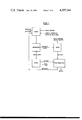
- FIGS. 1 to 5 which are included, by way of example, to illustrate various means of operation of the invention.
- FIG. 1 Molten wool grease is blended in a mixing vessel with hot methanol and sodium hydroxide (either as a solid or solution, preferably as a methanolic solution) added at a rate of about 120 percent of the calculated requirement for neutralisation of the wool grease based on its acid value.
- the mixture is then passed to a separator where insoluble wool wax will separate from a methanol extract containing mainly fatty matter as soaps and some water.
- Both the wool wax and fatty matter extract layers are sent to dryers (such as thin film evaporators) where methanol and water are removed as vapours to be recovered separately by fractionation, and the methanol is recycled to the mixing vessel.
- a high concentration e.g. one kilogram of wool grease per kilogram of methanol
- a high concentration will also result in a higher ash concentration in the wool wax which is particularly relevant when the acid value of the wool grease is high (i.e. significantly above 1 mg KOH g -1 ). Therefore, in this case it is necessary to establish the minimum concentration of wool grease in methanol from the maximum permissible concentration of ash in the wool wax product, but in any event, will not likely be less than about one kilogram of wool grease per kilogram of methanol due to physical handling and separation limitations.
- FIGS. 2, 3 and 4 If a low ash content is required in the wool wax (e.g. less than 0.15 percent by weight as required in the British Pharmacopaeia specification for lanolin) then a multistage countercurrent extraction of the neutralised wool grease with methanol will be required.
- FIG. 2 illustrates means whereby the bulk of the methanol-soluble matter is removed from the wool grease by the same method as shown in FIG. 1, external to the countercurrent extraction and would normally be used where the wool content of the wool grease was low (i.e. significantly less than 50 percent) and/or where the addition of water into the system is to be restricted (the alkali then being added as a solid).
- FIG. 2 illustrates means whereby the bulk of the methanol-soluble matter is removed from the wool grease by the same method as shown in FIG. 1, external to the countercurrent extraction and would normally be used where the wool content of the wool grease was low (i.e. significantly less than 50 percent) and/or where the addition of water into the system is to be restricted (the alkal
- FIG. 3 illustrates means whereby the whole of the extraction and neutralisation operations are performed in the countercurrent extraction machine and would normally be used (i) where the acid value of the wool grease was very low in which case a relatively small amount of the methanol being used could be diverted to make a concentrated solution of sodium hydroxide to be introduced at an appropriate intermediate extraction stage (e.g.
- a wool grease having an acid value of 3 mg KOH g -1 would require the diversion of only 12.6 percent of the methanol being used for a countercurrent extraction rate of one kilogram of wool grease to one kilogram of methanol to make up a 2 percent methanolic solution of sodium hydroxide supplied at a rate of 120 percent of the calculated requirement for neutralisation), or (ii) where the acid value is large, but the wool wax content is also large, requiring the introduction of a concentrated aqueous solution of sodium hydroxide to be introduced at an appropriate intermediate extraction stage (e.g.
- FIG. 4 illustrates the most preferred means whereby the neutralisation and bleaching operations are carried out in a mixing vessel prior to extraction with methanol (e.g. as shown in any of FIGS. 1, 2 or 3).
- FIG. 5 When the wool grease is contained in a wet sludge (e.g. containing about half its weight as water and equal proportions of wool grease and soil--fairly typical of sludge produced by a physico-chemical treatment of waste wool scouring liquor) or in an emulsion (e.g. containing 30 percent water in wool grease as might be produced by centrifuging a wool scouring liquor) and particularly when in the presence of colloidal particles of soil material, then it will usually be necessary to free the wool grease of this matter prior to a methanolic extraction for the recovery of wool wax. This can be achieved by first removing most of the water by co-distillation with a suitable solvent (e.g.
- trichloroethylene distilled at a minimum rate of between 11-15 kilograms per kilogram of water contained in the emulsion or wet sludge) in a machine such as an evaporator (vacuum operation optional) providing adequate agitation to the mixture.
- a machine such as an evaporator (vacuum operation optional) providing adequate agitation to the mixture.
- soaps in the feed material have been converted to fatty acids prior to this process (which can be effected by heating with a mineral acid in the presence of water) in order that they will dissolve in the solvent with the wool grease and not form gelantinous masses which soaps have the tendency to do in mixtures of this nature.
- the vapours are condensed and the water-immiscible solvent separates almost completely from the water.
- the solvent-insoluble components of the mixture tend to coagulate and are easily removed from the solution of lipids in solvent by filtration.
- the solvent remaining in these solids after a solvent washing operation is stripped by steam preferably in-situ in the filter and the vapours are sent back to the condensor and separator for recovery of solvent and water.
- the moist greasefree solids are then ready for disposal as landfill, etc.
- the residual water in the sludge after steam stripping is not likely to exceed 30 percent of the weight of dry solids and the volume of the moist sludge is increased by about 15 percent over the dry settled volume).
- the solution of lipids in solvent is passed to a dryer (e.g. a thin film evaporator) to separate solvent and wool grease.
- the solvent vapour can be passed directly to the condensor or, preferably, passed countercurrently through the mixture in the mixer-evaporator to force a greater rate of evaporation of water by increasing the concentration of solvent in the vapour phase beyond the equilibrium value.
- the wool grease obtained in this way is then in a suitable condition for an alkaline methanolic extraction for wool wax.
- the waste water produced by the process is likely to contain some solvent which could cause a disposal problem (e.g. the solubility of trichloroethylene in water at 25° C. is 1 g l -1 ).
- the waste water can be passed to a boiler to generate steam for various purposes including the operation of stripping solvent from the solids retained by the filter.
- the excess steam the weight of which is the balance of the water carried in with the feed material containing wool grease less the water carried away with the grease-free sludge, is used to assist atomisation of the fuel in the combustion zone of the boiler and the entrained solvent is thus destroyed.
Landscapes
- Chemical & Material Sciences (AREA)
- Life Sciences & Earth Sciences (AREA)
- Engineering & Computer Science (AREA)
- Chemical Kinetics & Catalysis (AREA)
- Oil, Petroleum & Natural Gas (AREA)
- Wood Science & Technology (AREA)
- Organic Chemistry (AREA)
- Fats And Perfumes (AREA)
- Organic Low-Molecular-Weight Compounds And Preparation Thereof (AREA)
Applications Claiming Priority (2)
| Application Number | Priority Date | Filing Date | Title |
|---|---|---|---|
| AUPD198777 | 1977-10-10 | ||
| AUPD1987 | 1977-10-10 |
Publications (1)
| Publication Number | Publication Date |
|---|---|
| US4207244A true US4207244A (en) | 1980-06-10 |
Family
ID=3767199
Family Applications (1)
| Application Number | Title | Priority Date | Filing Date |
|---|---|---|---|
| US05/949,528 Expired - Lifetime US4207244A (en) | 1977-10-10 | 1978-10-10 | Process for separation of wool wax from fats in wool grease or mixtures containing wool grease |
Country Status (9)
| Country | Link |
|---|---|
| US (1) | US4207244A (it) |
| JP (1) | JPS5462172A (it) |
| BE (1) | BE871137A (it) |
| DE (1) | DE2843993A1 (it) |
| FR (1) | FR2405292A1 (it) |
| GB (1) | GB2005714B (it) |
| IT (1) | IT1099352B (it) |
| NZ (1) | NZ188550A (it) |
| ZA (1) | ZA785609B (it) |
Cited By (5)
| Publication number | Priority date | Publication date | Assignee | Title |
|---|---|---|---|---|
| US4455259A (en) * | 1982-01-11 | 1984-06-19 | Asahi Kasei Kogyo Kabushiki Kaisha | Process for recovering animal hair grease |
| US4660253A (en) * | 1984-03-19 | 1987-04-28 | Senza Gel Corporation | Apparatus for maceration of meat |
| US5486211A (en) * | 1994-09-26 | 1996-01-23 | Glidden, Sr.; John L. | Wool purification |
| CN106319549A (zh) * | 2015-06-19 | 2017-01-11 | 宝山钢铁股份有限公司 | 一种碱洗液在线槽 |
| CN113122371A (zh) * | 2019-12-31 | 2021-07-16 | 丰益(上海)生物技术研发中心有限公司 | 植物油蜡糊的加工方法、生产植物油和蜡质的方法、它们的产品和用途 |
Families Citing this family (1)
| Publication number | Priority date | Publication date | Assignee | Title |
|---|---|---|---|---|
| ES2834658A1 (es) * | 2019-12-18 | 2021-06-18 | Univ Almeria | Procedimiento de eliminación de contaminantes de cera de abeja |
Citations (3)
| Publication number | Priority date | Publication date | Assignee | Title |
|---|---|---|---|---|
| US2772297A (en) * | 1953-02-16 | 1956-11-27 | Kathleen M Laquer | Sterol recovery |
| US3526647A (en) * | 1968-07-10 | 1970-09-01 | Malmstrom Chem Corp | Process for producing wool wax alcohols and fatty acids |
| US4091035A (en) * | 1976-02-05 | 1978-05-23 | Woolcombers Limited | Process for the production of hypoallergenic lanolin |
Family Cites Families (5)
| Publication number | Priority date | Publication date | Assignee | Title |
|---|---|---|---|---|
| US1194014A (en) * | 1916-08-08 | Methob oe beeiming wool-gbease | ||
| DE402179C (de) * | 1920-10-14 | 1924-09-13 | Isaac Lifschuetz Dr | Verfahren zur Herstellung von als Naturlanolin einerseits und Wollfettwachs anderseits verwendbaren Produkten aus Wollfettarten |
| FR1552860A (it) * | 1967-08-01 | 1969-01-10 | ||
| GB1318453A (en) * | 1970-08-25 | 1973-05-31 | Malmstrom Chem Corp | Process for producing wool wax alcohols and fatty acids |
| JPS4929910A (it) * | 1972-07-20 | 1974-03-16 |
-
1978
- 1978-09-29 NZ NZ188550A patent/NZ188550A/xx unknown
- 1978-10-04 ZA ZA00785609A patent/ZA785609B/xx unknown
- 1978-10-09 GB GB7839797A patent/GB2005714B/en not_active Expired
- 1978-10-09 DE DE19782843993 patent/DE2843993A1/de not_active Withdrawn
- 1978-10-10 FR FR7828834A patent/FR2405292A1/fr active Granted
- 1978-10-10 US US05/949,528 patent/US4207244A/en not_active Expired - Lifetime
- 1978-10-10 IT IT28610/78A patent/IT1099352B/it active
- 1978-10-10 BE BE78191015A patent/BE871137A/xx unknown
- 1978-10-11 JP JP12500678A patent/JPS5462172A/ja active Pending
Patent Citations (3)
| Publication number | Priority date | Publication date | Assignee | Title |
|---|---|---|---|---|
| US2772297A (en) * | 1953-02-16 | 1956-11-27 | Kathleen M Laquer | Sterol recovery |
| US3526647A (en) * | 1968-07-10 | 1970-09-01 | Malmstrom Chem Corp | Process for producing wool wax alcohols and fatty acids |
| US4091035A (en) * | 1976-02-05 | 1978-05-23 | Woolcombers Limited | Process for the production of hypoallergenic lanolin |
Cited By (6)
| Publication number | Priority date | Publication date | Assignee | Title |
|---|---|---|---|---|
| US4455259A (en) * | 1982-01-11 | 1984-06-19 | Asahi Kasei Kogyo Kabushiki Kaisha | Process for recovering animal hair grease |
| US4660253A (en) * | 1984-03-19 | 1987-04-28 | Senza Gel Corporation | Apparatus for maceration of meat |
| US5486211A (en) * | 1994-09-26 | 1996-01-23 | Glidden, Sr.; John L. | Wool purification |
| CN106319549A (zh) * | 2015-06-19 | 2017-01-11 | 宝山钢铁股份有限公司 | 一种碱洗液在线槽 |
| CN106319549B (zh) * | 2015-06-19 | 2018-11-06 | 宝山钢铁股份有限公司 | 一种碱洗液在线槽 |
| CN113122371A (zh) * | 2019-12-31 | 2021-07-16 | 丰益(上海)生物技术研发中心有限公司 | 植物油蜡糊的加工方法、生产植物油和蜡质的方法、它们的产品和用途 |
Also Published As
| Publication number | Publication date |
|---|---|
| GB2005714B (en) | 1982-02-03 |
| BE871137A (fr) | 1979-02-01 |
| FR2405292A1 (fr) | 1979-05-04 |
| IT7828610A0 (it) | 1978-10-10 |
| NZ188550A (en) | 1981-01-23 |
| JPS5462172A (en) | 1979-05-18 |
| GB2005714A (en) | 1979-04-25 |
| DE2843993A1 (de) | 1979-04-26 |
| IT1099352B (it) | 1985-09-18 |
| ZA785609B (en) | 1979-09-26 |
| FR2405292B1 (it) | 1982-10-01 |
Similar Documents
| Publication | Publication Date | Title |
|---|---|---|
| AT395319B (de) | Verfahren zur gewinnung eines polyhydroxyalkanoates aus dem zellmaterial eines mikroorganismus und polyhydroxyalkanoatflocken | |
| GB2061941A (en) | Process for recovery of polyol fatty acid polyesters | |
| AU2003203072B2 (en) | Distalliative process of extracting and purifying phytosterols and phytostanols from tall oil pitch | |
| FI62135C (fi) | Foerfarande foer separering av foeroreningar fraon triglyceridoljor genom till saettning av hydratiserbara forfatider | |
| AU2003203072A1 (en) | Distalliative process of extracting and purifying phytosterols and phytostanols from tall oil pitch | |
| US4207244A (en) | Process for separation of wool wax from fats in wool grease or mixtures containing wool grease | |
| Harris et al. | Isopropanol as a solvent for extraction of cottonseed oil: I. Preliminary investigations | |
| US4124502A (en) | Process for the purification of greasy and soiled water using a heavy solvent, and apparatus for its implementation | |
| US2525702A (en) | Purification of oil | |
| JPH0433440B2 (it) | ||
| SE429543B (sv) | Sett for rening av vatframstelld fosforsyra | |
| EP0015116B1 (en) | Process for the production of fatty acid soaps from sludge by extraction and subsequent saponifying | |
| JP2004307543A (ja) | 油滓からの脂肪酸エステルの製造方法及び製造装置 | |
| US5599376A (en) | Process and equipment to reclaim reusable products from edible oil process waste streams | |
| US3526647A (en) | Process for producing wool wax alcohols and fatty acids | |
| CA2020307A1 (en) | Process for soap splitting using a high temperature treatment | |
| US2866781A (en) | Separating non-acids from soap stocks | |
| US3696133A (en) | Extraction of oil from oil-bearing materials | |
| US2723281A (en) | Process for degreasing wool and recovery of wool grease | |
| US3436342A (en) | Disposal of wool rinsings | |
| JP4504953B2 (ja) | 油滓からの燃料用脂肪酸エステルの製造装置 | |
| US2598269A (en) | Recovery of sterols | |
| US2489599A (en) | Extraction of cottonseed oil | |
| US4711728A (en) | Treating spent filter media | |
| US2584108A (en) | Process for the continuous recycling of an alcoholic oil solvent in oil extraction |