US4319088A - Method and apparatus for masking sound - Google Patents
Method and apparatus for masking sound Download PDFInfo
- Publication number
- US4319088A US4319088A US06/090,476 US9047679A US4319088A US 4319088 A US4319088 A US 4319088A US 9047679 A US9047679 A US 9047679A US 4319088 A US4319088 A US 4319088A
- Authority
- US
- United States
- Prior art keywords
- masking
- sound
- output
- spectrum
- zone
- Prior art date
- Legal status (The legal status is an assumption and is not a legal conclusion. Google has not performed a legal analysis and makes no representation as to the accuracy of the status listed.)
- Expired - Lifetime
Links
- 230000000873 masking effect Effects 0.000 abstract description 71
- 238000000034 method Methods 0.000 abstract description 8
- 230000009977 dual effect Effects 0.000 abstract description 6
- 238000004519 manufacturing process Methods 0.000 abstract 1
- 238000001228 spectrum Methods 0.000 description 23
- 239000002131 composite material Substances 0.000 description 9
- 230000005236 sound signal Effects 0.000 description 8
- 238000005259 measurement Methods 0.000 description 5
- 238000009434 installation Methods 0.000 description 4
- 230000001143 conditioned effect Effects 0.000 description 3
- 238000010586 diagram Methods 0.000 description 3
- 230000007613 environmental effect Effects 0.000 description 3
- 239000004020 conductor Substances 0.000 description 2
- 230000001788 irregular Effects 0.000 description 2
- 238000010183 spectrum analysis Methods 0.000 description 2
- 230000003750 conditioning effect Effects 0.000 description 1
- 230000007812 deficiency Effects 0.000 description 1
- 238000005553 drilling Methods 0.000 description 1
- 230000000694 effects Effects 0.000 description 1
- 230000006870 function Effects 0.000 description 1
- 238000012544 monitoring process Methods 0.000 description 1
- 230000000135 prohibitive effect Effects 0.000 description 1
- 239000013589 supplement Substances 0.000 description 1
- 238000009966 trimming Methods 0.000 description 1
Images

Classifications
-
- H—ELECTRICITY
- H04—ELECTRIC COMMUNICATION TECHNIQUE
- H04K—SECRET COMMUNICATION; JAMMING OF COMMUNICATION
- H04K3/00—Jamming of communication; Counter-measures
- H04K3/80—Jamming or countermeasure characterized by its function
- H04K3/82—Jamming or countermeasure characterized by its function related to preventing surveillance, interception or detection
- H04K3/825—Jamming or countermeasure characterized by its function related to preventing surveillance, interception or detection by jamming
-
- G—PHYSICS
- G10—MUSICAL INSTRUMENTS; ACOUSTICS
- G10K—SOUND-PRODUCING DEVICES; METHODS OR DEVICES FOR PROTECTING AGAINST, OR FOR DAMPING, NOISE OR OTHER ACOUSTIC WAVES IN GENERAL; ACOUSTICS NOT OTHERWISE PROVIDED FOR
- G10K11/00—Methods or devices for transmitting, conducting or directing sound in general; Methods or devices for protecting against, or for damping, noise or other acoustic waves in general
- G10K11/16—Methods or devices for protecting against, or for damping, noise or other acoustic waves in general
- G10K11/175—Methods or devices for protecting against, or for damping, noise or other acoustic waves in general using interference effects; Masking sound
- G10K11/1752—Masking
- G10K11/1754—Speech masking
-
- H—ELECTRICITY
- H04—ELECTRIC COMMUNICATION TECHNIQUE
- H04K—SECRET COMMUNICATION; JAMMING OF COMMUNICATION
- H04K3/00—Jamming of communication; Counter-measures
- H04K3/40—Jamming having variable characteristics
- H04K3/42—Jamming having variable characteristics characterized by the control of the jamming frequency or wavelength
-
- H—ELECTRICITY
- H04—ELECTRIC COMMUNICATION TECHNIQUE
- H04K—SECRET COMMUNICATION; JAMMING OF COMMUNICATION
- H04K3/00—Jamming of communication; Counter-measures
- H04K3/40—Jamming having variable characteristics
- H04K3/43—Jamming having variable characteristics characterized by the control of the jamming power, signal-to-noise ratio or geographic coverage area
-
- H—ELECTRICITY
- H04—ELECTRIC COMMUNICATION TECHNIQUE
- H04K—SECRET COMMUNICATION; JAMMING OF COMMUNICATION
- H04K3/00—Jamming of communication; Counter-measures
- H04K3/40—Jamming having variable characteristics
- H04K3/45—Jamming having variable characteristics characterized by including monitoring of the target or target signal, e.g. in reactive jammers or follower jammers for example by means of an alternation of jamming phases and monitoring phases, called "look-through mode"
-
- H—ELECTRICITY
- H04—ELECTRIC COMMUNICATION TECHNIQUE
- H04K—SECRET COMMUNICATION; JAMMING OF COMMUNICATION
- H04K3/00—Jamming of communication; Counter-measures
- H04K3/80—Jamming or countermeasure characterized by its function
- H04K3/84—Jamming or countermeasure characterized by its function related to preventing electromagnetic interference in petrol station, hospital, plane or cinema
-
- H—ELECTRICITY
- H04—ELECTRIC COMMUNICATION TECHNIQUE
- H04K—SECRET COMMUNICATION; JAMMING OF COMMUNICATION
- H04K2203/00—Jamming of communication; Countermeasures
- H04K2203/10—Jamming or countermeasure used for a particular application
- H04K2203/12—Jamming or countermeasure used for a particular application for acoustic communication
-
- H—ELECTRICITY
- H04—ELECTRIC COMMUNICATION TECHNIQUE
- H04K—SECRET COMMUNICATION; JAMMING OF COMMUNICATION
- H04K2203/00—Jamming of communication; Countermeasures
- H04K2203/30—Jamming or countermeasure characterized by the infrastructure components
- H04K2203/34—Jamming or countermeasure characterized by the infrastructure components involving multiple cooperating jammers
Definitions
- the present invention relates to sound masking devices and methods for masking speech intelligibility within the interior space of a building.
- the system is tuned to a predetermined frequency spectrum and sound pressure level generally based on a variation of known preferred noise criteria curves and sound pressure levels recommended in acoustical literature.
- This type of system is generally a permanent installation and is evaluated in relation to its ability to conform to constant level spectrum criteria.
- the intent of this type of masking system is to produce a constant sound throughout a large area.
- These systems have met with some success, but they have severe drawbacks due to their lack of flexibility, as they use predetermined sound levels and spectrum shape to deal with changing and irregular conditions. Irregular conditions result, because of many acoustical variables such as obstruction in the ceiling plenum and varying absorptive characteristics, acoustical panels, and changes in office space layout.
- Certain frequencies generated by the sound masking device may be absorbed or reflected by these obstructions thereby creating an unevenness of masking sound in the interior space.
- a central masking system is difficult to tune to specification since the frequency and amplitude controls are located at a central location, away from the area which is receiving the masking.
- due to variations in the electric characteristic in output speakers adjustment at each individual output is necessary to obtain uniformity throughout the space.
- the present invention overcomes the deficiencies of a central masking system, which suffers from unevenness of output, and the prohibitive cost of using individual masking units with full frequency and amplitude control.
- determining zones within the larger interior area which require similar frequency masking characteristics and by providing amplitude control at each output speaker the difficulties of the prior art can be overcome.
- By providing frequency and amplitude control right at the output of the masking device adjustments are easily accomplished to deal with changing acoustical requirements.
- the present invention discloses a method and an apparatus for masking sound in particular zones of an open plan interior office space.
- the apparatus includes a masking noise generator located within a master unit. Also included within the unit is further apparatus for conditioning the masking noise so as to produce an output signal which is adjustable in amplitude at particular frequencies within the masking noise band-width.
- the apparatus further includes slave masking units which contain amplitude control and which are connected to the master unit for receiving the conditioned masking noise output.
- the slave and master units are connected by means of easily disconnectable cables so as to permit rapid installation of the system and to make it possible to easily move the system to a new building if necessary.
- the method disclosed includes the steps of monitoring the environmental noise within the interior space, measuring the frequency characteristics and amplitudes of the noise, establishing zones by area of similar noise characteristics, mounting a master sound masking unit essentially within each of the zones and mounting slave units peripherally around the masters, adjusting the output frequency characteristics of the master to coincide with the environmental characteristics, adjusting the output amplitude characteristics of each of the masters and slaves to produce a uniform output in each of the zones, and finally adjusting the output amplitude characteristics of the master and slaves to compensate for unevenness in environmental noise within each of the zones.
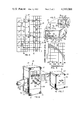
- FIG. 1 is a block diagram illustration of a master sound masking unit of the present invention
- FIG. 2 is a block diagram illustration of a slave sound masking unit of the present invention
- FIG. 3 is an elevated perspective of the interior of a building in section
- FIG. 4 is a top diagrammatical view taken along line 4--4 of a portion of FIG. 3;
- FIG. 5 is a close-up perspective view of the subject matter in FIG. 3;
- FIG. 6 is a close-up perspective view of the master unit shown in FIG. 5;
- FIG. 7 is a close-up perspective view of the slave unit shown in FIG. 5;
- FIG. 8 is a voice frequency sound masking spectrum graph.
- Apparatus 10 includes a master sound masking unit 14, slave sound masking unit 16 and interconnecting cable 18 shown in FIGS. 5 and 6 respectively.
- FIG. 1 shows in block diagram form the elements of master unit 14. Included within its enclosure 19 is a sound masking generator 20, an amplifier 22, a 10 octave equalizer 24, a dual voice coil speaker 26 which includes voice coil 28 which is connected to the output of equalizer 24 and voice coil 30 which can be connected to one or more alternative sound source 25, such as music source or paging source. Dual voice coil speakers are available from numerous speaker manufacturers. When selecting such a speaker 26, it is desirable to employ matched speakers, that is, speakers whose output characteristics are within one half db of each other, for best results. It is also possible to carry a second alternative sound source 27 in tandem with the output of the masking sound generator 20.
- This combined input would be amplified by amplifier 22, conditioned by equalizer 24 and outputted as described above for the single sound masking output.
- This second alternative sound source 27 may also be used in paging or the like. Numerous means are known for generating such random noise signals, such as circuitry disclosed in the U.S. Pat. No. 4,024,535 issued to Goldstein.
- the 10 octave equalizer also known as a decade equalizer, is well-known in the industry and is commercially available as discrete units. Control of the amplitude of each octave is accomplished by means of adjustments to trimmers or potentiometers 40 in unit 14 which are reachable by removing face plate 32 which is held in place by screw 34 on face 38 of unit 14 as shown in FIG. 6.
- the plurality of trimmers or potentiometers 40 control the output of each octave of the equalizer.
- Master unit 14 also includes potentiometers 42, 44, 46 and 48 which are mounted on face 38 of enclosure 19. Unit 14 is preferably mounted on rubber feet 51 on top of ceiling tile 52 as shown in FIG. 5, with holes drilled in tile 52 to permit potentiometers 42-48 to extend therethrough for easy adjustment without the need to open the ceiling to make certain adjustments.
- Potentiometer 42 controls the audio output of alternative sound source signals which are fed into voice coil 30 of speaker 26.
- Potentiometer 44 controls the signal strength fed into voice coil 28 of speaker 26.
- Potentiometer 46 controls the overall output of equalizer 24.
- Potentiometer 48 is a frequency trimming control also known as a tone control, which adjusts the frequency output of amplifier 22.
- Slave unit 16 contains within its enclosure 60 a dual voice coil speaker 62 of the type 26 shown in FIG. 1 which includes voice coils 66 and 68.
- the slave output 64 from the octave equalizer 24 is connected to speaker 62 via voice coil 66.
- Alternative sound sources may also be inputted to speaker 62 via the second voice coil 68.
- the input to coil 66 is made at jack 70 which is mounted on enclosure 60.
- Slave unit 16 similarly has bottom face 72 which has rubber feet 74 attached thereto for locating on ceiling tile 52 in the same manner as unit 14 is located. Extending from face 72 are potentiometers 76 and 78. Potentiometer 76 controls the input to coil 66, thereby adjusting the level of masking noise output at the slave unit.
- Potentiometer 78 controls the level of signal inputted into voice coil 68 thereby controlling the level of alternative sound source signal which is outputted through speaker 62. As in master unit 14 the potentiometer shafts of potentiometers 76, 78 extend through the ceiling tile for ease for adjustment.
- an interconnect cable 18 is employed. This cable has at one end connector 50 and at the other end connector 54. Numerous suitable connectors and jacks are commonly available, connectors, the only requirement being that they are easily disconnectible and meet building code requirements where necessary.
- a flexible cable 18 includes conductors necessary to carry the signal from the master unit tapped at point 64 on FIG. 1 to the slave unit 16 at point 86 on FIG. 2. Conductors may also be provided within cable 18 for carrying an alternative sound source signal which may be inputted to voice coil 68 of the slave unit 16.
- Each master unit contains two jacks 70 connected in parallel (one of which is shown in FIGS. 5, 6 and 7) designed to receive connectors 50. This arrangement permits two identical slave units 16 to be connected to master 14 to receive masking and audio signals from the master unit. Additional slave units 16 can thereafter be connected to this first pair of slave units to create a chain as shown in FIG. 4.
- Slave unit 16 also includes a jack 71 and a jack 70 (not shown) connected in parallel for receiving connector 54 of cable 18 for supplying the necessary audio signals to the slave units.
- Master unit 16 includes another jack 90 which is similar in shape to jack 70 but will not accept connector 80.
- Another connector 81 is received within jack 90 and may have a cable 83 attached thereto for supplying power to the master unit 16.
- Master unit 16 may further contain another jack 92 for the input of alternative sound sources such as paging and/or music which are ultimately supplied to voice coils 30 and 68 in master unit 14 and slave unit 16 respectively.
- both the master unit 14 and slave unit 16 speakers 26 and 62 respectively are facing upwards when the units are installed as shown in FIG. 5.
- the present invention provides a sound masking system which is capable of being easily moved from its present location to another location within the space to adapt to changing conditions therein.
- FIG. 4 illustrates an arrangement of 3 distinct zones each having a master unit 14 and slave units (unnumbered) designated by black dots.
- ambient noise can be monitored throughout the interior space. This can be accomplished by the use of commercially available spectrum analyzers which provide a graphic analysis of amplitudes within various frequency ranges of the audible spectrum. The results of the spectrum analysis can be plotted on blueprints of the space in order to analyze the space and divide it into zones of essentially similar ambient noise characteristics in much the same way as isothermal weather charts are made. The zones are then determined to be areas of relatively equal noise characteristics which are contiguous. The size of each zone is ultimately limited by the physical power output capability of the master, because one master is only capable of powering a finite number of slave units.
- the master and slave units may be mounted within the ceiling plenum as shown in FIG. 5.
- a unique feature of the present invention is that the entire system of apparatus can be quickly installed and just as easily moved to meet changing situations within the interior environment. This is important because one of the primary advantages of open office planning is that it is exceedingly flexible. The ease of moving the apparatus of the present invention to meet the changes within the interior space is well suited to open space planning.
- each zone one master unit 14 must be located. Often it is centrally located, i.e., surrounded by slave units.
- the slave units 16 are located throughout the zone, usually 2 to 3 meters apart in order to provide relatively even coverage throughout the zone.
- the zone may be arranged as shown in FIG. 4 as a grid.
- the master unit is then connected to a source of power at jack 90.
- An audio input may also be connected at jack 92.
- the source of power is generally a line voltage AC input and is transformed to a lower voltage.
- a cable 18 is connected at jack 70 of the master unit and run to one of the slave units 16, and is connected at jack 71 of the slave unit.
- Each chain contains a master unit 14 and a plurality of slave units 16 (shown as single black dots).
- master unit 14 contains two jacks 70 which permit two strings of slave units to be attached at the master. This is the preferable connection in order to reduce line losses.
- Each slave unit 16 has a jack 71 and jack 70 (not shown).
- One of the jacks 71 in each slave 16 carries the signals from the master 14 to respective voice coil 62 and the jack 70 in the slave passes the signal on further slaves 16 via cable 18.
- Cable 18 carries a masking sound output signal from the master where it is generated. Also carried within cable 18 may be the alternative sound signals which are input to the master at jack 92. These audio signals may include paging, background music or other alternative audio signals.
- the master unit 14 must then be adjusted by means of the 10 octave equalizer potentiometers 40 to produce proper masking.
- One recommended masking curve hereinafter referred to as a voice frequency shaped masking spectrum is shown on page 593 of Noise Vibration Control by L. Beranek, copyright 1971 McGraw Hill, New York, which is hereby incorporated by reference, and is reproduced herein as FIG. 8.
- This graph which plots sound pressure levels in dB (10 dB/increment) versus frequency (1 octave/increment), illustrates a shaded range 94 in which optimum masking occurs.
- a frequency spectrum measurement at a fixed height off the floor should fall within this shaded region 94 throughout the zone for optimum masking.
- a masking signal In order to produce a spectrum within region 94, a masking signal must be added to the ambient noise existing in the space to produce a composite spectrum which falls within region 94 at any point throughout the zone measured at a fixed height off the floor.
- This fixed height is preferably the average height of a seated person or about 107 cm off the floor. This height is chosen since most users of the space will be seated and thus they will perceive this composite spectrum. At other heights, the spectrum perceived will not necessarily be the desired composite. This height can be varied depending upon the expected height at which users will be hearing the masking sound.
- the first master unit 14 is adjusted via potentiometers 40 to produce the above spectrum as measured by a spectrum analysis at this fixed height measured at points around or under the master unit 14.
- the output level of the slaves 16 will increasingly affect the composite spectrum because they will become the most dominant masking sound transmitter at that point in the zone. Due to the absorptive and reflective effects of furniture, wall dividers, ceiling tile, carpets, etc., within the zone, some areas of the zone will require greater or lesser amounts of masking sound to produce the desired composite spectrum. Potentiometers 44 on master 14 and 76 of slaves 16 control the sound masking output level of the respective units and must be adjusted so that the composite spectrum is attained relatively evenly throughout the zone. Spectrum measurements are made at the desired fixed height at numerous points in the zone. At each measurement point the amplitude of masking units in the vicinity is adjusted as necessary to produce the desired result. This will produce a generally uniform masking spectrum throughout the zone which falls within shaded region 94.
- the ambient noise With the ambient noise sufficiently masked, it may be desirable to "re-tune" the system to provide masking suited to the individual users in the space. This is desirable since the masking system is now only tuned to mask average voices (ambient noise plus an "average” voice having an amplitude of 60 dB at 1 meter as measured at 3.7-4.9 meters in the specific environment contemplated) but may not effectively mask particularly loud or otherwise unusual voice spectra.
- the system can be adjusted in one of two ways. First a spectrum measurement of the speaker's voice can be made at this fixed distance. Where the voice has peaks which extend above the desired composite spectrum, the amplitude of frequencies at these peaks can be raised to mask them. This is done by adjusting the appropriate potentiometer 40 on master 14. This will of course change the composite curve throughout the zone, since frequency adjustments at the master are carried to the slaves. These voice peaks can be covered by increased amplitude in the peak's frequency range up to about 6 dB over the original composite curve. Any further increase in amplitude becomes itself distracting and other masking techniques must supplement the system.
- the dual voice coil speakers 26 and 62 found in the master and slave units respectively provide the possibility of adding a paging or music signal to the output to the units which is independent of the masking sound output. Adjustment of potentiometers 42 and 78 in the master and slave units respectively allows this alternative sound signal to be adjusted as desired.
- the use of a dual voice coil speaker is advantageous in that it results in less interference between the masking signal and any alternative sound signal.
- the occupants within the space covered by the zone will be able to, by adjusting potentiometer 42 and/or 78, reduce or eliminate background music or paging signals without turning down the masking sound. This is a substantial improvement over prior systems in that occupants have frequently turned off the sound masking system in an attempt to eliminate background music which may be simultaneously added to the speaker output without the possibility of individual control or have had no control of audio signals at all.
- the masking system may be easily readjusted to suit the changed environment or moved entirely if such changes require redefining of zones.
Landscapes
- Engineering & Computer Science (AREA)
- Computer Networks & Wireless Communication (AREA)
- Signal Processing (AREA)
- Physics & Mathematics (AREA)
- Health & Medical Sciences (AREA)
- Audiology, Speech & Language Pathology (AREA)
- General Health & Medical Sciences (AREA)
- Acoustics & Sound (AREA)
- Multimedia (AREA)
- Chemical & Material Sciences (AREA)
- Electromagnetism (AREA)
- Oil, Petroleum & Natural Gas (AREA)
- Public Health (AREA)
- Soundproofing, Sound Blocking, And Sound Damping (AREA)
Priority Applications (2)
| Application Number | Priority Date | Filing Date | Title |
|---|---|---|---|
| US06/090,476 US4319088A (en) | 1979-11-01 | 1979-11-01 | Method and apparatus for masking sound |
| CA000362315A CA1154689A (fr) | 1979-11-01 | 1980-10-14 | Methode et dispositif de masquage des sons |
Applications Claiming Priority (1)
| Application Number | Priority Date | Filing Date | Title |
|---|---|---|---|
| US06/090,476 US4319088A (en) | 1979-11-01 | 1979-11-01 | Method and apparatus for masking sound |
Publications (1)
| Publication Number | Publication Date |
|---|---|
| US4319088A true US4319088A (en) | 1982-03-09 |
Family
ID=22222935
Family Applications (1)
| Application Number | Title | Priority Date | Filing Date |
|---|---|---|---|
| US06/090,476 Expired - Lifetime US4319088A (en) | 1979-11-01 | 1979-11-01 | Method and apparatus for masking sound |
Country Status (2)
| Country | Link |
|---|---|
| US (1) | US4319088A (fr) |
| CA (1) | CA1154689A (fr) |
Cited By (30)
| Publication number | Priority date | Publication date | Assignee | Title |
|---|---|---|---|---|
| US4476572A (en) * | 1981-09-18 | 1984-10-09 | Bolt Beranek And Newman Inc. | Partition system for open plan office spaces |
| US4829729A (en) * | 1986-04-04 | 1989-05-16 | Flachglas Aktiengesellschaft | Anti-eavesdropping window structure |
| US4914706A (en) * | 1988-12-29 | 1990-04-03 | 777388 Ontario Limited | Masking sound device |
| WO1999046958A1 (fr) * | 1998-03-11 | 1999-09-16 | Acentech, Inc. | Systeme personnel de masquage antibruit |
| US6329908B1 (en) | 2000-06-23 | 2001-12-11 | Armstrong World Industries, Inc. | Addressable speaker system |
| US6351222B1 (en) * | 1998-10-30 | 2002-02-26 | Ati International Srl | Method and apparatus for receiving an input by an entertainment device |
| GB2368958A (en) * | 2000-11-14 | 2002-05-15 | Robert Mcrobb Calder | Method of Crowd Control |
| US20020150261A1 (en) * | 2001-02-26 | 2002-10-17 | Moeller Klaus R. | Networked sound masking system |
| US20030002692A1 (en) * | 2001-05-31 | 2003-01-02 | Mckitrick Mark A. | Point sound masking system offering visual privacy |
| US20030048910A1 (en) * | 2001-09-10 | 2003-03-13 | Roy Kenneth P. | Sound masking system |
| WO2003037035A1 (fr) * | 2001-10-24 | 2003-05-01 | Acentech, Inc. | Systeme de masquage sonore |
| US20030107478A1 (en) * | 2001-12-06 | 2003-06-12 | Hendricks Richard S. | Architectural sound enhancement system |
| US20030144848A1 (en) * | 2002-01-31 | 2003-07-31 | Roy Kenneth P. | Architectural sound enhancement with pre-filtered masking sound |
| US20040019479A1 (en) * | 2002-07-24 | 2004-01-29 | Hillis W. Daniel | Method and system for masking speech |
| US20040125922A1 (en) * | 2002-09-12 | 2004-07-01 | Specht Jeffrey L. | Communications device with sound masking system |
| US20040179699A1 (en) * | 2003-03-13 | 2004-09-16 | Moeller Klaus R. | Networked sound masking system with centralized sound masking generation |
| US6888945B2 (en) | 1998-03-11 | 2005-05-03 | Acentech, Inc. | Personal sound masking system |
| US20060009969A1 (en) * | 2004-06-21 | 2006-01-12 | Soft Db Inc. | Auto-adjusting sound masking system and method |
| WO2005072349A3 (fr) * | 2004-01-26 | 2006-11-30 | Baron C Dickey | Procede et appareil permettant d'ameliorer sur le plan spatial une image stereoscopique dans les systemes de reproduction et de renforcement sonore |
| GB2427320A (en) * | 2005-06-14 | 2006-12-20 | Amina Technologies Ltd | Bending wave loudspeaker driven from multiple, different sources |
| US20070133816A1 (en) * | 2001-10-24 | 2007-06-14 | Horrall Thomas R | Sound masking system |
| EP1678820A4 (fr) * | 2003-10-09 | 2008-12-24 | Audio Products Int Corp | Amplificateur de puissance et procede pour transducteur ou haut-parleur a bobine mobile partagee |
| US20090306798A1 (en) * | 2008-06-06 | 2009-12-10 | Niklas Moeller | System and method for monitoring/controlling a sound masking system from an electronic floorplan |
| US20100272285A1 (en) * | 2009-04-22 | 2010-10-28 | General Electric Company | Masking of pure tones within sound from a noise generating source |
| US20160112784A1 (en) * | 2014-10-17 | 2016-04-21 | Cambridge Sound Management, Inc. | Sound vibration excitation assembly for discrete area sound-absorbing ceiling surfaces, and sound system including such vibration excitation assembly |
| US10580397B2 (en) * | 2018-05-22 | 2020-03-03 | Plantronics, Inc. | Generation and visualization of distraction index parameter with environmental response |
| US20220196460A1 (en) * | 2019-03-25 | 2022-06-23 | Delos Living Llc | Systems and methods for acoustic monitoring |
| US11763401B2 (en) | 2014-02-28 | 2023-09-19 | Delos Living Llc | Systems, methods and articles for enhancing wellness associated with habitable environments |
| US11844163B2 (en) | 2019-02-26 | 2023-12-12 | Delos Living Llc | Method and apparatus for lighting in an office environment |
| US11950050B1 (en) | 2013-03-01 | 2024-04-02 | Clearone, Inc. | Ceiling tile microphone |
Citations (12)
| Publication number | Priority date | Publication date | Assignee | Title |
|---|---|---|---|---|
| US3213199A (en) * | 1962-01-02 | 1965-10-19 | Bissett Berman Corp | System for masking information |
| US3567863A (en) * | 1967-08-25 | 1971-03-02 | Thomas G Morrissey | Method of sonic conditioning |
| GB1420201A (en) * | 1971-12-31 | 1976-01-07 | Electronic Acoustic Conditioni | Method and apparatus for producing sound |
| US3980827A (en) * | 1974-12-19 | 1976-09-14 | Sepmeyer Ludwig W | Diversity system for noise-masking |
| US3985200A (en) * | 1974-08-29 | 1976-10-12 | Sepmeyer Ludwig W | Background sound system and apparatus for masking speech |
| US3985957A (en) * | 1975-10-28 | 1976-10-12 | Dukane Corporation | Sound masking system for open plan office |
| US4024535A (en) * | 1976-06-28 | 1977-05-17 | Acoustical Design Incorporated | Sound generating system for a sound masking package |
| US4052564A (en) * | 1975-09-19 | 1977-10-04 | Herman Miller, Inc. | Masking sound generator |
| US4054751A (en) * | 1976-03-01 | 1977-10-18 | Cdf Industries, Inc. | Masking noise generator |
| US4059726A (en) * | 1974-11-29 | 1977-11-22 | Bolt Beranek And Newman, Inc. | Process and apparatus for speech privacy improvement through incoherent masking noise sound generation in open-plan office spaces and the like |
| US4098370A (en) * | 1975-07-14 | 1978-07-04 | Mcgregor Howard Norman | Vibration masking noise system |
| US4185167A (en) * | 1976-06-28 | 1980-01-22 | Acoustical Design Incorporated | Sound masking package |
-
1979
- 1979-11-01 US US06/090,476 patent/US4319088A/en not_active Expired - Lifetime
-
1980
- 1980-10-14 CA CA000362315A patent/CA1154689A/fr not_active Expired
Patent Citations (14)
| Publication number | Priority date | Publication date | Assignee | Title |
|---|---|---|---|---|
| US3213199A (en) * | 1962-01-02 | 1965-10-19 | Bissett Berman Corp | System for masking information |
| US3567863A (en) * | 1967-08-25 | 1971-03-02 | Thomas G Morrissey | Method of sonic conditioning |
| GB1420201A (en) * | 1971-12-31 | 1976-01-07 | Electronic Acoustic Conditioni | Method and apparatus for producing sound |
| US3985200A (en) * | 1974-08-29 | 1976-10-12 | Sepmeyer Ludwig W | Background sound system and apparatus for masking speech |
| US4059726A (en) * | 1974-11-29 | 1977-11-22 | Bolt Beranek And Newman, Inc. | Process and apparatus for speech privacy improvement through incoherent masking noise sound generation in open-plan office spaces and the like |
| US3980827A (en) * | 1974-12-19 | 1976-09-14 | Sepmeyer Ludwig W | Diversity system for noise-masking |
| US4098370A (en) * | 1975-07-14 | 1978-07-04 | Mcgregor Howard Norman | Vibration masking noise system |
| US4052564A (en) * | 1975-09-19 | 1977-10-04 | Herman Miller, Inc. | Masking sound generator |
| US3985957A (en) * | 1975-10-28 | 1976-10-12 | Dukane Corporation | Sound masking system for open plan office |
| US4054751A (en) * | 1976-03-01 | 1977-10-18 | Cdf Industries, Inc. | Masking noise generator |
| US4024535A (en) * | 1976-06-28 | 1977-05-17 | Acoustical Design Incorporated | Sound generating system for a sound masking package |
| US4185167A (en) * | 1976-06-28 | 1980-01-22 | Acoustical Design Incorporated | Sound masking package |
| US4185167B1 (fr) * | 1976-06-28 | 1990-06-05 | Acoustical Design Inc | |
| US4024535B1 (fr) * | 1976-06-28 | 1990-10-02 | Acoustical Design Inc |
Non-Patent Citations (1)
| Title |
|---|
| "Speech Privacy in Building, " Cavanaugh et al, Journal of the Acoustical Society of America, vol. 34, No. 4, Apr. 1962, pp. 475-492. * |
Cited By (60)
| Publication number | Priority date | Publication date | Assignee | Title |
|---|---|---|---|---|
| US4476572A (en) * | 1981-09-18 | 1984-10-09 | Bolt Beranek And Newman Inc. | Partition system for open plan office spaces |
| US4829729A (en) * | 1986-04-04 | 1989-05-16 | Flachglas Aktiengesellschaft | Anti-eavesdropping window structure |
| US4914706A (en) * | 1988-12-29 | 1990-04-03 | 777388 Ontario Limited | Masking sound device |
| WO1999046958A1 (fr) * | 1998-03-11 | 1999-09-16 | Acentech, Inc. | Systeme personnel de masquage antibruit |
| US6888945B2 (en) | 1998-03-11 | 2005-05-03 | Acentech, Inc. | Personal sound masking system |
| US6351222B1 (en) * | 1998-10-30 | 2002-02-26 | Ati International Srl | Method and apparatus for receiving an input by an entertainment device |
| US6329908B1 (en) | 2000-06-23 | 2001-12-11 | Armstrong World Industries, Inc. | Addressable speaker system |
| GB2368958A (en) * | 2000-11-14 | 2002-05-15 | Robert Mcrobb Calder | Method of Crowd Control |
| GB2368958B (en) * | 2000-11-14 | 2004-10-13 | Robert Mcrobb Calder | Method of crowd control |
| US20020150261A1 (en) * | 2001-02-26 | 2002-10-17 | Moeller Klaus R. | Networked sound masking system |
| US20190073991A1 (en) * | 2001-02-26 | 2019-03-07 | 777388 Ontario Limited | Networked sound masking system |
| US8477958B2 (en) * | 2001-02-26 | 2013-07-02 | 777388 Ontario Limited | Networked sound masking system |
| US20130243215A1 (en) * | 2001-02-26 | 2013-09-19 | Klaus Moeller | Networked sound masking system |
| US8817999B2 (en) * | 2001-02-26 | 2014-08-26 | 777388 Ontario Limited | Networked sound masking and paging system |
| US9307333B2 (en) * | 2001-02-26 | 2016-04-05 | 777388 Ontario Limited | Networked sound masking system |
| US20040131199A1 (en) * | 2001-02-26 | 2004-07-08 | 777388 Ontario Limited | Networked sound masking and paging system |
| US20160189701A1 (en) * | 2001-02-26 | 2016-06-30 | 777388 Ontario Limited | Networked sound masking system |
| US10121463B2 (en) * | 2001-02-26 | 2018-11-06 | 777388 Ontario Limited | Networked sound masking system |
| US20030002692A1 (en) * | 2001-05-31 | 2003-01-02 | Mckitrick Mark A. | Point sound masking system offering visual privacy |
| US20030048910A1 (en) * | 2001-09-10 | 2003-03-13 | Roy Kenneth P. | Sound masking system |
| US11700483B2 (en) | 2001-10-24 | 2023-07-11 | Cambridge Sound Management, Inc. | Sound masking system |
| US9820040B2 (en) | 2001-10-24 | 2017-11-14 | Cambridge Sound Management, Inc. | Sound masking system |
| US10555078B2 (en) | 2001-10-24 | 2020-02-04 | Cambridge Sound Management, Inc. | Sound masking system |
| WO2003037035A1 (fr) * | 2001-10-24 | 2003-05-01 | Acentech, Inc. | Systeme de masquage sonore |
| US9076430B2 (en) | 2001-10-24 | 2015-07-07 | Cambridge Sound Management, Inc. | Sound masking system |
| US7194094B2 (en) | 2001-10-24 | 2007-03-20 | Acentech, Inc. | Sound masking system |
| US20070133816A1 (en) * | 2001-10-24 | 2007-06-14 | Horrall Thomas R | Sound masking system |
| US20030091199A1 (en) * | 2001-10-24 | 2003-05-15 | Horrall Thomas R. | Sound masking system |
| US20030107478A1 (en) * | 2001-12-06 | 2003-06-12 | Hendricks Richard S. | Architectural sound enhancement system |
| US7548854B2 (en) * | 2002-01-31 | 2009-06-16 | Awi Licensing Company | Architectural sound enhancement with pre-filtered masking sound |
| US20030144848A1 (en) * | 2002-01-31 | 2003-07-31 | Roy Kenneth P. | Architectural sound enhancement with pre-filtered masking sound |
| US20040019479A1 (en) * | 2002-07-24 | 2004-01-29 | Hillis W. Daniel | Method and system for masking speech |
| US20060241939A1 (en) * | 2002-07-24 | 2006-10-26 | Hillis W Daniel | Method and System for Masking Speech |
| US7505898B2 (en) | 2002-07-24 | 2009-03-17 | Applied Minds, Inc. | Method and system for masking speech |
| US7143028B2 (en) | 2002-07-24 | 2006-11-28 | Applied Minds, Inc. | Method and system for masking speech |
| US7184952B2 (en) | 2002-07-24 | 2007-02-27 | Applied Minds, Inc. | Method and system for masking speech |
| US20040125922A1 (en) * | 2002-09-12 | 2004-07-01 | Specht Jeffrey L. | Communications device with sound masking system |
| US20090116659A1 (en) * | 2003-03-13 | 2009-05-07 | Moeller Klaus R | Networked sound masking system with centralized sound masking generation |
| US7471797B2 (en) * | 2003-03-13 | 2008-12-30 | 777388 Ontario Limited | Networked sound masking system with centralized sound masking generation |
| US20040179699A1 (en) * | 2003-03-13 | 2004-09-16 | Moeller Klaus R. | Networked sound masking system with centralized sound masking generation |
| US9088856B2 (en) | 2003-03-13 | 2015-07-21 | 777388 Ontario Limited | Networked sound masking system with centralized sound masking generation |
| EP1678820A4 (fr) * | 2003-10-09 | 2008-12-24 | Audio Products Int Corp | Amplificateur de puissance et procede pour transducteur ou haut-parleur a bobine mobile partagee |
| WO2005072349A3 (fr) * | 2004-01-26 | 2006-11-30 | Baron C Dickey | Procede et appareil permettant d'ameliorer sur le plan spatial une image stereoscopique dans les systemes de reproduction et de renforcement sonore |
| US20070165874A1 (en) * | 2004-01-26 | 2007-07-19 | Dickey Baron C | Method and apparatus for spatially enhancing the stereo image in sound reproduction and reinforcement systems |
| US7460675B2 (en) | 2004-06-21 | 2008-12-02 | Soft Db Inc. | Auto-adjusting sound masking system and method |
| US20060009969A1 (en) * | 2004-06-21 | 2006-01-12 | Soft Db Inc. | Auto-adjusting sound masking system and method |
| GB2427320A (en) * | 2005-06-14 | 2006-12-20 | Amina Technologies Ltd | Bending wave loudspeaker driven from multiple, different sources |
| US20090306798A1 (en) * | 2008-06-06 | 2009-12-10 | Niklas Moeller | System and method for monitoring/controlling a sound masking system from an electronic floorplan |
| US9916124B2 (en) | 2008-06-06 | 2018-03-13 | 777388 Ontario Limited | System and method for controlling and monitoring a sound masking system from an electronic floorplan |
| US8666086B2 (en) | 2008-06-06 | 2014-03-04 | 777388 Ontario Limited | System and method for monitoring/controlling a sound masking system from an electronic floorplan |
| US8223985B2 (en) | 2009-04-22 | 2012-07-17 | General Electric Company | Masking of pure tones within sound from a noise generating source |
| US20100272285A1 (en) * | 2009-04-22 | 2010-10-28 | General Electric Company | Masking of pure tones within sound from a noise generating source |
| US11950050B1 (en) | 2013-03-01 | 2024-04-02 | Clearone, Inc. | Ceiling tile microphone |
| US12126958B2 (en) | 2013-03-01 | 2024-10-22 | Clearone, Inc. | Ceiling tile microphone |
| US11763401B2 (en) | 2014-02-28 | 2023-09-19 | Delos Living Llc | Systems, methods and articles for enhancing wellness associated with habitable environments |
| US20160112784A1 (en) * | 2014-10-17 | 2016-04-21 | Cambridge Sound Management, Inc. | Sound vibration excitation assembly for discrete area sound-absorbing ceiling surfaces, and sound system including such vibration excitation assembly |
| US10580397B2 (en) * | 2018-05-22 | 2020-03-03 | Plantronics, Inc. | Generation and visualization of distraction index parameter with environmental response |
| US11844163B2 (en) | 2019-02-26 | 2023-12-12 | Delos Living Llc | Method and apparatus for lighting in an office environment |
| US20220196460A1 (en) * | 2019-03-25 | 2022-06-23 | Delos Living Llc | Systems and methods for acoustic monitoring |
| US11898898B2 (en) * | 2019-03-25 | 2024-02-13 | Delos Living Llc | Systems and methods for acoustic monitoring |
Also Published As
| Publication number | Publication date |
|---|---|
| CA1154689A (fr) | 1983-10-04 |
Similar Documents
| Publication | Publication Date | Title |
|---|---|---|
| US4319088A (en) | Method and apparatus for masking sound | |
| US4059726A (en) | Process and apparatus for speech privacy improvement through incoherent masking noise sound generation in open-plan office spaces and the like | |
| US11700483B2 (en) | Sound masking system | |
| US4739513A (en) | Method and apparatus for measuring and correcting acoustic characteristic in sound field | |
| TW582180B (en) | System for producing and projecting sound, architectural sound enhancement system and flat panel speaker system | |
| CA2322809C (fr) | Systeme personnel de masquage antibruit | |
| Griesinger | Improving room acoustics through time-variant synthetic reverberation | |
| US4476572A (en) | Partition system for open plan office spaces | |
| US20040131199A1 (en) | Networked sound masking and paging system | |
| US6888945B2 (en) | Personal sound masking system | |
| US4185167A (en) | Sound masking package | |
| US7548854B2 (en) | Architectural sound enhancement with pre-filtered masking sound | |
| US4010324A (en) | Background noisemasking system | |
| US3980827A (en) | Diversity system for noise-masking | |
| CA1068140A (fr) | Source sonore pour un dispositif servant a masquer le son | |
| Bauer et al. | Researches in loudness measurement | |
| Foreman | Sound system design | |
| Hamadah et al. | Assessment of speech intelligibility in large auditoria case study: Kuwait State Mosque | |
| CA1042811A (fr) | Methode et dispositif d'amelioration de la nature privee des communications orales par la generation d'un son-masque incoherent dans des bureaux amenages en aire degagee et analogues | |
| US11751001B2 (en) | Audio system for elevator | |
| JPH04170299A (ja) | 指向性制御スピーカシステム | |
| Ernst | A Contribution of the Acoustics of Open Plan Offices: The Introduction of Masking Background Noise from Loudspeakers | |
| US20230353935A1 (en) | Sound Masking System | |
| KR940003927B1 (ko) | 욕실내부기기와 욕실외부기기를 가진 라디오 수신장치 | |
| Genuit et al. | Soundscape measurement and analysis |
Legal Events
| Date | Code | Title | Description |
|---|---|---|---|
| STCF | Information on status: patent grant |
Free format text: PATENTED CASE |