US4433117A - Copolyesteramide and production of the same - Google Patents
Copolyesteramide and production of the same Download PDFInfo
- Publication number
- US4433117A US4433117A US06/473,226 US47322683A US4433117A US 4433117 A US4433117 A US 4433117A US 47322683 A US47322683 A US 47322683A US 4433117 A US4433117 A US 4433117A
- Authority
- US
- United States
- Prior art keywords
- set forth
- copolymer
- polyamide
- copolyesteramide
- acid residues
- Prior art date
- Legal status (The legal status is an assumption and is not a legal conclusion. Google has not performed a legal analysis and makes no representation as to the accuracy of the status listed.)
- Expired - Fee Related
Links
Images


Classifications
-
- C—CHEMISTRY; METALLURGY
- C08—ORGANIC MACROMOLECULAR COMPOUNDS; THEIR PREPARATION OR CHEMICAL WORKING-UP; COMPOSITIONS BASED THEREON
- C08G—MACROMOLECULAR COMPOUNDS OBTAINED OTHERWISE THAN BY REACTIONS ONLY INVOLVING UNSATURATED CARBON-TO-CARBON BONDS
- C08G69/00—Macromolecular compounds obtained by reactions forming a carboxylic amide link in the main chain of the macromolecule
- C08G69/44—Polyester-amides
Definitions
- the present invention relates to a new copolyesteramide and a process for producing the same. More particularly, it concerns with a copolyesteramide composed of polyamide blocks obtained from a piperazine compound and an aromatic dicarboxylic acid and polyalkylene terephthalate blocks.
- Aromatic polyesters such as polyethylene terephthalate and polybutylene terephthalate which are obtained from terephthalic acid and an aliphatic diol have found uses as fibers, films, and a variety of moldings on account of their outstanding mechanical properties, heat resistance, and chemical resistance. They can be improved in strength and elastic modulus by uniaxial or biaxial orientation, particularly in the case of fibers and films of polyethylene terephthalate.
- a new polyester having higher strength and elastic modulus for use as tire cord and magnetic tape.
- the polymer of this invention is a random block copolyesteramide comprising 0.05 to 20 wt% of polyamide blocks composed of amide units represented by the formula (I) ##STR1## (where R 1 and R 2 are hydrogen or methyl groups) and 99.95 to 80 wt% of polyester blocks composed of ester units represented by the formula (II) ##STR2## (where n is an integer of 2 to 4), said copolyesteramide having an intrinsic viscosity higher than 0.5, and the average number of the consecutive repeating amide units in said polyamide blocks being 2 to 40.
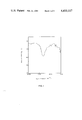
- FIG. 1 is an infrared spectrum of the polymer obtained in Run 1 of Example 1.
- FIG. 2 is an infrared spectrum of the polymer obtained in Run 5 of Example 1.
- FIG. 3 is an infrared spectrum of the mixture of the polymer obtained in Run 1 of Example 1 and polyamide oligomer (1) used in Example 1.
- FIG. 4 is an infrared spectrum of the polymer obtained in Run 15 of Example 4.
- FIG. 5 is an infrared spectrum of the mixture of polyethylene terephthalate and polyamide oligomer (9).
- the polyester blocks constituting the copolyesteramide of this invention are an aromatic polyester obtained from terephthalic acid or an ester-forming derivative thereof and a linear aliphatic diol of carbon number 2 to 4. It is any one of polyethylene terephthalate, polypropylene terephthalate, and polybutylene terephthalate. Preferable among them is polyethylene terephthalate which can be made into moldings of high strength and high elastic modulus.
- Such an aromatic polyester may be one with up to 20 mol% of the terephthalic acid and/or diol substituted with other dicarboxylic acids and/or diols.
- dicarboxylic acids examples include isophthalic acid, orthophthalic acid, diphenyldicarboxylic acid, diphenoxyethane dicarboxylic acid, succinic acid, adipic acid, sebacic acid, and dodecanedioc acid.
- diols examples include neopentyl glycol, 1,4-cyclohexanediol, 1,4-cyclohexanedimethanol, diethylene glycol, and polyethylene glycol.
- the amide units constituting the polyamide block is one in which the dicarboxylic acid is isophthalic acid, orthophthalic acid, or terephthalic acid.
- the preferred amide unit is one in which at least 30 mol% of the dicarboxylic acid is composed of isophthalic acid and/or orthophthalic acid.
- Such amide units permit the copolymerization reaction to be performed easily as mentioned later.
- the diamine component is piperazine or a ring-substituted derivative thereof such as methyl piperazine and trans-2,5-dimethyl piperazine.
- the dicarboxylic acid constituting the amide unit may be substituted with other dicarboxylic acids such as oxalic acid, succinic acid, and adipic acid.
- Up to 10 mol% of the diamine may be substituted with other diamines such as o-phenylenediamine, m-phenylenediamine, p-phenylenediamine, 2,4-toluenediamine, 2,6-toluenediamine, 3,4-toluenediamine, 1,5-naphthylenediamine, 1,8-naphthylenediamine, p,p'-diaminodiphenylmethane, 4,4'-diaminodiphenylether, 3,3'-diaminodiphenylsulfone, 4,4'-diaminodiphenylsulfone, isophthalic dihydrazide, terephthalic dihydrazide, and other aromatic diamines; 1,4-cyclohexanediamine and other alicyclic diamines; and hexamethylenediamine and other aliphatic diamines.
- other diamines such as
- the polyamide block should be such that the average number of the repeating units therein is greater than 2. If the average number of the repeating units is less than 2, no satisfactory results are produced and there will not be obtained a copolymer having high strength and high elastic modulus.
- the upper limit of the average number is not specifically limited; but an average number greater than 40 is not preferable because the copolymerization with polyester becomes difficult.
- the polyester block there is no specific limit in the average number of the repeating units; but 20 to 500 is preferable.
- the copolyesteramide of this invention should be composed of 0.05 to 20 wt% of polyamide block and 99.95 to 80 wt% of polyester block. If the quantity of polyamide block is less than 0.05 wt%, no satisfactory results are produced. When it is greater than 0.05 wt%, the effect becomes remarkable. Above 0.1 wt%, the resulting copolymer is almost the same in strength and elastic modulus regardless of the ratio of copolymerization. It is a main feature of this invention that a marked effect is produced even with a small amount of polyamide block. If the polyamide block exceeds 20 wt%, the polycondensation reaction does not proceed smoothly and a copolymer of high degree of polymerization is not obtained. Consequently, the polyamide block in the copolymer should preferably be in the range of 0.05 to 20 wt%, more suitably 0.1 to 5 wt%, and most suitably 0.2 to 2 wt%.
- the copolyesteramide of this invention should have an intrinsic viscosity higher than 0.5 measured in phenol/tetrachloroethane (1/1 by volume) at 25° C. If the intrinsic viscosity is lower than 0.5, the copolymer is not satisfactory in practical performance.
- the upper limit is not specifically set up; but a copolymer having an intrinsic viscosity higher than 2.0 is difficult to produce.
- the copolyesteramide of this invention can be produced by dissolving polyamide oligomer having the repeating unit represented by the formula (I) and having an average degree of polymerization of 2 to 40, ##STR3## (where R 1 and R 2 are hydrogen or methyl group) in the polyester monomer or prepolymer thereof represented by the formula (III), ##STR4## (where n is an integer of 2 to 4) and subsequently performing a polycondensation reaction.
- the polyester monomer or prepolymer thereof represented by the formula (III) can be produced by the esterification reaction or ester exchange reaction of terephthalic acid or an ester-forming derivative thereof and an aliphatic diol.
- the esterification reaction or ester exchange reaction can be performed under the conditions normally used for the production of polyester.
- the melt of the resulting polyester monomer or prepolymer thereof is capable of dissolving easily the polyamide oligomer on simple addition and mixing.
- the prepolymer is one having an intrinsic viscosity lower than 0.2.
- the polyester monomer or prepolymer thereof may contain terephthalic acid or an ester-forming derivative thereof or an aliphatic diol used as the raw materials.
- the polyamide oligomer represented by the formula (I) should be end-blocked mostly (more than 90%) with carboxyl groups or ester-forming groups derived from carboxyl groups. This is preferable from the standpoint of reactivity and miscibility with the polyester monomer.
- the ester-forming groups derived from carboxyl groups include lower alkyl esters such as methyl ester, ethyl ester, and hydroxyethyl ester; and esters of phenol or phenol derivatives.
- more than 70 mol% of the dicarboxylic acid constituting the polyamide oligomer is terephthalic acid, it is necessary that at least 50% of the terminals of the molecular chains should have phenol derivative residues represented by the formula (IV) below.
- the polyamide oligomer should have an average degree of polymerization of 2 to 5.
- R 3 or R 4 is an alkyl group of carbon number 3 to 5 and the other is hydrogen; and R 5 is hydrogen, lower alkyl group, or lower alkoxy group.
- the polyamide oligomer is dissolved in a solvent such as dimethylacetamide, dimethylformamide, N-methylpyrrolidone, and hexamethylphosphoramide, and polyalkylene terephthalate or oligomer thereof is dissolved in a solvent such as dimethylsulfoxide.
- Both of the resulting solutions are mixed uniformly, and the mixture is mixed with a non-solvent such as water and alcohol so that the polyamide oligomer and the polyalkylene terephthalate or oligomer thereof precipitate in the form of uniform solid mixture. After separation of solvent, the precipitates undergo solid phase polycondensation to give a copolymer.
- a non-solvent such as water and alcohol
- the group represented by the above formula (IV) should be such that either R 3 or R 4 attaching thereto is an alkyl group of carbon number 3 to 5. Such a substituting group improves the solubility of the polyamide oligomer and makes it soluble in polyester monomer.
- the alkyl group of carbon number 3 to 5 includes n-propyl, iso-propyl, n-butyl, iso-butyl, tert-butyl, n-pentyl, and iso-pentyl groups. Preferable among them is the tert-butyl group.
- R 5 is hydrogen, a lower alkyl group, or a lower alkoxyl group.
- the above-mentioned limit is not applied. It is satisfactory if the terminals of the molecular chain are mostly carboxyl groups or ester-forming groups derived from carboxyl groups. This is advantageous for the production of the copolymer.
- the polycondensation reaction which is to be performed after the polyamide oligomer has been dissolved in polyester monomer or prepolymer thereof may be performed under the same conditions as for the normal polycondensation of polyesters. Namely, the polycondensation reaction is performed in vacuo at a temperature slightly higher than the melting point of the polyester in the presence of an antimony compound, a titanium compound, a germanium compound, or a zinc compound as a catalyst. The reaction may be combined with solid-state polymerization, if required.
- the polycondensation reaction brings about polycondensation of polyester and condensation of polyester and polyamide oligomer, to give the polyesteramide block copolymer of this invention.
- the polyamide oligomer added is mostly copolymerized with polyester without being decomposed. Therefore, it is possible to prepare a copolymer of desired composition by adjusting the quantity of polyamide oligomer added.
- the polyamide oligomer is added in an amount of 0.05 to 25 parts by weight for 100 parts by weight of polyester (the quantity of polyester to be obtained when polyester monomer alone is polymerized).
- the average number of consecutive repeating amide units in the polyamide block in the copolymer coincides approximately with the average degree of polymerization of the polyamide oligomer to be used.
- the polyamide oligomer can be synthesized by mixing and reacting a chloride of an aromatic dicarboxylic acid selected from terephthalic acid, isophthalic acid, and orthophthalic acid, and piperazine or a ring-substituted derivative thereof.
- the reaction should be performed in a proper solvent such as methylene chloride, chloroform, dichloroethane, and other halogenated hydrocarbons; and benzene, n-hexane, dimethylacetamide, dimethylformamide, N-methylpyrrolidone, and hexamethylphosphoramide, and mixture thereof.
- a tertiary amine such as triethylamine, tri-n-propylamine, tri-n-butylamine, N-ethylpiperidine, and N-ethylmorpholine so that the reaction proceeds smoothly.
- the reaction may be performed in the presence of a monovalent or divalent lower aliphatic alcohol, phenol, or monovalent or divalent phenol derivative, or in the presence of an aromatic dicarboxylic acid chloride monoester (preferably an ester of a monovalent or divalent lower aliphatic alcohol, phenol, or monovalent or divalent phenol derivative).
- an aromatic dicarboxylic acid chloride monoester preferably an ester of a monovalent or divalent lower aliphatic alcohol, phenol, or monovalent or divalent phenol derivative.
- the reaction to form the polyamide oligomer proceeds as soon as the raw materials are mixed.
- the reaction temperature should preferably be lower than room temperature, and more suitably about 0° C.
- the above-mentioned aromatic dicarboxylic acid chloride monoester is prepared by reacting an aromatic dicarboxylic acid chloride and an alcohol or phenol. To carry out the esterification reaction smoothly, it is recommended to add a tertiary amine such as triethylamine, tri-n-propylamine, tri-n-butylamine, N-ethylpiperidine, and N-ethylmorpholine. The resulting aromatic dicarboxylic acid chloride monoester may be used as such or after purification. If an aromatic dicarboxylic acid chloride is added to the reaction product or added in excess previously to the reaction system, it can be readily used for the reaction with piperadine or a ring-substituted derivative thereof.
- the aromatic dicarboxylic acid chloride monoester should preferably be used in an amount of 0.1 to 2.0 mol for 1 mol of the aromatic dicarboxylic acid chloride.
- the more the aromatic dicarboxylic acid chloride monoester is used the lower is the degree of polymerization of the polyamide oligomer.
- the less the aromatic dicarboxylic acid chloride monoester is used the higher is the degree of polymerization of the polyamide oligomer.
- the aromatic dicarboxylic acid chloride and piperadine or ring-substituted derivative thereof should preferably be used in such amounts that --COCl group and amino group are equal in the entire reaction system including the aromatic dicarboxylic acid chloride.
- the reaction of polyester and polyamide oligomer has formed the intended polyesteramide block copolymer may be confirmed by the following method. Namely, the resulting polymer is dissolved in a mixed solvent of phenol/tetrachloroethane, and then n-heptane, which is a non-solvent for the polymer, is added until the solution becomes apparently cloudy. The solution is then centrifuged to separate it into two layers. The lower thick layer is discharged and placed in a large quantity of methanol to precipitate polymer. This operation removes unreacted polyamide oligomer. The precipitated polymer is subjected to infrared spectrometry. Absorption at 1630 cm -1 , which is due to the C ⁇ O stretching vibration of piperadineamide, indicates the presence of polyamide.
- the composition of the copolymer can be determined according to the nitrogen content obtained by elemental analysis.
- the average number of consecutive repeating amide units can be predicted indirectly from the degree of polymerization of the polyamide oligomer used as a raw material. It can also be obtained directly by a high-resolution NMR spectrum. That the amide units are copolymerized in the form of blocks in the polymer is confirmed by the fact that the melting point decreases very little as the result of copolymerization and that the phase-separated configuration is observed in the polymer melt under a microscope.
- the copolyesteramide of this invention is superior in strength and elastic modulus to the conventional polyester. It is surprising to note that this effect is not produced if poly(p-phenyleneterephthalamide) is used as the polyamide oligomer. In addition, it is not readily copolymerized with polyester by melt polycondensation, due to its poor solubility in polyester. The outstanding effect of this invention is produced when a specific polyamide oligomer is used.
- the copolyesteramide of this invention can be formed into fibers, films, blocks, and other any shapes using the molding method and apparatus commonly used for the conventional polyester.
- it can be incorporated with various additives, fillers, reinforcements, colorants, releasing agents, antioxidants, UV stabilizers, flame retardants, etc. which are commonly used for the conventional polyester moldings.
- fillers and reinforcements include talc, clay, kaolin, mica, asbestos, wollastonite, calcium silicate, silica, gypsum, graphite, glass fiber, carbon fiber, graphite fiber, metal carbide fiber, metal nitride fiber, Aramide fiber, and phenolic resin fiber.
- the copolyesteramide of this invention may be mixed with an aromatic polyester such as polyethylene terephthalate and polybutylene terephthalate containing no amide group, without impairing the effect of this invention.
- the aromatic polyester is used in an amount of 0.1 to 100 parts by weight for 1 part by weight of the copolyesteramide, preferably in such an amount that the polyamide block accounts for 0.05 to 20 wt% in the total resin weight.
- copolyesteramide of this invention and the aromatic polyester containing the copolyesteramide of this invention can be formed into fibers by melt spinning, followed by stretching and heat treatment, under the same conditions as used for the production of conventional polyester fibers.
- the fibers thus produced are suitable for rubber reinforcement such as tire cord because of their higher glass transition point than the conventional polyester fibers.
- copolyesteramide of this invention and the aromatic polyester containing the copolyesteramide of this invention can be formed into oriented films by melt extrusion, followed by stretching and heat treatment.
- the films thus produced are suitable for magnetic tape bases because of their high strength and high elastic modulus.
- the copolymer of this invention is also suitable as a coating material because of the outstanding adhesion to substrate, flexibility, flexing properties, surface hardness, and heat resistance. It will find use in application areas such as precoating metal and wire covering where the coating is subjected to mechanical deformation and high temperature.
- coating materials can be used in the form of solution, melt, slurry, powder, or film.
- the coating materials can be applied to substrates of any configuration (plate, column, cylinder, wire, etc.) and material (metals and plastics).
- the coating film is suitably 0.01 to 5 mm thick.
- polyamide oligomer (6) The methylene chloride was distilled away from the reaction liquid, and the residue was washed with water and dried in vacuo to give polyamide oligomer (6).
- a methylene chloride solution containing 0.060 mol of orthophthaloyl chloride was added dropwise through the dropping funnel over 30 minutes at room temperature. The reaction was carried out at room temperature for 30 minutes.
- the resulting reaction liquid was added to 2 liters of n-hexane to precipitate polyamide oligomer and triethylamine hydrochloride. After filtration, thorough water washing, and vacuum drying, there was obtained polyamide oligomer (10).
- the copolyesteramide was made into a 0.3 mm thick quenched film.
- a test piece 5 mm wide and 80 mm long (gauge distance 25 mm), was cut out of the film.
- This test piece was stretched on a tensile testing machine (Tensilon UTM-III-500, manufactured by Toyo Boldwin) equipped with a constant temperature chamber, at 75° C. and a pulling rate of 25 mm/min.
- ⁇ draw ratio
- FIGS. 1 to 3 show the infrared absorption spectrums of the polymer (polyethylene terephthalate) obtained in Run 1, the polymer obtained in Run 5, and a mixture of the polymer obtained in Run 1 and polyamide oligomer (1), respectively. It is to be noted that absorption due to C ⁇ O stretching vibration of piperazine amide is observed at 1630 cm -1 in FIG. 2, whereas such absorption is not observed in FIG. 1 and FIG. 3. Thus, it was confirmed that the polymer prepared by reacting polyamide oligomer with BHET contains copolymerized polyamide.
- the following table shows the content of polyamide block calculated based on the nitrogen content determined by elemental analysis, and also shows the melting point of the polymer.
- the melting point is the crystalline melting endothermic peak temperature measured by heating the amorphous sample at a rate of 20° C./min on a differential scanning calorimeter.
- the polymer was melted at 280° C. and the melt was observed under an optical microscope of 200 magnifications. In the case of the polymer obtained in Run 1, the phase-separated configuration was not observed; in the case of the polymers obtained in Runs 2 to 4, the fine grainy phase-separated configuration was observed; and in the case of the polymer obtained in Run 5, the complex phase-separated configuration was observed. These observation results indicate that the resulting polymer was a block copolymer. In addition, the fact that the melting point of the polymer does not fall at all evenly when the content of the polyamide block increases suggests that the resulting polymer is a block copolymer.
- copolyesteramides were prepared in the same way as in Example 1 from polyamide oligomer (2), (3), (4), (5), (6), and (7) prepared in Referential Examples 2 to 7, as shown in Table 2.
- the oligomers were all soluble in hot BHET at 220° C., and transparent melts were obtained.
- Table 2 shows the intrinsic viscosity [ ⁇ ] of the resulting copolyesteramide and the tensile properties of the stretched tape (draw ratio of 4) produced in the same way as in Example 1.
- the stretched tape is improved (about 1.3 times higher) in initial modulus as compared with a stretched tape of polyethylene terephthalate film stretched under the same conditions.
- copolymers obtained in this example were treated as in Example 1 and subjected to infrared spectrometry. Absorption at 1630 cm -1 was observed. The copolymers were found to have melting points as follows:
- the oligomer (8) in which the dicarboxylic acid component was composed of adipic acid alone was not readily copolymerized with polyester.
- the piperazine unit in the copolymer is connected to terephthalic acid through an amide bond to form a monomer which is connected to the polyethylene terephthalate molecular chains.
- the content of the piperazine terephthalamide monomer was calculated at 3.0 wt%.
- Table 3 shows the intrinsic viscosity [ ⁇ ] of this copolymer and the tensile properties of the stretched tape (draw ratio of 4) determined in the same way as in Example 1. It is to be noted that the stretched tape of the copolymer has almost the same initial modulus as the stretched tape of polyethylene terephthalate (Example 1, Run 1).
- the resulting copolymer was found to have a melting point of 252° C.
- the random copolymer in which the amide units are not repeated consecutively has a lower melting point as compared with the copolymer of this invention obtained in Example 1.
- the melt of the copolymer obtained in this Comparative Example was examined under a microscope, and the phase-separated configuration was not observed.
- Example 2 In the same apparatus as used in Example 1 were placed 38 g of bis- ⁇ -hydroxybutyl terephthalate (BHBT), 4 mg of triphenyl phosphate, and 10 mg of tetrabutyl titanate.
- the BHBT was prepared in the same way as in Referential Example 12, except that ethylene glycol was replaced by 1,4-butane diol.
- the apparatus was heated to 220° C. in an oil bath to melt BHBT.
- 0.5 wt% of polyamide oligomer (1) was added, with stirring for 10 minutes. The oligomer was dissolved completely and a colorless transparent melt was obtained.
- the reaction system was evacuated slowly to 5 mmHg while keeping the oil bath temperature at 220° C.
- the oil bath was then heated again to 250° C., and polymerization was carried out for 2 hours under a vacuum lower than 0.5 mmHg to give a copolyesteramide.
- the resulting copolymer was found to have an intrinsic viscosity [ ⁇ ] of 0.82 dl/g and a melting point of 225° C. On microscopic examination of the copolymer melt, the phase-separated configuration was observed.
- copolyesteramides were prepared in the same way as in Example 1 from polyamide oligomer (9) prepared in Referential Example 9, as shown in Table 4.
- the oligomers were all soluble in hot BHET at 220° C., and transparent melts were obtained.
- Table 4 also shows the intrinsic viscosity [ ⁇ ] of the resulting copolyesteramide and the tensile properties of the stretched tape (draw ratio of 4) determined in the same way as in Example 1. For comparison, the values of polyethylene terephthalate (Run 1) are also shown.
- FIGS. 4 and 5 show the infrared absorption spectrums of the polymer obtained in Run 15 and the mixture of the polymer obtained in Run 1 and polyamide oligomer (9), respectively. It is to be noted that absorption due to C ⁇ O stretching vibration of piperazine amide is observed at 1630 cm -1 in FIG. 4, whereas such absorption is not observed in FIG. 5. Thus, it was confirmed that the polymer prepared by reacting polyamide oligomer with BHET contains copolymerized polyamide.
- the following table shows the content of polyamide block calculated based on the nitrogen content determined by elemental analysis, and also shows the melting point of the polymer.
- the polymer was melted at 280° C. and the melt was examined under an optical microscope of 200 magnifications. In the case of the polymers obtained in Run 12 to 14, the fine grainy phase-separated configuration was observed; but in the case of the polymer obtained in Run 15, the complex phase-separated configuration was observed. These observation results indicate that the resulting polymer was a block copolymer. In addition, the fact that the melting point of the polymer does not fall at all evenly when the content of the polyamide block increases suggests that the resulting polymer is a block copolymer.
- copolyesteramides were prepared in the same way as in Example 1 from polyamide oligomers (10) and (11) prepared in Referential Examples 10 and 11, as shown in Table 5.
- the oligomers were all soluble in hot BHET at 220° C., and transparent melts were obtained.
- Table 5 also shows the intrinsic viscosity [ ⁇ ] of the resulting copolyesteramide and the tensile properties of the stretched tape (draw ratio of 4) determined in the same way as in Example 1.
- the stretched tape is improved (about 1.3 times higher) in initial modulus as compared with a stretched tape of polyethylene terephthalate film stretched under the same conditions.
- copolymers obtained in this example were treated as in Example 1 and subjected to infrared spectrometry. Absorption at 1630 cm -1 was observed. The copolymers were found to have a melting point of 254° C.
- Example 2 In the same apparatus as used in Example 1 were placed 38 g of bis- ⁇ -hydroxybutyl terephthalate (BHBT), 4 mg of triphenyl phosphate, and 10 mg of tetrabutyl titanate.
- the BHBT was prepared in the same way as in Referential Example 12, except that ethylene glycol was replaced by 1,4-butane diol.
- the apparatus was heated to 220° C. in an oil bath to melt BHBT.
- 0.5 wt% of polyamide oligomer (9) was added, with stirring for 10 minutes. The oligomer was dissolved completely and a colorless transparent melt was obtained.
- the reaction system was evacuated slowly to 5 mmHg while keeping the oil bath temperature at 220° C.
- the oil bath was then heated again to 250° C., and polymerization was carried out for 2 hours under a vacuum lower than 0.5 mmHg to give a copolyesteramide.
- the resulting copolymer was found to have an intrinsic viscosity [ ⁇ ] of 0.78 dl/g and a melting point of 224° C. On microscopic examination of the copolymer melt, the phase-separated configuration was observed.
- This resin composition was made into a stretched tape in the same way as in Example 1.
- the stretched tape was found to have an initial modulus of 810 kg/mm 2 and an elongation at break of 73%.
- the intrinsic viscosity [ ⁇ ] was 0.71.
- the initial modulus is comparable to that obtained in Run 3 as shown in Table 1; it is plainly higher than that in the case of polyethylene terephthalate alone (Run 1). This indicates that the copolymers of this invention can be mixed with polyalkylene terephthalate without impairing the effect of the invention.
- the resulting oligomer was found to have an average degree of polymerization of 2.4 according to NMR spectrum.
- the copolyesteramide pellets were pressed against a 0.1 mm thick steel plate polished with sandpaper and washed with acetone. After quenching with ice water, a 50-micron thick amorphous polymer film was formed on the steel plate.
- the film exhibited good adhesion and high surface hardness equivalent to that of polyethylene terephthalate.
- the coated steel plate was bent 90° and 180° at room temperature, and the change of the film was examined under a reflecting microscope. No change was observed at all in the film.
- Polyethylene terephthalate was coated on the steel plate in the same way and the coated steel plate was bent 90° and 180° . A large number of cracks, several tens of microns in length, occurred along the bend.
- This yarn was stretched 6.3 times at 75° C. and 150° C. using a heat plate, and the physical properties of the stretched yarn were measured. The results are shown in Table 6.
- the physical properties of the stretched yarn are also shown in Table 6.
Landscapes
- Chemical & Material Sciences (AREA)
- Health & Medical Sciences (AREA)
- Chemical Kinetics & Catalysis (AREA)
- Medicinal Chemistry (AREA)
- Polymers & Plastics (AREA)
- Organic Chemistry (AREA)
- Polyamides (AREA)
Applications Claiming Priority (6)
| Application Number | Priority Date | Filing Date | Title |
|---|---|---|---|
| JP57-46671 | 1982-03-23 | ||
| JP57-46672 | 1982-03-23 | ||
| JP4667182A JPS58162633A (ja) | 1982-03-23 | 1982-03-23 | ポリエステルアミド系共重合体及びその製造法 |
| JP4667282A JPS58162634A (ja) | 1982-03-23 | 1982-03-23 | 新規なポリエステルアミド系共重合体及びその製造法 |
| JP57-123703 | 1982-07-14 | ||
| JP12370382A JPS5912972A (ja) | 1982-07-14 | 1982-07-14 | ポリエステル系コ−テイング剤 |
Publications (1)
| Publication Number | Publication Date |
|---|---|
| US4433117A true US4433117A (en) | 1984-02-21 |
Family
ID=27292683
Family Applications (1)
| Application Number | Title | Priority Date | Filing Date |
|---|---|---|---|
| US06/473,226 Expired - Fee Related US4433117A (en) | 1982-03-23 | 1983-03-08 | Copolyesteramide and production of the same |
Country Status (4)
| Country | Link |
|---|---|
| US (1) | US4433117A (de) |
| EP (1) | EP0089846B1 (de) |
| CA (1) | CA1184690A (de) |
| DE (1) | DE3361382D1 (de) |
Cited By (12)
| Publication number | Priority date | Publication date | Assignee | Title |
|---|---|---|---|---|
| US4459400A (en) * | 1983-12-12 | 1984-07-10 | Eastman Kodak Company | Poly(ester-amide) compositions |
| US4485233A (en) * | 1984-02-27 | 1984-11-27 | Union Camp Corporation | Poly(ester-amide) hot-melt adhesives |
| US4851508A (en) * | 1986-07-02 | 1989-07-25 | Toyo Boseki Kabushiki Kaisha | Polyester fibers having high strength and high modulus and process for producing the same |
| US5231161A (en) * | 1992-10-22 | 1993-07-27 | General Electric Company | Method for preparation of macrocyclic poly(alkylene dicarboxylate) oligomers from bis(hydroxyalkyl) dicarboxylates |
| DE4221969A1 (de) * | 1992-07-03 | 1994-01-05 | Inst Polymerforschung Dresden | Verfahren zur Herstellung von Polyamid-Polyester-Blends mit verbesserter Phasenverträglichkeit |
| US5314987A (en) * | 1990-01-31 | 1994-05-24 | American National Can Company | Barrier compositions and film made therefrom having improved optical and oxygen barrier properties |
| US6129960A (en) | 1983-04-13 | 2000-10-10 | Pechiney Plastic Packaging, Inc. | Methods and apparatus for injection molding and injection blow molding multi-layer plastic and the articles made thereby |
| US6332767B1 (en) | 1983-04-13 | 2001-12-25 | Pechiney Emballage Flexible Europe | Apparatus for injection molding multi-layer articles |
| US20030134966A1 (en) * | 1990-01-31 | 2003-07-17 | Kim Yong Joo | Barrier compositions and articles made therefrom |
| US20130053531A1 (en) * | 2011-08-29 | 2013-02-28 | Ticona Llc | Method for Minimizing Process Disruptions During Formation of a Liquid Crystalline Polymer |
| WO2014104699A1 (ko) * | 2012-12-28 | 2014-07-03 | 제일모직 주식회사 | 폴리아미드 수지, 이의 제조방법 및 이를 포함하는 성형품 |
| US11359090B2 (en) | 2017-04-28 | 2022-06-14 | Lubrizol Advanced Materials, Inc. | Matted polyamide-pud |
Families Citing this family (2)
| Publication number | Priority date | Publication date | Assignee | Title |
|---|---|---|---|---|
| US5856429A (en) * | 1996-06-28 | 1999-01-05 | W. R. Grace & Co.-Conn. | Polyamide compositions for removal of polyphenols from liquids |
| CA2900046C (en) * | 2013-02-13 | 2019-11-19 | Lubrizol Advanced Materials, Inc. | Telechelic n-alkylated polyamide polymers and copolymers |
Citations (3)
| Publication number | Priority date | Publication date | Assignee | Title |
|---|---|---|---|---|
| US3839245A (en) * | 1972-03-30 | 1974-10-01 | Emery Industries Inc | Poly(ether-ester-amide) antistatic compositions derived from dimr acids |
| US3849514A (en) * | 1967-11-17 | 1974-11-19 | Eastman Kodak Co | Block polyester-polyamide copolymers |
| US4115475A (en) * | 1975-07-17 | 1978-09-19 | Ato Chimie | Method to prepare copolyesteramides for moulding |
Family Cites Families (1)
| Publication number | Priority date | Publication date | Assignee | Title |
|---|---|---|---|---|
| IT987156B (it) * | 1973-05-07 | 1975-02-20 | Montedison Spa | Polipiperazinammidi copolipiperazi nammidi e membrane per osmosi in versa a base di tali materiali polimerici |
-
1983
- 1983-03-08 US US06/473,226 patent/US4433117A/en not_active Expired - Fee Related
- 1983-03-21 EP EP83301564A patent/EP0089846B1/de not_active Expired
- 1983-03-21 DE DE8383301564T patent/DE3361382D1/de not_active Expired
- 1983-03-22 CA CA000424178A patent/CA1184690A/en not_active Expired
Patent Citations (3)
| Publication number | Priority date | Publication date | Assignee | Title |
|---|---|---|---|---|
| US3849514A (en) * | 1967-11-17 | 1974-11-19 | Eastman Kodak Co | Block polyester-polyamide copolymers |
| US3839245A (en) * | 1972-03-30 | 1974-10-01 | Emery Industries Inc | Poly(ether-ester-amide) antistatic compositions derived from dimr acids |
| US4115475A (en) * | 1975-07-17 | 1978-09-19 | Ato Chimie | Method to prepare copolyesteramides for moulding |
Cited By (13)
| Publication number | Priority date | Publication date | Assignee | Title |
|---|---|---|---|---|
| US6129960A (en) | 1983-04-13 | 2000-10-10 | Pechiney Plastic Packaging, Inc. | Methods and apparatus for injection molding and injection blow molding multi-layer plastic and the articles made thereby |
| US6332767B1 (en) | 1983-04-13 | 2001-12-25 | Pechiney Emballage Flexible Europe | Apparatus for injection molding multi-layer articles |
| US4459400A (en) * | 1983-12-12 | 1984-07-10 | Eastman Kodak Company | Poly(ester-amide) compositions |
| US4485233A (en) * | 1984-02-27 | 1984-11-27 | Union Camp Corporation | Poly(ester-amide) hot-melt adhesives |
| US4851508A (en) * | 1986-07-02 | 1989-07-25 | Toyo Boseki Kabushiki Kaisha | Polyester fibers having high strength and high modulus and process for producing the same |
| US20050106343A1 (en) * | 1990-01-31 | 2005-05-19 | Kim Yong J. | Barrier compositions and articles made therefrom |
| US5314987A (en) * | 1990-01-31 | 1994-05-24 | American National Can Company | Barrier compositions and film made therefrom having improved optical and oxygen barrier properties |
| US20030134966A1 (en) * | 1990-01-31 | 2003-07-17 | Kim Yong Joo | Barrier compositions and articles made therefrom |
| DE4221969A1 (de) * | 1992-07-03 | 1994-01-05 | Inst Polymerforschung Dresden | Verfahren zur Herstellung von Polyamid-Polyester-Blends mit verbesserter Phasenverträglichkeit |
| US5231161A (en) * | 1992-10-22 | 1993-07-27 | General Electric Company | Method for preparation of macrocyclic poly(alkylene dicarboxylate) oligomers from bis(hydroxyalkyl) dicarboxylates |
| US20130053531A1 (en) * | 2011-08-29 | 2013-02-28 | Ticona Llc | Method for Minimizing Process Disruptions During Formation of a Liquid Crystalline Polymer |
| WO2014104699A1 (ko) * | 2012-12-28 | 2014-07-03 | 제일모직 주식회사 | 폴리아미드 수지, 이의 제조방법 및 이를 포함하는 성형품 |
| US11359090B2 (en) | 2017-04-28 | 2022-06-14 | Lubrizol Advanced Materials, Inc. | Matted polyamide-pud |
Also Published As
| Publication number | Publication date |
|---|---|
| CA1184690A (en) | 1985-03-26 |
| EP0089846A1 (de) | 1983-09-28 |
| DE3361382D1 (en) | 1986-01-16 |
| EP0089846B1 (de) | 1985-12-04 |
Similar Documents
| Publication | Publication Date | Title |
|---|---|---|
| US4129715A (en) | Polyester amides suitable for injection molding | |
| US4433117A (en) | Copolyesteramide and production of the same | |
| CA1046194A (en) | Poly(alkylenetrimellitate imides) and method of preparation | |
| JP2557348B2 (ja) | 成形材料用ポリアミドおよび成形材料用ポリアミド組成物 | |
| US4420608A (en) | Polyamides from itaconic acid and diamines | |
| US5811495A (en) | Esteramide copolymers and production thereof | |
| US4371690A (en) | Heat-resistant rigid polymers from difunctional 9,10-dihydro-9,10-ethanoanthracenes | |
| JPH08500632A (ja) | 溶融成形可能なブロック共重合エステルイミドおよびその製造方法 | |
| EP4028450B1 (de) | Polyamidimid polymer und verfahren zu seiner herstellung | |
| JP2617600B2 (ja) | 芳香族ポリエステルアミド共重合体およびその製造法 | |
| US4794159A (en) | Heat-resistant polyamide from bis(4-aminophenyl)fluorene | |
| JP2595925B2 (ja) | 熱硬化性ポリアリーレート樹脂 | |
| US5317066A (en) | Polyester-grafted polyamide, process for preparing the same, and thermoplastic resin composition containing the same | |
| EP4028449A1 (de) | Polyamidimidpolymer und verfahren zu dessen herstellung | |
| Huang et al. | Poly (amide‐ester) s from p‐aminobenzoic acid | |
| EP0548361B1 (de) | Polyester gepfropftes polyamid, herstellung, und thermoplastische harzzusammensetzung | |
| Wang et al. | Synthesis and properties of phosphorus containing polyester‐amides derived from 1, 4‐bis (3‐aminobenzoyloxy)‐2‐(6‐oxido‐6H‐dibenz< c, e>< 1, 2> oxaphosphorin‐6‐yl) phenylene | |
| US4281106A (en) | Heat-resistant, rigid polymers from difunctional 9,10-dihydro-9,10-ethanoanthracenes | |
| JP3453254B2 (ja) | 液晶性ポリエステルアミド、その製造法および液晶性ポリエステルアミド成形体 | |
| US4006120A (en) | Thermostable polyester | |
| JPH10287807A (ja) | ポリエステルアミド樹脂組成物 | |
| Ding | Synthesis and characterization of novel polyimide-g-nylon 6 and 6-b-polyimide-b-nylon 6 copolymers | |
| US5391699A (en) | Polyester copolymer and a process for the production of the same | |
| JPWO1993001225A1 (ja) | ポリエステルグラフト化ポリアミド、その製造法およびこれを用いた熱可塑性樹脂組成物 | |
| JPS58162634A (ja) | 新規なポリエステルアミド系共重合体及びその製造法 |
Legal Events
| Date | Code | Title | Description |
|---|---|---|---|
| AS | Assignment |
Owner name: KURARAY CO., LTD., 1621, SAKAZU, KURASHIKI-CITY, J Free format text: ASSIGNMENT OF ASSIGNORS INTEREST.;ASSIGNORS:TAKAYANAGI, MOTOWO;MURATA, YOSHIHUMI;REEL/FRAME:004106/0653 Effective date: 19830225 |
|
| MAFP | Maintenance fee payment |
Free format text: PAYMENT OF MAINTENANCE FEE, 4TH YEAR, PL 97-247 (ORIGINAL EVENT CODE: M173); ENTITY STATUS OF PATENT OWNER: LARGE ENTITY Year of fee payment: 4 |
|
| FEPP | Fee payment procedure |
Free format text: MAINTENANCE FEE REMINDER MAILED (ORIGINAL EVENT CODE: REM.); ENTITY STATUS OF PATENT OWNER: LARGE ENTITY |
|
| LAPS | Lapse for failure to pay maintenance fees | ||
| FP | Lapsed due to failure to pay maintenance fee |
Effective date: 19920223 |
|
| STCH | Information on status: patent discontinuation |
Free format text: PATENT EXPIRED DUE TO NONPAYMENT OF MAINTENANCE FEES UNDER 37 CFR 1.362 |