US4567148A - Method for quantitatively determining the amount of hemoglobin in a biological sample - Google Patents
Method for quantitatively determining the amount of hemoglobin in a biological sample Download PDFInfo
- Publication number
- US4567148A US4567148A US06/418,282 US41828282A US4567148A US 4567148 A US4567148 A US 4567148A US 41828282 A US41828282 A US 41828282A US 4567148 A US4567148 A US 4567148A
- Authority
- US
- United States
- Prior art keywords
- hemoglobin
- test sample
- porphyrins
- derived
- naturally occurring
- Prior art date
- Legal status (The legal status is an assumption and is not a legal conclusion. Google has not performed a legal analysis and makes no representation as to the accuracy of the status listed.)
- Expired - Lifetime
Links
- 108010054147 Hemoglobins Proteins 0.000 title claims abstract description 119
- 102000001554 Hemoglobins Human genes 0.000 title claims abstract description 119
- 238000000034 method Methods 0.000 title claims abstract description 81
- 239000012472 biological sample Substances 0.000 title description 10
- 150000004032 porphyrins Chemical class 0.000 claims abstract description 128
- 238000012360 testing method Methods 0.000 claims abstract description 65
- 238000000605 extraction Methods 0.000 claims abstract description 45
- 239000000356 contaminant Substances 0.000 claims abstract description 13
- 238000003271 compound fluorescence assay Methods 0.000 claims abstract description 12
- 239000012620 biological material Substances 0.000 claims abstract description 11
- XEKOWRVHYACXOJ-UHFFFAOYSA-N Ethyl acetate Chemical compound CCOC(C)=O XEKOWRVHYACXOJ-UHFFFAOYSA-N 0.000 claims description 83
- QTBSBXVTEAMEQO-UHFFFAOYSA-N Acetic acid Chemical compound CC(O)=O QTBSBXVTEAMEQO-UHFFFAOYSA-N 0.000 claims description 55
- LRHPLDYGYMQRHN-UHFFFAOYSA-N N-Butanol Chemical compound CCCCO LRHPLDYGYMQRHN-UHFFFAOYSA-N 0.000 claims description 46
- 239000003153 chemical reaction reagent Substances 0.000 claims description 28
- SCVFZCLFOSHCOH-UHFFFAOYSA-M potassium acetate Chemical compound [K+].CC([O-])=O SCVFZCLFOSHCOH-UHFFFAOYSA-M 0.000 claims description 25
- KWYUFKZDYYNOTN-UHFFFAOYSA-M Potassium hydroxide Chemical compound [OH-].[K+] KWYUFKZDYYNOTN-UHFFFAOYSA-M 0.000 claims description 24
- KRKNYBCHXYNGOX-UHFFFAOYSA-N citric acid Chemical compound OC(=O)CC(O)(C(O)=O)CC(O)=O KRKNYBCHXYNGOX-UHFFFAOYSA-N 0.000 claims description 18
- 239000012071 phase Substances 0.000 claims description 18
- 239000000203 mixture Substances 0.000 claims description 14
- 150000003839 salts Chemical class 0.000 claims description 14
- NBIIXXVUZAFLBC-UHFFFAOYSA-N Phosphoric acid Chemical compound OP(O)(O)=O NBIIXXVUZAFLBC-UHFFFAOYSA-N 0.000 claims description 13
- 238000006243 chemical reaction Methods 0.000 claims description 13
- 210000003608 fece Anatomy 0.000 claims description 13
- 210000001035 gastrointestinal tract Anatomy 0.000 claims description 13
- 239000002904 solvent Substances 0.000 claims description 13
- 235000011056 potassium acetate Nutrition 0.000 claims description 12
- XEEYBQQBJWHFJM-UHFFFAOYSA-N Iron Chemical compound [Fe] XEEYBQQBJWHFJM-UHFFFAOYSA-N 0.000 claims description 10
- 239000002253 acid Substances 0.000 claims description 9
- 239000008346 aqueous phase Substances 0.000 claims description 9
- 229910000147 aluminium phosphate Inorganic materials 0.000 claims description 7
- 239000000126 substance Substances 0.000 claims description 7
- YXFVVABEGXRONW-UHFFFAOYSA-N Toluene Chemical compound CC1=CC=CC=C1 YXFVVABEGXRONW-UHFFFAOYSA-N 0.000 claims description 6
- 210000004051 gastric juice Anatomy 0.000 claims description 5
- 229910052742 iron Inorganic materials 0.000 claims description 5
- 210000002700 urine Anatomy 0.000 claims description 5
- HEDRZPFGACZZDS-UHFFFAOYSA-N Chloroform Chemical compound ClC(Cl)Cl HEDRZPFGACZZDS-UHFFFAOYSA-N 0.000 claims description 4
- JHIVVAPYMSGYDF-UHFFFAOYSA-N cyclohexanone Chemical compound O=C1CCCCC1 JHIVVAPYMSGYDF-UHFFFAOYSA-N 0.000 claims description 4
- VZGDMQKNWNREIO-UHFFFAOYSA-N tetrachloromethane Chemical compound ClC(Cl)(Cl)Cl VZGDMQKNWNREIO-UHFFFAOYSA-N 0.000 claims description 4
- 239000003960 organic solvent Substances 0.000 claims description 3
- WSLDOOZREJYCGB-UHFFFAOYSA-N 1,2-Dichloroethane Chemical compound ClCCCl WSLDOOZREJYCGB-UHFFFAOYSA-N 0.000 claims description 2
- AMQJEAYHLZJPGS-UHFFFAOYSA-N N-Pentanol Chemical compound CCCCCO AMQJEAYHLZJPGS-UHFFFAOYSA-N 0.000 claims description 2
- CYTYCFOTNPOANT-UHFFFAOYSA-N Perchloroethylene Chemical group ClC(Cl)=C(Cl)Cl CYTYCFOTNPOANT-UHFFFAOYSA-N 0.000 claims description 2
- STCOOQWBFONSKY-UHFFFAOYSA-N tributyl phosphate Chemical compound CCCCOP(=O)(OCCCC)OCCCC STCOOQWBFONSKY-UHFFFAOYSA-N 0.000 claims description 2
- 239000006228 supernatant Substances 0.000 claims 5
- 108010036302 hemoglobin AS Proteins 0.000 claims 1
- 229950011008 tetrachloroethylene Drugs 0.000 claims 1
- 230000002452 interceptive effect Effects 0.000 abstract description 3
- 239000000523 sample Substances 0.000 description 37
- 235000019439 ethyl acetate Nutrition 0.000 description 26
- 229960000583 acetic acid Drugs 0.000 description 16
- 241000894006 Bacteria Species 0.000 description 14
- MUBZPKHOEPUJKR-UHFFFAOYSA-N Oxalic acid Chemical compound OC(=O)C(O)=O MUBZPKHOEPUJKR-UHFFFAOYSA-N 0.000 description 12
- 229930002875 chlorophyll Natural products 0.000 description 10
- 235000019804 chlorophyll Nutrition 0.000 description 10
- ATNHDLDRLWWWCB-AENOIHSZSA-M chlorophyll a Chemical compound C1([C@@H](C(=O)OC)C(=O)C2=C3C)=C2N2C3=CC(C(CC)=C3C)=[N+]4C3=CC3=C(C=C)C(C)=C5N3[Mg-2]42[N+]2=C1[C@@H](CCC(=O)OC\C=C(/C)CCC[C@H](C)CCC[C@H](C)CCCC(C)C)[C@H](C)C2=C5 ATNHDLDRLWWWCB-AENOIHSZSA-M 0.000 description 10
- -1 heme compounds Chemical class 0.000 description 9
- 230000000740 bleeding effect Effects 0.000 description 8
- 150000003278 haem Chemical class 0.000 description 8
- 230000000968 intestinal effect Effects 0.000 description 8
- 239000000463 material Substances 0.000 description 8
- 239000012535 impurity Substances 0.000 description 5
- 238000012113 quantitative test Methods 0.000 description 5
- 150000001875 compounds Chemical class 0.000 description 4
- 230000002550 fecal effect Effects 0.000 description 4
- 235000006408 oxalic acid Nutrition 0.000 description 4
- 239000000049 pigment Substances 0.000 description 4
- UHOVQNZJYSORNB-UHFFFAOYSA-N Benzene Chemical compound C1=CC=CC=C1 UHOVQNZJYSORNB-UHFFFAOYSA-N 0.000 description 3
- KSFOVUSSGSKXFI-GAQDCDSVSA-N CC1=C/2NC(\C=C3/N=C(/C=C4\N\C(=C/C5=N/C(=C\2)/C(C=C)=C5C)C(C=C)=C4C)C(C)=C3CCC(O)=O)=C1CCC(O)=O Chemical compound CC1=C/2NC(\C=C3/N=C(/C=C4\N\C(=C/C5=N/C(=C\2)/C(C=C)=C5C)C(C=C)=C4C)C(C)=C3CCC(O)=O)=C1CCC(O)=O KSFOVUSSGSKXFI-GAQDCDSVSA-N 0.000 description 3
- 229940079593 drug Drugs 0.000 description 3
- 239000003814 drug Substances 0.000 description 3
- 239000000284 extract Substances 0.000 description 3
- 229950003776 protoporphyrin Drugs 0.000 description 3
- 238000012216 screening Methods 0.000 description 3
- FERIUCNNQQJTOY-UHFFFAOYSA-N Butyric acid Natural products CCCC(O)=O FERIUCNNQQJTOY-UHFFFAOYSA-N 0.000 description 2
- RTZKZFJDLAIYFH-UHFFFAOYSA-N Diethyl ether Chemical compound CCOCC RTZKZFJDLAIYFH-UHFFFAOYSA-N 0.000 description 2
- VEXZGXHMUGYJMC-UHFFFAOYSA-N Hydrochloric acid Chemical compound Cl VEXZGXHMUGYJMC-UHFFFAOYSA-N 0.000 description 2
- QAOWNCQODCNURD-UHFFFAOYSA-L Sulfate Chemical compound [O-]S([O-])(=O)=O QAOWNCQODCNURD-UHFFFAOYSA-L 0.000 description 2
- 239000003125 aqueous solvent Substances 0.000 description 2
- IRXRGVFLQOSHOH-UHFFFAOYSA-L dipotassium;oxalate Chemical compound [K+].[K+].[O-]C(=O)C([O-])=O IRXRGVFLQOSHOH-UHFFFAOYSA-L 0.000 description 2
- 159000000014 iron salts Chemical class 0.000 description 2
- QGZKDVFQNNGYKY-UHFFFAOYSA-O Ammonium Chemical compound [NH4+] QGZKDVFQNNGYKY-UHFFFAOYSA-O 0.000 description 1
- KRKNYBCHXYNGOX-UHFFFAOYSA-K Citrate Chemical compound [O-]C(=O)CC(O)(CC([O-])=O)C([O-])=O KRKNYBCHXYNGOX-UHFFFAOYSA-K 0.000 description 1
- 229910004373 HOAc Inorganic materials 0.000 description 1
- 208000005016 Intestinal Neoplasms Diseases 0.000 description 1
- 229910019142 PO4 Inorganic materials 0.000 description 1
- ZLMJMSJWJFRBEC-UHFFFAOYSA-N Potassium Chemical compound [K] ZLMJMSJWJFRBEC-UHFFFAOYSA-N 0.000 description 1
- VMHLLURERBWHNL-UHFFFAOYSA-M Sodium acetate Chemical compound [Na+].CC([O-])=O VMHLLURERBWHNL-UHFFFAOYSA-M 0.000 description 1
- 150000007513 acids Chemical class 0.000 description 1
- 238000003556 assay Methods 0.000 description 1
- 230000001580 bacterial effect Effects 0.000 description 1
- 230000003115 biocidal effect Effects 0.000 description 1
- 230000015572 biosynthetic process Effects 0.000 description 1
- 125000000484 butyl group Chemical group [H]C([*])([H])C([H])([H])C([H])([H])C([H])([H])[H] 0.000 description 1
- 239000000975 dye Substances 0.000 description 1
- 230000000694 effects Effects 0.000 description 1
- 230000001747 exhibiting effect Effects 0.000 description 1
- 229940062993 ferrous oxalate Drugs 0.000 description 1
- 239000011790 ferrous sulphate Substances 0.000 description 1
- 235000003891 ferrous sulphate Nutrition 0.000 description 1
- 239000012362 glacial acetic acid Substances 0.000 description 1
- 238000013101 initial test Methods 0.000 description 1
- 201000009019 intestinal benign neoplasm Diseases 0.000 description 1
- 150000002505 iron Chemical class 0.000 description 1
- BAUYGSIQEAFULO-UHFFFAOYSA-L iron(2+) sulfate (anhydrous) Chemical compound [Fe+2].[O-]S([O-])(=O)=O BAUYGSIQEAFULO-UHFFFAOYSA-L 0.000 description 1
- OWZIYWAUNZMLRT-UHFFFAOYSA-L iron(2+);oxalate Chemical compound [Fe+2].[O-]C(=O)C([O-])=O OWZIYWAUNZMLRT-UHFFFAOYSA-L 0.000 description 1
- PVFSDGKDKFSOTB-UHFFFAOYSA-K iron(3+);triacetate Chemical compound [Fe+3].CC([O-])=O.CC([O-])=O.CC([O-])=O PVFSDGKDKFSOTB-UHFFFAOYSA-K 0.000 description 1
- 229910000359 iron(II) sulfate Inorganic materials 0.000 description 1
- 150000002978 peroxides Chemical class 0.000 description 1
- NBIIXXVUZAFLBC-UHFFFAOYSA-K phosphate Chemical compound [O-]P([O-])([O-])=O NBIIXXVUZAFLBC-UHFFFAOYSA-K 0.000 description 1
- 239000010452 phosphate Substances 0.000 description 1
- 150000003016 phosphoric acids Chemical class 0.000 description 1
- 150000004033 porphyrin derivatives Chemical class 0.000 description 1
- 229910052700 potassium Inorganic materials 0.000 description 1
- 239000011591 potassium Substances 0.000 description 1
- XAEFZNCEHLXOMS-UHFFFAOYSA-M potassium benzoate Chemical compound [K+].[O-]C(=O)C1=CC=CC=C1 XAEFZNCEHLXOMS-UHFFFAOYSA-M 0.000 description 1
- 239000002244 precipitate Substances 0.000 description 1
- 238000002360 preparation method Methods 0.000 description 1
- 239000000047 product Substances 0.000 description 1
- 238000004445 quantitative analysis Methods 0.000 description 1
- 239000001632 sodium acetate Substances 0.000 description 1
- 235000017281 sodium acetate Nutrition 0.000 description 1
- ZNCPFRVNHGOPAG-UHFFFAOYSA-L sodium oxalate Chemical compound [Na+].[Na+].[O-]C(=O)C([O-])=O ZNCPFRVNHGOPAG-UHFFFAOYSA-L 0.000 description 1
- 229940039790 sodium oxalate Drugs 0.000 description 1
- 159000000000 sodium salts Chemical class 0.000 description 1
Images
Classifications
-
- A—HUMAN NECESSITIES
- A61—MEDICAL OR VETERINARY SCIENCE; HYGIENE
- A61B—DIAGNOSIS; SURGERY; IDENTIFICATION
- A61B10/00—Instruments for taking body samples for diagnostic purposes; Other methods or instruments for diagnosis, e.g. for vaccination diagnosis, sex determination or ovulation-period determination; Throat striking implements
- A61B10/0038—Devices for taking faeces samples; Faecal examination devices
-
- G—PHYSICS
- G01—MEASURING; TESTING
- G01N—INVESTIGATING OR ANALYSING MATERIALS BY DETERMINING THEIR CHEMICAL OR PHYSICAL PROPERTIES
- G01N33/00—Investigating or analysing materials by specific methods not covered by groups G01N1/00 - G01N31/00
- G01N33/48—Biological material, e.g. blood, urine; Haemocytometers
- G01N33/50—Chemical analysis of biological material, e.g. blood, urine; Testing involving biospecific ligand binding methods; Immunological testing
- G01N33/72—Chemical analysis of biological material, e.g. blood, urine; Testing involving biospecific ligand binding methods; Immunological testing involving blood pigments, e.g. haemoglobin, bilirubin or other porphyrins; involving occult blood
- G01N33/721—Haemoglobin
-
- Y—GENERAL TAGGING OF NEW TECHNOLOGICAL DEVELOPMENTS; GENERAL TAGGING OF CROSS-SECTIONAL TECHNOLOGIES SPANNING OVER SEVERAL SECTIONS OF THE IPC; TECHNICAL SUBJECTS COVERED BY FORMER USPC CROSS-REFERENCE ART COLLECTIONS [XRACs] AND DIGESTS
- Y10—TECHNICAL SUBJECTS COVERED BY FORMER USPC
- Y10T—TECHNICAL SUBJECTS COVERED BY FORMER US CLASSIFICATION
- Y10T436/00—Chemistry: analytical and immunological testing
- Y10T436/14—Heterocyclic carbon compound [i.e., O, S, N, Se, Te, as only ring hetero atom]
- Y10T436/145555—Hetero-N
- Y10T436/146666—Bile pigment
-
- Y—GENERAL TAGGING OF NEW TECHNOLOGICAL DEVELOPMENTS; GENERAL TAGGING OF CROSS-SECTIONAL TECHNOLOGIES SPANNING OVER SEVERAL SECTIONS OF THE IPC; TECHNICAL SUBJECTS COVERED BY FORMER USPC CROSS-REFERENCE ART COLLECTIONS [XRACs] AND DIGESTS
- Y10—TECHNICAL SUBJECTS COVERED BY FORMER USPC
- Y10T—TECHNICAL SUBJECTS COVERED BY FORMER US CLASSIFICATION
- Y10T436/00—Chemistry: analytical and immunological testing
- Y10T436/25—Chemistry: analytical and immunological testing including sample preparation
- Y10T436/25375—Liberation or purification of sample or separation of material from a sample [e.g., filtering, centrifuging, etc.]
- Y10T436/255—Liberation or purification of sample or separation of material from a sample [e.g., filtering, centrifuging, etc.] including use of a solid sorbent, semipermeable membrane, or liquid extraction
Definitions
- the present invention relates generally to a method for determining the amount of hemoglobin in a biological sample such as feces, urine or gastric juice, and more particularly, to a quantitative method of determining the amount of such hemoglobin including converting the hemoglobin to porphyrin, isolating and separating out these porphyrins derived from hemoglobin or heme related compounds and determining the level of such porphyrins. This determination is preferably accomplished by means such as a fluorescence assay.
- 4,378,971 describes an improved method for determining the level of hemoglobin in a biological sample such as feces, urine or gastric juice.
- This improved method enables the quantitative determination of hemoglobin in such sample by utilizing a concept of collecting and preparing the test sample, converting the non-fluorescing heme portion of the hemoglobin in the sample to fluorescing porphyrin and then assaying the fluorescence of the converted porphyrins. While this general approach and method are a significant improvement over the prior rapid screening non-quantitative techniques, and thus are highly satisfactory and acceptable in many cases, there is still room for further improvement in the accuracy of the quantitative determination.
- porphyrin determination is accomplished via a fluorescence assay.
- biological materials such as feces contain many compounds which fluoresce at wavelengths similar to those of porphyrins derived from hemoglobin.
- potential contaminants include naturally occurring porphyrins such as coproporphyrin which are not derived from hemoglobin and ingested prophyrins such as chlorophyll.
- the method of the present invention overcomes the limitations in quantitative hemoglobin tests which employ a porphyrin determination by isolating and separating out the porphyrins derived from conversion of hemoglobin to porphyrin.
- This method generally includes an extraction procedure which allows removal from the test sample of significant contaminating elements such as sources of interfering fluorescence. Following this extraction procedure, the sample includes only those porphyrins derived from hemoglobin and related heme compounds. Thus, by assaying the fluorescence of these porphyrins, an accurate quantitative measure of the hemoglobin in the biological sample can be determined. Results have shown that following this procedure, over 90 percent of the fluorescence assayed is due to protoporphyrin and other porphyrins derived from heme compounds.
- the extraction procedure of the present invention enables one to isolate the porphyrins in the biological sample derived from hemoglobin, and thus enables one to assay the fluorescence and accurately determine the amount of hemoglobin in the sample, further benefits can be achieved, particularly with feces, by also performing the extraction procedure on a second test sample in which there is no externally stimulated chemical conversion of hemoglobin to porphyrin. It has been found that a variable, and often major, portion of the hemoglobin pigment which enters the gastrointestinal tract is converted to porphyrins by certain intestinal bacteria. These bacteria and their precise products have not been well defined. They are presumed to be so-called "anaerobes", which are believed to be present in the gastrointestinal tract, especially in the large bowel.
- the porphyrins which are formed from hemoglobin heme by these bacteria become part of the porphyrins to be determined. If the porphyrin determination in accordance with the procedure of the present invention is made with no externally stimulated conversion, the amount of hemoglobin converted only by bacteria can be determined. By comparing the data from this second test sample in which the hemoglobin converted only by bacteria is determined with the data from the first test sample in which the total hemoglobin is determined, significant information may be obtained as to the location of the source of bleeding. For example, a relatively low proportion of readings of hemoglobin converted only by intestinal bacteria compared to readings for total hemoglobin (on the order of less than 10 percent) would indicate bleeding relatively low in the gastrointestinal tract.
- a relatively high proportion on the order of more than 30 or 40 percent would indicate bleeding in a upper portion of the gastrointestinal tract. It has been shown that in many cases, more than half of the hemoglobin in the intestinal tract can be converted to porphyrins by intestinal bacteria.
- the extraction procedure of the present invention preferably involves three extraction steps.
- the first involves an extraction of the porphyrins whose fluorescence assay is desired, as well as various other materials such as naturally occurring porphyrins and chlorophyll, leaving behind the iron salts, pigments and various other non-specific fluorescing material. While there may be several different ways to accomplish this initial extraction step, the preferred method of the present invention contemplates extracting the porphyrins into a mixture of ethyl acetate and acetic acid.
- the naturally occurring porphyrins such as coproporphyrin are separated and removed.
- this is accomplished by first adding butyl alcohol to the ethyl acetate:acetic acid phase and then shaking with an alkaline mixture of potassium hydroxide and potassium acetate.
- the naturally occurring porphyrins as well as certain other materials exhibiting contaminating fluorescence are extracted into this alkaline mixture, thus permitting its removal from the ethyl acetate:butyl alcohol phase which contains the porphyrins derived from hemoglobin.
- porphyrins which are derived from hemoglobin (and related heme compounds) are extracted from chlorophyll, a major fluorescing fecal contaminant.
- the porphyrins derived from hemoglobin are extracted into phosphoric acid leaving the chlorophyll behind in the ethyl acetate:butyl alcohol phase.
- approximately 90% to 99% of the fluorescence assayed has been found to be due to protoporphyrin and other porphyrin derivatives of heme compounds.
- Another object of the present invention is to provide a method of isolating the porphyrins derived from hemoglobin and related heme compounds in a quantitative hemoglobin test based upon a fluorescence assay of the converted porphyrins.
- a further object of the present invention is to provide a procedure for isolating the porphyrins derived from hemoglobin and related heme compounds in a quantitative hemoglobin test involving a fluorescence assay of the converted porphyrins in which the major fluorescence contaminants including naturally occurring porphyrins and chlorophyll, are separated from the porphyrins derived from hemoglobin.
- Another object of the present invention is to provide an improved quantitative test for hemoglobin in feces in which information can be obtained to determine the relative location of bleeding in the gastrointestinal tract.
- the preferred method of the present invention has particular applicability to a quantitative test for hemoglobin in a biological sample in which the hemoglobin in such sample is converted to porphyrin followed by a determination of the level of such porphyrin.
- a sample of the biological material for which the quantitative hemoglobin level is desired is collected and combined with a reagent to convert the heme portion of the hemoglobin to porphyrin. While it is contemplated that the method of the present invention can be used in connection with many different kinds of biological samples, it has particular applicability to a biological sample such as feces, urine or gastric juice.
- the actual procedure for collecting a sample of the biological material can be any one of several procedures known in the art.
- the sample is combined with a reagent to convert the heme portion of the hemoglobin to porphyrin.
- a reagent to convert the heme portion of the hemoglobin to porphyrin.
- One means for accomplishing this conversion is described in my copending patent application Ser. No. 190,399, filed Sept. 24, 1980, U.S. Pat. No. 4,378,971 in which the sample is combined with a reagent comprising a reducing acid and a reducing salt.
- the preferred reagent to accomplish this conversion is comprised of a mixture of a reducing acid such as 2.0 or 2.5 molar oxalic acid and a 1.5 to 2.5% solution of a reducing salt such as ferrous oxalate or ferrous sulfate.
- the heme portion of the hemoglobin in the sample is converted to porphyrin. While some conversion will occur even at room temperature, the speed and efficiency of the conversion is increased at elevated temperatures. In the preferred method, the sample is heated for 20 minutes at a temperature of about 100° C. It is contemplated that various other means could be used to accomplish this conversion.
- the conversion is complete, one can obtain quantitative information about the level of hemoglobin represented in the original test sample by determining the level of total converted porphyrins converted from hemoglobin. This is comprised of porphyrins converted from hemoglobin by intestinal bacteria as well as by the above described oxalic acid:ferous sulfate system.
- the present invention also contemplates a procedure for isolating or separating out that portion of the porphyrin derived from hemoglobin so as to eliminate interfering components such as naturally occurring porphyrins, chlorophyll and various other materials having a fluorescence wavelength which coincides with the wavelength of converted porphyrin and thus affects the accuracy of the quantitative hemoglobin determination.
- This procedure for isolating and separating the porphyrins derived solely from the conversion of the heme portion of hemoglobin, whether by bacteria or by selected chemicals or other means involves three general extraction steps.
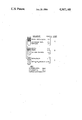
- the first of these steps illustrated as step A in the drawing involves shaking a quantity of the test sample with a solvent which is capable of extracting those porphyrins whose ultimate determination is desired, namely, the porphyrins derived from hemoglobin.
- This solvent should also have properties which leave behind as many of the various other contaminants in the system as possible, particularly iron.
- this solvent is an organic solvent such as ethyl acetate (EtOAc) containing a small amount of glacial acetic acid (HOAc).
- the purpose of the acetic acid is to insure extraction of the converted porphyrins and to insure solubility of the iron salt (iron acetate) and its removal in the aqueous phase.
- iron salt iron acetate
- acetic acid a portion of the test sample with the converted porphyrin is added to the ethyl acetate:acetic acid solution. After the combination is shaken and allowed to settle, porphyrins in the test sample, both naturally occurring porphyrins as well as converted porphyrins and chlorophyll, will be extracted into the ethyl acetate:acetic acid phase of the mixture and the iron, various pigments, medicines and other materials will remain behind in the aqueous phase.
- potassium acetate is also added to improve the extraction performance.
- the primary purpose of the potassium acetate (KOAc) is to convert much of the oxalic acid to potassium oxalate, and thus reduce the acidity of the mixture to avoid losing some of the porphyrin into the aqueous phase.
- one part by volume of the test sample with converted porphyrin is combined with six parts by volume of ethyl acetate:acetic acid solvent (comprising 20 parts by volume ethyl acetate to one part by volume of acetic acid) and two parts by volume of three molar potassium acetate.
- solvent systems other than ethyl acetate and acetic acid could be utilized in this initial extraction step provided they perform the desired functions of extracting at least all of the porphyrins derived from the hemoglobin, but leaving behind or failing to extract various other contaminants, particularly iron.
- Other solvent systems such as ethylene dichloride, chloroform, perchloroethylene, carbon tetrachloride, tributyl phosphate, cyclohexanone, acetic acid, benzene, ether, toluene and amyl alcohol have been tried either alone or in combination, and all extract porphyrins to varying degrees, however, the ethyl acetate:acetic acid system is preferred.
- a material other than potassium acetate could be used to help maintain stability of the system and to reduce the acidity to avoid losing some of the porphyrin; however, this should preferably be a material which avoids the formation of a precipitate in the aqueous phase.
- Sodium salts such as sodium acetate, for example, yield insoluble sodium oxalate when used in the preferred method. Potassium oxalate, however, remains soluble under these conditions. Citrate, phosphate and other salts of potassium (or ammonium ion) were also tested, but the potassium acetate is the preferred salt.
- a second extraction step is performed.
- a portion of this ethyl acetate phase from step A is first added to butyl alcohol (BuOH).
- An aqueous solvent is then added to this mixture which extracts numerous impurities, including the naturally occurring porphyrins such as coproporphyrin, from the ethyl acetate:butyl alcohol phase, but which leaves the porphyrin derived from hemoglobin behind.
- this aqueous solvent it is preferable for this aqueous solvent to be strongly alkaline and to have a relatively high concentration of soluble salt.
- a portion of the ethyl acetate phase from step A is combined with a mixture of potassium hydroxide and potassium acetate to achieve better alkalinity and a high concentration of the potassium salt. More particularly, the preferred method contemplates combining one part by volume of the ethyl acetate phase from step A with 0.4 parts by volume of butyl alcohol and three parts by volume of a mixture of one molar potassium hydroxide containing three molar potassium acetate. It has been found that this reagent is effective to extract virtually all of the contaminating naturally occurring porphyrins and additional impurities from the ethyl acetate:butyl alcohol phase. The butyl alcohol is added to improve the performance of this particular extraction step B.
- step B Its purpose is to increase the ethyl acetate solubility of porphyrins which are derived from hemoglobin and prevent their loss into the aqueous phase.
- butyl alcohol, potassium hydroxide and potassium acetate are the preferred components of this second extraction step, it is contemplated that other components could be substituted provided they accomplish the desired purpose of step B which is to extract only porphyrins which are not derived from hemoglobin and other impurities from the ethyl acetate phase.
- the sample comprises an aqueous phase which includes the porphyrins not derived from hemoglobin and also an ethyl acetate:butyl alcohol phase which includes chlorophyll and porphyrins derived from hemoglobin.
- a third extraction step is then performed. As illustrated by step C in the drawing, this third extraction step involves combining a portion of the ethyl acetate:butyl alcohol phase from step B with a solvent effective to extract the porphyrins derived from hemoglobin while leaving behind chlorophyll, a major fluorescing fecal contaminant.
- this solvent is a combination of two molar phosphoric acid and acetic acid is approximately a 9:1 ratio. It is contemplated that other strong acids such as hydrochloric acid can also be used in place of the phosphoric acid:acetic acid solvent, although the latter is preferred.
- the preferred method contemplates adding one part by volume of the ethyl acetate:butyl phase from step B with three parts by volume of the phosphoric acid:acetic acid component. While various other concentrations may be satisfactory, the above is preferred. It should be noted that the amount of butyl alcohol added in step B and which remains in the ethyl acetate:butyl alcohol phase in step C is important to some extent in the performance of the third extraction step. Specifically, the addition of too much butyl alcohol in step B will result in some of the porphyrin derived from hemoglobin staying in the ethyl acetate:butyl alcohol phase of step C. Thus, the amount of butyl alcohol added in step B should be lower than the amount which would cause this result. At the same time, however, enough butyl alcohol must be added in step B to keep the porphyrin derived from hemoglobin in that step in the ethyl acetate:butyl alcohol phase.
- the bottom phosphoric acid:acetic acid aqueous phase includes the porphyrins converted from hemoglobin while the top ethyl acetate:butyl alcohol phase contains the chlorophyll and other contaminants including fat-soluble compounds.
- a sample of this phosphoric acid:acetic acid aqueous phase containing the porphyrins derived from hemoglobin can then be assayed to determine the level of porphyrin and thus of the level of hemoglobin in the original test samples. While it is contemplated that various means could be used to determine the level of porphyrin in this converted sample, the preferred method contemplates a fluorescence assay.
- results can be obtained in a quantitative test for hemoglobin in which the hemoglobin in the test sample is first converted to porphyrin followed by a determination of the level of such porphyrin.
- the extraction steps are particularly applicable if the level of converted porphyrin is determined by a fluorescence assay. Utilization of this procedure will result in accurate quantitative determination of the amount of hemoglobin in the test sample.
- a further aspect of the present method is that it also allows additional meaningful information to be obtained with respect to the location of bleeding if the biological sample is feces. This is accomplished by duplicating the procedure described above, both with respect to the preparation of the test sample, etc. as well as the extraction procedure, except that a solution of citric acid or some other non-reducing system is used in place of the reducing acid:reducing salt reagent. Because citric acid is not a reducing acid and thus does not perform the reducing function of converting the heme portion of the hemoglobin to porphyrin, no significant externally stimulated conversion of hemoglobin to porphyrin occurs.
- the only porphyrins derived from hemoglobin which exist in this test sample prior to (and after) application of the extraction steps is protoporphyrin and other porphyrins which have been converted from hemoglobin via naturally occurring intestinal bacteria.
- a determination of the level of porphyrin is made such as via a fluorescence assay. This data is then used to calculate the amount of hemoglobin in the initial test sample which had been converted to porphyrin by naturally occurring bacteria.
- the value of the citric acid simple is less than 5 or 10% that of the oxalic acid:ferous sulfate sample, this would indicate that the bleeding is occurring at a relatively low point in the gastrointestinal tract since there would be less time for naturally occurring substances such as intestinal bacteria to convert hemoglobin to porphyrins. It could also mean that the intestinal bacteria have been destroyed by appropriate antibiotic drugs. On the other hand, if this percentage is about 30% or more, this would indicate that the bleeding site is probably higher in the intestinal tract. That, the naturally occurring intestinal bacteria would have a greater time to convert hemoglobin to porphyrin.
Landscapes
- Health & Medical Sciences (AREA)
- Life Sciences & Earth Sciences (AREA)
- Engineering & Computer Science (AREA)
- Hematology (AREA)
- Biomedical Technology (AREA)
- Molecular Biology (AREA)
- Pathology (AREA)
- Chemical & Material Sciences (AREA)
- Urology & Nephrology (AREA)
- Immunology (AREA)
- General Health & Medical Sciences (AREA)
- Biotechnology (AREA)
- Food Science & Technology (AREA)
- Public Health (AREA)
- Animal Behavior & Ethology (AREA)
- Cell Biology (AREA)
- Surgery (AREA)
- Microbiology (AREA)
- Medical Informatics (AREA)
- Heart & Thoracic Surgery (AREA)
- Veterinary Medicine (AREA)
- Medicinal Chemistry (AREA)
- Physics & Mathematics (AREA)
- Analytical Chemistry (AREA)
- Biochemistry (AREA)
- General Physics & Mathematics (AREA)
- Investigating Or Analysing Biological Materials (AREA)
- Investigating, Analyzing Materials By Fluorescence Or Luminescence (AREA)
Priority Applications (11)
| Application Number | Priority Date | Filing Date | Title |
|---|---|---|---|
| US06/418,282 US4567148A (en) | 1980-09-24 | 1982-09-13 | Method for quantitatively determining the amount of hemoglobin in a biological sample |
| NZ205435A NZ205435A (en) | 1982-09-13 | 1983-08-31 | Determining haemoglobin content of biological material |
| ZA836628A ZA836628B (en) | 1982-09-13 | 1983-09-06 | Method and apparatus for quantitatively determining the level of hemoglobin in a biological sample |
| IL6967183A IL69671A (en) | 1981-09-18 | 1983-09-06 | Extraction method for the quantitative determination of hemoglobin in a biological sample such as feces,urine or gastric juice |
| EP83108898A EP0103281A3 (en) | 1982-09-13 | 1983-09-08 | Method for quantitatively determining the level of hemoglobin in a biological sample |
| FI833226A FI76434C (fi) | 1982-09-13 | 1983-09-09 | Foerfarande foer bestaemning av hemoglobinhalten i ett biologiskt prov. |
| NO833259A NO833259L (no) | 1982-09-13 | 1983-09-12 | Metode for kvantitativ bestemmelse av hemoglobinmengden i en biologisk proeve |
| DK413683A DK413683A (da) | 1982-09-13 | 1983-09-12 | Fremgangsmade til kvantitativ bestemmelse af maengden af haemoglobin i et biologisk materiale |
| JP58169117A JPS5977357A (ja) | 1982-09-13 | 1983-09-13 | 生物学的試料中のヘモグロビンの定量法 |
| AU19095/83A AU564710B2 (en) | 1982-09-13 | 1983-09-13 | Hemoglobin assay by conversion to porphyrin |
| CA000436593A CA1213199A (en) | 1982-09-13 | 1983-09-13 | Method for quantitatively determining the level of hemoglobin in a biological sample |
Applications Claiming Priority (2)
| Application Number | Priority Date | Filing Date | Title |
|---|---|---|---|
| US06/190,399 US4378971A (en) | 1980-09-24 | 1980-09-24 | Method and apparatus for quantitatively determining the level of hemoglobin in a biological sample |
| US06/418,282 US4567148A (en) | 1980-09-24 | 1982-09-13 | Method for quantitatively determining the amount of hemoglobin in a biological sample |
Related Parent Applications (1)
| Application Number | Title | Priority Date | Filing Date |
|---|---|---|---|
| US06/190,399 Continuation-In-Part US4378971A (en) | 1980-09-24 | 1980-09-24 | Method and apparatus for quantitatively determining the level of hemoglobin in a biological sample |
Publications (1)
| Publication Number | Publication Date |
|---|---|
| US4567148A true US4567148A (en) | 1986-01-28 |
Family
ID=23657461
Family Applications (1)
| Application Number | Title | Priority Date | Filing Date |
|---|---|---|---|
| US06/418,282 Expired - Lifetime US4567148A (en) | 1980-09-24 | 1982-09-13 | Method for quantitatively determining the amount of hemoglobin in a biological sample |
Country Status (10)
| Country | Link |
|---|---|
| US (1) | US4567148A (da) |
| EP (1) | EP0103281A3 (da) |
| JP (1) | JPS5977357A (da) |
| AU (1) | AU564710B2 (da) |
| CA (1) | CA1213199A (da) |
| DK (1) | DK413683A (da) |
| FI (1) | FI76434C (da) |
| NO (1) | NO833259L (da) |
| NZ (1) | NZ205435A (da) |
| ZA (1) | ZA836628B (da) |
Cited By (4)
| Publication number | Priority date | Publication date | Assignee | Title |
|---|---|---|---|---|
| US5182191A (en) * | 1988-10-14 | 1993-01-26 | Pacific Biotech, Inc. | Occult blood sampling device and assay |
| WO2013088444A3 (en) * | 2011-12-15 | 2014-12-04 | Given Imaging Ltd. | Device, system and method for in-vivo detection of bleeding in the gastrointestinal tract |
| US9795330B2 (en) | 2011-12-15 | 2017-10-24 | Given Imaging Ltd. | Device, system and method for in-vivo detection of bleeding in the gastrointestinal tract |
| CN119958932A (zh) * | 2025-02-20 | 2025-05-09 | 天津大学 | 一种卟啉类化合物的提取和检测方法 |
Families Citing this family (2)
| Publication number | Priority date | Publication date | Assignee | Title |
|---|---|---|---|---|
| US4526869A (en) * | 1980-09-24 | 1985-07-02 | Regents Of The University Of Minnesota | Method for quantitatively determining the concentration of hemoglobin in a biological sample |
| JPS59180459A (ja) * | 1983-03-31 | 1984-10-13 | Sato Yakugaku Kenkyusho:Kk | 血液中のポルフイリン類の定量法 |
Citations (3)
| Publication number | Priority date | Publication date | Assignee | Title |
|---|---|---|---|---|
| US3874853A (en) * | 1972-11-16 | 1975-04-01 | Damon Corp | Process for determining the concentration of inorganic phosphates in human fluids |
| US4035150A (en) * | 1975-09-24 | 1977-07-12 | The United States Of America As Represented By The Secretary Of The Department Of Health, Education And Welfare | Test for occult blood in an emulsified aqueous/organic system |
| US4378971A (en) * | 1980-09-24 | 1983-04-05 | Regents Of The University Of Minnesota | Method and apparatus for quantitatively determining the level of hemoglobin in a biological sample |
-
1982
- 1982-09-13 US US06/418,282 patent/US4567148A/en not_active Expired - Lifetime
-
1983
- 1983-08-31 NZ NZ205435A patent/NZ205435A/en unknown
- 1983-09-06 ZA ZA836628A patent/ZA836628B/xx unknown
- 1983-09-08 EP EP83108898A patent/EP0103281A3/en not_active Withdrawn
- 1983-09-09 FI FI833226A patent/FI76434C/fi not_active IP Right Cessation
- 1983-09-12 NO NO833259A patent/NO833259L/no unknown
- 1983-09-12 DK DK413683A patent/DK413683A/da unknown
- 1983-09-13 AU AU19095/83A patent/AU564710B2/en not_active Ceased
- 1983-09-13 CA CA000436593A patent/CA1213199A/en not_active Expired
- 1983-09-13 JP JP58169117A patent/JPS5977357A/ja active Pending
Patent Citations (3)
| Publication number | Priority date | Publication date | Assignee | Title |
|---|---|---|---|---|
| US3874853A (en) * | 1972-11-16 | 1975-04-01 | Damon Corp | Process for determining the concentration of inorganic phosphates in human fluids |
| US4035150A (en) * | 1975-09-24 | 1977-07-12 | The United States Of America As Represented By The Secretary Of The Department Of Health, Education And Welfare | Test for occult blood in an emulsified aqueous/organic system |
| US4378971A (en) * | 1980-09-24 | 1983-04-05 | Regents Of The University Of Minnesota | Method and apparatus for quantitatively determining the level of hemoglobin in a biological sample |
Non-Patent Citations (4)
| Title |
|---|
| Henry et al., Clinical Chemistry Principles and Techniques, 2nd Edition, Harper & Row, New York, 1974, pp. 1215 1263. * |
| Henry et al., Clinical Chemistry-Principles and Techniques, 2nd Edition, Harper & Row, New York, 1974, pp. 1215-1263. |
| Morrison, Analytical Chemistry, vol. 37, No. 9, Aug. 1965, pp. 1124 1126. * |
| Morrison, Analytical Chemistry, vol. 37, No. 9, Aug. 1965, pp. 1124-1126. |
Cited By (5)
| Publication number | Priority date | Publication date | Assignee | Title |
|---|---|---|---|---|
| US5182191A (en) * | 1988-10-14 | 1993-01-26 | Pacific Biotech, Inc. | Occult blood sampling device and assay |
| WO2013088444A3 (en) * | 2011-12-15 | 2014-12-04 | Given Imaging Ltd. | Device, system and method for in-vivo detection of bleeding in the gastrointestinal tract |
| CN104271028A (zh) * | 2011-12-15 | 2015-01-07 | 基文影像公司 | 用于体内检测胃肠道中出血的设备、系统和方法 |
| US9795330B2 (en) | 2011-12-15 | 2017-10-24 | Given Imaging Ltd. | Device, system and method for in-vivo detection of bleeding in the gastrointestinal tract |
| CN119958932A (zh) * | 2025-02-20 | 2025-05-09 | 天津大学 | 一种卟啉类化合物的提取和检测方法 |
Also Published As
| Publication number | Publication date |
|---|---|
| DK413683A (da) | 1984-03-14 |
| ZA836628B (en) | 1984-05-30 |
| CA1213199A (en) | 1986-10-28 |
| EP0103281A3 (en) | 1986-08-13 |
| FI833226A0 (fi) | 1983-09-09 |
| AU1909583A (en) | 1984-03-22 |
| FI76434B (fi) | 1988-06-30 |
| EP0103281A2 (en) | 1984-03-21 |
| FI76434C (fi) | 1988-10-10 |
| AU564710B2 (en) | 1987-08-20 |
| NZ205435A (en) | 1985-09-13 |
| FI833226L (fi) | 1984-03-14 |
| JPS5977357A (ja) | 1984-05-02 |
| DK413683D0 (da) | 1983-09-12 |
| NO833259L (no) | 1984-03-14 |
Similar Documents
| Publication | Publication Date | Title |
|---|---|---|
| Schwartz et al. | The" HemoQuant" test: a specific and quantitative determination of heme (hemoglobin) in feces and other materials. | |
| DE69114403T2 (de) | Reagenz zur Proteinfällung. | |
| Smith et al. | Chlorophylls: analysis in plant materials | |
| DE69434649T2 (de) | Durch fluoreszierenden polymer markierte konjugate und zwischenprodukte | |
| DE68911633T2 (de) | Verfahren zur Bestimmung von Peroxidase-Aktivität unter Verwendung von Chemilumineszenz. | |
| DE69016423T2 (de) | Bestimmungsmethode für glykosyliertes hämoglobin. | |
| US6750005B2 (en) | Reagent system and method for increasing the luminescence of lanthanide(III) macrocyclic complexes | |
| DE69024955T2 (de) | Ermittlung und quantifizierung mehrerer analyten unter verwendung von markierungstechniken | |
| CA1178876A (en) | Method and apparatus for quantitatively determining the level of hemoglobin in a biological sample | |
| DE2849708A1 (de) | Verfahren zur feststellung und quantitativen bestimmung biologisch wichtiger substanzen | |
| EP0407904B1 (de) | Verfahren zur Bestimmung eines Analyten | |
| Carruthers et al. | Free fatty acid estimation by a semi-automated fluorimetric method | |
| Cripps et al. | Fluorescing erythrocytes and porphyrin screening tests on urine, stool, and blood: Investigation of photosensitivity | |
| EP0030388A2 (en) | Methods for detecting and quantifying occult blood in a human specimen | |
| DE3842657A1 (de) | Verfahren und mittel zur bestimmung von maleimidgruppen | |
| US4567148A (en) | Method for quantitatively determining the amount of hemoglobin in a biological sample | |
| DE69211805T2 (de) | Testsatz und Verfahren zum Nachweiss von Mikroorganismen assoziiert mit periodontalen Krankheiten unter Verwendung Surfactantmischung als Extraktionskomposition | |
| Moore et al. | A quantitative assay for urinary porphobilinogen | |
| Van den Berg et al. | Automating the quantification of heme in feces. | |
| US4539180A (en) | Apparatus for quantitatively determining the level of hemoglobin in a biological sample | |
| CA1219794A (en) | Method for quantitatively determining the concentration of hemoglobin in a biological sample | |
| EP0301554B1 (de) | Verfahren zur Beseitigung von unspezifischen Trübungen | |
| DE3852162T2 (de) | Farbstoff produzierende Zusammensetzung, diagnostischer Testsatz und ihre Verwendung in einem Verfahren zur Bestimmung eines Ligands unter Verwendung eines Peroxidase-markierten Rezeptors. | |
| DE69528311T2 (de) | Enzym-verknüpfte Chemilumineszenzbestimmung | |
| DE2537275A1 (de) | Immunchemisches verfahren zur bestimmung von antigenen und antikoerpern in biologischen fluessigkeiten |
Legal Events
| Date | Code | Title | Description |
|---|---|---|---|
| AS | Assignment |
Owner name: REGENTS OF THE UNIVERSITY OF MINNESOTA; MINNEAPOLI Free format text: ASSIGNMENT OF ASSIGNORS INTEREST.;ASSIGNOR:SCHWARTZ, SAMUEL;REEL/FRAME:004071/0694 Effective date: 19820909 |
|
| STCF | Information on status: patent grant |
Free format text: PATENTED CASE |
|
| CC | Certificate of correction | ||
| FEPP | Fee payment procedure |
Free format text: PAT HLDR NO LONGER CLAIMS SMALL ENT STAT AS NONPROFIT ORG (ORIGINAL EVENT CODE: LSM3); ENTITY STATUS OF PATENT OWNER: LARGE ENTITY Free format text: PAYOR NUMBER ASSIGNED (ORIGINAL EVENT CODE: ASPN); ENTITY STATUS OF PATENT OWNER: LARGE ENTITY |
|
| FPAY | Fee payment |
Year of fee payment: 4 |
|
| FPAY | Fee payment |
Year of fee payment: 8 |
|
| CC | Certificate of correction | ||
| FPAY | Fee payment |
Year of fee payment: 12 |