US4738333A - Sobriety interlock with unsupervised confirmation of operator identity - Google Patents
Sobriety interlock with unsupervised confirmation of operator identity Download PDFInfo
- Publication number
- US4738333A US4738333A US06/907,881 US90788186A US4738333A US 4738333 A US4738333 A US 4738333A US 90788186 A US90788186 A US 90788186A US 4738333 A US4738333 A US 4738333A
- Authority
- US
- United States
- Prior art keywords
- breath
- identity
- operator
- act
- vehicle
- Prior art date
- Legal status (The legal status is an assumption and is not a legal conclusion. Google has not performed a legal analysis and makes no representation as to the accuracy of the status listed.)
- Expired - Lifetime
Links
Images




Classifications
-
- A—HUMAN NECESSITIES
- A61—MEDICAL OR VETERINARY SCIENCE; HYGIENE
- A61B—DIAGNOSIS; SURGERY; IDENTIFICATION
- A61B5/00—Measuring for diagnostic purposes; Identification of persons
- A61B5/16—Devices for psychotechnics; Testing reaction times ; Devices for evaluating the psychological state
- A61B5/18—Devices for psychotechnics; Testing reaction times ; Devices for evaluating the psychological state for vehicle drivers or machine operators
-
- B—PERFORMING OPERATIONS; TRANSPORTING
- B60—VEHICLES IN GENERAL
- B60K—ARRANGEMENT OR MOUNTING OF PROPULSION UNITS OR OF TRANSMISSIONS IN VEHICLES; ARRANGEMENT OR MOUNTING OF PLURAL DIVERSE PRIME-MOVERS IN VEHICLES; AUXILIARY DRIVES FOR VEHICLES; INSTRUMENTATION OR DASHBOARDS FOR VEHICLES; ARRANGEMENTS IN CONNECTION WITH COOLING, AIR INTAKE, GAS EXHAUST OR FUEL SUPPLY OF PROPULSION UNITS IN VEHICLES
- B60K28/00—Safety devices for propulsion-unit control, specially adapted for, or arranged in, vehicles, e.g. preventing fuel supply or ignition in the event of potentially dangerous conditions
- B60K28/02—Safety devices for propulsion-unit control, specially adapted for, or arranged in, vehicles, e.g. preventing fuel supply or ignition in the event of potentially dangerous conditions responsive to conditions relating to the driver
- B60K28/06—Safety devices for propulsion-unit control, specially adapted for, or arranged in, vehicles, e.g. preventing fuel supply or ignition in the event of potentially dangerous conditions responsive to conditions relating to the driver responsive to incapacity of driver
- B60K28/063—Safety devices for propulsion-unit control, specially adapted for, or arranged in, vehicles, e.g. preventing fuel supply or ignition in the event of potentially dangerous conditions responsive to conditions relating to the driver responsive to incapacity of driver preventing starting of vehicles
-
- B—PERFORMING OPERATIONS; TRANSPORTING
- B60—VEHICLES IN GENERAL
- B60R—VEHICLES, VEHICLE FITTINGS, OR VEHICLE PARTS, NOT OTHERWISE PROVIDED FOR
- B60R25/00—Fittings or systems for preventing or indicating unauthorised use or theft of vehicles
- B60R25/01—Fittings or systems for preventing or indicating unauthorised use or theft of vehicles operating on vehicle systems or fittings, e.g. on doors, seats or windscreens
- B60R25/04—Fittings or systems for preventing or indicating unauthorised use or theft of vehicles operating on vehicle systems or fittings, e.g. on doors, seats or windscreens operating on the propulsion system, e.g. engine or drive motor
Definitions
- the present invention relates to breath sobriety testing. More particularly, the invention relates to an interlock system operable to enable operation of a vehicle such as an automobile or other equipment based on the alcohol content of the breath of an operator whose identity is confirmed by the system.
- An unsupervised interlock system must be capable of discriminating between a contemporaneous breath sample and substitute gases such as air from bicycle pump or a filling station air hose, bellows or previously inflated balloon. Illustrations of systems aimed at achieving the foregoing are discussed in U.S. Pat. Nos. 4,592,443, 3,831,707, and 3,824,537.
- U.S. Pat. No. 4,592,443 proposes measuring the temperature of the gas and determining whether it falls within a range expected for breath. Breath being moist, U.S. Pat. No. 3,831,707 proposes sensing humidity in the gas to avoid circumventing the system with dry gases.
- an unsupervised interlock system must insure that the measurement is based on a sample of alveolar gas, commonly referred to in the art as a "deep lung sample", which term as used herein and in the claims refers to a breath sample consisting of a proportion of alveolar gas sufficient to permit an accurate determination of blood alcohol level. Since breath expired from uper portions of the respiratory tract does not necessarily have an alcohol level porportional to that of the bloodstream, a deep lung sample is essential if the system is not to be defeated by shallow exhalations or a series of short puffs of breath expelled from upper portions of the respiratory tract. This problem is addressed effectively in U.S. Pat. Nos. 4,093,945 and 3,764,270 issued to Collier et al. The Collier et al. patents disclose means, preferably a pressure switch and timer system, to insure an essentially continuous and uninterrupted flow of breath sufficient to yield a deep lung sample.
- a third important requirement in an unsupervised interlock system which has not been addressed by the prior art is the need for effectively deterring a person other than a designated prospective vehicle operator from taking the breath test in place of that operator in order to start the vehicle.
- a system for confirming the identity of the operator is particularly needed in sobriety interlocks for use in situations where use of the interlock by the operator is not entirely voluntary so that the likelihood of attempts to defeat the interlock are increased.
- An employer seeks liability protection by installing interlocks on vehicles operated by employees.
- Another example is in the court-supervised rehabilitation of offenders found to have been driving while under the influence of alcohol (DUI).
- sobriety interlock system capable of discriminating without human superivision, between a designated vehicle operator and other persons to prevent circumvention of the system. Further, there is a need for such a sobriety interlock system which provides for insuring that interlocked equipment can be stated only after the designated operator passes a breath sobriety test which is based on a contemporaneous deep lung sample of breath.
- the present invention satisfies the above needs by providing a sobriety interlock apparatus and method which, without requiring human supervision, confirms the identity of a designated driver of the vehicle to effectively deter persons other than a designated driver from successfully taking the sobriety test in order to allow the vehicle to be started and thereafter driven by a designated driver who may be inebriated.
- the system also requires the sobriety test to be based on a deep lung sample of breath to assure a valid test.
- a designated driver of the vehicle is trained to perform an identity-confirming physical act which cannot be readily learned by most persons without practicing the identity-confirming act at least a predetermined minimum number of times.
- the identity of the designated driver is confirmed, thereby satisfying a necessary precondition for starting the vehicle.
- the confirming act preferably requires placing the mouth or lips over the breath sample delivery port of the interlock system.
- driver identity confirmation is actually performed before or after a breath sample is delivered for blood alcohol content determination.
- the time interval of separation should be too brief to permit more than one person to effectively participate in the test.
- the delay, if any, between the confirming act and delivery of a breath sample must be a time interval too brief to permit the confirming act and the breath sample to be provided by different individuals.
- a deep lung breath sample is assured by requiring delivery of an essentially continuous, uninterrupted flow of breath for at least 4 seconds.
- FIG. 1 is a block diagram of a sobriety interlock system embodying the present invention shown connected to a vehicle ignition system.
- FIG. 2 is an electrical schematic illustrating a first preferred embodiment of a sobriety interlock system of the type shown in FIG. 1.
- FIG. 3 is a timing diagram illustrating a preferred identity-confirming act and showing its relationship to breath sample delivery.
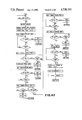
- FIGS. 4A-4F are a series of flowcharts illustrating the operation of the system of FIG. 1 wherein:
- FIG. 4A illustrates the INT routine
- FIG. 4B illustrates the READY routine
- FIG. 4C illustrates the BLOW routine
- FIG. 4D illustrates the BLOCMP routine
- FIG. 4E illustrates the PASS routine
- FIG. 4F illustrates the ID routine
- FIG. 5 is a block diagram of a portion of a sobriety interlock system illustrating a second preferred embodiment of a sobriety interlock system of the type shown in FIG. 1.
- FIG. 6 is a timing diagram illustrating the operation of the embodiment illustrated in FIG. 5.
- FIG. 7 is a block diagram of a portion of a sobriety interlock system illustrating a third preferred embodiment of a sobriety interlock system of the type illustrated in FIG. 1.
- FIG. 8 is a timing diagram illustrating the operation of the embodiment of FIG. 7.
- FIG. 9 is a block diagram of a portion of a sobriety interlock system illustrating a fourth preferred embodiment of a sobriety interlock of the type illustrated in FIG. 1.
- FIG. 10 is a block diagram of a portion of a sobriety interlock system illustrating a fifth preferred embodiment of a sobriety interlock of the type illustrated in FIG. 1.
- a sobriety interlock 15 embodying the invention includes a remote sampling head 16 connected to a main control module 17 by way of a detachable cable 18.
- Interlock 15 is connected to a vehicle ignition system 19 in order to prevent the vehicle from being started unless a designated driver whose identity is confirmed by the system passes a breath sobriety test upon delivering a deep lung sample of breath to sampling head 16.
- Control module 17 is preferably mounted under the dashboard of the vehicle while control cable 18 is of sufficient length of permit sampling head 16 to be removeably fastened to the front or top surface of the dashboard by Velcro or other means in a position readily accessible from the driver's seat.
- Sampling head 16 includes a breath inlet port 20 which communicates via a manifold 23 with an alcohol sensing device 21 and sample validity/identity confirmation sensing means 22. Sampling head 16 also includes a "Ready" LED 24 to indicate when the interlock 15 is ready to receive or is in the process of receiving a breath sample. Also contained within sampling head 16 is a calibration potentiometer 25 for calibrating the response of interlock 15 to a particular concentration of alcohol. By detaching cable 18, sampling head 16 is readily disconnected from control module 17 so that sampling head 16 can be removed for replacement, repair or calibration without the necessity of removing control module 17 from the vehicle.
- Sobriety interlock 15 is supplied power from vehicle battery 30 through protection circuitry 31 and momentary contact on-off switch 32 which is mounted in a location on the surface of control module 17 accessible to the operator.
- Switch 32 communicates with a central processing unit (C.P.U) 33 which is supplied power from a 5 volt regulator 34 connected to the load side of switch 32.
- C.P.U. 33 disables vehicle starter solenoid 57 whenever switch 32 is turned off or whenever power is otherwise removed from C.P.U. 33.
- Switch 32 also supplies power from battery 30 to a low-voltage heater regulator 35 which supplies a variable duty cycle voltage signal 37 to alcohol sensing device 21.
- the duty cycle of signal 37 is controlled according to the duty cycle of a signal 39 emanating from C.P.U. 33.
- Alcohol sensing device 21 generates an alcohol sensor signal 40 which is correlated to the alcohol concentration in the breath sample received by device 21 through breath inlet port 20.
- Alcohol sensor signal 40 is amplified by an amplifier 42, to yield alcohol level signal 43 which is converted to a digital blood alcohol concentration (B.A.C.) signal 44 by analog to digital (A/D) converter 45.
- C.P.U. 33 also receives one or more smple validity/identity confirmation signals 47 emanating from sample validity/identity confirmation sensing means 22 by way of signal processing means 50. Provided that signal 47 indicates to C.P.U. 33 that the breath sample is value (i.e., it is a deep lung sample), and the identity of the operator is confirmed, C.P.U.
- Interlock 15 is installed in the vehicle by connecting protection circuitry 31 to battery 30 and connecting ignition key switch 56 with starter solenoid 57 through a normally open contact of start enable relay 54 after disconnecting line 58 which ordinarily connects key switch 56 with solenoid 57.
- Ignition key switch 56 is also connected to C.P.U. 33 by way of wire 59 which is energized whenever vehicle ignition switch 56 is in the start or run position.
- sample validity/identity confirmation sensing means 22 is a pressure switch 65, such as Fairchild model PSF 100A-3.0, connected to manifold 23 as to respond to the flow of breath through inlet port 20.
- the state of pressure switch 65 is sensed by C.P.U. 33 at pin P27 by way of line 66.
- C.P.U. 33 is preferably an Intel Co. part No. 8748 HMOS-E single-component 8-bit microcomputer.
- Alcohol sensing device 21 may consist of a semiconductor sensor which is preferably model TGS #812 manufactured by Figaro Engineering Company.
- sensing device 21 may consist of a Model TGS #813, also manufactured by Figaro Engineering Company.
- Sensor 67 includes a heater 68 which can be energized by way of line 69 by a low voltage heater regulator 35 which is preferably a Texas Instruments type TL497ACN switching voltage regulator.
- the power delivered to heater 68 is controlled by C.P.U. 33 by outputting an adjustable duty cycle signal 39 from pin 26 to transistor Q4 70 which communicates with regulator 35 by way of line 71 to vary the duty cycle of the output signal of regulator 35 appearing on line 69.
- Sensor 66 also includes an alcohol sensing element 73.
- the resistance of element 73 changes in accordance with the alcohol concentration of the breath sample delivered to inlet port 20 to generate alcohol sensor signal 40 received at the inverting input 75 of amplifier 42 which generates alcohol level signal 43.
- Amplifier 42 is an operational amplifier (OP AMP) whose noninverting input 76 receives a temperature compensated reference voltage from a reference diode 77 by way of line 78.
- Reference diode 77 is preferably a National Semiconductor type LM336Z-25.
- the gain of OP AMP 42 is determined by a fixed resistor 81 connected in series with calibration potentiometer 25 between the output 83 of amplifier 42 and its inverting input 75.
- fixed resistor 81 and calibration potentiometer 25 can be viewed as a single resistance connected in a voltage dividing relationship with the varying resistance of alcohol sensing element 73. Since OP AMP 42 will tend to maintain the voltage across terminals 75 and 76 at a fixed value and the voltage at noninverting input 76 is held fixed by diode 77, the current through calibration potentiometer and resistor 81 will vary as sensing element 73 varies in resistance with changes in alcohol concentration. Accordingly, the voltage at the output 83 of OP AMP 42 will vary thereby giving rise to alcohol level signal 43.
- the output 83 of OP AMP 42 is connected to the Vin(+) input 86 of A/D converter 45.
- A/D converter 45 is preferably part number ADC0831 manufactured by National Semiconductor.
- the Vin(-) input 85 of A/D converter 45 is connected directly to the reference voltage emanating from reference diode 77 while the reference input, Vref 87 of A/D converter 45 receives a fraction of the diode 77 reference voltage by way of voltage divider network 89 and a second amplifier 90.
- A/D 45 outputs B.A.C. signal 44 from its data out (DO) port to C.P.U. 33 at pin P20.
- Pin P10 of C.P.U. 33 is connected by way of transistor Q3 94 with "Ready" LED 24.
- C.P.U. 33 causes "Ready” LED 24 to flash.
- "Ready” LED 24 stops flashing and remains lighted steadily until pressure switch 65 opens or the validity time is over, whichever occurs first.
- "Ready” LED 24 is then turned off until the interlock 15 is again prepared to receive a breath sample.
- LED's 52 comprise an "ON” LED 96, a "PASS” LED 97, a “WARN” LED 98, and a “FAIL” LED 99 each of which is driven under the control of C.P.U. 33 by way of transistor array 101 which is preferably a Sprague type ULN-2003 high-voltage, high-current Darlington transistor array.
- Interlock 15 is energized by moving momentary contact switch 32 is to the "ON" position to supply power from battery 30 is to C.P.U. 33 through 5 volt regulator 34.
- C.P.U. 33 then generates an output signal at pin DB7 to energize a normally open switch relay 103 by way of transistor Q1 104 to latch the power on.
- "ON" LED 96 remains lighted by C.P.U. 33 by way of pin P14 through transistor array 101 at all times while power is applied to interlock 15.
- Interlock 15 is turned off by moving switch 32 to its off position to supply a signal to C.P.U. 33 at pin P13 through transistor array 101 effective to cause C.P.U. 33 to deenergize switch relay 103 thereby deenergizing the system.
- Protection circuitry 31 includes a fuse 105 for overcurrent protection, a diode 106 for reverse voltage protection and a bipolar clamp 107 for over-voltage protection.
- the first preferred embodiment of the invention may be further understood with reference to the timing diagram of FIG. 3.
- An operator whose identity is to be confirmed by the interlock 15 is trained to perform an identity-confirming act which preferably involves palcing the mouth or lips over the breath sample delivery port 20.
- the confirming act should be relatively simple yet, it must be sufficiently difficult to master that is cannot be learned by most persons in less than a given number, N of tries at performing the act. Once learned, the confirming act should be relatively easy for a normal person to remember and perform. However, the degree of difficulty may be raised as required to provide correspondingly increased assurance of proper identification. Otherwise, the precise nature of the conforming act is substantially a matter of choice.
- a suitable confirming act is depicted in FIG. 3. It consists of flowing two bursts of breath B 1 and B 2 of specified duration, each burst of breath being preceded by a pause, P 1 and P 2 , repectively, also of specified duration.
- the sequence of events the operator must perform is:
- B 1 and B 2 are each about 1 second.
- P 1 and P 2 are about 0.5 seconds each.
- the identity-confirming act can be modified slightly by not requiring the second burst of breath, B 2 , to extend for a specified duration. In such case, the identity-confirming act would be successfully completed as soon as C.P.U. 33 senses the beginning of the second burst of breath, B 2 , occurring after the successful completion of pause P 2 at or before the conclusion of grace period G 3 .
- C.P.U. 33 determines whether the sequence of duration of pauses and blows conforms to a representation of the confirming act stored in the memory of C.P.U. 33. If the confirming act is performed successfully, C.P.U. 33 determines that a necessary condition for permitting vehicle starter solenoid 57 to be energized has been satisfied.
- each grace period is preferably about 0.5 seconds.
- pressure switch 65 also serves to insure a "valid" sample of breath, which term as used herein and in the claims refers to a breath sample delivered in an essentially continuous uninterrupted flow of breath sufficient to yield a deep lung sample. This is accomplished by selecting the switching pressure of switch 65 and the time pressure switch 65 is required to be closed during sample delivery (a period referred to herein as the "validity time") in accordance with the resistance to the flow of breath through the inlet port 20 as to insure a deep lung sample. Since pressure switch 65 must remain closed during breath sample delivery to insure a continuous flow of breath, the identity-confirming act in this embodiment must take place at least partially before or after the confirming act as in intervals A or B of FIG. 3. If, as shown in FIG.
- breath sample delivery does not overlap the beginning or end portions of the confirming act, the delay interval, if any, between the confirming act and delivery of the breath sample should be too short to permit sampling head 16 to be passed from one person to another.
- delivery of a breath sample can be timed to overlap at least a portion of the confirming act. This could be accomplished, for example, by requiring breath sample delivery to terminate within a prescribed time limit of its commencement to complete at least the beginning portion of the identity-confirming act. By so temporally overlapping the identity-confirming act with the validity period, further assurance is provided that a single person must perform the act the deliver the sample.
- FIG. 2 The operation of the embodiment shown in FIG. 2 can be still further understood with reference to the flowcharts of FIGS. 4A through 4F which together illustrate the operation of the software program stored in the memory of C.P.U. 33.
- C.P.U. 33 When C.P.U. 33 is first energized, it begins operation with an initialization routine INIT, the basic steps of which are depicted in FIG. 4A.
- C.P.U. 33 first resets all internal flags and starts operation of its internal interrupt timer in order to enable C.P.U. 33 to respond to interrupt requests.
- C.P.U. 33 generates a signal at pin DB7 to energize relay CRI 103 in order to latch power to the system "ON”. If required, "PASS", “WARN”, and “FAIL” LED's 97, 98, and 99 respectively are switched off and the data memory of C.P.U. 33 is cleared.
- the number of attempts allowed for successfully completing the identity-confirming act is set by loading a register designated TRY with a value N which is a positive integer whose value is less than the number of attempts most persons require to learn the identity-confirming act.
- N a positive integer whose value is less than the number of attempts most persons require to learn the identity-confirming act.
- lowering the valve of N decreases the probability that the interlock 15 will be successfully defeated while increasing N increases the probability that interlock 15 will be successfuly defeated.
- the degree of difficulty of the identity-confirming act empirically determined to be such that adequate security may be provided by setting N equal to 3.
- C.P.U. 33 then proceeds to the READY subroutine depicted in FIG. 4B.
- C.P.U. 33 purges alcohol sensing element 73.
- the purge sequence begins by causing signal 39 received at the base of transistor Q4 70 to assume a high duty cycle, thereby causing the low voltage signal on line 69 to likewise assume a high duty cycle.
- Alcohol sensing element 73 is heated by heater 68 until its surface temperature is within the range of 200° C.-400° C. and is preferably in excess of 300° C. This causes any alcohol or other volatile substances to be desorbed from element 73.
- C.P.U. 33 reduces the duty cycle of signal 39 as to decrease the temperature of alcohol sensing element 73.
- the duty cycle of the output of regulator 35 remains at the reduced level until pressure switch 65 closes, thereby indicating commencement of a test, at which time C.P.U. 33 regulates the duty cycle of signal 39 as required to keep sensing element 73 at substantially the same temperature during delivery of a breath sample as existed prior thereto.
- C.P.U. 33 reads B.A.C. signal 44 from the data out (D O) port 92 of A/D converter 45 and compares its magnitude to at least one of two internally stored limits designated (FAIL) and (WARN).
- the (FAIL) limit is greater than the (WARN) limit and preferably corresponds to the maximum legal blood alcohol content.
- the (WARN) limit is preferably selected to correspond to a blood alcohol concentration at which most drivers are somewhat impaired but no legally considered incapable of driving. Typically, (FAIL) is selected to correspond to 0.1% blood alcohol concentration while (WARN) is selected to correspond to 0.05% blood alcohol concentration. If B.A.C. signal 44 is greater than or equal to (FAIL), C.P.U.
- C.P.U. 33 causes (FAIL) LED 99 to be turned on and jumps to the "Ready" routine described above. If B.A.C. signal 44 does not equal or exceed the (FAIL) limit, C.P.U. 33 determines whether the (WARN) limit is exceeded. If so, C.P.U. 33 calls the identity-confirmation subroutine ID to be described hereafter. If the identity of the operator is confirmed, C.P.U. 33 causes "WARN" LED 98 to turn on and jump to a routine designated PASS which will also be described further below. If the attempt at performing the identity-confirming act is unsuccessful, C.P.U. 33 decrements the TRY register and tests to see if the allowed number of tries at confirming the operator's identity has been exhausted.
- the unit is disabled for one hour or other period of sufficient duration to deter a person other than the designated operator from learning the identity-confirming act by being able to try the act repeatedly over a short period of time. If the allowed number of tries has not been exhausted, interlock 15 is re-initialized by way of the INIT routine. This requires the operator to deliver a new valid breath sample before another attempt at performing the identity-confirming act can be made. If B.A.C. signal 44 does not exceed the "WARN" level, the identity-confirmation subroutine ID is again called. If the identity-confirming act is performed successfully, "PASS" LED 97 is lighted and the program jumps to the PASS routine. Otherwise, the TRY register is again decremented and the unit is disabled for one hour if the allowed number of attempts have been exhausted.
- start enable relay 54 When the PASS routine is entered, start enable relay 54 is energized thereby connecting ignition key switch 56 with starter solenoid 57 as to permit the vehicle to be started. Start enable relay 54 is enabled for a period designated "START TIME" which is preferably 30 to 60 seconds. This deters an operator who has successfully passed a sobriety test from leaving the vehicle to imbibe. If C.P.U. 33 senses, by way of wire 59, that ignition system 19 is not on after completion of the "START TIME" delay, the vehicle may have stalled. If the vehicle stalls on a freeway or in another potentially hazardous location, it might be unsafe to require a new test to permit the vehicle to be restarted.
- C.P.U. 33 starts a "STALL TIMER" which permits the vehicle to be restarted after stalling within a period which is preferably about 30 seconds. If vehicle ignition system 19 is still off at the end of that period, C.P.U. 33 deenergizes start enable relay 54 and turns off "PASS" LED 97 and jumps back to the READY routine thereby requiring a new test before the vehicle may again be started.
- the identity-confirmation subroutine ID may be understood with reference to FIG. 4F which is a flowchart representing the identity-confirmation act depicted in FIG. 3 wherein breath sample delivery has been completed during interval A.
- C.P.U. 33 signals the operator to begin the identity-confirming act by turning on the "PASS", "WARN", and "FAIL” LED's 97, 98, and 99 respectively after a short delay.
- this short delay should be a time insufficient to permit sampling head 16 to be passed from one person to another as to prevent another from delivering the breath sample and then passing the sampling head 16 to the designated operator to perform the identity-confirming act.
- a flag designated SUCCESS is set equal to zero indicating that the identity of the operator has not been confirmed, in which event the program returns to the BLOCMP routine at the point from which subroutine ID was called and a new breath sample must be taken before the identity-confirming act can be tried again. If pressure switch 65 remains open for at least the duration of P 1 , C.P.U. sets a timer equal to first grace period G 1 . If the first blow, B 1 , does not commence by the end of G 1 , SUCCESS is set equal to zero and the program returns. Otherwise, C.P.U.
- C.P.U. 33 causes "FAIL" LED 99 to turn off to indicate to the operator that a portion of the identity-confirming act has been successfully completed.
- C.P.U. 33 sets an internal timer to time the duration of B 1 . If blowing does not continue for at least that period, the SUCCESS flag is set equal to zero and the program returns. If blowing is sustained for at least as long as required by the timer, the timer is then set to time grace period G 2 . Blowing must cease prior to the end of G 2 . If it does not, the SUCCESS flag is set equal to zero and the program returns. If blowing does cease by the end of G 2 , C.P.U. 33 sets its timer to time the duration of a second pause, P 2 .
- the SUCCESS flag is set equal to zero and the program returns. If pressure switch 65 does not sense blowing during P 2 , the timer is set to a third grce period, G 3 . If pressure switch 65 fails to sense blowing by the end of grace period G 3 , the SUCCESS flag is set equal to zero and the program returns. Otherwise, the timer is set to time the second blow B 2 . If the second blow is sustained at least until the timer times out, "WARN" and "FAIL" LED's 98 and 99 are briefly turned off indicating to the operator successfully completion of the identity-confirming act.
- the SUCCESS flag is then set equal to one and the program returns to the BLOCMP routine at the point from which subroutine ID was called.
- the BLOCMP routine is completed by turning on "Warn" LED 98 if B.A.C. signal 44 exceeds the (WARN) limit or turning on the "PASS" LED 97 if B.A.C. signal 44 does not exceed the (WARN) limit.
- the program then jumps to the PASS routine described above which causes start enable relay 54 to be energized, thereby permitting the vehicle to be started.
- FIG. 5 shows an alternative breath sample validity/identity-confirmation sensing apparatus 22 for performing an identity-confirming act as illustrated by the timing diagram of FIG. 6.
- the arrangement shown in FIG. 5 permits identity confirmation to take at any desired time before, after or during delivery of a breath sample. This fact should be noted even though the remaining description assumes that identity confirmation takes place during breath sample delivery.
- the interlock 15 of FIG. 1 may be equipped with an alternative form of sample validity/identity confirmation sensing means 22 comprising a "low" pressure switch 110 and a “high” pressure switch 111 having a higher switching pressure threshold than pressure switch 110.
- Pressure switches 110 and 111 both communicate with breath inlet port 20 by way of manifold 23 in order to sense the flow of breath into port 20.
- the switching threshold of "low" pressure switch 110 is selected in accordance with the resistance to the flow of breath through port 20 as to insure a deep lung sample of breath is delivered when low pressure switch 110 is held closed for validity time which is preferably 4.5 to 5.0 seconds in duration.
- identity-confirmation sensing may take place substantially contemporaneously with sample validity sensing thereby advantageously minimizing the overall time required to perform a test. Anytime after the interlock 15 is prepared to receive a breath sample as indicated by the flashing of "Ready” LED 24, the operator may begin to blow into breath inlet port 20. For the entire period between the start and end of the validity time, the flow of breath must be sufficient to keep pressure switch "low" 110 in a closed (1) state as shown, thereby insuring a deep lung sample of breath.
- the identity-confirming act is performed by modulating the flow of breath to close pressure switch "high" 111 according to a pattern which can be recognized by C.P.U. 33.
- pressure switch 111 must be initially in an open (0) state for a period of at least 0.5 seconds. After a grace period of 0.5 seconds, pressure switch 111 must assume a closed state for at least a full second. Following another 0.5 second grace period, pressure switch must again open for 0.5 seconds then, after a third grace period, close for a full second.
- the operator's identity is confirmed by C.P.U. 33. While the validity time period is shown in FIG. 6 as extending slightly beyond the completion of the identity-confirming act, any desired relative temporal relationship between the validity time period and the confirming act can be used.
- a third preferred embodiment of the invention wherein the confirming act may also be performed at any desired time before, during or after delivery of a breath sample can be understood in light of the above with particular reference to FIGS. 1, 7, 8, and 9.
- analog pressure transducer 117 is an integrated circuit piezoresistive pressure sensor such as part number SX01 manufactured by SenSym connected in a pressure sensing relationship with breath inlet port 20.
- Transducer 117 generates an analog pressure signal 118 correlated to the flow of breath through port 20.
- Signal is received by signal processing means 50 which comprises an amplifier 119 connected to a second analog to digital (A/D) converter 120 which generates a digital pressure signal 121 which is received by C.P.U. 33.
- the timing diagram of FIG. 8 uses the same exemplary identity confirming act as was described with reference to FIG. 6. Accordingly, there is no need to repeat the description of the identity-confirming act.
- the operator may begin blowing a breath sample into port 22 at any time after "Ready" LED 24 begins flashing.
- analog pressure signal 118 must equal or exceed the LOW threshold value. If, at any time while the validity timer is running, pressure signal 118 drops below the LOW threshold, as, for example, is indicated by the dashed line, the test will be aborted. Assuming all available attempts have not been exhausted, (i.e. TRY ⁇ 0) the test may be repeated.
- the result of the sobriety test will be displayed by LEDs 52 and start enable relay 54 energized if the sobriety test is passed.
- the "Fail” LED 99 will be extinguished when the first blow commences after successful completion of the first pause.
- C.P.U. 33 confirms the identity of the operator.
- the result of the alcohol breath test will be indicated by lighting either the "PASS" 97, "WARN” 98 or "FAIL" 99 LED as appropriate following a brief delay. If the alcohol level is below the level required to light "FAIL" LED 99, start enable relay 54 is energized to permit the vehicle to be started.
- a fourth preferred embodiment of the invention may be understood with particular reference now to FIGS. 1 and 9.
- the invention further contemplates alternative sample validity/identity confirmation sensing means 22 wherein a tone generator 124 operably connected with breath inlet port 20 can be used to perform one or both sensing functions.
- Tone generator 124 is a device which can be blown into to generate at least one tone lying within a predetermined frequency range such that the designated operator can be trained to perform a suitable identity confirming act involving the generation of one or more such tones in a manner detectable by C.P.U. 33.
- tone generator 124 is such that generation of the proper tone requires a level of skill which is not readily acquired by most persons within the number of tries at performing the identity-confirming act allowed by C.P.U. 33.
- Tone generator 124 may comprise for example, a vibratable reed device similar to a clarinet or oboe mouthpiece, an orifice and tube arrangement along the lines of a flute or a mouthpiece similar to the type used on a brass instrument such as a trumpet or trombone.
- the skill inherently required of the identity-confirming act may reside either in the difficulty in generating one or more particular tones, either alone or in sequence or, in the timing pattern and/or amplitude of such tones. in light of the present disclosure, it will be apparent to one skilled in the art that a wide variety of other types of tone generating apparatus may be employed to implement this embodiment of the invention.
- tone generator 124 is operably connected in a tone sensing relationship with a transducer 125 such as a microphone which converts tones produced by tone generator 124 into a tone signal 127 which is received by signal processing means 50 which comprises an amplifier and tone detection means 129 operable to generate at least one "tone detected" signal 130 when tone generator 124 produces tones lying within one or more predetermined frequency ranges.
- a transducer 125 such as a microphone which converts tones produced by tone generator 124 into a tone signal 127 which is received by signal processing means 50 which comprises an amplifier and tone detection means 129 operable to generate at least one "tone detected" signal 130 when tone generator 124 produces tones lying within one or more predetermined frequency ranges.
- Sample validity/identity confirmation means 22 may also include a pressure switch 131 operable to generate a pressure signal 132 for sample validity sensing to be performed as previously described. Where pressure switch 131 is sued to handle breath sample validity sensing, tone generator 124 can be used to perform identity confirmation at any desired time before during or after delivery of a breath sample by requiring the designated operator to generate one or more tones in a particular manner detectable by C.P.U. 33. For example, tone generator 124 may be used to generate a single tone lying within a predetermined range of frequencies and C.P.U. 33 can be programmed to detect an identity-confirming act wherein the tone must be present and/or absent for one or more intervals of specified duration.
- C.P.U 33 can be programmed to detect a series of different tones played in a particualr sequence. It may also be desirable to require the tones in such a sequence to be played with particular timing requirements in a manner similar to the beats of the notes in a musical tune. Where the identity-confirming act requires tones to be delivered at times overlapping delivery of a breath sample, the act must be such that sufficient breath flow is maintained to keep pressure switch 131 closed during delivery of the breath sample as to insure its validity.
- pressure switch 131 may be omitted and tone generator 124 used to perform both sample validity and identity confirmation sensing. This may be accomplished by requiring at least one tone to be present continuously during delivery of a breath sample for at least the entire validity time. Identity confirmation can be accomplished at any desired time. If identity confirmation is to be performed during the delivery of a breath sample, this can be accomplished by requiring the tone to vary in pitch in a predetermined manner recognizable by C.P.U. 33 or by requiring the generation of a tone lying within a particular frequency range from among many possible tones. This assumes that tone generator 124 is such that the mere presence of the proper tone necessarily indicates a flow of breath sufficient, if sustained for the entire validity time, to insure a deep lung sample of breath.
- tone generator 124 If this assumption is not valid but tone generator 124 is such that the amplitude of the tone produced is correlated to the amount of breath flow into port 20, breath sample validity can be assured another way.
- C.P.U. 33 can be connected to transducer 125 and programmed so that tone signal 127 must be sustained above a minimum amplitude for the entire validity time. The minimum amplitude of tone signal 127 is selected to correspond to an amount of breath flow which, if sustained for the entire validity time, insures a valid breath sample.
- sample validity/identity confirmation sensing means comprises a pressure switch 139 operably connected with breath inlet port 20 and a plurality of finger actuated switches 135, each of which generates a corresponding switch signal 136 received by a sequence decoder 137 which generates a sequence detected signal 138 when switches 135 have been actuated in the particular manner according to which the identity-confirming act is defined.
- the identity-confirming act recognizable by decoder 137 may be defined in terms of a required sequence and/or duration of actuation of one or more of switches 135 beginning at any desired time before during or after delivery of a breath sample.
- sequence decoder 137 may be omitted and its function performed by C.P.U. 33 which can be wired to receive signals 136 directly.
- signal 140 serves to communicate the state of pressure switch 139 to C.P.U. 33 which determines whether a breath a sample is valid in the manner previously described.
- an anti-defeat switch 150 may be connected between 5 Volt regulator 34 and an input port of C.P.U. 33 as shown in dashed lines in FIG. 1.
- Anti-defeat switch 150 is a normally-open, momentary-contact switch which is physically located some distance away from, but within arms reach of, sampling head 16.
- anti-defeat switch 150 is located on main control module 17 in a position accessible to a person seated in the driver's seat when control module 17 is installed in its normal location under the dash of the interlocked vehicle.
- the input port of C.P.U. 33 connected to anti-defeat switch 150 will be at a logical "one" state when anti-defeat switch 150 is held closed and will be at a logical "zero" state at all other times.
- the program of C.P.U. 33 is altered as indicated by the dashed lines in the flowchart of FIG. 4C.
- anti-defeat switch 150 Since anti-defeat switch 150 is located away from sampling head 16, it would be very difficult for a person to hold anti-defeat switch 150 closed while manipulating means such as a balloon or bicycle pump in the manner required to deliver a deceptive gas sample to breath inlet port 20 located on sampling head 16. In this way, anti-defeat switch 150 helps to insure that the gas delivered to breath inlet port 20 is a contemporaneous breath sample rather than some other gas, such as air from a previously-inflated balloon or bicycle pump.
- anti-defeat switch 150 can be supplemented with a second anti-defeat switch 155 connected between another input port of C.P.U. 33 and the 5 V supply by way of line 156 of cable 18 as illustrated by dashed lines in FIG. 1.
- second anti-defeat switch 155 could be wired in series with anti-defeat switch 150.
- second anti-defeat switch 155 is physically located on sampling head 16 as to be actuable with one hand while holding sampling head 16 with the same hand.
- Second anti-defeat switch 155 is also a normally-open, momentary-contact switch.
- C.P.U. 33 is to interrogate the status of both anti-defeat switches 150 and 155 during the delivery of a gas sample into breath inlet port 20. If both anti-defeat switches do not remain closed continuously for the entire validity time, C.P.U. 33 turns "Ready" LED 24 off and jumps to the READY routine, thereby aborting the test. Testing proceeds normally only if both anti-defeat switches 150 and 155 are held closed continuously for the entire validity time.
- second anti-defeat switch 155 is located on sampling head 16 and anti-defeat switch 150 is located some distance away, preferably on control module 17, requiring both switches 150, 155 to be actuated provides some assurance that both hands of the operator are occupied and are therefore unavailable to manipulate deceptive gas delivery means such as a balloon or bicycle pump.
Landscapes
- Engineering & Computer Science (AREA)
- Health & Medical Sciences (AREA)
- Life Sciences & Earth Sciences (AREA)
- Mechanical Engineering (AREA)
- Developmental Disabilities (AREA)
- Biomedical Technology (AREA)
- Child & Adolescent Psychology (AREA)
- Chemical & Material Sciences (AREA)
- Educational Technology (AREA)
- Hospice & Palliative Care (AREA)
- Psychiatry (AREA)
- Psychology (AREA)
- Social Psychology (AREA)
- Physics & Mathematics (AREA)
- Combustion & Propulsion (AREA)
- Biophysics (AREA)
- Pathology (AREA)
- Transportation (AREA)
- Heart & Thoracic Surgery (AREA)
- Medical Informatics (AREA)
- Molecular Biology (AREA)
- Surgery (AREA)
- Animal Behavior & Ethology (AREA)
- General Health & Medical Sciences (AREA)
- Public Health (AREA)
- Veterinary Medicine (AREA)
- Investigating Or Analysing Biological Materials (AREA)
- Automobile Manufacture Line, Endless Track Vehicle, Trailer (AREA)
- Measurement Of The Respiration, Hearing Ability, Form, And Blood Characteristics Of Living Organisms (AREA)
Priority Applications (5)
| Application Number | Priority Date | Filing Date | Title |
|---|---|---|---|
| US06/907,881 US4738333A (en) | 1986-09-16 | 1986-09-16 | Sobriety interlock with unsupervised confirmation of operator identity |
| CA000546001A CA1286754C (fr) | 1986-09-16 | 1987-09-02 | Systeme de verrouillage anti-ebriete debloque par la confirmation automatisee de l'identite de l'operateur |
| JP62230872A JPS63125240A (ja) | 1986-09-16 | 1987-09-14 | 車輌無酒気インターロックの指定操作者の身元確認装置及び方法 |
| EP87308147A EP0260931A3 (fr) | 1986-09-16 | 1987-09-15 | Dispositif d'enclenchement fonctionnant en cas de sobriété, muni d'une confirmation non surveillée de l'identité du conducteur |
| AU78412/87A AU586400B2 (en) | 1986-09-16 | 1987-09-15 | Sobriety interlock with unsupervised confirmation of operator identity |
Applications Claiming Priority (1)
| Application Number | Priority Date | Filing Date | Title |
|---|---|---|---|
| US06/907,881 US4738333A (en) | 1986-09-16 | 1986-09-16 | Sobriety interlock with unsupervised confirmation of operator identity |
Publications (1)
| Publication Number | Publication Date |
|---|---|
| US4738333A true US4738333A (en) | 1988-04-19 |
Family
ID=25424799
Family Applications (1)
| Application Number | Title | Priority Date | Filing Date |
|---|---|---|---|
| US06/907,881 Expired - Lifetime US4738333A (en) | 1986-09-16 | 1986-09-16 | Sobriety interlock with unsupervised confirmation of operator identity |
Country Status (5)
| Country | Link |
|---|---|
| US (1) | US4738333A (fr) |
| EP (1) | EP0260931A3 (fr) |
| JP (1) | JPS63125240A (fr) |
| AU (1) | AU586400B2 (fr) |
| CA (1) | CA1286754C (fr) |
Cited By (87)
| Publication number | Priority date | Publication date | Assignee | Title |
|---|---|---|---|---|
| US4843377A (en) * | 1987-04-21 | 1989-06-27 | Guardian Technologies, Inc. | Remote confinement system |
| WO1989011136A1 (fr) * | 1988-05-10 | 1989-11-16 | Guardian Technologies, Inc. | Station de telesurveillance de residence surveillee et systeme correspondant |
| WO1989012879A1 (fr) * | 1988-06-17 | 1989-12-28 | Guardian Technologies, Inc. | Systeme de verrouillage en fonction de l'etat de sobriete du conducteur, a detection d'infractions |
| US4902628A (en) * | 1988-08-24 | 1990-02-20 | Guardian Technologies, Inc. | Apparatus and method to deter circumvention of a breath sobriety test |
| WO1990001698A1 (fr) * | 1988-08-12 | 1990-02-22 | Guardian Technologies, Inc. | Confirmation d'identite dans un appareil d'alcootest |
| US4912458A (en) * | 1988-06-17 | 1990-03-27 | Guardian Technologies, Inc. | Sobriety interlock with service reminder |
| US4926164A (en) * | 1987-12-15 | 1990-05-15 | Lion Analytics Pty. Limited | Vehicle breath monitoring device |
| US4996161A (en) * | 1987-10-16 | 1991-02-26 | Guardian Technologies, Inc. | Breath alcohol testing system |
| US4999613A (en) * | 1987-04-21 | 1991-03-12 | Guardian Technologies, Inc. | Remote confinement system |
| US5224566A (en) * | 1991-04-25 | 1993-07-06 | Stepanian Gary L | Driving under the influence prevention, and methods of constructing and utilizing same |
| WO1994021483A1 (fr) * | 1993-03-19 | 1994-09-29 | Pekka Niukkanen | Appareil de controle pour vehicule/conducteur |
| US5426415A (en) * | 1993-06-21 | 1995-06-20 | Consumer Safety Technology | Breath analyzer for use in automobile ignition locking systems |
| US5743349A (en) * | 1996-09-23 | 1998-04-28 | Steinberg; Steven | Non-invasive optical blood alcohol concentration reader and vehicle ignition interlock system and method |
| US5821631A (en) * | 1997-02-07 | 1998-10-13 | Clark Equipment Company | Keyless ignition system with delayed security |
| US6029102A (en) * | 1997-07-01 | 2000-02-22 | Elsman; James L. | Driver control display system for a vehicle |
| US6097480A (en) * | 1998-01-27 | 2000-08-01 | Kaplan; Milton | Vehicle interlock system |
| US6229908B1 (en) * | 1996-04-26 | 2001-05-08 | Edmonds, Iii Dean Stockett | Driver alcohol ignition interlock |
| US6307496B1 (en) * | 1999-10-04 | 2001-10-23 | Denso Corporation | Sensing apparatus including an A/D conversion circuit for detecting a physical quantity |
| US20030117287A1 (en) * | 2001-12-21 | 2003-06-26 | Crespo Pierre M. | Substance testing devices with photo identification |
| US6697732B1 (en) | 2002-10-30 | 2004-02-24 | Bradley L. Gotfried | Automatic system for providing assistance to impaired drivers |
| WO2004018249A1 (fr) * | 2002-08-08 | 2004-03-04 | Sauro Bianchelli | Vehicule automobile equipe d'un systeme de controle de securite inviolable |
| US6748792B1 (en) | 2003-03-07 | 2004-06-15 | Lifesafer Interlock, Inc. | Impairment detection and interlock system with tester identification |
| US6762684B1 (en) * | 1999-04-19 | 2004-07-13 | Accutrak Systems, Inc. | Monitoring system |
| US20040138823A1 (en) * | 2002-03-14 | 2004-07-15 | Edward Gollar | Personal breath tester |
| WO2005051700A1 (fr) | 2003-10-31 | 2005-06-09 | Sheram Enterprises, Inc. | Dispositif de verrouillage anti-ebriete pour vehicule |
| US20050230175A1 (en) * | 2004-04-14 | 2005-10-20 | Brown Betty J | Alcohol ignition interlock system and method |
| US20060180378A1 (en) * | 2003-03-07 | 2006-08-17 | Stefan Nordin | Device for preventing a driver under the influence of drugs to use a motor vehicle |
| US20060237252A1 (en) * | 2005-04-25 | 2006-10-26 | Mobley Larry J | Vehicle ignition interlock systems having transdermal alcohol sensor |
| US20060237254A1 (en) * | 2005-04-25 | 2006-10-26 | Mobley Larry J | Vehicle ignition interlock systems with multiple alcohol sensors |
| US20060237253A1 (en) * | 2005-04-25 | 2006-10-26 | Mobley Larry J | Vehicle ignition interlock systems with retesting frequency control |
| US20060238362A1 (en) * | 2005-04-25 | 2006-10-26 | Mobley Larry J | Vehicle ignition interlock systems that detect the presence of alcohol within vehicles |
| US20060239856A1 (en) * | 2005-04-25 | 2006-10-26 | Mobley Larry J | Vehicle ignition interlock systems with mouth alcohol contamination sensor |
| US7227472B1 (en) | 2005-06-02 | 2007-06-05 | Kevin Roe | Multistage safety screening of equipment operators |
| US20070144812A1 (en) * | 2003-10-31 | 2007-06-28 | Sheram Enterprises, Inc. | Vehicle sobriety interlock system with personal identification element |
| US7256700B1 (en) * | 2003-11-12 | 2007-08-14 | Interceptor Ignition Interlocks Inc. | Ignition interlock device and method |
| US20080196963A1 (en) * | 2004-06-04 | 2008-08-21 | Margareta Karlsson | Method and Device For Controlling a Car |
| US20080208018A1 (en) * | 2001-04-11 | 2008-08-28 | Trent Ridder | Apparatuses for Noninvasive Determination of in vivo Alcohol Concentration using Raman Spectroscopy |
| US20080319286A1 (en) * | 2004-05-24 | 2008-12-25 | Trent Ridder | Optical Probes for Non-Invasive Analyte Measurements |
| US20090164069A1 (en) * | 2007-06-13 | 2009-06-25 | Hideo Yanagisawa | System for preventing operation by impaired operator and method for the same |
| US20090234204A1 (en) * | 2004-05-24 | 2009-09-17 | Trent Ridder | Methods for Noninvasive Determination of in vivo Alcohol Concentration using Raman Spectroscopy |
| US20090278698A1 (en) * | 2003-09-17 | 2009-11-12 | Hiroshi Kamiki | Key for vehicle and drunken driving preventing device |
| US20100010325A1 (en) * | 2001-04-11 | 2010-01-14 | Trent Ridder | System for Noninvasive Determination of Analytes in Tissue |
| US20100012417A1 (en) * | 2008-07-17 | 2010-01-21 | Consumer Safety Technology, Inc. | Ignition interlock breathalyzer |
| US7667609B1 (en) | 2005-06-02 | 2010-02-23 | Kevin Roe | Expert system rescue of impaired equipment operators |
| US20100043524A1 (en) * | 2008-08-19 | 2010-02-25 | Denso Corporation | Alcohol detection system and method for vehicle |
| US20110178420A1 (en) * | 2010-01-18 | 2011-07-21 | Trent Ridder | Methods and apparatuses for improving breath alcohol testing |
| US20120242469A1 (en) * | 2011-03-22 | 2012-09-27 | Gordon*Howard Associates, Inc. | Methods and systems of rule-based intoxicating substance testing associated with vehicles |
| US8508349B2 (en) | 2008-12-12 | 2013-08-13 | Gordon*Howard Associates, Inc. | Automated geo-fence boundary configuration and activation |
| US8581712B2 (en) | 2008-12-12 | 2013-11-12 | Gordon * Howard Associates, Inc . | Methods and systems related to establishing geo-fence boundaries |
| US20140004908A1 (en) * | 2012-06-27 | 2014-01-02 | Lg Electronics Inc. | Mobile terminal and controlling method thereof |
| US8659404B2 (en) | 2008-12-12 | 2014-02-25 | Gordon Howard Associates, Inc. | Methods and systems related to establishing geo-fence boundaries and collecting data |
| US8667295B1 (en) | 2004-01-28 | 2014-03-04 | Gordon * Howard Associates, Inc | Encoding a validity period in a password |
| US8686841B2 (en) | 2008-12-12 | 2014-04-01 | Gordon*Howard Associates, Inc. | Methods and systems related to activating geo-fence boundaries and collecting location data |
| US8730047B2 (en) | 2004-05-24 | 2014-05-20 | Trutouch Technologies, Inc. | System for noninvasive determination of analytes in tissue |
| US8781900B2 (en) | 2011-09-09 | 2014-07-15 | Gordon*Howard Associates, Inc. | Method and system of providing information to an occupant of a vehicle |
| US8928471B2 (en) | 2013-03-14 | 2015-01-06 | Gordon*Howard Associates, Inc. | Methods and systems related to remote tamper detection |
| US8957771B2 (en) | 2008-07-17 | 2015-02-17 | Consumer Safety Technology, Inc. | Apparatus, system, and method for implementing and monitoring breath alcohol testing programs, usually from a fixed point location, such as a home |
| US20150087279A1 (en) * | 2013-09-20 | 2015-03-26 | Better Mousetrap, LLC | Mobile accident processing system and method |
| US9013333B2 (en) | 2013-06-24 | 2015-04-21 | Gordon*Howard Associates, Inc. | Methods and systems related to time triggered geofencing |
| US9026267B2 (en) | 2007-03-09 | 2015-05-05 | Gordon*Howard Associates, Inc. | Methods and systems of selectively enabling a vehicle by way of a portable wireless device |
| US9035756B2 (en) | 2013-03-14 | 2015-05-19 | Gordon*Howard Associates, Inc. | Methods and systems related to remote tamper detection |
| US20150165903A1 (en) * | 2012-03-12 | 2015-06-18 | Transbiotec, Inc. | Alcohol detection system for vehicle driver testing with integral temperature compensation |
| US20150197151A1 (en) * | 2014-01-15 | 2015-07-16 | 1A Smart Start, Inc. | Programmable Fuel Cell and Grommet Warm-Up Circuitry and Methods for Use in Sobriety Testing Systems |
| US9378480B2 (en) | 2013-03-14 | 2016-06-28 | Gordon*Howard Associates, Inc. | Methods and systems related to asset identification triggered geofencing |
| US20160323718A1 (en) * | 2014-09-19 | 2016-11-03 | Better Mousetrap, LLC | Mobile Accident Processing System and Method |
| US9665997B2 (en) | 2013-01-08 | 2017-05-30 | Gordon*Howard Associates, Inc. | Method and system for providing feedback based on driving behavior |
| US9701279B1 (en) | 2016-01-12 | 2017-07-11 | Gordon*Howard Associates, Inc. | On board monitoring device |
| US9840229B2 (en) | 2013-03-14 | 2017-12-12 | Gordon*Howard Associates, Inc. | Methods and systems related to a remote tamper detection |
| US20180339706A1 (en) * | 2017-05-24 | 2018-11-29 | GM Global Technology Operations LLC | Systems and methods for overriding vehicle limitation system |
| LT6640B (lt) | 2017-12-04 | 2019-08-12 | Uab Universumas | Žmogaus girtumo lygio matavimo įranga, užkertanti kelią matavimo proceso ir rezultatų klastojimui, bei matavimo būdas |
| US10488398B2 (en) | 2015-12-17 | 2019-11-26 | #1 A Lifesafer, Inc. | Chemical impairment detection system with an integrated, multi-function breath chamber |
| US10507844B2 (en) | 2017-09-26 | 2019-12-17 | GM Global Technology Operations LLC | Drive-cycle sampling and monitoring for impairment detection system |
| US10576927B2 (en) | 2006-02-07 | 2020-03-03 | Gordon*Howard Associates, Inc | Starter-interrupt device incorporating global positioning system functionality |
| US20210096124A1 (en) * | 2014-01-22 | 2021-04-01 | KHN Solutions, Inc. | Method and system for remotely monitoring intoxication |
| US20210100498A1 (en) * | 2019-10-03 | 2021-04-08 | Dor Zarbel | Devices, systems and methods for non-invasive measurement of blood alcohol level |
| WO2021216996A1 (fr) | 2020-04-24 | 2021-10-28 | Sobr Safe, Inc. | Système de criblage d'alcool transdermique non invasif |
| WO2022059007A1 (fr) * | 2020-09-16 | 2022-03-24 | Syqe Medical Ltd | Dispositifs et procédés d'authentification orale à faible latence |
| WO2022099262A1 (fr) | 2020-11-03 | 2022-05-12 | Sobr Safe, Inc. | Dispositif de collecte de données pouvant être porté et à détection non invasive |
| US11602306B2 (en) | 2021-01-12 | 2023-03-14 | KHN Solutions, Inc. | Method and system for remote transdermal alcohol monitoring |
| US11864917B2 (en) | 2018-03-22 | 2024-01-09 | Khn Solutions, Llc | Method and system for transdermal alcohol monitoring |
| US11986316B2 (en) | 2013-01-31 | 2024-05-21 | Khn Solutions, Llc | Method and system for monitoring intoxication |
| US12311759B1 (en) | 2022-02-02 | 2025-05-27 | Consumer Safety Technology, Llc | Wireless vehicle interface for immobilization system |
| US12343133B1 (en) | 2023-10-27 | 2025-07-01 | Khn Solutions, Llc | Method and system for detecting and maintaining performance of an alcohol sensing device |
| US12397741B2 (en) | 2018-07-08 | 2025-08-26 | Dym Sense Ltd | System and method for hazardous driving prevention |
| US12458283B2 (en) | 2021-01-12 | 2025-11-04 | Khn Solutions, Llc | Method and system for remote transdermal alcohol monitoring |
| US12582352B2 (en) | 2018-03-22 | 2026-03-24 | Khn Solutions, Llc | Method and system for transdermal alcohol monitoring |
| US12594012B2 (en) | 2013-01-31 | 2026-04-07 | Khn Solutions, Llc | Wearable system and method for monitoring intoxication |
Families Citing this family (7)
| Publication number | Priority date | Publication date | Assignee | Title |
|---|---|---|---|---|
| JPH04104182U (ja) * | 1991-02-15 | 1992-09-08 | 株式会社アツギユニシア | オイルポンプ |
| FR2691816A1 (fr) * | 1992-01-23 | 1993-12-03 | Pichot Eric | Dispositif électronique antivol de véhicule à moteur, intégré, programmable. |
| AU3632793A (en) * | 1992-02-20 | 1993-09-13 | Jose Fausto Gonzalez Sanchez | Starting controller for motor vehicles |
| ES2091158B1 (es) * | 1994-04-12 | 1997-05-16 | Herrero Maria Ines Alonso | Medidor de alcoholemia como controlador y/o limitador de la actuacion de vehiculos, maquinas y similares. |
| JP4215676B2 (ja) * | 2004-04-09 | 2009-01-28 | 株式会社マップコーポレーション | 運転者検査システム |
| FR2929098B1 (fr) * | 2008-03-28 | 2010-05-14 | Valeo Systemes Thermiques Branche Thermique Habitacle | Procede et systeme de limitation d'usage d'un vehicule en fonction de l'etat de vigilance d'un utilisateur. |
| CN110192881A (zh) * | 2019-06-06 | 2019-09-03 | 湖南云感科技有限公司 | 一种驾驶员生命体征监测警示方法 |
Citations (10)
| Publication number | Priority date | Publication date | Assignee | Title |
|---|---|---|---|---|
| US3690838A (en) * | 1970-10-19 | 1972-09-12 | Manley J Luckey | Apparatus for universal blood alcohol determination |
| US3764274A (en) * | 1971-11-22 | 1973-10-09 | Kerr Mc Gee Chem Corp | Vanadium extraction using mixture of alkyl phosphine oxides and fluorinated beta diketones |
| US3780311A (en) * | 1972-06-14 | 1973-12-18 | Environmental Metrology Corp | Breath alcohol detector and automotive ignition interlock employing same |
| US3809067A (en) * | 1972-06-07 | 1974-05-07 | Borg Warner | Modulation responsive anti-evasion system for breath testers |
| US3824537A (en) * | 1972-05-25 | 1974-07-16 | Borg Warner | Anti-evasion system for vehicle unsupervised breath testers |
| US3823601A (en) * | 1972-12-26 | 1974-07-16 | Borg Warner | Anti-evasion system for a breath alcohol tester |
| US3831707A (en) * | 1973-08-13 | 1974-08-27 | Nissan Motor | System to prevent drunken driving |
| US4093945A (en) * | 1971-04-23 | 1978-06-06 | Collier Donald W | Breath testing system |
| US4592443A (en) * | 1983-02-01 | 1986-06-03 | Jack Simon | Sobriety interlock |
| US4678057A (en) * | 1986-01-16 | 1987-07-07 | Autosense Corporation | Breath alcohol analyzer |
Family Cites Families (3)
| Publication number | Priority date | Publication date | Assignee | Title |
|---|---|---|---|---|
| FR2585082A1 (fr) * | 1983-02-01 | 1987-01-23 | Simon Jack | Dispositif de verrouillage commande par un test de sobriete |
| US4607719A (en) * | 1983-12-21 | 1986-08-26 | Drummond And Relph Limited | Alcohol detection device |
| US4645939A (en) * | 1985-08-08 | 1987-02-24 | Robinson Ronald J | Automotive device for inhibiting engine ignition |
-
1986
- 1986-09-16 US US06/907,881 patent/US4738333A/en not_active Expired - Lifetime
-
1987
- 1987-09-02 CA CA000546001A patent/CA1286754C/fr not_active Expired - Lifetime
- 1987-09-14 JP JP62230872A patent/JPS63125240A/ja active Pending
- 1987-09-15 EP EP87308147A patent/EP0260931A3/fr not_active Withdrawn
- 1987-09-15 AU AU78412/87A patent/AU586400B2/en not_active Ceased
Patent Citations (10)
| Publication number | Priority date | Publication date | Assignee | Title |
|---|---|---|---|---|
| US3690838A (en) * | 1970-10-19 | 1972-09-12 | Manley J Luckey | Apparatus for universal blood alcohol determination |
| US4093945A (en) * | 1971-04-23 | 1978-06-06 | Collier Donald W | Breath testing system |
| US3764274A (en) * | 1971-11-22 | 1973-10-09 | Kerr Mc Gee Chem Corp | Vanadium extraction using mixture of alkyl phosphine oxides and fluorinated beta diketones |
| US3824537A (en) * | 1972-05-25 | 1974-07-16 | Borg Warner | Anti-evasion system for vehicle unsupervised breath testers |
| US3809067A (en) * | 1972-06-07 | 1974-05-07 | Borg Warner | Modulation responsive anti-evasion system for breath testers |
| US3780311A (en) * | 1972-06-14 | 1973-12-18 | Environmental Metrology Corp | Breath alcohol detector and automotive ignition interlock employing same |
| US3823601A (en) * | 1972-12-26 | 1974-07-16 | Borg Warner | Anti-evasion system for a breath alcohol tester |
| US3831707A (en) * | 1973-08-13 | 1974-08-27 | Nissan Motor | System to prevent drunken driving |
| US4592443A (en) * | 1983-02-01 | 1986-06-03 | Jack Simon | Sobriety interlock |
| US4678057A (en) * | 1986-01-16 | 1987-07-07 | Autosense Corporation | Breath alcohol analyzer |
Non-Patent Citations (4)
| Title |
|---|
| Dr. Robert Breakspere, Development of the Lion Analytics VBM Breath Alcohol Activated Interlock, Sept. 17, 1986. * |
| Dr. Ronald Garren, Paper Presented for Presented for Presentation at the Workshop on In Vehicle Alcohol Test Devices, Sept. 17, 1986. * |
| Dr. Ronald Garren, Paper Presented for Presented for Presentation at the Workshop on In-Vehicle Alcohol Test Devices, Sept. 17, 1986. |
| Ms. Patricia L. Zajac, Manufacturers Issues, Sept. 17, 1986. * |
Cited By (135)
| Publication number | Priority date | Publication date | Assignee | Title |
|---|---|---|---|---|
| US4843377A (en) * | 1987-04-21 | 1989-06-27 | Guardian Technologies, Inc. | Remote confinement system |
| US4999613A (en) * | 1987-04-21 | 1991-03-12 | Guardian Technologies, Inc. | Remote confinement system |
| US4996161A (en) * | 1987-10-16 | 1991-02-26 | Guardian Technologies, Inc. | Breath alcohol testing system |
| US4926164A (en) * | 1987-12-15 | 1990-05-15 | Lion Analytics Pty. Limited | Vehicle breath monitoring device |
| US4916435A (en) * | 1988-05-10 | 1990-04-10 | Guardian Technologies, Inc. | Remote confinement monitoring station and system incorporating same |
| WO1989011136A1 (fr) * | 1988-05-10 | 1989-11-16 | Guardian Technologies, Inc. | Station de telesurveillance de residence surveillee et systeme correspondant |
| AU622905B2 (en) * | 1988-05-10 | 1992-04-30 | Guardian Technologies, Inc. | Remote confinement monitoring station and system incorporating same |
| US4914038A (en) * | 1988-06-17 | 1990-04-03 | Guardian Technologies, Inc. | Apparatus and method for avoiding circumvention of an identity confirming breath tester |
| US4912458A (en) * | 1988-06-17 | 1990-03-27 | Guardian Technologies, Inc. | Sobriety interlock with service reminder |
| US4901058A (en) * | 1988-06-17 | 1990-02-13 | Guardian Technologies, Inc. | Sobriety interlock with bypass detection |
| WO1989012879A1 (fr) * | 1988-06-17 | 1989-12-28 | Guardian Technologies, Inc. | Systeme de verrouillage en fonction de l'etat de sobriete du conducteur, a detection d'infractions |
| WO1990001698A1 (fr) * | 1988-08-12 | 1990-02-22 | Guardian Technologies, Inc. | Confirmation d'identite dans un appareil d'alcootest |
| WO1990002331A1 (fr) * | 1988-08-24 | 1990-03-08 | Guardian Technologies, Inc. | Moyen propre a dissuader toute circonvention lors d'un alcotest |
| US4902628A (en) * | 1988-08-24 | 1990-02-20 | Guardian Technologies, Inc. | Apparatus and method to deter circumvention of a breath sobriety test |
| US5224566A (en) * | 1991-04-25 | 1993-07-06 | Stepanian Gary L | Driving under the influence prevention, and methods of constructing and utilizing same |
| WO1994021483A1 (fr) * | 1993-03-19 | 1994-09-29 | Pekka Niukkanen | Appareil de controle pour vehicule/conducteur |
| US5426415A (en) * | 1993-06-21 | 1995-06-20 | Consumer Safety Technology | Breath analyzer for use in automobile ignition locking systems |
| US6229908B1 (en) * | 1996-04-26 | 2001-05-08 | Edmonds, Iii Dean Stockett | Driver alcohol ignition interlock |
| US5743349A (en) * | 1996-09-23 | 1998-04-28 | Steinberg; Steven | Non-invasive optical blood alcohol concentration reader and vehicle ignition interlock system and method |
| US6236120B1 (en) | 1997-02-07 | 2001-05-22 | Clark Equipment Company | Keyless ignition system with washout feature |
| US5821631A (en) * | 1997-02-07 | 1998-10-13 | Clark Equipment Company | Keyless ignition system with delayed security |
| US6029102A (en) * | 1997-07-01 | 2000-02-22 | Elsman; James L. | Driver control display system for a vehicle |
| US6097480A (en) * | 1998-01-27 | 2000-08-01 | Kaplan; Milton | Vehicle interlock system |
| US6762684B1 (en) * | 1999-04-19 | 2004-07-13 | Accutrak Systems, Inc. | Monitoring system |
| US6307496B1 (en) * | 1999-10-04 | 2001-10-23 | Denso Corporation | Sensing apparatus including an A/D conversion circuit for detecting a physical quantity |
| US8174394B2 (en) | 2001-04-11 | 2012-05-08 | Trutouch Technologies, Inc. | System for noninvasive determination of analytes in tissue |
| US8581697B2 (en) | 2001-04-11 | 2013-11-12 | Trutouch Technologies Inc. | Apparatuses for noninvasive determination of in vivo alcohol concentration using raman spectroscopy |
| US20100010325A1 (en) * | 2001-04-11 | 2010-01-14 | Trent Ridder | System for Noninvasive Determination of Analytes in Tissue |
| US20080208018A1 (en) * | 2001-04-11 | 2008-08-28 | Trent Ridder | Apparatuses for Noninvasive Determination of in vivo Alcohol Concentration using Raman Spectroscopy |
| US6956484B2 (en) | 2001-12-21 | 2005-10-18 | Reconnaissance International | Substance testing devices with photo identification |
| US20080117063A1 (en) * | 2001-12-21 | 2008-05-22 | Crespo Pierre M | Substance testing devices with photo identification |
| US20030117287A1 (en) * | 2001-12-21 | 2003-06-26 | Crespo Pierre M. | Substance testing devices with photo identification |
| US20040138823A1 (en) * | 2002-03-14 | 2004-07-15 | Edward Gollar | Personal breath tester |
| WO2004018249A1 (fr) * | 2002-08-08 | 2004-03-04 | Sauro Bianchelli | Vehicule automobile equipe d'un systeme de controle de securite inviolable |
| US6697732B1 (en) | 2002-10-30 | 2004-02-24 | Bradley L. Gotfried | Automatic system for providing assistance to impaired drivers |
| US20060180378A1 (en) * | 2003-03-07 | 2006-08-17 | Stefan Nordin | Device for preventing a driver under the influence of drugs to use a motor vehicle |
| US7658255B2 (en) * | 2003-03-07 | 2010-02-09 | Trocadero Consulting Ab | Device for preventing a driver under the influence of drugs to use a motor vehicle |
| US6748792B1 (en) | 2003-03-07 | 2004-06-15 | Lifesafer Interlock, Inc. | Impairment detection and interlock system with tester identification |
| US8179271B2 (en) * | 2003-09-17 | 2012-05-15 | D-Key Inc. | Key for vehicle and drunken driving preventing device |
| US20090278698A1 (en) * | 2003-09-17 | 2009-11-12 | Hiroshi Kamiki | Key for vehicle and drunken driving preventing device |
| AU2009245851B2 (en) * | 2003-09-17 | 2012-04-12 | D-Key Inc. | Key for vehicle |
| US7451852B2 (en) | 2003-10-31 | 2008-11-18 | Sherman Enterprises, Inc. | Vehicle sobriety interlock system with personal identification element |
| US20070144812A1 (en) * | 2003-10-31 | 2007-06-28 | Sheram Enterprises, Inc. | Vehicle sobriety interlock system with personal identification element |
| WO2005051700A1 (fr) | 2003-10-31 | 2005-06-09 | Sheram Enterprises, Inc. | Dispositif de verrouillage anti-ebriete pour vehicule |
| US7256700B1 (en) * | 2003-11-12 | 2007-08-14 | Interceptor Ignition Interlocks Inc. | Ignition interlock device and method |
| US8667295B1 (en) | 2004-01-28 | 2014-03-04 | Gordon * Howard Associates, Inc | Encoding a validity period in a password |
| US10118591B2 (en) | 2004-01-28 | 2018-11-06 | Gordon * Howard Associates, Inc. | Encoding a validity period in a password |
| US20050230175A1 (en) * | 2004-04-14 | 2005-10-20 | Brown Betty J | Alcohol ignition interlock system and method |
| US7413047B2 (en) | 2004-04-14 | 2008-08-19 | Brown Betty J | Alcohol ignition interlock system and method |
| US8515506B2 (en) | 2004-05-24 | 2013-08-20 | Trutouch Technologies, Inc. | Methods for noninvasive determination of in vivo alcohol concentration using Raman spectroscopy |
| US8730047B2 (en) | 2004-05-24 | 2014-05-20 | Trutouch Technologies, Inc. | System for noninvasive determination of analytes in tissue |
| US20080319286A1 (en) * | 2004-05-24 | 2008-12-25 | Trent Ridder | Optical Probes for Non-Invasive Analyte Measurements |
| US20090234204A1 (en) * | 2004-05-24 | 2009-09-17 | Trent Ridder | Methods for Noninvasive Determination of in vivo Alcohol Concentration using Raman Spectroscopy |
| US20080196963A1 (en) * | 2004-06-04 | 2008-08-21 | Margareta Karlsson | Method and Device For Controlling a Car |
| US7299890B2 (en) | 2005-04-25 | 2007-11-27 | Monitech, Inc. | Vehicle ignition interlock systems having transdermal alcohol sensor |
| US7481292B2 (en) | 2005-04-25 | 2009-01-27 | Monitech, Inc. | Vehicle ignition interlock systems with retesting frequency control |
| US7218236B2 (en) | 2005-04-25 | 2007-05-15 | Monitech, Inc. | Vehicle ignition interlock systems that detect the presence of alcohol within vehicles |
| US7287617B2 (en) | 2005-04-25 | 2007-10-30 | Monitech, Inc. | Vehicle ignition interlock systems with multiple alcohol sensors |
| US7377352B2 (en) | 2005-04-25 | 2008-05-27 | Monitech, Inc. | Vehicle ignition interlock systems with mouth alcohol contamination sensor |
| US20060237254A1 (en) * | 2005-04-25 | 2006-10-26 | Mobley Larry J | Vehicle ignition interlock systems with multiple alcohol sensors |
| US20060237253A1 (en) * | 2005-04-25 | 2006-10-26 | Mobley Larry J | Vehicle ignition interlock systems with retesting frequency control |
| US20060237252A1 (en) * | 2005-04-25 | 2006-10-26 | Mobley Larry J | Vehicle ignition interlock systems having transdermal alcohol sensor |
| US20060238362A1 (en) * | 2005-04-25 | 2006-10-26 | Mobley Larry J | Vehicle ignition interlock systems that detect the presence of alcohol within vehicles |
| US20060239856A1 (en) * | 2005-04-25 | 2006-10-26 | Mobley Larry J | Vehicle ignition interlock systems with mouth alcohol contamination sensor |
| US7227472B1 (en) | 2005-06-02 | 2007-06-05 | Kevin Roe | Multistage safety screening of equipment operators |
| US7667609B1 (en) | 2005-06-02 | 2010-02-23 | Kevin Roe | Expert system rescue of impaired equipment operators |
| US7394392B1 (en) | 2005-06-02 | 2008-07-01 | Kevin Roe | Expert system safety screening of equipment operators |
| US10576927B2 (en) | 2006-02-07 | 2020-03-03 | Gordon*Howard Associates, Inc | Starter-interrupt device incorporating global positioning system functionality |
| US9308892B2 (en) | 2007-03-09 | 2016-04-12 | Gordon*Howard Associates, Inc. | Methods and systems of selectively enabling a vehicle by way of a portable wireless device |
| US9026267B2 (en) | 2007-03-09 | 2015-05-05 | Gordon*Howard Associates, Inc. | Methods and systems of selectively enabling a vehicle by way of a portable wireless device |
| US20090164069A1 (en) * | 2007-06-13 | 2009-06-25 | Hideo Yanagisawa | System for preventing operation by impaired operator and method for the same |
| US20100012417A1 (en) * | 2008-07-17 | 2010-01-21 | Consumer Safety Technology, Inc. | Ignition interlock breathalyzer |
| US20110084820A1 (en) * | 2008-07-17 | 2011-04-14 | Consumer Safety Technology, Inc. | Ignition interlock breathalyzer |
| US7934577B2 (en) | 2008-07-17 | 2011-05-03 | Consumer Safety Technology, Inc. | Ignition interlock breathalyzer |
| US8957771B2 (en) | 2008-07-17 | 2015-02-17 | Consumer Safety Technology, Inc. | Apparatus, system, and method for implementing and monitoring breath alcohol testing programs, usually from a fixed point location, such as a home |
| US20100043524A1 (en) * | 2008-08-19 | 2010-02-25 | Denso Corporation | Alcohol detection system and method for vehicle |
| US8201437B2 (en) * | 2008-08-19 | 2012-06-19 | Denso Corporation | Alcohol detection system and method for vehicle |
| US8686841B2 (en) | 2008-12-12 | 2014-04-01 | Gordon*Howard Associates, Inc. | Methods and systems related to activating geo-fence boundaries and collecting location data |
| US8659404B2 (en) | 2008-12-12 | 2014-02-25 | Gordon Howard Associates, Inc. | Methods and systems related to establishing geo-fence boundaries and collecting data |
| US8581712B2 (en) | 2008-12-12 | 2013-11-12 | Gordon * Howard Associates, Inc . | Methods and systems related to establishing geo-fence boundaries |
| US8581713B1 (en) | 2008-12-12 | 2013-11-12 | Gordon*Howard Associates, Inc. | Automated geo-fence boundary configuration and activation |
| US8508349B2 (en) | 2008-12-12 | 2013-08-13 | Gordon*Howard Associates, Inc. | Automated geo-fence boundary configuration and activation |
| US20110178420A1 (en) * | 2010-01-18 | 2011-07-21 | Trent Ridder | Methods and apparatuses for improving breath alcohol testing |
| US20120242469A1 (en) * | 2011-03-22 | 2012-09-27 | Gordon*Howard Associates, Inc. | Methods and systems of rule-based intoxicating substance testing associated with vehicles |
| US8581711B2 (en) * | 2011-03-22 | 2013-11-12 | Gordon*Howard Associates, Inc. | Methods and systems of rule-based intoxicating substance testing associated with vehicles |
| US8781900B2 (en) | 2011-09-09 | 2014-07-15 | Gordon*Howard Associates, Inc. | Method and system of providing information to an occupant of a vehicle |
| US9296298B2 (en) * | 2012-03-12 | 2016-03-29 | Transbiotec, Inc. | Alcohol detection system for vehicle driver testing with integral temperature compensation |
| US20150165903A1 (en) * | 2012-03-12 | 2015-06-18 | Transbiotec, Inc. | Alcohol detection system for vehicle driver testing with integral temperature compensation |
| CN103516897A (zh) * | 2012-06-27 | 2014-01-15 | Lg电子株式会社 | 移动终端及其控制方法 |
| US9288840B2 (en) * | 2012-06-27 | 2016-03-15 | Lg Electronics Inc. | Mobile terminal and controlling method thereof using a blowing action |
| US20140004908A1 (en) * | 2012-06-27 | 2014-01-02 | Lg Electronics Inc. | Mobile terminal and controlling method thereof |
| US9665997B2 (en) | 2013-01-08 | 2017-05-30 | Gordon*Howard Associates, Inc. | Method and system for providing feedback based on driving behavior |
| US12594012B2 (en) | 2013-01-31 | 2026-04-07 | Khn Solutions, Llc | Wearable system and method for monitoring intoxication |
| US11986316B2 (en) | 2013-01-31 | 2024-05-21 | Khn Solutions, Llc | Method and system for monitoring intoxication |
| US12318216B2 (en) | 2013-01-31 | 2025-06-03 | Khn Solutions, Llc | Method and system for monitoring intoxication |
| US9045103B2 (en) | 2013-03-14 | 2015-06-02 | Gordon*Howard Associates, Inc. | Methods and systems related to remote power loss detection |
| US9035756B2 (en) | 2013-03-14 | 2015-05-19 | Gordon*Howard Associates, Inc. | Methods and systems related to remote tamper detection |
| US8928471B2 (en) | 2013-03-14 | 2015-01-06 | Gordon*Howard Associates, Inc. | Methods and systems related to remote tamper detection |
| US9123231B1 (en) | 2013-03-14 | 2015-09-01 | Gordon*Howard Associates, Inc. | Methods and systems related to remote power loss detection |
| US9731682B2 (en) | 2013-03-14 | 2017-08-15 | Gordon*Howard Associates, Inc. | Methods and systems related to a remote tamper detection |
| US9840229B2 (en) | 2013-03-14 | 2017-12-12 | Gordon*Howard Associates, Inc. | Methods and systems related to a remote tamper detection |
| US9378480B2 (en) | 2013-03-14 | 2016-06-28 | Gordon*Howard Associates, Inc. | Methods and systems related to asset identification triggered geofencing |
| US9384665B2 (en) | 2013-06-24 | 2016-07-05 | Gordon*Howard Associates, Inc. | Methods and systems related to time triggered geofencing |
| US9691284B2 (en) | 2013-06-24 | 2017-06-27 | Gordon*Howard Associates, Inc. | Methods and systems related to time triggered geofencing |
| US9013333B2 (en) | 2013-06-24 | 2015-04-21 | Gordon*Howard Associates, Inc. | Methods and systems related to time triggered geofencing |
| US20150087279A1 (en) * | 2013-09-20 | 2015-03-26 | Better Mousetrap, LLC | Mobile accident processing system and method |
| US20150197151A1 (en) * | 2014-01-15 | 2015-07-16 | 1A Smart Start, Inc. | Programmable Fuel Cell and Grommet Warm-Up Circuitry and Methods for Use in Sobriety Testing Systems |
| US11879891B2 (en) * | 2014-01-22 | 2024-01-23 | Khn Solutions, Llc | Method and system for remotely monitoring intoxication |
| US20210096124A1 (en) * | 2014-01-22 | 2021-04-01 | KHN Solutions, Inc. | Method and system for remotely monitoring intoxication |
| US20160323718A1 (en) * | 2014-09-19 | 2016-11-03 | Better Mousetrap, LLC | Mobile Accident Processing System and Method |
| US10488398B2 (en) | 2015-12-17 | 2019-11-26 | #1 A Lifesafer, Inc. | Chemical impairment detection system with an integrated, multi-function breath chamber |
| US10068391B2 (en) | 2016-01-12 | 2018-09-04 | Gordon*Howard Associates, Inc. | On board monitoring device |
| US9701279B1 (en) | 2016-01-12 | 2017-07-11 | Gordon*Howard Associates, Inc. | On board monitoring device |
| CN108928237B (zh) * | 2017-05-24 | 2022-05-03 | 通用汽车环球科技运作有限责任公司 | 用于超控车辆限制系统的系统和方法 |
| US10442433B2 (en) * | 2017-05-24 | 2019-10-15 | GM Global Technology Operations LLC | Systems and methods for overriding vehicle limitation system |
| US20180339706A1 (en) * | 2017-05-24 | 2018-11-29 | GM Global Technology Operations LLC | Systems and methods for overriding vehicle limitation system |
| CN108928237A (zh) * | 2017-05-24 | 2018-12-04 | 通用汽车环球科技运作有限责任公司 | 用于超控车辆限制系统的系统和方法 |
| US10507844B2 (en) | 2017-09-26 | 2019-12-17 | GM Global Technology Operations LLC | Drive-cycle sampling and monitoring for impairment detection system |
| LT6640B (lt) | 2017-12-04 | 2019-08-12 | Uab Universumas | Žmogaus girtumo lygio matavimo įranga, užkertanti kelią matavimo proceso ir rezultatų klastojimui, bei matavimo būdas |
| US12582352B2 (en) | 2018-03-22 | 2026-03-24 | Khn Solutions, Llc | Method and system for transdermal alcohol monitoring |
| US12171579B2 (en) | 2018-03-22 | 2024-12-24 | Khn Solutions, Llc | Method and system for transdermal alcohol monitoring |
| US11864917B2 (en) | 2018-03-22 | 2024-01-09 | Khn Solutions, Llc | Method and system for transdermal alcohol monitoring |
| US12397741B2 (en) | 2018-07-08 | 2025-08-26 | Dym Sense Ltd | System and method for hazardous driving prevention |
| US20210100498A1 (en) * | 2019-10-03 | 2021-04-08 | Dor Zarbel | Devices, systems and methods for non-invasive measurement of blood alcohol level |
| US12193836B2 (en) * | 2019-10-03 | 2025-01-14 | Dym Sense Ltd. | Devices, systems and methods for non-invasive measurement of blood alcohol level |
| WO2021216996A1 (fr) | 2020-04-24 | 2021-10-28 | Sobr Safe, Inc. | Système de criblage d'alcool transdermique non invasif |
| US11793956B2 (en) | 2020-09-16 | 2023-10-24 | Echo Id Ltd | Devices and methods for low latency oral authentication |
| IL277423B (en) * | 2020-09-16 | 2022-09-01 | Syqe Medical Ltd | Devices and methods for oral authentication with short delay time |
| WO2022059007A1 (fr) * | 2020-09-16 | 2022-03-24 | Syqe Medical Ltd | Dispositifs et procédés d'authentification orale à faible latence |
| WO2022099262A1 (fr) | 2020-11-03 | 2022-05-12 | Sobr Safe, Inc. | Dispositif de collecte de données pouvant être porté et à détection non invasive |
| US12011288B2 (en) | 2021-01-12 | 2024-06-18 | Khn Solutions, Llc | Method and system for remote transdermal alcohol monitoring |
| US11602306B2 (en) | 2021-01-12 | 2023-03-14 | KHN Solutions, Inc. | Method and system for remote transdermal alcohol monitoring |
| US12458283B2 (en) | 2021-01-12 | 2025-11-04 | Khn Solutions, Llc | Method and system for remote transdermal alcohol monitoring |
| US12311759B1 (en) | 2022-02-02 | 2025-05-27 | Consumer Safety Technology, Llc | Wireless vehicle interface for immobilization system |
| US12343133B1 (en) | 2023-10-27 | 2025-07-01 | Khn Solutions, Llc | Method and system for detecting and maintaining performance of an alcohol sensing device |
Also Published As
| Publication number | Publication date |
|---|---|
| EP0260931A3 (fr) | 1988-08-31 |
| AU7841287A (en) | 1988-03-24 |
| CA1286754C (fr) | 1991-07-23 |
| AU586400B2 (en) | 1989-07-06 |
| JPS63125240A (ja) | 1988-05-28 |
| EP0260931A2 (fr) | 1988-03-23 |
Similar Documents
| Publication | Publication Date | Title |
|---|---|---|
| CA1286754C (fr) | Systeme de verrouillage anti-ebriete debloque par la confirmation automatisee de l'identite de l'operateur | |
| CA1338112C (fr) | Appareil et methode pour empecher les fraudes a l'utilisation de l'ivressometre | |
| US4914038A (en) | Apparatus and method for avoiding circumvention of an identity confirming breath tester | |
| AU626817B2 (en) | Vehicle breath monitoring device | |
| US4901058A (en) | Sobriety interlock with bypass detection | |
| US4697666A (en) | Sobriety interlock with time-locked interlock mode | |
| US5020628A (en) | Vehicular ignition interlock system | |
| CA1338451C (fr) | Verrouillage de securite asservi a un alcootest, avec rappel des conditions a remplir | |
| US6433863B1 (en) | Combination breathalyzer and eye-sensor | |
| US7299890B2 (en) | Vehicle ignition interlock systems having transdermal alcohol sensor | |
| US5303575A (en) | Apparatus and method for conducting an unsupervised blood alcohol content level test | |
| CA2731040C (fr) | Antidemarreur avec ethylometre | |
| US6433696B1 (en) | Carbon monoxide emitting apparatus, carbon monoxide monitor shutoff, and circuit therefor | |
| EP2214012B1 (fr) | Système d'éthylomètre et son procédé de fonctionnement | |
| US7377352B2 (en) | Vehicle ignition interlock systems with mouth alcohol contamination sensor | |
| DK151323B (da) | Fremgangsmaade til kontrol af koeredueligheden hos en foerer af et koeretoej med ubundet bane samt apparat til udoevelse af fremgangsmaaden | |
| GB1374141A (en) | Breath testing system | |
| EP1874580B1 (fr) | Systeme de verrouillage de vehicule detectant la presence d'alcool dans un vehicule | |
| EP1539521A1 (fr) | Vehicule automobile equipe d'un systeme de controle de securite inviolable | |
| GB2186448A (en) | Inhibiting starting of a motor vehicle engine by an intoxicated driver | |
| DE29622607U1 (de) | Elektronische Wegfahrsperre für ein Kraftfahrzeug | |
| EP0443826B1 (fr) | Dispositif de sécurité contrôlant la vigilance et jeu géographique utilisable avec ce dispositif | |
| AU2004201918B2 (en) | Impairment Detection and Interlock System with Tester Identiication |
Legal Events
| Date | Code | Title | Description |
|---|---|---|---|
| AS | Assignment |
Owner name: GUARDIAN INTERLOCK SYSTEMS, INC., 1009 GRANT STREE Free format text: ASSIGNMENT OF ASSIGNORS INTEREST.;ASSIGNORS:COLLIER, DONALD W.;FULLER, KIP L.;COMEAU, FELIX J.;REEL/FRAME:004622/0062;SIGNING DATES FROM 19860912 TO 19861015 |
|
| STCF | Information on status: patent grant |
Free format text: PATENTED CASE |
|
| CC | Certificate of correction | ||
| FPAY | Fee payment |
Year of fee payment: 4 |
|
| AS | Assignment |
Owner name: CMI TECHNOLOGIES, INC., OHIO Free format text: ASSIGNMENT OF ASSIGNORS INTEREST.;ASSIGNOR:GUARDIAN TECHNOLOGIES, INC., A CORP. OF CO;REEL/FRAME:006113/0490 Effective date: 19920326 |
|
| FPAY | Fee payment |
Year of fee payment: 8 |
|
| AS | Assignment |
Owner name: SHERAM ENTERPRISES, INC., GEORGIA Free format text: ASSIGNMENT OF ASSIGNORS INTEREST;ASSIGNORS:CMI TECHNOLOGIES, INC.;GUARDIAN TECHNOLOGIES, INC.;REEL/FRAME:008766/0147 Effective date: 19970702 |
|
| FEPP | Fee payment procedure |
Free format text: PAT HOLDER CLAIMS SMALL ENTITY STATUS - SMALL BUSINESS (ORIGINAL EVENT CODE: SM02); ENTITY STATUS OF PATENT OWNER: SMALL ENTITY |
|
| FPAY | Fee payment |
Year of fee payment: 12 |