US4903604A - Ignition transfer medium - Google Patents
Ignition transfer medium Download PDFInfo
- Publication number
- US4903604A US4903604A US07/311,308 US31130889A US4903604A US 4903604 A US4903604 A US 4903604A US 31130889 A US31130889 A US 31130889A US 4903604 A US4903604 A US 4903604A
- Authority
- US
- United States
- Prior art keywords
- transfer medium
- activated carbon
- ignition
- fibrous activated
- medium according
- Prior art date
- Legal status (The legal status is an assumption and is not a legal conclusion. Google has not performed a legal analysis and makes no representation as to the accuracy of the status listed.)
- Expired - Lifetime
Links
- OKTJSMMVPCPJKN-UHFFFAOYSA-N Carbon Chemical compound [C] OKTJSMMVPCPJKN-UHFFFAOYSA-N 0.000 claims abstract description 92
- 239000004744 fabric Substances 0.000 claims abstract description 53
- 239000007800 oxidant agent Substances 0.000 claims abstract description 32
- 239000000126 substance Substances 0.000 claims abstract description 7
- FGIUAXJPYTZDNR-UHFFFAOYSA-N potassium nitrate Chemical group [K+].[O-][N+]([O-])=O FGIUAXJPYTZDNR-UHFFFAOYSA-N 0.000 claims description 54
- 230000001590 oxidative effect Effects 0.000 claims description 25
- OXNIZHLAWKMVMX-UHFFFAOYSA-N picric acid Chemical compound OC1=C([N+]([O-])=O)C=C([N+]([O-])=O)C=C1[N+]([O-])=O OXNIZHLAWKMVMX-UHFFFAOYSA-N 0.000 claims description 23
- 230000000694 effects Effects 0.000 claims description 14
- 150000001875 compounds Chemical class 0.000 claims description 12
- 235000010333 potassium nitrate Nutrition 0.000 claims description 10
- 239000004323 potassium nitrate Substances 0.000 claims description 10
- 238000009736 wetting Methods 0.000 claims description 6
- 150000002823 nitrates Chemical class 0.000 claims description 4
- VLTRZXGMWDSKGL-UHFFFAOYSA-N perchloric acid Chemical class OCl(=O)(=O)=O VLTRZXGMWDSKGL-UHFFFAOYSA-N 0.000 claims description 4
- 229920001296 polysiloxane Polymers 0.000 claims description 4
- 239000011230 binding agent Substances 0.000 claims description 3
- 229920003009 polyurethane dispersion Polymers 0.000 claims description 3
- XTEGARKTQYYJKE-UHFFFAOYSA-M Chlorate Chemical class [O-]Cl(=O)=O XTEGARKTQYYJKE-UHFFFAOYSA-M 0.000 claims description 2
- 229910052783 alkali metal Inorganic materials 0.000 claims description 2
- 150000001340 alkali metals Chemical class 0.000 claims description 2
- ZCDOYSPFYFSLEW-UHFFFAOYSA-N chromate(2-) Chemical class [O-][Cr]([O-])(=O)=O ZCDOYSPFYFSLEW-UHFFFAOYSA-N 0.000 claims description 2
- 150000002826 nitrites Chemical class 0.000 claims description 2
- QGZKDVFQNNGYKY-UHFFFAOYSA-O Ammonium Chemical compound [NH4+] QGZKDVFQNNGYKY-UHFFFAOYSA-O 0.000 claims 1
- 229910052799 carbon Inorganic materials 0.000 abstract description 17
- 239000003610 charcoal Substances 0.000 description 20
- 229950002929 trinitrophenol Drugs 0.000 description 20
- 239000000243 solution Substances 0.000 description 12
- 239000000203 mixture Substances 0.000 description 10
- 239000000463 material Substances 0.000 description 9
- 238000006243 chemical reaction Methods 0.000 description 7
- 238000002485 combustion reaction Methods 0.000 description 7
- 239000007864 aqueous solution Substances 0.000 description 5
- QVGXLLKOCUKJST-UHFFFAOYSA-N atomic oxygen Chemical compound [O] QVGXLLKOCUKJST-UHFFFAOYSA-N 0.000 description 4
- 230000007423 decrease Effects 0.000 description 4
- 229910052760 oxygen Inorganic materials 0.000 description 4
- 239000001301 oxygen Substances 0.000 description 4
- XLYOFNOQVPJJNP-UHFFFAOYSA-N water Substances O XLYOFNOQVPJJNP-UHFFFAOYSA-N 0.000 description 4
- 238000000034 method Methods 0.000 description 3
- 238000001179 sorption measurement Methods 0.000 description 3
- 229920000084 Gum arabic Polymers 0.000 description 2
- 241000978776 Senegalia senegal Species 0.000 description 2
- 235000010489 acacia gum Nutrition 0.000 description 2
- 239000000205 acacia gum Substances 0.000 description 2
- 230000015556 catabolic process Effects 0.000 description 2
- 239000000567 combustion gas Substances 0.000 description 2
- 239000013078 crystal Substances 0.000 description 2
- 229920001971 elastomer Polymers 0.000 description 2
- 239000002360 explosive Substances 0.000 description 2
- 239000000835 fiber Substances 0.000 description 2
- 239000003517 fume Substances 0.000 description 2
- 239000007789 gas Substances 0.000 description 2
- 238000004519 manufacturing process Methods 0.000 description 2
- 239000012528 membrane Substances 0.000 description 2
- 230000003647 oxidation Effects 0.000 description 2
- 238000007254 oxidation reaction Methods 0.000 description 2
- LFQSCWFLJHTTHZ-UHFFFAOYSA-N Ethanol Chemical compound CCO LFQSCWFLJHTTHZ-UHFFFAOYSA-N 0.000 description 1
- 239000004677 Nylon Substances 0.000 description 1
- 239000004698 Polyethylene Substances 0.000 description 1
- 101100386054 Saccharomyces cerevisiae (strain ATCC 204508 / S288c) CYS3 gene Proteins 0.000 description 1
- LGDAGYXJBDILKZ-UHFFFAOYSA-N [2-methyl-1,1-dioxo-3-(pyridin-2-ylcarbamoyl)-1$l^{6},2-benzothiazin-4-yl] 2,2-dimethylpropanoate Chemical compound CC(C)(C)C(=O)OC=1C2=CC=CC=C2S(=O)(=O)N(C)C=1C(=O)NC1=CC=CC=N1 LGDAGYXJBDILKZ-UHFFFAOYSA-N 0.000 description 1
- 238000005299 abrasion Methods 0.000 description 1
- 238000002835 absorbance Methods 0.000 description 1
- 230000032683 aging Effects 0.000 description 1
- 150000003863 ammonium salts Chemical class 0.000 description 1
- 150000001450 anions Chemical class 0.000 description 1
- 150000001491 aromatic compounds Chemical class 0.000 description 1
- 238000005452 bending Methods 0.000 description 1
- 239000003638 chemical reducing agent Substances 0.000 description 1
- 230000000295 complement effect Effects 0.000 description 1
- 230000001419 dependent effect Effects 0.000 description 1
- 230000008021 deposition Effects 0.000 description 1
- 238000003795 desorption Methods 0.000 description 1
- 238000007598 dipping method Methods 0.000 description 1
- 230000007613 environmental effect Effects 0.000 description 1
- 239000003721 gunpowder Substances 0.000 description 1
- 239000003999 initiator Substances 0.000 description 1
- 230000000977 initiatory effect Effects 0.000 description 1
- 229910017053 inorganic salt Inorganic materials 0.000 description 1
- 238000003780 insertion Methods 0.000 description 1
- 230000037431 insertion Effects 0.000 description 1
- 229910001960 metal nitrate Inorganic materials 0.000 description 1
- 229920001778 nylon Polymers 0.000 description 1
- 150000002894 organic compounds Chemical class 0.000 description 1
- -1 polyethylene Polymers 0.000 description 1
- 229920000573 polyethylene Polymers 0.000 description 1
- 239000000843 powder Substances 0.000 description 1
- 239000000779 smoke Substances 0.000 description 1
- 239000007787 solid Substances 0.000 description 1
- 125000006850 spacer group Chemical group 0.000 description 1
- 101150035983 str1 gene Proteins 0.000 description 1
Images



Classifications
-
- C—CHEMISTRY; METALLURGY
- C06—EXPLOSIVES; MATCHES
- C06B—EXPLOSIVES OR THERMIC COMPOSITIONS; MANUFACTURE THEREOF; USE OF SINGLE SUBSTANCES AS EXPLOSIVES
- C06B45/00—Compositions or products which are defined by structure or arrangement of component of product
-
- C—CHEMISTRY; METALLURGY
- C06—EXPLOSIVES; MATCHES
- C06C—DETONATING OR PRIMING DEVICES; FUSES; CHEMICAL LIGHTERS; PYROPHORIC COMPOSITIONS
- C06C9/00—Chemical contact igniters; Chemical lighters
Definitions
- This invention relates to an ignition transfer medium used as a means for inter-connecting the ignition and later combustion stages of pyrotechnic systems in order to transfer burning after initiation to the next stage.
- This invention also relates to methods of fabricating the ignition transfer medium, and to the use of the medium in a pyrotechnic device.
- a prime function of the transfer medium is to build up heat after the operation of the igniter to a level at which further combustion of the system is promoted.
- the medium must therefore be ignited easily and produce a controlled pyrotechnic reaction in the absence of atmospheric oxygen, enclosed as it may be inside the casing of a smoke grenade, for example. It has been found however that too vigorous a reaction may induce a physical breakdown of the pyrotechnic front leading to self-extinction, and it is therefore a requirement for the burning rate to be predictable and reproducible, above a minimum rate dependent on the application and below that which could lead to breakdown.
- the material used for such a medium has usually been a fabric, cambric, primed with either sulphurless mealed powder (SMP), which is a mixture of finely ground charcoal and potassium nitrate in the approximate ratio by weight of 30:70, or with the pyrotechnic composition SR 252.
- SMP sulphurless mealed powder
- the pyrotechnic mixture has normally been bonded to the cambric by gum arabic, and even though no bonding compound superior in general performance to gum arabic has been found, primed cambrics suffer from ageing and lack of durability on handling.
- cambric Although cambric is strong and flexible enough to act as a support, the layers of pyrotechnic mixture bonded on each side of the cambric tend to abrade very easily, and on bending the mixture tends to crack and flake. After the pyrotechnic mixture has burned, the cambric exhibits an "afterglow" which can be highly desirable in order to maintain the space at a high temperature to facilitate ignition of the later combustion stages.
- an ignition transfer medium comprising an activated carbon support onto which an oxidant has been deposited. It has been found that it is not necessary to use gunpowder-type mixture if fibrous activated carbon is used as the support since the activated carbon fibres are sufficiently close to the oxidant molecules that on ignition the carbon support itself becomes the oxidised substance thus replacing, for example, the charcoal component of SMP. The oxidant, moreover, being deposited largely within the fibre structure of the carbon support, is less prone to flaking or abrading during handling.
- the fibrous activated carbon support is preferably provided in the form of a consolidated layer of fibres, for examples as a felt or as a woven cloth.
- An activated carbon cloth which is often referred to as charcoal cloth, is most preferred because its strength and thickness more closely resembles that of conventional primed cambric which the present ignition transfer medium seeks to replace.
- the activity of the fibrous carbon as measured by its specific heat of wetting with silicone, is preferably beteen 20 Jg -1 (low activity) and 120 Jg -1 (high activity), most preferably between 30 and 100 Jg -1 .
- a fibrous activated carbon with a heat of wetting of greater than 120 Jg -1 will have low fibre strength and an ignition transfer medium made from it will tend to disintegrate rapidly once ignited.
- using low activity fibrous activated carbon heat of wetting less than 20 Jg -1 ) it is difficult to ensure that the carbon is impregnated with sufficient oxidant to sustain an exothermic reaction once ignited.
- the oxidant is preferably an inorganic oxidant, more preferably an inorganic salt which is soluble in water and so can be deposited onto the fibrous activated carbon from solution.
- the amount by weight of oxidant deposited on the carbon is preferably between 100% and 1000%, more preferably from 150% to 800% (these percentage figures and subsequent ones representing the ratio of dry oxidant to dry fibrous activated carbon by weight expressed as a percentage).
- a fibrous activated carbon having less than 100% oxidant deposited thereon will tend to require oxygen to support combustion whereas a fibrous activated carbon having more than 1000% oxidant deposited thereon will tend to have an unacceptably low burning rate or to self extinguish due to the presence of excess oxidant.
- nitrates, nitrites, chlorates, perchlorates, (including perchloric acid), chromates and dichromates among inorganic oxidants are potentially suitable for use with fibrous activated carbon in the manner just described, of those investigated nitrates and particularly metal nitrates have been found to have the most suitable properties.
- the oxidant is preferably in the form of its alkali metal or ammonium salt, although a broader range of anions for nitrate salts can be used.
- Potassium nitrate has been found to be an especially suitable oxidant. It is, for example, highly soluble in water and it can be easily deposited on charcoal cloth by dipping the cloth into aqueous solution and allowing the cloth to dry. In the burning of fibrous activated carbon impregnated with potassium nitrate, an equation which may express the oxidation process is
- the potential heat output of such a material, and the way in which it burns, may however be changed by the inclusion of one or more additional substances which may produce an exothermic reaction in a manner complementary to the first oxidant or, for example, preserve a fibrous carbon skeleton at higher heat output levels.
- Such additional substances may or may not be oxidants and suitable substances for increasing the heat output have been found to be energetic compounds.
- These are compounds defined, for the purpose of this specification, as compounds which are capable of sustaining an exothermic gas-producing reaction in the absence of an oxidising or reducing agent. Explosive compounds fall within the scope of this definition.
- the compounds are conveniently organic compounds, preferably nitrated aromatic compounds, since it has been found that these compounds may be readily adsorbed into the activated carbon fibres from solution.
- the amount of organic energetic material adsorbed will vary depending on solution strength and acivated carbon activity, but will typically be in the range of 2%-200%, especially 5%-75% by weight of dry activated carbon.
- Picric acid (2,4,6-trinitrophenol).
- Picric acid is well known as an explosive but it has not hitherto been used for the present purpose. Even when deposited on fibrous activated carbon, in the absence of other oxidants it will either burn only in the presence of atmospheric oxygen or, in higher concentrations, burn so violently as to rupture the carbon support. It has been found to be preferentially adsorbed out of an organic, eg alcohol, or agueous solution into the interstitial spaces within the activated carbon fibres.
- a high activity carbon support having been additionally reduced in the manufacturing process, has the highest surface area and accordingly the highest capacity to adsorb molecules, although possessing a correspondingly smaller tensile strength.
- a lower activity carbon support has a correspondingly lower maximum adsorption figure).
- fibrous activated carbon support to adsorb picric acid and other organic energetic compounds is not affected by the simultaneous deposition of an inorganic oxidant, and vice versa. It is possible therefore to manufacture a material based on fibrous activated carbon in which firstly picric acid is incorporated by adsorption from solution and secondly an oxidant such as potassium nitrate is added from aqueous solution as mentioned above.
- oxidants may be applied to the fibrous activated carbon support simultaneously, for example by using an aqueous solution containing both picric acid and potassium nitrate.
- Such a material containing picric acid and potassium nitrate behaves in many ways, depending on the respective concentrations of these two compounds.
- a pyrotechnical device comprising a hollow body containing a pyrotechnic charge, ignition means for igniting the pyrotechnic charge, and an ignition transfer medium according to the first aspect of this invention disposed between the ignition means and the pyrotechnic charge.
- the pyrotechnic charge may comprise a plurality of sub-charges each at least partly surrounded by ignition transfer medium.
- FIG. 1 depicts the nature of the burning observed experimentally and produced by igniting a medium activity charcoal cloth (specific heat of wetting with silicone: 35 Jg -1 ) containing various concentrations of KNO 3 and picric acid,
- FIG. 2 is a graphical illustration of the effect on burning rate of a charcoal cloth containing various quantities of inorganic oxidant, picric acid, and binding agent,
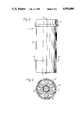
- FIG. 3 is an elevation of a pyrotechnic device showing lines AA' and BB'
- FIG. 4 is a cross-sectional view of the pyrotechnic device of FIG. 3 along line AA', and
- FIG. 5 is a sectional view of the pyrotechnic device of FIG. 3 along line BB' representing the longitudinal axis of the device.
- a 150 mm ⁇ 25 mm piece of a medium activity charcoal cloth (RBNS 236) was weighed and was placed for 30 seconds in a heated solution containing between 0.4 and 2.0 g KNO 3 .g -1 water. The cloth was then removed and held horizontally in a fume cupboard draught for 1 minute before being hung vertically to dry. The cloth was then dried at 80° C. for 1 hour and weighed.
- RBNS 236 medium activity charcoal cloth
- Samples 1A, 1B and 1C left a skeleton cloth after burning, whereas Samples 1D and 1E burned fiercly leaving no remains.
- a 150 mm ⁇ 25 mm piece of a RBNS 236 charcoal cloth was mixed with a 50 ml aqueous solution containing 5-50 mM picric acid for 20 hours at 20° C.
- the adsorption of picric acid was found from the decrease in absorbance of the solution at 380 nm using a Pye Unicam SP1800 spectrophotometer.
- the amount of picric acid adsorbed onto a number of samples of RNBS 236 cloth treated by this method was found to vary between 1% and 55% by weight of dry cloth, depending largly upon the concentration of picric acid in the aqueous solution.
- Each dried sample was ignited with a windproof match and the burning rate observed.
- the type of burning produced at different concentrations of picric acid and KNO 3 is shown in FIG. 1.
- the key to this Figure is given below.
- the mean burning rate of 62 samples prepared in accordance with this Example was 55 mm.s -1 with a standard deviation of 11 mm.s -1 .
- Zone (A) - Cloth may self-extinguish or not ignite
- Zone (D) - Cloth burns well and may leave a skeleton cloth
- T Time in seconds for a 150 mm strip of impregnateed charcoal cloth to burn.
- FIG. 2 shows that the application of Impranil to charcoal cloth containing oxidants decreases the burning rate.
- the addition of Impranil reduces the loss of oxidant crystals on flexure of the cloth, and also improves the resistance of the cloth to abrasion.
- FIGS. 3 to 5 illustrate a pyrotechnic device 1 in which conventional primed cambric is replaced by an impregnated charcoal cloth ignition transfer medium according to this invention.
- the pyrotechnic device 1 consists of a hollow cylindrical body 2 of rubber which is closed at its open forward end by a solid closure member 4 inserted therein.
- a cap 5 fitted over the forward end of the body 2 urges the sides of the hollow body 2 against the closure member 4 to provide an environmental seal.
- the hollow body 1 contains an inner tube 6 and an outer tube 8 of the present impregnated charcoal cloth which are arranged concentrically and in axial alignment with the longitudinal axis of the hollow cylindrical body.
- the inner tube 6 and the space between the inner tube 6 and outer tube 8 are filled with closely-fitting cylindrical charges 10 of pyrotechnic composition which are stacked end-to-end.
- the stacked cylindrical charges 10 are separated from one another by a small number (typically 5 to 10) of stacked discs 12 of the present impregnated carbon cloth.
- the array of impregnated carbon cloth pieces is completed by a ring 14 of cloth about the top of the stack of charges 10 and a large disc 16 of cloth at the bottom of the stack.
- a cylindrical polyethylene spacer 18 situated at the bottom of the stack of charges 10 within the inner tube 6 provides an appropriate space 20 between this stack and the closure member 4.
- the chamber contains a burster charge 28 of gunpowder.
- the opening 22 is partly screw-threaded to permit the attachment by corresponding threaded engagement of a conventional fuse mechanism (not shown) to allow the insertion of a fuse (not shown) one end of which communicates in direct contact with the charge 28.
- the type of fuse mechanism will depend on the intended use of the pyrotechnic device.
- the fuse mechanism of a hand-launched device such as a pyrotechnic grenade will generally include a hand-operated striker mechanism which when operated strikes against a fuse initiator and hence ignites the one end of the fuse remote from the charge 28.
- the fuse mechanism of a gun or rocket launched pyrotechnic device will generally include a fuse housing comprising an ogival head.
- the ignition sequence of the pyrotechnic device 1 is as follows. Once the fuse (not shown) ignites the burster charge 28, the membrane 26 is ruptured the hot combustion gases ignite the charcoal cloth tubes (6, 8), discs (12, 16) and ring (14). The ignited cloth in turn ignites the cylindrical charges 10 of pyrotechnic composition. The hot combustion gases from the burning charcoal cloth and pyrotechnic composition build up pressure within the hollow rubber body 2 which expands and then bursts so scattering the burning pyrotechnic charges 10.
Landscapes
- Chemical & Material Sciences (AREA)
- Organic Chemistry (AREA)
- Crystallography & Structural Chemistry (AREA)
- Chemical Kinetics & Catalysis (AREA)
- General Chemical & Material Sciences (AREA)
- Chemical Or Physical Treatment Of Fibers (AREA)
- Air Bags (AREA)
- Solid-Sorbent Or Filter-Aiding Compositions (AREA)
- Carbon And Carbon Compounds (AREA)
Applications Claiming Priority (2)
| Application Number | Priority Date | Filing Date | Title |
|---|---|---|---|
| GB8614674 | 1986-06-17 | ||
| GB08614674A GB2191770A (en) | 1986-06-17 | 1986-06-17 | Ignition transfer medium |
Publications (1)
| Publication Number | Publication Date |
|---|---|
| US4903604A true US4903604A (en) | 1990-02-27 |
Family
ID=10599556
Family Applications (1)
| Application Number | Title | Priority Date | Filing Date |
|---|---|---|---|
| US07/311,308 Expired - Lifetime US4903604A (en) | 1986-06-17 | 1989-02-16 | Ignition transfer medium |
Country Status (8)
| Country | Link |
|---|---|
| US (1) | US4903604A (ja) |
| EP (1) | EP0311623B1 (ja) |
| JP (1) | JPH08747B2 (ja) |
| AU (1) | AU599679B2 (ja) |
| CA (1) | CA1302094C (ja) |
| DE (1) | DE3773937D1 (ja) |
| GB (2) | GB2191770A (ja) |
| WO (1) | WO1987007888A1 (ja) |
Cited By (5)
| Publication number | Priority date | Publication date | Assignee | Title |
|---|---|---|---|---|
| US5372664A (en) * | 1992-02-10 | 1994-12-13 | Thiokol Corporation | Castable double base propellant containing ultra fine carbon fiber as a ballistic modifier |
| WO1995011207A1 (en) * | 1993-10-22 | 1995-04-27 | Thiokol Corporation | Use of carbon fibrils to enhance burn rate of pyrotechnics and gas generants |
| US5547525A (en) * | 1993-09-29 | 1996-08-20 | Thiokol Corporation | Electrostatic discharge reduction in energetic compositions |
| US5652408A (en) * | 1994-07-22 | 1997-07-29 | Manurhin Defense | Explosive projectile |
| US5656794A (en) * | 1993-10-29 | 1997-08-12 | Krone; Uwe | Pyrotechnic smoke composition for camouflage purposes |
Families Citing this family (4)
| Publication number | Priority date | Publication date | Assignee | Title |
|---|---|---|---|---|
| EP0505024B1 (en) * | 1991-02-18 | 1996-06-26 | Imperial Chemical Industries Plc | Gas generator |
| GB2299990A (en) * | 1995-04-18 | 1996-10-23 | Secr Defence | Pyrotechnic material |
| GB2314558B (en) * | 1995-04-18 | 1999-01-13 | Secr Defence | Pyrotechnic material |
| US5939661A (en) * | 1997-01-06 | 1999-08-17 | The Ensign-Bickford Company | Method of manufacturing an explosive carrier material, and articles containing the same |
Citations (16)
| Publication number | Priority date | Publication date | Assignee | Title |
|---|---|---|---|---|
| US2841481A (en) * | 1954-03-11 | 1958-07-01 | Brock S Crystal Palace Firewor | Pyrotechnic masses |
| US3513776A (en) * | 1968-04-11 | 1970-05-26 | Allied Res Ass Inc | Consumable cartridge case |
| US3667396A (en) * | 1969-04-02 | 1972-06-06 | North American Rockwell | Solid propellant grain igniter |
| US3760729A (en) * | 1971-12-21 | 1973-09-25 | Us Army | Hermetically sealed plastic cartridge case/cap system |
| US4072546A (en) * | 1971-12-22 | 1978-02-07 | Hercules Incorporated | Use of graphite fibers to augment propellant burning rate |
| US4122671A (en) * | 1962-10-26 | 1978-10-31 | Shell Oil Company | Hydrazine decomposition and other reactions |
| US4140561A (en) * | 1977-06-24 | 1979-02-20 | Ici Australia Limited | Explosive composition and process with rheology modifying agent |
| US4256607A (en) * | 1976-10-05 | 1981-03-17 | Toho Beslon Co., Ltd. | Process for production of activated carbon fibers |
| US4310007A (en) * | 1980-04-25 | 1982-01-12 | Imre Auersbacher | Self igniting cigarette |
| US4401588A (en) * | 1982-07-23 | 1983-08-30 | E. I. Du Pont De Nemours And Company | Manufacture of activated carbon fabric |
| US4406815A (en) * | 1978-03-31 | 1983-09-27 | Arnold Magnusson | Transmission reducing aerosol |
| US4565727A (en) * | 1983-09-12 | 1986-01-21 | American Cyanamid Co. | Non-woven activated carbon fabric |
| US4756778A (en) * | 1980-12-04 | 1988-07-12 | The United States Of America As Represented By The Secretary Of The Navy | Protecting military targets against weapons having IR detectors |
| US4770099A (en) * | 1976-10-23 | 1988-09-13 | Dynamit Nobel Ag | Propellant charge igniter |
| US4799979A (en) * | 1978-11-24 | 1989-01-24 | Alloy Surfaces Company, Inc. | Heat generation |
| US4819612A (en) * | 1986-05-08 | 1989-04-11 | Asahi Kasei Kogyo Kabushiki Kaisha | Self-heating container |
Family Cites Families (6)
| Publication number | Priority date | Publication date | Assignee | Title |
|---|---|---|---|---|
| FR411826A (fr) * | 1909-04-19 | 1910-06-27 | Explosifs Et De Prod Chim D | Propagateur de détonation pour charges explosives de trous de mines et autres applications |
| GB461648A (en) * | 1935-08-21 | 1937-02-22 | James Sinton Bruce Fleming | Improvements in or relating to cumbustion train elements and fuzes for blasting and pyrotechnic and the like purposes |
| US3442213A (en) * | 1966-04-21 | 1969-05-06 | Asahi Chemical Ind | Propellant charge for small arms ammunition |
| DE1646286A1 (de) * | 1968-02-16 | 1971-07-15 | Dynamit Nobel Ag | Sicherheitszuendschnur |
| GB1490511A (en) * | 1971-06-23 | 1977-11-02 | Diehl | Solid propelling charge having reinforcing filaments and a method for the production thereof |
| DE2448615C3 (de) * | 1974-10-11 | 1981-04-02 | Hercules Inc., 19899 Wilmington, Del. | Feste Treibmittel und ihre Verwendung |
-
1986
- 1986-06-17 GB GB08614674A patent/GB2191770A/en not_active Withdrawn
-
1987
- 1987-06-16 CA CA000539828A patent/CA1302094C/en not_active Expired - Lifetime
- 1987-06-17 JP JP62503750A patent/JPH08747B2/ja not_active Expired - Fee Related
- 1987-06-17 DE DE8787904065T patent/DE3773937D1/de not_active Expired - Lifetime
- 1987-06-17 AU AU75424/87A patent/AU599679B2/en not_active Ceased
- 1987-06-17 WO PCT/GB1987/000421 patent/WO1987007888A1/en not_active Ceased
- 1987-06-17 EP EP87904065A patent/EP0311623B1/en not_active Expired
-
1988
- 1988-06-17 GB GB8828619A patent/GB2219580B/en not_active Expired - Lifetime
-
1989
- 1989-02-16 US US07/311,308 patent/US4903604A/en not_active Expired - Lifetime
Patent Citations (17)
| Publication number | Priority date | Publication date | Assignee | Title |
|---|---|---|---|---|
| US2841481A (en) * | 1954-03-11 | 1958-07-01 | Brock S Crystal Palace Firewor | Pyrotechnic masses |
| US4122671A (en) * | 1962-10-26 | 1978-10-31 | Shell Oil Company | Hydrazine decomposition and other reactions |
| US3513776A (en) * | 1968-04-11 | 1970-05-26 | Allied Res Ass Inc | Consumable cartridge case |
| US3667396A (en) * | 1969-04-02 | 1972-06-06 | North American Rockwell | Solid propellant grain igniter |
| US3760729A (en) * | 1971-12-21 | 1973-09-25 | Us Army | Hermetically sealed plastic cartridge case/cap system |
| US4072546A (en) * | 1971-12-22 | 1978-02-07 | Hercules Incorporated | Use of graphite fibers to augment propellant burning rate |
| US4256607A (en) * | 1976-10-05 | 1981-03-17 | Toho Beslon Co., Ltd. | Process for production of activated carbon fibers |
| US4770099A (en) * | 1976-10-23 | 1988-09-13 | Dynamit Nobel Ag | Propellant charge igniter |
| US4140561A (en) * | 1977-06-24 | 1979-02-20 | Ici Australia Limited | Explosive composition and process with rheology modifying agent |
| US4406815A (en) * | 1978-03-31 | 1983-09-27 | Arnold Magnusson | Transmission reducing aerosol |
| US4799979A (en) * | 1978-11-24 | 1989-01-24 | Alloy Surfaces Company, Inc. | Heat generation |
| US4310007A (en) * | 1980-04-25 | 1982-01-12 | Imre Auersbacher | Self igniting cigarette |
| US4756778A (en) * | 1980-12-04 | 1988-07-12 | The United States Of America As Represented By The Secretary Of The Navy | Protecting military targets against weapons having IR detectors |
| US4401588A (en) * | 1982-07-23 | 1983-08-30 | E. I. Du Pont De Nemours And Company | Manufacture of activated carbon fabric |
| US4565727A (en) * | 1983-09-12 | 1986-01-21 | American Cyanamid Co. | Non-woven activated carbon fabric |
| US4565727B1 (ja) * | 1983-09-12 | 1989-01-24 | ||
| US4819612A (en) * | 1986-05-08 | 1989-04-11 | Asahi Kasei Kogyo Kabushiki Kaisha | Self-heating container |
Cited By (6)
| Publication number | Priority date | Publication date | Assignee | Title |
|---|---|---|---|---|
| US5372664A (en) * | 1992-02-10 | 1994-12-13 | Thiokol Corporation | Castable double base propellant containing ultra fine carbon fiber as a ballistic modifier |
| US5547525A (en) * | 1993-09-29 | 1996-08-20 | Thiokol Corporation | Electrostatic discharge reduction in energetic compositions |
| WO1995011207A1 (en) * | 1993-10-22 | 1995-04-27 | Thiokol Corporation | Use of carbon fibrils to enhance burn rate of pyrotechnics and gas generants |
| US5470408A (en) * | 1993-10-22 | 1995-11-28 | Thiokol Corporation | Use of carbon fibrils to enhance burn rate of pyrotechnics and gas generants |
| US5656794A (en) * | 1993-10-29 | 1997-08-12 | Krone; Uwe | Pyrotechnic smoke composition for camouflage purposes |
| US5652408A (en) * | 1994-07-22 | 1997-07-29 | Manurhin Defense | Explosive projectile |
Also Published As
| Publication number | Publication date |
|---|---|
| GB2191770A (en) | 1987-12-23 |
| JPH01502904A (ja) | 1989-10-05 |
| AU7542487A (en) | 1988-01-12 |
| GB8828619D0 (en) | 1989-02-01 |
| DE3773937D1 (de) | 1991-11-21 |
| AU599679B2 (en) | 1990-07-26 |
| GB8614674D0 (en) | 1986-07-23 |
| EP0311623A1 (en) | 1989-04-19 |
| WO1987007888A1 (en) | 1987-12-30 |
| CA1302094C (en) | 1992-06-02 |
| EP0311623B1 (en) | 1991-10-16 |
| GB2219580B (en) | 1990-08-01 |
| GB2219580A (en) | 1989-12-13 |
| JPH08747B2 (ja) | 1996-01-10 |
Similar Documents
| Publication | Publication Date | Title |
|---|---|---|
| EP0693044B1 (en) | Ignition compositions for inflator gas generators | |
| US5460671A (en) | Ignition compositions for inflator gas generators | |
| DE2946422C2 (ja) | ||
| US4608102A (en) | Primer composition | |
| DE69434003T2 (de) | Bleifreie zündmittelzusammensetzung für perkussionszündsätze | |
| EP0311623B1 (en) | Ignition transfer medium | |
| US5501152A (en) | Air bag gas generator with spontaneous ignition agent | |
| EP1195366B1 (en) | Non-toxic primer mix | |
| RU2170224C2 (ru) | Пиротехнический заряд для детонаторов | |
| US7051655B1 (en) | Low-energy optical detonator | |
| DE60011109T2 (de) | Nicht-toxische und nicht-korrosive anzündmischung | |
| US4091729A (en) | Low vulnerability booster charge caseless ammunition | |
| DE2206468C2 (de) | Elektrische Zündung | |
| JPH07232989A (ja) | 自動発火性火薬組成物 | |
| US20070068610A1 (en) | Microcrystalline Nitrocellulose Pyrotechnic Compositions | |
| US20060266451A1 (en) | Method for producing a propellant | |
| USH285H (en) | Oxygen rich igniter compositions | |
| CH685940A5 (de) | Perkussionszundsatz fur Handfeuerwaffen, Verfahren zu seiner Herstellung sowie dessen Verwendung. | |
| DE19846511A1 (de) | Feuerwerkskörper mit nicht explosionsgefährlicher Effektfüllung | |
| CA2252353C (en) | Non-primary detonator | |
| DE3534554C2 (ja) | ||
| CH664554A5 (en) | Ignition powder mixt. for solid propellant reinforcing charge - contg. inorganic. fuel and excess inorganic oxidant to generate oxygen and prevent hang fire in cold | |
| Abel | X. Contributions to the history of explosive agents.—Second memoir | |
| CA1150514A (en) | Delay composition for detonators | |
| AU757884B2 (en) | Non-primary detonators |
Legal Events
| Date | Code | Title | Description |
|---|---|---|---|
| AS | Assignment |
Owner name: SECRETARY OF STATE FOR DEFENCE, THE, ENGLAND Free format text: ASSIGNMENT OF ASSIGNORS INTEREST.;ASSIGNORS:BLEWETT, FRANCIS M.;PIKE, GARY E. J.;REEL/FRAME:005150/0427;SIGNING DATES FROM 19890220 TO 19890223 Owner name: SECRETARY OF STATE FOR DEFENCE IN HER BRITANNIC MA Free format text: ASSIGNMENT OF ASSIGNORS INTEREST.;ASSIGNOR:SYKES, ANNE F.;REEL/FRAME:005150/0426 Effective date: 19891003 |
|
| STCF | Information on status: patent grant |
Free format text: PATENTED CASE |
|
| FEPP | Fee payment procedure |
Free format text: PAYOR NUMBER ASSIGNED (ORIGINAL EVENT CODE: ASPN); ENTITY STATUS OF PATENT OWNER: LARGE ENTITY |
|
| FPAY | Fee payment |
Year of fee payment: 4 |
|
| FPAY | Fee payment |
Year of fee payment: 8 |
|
| FPAY | Fee payment |
Year of fee payment: 12 |
|
| AS | Assignment |
Owner name: QINETIQ LIMITED, UNITED KINGDOM Free format text: ASSIGNMENT OF ASSIGNORS INTEREST;ASSIGNOR:SECRETARY OF STATE FOR DEFENCE, THE;REEL/FRAME:012831/0459 Effective date: 20011211 |