US5021184A - Adamantane derivatives, compositions of matter containing same, processes for preparing said adamantane derivatives and said compositions, and organoleptic and deodorancy uses of said adamantane derivatives and said compositions - Google Patents
Adamantane derivatives, compositions of matter containing same, processes for preparing said adamantane derivatives and said compositions, and organoleptic and deodorancy uses of said adamantane derivatives and said compositions Download PDFInfo
- Publication number
- US5021184A US5021184A US07/414,526 US41452689A US5021184A US 5021184 A US5021184 A US 5021184A US 41452689 A US41452689 A US 41452689A US 5021184 A US5021184 A US 5021184A
- Authority
- US
- United States
- Prior art keywords
- compound
- carbon
- reaction
- woody
- compositions
- Prior art date
- Legal status (The legal status is an assumption and is not a legal conclusion. Google has not performed a legal analysis and makes no representation as to the accuracy of the status listed.)
- Expired - Fee Related
Links
- 239000000203 mixture Substances 0.000 title claims abstract description 163
- ORILYTVJVMAKLC-UHFFFAOYSA-N adamantane Chemical class C1C(C2)CC3CC1CC2C3 ORILYTVJVMAKLC-UHFFFAOYSA-N 0.000 title claims abstract description 90
- 238000000034 method Methods 0.000 title claims description 24
- 229940052761 dopaminergic adamantane derivative Drugs 0.000 title abstract description 65
- 239000002304 perfume Substances 0.000 claims abstract description 50
- 235000002637 Nicotiana tabacum Nutrition 0.000 claims abstract description 49
- 241000208125 Nicotiana Species 0.000 claims abstract description 48
- 239000000463 material Substances 0.000 claims abstract description 46
- 239000011203 carbon fibre reinforced carbon Substances 0.000 claims abstract description 42
- 229910052739 hydrogen Inorganic materials 0.000 claims abstract description 33
- 239000001257 hydrogen Substances 0.000 claims abstract description 33
- 230000000391 smoking effect Effects 0.000 claims abstract description 31
- CREMABGTGYGIQB-UHFFFAOYSA-N carbon carbon Chemical compound C.C CREMABGTGYGIQB-UHFFFAOYSA-N 0.000 claims abstract description 22
- UFHFLCQGNIYNRP-UHFFFAOYSA-N Hydrogen Chemical compound [H][H] UFHFLCQGNIYNRP-UHFFFAOYSA-N 0.000 claims abstract description 20
- 125000000217 alkyl group Chemical group 0.000 claims abstract description 15
- 230000001877 deodorizing effect Effects 0.000 claims abstract description 8
- 230000003190 augmentative effect Effects 0.000 claims abstract description 7
- 230000002708 enhancing effect Effects 0.000 claims abstract description 7
- 125000000218 acetic acid group Chemical group C(C)(=O)* 0.000 claims abstract 4
- 150000001875 compounds Chemical class 0.000 claims description 278
- 239000003599 detergent Substances 0.000 claims description 31
- 239000000344 soap Substances 0.000 claims description 17
- 239000002781 deodorant agent Substances 0.000 claims description 13
- 239000000843 powder Substances 0.000 claims description 13
- 239000007844 bleaching agent Substances 0.000 claims description 9
- 239000004744 fabric Substances 0.000 claims description 8
- 238000005406 washing Methods 0.000 claims description 5
- 239000012190 activator Substances 0.000 claims description 4
- 125000000864 peroxy group Chemical group O(O*)* 0.000 claims description 4
- 101100386054 Saccharomyces cerevisiae (strain ATCC 204508 / S288c) CYS3 gene Proteins 0.000 abstract 1
- 101150035983 str1 gene Proteins 0.000 abstract 1
- 238000006243 chemical reaction Methods 0.000 description 164
- 239000007795 chemical reaction product Substances 0.000 description 78
- 238000004821 distillation Methods 0.000 description 64
- 244000170916 Paeonia officinalis Species 0.000 description 59
- 235000006484 Paeonia officinalis Nutrition 0.000 description 59
- 238000000655 nuclear magnetic resonance spectrum Methods 0.000 description 52
- WFDIJRYMOXRFFG-UHFFFAOYSA-N Acetic anhydride Chemical compound CC(=O)OC(C)=O WFDIJRYMOXRFFG-UHFFFAOYSA-N 0.000 description 45
- 239000000047 product Substances 0.000 description 42
- 238000009472 formulation Methods 0.000 description 41
- -1 oxygen-substituted adamantane Chemical class 0.000 description 41
- 240000002505 Pogostemon cablin Species 0.000 description 39
- 235000011751 Pogostemon cablin Nutrition 0.000 description 39
- 244000284012 Vetiveria zizanioides Species 0.000 description 39
- 235000007769 Vetiveria zizanioides Nutrition 0.000 description 39
- 239000007788 liquid Substances 0.000 description 31
- 239000003205 fragrance Substances 0.000 description 30
- 229920001223 polyethylene glycol Polymers 0.000 description 27
- 238000002360 preparation method Methods 0.000 description 27
- 241000717739 Boswellia sacra Species 0.000 description 26
- 239000004863 Frankincense Substances 0.000 description 26
- 241000944022 Amyris Species 0.000 description 24
- 229940102465 ginger root Drugs 0.000 description 24
- 238000010992 reflux Methods 0.000 description 24
- 239000001841 zingiber officinale Substances 0.000 description 24
- 240000000560 Citrus x paradisi Species 0.000 description 23
- 240000000513 Santalum album Species 0.000 description 23
- 235000008632 Santalum album Nutrition 0.000 description 23
- YXFVVABEGXRONW-UHFFFAOYSA-N Toluene Chemical compound CC1=CC=CC=C1 YXFVVABEGXRONW-UHFFFAOYSA-N 0.000 description 23
- 229920000642 polymer Polymers 0.000 description 23
- LFQSCWFLJHTTHZ-UHFFFAOYSA-N Ethanol Chemical compound CCO LFQSCWFLJHTTHZ-UHFFFAOYSA-N 0.000 description 21
- 238000010438 heat treatment Methods 0.000 description 20
- 239000000126 substance Substances 0.000 description 20
- 235000019441 ethanol Nutrition 0.000 description 16
- KFZMGEQAYNKOFK-UHFFFAOYSA-N Isopropanol Chemical compound CC(C)O KFZMGEQAYNKOFK-UHFFFAOYSA-N 0.000 description 15
- OKKJLVBELUTLKV-UHFFFAOYSA-N Methanol Chemical compound OC OKKJLVBELUTLKV-UHFFFAOYSA-N 0.000 description 15
- KDLHZDBZIXYQEI-UHFFFAOYSA-N Palladium Chemical compound [Pd] KDLHZDBZIXYQEI-UHFFFAOYSA-N 0.000 description 15
- 241000234314 Zingiber Species 0.000 description 15
- 235000006886 Zingiber officinale Nutrition 0.000 description 15
- 235000009508 confectionery Nutrition 0.000 description 15
- 235000008397 ginger Nutrition 0.000 description 15
- 235000019568 aromas Nutrition 0.000 description 14
- UIIMBOGNXHQVGW-UHFFFAOYSA-M Sodium bicarbonate Chemical compound [Na+].OC([O-])=O UIIMBOGNXHQVGW-UHFFFAOYSA-M 0.000 description 13
- 239000000796 flavoring agent Substances 0.000 description 13
- 235000019634 flavors Nutrition 0.000 description 13
- 229920001610 polycaprolactone Polymers 0.000 description 13
- 240000002943 Elettaria cardamomum Species 0.000 description 12
- 240000006568 Lathyrus odoratus Species 0.000 description 12
- 241000219061 Rheum Species 0.000 description 12
- 235000009411 Rheum rhabarbarum Nutrition 0.000 description 12
- 241000220317 Rosa Species 0.000 description 12
- 244000178231 Rosmarinus officinalis Species 0.000 description 12
- 235000005300 cardamomo Nutrition 0.000 description 12
- 235000019504 cigarettes Nutrition 0.000 description 12
- 239000002904 solvent Substances 0.000 description 12
- 239000004698 Polyethylene Substances 0.000 description 11
- 239000008188 pellet Substances 0.000 description 11
- 229920000573 polyethylene Polymers 0.000 description 11
- 239000011734 sodium Substances 0.000 description 11
- 229910052708 sodium Inorganic materials 0.000 description 11
- FLKPEMZONWLCSK-UHFFFAOYSA-N diethyl phthalate Chemical compound CCOC(=O)C1=CC=CC=C1C(=O)OCC FLKPEMZONWLCSK-UHFFFAOYSA-N 0.000 description 10
- 239000000758 substrate Substances 0.000 description 10
- XLYOFNOQVPJJNP-UHFFFAOYSA-N water Substances O XLYOFNOQVPJJNP-UHFFFAOYSA-N 0.000 description 10
- WSFSSNUMVMOOMR-UHFFFAOYSA-N Formaldehyde Chemical compound O=C WSFSSNUMVMOOMR-UHFFFAOYSA-N 0.000 description 9
- HEMHJVSKTPXQMS-UHFFFAOYSA-M Sodium hydroxide Chemical compound [OH-].[Na+] HEMHJVSKTPXQMS-UHFFFAOYSA-M 0.000 description 9
- 150000001299 aldehydes Chemical class 0.000 description 9
- 239000003054 catalyst Substances 0.000 description 9
- 239000004615 ingredient Substances 0.000 description 9
- DGAQECJNVWCQMB-PUAWFVPOSA-M Ilexoside XXIX Chemical compound C[C@@H]1CC[C@@]2(CC[C@@]3(C(=CC[C@H]4[C@]3(CC[C@@H]5[C@@]4(CC[C@@H](C5(C)C)OS(=O)(=O)[O-])C)C)[C@@H]2[C@]1(C)O)C)C(=O)O[C@H]6[C@@H]([C@H]([C@@H]([C@H](O6)CO)O)O)O.[Na+] DGAQECJNVWCQMB-PUAWFVPOSA-M 0.000 description 8
- 235000008331 Pinus X rigitaeda Nutrition 0.000 description 8
- 235000011613 Pinus brutia Nutrition 0.000 description 8
- 241000018646 Pinus brutia Species 0.000 description 8
- 239000011248 coating agent Substances 0.000 description 8
- 238000000576 coating method Methods 0.000 description 8
- 150000002431 hydrogen Chemical group 0.000 description 8
- 229920000098 polyolefin Polymers 0.000 description 8
- 238000003756 stirring Methods 0.000 description 8
- QAOWNCQODCNURD-UHFFFAOYSA-N Sulfuric acid Chemical compound OS(O)(=O)=O QAOWNCQODCNURD-UHFFFAOYSA-N 0.000 description 7
- 150000002576 ketones Chemical class 0.000 description 7
- 238000004519 manufacturing process Methods 0.000 description 7
- 125000002496 methyl group Chemical group [H]C([H])([H])* 0.000 description 7
- 239000003921 oil Substances 0.000 description 7
- 235000019198 oils Nutrition 0.000 description 7
- 239000007858 starting material Substances 0.000 description 7
- XPCTZQVDEJYUGT-UHFFFAOYSA-N 3-hydroxy-2-methyl-4-pyrone Chemical compound CC=1OC=CC(=O)C=1O XPCTZQVDEJYUGT-UHFFFAOYSA-N 0.000 description 6
- QTBSBXVTEAMEQO-UHFFFAOYSA-N Acetic acid Chemical compound CC(O)=O QTBSBXVTEAMEQO-UHFFFAOYSA-N 0.000 description 6
- UGFAIRIUMAVXCW-UHFFFAOYSA-N Carbon monoxide Chemical compound [O+]#[C-] UGFAIRIUMAVXCW-UHFFFAOYSA-N 0.000 description 6
- RTZKZFJDLAIYFH-UHFFFAOYSA-N Diethyl ether Chemical compound CCOCC RTZKZFJDLAIYFH-UHFFFAOYSA-N 0.000 description 6
- CDBYLPFSWZWCQE-UHFFFAOYSA-L Sodium Carbonate Chemical compound [Na+].[Na+].[O-]C([O-])=O CDBYLPFSWZWCQE-UHFFFAOYSA-L 0.000 description 6
- 229910002091 carbon monoxide Inorganic materials 0.000 description 6
- 239000002537 cosmetic Substances 0.000 description 6
- 238000005984 hydrogenation reaction Methods 0.000 description 6
- BDAGIHXWWSANSR-UHFFFAOYSA-N methanoic acid Natural products OC=O BDAGIHXWWSANSR-UHFFFAOYSA-N 0.000 description 6
- 229910000030 sodium bicarbonate Inorganic materials 0.000 description 6
- 235000017557 sodium bicarbonate Nutrition 0.000 description 6
- 239000007787 solid Substances 0.000 description 6
- 244000283070 Abies balsamea Species 0.000 description 5
- 235000007173 Abies balsamea Nutrition 0.000 description 5
- QTBSBXVTEAMEQO-UHFFFAOYSA-M Acetate Chemical compound CC([O-])=O QTBSBXVTEAMEQO-UHFFFAOYSA-M 0.000 description 5
- VQTUBCCKSQIDNK-UHFFFAOYSA-N Isobutene Chemical group CC(C)=C VQTUBCCKSQIDNK-UHFFFAOYSA-N 0.000 description 5
- 150000001298 alcohols Chemical class 0.000 description 5
- 229910000102 alkali metal hydride Inorganic materials 0.000 description 5
- 150000008046 alkali metal hydrides Chemical class 0.000 description 5
- 239000007809 chemical reaction catalyst Substances 0.000 description 5
- 238000006266 etherification reaction Methods 0.000 description 5
- 239000002979 fabric softener Substances 0.000 description 5
- 235000013355 food flavoring agent Nutrition 0.000 description 5
- 230000005923 long-lasting effect Effects 0.000 description 5
- SYSQUGFVNFXIIT-UHFFFAOYSA-N n-[4-(1,3-benzoxazol-2-yl)phenyl]-4-nitrobenzenesulfonamide Chemical class C1=CC([N+](=O)[O-])=CC=C1S(=O)(=O)NC1=CC=C(C=2OC3=CC=CC=C3N=2)C=C1 SYSQUGFVNFXIIT-UHFFFAOYSA-N 0.000 description 5
- 238000007254 oxidation reaction Methods 0.000 description 5
- 235000019505 tobacco product Nutrition 0.000 description 5
- REINJUBMDBESCN-UHFFFAOYSA-N 4-methyl-8-methylideneadamantan-2-ol Chemical compound C1C(C2=C)CC3C(C)C1CC2C3O REINJUBMDBESCN-UHFFFAOYSA-N 0.000 description 4
- VEXZGXHMUGYJMC-UHFFFAOYSA-N Hydrochloric acid Chemical compound Cl VEXZGXHMUGYJMC-UHFFFAOYSA-N 0.000 description 4
- BZLVMXJERCGZMT-UHFFFAOYSA-N Methyl tert-butyl ether Chemical compound COC(C)(C)C BZLVMXJERCGZMT-UHFFFAOYSA-N 0.000 description 4
- NBIIXXVUZAFLBC-UHFFFAOYSA-N Phosphoric acid Chemical compound OP(O)(O)=O NBIIXXVUZAFLBC-UHFFFAOYSA-N 0.000 description 4
- FAPWRFPIFSIZLT-UHFFFAOYSA-M Sodium chloride Chemical class [Na+].[Cl-] FAPWRFPIFSIZLT-UHFFFAOYSA-M 0.000 description 4
- 239000002253 acid Substances 0.000 description 4
- 229910052783 alkali metal Inorganic materials 0.000 description 4
- 150000001340 alkali metals Chemical class 0.000 description 4
- 239000008346 aqueous phase Substances 0.000 description 4
- 230000015572 biosynthetic process Effects 0.000 description 4
- 239000006227 byproduct Substances 0.000 description 4
- 239000003795 chemical substances by application Substances 0.000 description 4
- JQVDAXLFBXTEQA-UHFFFAOYSA-N dibutylamine Chemical compound CCCCNCCCC JQVDAXLFBXTEQA-UHFFFAOYSA-N 0.000 description 4
- VAYGXNSJCAHWJZ-UHFFFAOYSA-N dimethyl sulfate Chemical compound COS(=O)(=O)OC VAYGXNSJCAHWJZ-UHFFFAOYSA-N 0.000 description 4
- 235000013399 edible fruits Nutrition 0.000 description 4
- 230000000694 effects Effects 0.000 description 4
- RRAFCDWBNXTKKO-UHFFFAOYSA-N eugenol Chemical compound COC1=CC(CC=C)=CC=C1O RRAFCDWBNXTKKO-UHFFFAOYSA-N 0.000 description 4
- 239000005454 flavour additive Substances 0.000 description 4
- 239000011159 matrix material Substances 0.000 description 4
- 239000012074 organic phase Substances 0.000 description 4
- 230000003647 oxidation Effects 0.000 description 4
- RIOQSEWOXXDEQQ-UHFFFAOYSA-N triphenylphosphine Chemical compound C1=CC=CC=C1P(C=1C=CC=CC=1)C1=CC=CC=C1 RIOQSEWOXXDEQQ-UHFFFAOYSA-N 0.000 description 4
- ZWEHNKRNPOVVGH-UHFFFAOYSA-N 2-Butanone Chemical compound CCC(C)=O ZWEHNKRNPOVVGH-UHFFFAOYSA-N 0.000 description 3
- OSWFIVFLDKOXQC-UHFFFAOYSA-N 4-(3-methoxyphenyl)aniline Chemical compound COC1=CC=CC(C=2C=CC(N)=CC=2)=C1 OSWFIVFLDKOXQC-UHFFFAOYSA-N 0.000 description 3
- CSCPPACGZOOCGX-UHFFFAOYSA-N Acetone Chemical compound CC(C)=O CSCPPACGZOOCGX-UHFFFAOYSA-N 0.000 description 3
- XEKOWRVHYACXOJ-UHFFFAOYSA-N Ethyl acetate Chemical compound CCOC(C)=O XEKOWRVHYACXOJ-UHFFFAOYSA-N 0.000 description 3
- IAYPIBMASNFSPL-UHFFFAOYSA-N Ethylene oxide Chemical compound C1CO1 IAYPIBMASNFSPL-UHFFFAOYSA-N 0.000 description 3
- 240000008415 Lactuca sativa Species 0.000 description 3
- 235000003228 Lactuca sativa Nutrition 0.000 description 3
- WMFOQBRAJBCJND-UHFFFAOYSA-M Lithium hydroxide Chemical compound [Li+].[OH-] WMFOQBRAJBCJND-UHFFFAOYSA-M 0.000 description 3
- HYMLWHLQFGRFIY-UHFFFAOYSA-N Maltol Natural products CC1OC=CC(=O)C1=O HYMLWHLQFGRFIY-UHFFFAOYSA-N 0.000 description 3
- KWYHDKDOAIKMQN-UHFFFAOYSA-N N,N,N',N'-tetramethylethylenediamine Chemical compound CN(C)CCN(C)C KWYHDKDOAIKMQN-UHFFFAOYSA-N 0.000 description 3
- MUBZPKHOEPUJKR-UHFFFAOYSA-N Oxalic acid Chemical compound OC(=O)C(O)=O MUBZPKHOEPUJKR-UHFFFAOYSA-N 0.000 description 3
- KWYUFKZDYYNOTN-UHFFFAOYSA-M Potassium hydroxide Chemical compound [OH-].[K+] KWYUFKZDYYNOTN-UHFFFAOYSA-M 0.000 description 3
- DNIAPMSPPWPWGF-UHFFFAOYSA-N Propylene glycol Chemical compound CC(O)CO DNIAPMSPPWPWGF-UHFFFAOYSA-N 0.000 description 3
- 125000002252 acyl group Chemical group 0.000 description 3
- 239000000654 additive Substances 0.000 description 3
- 125000003545 alkoxy group Chemical group 0.000 description 3
- 125000000129 anionic group Chemical group 0.000 description 3
- 239000002585 base Substances 0.000 description 3
- 239000011324 bead Substances 0.000 description 3
- 229910052799 carbon Inorganic materials 0.000 description 3
- 125000002091 cationic group Chemical group 0.000 description 3
- 238000013270 controlled release Methods 0.000 description 3
- 230000003628 erosive effect Effects 0.000 description 3
- 238000005886 esterification reaction Methods 0.000 description 3
- 239000012530 fluid Substances 0.000 description 3
- 235000019253 formic acid Nutrition 0.000 description 3
- 238000004508 fractional distillation Methods 0.000 description 3
- 239000003676 hair preparation Substances 0.000 description 3
- 125000004435 hydrogen atom Chemical group [H]* 0.000 description 3
- 239000003446 ligand Substances 0.000 description 3
- 229910052744 lithium Inorganic materials 0.000 description 3
- 229940043353 maltol Drugs 0.000 description 3
- 235000019645 odor Nutrition 0.000 description 3
- 229910000029 sodium carbonate Inorganic materials 0.000 description 3
- 235000017550 sodium carbonate Nutrition 0.000 description 3
- 235000011121 sodium hydroxide Nutrition 0.000 description 3
- 239000003381 stabilizer Substances 0.000 description 3
- 150000003509 tertiary alcohols Chemical class 0.000 description 3
- YLQBMQCUIZJEEH-UHFFFAOYSA-N tetrahydrofuran Natural products C=1C=COC=1 YLQBMQCUIZJEEH-UHFFFAOYSA-N 0.000 description 3
- 239000012485 toluene extract Substances 0.000 description 3
- XMGQYMWWDOXHJM-JTQLQIEISA-N (+)-α-limonene Chemical compound CC(=C)[C@@H]1CCC(C)=CC1 XMGQYMWWDOXHJM-JTQLQIEISA-N 0.000 description 2
- HNAGHMKIPMKKBB-UHFFFAOYSA-N 1-benzylpyrrolidine-3-carboxamide Chemical compound C1C(C(=O)N)CCN1CC1=CC=CC=C1 HNAGHMKIPMKKBB-UHFFFAOYSA-N 0.000 description 2
- FFFSOJPRLLQQAA-UHFFFAOYSA-N 3-(4-methylcyclohex-3-en-1-yl)-2-methylidenebutanal Chemical compound O=CC(=C)C(C)C1CCC(C)=CC1 FFFSOJPRLLQQAA-UHFFFAOYSA-N 0.000 description 2
- OKPJCPYVRGHAAR-UHFFFAOYSA-N 4,8-dimethyladamantan-2-one Chemical compound C1C(C2C)CC3C(C)C1CC2C3=O OKPJCPYVRGHAAR-UHFFFAOYSA-N 0.000 description 2
- GHBSPIPJMLAMEP-UHFFFAOYSA-N 6-pentyloxan-2-one Chemical compound CCCCCC1CCCC(=O)O1 GHBSPIPJMLAMEP-UHFFFAOYSA-N 0.000 description 2
- IJGRMHOSHXDMSA-UHFFFAOYSA-N Atomic nitrogen Chemical compound N#N IJGRMHOSHXDMSA-UHFFFAOYSA-N 0.000 description 2
- VTYYLEPIZMXCLO-UHFFFAOYSA-L Calcium carbonate Chemical compound [Ca+2].[O-]C([O-])=O VTYYLEPIZMXCLO-UHFFFAOYSA-L 0.000 description 2
- NPBVQXIMTZKSBA-UHFFFAOYSA-N Chavibetol Natural products COC1=CC=C(CC=C)C=C1O NPBVQXIMTZKSBA-UHFFFAOYSA-N 0.000 description 2
- YMWUJEATGCHHMB-UHFFFAOYSA-N Dichloromethane Chemical compound ClCCl YMWUJEATGCHHMB-UHFFFAOYSA-N 0.000 description 2
- LCGLNKUTAGEVQW-UHFFFAOYSA-N Dimethyl ether Chemical compound COC LCGLNKUTAGEVQW-UHFFFAOYSA-N 0.000 description 2
- ICMAFTSLXCXHRK-UHFFFAOYSA-N Ethyl pentanoate Chemical compound CCCCC(=O)OCC ICMAFTSLXCXHRK-UHFFFAOYSA-N 0.000 description 2
- LYCAIKOWRPUZTN-UHFFFAOYSA-N Ethylene glycol Chemical compound OCCO LYCAIKOWRPUZTN-UHFFFAOYSA-N 0.000 description 2
- PIICEJLVQHRZGT-UHFFFAOYSA-N Ethylenediamine Chemical compound NCCN PIICEJLVQHRZGT-UHFFFAOYSA-N 0.000 description 2
- 239000005770 Eugenol Substances 0.000 description 2
- GLZPCOQZEFWAFX-UHFFFAOYSA-N Geraniol Chemical compound CC(C)=CCCC(C)=CCO GLZPCOQZEFWAFX-UHFFFAOYSA-N 0.000 description 2
- PEDCQBHIVMGVHV-UHFFFAOYSA-N Glycerine Chemical compound OCC(O)CO PEDCQBHIVMGVHV-UHFFFAOYSA-N 0.000 description 2
- QIGBRXMKCJKVMJ-UHFFFAOYSA-N Hydroquinone Chemical compound OC1=CC=C(O)C=C1 QIGBRXMKCJKVMJ-UHFFFAOYSA-N 0.000 description 2
- 102000003820 Lipoxygenases Human genes 0.000 description 2
- 108090000128 Lipoxygenases Proteins 0.000 description 2
- WHXSMMKQMYFTQS-UHFFFAOYSA-N Lithium Chemical compound [Li] WHXSMMKQMYFTQS-UHFFFAOYSA-N 0.000 description 2
- OFBQJSOFQDEBGM-UHFFFAOYSA-N Pentane Chemical compound CCCCC OFBQJSOFQDEBGM-UHFFFAOYSA-N 0.000 description 2
- 239000004743 Polypropylene Substances 0.000 description 2
- XBDQKXXYIPTUBI-UHFFFAOYSA-M Propionate Chemical compound CCC([O-])=O XBDQKXXYIPTUBI-UHFFFAOYSA-M 0.000 description 2
- UVMRYBDEERADNV-UHFFFAOYSA-N Pseudoeugenol Natural products COC1=CC(C(C)=C)=CC=C1O UVMRYBDEERADNV-UHFFFAOYSA-N 0.000 description 2
- 229910021604 Rhodium(III) chloride Inorganic materials 0.000 description 2
- PMZURENOXWZQFD-UHFFFAOYSA-L Sodium Sulfate Chemical compound [Na+].[Na+].[O-]S([O-])(=O)=O PMZURENOXWZQFD-UHFFFAOYSA-L 0.000 description 2
- BGRWYDHXPHLNKA-UHFFFAOYSA-N Tetraacetylethylenediamine Chemical compound CC(=O)N(C(C)=O)CCN(C(C)=O)C(C)=O BGRWYDHXPHLNKA-UHFFFAOYSA-N 0.000 description 2
- WYURNTSHIVDZCO-UHFFFAOYSA-N Tetrahydrofuran Chemical compound C1CCOC1 WYURNTSHIVDZCO-UHFFFAOYSA-N 0.000 description 2
- 239000004480 active ingredient Substances 0.000 description 2
- 229910000147 aluminium phosphate Inorganic materials 0.000 description 2
- 238000004458 analytical method Methods 0.000 description 2
- 125000003118 aryl group Chemical group 0.000 description 2
- 239000012298 atmosphere Substances 0.000 description 2
- HUMNYLRZRPPJDN-UHFFFAOYSA-N benzaldehyde Chemical compound O=CC1=CC=CC=C1 HUMNYLRZRPPJDN-UHFFFAOYSA-N 0.000 description 2
- OBNCKNCVKJNDBV-UHFFFAOYSA-N butanoic acid ethyl ester Natural products CCCC(=O)OCC OBNCKNCVKJNDBV-UHFFFAOYSA-N 0.000 description 2
- CRPUJAZIXJMDBK-UHFFFAOYSA-N camphene Chemical compound C1CC2C(=C)C(C)(C)C1C2 CRPUJAZIXJMDBK-UHFFFAOYSA-N 0.000 description 2
- 150000001721 carbon Chemical group 0.000 description 2
- 125000004432 carbon atom Chemical group C* 0.000 description 2
- 239000003153 chemical reaction reagent Substances 0.000 description 2
- 239000003638 chemical reducing agent Substances 0.000 description 2
- 229940117975 chromium trioxide Drugs 0.000 description 2
- WGLPBDUCMAPZCE-UHFFFAOYSA-N chromium trioxide Inorganic materials O=[Cr](=O)=O WGLPBDUCMAPZCE-UHFFFAOYSA-N 0.000 description 2
- GAMDZJFZMJECOS-UHFFFAOYSA-N chromium(6+);oxygen(2-) Chemical compound [O-2].[O-2].[O-2].[Cr+6] GAMDZJFZMJECOS-UHFFFAOYSA-N 0.000 description 2
- 235000019506 cigar Nutrition 0.000 description 2
- NEHNMFOYXAPHSD-UHFFFAOYSA-N citronellal Chemical compound O=CCC(C)CCC=C(C)C NEHNMFOYXAPHSD-UHFFFAOYSA-N 0.000 description 2
- QMVPMAAFGQKVCJ-UHFFFAOYSA-N citronellol Chemical compound OCCC(C)CCC=C(C)C QMVPMAAFGQKVCJ-UHFFFAOYSA-N 0.000 description 2
- 239000001926 citrus aurantium l. subsp. bergamia wright et arn. oil Substances 0.000 description 2
- 229920001577 copolymer Polymers 0.000 description 2
- ZAJNGDIORYACQU-UHFFFAOYSA-N decan-2-one Chemical compound CCCCCCCCC(C)=O ZAJNGDIORYACQU-UHFFFAOYSA-N 0.000 description 2
- DIOQZVSQGTUSAI-UHFFFAOYSA-N decane Chemical compound CCCCCCCCCC DIOQZVSQGTUSAI-UHFFFAOYSA-N 0.000 description 2
- 230000032050 esterification Effects 0.000 description 2
- 125000001033 ether group Chemical group 0.000 description 2
- 229960002217 eugenol Drugs 0.000 description 2
- 238000001704 evaporation Methods 0.000 description 2
- 230000008020 evaporation Effects 0.000 description 2
- 239000000284 extract Substances 0.000 description 2
- VPVSTMAPERLKKM-UHFFFAOYSA-N glycoluril Chemical compound N1C(=O)NC2NC(=O)NC21 VPVSTMAPERLKKM-UHFFFAOYSA-N 0.000 description 2
- 229920001519 homopolymer Polymers 0.000 description 2
- 229930195733 hydrocarbon Natural products 0.000 description 2
- 150000002430 hydrocarbons Chemical class 0.000 description 2
- 125000004356 hydroxy functional group Chemical group O* 0.000 description 2
- 239000012442 inert solvent Substances 0.000 description 2
- 230000002401 inhibitory effect Effects 0.000 description 2
- SUMDYPCJJOFFON-UHFFFAOYSA-N isethionic acid Chemical compound OCCS(O)(=O)=O SUMDYPCJJOFFON-UHFFFAOYSA-N 0.000 description 2
- 150000002596 lactones Chemical group 0.000 description 2
- XMGQYMWWDOXHJM-UHFFFAOYSA-N limonene Chemical compound CC(=C)C1CCC(C)=CC1 XMGQYMWWDOXHJM-UHFFFAOYSA-N 0.000 description 2
- CDOSHBSSFJOMGT-UHFFFAOYSA-N linalool Chemical compound CC(C)=CCCC(C)(O)C=C CDOSHBSSFJOMGT-UHFFFAOYSA-N 0.000 description 2
- 239000012280 lithium aluminium hydride Substances 0.000 description 2
- 239000000155 melt Substances 0.000 description 2
- 125000001570 methylene group Chemical group [H]C([H])([*:1])[*:2] 0.000 description 2
- 125000000325 methylidene group Chemical group [H]C([H])=* 0.000 description 2
- 238000002156 mixing Methods 0.000 description 2
- 125000004430 oxygen atom Chemical group O* 0.000 description 2
- 229910052763 palladium Inorganic materials 0.000 description 2
- 230000036961 partial effect Effects 0.000 description 2
- MDHYEMXUFSJLGV-UHFFFAOYSA-N phenethyl acetate Chemical compound CC(=O)OCCC1=CC=CC=C1 MDHYEMXUFSJLGV-UHFFFAOYSA-N 0.000 description 2
- 229920001155 polypropylene Polymers 0.000 description 2
- 229910052700 potassium Inorganic materials 0.000 description 2
- 239000011591 potassium Substances 0.000 description 2
- BWHMMNNQKKPAPP-UHFFFAOYSA-L potassium carbonate Substances [K+].[K+].[O-]C([O-])=O BWHMMNNQKKPAPP-UHFFFAOYSA-L 0.000 description 2
- WYVAMUWZEOHJOQ-UHFFFAOYSA-N propionic anhydride Chemical compound CCC(=O)OC(=O)CC WYVAMUWZEOHJOQ-UHFFFAOYSA-N 0.000 description 2
- 230000002829 reductive effect Effects 0.000 description 2
- GHMLBKRAJCXXBS-UHFFFAOYSA-N resorcinol Chemical compound OC1=CC=CC(O)=C1 GHMLBKRAJCXXBS-UHFFFAOYSA-N 0.000 description 2
- 229910052703 rhodium Inorganic materials 0.000 description 2
- 239000010948 rhodium Substances 0.000 description 2
- MHOVAHRLVXNVSD-UHFFFAOYSA-N rhodium atom Chemical compound [Rh] MHOVAHRLVXNVSD-UHFFFAOYSA-N 0.000 description 2
- SONJTKJMTWTJCT-UHFFFAOYSA-K rhodium(iii) chloride Chemical compound [Cl-].[Cl-].[Cl-].[Rh+3] SONJTKJMTWTJCT-UHFFFAOYSA-K 0.000 description 2
- CZCBTSFUTPZVKJ-UHFFFAOYSA-N rose oxide Chemical compound CC1CCOC(C=C(C)C)C1 CZCBTSFUTPZVKJ-UHFFFAOYSA-N 0.000 description 2
- 239000012279 sodium borohydride Substances 0.000 description 2
- 229910000033 sodium borohydride Inorganic materials 0.000 description 2
- 239000012418 sodium perborate tetrahydrate Substances 0.000 description 2
- 229910052938 sodium sulfate Inorganic materials 0.000 description 2
- 235000011152 sodium sulphate Nutrition 0.000 description 2
- IBDSNZLUHYKHQP-UHFFFAOYSA-N sodium;3-oxidodioxaborirane;tetrahydrate Chemical compound O.O.O.O.[Na+].[O-]B1OO1 IBDSNZLUHYKHQP-UHFFFAOYSA-N 0.000 description 2
- 239000012438 synthetic essential oil Substances 0.000 description 2
- 150000003505 terpenes Chemical class 0.000 description 2
- 235000007586 terpenes Nutrition 0.000 description 2
- 238000012360 testing method Methods 0.000 description 2
- 229920001169 thermoplastic Polymers 0.000 description 2
- 239000003981 vehicle Substances 0.000 description 2
- DTGKSKDOIYIVQL-WEDXCCLWSA-N (+)-borneol Chemical compound C1C[C@@]2(C)[C@@H](O)C[C@@H]1C2(C)C DTGKSKDOIYIVQL-WEDXCCLWSA-N 0.000 description 1
- 229930006727 (-)-endo-fenchol Natural products 0.000 description 1
- REPVLJRCJUVQFA-UHFFFAOYSA-N (-)-isopinocampheol Natural products C1C(O)C(C)C2C(C)(C)C1C2 REPVLJRCJUVQFA-UHFFFAOYSA-N 0.000 description 1
- KEKRPFYFHVSNGB-UHFFFAOYSA-N (2,4-dimethyl-8-methylidene-2-adamantyl) acetate Chemical compound C1C(C2=C)CC3C(C)C1CC2C3(OC(C)=O)C KEKRPFYFHVSNGB-UHFFFAOYSA-N 0.000 description 1
- 239000001490 (3R)-3,7-dimethylocta-1,6-dien-3-ol Substances 0.000 description 1
- AVYXKVDFTTYOPT-UHFFFAOYSA-N (4,8-dimethyl-2-adamantyl) acetate Chemical compound C1C(C2C)CC3C(C)C1CC2C3OC(C)=O AVYXKVDFTTYOPT-UHFFFAOYSA-N 0.000 description 1
- OOCCDEMITAIZTP-QPJJXVBHSA-N (E)-cinnamyl alcohol Chemical compound OC\C=C\C1=CC=CC=C1 OOCCDEMITAIZTP-QPJJXVBHSA-N 0.000 description 1
- 239000001714 (E)-hex-2-en-1-ol Substances 0.000 description 1
- QMVPMAAFGQKVCJ-SNVBAGLBSA-N (R)-(+)-citronellol Natural products OCC[C@H](C)CCC=C(C)C QMVPMAAFGQKVCJ-SNVBAGLBSA-N 0.000 description 1
- DSSYKIVIOFKYAU-XCBNKYQSSA-N (R)-camphor Chemical compound C1C[C@@]2(C)C(=O)C[C@@H]1C2(C)C DSSYKIVIOFKYAU-XCBNKYQSSA-N 0.000 description 1
- CDOSHBSSFJOMGT-JTQLQIEISA-N (R)-linalool Natural products CC(C)=CCC[C@@](C)(O)C=C CDOSHBSSFJOMGT-JTQLQIEISA-N 0.000 description 1
- WUOACPNHFRMFPN-SECBINFHSA-N (S)-(-)-alpha-terpineol Chemical compound CC1=CC[C@@H](C(C)(C)O)CC1 WUOACPNHFRMFPN-SECBINFHSA-N 0.000 description 1
- IEARORYJISZKGK-VQHVLOKHSA-N (e)-3-phenylbut-2-enal Chemical compound O=C\C=C(/C)C1=CC=CC=C1 IEARORYJISZKGK-VQHVLOKHSA-N 0.000 description 1
- JRJBVWJSTHECJK-LUAWRHEFSA-N (z)-3-methyl-4-(2,6,6-trimethylcyclohex-2-en-1-yl)but-3-en-2-one Chemical compound CC(=O)C(\C)=C/C1C(C)=CCCC1(C)C JRJBVWJSTHECJK-LUAWRHEFSA-N 0.000 description 1
- WEEGYLXZBRQIMU-UHFFFAOYSA-N 1,8-cineole Natural products C1CC2CCC1(C)OC2(C)C WEEGYLXZBRQIMU-UHFFFAOYSA-N 0.000 description 1
- AIALTZSQORJYNJ-UHFFFAOYSA-N 1-(2-hydroxyethyl)-2,5,5,8a-tetramethyl-3,4,4a,6,7,8-hexahydro-1h-naphthalen-2-ol Chemical compound OCCC1C(C)(O)CCC2C(C)(C)CCCC21C AIALTZSQORJYNJ-UHFFFAOYSA-N 0.000 description 1
- 239000001074 1-methoxy-4-[(E)-prop-1-enyl]benzene Substances 0.000 description 1
- OFHHDSQXFXLTKC-UHFFFAOYSA-N 10-undecenal Chemical compound C=CCCCCCCCCC=O OFHHDSQXFXLTKC-UHFFFAOYSA-N 0.000 description 1
- GBJYJALIFKGHCK-UHFFFAOYSA-N 2,4-dimethyl-8-methylideneadamantan-2-ol Chemical compound C1C(C2=C)CC3C(C)C1CC2C3(O)C GBJYJALIFKGHCK-UHFFFAOYSA-N 0.000 description 1
- FACFHHMQICTXFZ-UHFFFAOYSA-N 2-(2-phenylimidazo[1,2-a]pyridin-3-yl)ethanamine Chemical compound N1=C2C=CC=CN2C(CCN)=C1C1=CC=CC=C1 FACFHHMQICTXFZ-UHFFFAOYSA-N 0.000 description 1
- ZCHHRLHTBGRGOT-SNAWJCMRSA-N 2-Hexen-1-ol Natural products CCC\C=C\CO ZCHHRLHTBGRGOT-SNAWJCMRSA-N 0.000 description 1
- ZCHHRLHTBGRGOT-UHFFFAOYSA-N 2-hexen-1-ol Chemical compound CCCC=CCO ZCHHRLHTBGRGOT-UHFFFAOYSA-N 0.000 description 1
- AGBXYHCHUYARJY-UHFFFAOYSA-N 2-phenylethenesulfonic acid Chemical compound OS(=O)(=O)C=CC1=CC=CC=C1 AGBXYHCHUYARJY-UHFFFAOYSA-N 0.000 description 1
- XOKRHFOENOSNEF-UHFFFAOYSA-N 4,8-dimethyladamantan-2-ol Chemical compound C1C(C2C)CC3C(C)C1CC2C3O XOKRHFOENOSNEF-UHFFFAOYSA-N 0.000 description 1
- HSHNITRMYYLLCV-UHFFFAOYSA-N 4-methylumbelliferone Chemical compound C1=C(O)C=CC2=C1OC(=O)C=C2C HSHNITRMYYLLCV-UHFFFAOYSA-N 0.000 description 1
- MBZRJSQZCBXRGK-UHFFFAOYSA-N 4-tert-Butylcyclohexyl acetate Chemical compound CC(=O)OC1CCC(C(C)(C)C)CC1 MBZRJSQZCBXRGK-UHFFFAOYSA-N 0.000 description 1
- WWJLCYHYLZZXBE-UHFFFAOYSA-N 5-chloro-1,3-dihydroindol-2-one Chemical compound ClC1=CC=C2NC(=O)CC2=C1 WWJLCYHYLZZXBE-UHFFFAOYSA-N 0.000 description 1
- YZRXRLLRSPQHDK-UHFFFAOYSA-N 6-Hexyltetrahydro-2H-pyran-2-one Chemical compound CCCCCCC1CCCC(=O)O1 YZRXRLLRSPQHDK-UHFFFAOYSA-N 0.000 description 1
- 244000215068 Acacia senegal Species 0.000 description 1
- RZVAJINKPMORJF-UHFFFAOYSA-N Acetaminophen Chemical compound CC(=O)NC1=CC=C(O)C=C1 RZVAJINKPMORJF-UHFFFAOYSA-N 0.000 description 1
- 101100177155 Arabidopsis thaliana HAC1 gene Proteins 0.000 description 1
- ZTQSAGDEMFDKMZ-UHFFFAOYSA-N Butyraldehyde Chemical compound CCCC=O ZTQSAGDEMFDKMZ-UHFFFAOYSA-N 0.000 description 1
- 101100096890 Caenorhabditis elegans str-217 gene Proteins 0.000 description 1
- OKTJSMMVPCPJKN-UHFFFAOYSA-N Carbon Chemical compound [C] OKTJSMMVPCPJKN-UHFFFAOYSA-N 0.000 description 1
- VYZAMTAEIAYCRO-UHFFFAOYSA-N Chromium Chemical compound [Cr] VYZAMTAEIAYCRO-UHFFFAOYSA-N 0.000 description 1
- 241000723346 Cinnamomum camphora Species 0.000 description 1
- 235000005979 Citrus limon Nutrition 0.000 description 1
- 244000131522 Citrus pyriformis Species 0.000 description 1
- 241000196324 Embryophyta Species 0.000 description 1
- YIKYNHJUKRTCJL-UHFFFAOYSA-N Ethyl maltol Chemical compound CCC=1OC=CC(=O)C=1O YIKYNHJUKRTCJL-UHFFFAOYSA-N 0.000 description 1
- WEEGYLXZBRQIMU-WAAGHKOSSA-N Eucalyptol Chemical compound C1C[C@H]2CC[C@]1(C)OC2(C)C WEEGYLXZBRQIMU-WAAGHKOSSA-N 0.000 description 1
- IAIHUHQCLTYTSF-MRTMQBJTSA-N Fenchyl alcohol Chemical compound C1C[C@]2(C)[C@H](O)C(C)(C)[C@H]1C2 IAIHUHQCLTYTSF-MRTMQBJTSA-N 0.000 description 1
- BDAGIHXWWSANSR-UHFFFAOYSA-M Formate Chemical compound [O-]C=O BDAGIHXWWSANSR-UHFFFAOYSA-M 0.000 description 1
- 108010010803 Gelatin Proteins 0.000 description 1
- 239000005792 Geraniol Substances 0.000 description 1
- GLZPCOQZEFWAFX-YFHOEESVSA-N Geraniol Natural products CC(C)=CCC\C(C)=C/CO GLZPCOQZEFWAFX-YFHOEESVSA-N 0.000 description 1
- 239000007818 Grignard reagent Substances 0.000 description 1
- 229920002907 Guar gum Polymers 0.000 description 1
- 229920000084 Gum arabic Polymers 0.000 description 1
- KGEKLUUHTZCSIP-UHFFFAOYSA-N Isobornyl acetate Natural products C1CC2(C)C(OC(=O)C)CC1C2(C)C KGEKLUUHTZCSIP-UHFFFAOYSA-N 0.000 description 1
- 235000019501 Lemon oil Nutrition 0.000 description 1
- CSNNHWWHGAXBCP-UHFFFAOYSA-L Magnesium sulfate Chemical compound [Mg+2].[O-][S+2]([O-])([O-])[O-] CSNNHWWHGAXBCP-UHFFFAOYSA-L 0.000 description 1
- SUZRRICLUFMAQD-UHFFFAOYSA-N N-Methyltaurine Chemical compound CNCCS(O)(=O)=O SUZRRICLUFMAQD-UHFFFAOYSA-N 0.000 description 1
- 244000061176 Nicotiana tabacum Species 0.000 description 1
- BUIQRTDBPCHRIR-UHFFFAOYSA-L O[Cr](Cl)(=O)=O Chemical compound O[Cr](Cl)(=O)=O BUIQRTDBPCHRIR-UHFFFAOYSA-L 0.000 description 1
- 235000019502 Orange oil Nutrition 0.000 description 1
- 235000011203 Origanum Nutrition 0.000 description 1
- 241001529744 Origanum Species 0.000 description 1
- 101100434170 Oryza sativa subsp. japonica ACR2.1 gene Proteins 0.000 description 1
- 101100434171 Oryza sativa subsp. japonica ACR2.2 gene Proteins 0.000 description 1
- 102000035195 Peptidases Human genes 0.000 description 1
- 108091005804 Peptidases Proteins 0.000 description 1
- ABLZXFCXXLZCGV-UHFFFAOYSA-N Phosphorous acid Chemical compound OP(O)=O ABLZXFCXXLZCGV-UHFFFAOYSA-N 0.000 description 1
- ZLMJMSJWJFRBEC-UHFFFAOYSA-N Potassium Chemical compound [K] ZLMJMSJWJFRBEC-UHFFFAOYSA-N 0.000 description 1
- PXRCIOIWVGAZEP-UHFFFAOYSA-N Primaeres Camphenhydrat Natural products C1CC2C(O)(C)C(C)(C)C1C2 PXRCIOIWVGAZEP-UHFFFAOYSA-N 0.000 description 1
- GOOHAUXETOMSMM-UHFFFAOYSA-N Propylene oxide Chemical compound CC1CO1 GOOHAUXETOMSMM-UHFFFAOYSA-N 0.000 description 1
- 239000007868 Raney catalyst Substances 0.000 description 1
- 229910000564 Raney nickel Inorganic materials 0.000 description 1
- NPXOKRUENSOPAO-UHFFFAOYSA-N Raney nickel Chemical compound [Al].[Ni] NPXOKRUENSOPAO-UHFFFAOYSA-N 0.000 description 1
- 101150108015 STR6 gene Proteins 0.000 description 1
- 239000002262 Schiff base Substances 0.000 description 1
- 150000004753 Schiff bases Chemical class 0.000 description 1
- KEAYESYHFKHZAL-UHFFFAOYSA-N Sodium Chemical compound [Na] KEAYESYHFKHZAL-UHFFFAOYSA-N 0.000 description 1
- 239000004115 Sodium Silicate Substances 0.000 description 1
- UIIMBOGNXHQVGW-DEQYMQKBSA-M Sodium bicarbonate-14C Chemical compound [Na+].O[14C]([O-])=O UIIMBOGNXHQVGW-DEQYMQKBSA-M 0.000 description 1
- 241000779819 Syncarpia glomulifera Species 0.000 description 1
- UAVFEMBKDRODDE-UHFFFAOYSA-N Vetiveryl acetate Chemical compound CC1CC(OC(C)=O)C=C(C)C2CC(=C(C)C)CC12 UAVFEMBKDRODDE-UHFFFAOYSA-N 0.000 description 1
- 239000001940 [(1R,4S,6R)-1,7,7-trimethyl-6-bicyclo[2.2.1]heptanyl] acetate Substances 0.000 description 1
- 239000001083 [(2R,3R,4S,5R)-1,2,4,5-tetraacetyloxy-6-oxohexan-3-yl] acetate Substances 0.000 description 1
- UAOKXEHOENRFMP-ZJIFWQFVSA-N [(2r,3r,4s,5r)-2,3,4,5-tetraacetyloxy-6-oxohexyl] acetate Chemical compound CC(=O)OC[C@@H](OC(C)=O)[C@@H](OC(C)=O)[C@H](OC(C)=O)[C@@H](OC(C)=O)C=O UAOKXEHOENRFMP-ZJIFWQFVSA-N 0.000 description 1
- 239000002250 absorbent Substances 0.000 description 1
- 230000002745 absorbent Effects 0.000 description 1
- 239000000205 acacia gum Substances 0.000 description 1
- 235000010489 acacia gum Nutrition 0.000 description 1
- DPXJVFZANSGRMM-UHFFFAOYSA-N acetic acid;2,3,4,5,6-pentahydroxyhexanal;sodium Chemical compound [Na].CC(O)=O.OCC(O)C(O)C(O)C(O)C=O DPXJVFZANSGRMM-UHFFFAOYSA-N 0.000 description 1
- 125000002777 acetyl group Chemical group [H]C([H])([H])C(*)=O 0.000 description 1
- 239000003377 acid catalyst Substances 0.000 description 1
- 230000010933 acylation Effects 0.000 description 1
- 238000005917 acylation reaction Methods 0.000 description 1
- 238000013019 agitation Methods 0.000 description 1
- 150000001335 aliphatic alkanes Chemical class 0.000 description 1
- 125000001931 aliphatic group Chemical group 0.000 description 1
- 150000008044 alkali metal hydroxides Chemical class 0.000 description 1
- 125000003342 alkenyl group Chemical group 0.000 description 1
- 125000002877 alkyl aryl group Chemical group 0.000 description 1
- 125000002947 alkylene group Chemical group 0.000 description 1
- 125000001118 alkylidene group Chemical group 0.000 description 1
- 125000000304 alkynyl group Chemical group 0.000 description 1
- OOCCDEMITAIZTP-UHFFFAOYSA-N allylic benzylic alcohol Natural products OCC=CC1=CC=CC=C1 OOCCDEMITAIZTP-UHFFFAOYSA-N 0.000 description 1
- HMKKIXGYKWDQSV-KAMYIIQDSA-N alpha-Amylcinnamaldehyde Chemical compound CCCCC\C(C=O)=C\C1=CC=CC=C1 HMKKIXGYKWDQSV-KAMYIIQDSA-N 0.000 description 1
- XCPQUQHBVVXMRQ-UHFFFAOYSA-N alpha-Fenchene Natural products C1CC2C(=C)CC1C2(C)C XCPQUQHBVVXMRQ-UHFFFAOYSA-N 0.000 description 1
- OVKDFILSBMEKLT-UHFFFAOYSA-N alpha-Terpineol Natural products CC(=C)C1(O)CCC(C)=CC1 OVKDFILSBMEKLT-UHFFFAOYSA-N 0.000 description 1
- QUMXDOLUJCHOAY-UHFFFAOYSA-N alpha-methylbenzyl acetate Natural products CC(=O)OC(C)C1=CC=CC=C1 QUMXDOLUJCHOAY-UHFFFAOYSA-N 0.000 description 1
- 229940088601 alpha-terpineol Drugs 0.000 description 1
- 150000001412 amines Chemical class 0.000 description 1
- 229940072049 amyl acetate Drugs 0.000 description 1
- PGMYKACGEOXYJE-UHFFFAOYSA-N anhydrous amyl acetate Natural products CCCCCOC(C)=O PGMYKACGEOXYJE-UHFFFAOYSA-N 0.000 description 1
- 239000002518 antifoaming agent Substances 0.000 description 1
- 239000002216 antistatic agent Substances 0.000 description 1
- 239000001387 apium graveolens Substances 0.000 description 1
- 125000003710 aryl alkyl group Chemical group 0.000 description 1
- JGQFVRIQXUFPAH-UHFFFAOYSA-N beta-citronellol Natural products OCCC(C)CCCC(C)=C JGQFVRIQXUFPAH-UHFFFAOYSA-N 0.000 description 1
- POIARNZEYGURDG-FNORWQNLSA-N beta-damascenone Chemical compound C\C=C\C(=O)C1=C(C)C=CCC1(C)C POIARNZEYGURDG-FNORWQNLSA-N 0.000 description 1
- 238000009835 boiling Methods 0.000 description 1
- CKDOCTFBFTVPSN-UHFFFAOYSA-N borneol Natural products C1CC2(C)C(C)CC1C2(C)C CKDOCTFBFTVPSN-UHFFFAOYSA-N 0.000 description 1
- 229940116229 borneol Drugs 0.000 description 1
- 229910000019 calcium carbonate Inorganic materials 0.000 description 1
- 229930006739 camphene Natural products 0.000 description 1
- ZYPYEBYNXWUCEA-UHFFFAOYSA-N camphenilone Natural products C1CC2C(=O)C(C)(C)C1C2 ZYPYEBYNXWUCEA-UHFFFAOYSA-N 0.000 description 1
- 229930008380 camphor Natural products 0.000 description 1
- 229960000846 camphor Drugs 0.000 description 1
- 239000002775 capsule Substances 0.000 description 1
- 239000001768 carboxy methyl cellulose Substances 0.000 description 1
- 238000005266 casting Methods 0.000 description 1
- 229920002301 cellulose acetate Polymers 0.000 description 1
- 229920001429 chelating resin Polymers 0.000 description 1
- 229910052804 chromium Inorganic materials 0.000 description 1
- 239000011651 chromium Substances 0.000 description 1
- 229960005233 cineole Drugs 0.000 description 1
- 229930003633 citronellal Natural products 0.000 description 1
- 235000000983 citronellal Nutrition 0.000 description 1
- 235000000484 citronellol Nutrition 0.000 description 1
- 238000005354 coacervation Methods 0.000 description 1
- 229940119429 cocoa extract Drugs 0.000 description 1
- 239000012141 concentrate Substances 0.000 description 1
- 238000009833 condensation Methods 0.000 description 1
- 230000005494 condensation Effects 0.000 description 1
- 239000007859 condensation product Substances 0.000 description 1
- 238000001816 cooling Methods 0.000 description 1
- JGDFBJMWFLXCLJ-UHFFFAOYSA-N copper chromite Chemical compound [Cu]=O.[Cu]=O.O=[Cr]O[Cr]=O JGDFBJMWFLXCLJ-UHFFFAOYSA-N 0.000 description 1
- 239000006071 cream Substances 0.000 description 1
- DCFDVJPDXYGCOK-UHFFFAOYSA-N cyclohex-3-ene-1-carbaldehyde Chemical compound O=CC1CCC=CC1 DCFDVJPDXYGCOK-UHFFFAOYSA-N 0.000 description 1
- OANSOJSBHVENEI-UHFFFAOYSA-N cyclohexene-1-carbaldehyde Chemical compound O=CC1=CCCCC1 OANSOJSBHVENEI-UHFFFAOYSA-N 0.000 description 1
- 230000003247 decreasing effect Effects 0.000 description 1
- 238000004332 deodorization Methods 0.000 description 1
- 230000001419 dependent effect Effects 0.000 description 1
- 235000014113 dietary fatty acids Nutrition 0.000 description 1
- 125000004177 diethyl group Chemical group [H]C([H])([H])C([H])([H])* 0.000 description 1
- 238000009792 diffusion process Methods 0.000 description 1
- 150000005205 dihydroxybenzenes Chemical class 0.000 description 1
- FPAFDBFIGPHWGO-UHFFFAOYSA-N dioxosilane;oxomagnesium;hydrate Chemical compound O.[Mg]=O.[Mg]=O.[Mg]=O.O=[Si]=O.O=[Si]=O.O=[Si]=O.O=[Si]=O FPAFDBFIGPHWGO-UHFFFAOYSA-N 0.000 description 1
- 238000007598 dipping method Methods 0.000 description 1
- 238000002845 discoloration Methods 0.000 description 1
- BNIILDVGGAEEIG-UHFFFAOYSA-L disodium hydrogen phosphate Chemical compound [Na+].[Na+].OP([O-])([O-])=O BNIILDVGGAEEIG-UHFFFAOYSA-L 0.000 description 1
- DTGKSKDOIYIVQL-UHFFFAOYSA-N dl-isoborneol Natural products C1CC2(C)C(O)CC1C2(C)C DTGKSKDOIYIVQL-UHFFFAOYSA-N 0.000 description 1
- HFJRKMMYBMWEAD-UHFFFAOYSA-N dodecanal Chemical compound CCCCCCCCCCCC=O HFJRKMMYBMWEAD-UHFFFAOYSA-N 0.000 description 1
- KWKXNDCHNDYVRT-UHFFFAOYSA-N dodecylbenzene Chemical compound CCCCCCCCCCCCC1=CC=CC=C1 KWKXNDCHNDYVRT-UHFFFAOYSA-N 0.000 description 1
- 239000000428 dust Substances 0.000 description 1
- 238000010410 dusting Methods 0.000 description 1
- 238000005516 engineering process Methods 0.000 description 1
- 125000003500 enol ether group Chemical group 0.000 description 1
- 125000004185 ester group Chemical group 0.000 description 1
- 150000002170 ethers Chemical class 0.000 description 1
- 125000001495 ethyl group Chemical group [H]C([H])([H])C([H])([H])* 0.000 description 1
- 229940093503 ethyl maltol Drugs 0.000 description 1
- 238000011156 evaluation Methods 0.000 description 1
- 239000000194 fatty acid Substances 0.000 description 1
- 229930195729 fatty acid Natural products 0.000 description 1
- 150000004665 fatty acids Chemical class 0.000 description 1
- IAIHUHQCLTYTSF-UHFFFAOYSA-N fenchyl alcohol Natural products C1CC2(C)C(O)C(C)(C)C1C2 IAIHUHQCLTYTSF-UHFFFAOYSA-N 0.000 description 1
- 239000001148 ferula galbaniflua oil terpeneless Substances 0.000 description 1
- 239000000706 filtrate Substances 0.000 description 1
- 239000012467 final product Substances 0.000 description 1
- 239000000834 fixative Substances 0.000 description 1
- 235000013305 food Nutrition 0.000 description 1
- 230000022244 formylation Effects 0.000 description 1
- 238000006170 formylation reaction Methods 0.000 description 1
- ONKNPOPIGWHAQC-UHFFFAOYSA-N galaxolide Chemical compound C1OCC(C)C2=C1C=C1C(C)(C)C(C)C(C)(C)C1=C2 ONKNPOPIGWHAQC-UHFFFAOYSA-N 0.000 description 1
- 125000000457 gamma-lactone group Chemical group 0.000 description 1
- 229920000159 gelatin Polymers 0.000 description 1
- 239000008273 gelatin Substances 0.000 description 1
- 235000019322 gelatine Nutrition 0.000 description 1
- 235000011852 gelatine desserts Nutrition 0.000 description 1
- 229940113087 geraniol Drugs 0.000 description 1
- 235000011187 glycerol Nutrition 0.000 description 1
- 150000004795 grignard reagents Chemical class 0.000 description 1
- 239000000665 guar gum Substances 0.000 description 1
- 235000010417 guar gum Nutrition 0.000 description 1
- 229960002154 guar gum Drugs 0.000 description 1
- 229910052736 halogen Inorganic materials 0.000 description 1
- 150000002367 halogens Chemical class 0.000 description 1
- MNWFXJYAOYHMED-UHFFFAOYSA-M heptanoate Chemical compound CCCCCCC([O-])=O MNWFXJYAOYHMED-UHFFFAOYSA-M 0.000 description 1
- YDZCHDQXPLJVBG-UHFFFAOYSA-N hex-1-enyl acetate Chemical compound CCCCC=COC(C)=O YDZCHDQXPLJVBG-UHFFFAOYSA-N 0.000 description 1
- 238000006460 hydrolysis reaction Methods 0.000 description 1
- RCBVKBFIWMOMHF-UHFFFAOYSA-L hydroxy-(hydroxy(dioxo)chromio)oxy-dioxochromium;pyridine Chemical compound C1=CC=NC=C1.C1=CC=NC=C1.O[Cr](=O)(=O)O[Cr](O)(=O)=O RCBVKBFIWMOMHF-UHFFFAOYSA-L 0.000 description 1
- WGCNASOHLSPBMP-UHFFFAOYSA-N hydroxyacetaldehyde Natural products OCC=O WGCNASOHLSPBMP-UHFFFAOYSA-N 0.000 description 1
- 238000010348 incorporation Methods 0.000 description 1
- 229910052500 inorganic mineral Inorganic materials 0.000 description 1
- INQOMBQAUSQDDS-UHFFFAOYSA-N iodomethane Chemical compound IC INQOMBQAUSQDDS-UHFFFAOYSA-N 0.000 description 1
- 238000005342 ion exchange Methods 0.000 description 1
- 229940045996 isethionic acid Drugs 0.000 description 1
- HEBMCVBCEDMUOF-UHFFFAOYSA-N isochromane Chemical compound C1=CC=C2COCCC2=C1 HEBMCVBCEDMUOF-UHFFFAOYSA-N 0.000 description 1
- 239000004922 lacquer Substances 0.000 description 1
- 239000010501 lemon oil Substances 0.000 description 1
- 229930007744 linalool Natural products 0.000 description 1
- 239000006210 lotion Substances 0.000 description 1
- 229920001684 low density polyethylene Polymers 0.000 description 1
- 239000004702 low-density polyethylene Substances 0.000 description 1
- HCWCAKKEBCNQJP-UHFFFAOYSA-N magnesium orthosilicate Chemical compound [Mg+2].[Mg+2].[O-][Si]([O-])([O-])[O-] HCWCAKKEBCNQJP-UHFFFAOYSA-N 0.000 description 1
- 239000000391 magnesium silicate Substances 0.000 description 1
- 229910052919 magnesium silicate Inorganic materials 0.000 description 1
- 235000019792 magnesium silicate Nutrition 0.000 description 1
- 229910052943 magnesium sulfate Inorganic materials 0.000 description 1
- 235000019341 magnesium sulphate Nutrition 0.000 description 1
- 238000002844 melting Methods 0.000 description 1
- 230000008018 melting Effects 0.000 description 1
- XKBGEWXEAPTVCK-UHFFFAOYSA-M methyltrioctylammonium chloride Chemical compound [Cl-].CCCCCCCC[N+](C)(CCCCCCCC)CCCCCCCC XKBGEWXEAPTVCK-UHFFFAOYSA-M 0.000 description 1
- 235000010755 mineral Nutrition 0.000 description 1
- 239000011707 mineral Substances 0.000 description 1
- 239000003607 modifier Substances 0.000 description 1
- 229940067137 musk ketone Drugs 0.000 description 1
- 239000001627 myristica fragrans houtt. fruit oil Substances 0.000 description 1
- 150000002825 nitriles Chemical class 0.000 description 1
- 229910052757 nitrogen Inorganic materials 0.000 description 1
- 239000004745 nonwoven fabric Substances 0.000 description 1
- 230000009965 odorless effect Effects 0.000 description 1
- JRZJOMJEPLMPRA-UHFFFAOYSA-N olefin Natural products CCCCCCCC=C JRZJOMJEPLMPRA-UHFFFAOYSA-N 0.000 description 1
- 230000003287 optical effect Effects 0.000 description 1
- 239000010502 orange oil Substances 0.000 description 1
- 150000002894 organic compounds Chemical class 0.000 description 1
- 239000012044 organic layer Substances 0.000 description 1
- 239000003960 organic solvent Substances 0.000 description 1
- 235000006408 oxalic acid Nutrition 0.000 description 1
- 239000007800 oxidant agent Substances 0.000 description 1
- MPQXHAGKBWFSNV-UHFFFAOYSA-N oxidophosphanium Chemical class [PH3]=O MPQXHAGKBWFSNV-UHFFFAOYSA-N 0.000 description 1
- 239000005022 packaging material Substances 0.000 description 1
- QNGNSVIICDLXHT-UHFFFAOYSA-N para-ethylbenzaldehyde Natural products CCC1=CC=C(C=O)C=C1 QNGNSVIICDLXHT-UHFFFAOYSA-N 0.000 description 1
- RUVINXPYWBROJD-UHFFFAOYSA-N para-methoxyphenyl Natural products COC1=CC=C(C=CC)C=C1 RUVINXPYWBROJD-UHFFFAOYSA-N 0.000 description 1
- 239000012071 phase Substances 0.000 description 1
- 150000002989 phenols Chemical class 0.000 description 1
- XNGIFLGASWRNHJ-UHFFFAOYSA-L phthalate(2-) Chemical compound [O-]C(=O)C1=CC=CC=C1C([O-])=O XNGIFLGASWRNHJ-UHFFFAOYSA-L 0.000 description 1
- 239000001739 pinus spp. Substances 0.000 description 1
- 229920003023 plastic Polymers 0.000 description 1
- 239000004033 plastic Substances 0.000 description 1
- 239000004632 polycaprolactone Substances 0.000 description 1
- 229920002959 polymer blend Polymers 0.000 description 1
- 229920000137 polyphosphoric acid Polymers 0.000 description 1
- BITYAPCSNKJESK-UHFFFAOYSA-N potassiosodium Chemical compound [Na].[K] BITYAPCSNKJESK-UHFFFAOYSA-N 0.000 description 1
- 239000011736 potassium bicarbonate Substances 0.000 description 1
- 235000015497 potassium bicarbonate Nutrition 0.000 description 1
- 229910000028 potassium bicarbonate Inorganic materials 0.000 description 1
- 229910000027 potassium carbonate Inorganic materials 0.000 description 1
- 235000011181 potassium carbonates Nutrition 0.000 description 1
- TYJJADVDDVDEDZ-UHFFFAOYSA-M potassium hydrogencarbonate Chemical compound [K+].OC([O-])=O TYJJADVDDVDEDZ-UHFFFAOYSA-M 0.000 description 1
- 159000000001 potassium salts Chemical class 0.000 description 1
- 235000013966 potassium salts of fatty acid Nutrition 0.000 description 1
- 239000002243 precursor Substances 0.000 description 1
- 239000000376 reactant Substances 0.000 description 1
- 239000011541 reaction mixture Substances 0.000 description 1
- 230000035484 reaction time Effects 0.000 description 1
- 239000011347 resin Substances 0.000 description 1
- 229920005989 resin Polymers 0.000 description 1
- 229930007790 rose oxide Natural products 0.000 description 1
- 229920006395 saturated elastomer Polymers 0.000 description 1
- 230000001953 sensory effect Effects 0.000 description 1
- 239000002453 shampoo Substances 0.000 description 1
- 239000000779 smoke Substances 0.000 description 1
- 235000019812 sodium carboxymethyl cellulose Nutrition 0.000 description 1
- 229920001027 sodium carboxymethylcellulose Polymers 0.000 description 1
- 239000001509 sodium citrate Substances 0.000 description 1
- NLJMYIDDQXHKNR-UHFFFAOYSA-K sodium citrate Chemical compound O.O.[Na+].[Na+].[Na+].[O-]C(=O)CC(O)(CC([O-])=O)C([O-])=O NLJMYIDDQXHKNR-UHFFFAOYSA-K 0.000 description 1
- 239000012312 sodium hydride Substances 0.000 description 1
- 229910000104 sodium hydride Inorganic materials 0.000 description 1
- QSKQNALVHFTOQX-UHFFFAOYSA-M sodium nonanoyloxybenzenesulfonate Chemical compound [Na+].CCCCCCCCC(=O)OC1=CC=CC=C1S([O-])(=O)=O QSKQNALVHFTOQX-UHFFFAOYSA-M 0.000 description 1
- 235000013875 sodium salts of fatty acid Nutrition 0.000 description 1
- NTHWMYGWWRZVTN-UHFFFAOYSA-N sodium silicate Chemical compound [Na+].[Na+].[O-][Si]([O-])=O NTHWMYGWWRZVTN-UHFFFAOYSA-N 0.000 description 1
- 229910052911 sodium silicate Inorganic materials 0.000 description 1
- 235000019832 sodium triphosphate Nutrition 0.000 description 1
- RPQSWSMNPBZEHT-UHFFFAOYSA-M sodium;2-acetyloxybenzenesulfonate Chemical compound [Na+].CC(=O)OC1=CC=CC=C1S([O-])(=O)=O RPQSWSMNPBZEHT-UHFFFAOYSA-M 0.000 description 1
- PXDLHKPVKLUIJV-UHFFFAOYSA-M sodium;2-octanoyloxybenzenesulfonate Chemical compound [Na+].CCCCCCCC(=O)OC1=CC=CC=C1S([O-])(=O)=O PXDLHKPVKLUIJV-UHFFFAOYSA-M 0.000 description 1
- 239000013042 solid detergent Substances 0.000 description 1
- 230000003595 spectral effect Effects 0.000 description 1
- 238000005507 spraying Methods 0.000 description 1
- 238000013112 stability test Methods 0.000 description 1
- 230000000087 stabilizing effect Effects 0.000 description 1
- 239000004575 stone Substances 0.000 description 1
- 238000006467 substitution reaction Methods 0.000 description 1
- QAOWNCQODCNURD-UHFFFAOYSA-L sulfate group Chemical group S(=O)(=O)([O-])[O-] QAOWNCQODCNURD-UHFFFAOYSA-L 0.000 description 1
- 125000001273 sulfonato group Chemical group [O-]S(*)(=O)=O 0.000 description 1
- 230000000475 sunscreen effect Effects 0.000 description 1
- 239000000516 sunscreening agent Substances 0.000 description 1
- 238000003786 synthesis reaction Methods 0.000 description 1
- 235000012222 talc Nutrition 0.000 description 1
- 150000003512 tertiary amines Chemical class 0.000 description 1
- 150000004685 tetrahydrates Chemical class 0.000 description 1
- RUVINXPYWBROJD-ONEGZZNKSA-N trans-anethole Chemical compound COC1=CC=C(\C=C\C)C=C1 RUVINXPYWBROJD-ONEGZZNKSA-N 0.000 description 1
- 238000012546 transfer Methods 0.000 description 1
- CYRMSUTZVYGINF-UHFFFAOYSA-N trichlorofluoromethane Chemical compound FC(Cl)(Cl)Cl CYRMSUTZVYGINF-UHFFFAOYSA-N 0.000 description 1
- 229940036248 turpentine Drugs 0.000 description 1
- KMPQYAYAQWNLME-UHFFFAOYSA-N undecanal Chemical compound CCCCCCCCCCC=O KMPQYAYAQWNLME-UHFFFAOYSA-N 0.000 description 1
- 235000015112 vegetable and seed oil Nutrition 0.000 description 1
- 230000000007 visual effect Effects 0.000 description 1
- 239000000341 volatile oil Substances 0.000 description 1
- 239000003643 water by type Substances 0.000 description 1
- 239000000230 xanthan gum Substances 0.000 description 1
- 235000010493 xanthan gum Nutrition 0.000 description 1
- 229920001285 xanthan gum Polymers 0.000 description 1
- 229940082509 xanthan gum Drugs 0.000 description 1
- 229930007850 β-damascenone Natural products 0.000 description 1
Images




Classifications
-
- C—CHEMISTRY; METALLURGY
- C07—ORGANIC CHEMISTRY
- C07D—HETEROCYCLIC COMPOUNDS
- C07D311/00—Heterocyclic compounds containing six-membered rings having one oxygen atom as the only hetero atom, condensed with other rings
-
- A—HUMAN NECESSITIES
- A24—TOBACCO; CIGARS; CIGARETTES; SIMULATED SMOKING DEVICES; SMOKERS' REQUISITES
- A24B—MANUFACTURE OR PREPARATION OF TOBACCO FOR SMOKING OR CHEWING; TOBACCO; SNUFF
- A24B15/00—Chemical features or treatment of tobacco; Tobacco substitutes, e.g. in liquid form
- A24B15/18—Treatment of tobacco products or tobacco substitutes
- A24B15/28—Treatment of tobacco products or tobacco substitutes by chemical substances
- A24B15/30—Treatment of tobacco products or tobacco substitutes by chemical substances by organic substances
- A24B15/34—Treatment of tobacco products or tobacco substitutes by chemical substances by organic substances containing a carbocyclic ring other than a six-membered aromatic ring
- A24B15/345—Treatment of tobacco products or tobacco substitutes by chemical substances by organic substances containing a carbocyclic ring other than a six-membered aromatic ring containing condensed rings
-
- C—CHEMISTRY; METALLURGY
- C07—ORGANIC CHEMISTRY
- C07C—ACYCLIC OR CARBOCYCLIC COMPOUNDS
- C07C35/00—Compounds having at least one hydroxy or O-metal group bound to a carbon atom of a ring other than a six-membered aromatic ring
- C07C35/22—Compounds having at least one hydroxy or O-metal group bound to a carbon atom of a ring other than a six-membered aromatic ring polycyclic, at least one hydroxy group bound to a condensed ring system
- C07C35/37—Compounds having at least one hydroxy or O-metal group bound to a carbon atom of a ring other than a six-membered aromatic ring polycyclic, at least one hydroxy group bound to a condensed ring system with a hydroxy group on a condensed system having three rings
-
- C—CHEMISTRY; METALLURGY
- C07—ORGANIC CHEMISTRY
- C07C—ACYCLIC OR CARBOCYCLIC COMPOUNDS
- C07C43/00—Ethers; Compounds having groups, groups or groups
- C07C43/02—Ethers
- C07C43/18—Ethers having an ether-oxygen atom bound to a carbon atom of a ring other than a six-membered aromatic ring
-
- C—CHEMISTRY; METALLURGY
- C07—ORGANIC CHEMISTRY
- C07C—ACYCLIC OR CARBOCYCLIC COMPOUNDS
- C07C43/00—Ethers; Compounds having groups, groups or groups
- C07C43/02—Ethers
- C07C43/18—Ethers having an ether-oxygen atom bound to a carbon atom of a ring other than a six-membered aromatic ring
- C07C43/188—Unsaturated ethers
-
- C—CHEMISTRY; METALLURGY
- C07—ORGANIC CHEMISTRY
- C07C—ACYCLIC OR CARBOCYCLIC COMPOUNDS
- C07C43/00—Ethers; Compounds having groups, groups or groups
- C07C43/02—Ethers
- C07C43/18—Ethers having an ether-oxygen atom bound to a carbon atom of a ring other than a six-membered aromatic ring
- C07C43/196—Ethers having an ether-oxygen atom bound to a carbon atom of a ring other than a six-membered aromatic ring containing hydroxy or O-metal groups
-
- C—CHEMISTRY; METALLURGY
- C07—ORGANIC CHEMISTRY
- C07C—ACYCLIC OR CARBOCYCLIC COMPOUNDS
- C07C45/00—Preparation of compounds having >C = O groups bound only to carbon or hydrogen atoms; Preparation of chelates of such compounds
- C07C45/49—Preparation of compounds having >C = O groups bound only to carbon or hydrogen atoms; Preparation of chelates of such compounds by reaction with carbon monoxide
-
- C—CHEMISTRY; METALLURGY
- C07—ORGANIC CHEMISTRY
- C07C—ACYCLIC OR CARBOCYCLIC COMPOUNDS
- C07C45/00—Preparation of compounds having >C = O groups bound only to carbon or hydrogen atoms; Preparation of chelates of such compounds
- C07C45/49—Preparation of compounds having >C = O groups bound only to carbon or hydrogen atoms; Preparation of chelates of such compounds by reaction with carbon monoxide
- C07C45/50—Preparation of compounds having >C = O groups bound only to carbon or hydrogen atoms; Preparation of chelates of such compounds by reaction with carbon monoxide by oxo-reactions
-
- C—CHEMISTRY; METALLURGY
- C07—ORGANIC CHEMISTRY
- C07C—ACYCLIC OR CARBOCYCLIC COMPOUNDS
- C07C45/00—Preparation of compounds having >C = O groups bound only to carbon or hydrogen atoms; Preparation of chelates of such compounds
- C07C45/61—Preparation of compounds having >C = O groups bound only to carbon or hydrogen atoms; Preparation of chelates of such compounds by reactions not involving the formation of >C = O groups
- C07C45/67—Preparation of compounds having >C = O groups bound only to carbon or hydrogen atoms; Preparation of chelates of such compounds by reactions not involving the formation of >C = O groups by isomerisation; by change of size of the carbon skeleton
- C07C45/68—Preparation of compounds having >C = O groups bound only to carbon or hydrogen atoms; Preparation of chelates of such compounds by reactions not involving the formation of >C = O groups by isomerisation; by change of size of the carbon skeleton by increase in the number of carbon atoms
- C07C45/72—Preparation of compounds having >C = O groups bound only to carbon or hydrogen atoms; Preparation of chelates of such compounds by reactions not involving the formation of >C = O groups by isomerisation; by change of size of the carbon skeleton by increase in the number of carbon atoms by reaction of compounds containing >C = O groups with the same or other compounds containing >C = O groups
- C07C45/75—Reactions with formaldehyde
-
- C—CHEMISTRY; METALLURGY
- C07—ORGANIC CHEMISTRY
- C07C—ACYCLIC OR CARBOCYCLIC COMPOUNDS
- C07C47/00—Compounds having —CHO groups
- C07C47/20—Unsaturated compounds having —CHO groups bound to acyclic carbon atoms
- C07C47/26—Unsaturated compounds having —CHO groups bound to acyclic carbon atoms containing hydroxy groups
- C07C47/267—Unsaturated compounds having —CHO groups bound to acyclic carbon atoms containing hydroxy groups containing rings other than six-membered aromatic rings
-
- C—CHEMISTRY; METALLURGY
- C07—ORGANIC CHEMISTRY
- C07C—ACYCLIC OR CARBOCYCLIC COMPOUNDS
- C07C49/00—Ketones; Ketenes; Dimeric ketenes; Ketonic chelates
- C07C49/385—Saturated compounds containing a keto group being part of a ring
- C07C49/417—Saturated compounds containing a keto group being part of a ring polycyclic
- C07C49/423—Saturated compounds containing a keto group being part of a ring polycyclic a keto group being part of a condensed ring system
- C07C49/453—Saturated compounds containing a keto group being part of a ring polycyclic a keto group being part of a condensed ring system having three rings
-
- C—CHEMISTRY; METALLURGY
- C07—ORGANIC CHEMISTRY
- C07C—ACYCLIC OR CARBOCYCLIC COMPOUNDS
- C07C49/00—Ketones; Ketenes; Dimeric ketenes; Ketonic chelates
- C07C49/587—Unsaturated compounds containing a keto groups being part of a ring
- C07C49/647—Unsaturated compounds containing a keto groups being part of a ring having unsaturation outside the ring
- C07C49/653—Unsaturated compounds containing a keto groups being part of a ring having unsaturation outside the ring polycyclic
-
- C—CHEMISTRY; METALLURGY
- C07—ORGANIC CHEMISTRY
- C07C—ACYCLIC OR CARBOCYCLIC COMPOUNDS
- C07C69/00—Esters of carboxylic acids; Esters of carbonic or haloformic acids
-
- C—CHEMISTRY; METALLURGY
- C11—ANIMAL OR VEGETABLE OILS, FATS, FATTY SUBSTANCES OR WAXES; FATTY ACIDS THEREFROM; DETERGENTS; CANDLES
- C11B—PRODUCING, e.g. BY PRESSING RAW MATERIALS OR BY EXTRACTION FROM WASTE MATERIALS, REFINING OR PRESERVING FATS, FATTY SUBSTANCES, e.g. LANOLIN, FATTY OILS OR WAXES; ESSENTIAL OILS; PERFUMES
- C11B9/00—Essential oils; Perfumes
- C11B9/0042—Essential oils; Perfumes compounds containing condensed hydrocarbon rings
-
- C—CHEMISTRY; METALLURGY
- C07—ORGANIC CHEMISTRY
- C07C—ACYCLIC OR CARBOCYCLIC COMPOUNDS
- C07C2603/00—Systems containing at least three condensed rings
-
- C—CHEMISTRY; METALLURGY
- C07—ORGANIC CHEMISTRY
- C07C—ACYCLIC OR CARBOCYCLIC COMPOUNDS
- C07C2603/00—Systems containing at least three condensed rings
- C07C2603/56—Ring systems containing bridged rings
- C07C2603/58—Ring systems containing bridged rings containing three rings
- C07C2603/70—Ring systems containing bridged rings containing three rings containing only six-membered rings
- C07C2603/74—Adamantanes
Definitions
- This invention relates to adamantane derivatives which have the structure: ##STR23## substituted at least at the "2", "4" and “8" positions, thusly: (a) at the "2" position with an oxygen atom;
- 4,169,958 also discloses the use of the tricyclic alcohol having the structure: ##STR27## in perfumery.
- Light, et al in U.S. Pat. No. 3,996,169 discloses the use of the compound having the structure: ##STR28## in perfumery.
- Inamoto, et al in U.S. Pat. No. 4,036,892 discloses the use of the compound having the structure: ##STR29## and in U.S. Pat. No. 4,036,892 discloses the use in perfumery of the compound having the structure: ##STR30##
- the use in perfumery of the compound having the structure: ##STR31## is disclosed in Chemical Abstracts, Volume 109, 9, 1988, No. 6759v (abstract of Koltsa, et al Zh.Obshch.Khim., 1987, 57 (11) 2620-9.
- adamantane derivatives of our invention have unexpected, unobvious and advantageous properties with respect to the compounds of the prior art. None in the prior art explicitly or implicitly sets forth the adamantane derivatives of our invention or their uses.
- FIG. 47 is the GLC profile for the reaction product of Example A containing the compound having the structure: ##STR42##
- FIG. 1 is the GLC profile for the reaction product of Example I containing the compound having the structure: ##STR43## (Conditions: K-20M column programmed at 100°-220° C. at 8° C. per minute).
- FIG. 2 is another GC scan for the reaction product of Example I containing the compound having the structure: ##STR44##
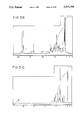
- FIG. 3 is the NMR spectrum for the compound having the structure: ##STR45## prepared according to Example I.
- FIG. 4 is the GLC profile for fraction 4 of the distillation product of the reaction product of Example II containing the compound having the structure: ##STR46##
- FIG. 5 is the GLC profile for the reaction product of Example III containing the compound having the structure: ##STR47## (Conditions: Carbowax column programmed at 130°-220° C.).
- FIG. 5A is the GLC profile for the crude reaction product of Example III(A) containing the compound having the structure: ##STR48## and, (in addition, the compounds having the structures: ##STR49## wherein each of the representations of the foregoing structures shows mixtures and wherein in the mixtures in each of the compounds one of the dashed lines is a carbon-carbon double bond and the other of the dashed lines is a carbon-carbon single bond.
- FIG. 5B is the NMR spectrum for the compound having the structure: ##STR50##
- FIGS. 5C, 5D and 5E are each NMR spectra for epimers of the compound having the structure: ##STR51##
- FIG. 6 is the GLC profile for the crude reaction product of Example IV containing the compound having the structure: ##STR52## (Conditions: Carbowax column programmed at 130°-220° C.).
- FIG. 7 is the NMR spectrum for the compound having the structure: ##STR53## prepared according to Example IV.
- FIG. 8 is the GLC profile for the crude reaction product of Example V(A) containing the compound having the structure: ##STR54## (Conditions: Carbowax column programmed at 130°-220° C.).
- FIG. 9 is the NMR spectrum for the isomer having the structure: ##STR55## prepared according to Example V(A).
- FIG. 10 is the NMR spectrum for the isomer having the structure: ##STR56## prepared according to Example V(A).
- FIG. 11 is the GLC profile for the crude reaction product of Example V(B) containing the compound having the structure: ##STR57## (Conditions: Carbowax column programmed at 130°-220° C.).
- FIG. 12 is the GLC profile for the crude reaction product of Example VI containing the compound having the structure: ##STR58## (Conditions: Carbowax column programmed at 130°-220° C.).
- FIG. 13 is the NMR spectrum for the compound having the structure: ##STR59## prepared according to Example VI.
- FIG. 14 is the GLC profile for the crude reaction product of Example VII containing the compound having the structure: ##STR60## (Conditions: Carbowax column programmed at 130°-220° C.).
- FIG. 15 is the NMR spectrum for the compound having the structure: ##STR61## prepared according to Example VII.
- FIG. 16 is the GLC profile for the crude reaction product of Example VIII containing the compound having the structure: ##STR62##
- FIG. 17 is the NMR spectrum for the peak indicated by reference numeral 161 in FIG. 16, the compound having the structure: ##STR63##
- FIG. 18 is the NMR spectrum for the peak indicated by reference numeral 162 in FIG. 16; the compound having the structure: ##STR64##
- FIG. 19 is the NMR spectrum for the peak indicated by reference numeral 163 in FIG. 16 for a compound produced according to Example VIII.
- FIG. 20 is the NMR spectrum for the peak indicated by reference numeral 164 in FIG. 16; the compound having the structure: ##STR65##
- FIG. 21 is the GLC profile for the crude reaction product of Example IX containing the compound having the structure: ##STR66##
- FIG. 22 is the GLC profile for the crude reaction product of Example X containing the compound having the structure: ##STR67## (Conditions: Carbowax column programmed at 130°-220° C.).
- FIG. 23 is the NMR spectrum for the compound having the structure: ##STR68## produced according to Example X.
- FIG. 24 is the GLC profile for the crude reaction product produced according to Example XI containing the compound having the structure: ##STR69## (Conditions: Carbowax column programmed at 130°-220° C.).
- FIG. 25 is the NMR spectrum for the compound having the structure: ##STR70## produced according to Example XI.
- FIG. 26 is a partial side elevation and partial sectional view of an apparatus for forming polymer pellets containing at least one of the adamantane derivatives of our invention.
- FIG. 27 is a section taken along line 27-27 of FIG. 26.
- FIG. 28 is the GLC profile for the crude reaction product of Example XII containing the compound having the structure: ##STR71## (Conditions: SE-30 column programmed at 130°-220° C. at 8° C. per minute).
- FIG. 29 is the GLC profile for the crude reaction product of Example XIII containing the compound having the structure: ##STR72## (Conditions: SE-30 column programmed at 130°-220° C. at 8° C. per minute).
- FIG. 30 is the GLC profile for the crude reaction product of Example XIV containing the compounds having the structures: ##STR73## (Conditions: SE-30 column programmed at 130°-220° C. at 8° C. per minute).
- FIG. 31 is the GLC profile for distillation fraction 6 of the distillation product of the reaction product of Example XIV.
- FIG. 32 is the GLC profile for distillation fraction 7 of the distillation product of the reaction product of Example XIV (Conditions: SE-30 column programmed at 130°-220° C. at 8° C. per minute).
- FIG. 33 is the NMR spectrum for the peak indicated by reference numeral 303 of the GLC profile of FIG. 30; the compound having the structure: ##STR74##
- FIG. 34 is the NMR spectrum for the compound having the structure: ##STR75## wherein A is the methyladamantyloxy moiety.
- FIG. 35 is the NMR spectrum for the peak indicated by reference numeral 305 on the GLC profile of FIG. 30; for the compound having the structure: ##STR76##
- FIG. 36 is the NMR spectrum for distillation fraction 6 of the distillation product of the reaction product of Example XIV containing the compounds having the structures: ##STR77##
- FIG. 37 is the NMR spectrum for distillation fraction 8 of the distillation product of the reaction product of Example XIV containing the compounds having the structures: ##STR78##
- FIG. 37A is the GLC profile for the crude reaction product of Example XV containing the compounds having the structures: ##STR79##
- FIG. 37B is the GLC profile for distillation fraction 3 of the distillation product of the reaction product of Example XV containing the compounds having the structures: ##STR80##
- FIG. 37C is another GLC profile of distillation fraction 3 of the distillation product of the reaction product of Example XV.
- FIG. 38 is the NMR spectrum for peak group 371 of the GLC profile of FIG. 37B of distillation fraction 3 of the distillation product of the reaction product of Example XV for the compound having the structure: ##STR81##
- FIG. 39 is the GLC profile for distillation fraction 6 of the distillation product of the reaction product of Example XV containing the compounds having the structures: ##STR82##
- FIG. 40 is the NMR spectrum for peak group 392 of the GLC profile of FIG. 39 for distillation fraction 6 of the distillation product of the reaction product of Example XV; one or a mixture of the compounds having the structures: ##STR83##
- FIG. 41 is the NMR spectrum for the peak group 393 of the GLC profile of FIG. 39 of the distillation fraction 6 of the distillation product of Example XV and is for the compound having the structure: ##STR84##
- FIG. 42 is the NMR spectrum of peak group 394 of the GLC profile of FIG. 39 for distillation fraction 6 of the distillation product of the reaction product of Example XV; and is for the compound having the structure: ##STR85## the starting material for the reaction.
- FIG. 43 is the NMR spectrum for the peak indicated by reference numeral 395 of the GLC profile of FIG. 39 for distillation fraction 6 of the distillation product of the reaction product of Example XV; and is for one or both of the compounds having the structures: ##STR86##
- FIG. 44 is the NMR spectrum for the peak indicated by reference numeral 372 of the GLC profile of FIG. 37C; and is for one or both of the epimers having the structures: ##STR87##
- FIG. 45 is the GLC profile for the crude reaction product of Example XVI containing the compound having the structure: ##STR88##
- FIG. 46 is the NMR spectrum for the compound having the structure: ##STR89## according to Example XVI.
- FIG. 47 is the GLC profile for the crude reaction product of Example A containing the compound having the structure: ##STR90##
- the peak indicated by reference numeral 5 is the peak for the compound having the structure: ##STR91##
- FIG. 1 is the GLC profile for the crude reaction product of Example A containing the compound having the structure: ##STR92## (Conditions: K-20M column programmed at 100°-220° C. at 8° C. per minute).
- the peak indicated by reference numeral 10 is the peak for the compound having the structure: ##STR93##
- FIG. 2 is another GLC profile for the reaction product of Example I (Conditions: Carbowax column programmed at 130°-220° C.).
- the peak indicated by reference numeral 21 is the peak for the compound having the structure: ##STR94##
- the peaks indicated by reference numerals 22 and 23 are for the compounds having the structures: ##STR95## wherein these structures are representative of mixtures and in the mixture in each of the compounds one of the dashed lines is a carbon-carbon double bond and the other of the dashed lines is a carbon-carbon single bond.
- FIG. 4 is the GLC profile for fraction 4 of the distillation product of the reaction product of Example II (Conditions: K-20M column programmed at 100°-220° C. at 8° C. per minute).
- the peak indicated by reference numeral 41 is the peak for the compound having the structure: ##STR96##
- FIG. 5 is the GLC profile for the crude reaction product of Example III.
- the peak indicated by reference numeral 51 is the peak for the compound having the structure: ##STR97##
- the peak indicated by reference numerals 52 and 53 are for the solvent used in the reaction mass. (Conditions: Carbowax column programmed at 130°-220° C. at 8° C. per minute).
- FIG. 5A is the GLC profile for the crude reaction product of Example IIIA.
- the peak indicated by reference numeral 55 is the peak for the compound having the structure: ##STR98##
- the peak indicated by reference numeral 54 is the peak for the mixture of compounds defined according to the structure: ##STR99## representative of a mixture of compounds wherein in the mixture in each of the compounds one of the dashed lines is a carbon-carbon double bond and the other of the dashed lines is a carbon-carbon single bond.
- the peak indicated by reference numeral 56 and 57 is for a mixture of compounds defined according to the structure: ##STR100## wherein in the mixture one of the dashed lines is a carbon-carbon double bond and the other of the dashed lines is a carbon-carbon single bond. (Conditions: Carbowax column programmed at 130°-220° C. per minute).
- FIG. 8 is the GLC profile for the crude reaction product of Example V(A) (Conditions: Carbowax column programmed at 130°-220° C. at 8° C. per minute).
- the peak indicated by reference numeral 81 is the peak for the compound having the structure: ##STR101##
- the peak indicated by reference numeral 82 is the peak for the compound having the structure: ##STR102##
- FIG. 16 is the GLC profile for the crude reaction product of Example VIII (Conditions: Carbowax column programmed at 130°-220° C. at 8° C. per minute).
- the peak indicated by reference numeral 161 is for one of the isomers having the structure: ##STR103##
- the peak indicated by reference numeral 162 is for another isomer having the structure: ##STR104##
- the peak indicated by reference numeral 163 is the peak for another isomer of the compound having the structure: ##STR105##
- the peak indicated by reference numeral 164 is for isomers of the compound having the structure: ##STR106##
- FIG. 22 is the GLC profile for the crude reaction product of Example X.
- the peak indicated by reference numeral 2200 is the peak for the compound having the structure: ##STR107## (Conditions: Carbowax column programmed at 130°-220° C. at 8° C. per minute).
- the apparatus used in producing polymeric fragrances containing one or more of the adamantane derivatives comprises a device for forming scented polyolefin (for example) pellets, which comprises a vat or container 212 into which a mixture of polyolefins such as polyethylene and an aromatic substance or scented material is placed (in this case at least one of the adamantane derivatives of our invention).
- the container is closed by an airtight lid 228 and clampled to the container by bolts 265.
- a stirrer 273 traverses the lid or cover 228 in airtight manner and is rotated in a suitable manner.
- a surrounding cylinder 212 having heating coils 212A which are supplied with electric current through cable 224 from a rheostat or control 216 is operated to maintain a temperature inside the container 212 such that polyethylene or other thermoplastic polymer in the container will be maintained in the molten or liquid state. It has been found advantageous to employ a colorless odorless polymer (e.g., polyethylene) with viscosity ranging between 180 and 220 saybolt seconds and having a melting point in the range of 200°-280° F.
- the heater 212A is operated to maintain the upper portion of the container 212 within a temperature range of from 250°-350° F.
- the bottom portion of the container is heated by means of heating coils 212A heated through a control 220 connected thereto through a connecting wire 222 to maintain the lower portion of the container within a temperature range of from 250°-350° F.
- polymer e.g., polyethylene
- a scemted aroma imparting material at least one of the adamantane derivatives of our invention
- the material must be compatible with the polyolefin and forms a homogeneous liquid melt therewith.
- the scented material is of a type for the particular aroma desired and formulated specifically for the scenting purpose for which the polyolefin will be employed.
- scented material containing at least one of the adamantane derivatives of our invention
- polyolefin Generally about 5-30% by weight of the scented material (containing at least one of the adamantane derivatives of our invention) are added to the polyolefin.
- the scent imparting material e.g., a composition containing one of the adamantane derivatives of our invention
- the mixture is stirred for a few minutes, for example, 5-15 minutes and maintained within the temperature range as indicated previously by heating coils 212A.
- the controls 216 and 220 are connected, respectively, through cables 214 and 222, respectively, to heating coils 212A.
- the said cotnrols 216 and 220 are also connected through cables 224 and 226, respectively, to a suitable power supply of electric current for supplying the electric power to the heating coils 212A for heating purposes.
- valve "V” is opened permitting the mass to flow outwardly through conduit 218/232 having a multiplicity of orifices 234 adjacent to the lower side therof.
- the outer end of the conduit 218/232 is closed so that the liquid polymer (e.g., polyolefin) and aroma imparting material (e.g., at least one of the adamantane derivatives of our invention) will continuously drop through orifices 234 downwardly from conduit 232.
- liquid polymer e.g., polyolefin
- aroma imparting material e.g., at least one of the adamantane derivatives of our invention
- the temperature of the polymer e.g., polyethylene or polyolefin
- scent imparting material e.g., at least one of the adamantane derivatives of our invention
- the regulation of the temperature through the controls 216 and 220 is essential in order to insure temperature balance to provide for the continuous dropping or dripping of molten polymer (e.g., polyethylene) and scenting material (e.g., one or more of the adamantane derivatives of our invention) mixture through the orifices 234 at a rate which will insure the formation of droplets 236 which will fall downwardly onto a moving conveyor belt 238 caused to run between conveyor wheels 240 and 242 beneath the conduit 232.
- molten polymer e.g., polyethylene
- scenting material e.g., one or more of the adamantane derivatives of our invention
- a feature of this aspect of the process of our invention is the provision for moistening of the conveyor belt 238 to insure rapid formation of the solid polymeric (e.g., polyolefin) scented pellets 244 without sticking to material which will not normally stick to a melted plastic.
- a moistening means 248 insures a sufficiently cold temperature of the belt surface for adequate formation of the pellets 244.
- the adequate moistening means comprises a container 250 which is continuously fed with water 254 to maintain a level for moistening a sponge element 256 which bears against the exterior of the belt 238.
- FIG. 30 is the GLC profile for the crude reaction product of Example XIV ((Conditions: SE-30 column programmed at 130°-220° C. at 8° C. per minute).
- the peak indicated by reference numeral 303 is the peak for the mixture of compounds defined according to the structure: ##STR108##
- the peak indicated by reference numeral 304 is the peak for the compound having the structure: ##STR109##
- the peak indicated by reference numeral 305 is the peak for the mixture of compound having the structure: ##STR110##
- the peak indicated by reference numeral 301 is the peak for the methanol solvent.
- the peak indicated by reference numeral 302 is the peak for the toluene solvent. (Conditions: SE-30 column programmed at 130°-220° C.).
- FIG. 37A is the GLC profile for the crude reaction product of Example XV (Conditions: Carbowax column programmed at 130°-220° C. at 8° C. per minute).
- the peak group indicated by reference numeral 370 is for the compound having the structure: ##STR111##
- FIG. 37B is the GLC profile for distillation fraction 3 of the distillation product of the reaction product of Example XV.
- the peak group indicated by reference numeral 371 is for the compound having the structure: ##STR112## (Conditions: Carbowax column programmed at 130°-220° C. at 8° C. per minute).
- FIG. 37C is the GLC profile for distillation fraction 3 of the distillation product of the reaction product of Example XV.
- the peak indicated by reference numeral 372 is the peak for the isomer or mixture of isomers of epimers having the structures: ##STR113##
- FIG. 39 is the GLC profile for distillation fraction 6 of the distillation product of the reaction product of Example XV.
- the peak indicated by reference numeral 395 is the peak for one or both of the epimers having the structures: ##STR114##
- the peak indicated by reference numeral 394 is the peak for a starting material having the structure: ##STR115##
- the peak indicated by reference numeral 393 is the peak for the compound having the structure: ##STR116##
- the peak indicated by reference numeral 392 is the peak for one or both of the compounds having the structures: ##STR117##
- the peak indicated by reference numeral 391 is the peak for the compound having the structure: ##STR118##
- FIG. 45 is the GLC profile for the crude reaction product of Example XVI (Conditions: Carbowax column programmed at 130°-220° C. at 8° C. per minute).
- the peak indicated by reference numeral 450 is the peak for the compound having the structure: ##STR119##
- the peak indicated by reference numeral 451 is the peak for the compounds defined according to the structure: ##STR120##
- Our invention concerns adamantane derivatives defined according to the basic structure: ##STR121## substituted at least at the "2", "4" and “8" positions, thusly: (a) at the "2" position with a oxygen atom;
- our invention concerns adamantane derivatives defined according to the generic structure: ##STR122## wherein X is a moiety selected from the group consisting of the structures: ##STR123## wherein Y is a moiety selected from the group consisting of the structures: ##STR124## wherein W is no moiety or is selected from the group consisting of hydrogen, hydroxy and lower alkoxy; wherein the dashed line represented by:
- R 1 is selected from the group consisting of hydrogn, lower alkyl and lower acyl; and wherein R 2 is selected from the group consisting of hydrogen and lower alkyl; with the provisos that:
- Y is selected from the group consisting of: ##STR127## and X is selected from the group consisting of: ##STR128## or (2) the moiety: ##STR129## represents a moiety selected from the group consisting of an enol ether moiety having the structure: ##STR130## and a lactone moiety having the structure: ##STR131## (3) when the line:
- W is selected from the group consisting of hydrogen, hydroxy and lower alkoxy
- perfume compositions including perfume compositions, perfumed articles (e.g., solid or liquid anionic, cationic, nonionic or zwitterionic detergents, fabric softeners, fabric softener articles, cosmetic powders, hair preparations and perfumed polymers), colognes, smoking tobacco compositions, smoking tobacco articles, deodorizing articles and compositions and malodor maskants.
- perfumed articles e.g., solid or liquid anionic, cationic, nonionic or zwitterionic detergents, fabric softeners, fabric softener articles, cosmetic powders, hair preparations and perfumed polymers
- colognes e.g., smoking tobacco compositions, smoking tobacco articles, deodorizing articles and compositions and malodor maskants.
- Our invention also relates to processes for preparing such adamantane derivatives using the terpene having the structure: ##STR135## as a starting material and producing by means of "oxo" reaction the aldehyde having the structure: ##STR136## and producing therefrom the intermediate having the structure: ##STR137## by means of reaction of the compound having the structure: ##STR138## with formaldehyde via a "formylation” reaction as more specifically set forth in United Kingdom Pat. No. 2,054,557 published on Feb. 18, 1981 the specification of which is incorporated by reference herein.
- the reactions to prepare the compound having the structure: ##STR142## are as follows: ##STR143## the resulting compounds defined according to the structure: ##STR144## may then be further reacted to form a ketone by means of oxidation having the structure: ##STR145## according to the reaction: ##STR146##
- the resulting ketone may be used "as is” for its fragrance, deodorancy or tabacco flavorant properties or it may be reacted with hydrogen whereby the methylene group is reduced to a methyl group to form the saturated ketone having the structure: ##STR147## according to the reaction: ##STR148##
- Either ketone may be used "as is” or may be further reacted with a grignard reagent or an alkyl lithium compound to produce tertiary alcohols according to the reaction: ##STR149## followed by the hydrolysis reaction: ##STR150## wherein the dashed line is a carbon-carbon double bond or a carbon-carbon single line; wherein M represents Li, MgBr, MgCl or MgI and where R 2 represents lower alkyl.
- the resulting tertiary alcohol may be then further reacted with an acylating compound or with any etherifying compound according to the reaction: ##STR151## wherein R 1 is an acyl moiety or an alkoxy moiety and Z represents a halogen or sulfate moiety.
- the compound having the structure: ##STR152## may be reacted via an "oxo" reaction with carbon monoxide and hydrogen at standard oxo reaction conditions to form a mixture of compounds according to the reaction: ##STR153##
- the resulting mixture may be separated by means of fractional distillation to form individual compounds, e.g., compounds having the structures: ##STR154##
- the compound having the structure: ##STR155## may, in the alternative, be etherified by means of etherification reactions such as by means of the reaction of the compound having the structure: ##STR156## with dimethyl sulfate subsequent to reaction with base according to the reactions: ##STR157## wherein M 1 represents alkali metal such as sodium, potassium or lithium.
- the etherification reactions which can be utilized involve the use of isobutylene and methyl tertiary butylether according to the reaction: ##STR158## wherein byproducts are formed, that is, the compounds having the structures: ##STR159##
- the compound having the structure: ##STR160## may also be acylated as with formic acid according to the reaction: ##STR161## or acetic anhydride according to the reaction: ##STR162## or the compound having the structure: ##STR163## may be first hydrogenated according to the reaction: ##STR164## and that resulting hydrogenation product may be acylated according to the reaction, for example: ##STR165## In the alternative, the acylation product may be hydrogenated according to the reaction: ##STR166## In general the hydrogenation reaction of the various adamantane derivatives having the methylene moiety are shown according to the reaction: ##STR167## wherein X represents one of the moieties: ##STR168##
- the adamantane derivatives of our invention have intense and substantive aromas which can be described as sandalwood, woody, patchouli, rhubarb, ginger, minty, amyris, camphoraceous, cardamon, earthy, cedarwood-like, vetiver, peppery, grapefruit peel-like, rose-like, ambery, spicy, ginger root, rosemary, piney, chrysanthemum-like, green and fir balsam pine-like, with sweet, amyris, camphoraceous, patchouli, woody, piney, cedarwood, sandalwood, herbaceous, incense, olibanum, vetiver, grapefruit peel-like, floral, sweet pea, rose, peony, fruit, early morning forest path, green, ginger root and amber topnotes.
- Table I sets forth the summary of the particular compounds and their aromas:
- reaction may take place in the presence of base; but must take place in the absence of acid. Accordingly, the reaction can be written: ##STR194## and can take place in the presence of sodium bicarbonate, sodium carbonate, potassium bicarbonate, potassium carbonate or disodium acid phosphate in the absence of solvent.
- the temperature of reaction may be in the range of from about 130° C. up to about 250° C. with a preferred temperature of 210°-230° C.
- the reaction pressure may vary from about 0.5 up to about 10 atmospheres with a preferred reaction pressure of about 1 atmosphere.
- the reaction product is distilled by means of fractional distillation (e.g., at a vapor temperature of 128°-133° C. and a pressure of 5-12 mm/Hg.).
- the resulting alcohols or epimers thereof can then, if desired, be further reacted with a reducing agent such as hydrogen whereby the methylene double bond is reduced according to the reaction: ##STR199##
- the reaction may be carried out in the presence of an inert solvent such as isopropyl alcohol but must be carried out in the presence of a hydrogenation catalyst, for example, Raney nickel or palladium suspended on carbon or palladium suspended on calcium carbonate, for example, 5% palladium on calcium carbonate.
- the reaction temperature may range from about 80° C. up to about 150° C. and the reaction pressure may range from about 80 psig up to about 150 psig.
- the reaction mass is filtered, the solvent is evaporated and the reaction product is fractionally distilled.
- the compound having the structure: ##STR200## or the hydrogenated compound thus produced having the structure: ##STR201## may be esterified, etherified or oxized.
- the esterification reaction takes place wherein the dashed line represents a carbon-carbon single bond or a carbon-carbon double bond and R 3 are the same or different hydrogen or lower alkyl with the proviso that R 3 and R 3 ' are not both hydrogen.
- the formate ester having the structure: ##STR203## for example can be produced by means of reaction of formic acid with acetic anhydride according to the reaction: ##STR204##
- the reaction may take place at a temperature in the range of from about 10 up to about 40° C. in the presence of an acid catalyst such as a sulfuric acid catalyst or a hydrochloric acid.
- esterification reagents include acetic anhydride which reacts with the compound having the structure: ##STR205## according to the reaction: ##STR206## or propionic acid anhydride which reacts with the compound having the structure: ##STR207## according to the reaction: ##STR208##
- the oxidation reaction can be carried out to form a compound having the structure: ##STR209## or it can be carried out to form a compound having the structure: ##STR210##
- a temperature of from about 0° up to about 250° C. can be used.
- the reaction can be carried out in the presence of any chromic oxidizing agent, for example, "Collins" reagent which is chromium trioxide in methylene dichloride or it can be carried out in the presence of pyridinium dichromate or pyridinum chlorochromate at temperatures in the range of 0° to 40° C.
- the reaction can also be carried out in the presence of a copper chromite catalyst at a temperature in the range of 200°-220° C.
- the reaction may be carried from about 0.8 up to about 2 atmospheres with 1 atmosphere pressure being preferred.
- the reaction can be carried out in the presence of any mineral acid, e.g., hydrochloric acid, sulfuric acid or phosphoric acid.
- the reaction is carried out using isobutylene in admixture with methyl tertiary butylether with a mole ratio of isobutylene:methyl tertiary butylether ranging from about 0.5:1.5 up to about 1.5:0.5.
- the reaction temperature may vary from about 35° C. up to about 50° C.
- the reaction time may vary from about 5 hours up to about 15 hours.
- the first reaction takes place in the presence of a strong base such as sodium hydroxide, lithium hydroxide or potassium hydroxide at a temperature in the range of from about 10° up to about 40° C.
- a strong base such as sodium hydroxide, lithium hydroxide or potassium hydroxide
- the reaction may take place using sodium hydride or sodium in place of the alkali metal hydroxide in order to form the compound having the structure: ##STR220## where M 1 is alkali metal.
- the resulting product having the structure: ##STR221## is then reacted with dimethyl sulphate at a temperature in the range of 40°-80° C. with a mole ratio of dimethyl sulphate:compound having the structure: ##STR222## being from about 1:1 up to about 1.2:1 according to the reaction: ##STR223##
- the resultant oxidized compounds e.g., ketones, for example, the ketone having the structure: ##STR224## may be further reacted to form tertiary alcohols as with alkyl lithium and lower alkyl grignard reagents according to the reaction sequence: ##STR225## wherein the dashed line represents a carbon-carbon single bond or a carbon-carbon double bond; and wherein M represents Li, MgBr, MgCl or MgI and R 2 represents lower alkyl. In the alternative R 2 could also represent lower alkenyl or lower alkynyl, or aryl or aralkyl or alkaryl.
- the resulting compound for example, the compound having the structure: ##STR226## may be esterified according to the reaction, for example: ##STR227## or, for example: ##STR228## according to esterification conditions as set forth at column 21 of U.S. Letters Patent No. 4,439,345 the specification of which is incorporated herein by reference.
- the compound having the structure for example: ##STR229## can be etherified forming, for example, the methylether by first reacting the compound with sodium and then reacting the resulting sodium organometallic compound with methyliodide in order to form the methylether.
- the conditions of the etherification are set forth at columns 20 and 21 of U.S. Pat. No. 4,439,345 the specification of which is incorporated herein by reference.
- adamantane derivatives of our invention having an alkylidene substituent at the "4" position of the adamantane ring which is: ##STR230## for example, the compound having the structure: ##STR231## or the compound having the structure: ##STR232## or the compound having the structure: ##STR233## or the compound having the structure: ##STR234## may be reacted via an "oxo" reaction shown, generically as follows: ##STR235## wherein x has the structure: ##STR236## and wherein R 1 represents hydrogen, lower alkyl or lower acyl and wherein R 2 represents hydrogen or lower alkyl.
- reaction product is then separated as by fractional distillation thereby yielding a mixtures of compounds including, but not limited to aldehydes.
- the resulting mixtures and/or compounds may be used "as is" for their organoleptic properties or they may be further reacted by oxidation or reduction techniques, e.g., as by hydrogenation using a hydrogenation catalyst or by oxidation using a chromium oxidation catalyst.
- the aldehyde-containing compositions may be further reacted as by reduction with an alkali metal or alkali metal hydride such as sodium borohydride, lithium aluminum hydride and the like.
- the mole ratio of aldehyde:alkali metal hydride is in the range of from about 1:1 up to about 4:1 with a preferred mole ratio of aldehyde:alkali metal hydride being about 3:1.
- the reaction takes place at reflux conditions in a solvent which will permit reflux conditions at atmospheric pressure.
- the reaction takes place in the presence of an inert solvent, that is, a solvent inert to the reactants and the reaction product and one which will permit a reflux temperature at atmospheric pressure in the range of from about 80° C. up to about 100° C.
- a preferred solvent is isopropyl alcohol.
- the concentration of aldehyde in the reaction mass may vary from about 5 moles per liter up to about 15 moles per liter with a concentration of aldehyde in the reaction mass (initially) being about 10 moles per liter.
- the concentration of alkali metal hydride in the reaction mass may very from about 2 moles per liter up to about 6 moles per liter with a preferred concentration of alkali metal hydride in the reaction mass being about 4 moles per liter.
- the adamantane derivatives of our invention can be used to contribute powerful, long-lasting, sandalwood, woody, patchouli, rhubarb, ginger, minty, amyris, camphoraceous, cardamon, earthy, cedarwood-like, vetiver, peppery, grapefruit peel-like, rose-like, ambery, spicy, ginger root, rosemary, piney, chrysanthemum-like, green and fir balsam pine-like aromas, with sweet, amyris, camphoraceous, patchouli, woody, piney, cedarwood, sandalwood, herbaceous, incense, olibanum, vetiver, grapefruit peel-like, floral, sweet pea, rose, peony, fruity, early morning forest path, green, ginger root and amber topnotes to perfume compositions, perfumed articles, colognes, deodorizing articles, deodorizing compositions and malodor maskants.
- perfumed articles are anionic, cationic, nonionic and zwitterionic detergents, drier-added fabric softener compositions and drier-added fabric softener articles as well as hair preparations.
- the adamantane derivatives of our invention can be formulated into or used as components of a "perfume composition” or can be used as components of a "perfumed article” or the perfume composition may be added to perfumed articles.
- perfume composition is used herein to mean a mixture of organic compounds including, for example, alcohols (other than the hydroxy-substituted adamantane derivatives of our invention); aldehydes (other than the oxo reaction products of our invention); ketones, (other than the keto-substituted adamantane derivatives of our invention), nitriles, ethers (other than the alkoxy-substituted adamantane derivatives of our invention), lactones, natural essential oils, synthetic essential oils, synthetic essential oils and frequently hydrocarbons which are admixed so that the combined odors of the individual components produce a pleasant or desired fragrance.
- Such perfume compositions usually contain (a) the main note or the "bouquet" or foundation stone of the composition; (b) modifiers which round off and accompany the main note; (c) fixatives which include odorous substances which lend a particular note to the perfume throughout all stages of evaporation and substances which retard evaportation; and (d) topnotes which are usually low boiling, fresh smelling materials.
- the individual component will contribute its particular olfactory characteristics, but the overall effect of the perfume composition will be the sum of the effects of each of the ingredients.
- the individual adamantane derivatives of this invention or mixtures thereof can be used to alter the aroma characteristics of a perfume composition, for example, by highlighting or moderating the olfactory reaction contributed by another ingredient in the composition.
- perfume compositions containing as little as 0.5% of one or more of the adamantane derivatives of our invention or even less can be used to impart interesting sandalwood, woody, patchouli, rhubarb, ginger, minty, amyris, camphoraceous, cardamon, earthy, cedarwood-like, vetiver, peppery, grapefruit peel-like, rose-like, ambery, spicy, ginger root, rosemary, piney, chrysanthemum-like, green and fir balsam pine-like aromas, with sweet, amyris, camphoraceous, patchouli, woody, piney, cedarwood, sandalwood, herbaceous, incense, olibanum, vetiver, grapefruit peel-like, floral, sweet pea, rose, peony, fruit, early morning forest path
- the adamantane derivatives of this invention can be used alone or a perfume composition as an olfactory component in detergents and soaps, space odorants and deodorants; colognes, toilet waters, bath salts, hair preparations, such as lacquers, brilliantines, pomades and shampoos; cosmetic preparations such as creams, deodorants, hand lotions and sun screens; powders such as talcs, dusting powders, face powders and the like.
- adamantane derivatives of our invention When used as an olfactory component of a perfumed article, as little as 0.01% of one or more of the adamantane derivatives of our invention will suffice to impart interesting, long-lasting, sharp, sandalwood, woody, patchouli, rhubarb, ginger, minty, amyris, camphoraceous, cardamon, earthy, cedarwood-like, vetiver, peppery, grapefruit peel-like, rose-like, ambery, spicy, ginger root, rosemary, piney, chrysanthemum-like, green and fir balsam pine-like aromas, with sweet, amyris, camphoraceous, patchouli, woody, piney, cedarwood, sandalwood, herbaceous, incense, olibanum, vetiver, grapefruit peel-like, floral, sweet pea, rose, peony, fruit, early morning forest path, green, ginger root and amber topnotes. Generally, no more than 0.5% is
- the perfume composition can contain a vehicle or carrier for the adamantane derivative(s) taken alone or taken together with other ingredients.
- vehicle can be a liquid such as an alcohol such as ethanol, a glycol such as propylene glycol or the like.
- the carrier can be an absorbent solid such as gum, (e.g., gum arabic, guar gum and xanthan gum) or components for encapsulating the composition such as gelatin which can be used to form a capsule wall surrounding the perfume oil as by means of coacervation.
- An additional aspect of our invention provides an organoleptically improved smoking tobacco product and additives therefor including methods of making the same which overcome problems heretofore encountered in the creation or enhancement of specific desired sweet, oriental notes. Such notes both prior to and on smoking in both the main stream and the side stream, may now be readily controlled and maintained at the desired uniform level regardless of variations in the tobacco components of the blend; or the nature of the filter used in conjunction with the smoking tobacco article.
- This invention further provides improved tobacco additives for materials used in the fabrication of tobacco articles (particularly smoking tobacco articles) and methods whereby desirable sweet, oriental notes may be imparted to smoking tobacco products and may be readily varied and controlled to produce the desired uniform flavoring characteristics.
- adamantane derivatives of our invention may be added to the smoking tobacco material or substitute therefor either separately or in admixture with one or more adamantane derivatives of our invention:
- An aroma and flavoring concentrate containing one or more of the adamantane derivatives of our invention and, if desired, one or more of the above-indicated additional flavoring additives may be added to the smoking tobacco material, to the filter or to the leaf or paper wrapper or to a filter which is part of the smoking article.
- the smoking tobacco material may be shredded, cured, cased or blended tobacco material or reconstituted tobacco material or tobacco substitutes (e.g., lettuce leaves) or mixtures thereof.
- the proportions of flavoring additives may be varied in accordance with taste, but insofar as enhancement or the imparting of sweet, oriental, "Turkish” like notes prior to and on smoking, in both the main stream and the side stream, we have found that satisfactory results are obtained if the proportion by weight of the sum total of adamantane derivatives to smoking tobacco material is between 50 ppm and 1500 ppm (0.005%-0.15%) of the active ingredients to the smoking tobacco material. We have further found that satisfactory results are obtained if the proportions by weight of the sum total of adamantane derivatives used to flavoring material is between 0.05:1 and 0.50:1.
- any convenient method for incorporating the adamantane derivatives in the tobacco product may be employed.
- the adamantane derivatives taken alone or along with other flavoring additives may be dissolved in a suitable solvent such as a food grade ethanol, pentane, diethyl ether and/or other volatile organic solvents, and the resulting solution may either be sprayed on a cured, cased and blended blended tobacco material; or the tobacco material or filter may be dipped into such solution.
- a solution of one or more of the adamantane derivatives of our invention taken alone or taken further together with other flavoring additives are set forth, supra, may be applied by means of a suitable applicator such as a brush or roller on the paper or leaf wrapper for the smoking product, or it may be applied to the filter by either spraying or dipping or coating.
- the tobacco treated may have one or more of the adamantane derivatives of our invention in excess if the amounts of concentrations above indicated so that when blended with other tobaccos, the final product will have the percentage within the indicated range.
- adamantane derivatives of our invention can be incorporated with materials such as filter tip materials, seam paste, packaging materials and the like which are used along with the tobacco to form a product adpated for smoking.
- the adamantane derivatives of our invention can be added to certain tobacco substitutes of natural or synthetic origin (e.g., dried lettuce leaves) and, accordingly, by the term "tobacco” as used throughtout this specification is meant any composition intended for human consumption, by smoking or otherwise, whether composed of toacco plant parts or substitued materials or both.
- adamantane derivatives of our invention can be utilized to alter, modify, augment or enhance sensory properties, particularly organoleptic properties, such as flavor(s) and/or frangrance(s) of a wide variety of consumable materials.
- an aged, cured and shredded domestic burley tobacco is sprayed with a 20% alcohol solution of the compound having the structure: ##STR244## in an amount to provide a tobacco composition containing 800 ppm by weight of the compound having the structure: ##STR245## on a dry basis.
- the alcohol is removed by evaporation and the tobacco is manufactured into cigarettes by the usual techniques.
- the cigarette when treated as indicated has a desired and pleasant aroma which is detectable in the main stream and in the side stream when the cigarette is smoked.
- Our invention also relates to the utilization of controlled release technolgy for the controlled release of perfumes into gaseous environments; odor maskants and deodorizing agents into gaseous environments; and tobacco aromatizing and flavors into smoking article filters from polymers such as mixtures of epsilon polycaprolactone polymers and polyethylene which poly epsilon caprolactone polymers are defined according to at least one of the structures: ##STR246## wherein "n" is from about 50 up to about 1,200 with the proviso that the average "n” n the system varies from about 150 up to about 700 according to the mathematical statement:
- n the average number of repeating monomeric units for the epsilon polycaprolactone polymer.
- the perfumed or flavored material's release rate from such polymer mixture is close to "zero order".
- the release rate in a polymeric matrix is proportional to t -1/2 until about 60% of the functional fluid (e.g., the adamantane derivative of our invention) is released from the polymeric matrix.
- the release rate thereafter is related exponentially to time as a general rule according to the equation: ##EQU1## wherein k 1 and k 2 are constants.
- the amount of perfume composition released is proportional to time as long as the concentration of perfume or flavor material present, e.g., the adamantane derivatives of our invention is higher than the solubility of the agent in the matrix.
- the concentration of perfume or flavor material present e.g., the adamantane derivatives of our invention is higher than the solubility of the agent in the matrix.
- Kydonieus further states, that if one assumes that the release of functional fluid by diffusion is negligible in monolithic erodible systems, the speed of erosion will control the release rate and release by erosion by a surface-area-dependent phenomenon, the release is constant (zero order) as long as the surface area does not change during the erosion process. This is the case with the polymers containing the adamantane derivatives of our invention.
- polyepsilon caprolactone polymers useful in practicing our invention are more specifically described in the brochure of the Union Carbide Corporation, 270 Park Avenue, New York, N.Y. 10017, entitled "NEW POLYCAPROLACTONE THERMOPLASTIC POLYMERS PCL-300 AND PCL-700" (incorporated herein by reference) the polyepsilon caprolactone polymers are composed of a repeating sequence of non-polar methylene groups and relatively polar ester groups.
- the average number of repeating monomeric units varies between 150 and 700 depending on the particular "PCL" number.
- PCL-300 the average number of repeating monomeric units is about 300.
- PCL-700 the average number of repeating monomeric units is 700.
- the polyepsilon caprolactone homopolymers which are ultimately taken in admixture with such materials as polyethylene useful in the practice of our invention may also be stabilized using stabilizers as defined in U.S. Pat. No. 4,360,682 issued on Nov. 23, 1982, the specification of which is incorporated herein by reference.
- the stabilizing materials which stabilize the polyepsilon caprolactone useful in conjunction with our invention against discoloration are dihydroxybenzenes such as hydroquinone or compounds having the formula: ##STR247## in which R 1 is alkyl of from 1 to 8 carbon atoms, and R 2 is hydrogen or alkyl of 1 to 8 carbon atoms.
- Such stabilizer in the polyepsilon caprolactone homopolymer in an amount of from about 100 to 500 ppm. Such stabilizers do not interfer with the functional fluids dissolved and/or adsorbed into the polymeric matrix.
- the method of incorporating the adamantane derivatives of our invention or perfume compositions containing same into the polymers may be according to the technique of U.S. Pat. No. 3,505,432 issued on Apr. 7, 1970 (the specification for which is incorporated herein by reference) or U.S. Pat. No. 4,274,498 issued on Jan. 27, 1981, the disclosure of which is incorporated by reference herein.
- a first amount of liquid polyethylene-polyepsilon caprolactone plymer mixture (50:50) is mixed with one or more of the adamantane derivatives of our invention. Drops are formed from the mixture and the drops are solidified. The solidified drops are then melted, if desired, with a second amount of unscented low density polyethylene, for example, or polypropylene, for example. Usually, but not necessarily, the second amount of polymer is larger than the first amount. The resulting mixture thus obtained is solidified subsequent to or prior to ultimate casting into a utilitarian shape.
- the imparting of scent is effected in two stages.
- a 50:50 (weight:weight) polyepsilon caprolactone e.g., PCL-700: polyethylene in molten form
- a high percentage of one or more of the adamantane derivatives of our invention e.g., the compound having the structure: ##STR248## and the mixture is solidified in the form of pellets or beads.
- pellets or beads thus contain a high percentage of adamantanes (e.g., up to 45% by weight of the entire mixture) and may be used as "master pellets" which thereafter, in a second stage, if desired, may be admixed and liquified with additional polymers such as additional polyethylene or mixtures of polyethylene and polyepsilon caprolactone in an unscented state, or unscented polypropylene.
- additional polymers or copolymers may be used, for example, copolymers specified and described in United Kingdom patent specification No. 1,589,201 published on May 7, 1981, the specification for which is incorporated by reference herein.
- At least one of the adamantane derivatives of our invention is added to the polymer in a large closed contaier or drum which is maintained under controlled temperature conditions while the polymer in a melted condition is mixed with at least one of the adamantane derivatives under agitation.
- the temperature of the melt is constantly controlled during the process.
- the polymer-perfume mixture is then directed through an enlongated conduit or pipe element having a plurality of orifices adjacent to the lower most portion thereof.
- the polymer enriched by at least one of the adamantane derivatives of our invention is permitted to drip through the orifices onto a continuously moving, cooled conveyor upon which the polymer containing at least one of the adamantane derivatives of our invention solidifies into small size pellets with the perfume and/or flavor imprisoned therein.
- the apparatus useful in conjunction with this process advantageously includes a conveyor of a material which will not adhere to the polymer which contains at least one of the adamantane derivatives of our invention.
- the conveyor is continuously washed with a liquid such as water to maintain the surface relatively cool.
- the pellets are delivered by the conveyor into a container and packaged for shipment or for further incorporation ito articles of manufacture, e.g., garbage bags (using the deodorization quality of the adamantane derivatives of our invention) or tobacco filters (using the tobacco flavoring or flavor enhancement properties of the adamantane derivatives of our invention).
- Examples A, I and II set forth the preparation of the precursors of the adamantane derivatives of our invention.
- Examples III-XVI set forth preparation of the adamantane derivative compositions of our invention.
- Examples XVIII, et seq. set forth the organoleptic uses of the adamantane derivatives of our invention prepared according to Examples III-XVI.
- 150 ml Methanol is admixed with 36 grams of triphenyl phosphine, 1.2 grams of RhCl 3 .H 2 O and 2.4 grams of sodium bicarbonate. The resulting mixture is heated at reflux for a period of one hour and then cooled.
- the autoclave is depressurized, the contents are cooled and the autoclave is opened.
- the contents of the autoclave are then distilled using a 2" splash column yielding the following fractions:
- FIG. 47 is the GLC profile for the crude reaction product prior to distillation.
- the peak indicated by reference numeral 5 is the peak for the compound having the structure: ##STR252## (Conditions: K-20M column programmed at 130°-220° C. at 8 ⁇ C. per minute.
- the reaction mass with stirring, is heated to 90°-95° C.
- reaction mass is then refluxed for a period of 30 hours at 90°-95° C.
- FIG. 1 is the GLC profile for the crude reaction product.
- the peak indicated by reference numeral 10 is the peak for the compound having the structure: ##STR256## (Conditions: K-20M column programmed at 130°-200° C. at 8° C. per minute).
- FIG. 2 is a cross scan GC profile for the crude reaction product.
- the peak indicated by reference numeral 21 is the peak for the compound having the structure: ##STR257##
- the peaks indicated by reference numerals 22 and 23 are the peaks for byproducts of the reaction having the structure: ##STR258## wherein in each of the compounds one of the dashed lines is a carbon-carbon double bond and the other of the dashed lines is a carbon-carbon single bond and each of the compounds is different from the other.
- FIG. 3 is the NMR spectrum for the compound having the structure: ##STR259## (CFCl 3 solvent) at 100 MHz.
- reaction mass is then distilled on a 2" splash column yielding the following fractions:
- FIG. 4 is the GLC profile for fraction 4 of the foregoing distillation (Conditions: K-20M column programmed at 130°-220° C. at 8° C. per minute).
- the peak indicated by reference numeral 41 is the peak for the compound having the is the peak for the compound having the structure: ##STR263##
- reaction mass Into a 5 liter reaction vessel equipped with stirrer, thermometer, reflux condenser and heating mantle are placed 100 grams PRIMOL® and 26 grams of sodium bicarbonate. The reaction mass is heated to 78° C. While maintaining the reaction mass at 78° C. over a period of one hour, 835 grams of the compound having the structure: ##STR265## prepared according to Example II is added to the reaction vessel. During the addition the reaction vessel is heated up slowly to 210° C. While maintaining the reaction mass at 200°-210° C. over a period of 2.5 hours an additional 1665 grams of the compound having the structure: ##STR266## is added to the reaction mass with stirring. The reaction mass is then stirred at a temperature in the range of 208°-212° C. for a period of two hours.
- reaction mass is then distilled on a packed column packed with Raschig Rings yielding the following fractions:
- FIG. 5 is the GLC profile for the crude reaction product.
- the peaks indicated by reference numerals 52 and 53 are peaks indicating solvent.
- the peak indicated by reference numeral 51 is the peak for the reaction product having the structure: ##STR267## which is a mixture of isomers having the structures: (Conditions: Carbowax column programmed at 130°-220° C. at 8° C. per minute).
- Bulked distillation fractions 6-9 have a sandalwood, woody, patchouli, rhubarb, ginger, minty and amyris aroma with amyris, camphoraceous, patchouli, woody and piney topnotes.
- the Parr bomb is closed and the oil bath is heated to 200°-240° C. and maintained at 200°-240° C. for a period of three hours.
- the Parr bomb is cooled and opened and the reaction mass is analyzed.
- FIG. 5A is the GLC profile for the crude reaction product.
- the peak indicated by FIG. 54 is the peak for one or both of the compounds defined according to the structure: ##STR270## wherein one of the dashed lines is a carbon-carbon double bond and the other of the dashed lines is a carbon-carbon single bond; the peaks indicated by FIGS. 56 and 57 are for one or both of the compounds defined according to the structure: ##STR271## wherein one of the dashed lines is a carbon-carbon double bond and the other of the dashed lines is a carbon-carbon single and the peak indicated by reference numeral 55 is the peak for the compound defined according to the structure: ##STR272##
- FIG. 5B is the NMR spectrum for the compound having the structure: ##STR273## (a mixture of isomers having the structures: ##STR274##
- FIG. 5C is the NMR spectrum for one or both of the compounds defined according to the structure: ##STR275## wherein one of the dashed lines is a carbon-carbon double bond and the other of the dashed lines is a carbon-carbon single bond.
- the reaction product has a camphoraceous, gingery, cardamon and woody aroma profile.
- FIG. 6 is the GLC profile for the crude reaction product prior to distillation containing the compound having the structure: ##STR278## (Conditions: Carbowax column programmed at 130°-220° C. at 8° C. per minute).
- FIG. 7 is the NMR spectrum for the compound having the structure: ##STR279##
- the compound having the structure: ##STR280## has a woody, cedarwood-like, sandalwood-like, camphoraceous, minty and earthy aroma profile with cedarwood, sandalwood, patchouli, camphoraceous, herbaceous, incense and olibanum topnotes (bulked distillation fractions 8-18).
- acetic anhydride Into a 500 ml reaction flask equipped with stirrer, thermometer, reflux condenser and heating mantle is placed 100 grams of acetic anhydride. The acetic anhydride is heated to 80° C. and over a period of 0.5 hours, 71 grams of the compound having the structure: ##STR282## is added to the acetic anhydride (dropwise). The reaction mass is then heated between 78° and 80° C. for a period of five hours and is then refluxed at 115° C. for a period of four hours.
- FIG. 8 is the GLC profile for the crude reaction product.
- the peaks indicated by reference numerals 81 and 82 are the peaks for the two isomers of the compound having the structure: ##STR283## which two isomers have the structures: ##STR284## (Conditions: Carbowax column programmed at 130°-220° C. at 8° C. per minute).
- FIG. 9 is the NMR spectrum for the compound having the structure: ##STR285##
- FIG. 10 is the NMR spectrum for the compound having the structure: ##STR286##
- acetic anhydride Into a 1 liter reaction vessel equipped with stirrer, thermometer, reflux condenser and heating mantle are placed 180 grams of acetic anhydride. The acetic anhydride is heated to 95° C. and over a period of 0.5 hours, 298 grams of the compound having the structure: ##STR288## is added to the acetic anhydride, dropwise without refluxing. 100 Grams of toluene is added to the reaction mass and the reaction mass is heated at 97°-99° C. for a period of one hour. At the end of the one hour period, the reaction mass is distilled on a 1" ⁇ 10" Goodloe column yielding the following fractions:
- FIG. 11 is the GLC profile for the crude reaction product containing the compounds having the structures: ##STR289## (Conditions: Carbowax column programmed at 130°-220° C. at 8° C. per minute). Bulked distillation fractions 7-9 have a cedarwood-like, patchouli, vetiver, peppery, grapefruit peel-like and camphoraceous aroma profile with woody, vetiver and grapfefruit peel-like topnotes.
- the compound having the structure: ##STR292## is heated to 80°-90° C. and over a period of one hour while maintaining the reaction mass at 88° C., 340 grams of propionic anhydride is added to the reaction mass with stirring.
- reaction mass is then maintained at 88° C. for a period of four hours whereupon the reaction temperature is raised to 110° C. and maintained at that temperature for a period of one hour.
- reaction mass is then distilled on a 11/2" ⁇ 12" Goodloe column yielding the following fractions:
- FIG. 12 is the GLC profile for the crude reaction product containing the compound having the structure: ##STR293## (Conditions: Carbowax column programmed at 130°-220° C. at 8° C. per minute).
- FIG. 13 is the NMR spectrum for the compound having the structure: ##STR294##
- reaction mass is stirred at 25° C. for a period of eight hours.
- the organic phase is separated from the aqueous phase and the aqueous phase is extracted with toluene.
- the toluene extract is combined with the organic phase and the resulting product is distilled on a 2" splash column yielding the following fractions:
- FIG. 14 is the GLC profile for the crude reaction product prior to distillation (Conditions: Carbowax column programmed at 130°-220° C. at 8° C. per minute).
- FIG. 15 is the NMR spectrum of the compound having the structure: ##STR298##
- the compound having the structure: ##STR299## (bulked fractions 4-8) has a camphoraceous aroma with early morning forest path, green, piney, woody and camphoraceous topnotes.
- FIG. 16 is a GLC profile of the reaction product. (Conditions: Carbowax column programmed at 130°-220° C. at 8° C. per minute).
- the peak indicated by reference numeral 162 is the peak for the compound having the structure: ##STR302##
- FIG. 17 is the NMR spectrum for the compound of peak 161 of FIG. 16; an isomer of the compound having the structure: ##STR307##
- FIG. 18 is the NMR spectrum of the peak indicated by reference numeral 162 of FIG. 16; an isomer of the compound having the structure: ##STR308##
- FIG. 19 is the NMR spectrum for the peak indicated by reference numeral 163 of FIG. 16; another isomer of the compound having the structure: ##STR309##
- FIG. 20 is the NMR spectrum for the peak indicated by reference numeral 164 of FIG. 16; for the compound having the structure: ##STR310## a mixture of isomers having the structures: ##STR311##
- FIG. 21 is the GLC profile of the crude reaction product containing the compound having the structure: ##STR315##
- Parr bomb Into a 1 liter Parr bomb is placed 543.9 grams of the compound having the structure: ##STR317## 200 ml isopropyl alcohol and 5.5 grams of palladium on carbon catalyst (10% palladium on carbon). The Parr bomb is sealed and pressurized to 100 psig with hydrogen and maintained at a temperature of 100° C. with stirring for a period of two hours. At the end of the two hour period, the Parr bomb is cooled and the contents are filtered.
- FIG. 22 is the GLC profile for the crude reaction product prior to distillation.
- the peak indicated by reference numeral 2200 is the peak for the compound having the structure: ##STR318##
- the peak indicated by reference numeral 2200 is the peak for the compound having the structure: ##STR319## (Conditions: Carbowax column programmed at 130°-220° C. at 8° C. per minute).
- FIG. 23 is the NMR spectrum for the compound having the structure: ##STR320##
- the compound having the structure: ##STR321## (bulked fractions 4 and 5) has a spicy, ginger root, rosemary and camphoraceous aroma profile with green, woody and ginger root topnotes.
- the reaction mass is cooled to 50°-60° C. and transferred to a distillation pot.
- FIG. 24 is the GLC profile for the reaction product containing the compound having the structure: ##STR324## (Conditions: Carbowax column programmed at 130°-220° C. at 8° C. per minute).
- FIG. 25 is the NMR spectrum for the compound having the structure: ##STR325##
- the compound having the structure: ##STR326## (bulked fractions 5-9) has a woody, ambery, vetiver, cedarwood, piney and chrysanthemum-like aroma profile with woody, amber and olibanum topnotes.
- Parr bomb Into a 1 liter Parr bomb is placed 116 grams of methylethyl ketone; 2 grams of a palladium on carbon catalyst (10% palladium on carbon) and 115.5 grams (0.656 moles) of the compound having the structure: ##STR328## The Parr bomb is closed and heated to 100° C. and pressurized to a 100 psig-250 psig over a period of three hours with hydrogen. At the end of the three hour hydrogenation period, the Parr bomb is cooled and opened and the contents are filtered.
- distillation fractions are then redistilled on a 2 foot Goodloe column yielding the following fractions:
- FIG. 28 is the GLC profile for the crude reaction product prior to distillation (Conditions: SE-30 column programmed at 130°-220° C. at 8° C. per minute).
- the resulting product has the structure: ##STR329## as confirmed by NMR, IR and mass spectral analyses.
- Parr bomb Into a 2 liter Parr bomb is placed 6 grams of 10% palladium on carbon catalyst; 600 grams of the compound having the structure: ##STR331## The Parr bomb is sealed and pressurized to 100 psig with hydrogen and heated at 100° C. for a period of 1.2 hours. At the end of the 1.2 hour period, the Parr bomb is cooled and the contents are filtered and distilled at 116°-118° C.; 2.6-3.0 mm/Hg. yielding 20 fractions.
- FIG. 29 is the GLC profile of the reaction prior to distillation containing the compound having the structure: ##STR332##
- This compound has a woody, amber, vetiver, cedarwood, pine, chrysanthemum-like aroma with woody, olibanum and amber topnotes. (Bulked distillation fractions 2-18).
- FIG. 30 is the GLC profile for the crude reaction product prior to distillation (Conditions: SE-30 column programmed at 130°-220° C. at 8° C. per minute).
- the peak indicated by reference numeral 301 is the peak for methyl alcohol solvent.
- the peak indicated by reference numeral 302 is the peak for the toluene solvent.
- the peak indicated by reference numeral 303 is the peak for the compound having the structure: ##STR335##
- the peak indicated by reference numeral 304 is the peak for the compound having the structure: ##STR336##
- the peak indicated by reference numeral 305 is the peak for the compound having the structure: ##STR337##
- FIG. 31 is the GLC profile for distillation fraction 6 of the foregoing distillation (Conditions: SE-30 column programmed at 130°-220° C. at 8° C. per minute).
- FIG. 32 is the GLC profile for distillation fraction 7 of the foregoing distillation (Conditions: SE-30 column programmed at 130°-220° C. at 8° C. per minute).
- FIG. 33 is the NMR spectrum for the peak indicated by reference numeral 303 on FIG. 30 for the compound having the structure: ##STR338##
- FIG. 34 is the NMR spectrum for the compound having the structure: ##STR339## wherein A represents the methyl adamantyloxy moiety.
- FIG. 35 is the NMR spectrum for the peak indicated by reference numeral 305 on FIG. 30; for the compound having the structure: ##STR340##
- FIG. 36 is the NMR spectrum for distillation fraction 6 of the foregoing distillation showing the existence of the three compounds having the structures: ##STR341##
- FIG. 37 is the NMR spectrum for distillation fraction 7 of the foregoing distillation.
- the mixture of compounds having the structures: ##STR342## has a green, woody and fir balsum pine-like aroma profile.
- FIG. 37A is the GLC profile for the reaction product prior to distillation.
- the peak group indicated by reference numeral 370 is for the compound having the structure: ##STR346## (Conditions: Carbowax column programmed at 130°-220° C. at 8° C. per minute).
- FIG. 37B is the GLC profile for distillation fraction 3 of the foregoing distillation.
- the peak group indicated by reference numeral 371 is for the compound having the structure: ##STR347##
- FIG. 38 is the NMR spectrum for peak group 371 of FIG. 37B for distillation fraction 3 of the foregoing distillation; for the compound having the structure: ##STR348##
- FIG. 37C is the GLC profile for distillation fraction 3 of the foregoing distillation.
- the peak indicated by reference numeral 372 is the peak for the newly formed isomers of the starting material having the structure: ##STR349##
- FIG. 39 is the GLC profile for distillation fraction 6 of the foregoing distillation.
- the peak indicated by reference numeral 391 is the peak for the compound having the structure: ##STR350##
- the peak indicated by reference numeral 392 is the peak for one or both of the compounds having the structures: ##STR351##
- the peak indicated by reference numeral 393 is the peak for the compound having the structure: ##STR352##
- the peak indicated by reference numeral 394 is the peak for the starting materials having the structures: ##STR353##
- the peak indicated by reference numeral 395 is the peak for one or both of the compounds having the structures: ##STR354##
- FIG. 40 is the NMR spectrum for the peak indicated by reference numeral 392 of the GLC profile of FIG. 39 for one or both of the compounds having the structures: ##STR355##
- FIG. 41 is the NMR spectrum for the peak indicated by reference numeral 393 of the GLC profile of FIG. 39 for the compound having the structure: ##STR356##
- FIG. 42 is the NMR spectrum for the peak indicated by reference numeral 394 of the GLC profile of FIG. 39 for the compounds having the structures: ##STR357##
- FIG. 43 is the NMR spectrum for the peak indicated by reference numeral 395 of the GLC profile of FIG. 39 for one or both of the compounds having the structures: ##STR358##
- FIG. 44 is the NMR spectrum for the peak indicated by reference numeral 372 of FIG. 37C for the newly formed isomers of the starting material having the structures: ##STR359##
- Fraction 6 has an intense and long-lasting camphoraceous aroma with sweet, camphoraceous topnotes.
- FIG. 45 is the GLC profile for the crude reaction product.
- the peak indicated by reference numeral 450 is the peak for the compound having the structure: ##STR363##
- the peak indicated by reference numeral 451 is the peak for the starting material having the structure: ##STR364##
- FIG. 46 is the NMR spectrum for the peak indicated by reference numeral 450 of FIG. 45; for the compound having the structure: ##STR365##
- Example III The compound having the structure ##STR370## produced according to Example III, imparts to this woody cologne formulation a sandalwood, woody, patchouli, rhubarb, ginger, minty and amyris undertone with amyris, camphoraceous, patchouli, woody and piney topnotes.
- the perfume formulation of Example XVII(A) can be described as "woody cologne with sandalwood, woody, patchouli, rhubarb, ginger, minty and amyris undertones and amyris, camphoraceous, patchouli, woody and piney topnotes".
- Example III(A) The compound having the structure: ##STR371## prepared according to Example III(A), imparts to this woody cologne formulation a camphoraceous, ginger, cardamon and woody undertones. Accordingly, the perfume formulation of Example XVII(B) can be described as "woody cologne with camphoraceous, gingery, cardamon and woody undertones".
- the compound having the structure: ##STR372## imparts to this woody cologne formulation a woody, cedarwood-like, sandalwood-like, camphoraceous, minty and earthy undertones, with cedarwood, sandalwood, patchouli, camphoraceous, herbaceous, incense and olibanum topnotes.
- the perfume formulation of Example XVII(C) can be described as "woody cologne with woody, cedarwood-like, sandalwood-like, camphoraceous, minty and earthy undertones and cedarwood, sandalwood, patchouli, camphoraceous, herbaceous, incense and olibanum topnotes".
- Example XVII(D) woody cologne with cedarwood-like, patchouli, vetiver, peppery, grapefruit peel-like and camphoraceous undertones and woody, vetiver and grapefruit peel-like topnotes.
- pine fragrance formulations are prepared:
- Example XVIII(A) The compound having the structure: ##STR378## prepared according to Example VI, bulked fractions 10-16 imparts to this pine formulation a woody, rose-like and peony-like undertone, with floral, sweet pea, rose and peony topnotes. Accordingly, the perfume formulation of Example XVIII(A) can be described as "piney, with woody, rose-like and peony-like undertones and floral sweet pea, rose and peony topnotes".
- Example XVIII(B) The compound having the structure: ##STR379## prepared according to Example VI, bulked fractions 5-19 imparts to this pine formulation an ambery, woody, cedarwood-like undertone with fruity and woody topnotes. Accordingly, the perfume formulation of Example XVIII(B) can be described as "piney with ambery, woody and cedarwood-like undertones and fruity and woody topnotes".
- Example XVIII(C) can be described as "piney with camphoraceous undertones and early morning forest path, green, piney, woody and camphoraceous topnotes".
- Example XVIII(D) The compound having the structure: ##STR381## produced according to Example X bulked fractions 4 and 5 imparts to this piney formulation spicy, ginger root, rosemary and camphoraceous undertones with green, woody and ginger root topnotes. Accordingly, the perfume formulation of Example XVIII(D) can be described as "piney with spicy, ginger root, rosemary and camphoraceous undertones and green, woody and ginger root topnotes".
- Example XIX(A) The compound having the structure: ##STR392## produced according to Example XI, bulked fractions 5-9 imparts to this floral fragrance formulation woody, ambery, vetiver, cedarwood, piney and chrysanthemum-like undertones with woody, amber and olibanum topnotes. Accordingly, the fragrance formulation of Example XIX(A) can be described as "floral with woody, amber, vetiver, cedarwood, piney and chrysanthemum-like undertones and woody, amber and olibanum topnotes".
- Example XIX(B) can be described as "floral with woody, amber, vetiver, cedarwood, piney and chrysanthemum-like undertones and woody, amber, olibanum topnotes".
- Example XIX(C) The mixture of compounds having the structures: ##STR394## prepared according to Example XIV, fraction 6 imparts to this floral formulation a green, woody and fir balsam-like undertones. Accordingly, the fragrance formulation of Example XIX(C) can be described as "floral with green, woody and fir balsam-like undertones".
- Example XIX(D) The mixture of compounds having the structures: ##STR395## produced according to Example XV, imparts to this floral fragrance a camphoraceous undertone with sweet camphoraceous topnotes. Accordingly, the fragrance formulation of Example XIX(D) can be described as "floral with a camphoraceous undertone and sweet camphoraceous topnotes".
- Cosmetic powder compositions are prepared by mixing in a ball mill 100 grams of talcum powder with 0.25 grams of each of the substances set forth in Table II below. Each of the cosmetic powder compositions has an excellent aroma as described in Table II below:
- Concentrated liquid detergents with aromas as set forth in Table II of Example XX (which detergents are prepared from Lysine salt of n-dodecyl benzene sulfonic aicd as more specifically described in the U.S. Pat. No. 3,948,818 issued on Apr. 6, 1976, the specification for which is incorporated by reference herein) are prepared containing each of the substances set forth in Table II of Example XX, supra. They are prepared by adding and homogeneously mixing the appropriate quantity of perfumery substance as set forth in Table II of Example XX in the liquid detergent. The detergents all possess aromas as set forth in Table II of Example XX, the intensity increasing with greater concentrations of perfumery substance of Table II of Example XX, supra.
- Example XX The perfume substances of Table II of Example XX, supra, are incorporated into colognes at concentrations of 1.5%, 2.0%, 2.5%, 3.0% and 4.0% in 80%, 85and 90% aqueous ethanol; and into a handkerchief perfume composition at concentrations of 10%, 15%, 20%, 25% and 30% (in 85%, 90% and 95% aqueous ethanol). Distinct and definitive aromas as set forth in Table II of Example XX are imparted to the cologne and to the handkerchief perfume compositions.
- a total of 100 grams of a detergent powder (a non-ionic detergent powder containing a proteolytic enzyme prepared according to Example I of Canadian Letters Patent No. 985,190 issued on Mar. 9, 1976, the disclosure of which is incorporated by reference herein) is mixed with 0.15 grams of each of the substances homogeneous compositions are obtained. These compositions have excellent aromas as set forth in Table II of Example XX.
- each of the perfumery substances of Table II of Example XX are incorporated into soap (LVU-1) at 0.1% by weight of each substance. After two weeks in the oven at 90° F., each of the soaps showed no visual effect from the heat. Each of the soaps manifested an excellent aroma as set forth in Table II of Example XX, supra.
- a detergent is prepared from the following ingredients according to Example I of Canadian Letters Patent No. 1,007,948, the specification for which is incorporated by reference herein.
- This detergent is a "phosphate-free" detergent. A total of 100 grams of this detergent is admixed separately with 0.15 grams of each of the perfume substances of Table II of Example XX, supra. The detergent samples each have excellent aromas as set forth in Table II of Example XX, supra.
- a non-woven cloth substrate useful as a dryer-added fabric softening article of manufacture is prepared, wherein the substrate, the substrate coating and the outer coating and the perfuming material are as follows:
- Adogen 448 (m.p. about 140° F.) as the substrate coating
- the aroma set forth in Table II of Example XX is imparted in a pleasant manner to the headspace in the dryer on operation thereof, using said dryer-added fabric softening non-woven fabric.
- Cigarettes are produced using the following tobacco formulation:
- a fabric washing deodorant detergent powder product is prepared by admixing the following ingredients:
- the resulting fabric washing deodorant detergent powder on use gives rise to a very pleasant "fresh pine forest” aroma without any aesthetically displeasing aromas susequent to washing of fabrics in the standard washing machine cycle.
- Dodorant detergent products have also been prepared according to Examples I-IX of U.S. Pat. No. 4,304,679 incorporated by reference herein.
- a deodorant composition comprising from 45 to 100% by weight of at least one adamantane derivative of our invention having the structure: ##STR424## (prepared according to Example XVI) or the adamantane derivative of our invention having the structure: ##STR425## produced according to Example X, supra, bulked fractions 4 and 5; said adamantane derivative having a lipoxidase-inhibiting capacity of at least 50% or a Raoult variance ratio of at least 1.1 as stated in said U.S. Pat. No.
- a bleach stable perfume which comprises 50-100% by weight of at least one bleach stable adamantane derivative having the structures: ##STR427## having a Lipoxidase-inhibiting capacity of at least 50% or a Raoult variance ratio of at least 1.1 as defined accordig to U.S. Pat. No. 4,663,068 incorporated by reference herein, with the adamantane derivatives being stable in the presence of sodium perborate tetrahydrate or any other alkali metal perborate tetrahydrate ad N,N,N',N'-tetraacetyl ethylenediamine (TEAD) according to the bleach stability test as defied in said U.S. Pat.
- TEAD N,N,N',N'-tetraacetyl ethylenediamine
- the bleach stable deodorant schiff base having a Malodor Reduction Value of from 0.25 up to 3.0 as measured by the Malodor Reduction Value test defined in said U.S. Pat. No. 4,663,068 incorporated by reference herein.
- the peroxy bleach activator may be exemplified by the following peroxy bleach activators:
- the non-soap anionic detergent active compound may be selected from the group consisting of sodium and potassium alkyl sulphates, sodium potassium and ammonium alkyl benzene sulphonates, sodium alkyl glyceryl ether sulphates, sodium coconut oil fatty acids monoglyceride sulphates and sulphonates, sodium and potassium salts of sulphuric acid esters of higher (C 9 -C 18 ) fatty alcohol-alkylene oxide, the reaction products of fatty acids esterified with isethionic acid and neutralized with sodium hydroxide, sodium and potassium salts of fatty acid amides of methyl taurine, alkane monosulphonates, olefin sulphonates and mixtures thereof.
- the nonionic detergent active compound may be selected from the group consisting of reaction products of alkylene oxides with alkyl (C 6 -C 22 ) phenols, the condensation products of aliphatic (C 8 -C 18 ) primary or secondary linear or branched alcohols with ethylene oxide, producs made by condensation of ethylene oxide with the reaction products of propylene oxide and ethylene diamine, long-chain tertiary amine oxides, lone-chain phosphine oxides and dialkyl sulphoxides and mixtures thereof.
Landscapes
- Chemical & Material Sciences (AREA)
- Organic Chemistry (AREA)
- Chemical Kinetics & Catalysis (AREA)
- General Chemical & Material Sciences (AREA)
- Toxicology (AREA)
- General Health & Medical Sciences (AREA)
- Health & Medical Sciences (AREA)
- Life Sciences & Earth Sciences (AREA)
- Engineering & Computer Science (AREA)
- Oil, Petroleum & Natural Gas (AREA)
- Wood Science & Technology (AREA)
- Organic Low-Molecular-Weight Compounds And Preparation Thereof (AREA)
- Fats And Perfumes (AREA)
Priority Applications (4)
| Application Number | Priority Date | Filing Date | Title |
|---|---|---|---|
| US07/414,526 US5021184A (en) | 1988-10-21 | 1989-09-29 | Adamantane derivatives, compositions of matter containing same, processes for preparing said adamantane derivatives and said compositions, and organoleptic and deodorancy uses of said adamantane derivatives and said compositions |
| DE198989310820T DE377274T1 (de) | 1988-10-21 | 1989-10-20 | Adamantan-derivate, verfahren zu deren herstellung, diese enthaltende mittel sowie deren verwendung als organoleptika und deodorantien. |
| EP89310820A EP0377274B1 (de) | 1988-10-21 | 1989-10-20 | Adamantan-Derivate, Verfahren zu deren Herstellung, diese enthaltende Mittel sowie deren Verwendung als Organoleptika und Deodorantien |
| DE68917453T DE68917453T2 (de) | 1988-10-21 | 1989-10-20 | Adamantan-Derivate, Verfahren zu deren Herstellung, diese enthaltende Mittel sowie deren Verwendung als Organoleptika und Deodorantien. |
Applications Claiming Priority (2)
| Application Number | Priority Date | Filing Date | Title |
|---|---|---|---|
| US07/261,275 US4956481A (en) | 1988-10-21 | 1988-10-21 | Adamantane derivatives, compositions of matter containing same, processes for preparing said adamantane derivatives and said compositions, and organoleptic and deodorancy uses of said adamantane derivatives and said compositions |
| US07/414,526 US5021184A (en) | 1988-10-21 | 1989-09-29 | Adamantane derivatives, compositions of matter containing same, processes for preparing said adamantane derivatives and said compositions, and organoleptic and deodorancy uses of said adamantane derivatives and said compositions |
Related Parent Applications (1)
| Application Number | Title | Priority Date | Filing Date |
|---|---|---|---|
| US07/261,275 Continuation-In-Part US4956481A (en) | 1988-10-21 | 1988-10-21 | Adamantane derivatives, compositions of matter containing same, processes for preparing said adamantane derivatives and said compositions, and organoleptic and deodorancy uses of said adamantane derivatives and said compositions |
Publications (1)
| Publication Number | Publication Date |
|---|---|
| US5021184A true US5021184A (en) | 1991-06-04 |
Family
ID=26948506
Family Applications (1)
| Application Number | Title | Priority Date | Filing Date |
|---|---|---|---|
| US07/414,526 Expired - Fee Related US5021184A (en) | 1988-10-21 | 1989-09-29 | Adamantane derivatives, compositions of matter containing same, processes for preparing said adamantane derivatives and said compositions, and organoleptic and deodorancy uses of said adamantane derivatives and said compositions |
Country Status (3)
| Country | Link |
|---|---|
| US (1) | US5021184A (de) |
| EP (1) | EP0377274B1 (de) |
| DE (2) | DE68917453T2 (de) |
Cited By (12)
| Publication number | Priority date | Publication date | Assignee | Title |
|---|---|---|---|---|
| US5298666A (en) * | 1992-09-18 | 1994-03-29 | Mobil Oil Corporation | Synthesis of adamantane-2,4-dione |
| US5430193A (en) * | 1994-04-22 | 1995-07-04 | Mobil Oil Corporation | Synthesis of 4-hydroxy-2-adamantanes and related compounds |
| US20100294290A1 (en) * | 2008-01-25 | 2010-11-25 | Wenhui Zhang | Process for manufacturing breakable capsules useful in tobacco products |
| US20130045177A1 (en) * | 2010-05-12 | 2013-02-21 | Hiroko Takatoku | Method for Inhibition of Potential-Dependent Cation Channel |
| US10087355B2 (en) | 2016-03-17 | 2018-10-02 | Saudi Arabian Oil Company | Oil-based drilling fluids containing an alkaline-earth diamondoid compound as rheology modifier |
| US10105684B2 (en) * | 2016-03-17 | 2018-10-23 | Saudi Arabian Oil Company | Synthesis of transition-metal adamantane salts and oxide nanocomposites, and systems and methods including the salts or the nanocomposites |
| US10106482B2 (en) * | 2016-03-17 | 2018-10-23 | Saudi Arabian Oil Company | Synthesis of magnesium adamantane salts and magnesium oxide nanocomposites, and systems and methods including the salts or the nanocomposites |
| US10138199B2 (en) | 2016-03-17 | 2018-11-27 | Saudi Arabian Oil Company | High aspect ratio layered double hydroxide materials and methods for preparation thereof |
| US10252245B2 (en) | 2016-03-17 | 2019-04-09 | Saudi Arabian Oil Company | High temperature layered mixed-metal oxide materials with enhanced stability |
| US10875092B2 (en) | 2017-05-19 | 2020-12-29 | Saudi Arabian Oil Company | Methods for preparing mixed-metal oxide diamondoid nanocomposites and catalytic systems including the nanocomposites |
| US10906028B2 (en) | 2017-05-19 | 2021-02-02 | Saudi Arabian Oil Company | Synthesis of transition-metal adamantane salts and oxide nanocomposites, and systems and methods including the salts or the nanocomposites |
| WO2024211640A1 (en) * | 2023-04-07 | 2024-10-10 | The Procter & Gamble Company | Compositions comprising adamantyl ester-containing compounds |
Families Citing this family (3)
| Publication number | Priority date | Publication date | Assignee | Title |
|---|---|---|---|---|
| US5346884A (en) * | 1993-10-01 | 1994-09-13 | International Flavors & Fragrances Inc. | Substituted 2,6-dimethylbicyclo[3,3,1]non-6-enes, processes for preparing same and organoleptic uses thereof |
| RU2145593C1 (ru) * | 1998-06-22 | 2000-02-20 | Институт нефтехимии и катализа АН РБ УНЦ РАН | Способ получения 1-адамантилалкиловых эфиров |
| CN111484409B (zh) * | 2019-01-25 | 2023-05-05 | 新发药业有限公司 | 一种2-甲基-4-取代羰基氧基-2-丁烯醛的制备方法 |
Citations (9)
| Publication number | Priority date | Publication date | Assignee | Title |
|---|---|---|---|---|
| US3870759A (en) * | 1969-07-19 | 1975-03-11 | Yoshiaki Inamoto | 1-Adamantyl alkyl ketones and their preparation |
| US3883603A (en) * | 1970-12-23 | 1975-05-13 | Kao Corp | Adamantyl-(1)-{62 -naphthol |
| US3996169A (en) * | 1974-01-28 | 1976-12-07 | International Flavors & Fragrances Inc. | Perfume uses of tricyclic alcohols and processes |
| US4036893A (en) * | 1975-06-20 | 1977-07-19 | Kao Soap Co., Ltd. | 8-Exo-hydroxy-endo-tricyclo [5.2.2.02,6 ]undecane |
| US4036892A (en) * | 1975-05-26 | 1977-07-19 | Kao Soap Co., Ltd. | 4-Exo-hydroxy-endo-tricyclo [5.2.2.02,6 ]undec-8-ene |
| US4169958A (en) * | 1977-04-11 | 1979-10-02 | Kao Soap Co., Ltd. | 3-alkoxy-4-homoisotwistanes |
| GB2054557A (en) * | 1979-05-28 | 1981-02-18 | Ruhrchemie Ag | Novel butanals |
| US4439354A (en) * | 1980-11-13 | 1984-03-27 | International Flavors & Fragrances Inc. | Tricyclic alcohols, ethers and esters, process for preparing same and use thereof in augmenting or enhancing the organoleptic properites of consumable materials |
| JPS633350A (ja) * | 1986-06-23 | 1988-01-08 | Hitachi Ltd | 半導体記憶装置 |
Family Cites Families (1)
| Publication number | Priority date | Publication date | Assignee | Title |
|---|---|---|---|---|
| NL6715903A (de) * | 1967-11-23 | 1969-05-28 |
-
1989
- 1989-09-29 US US07/414,526 patent/US5021184A/en not_active Expired - Fee Related
- 1989-10-20 DE DE68917453T patent/DE68917453T2/de not_active Expired - Lifetime
- 1989-10-20 EP EP89310820A patent/EP0377274B1/de not_active Expired - Lifetime
- 1989-10-20 DE DE198989310820T patent/DE377274T1/de active Pending
Patent Citations (9)
| Publication number | Priority date | Publication date | Assignee | Title |
|---|---|---|---|---|
| US3870759A (en) * | 1969-07-19 | 1975-03-11 | Yoshiaki Inamoto | 1-Adamantyl alkyl ketones and their preparation |
| US3883603A (en) * | 1970-12-23 | 1975-05-13 | Kao Corp | Adamantyl-(1)-{62 -naphthol |
| US3996169A (en) * | 1974-01-28 | 1976-12-07 | International Flavors & Fragrances Inc. | Perfume uses of tricyclic alcohols and processes |
| US4036892A (en) * | 1975-05-26 | 1977-07-19 | Kao Soap Co., Ltd. | 4-Exo-hydroxy-endo-tricyclo [5.2.2.02,6 ]undec-8-ene |
| US4036893A (en) * | 1975-06-20 | 1977-07-19 | Kao Soap Co., Ltd. | 8-Exo-hydroxy-endo-tricyclo [5.2.2.02,6 ]undecane |
| US4169958A (en) * | 1977-04-11 | 1979-10-02 | Kao Soap Co., Ltd. | 3-alkoxy-4-homoisotwistanes |
| GB2054557A (en) * | 1979-05-28 | 1981-02-18 | Ruhrchemie Ag | Novel butanals |
| US4439354A (en) * | 1980-11-13 | 1984-03-27 | International Flavors & Fragrances Inc. | Tricyclic alcohols, ethers and esters, process for preparing same and use thereof in augmenting or enhancing the organoleptic properites of consumable materials |
| JPS633350A (ja) * | 1986-06-23 | 1988-01-08 | Hitachi Ltd | 半導体記憶装置 |
Non-Patent Citations (22)
| Title |
|---|
| Chem. Abstract, vol. 109:74082u, "Adamantyl Mono(Meth)Acrylates and Their Polymers" (Abstract of Katanosaka et al., Japan Kokai Tokkyo Koho JP63/33,350 [88/33,3501], Published on Feb. 13, 1988. |
| Chem. Abstract, vol. 109:74082u, Adamantyl Mono(Meth)Acrylates and Their Polymers (Abstract of Katanosaka et al., Japan Kokai Tokkyo Koho JP63/33,350 88/33,3501 , Published on Feb. 13, 1988. * |
| Chem. Abstracts, vol. 76, 1972, No. 3446e "Adamantane and Its Derivatives", XXI, Derivatives of 2-Methyladamantane (Abstract of Landra et al., Collect. Czech. Chem. Commun., 1971, 36(8), pp. 3059-3065). |
| Chem. Abstracts, vol. 76, 1972, No. 3446e Adamantane and Its Derivatives , XXI, Derivatives of 2 Methyladamantane (Abstract of Landra et al., Collect. Czech. Chem. Commun., 1971, 36(8), pp. 3059 3065). * |
| Chem. Abstracts, vol. 93, 1980, No. 149878v "Preparation of Adamantan-1-Ol and its Homologs" (Burkhard et al.: Abstract of Sb.Vys.Sk. Chem.-Technol. Praze, Technol., Paliv., 1978, D39, pp. 57-75. |
| Chem. Abstracts, vol. 93, 1980, No. 149878v Preparation of Adamantan 1 Ol and its Homologs (Burkhard et al.: Abstract of Sb.Vys.Sk. Chem. Technol. Praze, Technol., Paliv., 1978, D39, pp. 57 75. * |
| Chem. Abstracts, vol. 93, 1980, No. 149879w, "Synthesis of Adamantane Derivatives", 60, Facile Synthesis of 2,4-Oxa-Bridged Protoadamantanes and Their Conversions to 2-Substituted and 2,4-Disubstituted Protoadamantanes and a 2,4-Disubstituted Adamantane, (Abstract of Sasaki et al., J. Org. Chem., 1980, 45(19), pp. 3824-3827). |
| Chem. Abstracts, vol. 93, 1980, No. 149879w, Synthesis of Adamantane Derivatives , 60, Facile Synthesis of 2,4 Oxa Bridged Protoadamantanes and Their Conversions to 2 Substituted and 2,4 Disubstituted Protoadamantanes and a 2,4 Disubstituted Adamantane, (Abstract of Sasaki et al., J. Org. Chem., 1980, 45(19), pp. 3824 3827). * |
| Chemical Abstracts, vol. 71, #94695w, "Perfume Compositions," NL Appl. 67 15903, 5/28/69. |
| Chemical Abstracts, vol. 71, 94695w, Perfume Compositions, NL Appl. 67 15903, 5/28/69. * |
| Drivas and Mison, Tetrahedron Letters, vol. 22, 1981, pp. 641 644, Nouvelle Methode De Synthese Du Dimethyl 1,3 Adamantanol 2 Et Du Dimethyl 1,5 Adamantanol 2 Syn . * |
| Drivas and Mison, Tetrahedron Letters, vol. 22, 1981, pp. 641-644, "Nouvelle Methode De Synthese Du Dimethyl-1,3 Adamantanol-2 Et Du Dimethyl-1,5 Adamantanol-2 Syn". |
| Fort and Schleyer; "Adamantane: Consequences of the Diamondoid Structure", Chem. Rev. 1964, vol. 64, p. 277. |
| Fort and Schleyer; Adamantane: Consequences of the Diamondoid Structure , Chem. Rev. 1964, vol. 64, p. 277. * |
| Grob et al., Chem. Abstrs. vol. 104:148361e "Synthesis and Hydrolysis of 4-Substituted-2-Adamantyl P-Nitrobenzenesulfonates" (Abstract of Halv. Chim. Acta., 1985, 68(3), pp. 760-769. |
| Grob et al., Chem. Abstrs. vol. 104:148361e Synthesis and Hydrolysis of 4 Substituted 2 Adamantyl P Nitrobenzenesulfonates (Abstract of Halv. Chim. Acta., 1985, 68(3), pp. 760 769. * |
| Grob et al., Helv. Chim. Acta., 1985, 68(3), pp. 760 769. * |
| Grob et al., Helv. Chim. Acta., 1985, 68(3), pp. 760-769. |
| Hallden Abberton, J. Org. Chem., vol. 46, 3, 1981, pp. 538 546. * |
| Hallden-Abberton, J. Org. Chem., vol. 46, 3, 1981, pp. 538-546. |
| Mlinaric Majerski and Majerski, J. Am. Chem. Soc. 1983, 105, pp. 7389 7395. * |
| Mlinaric-Majerski and Majerski, J. Am. Chem. Soc. 1983, 105, pp. 7389-7395. |
Cited By (18)
| Publication number | Priority date | Publication date | Assignee | Title |
|---|---|---|---|---|
| US5298666A (en) * | 1992-09-18 | 1994-03-29 | Mobil Oil Corporation | Synthesis of adamantane-2,4-dione |
| US5410092A (en) * | 1992-09-18 | 1995-04-25 | Mobil Oil Corporation | Synthesis of adamantane-2,4-dione |
| US5430193A (en) * | 1994-04-22 | 1995-07-04 | Mobil Oil Corporation | Synthesis of 4-hydroxy-2-adamantanes and related compounds |
| US20100294290A1 (en) * | 2008-01-25 | 2010-11-25 | Wenhui Zhang | Process for manufacturing breakable capsules useful in tobacco products |
| US8470215B2 (en) | 2008-01-25 | 2013-06-25 | R. J. Reynolds Tobacco Company | Process for manufacturing breakable capsules useful in tobacco products |
| EP3299084A1 (de) | 2008-01-25 | 2018-03-28 | R. J. Reynolds Tobacco Company | Verfahren zur herstellung von brechbaren kapseln zur verwendung in tabakprodukten |
| US20130045177A1 (en) * | 2010-05-12 | 2013-02-21 | Hiroko Takatoku | Method for Inhibition of Potential-Dependent Cation Channel |
| US8481016B2 (en) * | 2010-05-12 | 2013-07-09 | Kao Corporation | Method for inhibition of potential-dependent cation channel |
| US10087355B2 (en) | 2016-03-17 | 2018-10-02 | Saudi Arabian Oil Company | Oil-based drilling fluids containing an alkaline-earth diamondoid compound as rheology modifier |
| US10105684B2 (en) * | 2016-03-17 | 2018-10-23 | Saudi Arabian Oil Company | Synthesis of transition-metal adamantane salts and oxide nanocomposites, and systems and methods including the salts or the nanocomposites |
| US10106482B2 (en) * | 2016-03-17 | 2018-10-23 | Saudi Arabian Oil Company | Synthesis of magnesium adamantane salts and magnesium oxide nanocomposites, and systems and methods including the salts or the nanocomposites |
| US10138199B2 (en) | 2016-03-17 | 2018-11-27 | Saudi Arabian Oil Company | High aspect ratio layered double hydroxide materials and methods for preparation thereof |
| US10252245B2 (en) | 2016-03-17 | 2019-04-09 | Saudi Arabian Oil Company | High temperature layered mixed-metal oxide materials with enhanced stability |
| US10906859B2 (en) | 2016-03-17 | 2021-02-02 | Saudi Arabian Oil Company | Adamantane-intercalated layered double hydroxide |
| US10875092B2 (en) | 2017-05-19 | 2020-12-29 | Saudi Arabian Oil Company | Methods for preparing mixed-metal oxide diamondoid nanocomposites and catalytic systems including the nanocomposites |
| US10906028B2 (en) | 2017-05-19 | 2021-02-02 | Saudi Arabian Oil Company | Synthesis of transition-metal adamantane salts and oxide nanocomposites, and systems and methods including the salts or the nanocomposites |
| US11351604B2 (en) | 2017-05-19 | 2022-06-07 | Saudi Arabian Oil Company | Methods for preparing mixed-metal oxide diamondoid nanocomposites and catalytic systems including the nanocomposites |
| WO2024211640A1 (en) * | 2023-04-07 | 2024-10-10 | The Procter & Gamble Company | Compositions comprising adamantyl ester-containing compounds |
Also Published As
| Publication number | Publication date |
|---|---|
| DE377274T1 (de) | 1991-02-07 |
| DE68917453T2 (de) | 1994-12-08 |
| EP0377274B1 (de) | 1994-08-10 |
| EP0377274A2 (de) | 1990-07-11 |
| DE68917453D1 (de) | 1994-09-15 |
| EP0377274A3 (en) | 1990-10-03 |
Similar Documents
| Publication | Publication Date | Title |
|---|---|---|
| US4956481A (en) | Adamantane derivatives, compositions of matter containing same, processes for preparing said adamantane derivatives and said compositions, and organoleptic and deodorancy uses of said adamantane derivatives and said compositions | |
| US4151309A (en) | Flavoring with substituted norbornane derivatives | |
| US5021184A (en) | Adamantane derivatives, compositions of matter containing same, processes for preparing said adamantane derivatives and said compositions, and organoleptic and deodorancy uses of said adamantane derivatives and said compositions | |
| US4521634A (en) | Ether carbinols and process for preparing same | |
| US4962090A (en) | 2,4-disubstituted and 2,2,4-trisubstituted tetrahydropyranyl-4-ethers, process for preparing same and perfumery uses thereof | |
| US4544775A (en) | Ether carbinols, process for preparing same, products produced according to said processes containing said ether carbinols, organoleptic uses thereof, ether carboxaldehydes and organoleptic uses thereof | |
| US4619780A (en) | Ether carbinols, process for preparing same, products produced according to said processes containing said ether carbinols, organoleptic uses thereof, ether carboxaldehydes and organoleptic uses thereof | |
| US4439354A (en) | Tricyclic alcohols, ethers and esters, process for preparing same and use thereof in augmenting or enhancing the organoleptic properites of consumable materials | |
| US4318863A (en) | Substituted tricyclodecane derivatives, processes for producing same and organoleptic uses thereof | |
| US4749681A (en) | Polyalkyl-substituted oxocycloheptane derivatives, organoleptic uses thereof and processes for preparing same | |
| US5100872A (en) | Substituted and unsubstituted alkyl cyclohexylmethyl and cyclohexenylmethyl carbonates and perfumery uses thereof | |
| US4368128A (en) | Tricyclic alcohols, ethers and esters, process for preparing same and use thereof in augmenting or enhancing the organoleptic properties of consumable materials | |
| US4308159A (en) | Use of norbornyl ethers in augmenting or enhancing the aroma of fabric softener articles | |
| US4374054A (en) | Use in perfumery of carboalkoxy alkyl norbornanes | |
| US4367158A (en) | Use of norbornyl ethers in augmenting or enhancing the aroma of detergents | |
| US4377714A (en) | Methyl substituted oxobicyclo-4,4,0-decane derivatives, process for preparing same and organoleptic uses thereof | |
| US4320772A (en) | Methyl substituted oxobicyclo-4,4,0-decane derivatives, process for preparing same and organoleptic uses thereof | |
| US4782192A (en) | Tricyclic alcohols, ethers and esters, process for preparing same and use thereof in augmenting or enhancing the organoleptic properties of consumable materials | |
| US4347858A (en) | Use of carboalkoxy alkyl norbornanes for augmenting or enhancing the aroma or taste of a smoking tobacco composition or at least a portion of a smoking tobacco article | |
| US4339467A (en) | Flavoring with methyl substituted oxobicyclo-4,4,0-decane derivatives | |
| US4387048A (en) | Methyl substituted oxobicyclo-4,4,0-decane derivatives and organoleptic uses thereof | |
| US4312888A (en) | Flavoring with carboalkoxy alkyl norbornanes | |
| US4337212A (en) | Substituted tricyclodecane derivatives, processes for producing same and organoleptic uses thereof | |
| US4431843A (en) | Methyl substituted oxobicyclo-4,4,0-decane derivatives, process for preparing same and organoleptic uses thereof | |
| US4357253A (en) | Process of enhancing or augmenting the aroma of detergents using norbornyl esters |
Legal Events
| Date | Code | Title | Description |
|---|---|---|---|
| AS | Assignment |
Owner name: INTERNATIONAL FLAVORS & FRAGRANCES INC., NEW YORK, Free format text: ASSIGNMENT OF ASSIGNORS INTEREST.;ASSIGNORS:GILLASPEY, WILLIAM;HAGEDORN, MYRNA L.;HANNA, MARIE R.;AND OTHERS;REEL/FRAME:005154/0390;SIGNING DATES FROM 19890911 TO 19890922 |
|
| FEPP | Fee payment procedure |
Free format text: PAYOR NUMBER ASSIGNED (ORIGINAL EVENT CODE: ASPN); ENTITY STATUS OF PATENT OWNER: LARGE ENTITY |
|
| FPAY | Fee payment |
Year of fee payment: 4 |
|
| REMI | Maintenance fee reminder mailed | ||
| LAPS | Lapse for failure to pay maintenance fees | ||
| FP | Lapsed due to failure to pay maintenance fee |
Effective date: 19990604 |
|
| STCH | Information on status: patent discontinuation |
Free format text: PATENT EXPIRED DUE TO NONPAYMENT OF MAINTENANCE FEES UNDER 37 CFR 1.362 |