US5187751A - Clustering system for optical character reader - Google Patents
Clustering system for optical character reader Download PDFInfo
- Publication number
- US5187751A US5187751A US07/733,041 US73304191A US5187751A US 5187751 A US5187751 A US 5187751A US 73304191 A US73304191 A US 73304191A US 5187751 A US5187751 A US 5187751A
- Authority
- US
- United States
- Prior art keywords
- classes
- feature vectors
- memory
- vectors
- representative
- Prior art date
- Legal status (The legal status is an assumption and is not a legal conclusion. Google has not performed a legal analysis and makes no representation as to the accuracy of the status listed.)
- Expired - Fee Related
Links
Images

Classifications
-
- G—PHYSICS
- G06—COMPUTING OR CALCULATING; COUNTING
- G06F—ELECTRIC DIGITAL DATA PROCESSING
- G06F18/00—Pattern recognition
- G06F18/20—Analysing
- G06F18/23—Clustering techniques
- G06F18/232—Non-hierarchical techniques
- G06F18/2321—Non-hierarchical techniques using statistics or function optimisation, e.g. modelling of probability density functions
- G06F18/23213—Non-hierarchical techniques using statistics or function optimisation, e.g. modelling of probability density functions with fixed number of clusters, e.g. K-means clustering
Definitions
- the invention relates to a clustering system, and more particularly to a clustering system which is useful in classifying character image data into a predetermined number of font classes in an optical character reader (hereinafter, referred to as "an OCR").
- an OCR optical character reader
- character image data are clustered by the K-means method or another method which is useful in the multivariate analysis. These methods are roughly classified into two types. One is a method in which the number of classes and representative vectors of respective classes are input as initial values. The other is a method in which the number of classes and representative vectors are automatically obtained.
- the K-means method in which initial values are to be input is most frequently used.
- distances between each of feature vectors of character image data and each of representative vectors input as initial values is calculated.
- the representative vector which is closest to the respective feature vector is obtained from the result of this distance calculation.
- each of the feature vectors is assigned to a class to which the closest representative vector belongs.
- an average vector is calculated for each of the classes, and the average vector is set as a new representative vector of the class. The distance between each of feature vectors and each of new representative vectors is calculated, and the feature vectors are classified again.
- an average vector for one class is obtained from the feature vectors which are assigned to the class, on the basis of the distance calculation with the representative vectors, and this average vector is used as a new representative vector. If an irregular vector is accidentally input or assigned to a class, therefore, the average vector (i.e., the new representative vector) of the class shifts. As a result, in the next classification, another irregular vector may be assigned to the class. This causes a problem in that, after the convergence is obtained, an initial representative vector (an initial value) does not exist for the class.
- the clustering process using font names as the unit of classification can be effectively applied to some kinds of characters which have a small number of fonts, such as Japanese characters (in printing Japanese characters, a small number of fonts such as Ming, Gothic and textbook types are usually employed).
- alphanumeric characters have a huge number of fonts (1,000 or more), and handwritten characters have countless fonts (the number of which corresponds to the number of writers). Therefore, it is difficult to cluster alphanumeric or handwritten characters by using font names. Even in a process of clustering such characters, however, one can easily determine in a intuitive manner the number of classes and representative vectors of the respective classes.
- a class in which the representative vector is an ordinary character used in ordinary books, and another class in which the representative vector is a fat character (e.g., a bold type one).
- a class in which the representative vector is a left-inclined "1” another class in which the representative vector is a right-inclined "1", etc. may be defined.
- the clustering system of this invention which overcomes the above-discussed and numerous other disadvantages and deficiencies of the prior art, classifies data into a predetermined number of classes, and comprises: first memory means for storing feature vectors of said data; second memory means for storing said predetermined number and representative vectors of said classes, said representative vectors being previously provided; cosine calculating means for calculating the cosine of each of said feature vectors stored in said first memory means and each of said representative vectors stored in said second memory means; classification means for assigning each of said feature vectors into one of said classes which indicates the largest cosine value; third memory means for storing said largest cosine value for each of said feature vectors; total sum vector calculating means for calculating, for each of said classes, a total sum vector from feature vectors of one of said classes, using a weight which is the largest cosine value for each of said feature vectors stored in said third memory means, and for storing said weighted total sum vector into said second means, thereby updating the contents of said second memory means; and convergence
- the optical character reader comprises a clustering system for classifying character image data into a predetermined number of font classes, said clustering system comprising: first memory means for storing feature vectors of said character image data; second memory means for storing said predetermined number and representative vectors of said font classes, said representative vectors being previously provided; cosine calculating means for calculating the cosine of each of said feature vectors stored in said first memory means and each of said representative vectors stored in said second memory means; classification means for assigning each of said feature vectors into one of said classes which indicates the largest cosine value; third memory means for storing said largest cosine value for each of said feature vectors; total sum vector calculating means for calculating, for each of said classes, a total sum vector from feature vectors of one of said classes, using a weight which is the largest cosine value for each of said feature vectors stored in said third memory means, and for storing said weighted total sum vector into said second means, thereby updating the contents of said second memory means;
- each of said representative vectors of said font classes is indicative of the feature of the font corresponding to the respective one of said font classes.
- said font classes are used in a dictionary for character recognition.
- FIG. 1 is a schematic block diagram showing an OCR of one embodiment which utilizes a clustering system according to the invention.
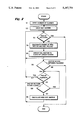
- FIG. 2 is a flow chart illustrating the clustering processing in the embodiment of FIG. 1.
- FIG. 1 illustrates an embodiment of the invention which is used in an OCR.
- This OCR reads images of characters, and classifies the character image data into a predetermined number of font classes in order to prepare a dictionary.
- the OCR comprises a vector group memory (the first memory means) 1, a representative vector memory (the second memory means) 2, a cos ⁇ memory (the third memory means) 3, a cos ⁇ calculating unit (the cosine calculating means) 4, and a clustering control unit (the convergence judging means) 5.
- the vector group memory 1 stores a group of feature vectors of the character image data to be classified.
- the representative vector memory 2 stores the number of font classes and representative vectors indicating the character features of respective font classes. The number of the font classes and the representative vectors are previously determined.
- the cos ⁇ calculating unit 4 calculates the cosine of each of the feature vectors stored in the vector group memory 1 and each of the representative vectors stored in the representative vector memory 2.
- the clustering control unit 5 assigns each feature vector into a class which indicates the largest cosine calculated in the cos ⁇ calculating unit 4, and stores the value of the largest cosine for each of the feature vectors into the cos ⁇ memory 3.
- the OCR further comprises a total sum vector calculating unit 6.
- the total sum vector calculating unit 6 calculates a total sum vector for each of the classes classified by the clustering control unit 5, from the feature vectors which belong to the respective class. In this calculation, the largest cosine value for the respective feature vector stored in the cos ⁇ memory 3 is used as a weight. The weighted total sum vector is stored as a new representative vector for the respective class into the representative vector memory 2, thereby updating the contents of the representative vector memory 2.
- the clustering control unit 5 judges whether or not, in the classification by the clustering control unit itself, any feature vector is not exchanged between the classes. Until judging that any feature vectors are not exchanged, the clustering control unit 5 controls the cos ⁇ calculating unit 4 and the total sum vector calculating unit 6 to operate repeatedly, and performs its classification repeatedly.
- the cos ⁇ calculating unit 4 calculates the cosine of each of the feature vectors X 1 to X p and either of the representative vectors F and G, using the following equations (step S4): ##EQU2##
- the clustering control unit 5 classifies the feature vectors X k (step S5).
- each of the feature vectors X k is assigned to a class from which a larger cosine is calculated in the cos ⁇ calculating unit 4.
- the respective feature vector X k is assigned to the class f
- the feature vector X k is assigned to the class g.
- the total sum vector calculating unit 6 calculates the new representative vector G' of the class g in the same manner as described above. Then, the resulting weighted total sum vectors F' and G' are stored into the representative vector memory 2 as new representative vectors for the respective classes f and g, thereby updating the contents of the representative vector memory 2.
- the clustering control unit 5 controls the cos ⁇ calculating unit 4 to operate, and performs the classification again using the new representative vectors F' and G'. If, after this reclassification, the result is the same as that obtained in the previous classification (i.e., the feature vectors X k are not exchanged between the classes f and g), the clustering is judged to be converged, and the processing is terminated (step S6).
- the total sum vector calculating unit 6 is controlled so as to perform the process of obtaining new representative vectors for the class f of (m+1) feature vectors and the class g of (p-m-1) feature vectors.
- the above-described cos ⁇ calculation and classification are repeated until the clustering is converged (steps S6 and S9).
- step S3 shown in FIG. 2 it is judged whether or not the process of calculating the cosine of a feature vector and a representative vector by the cos ⁇ calculating unit 4 has been conducted for all of the feature vectors.
- step S7 it is judged whether or not the cos ⁇ calculations with respect to all of the representative vectors of the classes are completed, and whether or not the vector exchange between all pairs of the classes are checked.
- step S8 it is judged whether or not the total sum vector calculating unit 6 finishes the calculation of new representative vectors for the respective classes.
- the new representative vectors F' and G' of the respective classes f and g are produced as total sum vectors from the feature vectors Xl which belong to the respective classes.
- the values of cos ⁇ ( ⁇ fl , ⁇ gl ) of the feature vectors Xl and the previous representative vectors F and G are used as weights. Therefore, even if irregular feature vectors are input to the classes, the new representative vectors F' and G' are not largely shifted from the initially given representative vectors F and G, respectively, so that the initial representative vectors (initial values) surely exist in the classes when the convergence is obtained.
- the clustering operation can be appropriately performed so as to obtain optimum representative vectors for respective classes.
- a dictionary for a character or font recognition can be prepared on the basis of these representative vectors.
- Character image data which is read by an OCR having the above-described system can be subjected to the font recognition process using the thus prepared dictionary. Even if characters having a large number of fonts such as alphanumeric or handwritten characters are to be recognized, character image data can be clustered by the provision of initial values, in the same way as the clustering performed in the units of font names for characters which have a small number of fonts such as Japanese, whereby the recognition rate can be remarkably improved.
- the configuration of the means is not restricted to that described above, but may be appropriately modified.
- the number of the classes is not limited to two, and three or more classes may be used.
- feature vectors of character image data to be classified are stored in the first memory means.
- the number of classes, and representative vectors for the respective classes which are previously provided are stored in the second memory means.
- Values of cosine of each of the feature vectors stored in the first memory means and each of the representative vectors stored in the second memory means are calculated by the cosine calculating means.
- each of the feature vectors is assigned to one of the classes from which the largest cosine value is calculated, and the largest cosine value is stored into the third memory means.
- the total sum vector calculating means calculates a total sum vector from the feature vectors which belong to the respective class, using the largest cosine values for the respective feature vectors stored in the third memory means as weights.
- the resulting weighted total sum vector is stored into the second memory means as a new representative vector for the class so as to update the contents of the second memory means.
- the above-mentioned cosine calculating means, classification means and total sum vector calculating means are controlled so as to operate repeatedly, until the convergence judging means judges that any feature vectors are not exchanged between the classes during the classification.
- the initial representative vector does not fail to exist when converged, so that the optimum representative vector for the class is obtained by appropriate clustering.
- the recognition rate can be increased for characters which have a large number of fonts such as alphanumeric characters.
Landscapes
- Engineering & Computer Science (AREA)
- Data Mining & Analysis (AREA)
- Physics & Mathematics (AREA)
- Theoretical Computer Science (AREA)
- Bioinformatics & Cheminformatics (AREA)
- Artificial Intelligence (AREA)
- Life Sciences & Earth Sciences (AREA)
- Bioinformatics & Computational Biology (AREA)
- Computer Vision & Pattern Recognition (AREA)
- Evolutionary Biology (AREA)
- Evolutionary Computation (AREA)
- General Engineering & Computer Science (AREA)
- General Physics & Mathematics (AREA)
- Probability & Statistics with Applications (AREA)
- Character Discrimination (AREA)
Applications Claiming Priority (2)
| Application Number | Priority Date | Filing Date | Title |
|---|---|---|---|
| JP2-196749 | 1990-07-24 | ||
| JP2196749A JPH0481988A (ja) | 1990-07-24 | 1990-07-24 | クラスタリング方式 |
Publications (1)
| Publication Number | Publication Date |
|---|---|
| US5187751A true US5187751A (en) | 1993-02-16 |
Family
ID=16362971
Family Applications (1)
| Application Number | Title | Priority Date | Filing Date |
|---|---|---|---|
| US07/733,041 Expired - Fee Related US5187751A (en) | 1990-07-24 | 1991-07-22 | Clustering system for optical character reader |
Country Status (2)
| Country | Link |
|---|---|
| US (1) | US5187751A (ja) |
| JP (1) | JPH0481988A (ja) |
Cited By (13)
| Publication number | Priority date | Publication date | Assignee | Title |
|---|---|---|---|---|
| US5325445A (en) * | 1992-05-29 | 1994-06-28 | Eastman Kodak Company | Feature classification using supervised statistical pattern recognition |
| US5537488A (en) * | 1993-09-16 | 1996-07-16 | Massachusetts Institute Of Technology | Pattern recognition system with statistical classification |
| US6272242B1 (en) * | 1994-07-15 | 2001-08-07 | Ricoh Company, Ltd. | Character recognition method and apparatus which groups similar character patterns |
| US6272238B1 (en) * | 1992-12-28 | 2001-08-07 | Canon Kabushiki Kaisha | Character recognizing method and apparatus |
| US6345119B1 (en) * | 1996-02-19 | 2002-02-05 | Fujitsu Limited | Handwritten character recognition apparatus and method using a clustering algorithm |
| US6567552B2 (en) * | 1996-12-17 | 2003-05-20 | Canon Kabushiki Kaisha | Image processing method and apparatus |
| US20030192765A1 (en) * | 1998-12-02 | 2003-10-16 | Mars Incorporated, A Delaware Corporation | Classification method and apparatus |
| US6684177B2 (en) * | 2001-05-10 | 2004-01-27 | Hewlett-Packard Development Company, L.P. | Computer implemented scalable, incremental and parallel clustering based on weighted divide and conquer |
| WO2005034026A3 (en) * | 2003-09-29 | 2005-06-02 | Motorola Inc | Method and system for compressing handwritten character templates |
| US20100098344A1 (en) * | 1999-03-12 | 2010-04-22 | Tetsujiro Kondo | Data processing apparatus, data processing method and recording medium |
| US20110231399A1 (en) * | 2009-11-10 | 2011-09-22 | Alibaba Group Holding Limited | Clustering Method and System |
| US20120114243A1 (en) * | 2006-09-08 | 2012-05-10 | Google Inc. | Shape Clustering in Post Optical Character Recognition Processing |
| TWI490711B (zh) * | 2010-02-11 | 2015-07-01 | Alibaba Group Holding Ltd | Clustering methods and systems |
Citations (8)
| Publication number | Priority date | Publication date | Assignee | Title |
|---|---|---|---|---|
| US3626368A (en) * | 1969-01-13 | 1971-12-07 | Hsing Chu Lee | Character-reading apparatus including improved character set sensing structure |
| US3727193A (en) * | 1971-05-18 | 1973-04-10 | School Of Electrical Eng | Signal vector recognition system |
| US4731859A (en) * | 1985-09-20 | 1988-03-15 | Environmental Research Institute Of Michigan | Multispectral/spatial pattern recognition system |
| US4752957A (en) * | 1983-09-07 | 1988-06-21 | Kabushiki Kaisha Toshiba | Apparatus and method for recognizing unknown patterns |
| US4977603A (en) * | 1988-01-08 | 1990-12-11 | Kabushiki Kaisha Toshiba | Method and apparatus for a pattern recognition |
| US5060277A (en) * | 1985-10-10 | 1991-10-22 | Palantir Corporation | Pattern classification means using feature vector regions preconstructed from reference data |
| US5075896A (en) * | 1989-10-25 | 1991-12-24 | Xerox Corporation | Character and phoneme recognition based on probability clustering |
| US5142593A (en) * | 1986-06-16 | 1992-08-25 | Kabushiki Kaisha Toshiba | Apparatus and method for classifying feature data at a high speed |
-
1990
- 1990-07-24 JP JP2196749A patent/JPH0481988A/ja active Pending
-
1991
- 1991-07-22 US US07/733,041 patent/US5187751A/en not_active Expired - Fee Related
Patent Citations (8)
| Publication number | Priority date | Publication date | Assignee | Title |
|---|---|---|---|---|
| US3626368A (en) * | 1969-01-13 | 1971-12-07 | Hsing Chu Lee | Character-reading apparatus including improved character set sensing structure |
| US3727193A (en) * | 1971-05-18 | 1973-04-10 | School Of Electrical Eng | Signal vector recognition system |
| US4752957A (en) * | 1983-09-07 | 1988-06-21 | Kabushiki Kaisha Toshiba | Apparatus and method for recognizing unknown patterns |
| US4731859A (en) * | 1985-09-20 | 1988-03-15 | Environmental Research Institute Of Michigan | Multispectral/spatial pattern recognition system |
| US5060277A (en) * | 1985-10-10 | 1991-10-22 | Palantir Corporation | Pattern classification means using feature vector regions preconstructed from reference data |
| US5142593A (en) * | 1986-06-16 | 1992-08-25 | Kabushiki Kaisha Toshiba | Apparatus and method for classifying feature data at a high speed |
| US4977603A (en) * | 1988-01-08 | 1990-12-11 | Kabushiki Kaisha Toshiba | Method and apparatus for a pattern recognition |
| US5075896A (en) * | 1989-10-25 | 1991-12-24 | Xerox Corporation | Character and phoneme recognition based on probability clustering |
Cited By (21)
| Publication number | Priority date | Publication date | Assignee | Title |
|---|---|---|---|---|
| US5325445A (en) * | 1992-05-29 | 1994-06-28 | Eastman Kodak Company | Feature classification using supervised statistical pattern recognition |
| US6272238B1 (en) * | 1992-12-28 | 2001-08-07 | Canon Kabushiki Kaisha | Character recognizing method and apparatus |
| US5537488A (en) * | 1993-09-16 | 1996-07-16 | Massachusetts Institute Of Technology | Pattern recognition system with statistical classification |
| US5703964A (en) * | 1993-09-16 | 1997-12-30 | Massachusetts Institute Of Technology | Pattern recognition system with statistical classification |
| US6272242B1 (en) * | 1994-07-15 | 2001-08-07 | Ricoh Company, Ltd. | Character recognition method and apparatus which groups similar character patterns |
| US6345119B1 (en) * | 1996-02-19 | 2002-02-05 | Fujitsu Limited | Handwritten character recognition apparatus and method using a clustering algorithm |
| US6567552B2 (en) * | 1996-12-17 | 2003-05-20 | Canon Kabushiki Kaisha | Image processing method and apparatus |
| US7073652B2 (en) * | 1998-12-02 | 2006-07-11 | Mars Incorporated | Classification method and apparatus |
| US20030192765A1 (en) * | 1998-12-02 | 2003-10-16 | Mars Incorporated, A Delaware Corporation | Classification method and apparatus |
| US7916977B2 (en) | 1999-03-12 | 2011-03-29 | Sony Corporation | Data processing apparatus, data processing method and recording medium |
| US20100098344A1 (en) * | 1999-03-12 | 2010-04-22 | Tetsujiro Kondo | Data processing apparatus, data processing method and recording medium |
| US6907380B2 (en) | 2001-05-10 | 2005-06-14 | Hewlett-Packard Development Company, L.P. | Computer implemented scalable, incremental and parallel clustering based on weighted divide and conquer |
| US20040122797A1 (en) * | 2001-05-10 | 2004-06-24 | Nina Mishra | Computer implemented scalable, Incremental and parallel clustering based on weighted divide and conquer |
| US6684177B2 (en) * | 2001-05-10 | 2004-01-27 | Hewlett-Packard Development Company, L.P. | Computer implemented scalable, incremental and parallel clustering based on weighted divide and conquer |
| WO2005034026A3 (en) * | 2003-09-29 | 2005-06-02 | Motorola Inc | Method and system for compressing handwritten character templates |
| CN1303563C (zh) * | 2003-09-29 | 2007-03-07 | 摩托罗拉公司 | 用于压缩手写字符模板的方法和系统 |
| EP1668568A4 (en) * | 2003-09-29 | 2012-02-08 | Motorola Mobility Inc | METHOD AND SYSTEM FOR COMPRESSING TEMPLATES OF HANDWRITTEN SIGNS |
| US20120114243A1 (en) * | 2006-09-08 | 2012-05-10 | Google Inc. | Shape Clustering in Post Optical Character Recognition Processing |
| US8666174B2 (en) * | 2006-09-08 | 2014-03-04 | Google Inc. | Techniques for shape clustering and assignment of character codes in post optical character recognition processing |
| US20110231399A1 (en) * | 2009-11-10 | 2011-09-22 | Alibaba Group Holding Limited | Clustering Method and System |
| TWI490711B (zh) * | 2010-02-11 | 2015-07-01 | Alibaba Group Holding Ltd | Clustering methods and systems |
Also Published As
| Publication number | Publication date |
|---|---|
| JPH0481988A (ja) | 1992-03-16 |
Similar Documents
| Publication | Publication Date | Title |
|---|---|---|
| US5187751A (en) | Clustering system for optical character reader | |
| US5682503A (en) | Self-organizing neural network for pattern classification | |
| US6081620A (en) | System and method for pattern recognition | |
| CA1299292C (en) | Character recognition algorithm | |
| US4773099A (en) | Pattern classification means for use in a pattern recognition system | |
| US5974404A (en) | Method and apparatus for input classification using a neural network | |
| US5347595A (en) | Preprocessing means for use in a pattern classification system | |
| US6335986B1 (en) | Pattern recognizing apparatus and method | |
| US5373566A (en) | Neural network-based diacritical marker recognition system and method | |
| US7233697B2 (en) | Character recognition device and a method therefor | |
| US5572604A (en) | Method for pattern recognition using prototype transformations and hierarchical filtering | |
| CA1317377C (en) | Image recognition apparatus | |
| WO1990015386A1 (en) | Document identification by characteristics matching | |
| US5970171A (en) | Apparatus and method of fusing the outputs of multiple intelligent character recognition (ICR) systems to reduce error rate | |
| US5832108A (en) | Pattern recognition method using a network and system therefor | |
| EP0574936B1 (en) | Method and apparatus for input classification using non-spherical neurons | |
| EP0680005B1 (en) | Speed and recognition enhancement for OCR using normalized height/width position | |
| US5689584A (en) | Method of and apparatus for pattern recognition and method of creating pattern recognition dictionary | |
| EP0709800A2 (en) | Method for designing classification trees | |
| US5379349A (en) | Method of OCR template enhancement by pixel weighting | |
| JP3319203B2 (ja) | 文書ファイリング方法及び装置 | |
| JP3706646B2 (ja) | Ocrの制御方法並びに分類方法及び装置 | |
| US5272765A (en) | System for processing character images | |
| JP2639314B2 (ja) | 文字認識方式 | |
| JPH0620098A (ja) | 文字認識装置 |
Legal Events
| Date | Code | Title | Description |
|---|---|---|---|
| AS | Assignment |
Owner name: SHARP KABSUHIKI KAISHA Free format text: ASSIGNMENT OF ASSIGNORS INTEREST.;ASSIGNOR:TANAKA, HIDEAKI;REEL/FRAME:005859/0271 Effective date: 19910912 |
|
| FEPP | Fee payment procedure |
Free format text: PAYOR NUMBER ASSIGNED (ORIGINAL EVENT CODE: ASPN); ENTITY STATUS OF PATENT OWNER: LARGE ENTITY |
|
| FPAY | Fee payment |
Year of fee payment: 4 |
|
| FPAY | Fee payment |
Year of fee payment: 8 |
|
| REMI | Maintenance fee reminder mailed | ||
| LAPS | Lapse for failure to pay maintenance fees | ||
| STCH | Information on status: patent discontinuation |
Free format text: PATENT EXPIRED DUE TO NONPAYMENT OF MAINTENANCE FEES UNDER 37 CFR 1.362 |
|
| FP | Lapsed due to failure to pay maintenance fee |
Effective date: 20050216 |