US5257356A - Method of reducing wasted bus bandwidth due to slow responding slaves in a multiprocessor computer system - Google Patents
Method of reducing wasted bus bandwidth due to slow responding slaves in a multiprocessor computer system Download PDFInfo
- Publication number
- US5257356A US5257356A US07/705,873 US70587391A US5257356A US 5257356 A US5257356 A US 5257356A US 70587391 A US70587391 A US 70587391A US 5257356 A US5257356 A US 5257356A
- Authority
- US
- United States
- Prior art keywords
- master
- bus
- relinquished
- selected slave
- slave
- Prior art date
- Legal status (The legal status is an assumption and is not a legal conclusion. Google has not performed a legal analysis and makes no representation as to the accuracy of the status listed.)
- Expired - Lifetime
Links
Images

Classifications
-
- G—PHYSICS
- G06—COMPUTING OR CALCULATING; COUNTING
- G06F—ELECTRIC DIGITAL DATA PROCESSING
- G06F15/00—Digital computers in general; Data processing equipment in general
- G06F15/16—Combinations of two or more digital computers each having at least an arithmetic unit, a program unit and a register, e.g. for a simultaneous processing of several programs
-
- G—PHYSICS
- G06—COMPUTING OR CALCULATING; COUNTING
- G06F—ELECTRIC DIGITAL DATA PROCESSING
- G06F13/00—Interconnection of, or transfer of information or other signals between, memories, input/output devices or central processing units
- G06F13/14—Handling requests for interconnection or transfer
- G06F13/36—Handling requests for interconnection or transfer for access to common bus or bus system
- G06F13/368—Handling requests for interconnection or transfer for access to common bus or bus system with decentralised access control
Definitions
- the present invention relates generally to multiprocessor computer systems. More particularly, the present invention relates to a method for reducing wasted bus bandwidth resulting from slow responding slaves in a multiprocessor computer system.
- MuItiprocessor shared resource computer systems are commonly employed where high speed throughput is required.
- such systems are characterized by a plurality of processors, which function as masters, and share a common bus.
- a plurality of input/output devices, which function as slaves, also share the common bus so that the masters and slaves may communicate with one another in well known fashion.
- FIG. 1 Such a system is illustrated in simplified form in FIG. 1 wherein the masters are depicted by the blocks labeled M0, M1, etc. and the slaves are depicted by the blocks labeled S1, S2, etc. Since only one master and one slave may communicate with each other at any given point in time, it is common for such systems to employ some technique where the masters compete among themselves for bus control.
- An arbitration technique is usually employed for determining which master should control the bus during any given data cycle.
- an arbitration circuit employing some type of arbitration method determines which master should control the bus next.
- Various arbitration methods are known which award bus control based on, for example, assigned priority of each competing master, each master's previous bus usage level, or based upon a round-robin technique, to name but a few. Irrespective of the particular arbitration method employed, a problem arises when the slave selected by the master to perform a certain task is either busy or slow to respond.
- the slave informs the master having control of the bus of this situation. In the art, this situation is generally referred to as either a "busy”, or a "wait”. It is said that the slave either "busies the transaction” or “waits the transaction", since the process of the master requesting service from the slave and communicating with the slave to retrieve data is known as a "transaction.”
- a slave may busy a transaction.
- the slave may be slow in performing the required transactions.
- slow is a relative term. In some systems, slow may mean several microseconds, and in others, a few hundred nanoseconds.
- Second, a slave may be busy doing something else, or may not have any additional resources to devote to the incoming transaction, and therefore be unable to respond to the master immediately.
- One known method of handling busy and/or slow responding slaves in the prior art is for the master having bus control ("winning master") to hold control of the bus until the slave has performed the service requested by the winning master and has provided the resulting data.
- the slave raises a flag when it is busy, and the winning master holds control of the bus and polls the slave until it becomes available. The winning master then maintains control of the bus until the slave has completed the requested service.
- the time spent for the winning master waiting for the slave to either become available or finish its task represents unproductive time insofar as bus usage and sharing of system resources are concerned.
- these methods waste bus bandwidth since other masters could gainfully employ the bus, but for the action of the winning master in waiting for the slave.
- the bus is freed by the winning master after service has been requested from the slave, and interrupts are employed to signal this master that the slave is either ready or has completed its task. While this method overcomes the drawbacks of the first two methods described above, it suffers from the same drawback of the third method described above. Moreover, it may require the use of process swaps or may require several interrupt lines on the bus. It may also require the use of polling by the master to determine which slave interrupted the master. Thus, this method is expensive not only in the resources that must be allocated to service the interrupt, but also in terms of the time required to effect process swaps and/or determine which slave caused the interrupt. Moreover, this method may add overhead to the system since it requires combining arbitration and interrupt driven methodologies.
- the present invention is for particular use in a computer system having a plurality of master devices (masters) that communicate with a plurality of slave devices (slaves) over a shared bus.
- masters master devices
- slaves slave devices
- the masters having operations to be conducted by slaves arbitrate to win bus control to permit a winning master to communicate with a selected one of the slaves, as is common. Any arbitration method may be employed.
- the selected slave signals the winning master that it should relinquish control of the bus when the selected slave is either unavailable to service a request issued by the winning master, or is unable to complete the requested service within a calculated or predetermined period of time.
- the winning master relinquishes control of the bus, and for definitional purposes only, is defined thereafter as a "relinquished master.”
- the relinquished master is thereafter inhibited from arbitrating for bus control except as set forth below.
- this step is performed by storing, at the selected slave, a unique arbitration code associated with the relinquished master, and placing the relinquished master's arbitration code on the bus.
- the relinquished master upon detecting that its arbitration code has been placed on the bus, begins arbitrating with the other masters for bus control.
- the relinquished master (which is now the winning master) reissues to the selected slave the request that it had previously issued that resulted in the slave returning a "busy".
- the relinquished master is inhibited from arbitrating with the other masters for bus control until it has detected the presence of its arbitration code on the bus (as placed thereon by the slave).
- the relinquished master is permitted to arbitrate for bus control if the slave has not placed the relinquished master's arbitration code on the bus within a selected period of time.
- the selected slave when a selected slave is busy servicing a request issued by a winning master, and when the bus is available for arbitration by other masters, the selected slave performs the following additional steps when another master subsequently wins bus control and issues a request to the busy selected slave: first, the selected slave maintains a record of the arbitration code of each other master issuing a request; then, second, the selected slave performs the steps set forth above for each of the other winning masters according to record maintained by the busy selected slave.
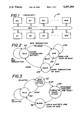
- FIG. 1 is a simplified depiction of the structure of a conventional multiprocessor, shared resource computer system having a plurality of masters and slaves.
- FIG. 2 is a state diagram illustrating, in relevant part, the operation of each master processor in a multiprocessor computer system according to the invention.
- FIG. 3 is a state diagram illustrating, in relevant part, the operation of each slave in a multiprocessor computer system according to the present invention.
- FIG. 4 is a state diagram illustrating, in relevant part, further details of the operation of each master in a multiprocessor system according to the present invention.
- FIG. 5 is a simplified block diagram illustrating the implementation of a "snapshot register” (SR) and “working register” (WR) in each slave according to the practice of one embodiment of the present invention.
- SR napshot register
- WR working register
- FIG. 1 a conventional, multiprocessor, computer architecture 10 having a plurality of master devices M0-M(N) that communicate with a plurality of slave devices S1-S(N) over a shared bus 12.
- the bus 12 is preferably a synchronous bus.
- Each of the masters M0-M(N) competes with all of the other masters, via an arbitration state machine (40) (See FIG. 4), for control of the bus 12.
- the masters MO-M(N) may also function as slaves.
- one of the masters obtains bus control, it requests service from a selected one of the slaves S1-S(N).
- the slaves may be memory or input/output devices, or any other device, but the present invention has particular application to slow responding input/output devices.
- the masters when one of the masters obtains bus control, it monopolizes the bus to issue a request for service to, and communicate with, the selected one of the slaves during the time that it has obtained bus control.
- the invention is employed in connection with a least recently used, or distributed priority list, arbitration technique. See, for example, copending U.S. application Ser. No. 07/694,265, entitled "Quadrature Bus Protocol for Carrying Out Transactions in a Computer System".
- the method of the present invention is illustrated in detail in the state diagrams of FIGS. 2-4.
- the method of the present invention ensures that no winning master will monopolize the bus by waiting for the selected slave either when the selected slave is busy fulfilling a previous request for service from another master, or when the selective slave cannot timely provide the requested service, by operating in accordance with the following steps illustrated in FIGS. 2-4:
- step (b) causing the winning master to relinquish bus control in response to the signal from step (a), then redefining the winning master as a relinquished master and inhibiting the relinquished master from subsequently arbitrating with other masters for bus control except after expiry of a second period of time after the relinquished master has relinquished bus control;
- step (c) causing the selected slave to issue the relinquished master's arbitration code on the bus when the selected slave either becomes available to provide the service previously requested by the relinquished master or has completed the service previously requested by the relinquished master.
- the selected slave first reserves resources for servicing the request issued by the winning master if the selected slave had provided the signal in step (a) as a result of being busy servicing another request;
- step (e) causing the selected slave to carry out the service requested in step (d);
- the bus is available for communication between other masters and slaves during times that the selected slaves are busy or cannot service requests within the first predetermined period of time.
- the winning master is relinquished because the selected slave cannot service the request within the first predetermined period of time, then, when the relinquished master again obtains bus control, the selected slave will have the requested data available for sending to the relinquished master when it again obtains bus control.
- FIG. 2 is a state diagram illustrating the present invention as carried out by each of the masters M0-M(N).
- a particular master Prior to requesting bus control, a particular master is in the idle state 20 and remains there as long as it does not need to issue any new transactions. However, when a particular master needs to issue a new transaction, it enters an arbitration state 22 where it actively arbitrates for bus control. Typically, an arbitration state machine 40 (FIG. 4) determines which master will next obtain bus control. When a master wins bus control, it issues its transaction on the bus, as shown at state 24. The master maintains bus control for as long as it takes to issue the transaction.
- the slave with which the master is communicating i.e., the selected slave
- the slave will indicate that it is either busy, or that it has completed the transaction. This is set forth in more detail in FIG. 3. If the selective slave returned a "busy”, then the master that won bus control (the winning master) is relinquished and inhibited from arbitrating for the bus until some future time, as discussed below.
- a slave will issue a "busy", when it is either busy performing another transaction and cannot service the transaction, or request, issued by the master, or, the slave is slow and cannot complete the requested service within a predetermined period of time. As illustrated in FIG. 2, if the slave was available to perform the requested service, and the requested service was performed within the predetermined period of time, then the master again enters the idle state 20, where the aforementioned process is repeated.
- each master has associated therewith a unique arbitration code.
- the relinquished master is inhibited from again arbitrating for bus control until the selected slave has placed the relinquished master's arbitration code on the bus. This is explained in more detail in FIG. 3.
- the action of the master during this time is illustrated in FIG. 4.
- the master designated 46, is normally enabled, as shown at 42, where it is permitted to arbitrate for bus control.
- the master is subsequently disabled, or relinquished, as shown at 44, until the slave places the relinquished master's arbitration code on the bus.
- the relinquished master detects the presence of its arbitration code on the bus, it becomes enabled, as shown at 42, where it again arbitrates for bus control, i.e., it returns to state 22 of FIG. 2.
- FIG. 3 illustrates the relevant action of the selected slave when it receives a request for service, i.e., transaction, from the winning master.
- the slave is normally in the idle state 30, and remains there until it has received a request for service from the winning master.
- the slave then enters state 32 where it acknowledges the request for service. If the slave is not busy, and can service the request within the first predetermined period of time, then it performs the requested service and returns to the idle state 30. In such case, the master also transitions from state 24 to state 20. If, however, the selected slave is either busy or cannot complete the requested service within the first predetermined period of time, it enters state 34, where it stores the arbitration code of the winning master and returns a "busy" to the winning master.
- the winning master transitions from state 24 to the states illustrated in FIG. 4, previously described, where the winning master becomes relinquished.
- the selected slave drives the master's arbitration code onto the bus and effectively signals the relinquished master that it should begin arbitrating for bus control to again establish communications with the selected slave, as shown at state 36. Note, however, that the action of the slave signalling the master to arbitrate for the bus may result in the master winning bus control in the same cycle.
- the response of the winning master is illustrated in FIG. 4, previously described.
- the selected slave Once the selected slave has placed the relinquished master's arbitration code on the bus, it enters the idle state 30 until the relinquished master has again won bus control and has again selected the slave so that it may complete the transaction previously requested of the slave.
- the selected slave effectively arbitrates for bus control on the relinquished master's behalf. Note that the action of the slave effectively arbitrating on the relinquished master's behalf occurs one time only; thereafter, the master must arbitrate for itself unless the slave won arbitration for the master.
- the relinquished master may win the bus on its first attempt.
- the act of the slave placing the arbitration code of the master on the bus may, in some cases, be an actual arbitration cycle of the master, and that the master can win bus control during this arbitration cycle without ever physically having to reissue its arbitration code on the bus.
- the master recognizes its arbitration code on the bus, it takes over the arbitration cycle as if it had actually arbitrated during the current cycle, and continues to arbitrate if necessary until it wins.
- the arbitration state machine continues to re-arbitrate for the bus while the slave is busy, but since its arbitration code is inhibited from being driven onto the bus, it cannot win bus control.
- the arbitration state machine may not be aware that its code has been inhibited from being driven on the bus, because it will continue to arbitrate until it wins. Since, the arbitration state machine "thinks" that it is actually arbitrating, the slave can win on its behalf and there is no start-up penalty to restart arbitration.
- the relinquished master if it does not detect the presence of its arbitration code on the bus within a second predetermined period of time after it has relinquished bus control, then it is enabled and becomes available to arbitrate for bus control irrespective of the selected slave's status. In other words, the master transitions from state 44 to state 42 (FIG. 4) once the second predetermined period of time has expired without its arbitration code appearing on the bus.
- a method for ensuring "forward progress" of each transaction for which a slave has signalled a "busy” to a master It is possible for a busy slave to receive requests for service from other masters while it is servicing the request from a winning master, or even from a relinquished master.
- the slave as requests for service come into the slave from other masters, the slave "busies" those masters, but maintains a record of the identity of each of the other masters (i.e., their arbitration codes). These identities may be a single bit in a storage register or other code. When the slave becomes available, it employs this record to determine which master it should next service, and places that master's arbitration code on the bus so as to enable the master to perform the steps illustrated in FIGS. 2 and 4 to arbitrate for the bus and communicate with the selected slave.
- each slave may have: a snapshot memory element SR (such as a queue or register) that is used to record codes of masters arbitrating for the slave while it is too busy to respond to new requests; a busy memory element BR that stores the master arbitration codes for which the slave has allocated resources to complete a transaction; and a working memory element WR that transfers, one master code at a time, to the BR, and, when empty, updates itself from the SR, then clears the SR.
- the BR entry or entries are only zeroed or cleared when the transaction has been completed. It should be noted that multiple BR entries may be maintained. Thus, a slave with sufficient resources might be servicing multiple masters at once before busying other masters due to an inability to service them.
- the masters are re-started (enabled) one at a time in a system determined order.
- the order may be: the order in which the arbitration requests were received; a random order; a system defined master order; etc.
- a slave is permitted to discard any resource saved for a master that fails to reissue a transaction within a third predetermined time period.
Landscapes
- Engineering & Computer Science (AREA)
- Theoretical Computer Science (AREA)
- Physics & Mathematics (AREA)
- General Engineering & Computer Science (AREA)
- General Physics & Mathematics (AREA)
- Computer Hardware Design (AREA)
- Software Systems (AREA)
- Bus Control (AREA)
- Multi Processors (AREA)
- Information Transfer Systems (AREA)
Priority Applications (5)
| Application Number | Priority Date | Filing Date | Title |
|---|---|---|---|
| US07/705,873 US5257356A (en) | 1991-05-28 | 1991-05-28 | Method of reducing wasted bus bandwidth due to slow responding slaves in a multiprocessor computer system |
| KR1019920009008A KR920022118A (ko) | 1991-05-28 | 1992-05-27 | 멀티 프로세서 컴퓨터 시스템 내의 느리게 응답하는 슬레이브로 인해 낭비된 버스 대역폭을 감소시키는 방법 |
| JP4162239A JPH05197671A (ja) | 1991-05-28 | 1992-05-28 | マスター・スレーブ通信方法 |
| EP92304856A EP0518527B1 (en) | 1991-05-28 | 1992-05-28 | Method of reducing wasted bus bandwidth in a computer system |
| DE69222469T DE69222469T2 (de) | 1991-05-28 | 1992-05-28 | Verfahren zur Verminderung der Restbandbreite eines Busses in einem Rechnersystem |
Applications Claiming Priority (1)
| Application Number | Priority Date | Filing Date | Title |
|---|---|---|---|
| US07/705,873 US5257356A (en) | 1991-05-28 | 1991-05-28 | Method of reducing wasted bus bandwidth due to slow responding slaves in a multiprocessor computer system |
Publications (1)
| Publication Number | Publication Date |
|---|---|
| US5257356A true US5257356A (en) | 1993-10-26 |
Family
ID=24835307
Family Applications (1)
| Application Number | Title | Priority Date | Filing Date |
|---|---|---|---|
| US07/705,873 Expired - Lifetime US5257356A (en) | 1991-05-28 | 1991-05-28 | Method of reducing wasted bus bandwidth due to slow responding slaves in a multiprocessor computer system |
Country Status (5)
| Country | Link |
|---|---|
| US (1) | US5257356A (ja) |
| EP (1) | EP0518527B1 (ja) |
| JP (1) | JPH05197671A (ja) |
| KR (1) | KR920022118A (ja) |
| DE (1) | DE69222469T2 (ja) |
Cited By (28)
| Publication number | Priority date | Publication date | Assignee | Title |
|---|---|---|---|---|
| US5506971A (en) * | 1992-03-04 | 1996-04-09 | Motorola, Inc. | Method and apparatus for performing a snoop-retry protocol in a data processing system |
| US5590299A (en) * | 1994-10-28 | 1996-12-31 | Ast Research, Inc. | Multiprocessor system bus protocol for optimized accessing of interleaved storage modules |
| US5592631A (en) * | 1995-05-02 | 1997-01-07 | Apple Computer, Inc. | Bus transaction reordering using side-band information signals |
| US5594876A (en) * | 1992-06-24 | 1997-01-14 | International Business Machines Corporation | Arbitration protocol for a bidirectional bus for handling access requests to a logically divided memory in a multiprocessor system |
| US5608879A (en) * | 1992-12-11 | 1997-03-04 | Sony Corporation | Method and apparatus for arbitrating data requests and responses thereto as separate bus transactions |
| US5621897A (en) * | 1995-04-13 | 1997-04-15 | International Business Machines Corporation | Method and apparatus for arbitrating for a bus to enable split transaction bus protocols |
| US5625779A (en) * | 1994-12-30 | 1997-04-29 | Intel Corporation | Arbitration signaling mechanism to prevent deadlock guarantee access latency, and guarantee acquisition latency for an expansion bridge |
| US5737547A (en) * | 1995-06-07 | 1998-04-07 | Microunity Systems Engineering, Inc. | System for placing entries of an outstanding processor request into a free pool after the request is accepted by a corresponding peripheral device |
| US5805837A (en) * | 1996-03-21 | 1998-09-08 | International Business Machines Corporation | Method for optimizing reissue commands in master-slave processing systems |
| US5812799A (en) * | 1995-06-07 | 1998-09-22 | Microunity Systems Engineering, Inc. | Non-blocking load buffer and a multiple-priority memory system for real-time multiprocessing |
| US5828852A (en) * | 1993-05-26 | 1998-10-27 | Siemens Aktiengesellschaft | Method for operation of a bus system for highly flexible and quick data transmission between units connected to the bus system and configuration for carrying out the method |
| US5943483A (en) * | 1995-12-11 | 1999-08-24 | Lsi Logic Corporation | Method and apparatus for controlling access to a bus in a data processing system |
| US5996036A (en) * | 1997-01-07 | 1999-11-30 | Apple Computers, Inc. | Bus transaction reordering in a computer system having unordered slaves |
| US6058436A (en) * | 1997-06-16 | 2000-05-02 | Adaptec, Inc. | Quick arbitration and select (QAS) protocol in SCSI interface for configuring a current target device to assert a QAS message code during a message-in phase |
| US6247101B1 (en) | 1998-07-01 | 2001-06-12 | Lsi Logic Corporation | Tagged access synchronous bus architecture |
| US6434650B1 (en) | 1998-10-21 | 2002-08-13 | Intel Corporation | Apparatus and method for multiplexing bi-directional data onto a low pin count bus between a host CPU and co-processor |
| US6463494B1 (en) | 1998-12-30 | 2002-10-08 | Intel Corporation | Method and system for implementing control signals on a low pin count bus |
| US20020161956A1 (en) * | 2001-04-25 | 2002-10-31 | Hideyuki Kanzaki | Memory control device and LSI |
| US6507583B1 (en) * | 1995-11-01 | 2003-01-14 | Whittaker Corporation | Network access arbitration system and methodology |
| US20030204663A1 (en) * | 2002-04-30 | 2003-10-30 | Stuber Russell B. | Apparatus for arbitrating non-queued split master devices on a data bus |
| USRE38428E1 (en) | 1995-05-02 | 2004-02-10 | Apple Computer, Inc. | Bus transaction reordering in a computer system having unordered slaves |
| US6732210B1 (en) * | 2000-01-03 | 2004-05-04 | Genesis Microchip Inc | Communication bus for a multi-processor system |
| US20040267992A1 (en) * | 2002-02-28 | 2004-12-30 | Stuber Russell B | Look ahead split release for a data bus |
| US20060104396A1 (en) * | 2004-10-21 | 2006-05-18 | Hewlett-Packard Development Company, L.P. | Serial bus system |
| US7738504B1 (en) * | 2008-12-22 | 2010-06-15 | The United States Of America As Represented By The Director National Security Agency | Method of establishing and updating master node in computer network |
| US20140115212A1 (en) * | 2012-10-23 | 2014-04-24 | Seiko Epson Corporation | Serial communication circuit, integrated circuit device, physical quantity measuring device, electronic apparatus, moving object, and serial communication method |
| US8751715B1 (en) * | 2010-03-31 | 2014-06-10 | Enc Corporation | System and method for controlling device access |
| US11144358B1 (en) | 2018-12-06 | 2021-10-12 | Pure Storage, Inc. | Asynchronous arbitration of shared resources |
Families Citing this family (4)
| Publication number | Priority date | Publication date | Assignee | Title |
|---|---|---|---|---|
| US5469435A (en) * | 1994-01-25 | 1995-11-21 | Apple Computer, Inc. | Bus deadlock avoidance during master split-transactions |
| KR100265428B1 (ko) * | 1997-06-27 | 2000-09-15 | 서평원 | 데이지 체인에 의한 패킷 통신 시스템의 패킷 버스 제어 방법 |
| KR100708096B1 (ko) * | 2000-07-21 | 2007-04-16 | 삼성전자주식회사 | 버스 시스템 및 그 실행 순서 조정방법 |
| JP4842804B2 (ja) * | 2003-05-08 | 2011-12-21 | コーニンクレッカ フィリップス エレクトロニクス エヌ ヴィ | データを通信する処理システム及び方法 |
Citations (5)
| Publication number | Priority date | Publication date | Assignee | Title |
|---|---|---|---|---|
| US4602327A (en) * | 1983-07-28 | 1986-07-22 | Motorola, Inc. | Bus master capable of relinquishing bus on request and retrying bus cycle |
| US4706190A (en) * | 1983-09-22 | 1987-11-10 | Digital Equipment Corporation | Retry mechanism for releasing control of a communications path in digital computer system |
| US4785394A (en) * | 1986-09-19 | 1988-11-15 | Datapoint Corporation | Fair arbitration technique for a split transaction bus in a multiprocessor computer system |
| US4817037A (en) * | 1987-02-13 | 1989-03-28 | International Business Machines Corporation | Data processing system with overlap bus cycle operations |
| US5101479A (en) * | 1989-07-21 | 1992-03-31 | Clearpoint Research Corporation | Bus device for generating and responding to slave response codes |
Family Cites Families (4)
| Publication number | Priority date | Publication date | Assignee | Title |
|---|---|---|---|---|
| US4236203A (en) * | 1978-01-05 | 1980-11-25 | Honeywell Information Systems Inc. | System providing multiple fetch bus cycle operation |
| US4390944A (en) * | 1980-05-13 | 1983-06-28 | Bti Computer Systems | System for controlling access to a common bus in a computer system |
| US5131085A (en) * | 1989-12-04 | 1992-07-14 | International Business Machines Corporation | High performance shared main storage interface |
| US5241628A (en) * | 1990-01-04 | 1993-08-31 | Intel Corporation | Method wherein source arbitrates for bus using arbitration number of destination |
-
1991
- 1991-05-28 US US07/705,873 patent/US5257356A/en not_active Expired - Lifetime
-
1992
- 1992-05-27 KR KR1019920009008A patent/KR920022118A/ko not_active Withdrawn
- 1992-05-28 EP EP92304856A patent/EP0518527B1/en not_active Expired - Lifetime
- 1992-05-28 DE DE69222469T patent/DE69222469T2/de not_active Expired - Lifetime
- 1992-05-28 JP JP4162239A patent/JPH05197671A/ja active Pending
Patent Citations (5)
| Publication number | Priority date | Publication date | Assignee | Title |
|---|---|---|---|---|
| US4602327A (en) * | 1983-07-28 | 1986-07-22 | Motorola, Inc. | Bus master capable of relinquishing bus on request and retrying bus cycle |
| US4706190A (en) * | 1983-09-22 | 1987-11-10 | Digital Equipment Corporation | Retry mechanism for releasing control of a communications path in digital computer system |
| US4785394A (en) * | 1986-09-19 | 1988-11-15 | Datapoint Corporation | Fair arbitration technique for a split transaction bus in a multiprocessor computer system |
| US4817037A (en) * | 1987-02-13 | 1989-03-28 | International Business Machines Corporation | Data processing system with overlap bus cycle operations |
| US5101479A (en) * | 1989-07-21 | 1992-03-31 | Clearpoint Research Corporation | Bus device for generating and responding to slave response codes |
Cited By (34)
| Publication number | Priority date | Publication date | Assignee | Title |
|---|---|---|---|---|
| US5506971A (en) * | 1992-03-04 | 1996-04-09 | Motorola, Inc. | Method and apparatus for performing a snoop-retry protocol in a data processing system |
| US5594876A (en) * | 1992-06-24 | 1997-01-14 | International Business Machines Corporation | Arbitration protocol for a bidirectional bus for handling access requests to a logically divided memory in a multiprocessor system |
| US5608879A (en) * | 1992-12-11 | 1997-03-04 | Sony Corporation | Method and apparatus for arbitrating data requests and responses thereto as separate bus transactions |
| US5828852A (en) * | 1993-05-26 | 1998-10-27 | Siemens Aktiengesellschaft | Method for operation of a bus system for highly flexible and quick data transmission between units connected to the bus system and configuration for carrying out the method |
| US5590299A (en) * | 1994-10-28 | 1996-12-31 | Ast Research, Inc. | Multiprocessor system bus protocol for optimized accessing of interleaved storage modules |
| US5625779A (en) * | 1994-12-30 | 1997-04-29 | Intel Corporation | Arbitration signaling mechanism to prevent deadlock guarantee access latency, and guarantee acquisition latency for an expansion bridge |
| US5621897A (en) * | 1995-04-13 | 1997-04-15 | International Business Machines Corporation | Method and apparatus for arbitrating for a bus to enable split transaction bus protocols |
| USRE38428E1 (en) | 1995-05-02 | 2004-02-10 | Apple Computer, Inc. | Bus transaction reordering in a computer system having unordered slaves |
| US5592631A (en) * | 1995-05-02 | 1997-01-07 | Apple Computer, Inc. | Bus transaction reordering using side-band information signals |
| USRE44688E1 (en) | 1995-05-02 | 2013-12-31 | Apple Inc. | Bus transaction reordering in a computer system having unordered slaves |
| US5737547A (en) * | 1995-06-07 | 1998-04-07 | Microunity Systems Engineering, Inc. | System for placing entries of an outstanding processor request into a free pool after the request is accepted by a corresponding peripheral device |
| US5812799A (en) * | 1995-06-07 | 1998-09-22 | Microunity Systems Engineering, Inc. | Non-blocking load buffer and a multiple-priority memory system for real-time multiprocessing |
| US6507583B1 (en) * | 1995-11-01 | 2003-01-14 | Whittaker Corporation | Network access arbitration system and methodology |
| US5943483A (en) * | 1995-12-11 | 1999-08-24 | Lsi Logic Corporation | Method and apparatus for controlling access to a bus in a data processing system |
| US5805837A (en) * | 1996-03-21 | 1998-09-08 | International Business Machines Corporation | Method for optimizing reissue commands in master-slave processing systems |
| US5996036A (en) * | 1997-01-07 | 1999-11-30 | Apple Computers, Inc. | Bus transaction reordering in a computer system having unordered slaves |
| US6058436A (en) * | 1997-06-16 | 2000-05-02 | Adaptec, Inc. | Quick arbitration and select (QAS) protocol in SCSI interface for configuring a current target device to assert a QAS message code during a message-in phase |
| US6247101B1 (en) | 1998-07-01 | 2001-06-12 | Lsi Logic Corporation | Tagged access synchronous bus architecture |
| US6434650B1 (en) | 1998-10-21 | 2002-08-13 | Intel Corporation | Apparatus and method for multiplexing bi-directional data onto a low pin count bus between a host CPU and co-processor |
| US6463494B1 (en) | 1998-12-30 | 2002-10-08 | Intel Corporation | Method and system for implementing control signals on a low pin count bus |
| US6732210B1 (en) * | 2000-01-03 | 2004-05-04 | Genesis Microchip Inc | Communication bus for a multi-processor system |
| US20020161956A1 (en) * | 2001-04-25 | 2002-10-31 | Hideyuki Kanzaki | Memory control device and LSI |
| US6820152B2 (en) * | 2001-04-25 | 2004-11-16 | Matsushita Electric Industrial Co., Ltd. | Memory control device and LSI |
| US20040267992A1 (en) * | 2002-02-28 | 2004-12-30 | Stuber Russell B | Look ahead split release for a data bus |
| US7174401B2 (en) * | 2002-02-28 | 2007-02-06 | Lsi Logic Corporation | Look ahead split release for a data bus |
| US6948019B2 (en) * | 2002-04-30 | 2005-09-20 | Lsi Logic Corporation | Apparatus for arbitrating non-queued split master devices on a data bus |
| US20030204663A1 (en) * | 2002-04-30 | 2003-10-30 | Stuber Russell B. | Apparatus for arbitrating non-queued split master devices on a data bus |
| US20060104396A1 (en) * | 2004-10-21 | 2006-05-18 | Hewlett-Packard Development Company, L.P. | Serial bus system |
| US7650450B2 (en) * | 2004-10-21 | 2010-01-19 | Hewlett Packard Development Company, L.P. | Serial bus system |
| US7738504B1 (en) * | 2008-12-22 | 2010-06-15 | The United States Of America As Represented By The Director National Security Agency | Method of establishing and updating master node in computer network |
| US8751715B1 (en) * | 2010-03-31 | 2014-06-10 | Enc Corporation | System and method for controlling device access |
| US20140115212A1 (en) * | 2012-10-23 | 2014-04-24 | Seiko Epson Corporation | Serial communication circuit, integrated circuit device, physical quantity measuring device, electronic apparatus, moving object, and serial communication method |
| US9720876B2 (en) * | 2012-10-23 | 2017-08-01 | Seiko Epson Corporation | Serial communication circuit, integrated circuit device, physical quantity measuring device, electronic apparatus, moving object, and serial communication method |
| US11144358B1 (en) | 2018-12-06 | 2021-10-12 | Pure Storage, Inc. | Asynchronous arbitration of shared resources |
Also Published As
| Publication number | Publication date |
|---|---|
| JPH05197671A (ja) | 1993-08-06 |
| KR920022118A (ko) | 1992-12-19 |
| DE69222469T2 (de) | 1998-01-29 |
| EP0518527A2 (en) | 1992-12-16 |
| EP0518527B1 (en) | 1997-10-01 |
| EP0518527A3 (en) | 1993-01-07 |
| DE69222469D1 (de) | 1997-11-06 |
Similar Documents
| Publication | Publication Date | Title |
|---|---|---|
| EP0518527B1 (en) | Method of reducing wasted bus bandwidth in a computer system | |
| US6141715A (en) | Method and system for avoiding live lock conditions on a computer bus by insuring that the first retired bus master is the first to resubmit its retried transaction | |
| US4797815A (en) | Interleaved synchronous bus access protocol for a shared memory multi-processor system | |
| US5621897A (en) | Method and apparatus for arbitrating for a bus to enable split transaction bus protocols | |
| EP0382469B1 (en) | Arbitration of bus access in digital computers | |
| US5355455A (en) | Method and apparatus for avoiding deadlock in a computer system with two or more protocol-controlled buses interconnected by a bus adaptor | |
| JP2561759B2 (ja) | マルチプロセッサシステムおよびそのメッセージ送受信制御装置 | |
| US4191997A (en) | Circuits and methods for multiple control in data processing systems | |
| EP0675444B1 (en) | Multiple arbitration scheme | |
| US5321818A (en) | System for arbitrating for access on VME bus structures | |
| EP0550147A1 (en) | Method and apparatus for arbitration based on the availability of resources | |
| JPH02500784A (ja) | 保留バスにおいて割り込み要求メッセージを処理するノード | |
| US5608879A (en) | Method and apparatus for arbitrating data requests and responses thereto as separate bus transactions | |
| US6628662B1 (en) | Method and system for multilevel arbitration in a non-blocking crossbar switch | |
| CA1123111A (en) | System providing multiple fetch bus cycle operation | |
| EP0138676A2 (en) | Retry mechanism for releasing control of a communications path in a digital computer system | |
| EP0512685B1 (en) | Quadrature bus protocol for carrying out transactions in a computer system | |
| AU603876B2 (en) | Multiple i/o bus virtual broadcast of programmed i/o instructions | |
| US4559595A (en) | Distributed priority network logic for allowing a low priority unit to reside in a high priority position | |
| US4376975A (en) | Arbitration controller providing for access of a common resource by a plurality of central processing units | |
| US5826045A (en) | Arbitration parking apparatus and method for a split transaction bus in a multiprocessor computer system | |
| JPH0962640A (ja) | 共有メモリのアクセス制御方法 | |
| EP0533429B1 (en) | Computer bus control system | |
| KR100243868B1 (ko) | 주 전산기에서의 중재로직 방법 | |
| JPH06266657A (ja) | 情報処理装置 |
Legal Events
| Date | Code | Title | Description |
|---|---|---|---|
| AS | Assignment |
Owner name: HEWLETT-PACKARD COMPANY A CA CORPORATION, CALIF Free format text: ASSIGNMENT OF ASSIGNORS INTEREST.;ASSIGNORS:BROCKMANN, RUSSELL C.;JAFFE, WILLIAM S.;JOHNSON, LEITH;REEL/FRAME:005799/0841;SIGNING DATES FROM 19910522 TO 19910523 |
|
| STCF | Information on status: patent grant |
Free format text: PATENTED CASE |
|
| FEPP | Fee payment procedure |
Free format text: PAYOR NUMBER ASSIGNED (ORIGINAL EVENT CODE: ASPN); ENTITY STATUS OF PATENT OWNER: LARGE ENTITY |
|
| FPAY | Fee payment |
Year of fee payment: 4 |
|
| AS | Assignment |
Owner name: HEWLETT-PACKARD COMPANY, COLORADO Free format text: MERGER;ASSIGNOR:HEWLETT-PACKARD COMPANY;REEL/FRAME:011523/0469 Effective date: 19980520 |
|
| FPAY | Fee payment |
Year of fee payment: 8 |
|
| FPAY | Fee payment |
Year of fee payment: 12 |