US5280529A - Communication network intended for secure transmissions - Google Patents
Communication network intended for secure transmissions Download PDFInfo
- Publication number
- US5280529A US5280529A US07/875,443 US87544392A US5280529A US 5280529 A US5280529 A US 5280529A US 87544392 A US87544392 A US 87544392A US 5280529 A US5280529 A US 5280529A
- Authority
- US
- United States
- Prior art keywords
- cryptographic
- switching modules
- network
- pool
- security guard
- Prior art date
- Legal status (The legal status is an assumption and is not a legal conclusion. Google has not performed a legal analysis and makes no representation as to the accuracy of the status listed.)
- Expired - Fee Related
Links
Images

Classifications
-
- H—ELECTRICITY
- H04—ELECTRIC COMMUNICATION TECHNIQUE
- H04Q—SELECTING
- H04Q11/00—Selecting arrangements for multiplex systems
- H04Q11/04—Selecting arrangements for multiplex systems for time-division multiplexing
- H04Q11/0428—Integrated services digital network, i.e. systems for transmission of different types of digitised signals, e.g. speech, data, telecentral, television signals
-
- H—ELECTRICITY
- H04—ELECTRIC COMMUNICATION TECHNIQUE
- H04L—TRANSMISSION OF DIGITAL INFORMATION, e.g. TELEGRAPHIC COMMUNICATION
- H04L9/00—Cryptographic mechanisms or cryptographic arrangements for secret or secure communications; Network security protocols
-
- H—ELECTRICITY
- H04—ELECTRIC COMMUNICATION TECHNIQUE
- H04Q—SELECTING
- H04Q3/00—Selecting arrangements
- H04Q3/0016—Arrangements providing connection between exchanges
- H04Q3/002—Details
-
- H—ELECTRICITY
- H04—ELECTRIC COMMUNICATION TECHNIQUE
- H04L—TRANSMISSION OF DIGITAL INFORMATION, e.g. TELEGRAPHIC COMMUNICATION
- H04L63/00—Network architectures or network communication protocols for network security
- H04L63/04—Network architectures or network communication protocols for network security for providing a confidential data exchange among entities communicating through data packet networks
- H04L63/0428—Network architectures or network communication protocols for network security for providing a confidential data exchange among entities communicating through data packet networks wherein the data content is protected, e.g. by encrypting or encapsulating the payload
-
- H—ELECTRICITY
- H04—ELECTRIC COMMUNICATION TECHNIQUE
- H04Q—SELECTING
- H04Q2213/00—Indexing scheme relating to selecting arrangements in general and for multiplex systems
- H04Q2213/13106—Microprocessor, CPU
-
- H—ELECTRICITY
- H04—ELECTRIC COMMUNICATION TECHNIQUE
- H04Q—SELECTING
- H04Q2213/00—Indexing scheme relating to selecting arrangements in general and for multiplex systems
- H04Q2213/13174—Data transmission, file transfer
-
- H—ELECTRICITY
- H04—ELECTRIC COMMUNICATION TECHNIQUE
- H04Q—SELECTING
- H04Q2213/00—Indexing scheme relating to selecting arrangements in general and for multiplex systems
- H04Q2213/13176—Common channel signaling, CCS7
-
- H—ELECTRICITY
- H04—ELECTRIC COMMUNICATION TECHNIQUE
- H04Q—SELECTING
- H04Q2213/00—Indexing scheme relating to selecting arrangements in general and for multiplex systems
- H04Q2213/13339—Ciphering, encryption, security
Definitions
- the present invention relates to a communication network intended for secure transmission of speech and data and, more particularly, to enciphering and deciphering of digital communication paths in data- and/or telecommunication networks.
- It relates in particular to a network including different types of subscriber terminals and switching modules, where subscriber lines connect each subscriber terminal with a switching module and transmission links connect each switching module to other switching modules in the network, and where the network further comprise cryptographic devices to undertake cryptographic transformation of the information transmitted through the network.
- network terminals which may be any kind of equipment, application, resource, manager, users etc., attached to the network in one way or another.
- Data- and telecommunication networks are built up from communicating switching modules as, e.g., PABXs and PBXS.
- the switching modules manage communication paths through sets of communication channels. These communication channels are the physical information carriers.
- the information signal or the datastream carried by a channel is enciphered whenever security is required. Enciphered data on a channel requires that cryptographic devices which carry out the enciphering and deciphering process, be attached to the data stream connected to the channel.
- each transmission link has a cryptographic device, including encryption and decryption devices at in each of its ends, which system only protects the transmission links themselves.
- an end-to-end cryptographic equipment where each subscriber involved has a cryptographic device that can be inserted into the traffic channel after the call has been set up. In the latter case also the switches of the network will be included in the cryptographic traffic.
- each PABX is provided with special cipher trunks for ciphering and deciphering.
- the terminal units are connected with the public network through office trunks in the case of ordinary communication and through cipher trunks in the case of ciphered communication.
- ciphered communication can be executed between optional terminal units without installing a ciphering circuit and a deciphering circuit for every terminal unit.
- the Japanese PABX have a number of office trunks which can be used for secured as well as non-secured transmission. Secure messages are routed through one of a number of cipher trunks before transmitting the data through the public network.
- a central processing unit of the PABX controls connection of terminal units intended for ciphered communication to the public network through the cipher trunks. In this layout the enciphering/deciphering equipment is part of the PABX.
- an encryption device which can be dynamically allocated to a B-channel for cryptographic transformation.
- Several such devices are arranged in a pool through which the attached switching module can route B-channels to be encrypted or decrypted.
- One encryption device can only operate on one B-channel at a time. This is controlled and managed by the switching module.
- the pool is integrated with the switching module in a way that it is directly controlled by the central processing unit of the switching module. No control is carried out in the pool itself which only is a way of gathering encryption devices in a common resource pool.
- the pool of encryption devices is integrated and directly controlled by the attached switching module. This means that great impact on the switching module is necessary.
- the pool is only used for encryption of public network subscriber lines and thus will have limited flexibility.
- the pool cannot provide for end-to-end encryption of B-channels through the public network.
- the supported subscriber lines are limited to the ISDN Basic Rate Access (2B+D) type of interface.
- the ISDN Primary Rate Access (30B+D) type of interface is not supported which makes the pool not able to support ISPABX subscriber attachments to the public network.
- the pool is accessed by an internal interface and controlled through specific signalling procedures of the switching module and not through a standardized interface. This makes the pool dependent on the manufacturer and also directly dependent on the attached switching module.
- the subscriber terminal, the switching module or both must be equipped with a module capable of communicating with and using the services of the cryptographic pool.
- the cryptographic-pool is therefore dependent on being used by other modules in the communication network.
- Standardized communication channels which are carriers of ISDN bearer services and handled by one CM in the cryptographic-pool can have, for the European example, the maximum transmission speed of 1920 kbit/s (H11-channel, 30 B-channels). Similar limitations apply in other countries.
- the cryptographic-pool is attached to the switching module with one link carrying the encrypted information (cipher text) and another the decrypted information (clear text) at least two links with the transmission speed of 2 Mbit/s must be available and dedicated to the cryptographic-pool.
- the main object of the present invention is to improve the communication network described in said European application of K ⁇ re Presttun and to overcome some of the limitations observed with the previously known cryptographic-pool proposals.
- a communication network intended for secure transmission of speech and data including different types of subscriber terminals and switching modules, where subscriber lines connect each subscriber terminal with a switching module and transmission links connect each switching module to other switching modules in the network, where transmission links and subscriber lines each carry one or more communication channels, and where the network further comprises: cryptographic devices to undertake cryptographic transformations or other required protection mechanisms of information transmitted through the network, and where at least one of the cryptographic devices is constituted by a cryptographic-pool device having a number of cryptographic modules which is physically separated from the switching modules, and which may communicate with the switching modules through standardized interface and communication protocols which makes the device accessible from subscriber terminals, from switching modules or from other network equipment, wherein at least one of the cryptographic-pool devices is a security guard arranged at the interface between a switching module and one of its transmission links such that no impact on the switching module is required.
- the security guard includes means stored and managed by a managing device for specifying the criteria for whether a communication channel should be subjected to cryptographic transformation or a data packet (message) on a virtual communication channel should be subjected to protection as required.
- the security guard includes means stored and managed by the managing device which during installation or a managing procedure are configured by a security manager for monitoring control information on the signalling channel to detect whether a particular communication channel is to be cryptographically transformed or a data packet (message) is to be protected as required.
- the security guard is arranged to operate without seizing any specific resources, services or features from the attached switching module or subscriber terminal attached to the switching module.
- the security guard is arranged to handle both circuit and packet switched data where the signalling channel only can handle packet switched data and where circuit switched data are covered by standardized communication channels which are carriers of ISDN bearer services.
- the specifying means stored and managed by the managing device setting out the rules (or Security Policy) which governs the security-guard decision-making, is installed and maintained through security management features which can be both on-line (from remote) or off-line (manual) arrangements.
- the security guard managing device is arranged to monitor the signalling channel (D-channel) of its attachment interfaces and match this information to the Security Policy in order to decide whether the corresponding communication channel is to be encrypted or decrypted or whether the communication channel should be carried transparently through the security guard.
- D-channel signalling channel
- the present invention which will be called a ⁇ security guard ⁇ , achieves the objective of being totally independent of the attached switching module and the subscriber terminals attached to the switching module,--whenever required.
- the invention may be configured in a way which has no impact whatsoever on the switching module or the subscriber terminals. Improvements over known systems are that:
- the security guard is totally independent of using any resources, services or features of the attached switching module.
- the security guard has built in rules for enforcing the security of all the communications passing through the unit. These rules are stated in what is called a Security Policy.
- the security guard monitors the signalling channel (D-channel) of its attachment interfaces and matches this information to the Security Policy in order to decide whether or not the corresponding communication channel is to be protected.
- the communication channel is carried transparently through the security guard if no protection is required.
- the signalling channel can also be used for data communication purposes.
- One or more virtual communication channels can be carried by the D-channel.
- Such virtual channels will carry data packets (messages) which can be subject to protection by the security guard.
- the protection is carried out according to the require security services expressed in the Security Policy. Additional protection to cryptographic transformation will be various kinds of integrity protections.
- the security-guard includes means for deciding whether or not a communication channel is to be subject to cryptographic transformation or a data packet (message) is to be protected as required.
- the security guard can activate itself without the attached switching module (PABX or ISPABX), or the subscriber terminal or subscriber being aware of it.
- the rules (or Security Policy) which governs the security guard decision-making are installed and maintained through security management features which can be both on-line (from remote) or off-line (manual) arrangements carried out by a security manager.
- the security guard uses no extra resources whatsoever of the attached switching module.
- the security guard can operate on at least thirty 64 kbit/s communication channels (B-channels) at any one time.
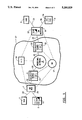
- FIG. 1 schematically illustrates a communication network such as a secure ISDN network with security guard facilities
- FIG. 2 illustrates the principles of a security guard unit.
- FIG. 1 illustrates, as an example, how a number of subscriber terminals such as ISDN terminals 1,2,3 and 4 can be interconnected through a public unsecured ISDN network 6.
- the terminals 1-2 and 3-4 are respectively connected through switching modules such as ISDN PABX's 7 and 8 and through ISDN security guards 9 and 10, according to this invention, to the network 6.
- Security control modules 11,12 are respectively arranged in the terminal 2 and in the PABX 8.
- Cryptographic devices such as security modules 13,14,15 each including a security control module and at least one cryptographic module are respectively arranged in the terminal 4 and in the security guard 9 and 10.
- a security manager and his terminal equipment 17 is attached, as indicated with broken lines, either to the public network 6, to a security guard 9 (or 10) or a PABX 7 (or 8) through standardized interfaces.
- An authentication server 18 is connected to the PABX 7,8 and unsecure network 6.
- the connections to and from the ISDN security guard units 9 and 10 are transmission links such as ISDN primary rate access links 19,20,21,22, whereas all other connections are ISDN basic access links, such as subscriber lines 23-26 interconnecting the subscriber terminals 1-4 with the PABX's 7 and 8.
- a secure ISDN network can, with the exception of the unsecured public network 6 be represented by the borderline 27. Secure communication through the public network 6 can be obtained by activating the relevant security control modules 11,12, the cryptographic modules (FIG. 2) and the security modules 13-15.
- the security manager 17 operates, manages and maintains the security guard regarding security. In particular it manages and maintains the security rules (Security Policy) with which the security guard 9 (or 10) can operate on its own and take its own security decisions.
- Security Policy security rules
- the authentication server 18 is attached either to the PABX 7 (or 8) or to the public network 6. It generates and stores certificates which are used by the security modules 13-16 in the process of user and equipment authentication (identity verification). It fulfills a similar role as the authentication server described in the above-cited EP 0 436 799 A2 publication.
- FIG. 2 is illustrated an ISDN security guard unit 9 (or 10) with primary rate access links 19 and 20 (or 22-21) and an access link to the security managing unit 17, through the network 6 (FIG. 1),--or directly by a specific physical and network independent attachment interface.
- the security manager 17 initializes and maintains a security guard managing device 30 in accordance with predetermined security protocols, and communication channels 36 (or 37) are routed through cryptographic module routing devices 31 and 32, so as either
- the cryptographic-pool 13 (15) contains a number of cryptographic modules 35 as described in said European application of K. Presttun.
- the signalling channel (D-ch) 38 (or 39) is monitored in order to find out whether or not a communication channel is subjected to protection.
- the security guard is used as a cryptographic-pool as described in said European application of K. Presttun, the signalling channel 38 (or 39) is used for control purposes carried out by a security control module 12.
- Virtual communication channels which carry data packets (messages) are carried by the signalling channel (D-ch) 38 (or 39) and always routed to the security guard managing device 30 which again routes the data to to be subjected to cryptographic transformation, in the process of protecting a data packet, to a cryptographic module 35 through the internal databus 40.
- the internal databus 40 is used by the security guard managing device 30 to control and setup the routing devices 31, 32 and the cryptographic modules 35 in the cryptographic-pool 13 (15).
- the security guard managing device (30) controls the total operation of the security guard and hence it is the central processing unit.
- a communication path from subscriber 1 to subscriber 4 will pass unprotected and transparently through the PABX 7 to the security guard 9 in which the security module 13 is activated for encryption.
- An encrypted channel will then be set up through the unsecure network 6 transparently through the security guard 10 and the PABX 8 to the subscriber 4.
- the channel is decrypted by the security module 14 at the subscriber 4.
- the Security Policy has specified that the security module 13 should be activated upon calls from subscriber 1 and that the security control module 12 in the PABX 8 should not set up the security module 15 in the security guard 10.
- a communication path from the subscriber 3 to the subscriber 1 will pass unprotected over the line 25 and through the PABX 8 to the security guard 10 in which the security module 15 has been activated for encryption.
- An encrypted channel is set up through the unsecure network 6 to the security guard 9 in which the security module 13 has been activated for decryption.
- the communication path between the security guard 9 and the subscriber 1 is unsecure.
- the Security Policy has specified that the security control module 12 in the PABX 8 should set up the security module 15 in the security guard 10.
- the security control module 11 at the subscriber 2 must have set up the security module 13 in the security guard 9 in order to receive a protected communication channel.
Landscapes
- Engineering & Computer Science (AREA)
- Computer Networks & Wireless Communication (AREA)
- Computer Security & Cryptography (AREA)
- Signal Processing (AREA)
- Data Exchanges In Wide-Area Networks (AREA)
- Silicon Compounds (AREA)
- Photovoltaic Devices (AREA)
- Pharmaceuticals Containing Other Organic And Inorganic Compounds (AREA)
- Two-Way Televisions, Distribution Of Moving Picture Or The Like (AREA)
- Sub-Exchange Stations And Push- Button Telephones (AREA)
- Synchronizing For Television (AREA)
- Studio Devices (AREA)
- Details Of Television Systems (AREA)
- Reduction Or Emphasis Of Bandwidth Of Signals (AREA)
Applications Claiming Priority (2)
| Application Number | Priority Date | Filing Date | Title |
|---|---|---|---|
| NO911679A NO173418C (no) | 1991-04-29 | 1991-04-29 | Kommunikasjonsnett |
| NO911679 | 1991-04-29 |
Publications (1)
| Publication Number | Publication Date |
|---|---|
| US5280529A true US5280529A (en) | 1994-01-18 |
Family
ID=19894113
Family Applications (1)
| Application Number | Title | Priority Date | Filing Date |
|---|---|---|---|
| US07/875,443 Expired - Fee Related US5280529A (en) | 1991-04-29 | 1992-04-29 | Communication network intended for secure transmissions |
Country Status (11)
| Country | Link |
|---|---|
| US (1) | US5280529A (de) |
| EP (1) | EP0511497B1 (de) |
| JP (1) | JPH05130241A (de) |
| AT (1) | ATE154188T1 (de) |
| AU (1) | AU644052B2 (de) |
| CA (1) | CA2067411C (de) |
| DE (1) | DE69220141T2 (de) |
| ES (1) | ES2104759T3 (de) |
| FI (1) | FI110737B (de) |
| NO (1) | NO173418C (de) |
| NZ (1) | NZ242333A (de) |
Cited By (14)
| Publication number | Priority date | Publication date | Assignee | Title |
|---|---|---|---|---|
| US5553146A (en) * | 1993-08-16 | 1996-09-03 | Siemens Aktiengesellschaft | Method for exchanging information between ISDN terminal equipment, that is, data terminals, terminals, or telecommunication systems |
| US5659684A (en) * | 1995-02-03 | 1997-08-19 | Isdn Systems Corporation | Methods and apparatus for interconnecting personal computers (PCs) and local area networks (LANs) using packet protocols transmitted over a digital data service (DDS) |
| US5822435A (en) * | 1992-07-10 | 1998-10-13 | Secure Computing Corporation | Trusted path subsystem for workstations |
| US5828893A (en) * | 1992-12-24 | 1998-10-27 | Motorola, Inc. | System and method of communicating between trusted and untrusted computer systems |
| US5987440A (en) * | 1996-07-22 | 1999-11-16 | Cyva Research Corporation | Personal information security and exchange tool |
| US6081601A (en) * | 1998-01-08 | 2000-06-27 | Nokia Telecommunications Oy | Method of implementing connection security in a wireless network |
| US6137792A (en) * | 1996-06-14 | 2000-10-24 | International Discount Telecommunications Corp. | Method and apparatus for enabling transmission of data packets over a bypass circuit-switched public telephone connection |
| US6532451B1 (en) | 1998-03-23 | 2003-03-11 | Novell, Inc. | Nested strong loader apparatus and method |
| US6574730B1 (en) * | 1994-08-17 | 2003-06-03 | British Telecommunications Plc | User authentication in a communications network |
| US6615350B1 (en) | 1998-03-23 | 2003-09-02 | Novell, Inc. | Module authentication and binding library extensions |
| US6701433B1 (en) | 1998-03-23 | 2004-03-02 | Novell, Inc. | Method and apparatus for escrowing properties used for accessing executable modules |
| US6751735B1 (en) | 1998-03-23 | 2004-06-15 | Novell, Inc. | Apparatus for control of cryptography implementations in third party applications |
| US20050176431A1 (en) * | 2004-02-11 | 2005-08-11 | Telefonaktiebolaget L M Ericsson (Publ) | Method for handling key sets during handover |
| US7343622B1 (en) * | 2000-04-27 | 2008-03-11 | Raytheon Company | Multi-level secure multi-processor computer architecture |
Families Citing this family (6)
| Publication number | Priority date | Publication date | Assignee | Title |
|---|---|---|---|---|
| FR2716323B1 (fr) * | 1994-02-14 | 1996-05-03 | France Telecom | Système sécurisé d'interconnexion de réseaux locaux via un réseau de transmission public. |
| GB2293719A (en) * | 1994-09-29 | 1996-04-03 | Northern Telecom Ltd | A secure communications system |
| ATE299326T1 (de) | 1997-04-01 | 2005-07-15 | Ericsson Telefon Ab L M | Verfahren und system zur gesicherten datenübertragung |
| FR2772531B1 (fr) * | 1997-12-11 | 2000-03-10 | France Telecom | Dispositif de securisation d'une liaison telephonique entre deux postes d'abonnes |
| AT411509B (de) * | 1999-09-17 | 2004-01-26 | Telekom Austria Ag | Anordnung und verfahren zur verschlüsselten kommunikation |
| GB2370732B (en) | 2001-10-17 | 2003-12-10 | Ericsson Telefon Ab L M | Security in communications networks |
Citations (4)
| Publication number | Priority date | Publication date | Assignee | Title |
|---|---|---|---|---|
| JPS61278256A (ja) * | 1985-06-04 | 1986-12-09 | Nec Corp | 構内電子交換機の暗号付与方式 |
| US4802220A (en) * | 1985-03-20 | 1989-01-31 | American Telephone And Telegraph Company, At&T Bell Laboratories | Method and apparatus for multi-channel communication security |
| EP0406187A1 (de) * | 1989-06-16 | 1991-01-02 | Telia Ab | Verfahren und Einrichtung zur Verschlüsselung |
| EP0436799A2 (de) * | 1989-11-13 | 1991-07-17 | Alcatel Stk A/S | Kommunikationsnetzwerk mit Schlüsselverteilung |
-
1991
- 1991-04-29 NO NO911679A patent/NO173418C/no not_active IP Right Cessation
-
1992
- 1992-03-27 AT AT92105268T patent/ATE154188T1/de not_active IP Right Cessation
- 1992-03-27 ES ES92105268T patent/ES2104759T3/es not_active Expired - Lifetime
- 1992-03-27 EP EP92105268A patent/EP0511497B1/de not_active Expired - Lifetime
- 1992-03-27 DE DE69220141T patent/DE69220141T2/de not_active Expired - Fee Related
- 1992-04-13 NZ NZ24233392A patent/NZ242333A/en unknown
- 1992-04-16 AU AU14956/92A patent/AU644052B2/en not_active Ceased
- 1992-04-28 CA CA002067411A patent/CA2067411C/en not_active Expired - Fee Related
- 1992-04-28 FI FI921895A patent/FI110737B/fi active
- 1992-04-29 US US07/875,443 patent/US5280529A/en not_active Expired - Fee Related
- 1992-04-30 JP JP4111804A patent/JPH05130241A/ja active Pending
Patent Citations (5)
| Publication number | Priority date | Publication date | Assignee | Title |
|---|---|---|---|---|
| US4802220A (en) * | 1985-03-20 | 1989-01-31 | American Telephone And Telegraph Company, At&T Bell Laboratories | Method and apparatus for multi-channel communication security |
| JPS61278256A (ja) * | 1985-06-04 | 1986-12-09 | Nec Corp | 構内電子交換機の暗号付与方式 |
| EP0406187A1 (de) * | 1989-06-16 | 1991-01-02 | Telia Ab | Verfahren und Einrichtung zur Verschlüsselung |
| EP0436799A2 (de) * | 1989-11-13 | 1991-07-17 | Alcatel Stk A/S | Kommunikationsnetzwerk mit Schlüsselverteilung |
| US5115466A (en) * | 1989-11-13 | 1992-05-19 | Alcatel Stk A/S | Communication network intended for secure transmission of speech and data |
Non-Patent Citations (6)
| Title |
|---|
| "Encryption and ISDN-A Natural Fit" by B. O'Higgins, et al, pp. 863-869, International Switching Symposium 1987, Innovations in Switching Technology, Phoenix, Ariz., Mar. 15-20, 1987. |
| "Information Protection in the Swedish ISDN", K. Erlandsson et al, Proceedings of the International Switching Symposium, May 27-Jun. 1, 1990, vol. III, pp. 53-57. |
| "Security Measures in Communicaiton Networks", K. Presttun, Electrical Communication, vol. 60, No. 1, 1986, pp. 63-70. |
| Encryption and ISDN A Natural Fit by B. O Higgins, et al, pp. 863 869, International Switching Symposium 1987, Innovations in Switching Technology, Phoenix, Ariz., Mar. 15 20, 1987. * |
| Information Protection in the Swedish ISDN , K. Erlandsson et al, Proceedings of the International Switching Symposium, May 27 Jun. 1, 1990, vol. III, pp. 53 57. * |
| Security Measures in Communicaiton Networks , K. Presttun, Electrical Communication, vol. 60, No. 1, 1986, pp. 63 70. * |
Cited By (20)
| Publication number | Priority date | Publication date | Assignee | Title |
|---|---|---|---|---|
| US5822435A (en) * | 1992-07-10 | 1998-10-13 | Secure Computing Corporation | Trusted path subsystem for workstations |
| US5828893A (en) * | 1992-12-24 | 1998-10-27 | Motorola, Inc. | System and method of communicating between trusted and untrusted computer systems |
| US5553146A (en) * | 1993-08-16 | 1996-09-03 | Siemens Aktiengesellschaft | Method for exchanging information between ISDN terminal equipment, that is, data terminals, terminals, or telecommunication systems |
| US6574730B1 (en) * | 1994-08-17 | 2003-06-03 | British Telecommunications Plc | User authentication in a communications network |
| US5659684A (en) * | 1995-02-03 | 1997-08-19 | Isdn Systems Corporation | Methods and apparatus for interconnecting personal computers (PCs) and local area networks (LANs) using packet protocols transmitted over a digital data service (DDS) |
| US6137792A (en) * | 1996-06-14 | 2000-10-24 | International Discount Telecommunications Corp. | Method and apparatus for enabling transmission of data packets over a bypass circuit-switched public telephone connection |
| US7289971B1 (en) | 1996-07-22 | 2007-10-30 | O'neil Kevin P | Personal information security and exchange tool |
| US5987440A (en) * | 1996-07-22 | 1999-11-16 | Cyva Research Corporation | Personal information security and exchange tool |
| US8195569B2 (en) * | 1996-07-22 | 2012-06-05 | Cyva Research Corporation | E-bazaar featuring personal information security |
| CN1231039B (zh) * | 1996-07-22 | 2011-08-24 | Cyva研究公司 | 个人信息安全与交换的工具 |
| US20090119222A1 (en) * | 1996-07-22 | 2009-05-07 | O'neil Kevin P | E-Bazaar featuring personal information security |
| US6081601A (en) * | 1998-01-08 | 2000-06-27 | Nokia Telecommunications Oy | Method of implementing connection security in a wireless network |
| US6615350B1 (en) | 1998-03-23 | 2003-09-02 | Novell, Inc. | Module authentication and binding library extensions |
| US6751735B1 (en) | 1998-03-23 | 2004-06-15 | Novell, Inc. | Apparatus for control of cryptography implementations in third party applications |
| US7383442B2 (en) | 1998-03-23 | 2008-06-03 | Novell, Inc. | Nested strong loader apparatus and method |
| US6701433B1 (en) | 1998-03-23 | 2004-03-02 | Novell, Inc. | Method and apparatus for escrowing properties used for accessing executable modules |
| US20030061483A1 (en) * | 1998-03-23 | 2003-03-27 | Novell, Inc. | Nested strong loader apparatus and method |
| US6532451B1 (en) | 1998-03-23 | 2003-03-11 | Novell, Inc. | Nested strong loader apparatus and method |
| US7343622B1 (en) * | 2000-04-27 | 2008-03-11 | Raytheon Company | Multi-level secure multi-processor computer architecture |
| US20050176431A1 (en) * | 2004-02-11 | 2005-08-11 | Telefonaktiebolaget L M Ericsson (Publ) | Method for handling key sets during handover |
Also Published As
| Publication number | Publication date |
|---|---|
| ATE154188T1 (de) | 1997-06-15 |
| FI921895L (fi) | 1992-10-30 |
| JPH05130241A (ja) | 1993-05-25 |
| NO173418C (no) | 1993-12-08 |
| CA2067411C (en) | 1999-04-13 |
| EP0511497A3 (en) | 1993-03-24 |
| NO173418B (no) | 1993-08-30 |
| FI921895A0 (fi) | 1992-04-28 |
| FI110737B (fi) | 2003-03-14 |
| EP0511497B1 (de) | 1997-06-04 |
| DE69220141D1 (de) | 1997-07-10 |
| CA2067411A1 (en) | 1992-10-30 |
| NZ242333A (en) | 1994-07-26 |
| EP0511497A2 (de) | 1992-11-04 |
| NO911679D0 (no) | 1991-04-29 |
| ES2104759T3 (es) | 1997-10-16 |
| DE69220141T2 (de) | 1997-12-18 |
| NO911679L (no) | 1992-10-30 |
| AU1495692A (en) | 1992-11-05 |
| AU644052B2 (en) | 1993-12-02 |
Similar Documents
| Publication | Publication Date | Title |
|---|---|---|
| US5280529A (en) | Communication network intended for secure transmissions | |
| US5115466A (en) | Communication network intended for secure transmission of speech and data | |
| EP0869651B1 (de) | Verfahren und System zur gesicherten Datenübertragung | |
| US7136378B2 (en) | Secure ATM-based distributed virtual tandem switching system and method | |
| CA2224315C (en) | Process and device for authenticating subscribers to digital exchanges | |
| AU712703B2 (en) | Process and device for transmitting confidential connection establishment and service information between subscriber terminals and one or more digital exchanges | |
| US6005874A (en) | Method of processing messages in a secure communications system having a plurality of encryption procedures, and such a secure communication system | |
| US5963644A (en) | Process and device for making secure a telephone link connecting two subscriber sets | |
| WO2004043051A1 (en) | A telephone fraud prevention system | |
| AU733558B2 (en) | Method for protecting a communications system from unauthorized access | |
| WO2002037779A1 (en) | Secure atm-based distributed virtual tandem switching system and method | |
| US20040170183A1 (en) | Network level admission control apparatus for a communications network having a sub-IP level protocol | |
| Karanastasis et al. | Security on ATM Networks |
Legal Events
| Date | Code | Title | Description |
|---|---|---|---|
| AS | Assignment |
Owner name: ALCATEL STK A/S, A CORPORATION OF NORWAY, NORWAY Free format text: ASSIGNMENT OF ASSIGNORS INTEREST.;ASSIGNOR:NOST, JAN P.;REEL/FRAME:006189/0680 Effective date: 19920611 |
|
| FEPP | Fee payment procedure |
Free format text: PAYOR NUMBER ASSIGNED (ORIGINAL EVENT CODE: ASPN); ENTITY STATUS OF PATENT OWNER: LARGE ENTITY |
|
| FPAY | Fee payment |
Year of fee payment: 4 |
|
| FPAY | Fee payment |
Year of fee payment: 8 |
|
| REMI | Maintenance fee reminder mailed | ||
| LAPS | Lapse for failure to pay maintenance fees | ||
| STCH | Information on status: patent discontinuation |
Free format text: PATENT EXPIRED DUE TO NONPAYMENT OF MAINTENANCE FEES UNDER 37 CFR 1.362 |
|
| FP | Lapsed due to failure to pay maintenance fee |
Effective date: 20060118 |