US5583112A - Saponin-antigen conjugates and the use thereof - Google Patents
Saponin-antigen conjugates and the use thereof Download PDFInfo
- Publication number
- US5583112A US5583112A US07/906,880 US90688092A US5583112A US 5583112 A US5583112 A US 5583112A US 90688092 A US90688092 A US 90688092A US 5583112 A US5583112 A US 5583112A
- Authority
- US
- United States
- Prior art keywords
- saponin
- substantially pure
- antigen
- group
- terminal
- Prior art date
- Legal status (The legal status is an assumption and is not a legal conclusion. Google has not performed a legal analysis and makes no representation as to the accuracy of the status listed.)
- Expired - Lifetime
Links
Images




Classifications
-
- C—CHEMISTRY; METALLURGY
- C07—ORGANIC CHEMISTRY
- C07J—STEROIDS
- C07J17/00—Normal steroids containing carbon, hydrogen, halogen or oxygen, having an oxygen-containing hetero ring not condensed with the cyclopenta(a)hydrophenanthrene skeleton
- C07J17/005—Glycosides
-
- A—HUMAN NECESSITIES
- A61—MEDICAL OR VETERINARY SCIENCE; HYGIENE
- A61K—PREPARATIONS FOR MEDICAL, DENTAL OR TOILETRY PURPOSES
- A61K39/00—Medicinal preparations containing antigens or antibodies
- A61K39/385—Haptens or antigens, bound to carriers
-
- A—HUMAN NECESSITIES
- A61—MEDICAL OR VETERINARY SCIENCE; HYGIENE
- A61K—PREPARATIONS FOR MEDICAL, DENTAL OR TOILETRY PURPOSES
- A61K39/00—Medicinal preparations containing antigens or antibodies
- A61K39/39—Medicinal preparations containing antigens or antibodies characterised by the immunostimulating additives, e.g. chemical adjuvants
-
- C—CHEMISTRY; METALLURGY
- C07—ORGANIC CHEMISTRY
- C07H—SUGARS; DERIVATIVES THEREOF; NUCLEOSIDES; NUCLEOTIDES; NUCLEIC ACIDS
- C07H15/00—Compounds containing hydrocarbon or substituted hydrocarbon radicals directly attached to hetero atoms of saccharide radicals
- C07H15/20—Carbocyclic rings
- C07H15/24—Condensed ring systems having three or more rings
- C07H15/256—Polyterpene radicals
-
- A—HUMAN NECESSITIES
- A61—MEDICAL OR VETERINARY SCIENCE; HYGIENE
- A61K—PREPARATIONS FOR MEDICAL, DENTAL OR TOILETRY PURPOSES
- A61K39/00—Medicinal preparations containing antigens or antibodies
- A61K2039/555—Medicinal preparations containing antigens or antibodies characterised by a specific combination antigen/adjuvant
- A61K2039/55511—Organic adjuvants
- A61K2039/55577—Saponins; Quil A; QS21; ISCOMS
-
- A—HUMAN NECESSITIES
- A61—MEDICAL OR VETERINARY SCIENCE; HYGIENE
- A61K—PREPARATIONS FOR MEDICAL, DENTAL OR TOILETRY PURPOSES
- A61K39/00—Medicinal preparations containing antigens or antibodies
- A61K2039/60—Medicinal preparations containing antigens or antibodies characteristics by the carrier linked to the antigen
- A61K2039/6012—Haptens, e.g. di- or trinitrophenyl (DNP, TNP)
-
- A—HUMAN NECESSITIES
- A61—MEDICAL OR VETERINARY SCIENCE; HYGIENE
- A61K—PREPARATIONS FOR MEDICAL, DENTAL OR TOILETRY PURPOSES
- A61K39/00—Medicinal preparations containing antigens or antibodies
- A61K2039/60—Medicinal preparations containing antigens or antibodies characteristics by the carrier linked to the antigen
- A61K2039/6087—Polysaccharides; Lipopolysaccharides [LPS]
-
- A—HUMAN NECESSITIES
- A61—MEDICAL OR VETERINARY SCIENCE; HYGIENE
- A61K—PREPARATIONS FOR MEDICAL, DENTAL OR TOILETRY PURPOSES
- A61K39/00—Medicinal preparations containing antigens or antibodies
- A61K2039/62—Medicinal preparations containing antigens or antibodies characterised by the link between antigen and carrier
- A61K2039/627—Medicinal preparations containing antigens or antibodies characterised by the link between antigen and carrier characterised by the linker
Definitions
- the present invention is in the field of medicinal chemistry.
- the invention is related to vaccines comprising a saponin, the process for production thereof, and the use thereof to immunize animals.
- Quillaja saponins are a mixture of triterpene glycosides extracted from the bark of the tree Quillaja saponaria. Crude saponins have been extensively employed as adjuvants in vaccines against foot and mouth disease, and in amplifying the protective immunity conferred by experimental vaccines against protozoal parasites such as Trypanosoma cruzi plasmodium and also the humoral response to sheep red blood cells (SRBC). (Bomford, Int. Arch. Allerg. Appl. Immum. 67:127 (1982)).
- SRBC sheep red blood cells
- Saponins are natural products which have been characterized by a number of common properties. The ability to produce foam in aqueous solution gave the name to the group. Further characteristics are the hemolytic activity, the toxicity for fish, the complexing with cholesterol, and in some cases antibiotic activity. Kofler, Die Saponine (Springer Berlag), Berlin, 1927; Tschesche et al., Chemine und Biologic der Saponine, Fortscher. Chem. Org. Naturst. XXX:461 (1972).
- saponins are not reflected in a common chemical composition. Although all saponins are glycosides, the aglycone may belong to the steroids, the triterpenoids, or the steroidalkaloids. The number of sugar and sugar chains attached to the glycosidic bonds may vary greatly. Saponins have been produced commercially and have many uses. The commercially available Quillaja saponins are crude mixtures which, because of their variability, are not desirable for use in veterinary practice or in pharmaceutical compositions for man. Because of the variability and heterogeneity, each batch must be tested in animal experiments to determine adjuvant activity and toxicity. The impurities in the commercially available products may produce adverse reactions. In addition, the content of the active substance in a given batch of saponin may vary, thereby decreasing the reproducibility from batch to batch.
- DS-1 was shown to contain glucuronic acid, galactose, xylose, fucose, rhamnose, apiose, and Quillajic acid, whereas DS-2 contained these same components plus an additional glucose.
- FIG. 1 shows the refractive index profile of dialyzed, methanol-solubilized Quillaja bark extract on reverse phase-HPLC.
- FIGS. 2A-2B show that the refractive index peaks of the above sample correspond to carbohydrate peaks.
- FIGS. 3A-3B show the comparison of Superfos "Quil-A” and dialyzed methanol soluble bark extract by HPLC.
- FIGS. 4A-4D show the purification of QA-7, QA-17, QA-18, QA-19, and QA-21 from "Quil-A,", a crude saponin mixture, by silica chromatography (FIG. 4A) and subsequent reverse phase chromatography (FIGS. 4B-4D).
- FIGS. 5A-5B show the reverse phase HPLC of QA-21 as a single peak (FIG. 5A) and the resolution into two peaks, QA-21-V1 and QA-21-V2, with hydrophilic interaction chromatography (“HILIC”) (FIG. 5B).
- HILIC hydrophilic interaction chromatography
- FIGS. 6A-6B demonstrate the purity of QA-7, QA-17, QA-18, and QA-21 by reverse phase (FIG. 6A) and normal phase (FIG. 6B) thin layer chromatography.
- FIG. 7 shows the UV spectrum of QA-7 (A), the UV spectrum of QA-17 (B), the UV spectrum of QA-18 (C), and the UV spectrum of QA-21 (D).
- FIG. 8A shows 1 H Nuclear Magnetic Resonance ("NMR") of QA-7.
- FIG. 8B shows 1 H NMR of QA-18.
- FIG. 8C shows 1 H NMR of QA-21.
- FIGS. 9A-9F show the mass spectroscopy-fast atom bombardment ("MS-FAB") spectrum of QA-7 (FIG. 9A), QA-17 (FIG. 9B), QA-18 (FIG. 9C), QA-21 (FIG. 9D), QA-21-V1 (FIG. 9E) and QA-21-V2 (FIG. 9F).
- MS-FAB mass spectroscopy-fast atom bombardment
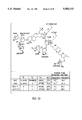
- FIG. 10 shows the proposed structure of QA-17, QA-18, QA-21-V1 and QA-21-V2.
- FIG. 11 shows the elution profile of pure QA-18 micelles and pure QA-21 micelles by gel filtration on BioGel P-200 in PBS equilibrated with the critical micellar concentration of the same saponin and a comparison with the elution position of standard proteins.
- FIG. 12 shows the hemolysis of sheep red blood cells by QA-7, QA-8, QA-17, QA-18, QA-21, and Superfos "Quil-A.”
- FIGS. 13A-13C show the typical endpoint titers for immunization with BSA antigen in the presence of HPLC-purified fractions of bark extract. Absorbance due to antigen-specific antibody binding was plotted as a function of the logarithm of the sera dilution.
- FIGS. 14A-14C demonstrate the comparison of the adjuvant effects of QA-7, QA-17, QA-18 and QA-21 at various antigen concentrations and with Freund's complete adjuvant on immunization with the antigen BSA
- FIGS. 15A-15D show the adjuvant effect of QA-21 (mixture), QA-21-V1 and QA-21-V2 in boosting the IgG titers in subclasses IgG1 (FIG. 15A), IgG2b (FIG. 15B), and IgG2a (FIG. 15C), as well as total IgG (FIG. 15D).
- FIG. 15E shows the dose response curves for QA-21, QA-21-V1 and QA-21-V2 in boosting the total IgG titer.
- FIGS. 16A-16C show the adjuvant effects of HPLC-purified adjuvants used in conjunction with Al(OH) 3 , another adjuvant, on the immunization with the antigen gp70R-delta FIG. 16A--two weeks post-immunization, FIG. 16B--four weeks post-immunization, FIG. 16C--eight weeks post-immunization (boost at six weeks).
- FIGS. 17A-17B smnmarize the effects of HPLC-purified Quillaja saponins alone and in combination with each other and with another adjuvant on the immunization with the antigen alkylated gp70R-delta FIG. 17A--two weeks post-immunization, FIG. 17B--four weeks post-immunization.
- FIG. 18 shows a comparison of the adjuvant effects of QA-18, QA-18H, 0A-21, and QA-21H on immunization with the antigen BSA.
- FIG. 19 shows an SDS-polyacrylamide gel electrophoresis of the reaction of lysozyme with QA-21.
- FIG. 20 shows the total IgG titers of mice immunized with lysozyme (10 ⁇ g) only and without an adjuvant; with lysozyme (10 ⁇ g) and free (noncovalent) QA-21 (1.6 ⁇ g, 1:1 molar ratio); and with QA-21-lysozyme conjugate (11.6 ⁇ g, 1:1 molar ratio).
- FIG. 21 shows the total IgG titers of mice immunized with lysozyme (10 ⁇ g) only; lysozyme (10 ⁇ g) and free QA-21 (10 ⁇ g); and QA-21-lysozyme conjugate (11.6 ⁇ g) and free QA-21 (10 ⁇ g).
- FIG. 22 shows the IgG isotypes produced by each group of mice.
- FIG. 23A-23C show the adjuvant activities of modified saponin QA-21 at the glucuronate carboxyl (FIG. 23A), at the triterpene aldehyde through reductive amination (FIG. 23B) and at the triterpene aldehyde through reduction to an alcohol (FIG. 23C).
- FIG. 24 shows the adjuvant activity of QA-21 linked to biotin through ethylene diamine linked to the glucuronate carboxyl.
- Adjuvant saponins have been identified and purified from an aqueous extract of the bark of the South American tree, Quillaja saponaria Molina. At least 22 peaks with saponin activity were separable. The predominant purified Quillaja saponins have been identified as QA-7, QA-17, QA-18, and QA-21 (Also known as QS-7, QS-17, QS-18 and QS-21, respectively). These saponins have been purified by high pressure liquid chromatography (HPLC) and low pressure silica chromatography. These four saponins have adjuvant effect in mice.
- HPLC high pressure liquid chromatography
- silica chromatography low pressure silica chromatography
- QA-21 was further purified using hydrophilic interaction chromatography (HILIC) and resolved into two peaks, QA-21-V1 and QA-21-V2, which have been shown to be different compounds.
- HILIC hydrophilic interaction chromatography
- the substantially pure saponins of the present invention are useful as immune adjuvants and enhance immune responses in individuals at a much lower concentration than the previously available heterogeneous saponin preparations without the toxic effects associated with crude saponin preparations.
- the present invention is directed to saponin/antigen conjugates which comprise a saponin linked to an antigen, wherein the linkage does not interfere substantially with the ability of the saponin to stimulate an immune response in an animal.
- the invention is also directed to modified saponins which comprise a saponin modified with a linking molecule, wherein the modification does not interfere substantially with the ability of the saponin to stimulate an immune response in an animal.
- the invention is also directed to saponin hydrolytic product/antigen conjugates which comprise a saponin hydrolytic product linked to an antigen, wherein the linkage does not interfere substantially with the ability of the saponin hydrolytic product to stimulate an immune response in an animal.
- the invention also relates to a vaccine which comprises a saponin/antigen conjugate of the invention, a pharmaceutically acceptable carrier, and, optionally, one or more adjuvants.
- the adjuvant is a saponin of the present invention.
- the invention also relates to a vaccine which comprises a saponin hydrolytic product/antigen conjugate of the invention and a pharmaceutically acceptable carrier.
- the saponins of the present invention may be obtained from the tree Quillaja saponaria Molina.
- sustained release protein as used herein includes glycosidic triterpenoid compounds which produce foam in aqueous solution, have hemolytic activity in most cases, and possess immune adjuvant activity.
- the invention encompasses the saponin per se, as well as natural and pharmaceutically acceptable salts and pharmaceutically acceptable derivatives.
- saponin also encompasses biologically active fragments thereof.
- compositions such as immunologic compositions, comprising one or more substantially pure saponin fractions or hydrolytic products thereof which may be linked to an antigen, and methods of using these compositions as vaccines and immune adjuvants.
- immune adjuvant refers to compounds which, when administered to an individual or tested in vitro, increase the immune response to an antigen in the individual or test system to which said antigen is administered. Some antigens are weakly immunogenic when administered alone or are toxic to the individual at concentrations which evoke immune responses in said individual. An immune adjuvant may enhance the immune response of the individual to the antigen by making the antigen more strongly immunogenic. The adjuvant effect may also lower the dose of said antigen necessary to achieve an immune response in said individual.
- saponins when linked to an antigen, markedly enhances the immune response to the antigen, even when the antigen is weakly iinmunogenic.
- the saponin conjugates of the present invention stimulate the production of multiple subtypes of antibodies.
- the saponin/antigen conjugates of the present invention are coadministered with a saponin adjuvant (not linked to the antigen), the immune response is enhanced to a much greater extent.
- the present invention is a great advance in the art in that it allows for the induction of active immunity to certain antigens which heretofore was not possible.
- the immunogen activity of the saponin conjugates and saponin adjuvants of the present invention may be determined by any of a number of methods known to those of ordinary skill in the art.
- the increase in titer of antibody against a particular antigen upon administration of the vaccines and/or adjuvants of the invention may be used as a criteria for immunogenic activity (Dalsgaard, K. (1978) Acta Veterinia Scandinavica 69:1-40, Scott et al. Int. Archs. Allergy Appl. Immun. 77:409-412 (1985)). Briefly, one such test involves injecting CD-1 mice intradermally with a saponin/antigen conjugate which may be mixed with varying amounts of a potential adjuvant. Sera was harvested from the mice two weeks later and tested by ELISA for anti-immunogen antibody.
- substantially pure means substantially free from compounds normally associated with the saponin in its natural state and exhibiting constant and reproducible chromatographic response, elution profiles, and biologic activity.
- substantially pure is not meant to exclude artificial or synthetic mixtures of the saponin with other compounds.
- the substantially pure saponin is purified to one or more of the following standards: 1) appearing as only one major carbohydrate staining band on silica gel TLC (EM Science HPTLC Si60) in a solvent system of 40 mm acetic acid in chloroform/methanol/water (60/45/10, v/v/v), 2)appearing as only one major carbohydrate staining band on reverse phase TLC (EM Science Silica Gel RP-8) in a solvent system of methanol/water (70/30, v/v), 3) appearing as only one major peak upon reverse-phase HPLC on Vydac C4 (5 ⁇ m particle size, 330 ⁇ pore, 4.6 mm ID ⁇ 25 cm L) in 40 mM acetic acid in methanol/water (58/42, v/v).
- silica gel TLC EM Science HPTLC Si60
- reverse phase TLC EM Science Silica Gel RP-8
- Vydac C4 5 ⁇ m particle size, 330
- QA-21 designates the mixture of components QA-21-V1 and QA-21-V2 which appear as a single peak on reverse phase HPLC on Vydac C4 (5 ⁇ m particle size, 330 ⁇ pore, 4.6 mm ID ⁇ 25 cml) in 40 mM acetic acid in methanol/water (58/42, v/v).
- the component fractions are referred to specifically as QA-21-V1 and QA-21-V2 when describing experiments or results performed on the further purified components.
- the saponins of the present invention are purified from Quillaja saponaria Molina bark.
- Aqueous extracts of the Quillaja saponaria Molina bark were dialyzed against water.
- the dialyzed extract was lyophilized to dryness, extracted with methanol and the methanol-soluble extract was further fractionated on silica gel chromatography and by reverse phase high pressure liquid chromatography (RP-HPLC).
- the individual saponins were separated by reverse phase HPLC as described in Example 1.
- At least 22 peaks (denominated QA-1 to QA-22) were separable. Each peak corresponded to a carbohydrate peak as demonstrated in FIG. 2 and exhibited only a single band on reverse phase thin layer chromatography.
- the individual components were identified by retention time on a Vydac C 4 HPLC column as follows:
- Immune adjuvant activity was tested by measuring the ability of the purified saponins to enhance the immune response in mice to exogenously administered antigens.
- the purified saponins of the present invention demonstrated adjuvant effects at lower doses than the crude extracts.
- the predominant saponins in bark extract (QA-7, QA-17, QA-18, and QA-21) demonstrated adjuvant activity at doses of 4.5 ⁇ g carbohydrate or less (assayed by anthrone).
- the purified saponins were further characterized by carbohydrate content, reverse phase and normal phase TLC, UV, infra red, NMR spectra, and fast atom bombardment--mass spectroscopy.
- Carbohydrate content was used to quantitate the saponins in some instances.
- the carbohydrate assay was the anthrone method of Scott and Melvin (Anal. Chem. 25:1656 (1953)) using glucose as a standard as described in Example 1. This assay was used to determine a ratio of extent of anthrone reaction (expressed in glucose equivalents) per mg of purified saponin (dry weight) so that dry weight of a particular preparation could be estimated by use of anthrone assay. It must be noted that differences in reactivity with anthrone for different saponins may be due to carbohydrate composition rather than quantity as different monosaccharides react variably in this assay.
- the substantially pure QA-7 saponin is characterized as having immune adjuvant activity, containing about 35% carbohydrate (as assayed by anthrone) per dry weight, having a uv absorption maxima of 205-210 nm, a retention time of approximately 9-10 minutes on RP-HPLC on a Vydac C 4 column having 5 ⁇ m particle size, 330 ⁇ pore, 4.6 mm ID ⁇ 25 cm L in a solvent of 40 mM acetic acid in methanol/water (58/42; v/v) at a flow rate of 1 ml/min, eluting with 52-53% methanol from a Vydac C 4 column having 5 ⁇ m particle size, 330 ⁇ pore, 10 mM ID ⁇ 25 cm L in a solvent of 40 mM acetic acid with gradient elution from 50 to 80% methanol, having a critical micellar concentration of approximately 0.06% in water and 0.07% in phosphate buffere
- the substantially pure QA-17 saponin is characterized as having adjuvant activity, containing about 29% carbohydrate (as assayed by anthrone) per dry weight, having a UV absorption maxima of 205-210 nm, a retention time of approximately 35 minutes on RP-HPLC on a Vydac C 4 column having 5 ⁇ m particle size, 330 ⁇ pore, 4.6 mm ID ⁇ 25 cm L in a solvent of 40 mM acetic acid in methanol-water (58/42; v/v) at a flow rate of 1 ml/min, eluting with 63-64% methanol from a Vydac C 4 column having 5 ⁇ m particle size, 330 ⁇ pore, 10 mm ID ⁇ 25 cm L in a solvent of 40 mM acetic acid with gradient elution from 50 to 80% methanol, having a critical micellar concentration of 0.06% (w/v) in water and 0.03% (w/v) in
- the substantially pure QA-18 saponin is characterized as having immune adjuvant activity, containing about 25-26% carbohydrate (as assayed by anthrone) per dry weight, having a UV absorption maxima of 205-210 nm, a retention time of approximately 38 minutes on RP-HPLC on a Vydac C 4 column having 5 ⁇ m particle size, 330 ⁇ pore, 4.6 mm ID ⁇ 25 cm L in a solvent of 40 mM acetic acid in methanol/water (58/42; v/v) at a flow rate of 1 ml/min, eluting with 64-65% methanol from a Vydac C 4 column having 5 ⁇ m particle size, 330 ⁇ pore, 10 mm ID ⁇ 25 cm L in a solvent of 40 mM acetic acid with gradient elution from 50 to 80% methanol, having a critical micellar concentration of 0.04% (w/v) in water and 0.02% (w/v
- the substantially pure QA-21 saponin is characterized as having immune adjuvant activity, containing about 22% carbohydrate (as assayed by anthrone) per dry weight, having a UV absorption maxima of 205-210 nm, a retention time of approximately 51 minutes on RP-HPLC on a Vydac C 4 column having 5 ⁇ m particle size, 330 ⁇ pore, 4.6 mm ID ⁇ 25
- the component fractions, substantially pure QA-21-V1 and QA-21-V2 saponins, have the same molecular weight and identical spectrums by FAB-MS. They differ only in that QA-21-V1 has a terminal apiose which is xylose in QA-21-V2 (which therefore has two terminal xyloses and no apiose).
- the two components additionally contain the monosaccharides terminal arabinose, terminal apiose, terminal xylose, 4-rhamnose, terminal galactose, 2-fucose, 3-xylose, and 2,3-glucuronic acid.
- the structures of the saponins are disclosed more fully in the Examples, below.
- the conjugates of the invention are useful as vaccines which induce active immunity toward antigens in individuals.
- such individuals are humans, however the invention is not intended to be so limiting. Any animal which may experience the beneficial effects of the vaccines of the invention are within the scope of animals which may be treated according to the claimed invention.
- the purified saponins exhibit adjuvant effects when administered over a wide range of dosages and a wide range of ratios to the antigen being administered.
- the saponin is administered in a ratio of adjuvant to immunogen (w/w) of 3.0 or less, preferably 1.0 or less.
- the purified saponins and saponin-antigen conjugates may be administered either individually or admixed with other substantially pure adjuvants to achieve the enhancement of the immune response to an antigen.
- the saponin/antigen conjugates of the present invention may comprise a single saponin or mixtures of saponins linked to the antigen.
- the mixtures of the saponins linked to the antigen may be purified saponins or crude mixtures of saponins. While crude saponin mixtures are toxic and not normally administered to animals, the formation of saponin-antigen conjugates may serve to reduce the toxicity of the composition, such that the conjugates may be administered to an animal without causing any untoward effects.
- saponin mixtures effective in the present invention are fractions QA-7 and QA-17, QA-7 and QA-18, QA-17 and QA-18, or QA-7, QA-17, and QA-18 administered together.
- Purified saponins and conjugates thereof may also be administered together with non-saponin adjuvants.
- non-saponin adjuvants useful with the present invention are oil adjuvants (for example, Freund's Complete and Incomplete), liposomes, mineral salts (for example, AlK(SO 4 ) 2 , AlNa(SO 4 ) 2 , AlNH 4 (SO 4 ), silica, alum, Al(OH) 3 , Ca 3 (PO 4 ) 2 , kaolin, and carbon), polynucleotides (for example, poly IC and poly AU acids), and certain natural substances (for example, wax D from Mycobacterium tuberculosis, as well as substances found in Corynebacterium parvum, Bordetella pertussis, and members of the genus Brucella), bovine serum albumin, diphtheria toxoid, tetanus toxoid, edestin, keyhole-limpet hemocyanin, Pseudomonal Toxin A, choleragenoid, cholera toxin, pertussis
- non-saponin adjuvant may comprise a protein fragment comprising at least the immunogenic portion of the molecule.
- immunogenic macromolecules which may be used in the practice of the invention include, but are not limited to, polysaccharides, tRNA, nomnetabolizable synthetic polymers such as polyvinylamine, polymethacrylic acid polyvinylpyrrolidone, mixed polycondensates (with relatively high molecular weight) of 4'4'-diaminodiphenyl-methane-3,3'-dicarboxylic acid and 4-nitro-2-aminobenzoic acid (See Sela, M., Science 166:1365-1374 (1969)) or glycolipids, lipids or carbohydrates.
- nomnetabolizable synthetic polymers such as polyvinylamine, polymethacrylic acid polyvinylpyrrolidone, mixed polycondensates (with relatively high molecular weight) of 4'4'-diaminodiphenyl-methane-3,3'-dicarboxylic acid and 4-nitro-2-aminobenzoic acid (See Sela, M., Science
- the saponins of the present invention may be directly linked to the antigen or may be linked via a linking group.
- linker group is intended one or more bifunctional molecules which can be used to covalently couple the saponin or saponin mixture to the antigen and which do not interfere with the production of antigen-specific antibodies in vivo.
- the linker group may be attached to any part of the saponin so long as the point of attachment does not interfere with the production of antigenspecific antibodies in vivo and thus interfere with the induction of active immunity.
- linker groups which can be used to link the saponin to the antigen may comprise ##STR1##
- the saponins are linked to the antigen by the preparation of an active ester of glucuronic acid, a component of the saponins, followed by reaction of the active ester with a nucleophilic functional group on the antigen.
- the active esters which may be used in the practice of the invention include the glucuronate of N-hydroxysuccinimide, sulfo-N-hydroxysuccinimide, hydroxybenzotriazole, and p-nitrophenol.
- the active esters may be prepared by reaction of the carboxy group of the saponin with an alcohol in the presence of a dehydration agent such as dicyclohexylcarbodiimide (DCC), 1-(3-dimethylaminopropyl)-3-ethylcarbodiimide (EDC), and 1-(3-dimethylaminopropyl)-3-ethylcarbodiimide methiodide (EDCI).
- DCC dicyclohexylcarbodiimide
- EDC 1-(3-dimethylaminopropyl)-3-ethylcarbodiimide
- EDCI 1-(3-dimethylaminopropyl)-3-ethylcarbodiimide methiodide
- the active ester of the saponin glucuronate is prepared as described above and reacted with the linker group, e.g. 2-aminoethanol, an alkylene diamine, an amino acid such as glycine, or a carboxy-protected amino acid such as glycine tert-butyl ester. If the linker contains a protected carboxy group, the protecting group is removed and the active ester of the linker is prepared (as described above). The active ester is then reacted with the antigen to give the conjugate.
- the linker group e.g. 2-aminoethanol, an alkylene diamine, an amino acid such as glycine, or a carboxy-protected amino acid such as glycine tert-butyl ester.
- the antigen may be derivatized with succinic anhydride to give an antigensuccinate conjugate which may be condensed in the presence of EDC or EDCI with a saponin-linker derivative having a free amino or hydroxyl group on the linker. See WO91/01750.
- the saponins retain adjuvant activity.
- Those saponin derivatives prepared by reductive alkylation at the triterpene aldehyde do not appear to retain adjuvant activity at doses less than 40 ⁇ g.
- derivatives in which the saponin triterpene aldehyde was reduced to an alcohol by sodium borohydride reduction did retain some activity.
- a saponin conjugate comprising a linker with a free amino group (derived from an alkylene diamine) and crosslink the free amino group with a heterobifunctional cross linker such as sulfosuccinimidyl 4-(N-maleimidocyclohexane)-1-carboxylate which will react with the free sulfhydryl groups of protein antigens.
- a heterobifunctional cross linker such as sulfosuccinimidyl 4-(N-maleimidocyclohexane)-1-carboxylate
- the saponin may also be coupled to a linker group by reaction of the aldehyde group of the quillaic acid residue with an amino linker to form an intermediate imine conjugate, followed by reduction with sodium borohydride or sodium cyanoborohydride.
- linkers include amino alcohols such as 2-aminoethanol and diamino compounds such as ethylenediamine, 1,2-propylenediamine, 1,5-pentanediamine, 1,6-hexanediamine, and the like.
- the antigen may then be coupled to the linker by first forming the succinated derivative with succinic anhydride followed by condensation with the saponin-linker conjugate with DCC, EDC or EDCI.
- the saponin may be oxidized with periodate and the dialdehyde produced therefrom condensed with an amino alcohol or diamino compound listed above.
- the free hydroxyl or amino group on the linker may then be condensed with the succinate derivative of the antigen in the presence of DCC, EDC or EDCI.
- the ratio of saponin molecules per antigen molecule may vary considerably according to the molecular weight of the antigen, the number of binding sites on the antigen capable of being coupled to the saponin, and the antigenic characteristics of the particular saponin.
- the ratio of saponin molecules to antigen molecule may be about 0.1:1 to about 10:1.
- the ratio may range from about 1:1 to about 3:1.
- the saponins of the present invention may be utilized to enhance the immune response to any antigen.
- Typical antigens suitable for the immune-response provoking compositions of the present invention include antigens derived from any of the following: viruses, such as influenza, feline leukemia virus, feline immunodeficiency virus, HIV-1, HIV-2, rabies, measles, hepatitis B, or hoof and mouth disease; bacteria, such as anthrax, diphtheria, Lyme disease, or tuberculosis; or protozoans, such as Babeosis bovis or Plasmodium.
- the antigens may be proteins, peptides or polysaccharides. The proteins and peptides may be purified from a natural source, synthesized by means of solid phase synthesis, or may be obtained means of recombinant genetics.
- a particular example is the use of the purified saponins of the present invention to enhance the immune response to gp70 recombinant protein.
- One gp70 recombinant protein is an antigen which contains the polypeptide portion of FeLV gp70 envelope protein. This recombinant antigen is termed "gp70R,” “rec-gp70” or “Rgp70.”
- Another antigen preparation which contains the polypeptide portion of FeLV gp70 together with the 40 amino-terminal amino acids (termed “Rgp70-delta") or with the entire amino acid sequence (termed “Rgp90”) of the p15e envelope protein of FeLV subgroup A is produced using recombinant DNA techniques.
- gp70-containing polypeptides gp70R, gp70R-delta, and gp90R
- gp70-containing protein is intended to include polypeptides having the same amino acid sequence of the naturally occurring gp70-containing protein, and analogs thereof.
- analogs is intended to include proteins or polypeptides which differ from gp70, gp70-delta, or gp90 by addition, deletion or substitution of one or more amino acids providing that said polypeptide demonstrate substantially the biological activity of gp70 protein.
- Administration of the compounds useful in the method of present invention may be by parenteral, intravenous, intramuscular, subcutaneous, intranasal, or any other suitable means.
- the dosage administered may be dependent upon the age, weight, kind of concurrent treatment, if any, and nature of the antigen administered.
- the saponin/antigen conjugates may be administered at a dosage of about 0.01 to about 1.0 mg/kg of conjugate per weight of tile individual.
- the initial dose may be followed up with a booster dosage after a period of about four weeks to enhance the immunogenic response. Further booster dosages may also be administered.
- the effective compound useful in the method of the present invention may be employed in such forms as capsules, liquid solutions, suspensions or elixirs for oral administration, or sterile liquid forms such as solutions or suspensions.
- Any inert carrier is preferably used, such as saline, or phosphate-buffered saline, or any such carrier in which the compounds used in the method of the present invention have suitable solubility properties for use in the methods of the present invention.
- the saponin/antigen conjugates of the present invention may also be encapsulated within liposomes according to U.S. Pat. No. 4,235,877 to Fullerton.
- the invention also provides for a kit for the immunization of an individual comprising a carrier compartmentalized to receive in close confinement therein one or more container means wherein a first container contains a saponin/antigen conjugate of the invention.
- the kit may also include at least one other container means which contain a saponin adjuvant or other adjuvant as described herein.
- Quillaja saponaria Molina bark was stirred with an excess of water (10% w/v) to extract the saponins.
- the aqueous extract was then filtered and stored in 0.1% NaN 3 .
- 150 ml of this extract was centrifuged at 20,000 ⁇ g for 30 minutes to remove residual bark fragments.
- the supernatant, which was light brown, was lyophilized and redissolved in 16 ml of water and the pH was adjusted to less than 4 with the addition of 160 ⁇ l of 1N acetic acid.
- This solution was placed in dialysis tubing having a 12,000 MW cut off and dialyzed against 1 liter of water. The water was changed after 8 hours of dialysis, and the dialysis was allowed to proceed overnight.
- dialysis removed components with strong absorption maxima at 280 and 310 nm. Approximately 80% of the carbohydrate (assayed by anthrone) was removed by dialysis, but about 95% of the hemolytic activity was retained during dialysis.
- Carbohydrate concentration was determined by the method of Scott and Melvin (Scott et al. Anal. Chem. 25:1656 (1953)). Briefly, an aqueous sample to be tested or glucose as a standard carbohydrate solution (450 ⁇ l) was mixed with 900 ⁇ l of 0.2% anthrone (w/v) in sulfuric acid and incubated for 16 min at 90-100 C. The absorbance was read at 625 nm. Glucose was used as a standard.
- the hemolytic activity of the samples was determined as follows: Briefly, samples were diluted in a round bottom microtiter plate with 1:2 dilutions in phosphate buffered saline in successive rows (100 ⁇ l/well). 10 ⁇ l normal rabbit blood in Alsevers solution (Hazelton) was added to each well and mixed. Plates were incubated for one hour at room temperature followed by centrifugation of the plates in a Sorvall RT6000 to sediment unhemolyzed cells. Absence of hemolysis was determined by the presence of a pellet of unhemolyzed cells in the bottom of the well.
- FIG. 1 represents the refractive index profile of the peaks (labeled QA-1 to QA-22 in order of increasing retention times) from the RP-HPLC.
- the relative proportion of each peak in bark extract and Superfos "Quil-A" is shown on Table 1, below.
- the individual peaks correspond to single thin-layer chromatography bands on reverse-phase TLC plates.
- Another representative experiment shown on FIGS. 2A-2B demonstrate that the refractive index peaks also correspond to carbohydrate peaks, confirming that all major bark extract components are glycosides (HPLC fractions assayed for carbohydrate by the anthrone assay).
- FIG. 3 shows a comparison of dialyzed, methanol-soluble bark extract and Superfos "Quil-A” using a semipreparative Vydac C 4 (10 mm ID ⁇ 25 cm L, 330 ⁇ pore size, 5 ⁇ m particle size).
- the sample is loaded in 50% methanol in 40 mM acetic acid and a methanol gradient in 40 mM acetic acid (shown in FIG. 3A-3B) is used to elute the samples.
- the absorbance was monitored at 214 nm.
- Carbohydrate analysis, thinlayer chromatography, and HPLC were used to monitor the fractions for QA-7, QA-17, QA-18, and QA-21.
- Fractions 19-30 were enriched in QA-21 and were pooled for further purification of QA-21.
- Fractions 31-60 were enriched in QA-8 and QA-18 and were pooled for further purification of these components.
- Fractions 85-104 were enriched with QA-7 and QA-17 and were pooled for further purification of these components. These pools were flash evaporated prior to further purification.
- Silica fractions were further purified by semipreparative reverse phase HPLC on Vydac C 4 (10 mm ID ⁇ 25 cm L), FIG. 4A-4D. Silica fractions (10-20 mg) were dissolved in the appropriate solvent and loaded on Vydac C 4 . A methanol gradient was used to elute the fractions. The flow rate was 3 ml per minute. The fractions were monitored by absorbance at 214 nm.
- FIG. 4B shows the purification of QA-21 from silica fractions 19-30 using isocratic separation in 40 mM acetic acid in 58% methanol/42% water. Fractions eluting with a retention time between 65-72 minutes were identified as QA-21 by reverse phase TLC and pooled for further characterization.
- FIG. 4C shows the purification of QA-18 from silica fractions 31-60 using a methanol gradient in 40 mM acetic acid (50-56% methanol/0-10 min, 56-69% methanol/10-79 min). Fractions eluting with a retention time between 46-48 minutes were identified as QA-18 by reverse phase TLC and pooled for further characterization.
- FIG. 4D shows the purification of QA-7 and QA-17 from silica fractions 85-104 using the same gradient used in FIG. 4C. Fractions eluting with a retention time between 21-23 minutes were identified as QA-7 by reverse phase TLC and pooled for further characterization. Fractions eluting with a retention time between 44-46 minutes were identified as QA-17 by reverse phase TLC and were pooled for further characterization.
- QA-21 which appeared pure by HPLC (FIG. 5A), was solubilized at 3 mg/ml in 10 mM triethylamine phosphate ("TEAP"), pH 6.0, in water/acetonitrile (15/85%, v/v).
- TEAP triethylamine phosphate
- a 50 ⁇ l aliquot was loaded onto a PolyLC PHEA column (5 ⁇ m particle size, 4.6 mm ID ⁇ 20 mm L) equilibrated in the same solvent (10 mM TEAP in 15% H20/85% acetonitrile). The sample was eluted isocratically at a flow rate of 1 ml/min and monitored by absorbance at 214 nm.
- 2/ ⁇ g each of QA-7, QA-17, QA-18 and QA-21, purified as described in Examples 3 and 4, and 20 ⁇ g of "Quit-A," a crude saponin extract, were chromatographed.
- the HPLC-purified material appeared predominantly as a single band, although QA-21 was subsequently separated into two components, as described in Example 5.
- FIGS. 7A-D The UV spectra of QA-7, QA-17, QA-18 and QA-21 in methanol are shown on FIGS. 7A-D respectively.
- FT-IR Fourier Transform-Infrared Resonance
- MS-FAB of the purified saponins QA-7, QA-17, and QA-21 (FIGS. 9A, 9B, and 9D, respectively) indicated approximate pseudo-molecular ion masses of 1870, 2310, and 1988, respectively.
- MS-FAB of QA-7, QA-17 and QA-21 (data not shown) indicated ion masses of 1885, 2321 and 2012, respectively, which may be the true ion masses.
- MS-FAB was also carried out on further purified saponins QA-21-V1 and QA-21-V2 (FIGS. 9E and 9F, respectively) indicating an approximate pseudomolecular ion mass of 2012 for each.
- the difference between FAB-MS and size exclusion HPLC are most likely due to variation in shape between the saponins and the molecular weight standards.
- Table 3 shows the carbohydrate composition and linkage analysis of purified saponins QA-7, QA-17, QA-18, QA-21, and QA-19.
- Table 4 shows the carbohydrate composition and linkage analysis of further purified saponins QA-21-V1 and QA-21-V2.
- the carbohydrate in saponins was converted to alditol acetates by heating 0.2 mg saponin in 0.3 ml 2N trifluoroacetic acid containing 0.1 mg/ml inositol at 120° C. for two hours. The acid was removed under a flow of air, and residual acid removed by the addition of isopropanol (2 ⁇ 0.25 ml), followed by blowing to dryness with air.
- the dry residue obtained was dissolved in 1M ammonium hydroxide (0.25 ml) containing 10 mg/ml sodium borodeuteride and kept for one hour at room temperature. Glacial acetic acid (0.1 ml) was added, and the solution was blown to dryness. Residual borate was removed by co-distilling with 10% acetic acid in methanol (3 ⁇ 0.25 ml) and finally with methanol (2 ⁇ 0.25 ml). The dry residue in acetic anhydride (0.1 ml) and pyridine (0.1 ml) was heated for 20 minutes at 120° C. Toluene (9.02 ml) was added to the cooled solution, and the solvents removed under a flow of air.
- the carbohydrate in saponins was converted to trimethylsilated methylglycosides by heating 0.1 mg of sample in methanolic HCl (0.3 ml) containing 50 ⁇ g/ml inositol for 16 hours at 80° C.
- the sample was blown to dryness, and residual acid removed by the addition of t-butyl alcohol (2 ⁇ 0.25 ml) followed by drying with a flow of air.
- the dry residue was dissolved in a solution (0.2 ml) containing pyridine, hexamethyldisilazane, and trimethylchlorosilane (5:1:0.5 v/v, "Tri-Sil”) and heated for 20 minutes at 80° C.
- the silylating reagent was evaporated at room temperature, and the residue dissolved in hexane (1 ml). After removal of the insoluble residue by filtration using glass wool plug, the filtrate was transferred to a clean tube and evaporated. The residue was dissolved in hexane (0.2 ml) prior to analysis by GLC.
- the trimethylsilated methyl glycosides were analyzed on a GLC column of fused silica DB1 (25 m ⁇ 0.25 ⁇ m) for 3 min at 160° C. followed by a 2°/min increase to 200° C. and then a 10°/min increase to 260° C. with flame ionization detection.
- Glycoside linkage analysis was carried out by the following method: To the sample ( ⁇ 1 mg) dissolved in dry dimethylsulfoxide (0.2 ml), 0.2 ml of potassium dimethylsulphinyl union (2M) was added, and the mixture stirred for 12 hours under argon. The reaction mixture was cooled in ice, and methyl iodide (0.2 ml) was added drop wise. The resulting mixture was sonicated and stirred at room temperature for one hour. The methylated material was isolated using Sep-Pak C 18 cartridges conditioned with ethanol (20 ml), acetonitrile (8 ml), and water (10 ml).
- FIG. 10 shows a proposed structure and the relationship between three of these compounds.
- the basic structure is taken from Higuchi (Phytochemistry 27:1165-1168 (1988)) who determined the structure of a compound (which he designated QSIII) from Quillaja saponaria that matches the carbohydrate composition and molecular weight of QA-17 reported here.
- Variations to this structure for QA-18 and QA-21 were determined by carbohydrate composition and linkage analysis, molecular weights as determined by FAB-MS, and comparative analysis of common hydrolytic byproducts.
- the predominant changes in glycoside composition are in the terminal monosaccharides.
- QA-18 and QA-21 contain t-arabinose whereas QA-17 contains 2-arabinose.
- QA-17 contains t-rhamnose (not present in QA-18 and QA-21), suggesting t-rhamnose is linked to 2-arabinose in QA-17 whereas arabinose is a terminal residue in QA-18 and QA-21.
- QA-17 and QA-18 contain 3,4-rhamnose and t-glucose whereas QA-21 contains 4-rhamnose and no glucose. This is indicative of glucose substitution at the 3 position of 3,4-rhamnose in QA-17 and QA-18.
- Molecular weights determined by fast atom bombardment mass spectroscopy, are consistent with these structures. Further support is provided by analysis of hydrolytic byproducts.
- the critical miceIlar concentration of adjuvants QA-7, QA-17, QA-18, and QA-21 was determined by the method of DeVendittis et al. (DeVendittis et al. Anal. Biochem. 115:278-286 (1981)) as follows:
- the emission spectrum of 1-anilinonapthalene-8-sulfonic acid (ANS) in water was determined at dry weight concentrations of adjuvant ranging from 0.01 to 0.10% (w/v) to cover the range below and above the critical micellar concentration. Above the critical micellar concentration, the fluorescence yield of ANS increases and the wavelength of maximum emission decreases due to partitioning of the fluorescent dye into the micelles.
- FIG. 11 shows the gel filtration chromatograph for micelles formed by purified QA-18 and QA-21 (on Bio-Gel P-200 (6.6 mm ID ⁇ 90 cm ht)), pre-equilibrated in a concentration of purified saponin equivalent to the critical micellar concentration of that saponin in phosphate buffered saline to prevent the monomer-micelle equilibrium from reducing the apparent radius of the micelles).
- QA-18 and QA-21 micelles elute with a size that is similar to that of the protein bovine serum albumin.
- the hemolytic activity of the adjuvants was determined by the following method: Dilutions of adjuvants QA-7, QA-8, QA-17, QA-18, QA-21, and Superfos "Quil-A" were made on a round bottom microtiter plate (75 ⁇ l per well). Sheep red blood cells (SRBC), washed three times with PBS, were diluted to 4% with PBS. SRBC (25 ⁇ l) were added to each well and mixed with adjuvant. After incubation at room temperature 30 min, the plates were spun at 1000 rpm 5 min in a Sorvall RT6000, H-1000 rotor, to sediment unhemolyzed cells.
- SRBC Sheep red blood cells
- FIG. 4C shows the separation of QA-19 from QA-18 by reverse phase HPLC on Vydac C 4 (10 mm ID ⁇ 25 cm L) using a methanol gradient. Fractions eluting with a retention time between 50-52 minutes were identified as QA-19 by reverse phase TLC and analytical HPLC and pooled for further characterization. QA-19 could be further separated into two peaks by repurification in a shallower methanol gradient, with the peak with shorter retention time designated QA-19a and the peak with longer retention time designated QA-19b. Carbohydrate analysis of peak QA-19a which is more toxic in mice than QA-19b, shows a carbohydrate composition which is similar to that of the other saponins (Table 3).
- QA-18 H is one major carbohydrate-containing alkaline hydrolysis product (designated QA-18 H; shown as Fragment A in FIG. 10).
- Purified QA-18 H was prepared from QA-18 and isolated in the following manner:
- QA-18 H a major hydrolysis product eluting in a peak with retention time of 8.0 min compared to 66.8 min for unhydrolyzed QA-18, indicating the increased hydrophilicity of QA-18 H.
- hydrolysis products were shown by retention time on HPLC and by reverse phase thin layer chromatography to be identical to the major hydrolysis products generated using the method of Higuchi et al., Phytochemistry 26:229 (1987) using mild alkaline hydrolysis in NH 4 HCO 3 (Table 5).
- these products, QA-18H and QA-21H were shown to be the major breakdown products from hydrolysis of "Quil-A", a crude saponin mixture containing QA-7, QA-17, QA-18, and QA-21 as well as other saponins, indicating that the hydrolysis products QA-21H and QA-18H are the same hydrolysis products isolated by Higuchi et al., supra, for structural characterization.
- QA-18H and QA-21H were saved for further characterization of adjuvant activity.
- adjuvant effect is assessed by increase in antigen-specific antibody titers due to addition of potential adjuvant in the immunization formulation. Increased titers result from increased antibody concentrations and/or increased antigen/antibody affinity.
- Adjuvant effects of saponins have previously been measured by increase in titer of neutralizing antibodies to foot-and-mouth disease vaccines in guinea pigs (Dalsgaard, K., Archiv. fur diedorf Virusforschung 44:243-254 (1974)), increase in titer of precipitating antibodies to BSA (as measured by radial immunodiffusion) in guinea pigs vaccinated with BSA/saponin mixtures (Dalsgaard, K.
- adjuvant effect in this study was determined by increase in anti-BSA antibody following immunization with BSA/saponin compared with immunization with BSA in the absence of saponin.
- the adjuvant activity in the purified fraction was measured as follows: CD-1 mice (8-10 weeks old) were immunized intradermally with the following formulation: 10 ⁇ g BSA (Sigma 7030, fatty acid free) and Quillaja adjuvant (at doses ranging from 1.5-45 ⁇ g carbohydrate as measured by anthrone) in 200 ⁇ l PBS. Sera was harvested two weeks post immunization.
- Anti-BSA antibody was determined by ELISA: Inmulon II plates were coated overnight at 4° C.
- Dialyzed, methanol-soluble bark extract at an adjuvant dose of 12 ⁇ g carbohydrate or greater increased titers by 2 orders of magnitude compared to BSA in PBS.
- a good adjuvant effect was observed at doses of "Quil-A" between 9-23 ⁇ g carbohydrate.
- peaks QA-7, QA-11, QA-12, QA-15, QA-16, QA-17, QA-18, QA-19, and QA-20 have varying degrees of adjuvant effect with QA-15, QA-17, QA-18, QA-19, and QA-20 being particularly effective at a dose of 3.0 ⁇ g carbohydrate in this particular experiment. Due to the small number of mice used per immunization (2) and the natural variation in immune response between individual mice, this experiment cannot be used to quantitatively assess the relative adjuvant effect of these peaks. However, it provides a qualitative assessment of the presence of adjuvant activity. It must also be noted that the absence of apparent effect with QA-2, QA-3, QA-10, QA-13, and QA-14 does not rule out an adjuvant effect at different adjuvant doses or adjuvant/protein ratio.
- HPLC-purified adjuvants were also compared with Freund's complete adjuvant and were found to result in a similar level of immune response (FIG. 14b).
- C57bl/6 mice (8 weeks of age, 5 per group) were immunized subcutaneously with 25 ⁇ g chicken egg albumin (ovalbumin) in saline with and without QA-21 (10 ⁇ g) or the individual components (at 10 and 20 ⁇ g doses).
- a booster immunization was given two weeks later and the serum was analyzed at a week after the booster immunization. Analysis was carried out by enzyme immunoassay of ovalbumin-specific IgG subclasses.
- Both QA-21-V1 and QA-21-V2 are comparable in adjuvant effect to the original QA-21 peak (containing a mixture of 3:2 QA-21-V1:QA-21-V2) for boosting the IgG subclasses IgG1 (FIG.
- both QA-21-VI and -V2 are adjuvants for stimulating antibody responses to the antigen ovalbumin, as is the mixture QA-21.
- Recombinant E. coli clone R16-38 was grown in LB medium supplemented with 1% glucose and 0.1% casamino acids at 32° C. to an optical density (560 nm) of 0.4-0.6. The culture was then shifted to 42° C. and incubated for an additional 2 hours.
- Lysozyme was added to a concentration of 0.5 mg/ml and 0.6 ml of 10% Triton X-100 were added. After stirring for 15 minutes, 10 ml of MgCl 2 (0.5M) and 1 ml DNase I (1 mg/ml) were added and stirring was continued for an additional 15 minutes. After adjusting the volume to 300 ml with 50 mM Tris, pH 9.0, 40 ml of 10% Triton X-100 and 51.2 ml of EDTA (0.25M, pH 7.5) were added and the final volume adjusted to 400 ml with 50 mM Tris, pH 9.0.
- the suspension was centrifuged at 10,000 ⁇ g for 30 minutes at 4° C., and the pellet was resuspended in 400 ml 50 mM Tris HCl, pH 7.5, containing 4M urea, 50 mM EDTA, and 1% Triton X-100. After stirring for 15 minutes, the suspension was centrifuged at 10,000 ⁇ g for 30 minutes at 4 ° C., and the pellet was resuspended in 400 ml 50 mM Tris HCl, pH 7.5, containing 1.0M NaCl.
- the suspension was centrifuged at 10,000 ⁇ g for 30 minutes at 4° C., and the pellet was resuspended in 400 ml 50 mM Tris HCl, pH 7.5, containing 6M urea, and 50 mM EDTA. After stirring for 15 minutes, the suspension was centrifuged at 10,000 ⁇ g for 30 minutes at 4° C. At this point the pellet of inclusion bodies was either frozen for future use or solubilized in 50 mm Tris HCl, pH 9.5, containing 6M guanidine HCl, 50 mM EDTA, and 0.5% beta-mercaptoethanol.
- the gp70R-delta polypeptide was then purified by either of the methods of Example 13, below.
- the solubilized protein of Example 12 was dialyzed against 6M urea, 50 Tris-Cl, pH 8.0, 5 EDTA, and 1 dithiothreitol (DTT). Approximately 120 mg of the protein was applied to a CM-TSK column (EM Science, 1.5 cm ID ⁇ 4 cm) equilibrated with the same buffer. The protein was eluted with a linear gradient of NaCl (0-1.0M in 150 ml) in the same buffer. The fractions were collected and analyzed by electrophoresis on 10% SDS-polyacrylamide gels. Coomassie-staining was used to identify the gp70R-delta protein. Fractions 25-31, eluting at approximately 0.1M NaCl, were pooled and used for immunization.
- the sulfhydryl groups were alkylated with iodoacetamide and the lysine residues were N-acylated with citraconic anhydride.
- the protein prepared as in Example 8 was solubilized in 6M guanidine-HCl in 50 mM borate, pH 9.0, 0.5% beta-mercaptoethanol (v/v). Iodoacetamide is added at a molar ratio of 1:1 (iodoacetamide: total sulfhydryl groups).
- the alkylation was carried out in the dark for 1 hour at room temperature.
- the alkylation of all sulfhydryl groups (in the protein and beta-mercaptoethanol) was monitored with DTNB (Ellman's reagent) to ensure complete alkylation.
- the protein concentration was adjusted to 2 mg/ml.
- the protein was citraconylated in the dark by the addition of citraconic anhydride (0.0022 ml per mg protein; approximately 50 molar excess over free lysines).
- the preparation was dialyzed several times in the dark against 50 mM borate, pH 9.0.
- the completion of the acylation of the protein lysine groups was determined by reaction with trinitrobenzene sulfonic acid (TNBS) which measures residual free lysine groups.
- TNBS 200 ⁇ l of 10 mM
- the mixture was incubated for 2 hours in the dark at 40° C., the reaction quenched with 0.5 ml of 1N HCl and 0.5 ml 1% SDS, and the absorbance was read at 340 nm.
- the concentration of TNP-lysine was determined using a molar extinction coefficient of 10,400.
- the purification of the alkylated, citraconylated gp70R-delta was performed at pH 9.0 to prevent deblocking of lysine groups.
- Urea at a final concentration of 4M was added to the modified protein.
- the protein was concentrated to 3 mg/ml by ultrafiltration and applied to a Sepharose 6B-Cl column (1.5 ⁇ 86 cm).
- the gp70R-delta protein was eluted at a flow rate of 6.6 ml/hr with 4M urea, 50 mM sodium borate, pH 9.0. Fractions (5.3 ml/fraction) were collected and the gp70R-delta was determined by protein assay and SDS-polyacrylamide electrophoresis to be in fractions 13-15.
- the citraconylation of gp70R-delta was reversed by dialyzing 5 ml of alkylated, citraconylated gp70R-delta (1.0 mg/ml) against 6M urea in 50 mM sodium citrate, pH 5.5 for 48 hours at room temperature.
- the gp70R-delta was dialyzed against 6M urea in 100 mM sodium bicarbonate, pH 8.0 and the protein concentration adjusted to 0.8 mg/ml prior to absorption to aluminum hydroxide.
- alkylated, citraconylated gp70R-delta is modified and dialyzed against 50 mM sodium borate, pH 9.0 as described above. Urea was added to a final concentration of 8.0M. The protein was concentrated by ultrafiltration with a PM-30 membrane to yield 2.5 mg protein/mi. The protein solution was applied to a Sephacryl S-400 column (1.5 ⁇ 90 cm) in a 50 mM sodium borate buffer, pH 9.0 containing 8M urea and eluted with the same buffer.
- Fractions (2.9 ml/fraction) were collected and fractions 34-37 containing gp70R delta were pooled. Twenty-one mg of the protein from these fractions were diluted to a final concentration of 4M urea with 50 mM sodium borate, pH 9.0 and applied to a DEAE-TSK column (1.5 ⁇ 11 cm). The protein was eluted with a linear gradient of NaCl (0-0.5M) in 50 mM sodium borate, pH 9.0 containing 4M urea. Three ml fractions were collected. Fractions 89-95 containing gp70R-delta were pooled and 15 mg of gp70R-delta was recovered.
- gp70R-delta Aluminum hydroxide which has been found to have an adjuvant effect for many proteins and is commonly used in vaccines was used as a carrier for gp70R-delta.
- gp70R-delta prepared by procedure I of Example 13 above absorbs tightly to 10% aluminum hydroxide in the presence of 50 mM Tris-Cl, pH 8.0 containing 6M urea. Approximately 3 ⁇ g gp70R-delta were absorbed per 100 ⁇ g aluminum hydroxide. The gp70R-delta absorbed to the aluminum hydroxide was washed with phosphate buffered saline (PBS), resuspended in PBS and used for immunization of animals.
- PBS phosphate buffered saline
- CD-1 mice (8-10 weeks old) were immunized intradermally with gp70R-delta absorbed to Al(OH) 3 in a total volume of 200 ⁇ l PBS in the presence and absence of HPLC-purified saponins QA-17 or QA-18 or a mixture of QA-17 and QA-18. Twenty to twenty-five ⁇ g of gp70R-delta were injected per dose. HPLC-purified saponins QA-17 or QA-18 or a mixture of QA-17 and QA-18 were used at a dry weight dose of 10 ⁇ g. Two mice were injected for each formulation. Mice were given a booster injection of gp70R-delta/aluminum hydroxide six weeks after the initial injection.
- Anti-FEA antibody was assayed by an ELISA assay.
- FEA virus (10 ⁇ g/ml in PBS) was absorbed to Immulon II plates overnight at 4° C. (100 ⁇ l/well). The plates were washed with PBS and nonspecific antibody binding was blocked by incubation for 1 hour with 10% normal goat serum in PBS (100 ⁇ l/well) at room temperature. Plates were then washed with 0.05% Tween-20 in distilled water. Sera was diluted in 10% normal goat serum in PBS and incubated for 1 hour at room temperature on the plate at serum dilutions of 10, 10 2 , 10 3 , and 10 4 (100 ⁇ l/well).
- CD-1 mice (8-10 weeks old) were immunized intradermally with 15 ⁇ g/dose of alkylated gp70R-delta purified by procedure II of Example 13 (absorbed to aluminum hydroxide as described in Example 14) in 200 ul PBS.
- HPLC-purified adjuvants QA-7, QA-17, QA-18 and mixtures of the three adjuvants were used at a dry weight dose of 10 ⁇ g.
- Three mice were injected for each formulation.
- Mouse sera was analyzed by ELISA at 2 and 4 weeks post-immunization for reactivity to FEA as described in Example 14.
- QA-19 One such toxic component has tentatively been identified as QA-19; dosages of 50 ⁇ g or greater were lethal in mice within a few days of injection. Further purification of QA-19 indicated that it could be separated into two peaks, QA-19a and QA-19b. QA-19a was lethal in mice at doses of 100 ⁇ g or greater whereas QA-19b was apparently nonlethal up to dose of 150 ⁇ g; hence, a synergistic effect to produce increased toxicity in the mixture of QA-19a and QA-19b cannot be ruled out. New data also shows that QA-18 is also toxic (not shown). Preliminary screening of other minor peaks isolated from "Quil-A" indicates that other fractions may also be toxic. Hence, the purification protocols allow the separation of adjuvant-active saponins from similar but distinct compounds which are more toxic or which cochromatograph with toxic contaminants.
- Periodate oxidation of QA-18 caused a reduction in antibody titers of 5 fold compared to unmodified QA-18. Residual activity may be due to the low proportion (approximately 10%) of unmodified QA-18 in this material, prepared under relatively mild oxidation conditions.
- galactose or apiose or both, which are residues common to all adjuvant-active compounds from Quillaja saponaria, may be essential for adjuvant effect.
- QA-18H fragment A of QA-18; FIG. 10
- QA-21H fragment A of QA-21; FIG. 10
- Example 8 were tested for adjuvant effect with BSA in direct comparison with the unhydrolyzed original products QA-18 and QA-21 prepared as described in Examples 3 and 4.
- QA-18 and QA-21 increase the humoral immune response to BSA in mice by at least an order of magnitude by two weeks post-immunization.
- the hydrolysis products QA-18H and QA-21H at the same weight dosage do not increase the response significantly (FIG. 18).
- optimal adjuvant effect is observed with the intact saponins; the essential structure required for adjuvant activity is lost or altered when QA-18 and QA-21 are hydrolyzed to QA-18H and QA-21H, respectively.
- Lysozyme a poorly immunogenic, very hydrophilic protein was selected for conjugation to the saponin QA-21.
- the glucuronic acid residue of saponin QA-21 was activated with dicyclohexylcarbodiimide (DCC) and sulfo-N-hydroxysuccinimide (NHS) and coupled to lysozyme as follows.
- DCC dicyclohexylcarbodiimide
- NHS sulfo-N-hydroxysuccinimide
- Solution A was combined with 100 ⁇ l of solution C and 50 ⁇ l of solution B was added. After 15 minutes, 90 minutes and 260 minutes, the reaction was monitored by HPLC (detector set at 280 nm). After 320 minutes, another 50 ⁇ l of solution B was added and the reaction continued to give a solution of the NHS ester of QA-21.
- the lysozyme solution should be fairly concentrated to limit hydrolysis of the activated ester.
- the crude NHS ester (approximately 5 ⁇ mol) was then added to the lysozyme solution (5 ⁇ mol) in 200 ⁇ l aliquots. The solution became cloudy after the addition of the first aliquot.
- the reaction was monitored by HPLC after 80 and 135 minutes. The reaction mixture was then filtered, dialyzed against water and freeze dried to give the crude lysozyme-QA-21 conjugate.
- the lysozyme-QA-21 conjugate showed an increase in molecular weight by SDS-polyacrylamide gel electrophoresis which corresponds to a 1:1 molar ratio of lysozyme and QA-21.
- the conjugate also showed a positive response to a carbohydrate stain PAS due to the addition of the carbohydrate QA-21 to the lysozyme.
- An example of a conjugation reaction in which increasing amounts of the active ester of QA-21 is added to lysozyme is shown in FIG. 19.
- the QA-21-lysozyme from Example 18 conjugate was used to immunize mice (C57bl/6), with and without added QA-21 as adjuvant. Ten nice (9 weeks of age at the beginning of the immunization) were immunized per group. Immunizations were made intradermally at day 0 and day 14 with a total volume of 0.2 ml (PBS buffer, pH 7). The vaccines contained the following dosages of antigen and adjuvant:
- mice were bled on day 21 and the anti-lysozyme IgG titers were determined.
- Microtitre plates (in the alternative, Co-bind® plates from Micromembranes may be used) were incubated at 4° C. overnight with 10 ⁇ g/ml of lysozyme in about 100 ⁇ l of PBS. The plates were then washed two times with PBS and blocked for one hour with 150 ⁇ l/well of 10% normal goat serum at room temperature. The plates were then washed two times with 0.05% Tween-20 in water.
- mice sera were incubated with the lysozyme coated plates as follows.
- the individual serum samples (10 ⁇ l) diluted with 10% normal goat serum in PBS to make 100 ⁇ l, as well as serial dilutions thereof (1:10) were added to the wells and incubated for 1 hour at room temperature.
- the wells were then washed four times with 0.05% Tween-20.
- the wells were then incubated with anti-mouse IgG linked to horse radish peroxidase (BioRad)in 100 ⁇ l of diluent (10% normal goat serum in PBS) for two hours at room temperature, washed four times with 0.05% Tween-20, and two times with water.
- the conjugate was then detected by tetramethylbenzidine substrate (Bos, E.S. et al., J. Immunoassay 2:187 (1981)). After incubation, the OD 450 was read.
- FIGS. 20 and 21 show the total anti-lysozyme IgG titers for each group of the immunized mice.
- FIG. 20 shows the anti-lysozyme titers for mice injected with lysozyme only and without an adjuvant (group 1); with lysozyme and free (noncovalent) QA-21 (group 2); and with QA-21-lysozyme conjugate (group 3).
- FIG. 21 compares the anti-lysozyme titers of mice injected with lysozyme only; lysozyme and free QA-21 (group 4); and free QA-21 and QA-21-lysozyme conjugate (group 5).
- lysozyme is poorly immunogenic when administered alone or with QA-21 as an adjuvant.
- the mice receiving the lysozyme-QA-21 conjugate had a higher antibody titer than either of the groups receiving free QA-21.
- the lysozyme-QA-21 conjugate was coadministered with free QA-21 as an adjuvant, a significant increase in antibody titer was observed. While Applicants do not wish to be bound by any particular theory, it appears that the lysozyme-QA-21 conjugate may provide a binding site for the free QA-21 which serves to increase the immunogenic response.
- mice were isotyped.
- Microtitre plates were incubated at 4° C. overnight with 10 ⁇ g/ml of lysozyme in about 100 ⁇ l of PBS. The plates were then washed two times with PBS and blocked for one hour with 150 ⁇ l/well of 10% normal goat serum in PBS at room temperature. The plates were then washed two times with 0.05% Tween-20 in water.
- mice sera were incubated with the lysozyme coated plates as follows.
- the serum samples were tested in separate lanes for IgG1, IgG2B, IgG2A, IgM and IgG3.
- the individual serum samples (10 ⁇ l) were diluted with 10% normal goat serum in PBS to make 100 ⁇ l, and serial dilutions thereof (1:10) were added to the wells and incubated for 1 hour at room temperature. The wells were then washed four times with 0.05% Tween-20.
- the wells were then incubated with goat anti-mouse IgG1, IgG2B, IgG2A, IgM or IgG3, each linked to alkaline phosphatase (Southern Biotechnology), in 100 ⁇ l of diluent (10% normal goat serum in PBS) for two hours at room temperature, washed four times with 0.05% Tween-20, and two times with water.
- the conjugates were then detected by adding 100 ⁇ l per well of 1 mg/ml p-nitrophenylphosphate in 0.1M borate, pH 9.0. After incubation for 6 and 24 hours at room temperature, tile OD 410 was read.
- QA-21 Forty mg of QA-21 (approximately 20 ⁇ mole) was dissolved in 0.4 ml of dimethylformamide (DMF). Sulfo-N-hydroxysuccinimide (S-NHS, 8.7 mg, 40 ⁇ mole) was dissolved in the QA-21 solution. Neither QA-21 nor S-NHS was fully soluble in DMF. A stock solution of DCC (45.3 mg in 0.5 ml of DMF) was prepared. DCC was added to the QA-21 solution according to the following schedule:
- the reaction mixture was cooled to 4° C. for 1 h, and filtered through a 0.45 micron filter. A total of 3 ml of ethyl acetate was added to the filtered reaction mixture. A precipitate formed and was collected by centrifugation. Another 3 ml of ethyl acetate was added to wash the precipitate. The precipitate was centrifuged and collected. The wash step with ethyl acetate was repeated. The precipitate was dried in a vacuum dessicator. This precipitate was analyzed by HPLC and shown to be the S-NHS derivative of QA-21. It was utilized in the preparation of the glycine derivative.
- the S-NHS QA-21 was prepared identically to that for the glycine reaction except that the reaction size was doubled and 0.300 ml of the DCC solution was added in one aliquot to the QA-21 solution and stirred overnight before the ethyl acetate wash steps.
- the S-NHS-QA-21 precipitate was added to 75 mg (1 mmole) of glycine dissolved in 1 ml of 0.1M sodium phosphate, pH 7.0. After two hours of reaction at room temperature, the reaction mixture was loaded on reverse phase HPLC (Vydac C4, 300 angstrom pore size, 5 micron) in a gradient of 30-40% B over 60 minutes. Solvent A was 0.1% Trifluoro-acetic acid in water. Solvent B was 0.1% TFA in acetonitrile. A new peak at 34.30 minutes, not present either in an unmodified QA-21 solution or in the unreacted S-NHS-QA-21 solution, was collected, dried under nitrogen, and freeze-dried. The new product was confirmed by FAB-MS.
- ethylamine derivative of QA-21 70 ml of ethylamine was diluted to 100 ml with water. A total of 0.091 ml of this ethylamine solution was added to 1 ml of 0.1M potassium phosphate, pH 7.0. The pH was readjusted to 7 with phosphoric acid. A total of 32 mg of S-NHS-QA-21 was added to this solution. It was analyzed by HPLC after 45 minutes; a new peak was observed which was more hydrophobic than QA-21. The reaction mixture was stored overnight at 4° C. The mixture was slightly cloudy. It was solubilized with an addition of 0.1 ml acetonitrile. It was injected on HPLC and purified by the same method as for the other two derivatives. The peak at 52.3 minutes was collected, dried under nitrogen to remove acetonitrile, and freeze-dried. The new product was confirmed by FAB-MS.
- QA-21 was dissolved in 1 ml 50% methanol, 20 mM triethylaminephosphate, pH 6. A total of 0.15 ml of a 0.1M ethylenediamine solution in water was added followed by 0.06 ml of 50 mM sodium cyanoborohydride in methanol. Additional aliquots of the sodium cyanoborohydride were added at 45 minutes and 16 hours. The reaction was purified by reverse phase HPLC on a 30-60% B method. A new peak at 19.6 minutes was collected. This material was freeze-dried.
- the resulting peak was analyzed by reverse phase thin layer chromatography and shown to be reactive with ninhydrin, indicating the addition of a free amino group to QA-21.
- This derivative is an example of a linker that could be used to couple QA-21 to antigen.
- reaction mix Four mls of reaction mix was passed through a cartridge containing C 18 . The cartridge was then washed with two 5 ml water washes. The QA-21 was then eluted from the C 18 with 5 ml of methanol. This process was repeated with the remaining 8 ml of reaction mix. The methanol was evaporated under a stream of N 2 .
- the reduced QA-21 was then redissolved in 30% acetonitrile/0.15% trifluoroacetic acid and purified by HPLC to remove residual unreduced QA-21 (Vydac C 4 , 5 ⁇ m particle size, in a gradient of 25-40% B over 60 minutes at a flow rate of 3 ml/min (Solvent A--0.15% TFA in water, Solvent B--0.15% TFA in acetonitrile)).
- the reduced QA-21 eluted with a retention time of 46.8 minutes (compared to a retention time of 48.1 minutes for unreduced QA-21).
- the peak corresponding to the reduced QA-21 was pooled, diluted 1/2 with water and collected on C 18 cartridges as described above.
- the final product was lyophilized and used for immunization studies.
- Modified QA-21 saponins as prepared in Examples 20, 21 and 22, were tested as in Example 11.
- C57 bl/6 mice (5 per group) were immunized subcutaneously with 25 ⁇ g ovalbumin and 10-50 ⁇ g QA-21 or one of its derivatives in saline.
- a booster immunization was given at day 14.
- Antibody response (total IgG) was tested by enzyme immunoassay after the second immunization.
- the three derivatives (etnhylamine and ethylene diamine glycine) at the glucuronate carboxyl group were still adjuvant active, although the minimum effective dose was higher than for QA-21 (FIG. 23A).
Landscapes
- Health & Medical Sciences (AREA)
- Chemical & Material Sciences (AREA)
- Life Sciences & Earth Sciences (AREA)
- General Health & Medical Sciences (AREA)
- Organic Chemistry (AREA)
- Public Health (AREA)
- Medicinal Chemistry (AREA)
- Microbiology (AREA)
- Mycology (AREA)
- Pharmacology & Pharmacy (AREA)
- Epidemiology (AREA)
- Animal Behavior & Ethology (AREA)
- Immunology (AREA)
- Veterinary Medicine (AREA)
- Engineering & Computer Science (AREA)
- General Chemical & Material Sciences (AREA)
- Chemical Kinetics & Catalysis (AREA)
- Biochemistry (AREA)
- Biotechnology (AREA)
- Genetics & Genomics (AREA)
- Molecular Biology (AREA)
- Medicines Containing Antibodies Or Antigens For Use As Internal Diagnostic Agents (AREA)
- Steroid Compounds (AREA)
- Medicines Containing Plant Substances (AREA)
- Pharmaceuticals Containing Other Organic And Inorganic Compounds (AREA)
- Saccharide Compounds (AREA)
Priority Applications (12)
| Application Number | Priority Date | Filing Date | Title |
|---|---|---|---|
| US07/906,880 US5583112A (en) | 1987-05-29 | 1992-07-02 | Saponin-antigen conjugates and the use thereof |
| DK92920510T DK0606317T3 (da) | 1991-09-18 | 1992-09-17 | Saponin-antigen-konjugater og anvendelsen deraf |
| CA002118928A CA2118928C (en) | 1991-09-18 | 1992-09-17 | Saponin-antigen conjugates and the use thereof |
| PCT/US1992/007801 WO1993005789A1 (en) | 1991-09-18 | 1992-09-17 | Saponin-antigen conjugates and the use thereof |
| JP50617693A JP3717511B2 (ja) | 1991-09-18 | 1992-09-17 | サポニン−抗原複合物とその用途 |
| AU26664/92A AU662562B2 (en) | 1991-09-18 | 1992-09-17 | Saponin-antigen conjugates and the use thereof |
| AT92920510T ATE217795T1 (de) | 1991-09-18 | 1992-09-17 | Saponin-antigen-konjugate und ihre verwendung |
| ES92920510T ES2174837T3 (es) | 1991-09-18 | 1992-09-17 | Conjugados de saponina-antigeno y su utilizacion. |
| EP92920510A EP0606317B1 (de) | 1991-09-18 | 1992-09-17 | Saponin-antigen-konjugate und ihre verwendung |
| DE69232616T DE69232616T2 (de) | 1991-09-18 | 1992-09-17 | Saponin-antigen-konjugate und ihre verwendung |
| NZ244410A NZ244410A (en) | 1991-09-18 | 1992-09-18 | Saponin/antigen conjugates used to stimulate immune response in animals |
| NO940949A NO940949L (no) | 1991-09-18 | 1994-03-16 | Saponin-antigenkonjugater og anvendelse derav |
Applications Claiming Priority (5)
| Application Number | Priority Date | Filing Date | Title |
|---|---|---|---|
| US5522987A | 1987-05-29 | 1987-05-29 | |
| US20075488A | 1988-05-31 | 1988-05-31 | |
| US07/573,268 US5057540A (en) | 1987-05-29 | 1990-08-27 | Saponin adjuvant |
| US76275491A | 1991-09-18 | 1991-09-18 | |
| US07/906,880 US5583112A (en) | 1987-05-29 | 1992-07-02 | Saponin-antigen conjugates and the use thereof |
Related Parent Applications (1)
| Application Number | Title | Priority Date | Filing Date |
|---|---|---|---|
| US76275491A Continuation-In-Part | 1987-05-29 | 1991-09-18 |
Publications (1)
| Publication Number | Publication Date |
|---|---|
| US5583112A true US5583112A (en) | 1996-12-10 |
Family
ID=27117183
Family Applications (1)
| Application Number | Title | Priority Date | Filing Date |
|---|---|---|---|
| US07/906,880 Expired - Lifetime US5583112A (en) | 1987-05-29 | 1992-07-02 | Saponin-antigen conjugates and the use thereof |
Country Status (12)
| Country | Link |
|---|---|
| US (1) | US5583112A (de) |
| EP (1) | EP0606317B1 (de) |
| JP (1) | JP3717511B2 (de) |
| AT (1) | ATE217795T1 (de) |
| AU (1) | AU662562B2 (de) |
| CA (1) | CA2118928C (de) |
| DE (1) | DE69232616T2 (de) |
| DK (1) | DK0606317T3 (de) |
| ES (1) | ES2174837T3 (de) |
| NO (1) | NO940949L (de) |
| NZ (1) | NZ244410A (de) |
| WO (1) | WO1993005789A1 (de) |
Cited By (84)
| Publication number | Priority date | Publication date | Assignee | Title |
|---|---|---|---|---|
| US5977081A (en) * | 1997-05-20 | 1999-11-02 | Galenica Pharmaceuticals, Inc. | Triterpene saponin analogs having adjuvant and immunostimulatory activity |
| WO2000009075A3 (en) * | 1998-08-14 | 2000-06-22 | Galenica Pharmaceuticals Inc | Chemically modified saponins and the use thereof as adjuvants |
| US6080725A (en) * | 1997-05-20 | 2000-06-27 | Galenica Pharmaceuticals, Inc. | Immunostimulating and vaccine compositions employing saponin analog adjuvants and uses thereof |
| US6231859B1 (en) * | 1996-12-02 | 2001-05-15 | Aquila Biopharmaceuticals, Inc. | Saponin adjuvant compositions |
| US20010002256A1 (en) * | 1993-03-29 | 2001-05-31 | David Roberts S. | Multicomponent clostridial vaccines using saponin adjuvants |
| WO2001015727A3 (en) * | 1999-09-02 | 2001-09-07 | Aquila Biopharm Inc | Compositions of immunostimulatory polymers and saponin adjuvants and uses thereof |
| US20010034330A1 (en) * | 1998-08-10 | 2001-10-25 | Charlotte Kensil | Innate immunity-stimulating compositions of CpG and saponin and methods thereof |
| US20010053365A1 (en) * | 1995-04-25 | 2001-12-20 | Smithkline Beecham Biologicals S.A. | Vaccines |
| WO2001062893A3 (en) * | 2000-02-25 | 2002-04-18 | Corixa Corp | Compounds and methods for diagnosis and immunotherapy of tuberculosis |
| US20020187159A1 (en) * | 1994-01-13 | 2002-12-12 | Mount Sinai School Of Medicine Of New York University | The use of heat shock protein 70 preparations in vaccination against cancer and infectious disease |
| US20020192157A1 (en) * | 2001-05-02 | 2002-12-19 | Low Philip S. | Treatment and diagnosis of macrophage mediated disease |
| US20030086900A1 (en) * | 2001-09-28 | 2003-05-08 | Low Philip S. | Method of treatment using ligand-immunogen conjugates |
| US6573245B1 (en) | 1998-04-28 | 2003-06-03 | Galenica Pharmaceuticals, Inc. | Modified polysaccharide adjuvant-protein antigen conjugates, the preparation thereof and the use thereof |
| US20030224013A1 (en) * | 2002-04-19 | 2003-12-04 | Cole Garry T. | Methods for protection against Coccidioides spp. infection using Coccidioides spp. urea amidohydrolase (Ure) protein |
| US6743427B1 (en) | 1997-12-02 | 2004-06-01 | Neuralab Limited | Prevention and treatment of amyloidogenic disease |
| US6750324B1 (en) | 1997-12-02 | 2004-06-15 | Neuralab Limited | Humanized and chimeric N-terminal amyloid beta-antibodies |
| US6761888B1 (en) | 2000-05-26 | 2004-07-13 | Neuralab Limited | Passive immunization treatment of Alzheimer's disease |
| US20040146521A1 (en) * | 1999-06-01 | 2004-07-29 | Schenk Dale B. | Prevention and treatment of synucleinopathic disease |
| US20040166119A1 (en) * | 1997-12-02 | 2004-08-26 | Neuralab Limited | Prevention and treatment of amyloidogenic disease |
| US6787637B1 (en) | 1999-05-28 | 2004-09-07 | Neuralab Limited | N-Terminal amyloid-β antibodies |
| US20040181046A1 (en) * | 2003-03-14 | 2004-09-16 | Medical College Of Ohio | Polypeptide and DNA immunization against Coccidioides spp. infections |
| US20040191270A1 (en) * | 1999-11-19 | 2004-09-30 | Csl Limited And Chiron Corporation | Vaccine compositions |
| US6808712B2 (en) | 1997-12-02 | 2004-10-26 | Neuralab Limited | Prevention and treatment of amyloidogenic disease |
| US20040213808A1 (en) * | 2002-12-11 | 2004-10-28 | Michael Lieberman | Recombinant vaccine against flavivirus infection |
| US20040242502A1 (en) * | 2003-04-08 | 2004-12-02 | Galenica Pharmaceuticals, Inc. | Semi-synthetic saponin analogs with carrier and immune stimulatory activities for DNA and RNA vaccines |
| US20050037013A1 (en) * | 2002-11-01 | 2005-02-17 | Elan Pharmaceuticals, Inc. | Prevention and treatment of synucleinopathic and amyloidogenic disease |
| US20050059802A1 (en) * | 1998-04-07 | 2005-03-17 | Neuralab Ltd | Prevention and treatment of amyloidogenic disease |
| US6875434B1 (en) | 1997-12-02 | 2005-04-05 | Neuralab Limited | Methods of treatment of Alzheimer's disease |
| US6923970B2 (en) | 1994-08-22 | 2005-08-02 | Sanofi Pasteur Limited | Retrovirus-like particles made non-infectious by a plurality of mutations |
| US6923964B1 (en) | 1997-12-02 | 2005-08-02 | Neuralab Limited | Active immunization of AScr for prion disorders |
| US6960344B2 (en) * | 1997-10-03 | 2005-11-01 | Galenica Pharmaceuticals, Inc. | Use of imine-forming polysaccharides as adjuvants and immunostimulants |
| US20050287170A1 (en) * | 2002-12-11 | 2005-12-29 | Hawaii Biotech, Inc. | Subunit vaccine against West Nile viral infection |
| US20060058233A1 (en) * | 2002-11-01 | 2006-03-16 | Elan Pharmaceuticals, Inc. | Prevention and treatment of synucleinopathic and amyloidogenic disease |
| US7049302B1 (en) | 1998-08-10 | 2006-05-23 | Antigenics Inc. | Compositions of CPG and saponin adjuvants and uses thereof |
| US20060193876A1 (en) * | 2000-06-20 | 2006-08-31 | Corixa Corporation | Fusion proteins of Mycobacterium tuberculosis |
| US20060210555A1 (en) * | 2001-12-21 | 2006-09-21 | Antigenics, Inc. | Compositions comprising immunoreactive reagents and saponins, and methods of use thereof |
| US7179892B2 (en) | 2000-12-06 | 2007-02-20 | Neuralab Limited | Humanized antibodies that recognize beta amyloid peptide |
| US7189819B2 (en) | 2000-12-06 | 2007-03-13 | Wyeth | Humanized antibodies that recognize beta amyloid peptide |
| US7256273B2 (en) | 2002-03-12 | 2007-08-14 | Elan Pharma International Limited | Humanized antibodies that recognize beta amyloid peptide |
| US20080014194A1 (en) * | 2003-10-31 | 2008-01-17 | Elan Pharmaceuticals, Inc. | Prevention and Treatment of Synucleinopathic and Amyloidogenic Disease |
| US20080026010A1 (en) * | 2006-07-11 | 2008-01-31 | Mamoun Choukri B | Use of conditional plasmodium strains lacking nutrient transporters in malaria vaccination |
| US20080199405A1 (en) * | 1995-09-01 | 2008-08-21 | Corixa Corporation | Compounds and methods for immunotherapy and diagnosis of tuberculosis |
| US20080248023A1 (en) * | 1999-06-01 | 2008-10-09 | Schenk Dale B | Prevention and treatment of amyloidogenic diseases |
| US20080269151A1 (en) * | 1999-10-07 | 2008-10-30 | Corixa Corporation | Fusion proteins of mycobacterium tuberculosis |
| US20080317706A1 (en) * | 2006-02-03 | 2008-12-25 | Purdue Research Foundation | Targeted Conjugates and Radiation |
| EP2011517A1 (de) | 2001-04-04 | 2009-01-07 | Nordic Vaccine Technology A/S | Polynukleotid-bindende Komplexe mit Sterolen und Saponin |
| US20090017077A1 (en) * | 1995-09-01 | 2009-01-15 | Corixa Corporation | Compounds and methods for immunotherapy and diagnosis of tuberculosis |
| WO2009014789A3 (en) * | 2007-05-03 | 2009-06-04 | Girish J Kotwal | Enveloped virus neutralizing compounds |
| US7588766B1 (en) | 2000-05-26 | 2009-09-15 | Elan Pharma International Limited | Treatment of amyloidogenic disease |
| US20090281168A1 (en) * | 1999-04-07 | 2009-11-12 | Corixa Corporation | Fusion proteins of mycobacterium tuberculosis antigens and their uses |
| US7625560B2 (en) | 2004-12-15 | 2009-12-01 | Janssen Alzheimer Immunotherapy | Humanized antibodies that recognize beta amyloid peptide |
| US20100086545A1 (en) * | 2007-02-23 | 2010-04-08 | The Regents Of The University Of California | Prevention and Treatment of Synucleinopathic and Amyloidogenic Disease |
| US7700751B2 (en) | 2000-12-06 | 2010-04-20 | Janssen Alzheimer Immunotherapy | Humanized antibodies that recognize β-amyloid peptide |
| US20100183677A1 (en) * | 2002-02-15 | 2010-07-22 | Corixa Corporation | Fusion proteins of mycobacterium tuberculosis |
| US7776343B1 (en) | 1999-02-17 | 2010-08-17 | Csl Limited | Immunogenic complexes and methods relating thereto |
| US7790856B2 (en) | 1998-04-07 | 2010-09-07 | Janssen Alzheimer Immunotherapy | Humanized antibodies that recognize beta amyloid peptide |
| US20100272675A1 (en) * | 2007-11-15 | 2010-10-28 | Endocyte, Inc. | Method of administering conjugates |
| US20100278814A1 (en) * | 2007-02-23 | 2010-11-04 | Elan Pharmaceuticals, Inc. | Prevention and treatment of synucleinopathic and amyloidogenic disease |
| US20100322932A1 (en) * | 1998-05-21 | 2010-12-23 | Alan Solomon | Methods for amyloid removal using anti-amyloid antibodies |
| US7871615B2 (en) | 2003-05-30 | 2011-01-18 | Janssen Alzheimer Immunotherapy | Humanized antibodies that recognize beta amyloid peptide |
| US7893214B2 (en) | 1997-12-02 | 2011-02-22 | Janssen Alzheimer Immunotherapy | Humanized antibodies that recognize beta amyloid peptide |
| US20110059041A1 (en) * | 2003-09-12 | 2011-03-10 | Alemseged Truneh | Vaccine for treatment and prevention of herpes simplex virus infection |
| US7906277B2 (en) | 1995-09-01 | 2011-03-15 | Corixa Corporation | Compound and methods for diagnosis of tuberculosis |
| US20110135660A1 (en) * | 2002-11-01 | 2011-06-09 | Janssen Alzheimer Immunotherapy | Prevention and treatment of synucleinopathic disease |
| US7964192B1 (en) | 1997-12-02 | 2011-06-21 | Janssen Alzheimer Immunotherapy | Prevention and treatment of amyloidgenic disease |
| US8003097B2 (en) | 2007-04-18 | 2011-08-23 | Janssen Alzheimer Immunotherapy | Treatment of cerebral amyloid angiopathy |
| US8105608B2 (en) | 2000-03-31 | 2012-01-31 | Purdue Research Foundation | Method of treatment using ligand-immunogen conjugates |
| US8153116B2 (en) | 2006-07-11 | 2012-04-10 | University Of Connecticut | Use of conditional plasmodium strains lacking an essential gene in malaria vaccination |
| US8283456B2 (en) | 2008-04-08 | 2012-10-09 | Sloan-Kettering Institute For Cancer Research | Triterpene saponins, methods of synthesis, and uses thereof |
| WO2013038185A1 (en) | 2011-09-12 | 2013-03-21 | Jonathan Norden Weber | Methods and compositions for raising an immune response to hiv |
| US8613920B2 (en) | 2007-07-27 | 2013-12-24 | Janssen Alzheimer Immunotherapy | Treatment of amyloidogenic diseases |
| US8673593B2 (en) | 2003-11-08 | 2014-03-18 | Elan Pharmaceuticals, Llc | Antibodies to alpha-synuclein |
| US8784810B2 (en) | 2006-04-18 | 2014-07-22 | Janssen Alzheimer Immunotherapy | Treatment of amyloidogenic diseases |
| US8916165B2 (en) | 2004-12-15 | 2014-12-23 | Janssen Alzheimer Immunotherapy | Humanized Aβ antibodies for use in improving cognition |
| US9034337B2 (en) | 2003-10-31 | 2015-05-19 | Prothena Biosciences Limited | Treatment and delay of outset of synucleinopathic and amyloidogenic disease |
| US9067981B1 (en) | 2008-10-30 | 2015-06-30 | Janssen Sciences Ireland Uc | Hybrid amyloid-beta antibodies |
| US9644025B2 (en) | 2007-10-17 | 2017-05-09 | Wyeth Llc | Immunotherapy regimes dependent on ApoE status |
| US9879071B2 (en) | 2003-05-19 | 2018-01-30 | Prothena Biosciences Limited | Antibodies to alpha synuclein |
| CN113498350A (zh) * | 2018-12-21 | 2021-10-12 | 萨普雷米科技有限公司 | 皂苷缀合物 |
| WO2022031359A1 (en) | 2020-08-07 | 2022-02-10 | Infectious Disease Research Institute | Purified saponins and chromatographic process for purification of same |
| EP4190359A1 (de) * | 2021-12-03 | 2023-06-07 | Asociación Centro de Investigación Cooperativa en Biociencias - CIC bioGUNE | Saponinbasierte adjuvantien und impfstoffe |
| US20240115726A1 (en) * | 2020-06-24 | 2024-04-11 | Sapreme Technologies B.V. | Hydrazone-based saponin derivatives |
| WO2024145204A1 (en) * | 2022-12-29 | 2024-07-04 | Q-Vant Biosciences, Inc. | Modified qs-21 compositions and processes for producing the same and uses therefor |
| US12552831B2 (en) | 2019-06-05 | 2026-02-17 | Glaxosmithkline Biologicals Sa | Saponin purification |
Families Citing this family (28)
| Publication number | Priority date | Publication date | Assignee | Title |
|---|---|---|---|---|
| US5650398A (en) * | 1992-07-02 | 1997-07-22 | Cambridge Biotech Corporation | Drug delivery enhancement via modified saponins |
| US5273965A (en) * | 1992-07-02 | 1993-12-28 | Cambridge Biotech Corporation | Methods for enhancing drug delivery with modified saponins |
| FR2707646A1 (fr) * | 1993-07-15 | 1995-01-20 | Univ Toulouse | Procédé d'extraction et de purification de saponines hémolytiques. |
| NL9301690A (nl) * | 1993-08-12 | 1995-04-18 | Seed Capital Investments | Verbindingen met adjuvans-activiteit. |
| AU1077795A (en) * | 1993-09-30 | 1995-04-18 | Seed Capital Investments (Sci) B.V. | Compounds with adjuvant activity |
| US5688772A (en) * | 1994-08-01 | 1997-11-18 | University Of Saskatchewan | Quinoa saponin compositions and methods of use |
| US5597807A (en) * | 1994-08-01 | 1997-01-28 | University Of Saskatchewan | Quinoa saponin compositions and methods of use |
| AUPM873294A0 (en) | 1994-10-12 | 1994-11-03 | Csl Limited | Saponin preparations and use thereof in iscoms |
| US5820869A (en) * | 1995-06-07 | 1998-10-13 | American Home Products Corporation | Recombinant raccoon pox viruses and their use as an effective vaccine against feline immunodeficiency virus infection |
| US6300118B1 (en) | 1995-06-07 | 2001-10-09 | American Home Products Corporation | Plasmids comprising a genetically altered feline immunodeficiency virus genome |
| AUPO517897A0 (en) | 1997-02-19 | 1997-04-11 | Csl Limited | Chelating immunostimulating complexes |
| WO1998056415A1 (en) * | 1997-06-11 | 1998-12-17 | Aquila Biopharmaceuticals, Inc. | Purified saponins as oral adjuvants |
| CA2302522C (en) * | 1997-08-29 | 2010-08-17 | Antigenics Llc | Compositions comprising the adjuvant qs-21 and polysorbate or cyclodextrin as excipient |
| TW586935B (en) * | 1998-09-14 | 2004-05-11 | Kitasato Inst | Saponin-containing vaccine preparation |
| SE0202110D0 (sv) * | 2002-07-05 | 2002-07-05 | Isconova Ab | Iscom preparation and use thereof |
| CN101791410B (zh) * | 2010-01-25 | 2013-03-27 | 中国药科大学 | 抗感染药物-多糖偶联物及其药物组合物的制备和应用 |
| MD4177C1 (ro) * | 2011-01-14 | 2013-02-28 | Национальный Центр Общественного Здоровья Министерства Здравоохранения Республики Молдова | Metodă de vaccinare contra hepatitei virale B a persoanelor imunocompromise |
| CN108778289B (zh) | 2015-11-06 | 2020-11-17 | 佐剂技术公司 | 三萜皂苷类似物 |
| CA3061205A1 (en) * | 2017-04-25 | 2018-11-01 | Memorial Sloan Kettering Cancer Center | Triterpene saponin analogues |
| US12370202B2 (en) | 2019-02-15 | 2025-07-29 | Triterpenoid Therapeutics, Inc. | Methods and compositions for inhibiting the NLRP3 inflammasome and/or LON protease |
| US12551562B2 (en) | 2019-04-11 | 2026-02-17 | Triterpenoid Therapeutics, Inc. | Methods and compositions for irreversible enzyme inhibition |
| EP4003425A2 (de) | 2019-07-25 | 2022-06-01 | Sapreme Technologies B.V. | Mit einer funktionellen einheit verbundenes bioaktives saponin |
| ES3056941T3 (en) * | 2019-07-25 | 2026-02-25 | Sapreme Tech Bv | Saponin derivatives with improved therapeutic window |
| WO2021260054A2 (en) | 2020-06-24 | 2021-12-30 | Sapreme Technologies B.V. | Saponin derivatives with improved therapeutic window |
| WO2022055352A1 (en) * | 2020-09-10 | 2022-03-17 | Sapreme Technologies B.V. | Semicarbazone-based saponin conjugate |
| US20240066045A1 (en) * | 2020-09-10 | 2024-02-29 | Sapreme Technologies B.V. | Semicarbazone-based saponin conjugate |
| WO2022164316A1 (en) * | 2021-01-26 | 2022-08-04 | Sapreme Technologies B.V. | Semicarbazone-based saponin conjugate |
| WO2023038517A1 (en) * | 2021-09-09 | 2023-03-16 | Sapreme Technologies B.V. | Semicarbazone-based saponin conjugate |
Citations (14)
| Publication number | Priority date | Publication date | Assignee | Title |
|---|---|---|---|---|
| US4335113A (en) * | 1979-05-11 | 1982-06-15 | Laboratoires Sarget | Triterpenic saponin having pharmacological potency |
| US4432969A (en) * | 1981-02-06 | 1984-02-21 | Beecham Group P.L.C. | Pharmaceutical compositions |
| US4524067A (en) * | 1979-10-29 | 1985-06-18 | Osaka Chemical Laboratory Co., Ltd. | Soybean saponins, and a method of isolating the same |
| US4578269A (en) * | 1982-10-18 | 1986-03-25 | Bror Morein | Immunogenic protein or peptide complex, method or producing said complex and the use thereof as an immune stimulant and as a vaccine |
| EP0191536A1 (de) * | 1985-02-14 | 1986-08-20 | Akzo N.V. | Synthetisches Immunogen |
| US4788056A (en) * | 1986-04-21 | 1988-11-29 | Akzo N.V. | Combined vaccine for viral and bacterial infections |
| US4789702A (en) * | 1984-05-18 | 1988-12-06 | Cetus Corporation | Feline leukemia virus vaccine |
| US4789735A (en) * | 1985-05-14 | 1988-12-06 | Universite Catholique De Louvain | Conjugate constituted from a wall adhesin of S. mutans of proteinic nature and from a polysaccharide of S. mutans, its preparation and its use particularly in anti-caries vaccines |
| US4900549A (en) * | 1986-01-14 | 1990-02-13 | De Staat Der Nederlanden Vertegenwoordigd Door De Minister Van Welzion, Volksgezondheid En Cultuur | Process for preparing immunogenic complexes and pharmaceutical composition containing these complexes |
| US4981684A (en) * | 1989-10-24 | 1991-01-01 | Coopers Animal Health Limited | Formation of adjuvant complexes |
| WO1991001750A1 (en) * | 1989-07-27 | 1991-02-21 | Univax Biologics, Inc. | Lipid a analog/immunogenic carrier conjugates and the use thereof as vaccines |
| US5057540A (en) * | 1987-05-29 | 1991-10-15 | Cambridge Biotech Corporation | Saponin adjuvant |
| US5118671A (en) * | 1987-02-26 | 1992-06-02 | Indena S.P.A. | Complexes of aescin, β-sitosterol or cholesterol, and phospholipids and pharmaceutical compositions containing them |
| US5273965A (en) * | 1992-07-02 | 1993-12-28 | Cambridge Biotech Corporation | Methods for enhancing drug delivery with modified saponins |
Family Cites Families (1)
| Publication number | Priority date | Publication date | Assignee | Title |
|---|---|---|---|---|
| CA1331443C (en) * | 1987-05-29 | 1994-08-16 | Charlotte A. Kensil | Saponin adjuvant |
-
1992
- 1992-07-02 US US07/906,880 patent/US5583112A/en not_active Expired - Lifetime
- 1992-09-17 AT AT92920510T patent/ATE217795T1/de active
- 1992-09-17 DE DE69232616T patent/DE69232616T2/de not_active Expired - Lifetime
- 1992-09-17 CA CA002118928A patent/CA2118928C/en not_active Expired - Lifetime
- 1992-09-17 WO PCT/US1992/007801 patent/WO1993005789A1/en not_active Ceased
- 1992-09-17 JP JP50617693A patent/JP3717511B2/ja not_active Expired - Lifetime
- 1992-09-17 AU AU26664/92A patent/AU662562B2/en not_active Expired
- 1992-09-17 EP EP92920510A patent/EP0606317B1/de not_active Expired - Lifetime
- 1992-09-17 DK DK92920510T patent/DK0606317T3/da active
- 1992-09-17 ES ES92920510T patent/ES2174837T3/es not_active Expired - Lifetime
- 1992-09-18 NZ NZ244410A patent/NZ244410A/en not_active IP Right Cessation
-
1994
- 1994-03-16 NO NO940949A patent/NO940949L/no unknown
Patent Citations (17)
| Publication number | Priority date | Publication date | Assignee | Title |
|---|---|---|---|---|
| US4335113A (en) * | 1979-05-11 | 1982-06-15 | Laboratoires Sarget | Triterpenic saponin having pharmacological potency |
| US4524067A (en) * | 1979-10-29 | 1985-06-18 | Osaka Chemical Laboratory Co., Ltd. | Soybean saponins, and a method of isolating the same |
| US4432969A (en) * | 1981-02-06 | 1984-02-21 | Beecham Group P.L.C. | Pharmaceutical compositions |
| US4578269A (en) * | 1982-10-18 | 1986-03-25 | Bror Morein | Immunogenic protein or peptide complex, method or producing said complex and the use thereof as an immune stimulant and as a vaccine |
| US4744983A (en) * | 1982-10-18 | 1988-05-17 | Bror Morein | Immunogenic protein or peptide complex, method of producing said complex and the use thereof as an immune stimulant and as a vaccine |
| US4789702A (en) * | 1984-05-18 | 1988-12-06 | Cetus Corporation | Feline leukemia virus vaccine |
| EP0191536A1 (de) * | 1985-02-14 | 1986-08-20 | Akzo N.V. | Synthetisches Immunogen |
| US5080896A (en) * | 1985-02-14 | 1992-01-14 | Akzo N. V. | Synthetic immunogen |
| US4789735A (en) * | 1985-05-14 | 1988-12-06 | Universite Catholique De Louvain | Conjugate constituted from a wall adhesin of S. mutans of proteinic nature and from a polysaccharide of S. mutans, its preparation and its use particularly in anti-caries vaccines |
| US4900549A (en) * | 1986-01-14 | 1990-02-13 | De Staat Der Nederlanden Vertegenwoordigd Door De Minister Van Welzion, Volksgezondheid En Cultuur | Process for preparing immunogenic complexes and pharmaceutical composition containing these complexes |
| US4788056A (en) * | 1986-04-21 | 1988-11-29 | Akzo N.V. | Combined vaccine for viral and bacterial infections |
| US5118671A (en) * | 1987-02-26 | 1992-06-02 | Indena S.P.A. | Complexes of aescin, β-sitosterol or cholesterol, and phospholipids and pharmaceutical compositions containing them |
| US5057540A (en) * | 1987-05-29 | 1991-10-15 | Cambridge Biotech Corporation | Saponin adjuvant |
| WO1991001750A1 (en) * | 1989-07-27 | 1991-02-21 | Univax Biologics, Inc. | Lipid a analog/immunogenic carrier conjugates and the use thereof as vaccines |
| US4981684A (en) * | 1989-10-24 | 1991-01-01 | Coopers Animal Health Limited | Formation of adjuvant complexes |
| US5273965A (en) * | 1992-07-02 | 1993-12-28 | Cambridge Biotech Corporation | Methods for enhancing drug delivery with modified saponins |
| US5443829A (en) * | 1992-07-02 | 1995-08-22 | Cambridge Biotech Corporation | Modified saponins isolated from Quillaja saponaria |
Non-Patent Citations (55)
| Title |
|---|
| Berezin, V. E. et al., "Controlled Organization of Multimolecular Complexes of Enveloped Virus Glycoproteins: Study of Immunogenicity", Vaccine 6:450-456 (1988). |
| Berezin, V. E. et al., Controlled Organization of Multimolecular Complexes of Enveloped Virus Glycoproteins: Study of Immunogenicity , Vaccine 6:450 456 (1988). * |
| Bomford, R., Int. Archs Allergy Appl. Immun. 63:170 177 (1980). * |
| Bomford, R., Int. Archs Allergy Appl. Immun. 63:170-177 (1980). |
| Bomford, R., Int. Archs Allergy Appl. Immun. 67:127 131 (1982). * |
| Bomford, R., Int. Archs Allergy Appl. Immun. 67:127-131 (1982). |
| Bomford, R., Int. Archs Allergy Appl. Immun. 75:280 281 (1984). * |
| Bomford, R., Int. Archs Allergy Appl. Immun. 75:280-281 (1984). |
| Dalsgaard, K., Acta Veterinaria Scandinavice (Suppl.) 69:1 40 (1978). * |
| Dalsgaard, K., Acta Veterinaria Scandinavice (Suppl.) 69:1-40 (1978). |
| Dalsgaard, K., Archiv f u r die gesamte Virusforschung 44:243 254 (1974). * |
| Dalsgaard, K., Archiv f ur die gesamte Virusforschung 44:243-254 (1974). |
| Egerton et al., Veterinary Science Communications 2:247 252 (1978). * |
| Egerton et al., Veterinary Science Communications 2:247-252 (1978). |
| Ert u rk, M. et al., Antibody Responses and Protection In Mice Immunized with Herpes Simplex Virus Type 1 Antigen Immune Stimulating Complex Preparations , J. gen. Virol. 70:2149 2155 (1989). * |
| Ert urk, M. et al., "Antibody Responses and Protection In Mice Immunized with Herpes Simplex Virus Type 1 Antigen Immune-Stimulating Complex Preparations", J. gen. Virol. 70:2149-2155 (1989). |
| Higuchi et al., Phytochemistry 26:229 235 (1987). * |
| Higuchi et al., Phytochemistry 26:229-235 (1987). |
| Higuchi et al., Phytochemistry 26:2357 2360 (1987). * |
| Higuchi et al., Phytochemistry 26:2357-2360 (1987). |
| Higuchi et al., Phytochemistry 27:1165 1168 (1988). * |
| Higuchi et al., Phytochemistry 27:1165-1168 (1988). |
| Howard, C. R. et al., "Preparation and Properties of Immune-Stimulating Complexes Containing Hepatitis B. Virus Surface Antigen", J. gen. Virol. 68:2281-2289 (1987). |
| Howard, C. R. et al., Preparation and Properties of Immune Stimulating Complexes Containing Hepatitis B. Virus Surface Antigen , J. gen. Virol. 68:2281 2289 (1987). * |
| Kartnig et al., Planta Medica 23:269 271 (1973). * |
| Kartnig et al., Planta Medica 23:269-271 (1973). |
| Kersten, G. F. A. et al., "Incorporation of the Major Outer Membrane Protein of Neisseria gonorrhoeae In Saponin-Lipid Complexes (Iscoms): Chemical Analysis . . . ", Infection and Immunity 56(2):432-438 (1988). |
| Kersten, G. F. A. et al., Incorporation of the Major Outer Membrane Protein of Neisseria gonorrhoeae In Saponin Lipid Complexes (Iscoms): Chemical Analysis . . . , Infection and Immunity 56(2):432 438 (1988). * |
| Maharaj, I. et al., "Immune Response of Mice to Inactivated Rabies Vaccine Administered Orally: Potentiation by Quillaja Saponin", Can. J. Microbiol. 32:414-420 (1986). |
| Maharaj, I. et al., Immune Response of Mice to Inactivated Rabies Vaccine Administered Orally: Potentiation by Quillaja Saponin , Can. J. Microbiol. 32:414 420 (1986). * |
| McColm et al., Parasite Immunology 4:337 347 (1982). * |
| McColm et al., Parasite Immunology 4:337-347 (1982). |
| Morein et al., Nature 308:457 460 (1984). * |
| Morein et al., Nature 308:457-460 (1984). |
| Mostad et al., Journal of Chromatography 396:157 168 (1987). * |
| Mostad et al., Journal of Chromatography 396:157-168 (1987). |
| Nagasawa et al., Chem. Pharm. Bull. 28:2059 2064 (1980). * |
| Nagasawa et al., Chem. Pharm. Bull. 28:2059-2064 (1980). |
| Newman, M. J. et al., Grant Application accepted by the Department of Health and Human Services, Public Health Service, Saponin Adjuvant Based HIV 1 Subunit Vaccines, funded Aug. 1, 1992. * |
| Newman, M. J. et al., Grant Application accepted by the Department of Health and Human Services, Public Health Service, Saponin Adjuvant Based HIV-1 Subunit Vaccines, funded Aug. 1, 1992. |
| Osterhaus, Albert et al., "Induction of Protective Immune Response in Cats by Vaccination with Feline Leukemia Virus Iscom", J. Immunology 135: 591-596 (1985). |
| Osterhaus, Albert et al., Induction of Protective Immune Response in Cats by Vaccination with Feline Leukemia Virus Iscom , J. Immunology 135: 591 596 (1985). * |
| Petermann et al., Chemical Abstracts 72:198, 88330c (1970). * |
| Sakuma et al., Journal of Chromatography 400:293 295 (1987). * |
| Sakuma et al., Journal of Chromatography 400:293-295 (1987). |
| Scott et al., Int. Archs Allergy Appl. Immun. 77:409 412 (1985. * |
| Scott et al., Int. Archs Allergy Appl. Immun. 77:409-412 (1985. |
| Strobbe et al., Arch. Exper. Vet. Med. 28:385 392 (1974). * |
| Strobbe et al., Arch. Exper. Vet. Med. 28:385-392 (1974). |
| White et al., A Purified Saponin Acts As An Adjuvant For A T Independent Antigen, Immunology of Proteins and Peptides VI:207 209 (1991). * |
| White et al., A Purified Saponin Acts As An Adjuvant For A T-Independent Antigen, Immunology of Proteins and Peptides VI:207-209 (1991). |
| Winter, A. J. et al., "Effectiveness of Natural and Synthetic Complexes of Porin and O Polysaccharide As Vaccines Against Brucella abortus In Mice", Infection and Immunity 56(11):2808-2817 (1988). |
| Winter, A. J. et al., Effectiveness of Natural and Synthetic Complexes of Porin and O Polysaccharide As Vaccines Against Brucella abortus In Mice , Infection and Immunity 56(11):2808 2817 (1988). * |
| Zhou et al., Chem. Pharm. Bull. 29:2844 2850 (1981). * |
| Zhou et al., Chem. Pharm. Bull. 29:2844-2850 (1981). |
Cited By (175)
| Publication number | Priority date | Publication date | Assignee | Title |
|---|---|---|---|---|
| US20010002256A1 (en) * | 1993-03-29 | 2001-05-31 | David Roberts S. | Multicomponent clostridial vaccines using saponin adjuvants |
| US20020187159A1 (en) * | 1994-01-13 | 2002-12-12 | Mount Sinai School Of Medicine Of New York University | The use of heat shock protein 70 preparations in vaccination against cancer and infectious disease |
| US6923970B2 (en) | 1994-08-22 | 2005-08-02 | Sanofi Pasteur Limited | Retrovirus-like particles made non-infectious by a plurality of mutations |
| US20010053365A1 (en) * | 1995-04-25 | 2001-12-20 | Smithkline Beecham Biologicals S.A. | Vaccines |
| US20080199405A1 (en) * | 1995-09-01 | 2008-08-21 | Corixa Corporation | Compounds and methods for immunotherapy and diagnosis of tuberculosis |
| US20090017077A1 (en) * | 1995-09-01 | 2009-01-15 | Corixa Corporation | Compounds and methods for immunotherapy and diagnosis of tuberculosis |
| US7927609B2 (en) | 1995-09-01 | 2011-04-19 | Corixa Corporation | Compounds and methods for immunotherapy and diagnosis of tuberculosis |
| US20090312244A1 (en) * | 1995-09-01 | 2009-12-17 | Corixa Corporation | Compounds and methods for immunotherapy and diagnosis of tuberculosis |
| US7989605B2 (en) | 1995-09-01 | 2011-08-02 | Corixa Corporation | Compounds and methods for immunotherapy and diagnosis of tuberculosis |
| US8084042B2 (en) | 1995-09-01 | 2011-12-27 | Corixa Corporation | Compounds and methods for immunotherapy and diagnosis of tuberculosis |
| US7906277B2 (en) | 1995-09-01 | 2011-03-15 | Corixa Corporation | Compound and methods for diagnosis of tuberculosis |
| US6524584B2 (en) * | 1996-12-02 | 2003-02-25 | Antigenics, Inc. | Saponin compositions and uses thereof |
| US6231859B1 (en) * | 1996-12-02 | 2001-05-15 | Aquila Biopharmaceuticals, Inc. | Saponin adjuvant compositions |
| US6080725A (en) * | 1997-05-20 | 2000-06-27 | Galenica Pharmaceuticals, Inc. | Immunostimulating and vaccine compositions employing saponin analog adjuvants and uses thereof |
| US20070054336A1 (en) * | 1997-05-20 | 2007-03-08 | Corixa Corporation | Compounds and methods for diagnosis and immunotherapy of tuberculosis |
| US5977081A (en) * | 1997-05-20 | 1999-11-02 | Galenica Pharmaceuticals, Inc. | Triterpene saponin analogs having adjuvant and immunostimulatory activity |
| US7935353B2 (en) | 1997-05-20 | 2011-05-03 | Corixa Corporation | Compounds and methods for diagnosis and immunotherapy of tuberculosis |
| US20110142871A1 (en) * | 1997-05-20 | 2011-06-16 | Corixa Corporation | Compounds and methods for diagnosis and immunotherapy of tuberculosis |
| US6960344B2 (en) * | 1997-10-03 | 2005-11-01 | Galenica Pharmaceuticals, Inc. | Use of imine-forming polysaccharides as adjuvants and immunostimulants |
| US20040228865A1 (en) * | 1997-12-02 | 2004-11-18 | Neuralab Limited | Prevention and treatment of amyloidogenic disease |
| US6890535B1 (en) | 1997-12-02 | 2005-05-10 | Neuralab Limited | Pharmaceutical compositions and methods for treatment of amyloid diseases |
| US20040166119A1 (en) * | 1997-12-02 | 2004-08-26 | Neuralab Limited | Prevention and treatment of amyloidogenic disease |
| US6787139B1 (en) | 1997-12-02 | 2004-09-07 | Neuralab Limited | Prevention and treatment of amyloidogenic disease |
| US6787138B1 (en) | 1997-12-02 | 2004-09-07 | Neuralab Limited | Prevention and treatment of amyloidogenic disease |
| US8034339B2 (en) | 1997-12-02 | 2011-10-11 | Janssen Alzheimer Immunotherapy | Prevention and treatment of amyloidogenic disease |
| US6787144B1 (en) | 1997-12-02 | 2004-09-07 | Neuralab Limited | Prevention and treatment of amyloidogenic disease |
| US6787140B1 (en) | 1997-12-02 | 2004-09-07 | Neuralab Limited | Prevention and treatment of amyloidogenic disease |
| US20040175394A1 (en) * | 1997-12-02 | 2004-09-09 | Neuralab Limited | Prevention and treatment of amyloidogenic disease |
| US7964192B1 (en) | 1997-12-02 | 2011-06-21 | Janssen Alzheimer Immunotherapy | Prevention and treatment of amyloidgenic disease |
| US6750324B1 (en) | 1997-12-02 | 2004-06-15 | Neuralab Limited | Humanized and chimeric N-terminal amyloid beta-antibodies |
| US6808712B2 (en) | 1997-12-02 | 2004-10-26 | Neuralab Limited | Prevention and treatment of amyloidogenic disease |
| US6743427B1 (en) | 1997-12-02 | 2004-06-01 | Neuralab Limited | Prevention and treatment of amyloidogenic disease |
| US6818218B2 (en) | 1997-12-02 | 2004-11-16 | Neuralab Limited | Prevention and treatment of amyloidogenic disease |
| US9051363B2 (en) | 1997-12-02 | 2015-06-09 | Janssen Sciences Ireland Uc | Humanized antibodies that recognize beta amyloid peptide |
| US7014855B2 (en) | 1997-12-02 | 2006-03-21 | Neuralab Limited | Prevention and treatment of amyloidogenic disease |
| US7893214B2 (en) | 1997-12-02 | 2011-02-22 | Janssen Alzheimer Immunotherapy | Humanized antibodies that recognize beta amyloid peptide |
| US20050019343A1 (en) * | 1997-12-02 | 2005-01-27 | Neuralab Limited | Prevention and treatment of amyloidogenic disease |
| US20050031629A1 (en) * | 1997-12-02 | 2005-02-10 | Neuralab Limited | Prevention and treatment of amyloidogenic disease |
| US20050037026A1 (en) * | 1997-12-02 | 2005-02-17 | Neuralab Limited | Prevention and treatment of amyloidogenic disease |
| US6972127B2 (en) | 1997-12-02 | 2005-12-06 | Neuralab Limited | Prevention and treatment of amyloidogenic disease |
| US6866850B2 (en) | 1997-12-02 | 2005-03-15 | Neuralab Limited | Prevention and treatment of amyloidogenic disease |
| US6866849B2 (en) | 1997-12-02 | 2005-03-15 | Neuralab Limited | Prevention and treatment of amyloidogenic disease |
| US20050255122A1 (en) * | 1997-12-02 | 2005-11-17 | Neuralab Limited | Prevention and treatment of amyloidogenic disease |
| US6875434B1 (en) | 1997-12-02 | 2005-04-05 | Neuralab Limited | Methods of treatment of Alzheimer's disease |
| US8034348B2 (en) | 1997-12-02 | 2011-10-11 | Janssen Alzheimer Immunotherapy | Prevention and treatment of amyloidogenic disease |
| US6905686B1 (en) | 1997-12-02 | 2005-06-14 | Neuralab Limited | Active immunization for treatment of alzheimer's disease |
| US6913745B1 (en) | 1997-12-02 | 2005-07-05 | Neuralab Limited | Passive immunization of Alzheimer's disease |
| US6962707B2 (en) | 1997-12-02 | 2005-11-08 | Neuralab Limited | Prevention and treatment of amyloidogenic disease |
| US8535673B2 (en) | 1997-12-02 | 2013-09-17 | Janssen Alzheimer Immunotherapy | Prevention and treatment of amyloidogenic disease |
| US6923964B1 (en) | 1997-12-02 | 2005-08-02 | Neuralab Limited | Active immunization of AScr for prion disorders |
| US6936246B1 (en) | 1997-12-02 | 2005-08-30 | Neuralab Limited | Passive immunization of ASCR for prion disorders |
| US20050191292A1 (en) * | 1997-12-02 | 2005-09-01 | Neuralab Limited | Prevention and treatment of amyloidogenic disease |
| US6946135B2 (en) | 1997-12-02 | 2005-09-20 | Neuralab Limited | Prevention and treatment of amyloidogenic disease |
| US8642044B2 (en) | 1997-12-02 | 2014-02-04 | Janssen Alzheimer Immunotherapy | Prevention and treatment of amyloidogenic disease |
| US20050059802A1 (en) * | 1998-04-07 | 2005-03-17 | Neuralab Ltd | Prevention and treatment of amyloidogenic disease |
| US7790856B2 (en) | 1998-04-07 | 2010-09-07 | Janssen Alzheimer Immunotherapy | Humanized antibodies that recognize beta amyloid peptide |
| US6573245B1 (en) | 1998-04-28 | 2003-06-03 | Galenica Pharmaceuticals, Inc. | Modified polysaccharide adjuvant-protein antigen conjugates, the preparation thereof and the use thereof |
| US7927610B2 (en) | 1998-05-05 | 2011-04-19 | Corixa Corporation | Compounds and methods for diagnosis and immunotherapy of tuberculosis |
| US7927611B2 (en) | 1998-05-05 | 2011-04-19 | Corixa Corporation | Compounds and methods for diagnosis and immunotherapy of tuberculosis |
| US20080176798A1 (en) * | 1998-05-05 | 2008-07-24 | Corixa Corporation | Compounds and methods for diagnosis and immunotherapy of tuberculosis |
| US8105594B2 (en) | 1998-05-21 | 2012-01-31 | Alan Solomon | Methods for amyloid removal using anti-amyloid antibodies |
| US20100322932A1 (en) * | 1998-05-21 | 2010-12-23 | Alan Solomon | Methods for amyloid removal using anti-amyloid antibodies |
| US7858589B2 (en) * | 1998-08-10 | 2010-12-28 | Antigenics Inc. | Compositions of CpG and saponin adjuvants and uses thereof |
| US7049302B1 (en) | 1998-08-10 | 2006-05-23 | Antigenics Inc. | Compositions of CPG and saponin adjuvants and uses thereof |
| US20060177458A1 (en) * | 1998-08-10 | 2006-08-10 | Antigenics Inc. | Compositions of CpG and saponin adjuvants and uses thereof |
| US20010034330A1 (en) * | 1998-08-10 | 2001-10-25 | Charlotte Kensil | Innate immunity-stimulating compositions of CpG and saponin and methods thereof |
| US6262029B1 (en) | 1998-08-14 | 2001-07-17 | Galenica Pharmaceuticals, Inc. | Chemically modified saponins and the use thereof as adjuvants |
| WO2000009075A3 (en) * | 1998-08-14 | 2000-06-22 | Galenica Pharmaceuticals Inc | Chemically modified saponins and the use thereof as adjuvants |
| US7582733B2 (en) | 1998-11-30 | 2009-09-01 | Elan Pharma International Limited | Humanized antibodies that recognize beta amyloid peptide |
| US8071747B2 (en) | 1998-12-30 | 2011-12-06 | Corixa Corporation | Fusion proteins of mycobacterium tuberculosis |
| US20100015096A1 (en) * | 1998-12-30 | 2010-01-21 | Corixa Corporation | Fusion Proteins of Mycobacterium Tuberculosis |
| US7776343B1 (en) | 1999-02-17 | 2010-08-17 | Csl Limited | Immunogenic complexes and methods relating thereto |
| US8173141B2 (en) | 1999-02-17 | 2012-05-08 | Csl Limited | Immunogenic complexes and methods relating thereto |
| US8143386B2 (en) | 1999-04-07 | 2012-03-27 | Corixa Corporation | Fusion proteins of mycobacterium tuberculosis antigens and their uses |
| US20090281168A1 (en) * | 1999-04-07 | 2009-11-12 | Corixa Corporation | Fusion proteins of mycobacterium tuberculosis antigens and their uses |
| US6787637B1 (en) | 1999-05-28 | 2004-09-07 | Neuralab Limited | N-Terminal amyloid-β antibodies |
| US20110177066A1 (en) * | 1999-06-01 | 2011-07-21 | Elan Pharma International Limited | Prevention and treatment of amyloidogenic diseases |
| US7977316B2 (en) | 1999-06-01 | 2011-07-12 | Elan Pharmaceuticals, Inc. | Prevention and treatment of amyloidogenic diseases |
| US20090285809A1 (en) * | 1999-06-01 | 2009-11-19 | Elan Pharmaceuticals, Inc. | Prevention and treatment of amyloidogenic diseases |
| US20110182893A1 (en) * | 1999-06-01 | 2011-07-28 | Elan Pharma International Limited | Prevention and treatment of amyloidogenic diseases |
| US20080248029A1 (en) * | 1999-06-01 | 2008-10-09 | Schenk Dale B | Prevention and treatment of amyloidogenic diseases |
| US20040146521A1 (en) * | 1999-06-01 | 2004-07-29 | Schenk Dale B. | Prevention and treatment of synucleinopathic disease |
| US8124081B2 (en) | 1999-06-01 | 2012-02-28 | Crimagua Limited | Prevention and treatment of amyloidogenic diseases |
| US20110064734A1 (en) * | 1999-06-01 | 2011-03-17 | Elan Pharmaceuticals, Inc. | Prevention and treatment of amyloidogenic disease |
| US20090285822A1 (en) * | 1999-06-01 | 2009-11-19 | Elan Pharmaceuticals, Inc. | Prevention and treatment of amyloidogenic disease |
| US20080248023A1 (en) * | 1999-06-01 | 2008-10-09 | Schenk Dale B | Prevention and treatment of amyloidogenic diseases |
| WO2001015727A3 (en) * | 1999-09-02 | 2001-09-07 | Aquila Biopharm Inc | Compositions of immunostimulatory polymers and saponin adjuvants and uses thereof |
| US20090306195A1 (en) * | 1999-10-07 | 2009-12-10 | Corixa Corporation | Fusion Proteins of Mycobacterium Tuberculosis |
| US8067016B2 (en) | 1999-10-07 | 2011-11-29 | Corixa Corporation | Fusion proteins of Mycobacterium tuberculosis |
| US20080269151A1 (en) * | 1999-10-07 | 2008-10-30 | Corixa Corporation | Fusion proteins of mycobacterium tuberculosis |
| US7982025B2 (en) | 1999-10-07 | 2011-07-19 | Corixa Corporation | Fusion proteins of Mycobacterium tuberculosis |
| US20100047271A1 (en) * | 1999-11-19 | 2010-02-25 | Csl Limited | Vaccine compositions |
| US20040191270A1 (en) * | 1999-11-19 | 2004-09-30 | Csl Limited And Chiron Corporation | Vaccine compositions |
| WO2001062893A3 (en) * | 2000-02-25 | 2002-04-18 | Corixa Corp | Compounds and methods for diagnosis and immunotherapy of tuberculosis |
| US7087713B2 (en) | 2000-02-25 | 2006-08-08 | Corixa Corporation | Compounds and methods for diagnosis and immunotherapy of tuberculosis |
| US20020098200A1 (en) * | 2000-02-25 | 2002-07-25 | Antonio Campos-Neto | Compounds and methods for diagnosis and immunotherapy of tuberculosis |
| US8105608B2 (en) | 2000-03-31 | 2012-01-31 | Purdue Research Foundation | Method of treatment using ligand-immunogen conjugates |
| US7575880B1 (en) | 2000-05-26 | 2009-08-18 | Elan Pharma International Limited | Method of screening an antibody for activity in clearing an amyloid deposit |
| US6761888B1 (en) | 2000-05-26 | 2004-07-13 | Neuralab Limited | Passive immunization treatment of Alzheimer's disease |
| US20050158304A1 (en) * | 2000-05-26 | 2005-07-21 | Neuralab Limited | Prevention and treatment of amyloidogenic disease |
| US20040247590A1 (en) * | 2000-05-26 | 2004-12-09 | Neuralab Limited | Prevention and treatment of amyloidogenic disease |
| US7588766B1 (en) | 2000-05-26 | 2009-09-15 | Elan Pharma International Limited | Treatment of amyloidogenic disease |
| US7976844B2 (en) | 2000-06-20 | 2011-07-12 | Corixa Corporation | Fusion proteins of Mycobacterium tuberculosis |
| US20060193876A1 (en) * | 2000-06-20 | 2006-08-31 | Corixa Corporation | Fusion proteins of Mycobacterium tuberculosis |
| US7189819B2 (en) | 2000-12-06 | 2007-03-13 | Wyeth | Humanized antibodies that recognize beta amyloid peptide |
| US7700751B2 (en) | 2000-12-06 | 2010-04-20 | Janssen Alzheimer Immunotherapy | Humanized antibodies that recognize β-amyloid peptide |
| US7179892B2 (en) | 2000-12-06 | 2007-02-20 | Neuralab Limited | Humanized antibodies that recognize beta amyloid peptide |
| US7973153B2 (en) | 2001-02-01 | 2011-07-05 | Corixa Corporation | Fusion proteins of mycobacterium tuberculosis |
| US20090018095A1 (en) * | 2001-02-01 | 2009-01-15 | Corixa Corporation | Fusion proteins of mycobacterium tuberculosis |
| EP2011517A1 (de) | 2001-04-04 | 2009-01-07 | Nordic Vaccine Technology A/S | Polynukleotid-bindende Komplexe mit Sterolen und Saponin |
| US7740854B2 (en) | 2001-05-02 | 2010-06-22 | Purdue Research Foundation | Treatment of macrophage mediated disease |
| US20080138396A1 (en) * | 2001-05-02 | 2008-06-12 | Low Philip S | Treatment and diagnosis of macrophage mediated disease |
| US20020192157A1 (en) * | 2001-05-02 | 2002-12-19 | Low Philip S. | Treatment and diagnosis of macrophage mediated disease |
| US20030086900A1 (en) * | 2001-09-28 | 2003-05-08 | Low Philip S. | Method of treatment using ligand-immunogen conjugates |
| US20110064749A1 (en) * | 2001-12-21 | 2011-03-17 | Csl Limited | Compositions comprising immunoreactive reagents and saponins, and methods of use thereof |
| US20060210555A1 (en) * | 2001-12-21 | 2006-09-21 | Antigenics, Inc. | Compositions comprising immunoreactive reagents and saponins, and methods of use thereof |
| US8808692B2 (en) | 2001-12-21 | 2014-08-19 | Csl Limited | Compositions comprising immunoreactive reagents and saponins, and methods of use thereof |
| US8110201B2 (en) | 2002-02-15 | 2012-02-07 | Corixa Corporation | Fusion proteins of mycobacterium tuberculosis |
| US20100183677A1 (en) * | 2002-02-15 | 2010-07-22 | Corixa Corporation | Fusion proteins of mycobacterium tuberculosis |
| US8110200B2 (en) | 2002-02-15 | 2012-02-07 | Corixa Corporation | Fusion proteins of Mycobacterium tuberculosis |
| US7256273B2 (en) | 2002-03-12 | 2007-08-14 | Elan Pharma International Limited | Humanized antibodies that recognize beta amyloid peptide |
| US8128928B2 (en) | 2002-03-12 | 2012-03-06 | Wyeth Llc | Humanized antibodies that recognize beta amyloid peptide |
| US20030224013A1 (en) * | 2002-04-19 | 2003-12-04 | Cole Garry T. | Methods for protection against Coccidioides spp. infection using Coccidioides spp. urea amidohydrolase (Ure) protein |
| US20060058233A1 (en) * | 2002-11-01 | 2006-03-16 | Elan Pharmaceuticals, Inc. | Prevention and treatment of synucleinopathic and amyloidogenic disease |
| US8697082B2 (en) | 2002-11-01 | 2014-04-15 | Neotope Biosciences Limited | Prevention and treatment of synucleinopathic and amyloidogenic disease |
| US8506959B2 (en) | 2002-11-01 | 2013-08-13 | Neotope Biosciences Limited | Prevention and treatment of synucleinopathic and amyloidogenic disease |
| US20050037013A1 (en) * | 2002-11-01 | 2005-02-17 | Elan Pharmaceuticals, Inc. | Prevention and treatment of synucleinopathic and amyloidogenic disease |
| US20110135660A1 (en) * | 2002-11-01 | 2011-06-09 | Janssen Alzheimer Immunotherapy | Prevention and treatment of synucleinopathic disease |
| US20040213808A1 (en) * | 2002-12-11 | 2004-10-28 | Michael Lieberman | Recombinant vaccine against flavivirus infection |
| US20050287170A1 (en) * | 2002-12-11 | 2005-12-29 | Hawaii Biotech, Inc. | Subunit vaccine against West Nile viral infection |
| US20040181046A1 (en) * | 2003-03-14 | 2004-09-16 | Medical College Of Ohio | Polypeptide and DNA immunization against Coccidioides spp. infections |
| US7262027B2 (en) | 2003-03-14 | 2007-08-28 | Medical College Of Ohio | Polypeptide and DNA immunization against Coccidioides spp. infections |
| US20040242502A1 (en) * | 2003-04-08 | 2004-12-02 | Galenica Pharmaceuticals, Inc. | Semi-synthetic saponin analogs with carrier and immune stimulatory activities for DNA and RNA vaccines |
| US9879071B2 (en) | 2003-05-19 | 2018-01-30 | Prothena Biosciences Limited | Antibodies to alpha synuclein |
| US7871615B2 (en) | 2003-05-30 | 2011-01-18 | Janssen Alzheimer Immunotherapy | Humanized antibodies that recognize beta amyloid peptide |
| US8541002B2 (en) | 2003-09-12 | 2013-09-24 | Agenus Inc. | Vaccine for treatment and prevention of herpes simplex virus infection |
| US20110059041A1 (en) * | 2003-09-12 | 2011-03-10 | Alemseged Truneh | Vaccine for treatment and prevention of herpes simplex virus infection |
| US20080014194A1 (en) * | 2003-10-31 | 2008-01-17 | Elan Pharmaceuticals, Inc. | Prevention and Treatment of Synucleinopathic and Amyloidogenic Disease |
| US9034337B2 (en) | 2003-10-31 | 2015-05-19 | Prothena Biosciences Limited | Treatment and delay of outset of synucleinopathic and amyloidogenic disease |
| US8673593B2 (en) | 2003-11-08 | 2014-03-18 | Elan Pharmaceuticals, Llc | Antibodies to alpha-synuclein |
| US20100031377A1 (en) * | 2004-08-09 | 2010-02-04 | Elan Pharmaceuticals, Inc. | Prevention and treatment of synucleinopathic and amyloidogenic disease |
| US7625560B2 (en) | 2004-12-15 | 2009-12-01 | Janssen Alzheimer Immunotherapy | Humanized antibodies that recognize beta amyloid peptide |
| US8916165B2 (en) | 2004-12-15 | 2014-12-23 | Janssen Alzheimer Immunotherapy | Humanized Aβ antibodies for use in improving cognition |
| US20080317706A1 (en) * | 2006-02-03 | 2008-12-25 | Purdue Research Foundation | Targeted Conjugates and Radiation |
| US8168164B2 (en) | 2006-02-03 | 2012-05-01 | Purdue Research Foundation | Targeted conjugates and radiation |
| US8784810B2 (en) | 2006-04-18 | 2014-07-22 | Janssen Alzheimer Immunotherapy | Treatment of amyloidogenic diseases |
| US20080026010A1 (en) * | 2006-07-11 | 2008-01-31 | Mamoun Choukri B | Use of conditional plasmodium strains lacking nutrient transporters in malaria vaccination |
| US8153116B2 (en) | 2006-07-11 | 2012-04-10 | University Of Connecticut | Use of conditional plasmodium strains lacking an essential gene in malaria vaccination |
| US8128921B2 (en) | 2006-07-11 | 2012-03-06 | University Of Connecticut | Use of conditional plasmodium strains lacking nutrient transporters in malaria vaccination |
| US20100278814A1 (en) * | 2007-02-23 | 2010-11-04 | Elan Pharmaceuticals, Inc. | Prevention and treatment of synucleinopathic and amyloidogenic disease |
| US8147833B2 (en) | 2007-02-23 | 2012-04-03 | Neotope Biosciences Limited | Prevention and treatment of synucleinopathic and amyloidogenic disease |
| US8092801B2 (en) | 2007-02-23 | 2012-01-10 | Neotope Biosciences Limited | Prevention and treatment of synucleinopathic and amyloidogenic disease |
| US20100086545A1 (en) * | 2007-02-23 | 2010-04-08 | The Regents Of The University Of California | Prevention and Treatment of Synucleinopathic and Amyloidogenic Disease |
| US8003097B2 (en) | 2007-04-18 | 2011-08-23 | Janssen Alzheimer Immunotherapy | Treatment of cerebral amyloid angiopathy |
| WO2009014789A3 (en) * | 2007-05-03 | 2009-06-04 | Girish J Kotwal | Enveloped virus neutralizing compounds |
| US20100172937A1 (en) * | 2007-05-03 | 2010-07-08 | Kotwal Girish J | Enveloped virus neutralizing compounds |
| US8613920B2 (en) | 2007-07-27 | 2013-12-24 | Janssen Alzheimer Immunotherapy | Treatment of amyloidogenic diseases |
| US9644025B2 (en) | 2007-10-17 | 2017-05-09 | Wyeth Llc | Immunotherapy regimes dependent on ApoE status |
| US20100272675A1 (en) * | 2007-11-15 | 2010-10-28 | Endocyte, Inc. | Method of administering conjugates |
| US11447515B2 (en) | 2008-04-08 | 2022-09-20 | Sloan Kettering Institute For Cancer Research | Triterpene saponins, methods of synthesis and uses thereof |
| US8889842B2 (en) | 2008-04-08 | 2014-11-18 | Sloan-Kettering Insititute for Cancer Research | Triterpene saponins, methods of synthesis, and uses thereof |
| US9718850B2 (en) | 2008-04-08 | 2017-08-01 | Memorial Sloan-Kettering Institute For Cancer Research | Triterpene saponins, methods of synthesis and uses thereof |
| US8283456B2 (en) | 2008-04-08 | 2012-10-09 | Sloan-Kettering Institute For Cancer Research | Triterpene saponins, methods of synthesis, and uses thereof |
| US12227535B2 (en) | 2008-04-08 | 2025-02-18 | Sloan Kettering Institute For Cancer Research | Triterpene saponins, methods of synthesis and uses thereof |
| US9067981B1 (en) | 2008-10-30 | 2015-06-30 | Janssen Sciences Ireland Uc | Hybrid amyloid-beta antibodies |
| WO2013038185A1 (en) | 2011-09-12 | 2013-03-21 | Jonathan Norden Weber | Methods and compositions for raising an immune response to hiv |
| EP3897738B1 (de) * | 2018-12-21 | 2024-01-24 | Sapreme Technologies B.V. | Saponinkonjugate |
| CN113498350A (zh) * | 2018-12-21 | 2021-10-12 | 萨普雷米科技有限公司 | 皂苷缀合物 |
| US12453782B2 (en) | 2018-12-21 | 2025-10-28 | Sapreme Technologies B.V. | Antibody-oligonucleotide conjugate |
| US12552831B2 (en) | 2019-06-05 | 2026-02-17 | Glaxosmithkline Biologicals Sa | Saponin purification |
| US20240115726A1 (en) * | 2020-06-24 | 2024-04-11 | Sapreme Technologies B.V. | Hydrazone-based saponin derivatives |
| WO2022031359A1 (en) | 2020-08-07 | 2022-02-10 | Infectious Disease Research Institute | Purified saponins and chromatographic process for purification of same |
| EP4190359A1 (de) * | 2021-12-03 | 2023-06-07 | Asociación Centro de Investigación Cooperativa en Biociencias - CIC bioGUNE | Saponinbasierte adjuvantien und impfstoffe |
| WO2023099741A1 (en) * | 2021-12-03 | 2023-06-08 | Asociación Centro De Investigación Cooperativa En Biociencias-Cic Biogune | Saponin-based adjuvants and vaccines |
| WO2024145204A1 (en) * | 2022-12-29 | 2024-07-04 | Q-Vant Biosciences, Inc. | Modified qs-21 compositions and processes for producing the same and uses therefor |
Also Published As
| Publication number | Publication date |
|---|---|
| CA2118928C (en) | 2005-07-05 |
| JPH07504156A (ja) | 1995-05-11 |
| DE69232616D1 (de) | 2002-06-27 |
| AU662562B2 (en) | 1995-09-07 |
| EP0606317B1 (de) | 2002-05-22 |
| WO1993005789A1 (en) | 1993-04-01 |
| AU2666492A (en) | 1993-04-27 |
| NO940949L (no) | 1994-05-16 |
| CA2118928A1 (en) | 1993-04-01 |
| EP0606317A1 (de) | 1994-07-20 |
| DK0606317T3 (da) | 2002-09-16 |
| ES2174837T3 (es) | 2002-11-16 |
| EP0606317A4 (en) | 1995-12-20 |
| JP3717511B2 (ja) | 2005-11-16 |
| NO940949D0 (no) | 1994-03-16 |
| DE69232616T2 (de) | 2002-09-05 |
| NZ244410A (en) | 1995-03-28 |
| ATE217795T1 (de) | 2002-06-15 |
Similar Documents
| Publication | Publication Date | Title |
|---|---|---|
| US5583112A (en) | Saponin-antigen conjugates and the use thereof | |
| EP0362279B2 (de) | Saponin-hilfsmittel | |
| US5057540A (en) | Saponin adjuvant | |
| KR100578317B1 (ko) | 면역보강성 및 면역자극 활성을 갖는 트리테르펜 사포닌유사체 | |
| US6080725A (en) | Immunostimulating and vaccine compositions employing saponin analog adjuvants and uses thereof | |
| US6524584B2 (en) | Saponin compositions and uses thereof | |
| US5817314A (en) | Quillaja saponin adjuvant and vaccine formulation containing same | |
| EP0952771B1 (de) | Saponin-zusammensetzungen und deren verwendung | |
| MXPA99010675A (en) | Triterpene saponin analogs having adjuvant and immunostimulatory activity | |
| HK1025220B (en) | Novel saponin compositions and uses thereof | |
| AU5008801A (en) | Novel saponin compositions and uses thereof |
Legal Events
| Date | Code | Title | Description |
|---|---|---|---|
| AS | Assignment |
Owner name: CAMBRIDGE BIOTECH CORPORATION, MASSACHUSETTS Free format text: ASSIGNMENT OF ASSIGNORS INTEREST.;ASSIGNORS:KENSIL, CHARLOTTE A.;SOLTYSIK, SEAN;MARCIANI, DANTE J.;REEL/FRAME:006266/0213 Effective date: 19920812 |
|
| STCF | Information on status: patent grant |
Free format text: PATENTED CASE |
|
| AS | Assignment |
Owner name: AQUILA BIOPHARMACEUTICALS, INC., MASSACHUSETTS Free format text: ASSIGNMENT OF ASSIGNORS INTEREST;ASSIGNOR:CAMBRIDGE BIOTECH CORPORATION;REEL/FRAME:008268/0033 Effective date: 19961022 |
|
| FEPP | Fee payment procedure |
Free format text: PAT HLDR NO LONGER CLAIMS SMALL ENT STAT AS SMALL BUSINESS (ORIGINAL EVENT CODE: LSM2); ENTITY STATUS OF PATENT OWNER: LARGE ENTITY |
|
| FPAY | Fee payment |
Year of fee payment: 4 |
|
| FPAY | Fee payment |
Year of fee payment: 8 |
|
| FPAY | Fee payment |
Year of fee payment: 12 |
|
| REMI | Maintenance fee reminder mailed | ||
| AS | Assignment |
Owner name: ANTIGENICS INC., MASSACHUSETTS Free format text: MERGER;ASSIGNORS:AQUILA BIOPHARMACEUTICALS, INC.;ANTIGENICS INC.;REEL/FRAME:026708/0328 Effective date: 20010531 |