US5706339A - Technique for use in processing personal telephone calls - Google Patents
Technique for use in processing personal telephone calls Download PDFInfo
- Publication number
- US5706339A US5706339A US08/346,654 US34665494A US5706339A US 5706339 A US5706339 A US 5706339A US 34665494 A US34665494 A US 34665494A US 5706339 A US5706339 A US 5706339A
- Authority
- US
- United States
- Prior art keywords
- telephone
- disconnected
- call
- destinations
- telephone system
- Prior art date
- Legal status (The legal status is an assumption and is not a legal conclusion. Google has not performed a legal analysis and makes no representation as to the accuracy of the status listed.)
- Expired - Lifetime
Links
Images

Classifications
-
- H—ELECTRICITY
- H04—ELECTRIC COMMUNICATION TECHNIQUE
- H04M—TELEPHONIC COMMUNICATION
- H04M3/00—Automatic or semi-automatic exchanges
- H04M3/42—Systems providing special services or facilities to subscribers
- H04M3/4228—Systems providing special services or facilities to subscribers in networks
-
- H—ELECTRICITY
- H04—ELECTRIC COMMUNICATION TECHNIQUE
- H04M—TELEPHONIC COMMUNICATION
- H04M3/00—Automatic or semi-automatic exchanges
- H04M3/42—Systems providing special services or facilities to subscribers
- H04M3/46—Arrangements for calling a number of substations in a predetermined sequence until an answer is obtained
-
- H—ELECTRICITY
- H04—ELECTRIC COMMUNICATION TECHNIQUE
- H04Q—SELECTING
- H04Q3/00—Selecting arrangements
- H04Q3/64—Distributing or queueing
- H04Q3/66—Traffic distributors
-
- H—ELECTRICITY
- H04—ELECTRIC COMMUNICATION TECHNIQUE
- H04M—TELEPHONIC COMMUNICATION
- H04M3/00—Automatic or semi-automatic exchanges
- H04M3/42—Systems providing special services or facilities to subscribers
- H04M3/42229—Personal communication services, i.e. services related to one subscriber independent of his terminal and/or location
Definitions
- This invention relates to personal communications, and more particularly, to the processing of a telephone call to a person's personal telephone number.
- PCS Personal communication service
- PCS system the system providing the service (PCS system) must be supplied with the telephone number of a telephone near the subscriber's current location to which it should route calls placed to his personal telephone number. Each time the subscriber changes his location, the telephone number to which calls placed to his personal telephone number are routed must be changed.
- One method for overcoming these drawbacks is to program a sequence of telephone numbers at any one of which the personal telephone service subscriber might be reached.
- the telephone numbers in a sequence are typically those of locations where a person is likely to be at various times throughout the day, such as "home”, “car phone”, “office”, “pager”, etc.
- the PCS system attempts to complete the call by sequentially routing the call to each telephone number in the sequence.
- the PCS system continues such sequential routing of calls to each telephone number in the sequence until a) the call is answered, b) the call is abandoned, c) the line associated with one of the telephone numbers in the sequence is determined to be busy or d) until a predetermined period of time has elapsed.
- ANI automatic numbering identification
- disconnected telephones i.e., telephones that are 1) unreachable by the telephone system for any communication, e.g., they have been turned off in a manner that disconnects them from any communications link to the telephone system, and 2) the telephone system can detect that the telephone has become unreachable.
- disconnected telephones include a) wireless telephones that have been turned off, i.e., they are not in a low-power standby mode, and b) a video telephone that is connected to a cable network but has been turned off.
- PCS calls are not routed to disconnected telephones by a) determining if the current destination telephone in the sequence is a disconnected telephone, and, if so, b) skipping over that destination, so that no attempt is made to complete a PCS call to the "disconnected telephone".
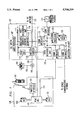
- FIG. 1 shows an exemplary embodiment of a system for providing personal communications services in accordance with the principles of the invention
- FIG. 2 shows a flowchart of an exemplary process for providing personal telecommunication services in accordance with the principles of the invention.
- FIG. 3 shows a method for determining if a telephone number corresponds to a disconnected telephone.
- FIG. 2 shows a flowchart of an exemplary method for processing PCS calls in accordance with the principles of the invention.
- the PCS system a) determines if the current destination telephone in the sequence is a "disconnected telephone" and, if so, b) it skips over that telephone number, i.e., of the disconnected telephone.
- the PCS system does not attempt to complete the PCS call to a disconnected telephone.
- "disconnected telephones” are telephones that are 1) unreachable for any communication by any network of the telephone system, e.g., they have been turned off in a manner that disconnects them from any communications link to the telephone system, and 2) the telephone system can detect that the telephone has become unreachable.
- Such disconnected telephones are directly addressable, i.e., communication with such a telephone is not dependent upon the telephone having a particular connection, e.g., being connected to a particular telephone line--as with conventional wired telephones--, but instead communication depends upon a unique address contained within the telephone itself, so that the telephone can be freely moved without changing its address.
- Disconnected telephones are typically only temporarily unreachable for any communication by the telephone system.
- Conventional exemplary disconnected telephones include wireless telephones that have been turned off, i.e., they are not in a low-power standby mode.
- a car telephone may become disconnected when a driver reaches his destination and turns off the car.
- a portable wireless telephone that is being carried by a person may become disconnected when the batteries of the portable wireless telephone weaken so that they are unable to power it any longer.
- Another exemplary type of disconnected telephone is a video telephone that is connected to a cable network but has been turned off.
- FIG. 1 shows an exemplary embodiment of a PCS system in accordance with the principles of the invention.
- the exemplary PCS system includes a) telephone station 101, from which calls to a personal telephone number may be originated or received, b) telephone line 102 of telephone station 101, which is provisioned, for purposes of illustrating the principles of operation of a PCS system with the well known call waiting feature, c) local exchange carrier (LEC) 103, d) IXC switch 105, e) application adjunct 131, f) attendant position 125, and g) communication interfaces 151, including communications interfaces 151-1 through 151-N.
- LEC local exchange carrier
- Application adjunct 131 performs the necessary processing for 1) storing an association between a) a telephone number, b) a pre-defined, mnemonic tag, and c) a corresponding identifier; 2) developing and storing sequences of telephone numbers for PCS calls, which are referred to herein as "quick sequences"; and 3) supplying the telephone numbers of destinations to which IXC switch 105 should route a call placed to a subscriber's personal telephone number, in accordance with the principles of the invention.
- Application adjunct 131 includes: a) application processor 135, b) data base 133, c) voice response unit 123, and d) communication interfaces 137.
- Application processor 135 controls the overall operation of application adjunct 131 by performing any necessary processing and exchanging messages with the other components of application adjunct 131 over links 139.
- Links 139 convey information in digital form and need not all be of the same type or speed, e.g., one may be an ethernet link while the others are RS-232C links.
- Data base 133 stores the information required by application processor 135 to control application adjunct 131, e.g., program code and data.
- Voice response unit 123 can make various announcements which can be heard by the calling party.
- the information necessary for making the announcements, or combinative portions thereof, may be prestored in voice response unit 123.
- Such combinative portions may include caller instruction messages, e.g., "Please wait, we are attempting to reach your party.”
- the announcements are accessed by supplying voice response unit 123 with pointers to them.
- Voice response unit 123 is connected to switch fabric 118 so that the announcements may be routed to subscribers connected to application adjunct 131.
- Communication interfaces 137 translate information for communication between application adjunct 131 and devices external to application adjunct 131. Communication interfaces 137 need not be the same.
- Attendant position 125 staffed by a human attendant, interfaces with application adjunct 131 to handle any questions that a subscriber may have or any problems that may arise.
- Communication interfaces 151 translate information for communication between application adjunct 131 and communications systems external to application adjunct 131, which may be belong to separate communications carriers. Communication interfaces 151 need not be the same.
- IXC switch 105 includes: a) main processor 107, b) dual tone multi-frequency receiver (DTMF REC) 111, c) directory services network interface 115, d) bus 117, e) switch fabric 118, and f) optional voice recognition unit 116.
- Main processor 107 controls the overall operation of IXC switch 105 by performing any necessary processing and exchanging messages with the other components of IXC switch 105 over bus 117.
- Dual tone multi-frequency receiver (DTMF REC) 111 receives dual tone multi-frequency signals that are transmitted in response to the pressing of keys on the keypad of telephone station 101 and supplies the digit corresponding to each pressed key to main processor 107.
- IXC switch 105 receives the caller's ANI from LEC 103 in the conventional manner.
- Directory services network interface 115 is a protocol conversion unit that permits IXC switch 105 to communicate with application adjunct 131. It is responsible for formatting all messages transmitted to and for extracting responses received from application adjunct 131. Such messages include a) a message from IXC switch 105 indicating the ANI of the calling telephone and b) a message from application adjunct 131 indicating which destination telephone number the PCS call should presently be routed to. In one embodiment, the link between directory services network interface 115 and application adjunct 131 uses the well known X.25 protocol.
- Switch fabric 118 can connect the trunk on which the subscriber's call arrived at IXC switch 105, e.g., trunk 104, to a) dual tone multi-frequency receiver (DTMF REC) 111, b) voice recognition unit 116, c) voice response unit 123, other communication systems terminated thereat, e.g., wireless communication system 159, or e) to the rest of the interexchange carrier's network, via link 121.
- DTMF REC dual tone multi-frequency receiver
- voice recognition unit 116 e.g., voice recognition unit 116
- voice response unit 123 other communication systems terminated thereat, e.g., wireless communication system 159, or e) to the rest of the interexchange carrier's network, via link 121.
- Exemplary wireless communication system 159 of a mobile carrier includes a) home mobile switching center (MSC) 161, b) home location register (HLR) data base 163, c) visitor location register (VLR) data base 165, and d) wireless interface 167.
- Mobile telephone 169 is shown as being presently connectable to wireless communication system 159.
- Home mobile switching center (MSC) 161 is a switch for providing wireless telephone service to the subscribers of the mobile carrier that owns home mobile switching center (MSC) 161 as well as subscribers of other mobile carriers that are visiting, also known as "roaming" in, the area served by home mobile switching center (MSC) 161.
- Home mobile switching center (MSC) 161 is connected to switch fabric 118 so that calls may be routed from IXC switch 105 to wireless subscribers. For the purpose of keeping track of the active subscribers presently being served by mobile switching center (MSC) 161, home mobile switching center (MSC) 161 is connected to 1) home location register (HLR) data base 163, 2) visitor location register (VLR) data base 165, and 3) wireless interface 167.
- HLR home location register
- VLR visitor location register
- Home location register (HLR) data base 163 contains a list of the subscribers of the mobile carrier that owns home mobile switching center (MSC) 161 and have home mobile switching center (MSC) 161 as their "home” mobile switch, i.e., the list of subscribers that are not roaming when they are served by home mobile switching center (MSC) 161. Such subscribers are called “home subscribers”.
- Home location register (HLR) data base 163 is used for routing of calls by keeping track of the current location of, e.g., the mobile switching system presently or last known to have been serving, each "home subscriber”. To this end, for example, home location register (HLR) data base 163 maintains a pointer to the current location of each home subscriber. The pointer contains a system address of the mobile switching center (MSC) that is presently, or was last known to have been, serving that home subscriber.
- Visitor location register (VLR) data base 165 contains a list of each subscriber presently being or was last known to have been served by home mobile switching center (MSC) 161, whether they are a home subscriber or a roaming subscriber. Visitor location register (VLR) data base 165 also contains status information indicating whether each subscribers presently being served by home mobile switching center (MSC) 161 is connected or disconnected. Thus, it is noted, that subscribers are always considered to be a "visitor", even when they are served by their home mobile switching center (MSC).
- Wireless interface 167 provides the wireless connection, e.g., cellular radio connection, between home mobile switching center (MSC) 161 and a wireless personal communication device, e.g., wireless telephone 169.
- MSC home mobile switching center
- each telephone number to which PCS calls can be routed is stored in association with a pre-defined, mnemonic tag and a corresponding identifier.
- Table 1 shows an exemplary list of such tags and their corresponding identifiers.
- Table 1 is stored in data base 133.
- Table 1 may be implemented as an array in which the tags are the elements of the array and the identifiers are the corresponding indices into the array.
- Text-to-speech conversion may be used to speak the tags or, alternatively, there may also be stored pointers to information representing stored speech for each tag.
- the information representing speech may be stored in voice response unit 123, as noted.
- Table 2 shows an exemplary table in which identifiers are associated with telephone numbers for a particular PCS subscriber having a unique personal telephone number.
- the telephone numbers are stored in data base 133 as elements of an array, one array for each subscriber, and the identifiers are the corresponding indices into the array.
- the array may be stored in a compressed form.
- the status of the telephone corresponding to the telephone number e.g., is the telephone connected or disconnected.
- the stored associations between tags and telephone numbers are used to create a sequence of locations to which the calls to a subscriber's personal telephone number should be routed. Again, such a sequence of destinations is known as "quick sequence".
- Each of a subscriber's quick sequences has a quick sequence number which is a unique numerical designation.
- Table 3 shows an exemplary set of quick sequences, QS1 to QS9, each having at most 3 possible telephone numbers to which they can attempt to route a call.
- Each telephone number is represented by the identifier (ID) corresponding to a tag which has been associated with that telephone number.
- ID the identifier
- other quick sequences can have more than at most 3 possible telephone numbers.
- each quick sequence need not have the same number of telephone numbers indicated therein.
- listing 1 shows how the tags are used to define a sequence of locations to which calls to a subscriber's personal telephone number should be routed at a particular time.
- Each of the listings shows an exemplary part of the interactions between a hypothetical subscriber and an automated attendant system that facilitates the administration of personal telephone numbers.
- Listing 1 shows the defining of a quick sequence.
- Listing 2 shows the designating of the quick sequence defined in listing 1 as the sequence that is to currently be used, thereby "activating" the quick sequence.
- the listings show that portion of the interaction after a) the hypothetical subscriber places a call to an 800-type telephone number to connect to application adjunct 131, b) he has successfully completed any required login procedures to begin administering his personal telephone number, and c) the tags, telephone numbers and identifiers have been associated together.
- boldface type shows that which the automated attendant says to the hypothetical subscriber.
- the actions taken by the caller are described in plain type. Explanatory comments as to the results caused by the subscriber's actions are shown in parenthesis.
- the identifier corresponding to each tag is a one digit number.
- IXC switch 105 recognizes that the call is being placed to a personal telephone number.
- personal telephone numbers have certain unique characteristics that allow them to be differentiated from conventional telephone numbers. For example, they may have a unique area code, and, within that area code, they may be further divided by unique exchange numbers that indicate the interexchange carrier (IXC) that will carry calls directed to the number.
- IXC interexchange carrier
- a switch of local exchange carrier (LEC) 103 receives the dialed digits and, from their unique characteristics, recognizes that the call is an IXC personal communications type of call.
- Local exchange carrier (LEC) 103 then routes the call over a trunk, e.g., trunk 104, to switch 105 of an interexchange carrier for further handling as per the process shown in FIG. 2.
- IXC switch 105 queries application adjunct 131, via directory services network interface 115 and communications interface 137, as to where to route the call.
- the query includes an indication of the personal telephone number to which the call was placed.
- Application adjunct 131 determines the currently active quick sequence, according to which calls to the personal telephone number should presently be routed, in step 205.
- Control passes to step 207, in which application adjunct 131 retrieves the first identifier of the currently active quick sequence.
- step 209 application adjunct 131 translates the identifier to its associated telephone number.
- conditional branch point 211 tests to determine if the translated telephone number is that of a disconnected telephone, e.g., the status of the telephone in table is "Disconnected". This test may be performed by checking the status column of Table 2. If the test result in step 211 is NO, indicating that the value stored for the telephone number in the status column of Table 2 is "Connected", control passes to step 213, in which application adjunct 131 supplies the telephone number to IXC switch 105. IXC switch 105 routes the call to the telephone number it receives from application adjunct 131, in step 215. This results in the caller hearing the appropriate feedback tones, e.g., ringing or busy, depending on the status of the telephone line to which the call is routed and whether or not that telephone line is provisioned with the call waiting feature.
- the appropriate feedback tones e.g., ringing or busy
- conditional branch point 217 tests to determine if the call, as routed by IXC switch 105, has been a) completed or b) abandoned by the caller. If the test result in step 217 is YES, the process is exited in step 225. If the test result in step 217 is NO, indicating the call continues to exist, control passes to step 219, which tests to determine if a) the destination indicated by the supplied telephone number is busy or b) if the predetermined period for which the call should be routed to the supplied telephone number has expired. If the test result in step 219 is NO, control passes back to step 217. If the test result in step 219 is YES, control passes to conditional branch point 221, which tests to determine if there remains in the quick sequence any identifiers that have not yet been processed.
- test result in step 221 is NO, indicating there are no remaining untried identifiers, control passes to step 225 and the process is exited. If the test result in step 221 is YES, control passes to step 223, in which application adjunct 131 retrieves the next untried identifier. Control then passes back to step 209 and the process continues as described above.
- test result in step 211 is YES, indicating that the value stored for the telephone number in the status column of Table 2 is "Disconnected", and thus the translated telephone number, i.e., the telephone number to which the call will be routed next, is that of a disconnected telephone
- control passes directly to step 223 to obtain the next untried identifier.
- home mobile switching center (MSC) 161 transmits a message via link 171 to communications interface 151-1 indicating the wireless telephone's telephone number and its new status.
- Application adjunct 131 can then update the information stored in the status column of table 2 for that telephone number.
- FIG. 3 A second method by which application adjunct 131 determines if a telephone number corresponds to a disconnected telephone is shown in FIG. 3.
- the process shown in FIG. 3 is suitable for use with wireless telephones.
- the process shown in FIG. 3 is entered in step 301, which is executed after step 205 of the process shown in FIG. 2.
- Conditional branch point 303 tests to determine if any of the telephone numbers listed in the active quick sequence is that of a telephone that may be disconnected. It is known in advance that certain of the identifiers that are stored in the quick sequences correspond to telephone numbers of wireless telephones that may be disconnected. For example, identifier 04 corresponds to Wireless Phone and wireless telephones may be disconnected.
- test result in step 303 is NO, indicating that there are no wireless telephones in the quick sequence, control passes to step 305 and the process is exited. If the test result in step 303, is YES control passes to step 307, in which, based on the telephone number associated with the identifier stored in the quick sequence, application adjunct 131 launches a query over the appropriate one of communication interfaces 151 to the home location register data base of the home mobile switching center of the wireless telephone requesting the identifier of the mobile switching center that presently is serving, or was last known to be serving, the wireless telephone, and therefore contains its visitor location record. In step 309, application adjunct 131 receives the requested identifier from the mobile switching center.
- step 311 application adjunct 131 launches a query to the visitor location register data base of the identified mobile switching center requesting the status of the "detach" flag for the telephone number.
- the detach flag is a conventionally available flag that indicates when set that the wireless telephone is disconnected and when clear that the wireless telephone is connected and available for calls.
- the detach flag is maintained in the visitor location register data base of the mobile switching center that is presently providing service to the wireless telephone or was the last mobile switching center to have provided service prior to the wireless telephone becoming disconnected.
- step 313 a response is received at application adjunct 131.
- Conditional branch point 315 tests to determine if the detach flag is set. If the test result in step 315 is NO, indicating that the detached flag is clear and that the wireless telephone is connected and available for calls, control passes to step 305 and the process is exited. If the test result in step 315 is YES, indicating that the detached flag is set and that the wireless telephone is disconnected, control passes to step 317 in which, in accordance with an aspect of the invention, a "Disconnected" entry is made in the status column of Table 2 for the wireless telephone, thus indicating that the wireless telephone is a disconnected telephone that is to be skipped over at step 211 during the processing the quick sequence. The process then exits in step 305.
- a third method by which application adjunct 131 determines if a telephone number corresponds to a disconnected telephone is the use of periodic polling.
- periodic polling is suitable for wireless telephones as well as for cable system based videophones.
- certain of the identifiers that are stored in the quick sequences correspond to telephones that may be disconnected, e.g., identifier 04, which corresponds to Wireless Phone and identifier 17, which corresponds to Home Cable Videophone.
- application adjunct 131 periodically launches a query for each telephone number that is associated with an identifier which corresponds to a telephone that may be disconnected from the communication system to which the telephone is presently, or was last, connected, requesting the status of the telephone. How such status information is communicated for wireless telephones was described above in conjunction with FIG. 3.
- the status information in Table 2 is updated in accordance with the response to the query.
- queries are launched to the cable system serving the specified telephone number.
- Those skilled in the art of cable communication will be able to implement systems for determining the status of telephones connected to the cable system. It is noted that to improve the efficiency of the polling, queries need only be launched for telephone numbers of the presently active quick sequence.
- those telephone numbers of the quick sequence that correspond to wireless telephones that may be disconnected are given priority in the polling process so that they are polled immediately, before resuming the usual polling pattern.
- all the telephone numbers of the quick sequence are examined prior to any of them being supplied to IXC switch 105. If any of the telephone numbers are found to correspond to a disconnected telephone, such a telephone number is temporarily blanked in the quick sequence. Such blanking may be achieved by setting a special blanking field associated with the telephone number.
- calls may also be routed from IXC switch 105 to home mobile switching center (MSC) 161 indirectly via the rest of IXC network. It is also noted that a LEC may be interposed between the IXC and the MSC.
- telephone numbers and/or ANI may be replaced with other indications that represent the destination to which a call is to be routed.
- the information indicating the status of a telephone as being disconnected or not may be stored in the same data base as the information for implementing the quick sequences.
Landscapes
- Engineering & Computer Science (AREA)
- Signal Processing (AREA)
- Computer Networks & Wireless Communication (AREA)
- Telephonic Communication Services (AREA)
- Devices For Supply Of Signal Current (AREA)
- Mobile Radio Communication Systems (AREA)
- Sub-Exchange Stations And Push- Button Telephones (AREA)
Priority Applications (5)
| Application Number | Priority Date | Filing Date | Title |
|---|---|---|---|
| US08/346,654 US5706339A (en) | 1994-11-30 | 1994-11-30 | Technique for use in processing personal telephone calls |
| CA002158878A CA2158878C (en) | 1994-11-30 | 1995-09-22 | Technique for use in processing personal telephone calls |
| EP95308346A EP0715475A3 (de) | 1994-11-30 | 1995-11-21 | Anrufverarbeitungsverfahren in einer PCS-Umgebung |
| MX9504931A MX9504931A (es) | 1994-11-30 | 1995-11-27 | Metodo para utilizarse en procesamiento de llamadas telefonicas personales. |
| JP7346622A JP3026547B2 (ja) | 1994-11-30 | 1995-11-30 | 電話システム運用方法及びその装置 |
Applications Claiming Priority (1)
| Application Number | Priority Date | Filing Date | Title |
|---|---|---|---|
| US08/346,654 US5706339A (en) | 1994-11-30 | 1994-11-30 | Technique for use in processing personal telephone calls |
Publications (1)
| Publication Number | Publication Date |
|---|---|
| US5706339A true US5706339A (en) | 1998-01-06 |
Family
ID=23360426
Family Applications (1)
| Application Number | Title | Priority Date | Filing Date |
|---|---|---|---|
| US08/346,654 Expired - Lifetime US5706339A (en) | 1994-11-30 | 1994-11-30 | Technique for use in processing personal telephone calls |
Country Status (5)
| Country | Link |
|---|---|
| US (1) | US5706339A (de) |
| EP (1) | EP0715475A3 (de) |
| JP (1) | JP3026547B2 (de) |
| CA (1) | CA2158878C (de) |
| MX (1) | MX9504931A (de) |
Cited By (31)
| Publication number | Priority date | Publication date | Assignee | Title |
|---|---|---|---|---|
| US5896448A (en) * | 1996-12-17 | 1999-04-20 | Bellsouth Corporation | Method and apparatus for routing calls based on call success history |
| US5898767A (en) * | 1997-06-05 | 1999-04-27 | Intervoice Limited Partnership | Casual agent pool |
| US5905789A (en) * | 1996-10-07 | 1999-05-18 | Northern Telecom Limited | Call-forwarding system using adaptive model of user behavior |
| US5912949A (en) * | 1996-11-05 | 1999-06-15 | Northern Telecom Limited | Voice-dialing system using both spoken names and initials in recognition |
| US5917891A (en) * | 1996-10-07 | 1999-06-29 | Northern Telecom, Limited | Voice-dialing system using adaptive model of calling behavior |
| US5960348A (en) * | 1994-11-30 | 1999-09-28 | At&T Corp | Technique for use in processing telephone calls |
| US6011843A (en) * | 1996-07-10 | 2000-01-04 | Harris Corporation | Method and apparatus for initiating parallel connections to identified plural sites |
| US6035030A (en) * | 1996-11-28 | 2000-03-07 | Mitel Semiconductor Limited | Re-establishment of a private circuit in a telecommunications system |
| US6094478A (en) * | 1996-11-04 | 2000-07-25 | Nortel Networks Corporation | Method and system for extending the directory number of a terminal |
| US6111942A (en) * | 1996-02-01 | 2000-08-29 | Canon Kabushiki Kaisha | Communication transfer apparatus |
| US6130938A (en) * | 1996-07-08 | 2000-10-10 | Mitel Corporation | Automatic call forwarding |
| US6167117A (en) * | 1996-10-07 | 2000-12-26 | Nortel Networks Limited | Voice-dialing system using model of calling behavior |
| US6208713B1 (en) | 1996-12-05 | 2001-03-27 | Nortel Networks Limited | Method and apparatus for locating a desired record in a plurality of records in an input recognizing telephone directory |
| US6345095B1 (en) | 1998-04-14 | 2002-02-05 | Robert J. Yamartino | Telephone number area code preprocessor |
| US20020051519A1 (en) * | 1999-04-12 | 2002-05-02 | Moyano Franciso Parra | Personal communication system |
| US6453037B1 (en) * | 1995-04-19 | 2002-09-17 | Mci Communications Corporation | Remote telecommunications system for automatic number identification screening |
| US6453299B1 (en) * | 1995-12-19 | 2002-09-17 | Aspen Marketing, Inc. | Method for customizing queries |
| US20020131578A1 (en) * | 1998-04-14 | 2002-09-19 | Yamartino Robert J. | Telephone number area code preprocessor |
| WO2002080507A1 (fr) * | 2000-10-23 | 2002-10-10 | Benshan Wang | Procede d'appel telephonique utilisant des numeros personnels |
| US20020172339A1 (en) * | 2001-05-21 | 2002-11-21 | Creswell Carroll W. | Method for providing sequenced communications within a group |
| US20030002645A1 (en) * | 2001-06-29 | 2003-01-02 | Worsham James A. | Automatically sequentially ringing alternative telephone numbers |
| US20040024892A1 (en) * | 2001-05-21 | 2004-02-05 | Creswell Carroll W. | System for providing sequenced communications within a group |
| US20040029597A1 (en) * | 1997-06-16 | 2004-02-12 | Holt Scott Crandall | Method and apparatus for routing calls based on the identification of the calling party or calling line |
| US6748056B1 (en) * | 2000-08-11 | 2004-06-08 | Unisys Corporation | Coordination of a telephony handset session with an e-mail session in a universal messaging system |
| US6771761B1 (en) | 1999-12-29 | 2004-08-03 | Bellsouth Intellectual Property Corporation | System and method for caller-selectable call routing from a single telephone number |
| US20050047575A1 (en) * | 2003-08-29 | 2005-03-03 | Stephen Parker | Secure valet telephone system |
| US20050055461A1 (en) * | 2000-10-25 | 2005-03-10 | Murthy Vikas Sanathana | Determining an international destination address |
| US6885742B1 (en) * | 1998-12-29 | 2005-04-26 | Cingular Wireless Ii, Inc. | System and method for integrating call delivery for fixed-site and mobility services |
| US6898274B1 (en) * | 1999-09-21 | 2005-05-24 | Nortel Networks Limited | Method and apparatus for adaptive time-based call routing in a communications system |
| US6978003B1 (en) * | 2003-05-22 | 2005-12-20 | Nortel Networks Limited | Adaptive call routing for multiple telephony terminals |
| US7403970B1 (en) | 2000-10-25 | 2008-07-22 | Verisign, Inc. | Method and apparatus for assigning a virtual address to and text-messaging to multiple text-capable destination entities |
Families Citing this family (8)
| Publication number | Priority date | Publication date | Assignee | Title |
|---|---|---|---|---|
| US6208852B1 (en) * | 1996-12-26 | 2001-03-27 | Nihon Medipack Co., Ltd. | Telephone, telephone exchange system, storage medium and method incorporating suspend service |
| US6085083A (en) * | 1997-01-11 | 2000-07-04 | Tandem Computers, Inc. | Method and apparatus for providing fraud protection mediation in a mobile telephone system |
| US6026298A (en) * | 1997-01-11 | 2000-02-15 | Compaq Computer Corporation | Method and apparatus for providing switch capability mediation in a mobile telephone system |
| US6157831A (en) * | 1997-01-11 | 2000-12-05 | Compaq Computer Corp. | Method and apparatus for implementing configurable call forwarding bins in a mobile telephone system |
| US5933487A (en) * | 1997-03-06 | 1999-08-03 | Ericsson Inc. | Method and apparatus for searching a plurality of destination numbers |
| DE19934108A1 (de) * | 1999-07-21 | 2001-02-08 | Bosch Gmbh Robert | Verfahren und Zentrale zur Behandlung eines eingehenden Rufes |
| AU2001251040A1 (en) * | 2000-03-27 | 2001-10-08 | Nortel Networks Limited | Method and apparatus for managing a plurality of mobile nodes in a network |
| US7203496B2 (en) * | 2004-01-29 | 2007-04-10 | Lucent Technologies Inc. | Storing query results to reduce number portability queries in wireless network |
Citations (3)
| Publication number | Priority date | Publication date | Assignee | Title |
|---|---|---|---|---|
| US5206901A (en) * | 1991-12-23 | 1993-04-27 | At&T Bell Laboratories | Method and apparatus for alerting multiple telephones for an incoming call |
| US5276731A (en) * | 1991-04-26 | 1994-01-04 | Rolm Company | Method and apparatus for handling incoming telephone calls |
| US5329578A (en) * | 1992-05-26 | 1994-07-12 | Northern Telecom Limited | Personal communication service with mobility manager |
Family Cites Families (8)
| Publication number | Priority date | Publication date | Assignee | Title |
|---|---|---|---|---|
| JPH03104495A (ja) * | 1989-09-19 | 1991-05-01 | Matsushita Electric Ind Co Ltd | 移動無線電話機の不在報知装置 |
| JPH04127652A (ja) * | 1990-09-18 | 1992-04-28 | Nippon Telegr & Teleph Corp <Ntt> | 追い掛け電話サービスシステムの転送制御方法 |
| JP2874119B2 (ja) * | 1991-03-01 | 1999-03-24 | 富士通株式会社 | 複数端末への着信呼分散サービス方式 |
| JP2887006B2 (ja) * | 1991-05-28 | 1999-04-26 | キヤノン株式会社 | コードレス通信システム |
| JPH05145963A (ja) * | 1991-10-22 | 1993-06-11 | Nippon Telegr & Teleph Corp <Ntt> | パーソナル通信追跡接続方法 |
| CA2107982C (en) * | 1992-10-16 | 1999-03-30 | Akihisa Nakajima | Connection control method for personal communications |
| CA2081125C (en) * | 1992-10-22 | 1997-03-04 | Mitel Networks Corporation | Portable telephone user profiles |
| US5392342A (en) | 1993-10-27 | 1995-02-21 | At&T Corp. | Technique for use in sequentially routing personal telephone calls |
-
1994
- 1994-11-30 US US08/346,654 patent/US5706339A/en not_active Expired - Lifetime
-
1995
- 1995-09-22 CA CA002158878A patent/CA2158878C/en not_active Expired - Fee Related
- 1995-11-21 EP EP95308346A patent/EP0715475A3/de not_active Withdrawn
- 1995-11-27 MX MX9504931A patent/MX9504931A/es unknown
- 1995-11-30 JP JP7346622A patent/JP3026547B2/ja not_active Expired - Lifetime
Patent Citations (3)
| Publication number | Priority date | Publication date | Assignee | Title |
|---|---|---|---|---|
| US5276731A (en) * | 1991-04-26 | 1994-01-04 | Rolm Company | Method and apparatus for handling incoming telephone calls |
| US5206901A (en) * | 1991-12-23 | 1993-04-27 | At&T Bell Laboratories | Method and apparatus for alerting multiple telephones for an incoming call |
| US5329578A (en) * | 1992-05-26 | 1994-07-12 | Northern Telecom Limited | Personal communication service with mobility manager |
Non-Patent Citations (2)
| Title |
|---|
| "The Short Message Service", Reports of the Specialty Conference of the Information Technology Society, Sep. 27-29, 1993. pp. 517-526. |
| The Short Message Service , Reports of the Specialty Conference of the Information Technology Society, Sep. 27 29, 1993. pp. 517 526. * |
Cited By (57)
| Publication number | Priority date | Publication date | Assignee | Title |
|---|---|---|---|---|
| US8031851B2 (en) | 1992-08-26 | 2011-10-04 | At&T Intellectual Property I, L.P. | Method and apparatus for routing calls based on the identification of the calling party or calling line |
| US20070127698A1 (en) * | 1992-08-26 | 2007-06-07 | Bellsouth Intellectual Property Corporation | Method and Apparatus for Routing Calls Based on the Identification of the Calling Party or Calling Line |
| US7260203B2 (en) * | 1992-08-26 | 2007-08-21 | Bellsouth Intellectual Property Corporation | Method and apparatus for routing calls based on identification of the calling party or calling line |
| US20080095350A1 (en) * | 1992-08-26 | 2008-04-24 | At&T Delaware Intellectual Property, Inc., Formerly Known As Bellsouth Intl. Property Corp. | Method and Apparatus for Routing Calls Based on the Identification of the Calling Party or Calling Line |
| US20090067613A9 (en) * | 1992-08-26 | 2009-03-12 | Bellsouth Intellectual Property Corporation | Method and Apparatus for Routing Calls Based on the Identification of the Calling Party or Calling Line |
| US7933394B2 (en) | 1992-08-26 | 2011-04-26 | At&T Intellectual Property I, L.P. | Method and apparatus for routing calls based on the identification of the calling party or calling line |
| US5960348A (en) * | 1994-11-30 | 1999-09-28 | At&T Corp | Technique for use in processing telephone calls |
| US6453037B1 (en) * | 1995-04-19 | 2002-09-17 | Mci Communications Corporation | Remote telecommunications system for automatic number identification screening |
| US6453299B1 (en) * | 1995-12-19 | 2002-09-17 | Aspen Marketing, Inc. | Method for customizing queries |
| US6111942A (en) * | 1996-02-01 | 2000-08-29 | Canon Kabushiki Kaisha | Communication transfer apparatus |
| US6130938A (en) * | 1996-07-08 | 2000-10-10 | Mitel Corporation | Automatic call forwarding |
| US6011843A (en) * | 1996-07-10 | 2000-01-04 | Harris Corporation | Method and apparatus for initiating parallel connections to identified plural sites |
| US6167117A (en) * | 1996-10-07 | 2000-12-26 | Nortel Networks Limited | Voice-dialing system using model of calling behavior |
| US5917891A (en) * | 1996-10-07 | 1999-06-29 | Northern Telecom, Limited | Voice-dialing system using adaptive model of calling behavior |
| US5905789A (en) * | 1996-10-07 | 1999-05-18 | Northern Telecom Limited | Call-forwarding system using adaptive model of user behavior |
| US6094478A (en) * | 1996-11-04 | 2000-07-25 | Nortel Networks Corporation | Method and system for extending the directory number of a terminal |
| US5912949A (en) * | 1996-11-05 | 1999-06-15 | Northern Telecom Limited | Voice-dialing system using both spoken names and initials in recognition |
| US6035030A (en) * | 1996-11-28 | 2000-03-07 | Mitel Semiconductor Limited | Re-establishment of a private circuit in a telecommunications system |
| US6208713B1 (en) | 1996-12-05 | 2001-03-27 | Nortel Networks Limited | Method and apparatus for locating a desired record in a plurality of records in an input recognizing telephone directory |
| US5896448A (en) * | 1996-12-17 | 1999-04-20 | Bellsouth Corporation | Method and apparatus for routing calls based on call success history |
| US5898767A (en) * | 1997-06-05 | 1999-04-27 | Intervoice Limited Partnership | Casual agent pool |
| US20040029597A1 (en) * | 1997-06-16 | 2004-02-12 | Holt Scott Crandall | Method and apparatus for routing calls based on the identification of the calling party or calling line |
| US7062028B2 (en) | 1997-06-16 | 2006-06-13 | Bellsouth Intellectual Property Corporation | Method and apparatus for routing calls based on the identification of the calling party or calling line |
| US6345095B1 (en) | 1998-04-14 | 2002-02-05 | Robert J. Yamartino | Telephone number area code preprocessor |
| US6947544B2 (en) | 1998-04-14 | 2005-09-20 | Yamartino Robert J | Telephone number area code preprocessor |
| US20020131578A1 (en) * | 1998-04-14 | 2002-09-19 | Yamartino Robert J. | Telephone number area code preprocessor |
| US20080107254A1 (en) * | 1998-04-14 | 2008-05-08 | Yamartino Robert J | Telephone number area code processor |
| US20060002542A1 (en) * | 1998-04-14 | 2006-01-05 | Yamartino Robert J | Telephone number area code processor |
| US7327838B2 (en) | 1998-12-29 | 2008-02-05 | Cingular Wireless Ii, Llc | System and method for integrating call delivery for fixed-site and mobility services |
| US6885742B1 (en) * | 1998-12-29 | 2005-04-26 | Cingular Wireless Ii, Inc. | System and method for integrating call delivery for fixed-site and mobility services |
| US20050130639A1 (en) * | 1998-12-29 | 2005-06-16 | Smith Erik L. | Systen and method for integrating call delivery for fixed-site and mobility services |
| US7215753B2 (en) | 1999-04-12 | 2007-05-08 | Telefonaktiebolaget Lm Ericsson (Publ) | Personal communication system |
| US20020051519A1 (en) * | 1999-04-12 | 2002-05-02 | Moyano Franciso Parra | Personal communication system |
| US6898274B1 (en) * | 1999-09-21 | 2005-05-24 | Nortel Networks Limited | Method and apparatus for adaptive time-based call routing in a communications system |
| US6771761B1 (en) | 1999-12-29 | 2004-08-03 | Bellsouth Intellectual Property Corporation | System and method for caller-selectable call routing from a single telephone number |
| US6748056B1 (en) * | 2000-08-11 | 2004-06-08 | Unisys Corporation | Coordination of a telephony handset session with an e-mail session in a universal messaging system |
| WO2002080507A1 (fr) * | 2000-10-23 | 2002-10-10 | Benshan Wang | Procede d'appel telephonique utilisant des numeros personnels |
| US20030231752A1 (en) * | 2000-10-23 | 2003-12-18 | Benshan Wang | Telephone calling way by personal number ignoring routing information |
| US8571065B2 (en) | 2000-10-25 | 2013-10-29 | Syniverse Icx Corporation | Method and apparatus for assigning a virtual address to and text-messaging to multiple text-capable destination entities |
| US20050055461A1 (en) * | 2000-10-25 | 2005-03-10 | Murthy Vikas Sanathana | Determining an international destination address |
| US8001272B2 (en) | 2000-10-25 | 2011-08-16 | Syniverse Icx Corporation | Obtaining a valid international destination address |
| US7774502B2 (en) | 2000-10-25 | 2010-08-10 | Vikas Sanathana Murthy | Determining an international destination address |
| US9143477B2 (en) | 2000-10-25 | 2015-09-22 | Syniverse Icx Corporation | Address recognition database |
| US7403970B1 (en) | 2000-10-25 | 2008-07-22 | Verisign, Inc. | Method and apparatus for assigning a virtual address to and text-messaging to multiple text-capable destination entities |
| US20080273535A1 (en) * | 2000-10-25 | 2008-11-06 | Verisign, Inc. | Method and apparatus for assigning a virtual address to and text-messaging to multiple text-capable destination entities |
| US20050086378A1 (en) * | 2000-10-25 | 2005-04-21 | Murthy Vikas S. | Address recognition database |
| US20050068947A1 (en) * | 2000-10-25 | 2005-03-31 | Vikas Sanathana Murthy | Obtaining a valid international destination address |
| US7774503B2 (en) | 2000-10-25 | 2010-08-10 | Vikas Sanathana Murthy | Universal address recognition for text-capable communication devices |
| US20040024892A1 (en) * | 2001-05-21 | 2004-02-05 | Creswell Carroll W. | System for providing sequenced communications within a group |
| US20020172339A1 (en) * | 2001-05-21 | 2002-11-21 | Creswell Carroll W. | Method for providing sequenced communications within a group |
| US20070165827A1 (en) * | 2001-06-29 | 2007-07-19 | Bellsouth Intellectual Property Corporation | Automatically Sequentially Ringing Alternative Telephone Numbers |
| US7711102B2 (en) | 2001-06-29 | 2010-05-04 | At&T Intellectual Property I, L.P. | Automatically sequentially ringing alternative telephone numbers |
| US20030002645A1 (en) * | 2001-06-29 | 2003-01-02 | Worsham James A. | Automatically sequentially ringing alternative telephone numbers |
| US7194080B2 (en) * | 2001-06-29 | 2007-03-20 | Bellsouth Intellectual Property Corporation | Automatically sequentially ringing alternative telephone numbers |
| US6978003B1 (en) * | 2003-05-22 | 2005-12-20 | Nortel Networks Limited | Adaptive call routing for multiple telephony terminals |
| US8103261B2 (en) | 2003-08-29 | 2012-01-24 | Stephen Parker | Secure valet telephone system apparatus and method |
| US20050047575A1 (en) * | 2003-08-29 | 2005-03-03 | Stephen Parker | Secure valet telephone system |
Also Published As
| Publication number | Publication date |
|---|---|
| CA2158878A1 (en) | 1996-05-31 |
| EP0715475A3 (de) | 1998-01-28 |
| MX9504931A (es) | 1997-01-31 |
| JPH08289027A (ja) | 1996-11-01 |
| JP3026547B2 (ja) | 2000-03-27 |
| EP0715475A2 (de) | 1996-06-05 |
| CA2158878C (en) | 1998-12-15 |
Similar Documents
| Publication | Publication Date | Title |
|---|---|---|
| CA2158878C (en) | Technique for use in processing personal telephone calls | |
| US5392342A (en) | Technique for use in sequentially routing personal telephone calls | |
| US5430791A (en) | Technique for administering personal telephone numbers | |
| US5627875A (en) | Method in a telephone system for reaching a subscriber under busy/no answer conditions and ring/no answer conditions | |
| US5473681A (en) | Method for use in completing telephone calls | |
| CA2251581C (en) | Method and apparatus for providing calling party control | |
| JPH05103371A (ja) | 移動体通信システムと移動体通信方法 | |
| JPH07154482A (ja) | 電話呼処理方法 | |
| JPH05260187A (ja) | 入来呼に対して多数の電話機を呼び出す方法と装置 | |
| SE512132C2 (sv) | Förfarande och anordning i ett kommunikationsnät | |
| US5862209A (en) | Method for providing caller directive announcements in a personal communication system | |
| CA2251574C (en) | Telecommunications system for providing a calling party control service | |
| EP0724351A2 (de) | System und Verfahren zur Herstellung von Verbindungen mit einem mobilen Teilnehmer | |
| US5960348A (en) | Technique for use in processing telephone calls | |
| AU692919B2 (en) | Method for the deregistration of a user registered at a terminal via registration data, and also telecommunication system | |
| KR100219038B1 (ko) | 교환망에서의 변경번호 자동연결 서비스 처리방법 | |
| KR19990016138A (ko) | 교환시스템에서 착신 전환 안내 방법 | |
| KR100233912B1 (ko) | 교환기에서 번호 변경 호 연결 방법 | |
| JP2872131B2 (ja) | ページャ短縮コード加入者制御方式電子交換機システム | |
| JP2908138B2 (ja) | 移動通信端末への待ち順番表示方式 | |
| JP2907160B2 (ja) | 局番単位の一括転送方法 | |
| KR19980048781A (ko) | 개인번호를 이용한 호 자동접속시스템 및 호 자동접속방법 | |
| JPH1051552A (ja) | ページング加入者制御によるグループメンバー登録方式電子交換機システム | |
| KR19980037038A (ko) | 전전자 교환기의 착신전환서비스방법 | |
| KR20020036614A (ko) | 교환 시스템에서의 불완료호 재연결 서비스 방법 |
Legal Events
| Date | Code | Title | Description |
|---|---|---|---|
| AS | Assignment |
Owner name: AT&T CORP., NEW YORK Free format text: ASSIGNMENT OF ASSIGNORS INTEREST;ASSIGNORS:EISDORFER, ALLEN;EISDORFER, JERRY;REEL/FRAME:007256/0567 Effective date: 19941130 |
|
| AS | Assignment |
Owner name: AT&T IPM CORP., FLORIDA Free format text: ASSIGNMENT OF ASSIGNORS INTEREST;ASSIGNOR:AT&T CORP.;REEL/FRAME:007467/0511 Effective date: 19950428 |
|
| STCF | Information on status: patent grant |
Free format text: PATENTED CASE |
|
| FPAY | Fee payment |
Year of fee payment: 4 |
|
| FPAY | Fee payment |
Year of fee payment: 8 |
|
| FPAY | Fee payment |
Year of fee payment: 12 |