US6038434A - Method of and apparatus for receiving and displaying RDS data - Google Patents
Method of and apparatus for receiving and displaying RDS data Download PDFInfo
- Publication number
- US6038434A US6038434A US08/855,696 US85569697A US6038434A US 6038434 A US6038434 A US 6038434A US 85569697 A US85569697 A US 85569697A US 6038434 A US6038434 A US 6038434A
- Authority
- US
- United States
- Prior art keywords
- data
- storing device
- storing
- areas
- electric wave
- Prior art date
- Legal status (The legal status is an assumption and is not a legal conclusion. Google has not performed a legal analysis and makes no representation as to the accuracy of the status listed.)
- Expired - Fee Related
Links
- 238000000034 method Methods 0.000 title claims abstract description 59
- 230000015654 memory Effects 0.000 description 33
- 238000003825 pressing Methods 0.000 description 5
- 238000010586 diagram Methods 0.000 description 3
- 230000005236 sound signal Effects 0.000 description 3
- 238000010276 construction Methods 0.000 description 2
- 238000013500 data storage Methods 0.000 description 1
- 238000001514 detection method Methods 0.000 description 1
Images



Classifications
-
- H—ELECTRICITY
- H04—ELECTRIC COMMUNICATION TECHNIQUE
- H04H—BROADCAST COMMUNICATION
- H04H60/00—Arrangements for broadcast applications with a direct linking to broadcast information or broadcast space-time; Broadcast-related systems
- H04H60/27—Arrangements for recording or accumulating broadcast information or broadcast-related information
-
- H—ELECTRICITY
- H04—ELECTRIC COMMUNICATION TECHNIQUE
- H04H—BROADCAST COMMUNICATION
- H04H20/00—Arrangements for broadcast or for distribution combined with broadcast
- H04H20/28—Arrangements for simultaneous broadcast of plural pieces of information
- H04H20/33—Arrangements for simultaneous broadcast of plural pieces of information by plural channels
- H04H20/34—Arrangements for simultaneous broadcast of plural pieces of information by plural channels using an out-of-band subcarrier signal
-
- H—ELECTRICITY
- H04—ELECTRIC COMMUNICATION TECHNIQUE
- H04H—BROADCAST COMMUNICATION
- H04H60/00—Arrangements for broadcast applications with a direct linking to broadcast information or broadcast space-time; Broadcast-related systems
- H04H60/68—Systems specially adapted for using specific information, e.g. geographical or meteorological information
-
- H—ELECTRICITY
- H04—ELECTRIC COMMUNICATION TECHNIQUE
- H04H—BROADCAST COMMUNICATION
- H04H2201/00—Aspects of broadcast communication
- H04H2201/10—Aspects of broadcast communication characterised by the type of broadcast system
- H04H2201/13—Aspects of broadcast communication characterised by the type of broadcast system radio data system/radio broadcast data system [RDS/RBDS]
Definitions
- the present invention generally relates to a method of and an apparatus for receiving an FM (Frequency Modulation) broadcast electric wave, and more particularly to a method of and an apparatus for receiving RDS (Radio Data System) data, which are transmitted from an RDS broadcast station for transmitting digital data such as character information by multiplexing it to the FM broadcast electric wave, and displaying the received content of the RDS data.
- FM Frequency Modulation
- RDS Radio Data System
- FM broadcast networks there are a plurality of FM broadcast networks in a country since the FM broadcast is more suitable for various geographical conditions than the AM (Amplitude Modulation) broadcast. Thus, there are a very large number of FM broadcast stations on the whole, so that 20 to 50 channels of the FM broadcasts may be received. Accordingly, there is a problem that it is difficult for the user to understand from which broadcasting station the FM broadcast which he is listening to is broadcasted, or what the broadcast frequency of the broadcasting station which he wished to listen to is.
- AM Amplitude Modulation
- the RDS broadcast is called as an RBDS (Radio Broadcast Data System) broadcast in the United States of America.
- RBDS Radio Broadcast Data System
- the third higher harmonic wave, which frequency is 57 KHz, of the pilot signal, which frequency is 19 KHz, is used as a sub-carrier wave in a frequency band range outside of that of the FM modulated wave.
- This sub-carrier wave is amplitude-modulated by data signal, which indicates the information related to the broadcast such as the program content and which is filtered and biphase-coded, to be the RDS data signal.
- This amplitude modulated sub carrier wave is frequency-modulated on the main carrier to be broadcasted.
- the RDS data signal has a base band coding structure as follows.
- the RDS data signal has a plurality of blocks each consisting of a plurality of bits.
- the groups are repeatedly multiplexed to be broadcasted.
- Each block consists of an information word and a bit check word.
- Some of the blocks have an RT (Radio Text) data, which are the character data.
- the character sequence is transmitted which has one meaning by use of a plurality of characters as the RT data.
- the data of a plurality of groups are necessary in order to broadcast the RT data having one meaning.
- the presently broadcasted program is a music program
- the information indicated by the RT data may be the title thereof.
- the presently broadcasted program is a sport program such as a baseball broadcast, it may be results of games on other stadiums.
- the user can obtain various information related to the broadcasted program.
- the RDS broadcast receiver is constructed such that the received RT data are displayed in the order of reception, there is a problem that, even if the user wishes to watch the RT data prior to the RT data multiplexed on the presently received broadcast wave, it cannot be displayed.
- the nextly received RT data are decoded and displayed, so that the previously displayed content of the RT data cannot be displayed again.
- the size of the apparatus becomes large and is not suitable anymore as a small receiver such as an on-vehicle type.
- the above object of the present invention can be achieved by a method of receiving and displaying RDS data, which are multiplexed to a broadcast electric wave, including the steps of: receiving the broadcast electric wave; detecting predetermined data in the RDS data, which are included in the received broadcast electric wave; storing at least one of the detected predetermined data into a memory device; selecting the stored predetermined data on the basis of an instruction from the external; and displaying the selected predetermined data.
- the broadcast electric wave is received.
- the predetermined data in the RDS data which are included in the received broadcast electric wave are detected.
- the predetermined data in the RDS data may be RT (Radio Text) data.
- at least one of the detected predetermined data are stored into a memory device.
- the stored predetermined data are selected on the basis of an externally generated instruction. Finally, the selected predetermined data are displayed.
- the predetermined data which have been displayed in the past can be stored in the memory device, and the predetermined data can be selected and displayed among the stored data under a free control of the user.
- the method further includes the step of selecting at least one of the stored predetermined data as write-protected data on the basis of an externally generated instruction.
- the stored predetermined data which are desired to be maintained, can be selected as the write-protected data, among the predetermined data, which have been displayed in the past and are stored in the memory device. Accordingly, the stored predetermined data, which are desired to be maintained, can be prevented from being over-written erroneously by new predetermined data. On the other hand, the stored predetermined data, which are not desired to be maintained, can be renewed by over-writing it with new predetermined data.
- the method further includes the step of notifying a fact that a storage of the detected predetermined data is completed and a position where the detected predetermined data are stored in the memory device when the storage of the detected predetermined data is completed in the storing step.
- the fact and the position may be displayed on a display device.
- the fact and the position may be announced by a synthetic voice.
- an apparatus for receiving and displaying RDS data which are multiplexed to a broadcast electric wave, provided with: a receiving device for receiving the broadcast electric wave; a detection device for detecting predetermined data in the RDS data, which are included in the received broadcast electric wave; a memory device for storing at least one of the detected predetermined data; a selection device for selecting the stored predetermined data on the basis of an externally generated instruction; and a display device for displaying the selected predetermined data.
- the predetermined data which have been displayed in the past can be stored in the memory device, and the predetermined data can be selected by the selection device and displayed by the display device among the stored data under a free control of the user.
- the apparatus is further provided with a write-protection device for selecting at least one of the stored predetermined data as write-protected data on the basis of an externally generated instruction.
- a write-protection device for selecting at least one of the stored predetermined data as write-protected data on the basis of an externally generated instruction.
- the apparatus is further provided with a notification device for notifying a fact that a storage of the detected predetermined data is completed in the memory device and a position where the detected predetermined data are stored in the memory device when the storage of the detected predetermined data is completed in the memory device.
- the notification device may control the display device to display the fact and the position.
- the notification device may be an audio unit for announcing the fact and the position by a synthetic voice.
- the selection device may have an operation unit having a plurality of channel keys.
- the selection operation can be easily performed by the user by operating the keys.
- the selection device may have an operation unit having a scrolling key.
- the selection operation can be easily performed by an scrolling operation.
- FIG. 1 is a diagram showing a data structure received in embodiments of the present invention
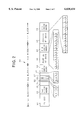
- FIG. 2 is a diagram showing a data structure of a type 2 A group data received in the embodiments of the present invention
- FIG. 3 is a block diagram of an RDS broadcast receiving system in the embodiments of the present invention.
- FIG. 4 is a flow chart of a storing process in the embodiments of the present invention.
- FIG. 5 is a flow chart of a first example of a channel protecting process in the embodiments of the present invention.
- FIG. 6 is a flow chart of a second example of a channel protecting process in the embodiments of the present invention.
- FIG. 7 is a flow chart of an RT data displaying process in the embodiments of the present invention.
- a base band coding structure of the RDS data signal, which is broadcasting by the RDS broadcast, is shown in FIG. 1.
- the RDS data signal is constructed such that each group consists of 104 bits and is repeatedly multiplexed to be broadcasted.
- Each group consists of 4 blocks (1st block 40 to 4th block 43) each of which consists of 26 bits.
- Each block consists of a 16 bits information word and a 10 bits check word (which includes an offset word set in advance on the standard).
- type 0 to type 15 there are 16 types of the above mentioned groups i.e. type 0 to type 15 in correspondence with the content thereof. Further, two versions i.e. a version A and a version B are defined with respect to each type (the type 0 to the type 15).
- the 1st block has: a PI (Program Identification) code 51, which indicates the country name, the broadcasting station name and the network name which the broadcasting station belongs to; and a 1st check word 52 (plus a 1st offset word).
- PI Program Identification
- the 2nd block has: a group type code 53, which indicates the group type; a Bo code 54, which indicates the version in the group; a TP (Traffic Program identification) code 55, which indicates whether or not the traffic information is broadcasted; a PTY (Program Type) code 56, which indicates the type of the program which is presently broadcasted; a text A flag or a text B flag 57 to identify the two types of texts (the text A and the text B) included in the type 2 A group; a text segment address 58, which indicates the number of the character of the character data among the 64 characters corresponding to an RT (Radio Text) data, which is included in a partial RT data (explained later in detail) of the presently received group; and a 2nd check word 59 (plus a 2nd offset word).
- a group type code 53 which indicates the group type
- a Bo code 54 which indicates the version in the group
- a TP (Traffic Program identification) code 55 which indicates whether or not the traffic information is
- the 3rd block has: a partial RT data (16 bits data indicating 2 characters) 60 which are character data; and a 3rd check word 61 (plus a 3rd offset word).
- the 4th block has: a partial RT data (16 bits data indicating 2 characters) 62 which are the character data; and a 4th check word 63 (plus a 4th offset data) in the same manner as the 3rd block.
- the data of two characters volume are included as the partial RT data 60 in the 3rd block of the type 2 A group and the data of two characters volume are included as the partial RT data 62 in the 4th block of the type 2 A group, there are included the partial RT data of 4 characters volume in the data of one group i.e. the type 2 A group. Then, since it is standardized that the character sequence is transmitted which has one meaning by use of 64 characters as the RT data, the data of 16 type 2 A groups are necessary in order to broadcast the RT data having one meaning.
- the presently broadcasted program is a music program
- the information indicated by the RT data 64 characters
- the presently broadcasted program is a sport program such as a baseball broadcast, it may be results of games in other stadiums.
- the user can obtain various information related to the broadcasted program.
- an RDS broadcast receiving system in the embodiments is provided with: an antenna 1, to which an electric wave from a broadcasting station is inputted, for converting it to a high frequency electrical signal and outputting it to an electronic tuner 2; the electronic tuner 2 which includes a high frequency amplifier, a mixing circuit, a local oscillator, an intermediate frequency (IF) amplifier etc., for receiving the broadcasted wave in which the RDS data is multiplexed, generating the intermediate frequency signal out of the high frequency electric signal by synchronizing with the frequency corresponding to the phase lock frequency set in a PLL (Phase Lock Loop) circuit, and outputting it to a demodulation circuit 3; the demodulation circuit 3 for demodulating the intermediate frequency signal of the broadcasting station which has been selected and outputted, and converting it to an audio signal; an amplifier 4 for power-amplifying the audio signal; a speaker 5 for converting the power-amplified audio signal to a sound wave and outputting it to a space in a room of the automobile; an RDS
- a display unit 12 for displaying the content of the RT data outputted from the RT buffer 8 or the RT channel memory 9, on the basis of the instruction from the operation unit 10 which is inputted through the controller 7.
- the display unit 12 is provided with an RT display buffer 13 for temporarily storing the inputted data so as to display the content of the data stored in the RT buffer 8 or the RT channel memory 9.
- the content of the stored RT data may be converted to a voice data and outputted as a synthetic voice by an audio unit 14.
- the synthetic voice may be outputted from the speaker 5, or from an exclusive speaker for the synthetic voice.
- the storing process shown in FIG. 4 is performed mainly by the controller 7, the RT buffer 8 and the RT channel memory 9.
- the received RT data decoded by the RDS decoder 6 are stored to the RT buffer 8 at a step S1.
- the data stored at this time is the RT data of 64 characters volume.
- step S2 it is judged whether or not the RT data, which are decoded, are changed (step S2).
- This judgement is performed by judging whether or not one of the text A flag or the text B flag (indicated by the reference numeral 57 in FIG. 2) in the received RDS data is switched over to another. Namely, when one of the text A flag or the text B flag is switched over to another, the RT data is supposed to be also switched over, so that it is judged that a new RT data which are different from the previous one are received.
- step S2 if the RT data are not changed (step S2: NO), the system waits until it does.
- step S3 if the RT data are changed (step S2: YES), the flag data (channel indicator data), which indicate the channel (one of CH1 to CHn) in the RT channel memory, is set to be "1" (step S3).
- step S4 it is judged whether or not the channel indicated by the flag data is protected (i.e. it is in the write protect condition) (step S4). If the channel is protected (step S4: YES), the data content of the flag data is incremented by 1 as the RT data cannot be written into the memory corresponding to this channel (step S5). Then, it is judged whether or not the data content of the flag data becomes "n+l" (step S6). If it becomes "n+1" (step S6: YES), since it is concluded that there exists no empty channel able to write the RT data in the RT channel memory 9, this fact is notified on the display etc. (step S7), and the process is ended.
- step S6:NO If the data content of the flag data does not become "n+1" (step S6:NO), the flow returns to the step S4 so as to search a next writable channel.
- step S4 if the channel is not protected (step S4: NO), the RT data which are stored in the RT buffer 8 are stored into the memory corresponding to this channel of the RT channel memory 9 (step S8).
- the channel number of this stored channel is notified by displaying it on the display unit 12, for example (step S9).
- step S10 the process is ended.
- the protecting process shown in FIG. 5 is performed mainly by the controller 7, the channel key 11 of the operation unit 10 and the RT channel memory 9.
- step S11 it is judged whether or not any one of the channel keys 11 from “1" to "n", which RT data are stored, is pressed (step S11). If none of the channel keys 11 are pressed (step S11:NO), the process is ended.
- step S11:YES If any one of the channel keys 11 is pressed (step S11:YES), it is nextly judged whether or not it is pressed for a predetermined time period i.e. not less than 2 seconds (step S12).
- step S12:NO If the time for pressing is less than 2 seconds (step S12:NO), the display process is performed since the key pressing operation does not indicate the protecting process but indicates the display process.
- step S12:YES If it is pressed for not less than 2 seconds (step S12:YES), it is nextly judged whether or not the pressed channel is protected since the key pressing operation indicates the protecting process (step S13).
- step S13:YES If the pressed channel is protected (step S13:YES), the protection is released (step S15) and the process is ended.
- step S13:NO If the pressed channel is not protected (step S13:NO), the channel is protected so as not to over-write new RT data on it (step S14), and the process is ended.
- This protecting process of the present embodiments is performed when the channel is to be protected in case that the RT data are desired to be maintained and displayed again after the channel which RT data are stored is notified (as in the step S9 of FIG. 5).
- the protecting process shown in FIG. 6 is performed mainly by the controller 7, the channel key 11 of the operation unit 10 and the RT channel memory 9.
- the second example is the process to prevent an erroneous operation in the protecting process of the first example, in case that the protection of a channel, which should be protected, is to be erroneously released.
- step S13 if the pressed channel is protected (step S13:YES), this fact is notified on the display (step S16).
- step S17 it is judged whether or not the channel key corresponding to the channel displayed at the step S16 is further pressed. If the channel key corresponding to the displayed channel is further pressed (step S17:YES), the protection of the pressed channel is released as the user intends to release the protection of this channel (step S15).
- step S17:NO If the channel key corresponding to the displayed channel is not further pressed (step S17:NO), the process is ended.
- the displaying process shown in FIG. 7 is performed mainly by the controller 7, the upper-lower and right-left keys 11a of the operation unit 10 and the display unit 12.
- step S12:NO the following displaying process is started.
- the display address (which is defined as an address indicating the number of the character, from which the characters are to be displayed, among the whole characters in the RT data of 64 characters volume) of the specified channel is set to be "1" (step S18).
- the content of the RT channel memory, which is indicated by this display address and the specified display channel is read into the RT display buffer 13 in the display unit 12 (step S19).
- the content of the RT display buffer 13 is displayed on the display unit 12 as the character sequence (step S20).
- step S21 it is judged whether or not the upper key of the operation unit 10 is pressed (step S21). If it is pressed (step S21:YES), the display channel number is decremented by one as it is supposed that the RT data are to be displayed which are stored in the RT channel memory corresponding to the channel of the channel number which is less than the presently displayed channel (step S22).
- step S23:NO If the display channel number is not "0" (step S23:NO), the flow returns to the step S18 as it is, and the RT data are displayed which are stored in the RT channel memory of this display channel number.
- step S21:NO If the upper key is not pressed at the step S21 (step S21:NO), it is judged whether or not the lower key is pressed (step S25). If it is pressed (step S25:YES), the display channel number is incremented by one as the RT data are to be displayed which are stored in the RT channel memory corresponding to the channel of the channel number greater than the presently displayed channel (step S26).
- step S27:NO If the display channel number is not "n+1" (step S27:NO), the flow returns to the step S18 as it is, and the RT data are displayed which are stored in the RT channel memory of this display channel number.
- step S25 if the lower key is not pressed, it is judged whether or not the left key is pressed (step S29). If it is pressed (step S29:YES), the display address is decremented by one as the RT data are to be displayed from the character corresponding to the address smaller than the present display address (step S30). By this, the RT data display is scrolled to the right by the length of one character.
- step S31:NO If the display address is not "0" (step S31:NO), the flow returns to the step S19 as it is, and the RT data are displayed from the character corresponding to this display address.
- PS Program Service name
- step S33 If the left key is not pressed at the step S29, it is judged whether or not the right key is pressed (step S33). If it is pressed (step S33:YES), the display address is incremented by one as the RT data are to be displayed from the character corresponding to the address greater than the presently displayed address (step S34). By this, the RT data display is scrolled to the left by the length of one character.
- step S35:NO If the display address is not "58" (step S35:NO), the flow returns to the step S19 as it is, and the RT data are displayed from the character corresponding to this display address.
- step S33:NO If the right key is not pressed at the step S33 (step S33:NO), it is judged whether or not the displaying process is To be ended i.e., the display release instruction is inputted from the operation unit 10 (step S37). If it is to be ended (step S37:YES), the process is ended as it is. If the displaying process is not to be ended (step S37:NO), the flow returns to the step S21.
- the RT data stored in the RT channel memory can be continuously displayed for each channel without pressing the channel key 11, and the display of the RT data can be scrolled freely in the left or right direction.
- the display of the RT data is scrolled in the left and right direction, it may be scrolled in the upper and lower direction by constructing the display unit to display in the vertical direction.
- the user can instruct the RDS broadcast receiving system to store the data displayed in the past and selectively display the stored data.
- the user can select the data which he wishes to maintain out of data which have been displayed in the past and are stored while it is possible to prevent the selected data from being over-written by new data erroneously.
- the user can recognize the fact that the data storage is completed which have been displayed in the past, and to which location in the memory device they are stored.
Landscapes
- Engineering & Computer Science (AREA)
- Signal Processing (AREA)
- Circuits Of Receivers In General (AREA)
Priority Applications (1)
| Application Number | Priority Date | Filing Date | Title |
|---|---|---|---|
| US08/855,696 US6038434A (en) | 1994-05-19 | 1997-05-08 | Method of and apparatus for receiving and displaying RDS data |
Applications Claiming Priority (4)
| Application Number | Priority Date | Filing Date | Title |
|---|---|---|---|
| JP6-105316 | 1994-05-19 | ||
| JP6105316A JPH07312563A (ja) | 1994-05-19 | 1994-05-19 | Rdsデータ受信表示方法及び装置 |
| US44606895A | 1995-05-19 | 1995-05-19 | |
| US08/855,696 US6038434A (en) | 1994-05-19 | 1997-05-08 | Method of and apparatus for receiving and displaying RDS data |
Related Parent Applications (1)
| Application Number | Title | Priority Date | Filing Date |
|---|---|---|---|
| US44606895A Continuation | 1994-05-19 | 1995-05-19 |
Publications (1)
| Publication Number | Publication Date |
|---|---|
| US6038434A true US6038434A (en) | 2000-03-14 |
Family
ID=14404311
Family Applications (1)
| Application Number | Title | Priority Date | Filing Date |
|---|---|---|---|
| US08/855,696 Expired - Fee Related US6038434A (en) | 1994-05-19 | 1997-05-08 | Method of and apparatus for receiving and displaying RDS data |
Country Status (3)
| Country | Link |
|---|---|
| US (1) | US6038434A (ja) |
| JP (1) | JPH07312563A (ja) |
| DE (1) | DE19518345A1 (ja) |
Cited By (32)
| Publication number | Priority date | Publication date | Assignee | Title |
|---|---|---|---|---|
| GB2357667A (en) * | 1999-12-23 | 2001-06-27 | Motorola Ltd | Storage of traffic broadcasts in an RDS receiver |
| US6256359B1 (en) * | 1996-04-22 | 2001-07-03 | Sanyo Electric Co., Ltd. | RDS signal detection device |
| US6314082B1 (en) * | 1997-11-17 | 2001-11-06 | Telefonaktiebolaget Lm Ericsson (Publ) | Broadcast network selection techniques for radiocommunication systems |
| US20020052219A1 (en) * | 2000-10-26 | 2002-05-02 | Nikon Corporation | Wireless communication unit |
| US20020102954A1 (en) * | 2000-12-26 | 2002-08-01 | Shigeru Kaneko | Broadcast receiver |
| US20020184037A1 (en) * | 2001-06-05 | 2002-12-05 | Stelios Patsiokas | Method and apparatus for digital audio playback using local stored content |
| US20020183059A1 (en) * | 2002-06-08 | 2002-12-05 | Noreen Gary Keith | Interactive system and method for use with broadcast media |
| US20030069032A1 (en) * | 2001-10-04 | 2003-04-10 | Jyrki Jarvi | Two channel communication system based on RDS datastream broadcasting and the integration of digital mobile terminal and VHF/FM radio receiver |
| US6594281B1 (en) * | 1996-12-17 | 2003-07-15 | Sanyo Electric Co., Ltd. | FM multiplex broadcasting receiver and storage of received data in FM multiplex broadcasting receiver |
| US6628928B1 (en) | 1999-12-10 | 2003-09-30 | Ecarmerce Incorporated | Internet-based interactive radio system for use with broadcast radio stations |
| US6711390B1 (en) * | 1999-02-23 | 2004-03-23 | Siemens Vdo Automotive Ag | Program related data in an FM RDS receiver |
| US20040133786A1 (en) * | 1999-04-30 | 2004-07-08 | Microvision, Inc. | Method and system for identifying data locations associated with real world observations |
| US20050191979A1 (en) * | 2004-02-27 | 2005-09-01 | Harman International Industries, Incorporated | Multiple tuners in a single radio receiver |
| US6957053B1 (en) * | 1999-05-26 | 2005-10-18 | Siemens Ag | Method for selection of a receiver tuning frequency |
| US20060031825A1 (en) * | 2002-09-20 | 2006-02-09 | Michael Mulligan | Method, device and system for providing additional information related to the contents of a radio broadcast to terminal devices |
| US20060128418A1 (en) * | 2004-12-14 | 2006-06-15 | Nokia Corporation | Phone functions triggered by broadcast data |
| US20060223467A1 (en) * | 2005-04-05 | 2006-10-05 | Nokia Corporation | Method and device for low-power FM transmission of audio data to RDS (Radio Data System) capable FM radio receiver |
| US20060259931A1 (en) * | 2003-07-14 | 2006-11-16 | Hiroyuki Kikkoji | Reproduction device, information setting method, and information setting program |
| US7158753B2 (en) | 2001-03-01 | 2007-01-02 | Nokia Corporation | Wireless communications system and method |
| US20070032217A1 (en) * | 2005-08-03 | 2007-02-08 | Freescale Semiconductor, Inc. | Data signal system |
| US20070071418A1 (en) * | 2003-07-14 | 2007-03-29 | Sony Corporation | Recording device, recording method, and program |
| US20080160941A1 (en) * | 2006-12-29 | 2008-07-03 | Electronic Data Systems Corporation | Assembly, and associated method, for providing follow up information regarding received content |
| US20090054020A1 (en) * | 2005-04-05 | 2009-02-26 | Ken Mason | Method and Device for Low-Power FM Transmission of Audio Data to RDS Capable FM Radio Receiver |
| US20090124230A1 (en) * | 2007-11-13 | 2009-05-14 | Dana Taipale | System and method for decoding rds/rbds data |
| US7565541B1 (en) | 2000-06-21 | 2009-07-21 | Microvision, Inc. | Digital fingerprint identification system |
| US20090239464A1 (en) * | 2008-03-19 | 2009-09-24 | Fujitsu Limited | Broadcast receiver and channel list display method |
| US20100017210A1 (en) * | 2004-01-07 | 2010-01-21 | Blaker David A | System and method for searching stored audio data based on a search pattern |
| US20110092156A1 (en) * | 2009-05-08 | 2011-04-21 | Agere Systems Inc. | Short Range FM Modulator/Transmitter and System Incorporating Same |
| EP1879312A3 (en) * | 2006-07-13 | 2011-05-18 | Kabushiki Kaisha Kenwood | Broadcast receiver, broadcast receiving method and program |
| US7970342B1 (en) | 2006-02-06 | 2011-06-28 | Griffin Technology Inc. | Digital music player accessory with digital communication capability |
| US20130285845A1 (en) * | 2012-04-25 | 2013-10-31 | Bae Systems Information And Electronic Systems Integration Inc. | Data adaptive analog to digital converter |
| US8855548B2 (en) | 2000-03-01 | 2014-10-07 | Nokia Corporation | Wireless communications system and method |
Families Citing this family (1)
| Publication number | Priority date | Publication date | Assignee | Title |
|---|---|---|---|---|
| DE19940266A1 (de) * | 1999-08-25 | 2001-03-22 | Bosch Gmbh Robert | Verfahren zur Abfrage von Radiotext in einem Rundfunkempfänger und Rundfunkempfänger mit einer Leitung |
Citations (11)
| Publication number | Priority date | Publication date | Assignee | Title |
|---|---|---|---|---|
| US4392246A (en) * | 1980-09-01 | 1983-07-05 | Tokyo Shibaura Denki Kabushiki Kaisha | Broadcast wave receiving system |
| US4477807A (en) * | 1981-06-10 | 1984-10-16 | Nippon Electric Co., Ltd. | Radio pager with display device |
| US4988991A (en) * | 1986-09-26 | 1991-01-29 | Matsushita Electric Industrial Co., Ltd. | Selective call receiving apparatus |
| US5101508A (en) * | 1988-11-24 | 1992-03-31 | Sony Corporation | Radio receiver |
| US5214792A (en) * | 1989-09-27 | 1993-05-25 | Alwadish David J | Broadcasting system with supplemental data transmission and storge |
| US5258751A (en) * | 1991-11-04 | 1993-11-02 | Motorola, Inc. | Method of presenting messages for a selective call receiver |
| US5355527A (en) * | 1991-07-01 | 1994-10-11 | Sony Corporation | Radio receiver with display memory and keys for displaying selecting, and storing station frequencies |
| US5410361A (en) * | 1992-08-26 | 1995-04-25 | Samsung Electronics Co., Ltd. | Channel selection method with reduced memory usage |
| US5450492A (en) * | 1990-05-01 | 1995-09-12 | Disys Corporation | Transponder system with variable frequency transmission |
| US5497372A (en) * | 1993-03-11 | 1996-03-05 | Sanyo Electric Co., Ltd. | FM multiplex broadcasting and receiving system |
| US5606712A (en) * | 1992-07-20 | 1997-02-25 | Casio Computer Co., Ltd. | Information managing apparatus capable of utilizing related information in different function modes |
-
1994
- 1994-05-19 JP JP6105316A patent/JPH07312563A/ja active Pending
-
1995
- 1995-05-18 DE DE19518345A patent/DE19518345A1/de not_active Withdrawn
-
1997
- 1997-05-08 US US08/855,696 patent/US6038434A/en not_active Expired - Fee Related
Patent Citations (11)
| Publication number | Priority date | Publication date | Assignee | Title |
|---|---|---|---|---|
| US4392246A (en) * | 1980-09-01 | 1983-07-05 | Tokyo Shibaura Denki Kabushiki Kaisha | Broadcast wave receiving system |
| US4477807A (en) * | 1981-06-10 | 1984-10-16 | Nippon Electric Co., Ltd. | Radio pager with display device |
| US4988991A (en) * | 1986-09-26 | 1991-01-29 | Matsushita Electric Industrial Co., Ltd. | Selective call receiving apparatus |
| US5101508A (en) * | 1988-11-24 | 1992-03-31 | Sony Corporation | Radio receiver |
| US5214792A (en) * | 1989-09-27 | 1993-05-25 | Alwadish David J | Broadcasting system with supplemental data transmission and storge |
| US5450492A (en) * | 1990-05-01 | 1995-09-12 | Disys Corporation | Transponder system with variable frequency transmission |
| US5355527A (en) * | 1991-07-01 | 1994-10-11 | Sony Corporation | Radio receiver with display memory and keys for displaying selecting, and storing station frequencies |
| US5258751A (en) * | 1991-11-04 | 1993-11-02 | Motorola, Inc. | Method of presenting messages for a selective call receiver |
| US5606712A (en) * | 1992-07-20 | 1997-02-25 | Casio Computer Co., Ltd. | Information managing apparatus capable of utilizing related information in different function modes |
| US5410361A (en) * | 1992-08-26 | 1995-04-25 | Samsung Electronics Co., Ltd. | Channel selection method with reduced memory usage |
| US5497372A (en) * | 1993-03-11 | 1996-03-05 | Sanyo Electric Co., Ltd. | FM multiplex broadcasting and receiving system |
Cited By (51)
| Publication number | Priority date | Publication date | Assignee | Title |
|---|---|---|---|---|
| US6256359B1 (en) * | 1996-04-22 | 2001-07-03 | Sanyo Electric Co., Ltd. | RDS signal detection device |
| US6594281B1 (en) * | 1996-12-17 | 2003-07-15 | Sanyo Electric Co., Ltd. | FM multiplex broadcasting receiver and storage of received data in FM multiplex broadcasting receiver |
| US6314082B1 (en) * | 1997-11-17 | 2001-11-06 | Telefonaktiebolaget Lm Ericsson (Publ) | Broadcast network selection techniques for radiocommunication systems |
| US6711390B1 (en) * | 1999-02-23 | 2004-03-23 | Siemens Vdo Automotive Ag | Program related data in an FM RDS receiver |
| US20050010787A1 (en) * | 1999-04-30 | 2005-01-13 | Microvision, Inc. | Method and system for identifying data locations associated with real world observations |
| US7302243B2 (en) * | 1999-04-30 | 2007-11-27 | Microvision, Inc. | Method and apparatus for detecting a radio frequency to which a broadcast receiver is tuned |
| US20040133786A1 (en) * | 1999-04-30 | 2004-07-08 | Microvision, Inc. | Method and system for identifying data locations associated with real world observations |
| US6957053B1 (en) * | 1999-05-26 | 2005-10-18 | Siemens Ag | Method for selection of a receiver tuning frequency |
| US6628928B1 (en) | 1999-12-10 | 2003-09-30 | Ecarmerce Incorporated | Internet-based interactive radio system for use with broadcast radio stations |
| GB2357667A (en) * | 1999-12-23 | 2001-06-27 | Motorola Ltd | Storage of traffic broadcasts in an RDS receiver |
| US8855548B2 (en) | 2000-03-01 | 2014-10-07 | Nokia Corporation | Wireless communications system and method |
| US7565541B1 (en) | 2000-06-21 | 2009-07-21 | Microvision, Inc. | Digital fingerprint identification system |
| US7340275B2 (en) * | 2000-10-26 | 2008-03-04 | Nikon Corporation | Wireless communication unit |
| US20020052219A1 (en) * | 2000-10-26 | 2002-05-02 | Nikon Corporation | Wireless communication unit |
| US20020102954A1 (en) * | 2000-12-26 | 2002-08-01 | Shigeru Kaneko | Broadcast receiver |
| US7190938B2 (en) * | 2000-12-26 | 2007-03-13 | Sony Corporation | Broadcast receiver |
| US7158753B2 (en) | 2001-03-01 | 2007-01-02 | Nokia Corporation | Wireless communications system and method |
| US6785656B2 (en) * | 2001-06-05 | 2004-08-31 | Xm Satellite Radio, Inc. | Method and apparatus for digital audio playback using local stored content |
| US20020184037A1 (en) * | 2001-06-05 | 2002-12-05 | Stelios Patsiokas | Method and apparatus for digital audio playback using local stored content |
| US7054653B2 (en) * | 2001-10-04 | 2006-05-30 | Nokia Corporation | Two channel communication system based on RDS datastream broadcasting and the integration of digital mobile terminal and VHF/FM radio receiver |
| USRE44390E1 (en) | 2001-10-04 | 2013-07-23 | Nokia Corporation | Two channel communication system using RDS datastream broadcasting |
| US7412205B2 (en) | 2001-10-04 | 2008-08-12 | Nokia Corporation | Two channel communication system using RDS datastream broadcasting |
| US20060030378A1 (en) * | 2001-10-04 | 2006-02-09 | Nokia Corporation | Two channel communication system using RDS datastream broadcasting |
| US20030069032A1 (en) * | 2001-10-04 | 2003-04-10 | Jyrki Jarvi | Two channel communication system based on RDS datastream broadcasting and the integration of digital mobile terminal and VHF/FM radio receiver |
| US20020183059A1 (en) * | 2002-06-08 | 2002-12-05 | Noreen Gary Keith | Interactive system and method for use with broadcast media |
| US20060031825A1 (en) * | 2002-09-20 | 2006-02-09 | Michael Mulligan | Method, device and system for providing additional information related to the contents of a radio broadcast to terminal devices |
| US20070071418A1 (en) * | 2003-07-14 | 2007-03-29 | Sony Corporation | Recording device, recording method, and program |
| US9264468B2 (en) * | 2003-07-14 | 2016-02-16 | Sony Corporation | Recording device, recording method, and program |
| US20060259931A1 (en) * | 2003-07-14 | 2006-11-16 | Hiroyuki Kikkoji | Reproduction device, information setting method, and information setting program |
| US7373122B2 (en) * | 2003-07-14 | 2008-05-13 | Sony Corporation | Reproduction device information setting method, and information setting program |
| US8805310B2 (en) * | 2004-01-07 | 2014-08-12 | Johnson Controls Technology Company | System and method for searching stored audio data based on a search pattern |
| US20100017210A1 (en) * | 2004-01-07 | 2010-01-21 | Blaker David A | System and method for searching stored audio data based on a search pattern |
| US7373123B2 (en) * | 2004-02-27 | 2008-05-13 | Harman International Industries, Incorporated | Multiple tuners in a single radio receiver |
| US20050191979A1 (en) * | 2004-02-27 | 2005-09-01 | Harman International Industries, Incorporated | Multiple tuners in a single radio receiver |
| US20060128418A1 (en) * | 2004-12-14 | 2006-06-15 | Nokia Corporation | Phone functions triggered by broadcast data |
| US20090054020A1 (en) * | 2005-04-05 | 2009-02-26 | Ken Mason | Method and Device for Low-Power FM Transmission of Audio Data to RDS Capable FM Radio Receiver |
| US8774860B2 (en) * | 2005-04-05 | 2014-07-08 | Nokia Corporation | Method and device for low-power FM transmission of audio data to RDS capable FM radio receiver |
| US20060223467A1 (en) * | 2005-04-05 | 2006-10-05 | Nokia Corporation | Method and device for low-power FM transmission of audio data to RDS (Radio Data System) capable FM radio receiver |
| US20070032217A1 (en) * | 2005-08-03 | 2007-02-08 | Freescale Semiconductor, Inc. | Data signal system |
| US8099067B2 (en) * | 2005-08-03 | 2012-01-17 | Freescale Semiconductor, Inc. | Data signal system |
| US7970342B1 (en) | 2006-02-06 | 2011-06-28 | Griffin Technology Inc. | Digital music player accessory with digital communication capability |
| EP1879312A3 (en) * | 2006-07-13 | 2011-05-18 | Kabushiki Kaisha Kenwood | Broadcast receiver, broadcast receiving method and program |
| US20080160941A1 (en) * | 2006-12-29 | 2008-07-03 | Electronic Data Systems Corporation | Assembly, and associated method, for providing follow up information regarding received content |
| US20090124230A1 (en) * | 2007-11-13 | 2009-05-14 | Dana Taipale | System and method for decoding rds/rbds data |
| US8213546B2 (en) * | 2007-11-13 | 2012-07-03 | Silicon Laboratories Inc. | System and method for decoding RDS/RBDS data |
| US8081938B2 (en) * | 2008-03-19 | 2011-12-20 | Fujitsu Limited | Broadcast receiver and channel list display method |
| US20090239464A1 (en) * | 2008-03-19 | 2009-09-24 | Fujitsu Limited | Broadcast receiver and channel list display method |
| US8285209B2 (en) | 2009-05-08 | 2012-10-09 | Agere Systems, Inc. | Short range FM modulator/transmitter and system incorporating same |
| US20110092156A1 (en) * | 2009-05-08 | 2011-04-21 | Agere Systems Inc. | Short Range FM Modulator/Transmitter and System Incorporating Same |
| US20130285845A1 (en) * | 2012-04-25 | 2013-10-31 | Bae Systems Information And Electronic Systems Integration Inc. | Data adaptive analog to digital converter |
| US8866660B2 (en) * | 2012-04-25 | 2014-10-21 | Bae Systems Information And Electronic Systems Integration Inc. | Data adaptive analog to digital converter |
Also Published As
| Publication number | Publication date |
|---|---|
| DE19518345A1 (de) | 1995-12-21 |
| JPH07312563A (ja) | 1995-11-28 |
Similar Documents
| Publication | Publication Date | Title |
|---|---|---|
| US6038434A (en) | Method of and apparatus for receiving and displaying RDS data | |
| US7912421B2 (en) | Radio device | |
| EP0446985A1 (en) | Method of transmitting radio data system signals with traffic program identification and receiver for such radio data system signals | |
| EP0684711B1 (en) | Method of and apparatus for selecting a broadcast station using programme type information transmitted on a subcarrier in the programme signal | |
| JP3452368B2 (ja) | Fm放送受信機を備えたオーディオ装置 | |
| JPH0511808B2 (ja) | ||
| JP3108214B2 (ja) | Rdsチューナにおける交通情報受信方法 | |
| CA2181437C (en) | Process for finding the receivability of radio signals in a radio system | |
| JPH0511809B2 (ja) | ||
| JP4151917B2 (ja) | 移動体用受信機 | |
| JP3065451B2 (ja) | Fm多重放送受信機 | |
| JP3065445B2 (ja) | Fm多重受信機 | |
| JP3568267B2 (ja) | Fm多重放送受信装置 | |
| JP2883471B2 (ja) | ラジオ受信機 | |
| EP0961433A2 (en) | Receiver for receiving Digital Audio Broadcast programmes comprising a means for selecting a service from a plurality of preselected services | |
| JP2774984B2 (ja) | Rds受信機 | |
| JP2961190B2 (ja) | 送信装置、受信装置及び送受信方法 | |
| KR100555016B1 (ko) | 데이터 강제 출력기능 및 지도 데이터 생성기능을 갖는디지털 멀티미디어 방송 수신기 | |
| KR100194992B1 (ko) | Fm 다중 방송 수신 장치 | |
| KR19980069209A (ko) | 에프엠부가방송 수신장치의 메모리 관리방법 | |
| JP3108242B2 (ja) | Fm多重受信機 | |
| JPH08191252A (ja) | 多重放送用受信装置 | |
| JPH08274668A (ja) | Fm受信機およびこれに用いられる信号処理装置 | |
| JPH08274669A (ja) | Fm受信機およびこれに用いられる信号処理装置 | |
| JPH08204593A (ja) | 多重放送用受信装置 |
Legal Events
| Date | Code | Title | Description |
|---|---|---|---|
| CC | Certificate of correction | ||
| FPAY | Fee payment |
Year of fee payment: 4 |
|
| FEPP | Fee payment procedure |
Free format text: PAYOR NUMBER ASSIGNED (ORIGINAL EVENT CODE: ASPN); ENTITY STATUS OF PATENT OWNER: LARGE ENTITY |
|
| REMI | Maintenance fee reminder mailed | ||
| LAPS | Lapse for failure to pay maintenance fees | ||
| STCH | Information on status: patent discontinuation |
Free format text: PATENT EXPIRED DUE TO NONPAYMENT OF MAINTENANCE FEES UNDER 37 CFR 1.362 |
|
| FP | Lapsed due to failure to pay maintenance fee |
Effective date: 20080314 |